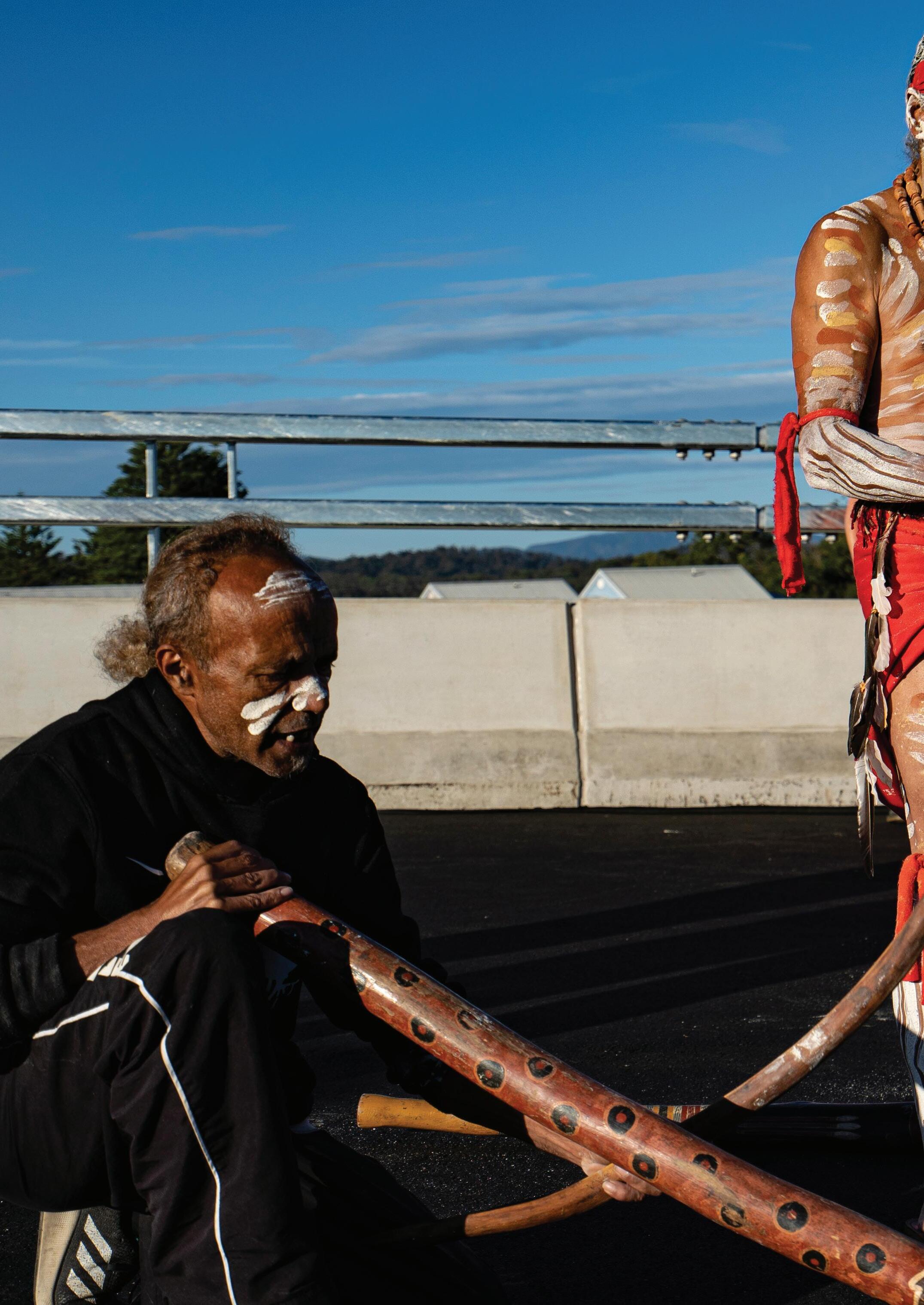
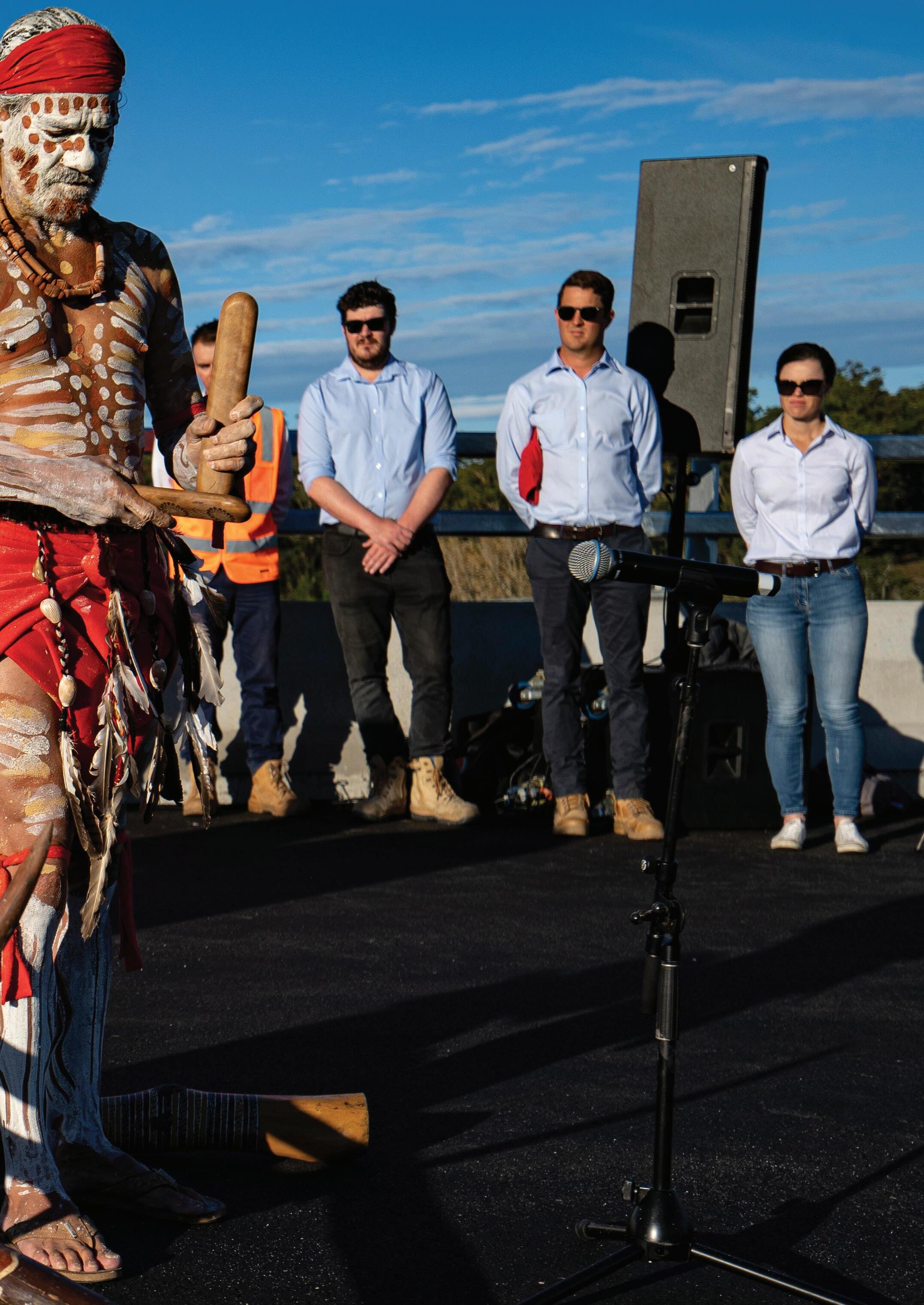
John Holland pays respect to the Traditional Owners and Custodians of the land on which we work and live, and their connections to land, sea and community. We pay our respect to their Elders past and present and extend that respect to all Aboriginal and Torres Strait Islander peoples today.
Transforming Lives
John Holland is up for the challenge of transforming lives.
From humble beginnings more than 70 years ago, John Holland has been driving positive change in Australia and the region and is now one of the nation’s leading integrated infrastructure, rail, multi-modal transport and building companies.
From Parliament House to the Alice to Darwin Rail Link, from the MCG’s Great Southern Stand to Sydney Metro, we’ve had a hand in the Australia we all know today. We are currently involved in delivering many of Australia’s largest projects and are a leader in multi-modal transport operations and services.
Whatever we face, the heart of what we do is creating people-centred solutions to complex challenges and opportunities. We think deeply about what we do and how it affects communities. We push boundaries and innovate, gain trust through our actions and whatever the project, we’re in it for the long, long term.
CEO's message
We all thought 2020 was the most challenging year and that 2021 would be the reprieve that we all desperately needed and so I am immensely proud that for a second year, our team yet again rose to the enormous challenges presented. Despite our collective mental and physical exhaustion, lockdowns, site shutdowns, global supply and logistics issues and more, our team got the job done.
COVID has had a big impact on the Australian economy, and we weren’t immune, but with great collaboration with our customers, and astute commercial and financial management, it has been a manageable impact. We are now focused on the future and the recovery of the industry and the economy. John Holland’s role and value to our nation’s future is seismic. A recent Deloitte Access Economics report states that our projects are forecast to contribute a significant $11.7 billion to Australia’s GDP between 2021 and 2025 and will generate more than 9,000 full-time equivalent jobs.
In 2020, we evolved our business to separate our mega projects from the rest of the business. This strategy has allowed us to grow and evolve into new areas, return to profit, and also reset our challenged projects. I am pleased that along with our joint venture partners and customers, we have now reset two challenged major projects – Melbourne Metro in 2020 and the West Gate Tunnel in 2021. We are all looking forward to completing these great pieces of infrastructure that will deliver enormous benefits to the city of Melbourne.
Our business evolution continued in 2021. Building on our multi-modal transport capability, we secured the bus and tram contract in Adelaide, and we also won the contract to operate a major region of Sydney buses with Transdev. This is the first time ever a private company has operated this region of Sydney buses. This is on top of operating and maintaining Metro Trains Melbourne, Sydney Metro Northwest and Canberra light rail. We are going from strength to strength, building trust in our abilities to operate and maintain assets across our rail, infrastructure and building businesses.
We won the early works contract for stage three of the Gold Coast Light Rail and have since been announced to deliver major works on this 6.7 km extension of the network. This is Gold Coast’s largest infrastructure project and adds to our strong portfolio in Queensland.
Our focus on the future allowed us to win the Hobson’s Bay project for Melbourne Water; an extension to our Rail Infrastructure Alliance project to upgrade the Sunbury rail line in Melbourne; and we have successfully entered clean energy market via the Kidston Pumped Storage Hydro in far North Queensland. We continued to win more packages in the Level Crossing Removal project in Victoria including the Pakenham project, grew our New Zealand rail business, and extended our long-standing rail maintenance contract in Western Australia for the Public Transport Authority.
We also won the Marvel Stadium ugrade which, added to Sydney Football Stadium, establishes us as the leading stadium builder in Australia.
On top of all this, our team dug deep and completed some incredible projects in 2021. The Sydney Metro Tunnels Stations and Excavations project wrapped up after four and a half years and was recognised with multiple international and local tunnelling and sustainability awards. Our work for Sydney Metro has a strong history and future. We built and now operate Sydney Metro Northwest, we upgraded Sydenham Station and are currently working on Waterloo Station and upgrading the Bankstown line.
We also completed the North-East Rail Link in Victoria, the Batemans Bay Bridge replacement in regional NSW and completed our 10-year rail operations and maintenance contract with the Country Regional Network (CRN).
The resilience of our people in 2021 is something I will never forget. The way our team conducted themselves during COVID by pulling together, helping each other, and finding new ways of working meant that we continued to deliver on our promise to transform lives.
I have been fixated on how we help transform the industry, and I’m proud to say that flexible working, and the mental health and wellbeing of our people are at the forefront of our business.
We updated our parental leave policy to make it more equitable for fathers and mothers and we continued to provide new opportunities for interns, graduates, refugees, asylum seekers, veterans and people living with a disability.
Our growth in 2021 was deliberate and sustainable. We bid for the jobs that are right for us and have the right risk profile. This gives both John Holland and our customers peace of mind and a better delivery experience.
In our sustainability space, we have led the way with a ground-breaking $1.5 billion sustainabilitylinked bonding facility with a syndicate of banks and insurance companies. It is the first of its type in
Australia and one of the largest globally, and the cost of the bonding is tied directly to our performance against four sustainability KPIs. It shows real confidence in our business and our sustainability credentials.
We delivered some remarkable innovations on our projects this year and have been working behind the scenes to deliver new digital platforms in safety, finance and operations.
Despite all the challenges 2021 brought, our team worked in a courageous and caring manner to transform the lives of our communities, for our customers and all our suppliers. I look forward to a much brighter future knowing that we can deliver and prosper through the toughest of times.
Joe Barr | Chief Executive Officer
Our strategy
Just like the thousands of nation-shaping projects we have delivered over our 73-year history that have transformed lives, we like to think of our company as our biggest project. One that has had its fair share of ups and downs and incredible triumphs. Over the course of our project our key to success is our ability to adapt and change with any circumstance – from fires, floods, global financial crises and a global pandemic.
Our evolution continues with our new strategic direction for 2022 – 2025. In 2021, our Executive Leadership Team went through a significant process to revise our strategy. They considered COVID impacts, the shifting market, government changes and investment in infrastructure, people, and customer expectations.
They also considered this through the lens of three basic questions:
1. Who do we want to be as an organisation?
2. Where do we want to play?
3. How will we win and deliver safe, successful, and profitable projects?
Investment in major public infrastructure is set to exceed $218 billion over the next five years. This investment is what Australia needs to recover from COVID. It is good for the community and the economy. This is a welcome boom, but it also puts enormous pressure on the industry for materials, people, plant and equipment.
Our strategic review reaffirmed how important our purpose and values are to us, and the need to get back to basics and on the same page in some areas. We will have a stronger commitment to our core capabilities and sectors and be clear about the priorities that will set us apart. This is summarised as: John Holland provides leading design, engineering, construction and asset operations, across infrastructure, transport, building and property in Australia and New Zealand.
Our new strategy is: At John Holland we transform lives by being a safe, sustainable and market leading business, focused on four priorities. Our customers, our people, our capabilities and working as one to achieve this.
This means:
- Safe: it’s as simple as no one gets hurt on the job. No task at John Holland is more important than keeping people safe, physically and mentally. We cannot lose sight of this on any single job. Safety is and will always be at the core of what we do.
- Sustainable: building a business and balance sheet that will carry us through another successful 70 years. We want to keep growing, but it needs to be sustainable, profitable and deliver a strong return for our shareholders.
- Market leading: we lead in our core markets, our customers want to work with us, and so do the best people.
Our strategy is aligned with our purpose, values and our philosophy of putting people at the heart of everything we do. So much so, that our four priorities are aligned with our human logo.
Our Purpose
We're
Spend with social enterprises
Fuelling Australia’s post pandemic recovery Employee growth 4.4% increase since 2020
Safety Total Recordable Injury Frequency Rate 3.74
Number of projects shutdown during COVID
41
People double vaxxed by end of 2021 90%
Number of people who worked from home
2,500
Double the spend with Aboriginal and Torres Strait Islander enterprises than 2020
$12.2m almost $2 million more than 2020
$103m double the spend in 2020
In 2021 John Holland engaged Deloitte Access Economics to undertake an economic analysis of the benefits our operations have on the Australian economy.
The report found that between 2016 and 2020 John Holland contributed an additional $12.6 billion in Gross Domestic Product and is set to contribute a similar level over the next four years.
John Holland is helping deliver large, complex and city-shaping infrastructure that will help our economy bounce back from the impacts of COVID. We are playing our role in training the next generation of workers with the skills we need. We have increased our number of graduates by more than 30% in the past 5 years with over 200 working in high demand disciplines.
$12.5b
$11.7b
The amount of additional Gross Domestic Product John Holland contributed to the Australian economy between 2016 and 2020
The GDP John Holland is projected John Holland is projected to contribute to the Australian economy between 2021 and 2025 9,000+
The average number of new jobs created between 2021 – 2025
Our social impact
John Holland has a direct impact on people’s lives by providing thousands of full-time and sub-contracting roles, developing the next generation of workers, and supporting communities.
5,595
1,409
53
direct employees further engaged through subcontracting different occupations
21.8%
107
women including frontline and staff women in non-traditional roles*
(higher than the industry average)
13% (the industry average is 28%)
average workforce growth over the last five years
30%
growth in the number of graduates and undergraduates over the past five years
780
e.g., carpenter, overhead wiring, project engineer (direct and indirect)
20%
local employment in regional areas
63% employees in highly skilled occupations
apprentices engaged across our projects
Read more about our social and community impact in the the People section on page 56
*A person identifying as female that is engaged in a role where women are underrepresented (i.e. occupations where less than 25% are women. Includes all construction trades, metals and engineering, electrical, design, environmental, safety, construction management, civil engineering, architecture (building), surveying technicians, bricklayers & stonemasons, building & services labourers, concreters, crane, hoist and lift operators, earthmoving plant operators, fencers, finishing trades. Excludes traffic control
Project highlights
Connecting Sydney like never before
Rozelle Interchange Project
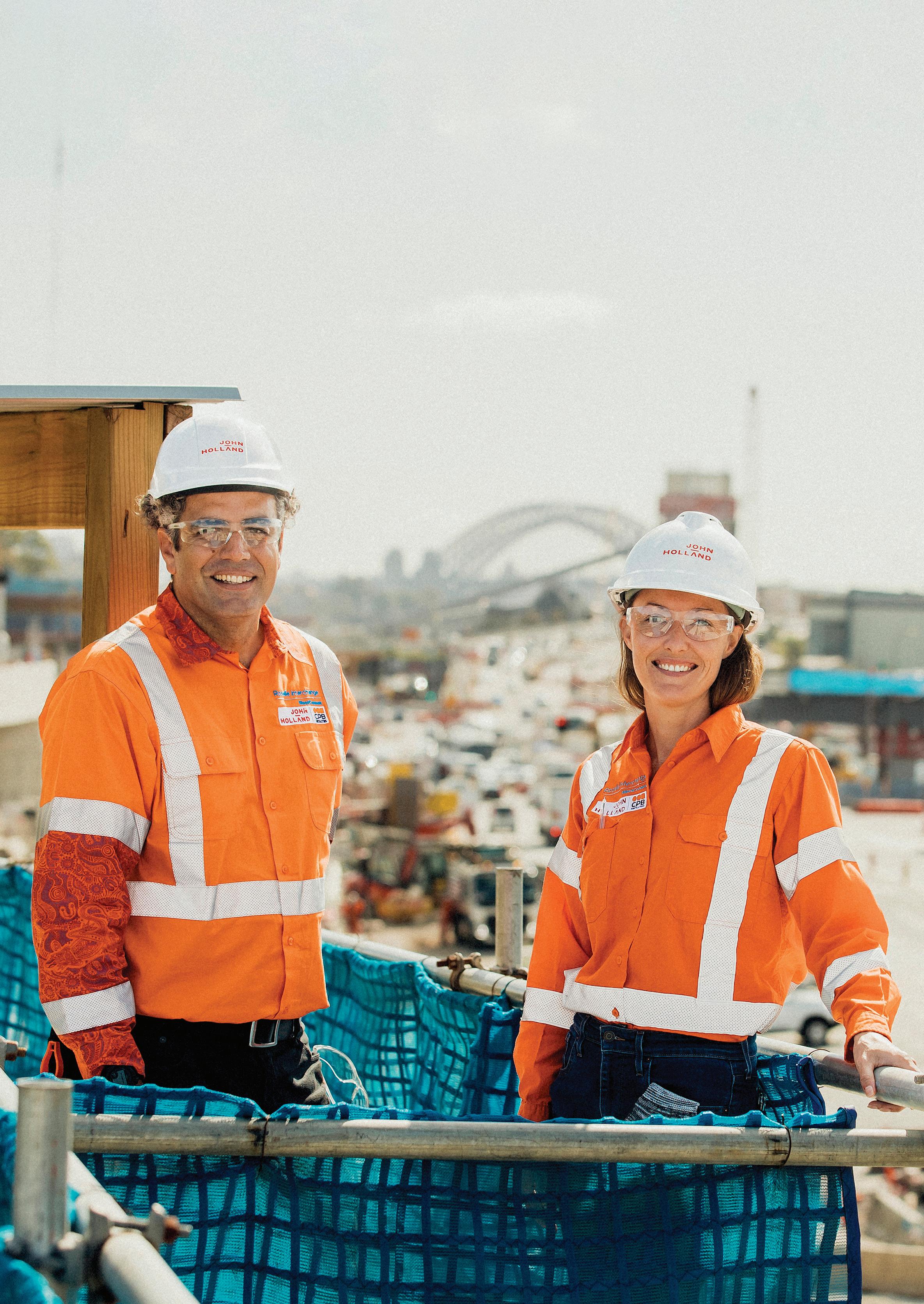
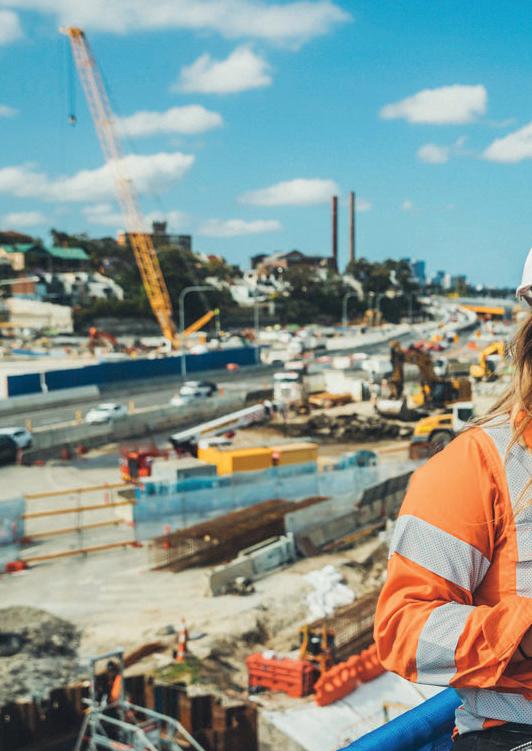
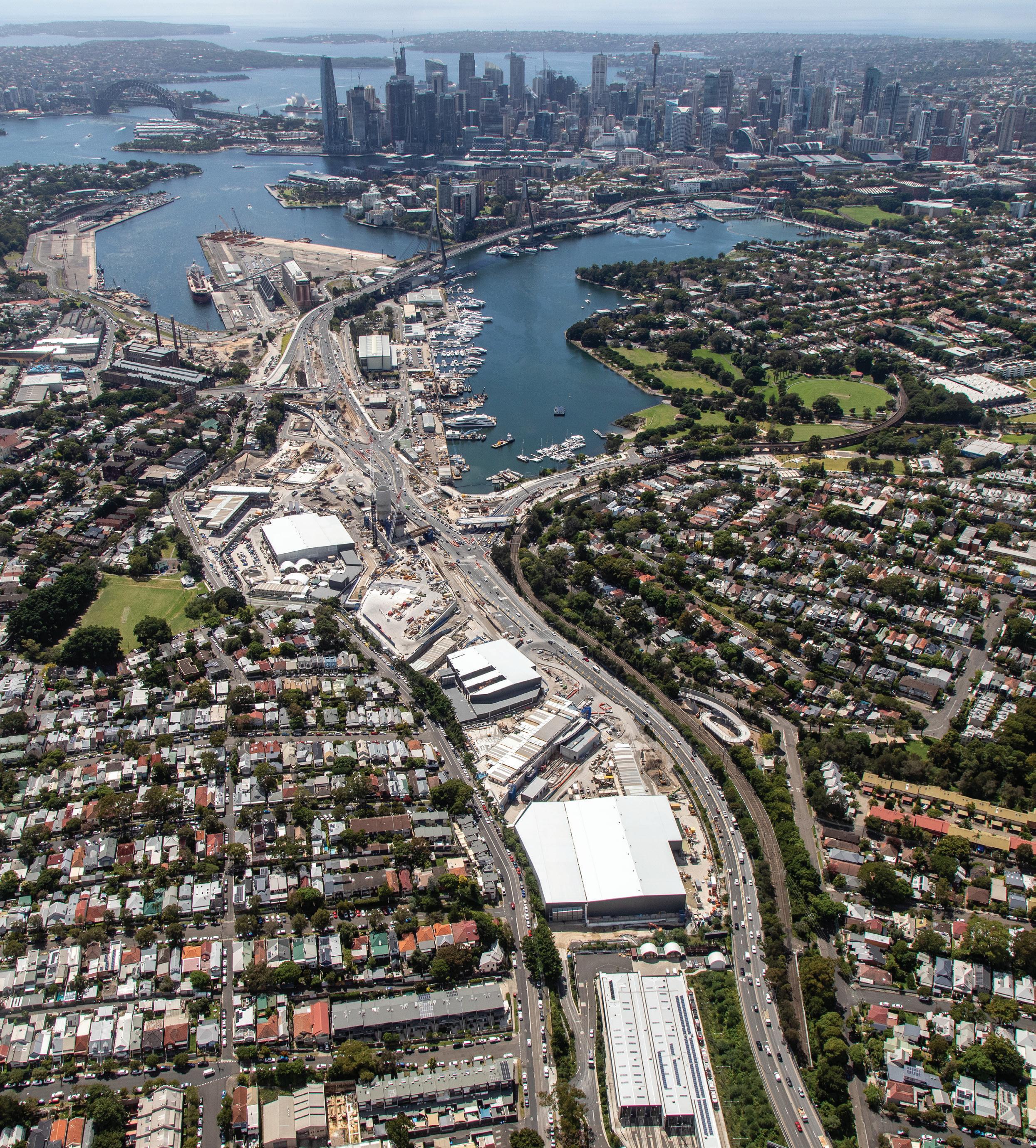
The Rozelle Interchange is the missing link in Sydney’s WestConnex motorway – Australia’s largest road project. When complete the Rozelle Interchange will provide a new underground network to connect some of Sydney’s busiest commuter corridors. The project team was recently awarded the Southern Tunnelling package of the Western Harbour Tunnel, extending the interchange for new connections across Sydney Harbour.
Consisting of 23kms of tunnel, four cut and cover tunnel portal structures, 12 bridges and two ventilation facilities connected to a fully undergrounded ventilation system, the Rozelle Interchange represents one of the most complex underground motorways ever undertaken. It will completely transform a disused rail yard site to deliver up to 10 hectares of green parkland space and provide new active transport options to the community.
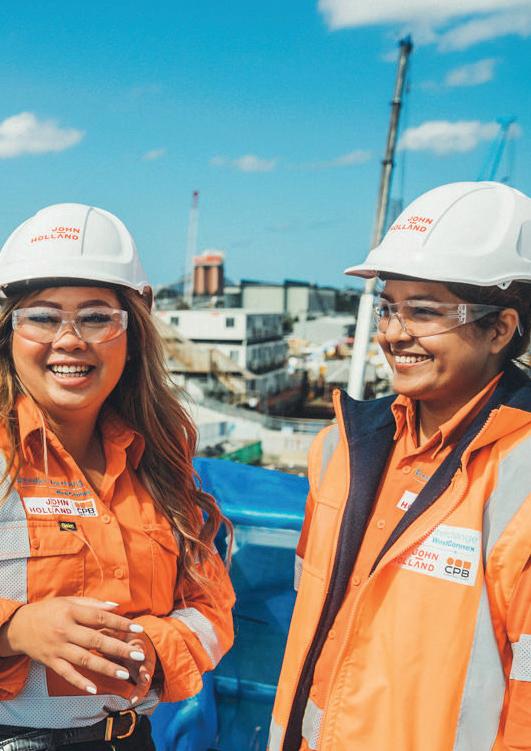
The team has worked hard to transform lives. To date, over $46 million has been spent with Indigenous suppliers; socioeconomic and environmental innovations have been delivered through an integrated approach to sustainability; and a focus has been placed on the health and wellbeing, inclusion and diversity and skills and training for every person who works on the project. Entering our fourth year, the team is looking forward to continuing to deliver one of Sydney's most transformative projects.
Location: Sydney, NSW
Customer: Transport for NSW
Contract: $4.7 billion
JV partner: CPB Contractors
Melbourne on the move
Melbourne Metro Tunnel
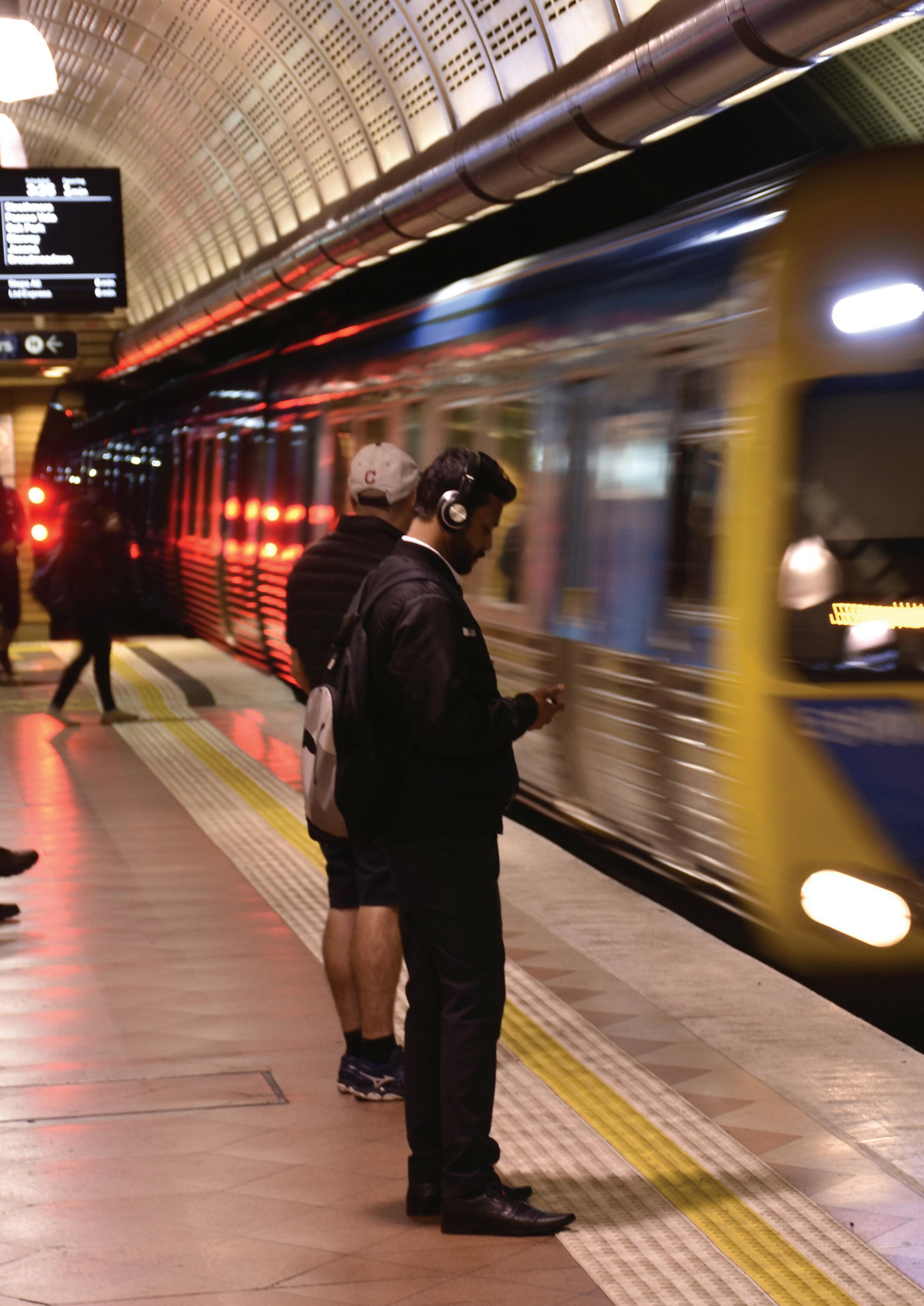
Melbourne’s Metro Tunnel is Victoria’s premier public transport project that will create capacity for an extra half a million passengers on Melbourne’s train network during peak periods, untangling the City Loop and creating a new end-toend rail line from Sunbury in the west to Cranbourne/Packenham in the southeast. The Metro Tunnel will feature high capacity trains and five new stations and is due to be completed in 2025.
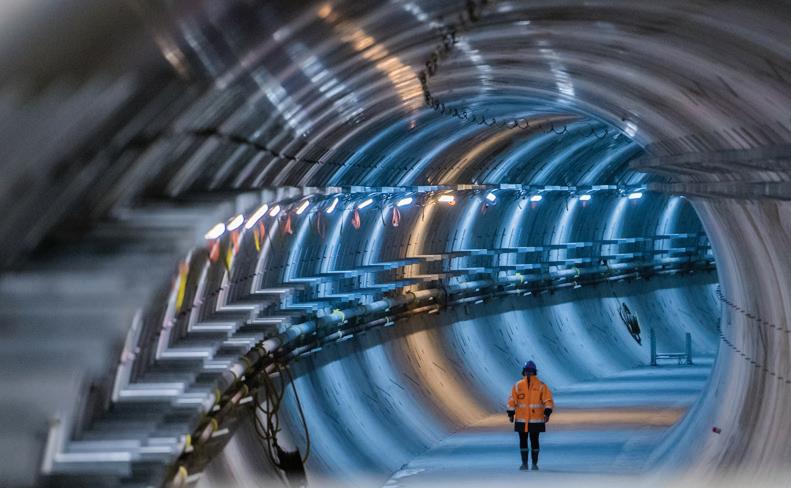
2021 saw incredible progress on the project including four huge tunnel boring machines finishing 20
months of digging under Melbourne to create two nine kilometre-long 6.3 metre-high rail tunnels lined with around 250,000 tonnes of concrete.
The excavation for all five new stations is nearly complete, and work continued on the 26 crosspassages- ie. the short tunnels that connect the main tunnels and are an important safety feature for passengers should an incident occur. 2021 also saw progress on the five station fit outs and testing of the high-capacity signalling systems. Rail tunnel fit out is now well underway.
Location: Melbourne, VIC
Customer: Rail Projects Victoria Project Value:
- $6.43 billion tunnel and stations contract as part of the Cross Yarra Partnership
- $1 billion rail infrastructure contract as part of the Rail Infrastructure Alliance
Mega Melbourne
West Gate Tunnel
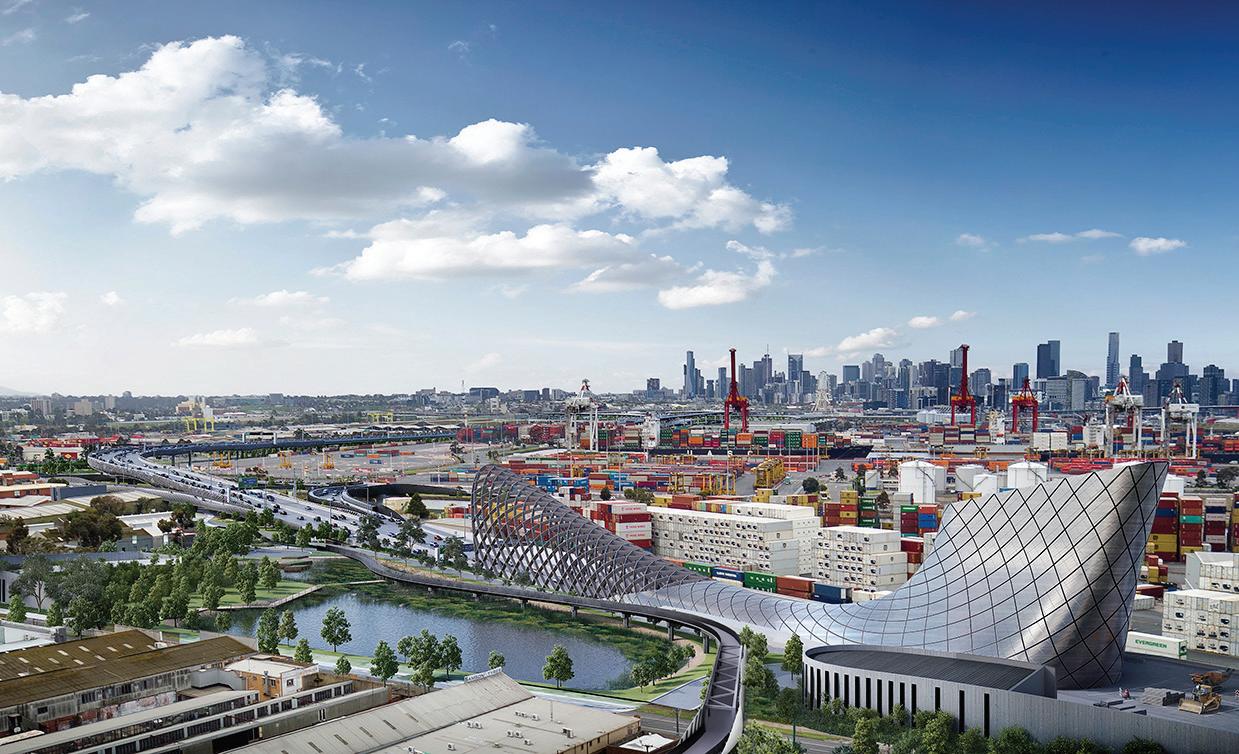
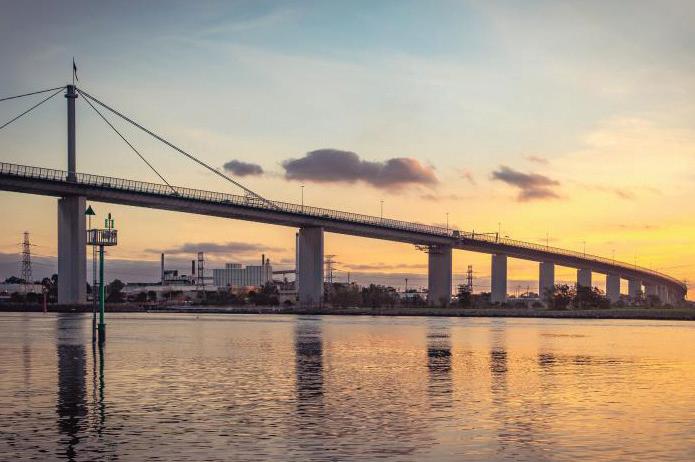
The West Gate Tunnel is a cityshaping project that will deliver a vital alternative to the West Gate Bridge, provide quicker and safer journeys and take thousands of trucks off residential streets.
Upon completion the project will deliver a more efficient route for freight with direct access to the port and local industry. The project will also provide a second river crossing, rebuild and widen the West Gate Freeway, create better connections to Melbourne and support the travel needs of growing regional populations.
The project will deliver more than 14kms of new and upgraded cycling and walking links to popular trails and parks, and an express route to the CBD for cyclists via a 2.5kms elevated veloway, plus nearly nine hectares of new parks and wetlands.
The project parties reached a new commercial agreement in late 2021 that resolved long-standing disputes. This agreement paved the way for tunnelling to begin. The project’s expected completion date is 2025.
Location: Melbourne, VIC
Customer: Transurban JV partner: CPB Contractors
Countdown to kick-off
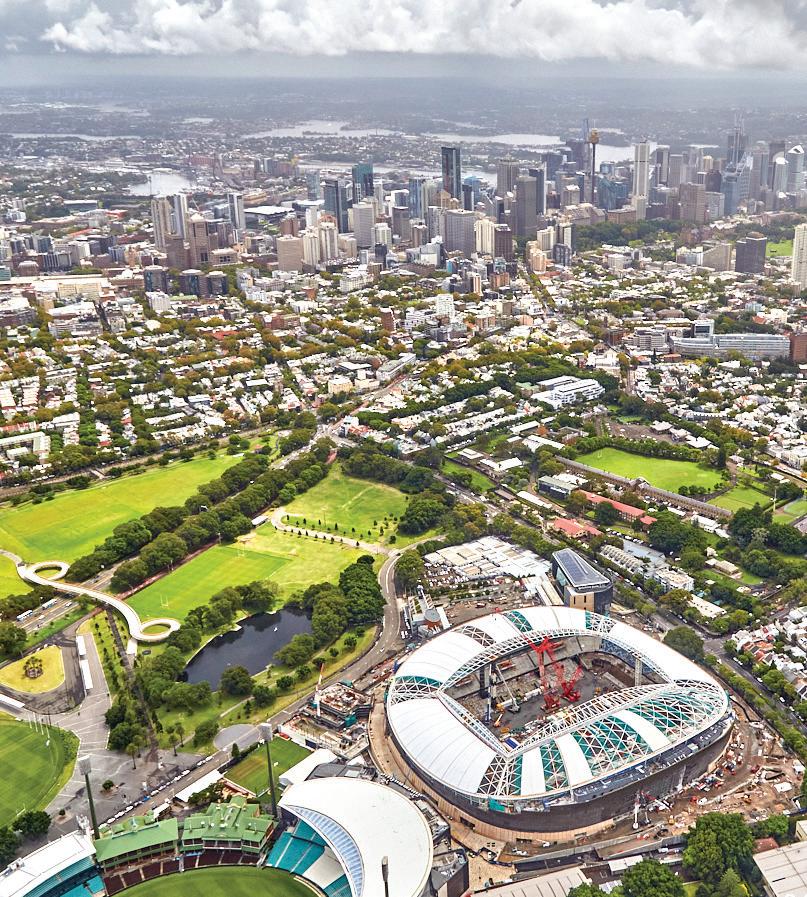
Sydney Football Stadium
The landmark redeveloped Sydney Football Stadium will be Australia’s premier sporting and entertainment venue. The iconic stadium will cement Sydney’s status as a major global city.
Despite lockdown, the project reached 80% completion in 2021 with the last roof pieces lifted into place, ensuring the stadium will be open for the 2022 NRL Grand Final.
The project has created over 1,100 jobs and has injected millions into the NSW economy through the procurement of local construction materials and labour, especially with businesses and subcontractors in Western Sydney. The project also delivered an industry-leading initiative, the John Holland SFS Aboriginal Pre-Employment Program – a collaboration with local Aboriginal groups to increase the representation of First Australians in the construction industry. Participants were given practical, hands-on training to open career pathways in construction.
Upon completion the stadium will provide 42,500 undercover seats and will guarantee a fantastic spectator experience with all seats being as close as possible to the field of play. Even when away from their seats, fans will be constantly connected to the field with the open concourse allowing views of the field from the food and beverage outlets and multiple screens to showcase the action. The stadium will be more accessible to a diverse range of ages, backgrounds, gender, and mobility. John Holland was also awarded the contract to upgrade the members facilities including a new gym, training areas, two squash courts, 50 metre openair pool, day spa and more.
Since 2017 the Victorian Government has entrusted John Holland and its Alliance partners to remove dangerous level crossings, deliver new rail stations and infrastructure, and create more community open spaces. These projects not only reduce road congestion, but deliver significant safety improvements, increase capacity to run more trains on the network and provide new precincts and open space for local communities to enjoy well into the future.
In 2021, NWPA completed the removal of four level crossings and delivered two new rail stations in Melbourne’s inner-north as part of the Bell to Moreland project.
Currently the Alliance has three projects in construction:
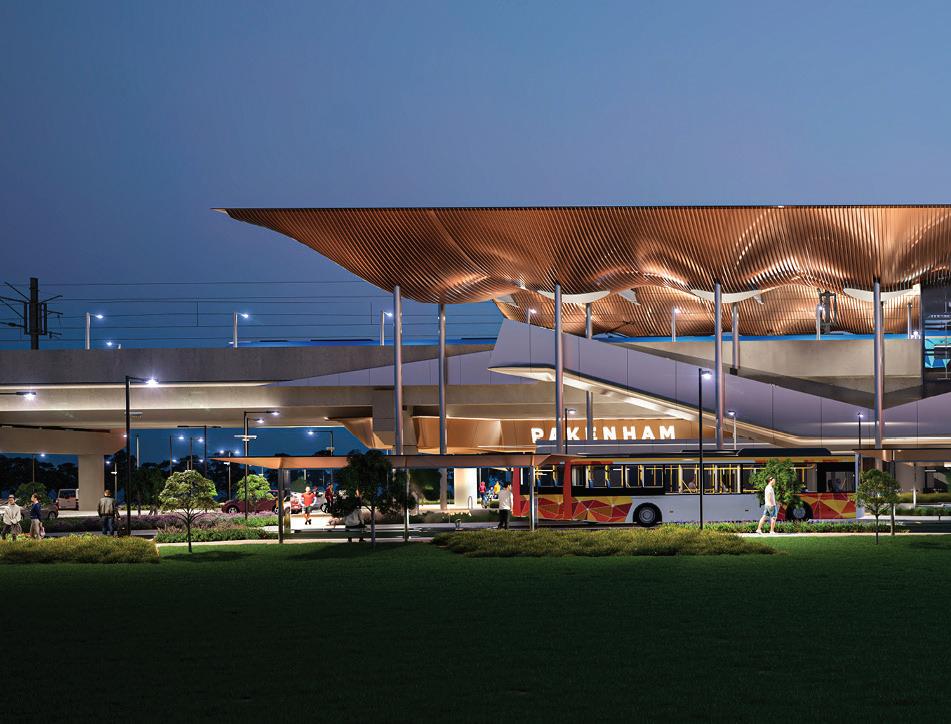
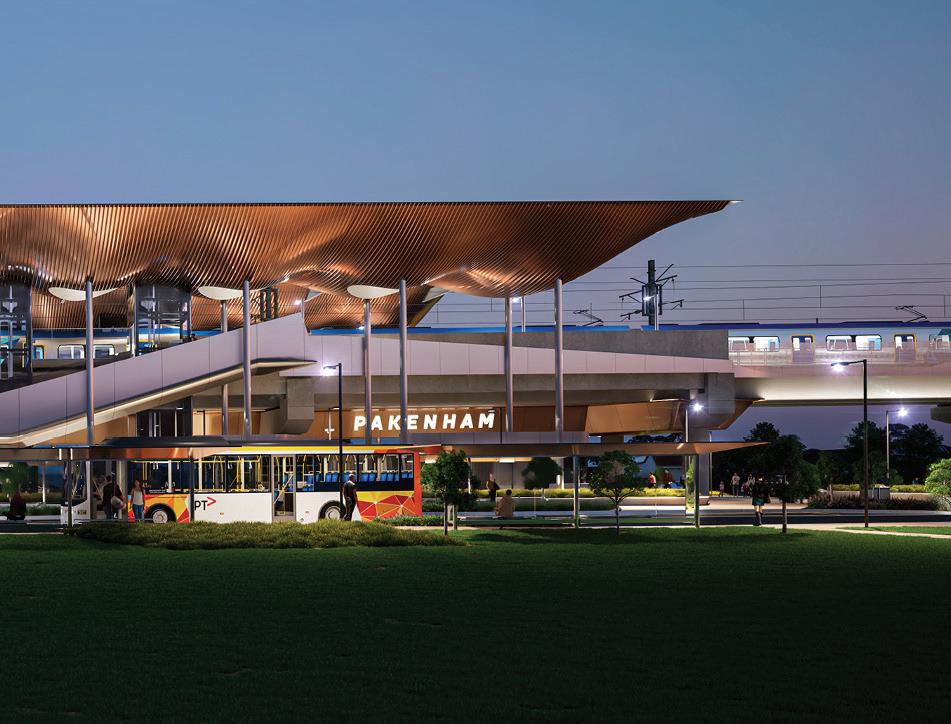
1. The $844 million Pakenham project will see the removal of three level crossings, a modernised Pakenham Station and a brandnew East Pakenham Station. The project will also deliver six MCGs
worth of green space for the local community when completed in 2024.
2. The Glenroy project will significantly improve congestion on Glenroy Road by removing the level crossing and lowering the rail line under the road. The project, which is due for completion by the end of 2022, includes the delivery of a new premium energy-efficient Glenroy Station and precinct.
3. The Preston project involves the removal of four level crossings while building two new stations at Bell and Preston. The rail line will be raised over the roads via a rail bridge, delivering two kilometres of new open space underneath. The project will be completed by the end of 2022 and the open space ready for locals to enjoy in 2023.
Location: Melbourne, VIC
Customer: Major Transport Infrastructure Authority, Victoria Alliance partners: John Holland, Kellogg Brown & Root, Metro Trains Melbourne
Victoria’s beating heart
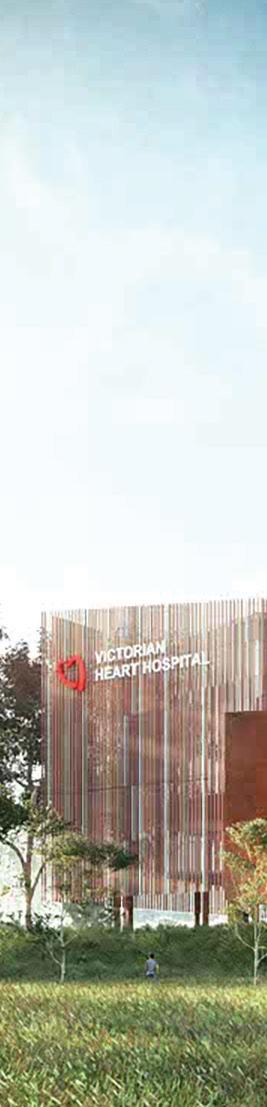
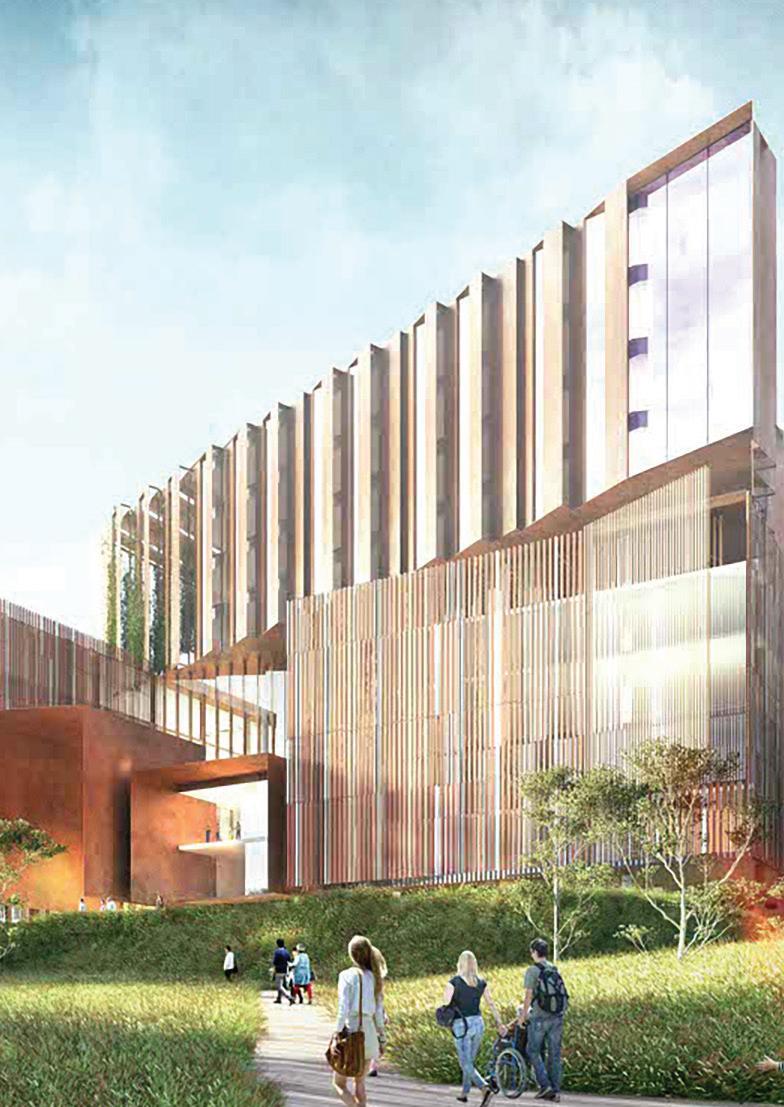
Victorian Heart Hospital
Australia’s first dedicated, stateof-the-art cardiac facility is almost complete. The Victorian Heart Hospital will bring together leading cardiac specialists and researchers under one roof to transform the lives of thousands of Australians.
A collaboration between Monash Health, Monash University and the Victorian Government, the specialist facility will have three operating theatres, capacity for up to 206 beds and up to seven cardiac catheter laboratories.
Monash University will occupy most of the second level with multifunction laboratories, technology simulation rooms and collaboration spaces in addition to training rooms and medical study rooms.
When complete, the new hospital will be able to perform 2,150 cardiac surgeries, 13,000 cardiac laboratory procedures, as well as catering for more than 28,000 cardiac emergency presentations and 108,000 consultations every year. The project will be complete in 2022.
Location: Melbourne, VIC
Customer: Victorian Health and Human Services Building Authority Contract: $564 million
40 minutes. It makes all the difference
Sydney Gateway
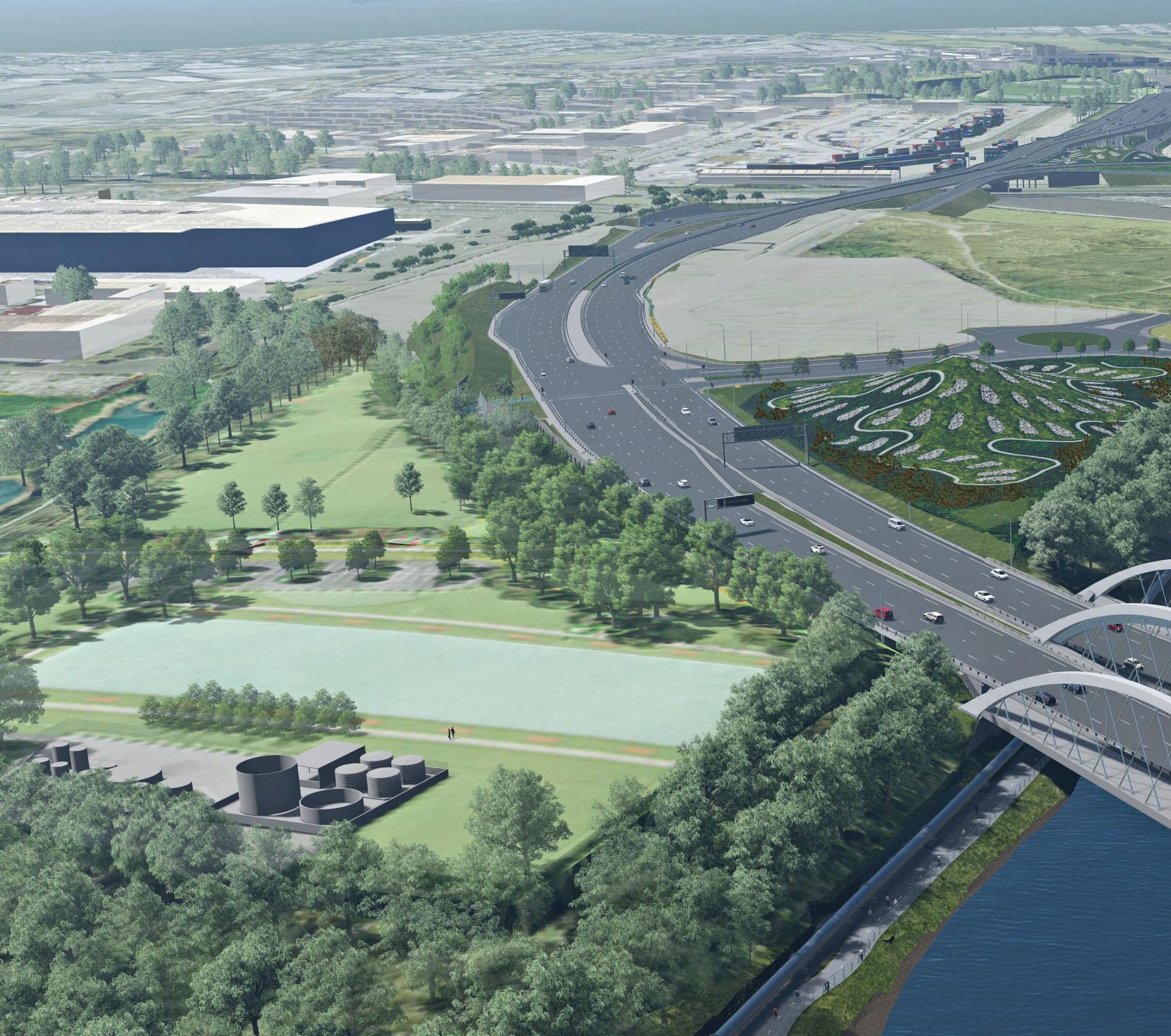
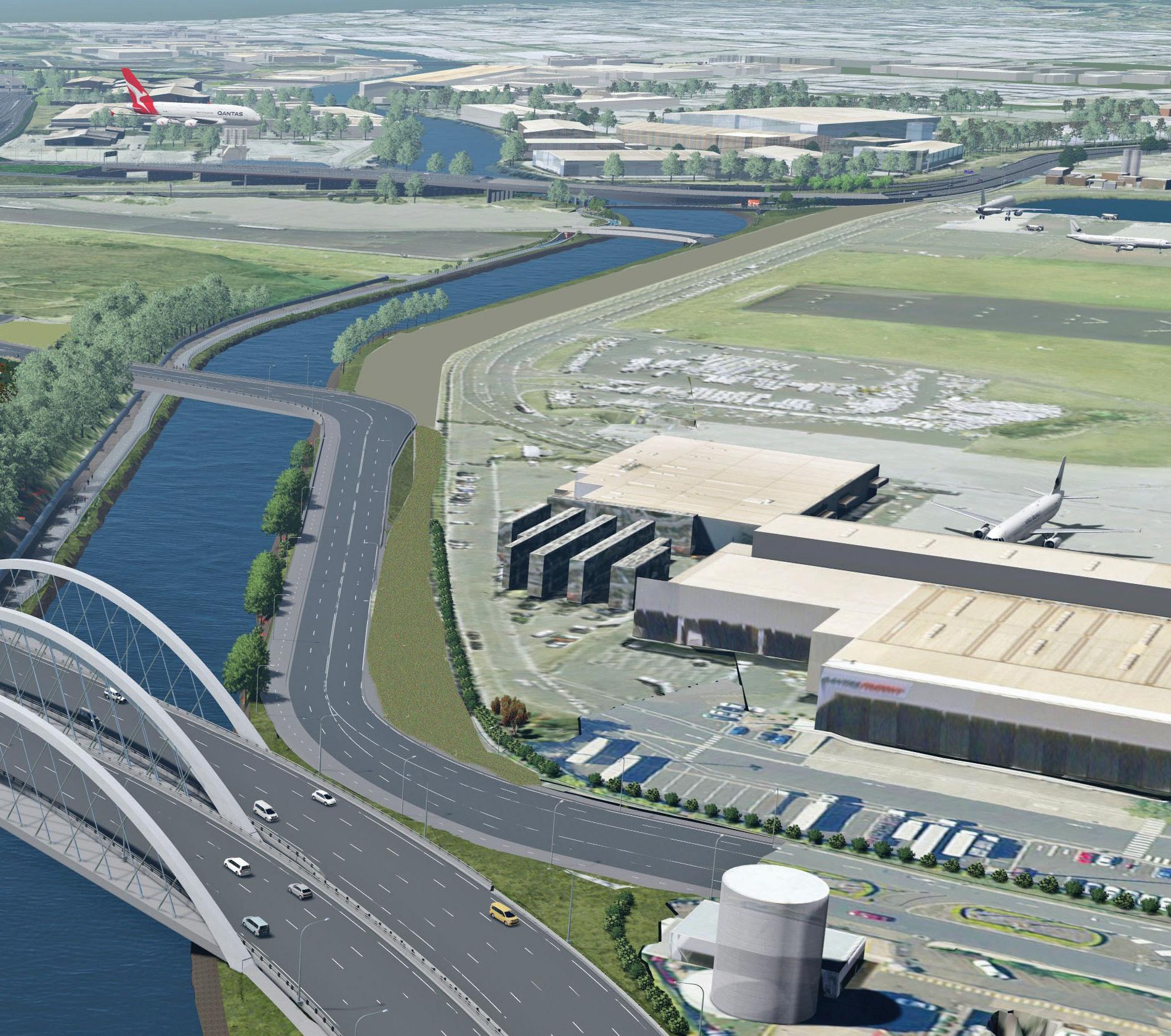
The toll-free Sydney Gateway road project will transform how Australia’s biggest city moves. It will cut up to 40 minutes of travel time in the morning peak for motorists travelling from Parramatta to Sydney Airport, return local roads to local communities, slash travel times to and from Sydney Airport's Domestic and International terminals, and will improve access to Sydney’s freight hub at Port Botany.
Featuring a total of 19 bridges, including one that will be wider than the Sydney Harbour Bridge, and offering a direct connection to the new Sydney motorway network at St Peters Interchange, Sydney Gateway will streamline travel for motorists and divert up to 10,000 trucks a day from local streets.
A new three-kilometre cycling and pedestrian path along the Alexandra Canal will further connect communities in the heart of Sydney.
Construction commenced in 2021, with a commitment to work closely with local suppliers, local communities and the government to deliver this important project safely and efficiently.
Location: Sydney, NSW
Customer: Transport for NSW
Contract: $2.6 billion
JV Partner: Seymour Whyte
The road to North Queensland’s future
Edmonton to Gordonvale road upgrade
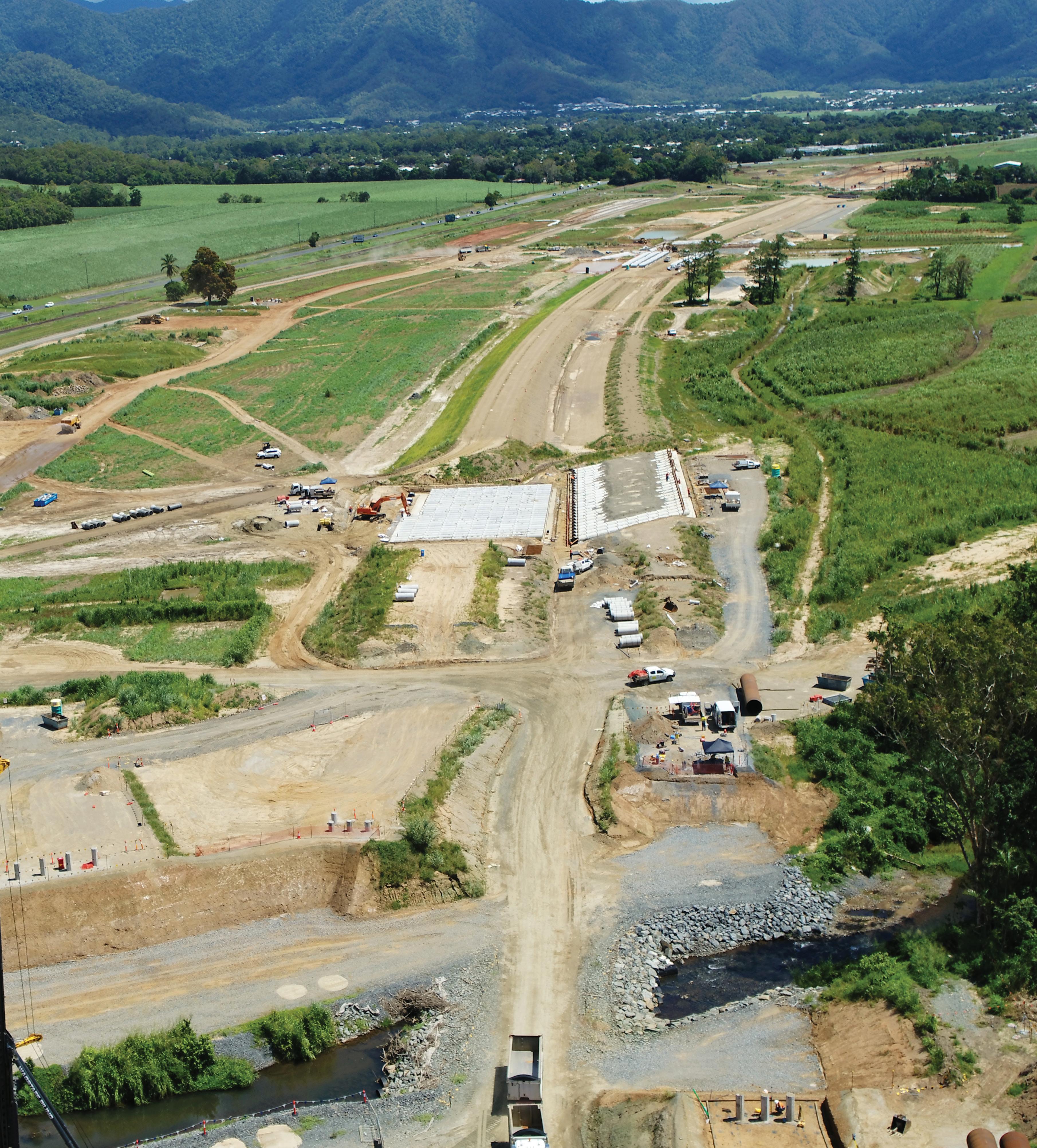
The major upgrade of the Bruce Highway between Edmonton and Gordonvale will make travelling safer and more reliable and improve flood resilience in the area.
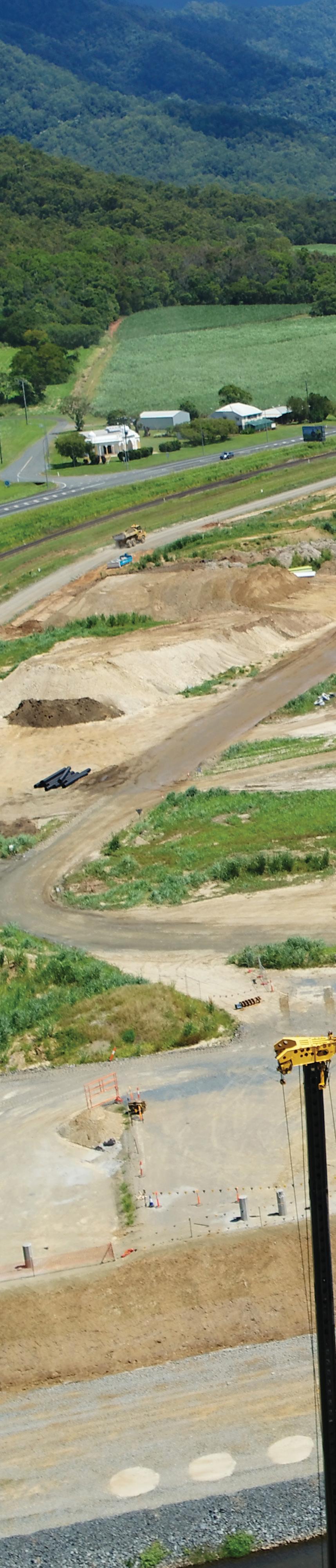
The much-needed infrastructure investment in the future of Far North Queensland will include a 10.5kms upgrade including duplication of all existing two-lane sections to four lanes, new service roads, the relocation of 4.4kms of Queensland Rail, the construction of two new active level crossings and the relocation and construction of 8.8kms of cane rail.
The project is creating hundreds of new jobs for locals and upon completion will boost capacity and reduce congestion of one of the most important and busiest roads in Queensland.
Location: North Queensland
Customer: Queensland Transport and Main Roads
Contract: $481 million
JV Partners: Seymour Whyte and AECOM
Moving millions
Our future as a multi-modal transporter
Greener connections
Sydney Buses
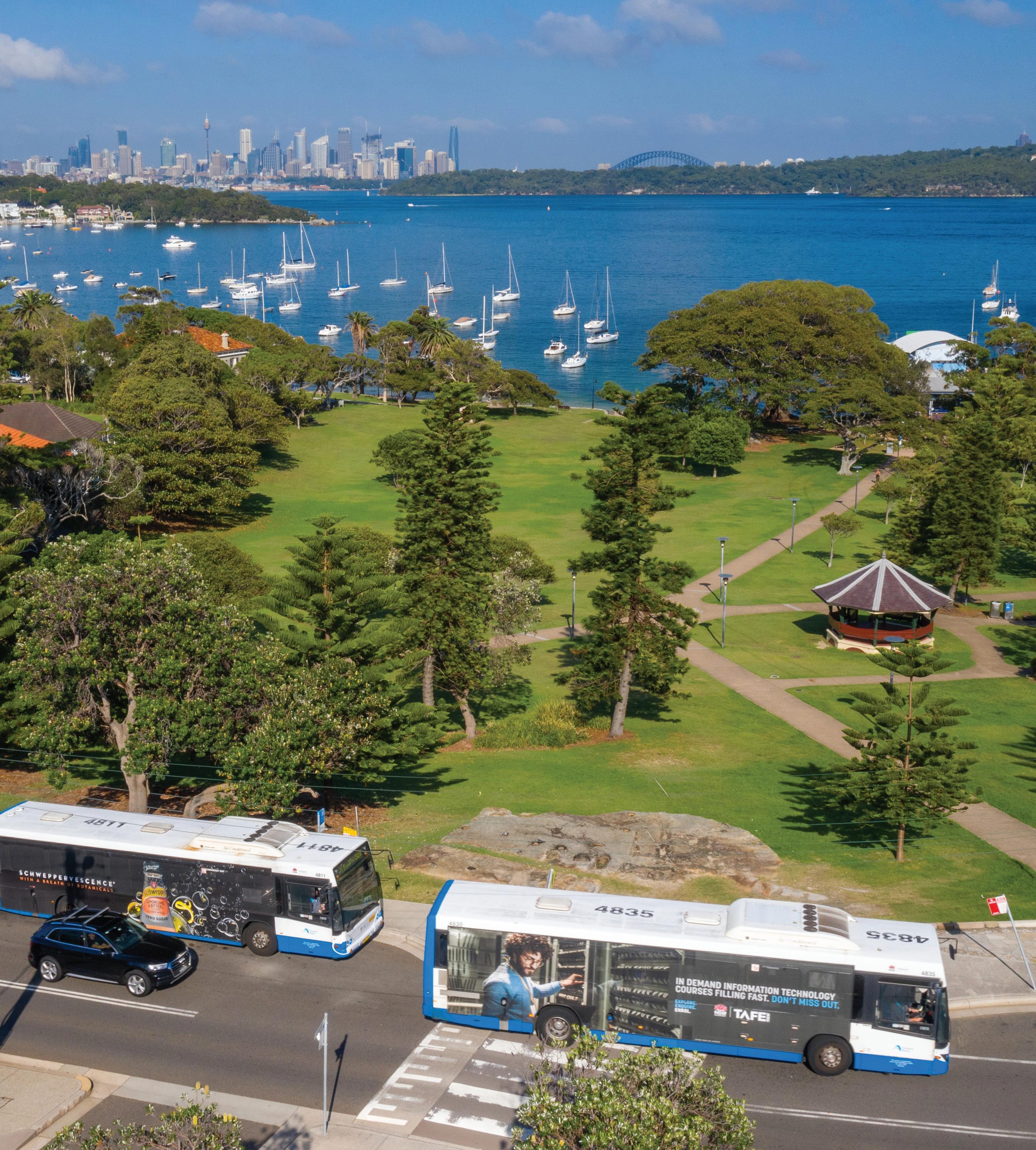
Commuters in Sydney’s east and CBD can look forward to a greener, more reliable commute from 2022. In partnership with Transdev, John Holland will operate Greater Sydney Bus Contract 9 (Region 9) until 2030, and introduce 136 new zero emission buses.
Region 9 includes some of the city’s busiest bus routes, with 67 million customer journeys travelling 22 million kilometres on average each year.
The Transdev John Holland Buses is an integrated joint venture. It combines the know-how of Transdev Australasia, one of the world’s leading mobility companies, with John Holland's nation-leading expertise in delivering first-class Rail and Transport services.
The partnership contract period commences from Sunday 3 April 2022, following a period of transition with the State Transit Authority.
JV Partner: Transdev
The nation’s capital on the move
Canberra Light Rail
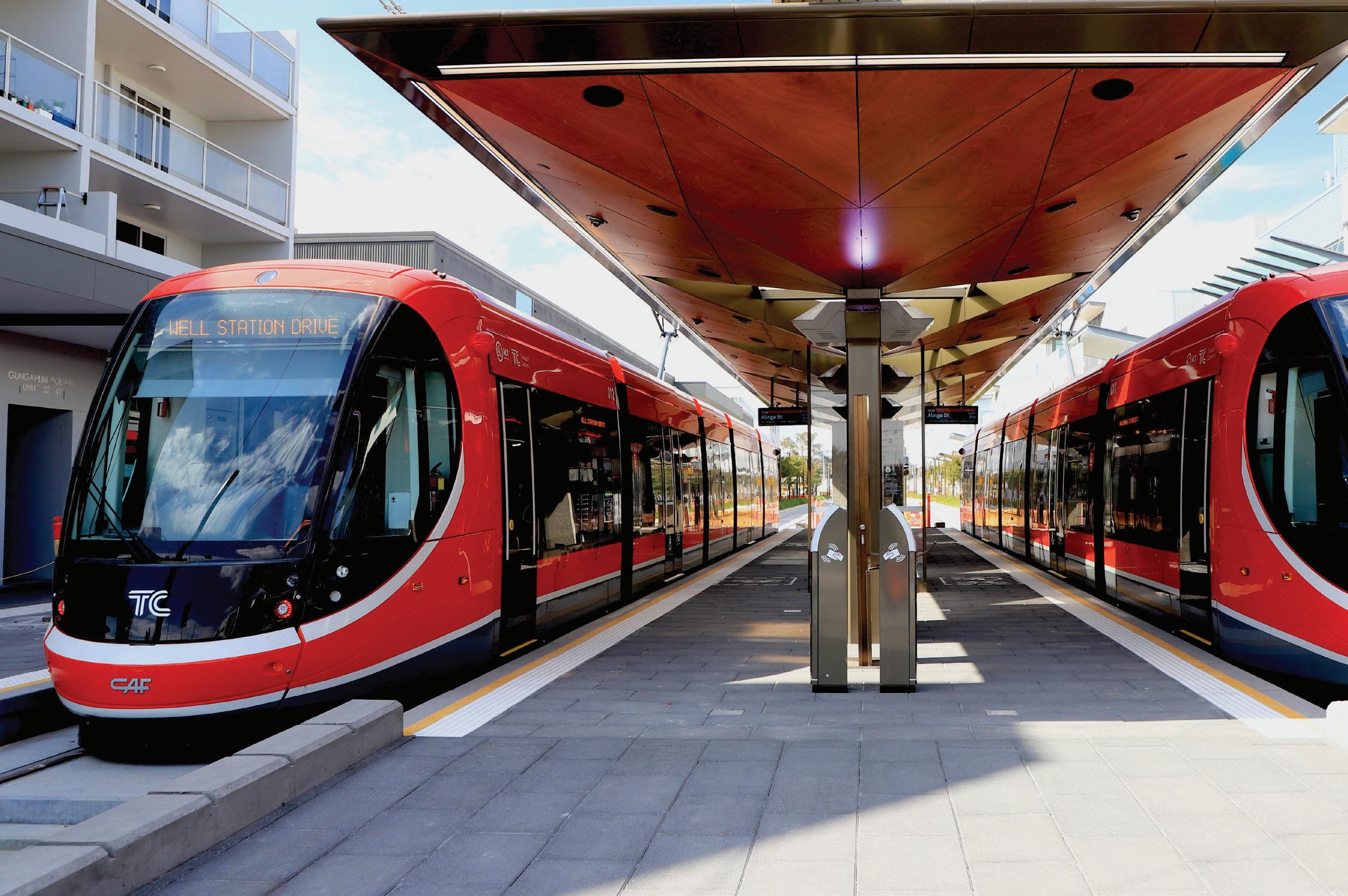
As the largest public transport project in the ACT’s history, Canberra Metro carries more than 15,000 customers each day.
John Holland was proud to be part of the consortium that designed and constructed the Canberra Metro. Since opening in April 2019, John Holland, as part of Canberra Metro Operations (CMET) has continued its relationship with the ACT government, with a contract to operate and maintain the Light Rail network for a period of 20 years.
The 12-kilometre line connects the growing region of Gunghalin to the city. In December 2021, 99.99% of services ran and 99.87% of services were on time. This helped to reduce almost 4,000 car trips.
JV partners: UGL and DB Engineering & Consulting
Simpler, faster and more connected journeys
Adelaide Buses and Trams
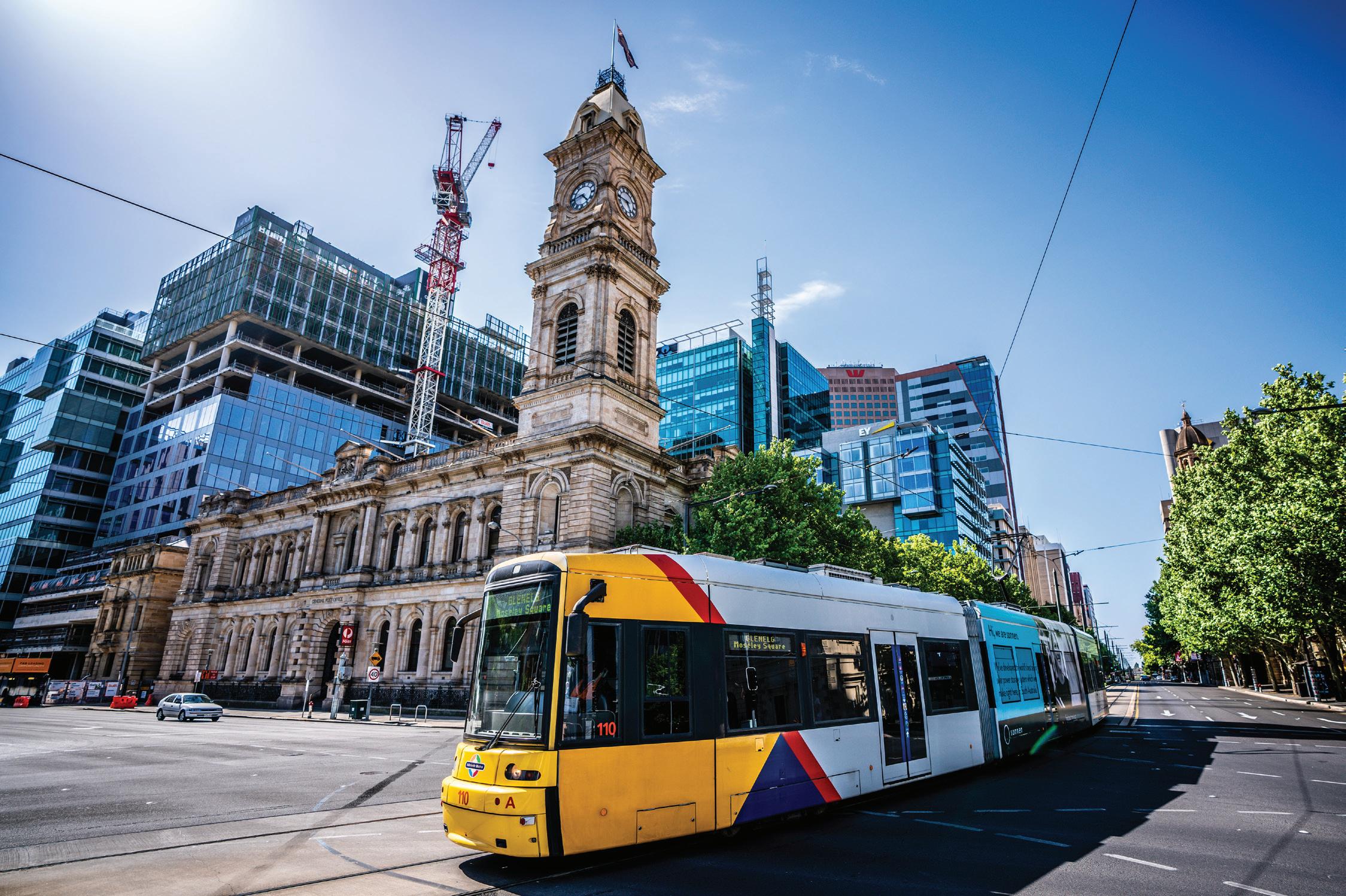
As part of Torrens Connect, John Holland is undertaking a landmark contract with the South Australian government to operate bus and tram services in Adelaide. This is the first multi-modal contract in John Holland’s 73-year history, and makes us one of the only private organisations in Australia to operate trains, trams and buses.
The joint venture with Transit Systems and UGL covers the North South contract region of Adelaide Metro’s service area.
Torrens Connect operates 24 tram sets, over 200 buses and employs more than 250 staff members, delivering world-class and customer-focused tram and bus services across Adelaide.
JV partners: Transit Systems and UGL
Where
you want to go, when you want to go
Metro Trains Melbourne
John Holland is a joint venture partner in Metro Trains Melbourne (MTM) which operates and maintains one of Australia’s busiest commuter networks, as part of a 15-year contract.
MTM provides safe and accessible transport for over 450,000 customers each day across 220 stations and nearly 1,000kms of track across metropolitan Melbourne.
The network spans 15 lines and operates over 15,000 services per week. As part of the consortium, John Holland provides train operations, network control, customer service, rolling stock maintenance, rail infrastructure maintenance, asset management and rail capital works delivery
JV partners: MTR Corporation and UGL Rail
Australia’s first driverless metro
Sydney Metro Northwest
After leading the design and construction of the first stage of Australia’s biggest public transport project, Sydney Metro, John Holland now operates the nation’s first driverless metro as part of the Metro Trains Sydney consortium, carrying more than 75,000 customers each weekday.
The consortium manages the operations and maintenance across 13 stations from Tallawong to Chatswood in Sydney’s north and northwest. The new-generation
metro trains are designed to make customer journeys easy – from level access to platforms, to multipurpose areas for prams, luggage and bicycles and real-time travel information. The fast, safe and reliable trains are required to run at 98% on-time reliability. The network is similar to those used everyday in cities like Paris, Singapore, Dubai and Hong Kong.
JV partners: MTR Corporation and UGL Rail
Projects won
Supercharging sport and entertainment
Marvel Stadium
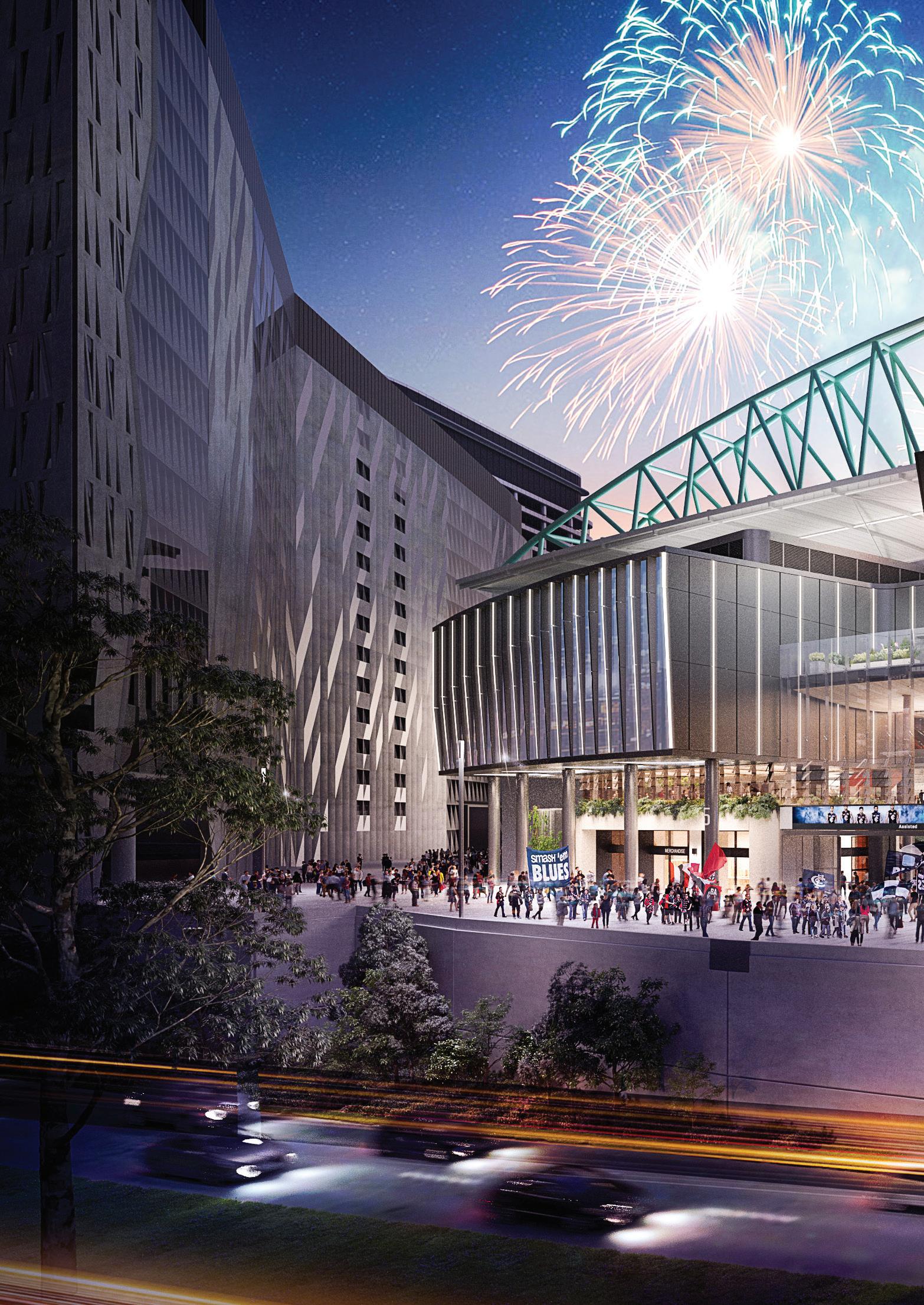
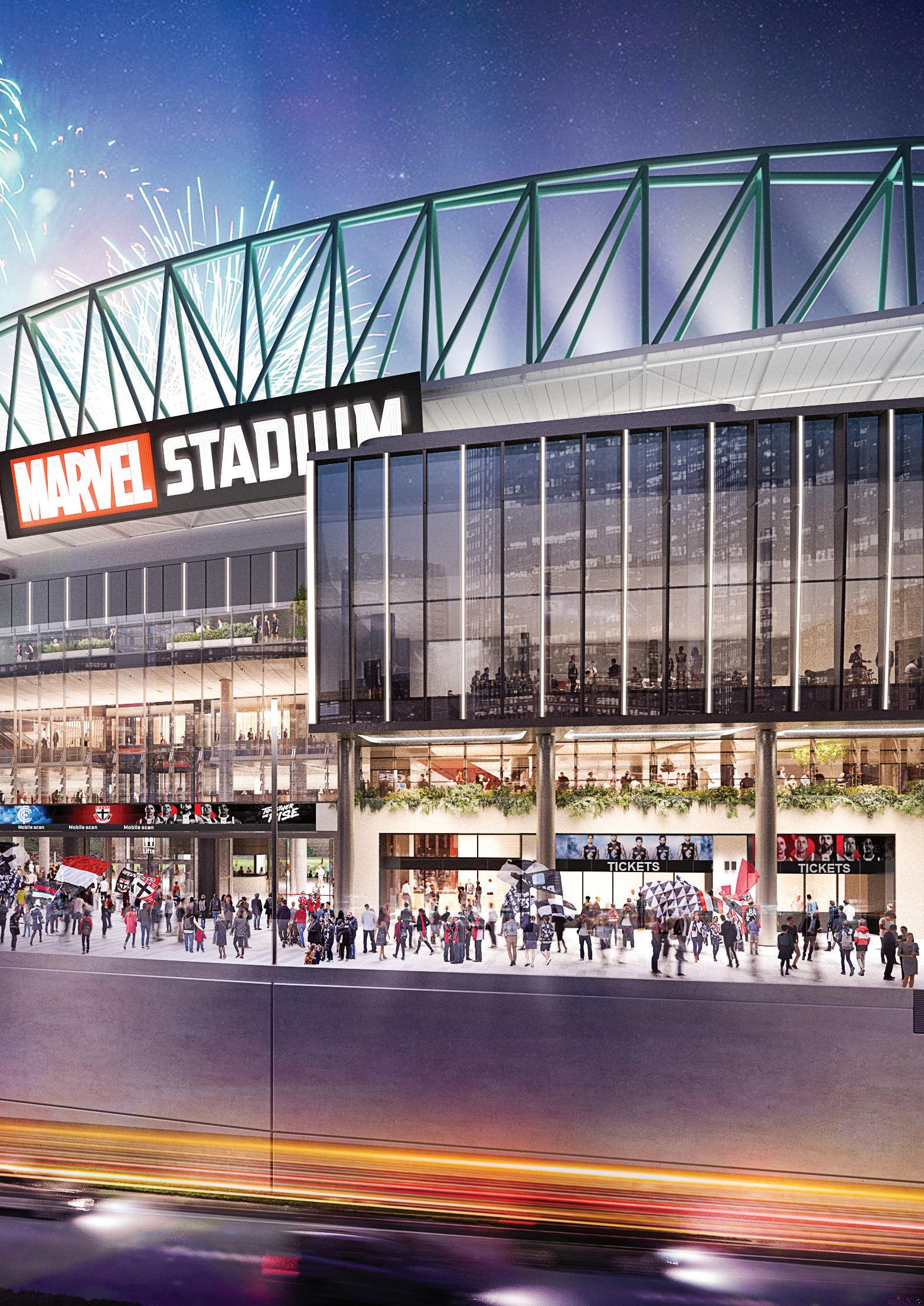
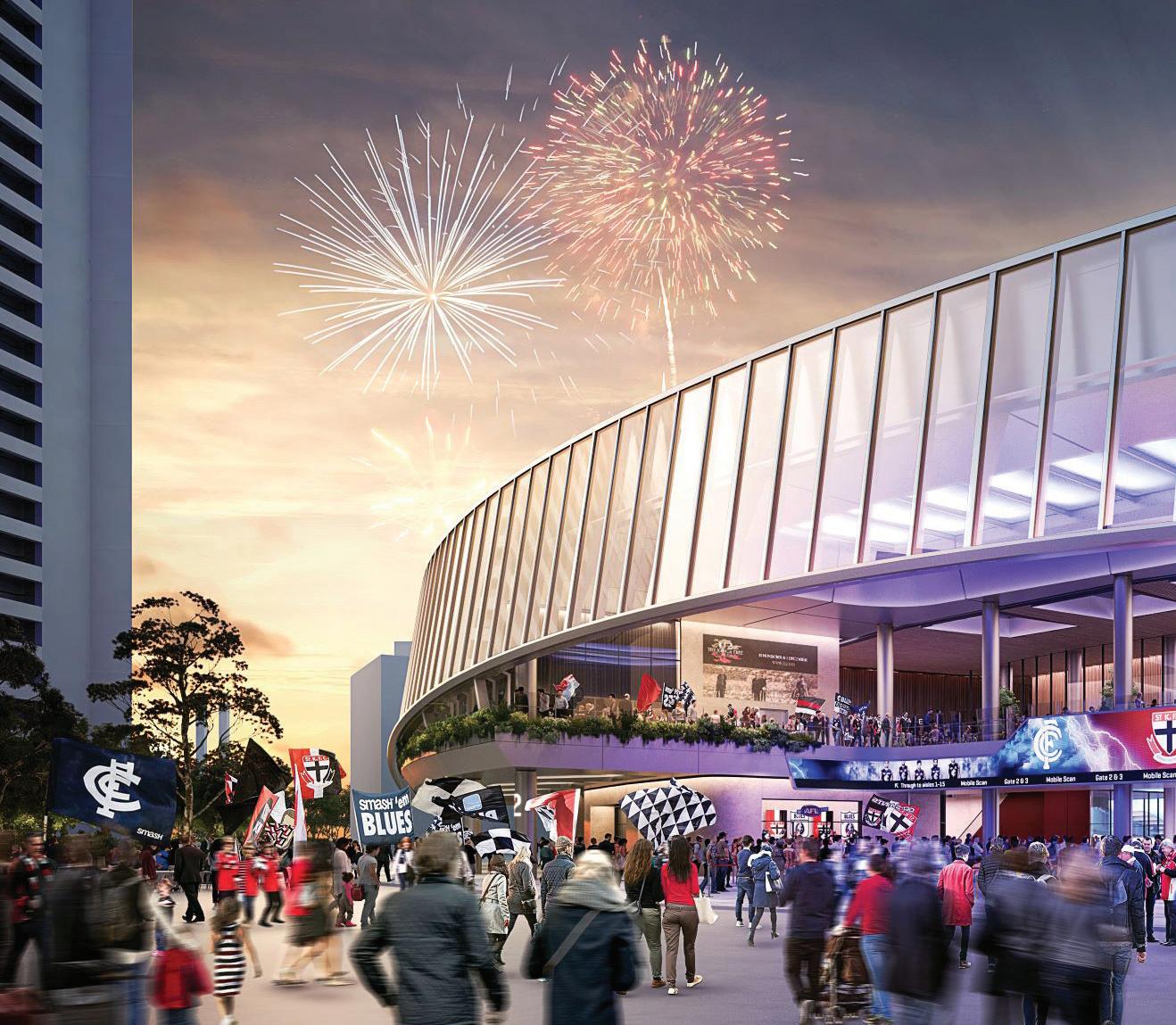
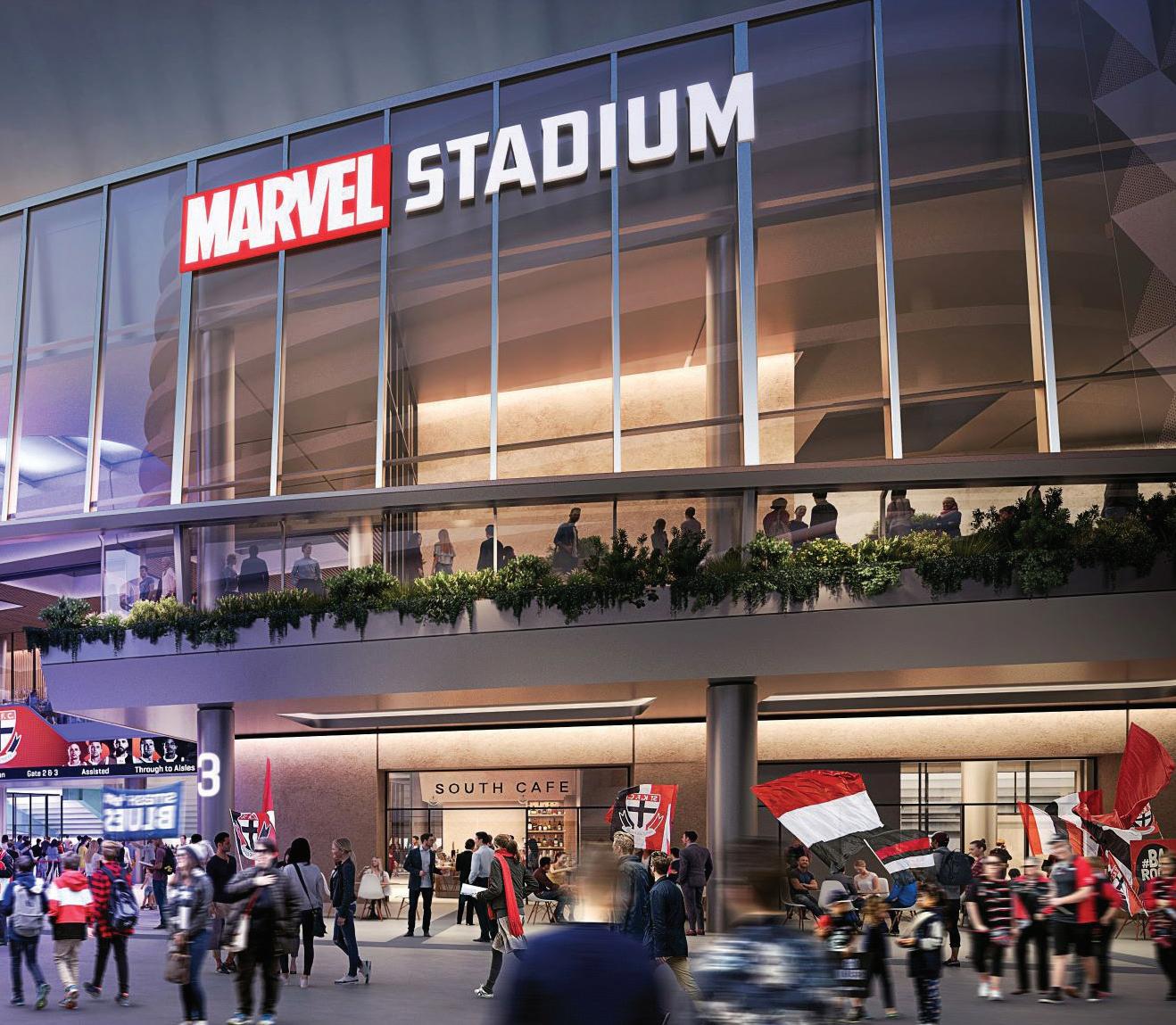
John Holland is proud to partner with the AFL to deliver a revitalised Marvel Stadium and Docklands precinct, creating a landmark 365-day-a-year sport and entertainment hub for Melbourne.
The vision is to make the Marvel Stadium precinct one of the best and technologically advanced sports and entertainment destinations in the world.
Construction commenced in 2021 with the project to be completed by 2023. The team has already completed demolition and
site preparation as well as the installation of the sports lighting during the cricket Big Bash League.
The state-of-the-art stadium will improve the overall fan experience with revitalised eastern and southern entry points, a new “Town Square” – open area available 7 days a week, new function rooms with views of the area and Melbourne CBD, major renovations to food and beverage areas, accessibility upgrades, new change rooms for athletes and improved lighting and technology.
These improvements will be made with minimal disruption to the current schedule of events.
With the Sydney Football Stadium and the Marvel Stadium, John Holland is Australia’s leading stadium constructor.
Location: Melbourne, VIC
Contract: $225 million
Customer: AFL and Victorian State Government
From gold to green
Kidston Pumped Storage Hydro
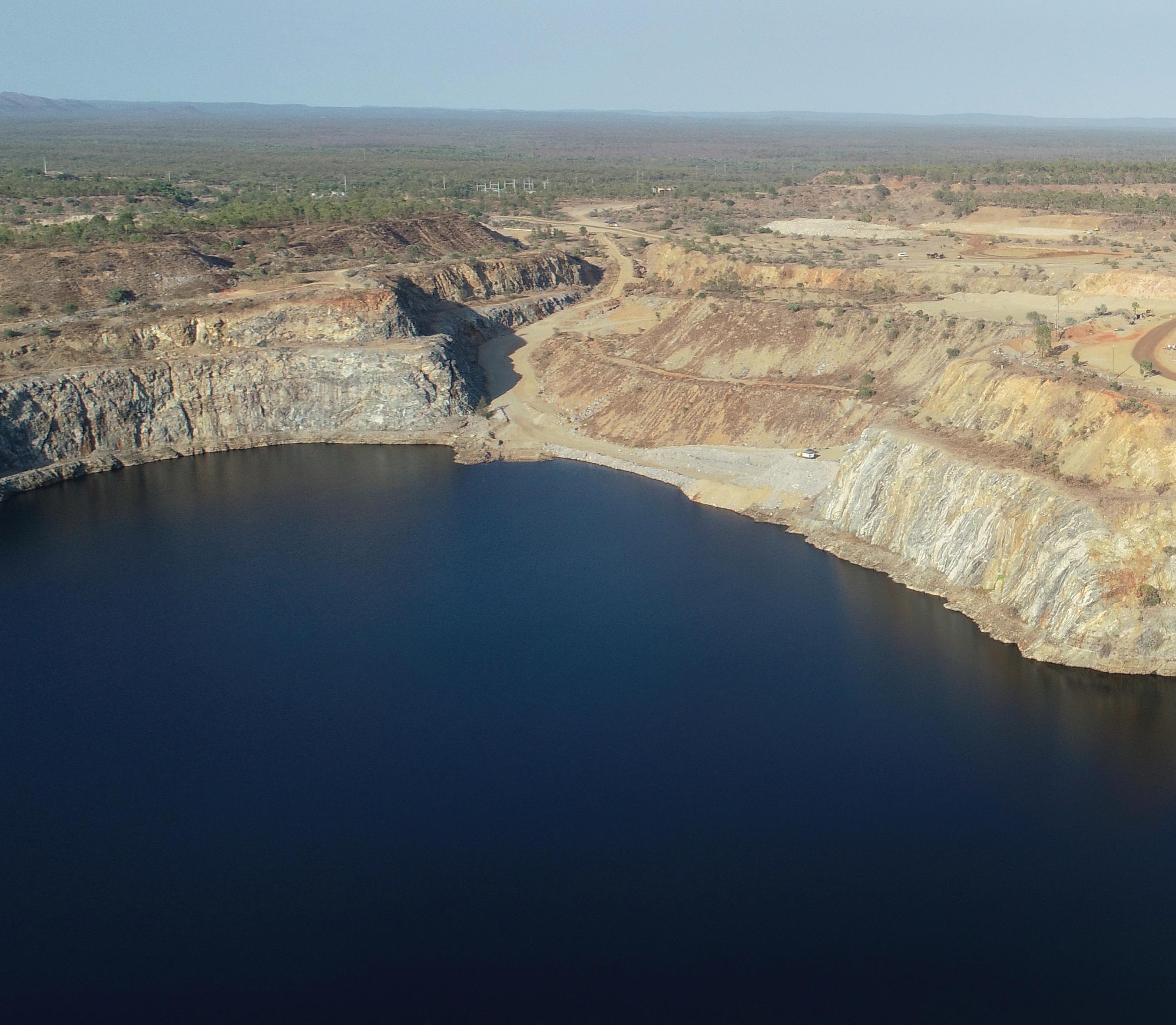
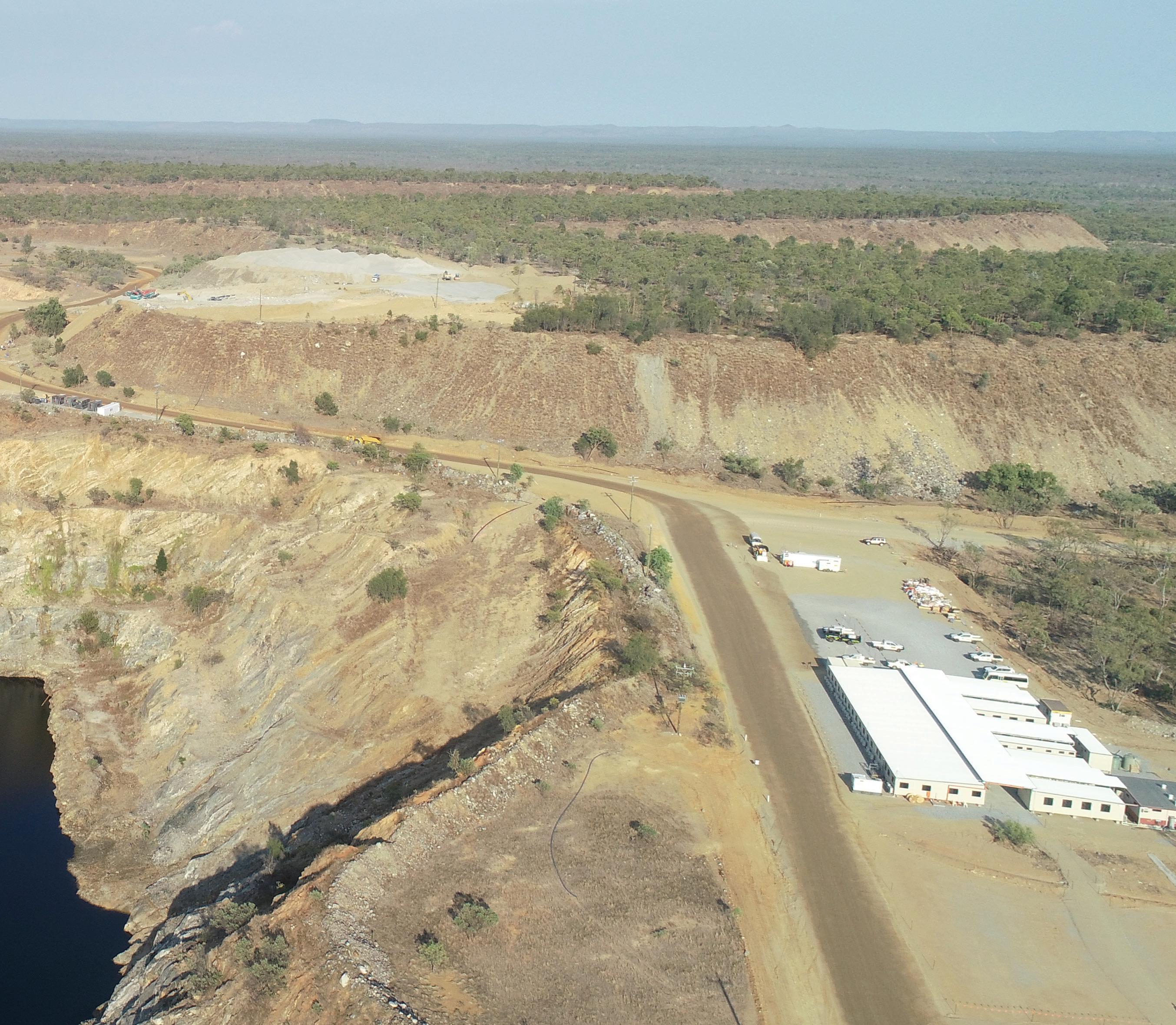
Construction commenced in 2021 on a world-first conversion of a disused gold mine into a pumped storage hydroelectric power generation facility in North Queensland.
This is a vital project for the state and Australia to make sure future generations have access to reliable, cost-effective and clean energy. The project will include work on the first-of-its kind natural battery storage facility that has the potential to generate up to 250 megawatts of rapid response,
flexible power to Australia’s national electricity market. When complete in 2024, it will generate enough electricity to power 143,000 homes in the region for eight hours.
The project will create up to 800 jobs and will be a gamechanger for the clean energy industry worldwide as it is an entirely new approach to large-scale energy storage.
The project requires the conversion of two existing mine pits into reservoirs and involves the construction of significant
underground infrastructure including a large powerhouse cavern and waterway shafts and tunnels. These will allow the transfer of water between the upper and lower reservoirs to generate power during peak periods and return water back to the upper reservoir during off peak periods.
Location: North Queensland
Customer: Genex Power Ltd
JV partner: McConnell Dowell
The future is bright
Gold Coast Light Rail
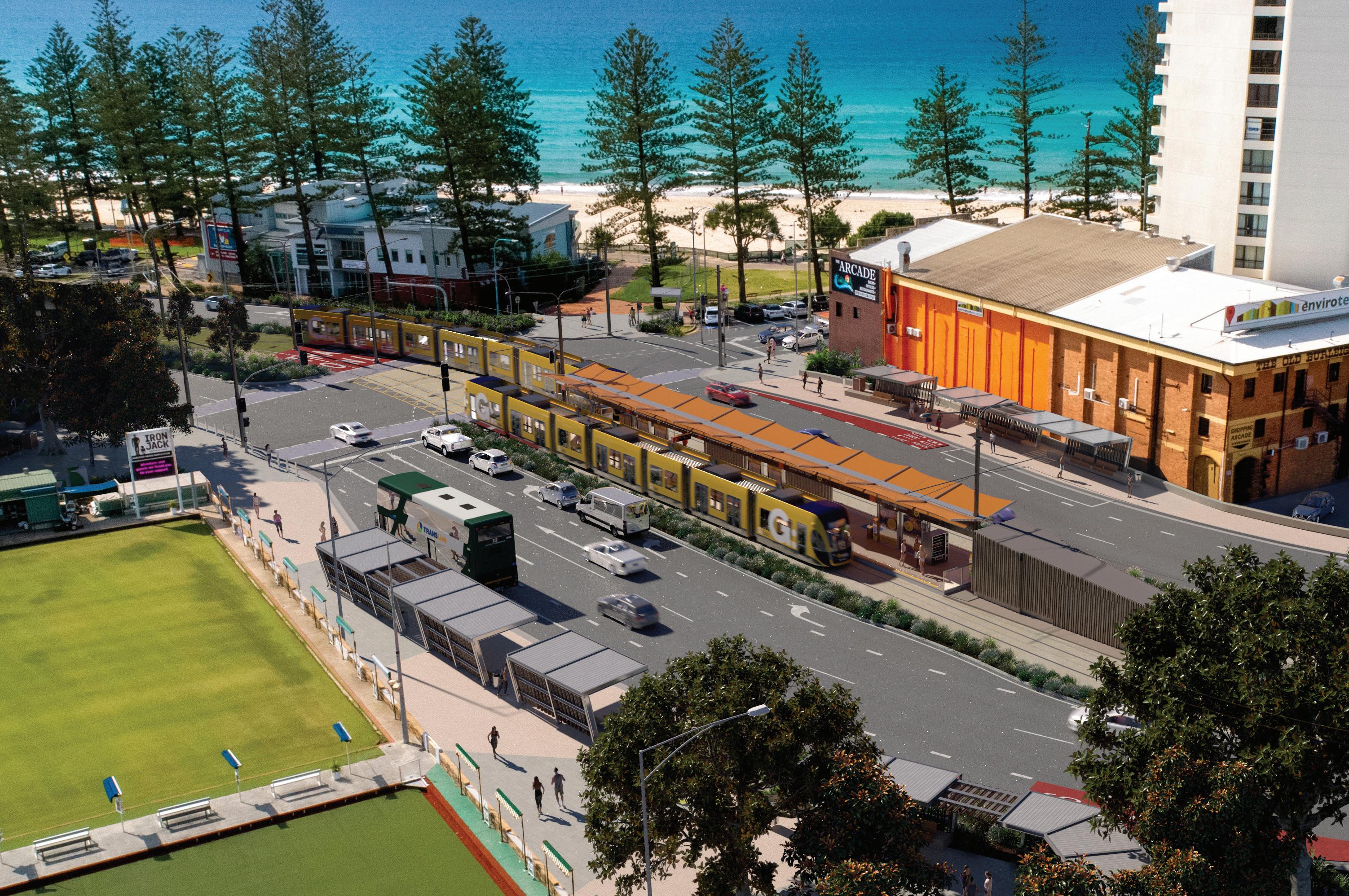
John Holland will bring its significant expertise delivering high quality rail networks to stage 3 of the Gold Coast’s largest ever infrastructure project, the Gold Coast Light Rail.
When Gold Coast Light Rail stage 3 is complete, it will provide a 6.7 kilometre line extension from Broadbeach South to Burleigh Heads, including eight new stations, five additional light rail vehicles and new light rail-bus connections at Burleigh Heads and Miami.
The extension will connect communities, improve public transport in the area, and help reduce congestion on the Gold Coast road network, while revitalising streetscapes and providing upgraded pedestrian and bike riding facilities.
Location: Gold Coast, Queensland
Customer: GoldLinQ
Future-proofing Melbourne
Hobsons Bay
John Holland is proud to continue its long-standing partnership with Melbourne Water to deliver another project to benefit millions of Melbournians.
The $200 million Hobson Main Sewer duplication involves the construction of an additional section of the network under the Yarra River to help support the transfer of 30% of Melbourne’s wastewater to the Western Treatment Plant in Werribee.
This project will ensure the reliability of the city’s sewage service for the next century and protect Melbourne’s bays and waterways from environmental harm. The duplication and rehabilitation will help to mitigate current risks associated with having only one river crossing carrying a significant amount of sewage. This project will also provide a significant increase in system capacity, which will be necessary to cater for population growth over coming years in upstream areas such as Fisherman’s Bend.
More than 20 jobs will be created by the project, with John Holland and Melbourne Water opening 12 roles for trainees and apprentices and two annual scholarships and ongoing employment for Indigenous university students.
Location: Melbourne, VIC
Customer: Melbourne Water Contract: $200 million
Seamless services
Sydney Metro – Sydenham to Bankstown upgrade
Building on the successful delivery of the Sydenham Station and Junction project, John Holland will deliver important upgrades to the 125-year-old Bankstown Line to provide a seamless and safe experience for customers.
The $273 million contract will see the rail line between Bankstown and Sydenham upgraded to accommodate metro services when the second stage of Sydney Metro opens in 2024.
The project will transform how people get around Sydney by providing additional services and
safer stations. The project includes modification and upgrades to 12 bridges including installing safety protection screens; segregating the existing freight line from the new driverless metro tracks; upgrading rail systems, signalling and overhead wiring; as well as installing retaining walls and construction of the Bankstown Service building and the new Metro platform.
John Holland has been deeply involved with the Sydney Metro project by building and operating the Sydney Metro Northwest, recently completing the Sydney Metro City and Southwest tunnels,
enhancements to the Sydenham Station and Junction and is currently working on the Sydney Metro Waterloo Station and Integrated Station Development.
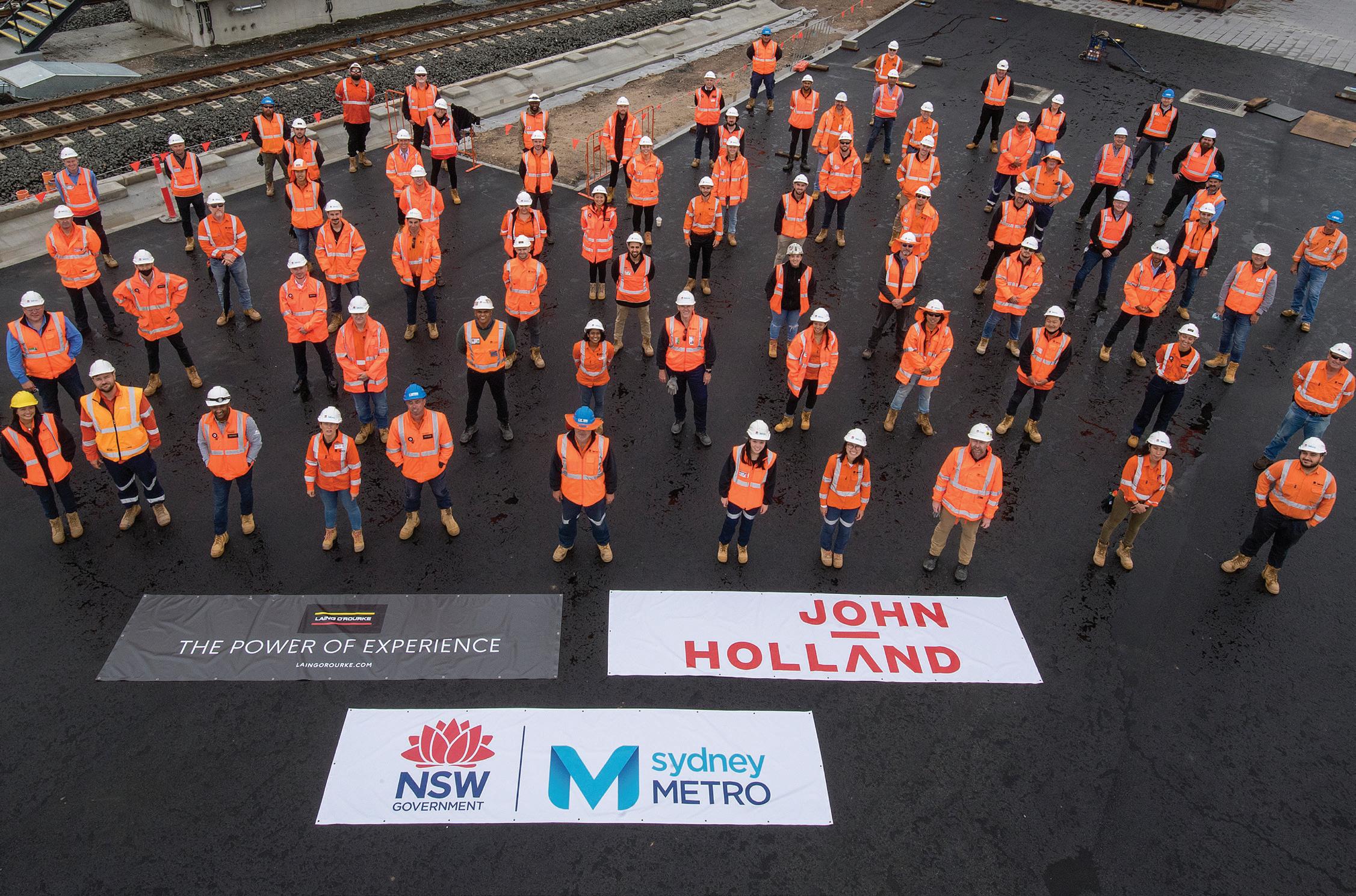
Customer: Transport for NSW JV partner: Laing O’Rourke
Contract: $273 million
Keeping Western Australians moving
Public Transport Authority Urban Infrastructure maintenance contract
The John Holland West Australian team will continue to deliver vital track maintenance services for the Public Transport Authority on the Perth Greater Metropolitan Area’s expanding urban rail network including routine maintenance, fault correction, upgrades and potential construction of track infrastructure..
John Holland has remained PTA’s contractor of choice for 26 years with the contract recently extended to January 2023..
The contract award is due to the trust and collaboration between John Holland and PTA. Since the contract commenced, John Holland
- Papakura to Pukekohe Rail Electrification Project
WA
- Western Australia Iron Ore BHP Site Engineering Construction Services
- Esperance Branch Line 2021 for Arc Infrastructure
- Coonarie South track upgrades and signalling renewal
- Avon to Kwinana Track Upgrade Project, Stage 7
- Avon Valley Rerailing
QLD
- Pindara Private Hospital Expansion
- Logan Hospital Expansion project
- Queensland Urban Utilities Goodna works package Victoria
- Melbourne Water works package
- Sea Lake to Dunolly, Victoria Timber Tie Renewal
- Southern Program Alliance Additional Works Package 3Outer Enabling Works
- Bendigo, Victoria Yard Track and Turnout Renewal
- Bendigo to Echuca Line track upgrade
- Elphinstone Tunnel Track Renewal
- Metro Tunnel – Rail Infrastructure Alliance (RIA) Gap Road, Sunbury level crossing removal
has completed over 150 shutdowns and over 1.7 million hours of intensive work often completed as emergency requests.
Location: Perth, Western Australia
Customer: Public Transport Authority
Contract: $59 million
NSW
- Sydney Roosters Centre of Excellence Main Works
- Sydney Program Alliance Works Package
- ARTC - Botany Rail Duplication and Goulburn Retaining Wall
- Digital Systems Trackside Package
- Hunter Valley Track Reconditioning (Package A)
- More Trains More Services 1500-V DC Feeders & OHW Upgrades
Projects completed
An historic build
Sydney Metro City & Southwest
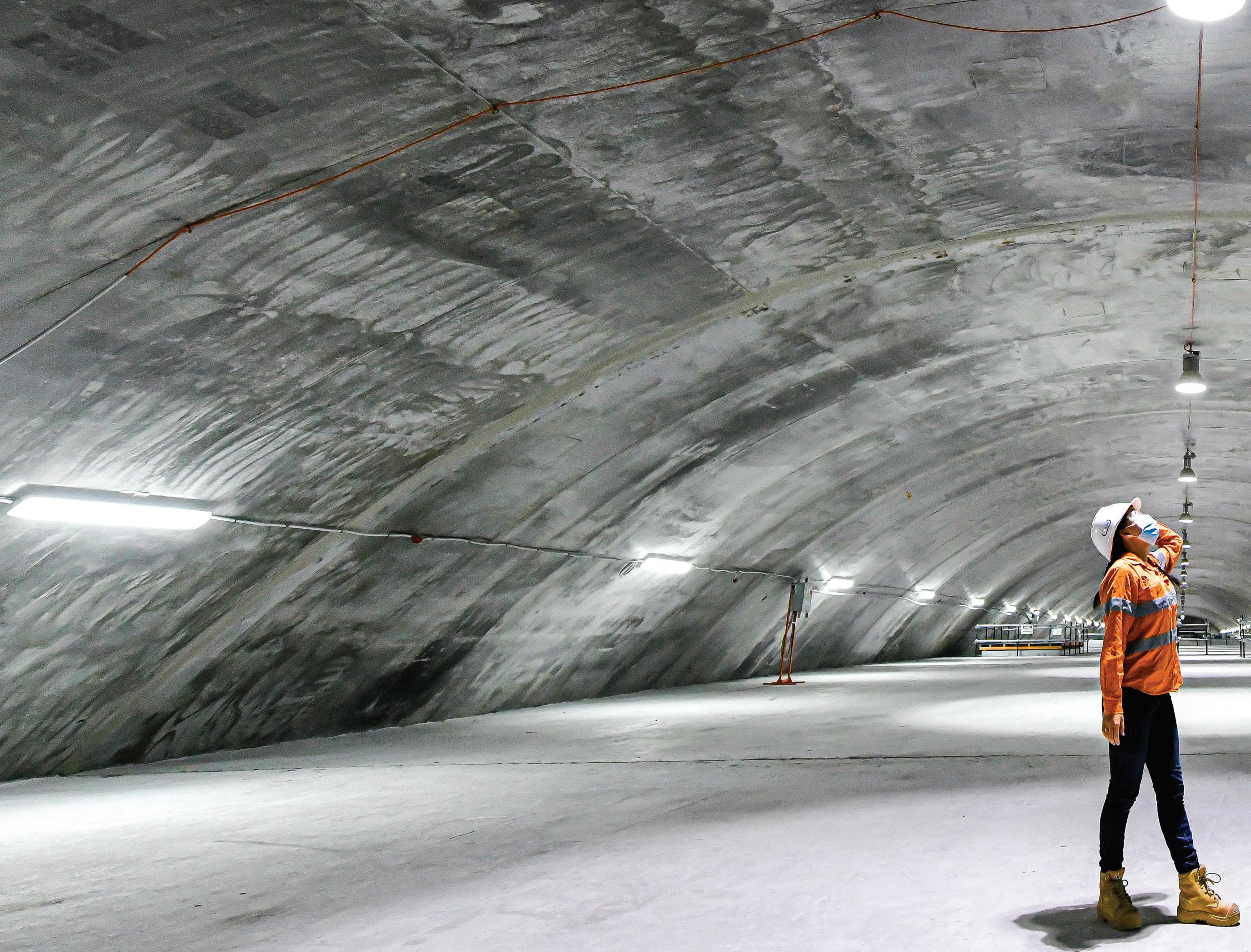
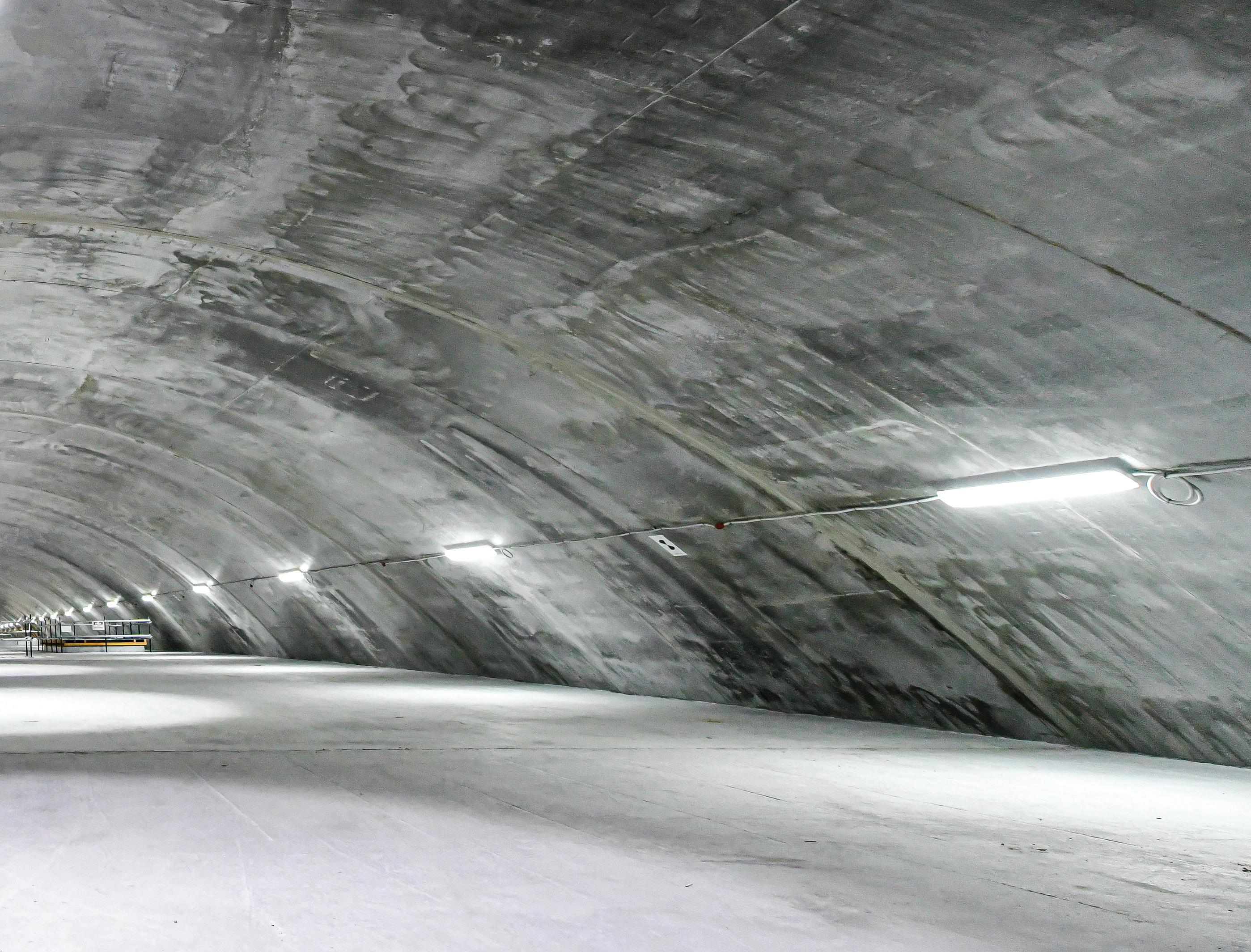
After four and a half years, John Holland delivered the next critical phase for Sydney Metro, Australia’s biggest public transport project.
The $2.81 billion Tunnel and Station Excavations project extends the new metro network from the end of Sydney Metro Northwest at Chatswood, under Sydney Harbour, through new railway stations in the CBD and west to Bankstown. Sydney Metro is already transforming Sydney’s Northwest, delivering more trains and faster services.
Over 11,000 people worked to deliver 15.5 kilometre twin railways tunnels between Chatswood and Sydenham, the first rail tunnels under Sydney Harbour and 57 cross passages to ensure customer safety.
Five tunnel boring machines (TBM) were used for the historic dig including a specialised TBM for the section under Sydney Harbour due to the rock and ground conditions found at the bottom of the harbour.
Complex underground structures were built for six new metro stations in Crows Nest, Victoria Cross, Barangaroo, Martin Place, Pitt St and Waterloo. The highly successful project was recognised with multiple awards including:
- International Tunnelling Association Awards 2020: Major Project of the Year (over €500M)
- New Civil Engineer Tunnelling Festival 2020: Tunnelling Project of the Year (over €500M)
- Outstanding Achievement in Infrastructure Sustainability Award IS Design Leading Rating –the highest ever score of 100.05 for sustainable design
- NSW Training Awards 2019 –Large Employer of the Year
Metro trains will start running in 2024, extending to the Northwest Metro, into the city and beyond to Bankstown.
Location: Sydney, NSW
Customer: Transport for NSW
Contract: $2.81 billion
JV partners: CPB Contractors and Ghella
Building Bridges
Batemans Bay Bridge
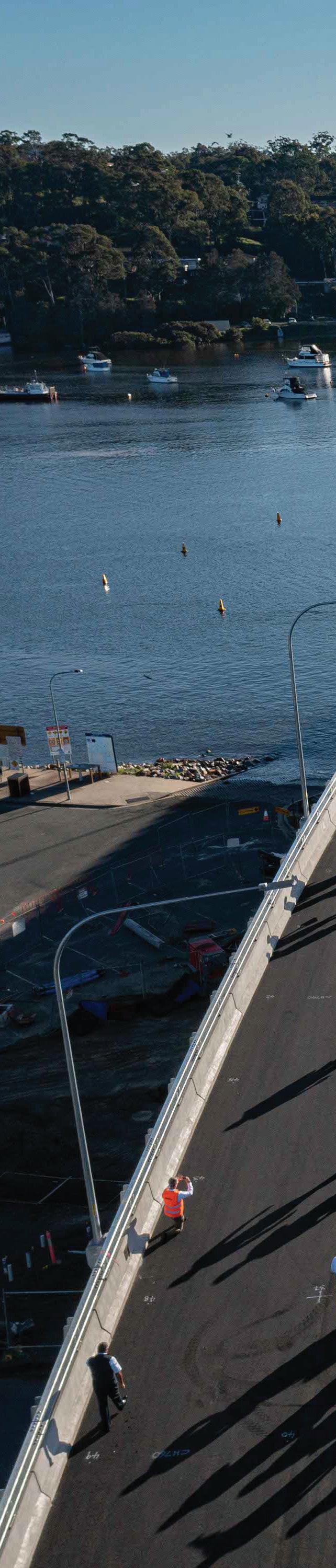
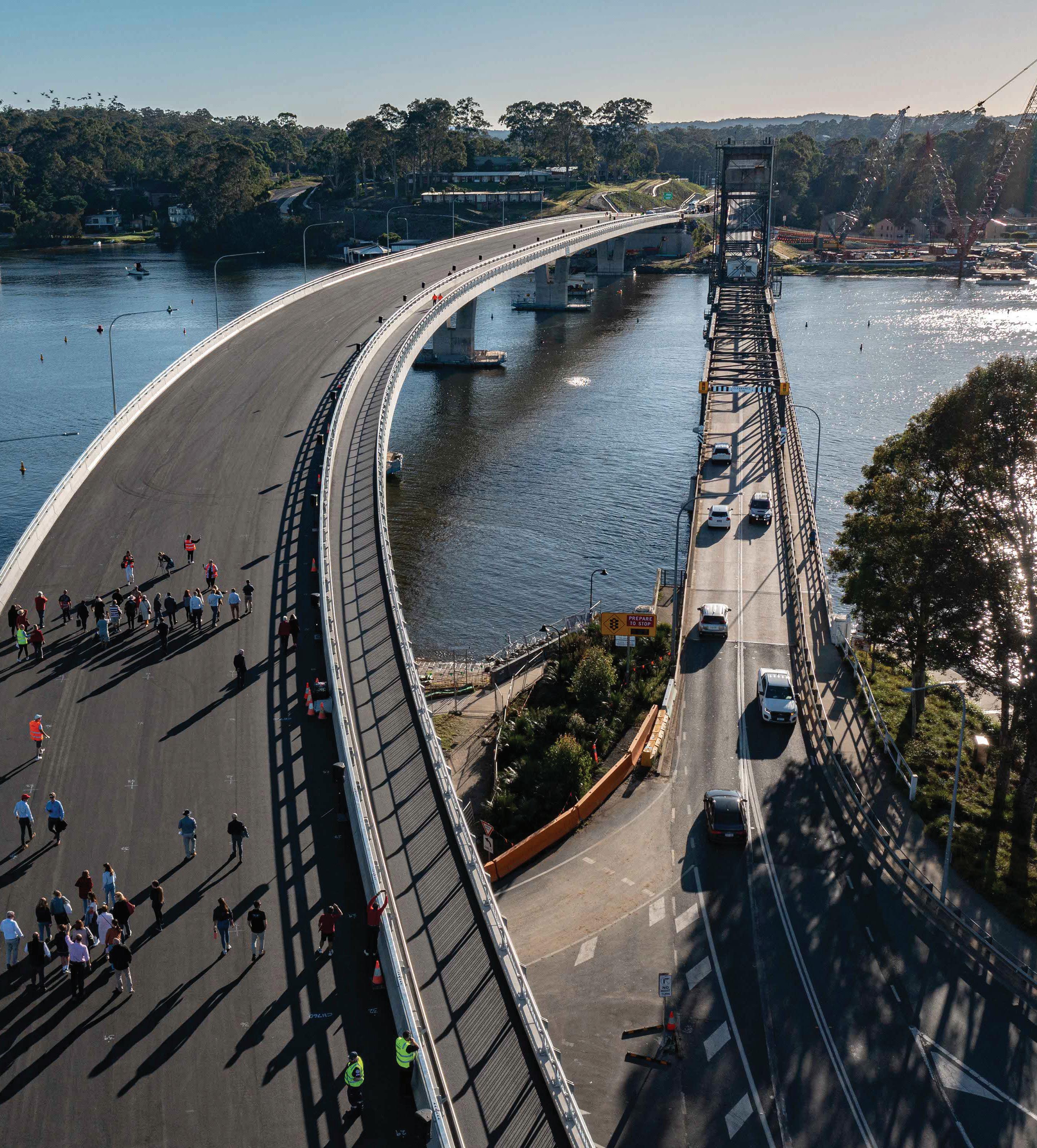
After two years, two COVID lockdowns, two significant flood events and the state’s worst-ever bushfires, the NSW south coast town of Batemans Bay celebrated the opening of the much-needed new bridge over the Clyde River.
Opening ahead of schedule in September 2021, the new four-lane bridge is already delivering improved connectivity in and around Batemans Bay for emergency services, motorists, freight, pedestrians and cyclists. Importantly, the new bridge height allows for uninterrupted access for boats up to 12 metres. The original 65-year-old bridge was dismantled, parts of which have been used for an art installation on the river foreshore.
Before the bridge was opened to traffic, a community event was held where around 3,000 locals walked across the new bridge to mark the occasion. The project employed approximately 1,000 people, with nearly half of those from the local area who worked 722,000 collective hours. The bridge includes 30,000 tonnes of concrete, 2,700 tonnes of Australian made reinforcing steel and there were 166 bridge segments manufactured on site to construct the bridge.
Location: Batemans Bay, NSW
Customer: Transport for NSW Contract: $274 million
A smoother ride
North East Rail Line upgrade
Passengers travelling from Melbourne to Albury on Victoria’s North East Rail route are now enjoying smoother journeys, significantly less delays and improved reliability of the network.
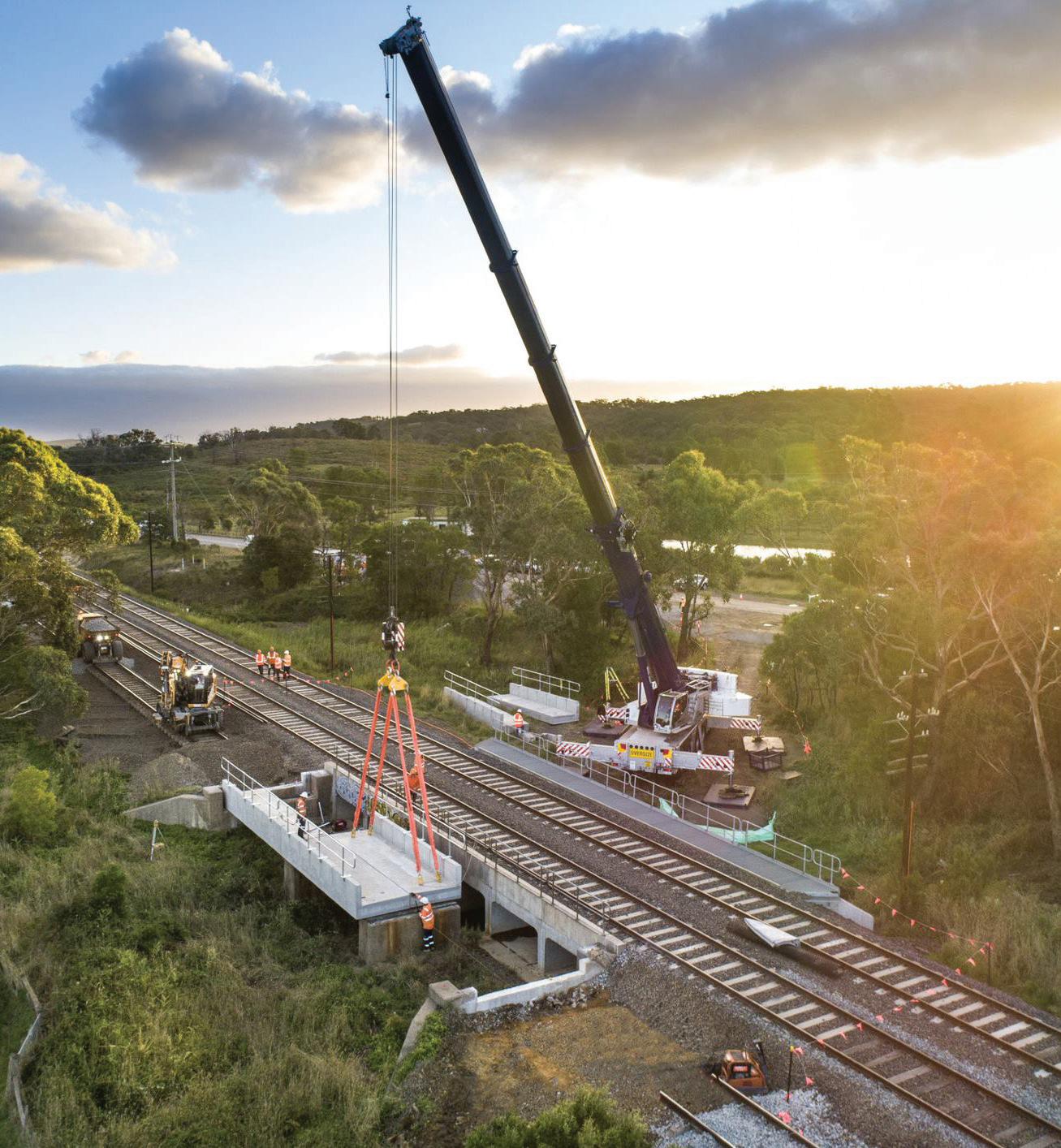
John Holland delivered the multi-million-dollar main works package for the upgrade of the North East Rail Line for the Australian Rail Track Corporation. The accelerated works program involved major improvements along the entire rail corridor (500kms), 71 level crossing renewals and 92 bridge replacements.
Location: North Eastern Victoria
Customer: Australia Rail Track Corporation
Contract: $150 million
Keeping regional NSW moving
Country Regional Network
For 10 years, John Holland successfully and safely kept regional NSW moving as it operated and maintained NSW’s Country Regional Network on behalf of Transport for NSW.
The network spans 2,470kms of operational, and more than 3,000kms of non-operational rail line. Over the last decade:
- over 2,500 employees and contractors were employed
- 180 suppliers of which 6 of the top 20 were regionally based
- the team managed more than 60,000kms of planned vegetation control
- over 88 million tonnes of freight were lifted onto the network (grain and flour 37%, mining 29%)
- 3,220kms of track was resurfaced
- more than 1.3 million timber, steel and concrete sleepers were installed
- more than 60 bridges were replaced.
The John Holland team worked closely with leading heritage specialists to preserve some of
NSW’s oldest buildings, such as the historic Wallerawang Station building, built in 1870 which now is fully restored for generations to come, while improving amenities for the local community and small businesses. Preserving and maintaining state-significant heritage assets help regional communities celebrate their heritage and tell part of their rich history.
Location: Regional NSW Customer: Transport for NSW
On track
FMG Eliwana Railway Integrated Package
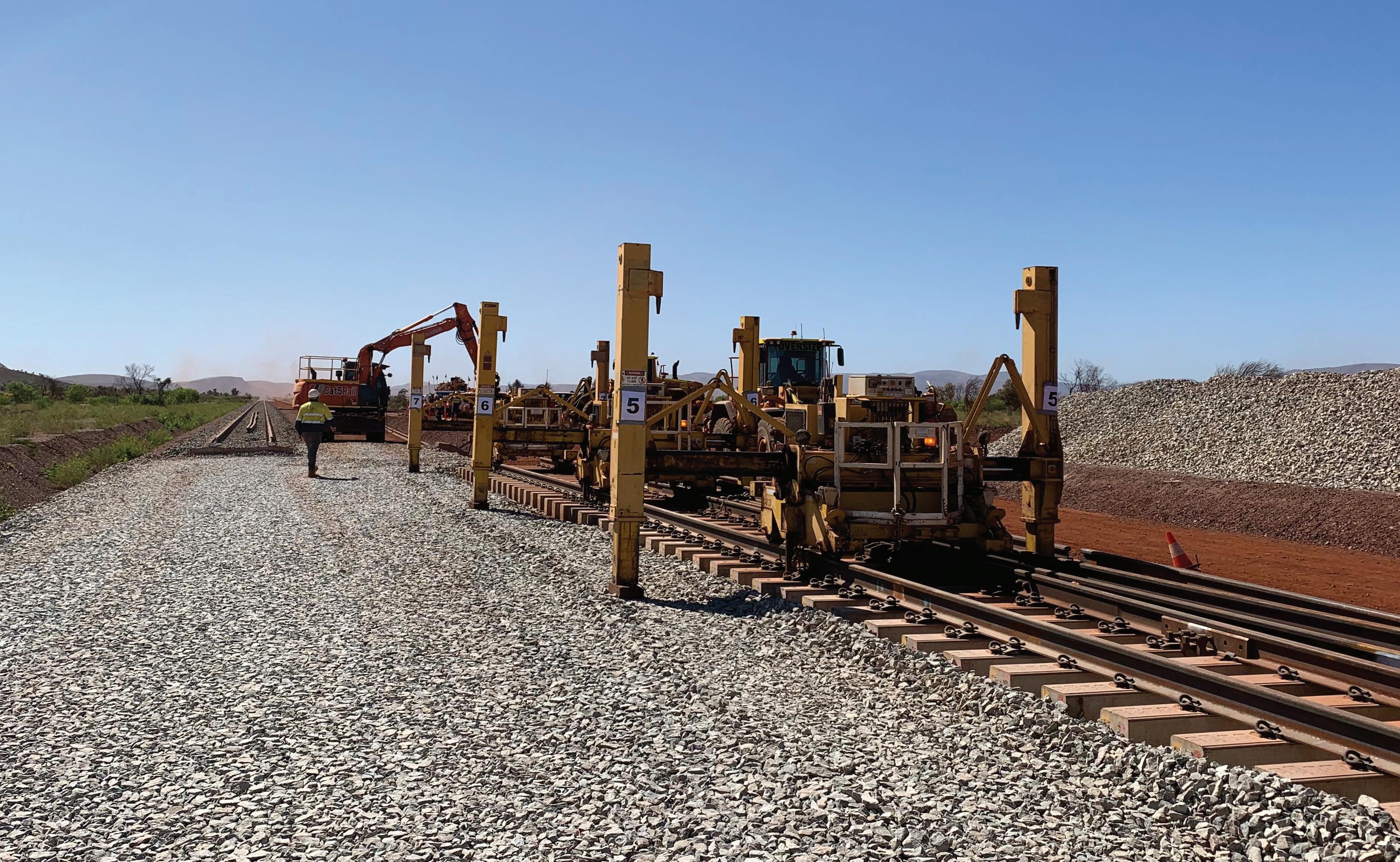
John Holland constructed 143kms of heavy haul track in the Pilbara, extended the existing signalling and train control systems, and completed a traffic capacity extension to the communication infrastructure as part of the integrated package for trackworks, train control and signalling systems (ITCS).
Our team managed the design, construction and integration of signalling and train control systems for the connection of the new
Eliwana Rail Line to the existing Fortescue Hamersley Line to Port Headland. John Holland was awarded further works including CCTV camera installations, design and construction of a new active level crossing and an extension to the ITCS contract for the remainder of the Eliwana Railway.
Location: Pilbara, WA
Customer: Fortescue Metal Group
Contract: $145 million
Other projects completed in 2021
QLD
- 11 Breakfast Creek Road, Brisbane
- Gold Coast Seaway
- Greenslopes Hospital Redevelopment
New Zealand
- Papakura to Pukekohe Electrification (P2P) - Early Works
- Fulton Hogan John Holland Rail JV
WA
- Avon Valley Rerailing (AKTUP Stage 7)
- Esperance Branch Line (EBL) Track Upgrade Project 2021
- FMG Eliwana Railway Integrated Package for Trackworks, Train Control & Signalling Systems
- Koodaideri Rail Project Pase 1Track Construction
During a second COVID year, our people were empowered to look after their physical and mental health, their teammates and to continue making progress on their projects.
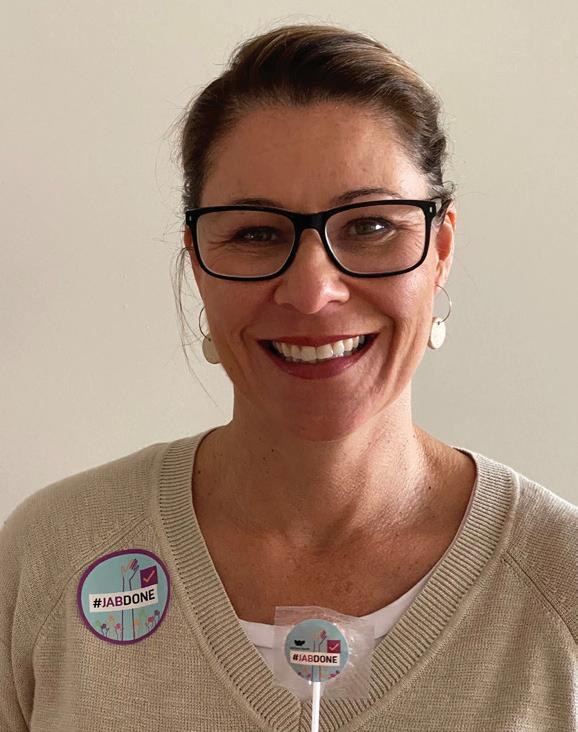
In order to do this, employees needed to be double vaccinated against COVID-19. To support the government’s initiatives in promoting vaccination for our people and the wider industry, we rolled out a national campaign – Get the Jab Done, to Get the Job Done –which was highly effective, especially on our sites.
Thousands of our people worked flexibly in 2021, which was already a priority of the business, preCOVID. During a second year of lockdowns, and after recognising that flexibility means different things to different people, we encouraged employees to “flex their way”. This could mean flexi-parenting, flexi-shifts, flexi-part-time, flexi-work, flexi-breaks or flexi-leave.
Overall, the resilience of all John Holland people was at the fore in 2021. So much so, that John Holland created a special employee Resilience Award, garnering triple the submissions than the other major award categories.
Our industry leading parental leave policy was improved to give any primary carer, no matter the gender, 18 weeks paid parental leave starting within six months of the birth or adoption of their child; no minimum employment requirement to access parental leave; and importantly when a primary carer takes a further period of unpaid leave, they will be paid an additional 18 weeks’ superannuation. This addressed some of the inequity many women face in their superannuation balances later in life.
John Holland continued to champion women in 2021. We made a commitment to increase female representation to 30% by 2021, which we achieved and new targets have been developed for 2022 alongside our Gender Diversity dashboard. We increased the female graduate intake from 20% in 2018 to 40% in 2021 and increased the percentage of female engineers from 8.6% in 2016 to 17.5% in 2020. Our female sponsorship program – partnering an executive with talented females to increase female leadership potential continued in 2021, and there are also over 50 women in our female mentoring program. Our team launched the “Breaking Bias Program” in 2020 with a focus on Women in 2021. Our Celebrate Women in John Holland network raises the visibility of women in the company and is active in promoting gender equality.
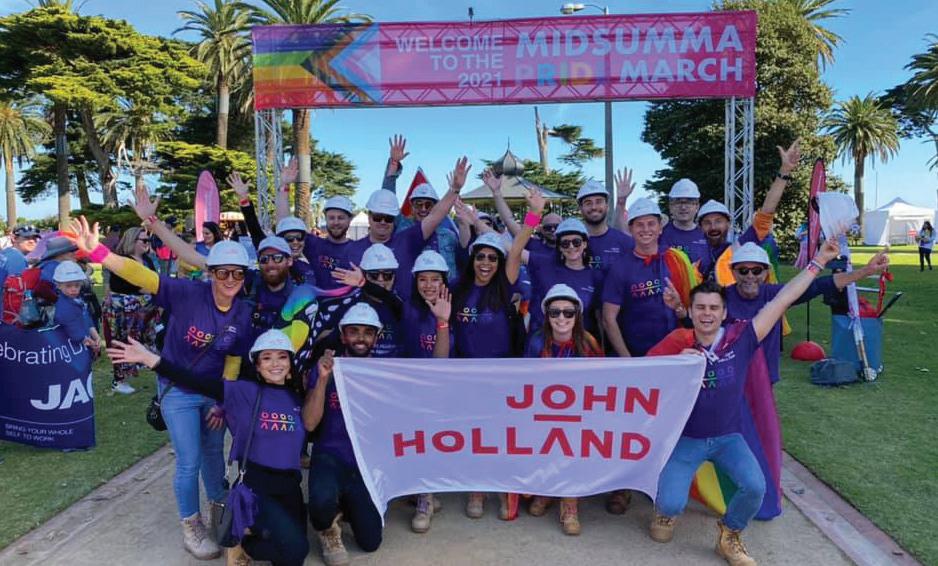
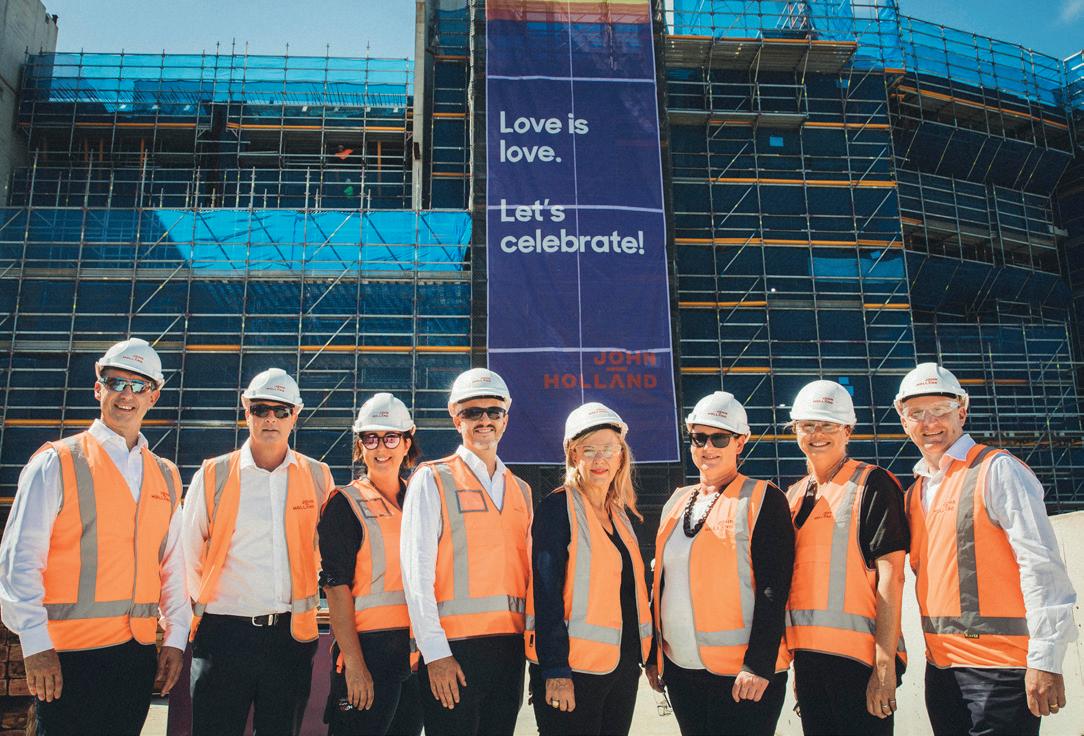
Continuing our commitment to diversity and inclusion, the John Holland Pride Network and the People team launched a Gender Affirmation Policy and toolkits during Trans Awareness Week.
We continued to provide door-opening opportunities for Australian refugees and asylum seekers through our national partnership with social enterprise CareerSeekers, welcoming our largest ever cohort –27 students – to our projects or corporate offices. This program started in 2017, with life-changing outcomes – 15 out of 18 interns secured an ongoing role with John Holland in 2020.
In 2021, our Social Inclusion team developed strategic partnerships with local community organisations that support women who have experienced family violence. We have prioritised employment opportunities and our people have volunteered to support women to gain skills and confidence as they return to the workforce.
The safety of our people is paramount, and in 2021 we recorded a Total Recordable Injury Frequency Rate of 3.74 – one of the lowest in recent history.
Mental health and Wellbeing initiatives were a priority in 2021. In recent years we have incorporated wellbeing into our health and safety policy, defined procedures
and management processes for wellbeing, trained all managers in wellbeing management and accredited 300 Mental Health First Aiders. In 2021, our work continued with a focus on mental health and suicide prevention.
Working in an industry with one of the highest rates of suicide, John Holland has been participating in research with the Black Dog Institute to better understand why the majority of those who commit suicide do not seek professional help or support.
Several initiatives were introduced across key areas including a podcast series: Move your Mind; Wellbeing webinars; the Better Sleep Program and programs on financial literacy, physical health and alcohol and other drugs.
Our Mental Health First Aid program achieved the highest accolade – gold level recognition status - from program accreditor MHFA Australia. And in response to continued stress and lockdown fatigue, Wellbeing Days were issued to the NSW and Victorian workforce to take prior to Christmas.
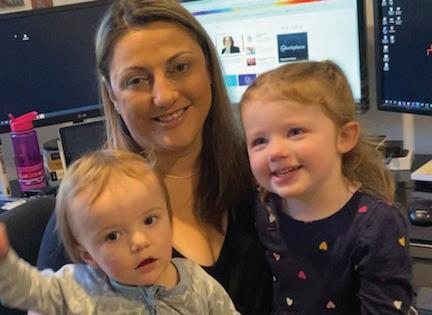
Pandemic life! Working and homeschooling
Mardi Gras as the Sydney Football Stadium
Our Glenroy team
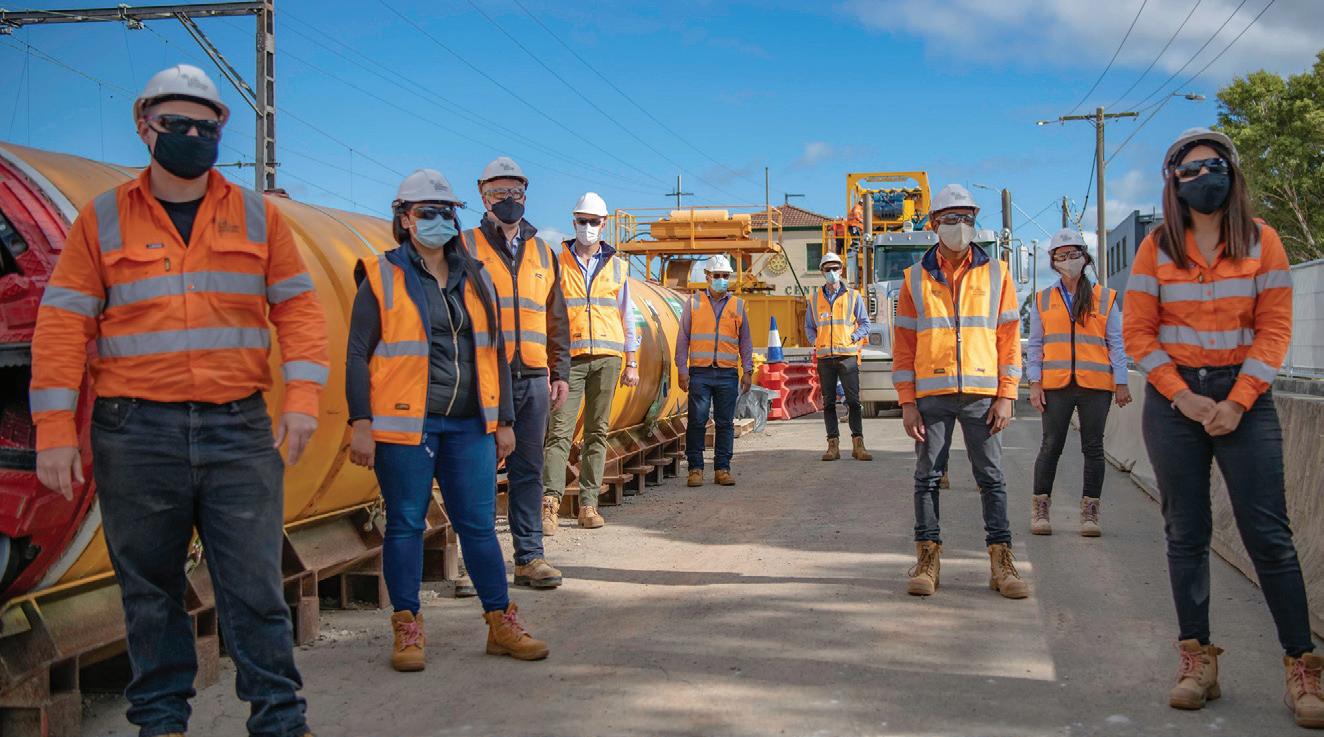
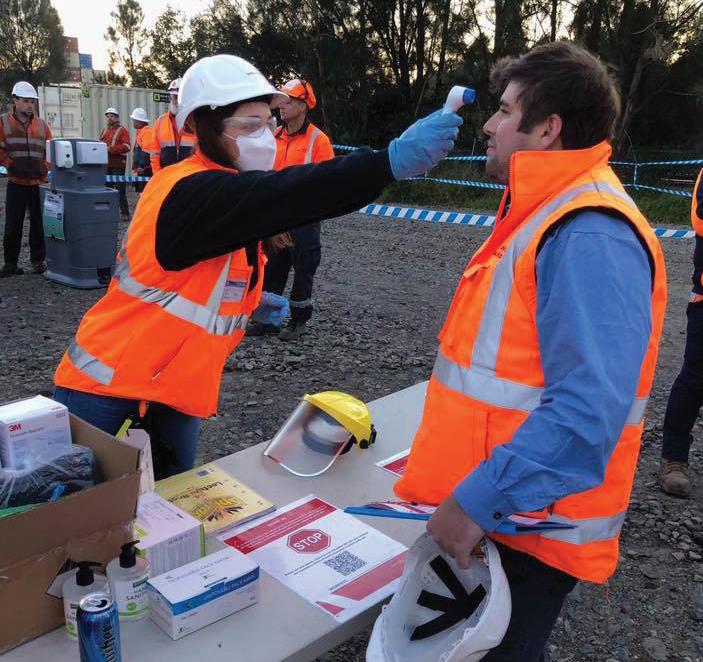
COVID safety
Get the Jab Done
Future-focused on sustainability
To ensure sustainability is embedded in every part of our business, we developed the John Holland Building Resilience Framework.
Designed in alignment with the United Nations Sustainable Development Goals, the framework guides our planning decisions based on ‘’shared value’’ principles.
Our framework is made up of four pillars:
- Leadership and Strategy
- Our built and natural environment
- Our people
- Our community and partners
You can read our sustainability reports and Modern Slavery statements here
An Australian first
In 2021 John Holland cemented our commitment to a sustainable future by signing an Australianfirst sustainability linked bonding facility to pursue sustainable growth, specifically in energy efficiency, use of renewable fuels, safety culture and social procurement.
Organised through a syndicate of banks and insurers led by HSBC and NAB, the new facility is tied to our performance against four sustainability KPIs - meaning if we perform well against these KPIs aligned to our Building Resilience Framework, we pay less. We perform poorly, we pay more. This is the first time in Australia that sustainability KPIs have been linked to a bonding facility, and one of the largest of its kind globally.
Sustainability in action
Driving outcomes
John Holland registered 39 submissions to the Infrastructure Sustainability Council of Australia (ISCA) in 2021 and is proud to hold 20% of all ISCA “Leading” design ratings and 33% of all ISCA “Leading” As-Built ratings.
John Holland completed 18 projects with Green Star ratings and developed a company-wide climate change policy and is exploring pathways to net zero emissions across all projects and corporate offices.
Championing sustainability - Edmonton to Gordonvale
The team delivering the upgrade of the Bruce Highway in North Queensland has been undertaking small and large sustainability initiatives. By instituting a Sustainability Champions Group and the Project Innovation Governance Group, the team has offset the carbon emissions generated during the manufacture and supply of the concrete, recycling glass bedding sand and effectively managing 60,000 tonnes of spoil. Working with Suez, the soil is being purchased and transported to be reused as landfill closure capping. The proceeds of the sale will go to charity. The project is also undertaking rainwater harvesting, delivering carbon neutral electricity for the whole project, and changing the cycleway design to use recycled plastic fibres instead of steel mesh.
“Excellence” for the Murray Bridge Wastewater treatment plant
South Australia Water’s new treatment plant has been awarded the highest ISCA design rating for a water or wastewater project in Australia.
The ‘excellent’ design rating is based on its score of 72. The team focused on building climate change resiliency into the design; minimising waste, dust, noise and vegetation removal; sourcing local equipment and supplies where possible; and investing in innovative treatment processes such as an odour control unit to remove 99.95% of odour; and an advanced biological treatment process called a ‘moving bed biofilm reactor’, which helps to break down sewage into a more compact, efficient and adaptable way.
So much more than the baseline at WestConnex Rozelle Interchange
The team delivering the WestConnex Rozelle Interchange have used conventional and innovative ways to deliver sustainable solutions, achieving incredible outcomes to date, and anticipating a 30% reduction in GHG emissions and 14% reduction in material usage against the base case.
The project will create the largest new parkland in Sydney’s inner west in 30 years. It will include over 300 endemic species which, combined with wetlands, will bring native fauna back to the area.
To date over $46 million has been spent with Indigenous suppliers; the project has deliberately shifted from mitigating environmental impacts to enhancing the environment, and focus has been placed on the health and wellbeing of the workforce, inclusion and diversity and skills and training. This has led to 50,000 days of accredited training delivered, over 600 qualifications achieved and 30,000 accredited safety training statements of attainment.
The team has been recognised with a “Leading” rating by ISCA with a score of 89, the highest score of any WestConnex project to date, and well above the contractual required score of 55.
Plastics be gone
John Holland launched a company-wide recycled plastic project in conjunction with Close the Loop.
Our teams find opportunities to take soft plastic waste from our projects across Australia and repurpose or reuse them back on our projects in materials such as ashphalt and concrete.
John Holland led the way with this initiative a few years ago on the New Intercity Fleet Maintenance Facility project.
Leaders in the making
Kate Rowan, John Holland’s Sustainability Advisor on the Melbourne Metro Tunnel Project, was awarded the Future Green Leader of the Year by the Green Building Council of Australia. Kate actively promotes and contributes to sustainability outcomes including the Project’s 6 Green Star Design Review ratings for the stations.
Kate Rowan
Caring for our communities
John Holland is proud to work with so many diverse community groups.
Our social inclusion program is one way we transform lives, by providing investment, creating jobs and training for people who traditionally face significant barriers to employment.
First Nations People
We doubled our spend with Indigenous businesses from $50 million in 2020 to $103 million in 2021 and over 860 Aboriginal and Torres Strait Island people were employed directly or indirectly on our projects.
Our projects have an increased focus on delivering tangible outcomes for First Nations People. The Sydney Football Stadium (SFS) created an industryleading initiative, the John Holland SFS Aboriginal Pre-Employment Program – a collaboration with local Aboriginal groups to increase the representation of First Australians in the construction industry. Participants are given practical, hands-on training to open career pathways.
Our Trans4m team in Moree NSW acknowledge the Gamilaroi People as the traditional owners and custodians of the land and waterways and have been working with the community to provide funds and services. Around $3 million was spent with local
In 2021 John Holland spent $12.2 million on social enterprises and was recognised by Social Traders as the number one company for social procurement spend in its category. The primary beneficiaries of our spend are new migrants and refugee communities, the disadvantaged and people living with disabilities. The largest spend in 2021 was with Veterans in Construction.
Indigenous businesses and they helped the application process for Indigenous people through a Jobs and Skills Hub, resulting in 77 full-time roles, representing 13.5% of the total workforce. The team partnered with medical service Pius X Aboriginal Corporation to sponsor an additional GP for COVID testing and vaccinations.
Our Rozelle Interchange project has mandated that all packages must include an Indigenous supplier. To date, over $46 million has been spent with Indigenous suppliers on the project and the team is partnering with the Metropolitan Local Aboriginal Lands Council and Inner West Council to develop heritage interpretation, information panels and a yarning circle.
Our Rail team partners with the Clontarf Foundation, a national not-for-profit that improves the self-esteem, life skills and employment opportunities for Aboriginal and Torres Strait Islander peoples.
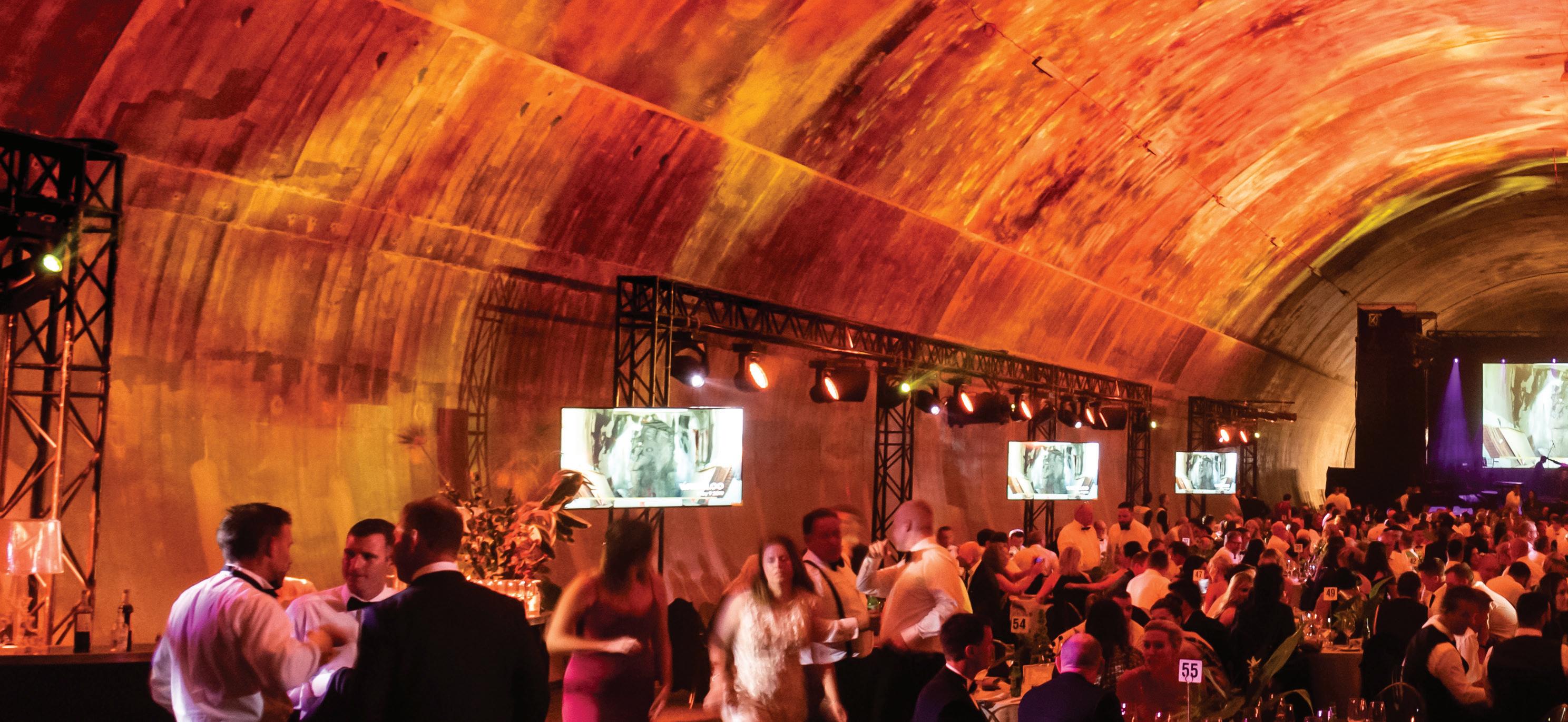
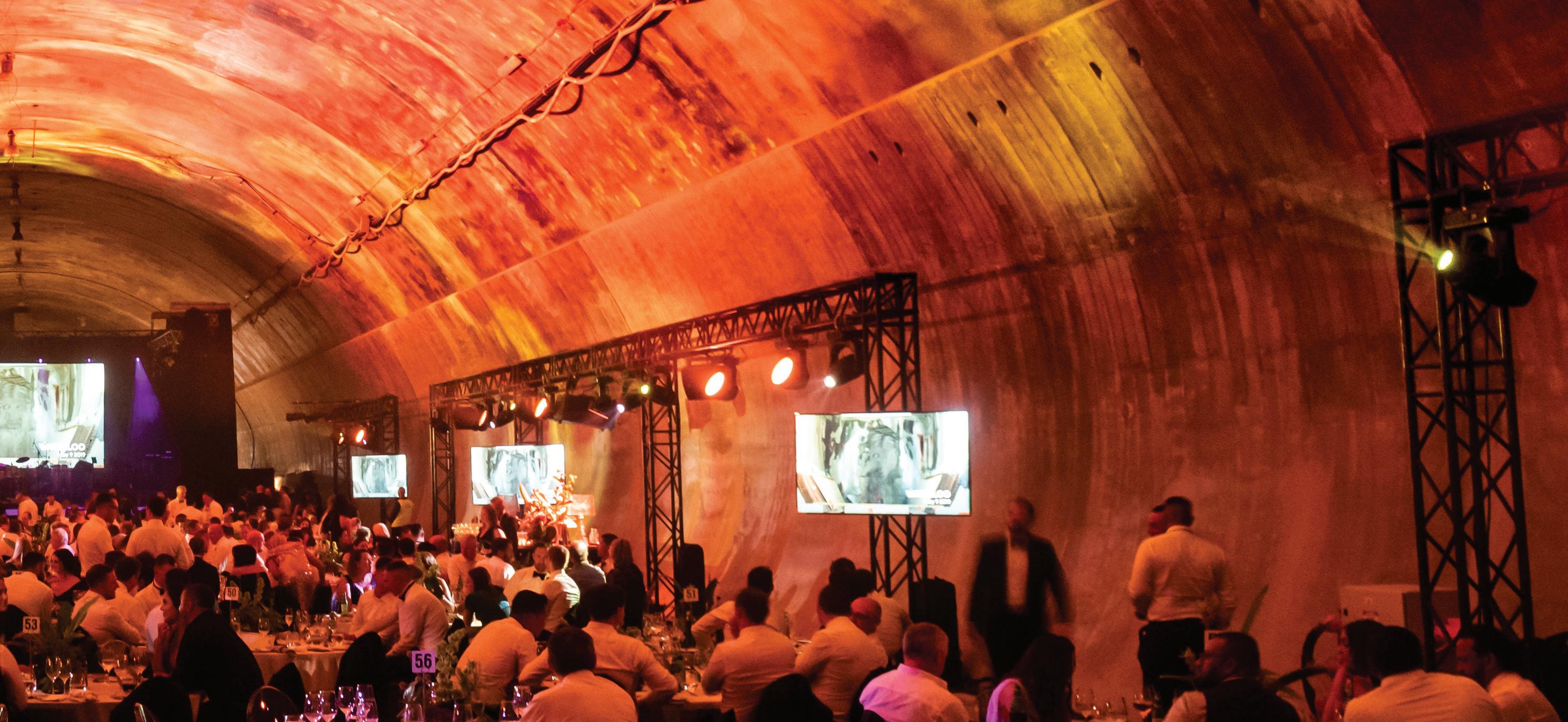
Charity Gala dinner for Bear Cottage in the new Sydney Metro Tunnel (on pages 46-47)
Not-for-profit partnerships
Across our projects and corporate offices, John Holland partnered with multiple charities and not-forprofits in 2021. Each project works directly with their communities to sponsor or provide goods and services to organisations most in need. Some great examples include our Southern Queensland Correctional Precinct team, which partners with the Ipswich Murri Cultural camp to help Indigenous young people at risk of experiencing homelessness, and also works with the Gatton Girl Guides and Scouts and the Gatton Horse Riding School for the disabled.
Our Sydney Metro Tunnels team raised another $300,000 for Bear Cottage which provides support, respite and end-of-life-care for children with lifelimiting conditions and their families. Over the course of the project, the team raised $1,115,000 and provided inkind support such as building an accessible path from Bear Cottage to Shelley Beach..
In NSW, those living in western Sydney were one of the hardest hit during COVID. With almost 3,000 of our people and subcontractors calling the western suburbs home, John Holland donated $100,000 as part of our Western Sydney Care Package, focusing specifically on mental health support - $50,000 went to Lifeline Australia and $50,000 was allocated to the Western Sydney Community Forum to cover the cost of laptops for isolated groups and needy families.
Veterans in Construction
John Holland has been working with Veterans in Construction for the past three years, helping 35 ex-military personnel transition to civilian life through employment in the construction sector.
One of the veterans, Ryan, finished his seven-year army career in 2012 and found himself drifting in various jobs. Veterans in Construction supported Ryan to secure a labouring position, and he’s since been promoted to Leading Hand and oversees a team.
“This opportunity has changed my future. Eighteen months ago, there wasn’t a future picture I could clearly see. It’s a different story for me now,” said Ryan.
Veterans in Construction
Imaginative solutions
For the last three years, John Holland has been pushing the boundaries and innovating through a company-wide digital transformation focusing on four key areas.
The first area is core modernisation - updating and modernising core systems such as finance, operations and health and safety and connecting these systems with a series of application programming interfaces.
The 30-year-old finance system is being modernised in conjunction with the operations system which manages the lifecycle of all projects – from bid management and costing to project execution and procurement. The modernisation will allow for the systems to seamlessly speak to each other when complete.
The second key area is the development of a datadriven approach to provide digital dashboards and realtime reporting across all projects and corporate.
The third area is digitising all forms and processes not picked up by enterprise systems to remove tens of thousands of hours of manual administration.
The fourth area is emerging technologies. In the last few years John Holland has been engaging a broad network of partners including major technology providers, innovators, government agencies and universities to lead the industry through a series of technology pilots across 5G, edge computing, Internet of Things, artificial intelligence, robotics, augmented/ virtual reality and digital twins.
The following examples show John Holland teams trialling a diverse range of emerging technologies.
Digital Twin
Whilst not new technology – NASA has used the Digital Twins principles for decades – John Holland is using the technology to help teams produce virtual replicas of our projects, integrated with real-time data and sensor information. Integrating this with our systems provides visualisation, monitoring, insights, analytics and risk management that enables data driven decision making and real time problem solving. Real applications could be adjusting construction methods in real time or monitoring plant and equipment. The potential is vast.
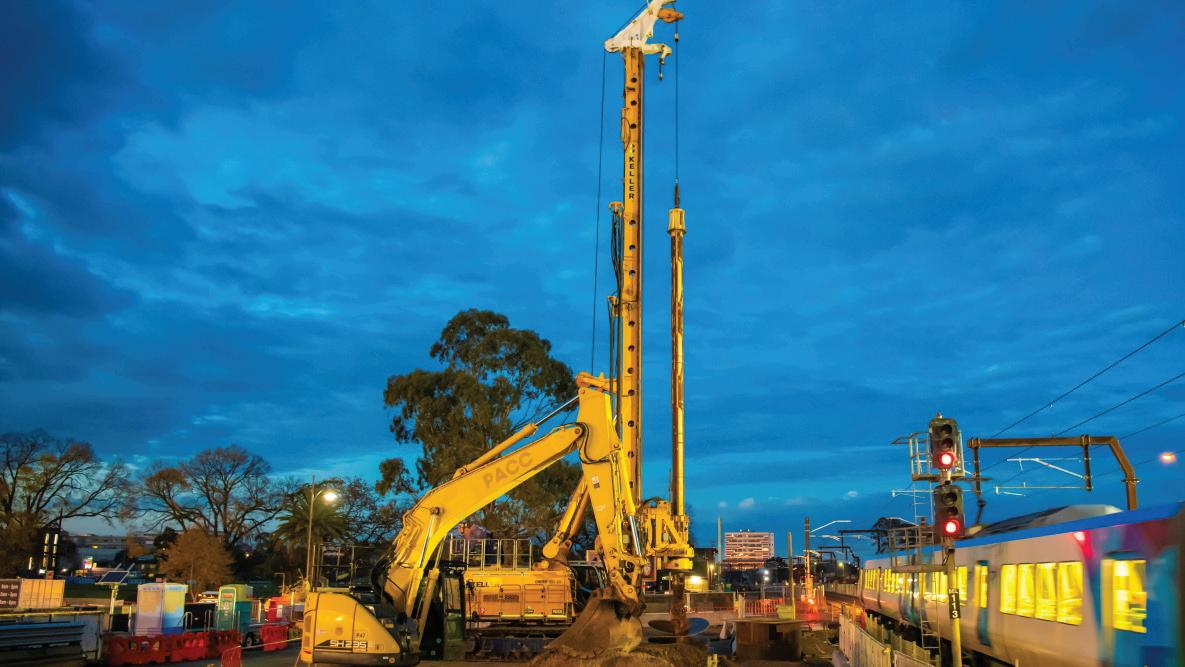
Piling rig at Preston Station
Smart sensors for spoil
Many projects involve the movement of tens of thousands of metric tonnes of spoil over the duration of the project. Managing spoil is a critical risk and thousands of work hours are spent on manually noting thousands of records. A smarter way to monitor spoil movement has been developed on our North Western Program Alliance project, called SpoilTRAC. The solution involves a sophisticated magnetic sensor that attaches to vehicles and feeds live data about actions and location back to live dashboards, saving extraordinary amounts of time and effort. The team is looking to roll this technology out to other projects in 2022.
Materials tracking
In response to feedback from projects, John Holland created a materials tracking capability to better track logistics and installation of bulk pre-cast components through an app and QR codes at different stages. This tool has already been saving thousands of hours on each project site.
Artificial intelligence
It is a John Holland first to have a project with a completely paperless accounts payable system, implemented and tested on the Rozelle Interchange Project. The system was enhanced with AI support and the John Holland development team has rolled the system out across Sydney Gateway, Chisholm Road Prison and more.
We are expecting to see similar results at Sydney Gateway, Chisholm Road Prison project and more.
Augmented Reality
The Melbourne Metro team is using a hard hat powered by HoloLens 2 Augmented Reality technology. It renders a holographic 3D design model through its goggles and overlays this on top of the physical environment, allowing the user to see the end product. This technology allows the team to virtually build the project in position onsite, allowing them to identify any potential issues before construction starts. The team has avoided potential cost and time loss and has additional confidence and assurance in the construction process and progress.
Davit Arm and Guide Roller combination
Managing power upgrades in the Sydney Airport tunnel requires significant cabling works in tight spaces. The team at More Trains More Services, Next Rail invented a new device–the Davit Arm and Guide Roller–to reduce the manual handling and improve the efficiency of laying cables in difficult conditions. The team saw numerous benefits including a far safer option than manual handling; a 37.5% reduction in labour, and 30% reduction in plant resulting in a cost savings of approximately $845,000. Productivity increased by 25% and there was a 21% reduction in diesel and fuel, reducing overall emissions. Importantly, fewer disruptions to the rail network, allows for greater accessibility to the network by the community.
Building Information Modelling
(BIM)
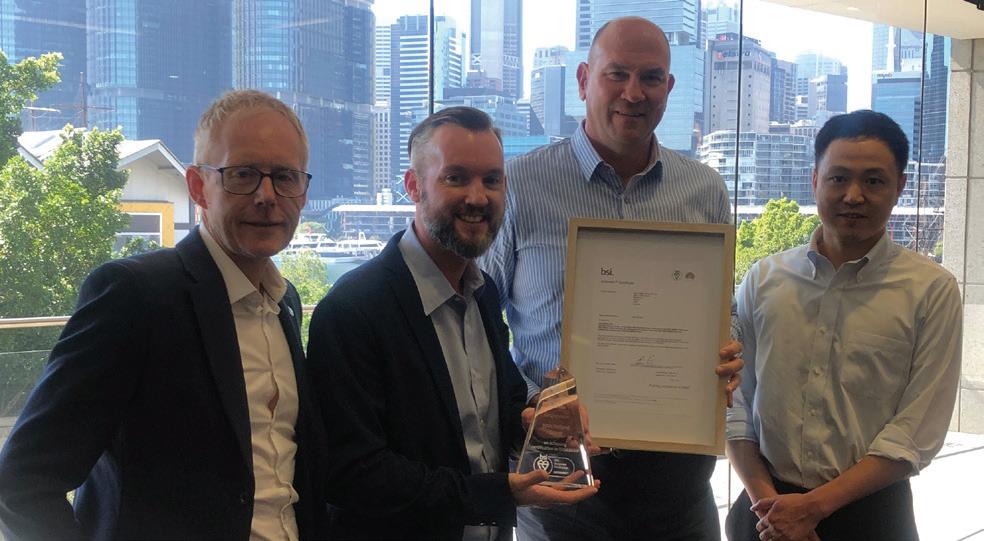
In 2021, John Holland was one of the first engineering companies in Australia to achieve Kitemark certification for our BIM capabilities from the British Standards Institute (BSI). The internationally recognised accreditation further solidifies our position as a leader in delivering end-to-end project solutions of a worldclass standard.
The 3D-model based process provides efficiencies throughout the entire life cycle of a project. Kitemark certification is a rigorous process that requires evidence of BIM utilisation in major projects.
Chris Meehan, Chief Operating Officer at BSI said: “The BSI Kitemark™ certification is the international benchmark for excellence in digital engineering and project delivery. John Holland have shown they are at the forefront of BIM, giving clients confidence and certainty that their deliveries and projects meet the highest of standards.”
Our projects and offices
We have 61 projects in Australia and New Zealand across the following sectors: