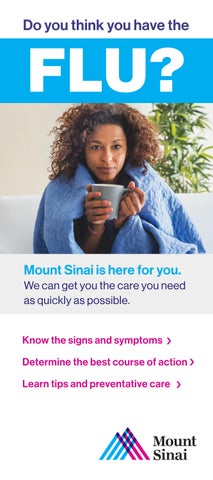
Do you think you have the
FLU?
Mount Sinai is here for you. We can get you the care you need as quickly as possible. Know the signs and symptoms › Determine the best course of action › Learn tips and preventative care ›
Flu symptoms can include: • Fever or chills
• Runny or stuffy nose
• Cough
• Muscle or body aches
• Sore throat
• Fatigue
When do you need medical care? Some symptoms do require medical care, such as: • Difficulty breathing or shortness of breath • Persistent pain/pressure in the chest or abdomen • Persistent dizziness, confusion, or inability to arouse • Seizures • Not urinating • Severe muscle pain, weakness, or unsteadiness • Fever or cough that improves but then returns or worsens
People who are at high risk Flu can affect anyone, but the most vulnerable are: • Children under age 5 • Adults over age 65 • Women who are pregnant or up to two weeks after giving birth • People with a weak immune system, such as those with HIV, AIDS, or cancer • P eople with chronic illness, such as asthma or lung disease, heart disease, or disorders of the brain, blood, kidney, or liver
Fortunately, most people can recuperate from the flu on their own. Some tips for self-care include: • Get plenty of rest • Drink lots of liquids • Treat aches and fever with over-the-counter acetaminophen or ibuprofen • Sit in a steamy bathroom • Run the humidifier • Treat a cough with over-the-counter cough medicines or lozenges (but do not give cough medicines to children under age 4) • Treat a stuffy nose with saline nose drops or sprays
How you can help fight the flu The U.S. Centers for Disease Control and Prevention recommends that you: • Get the flu vaccine every year (for those 6 months of age and older) • If you have the flu, stay home until your fever is gone for 24 hours without the need for any fever-reducing medication • Wear a mask especially when you are sick • Prevent the spread of germs by avoiding or limiting contact with sick people, and frequently washing your hands with soap and water • Follow your doctor’s instructions, including taking any prescribed flu medications
zzz
Remember to wear a mask when you are feeling sick.
Book a Virtual Urgent Care visit Speak with a Mount Sinai doctor anytime, from anywhere. Just start a video visit with the MyMountSinai app on any smart device.
Walk In, for an in-person Urgent Care visit Find a location near you. We are open days, nights, weekends, and most holidays.
Schedule an appointment e offer same-day appointments throughout W New York City. Call 844-463-2778
Emergency Room vs. Urgent Care In general, you only need to go to an emergency room for a life-threatening emergency.
Most people with the flu don’t need emergency care. For common health care needs, you can see a provider quickly with Virtual Urgent Care: mountsinai.org/virtualurgentcare. Or you can get the help you need at an urgent care facility. Mount Sinai urgent care facilities are open days, nights, weekends, and most holidays.