Innovation and Collabora tion With Mount Sinai Transla tional Resour
ces and
Expertise
About Mount Sinai
Mount Sinai Health System is one of the largest academic medical s ystems in New York City and stands among the most prestigious research institutions in the world. With seven hospital campuses and a leading medical school, the Icahn School of Medicine at Mount Sinai is home to more than 38 academic departments, 48 research, educational, and clinical institutes, and more than 350 research labs.
Our renowned clinicians and researchers are leaders in their fields, recognized for their breakthroughs in oncology, neurology, immunology, cardiology, and other areas.
The following is a selection of Mount Sinai’s clinical departments and divisions, translational research hubs, specialized programs, centers, and institutes. These experts are dedicated to working collaboratively—within Mount Sinai and with partners in industry—to solve some of the world’s most pressing and complex medical problems. Click the hyperlinks f or more information about specific programs.
For further information, please contact members of the Strategic Alliance and Program Management team within Mount Sinai Innovation Partners: Joy Dicker, Managing Director ( joy.dicker@mssm.edu ) and Irina Furman, Director ( irina.furman@mssm.edu )
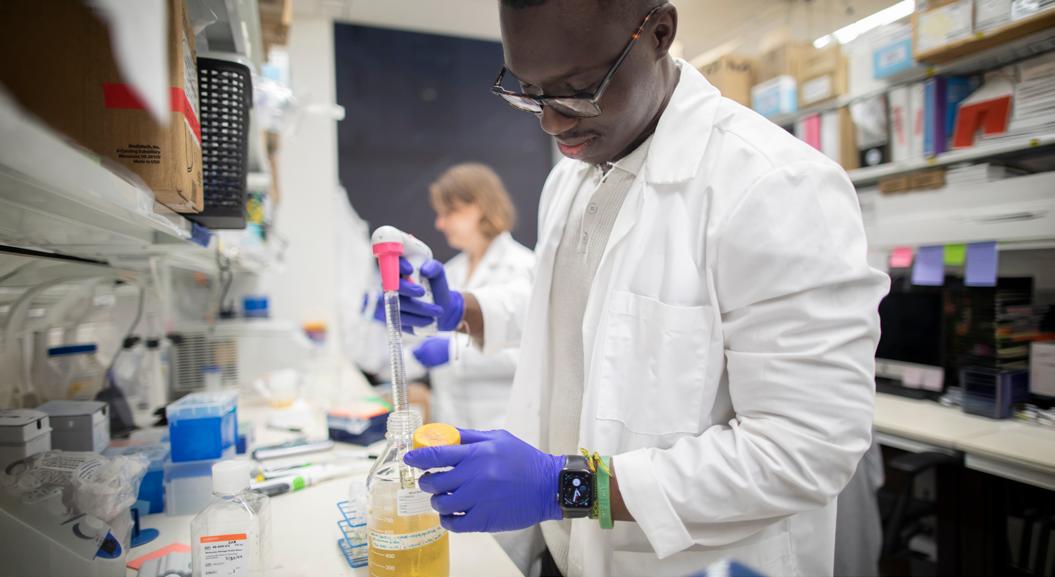
Cardio-Metabolic Highlights
Mount Sinai drives innovation in metabolic and cardiovascular health through leading programs in endocrinology, cardiology, gastroenterology, and liver disease. Integrating advanced research, clinical expertise, and specialized centers, these programs tackle diabetes, obesity, heart disease, and metabolic liver disorders while pioneering new therapies and technologies.
Clinical Divisions
The J. Lester Gabrilove Division of Endocrinology, Diabetes and Bone Disease
Ranked among the top in the United States, the division advances care and research in diabetes, obesity, thyroid and adrenal disorders, and osteoporosis, and is supported by specialized centers and major NIH-funded innovations.
Dr. Henry D. Janowitz Division of Gastroenterology
Ranked No. 6 nationally by U.S. News & World Report® , Mount Sinai is home to the country’s only freestanding Division of Liver Diseases. Research strengths span metabolic dysfunction-associated steatohepatitis, viral hepatitis, liver cancer, fibrosis, and regeneration. Additionally, in 2025, Mount Sinai established a state-ofthe-art mass spectrometry laboratory for high-resolution metabolic profiling of patient blood and tissues.
Translational Research Hubs
Cardiovascular Research Institute (CVRI)
The CVRI at Mount Sinai is a multidisciplinary and collaborative center for fundamental and translational cardiovascular research. CVRI investigators focus on understanding, preventing, and ultimately curing cardiovascular disease through research spanning key themes, including exposome and disease prevention, systems physiology and artificial intelligence, and engineering and therapeutics. Recognizing that the circulatory system is deeply interconnected with the nervous, immune, metabolic, and endocrine systems, CVRI investigators leverage advanced technologies and work closely with experts across Mount Sinai to drive innovative, cross-disciplinary discoveries.
Mount Sinai Diabetes, Obesity, and Metabolism Institute (DOMI)
DOMI unites leading physician-scientists across disciplines to advance groundbreaking research and develop transformative therapies and prevention strategies for diabetes, obesity, and metabolic disorders.
Mount Sinai Fuster Heart Hospital
An internationally recognized leader in cardiology care, cardiac surgery, and advanced research, with a team of more than 1,400 professionals, Mount Sinai Fuster Heart Hospital has extensive expertise in basic, translational, and clinical research, as well as leading trials. Areas of focus include diabetes, obesity, hypertension, dyslipidemia, atherosclerosis, and heart failure, with strong experience in drug and device development and approval.
Metabolic Dysfunction-Associated Steatohepatitis (MASH) and Metabolic Dysfunction-Associated Steatotic Liver Disease (MASLD) Center for Excellence
Launched to standardize care, drive robust trial enrollment, and support innovative clinical and translational studies, including a large longitudinal registry targeting 1,400 by year-end.
Fibrotic Disease Highlights
Mount Sinai’s programs in liver, lung, blood, and kidney diseases are leaders in fibrosis research and the development of therapeutic interventions. They integrate basic, translational, and clinical science with complex technologies, multi-omic profiling, and industry collaborations to drive novel treatments and improve patient care across multiple organ systems.
Clinical Divisions
Division of Liver Diseases
An internationally recognized leader in fibrosis, hepatitis, and liver cancer, with NIH- and industryfunded programs spanning basic and translational science, therapeutic discovery, and clinical trials. These programs are well-positioned for collaborative drug development and testing.
Division of Nephrology
Provides extensive clinical resources and research expertise in antifibrosis, focusing on mechanism-based target identification, preclinical validation through kidney-on-chip and animal models, and clinical trials in partnership with pharmaceutical companies.
Translational Research Hubs
Center for Liver Research
A multidisciplinary program dedicated to advancing fundamental and translational biology research with the goal of identifying new therapeutic targets and developing novel treatments for the liver.
Pulmonary Fibrosis and Interstitial Lung Disease Program
Advances the science of interstitial fibrosis through multiomic profiling, advanced imaging, genetic studies, and AI-driven analysis, integrating clinical and biological data to uncover disease mechanisms, develop novel therapies, and lead collaborative research and clinical care across multidisciplinary settings to improve outcomes in pulmonary fibrosis and related lung diseases.
Myeloproliferative Disorders Research Program
A multi-institutional collaboration that focuses on the cellular origins of Philadelphia chromosome-negative myeloproliferative disorders through integrated basic, translational, and clinical research. This program project grant is funded by the National Cancer Institute, and investigators create strategies to reverse marrow fibrosis and evaluate their effectiveness in investigatorinitiated phase 1 and phase 2 clinical trials.
Immunology Highlights
Mount Sinai is a global leader in immunology, uniting expertise in precision, translational, and clinical research across cancer, autoimmune, respiratory, and inflammatory diseases. Through leading-edge technologies, collaboration, and innovation, its programs advance personalized therapies and train the next generation of scientific leaders.
Specialized Programs, Centers, and Institutes
Marc and Jennifer Lipschultz Precision Immunology Institute (PrIISM)
A global leader in basic, translational, and clinical immunology, advancing personalized therapies for cancer, immune-mediated diseases, and infections.
Clinical Immunology Division
A leader in diagnosing and treating immune-mediated diseases, advancing research in immunodeficiency, autoimmunity, and allergic disorders, and training the next generation. Highlights include lupus , scleroderma , and Sjogren’s syndrome
The Kimberly and Eric J. Waldman Department of Dermatology
Nationally recognized in clinical care, research, and education, offering advanced treatments for complex skin disorders and conducting pioneering studies in dermatologic science, immunology, and regenerative medicine. Highlights include psoriasis , eczema , alopecia , rosacea , rashes , and hidradenitis suppurativa .
Clinical Trials and Investigator Support
OCCAM Immune
An academic research organization dedicated to industry collaborators to identify biomarkers of response and resistance to novel drug targets.
Translational Research Hubs
Mount Sinai Respiratory Institute
Spearheads translational research in lung immunology, including asthma and innate immunity, and builds crossdisciplinary collaborations in hematology/oncology, rheumatology, and neurology to deliver advanced cellular therapies for systemic autoimmune diseases.
Susan and Leonard Feinstein Inflammatory Bowel Disease Clinical Center
The world’s largest IBD patient center, providing expertise in clinical and translational studies of Crohn’s disease and ulcerative colitis.
The Corinne Goldsmith Dickinson Center for Multiple Sclerosis
A nationally recognized leader in the diagnosis, treatment, and research of multiple sclerosis and related neuroinflammatory disorders, offering comprehensive patient care and pioneering clinical and translational studies to advance new therapies.
Elliot and Roslyn Jaffe Food Allergy Institute
A leader in food allergy research, clinical care, and education, dedicated to advancing innovative diagnostics, therapies, and prevention strategies to improve the lives of patients with food allergies.
Human Immune Monitoring Center
Leads in applying advanced technologies, including singlecell sequencing, gene editing, and spatial transcriptomics, while sponsoring elite training programs that cultivate award-winning graduates and future leaders in the field.
RNA Nanocore
Core facility that develops and delivers custom RNA-lipid nanoparticle therapeutics for next-generation genetic medicine.
Neuroscience Highlights
Mount Sinai is one of the nation’s largest and most highly funded neuroscience enterprises, integrating world-class programs in neuroscience, neurology, psychiatry, and neurosurgery. Together, these departments bring unique strength in basic discovery, translational research, and clinical innovation across the full spectrum of brain and nervous system disorders.
Clinical Departments
Nash Family Department of Neuroscience at Mount Sinai
A top NIH-funded hub for brain research in neuropsychiatric and neurodegenerative disease, leveraging single-cell and spatial genomics, functional imaging, and next-generation circuit mapping to drive breakthroughs in understanding the brain and developing therapies.
The Estelle and Daniel Maggin Department of Neurology
The oldest Neurology department in New York City, leading research across Alzheimer’s and Parkinson’s disease, stroke, spinal cord injury, epilepsy, and brain tumors, with faculty applying AI, precision imaging, and translational science to advance therapies from bench to bedside.
The Department of Psychiatry
Among the top NIH-funded psychiatry programs worldwide, advancing the biology and treatment of depression, schizophrenia, bipolar disorder, substance use disorders, and PTSD through genetics, transcriptomics, computational modeling, and innovative clinical trials.
The Department of Neurosurgery
Integrates surgical innovation and translational research to address brain tumors, cerebrovascular disease, spine disorders, and traumatic brain injury, with research programs advancing neuro-oncology, brain repair, neural engineering, and neuromodulation.
Translational Research Hubs
The Friedman Brain Institute
Uniting neuroscience, neurology, psychiatry, and neurosurgery.
Alzheimer’s Disease Research Center and Clinical Trials Unit
Located within Psychiatry, the Alzheimer’s Disease Research Center is a National Institute on Aging-funded center active for more than 40 years. It houses a rich database of clinical, genetic, biomarker, imaging, and neuropathological data. The cohort follows nearly 500 well-characterized participants, including those with normal cognition, mild cognitive impairment and Alzheimer’s disease and related dementias. It also maintains a registry of research-interested elders, many of whom compose a “trial ready” cohort.
ADRC Clinical Trials Research Unit
The Clinical Trials Unit has more than 20 years of leadership in federal consortia, industry-sponsored and investigator-initiated trials. The team brings expertise in trial design, clinical operations, recruitment science with a focus on use of the electronic medical record, and regulatory compliance. The team also has expertise in developing instruments for outcome measures, including tools to measure cognition and the economic impact of disease and treatment.
The Ronald M. Loeb Center for Alzheimer’s Disease
Driving genetic discoveries and therapeutic innovations.
Nash Family Center for Advanced Circuit Therapeutics
Accelerates partnerships with industry to deliver new therapies.
Oncology Highlights
A National Cancer Institute (NCI)–designated Comprehensive Cancer Center, The Tisch Cancer Institute unites more than 180 leading scientists and physicians and ranks among the nation’s top institutions for cancer research and treatment (No. 6 in U.S. News & World Report® ). The Tisch Cancer Institute drives breakthrough research into signaling, immune evasion, metastasis, and resistance, supported by facilities for tissue analysis, imaging, and cellular bioenergetics.
Research and Clinical Excellence
Through leading-edge programs, shared resources, and clinical trial infrastructure, The Tisch Cancer Institute accelerates translation from lab discoveries to patient therapies. Faculty lead pivotal trials, shape clinical guidelines, and collaborate with industry partners to co-develop trial concepts, endpoints, and translational science.
Cancer Centers of Excellence at The Tisch Cancer Institute
The Tisch Cancer Institute operates specialized centers for bladder, breast, prostate, pancreatic, liver, head and neck, thoracic, myeloid, multiple myeloma, and blood cancers. These centers integrate expert diagnosis, clinical trials, and care across the Mount Sinai Health System, including inpatient services at the Guggenheim Pavilion and outpatient programs across Manhattan, Brooklyn, Queens, and Long Island.
Community Outreach and Engagement
Serving all five New York City boroughs, The Tisch Cancer Institute prioritizes equitable access to cancer care and clinical trials. The Institute is committed to reducing barriers, minimizing patient burden, and expanding access to all communities.
Clinical Trials and Investigator Support
Clinical Research Support Unit
Provides regulatory, quality assurance, and operational support for investigator-initiated, industry-sponsored, and multi-site trials.
Early Phase Trial Unit (EPTU)
Specializes in first-in-human and biomarker-focused trials to rapidly advance innovative therapies.
Cancer Immune Monitoring and Analysis Center
An NCI-designated center for biospecimen monitoring and advanced immune profiling, available to industry collaborators through OCCAM Immune, a nonprofit academic research organization.
OCCAM Immune
An academic research organization dedicated to industry collaborators to identify biomarkers of response and resistance to novel drug targets.
Cellular Therapy Services
Supports trials using cell-based investigational products, ensuring compliance with institutional and federal guidelines.
Radiation Therapy Services
Delivers advanced radiation treatment using state-ofthe-art technologies.
Surgery Services
Integrates surgical research and clinical trials with oncology teams to provide comprehensive, multidisciplinary care.
Mount Sinai Health System
One Gustave L. Levy Place
New York, NY 10029

For further information, please contact members of the Strategic Alliance and Program Mana gemen t team within Mount Sinai Innovation Partners: Joy Dicker, Managing Director ( joy.dicker@mssm.edu ) and Irina Furman, Director ( irina.furman@mssm.edu ).

View the interactive Innovation and Collaboration resource guide here