Terra Nullius
CHRISTOPHER PEASE
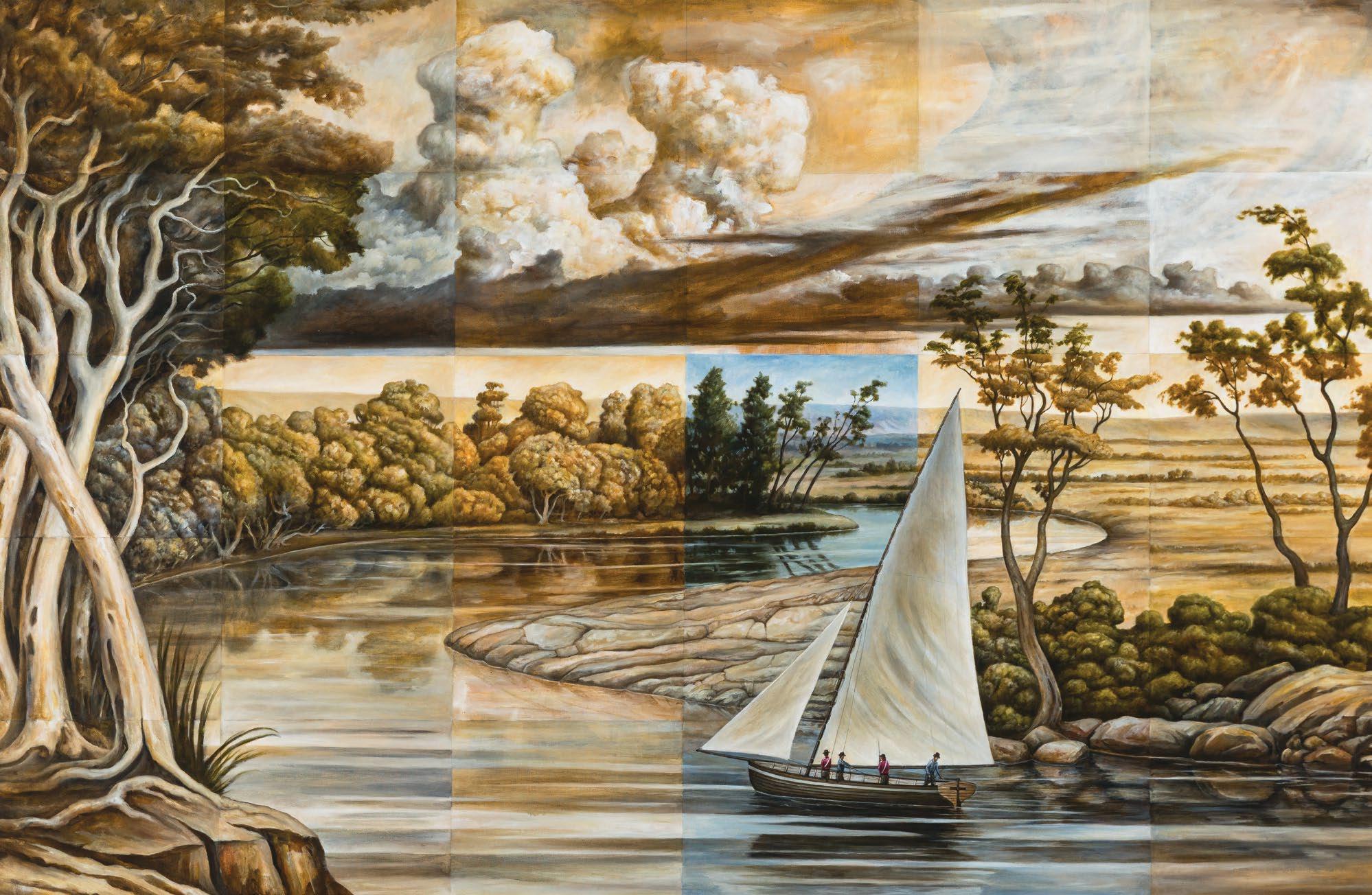
Christopher Pease, Minang Boodjar Bidi, 2023, oil on linen. 140 x 230 cm.
Photography by Andrew Curtis.
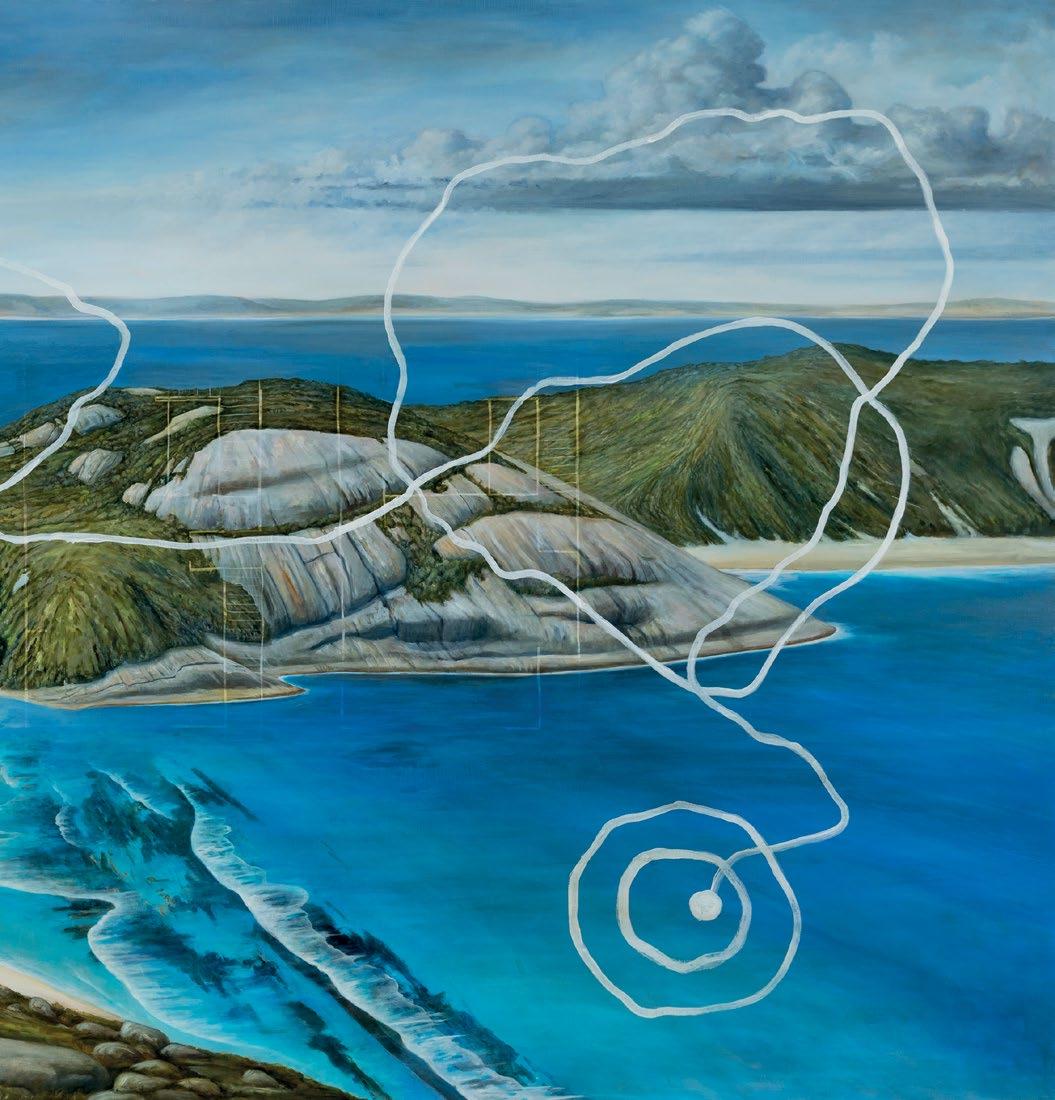
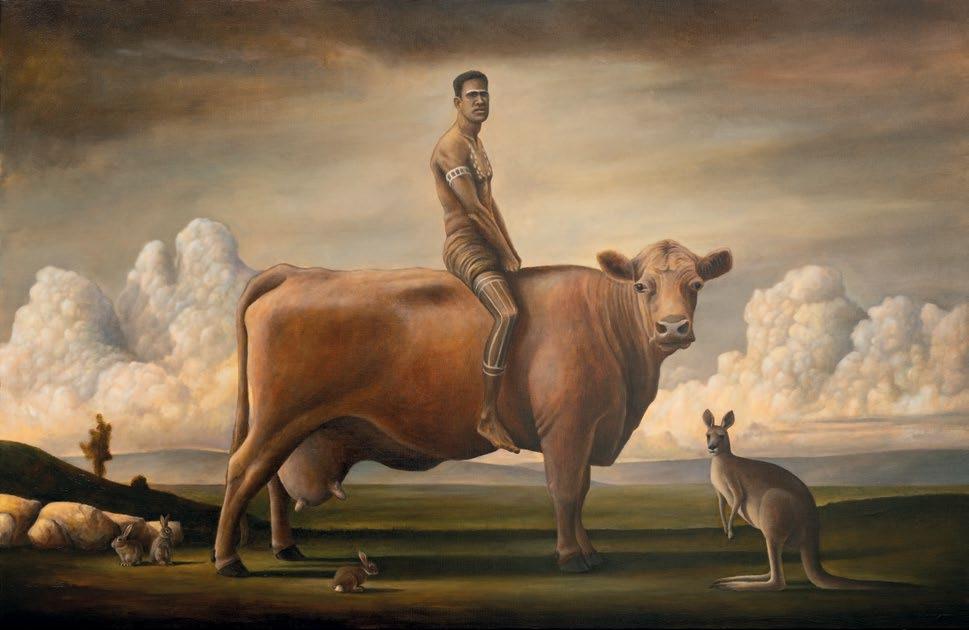
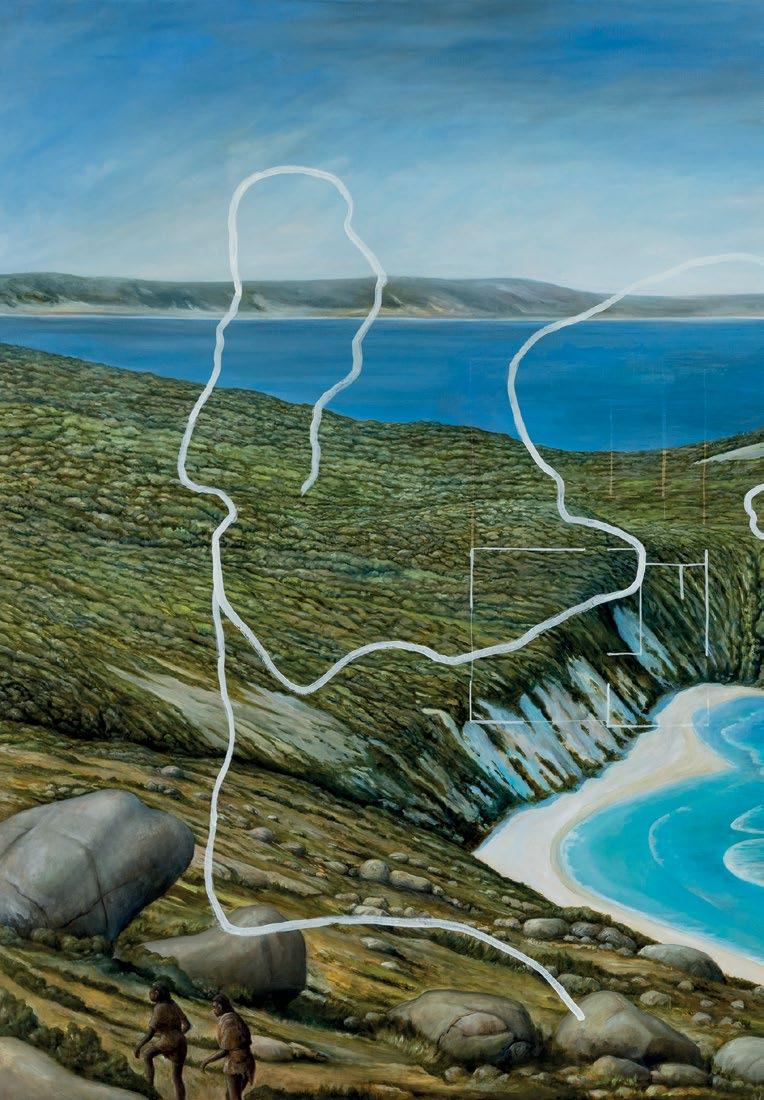
Christopher Pease, Noble Savage 3 (Rejecting Citizenship), 2013, oil on canvas, 64.8 x 99.7 cm. Curtin University Art Collection. Donated through the Australian Government’s Cultural Gifts Program by Christopher Pease, 2014. Photography by Sharon Baker.
Professor Susanna Castleden Director
Lia McKnight
Curator
One of the driving forces behind my practice has been my own family history and how governmental policies of assimilation and apartheid have affected the lives of my mother, my aunties, uncles and grandparents.
– Christopher Pease
We are incredibly proud to present Christopher Pease’s Terra Nullius at the John Curtin Gallery, an exhibition that brings together an outstanding survey of artworks from over two decades of tenacious and dedicated art practice. Pease has been widely recognised through major national and international contexts and his works are held in leading public and private collections across Australia, reflecting his enduring contribution to contemporary art. As one of Australia’s most highly regarded contemporary Noongar artists it is a special and significant privilege to be showcasing his exceptional artworks at John Curtin Gallery in 2026.
Since the late 1990s, Christopher Pease has been delving into archives, seeking visual and material evidence of his ancestors and their lives on Noongar Boodjar before and during settlement.
The Aborigines Act 1905 (WA) formalised displacement and violence that began on Noongar Boodjar in the 1830s, legislating the erasure of language, culture, and connection to Country. Informed by the 1901 Immigration Restriction Act, which laid the groundwork for the ‘White Australia Policy’, the Aborigines Act (later known as the Native Welfare Act) enabled extensive surveillance and control over Aboriginal people in Western Australia for nearly 60 years. Under this legislation, children under 16 could be forcibly removed from their families, resulting in the Stolen Generations. These actions, which continue to affect tens of thousands of First Nations people, were formally defined as genocide by the Human Rights and Equal Opportunity Commission in 1997.
For Pease, these histories are deeply personal. He and his siblings are the first in four generations not to be removed from their families and placed in brutal systems of ‘care’.
The loss of access to ancestral knowledge has compelled Pease to seek guidance from Elders and to thoroughly examine public and private archives. With scarce material evidence of Noongar culture remaining, his research has relied heavily on visual documentation by Wadjella (nonAboriginal people), such as anthropologist Daisy Bates’ photographs of traditional Noongar dress and body paint. He also draws on early colonial records of the southwest and its inhabitants, sourcing imagery from artists such as Robert Dale, Louis De Sainson, Frederick Garling and William Westall. These works contain elements of historical accuracy but also served as propaganda, presenting Australia as idyllic and largely uninhabited.
Pease reinterprets these visual records, showcasing his mastery of realism and oil painting techniques. He also employs various methods of surface intervention to prompt critical examination of historical narratives and their ongoing impact on people and place. These interventions incorporate traditional materials, such as Balga resin and ochre, alongside graphic elements, informed by his early training in design, that have become synonymous with
his practice. Line work is used to represent land use and the recurring ‘Target’ motif, first inspired by Pop Art, is used paradoxically to reference Noongar presence through campfires and water holes while also alluding to the violent removal of the same.
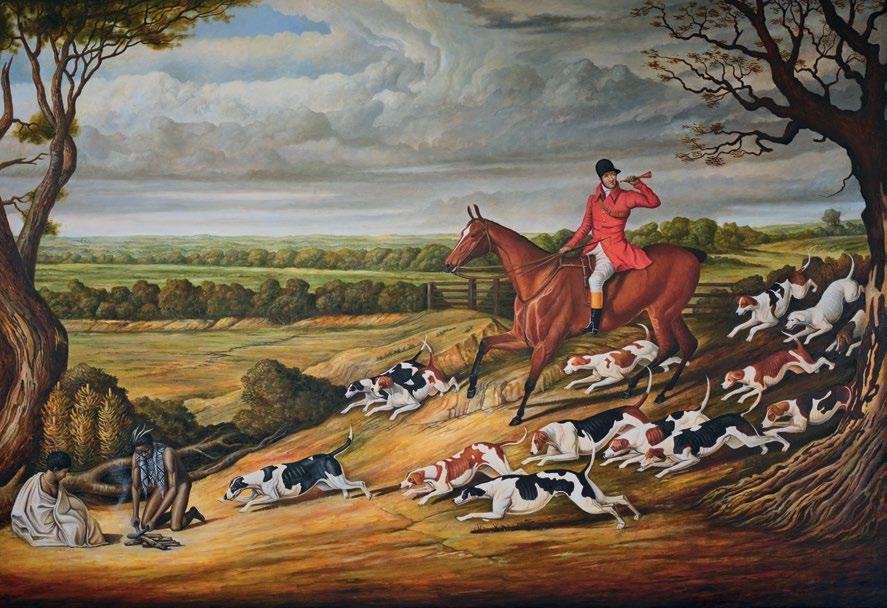
For this exhibition, Pease has produced four compelling new works that reimagine 19th-century colonial hunting imagery to scrutinise ongoing systems of extraction and dominance. Scenes of whaling and fox hunting function as metaphors for the commodification of the natural world and the assertion of power over land. Pease thoughtfully draws connections between Australia’s traumatic colonial past and current global conflicts, highlighting the persistence of these oppressive dynamics. Far from mere political commentary, his art is deeply personal. Carrying the weight of historic and ongoing suffering, it echoes the profound impact of displacement and attempted cultural erasure experienced by his own ancestors.
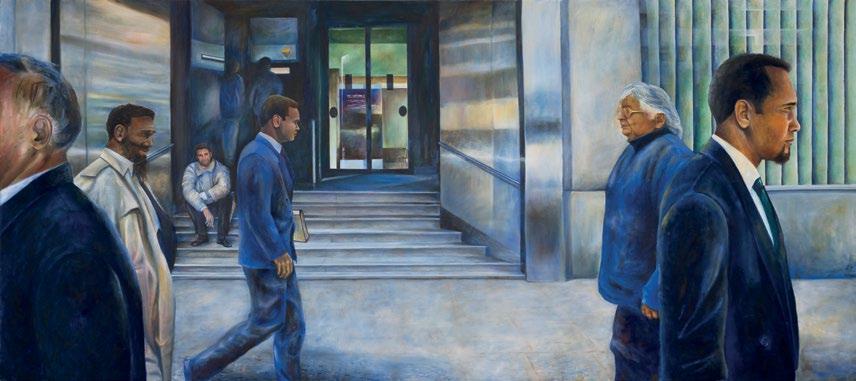
Curtin University proudly acknowledges Christopher Pease’s connection to the Curtin Fine Art program through both his studies and within the teaching program, where he worked alongside his mother, acclaimed Noongar artist Sandra Hill. Drawn from the Curtin University Art Collection, one of the earliest works presented in this exhibition is 9 O’clock St Georges Terrace, 2000, (above) a work that Pease created while studying Fine Art at Curtin. Notably, this work features an image of Aunty Laurel Nannup, a highly regarded Noongar artist herself, who was a fellow student at the time. Curtin is also custodian of the Herbert Mayer Collection of Carrolup Art, a remarkable series of works by Aboriginal children produced at Carrolup, one of Western Australia’s notorious sites of child incarceration and the birthplace of Aunty Laurel. Through the new dedicated Carrolup gallery space, currently under construction, we continue our commitment to sharing the stories of these children and their descendants, ensuring their voices are heard and remembered. Like many Noongar artists, Christopher Pease draws inspiration from the Carrolup drawings and, eight decades since their creation, he powerfully embodies the ongoing spirit of resilience and resistance through his art. Pease’s relentless search for truth, and the speaking of that truth, demonstrates profound leadership, offering inspiration for generations to come.
Christopher Pease, 9 O’Clock St Georges Terrace, 2000, acrylic on canvas, 100 x 225.1 cm. Curtin University Art Collection. Donated through the Australian Government’s Cultural Gifts Program by Ian Bernadt, 2004. Photography by Sharon Baker.
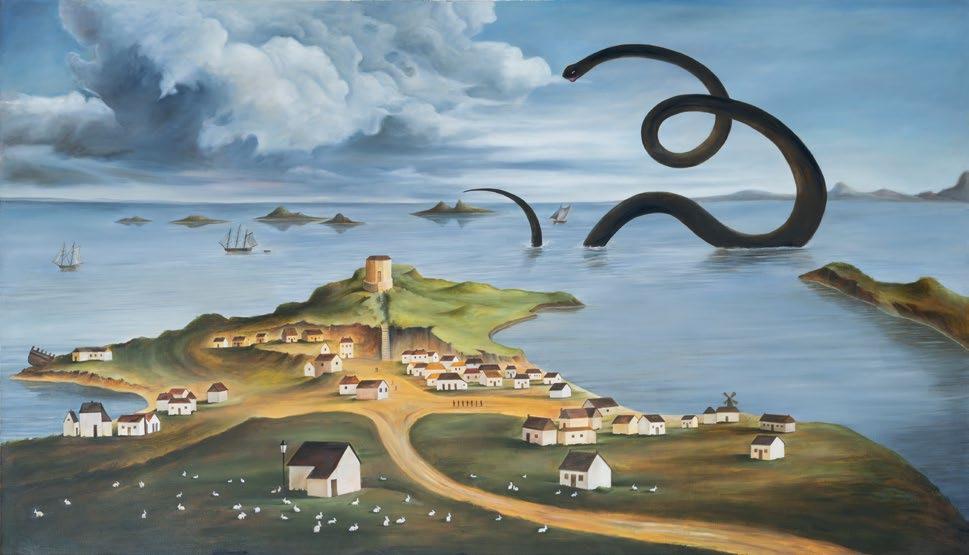
Christopher Pease, The Roundhouse, 2007, oil on canvas, 123 x 214 cm. Parliament House Art Collection, WA.
Photography by Sharon Baker.
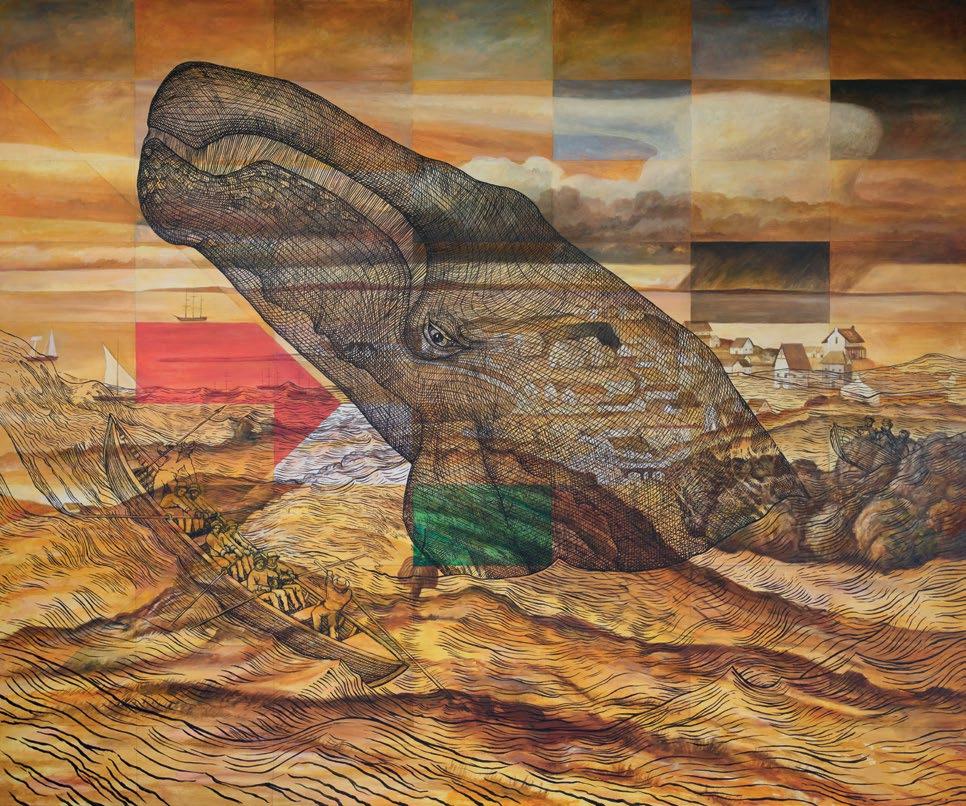
Christopher Pease, Whalers 3, 2025, oil on linen, 150 x 180 cm. Photography by Russell Ord.
Christopher Pease: Artist Statement
This survey represents my practice over the past two and a half decades which has evolved through my research and investigation of archival material. This has enabled me to develop my own iconography and visual language. One of the driving forces behind my practice has been my own family history. I grew up in a family shaped by the ongoing impacts of government policies of assimilation and segregation. These histories – lived by my mother, aunties, uncles and grandparents – form a foundation for my work, both in its subject matter and its underlying intent.
The Noongar people of the south-western corner of this island continent have always been, and remain, the custodians of the land. Before and after colonisation, they helped maintain the land through fire management and sustainable fishing and farming methods. They also had an intimate and innate understanding of the rivers and streams as well as the wetlands that form the filters to the vast river system of the southwest.
Water is the Ngoorp (blood) of the land that feeds the Koort (heart). The Boodjar (land) is the body, and the body cannot live without the blood. If blood cannot flow to one part of the body it will die. If the blood is poisoned the body will die. Throughout my practice I have sought to represent the misinterpretation of the land since the time of colonisation, where places, rivers and country have been disrupted or changed with no regard for the traditional way of caring for Boodjar, culture or historical meaning.
My recent work considers how the impacts of colonisation still shape conflicts and power structures today, drawing connections between the experiences of Noongar people and other communities dealing with displacement, genocide and contested land. The situation in Palestine, in particular, has made me reflect more about how these conditions continue over time. By reworking 19th-century colonial hunting imagery, I explore systems of extraction and control. When placed in a new context, these images go beyond their original meaning, pointing to similarities between the colonial experiences of Noongar people and current global struggles.
At its core, my work connects to broader ideas around occupation, resistance, and representation, considering how images can both support and challenge dominant narratives. Through my imagery, I expose and question the mechanisms of power, reclaiming space for the voices and stories that have been silenced, and urging viewers to recognise the ongoing struggle for justice, identity, and truth.
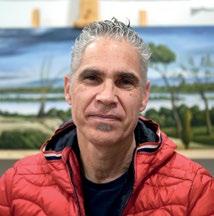
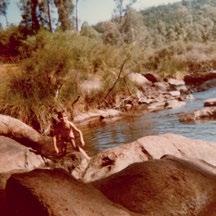
Portrait of Christopher Pease by Russell Ord. Christopher Pease on Noongar Boodjar, c1977. Image courtesy of the artist’s family archive.

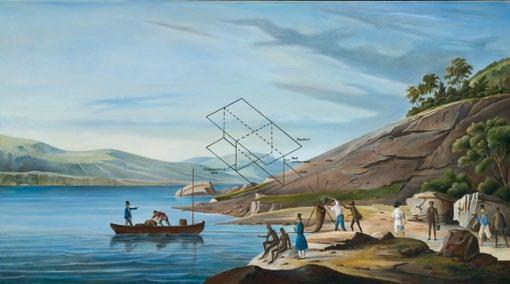
Robert Dale (draftsman), Robert Havell Jnr (engraver), Panoramic View of King George’s Sound (part of the colony of Swan River), 1834, engraving, aquatint and watercolour, 36.5 x 292 cm. Janet Holmes à Court Collection. Digitisation by State Library of Western Australia and the Curtin HIVE.
Tina Baum Gulumirrgin (Larrakia)/ Wardaman/Karajarri peoples
Head Curator, First Nations Art National Gallery of Australia
Christopher Pease: Layered maker for HEGEMONY AND EMPIRE
Cultural references in colonial works can be informative and illuminating, but they can also be complicated and wrong. Historical art was often created subjectively where early colonial artists sometimes made direct recordings of events they witnessed, depicted people they saw or –sometimes well after the event – made it from memory. Often, it was imagined or created through a lens of ignorance and isolation. Some works depicted people, place, flora and fauna from stories retold and recounted a multitude of times to artists who never directly saw or experienced them, thereby displacing the artist from the original source. These tall tales in turn created anatomically distorted and misaligned people and creatures where features were stylised with a European aesthetic, not replicating the truth at all.
Early European artists to the continent now called Australia were no different, people like Louis de Sainson (1800-1874), an official artist aboard Captain Dumont d’Urville’s Astrolabe who visited Minang¹ Noongar Country at King George Sound (the site of Albany today) in Western Australia for the first time late in 1826. Or Lieutenant Robert Dale (1812–1853) who in 1829 arrived from London on the HMS Sulphur to assist the Surveyor General on their expeditions also throughout King George Sound. One of his trips resulted in drawings that informed Panoramic View of King George’s Sound, (part of the colony of Swan River), 1834, (below), and was later made into an assemblage of eight etchings as a three-metre print depicting the rapid growth of emerging colonies. Reflecting on this print in 2005, Christopher Pease noted,
To me the work provides optimism through the way in which the French interact with the Minang people, but it also symbolises the beginning of change in ideas and ultimately beliefs. This historical image is a rare snapshot of some of the first interaction between the European and Minang people.
All this art was capturing the expanding new world, often with stylised Aboriginal people in the foreground, either living a cultural life or in the process of transition or showing ‘peaceful’ encounters with soldiers or colonisers. Sometimes it was peaceful, other times it was violent. The positioning of Aboriginal people in colonial art repeatedly fed the false narrative of only peaceful encounters or that there was none or very little Aboriginal defiance in the ‘settled’ areas. This deliberate erasure rarely showed the Warrior resistance, the massacres, or the devastating effects of introduced diseases, alcohol or animals like cattle or rabbits.

1 The Minang are members of the Noongar people from a particular part of the south-west of Western Australia.
Thankfully there are a growing number of Aboriginal and Torres Strait Islander artists today who are actively challenging and recasting stories about their identity, culture, Country, and Community in their art. By reclaiming their representation in art, they reposition themselves, their people or their histories central to the stories being told, all from a first person’s perspective. Minang/Wardandi/ Bibbulmun artist Christopher Pease is one of the important artists embedding, elevating and enhancing his and his people’s stories of Western Australian history.
Starting his career as a graphic designer in the late 1980s he has since developed a compelling, consistent and rigorous art practice. Pease employs western modes of painting to disassemble colonial narratives; he then re-contextualises it with Noongar voices and experiences and re-positions the new thoughts through layers within his works. He is a highly accomplished award winning nationally and internationally vastly exhibited artist and is one of the most important Aboriginal artists of south-west Western Australia. Coming from a talented family of artists including his mother Sandra Hill and brother Ben Pushman, Pease has developed a distinctive and individual aesthetic and particular subject focus in his art.
At first glance his large-scale paintings appear to be close recreations of the smaller colonial landscape prints made in the late 1700s, early 1800s of south-west Western Australia. What differs are the levels of iconography that punctuate his canvases. He embeds primary source cultural knowledge and stories passed down through family and Community combined with his interpretation and use of public and private archives that provide additional contextual layers. By reworking imagery Pease reminds us of the Aboriginal voice and viewpoint.
Following his Telstra National Aboriginal and Torres Strait Islander Art Award, Painting Award win in 2002 with his haunting large-scale work Wadatji Country - Belief and Disbelief, 2002 at the Museum and Art Gallery of the Northern Territory in Garramilla/Darwin, the National Gallery of Australia acquired his work Hunting Party, 2003 recognising the significance of his practice early on. Hunting Party features a Waugyl (large serpent), an important Ancestral being to Noongar people, and like New Water Dreaming, 2005, (above), both directly reference the hand-coloured lithograph produced by Louis Auguste de Sainson. They, like many of Pease’s later works, also depict the area within King George Sound.
Adding scientific, topographical maps, shadowy figures, floorplans or geometric images atop a base image of Country is a signatory attribute to Pease’s works. In New Water Dreaming he has added a physics diagram detailing the equation of using pressure, depth, atmospheric pressure, density of water and acceleration of gravity to explain how a siphon works. Hydrology (the science of water on earth) details theories and an explanation of river formation. This cultural and scientific combination reveals the intellectual rigour Pease assigns to his stories and art.
Christopher Pease, New Water Dreaming, 2005, oil on canvas, 100.1 x 180.5 cm. National Gallery of Australia, Canberra.
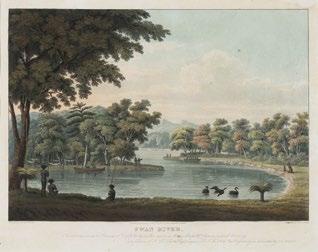
John William Huggins, Swan River (50 Miles up) c.1830, etching and aquatint, 27.5 x 35 cm. Kerry Stokes Collection, Perth. Photography by Robert Frith.
Christopher Pease, Swan River 50 miles up, 2006, oil on linen, 100 x 143 cm. Kerry Stokes Collection, Perth. Photography by Roberth Frith.
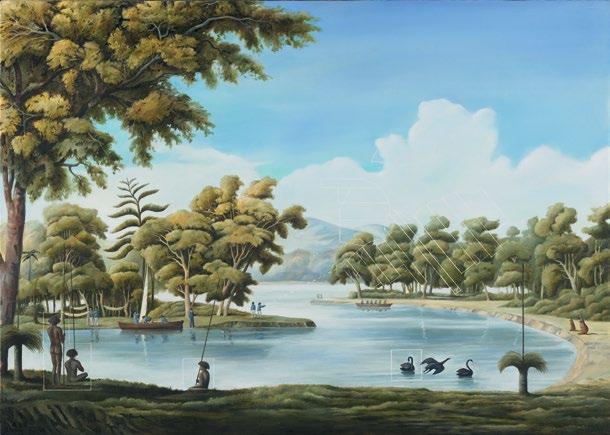
I first met Pease when he featured as one of thirty Indigenous artists in the inaugural National Indigenous Art Triennial: Culture Warriors, 2007 curated by Senior Curator Brenda L Croft³. His works in the exhibition included New Water Dreaming, 2005; Target, 2005, (p.16); Wrong side of the Hay, 2005; and Swan River 50 miles up, 2006, (above). His works were unlike anything I had seen before, and for many east coast audiences this would be their first encounter of Pease’s art too. At the time his paintings offered a fresh new view of WA history through his distinctive visual language which he still uses today.
3 Brenda L. Croft (Gurindji/Malngin/Mudburra) had previously featured Pease in an earlier exhibition she curated, Indigenous art: Art Gallery of Western Australia, 2001, Art Gallery of Western Australia, Boorloo/Perth, WA.
4 The original photograph used for this work taken by Daisy Bates is Leslie Hill (Uncle Les) in Ceremony. Circa 1900. Image Section Sourced From Louis Tilbrook’s Nyungar Tradition: Glimpses of Aborigines of South- Western Australia, 1829-1914. P.211.
5 Christopher Pease’s new light-based artwork on AGWA’s rooftop is a bold reclamation of unceded Country”, Claire G. Coleman. First published in the print publication The View From Here in October 2021.
In Target, 2005 a dominant large red concentric circle sits centre to the painting highlighting not only the dangers inherent in being targeted as Aboriginal people historically and today, but also as a symbol for place. It further communicates the notion that during colonisation Aboriginal people and their Country were a target of greed and ignorance. The use of the target is a frequent icon used in Pease’s works, which can also be seen in the powerful portrait of Uncle Les, 1999⁴, (p.15), featuring Pease’s Great Uncle Les Hill in cultural attire at a ceremony in Busselton. They are also subtly seen in Handshake 2, 2021; and colourfully in Target 5, 2023, (p.18).
The concentric circles are reminiscent of real targets, signifying danger to the river, to the river’s people, to my people, Christopher’s people. But they are also an Aboriginal icon, representing a campfire, a place, a waterhole or home in countless works by Aboriginal artists from all parts of the continent.⁵
One of the more intriguing paintings by Pease is Handshake, 2017, (pp.32-33), which features a large-scale geometric pattern that represents a human skull. It references the murder of Noongar warrior Yagan whose skull was subsequently taken to London in 1834 by Lieutenant Robert Dale and appallingly, is reported to have been displayed alongside his work Panoramic View of King George’s Sound, (part of the colony of Swan River), 1834 in London. Yagan’s remains were eventually repatriated to Boorloo/Perth, in 1997 and reburied in a traditional ceremony in 2010.
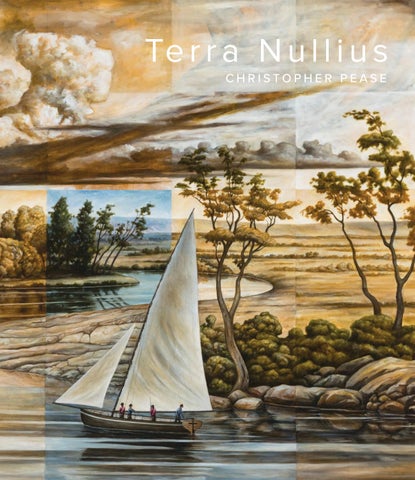
In Pease’s more recent work Terra Nullius, 2022, (cover image), he reinforces that Aboriginal and Torres Strait Islander people always have been – and always will be – on their unceded lands and waterways. He emphasises this connection remains strong, despite everything that has occurred since invasion.
In The Whalers 2, 2024, (p.31); The Whalers 3, 2025, (p.8); and The Sealers, 2024, (p.30) Pease references the early printmakers woodcut or techniques by using the same contrasting fine lines that look imprinted on top of the base image. Like so many Aboriginal Communities along the south coast of Australia, the whaling and sealing industries enabled them to remain connected to their Country and importantly provide a source of income. Many families were formed with the European workers too.
Pease’s paintings create intrigue, they compel viewers to interrogate details and materials closer. By pushing his practice and the use of natural materials like ochre that his family has been collecting from a pit at Wilson’s Inlet, Denmark in WA and resin from the Balga tree Xanthorrhoea preissii, collected again by the artist and his family, Pease literally implants cultural practice, identity and Country into his works.
Having achieved national acclaim through the award of major art prizes since 2002, Pease has an extensive practice producing oil paintings that are simultaneously cultural and political reference points. Pease paints stories of lived experience, of events and people who affected his Community and Country offering a different truth to the archives. His exceptional works reveal an intriguing regional focus that also has a national reach. His deep passion and masterly skills leave a visual legacy of truth telling, of storytelling and of righting the wrong sides of history. His works transcend art, they elevate Aboriginal voices, knowledges and experiences like a snapshot of history, of time, and place. Pease’s stylistic multi-layered compositions continue to educate and transport audiences through the lens of First Nations people.
There is a quiet, subtle strength and intellectual depth to Pease’s works that shift perspectives and reclaims history. His compositions are engaging, enthralling and aesthetically stunning. His paintings subvert colonial imagery, are resolved and sophisticated. His works imbue Community and stories from the past, the present and into the future.
Carrying on the storytelling of his Ancestors, paired with his historical curiosity and reclamation, Pease leaves an important legacy for his children and future generations to learn and remember the history of his people and stories of his Country.
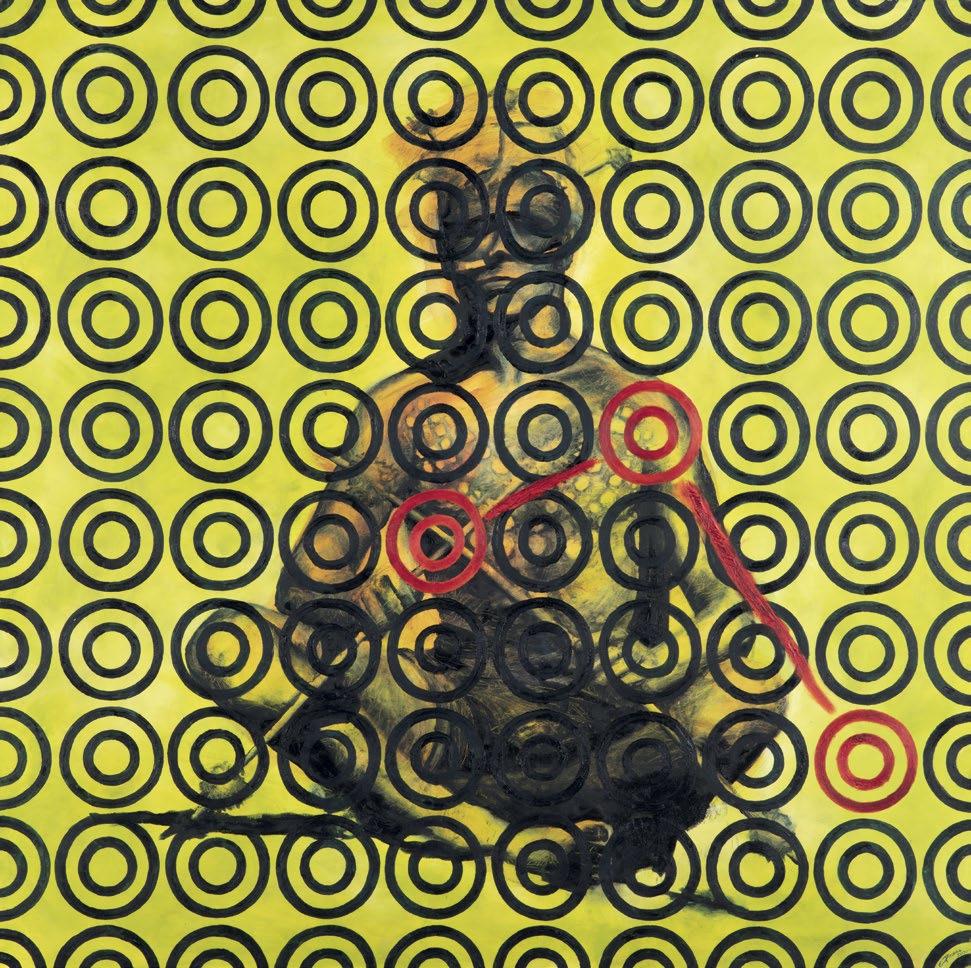
Christopher Pease, Uncle Les, 2000, oil on canvas, 152 x 152 cm.
The State Art Collection, The Art Gallery of Western Australia. Gift of Johanna Lagerberg through the Australian Government’s Cultural Gifts Program, 2020. Photography by Bo Wong.
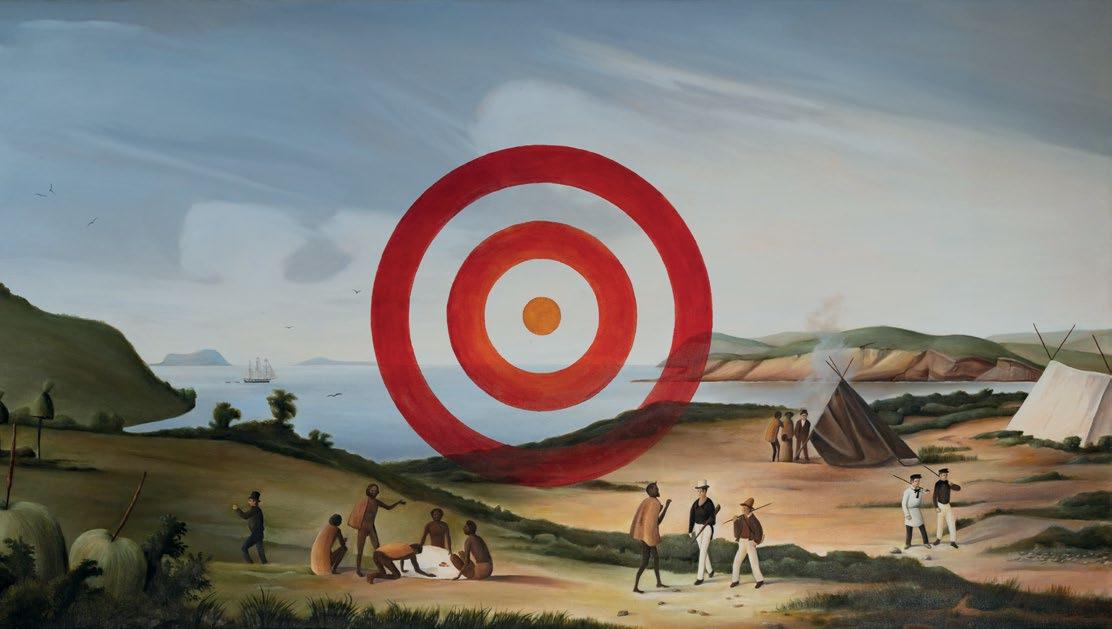
Christopher Pease, Target, 2005, oil on linen, 100 x 180 cm. Nelson Family Collection.
Photography by Sharon Baker.
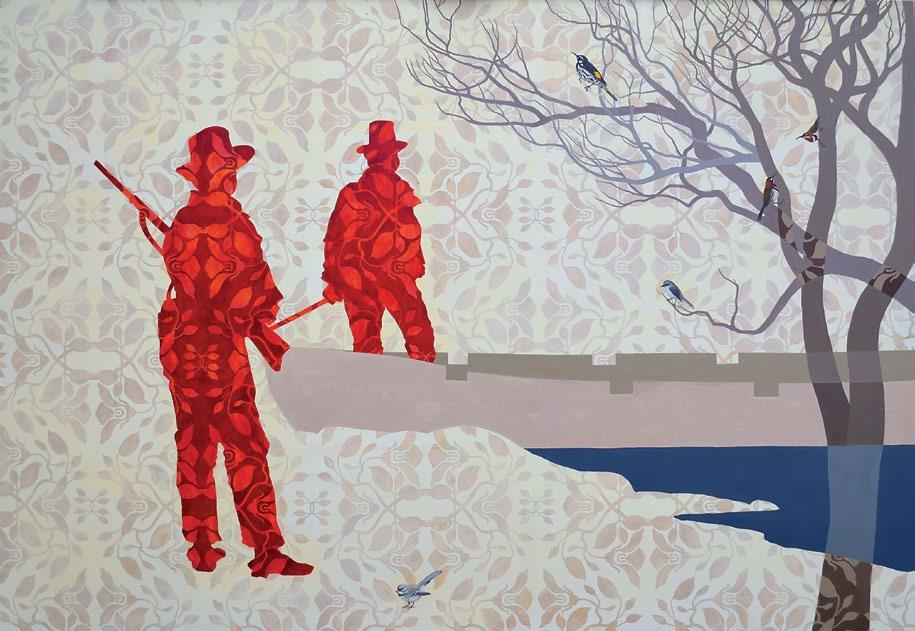
Christopher Pease, Welcome to Country, 2011, oil on linen, 152 x 220 cm. Private lender.
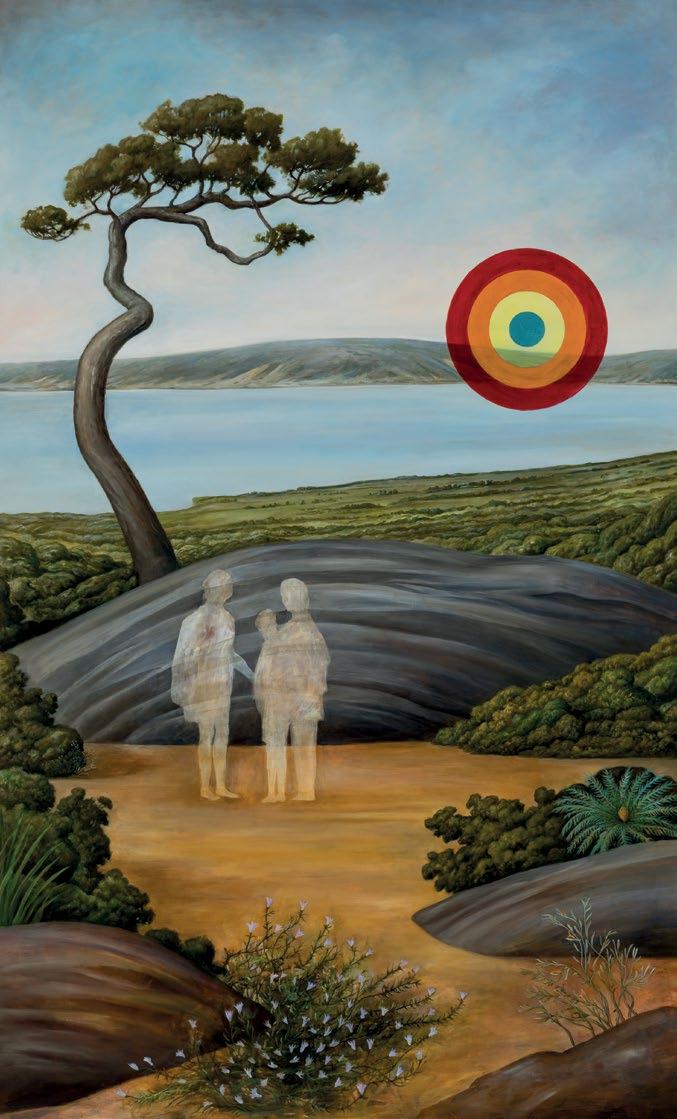
Christopher Pease, Target 5, 2023, oil on linen, 200 x 120 cm.
Dr Ainslie Gatt
Art Historian and Advisor
1 Christopher Pease, quoted in Christopher Pease: Lost in Translation, Gallerysmith, 16 December 2021, https://gallerysmith.com.au/blogs/ exhibitions-christopher-pease/ lost-in-translation-christopher-pease
2 Christopher Pease, interview with the author, Perth, Western Australia, 2019
Christopher Pease: Reframing Terra Nullius
Water is the Ngoorp (blood) of the land that feeds the Koort (heart). The Boodjar (land) is the body, and the body cannot live without blood. If blood cannot flow to one part of the body it will die. If the blood is poisoned the body will die.¹
–Christopher Pease
Christopher Pease’s paintings engage critically with the visual histories through which Western Australia has been imagined, represented and claimed. Working within the traditions of Western figurative oil painting, he repeatedly returns to colonial imagery – panoramic views, exploratory illustrations and historical landscape painting – in order to interrogate the narratives embedded within them. Produced during the early years of British settlement, such images played a central role in shaping European perceptions of the land. At the same time they contributed to the broader colonial fiction that the continent was largely empty: a landscape awaiting discovery and occupation.
Christopher Pease: Terra Nullius, presented at John Curtin Gallery in 2026, offers an important survey of the artist’s practice, bringing together works spanning more than two decades alongside new paintings that extend this sustained engagement with colonial imagery, landscape and Noongar cultural knowledge.
The legal doctrine of terra nullius, which underpinned the colonisation of Australia until the late twentieth century, rested upon the assertion that the land belonged to no one prior to British arrival. Yet for the Noongar peoples of south-western Australia, the land, or boodjar, has always been understood as a living and relational entity inseparable from culture, law and story. Pease’s work inhabits the tension between these fundamentally different ways of understanding place. By returning to historical imagery and reworking it through his own visual language, he reveals the ideological assumptions that shaped colonial representations of the landscape.
A Minang, Wardandi and Bibbulmun man from the south-west of Western Australia, Pease has long been interested in the ways images construct cultural memory. This engagement with historical imagery has remained a defining feature of his practice and has been the subject of sustained scholarly research. During a series of conversations conducted with the artist as part of earlier research into his work, he reflected on the complexity of the historical images that first drew him to this material. As he observed, “there’s reality in those historical images, but there’s also a kind of fantasy.”² The ambiguity he identifies – the coexistence of observation and invention within colonial depictions of the land – has become a central point of departure for his practice.
Colonial landscape imagery was never neutral. Throughout the nineteenth century artists, surveyors and explorers produced visual records that presented the Australian landscape to European audiences as picturesque, ordered and available. These images established a visual grammar through which unfamiliar territory could be interpreted and claimed. Panoramic views and exploratory illustrations were particularly powerful in this regard, presenting the land as expansive and largely unoccupied. Within such representations Aboriginal presence was frequently marginalised or rendered invisible altogether.
Pease’s practice engages directly with this visual archive. His paintings frequently draw upon historical sources, returning to colonial imagery not in order to reproduce it but to examine the assumptions embedded within it. As he explained during our conversations, his interest in these materials emerged through extended archival research. “I went into the archives at UWA and the Western Australian Museum looking for old iconography from the south-west,” he recalled. “It’s actually very hard to find because so much of it was perishable.”³ The fragments that remain – engravings, illustrations and landscape studies – provide a starting point from which the artist reconsiders the historical construction of place.
These archival traces reveal how the visual language of colonisation was assembled through images that appeared observational yet were shaped by cultural expectations carried from Europe. By returning to these visual sources, Pease is able to expose the subtle ways in which landscape imagery helped naturalise colonial occupation.
Landscape painting has long functioned as more than a record of place. Within colonial contexts it operated as a powerful visual instrument through which unfamiliar territories were translated into forms legible to European audiences. Compositional order, atmospheric perspective and picturesque framing rendered the land both comprehensible and possessable. In this sense colonial landscape imagery did not simply depict the land; it participated in the cultural processes through which the land was imagined, interpreted and ultimately claimed.
Landscape painting also carries a long intellectual history within European art. From the pastoral traditions of seventeenth-century Dutch painting to the expansive landscape views of the nineteenth century, artists frequently used representations of land to articulate broader cultural ideas about nationhood, ownership and identity. When European artists began depicting the Australian continent during the early colonial period, they inevitably translated unfamiliar environments into visual structures derived from these established traditions. The resulting images imposed compositional order upon landscapes that European audiences had never encountered before.
Pease’s engagement with this tradition is both deliberate and critically aware. By working within the medium of oil painting, he situates his practice within the same pictorial language that historically contributed to the visual construction of the colonial landscape. Yet rather than reproducing these conventions uncritically, his paintings reveal the cultural assumptions embedded within them. In doing so, Pease transforms the inherited language of landscape painting into a site of historical reflection and critique.
Pease’s paintings destabilise this visual certainty. Through subtle shifts in composition, colour and scale he introduces an element of ambiguity into images that once appeared authoritative. The resulting works invite viewers to reconsider what these historical representations reveal and what they conceal. In Target 5, 2023, (p.18), for example, a stark target motif interrupts an otherwise tranquil landscape. The symbol operates simultaneously as accusation and revelation, pointing toward the violence embedded within colonial expansion while exposing the way landscape imagery itself framed the land as an object of acquisition.
3 Christopher Pease, interview with the author, Perth, Western Australia, 2019
4
Pease’s use of the target motif also draws attention to the act of looking itself. Colonial landscape painting often positioned the viewer as a detached observer, surveying territory from a position of apparent neutrality. Inserting the symbol of a target interrupts this visual distance. The landscape is no longer a passive scene but a site of confrontation, where the mechanisms of observation and control become visible. Through this intervention, Pease exposes how acts of looking were historically entangled with systems of power. The image invites viewers to reconsider their own position within this visual field, shifting the act of viewing from passive contemplation toward critical awareness.
The authority of colonial imagery lay not only in its visual clarity but also in its circulation. Prints, engravings and illustrated publications distributed these images widely throughout Europe, shaping public perceptions of the Australian continent long before most viewers could encounter the landscape directly. Within this context landscape painting became part of a broader visual culture that helped legitimise colonial expansion.
Questions of land ownership and territorial control recur throughout Pease’s work. Colonial systems of mapping and surveying were central to the transformation of country into property, redefining land through cadastral boundaries and administrative systems. In Land Release 3, 2011, (pp. 26-27), Pease evokes these processes through subtle geometric overlays that appear across the surface of the landscape. Faint architectural lines suggest planning diagrams or survey grids, quietly visualising the bureaucratic mechanisms through which country was divided and redistributed.
This concern with the transformation of country into surveyed territory has been a recurring theme throughout Pease’s practice. As discussed in earlier research on his work, the artist frequently draws attention to the visual systems through which land was mapped, categorised and administratively controlled.⁴ By referencing the language of surveying and planning within the pictorial surface, Pease exposes the processes through which living landscapes were translated into property and territorial possession.
The history of colonial industries along the Western Australian coastline also forms part of this broader narrative. Early maritime economies such as sealing and whaling established some of the first sites of sustained European activity in the region, reshaping both landscape and economy. In The Sealers, 2023, (p.30), Pease revisits this history through imagery that echoes nineteenthcentury maritime painting. Figures move across the shoreline within a landscape that appears both recognisable and unsettled, suggesting the uneasy intersection of economic exploitation and cultural displacement.
Recent works such as The Whalers 3, 2025, (p.8), extend this interrogation of colonial industries and their relationship to landscape. Whaling stations were among the earliest centres of European activity along the southern coast, sites where economic ambition intersected with environmental transformation. In Pease’s interpretation, the sea and sky dominate the composition, dwarfing the human figures that appear momentarily within the scene.
Ainslie Gatt, Nyoongar Identity and the Art of Christopher Pease (master’s thesis, University of Western Australia, 2019).
In many colonial images, the sea functioned as a symbol of opportunity and expansion, a gateway through which exploration and trade were imagined to unfold. Pease subtly reverses this visual logic. In his interpretation the immensity of the ocean and sky overwhelms the human presence within the composition, emphasising the scale and power of the natural environment itself. The effect is to reposition the viewer’s understanding of the scene. Rather than reinforcing narratives of conquest and mastery, the painting suggests the precariousness of human activity within a much larger ecological system. In this way the work complicates the historical narratives often attached to maritime industries, drawing attention to the environmental and cultural transformations that accompanied these early colonial enterprises.
Pease also revisits the visual language of nineteenth-century hunting scenes in The Hunt, 2025. Historically, such imagery celebrated the mastery of land and animal life by European settlers. Pease retains the structural framework of these compositions yet introduces an atmosphere of uncertainty, encouraging viewers to reconsider the assumptions embedded within these inherited pictorial traditions.
The continuing legacy of colonisation is addressed more directly in Another Settler Colonial Project, 2025, (right). The title foregrounds the structural nature of colonisation itself, suggesting that settlement was not a singular historical moment but an ongoing process embedded within systems of governance, development and land use.
Earlier works such as Reaper, 2015, (p.35), provide an important point of reference for understanding the development of these concerns within Pease’s practice. Composed of forty-two individual panels, the work fragments the pictorial surface into a sequence of interconnected images. Colonial imagery is broken apart and reassembled, reflecting the layered nature of historical memory itself. The image of the reaper alludes to the destruction of cultural systems intimately connected to the landscape. At the same time, the fragmentation of the pictorial surface disrupts the coherence traditionally associated with colonial landscape imagery. Rather than presenting a single unified scene, the work unfolds across multiple panels, suggesting the fractured nature of historical memory itself. Through this structure Pease foregrounds the layered histories embedded within the landscape, where narratives of settlement intersect with the enduring presence of Noongar culture and knowledge.
For Noongar people, knowledge of country is transmitted through story, ceremony and cultural practice. During our conversations Pease emphasised the extent to which these traditions remain embedded within specific landscapes. “It’s basically the stories,” he explained. “The stories are what carry the knowledge.”⁵
For Noongar communities, relationships with country extend far beyond visual representation. Landscapes are understood through networks of story, kinship and ecological knowledge that connect people to specific places across generations. From this perspective the landscapes depicted in colonial painting appear radically incomplete. Places that colonial artists presented as empty were in fact already embedded within complex systems of cultural meaning.
5 Christopher Pease, interview with the author, Perth, Western Australia, 2019
Seen together, the works in Christopher Pease: Terra Nullius reveal the remarkable consistency with which the artist has returned to questions of landscape, representation and historical memory throughout his career. By working within the visual language of Western landscape painting while simultaneously interrogating its assumptions, Pease transforms familiar imagery into a site of critical reflection.
At its core Pease’s practice challenges the colonial fiction that the Australian landscape was ever empty. By revisiting the visual language through which that fiction was constructed, he reveals the ideological frameworks embedded within historical representations of the land while affirming the enduring presence of Noongar culture and knowledge within the south-western Boodjar.
Presented together in this exhibition, these paintings invite viewers to reconsider the narratives through which the Australian landscape has long been understood. Pease’s work demonstrates how images that once appeared descriptive or observational were in fact deeply implicated in the processes through which colonial occupation was normalised and legitimised. By returning to these visual traditions and subtly reworking their structures, the artist reveals the ideological frameworks that underpinned them.
At the same time, the paintings affirm the persistence of cultural knowledge embedded within the land itself. Far from empty, the landscape of the south-west is dense with memory, story and ancestral connection. Through his engagement with the visual language of colonial painting, Pease transforms familiar images of the Australian landscape into sites of reflection, where the histories of colonisation and the enduring presence of Noongar culture intersect.
Christopher Pease, Another Settler Colonial Project, 2025, oil on linen, 110 x 160 cm.
Photography by Russell Ord.
Cass Lynch Koreng and Wudjari peoples
Koondart wer Koondarm - Cloud and Dream
I knew something was up when all the tiger snakes took off at once into the cool lake waters under an afternoon sky barred stripes blending against one another scaled flesh like organic pixels a rolling wave of tv static but danger yellow like the gold that fell from space when the world was forming
I heed the signal ngany noornt-ak dalanginy I followed them over the soaked roots of paperbarks stepping on paths in the sword sedge worn by the feet of wading birds the red-eyed swamp hens watch me through reeds laced with webs of social Christmas Spiders gazes spikey and bejeweled
Christopher Pease, Doondalup, 2021, oil on canvas, 90 x 70 cm. Recipient of the 2021-22 City of Joondalup Visual Arts Commission. City of Joondalup Art Collection
knee deep in lake water and serpents the yandjet, the bulrushes, go on forever Aunty Yandjet collects our secrets that rush by in the waters of life she gathers and holds them pressing them into the mud decomposing our pasts among her roots holding the world of memory together
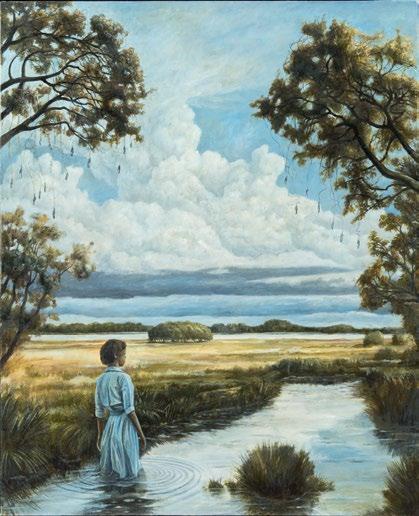
koondart wer koondarm our words for cloud and dream are similar the tiger snakes shiver and shed, and their dry banded skin floats up to become rustling storm clouds looking down, my own skin is flaking away floating down into Aunty’s lakebed grasp the prior selves all whispering while hissing rain falls
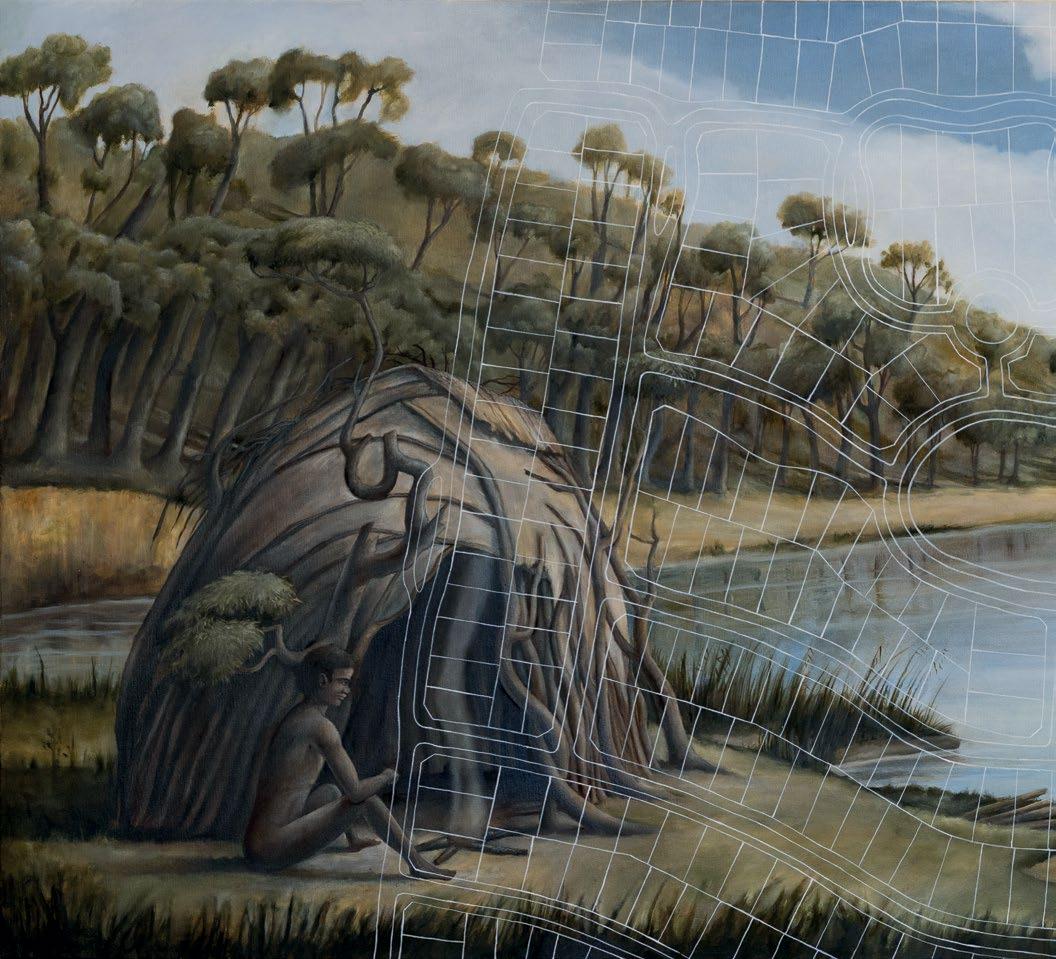
Christopher Pease, Land Release 3, 2008, oil on canvas, 97 x 214 cm. City of Perth Cultural Collections. Photography by Sharon Baker.
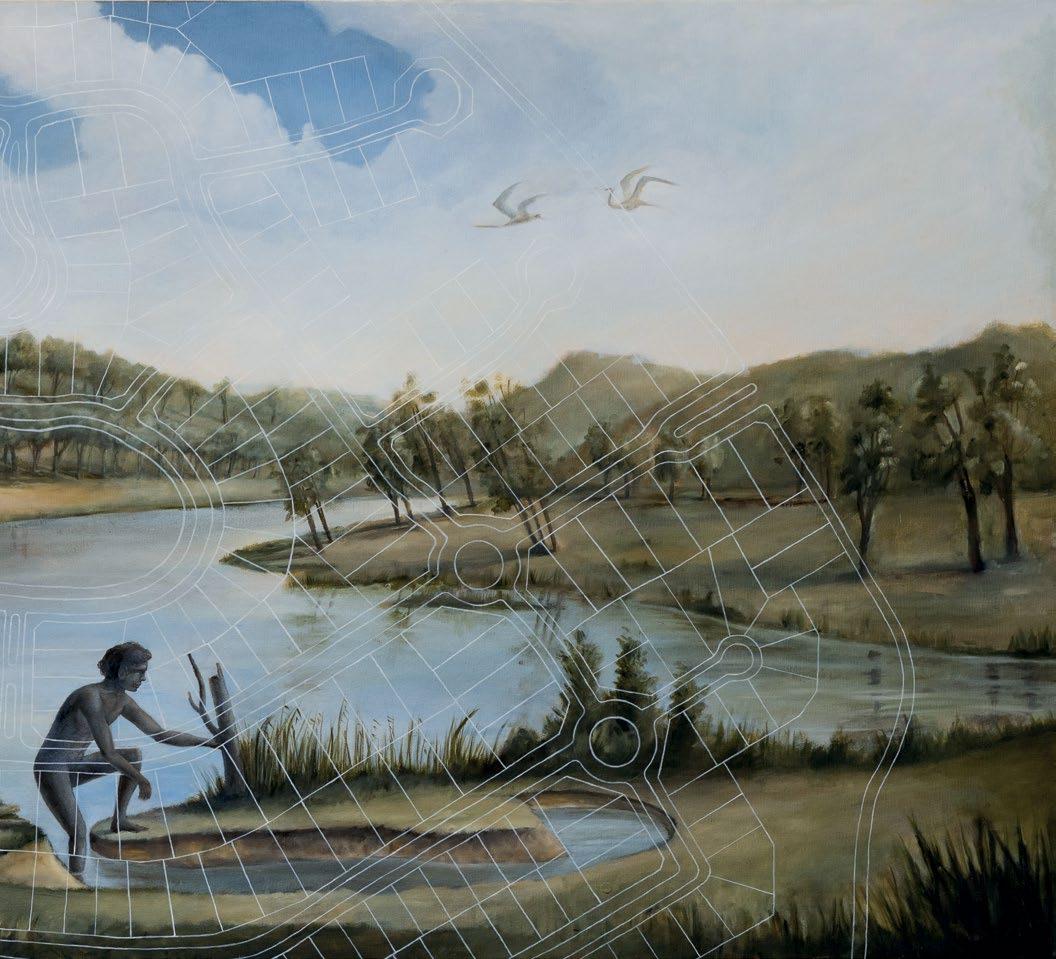
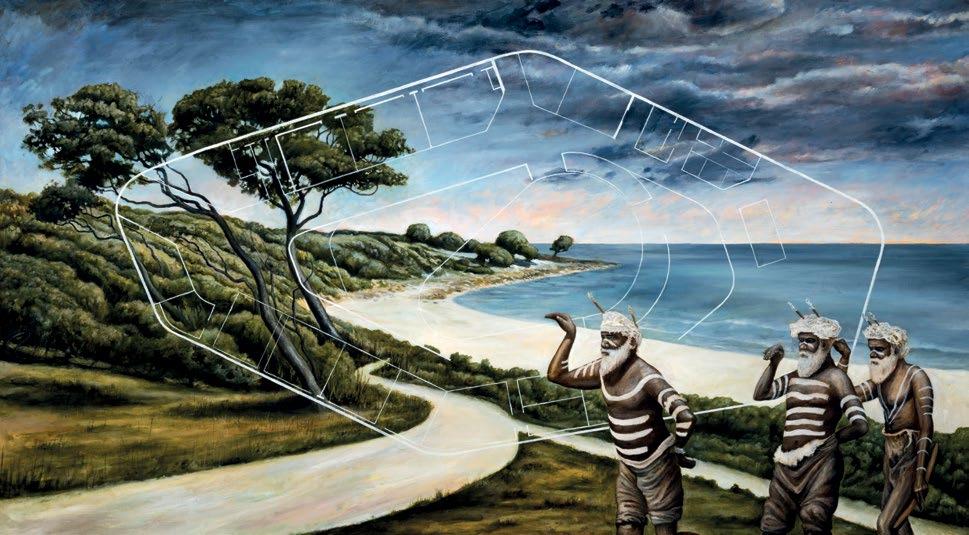
Christopher Pease, Retail Centre, 2021, oil on linen, 83 x 150 cm.
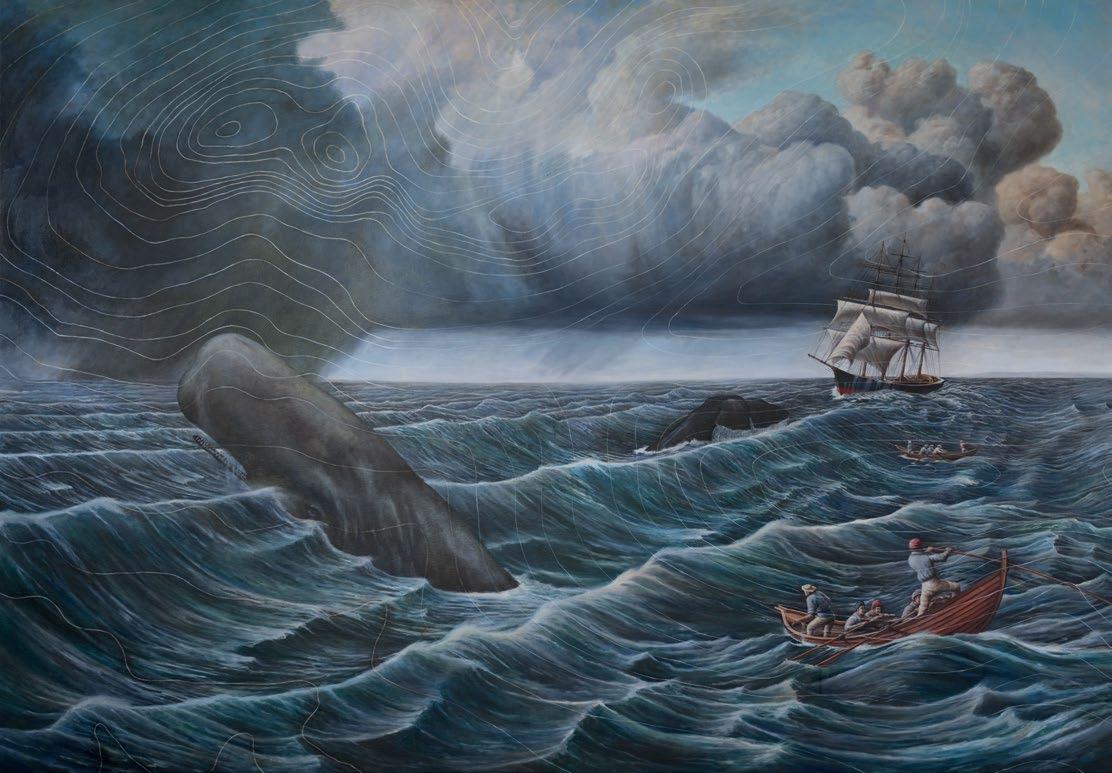
Christopher Pease, Whalers 4, 2026, oil on canvas, 110 x 160 cm. Photography by Russell Ord.
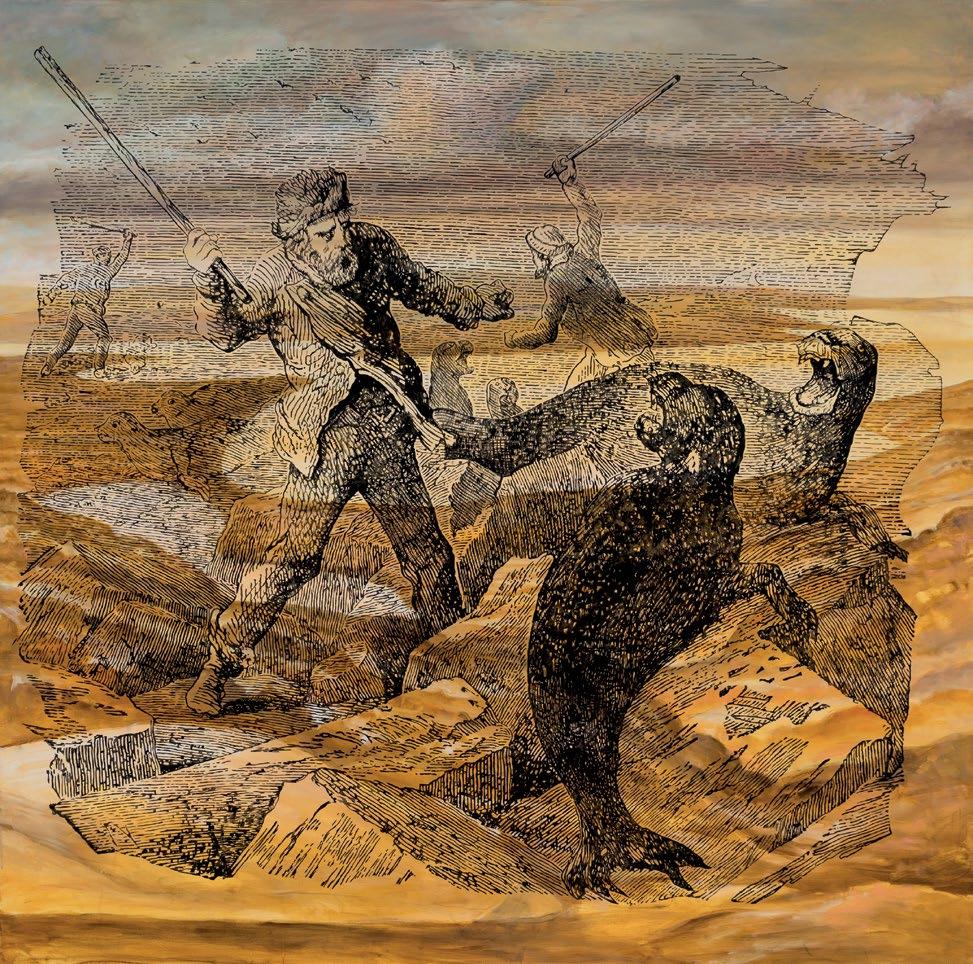
Christopher Pease, The Sealers, 2023, oil on linen, 200 x 200 cm.
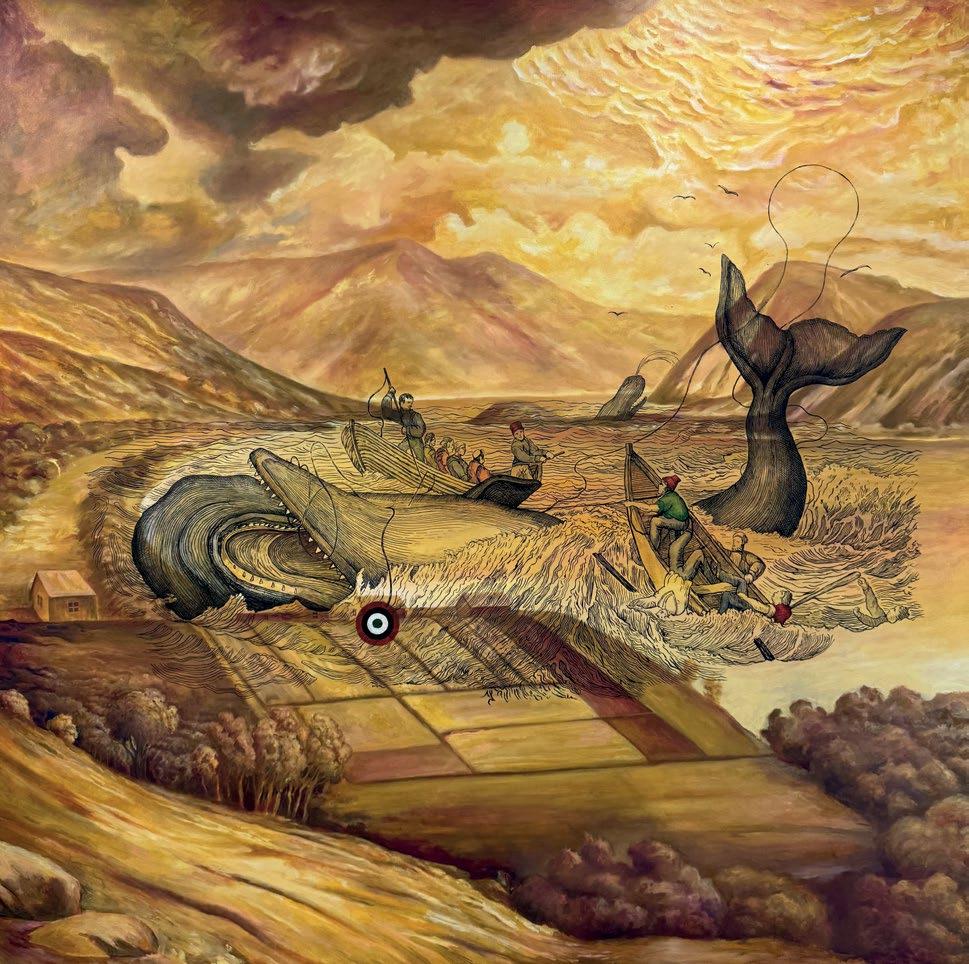
Christopher Pease, Whalers 2, 2024, oil on linen, 180 x 180 cm. Wesfarmers Collection of Australian Art.
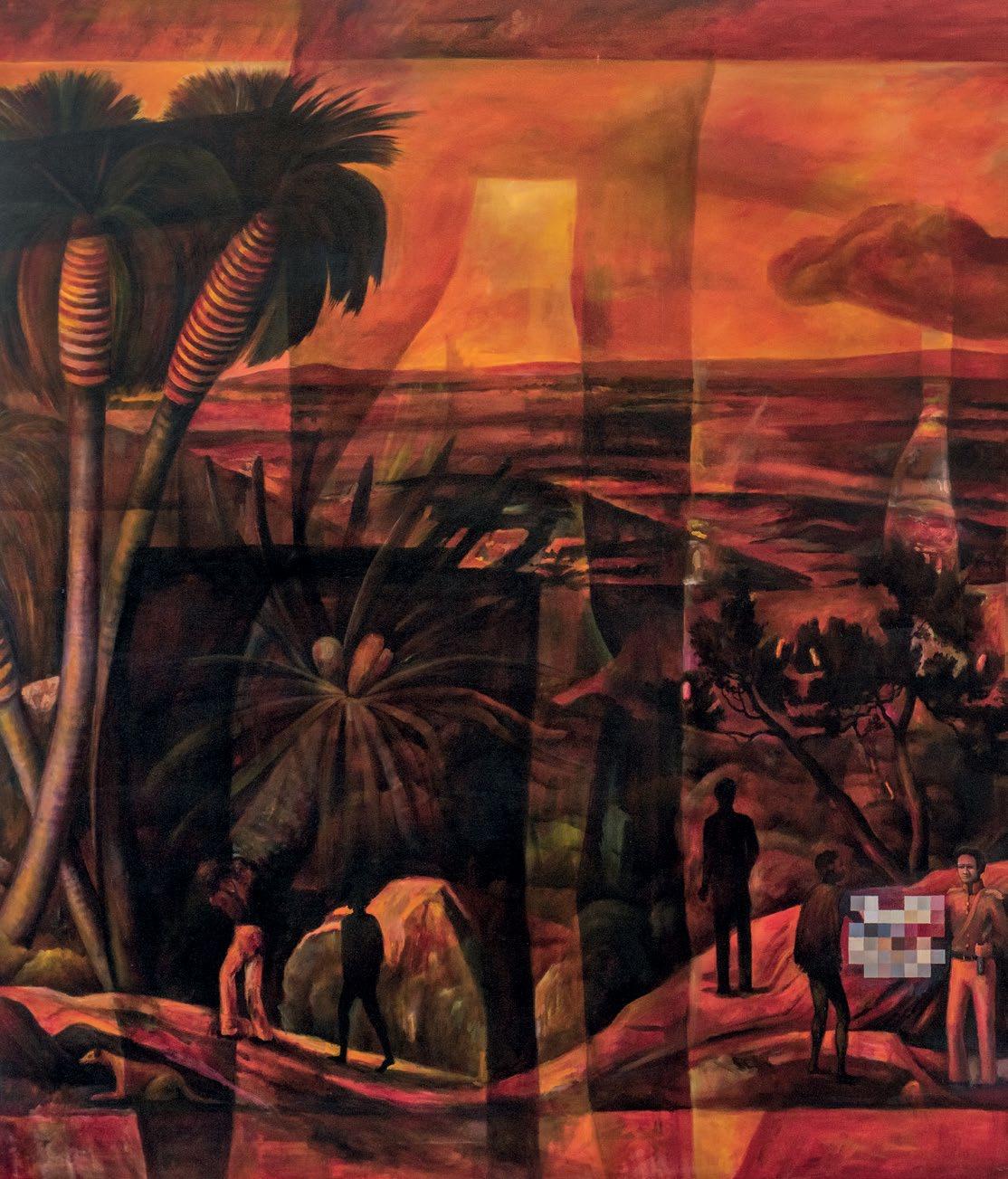
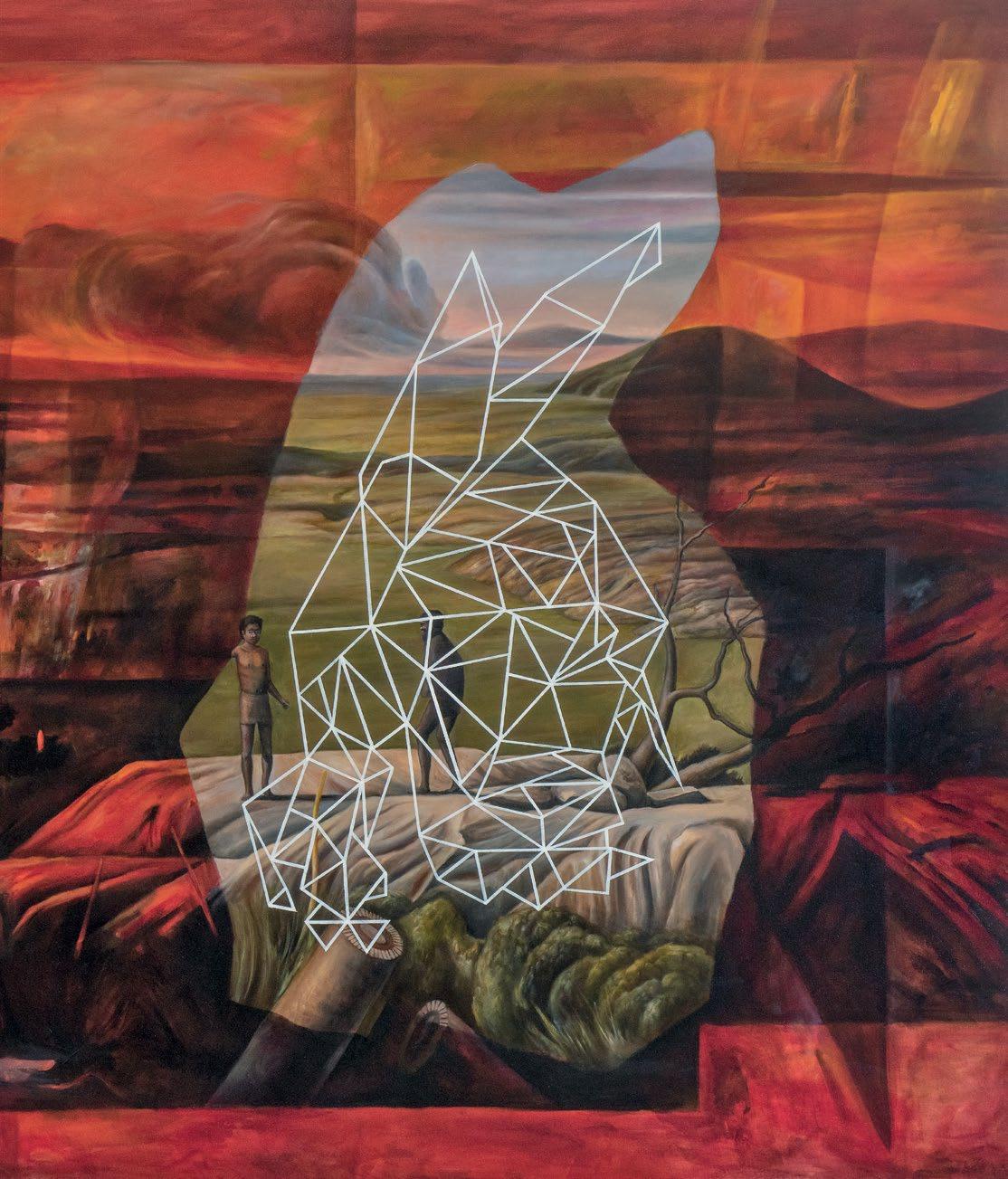
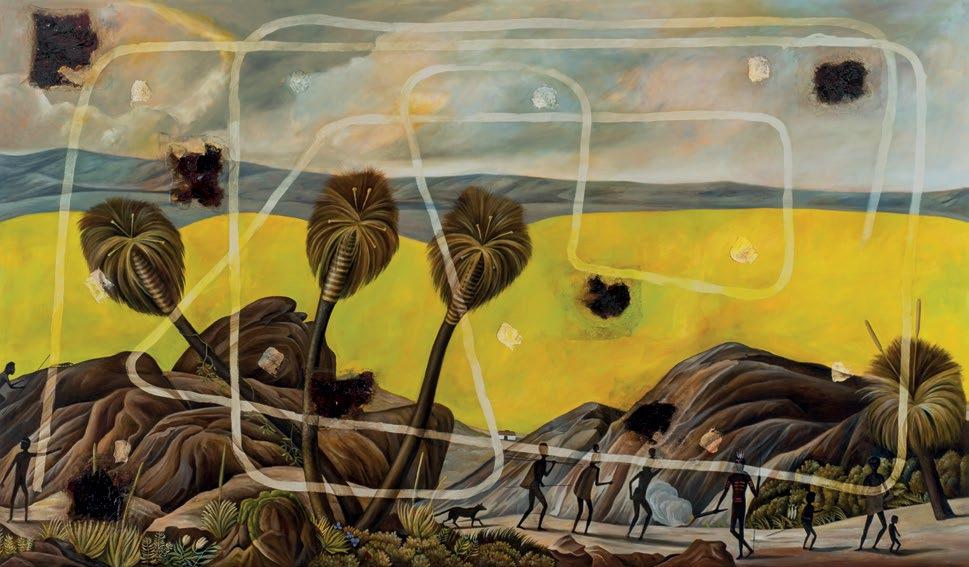
Christopher Pease, Bidi Karta Werda (Path across), 2018, oil, resin and earth pigments on canvas, 170 x 290 cm. National Gallery of Victoria, Melbourne. Purchased, Victorian Foundation or Living Australian Artists, 2019.
Previous page: Christopher Pease, Handshake, 2017, oil on canvas, 170 x 290 cm. Collection of Mark Dutney. Photography by Ian Hill.
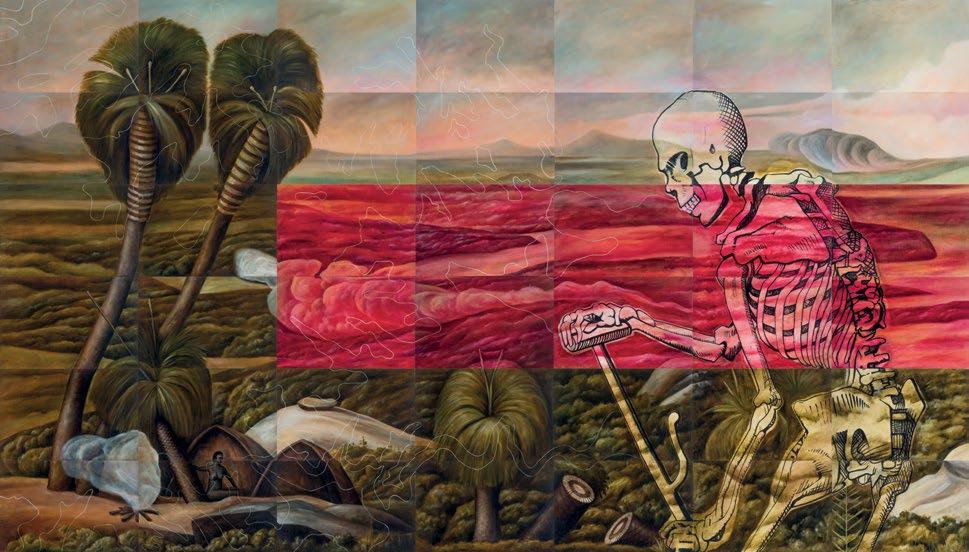
Christopher Pease, Reaper, 2015, oil on muslin on board, 168 x 294 cm.
The State Art Collection. The Art Gallery of Western Australia. Purchased through The Art Gallery of Western Australia Foundation: TomorrowFund, 2019-2020.
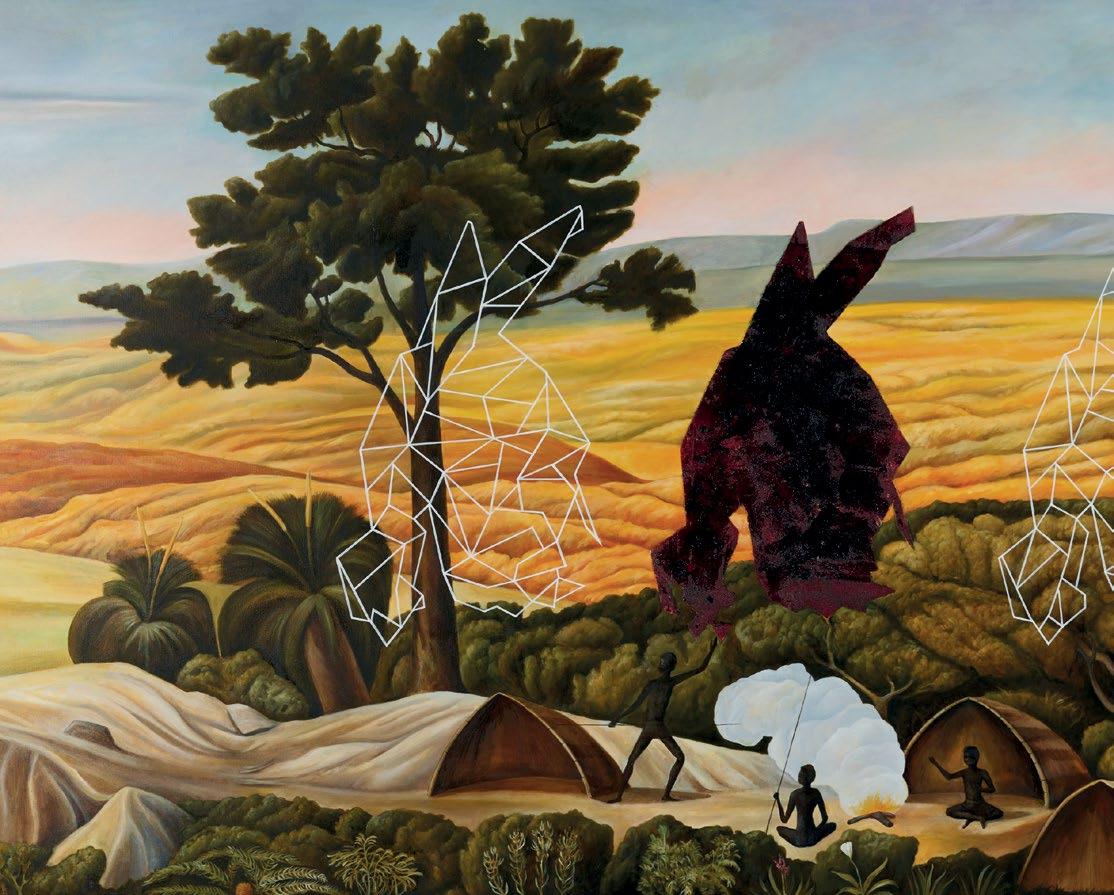
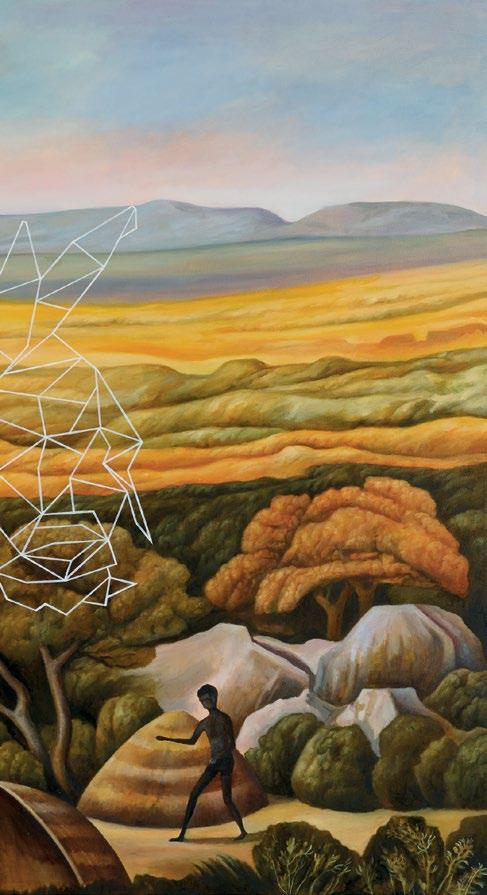
Christopher Pease (born 1969) is a critically acclaimed Noongar artist of Minang/Wardandi/Bibbulmun descent from south-west Western Australia. His visual language is deeply rooted in both traditional Indigenous knowledge systems and the history of Western figurative oil painting, particularly 19th century techniques. Drawing on extensive research of colonial archives and historical imagery, Pease interrogates the visual and cultural legacies of colonisation, exploring themes of land ownership, sovereignty, social justice, identity and resilience, while emphasising the enduring connection of Noongar people to Country.
Pease has received significant recognition, including the Painting Prize at the Telstra National Aboriginal & Torres Strait Islander Art Awards (2002), and major public commissions such as the monumental rooftop installation Targets at the Art Gallery of Western Australia, one of the largest public works by a Noongar artist in the state. His work is held in major national and international collections, including the National Gallery of Australia, National Gallery of Victoria, Art Gallery of Western Australia, and Queensland Art Gallery / Gallery of Modern Art, as well as private collections in Australia and the USA.
He lives and works in Dunsborough, WA, and continues to expand his practice through exhibitions, commissions, and collaborations.
Christopher Pease, Kartwarra, 2019, oil and Balga resin on canvas. 150 x 270 cm, Collection of Stephen Giles.
List of works in chronological order
9 O’Clock St Georges Terrace, 2000, acrylic on canvas, 100 x 225.1 cm. Curtin University Art Collection. Donated through the Australian Government’s Cultural Gifts Program by Ian Bernadt, 2004.
Uncle Les, 2000, oil on canvas, 152 x 152 cm. The State Art Collection, The Art Gallery of Western Australia. Gift of Johanna Lagerberg through the Australian Government’s Cultural Gifts Program, 2020.
Wadatji Country, belief and disbelief, 2002, oil on canvas, 170 x 281 cm. National Gallery of Victoria, Melbourne. Gift of Johanna Lagerberg and Stephen Swift, 2009.
Target, 2005, oil on linen, 100 x 180 cm. Nelson Family Collection.
Untitled, 2005, wood, resin, acrylic paint, 120 x 240 cm. Janet Holmes à Court Collection.
Wrong Side of the Hay, 2005, oil on canvas, 122 x 183 cm. Wesfarmers Collection of Australian Art
Seasons, 2006, Balga resin and ochre on hessian, 100 x 140 cm. Murdoch University Art Collection.
Swan River 50 miles up, 2006, oil on linen, 100 x 143 cm. Kerry Stokes Collection, Perth.
The Roundhouse, 2007, oil on canvas, 123 x 214 cm. Parliament House Art Collection, WA.
Land Release 3, 2008, oil on canvas, 97 x 214 cm. City of Perth Cultural Collections.
Land Release 4, 2011, oil on linen, 90 x 127 cm. Curtin University Art Collection.
Open Plan Living, 2011, oil on linen, 100 x 150 cm. Collection of Mark Dutney .
Welcome to Country, 2011, oil on linen, 152 x 220 cm. Private Collection.
Noble Savage 3 (Rejecting Citizenship), 2013, oil on canvas, 64.8 x 99.7 cm. Curtin University Art Collection. Donated through the Australian Government’s Cultural Gifts Program by Christopher Pease, 2014.
Flora with Fauna I, 2014, oil on canvas, 70 x 43 cm. Curtin University Art Collection. Donated through the Australian Government’s Cultural Gifts Program by Christopher Pease, 2015.
Flora with Fauna II, 2014, oil on canvas, 70 x 43 cm. Curtin University Art Collection. Donated through the Australian Government’s Cultural Gifts Program by Christopher Pease, 2015.
Reaper, 2015, oil on muslin on board, 168 x 294 cm. The State Art Collection, The Art Gallery of Western Australia.
Purchased through The Art Gallery of Western Australia Foundation: TomorrowFund, 2019-2020.
Handshake, 2017, oil on canvas, 170 x 290 cm. Collection of Mark Dutney.
Bidi Karta Werda (Path across), 2018, oil, resin and earth pigments on canvas, 170 x 290 cm.National Gallery of Victoria, Melbourne. Purchased, Victorian Foundation for Living Australian Artists, 2019.
Kartwarra, 2019, oil and Balga resin on canvas, 150 x 270 cm. Collection of Stephen Giles.
Doondalup, 2021, oil on linen, 90 x 70 cm. City of Joondalup Art Collection.
Doondalup 2, 2021, oil on canvas, 93.5 x 75.5 cm. Courtesy of the Parliament House Art Collection, Department of Parliamentary Services, Canberra ACT.
Handshake 2, 2021, oil on linen, 190 x 120 cm. Collection of John and Linda Bond.
Retail Centre, 2021, oil on linen, 83 x 150 cm.
Beeliar Boodja Bidi, 2022, oil on Belgian linen, 150 x 800 cm. Murdoch University Art Collection.
Terra Nullius, 2022, oil on linen, 150 x 228 cm. Collection of Tim and Chris Ungar
Minang Boodjar Bidi, 2023, oil on linen, 140 x 230 cm.
Target 5, 2023, oil on linen, 200 x 120 cm.
The Sealers, 2023, oil on linen, 200 x 200 cm.
Whalers 2, 2024, oil on linen, 180 x 180cm.
Wesfarmers Collection of Australian Art.
Another Settler Colonial Project, 2025, oil on linen, 110 x 160 cm.
Fox Hunt, 2025, oil on linen, 120 x 180 cm.
Whalers 3, 2025, oil on linen, 150 x 180 cm.
Whalers 4, 2026, oil on canvas, 110 x 160 cm.
We extend our heartfelt gratitude to Christopher Pease for his unwavering dedication to his artistic practice and the enthusiasm he has brought to this exhibition. Chris’ gentle spirit and steadfast commitment to confronting injustice are a profound inspiration. It has been a privilege to present such a significant body of the artist’s work to audiences across Western Australia.
We are deeply grateful to the many public and private lenders from across Australia whose generosity has enabled us to share these remarkable works with the wider community. In particular, the support of private lenders has been instrumental in realising Chris’s ambition to present a highly cohesive exhibition, including John and Linda Bond, Mark Dutney, Stephen Giles, the Nelson family, Jeremy Smith, and Tim and Chris Ungar. Terra Nullius would not have been possible without them. Our thanks also to Arthur and Suzie Roe.
Thank you to Tina Baum and Ainslie Gatt for their thoughtful and compelling essays, and to Cass Lynch for her evocative poetry. Together, these contributions deepen our understanding of the artist’s practice and offer a rich foundation for engaging with this exhibition.
Our sincere thanks to Marita Smith who has supported our vision for this project and provided much valued guidance.
Thank you to John Curtin Gallery Registrar ReBecca Shilkin who has seamlessly managed the complicated demands of regional and interstate loans from seventeen lenders. And as always, immense gratitude goes to the whole JCG team who have generated another impeccably produced assembly of experiences for our visitors. Their collective dedication and teamwork allow us to meet every challenge and continue to deliver exhibitions to the highest standard.
This publication supports the exhibition:
Christopher Pease: Terra Nullius
29 May - 23 August 2026
Publication copyright ©2026 John Curtin Gallery Text copyright © individual authors
All rights reserved.
This catalogue is protected by copyright under the Copyright Act 1968. Apart from any use permitted under the Act, including fair dealing for the purposes of private study, research, criticism or review, no part of this publication may be reproduced, stored in a retrieval system, or transmitted in any form or by any means without prior written permission.
ISBN: 978-1-7640702-3-2
All works are courtesy of the artist and Gallerysmith unless stated otherwise.

Christopher Pease, Beeliar Boodja Bidi, 2022, oil on Belgian linen, 150 x 800 cm. Murdoch University Art Collection. Photography by Robert Frith.
Cover image: Christopher Pease, Terra Nullius, 2022, oil on linen, 150 x 228 cm. Collection of Tim and Chris Ungar. Photography by Andrew Curtis.
JOHN CURTIN GALLERY