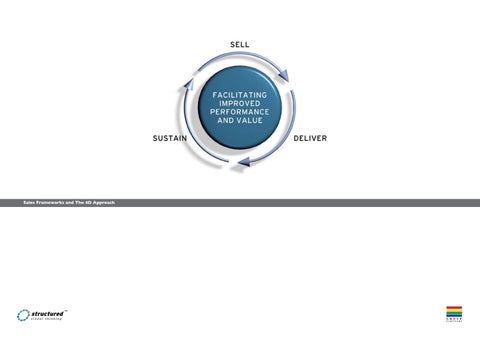
Sales Frameworks and The 4D Approach
8.
7.
2.
12.
5.
Another study from the US reports that over 31% of IT projects are cancelled before completion, that more than half of the projects surveyed cost 189% of the original estimate while containing only 42% of the proposed features, and that only 9% of IT projects are completed on time and within budget. According to the study, the reasons for the failure of so many IT projects include: Lack of top management commitment Inadequate planning Abandoning the project plan Inadequate user input Inexperienced project managers Flawed technical approach Anticipating advances in technology Failure to satisfy user needs Inadequate documentation Unwieldy procurement processes Burdensome oversight reviews Unrealistic cost estimates Imprecise specifications Non-compliance by vendors.
2 3 4 0 0 1 2 3 4 1 2 3 4 0 1 2 3 4 1 2 3 4 1 2 3 4 1 2 3 4 0 0 0 0
4.
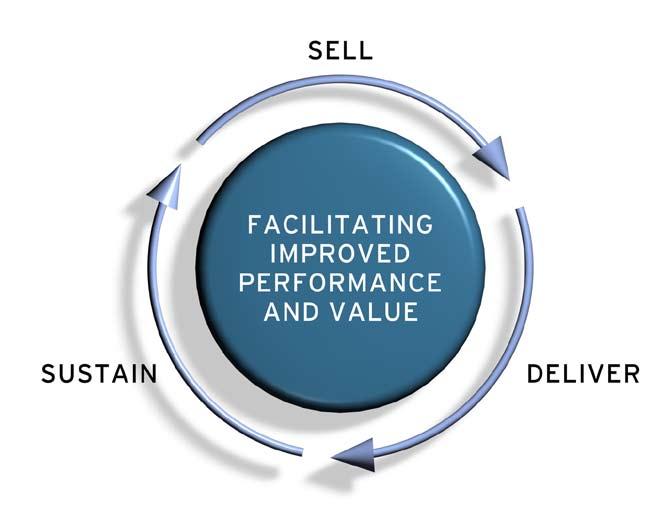
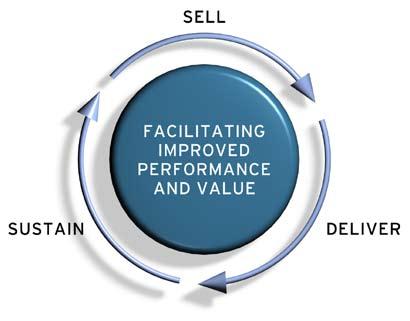
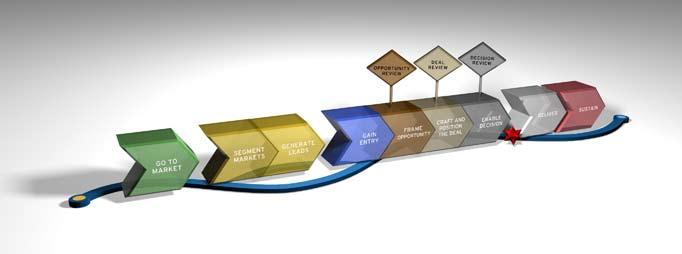
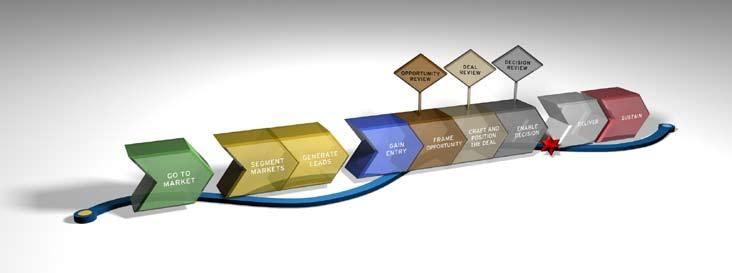
This workbook illustrates the tools, techniques, services and applications of Group Partners in relation to a generic Sales Framework. Group Partners’ approach is designed to support organisations throughout the cycle of ‘Sales’, ‘Delivery’ and ‘Sustain’ and is particularly focused on assisting them in overcoming the traditional ‘trough of despondency’ often experienced by customers after lengthy procurement processes.
11.
6.
This document is written from the perspective of Group Partners supporting an IT organisation - however we have worked with construction consortia, pharmaceutical companies and marketing organisations all in the world of Bid Support. Background There are countless examples of derailed technology projects, ranging from interminable delays and unclear expectations, to incomprehensible RFPs and cost overruns. These examples are amply supported by studies that confirm the widely held intuitive belief that technology procurement processes often fail to achieve their objectives. For example, the recent UK Public Accounts Committee (PAC) report, Achieving Value for Money in the Delivery of Public Services, says that “despite the PAC’s reviews of many high-profile IT failures over the last decade, many departments still disregard common and well-publicised pitfalls when they approach projects.”
3.
10.
13.
1.
14.
9.

• What about implementation?
• How do I ensure the best price?
Questions facing our Customer
Throughout the cycle of sell, deliver and sustain, people within the customer organisation go through various phases of emotional response, a roller coaster of feelings as shown Fig 1. Expectations created in the sales process may lead to negative emotions during the delivery process. These negative emotions vary and can be difficult to interpret. They may arise from fear of the unknown or fears that aspects of the project are at risk as a result of delays, miscommunication, lack of information or unforeseen changes. They may arise too from misunderstanding and/or lack of experience. The issues they raise may be real or perceived; an individual’s anxiety or fears may be due to either or both personal and professional concerns. Personal concerns can include loss of performance-related pay from missed targets, loss of promotion, or even being fired for a major project failure. Professional concerns may include problems with system design and function, project management and cost.
Increased use of technology can undoubtedly solve problems and achieve substantial efficiencies, yet acquiring technology that supports business objectives, especially now at a time of shrinking budgets and rising demands for cost-effective solutions, creates questions that must be answered before satisfactory solutions can be obtained:
2 3 4 0 0 1 2 3 4 1 2 3 4 0 1 2 3 4 1 2 3 4 1 2 3 4 1 2 3 4 0 0 0 0 Fig 1: The Trough of Despondency
• How will I know what working with this organisation be like? The challenge Your job is to help customers find answers to questions such as these, and in doing so help restore integrity to the process of acquiring technology and achieving improved performance.
• Must I issue an RFP?
• Is competitive bidding required?
• How can I get the best partner?
• Do I develop my own software programmes or do I purchase vendor-developed software?





4. SVT™ Branded Support: develops the brand for a project and applies it to all items of communication, including project plans, posters and emails.
3. SVT™ Systems: these communicate progress within the customer organisation. A system can comprise of any or all types of communication, including CD ROMs; an Interactive Dialogue System (IDS) allowing progress to be monitored; the communications strategy detailing the messages to be conveyed to which audiences using which media, messages and frequency; and the contact strategy covering how individuals within the various audiences will be contacted, ie using posters, emails, a brochure, or a web meeting, or conference call.
1 2 3 4 0 0 1 2 3 4 1 2 3 4 1 2 3 4 1 2 3 4 1 2 3 4 1 2 3 4 0 0 0 0 0
7. SVT™ Journey: one or more customer journeys designed to specific address concerns can be created at any point in the cycle.
2. SVT™ Workshops: these can be useful to uncover issues and validate the journey being undertaken by the customer. They can also re-engage and raise customer motivation. Workshops can also be used to revisit or update the SVT™ Contextual Framework™, Journey™, Scenario™, or Deep Dive™, depending on what was prepared at the start of the project.
5. SVT™ Training: the customer may benefit from the education or training of members of the team. SVT™ products and tools may be used in the development of training materials.
6. SVT™ Expert Network: at times it may be beneficial to introduce an independent, impartial industry expert. The expert can be briefed using the SVT™ products that have been produced, or special tools can be developed with the expert, if required.
How Group Partners helps In order to know how best to address the issues arising from emotional responses, it is vital, at every stage of a project, to understand the reasons for any customer concern and the level of emotional response (positive and/ or negative), as well as to know who in the customer organisation harbours such concerns or has failed to exploit the opportunity to the full. Group Partners’ Structured Visual Thinking™ (SVT™) can be used with the customer to: Stimulate. Prove. Design. Engage. Embrace. Sense, and Sustain… at each stage of the sell, deliver, and sustain cycle. Emphasis on delivery and as many opportunities for changing emotions arise then and demand timely, positive action. SVT™ offers a range of products and services to help identify, address and avoid negative emotions and other similar concerns. They include: 1. SVT™ Evaluation: this can be used at any stage of the sell, deliver and sustain cycle to identify concerns with methods, content, outcomes and people, including emotional concerns.
1 2 3 4 0 0 1 2 3 4 1 2 3 4 1 2 3 4 1 2 3 4 1 2 3 4 1 2 3 4 0 0 0 0 0 0
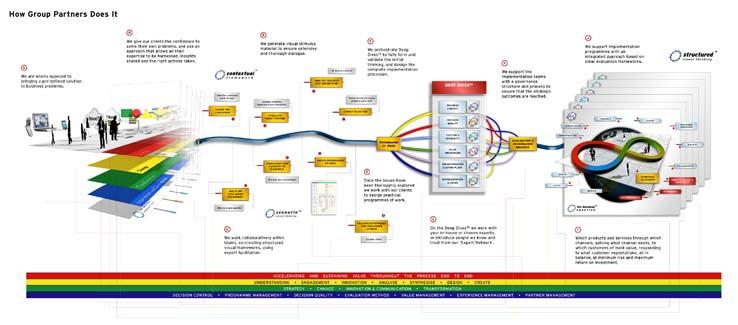
In SVT™ we have adopted a powerful structured intervention approach that is extensive and allows for a multitude of applications within a Sales Framework. SVT™ is fully supported and maintained for by Group Partners. SVT™ is a proven technique for helping teams to think about and develop objectives, strategies and tactics in the context of the current reality and desired future vision of the organisation. By using this intervention method and the subsequent tools and techniques with your customers it is possible to transform an organisation from working in a supplier-efficient way with customers to becoming truly customer centric, ie focusing always on our customers and ways of working that would make them more effective. What makes this methodology unusual, and unusually effective, is the structured visual thinking. The visual representation of ideas and concepts at one and the same time makes them both easier and faster to understand and reduces the chances of misrepresentation and misinterpretation.
Enterprises with complex and important business objectives, need to rise above the normal chaos and need help to crisply rank, define and order their thinking. One of the ways we help them do this most effectively is through regular structured interventions. Structured intervention and the Structured Visual Thinking that goes with it are designed to help teams in all phases of the sales framework.
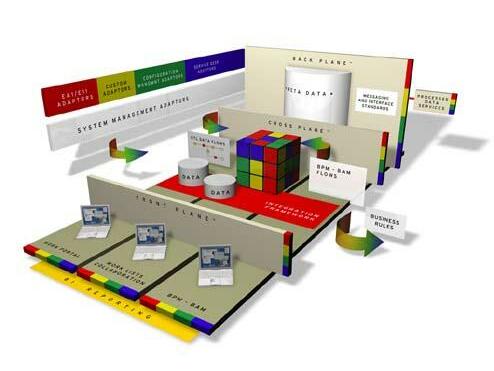
How managers in business think and communicate is different to how designers and developers of systems think and communicate. SVT™ is a way of modeling and presenting the ideas and needs of managers so that a bridge can be created for system designers and developers.
Another very important aspect of SVT™ is its solution neutrality. Our customers need to illustrate that they are always more than they are usually perceived but fully understands the business and its processes at the highest level. SVT™ then helps management teams, sales organisations, account teams and pursuit teams codify and communicate; it does not presume what the outcomes could or should be but demonstrates the critical interdependencies and integral nature of it all.
The net outcome of our structured interventions is that decision makers understand better and feel more in control of the subsequent activities and programmes of work because they have been directly involved in engineering their own futures. In the light of both customer objectives and the perceptions they may have of an organisation, we often need to strengthen that reputation by repositioning ourselves, as a company that fully understands business and its processes at the highest level. To do this, we need to adopt a different dialogue, a new language with our Groupcustomers.Partners, work as appropriate with sales organisations, account teams, pursuit teams and directly with customers and clients.
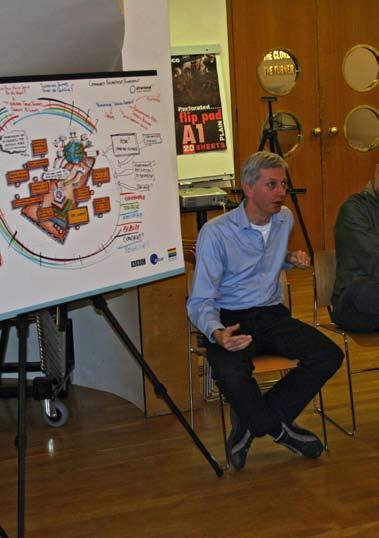
This graphic is designed to represent the virtuous circle from the start of the transformation from the supplier-efficient supply chain to the customer-effective demand chain.
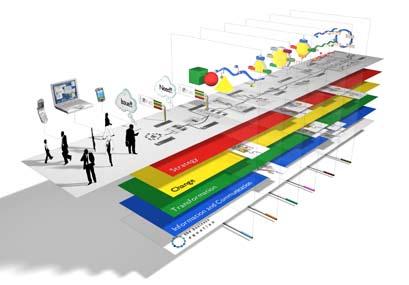
The approach uses a mixture of pre-built and co-created structures, frameworks that encourage clarity and enable practical outcomes to be sustained and more easily measured. Qualified facilitators and analysts intervene internally and at senior level with customers to deliver structured and visual support in four main practice areas:
• Strategy • Transformation • Change • SVT™Communicationsolutions,tools and techniques are available to support all these programmes of work. SVT™ sessions, tools and techniques do far more than simply record the conversation; the rigorous methodology forces thought through the lens of proven frameworks. We use our own expertise and that of the customer and their audiences either directly in sessions, or indirectly and remotely through SVT™ Contextual Analysis™, to assess by constant reference to each framework the coherence or accuracy of the knowledge gained and to alert the team to gaps in knowledge. It is more often than not a question of what we don’t know and what we now need to know, rather than what we do know. The SVT™ methodology, techniques and tools are tailored and bespoke solutions based on the utilisation of proven frameworks. They are structured and rigorous, repeatable and scalable.
1 2 3 4 0 0 1 2 3 4 1 2 3 4 1 2 3 4 1 2 3 4 1 2 3 4 1 2 3 4 0 0 0 0 0 0
The transformation process is encompassed by all phases of a Sales Framework in which Sell, Deliver and Sustain are the constant motives. The clear focus though is on the differentiation and positioning of a company as far more than perception. Smart Thinking, Understanding, Conversation and Dialogue with the customer is at the core of the SVT™ approach. SVT™ and its tools, techniques and intervention programmes are based on direct and indirect facilitation of leadership teams, using highly visual solutions.
These solutions help teams, partners, consortia and customers define the problem(s), prioritise alternate choices, clarify and rank preferential or timebased decision making and planning, define the state of current realities and describe the vision of future states.
The ways in which we can buy products and services is changing as a result of changes in technology that have led to the development of new channels and to reductions in the time and cost of finding information. In turn, this has led to changes in people’s expectations and motivation as to the use of information and in how they engage in the buying process.
As a result, the focus of buying decisions is shifting from product to service, ie from what we want to buy, to how, when and where we want to buy, for both business-to-business (B2B) and business-to-consumer (B2C) Expectationstransactions.
are changing alongside this shift in focus. If we cannot transact in the way we want, ie when, where and how we want, we will buy from a competitor since, given the improvement and leveling of quality of production across the world, product quality is now seldom an important differentiator.
43 2 1 0 0 43 2 1 43 2 1 43 2 1 43 2 1 43 2 1 43 2 1 00000 0 43 2 1 0 43 2 1 0 43 2 1 0 43 2 1 0 43 2 1 0 43 2 1 0 43 2 1 0 43 2 1 0 32 1 THE GloBAl BuSiNESS CASE For CHANGE
Meanwhile financial costs are being driven down by increasing use of the internet, which makes access to the information that affects switching much easier and cheaper for consumers. This, in turn, changes our expectations and drives us to expect to be able to buy what, when and how we want. All this means that routes to market – the mix of resources that are deployed to address the needs of customers – must be designed and managed or engineered according to how, when and where customers wish to transact, especially when switching costs are low, falling or are likely to fall. It is important therefore that a company understands not only their own sales process and selling cycle, but also their customers buying process and buying cycle and be able to successfully and uniquely match the two.
The time and money needed to find information on specification, price, availability by channel, services such as delivery, warranties and guarantees, alternatives and substitutes, references and user experiences are falling, while the number of channels is increasing. Costs of switching also include emotional needs and drivers such as aversion to risk, attachment to a favorite brand or retailer, motivation with respect to control of the service process and desire to repeat a successful transaction. These can have significant effects on our readiness to switch.
ToSTimulATEstimulatepotential and existing customers and create interest in a dialogue. ToProVEprove that you can think through and deliver designs, plans, strategies, business cases and systems. To illustrate prowess and confidence and capability throughout the ToDprocess.ESiGNdesign, conceive and then construct the compelling business cases, arguments and scenarios that will engage your customers. ToENGAGEcreatethe correct environment and experiences within which your customers feel comfortable and encourage them to co-create with us the optimal outcomes. ToEmBrACEunderstand fully and share with respect and relevance the designs and plans, strategies and business cases that will drive maximum performance. ToSENSElisten and be sensitive to the changes and continual dynamics at work within the customer and be ready to act or react to them. TorEiNForCEbecontinually searching for those opportunities to delight, anticipate and surprise the customer with innovation, value and relevance time after time. Each of the attributes of the engagement is additive and has a cumulative effect on the customer experience.321 654 7 HoW To APPlY SVTTm To A SAlES mETHoDoloGY
Each of the attributes of the engagement is additive and has a cumulative effect on the customer experience.
The objective here is to stimulate customers in their thinking about the business and how to engage.
1 STimulATE
Creativity: To gain attention by the creative use of segmentation, media, channels, and messages marketing: To develop programmes that generate leads based on creativity and that track results with new and existing customers innovation: To demonstrate innovative thinking and approaches, including provision of examples that stimulate responses
1 2 3 4 0 1 2 3 4 1 2 3 4 1 2 3 4 1 2 3 4 1 2 3 4 1 2 3 4 0 0 0 0 0 0 STimulATE AND SHiFT PErCEPTioN
Differentiation: To adopt value propositions which differentiate you from competitors and which resonates with customers Experience: To use experience to demonstrate competence and stimulate confidence in customers Thought leadership: To provoke thinking that stimulates responses from customers
STimulATE AND SHiFT PErCEPTioN
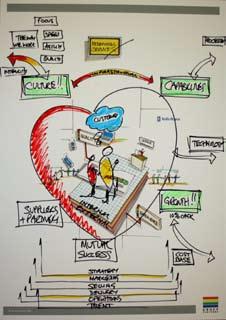
“As we meet new and existing customers - changing the ways in which we talk and demonstrate what we do is a significant opportunity to create new dialogue and build new value. In our work we have developed ways of stimulating new thought, asking different questions and effectively telling inspiring new stories. This page illustrates images used or created for customer dialogue and explaining complex ideas more powerfully and instantaneously.”
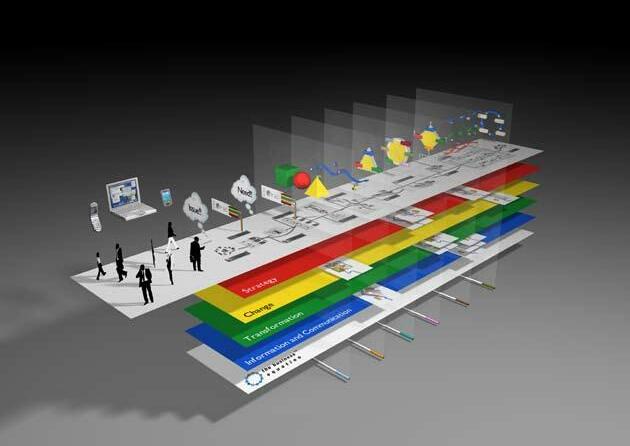


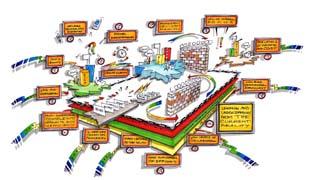
Approach: method and process: To make explicit the methods and processes used and thus demonstrate to customers the effectiveness of the experience
Evidence: To have timely and appropriate data, both qualitative and quantitative, to support the business case(s) Voice of the Customer: By continual, active listening to the voice of the customer prove that you are customer centric Each of the attributes of the engagement is additive and has a cumulative effect on the customer experience. 2
Credibility: To prove credibility using evidence from references, case studies and business cases, and based on thorough evaluation
1 2 3 4 0 1 2 3 4 1 2 3 4 1 2 3 4 1 2 3 4 1 2 3 4 1 2 3 4 0 0 0 0 0 0 DEmoNSTrATE STrENGTH iN DEPTH
Environment/Ambience: To use facilities with the right environment and ambience that will demonstrate to customers our business and technical competencies
ProVE The following approaches are used to prove that you can meet the customer’s needs; they are also used to develop and present the business case.
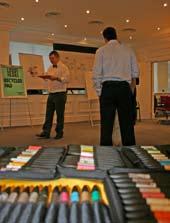
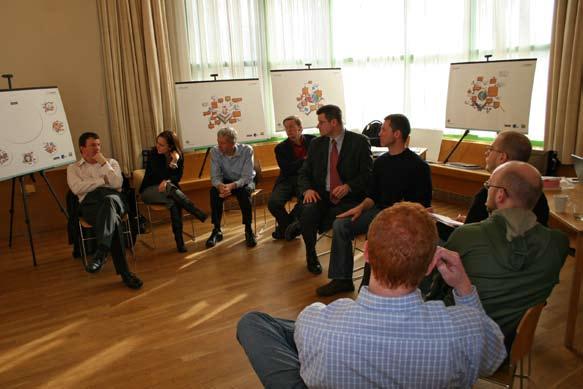
“We have many successes and long-term case evidence of how we leverage best practice and thought leadership within our work, we bring that insight and reference to the fore in everything we do. In our systems we place the facts up front and the best possible exhibits from best practice in context to ensure the customer sees the real strength behind each task or programme we have undertaken. The images on this page reflect actual cases and live interventions where subject matter experts and real research has been woven within physical scenarios of the current state or future vision”
DEmoNSTrATE STrENGTH iN DEPTH
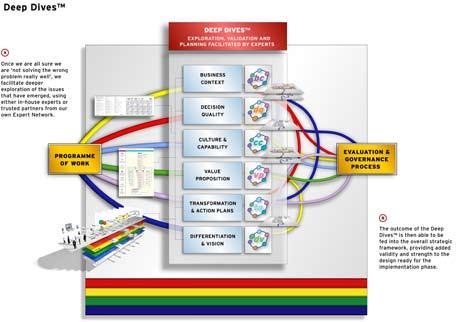
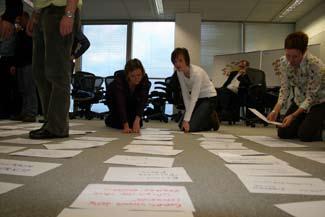

ValueDESiGNproposition: To design and articulate value propositions for the business case and the approach Co-creation: To co-design offers with the customer and thus ensure the customer’s commitment and engagement understanding: To design processes and methods that enable common understanding within the customer organisation and between the customer and you inference: To infer from discovery processes, knowledge bases and existing frameworks of understanding that the designs will meet the customer’s needs Analysis: To assess the designs, both qualitatively and quantitatively Vision: To ensure that designs are informed by the widest, most appropriate vision Alternatives: To improve decision quality by designing alternatives that allow the customer choice
Validation: To design the validation of each hypothesis, proposed design and business case Evaluation: To design the evaluation approach to the methods, content and outputs, and to the application of the methods and outputs to method users, both customers and you.
Each of the attributes of the engagement is additive and has a cumulative effect on the customer experience. 3
1 2 3 4 0 1 2 3 4 1 2 3 4 1 2 3 4 1 2 3 4 1 2 3 4 1 2 3 4 0 0 0 0 0 0 DESiGN THE oPTimAl ouTComE
Framing: To frame the designs in the context of the opportunity and so clearly position the deal Working hypotheses: To develop from the designs hypotheses that will be subjected to testing
DESiGN THE oPTimAl ouTComE
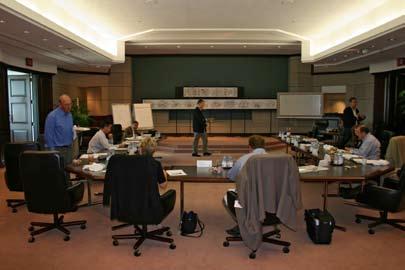
“Designing a successful outcome begins with opening up the conversation to the widest possible input and ensuring we create a clear alignment between the business goals and the processes that will unleash better performance. We bring the best thinking, the best analytics and world leading visual technology and application to the heart of the process. The images shown here illustrate just some of the techniques and tools from initial planning and intervention sessions” Where ‘design’ can truly build the better future.



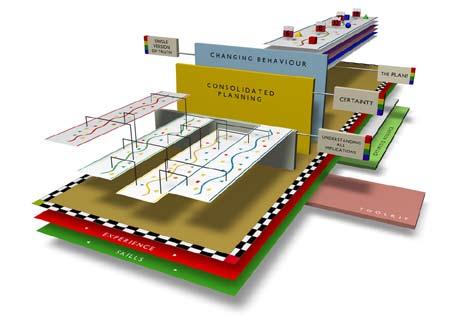
ENGAGE The objective here is to engage the customer in conversation and dialogue on the earlier Sales Framework elements. Given the complex nature of many customer organisations, there may well be a need for some iteration. Each of the attributes of the engagement is additive and has a cumulative effect on the customer experience. 1 2 3 4 0 1 2 3 4 1 2 3 4 1 2 3 4 1 2 3 4 1 2 3 4 1 2 3 4 0 0 0 0 0 0 ENGAGE, Co-CrEATE AND TrulY uNDErSTAND 4
ENGAGE, Co-CrEATE AND TrulY uNDErSTAND
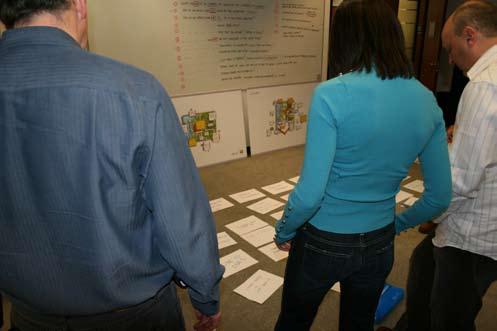
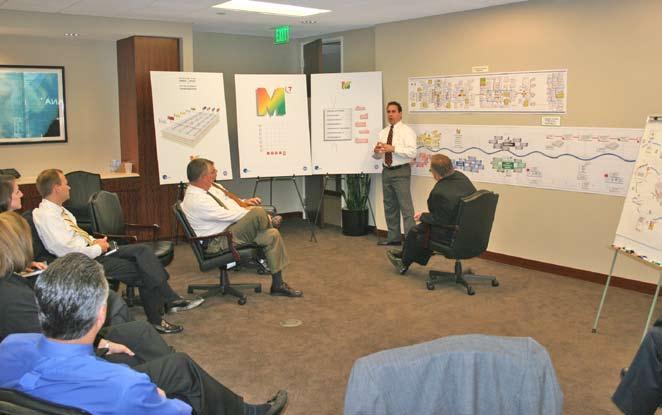
“The optimal place to understand and build clarity and focus is in the act of discussion and debate, and within relationships that enable collaboration. We create the space for people to think and then answer the important questions. The why, the when, the how, the where and the so what of the situation. We do this either directly with the customer at this stage or within appropriate teams in iteration to get ready to develop bigger or wider conversations. Real engagements and live dialogue unleash insight and form long-term relationships that work”

EmBrACE Following on from the previous conversations and dialogues, the objective here is to gain wholehearted commitment by the customer to the adopted business case. Each of the attributes of the engagement is additive and has a cumulative effect on the customer experience. 1 2 3 4 0 1 2 3 4 1 2 3 4 1 2 3 4 1 2 3 4 1 2 3 4 1 2 3 4 0 0 0 0 0 0 5 EmBrACE, Co-CrEATE AND TrulY uNDErSTAND
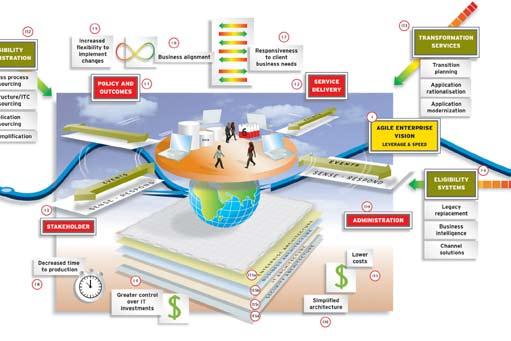
EmBrACE, Co-CrEATE AND TrulY uNDErSTAND “By integrating the approach through the customer enterprise and syndicating it through the use of tools or advocates and evangelists we spread the power of SVT. The outcomes demonstrate the power of working at the customer side with similar techniques and rapidly deploying stimulating materials”




lSENSEisten: To use acute and sustained listening to continually sense the responses of the customer Communicate: To communicate to the customer process and changes as they occur and to sensitively gauge the response to all communications Evaluate: To sense using the evaluation methodology how the customer is evaluating all aspects of the process Adjust: To adjust our approach to the customer during the sales, delivery and sustain phases based on perceptions sensed Each of the attributes of the engagement is additive and has a cumulative effect on the customer experience. 6
1 2 3 4 0 1 2 3 4 1 2 3 4 1 2 3 4 1 2 3 4 1 2 3 4 1 2 3 4 0 0 0 0 0 0 SENSE AND STAY AHEAD oF THE GAmE
SENSE AND STAY AHEAD oF THE GAmE
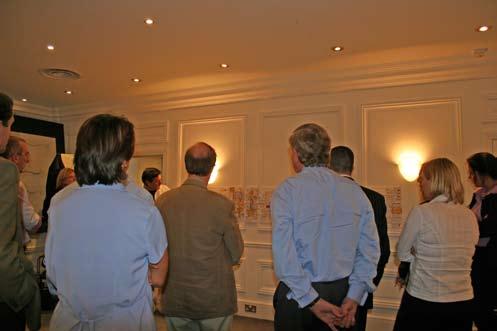
“By building programmes that are truly integrated and working closely through systems and processes we can ensure we know what is going on and react quickly with the next level of service or solution. The images here show teams working directly within in the customer and ensuring the slightest shift in activity is trapped well ahead of time”
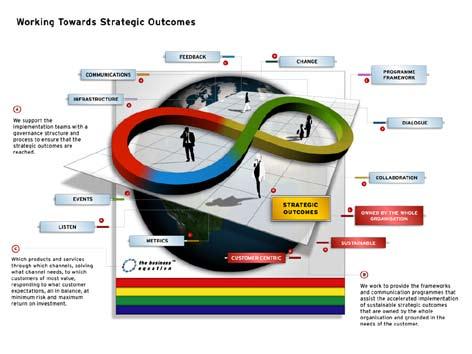
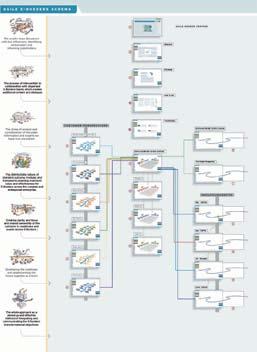
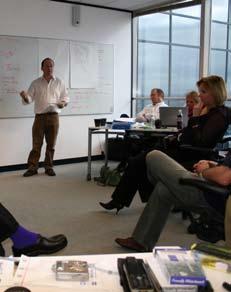

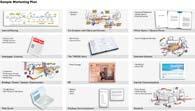

infrastructure: The infrastructure for each project can include electronic workrooms for communication and collaboration, specific collaboration tools such as SharePoint, and a War Room or point of focus for the project. The War Room can be either or both a physical and a virtual room. It will contain all project documents such as project plans, frameworks, journeys and current state and future reality views. Other components of the infrastructure can include the KnowledgeBase.
Heritage: By Heritage we mean the references and resources that reinforce customer confidence Events: To design and hold events that, by reinforcing customer confidence, build and sustain relationships Services: To develop and provide services that overcome barriers to purchase, deployment and enhancement, and that ensure the desired customer Eachexperienceofthe attributes of the engagement is additive and has a cumulative effect on the customer experience. 7
rEiNForCE Recognising that the customer’s trust and confidence will fluctuate throughout the sell, deliver and sustain cycle, we use the following resources to reinforce the customer experience: Space: The space, both physical and/or virtual, in which the client experience is managed may include the Innovation Centre, meeting rooms, presentation rooms, and demonstration rooms. If the appropriate space is used it will reinforce the customer experience Process: To improve all processes based on results of the SVT Evaluation method
1 2 3 4 0 1 2 3 4 1 2 3 4 1 2 3 4 1 2 3 4 1 2 3 4 1 2 3 4 0 0 0 0 0 0 rEiNForCE To STAY iN THE GAmE
“SVTTM is a fluid approach and can be a dynamic environment for customers to view radical innovation, new thinking and thought leadership. It’s techniques are applied throughout the enterprise to cause and then sustain dialogue by becoming a part of the Theseorganisation.”images represent live objects that can be interrogated and that can over time carry new information and meaning as required. SVTTM becomes a place for customers to think and revisit the power and points of view at all times.
rEiNForCE To STAY iN THE GAmE


These outcomes apply to each step in the Sales Framework. Alignment
The strategy sets out how the objectives and outcomes for each activity will be achieved. Services branding The customer experience is achieved by branded services that deliver clear outcomes. Branding our work as your own enables differentiation. The customer experience is engineered by blueprinting the customer journey through each service in order to identify the ‘moments of truth’ when contact is made with the customer. Moments of truth must then be managed to ensure that each contact results in the experience expected and/or desired by the customer.
uNDErPiNNiNG iT All
PoWErFul, SuSTAiNABlE ouTComES
All the resources of the customer are aligned to ensure maximum efficiency and effectiveness in achievement of the desired outcomes. Resources include people and their thinking, their knowledge, skills and competencies as well as time, budgets, processes, systems and data. Gap Analysis Gap analysis identifies gaps in knowledge, skills, competencies, processes and data. Communications All forms of communication with all internal and external audiences can be considered: brochures, emails, SMS messages, CD ROMs, shared electronic workrooms, etc. Communications take place throughout projects, so the timing and content need to be thought through as well as audiences, media, message and frequency. Strategy
All four core processes are subject to continual evaluation using the SVT Evaluation methodology to identify concerns with methods, content, outcomes and people, including emotional issues.
uNDErPiNNiNG iT All
The following processes are applied at each step in the demand chain: Quality control: The processes that ensure the quality of documents, data, outcomes, partners, and customer engagement and experience
Knowledge management: The process by which knowledge is identified, captured, applied and created throughout a Sales Framework project.
Program management: The processes that are used throughout Sales Framework to set up, manage and report all aspect of the programme Partner management: The process by which partners, such as Alliance Partners and Incubator Partners, are engaged and deployed throughout a Sales Framework project.
Processes of Depth
Experience management: Experience management includes both definition of the customer experience and development and provision of the content and interaction that will create and maintain the desired experience at each moment of truth. The customer experience is managed across all channels – web, face to face, and telephone – including all direct and indirect contacts, such as those with partners. Decision quality: Quality decisions require a good number of alternatives to be identified and considered, and the criteria by which alternatives are assessed to be explicit. This methodology enables that to happen while ensuring that decisions that are irrevocable commitments of resources are made as effectively as possible.
FuNCTioNS
The following functions are embedded in each phase of the Sales Framework programme: Value management: Value engineering allows users to model the complex factors that influence the decisions that determine value, and to manage their provision. One very important and valuable aspect of value engineering is that it maps both system and non-system tasks and processes, thus linking hard systems, ie (those encoded in a computer system) to soft systems (the tasks and processes carried out by people without using the computer system).
Communications management: The contact strategy identifies the audiences to be addressed, the media and messages to be used, and the frequency of contact. Other elements within communications management, cover the collection of feedback and analysis of message and media assimilation.
STroNG FouNDATioNS
Evaluation: This method ensures that the methods, the application of the methods, the outcomes and the method users are all fully evaluated; it allows continual improvement in our methods and in the outcomes we achieve and enables new knowledge to be created and applied.
Awareness of ideas, conversation and indeed agreement will not necessarily create the action we desire. Individuals and entire organisations can become stuck in their awareness. Think of it as cultural resistance.
Structured Visual Thinking: causing change and overcoming resistance to change through collaborative sessions
Learning how to change through SVT is a simple three-part idea. The first step is to build a framework that depicts the Current Reality and is designed to capture and build on what is and what might be rather than operate in a pure, detached, analytical and rational world of what should be. Secondly, we build a shared view of what could be without reference to the constraints. Thirdly, we imagine what it will take to get to the preferred future together. By promoting reflection, appreciative and insightful inquiry with a small group of perceptive and enthusiastic colleagues or partners in situations where solutions are not always obvious, and by leaving responsibility for implementation of the solution in the participant’s hands we start to enhance traits of personal responsibility and leadership. The answers naturally emerge. The environment is the Think Tank. We are using the organization itself as a learning laboratory, it does not require any special set of conditions to be in place before it can be effective but we bring valuable lessons, structured, visual techniques to bear at the appropriate time and stimulate the audience with immersive visual material. This works in all environments – in a bureaucracy, in a flat organization, in a firm culturally hostile to education and development, in a firm encouraging self-actualization – because its whole ethos is learning about the surrounding context, and learning to be effective within it, thus leveraging the prevailing culture to its own advantage. An SVTTM programme provides the safe environment for thinking and understanding to occur, whilst recognising that real responsibility lies with the participants who must own the business outcomes.
1 2 3 4 0 0 1 2 3 4 1 2 3 4 1 2 3 4 1 2 3 4 1 2 3 4 1 2 3 4 0 0 0 0 0 0
GROUP PARTNERS Group Partners Europe 32 St. James’s Street TSW1ALondon1HD+44(0)207 925 2111 F +44 (0) 207 925 2288