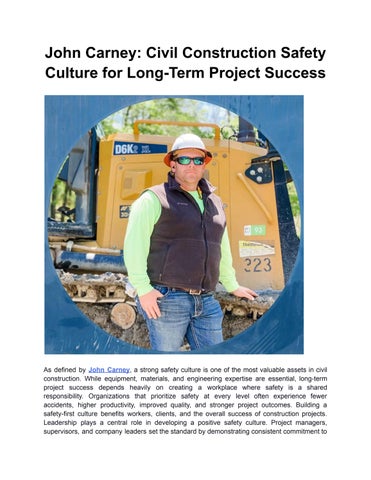
John Carney: Civil Construction Safety Culture for Long-Term Project Success

As defined by John Carney, a strong safety culture is one of the most valuable assets in civil construction. While equipment, materials, and engineering expertise are essential, long-term project success depends heavily on creating a workplace where safety is a shared responsibility. Organizations that prioritize safety at every level often experience fewer accidents, higher productivity, improved quality, and stronger project outcomes Building a safety-first culture benefits workers, clients, and the overall success of construction projects Leadership plays a central role in developing a positive safety culture. Project managers, supervisors, and company leaders set the standard by demonstrating consistent commitment to
safe work practices When leaders actively participate in safety meetings, conduct site inspections, and encourage open communication, employees recognize that safety is a genuine priority rather than simply a regulatory requirement
Comprehensive training is another foundation of construction safety. Every worker should receive proper instruction before beginning work and continue learning throughout the project Training should include equipment operation, hazard recognition, emergency response procedures, and safe work practices Continuous education helps employees remain aware of changing site conditions and reinforces safe behaviors over time Clear communication is essential on every construction site. Workers must understand project expectations, potential hazards, and daily operational changes before work begins Regular safety briefings, toolbox talks, and open discussions encourage employees to raise concerns and report potential risks without hesitation. Effective communication reduces misunderstandings and strengthens teamwork
Hazard identification and risk assessment also contribute significantly to long-term project success Construction environments change rapidly as projects progress, creating new challenges each day. Regular site inspections help identify unsafe conditions before they become serious incidents Addressing hazards proactively reduces delays, protects workers, and supports smoother project execution Personal protective equipment remains an important part of any safety program. Hard hats, protective eyewear, high-visibility clothing, gloves, and fall protection systems help reduce injury risk when used correctly However, effective safety culture goes beyond equipment by encouraging workers to remain alert, follow procedures, and support one another throughout the project.
Technology is increasingly strengthening construction safety programs. Drones, wearable monitoring devices, digital inspections, and real-time reporting systems help identify hazards more quickly and improve overall site management These innovations allow project teams to make informed decisions that enhance both safety and operational efficiency. Employee involvement is another key factor in maintaining a strong safety culture Workers who participate in safety planning, report near misses, and suggest improvements become active contributors to project success.