Reflecting
Johanna Botha 2024
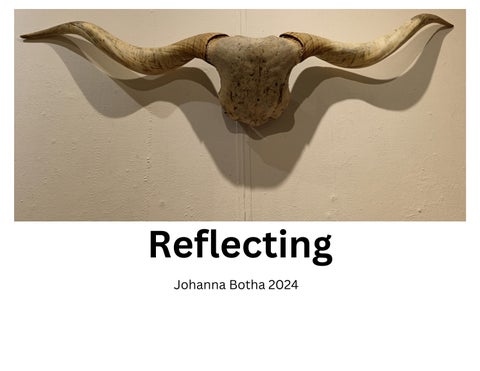
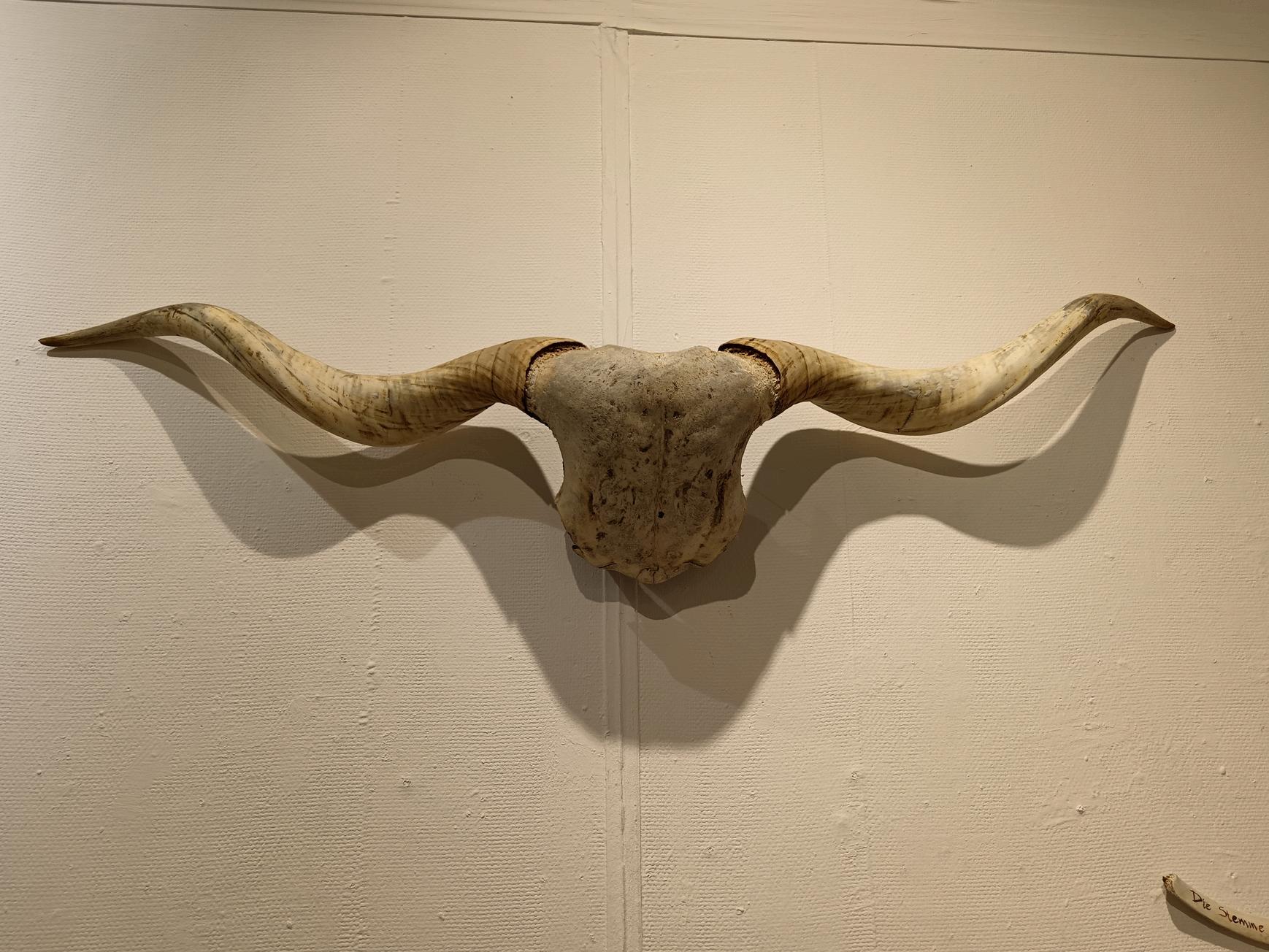
Previous page Fig.1. Johanna Botha, Afrikaner Horns (2024 )
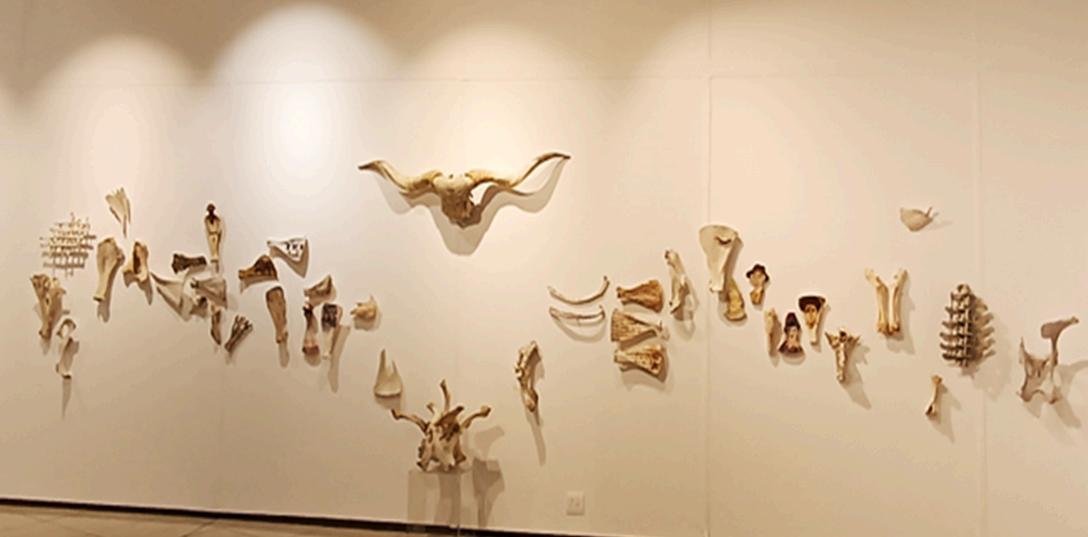
Next page Fig.2. Johanna Botha Final Installation (2024_
Making sense of who I am …
“Ek wonder wat my hinder daar’s onrus in my hart.
Of daar ‘n bange vlinder sag huiwer in sy smart … ”
Eitemal
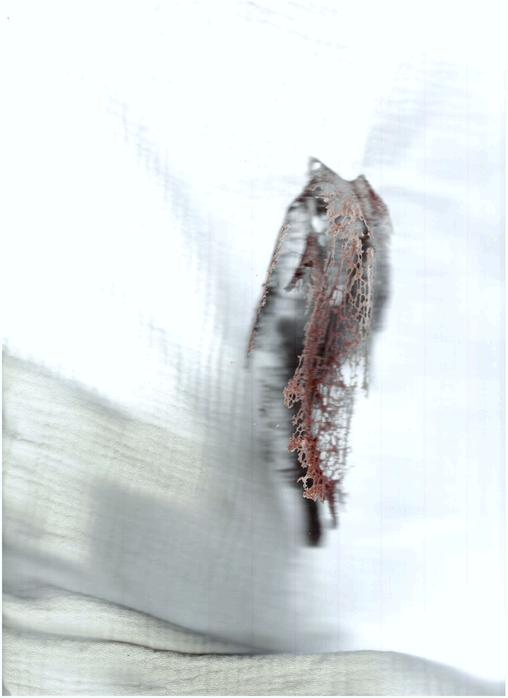
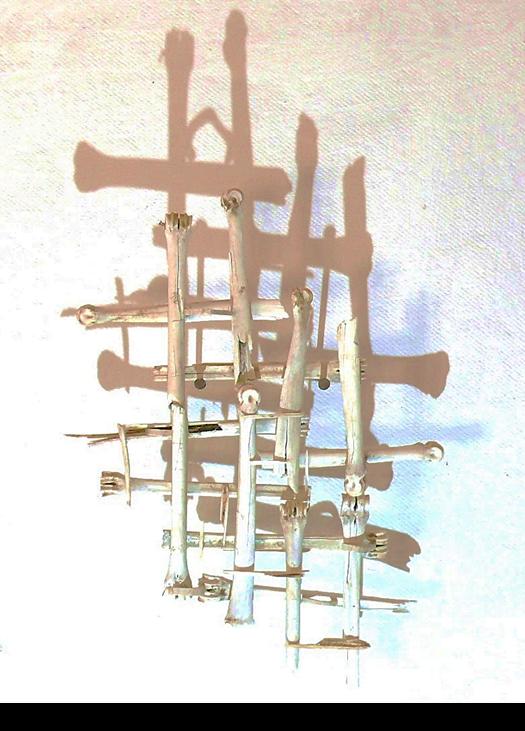
Fig.3. Johanna Botha, Fragile web of bone (2024)
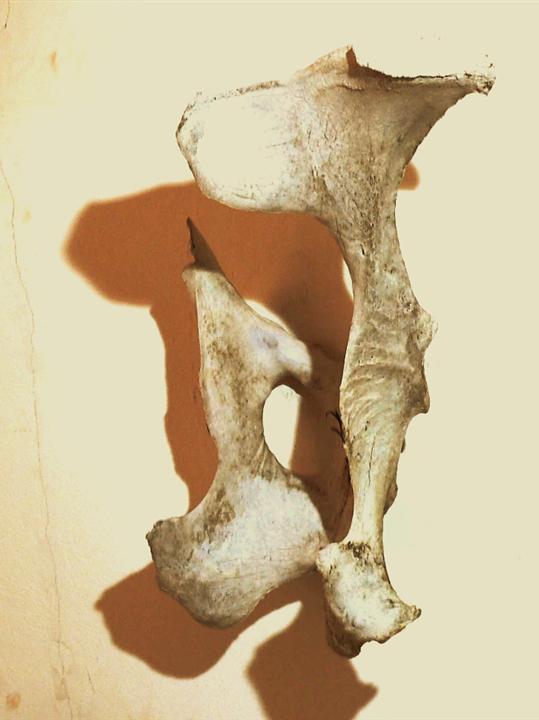
Fig.4. Johanna Botha, Bare Bones (2024)
INTRODUCTION
In my heart is something that I have never spoken about. But now, through art, I will articulate the uneasiness that flutters like a trapped butterfly in the pit of my stomach. Today is the 30th anniversary of the first democratic elections in South Africa. It is a good day to speak out.
Every human being yearns to belong. Searching for one’s sense of self is a strange, lonely place to be (Allen, Kern, Rozek, McInereney & Slavich 2021).
Political and cultural spaces have changed due to the technological and scientific advances of the 21st Century, also transforming private spaces. Group identity has lost its significance within a dystopian [1] society (Dreyer 2018).
[1] Of, relating to, or being an imagined world or society in which people lead dehumanized, fearful lives. Merriam Webster Dictionary [Sa]. Sv “dystopian”. Available at: https://www.merriamwebster.com/dictionary/dystopian
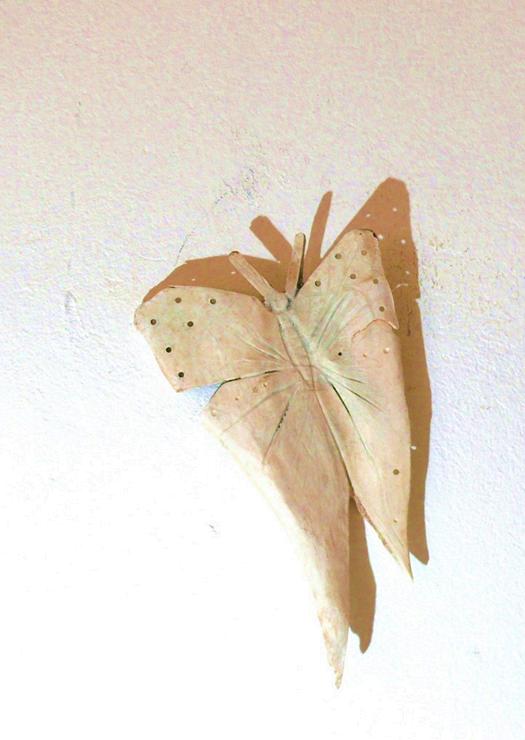
Fig.5. Johanna Botha, Butterfly in Bone (2024
Discovering one’s sense of self is a transient journey though time and space, constantly shifting between metacognition [1] and consciousness (Dreyer 2018). Nothing is fixed. We are subject to a process of neuroplasticity [2] flowing in and out of various realities (Leaf 2013). One feels vulnerable, but there is strength in vulnerability, igniting the process. This dynamism of discomfort leads to growth. Sometimes one asks the universal question: where do I fit in? The answer is determined by each person’s unique experience. As an Afrikaner in South Africa, my tensional relationship sways precariously between discomfort and comprehension.
[1] Awareness or analysis of one’s own learning or thinking processes. Merriam Webster Dictionary [Sa]. Sv “metacognition”. Available at https://www.merriamwebster.com/dictionary/metacognition [2] Neuroplasticity is the capacity of the brain to develop and change throughout life, something Western science once thought impossible. Merriam Webster Dictionary [Sa]. Sv “neuroplasticity”. Available at: https://www.merriamwebster.com/dictionary/neuroplasticity#dictionary -entry-1
Fig.6. Johanna Botha, Reconstructed (2024)
Revisiting history
The Afrikaner has a strong pioneering spirit. British dominance after the Anglo-Boer War could not cow them. Through the British ‘scorched earth policy, people were rounded up and sent to prisoner of war (POW) camps where 28 000 whites and 20 000 black people died (Pretorius 2019). Thousands of women and children were killed in the concentration camps after their homesteads were razed to the ground and their livestock slaughtered. A POW camp in India housed more than 1,200 Afrikaner prisoners, many of whom were teenage boys who fought in the Anglo-Boer War as ‘Penkoppe’.
[1] Playing rugby football relieved the stress of captivity (Changuion, Jacobs, & Alberts 2003). Since our first World Cup victory, rugby plays an increasingly unifying role between diverse cultures and races in South Africa (Zage 2023).
[1] Thousands of children were directly involved in the Anglo-Boer War: some voluntarily as “Penkoppe” (under-age soldiers); others as prisoners in concentration camps
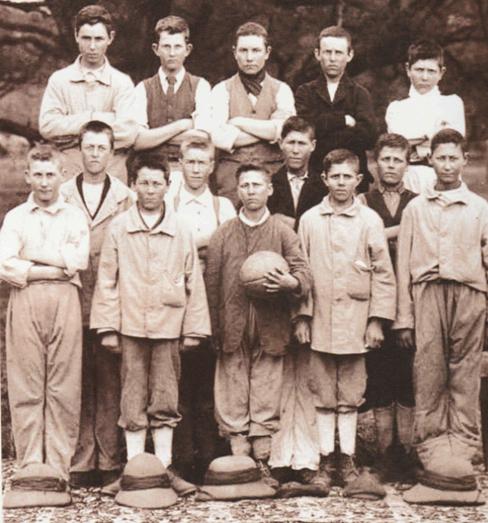
Fig.7 Unknown photographer, Football team: Ahmednagar POW camp (2003).
Afrikaner Cattle
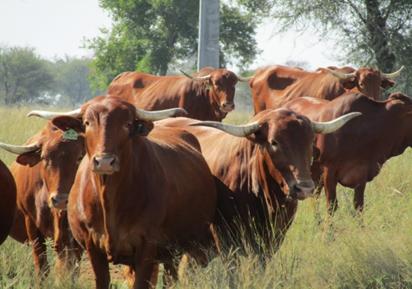
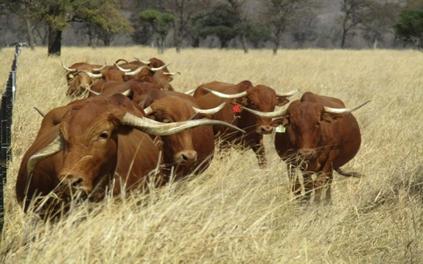
Afrikaner cattle played a significant role in the Great Trek of 1834 when the Afrikaners moved north, over the Drakensberg. The indigenous, hardy Afrikaner breed supplied the pioneers with meat, milk and traction (Bosman 1988).
The innate immunity of Afrikaner cattle, their strong will and ability to survive harsh climates and extreme heat has favoured the breed in the past. Afrikaner cattle worked the land. Today, breeders are trying to adjust the breed’s fertility and efficiency to meet the economic demands of the present-day beef industry (Afrikanerbees.com).
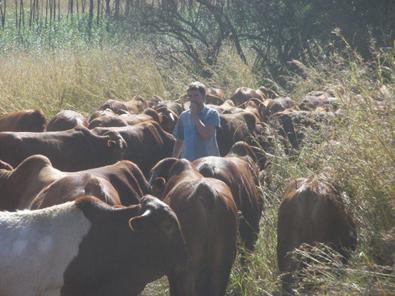
Fig.7.Japie du Toit, Afrikaner cattle I (2024)
Fig.9 Japie du Toit, Afrikaner cattle II (2024)
Fig.10 Japie du Toit, Afrikaner Cattle III(2024)
Personal Motivation
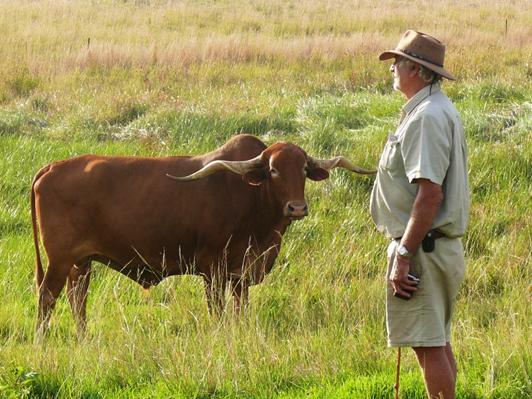
As I reflect on my colonial history, I use art to articulate that which I cannot speak of - to define the undefinable. This transition is metaphorically channelled through Afrikaner cattle [1] and animal bones, as remnants of a past life. This process of personal evolution involves a type of mourning. I revisit the past, attempting to preserve my cultural roots and fiercely embracing that which is dear to me. I wish to bring the past into the present. I manipulate, deconstruct and reconstruct bones to create something new. In this way, I physically reflect on my place and the space I occupy in South Africa.
[1] Africander or Afrikaner, is a native South African breed with good resistance to heat, a high level of tick resistance, quiet temperament and a satisfactorily high level of fertility under harsh conditions. Mature cows are of a medium size weighing approximately 525 to 600 kg and bulls weigh 750 to 1000 kg (https://www.thecattlesite.com/breeds/beef/2 5/africander).
Fig.11 Johanna Botha Soul Connection. (2024)
Influential Artists
In the late 1800s, researchers have found oracle bones that could be 3,000 years old, recording events and glimpses of life of members of the Chinese elite society. These inscriptions dealt with diverse topics such as politics and culture and included methodical records of solar and lunar eclipses. The diviners used sharp tools to carve into the bones of tortoise carapaces and cattle scapulae (Wang 2023). I identify with Professor Pitika Ntuli who asks whether it is foolhardy to carve a delicate piece of bone, knowing that it could break at any moment. Ntuli states that working with bone turns the familiar into a novelty while the process gives voice to the sub-conscious, engendering emotional responses. This reflective spirituality releases negative energy, facilitating a sense of peace and tranquillity amidst life’s challenges (Ntuli 2006). Carving a delicate piece from bone is difficult since the grain of the bone has to be considered at all times.
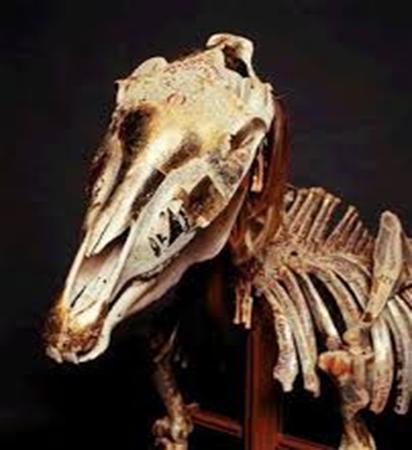
Bronwyn Lace creates site-specific installations with found objects such as animal skeletons, recycled and repurposed objects. Her work deals with themes of transition, mortality and discovered thresholds. Lace employs light as a central component of her work, creating three-dimensional and often interactive artworks. Lace’s includes the skeleton of a horse to stimulate interaction with children. Through reconfiguration of the skeletal bones, she elicits wild imaginings from viewers (Tayler 2013). Pippa Skotnes uses three horse skeletons in her work, Lamb of God, reminiscent of an ancient book or illuminated manuscript since fragments of text are inscribed into the bone. The work references commemorations in medieval reliquaries. This process of transforming animal bones into images of conception is a self-reflective journey to comprehend human life and death (De Villiers-Human 2023).
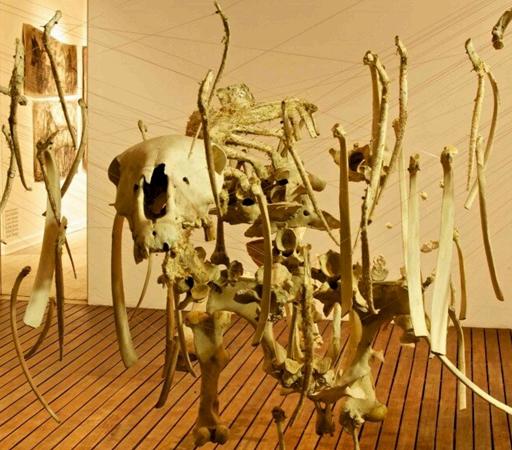
12. Bronwyn Lace, Airs above ground (2011)
Fig. 13. Pippa Skotnes, Lamb of God: Book of Blood and Milk (detail) (2001-11). Horse skeleton, gold, silver, vellum, parchment, ink, linen thread and wood, glass ampules containing lines from an essay by Stephen Greenblatt, lifesize. Photograph taken by Pippa Skotnes, reproduced by permission of Pippa Skotnes.
Fig.
Bone and marrow
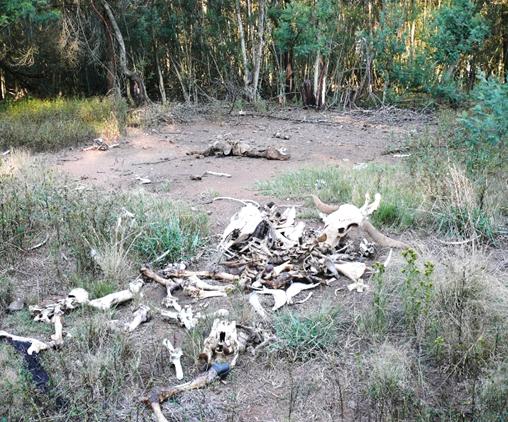
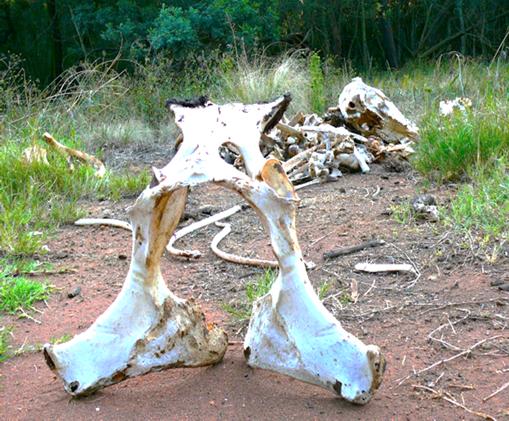
Fig.14. Johanna Botha, I followed footpaths on the farm (2024).
Fig. 15. Johanna Botha, Remnants of animal bone (2024)
Reconstructing bone
Bone is lodged in the deepest parts of our bodies, invisible, but there. It is only through a traumatic break that a bone may emerge from a body. Exposed to the elements, bone changes colour and gradually becomes part of the earth once again. This is common to humans and animals. Bones are the last vestiges of the dead, reminding us of our mortality and the transience of life. Metaphorically bone represents strength, family lineage and the value of cultural heritage: all highly significant to the Afrikaner people.
I manipulate, deconstruct and reconstruct bones to create a new hybrid as part of the process of interrogating and assessing my position in South Africa. Old bones are dark with traces of dirt and trauma. I sterilise the bone, soaking it for days in a mixture of water and chlorine. Sterilising, dissecting, selecting that which is useful, piercing the divisions of joint and marrow. This is how I work through my thoughts and creative intentions.
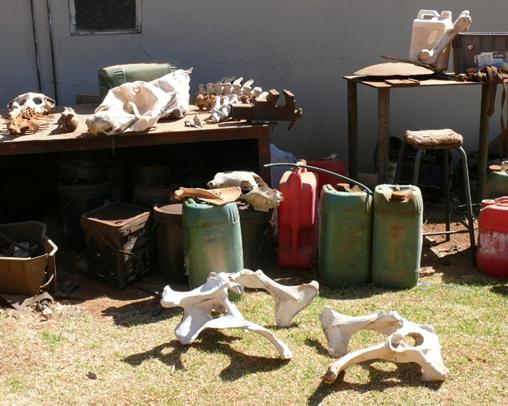
Fig. 16. Leah Botha The workspace (2024).
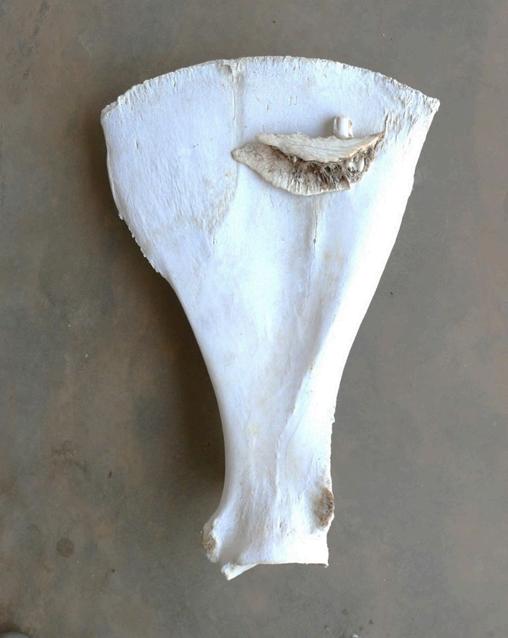
Each bone, each skull has a story to tell. I have experimented with bone, using a grinder, drilling the bone and occasionally inserting putty, paint or pieces of metal. Over time, I have learnt to appreciate the beauty of bare bone after years of exposure to the African sun. It is naturally beautiful as it is.
Bone, a powerful religious and spiritual symbol can conversely represent lifelessness and hopelessness. I relate the spiritual meaning of bone to the book of Ezekiel [1] in the Bible. Dry bones foreshadow the resurrection of the dead, and eternal life through Jesus Christ: a message of restoration and hope.
[1] This is what the Sovereign Lord says to these bones: I will make breath enter you, and you will come to life. I will attach tendons to you and make flesh come upon you and cover you with skin; I will put breath in you, and you will come to life (Bible New International Version. Ezekiel 37:5, 6).
Fig. 17. Johanna Botha, Beautiful as it is (2024).
Transforming the pure white sterilised bone into a different shape and colour speaks of transition. Art gives dry bones purpose. Although the Afrikaans language is under pressure, language is dynamic and will find its purpose over time. Perhaps the written word on bone screams a silent protest, more effective than the spoken word.
Bone marrow is the essence and innermost part of our being, a place where memory and emotion are embedded. When the marrow dries, a latticework of beautiful traces is exposed.
I did not realise that I would become entranced by the structure and texture of bone. I am awestruck when I see what wonderful creations we are, woven in the mother’s womb from the moment of conception.
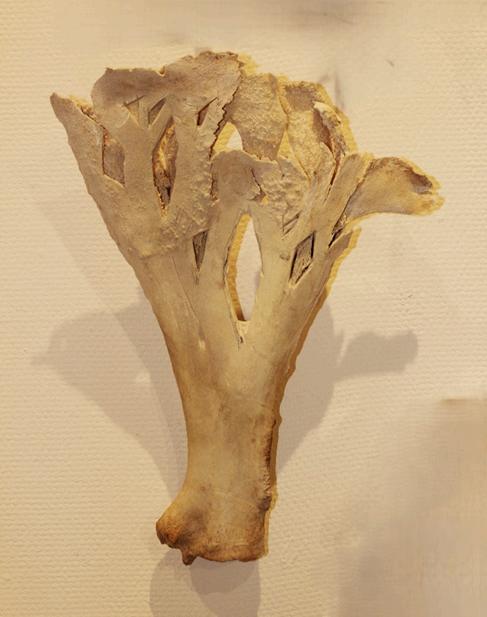
Fig. 18. Willie Nel, Tree carved in bone (2024).
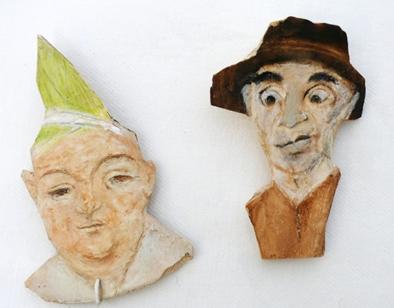
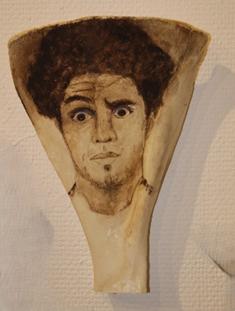
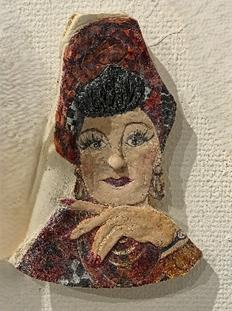
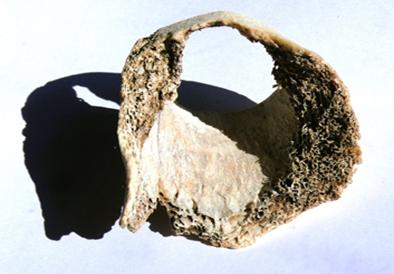
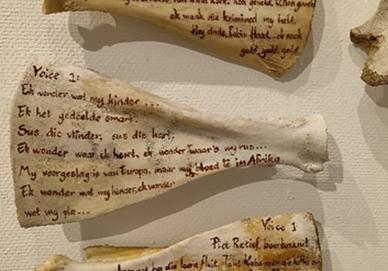
Fig. 19. Johanna Botha, Humour in bone I(2024). Fig. 20 Johanna Botha, Humour in bone II (2024)
Fig. 21. Johanna Botha, Dividing joints and marrow (2024). Fig.22 Johanna Botha, Writing on bone (2024)
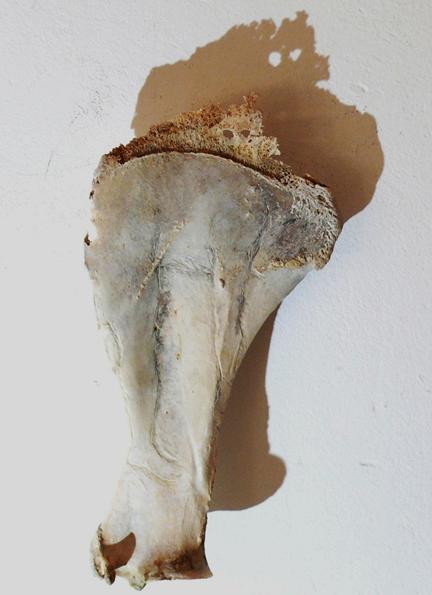
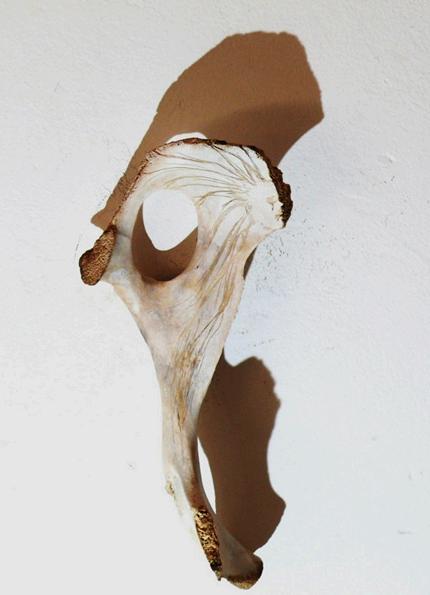
Fig. 23. Johanna Botha, Male figure in bone (2024).
Fig. 24. Johanna Botha, Female figure in bone (2024).
Conclusion
I was raised on folklore, humour and koeksisters, only vaguely aware of other races and their lifestyles. Just as Afrikaner cattle risk moving from a position of power to a novelty species, Afrikaners must adapt to fulfil an important role in South Africa. Working with bone has made me realise the significance of the past.
I must decide what is so dear to me that I will fight to preserve it. I must be true to myself and my roots. We must use technology to open our eyes but avoid being transformed into myopic, unthinking automatons. Much has changed in our country. We must embrace these changes for a more inclusive South Africa without losing our cultural identities.
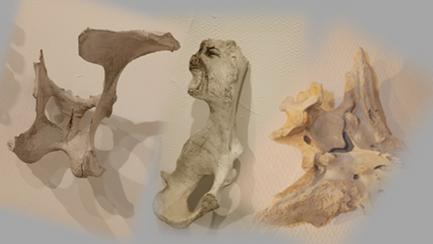
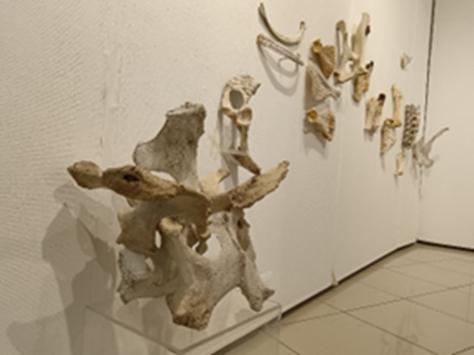
Fig 25 Willie Nel (2024)
Fig.26 Willie Nel (2024)
List of Illustrations
Figure1. Johanna Botha, Afrikaner Horns (2024). Bone
Figure2 Johanna Botha Final Installation (2024)
Figure 3. Johanna Botha, Fragile web of bone (2024). Photograph. Figure 4. Johanna Botha, Bare Bones, (2024). Bone, 46 x 36cm.
Figure 5. Johanna Botha, Butterfly in Bone (2024). Engraved bone, 31 x 19cm.
Figure 6. Johanna Botha, Reconstructed, (2024). 48 x 32cm.
Figure 7. Unknown photographer, Football team: Ahmednagar POW camp (2003).
Figure 8. Japie du Toit Jnr, Afrikaner cattle I (2024).
Figure 9. Japie du Toit, Afrikaner cattle II Photograph.
Figure 10. Japie du Toit Afrikaner cattle III “I followed footpaths on the farm” (2024). Photograph.
Figure 11. Johanna Botha Soul Connection. (2024) Photograph
Figure.12 Bronwyn Lace, Airs above ground (2011) Lace, Airs above ground (2011). Installation view.
https://www.everard- read-capetown.co.za (Accessed 19 September 2024).
Figure 13. Pippa Skotnes, Lamb of God: Book of Blood and Milk (detail) (2001-11). Horse skeleton, gold, silver, vellum, parchment, ink, linen thread and wood, glass ampules containing lines from an essay by Stephen Greenblatt, life-size. https://theartistsbook.org.za/view.asp?
pg=booknesses&pgsub=jgcat&pgsub1=chpt3 (Accessed 10 September 2024). Photograph taken by Pippa Skotnes, reproduced by permission of Pippa Skotnes.
Figure 14. Johanna Botha, I followed footpaths on the farm Photograph.
Figure 15. Johanna Botha Remnants of animal bone (2024). Photograph.
Figure 16. Leah Botha Workspace (2024). Photograph.
Figure 17. Johanna Botha, Beautiful as it is (2024).
Figure 18. Willie Nel, Tree carved in bone (2024)
Figure 19. Johanna Botha, Humour in bone I (2024). Bone, 35 x 17cm.
Figure 20. Johanna Botha Humour in bone II (2024)
Figure 21. Johanna Botha, Dividing joints and marrow (2024).
Figure.22. Johanna Botha, Johanna Botha, Writing on bone (2024) Bone, 35 x 17cm.
Figure 23 Johanna Botha, Male figure in bone (2024). Bone, 44 x 23cm.
Figure 24 Johanna Botha, Female figure in bone (2024).44 x 23cm.
Figure 25 Willie Nel (2024)
Figure.26 Willie Nel (2024)
BIBLIOGRAPHY
Afrikaner Cattle Breeders Society of South Africa. 2024. Afrikaner. Afrikanerbees.com(Accessed 11 July 2024).
Allen, K-A, Kern, ML, Rozek, CS, McInereney, D & Slavich, GM. 2021. Belonging: a review of conceptual issues. An integrative framework, and directions for future research.
Australian Journal of Psychology 73(1):87-102.
Aylmer, C. 1989. Lines of thought: discoveries that changed the world. https://www.cam.ac.uk/research/news/lines-of-thought-discoveries-that-changed-the-world (Accessed 15 September 2024).
Bauermeister, M.E. J Eitemal (W.g.du P.Erlank), 'n Bibliografie, Universiteit van Stellenbosch 1969
Bible: New International Version. Ezekiel 37:5, 6.https://www.biblegateway.com/passage/? search=Ezekiel%2037%3A1-14&version=NIV (Accessed 7 July 2024).
Bosman, D. 1988. Die verhaal van die trekos. Pretoria: Promedia Uitgewers.
Brand, D. 2022. Volkskas. Geldsake-en-loopbane. Weet: want mens moet weet. https://weet.co.za/geldsake-enloopbane/volkskas. (Acccessed 18 September 2024).
Changuion, L, Jacobs, F & Alberts, P. 2003. Suffering of War. Bloemfontein: Kraal Publishers.
De Villiers-Human, S. 2023. Conceptions of iconicity and their historical reorientations: Pippa Skotnes’s horse skeletons and the topos of the Annunciation. Image & Text 37.
Dreyer, E. 2018. Home. https://www.elfriededreyer.com/home-naf-2018 (Accessed 10 August 2024).
Leaf. 2013. What I’m working on in 2023. Dr Leaf. https://drleaf.com/blogs/news/what-i-m-working-on-in-2023?
srsltid=AfmBOoq1Cs0PQd4Q5-1vfPij63-1yWqz_3S8zY6Vw1OMS2XmH9KntzQ9 (Accessed 10 August 2024).
Association of Arts Pretoria. 2024. Celebrating 60 years of the Pretoria Art Museum.Tshwane: Pretoria Art Museum.
Merriam Webster Dictionary [online]. [Sa]. Sv. “dystopia”, “metacognition” and “neuroplasticity”. https://www.merriam-webster.com (Accessed 9 August 2024).
Ntuli, P. 2010. Scent of invisible footsteps. Pretoria: Unisa Press.
Pretorius, F. 2019. Concentration camps in the South African War? Here are the real facts.The Conversation, 18 February. https://www.sahistory.org.za/archive/concentration- camps-south-african-war-here-are-real-factsfransjohan-pretorius-conversation (Accessed 15 August 2024).
Roberts, S. 2010. Industrial policy under democracy: apartheid's grown-up infant industries? Iscor and Sasol. Transformation: critical perspectives on South Africa 71(1):50-75.
Smith, C. (2021). How the word is passed. Boston, New York: Little, Brown & Co.
Strydom, CN. 2017. Kinders in die Anglo-Boereoorlog (1899-1902) konsentrasiekampe: ’n ondersoek na die moontlike invloed van voeding en belewenis. MA (History) dissertation, University of Stellenbosch, Stellenbosch.
Tayler, D. 2013. Life and death drive ‘magic’ art of South African Bronwyn Lace. https://www.voanews.com/a/lifeand-death-drive-art-of-south-african-artist-bronwyn-lace/1749598.html (Accessed 10 August 2024).
The Cattle Site. 2022. Africaner. https://www.thecattlesite.com/breeds/beef/25/africaner(Accessed 10 July 2024).
Wang, J. 2023. Oracle bone inscriptions showcase earliest writing system in China.
https://www.shine.cn/feature/art-culture/2305296362/ (Accessed 20 September 2024).
Zage, Z. 2023. How rugby became part of the DNA of South Africans. Global Voices.
https://globalvoices.org/2023/11/24/how-rugby-became-part-of-the-dna-of-south-africans/
Artist Statement
In my heart was something that I needed to speak about. Discovering my sense of self in the new South Africa is a process that makes one feel vulnerable. With art I can articulate that which I cannot speak of.I metaphorically channelled this journey through the Afrikaner cattle and animal bones.
By sterilising, dissecting and selecting that which is useful, I work through my deepest thoughts and creative intentions. I revisit the past, attempting to preserve my cultural roots and fiercely embracing that which is dear to me.
Bone represents strength, family lineage and the value of cultural heritage: all significant to the Afrikaner people. Transforming pure, white, sterilised bone into a different shape and colour speaks of transition.
As I worked with the bones it caught me by surprise when I realised how wonderful God created us! The spiritual meaning of bone found in the book of Ezekiel reminds us of the message of restoration and hope. Through art I can then express my concerns and joys to stimulate dynamic interaction with an audience.
About the Artist
Born in Germany, Johanna Botha was baptised in the Netherlands and completed her primary schooling in Canada and in the countryside of Mpumalanga. In a school art-competition, MorsJors, sponsored by Sanlam, Botha’s entry was awarded third prize.
She matriculated in Pretoria and studied Optometry in Johannesburg. Botha subsequently practiced Optometry for 25 years in Middelburg, Mpumalanga and ran a reading centre in Groblersdal.
She successfully completed an art-therapy course by Dutch practitioner, Anel Smith, in 2008 and conducts art therapy weekends twice annually. She is a founding member of the Highveld Art Association, an affiliate of SANAVA.
Currently Botha is completing her Honours year of a Bachelor of Visual Arts degree at Unisa.

Johanna Botha 0845110086
johanna.bothakuns@gmail.com www.johanna-b-art.com