Focal Points
Chair Programs
Treasurer
Membership
Editor Communications
Instagram Outings Outings
SCCC Leadership
Joe Doherty
Susan Manley
Ed Ogawa
Joan Schipper
Joe Doherty
Velda Ruddock
Joan Schipper
Joan Schipper
Alison Boyle
JoeDohertyPhotography@gmail.com
SSNManley@yahoo.com
Ed5ogawa@angeles.sierraclub.org
JoanSchipper@ix.netcom.com
JoeDohertyPhotography@gmail.com
Velda.Ruddock@gmail.com
JoanSchipper@ix.netcom.com
JoanSchipper@ix.netcom.com
AlisoniBoyle@icloud.com
Focal Points Magazine is a publication of the Sierra Club Camera Committee, Angeles Chapter. The Camera Committee is an activity group within the Angeles Chapter, which we support through the medium of photography. Our membership is not just from Southern California but is increasingly international.
Our goal is to show the natural beauty of our world, as well as areas of conservation concerns and social justice. We do this through sharing and promoting our photography and by helping and inspiring our members through presentations, demonstration, discussion, and outings.
We have members across the United States and overseas. For information about membership and/or to contribute to the magazine, please contact the editors or the membership chair listed above. Membership dues are $15 per year, and checks (payable to SCCC) can be mailed to: SCCC-Joan Schipper, 6100 Cashio Street, Los Angeles, CA 90035, or Venmo @CashioStreet, and be sure to include your name and contact info so Joan can reach you.
The magazine is published every other month. A call for submissions will be made one-month in advance via email, although submissions and proposals are welcome at any time. Member photographs should be resized to 3300 pixels, at a high export quality. They should also be jpg, in the sRGB color space.
Cover articles and features should be between 1000-2500 words, with 4-10 accompanying photographs. Reviews of shows, workshops, books, etc., should be between 500-1500 words.
Copyright: All photographs and writings in this magazine are owned by the photographers and writers who created them. They hold the copyrights and control all rights of reproduction and use. If you desire to license one, or to have a print made, contact the editor at joedohertyphotography@gmail.com, who will pass on your request, or see the author’s contact information in the Contributors section at the back of this issue.
https://angeles.sierraclub.org/camera_committee
https://www.instagram.com/sccameracommittee/
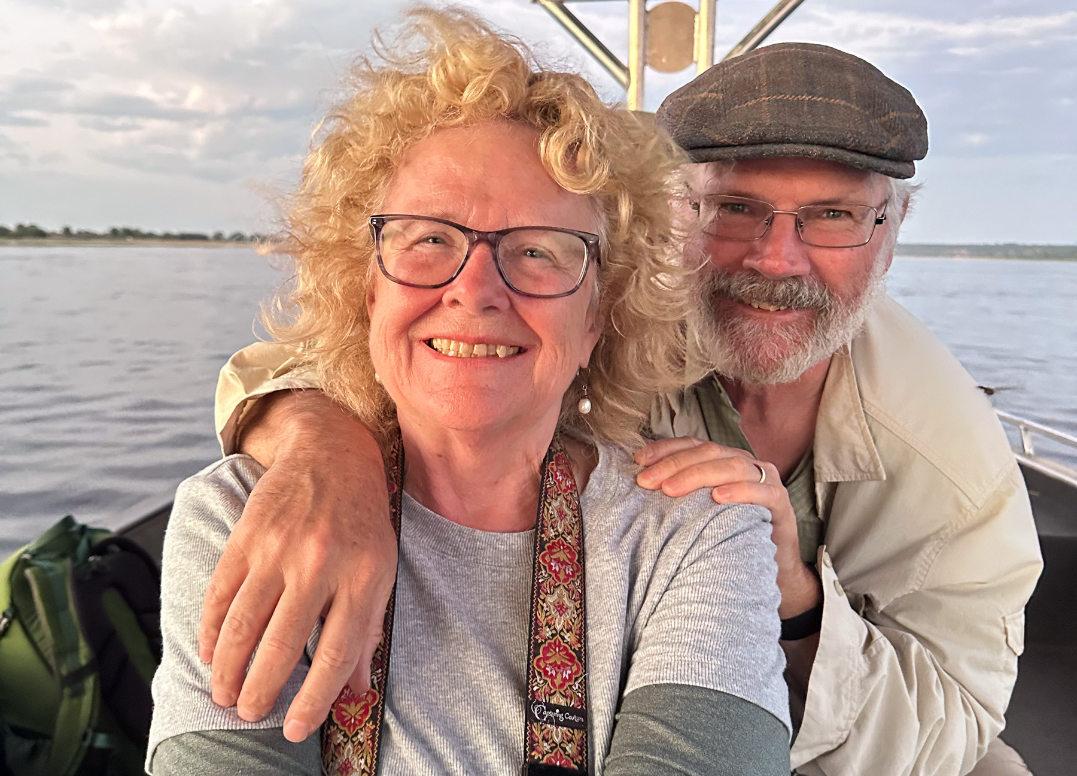
Velda Ruddock and Joe Doherty on the Chobe River. Photo by Karen Schuenemann
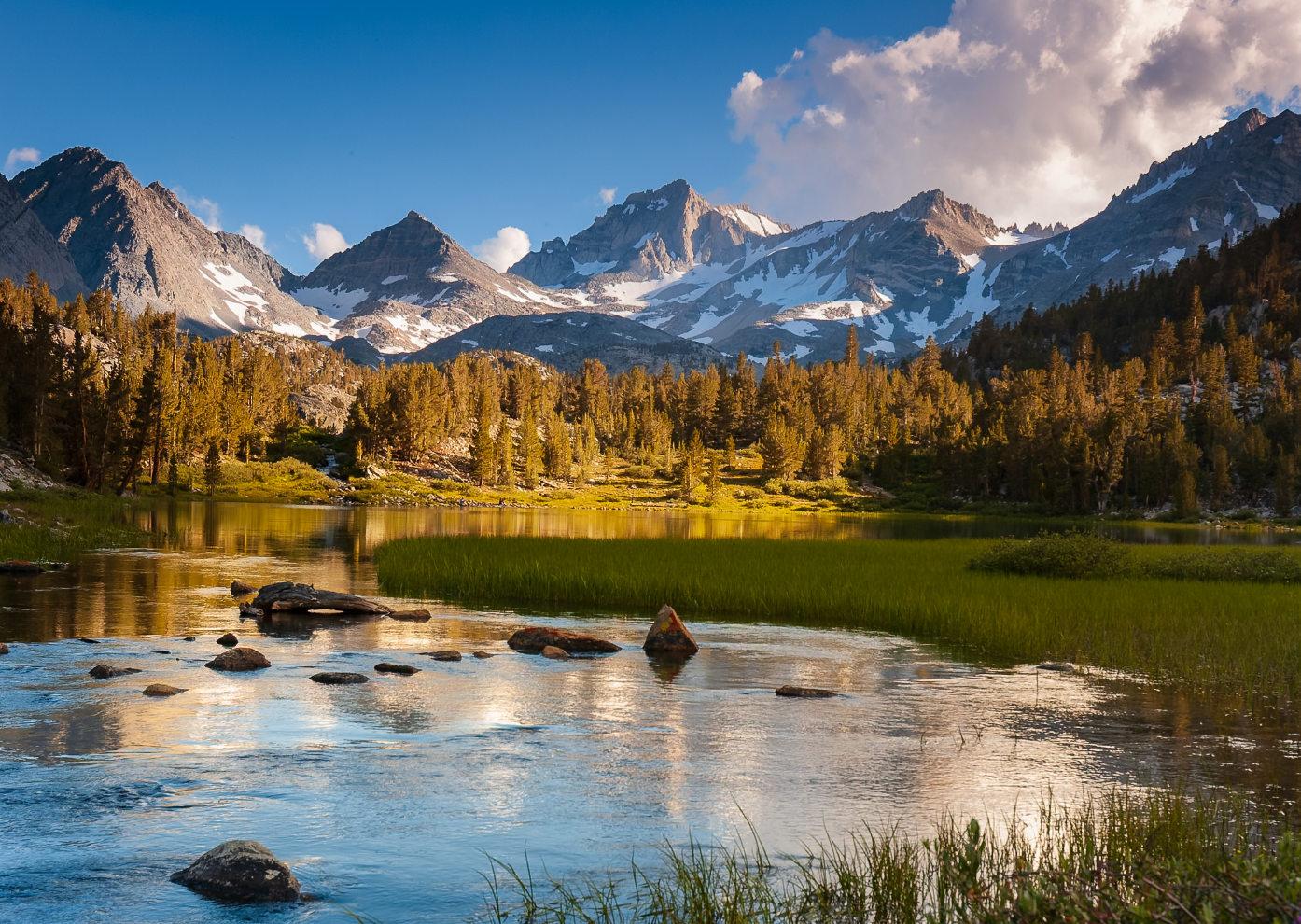
Twenty years ago this month Velda and I backpacked into Little Lakes Valley, at the top of Rock Creek in the Eastern Sierras. Our workdays were filled with numbers, deadlines, and e-mails. I didn’t know what we’d find up in the mountains, but I knew it wouldn’t be numbers, deadlines, and e-mails.
We got lucky. This was an absolute gem of a place to unwind, to hike, to read, to take pictures, and to have the most sublime peanut butter and jelly sandwiches known to man. And although we’ve both been retired for ten years, we still need to get away and detach.
My favorite way to detach is to find a new place and photograph it. Or maybe an old place that I haven’t visited in a while. Or perhaps go without a camera and just breathe and look and enjoy the place. The main thing is to go outside, and, as the youngsters say today, “touch grass.”
That’s what I’ll try to do for the next few weeks. There will undoubtedly be more horror stories emerging (Adelanto, anyone?), but they don’t need my attention right now. Right now is the time to recharge, refresh, and renew myself for what comes next.
Bear Creek Spire and Heart Lake in the late afternoon, August 2006. © Joe Doherty
Jennifer King “Winter Inside Yellowstone”
Thursday August 13 @ 7 PM PDT
Register for the meeting here: https://us02web.zoom.us/meeting/register/I8Qgk2ICTFqG6Pg24Qe_rg
In this season of silence, frost and light reshape the landscape, revealing a world of extraordinary beauty. Snow-covered forests, frozen rivers, and steaming geysers create moments that connect us to the power of nature’s resilience. Winter is the story of survival where a quiet peacefulness is met with the harshest conditions. A place where nature is challenged to thrive, and to survive. For photographers, it is more than a seasonit is a chance to witness and connect to an untamed wild in its purest form.
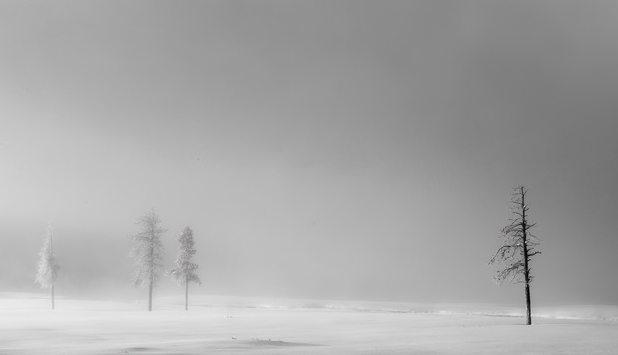
Jennifer King is an internationally acclaimed landscape and wildlife photographer with a passion for teaching and inspiring photographers around the world. She draws on her fine art and design background to bring a fresh perspective to nature photography.
She has built a respectable reputation with award winning photography, and is one of the premiere black and white photographers in the country. Jennifer was also recognized as the #1 Wildlife Photographer in the US in 2025.

Jennifer is a Moab Master Photographer and noted as 1 of 15 Amazing Women to Follow (by 500px). She is also the founder of PHOTOGRAPHY for the FIGHT
AGAINST BREAST CANCER (pfabc.org), an industry wide organization bringing together the biggest names in photography to raise money for breast cancer research.
You can find her photography, video tutorials and interviews in Nature Photographer’s Network, Outdoor Photographer Magazine, Shutter Magazine, Camera in the Wild, Photography Talk, Smoky Mountains Journal of Photography, Our State Magazine, VIA Magazine and more! She also speaks at yearly summits for organizations across the world.
Texts and Photographs by Joe Doherty
*Thanks to Yogi Berra
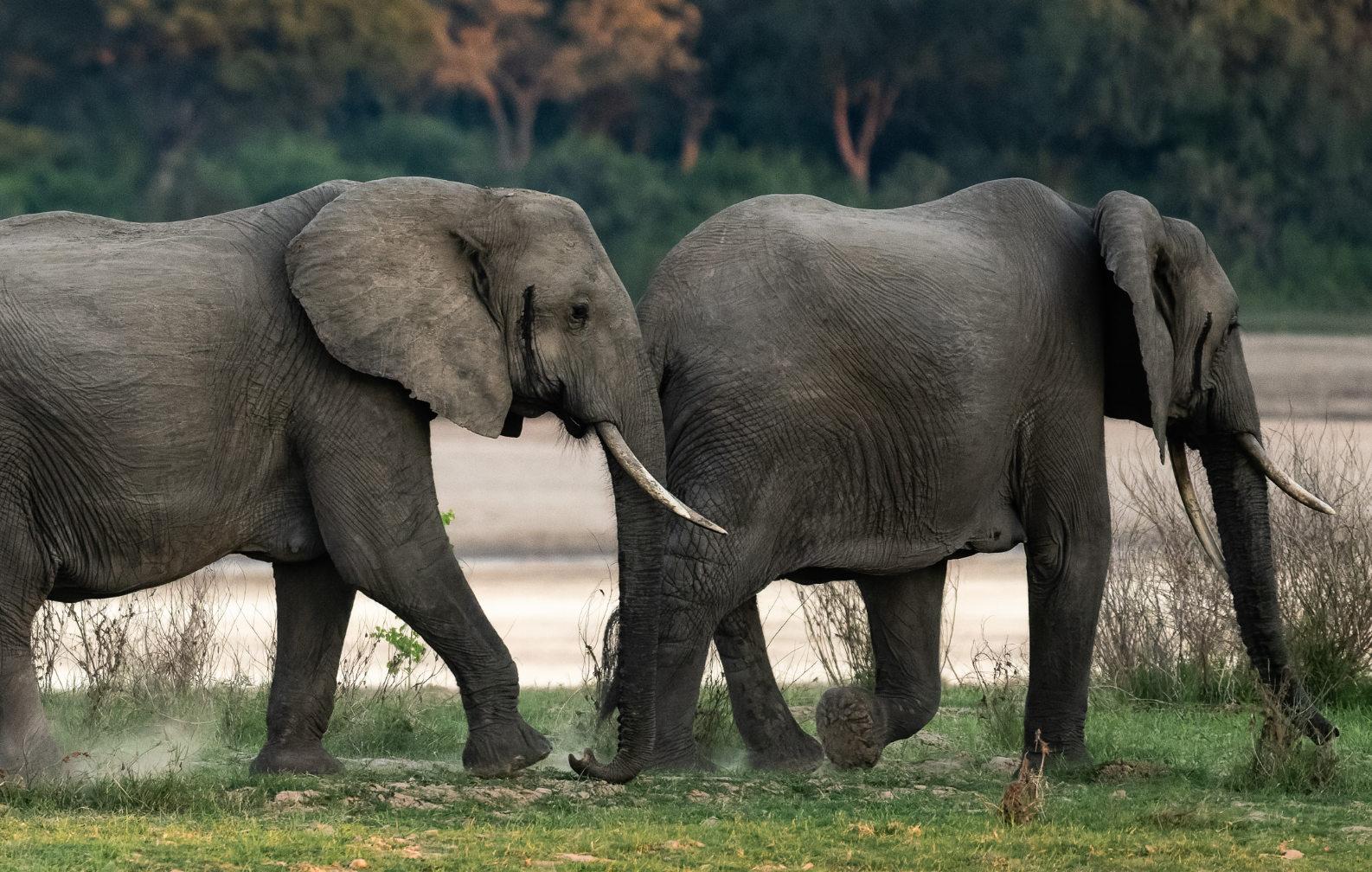
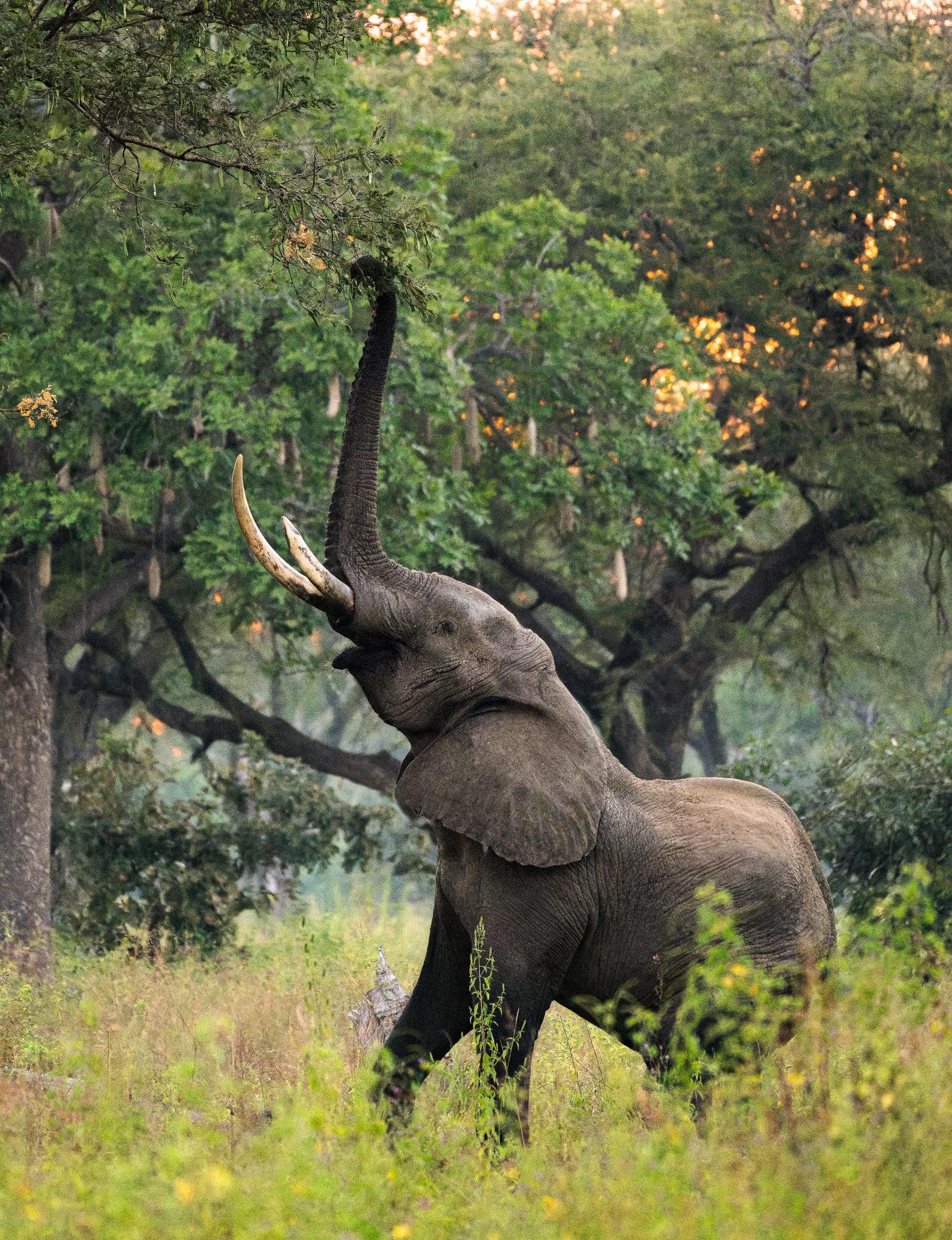
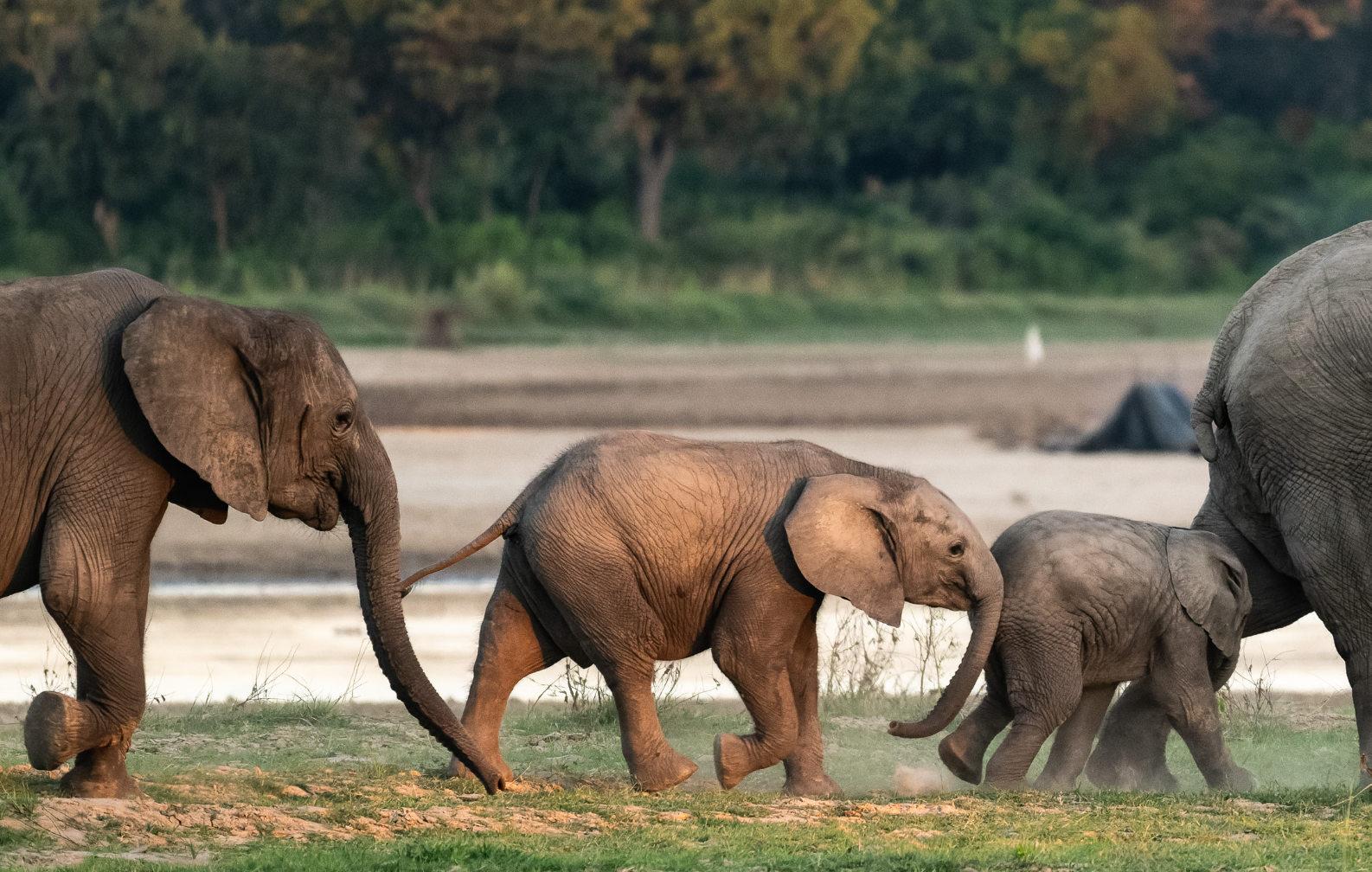
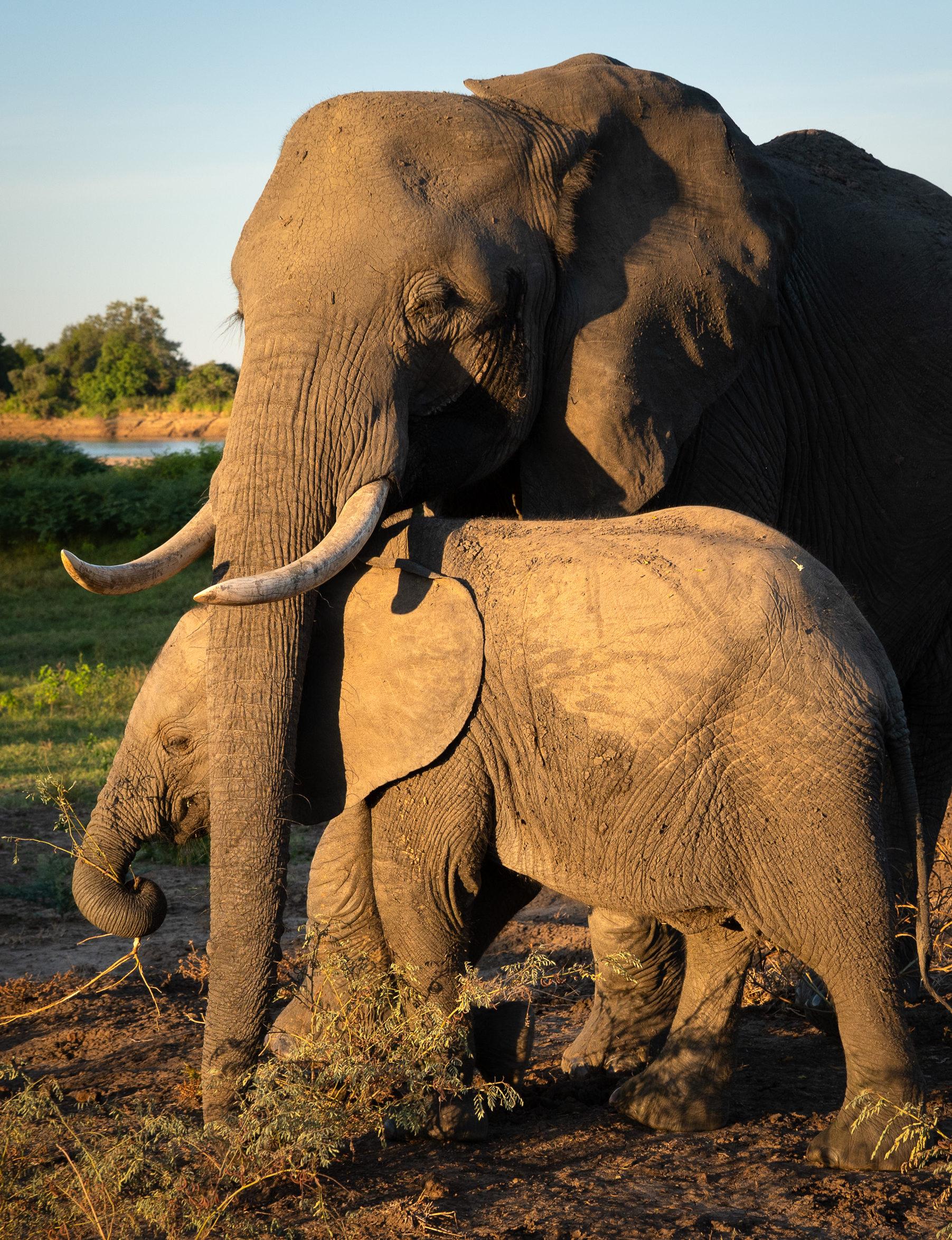
Elephant walk in South Luangwa National Park, Zambia. These matriarchal herds are organized around protecting the young, and they were gathered in an easy-to-defend spot along the river.
With Medicare eligibility comes the realization that long-delayed adventures had better happen soon. This is one reason why –in 2024 – Velda and I signed up to go to Botswana and Zambia with Karen Schuenemann and three other photographers in May 2026.
On a trip like this there is never enough information to fully understand what you’re getting into, even with all of the orientation videos, Zoom calls, and emails. Friends and acquaintances who had been there told us that Botswana was a life-changing place. So we expected good things, while also trying to figure out what could go wrong.
We each packed two bodies, three zoom lenses (wide, medium, and telephoto),
batteries, and cards. The price of SD cards spiked before we left, so we didn’t buy more. Instead, we brought two SSD drives and made duplicate backups of our cards every evening. The SD cards were formatted and reused daily. Batteries were charged nightly.
The smallest plane we took limited our total baggage to 25 kg. With 10 kg of cameras and 3 kg of computers, we had to make hard choices about what kind of clothes and incidentals to bring along. The game lodges made it easier by including daily laundry service with the room, so we didn’t have to carry a week’s worth of clothes.
We stayed at three different game lodges: Pangolin Chobe Hotel in Kasane, Botswana; Chikunto Game Lodge in South Luangwa National Park, Zambia; and Shinde Footsteps
in the Okavango Delta, Botswana. All of these are geared towards photography, and all our guides had received some training from Pangolin on how to position photographers for the best shot. We were not herded toward iconic photographs, however, as these kinds of trips don’t lend themselves to that kind of image. We were instructed on some of the behavior and tendencies of our subjects, given transportation and some technical guidance, and then left to interpret things for ourselves.
The Pangolin Chobe Hotel is near the Chobe River, and we spent nine of our ten game drives on the water in a specially designed boat with swivel chairs and camera supports. There were two guides onboard; a driver who
was knowledgeable and respectful of the animals we approached, and a photographer who provided specific technical and artistic guidance. It was a great place to orient ourselves to the variety of animal and aquatic life we’d encounter, and to hone our wildlife photography skills.
The Chikunto Game Lodge is near the Luangwa River in southeastern Zambia. All of our eight game drives were in open trucks, and there were only three of us in each truck so we could shoot out both sides without hindrance. Each morning drive included a stop for tea and cookies, and every evening we parked at sunset to enjoy a libation of choice. We also had night drives, with a
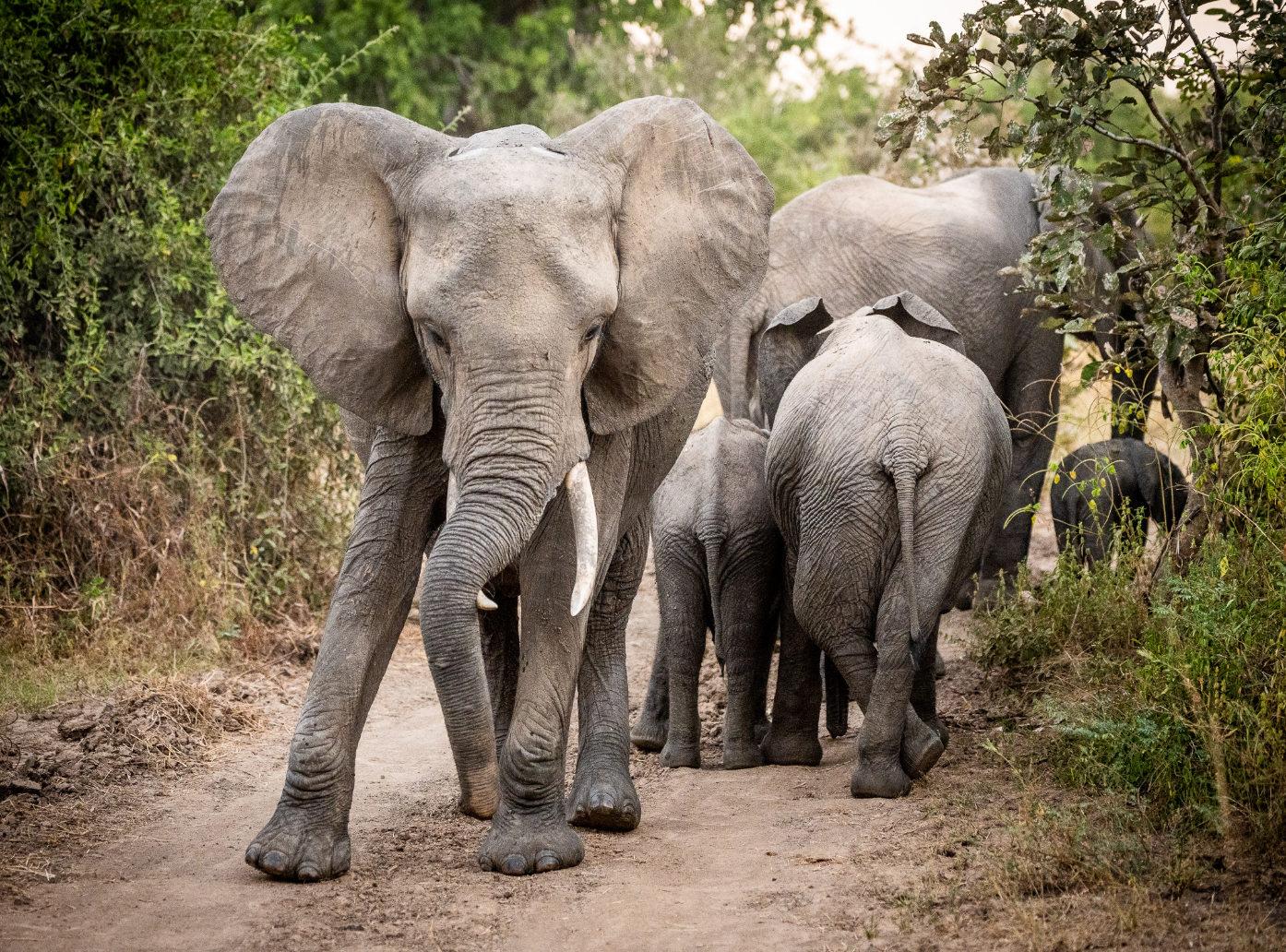
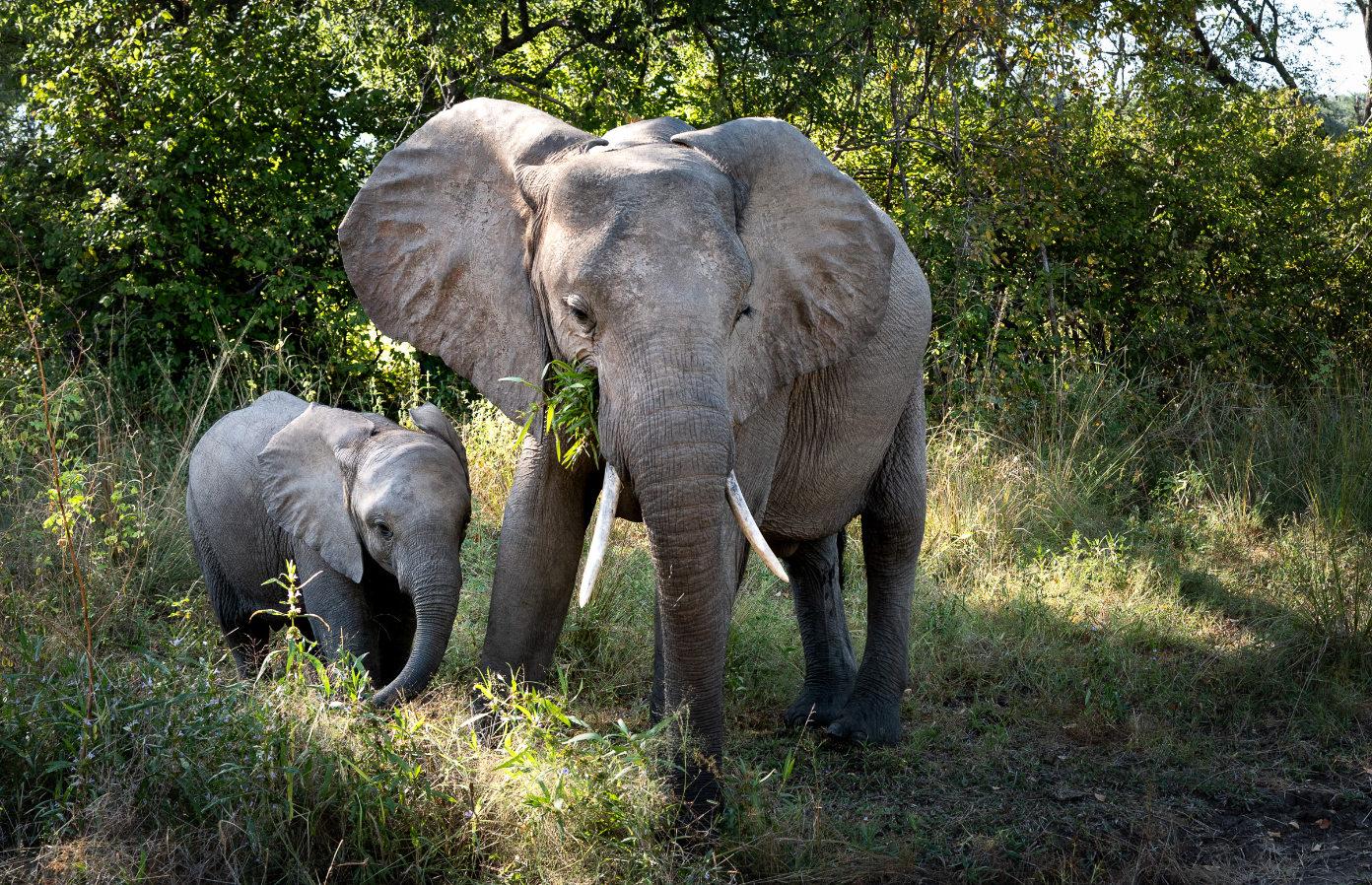
Our safari truck was following a little too closely on a narrow road in South Luangwa, and this elephant turned and let us know. There was a large open area about 100 yards up the road where they let us pass.
spotter who used a handheld spotlight to identify and illuminate the various fauna who come out at after dark.
The Shinde Footsteps in the Okavango Delta was a combination of the two. While technically on land, the rain in the Angola Mountains had been especially heavy, and the water was still rising during our stay. What in the past may have been a series of game drives on land involved a demonstration of the Toyota Landcruiser’s ability to run in water that lapped the running boards. On the night before we left a leopard came into camp, and the baboons and monkeys in the trees above our tent sent out a very loud alarm.
The dominant mammals we saw in every place were elephants, baboons, and various antelope. We also saw many hippos and crocodiles in the water, along with wild dogs,
zebras, water buffalo, hyenas, jackals, and a single leopard. And there were so many different types of birds that it was difficult to identify and catalog them. Fortunately, we weren’t there to make a catalog but to create photographs. We were there to observe the animals up close and for long enough to understand how these species interact with each other in the wild.
Elephant herds, which are female-driven, revolve around protection of the young. The younger the animal, the larger the protective phalanx. As they grow older the youngsters strive to be more independent, but the older members of the herd are always nearby. The dominant females responded to our presence depending on how big a threat (or a nuisance) they thought we posed. On one occasion our truck followed a herd too closely on a narrow road, and one of the older
Our trucks and boat generally were not seen as a threat as long as we were stationary. This mother and child approached us, and she allowed her baby to come close enough that I needed a 35mm lens to get the shot.
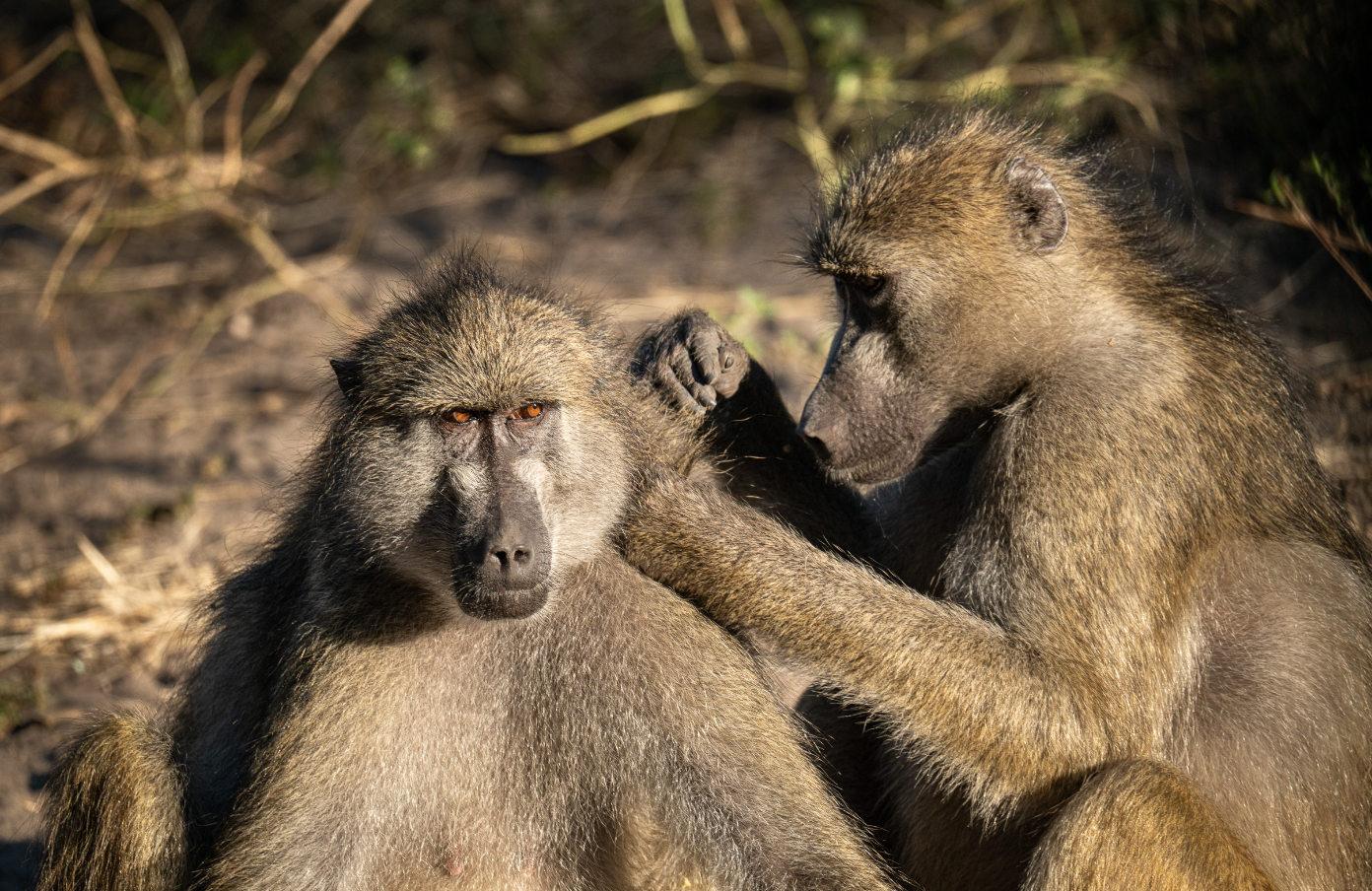
“Well well. Another blond hair. Conducting a little more ‘research’ with that Jane Goodall tramp?” Gary Larson’s humor captured perfectly the then burgeoning knowledge about how primates and other animals had some of the same social organizing behaviors as humans.
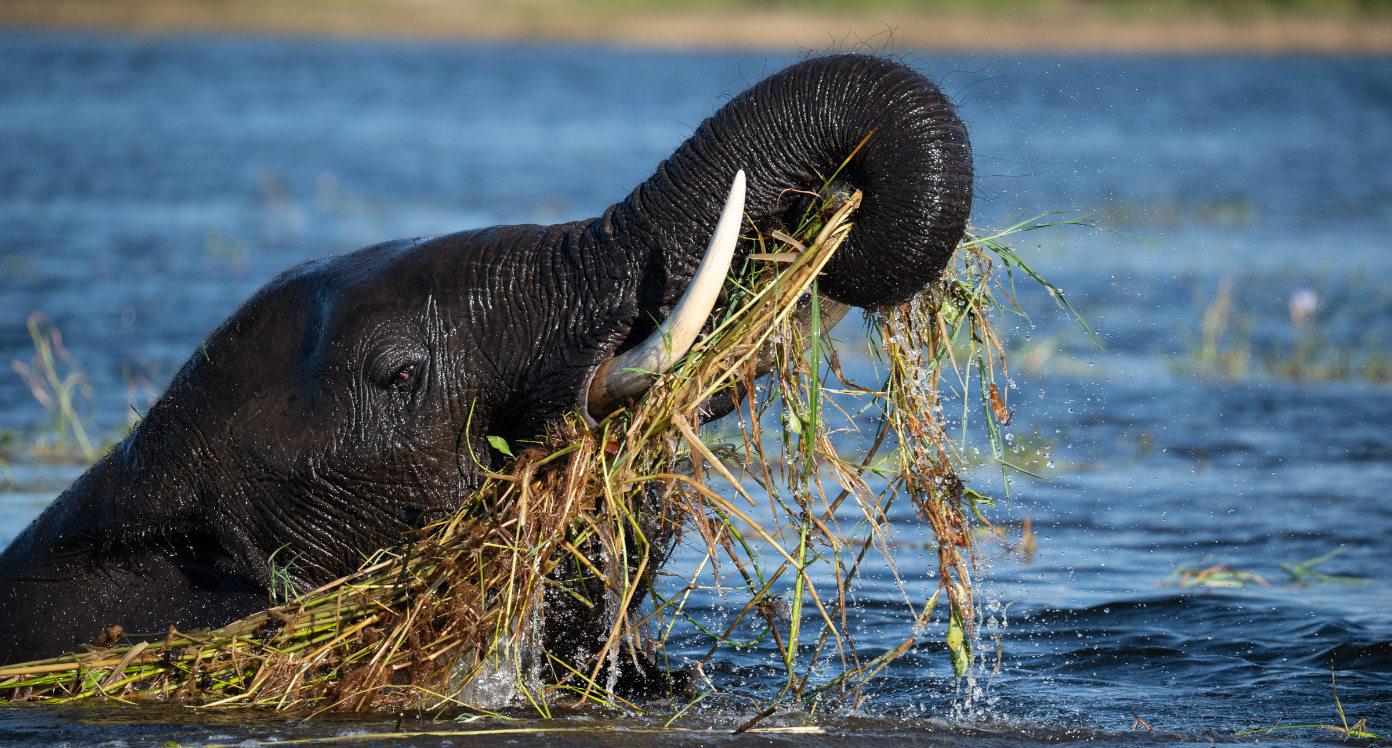
A raft of water lettuce and lilies floated in the middle of the swollen Chobe River, and the elephants walked/ swam out to feast. Pulling the plants out by the roots, they would thrash them in the water to remove sand.
elephants turned and made it clear that we needed to back off. Another time we were already stopped as a mother and child approached, and they paused to eat at a patch of grass close enough to require a 35mm lens get both of them in the frame. Similar scenes were repeated during the trip.
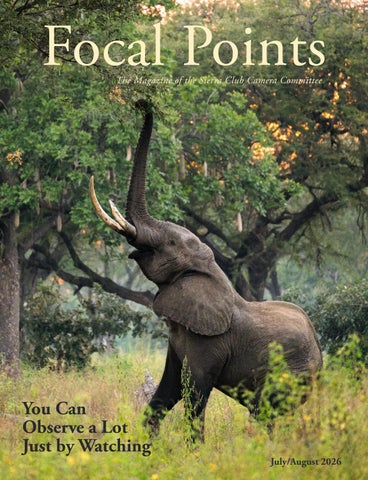
Elephants occupy an important niche in the local ecology. They have huge appetites for a variety of plants and bark. They will swim into a river to eat water lettuce and lilies, and will stand on their hind legs to pull fruit from a tree (see cover photo). They can digest only about 40% of what they eat, and what remains in their dung feeds other animals and fertilizes the soil. Elephants can also be highly destructive, wiping out entire groves of mopane trees and turning forest canopies into grasslands. Whether and how to manage
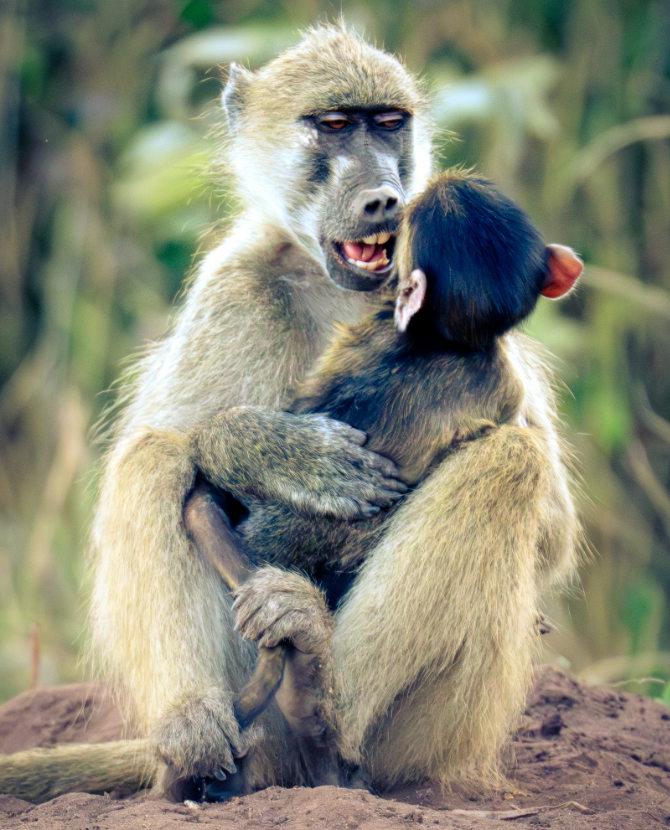
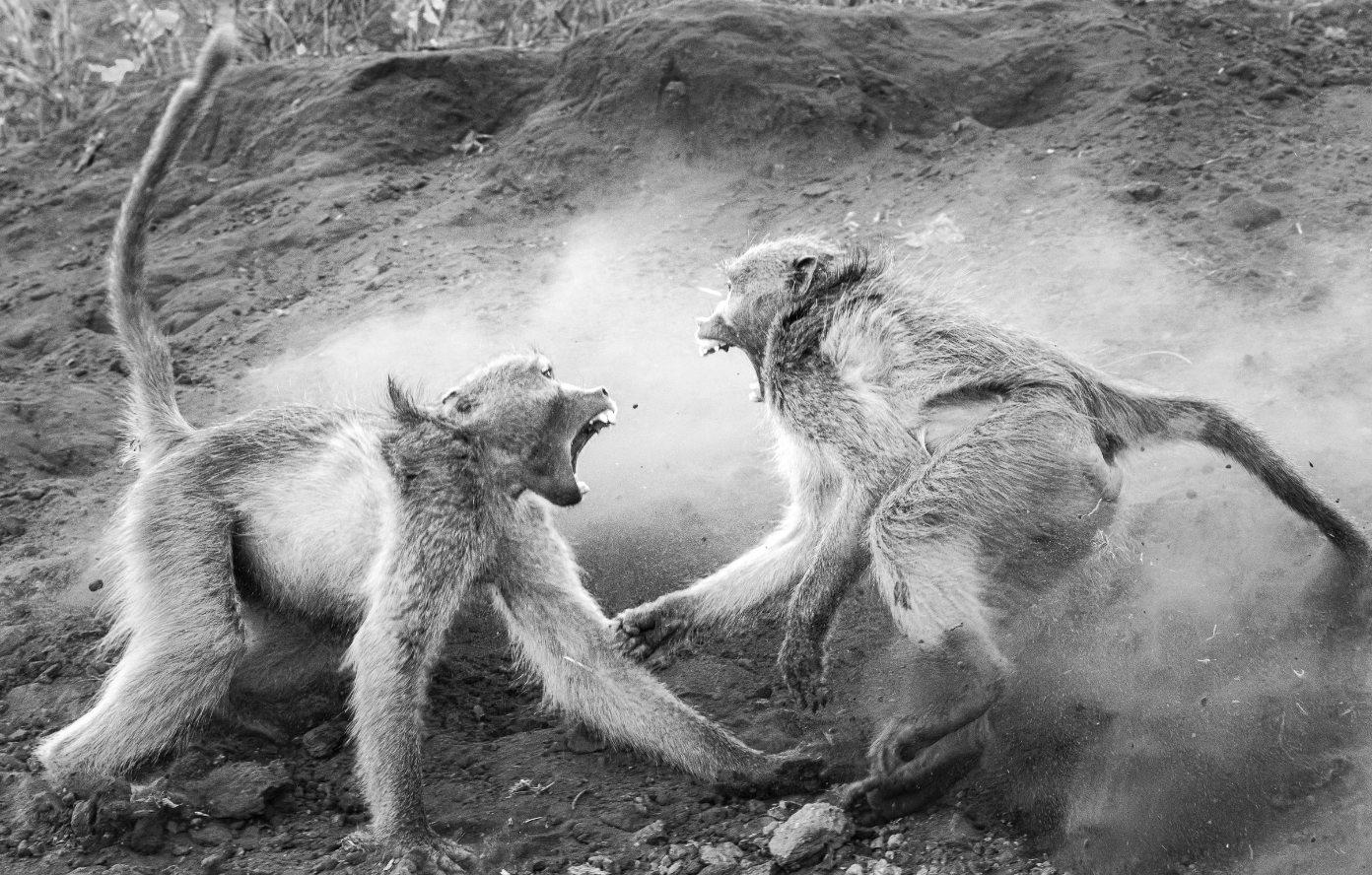
During one amazing morning on the Chobe River we got to see the baboons comfort their children and engage in vicious combat to defend them.
this destructive behavior is a source of controversy in Zambia and Botswana.
Baboon troops were as plentiful and as complicated as the elephant herds. The social interactions we we observed and photographed included (in no particular order): grooming, fighting, playing, nursing, howling, cuddling, posing, mating, and grazing. Baboons reciprocated both affection and aggression, and seemed quite content to simply watch the Sun set before disappearing to bed.
On one very dramatic morning on the Chobe River, our boat pulled up close to shore near an abandoned termite mound. We had visited the place before, as it was a nesting area for kingfishers. On this morning we found a baboon troop, with a lone male atop the termite mound playing king-of-the-hill. At
various intervals other males would challenge the “king” by climbing the hill, baring their teeth and howling, but the dominant one would inevitably turn them away, sometimes forcefully.
This aggression was not limited to the hill. Younger baboons would get chased and bullied by slightly older males, tackled, and sometimes subjected to repeated bites. When these sessions got too rough another adult would intervene to stop it. I photographed one young victim being comforted by an older female. Their similarity to human family groups was striking.
We saw multiple types of antelope, and by the end of the two weeks I was able to distinguish them on sight by their size, markings, and antlers. They are adapted to their habitats. Impala have sharp hooves that allow them to
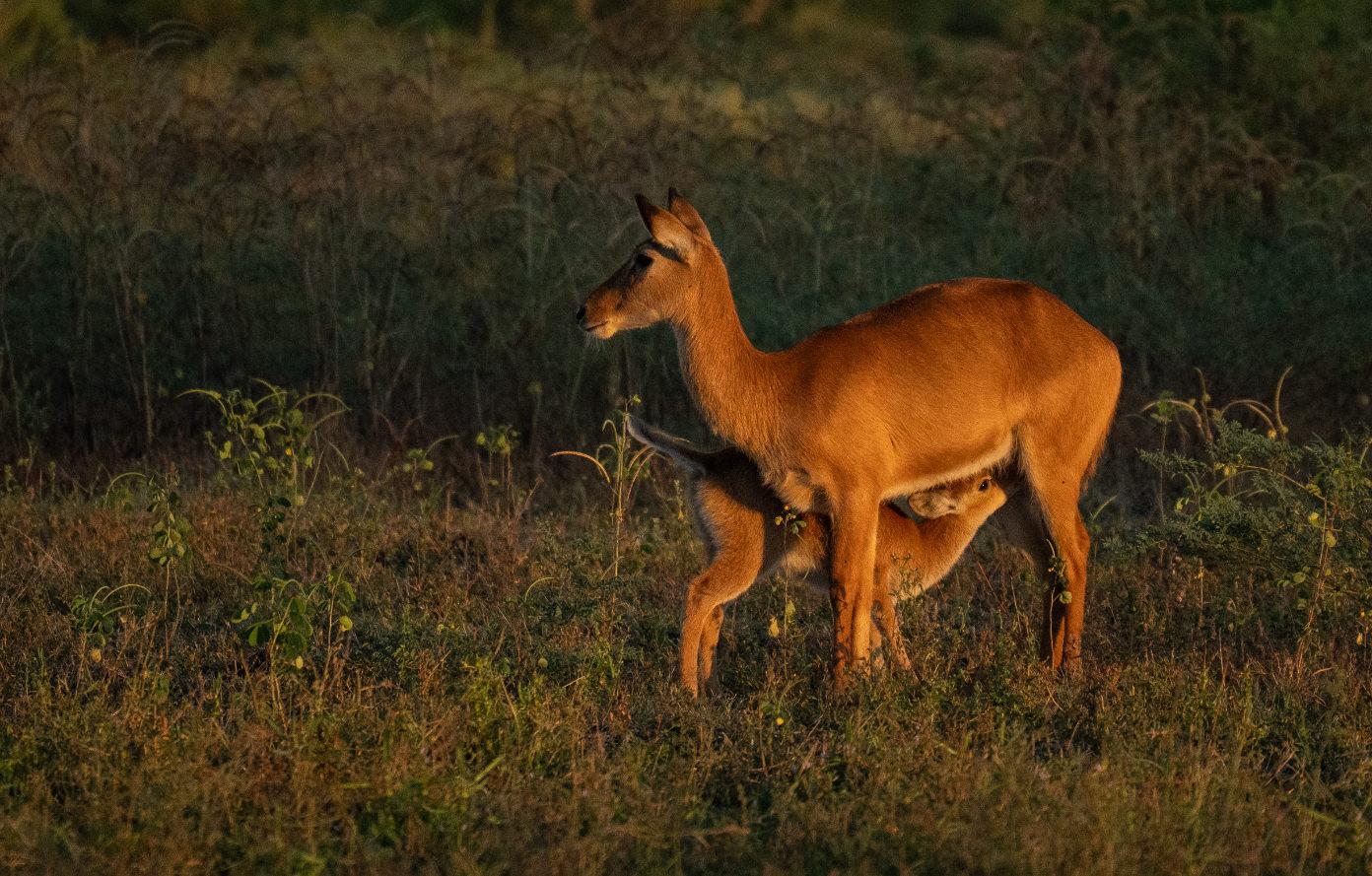
A female puku nurses its fawn in South Luangwa National Park, Zambia.
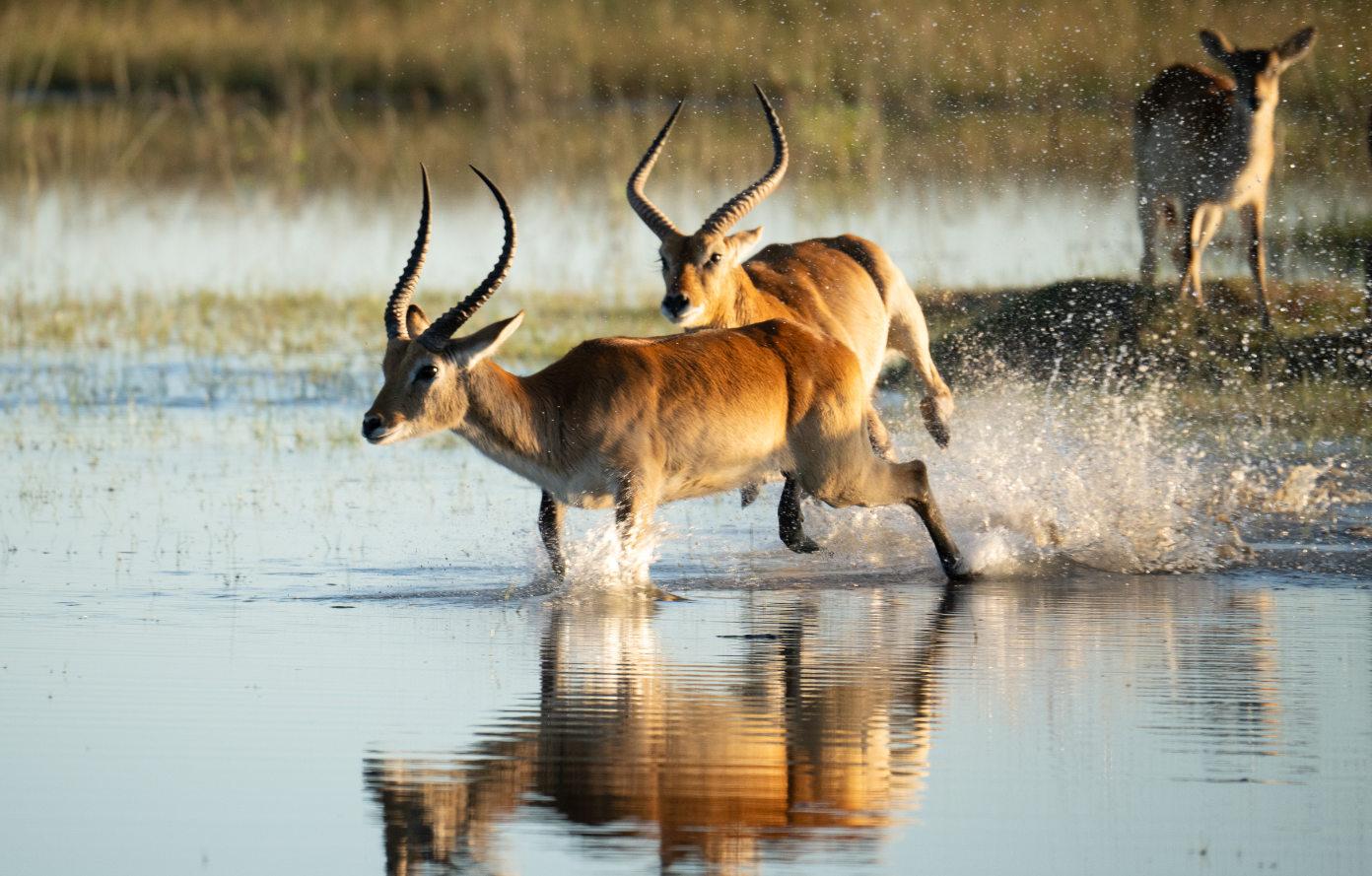
run fast and climb embankments on dry land, while the nearly identical red lechwe have flatter hooves that allow them to run in mud and marshland. In both of these it was common to see a single male, with large antlers and a loud bellow, chase other males or engage in direct combat to assert dominance over a harem of females. The diminutive puku is a denizen of the forest floor, and their herds are on constant alert to predators. The majestic kudu, with their distinctive striping and long antlers, were often observed walking alone or in small groups.
For reasons related to the surplus of water this year there were virtually no predators like lions or leopards. It was explained to us that they prefer it when the water is scarce, as the prey animals are forced to congregate around water holes and are thus easier to pick off.
This meant there was less to eat for the scavengers, and we didn’t see a lot of vultures or hyenas on this trip. One predator we did see and photograph in action were the endangered wild dogs in South Luangwa.
Wild dogs, also known as painted wolves, are remarkably social animals. They gather in packs of about 15 related individuals, led by an alpha male and an alpha female. Most of their day is spent in the shade of a tree or bush, sleeping in a cuddle puddle of connected limbs and torsos. As evening approaches the alphas signal them to wake up and begin the hunt. What follows is several minutes of sprinting, howling, and play, a social display not unlike young children meeting in the schoolyard before first bell. Soon they settle down and follow the alphas in a parade towards the brush and the day’s meal.
A male red lechwe chases off a competitor in the swamps of the Okavango Delta.
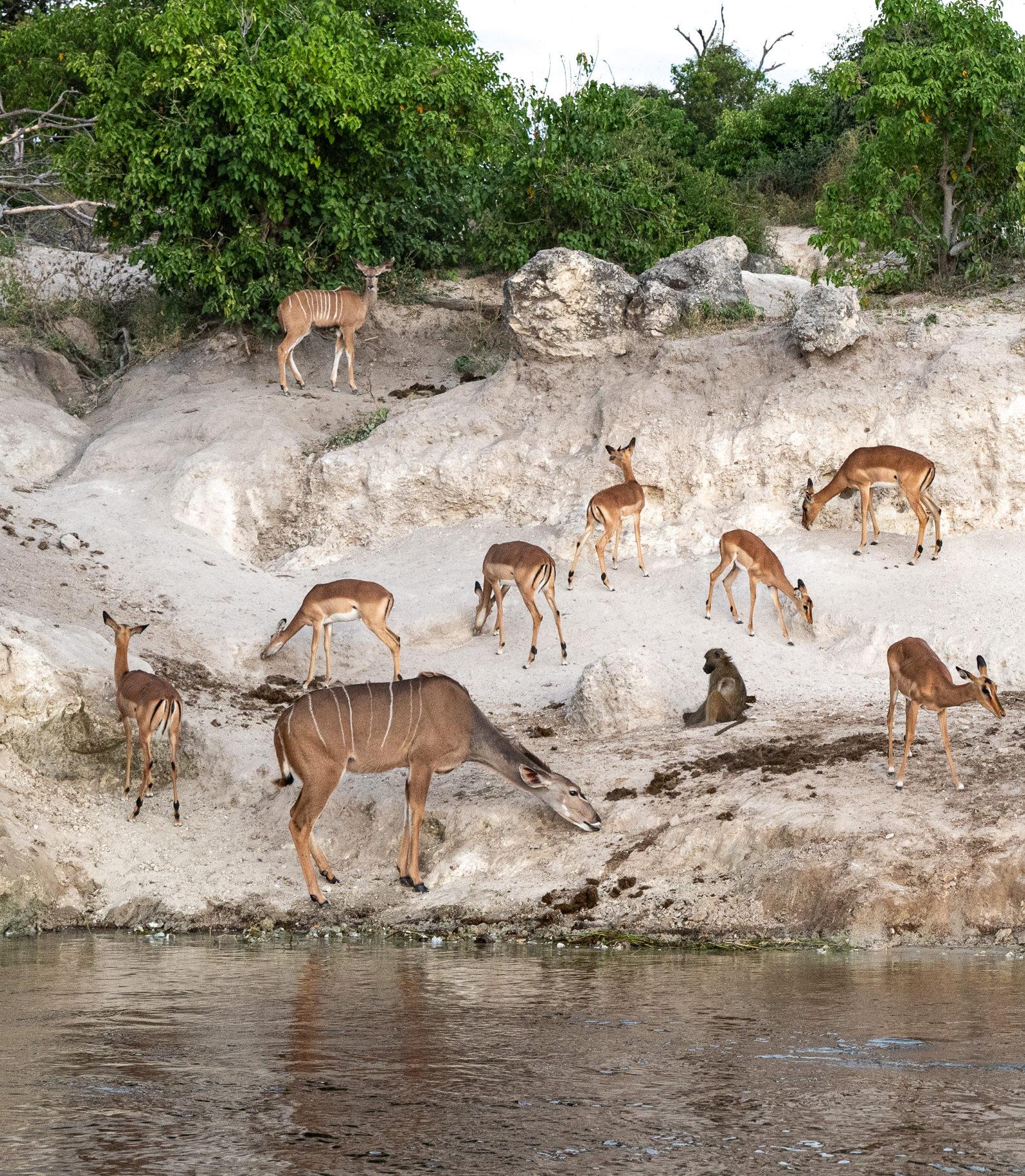
This spot along the Chobe River contains a deposit of minerals that aren’t available elsewhere. Here we can see kudu (with
Focal Points Magazine July/August 2026
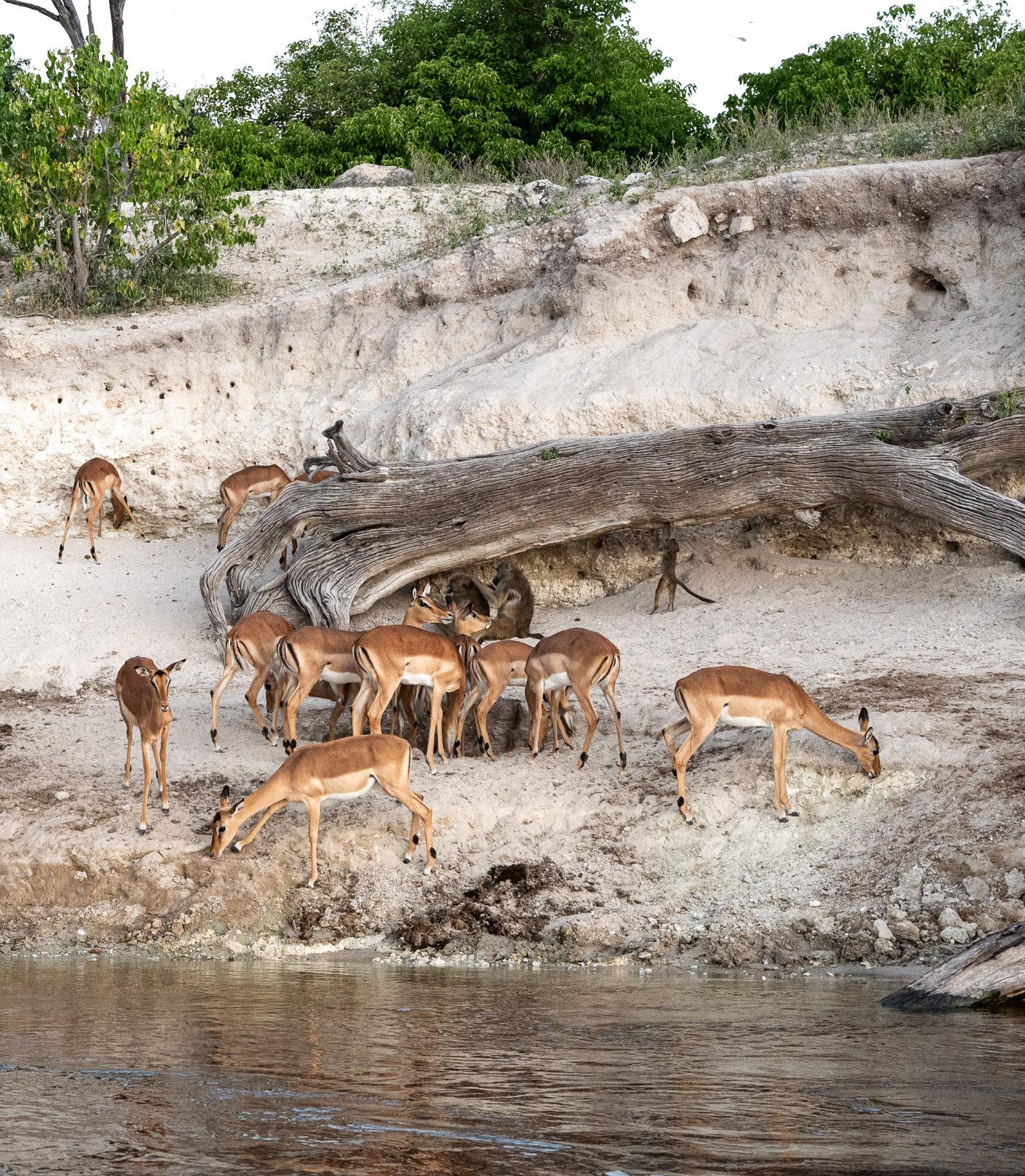
stripes), impala, and baboons, but we’ve also observed elephants, monitor lizards, and bee-eaters at this spot.
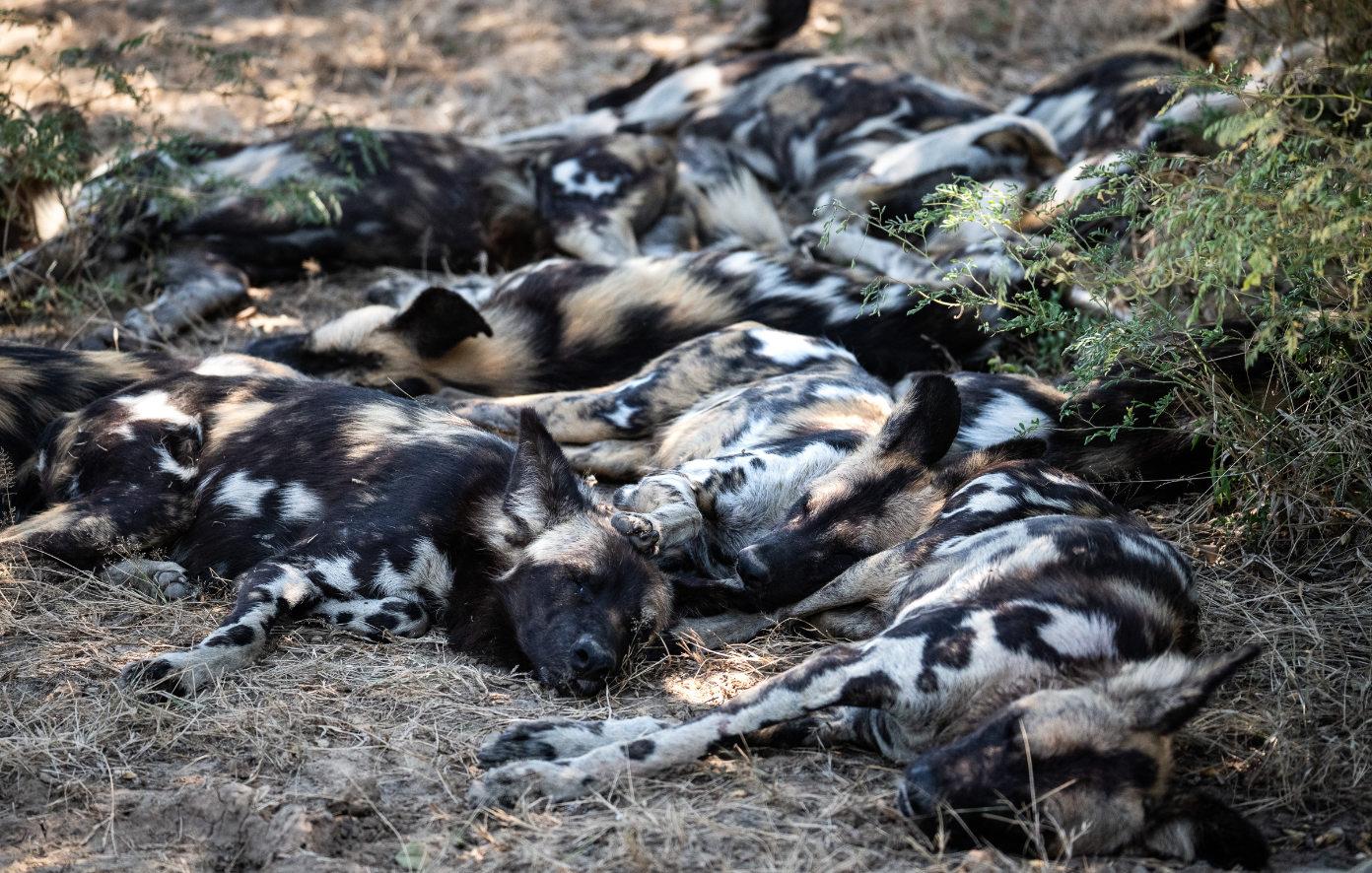
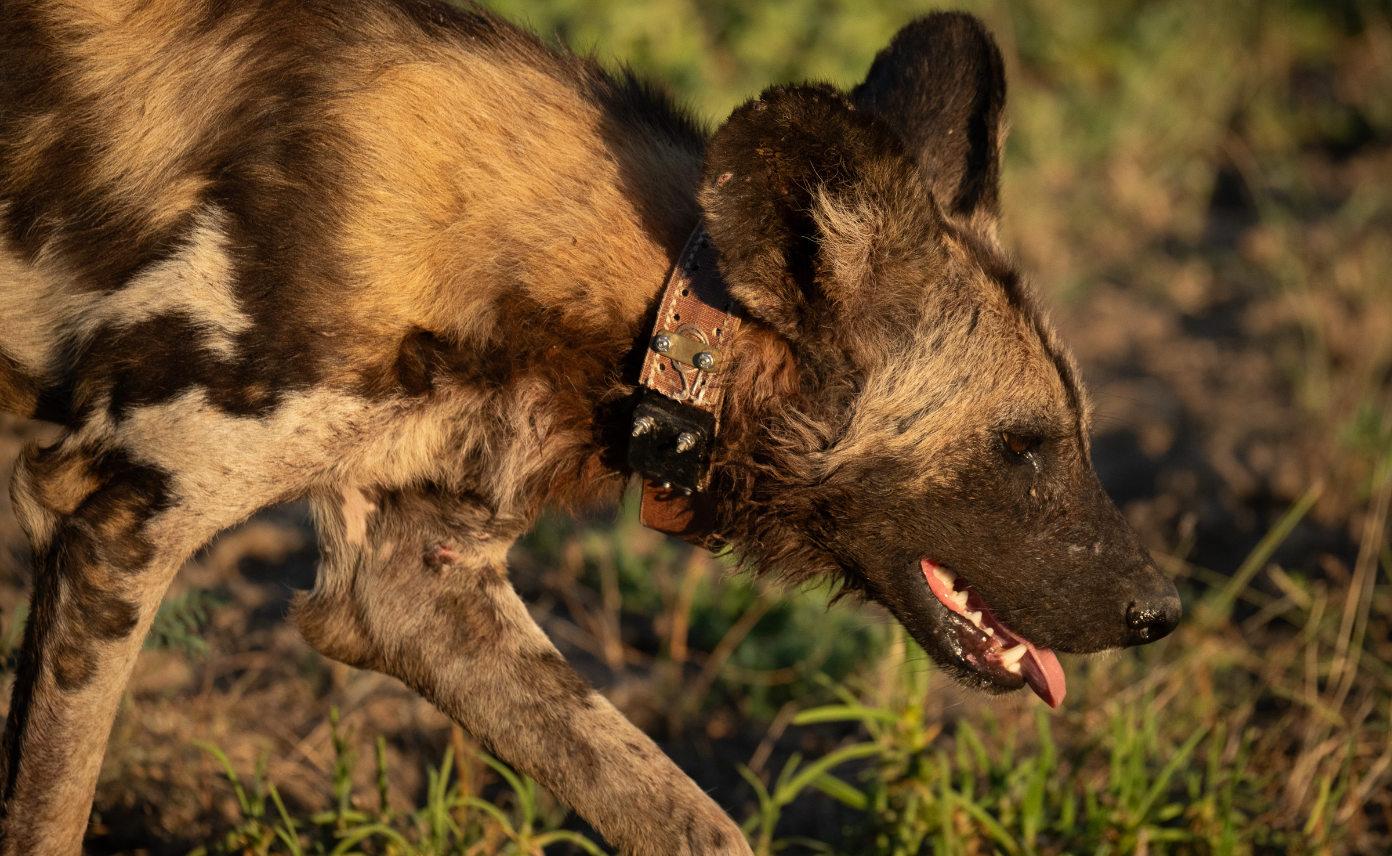
together during most of the day, waking up just before sunset to begin their hunt. When they wake up, they spend a few minutes racing around before heading into the bush.
Wild dogs (aka painted wolves) sleep
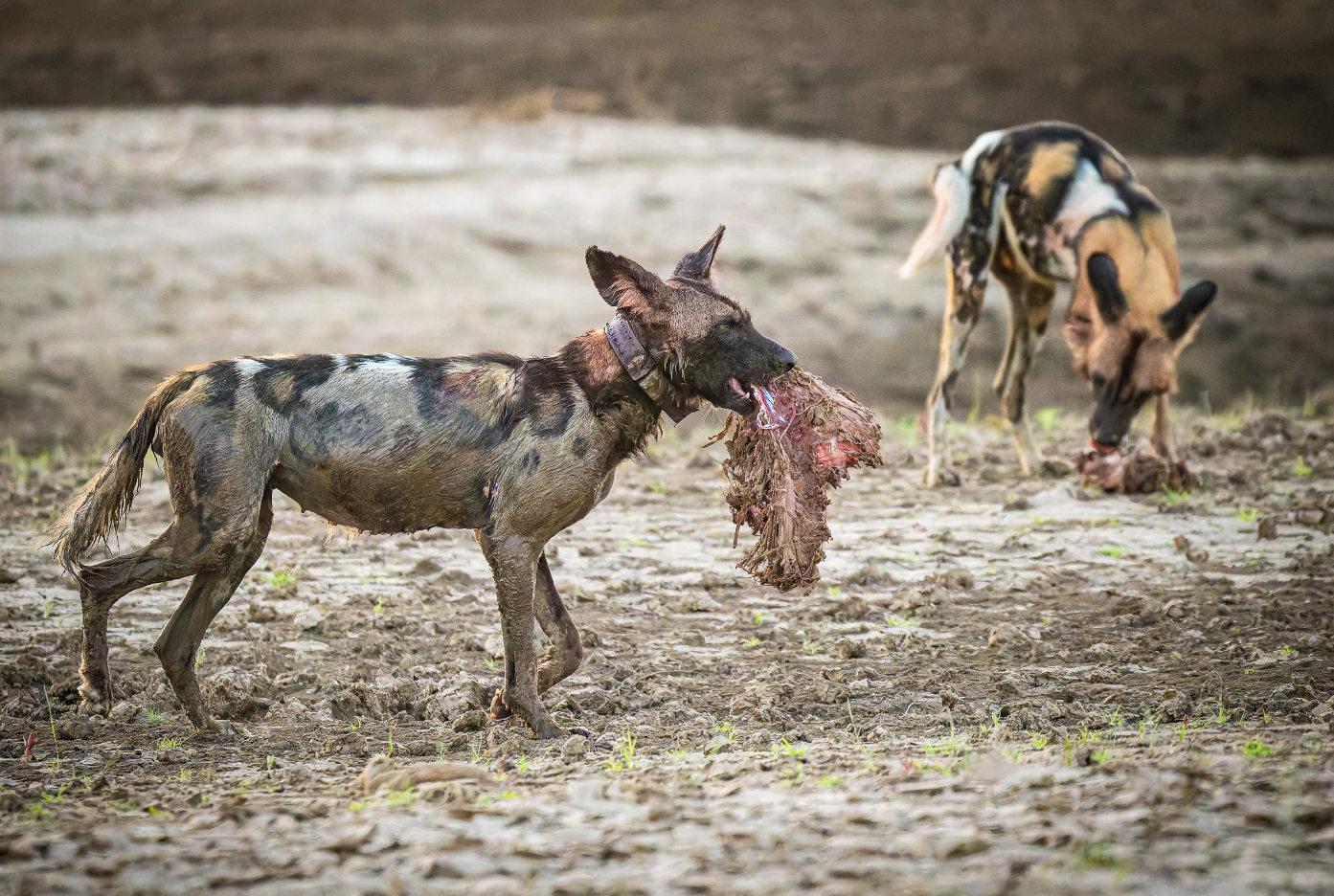
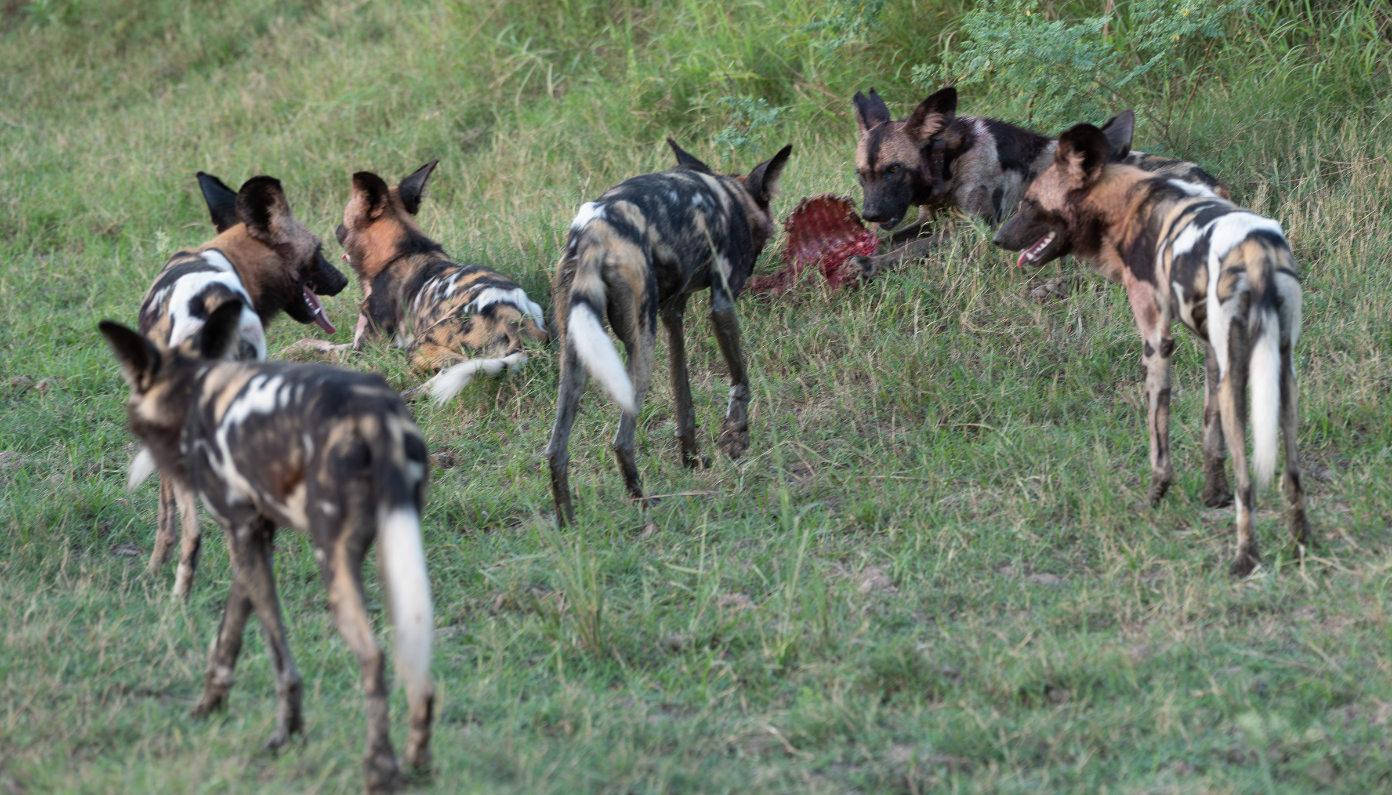
We arrived at the kill a few minutes after it happened, and most of the body had already been taken apart. If the female alpha had been nursing pups back in their den, multiple dogs would have gone there to regurgitate food.
Wild dogs are simultaneously smart and terrifying. They hunt together but take their own initiative, sprinting through tall grass in the general direction of their unseen prey. About 30 minutes before the hunt began we noticed one or two members of the pack scouting the nearby brush and grasslands.
They showed no fear of our trucks. Our driver took us through brush, over hillocks, and down inclines in manic pursuit, but there were limits to where even he would go, and we had to retreat and circle around. That meant that we didn’t see the kill, but we did see its immediate aftermath. A half-dozen of wild dogs were gathered around a shapeless form on the floodplain. One individual, its head and neck soaked in blood, carried a section of ribs back towards the grassy rise. Once fed, the entire pack gathered, surrounding the alphas, and settled in.
We saw many other species on our trip, including dozens of identifiable birds, but these four mammals were the ones that we spent the most time observing and photographing. We tested the capabilities of
our gear and software, occasionally shooting at ISOs above 20,000 with long lenses at remarkably slow shutter speeds, and producing usable images.
We also took full advantage of modern technologies that keep the subject in focus even in flight. These didn’t always work as advertised, but were a huge improvement over DSLRs or the old school technique of doing it manually. It didn’t always lock in, but when it locked in the sharpness was guaranteed.
We each returned with over 30,000 photos, a ridiculous amount that will take months to finish editing. I was able to reduce that to 6,000 pretty quickly, but even that number would overwhelm most photography editors.
This was the second safari we booked with Karen Schuenemann’s Wilderness at Heart workshops (http://www.wildernessatheart. com/). The first trip, to Kenya in 2022, was also breathtaking. I feel like my photography on this trip was more intentional and less reactive than before. I wonder what my next safari will be like?
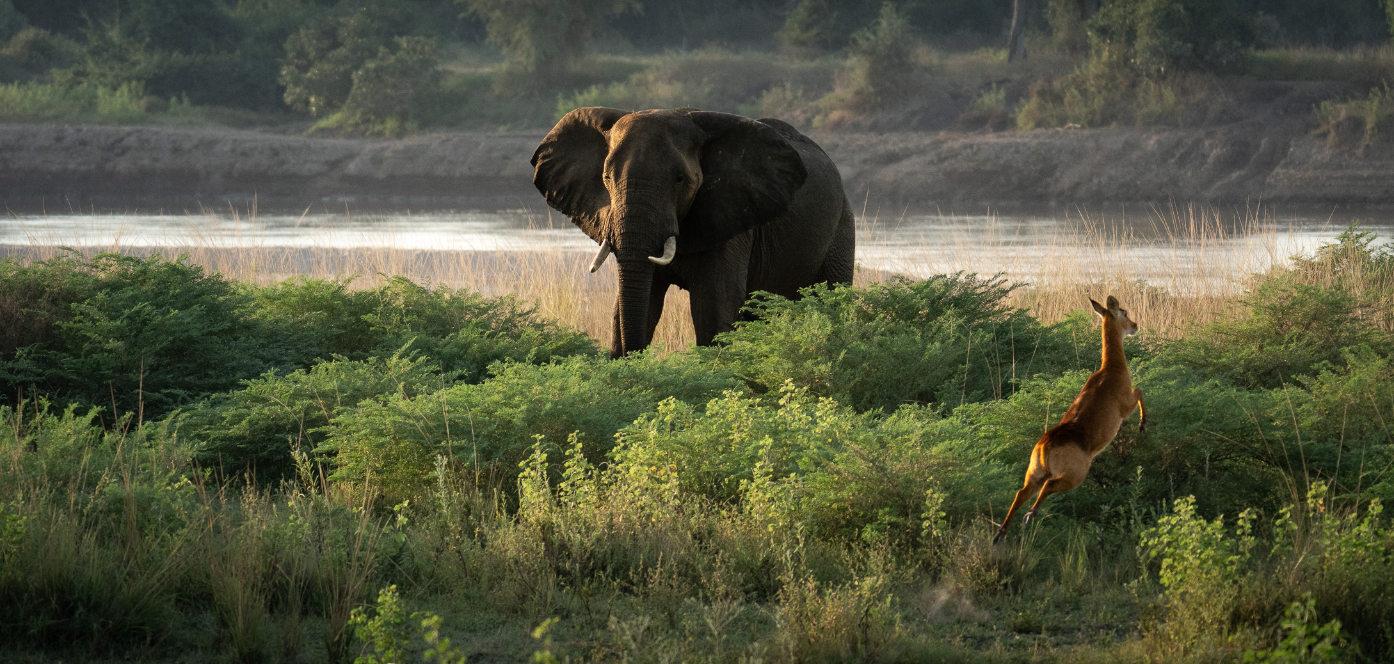
There are no predators in South Luangwa that a mature male elephant need worry about, but when a few puku run out of the bush and towards the river, there is probably something coming.
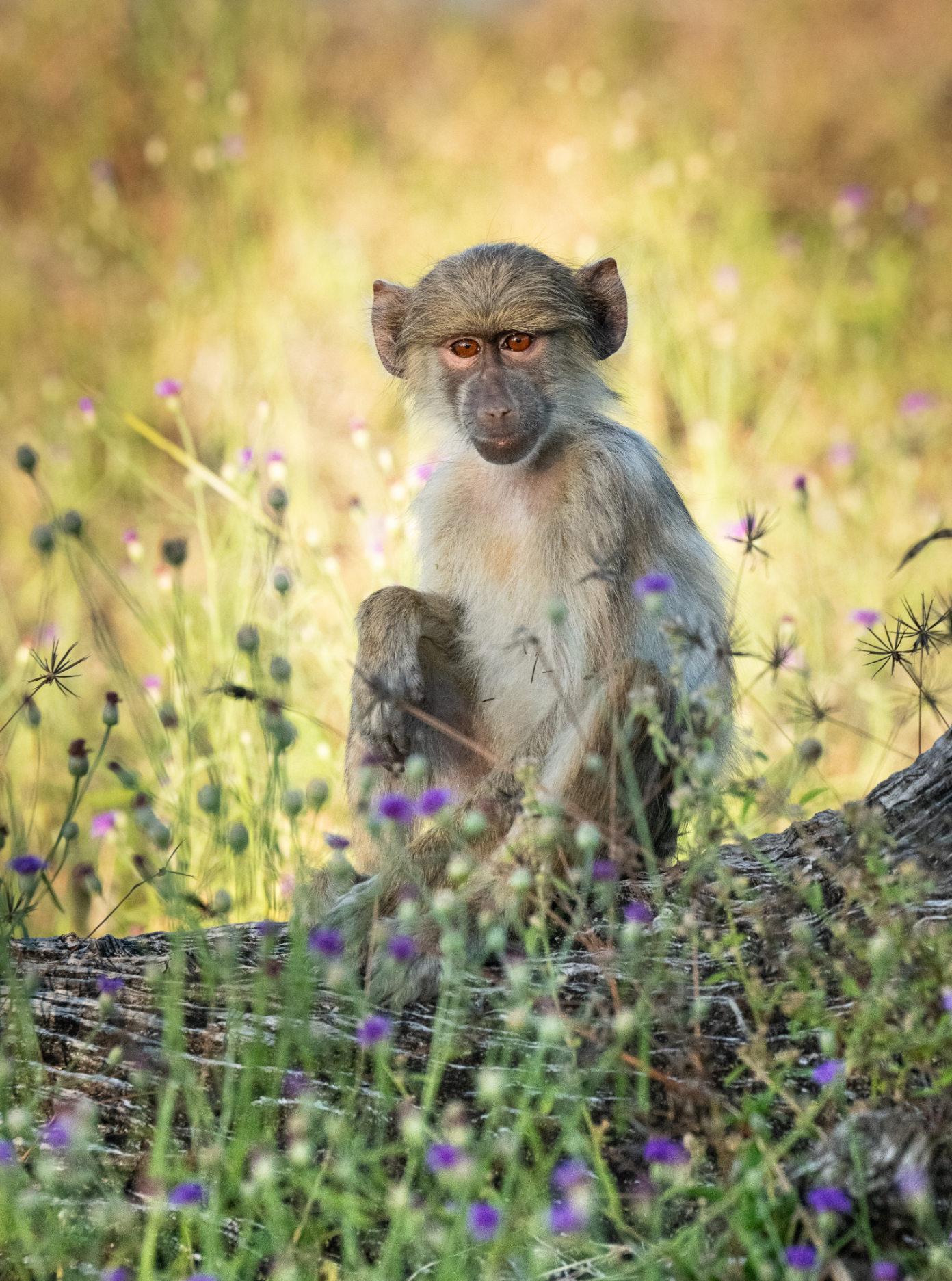
This young baboon was seated in a picturesque spot with the light hitting it just perfectly. A paid model could not have done it better. South Luangwa, Zambia.
Water in the Santa Monica Mountains
Photographs and Text by Diane Gunderson
The watersheds, mountains, and creeks of the Santa Monica Mountains, whose beauty inspired the photographs and words of this article, are the ancestral andunceded homelands of the Chumash people. I acknowledge the Chumash as the original stewards of this land and honor their ongoing cultural presence and resilience.
Waterfalls are the shared feature of the two trails highlighted in this second segment of a 4-part series on the Trails Forever Challenge that was launched in the fall of 2025 by the Santa Monica Mountains Fund.These two
trails are located in adjacent watersheds in the western Santa Monica Mountains and are both characterized by seasonal creeks flowing in winter and spring; Sycamore Falls at Rancho Sierra Vista ("Waterfall Trail"), and the Happy Hollow Trail at Circle X Ranch. These creeks create impressive waterfalls in the otherwise dry landscape of Southern California, and completely dry up on the surface later in the summer months. These photos were taken in February (Sycamore Falls) and early March (Happy Hollow Trail) of 2026, with a return visit to the Grotto portion of Happy Hollow Trail on June 1.
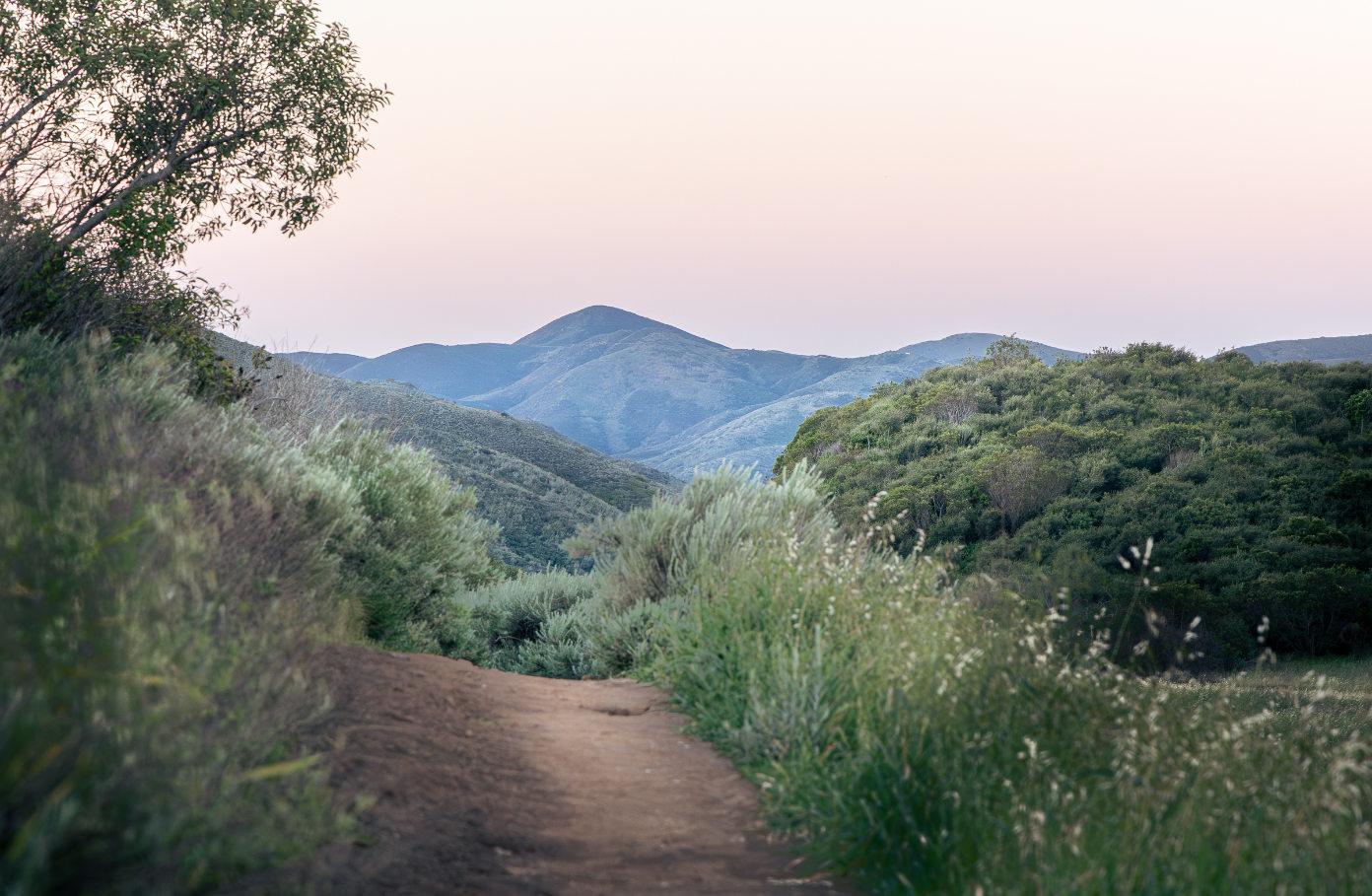
Views of Big Sycamore Canyon from the Satwiwa Loop Trail which begins at the Satwiwa Native American Indian Cultural Center at Rancho Sierra Vista and leads to the Waterfall Trail. An ancient Chumash Village known as Satwiwa was located near here at the foothills of Boney Mountain.
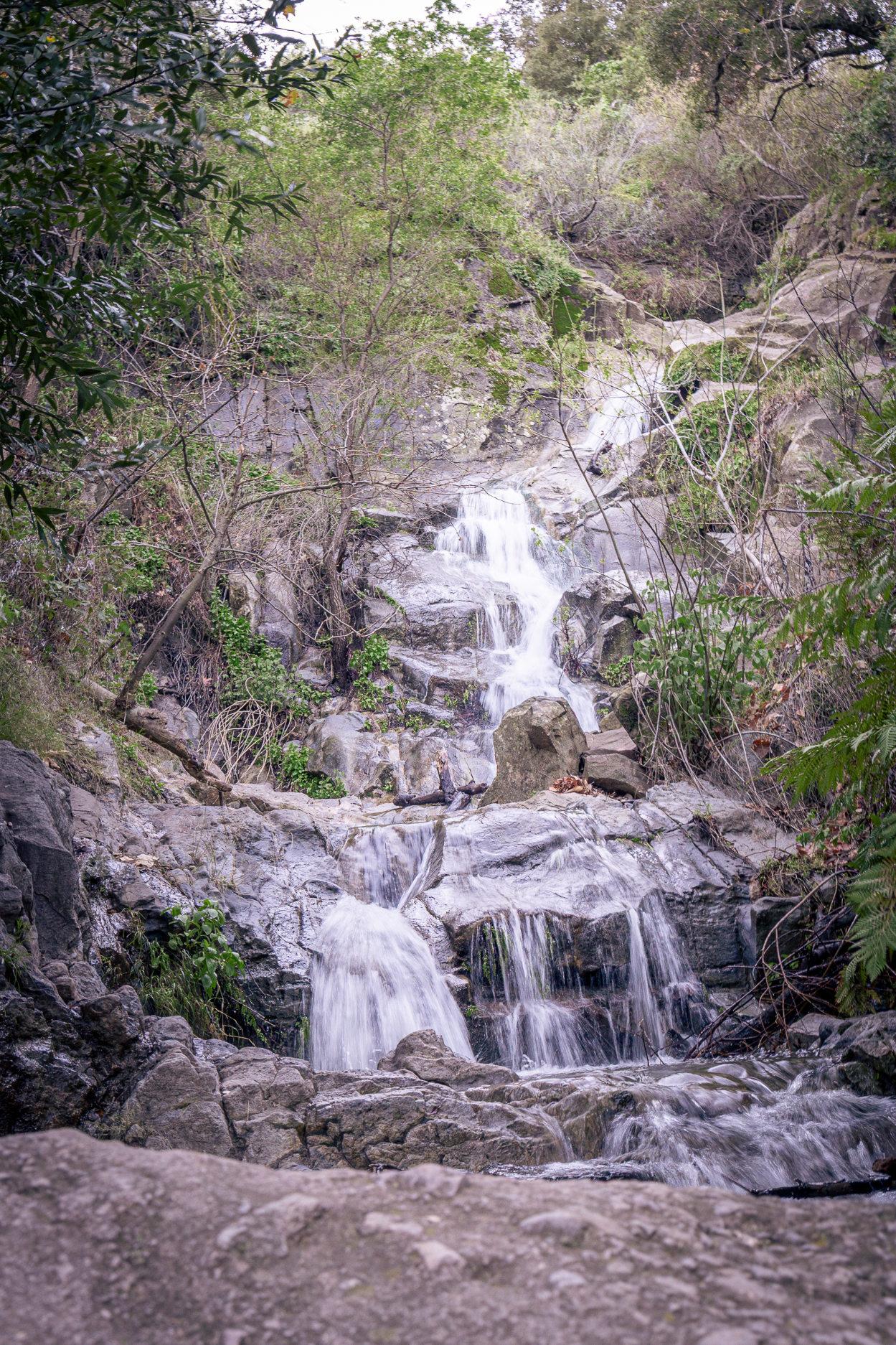
The highlight of Rancho Sierra Vista’s Waterfall Trail: Sycamore Falls, a 75 to100foot waterfall fed by Sycamore Creek, as seen in February of 2026.
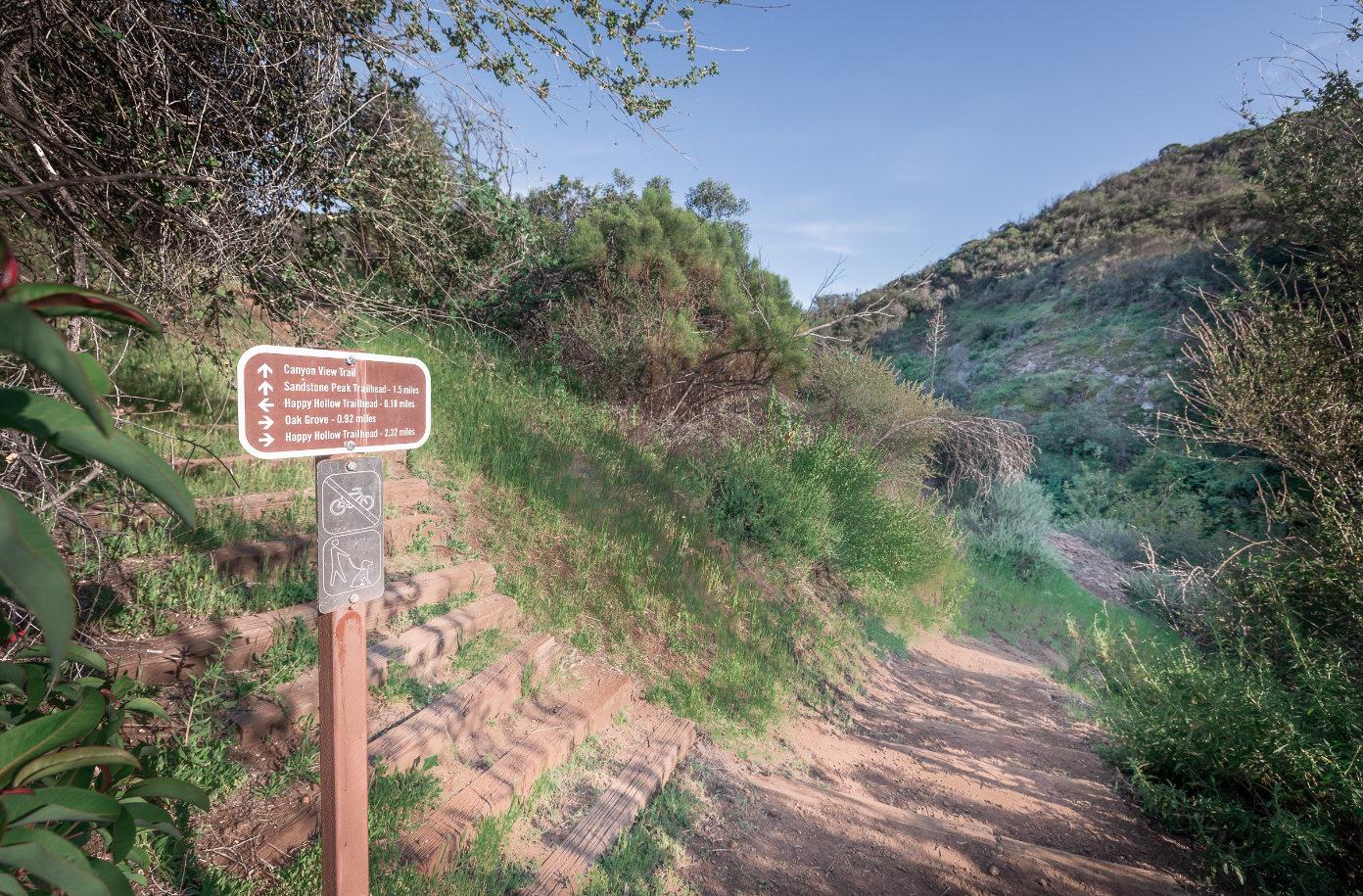
The Happy Hollow Trail begins just beyond the Ranger Station and camping facilities of Circle X Ranch, once a boy scout camp and now protected under the National Park Service.
When I come upon any type of water in southern California, whether it be a natural spring or a creek or river, and especially a cascading waterfall, all feels right in the world for a moment and I feel a sense of peace.
All of the past, present, and future risks to our water supplies can be overwhelming. Native Americans lived in harmony with the available natural resources for thousands of years, but today after only approximately 300 years since the Spanish and American settlers moving westward developed these lands, our water sources are at increased risk of being depleted. The damming of rivers, concrete channelization of creeks, infilling of wetlands, and diversion of water sources for human use have all contributed to the habitat loss we see throughout the state, leading to a risk of
losing entire species that depend on aquatic environments.
Two examples are the federally endangered Southern California steelhead trout and the California red-legged frog, federally classified as threatened, the latter for which I spent some of my time as a conservation biologist studying and working to protect. The effects of climate change in this next century will only exacerbate the decline of critical habitat. Additionally, “an ecosystem that has been significantly altered by human development is now more vulnerable to drought than it once was for a variety of reasons, including increased competition for water resources” according to the website of the National Integrated Drought Information System (drought.gov).Fortunately, due to a few years of increased rainfall, southern California is
recovering from the most recent drought and in January 2026 the entire state of California was effectively out of drought conditions for the first time since 2000.
The Waterfall Trail leading to Sycamore Falls begins at Rancho Sierra Vista, which is home to the Satwiwa Native American Indian Cultural Center. An ancient Chumash Village known as Satwiwa was located near here at the foothills of Boney Mountain, in the upper reaches of Big Sycamore Canyon. This area is very sacred to the Chumash and was part of a Chumash trade route. “Satwiwa” refers to the entire prominent ridge including Boney Mountain and Sandstone Peak. In the Chumash language, Satwiwa translates directly to “the bluffs” or “higher places”. The village of Satwiwa is believed to be first
inhabited approximately 13,000 years ago and was a thriving community for over 10,000 years.
Despite the many aggressive and violent attempts to erase the Native American culture in this area and throughout California, the Chumash tribe of this area is alive and active. There are approximately 5,000 to 10,000 descendants along the central and southern coast of California. They are teachers, healers, story tellers, naturalists, artists, culture keepers. and land stewards.
The village of Satwiwa was absorbed into Rancho El Conejo, a Spanish land grant in 1803, and today lies within the area we know as Newbury Park.Later, part of Rancho El Conejo was named Rancho Sierra Vista by a geologist who purchased the land in
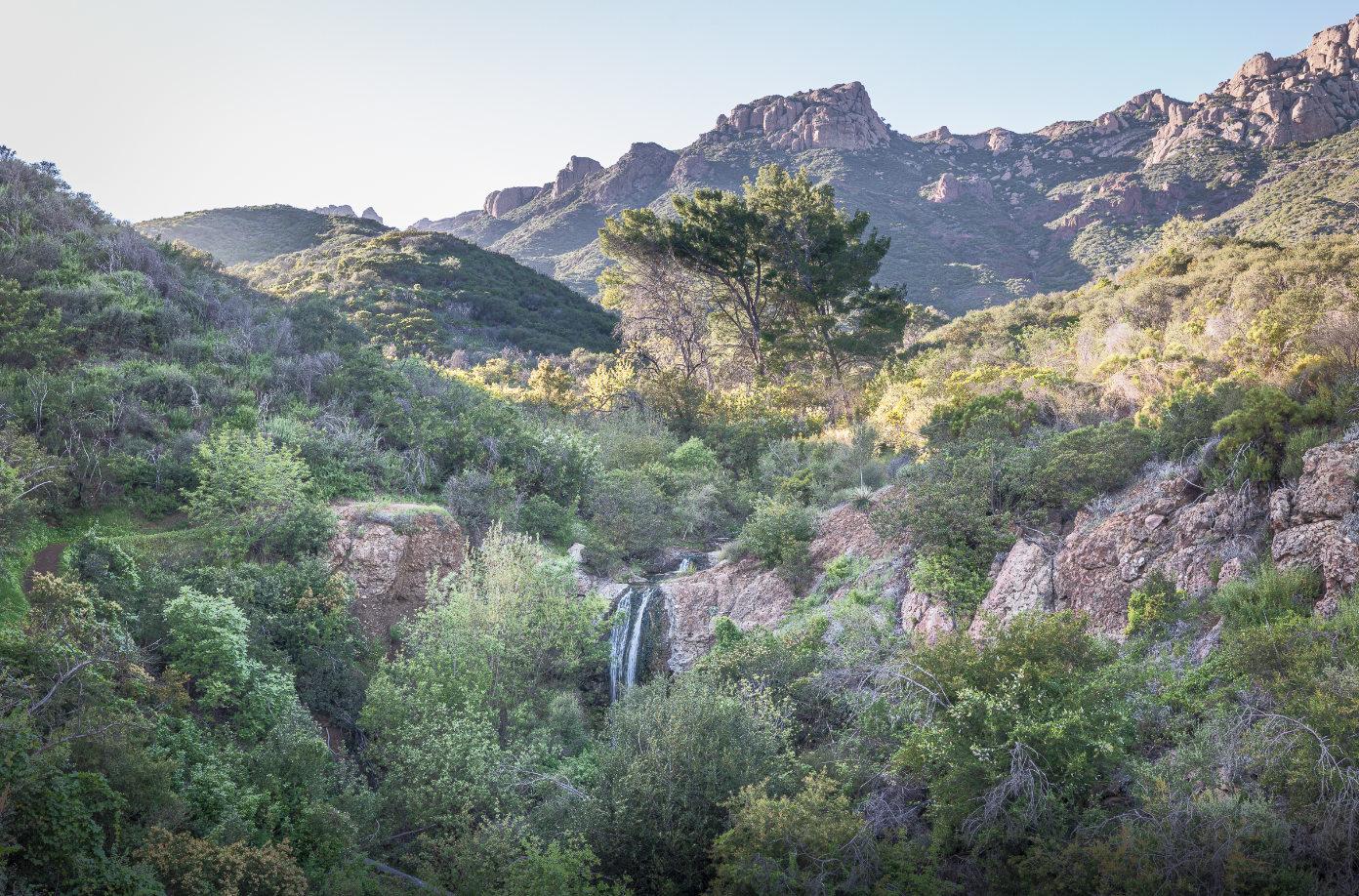
Looking up towards the headwaters of Arroyo Sequit watershed, which captures rainfall from slopes south and east of Sandstone Peak.
1936.Rancho Sierra Vista now falls within the Santa Monica Mountains National Recreation Area under the jurisdiction of the National Park Service. It is worth noting that these designations are not permanent, and we must be aware of political threats to such land protections.
The highlight of the Waterfall Trail is Sycamore Falls, a 75- to 100- foot waterfall fed by the seasonal streams and creeks of the Big Sycamore Canyon watershed. Big Sycamore watershed is an 18-square mile area of the western Santa Monica Mountains, originating from the north and western slopes of Boney Mountain State Wilderness Area. Sycamore Creek flows generally northward
then southwest past Rancho Sierra Vista. It continues across the canyon floor through Point Mugu State Park, before emptying into the Pacific Ocean at Sycamore Cove.
East of the headwaters of Big Sycamore watershed and Boney Mountain State Wilderness Area, lies Sandstone Peak and the headwaters of the West Fork of Arroyo Sequit Creek, which is the location of our second featured trail in this article (Happy Hollow Trail). The Arroyo Sequit Watershed captures rainfall from slopes south and east of Sandstone Peak.
The Happy Hollow Trail follows the West Fork of Arroyo Sequit Creek and features
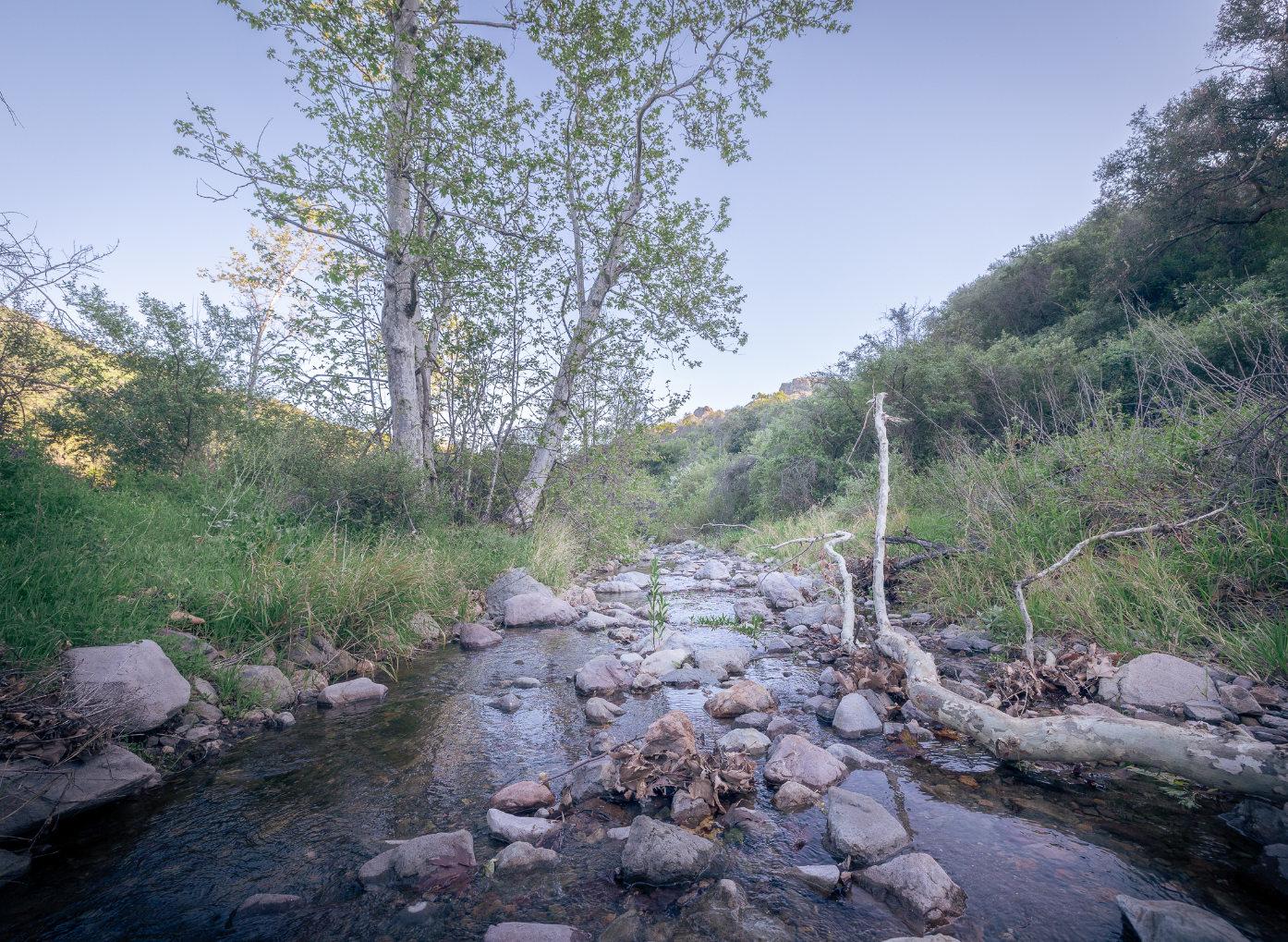
The Happy Hollow Trail follows the West Fork of the Arroyo Sequit Creek, which is seasonal in nature (by early June it was completely dry).
seasonal creek crossings and waterfalls before connecting to a dramatic landform called the Grotto. Here water of the West Fork of Arroyo Sequit Creek cascades over and through boulders, emptying into a cave formed by giant rocks. It continues on southward towards its confluence with the East Fork, and finally out to the Pacific Ocean at Leo Carrillo State Beach. Because the upper headwaters are so well-protected from development, the Arroyo Sequit Creek is considered one of the cleanest, most ecologically intact coastal streams in Southern California, serving as a critical, high-priority habitat for the Southern California Steelhead trout.
Whether one admires the unique landforms and features and that have been created by the forces of water over millions of years, contemplates the importance and scarcity of water, or simply appreciates a refreshing waterfall mist, there is no doubt that the presence of water alongside trails throughout the western Santa Monica Mountains is aweinspiring. And along with that awe comes a sense of hope for the future. As Christina Mittermeier, acclaimed photographer and conservationist states in the beginning of her book entitledHope, “Hope may not be a plan or strategy, but it is vital for our survival…Always choose Hope.”
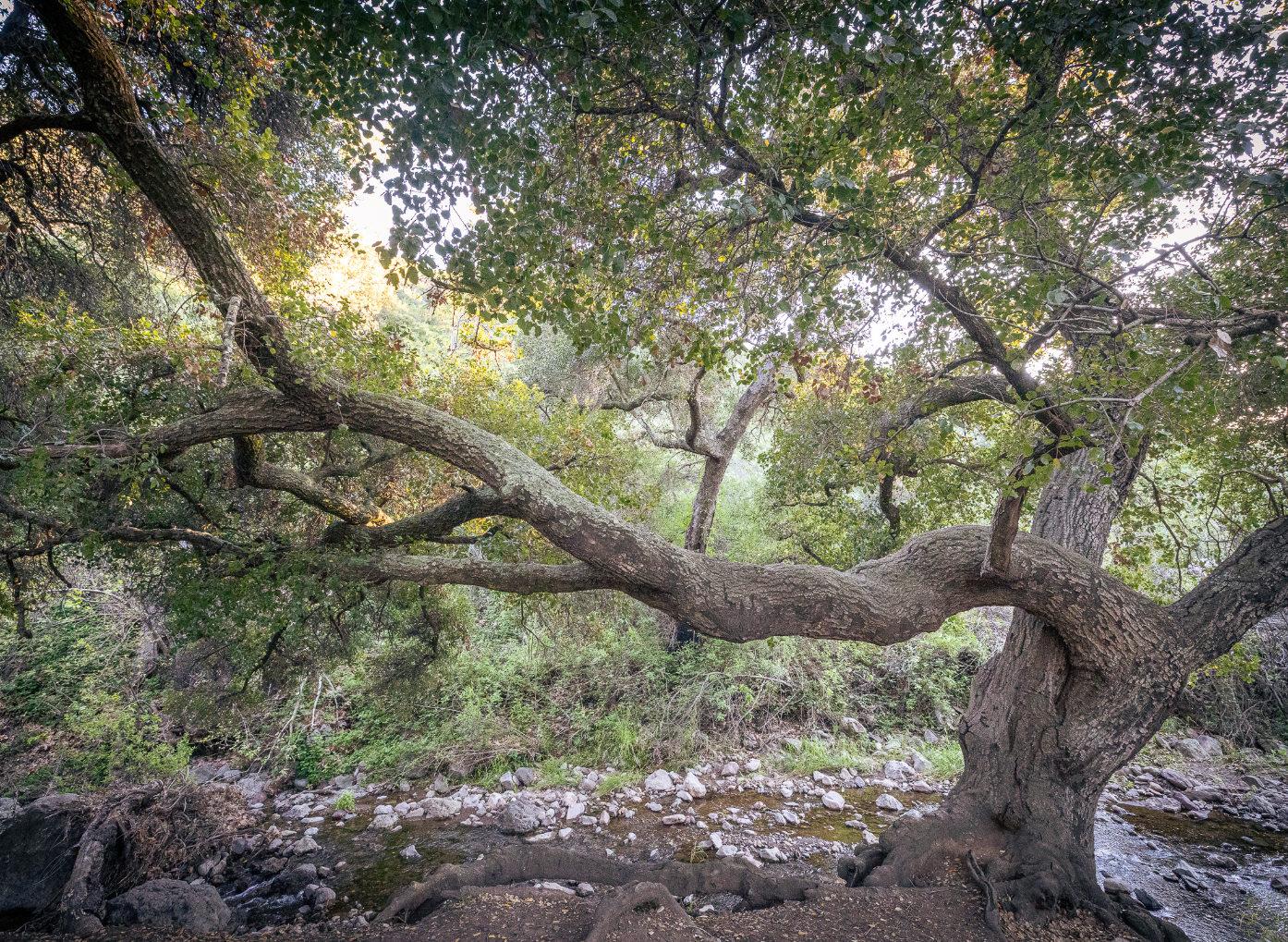
An oak grove greets you as depart from the main Happy Hollow trail, perfect for a break in the shade before exploring the Grotto.
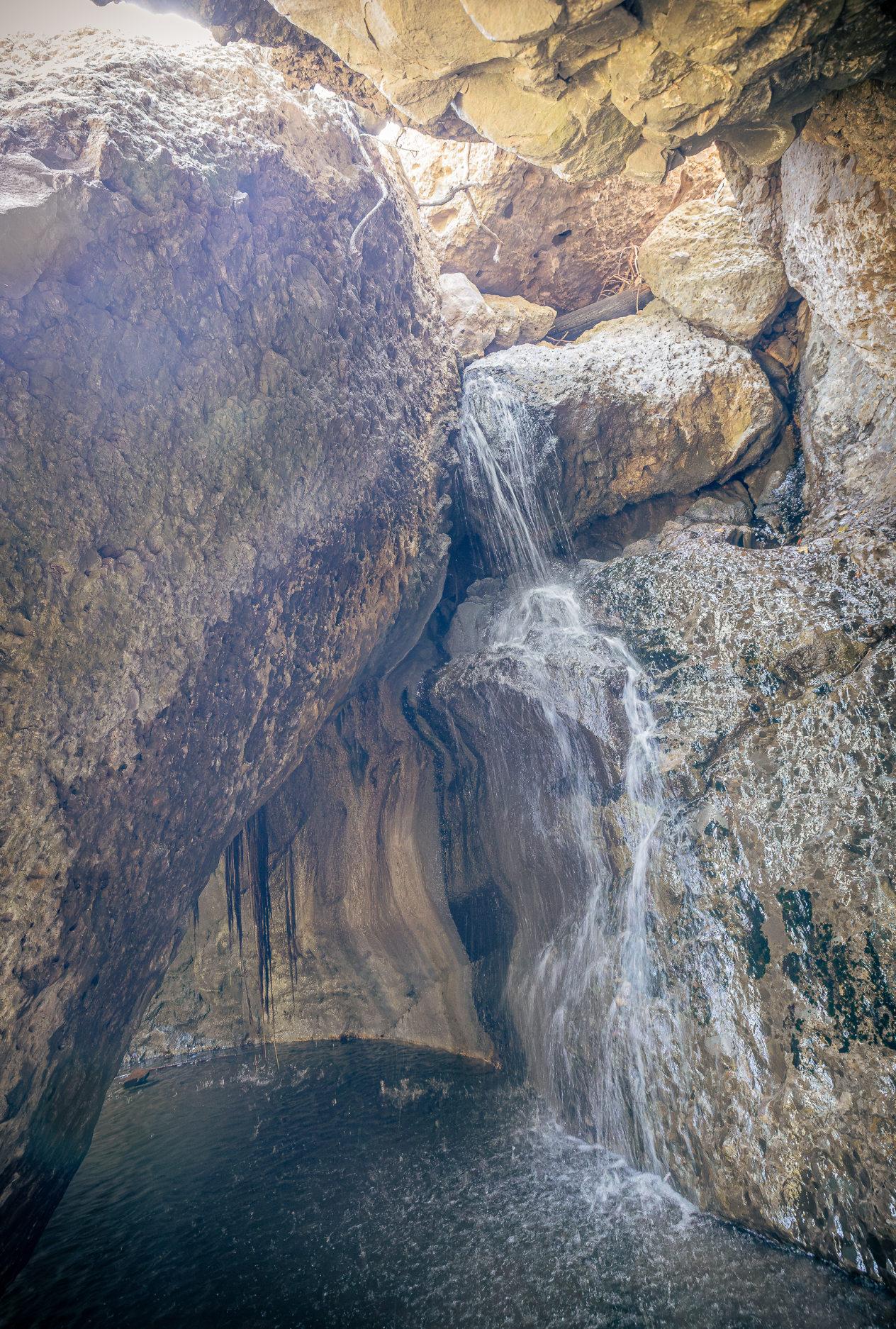
The descent down to the Grotto and back up requires some light bouldering, so bringing a lot of camera gear is not recommended. Due to its seasonal nature, timing is important. Earlier in the season one is able to capture the falls at their fullest, but it can be precarious and sometimes impossible to navigate down to the Grotto following heavy rains.This photo was taken at the beginning of June 2026; there was still water in the cave but not cascading over the outside of the boulders as it would have been earlier in winter or spring.When I was there previously in the early spring, I didn’t have enough daylight to safely scramble down to the Grotto and back.
How I Did It
Photographs and Text by Larry Miller
In my flower photography I try to showcase the beauty, elegance, and bright colors of the subjects. When photographing outdoors this is all too often complicated by harsh light and distracting backgrounds. Filling the frame with the flower is one way to lessen distractions in the field, but usually more is required. Blurring the background, either by using a wider lens aperture or by increasing the subject-to-background distance, helps reduce distractions. So, too, does positioning the subject against a darker background or using a longer focal length lens to narrow the angle of view. Photo editing programs
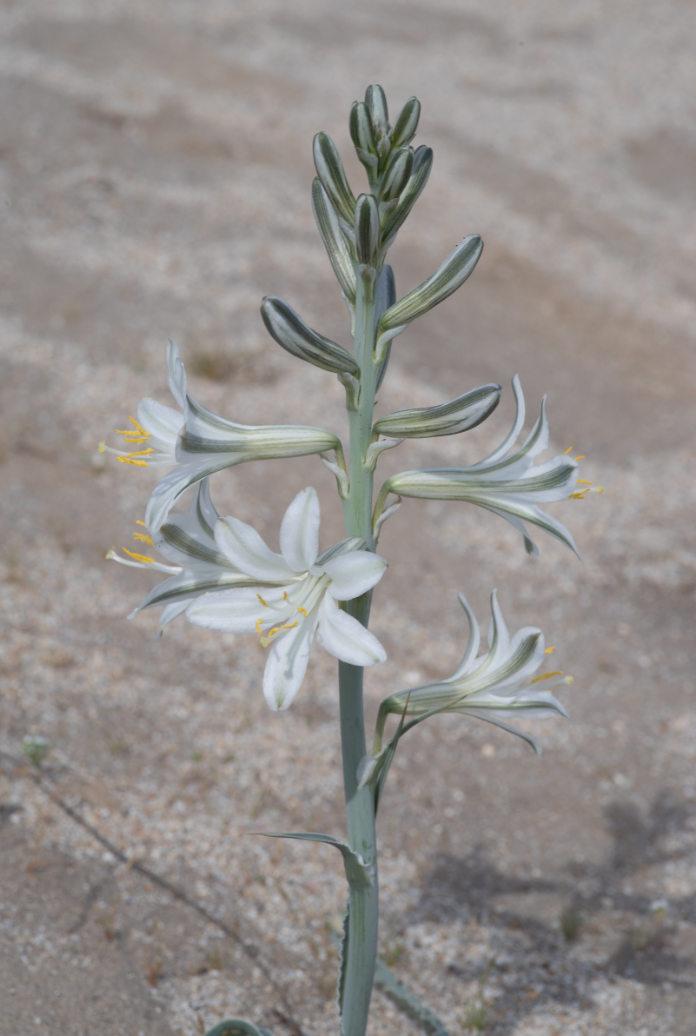
provide additional tools for dealing with distracting backgrounds. Adobe Lightroom users can de-emphasize distractions by, for example, evening out contrast, smoothing variations in color and/or texture, darkening the edges of the frame, or digitally blurring the background.
I photographed the desert lily in AnzaBorrego Desert State Park. Cloudy skies diffused the light and minimized shadows, creating ideal conditions for close-up photography. The background of sand and gravel was clean, evenly lit, and far enough away to blur. I composed the image to
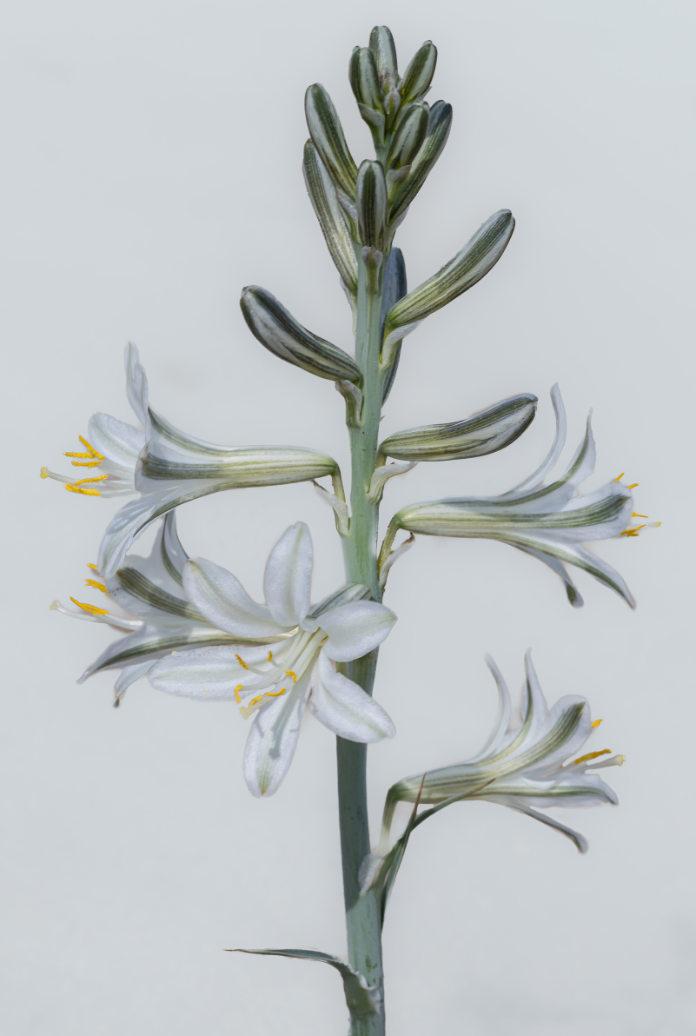
minimize overlap of the five open flowers and to separate the shadows from the stem of the lily. Nevertheless, the faint shadows and variations in color and texture of the background were still distracting. Furthermore, the colors of the lily failed to stand out against the similarly-colored background. These observations determined my main photo processing objectives:
1. Reduce background distractions
• Crop edges of frame to remove empty space around the lily
• Smooth out variations in color and texture
• Brighten shadows
• Tint background to accentuate colors of the lily
2. Enhance separation of the lily from the background
• Increase white balance temperature to emphasize colors of the lily
• Increase vibrance, texture, and clarity of the lily
• Decrease highlights to soften the light and prevent clipping
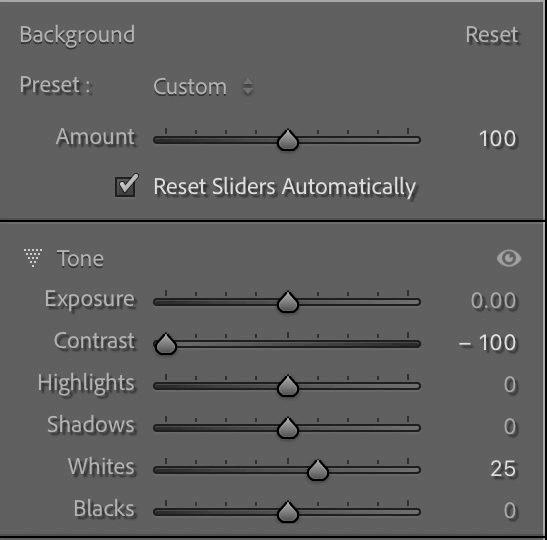
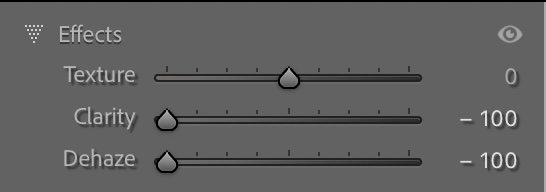
I began post-processing by cropping the edges of the photo to fill the frame with the lily. Next, I created a background mask (Figure1) to work on mitigating distractions. Setting the Contrast and Clarity sliders of the mask to -100 was a first step in smoothing out variations in color and texture. Setting the Whites slider to +25 brightened the shadows while still retaining the highlights. Pushing the Dehaze slider to -100 eliminated the residual shadows and left the background a uniform cream color that accentuated the subtle colors of the lily.
Applying negative dehaze to the background had the detrimental side effect of bleeding into and blurring the edges of the lily. I counteracted this by creating a subject mask with a small amount (+10) of positive dehaze (Figure 2).
I completed processing the photo in the Basic Panel (Figure 3). To warm the yellows of the lily, I increased the white balance temperature

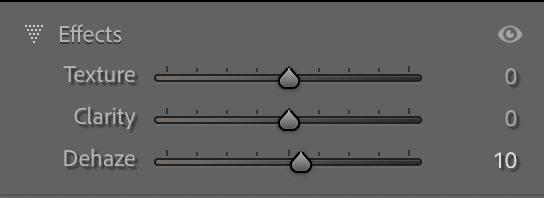
Figure 1
Figure 2
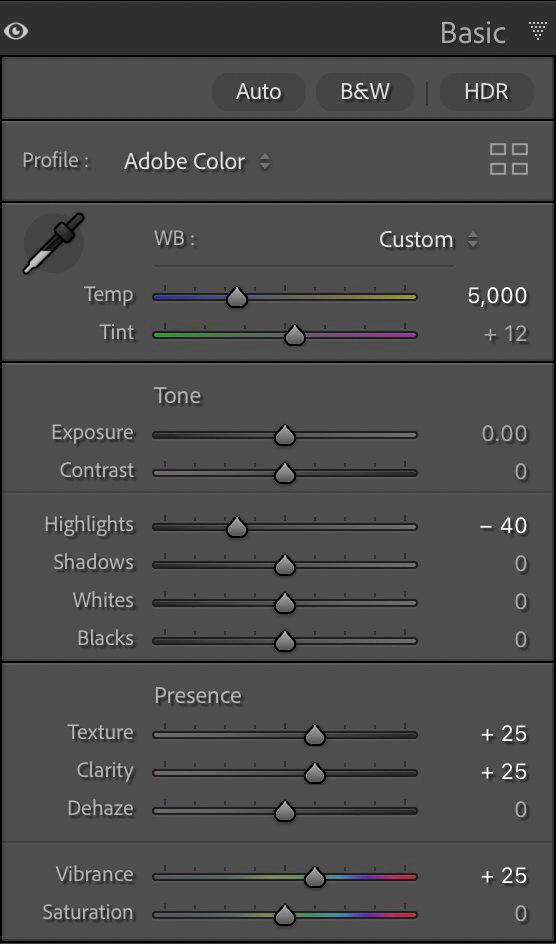
by +150. Next, I heightened the separation of the lily from the background by increasing Vibrance, Clarity, and Texture, which had no visible impact on the background. Decreasing the Highlights to -40 then softened the light and gave the image a dreamy, ethereal look. The absence of distractions in the finished portrait compels the viewer to focus full attention on the features and delicate details of the desert lily subject.
I photographed the Joshua tree flower bud in an area just north of the Antelope Valley California Poppy Reserve. I was drawn to the unusual form, texture, and mix of colors of
this ephemeral, early stage of flower growth and wanted to emphasize those traits in the image. Because the midday light was harsh, I handheld a translucent, 12-inch circular diffuser between the bud and the sun to soften the light. The diffuser was too small to cover the entire frame, so I knew that I would need to crop the photo in post-processing. I formulated the following processing strategy:
1. Reduce background distractions
• Crop out bright highlights and dark shadows at the frame edges
• Lessen contrast between light and dark areas
2. Heighten separation of flower bud from background
• Increase white balance temperature to emphasize warm colors of the flower bud
• Decrease white balance tint to intensify greens in the leaves surrounding the flower bud
• Enhance colors of the flower bud by increasing saturation
• Increase contrast around the flower bud to further boost colors
• Remove blemishes from the flower bud
• Add vignette to spotlight center region
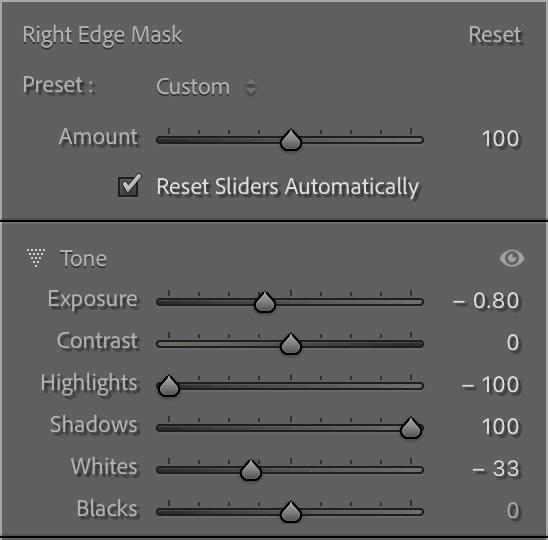
I began processing the photo in Lightroom by cropping the top, bottom, and right edges of the frame. This removed the worst of the overly-contrasty areas of the image and accentuated the flower bud in the center. However, it still left too much contrast along the right edge. I solved this problem by creating a Brush Mask along the right edge, which I renamed Right Edge Mask (Figure 4).
To heighten the separation of the flower bud from the background, I selected the Lightroom Adaptive Color profile in the Basic Panel as a starting point. Because this
Figure 3
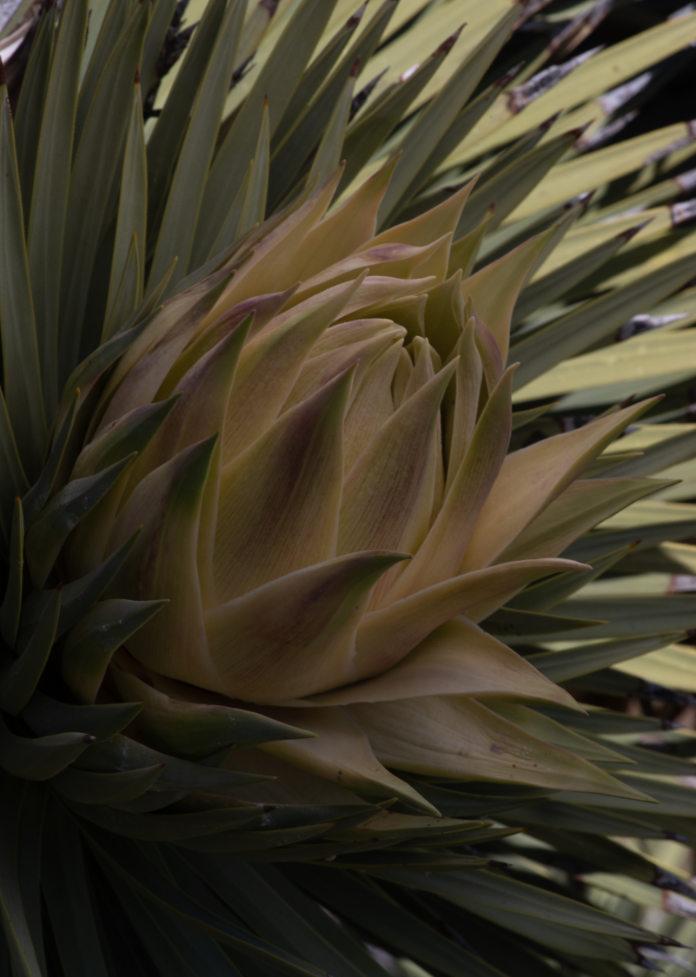
overly brightened the photo, I dialed back the Amount slider to 75. Next, I boosted the white balance temperature by +250 to
emphasize the warm colors of the bud. To intensify the greens in the leaves surrounding the bud, I reduced the white balance tint from 35 to 29. I experimented with the Basic Panel Vibrance and Saturation sliders before
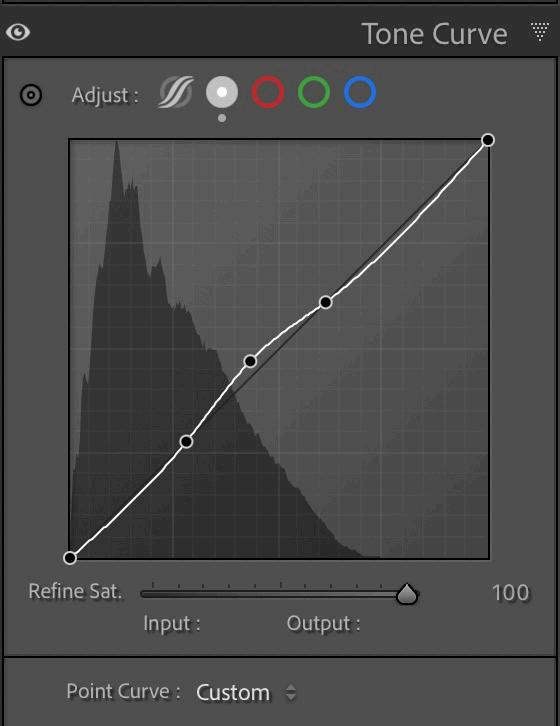
Figure 4
Figure 5
deciding to use the Calibration Panel to increase saturation. Setting the Blue Primary Saturation slider to +25 had the benefit of yielding richer greens and yellows than the other options.
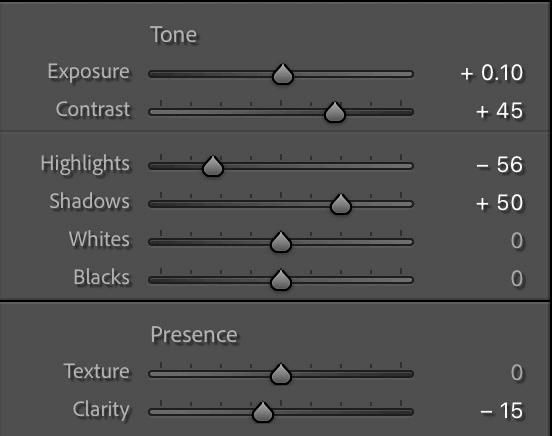
At this stage the photo lacked much contrast. To remedy this, I upped the Basic Panel Contrast slider to +45 and then tweaked the
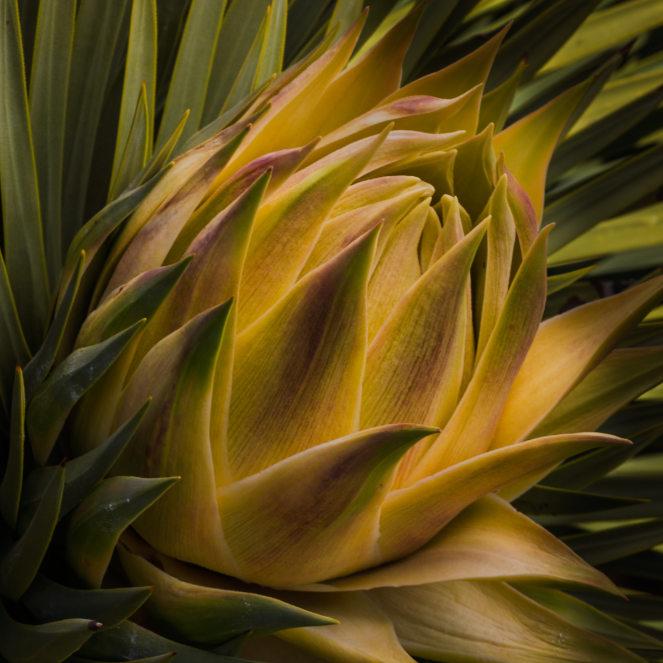
resulting effect by constructing a custom Tone Curve that lightened the midrange colors of the flower bud while darkening the surrounding highlights (Figure 5). To finetune the image, I made additional adjustments in the Basic Panel by setting the Exposure slider to +0.10, the Highlights slider to -56, the Shadows slider to +50, and the Clarity slider to -15 (Figure 6). Lastly, I removed multiple small blemishes from the bud and finished by using the Effects Panel to apply a Post-Crop Vignette of -10 that spotlighted the center region. The result was a pleasing photo whose shading and curving lines first drew the viewer’s gaze upwards along the converging leaves to the brightest portion of the image and then redirected the eyes downwards in a spiral pattern that mimicked the shape of the flower bud.
But I wasn’t done tinkering. Belatedly inspired by my closing sentence in the above paragraph, I decided to revisit my editing of the photo. The reassessment centered on overlaying the image with a golden spiral grid, which I could then use to refine the crop.
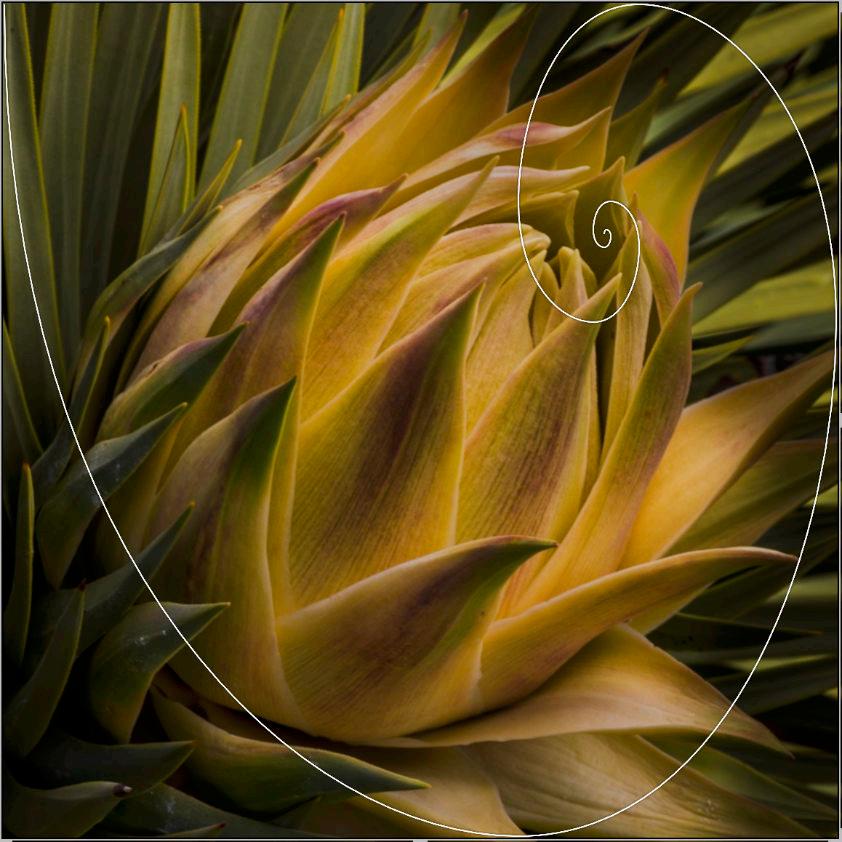
I did this by executing these supplemental editing steps:
• Open the Crop & Straighten Tool
• Set Tool Overlay to “Always”
• Cycle grid overlays by pressing “O” until the golden spiral appears
• Cycle golden spiral grid orientations by pressing “Shift + O”
• Adjust crop to better align photo with the golden spiral guide (Figure7)
What emerged is the finished portrait that you see here.
Figure 6
Figure 7
Member News
My favorite part of editing this magazine is highlighting the work of our members. Usually that is done through the articles, columns, and member pages, but when our friends receive public acclaim at the same time, I’m happy to amplify it. – JD
Dan Gee
While completing his postdoctoral research in biology of aging at Univ So Calif, Dan joined the Sierra Club Camera Committee (LA Chapter). This community became instrumental to his growth. He eventually became a trip leader and served as chair in the late 1980s, guiding memorable excursions to the Eastern Sierra, Monterey, and Yosemite. He was also fortunate to attend the Ansel Adams Photographic Workshops in Monterey
which included Ruth Bernard, Henry Gilpin, Ray McSavaney, Olivia Parker and John Sexton as part of the faculty.
Now in the Boston area and retired from a career in biotech drug development, Dan shoots primarily with a digital mirrorless system. While he occasionally fantasizes about his old view camera, he embraces the evolving world of digital photography—trading the challenges of traditional film equipment for the modern creative challenges of digital photography. Presently, only using Apple Photos, his next goal is to learn a photo editing software such as Lightroom or Photoshop to enhance artistic control.
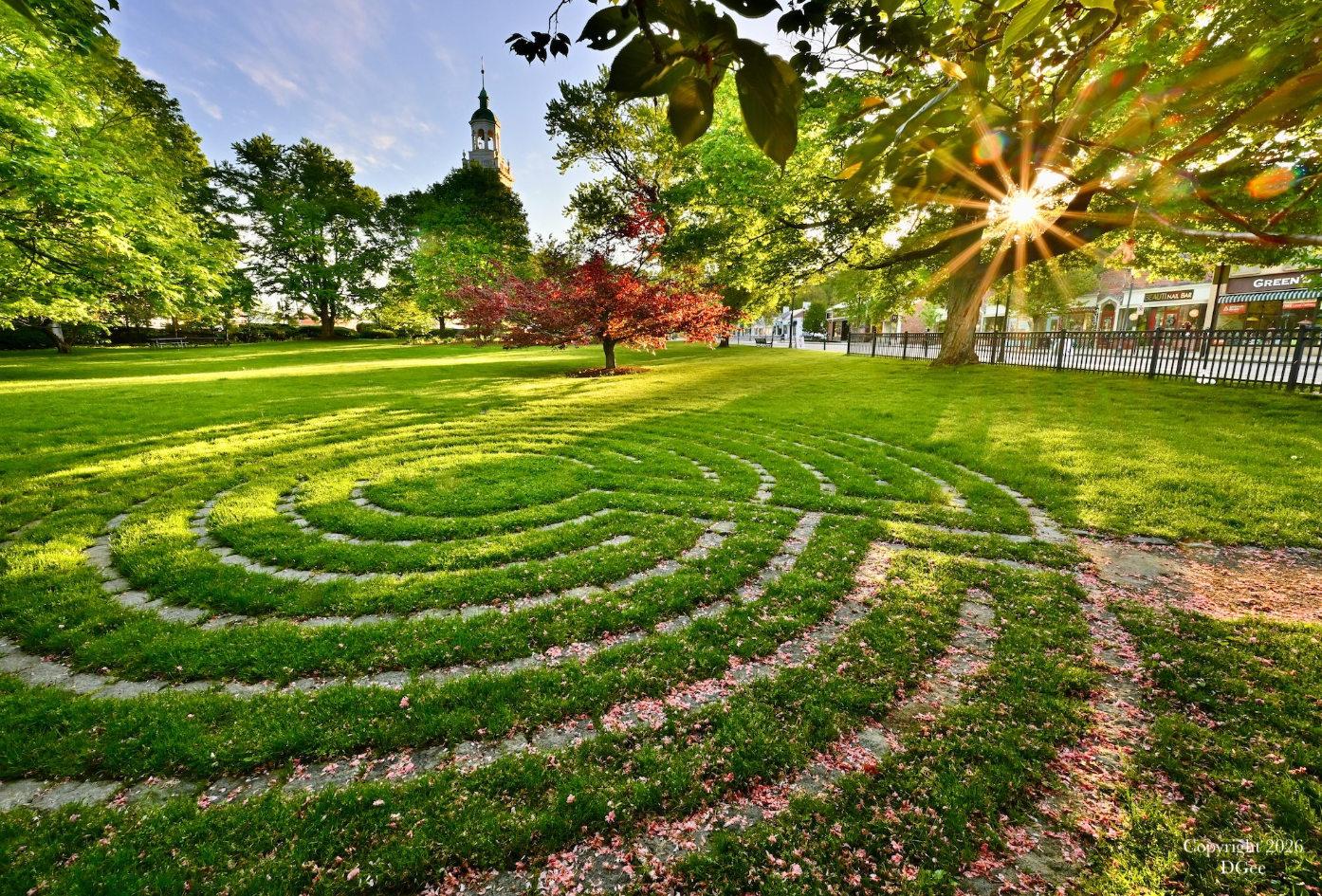
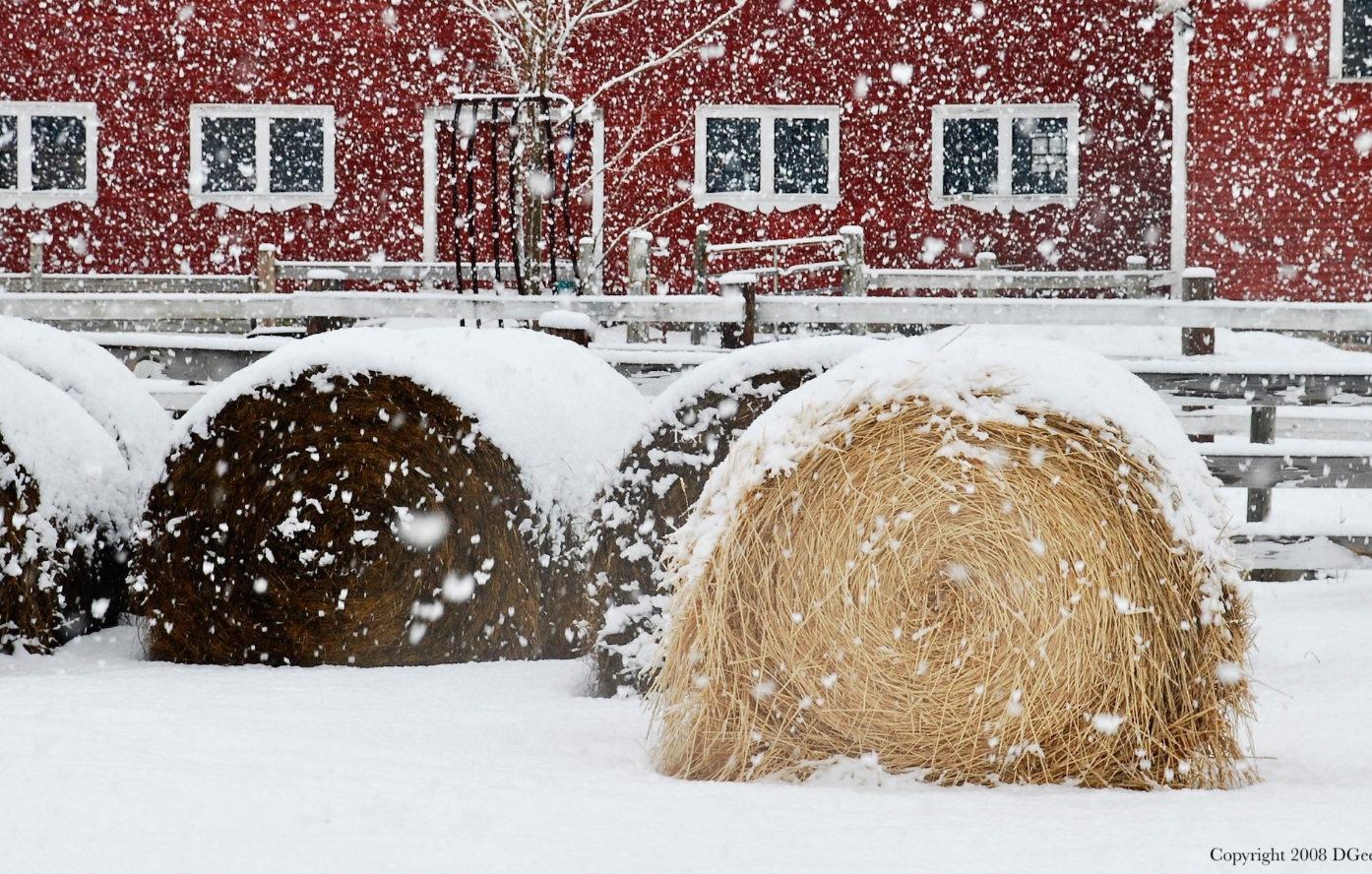
There will be an exhibit of color photographs made by Dan Gee in and around Wellesley,
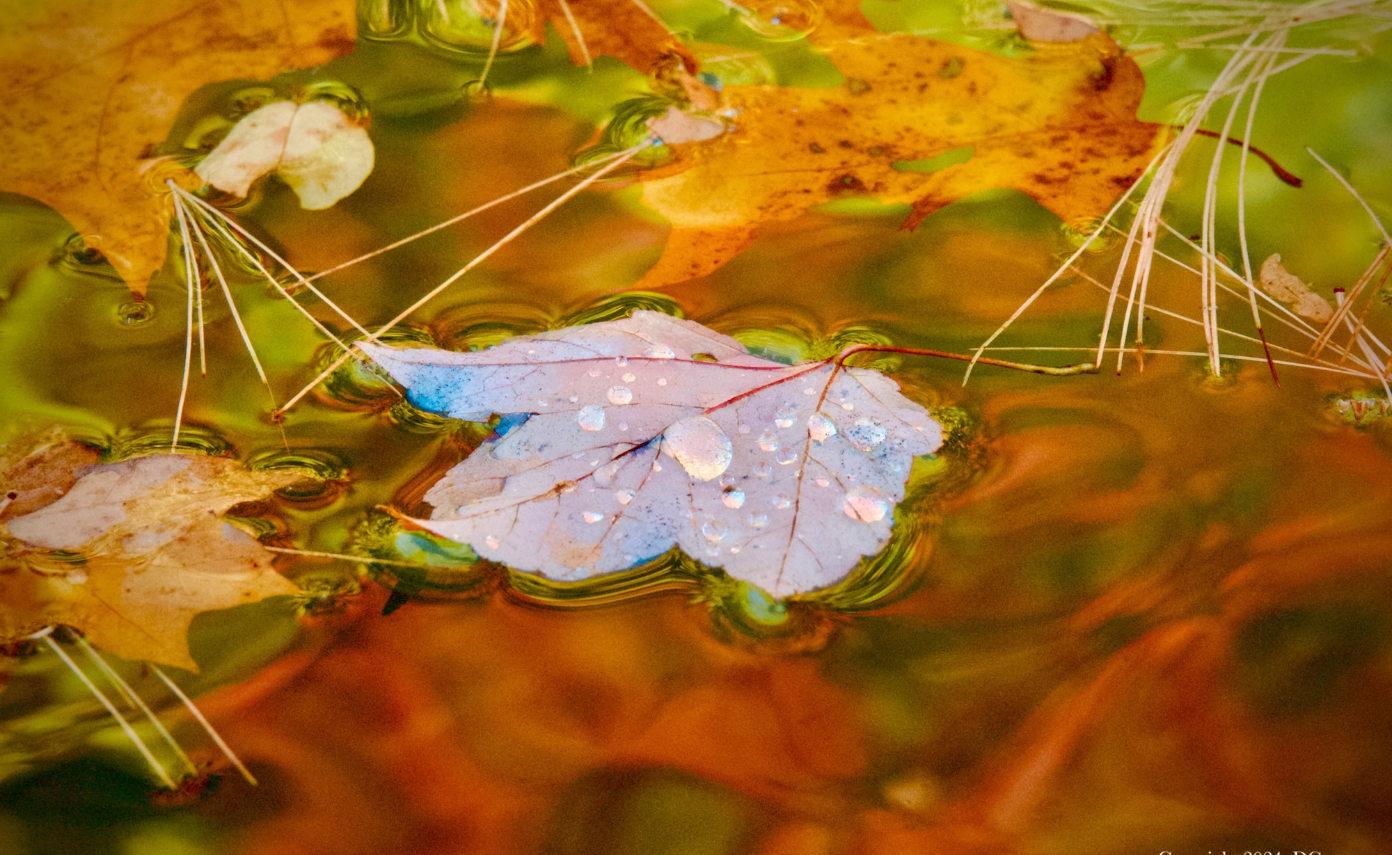
MA through the years after moving to Massachusetts from California. The images were made within 15 miles of town.
On exhibit from Aug 1 to 31, 2026
Wellesley Free Library (main branch) 530 Washington Street
Wellesley, MA 02481
John Fisanotti
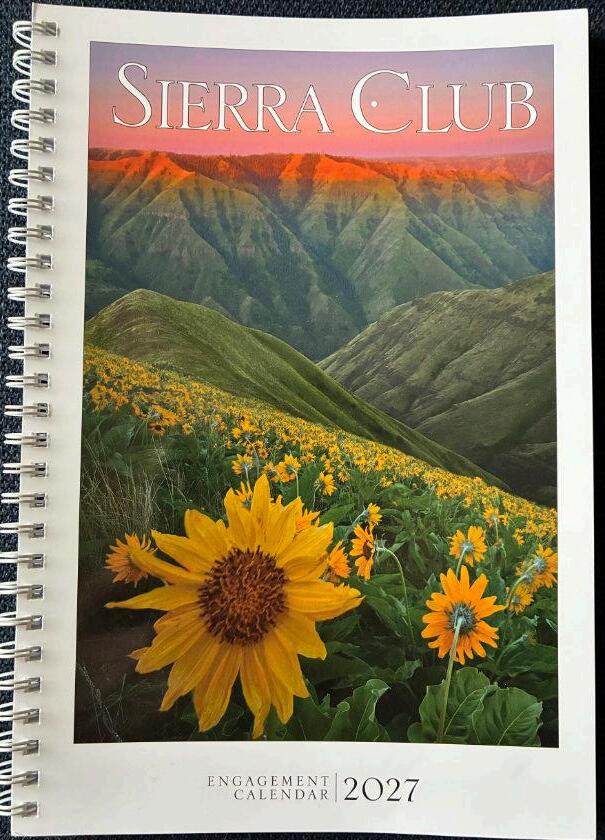
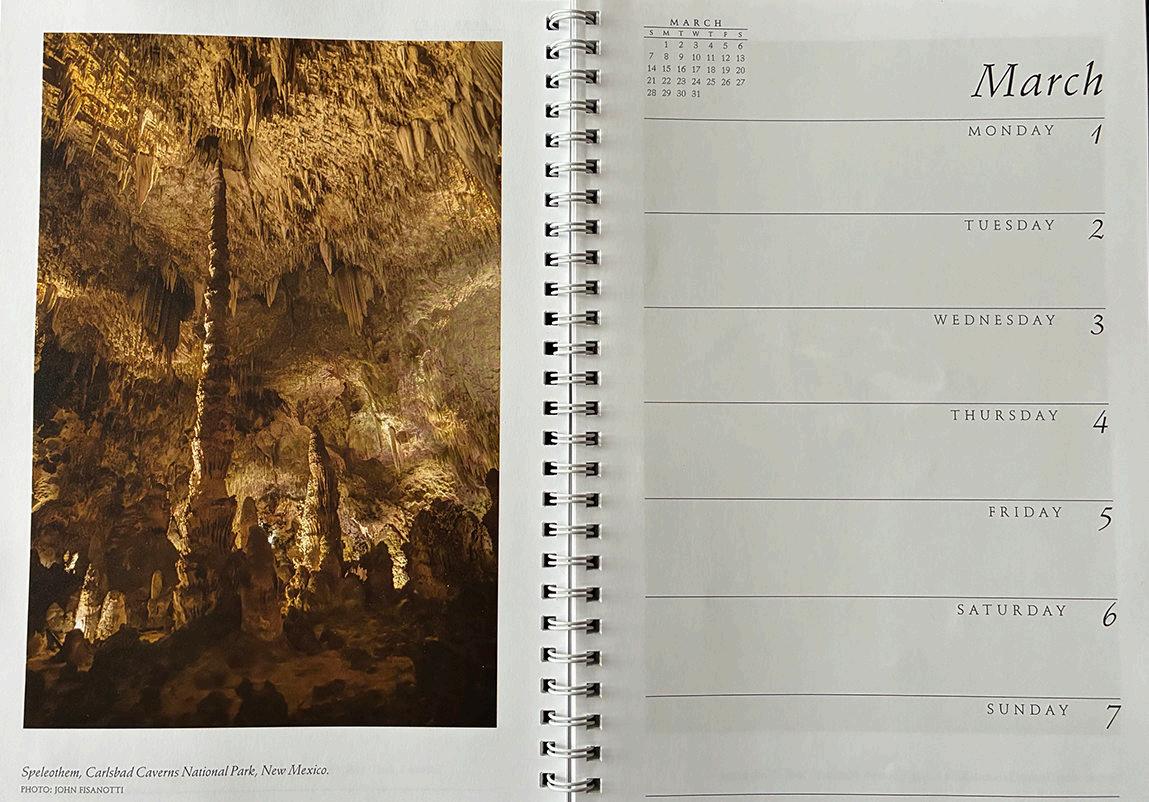
The Sierra Club Engagement Calendar for 2027 includes a photo by Camera Committee member, John Fisanotti. This calendar is a one-page-per week day planner style calendar, and is approximately 6” x 9”. John’s photo of Carlsbad Caverns is opposite the week of March 1st. Sierra Club calendars for 2027 will be available from the Sierra Club on-line store, and elsewhere, starting July 21, 2026.
Rebecca Wilks
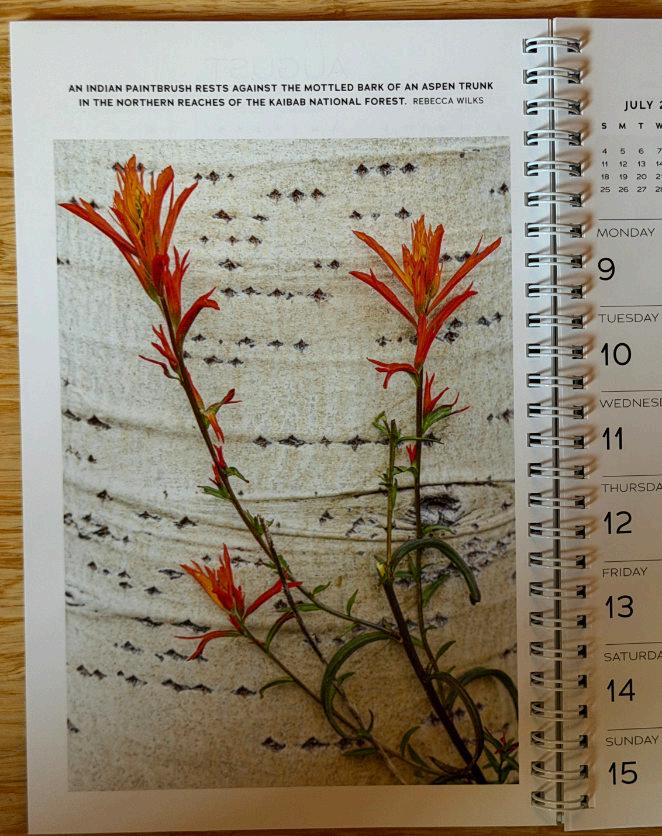
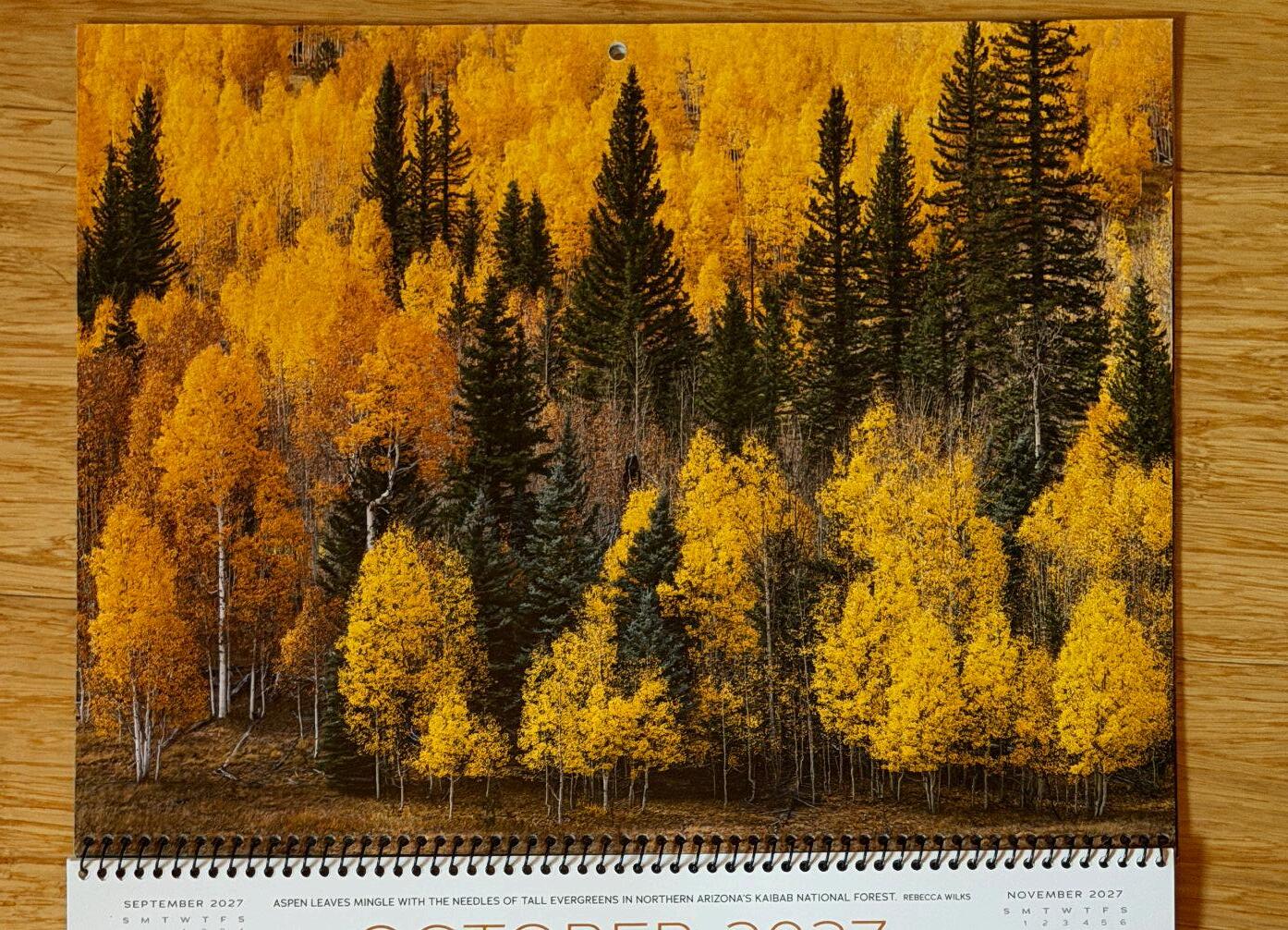
Rebecca has three photographs in the Arizona Highways 2027 calendars, two in the Engagement Calendar and one in the Classic Calendar.
Her October photo in the Classic Calendar is a colony of aspen trees in full Fall color in the North Kaibab National Forest on the Grand Canyon’s North Rim. The week of August 9 in the Engagement Calendar is illustrated by her image of Indian Paintbrush against the trunk of an aspen tree. This was also taken in the North Kaibab National Forest.
Recent fires devastated the places where both of these photographs were taken.
The calendars are available on the Arizona Highways site and from other vendors.
John Houseman, 1934-2026
It is with great sadness that I have learned that a good friend and fellow photographer has passed away. John Houseman was a long-time member of the Camera Committee when we used to have live meetings in Santa Monica. Some of the older members might remember him. He was also a long standing member of the Pasadena Photochromers where he loved to compete with submitted work of landscapes and old barns.
Besides being on several Cam Comm photo trips together and on local explorations with me, John introduced me to southern Utah red rock country and my first slot canyon. I recall on his 80th birthday party how excited he was about sharing his first photo book with guests. John had a long, fulfilling life, living past 90, and I am glad to have shared some of his time and his beautiful imagery.
Steve Anderson Past SCCC Chair
John Nilsson
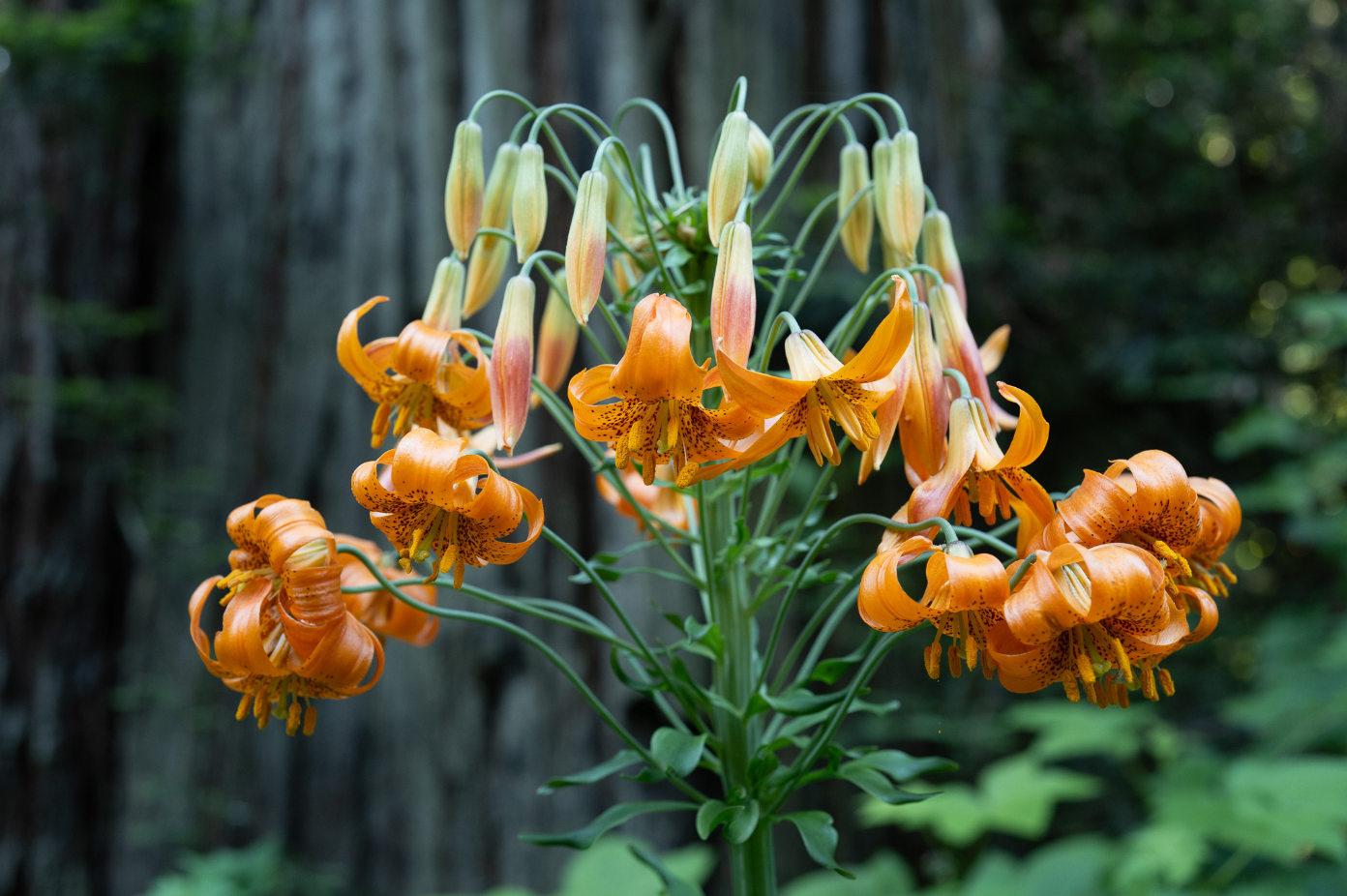
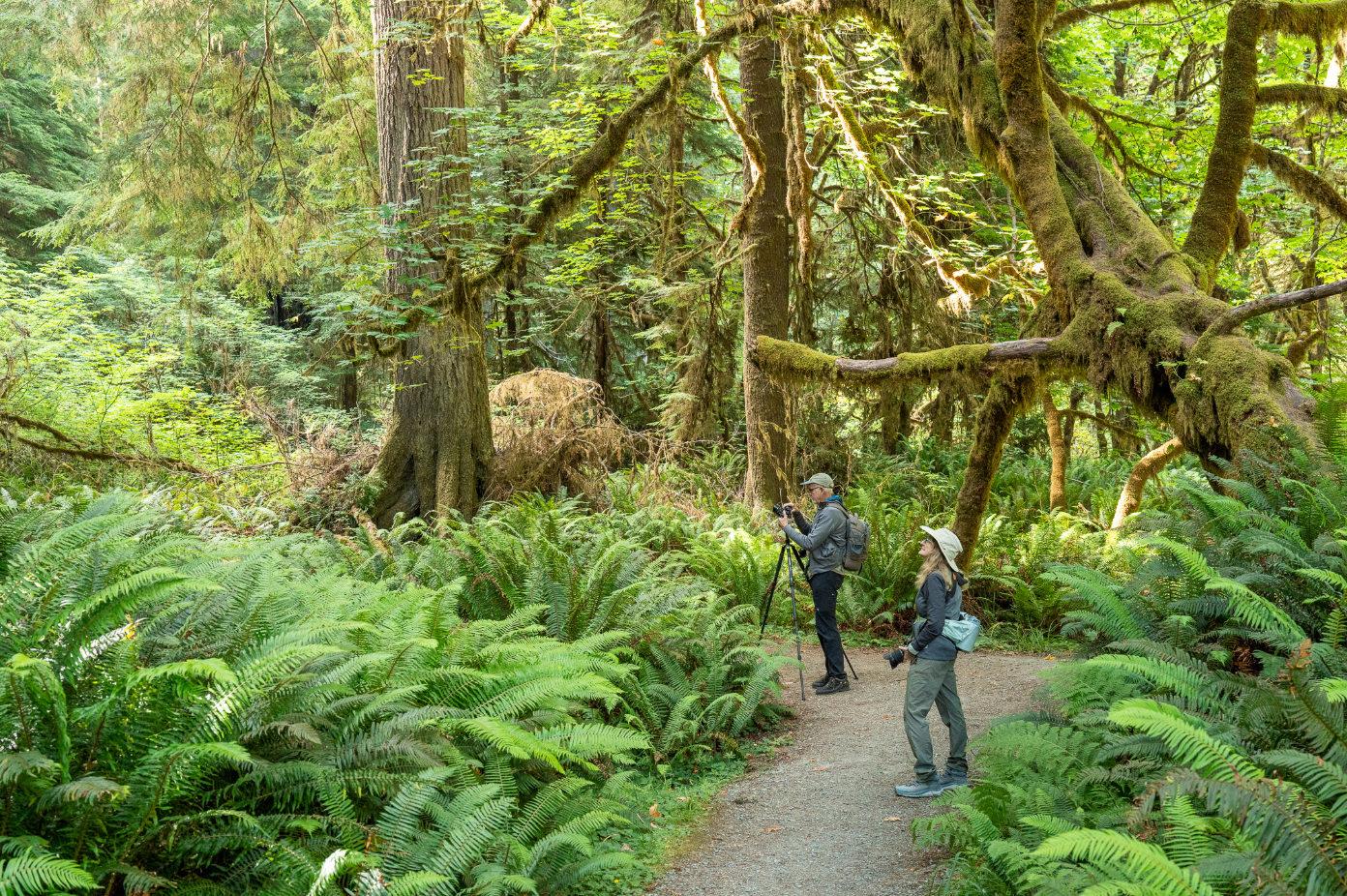
The Camera Committee just completed a wonderful trip to the California Redwoods. We will have a formal trip report for the fall issue of Focal Points but until then, I wanted to submit a few of my favorite photos from the trip for this issue to whet your whistle!
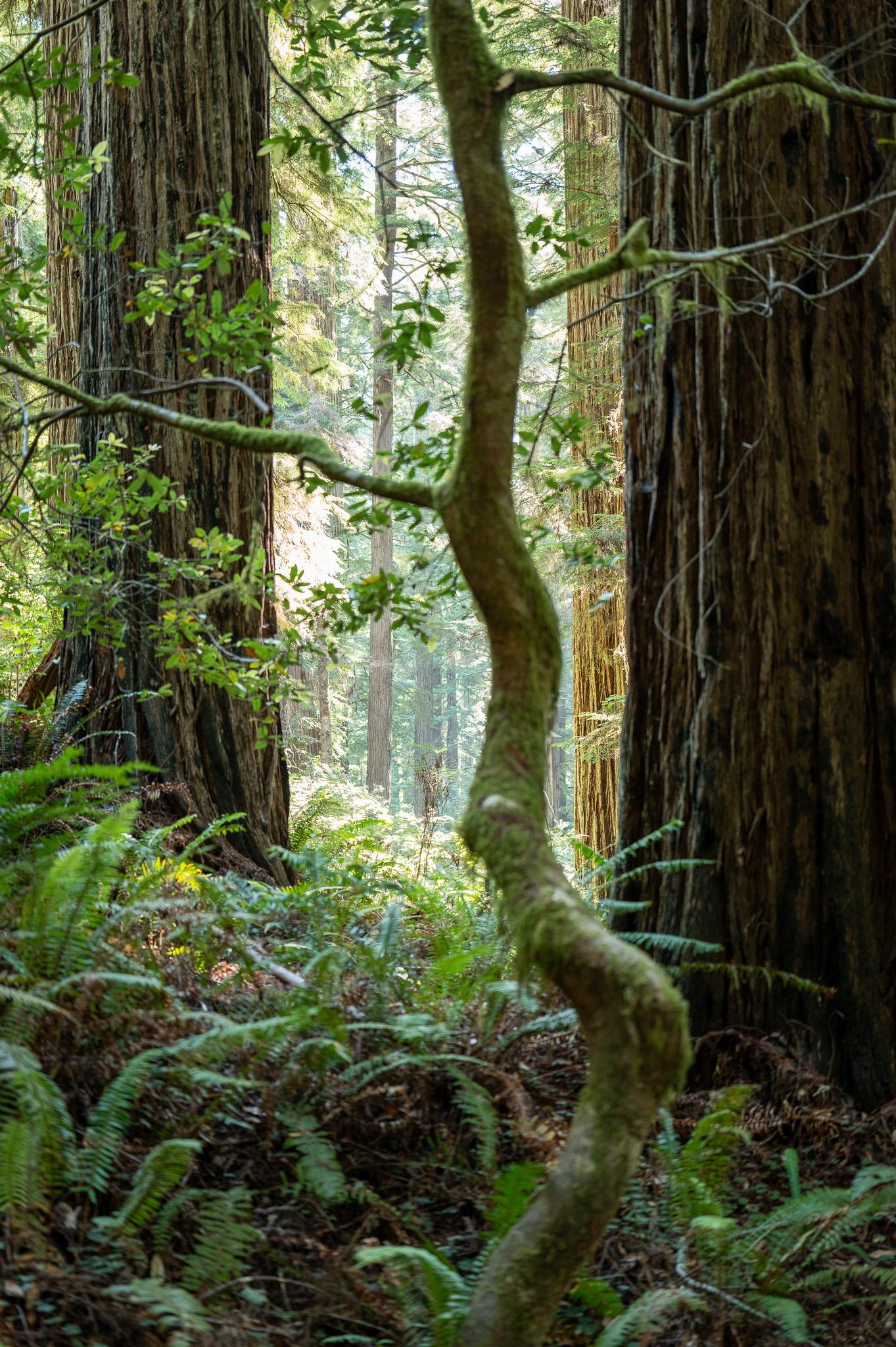
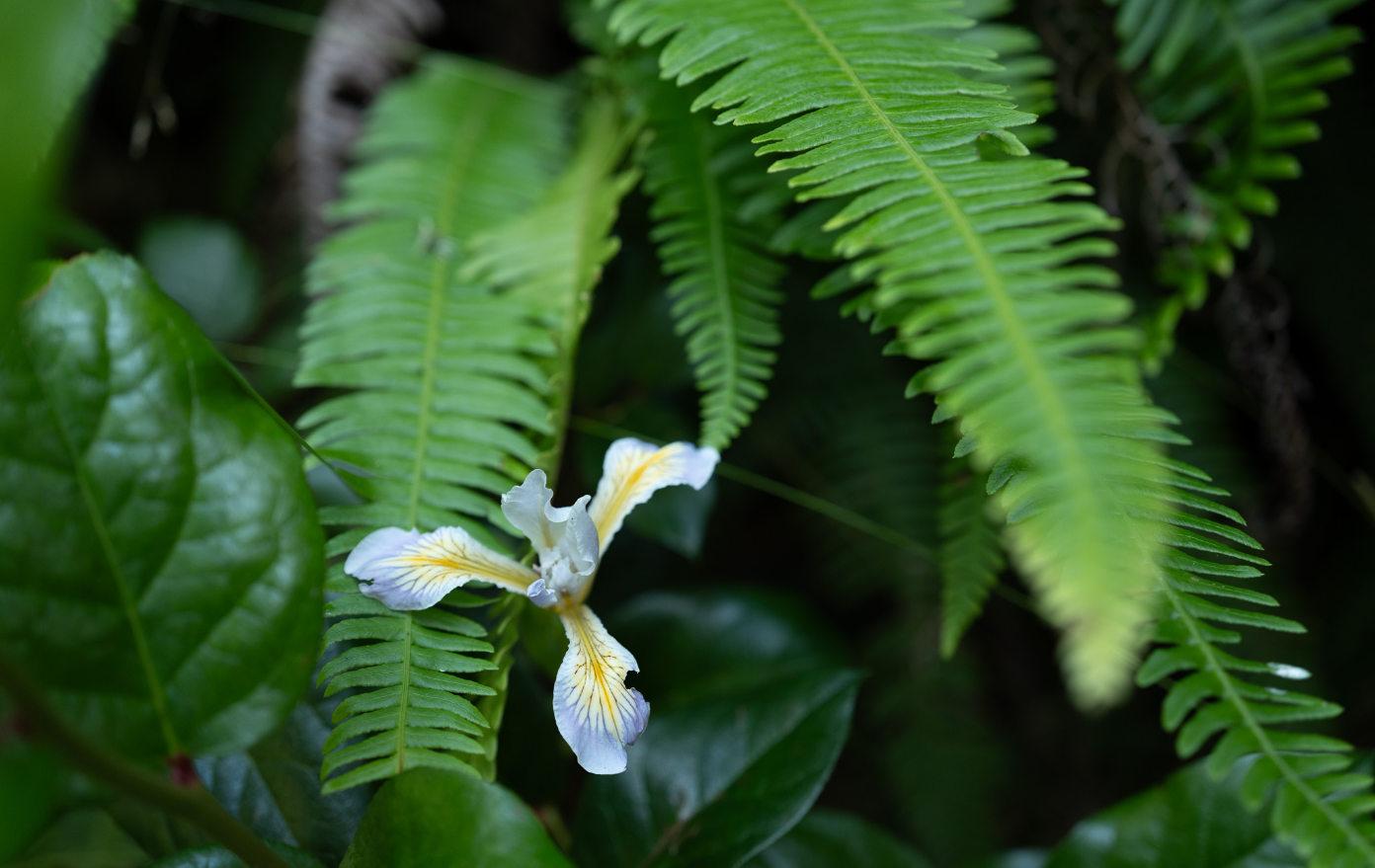
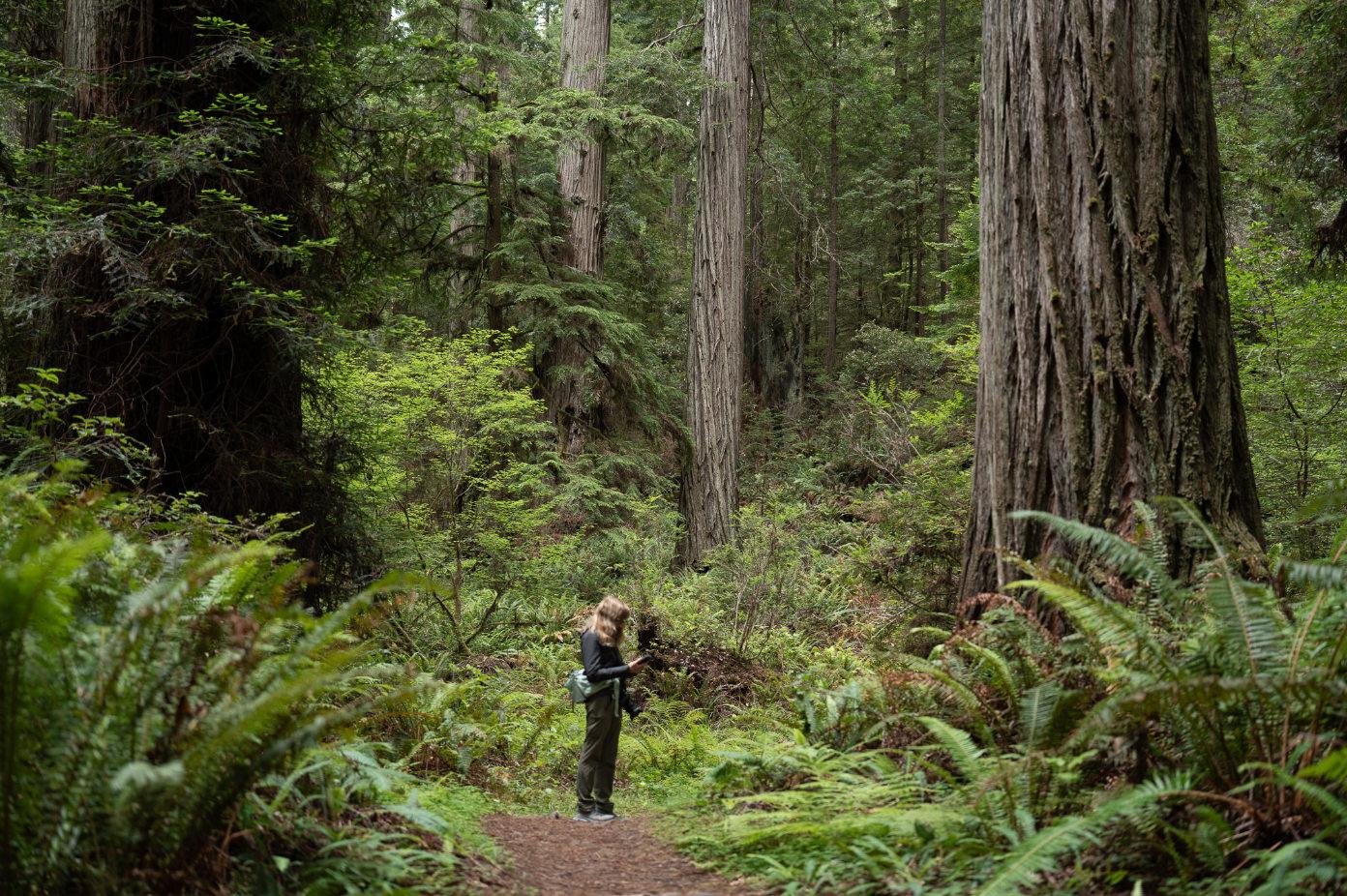
John Nilsson
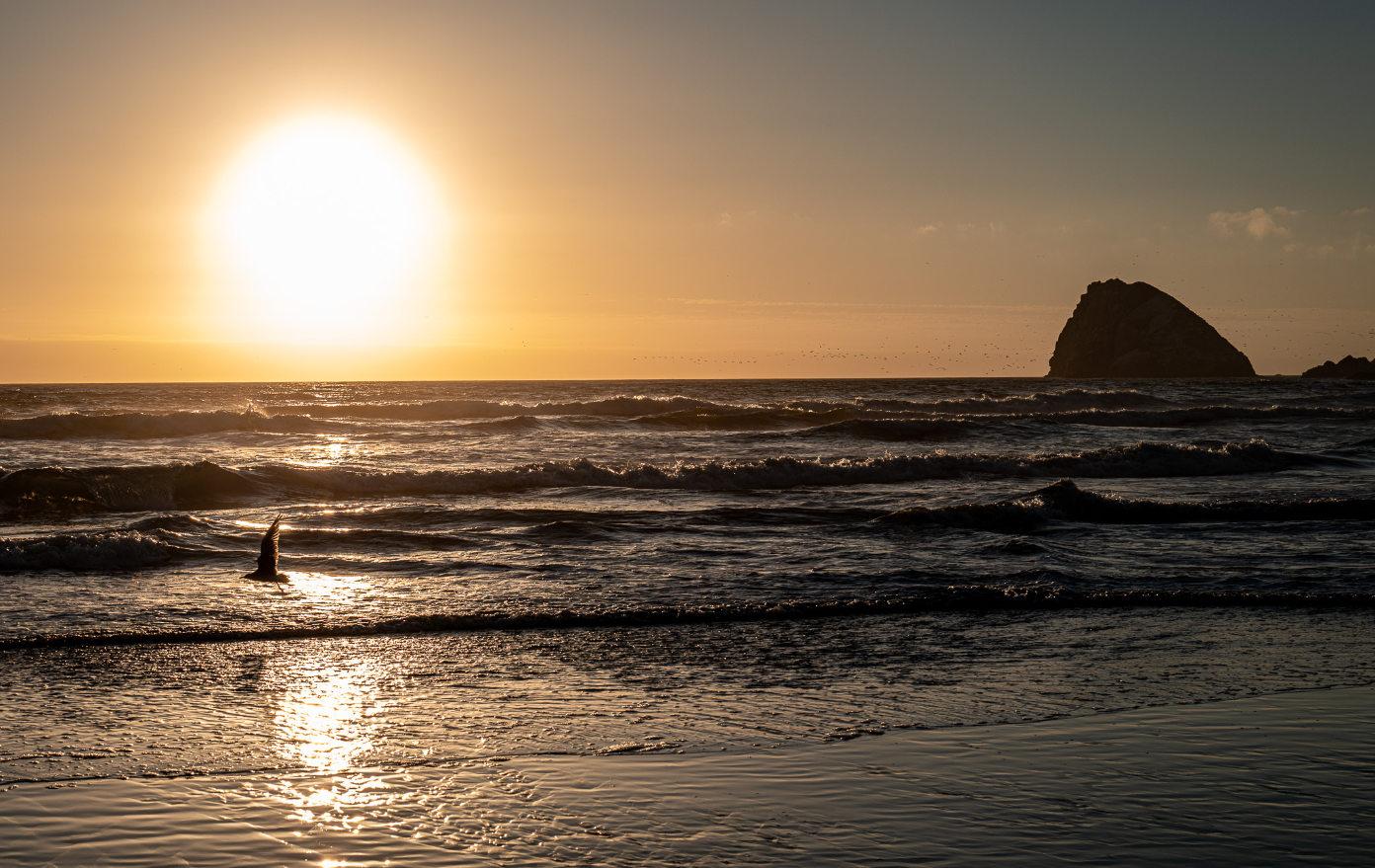
Beverly Houwing
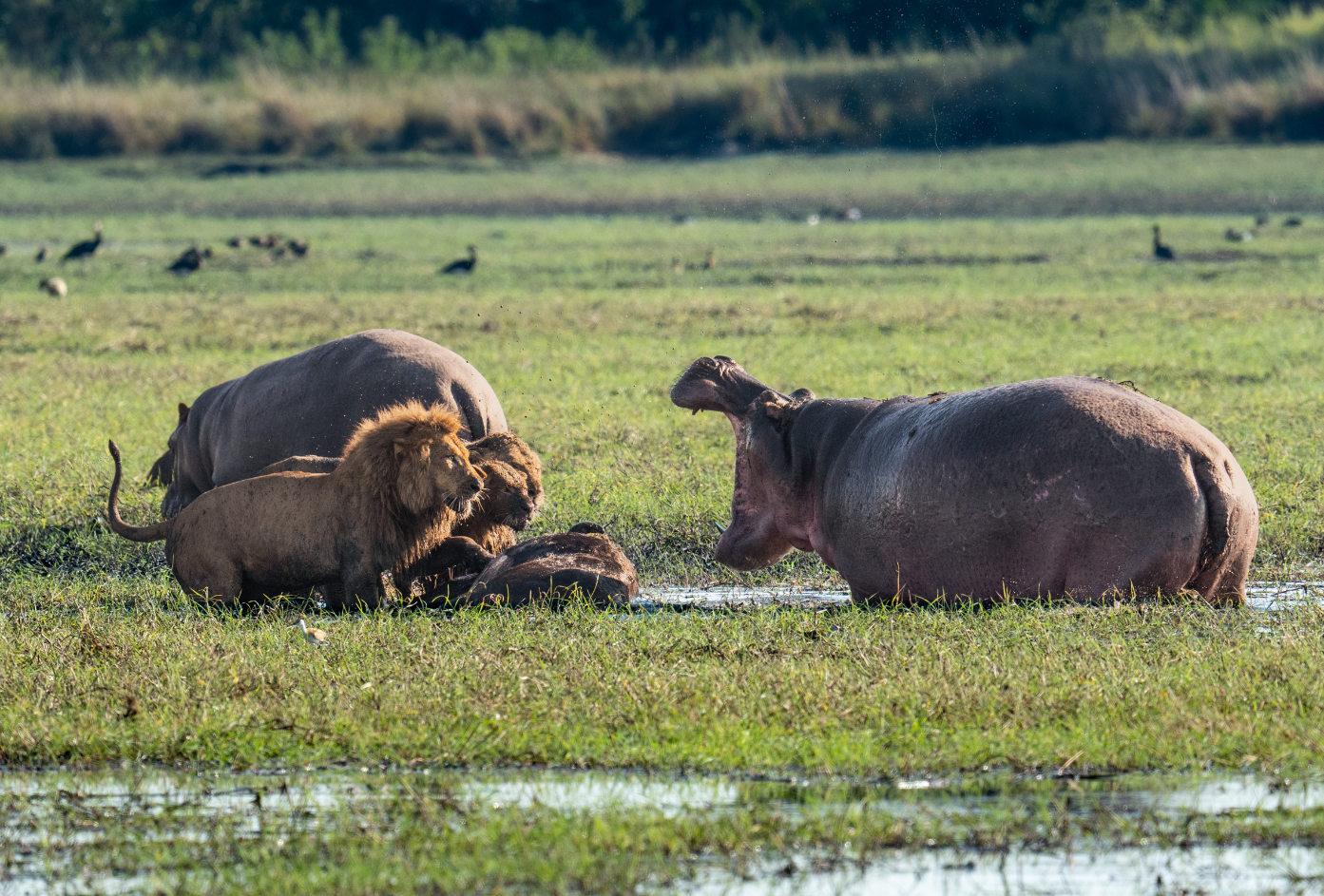
I spent my birthday in Zambia going to some of my favorite places there in May and June. Even though I’ve been to Zambia quite a few times I definitely had some really exceptional sightings on this trip. Probably the craziest one was in Busanga Plains in the northern part of Kafue National Park. Four young male lions captured a Cape Buffalo on the floodplain which caught the attention of a large male in the area. He muscled in and joined the feeding frenzy on the buffalo. Suddenly hippos that live in the channel nearby started to menace the lions. It was a bizarre confrontation that lasted about five minutes before the ferocity of the large male lion drove the hippos off and they could all continue to feed.
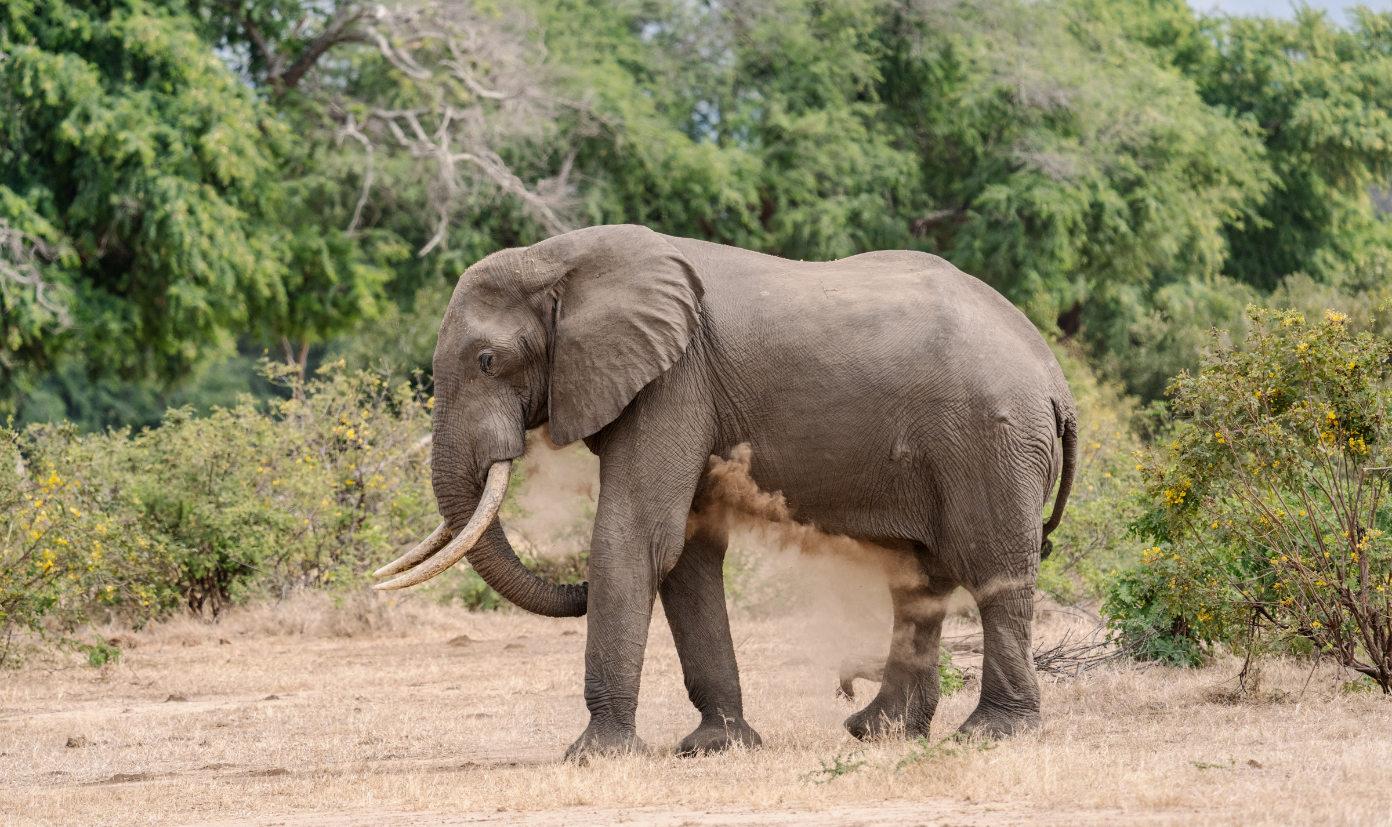
Lower Zambezi National Park has a healthy elephant population. This one was giving himself a nice dust bath after feeding on the leaves of the trees nearby.
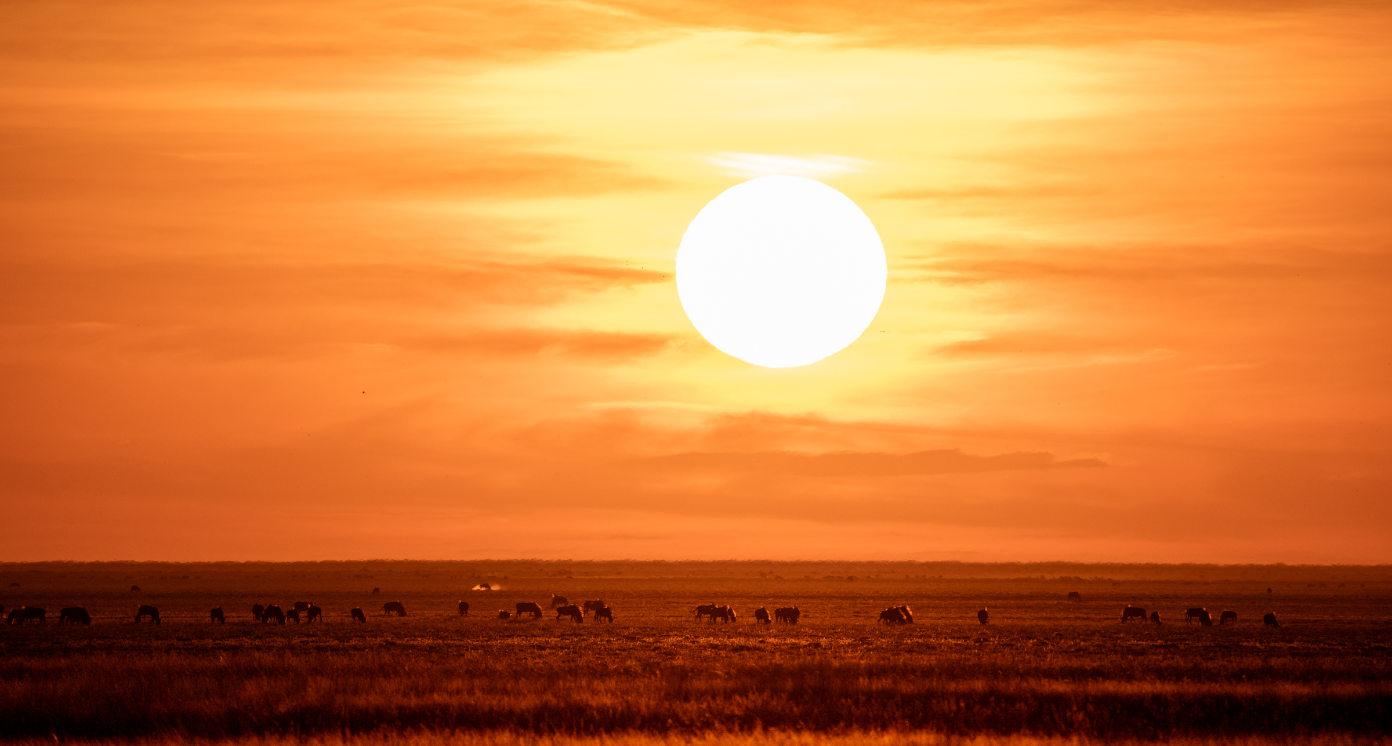
Liuwa Plain National Park is home to the second largest wildebeest migration in Africa, after the Serengeti and Masai Mara area. In late May, there were still many wildebeest in the area. There had been substantial rain this year so many watering holes were still full and there was plenty of grass, so they were out on the planes. They nice subjects for sunrise and sunset pictures on the expansive landscape.
Beverly Houwing
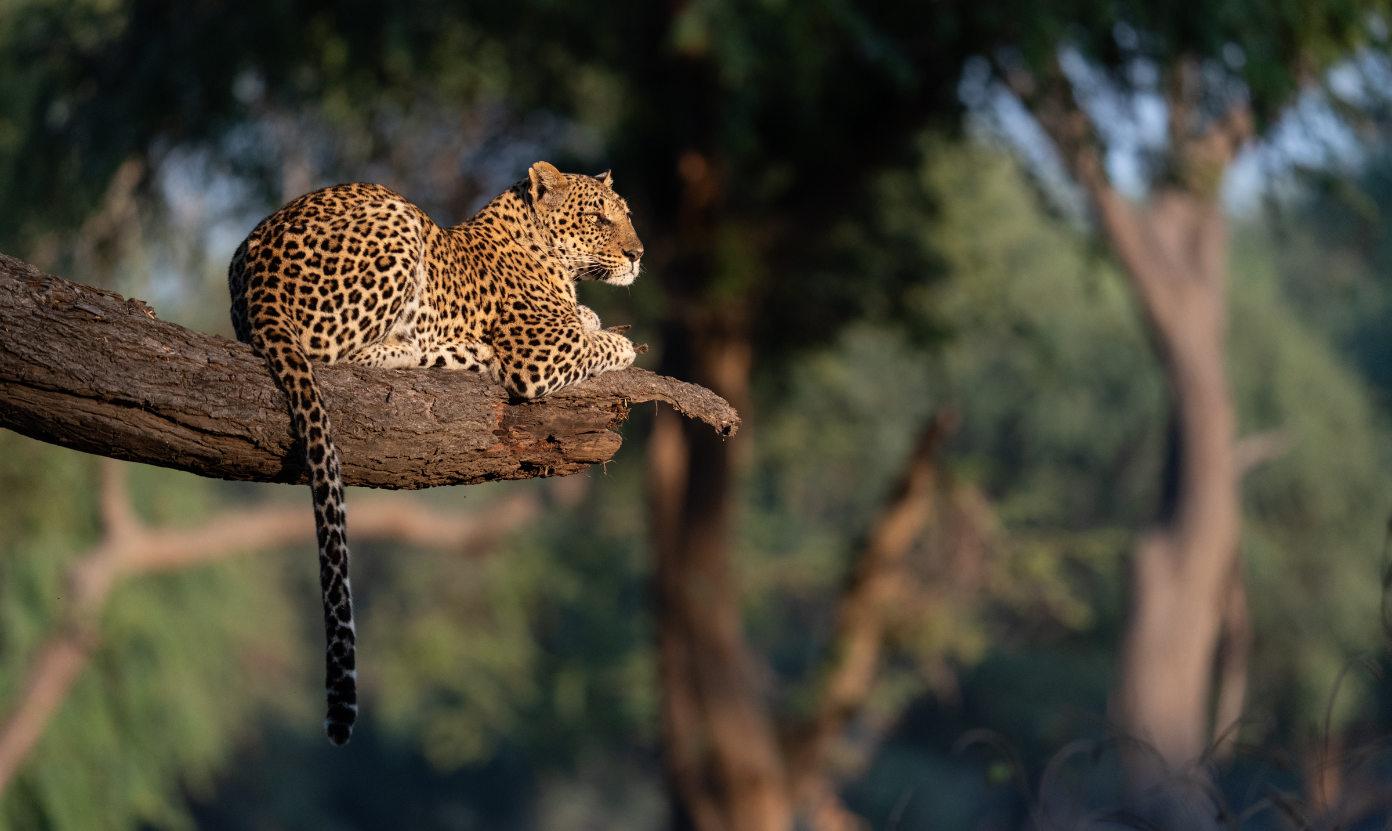
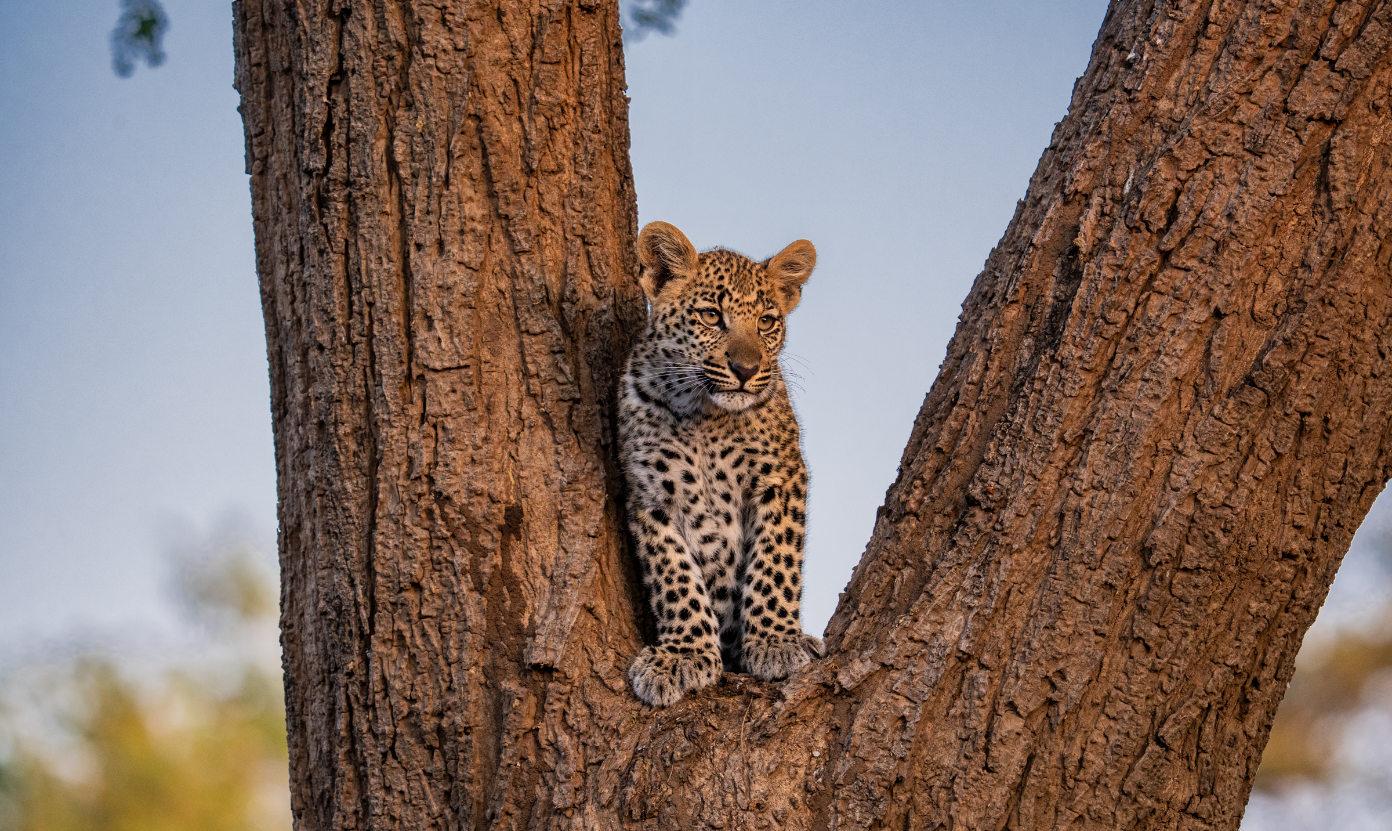
In Lower Zambezi National Park a mother leopard is strategically perched on a tree branch at the edge of the winter thorn forest scouting for potential prey. Her cub sits up in a tree nearby, keeping safe while he waits for
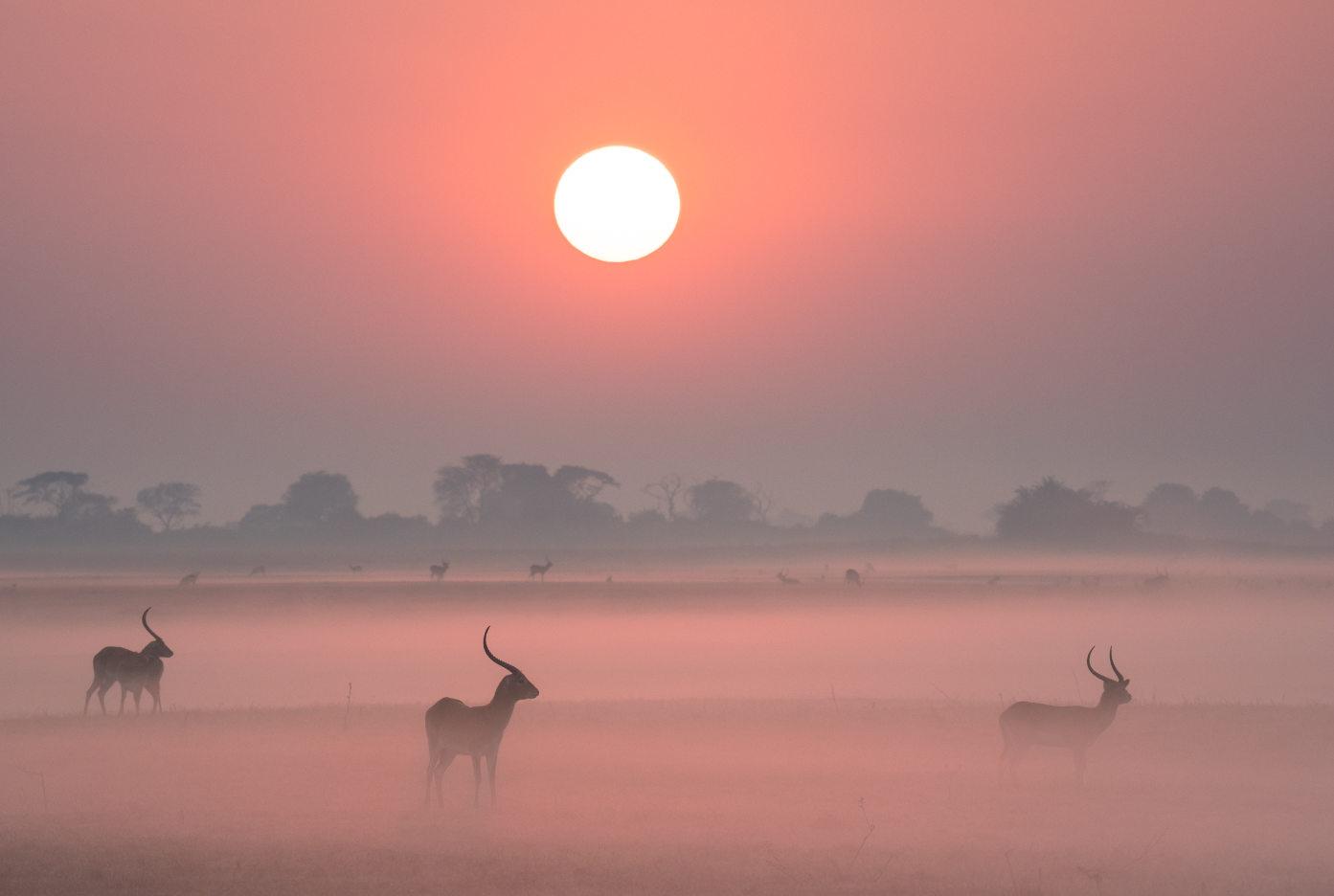
Cold mornings in Busanga Plains cause the water in the channels to evaporate at sunrise creating a mist that sits on the plains. Lechwe grazing are silhouetted in the backlit mist.
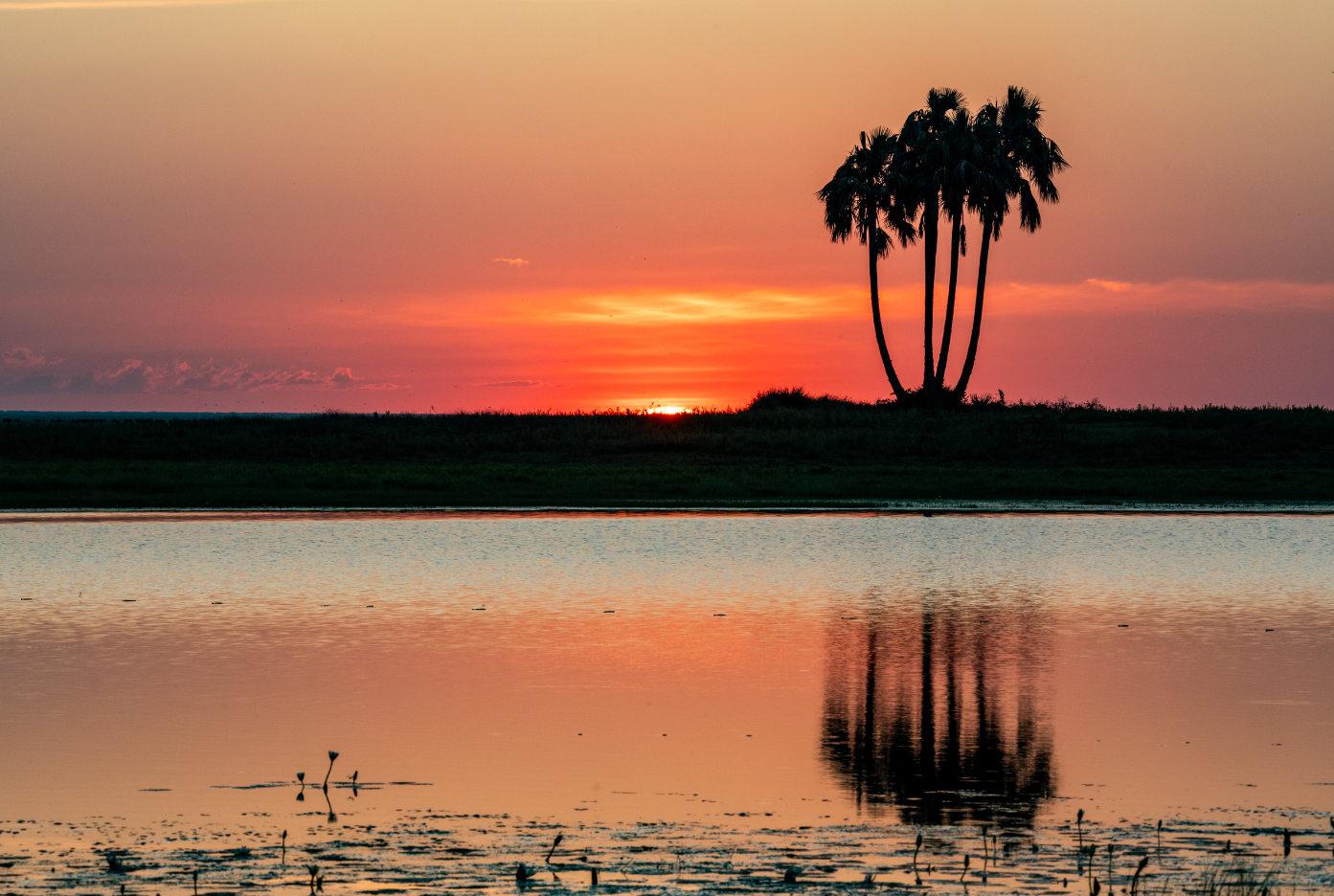
Lone Palm is one of the few “landmarks” in Liuwa Plain National Park which is a vast remote grassland of about 1,400 square miles. It was a delightful place to celebrate my birthday with cocktails, snacks, birthday cake and a lovely sunset!
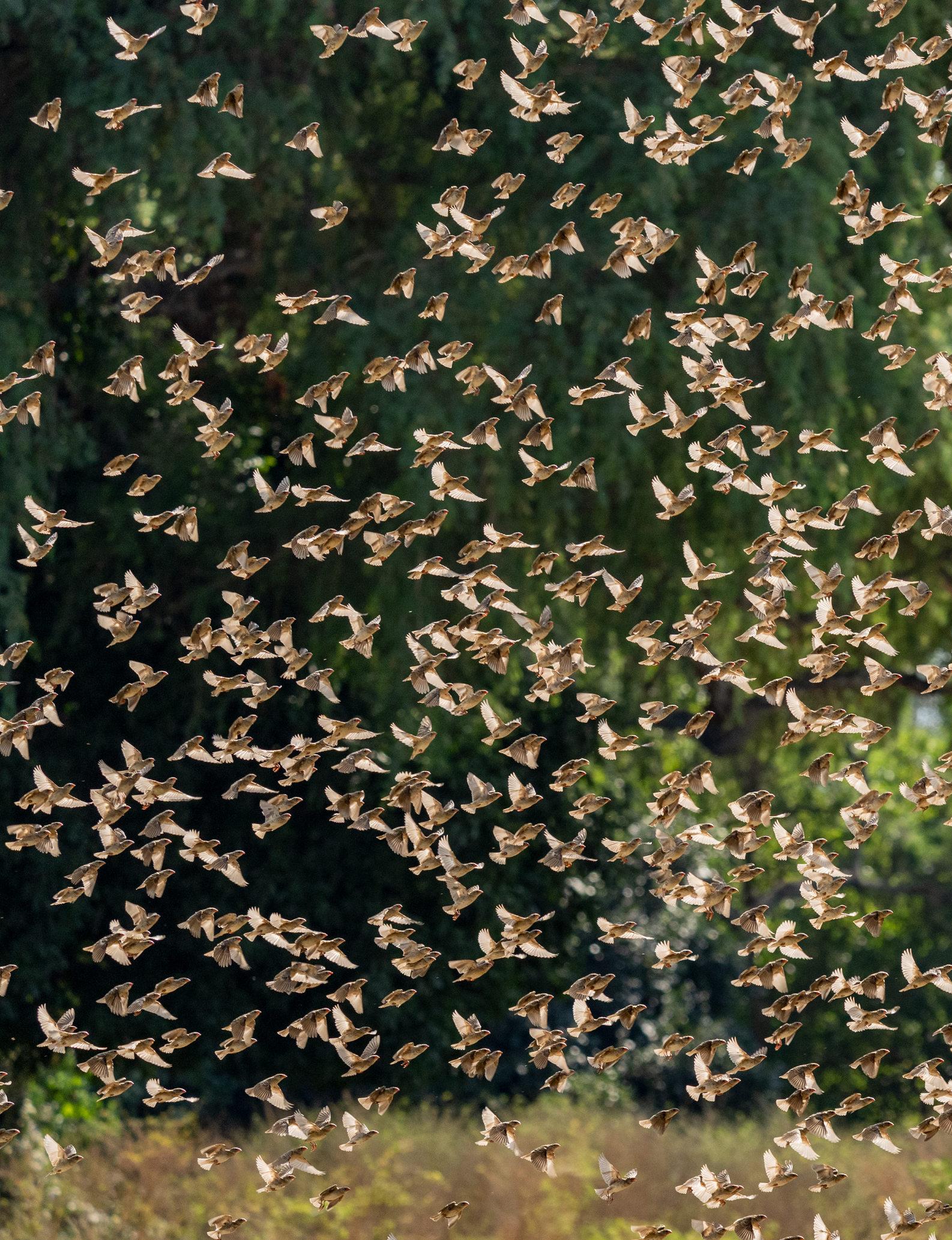
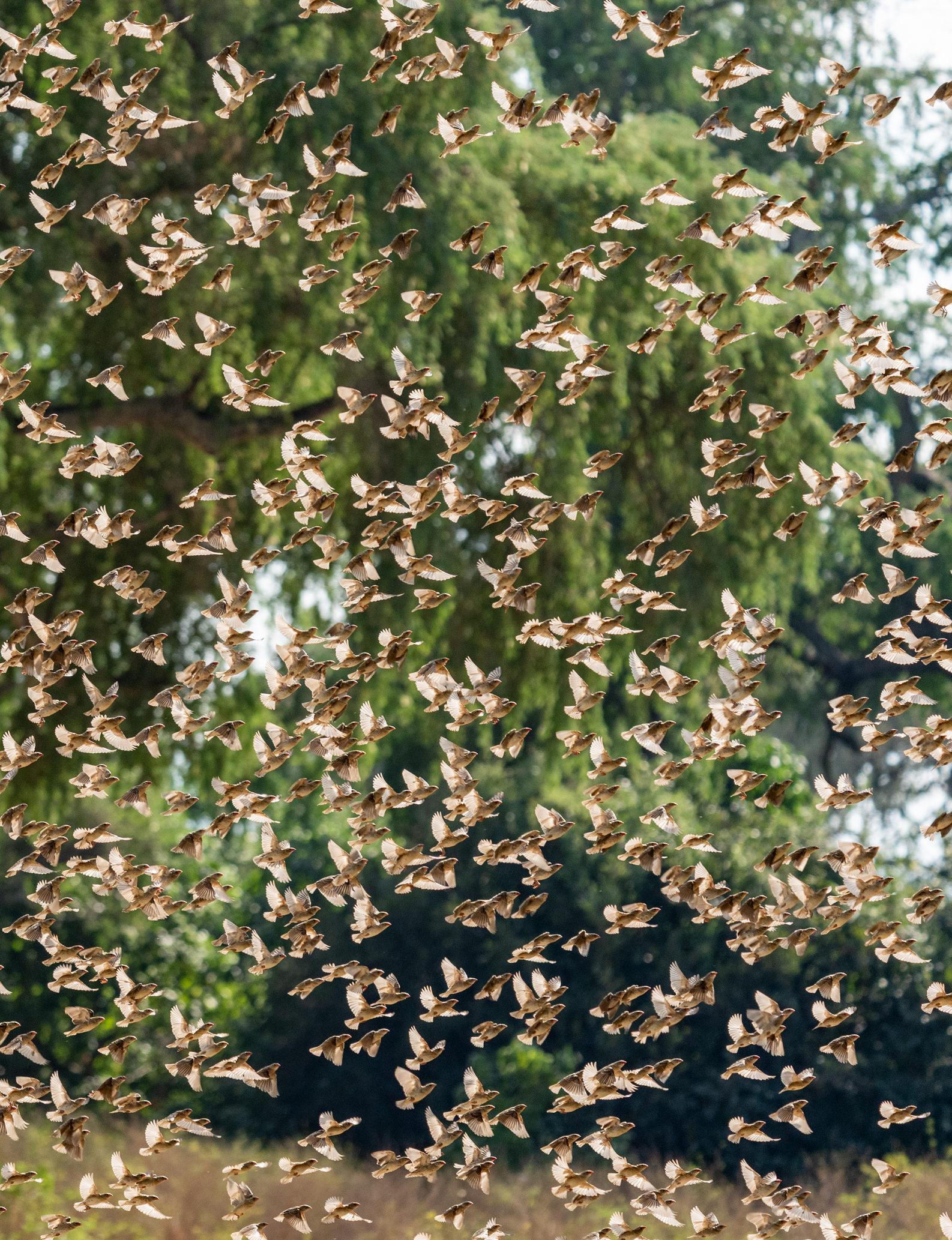
Red-billed Quelea are small, sparrow-like weaver birds native to sub-Saharan Africa, known as the world's most abundant wild bird, with populations numbering in the billions. These highly social birds form massive flocks and colonies. This group of a couple hundred was on the ground feeding on grass seeds, then suddenly burst into the air upon hearing an alarm call from a nearby baboon. It was quelea mania!
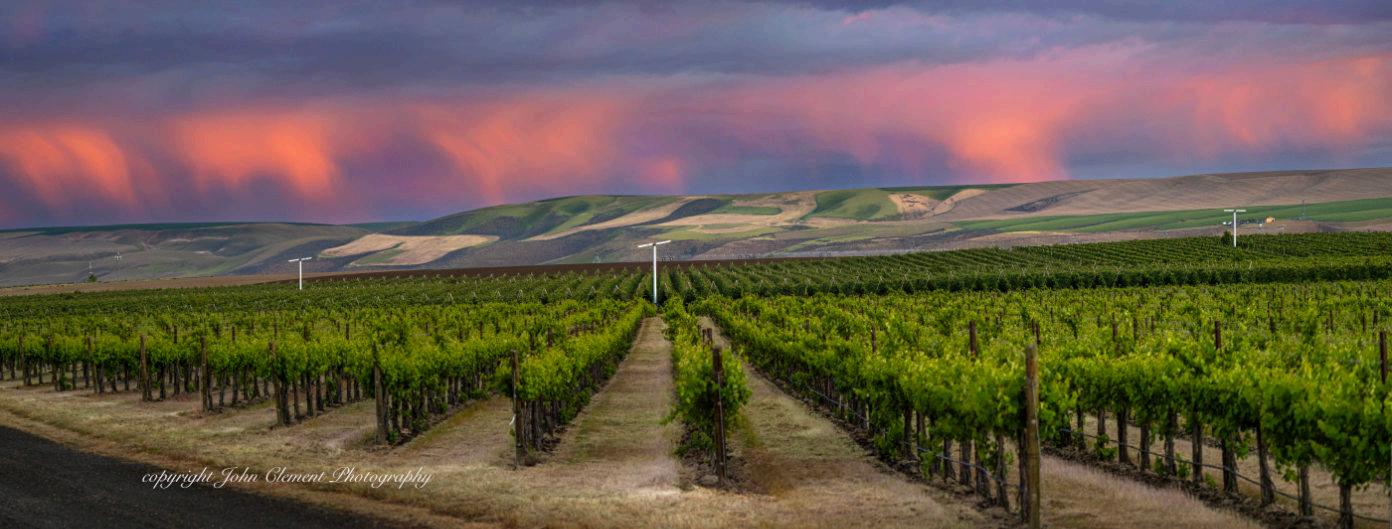
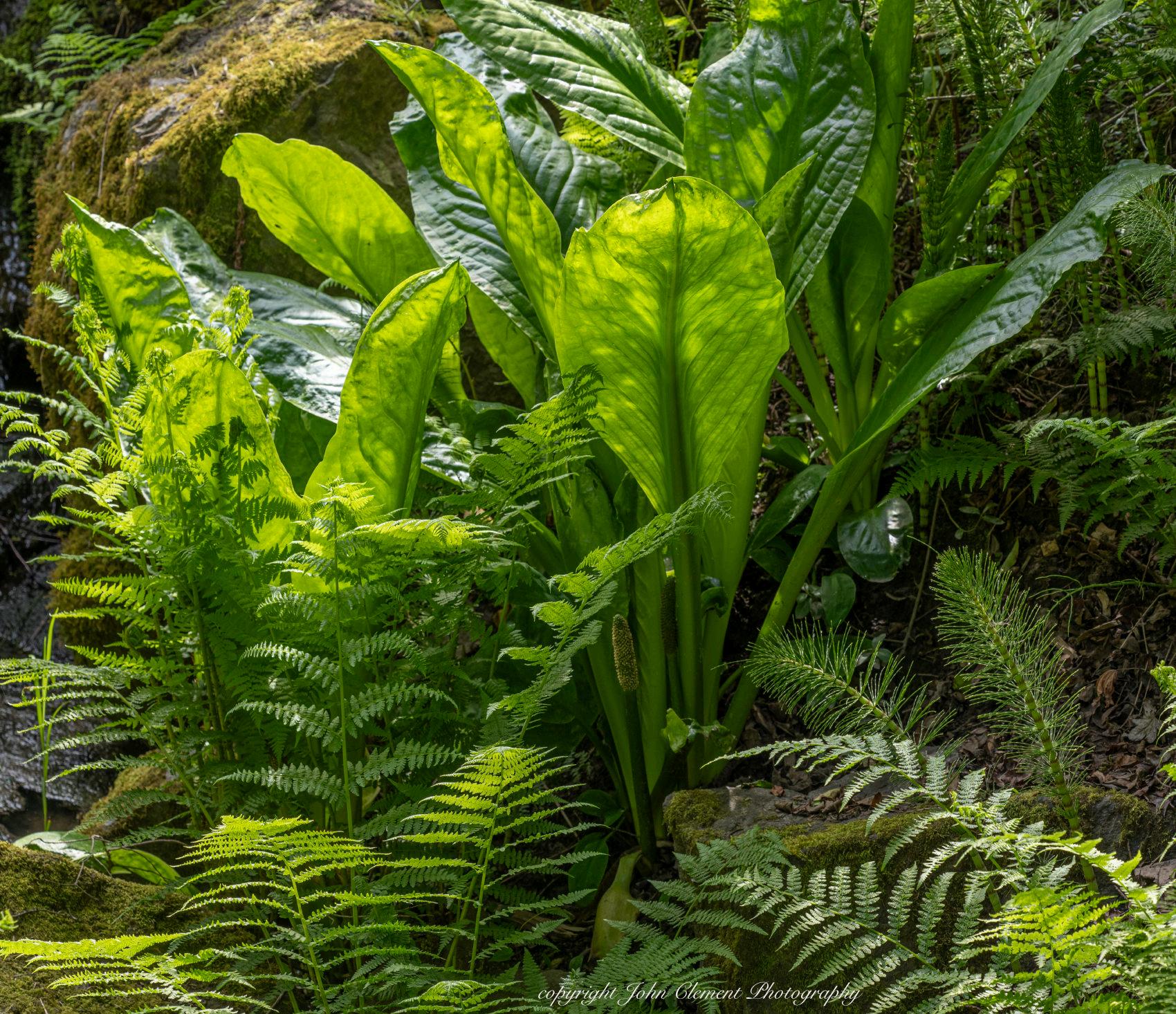
John Clement
Focal Points Magazine July/August 2026
Kubota Green
Goose Ridge Twilight
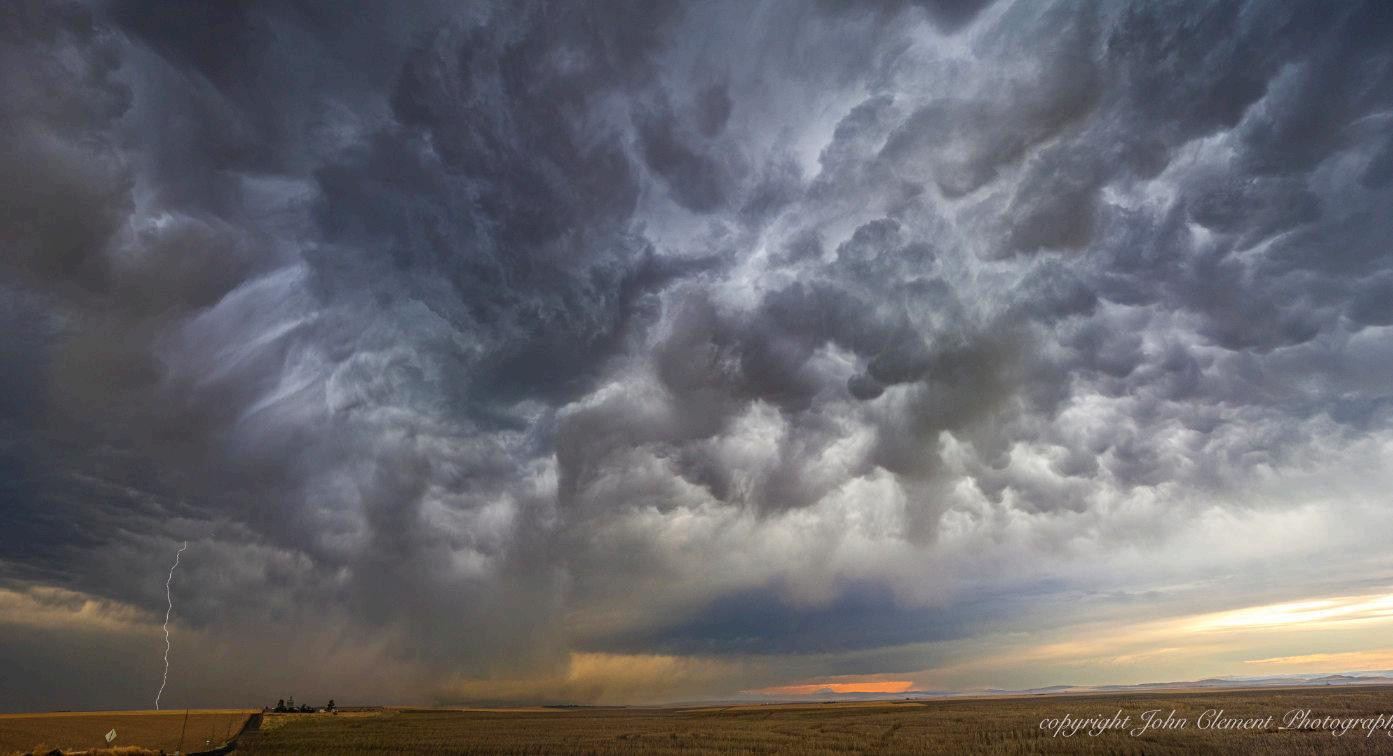
John Clement
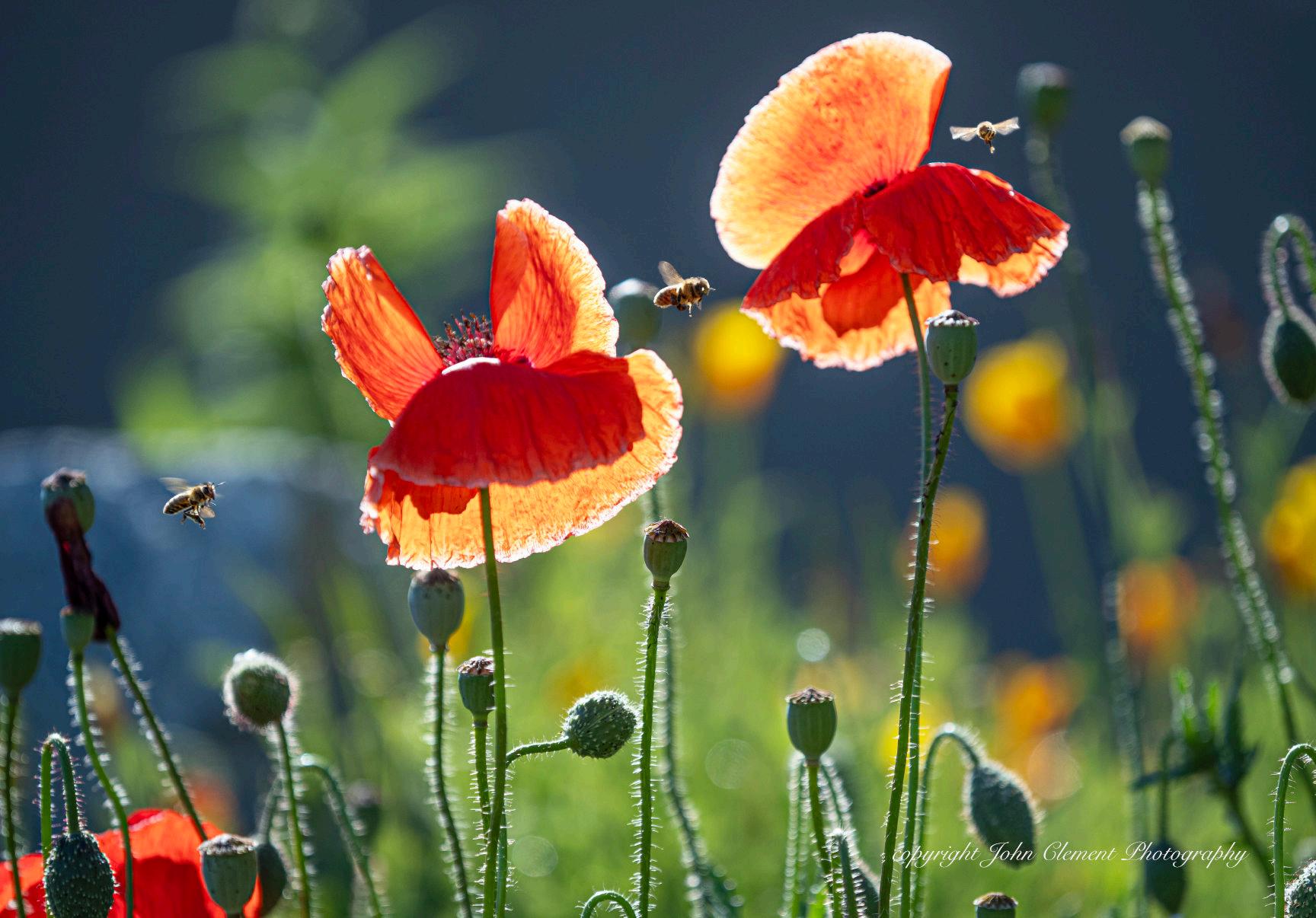
Three Bees and Poppies
Angry Skies
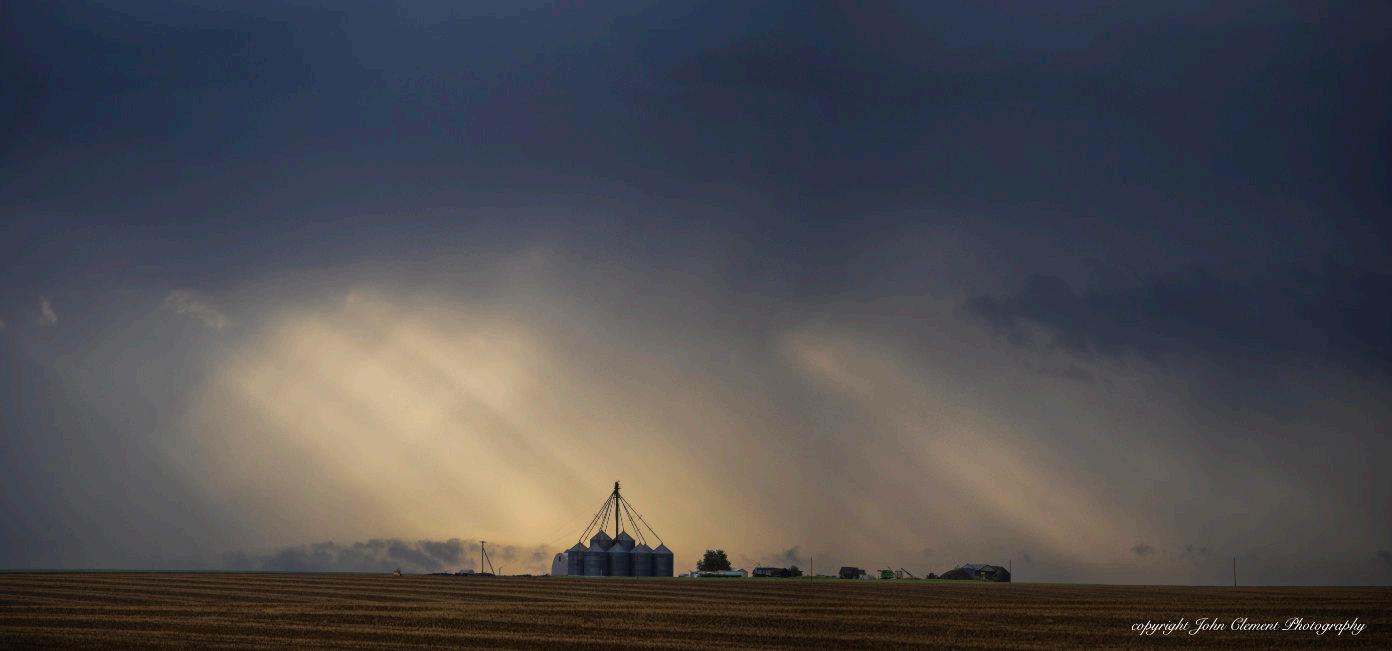
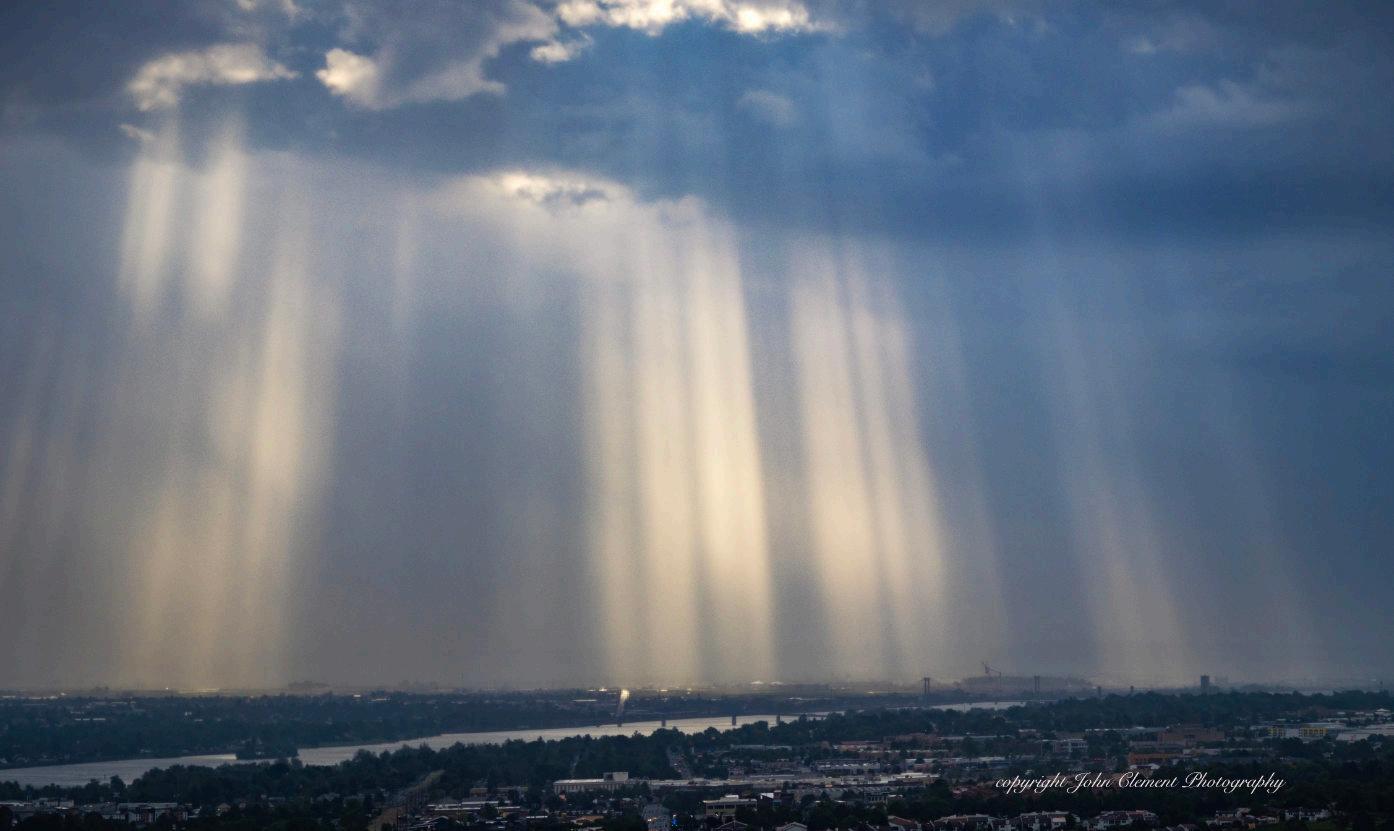
Farm Light
John Clement
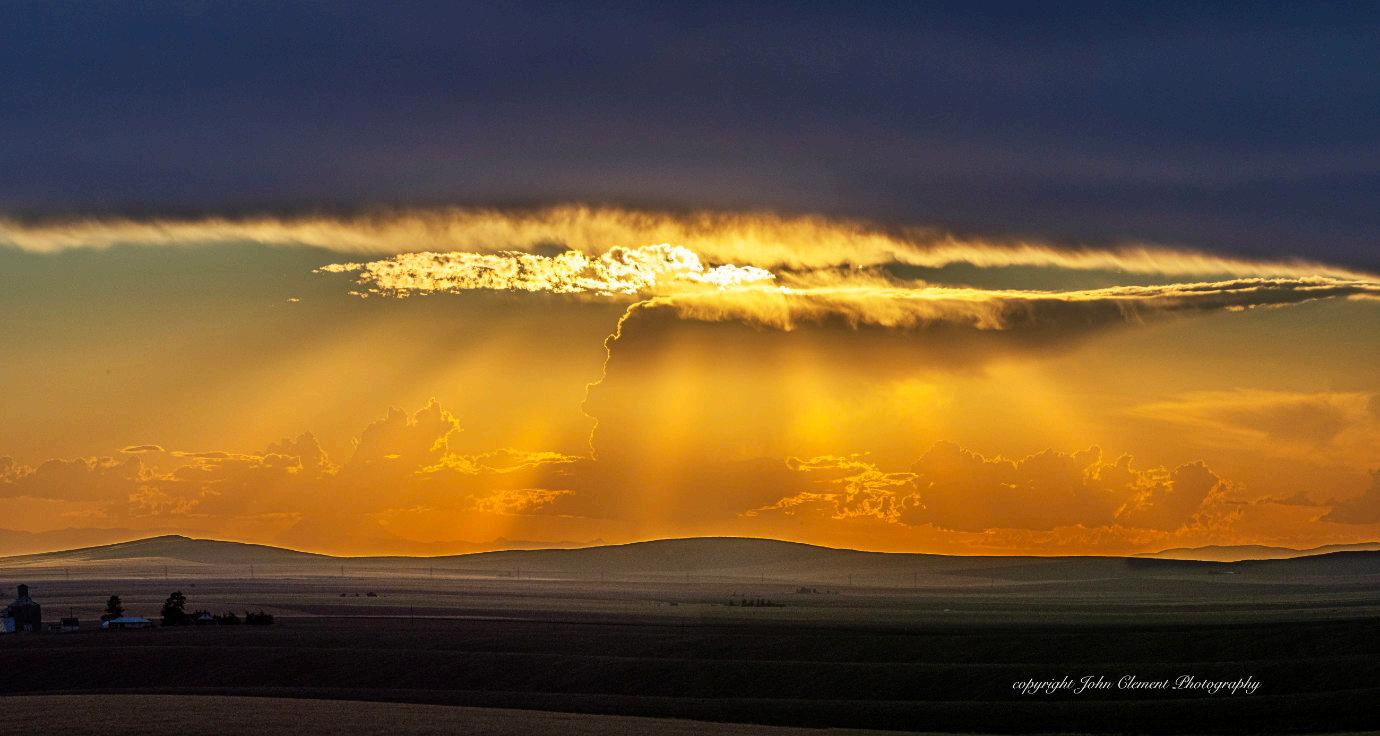
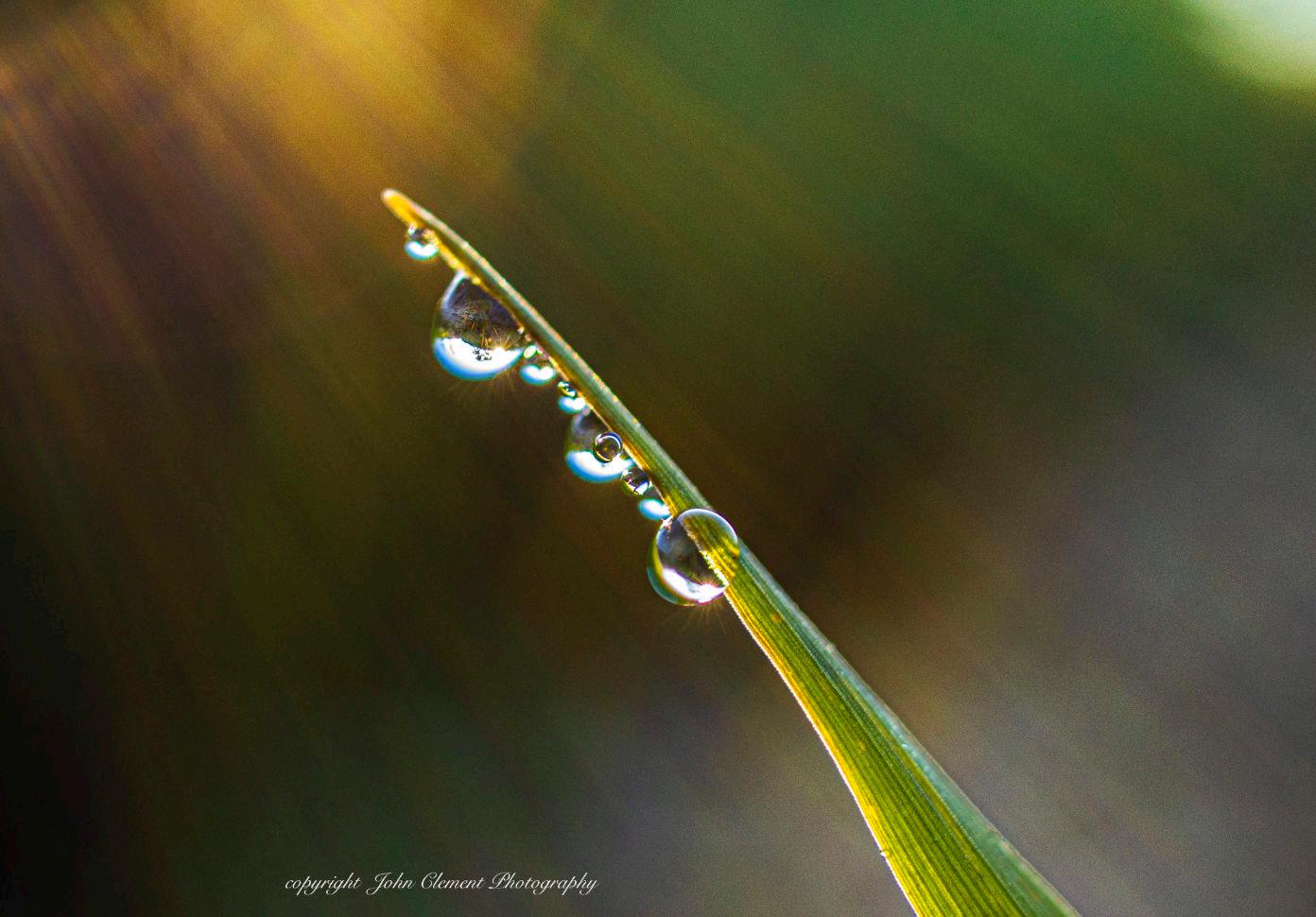
Dew Light
Golden Rays
Thomas Cloutier
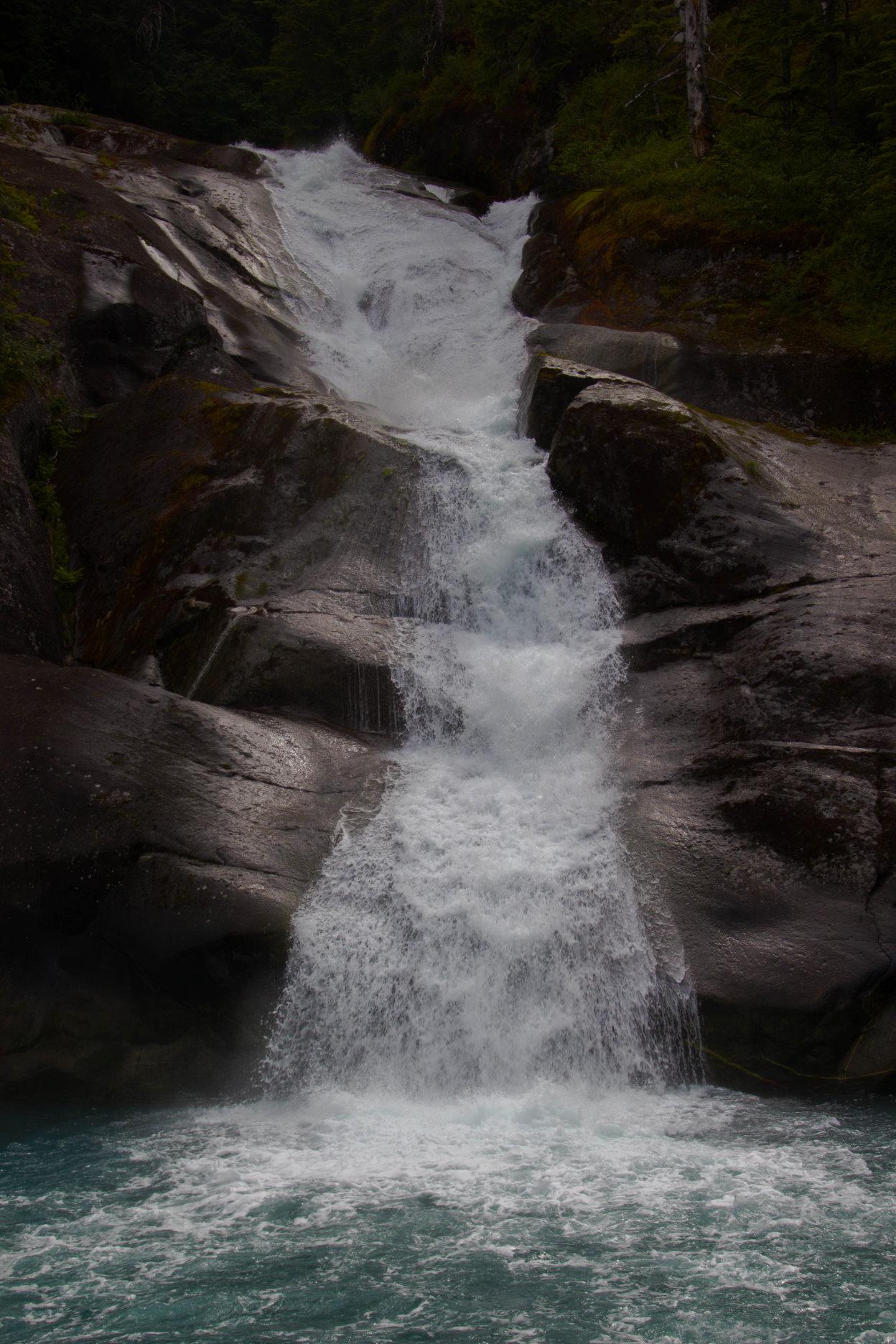
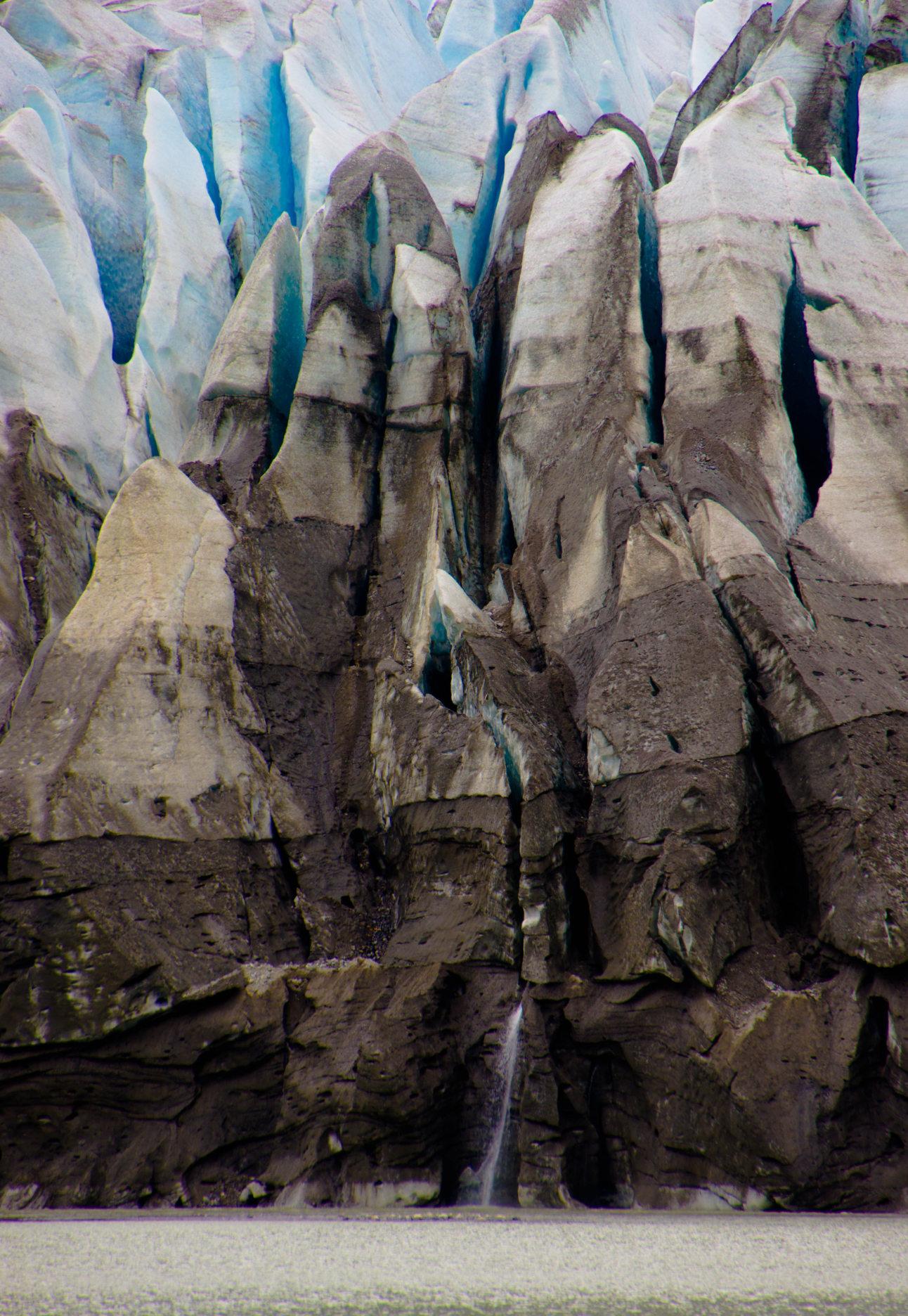
Thomas Cloutier
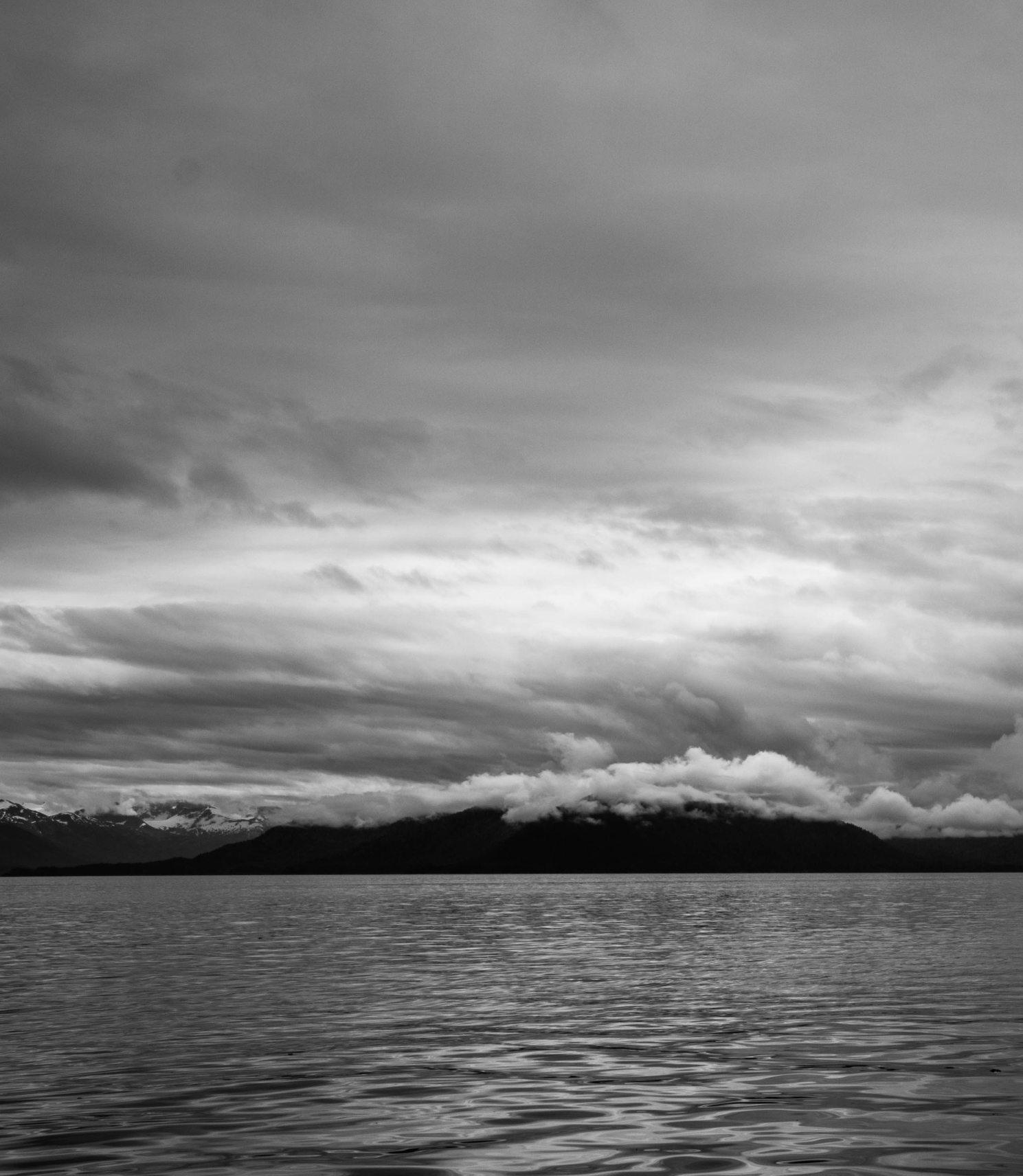
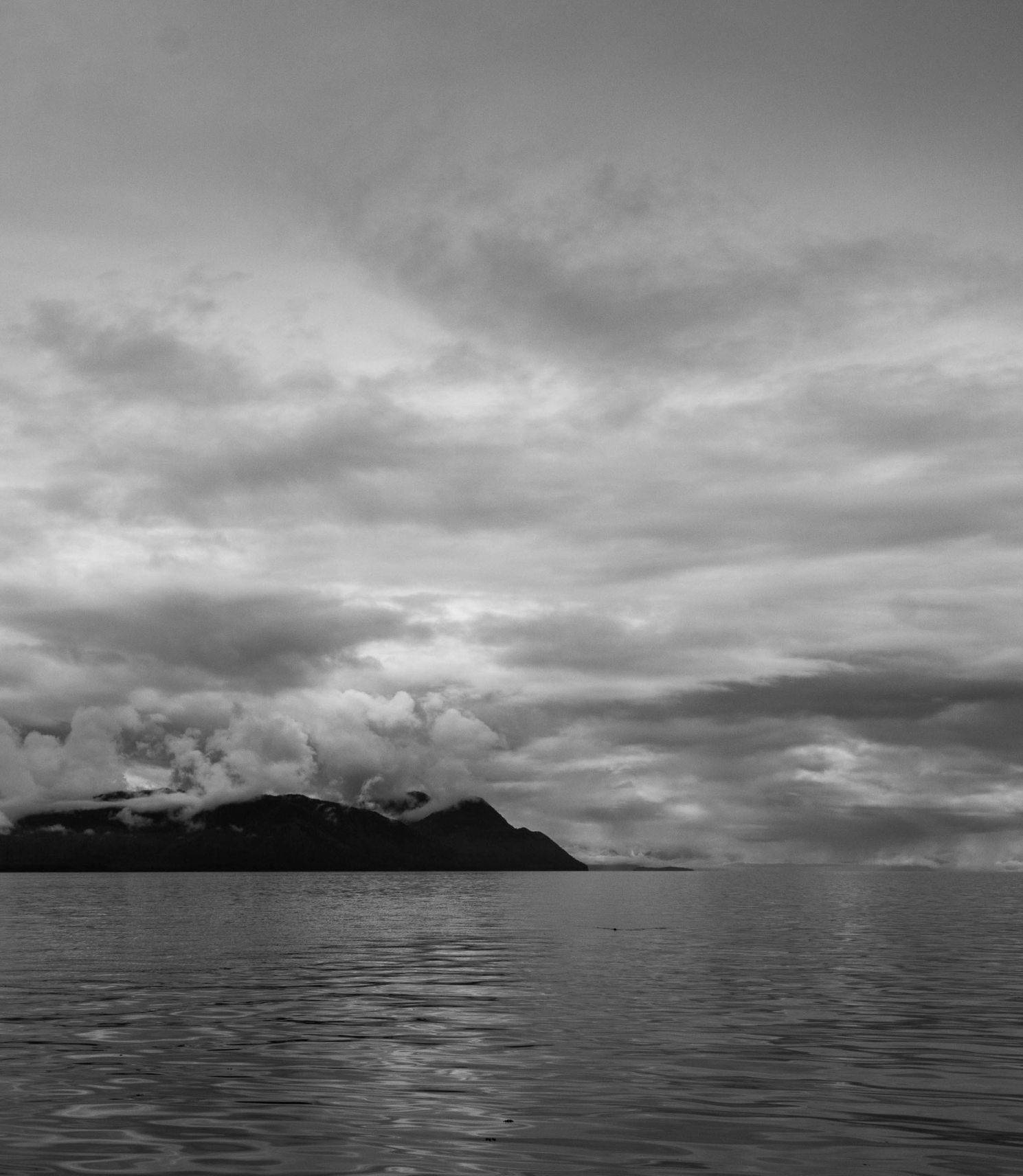
Thomas Cloutier
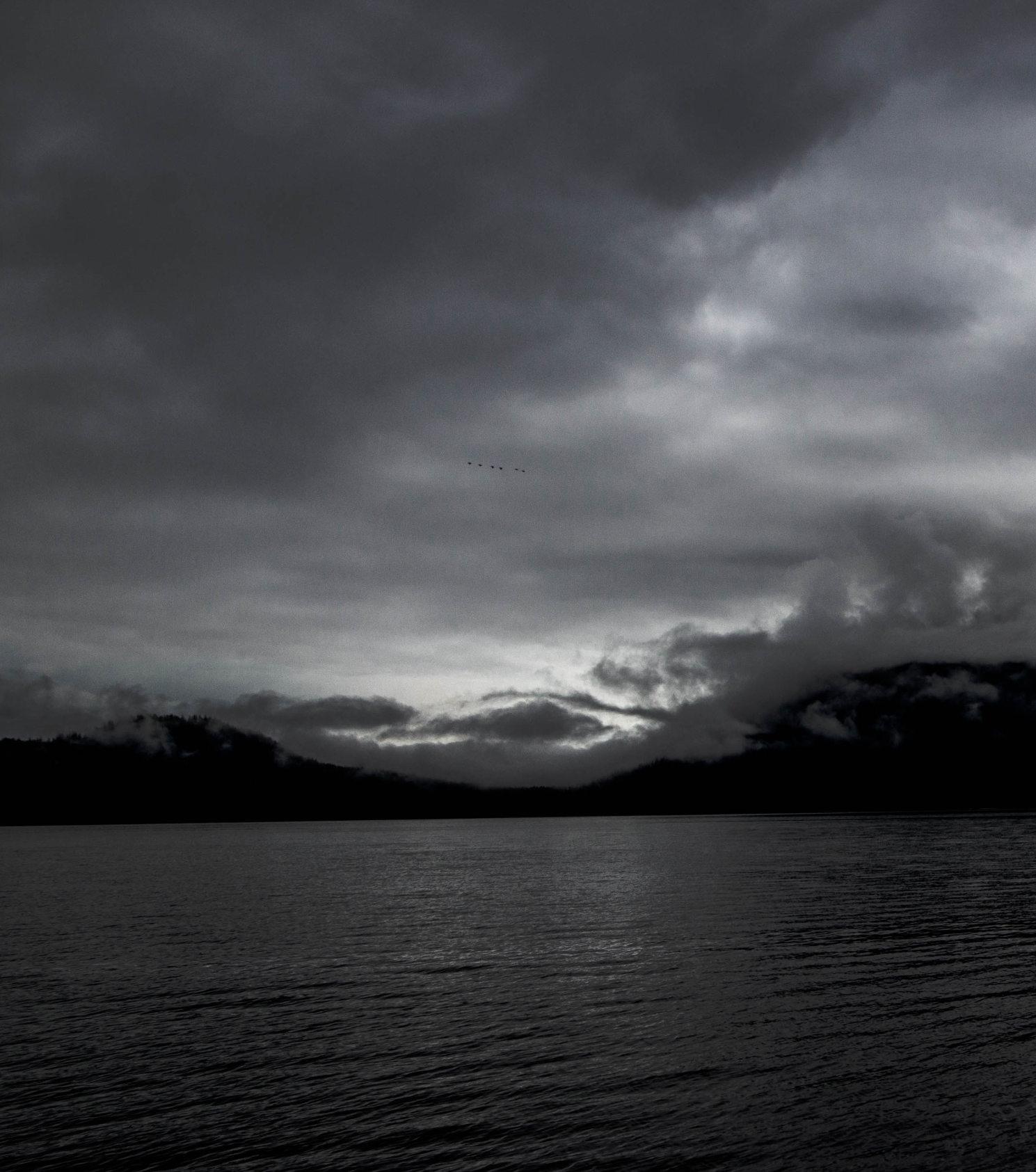
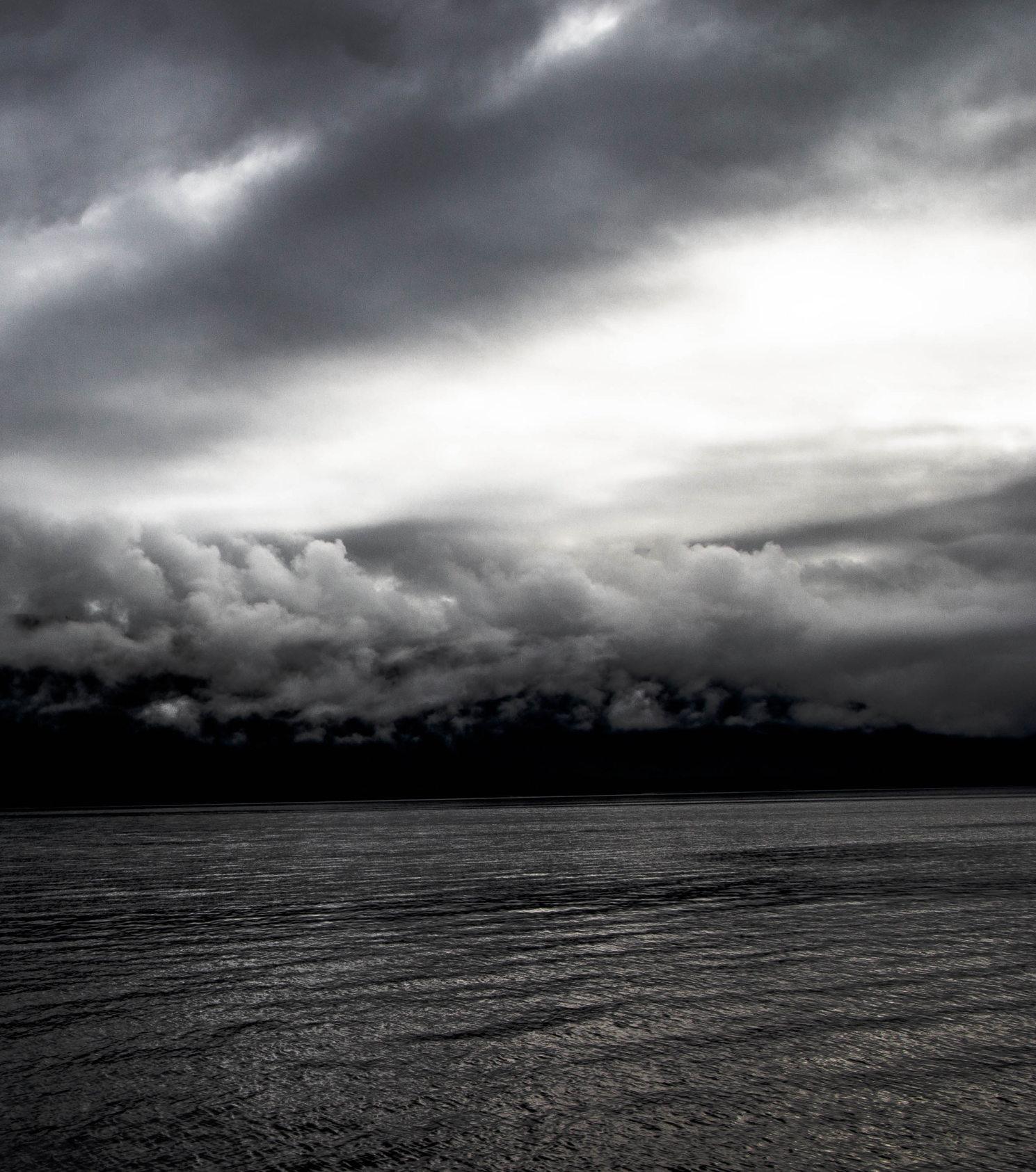
John Fisanotti
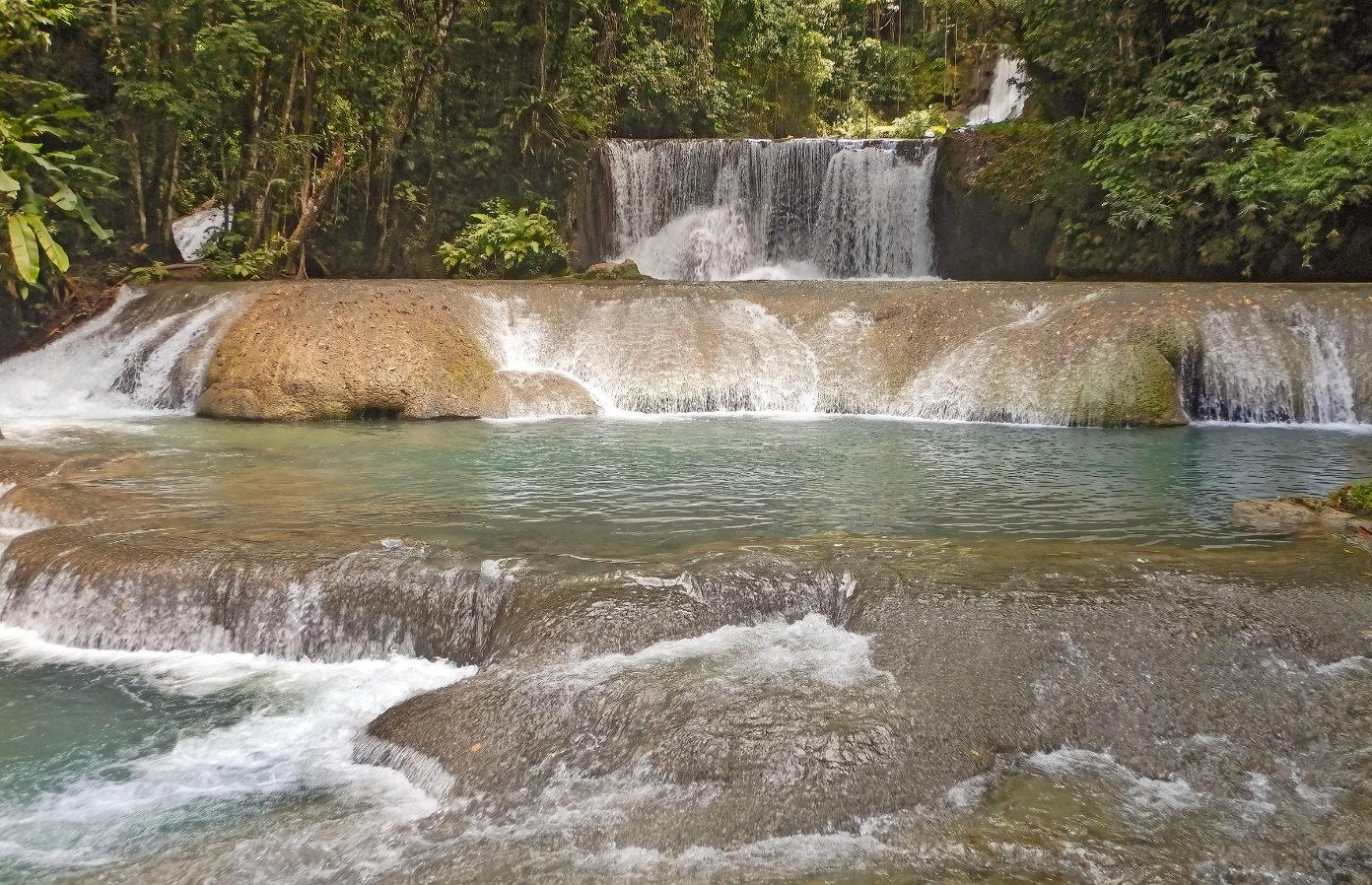
Here is a selection of photos taken on a trip to Jamaica in 2024, plus a photo from the 4th of July
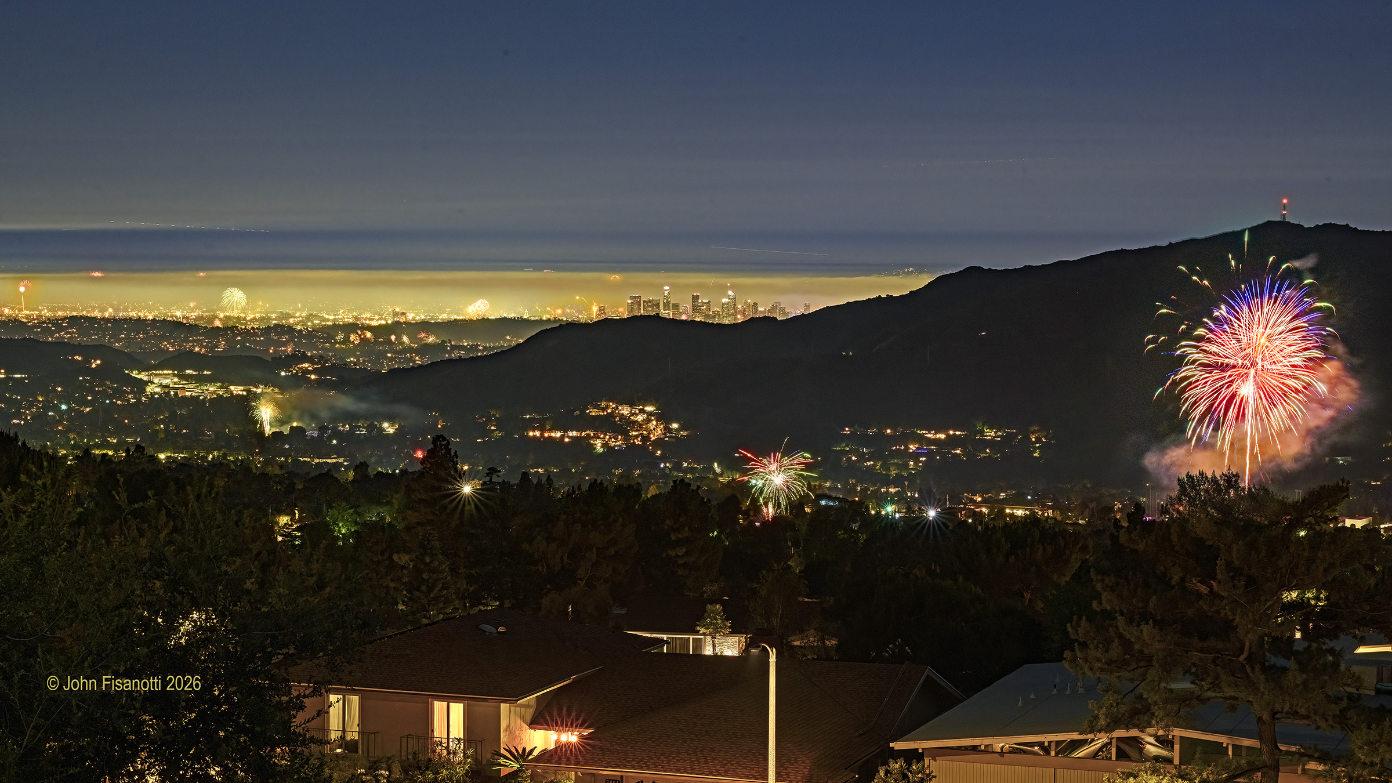
I thought this photo I took on July 4th would be a timely addition to the July-Aug issue of Focal Points. It is a composite image of fireworks from my parent’s house in La Crescenta. During the course of about one hour, I kept taking photos as various fireworks exploded, near and far. I later combined the best images into a single frame. The images are in registration so the fireworks appear exactly where we saw them – I didn’t just cut and paste and plop them in randomly. The only difference between this photo and what we saw, is they didn’t all go off at the same time, as it appears in the photo.
The big bright one on the far right is from Crescenta Valley High School. In the middle of the frame, you can see two white colored explosions just left of Los Angeles City Hall above the hills of Elysian Park. Those were part of the post-game fireworks display at Dodger Stadium.
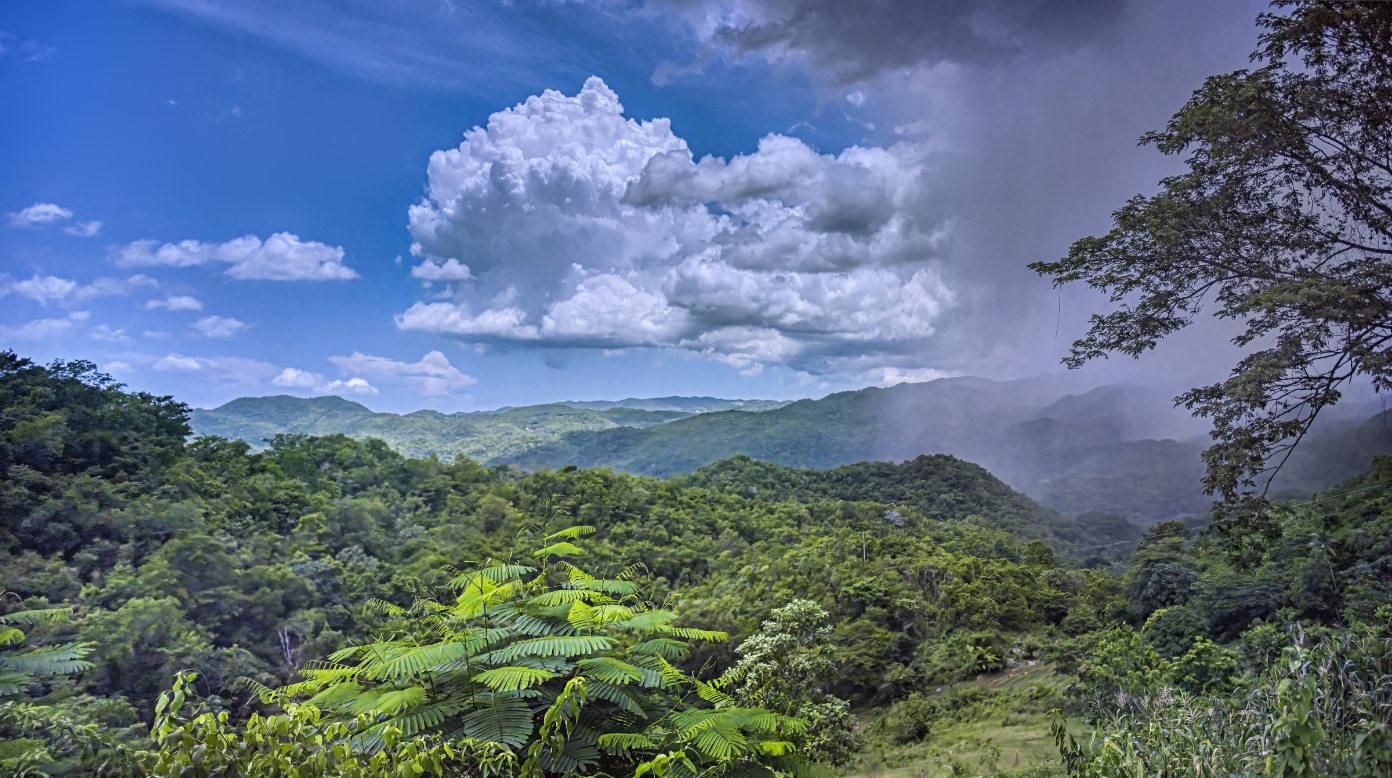
Incoming Storm
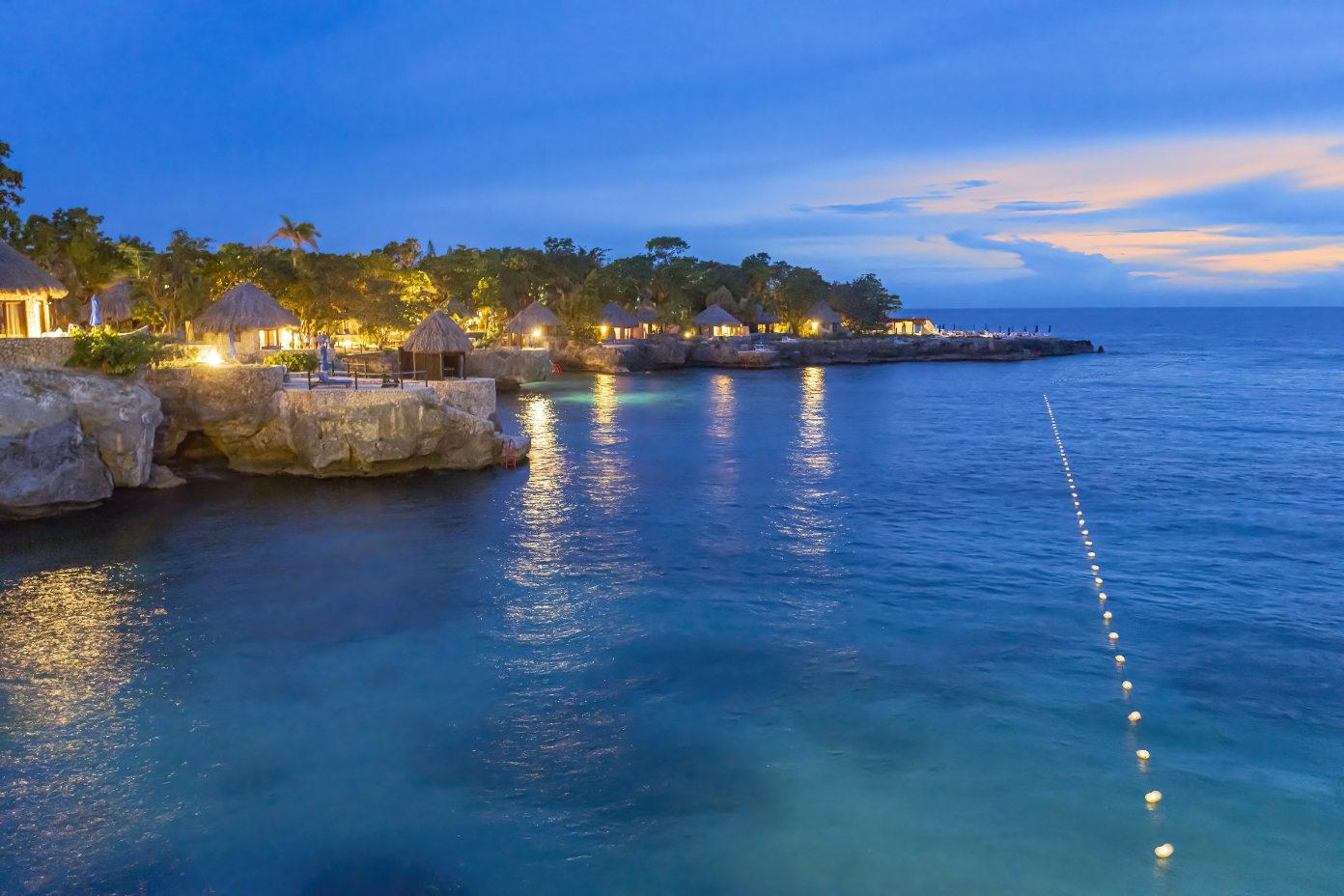
Evening in Negril
John Fisanotti
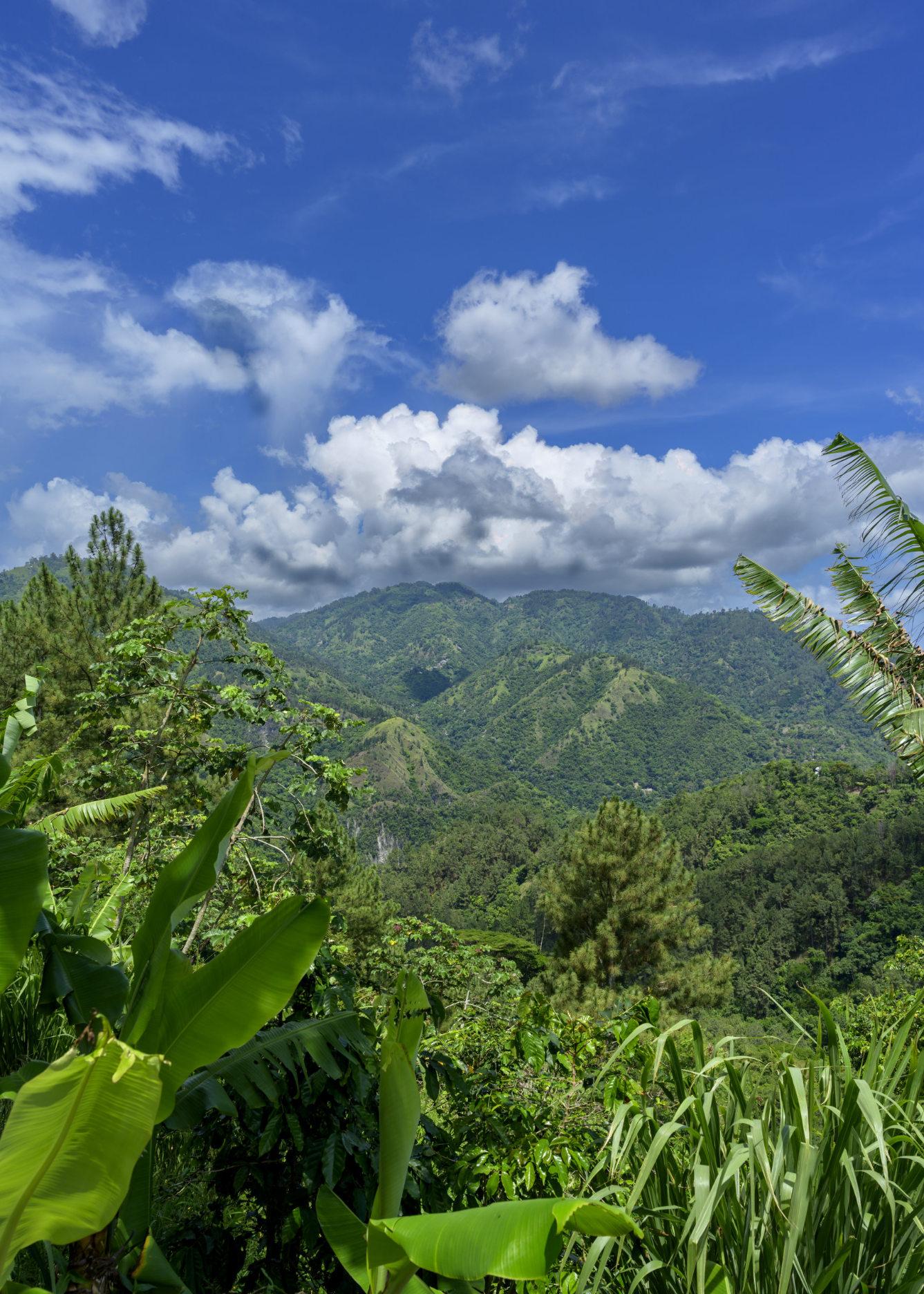
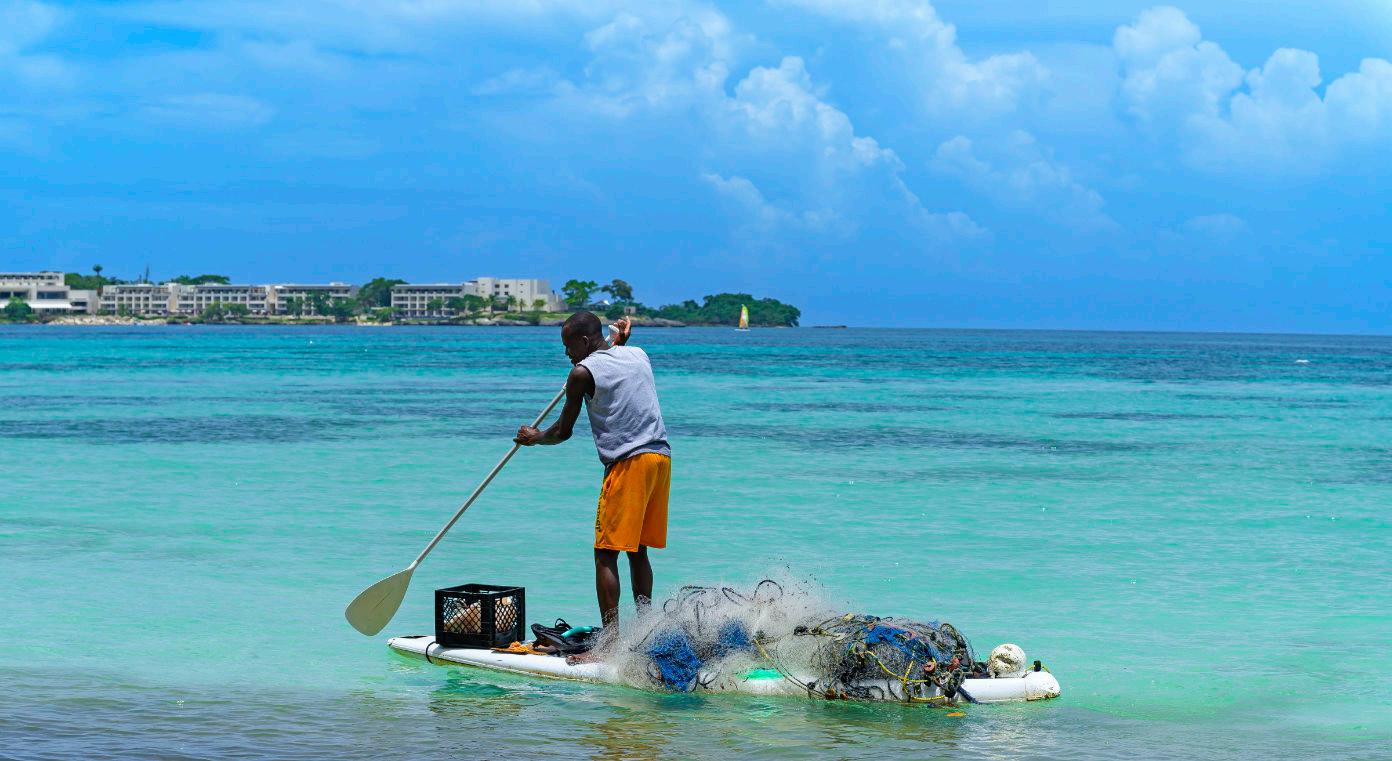
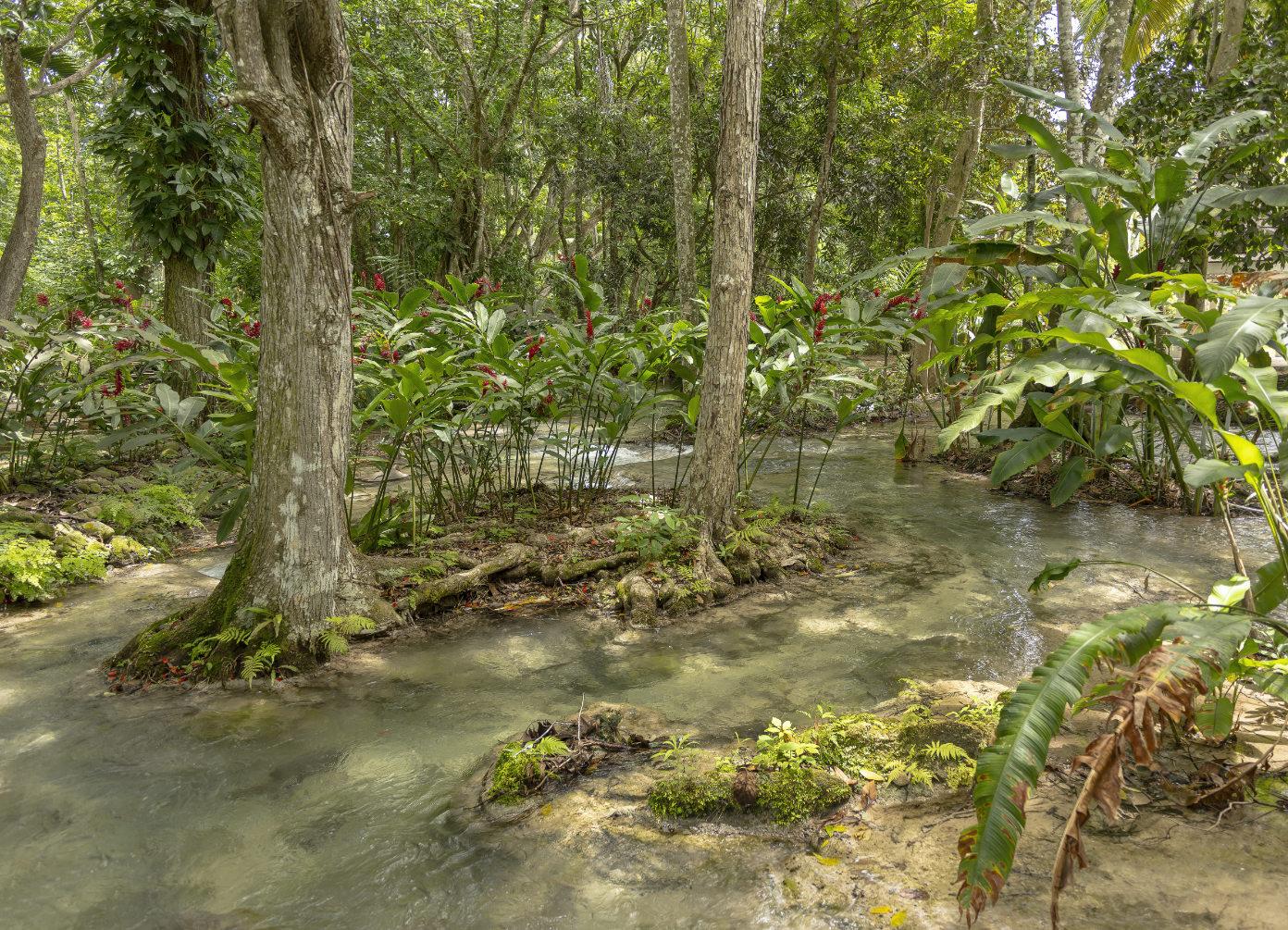
Standup Fisherman in Negril
Dunns River Above the Falls
John Fisanotti
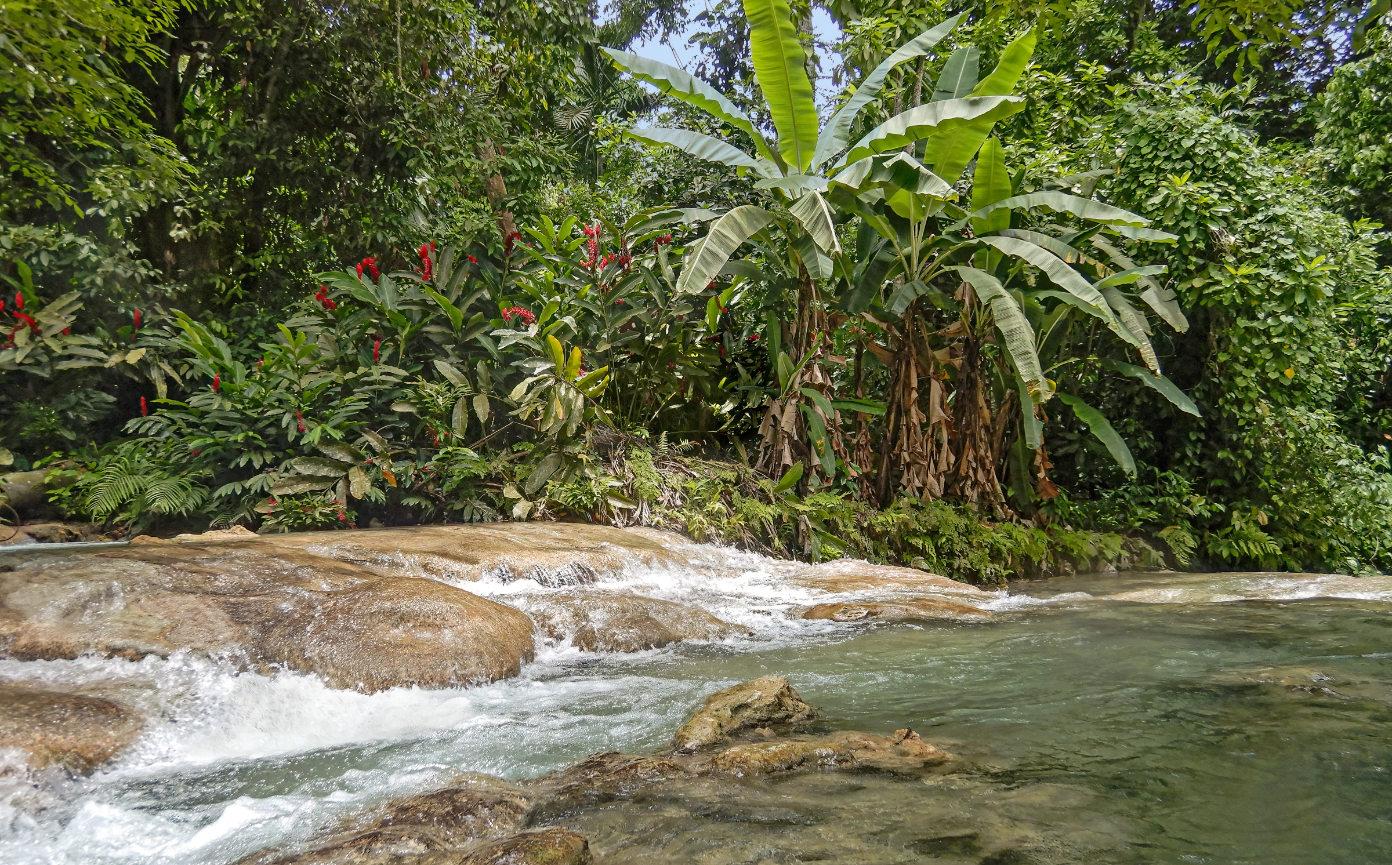
Dunns River
YS Falls
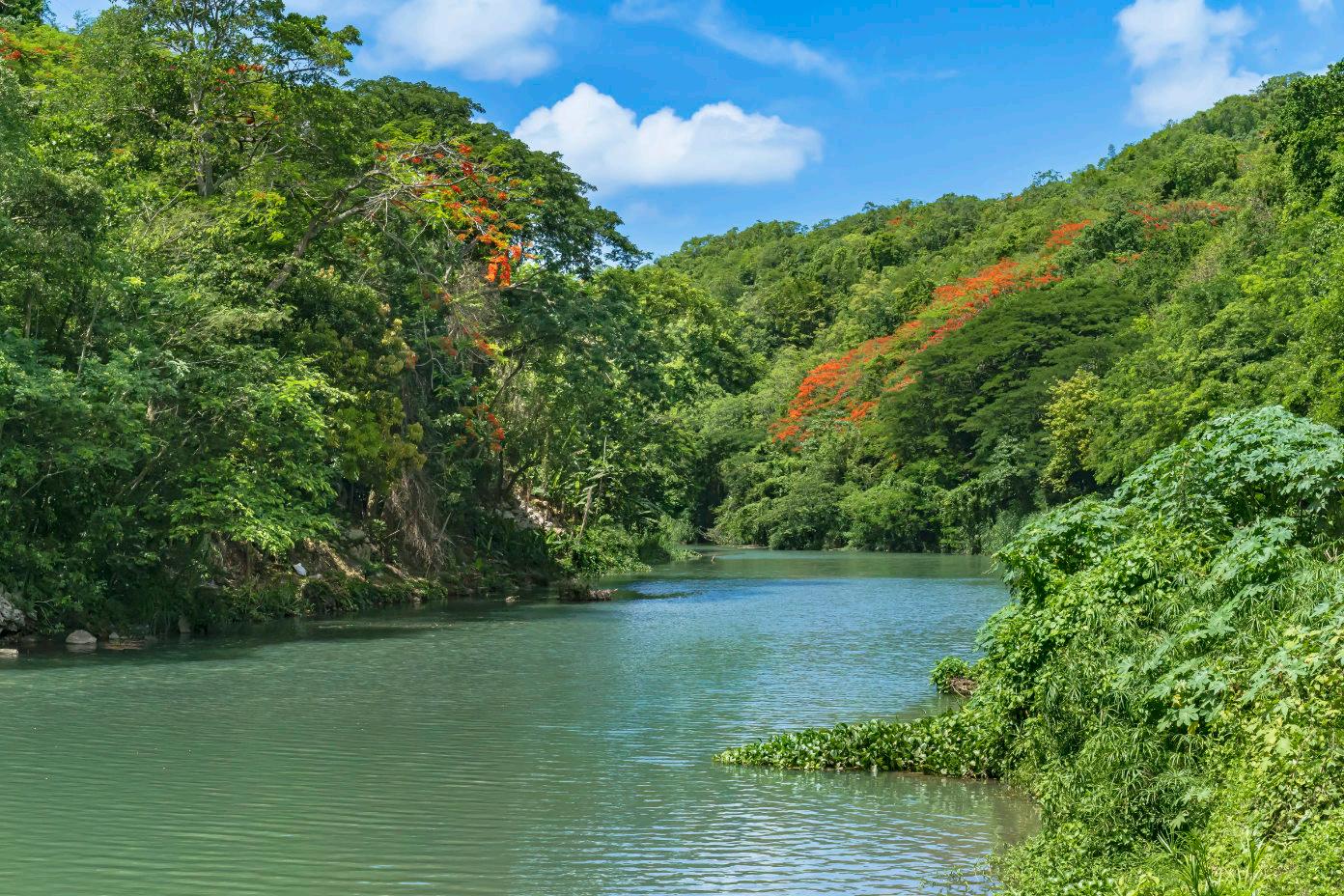
Rio Cobre
Dan Gee
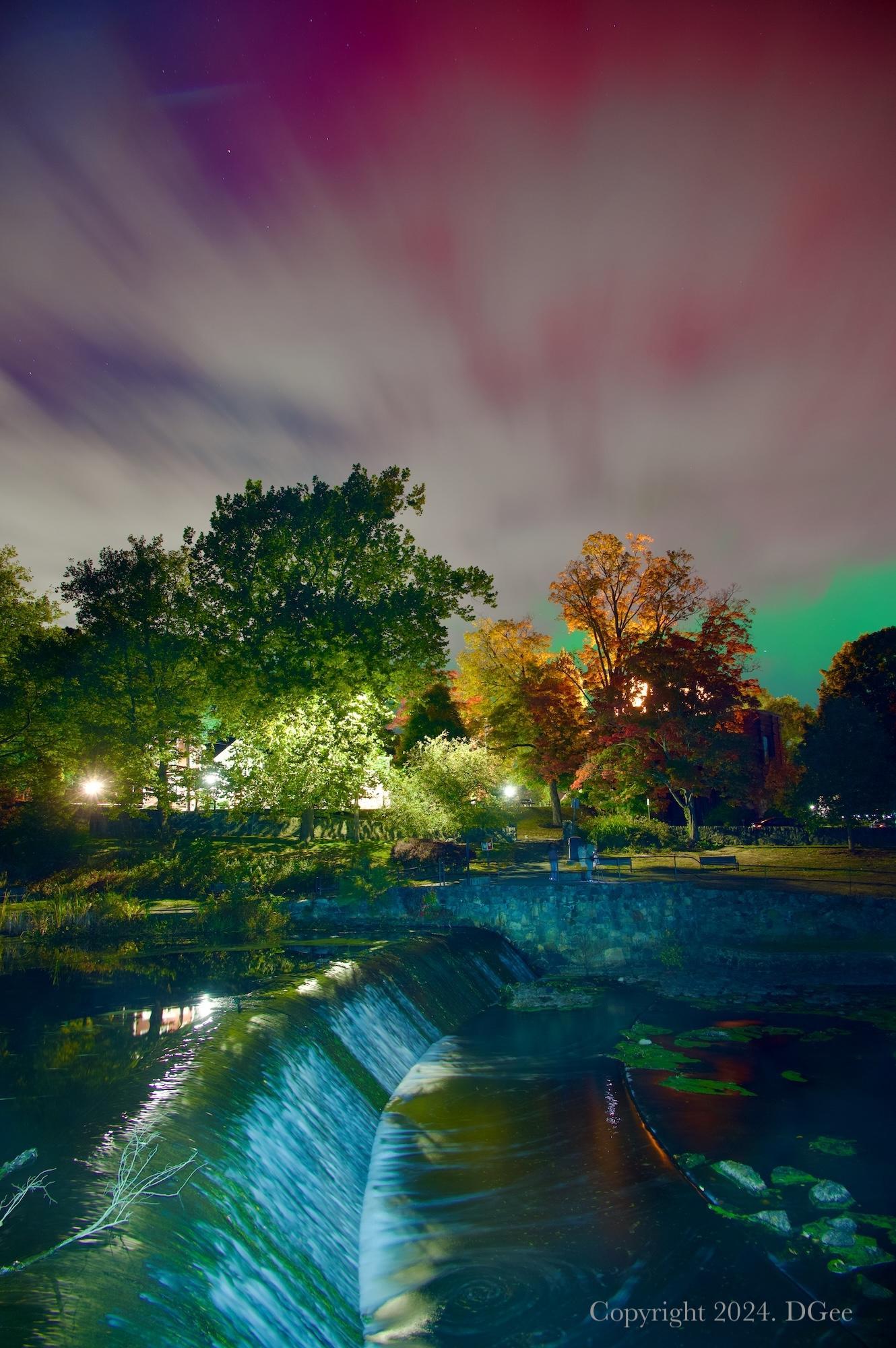
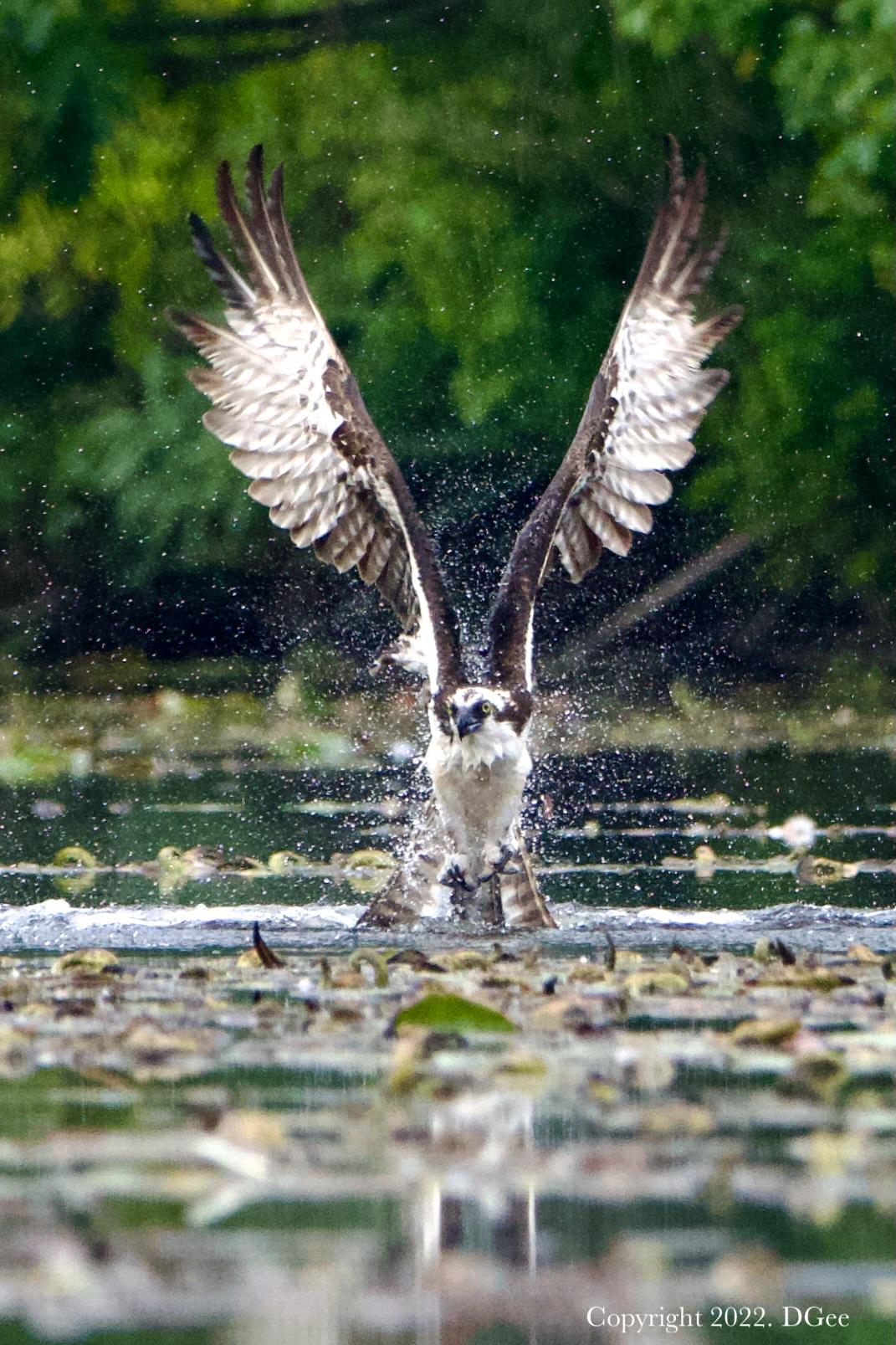
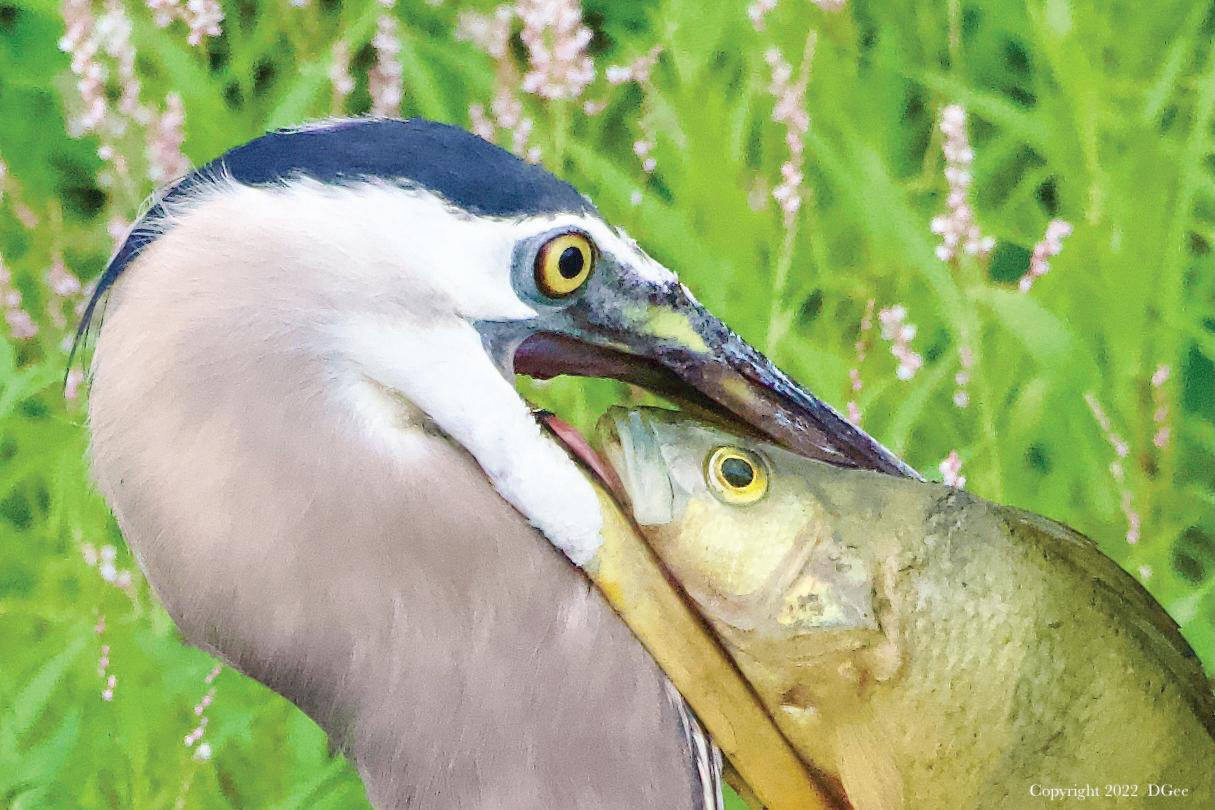
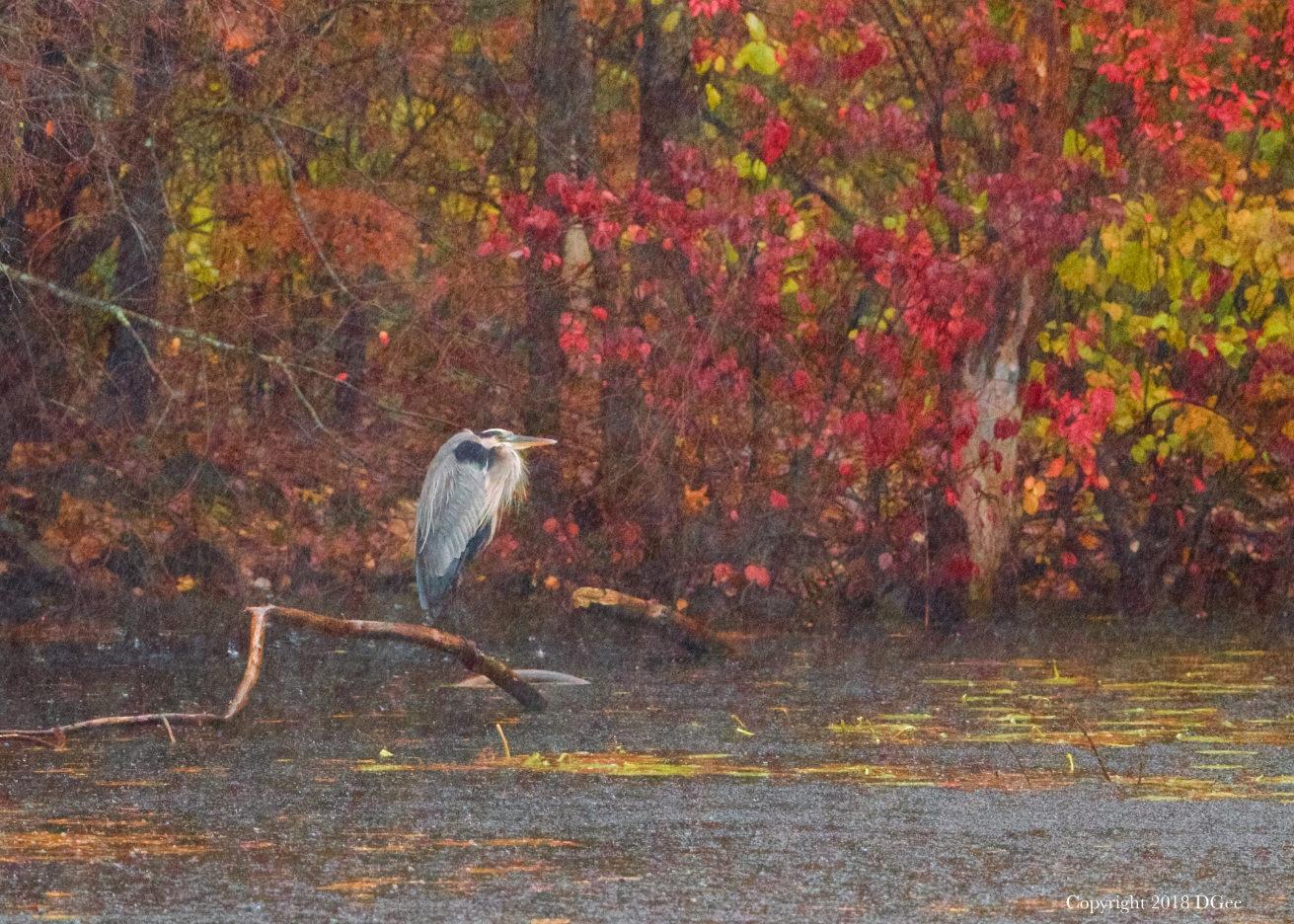
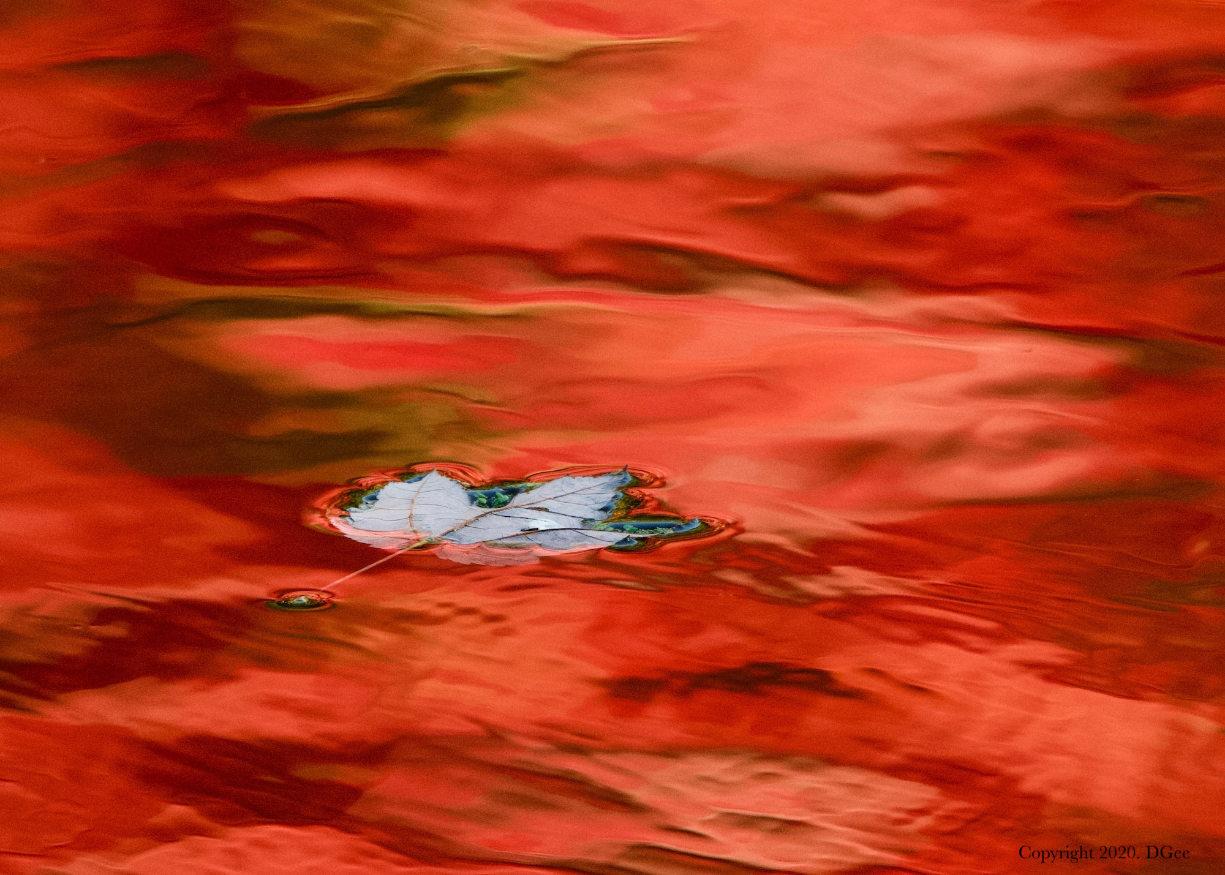
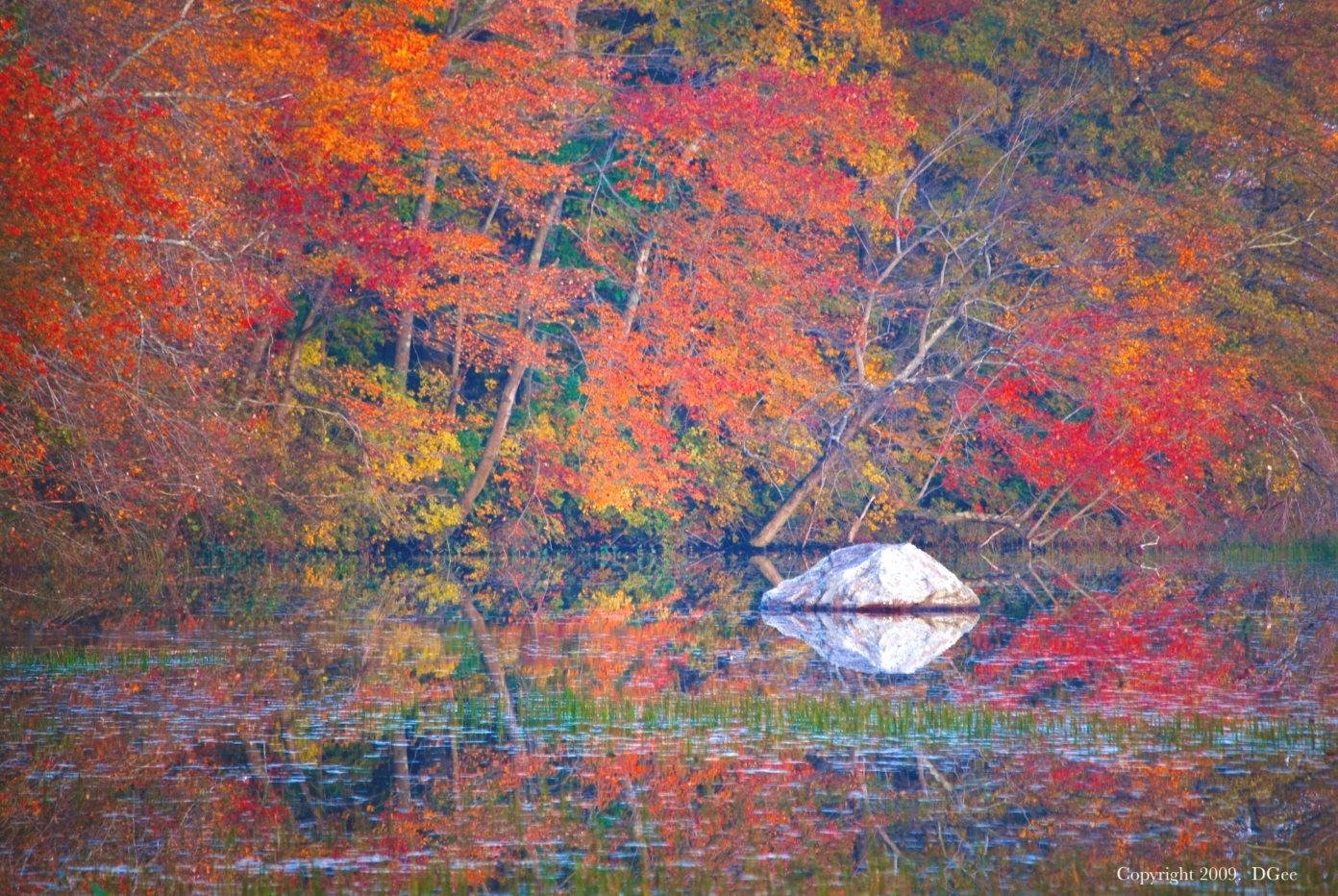
Dan Gee
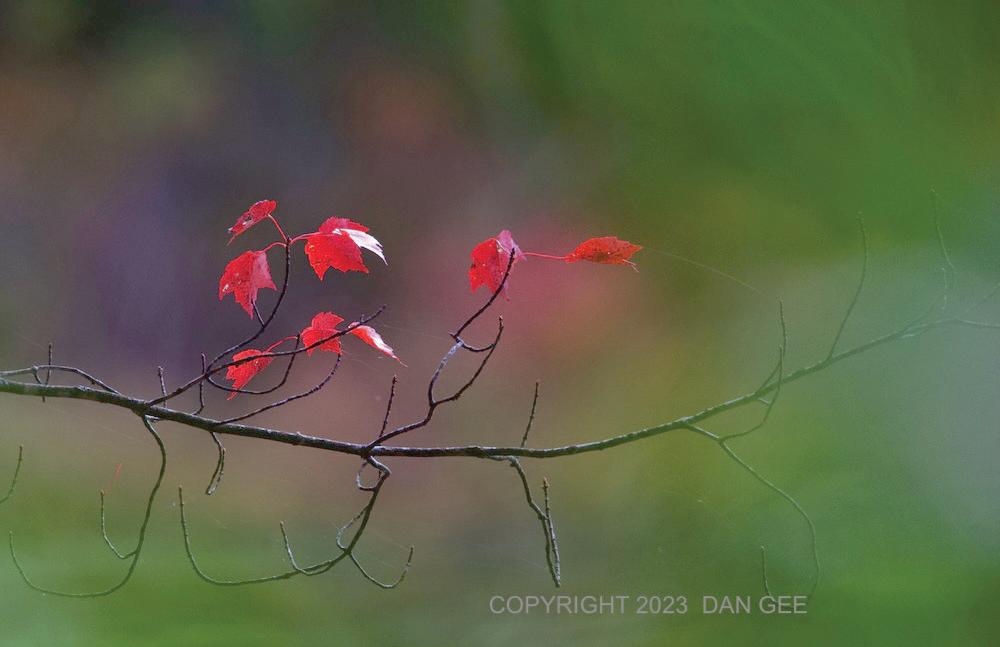
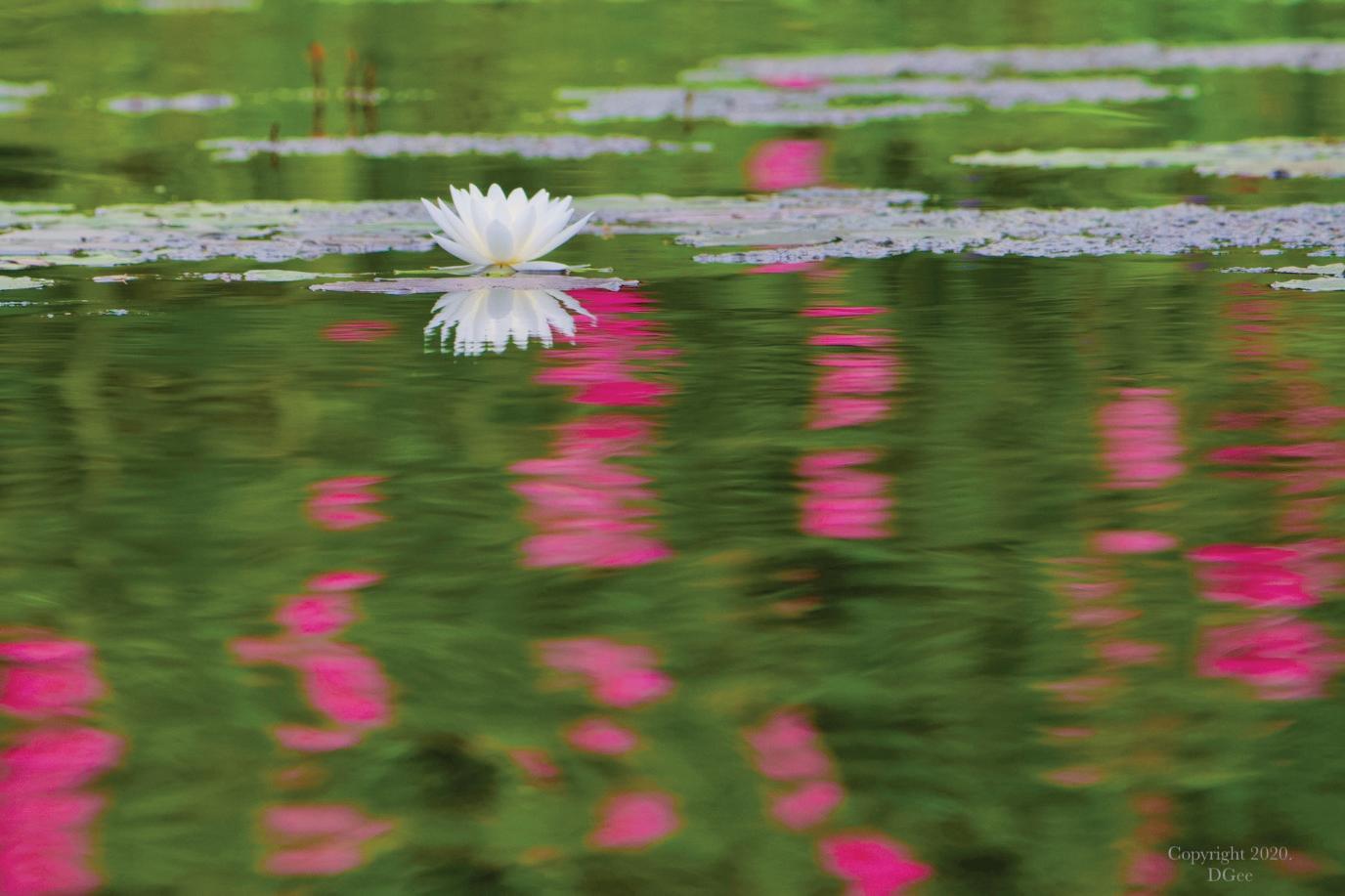
Joyce Harlan
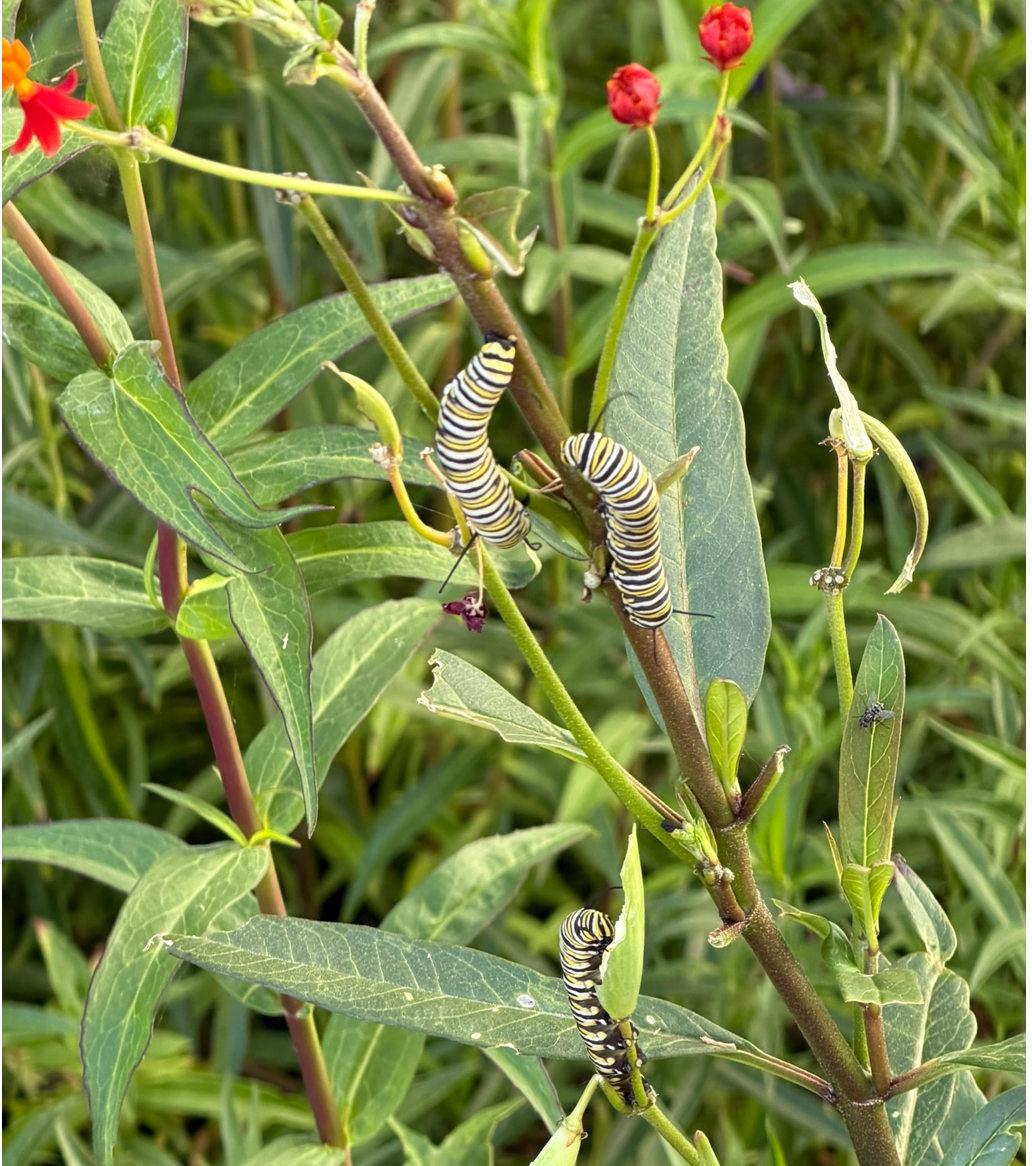
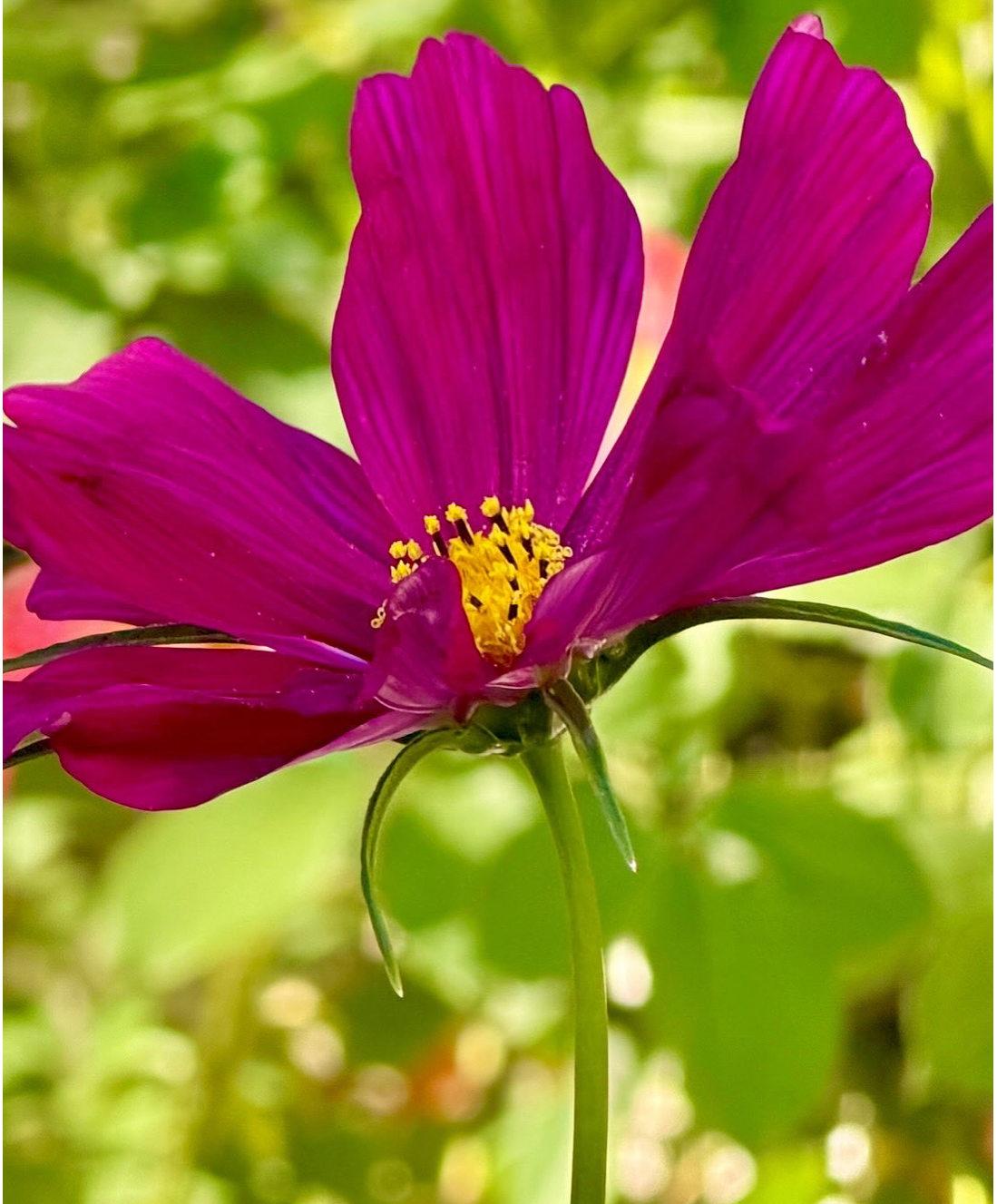
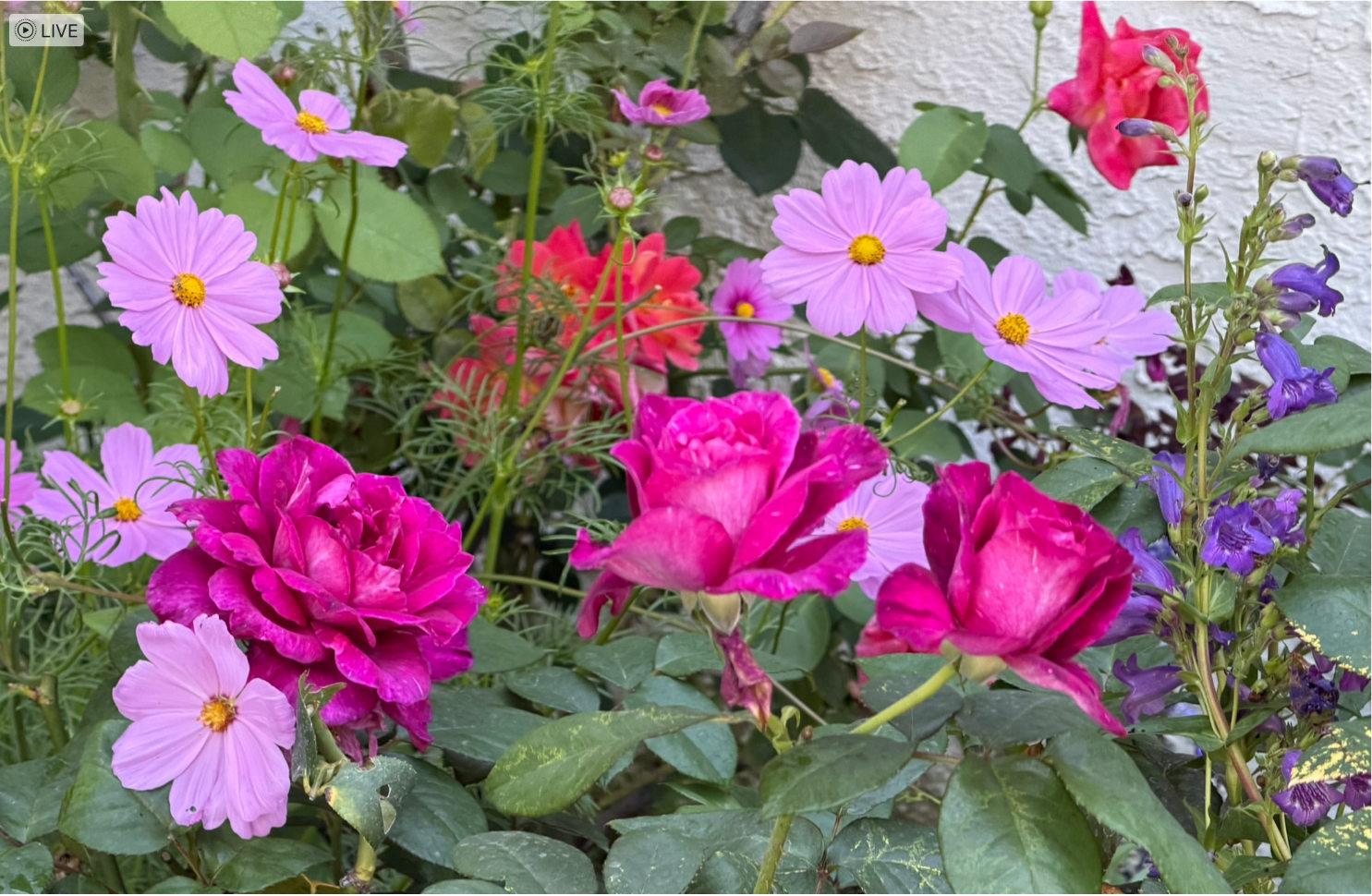
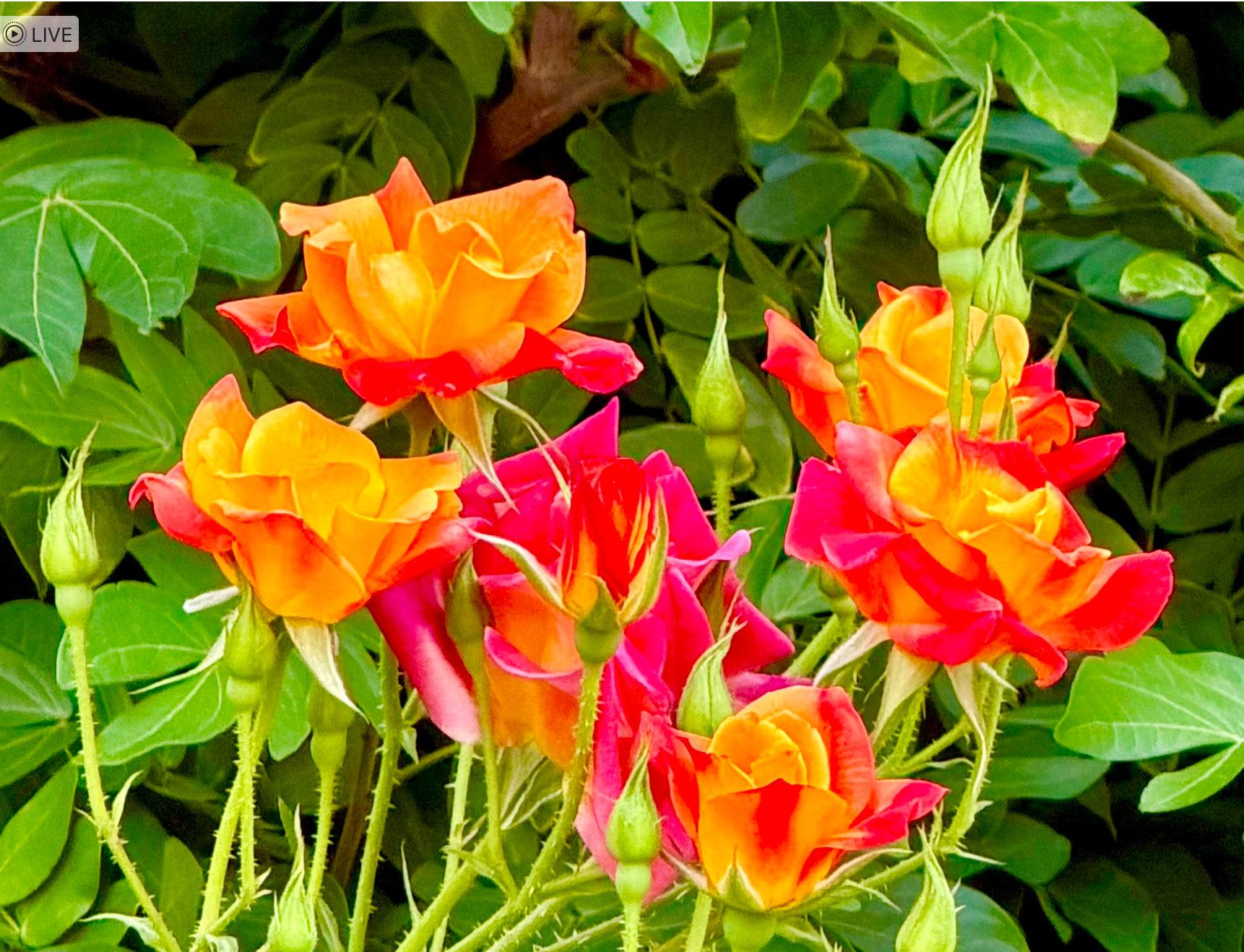
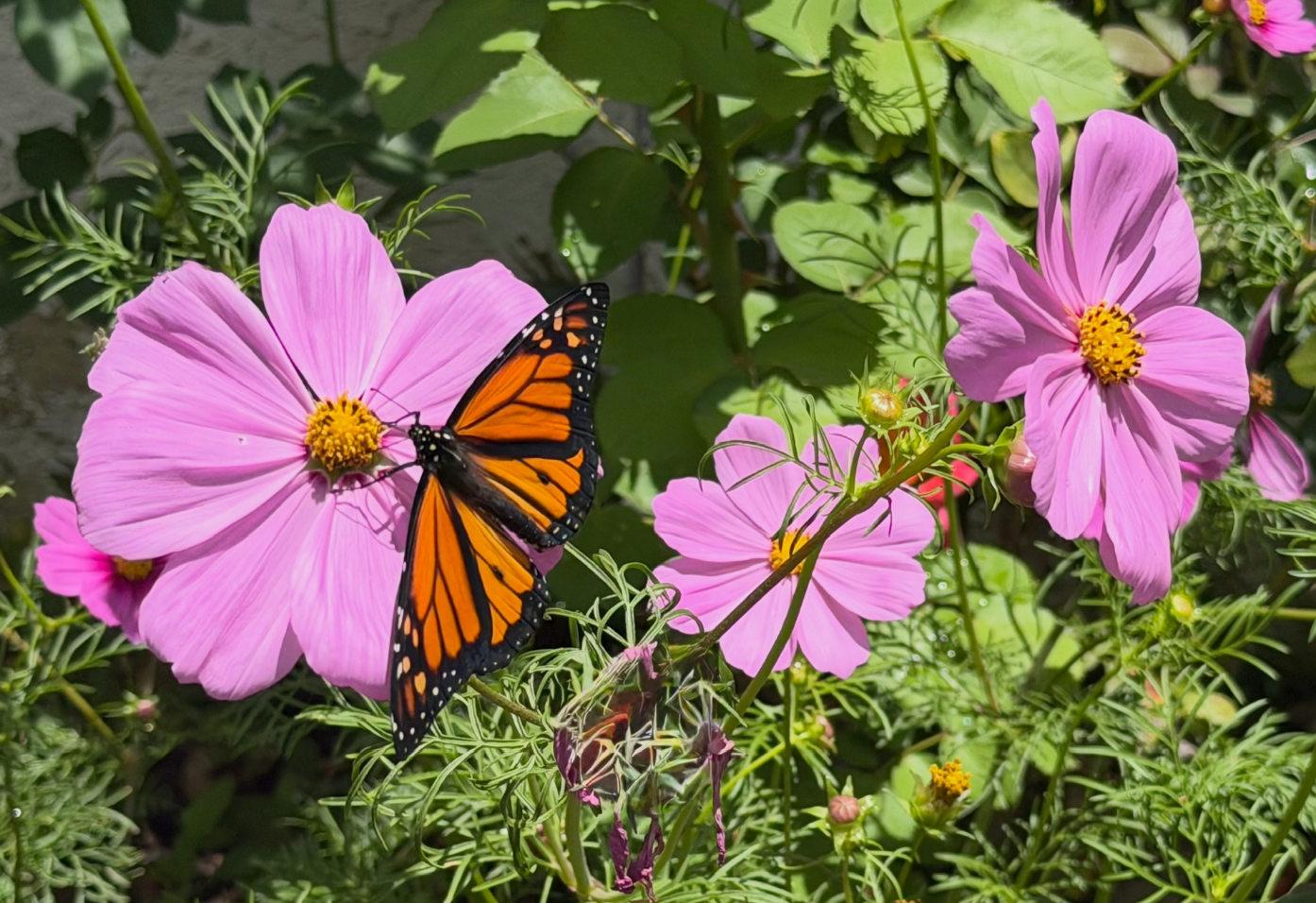
Joyce Harlan
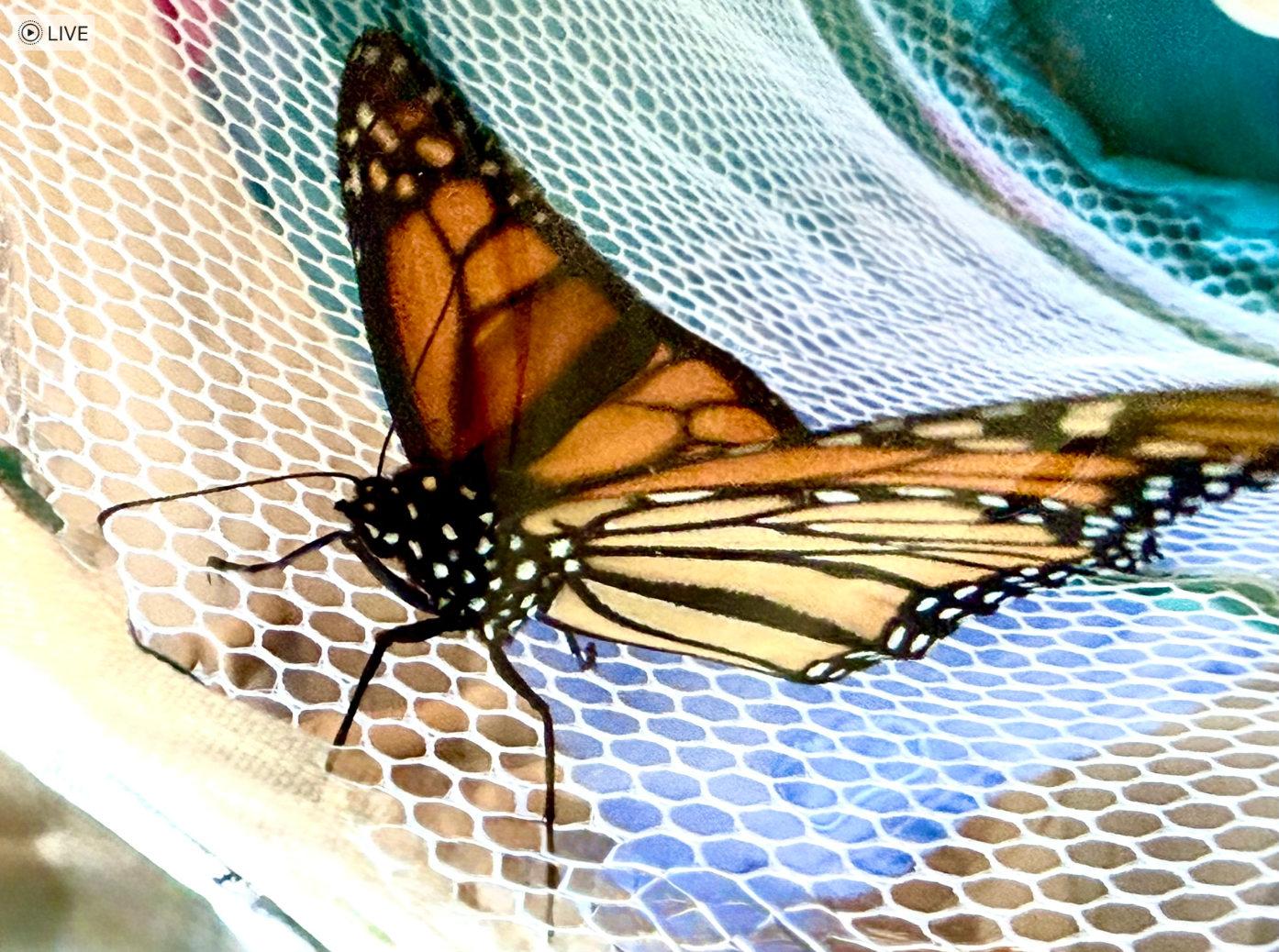
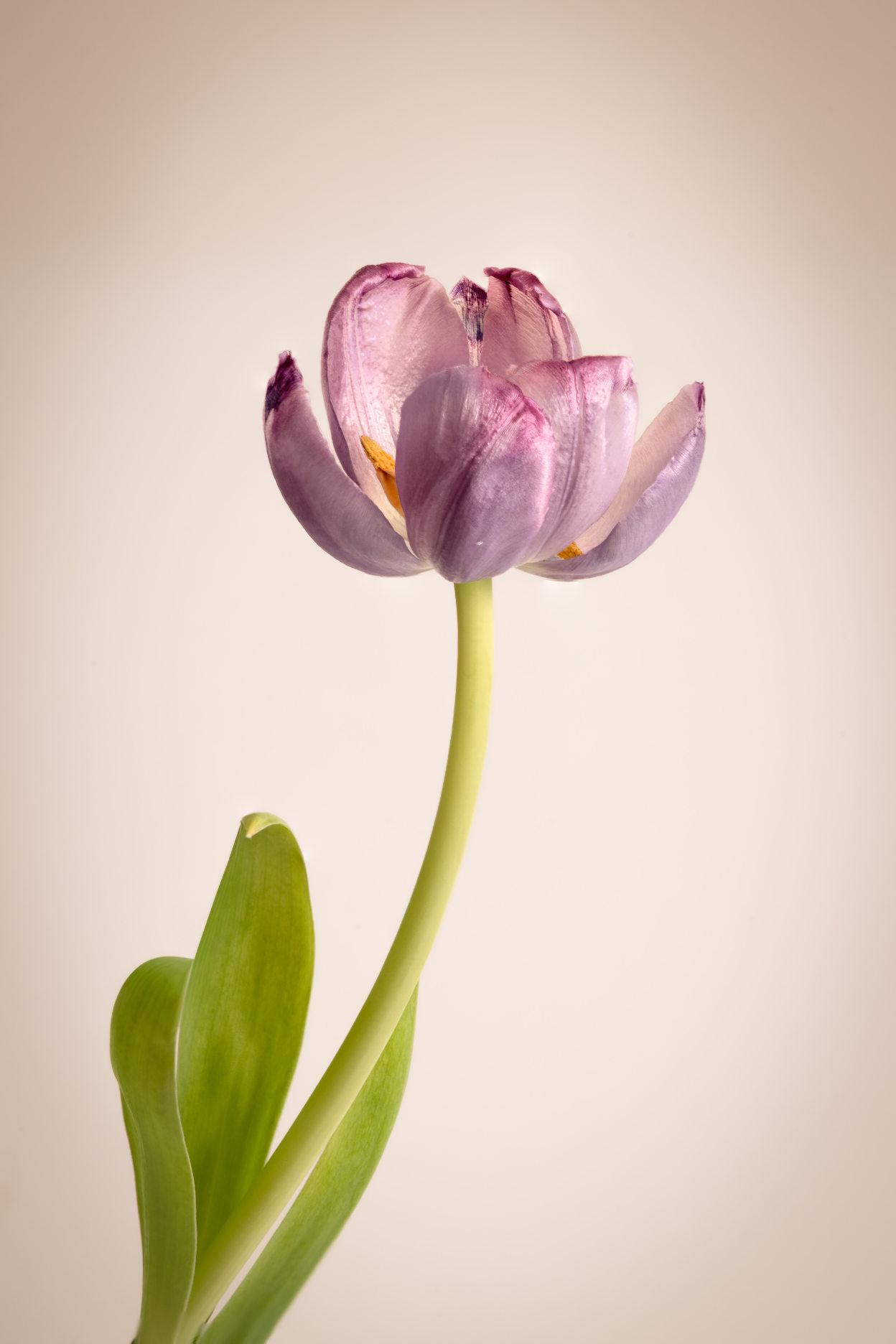
Velda Ruddock
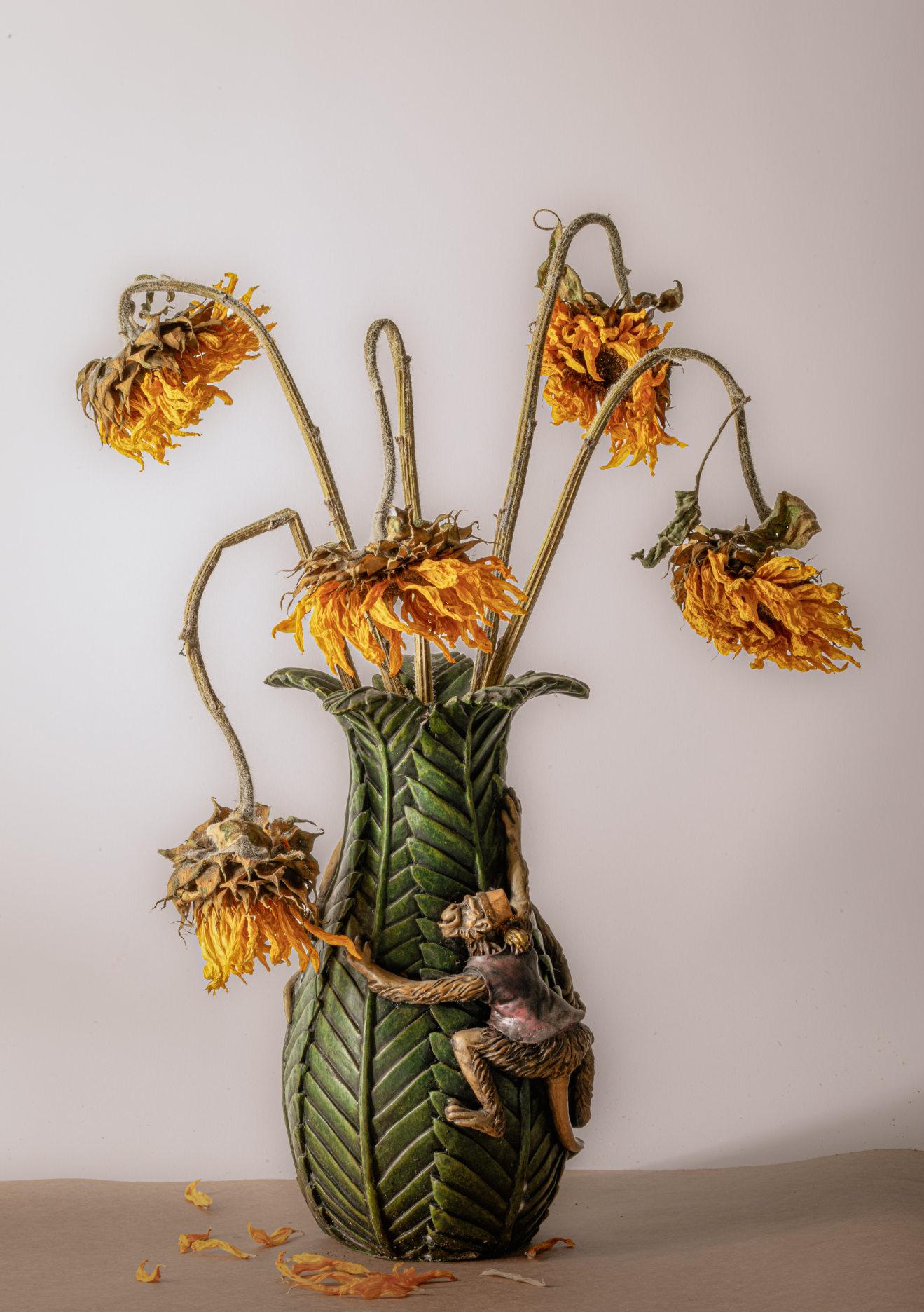
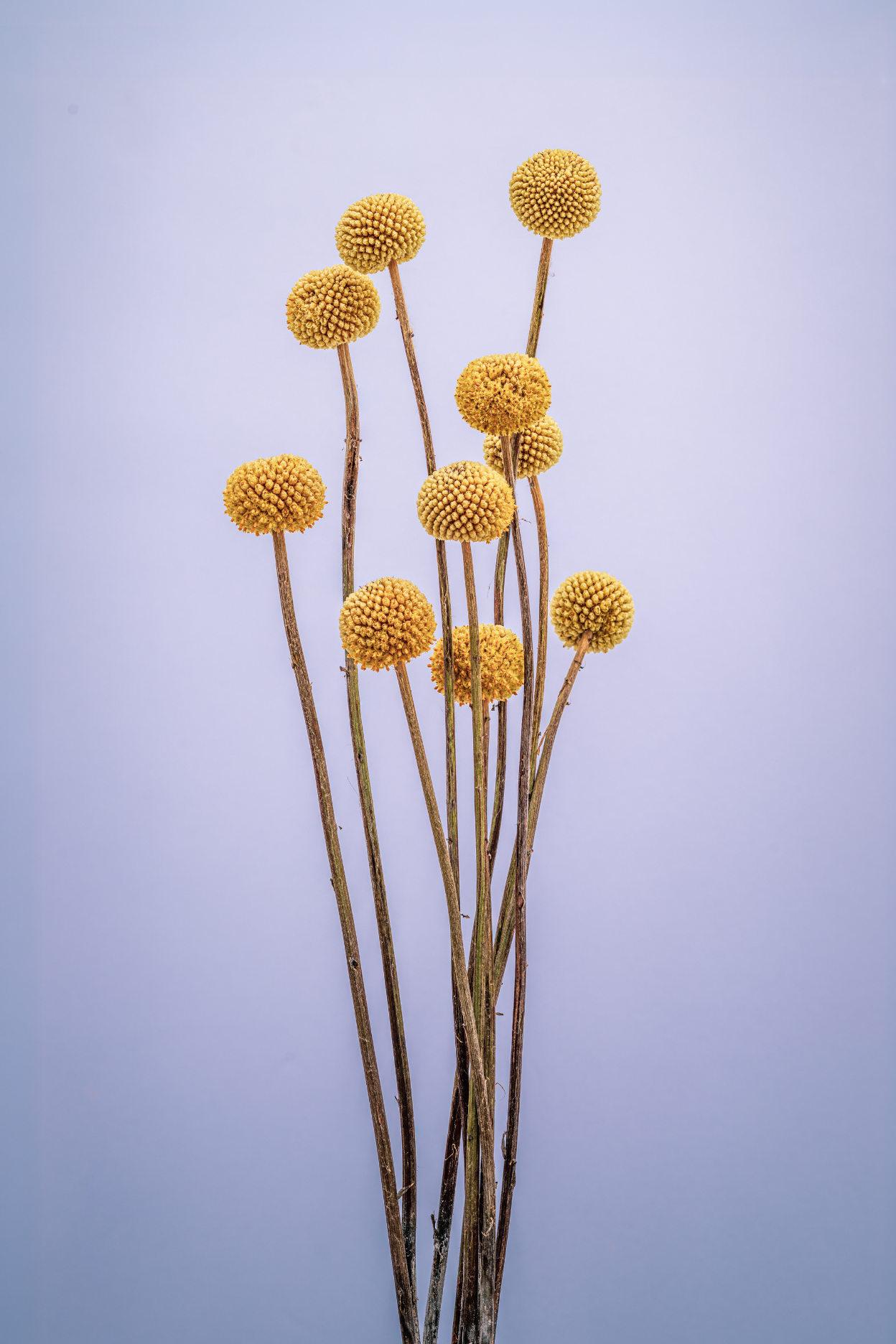
Velda Ruddock
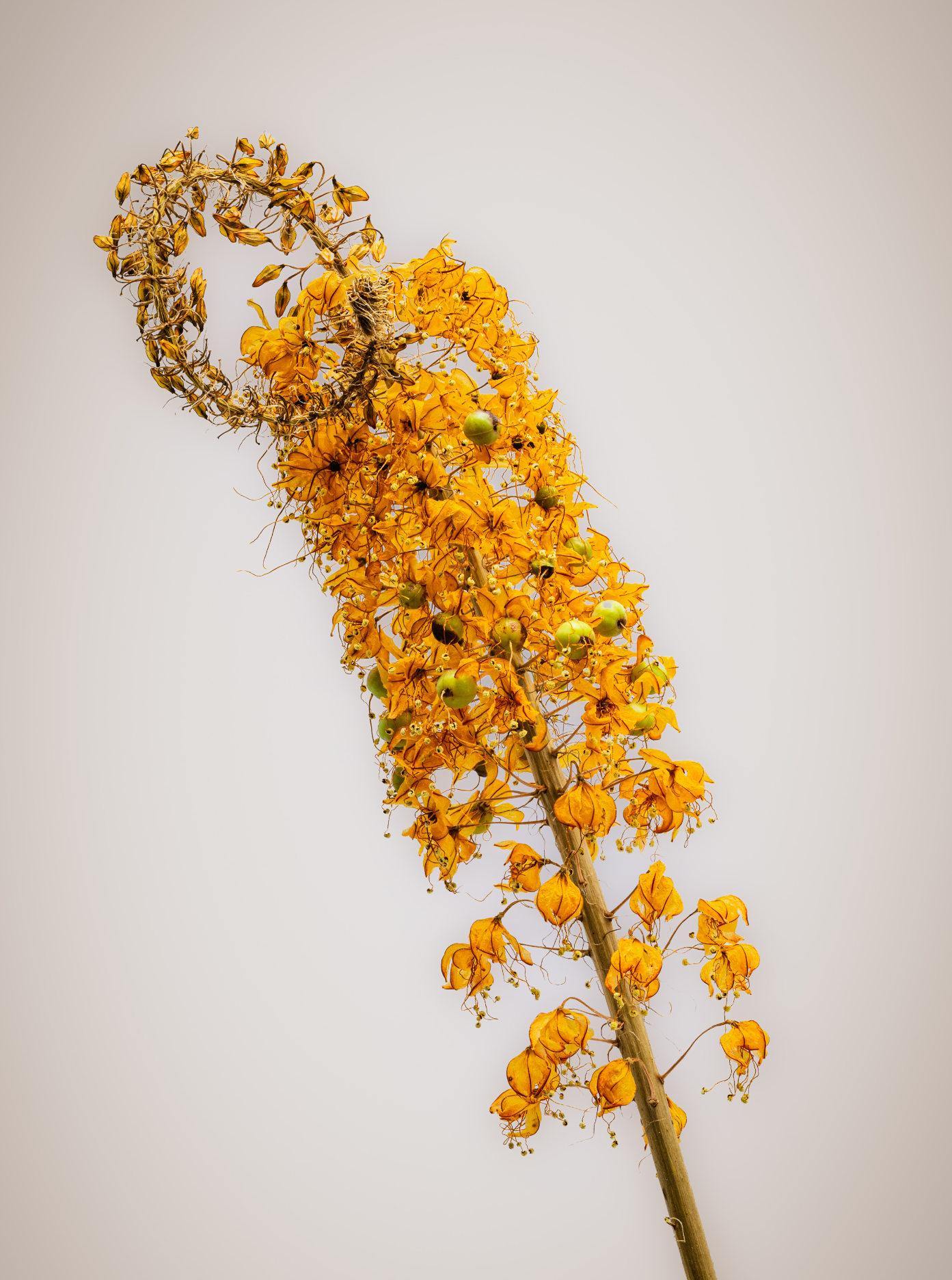
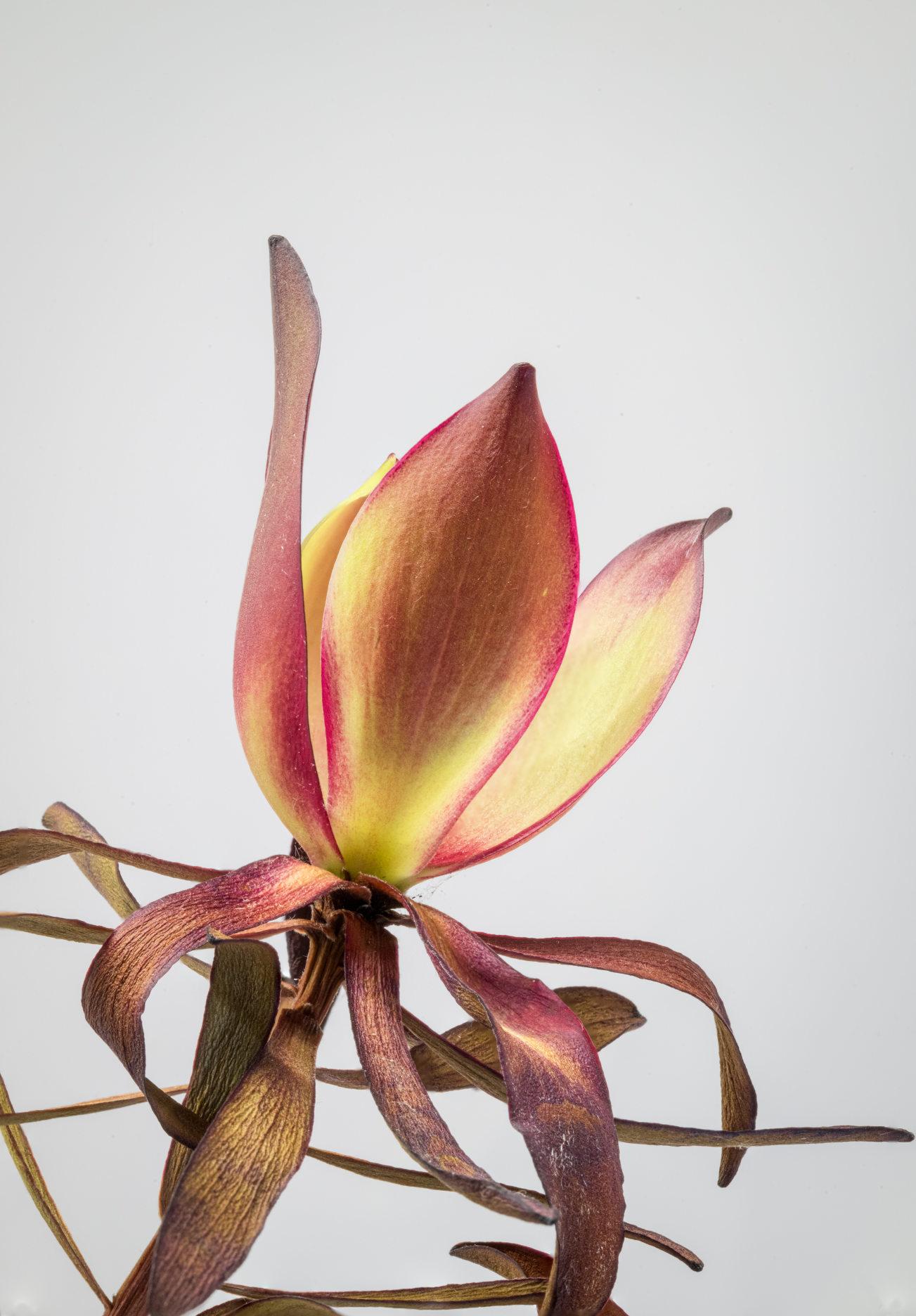
Velda Ruddock
Steve Anderson
Steve has explored the natural landscape of the San Gabriel range as well as the High Sierra using conventional film and digital photography for decades. He has self-published four photo books available through Blurb.com.
His interest in making personally significant contributions to theenvironmentalmovement started in college then expanded into becoming a life-time member of the Sierra Club and an Outings Leader. He has been a member of the Mono Lake committee for more than 40 years and was Chair of the Camera Committee for 5 years.
Steve's images haveappeared in Sierra magazine, Images of the West, A Portrait of Bodie, the Angeles Chapter Schedule of Activities covers, and the Camera Committee's Focal Points. He has shown work in local galleries, art shows, and was the San Gabriel Mountains National Monument Artist-inResidence in 2015. Some of his monochrome images in Mono Lake Committee's literature weresignificantin helping to save Mono Lake. sandersonimagery@outlook.com www.pbase.com/spanderson
John Clement
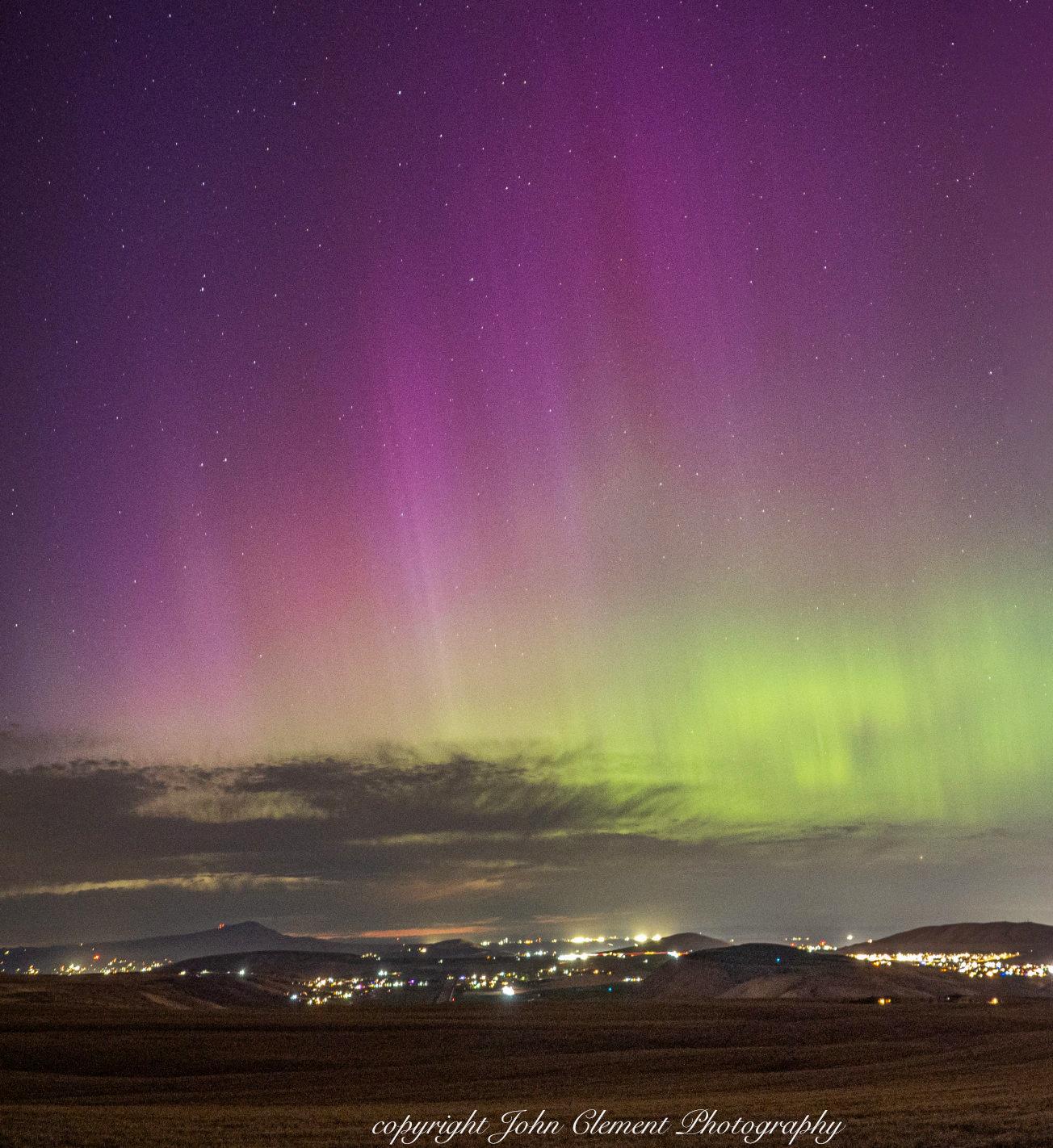
John Clement began his career in photography in the early 70’s after graduating from Central Washington University with a double major in Geology and Geography. Since then he has earned a Masters of Photography from the Professional Photographers of America. He has received over 65 regional, national and international awards for his pictorial and commercial work. His photographs grace the walls of many businesses in the Northwest and has been published in numerous calendars and coffee table books.
Clement has provided photographs for Country Music Magazine and Northwest Travel Magazine. He has supplied murals for the Seattle Seahawks Stadium and images for The Carousel of Dreams in Kennewick, WA.
Current projects include 17 – 4x8 foot glass panels featuring his landscapes in Eastern Washington for the Pasco Airport Remodel. Last year he finished a major project for the Othello Medical Clinic where almost 200 images were used to decorate the facilities. www.johnclementgallery.com
John Clement Photography (Face Book)Allied Arts Gallery in Richland, WA.
Thomas Cloutier
Thomas Cloutier has been with SCCC since 2001, and he has been contributing to Focal Points Magazine since that time.
Cloutier’s interest in photography coincides with his interest in travel and giving representation to nature landscapes. His formal education in photography comes from CSU Long Beach.
At present Cloutier is a volunteer at CSU, Long Beach where he taught Water Colors and Drawing at the Osher Lifelong Learning Institute (OLLI), designed for Seniors over 45. He also is a docent at Kleefield Contemporary Museum CSU Long Beach. He is Liaison for the Art And Design Departments for a scholarship program for students at CSU Long Beach, Fine Arts Affiliates, FineArtsAffiliates.org.
Cloutier at cde45@verizon.net
Joe Doherty
Joe grew up in Los Angeles and developed his first roll of film in 1972. He has been a visual communicator ever since.
He spent his teens and twenties working in photography, most of it behind a camera as a freelance editorial shooter.
Joe switched careers when his son was born, earning a PhD in Political Science from UCLA. This led to an opportunity to run a research center at UCLA Law.
After retiring from UCLA in 2016, Joe did some consulting, but now he and his wife, Velda Ruddock, spend much of their time in the field, across the West, capturing the landscape. www. joedohertyphotography.com
John Fisanotti
John was a photography major in his first three years of college. He has used 35mm, 2-1/4 medium format and 4x5 view cameras. He worked briefly in a commercial photo laboratory.
In 1980, John pivoted from photography and began his 32-year career in public service. He worked for Redevelopment Agencies at four different Southern California cities.
After retiring from public service in 2012, John continued his photographic interests. He concentrates on outdoors, landscape, travel and astronomical images. Since 2018, he expanded his
repertoire to include architectural and real estate photography.
John lives in La Crescenta and can be contacted at either: jfisanotti@sbcglobal.net or fisanottifotos@gmail.com http://www.johnfisanottiphotography.com http://www.architecturalphotosbyfisanotti.com
Dan Gee
Dan’s photographic journey began in his teens with a simple Instamatic. Over the years, his passion evolved, taking him from a 35mm SLR, Polaroid cameras, medium-format, & eventually a 4x5 view camera—complete with a temporary darkroom in the laundry room. Each system brought its own creative challenges.
While Dan completed college in biochemistry at Univ Calif, Riverside, photography took a back seat. His photographic interest was reignited during graduate school after attending a transformative exhibition featuring A Adams, W Bullock, & E Weston at the Pasadena Museum of Art. (At that time, a 11x14 of Moonrise, Hernandez, New Mexico was just $200.).
While completing his postdoctoral research in biology of aging at Univ So Calif, Dan joined the Sierra Club Camera Committee. This community became instrumental to his growth. He became a trip leader & chair in the late 1980s, leading trips to the Sierras, Monterey, & Yosemite. He was also fortunate to attend the Ansel Adams Photographic Workshops which included R Bernard, H Gilpin, R McSavaney, O Parker & J Sexton as it faculty. Now retired from biotech drug development, Dan shoots primarily digital & occasionally reminisces about his view camera. While trading the challenges of traditional film for modern digital photography his next goal is to learn a photo editing software such as Lightroom to enhance artistic control.
Diane Gunderson
Diane picked up a camera in 2011 to document her 3 sons' growth and family adventures and was instantly hooked. She focused primarily on sports/ action photography with her boys, and dabbled in family and event photography. She pursued more formal photography training and completed Los Angeles Center of Photography’s General Course of Study in 2025.
Diane is now returning to her passion for nature, hiking, and the Great Outdoors through landscape and nature photography. Before pivoting to full time parenthood, she studied and had a career in conservation biology. As a child she dreamed of being a photographer for National Geographic. She is committed to growth in her craft as a landscape photographer and hopes to inspire others to enjoy and help protect our public lands. Diane lives in Agoura Hills with her husband and dogs and her boys when they come home to visit! She enjoys hiking and "chasing the light" in the Santa Monica Mountains.
Joyce Harlan
My true passion for photography began when my sons were born, continued thru my years coaching Special Olympics skiing, but really took off when I was at Mammoth skiing with my son, his wife and my grandkids. Of course I took lots of pix of them, but our visit to Berger’s Burgers really launched me. On the wall were gorgeous large landscape photos taken by Vern Clevenger. I asked our waitress about them and she told me that he often came in for lunch with his son and she would point him out for me. I told him how much I loved his work andI asked if he ever did workshops His was my first. From there to many at Mountainlight in Bishop with Jack Dykinga, John Shaw, Justin Black, Jerry Dodrill, Jeff Foote and David Meunch. From those wonderful experiences I began to travel the world to Italy, New Zealand, Nepal, Botswana, Kenya, the Yukon, Mongolia, Namibia, South Georgia and Antarctica.
I will forever be grateful for the gift photography has been to my life for the wonderful fellow photographers I have met, the workshop leaders I have had and the amazing places I have been able to experience.
Beverly Houwing
Beverly Houwing loves traveling and photography, which has taken her to 80 countries and every continent. Most often she visits Africa since she loves spending time in remote wilderness locations where there is lots of wildlife and unique landscapes. Her images have been featured in numerous Africa Geographic articles, as well as in Smithsonian and the Annenberg Space for Photography exhibits. Her photographs have also been used for promoting conservation by many non-profit organizations, including National
Wildlife Federation, National Parks Conservation Association, Crane Trust, National Audubon Society and Department of the Interior. Beverly is an Adobe Certified Instructor, so when she’s not out on a photography adventure she conducts training on their software programs and does freelance graphic design and production work.
Larry Miller
Larry Miller bought his first SLR camera in 1985 to document hikes in the local mountains. In fact, his first Sierra Club Camera Committee outing was a wildflower photo shoot in the Santa Monica Mountains led by Steve Cohen in 1991. Since then the SCCC has introduced him to many other scenic destinations, including the Antelope Valley California Poppy Reserve, the Gorman hills, and Saddleback Butte State Park.
Miller’s own photography trips gradually expanded in scope over the years to include most of the western National Parks and National Monuments, with the Colorado Plateau becoming a personal favorite.
Photography took a backseat to Miller’s career during the 32+ years that he worked as a radar systems engineer at Hughes Aircraft/Raytheon Company.
Since retiring in 2013, he has been able to devote more time to developing his photographic skills. Experiencing and sharing the beauty of nature continues to be Miller’s primary motivation. lemiller49@gmail.com
John Nilsson
John Nilsson has a fond memory of his father dragging him to the Denver Museum of Natural History on a winter Sunday afternoon. His father had just purchased a Bosely 35mm camera and had decided he desperately wanted to photograph one of the dioramas of several Seal Lions in a beautiful blue half-light of the Arctic winter. The photo required a tricky long exposure and the transparency his father showed him several weeks later was spectacular and mysterious to Nilsson’s young eyes. Although the demands of Medical School made this photo one of the first and last Nilsson’s Dad shot, at five years old the son was hooked.
The arrival of the digital age brought photography back to Nilsson as a conscious endeavor - first as a
pastime enjoyed with friends who were also afflicted, and then as a practitioner of real estate and architectural photography during his 40 years as a real estate broker.
Since retiring and moving to Los Angeles, Nilsson continued his hobby as a nature and landscape photographer through active membership in the Sierra Club Angeles Chapter Camera Committee, as well as his vocation as a real estate photographer through his company Oz Images LA. The camera is now a tool for adventure!
www.OzImagesLA.com
Velda Ruddock
Creativity has always been important to Velda. She received her first Brownie camera for her twelfth birthday and can’t remember a time she’s been without a camera close at hand.
Velda studied social sciences and art, and later earned a Masters degree in Information and Library Sciences from San Jose State University. All of her jobs allowed her to be creative, entrepreneurial, and innovative. For the last 24 years of her research career she was Director of Intelligence for a global advertising and marketing agency.
TBWA\Chiat\Day helped clients such as Apple, Nissan, Pepsi, Gatorade, Energizer, and many more, and she was considered a leader in her field.
During their time off, she and her husband, Joe Doherty, would travel, photographing family, events and locations. However, in 2011 they traveled to the Eastern Sierra for the fall colors, and although they didn’t realize it at the time, when the sun came up over Lake Sabrina, it was the start of them changing their careers.
By 2016 Velda and Joe had both left their “day jobs,” and started traveling and shooting nature –big and small – extensively. Their four-wheel-drive popup camper allows them to go to areas a regular car can’t go and they were – and are – always looking for their next adventure.
www.veldaruddock.com
VeldaRuddockPhotography@gmail.com
Rebecca Wilks
Photography has always been some kind of magic for Rebecca, from the alchemy of the darkroom in her teens… to the revelation of her first digital camera (a Sony Mavica, whose maximum file size was about 70KB)… to the new possibilities that come from her “tall tripod” (drone.)
Many years later, the camera still leads Rebecca to unique viewpoints and a meditative way to interact with nature, people, color, and emotion. The magic remains.
The natural world is Rebecca’s favorite subject, but she loves to experiment and to do cultural and portrait photography when she travels. Rebecca volunteers with Through Each Other’s Eyes, a nonprofit which creates cultural exchanges through photography, and enjoys working with other favorite nonprofits, including her local Meals on Wheels program and Cooperative for Education, supporting literacy in Guatemala.
Rebecca’s work has been published in Arizona Highways Magazine, calendars, and books, as well as Budget Travel, Cowboys and Indians, Rotarian Magazines, and even Popular Woodworking.
She’s an MD, retired from the practice of Obstetrics and Gynecology and Medical Acupuncture. She lives in the mountains of central Arizona with my husband and Gypsy, the Wonder Dog.
By Joe Doherty
The Parting Shot