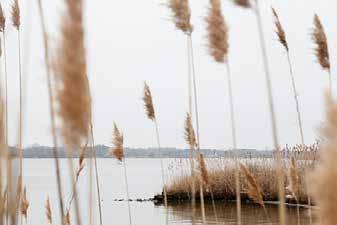
The Chesapeake Conservancy’s mission is to strengthen the connection between people and the watershed, conserve the landscapes and special places that sustain the Chesapeake’s unique natural and cultural resources, and encourage the exploration and celebration of the Chesapeake as a national treasure.
Board of Directors
Paul E. Hagen, Chairman
Douglas P. Wheeler, Vice Chairman
Dr. Mamie A. Parker, Secretary
Scott L. Beatty, Jr., Treasurer
Stephen R. Adkins
Jane Danowitz
Nicholas H. Dilks
Robert Friend
Heather Gartman
Robert Gensler
Michael D. Hankin
Stephen F. Harper
Page Hayhurst
Ann W. Loomis
H. Turney McKnight
Jeffery More
Patrick F. Noonan
Honorary Members
Gilbert M. Grosvenor
U.S. Senator Paul Sarbanes (ret.)
Charles A. Stek
U.S. Senator John Warner (ret.)
Chesapeake Conservancy Staff
Joel Dunn, Executive Director
Jeffrey Allenby, Director of Conservation Innovation
Kate Baker, Chesapeake Partnership Coordinator
David Burke, Conservation & Strategic Planning Senior Advisor
Jody Couser, Director of Communications
Carly Dean, Project Manager
Paula Degen, Interpretive Specialist
Sarah Elder, Director of Operations
Evelina Erickson, Director of Development
Regan Gifford, Outreach Coordinator
Lacey Hankin, Chesapeake Fellow
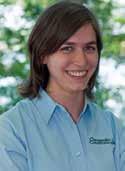
Emily Myron, Project Manager
Joanna Ogburn, Director of Programs
Conor Phelan, Conservation Analyst
Michael Shultz, Public Relations Advisor
Helen Sieracki, Development Coordinator
Peter Turcik,
Grant Writer/Communications Assistant
Colleen Whitlock, Director of Administration
National Recognition Caps Amazing Year of Success
The Chesapeake Conservancy works to preserve the integrity, stability, and beauty of our Chesapeake Bay watershed. This cause is important, worthwhile— and is the right direction for our work. For the last several years, we have cultivated partnerships, developed data for conservation, and fostered funding mechanisms, which have all led to the protection of new lands and the creation of more public access. Specifically, our work has resulted in new trails, parks, and wildlife refuges throughout the Chesapeake region.
In late 2014, we were tremendously pleased that President Obama and the U.S. Congress appropriated $6 million for land conservation and public access along the Captain John Smith Chesapeake National Historic Trail and also created the Harriet Tubman Underground Railroad National Historical Park on Maryland’s Eastern Shore. This capped off an amazing year of successes for our organization. Nevertheless, this is only a beginning.
There is little doubt that collective impact, landscape-scale planning, and community-based conservation that leverages technology are the future of the environmental conservation movement. Given the scale of our challenges and opportunities, we must work collaboratively to save the cultures, creatures, and landscapes we love and need in order to sustain current and future generations.
Recognizing the importance of saving the Chesapeake’s great rivers and special places, the Obama Administration’s
Thank You
to Historic London Town and Gardens in Edgewater, MD, for kindly hosting our recent staff retreat. To learn about the 17th-century town that once thrived there and to plan a visit to the colonial buildings, museum, and gardens, visit www.historiclondontown.com
fiscal year 2016 budget includes almost $38 million for land conservation along the Potomac, Rappahannock, James, Nanticoke, and Susquehanna rivers. To the extent Congress approves the President’s budget, the funds could conserve more than 7,500 acres. The Chesapeake Conservancy has been at the forefront in bringing the Administration’s attention to the need for this funding. National recognition of our conservation priorities is recognition of the Conservancy’s mission and work. This is a really big deal, and it couldn’t come at a more crucial time for the Cheaspeake Bay. While we have more work to do to ensure that these funds are appropriated, we couldn’t have garnered this level of support without you—friends and supporters of the Chesapeake Conservancy. Thank you for believing in us and our partners.
Joel Dunn, Executive Director
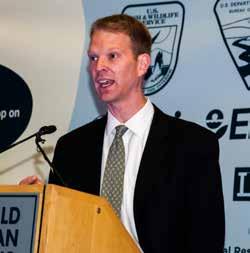
Joel at the National Workshop on Large Landscape Conservation PHOTO BY: PETER TURCIK
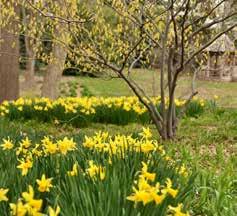
Spring welcomes visitors to the gardens of Historic London Town. PHOTO COURTESY OF HISTORIC LONDON TOWN AND GARDENS
Explore the Captain John Smith Chesapeake National Historic Trail
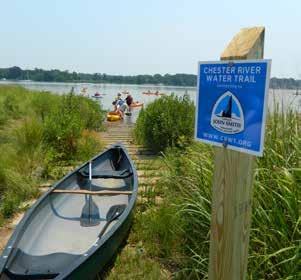
The Captain John Smith Chesapeake National Historic Trail—the nation’s first allwater national historic trail—commemorates Captain Smith’s explorations of the Bay from 1607 to 1609. It provides a significant conservation, recreation, and education resource that stretches over 3,800 miles and traverses most of the Chesapeake’s great rivers. The Chesapeake Conservancy is working with the National Park Service and local partners to establish and improve public access facilities that will allow visitors to get out on the water and view the same landscapes Captain John Smith experienced more than 400 years ago.
Want to explore the Captain John Smith Chesapeake National Historic Trail, but don’t know where to start? Visit http://www.chesapeakeconservancy.org/Access-Sites to find our access map. As you zoom in, public access points with boating access will appear. Click on the points to get more information about each site.
Conservancy Presents at Esri Conference
Staff from the Chesapeake Conservancy’s Conservation Innovation Center (CIC) presented at the Environmental Systems Research Institute (Esri)’s Federal Geographic Information Systems (GIS) Conference in February. More than 3,000 representatives from state, federal, and nonprofit agencies that use Esri’s software attended the conference.
Our Director of Conservation Innovation Jeffrey Allenby and Conor Phelan, conservation analyst, were invited to present to the national audience in Washington, DC, following their successful presentations at Esri’s MidAtlantic Users Conference in Baltimore in December 2014.
“It’s a huge accomplishment for the Conservancy to receive this level of exposure,” Jeff Allenby commented. “To be held up as an example of how to do things right and to be recognized, not just by local agencies but on a national level, is a testament to the quality of projects we are completing.”
The CIC’s work was highlighted in the opening plenary session of the conference. In addition, Conservancy staff gave five presentations focusing on three program areas. The first was titled “Great Story Map Apps and How to Emulate Them,” during which Conor shared his experience using Esri’s story map templates and online editing software to create interactive content, paired with maps, on the Conservancy’s website.
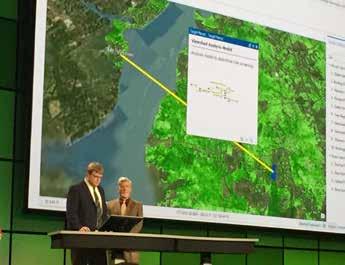
The second Conservancy presentation was called “Sharing 3D Content on the Web,” and it featured Jeff presenting the Conservancy’s Mount Vernon Viewshed Project. For this project, the CIC created a web-based tool that helps users understand how potential development could impact the view from George Washington’s Mount Vernon on the Potomac River.
Jeff also presented the third topic: “Location Enabling Nonprofit Organizations.” He spoke about the CIC’s work to create analysis tools that make the Conservancy’s Precision Conservation datasets available to partners throughout the watershed. This allows planners to
access complex data and analysis tools without needing specialized hardware or training.
“We are leveraging Esri’s software and tools with our infrastructure and putting the power of all this information into the hands of people that can access it anywhere, even through a tablet or a smart phone out in the field—in the real world, in real time,” Jeff explained.
Jeff and Conor were asked to give the story maps and viewshed tool presentations twice, to allow as many conference attendees as possible to see the impact the Chesapeake Conservancy has had in applying Esri’s software with our own technologies.
Joel Dunn, executive director, added: “The Conservancy is at the forefront of how organizations are using GIS analysis tools for conservation planning. GIS is helping us to prioritize land protection and access along the Captain John Smith Chesapeake National Historic Trail.”
PHOTO BY: SARAH ELDER
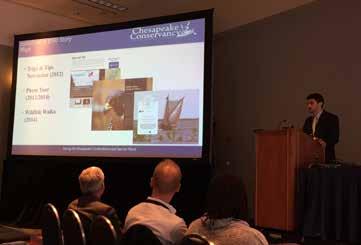
Conor Phelan, conservation analyst, presents at Esri conference
PHOTO BY: JEFFREY ALLENBY
Chesapeake Conservancy’s Conservation Innovation Center’s work was highlighted during the opening plenary session. PHOTO BY: JEFFREY ALLENBY
When We Conserve Land We Conserve History
Harriet Tubman Underground Railroad National Historical Park
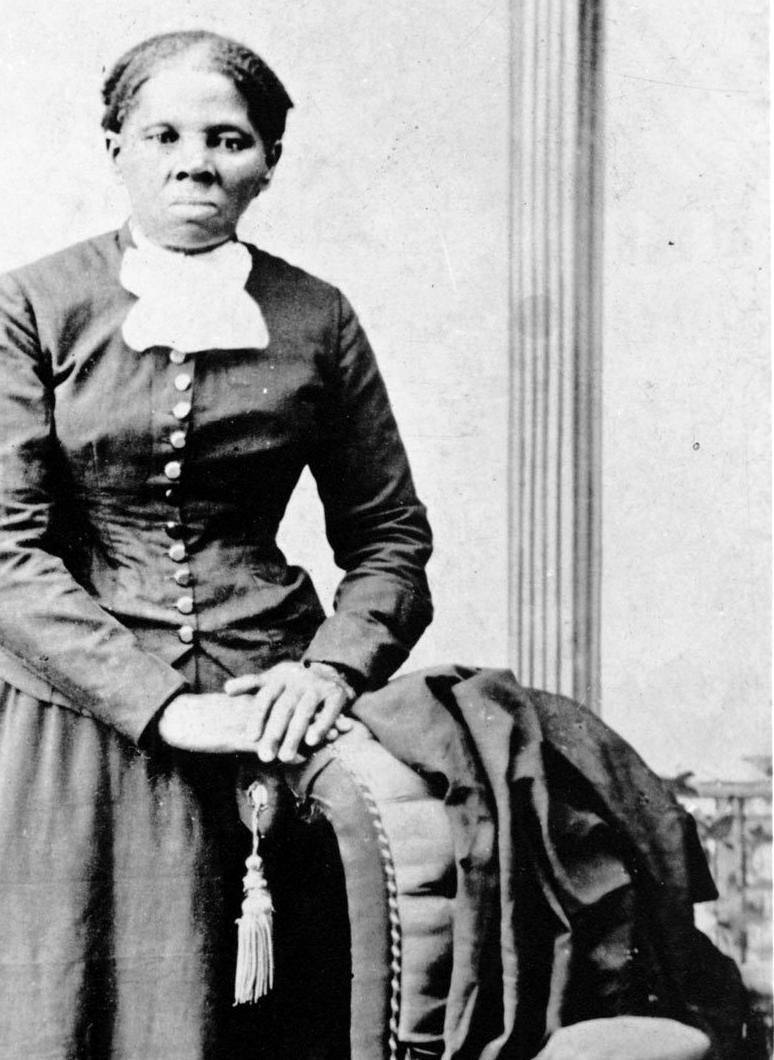
The Harriet Tubman Underground Railroad National Monument, established in 2013 on Maryland’s Eastern Shore, has a new designation—the Harriet Tubman Underground Railroad National Historical Park. It is one of two new national historical parks honoring Tubman for her heroism in leading enslaved people to freedom.
Legislation to create the parks—the first national historical parks to honor an African American woman—became law along with several other additions to the National Park System on December 19, 2014, with year-end passage of the 2015 National Defense Authorization Act (PL113-291).
The Harriet Tubman Underground Railroad NHP in Maryland includes sites in three counties—Caroline, Dorchester, and Talbot—having connections to Tubman’s childhood and her extraordinary leadership in the Underground Railroad. The Harriet Tubman National Historical Park in New York consists of sites in Auburn, Tubman’s residence in Fleming where she lived in later years, and her burial site. While the New York park will preserve structures associated with Tubman,
the Maryland park will protect historically significant landscapes that are evocative of her early life and times. This will provide a compelling demonstration of how conserving land also conserves history and opens the door to many other exciting opportunities for education, recreation, and wildlife viewing.
Tubman was a small woman, but a towering historical figure. She was born in 1822 into slavery on a plantation in Dorchester County, MD. In 1849, she escaped and fled north to freedom. She returned to the Chesapeake several times to lead other enslaved people to freedom along the Underground Railroad. Later she played important roles in the Civil War and the women’s suffrage movement. Settling in Auburn, she established a home for “aged and indigent colored people.” National recognition for this American hero was long overdue.
Harriet Tubman. PHOTO COURTESY OF LIBRARY OF CONGRESS
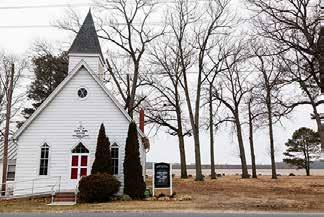
Scott’s Chapel in Bucktown, MD, is among 35 stops on the Harriet Tubman Underground Railroad Byway Driving Tour. Harriet Tubman’s master, Edward Brodess, and possibly Tubman herself, worshipped at the chapel that stood on this site at the time. The church has separate graveyards for blacks and whites.
Many years of effort, led by the Harriet Tubman Organization, together with individuals and numerous regional and national organizations such as the NAACP, The Conservation Fund, and National Parks Conservation Association, led to creation of the parks. The Chesapeake Conservancy was part of efforts that also included the leadership of Maryland’s state and federally elected officials, Senators Barbara Mikulski and Ben Cardin, Representative Andy Harris, and former Governor Martin O’Malley.
In 2000, then Senator Paul Sarbanes championed a bill authorizing the National Park Service to conduct a special resource study concerning the preservation and public use of sites associated with Harriet Tubman. This study, completed in 2008, recommended establishing the two national parks. Appropriately impatient, in 2007, Maryland acquired 17.3 acres of land 10 miles south of Cambridge and established a state park to honor Tubman. The Harriet Tubman Underground Railroad State Park, with visitor center, exhibits, trails, and Tubman memorial, is expected to open in 2015. The state park, adjacent to Blackwater National Wildlife Refuge, is complemented by the Harriet Tubman Underground Railroad Scenic Byway, which runs along country roads that connect significant points in Tubman’s history on the Eastern Shore.
In 2013, President Barack Obama set the stage for Maryland’s new national historical park when he established the Harriet Tubman Underground Railroad National Monument in Dorchester County. Technically, the national monument designation remains, but references to the monument in signs and media will be replaced by its new national historical park designation. The recent legislation authorizes the National Park Service to acquire property in Dorchester, Caroline, and Talbot counties that has historical significance in the Tubman story, including Tubman’s likely birthplace near Madison, the site of Brodess Plantation where
she worked as a young girl, and the Cook Plantation site where she worked as a seamstress as a teenager—all in Dorchester County—and Poplar Neck in Caroline and Talbot counties where she escaped from slavery as a young woman. The National Park Service may only acquire lands for the national historical park through donation, exchange, or by purchase from willing sellers. The Chesapeake Conservancy will likely have a role in helping to acquire key parcels for the park.
Currently, school children and others learn about Harriet Tubman and the Underground Railroad from books, websites, or museums. Imagine the impression they will have about Tubman and the Underground Railroad if they visit where Tubman lived as a girl and the country through which she escaped from slavery and led others to freedom. Along the way they may also see an osprey, a Delmarva Fox Squirrel, or other wildlife and gain appreciation for nature.
While the national and state parks are developing, visitors can already enjoy driving or cycling the well-marked Harriet Tubman Underground Railroad Scenic Byway. You can follow Tubman’s life story through an audio tour and interpretive materials developed by state and local agencies. Download a map and guide from the website www.harriettubmanbyway.org or request a copy by calling the Caroline County or Dorchester County tourism offices. Visitor information will also be available through the National Park Service at www.nps.gov/hatu.
It’s our favorite time of year!
Tom & Audrey Return to Maryland and to Each Other
Check out our osprey webcam and watch them as they prepare their nest for 2015. www.chesapeakeconservancy.org/osprey-cam
Featuring special guest speaker, Dr. Robert Bierregaard, an ornithologist who studies osprey migration, population trends, and ecology
*If you would like to attend but are not a member of the Osprey Club, you may join at the event for a donation of $100.
For more information, please contact Peter Turcik at 443.321.3610 or email pturcik@chesapeakeconservancy.org
Choptank Landing at Preston, MD, is near the Poplar Neck plantation where Tubman’s parents worked. They were also active in the Underground Railroad. It is likely that Harriet made her first escape at this site on the Choptank River. The new national historical park will conserve landscapes that represent routes traveled by fugitive slaves.
PHOTO BY: CRAZY OSPREY FAMILY BYWAY PHOTOS BY: WILL PARSON, COURTESY OF CHESAPEAKE BAY PROGRAM
Conservancy’s Newest Wildlife Webcam Focuses on Peregrine Falcons. Meet Boh & Barb!
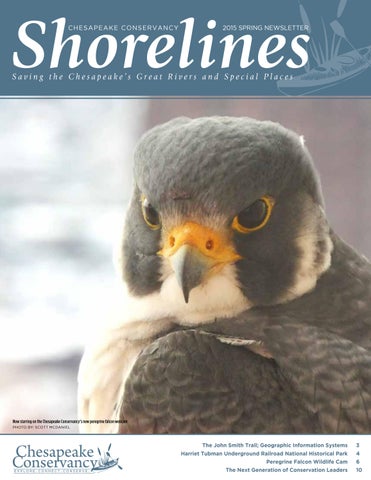
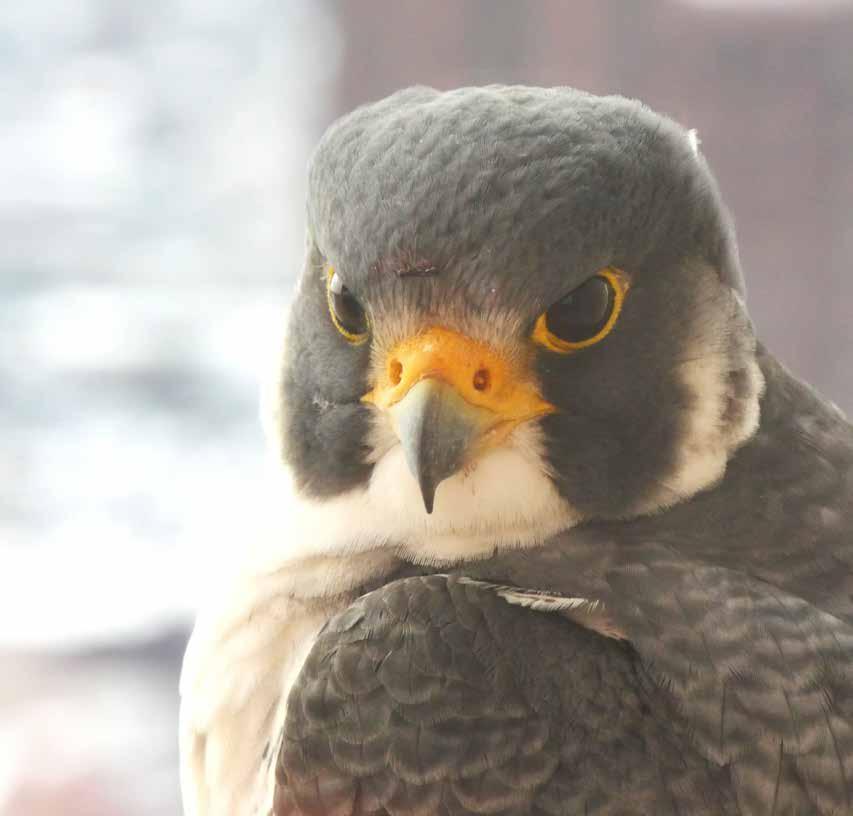
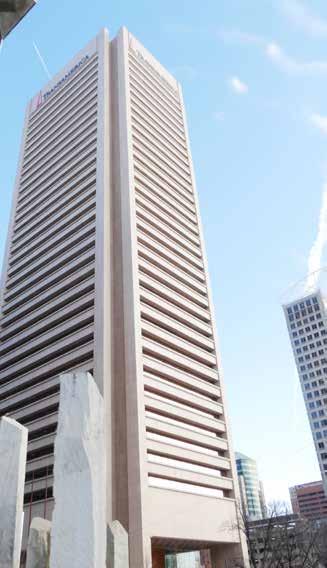
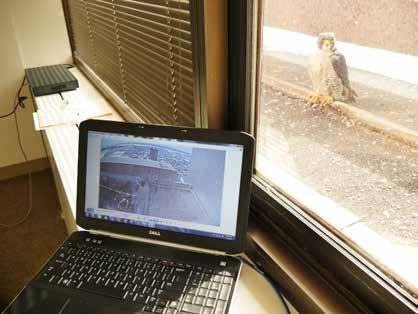
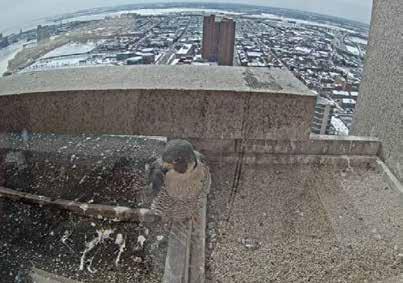
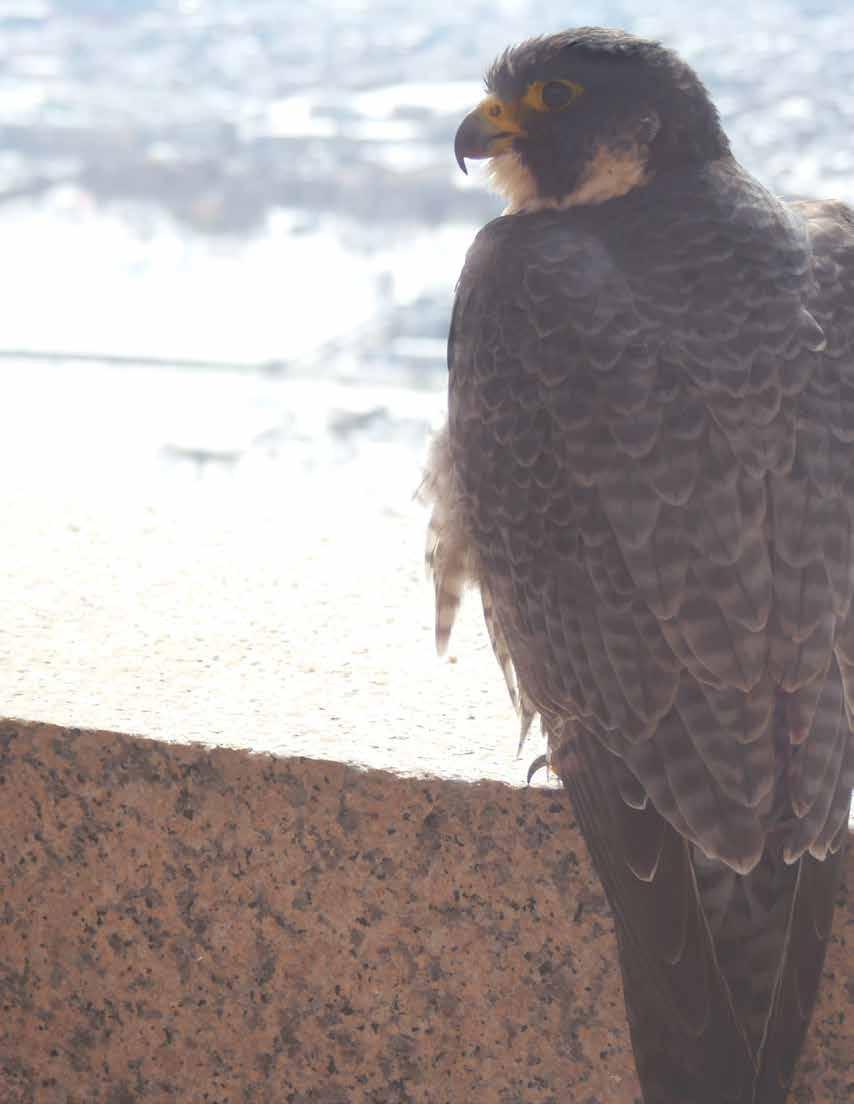
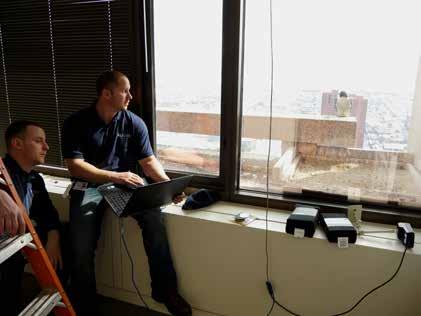
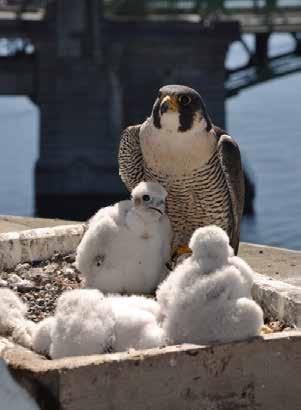
Following the huge international success of our osprey camera, we’re very pleased to announce that the Chesapeake Conservancy is hosting a peregrine falcon cam, featuring one of Baltimore’s most famous city-dwelling raptors. Peregrine falcons have been nesting on the 33rd floor of the 100 Light Street building in Baltimore (now Transamerica, but formerly USF&G when the first falcon appeared in 1978). Found on every continent except Antarctica, peregrine falcons (Falco peregrinus) are one of the best-known conservation success stories and are believed to be the fastest bird in the world. These amazing birds have
recovered from near eradication in eastern North America and are now making many large cities and coastal areas their homes.
After a drastic population decline from 1950–1970 due to pesticide poisoning, peregrine populations have rebounded due to a large-scale captive breeding and release program. As part of this effort, Scarlett, the building’s first falcon, was released by the Peregrine Fund at the Edgewood Arsenal area on the Chesapeake Bay in 1977.
Her first successful mating in 1984 with a wild peregrine, later named Beauregard, produced the first natural-born peregrines bred in an urban environment on the East Coast in three decades.
Now, peregrine falcons are pervasive throughout the United States, nesting on skyscrapers, water towers, cliffs, and more.
Maryland’s restored peregrines have preferred man-made structures, like the 100 Light Street skyscraper, to make their nests in the region. Chesapeake Bay Bridge, Francis Scott Key Bridge, and Route 301 Potomac River Bridge have been known to have nesting peregrines as well.
Because peregrines prey on other birds, they are particularly susceptible to changes in the health of the surrounding environment. There is potential for a tremendous amount of bioaccumulation of chemicals in their bodies, threatening the health and productivity of any future offspring.
To make sure this charismatic bird continues to thrive, we are working to
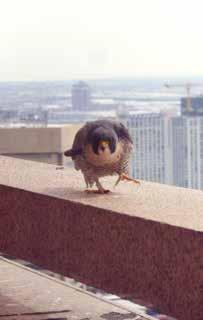
Chesapeake Conservancy’s newest wildlife webcam will show Baltimore’s best-known peregrine falcon worldwide. PHOTOS BY: SCOTT MCDANIEL
ensure that river corridors remain protected and that the Chesapeake Bay can support abundant fish and small bird populations.
Special thanks to Skyline Technology Solutions, Cogent Communications, Shared Earth Foundation, the City of Baltimore, Transamerica, and 100 Light Street for making the peregrine falcon cam possible.
“My college ornithology professor, Dr. Steven Herman, is a falconer. Falconry is the hunting of prey by means of a trained bird of prey. One day, Steve took me out to fly his peregrine falcon. When he released the falcon, it flew up several hundred feet. Steve then released a pheasant, and the falcon, which flies as
fast as 220 miles per hour, subsequently hit the pheasant, killing it instantly. My professor turned to me, wryly smiled, and said, ‘Now that’s poetry!’ We can now share some of that poetry in motion with you, through our new peregrine falcon web camera,” Joel Dunn, executive director, said.
For more information, please visit www.chesapeakeconservancy.org.
Exclusively at the Gear Shop
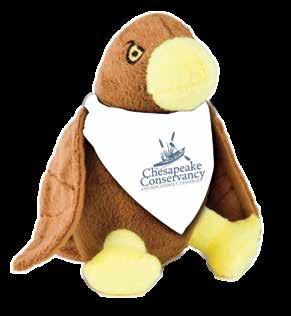
Celebrate the new peregrine falcon camera with us, with your very own falcon plush and fun falcon facts! Regularly priced at $19.99, “Boh” is available for a limited time for just $14.99. Order yours today on the Conservancy’s website – go to the “Store” link at the top of the page. Don’t wait – quantities are limited!
ABOVE PHOTO COURTESY OF WASHINGTON STATE DEPARTMENT OF TRANSPORTATION, FLICKR CREATIVE COMMONS
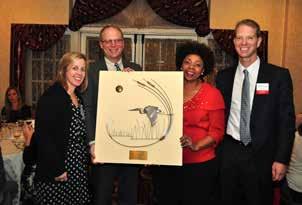
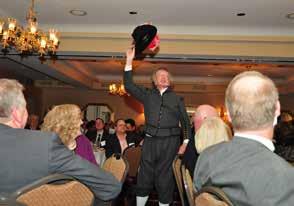
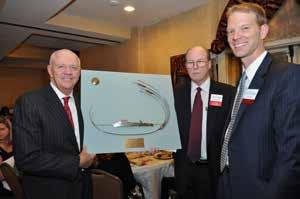
Thank you to all of the sponsors, donors, award recipients, and attendees who helped to make our first Chesapeake Champions dinner a success
Save the date for our next celebration
December 8, 2015
Governor Calvert House | Annapolis, MD
For information on sponsorship, call Evelina Erickson at 443.321.3610
Captain John Smith welcomed guests to the 2014 Chesapeake Champions event.
Cathy Hollerbach, Honoree Peter Hollerbach, Skyline Technology Solutions; Chesapeake Conservancy Board Member Dr. Mamie Parker; and Executive Director Joel Dunn
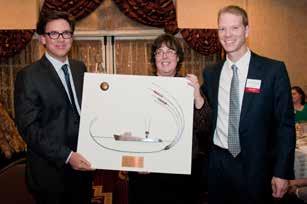
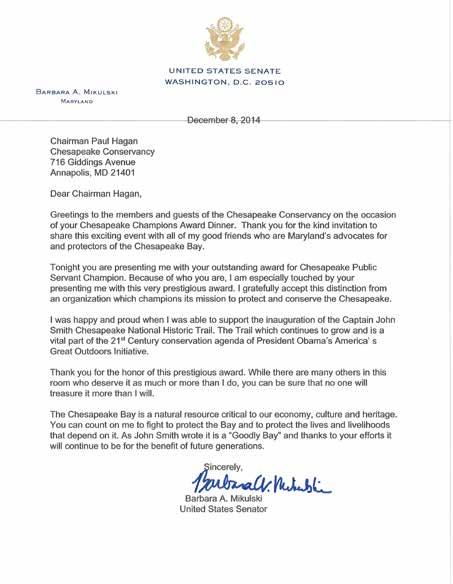
(left to right) Paul Hagen, Chesapeake Conservancy board chairman, Linda Prochaska, representing U.S. Senator Barbara A. Mikulski’s office, and Executive Director Joel Dunn
Keith Campbell, chairman of the Campbell Foundation for the Environment; Patrick Noonan, member of the Chesapeake Conservancy Board and chairman emeritus of The Conservation Fund; and Executive Director Joel Dunn
PHOTOS BY: PETER TURCIK
Donor Profile: Jake Chesson
Retirement is often the end of one journey and the beginning of another. Jake Chesson retired three years ago and has been dedicated to enjoying the outdoors, whether it’s hiking, biking, kayaking, or even attending festivals and concerts. He started the group Second Half Rally, a group of experienced life veterans looking to stay active.
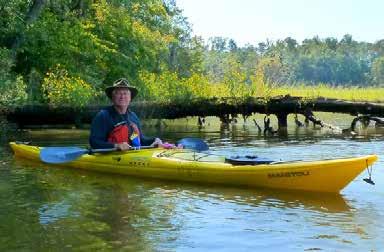
Second Half Rally has kayaked on parts of the Captain John Smith Trail like Morris Creek in Virginia, thought to be where Captain Smith was captured by the Powhatan Indians in 1607. The group has also traveled to Annapolis for festivals and to enjoy the Chesapeake Bay.
Wanting to continue this lifestyle away from the Virginia suburbs, Jake moved to Annapolis two years ago to kayak on Spa Creek, the Wye River on the Eastern Shore, and the many other opportunities around the Bay. However, Jake quickly recognized the limited public access to the Bay and its great rivers.
“It was important for me to have access to the water,” Jake noted. “When I moved to Anne Arundel two years ago, I became aware of the public water access issue; that this county, despite having the most shoreline, has the fewest places where people can put boats and kayaks in the water.”
Jake began attending meetings in Anne Arundel County to learn more about this issue and efforts to create public access, so that his group and, in turn, everyone could enjoy what the Chesapeake has to offer. Through his research, Jake discovered the Chesapeake Conservancy and our work to create new public access sites along the Bay and its rivers and to enhance existing launches and facilities.
“I was looking for a good cause to make my annual charitable donation, and I saw the Conservancy had public access as one
of their priorities. I like the Conservancy’s mission and what they do,” Jake said.
In the winter months when the waterways were closed with ice, Jake spent his time indoors studying the Conservancy’s Boater’s Guide and maps, searching for new places along the Captain John Smith Trail to explore in the spring and summer.
“The Conservancy’s materials really gave me a fix on where I can launch, and I know it fits my group,” Jake commented. “We like a nice paddle where we can see eagles and ospreys. My group is doing what the Conservancy is trying to encourage, which is getting people to use the Bay in an ecofriendly, non-threatening way, and I like it that way.”
Thanks for your support, Jake!
PHOTO COURTESY OF DIANE PERESIE
Jake Chesson kayaking on Morris Creek, part of the Captain John Smith Trail. PHOTO COURTESY OF JAKE CHESSON
The Next Generation of Conservation Leaders
We find Shorelines readers are passionate about preserving the Chesapeake Bay and the environment. We thought you might also be curious about the next generation of conservation leaders. In the Winter 2014 issue we featured Dr. Mamie Parker, former assistant director of the U.S. Fish and Wildlife Service, who is working with Baltimore City high schools to inspire young people to embrace and experience the Chesapeake. Here is the next in what will be a periodic series on the work that the Chesapeake Conservancy does to connect and inspire young people to become involved in conservation.
University Engagement
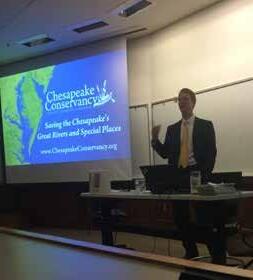
Executive Director Joel Dunn was recently invited to speak at the University of Richmond’s Global Environment Speaker Series. With three alumni and a
current University of Richmond student intern working for the Conservancy, Joel welcomed the opportunity to speak to an audience of university students who represent the future in conservation.
Joel introduced the students to the mission and work of the Chesapeake Conservancy and how he came to head the organization. He shared his own inspiring career path, which involved hitchhiking across the country while in high school to experience America’s great national parks, studying insects and plants with top scientists in the world’s most remote tropical rainforests, and working to pass legislation in the U.S. Congress to protect and restore the Long Island Sound and the Chesapeake Bay.
Joel also discussed the ways in which the Chesapeake Conservancy is partnering with the University of Richmond to connect faculty and students to Envision the James, a collaborative initiative that invites communities and individuals to create a common vision for the James River. The Conservancy’s outreach coordinator, Regan Gifford, works closely with the university to bring the James River into the classroom
Conservancy Hosts National Workshop
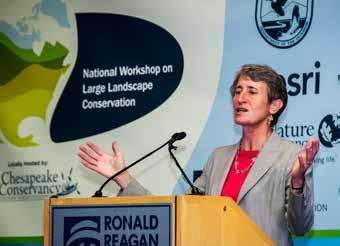
In October, the Chesapeake Conservancy hosted conservation practitioners and policymakers from across North America at the National Workshop on Large Landscape Conservation (NWLLC) in Washington, DC. Executive Director Joel Dunn spoke to the 650 attendees at the opening plenary session, expressing the need for collaborative efforts to conserve precious resources, especially in the Chesapeake Bay watershed. Keynote speaker Secretary of the Interior Sally Jewel and others echoed Joel’s call to action. Attendees had multiple opportunities to learn about the Chesapeake Bay and its great rivers in sessions focusing on the need for large landscape conservation along the heavily populated East Coast.
by facilitating internships and project opportunities for students, connecting faculty to community partners to further both classroom and community-based learning, assisting with field trips designed to connect students to the James, and assisting faculty with riverrelated research.
Bonner Scholar
Starting this spring, the Conservancy will host a student from the University of Richmond’s Bonner Scholar Program, a nationwide platform that provides university students with the opportunity for sustained engagement in community service work and social justice education.
The Bonner Scholar Program is a fouryear commitment, and scholars spend the majority of their time partnered with a community organization to aid in the advancement of that organization’s mission and to gain hands-on experience in a variety of settings and fields. The University of Richmond Bonner Scholar chapter selects 25 students per class year to participate in the program.
Please join us in welcoming our new Bonner Scholar, Connor Flanagan. Connor is a first-year finance and leadership studies major and will be serving with the Envision the James initiative for the next three-and-ahalf years. He will work with both the Conservancy and James River Association to advance our collective efforts in Virginia.
Joel Dunn talks to students at University of Richmond. PHOTO BY: REGAN GIFFORD
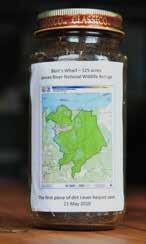
When addressing students at the University of Richmond, Joel Dunn showed one of his prized possessions. It is a mason jar filled with dirt collected from the first parcel of land he helped to preserve: the Blairs Wharf property at James Island National Wildlife Refuge.
PHOTO BY: PETER TURCIK
University of Richmond Bonner Scholar Connor Flanagan PHOTO COURTESY OF CONNOR FLANAGAN
Secretary of the Interior Sally Jewel addresses conference hosted by Chesapeake Conservancy.
PHOTO BY: PETER TURCIK
Conservancy Staff News
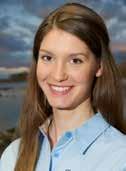
Carly Dean
A Cecil County, MD, native, Carly is the Conservancy’s newest project manager. She works to facilitate large-scale, crosssector conservation efforts throughout the Chesapeake Bay watershed on initiatives including Envision the Susquehanna, the Watermen’s Heritage Tourism Training Program, and Baltimore Wilderness. She is excited to incorporate community empowerment, network building, systems thinking, and resilience into her work at the Conservancy. Before joining the team, she researched social resilience at the International Institute for Applied Systems Analysis (IIASA) near Vienna, Austria, and integrated Smart Growth and environmentally conscious concepts into a business plan for a real estate developer in Beijing, China. Carly completed her M.S. in environmental science at Towson University and her B.S. in environmental science at Baylor University. Carly looks forward to answering your questions on Envision the Susquehanna, the Watermen’s Heritage Tourism Training Program and Baltimore Wilderness.
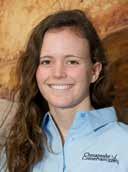
Lacey Hankin
Lacey joins the Chesapeake Conservancy as a Chesapeake Fellow. She is assisting the program staff on landscape-scale river corridor conservation projects, particularly Envision the James. Additionally, Lacey is involved in the Baltimore Wilderness Initiative, the Watermen’s Heritage Tourism Training Program, and she contributes content to the Conservancy’s wildlife webcam webpages. Prior to the Conservancy, Lacey held internships at several land and water conservation nonprofits in Washington, DC, and Baltimore, working on easement stewardship and negotiation and watershed restoration projects. She recently graduated from Williams College, holding a B.A. in biology and history, with a particular
Trips & Tips
Looking for a fun way to explore the Chesapeake Bay region? Interested in visiting a historic community or a nature preserve or just paddling down a river near your home? Through a partnership with the National Park Service Chesapeake Bay office, each week we highlight interesting, unusual and off-the-beaten path events taking place from the mouth of Bay to the Susquehanna and everywhere in between. Cruises in southern Maryland, hikes in the Shenandoah, and festivals in Baltimore — its all there and more.
To sign up for the weekly e-newsletter, visit www.tripsandtips.org or call our office at 443.321.3610
interest in wildlife conservation and ecosystem management. Lacey is our resident expert on wildlife habitats and knows all the inside scoop on the new peregrine falcon camera.
Helen Sieracki
Helen has moved from the position of executive assistant to development coordinator. Helen is the person to call if you’d like to make a gift, learn more about our individual giving programs, join the Osprey Club, or change your mailing address, so you can keep receiving Shorelines.
Peter Turcik
Formerly our communications intern, Peter has been promoted to the position of grant writer/communications assistant. Peter is responsible for researching and writing grant proposals, as well as continuing his work with Conservancy publications. Peter is leading the charge for Shorelines and would appreciate your suggestions.
The Chesapeake Conservancy’s
Board bids farewell to three members who have served since 2007
Three board members have recently rotated off the Board. Their wisdom and leadership will be missed.
Donald R. Baugh was formerly the vice president for education at the Chesapeake Bay Foundation. As a board member, he served on the Nominating and Governance Committee. Don was instrumental in the establishment of the Captain John Smith Trail, as well as founding the friends group that would eventually become the Chesapeake Conservancy.
Blaine T. Phillips, Jr. is Mid-Atlantic regional director of The Conservation Fund. He is a member of the Board of Trustees of Longwood Gardens and the Fair Play Foundation. He is a longstanding member of Ducks Unlimited and Trout Unlimited; he was the 1996 recipient of the Chairman’s Environmental Award from Trout Unlimited. As a Conservancy Board member, Blaine has offered tremendous support for our Nanticoke Conservation Corridor initiative.
H.W. “Skip” Wieder, Jr. served as the chair of the Conservancy’s Nominating and Governance Committee. Among his many positions, Skip is also the chair of the Susquehanna River Heartland Coalition for Environmental Studies and has been a partner in the Conservancy’s Envision the Susquehanna initiative since its launch in 2013.
Thank you for all that you have done for the Chesapeake Conservancy!
PHOTOS BY: PETER TURCIK
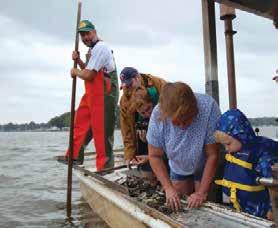
STEP INTO THE WORLD OF A WORKING WATERMAN
Learn about the watermen’s culture and history, hear what life is like out on the water, and discover the natural and cultural history of the area.
Different locations and personalities of the watermen serving as guides make each tour a unique experience! You can try your hand at oyster tonging, or have an authentic crabbing experience—including catching, cooking, and partaking in a delicious crab feast.
Or let one of the trained waterman guides customize a private tour just for you. Go