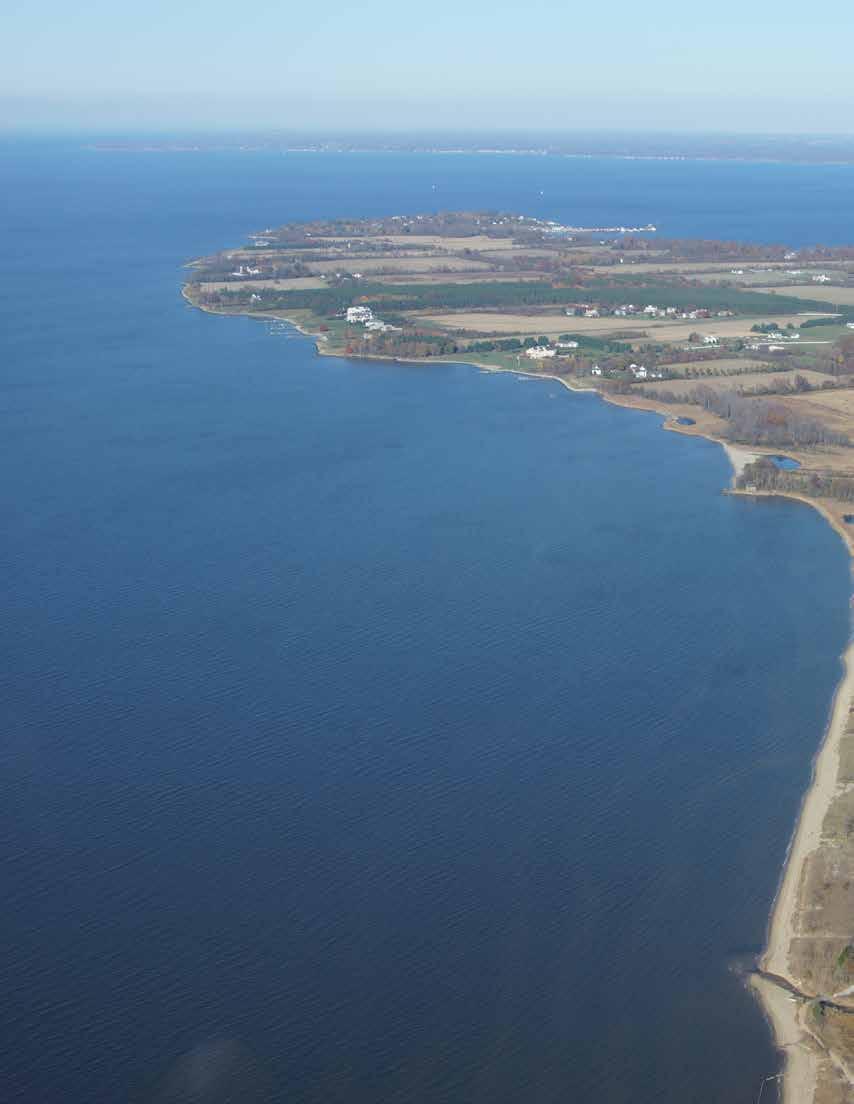
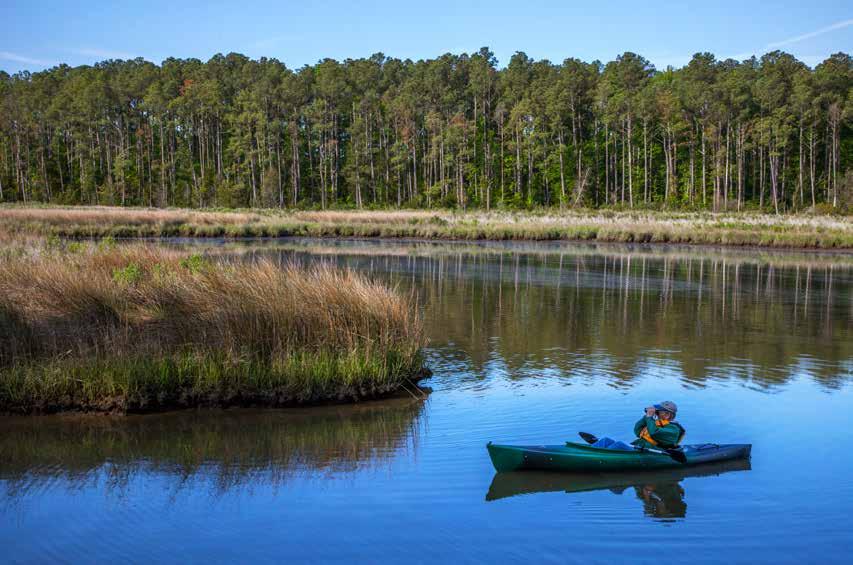
The Chesapeake Conservancy’s mission is to strengthen the connection between people and the watershed, conserve the landscapes and special places that sustain the Chesapeake’s unique natural and cultural resources, and encourage the exploration and celebration of the Chesapeake as a national treasure.
Board of Directors
Paul E. Hagen, Chairman
Douglas P. Wheeler, Vice Chairman
Dr. Mamie A. Parker, Secretary
Nicholas H. Dilks, Treasurer
Stephen R. Adkins
Donald R. Baugh
Scott L. Beatty, Jr.
Jane Danowitz
Robert Friend
Heather Gartman
Robert Gensler
Michael D. Hankin
Stephen F. Harper
Page Hayhurst
Ann W. Loomis
H. Turney McKnight
Jeffrey More
Patrick F. Noonan
Blaine T. Phillips, Jr.
H.W. “Skip” Wieder
Honorary Members
Gilbert M. Grosvenor
U.S. Senator Paul Sarbanes (ret.)
Charles A. Stek
U.S. Senator John Warner (ret.)
Chesapeake Conservancy Staff
Joel Dunn, Executive Director
Jeffrey Allenby, Director of Conservation Innovation
David Burke, Conservation & Strategic Planning Senior Advisor
Paula Degen, Interpretive Specialist
Sarah Elder, Chief Operating Officer
Regan Gifford, Outreach Coordinator
Emily Myron, Project Coordinator
Joanna Ogburn, Director of Programs
Conor Phelan, Conservation Analyst
Michael Shultz, Public Relations Advisor
Helen Sieracki, Executive Assistant
Peter Turcik, Intern
James Varn, Intern
Colleen Whitlock, Director of Administration
Abbi Wicklein-Bayne, Education Specialist
Celebrating Wildlands Preservation
Henry David Thoreau wrote, “In wildness is the preservation of the world.” That quote and lots of time outdoors set me on a path to save wild places. There is a certain rare magic to wild things. So I am celebrating Maryland’s recent effort to expand its Wildlands Preservation System with nine new areas and expansion of 14 existing Wildlands, a total of 21,890 acres to be added to the current 43,773 Wildland acres.
SB0336 passed the Maryland Senate unanimously on February 14, and a hearing has been scheduled in the House. Chesapeake Conservancy, working with other groups and the Maryland Department of Natural Resources helped make this bill possible.
Already owned by the state, these lands contain rare or vanishing species of plants or animals, unique ecological or geological features, or scenic, contemplative recreational areas. Some evoke the 17th century when Captain John Smith explored the Chesapeake. Mining and logging or off-road vehicles would destroy the natural functions of these areas, but gentle-on-the-land recreation like hiking, hunting, fishing, kayaking, canoeing, bird watching, and horseback riding is welcome.
We need more such places. Landscape ecologists, biologists, water quality specialists, and other experts tell us we
need large, landscape scale conservation to maintain clean water, healthy air, and diverse wildlife habitat. And conserved lands, in the right place and of the right size, allow ecosystems to adjust to a changing climate. They also attract business, as many studies show.
And people want them. The Maryland Greenways Commission found that more than 90 percent of people surveyed said that some parts of Maryland should be left in their natural state forever.
John Muir, the founder of the Sierra Club, said that wildlands are places “to play in and pray in. Where nature may heal and give strength to the body and soul.” I look forward to walking in Maryland’s newly designated Wildlands to find inspiration in their magic, and to recharge my soul.
Founding Board Member Retires
Charlie Stek, who was central to the creation of the Captain John Smith Chesapeake National Historic Trail and to the creation and formative years of the Chesapeake Conservancy, has retired as chairman of the Board of Directors. He will remain active as an honorary member of the Board.
Charlie was for the Conservancy a rare mix of visionary and hands-on executive. He led the organization through transition. He understood Washington and how to get things done there, and he understood the wonder to be found paddling a kayak through a Chesapeake creek.
The Board and staff paid tribute to Charlie at the year-end meeting December 18, expressing appreciation for the many contributions Charlie made to the Chesapeake Conservancy and to the Chesapeake Bay.
Also leaving the Board at the end of 2013 were Gilbert Grosvenor and William Street. Grosvenor, chairman emeritus of National Geographic, will also be an honorary member of the Board. Street, executive director of the James River Association, rotated off the Board. Both served on the Board since its inception, and the Conservancy has benefited greatly from their wisdom and leadership.
Joel Dunn, Executive Director
Stek retires from Board.
Conservancy Webcams Turn Spotlight on Ospreys & Eagles
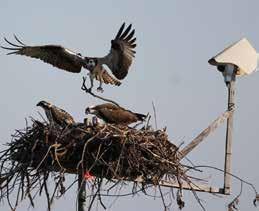
The Chesapeake Conservancy’s popular osprey camera is poised to welcome back the osprey pair who attracted a worldwide audience in 2013. The Conservancy, along with our technology partners and Investigative Options, Inc., will again host the high-resolution osprey cam at www.ospreycamera.org.
In the camera’s first year, more than 65,000 viewers from all 50 states and 110 different countries watched Tom and Audrey, the osprey pair, raise their three chicks. The accompanying blog, written by the family whose property is home to the ospreys’ nest, was viewed more than 73,000 times and provided amazing pictures and insight into the ospreys’ lives “off-camera.”
Check out the osprey cam to see what Tom and Audrey are up to this year. They are expected home in late March.
Ospreys normally lay two to four eggs in a clutch, depending on the age of the female and the health of their environment. A three-egg clutch takes about 6 or 7 days to complete, while a four-egg clutch will take between 8 and 10 days. This is followed by an incubation period of approximately 37–38 days.
While a young female would usually lay two eggs, last year Audrey laid a clutch of four, with three hatching into chicks Chester, Essie, and Ozzie. Fledging broods of two and three young are common in the Chesapeake, because the tributary rivers and creeks provide shelter from extreme weather.
Fledging four young requires a very rich food regime, and a very vigorous male supplier of fish. It is sometimes seen
in the early colonization of what will become a great osprey colony. Large broods, such as Tom and Audrey had last year, may be a predictor of potential population growth, given adequate predator-proof nest sites.
This is very good news for the Chesapeake Conservancy, whose work to protect river corridors and maintain healthy fish populations helps to ensure that these iconic Chesapeake residents continue to inhabit the shores of the Bay and its tributaries.
Where Are the Eagles?
This winter the Conservancy expected to turn the spotlight on another iconic Chesapeake species—the American bald eagle. Partnering with the Smithsonian Environmental Research Center (SERC), along with Skyline Technology Solutions, Earth Security Electronics, and the Shared Earth Foundation, the Conservancy launched a new eagle camera and website eaglecamera.org to provide the high-definition picture and sound plus educational and entertaining information that have made the osprey camera such a hit. The new eagle camera is located in a hickory tree, above a nest built by a pair of eagles on the SERC property in Edgewater, Maryland.
Bald eagles frequently maintain several different nesting sites within their territory. Whether the eagle pair took up residence elsewhere or had other reasons, they did not cooperate. To date, the eagles have not returned to the designated nest for their camera debut.
While this quirk of nature is disappointing for fans of the Conservancy’s wildlife cameras, we can rejoice in the conservation success story represented by the bald eagle (Haliaeetus leucocephalus). These regal raptors—America’s national symbol since 1782—were once on the brink of extinction. Habitat loss, illegal hunting, and contamination of the species from DDT, a once prevalent pesticide, nearly eliminated the bald eagle from the Chesapeake region. But with the banning of widespread use of DDT in 1972 and other help, bald eagles have made a phenomenal comeback. Although they may not show up on this year’s Chesapeake Conservancy eagle cam,
there are many places along the shores of the Bay and tributaries where bald eagles are thriving, thanks to conservation efforts.
Both the osprey and eagle cameras are products of the Conservancy’s Conservation Innovation program to help illustrate why concerted conservation efforts are important in the Chesapeake Bay watershed. Visit the Conservancy’s website www.chesapeakeconservancy.org to learn more about these species and other Chesapeake Bay wildlife.
Join the Club!
If you enjoy viewing wildlife “up close and personal,” then help the Conservancy continue to offer these intimate views of the Chesapeake’s ospreys and eagles at home by joining the Osprey Club.
For an annual contribution of $100, you’ll receive a membership card, photo of the osprey nest, and other benefits reserved exclusively for Osprey Club members.
Go to the Conservancy’s website now, or call 443.321.3610.
The family who hosts the Osprey cam welcomes the new season!
Osprey cam is ready for the return of Tom and Audrey, who attracted a worldwide audience in 2013.
Pick Your Pleasure: 14 Ways to Explore the Chesapeake along the Captain John Smith Trail
It’s finally spring—and time to get outdoors to enjoy the Chesapeake region’s trails. Don’t just think of dirt footpaths! Explore our favorite: the Captain John Smith Chesapeake National Historic Trail—the nation’s first all water national historic trail. Designated in 2006, largely through efforts of the Chesapeake Conservancy, the trail spans more than 3,000 miles through six states and the District of Columbia. Redefining the traditional word “trail,” this extensive network of public access sites, waterways, and land-based attractions offers a multitude of recreational and educational opportunities.
Now—just in time for National Trails Day on June 7—we offer our staff’s picks for 14 ways to experience the John Smith Trail. Bring your friends and family, and get started. Exploring the Bay along the trail is fun, informative, and an adventure everyone will enjoy. Check out our top 14 things to do—just a sampling of the delightful diversity that awaits you along the trail!
AMERICAN
1 INDIAN HERITAGE
Want to know more about the region’s original residents? The Chesapeake has been home to American Indians for thousands of years, and their heritage remains strong and vibrant today. Several Chesapeake Bay Gateways sites explore the history, values, and cultures of American Indians. Check out Piscataway Park, for example. It’s a national park on land once occupied by the Piscataway people, whose chiefdom encompassed much of Southern Maryland. www.nps.gov/pisc/index.htm and www.accokeekfoundation.org/
2 BIKING
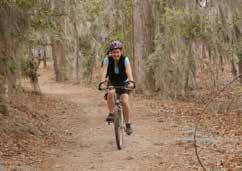
Get up close and personal with the Chesapeake’s beauty when you visit by bike. Overlapping the John Smith Trail, the Potomac Heritage National Scenic Trail offers numerous trails for all forms of recreation. The Mount Vernon Trail (18.5 miles), the C&O Towpath (184.5 miles), Southern Maryland Bicycling Route (13 miles), and the Alexandria Heritage Trail (23 miles) are just a few of the many pathways that invite you and your two-wheeled friend to take advantage of the Potomac’s natural and historical features.
3 BIRDING
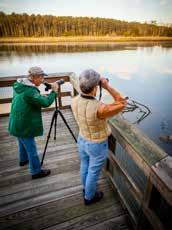
Eager to find eagles and ospreys? Looking for shorebirds or songbirds? This vast watershed is permanent or temporary home to hundreds of winged species, and there are fun ways for you to get out and see some “IRL” (in real life!). Search the Chesapeake Bay Gateways website “by activity” to find great places for birding. www.baygateways.net/byactivity.cfm
4 BOATING
Crank up the powerboat and explore one of 51 exciting itineraries described in the Boater’s Guide to the Captain John Smith Chesapeake National Historic Trail. The Fones Cliffs itinerary on the Rappahannock River is a favorite— leading past a four-mile-long series of sandstone bluffs that the Chesapeake Conservancy is working to conserve. This stretch of the river includes the site of the 1608 encounter between the Rappahannock tribe and John Smith’s crew as well as one of the most important bald eagle nesting sites in the East. Don’t miss it!
5 DRIVING
Interested in learning more about America’s Founding River—the James—but you don’t have a boat? Not a problem! The Virginia Tourism
Corporation and Department of Conservation and Recreation developed a driving tour of the James River—the “Powhatan Flu” as Captain John Smith knew it—to showcase the natural and cultural history of early 17th-century Virginia. Follow the Oxbow, Cypress, or Oyster Loops to see interpreted sites from Richmond to Newport News. www.johnsmithtrail.org
6 FISHING
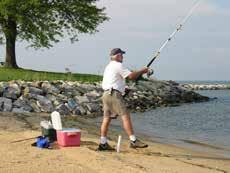
And if you like to fish, the John Smith Trail offers a wide range of fishing locales for both the freshwater and saltwater angler. For saltwater species, try your luck at Stingray Point, where anglers can wet a line for striped bass, redfish, speckled trout, croaker, and flounder in the same waters fished by Captain John Smith. On the mighty Susquehanna, freshwater anglers can target smallmouth and largemouth bass, white perch, the occasional walleye, and migrating stripers at Garrett Island, where the river meets the Chesapeake Bay. Catch and release, or catch and eat—yum!
7 GEOCACHING
Are you ready for a modern-day treasure hunt? Grab your GPS and get out on the John Smith Geotrail! The Maryland Geocaching Society, working with the Chesapeake Conservancy and National Park Service, placed geocaches at nearly 60 sites along the
John Smith Trail in Maryland, Virginia, and Delaware. Cache sites range from national and state parks to regional museums and small towns, but all locations tell a story about Smith’s Chesapeake Bay expeditions. After you check out the treasure, check back with us—we’d love to hear what you found! www.geocaching.com/adventures/geotours/ captainjohnsmith
8 HIKING
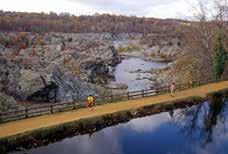
If you’d just like to get away from it all and hike through some of nature’s most beautiful scenery, you’ll want to check out the land trails. From miles of footpaths, to invigorating waterfalls, to unique cultural history, Great Falls Park in Northern Virginia has it all—and it’s only 15 miles from the nation’s capital! Take the River Trail, which meanders adjacent to the namesake falls—the furthest extent of Captain John Smith’s journeys along the Potomac. The trail parallels a stream called Difficult Run and leads to the top of Mather Gorge with spectacular overlooks along the way.
9 MUSEUM CRAWL
Ready for a slower pace? Want to see a loggerhead sea turtle or an endangered red wolf up close? Interested in learning more about Smith and his voyages? Museums, large and small, abound along the John Smith Trail. The Chesapeake Bay Gateways Network is a good resource for sites that tell the stories of the Bay— old and new. www.baygateways.net
10 PADDLING
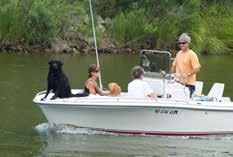
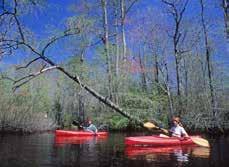
At the Chesapeake Conservancy, we love to get out in canoes and kayaks to explore the Bay’s great rivers and special places firsthand—on the water! And the Conservancy is working to increase the number of places with kayak/canoe launches designed to get people out on the trail. Check out Brookwood Point, for example, the northernmost extension
of the John Smith Trail. Created with the help of the Conservancy, Brookwood Point, in Cooperstown, New York, offers gardens, walking trails, and stunning paddling on Otsego Lake. For more information on public water access sites around the watershed, visit our website.
SMALL TOWN 11 EXCURSIONS
If you’re looking for a wonderful day trip, small towns like Vienna, Maryland, offer special windows to the Chesapeake and the John Smith Trail. Picnic at Emperor’s Landing along the Nanticoke River and explore the historic waterfront to experience this conservationconscious river town. www.viennamd.org/index.html
URBAN
12 EXPLORATIONS
You needn’t travel far from the city to connect with nature at the newly designated Masonville Cove Urban Wildlife Refuge Partnership in Baltimore, Maryland. With educational programs, community events, and a campus that includes a public pier, soft launch, trails, gardens, and a bird sanctuary, Masonville is an urban gateway to the Chesapeake Bay. www.masonvillecove.org
13 WATERMEN TOURS
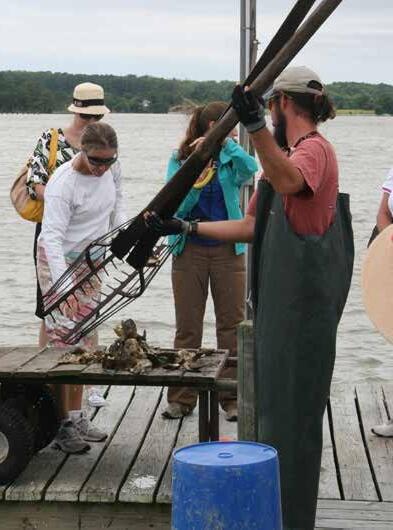
Have you ever wondered what it would be like to make your living as a Chesapeake Bay waterman? They are up before the dawn, then out on the beautiful Bay to collect your favorite restaurant’s “catch of the day!” Now, you can have a truly authentic Chesapeake Bay experience on one of our new Watermen Heritage Tours. No one knows the Bay like the people who work on its waters. Experience watermen stories, culture, and history firsthand while pulling up crab pots, tonging for oysters, or enjoying a sunset sail aboard an historic skipjack. www.watermenheritagetours.org
WILDLIFE VIEWING 14 AND PHOTOGRAPHY
Take your camera on a journey along one of the most undeveloped corridors on the John Smith Trail: the Nanticoke River. Stop in at Blackwater National Wildlife Refuge to look for the more than 281 species of birds, as well as sika deer and the endangered Delmarva fox squirrel. Capture an image of the majestic bald eagles or great blue herons that call this landscape home, and look for red-winged blackbirds, ospreys, and other spring residents. Then send your favorite pictures of family, friends, fauna, and Bay experiences our way. You could win a free Chesapeake Conservancy cap if your photo is selected for use in an upcoming newsletter!
Links to finding more great places to make Chesapeake connections:
Conservancy’s Innovation Center Aids Choptank Oyster Efforts
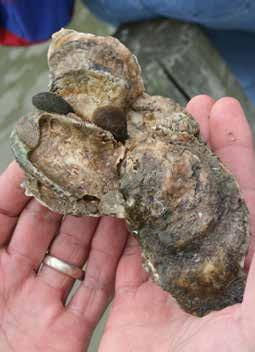
Few things are better associated with the Chesapeake Bay than oysters and watermen. Long before the first European colonists reached the Bay’s shores, oysters played an integral role in the lives of coastal American Indian tribes and the health of the entire ecosystem.
At the time of Captain John Smith’s explorations of the Bay in 1608, it is estimated there were enough oysters to filter all 18 trillion gallons of the water in the Chesapeake Bay every three to four days. Due to this tremendous natural filter, the water Captain John Smith explored was completely clear and supported the abundance of life he described.
Oysters formed an economic base for much of the region for another 300 years and gave rise to the proud tradition of Chesapeake watermen and the iconic boats and tools they developed specifically for the task of pulling these shellfish from the Bay. Over the last century, however, oyster populations have dropped precipitously, due to a combination of overharvesting and disease.
Today, record low numbers of oysters are harvested each year, and a once proud fleet of more than 2,000 skipjacks has dwindled to fewer than 40 boats that still ply the waters of the Chesapeake each winter. Visibility in the water—or lack thereof—has dropped to only a few feet and is a constant reminder of the work ahead for conservationists.
Many organizations and government agencies, including the Maryland Department of Natural Resources (DNR), National Oceanic and Atmospheric Administration (NOAA), and the University of Maryland Center for Environmental Studies, are focusing on oyster restoration as a way to revive both the natural and economic networks that rely upon a healthy oyster population. The mouth of the Choptank River has been highlighted as a premier location for oyster restoration and will be the focus of significant efforts over the next five years.
However, the oyster beds are only as healthy as the water that flows into them,
and the water is only as healthy as the land which feeds it. The Chesapeake Conservancy has been tasked with completing a high-resolution landscape analysis to identify priority areas throughout the watershed where conservation and restoration best-management practices could have the biggest impact on improving downstream water quality.
Over the next nine months the Conservancy’s Conservation Innovation Center will work with local, state, and federal partners to ensure that oysters planted at the mouth of the Choptank have the best chance for survival.
Rebuilding the Choptank River oyster population will help jumpstart oyster reefs in surrounding creeks and rivers to improve water quality of the Chesapeake Bay. Reviving the oyster population will also greatly benefit the watermen whose livelihoods largely depend upon the survival of the oyster population.
Get a Firsthand Look at Oystering
Learn more about oysters and watermen culture by taking a Watermen’s Heritage Tour (www.watermenheritagetours.org). Developed by the Chesapeake Conservancy and partners, these tours provide the unique opportunity to spend a day aboard a waterman’s boat learning the history and culture of this traditional profession, experiencing crabbing and oystering with seasoned veterans, and feasting on the fruits of your labor—all
while promoting a sustainable future for oysters in the Chesapeake Bay.
Learn oystering firsthand while enjoying a Watermen’s Heritage Tour.
PHOTO BY: EMILY MYRON
A new Conservancy Innovation project will help restore the Choptank River oyster population.
PHOTO BY: DAVID HAWKHURST
Meet the New Chairman of the Board, Paul Hagen Board Welcomes New Members
Five new members recently joined the Board of Directors, bringing additional expertise to the government body of 20 active members and 4 honorary members.
Heather Gartman is managing director of Chandler Chicco Agency’s Washington, D.C., office. She has more than 20 years of experience in marketing communications, public relations, and reputation and issues management. Heather has extensive experience in crisis communications and is a trained focus group moderator.
Bob Friend is executive vice president and general manager for District Photo Inc., a position he has held for 20 years. District Photo, founded in 1949, has become one of the largest digital fulfillment companies in the world. The business expanded into image one-off printing early in the last decade, serving both e-commerce consumers and major retailers throughout the world.
Robert Gensler is a professional investment advisor who retired in 2012 after 30 years in investments. He joined T. Rowe Price in 1993 as a financial analyst, working also as a media and telecommunications analyst, and then as portfolio manager for the Media and Telecommunications Strategy, the Global Technology Strategy, and finally for the Global Equity Strategy during his 20 years with the firm.
Three New Staff Join Conservancy
To meet the growing demand in the Conservancy’s conservation and communications work, we recently welcomed three new staff.
Regan Gifford, will serve as outreach coordinator for the Chesapeake Conservancy’s Envision the James Initiative. She comes to the Conservancy with field work experience in forestry, invasive species management, and aquaculture. She is excited to be actively involved with the Conservancy’s efforts to re-connect people with the unique natural resources and history of the Bay and to conserve the beautiful landscapes within its watershed. A native Upstate New Yorker, Regan received her bachelor’s degree in natural resources
Prior to joining T. Rowe Price, Rob worked also for Salomon Brothers and Smith New Court in global risk arbitrage management.
Michael D. Hankin is the president and chief executive officer of Brown Advisory, a position he has held since the firm became independent from Bankers Trust/Alex Brown & Sons in 1998. He has spent over 30 years assisting a wide range of individuals and institutions on their investment and financial matters. He was formerly a partner with the law firm of Piper & Marbury (now DLA Piper) headquartered in Baltimore, Maryland.
Jeffery More is a Principal at The Accord Group in Washington, DC where he represents a number of leading water, environment and conservation interests. His current clients include the National Association of Clean Water Agencies, Zurich Insurance, the American Fly Fishing Trade Association, Pheasants Forever, the Water Systems Council, Progressive Waste Solutions and the National Baseball Hall of Fame. Prior to joining the Accord Group, Mr. More served as Counsel and Professional Staff to the House Water Resources and Environment Subcommittee, 1993 –2000, and staffed the Speaker’s Task Force on the Environment during the 104th Congress. Mr. More began his career in the Office of Congressman Sherwood Boehlert in 1988.
management from SUNY-College of Environmental Science and Forestry in Syracuse, New York.
Peter Turcik, communications intern, is assisting the Conservancy with brand development, college outreach programs, and grant research. He has a journalism background that includes work with the U.S. Congress, National Geographic Society, and the National Park Service. Peter holds a B.A. in English from Allegheny College.
James Varn, conservation intern, is working in cooperation with the National Park Service Chesapeake Bay Office to develop an interpretive guide program for the John Smith Trail. Prior to this internship, James was an interpretive river guide on the Snake River in Grand Teton National Park. He holds a B.A. in philosophy with a focus on environmental ethics from the College of Wooster.
In a recent interview, Paul Hagen, new chairman of the Board of Directors, tells why the Chesapeake Bay and the work of the Chesapeake Conservancy are important to him:
Chesapeake Conservancy: Why did you decide to become involved with the Chesapeake Conservancy?
Paul Hagen: I was drawn to the Conservancy by its focus on expanding access and recreational opportunities around the Bay watershed. When I moved to the area over 25 years ago, it took some time for me to discover the remarkable birding opportunities on the Eastern Shore, or the quiet places to go kayaking. We are playing a critical role in expanding access to the Chesapeake and its rivers for generations to come.
CC: Why is the Chesapeake Bay important to you?
PH: The Chesapeake Bay and its rivers are the biological engine that sustains great populations of waterfowl, fish, and songbirds for much of the East Coast. Protecting the Chesapeake not only enhances the recreational opportunities available here, but also helps to sustain the birding and recreational fishing opportunities along the Atlantic seaboard. The Bay is truly a national treasure.
CC: What is your favorite thing to do on the Bay?
PH: Birding and fishing are two of my favorite life-long recreational activities. Both require that you be outdoors and that you focus your attention on your immediate surroundings. I spend a fair amount of time in and around Blackwater National Wildlife Refuge in Dorchester County, sometimes in a kayak, but more often with family and a bunch of playful dogs in tow. Anyone who spends time on the Eastern Shore cannot help but feel grateful and motivated to help preserve our great rivers and special places.
PHOTO BY: C. JAHNKE
716 Giddings Avenue, Suite 42 | Annapolis, Maryland 21401
THE CHESAPEAKE CONSERVANCY RELIES ON OUR MANY FRIENDS TO PROTECT AND CONSERVE THE CHESAPEAKE’S GREAT RIVERS AND SPECIAL PLACES. YOUR TAX-DEDUCTIBLE CONTRIBUTION OF ANY AMOUNT IS TRULY APPRECIATED. OUR TAX NUMBER IS #26-2271377.