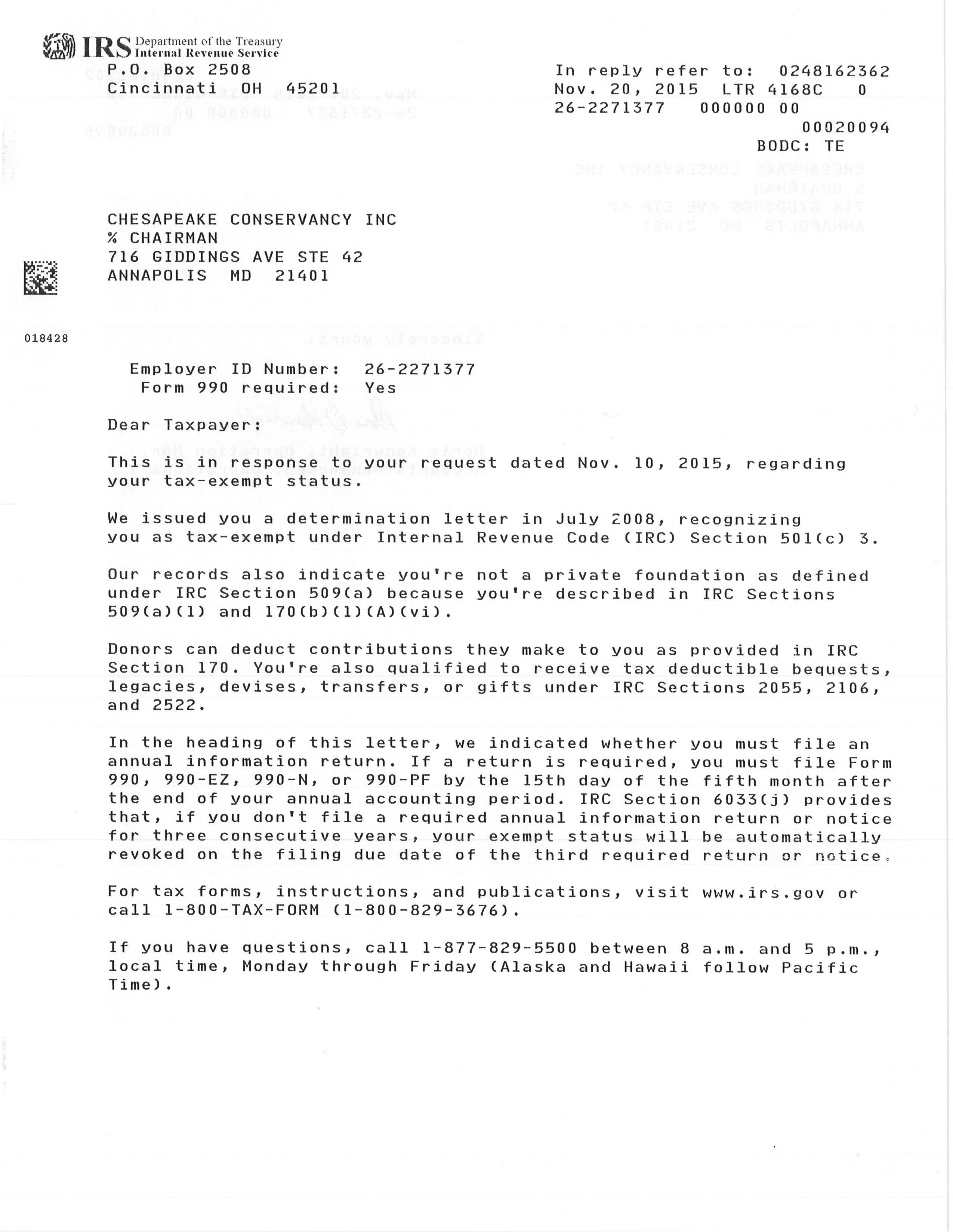
The purpose of the conflicts ofinterest policy is to protect theChesapeake Conservancy’s interest when it is contemplating entering into a transaction or arrangement that might benefit the private interest of an officer or director of the organization. This policy is intended to supplement but not replace any applicable state laws governing conflicts of interest applicable to nonprofit and charitable corporations.
ARTICLE II
Definitions
1.Interested Person
Any director, principal officer, or member of a committee with board-delegated powers who has a direct or indirect financial interest, as defined below, is an interested person.
2.Financial Interest
A person has a financial interest if the person has, directly or indirectly, through business, investment or family:
a.an ownership or investment interest in any entity with which the Chesapeake Conservancyhas a transaction or arrangement;or
b.a compensation arrangement with the Chesapeake Conservancyor with any entity or individual with which the Chesapeake Conservancyhas a transaction or arrangement;or
c.a potential ownership or investment interest in, or compensation arrangement with, any entity or individual with which the Chesapeake Conservancyis negotiating a transaction or arrangement.
Compensation includes direct and indirect remuneration as well as gifts or favors that are substantial in nature.
A financial interest is not necessarily a conflict of interest. Under Article III, Section 2, a person who has a financial interest may have a conflict of interest only if the appropriate board or committee decides that a conflict of interest exists.
Procedures
1.Duty to Disclose
In connection with any actual or possible conflicts of interest, an interested person must disclose the existence of his or her financial interest and must be given the opportunity to disclose all material facts to the directors and members of committees with board-delegated powers considering the proposed transaction or arrangement.
2.Determining whether a Conflict of Interest Exists
After disclosure of the financial interest and all material facts, and after any discussion with the interested person, he or she shall leave the board or committee meeting while the determination of a conflict of interest is discussed and voted upon. The remaining board or committee members shall decide if a conflict of interest exists.
3.Procedures for Addressing the Conflict of Interest
a.An interested personmay make a presentation at the board or committee meeting, but after such presentation, he or she shall leave the meeting during the discussion of, and the vote on, the transaction or arrangement that results in the conflict of interest.
b.The chairman of the board or committee shall, if appropriate, appoint a disinterested person or committee to investigate alternatives to the proposed transaction or arrangement.
c.After exercising due diligence, the board or committee shall determine whether the Chesapeake Conservancycan obtain a more advantageous transaction or arrangement with reasonable efforts from a person or entity that would not give rise to a conflict of interest.
d.If a more advantageous transaction or arrangement is not reasonably attainable under circumstances that would not give rise to a conflict of interest, the board or committee shall determine by a majority vote of the disinterested directors whether the transaction or arrangement is in the Chesapeake Conservancy’s best interest and for its ownbenefit and whether the transaction is fair and reasonable to the Chesapeake Conservancyand shall make its decision as to whether to enter into the transaction or arrangement in conformity with such determination.
4.Violations of the Conflict of Interest Policy
a.If the board or committee has reasonable cause to believe that an interested person has failed to disclose actual or possible conflicts of interest, it shall inform the individualof the basis for such belief and afford the individualan opportunity to explain the alleged failure to disclose.
b.If, after hearing the response of the interested personand making such further investigation as may be warranted in the circumstances, the board or committee determines that the member has in fact failed to disclose an actual or possible conflict of interest, it shall take appropriate disciplinary and corrective action.
ARTICLE IV
Records of Proceedings
The minutes of the board and all committee with board-delegated powers shall contain:
1.The names of thepersons who disclosed or otherwise were found to have a financial interest in connection with an actual or possible conflict of interest, the nature of the financial interest, any action taken to determine whether a conflict of interest was present, and the board’s or committee’s decision as to whether a conflict of interest in fact existed.
2.The names of the persons who were present for discussions and votes relating to the transaction or arrangement, the content of the discussion, including any alternatives to the proposed transaction or arrangement, and a record of any votes taken in connection therewith.
ARTICLE V
Compensation
1.Any voting member of the board of directors who receives compensation, directly or indirectly, from the Chesapeake Conservancyfor services is precluded from discussing and voting on matters pertaining to that member’s compensation. No director, either individually or collectively, is prohibited from providing information to the board of directors regarding director compensation.
2.A voting member of any committee whose jurisdiction includes compensation matters and who receives compensation, directly or indirectly, from the Chesapeake Conservancy for services is precluded from voting on matters pertaining to that member’s compensation.
3.Officers and directors who receive compensation, directly or indirectly, from the Chesapeake Conservancy, whether as employees or independent contractors, are precluded from membership on any committee whose jurisdiction includes compensation matters. No officer or director, either individually or collectively, is prohibited from providing information to any committee regarding officer or director compensation.
ARTICLE VI
Annual Statements
Each director, principal officer and member of a committee with board-delegated powers shall annually sign a statement, which affirms that such person:
a.has received a copy of this conflicts of interest policy; b.has read and understands this policy; c.has agreed to comply with the policy;and d.understands that theChesapeake Conservancyis a charitable organization and that in order to maintain its federal tax exemption it must engage primarily in activities, which accomplish one or more of its tax-exempt purposes.
ARTICLE VII
Periodic reviews
To ensure that theChesapeake Conservancyoperates in a manner consistent with its charitable purposes and that it does not engage in activities that could jeopardize its status as an organization exempt from federal income tax, periodic reviews shall be conducted. The periodic reviews shall, at a minimum, include the following subjects:
a.Whether compensation arrangements and benefits are reasonable and are the result of arm’s-length bargaining.
b.Whether acquisitions of any goods or services result in inurement or impermissible private benefit.
c.Whether partnership and joint venture arrangements and arrangements with management service organizations (if any) conform to written policies, are properly recorded, reflect reasonable payments for goods and services, further the Chesapeake Conservancy’s charitable purposes, and do not result in inurement or impermissible private benefit.
d.Whether agreements to provide charitable services and agreements with other service providers and third parties further the Chesapeake Conservancy’s charitable purposes and do not result in inurement or impermissible private benefit.
ARTICLE VIII
Use of Outside Experts
In conducting the periodic reviews provided for in Article VII, the Chesapeake Conservancymay, but need not, use outside advisors. If outside experts are used their use shall not relieve the board of its responsibility for ensuring that periodic reviews are conducted.
Last updated: September 20, 2011
Chesapeake Conservancy Conflict of Interest 2026 Annual Statement
I, _______________________________________________, as a Board Member of the Chesapeake Conservancy, hereby acknowledge and affirm that I:
a)Have received a copy of the Chesapeake Conservancy’s Conflict of Interest Policy (the Policy);
b)Have reviewed and understand the Policy;
c) Agree to comply with the Policy;
d)Understand that the Chesapeake Conservancy is a charitable organization and that in order to retain its federal tax exemption, must engage primarily in activities which accomplish one or more of its tax-exempt purposes.
Signature:
Title:
Date:
Section 2: Board Expectations and Governance Materials
Chesapeake Conservancy Board of Directors
At A Glance
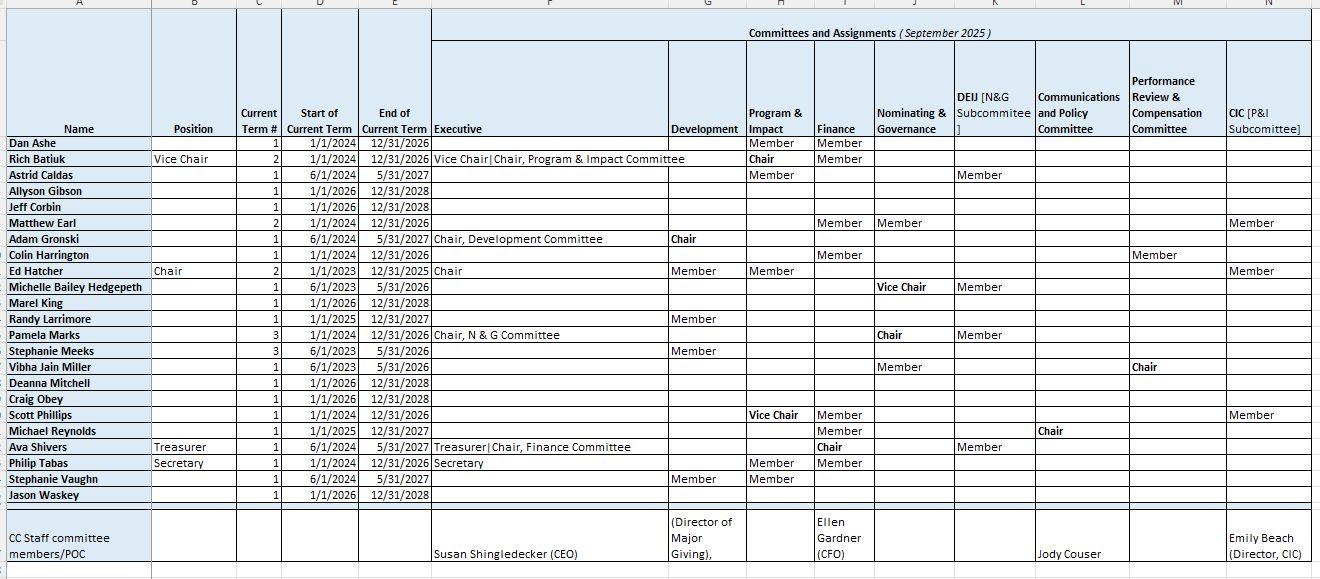
January 2026
Current Composition:
• 23 Board seats, 22 filled, plus the ex-officio Chief Executive Officer
• CEO has a standing (non-voting) seat on the Board
• Three-year term of service
• Election for one additional term possible until member must rotate off for at least a year
Honorary (Non-voting) Board Categories:
• 1 Honorary Board members that must be re-elected every 3 years
• 2 Emeritus Directors with no term limits
• 1 Chair Emeritus Director with a three year term (a new honor proposed for inclusion in the Bylaws in February, 2024)
Recruitment Priorities:
• We seek a range of skills and community contacts, and regularly evaluate the composition for a strong balance
• Diversity sought across geography, gender, age, and demographic categories
• In 2015, the Board passed a resolution to increase available board seats from 20 to 22 to support a stronger focus on recruiting diverse candidates. In 2025, the Board passed Commitment to the Communities We Serve Statement.
Leadership:
• Ed Hatcher, Chair
• Rich Batiuk, Vice Chair
• Ava Shivers, Treasurer
• Philip Tabas, Secretary
Board Member Expectations:
• Participation:
o Attend four board meetings per year (February, June, September, December)
o Serve on at least one committee/sub-committee (meetings as scheduled)
o Executive Committee meets monthly to bring Board officers and Committee leadership together, and provide general oversight for the organization on behalf of the Board
• Financial commitments to support the Conservancy’s programs and mission:
o Annual 100% board participation in giving (at any level)
o Over each Board term, to give or get $5,000
• Must annually complete conflict of interest disclosure form
• Wednesday and Thursday, June 24th and 25th in person, location TBD
o Time Wednesday: TBD
o Time Thursday: TBD
o Board dinner on June 24th: TBD
• Wednesday and Thursday, September 16th and 17th, in person, Annapolis
o Wednesday: TBD
o Thursday: TBD
o Board dinner on September 16: TBD
• Wednesday and Thursday, December 11th and 17th in person, Annapolis
o Wednesday Time: TBD
o Thursday Time: TBD
o Board dinner on December 10th: TBD
Board of Directors Position Description
Purpose: To act as a voting member of the board with full authority and responsibility to develop policies for the operation of the organization; to monitor the organization’s financial health, programs and overall performance; and to provide the chief executive officer the resources needed to serve the organization’s constituencies.
The Full Board’s Responsibilities:
• Establish policy
• Hire and evaluate the president
• Secure sustainable funding for the organization
• Monitor finances, review annual audited reports, and approve an annual budget, and
• Create and update a long-range plan for the organization
• Select and support the organization’s board officers
• Adopt key operating policies
Individual Board Member’s Duties:
• Support the organization through meaningful financial contributions, strategic advice, and engagement with partners to strengthen organizational success.
• Provide a personal financial commitment to help the Chesapeake Conservancy’s achieve an annual fund 100% board member participation rate.
• Support long-term sustainability by striving to secure $5,000 over each 3-year term to support the work and mission of the Chesapeake Conservancy. This commitment may be fulfilled through personal, matching, in-kind services and/or soliciting gifts from other donors in partnership with Conservancy staff.
• Support the cultivation and stewardship of committed donors and partners through participation in events and activities, especially the Chesapeake Conservancy's Annual Fund and Saving Special Places campaigns.
• Attend three board meetings per year unless special circumstances prohibit attendance and actively serve on at least one committee, task force, or sub-committee to provide counsel and input to address organizational challenges and opportunities.
• Serve as an informed and compelling ambassador on behalf of the Conservancy to expand its influence and effectiveness with individuals, the public, and other organizations.
• Enhance board governance and institutional effectiveness through assuming board leadership roles or identifying potential board member candidates.
• Provide feedback to the president of relevant community and constituency concerns.
• Maintain confidentiality of board discussion and complete an annual Conflict of Interest agreement.
Legal Duties of an NGO Board:
As a refresher, a board of directors of a nonprofit organization has three primary legal duties:
1. Duty of Care: Take care of the nonprofit by ensuring prudent use of all assets, including reputation, facility, people, and goodwill.
2. Duty of Loyalty: Ensure that the nonprofit's activities and transactions are advancing its mission; Recognize and disclose conflicts of interest; Make decisions that are in the best interest of the nonprofit corporation and not in the best interest of the individual board member (or any other individual or for-profit entity).
3. Duty of Obedience: Ensure that the nonprofit obeys applicable laws and regulations; follows its own bylaws; and that the nonprofit adheres to its stated corporate purposes/charitable mission.
Board Responsibilities:
These legal duties, in practice, mean that directors provide guidance to nonprofits by contributing to the organization’s strategic focus, effectiveness, and financial sustainability, as well as serving as ambassadors and advocates. Of course, as a practical matter, each nonprofit organization must translate and tailor these legal operations into policies and procedures that are applicable and appropriate to their own mission, activities, and circumstances.
The following six actions will fulfill the board’s leadership and oversight responsibilities:
1. Approval of the organizational strategy
2. Developing the organization’s policies and procedures
3. Stewardship of financial and legal resources and providing risk management
4. Ensuring a robust and diverse Board with regular Board self-assessments
5. Effectiveness monitoring and evaluation of the organization’s activities
6. Hiring and evaluating and hiring a CEO (staff)
CEO Responsibilities:
Typically, the board delegates all daily management duties to the chief executive officer (CEO) of the non-profit organization. An organization’s CEO is responsible for overseeing the implementation of the board’s strategy and policies and managing the organization effectively and efficiently per the board’s policies and budget. Keeping a close eye on the organization’s issues and activities, the chief executive officer maintains regular contacts with the board and particularly the board chair. Furthermore, the CEO ensures that the board receives accurate, concise, and timely information. It is up to the CEO to keep the board updated on the organization’s ongoings at an operational level the staff below the CEO level report to the CEO, not the board. Information and regular communication between the CEO and the board helps to ensure that the board makes well-rounded strategic and oversight decisions.
National Park Service, Ret. 2417 Barbour Rd Falls Church, VA 22043 (Home)
Email: mtr5203@gmail.com Phone: 703-615 4316
Jason Waskey, CPA
CEO Blue Crab Strategies 1415 Chapin St NW, #208 Washington DC 20009 (Home)
Email: jason@bluecrabstrategies.com
Phone: 301-219-9238
Stephanie M. Vaughn
Environmental Engineer 301 E. 62nd Street
New York, NY 10065 (Home)
Email: svaughn90@gmail.com
Phone: 646-334-7493
Jeff Corbin
Native Shorelines (a Davey Company) 1892 Fairground Rd., Maidens, VA 23102 (Home)
Email: jeffmcorbin@gmail.com
Phone: (804) 389-4226
Marel King
Pennsylvania Director of the Chesapeake Bay Commission 235 Butchershop Road, Duncannon, PA 17020 (Home)
Email: marelraub@gmail.com
Phone: (717) 439-9040
Craig Obey
Nonprofit Public Policy Executive 2810 Monument Ave, Apt 4, Richmond, VA 23221 (Home)
Email: Craigobey64@gmail.com
Phone: (202) 669-9689
Allyson Gibson
Executive Director for the Lancaster Clean Water Partners 219 Blossom Hill Dr, Lancaster, PA 17601 (Home)
Email: agibson@lancastercleanwaterpartners.com
Phone: (443) 995-2704
Deanna Mitchell
Former National Park Service, Superintendent of Harriet Tubman Underground Railroad National Historical Park Email: dcm5977@gmail.com Phone: (850) 832-9930
Section 3: Strategic Priorities
Chesapeake Conservancy Org Chart
Chesapeake Conservancy Strategic Plan FY 2023-2030
FY 2023-2030 OBJECTIVE:
‘What’ is Winning …
To conserve and restore 30% of the Chesapeake Watershed by 2030 with emphasis on landscapes of significant ecological and cultural value, to engage and empower diverse conservation leaders, and build the foundation of an enduring institution.
STRATEGIES: (Captain)
1.Research & Provide Data Analysis (Emily): Deliver high-quality data that empowers equitable, conservation-based decision-making within the CBW to achieve 30x30 goals. Support CC programs and initiatives to lay the groundwork for a resilient and sustainable Conservancy.
FY2025 PLANS:
1a) Initiate the EPA CBP grant with four distinct Action Plans.
1b) Establish a recurring revenue stream by creating a portfolio of data services and a subscription-based online data tool for CBW partners.
1c) Diversify grant opportunities by establishing and strengthening partnerships with state agencies and conservation associations.
1d) Generate revenue by establishing a partnership with a federal contractor to deliver geospatial data support via subcontracts.
1e) Drive new clients to CC’s website by developing and implementing a comprehensive marketing and communications strategy for the CIC to re-engage past partners.
Our Mission: To conserve and restore the natural and cultural resources of the Chesapeake Bay watershed for the enjoyment, education, and inspiration of this and future generations. We serve as a catalyst for change, advancing strong public and private partnerships, developing and using new technology, and empowering environmental stewardship. GOALS:
2.Enable Policy (XXXX): Enact evidence-based, equitable conservation policy and action using high-quality data and rigorous analyses to inform environmental programs, regulations, appropriations, and legislation.
% of Chesapeake Conserved
Acres conserved this year
3.Conserve Land (XXX): Develop and advance innovative, equitable, and scalable conservation finance, policy and exemplary projects to conserve critical lands to meet 2030 targets and realize ecosystem benefits.
2a) Make progress towards securing permanent VA state funding for land conservation programs, protect Maryland’s Program Open Space funding and secure full funding for PA’s conservation and restoration programs including the Keystone Fund and Clean Streams Fund.
2b) Pass VA state legislation that will allow DEQ to provide CWSRF loans for land conservation, support passage of a conservation friendly solar siting bill in Maryland and pass the Federal CRNA.
2c) Establish the Southern Maryland Woodlands National Wildlife Refuge.
2d) Help guide Maryland’s Whole Watershed Act [CD1] and develop a substantial USDA Farm Bill stream delisting program for the Chesapeake. ie. lettermark (~$200 million).
3a) Establish criteria and CC land conservation focus areas for the next 3-6 years; minimum of 1x geographical focus area per watershed state (sans NY) plus Anne Arundel County, MD.
3b) Complete real estate transactions (Matt/Joel) at Fones Cliffs (Dec. ‘24), Saltworks (Dec. ‘24), Dorchester County (Dec. ‘24), Porter-Burtelle (Dec. ‘24); and continue vetting other projects in development.
3c) Meet 75% of PA’s 30 by 30 stream delisting restoration targets restoration (Dec. ‘25) and set 30 by 30 land conservation goals (Winter ‘25).
3e) Expand Giftlands program to support 30x30 conservation and unrestricted revenue goals. (Matt- March ‘25)
3f) Continue exploring Land Conservation Revolving Loan Program (Mar. ‘25)
4. Restore Tributaries (Carly): Coordinate and implement community-based, data-driven strategies to restore living resources, and advocate for policy improvements to support that work.
5. Facilitate & Convene (XXXX): Lead efforts to organize partners at a regional, state, and local level to develop and execute innovative equitable conservation strategies to achieve Chesapeake watershed goals.
4a) PA: Narrow focus on most promising streams (Spring ‘25), implement BMPs to meet 75% of restoration goals (Winter ‘25); and set land preservation goals (Winter ‘25).
4b) Secure partnership with two MD communities (Spring ‘25) to replicate the PA Tributaries strategy. Scale Tributaries by securing CIC data analysis contracts (Dec. ‘25).
4c) Launch Gather & Grow Project: Provide conservation training to 100 people (Fall ‘25) and plant 240 trees and shrubs in underserved communities (Fall ‘25).
5a) Coordinate Chesapeake Conservation Partnership and get Strategic Playbook approved (Ben- Feb. ‘25)
5b) Organize partners to ensure equitable conservation is integrated into the Chesapeake Bay Program efforts Beyond 2025 (Ben).
5c) Grow and maintain the Chesapeake Conservation Partnership to advance equitable conservation goals, ensure JEDIA principles are integrated into all facilitation and convening efforts, and ensure accurate and timely tracking of conservation as outlined by the CCP Strategic Playbook (Ben).
5d) Meet FWS FY25 goals for Chesapeake WILD (Ben).
5e)) Assemble thought leaders to develop innovative finance strategy for 30x30 (Sept. ‘25).
2024 Highlights
Maryland Leads the Way in Land Conservation
Chesapeake Conservancy, in partnership with conservation organizations across Maryland, celebrates a major milestone as the state surpasses its 30% land conservation goal for 2030—six years ahead of schedule. This success results from strong collaboration among government agencies, conservation groups and local communities. As of February 2024, over 1.85 million acres have been conserved statewide with 30.21% of Maryland’s portion of the Chesapeake Bay watershed now protected. Chesapeake Conservancy advocates every year for Program Open Space, which is the state’s key funding mechanism for land conservation.
Establishment of the Southern Maryland Woodlands National Wildlife Refuge
The establishment of the Southern Maryland Woodlands National Wildlife Refuge, in partnership with the Southern Maryland Conservation Alliance (SMCA), marks a significant conservation achievement. Spanning a 577,000-acre acquisition boundary, this will be Maryland’s first new national wildlife refuge in over 60 years and will safeguard vital habitats in southern Maryland.
Advancing Chesapeake National Recreation Area Act (S. 2620)
The Chesapeake National Recreation Area (CNRA) proposal, introduced by Senator Chris Van Hollen (D-Md.), seeks to unite parks and public lands along the Chesapeake Bay under the National Park Service. This initiative preserves natural and cultural resources, enhances public access and promotes Bay stewardship. On November 19, the U.S. Senate Committee on Energy and Natural Resources unanimously voted to advance the CNRA Act (S. 2620) out of committee.
Partners Expand Elktonia-Carr’s Beach Heritage Park
Chesapeake Conservancy, in collaboration with Blacks of the Chesapeake Foundation, The Conservation Fund, the City of Annapolis and Anne Arundel County in Maryland, successfully acquired the former home of Dr. Parlett Moore, educator and former Coppin State University president, to expand the Elktonia-Carr’s Beach Heritage Park. The 0.67-acre Moore property, adjacent to the 5.17-acre park, will be managed by the City of Annapolis Recreation & Parks. These properties, historic Chesapeake Bay destinations for Black families during the segregation era, hold significant cultural and historical value.
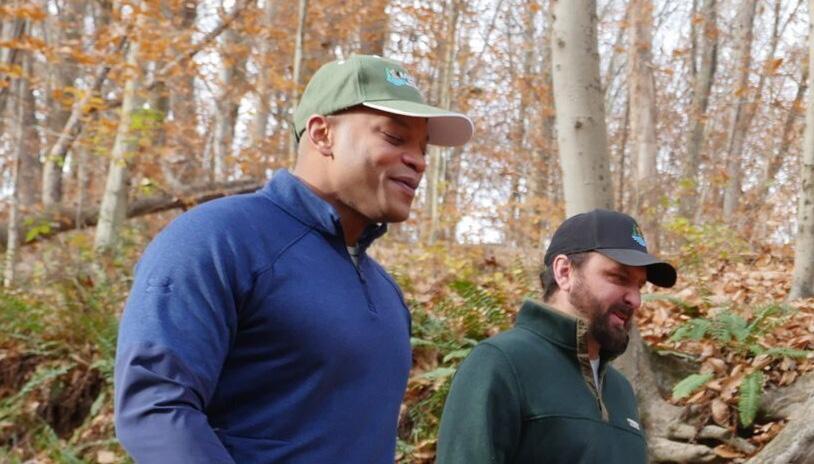
Maryland Governor Wes Moore and Secretary of Maryland Department of Natural Resources Joshua Kurtz visit Bacon Ridge Natural Area near Annapolis. photo by maryland department of natural resources
This interior forest and riparian wetlands habitat supports northern long-eared bats, forest-interior songbirds, box turtles and several species of salamanders that are of conservation concern. photo by matthew kane/the nature conservancy
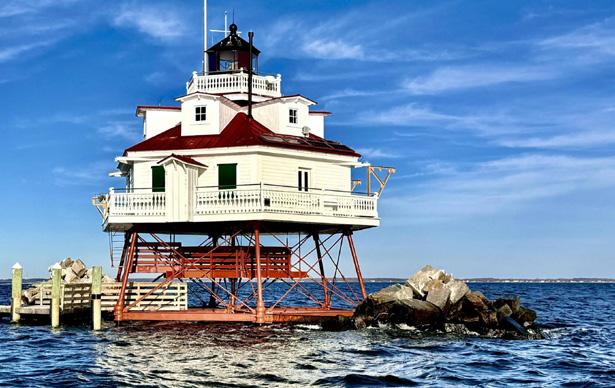
Significant progress was made in the more than four decade effort to bring National Park Service status to the Chesapeake Bay. photo by david sites
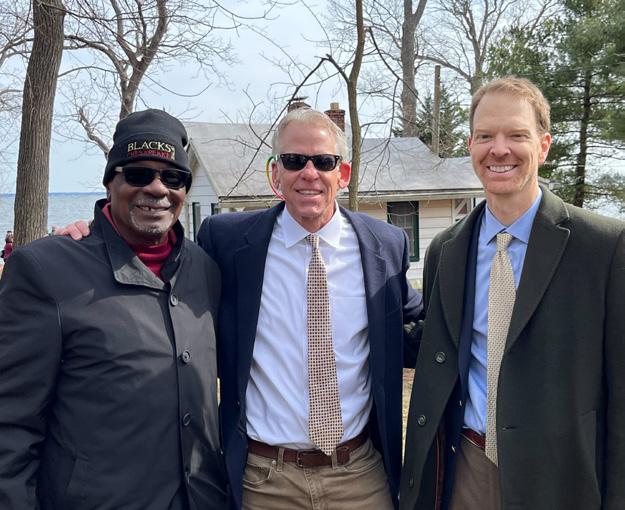
From left to right: Blacks of the Chesapeake President & Founder Vince Leggett, The Conservation Fund Maryland State Director Bill Crouch and Chesapeake Conservancy President & CEO Joel Dunn photo by j.t. dean/chesapeake conservancy
Grand Opening of the Earl Conservation Center
The Earl Conservation Center, located at 1212 West Street in Annapolis, Maryland, creates a permanent home for the Chesapeake Conservancy and other environmental organizations. The center will co-locate several environmental nonprofits, providing collaborative meeting areas and a shared, inspiring workspace for staff and visitors. Made possible by the generosity of James and Sylvia Earl and their family, the center will serve as a hub for environmental organizations, promoting efficiency and collective action in conservation.
Implementation of the Maryland Greenspace Equity Program Act (MD SB923)
This legislation, which Chesapeake Conservancy helped develop and pass in Maryland, launched the Greenspace Equity Program to fund greenspace creation in underserved communities. Governor Wes Moore allocated $5 million to the program with grants to be awarded in early 2025, marking a significant step toward environmental justice and improved public health in overburdened communities.
“Supporting the creation of the Southern Maryland Woodlands National Wildlife Refuge—Maryland’s first new refuge in over 60 years and the Chesapeake Bay’s first in 25 years—has been an incredible honor. This refuge will help protect vital East Coast migratory habitat for waterfowl, shorebirds, grassland birds and endangered species like the dwarf wedgemussel, Atlantic sturgeon and northern long-eared bat. This achievement was made possible through the dedication of the Chesapeake Conservancy and its committed conservation partners, who worked tirelessly to make this vision a reality. Their efforts not only help safeguard wildlife and water quality but also enhance climate resilience and expand recreational opportunities. I encourage others to support their work to protect our region’s most important landscapes—because the time to conserve is now.
- Stephen Schuyler
FOCUS FINANCIAL PARTNERS SENIOR WEALTH
ADVISOR AND MANAGING DIRECTOR AND BOARD MEMBER OF NATIONAL PARK TRUST ”
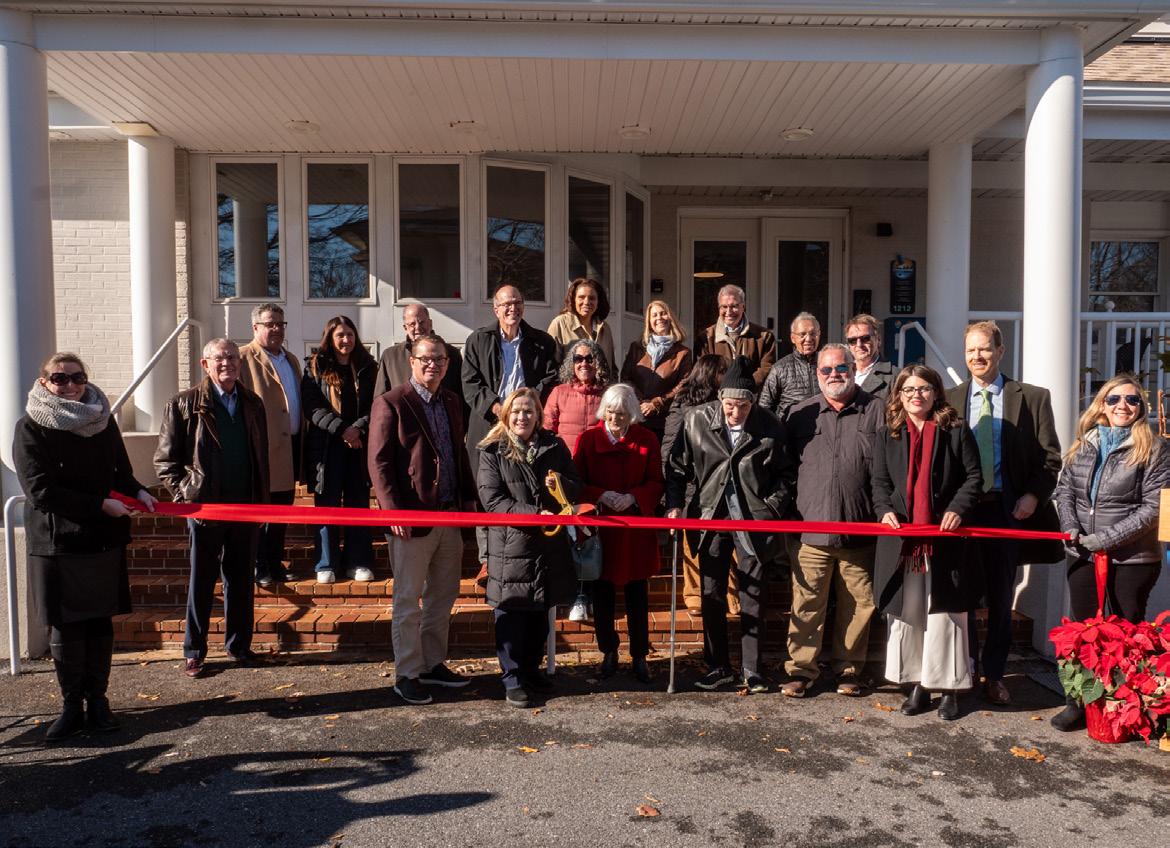
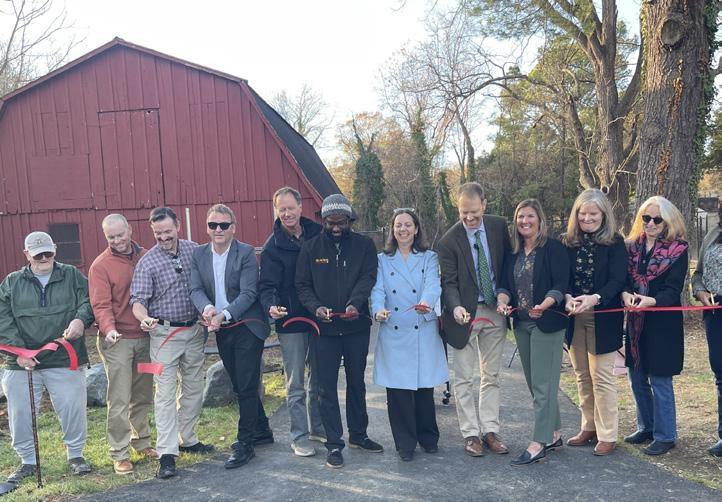
A ribbon cutting was held to celebrate the grand opening of the Earl Conservation Center on December 12, 2024.
photo by sue buyaskas
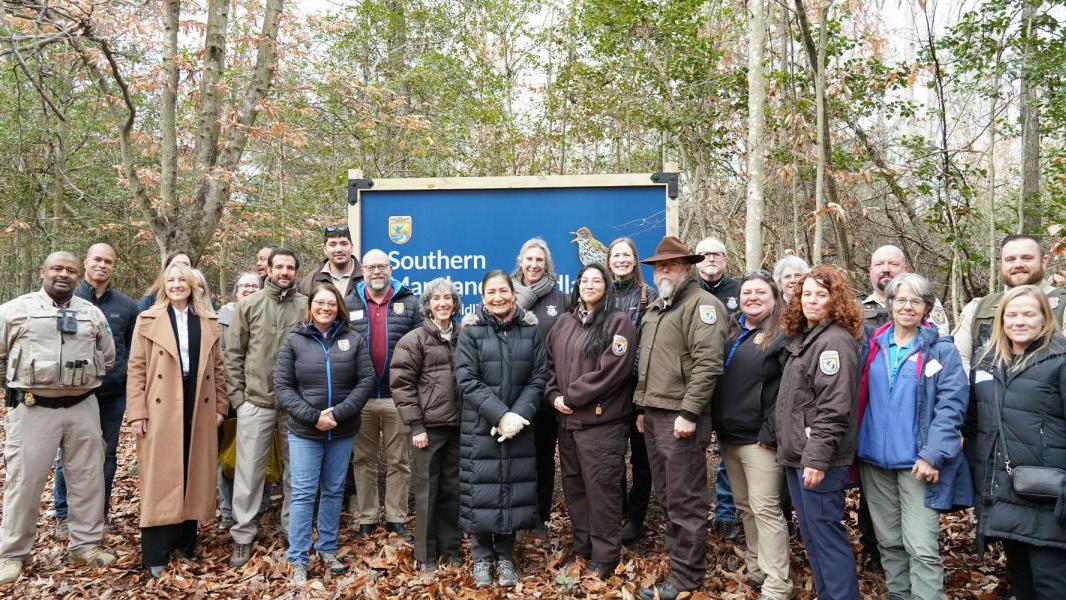
A gathering to mark the creation of the Southern Maryland Woodlands National Wildlife Refuge
photo by the u.s. department of the interior
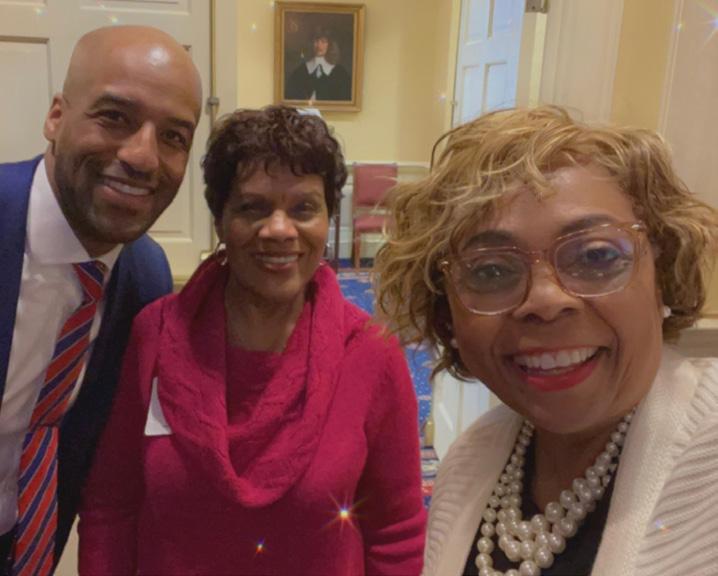
Chesapeake Conservancy Executive Vice President of External Affairs Mark Conway, Edie Brooks of Turner Station and Chesapeake Conservancy Board Member Mamie Parker testified in 2023 in support of the Greenspace Equity Program (HB 503 / SB 923).
photo by mamie parker
Opening of the McNew Community Garden
Thanks to the generosity of a conservationminded landowner, a 5.6-acre farm once zoned for development has been transformed into a community garden in Edgewater, Maryland. The McNew family donated this property through Chesapeake Conservancy’s Giftlands program, ensuring the permanent conservation of their family farm in the highly developed Rt. 2 corridor near the South River.
New Chesapeake Story Map Highlights 65 Historically Black Beaches and Sites of Significance
A new story map, created through the partnership of Chesapeake Conservancy and Blacks of the Chesapeake Foundation (BOCF), showcases 65 historically Black beaches and other sites of Black historical significance across the Chesapeake Bay watershed. This effort aims to empower conservation and ensure the preservation of these vital historical sites. While the list is extensive, Chesapeake Conservancy and BOCF acknowledge that there are many more sites of Black history.
Breaking Ground on Cambridge Waterfront Park
Construction has begun on an economic development project to make the Choptank River waterfront more accessible to the community of Cambridge, Maryland. Chesapeake Conservancy is partnering with Cambridge Waterfront Development Inc. to extend and renovate the waterfront promenade through a $2.4 million grant from the federal Economic Development Administration.
Updated Mapping of Maryland’s Habitat Connectivity Network
Chesapeake Conservancy’s Conservation Innovation Center (CIC) partnered with the Maryland Department of Natural Resources (DNR) to update the state’s habitat connectivity map, previously known as “Green Infrastructure.” This updated map tracks changes in the network of “hubs” (large, intact natural areas) and “corridors” (pathways that connect the hubs), essential for wildlife health. These areas support species that need large habitats and corridors for food and mating while also providing critical ecosystem services like clean water, air, carbon sequestration and climate resilience. This tool aids Maryland DNR and other conservation partners in targeting priority areas for protection and restoration.
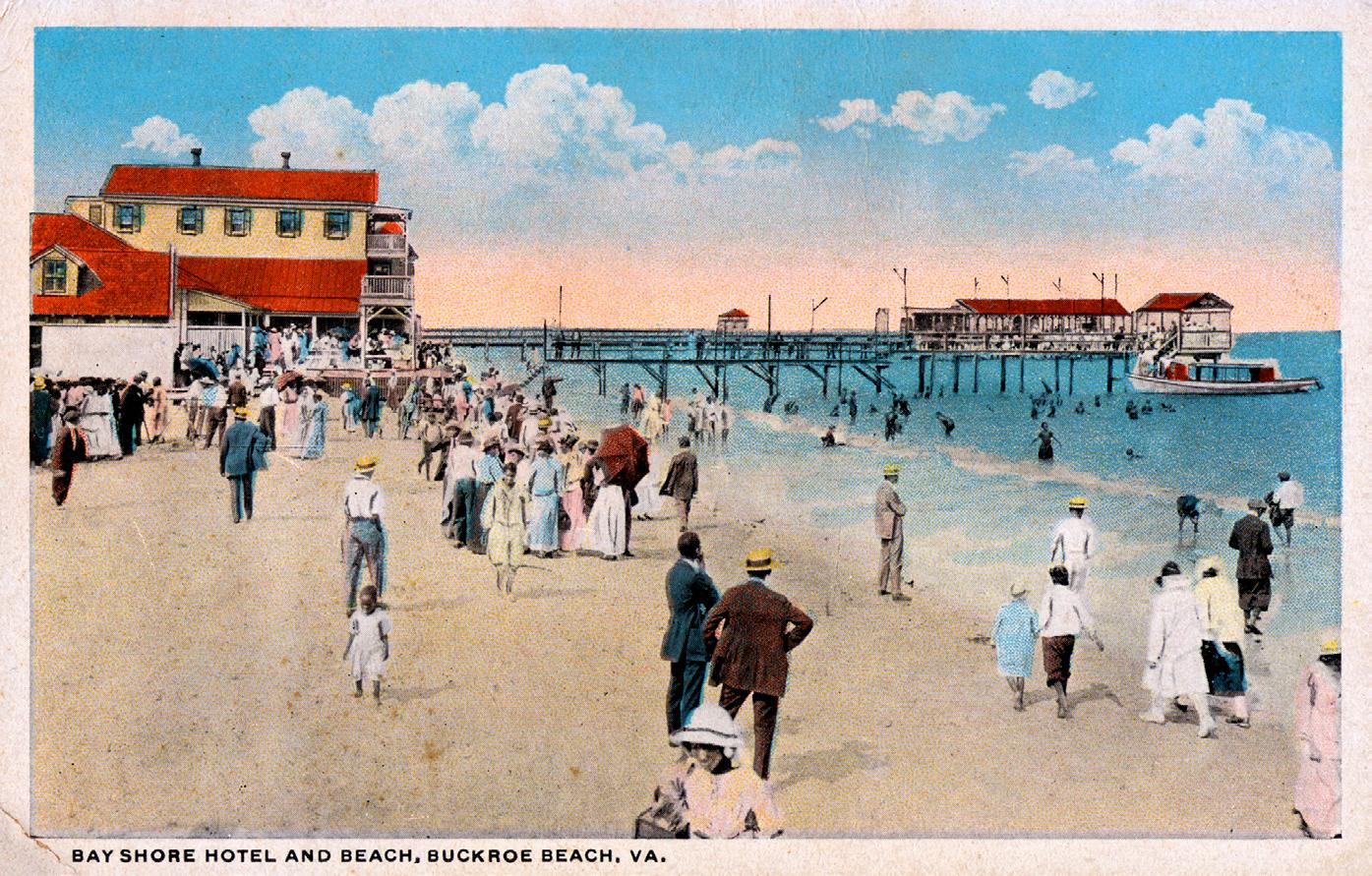
Vintage postcard featuring the Bay Shore Hotel and Beach in Buckroe Beach, Virginia photo by elizabeth lankes
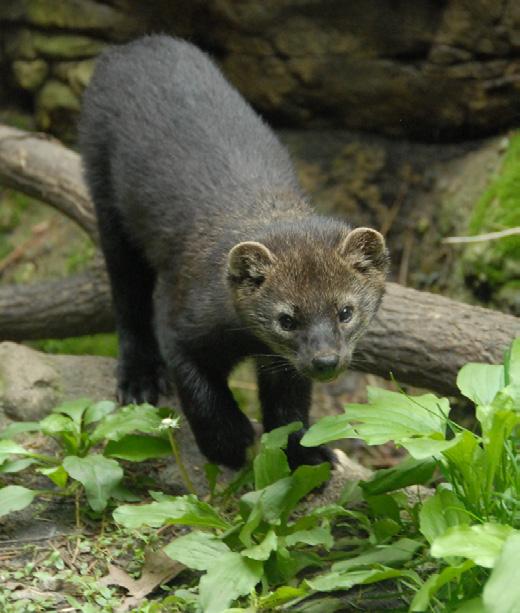
Many species will likely benefit from the updated habitat connectivity map, such as the small, cat-like fisher. photo by josh more
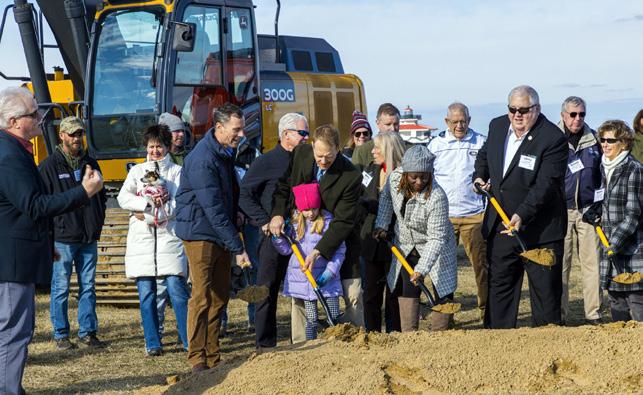
Partners take part in the groundbreaking of the new Harbor Promenade in Cambridge, Maryland.
photo by sue buyaskas
Celebrating the McNew Community Garden photo by jody couser
Restoring and Delisting Impaired Streams in Pennsylvania
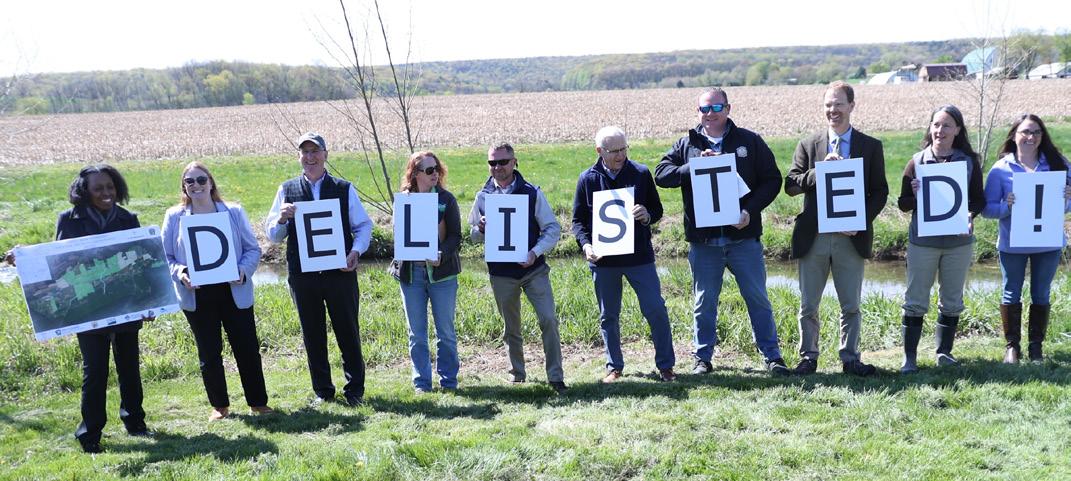
Chesapeake Conservancy helped to remove five impaired stream segments from the impaired waters’ list, a key achievement in restoring water quality in Pennsylvania’s Chesapeake Bay watershed. This outcome was made possible through a partnership with local conservation organizations and elected officials. Chesapeake Conservancy now has projects in over 50 stream segments that are working toward delisting.
With funding and political will, partners can deploy the successful strategy Bay-wide, saving local streams and, in so doing, the Chesapeake.
Passage of the Maryland Whole Watershed Act (MD SB921)
Chesapeake Conservancy played a central role in crafting and advancing the Maryland Whole Watershed Act, working closely with Maryland Senator Sarah Elfreth and key partners. Building on success with Pennsylvania’s stream delisting efforts, Chesapeake Conservancy championed this legislation as part of Maryland’s response to the Chesapeake Bay Program’s report A Comprehensive Evaluation of System Response (CESR). The act leverages precision data to enhance watershed management and created the Whole Watershed Fund to support water quality improvement projects across the state.
Donate
More than 18 million people call the Chesapeake home and have fallen in love with its awesome landscapes and rivers. So much so that thousands of acres of open space disappear each year. We are in a race against time to conserve, protect and restore what makes the Chesapeake so special before it is too late. Thank you for supporting our work. No amount is too small or too large to help us achieve great things together.
“Chesapeake Conservancy’s work at all levels ensures the protection of places in the Chesapeake that I love, which is why I made a charitable bequest to the Conservancy in my estate planning.”
SUPPORTING OUR WORK DIRECTLY SUPPORTS THE CHESAPEAKE YOU LOVE Visit our website to learn more about making a planned gift through your estate at chesapeakeconservancy.org your tax-deductible contribution of any amount is truly appreciated. our tax id number is 26-2271377.
–
Rick Scobey
Chesapeake Conservancy Executive Vice President of External Affairs
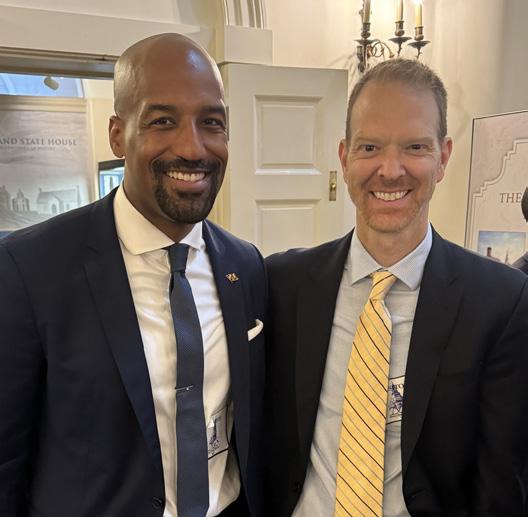
Mark Conway and President and CEO Joel Dunn attend the signing of Maryland’s Whole Watershed Act. courtesy
photo by yazan hasan
FY 2024 Chesapeake Conservancy
Donors
$50,000+
Anonymous (3)
Blue Waters Foundation
Bunting Family Foundation
Marc Bunting
The Campbell Foundation
Jim and Sylvia Earl
explore.org
Farvue Foundation Foundation for PA
Watersheds
Grayce B. Kerr Fund, Inc.
John G. & Jean R. Gosnell Foundation, Inc.
Randall Larrimore
Bryan Martin
Mary C. Bunting Foundation
Merrill Family Foundation
The 1994 Charles B. Degenstein Foundation
Shared Earth Foundation
The TeraWulf Charitable Foundation
William L. & Victoria Q. Adams Foundation, Inc
Great Blue Heron ($500-$999)
Anonymous
Ben Alexandro
Peggy Barlett
Joan Barton Sundheim
Rich Batiuk
Marc Bendick
Blackwater Conservation Association
Hannah Brenner
Elizabeth Buck
Margaret Bursaw
David Castro
Caitlin Ceryes
Stephen and Jane Coley
Jody Couser
Sally F. Davidson
Development Team
Elizabeth Edmonds
Dorry Emmer
Frederick Galloway
General Paving and Contracting Inc
Kyle P. German
Chris Hankin and Margrethe
Ravnholt-Hankin
Colin Harrington
Maria Heyssel
David Hilgers
Joe and Martha Janney
Kovitz Investment Group
Partners
OCTOBER 1, 2023SEPTEMBER 30, 2024
$25k$49,999
Wilton Corkern
Ed Hatcher and Angie
Cannon
Stephanie Meeks
Roemer Foundation
The Conservation Alliance
Virginia S. Warner Foundation
Ad Hoc LLC
American Chestnut Land Trust
John Angle Blaxall Fund for Economic Growth
Bradley and Kathryn Callahan Family Foundation
Greg Gershman
Carolyn Marshall
Barbara Moulton
The Quisel Snyder Family
Guide
($1k-$9,999)
Anonymous (4)
Peter and Jeannine
Alexandro
Becky Anderson
Burtram Anderson
David Anderson
Anne Gordon Keidel Trust
Joy and Michael Avery
Curtis and Barbara Backus
Baltimore Community Foundation
Edward Barnidge
Bay Paddle
Bellese Technologies, LLC
Beveridge and Diamond, P.C.
Don and Vicky Birch
Ann Bissell
L’Aiglon Foundation
Hunt Leavitt
James Lighthizer
Bruce Lowry
Suzanne Macdonald
Amanda Mahoney
Brian and Janalee Malikian
Laurence and Sue Manlove
Dominic Moffa
Daniella Moiseyev
Michael Molloy
Sky and Liza Morehouse
Joel and Thonya Nelson
Octoraro Native Plant
Nursery
Lloyd E. Oliver
Cheryl Paschall
Pennsylvania Programs Team
Mark and Karen Perreault
Bethany Phillips
Stephanie Rigler
Gail Ross and Peter Haas
John and Ellen Rowlson-
Hall
Diane Shafer
Lisa Sherwood
Kevin Sottak
Susan Stalick
Matthew and Eliza
Steinmeier
Amy Stolarski
Amy Stump
Eric Tazelaar
Alex Thibau
Frazier Thomas
Shannon Thomas
Thank you to the individual, foundation, corporate and government partners who have made our work possible. We truly appreciate your generosity. For a complete list of donors, visit chesapeakeconservancy.org.
Brandywine Foundation Inc
Sue Buyaskas
Astrid Caldas
Cho-Packer Giving Fund
Kevin and Katie Cooke
Ann Copeland Rose
Corrigan Sports Enterprises
Leslie Cronin
John and Mary Dean
Leslie Delagran
Brian and Lisa Devincentis
Lisa Dickinson Mountcastle
ECS Mid-Atlantic
Elinor Farquhar
Robert and Janellen Frantz
Richard L. Franyo
Bob Friend
Bartley and Denise Griffith
Adam Gronski
Thomas and Loretta Guise
Paul Hagen
James and Victoria Handa
Michelle Bailey Hedgepeth
Jay and Tara Joseph
Laura Kelm
Lolita and Gus Kiorpes
Steve Lafferty
Dale and Patricia Larrimore
Rick Lincicome
Robert and Connie Loarie
M&T Bank
M&T Charitable Foundation
Pamela Marks and Michael Mininsohn
Thorton Matheson
Joseph McCauley
Patrick McGeehin
Daniel Meeks
Heather Murren
John Neely
Keith O’Connor
Faye Offett
Anna and Leonard Pfeiffer
John and Pat Potvin
Ann Powers
Edward Quinn
Edward and Meghan Quinn
John and Barbara Reynolds
Bill and Donna Roberts
Kristin Rowles and Paul Ferraro
Jeffrey Sabot
Sanford and Doris Slavin
Foundation Fund
Stephen and Megan Schuler
Richard Scobey and Bruce Ragsdale
Ava Shivers
Nick and Annie Shreiber
Marc Siegel
Doug and Lynn Smarte
Charles Stek
Sarah Stolte
George Strawbridge, Jr.
Ann and Eric Swanson
Phil Tabas
Linda Teare
John and Kimberly Thacker
Meghan Tieff
Paul Tuffy
David and Laura Urban
Stephanie Vaughn
VFW E.E. Streets Memorial Post 5118
Virginia Land Conservation Foundation
Weis Markets
Alice and Hill Wellford
Jeffrey Wright
Ziger Snead Architects LLP
Michael Tollefson
Gordon and Christine
Trapnell
Matthew Trotta
Richard Tull
Robin Vaughn
Les Vinney
The Wallace Family
Harrison and Sue Wellford
Robert Westbrook
Laquetta Williams
Caitlin and Brent Ceryes
Tom Colberg
Carly Dean
Mary Clare Duffy
Kathleen Felmey
Marianne Follingstad
Zoe Fried
Samantha Gagnon
Linda Gaydos
Crista Hajiantoni
Mary Hamel Denick
Barbara Hannula
Virginia Hartman
Jodi Hillmar
Paul Janes
Kate and John Mustain
Giving Fund
Betsy Kirkpatrick-Howat
Lisa Kownurko
Anonymous
Laura Alexandro
Nick Alexandro
The Alliance, Cedar Lane
Unitarian Church
EJ and Sarah Amyot
Joseph and Mary Angle
Kenneth and Connie Baker
Baltimore Magnet Fishers
Laura Barraclough
Patricia P. Baum
Jacquelyn Beattie
Murray Berstein
Cheryl Bishop
Jim and Marcia Borel
Deborah Brown
John and Linda Buyaskas
Kevin Campion
Jessica Carlson
Amy Meyer
Mary Much
Brett Munson
Daniel Murphy
Office Images
Glynn Owens
Scott Phillips
Sue and Tom Phipps
Matthew Provost
Jeremy Rechtien
River Crescent
Communities
Dan Sakura
Jimmy Slaughter
Matthew Spong, RLA
Wendy Thomas
Carol Urbanski
Amy Vaughn
Stafford and Sue Warren
Jay and Kim Weitzel
Nancy Whittier
Bill and Joan Woodward Osprey ($100-$249)
Anonymous (4)
Judith Acosta
Chip and Sally Akridge
Lynn Alcock
Jay Aldridge
Floyd Alexander
Scott Allam
Scott and Kathy Allan
Bryan Ashby
George Badenoch and Olga Melbardis
Stacey Bailey
Greg Basiliko
Anne Baumanis
Susan Bedwell
Susan Benac
Betsy Bender and Brian Lewbart
Gordon Binder and Michael Rawson
Sherry Bird
Jim and Shirley Blackwell
Paul Bollinger
Gregory Bowen
David and Suzanne Boyd
Carl Brooks
Warren Brown
Bruce Bugbee
Alex Bullington
Delace Burch
Ann Burchard
Joseph Burgess
Laura Burke
Rebecca Byrd
Tania Caballero
Brad Carlson
Bruce and Lorrie Carlson
Elizabeth and Clark Carter
Carter-Minnemeyer Family
Bill and Missy Cassidy
David and Anna Castle
Amy Clark
Tara Clifford
Patrick Coady
Walter and Suzanne Cochran-Bond
Jerry Conner
Michael Crall
Jennifer Crews-Carey
Mary Ann Cronin
John and Charlotte Dean
D. Cameron DeHeer
Jennifer DeLancey
Nancy Dentz
Mrs. Roger Doyel
Vicki Dyson
Michael Eckenrode
Beverly Edgell
Lynda Eisenberg
Eva Elmore
Sherri Flaks
Gino Freeman
Donors Cont.
Kathy Fried
Larry and Pamela Friedman
A Friend From God’s
Blessings - We Share
Ellen Fuller
Sarah Gallen
Gerald Gallwas
The Garay Family
Karin Geiselhart
Rachel Geist
Jennifer and Harvey Gershman
Laurel Giacolone
Carolyn Goddard
Dede Godstrey
Bill Gourgey
Pamela Gregory
Steven Grinberg
Sharon Gustin
Aidan Hahn
Kerry Halloran
Laurel Halloran
Robert Halloran
Neal and Linda Halsey
Tammy Hardy
Anne Harrington
William Harris
Verna Harrison
Kathleen Harvey
Mary Jo Heck
Robert Henry
Maria Herold
Carolyn Hill
Nancy Hisky
Rochelle House
Cynthia Hull
Thomas Hunter
The Iversen Family
Cacky Janssens
Steven Jawetz
Cynthia Jensen
Mini Johri
Rajive Johri
Sonali Johri
Betty Ann Jones
Rob Kansler
Carolyn Kennedy
Bill and Phyllis Kilby
Sarah Killian
Sue King
Aaron Kingsley
Miles Kiorpes
Ellen Klene
Lily Kleppertknoop
Phyllis and Marc Koenings
Theodore and Lillian Koons
Denise Kossuth
Steve Kover
Philip Krone
Jim Levitt
Vincent Lewis
Steve and Ann Lindblom
M. Elliot and Lynda Lord
Fred and Jean Lucas
John Lupton
Jacquelyn Mace
Larry Malone
Nicky Manna
Joseph Maroon
Jana Maser
Kennedy Mauche
Betsy McCaul
Bob McIntosh
Ed and Sherry McMahon
Gina Menditto Amos
Cheryl Milberry
Cyndy Miller
Ronald Milone
Jerry Mitchell
Rachel Molloy
Alison Moore
Sally Moulton
Jeff and Paula Mumford
Christopher Myers
Eric Nelson
Lisa Neubaumer
Anuradha Norton
Mary Margaret Nousek
Jonathan Olmsted
Rosalind Owen
Kent and Phoebe Palcanis
Mary Palmer
Ethan Peck
Reed Perry
Sheldon Pitterman
Nancy Plaxico
Judy Postmus
Suzanne Prentice
James Prescott
Don and Lucy
Reithlingshoefer
Richard Remmer
Ruth Robinson
Letitia and David Robson
Lynne Rockenbauch
Barbara Rogers
Bonita Rohrer
Phil and Linda Roof
Barbara I. Rooney
Dorothy and Frank Rosenthal
Dylan Ross
Kathy Roush
Zarmina Said
Sallie Sarelas
Jeremy Schneider
Michele Schoonmaker
Cody Schulte
Donna Scott
Emily Scranton
Edwin Semans
Tracy Shannon
Jean Shaughnessy and Noah
Simon
Bob and Jenny Shields
Debby and Greg Shields
Richard Shrum
Michael and Catherine Shultz
Simon Sidamon-Eristoff
Helen Sieracki
Sheryl Sieracki
Stacia Skinner
Stephanie Sloman
Robert Smith
Virginia Smith
Nicole Smutny
Marc Sonnenfeld
Daniel Spack
Rick and Jill Springer
John and Anne Stalfort
Patricia Stallings
Carol and David Stern
Roger and Sally Stobbart
Dana Stoffregen
Linda and Donald Tatro
Donald Thomas
Laura Thorpe
De Teel Tiller
Jeffrey Trent Newman
Sharon Tucker Brown
Alexandra Valsamakis
Marcia L. Verploegen
Charles Vickers
Carol Wald
Robert Waldman
Susan Wallace
Diana K. Weatherby
Jason Weisberg
Margaret Whelihan
Ann and Bob Whitcomb
Sharee Williamson
Barbara L. Winner
Heather Worthley
Steven and Linda Wright
Cynthia Yeatman
Mark Young and Rachel Carren
Donna and Bob Zellers
Caleb Zimmerman
Featured Partners
Alliance for the Chesapeake Bay
Anne Arundel County (MD)
Baltimore City Recreation and Parks
Blacks of the Chesapeake Foundation
Bureau of Land Management
Eastern States
Center for Watershed Protection, Inc.
Charles County (MD)
Chesapeake Bay Foundation
Chesapeake Legal Alliance
Chickahominy Tribe
Choose Clean Water Coalition
City of Annapolis
Conservation Foundation of Lancaster County
Corrigan Sports Enterprises
D.E. Shaw Renewable
Investments (DESRI) Department of Defense REPI Program
Duke University Nicholas School for the Environment
Environmental Protection
Agency - Chesapeake Bay Program
Forever Maryland Foundation
Friends of the Rappahannock Gunpowder Valley Conservancy
Harry R. Hughes Center for Agro-Ecology
Herbert, Rowland, & Grubic, Inc.
Indigenous Conservation Council of the Chesapeake Bay
James River Association
Jefferson County Parks & Recreation Commission
Maryland Association for Environmental and Outdoor Education
Maryland Department of Natural Resources
Nansemond Indian Nation
Nanticoke River Watershed Conservancy, Inc
National Fish and Wildlife Foundation
Nature Serve
NPS -Captain John Smith
Chesapeake National
Historic Trail
NPS -Chesapeake Gateways
NPS -Harriet Tubman
Underground Railroad
National Historical Park
Oyster Recovery Partnership
Partners for Open Space
Pennsylvania Department of Conservation and Natural Resources
Pennsylvania Department of Environmental Protection
Piedmont Environmental Council
Potomac Conservancy
Rappahannock Tribe
Rappahannock-Rapidan
Regional Commission
Severn River Association
Susquehanna University
The Conservation Fund
U.S. Department of Agriculture
U.S. Fish and Wildlife Service
U.S. Forest Service
U.S. Geological Survey
USDA Natural Resources
Conservation Service
Virginia Forever
Virginia’s United Land Trusts
We Be Walkin’
West Virginia Land Trust
West Virginia Outdoor
Heritage Fund
Wildlife Management Institute
Sustaining Donors
Barbara Anderson
Thad and Renee Bench
Serena Boyd
Anna Capetanakis
Janice Davis
Christine Hayes
Matthew Hunley
Anthony Ostuni
Simone Parrish
Andrea Penaloza
Sara Ramotnik
Kevin Sottak
Mary Wigginton
David Wye
In Kind
Mayer Brown
M & T Bank
REI
Sakura Conservation
Strategies, LLC WilmerHale
Tribute: HONOR
John Aldridge, Sr.
Lauren Bailey and Her
Sharp-Eyed Daughter
Dirk and Ellen Brouwer
Laura Calvert
Emily Clifton
Nicholas Moffa and Merijke
Coenraad
J.T. Dean
Leslie Delagran
Joel Dunn
Jeremy Elliott
The Gagnon Family
Stormy Gibbons-Neff
Debby and Allan Kover
Randy Larrimore
Mark Neucollins
Patrick Noonan
John Reynolds
The Riggs Family
Erin Shannon
Tom and Audrey the Ospreys
Tribute: MEMORY
Jean Andrews Richards
Carol Augustine
James W. Bailey, Jr.
Mary Bruce Batte Corkern
Lonnie D Byrd III
Myra Pool Cunningham
Christopher Thomas Fagan
Wayne Griffith
Terry R Harris
Richard Hartman
Robert Hutton
Robert W Jackson
Jonathan Lahm
John Moser, MD
Susan Garner Neely
Nancy R. Oliver
Kathleen Schisler McConnell
Chesapeake Conservancy is the
Cover Photo Montage: photos by ian plant and michael weiss