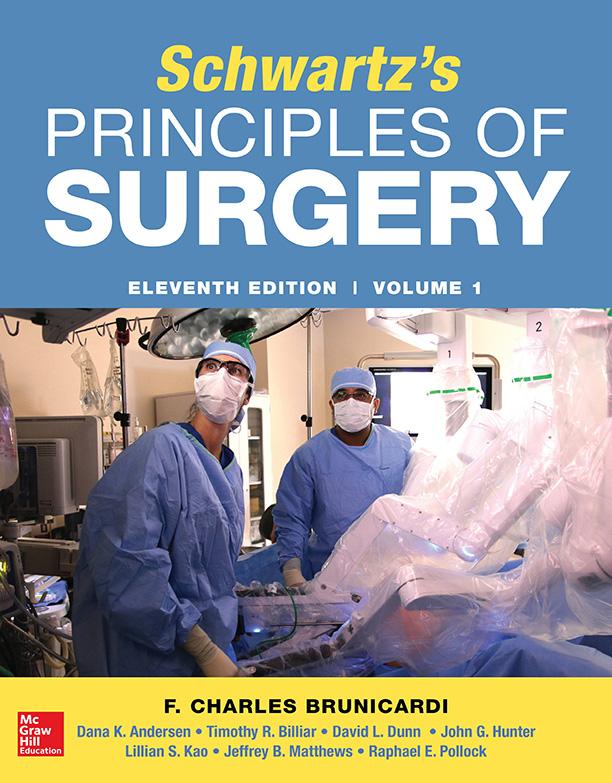
Volume 2
27. The Surgical Management of Obesity .............. 1167
Anita P. Courcoulas and Philip R. Schauer
28. Small Intestine ............................................ 1219
Ali Tavakkoli, Stanley W. Ashley, and Michael J. Zinner
29. Colon, Rectum, and Anus .............................. 1259
Mary R. Kwaan, David B. Stewart Sr, and Kelli Bullard Dunn
30. The Appendix ............................................... 1331
Fadi S. Dahdaleh, David Heidt, and Kiran K. Turaga
31. Liver ........................................................... 1345
David A. Geller, John A. Goss, Ronald W. Busuttil, and Allan Tsung
32. Gallbladder and the Extrahepatic Biliary System .............................................. 1393
Kelly R. Haisley and John G. Hunter
33. Pancreas ...................................................... 1429
William E. Fisher, Dana K. Andersen, John A. Windsor, Vikas Dudeja, and F. Charles Brunicardi
34. The Spleen ................................................... 1517
Adrian E. Park, Eduardo M. Targarona, Adam S. Weltz, and Carlos Rodriguez-Otero Luppi
35. Abdominal Wall, Omentum, Mesentery, and Retroperitoneum .......................................... 1549
Scott Kizy and Sayeed Ikramuddin
36. Soft Tissue Sarcomas .................................... 1567
Ricardo J. Gonzalez, Alessandro Gronchi, and Raphael E. Pollock
37. Inguinal Hernias .......................................... 1599
Chandan Das, Tahir Jamil, Stephen Stanek, Ziya Baghmanli, James R. Macho, Joseph Sferra, and F. Charles Brunicardi
38. Thyroid, Parathyroid, and Adrenal .................. 1625
Geeta Lal and Orlo H. Clark
39. Pediatric Surgery .......................................... 1705
David J. Hackam, Jeffrey Upperman, Tracy Grikscheit, Kasper Wang, and Henri R. Ford
40. Urology ....................................................... 1759
Ahmad Shabsigh, Michael Sourial, Fara F. Bellows, Christopher McClung, Rama Jayanthi, Stephanie Kielb, Geoffrey N. Box, Bodo E. Knudsen, and Cheryl T. Lee
41. Gynecology .................................................. 1783
Sarah M. Temkin, Thomas Gregory, Elise C. Kohn, and Linda Duska
42. Neurosurgery ............................................... 1827
Ashwin G. Ramayya, Saurabh Sinha, and M. Sean Grady
43. Orthopedic Surgery ....................................... 1879
Nabil A. Ebraheim, Bert J. Thomas, Freddie H. Fu, Bart Muller, Dharmesh Vyas, Matt Niesen, Jonathan Pribaz, and Klaus Draenert
44. Surgery of the Hand and Wrist ....................... 1925
Scott D. Lifchez and Brian H. Cho
45. Plastic and Reconstructive Surgery ................. 1967
Rajiv Y. Chandawarkar, Michael J. Miller, Brian C. Kellogg, Steven A. Schulz, Ian L. Valerio, and Richard E. Kirschner
46. Anesthesia for Surgical Patients .................... 2027
Junaid Nizamuddin and Michael O’Connor
47. Surgical Considerations in Older Adults ................................................. 2045
Anne M. Suskind and Emily Finlayson
48. Ethics, Palliative Care, and Care at the End of Life ......................................... 2061
Daniel E. Hall, Eliza W. Beal, Peter A. Angelos, Geoffrey P. Dunn, Daniel B. Hinshaw, and Timothy M. Pawlik
49. Global Surgery.............................................. 2077
Katherine E. Smiley, Haile T. Debas, Catherine R. deVries, and Raymond R. Price
50. Optimizing Perioperative Care: Enhanced Recovery and Chinese Medicine ..................... 2113
Jennifer Holder-Murray, Stephen A. Esper, Zhiliang Wang, Zhigang Cui, and Xima Wang
51. Understanding, Evaluating, and Using Evidence for Surgical Practice ......................... 2137
Andrew J. Benjamin, Andrew B. Schneider, Jeffrey B. Matthews, and Gary An
52. Ambulatory Surgery ...................................... 2153
Marcus Adair, Stephen Markowiak, Hollis Merrick, James R. Macho, Kara Richardson, Moriah Muscaro, Munier Nazzal, and F. Charles Brunicardi
53. Skills and Simulation .................................... 2163
Neal E. Seymour and Carla M. Pugh
54. Web-Based Education and Implications of Social Media ............................................ 2187
Lillian S. Kao and Michael E. Zenilman
Index/2197
Darren B. Abbas, MD
Clinical Instructor
Department of Surgery
University of Toledo College of Medicine and Life Sciences
Toledo, Ohio
Chapter 9, Wound Healing
Marcus Adair, MD
Clinical Instructor
Department of Surgery
University of Toledo College of Medicine and Life Sciences
Toledo, Ohio
Chapter 52, Ambulatory Surgery
Oliver Adunka, MD, FACS
Professor
Vice-Chair, Clinical Operations
Department of Otolaryngology-Head and Neck Surgery Director, Division of Otology/Neurotology and Cranial
Base Surgery
The Ohio State University-James Comprehensive Cancer Center
Columbus, Ohio
Chapter 18, Disorders of the Head and Neck
Louis H. Alarcon, MD, FACS, FCCM
Professor of Surgery and Critical Care Medicine
Medical Director, Division of Trauma Surgery
University of Pittsburgh
Pittsburgh, Pennsylvania
Chapter 13, Physiologic Monitoring of the Surgical Patient
Heitham Albeshri, MD
Clinical Instructor
Department of Surgery
University of Toledo College of Medicine and Life Sciences
Toledo, Ohio
Chapter 9, Wound Healing
Gary An, MD
Professor of Surgery
Department of Surgery
The University of Chicago Medicine
Chicago, Illinois
Chapter 51, Understanding, Evaluating, and Using
Evidence for Surgical Practice
Contributors
Dana K. Andersen, MD, FACS
Scientific Program Manager
Division of Digestive Diseases and Nutrition
National Institute of Diabetes and Digestive and Kidney Diseases
National Institutes of Health
Bethesda, Maryland
Chapter 33, Pancreas
Jeffrey H. Anderson, MD
Resident, Department of Surgery
Harborview Medical Center
Seattle, Washington
Chapter 8, Burns
Carol A. Angel, MD
Clinical Instructor
Department of Surgery
University of Toledo College of Medicine and Life Sciences
Toledo, Ohio
Chapter 9, Wound Healing
Peter A. Angelos, MD, PhD, FACS
Linda Kohler Anderson Professor of Surgery and Surgical Ethics
Chief, Endocrine Surgery
Associate Director
MacLean Center for Clinical Medical Ethics
The University of Chicago Medicine
Chicago, Illinois
Chapter 48, Ethics, Palliative Care, and Care at the End of Life
Peter B. Angood, MD, CPE, FRCS(C), FACS, MCCM
President and Chief Executive Officer
American Association for Physician Leadership
Tampa, Florida
Chapter 12, Quality, Patient Safety, Assessments of Care, and Complications
Glen S. Van Arsdell, MD
Chief, Pediatric Cardiac Surgery
Mattel Children’s Hospital
University of California
Los Angeles, California
Chapter 20, Congenital Heart Disease
Stanley W. Ashley, MD
General & Gastrointestinal Surgery
Brigham and Women’s Hospital
Frank Sawyer Professor of Surgery
Harvard Medical School
Boston, Massachusetts
Chapter 28, Small Intestine
Ziya Baghmanli, MD
Clinical Instructor
Department of Surgery
University of Toledo Medical Center Toledo, Ohio
Chapter 37, Inguinal Hernias
Eliza W. Beal
Clinical Instructor, Department of General Surgery
The Ohio State University Columbus, Ohio
Chapter 48, Ethics, Palliative Care, and Care at the End of Life
Carlos F. Bechara, MD
Associate Professor of Surgery
Program Director, Vascular Surgery Fellowship
Department of Surgery
Loyola University Medical Center
Maywood, Illinois
Chapter 23, Arterial Disease
Greg J. Beilman, MD
Owen H and Sarah Davidson Wangensteen Chair of Experimental Surgery
University of Minnesota Minneapolis, Minnesota
Chapter 6, Surgical Infections
Fara F. Bellows, MD
Clinical Assistant Professor Department of Urology
The Ohio State University Columbus, Ohio
Chapter 40, Urology
Andrew J. Benjamin, MD, MS
The University of Chicago Medicine Chicago, Illinois
Chapter 51, Understanding, Evaluating, and Using Evidence for Surgical Practice
Shiela Beroukhim, MD
Clinical Instructor
Harbor-UCLA Medical Center
Torrance, California
Chapter 1, Leadership in Surgery
Timothy R. Billiar, MD, FACS
George Vance Foster Professor and Chair
Department of Surgery
University of Pittsburgh School of Medicine Pittsburgh, Pennsylvania
Chapter 5, Shock
Kirby I. Bland, MD
Fay Fletcher Kerner Professor
The University of Alabama at Birmingham Department of Surgery
Birmingham, Alabama
Chapter 17, The Breast
Geoffrey N. Box, MD
Assistant Professor Department of Urology
The Ohio State University Columbus, Ohio
Chapter 40, Urology
F. Charles Brunicardi, MD, FACS
John Howard Endowed Professor of Pancreatic Surgery Chair, Department of Surgery Director, Cancer Program
University of Toledo College of Medicine and Life Sciences
Academic Chief of Surgery
ProMedica Health System
Toledo, Ohio
Chapter 1, Leadership in Surgery
Chapter 15, Molecular Biology, The Atomic Theory of Disease, and Precision Surgery
Chapter 33, Pancreas
Chapter 37, Inguinal Hernias
Chapter 52, Ambulatory Surgery
Robert E. Bulander, Jr., MD, PhD
Assistant Professor of Surgery University of Minnesota Minneapolis, Minnesota
Chapter 6, Surgical Infections
Clay Cothren Burlew, MD, FACS Professor of Surgery Director, Surgical Intensive Care Unit Program Director, Surgical Critical Care Fellowship Program Director, Trauma & Acute Care Surgery Fellowship
The Ernest E. Moore Shock Trauma Center
Denver Health Medical Center
University of Colorado School of Medicine
Denver, Colorado
Chapter 7, Trauma
Ronald W. Busuttil, MD, PhD
William P. Longmire, Jr., Chair in Surgery Professor and Executive Chair Department of Surgery
David Geffen School of Medicine at University of California-Los Angeles
Los Angeles, California
Chapter 31, Liver
William E. Carson III, MD, FACS
Professor of Surgery and Vice Chair for Promotion and Tenure
The John B. and Jane T. McCoy Chair in Cancer Research
Interim Chief, Division of Surgical Oncology
Associate Director for Clinical Research
OSU Comprehensive Cancer Center
The Ohio State University
Columbus, Ohio
Chapter 10, Oncology
Rajiv Y. Chandawarkar, MD, MBA
Acting Chair
Department of Plastic and Reconstructive Surgery
The Ohio State University Wexner Medical Center
Columbus Ohio
Chapter 45, Plastic and Reconstructive Surgery
Ronald Chang, MD
Department of Surgery
University of Texas Houston
Houston, Texas
Chapter 4, Hemostasis, Surgical Bleeding, and Transfusion
Changyi Chen, MD, PhD
Professor of Surgery
Michael E. DeBakey Department of Surgery
Baylor College of Medicine
Houston, Texas
Chapter 23, Arterial Disease
Brian H. Cho, MD
Resident in Plastic Surgery
Johns Hopkins Department of Plastic Surgery
Baltimore, Maryland
Chapter 44, Surgery of the Hand and Wrist
Atish Chopra, MD
Fellow, Division of Vascular Surgery Department of Surgery
Oregon Health & Science University
Portland, Oregon
Chapter 24, Venous and Lymphatic Disease
Orlo H. Clark, MD, FACS
Professor Emeritus, Department of Surgery
UCSF Mt Zion Medical Center
San Francisco, California
Chapter 38, Thyroid, Parathyroid, and Adrenal
Siobhan A. Corbett, MD
Associate Professor of Surgery Department of Surgery
Rutgers-Robert Wood Johnson Medical School
Rutgers Biomedical and Health Sciences
New Brunswick, New Jersey
Chapter 2, Systemic Response to Injury and Metabolic Support
Joseph S. Coselli, MD
Vice-Chair, Michael E. DeBakey Department of Surgery
Professor, Cullen Foundation Endowed Chair
Chief, Division of Cardiothoracic Surgery
Baylor College of Medicine
Chief, Adult Cardiac Surgery Texas Heart Institute
Chief, Adult Cardiac Surgery Section
Associate Chief, Cardiovascular Service
Baylor St. Luke’s Medical Center
Houston, Texas
Chapter 22, Thoracic Aneurysms and Aortic Dissection
Anita P. Courcoulas, MD, MPH, FACS
Professor of Surgery
Section Head, MIS Bariatric & General Surgery
University of Pittsburgh Medical Center
Pittsburgh, Pennsylvania
Chapter 27, The Surgical Management of Obesity
Zhigang Cui, MD
Associate Professor of Surgery Department of Surgery
Tianjin Medical University
Nankai Hospital
Institute of Acute Abdomen of Tianjin, Tianjin, China
Chapter 50, Optimizing Perioperative Care: Enhanced Recovery and Chinese Medicine
Anthony R. Cyr, MD, PhD
Clinical Instructor Department of Surgery
University of Pittsburgh School of Medicine
Pittsburgh, Pennsylvania
Chapter 13, Physiologic Monitoring of the Surgical Patient
Fadi S. Dahdaleh, MD Department of Surgery
University of Chicago
Chicago, Illinois
Chapter 30, The Appendix
Ralph J. Damiano, MD
Evarts A. Graham Professor of Surgery
Chief, Division of Cardiothoracic Surgery
Co-Chair, Heart & Vascular Center
Washington University School of Medicine
St Louis, Missouri
Chapter 21, Acquired Heart Disease
Senthil Damodaran, MD, PhD
Assistant Professor Departments of Breast Medical Oncology and Investigational Cancer Therapeutics
The University of Texas MD Anderson Cancer Center
Houston, Texas
Chapter 17, The Breast
Chandan Das, MD
Clinical Instructor
Department of Surgery
University of Toledo College of Medicine and Life Sciences
Toledo, Ohio
Chapter 37, Inguinal Hernias
Haile T. Debas, MD, FACS
Maurice Galante Distinguished Professor of Surgery, Emeritus
Founding Executive Director, Global Health Sciences
Director Emeritus, University of California Global Health Institute
Dean Emeritus, School of Medicine
Former Chancellor
University of California, San Francisco
San Francisco, California
Chapter 49, Global Surgery
Daniel T. Dempsey, MD, FACS
Professor of Surgery
Department of Surgery
Perelman School of Medicine
University of Pennsylvania
Philadelphia, Pennsylvania
Chapter 26, Stomach
Catherine R. deVries, MD
Professor of Surgery
Adjunct Associate Professor of Family Medicine/ Public Health
University of Utah
Salt Lake City, Utah
Chapter 49, Global Surgery
Vikas Dudeja, MD
Assistant Professor of Surgery
Division of Surgical Oncology
Department of Surgery University of Miami Miami, Florida
Chapter 33, Pancreas
David L. Dunn, MD, PhD
Prospect, Kentucky
Chapter 6, Surgical Infections
Chapter 11, Transplantation
Geoffrey P. Dunn, MD
Medical Director
Department of Surgery
Hamot Medical Center
Erie, Pennsylvania
Chapter 48, Ethics, Palliative Care, and Care at the End of Life
Kelli Bullard Dunn, MD, FACS, FASCRS
Vice Dean, Community Engagement and Diversity
Professor of Surgery
University of Louisville School of Medicine
Louisville, Kentucky
Chapter 29, Colon, Rectum, and Anus
Nabil A. Ebraheim, MD
Chairman and Professor
Department of Orthopaedic Surgery
The University of Toledo Medical Center
Toledo, Ohio
Chapter 43, Orthopedic Surgery
Antoine Eskander, MD, ScM, FRCSC
Assistant Professor, University of Toronto
Department of Otolaryngology—Head & Neck Surgery
Sunnybrook Health Sciences Centre, Surgical Oncologist
Michael Garron Hospital, Endocrine Surgery
Institute for Clinical Evaluative Sciences (ICES),
Adjunct Scientist
Toronto, Ontario, Canada
Chapter 18, Disorders of the Head and Neck
Stephen A. Esper, MD, MBA
Assistant Professor
Department of Anesthesiology and Perioperative Medicine
Director, UPMC Centers for Perioperative Care
University of Pittsburgh Medical Center
Pittsburgh, Pennsylvania
Chapter 50, Optimizing Perioperative Care: Enhanced Recovery and Chinese Medicine
Xin-Hua Feng, PhD
Distinguished Investigator Life Sciences Institute
Zhejiang University
Hangzhou, Zhejiang, China
Professor of Molecular Cell Biology
Michael E. DeBakey Department of Surgery and Department of Molecular & Cellular Biology
Baylor College of Medicine
Houston, Texas
Chapter 15, Molecular Biology, The Atomic Theory of Disease, and Precision Surgery
Emily Finlayson, MD, MS, FACS
Professor in Residence
Department of Surgery, Division of General Surgery
Department of Medicine, Division of Geriatrics
Phillip R. Lee Institute for Health Policy Studies
Director, Center for Surgery in Older Adults
Director, Department of Surgery Faculty Mentoring
Program
Department of Surgery
University of California San Francisco
San Francisco, California
Chapter 47, Surgical Considerations in Older Adults
William E. Fisher, MD, FACS
Professor of Surgery, Clinical Vice Chair and Chief, Division of General Surgery
George L. Jordan, MD Chair of General Surgery
Michael E. DeBakey Department of Surgery
Director, Elkins Pancreas Center
Baylor College of Medicine
Houston, Texas
Chapter 33, Pancreas
Henri R. Ford, MD, MHA
Dean and Chief Academic Officer
University of Miami Miller School of Medicine
Don Soffer Clinical Research Center
Miami, Florida
Chapter 39 Pediatric Surgery
Freddie H. Fu, MD, DSc (Hon.), DPs (Hon.)
Distinguished Service Professor University of Pittsburgh
David Silver Professor and Chairman
Department of Orthopaedic Surgery
University of Pittsburgh School of Medicine
Head Team Physician
University of Pittsburgh Department of Athletics
Pittsburgh, Pennsylvania
Chapter 43, Orthopedic Surgery
David A. Geller, MD
Richard L. Simmons Professor of Surgery
Chief, Division of Hepatobiliary and Pancreatic Surgery
University of Pittsburgh School of Medicine
Pittsburgh, Pennsylvania
Chapter 31, Liver
Nicole S. Gibran, MD, FACS
Professor, Department of Surgery
Associate Dean, Research and Graduate Education
Harborview Medical Center
University of Washington School of Medicine
Seattle, Washington
Chapter 8, Burns
Ricardo J. Gonzalez, MD, FACS
Chair, Sarcoma Department
Professor of Surgery
Chief of Surgery, Moffitt Cancer Center
Tampa, Florida
Chapter 36, Soft Tissue Sarcoma
John A. Goss, MD
Professor of Surgery
Michael E. DeBakey Department of Surgery
Division of Abdominal Transplantation and Hepatobiliary Surgery
Baylor College of Medicine
Houston, Texas
Chapter 31, Liver
M. Sean Grady, MD
Charles Harrison Frazier Professor Chairman
Department of Neurosurgery
Perelman School of Medicine at University of Pennsylvania
Philadelphia, Pennsylvania
Chapter 42, Neurosurgery
Angelika Gruessner, PhD
Professor of Medicine
State University of New York (SUNY-Downstate)
New York, New York
Chapter 11, Transplantation
Rainer Gruessner, MD
Clarence & Mary Dennis Professor of Surgery
Chairman, Department of Surgery
State University of New York (SUNY-Downstate)
New York, New York
Chapter 11, Transplantation
David J. Hackam, MD, PhD, FACS
Garrett Professor and Chief of Pediatric Surgery Professor of Surgery, Pediatrics and Cell Biology
Johns Hopkins University School of Medicine
Pediatric Surgeon-in-Chief and Co-Director
Johns Hopkins Children’s Center
The Charlotte R. Bloomberg Children’s Center
Baltimore, Maryland
Chapter 39, Pediatric Surgery
Kelly R. Haisley, MD
Clinical Instructor
Department of Surgery
Oregon Health and Science University Portland, Oregon
Chapter 32, Gallbladder and the Extrahepatic Biliary System
Lee Hammerling, MD
Chief Academic Officer President, New Ventures ProMedica Health System
Toledo, Ohio
Chapter 1, Leadership in Surgery
Patrick Harbour, MD
Department of Plastic Surgery
MedStar Georgetown University Hospital
Washington, DC
Chapter 16, The Skin and Subcutaneous Tissue
Michael S. Harris, MD
Assistant Professor, Department of Otolaryngology
Assistant Professor, Medical College of Wisconsin
Department of Otolaryngology & Communication
Sciences
Division of Neurotology & Skull Base Surgery
Milwaukee, Wisconsin
Chapter 18, Disorders of the Head and Neck
David G. Heidt, MD, FACS
Clinical Associate Professor
University of Toledo College of Medicine
Staff Surgeon, St. Joseph Mercy Medical Center
Ann Arbor, Michigan
Chapter 30, The Appendix
Daniel B. Hinshaw, MD
Professor
Department of Surgery
University of Michigan
Ann Arbor, Michigan
Chapter 48, Ethics, Palliative Care, and Care at the End of Life
John B. Holcomb, MD
Professor of Surgery
Department of Surgery
University of Texas Houston
Houston, Texas
Chapter 4, Hemostasis, Surgical Bleeding, and Transfusion
Jennifer Holder-Murray, MD, FACS, FASCRS
Vice Chair of Quality Integration
Assistant Professor Surgery
Division of Colon and Rectal Surgery
University of Pittsburgh Medical Center
Pittsburgh, Pennsylvania
Chapter 50, Optimizing Perioperative Care: Enhanced Recovery and Chinese Medicine
Kelly K. Hunt, MD, FACS
Hamill Foundation
Distinguished Professor of Surgery in Honor of Dr. Richard G. Martin Sr.
Chair, Department of Breast Surgical Oncology
The University of Texas MD Anderson Cancer Center
Houston, Texas
Chapter 17, The Breast
John G. Hunter, MD, FACS, FRCS Edin(Hon.)
Executive Vice President and CEO, OHSU Health System
Mackenzie Professor of Surgery, School of Medicine
Oregon Health and Science University
Portland, Oregon
Chapter 14, Minimally Invasive Surgery, Robotics, Natural Orifice Transluminal Endoscopic Surgery, and Single-Incision Laparoscopic Surgery
Chapter 25, Esophagus and Diaphragmatic Hernia
Chapter 32, Gallbladder and the Extrahepatic Biliary System
Sayeed Ikramuddin, MD, MHA
Jay Phillips Professor and Chair
Department of Surgery
University of Minnesota Medical School
Minneapolis, Minnesota
Chapter 35, Abdominal Wall, Omentum, Mesentery, and Retroperitoneum
Tahir Jamil, MD
Clinical Assistant Professor of Surgery
University of Toledo College of Medicine and Life Sciences
Department of Surgery
Promedica Health System
Toledo, Ohio
Chapter 37, Inguinal Hernias
Rama Jayanthi, MD
Chief, Pediatric Urology
Nationwide Children’s Hospital
Dayton Children’s Hospital
Clinical Professor, Department of Urology
The Ohio State University
Columbus, Ohio
Chapter 40, Urology
Blair A. Jobe, MD, FACS
Chair of Surgery, Western Pennsylvania Hospital
Director, Institute for the Treatment of Esophageal and Thoracic Disease, Allegheny Health Network
Pittsburgh, Pennsylvania
Chapter 14, Minimally Invasive Surgery, Robotics, Natural Orifice Transluminal Endoscopic Surgery, and Single-Incision Laparoscopic Surgery
Chapter 25, Esophagus and Diaphragmatic Hernia
Puja Kachroo, MD
Clinical Instructor
Division of Cardiothoracic Surgery, Department of Surgery
Washington University School of Medicine
Barnes-Jewish Hospital
St. Louis, Missouri
Chapter 21, Acquired Heart Disease
Stephen Y. Kang, MD
Assistant Professor
Department of Otolaryngology—Head and Neck Surgery
Division of Head and Neck Oncology
The Ohio State University—James Comprehensive Cancer Center
Columbus, Ohio
Chapter 18, Disorders of the Head and Neck
Lillian S. Kao, MD, MS
Jack H. Mayfield, MD, Chair in Surgery
Vice-Chair of Research and Faculty Development
Vice-Chair for Quality of Care
Department of Surgery
McGovern Medical School at the University of Texas
Health Science Center at Houston
Houston, Texas
Chapter 54, Web-Based Education and Implications of Social Media
Tara Karamlou, MD, MSc
Professor of Surgery, Division of Pediatric
Cardiac Surgery
Cleveland Clinic
Cleveland, Ohio
Chapter 20, Congenital Heart Disease
Brian C. Kellogg, MD
Plastic and Reconstructive Surgery
Nationwide Children’s Hospital
700 Children’s Dr Columbus, Ohio
Ali J. Khiabani, MD, MHA
Resident Physician
Department of Surgery
Washington University School of Medicine
St. Louis, Missouri
Chapter 21, Acquired Heart Disease
Stephanie Kielb, MD
Associate Professor
Departments of Urology, Medical Education, and Obstetrics and Gynecology
Northwestern University Feinberg School of Medicine
Chicago, Illinois
Chapter 40, Urology
Richard E. Kirschner, MD
Chief, Plastic and Reconstructive Surgery
Nationwide Children’s Hospital Columbus, Ohio
Chapter 45, Plastic and Reconstructive Surgery
Scott Kizy, MD
Resident in Surgery University of Minnesota Minneapolis, Minnesota
Chapter 35, Abdominal Wall, Omentum, Mesentery, and Retroperitoneum
Bodo E. Knudsen, MD, FRCSC
Henry A. Wise II Endowed Chair in Urology
Associate Professor
Department of Urology
The Ohio State University Columbus, Ohio
Chapter 40, Urology
Elise C. Kohn, MD
Head, Gynecologic Cancer and Neuroendocrine Cancer
Therapeutics
Clinical Investigations Branch Cancer Therapy Evaluation Program
National Cancer Institute
Bethesda, Maryland
Chapter 41, Gynecology
Rosemary A. Kozar, MD, PhD
Professor of Surgery
Director of Translational Research at Shock Trauma
Associate Director of Shock Trauma Anesthesia
Research (STAR) Center
University of Maryland School of Medicine
Baltimore, Maryland
Chapter 4, Hemostasis, Surgical Bleeding, and Transfusion
Mary R. Kwaan, MD, MPH
Associate Professor of Surgery University of California, Los Angeles Los Angeles, California
Chapter 29, Colon, Rectum, and Anus
Geeta Lal, MD, MSc, FRCS(C), FACS
Associate Professor, Surgery
Associate Chief Quality Officer, Inpatient
University of Iowa
Iowa City, Iowa
Chapter 38, Thyroid, Parathyroid, and Adrenal
Jeremy J. Laukka
Associate Professor of Medical Education & Neurology Department of Medical Education
Associate Dean for Foundational Science Curriculum
University of Toledo College of Medicine and Life Sciences
Toledo, Ohio
Chapter 1, Leadership in Surgery
Cheryl T. Lee, MD
Dorothy M. Davis Endowed Chair in Cancer Research
Professor and Chairman Department of Urology
The Ohio State University Columbus, Ohio
Chapter 40, Urology
Evan Leibner, MD, PhD
Assistant Professor Institute of Critical Care Medicine & Department of Emergency Medicine
Mount Sinai Medical Center
Icahn School of Medicine at Mount Sinai New York, New York
Chapter 4, Hemostasis, Surgical Bleeding, and Transfusion
Scott A. LeMaire, MD
Jimmy and Roberta Howell Professor of Cardiovascular Surgery
Vice Chair for Research, Michael E. DeBakey
Department of Surgery
Professor of Molecular Physiology and Biophysics
Director of Research, Division of Cardiothoracic Surgery
Baylor College of Medicine
Department of Cardiovascular Surgery, Texas Heart Institute
Baylor St. Luke’s Medical Center
Houston, Texas
Chapter 22, Thoracic Aneurysms and Aortic Dissection
Xinran Li, PhD
Postdoctoral Fellow
Life Sciences Institute
Zhejiang University
Hangzhou, Zhejiang, China
Chapter 15, Molecular Biology, The Atomic Theory of Disease, and Precision Surgery
Timothy K. Liem, MD, FACS
Professor of Surgery, Vice-Chair for Quality
Department of Surgery, Knight Cardiovascular Institute
Oregon Health & Science University
Portland, Oregon
Chapter 24, Venous and Lymphatic Disease
Scott D. Lifchez, MD, FACS
Associate Professor of Plastic Surgery and Orthopedic Surgery
Program Director, Johns Hopkins/University of Maryland Plastic Surgery Residency
Director of Hand Surgery
Johns Hopkins Bayview Medical Center
Baltimore, Maryland
Chapter 44, Surgery of the Hand and Wrist
Amy Lightner, MD
Assistant Professor of Surgery
Mayo Clinic College of Medicine
Medical Director of Translation Into Practice Platforms
Center for Regenerative Medicine, Mayo Clinic
Senior Associate Consultant, Department of Surgery
Mayo Clinic College of Medicine
Division of Colon and Rectal Surgery
Rochester, Minnesota
Chapter 1, Leadership in Surgery
Peter H. Lin, MD
Professor Emeritus of Surgery
Michael E. DeBakey Department of Surgery
Baylor College of Medicine
Houston, Texas
Chapter 23, Arterial Disease
Xia Lin, PhD
Associate Professor of Surgery
Michael E. DeBakey Department of Surgery
Baylor College of Medicine
Houston, Texas
Chapter 15, Molecular Biology, The Atomic Theory of Disease, and Precision Surgery
James D. Luketich, MD
Henry T. Bahnson Professor of Cardiothoracic Surgery, Chief, The Heart, Lung, and Esophageal Surgery Institute, Department of Surgery
Division of Thoracic and Foregut Surgery
University of Pittsburgh
Pittsburgh, Pennsylvania
Chapter 19, Chest Wall, Lung, Mediastinum, and Pleura
Carlos Rodriguez-Otero Luppi, MD, PhD
Unit of Gastrointestinal and Hematological Surgery, Hospital Sant Pau Professor of Surgery, Autonomous University of Barcelona Barcelona, Spain
Chapter 34, The Spleen
James R. Macho, MD, FACS
Emeritus Professor of Surgery
University of California, San Francisco San Francisco, California
Chapter 1, Leadership in Surgery
Chapter 37, Inguinal Hernias
Chapter 52, Ambulatory Surgery
Martin A. Makary, MD, MPH, FACS
Professor of Surgery
Johns Hopkins University Baltimore, Maryland
Chapter 12, Quality, Patient Safety, Assessments of Care, and Complications
Samuel P. Mandell, MD, MPH, FACS
Assistant Professor Department of Surgery
University of Washington School of Medicine
UW Medicine Regional Burn Center Harborview Medical Center
Seattle, Washington
Chapter 8, Burns
Stephen Markowiak, MD
Clinical Instructor Department of Surgery
University of Toledo College of Medicine and Life Sciences Toledo, Ohio
Chapter 1, Leadership in Surgery
Chapter 52, Ambulatory Surgery
Jeffrey B. Matthews, MD, FACS
Dallas B. Phemister Professor
Chair, Department of Surgery
Surgeon-in-Chief
The University of Chicago Pritzker School of Medicine
Chicago, Illinois
Chapter 51, Understanding, Evaluating, and Using Evidence for Surgical Practice
Christopher McClung, MD
Adjunct Professor
The Ohio State University
Reconstructive Urologist
The Central Ohio Urology Group
Columbus, Ohio
Chapter 40, Urology
Funda Meric-Bernstam, MD
Chair, Department of Investigational Cancer
Therapeutics; Medical Director, Institute for Personalized Cancer Therapy; Professor, Divisions of Cancer Medicine and Surgery
MD Anderson Cancer Center
Houston, Texas
Chapter 10, Oncology
Hollis Merrick, MD, FACS
Professor Emeritus
Department of Surgery
University of Toledo College of Medicine and Life Sciences
Toledo, Ohio
Chapter 1, Leadership in Surgery
Michael J. Miller, MD, FACS
Professor and Chair
Department of Plastic and Reconstructive Surgery
The Ohio State University
Wexner Medical Center
Columbus, Ohio
Chapter 45, Plastic and Reconstructive Surgery
Tabitha G. Moe, MD, FACC
Assistant Professor of Surgery
Adult Congenital Cardiology
Pulmonary Hypertension
Pregnancy and Cardiovascular Disease
Creighton University School of Medicine
Omaha, Nebraska
Chapter 20, Congenital Heart Disease
Gregory L. Moneta, MD, FACS
Professor, Division of Vascular Surgery
Department of Surgery and Knight Cardiovascular Institute
Oregon Health & Science University
Portland, Oregon
Chapter 24, Venous and Lymphatic Disease
Ernest E. Moore, MD
Ernest E. Moore Shock Trauma Center at Denver Health
Distinguished Professor of Surgery, University of Colorado Denver
Editor, Journal of Trauma
Denver, Colorado
Chapter 7, Trauma
Bart Muller, MD, PhD
Orthopaedic Surgeon
Academic Medical Center
Amsterdam, The Netherlands
Chapter 43, Orthopedic Surgery
Raghav Murthy, MD, DABS, FACS
Assistant Professor
Director, Pediatric Heart Transplantation Division of Pediatric Cardiac Surgery
Kravis Children’s at Mount Sinai Hospital
Icahn School of Medicine, New York, New York
Chapter 20, Congenital Heart Disease
Moriah Muscaro, MD
Clinical Instructor
University of Toledo College of Medicine and Life Sciences
Toledo, Ohio
Chapter 52, Ambulatory Surgery
Katie S. Nason, MD, MPH
Vice-Chair for Surgical Research, Department of Surgery
Fellow, Institute for Healthcare Delivery and Population Science
Thoracic Surgeon, Division of Thoracic Surgery
University of Massachusetts Medical School—Baystate Health
Springfield, Massachusetts
Chapter 19, Chest Wall, Lung, Mediastinum, and Pleura
Munier Nazzal, MD, MBA, CPE, FACS, FRCS
Professor and Vice Chair, Department of Surgery
Chief, Division of Education
Chief, Division of Vascular, Endovascular and Wound Surgery.
Medical Director of the Wound Center, University of Toledo Medical Center
University of Toledo Toledo, Ohio
Chapter 1, Leadership in Surgery
Chapter 9, Wound Healing
Chapter 52, Ambulatory Surgery
Matthew D. Neal, MD, FACS
Roberta G. Simmons Assistant Professor of Surgery
Assistant Professor of Clinical and Translational Science and Critical Care Medicine
Departments of Surgery
Critical Care Medicine, and the Clinical and Translational Science Institute (CTSI)
University of Pittsburgh
Attending Surgeon, Division of Trauma and Acute Care
Surgery
University of Pittsburgh Medical Center
Pittsburgh, Pennsylvania
Chapter 3, Fluid and Electrolyte Management of the Surgical Patient
John Nemunaitis, MD
Professor of Medicine
Chief, Division of Hematology and Oncology
University of Toledo College of Medicine and Life Sciences
Director Cancer Research
ProMedica Health System
Toledo, Ohio
Chapter 15, Molecular Biology, The Atomic Theory of Disease, and Precision Surgery
Matt Niesen, MD
Clinical Instructor
Department of Orthopedic Surgery
David Geffen School of Medicine at UCLA
Los Angeles, California
Chapter 43, Orthopedic Surgery
John J. Nigro, MD
Chief, Pediatric Cardiac Surgery
Director, Children’s Heart Center
Rady Children’s Hospital
San Diego, California
Chapter 20, Congenital Heart Disease
Junaid Nizamuddin, MD
Assistant Professor
Department of Anesthesia and Critical Care
The University of Chicago
Chicago, Illinois
Chapter 46, Anesthesia for Surgical Patients
Michael F. O’Connor, MD, FCCM Professor
Department of Anesthesia & Critical Care
The University of Chicago
Chicago, Illinois
Chapter 46, Anesthesia for Surgical Patients
Mohamed F. Osman, MD
Assistant Professor of Surgery
Division of Vascular and Endovascular Surgery
Department of Surgery
Director of Surgical Intensive Care
The University of Toledo College of Medicine and Life Sciences Toledo, Ohio
Chapter 9, Wound Healing
Bradley Otto, MD
Assistant Professor
Department of Otolaryngology—Head and Neck Surgery
Division of Skull Base Surgery
Director, Division of General Otolaryngology
Director, Division of Rhinology
The Ohio State University—James Comprehensive Cancer Center
Columbus, Ohio
Chapter 18, Disorders of the Head and Neck
Adrian E. Park, MD, FRCSC, FACS, FCS(ECSA)
Professor and Chairman Department of Surgery
Anne Arundel Health System
Johns Hopkins University School of Medicine
Baltimore, Maryland
Chapter 34, The Spleen
Catherine C. Parker, MD, FACS
Assistant Professor Department of Surgery
The University of Alabama at Birmingham
Birmingham, Alabama Chapter 17, The Breast
Timothy M. Pawlik, MD, MPH, MTS, PhD, FACS, RACS (Hon.)
Professor and Chair
Department of Surgery
The Urban Meyer III and Shelley Meyer Chair for Cancer Research
Surgeon-in-Chief
The Ohio State University Wexner Medical Center Columbus, Ohio
Chapter 48, Ethics, Palliative Care, and Care at the End of Life
Andrew B. Peitzman, MD
Mark M. Ravitch Professor and Vice Chairman
Department of Surgery, University of Pittsburgh School of Medicine
Pittsburgh, Pennsylvania
Chapter 5, Shock
Raphael E. Pollock, MD, PhD, FACS
Director, The Ohio State University Comprehensive Cancer Center
Professor of Surgery; Kathleen Klotz Chair in Cancer Research
The Ohio State University Wexner Medical Center
Columbus, Ohio
Chapter 10, Oncology
Chapter 36, Soft Tissue Sarcomas
Matthew Pommerening, MD, MS
Department of Cardiothoracic Surgery
University of Pittsburgh Medical Center (UPMC) Pittsburgh, Pennsylvania
Chapter 4, Hemostasis, Surgical Bleeding, and Transfusion
Ourania Preventza, MD
Associate Professor, Michael E. DeBakey Department of Surgery
Division of Cardiothoracic Surgery
Baylor College of Medicine
Department of Cardiovascular Surgery, Texas Heart Institute
Baylor St. Luke’s Medical Center, Houston, Texas
Chapter 22, Thoracic Aneurysms and Aortic Dissection
Jonathan Pribaz, MD
Resident in Orthopaedic Surgery
UCLA Department of Orthopaedic Surgery
Santa Monica, California
Chapter 43, Orthopedic Surgery
Raymond R. Price, MD, FACS
Director, Graduate Surgical Education, Intermountain Medical Center, Intermountain Healthcare
Director, Center for Global Surgery, Professor Department of Surgery, University of Utah
Salt Lake City, Utah
Chapter 49, Global Surgery
Carla M. Pugh, MD, PhD
Professor of Surgery
Director, Technology Enabled Clinical Improvement Center
Stanford University
Palo Alto, California
Chapter 53, Skills and Simulation
Ashwin G. Ramayya, MD, PhD
Department of Neurosurgery
Perelman School of Medicine at University of Pennsylvania
Philadelphia, Pennsylvania
Chapter 42, Neurosurgery
Kara Richardson, MD
Clinical Instructor
Department of Surgery
University of Toledo College of Medicine and Life Sciences
Toledo, Ohio
Chapter 52, Ambulatory Surgery
Robert E. Roses, MD, FACS
Assistant Professor of Surgery
Perelman School of Medicine
University of Pennsylvania
Philadelphia, Pennsylvania
Chapter 26, Stomach
Philip R. Schauer, MD
Professor of Surgery, Cleveland Clinic Lerner College of Medicine
Director, Bariatric and Metabolic Institute
Cleveland Clinic
Cleveland, Ohio
Chapter 27, The Surgical Management of Obesity
Matthew R. Schill, MD
Clinical Instructor
Division of Cardiothoracic Surgery Department of Surgery
Washington University School of Medicine
Barnes-Jewish Hospital
St Louis, Missouri
Chapter 21, Acquired Heart Disease
Andrew B. Schneider, MD, MS
The University of Chicago Medicine
Chicago, Illinois
Chapter 51, Understanding, Evaluating, and Using Evidence for Surgical Practice
Steven A. Schulz, MD
Assistant Professor, Department of Plastic and Reconstructive Surgery
The Ohio State University Wexner Medical Center
Columbus, Ohio
Chapter 45, Plastic and Reconstructive Surgery
Neal E. Seymour, MD, FACS
Vice Chair for Clinical Affairs, Department of Surgery
Division Chief, General Surgery, Baystate Health
Professor and Surgery Residency Program Director
University of Massachusetts Medical School—Baystate Director, Baystate Simulation Center—Goldberg Surgical Skills Lab
Springfield, Massachusetts
Chapter 53, Skills and Simulation
Joseph Sferra, MD, FACS
Clinical Associate Professor of Surgery
University of Toledo College of Medicine and Life Sciences
Vice President Department of Surgery
Promedica Health System
Toledo, Ohio
Chapter 37, Inguinal Hernias
Ahmad Shabsigh, MD, FACS
Assistant Professor
Department of Urology
The Ohio State University Columbus, Ohio
Chapter 40, Urology
Mark L. Shapiro, MD, FACS
Trauma Medical Director and Chief of Trauma
Grady Memorial Hospital
Emory University Department of Surgery
Atlanta, Georgia
Chapter 12, Quality, Patient Safety, Assessments of Care, and Complications
Saurabh Sinha, MD
Department of Neurosurgery
Perelman School of Medicine at University of Pennsylvania
Philadelphia, Pennsylvania
Chapter 42, Neurosurgery
Katherine E. Smiley, MD
University of Utah Health Division of General Surgery Salt Lake City, Utah
Chapter 49, Global Surgery
David H. Song, MD, MBA, FACS
Physician Executive Director
MedStar Plastic & Reconstructive Surgery
Professor and Chairman
Department of Plastic Surgery
Georgetown University School of Medicine
Washington, DC
Chapter 16, The Skin and Subcutaneous Tissue
Michael W. Sourial, MD, FRCSC Fellow, Endourology and Minimally Invasive Surgery
Department of Urology
The Ohio State University Columbus, Ohio
Chapter 40, Urology
Donn H. Spight, MD
Assistant Professor
Department of Surgery
Oregon Health and Science University
Portland, Oregon
Chapter 14, Minimally Invasive Surgery, Robotics, Natural Orifice Transluminal Endoscopic Surgery, and Single-Incision Laparoscopic Surgery
Stephen Stanek, MD
Clinical Assistant Professor of Surgery
University of Toledo College of Medicine and Life Sciences
Department of Surgery
Promedica Health System
Toledo, Ohio
Chapter 37, Inguinal Hernias
David B. Stewart, MD, FACS, FASCRS
Section Chief, Colorectal Surgery
University of Arizona – Banner University Medical Center
Tucson, Arizona
Chapter 29, Colon, Rectum, and Anus
Anne M. Suskind, MD, FACS
Associate Professor of Urology
Department of Urology
University of California San Francisco
San Francisco, California
Chapter 47, Surgical Considerations in Older Adults
Eduardo M. Targarona, MD, PhD, FACS
Chief of the Unit of Gastrointestinal and Hematological
Surgery, Hospital Sant Pau Professor of Surgery, Autonomous University of Barcelona
Barcelona, Spain
Chapter 34, The Spleen
Ali Tavakkoli, MD
Division of General and GI Surgery
Brigham and Women’s Hospital
Associate Professor of Surgery
Harvard Medical School Boston, Massachusetts
Chapter 28, Small Intestine
Theodoros N. Teknos, MD, FACS
Professor of Otolaryngology-Head and Neck Surgery
President and Scientific Officer of UH Seidman Cancer Center
UH Cleveland Medical Center
Cleveland, Ohio
Chapter 18, Disorders of the Head and Neck
Sarah M. Temkin, MD
Division of Gynecologic Oncology
Virginia Commonwealth University
Richmond, Virginia
Chapter 41, Gynecology
Bert J. Thomas, MD
Professor and Chief, Joint Replacement Service
Department of Orthopedic Surgery
David Geffen School of Medicine at UCLA
Los Angeles, California
Chapter 43, Orthopedic Surgery
Allan Tsung, MD
UPMC Professor of Surgery
Division of Hepatobiliary and Pancreatic Surgery
University of Pittsburgh
Pittsburgh, Pennsylvania
Chapter 31, Liver
Kiran K. Turaga, MD, MPH
Vice Chief, Section of General Surgery and Surgical Oncology
Associate Professor, Department of Surgery
Director, Surgical GI Cancer Program Director, Regional Therapeutics Program
The University of Chicago Medical Center
Chicago, Illinois
Chapter 30, The Appendix
Jeffrey Upperman, MD
Associate Professor of Surgery
Director of Trauma, Pediatric Surgery
Children’s Hospital Los Angeles
Keck School of Medicine
University of Southern California
Los Angeles, California
Chapter 39, Pediatric Surgery
Ian L. Valerio, MD
Professor, Department of Plastic and Reconstructive Surgery
The Ohio State University Wexner Medical Center
Columbus Ohio
Chapter 45, Plastic and Reconstructive Surgery
Frank J. Veith, MD
Professor of Surgery Department of Surgery
New York University Langone Health
New York, New York
Chapter 23, Arterial Disease
Dharmesh Vyas, MD, PhD
University of Pittsburgh Medical Center Orthopaedic Surgery
UPMC Lemieux Sports Complex
Medical Director and Head Team Physician
Pittsburgh Penguins Pittsburgh, Pennsylvania
Chapter 43, Orthopedic Surgery
Kasper Wang, MD
Associate Professor of Surgery
Keck School of Medicine
University of Southern California
Los Angeles, California
Chapter 39, Pediatric Surgery
Ximo Wang, MD, PhD
Professor of Surgery
Department of Surgery
Tianjin Medical University, Nankai Hospital
Chief, Institute of Acute Abdomen of Tianjin
Tianjin, China
Chapter 50, Optimizing Perioperative Care: Enhanced Recovery and Chinese Medicine
Zhiliang Wang, MD
Professor of Surgery
Institute of Hepatobiliary Diseases
Zhongnan Hospital of Wuhan University
Hubei Providence, China
Institute of Acute Abdomen of Tianjin
Tianjin, China
Chapter 50, Optimizing Perioperative Care: Enhanced Recovery and Chinese Medicine
David I. Watson, MBBS, MD, PhD, FRACS, FRCSEd (Hon.), FAHMS
Professor & Head, Discipline of Surgery
Flinders University of South Australia
Adelaide, South Australia
Australia
Chapter 25, Esophagus and Diaphragmatic Hernia
Randal S. Weber, MD, FACS
Professor and Chairman, Director of Surgical Services
Department of Head and Neck Surgery
University of Texas MD Anderson Cancer Center
Houston, Texas
Chapter 18, Disorders of the Head and Neck
Adam S. Weltz, MD
Department of Surgery
Anne Arundel Medical Center
Annapolis, Maryland
Chapter 34, The Spleen
John A. Windsor, BSc, MD, FRACS, FACS, FRSNZ
HBP/Upper GI Surgeon and Professor of Surgery
Director, Surgical and Translational Research Centre
Department of Surgery, University of Auckland, Auckland, New Zealand
Chapter 33, Pancreas
Juehua Yu, PhD
Associate Professor
Cancer Research Institute, Hangzhou Cancer Hospital, Hangzhou
Department of Child Health Care, Xinhua Hospital
Shanghai JiaoTong University School of Medicine
Shanghai, China
Chapter 15, Molecular Biology, The Atomic Theory of Disease, and Precision Surgery
Michael E. Zenilman, MD, MS
Professor of Surgery
Weill Cornell Medicine
Chair, Department of Surgery
New York Presbyterian Brooklyn Methodist Hospital
Brooklyn, New York
Chapter 54, Web-Based Education and Implications of Social Media
Michael J. Zinner, MD, FACS
Moseley Professor of Surgery, Emeritus
Harvard Medical School
Boston, Massachusetts
CEO and Executive Medical Director
Miami Cancer Institute
Miami, Florida
Chapter 28, Small Intestine
Brian S. Zuckerbraun, MD, FACS
Henry T. Bahnson Professor of Surgery
University of Pittsburgh Chief, Trauma and General Surgery
University of Pittsburgh Medical Center and VA Pittsburgh Healthcare System
Pittsburgh, Pennsylvania
Chapter 5, Shock
It was a singular privilege to serve as editor-in-chief of the first and subsequent six editions of Principles of Surgery. The invitation from the current editor-in-chief, Dr. F. Charles Brunicardi, who has discharged that responsibility for the ensuing four editions, to participate in the textbook’s 50th anniversary, is gratifying. The readers of the first seven editions often commented on the distinctive yellow cover. On this particular celebration of longevity, the color yellow connotes “gold.”
The past 50 years has witnessed an unimaginable growth in scientific knowledge available to students of surgery. The “science of surgery” has gained dominance over the “art of surgery.” Diverse technologies have been incorporated to expedite diagnosis and improve surgical excision or repair. The establishment of more precise criteria for categorization and analyzing data, coupled with advances in informatics, has allowed for the practice of “evidence-based medicine and surgery.” It is, as if, today’s surgeons have adopted a new language, new rules, new protocols—and anticipate new outcomes. The passage of time has been associated with transformative change, which has been beautifully captured in the 11th edition.
Among the “Basic Considerations” that transcend individual organ systems, change has occurred at an ever-accelerating pace, in multiple arenas, with variable consequences, since the first edition made its debut. Not all changes have been favorable. Increased effectiveness of antibiotics has improved the outcomes of the treatment of sepsis, but has been associated with the appearance of c. difficile colitis and lethal MRSA hospital outbreaks. HIV, AIDS, HPV (human papilloma virus), and hepatitis B and C had not entered the surgical lexicon prior to publication of Principles of Surgery.
Over the course of years, trauma has become an ever-increasing problem. Since publication of the first edition, improved diagnostic techniques have altered the approach to individuals who sustained major trauma. The concept of immediate “damage control to be followed by delayed definitive treatment,” the availability of angioembolization to control bleeding, and inert material
NOTES:
[1] Revue desquestions historiques, avril 1874, p. 594.
[2] L'original du portrait placé en tête du 1er volume appartenait au duc de Choiseul, ministre de Louis XV et négociateur du mariage de Marie-Antoinette. Après lui, le tableau a passé à son neveu, le duc Gabriel de Choiseul, puis à la fille et à la petite-fille de ce dernier, Mme la duchesse de Marmier et Mme la duchesse de FitzJames. C'est Mme la duchesse de Fitz-James qui a fait faire, pour Mgr Dupanloup, la copie que M. H. de Lacombe, à qui Mgr Dupanloup l'a léguée, a bien voulu nous autoriser à reproduire.
[3] Recueil des Instructions données aux ambassadeurs et ministres de France, Autriche, p. 382.
[4] Ibid., p. 394.
[5] Instructions données au comte de Stainville. Recueil des Instructions données aux ambassadeurs et ministres de France, Autriche, p. 351.
[6] Voir le remarquable livre de M. A. Vandal: Une ambassade française en Orientsous Louis XV.
[7] Une ambassade française en Orient sous Louis XV, par Albert Vandal, 323.
[8] Considérations sur l'étatprésent du corpspolitique de l'Europe. Œuvres complètes, VIII, p. 16.
[9] Mémoires et lettres du cardinalde Bernis, I, 225.
[10] Recueil des Instructions données aux ambassadeurs de France, Autriche, p. 345. Louis XV a toujours revendiqué l'alliance austro-française comme son œuvre personnelle. «Ayez toujours en vue l'union intime avec Vienne; c'est mon ouvrage; je le crois bon et le veux soutenir.» Louis XV au comte de Broglie, 22 janvier 1759. Correspondance secrète inédite de Louis XV sur la politique étrangère, publiée par M. Boutaric, I, 216. «On savait l'attachement que Sa Majesté Louis XV avait réellement pour le
système d'alliance avec la Cour de Vienne; on n'ignorait pas que ce monarque pacifique le regardait comme son ouvrage favori et qu'il s'en applaudissait comme du gage le plus précieux de la tranquillité publique.» Mémoire du comte de Broglie aux comtes du Muy et de Vergennes, 1er mars 1775. Ibid., II, 274.
[11] Instructions données au marquis d'Hautefort, 1750. Recueil des Instructions, 316. Voir sur ces ouvertures de la Cour de Vienne le beau livre M. le duc de Broglie, Marie-Thérèse Impératrice, t. II.
[12] Mémoires et lettres du cardinalde Bernis, I, 227.
[13] Instructions données au marquis d'Hautefort, 1750. Recueil des Instructions, 315.
[14] Instructions données au marquis d'Aubeterre, 1753.—Ibid., 330.
[15] Instructions données au marquis d'Hautefort, 1750.—Recueil des Instructions, 316.
[16] Instructions données au comte de Stainville, 1759. Ibid., 359.
[17] Corresp. secrète du comte de Mercy. Introduction, XXXII, note.
[18] Mémoires et lettres du cardinal de Bernis, I, 222. Instructions au comte de Choiseul, 1759; Recueil des Instructions, 384.—C'était déjà à Mme de Pompadour que Kaunitz, pendant son ambassade, s'était adressé pour engager le Roi à s'allier à l'Impératrice.
[19] Mémoires et lettres du cardinalde Bernis, I, 222, 223.
[20] Mémoires et lettres du cardinalde Bernis, I, 226.
[21] Ibid., I, 228.
[22] Ibid., I, 226.
[23] Voir Le Secretdu Roi, par le duc de Broglie, I, 118.
[24] Mémoires du cardinalde Bernis, I, 210.
[25] Le 16 janvier 1756.
[26] Mémoires et lettres du cardinalde Bernis, I, 242.
[27] Ibid., I, 243.
[28] Ibid., I, 243.
[29] Ibid., I, 234.
[30] Mémoires et lettres du cardinalde Bernis, I, 270.
[31] Ibid.
[32] Mémoires et lettres du cardinalde Bernis, I, 274.
[33] Duc de Broglie, Le Secretdu Roi, I, 152.
[34] Le roi et la reine de Portugal.
[35] Mémoires du comte de Kevenhuller, publiés par Wolf, cités par le comte de Reiset. Lettres de la reine Marie-Antoinette à la landgrave Louise de Hesse-Darmstadt. Paris, Plon, 1865. pp. 48 et 49.
[36] Marie-Thérèse à Mercy, 31 juillet 1776. Correspondance secrète du comte de Mercy, II, 472.
[37] Marie-Thérèse à Caroline, reine de Naples, 9 août 1767.— Lettres de l'impératrice Marie-Thérèse à ses enfants et à ses amis, publiées par le chevalier d'Arneth. Vienne, 1881, III, p. 31.
[38] L'abbé de Vermond au comte de Mercy, 21 janvier 1769. Maria-Theresia und Marie-Antoinette, leur correspondance, publiée par le chevalier d'Arneth. Vienne, 1866, p. 354.
Le même au même, 14 oct. 1769. Ibid., p. 359.
[39] Marie-Thérèse à Marie-Antoinette, 30 mai 1776. Corresp. secrète du comte de Mercy, II, 449.
[40] Marie-Thérèse à Mercy, 17 juin 1776. Ibid., II, 460.
[41] Marie-Thérèse à Mercy, 17 juin 1776.—Corresp. secrète du comte de Mercy, II, 460.
[42] Marie-Thérèse à Marie-Antoinette, 30 mars 1776. Ibid., II, 449.
[43] Mémoires de Weber. Didot, Paris, 1860, p. 11.
[44] Vermond à Mercy, 14 oct. 1769. Maria-Theresia und MarieAntoinette, p. 359.
[45] Ibid.
[46] Ibid.
[47] Marie-Thérèse à Mercy, 1er août 1770. Corresp. secrète du comte de Mercy, I, 28.
[48] Mémoires de Weber, p. 12.
[49] Mémoires de Weber, p. 12.
[50] Lettre de Mme Geoffrin au financier Bautin, 12 juin 1766. Mémoires du baron de Gleichen. Paris, 1868, p. 110.
[51] Mémoires de Weber, p. 2.
[52] Récit fait par Marie-Antoinette à la marquise de Tourzel. Mémoires inédits de Mme la duchesse de Tourzel, gouvernante des Enfants de France, pendant les années 1789, 1790, 1791, 1792, 1793, 1795, publiés par le duc des Cars, ouvrage enrichi du dernier portrait de la Reine. Paris, Plon, 1883, I, 14.
[53] Instruction pour mes enfants, publiée pour la première fois, par le comte H. de Vielcastel Marie-Antoinette et la Révolution française. Paris, Techener, 1859, p. III.
[54] Ibid., p. XXII.
[55] Instructionpour mes enfants, p. XXIX, XXX.
[56] Ibid., p. XXXIV.
[57] Instr. pour mes enfants, p. LXXVIII.
[58] Ibid.
[59] Instr. pour mes enfants, p. LXXIV.
[60] Ibid.
[61] Mémoires de Weber, p. 11.
[62] Mémoires sur la vie de Marie-Antoinette, reine de France et de Navarre, suivis de souvenirs et anecdotes historiques, sur les règnes de Louis XIV , Louis XV et Louis XVI, par Mme Campan, lectrice de Mesdames, première femme de chambre de la Reine, et depuis surintendante de la maison d'Ecouen, avec une notice et des notes par M. F. Barrière. Paris, Didot, 1858, p. 66.
[63] L'abbé de Vermond au comte de Mercy, 21 janvier 1769. Maria-Theresia undMarie-Antoinette, p. 353.
[64] Vermond à Mercy, 21 juin 1769. Maria-Theresia und Marie Antoinette, p. 357.
[65] Le même au même, 14 oct. 1769.—Ibid., p. 359.
[66] Le même au même, 14 oct. 1769. Ibid., p. 358.
[67] Gazette de France, no 23.
[68] Vermond à Mercy, 14 mars 1770. Maria-Theresia und MarieAntoinette, p. 362.
[69] Ibid.
[70] Gazette de France de l'année 1770, no 32.
[71] Le Roi avait envoyé à sa future petite-fille un splendide cadeau. «C'était une grande boite d'or, surmontée du portrait du Dauphin, peint par Hall, et entourée d'un cercle de soixante-dix gros diamants. Elle coûtait le prix incroyable de 75,678 livres, sans le portrait payé en dehors 2,664 livres.» Le Livre des collectionneurs, par Alph. Maze Sencier. Paris, Renouard, 1885, p. 109.
[72] Gazette de France, année 1770, no 36. Correspondance de Vienne, du 18 avril.
[73] Gazette de France, année 1770, no 36.
[74] Gazette de France, année 1770, no 38.
[75] Mémoires de Weber, p. 13.
[76] Gazette de France, année 1770, no 38.
[77] On a publié une prétendue lettre de Marie-Thérèse au Dauphin. Cette lettre, qui d'ailleurs n'est nullement du style de l'Impératrice, n'est, suivant Grimm, qu'une fantaisie de bel esprit, qui n'a aucune authenticité.—Correspondance littéraire, philosophique et critique, adressée à un souverain d'Allemagne, depuis 1770 jusqu'en 1782, par le baron de Grimm et par Diderot. Paris, Buisson, 1812, tome I, p. 160.
[78] Marie-Thérèse à Marie-Antoinette, 21 avril 1770.
Correspondance secrète du comte de Mercy, I, p. 3-5. C'était l'habitude de Marie-Thérèse, lorsqu'elle se séparait d'un de ses enfants, de lui tracer ainsi un règlement de vie détaillé et minutieux. On en trouve de semblables adressés à ses fils Ferdinand et Maximilien et à sa fille Caroline, dans la correspondance publiée par M. d'Arneth.
[79] Marie-Thérèse à Marie-Antoinette, 4 mai 1770. Correspondance secrète du comte de Mercy, I, 7.
[80] Gazette de France, année 1770, nos 38 et 39.
[81] Marie-Thérèse à Marie-Antoinette, 4 mai 1770.
Correspondance secrète du comte de Mercy, I, 6.
[82] Mémoires de Weber, pp. 13 et 14.
[83] Gœthe, Mémoires de ma vie, p. 366.
[84] Mémoires de la baronne d'Oberkirch, publiés par le comte Léonce de Montbrison, son petit-fils, et dédiés à Sa Majesté Nicolas Ier , empereur de toutes les Russies. Paris, Charpentier, 1869, I, 32.
[85] Ibid., p. 33.
[86] Mémoires de la baronne d'Oberkirch, p. 33. On peut voir dans le Livre des collectionneurs, 109, la liste des magnifiques cadeaux faits au nom du Roi de France à la Maison allemande de MarieAntoinette.
[87] Ibid., I, p. 200.
[88] Ibid., I, p. 33.
[89] Mémoires de la baronne d'Oberkirch, I, 31.
[90] Gazette de France, année 1770, no 41.
[91] Mémoires de la baronne d'Oberkirch, I, 31.
[92] Les quatre cardinaux de Rohan, évêques de Strasbourg, en Alsace, par le Roy de Sainte-Croix. Hagermann, 1881, p. 73.
[93] Gazette de France, année 1770, no 42.
[94] Mémoires de Weber, p. 14.
[95] Compliment de l'abbé Lambert, vicaire de Commercy, récité par Mlle Doublot. Mercure de France, juin 1770, p. 164.
[96] Mémoires de Weber, p. 15.
[97] Mercure de France, juin 1770, p. 165.
[98] Mercure de France, juin 1770, p. 165.
[99] Gazette de France, année 1770, no 42.
[100] Mémoires de Weber, p. 15.
[101] Gazette de France, année 1770, no 41.
[102] Le comte de Mercy au baron de Neny, 14 mai 1770.
Correspondance secrète du comte de Mercy, I, 10 (note).
[103] Gazette de France, 1770, no 41.
[104] Ibid., no 42.
[105] Pendant ces présentations officielles, il y avait dans la ville des fêtes populaires. La foule se pressait autour de deux tables de six cents couverts, servies avec profusion, et l'on dansait jusqu'à cinq heures du matin, au son de deux orchestres. Les pauvres de l'hôpital et les prisonniers avaient leur part de la fête: le Corps de ville leur envoyait à souper. Gazette de France, année 1770, no 43.
[106] Mémoires secrets pour servir à l'histoire de la République des lettres, 23 mai 1770, t. V, p. 136, 137.
[107] Souvenirs de Mme Vigée Le Brun, Paris, Charpentier, 1869, I, 44.
[108] La Vie parisienne sous Louis XVI. Paris, Calmann Lévy, 1882, p. 59.
[109] Mémoires secrets, V, 136.
[110] Souvenirs de Mme Vigée Le Brun, I, 45.
[111] Mémoires de Mme Campan, p. 72.
[112] Ibid.
[113] La Vieparisienne sous Louis XVI, p. 84.
[114] Ibid., p. 159.
[115] Ibid., p. 84.
[116] Souvenirs de Mme Vigée Le Brun, I, p. 48.
[117] La Vieparisienne sous Louis XVI, p. 59.
[118] Walpole à la comtesse d'Ossory, 23 août 1775. Lettres d'Horace Walpole, écrites à ses amis pendant ses voyages en France (1739-1775), traduites et précédées d'une introduction par le comte de Baillon, 2e édition. Paris, Didier, 1873, p. 281.
[119] Le peintre s'appelait Vincent de Montpetit; il avait représenté la Dauphine «dans une rose accompagnée d'une fleur de lys, d'immortelles et d'autres fleurs qui formaient un bouquet sortant d'un vase de lapis, enrichi d'ornements avec différents attributs relatifs à l'alliance des augustes maisons de France et d'Autriche.»—
Gazette de France, année 1770, no 78.
[120] Mercure de France, juin 1770, p. 181.
[121] Mémoires de Weber, p. 16.
[122] Lettre écrite par une carmélite de Saint-Denys au monastère de la rue Saint-Jacques, 23 mai 1770. Archives du Carmel de Saint-Denys. Citée par M. l'abbé Gillet dans son livre: La vénérable Louise de France, fille de Louis XV , en religion Marie-Thérèse de Saint-Augustin, avec portrait gravé et fac-simile d'autographe. Orléans, Herluison, 1881. Pièces justificatives, p. 543.
[123] Mémoires de Weber, pp. 16 et 17.
[124] Mémoires de Weber, p. 17.
[125] «La boîte d'or réservée à la Dauphine, ornée de son chiffre en diamants, coûtait 20.746 livres et le coffret à bijoux plus de 22.000. C'était un cabinet de six pieds de long sur trois pieds et demi de haut, couvert en partie de velours cramoisi, magnifiquement brodé. La broderie des cinq panneaux se montait à 8.000 livres et la sculpture faite par Bocciardi à 4.445 livres. L'ébéniste Evalde en avait fourni le corps, et Gouthière les cuivres ciselés. Le plus riche des éventails offrait, sur le montant, des brillants et des émeraudes. La montre en émail bleu et la chaîne garnies de diamants valaient 1.000 livres. Le Livre des collectionneurs, 108. C'est le duc d'Aumont qui présenta à la