ON THE MOVE
Infrastructure, Innovation and Influence

Executive Committee
President
Tom Adam, Harper | D9
President-elect
Lee Brooke, Clarinda | D7
Secretary
Aimee Bissell, Bedford | At-Large
Treasurer
Sam Showalter, Hampton | D2
At-Large Director
Jeff Ellis, Donnellson | D9
Board of Directors
Brent Swart, Spencer | D1
Paul Kassel, Spencer | D1
Mike Yegge, Lake Mills | D2
Amanda Tupper, Ionia | D3
Josh Schoulte, Farmersburg | D3
Jeff Frank, Lake View | D4
Marty Danzer, Carroll | D4
Corey Goodhue, Carlisle | D5
Dave Struthers, Collins | D5
Joe Sperfslage, Coggon | D6
Brian Strasser, Homestead | D6
Scot Bailey, Anita | D7
Brian Fuller, Osceola | D8
Summer Ory, Earlham | D8
Jack Boyer, Reinbeck | At-Large
Neil Krummen, Linn Grove | At-Large
Sharon Chism, Huxley | At-Large
American Soybean Association Board of Directors
Tom Adam, Harper
Corey Goodhue, Carlisle
Randy Miller, Lacona
Summer Ory, Earlham
Brent Swart, Spencer
Dave Walton, Wilton
United Soybean Board of Directors
Tim Bardole, Rippey
Robb Ewoldt, Davenport
Brent Renner, Klemme
Suzanne Shirbroun, Farmersburg
Staff Credits
Bethany Baratta | Editor
Aaron Putze, APR | CO Brand Mgmt and Engagement
Susan Langman | Creative Design Coordinator
Joclyn Kuboushek | Multimedia Specialist
Kriss Nelson | Senior Writer
Brock Johnston | Public Relations Manager
FARMER FOCUSED | DRIVEN TO DELIVER
ISA VISION
We advance the long-term competitiveness of Iowa soybean farmers.
ISA MISSION
Driven to deliver opportunities for Iowa soybean farmers to thrive.
Iowa Soybean Review is published monthly by:
Iowa Soybean Association 1255 SW Prairie Trail Parkway, Ankeny, Iowa 50023 (515) 251-8640 | iasoybeans.com
E-mail: bbaratta@iasoybeans.com
For advertising information contact Bethany Baratta at (515) 334-1020 or bbaratta@iasoybeans.com
June 2026 | Vol. 39, No. 9
4 The Power of Farmer Investment
How the soybean checkoff shaped an industry’s future.
8
15 Years of Trust
Building connections through the Iowa Food & Family Project.
18
Navigating California Markets
Midwest farmers challenge California’s low-carbon fuel caps.
30 Legacy of Leadership
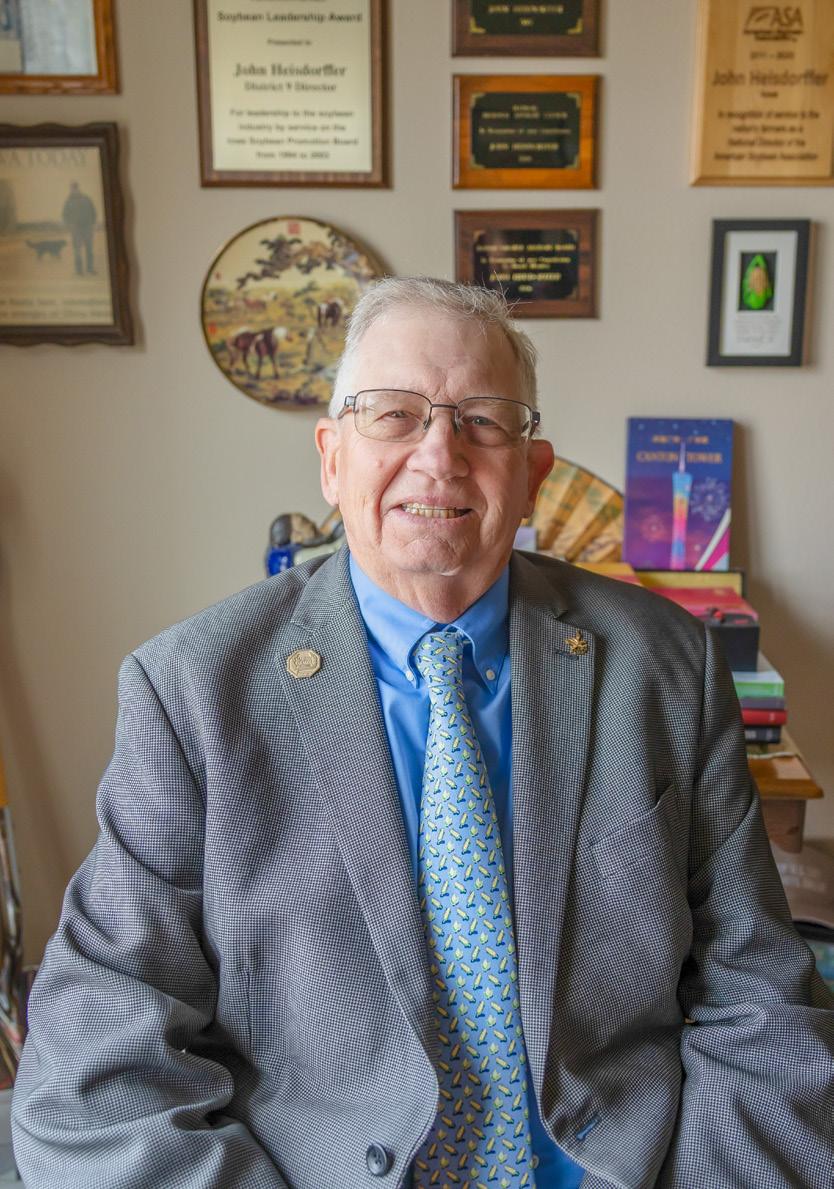
John Heisdorffer honored for decades of service to the soybean industry.
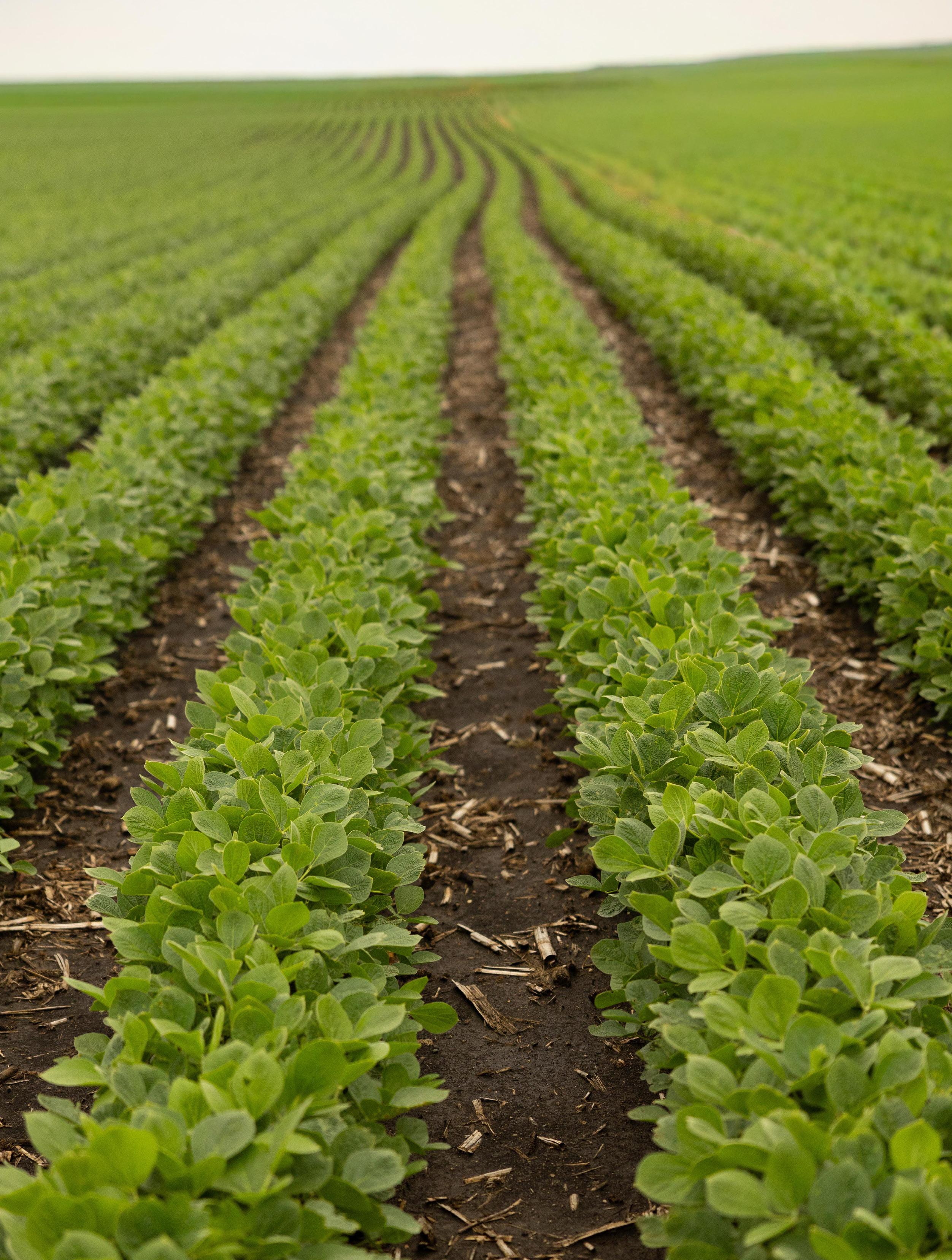
On the Cover: All rows lead to soy on a farm near Slater. In this issue, explore how soybean checkoff investments are improving export logistics, creating demand and demonstrating success from California to Egypt and every place in between. Photo by Joclyn Kuboushek.
Comments and statewide news articles should be sent to the address to the left. Advertising space reservations must be made two months preceding publication. In consideration of the acceptance of the advertisement, the agency and the advertiser must, in respect of the contents of the advertisement, indemnify and save the publisher harmless against any expense arising from claims or actions against the publisher because of the publication of the content of the advertisement.


Executive Insights
Kirk Leeds, ISA Chief Executive Officer kleeds@iasoybeans.com
The Power of Farmer Investment
For more than three decades, my work with the Iowa Soybean Association (ISA) has given me a front-row seat to one of the most important developments in modern soybean agriculture: the creation and evolution of the United Soybean Board and the national soybean checkoff program.
I remember that first meeting in Indianapolis (September of 1991). There was a sense of purpose and uncertainty in the room. While the vision of strengthening demand for U.S. soybeans was clear, the path forward was still being defined. We knew then that farmers were stepping up, committing increased resources through the checkoff to build something that would shape the future of our industry.
ISA has played a critical role in bringing that vision to life. As the state’s qualified soybean board, ISA serves as the link between Iowa farmers and the United Soybean Board. It is responsible for directing 50% of farmer checkoff investments in Iowa to state-level priorities while also ensuring that Iowa’s voice is represented in national discussions and initiatives.
The soybean checkoff was created to expand domestic and international demand. In the early 90s, China was not a major customer. Over the years, we’ve realized that
potential through strategic market development, trade relationships, and a consistent focus on reliability and quality.
Equally important has been the soybean checkoff’s role in developing new uses for soy. In 1991, few could have predicted the scale and impact of biofuels. Investments in research and commercialization helped turn soybean oil into a key feedstock for biodiesel and renewable diesel, creating entirely new demand streams. ISA has complemented those national efforts by supporting local initiatives and education that accelerate market adoption.
Research has always been a cornerstone of the checkoff’s mission. In the early days, soybean cyst nematode was a known threat, but the level of coordinated research we see today didn’t exist. Through sustained investment, we’ve made significant progress in understanding and managing SCN, though it still remains a challenge. Research priorities have evolved with the industry. White mold, for example, wasn’t even on the radar as a major concern in many parts of the country. Today, it’s a well-recognized disease that demands management strategies and ongoing study.
The soybean checkoff has made a lasting impact in communication. Early efforts to connect with farmers have expanded to include consumers, telling the story of modern agriculture and the sustainability of soybean production. ISA has been a leader in that effort at the state level, ensuring transparency and building trust with farmers and the public.
It’s remarkable to see how far we’ve come since that meeting 35 years ago. What started as a bold idea in Indianapolis has grown into a coordinated, farmer-led system connecting local priorities with national impact. The partnership between USB and state soybean organizations ensures investments are strategic and grounded in the realities of the farm.
The challenges have changed, the opportunities have expanded, and the stakes are higher than ever. But one thing hasn’t changed: the commitment of soybean farmers to invest in their own future. The soybean checkoff program is a testament to what can happen when farmers unite.
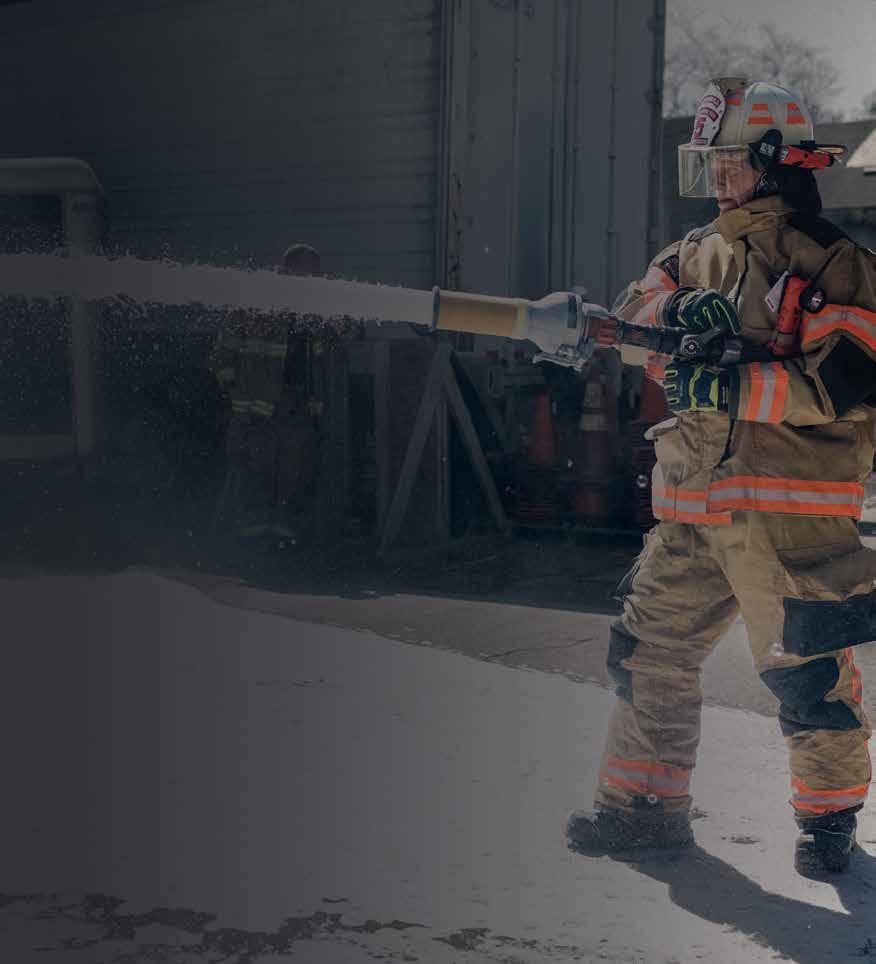
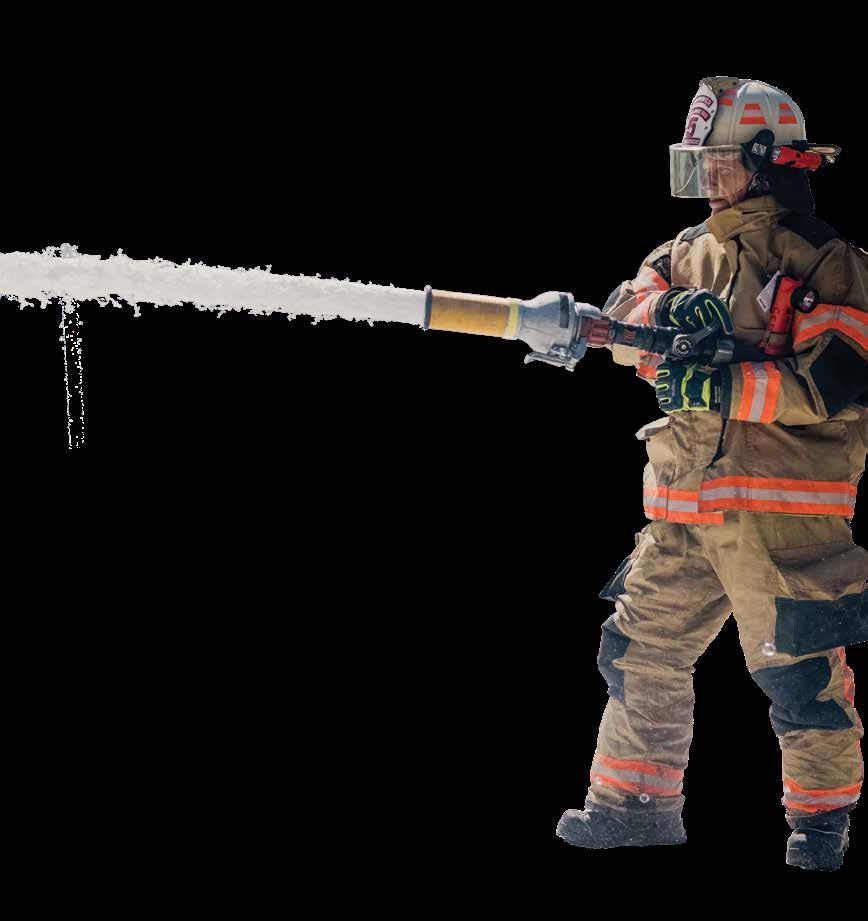
The more we discover about soybeans, the more valuable they become. One innovative product, SoyFoam™, creates a new, sustainable use for your crop that protects firefighters and the planet. See how your Soy Checkoff is unlocking new markets for soybeans at unitedsoybean.org
Rural Route 2
Editor’s Note by Bethany Baratta bbaratta@iasoybeans.com
Beyond the Remote
Somewhere along the way, commercial card companies decided that dads like at least one of these three things: fishing, grilling or the remote control. If this seems familiar, you probably have a stack of these cards on a dresser somewhere, or you’re preparing for Father’s Day (June 21).
Maybe my dad falls in one — or all — of these categories, but these are attributes of my dad I think about first:
Veteran: Dad joined the U.S. Army after high school and served during the Vietnam War. This military discipline means he’s always at least 10 minutes early — but never, ever late. He’s continued that spirit of service through his local American Legion.
Farmer: Farming was always the goal, even with the detour to Vietnam. After the war, he returned to the farm to work alongside his family. Raising livestock would later give his five kids (including me) opportunities to show livestock at the county fair and beyond. A large garden meant that even the busiest nights consisted of homegrown meals.
Teacher: He taught me how to stack hay bales, drive the skid loader, and feed bucketbottle calves. I still remember the smell of the wood-burning stove that kept us warm during repairs or while we were tinkering in his shop.
Adventurer: Camping in Yellowstone National Park, fishing in Minnesota, and yes, even visiting Mickey Mouse in Orlando, provided the best road trips with the family.
Time away from the farm, though well-spent, still meant daily calls with fill-in caretakers to check on the farm.
Mr. Fix It: Duct tape, wire, pails of extra nails, screws and bolts, and a toolbox were usually never far away — and every tool had its place. He’d know when he could fix it and when it was time to call the professional (usually).
Master navigator: If he’s driven a road once, he’s driven it a hundred times. And knows it by the road name and not by the color of the house right after the railroad tracks or by other features that wouldn’t make the map.
Scrabble enthusiast: I play quiz, and he turns it into quizzers and finds the triple letter score space. And he doesn’t need the dictionary.
Faithful: No matter how busy the weekend was, church was non-negotiable. You could usually find him singing in the choir, and, for 25 years with my mom, leading third graders closer to their faith.
This Father’s Day, I hope you get to go fishing, light up the grill and/or kick back and relax in your favorite chair watching your favorite show (with or without a nap). Here’s to the dads, like mine, who taught us how to swing the hammer, lift us over the gate when we weren’t quite strong enough, and remind us that farmers don’t truly take a day off from the farm, their families, or their faith.
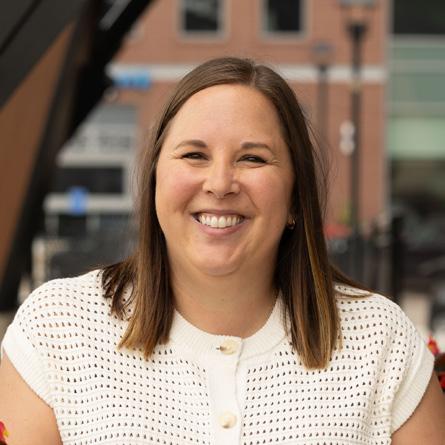
Lydia monitors and communicates issues pertaining to the soybean industry and their relationship to consumers’ quality of life while identifying and acting on opportunities to make these topics relevant to non-farm audiences. She oversees ISA's ag awareness portfolio that includes the Iowa Food & Family Project and the Iowa Ag Literacy Foundation.
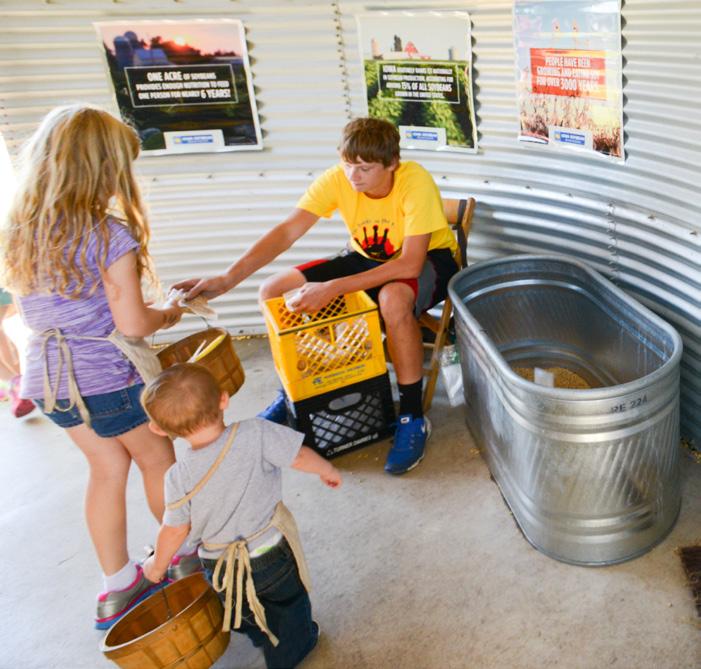
As Mark Jackson pulled his planter through the field to seed his 52nd crop near Rose Hill, Lydia Zerby and other volunteers were in Ames, helping youngsters scoop cereals, soy nuts and other ingredients to simulate a feed ration. With a snack mix now in tow, families gained a better understanding about how farmers work with nutritionists to create the perfect combination of soybeans and corn — like those grown on Jackson’s farm — and vitamins and minerals to feed their growing pigs.
It’s this relatable approach to agriculture that has delivered on the Iowa Food & Family Project’s mission set 15 years ago.
“The Iowa Food & Family Project was created specifically to close the gap between people who grow food and the people who buy and eat it,” says Zerby, Iowa FFP lead and consumer insights and engagement manager for the Iowa Soybean Association.

Though headquartered out of the ISA office, the impetus for creating the project wasn’t about touting one agricultural product over another but instead building trust and awareness of modern agriculture.
“In Iowa, 85% of the land is dedicated to farming, but less than 5% farm,” Zerby says. “We see that as an opportunity to bring those connections together and talk about how important farming and agriculture are to Iowa’s economy and our quality of life.”
Iowa FFP is funded by the soybean, pork, beef, egg, corn, turkey and dairy checkoffs, and non-checkoff resources. Zerby also partners with more than 30 food, farming and healthy living organizations which support its mission.
It’s because of this support that Iowa FFP can be front and center with its consumer audience year-round, even when farmers are working in the fields and in the barns.
LYDIA ZERBY
ISA engagement manager and Iowa FFP lead
Closing the gap between Iowa’s farmers and consumers
STORY BY BETHANY BARATTA | PHOTOGRAPHY BY JOCLYN KUBOUSHEK
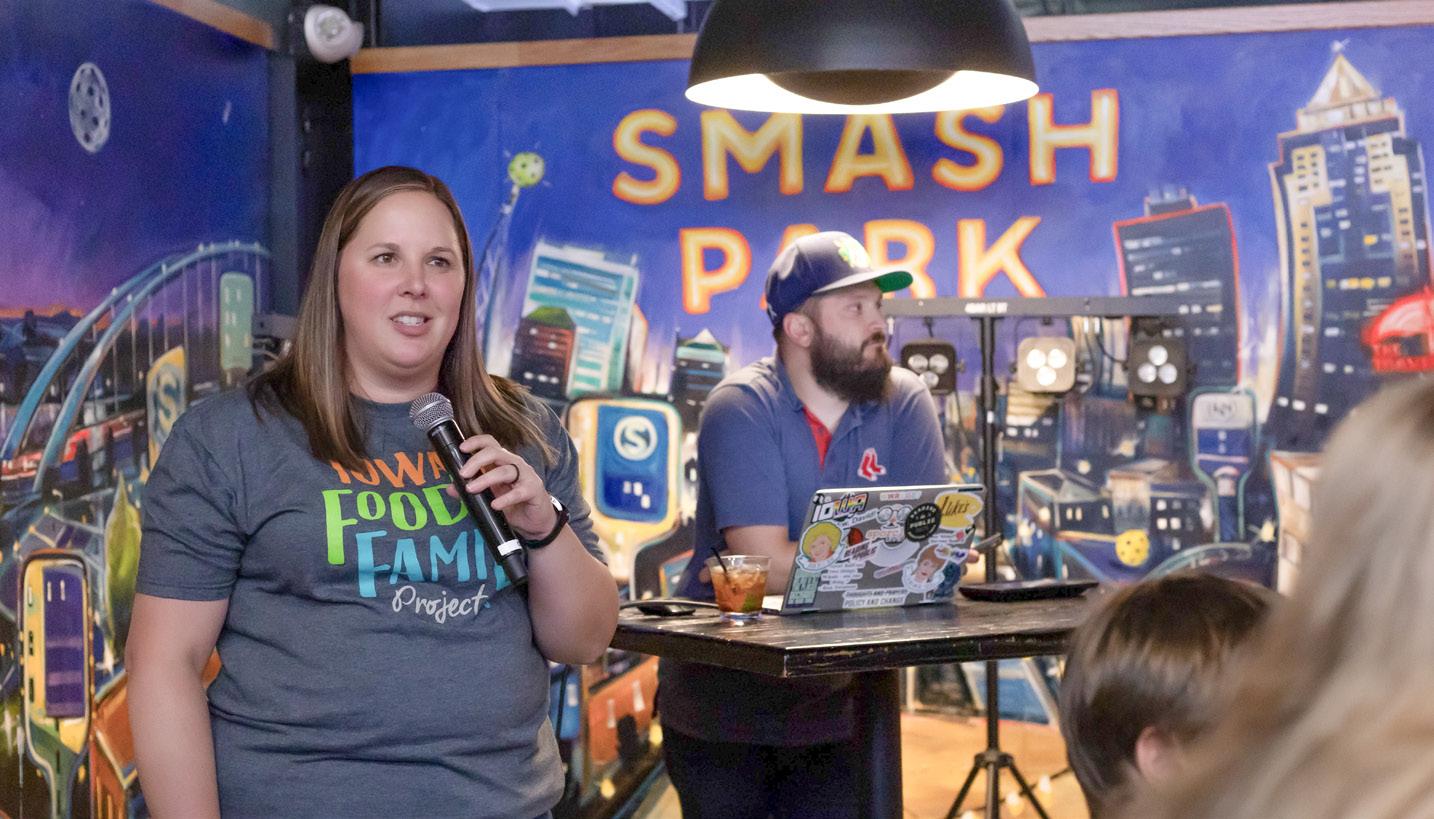
Trivia night tested participants’ food, farming, agriculture and Iowa knowledge.

Iowa FFP takes root
Aaron Putze, current ISA chief officer of strategy and brand management, planted the seed for Iowa FFP, but it was the ISA Board of Directors who nourished the initial idea, believing in a mission that has grown now for 15 years.
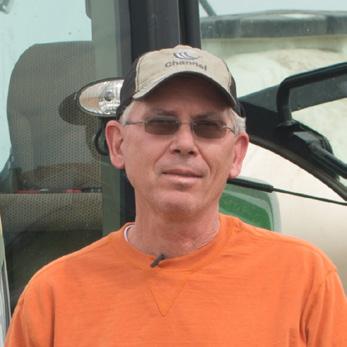
It was an out-of-the-box idea, recalls Brian Kemp, then an ISA director (and future ISA president).
“We were used to looking at projects that increased supply, like breeding programs, or one that were marketing-focused, like soy candles or biodiesel, but this Iowa Food & Family Project was visionary,” Kemp says. “We all kind of knew that we needed to connect better with our customer, the consumer, and this was a really good way to do that.”
Putting a face to farming was also central to its mission.
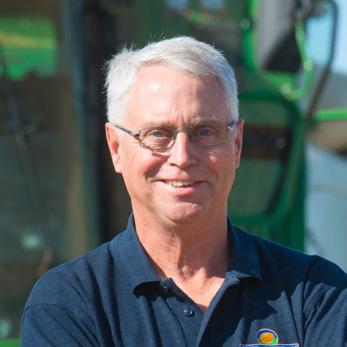
“The board recognized the need to show the personal side of agriculture — the family, the farm — not just the man in the field planting and harvesting, but the family unit that help make it a personal story,” adds Jackson, then an ISA director (and future ISA president).
In 2017, Jackson was the author of Iowa FFP’s Farm Life Journal, a monthly blog detailing life on the farm. There, he talked about visits from the grandkids, swapping tires on machinery, cover crops, their use of technology, the family’s farm dog, and gardening, to name a few topics of conversation.
“Gardening and farming are cut from the same cloth, and for many of us it’s been a lifelong seasonal passion,” he wrote in a March 2017 journal. “The average farmer essentially gets one try per year to grow their crop (it’s often said that if you’re lucky as a farmer, you get 40 attempts during your farming career). And despite the many challenges of modern agriculture, our eternal optimism motivates those 40 tries.”
Nine years later, Jackson realizes the importance of connecting with consumers — maybe now more than ever before.
“When my grandfather farmed every third person was a farmer. Flash forward 75 years and now it’s one out of 100 making a living farming in the U.S.,” Jackson says. “That’s how quickly agriculture has evolved. So, we need to help our urban neighbors understand how and why we do the things we do.”
Continued on Pg. 10
Iowa FFP supports the Little Hands on the Farm attraction at the Iowa State Fair.
BRIAN KEMP Former ISA president and Sibley farmer
MARK JACKSON Former ISA president and Rose Hill farmer
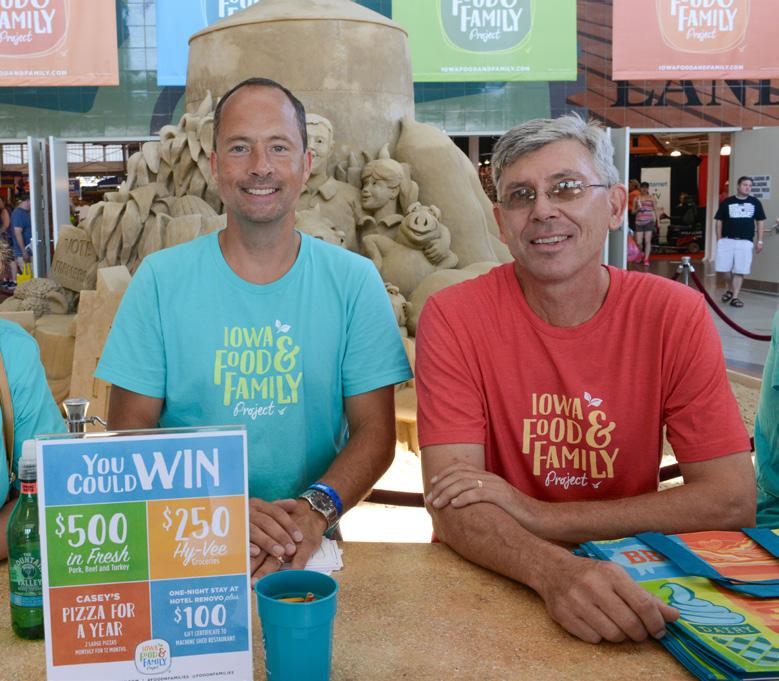
Seeing is believing Cristen Clark discovered Iowa FFP during its first year. The sixth-generation farmer created her own blog, Food & Swine, and was invited to take part in a bloggers’ tour, hosted by Iowa FFP. Since then, this award-winning baker and cook has played an integral role in connecting and creating seasonal recipes, featured in Iowa FFP’s Fresh Pickings magazine. She collaborated with Iowa FFP to create a cookbook and later met loyal readers at a signing event during the Iowa State Fair. Held in the South Atrium of the Varied Industries Building, the Iowa FFP exhibit attracts thousands of fairgoers each year.
“Connecting with people through food but still getting to talk about the farm is one of my
A popular dish featured in the Iowa FFP cookbook is Cristen Clark’s recipe for her Giant Cinnamon Rolls. The recipe includes mashed potatoes and won a cinnamon roll contest at the Iowa State Fair. She used the award money to buy a purebred Duroc gilt, which she named “Cinnamon.”
favorite things to do,” says Clark, who grows soybeans and corn and raises pigs near Runnells. “So, signing the cookbook and visiting with those who stopped by was like gifting recipes that mean a lot to my family; I remember that fondly.”
Beyond the headlines
Iowa FFP’s quarterly Fresh Pickings magazine, social media channels and monthly e-newsletter reinforce messages shared in classrooms and at consumer-facing events, like the Iowa State Fair, trivia nights, influencer tours, Iowa State University Block and Bridle’s Animal Learning Day, RAGBRAI and more.
Zerby and the team dive into meatier topics like seed oils, biofuels, GMOs and conservation.

CINNAMON ROLL ENTHUSIAST
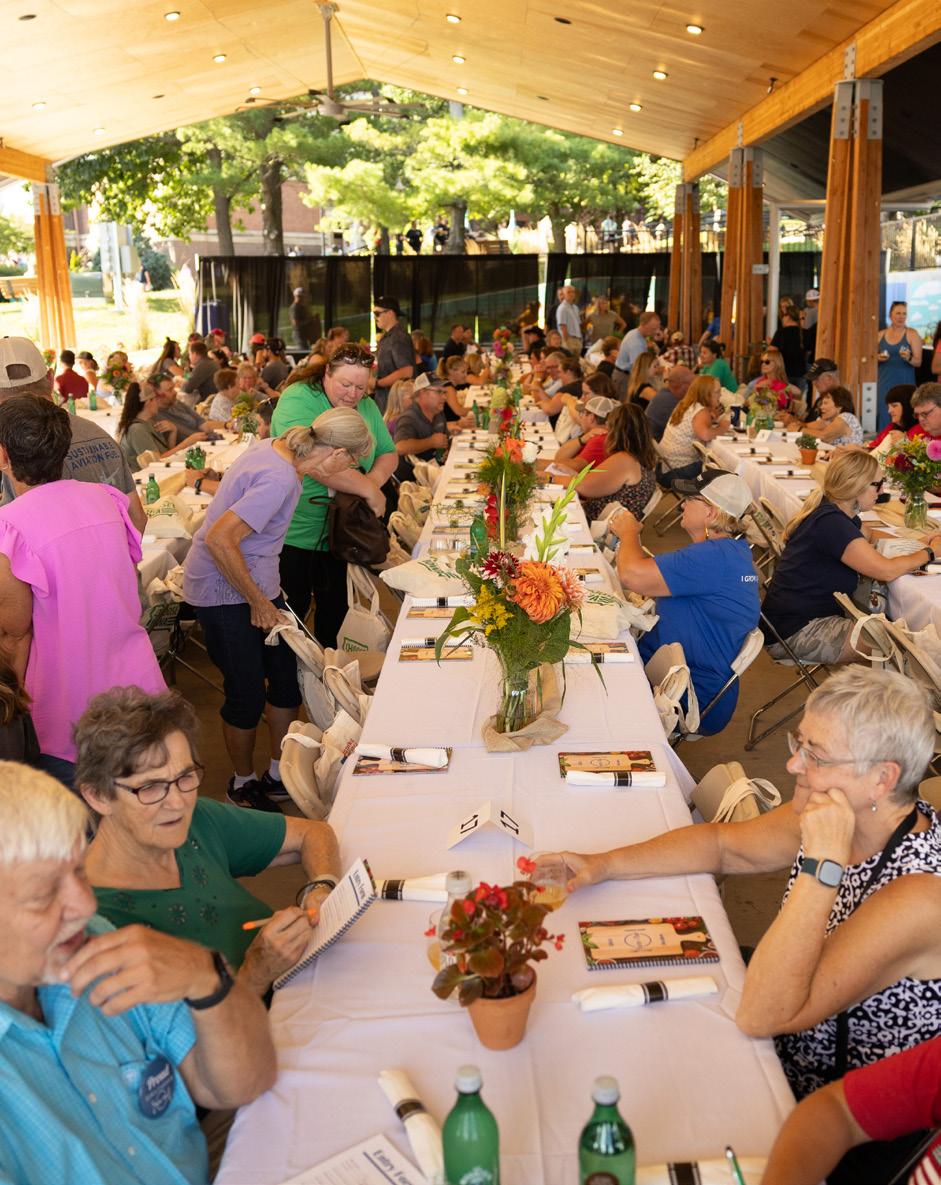
A Farm to Fair Dinner paired farmers with consumers for an all-Iowa dinner and conversations.
ISA’s Aaron Putze and former president Mark Jackson await guests at the Iowa FFP booth at the Iowa State Fair.
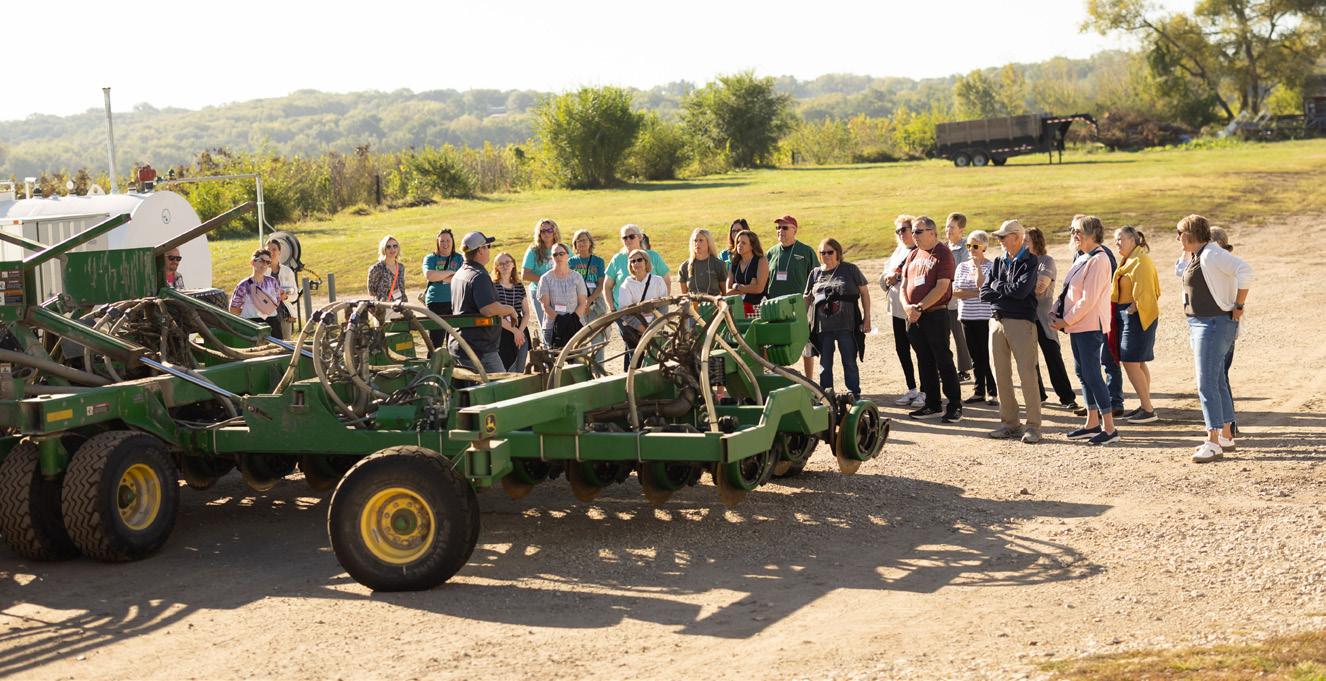
Farm tours showcase modern agriculture.
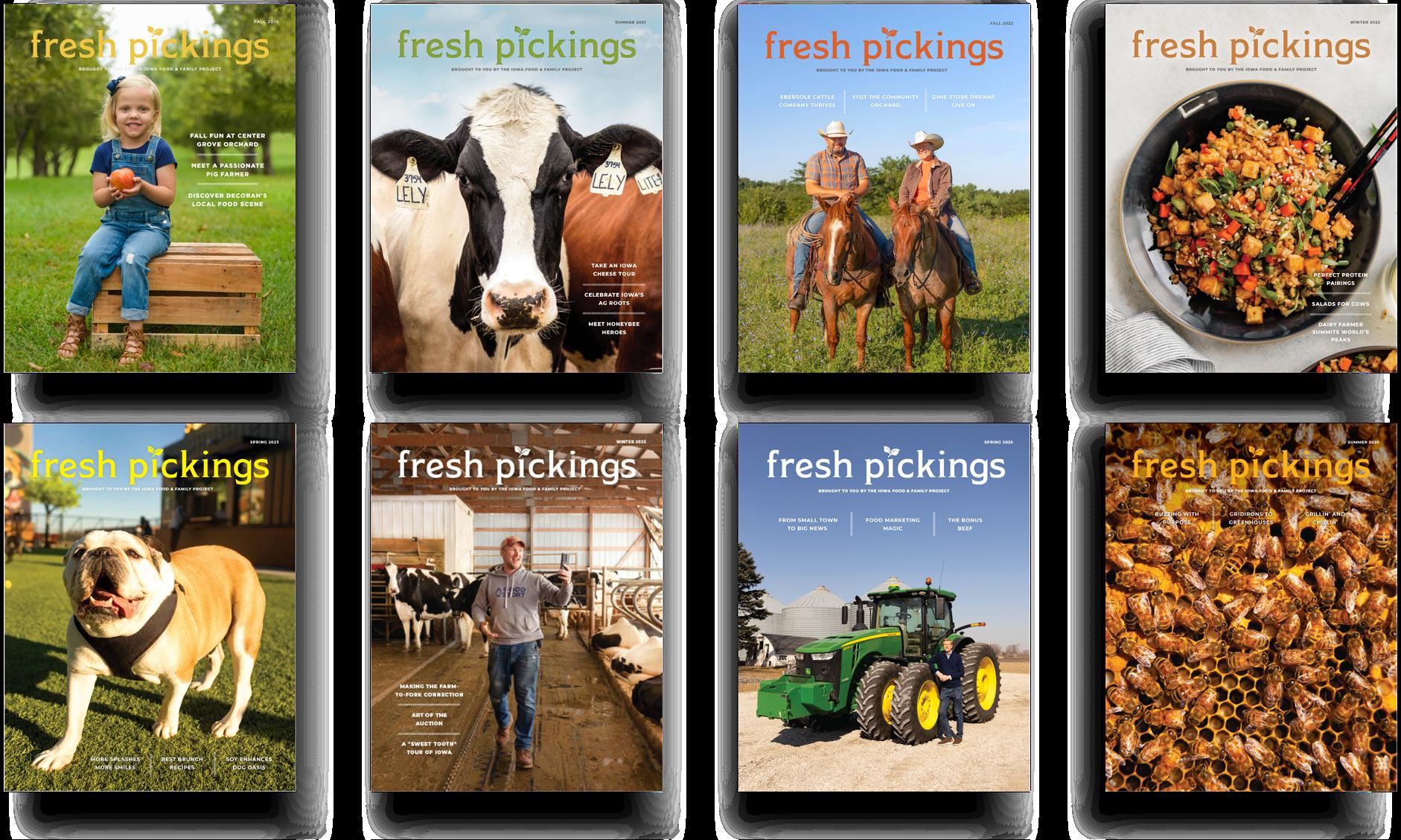
Fresh Pickings magazine is a celebration of the food, farms and families that make Iowa such a special place to call home. Through every quarterly issue, readers are invited to discover how their food is grown and raised across the state, while getting to know the dedicated farmers who make it all possible — 24 hours a day, 365 days a year.
“We take some of those topics that can be big and confusing and present them in a really palatable way that makes people feel comfortable,” Clark says. “It gets people coming back to get more information.”
Through giveaways and thoughtprovoking content, Zerby also invites audiences to participate in the conversation.
“We encourage two-way conversations by inviting dialogue between consumers and farmers to help address misconceptions and increase transparency,” she says.
That’s an understated advantage of having this coordinated, dedicated approach in Iowa, serving both farmers and consumers, says Kemp, who farms near Sibley.
“Human nature is if we don’t have knowledge of something, we kind of fill in the blank for ourselves. And sometimes the information that we use to do that is not accurate,” he says. “It helps to actually make that connection.”
What’s in a name?
There’s power in its name, says Dave Struthers, an ISA director and member of the Iowa FFP’s advisory committee.
“Just the name of it — the Iowa Food & Family Project. We all eat food, and we all have a family of some sort, so we’re all connected,” Struthers says. He’s hosted tours of his livestock and grain farm near Collins in coordination with Iowa FFP.
“So, whether you’re a farmer or an insurance salesman or a writer for the Iowa Soybean Review, you still are a consumer and you still have a connection to food and your family,” he says. “We want to help people make good choices with their food, give them ideas of what family things they can do in Iowa, and keep people connected to Iowa’s roots in agriculture.”
Through its various channels, Iowa FFP connects its readers and followers not only to crop and livestock farmers, but
points of interest, upcoming celebrations and events, local restaurants, and other Iowa-centric experiences.
“For some people, whether they grew up on a farm or they have fond memories of a farm, there’s some nostalgia, and that’s interwoven into all the stories,” Clark says. “And I think when people pick up Fresh Pickings magazine or see our social media posts or see us at the Iowa State Fair, they feel that nostalgia, and it makes them happy.”
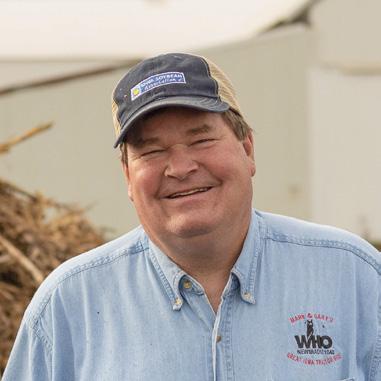
Dave Struthers ISA director and Iowa FFP’s advisory committee member
Continued on Pg. 12
Building trust
Fifteen years after its creation, there are reasons to be excited about the future of agriculture, thanks to Iowa FFP’s efforts.
AREA1-PRODUCER Iowa
Results from Iowa FFP’s most recent Consumer Pulse Survey point to improved farming practices, stronger communities and high-quality products as key reasons for positive views of Iowa agriculture.
“They also admire farmers’ resilience and adaptability amid economic and environmental challenges,” Zerby says. “Overall, there’s a growing sense of pride in Iowa agriculture’s role in feeding the nation and supporting the economy, leading to a more positive view of the industry.”
Contact Bethany Baratta at bbaratta@iasoybeans.com

Iowa Food & Family Project surveyed 991 Iowa consumers in its annual Consumer Pulse Survey. Here are the latest results:




72%+
of consumers are familiar with Iowa farming practices, techniques and ag processes.
76%
of consumers believe farmers produce safe, quality foods.
58%+
of consumers are confident about the future of ag market conditions in Iowa.
74%
of consumers trust farmers are raising healthy animals with care.

DPA Auctions joins Iowa Soybean as Partners+ Program Participant
DPA Auctions and the Iowa Soybean Association are partnering to positively impact the bottom line of soybean farmers.
As ISA’s newest Partners+ Program participant, DPA Auctions provides preferred pricing to ISA farmer members seeking assistance with buying and selling equipment and facilities.
“We know the importance of addressing the issue of input prices, and that includes sourcing quality equipment and machinery,” said Justin Scheel, DPA Auctions’ chief marketing officer.
ISA farmer members receive free equipment appraisals and 50% off DPA’s standard seller fees for equipment sales. Coming soon, soybean farmers accessing the program will have access to DPA Auction’s Full Farm Equipment Manager.
“The innovative product will enable farmers to track the value of their equipment all in one place,” said Scheel.
“They’ll also have access to real-time valuations and recommendations on when to hold and when it might be time to sell.”
From humble beginnings in 1972, DPA Auctions is an online auction experience serving farmers in Iowa and across the country. It attracts well-qualified buyers from across the country and internationally. Its Live Auction Board provides the feel of an on-site auction with a dynamic clock and bidding extension time, all from the
comfort and convenience of bidding from a customer’s own computer, tablet, or smartphone.
“Today we offer a seamless and simple process to selling heavy machinery in the agricultural, construction, and transportation industries,” Scheel said. “With millions of website visits per month and an unlimited number of satisfied buyers and sellers, DPA continues to be the most simple and successful option for business owners to buy and sell their equipment. We look forward to working with ISA to bring our services at a preferred price.”
Launched last year, the ISA Partners+ Program engages with trusted agricultural companies providing essential services and products benefiting soybean farmers. Participants provide exclusive discounts, rebates and other value-added services to ISA farmer members, helping soybean growers boost efficiency and profitability of their operations.
To learn more about ISA’s Partners+ Program and to monitor benefits offered to ISA Farmer Members, go to iasoybeans.com/membership/farmer-membership/ partners-plus-program. Iowa farmers who market a minimum of 250 bushels of soybeans annually are eligible to become a farmer member at no cost. For more information or to become an ISA Farmer Member, go to iasoybeans.com/membership/farmer-membership

SOY SQUAD SHAPES FUTURE AG LEADERS
ISA program connects students with real-world ag experiences
STORY BY PHOTOGRAPHY BY KRISS NELSON JOCLYN KUBOUSHEK
For college students looking to deepen their understanding of agriculture and where they fit within it, the Iowa Soybean Association’s Soy Squad offers a firsthand look at the industry beyond the classroom. The program connects students with farmer leaders and industry professionals while building knowledge of how associations work and how decisions impact farmers across the state. Members gain experience, expand their networks and develop skills that carry into future careers in agriculture.
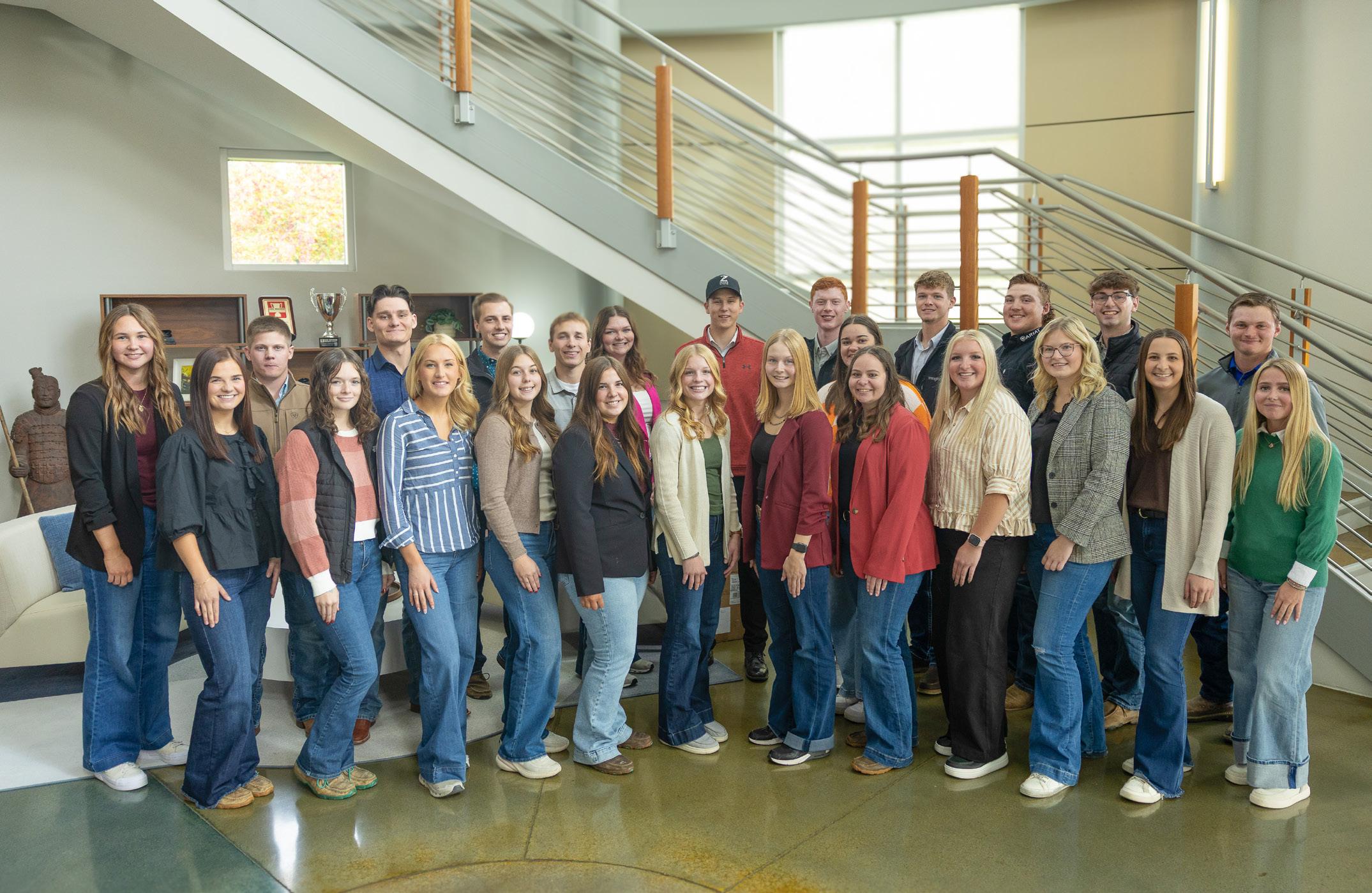
The program keeps expanding, with this year’s class being the largest so far at 26 students from nine Iowa colleges and universities. Participants come from diverse backgrounds, including one student balancing the program while attending flight school to become an aerial applicator, but all share a common bond through agriculture.
Students learn about ISA’s four focus areas: advocacy, demand, engagement and productivity, while interacting with staff, farmer leaders and industry professionals. They also gain firsthand
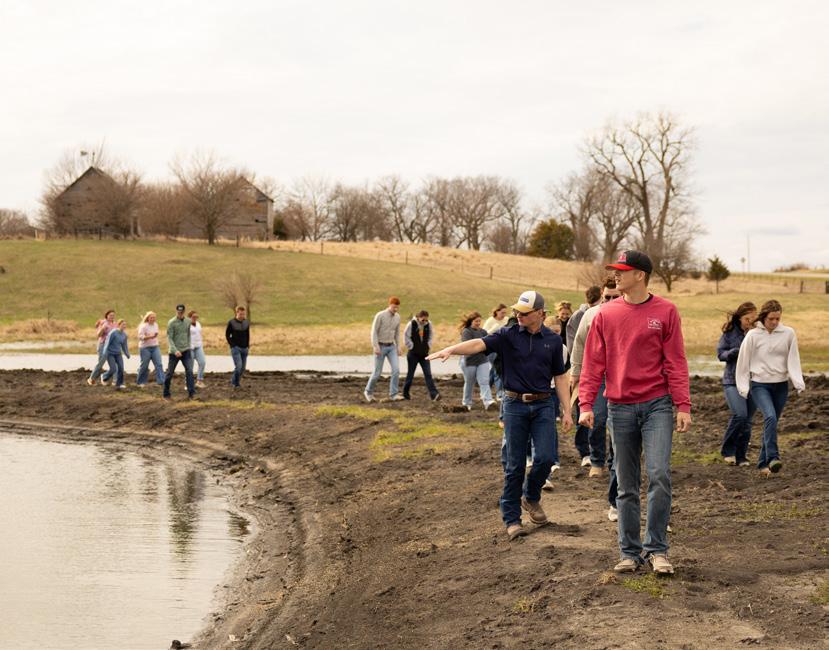

experience through tours, on-farm visits and events like Farm Forward.
Each year, the curriculum evolves to reflect current industry issues. This year’s focus was heavily focused on biofuels policy and trade, helping students better understand the challenges shaping the soybean industry and their future careers.
Beyond industry knowledge, Soy Squad emphasizes leadership and connection. Several participants have gone on to ISA internships, and one former member previously joined the team as a research agronomist.
“We want students to leave the program feeling more confident in their place in agriculture and better prepared to ask questions, start conversations and ultimately be part of the solutions,” says Julia Brenizer, ISA producer services coordinator and Soy Squad program lead.
The goal is for students to leave more confident, connected and prepared to help move agriculture forward, Brenizer says.
Continued on Pg. 16


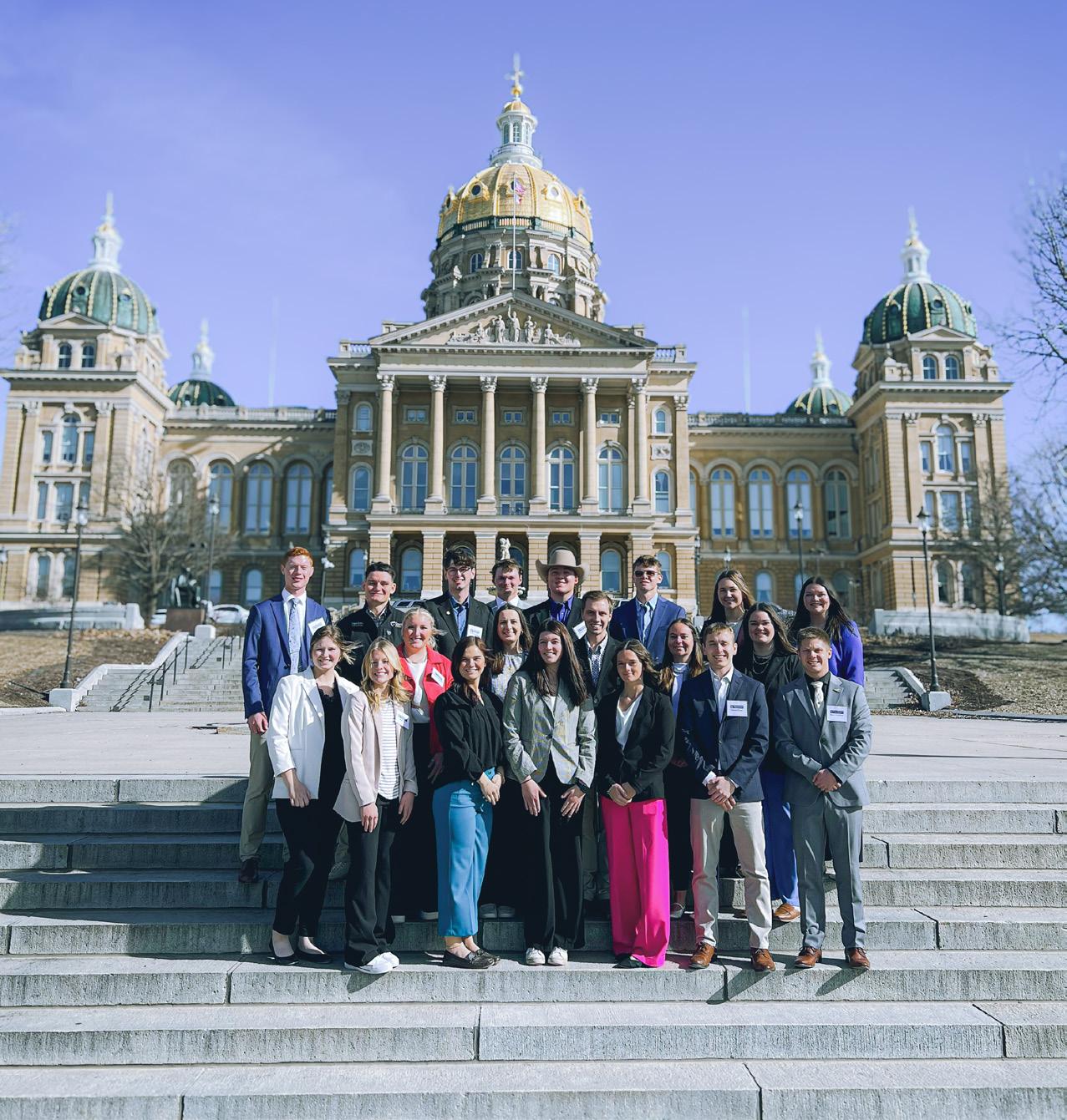
ISA Soy Squad participants network through various experiences on the farm, at the Iowa State Capitol and at the ISA office.
JULIA BRENIZER ISA producer services coordinator and Soy Squad program lead
Student perspectives
2026 Soy Squad members Wyatt Anderson and Olivia Marti share what that experience looks like and what they’ve learned along the way.
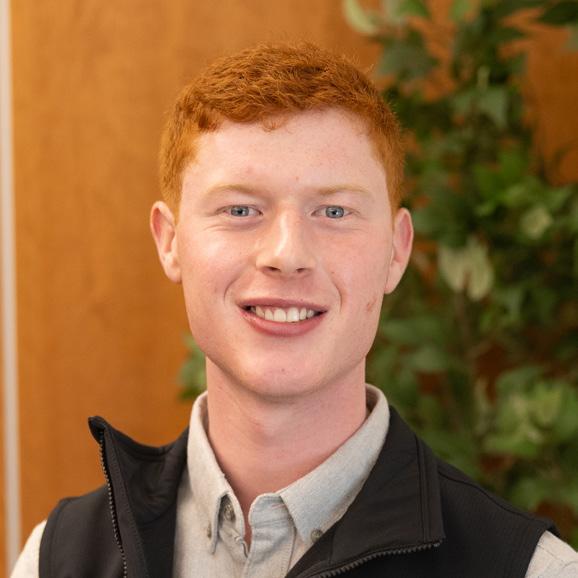
What is top of mind for you as a college student in agriculture?
Anderson: As a college student in agriculture, figuring out how to effectively communicate and foster productive relationships within agriculture is top of mind. How can we engage and excite the next generation of farmers, producers and agriculturalists, encouraging them to return to rural America and get involved in agriculture, whether that is on a heritage operation or something new? Overall, how can we do more to support our farmers not only in Iowa, but across the entire nation?
What did you gain from Soy Squad, and why should others apply?
Anderson: Soy Squad was an insightful experience, giving us a greater view into the work the Iowa Soybean Association does through advocacy, research, communication and outreach. I was surprised to learn
WyattAnderson
, G r e e n e
about the structure and size of ISA and the resources they provide to farmers. They help farmers participate in research and gain access to conservation funding.
What message should consumers or policymakers hear from farmers?
Anderson: One message consumers and policymakers need to hear is that while one solution may seem clear, it may not fit every operation. Farmers are acting in the best interest of the consumer and the environment, because they rely on those same resources.
What are your plans after graduation?
Anderson: I attend Iowa State University, where I study agricultural and rural policy studies, international agriculture and public relations. Following graduation, I plan to pursue either a law degree or a career in government relations advocating for farmers and farm policy.

About Soy Squad
Soy Squad is a unique opportunity for collegiate students seeking insight into the Iowa Soybean Association. The Soy Squad meets three times a year with the topics of discussion including, but not limited to: ISA overview, research, demand, policy, education, and personal/professional development.

What is top of mind for you as a college student in agriculture?
Marti: What’s top of mind for me is how we continue to move the industry forward while staying connected to the people we serve. There are many conversations around sustainability, technology and food systems, and it’s important our generation helps shape them. I’m especially interested in bridging the gap between producers and consumers. Agriculture is evolving quickly, and we need to not only adopt new practices but clearly communicate what we’re doing and why. The future of agriculture depends on innovation, trust and strong representation.
What did you gain from Soy Squad, and why should others apply?
Marti: My experience with Soy Squad has been incredibly valuable. One thing that surprised me was how many opportunities exist within the soybean industry beyond what most people think. From global trade to sustainability and policy, it opened my eyes to how broad the industry is. I attended a Shop Talk in my district, where I saw how ISA connects farmer voices and fosters meaningful conversations. I also job-shadowed within the organization, gaining insight into different roles.
Class Requirements
I would encourage others to apply. It’s a great opportunity to gain experience, build connections and find your voice.
What message should farmers or the public hear?
Marti: One message farmers need to hear is that they are not alone. As conversations around mental health grow, it’s important farmers feel supported and connected. Agriculture can be isolating, and there are many pressures. Creating spaces for farmers to share experiences and support each other is critical. There is strength in community.
What are your plans after graduation?
Marti: I am a senior at Iowa State University studying agricultural business with a minor in agronomy. I will continue with Bayer after graduation in their crop protection sales trainee role. In this position, I will train with active territory managers to support sales strategy, customer relations, and establish product positioning while working toward the goal of managing my own territory after training. I am excited to continue serving agriculture throughout my career.
Contact Kriss Nelson at knelson@iasoybeans.com
Have the ability to attend all scheduled meetings.
• Must be attending a two-year or four-year college or university in the state of Iowa.
• Pursuing a major in an agriculture or agriculture-related field.
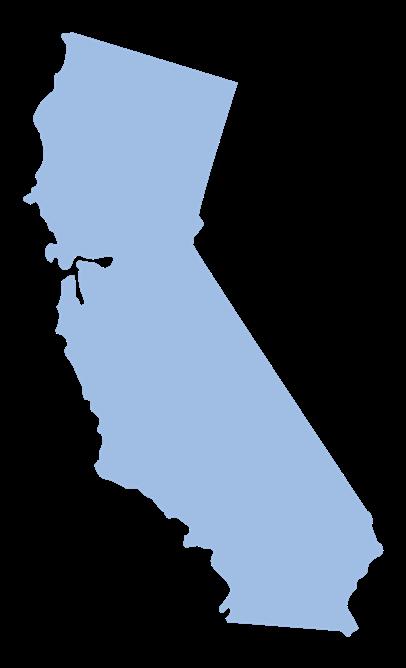
Iowa, U.S. Farmers Make Their Case as California Limits Soy-Based Fuels
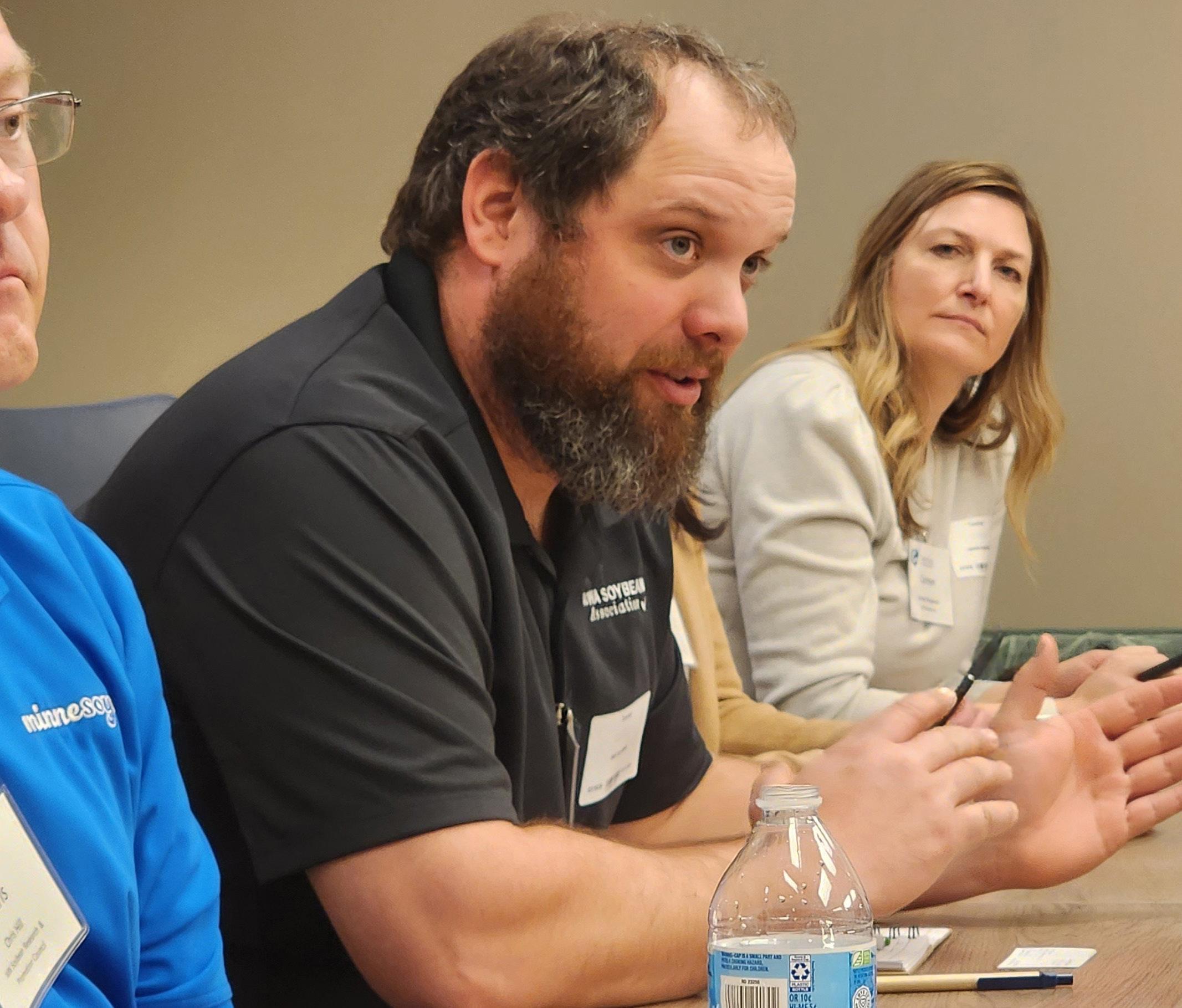
California’s low-carbon fuel policy capping veg oil feedstocks is limiting soybean-based biofuel use. Iowa soybean farmer Neil Krummen and other Midwest soybean farmers traveled to Sacramento earlier this spring where they urged regulators to tweak the state’s LCFS to boost soybean oil demand, reduce the state’s reliance on fossil fuels and improve air quality.
STORY AND
PHOTOS
BY AARON PUTZE, APR
California, the world’s fifth largest economy if it was a country, is an important market for Midwest soybean farmers and oil from the soybeans they produce.
Efforts to fully tap it, however, remain a work in progress.
Ironically, a major impediment to progress in California is the same vehicle other states are using to reduce reliance on foreign energy and fuel costs and improve air quality and human health.
“Using only soybean oil as a feedstock for their diesel fuel would consume almost
5% of the total U.S. soybean crop,” says Neil Krummen, a Linn Grove soybean farmer and biodiesel proponent. “Unfortunately, regulations originally designed to boost the use of renewable feedstocks like soybean oil are now a barrier.”
Krummen was one of several Midwest soybean farmers who traveled to Sacramento earlier this spring to pitch the benefits of soybean oil, a key feedstock used to produce biodiesel and renewable diesel.
The fuels, Krummen says, are helping California meet its climate goals under the Low Carbon Fuel Standard. Since the
inception of the standard in 2011, more than 2 billion gallons of soy-based biodiesel and renewable have been used to displace fossil diesel.
However, the Golden State revised its LCFS in 2024 at the direction of California Air Resources Board. The most notable and controversial change was capping the use of vegetable oils in the state’s diesel pool at 20%, which go into effect in 2028.
“Environmental justice activists demanded the cap,” says Krummen. They argued using soybean oil and other renewable feedstocks for liquid

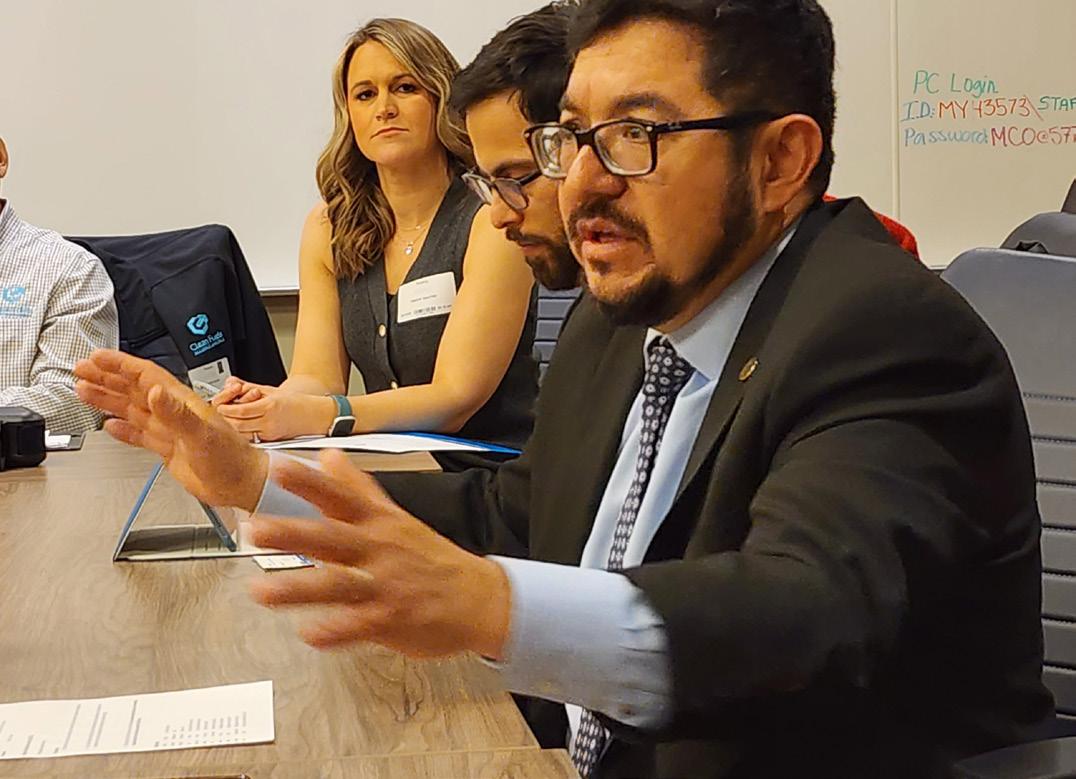
[Left] ISA Director Neil Krummen makes his point during conversations with CARB directors in Sacramento. California has a big need for biofuels, but regulations intended to improve air quality and lower fuel prices are doing just the opposite.
“We’re not cutting down forest and plowing pastures to produce soybeans in this country and shouldn’t be penalized by those who are,” he says. “In the meantime, petroleum use is going up, and air quality is worsening in a state that wants to improve air quality.” Krummen says he looks forward to hosting a delegation of California regulators and CARB directors to show them firsthand how U.S. farmers turn sunshine and soybeans into renewable energy.
[Right] Sacramento City Councilman and biofuels proponent
Eric Guerra speaks to biodiesel proponents during meetings earlier this year in California’s capital city. Guerra, a member of the California Air Resources Board, said concerns about deforestation in the U.S. are unfounded. “No one is going to the Sierras or Rockies to plant soybeans.”
fuels increases food prices, is bad for the environment and is a barrier to achieving 100% electrification of the state’s vehicle fleet.
Now, with the state facing a major state budget crisis and its residents balking at soaring prices for fuel and other essentials, several CARB members sense a change of heart may be underway among California legislators and the electorate.
Eric Guerra, a Sacramento councilman and three-year

CARB member, is one of them.
He said the cap occurred at a time when the state was committed to achieving zero emissions from the state’s vehicle fleet.
“Now, here we are with major state budget challenges and an affordability crisis,” said Guerra, a biofuels proponent. “Waiting for perfection, like 100% electrification, is only hurting people daily, especially lowincome consumers and the health outcomes of our population.”
Continued on Pg. 20
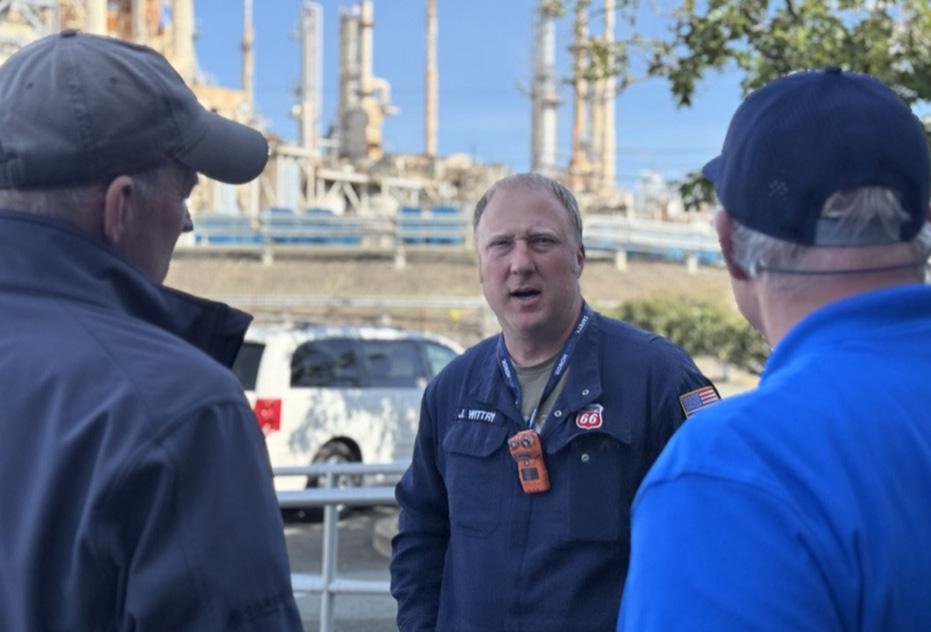
Phillips 66 Rodeo Facility Goes 100% Renewable
The Phillips 66 Rodeo Renewable Project has a lot riding on the future of California’s Low Carbon Fuel Standard.
Located on the outskirts of San Francisco, the maze of pipes and tanks operating under the watchful eye of a skilled team converts nearly 50,000 barrels of renewable feedstocks daily into more than 800 million gallons of renewable diesel and sustainable aviation fuel annually.
In 2024, the facility converted entirely to processing renewable feedstocks to assist in California’s transition to lower carbon fuels. This includes soybean oil from soybeans produced and crushed in Iowa.
“The products we produce supply the California market and support Phillips 66’s goals of reducing carbon intensity,” said Jared Wittry, operations manager for the Phillips 66 Rodeo Renewable Project.
The refinery is the oldest located in the San Francisco Bay Area. It was originally constructed in 1896 to process whale oil for kerosene. Today, it can refine a variety of feedstocks including used cooking oil, animal fats and vegetable oils.
The Rodeo refinery currently runs on about 30-40% vegetable oils. If it used only soybeans, it would consume 200 million bushels of soybeans annually, or roughly one-third of Iowa’s annual production.
Marc Ventura, senior specialist for fuel affairs for the project, says the facility doesn’t prefer one oil, and has found value in consuming additional supplies of domestic feedstocks.
“We’re expanding rail and always looking to be as flexible so we can use a variety of feedstocks depending on market conditions and availability,” Ventura says.
SAF is a big topic of conversation in California and around the world. Ventura says it can reduce lifecycle greenhouse gas emissions by up to 80%, making a major impact on aviation’s carbon footprint.
“I still don’t want to ride on an electrical plane, especially if it’s hit by lightning,” he says. “Liquid fuels remain the best option for an industry committed to operating more sustainably.”
By not looking at biofuels and ensuring the state has a solid supply of biofuels feedstocks, the backstop is petroleum fuel.
“Eliminating biofuels is just making the air dirtier,” he says.
Guerra’s stark assessment came during a series of meetings organized by Clean Fuels Alliance America.
Since fall of 2024, the volume of diesel made from soybeans and other renewable feedstocks as a percent of the Golden State’s total diesel inventory has declined from nearly 80% to 64%.
Clean Fuels, American Soybean Association, and numerous state organizations including the Iowa Soybean Association, engaged with CARB during the latest rulemaking in an effort to stave off the cap on cropbased feedstocks. They provided data and independent analysis on U.S. soy’s sustainability record and comments opposing unnecessary penalties to soybased biofuels.
“We argued a cap on crop-based feedstocks was unfounded, would create a shortage of lower carbon fuels and raise fuel prices,” says Tom Verry, Clean Fuels’ director of outreach and development.
But the state’s environmental justice community, with the strong backing

of California academia and many state legislators, argued that using soybean oil for diesel fuel production spurs deforestation, makes food more expensive and hinders the state’s ability to electrify.
These arguments ultimately carried the day, to the detriment of California motorists, the state’s air quality and U.S. soybean farmers.
Krummen, an ISA director, argues the state’s commitment to electrifying 100% of its vehicle fleet doesn’t square with reality.
“It’s just not feasible, at least not in the timeframe the state thinks it can,” he says. “In the meantime, fuel demand remains strong which means the only thing that can backfill the reduction of a locally-grown feedstock is petroleumbased fuels.”
In the push to go electric, California is burning more fossil fuel today than in 2024.
These developments are especially disappointing to Floyd Vergara, a Clean Fuels consultant, biofuels expert and California resident.
Prior to serving as Clean Fuels’ director of state government affairs, he was a strategist and analyst for CARB’s industrial strategies and research divisions. Vergara played a key role
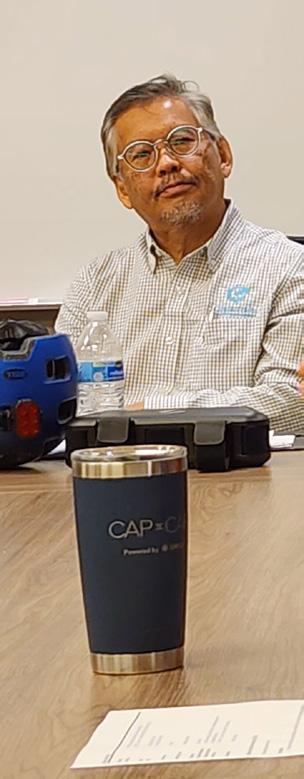
Clean Fuels Alliance America is a biofuels advocacy group based in Jefferson, Missouri. It hosts frequent visits to California involving soybean farmers and industry advocates.
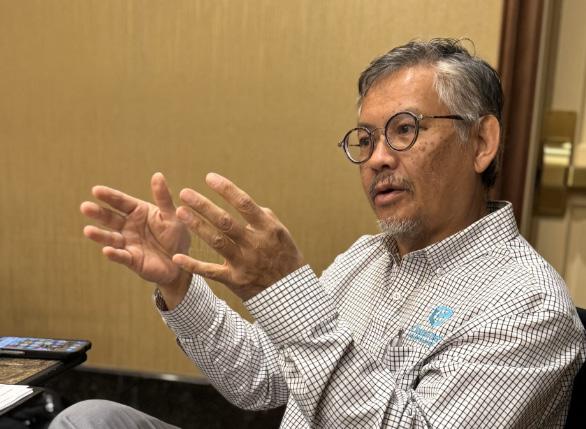
Floyd Vergara speaking during the meeting with CARB directors in Sacramento, California.
in the state’s adoption of an LCFS as directed by then-Governor Arnold Schwarzenegger and similar efforts in Oregon and Washington State.
“We just want to work with California to reduce the barriers to using more biobased feedstocks,” he says. “It behooves California to work with us as partners to cleaner air and more sustainable energy and energy prices.
“Unfortunately, fossil fuel diesel consumption has ramped up since June 2025 which means the air pollution is getting worse.”
Guerra, a self-described consensus builder with more than 20 years of experience in working with California’s legislature, said he understands the concerns of Midwest farmers. He hopes there’s a willingness by CARB members to rethink the process amid soaring fuel prices and the need to improve air quality.
“If you want your economy to grow, you need heavy duty equipment and that means you need more diesel. But without fuel made from vegetable oils like soybeans, the only thing left to backfill it is petroleum and heavy diesel.
“And delayed air quality improvements are delayed health improvements,” he says.
CARB director Lynda Hopkins agrees. The farmer and Sonoma County supervisor is an advocate for datadriven climate policy and regenerative agriculture. She’s also a strong proponent of domesticating the state’s fuel supply, including soybean oil.
“We should reduce bureaucratic red tape and stop creating problems where one doesn’t already exist,” she says. “This includes claims that using soybean oil as a feedstock for diesel fuel is causing deforestation in the Midwest.”
Hopkins said domestic sources for fuel is more important than ever and urged the delegation of Midwest soybean farmers to create alliances with California-based ag groups and speak with one voice.
Photo by Heather Buechter, Clean Fuels Alliance America
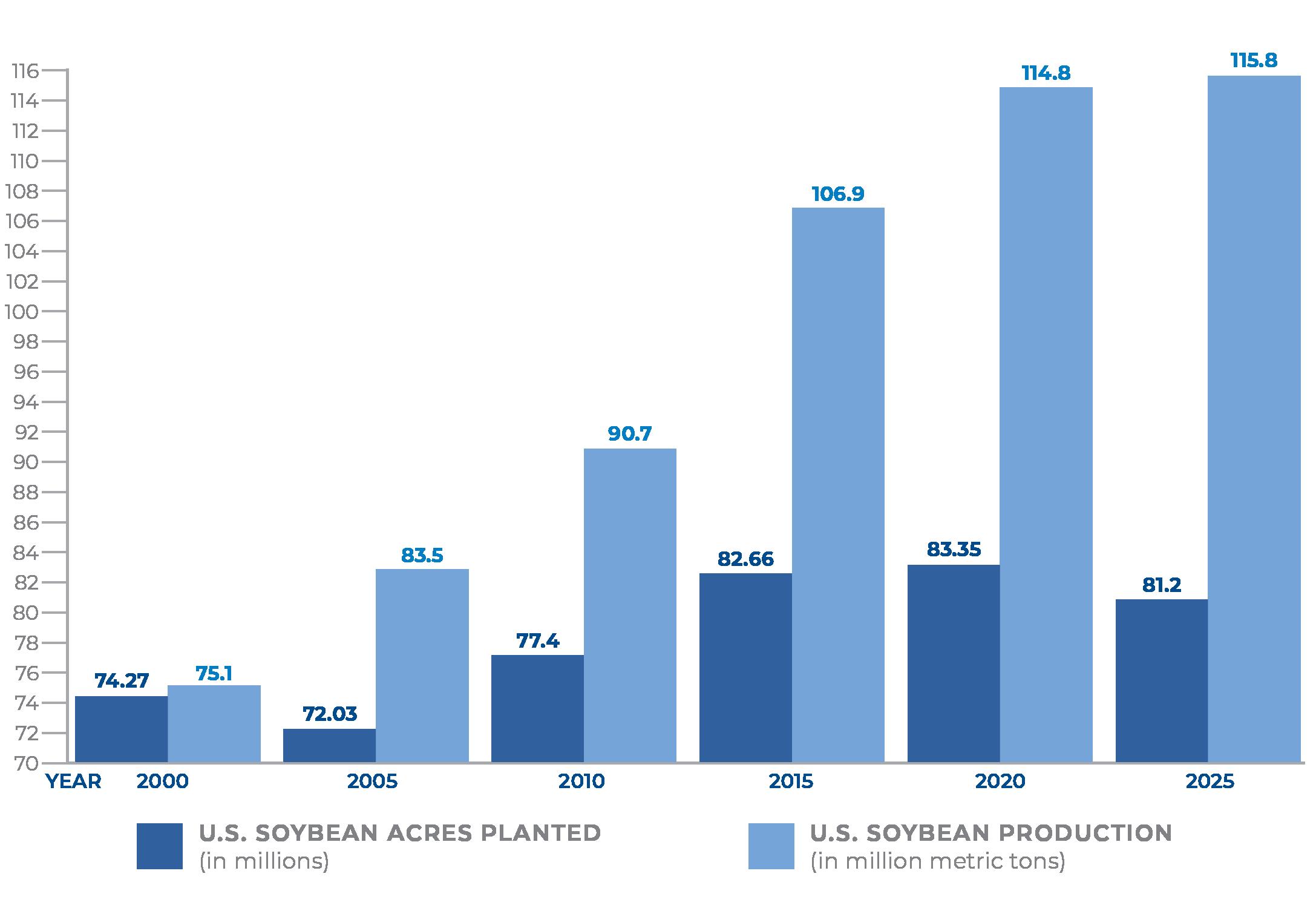
Over the past 25 years, acres planted to soybeans in the U.S. have increased nearly 14%, while U.S. soybean production has increased 36%.
“Government makes you do things and then penalizes you for following directions,” she says. “It’s always regulating on worst case scenarios — the deforestation issue penalizing U.S. soybean farmers is a perfect example.”
Hopkins admits that eliminating the 20% cap on soybean oil will be a lift. However, she said it’s the perfect time for biofuels advocates to raise their collective voice and help CARB better understand how soybean farmers are producing more soy using fewer acres and inputs.
Clean Fuels and the delegation of soybean farmers agreed, while urging CARB to:
• Soften the strict 20% cap on veg-based feedstocks used in the state’s LCFS.
• Carve out U.S. farmers from the indirect land use penalties that
disenfranchise soybean oil’s use in biofuels.
• Tout the benefits of biofuels as a dropin fuel that will immediately improve air quality and therefore human health; and
• Visit Midwest soybean states to see where and how soybeans are grown and hear firsthand accounts of how farmers are committed to environmental stewardship and improving the productivity of every acre planted to soybeans.
Vergara said the North American carveout makes the most sense.
“CARB has even admitted that North American feedstocks are not a concern,” he says. “Place the requirements where they need to be and not where it’s a step in the wrong direction.”
Guerra says placing limitations on using soybean oil sourced from Iowa and Midwest farms is a missed opportunity.
China’s loss, he added, could be California’s gain, Guerra says.
“At a time when China is telling America’s farmers that they don’t want your soybeans, we could say, ‘We’ll take them all!’ It’s a missed opportunity.”
California, he added, should look to the Midwest as the hero of California in helping make the air better.
“In turn, California can be the hero of the Midwest by providing demand for the quality product you produce.”
Contact Aaron Putze at aputze@iasoybeans.com

Iron Deficiency Chlorosis: Causes and Challenges
Shane Beck, ISA Research Agronomist sbeck@iasoybeans.com
KEY INSIGHTS
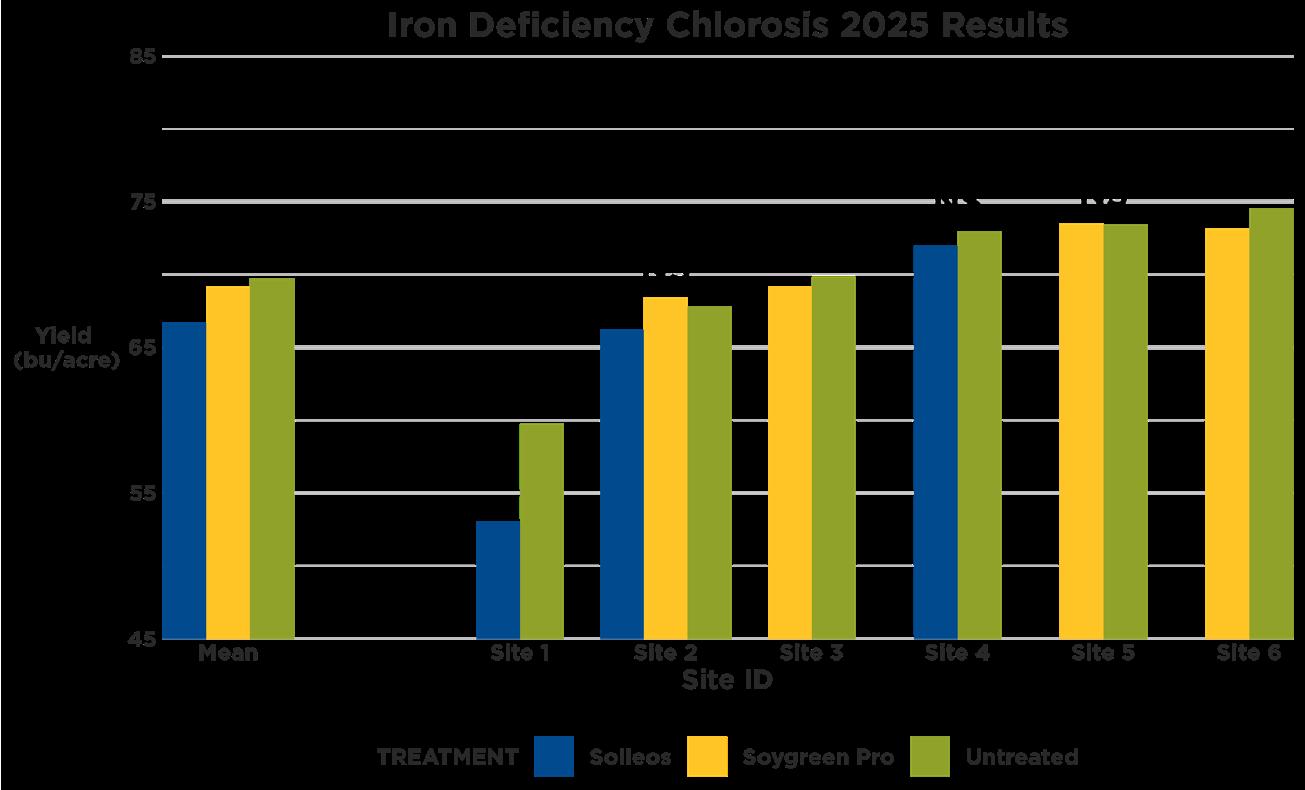
No statistical difference in yield was observed between the untreated control and the strips that were treated with Soileos and Soygreen Pro in 2025.
ITrials had low presence of iron deficiency chlorosis (IDC) pressure.
ron deficiency chlorosis is a problem that some Iowa farmers face on an annual basis. The area of Iowa that commonly sees IDC is the Des Moines lobe. It is most commonly seen several weeks after planting, especially in cool and wet growing environments. A common symptom of IDC is the yellowing of the uppermost new leaves with the veins of the leaves remaining green (Image 1). In less severe instances, the plant quickly recovers, but there may still be a yield decrease due to the stress. In more severe cases, the plant will remain stunted or even die with large yield decreases.
Iron availability
IDC is not caused by a lack of iron in the soil but rather a lack of available iron for the plant to take up. Soybeans prefer the soluble form of iron which is Fe2+, but the most common form of iron in the soil is the less soluble form, Fe3+
Soybeans overcome the less soluble form of iron by producing enzymes that change the iron into a more soluble version that it can uptake.
During wet periods early in the growing season, bicarbonates are produced which decrease the soil acidity leading to the soybean plants being unable to uptake iron. Since there is plenty of iron in the soil, a soil test measuring iron levels is not a good indicator of IDC. A better test is a soil pH test, since soils with higher pH are more likely to see IDC.
Use multiple tactics to defend against IDC such as plant genetics, managing soil pH chelated iron and increasing seeding rate in known hotspots.
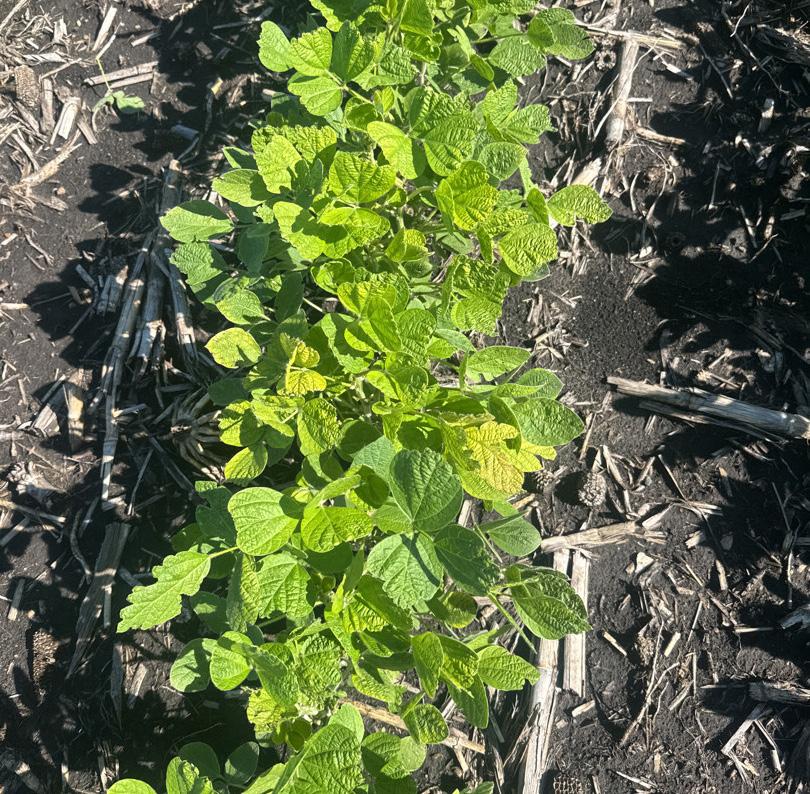
Image 1: Picture captured in north central Iowa in IDC plot in 2025. Low pressure was observed overall.
Photo credit: Shane Beck
Managing IDC
There are a few things that farmers can do if they have a concern about IDC on their farm.
One way is to select a seed variety with good tolerance to IDC. Knowing soil pH can also help decide planting populations in different areas of the field.
Soils with pH greater than 7.3 have a greater risk for IDC, which can benefit from a higher planting population.
The last option, which Iowa Soybean Association tested this past year, is to apply chelated iron at the time of planting to help provide an available form of iron.
Trial design
In the spring of 2025, ISA conducted trials in six fields that had a history of IDC. Two products were tested in these fields in combination with untreated strips: Soygreen Pro by CHS and Soileos by Lucent Biosciences.
Soygreen Pro is a chelated liquid iron product that can be applied in-furrow while planting, surface applied prior to planting or applied directly onto the plant when symptoms are present.
Soileos iron offers multiple application methods, including in-furrow placement or broadcast delivery. During 2025 trials, droneapplied strips were successfully integrated into the soil using two methods: mechanical incorporation with a field cultivator or moisture-driven activation. Both approaches focus on placing the pelletized iron within the soil matrix to maximize nutrient availability while minimizing surface exposure.
Trial results
Overall, there was not a significant yield difference between the different treatments (Figure 1). When all locations were combined, untreated had a slight yield advantage compared to Soileos and Soygreen Pro. This yield advantage was not significant due to the variability in each of
the treatments and across locations. Fields were scouted in midJune when IDC was expected to affect the field the most. There was very little IDC observed in the trials with only small pockets in some treatments.
Other data collected throughout the growing season were stand counts and soil samples. There were also no significant differences between any of the treatments. The average pH across the three treatments was 6.7, which indicates why the severity of IDC across the six locations last year was minimal.
Environmental factors
IDC is environmentally dependent. Soil pH, rainfall amounts, and soil temperatures are three factors that can make it more impactful in the field. Chelated iron can be a valuable tool in fields that have a pH higher than 7.3. In areas that do not have a pH higher than that, they might not provide enough of a yield advantage to justify the cost of the product. Combining multiple management tactics can significantly help in areas that are prone to IDC.


E X PANDIN G Export Pathways
Strategic investment boosts capacity for soybean meal exports.
STORY AND PHOTO BY BETHANY BARATTA
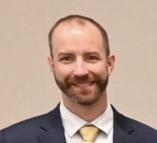
CRAIG PIETIG

AGP
senior vice president for ag products
When The DeLong Co., Inc.’s Agricultural Maritime Export Facility opened in July 2023, it was among the first on the Great LakesSt. Lawrence Seaway system with the ability to handle a variety of agricultural commodities via truck, rail, barge, and international vessels. Phase I of the facility — primarily exporting DDGs and some soybeans and soybean meal — proved to be a successful proof of concept.
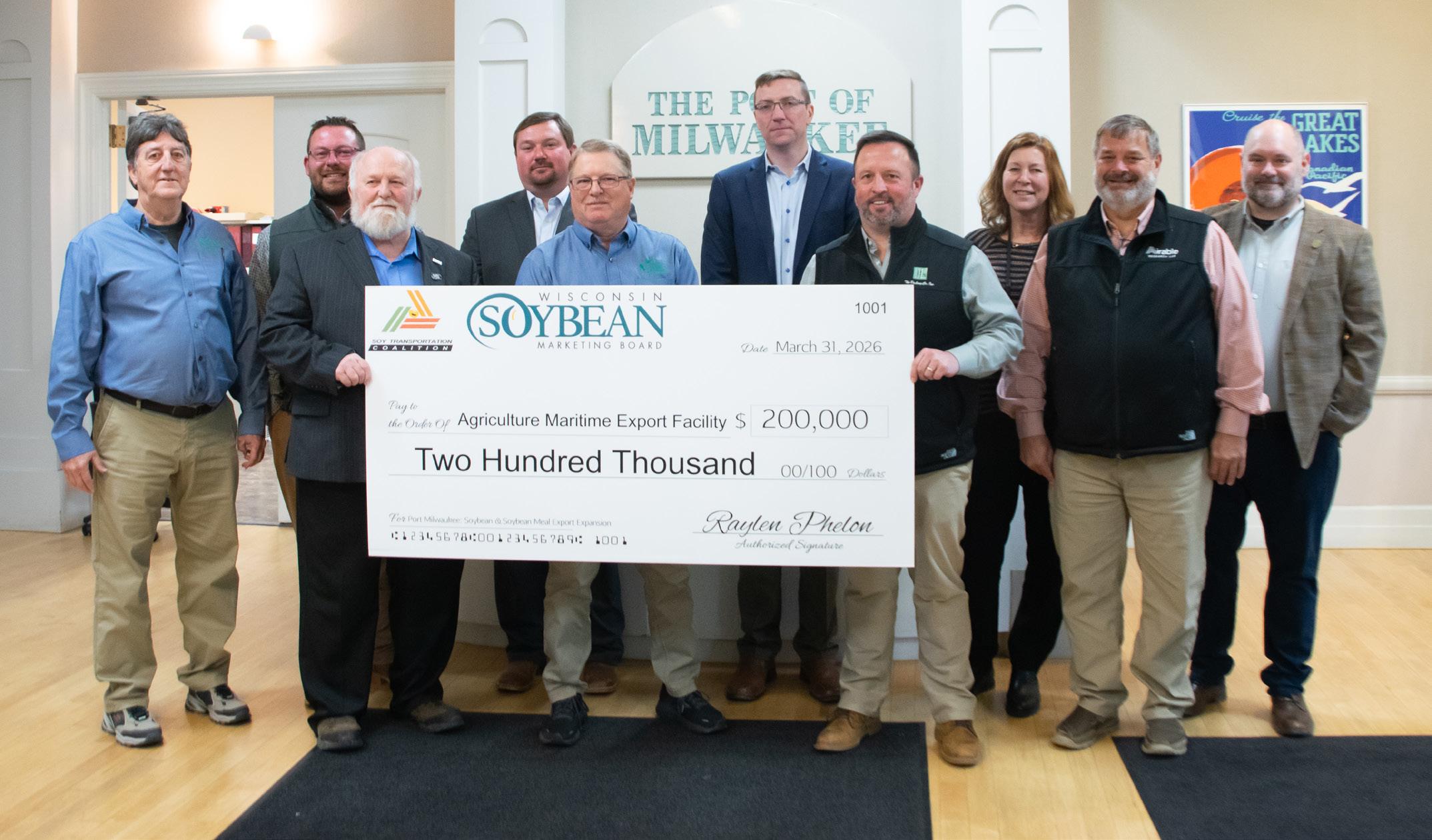
Seeing the potential for the facility to serve as a strategic outlet for the soy industry, the Soy Transportation Coalition and the Wisconsin Marketing Board committed $200,000 to expand the facility’s soy export capabilities. Established in 2007, the STC is supported by 15 soybeangrowing states, the United Soybean Board, and the American Soybean Association.
The financial commitment helped with pre-construction efforts for Phase II. It also made The DeLong Company’s grant application more competitive. The DeLong Company was awarded a $9.3 million grant through the U.S. Maritime Administration’s Port Infrastructure
Development Program. This expansion, which officially opened on April 2, 2026, added two grain storage silos, electrical service upgrades, and additional handling equipment. The facility can now load vessels between 8,000 and 22,000 metric tons; the 13,000 tons of expanded storage capacity significantly enhances U.S. soybean meal and soybean exports to global customers.
The Iowa Connection
Craig Pietig, senior vice president for ag products for AGP, says the facility is a natural fit for Iowa’s expanding crush footprint. He notes that while Iowa soybean meal typically moves by truck and rail, Milwaukee’s direct connection to Class I railroads allows for efficient inbound movements from the western Corn Belt.
“The facility adds valuable flexibility by enabling the aggregation of soybean meal from Iowa into export - scale volumes,” Pietig says. “Once staged, product moves outbound on Great Lakes ‘laker’ vessels through the Great Lakes–St. Lawrence Seaway system. From Milwaukee,
A $200,000 contribution from the Soy Transportation Coalition and the Wisconsin Marketing Board helps put the Great Lakes on the map for soy shipments.
cargo can reach Europe, North Africa, and other Atlantic Basin markets, providing a competitive alternative to traditional export channels.”
By shortening the supply chain and diversifying pathways, Pietig says the route makes productive use of underutilized capacity for U.S. meal.
Strategic Resilience
Mike Steenhoek, executive director of the STC, says the decision to support the Phase II expansion helps achieve three main goals:
1. Increasing soybean meal export capacity
As investment in domestic processing facilities rises to meet the demand for soybean oil for renewable fuels, the resulting surplus of soybean meal must find a home. While much of this additional meal will be consumed by the domestic livestock industry, investing in export capacity to connect with international markets is increasingly essential.
2. Increasing resilience of the supply chain
While the Great Lakes-St. Lawrence Seaway is not yet a dominant launching point for soybeans, it provides a vital alternative. The more the U.S. soybean industry can diversify its supply chain, the better positioned soybean farmers will be to remain profitable in an often unpredictable future.
3. Diversifying international markets
With challenges confronting soybean exports in the Chinese market, it is imperative to pursue “base hit” marketing opportunities in Europe, North Africa, the Mediterranean, and the Middle East. Additionally, the facility allows for year-round barge loading to ultimately connect via the Illinois and Mississippi Rivers to Gulf export terminals.
The ‘Secret Sauce’
Brandon Bickham, vice president of exports for The DeLong Company, notes that while the 113-year-old company is a veteran in logistics, this project marks their first foray into the bulk business. For Bickham, a Nebraska native and Wisconsin soybean and corn grower, the physical silos are a symbol of a larger economic reality.
“In a commodity business, it's incredibly transparent. Everyone knows the price — there are no secrets. The real secret sauce is the transportation mechanism,” Bickham says.
“That’s how you recoup dollars at the farm gate. That’s how you move things to our customers around the world. This project is a great symbol of that.”
This expansion is a game changer for the region, adds Jeff Ellis, an Iowa Soybean Association district director who also serves on the STC board.
“Even for those of us whose own soybeans might not head out through this specific terminal, seeing DeLong double down on the infrastructure at Port Milwaukee is a win for everyone,” says Ellis, who farms near Donnellson. “Strengthening our access to international markets keeps the whole industry moving forward and ensures the entire agricultural supply chain is operating with maximum efficiency."
“The real secret sauce is the transportation mechanism. That’s how you recoup dollars at the farm gate.”
Brandon Bickham The DeLong Company vice president of exports
On the Map
More than diversifying the options for shipping, Peter Hirthe, director of the Office of Trade and Economic Development for the St. Lawrence Seaway Development Commission, expects this new shipping offer from Port Milwaukee will help bring awareness from international partners. Hirthe notes that many global buyers overlook the Midwest’s maritime potential.
“What we're trying to do is literally put the Great Lakes on the maps, because the maps of North America at many of the trade shows you go to in Europe or the Mediterranean are solid bodies of land,” he says. “When you talk about bringing a ship to Lake Michigan or Lake Superior, they don't even know those lakes exist.”
Contact Bethany Baratta at bbaratta@iasoybeans.com
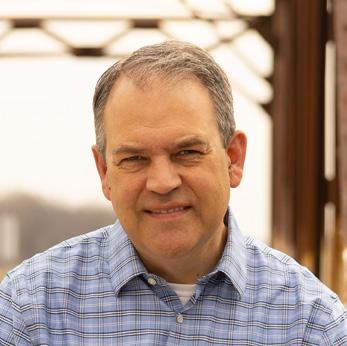

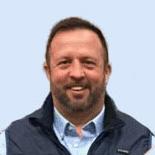
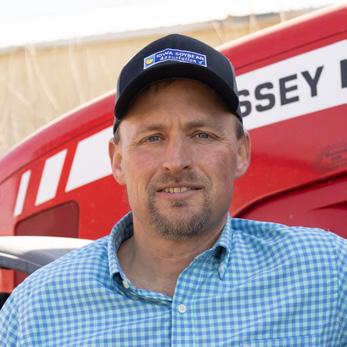
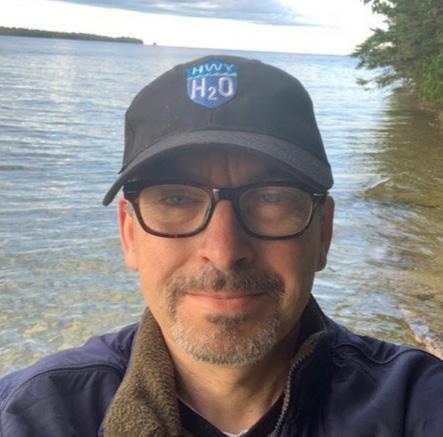
St. Lawrence Seaway Development Commission director of the Office of Trade and Economic Development
PETER HIRTHE
JEFF ELLIS
ISA district director and STC board member
BRANDON BICKHAM
The DeLong Company vice president of exports
MIKE STEENHOEK STC executive director
Soybean Demand 35 YearsBuilding of
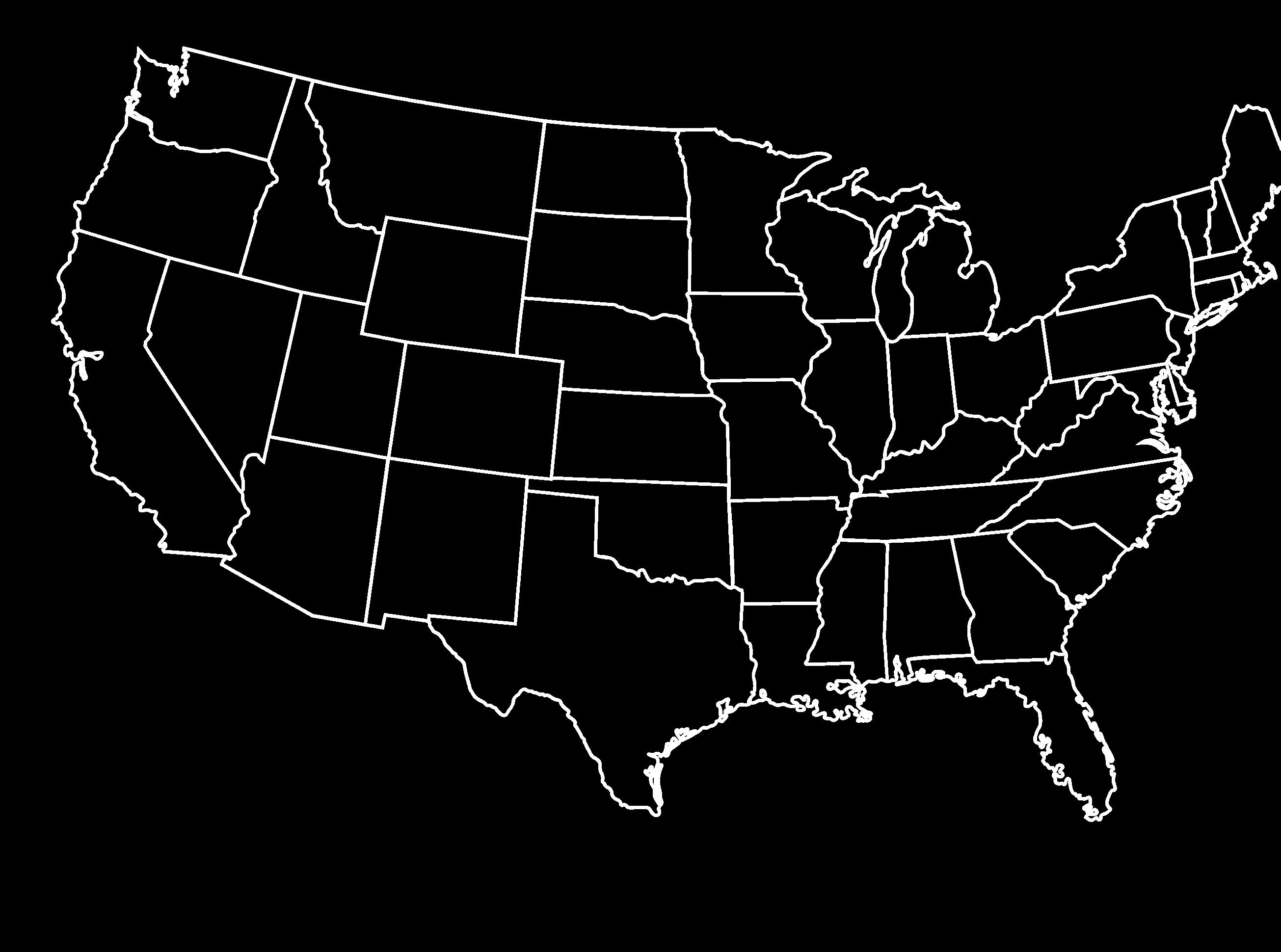
Farmers reflect on how checkoff investments shaped markets and opportunities
STORY BY KRISS NELSON
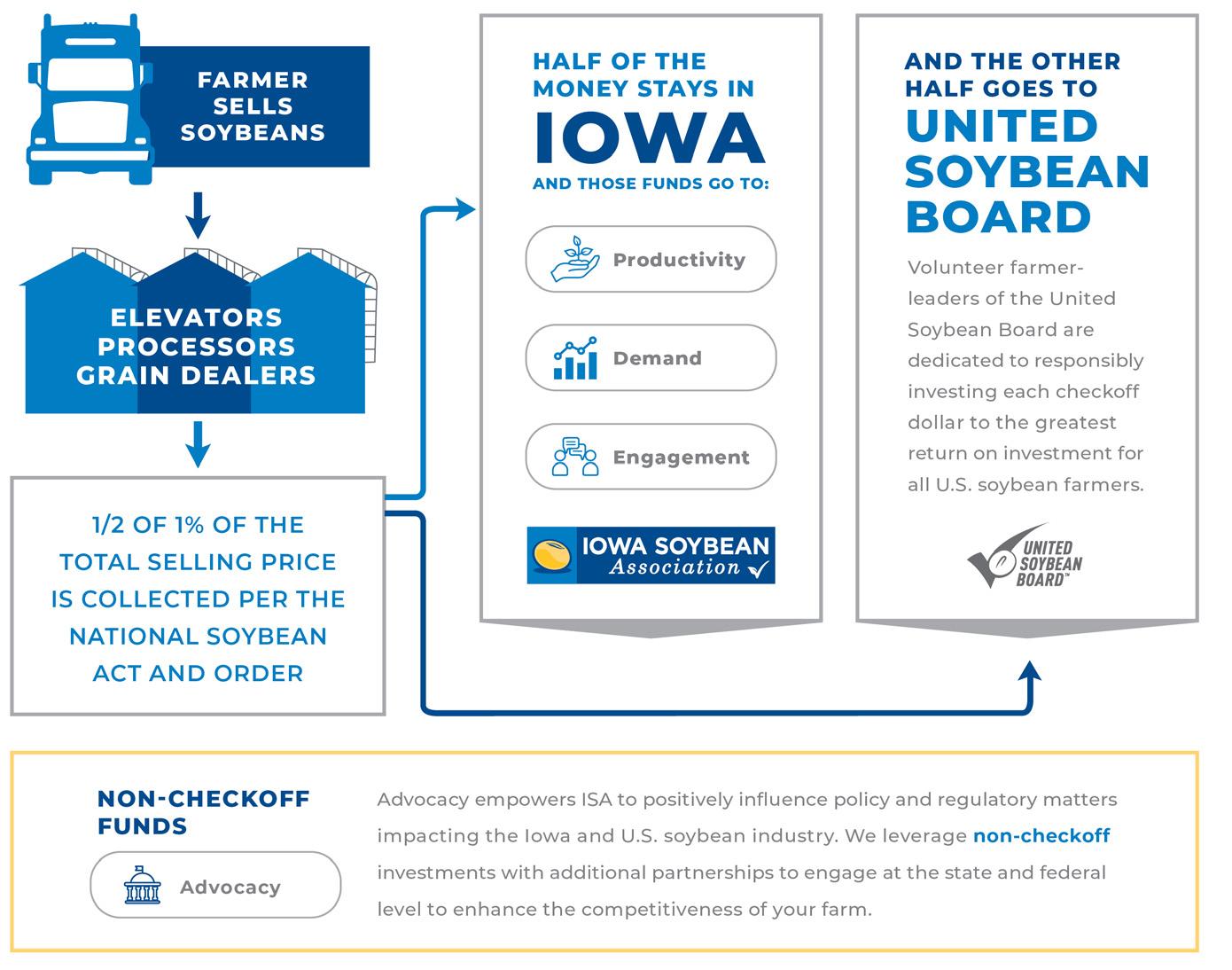
As the soybean checkoff marks its 35th anniversary, it’s worth remembering that before the national program, research, promotion and market development efforts were fragmented, inconsistent and often limited by state-by-state structures.
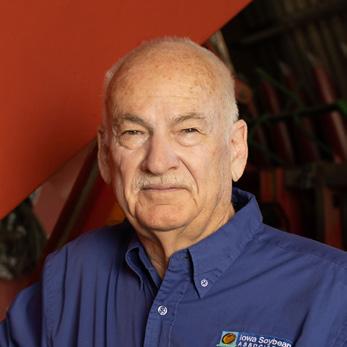
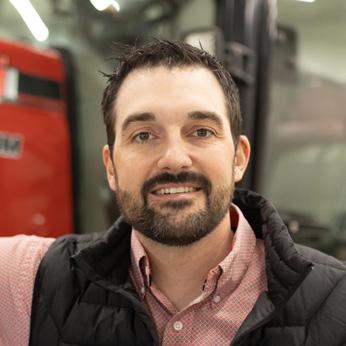
Ron Heck, a farmer from Perry and former Iowa Soybean Association president, saw that firsthand. Decades later, Josh Henik, a farmer from Mount Vernon, is working within a system shaped by those early decisions.
Together, their perspectives reflect how far the soybean checkoff has come and where it continues to go.
“There was no consistency among states,” Heck says. “Many of the decisions and investments were made according to local laws, local customs and local people trying to promote soybeans for their state.”
Some states had checkoff programs, others did not, and in many cases, participation was voluntary, creating wide differences in how funds were collected and used.
Without a unified structure, even simple efforts became complicated.
“It was a two- or three-step process to do anything,” Heck says. “Everything was difficult.”
Even within states like Iowa, separate promotion and association boards added legal complexity and slowed decision-making. Communication also posed challenges, relying
on in-person meetings, phone calls or mailed information to coordinate across regions.
Despite those challenges, Heck says leaders recognized the need for change.
“We (Soybeans) were a national and international crop, so we needed to do better with our national and international efforts,” he says.
That push led to the creation of the national checkoff, improving coordination, expanding investment opportunities, and strengthening collaboration across states. Heck says the transition brought more certainty, better planning and broader participation, even if it took time to fully understand how to use the new system.
Today, that structure is something farmers like Henik rely on.
Reflecting on his involvement with ISA, Henik says the checkoff has played a steady role in shaping both his operation and the broader industry, from on-farm research through the Research Center for Farming Innovation to conservation and water quality efforts.
“These programs create opportunities for farmers to improve their own operations while contributing to something larger,” says Henik, an ISA farmer member.
Market reality
The need for coordination stemmed from a fundamental challenge.
JOSH HENIK
Mount Vernon farmer
RON HECK
Former ISA president

“We’ve always had more land than we had people to eat the food we produced,”
To replace government programs such as set-asides and acreage restrictions, farmers needed alternative crops and new markets.
“We needed something to replace government programs,” Heck says. “Soybeans fit the bill.”
That challenge remains today, Henik says, as farmers continue to navigate shifting markets and global competition.
“With changing political landscapes, evolving soybean uses and increased global competition, especially from Brazil, market development remains essential,” he says.
Building demand
Over time, investments in research, breeding and market development helped expand soybean production and international demand.
Heck points to biodiesel as one example of what coordinated investment can achieve. Developing the market required significant funding and collaboration.
“That’s a perfect example of how checkoff funding and association efforts worked together to create a market,” he says.
Henik sees that the same approach continues to provide value today,

Explore the history of the soybean checkoff with Mississippi farmer Jerry Slocum in this bonus episode of the Iowa Soybean Association’s monthly podcast, The Bean Scene. Visit iasoybeans.com/CheckoffStory
especially as farmers balance global and domestic opportunities.
“A strong domestic market adds resilience,” he says. “It helps buffer against uncertainty in export markets and keeps demand closer to home.”
Driving innovation
Heck says similar success stories can be found across export development, product innovation and yield improvements.
“Soybean oil has gone from about 7 cents a pound to a 50 to 70 cents range or more,” he says. “That kind of increase doesn’t happen without developing new uses.”
He recalls early skepticism around ideas like soy-based asphalt treatments.
“We kind of laughed at first,” he says. “But now you hear more about the idea and realize it works.”
That willingness to invest in new ideas continues today, Henik says, creating opportunities for both individual farmers and the broader industry.
“These efforts help tell agriculture’s story in a credible way,” he says. “They show measurable progress and build trust.”
Through conservation programs and water quality initiatives, farmers are improving their operations and strengthening public confidence in agriculture.
Progress forward
Looking back, Heck says progress was not always easy.
“We didn’t make the right decision every time,” he says. “But we kept moving forward and getting better.”
He believes that without a unified checkoff, today’s agricultural landscape would look much different.
“What would we be doing with those acres if we weren’t growing soybeans?” he says.
Looking ahead, Henik remains optimistic.
“The checkoff is designed to benefit the producer,” he says. “I’m excited about the opportunities ahead and the role these investments will continue to play for soybean farmers.”
Contact Kriss Nelson at knelson@iasoybeans.com
About the Checkoff
The Soybean Promotion, Research, and Consumer Information Act established the national soybean checkoff program in 1990. The Department of Agriculture established the United Soybean Board, a farmer-led organization, to administer the program on a national level. Checkoff collections began in 1991.
Many soybean growing states also have a Qualified State Soybean Board (QSSB) charged with collecting and administering the checkoff on a state level. In Iowa, the Iowa Soybean Association serves as the state’s QSSB.
STORY BY KRISS NELSON PHOTOS SUBMITTED BY LISA OBRECHT AND COLE OLSON
A Soy Tour
From Iowa to Egypt, a firsthand look at soy’s global path
Iowa soybeans don’t just leave the field. They travel the world in the form of whole beans, meal, oil, and in finished meat products like pork and poultry.
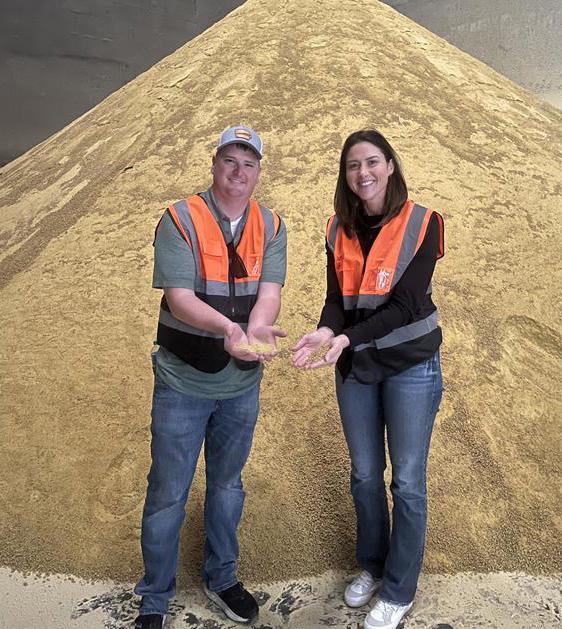
Two Iowa farmers saw some of the work of their checkoff investment through the United Soybean Board’s See for Yourself tour.
The opportunity to attend came as a recommendation to Cole Olson, an Iowa Soybean Association farmer-member from Brooklyn.
“I had heard from others who had taken part in the program that if I ever had the opportunity, I should go,” Olson says. “They said it was a top-notch experience and learning opportunity.”
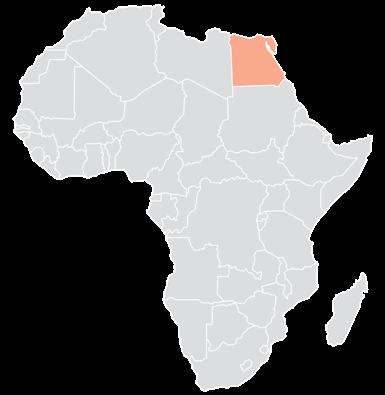
That recommendation led Olson to Egypt, where he and other farmers visited feed mills, aquaculture facilities and soybean processing plants that rely on soy.
Feed systems
One stop that stood out was the Sadat City feed mill.
“It’s a state-of-the-art facility making chicken, fish and pet food, just like what you’d see here at home,” Olson says. “It was great to meet the plant manager and understand why our soybeans are better quality when it comes to making feed.”
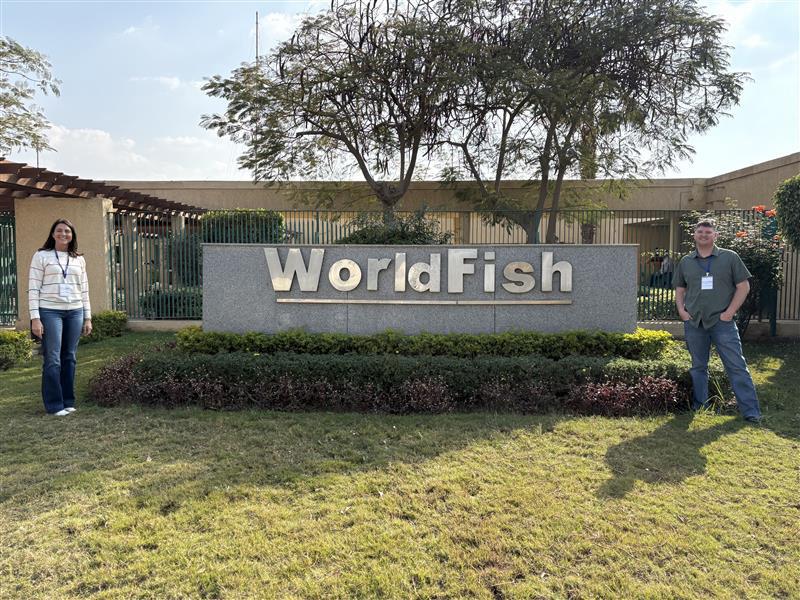
At World Fish, participants learned about the company’s partnership with the U.S. Soybean Export Council, which helped the company double its fish population through the in-pond raceway system. Projects include feeding demonstrations that measure the differences between sinking and floating feeds, and the effects on water quality.
“That gave us a great understanding of the fish market and how fast it’s growing,” Olson says. “As soybean producers, we need to make sure we’re also meeting the needs of the fish feed market every step of the way.”
Processing power
For Olson, one of the most impressive stops was the Alexandria Company for Vegetable Oils Extraction.
WorldFish in Egypt, where they saw how soybeans support growing aquaculture markets.
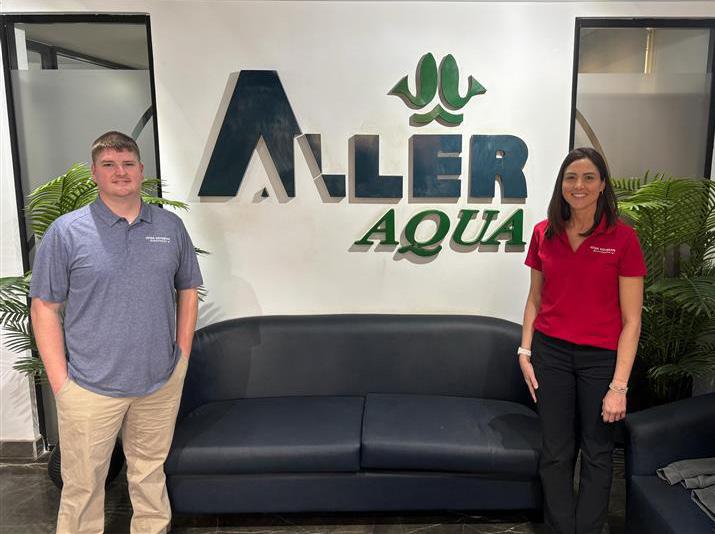
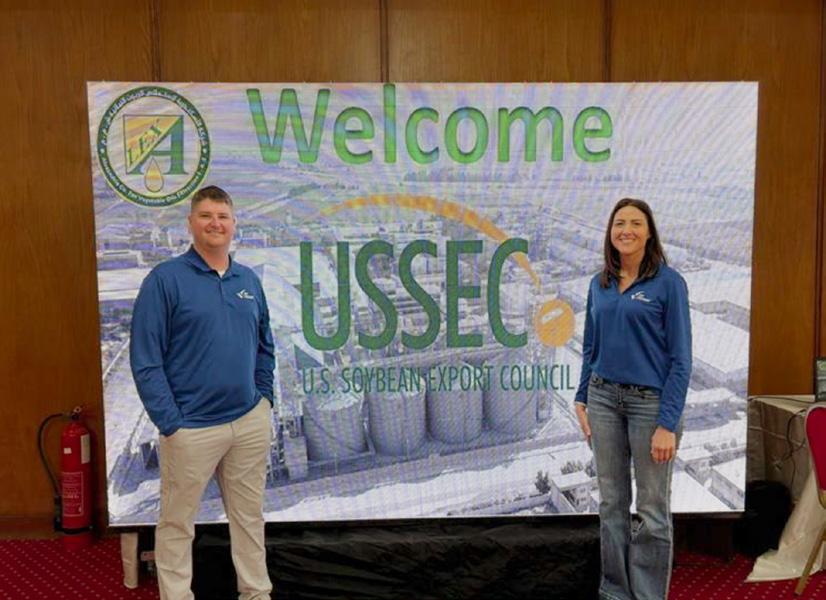
During the See for Yourself tour, Cole Olson and Lisa Obrecht met with international partners and toured facilities in Egypt to see how U.S. soy supports global food systems.
“It was truly top of the line,” he says. “It’s an extremely impressive crush plant with vegetable oil bottling on site. They’ve even implemented AI to help manage operations and reduce breakdowns.”
More importantly, the facility emphasized something Olson says farmers cannot overlook.
“They stressed the importance of highquality beans,” he says. “That’s something I’ve taken home with me. The quality and sustainability of U.S. soy is what makes us stand out globally, and we need to do whatever it takes to maintain that.”
While the facilities showcased innovation and demand, Olson says the most meaningful part of the trip came down to people.
“My favorite part was sitting down with buyers over dinner,” he says. “As a people person, I want to know who we’re working with and make sure we’re on the same page.”
That opportunity to connect directly with buyers left a lasting impression.
“It gave us a chance to build relationships and understand each other,” Olson says. “That’s really what the trip is all about.”
Global view
Lisa Obrecht, an ISA farmer-member from Zearing, joined the tour with a similar curiosity.
“I was excited to see agriculture trade on a global level,” she says. “I’ve always wondered where our crops actually end up
About the See for Yourself tour
Sponsored by the United Soybean Board, See for Yourself offers U.S. soybean farmers the opportunity to see and evaluate the work of the checkoff firsthand. USB has strategic partnerships with the U.S. Meat Export Federation (USMEF), USA Poultry and Egg Export Council (USAPEEC), World Initiative for Soy in Human Health (WISHH), and most of all U.S. Soybean Export Council (USSEC), which serves as the international marketing organization for the soy community. From the use of soy domestically to its exports around the world, See for Yourself shows the checkoff’s role in the global soy industry.
after they leave the field, and this felt like a great opportunity to see how Iowa fits into the bigger picture.”
Eye opening
The overall experience, she says, was eye-opening.
“Seeing firsthand how U.S. soybeans are being used in Egypt made me want to tell everyone back home to keep up the good work,” Obrecht says. “It was a once-in-alifetime opportunity to see how Iowa farms are contributing to feeding the world.”
She also saw how important relationships are in maintaining demand, especially during uncertain times.
“Egypt is one of the top buyers of U.S. soybeans and seeing how fast Cairo is growing showed me that demand is only going to continue,” she says. “I also saw firsthand how much buyers value the relationships we build with them in person.”
Those connections, she adds, play a key role in maintaining strong trade.
“That trust is important, especially in volatile markets and tight margins,” Obrecht says. “Building those relationships helps ensure we have a strong future.”
For both farmers, the See for Yourself tour brought clarity to a bigger story. From Iowa fields to international markets, the path of a soybean is shaped not only by how it is grown, but by how it is valued around the world, and how farmer investment through the checkoff helps drive that connection.
“This trip proved to me that our checkoff dollars are always working for us, even in places we might not expect,” Olson says. “It really gives you an opportunity to see where and how that investment is working.”
Contact Kriss Nelson at knelson@iasoybeans.com
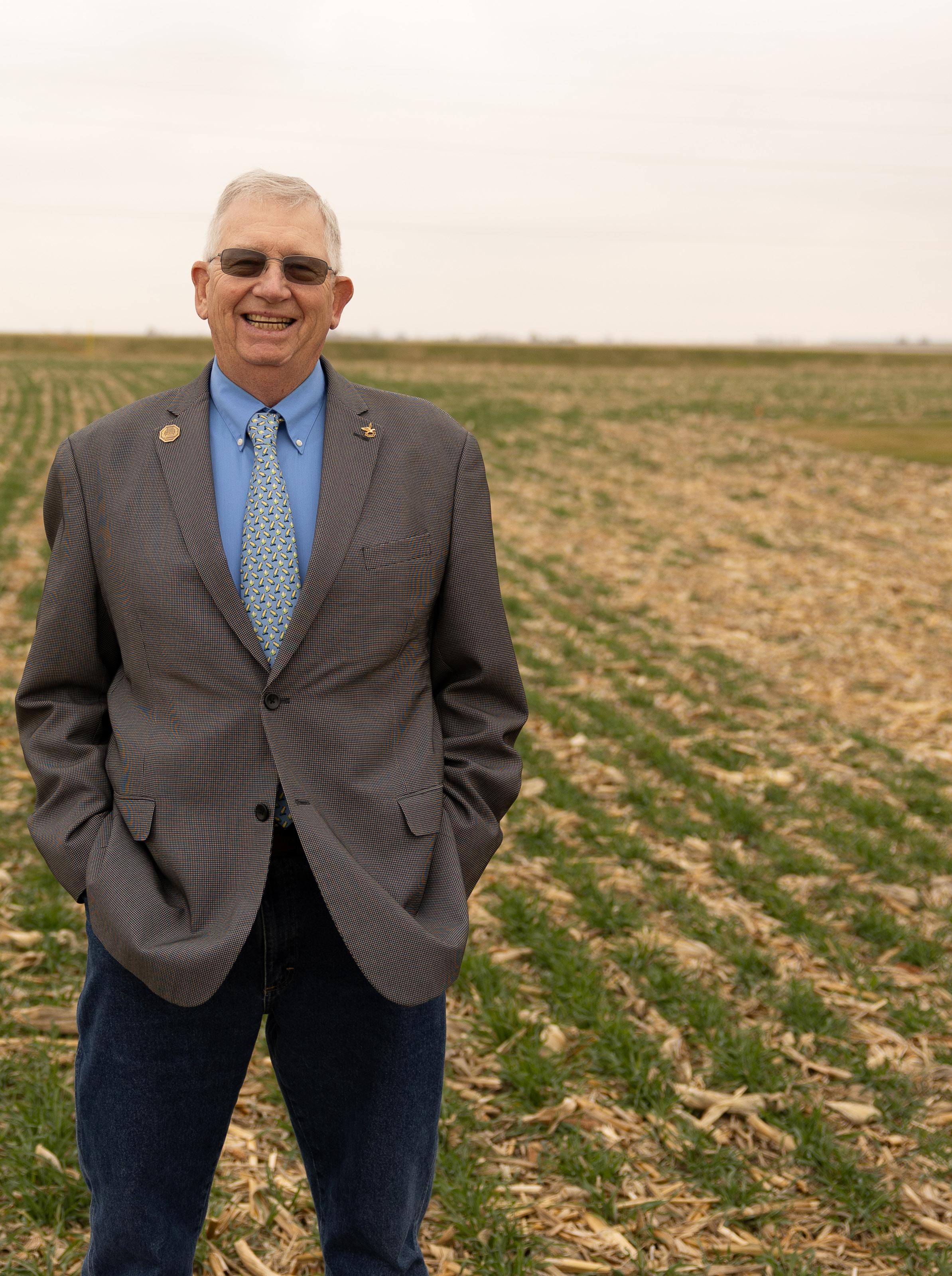
John Heisdorffer’s legacy reflects decades of farmer leadership, from local fields to global markets
STORY BY KRISS NELSON PHOTOGRAPHY BY JOCLYN KUBOUSHEK
John Heisdorffer has never viewed leadership as a title.
For the Keota farmer, it has always been about responsibility to the land, to fellow farmers and to an industry that depends on strong voices willing to step forward. That mindset was front and center as he was recognized with the Iowa Soybean Association’s Legacy of Leadership Award, an honor that reflects decades of service. But for Heisdorffer, the focus remains on the work, not the recognition.
“I’ve always believed if you’re going to be part of something, you need to be willing to contribute,” he says. “Agriculture doesn’t stand still, and neither can we.”
Big picture
Heisdorffer farms in southeast Iowa, where day-to-day decisions in the tractor cab are shaped by more than weather or markets. They are tied to a broader view of where the soybean industry is headed and what it takes to keep it strong.
“When I’m in the tractor, I think about the big picture,” he says. “Are we building demand? Are we telling our story? Are we making sure farmers have a seat at the table when decisions are made?”
That perspective carried him through leadership roles at both the state and national levels. As president of the unified ISA board in 2008, Heisdorffer played a significant role in the strategic planning that led to the merger of the Iowa Soybean Promotion Board and the association. He led the charge to unify the checkoff and non-checkoff sides of the organization to better serve Iowa farmers.
“The merger was about alignment,” he says. “Farmers don’t think in terms of programs or funding buckets. They think about outcomes. We needed to make sure everything we were doing worked together.”
Steady voice
His leadership extended beyond Iowa. As president of the American Soybean Association during the onset of the U.S.-China trade war, Heisdorffer became a steady voice during uncertain times, fielding media calls, engaging policymakers and advocating for farmers, often from the cab of his tractor.
“There were a lot of tough conversations,” he says. “But that’s when it matters most that farmers are part of the discussion. If we’re not speaking up, someone else is speaking for us.”
Throughout his career, Heisdorffer has remained focused on impact, from developing international markets through the U.S. Soybean Export Council to supporting biodiesel growth and global food initiatives through the American Soybean Association’s World Initiative for Soy in Human Health.
He points to those efforts as examples of where farmer leadership can make a difference.
“Market expansion doesn’t happen overnight,” he says. “It takes relationships, persistence and a willingness to invest for the long term. But that’s how we create opportunities for the next generation.”
Future focus
That next generation is something Heisdorffer thinks about often. He encourages young farmers to get involved, not just on their farms but in organizations that shape the future of agriculture.
“There’s always more work to do,” he says. “Whether it’s policy, sustainability, demand or technology, the industry is changing fast. We need people who are willing to step up and help guide that change.”
Heisdorffer also points to the importance of staying grounded in the realities farmers face every day. While his leadership reached global markets and national policy discussions, it was always rooted in what was happening back home.
“You can’t lose sight of the farm,” he says. “Everything we talk about, whether it’s trade, biofuels or sustainability, has to come back to whether it works for farmers on the ground.”
Real-world impact
That connection helped guide his approach to some of the industry’s biggest challenges. During the trade war, uncertainty weighed heavily on markets and farm operations alike. Heisdorffer worked to ensure farmers’ perspectives were clearly understood by decision-makers, emphasizing the real-world impacts of policy.
“Those weren’t abstract conversations,” he says. “They affected prices, planning and livelihoods. It was important that policymakers understood what that meant for farmers and rural communities.”
He also believes one of the industry’s greatest strengths is its ability to adapt. From advancements in technology to evolving expectations around sustainability, Heisdorffer sees opportunity in change if farmers are part of shaping it.
“Farmers have always been innovators,” he says. “We just need to make sure we’re part of the conversations driving those innovations forward.”
Looking ahead, he sees continued investment in demand as critical, along with telling agriculture’s story more effectively to consumers and global partners.
“We grow a great product,” he says. “But we can’t assume people understand that. We have to be willing to engage, educate and build trust.”
For Heisdorffer, the legacy is not defined by awards or positions held. It is measured by progress, by stronger markets, a more unified industry, and farmers who are better positioned for the future.
“It’s about leaving things better than you found them,” he says. “That’s what leadership is all about.”
Contact Kriss Nelson at knelson@iasoybeans.com
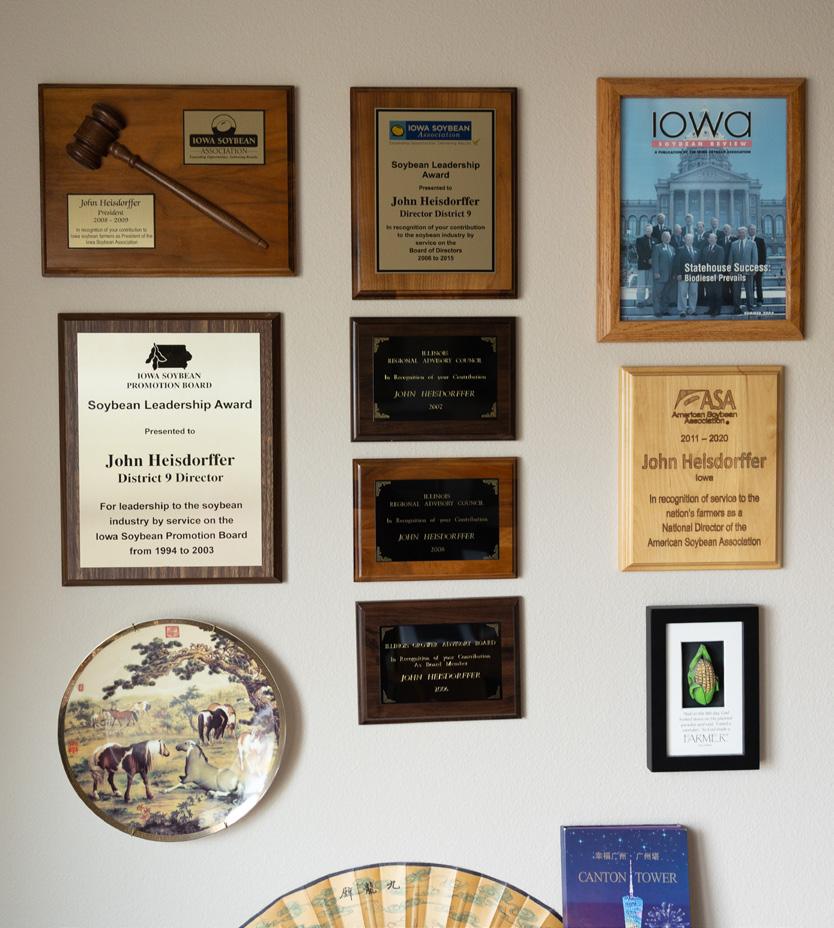
ABOUT THE LEGACY OF LEADERSHIP AWARD: Presented by Stine Seed, this award is presented to an ISA member who has established a history of leadership and has taken an active role in advancing the goals of ISA.