February 2026

February 2026















Fill year-end gaps with an adaptable line of credit.
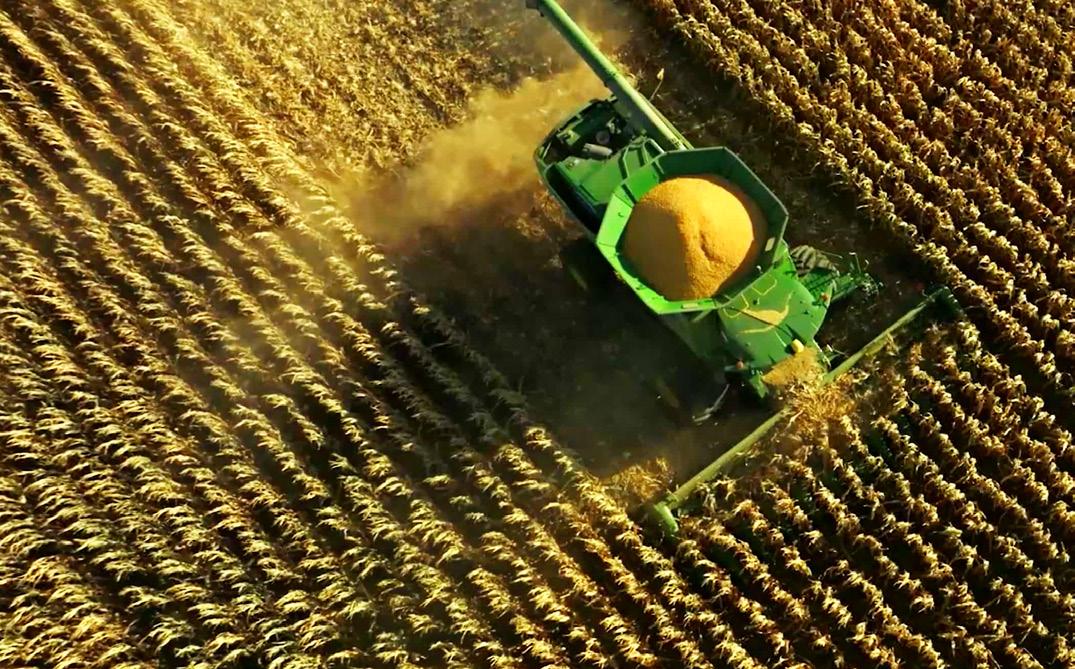
With all the various management needs of your operation – input costs, equipment repairs, labor and livestock expenses – you need a line of credit that can keep up. An operating line of credit from Farm Credit Services of America has convenience, savings and flexibility built in, so you can meet each season’s needs without slowing down



















Executive Committee
President
Tom Adam, Harper | D9
President-elect
Lee Brooke, Clarinda | D7
Secretary
Aimee Bissell, Bedford | At-Large
Treasurer
Sam Showalter, Hampton | D2
At-Large Director
Jeff Ellis, Donnellson | D9
Board of Directors
Brent Swart, Spencer | D1
Paul Kassel, Spencer | D1
Mike Yegge, Lake Mills | D2
Amanda Tupper, Ionia | D3
Josh Schoulte, Farmersburg | D3
Jeff Frank, Lake View | D4
Marty Danzer, Carroll | D4
Corey Goodhue, Carlisle | D5
Dave Struthers, Collins | D5
Joe Sperfslage, Coggon | D6
Brian Strasser, Homestead | D6
Scot Bailey, Anita | D7
Brian Fuller, Osceola | D8
Summer Ory, Earlham | D8
Jeff Ellis, Donnellson | D9
Jack Boyer, Reinbeck | At-Large
Neil Krummen, Linn Grove | At-Large
Sharon Chism, Huxley | At-Large
American Soybean Association Board of Directors
Tom Adam, Harper
Steph Essick, Dickens
Morey Hill, Madrid
Randy Miller, Lacona
Dave Walton, Wilton
United Soybean Board of Directors
Tim Bardole, Rippey
Robb Ewoldt, Davenport
Brent Renner, Klemme
Suzanne Shirbroun, Farmersburg
Staff Credits
Bethany Baratta | Editor
Aaron Putze, APR | CO Brand Mgmt and Engagement
Susan Langman | Creative Design Coordinator
Joclyn Kuboushek | Multimedia Specialist
Kriss Nelson | Senior Writer
Mickayla Jordan | Marketing Coordinator
FARMER FOCUSED | DRIVEN TO DELIVER
ISA VISION
We advance the long-term competitiveness of Iowa soybean farmers.
ISA MISSION
Driven to deliver opportunities for Iowa soybean farmers to thrive.
Iowa Soybean Review is published monthly by: Iowa Soybean Association 1255 SW Prairie Trail Parkway, Ankeny, Iowa 50023 (515) 251-8640 | iasoybeans.com
E-mail: bbaratta@iasoybeans.com
For advertising information contact Bethany Baratta at (515) 334-1020 or bbaratta@iasoybeans.com
February 2026 | Vol. 39, No. 5
Farmer recalls the day a routine task led to a fight for his survival.
Meet the Iowa Soybean Association Rising Star advocating for agriculture.
Conservation is not an either/or proposition, says ISA Conservation and Services Programs Lead Todd Sutphin.
Research shaped by farmers focuses on stronger, healthier soybeans.
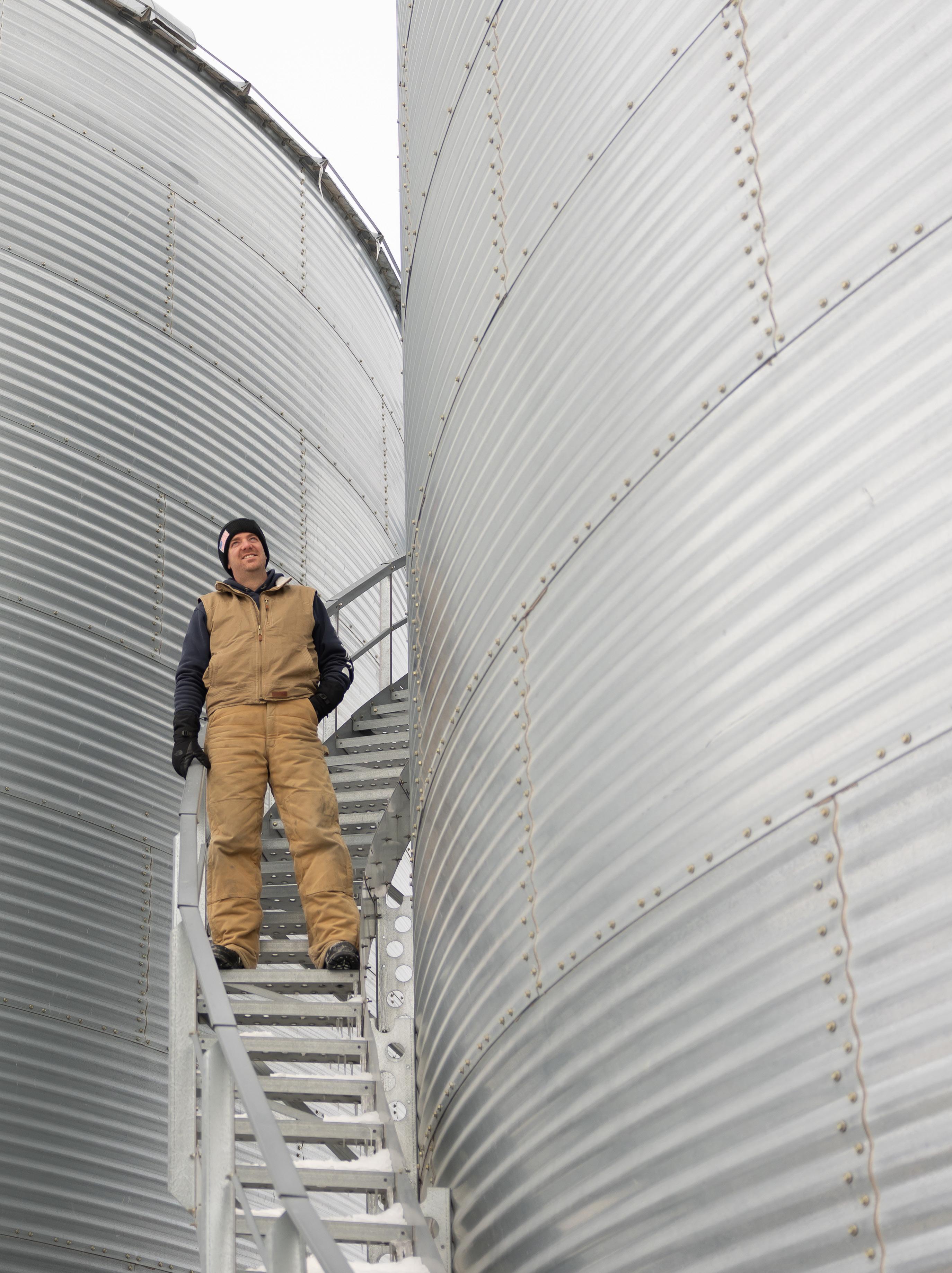
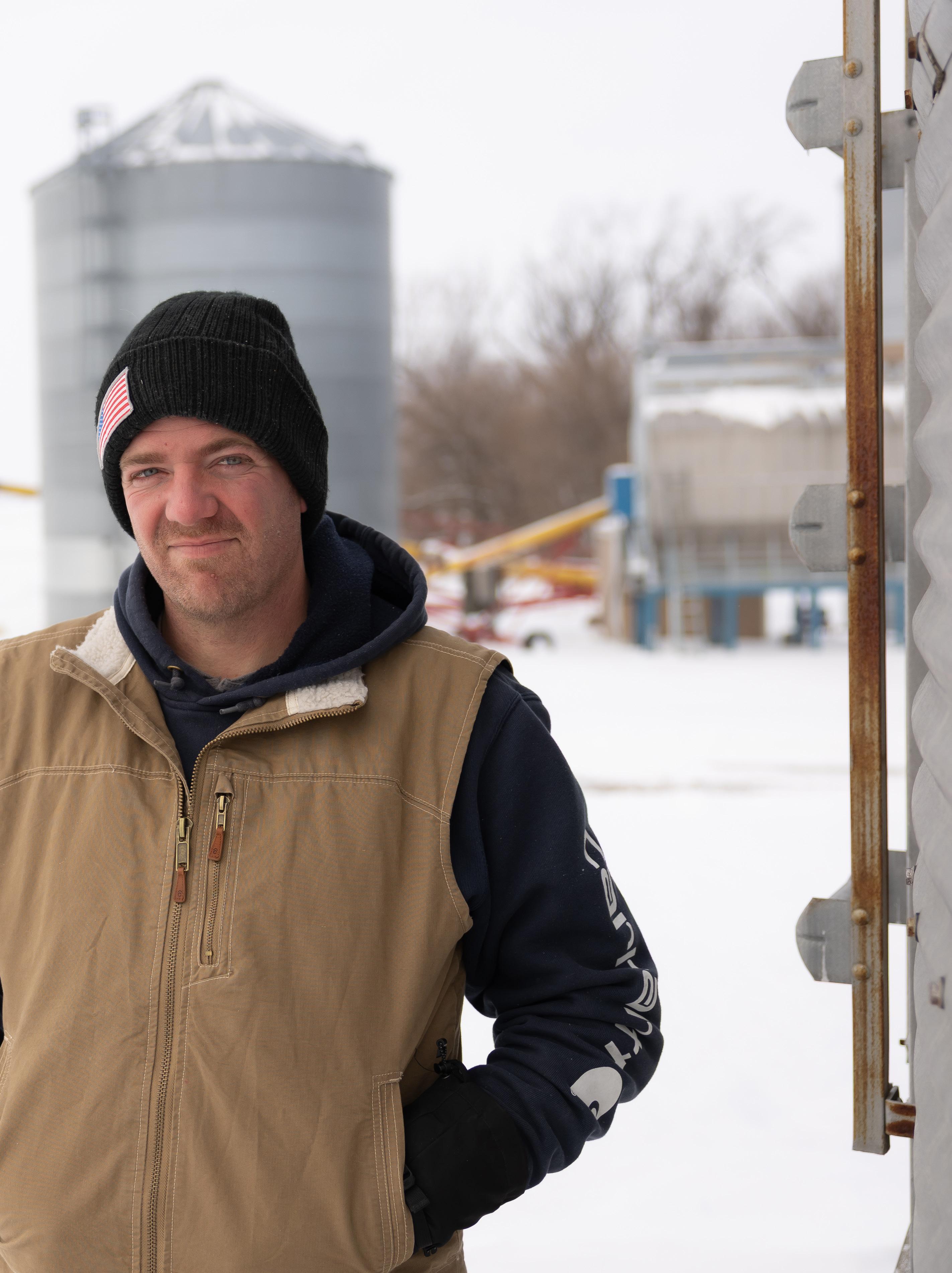
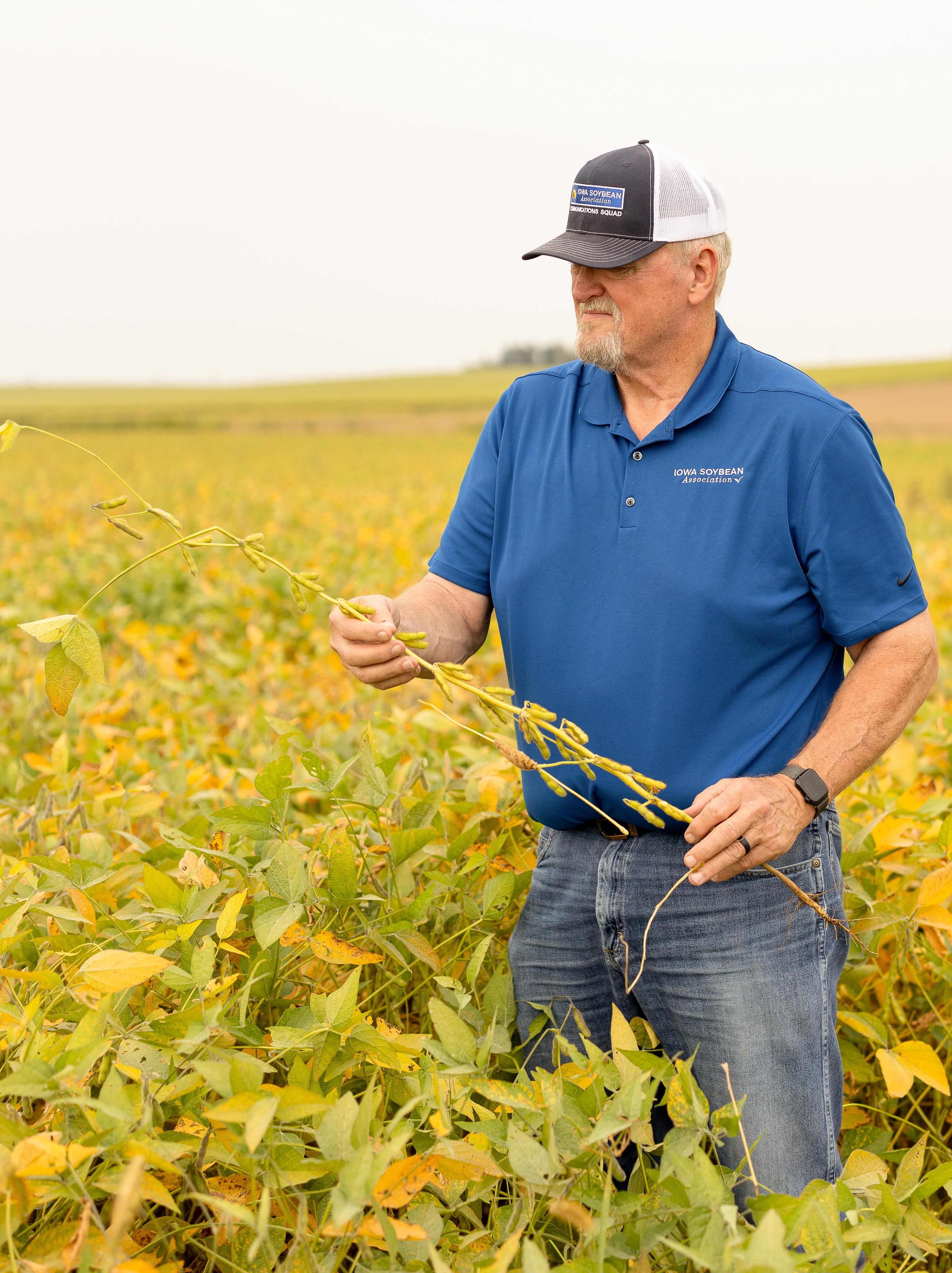
On the Cover: Farmer Arick Baker on the farm near New Providence. Baker was engulfed in grain in 2013, and now reminds farmers of the importance of grain bin safety. Also in this issue, read about Iowa farmers tapped to lead checkoff investment efforts for the United Soybean Board, and advocate on behalf of U.S. soybean farmers for the American Soybean Association. Photo by Joclyn Kuboushek.
Comments and statewide news articles should be sent to the address to the left. Advertising space reservations must be made two months preceding publication. In consideration of the acceptance of the advertisement, the agency and the advertiser must, in respect of the contents of the advertisement, indemnify and save the publisher harmless against any expense arising from claims or actions against the publisher because of the publication of the content of the advertisement.


Kirk Leeds, ISA Chief Executive Officer kleeds@iasoybeans.com
After a challenging 2025, it would be easy to dwell on what went wrong. Volatile markets, low prices, and the constant pressure of making sound decisions tested farmers.
Yet I found plenty of reasons for optimism while attending the Iowa Soybean Association’s annual awards banquet last December. Recognizing eight leaders for their positive impact on ISA and the soybean industry left me encouraged and feeling genuinely positive about the future of agriculture in Iowa. What stood out were the stories of each person being honored and the attributes they collectively represent — from emerging leaders and innovators in production ag to those who’ve excelled in conservation, policy advocacy and leaving a positive legacy in agriculture. Emerging leadership speaks to momentum. It signals that new voices are stepping forward with curiosity, energy and willingness to learn. Strong communities make room for the next generation to contribute, ask questions and lead in their own way. When emerging leaders are supported, experience and fresh perspective combine to keep an industry relevant and resilient.
Conservation represents commitment to the land, neighbors and future generations. Communities grounded in conservation understand that productivity and stewardship are inseparable, and that shared responsibility for natural resources is a long-term commitment that builds trust and credibility far beyond the farm gate.
Innovation reflects adaptability and problem-solving. Innovative communities are willing to try, test, evaluate and improve. They learn from success and failure and share those lessons with others. Innovation happens incrementally, through better systems and smarter decisions.
Policy engagement speaks to responsibility beyond the field. When producers participate in policy discussions, they ensure agriculture’s perspective is heard and understood. This engagement strengthens the community’s voice and reinforces that leadership includes showing up, even when it requires extra time and effort.
The legacy of leadership represents continuity. Communities are built by people who volunteer, mentor, and serve over decades. Honoring that legacy reminds us that the organizations exist because others chose to get involved.
Communities aren’t strengthened by awards alone, but by everyday involvement. Participation can look different for everyone — serving on a board, attending meetings, mentoring a young farmer, engaging in conservation, or simply sharing experiences with neighbors. Every contribution matters. When individuals choose to participate, they create connections, build trust, and turn shared values into collective action.
Participation is also uplifting. In difficult years, community provides perspective and support. In good years, it creates momentum. Being part of an association, organization, or congregation reminds us that the positive impact of individual effort multiply when combined with others.
The attributes of momentum, stewardship, innovation, engagement, continuity, and participation form the backbone of a strong soybean community. After a difficult year, that sense of connection and shared purpose offers real encouragement and confidence in the future of Iowa’s soybean industry.
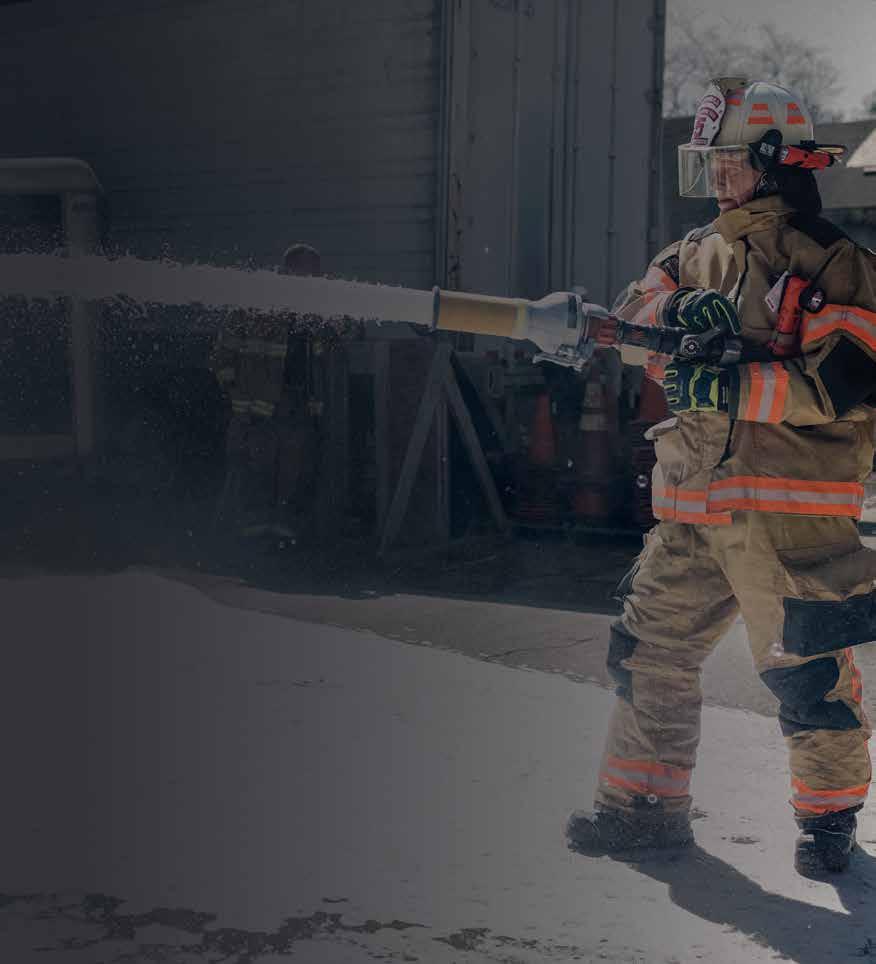
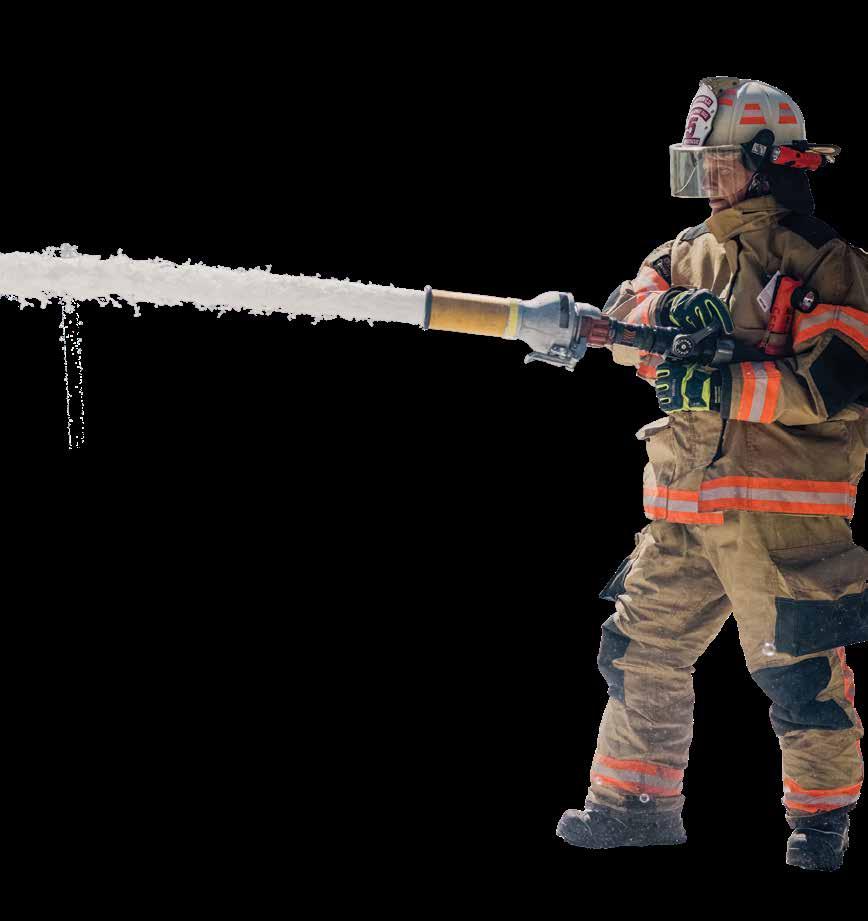
The more we discover about soybeans, the more valuable they become. One innovative product, SoyFoam™, creates a new, sustainable use for your crop that protects firefighters and the planet. See how your Soy Checkoff is unlocking new markets for soybeans at unitedsoybean.org

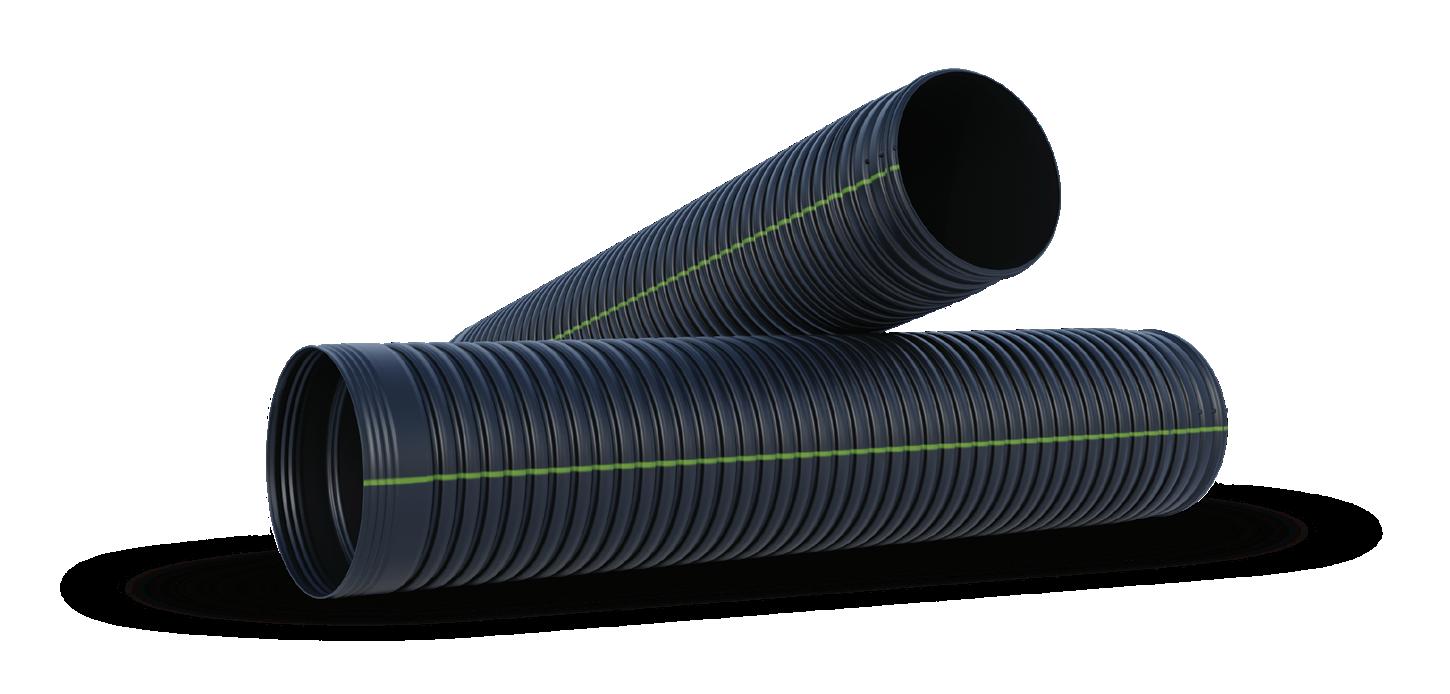
Contrary to popular belief, the best financial upgrade for your farm isn’t equipment or building upgrades—it’s tile. Drainage increases land value, improves yields and delivers ROI year after year. Start investing where it pays. Scan the code to contact an ADS sales rep.
for over 40 years, your cooperative soybean processor

Editor’s Note by Bethany Baratta bbaratta@iasoybeans.com
This month, nearly 3,000 of the world’s most elite athletes will gather in Italy to compete in the Winter Olympic Games. Adorned with their country’s insignia, they’ll compete in ice hockey, curling, ski mountaineering, figure skating and a host of other events.
The Olympics has always been must-see TV for me. It starts with the opening ceremony — the pageantry of 93 nations gathering in one space to celebrate their country and their team’s presence at the Olympics is a sight to behold.
My first memory of the actual events was watching Kristi Yamaguchi secure the gold medal for Team USA in figure skating during the 1992 Winter Olympics in France. Her intricate footwork, triple jumps and speed was impressive. While the highlight reels show
the 20-year-old with the gold medal around her neck after a nearly flawless skate, there are things those Olympic moments don’t capture.
Think about the number of trips to the skating rink, the money spent on professional training, the falls and bruises suffered as she perfected her craft. There were undoubtedly events and other social gatherings she missed due to training and other figure skating events.
Perhaps you can relate?
While others celebrate what the yield monitors show, only you know the full cost of a season. It’s the mental gymnastics, the in-person trainings, the early mornings and late evenings, the balancing of family commitments and financial sacrifices that never appear on a highlight reel.
But in a way, you’ve got a lot in common with Kristi
Yamaguchi or your other favorite Olympian. Though you might not be doing the same kind of loops, and your field of play may be different, you’ve achieved what only some are brave enough to attempt.
Like these Olympians, you commit to a season before there’s proof it will pay off. Long before a seed is in the ground, decisions are firm, resources are invested, and expectations are set. It’s the quiet work ahead of your Olympic games. It’s focusing on the goal of getting to the podium but being proud of chasing your dreams. And while there may never be a medal or a highlight reel to mark the moment, the resolve it takes to move forward anyway is something worth recognizing

A survivor’s message and expert tips for safer grain handling
Arick Baker was 23 when an ordinary June morning on his family’s farm near New Providence nearly became his last.
On June 26, 2013, he was doing what he had been doing for two days straight: climbing to the top of a grain bin to break loose a crust of moldy corn.
“My job, as the youngest on the farm, was to go up over the top of the bin and stand in the very center and try to poke the moldy corn away from the sump,” says Baker, an Iowa Soybean Association (ISA) farmer-member. “I did that all day Monday, Tuesday and then again on Wednesday.”
The bin was a standard 48-foot-diameter, 10-ring-high dry storage bin holding roughly 60,000 bushels. In a flash, things went wrong.
“My dad came up over the manhole on top of the bin, whistled that the truck was full,” Baker says. “I poked it one more time and broke the void of the crusted corn. I instantly fell through.”
A hidden cavity of rotten grain swallowed him almost instantly.
“I literally fell down into the corn, about to my waist, and the auger was still running, so I kept going down,” he says. “I had enough time to look right, look left, get my right hand up on a rope I had around me I was using to help lift myself out of the bin, and then I was under corn.”
Four hours under
At 10:32 a.m., his dad called his cellphone. Baker never answered.
“At 10:32, I was fully submerged,” he says.
When the first recovery team arrived at 11:57 a.m., they assumed they were on site for a recovery, not a rescue. Baker drifted in and out of consciousness.

“I woke up to one of their radios saying, ‘If that kid’s in here, he’s dead and gone,’” he says. “I just started screaming as loud as I could.”
His voice was so muffled, firefighters say it sounded like a baby crying under a blanket. All the while, they were standing directly on top of him. Rescuers began digging through the corn. Although they unintentionally buried him two to three feet deeper as they moved around the bin, they stayed at it. They found his hand at 12:37 p.m., then uncovered his face at 1:17 p.m., and finally freed him around 3 p.m.
complicated rescue
Inside the bin, it was 137 degrees. Baker’s right foot, which was pinned near the gearbox, took the brunt of the force.
“They’re guessing my right foot was under about 980 psi of pressure. My chest was under about 380,” he says.
Rescuers used a grain rescue tube, called a cofferdam, to isolate him from the flowing grain, and even set milk crates upside down to keep themselves from sinking as they worked. With only his hand exposed, Baker used finger signals to show rescue crews where his head and feet were.
More than 140 volunteers from departments within 30 miles responded. At one point, a roadblock stopped an oversized load hauling a bulldozer — a moment Baker now considers a miracle. The machine was brought in to push corn away from the bin that was flowing out from holes cut into the sides.
Continued on Pg. 10
According to the Central States Center for Agricultural Safety and Health, there have been 24 grain bin–related fatalities in Iowa between 2012 and 2024. These cases reflect only those identified through public reporting, underscoring both the severity of grain entrapment incidents and the ongoing need for awareness and prevention efforts in farm country.

“Twenty minutes after that bulldozer got moving corn, I was out,” Baker says. “It would’ve been hours longer with just shovels.”
Doctors later told him survival came down to both luck and age.
“I was 23, which is good,” he says. “The doctor said if I’d been five years older, I would have had a heart attack; five years younger, I would have been crushed by the pressure.”
His heart rate stayed dangerously high. Even after being life-flighted; his “resting” heart rate at the hospital was still around 180 beats per minute.
“They’re guessing the entire time I was submerged, my heart stayed between 200 and 220 beats per minute,” he says. “They consider 235 to be a heart attack.”
Baker walked out of the hospital two days after the accident. The worst physical damage came from the rotten grain pocket he fell through. The acid in the spoiled corn caused severe burns on his leg.
Ten years later, Baker says his mindset has completely shifted. “Safety first” is now his rule, guiding how he manages grain and makes decisions on the farm.
“Moving grain likes to stay moving,” he says. “Every month, I sell grain, so at least 8,000 bushels come out of each bin just to keep everything flowing.”
He has also learned to slow down, something he admits isn’t easy for many farmers.
“Farmers like to be in a rush,” he says. “I’ve tried very hard not to let myself rush into catastrophically bad decisions. When there’s a warning sign on the bin saying ‘don’t do it,’ that’s a pretty good indication it’s a bad decision.”
Asking for help is another change he’s embraced.
“Not many farmers are good at asking for help,” he says. “But sometimes you have to.”
If he could tell others one thing, it’s simple.
“Take a second and step back and just think,” he says. “If my dad had thought for even a single second that I was going to die in that grain bin, there’s no way he would have put me in that situation.
“We had already been lucky for 18 loads of corn,” he says. “Just pause. Think.”
Stories like Baker’s are powerful reminders of how quickly situations can turn. Grain handling always requires caution, but winter adds an extra level of risk and reinforces the need to slow down, take added precautions and lean on technology when possible. To help farmers stay safe in the months ahead, three AGI experts shared their best advice for working around bins, dryers and grain-handling equipment.
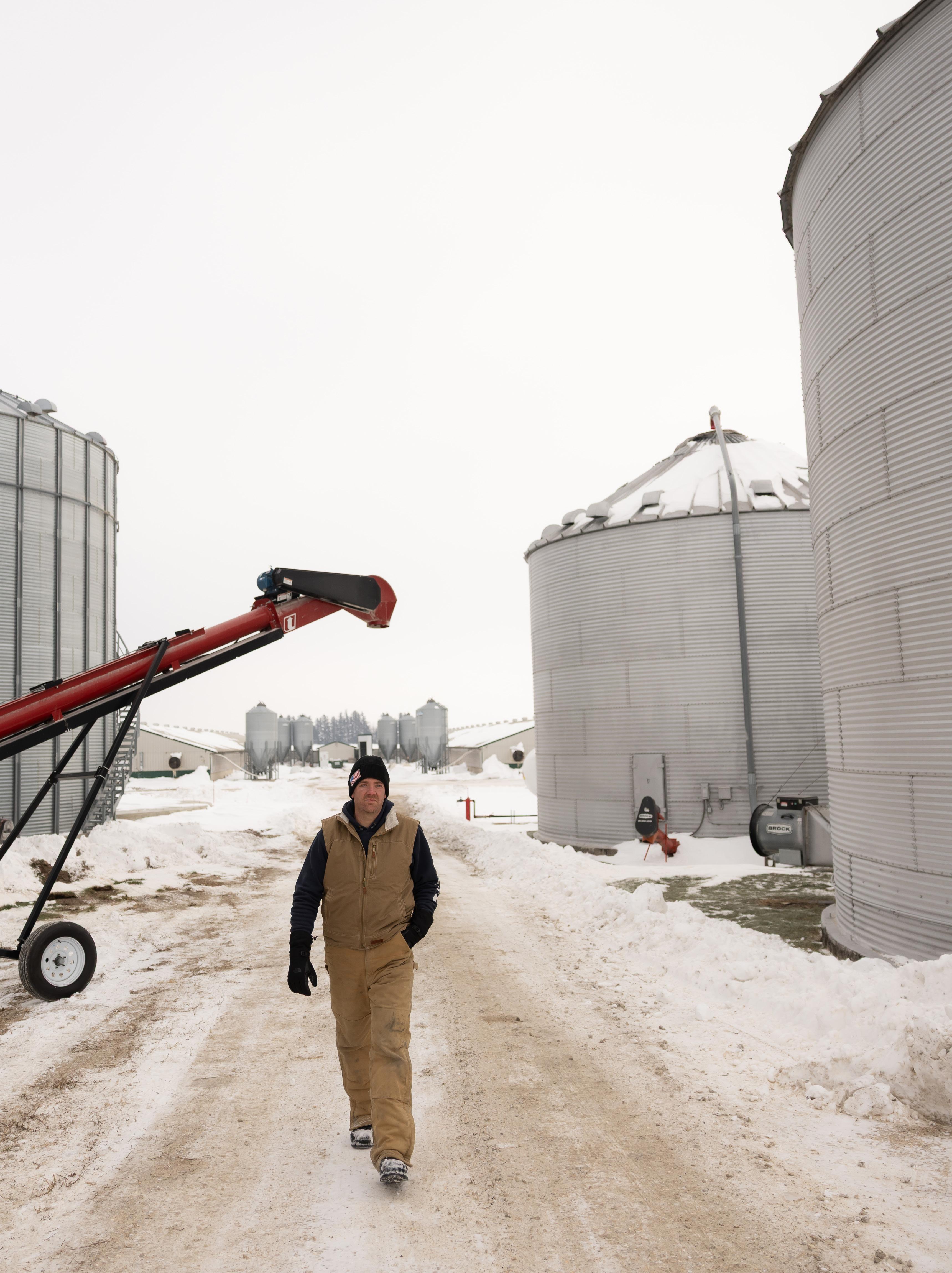
“ Take a second and step back and just think.”
Arick Baker, farmer member near New Providence
Grain bins: Safety starts from the outside
AGI Territory Sales Manager Zach Peterson says winter is the season when farmers need to be even more intentional about staying out of their bins.

ZACH PETERSON
AGI Territory Sales Manager
Monitor grain safely and stay off the bins
Peterson stresses that farmers who have in-bin monitoring systems should use them to avoid dangerous winter climbs.
“You can’t put a price tag on farmer well-being and stored grain quality. In-bin monitoring systems like AGI BinManager can protect both,” Peterson says. “With the help of sensor cable monitoring and fan automation, in-bin technology keeps farmers out of the bin to check for grain spoilage. This not only helps them keep their grain safe, but it also helps them condition their soybeans to hydrate or keep them at the optimal moisture content for marketing.”
Watch ladders and steps closely
When a trip up the bin is unavoidable, farmers should always have a “bin buddy” nearby. Watch for ice or strong winds that can create hidden slick spots on ladders and steps.
Fans matter
Proper airflow is essential during winter storage and can prevent issues before they start.
“Make sure you have enough fan horsepower that creates enough CFM or in-bin airflow to maintain the condition of stored grain commodities,” says Peterson. “Proper airflow helps farmers maintain stored grain, prevents spoilage and keeps farmers out of or off of bins.”
He notes exterior fans can be maintained without climbing bins.
“Also, don’t forget the importance of coring bins to help promote good, even airflow throughout the bin. And if you need help or great advice, consult an expert like a local dealer or AGI representative,” he says.
Continued on Pg. 12


Grain dryers: Respect electricity, gas and ice
Winter also brings hazards around grain dryers. AGI Customer Service Manager Lee Goldhorn says freezing temperatures and ice buildup make safe maintenance even more important.
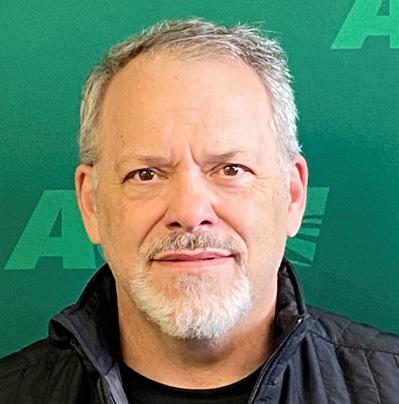
LEE GOLDHORN
AGI Customer Service Manager
Protect yourself from electrical shock or gas issues
“The winter season can be one of the most challenging seasons on the farm. Cold temperatures, ice buildup on equipment and slippery conditions all make for a difficult environment. If work is to be performed on the dryer, make sure the power is turned off to the equipment and the flow of gas has been removed,” says Goldhorn.
Use protective Personal Protective Equipment (PPE) and watch for ice
Goldhorn encourages farmers to take the extra time to dress for the conditions.
“Use proper PPE like safety glasses, work boots and gloves when working with or near the grain drying equipment. And wear extra layers of clothing and insulated boots or gloves to keep warm,” he says.
Avoid ice buildup around equipment
He says slick surfaces can compromise footing and affect equipment performance.
“Run the dryer in batches for 30 minutes to allow the grain mass to come up to temperature. Drying will take more time in the winter,” he says.
Augers and conveyors: Winter maintenance is critical
For portable grain-handling equipment, preventative maintenance can reduce breakdowns and keep farmers safe. AGI Territory Sales Manager Kevin Primmer offers several reminders for winter upkeep.

KEVIN PRIMMER
AGI Territory Sales Manager
Maintenance equals prevention
Primmer says the slower winter months are an ideal time to look over every part of the system.
His key checks include:
• Checking auger flighting for wear
• Making sure all safety shields are in place
• Inspecting electrical cords for mouse damage
• Checking bearings, gearboxes and belts
• Cleaning out bird nests at the spout end of augers and conveyors.
Contact Kriss Nelson at knelson@iasoybeans.com

Flowing grain behaves like quicksand
• An adult can be completely buried (engulfed) in 20 seconds. Most engulfed victims do not survive.
• Grain exerts forces of friction and pressure on a person that prevent self-escape.
• The force required to remove a person buried under grain can exceed 2,000 pounds.
• A person buried to the waist in grain requires a force equivalent to their own body weight plus 600 pounds to free them.
• In four seconds, an adult can sink knee-deep in the suction of flowing grain. At this point, he or she can’t free themself without help.


Iowa Soybean Association Rising Star shapes the future of agriculture through advocacy
STORY BY MICKAYLA JORDAN PHOTOGRAPHY BY JOCLYN KUBOUSHEK
In 1928, the Future Farmers of America was established in Kansas City, Mo., by a group of young farmers to prepare future generations for the challenges of feeding the growing population.
Nearly 100 years later, the National FFA Organization has more than 1 million members nationwide and is developing the next generation of agricultural leaders.
One of those is Lily Moeller, the 2026 Iowa Soybean Association (ISA) Rising Star Award winner. The Orange City native is already making her mark by advocating for agriculture one speech at a time.
A member of the Holland FFA Chapter, Moeller has been actively involved in FFA for the past four years. She currently serves as the chapter’s president and is in her second term as the Iowa FFA Northwest District secretary. She’s also claimed two state titles in FFA speaking contests.
As a sophomore, Moeller won the Iowa FFA Extemporaneous Speaking contest. In this event, participants are assigned an ag-related topic and given a limited amount of time to draft remarks, showcasing their spontaneous speaking skills. Judges evaluate speaking, presentation, content and ability to answer questions about the speech’s topic.
After winning the state competition, she placed fourth nationally.
“I put a lot of time into researching,” says Moeller about her preparation for the contest. “It gave me insights into everything from international trade to specific policy issues.”
The 100-page binder of agricultural facts she compiled ahead of the contest sparked her interest in advocating for ag-centric policy, specifically how farmers could shape policy.
A year later, Moeller finished third at the National FFA Convention in the prepared public speaking event. Her speech, “Shaping Agriculture’s Future with Lawyers, Lobbyists and Legislators,” focused on the importance of advocacy in the industry.
“When I was writing this speech, I knew I wanted to talk about advocacy, but I wanted to focus on a more practical approach, what farmers could actually do,” says Moeller, “I especially emphasized how important it is for farmers to join commodity associations, such as the Iowa Soybean Association.”
By utilizing the existing advocacy systems, farmers can amplify their impact, Moeller notes. Farmer-led advocacy efforts organized through commodity organizations create a unified voice across the industry and help farmers better reach the lawyers, lobbyists and legislators who directly influence policy.
Moeller sees a connection between policy issues impacting agriculture and the generational distance from the farm.
“The underlying issue is the general disconnect between agriculture and our consumers,” says Moeller, “And this disconnect leads to policy issues.”
She gives the example of Proposition 12, a ballot initiative adopted in California prohibiting the sale of pork, veal and eggs from livestock raised in confinements that did not meet specific minimum space requirements.
“It was a ballot initiative brought forward by consumers who didn't understand the true story of what was happening in agriculture, what producers are doing and what we care about,” says Moeller, who grew up raising livestock, “We care about our land, we care about our animals and we care about our consumers.”
So, how can youth help overcome the disconnect? Joining FFA is one step, she says. Another is engaging in existing advocacy systems.
“Before we can really educate consumers and those outside of agriculture, we have to first understand the issues ourselves,” says Moeller.
FFA offers high school students the opportunity to develop employment skills and expand their industry knowledge through a variety of individual and team contests.
“Being an FFA member, I've already seen youth impacting this challenge just by participating in the career development and leadership development events,” she says, “It allows the youth to gain background on these issues.”
The ISA Rising Star Award includes a $2,000 educational stipend, courtesy of Farm Credit Services of America. Moeller will put her stipend to use at South Dakota State University this fall, where she’ll focus her studies on agricultural business and pre-law.
With a passion for advocacy and a heart for serving others, Moeller will continue to utilize the skills she’s gained through FFA as she shapes the future of agriculture as a lawyer.
“I hope to become an agricultural lawyer, come back to my small community and help farmers,” she says.
Contact Mickayla Jordan at mjordan@iasoybeans.com.
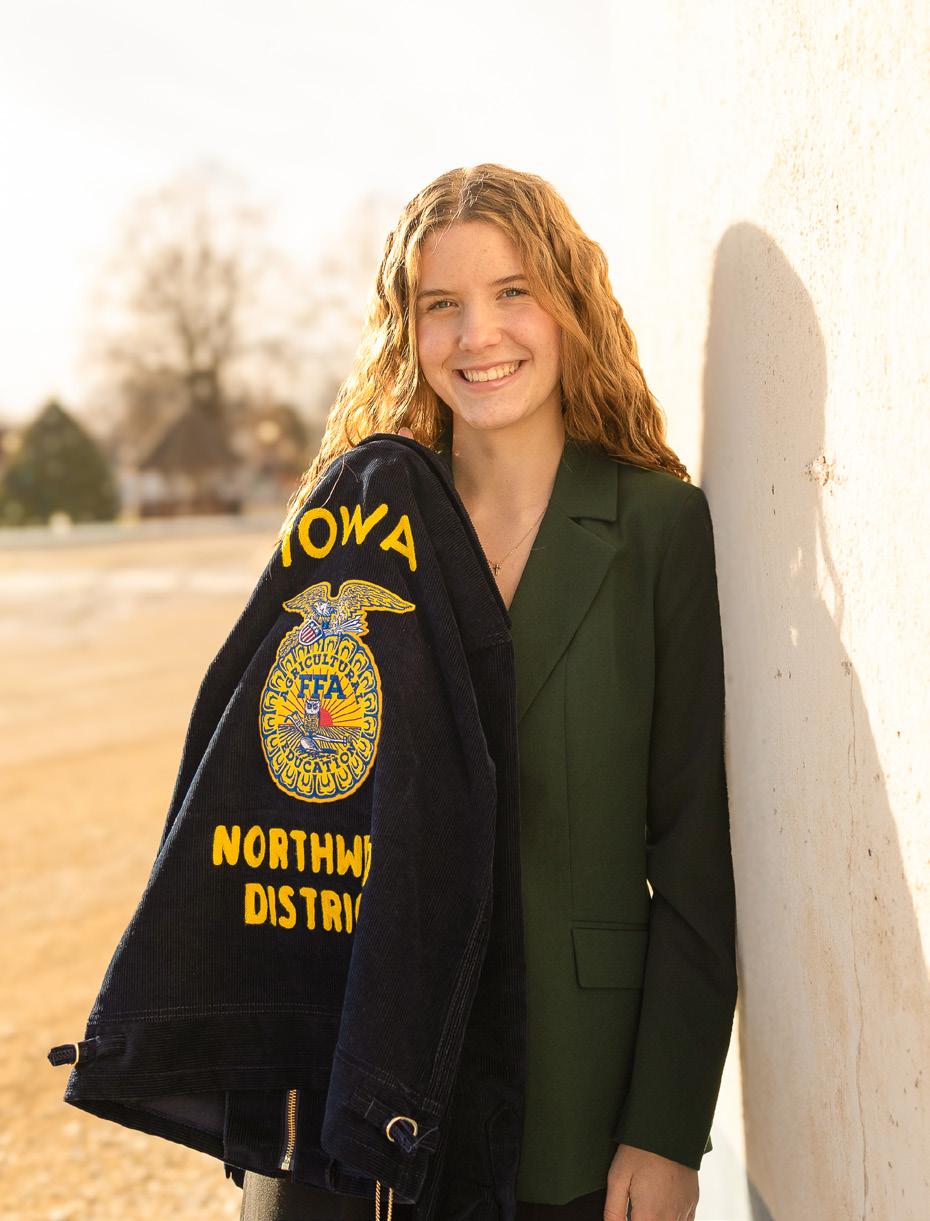
This isn’t the first time ISA leaders have met Lily Moeller. At the 2025 Iowa FFA State Leadership Conference, she was named the state champion in Prepared Public Speaking, a leadership development event sponsored by the Iowa Soybean Association. Brent Swart, immediate past ISA president, presented Moeller with her plaque on stage at the convention.
ISA is proud to support the future of agriculture as an Iowa FFA Gold Standard Partner. Through this partnership, ISA supports leadership opportunities for FFA members across the state, and sponsors the prepared public speaking leadership development event and the Iowa FFA Fiber and/or Oil Crop Production Proficiency Award.
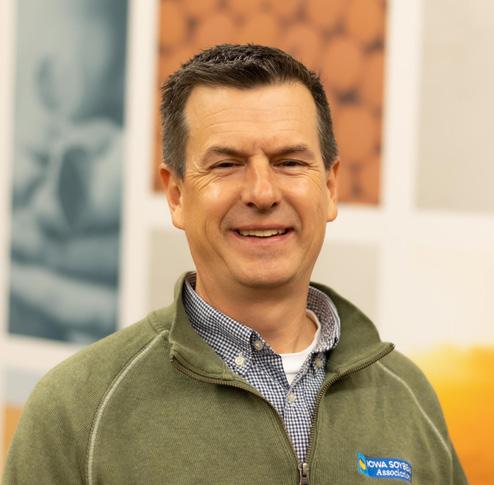
Stewardship pays off, from bottom lines to boosted sustainability Todd Sutphin, ISA Conservation Services and Programs Lead tsutphin@iasoybeans.com
1. Conservation is not an either/or proposition. It’s about improving efficiency, profitability and sustainability together.
2. Conservation agronomy helps farmers get practical, field-tested guidance from trusted advisers they already work with.
3. Data shows you can achieve measurable ROI while utilizing conservation practices, such as cover crops and nutrient management, tailored to your farm’s unique needs.
As an Iowa soybean farmer, you know that keeping your farm productive and profitable is nonnegotiable. But the pressure to conserve soil, reduce nutrient loss and adapt to changing weather is growing. That’s why I see conservation not as a trade-off, but as an opportunity. It’s not production or conservation. It’s production and conservation. The best strategies are those that match your land, goals and bottom line.
These stacked benefits became clear to Jeff Pudenz, an Iowa Soybean Association (ISA) farmer member who farms in central Iowa between Carroll and Sac City, after he adopted no-till 20 years ago. The impact showed up in an unexpected way during a conversation with his diesel supplier, who was surprised to learn Pudenz had not needed his typical 3,000 gallons of diesel for planting.
“The light went off in my head,” Pudenz says. “Three thousand gallons back then was $6,000 saved.”
ISA President Tom Adam, who farms in southeast Iowa, has seen numerous benefits since implementing cover crops in 2010 and easing into a four-year crop rotation in 2012, including one year of double-cropping soybeans behind wheat.
“Surprisingly, the extended crop rotation with double cropping has been the most satisfying in terms of financial return,” Adam says. “In addition to producing an extra crop in one of the four years, I consistently see increased yields with soybeans following the double-crop year.”
Every field is different. That’s why when we show up at a farm, the first thing we do is listen. As conservation services and programs lead for the Research Center for Farming Innovation (RCFI) at ISA, I’m not there to pitch a product or push a regulation. Our job is to represent your interests and support long-term profitability.
I lead a team of seven experts, including conservation professionals and conservation agronomists across the state. They provide in-field and edge-of-field conservation services, including bioreactor design, nutrient planning and water monitoring.
We’re also focused on your conservation success through ISA’s Conservation Agronomy Network. Most farmers already turn to their ag retailers for agronomy. So why not turn to them for conservation insights, too? We’re placing conservation agronomists in co-ops and ag retailers across Iowa, so when you’re asking about inputs, nutrient efficiency or edge-of-field practices, you get answers from someone trained in both agronomy and sustainability. Because every retailer’s different, we’re looking at developing a shared training curriculum to ensure every conservation agronomist works from the same playbook.
Good nutrient management is the foundation of any farmer’s conservation pyramid, and it is often the
low-hanging fruit for those looking to take the next step in adopting voluntary conservation practices. For example, you might ask whether nitrogen rates can be fine-tuned or if more manure can be incorporated to reduce synthetic input costs without compromising yield. In many cases, the answer is yes.
“We put some nitrogen on when we plant, but the bulk of the nitrogen is applied when the plant needs it, just before the crop covers the ground,” Pudenz says. “This has saved us an immense amount of money.”
Similarly, cover crops planted in soybean fields can often help reduce erosion and suppress weeds, among other benefits.
“Over time, I’ve learned to let the cover crops grow as long as possible to gain greater benefit. Better soil structure and water infiltration are obvious benefits,” says Adam.
Marginal to meaningful
Farmers fear conservation could reduce yields, remove land from farming, or both. Yet there are proven strategies for optimizing sustainability and maintaining (or even growing) yields. If you’re losing money on a low-performing corner, maybe it’s time to ask: Could that ground deliver more value as a buffer or be enrolled in a conservation program that pays you for implementing specific practices?
Meanwhile, edge-of-field practices such as bioreactors, oxbows and saturated buffers treat water without touching your best soil. They don’t deliver an economic return in the same way that no-till or nutrient management can. But they deliver another kind of ROI in the form of legacy and resilience.
Fifteen years ago, ISA began working with farmers to restore oxbows, which are old river bends that have been pinched off. One acre of oxbow can store more than 1 million gallons of water and reduce nitrate levels by approximately 40% to 60%. Every restored oxbow we survey is now home to the federally protected Topeka shiner fish, so much so that the U.S. Fish and Wildlife Service is
considering downlisting the species from endangered to threatened. That’s a win for water, wildlife and farmers.
Across Iowa, more farmers are seeing the potential of expanded conservation practices. And the numbers speak for themselves. In 2025 alone, ISA’s team helped farmers in these ways:
• Cover crops: 60,000+ acres established
• Oxbows: 18 completed, 39 ongoing projects
• Blind inlets: 15 completed, 9 ongoing
• Saturated buffers and bioreactors: 13 ongoing
• Pollinator sites: 9 completed, 8 ongoing
• Wetlands: 8 ongoing
These aren’t random acts of conservation. They’re part of an overarching strategy that recognizes voluntary conservation on and around Iowa soybean farms doesn’t work in isolation. That’s why we prefer a watershedbased approach that begins with grouping similar soils and resource concerns. This enables farmers, advisers and partners to engage in smarter conservation.
It’s also why we’re supporting “batch-and-build” efforts in which 10 to 15 edge-of-field conservation projects are packaged, then bid out, funded, designed and installed. This approach is faster, cheaper and more attractive to contractors compared to past methods that focused on single projects. We’re seeing an expansion of batch-and-build in counties such as Benton, Linn and Sac.
Every farmer I’ve worked with wants to do the right thing. But they also need the right information to take that first step.
You shouldn’t have to roll the dice with conservation. You already face enough challenges, whether from volatile markets or changing climate conditions. We’re here to help you get the guidance you need so you can implement conservation strategically, managing risks and maximizing rewards with proven practices, sciencebacked tools and farmer-led results.
ISA has access to technical and financial resources that can help your farm operation. To get started, call our team at 515-251-8640.
We can consider it as a topic in a future issue. Better yet, we’ll connect you with your local expert so you can implement a trial on your farm.


BY JOCLYN KUBOUSHEK
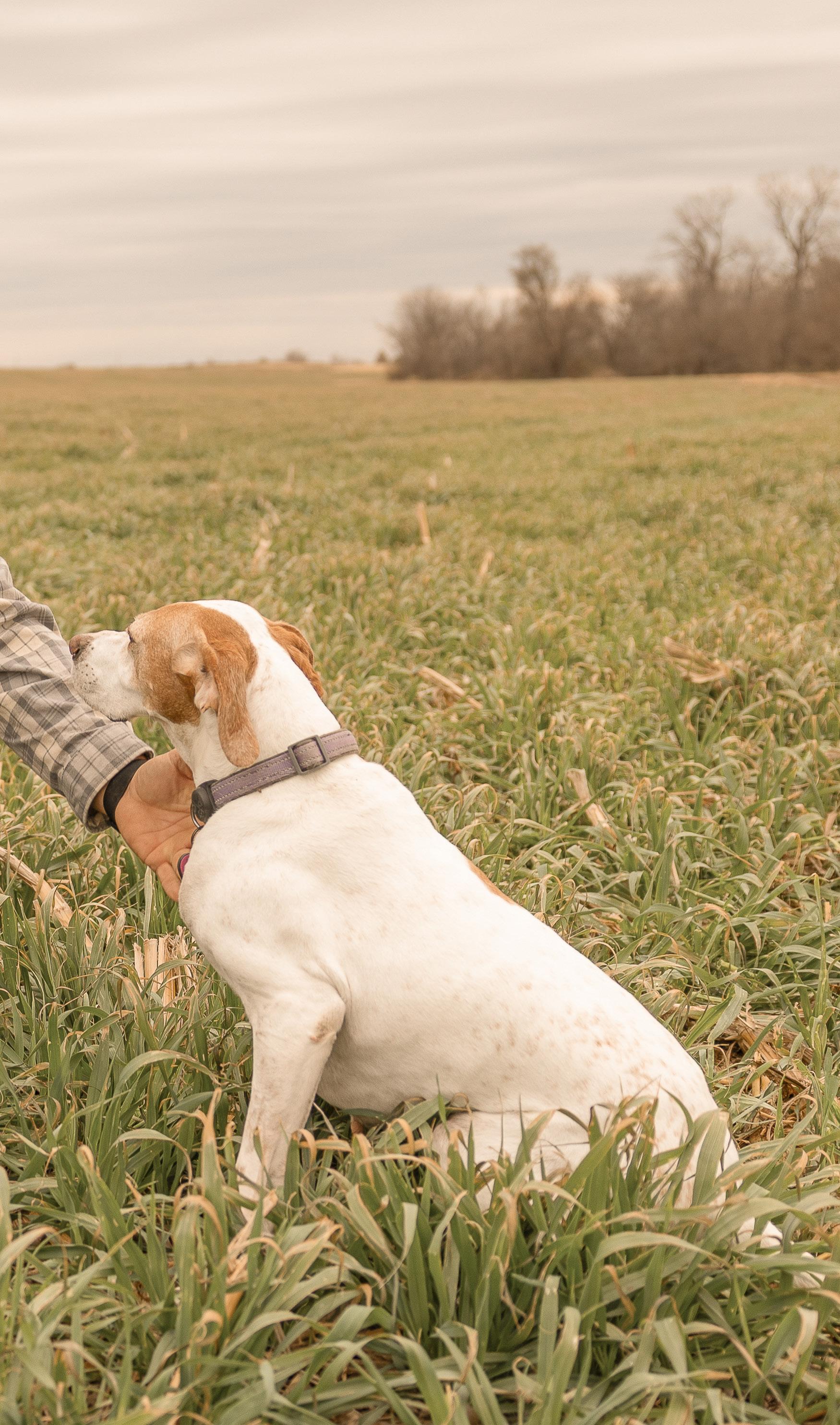
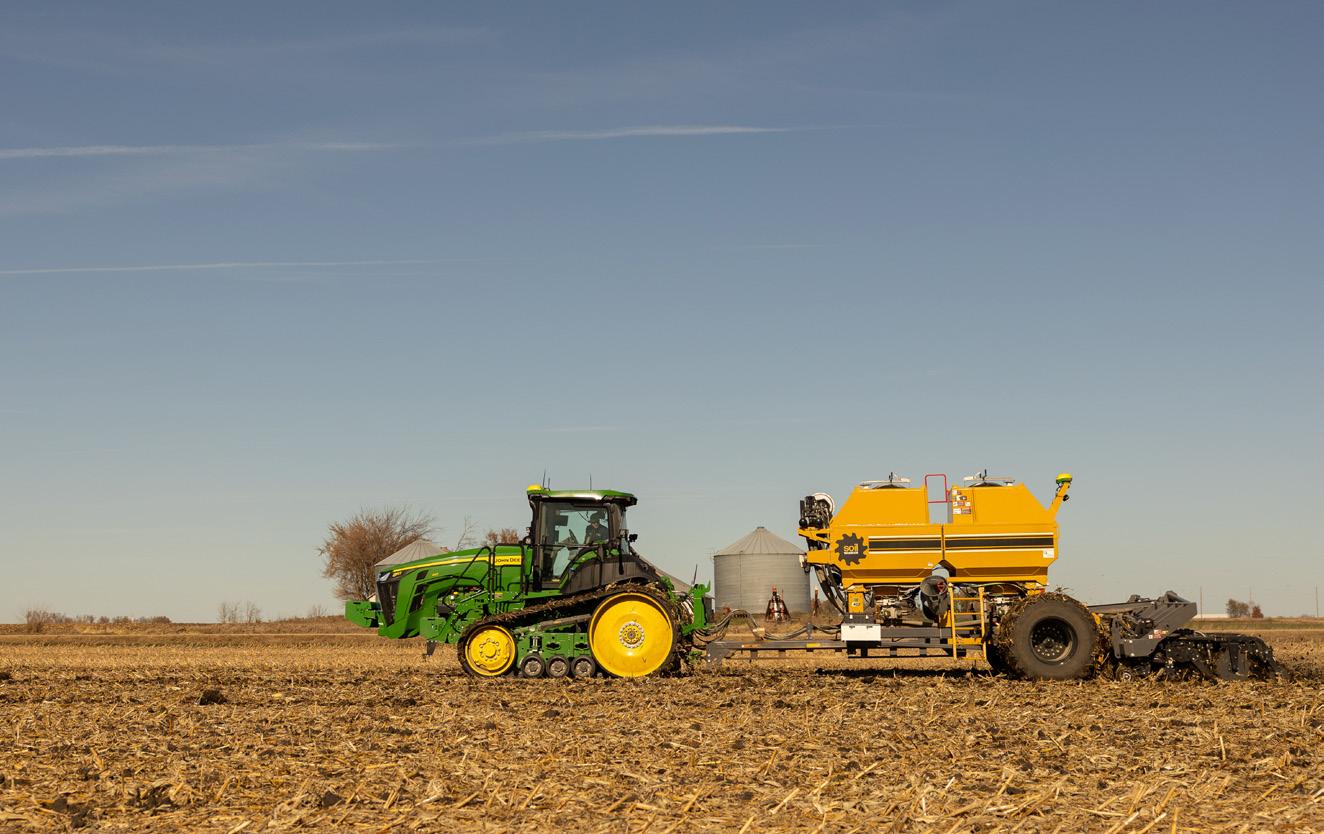
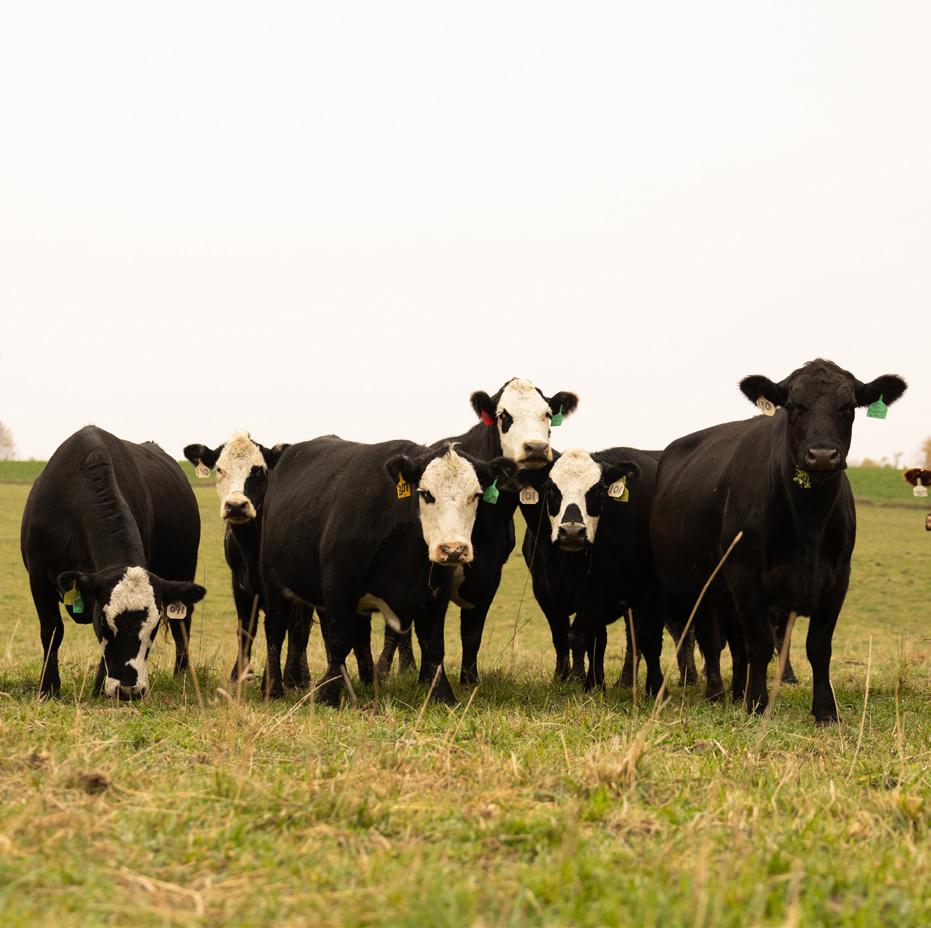
CLOCKWISE FROM TOP LEFT:
ISA Farmer Member Nick Helland taking a moment to award his dog, Jewel.
The Iowa State Capitol lights up on a cold winter night in Des Moines.
Marek Land & Livestock beef cattle gather in a pasture near Riverside.
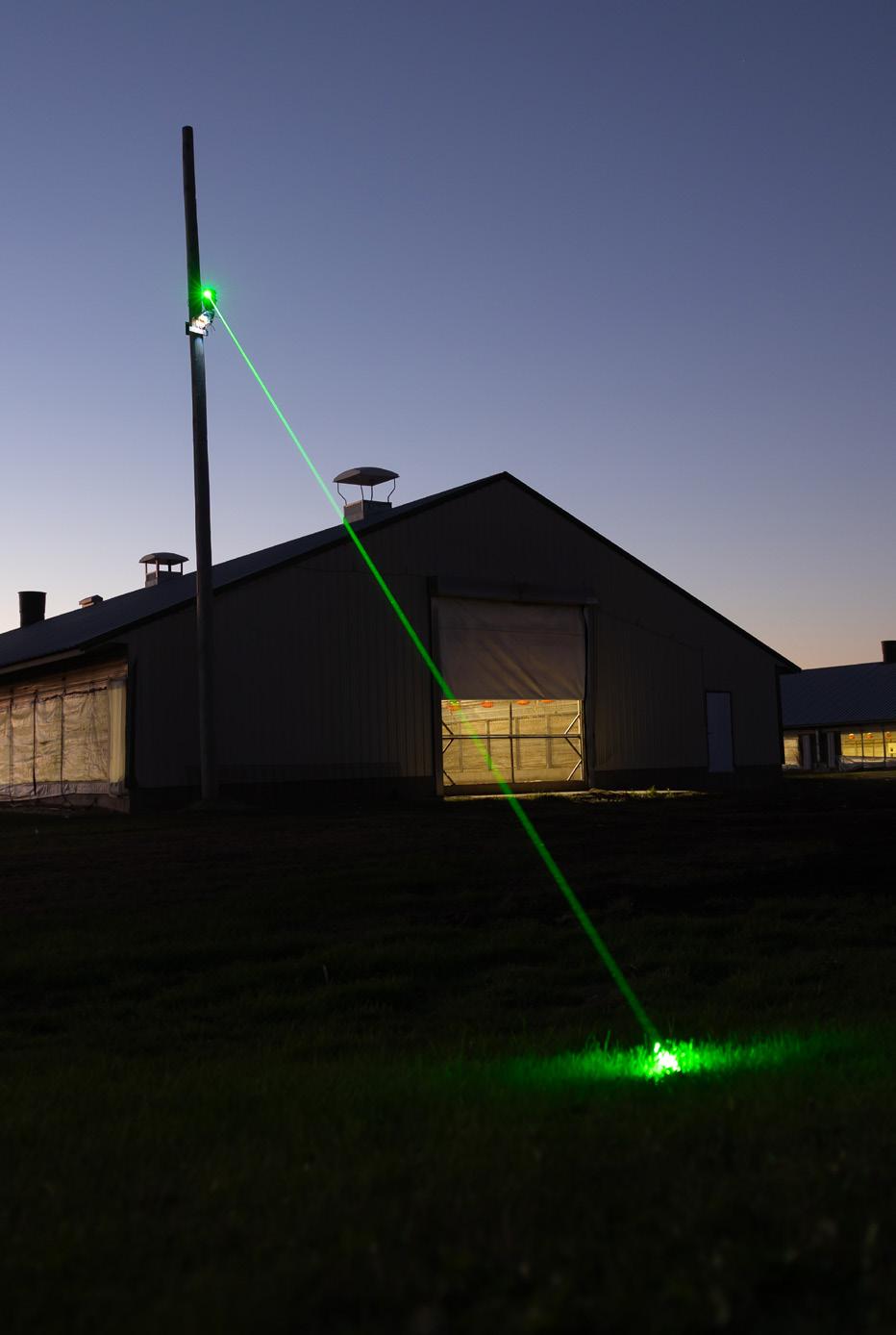
A laser system protects a turkey farm near Ellsworth by keeping wild waterfowl out and lowering avian disease risk.
A Soil Warrior strip-till unit being tested with RCFI near Boone to evaluate nutrient placement and soil conservation.
Lee Brooke gets ready for spring by dialing in equipment and plans ahead of the busy planting season.
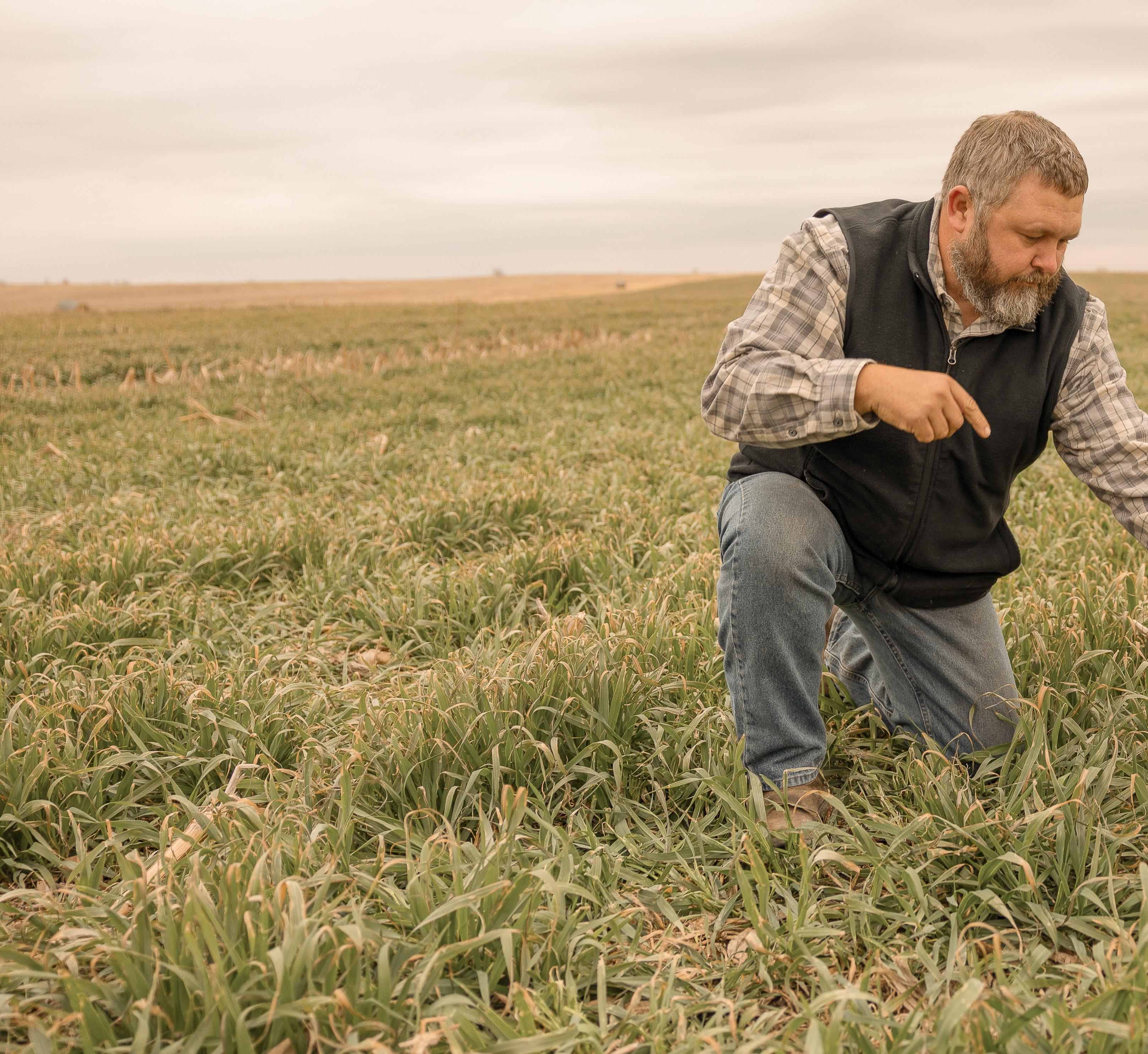
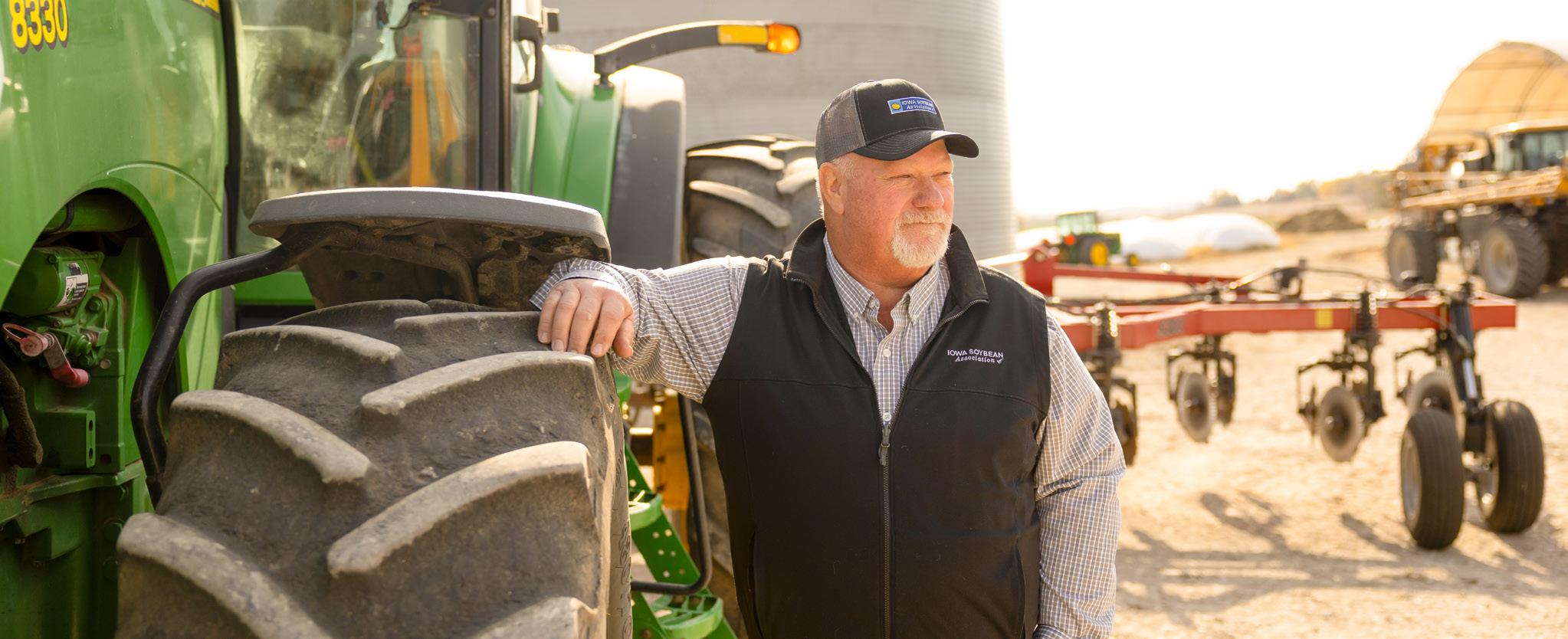


RESEARCH TO BEAT SCN, FIGHT WEEDS, BUILD SOIL AND BOOST SEEDLING HEALTH
From battling soybean cyst nematode to improving seed treatments and soil health, Iowa soybean farmers are helping drive the next wave of research to solve their toughest production challenges. Guided by farmer and industry input, the Iowa Soybean Research Center (ISRC) has invested $380,000 in four research projects selected during its annual advisory council meeting.
ISRC co-director Mark Licht, associate professor and extension cropping systems specialist at Iowa State University (ISU), says the research portfolio reflects both immediate production concerns and long-term strategic challenges.
Licht says the Industry Advisory Council (IAC) ensures ISRC’s research stays grounded in real-world needs.
“The council brings together farmers, agronomists, industry partners and researchers,” he says. “Their input helps us focus on work that’s not just scientifically interesting, but truly valuable to soybean production.”
Licht notes that the funding choices this year confirm the center's pledge to boost soybean resilience, improve agronomy and encourage innovation.
“These projects are designed to give farmers new tools and better information,” he says. “Whether it’s understanding soil amendments, improving seed treatments or managing pests like SCN, we want to move the science forward in ways that matter on the farm.”
As an at-large director for the Iowa Soybean Association and a member of the ISRC’s Industry Advisory Council, Jack Boyer of Reinbeck helps review research proposals, provide feedback and recommend which projects should move forward for potential funding.
Boyer believes having farmers at the table is essential to keeping the work grounded in real-world application.
“I think it’s great to have farmer input because it keeps one foot in the soil so you stay closer to the practical application,” he says. “It helps make sure things don’t get too analytical or hypothetical and keeps some real-world perspective in the concepts.”
STORY BY PHOTOGRAPHY BY KRISS NELSON JOCLYN KUBOUSHEK

WESLEY EVERMAN ISU weed specialist and assistant professor
ISU weed specialist and assistant professor Wesley Everman, working with Licht, is studying how cereal rye termination timing affects early-season light competition, waterhemp pressure, soybean growth and yield. The project aims to help farmers determine how long cereal rye can stay in the field to boost soil health and weed suppression without reducing soybean productivity.
Q: Farmers often struggle with when to terminate cereal rye before planting soybeans. How will your research help clarify the best timing to manage weeds like waterhemp without hurting yield?
Our research will look at a range of termination dates for cereal rye prior to and after soybean planting and we will measure a range of growth characteristics of soybeans during the season while also measuring waterhemp suppression. We should have enough parameters to help dial in where we minimize effects on soybeans while still receiving weed suppression benefits.
Q: Where will this research take place?
This research will be conducted on research farms, primarily near Ames, to better ensure the waterhemp population is at a level we can evaluate consistently.
Q: You’re studying how cereal rye affects light and competition early in the season. What should farmers understand about how this influences soybean growth and weed control?
The cereal rye (any plant that is growing with soybean in reality) causes a shift in the red to far red light ratio due in part to light interception occurring early in the season. This change in the red:far red ratio leads to a growth response in soybean that puts greater energy into vegetative growth which affects the reproductive growth later in the season.
Farmer perspective
This research aligns closely with what Boyer has observed in his on-farm trials.
“There are opportunities with cover crops to improve weed management, but you have to find the balance. Hopefully, this research can help broaden that guidance or at least tell us what to look for so we can apply it the best we can,” Boyer says. “That would certainly be helpful.”

“Whether it’s understanding soil amendments, improving seed treatments or managing pests like SCN, we want to move the science forward in ways that matter on the farm.”
Mark Licht, ISRC co-director

THOMAS BAUM
ISU's Charles F. Curtiss
Distinguished Professor

STEVE WHITHAM
Co-principal investigator and co-director of the ISRC
ISU’s Thomas Baum, Charles F. Curtiss Distinguished Professor, and Steve Whitham, co-principal investigator and co-director of the Iowa Soybean Research Center, are leading research to better understand soybean cyst nematode (SCN) effector functions and use that knowledge to build more durable resistance.
Q: What are SCN effector functions, and why are they key to improving soybean resistance?
SCN is a sophisticated pathogen that engages in close relationships with its host, the soybean plant. As part of the SCN attacking and parasitizing the soybean plant, this parasite delivers a very large number of secretions into the plant to enable parasitism. These secretions are called effectors. They have many functions, ranging from opening entry avenues for the SCN to inactivating soybean alarm and defense systems to enabling feeding, among others. In other words, effectors are the critical tools that the SCN uses to be a pathogen.
Consequently, if we know how certain tools, i.e., effectors, function, we can then think of strategies to inactivate these tools and weaken the SCN. For example, if an SCN effector targets a soybean protein to shut down a defense response, that protein can be modified so the effector no longer works, allowing the plant to defend itself.
Q: How will shifting from lab work to computational approaches change SCN research, and when might farmers see results?
We’ve studied SCN effectors for years, and two new developments are speeding progress. We have discovered that the SCN produces many more effectors than we initially thought. Our most recent estimates predict more than 1,000 different SCN effectors, which makes their characterization very complex.
But maybe more impactful, the second development is that computational and bioinformatic technologies based on artificial intelligence advances now offer us completely new and extremely powerful tools to decipher effector functions.
Farmer perspective
Boyer says this line of research hits close to home, especially for growers who have battled sudden death syndrome and soybean cyst nematode in their fields.
“Having experienced sudden death syndrome and SCN, it surely affects profitability. If we can learn more about it and they can introduce some resistance into the soybean plant to help that, that certainly can help soybean farmers,” says Boyer.

LEONOR LEANDRO ISU professor of plant pathology, entomology and microbiology

BRADY CLAUSEN ISU graduate student
Leonor Leandro, ISU professor of plant pathology, entomology and microbiology, and ISU graduate student Brady Clausen are studying how soil amendments such as biochar and digestate affect soybean disease development.
Q: Soil amendments like biochar and digestate are already being explored in agriculture. How could these materials eventually fit into real-world soybean disease management plans?
Leandro: Biochar and digestate are biofuel co-products increasingly used as soil amendments because they improve structure, fertility, water holding capacity, microbial activity and soil carbon. Our research asks whether these amendments also affect soybean diseases. It would be an advantage if they help manage disease, but it’s also valuable to know if they have no effect, since growers could still use them for their other benefits without increasing disease risk.
Q: Yellow pine biochar performed best in reducing root rot. Why, and what should farmers understand about it?
Clausen: Biochar, in general, is a carbon-rich soil amendment that helps lock carbon into the soil long-term, so it provides both soil health and climate benefits. In our experiments, yellow pine biochar, a high-lignin feedstock, didn’t eliminate disease, but consistently showed similar or slightly lower SDS severity than the control (no biochar). It is important for farmers to know that we don’t have strong evidence so far that yellow pine biochar may serve as a disease management practice for SDS, but shows promise as a safe amendment, that won’t worsen disease, while offering the advantages of contributing carbon to the soil and support longer-term soil health improvements.
Q: As you transition from pasteurized soil to natural field soil, what do you hope to learn that will make your findings more applicable to on-farm conditions?
Leandro: As we move to greenhouse experiments with field soil, we are introducing the complexity of a natural, living soil into our study. Field soil will be more representative of Iowa farm conditions because it will have more organic matter, living microbial communities, and a higher clay/loam texture than we are using in the experiments with pasteurized soil mix.
Farmer perspective
Boyer says his own experience using soil amendments aligns with the questions this research aims to answer.
“I’ve used some of the biochar and similar products and did some research on that, but there is a lot more information we still need,” he says. “Some of the research planned here can go a long way in helping us understand that not all biochars or co-products are created equal. What do we need to know so these materials can be beneficial not only for the crop but also for the soil in future seasons? I think this work can help us make real progress in understanding that.”
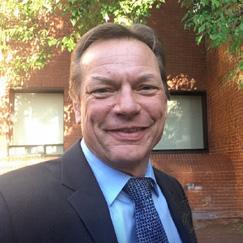
GARY MUNKVOLD, ISU professor and chair, graduate program in Seed Technology and Business
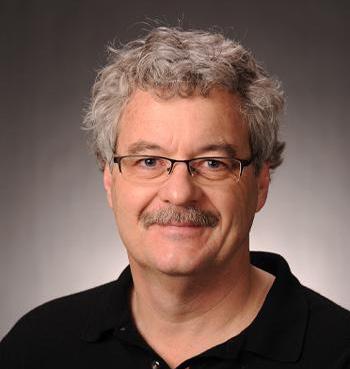
LARRY HALVERSON, ISU co-principal investigator, associate professor of plant pathology, entomology and microbiology
Gary Munkvold, ISU professor and chair of the graduate program in Seed Technology and Business, and co-principal investigator Larry Halverson, associate professor of plant pathology, entomology and microbiology, are continuing their investigation into how common seed treatments influence soybean seeds, roots and soil microflora.
Q: Why is it important to study seed treatments across field, greenhouse and laboratory settings?
Over the years, we have worked extensively in the field, greenhouse and laboratory to study seed treatments from multiple angles. Field research provides practical, real-world results, but conditions vary each year, so many experiments are needed and it’s difficult to isolate effects on specific pathogens. Greenhouse and lab studies offer more controlled, detailed results, though maintaining pathogen cultures and pest colonies is challenging. We have evaluated many experimental and commercial seed treatment ingredients in collaboration with seed treatment providers and other university researchers through soybean checkoff–supported projects.
Q: Is there a specific disease you are studying for its response to seed treatments?
For this project we are focusing on the fungus Fusarium graminearum, which causes seedling blight and root rot in soybean and other crops. It also causes serious diseases of corn ears and wheat heads and can produce harmful toxins in those crops. One of the key questions we hope to address is how long-lasting the effects of the seed treatment on the pathogen are. We are also collecting data on seed treatment effects on other organisms in the seed and root microbiomes.
Q: You are looking at both chemical and biological seed treatments. What differences are emerging, and how might those findings influence recommendations for soybean growers?
Biological seed treatments are now a common component of most seed treatment combinations, but there is little information about their direct effects on specific pathogens. If we can show how those treatments suppress Fusarium graminearum, either directly or indirectly, it could lead to greater adoption of biological seed treatments.
Farmer perspective
Boyer says seed treatments play a major role in his operation, but he’s eager to understand more about their broader effects.
“I use seed treatments on most of the soybeans, nearly all the soybeans. And certainly there are things there that have come a long way to help with sudden death and some of those kinds of things. But what are the effects they’re having on the soil? I don’t know that we truly understand that. So this will be interesting to see what they can learn and how those seed treatments can be used more effectively, both positively and what the negative aspects of it are.”
Contact Kriss Nelson at knelson@iasoybeans.com
Farmer-leaders of the United Soybean Board (USB) elected Brent Gatton from Bremen, Ky., as the new chair during the organization’s board meeting in St. Charles, Mo. He’s joined by nine newly elected farmer-leaders to serve alongside him on the Executive Committee for the upcoming year.
“Farmers have weathered a year marked by real economic uncertainty, and I’m privileged to step into this role at such a pivotal moment,” says Gatton. “The Soy Checkoff remains relentlessly focused on creating value for U.S. soybean farmers by protecting existing markets, accelerating new uses, and opening new doors for U.S. soy around the world. As Chair, I’m focused on pushing forward investments that move volume while also promoting our sustainability to keep U.S. soybean farmers competitive in the global marketplace.”
The newly elected USB Executive Committee includes:
• Brent Gatton, Chair – Kentucky
• Matt Gast, Vice Chair – North Dakota
• Susan Watkins, Treasurer – Virginia
• Tom Frisch, Secretary – Minnesota
• Robb Ewoldt – Iowa
• Tony Mellenthin – Wisconsin
• Carla Schultz – Michigan
• Don Wyss – Indiana
• Joey Boudreaux – Louisiana
• Kyle Durham – Missouri
• Philip Good – Mississippi (Past Chair)
As the new Chair, Gatton will ensure FY26 investments and priorities across the market segments of food, feed, fuel, industrial uses, exports and sustainable production effectively grow demand for U.S. soy, drive on-farm resilience, and bring value to the nearly halfmillion U.S. soybean farmers. In the coming year, he will also focus on increasing greater communication and education efforts to strengthen the reputation of U.S. Soy with customers, amplify checkoff investments to inform U.S. soybean farmers, and enhance partnerships with 30+ state soybean boards on research, outreach and demand generation.
Iowa farmers Tim Bardole, Brent Renner and Suzanne Shirbroun also serve on the United Soybean Board’s 77 volunteer farmer-leader board.





BRENT GATTON Bremen, Ky.
USB chair
ROBB EWOLDT Iowa
USB committee
TIM BARDOLE Iowa
USB committee
BRENT RENNER Iowa
USB committee
SUZANNE SHIRBROUN Iowa
USB committee

STORY BY TOM COLLINS | PHOTOGRAPHY BY JOCLYN KUBOUSHEK
“ Don’t skate to where the puck is. Skate to where it’s going to be.”
In my fifteen years as a hockey player, I heard that quote from Wayne Gretzky more times than I can count. At the time, it seemed simple, but looking back, I realize how deeply that wisdom applies to life beyond the ice.
This idea of thinking ahead shapes how both hockey players and farmers plan.
Foresight, situational awareness and good judgment are critical tools, especially for farmers as they prepare for the challenges of each winter planning season.
Hockey players rely on all three of these tools every time they step on the ice. Foresight helps them predict where the puck will go so they can catch passes, block shots, and stay ahead of the fastestmoving object in team sports. Situational
awareness allows them to read where teammates and opponents are positioned, understand how plays are developing, and recognize threats as they appear. Good judgment ties everything together by helping them decide when to pass, when to shoot, and how to act in the heat of competition.
Farmers use these same tools in their own way. Foresight guides their major
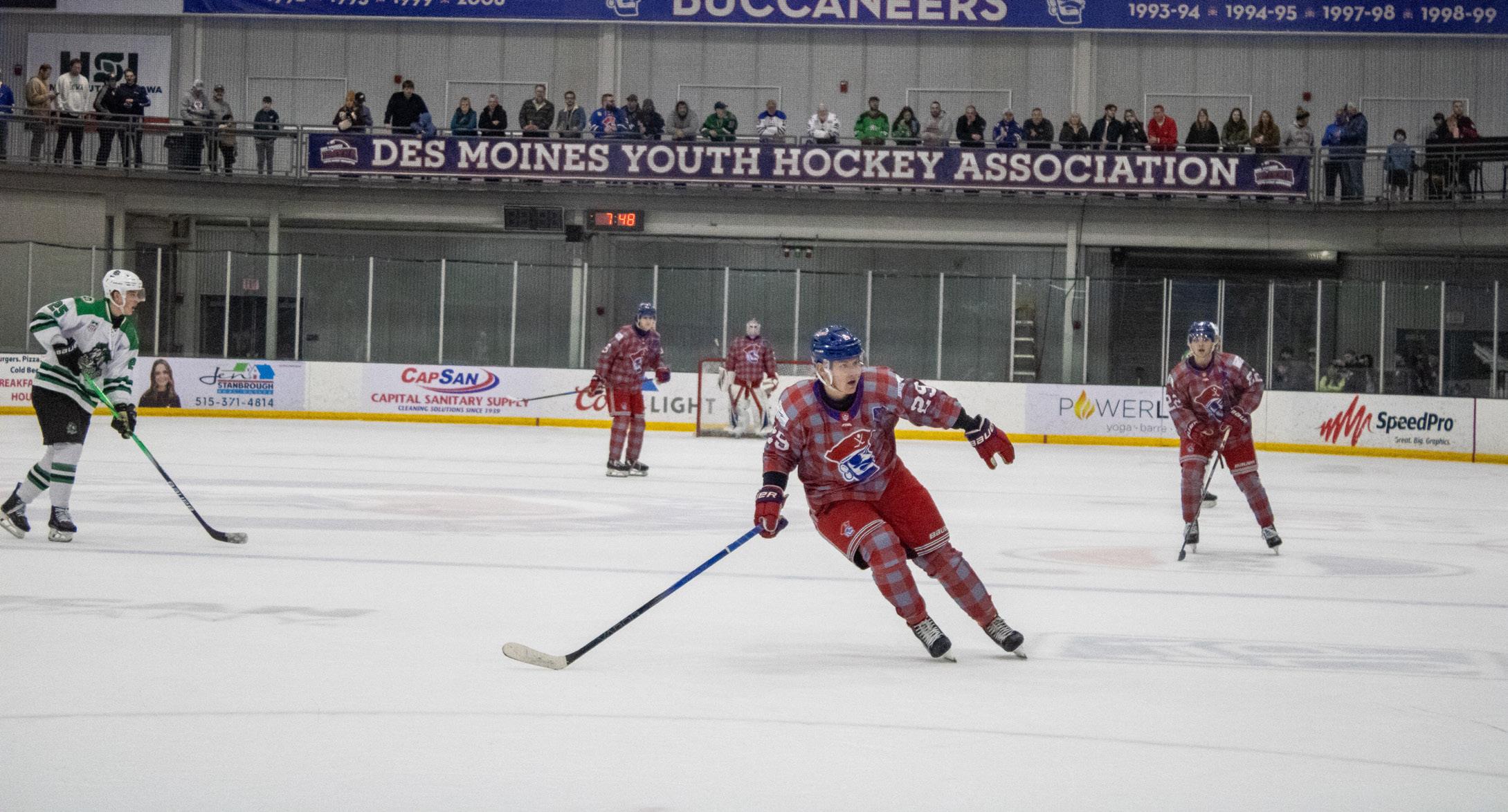
decisions, such as what comes next in crop rotation, tracking weather trends, predicting market shifts, and finding new conservation opportunities. Situational awareness looks like understanding how water moves across their fields, how different hybrids perform under different management practices, and where wet or dry periods affect yield the most. Good judgment influences their ability to time decisions correctly, choose the best costshare options, and trust the right advisors, such as conservation agronomists and watershed coordinators. Over time, it helps them balance conservation goals with financial realities and use cost-share where it counts.
These parallels between hockey and farming highlight a core truth: success in any field comes from looking ahead and planning carefully.
To improve a hockey skill, players must plan months in advance. They work day in and day out to improve their game and wait for the long-term payoff.
Sometimes, it takes a few seasons to see the rewards.
Farming follows a similar path. With conservation practices and proper land stewardship, some efforts take a few growing seasons to perfect and time just right, and sometimes they simply need patience while nature does its work. Either way, Iowa’s farmers can plan ahead, use the available resources, and succeed in the conservation space.
Iowa farmer Dan Dietz excels in conservation, using no-till, cover crops, a wetland, and cover crop grazing. He is planning for his farm’s future on a grand scale.
“We want the next generation to have good dirt to farm,” he says.
Dan hires a local student to test soil samples, and has seen major improvements in soil health.
“Since soil sampling, we’ve seen our soil microbiology more than double,” Dietz says. “These practices are working. I don’t even own tillage equipment.”
Farmers and hockey players alike care about seeing the results. For hockey players, it’s whether or not they’re scoring goals and winning games. For farmers, it’s higher yields and often just making enough profit to stay afloat. To Dan, conservation pays off in the long run by improving soil health, reducing costs and increasing farm resilience.
“The dirt and the land are worth a dollar amount, and some of these practices are working to keep it in place,” Dietz says. “Why would you pay per acre to watch that wash away? Why not keep that dirt on the land?”
At its core, this is exactly what Wayne Gretzky meant. Don’t skate to where the puck is. Skate to where it’s going. Farmers like Dan aren’t just reacting; they’re anticipating, adapting and investing in a better future for their land.
Tom Collins is the communications specialist for the Iowa Agriculture Water Alliance.
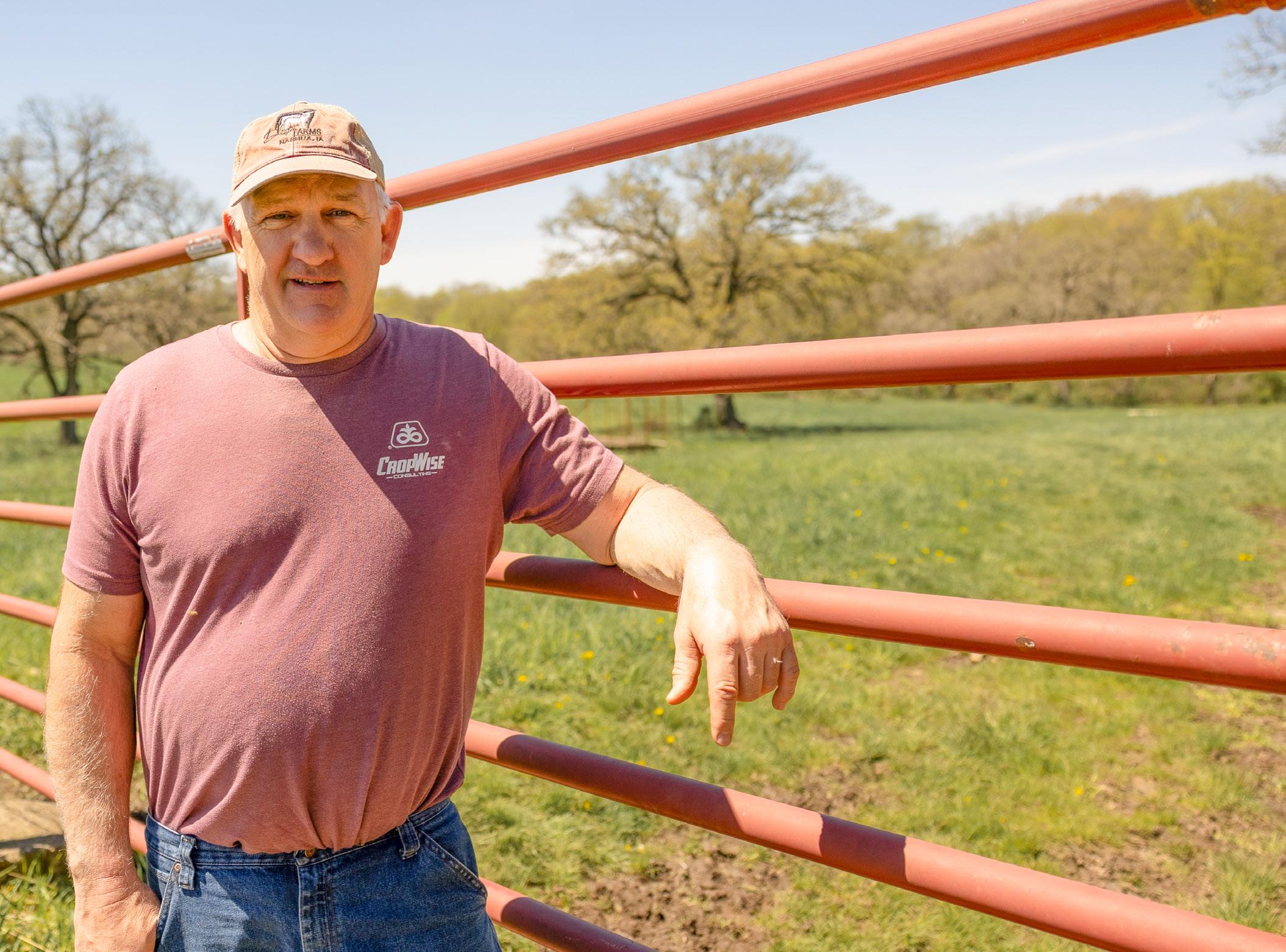
“Since soil sampling, we’ve seen our soil microbiology more than double.”
Dan Dietz, ISA farmer member from Nashua
Five Iowa farmers were recently welcomed and selected to work on behalf of more than 500,000 U.S. soybean farmers as they took their seats with the American Soybean Association (ASA).
During its annual election meeting in St. Louis, the ASA Board of Directors voted in the executive committee members who will lead the organization through the coming year’s top advocacy priorities, including the farm economy, biofuels, inputs, trade, markets and other critical policy issues for U.S. soybean farmers.
The ASA board elected Iowa farmer Dave Walton as ASA vice president, a role that puts him in line to serve as the association’s president in 2027.
Ohio farmer Scott Metzger, who previously served as ASA vice president, will serve as the 2026 ASA president. Metzger began serving on ASA's board of directors in December 2017. He farms 1,400 acres of soybeans, and also grows corn, wheat and malting barley.
Caleb Ragland, of Kentucky, who served as the 2025 ASA president, moves to the role of ASA chairman. Former chairman Josh Gackle of North Dakota rotated off the nine-member executive committee.

DAVE WALTON Iowa
vice president

COREY GOODHUE Iowa
The board also elected Jordan Scott of South Dakota as ASA secretary; Tanner Johnson of Wisconsin as treasurer; Jamie Beyer (Minn.), Ryan Frieders (Ill.), Randy Miller (Iowa), and Jimmie Lee Shaw (S.C.) as at-large members of the executive committee.
ASA welcomed 13 new directors who begin their nine-year terms, including Scott Gaffner (Ill.); Corey Goodhue (Iowa); Derek Helms (Ark.); Gary Hendrix (N.C.); Darin Johnson (Minn.); Brent Kohls (N.D.); Andrew Lance (Mo.); Michael McPherson (N.C.); Charles Miller (Ill.); Summer Ory (Iowa); Brent Swart (Iowa); Steve Trzebiatowski (Wis.); and Drew Peterson (S.D.).
ASA celebrated the advocacy of and said farewell to several directors who retired in 2025, including Iowa farmers Steph Essick, Morey Hill and Pat Swanson. Stan Born (Ill.); Paul Casper (S.C.); Brad Doyle (Ark.); John Fleming (N.C.); George Goblish (Minn.); Don Lutz (Wis.); Ronnie Russell (Mo.); Robert Shaffer (Ill.); Jimmy Thomas (N.C.) and Brad Thykeson (N.D.) were also recognized for their service to the ASA board.

ORY Iowa
director

SWART Iowa
director

MILLER Iowa




























BY LAURA TEMPLE
SOYBEAN RESEARCH INFORMATION NETWORK
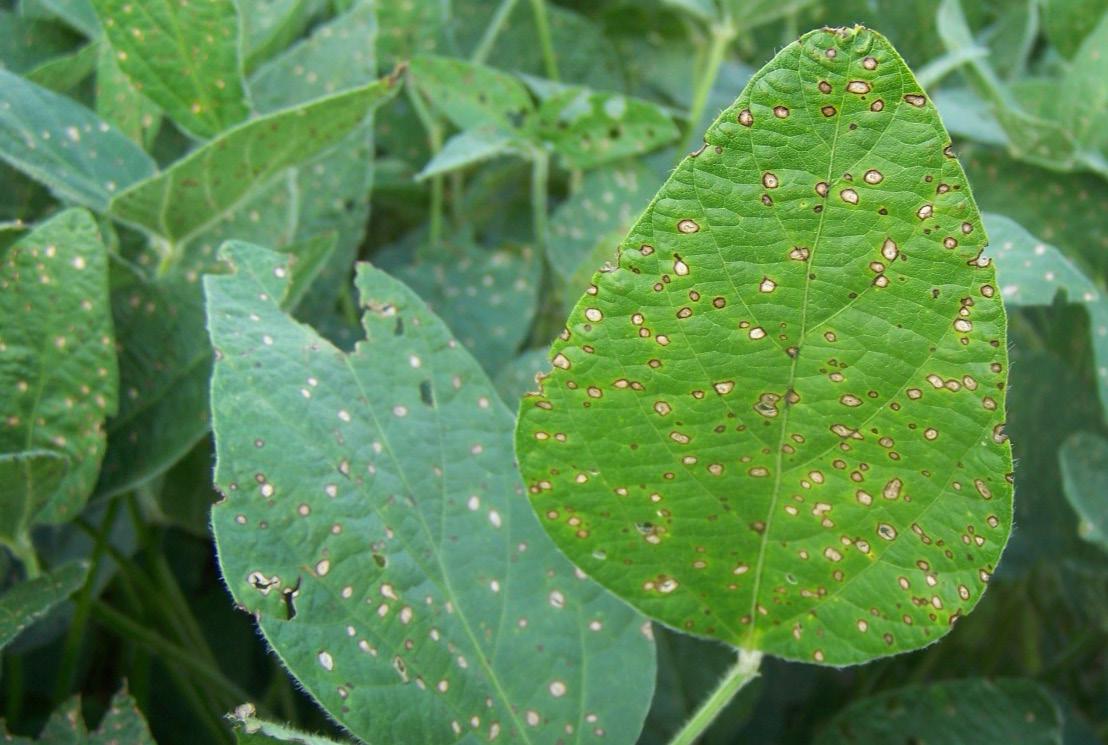
HCollaborative research is expanding a tool that predicts the appearance of key foliar soybean diseases.
The Crop Protection Network’s Crop Disease Forecasting tool now includes a model for frogeye leaf spot, with models for Cercospera leaf blight and target spot in the works.
ow often do you check the weather on your phone? Regardless of accuracy, weather forecasts inform decisions like when to do fieldwork, when to scout and what to wear while doing it.
Soybean disease forecasting tools also have potential to inform decisions. Should fungicides be applied to protect the crop? If so, when? What type of fungicide should be used?
Foliar soybean diseases can be costly, but so can unnecessary or poorly timed fungicide applications. Some significant soybean diseases are developing resistance to commonly used fungicides. For example, strobilurin-resistant strains of the pathogen that causes frogeye leaf spot have been detected in more than 20 states, according to Carl Bradley, professor of plant pathology at the University of Kentucky.
“We are developing tools farmers can use to make decisions about fungicides based on disease risk, especially given the current economics,” Bradley says. “Fungicides are most useful and profitable when applied in response to a disease threat.”
Fungicides perform most consistently and profitably when controlling diseases, and this tool helps farmers decide if and when to apply them.
He is leading collaborative research that expands proven disease forecasting tools across a broader geography and more pathogens. With support from the Atlantic Soybean Council, MidSouth Soybean Board, North Central Soybean Research Program, Southern Soybean Research Program and United Soybean Board, researchers in 11 states are monitoring spore traps and conducting fungicide efficacy trials to gather data for those tools.
Bradley explains that several years ago, the North Central Soybean Research Program funded research to develop a prediction tool to help farmers manage white mold in soybeans, a common disease across northern soybean-growing states. That research, led by University of Wisconsin researchers, resulted in the former Sporecaster app, now available in the Crop Disease Forecasting tool available through the Crop Protection Network.
“That team created a platform that can be used to build additional tools,” he says. “Now, our multi-state team of
researchers is able to adapt and expand that technology to be used across broader areas with other important pathogens.”
His multi-state team launched forecasting for frogeye leaf spot within the Crop Disease Forecasting platform for the 2025 growing season. This disease can be found throughout the country, and severe outbreaks in favorable conditions for the disease early or just after flowering can cause yield losses of up to 35%.
The team plans to add forecasting for Cercospora leaf blight and target spot in coming seasons.
The Crop Disease Forecasting tool combines information about the presence of pathogens and environmental conditions to forecast the risk of a disease developing in a specific area.
Team members collect spores weekly from spore traps in fields containing uniform fungicide trials to monitor for pathogens that can cause leaf diseases. The same traps capture all airborne spores, allowing them to watch for multiple issues.
They adapted the first Crop Disease Forecasting model to account for weather that creates a favorable environment for each pathogen to spread, infect soybeans and cause disease. For example, the frogeye leaf spot model predicts where the disease is likely to appear based on presence of Cercospora sojina spores and warm, humid, cloudy weather.
“During 2025, we used the untreated check plots in our uniform fungicide trials to validate the frogeye leaf spot model,” Bradley says.
These small-plot trials have fungicide applied at specific growth stages, regardless of disease pressure. Results contribute
to fungicide efficacy data, which helps farmers select fungicides to manage their disease pressure.
Past multi-state research projects funded by the Soy Checkoff have provided a better understanding of the prevalence of fungicide-resistant strains of important soybean foliar pathogens like Cercospora sojina. Using this knowledge, along with data about disease risk, farmers will be better able to make informed decisions about the need for fungicide applications and which products may provide the best control.
When low soybean prices and high input costs tighten margins, every application decision needs to pay. Bradley believes adding forecasting for frogeye leaf spot, Cercospora leaf blight and target spot will help farmers make profitable decisions.
“Fungicides work best when they are applied to protect leaves against infection,” he explains. “Forecasting where diseases are likely to develop helps farmers target fields and timing where fungicides can be most valuable.”
He adds that some researchers participating in this effort are using this foresting tool to better understand how disease risk relates to fungicide application timings and profitability.
“We are working to define what 60% or 50% disease risk means,” Bradley says. “We hope to learn how understanding risk level informs when to spray.”
The Soybean Research & Information Network (SRIN) is funded by the Soy Checkoff and the North Central Soybean Research Program. For more information about soybean research, visit soybeanresearchdata.com.
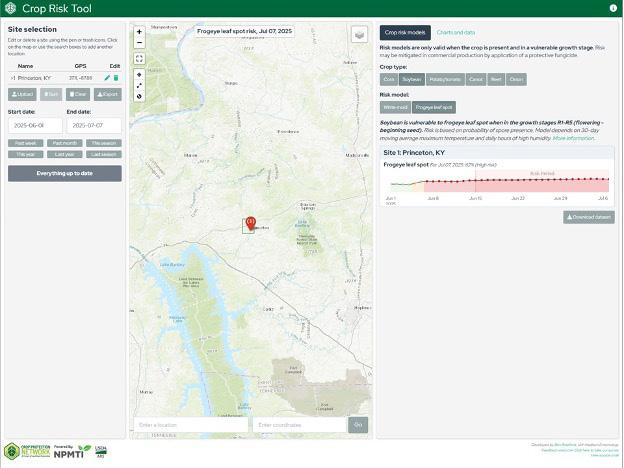
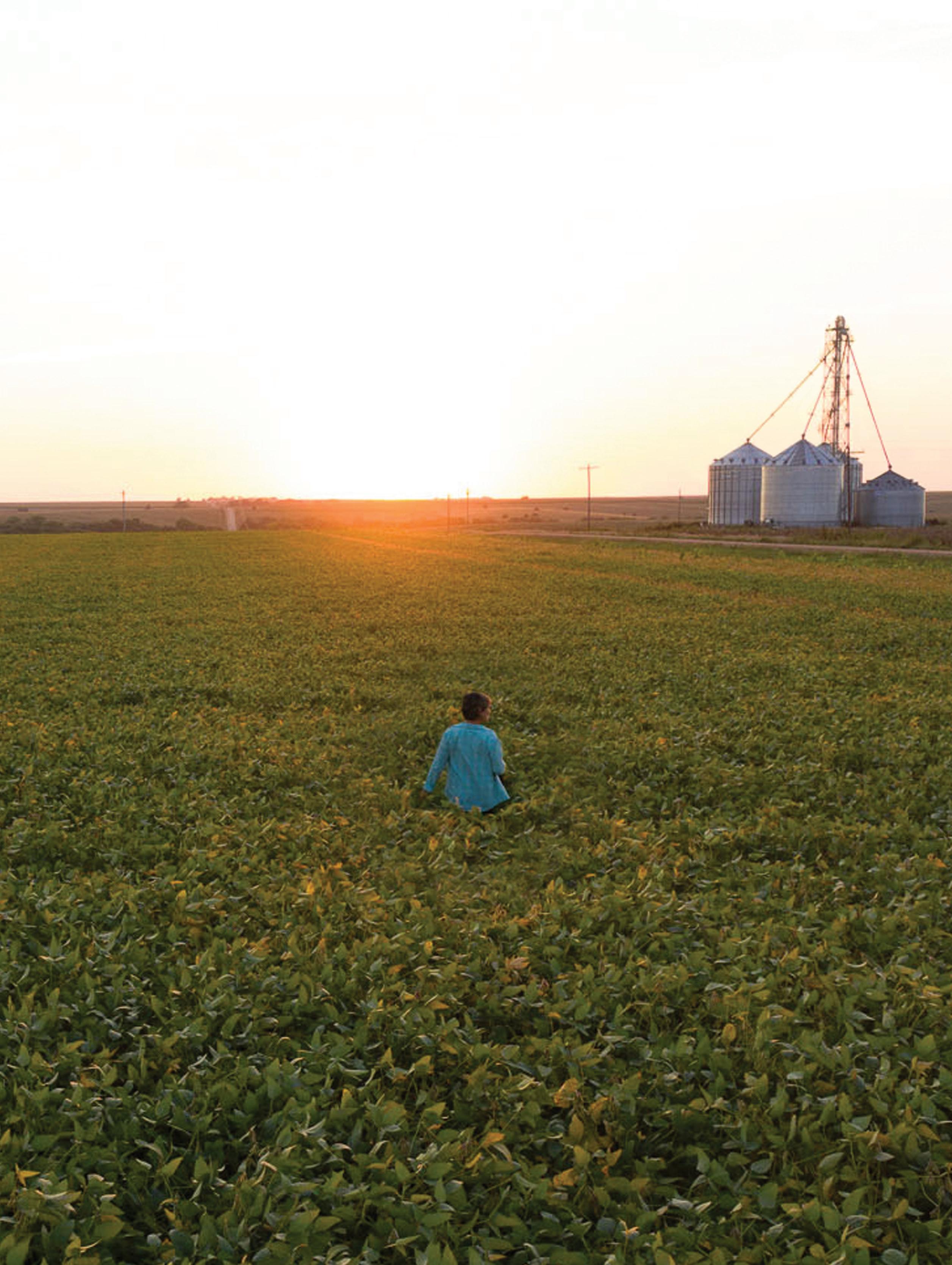
Farmers can use the Crop Disease Forecasting tool to predict the potential risk of frogeye leaf spot in soybeans.
Source: Carl Bradley, University of Kentucky, and Crop Protection Network
There’s a reason why Vault® IP Plus soybean seed treatment is a top biological on the market. You get:
An EPA-registered dual-strain biofungicide that forms a living shield around the roots
A biofilm created by the biofunigicide to help increase nutrient and water uptake
A better storage device that improves rhizobia viability and efficacy
The lowest application rate in its class
Choose Vault IP Plus seed treatment where the Plus Equals More.