WANT BETTER WEED CONTROL?
Would extra weeks of residual protection help?
Then you should try ...
You must already be using ...
Brand Herbicides
Make the Lasting Choice
Your choice of herbicide should be an easy one — especially with extra weeks of residual weed control from Zidua® brand herbicides. When you're dealing with a Ziduation in your fields, Zidua brand herbicides are here to help you face it.
Executive Committee
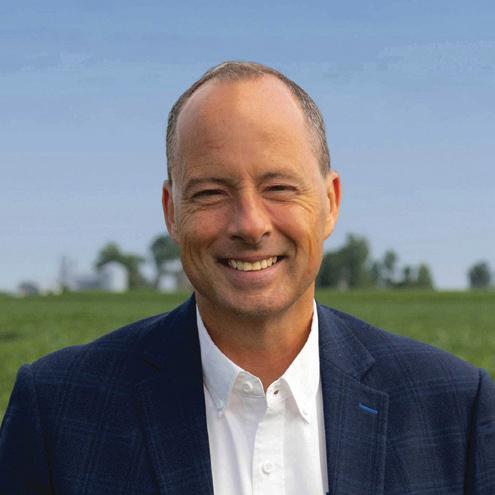
President
Tom Adam, Harper | D9
President-elect
Lee Brooke, Clarinda | D7
Secretary
Aimee Bissell, Bedford | At-Large
Treasurer
Sam Showalter, Hampton | D2
At-Large Director
Jeff Ellis, Donnellson | D9
Board of Directors
Brent Swart, Spencer | D1
Paul Kassel, Spencer | D1
Mike Yegge, Lake Mills | D2
Amanda Tupper, Ionia | D3
Josh Schoulte, Farmersburg | D3
Jeff Frank, Lake View | D4
Marty Danzer, Carroll | D4
Corey Goodhue, Carlisle | D5
Dave Struthers, Collins | D5
Joe Sperfslage, Coggon | D6
Brian Strasser, Homestead | D6
Scot Bailey, Anita | D7
Brian Fuller, Osceola | D8
Summer Ory, Earlham | D8
Jack Boyer, Reinbeck | At-Large
Neil Krummen, Linn Grove | At-Large
Sharon Chism, Huxley | At-Large
American Soybean Association Board of Directors
Tom Adam, Harper
Corey Goodhue, Carlisle
Randy Miller, Lacona
Summer Ory, Earlham
Brent Swart, Spencer
Dave Walton, Wilton
United Soybean Board of Directors
Tim Bardole, Rippey
Robb Ewoldt, Davenport
Brent Renner, Klemme
Suzanne Shirbroun, Farmersburg
Staff Credits
Bethany Baratta | Editor
Aaron Putze, APR | CO Brand Mgmt and Engagement
Susan Langman | Creative Design Coordinator
Joclyn Kuboushek | Multimedia Specialist
Kriss Nelson | Senior Writer
Mickayla Jordan | Marketing Manager
FARMER FOCUSED | DRIVEN TO DELIVER
ISA VISION
We advance the long-term competitiveness of Iowa soybean farmers.
ISA MISSION
Driven to deliver opportunities for Iowa soybean farmers to thrive.
Iowa Soybean Review is published monthly by:
Iowa Soybean Association 1255 SW Prairie Trail Parkway, Ankeny, Iowa 50023 (515) 251-8640 | iasoybeans.com
E-mail: bbaratta@iasoybeans.com
For advertising information contact Bethany Baratta at (515) 334-1020 or bbaratta@iasoybeans.com
April 2026 | Vol. 39, No. 6
4
Nickel to Impact
While you’re farming, the soybean checkoff is building demand and markets.
8
Straight to the Source
How farmers safeguard water sources.
14
‘We Have Work to Do’
Iowa’s ag secretary says farmers are making progress on water quality, but there’s more to do.
19
Stronger Together
How Iowa Soybean Association staff combine data and expertise to serve its farmer members.
On the cover:
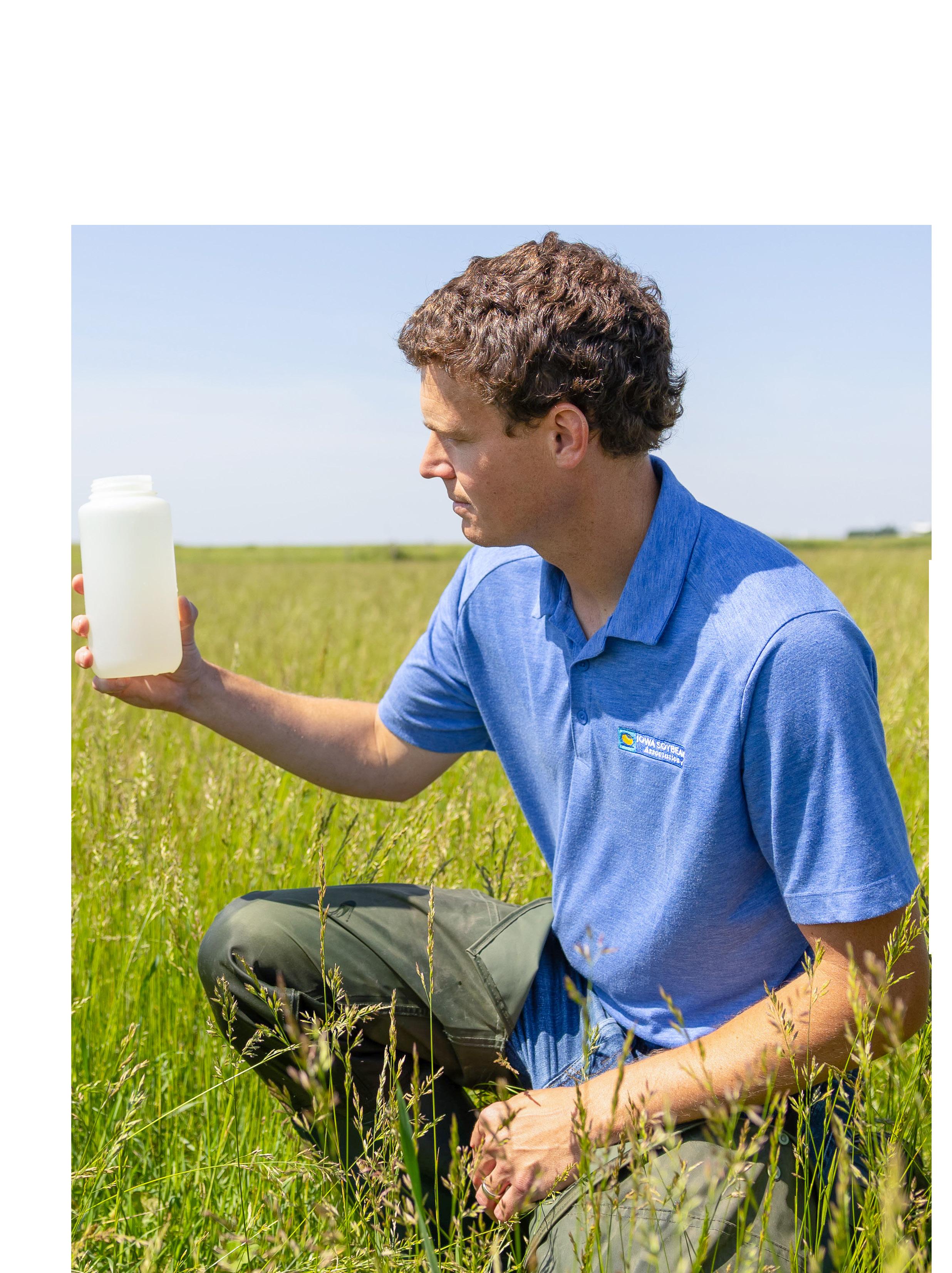
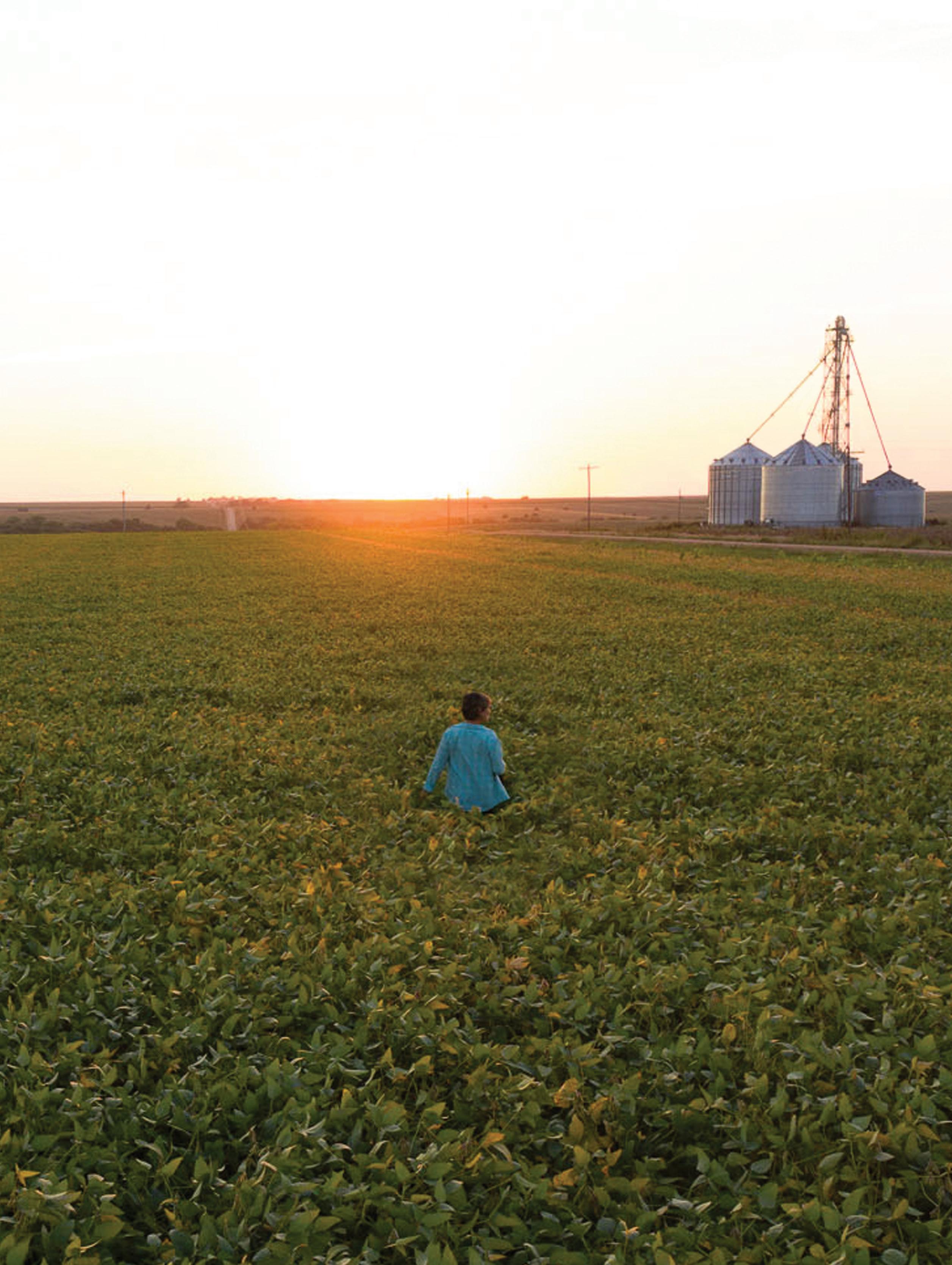
Iowa Soybean Association Conservation Agronomist Evan Brehm samples water in eastern Iowa. Brehm works closely with ag retailers, farmers and the City of Cedar Rapids on implementing conservation practices that contribute to soil health, improved water quality and profitability. In this issue, discover how farmers are taking an active role in improving water quality in the state.
Comments and statewide news articles should be sent to the address to the left. Advertising space reservations must be made two months preceding publication. In consideration of the acceptance of the advertisement, the agency and the advertiser must, in respect of the contents of the advertisement, indemnify and save the publisher harmless against any expense arising from claims or actions against the publisher because of the publication of the content of the advertisement.

From Nickel to Impact
The invitation to visit with farmers about the soybean checkoff came from Suzanne Shirbroun of Farmersburg. The farmer, United Soybean Board director and past Iowa Soybean Association (ISA) president and her husband Joe, host a shop talk meeting each February for their Pioneer customers. They thought an update on the checkoff would be timely and well-received.
I circled the date on my calendar. Those responsible for investing checkoff resources in programs and activities are accountable to the soybean farmers who remit those resources (plus, I enjoy networking with farmers having been raised on a farm near West Bend and with family still actively involved in the profession).
The act establishing the checkoff was approved by Congress in 1990. Farmers marketing more than 250 bushels of soybeans annually remit onehalf-of-one percent of the net market value of a bushel of soybeans. That’s a nickel for a bushel sold for $10. Half of checkoff collections fund ISA’s activities directed by its 22-farmer board; the remainder are remitted to the United Soybean Board.
In my shop talk remarks, I quickly pivoted from the history and mathematics of the checkoff to four present day examples of its return on investment. They are:
1. Strengthening livestock markets. Checkoff funding helped ISA launch the Coalition to Support Iowa’s
Aaron Putze, APR ISA Chief Officer of Brand Management & Engagement aputze@iasoybeans.com
Farmers (CSIF). Since 2004, CSIF has worked with thousands of farm families to start or expand poultry, pork, and cattle operations — directly boosting local soybean demand. This work is increasingly important as new crush capacity across Iowa and the Midwest expands soybean meal supplies.
2. Building demand through biofuels. The checkoff is aggressively promoting soy-based biofuels for use in trucks, locomotives, maritime shipping, and home heating, to name just a few. These efforts have driven record production and demand. Once considered a waste product, soybean oil used in biodiesel and renewable diesel now represents about 10% of the value of all U.S.-grown soybeans — roughly $1 of every $10 bushel.
3. Competing in global markets. Demonstrating the value of U.S. soybean meal and oil in the face of greater global competition is critically important. The U.S. Soybean Export Council (USSEC), funded by ISA and other checkoff partners, expands market access for U.S. soy, differentiates it from the competition and elevates its preference among global buyers. USSEC programs reach more than 90 countries and provide a yearround voice for U.S. soy.
4. Advancing farmer-focused research. Before a soybean can be sold, it must be grown. ISA’s Research
Center for Farming Innovation (RCFI) puts farmers first when evaluating products and production systems. By involving producers directly in soybean-centric research, ISA ensures results are objective and practical. Public-private partnerships make checkoff dollars work harder, with every $1 invested attracting $1.90 in external funding — multiplying the impact of trials and science-based recommendations. At a time when every dollar matters, the soybean checkoff remains directed by (and accountable to) farmers. It has the backs of farmers where and when you can’t be present (and trust me when I say few will go out of their way to do you and the industry any favors). While you’re farming, the soybean checkoff is strengthening domestic livestock markets, building biofuels demand, aggressively competing in the global marketplace and advancing farmer-centric research.
I welcome your questions and feedback about the ROI of your checkoff investment and programs and activities offered by ISA. Have a question? Contact me at aputze@iasoybeans.com or by phone/text at 515-975-4168. Thank you for your commitment to ISA and fellow soybean farmers and have a safe and timely planting season.




Discover cash-back dividends you can count on.
































Inspired by the daily resilience of our customer-owners, Farm Credit Services of America has returned a cashback dividend for 22 consecutive years. In 2025, our Board of Directors continued the tradition by approving another 1% payout to eligible customer-owners. We’re proud to grow stronger together, year after year, as a financial cooperative that puts agriculture first. Agriculture Works Here.® FCSAmerica.com/CashBack













































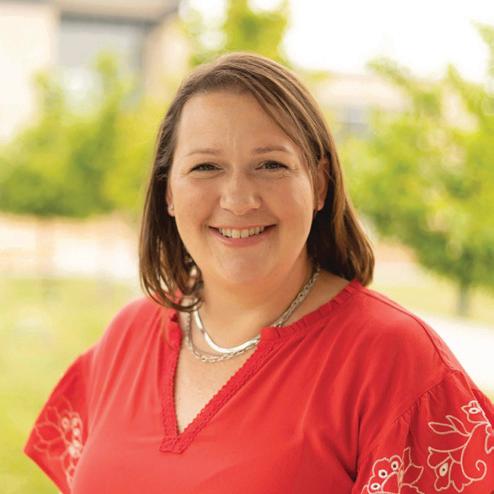
Seeing is Believing
When our son was about four years old, he was in the depths of his dinosaur stage. He wanted everything dinosaur — soaps, shirts, toys, books, stuffed animals — he was all about it. I even constructed ‘dinosaur bones’ out of some flour, salt and water one summer so our young paleontologist could discover his own dinosaur bones in our backyard using paintbrushes, plastic tools and some sticks found nearby.

Rural Route 2
Editor’s Note by Bethany Baratta bbaratta@iasoybeans.com
But as they do, he moved out of that stage and in and out of other interests — trains, gems, Pokémon … He’s now on to praying mantises.
Maybe that’s why I was a little hesitant to take Luca, now 8, to the Field Museum in Chicago. Known for its expansive collection — 40 million specimens and artifacts — the museum is home to Sue the T. rex, the largest Tyrannosaurus rex specimen discovered. Would he still marvel at this T. rex and the other dino discoveries on display?
We took the trip on Valentine’s Day. We started our adventure on the ground level of the museum, taking in soil structures at 1/100 of our size to get an ant’s perspective underground.
We strolled through the nature walk on the museum’s first floor, and took in the mammals, reptiles and amphibians in their respective collections. We admired Máximo the Titanosaur, the largest dinosaur ever discovered, in the center of the 1.2 million-square foot facility.
We saved the top floor for the end. Tucked in the center of the dinosaur exhibit and measuring 40 feet long was Sue the T. rex. We learned that this dinosaur (gender unknown) was named for Sue Hendrickson, who discovered the dinosaur in 1990 during a commercial
excavation trip near Faith, South Dakota (not even 10 hours from where we live!)
It wasn’t until the drive home that Luca’s voice in the backseat captured the impact of the visit: “Mom and Dad, thank you so much! Honestly, I didn’t think dinosaurs were real until we saw them!”
Seeing really is believing, isn’t it?
The same is true for the work happening on your acres. We read the stats and the data points about conservation, but they can feel as abstract as a dinosaur in a picture book. That’s why hearing from farmers and visiting a farm to see cover crops growing, oxbows being installed and natural filters serving as buffers around waterways are key. These visits move the needle from “industry news” to reality.
Could more work be done?
Absolutely. But the upstream-downstream partnerships like those featured in this magazine tell me that farmers and nonfarmers care about the water they share.
Like our son looking up to admire Sue’s fossils, you might have to visit the edge of the field to truly believe in the progress being made.
Straight to thE
How farmers safeguard Iowa’s drinking water
When you pull into the Lucas County Conservation Office in Chariton, mud-splattered pickup trucks line the lot.
It’s a visible sign of farmer collaboration that’s been growing for 33 years in this part of southern Iowa.
Kevin Luedtke is one of those farmers. On his soybean and corn farm, he uses terraces, cover crops, prescriptive tillage and nutrient application among other conservation practices that prevent sediment and nutrient loss.
“Around 2012, we got rid of the cows and grew crops on a few of the acres where the cows had been grazing,” Luedtke says. “But I kind of felt guilty because it wasn’t really ideal crop ground, so that’s when we started cover cropping.”
It started with 50 acres. Noticing how the tractor ride wasn’t as bumpy due to the improved soil structure that his rye cover crop provided, he continued to add more. Now he plants covers on nearly all of his acres.
But Luedtke’s stewardship extends far beyond his own farm. He’s been a member of the Rathbun Land and Water Alliance nearly since it’s 1996 beginning.
The Alliance was formed to protect Rathbun Lake, a drinking water source to 18 counties in southern Iowa and northern Missouri. In 2004, the Alliance began implementing a watershed plan for the area.
Brian DeMoss, a project coordinator for the Lucas County Soil and Water Conservation District, says the fact that farmers drink the water they personally impact, plus the visibility of
erosion in that area has led to one of the longest standing and most successful conservation plans in the state.
“Producers in this part of the state can see the issues,” DeMoss says. “If we have a good rain, there’s going to be some ruts out there and they want to fix it.”
Since 2004, more than 600 landowners have applied best management practices to more than 42,000 acres in the Rathbun Lake Watershed area. This has reduced annual sediment and phosphorus loading by an estimated 82,000 tons and 301,000 pounds, respectively. That’s the equivalent amount of soil of 2,000 dump truck loads.
Understanding source water
Surface water
Rathbun Regional Water customers are part of only 20% of the state that drinks surface water — water that comes from above ground. The rest of the state — about 80% — gets its water supply from aquifers underground.
Surface water is particularly vulnerable to pollution from runoff and subsurface drainage (for example, tile or stormwater drainage).
Rathbun Lake’s biggest challenge is sediment loading which carries phosphorus with it. Utilities that pull from rivers often have to worry more about nitrates. Other examples of surface water utilities include Spirit Lake Waterworks which pulls from Big Spirit Lake, Des Moines Water Works which uses the Raccoon and Des Moines Rivers, and Creston Water Supply which sources from 12-Mile Lake and 3-Mile Lake.
Continued on Pg. 10


BRIAN D e MOSS
Lucas County Soil and Water Conservation District Project coordinator
SourcE
STORY AND PHOTOGRAPHY BY REBEKAH JONES

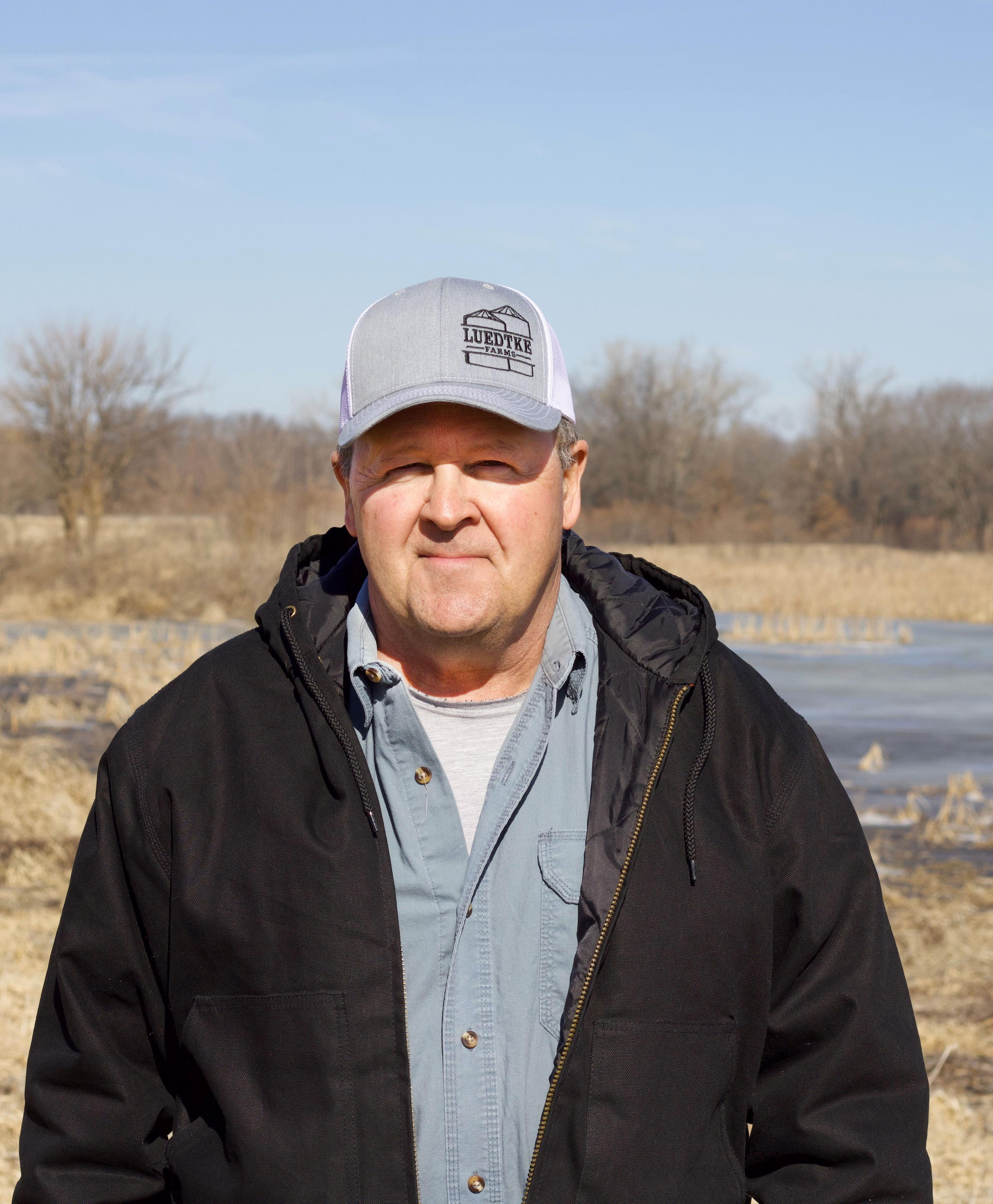
Kevin Luedtke farms near Chariton. He’s a member of the Rathbun Land and Water Alliance, which was formed to protect Rathbun Lake.

Aquifers
Beneath Iowa’s black soil lies a long history written in stone and sand. Tens of thousands of years ago, when wooly mammoths still roamed, Iowa was covered in miles of ice. Glaciers crept slowly across the land, grinding bedrock into sand and gravel. They carved valleys that now cradle streams. They whittled potholes that hold wetlands.
The glaciers scraped, ground, carried and deposited rock and soil wherever they traveled. Those deposits became aquifers — pancakes of sand and stone with millions of tiny spaces for water to settle safely within the earth. The ancient water filtered by geography and time waits under corn roots and prairie grasses.
The Jordan Aquifer — used by Dubuque, State Center, North Liberty and others — is between 70,000 to 180,000 years old. The water rising through the well may have last seen sunlight when mammoths grazed where cornfields now stand.
The Jordan Aquifer is a finite resource because recharging (the process of water flowing back into it) takes thousands of years.
As you move across the state from northeast to southwest, the ceiling of aquifers gets gradually deeper, making it harder to tap as a source.
“Iowa’s groundwater is not evenly distributed,” says Keith Schilling, Iowa’s State Geologist. “So depending on where you are, you have different source water issues.”
Alluvial aquifers:
vital sources, vulnerable foundations
Alluvial aquifers are shallow and run along major rivers. Utilities that draw from alluvial aquifers include Cedar Rapids, Iowa City, Muscatine and Pella.
Because they are less than 100 feet deep and recharge quickly, they are also impacted by pollution at the surface.
That’s why in Cedar Rapids, the utility pulls from 51 different wells, blending the water to adapt to changing conditions like high nitrate loading in the spring. Cedar Rapids also works directly with producers to protect drinking sources by helping to pay for cover crops, wetlands and edge-of-field filters upstream.
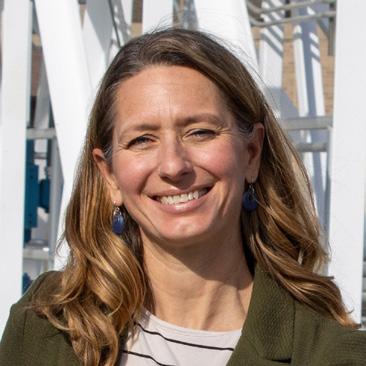
“You hear a lot about urban-rural divide, but honestly when you sit down across the table with someone and have a conversation about what matters to all of us … farmers want to be part of the solution,” says Mary Beth Stevenson, the watersheds and source water program manager for the City of Cedar Rapids Utilities Department.
Bedrock Aquifer Systems Across Iowa Southwest to Northeast
It’s easiest to map aquifers not from cardinal directions on a map, but by depth. This image shows the depths of aquifers across a diagonal slice of Iowa. The deeper the aquifer, the longer it takes to refill. Shallow aquifers are more prone to surface contaminants. Many aquifers are named after the geological age of the rocks they’re composed of.
KEITH SCHILLING
Iowa’s State Geologist
MARY BETH STEVENSON City of Cedar Rapids
" Where you’re improVinG your water quality, you’re improVinG your soil health, AnD improving your bottoM line."
Eric Miller, farmer from Cascade
Private wells, personal responsibility
Shallow aquifers are one of the most common places for private wells to be placed.
Often a badge of honor for rural Iowans, (In casual conversation, it’s not uncommon to hear “I grew up on well water”) we shouldn’t be so quick to pride without knowing what exactly is coming from the well.
Only 5-10% of households with private wells test their water annually. It’s not mandated and it’s the responsibility of the well owner.
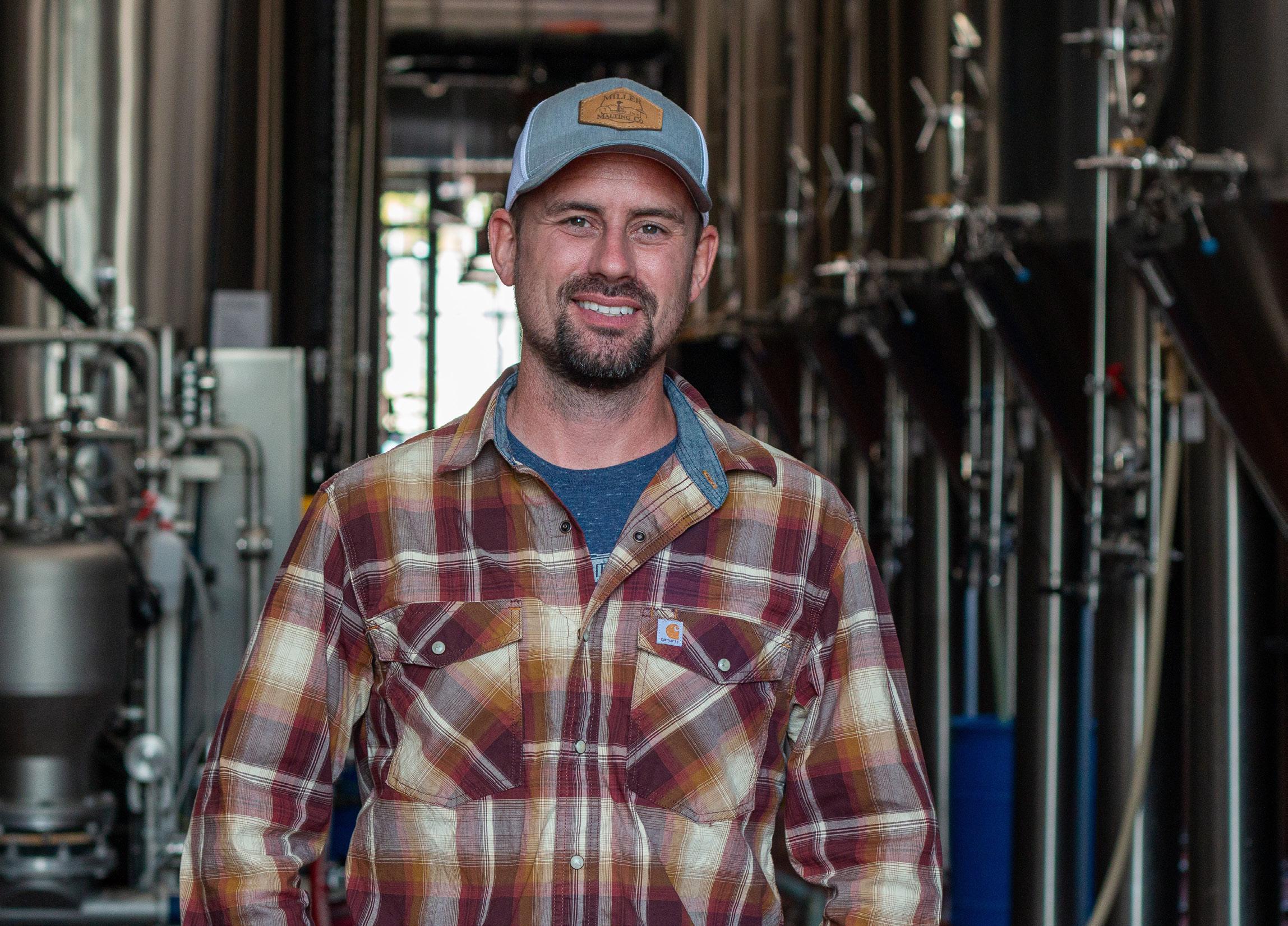
When Eric Miller, a fourth-generation farmer in Cascade, saw elevated nitrate in his family’s well, the numbers became more personal than news headlines. His son drinks from that tap. The same water brews their coffee and washes their clothes.
“It just really hits home,” he says. They installed a reverse osmosis system and continue to apply conservation practices.
In his area of the state, wells are more prone to high nitrates. The limestone and dolomite bedrock that creates northeast Iowa’s dramatic bluffs and hidden caves is riddled with fractures that carry water too quickly to filter. About 13% of private wells tested in Jones County had high nitrate levels in 2020 (the most recent year with publicly available data through the Iowa Department of Public Health). In nearby Delaware County, that number was 27%, the highest in the state.
Miller’s passion for improving his home’s water quality through soil health practices has turned into a business opportunity. His regeneratively-grown small grains are the core of his new brewery, “Crispy Boy.” For the brewery, they had to dig a deeper well safe from nitrates.
“It’s a win-win on both sides,” Miller says. “Where you’re improving your water quality, you’re improving your soil health, and improving your bottom line.”
Continued on Pg. 12
Iowa’s Private Wells Grants Program provides free water testing to all private well owners. Contact your county health department to learn more or visit iowadnr.gov.
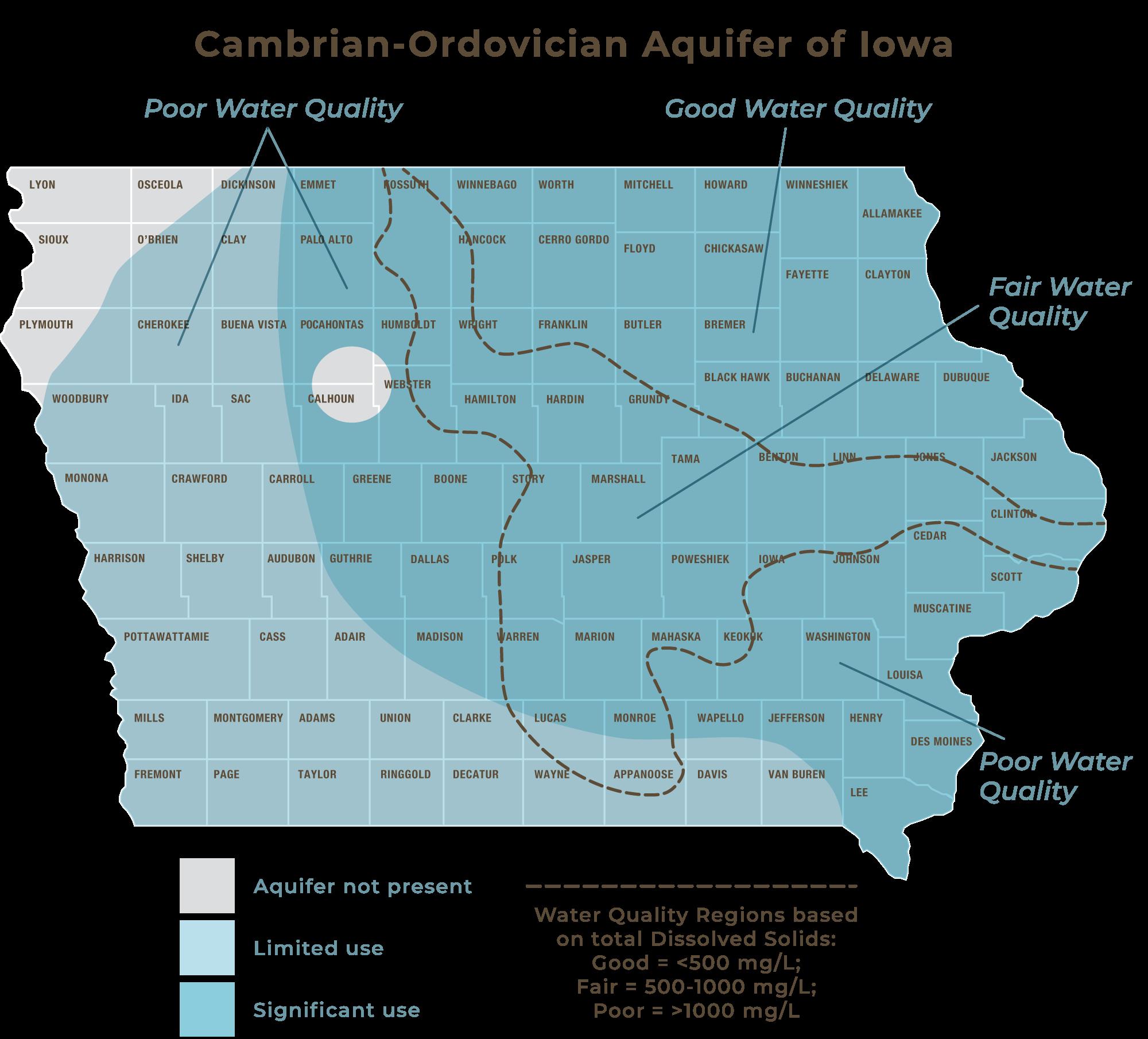
As you move from northeast Iowa to southwest Iowa, you have to drill deeper to access the aquifer. The deeper you go, the more solids (mostly minerals) it has in it naturally. On this map, poor, fair and good water quality distinctions refer to the depth and naturally-occurring minerals found within the aquifer. This means a utility would have to do much more to treat the water from the aquifer for its customers.
Farmers in action
Whether it’s groundwater or surface water, protecting and improving water quality requires similar approaches: planting cover crops, reducing tillage, applying varied and efficient nitrogen prescriptions, installing waterways and buffers, and more.
And it doesn’t have to be every practice on the list.
The Rathbun Lake Watershed Plan offers valuable lessons about how voluntary, farmer-led conservation can make meaningful impact.
The Alliance and partners focus on empowering farmers by providing financial and technical support.
Since 2004, more than $40 million has been invested in Rathbun Lake protection efforts.
When Luedtke talks about what makes the Alliance work, one word persistently rises to the surface: trust. He says it four times in three minutes. He’s talking about the kind of trust that’s built over decades. The kind that comes from conservation staff who understand that your livelihood is in the land.
“I feel comfortable coming to them with a problem,” he says. “Because I know we’re on the same team.”
Rebekah Jones is the communications director for the Iowa Ag Water Alliance. She can be reached at rjones@ iowaagwater.org.
PARTNERSHIP DELIVERS A NEW AG CLIMATE DASHBOARD
Tools help monitor extreme weather events in addition to crop growth, pest threats and climate anomalies.
ARTICLE COURTESY OF THE UNITED SOYBEAN BOARD
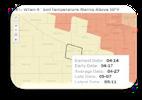
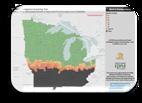
With support from the United Soybean Board (USB), the Midwestern Regional Climate Center (MRCC) recently launched the Ag Climate Dashboard — a centralized digital hub designed to help U.S. farmers access climate and agricultural data, decision-support tools, and state-specific resources all in one place.
Developed in collaboration with Purdue University and other trusted partners, the Ag Climate Dashboard streamlines access to real-time weather data, National Weather Service forecasts, Climate Prediction Center outlooks and historical records. The platform also integrates interactive tools for monitoring crop growth, pest threats, climate anomalies, and extreme weather events — providing farmers with practical, science-based insights to support daily decisions on their farms.

USB Supply Lead



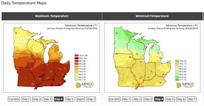
“Farmers know firsthand how weather can make or break a season, and having the right data at the right time is critical,” said Ed Lammers, Nebraska farmer and Supply Lead on the United Soybean Board. “Farmer investments through the Soy Checkoff helped make the development of the Ag Climate Dashboard possible. It’s tools like this that deliver real value back to the farm by putting the right data at our fingertips to make more informed decisions throughout the growing season.”
The dashboard emerged directly from farmer feedback. In 2023, the MRCC hosted workshops where producers voiced the need for a single, user-friendly hub to access multiple climate tools. By consolidating existing resources, the dashboard helps farmers make better-informed decisions to improve yield, profitability and sustainability.
Available tools include regionalized fieldwork planning tools, crop and disease forecasting and localized climate summaries. In addition, Purdue’s Degree Day calculator for tracking crop progress and the Iowa Environmental Mesonet Pest Forecasting Map for identifying pest threats serve as valuable tools for soybean and corn farmers. Future enhancements, such as irrigation planning tools and ZIP-code specific mapping features, are already in development based on farmer requests.
Austin Pearson, climatologist at the MRCC and Indiana State Climate Office, shares, “The forecasting tools help farmers understand what pests — whether weeds, insects or diseases — could be an issue and when management is crucial.” Beth Hall, director of the MRCC and Indiana State Climate Office, adds, “This is just round one of the dashboard. We really wanted to provide people a taste and hopefully get them excited about the future.”

MRCC and Indiana State Climate Office climatologist
ED LAMMERS
AUSTIN PEARSON
Naig urges farmers to keep building on conservation momentum
The Iowa Soybean Review recently visited with Iowa Secretary of Agriculture Mike Naig about the conservation work farmers are doing to improve water quality, the programs available to support those efforts, and what’s next. Even with record adoption of conservation practices, Naig says continued progress will take sustained effort across the state.
How would you describe the current state of conservation efforts in Iowa?
Naig: We’ve set records for conservation adoption in Iowa for the last four years, and we continue to see strong interest from farmers and landowners who want to participate in our programs and get conservation work done on the ground. We put out a record amount of cost-share for cover crops and then interest grew with farmers still wanting to participate. Because of that, we reopened the program and found additional dollars to put into it.
Looking ahead, we’ll have a heavy focus on cover crops in 2026. Our nitrate-reducing wetland efforts are also really accelerating. Last year, we started 26 new nitrate-reducing wetland projects. For comparison, it took us 20 years to build the first 100. In the early 2000s, it took four years to build 50. Last year alone, we started 26. You can really see that progression and acceleration.
This involves constructed wetlands that can treat runoff from a couple of thousand acres with just a few acres of wetland,
making them very efficient. They can remove up to 90% of the nitrates from the water flowing through them and are built to last, doing their job year after year. When we build them, we also seed buffers around the wetlands, which adds habitat benefits while helping keep nutrients out of the streams.
How would you describe the partnership between the Iowa Department of Agriculture and Land Stewardship (IDALS) and the Iowa Soybean Association (ISA), and what has it delivered?
Naig: We’re very thankful for the partnership with the Iowa Soybean Association, really since the beginning of the Nutrient Reduction Strategy and even before that. ISA has been willing to put the work in on the ground with farmers and landowners to actually get things implemented. That’s what we’re looking for: action, implementation and adoption of practices. That’s how we’re going to achieve our goals. Specifically, we’ve partnered on multi-purpose oxbow restorations, on wetlands, including nitrate-reducing wetlands and other projects. One of the more exciting pieces is the concept of a conservation agronomist. That shows a lot of innovation, especially working with ag retail.
Agronomists rank very high on the list of people farmers trust and rely on. Having conservation agronomists talk with farmers about both economic decisions and conservation at the same time is very powerful.
STORY BY PHOTOGRAPHY BY KRISS NELSON JOCLYN KUBOUSHEK
Farmers often hear criticism that they don’t care about water quality. What’s your response to that?
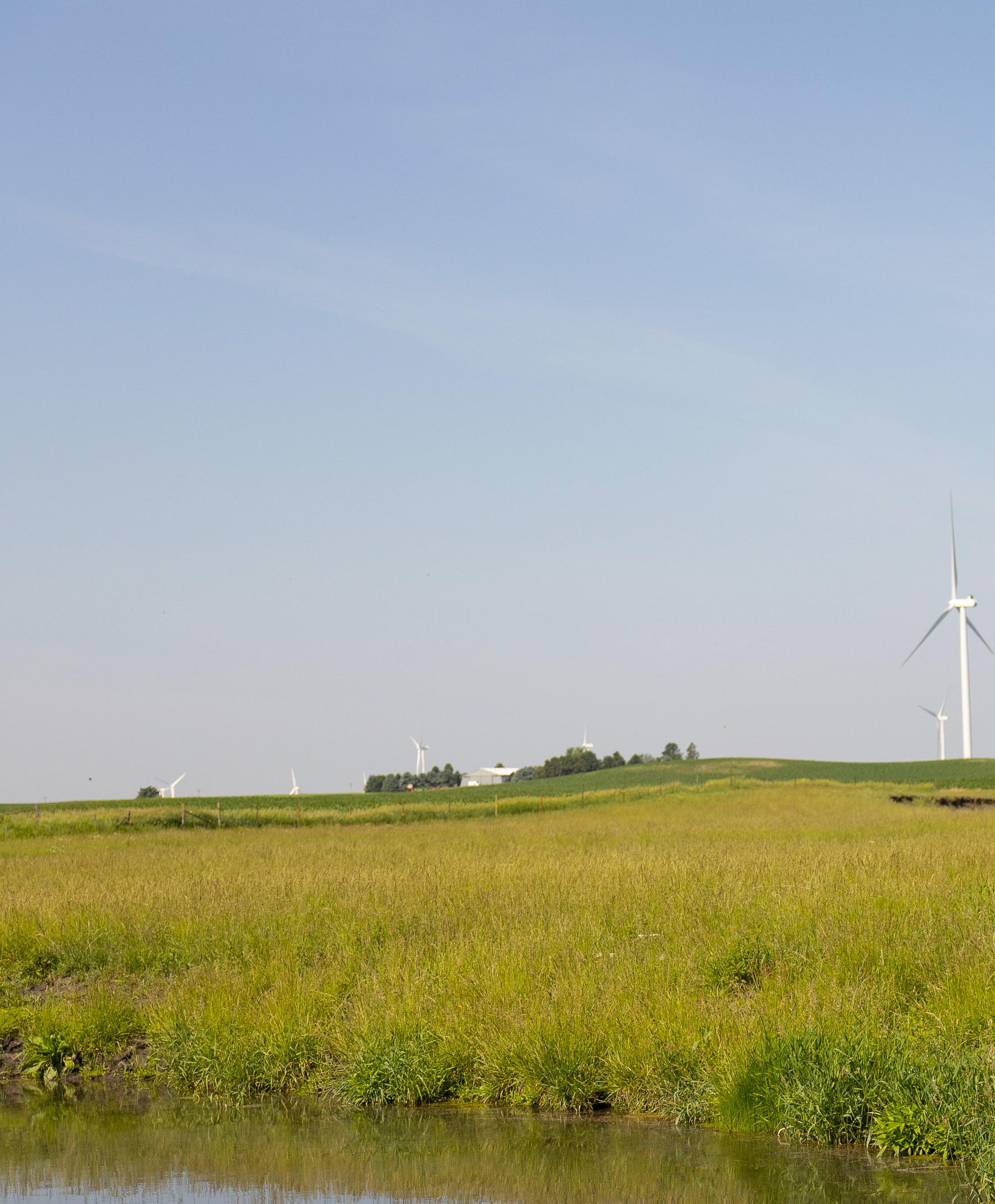
Naig: I see farmer-led efforts working, and I see them paying dividends. I see farmers taking their environmental stewardship responsibilities very seriously, and they should. We’re setting records for conservation adoption. We’re trying innovative things. We keep seeing new, first-time users of cover crops every year, which tells me we’re still a long way from reaching everyone who’s interested in trying something new.
We have work to do, no doubt about it. Clean water is nonnegotiable. It’s absolutely essential for everyone. If we’re going to truly achieve our goals of reducing nitrogen and phosphorus in our water, it’s going to take a systemwide approach. That means modernizing infrastructure at the farm level and at the treatment level. From the field to the faucet, everybody has a role to play.
You’ve launched a voluntary streamside buffer cost-share pilot project. What’s the goal, and where is it focused?
Naig: We’ve heard a lot of feedback about this buffer program, so we launched a pilot in some targeted watersheds, including areas like the Raccoon and the Des Moines and Cedar watersheds.
The idea is working lands conservation. Instead of seeding down buffers and then being unable to graze or hay them, we’re offering an option that lets farmers keep working that
land while still getting the conservation and water quality benefits we’re looking for. I think this is a win-win.
We also see a great opportunity to add edgeof-field practices, such as bioreactors and saturated buffers, to filter tile water running beneath. So, you get a layered approach: above-ground runoff protection and intercepting tile lines to filter out nitrates.

What’s your message to farmers who are thinking about taking the next step on conservation this year?
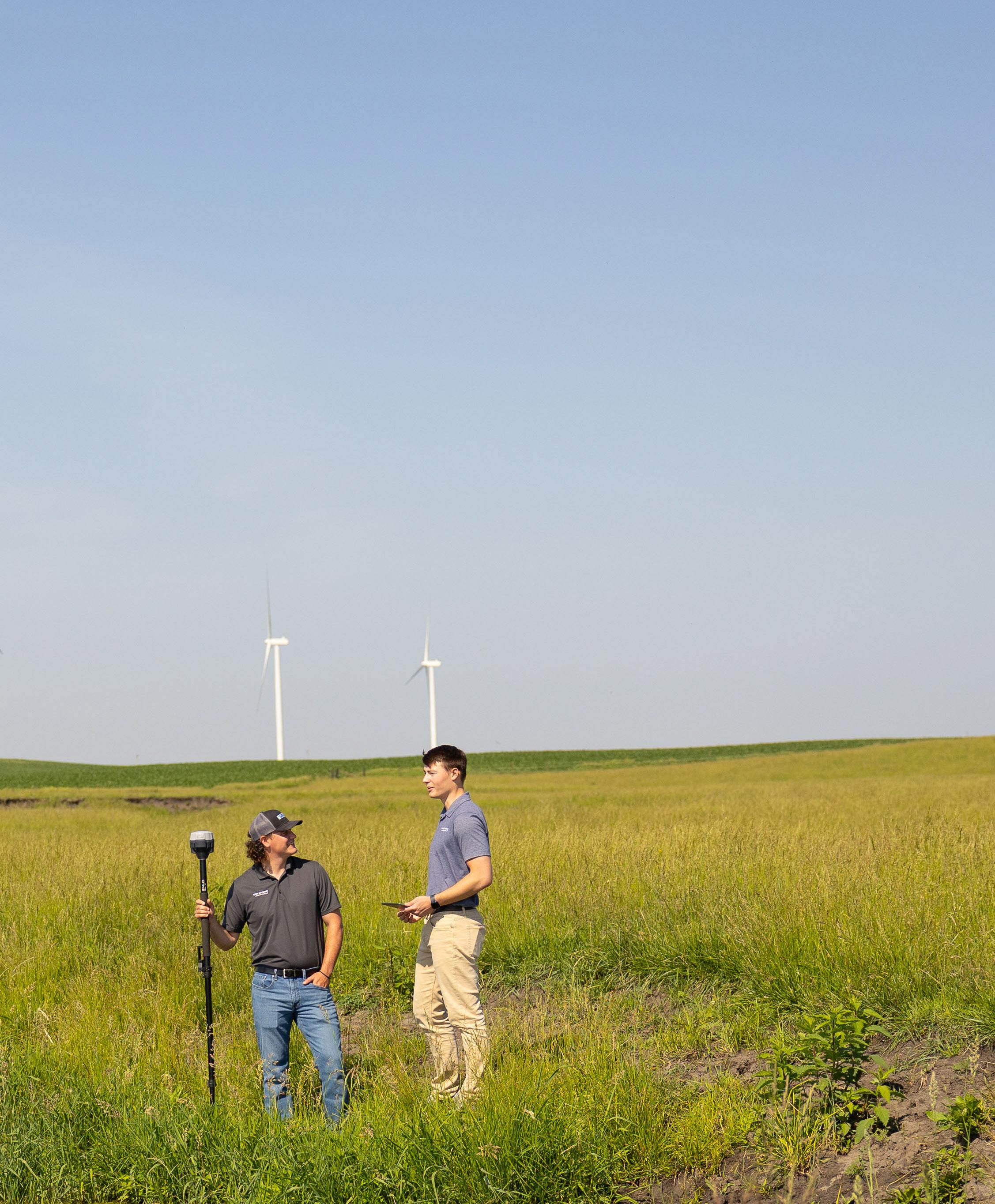
Naig: I would encourage people, especially as we head into the field this spring, to think about what they can do this year. What’s the next step you can take to adopt a new practice on your farm or on the land you’re responsible for?
There are so many opportunities out there, and I believe farmer-led conservation efforts have worked and will continue to be the key to our success.
Contact Kriss Nelson at knelson@iasoybeans.com
Contact your local Soil and Water Conservation District office or visit CleanWaterIowa.org to learn about cost-share programs and technical assistance available to help you get started.
MIKE NAIG |IowaSecretary of Agriculture
ManaGinG Water,
NoT JusT MoVInG It
Modern drainage boosts yield while protecting nutrients and water quality
STORY BY KRISS NELSON
Modern drainage systems are designed to manage, not simply move, water — improving root health, protecting nutrient investments and reducing the risk of runoff losses by keeping water in the soil profile where crops can use it and nutrients can naturally break down before reaching streams.

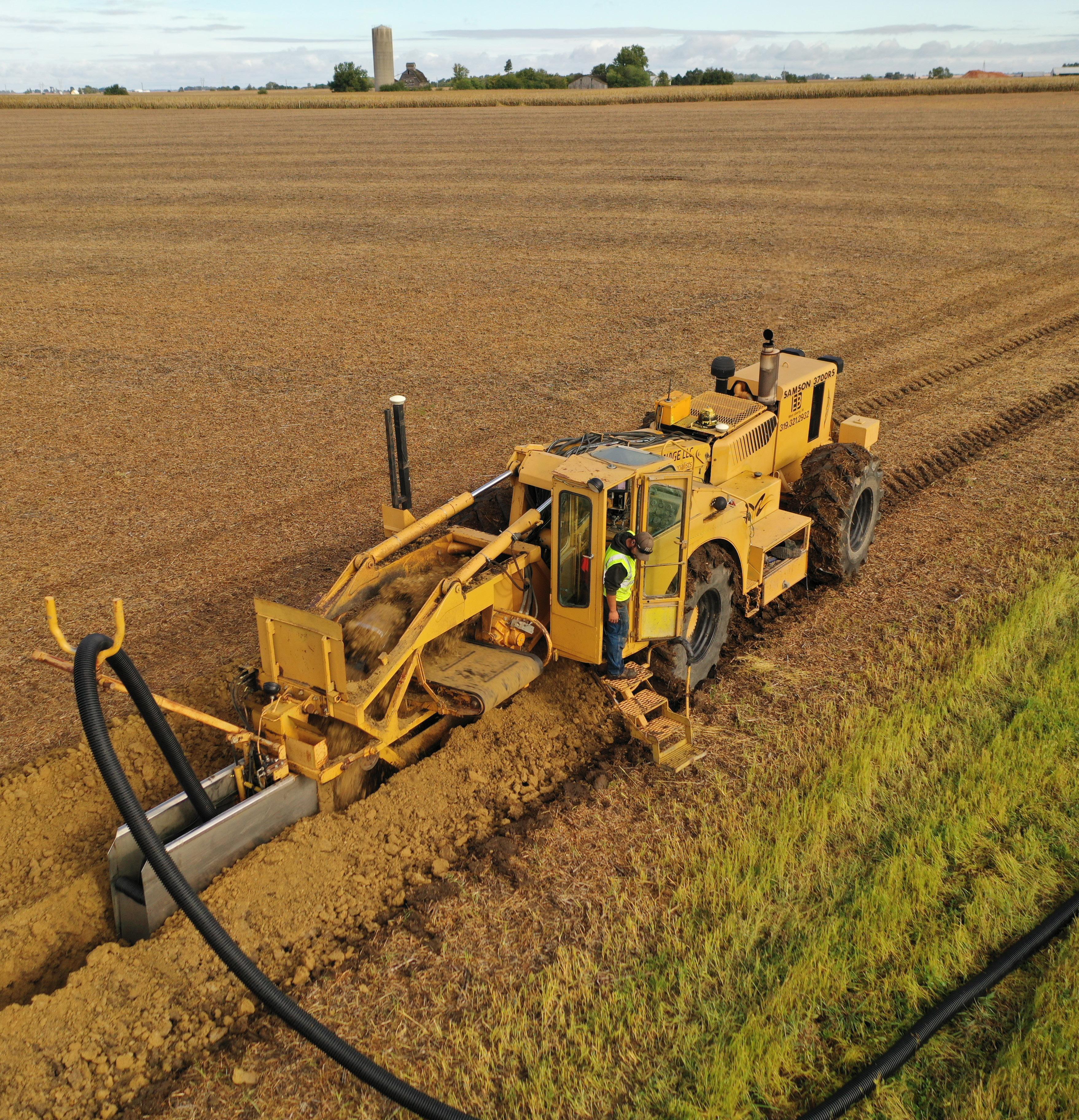
Photo submitted from ADS
Farmers do not invest in drainage to lose nutrients or send money downstream.
Today’s tiling companies focus on helping farmers protect their investment while improving water quality by using systems designed to manage water more precisely, not simply moving it faster.
Josh Shuler, technical product and business development manager with Agri-Drain, says proper water table management is one of the most effective ways farmers can improve productivity and return on investment.
“If we can keep that water table at the proper depth, it promotes better root growth,” Shuler says. “We have less disease pressure, better yield and better drought tolerance.”
That consistency begins with the correct installation. Shuler stresses that tile depth must match soil type, crop selection and regional conditions.
“When tile is installed correctly, most people see about a 30 percent yield boost in the first year compared to before tile,” he says, noting results vary by field and soil type.
Return on investment
“For a lot of farmers, drainage tile is one of the first things they look at,” says Cole Rath, an Advanced Drainage Systems (ADS) territory sales manager covering western Iowa, Nebraska and southern South Dakota. “Is there already drainage out there? And if there’s not, how can we improve this piece of ground?”
Poor drainage, Rath says, often explains disappointing yields.
“There are so many instances where farmers are underwhelmed with their yields, and a lot of times it’s because the soil is waterlogged,” he says. “God only creates so much farm ground, and farming is becoming more difficult. So how are we going to utilize these dollars to improve the land that we have?”
From an investment standpoint, drainage consistently rises to the top.
“If we can improve the yield, besides fertilizer and some other practices, drainage tile is probably one of the biggest things farmers can do to improve their ROI and yield,” Rath says.
Early crop health
Tim Dahl, ADS regional sales manager covering Minnesota, North Dakota, South Dakota, Iowa, Nebraska, Kansas and Missouri,
says the benefits of tile begin early in the crop’s life cycle.
“If you think about the life cycle of a crop, if the field is saturated, that crop doesn’t have healthy roots, Dahl says.”
Water quality myths
Tile drainage often draws criticism in water quality discussions, Dahl acknowledges.
“A lot of people will say tiling is causing the issues because we have these direct flows into a watershed, with water running out of an 8-inch pipe straight into a river,” he says.
But that perspective, Dahl notes, misses what happens underground.
“That water has gone through three to four feet of the soil profile, where nutrients are used up and the water is actually pretty clean,” he says. “Without tile, a heavy rain leaves saturated fields shedding nutrients, silt and fertilizer across the surface and into the watershed.”
He compares soil to a sponge.
“What tile does is keep that sponge in a state where it can accept more water,” Dahl says. “If it’s already full, water stays on the surface, picks up fertilizer and sediment and moves it into the watershed.”
Evolving drainage systems
Shuler says modern water management is no longer about draining water as quickly as possible.
“It’s not your grandpa’s tile anymore,” he says.
Agri-Drain offers water control structures installed on main tile systems, but Shuler says those structures are part of a broader effort to enhance traditional drainage.
“We’re not replacing tile,” he says. “We’re just enhancing what tile does.”
With controlled drainage, farmers can adjust how much water is held in the soil profile depending on crop growth stage.
“We can take tile that normally drains 24/7, which definitely has benefits, and in some scenarios claw back another 5 to 15 percent more yield,” Shuler says. “That comes from controlling the water table and holding water during drought periods when we need it.”
From a water quality standpoint, holding water in the field longer, when it can be done safely, is one of the most effective strategies available.
Continued on Pg. 18

Agri-Drain technical product and business development manager



ADS regional sales manager
COLE RATH
ADS territory sales manager
TIM DAHL
JOSH SHULER
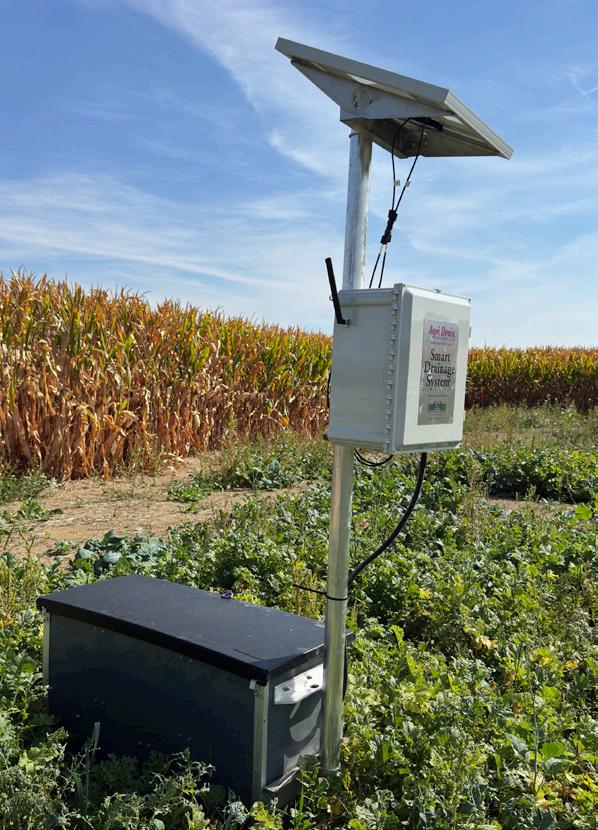
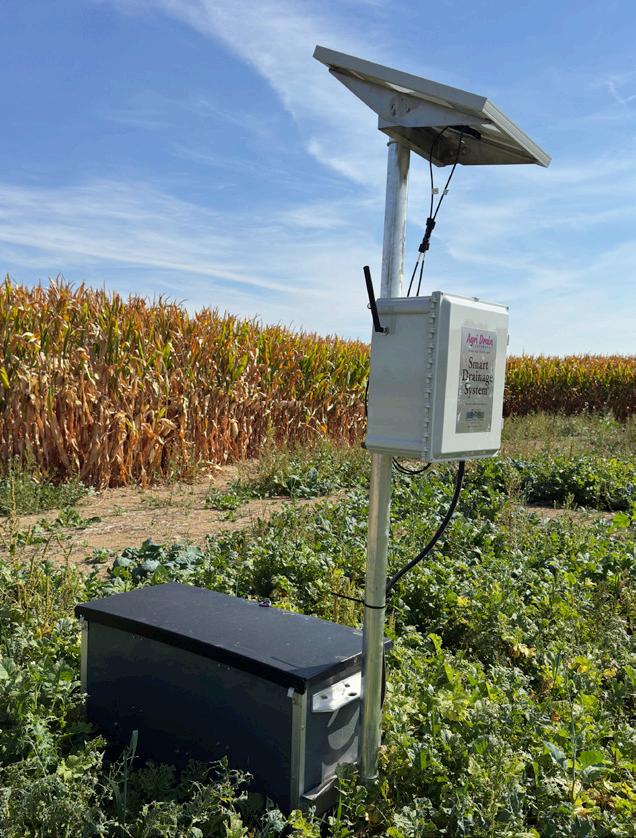
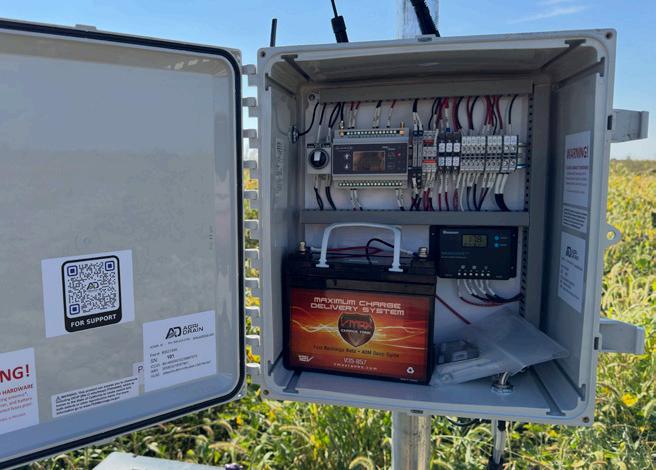

“That’s where it naturally breaks down,” Shuler says. “It doesn’t get into waterways where nitrates and phosphates can cause other issues.”
Looking ahead
Water control structures can be managed manually or automated, helping farmers match water levels to crop needs throughout the season.
As farms grow larger and more complex, Dahl says automation will be critical.
“Manually managing dozens of control structures isn’t realistic,” he says. “So the question becomes, how can we monitor this, control it and automate it?”
Both Rath and Dahl see water management as the next major frontier for agriculture.
“I think water management is the space for the next 10 to 20 years,” Rath says. “How can we hold water back during drought? How can we get rid of it during extreme rain?”
Even in regions where tile has been used for generations, Dahl says system design continues to matter.
“Tile isn’t cheap,” he says. “So how do we maximize that investment? A lot of that comes down to design.”
Despite long-standing drainage history, resistance remains.
“The attitude is often, ‘I spent all this money to get rid of water, why would I stop it?’ ” Dahl says. “That’s the story we need to continue to tell.”
For Shuler, that story is rooted in flexibility, economics and research-backed performance.
“There’s a lot of research that backs up the ability to convert from 24/7 drainage to controlled drainage and the benefits that come from it,” he says. “That’s really what we want to hammer home.”
And for farmers facing increasingly unpredictable conditions, Rath says the motivation is simple.
“If there’s a way farmers can control the uncontrollable,” he says, “they’re going to try to do it.”
Contact Kriss Nelson at knelson@iasoybeans.com
Controlled drainage structures allow farmers to adjust water levels within tile systems, holding water in the soil profile when crops need it and reducing nutrient movement to downstream waterways during heavy rain events. Photos submitted by Agri-Drain
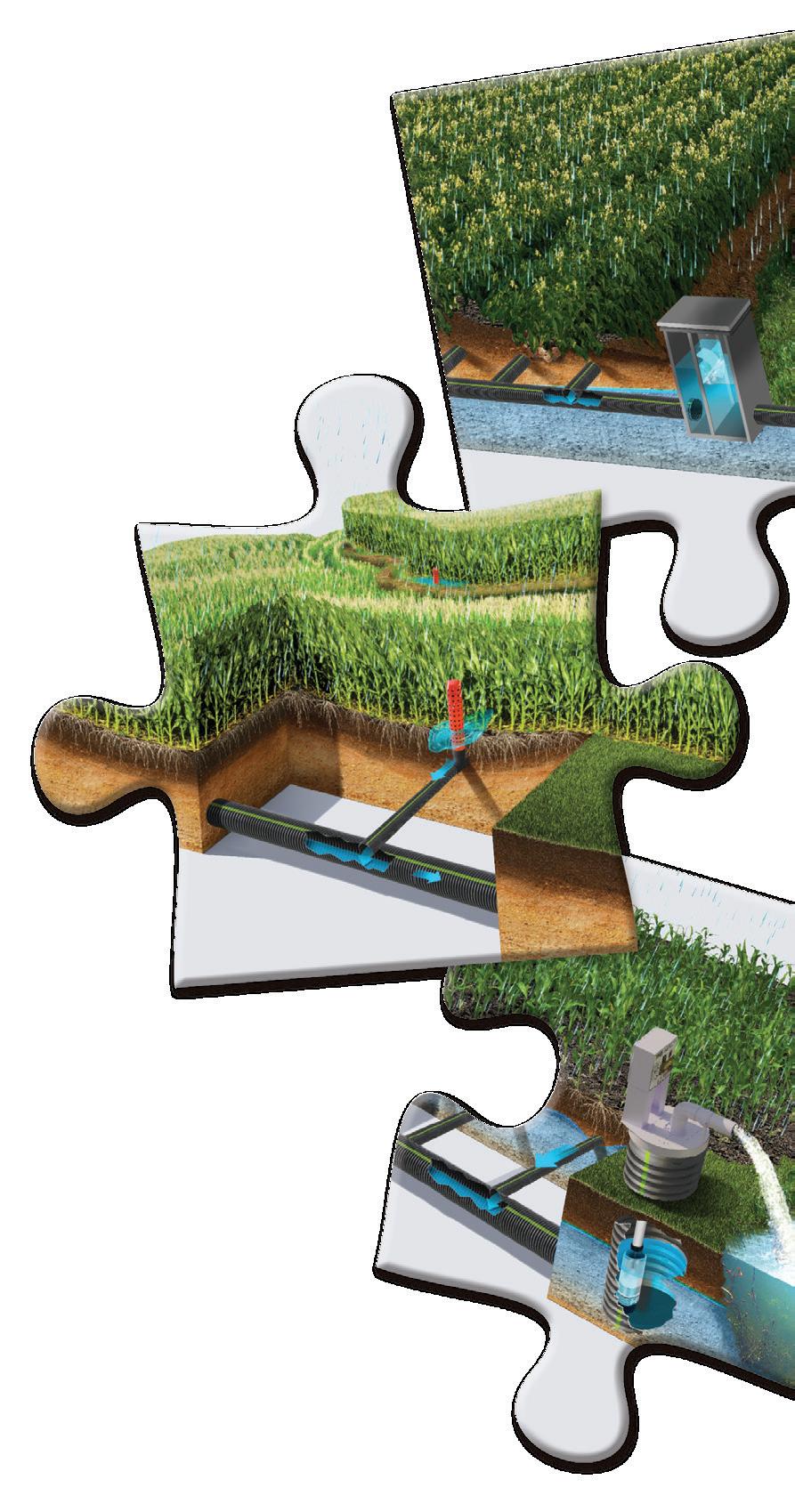
We solve every piece of the water management puzzle.
We don’t believe in a one-size-fits-all approach to water management because no soil type or farm is alike. At ADS Agriculture, we tailor solutions to maximize the benefit of your water management system based on your farm’s needs. From subsurface irrigation to automated lift stations and water control structures, we have the total water management solutions to improve yields, increase farmable acres and raise the value of your land.
SCAN THE CODE to download our 3D drainage guide.

STORY BY KRISS NELSON PHOTOGRAPHY BY JOCLYN KUBOUSHEK
Agronomy and conservation at work
Helping farmers be both productive and conservation-minded takes a team approach. At the Iowa Soybean Association’s (ISA) Research Center for Farming Innovation (RCFI), it comes from research agronomists, conservation agronomists and conservation team members working together to turn data into practical, on-farm decisions.
Research driven
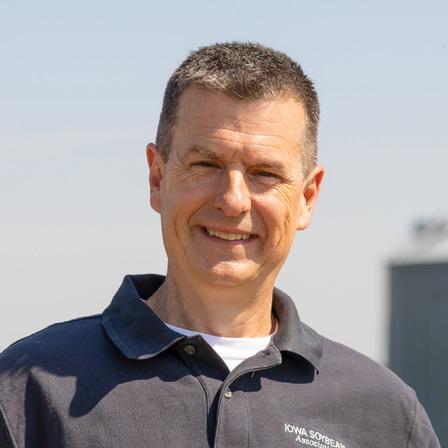
Alex Schaffer, ISA research agronomy lead, says collaboration begins with research grounded in realworld management questions. That work is supported by long-term, conservationbased trials that help move conversations beyond theory.
“For example, we have data that shows nitrate sequestration as a positive impact of cover crop implementation,” Schaffer says. “We are able to support what we are saying with data.”
As farmers experiment with conservation practices, research results are paired with hands-on agronomic support.
“As we have farmers in these trials experimenting with conservation practices for the first time, we are able to get best management practices from our conservation agronomists such as herbicide rates and timing, planter setup and cover crop seeding methods,” Schaffer says.
Shared
focus
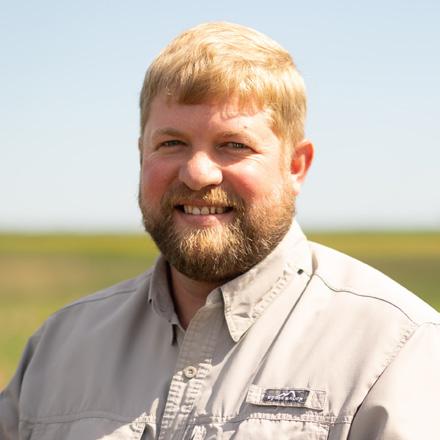
Todd Sutphin, ISA conservation services program lead, says that blending agronomy and conservation has become a strength of ISA’s approach.
“Yes, conservation and agronomy can coexist,” Sutphin says. “ISA’s RCFI team is focused on production, profitability and sustainability. Farmers want to be good stewards of the land and be profitable.”
He says conservation agronomists are uniquely positioned to connect those goals.
“A key advantage to bringing on conservation agronomists is their ability to have the conversation that spans both agronomy and conservation,” Sutphin says. “It’s not just one or the other. The focus is a full cropping systems approach to a farmer’s operation.”

That systems-level thinking often leads to better management, Schaffer adds.
“A lot of conservation implementation is being really in tune with your acres,” he says. “Knowing field conditions, pest pressures and productivity levels helps farmers place products and practices appropriately. Many times, farmers implementing conservation have to pay much closer attention to what is going on in the field, and that leads to profitability.”
Farmer perspective
For Corey Goodhue, ISA district 5 director from Carlisle, that integrated expertise matters because farming already demands constant decision-making.
“I have a hard enough time being a good grain marketer, running a good business and managing everything I have to manage,” Goodhue says. “Anytime I can find someone whose interests align with mine and I can access their expertise, that means a lot.”
Goodhue’s first hands-on experience working with ISA came through a drainage improvement project he learned about at an ISA conference.
“I call it a modified French drain,” he says. “Instead of a surface intake, you use underground tubing with gravel or pea gravel and essentially eliminate that riser next to a terrace.”
The project required technical support he would not have had on his own.
“I needed help figuring out how big the rock collection basin needed to be for the size of the terraces,” Goodhue says. “That’s real expertise I wouldn’t have had otherwise.”
Continued on Pg. 20
TODD SUTPHIN
ISA conservation services program lead
ALEX SCHAFFER
ISA research agronomy lead
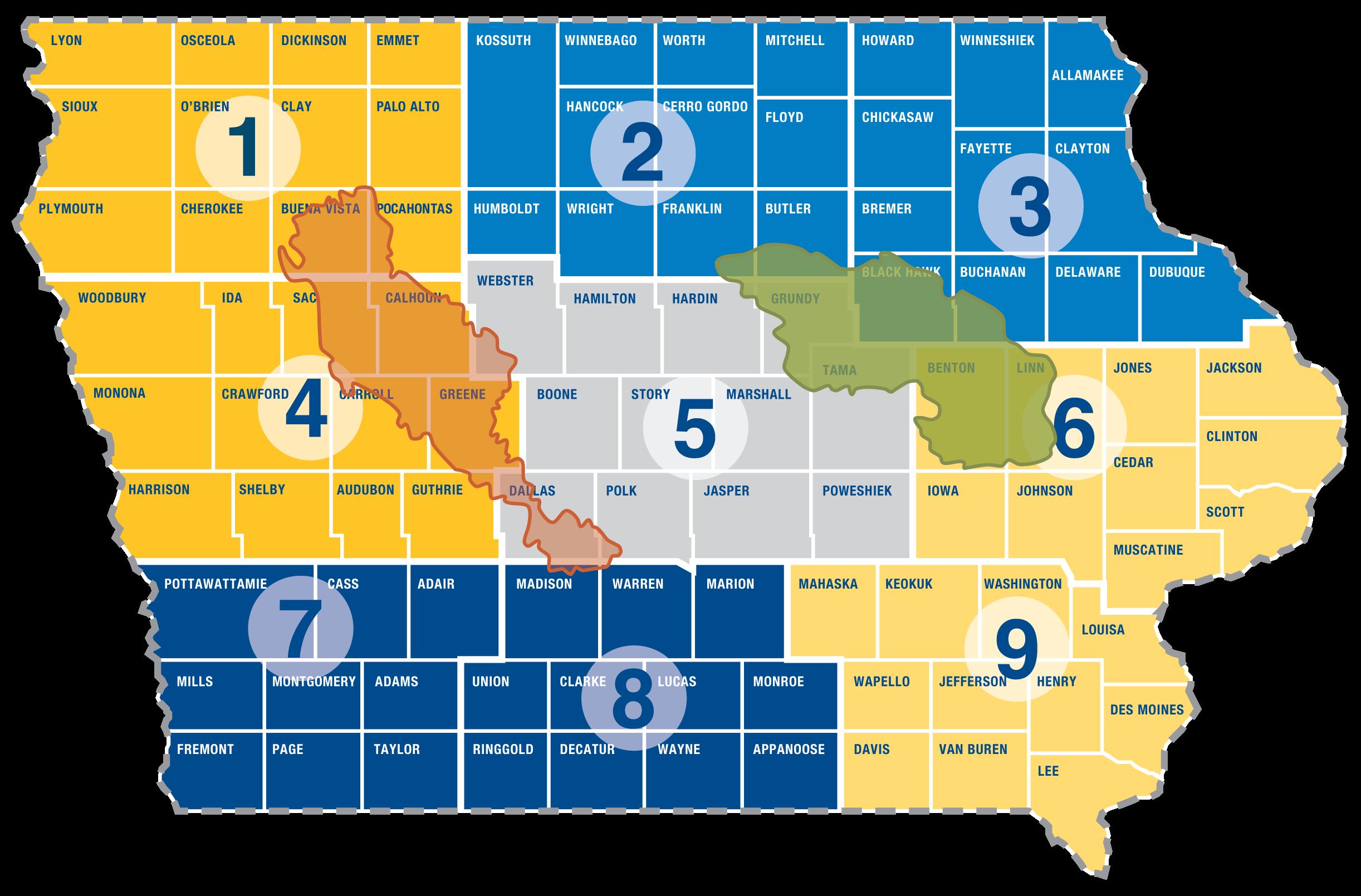
2026 RCF I TEAM
RESEARCH AGRONOMY TEAM


District 5
ALEX SCHAFFER, CCA
Research Agronomy Lead aschaffer@iasoybeans.com 815-274-2998


Districts 1 & 4
CRAIG WOODS Research Agronomist cwoods@iasoybeans.com 319-883-9893
Districts 6 & 9
LUCAS DE BRUIN, CCA Research Agronomist ldebruin@iasoybeans.com 641-295-2883


Districts 2 & 3
SHANE BECK, CCA
Research Agronomist sbeck@iasoybeans.com 563-920-1103
Districts 7 & 8
AVREEANNA TWEEDY Research Agronomist atweedy@iasoybeans.com 319-470-6003
CONSERVATION SERVICES AND PROGRAMS


Statewide
TODD SUTPHIN Conservation Services and Programs Lead tsutphin@iasoybeans.com 515-669-9124
Statewide
MIKE GILMAN
Senior Conservation Program Manager mgilman@iasoybeans.com 515-577-5600



Eastern Iowa
EVAN BREHM
Conservation Agronomist ebrehm@iasoybeans.com 319-310-5468
West central
ALEX LOGAN
Conservation Agronomist alogan@iasoybeans.com 515-729-9831
Statewide
ALEX BUSEMAN Conservation Services Manager abuseman@iasoybeans.com 515-313-5491



Statewide
BROCK WEBB Conservation Agronomist bwebb@iasoybeans.com 319-759-0309
Statewide
BRANDON IDDINGS Senior Conservation Services Manager biddings@iasoybeans.com 515-729-0039
Statewide
ROB DAVIS Watershed Program Manager rdavis@iasoybeans.com 319-936-2115
Those conversations expanded into discussions about acres on his farm that struggle to pencil out.
“We have some ground in the river bottom that barely produces, even in times of good margins,” Goodhue says. “In a time of bad margins, it really forces you to figure out what the best option is.”
Rather than continuing to farm unproductive acres, Goodhue is working with ISA’s conservation and research teams to explore alternatives, including an oxbow restoration project paired with Conservation Reserve Program (CRP) or habitat improvements.
“Some of these more unproductive acres could be doing something that benefits a lot of people,” he says. “I’m trying to learn from RCFI as best I can.”
Beyond trials
Schaffer says that kind of work reflects the broader scope of RCFI, much of which farmers may not realize is happening.
“I think about the wide range of activities we have going on at RCFI,” he says. “Everything from helping farmers establish a cover crop business to oxbow restorations creating habitat for the Topeka shiner and working with the U.S. Fish and Wildlife Service. Agronomy trials and cost-share opportunities for conservation practices just begin to scratch the surface.”
Meeting farmers
Sutphin says ISA’s statewide footprint allows the organization to meet farmers where they are.
“Every farm operation is different,” he says. “We are here to help farmers navigate questions on both agronomy and conservation and help them achieve their production and profitability goals while being good stewards of their natural resources.”
Looking ahead, Schaffer says that collaboration will continue to shape ISA’s research priorities.
“As we hear from farmers across the state, we take those struggles and ideas and think about ways to make meaningful research projects based on what farmers are thinking about,” he says.
Farmer first
For Goodhue, that farmer-driven focus is what makes ISA’s work valuable.
“It’s pretty awesome to have a group of experts that work for us,” he says. “As farmers, we pool our resources through the checkoff dollar, and that’s who they work for: the Iowa soybean farmer.”
Contact Kriss Nelson at knelson@iasoybeans.com
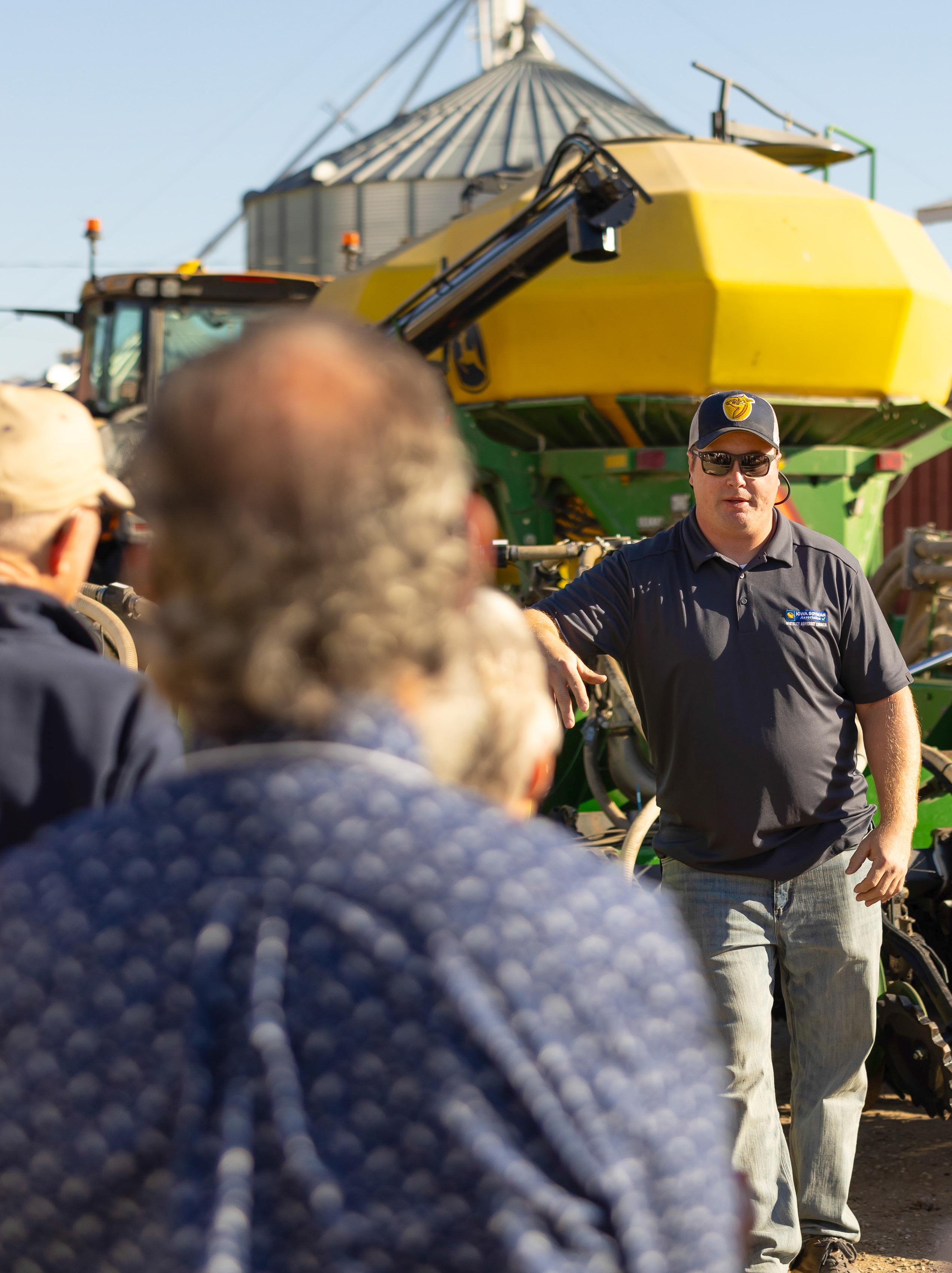

Corey Goodhue, ISA District 5 director from Carlisle, works with ISA’s Research Center for Farming Innovation and conservation services team to evaluate drainage improvements and alternative uses for underperforming acres, tapping into technical expertise to strengthen both profitability and environmental outcomes on his farm.

Seeding Rate: More than a static expense
Craig Woods, ISA Research Agronomist cwoods@iasoybeans.com
KEY INSIGHTS
Choosing the optimal seeding rate showed an average increase in profitability of $14.55 per acre.
OCurrent economic outlook shows 80,000 planted seeds per acre is the most profitable seeding rate in 49% of trials conducted by ISA.
f the many decisions you make prior to planting, the number of seeds you plant per acre has the opportunity to impact your overall field profitability.
Given soybean plant’s ability to take advantage of extra space by branching out to intercept more sunlight and create more pods, a question emerges. What is the seeding rate for soybeans that provides the best foundation for profitability?
For the past three years Iowa Soybean Association’s (ISA) Research Center for Farming Innovation (RCFI) has worked with farmers to determine the best seeding rates through on farm replicated strip trials.
In total, we have implemented 48 locations of on-farm research trials with this question in mind. We asked farmers to plant their soybeans in strips across the field with varied seeding rates. The on-farm strip trials had seeding rates of 80,000, 110,000, 140,000, and 170,000 seeds per acre.
Throughout the years, average yields varied with average yields in 2023 being 60 bushels per acre and average yield in 2025 being 70. The difference from the top yielding treatment(170K) to the lowest yielding treatment(80K) only varied by 3 bushels in 2023 and 1.3 bushels in 2025 (see Figure 1).
Over the three years, the 80,000 seeds per acre rate averaged 63.7 bushels per acre.
Yield isn’t the only factor when planting soybeans, consider profit per acre.
The strips with 110,000 seeds per acre averaged 64.9 bushels per acre. At 140,000 seeds per acre, the yield averaged 65.4 bushels per acre. The 170,000 seeding rate averaged 65.7 bushels per acre.
The 80,000 seeds per acre seeding rate was the only rate that had a significant, although marginally lower, yield on average compared to the other three rates (Figure 1).
While 80,000 seeds per acre yielded lower than the other three rates, considering the average seed cost and soybean sale price often resulted in 80,000 seeds per acre being the most profitable seeding rate. As the cost of seed decreases and the final sale price increases, it allows for a seeding rate higher than 80,000 to have a better return on investment. On the opposite side of the coin, as seed costs increase, this causes the reduced investment of lower seeding rates to shine (Figure 2).
ISA has seen an average increase in profitability by selecting the optimal seeding rate by $14.55 per acre in low commodity prices such as 2025, showing real value in choosing the optimal seeding rate for your field. Across 49% of the trials, 80,000 seeds per acre was the most profitable rate considering a seed bag cost of $65 and a sale price of $10.06 per bushel. Using those same prices, the 110,000 seeding rate was the most profitable in 28% of the trials. The frequency of higher seeding rates being the most profitable was reduced with 140,000 at 19% of the trials and 170,000 at 4%.
Planting fundamentals
Managing seeding rates is an important tool for determining input cost; however, it cannot overcome planting fundamentals. It is unlikely that you should increase seeding rate to make up for possible reduction in stand from poor conditions. Our data suggests that April soybeans still yield better at all seeding rates in comparison to their May planted counterparts.
There has been increased interest in taking advantage of technology when it comes to planting. The ability to plant variable rates designed for each field is seen as the next logical step to take full advantage of soybeans’ ability to adjust to their environment.
In addition to our work in targeting placement of seeding rates, we are also investigating how genetics
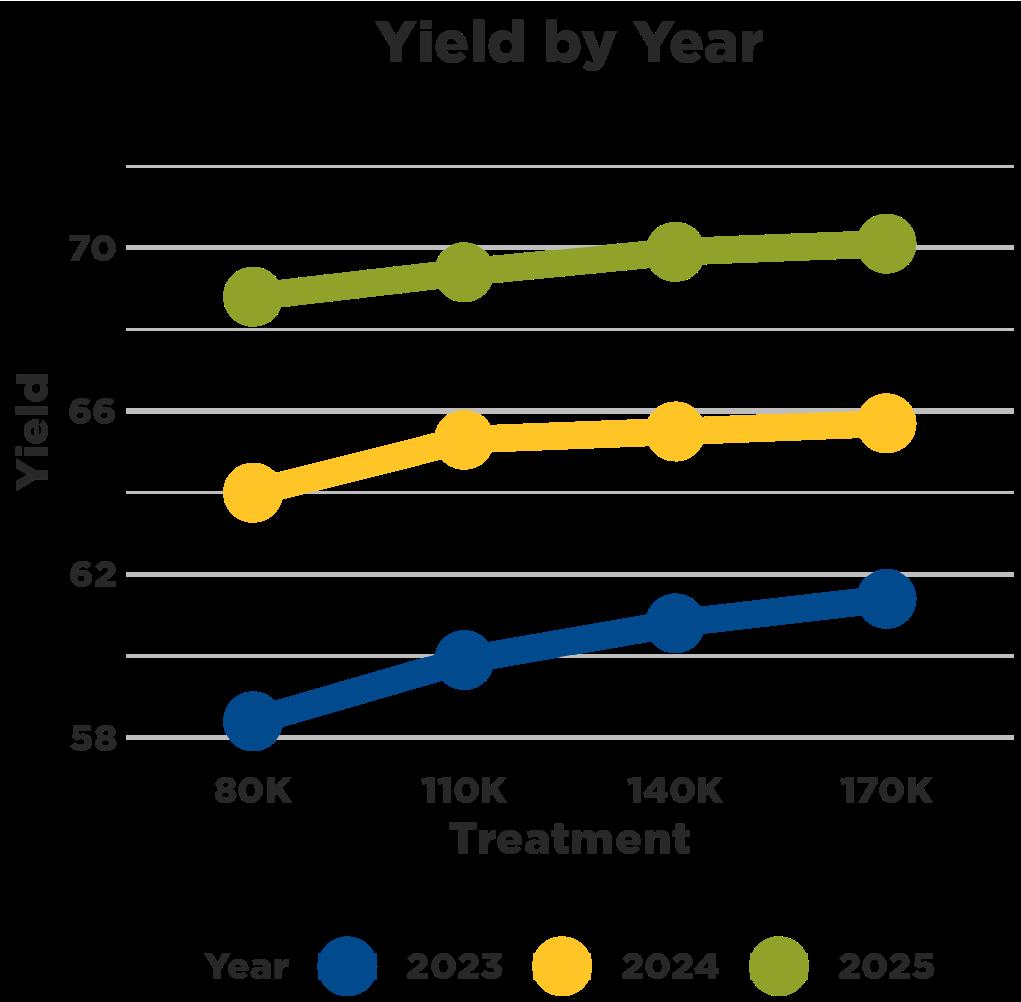
Figure 1 Average yield by seeding rate and year. The yield differences between the highest and lowest seeding rates for each year ranged from a minimum of 1.3 bushels per acre to a maximum of 3 bushels per acre.
might also impact population density decisions, and how including this in variable rate seeding recommendations can improve farm profitability.
Return on investment is more than just planting more soybeans with the hopes that the markets turn more favorable for soybean farmers. It also requires management of the inputs driving said yield.
For growers closely managing their input costs this spring, adjusting your soybean seeding rate could prove beneficial. RCFI is always looking for more participants to assist in making our research robust and locally relevant to the farmers we serve.
If you are interested in participating in on-farm research trials with ISA, please contact the agronomist for your region.
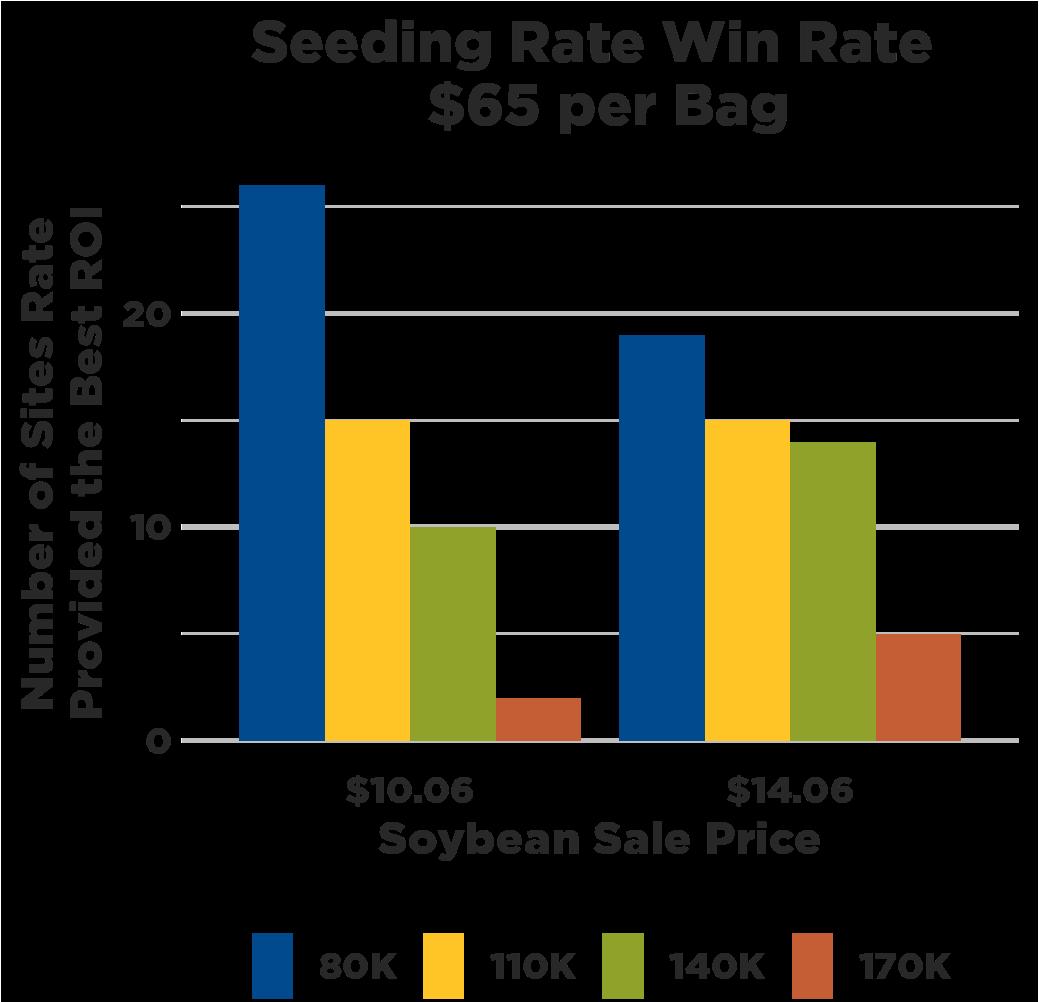
Figure 2 Seeding rate profitability win rate at 2025 ($10.06) and 2023 ($14.06) soybean sale prices. In nearly half of the trials, the 80,000 seeds per acre rate was the most profitable based on 2025 sale price and 36% of trials based on 2023 sale price.

Knowing Your Water
Using water data to reduce risk
When farmers think about managing risk, equipment often comes first. A combine or tractor that runs hot, even below the danger point, signals something needs attention.
Tony Seeman, Iowa Soybean Association (ISA) water lab services manager, says water monitoring functions much like an equipment gauge farmers already understand.
“If a machine ran hot, a farmer wouldn’t just park it and fire it up again next season,” Seeman says. “They’d troubleshoot, because a breakdown would be a big problem.”
Applied to water quality, that means looking at how nitrate levels in streams and rivers fluctuate year to year. Some

years they exceed drinking water standards. Other years they stay below, but remain elevated. Monitoring, he adds, is about awareness and context, not automatic changes.
“The data doesn’t give you all the answers,” Seeman says. “But it tells you when it’s time to take a closer look and bring in the right help to understand what’s driving the results.”
Monitoring role
At ISA, water monitoring serves as an early warning system. Tile and stream monitoring do not tell the whole story, Seeman says, but they act like a temperature gauge, flagging potential issues that warrant a closer look.
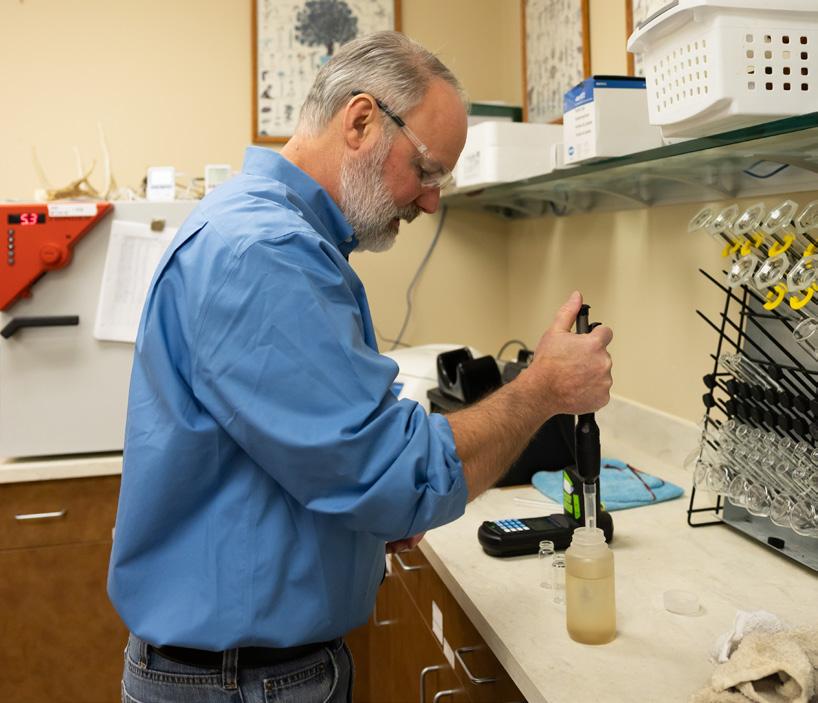
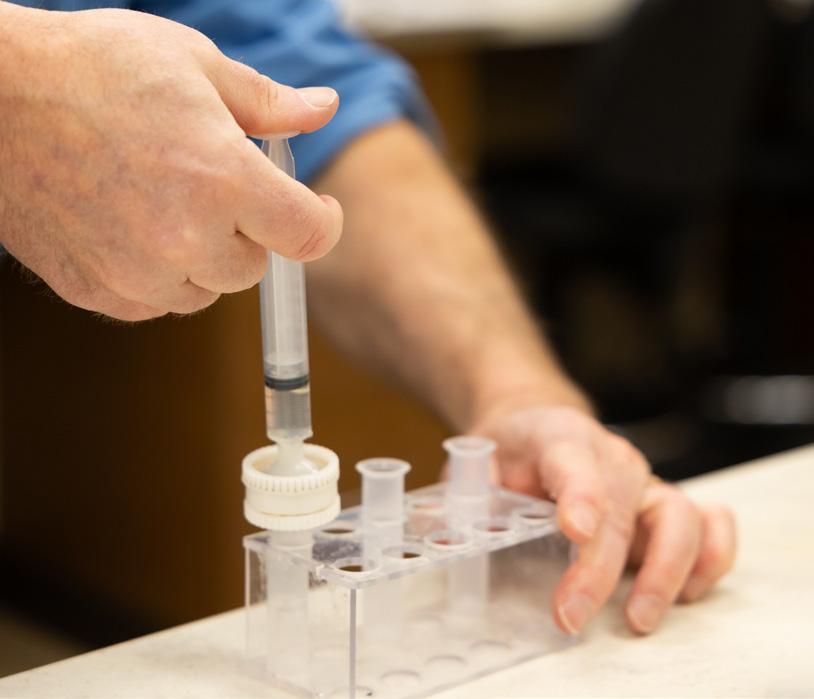
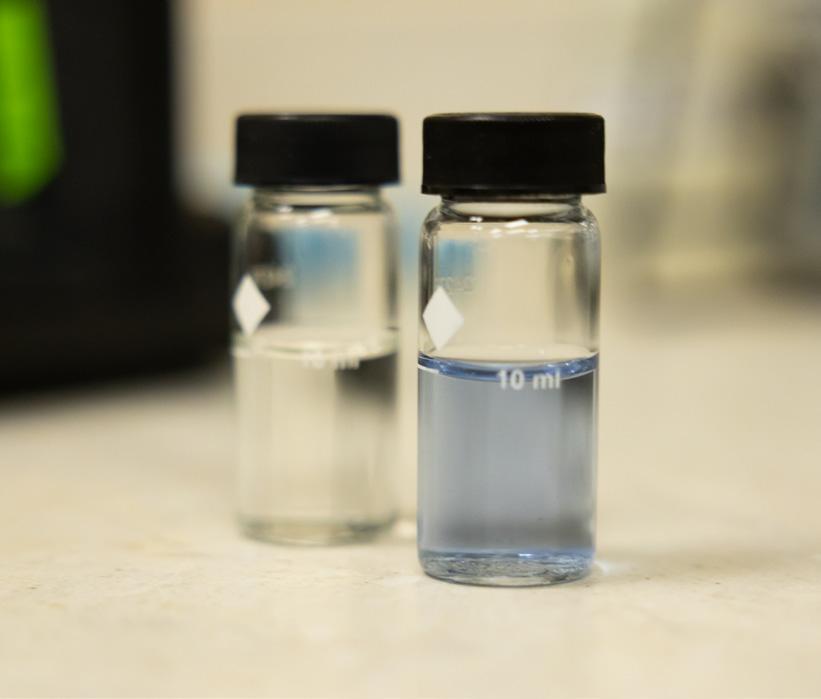
The ISA water lab, located on-site, has been used to test water samples since 2011. Each year, the accredited lab analyzes thousands of samples and is certified by the U.S. Environmental Protection Agency through the Iowa Department of Natural Resources to analyze E. coli bacteria, nitrates, nitrites and fluoride under the Safe Drinking Water Act.
For farmers, the value goes beyond a single result. Monitoring helps them understand conditions in streams and water leaving the farm through surface flow or tile drainage, often prompting new questions about how to protect or improve water quality.
Five to eight samples are typically collected every three to four weeks starting
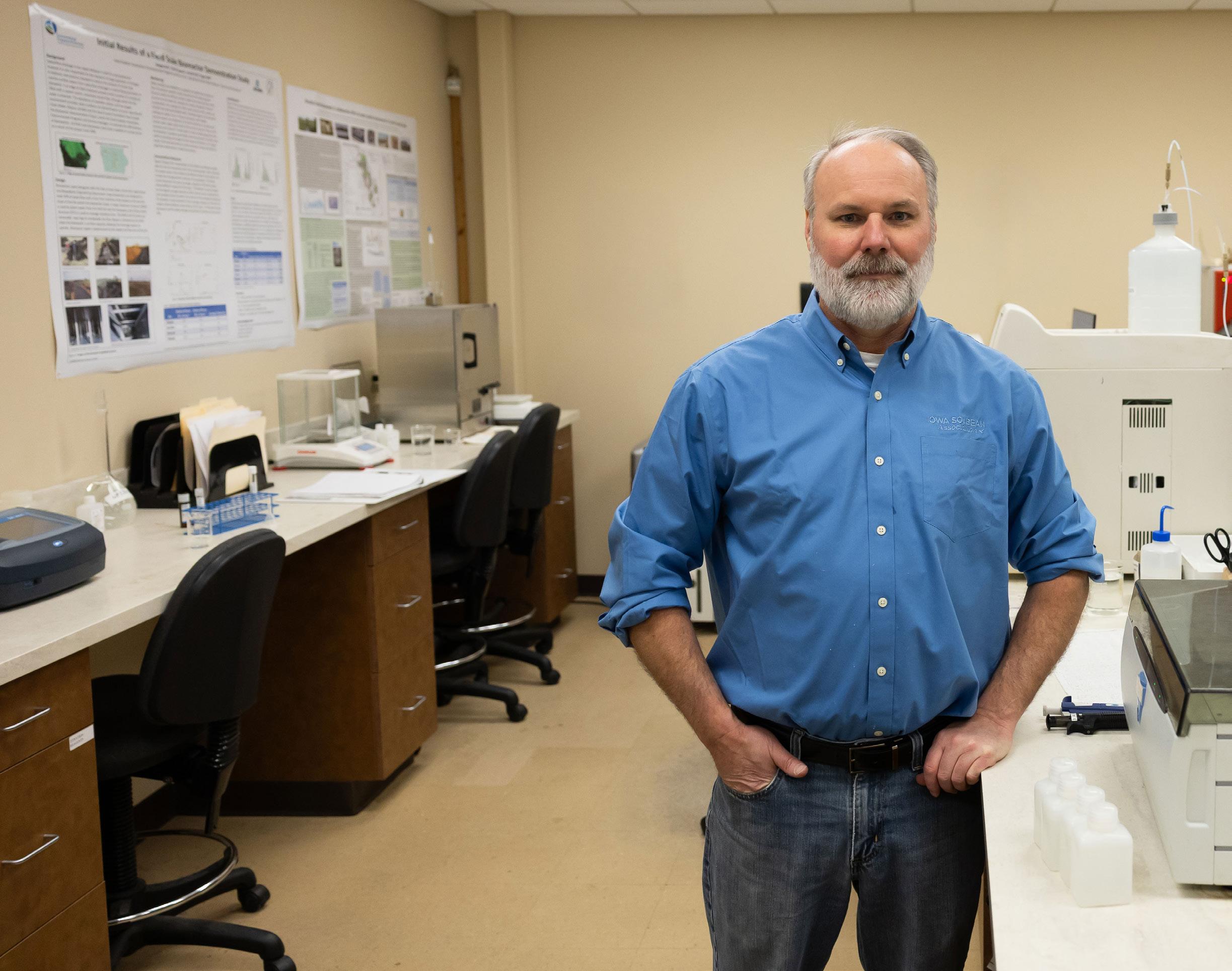
Tony Seeman, water lab services manager for the ISA, leads the organization’s on-site, accredited water lab, providing farmers and watershed partners with long-term monitoring and analysis that turns water samples into actionable data to guide conservation decisions and track trends over time.
STORY BY
PHOTOGRAPHY BY KRISS NELSON JOCLYN KUBOUSHEK
in April. Farmers receive in-season reports comparing results statewide, followed by an end-of-year summary that incorporates management information.
Context matters, Seeman says. A number alone means little without comparison. When enough sites exist, ISA can anonymously compare results to nearby streams and neighboring farms, helping farmers see how their fields fit within the larger watershed.
Data backbone
Behind the scenes, the strength of the ISA water lab lies in its analytics and long-term data management, particularly for stream monitoring projects that span multiple years.
While tile monitoring helps answer field-level management questions in a given season, stream monitoring gains its greatest value over time, where long-term datasets reveal trends, variability and watershed-scale impacts that short-term sampling cannot capture.
All samples are stored indefinitely in a secure water quality database, along with associated management information. For tile samples, that includes details such as crop, fertilizer and tillage. For stream sites, the long-term nature of monitoring allows results to be layered year over year, creating a deeper record of how conditions change over time.
Matt Carroll, Ph.D., ISA science and analytics lead, says that long-term data infrastructure is one of the water lab's biggest benefits for partners and watershed groups.

MATT CARROLL, PH.D. ISA science and analytics lead
“We’re not just providing results,” Carroll says. “We provide analysis and the ability to pair results not only from individual projects, but from stream sites across the state to give broader context.”
That statewide, long-term perspective is especially valuable for stream monitoring, where trends take years to emerge and single-year snapshots can be misleading.
“For streams, the real value comes from longevity,” Carroll says. “Looking at data across multiple years and locations reveals patterns you wouldn’t see otherwise, and it removes the burden of long-term data storage when staff change or projects turn over.”
Power over time
The power of the data comes from aggregation over time. One field in one year reveals little. Hundreds of fields over many years, various weather conditions and management systems begin to tell a story.
“When we look at dry years, wet years, different tillage systems and different nutrient strategies, patterns start to emerge,” Seeman says. “That’s where cause and effect begin to show up.”
That scale and longevity make the ISA water lab unique.
“Some farmers have participated for eight to ten years or more,” Seeman says. “Coming out of the drought, some saw unusually high results for the first time and wondered what changed.”
In many cases, weather was the primary driver, Seeman says, but longterm data helped provide context. When neighboring sites showed similar patterns, it pointed to climate impacts. When they did not, it raised questions about management.
“You can’t change what happened last season,” Seeman says. “But that data helps farmers plan differently for the next drought.”
He adds that today’s analytics allow farmers to adjust in-season, turning past results into better-informed decisions.
More than nitrate
Beyond nitrate, the lab tests for phosphorus, E. coli bacteria and ammonia nitrogen, along with chloride, sulfate and fluoride to help explain conditions at the time of sampling.
In many watersheds, monitoring is the first step, helping identify hot spots, guide practices and document improvements over time.
“Monitoring doesn’t give all the answers,” Seeman says. “But it helps ask the right questions and guides the next steps toward improving water quality.”
Interested in learning more about water monitoring? Reach out to Seeman at aseeman@iasoybeans.com.
Contact Kriss Nelson at knelson@iasoybeans.com
ISA’s water lab analyzes thousands of tile and stream samples each year for nitrates, phosphorus, E. coli and other indicators, with results compared across sites and seasons to help farmers understand year-to-year variability and watershed-level patterns.


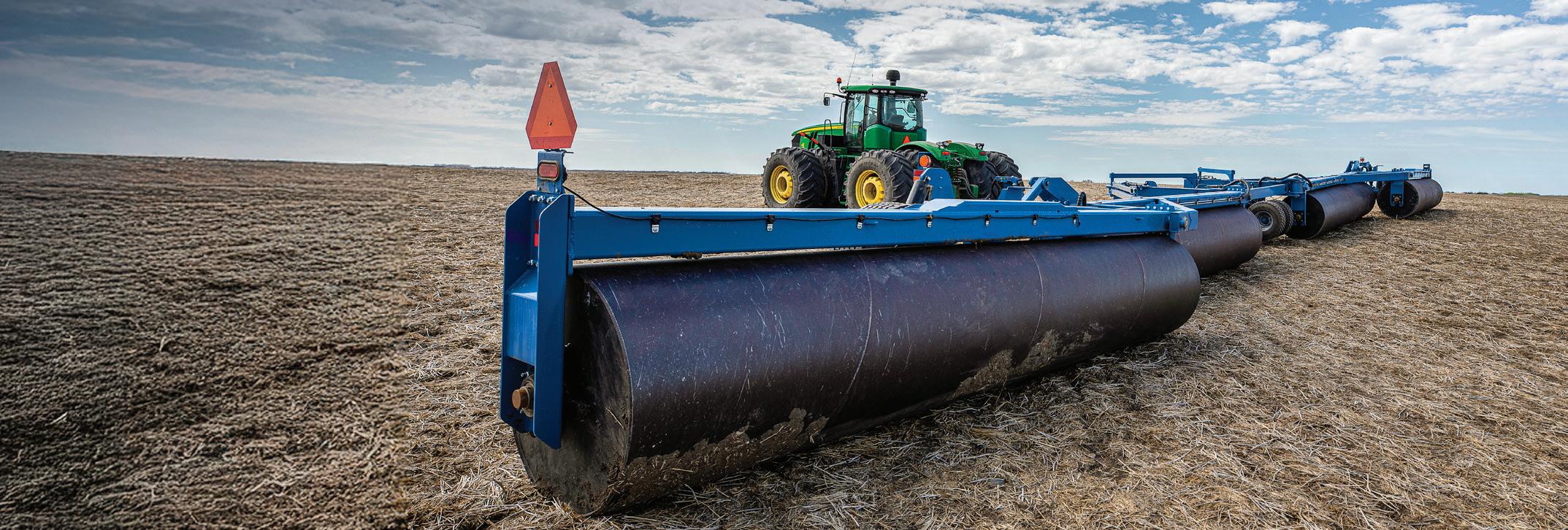
Brandt’s land roller is built to deliver smoother, more level results in a single pass.
Land rolling helps conserve moisture, increases seed to soil contact and pushes small rocks into the ground.
More Productive
Heavyweight drums and true drum-to-drum overlap ensure equal pressure across the entire working width for a consistent finish.
More Flexible
Hydraulic floating hitch system and individual frame section contouring provides excellent in-field flexibility.
More Reliable
Composite bushings on 2.5” pivot pins and 3” drum pins with zero-maintenance bearings deliver years of worry-free use.
Targeted watershed success backed by water monitoring data
BY REBEKAH JONES
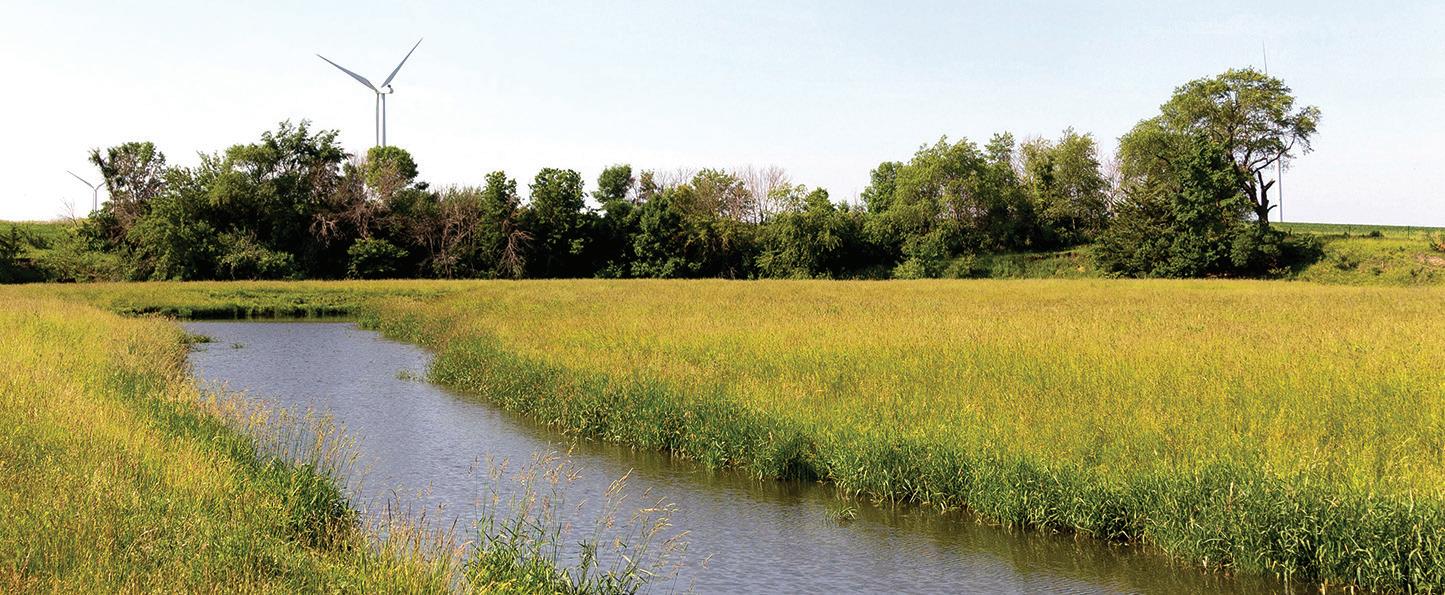
Anew water quality monitoring report provides data-backed insights on how targeted conservation practices like cover crops improve water quality in Iowa. The report comes out of a partnership between Agriculture’s Clean Water Alliance (ACWA) and the Iowa Soybean Association (ISA). As a partnership, the two organizations have some of the longest running water monitoring data in the state. This comprehensive data collection has been vital in identifying nutrient “hot spots” and securing millions of dollars in funding for conservation infrastructure like bioreactors and wetlands.
The report demonstrates that voluntary, science-based conservation practices guided by real-time water monitoring are delivering measurable improvements in water quality. Since the monitoring program’s expansion began in 2015, the initiative has grown from 56 sites to more than 125 sites in 2025, a 123% increase.
Key Findings from the 2026 Report
• Cover Crop Efficacy: Data from 2015–2025 reveals that fields using cover crops have nitrate concentrations averaging 28% lower than fields without them.
• Targeted Success in Elk Run: The flagship Farm to River Partnership in the Elk Run watershed achieved a 51% reduction in nitrogen loss (measured in pounds) between 2013 and 2024, significantly outperforming a nearby control watershed which saw only a 29% reduction.
• Management ROI: Beyond environmental benefits, water monitoring serves as a tool for farmers to improve nutrient management and return on investment (ROI) by maximizing nutrient efficiency in crops rather than losing them to waterways. “Anything you are measuring, you are managing,” said Jake Geisler, a farmer from Webster County who has done water monitoring since 2015. “Seeing the numbers in real time helps us think about what more we can do and keeps our eyes on that ball”.
The full 2026 Water Quality Impact Report is available on ACWA’s and ISA’s websites. Farmers and landowners interested in joining monitoring efforts are encouraged to contact Tony Seeman at 515-334-1042 or aseeman@iasoybeans.com.
About ACWA
Agriculture’s Clean Water Alliance (ACWA) is a coalition of Iowa-based agricultural retailers and cooperatives committed to reducing nutrient losses from farm fields through science-based practices, education and collaboration. Founded in 1999, ACWA supports the Iowa Nutrient Reduction Strategy and advances voluntary stewardship to improve Iowa’s water quality.
Rebekah Jones is communications director for ACWA. Contact her at rjones@acwaiowa.com.
“Seeing the numbers in real time helps us think about what more we can do and keeps our eyes on that ball.”
Jake Geisler, farmer from Webster County who has done water monitoring since 2015

How cropping systems can mitigate drought effects
Every growing season, farmers roll imaginary dice. Will there be too much rain at planting, a mid-summer drought, or the lucky Goldilocks rain — just the right amount at just the right time?
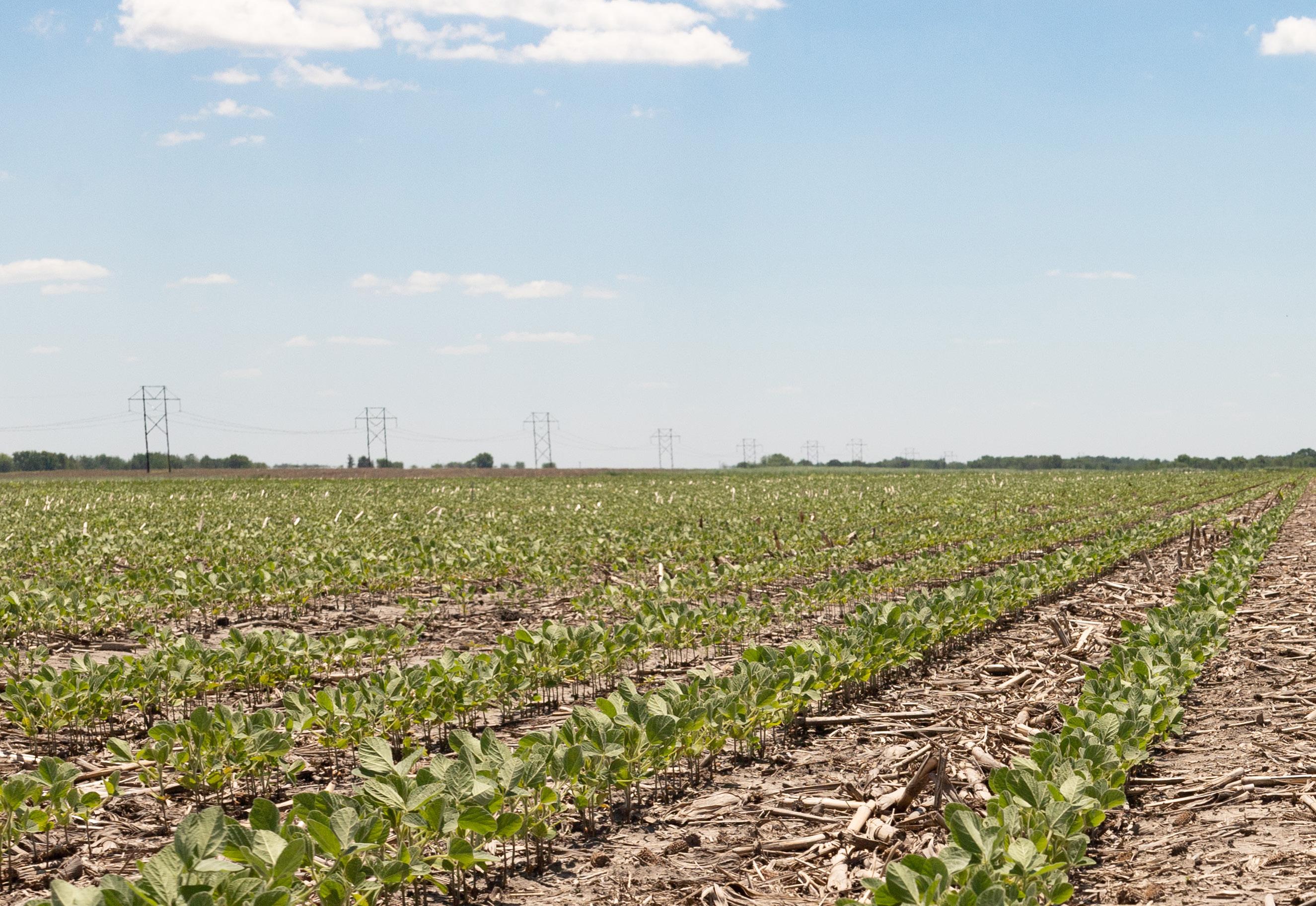
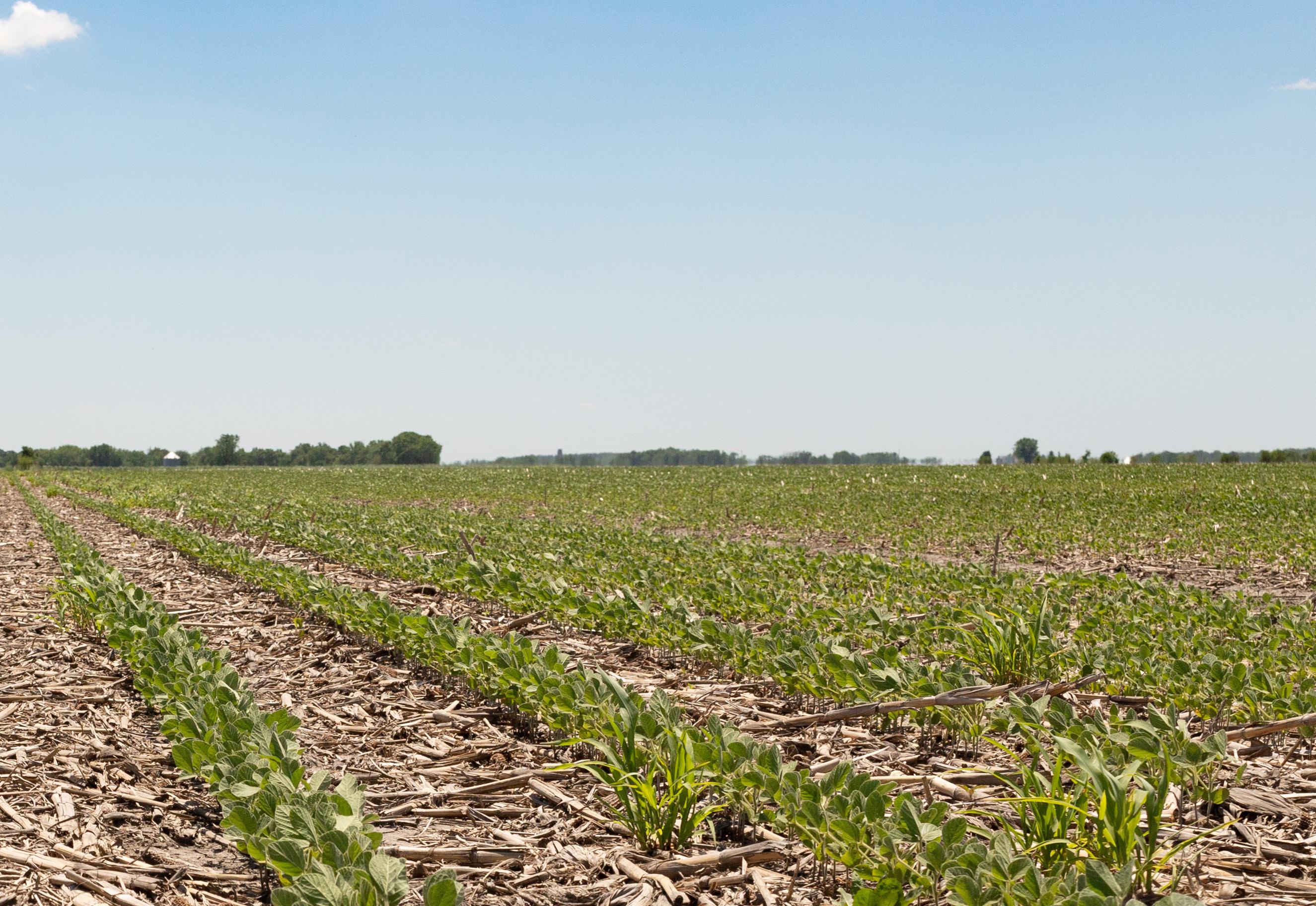
While you can’t control the rain, farmers have some control over how the soil handles it. New research from Iowa State University (ISU), supported by the soybean checkoff, shows that changing how farmers rotate crops can improve water use efficiency in the soil.

Since 2002, the Marsden Agricultural Diversification Experiment (MADE) near Boone, has evaluated outcomes in farm profitability, yields and soil health under various management controls. More recently, researchers focused on two treatments in this long-term experiment to determine how the management affects soybean resilience to drought: 1) a business-as-usual, two-year corn-soybean rotation with synthetic fertilizer; and 2) a diversified four-year rotation with oats and alfalfa and most of the nutrients coming from composted cattle manure.
Over the 20-year study, the experiment showed an increase of 1400% in water infiltration rates, a 16% increase in soil water storage and an 8% reduction in resistance to root growth (compaction) in the diverse rotation compared to the standard two-year rotation.
Changing the weather
A team of agronomists, led by ISU Agronomy Associate Professor Marshall McDaniel and Postdoc Research Associate Ashani Thilakarathne (now assistant professor of soil conservation at University of WisconsinRiver Falls), expanded the experiment to simulate future climate changes.
Using irrigation and rainout shelters, researchers imposed future climate conditions on both experiments: wetter springs and droughtier summers. They wanted to test if these improvements in soil health under a four-year rotation would lead to greater crop yields under drought stress compared to the two-year rotation.
Results
When the rain was steady, the soybean yields were nearly identical. The two-year and four-year rotations yielded 1.1 bushels and 0.6 bushels per acre more than the trial average, respectively.
Under simulated drought conditions, the two-year rotation yielded 3.8 bushels per acre less than the trial average and the four-year rotation had a 2.1 bushel-per-acre-yield increase over the trial average.
STORY BY PHOTOGRAPHY BY BETHANY BARATTA JOCLYN KUBOUSHEK
MARSHALL M c DANIEL
ISU Agronomy Associate Professor
ASHANI THILAKARATHNE
University of Wisconsin-River Falls assistant professor of soil conservation
Barriers to implementation
If the four-year rotation is more resilient, why isn't everyone doing it? McDaniel acknowledges that the biggest hurdles aren't agronomic — they’re economic.
“The two most important barriers are time and money,” he says. “Not all farmers can or want to integrate grazing animals into their operations. For the small grains and forage crop, there needs to be markets that pay for them and they’ll be adopted.”
But farmers may not need to overhaul their cropping systems to see progress, says Matt Carroll Ph.D., Iowa Soybean Association’s (ISA) science and analytics lead.
ISA’s long-term cover crop experiments showed a similar reduction in soil compaction to soil that was treated with cover crops from six to eight years, with an average reduction of 6% in the first two feet of the soil horizon.
“As farmers look to minimize the risk of soybean yield losses under future drought conditions, it's important to think about what practices can be implemented that help the soil increase water infiltration and water holding capacity,” Carroll says.
McDaniel says the programs that incentivize changes to improve soil health could make these systems more appealing to farmers, and in turn, improve productivity during drought.
“Water is the most widespread limiting factor for soybean productivity. In Iowa and many other nearby states, we have too much in the spring and many years with too little in the summer,” he says. “Using management practices that increase soil health — particularly those that improve soil’s ability to both drain and hold on to water — can help improve soybean resilience to drought.”
Too much water?
This research, supported by soybean checkoff dollars, further posed the question: Can improvements in soil health also help with excess water in the spring?
“We hear this all the time from farmers that they can get out in the fields earlier due to using cover crops, diversified rotations, reduced tillage, and other soil health improving practices,” McDaniel says. “So, we’re also looking at how soybean roots might respond to excess water and then drought conditions.”
As researchers wrap up the data processing from the simulated wetter conditions experiment, McDaniel notes the relationship between science and agriculture.
“Our research is often informed by observations we hear from farmers, and then we put it to the test, and this is one of those examples,” he says. “Agriculture research is best when farmers and scientists are working together and learning from each other.”
Contact Bethany Baratta at bbaratta@iasoybeans.com
ISA science and analytics lead
MATT CARROLL, PH.D.
More Working Days, Better Soil
STORY BY MICKAYLA JORDAN PHOTOGRAPHY BY JOCLYN KUBOUSHEK
The Helland family has farmed north of Des Moines near the junction of Polk, Boone and Story counties since 1861. The family’s seven generations have worked to conserve and protect its precious soil and water resources ever since.
“We want to be able to hand this farm off to the next generation and we want it to be in the best shape possible,” says Nick Helland, the seventh generation farmer on the land. “So that means taking care of what we see as our best resource in the best way possible.”
It’s a lesson he’s learned farming with his dad, uncle and cousin on the family farm. And it’s the legacy he
continues on the farm today, 150 years since the farm’s establishment.
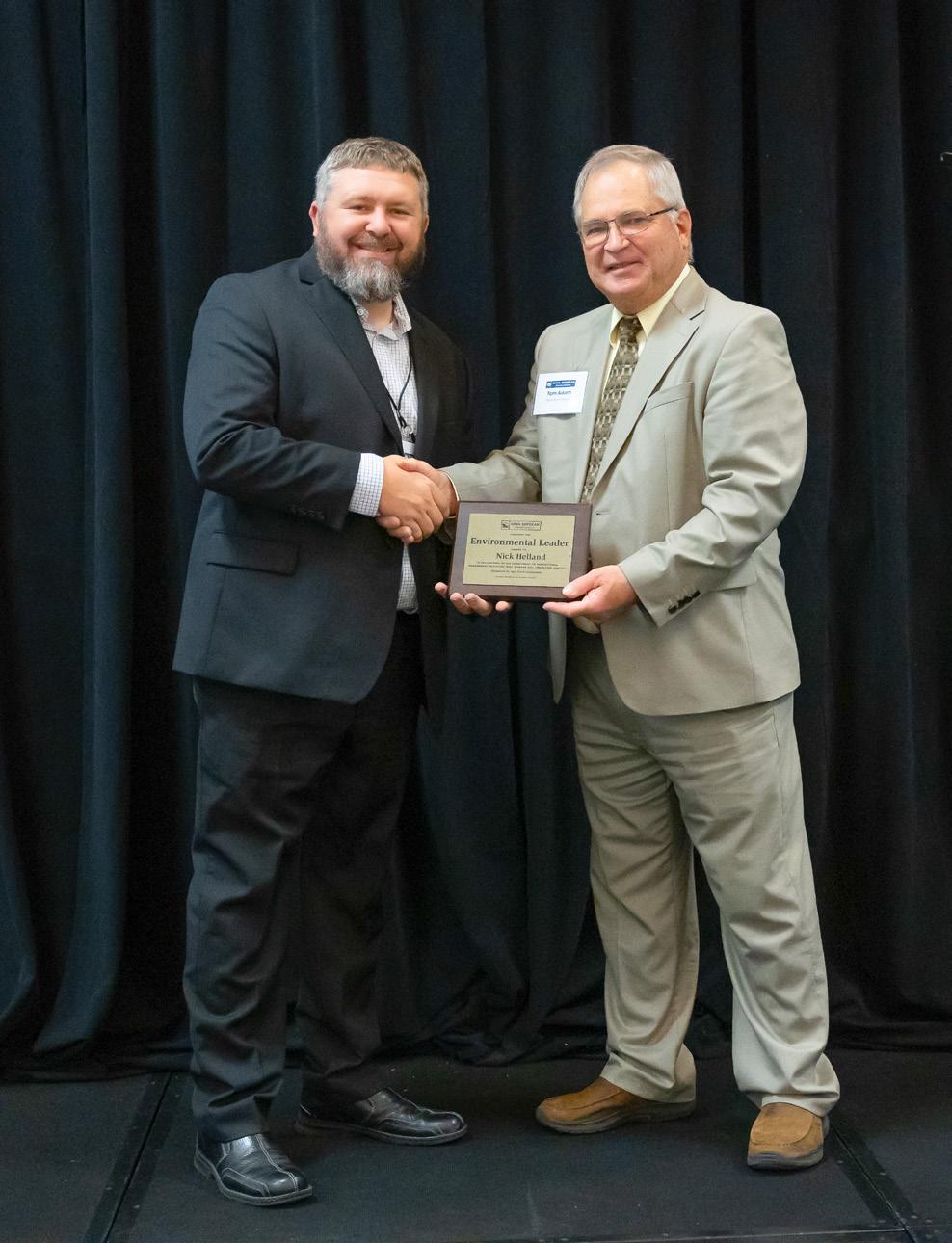
The Iowa Soybean Association (ISA) recognized that commitment in December, when Helland received the 2026 ISA Environmental Leader Award. Sponsored by Agri-Drain, the award recognizes an ISA member who is committed to practices that improve environmental performance through work with the ISA Research Center for Farming Innovation (RCFI), Soil and Water Outcomes Fund (SWOF) or Iowa Agriculture Water Alliance (IAWA).
Good things take time
“Our journey in sustainability really began with a transition to no-till soybeans
in the mid-90s,” Helland says. “We didn't have any yield penalty on the soybeans, and it enabled us to spend our time and effort on some other things.”
After seeing the benefits of no-till, Helland and his family began looking into additional conservation practices that could benefit the farm without decreasing their productivity.
“In 2012, we started to incorporate cover crops and have found there are some benefits to the cover crops that we like to have,” explained Helland. “The cover crops helped rehabilitate some soils to be more like the texture of our longterm no-till fields, and it helped mellow out the soil and give it a firmer texture.”
How the Helland family makes conservation pay
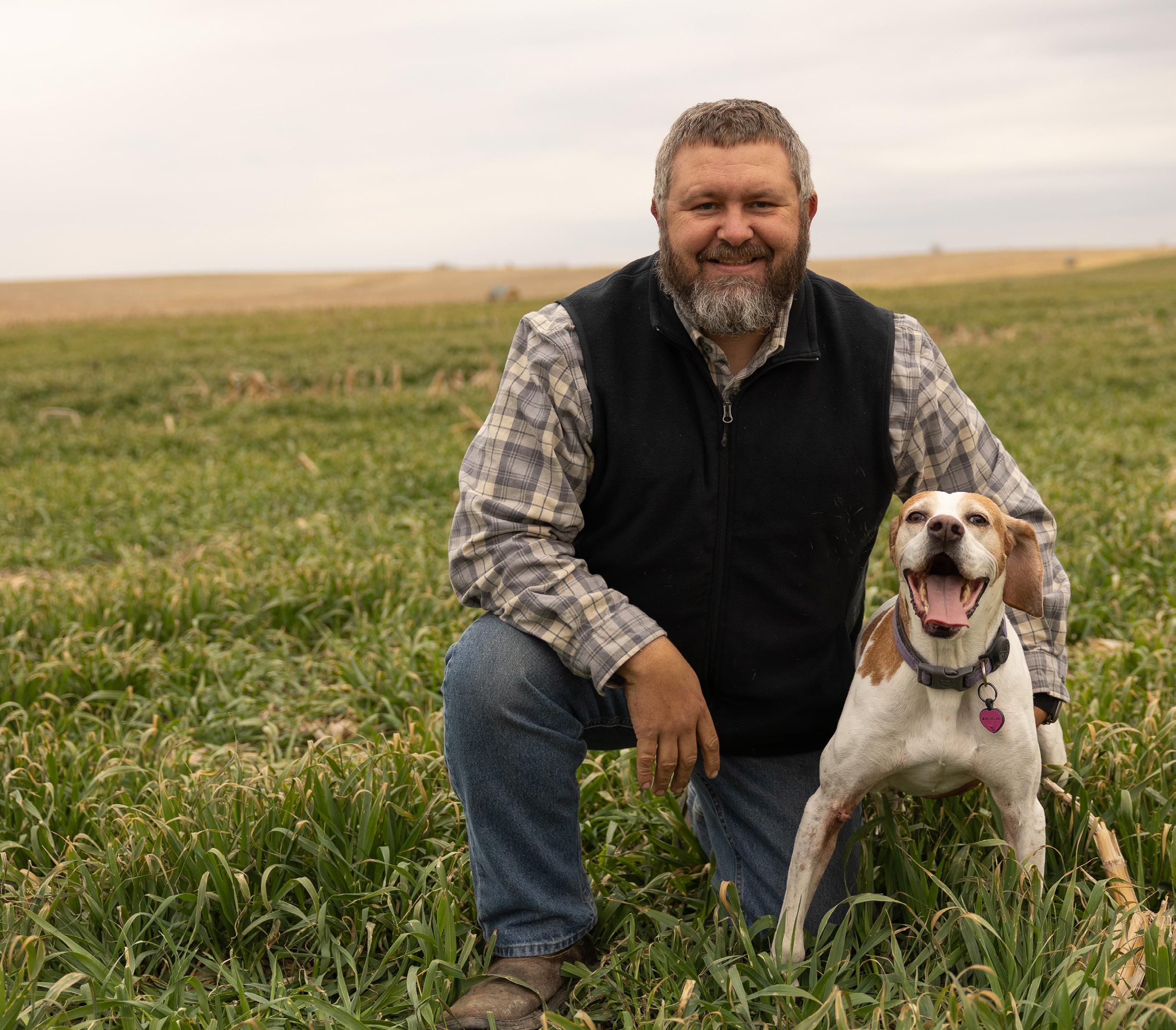
Nick Helland and his dog Jewel on the farm near Huxley.
Cover crops with fibrous roots, including cereal rye, decrease field oversaturation during early spring rains by allowing the soil to absorb more water. This increased water infiltration means spring rains don’t always put a stop to planting progress.
“I think it's opened a wider window for working days on some fields,” Helland says. “If it's wet, we've been able to get in sooner than those fields without cover crops.”
Beyond the field
While cover crops and no-till practices improve soil quality and reduce erosion in the field, some conservation practices have no impact on production acres.
In some cases, that’s the goal. Edge-of-field conservation practices act like filters that slow down water as it leaves the field and remove nitrates.
“Saturated buffers and the bioreactors treat water without affecting the tile lines and cropping acres, which is actually a good thing,” says Helland. “We’re doing these practices without having any negative effects on our crop acres.”
Across the family farm, Helland has installed eight bioreactors and saturated buffers along the field edge to continue to filter water before it enters the Des Moines Watershed.
In 2024, Helland restored a two-acre wetland near Big Creek. The wetland serves as a critical last stop for water leaving the field and heading toward Des Moines. It also provides additional habitat for wildlife and native plants.
“I enjoy the outdoors, and it's also a great way to increase habitat,” Helland says. “If you have better habitat, the whole system benefits.”
Later this year, he will restore a multipurpose oxbow, adding yet another edge-of-field practice to his farm. With assistance from ISA’s conservation team, Helland will remove built up sediment from an old stream meander to restore natural flood water storage and Topeka shiner habitat.
“I like to say we're getting close to having the bingo card full,” he jokes.
Sharing the conservation story
With a full card of conservation practices, the Helland Farm has become a go-to destination for farmers and consumers to see conservation in action.
Helland has partnered with the Iowa Agriculture Water Alliance, Polk County Soil and Water District and other local organizations to host field days on his farm that allow local farmers to see practices in action and ask questions.
“I'm a big believer in telling people, ‘Hey, this is what's worked and this is what hasn't,’ ” Helland says. “Being able to have honest conversations is key.”
Positioned close to the metro, Helland and his family have also welcomed urban neighbors, including legislators and representatives from Central Iowa Water Works, to see how environmental practices connect to life on the farm.
“I want to show them what the reality is on the farm,” he says. “These are what the practices they may have heard talking points about really look like on the farm.”
Making conservation work for you
Conservation isn’t a “one-sizefits-all” approach.
Talking with neighbors about their experiences with specific conservation practices is the first step, according to Helland. While every field is different, your neighbors can provide insight into practices that may or may not be compatible with your area.
“Not every practice will work on every acre,” Helland says. “Understanding the practices and what your goals are will help you determine which practices will fit the acres you’re targeting.”
Contact Mickayla Jordan at mjordan@iasoybeans.com
ABOUT THE 2026 ENVIRONMENTAL LEADER AWARD
This award recognizes an ISA member who is committed to practices that improve environmental performance through work with the ISA Research Center for Farming Innovation (RCFI), Soil and Water Outcomes Fund (SWOF) or Iowa Agriculture Water Alliance (IAWA).
ISA President Tom Adam presented Nick with the 2026 ISA Environmental Leader Award in December.
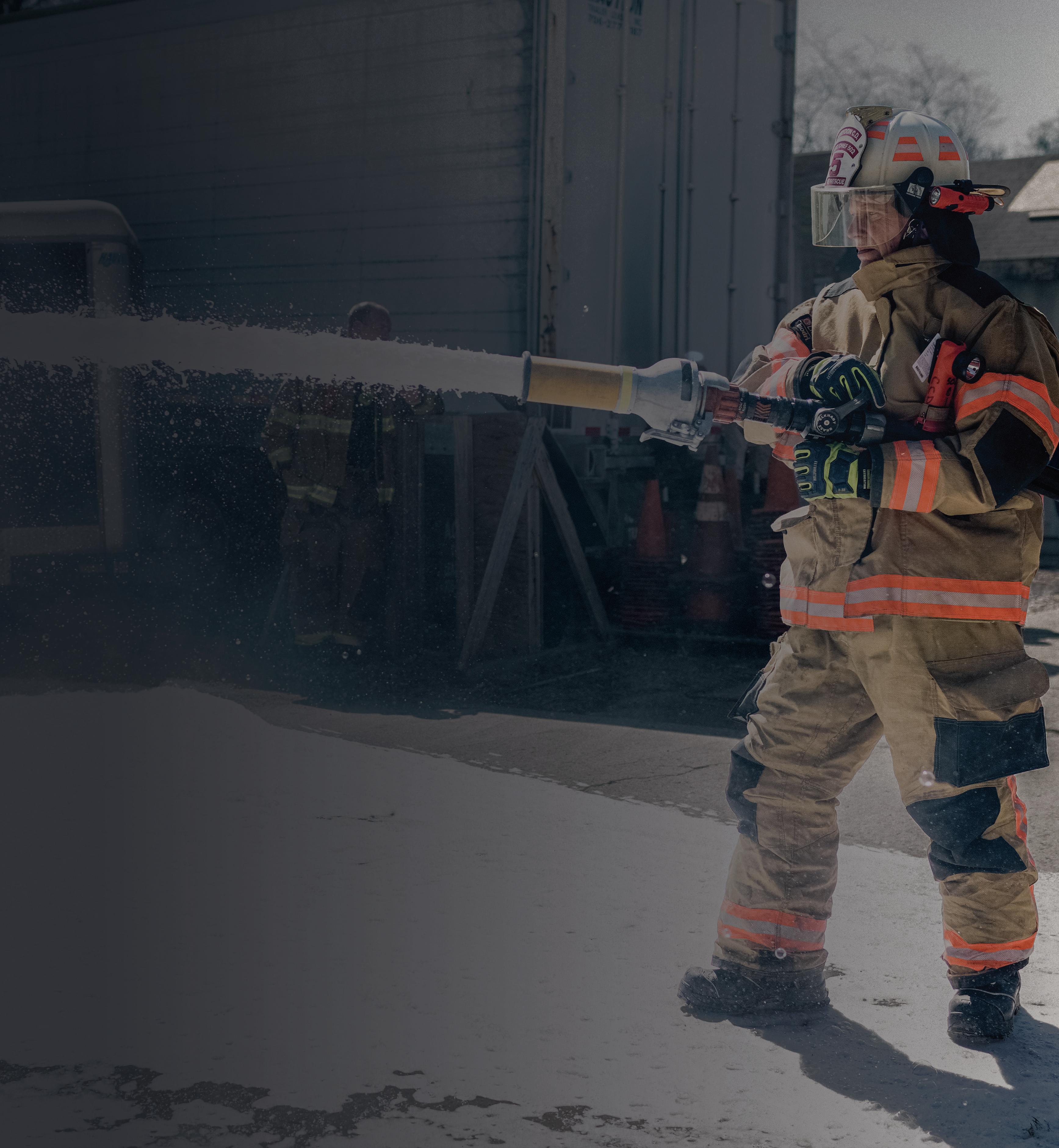
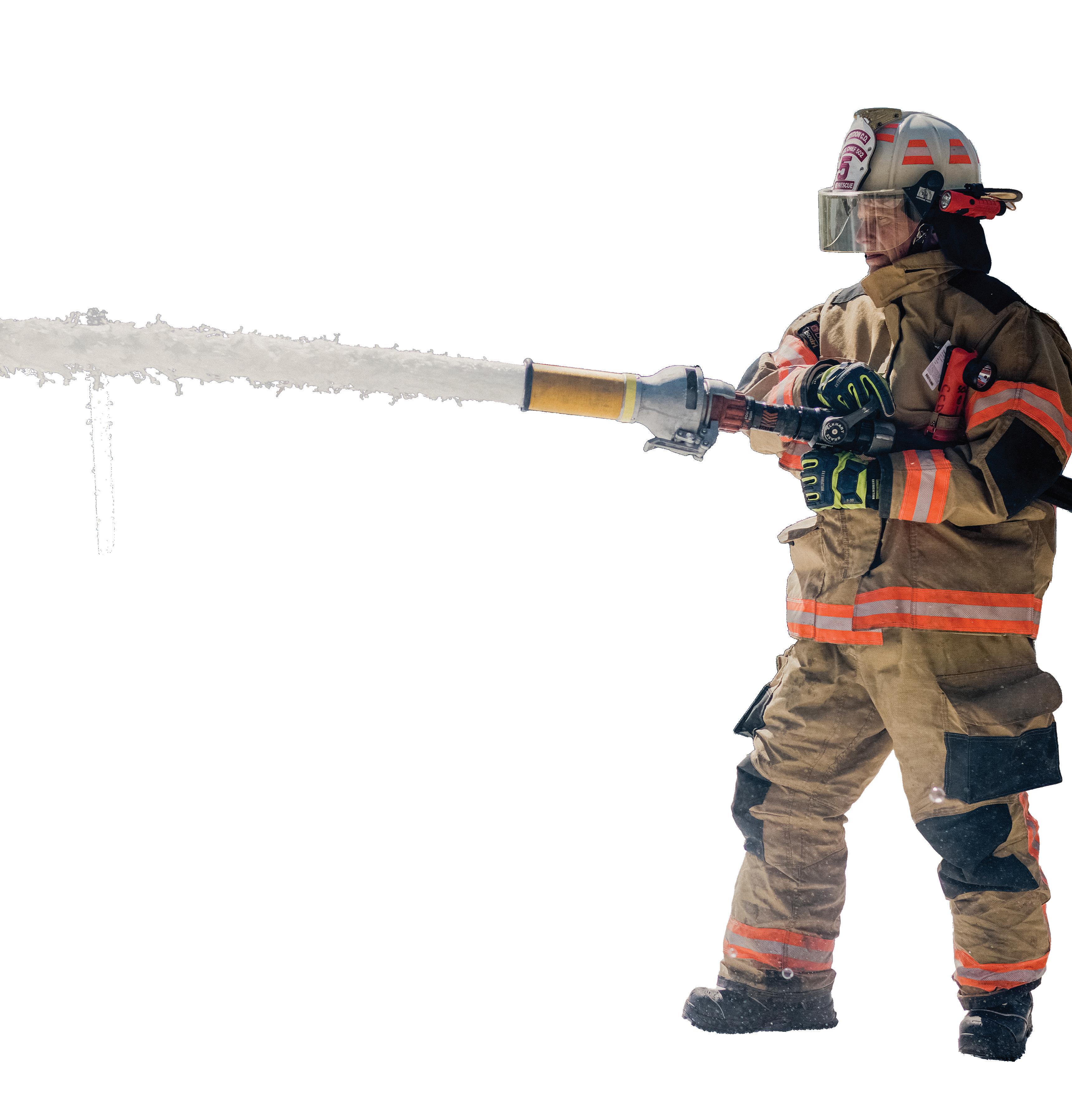
The more we discover about soybeans, the more valuable they become. One innovative product, SoyFoam™, creates a new, sustainable use for your crop that protects firefighters and the planet. See how your Soy Checkoff is unlocking new markets for soybeans at unitedsoybean.org