This report is partially funded by the soybean checkoff.
Staff Credits
Bethany Baratta | Editor
Kriss Nelson | Senior Writer
Susan Langman | Creative Design Coordinator
Joclyn Kuboushek | Multimedia Specialist
Rosie Koch | RCFI Technical Insights Manager
FARMER FOCUSED | DRIVEN TO DELIVER
ISA VISION
We advance the long-term competitiveness of Iowa soybean farmers.
ISA MISSION
Driven to deliver opportunities for Iowa soybean farmers to thrive.
Insights Report is published by: Iowa Soybean Association 1255 SW Prairie Trail Parkway, Ankeny, Iowa 50023 (515) 251-8640 | iasoybeans.com
E-mail: bbaratta@iasoybeans.com
For advertising information contact Bethany Baratta at (515) 334-1020 or bbaratta@iasoybeans.com
Comments and statewide news articles should be sent to the above address. Advertising space reservations must be made two months preceding publication. In consideration of the acceptance of the advertisement, the agency and the advertiser must, in respect of the contents of the advertisement, indemnify and save the publisher harmless against any expense arising from claims or actions against the publisher because of the publication of the content of the advertisement.
For Iowa’s farmers, flexibility and embracing change are key to a productive, resilient and innovative operation. The Iowa Soybean Association’s (ISA) Research Center for Farming Innovation (RCFI) is working for Iowa farmers by delivering unbiased, innovative and data-driven programming every day. This research is truly boots-on-the-ground; it’s happening on our members’ farms, and it’s the research that farmers are asking for.
In my experience, participating with the team on various research trials has allowed us to learn more about the best practices for our acres. Doing so has guided decisions on our farm that increase sustainability, productivity, and most importantly, the profitability of our operation.
I encourage you to participate in RCFI trials and learn more. The process is easy, convenient and tailored to meet the unique needs of your farm. As you'll see in this report, this team of researchers, agronomists, technicians, analysts and field specialists stand ready to help you make informed decisions on your farm.
Tom Adam, ISA president and farmer near Harper
AInsights That Drive Profitability
BY JOE MCCLURE CHIEF OFFICER, RESEARCH CENTER FOR FARMING INNOVATION JMCCLURE@IASOYBEANS.COM
t the Iowa Soybean Association’s Research Center for Farming Innovation (RCFI), everything we do starts and ends with Iowa farmers. Our work is grounded in partnership — collaborating directly with farmers to design, conduct and apply research that advances their goals for productivity, profitability and sustainability. Together, we turn on-farm challenges into opportunities, using real-world data and practical innovation to improve decision-making and outcomes.
Each season, RCFI teams work across Iowa’s fields and watersheds to deliver insights that help farmers fine-tune agronomic practices, manage crop inputs and natural
resources more efficiently and implement conservation practices that protect soil and water quality while maximizing profitability. By combining agronomic expertise, advanced analytics and farmer input, we ensure that our research translates into actionable solutions tailored to local conditions.
Our mission is simple: empower Iowa farmers to thrive today and lead the way toward a more resilient and productive agricultural future. Through collaboration and shared innovation, we’re not just conducting projects — we’re helping farmers achieve more, one field at a time.
The Iowa Soybean Research Center Collaboration
in Action
The ISRC is a strategic partnership of Iowa State University with the Iowa Soybean Association and industry. The priority of the ISRC is to meet the research needs of Iowa’s soybean farmers and industry by funding soybean research at Iowa State. The ISRC plays a key role in connecting with stakeholders to identify research that improves soybean production and sustainability.
Covering the Cost
BY MIKE GILMAN ISA SENIOR CONSERVATION PROGRAM MANAGER MGILMAN@IASOYBEANS.COM
KEY TAKEAWAYS
Cost-share programs are breaking down barriers to cover crop adoption.
Leveraging multiple programs maximizes support.
As rising input costs, tight margins and unpredictable weather continue to challenge Iowa row-crop producers, more farmers are turning to cover crops to improve soil health and nutrient management while protecting their land for the future. But the economics of cover-cropping can be a hurdle: seed costs, additional passes, termination considerations and the delayed payoff of improved soil health can dampen enthusiasm. Today, a growing menu of cost-share and incentive opportunities is helping bridge that gap — making cover crops more accessible and financially viable for Iowa farms.
Benefits and barriers
Cover crops offer clear benefits: they reduce soil erosion, capture residual nutrients, build organic matter, help with weed control and even produce forage depending on the system. However, costs remain a key barrier. The cost of implementing cover crops can vary widely with estimates around $30 an acre and up, depending on how the cover crops are established. For many operations, particularly those with tight budgets or rented land, taking on the additional costs and management responsibilities of cover crops requires careful consideration.
Cover crops are a long-term investment in soil health.
Cost-share and incentive opportunities
Fortunately, Iowa farmers have several programs at their disposal:
• The Iowa Department of Agriculture and Land Stewardship (IDALS) under the Water Quality Initiative offers cost-share payments for cover crops and other practices. In 2025, first-time cover-crop users were eligible for $30 per acre and returning cover-crop users $20 per acre (for up to 160 acres per farmer).
• At the federal level, the Environmental Quality Incentives Program (EQIP) and the Conservation Stewardship Program (CSP) through the Natural Resources Conservation Service (NRCS) provide payments for cover crop adoption or enhancements. Iowa's EQIP cover crop program offers varying rates, with a basic rate around $30 and up per acre for a single species, and higher payments for multi-species mixes. Iowa's CSP program does not have a fixed per-acre rate for cover crops; instead, it provides payments based on the number and types of conservation practices.
Continued on Pg. 6
costsharecompare.com
• The Practical Farmers of Iowa (PFI) cost-share program offers fall cover-crop cost-share to participants across Iowa. In 2025, payment rates of $10 or $12 per acre up to 240 acres were available depending on documentation provided.
• The Farmers for Soil Health program, a 20-state initiative, provides payments to new cover-crop users over a multi year timeframe. The payments are facilitated by the United States Department of Agriculture (USDA). In Iowa, the program is administered through the Iowa Soybean Association. The current payment structure is $50 per acre over a three-year period ($25 first year, $15 year two, $10 year three). The program has proposed program modifications to the USDA and hopes to offer a more robust simplified payment structure in 2026. Proposed acre limitations are up to 2,000 acres per farm. Go to farmersforsoilhealth.com for more information.
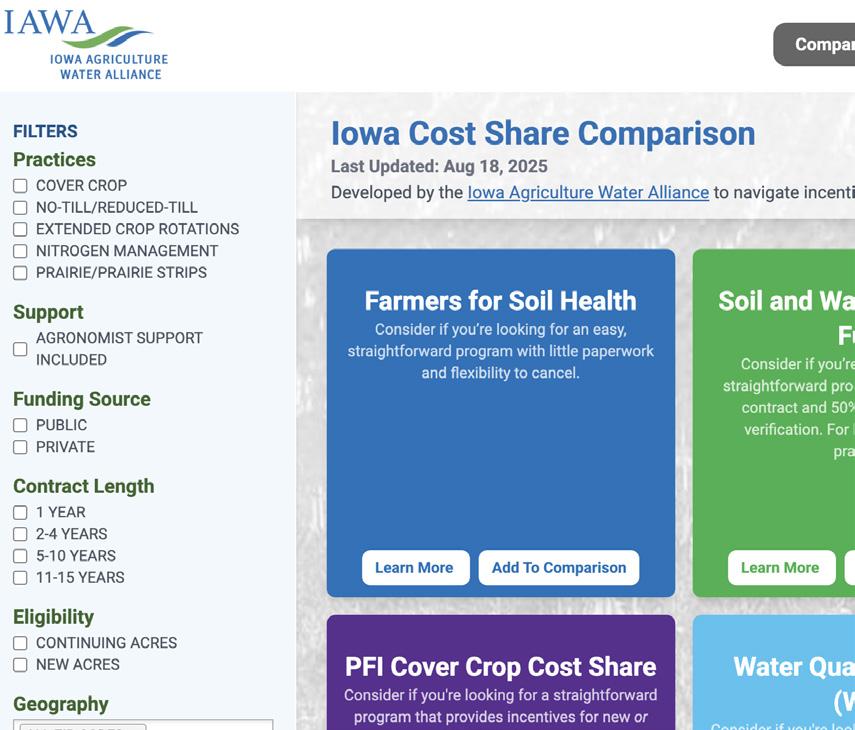
• The Soil and Water Outcomes Fund (SWOF) supports farmers who commit to conservation outcomes (cover crops, reduced tillage, extended rotations) and pays $33 per acre on average. The program offers a one year contract with 25% paid prior to verification. There are no limits on acres enrolled. Go to theoutcomesfund.com. The programs mentioned above are not an all-inclusive listing. The Iowa Agriculture Water Alliance (IAWA) offers a Cost-Share Comparison Guide web tool where farmers can filter, compare and stack incentive programs across public and private sources — helping tackle the “which program is right for me” challenge. Go to costsharecompare.com or iaagwater.org.
Putting it all together
Here are some practical ways Iowa growers can leverage these programs to make cover-cropping more affordable:
1. Begin with IAWA’s cost-share comparison tool: Visit IAWA’s cost-share website (costsharecompare.com) to compare cover crop and related conservation incentive
iaagwater.org
options, filter by what you need (payment rate, ability to combine multiple programs and contract length) and find the best fit.
2. Consider state cost-share: If you are a first-time cover crop user, the IDALS cost-share payment helps offset a sizable portion of your upfront cost.
3. Layer federal support: Apply for EQIP or CSP to fund additional acres or multi-species cover mixes — this adds robustness and may qualify for higher payments.
4. Explore programs like SWOF, Farmers for Soil Health and PFI: These programs may provide more flexibility and could potentially stack with other programs.
5. Plan your enrollment early: Many programs have enrollment windows, acreage caps and documentation requirements.
6. Think long-term benefits: While cost-share helps with upfront cost, the soil-health benefits compound over time — better soil structure, improved water infiltration and improved input efficiency.
Cost-share advantage
For Iowa farmers weighing whether to adopt cover crops, the decision increasingly comes down to both agronomics and economics. With the generous range of cost-share and incentive programs now in place, the financial barrier to entry is lower than ever. By combining state cost-share (IDALS), federal programs (EQIP, CSP), and layered incentives from SWOF, PFI or Farmers for Soil Health, growers can move cover crops from “nice idea” to practical reality.
It is an opportunity for Iowa farmers to build soil resilience, improve nutrient stewardship and invest in the long-term productivity of their land — and do so with costs and risks managed. To ensure farmers can access these opportunities, the Iowa Soybean Association conservation team can help navigate cover crop programs, including identifying the right programs, understanding requirements and assisting with enrollment.
QUICK REFERENCE GUIDE
Iowa Cover Crop Cost-Share and Incentive Programs
An easy-to-use online tool that lets farmers compare, filter, and stack cost-share and incentive programs for soil health practices across Iowa.
• Find and compare programs by county, practice type, payment rate and eligibility.
• See stackability across state, federal and private incentives.
• Save time identifying which cost-share mix fits your acres best.
PROGRAM NAME IDALS (IOWA DEPT. OF AG & LAND STEWARDSHIP) EQIP (NCRS)
(PRACTICAL FARMERS OF IOWA)
FARMERS FOR SOIL HEALTH SWOF (SOIL & WATER OUTCOMES FUND)
WEBSITE iowaagriculture.gov nrcs.usda.gov nrcs.usda.gov practicalfarmers.org farmersforsoilhealth. com theoutcomesfund. com
PAYMENT RANGE
ELIGIBLE PRACTICES
$30/ac first time; $20/ac returning; plus $10/ac for no-till; plus $3/ac for N inhibitor
Cover crops, strip-till, nutrient management
~$30-$60/ac depending on mix Varies $10-$12/ac $50/ac over 3 yrs ($25>$15>$10) ~$33/ac
Multi-species, overwinter, soil health initiatives Ongoing cover crop management Fall seeded cover crop acres New or existing cover crop acres
Cover crops, reduced tillage, extended rotations
ACREAGE/ CONTRACT DETAILS Up to 160 acres 3-5 year contracts 5 year contracts Up to 240 acres Through 2027 Annual/ outcome based
STACKABILITY With Federal/ private (some limits)
with state/ federal
RESOURCES: COSTSHARECOMPARE.COM OR IAAGWATER.ORG/PROGRAMS/COST-SHARE-COMPARE
Evaluating Fungicide ROI in Soybeans
BY ALEX SCHAFFER, CCA ISA RESEARCH AGRONOMY LEAD ASCHAFFER@IASOYBEANS.COM
KEY TAKEAWAYS
In the absence of insect pressure on soybeans, insecticide does not have an effect on yield.
There was not a significant yield difference between soybeans sprayed with fungicide and insecticide versus fungicide alone.
In 2023 and 2024, the Iowa Soybean Association’s (ISA) Research Center for Farming Innovation (RCFI) conducted head-to-head fungicide product trials on soybean fields across the state. Similar to Dr. Mueller’s work at Iowa State University, we found that in the absence of disease pressure, fungicide application did not reliably produce a positive return on investment.
In talking about these results over the past couple of years, there was one question continually coming up with farmers: Was insecticide included with the fungicide? The answer was no, so we made plans in 2025 to implement a trial on soybeans to confirm or debunk the common belief that fungicide on soybeans needs an insecticide to work.
In 2025 we did this by designing a trial that was a comparison of fungicide alone, insecticide alone, the two products combined and an untreated plot as a control. For half of the plot area, we included
We did not see a location where a biodefense product such as chitosan has shown a yield response.
a biostimulant chitosan product called Spectra, by Tidal Grow AgriScience. This allowed us to investigate the efficacy of these types of products both with the fungicide, insecticide and combination treatments as well as on its own. Across the state, 10 locations were implemented with
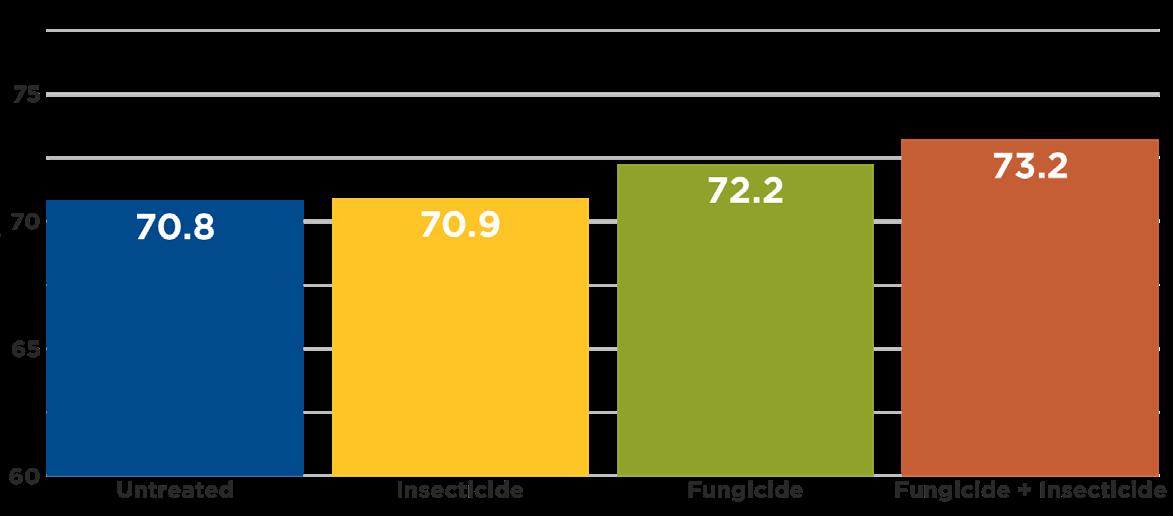
Figure 1: Soybean yields were compared across different fungicide and insecticide combinations. A statistically significant yield difference was observed between fungicide plus insecticide and insecticide alone and untreated treatments. No significant yield difference was observed between fungicide plus insecticide and fungicide alone.
Figure 1 Overall Yield by Treatment
product application done via drone at the R3 growth stage according to the product label and followed up with disease and insect severity ratings at R5.
Trial results
With the frequent precipitation events through the early part of the growing season, we were optimistic about the potential for disease development in our plots. Soybean fungicides only help when certain diseases are likely to develop — and those diseases need wet leaves to spread and infect the plant. As we walked the trials in August at R5 we were surprised to find that diseases such as frogeye leaf spot and Septoria brown spot were largely not present, even in the untreated control plots. At six of the 10 locations, we found sudden death syndrome (SDS). SDS infects the soybean plant early in the growing season during the seedling stage, and foliar fungicides are not effective against the pathogen.
It was a similar story when we looked at insect pressure in the plots. While we found the usual suspects including stink bugs, grasshoppers and Japanese beetles, we didn’t find any aphids or spider mites. Moreover, the insects we found were not at a population level that would warrant an insecticide application.
As we analyzed yield data coming from the combine last fall, we saw some key insights emerge from the project. First, when comparing fungicide plus insecticide versus fungicide alone, we did not see a significant yield difference between the two treatments. I attribute this to the fact that in the absence of significant insect feeding, insecticide
does not have a noticeable benefit to overall plant health. This is not groundbreaking information, but there is a misconception in agriculture that if you are spraying fungicide, you might as well include insecticide because you are already making the pass. Through our trials, we have not found that to be the case, and we advise applying fungicide or insecticide when an economic injury level has been achieved.
When fungicides pay
As I think about the past few years of fungicide trials and considering weather conditions, fungicide on soybeans should not be a standard part of the program. We’ve seen that without conditions conducive to disease development, fungicide application does not pay on soybeans. 2025 was a little different because we had the extended leaf wetness in some locations to allow for disease development. Overall, four of the locations showed a significant yield response to the combined fungicide and insecticide application.
Given the depressed soybean prices, and our estimate of $38 per acre to purchase and apply fungicide, it is as important as ever to make sound decisions when it comes to investing in the crop. That holds true with fungicide and insecticide. I have not seen a situation where a farmer by default should apply the products every July or August regardless of weather or pest pressure. My best advice is still to remember the disease triangle, scout your fields for pests and evaluate the result of any pesticides or products you apply to your crop.
locations).
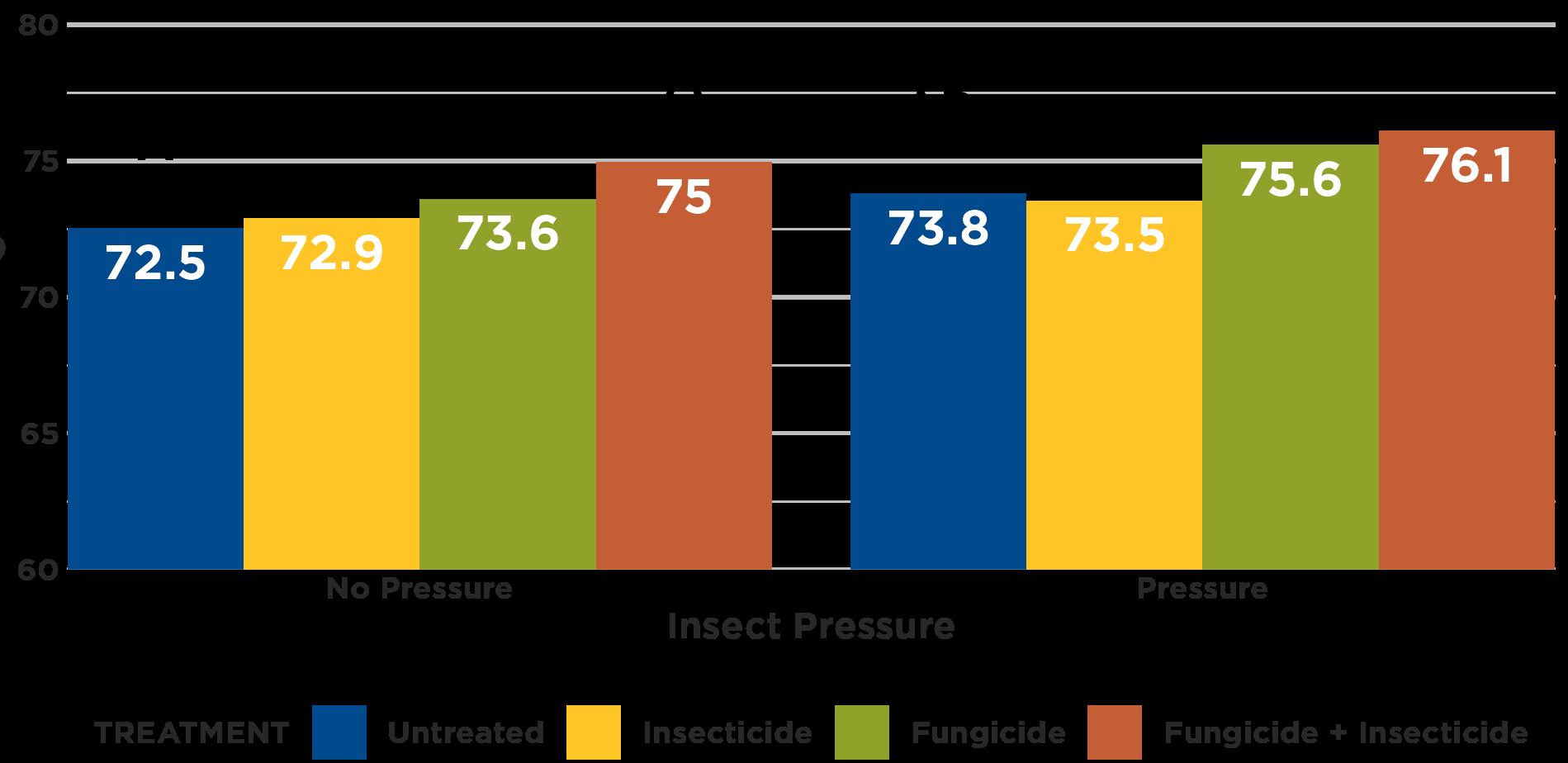
Figure 2: Soybean yields comparing different fungicide and insecticide combinations, grouped by whether or not insect pressure was observed at the R5 scouting. Overall, a significant yield difference was observed between fungicide plus insecticide and insecticide alone when there was insect pressure (four locations). There was no significant difference between treatments when no insect pressure was observed (six
Figure 2 Yield by Treatment and Insect Pressure Yield (bu/acre)
Improving Sulfur Applications and Profitability
BY LUCAS DE BRUIN, CCA ISA RESEARCH AGRONOMIST LDEBRUIN@IASOYBEANS.COM
KEY TAKEAWAYS
Sulfur is essential for plant health and nutrient uptake.
No statistical difference seen in sulfur applications in 2025.
Trials showed improved tissue sulfur levels but no consistent yield benefit.
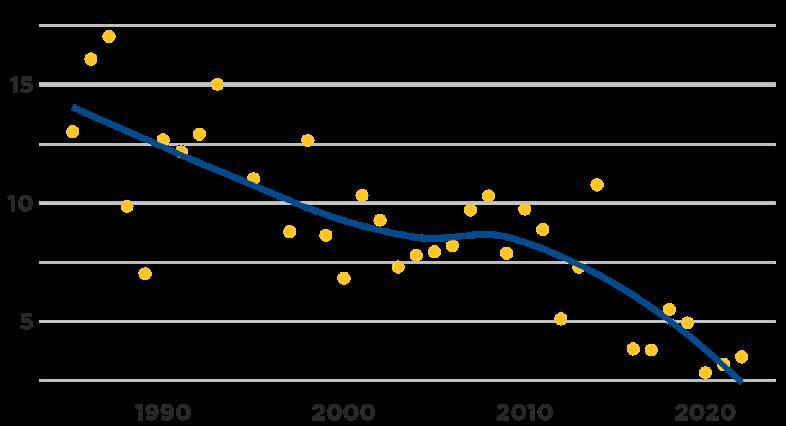
Nutrient management is at the top of every farmer’s mind, especially when margins are tight. Sulfur is a nutrient that has gained more recognition in recent years for two reasons: yields have been increasing, which means more nutrient removal, and sulfur deposition from the atmosphere is much lower now than it was a few decades ago. Overall, this means that soil has less sulfur readily available for growing crops (Figure 1). Could supplemental sulfur and/or seed treatments provide a positive ROI in soybeans?
Figure 1. Sulfur deposition from the atmosphere decreased from nearly 18 pounds per acre in the late 1980s to about 3 pounds per acre in 2020.
Sulfur is negatively charged, therefore it is not bound to soil particles allowing it to move with water, similar to nitrate. There are two main forms of sulfur used as a fertilizer source: elemental and sulfate (SO42-). All sulfur starts in the elemental form and needs moisture, oxygen, and bacteria or a production process to convert it and end up in the plant-available form, sulfate. Elemental sulfur takes longer to convert and acts as a slow-release source, while sulfate is available to the plant right away. If all sulfur is applied early in the season in the sulfate form and there is heavy precipitation, there is a higher likelihood it will leach out of the crop’s root zone.
Sulfur and growth
Sulfur is essential for protein synthesis, enzyme activity, root growth, cold tolerance and chlorophyll production. A sulfur deficiency often shows up as pale green plants. Sulfur helps drive uptake of other nutrients. Soybeans use sulfur steadily until mid-reproductive stages, then intake exponentially increases once it is focused on filling pods. Not all sulfur comes from a synthetic source as the soil will do most of the heavy lifting through mineralization. The higher the organic matter of your soils, the easier it is to carry and supply that demand of sulfur in season.
Figure 1 Annual SO4 Deposition
Sulfur treatment study
In 2025, the Iowa Soybean Association (ISA) conducted a trial in partnership with Harvest Increase Agriculture looking at their seed treatment SUPRGrow, a sulfur product in sulfide form. When plants take up sulfate, they convert it to sulfide which is responsible for plant signaling and plays a regulatory role in plant growth and development. Because SUPRGrow is already in the sulfide form, it takes less energy of the plant to utilize and also allows lower use rates than other forms of sulfur for row crop production, which is where the seed treatments fit.
Three treatments were applied and replicated across all trial locations throughout Iowa, including sulfur, sulfur with SUPRGrow and untreated. For the sulfur treatment, 100 pounds per acre calcium sulfate was used, equating to 17 pounds of sulfur applied to the soil.
For the sulfur with SUPRGrow treatment, 100 pounds per acre of calcium sulfate was again used along with the seed treatment of SUPRGrow for the soybeans. An untreated check was implemented as well.
The strips of sulfur were applied in the spring before planting. Treatment of the soybeans with SUPRGrow was done within 30-40 days of planting. All other field inputs were held consistent across the trial area. Soil and tissue sampling were conducted by research agronomists at R1 growth stage (beginning flower).
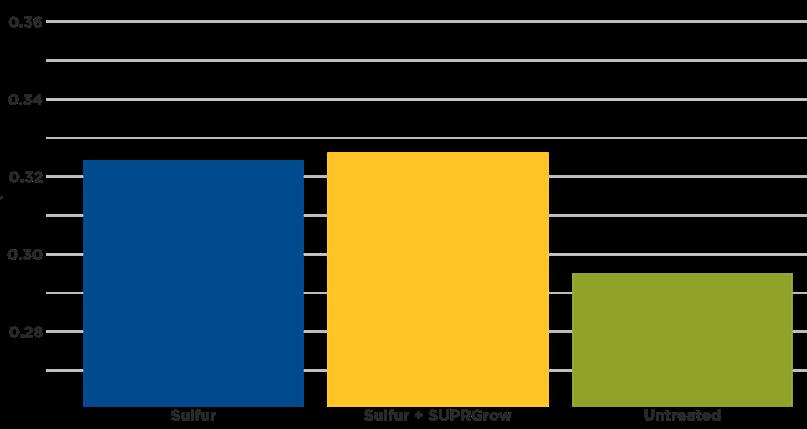
Figure 2 Sulfur Content in Plant Tissue
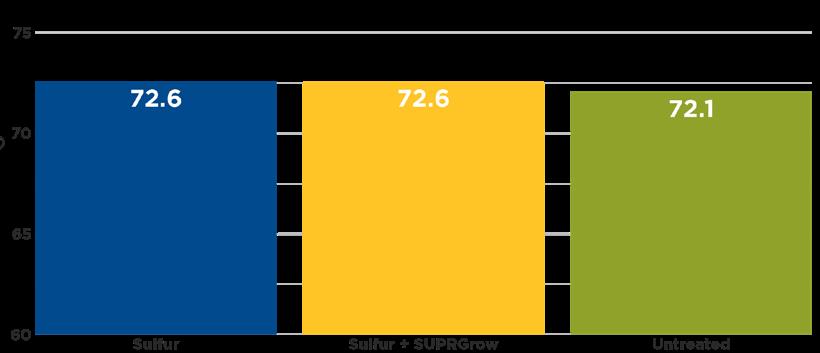
Figure 3 Sulfur on Soy 2025 Results
Results showed an increase in concentration of sulfur in the tissue tests in both treatments that included sulfur (Figure 2). While all the levels shown are adequate (greater than 0.25%), the treated area shows more potential for nutrient movement and uptake and should correlate to more efficient photosynthesis, not necessarily yield.
While the soil and tissue tests showed improvements in the numbers, we did not see any conclusive data that indicated a consistent increase in yield for soybeans in 2025. There were a few instances where the treated strips showed a yield benefit, but it was not consistent enough to claim a true yield benefit.
There could be many factors behind what we saw in this 2025 trial. Weather plays a large role in mineralization, and we had moisture early through mid-season until the rain shut off and slowed soil activity. The pH levels at the locations were all within the range needed for a healthy cycling soil. The organic matter levels across the locations ranged from 1.5% to 4.5%, all adequate levels for their geography. While organic matter did not correlate to any yield benefit, the tissue results did remain more consistent and have higher levels in the treated strips versus the untreated.
The 2025 sulfur treatment on soybeans did not show a yield benefit for either of the treatments. Sulfur is very important in plant production, and levels should be monitored to ensure that it is not your limiting factor. ISA will continue to implement sulfur trials in the coming years to determine treatments and rates that could generate the maximum ROI for your farm.
Figure 3. Sulfur treatments showed a higher yield in 2025, though not statistically significant.
Yield (bu/acre)
Sulfur Sulfur + SUPRGrow Untreated
Figure 2. Plant tissue samples at the R1 growth from the sulfur and sulfur + SUPRGrow treatments showed higher sulfur content than the untreated control. Higher sulfur content didn’t conclusively indicate higher yields.
Sulfur Sulfur + SUPRGrow Untreated
Seeding Rate Trials: A Three-Year Perspective
BY SHANE BECK, CCA ISA RESEARCH AGRONOMIST SBECK@IASOYBEANS.COM
KEY TAKEAWAYS
Results show early planting key to achieving maximum yield potential.
Fifteen-inch row spacing has a yield advantage over 30-inch spacing.
The Iowa Soybean Association (ISA) has completed its third year of seeding rate trials, compiling 47 trial sites during that period. This study compares four different rates — 80,000, 110,000, 140,000 and 170,000 seeds per acre — to find the most profitable seeding rate. These trials were randomized with either three or four replications and implemented with seeding rate prescriptions.
The data collected in these trials were stand counts and planter performance from planting as-applied data. This data helped determine the number of plants that emerged and contributed to yield, along with how well the planter performed when targeting different planting populations.
The 2025 growing season started off favorably with some great planting conditions early in April, allowing for early-season planting opportunities. The weather quickly turned sour with cold temperatures and rain, leading to crusting issues. This caused some poor stand establishment, forcing farmers to decide whether to replant or add seeds to existing populations in fields.
This problem was most prevalent in northern Iowa, where we saw about a 5-bushel-per-acre yield reduction
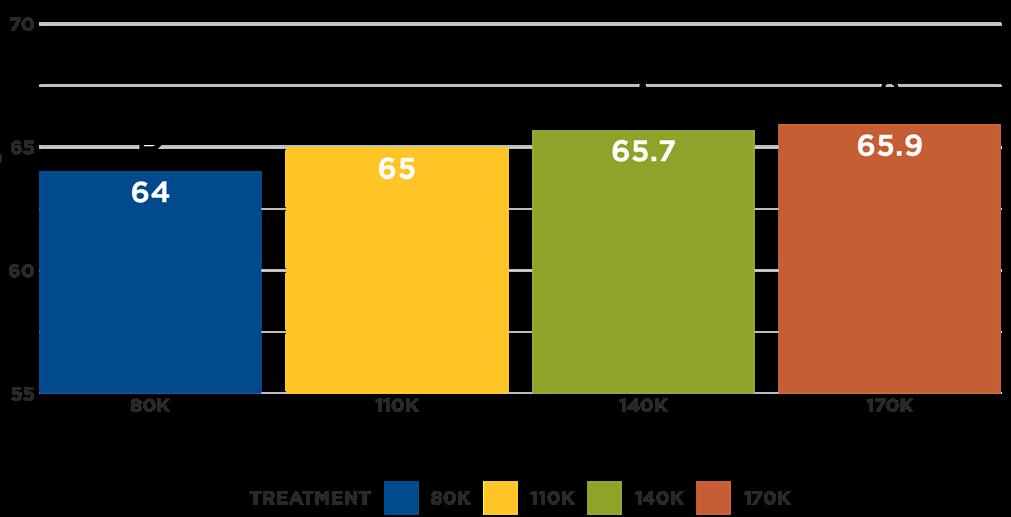
The most profitable seeding rates are 80,000 and 110,000 seeds per acre depending on seed costs and sales price.
due to crusting. The weather turned favorable again in early May. The trials that were implemented in the first week of May emerged great and had no stand quality issues. Our 2025 trial data shows a one- to two-week gap in establishment from late April to the second week of May due to poor weather and planting conditions.
Trial results from 2023-2025
When comparing stand counts for the last three years of trials, we see that as seeding rates increased there were fewer plants that emerged. This is most likely because of poor planter performance.
We have noticed that planters generally perform poorly with higher populations. Planters tend to under seed at the higher rates, which is most likely why we are seeing a greater reduction in stand from 170,000 seeds per acre and even 140,000 seeds per acre.
There is about a 20% stand reduction from the early season stand counts compared to targeted seeding rate at the two higher populations, and a 15% reduction in stand at the two lower populations.
Planting dates
Over the last three years, we’ve also observed a connection between planting date and the yield differences associated with different weeks of planting. According to the last three years of our data, the best time to plant soybeans is around the third to fourth week in April across the entire state. That is when we have seen maximum yield regardless of the planting population. We have also noticed that yield starts to decline when planted around that second week of May and is drastically reduced starting the third week of May. This emphasizes the importance of planting early to help achieve those peak growing conditions.
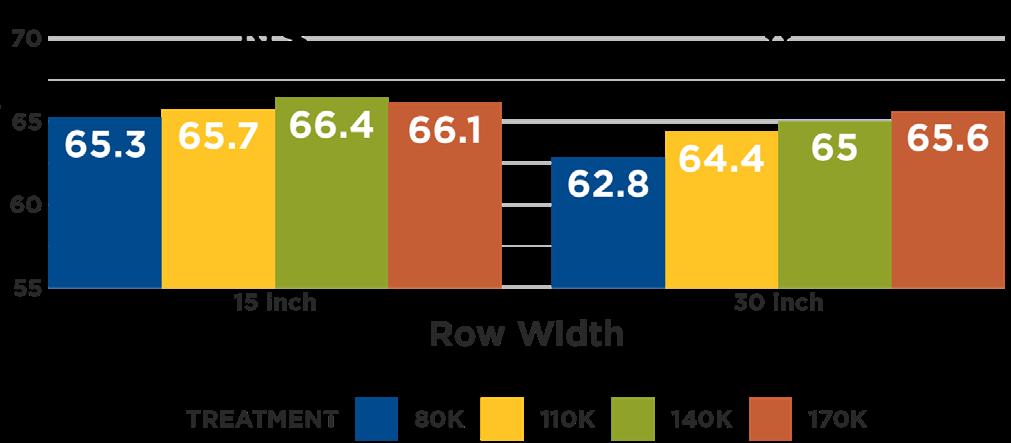
The robust dataset allowed us to compare the two most common row widths that are used across these trials: 15-inch and 30-inch. After comparing the yields over the last three years, there is a one to two bushel advantage of growing soybeans in rows spaced 15 inches apart compared to 30-inch row spacing. The data showed no significant difference among the four seeding rates in 15-inch row spacing, but there was a significant difference among the seeding rates planted in 30-inch rows (Figure 1). In the 30-inch rows, the significant difference was between the 80,000 seeds per acre rate, which yielded about 2.5 bushels per acre less than the other seeding rates.
Early matters
The data over the last three years has demonstrated the importance of planting early to achieve maximum yield potential. Even if stand quality is less than ideal, the soybeans will normally compensate for that if there is an early season stand count above 65,000 to 70,000 plants per acre.
Row spacing also adds a slight yield advantage when comparing 15-inch row spacing to 30-inch row spacing. Planters struggle to accurately plant higher populations and generally underseed at populations over 140,000 seeds per acre.
Overall, there is no statistically significant yield difference between the upper three populations and only a slight reduction in yield with the 80,000 population.
Figure 1 Yield by Seeding Rate and Row Width 2023-2025
Figure 1. Compares 15-inch row spacing to 30-inch row spacing from seeding rate trials between 2023-2025. There is no significant differences in yield between the four different seeding rates in 15-inch rows. There is a significant difference in yield between the 80,000 seeds per acre and the rest of the seeding rates with 80,000 seeds per acre yielding about one to two bushels fewer than the other seeding rates.
Figure 2 Seeding Rate Decisions 2023-2025 Results
Figure 2. Soybean yields from 2023-2025 comparing different seeding rates. 80,000 and 110,000 seeds per acre are the most economical seeding rates depending on seed price and soybean sale prices.
Yield (bu/acre)
Yield (bu/acre)
Overcoming Cover Crop Seeding and Establishment Challenges
BY EVAN BREHM, CCA ISA CONSERVATION AGRONOMIST EBREHM@IASOYBEANS.COM
KEY TAKEAWAYS
ISeveral options for cover crop establishment from in-season to post harvest.
Winter hardy species provide more ROI.
n 2024, Iowa farmers planted 3.8 million acres of cover crops spanning nearly 23 million acres of soybean and corn acres across the state, according to the Iowa Nutrient Research and Education Council (INREC). That’s a significant increase from 2009, when 10,000 acres were planted across Iowa.
In addition to the growing interest from landowners and farmers realizing the agronomic and environmental benefits of cover crops, cost-share programs have spurred this continuous uptick in 15 years. With the interest and willingness of various operators to plant cover crops, a challenge has always been the method and time. As cover crop acres have dotted Iowa’s landscape, the innovative methods to plant them have evolved. Overcoming Mother Nature is one thing we cannot control, but we can control how cover crops can be established from ground applications to aerial applications, and everything in between.
Iowa’s go-to covers
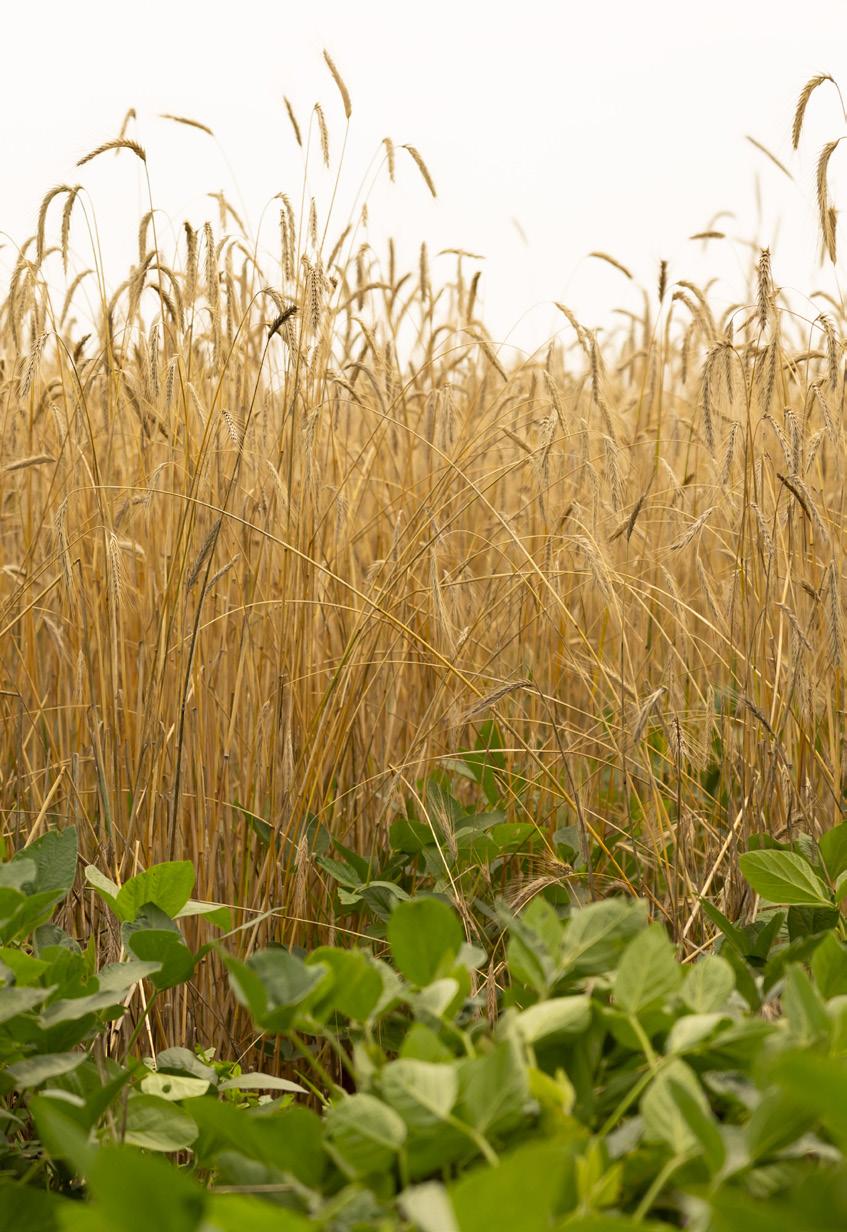
Cereal rye is planted on 86.6% of Iowa’s acres either in a standalone or in a mixture, according to INREC survey data. Cereal rye is the “king” cover crop due to its ability to overwinter, reduce soil erosion, sequester nutrients that may be lost, suppress weeds and provide grazing options for livestock.
Oats are another popular option. With similar characteristics as cereal rye, the main difference is that oats do not overwinter. Recommendations are to establish oats as a cover crop in the late summer/early fall for better establishment.
Experiment with various methods of seeding to fit your operation.
Rye planted in soybeans on a farm near Oskaloosa.
Weed suppression and nutrient capture
Multiyear tile sampling with the Iowa Soybean Association (ISA) has proven that no-till with a cover crop reduces nutrient runoff. Several factors including how long the cover crop is allowed to grow, soil type, rainfall and nutrient management plans effect overall reduction.
Continued in-field conservation management also continues to showcase nutrient runoff reduction.
Herbicide use has the potential to be reduced with long-term cover crop adoption. Cover crops provide in-field competition with early season weed pressure and can be another tool to help battle herbicide-resistant weeds. One Iowa farmer noted he saved $25 per acre on his soybean herbicide program this past season because of the weed suppression upfront that cereal rye provided.
Establishing cover crops
One of the main barriers to planting cover crops is time. Cover crop seeding often overlaps with harvest, creating challenges for farmers trying to fit planting into an already busy season. Every farming operation is unique with different equipment, labor and distance between fields. There is no single planting method that fits every operation, but there are many options to establish cover crops. These include:
• Planter or a drill: Seed-to-soil contact is important, and a planter or drill fits this requirement. This is a common practice across the state to establish cover crops. However, this requires an extra pass and extra time post-harvest.
• Broadcasting: This method can occur in season or postharvest. Utilizing airplanes and drones to apply cover crops into a standing row crop to counter the time and labor is an option. A cover crop can also be mixed into a dry fertilizer blend application to meet the fertility needs for the next year's cash crop while establishing a cover crop.
• In season: Besides aerial applications into a standing row crop, a rotary hoe with an air seeder is an option. This favors summer species of cover crops that need warmer temperatures. By using this method, livestock producers can maximize the benefits from soil health and grazing options. Establishment of cover crops to graze fare much greater when planted with this option versus waiting until later in the growing season.
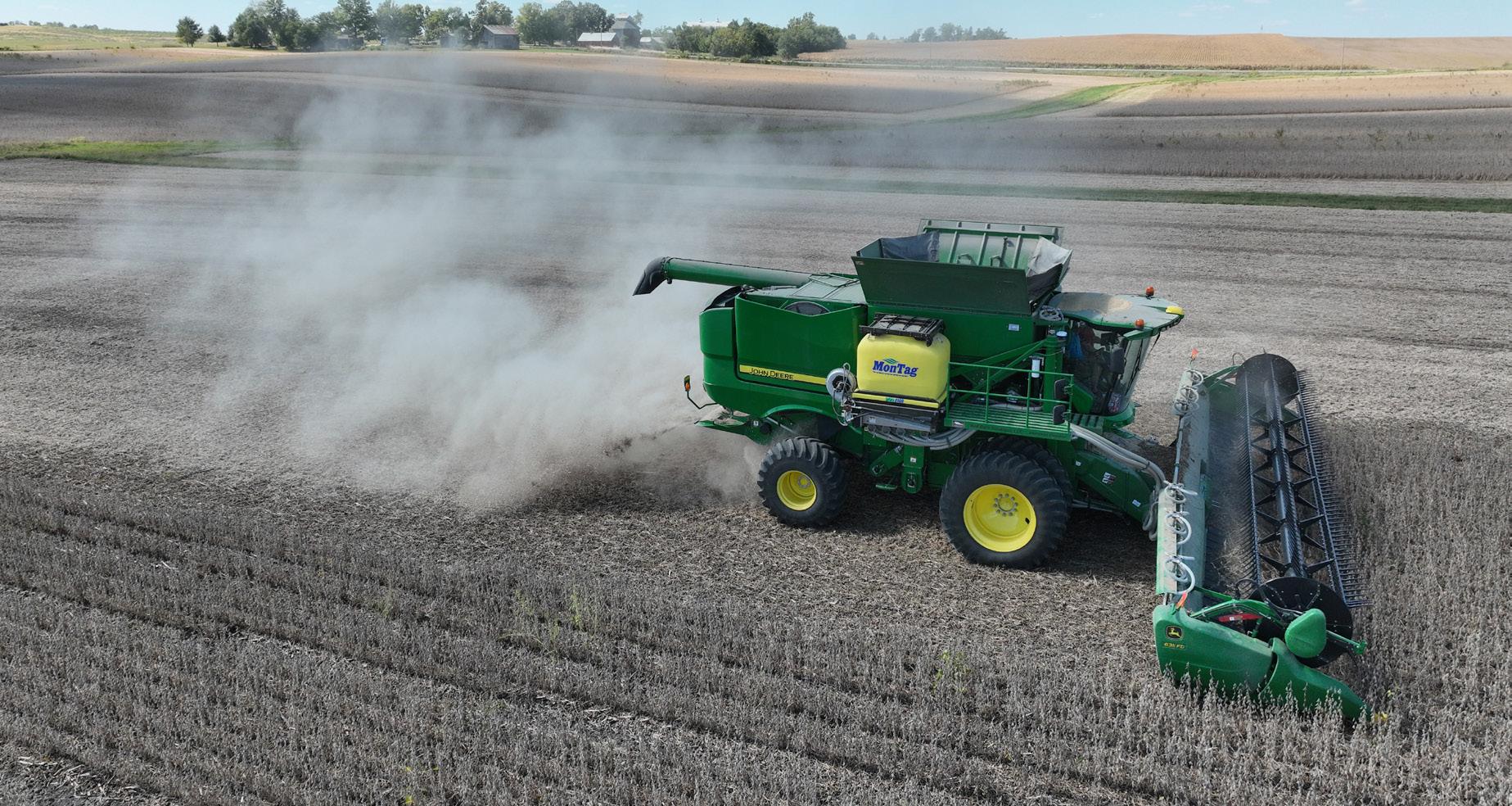
• At harvest: To advance, innovation is key. The Harvest Seeder by Red Barn Solutions offers farmers an opportunity to plant cover crops while harvesting their row crop. With an air seeder mounted on the combine with a series of hoses leading to the soybean platform or corn head, this option defeats the time barrier. The cover crop seed is then applied in a broadcast style low to the ground, which has a likelihood of establishment equal to all other broadcast methods.
Environmental payoff
Cover crops provide environmental benefits and continue to showcase profitability after continued use. Cost-share programs come and go, and the advice is to analyze the reasoning behind using cover crops. Long-term use reduces soil erosion, hinders weed germination, improves water quality and can provide grazing options for livestock producers. With various methods of establishment, any producer interested in cover crops has options. Each method presents various costs associated and differing time constraints. Determine the goals of cover cropping on your operation, then take action in a method that meets your goals.
For further information, contact the RCFI team at the Iowa Soybean Association at 515-251-8640, or visit our website at iasoybeans.com to learn how we can support you in your cover crop endeavors.
Harvesting soybeans while applying a rye cover crop with the Harvest Seeder. Photo credit Evan Brehm.
IFarm-Driven, Data-Backed: ISA’s 2025 Scoreboard
BY ROSIE KOCH ISA TECHNICAL INSIGHTS MANAGER RKOCH@IASOYBEANS.COM
ISA provides agronomic and conservation support focused on profitability, productivity and long-term sustainability across all cropping systems.
Research and conservation efforts expanded in 2025, including 355 on-farm research sites, 16 research topics, 60,000+ acres of cover crop assistance and 119 edge-of-field practices (including completed and ongoing projects).
owa Soybean Association (ISA) agronomists and conservation professionals are eager to help farmers achieve their unique operation goals. Agronomic and conservation assistance is available to farmers at no cost, due to support through checkoff dollars. Research topics
Checkoff dollars go further through leveraged external funding, allowing ISA to deliver more research, water monitoring and farmerfocused conservation outcomes.
span the cropping system, including soybeans, corn and small grains. Each project or program starts with the question of profitability at it’s core and grows to include farm productivity and sustainability. Here’s how ISA worked alongside farmers in 2025:
KEY TAKEAWAYS
17 ag professionals directly supporting farmers through research, data processing and implementation
ON FARM RESEARCH
355 on farm research and survey sites focusing on nutrient management, crop protection and best management practices
ASSISTANCE
Provided agronomic assistance for more than 60,000 acres of cover crops
PARTNERSHIPS
For every $1 of checkoff funds invested in RCFI projects, ISA brought in $1.40 through external funding in 2025.
16 research topics testing product efficacy and management factors
WATER QUALITY
371 sites voluntarily sampled and monitored for water quality
118 edge-of-field conservation practices implemented that improve local environment and downstream water quality
PROJECTS
23 external industry projects funded
Combatting Iowa’s Most Damaging Soybean Pathogen
BY G REG TYLKA, PH.D. IOWA STATE UNIVERSITY MORRILL PROFESSOR AND NEMATOLOGIST GLTYLKA@IASTATE.EDU
KEY TAKEAWAYS
FThe soybean cyst nematode (SCN) can reduce yields by 30% or more, and it is present in more than 70% of Iowa fields.
To improve and maintain profitable soybean yields in SCN-infested fields, grow nonhost corn in alternating years with soybeans; rotate PI 88788 and Peking resistance.
or more than 30 years, I’ve studied soybean cyst nematode (SCN) in field experiments throughout the state with Iowa State University (ISU) graduate students and staff. Almost all experiments have focused on how to best manage the nematode.
Measuring effects of resistant varieties
Soon after SCN was discovered in northern Iowa and southern Minnesota in 1978, university and industry soybean breeders in the region began developing SCNresistant soybean varieties.
The breeding line PI 88788 was recognized as one of the least difficult sources to use in developing SCN-resistant soybean varieties with high yields. The availability of SCNresistant varieties in Iowa increased dramatically in the late 1990s. As more resistant options entered the market, university variety trial programs began evaluating the yields of those varieties.
In 1994, I began conducting annual studies measuring and comparing the SCN control provided by resistant soybean varieties in addition to yield. At the time, this type of field research had not been done. The work proved well-founded.
In the last 25 years, soybean geneticists have discovered that SCN resistance is not controlled by a single gene. The genetics of SCN resistance are complicated, resulting in differences in SCN control among resistant varieties.
Check ISU’s IPM52 publication annually for data on variety performance in SCN infested fields.
During the breeding process, there are multiple SCN resistance genes that can be inherited from PI 88788 and from Peking, and the resistance genes in the two breeding lines are different. All varieties developed from PI 88788 or from Peking will not necessarily possess all of the resistance genes that were in the breeding lines, leading to variable levels of SCN control among resistant varieties. Also, there are SCN resistance genes present in more than one copy in PI 88788 and Peking, and strength of SCN resistance in a variety seems to increase as the number of copies of the gene increases.
The Iowa Soybean Association has funded research at Iowa State University to study the agronomic performance and SCN control provided by thousands of SCN-resistant varieties over the years. The variety evaluation studies almost always are conducted in fields rented from farmers in each of Iowa’s nine crop reporting districts. In every experiment, reproduction of the SCN population present in the field on the resistance breeding lines PI 88788 and Peking was determined. The research project monitored the availability of SCN-resistant varieties for Iowa and the SCN resistance genes they possessed.
The Iowa State SCN-resistant Soybean Variety Evaluation Program is the largest and longest-running effort of its kind in the nation. Results are summarized and published each year in an ISU Extension publication IPM52.
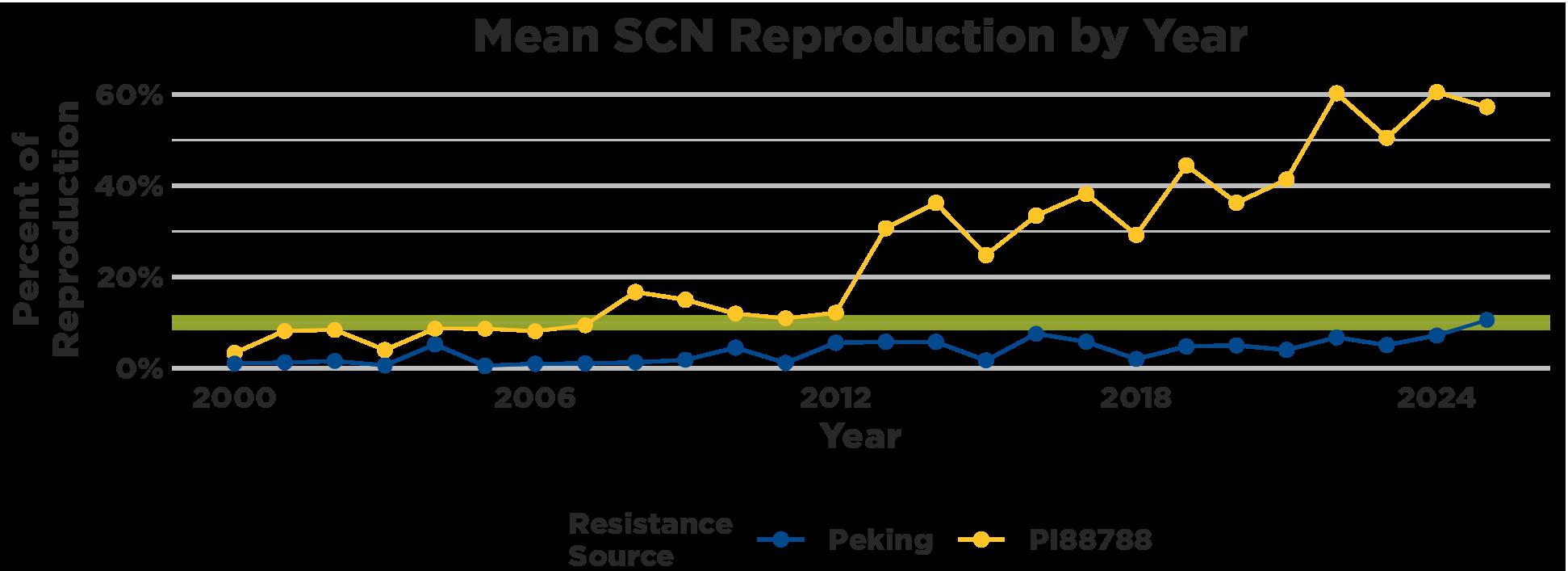
Figure 1 Mean SCN Reproduction by Year
Percent of Reproduction
1. Reproduction of SCN populations on PI 88788 and Peking SCN-resistance breeding lines in 210 variety trial experiments in Iowa fields since 2000. The green line shows the maximum allowable reproduction rate of 10% to be considered resistant.
Too much of a good thing
Results of SCN population testing in Iowa fields where these experiments were located showed a steady increase in SCN reproduction on PI 88788 resistance, but not on Peking resistance (Figure 1).
Yield consequences
Increasing reproduction of Iowa SCN populations on PI 88788 SCN resistance was not unexpected. The loss of resistance effectiveness was caused by prolonged, continual use of soybean varieties containing PI 88788 SCN resistance. The majority of SCN-resistant varieties available through 2021 possessed SCN resistance genes from PI 88788. In 2025, 22% of the varieties tested had a resistance source from Peking. The increased SCN reproduction resulted in welldocumented yield reductions in varieties with PI 88788
resistance compared with varieties that use the less frequently used Peking resistance source. In recent years, yield differences between PI 88788 and Peking varieties were found to be 30% or more when SCN numbers were high (about 5,000 eggs per 100 cubic centimeters of soil) and SCN populations reproduced well (71%) on PI 88788.
Recommendations for SCN management
To maintain high soybean yields and control SCN population densities, an active and diverse approach to managing SCN is necessary. Soybeans should be rotated annually with corn, a SCN non-host. And when soybeans are grown, varieties with PI 88788 and Peking SCN resistance should be used in alternate seasons. Additionally, nematode-seed treatments are available for use that may provide added soybean yield protection.
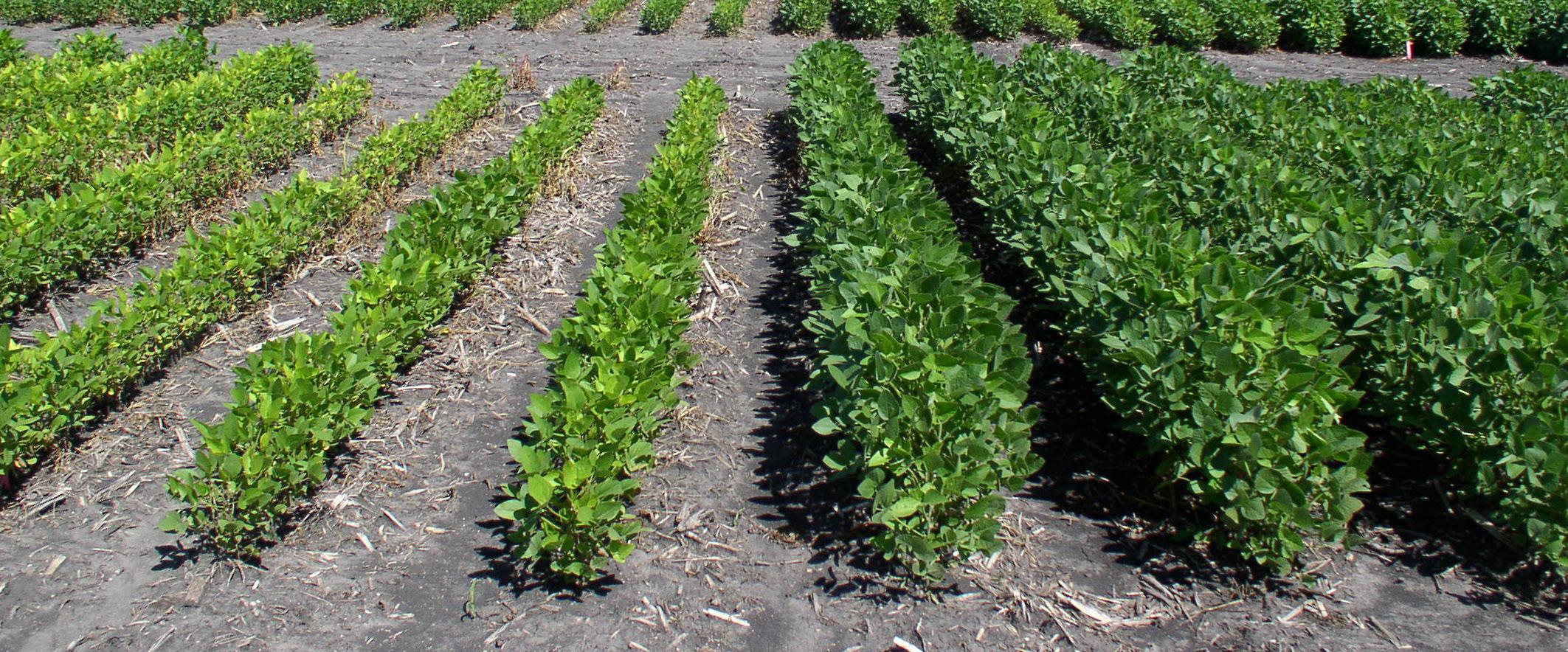
Figure 2. On the left is a variety that is susceptible to SCN, and on the right is an example of a resistant variety. Photo Credit: University of Minnesota.
Figure
What Residual Nitrogen Means for Soybeans
BY MICHAEL CASTELLANO, PH.D. IOWA STATE
UNIVERSITY PROFESSOR AND LEAD, IOWA
NITROGEN INITIATIVE; WILLIAM T. FRANKENBERGER
PROFESSORSHIP IN SOIL SCIENCE CASTELMJ@IASTATE.EDU
KEY TAKEAWAYS
Corn nitrogen rates had no impact on the following year soybean yields.
Nitrogen mineralization and soybean biological nitrogen fixation continue to meet soybean nitrogen needs.
How do soybeans respond to nitrogen fertilizer? It’s a question farmer have asked for decades, and one that still sparks debate among scientists. Until recently, few large-scale, on-farm datasets existed to test this in farmers’ fields.
Now, the Iowa Nitrogen Initiative — and the farmers who make it possible — have an opportunity to explore how soil nitrogen levels might affect soybean yield.
Farmer-led framework
The Iowa Nitrogen Initiative (INI) is a public-private partnership led by Iowa State University and supported by many collaborators, including the Iowa Soybean Association’s (ISA) Research Center for Farming Innovation. Its goal is simple but powerful: use farmer-managed, scientifically robust experiments in real-world conditions to build better information for decision-making about nitrogen fertilizer management for Iowa corn and soybean farmers.
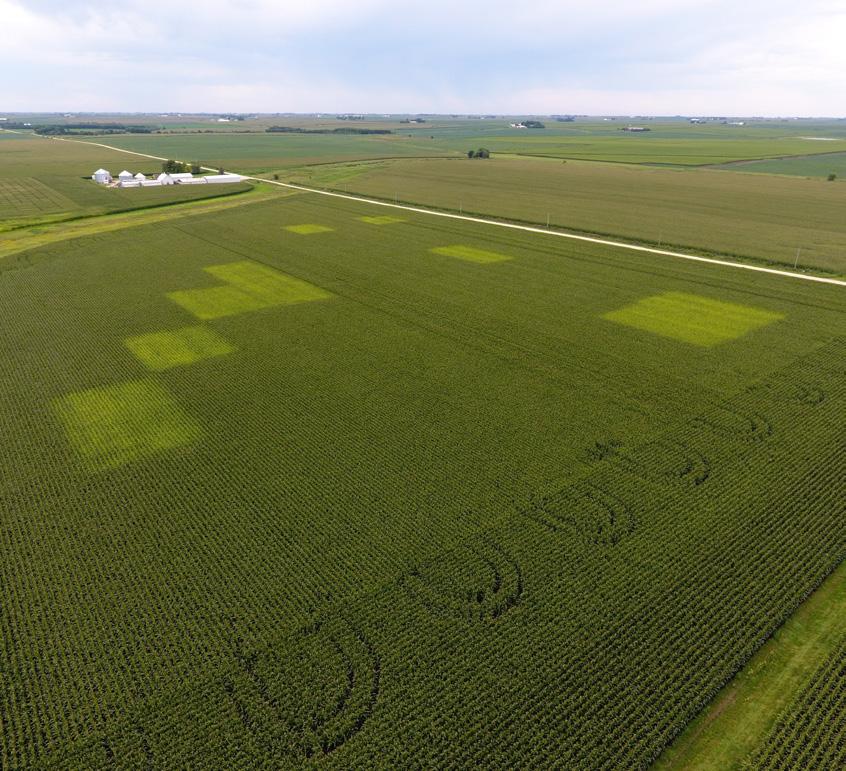
The INI gives soybean growers a unique opportunity to examine how soybean yields respond to residual nitrogen and residue after the field was planted to corn the year before. At insufficient nitrogen input to corn, residue amounts are low, and there is little residual nitrogen; at optimum nitrogen input, residue amounts are high, but there is little residual nitrogen; at high nitrogen input, residue amounts are high and so is residual nitrogen.
Fields with low corn yields consistently produced lower soybean yields, pointing to underlying soil and management factors.
Figure 1. Each experiment includes four or five nitrogen rates, each replicated across five plots, using variable rate nitrogen fertilizer prescriptions. Zero rate nitrogen plots can be seen in the picture with yellow blocks across the field.
Photo credit: Ben Gleason, Iowa Nutrient Research and Education Council (INREC).
Exploring the soybean response
For this study, we used 17 INI trial locations across Iowa — all managed by ISA farmer members — to explore whether soybean yields respond to residual nitrogen left after corn (Figure 2). Each site included plots that previously received insufficient, optimum and excessive nitrogen fertilizer rates for corn.
Soybean yields averaged 68 bushels per acre across all sites. When comparing yields following different corn nitrogen rates, the results were remarkably consistent: residual nitrogen had no measurable effect on soybean yield. Even at locations where soil nitrogen availability was high after the excessive nitrogen corn treatment, soybeans didn’t yield more than those following the optimum or insufficient nitrogen treatments.
These results reinforce the idea that high-yielding soybeans rarely benefit from nitrogen fertilizer including residual nitrogen fertilizer from the previous corn crop. Soil organic matter mineralization in Iowa’s rich soils, plus soybean’s symbiotic nitrogen-fixing bacteria, continue to meet the crop’s needs.
The corn–soybean link
While residual nitrogen didn’t influence soybean yield, an unexpected pattern emerged. Low corn yields were consistently associated with low soybean yields the following year. However, low soil nitrogen levels couldn’t explain it. The likely driver? Underlying soil factors — drainage, topography and fertility — limited the productivity of both crops. By contrast, fields with high corn yields (and therefore high residue and residual nitrogen) showed high variability in soybean yield. In other words, systems with high corn yields can have high or low soybean yields — possibly due to differences in residue management, soil temperature or early-season emergence conditions.
These findings have led us to investigate new research questions about the role of corn residue management on soybean yields. We are understanding how corn residue management — and even partial corn residue harvest — can increase soybean yield and cover crop growth by improving planting conditions and increasing soil temperature. Moreover, these factors improve environmental outcomes: early planting and cover crops both reduce nitrogen loss.
What it means for farmers
These results provide reassurance and direction. There’s no evidence that soybeans require extra nitrogen. But there’s value in recognizing that fields with chronically low corn yields are also likely to underperform in soybeans, suggesting that long-term soil or management factors are at play.
This is where on-farm data from initiatives like INI shine. By leveraging farmer participation across Iowa’s diverse landscapes, we can see how nitrogen, residue and yield interact across real conditions for the corn-soybean system. This collective knowledge is helping us provide more field-specific information to improve decision-making.
Closing the knowledge gap
Understanding nitrogen dynamics in corn-soybean systems remains one of the most important challenges for Midwestern agriculture. Each season, the INI adds a new layer of insight — from how nitrogen management affects corn profitability, to how decisions about corn management shape conditions for next year’s soybeans.
As more years and sites are added, patterns will become clearer. For now, one message is certain: collaboration between farmers and researchers is transforming how we understand nitrogen use efficiently — one field at a time.
Figure 2. Iowa Nitrogen Initiative trial locations. Seventeen trials distributed across the state contributed data in this work.
Fungicide Research and Resistance Monitoring
BY DAREN MUELLER, PH.D.
IOWA STATE UNIVERSITY PROFESSOR AND EXTENSION
PLANT PATHOLOGIST
DSMUELLE@IASTATE.EDU
KEY TAKEAWAYS
Disease pressure matters: only 20% of the trials over the past five years returned a positive ROI for the fungicide application.
FA tool for disease risk has been developed to aid in fungicide spraying decisions.
or more than a decade, Iowa soybean farmers have invested checkoff dollars into soybean disease management research at Iowa State University. These investments have provided answers on how fungicides work in Iowa fields, how resistance is developing, and how to make informed decisions that protect yield and profitability.
Why fungicide research matters
Soybean foliar diseases such as frogeye leaf spot, brown spot, and Cercospora leaf blight can reduce yield potential. Foliar fungicides remain one of the few management options available, but their effectiveness depends on disease severity, application timing, product choice, and weather conditions. Iowa Soybean Association’s support of statewide fungicide trials ensures that farmers have locally-relevant data each year to guide fungicide decisions.
Between 2021 and 2024, 32 trial locations across Iowa were evaluated. These trials compared commercially available and experimental fungicides under both natural infection and inoculated conditions. Results show:
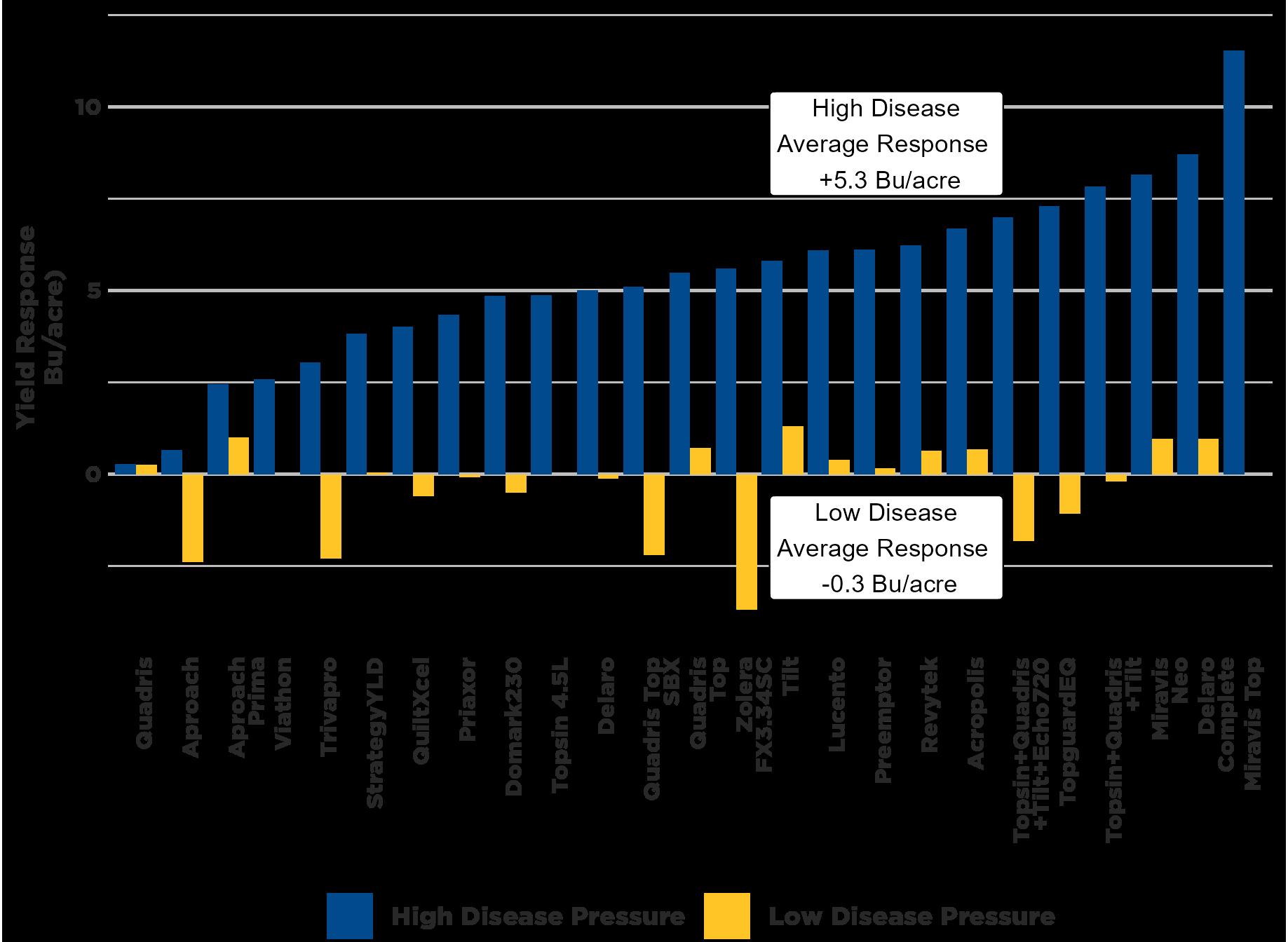
• Fungicides do not always produce yield responses — disease pressure matters (Figure 1).
• Responses vary across products, locations, and years.
The right timing (R3 growth stage) is critical for maximizing return on investment.
• The right timing (R3 growth stage) is critical for maximizing return on investment
• Across five years of research in Iowa, fungicides returned a positive ROI in roughly 20% of trials when disease was present.
Using weather and forecasting to improve decisions
Low disease pressure is unlikely to result in a positive ROI for fungicides in soybeans, and knowing if a product should be used to protect yield is usually based on minimal data. Research shows that disease risk for foliar diseases such as frogeye leaf spot increases with extended periods of high relative humidity and/or leaf wetness. These findings contribute to the Crop Protection Network (CPN) Crop Risk Tool, which farmers can use to anticipate outbreaks and evaluate fungicide needs before disease becomes widespread.
By connecting fungicide efficacy with weather-based forecasting, Iowa farmers have access to decision tools that help them use fungicides more efficiently, protecting yield potential while saving unnecessary input costs.
Yield Response (Bu/acre)
Figure 1. Yield responses of fungicides in six locations with frogeye leaf spot(blue bars) and 26 locations with no frogeye leaf spot(yellow bars) in Iowa, showing ineffectiveness when disease is not present.
Keeping ahead of fungicide resistance
One of the most concerning trends in soybean disease management is the buildup of fungicide resistance. Supported by soybean checkoff funding, researchers confirmed that fungicide-resistant strains of the frogeye leaf spot pathogen (Cercospora sojina) are now present in nearly every county sampled in Iowa. Resistance has also been documented in the Septoria brown spot pathogen (Septoria glycines), and monitoring is ongoing for other pathogens such as the pathogen that causes Cercospora leaf blight (Cercospora spp.).
This information is critical for fungicide stewardship. Using fungicides with a single active ingredient increases the risk of resistance. Mixing or rotating products with different modes of action provides a better chance of managing disease while slowing resistance. Iowa State University’s work, supported by farmer dollars, directly informs national tools such as the CPN fungicide efficacy tables and stewardship guidelines.
As fungicide resistance becomes more common, stewardship is essential. Farmers are encouraged to:
• Use fungicide mixtures with multiple effective modes of action.
• Apply fungicides only when disease risk is high.
• Limit applications to preserve product life.
• Continue scouting and using decision tools such as the CPN forecasting and fungicide efficacy tables.
Checkoff powered research
Checkoff dollars have established protocols and longterm monitoring systems that serve both Iowa and the Midwest. Investments have led to:
• Contributions to multistate papers on fungicide performance.
• Predictive models for frogeye leaf spot.
• Improved fungicide timing and spray coverage recommendations.
• National collaboration through CPN. These efforts stretch every farmer dollar by building knowledge, national tools and training future scientists. The takeaway is clear: Fungicides are valuable but must be used wisely to stay effective. Checkoff investments give farmers the latest data on fungicide performance, resistance and weather-based decision tools — protecting yields today while preparing for tomorrow.
Figure 1
BUILDING BLOCKS OF SOYBEAN RESEARCH SUCCESS
INDUSTRY IMPACTS
The partnerships and collaborations through NCSRP accelerate and expand the impact for Midwest and US soybean farmers. Researchers are exploring crop improvement through biotechnology, engineering, remote sensing, predictive modeling, decision-making tools, and AI innovations.
SRIN PARTNER
Information about these scientific advancements can be found on the Soybean Research & Information Network (SRIN). The website is a comprehensive communication hub for research results from NCSRP and other state, regional and Soy Checkoff partners. Included on SRIN are articles, researcher profiles, a monthly e-newsletter signup and connections to social media.
COLLABORATIVE RESULTS
The North Central Soybean Reserch Program (NCSRP) is a national leader in collaborative research through multi-state, multi-university, and multi-discipline partnerships. The program has funded more than $56 million for basic and applied soybean research, teaching and outreach programs.
BENEFITS FOR THE FARMER
NCSRP delivers short- and long-term benefits to farmers through research to ultimately improve yield, stress resistance and soybean quality in these areas:
• Agronomics and cropping systems
• Soybean breeding and germplasm development
• Soybean Cyst Nematode (SCN) awareness and management
• Disease, insect and abiotic stressors
• Discoveries for improved and sustainable farm practices