Dawn Chorus
If you want trees in your lifetime, you'll need to plant them’
A conservation legend returns
Plant phenology – a new project on the Island
25-year anniversary of the translocation of mātātā/fernbirds



Kia Ora, Members.
The busy period has continued on the Island, with a high number of visitors and school groups. Volunteers and staff have continued to focus across all areas of our operations and governance on delivering great service in the interests of the Tiritiri Matangi conservation project.
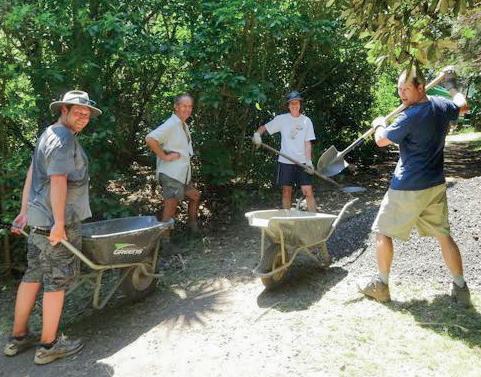
The recent long Easter weekend allowed for a full four days of volunteer work on a range of maintenance tasks to ensure the Island is kept in the best possible condition.
As members are aware, we are privileged to work alongside the Department of Conservation, and all our activities are governed by agreements, concessions, licences and permits that enable us to collaborate for the benefit of conservation and the Island's flora and fauna.
To enable much of what happens on the Island, there is an elected and appointed board supported by four standing committees. These committees are responsible for infrastructure, biodiversity and research, advocacy, and the planned field centre. In addition, there are other small but important groups that oversee education, membership, and the future operation of the field centre when it is constructed. All these groups, our staff, and contractors contribute to reporting, provide information and advice, and offer the expertise upon which the Board is able to make policy and decisions for the future of the organisation.
In addition, many other roles are required for the proper operation of such a large organisation, including health and safety, computer systems, finance, guiding, retail, fundraising, and behind-the-scenes administration. Our sincere thanks to all who contribute to the conservation of Tiritiri Matangi.
Our Advocacy Committee is seeking new members to help spread the word about the Tiritiri Matangi conservation project. If you know anyone with skills or experience in communications or marketing who might be interested in dedicating time to this meaningful work, please contact me at chairperson@tiritirimatangi.org.nz.
Thank you, members, for your ongoing support.
Preliminary notice of Annual General Meeting
Notice is hereby given that the Annual General Meeting of the Supporters of Tiritiri Matangi Inc. will be held at 7.30pm on Monday, 14 September 2026, at MinterEllisonRuddWatts Seminar Room, PWC Tower, 15 Customs Street West, Auckland City. A light meal (finger food) will be served from 6:15 – 7:15 p.m. and the meeting will begin at 7:30 p.m. Further details will be published in the August 2026 issue of Dawn Chorus.
Call for nominations
Nominations are sought for Chair, Secretary, Treasurer and up to nine board members for the Supporters of Tiritiri Matangi Inc., to be elected at the Annual General Meeting.
If you are keen to become further involved in the management of our outstanding organisation, do consider a role on the Board. Meetings are held every six weeks.
Nominations (including a nominator and a seconder) must be received in writing by the Secretary on or before 16 August 2026, accompanied by the written consent of the nominee and certification that they are not disqualified from being appointed or holding office as an Officer (as described in the ‘Qualification of Officers’ rule in section 13 of the Constitution). Nominees must be members of the Supporters of Tiritiri Matangi Inc., or representatives of bodies corporate that are members of the Society.
Nomination forms can be obtained from the Secretary – secretary@tiritirimatangi.org.nz.
Send nominations to PO Box 90-814, Victoria St West 1142, or secretary@tiritirimatangi.org.nz. Please include a photo and brief resume for inclusion in the August issue of Dawn Chorus
SoTM's constitution can be found on our website: https://www.tiritirimatangi.org.nz/wp-content/uploads/2026/04/Constitution-SOTM-2025.pdf
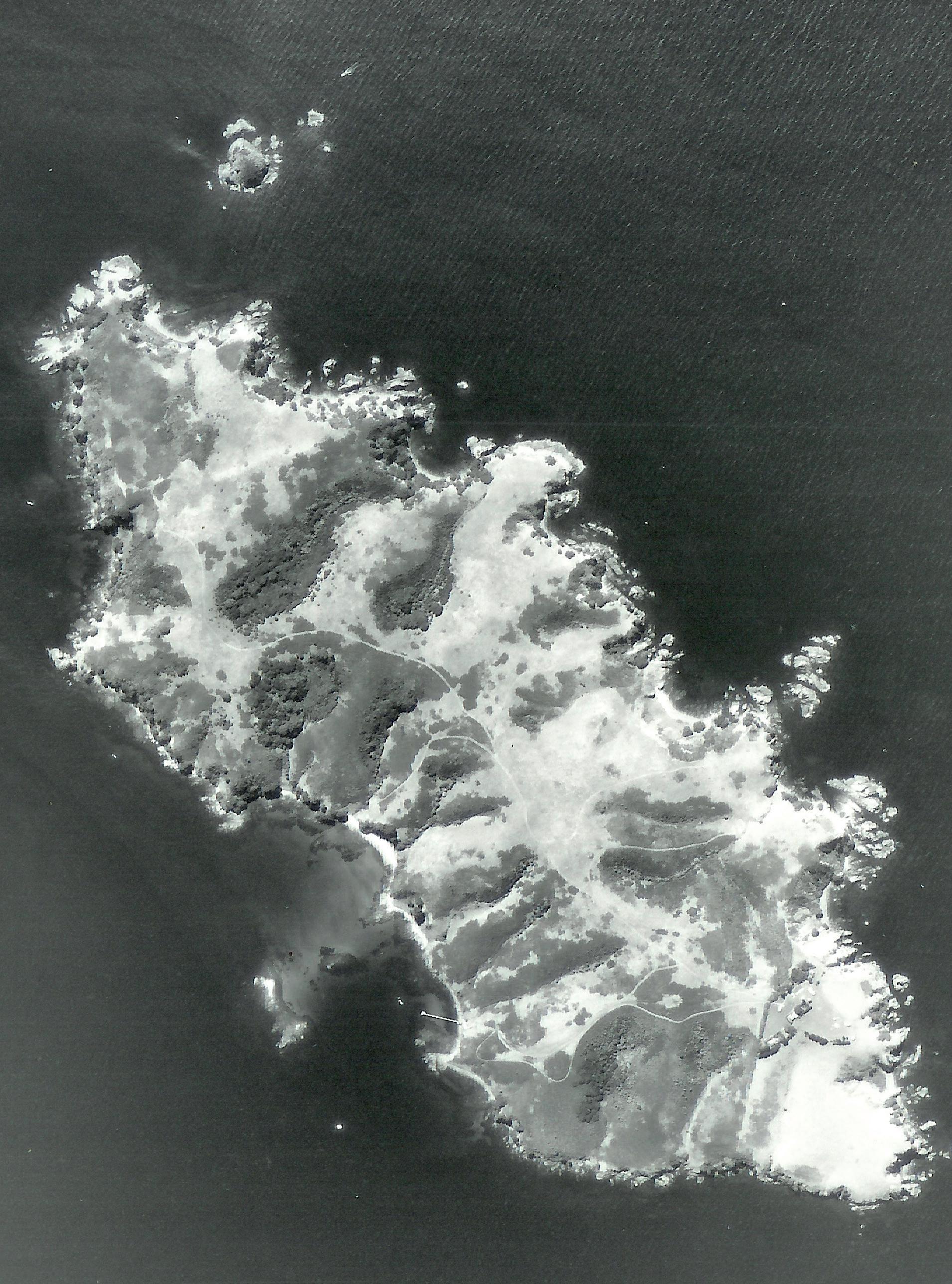
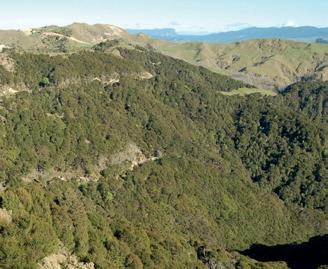
Cover photo: 1981 aerial view, Tiritiri Matangi archives
Nga Mihi Ian For translating Te Reo words to English see https://www.maoridictionary.co.nz/
Guest Guide
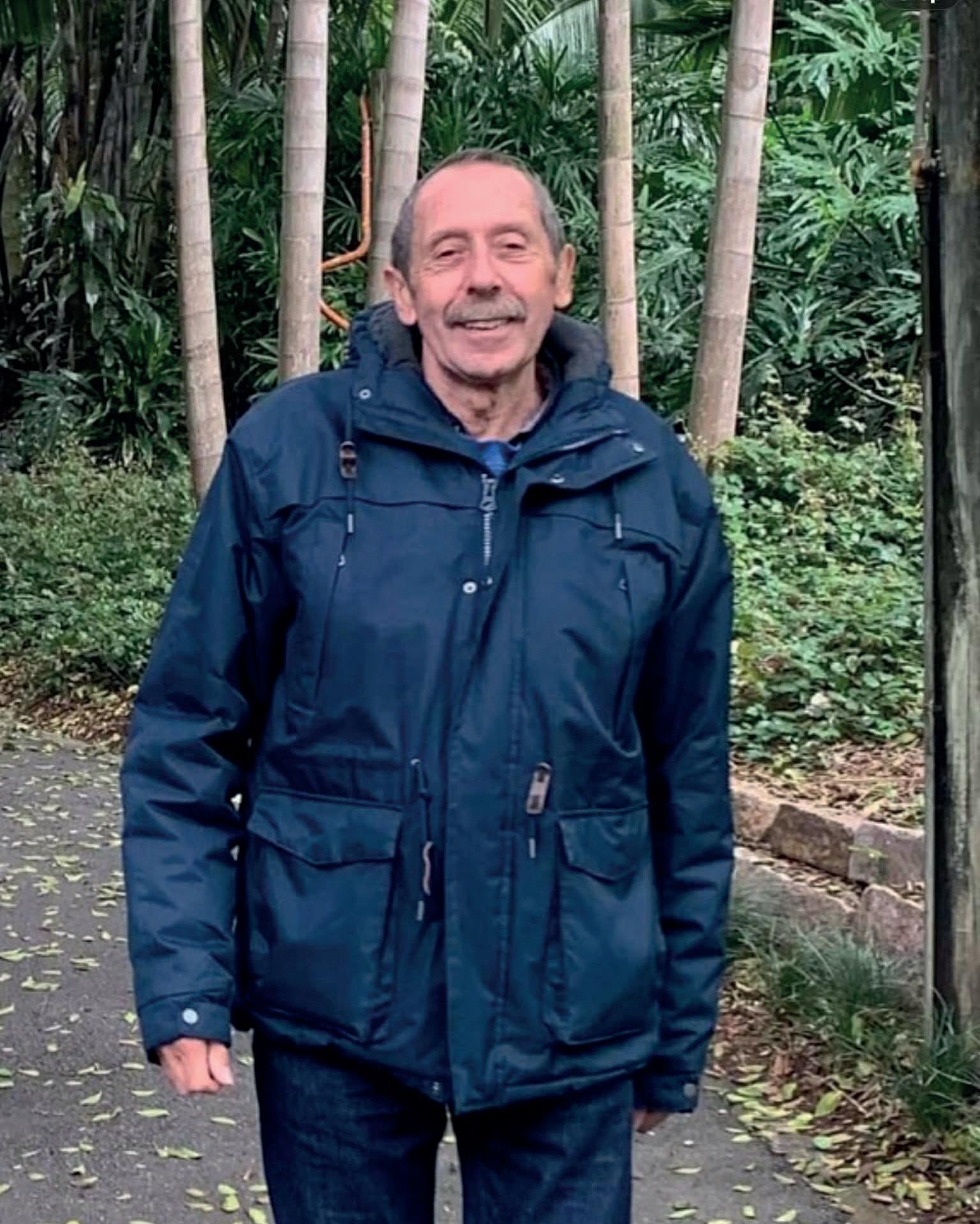
Vic Hunter is one of Tiritiri Matangi’s most experienced and dedicated volunteers, having guided visitors on the Island for over 40 years, sharing deep knowledge shaped by decades of firsthand experience.
Where did you grow up, and what was your occupation?
I was born in Birkenhead, Wirral, Cheshire. I was a production machine engineer working on high-production machines.
How did you get involved with Tiritiri Matangi?
I first visited Tiritiri Matangi with the South Auckland Forest and Bird Society in 1982, and I was excited to learn of plans to reforest the Island using seeds sourced from the Island itself.
How long have you been guiding?
I have loved being a guide for over 40 years. I have learned to gauge visitors' level of interest, whether they are coming for a day out or have a particular interest, such as history, fauna or flora.
What has been your favourite experience with guiding?
My favourite experience is hearing young visitors walking to the ferry say, ‘That was the best day of my life’.
What tip would you give to someone starting out as a guide today?
It’s important to say only what you know to be 100% accurate.
What is your favourite story about Tiritiri Matangi that you like to share with visitors?
Just after Christmas in 1992, a severe cyclone struck the Island. At the time, only Ray, Barbara, and I were there. Before Christmas, Ray had noticed Stormy and Mr Blue nesting near the implement shed and contacted DOC, who provided an egg. The [two male] takahē took turns incubating it, and before long the chick hatched.
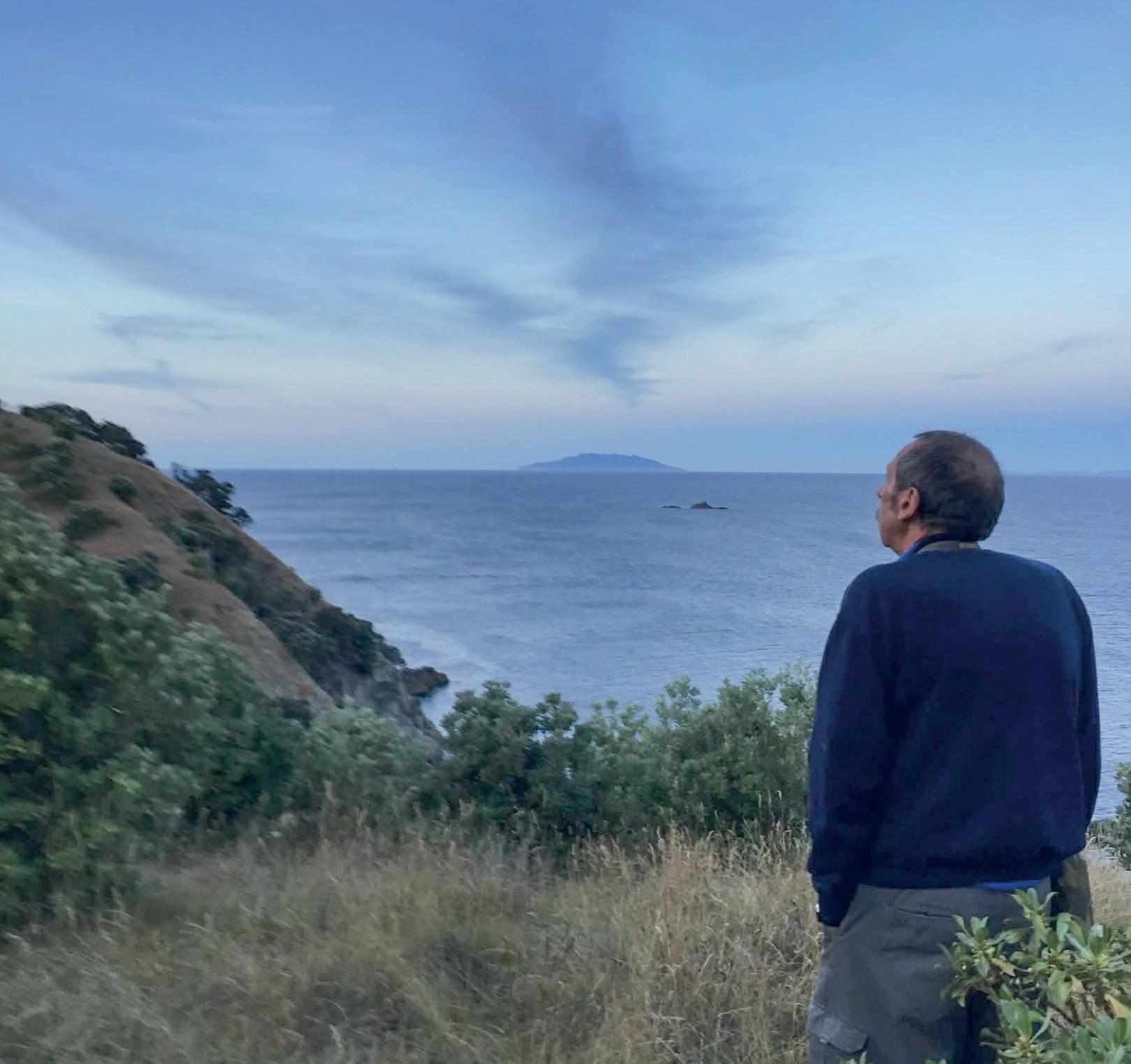
On the night the cyclone struck, the weather was wild, cold, wet, and relentless. We found the chick struggling in a puddle and quickly brought it into the old tin garage (where the Ray and Barbara Walter Visitor Centre now stands). The chick was soaked and weak, but with a hot water bottle, a towel, and Barbara’s hair dryer, we gently warmed and dried it. To our relief, it soon lifted its head and fluffed its feathers.
Mr Blue joined the chick in the garage and began brooding it, while we created a dry nest using grass we had dried ourselves.
With no natural food available, we gathered insects, worms, and snails for him to feed the chick. Because of the cold and the presence of kiore, we kept them inside overnight, taking turns to watch and scare off any rats. Throughout the night, the chick would softly call, and Mr Blue would respond, settling it back to sleep.
The next morning, Ray built a simple shelter near the implement shed, and we carefully moved the chick and nest outside once the weather eased. Not long after, a harrier flew overhead, and we watched as Mr Blue rushed back to the chick and shielded it, an incredible display of his instinct to protect.
What is your favourite animal or plant on the Island, and why?
My favourite plant on the Island is a 1,000-year-old pōhutukawa tree on the Kawerau Track. It’s a living link to the past, representing what the Island was like before humans arrived.
Is there anything else you would like to share?
I will be forever grateful for the guidance of Ray and Barbara Walter. This has been the most rewarding and meaningful thing I have been, and will ever be, part of in my life.
Photo: Eileen Hunter
Photo: Eileen Hunter
‘If you want trees in your lifetime, you’ll need to plant them’
This is how Carol West paraphrased the conclusion of her thesis, Aspects of Regeneration on Tiritiri Matangi Island, as we chatted on the ferry on a glorious autumn day in March. It had been eight years since Carol’s last visit. We were revisiting her original study site so that Carol could explain how she conducted her research and how the vegetation has changed since she first arrived on the Island.
In 1978, after completing her graduate degree in ecology, Carol was eager to pursue postgraduate studies. On the noticeboard of the Botany Department at Auckland University, she spotted a notice advertising a Master's research opportunity on Tiritiri Matangi Island. Lecturer Neil Mitchell sought a student for MSc research, funded by the Hauraki Gulf Maritime Park Board, focused on understanding the pathways of forest regeneration and potential regeneration rates on the Island. Carol had always fancied spending time on an island (her father helped build the meteorological station on Campbell Island) and successfully applied for the position.
The grazing lease on the Island expired in June 1971. It was not renewed, and cattle had been removed from Tiritiri Matangi by early 1972. When Carol arrived on the Island six years later, apart from two main areas of remnant forest, the Island was mainly covered in dense exotic grassland, bracken, and patches of low-lying scrub such as mānuka and kānuka. To understand the potential for forest regeneration, Carol would have to assess the extent to which native bush species could re-establish themselves within the exotic grassland. Carol had little knowledge of plant identification when she began her research. Neil lent her his copy of The New Concise British Flora by W. Keble Martin, and Carol started the slow

process of creating a reference collection of seeds, a visual library to consult when counting and identifying them under a microscope.
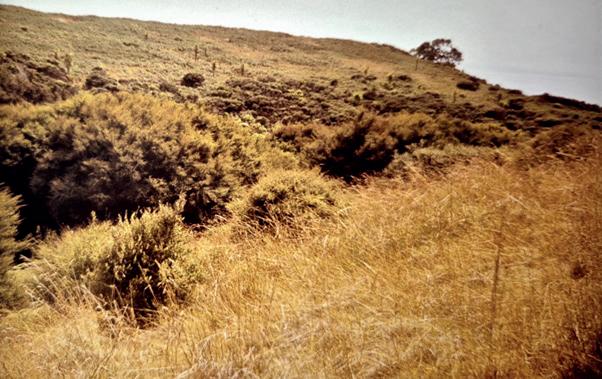
Carol’s primary study area was the ridge between Bush 21 and Bush 22. Most of the research focused on the bush edges on either side of this ridge. Using a variety of methods, Carol investigated seed presence and germination success in a series of quadrats across the ridge.
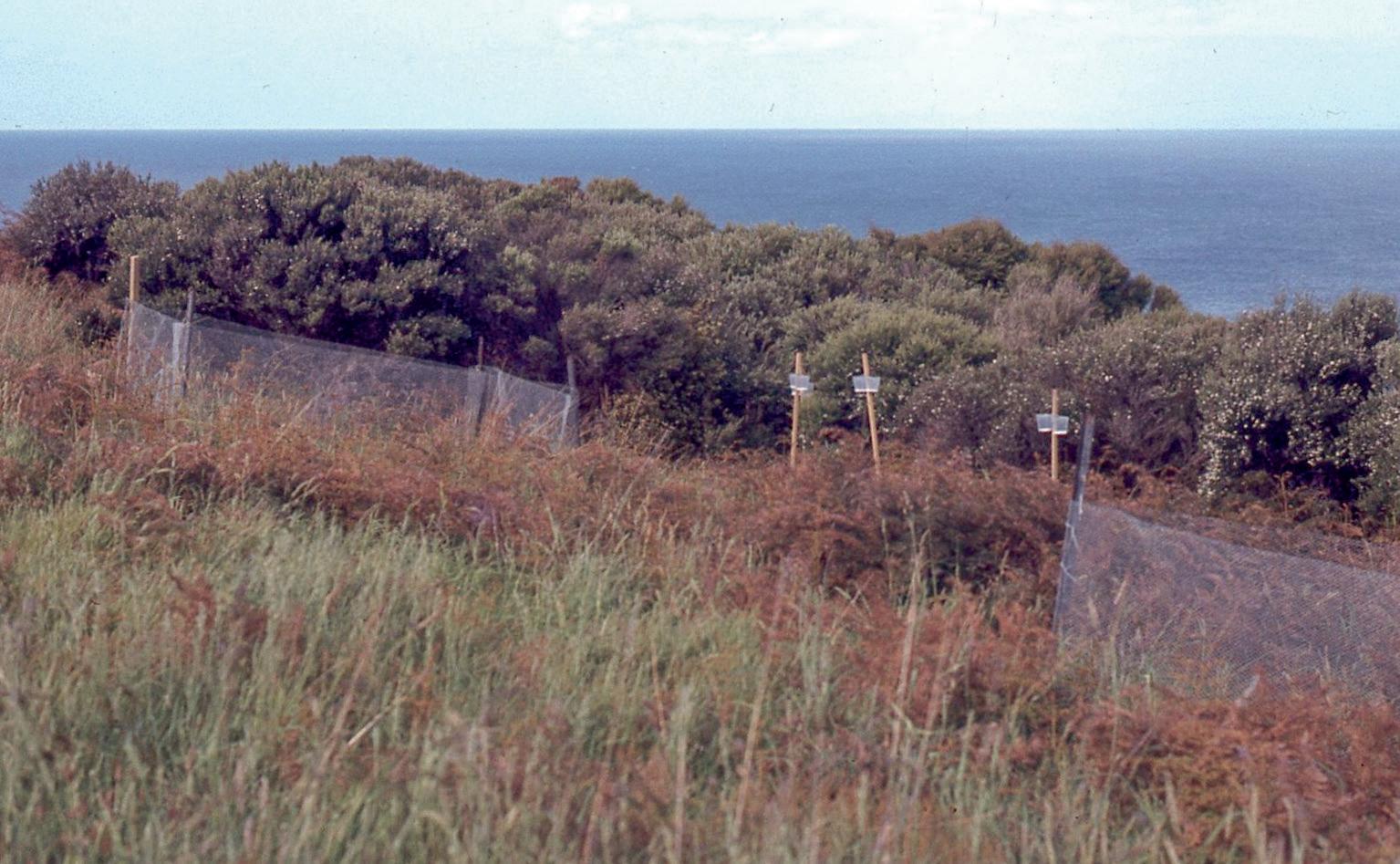
Seed traps were used to determine which seeds were being dispersed into the study zone. Based on the seeds collected, Carol concluded that there was very little potential for the colonisation of grasslands by bush species. There was adequate, and in some cases abundant, dispersal of seed of some bush species into the grassland: mānuka, kānuka and pōhutukawa, which all have tiny seeds. However, the grassland species present in the study zone also produced significant quantities of seed. There was competition between the species: on the one hand, for the colonisation of the grasslands by bush species, and on the other, for the maintenance of the grasslands by grassland species.
Vegetation surveys were conducted to determine which seeds germinated and grew. Carol observed that on dry sites, such as the side of the ridge where the grassland/bush boundary was dominated by kānuka, drought-tolerant species did establish, but seedling success depended on rapid growth during the wet winter months or in a favourable summer.
Photos taken at the time of Carol's study: the Bush 22 side of the study ridge (top) and seed traps on the Bush 21 side (bottom)
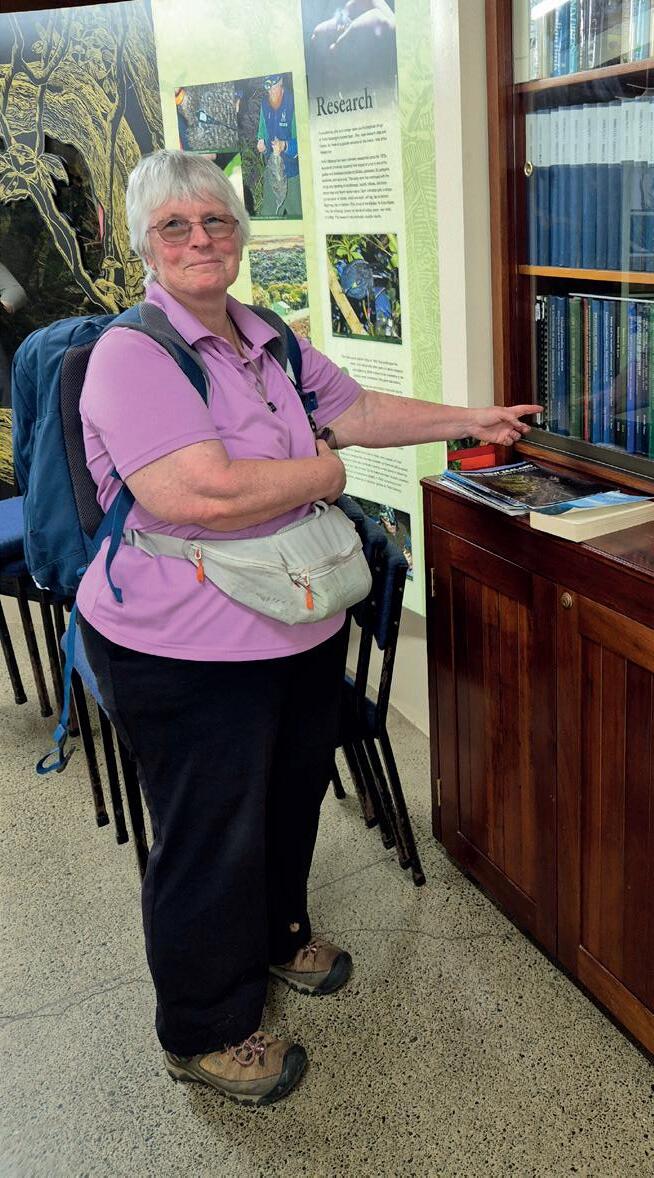
Carol points to her thesis on the bookshelf in the Visitor Centre
Photo: Janet Petricevich
Photos: Carol West
On the more moderate sites, seedling establishment was hindered by dense grassland vegetation, which reduced both light and space at the soil surface.
The grassland had reached a ‘successional stage’, dominated by perennial grasses which prevented the establishment of seedlings of almost all species dispersed into the area. Therefore, it appeared that bush species would be unable to colonise the grasslands directly. Carol concluded that the return of the Island to its previous forested state could likely be achieved only through the slow invasion of the grasslands by bracken.
As bracken swards degenerate, broad-leaved, large-seeded shrubs such as māhoe and karamū establish. However, in the absence of grazing, bracken would grow tall and dense, leaving little room for seedlings to establish on the densely shaded ground, strewn with fronds from previous seasons. Carol estimated that regeneration through bracken invasion would take around 100 years and that some grassland areas would persist for more than 200 years. In other words, ‘if you want trees in your lifetime, you’ll need to plant them’.
This conclusion, together with other research, provided strong support for the controversial replanting proposal.
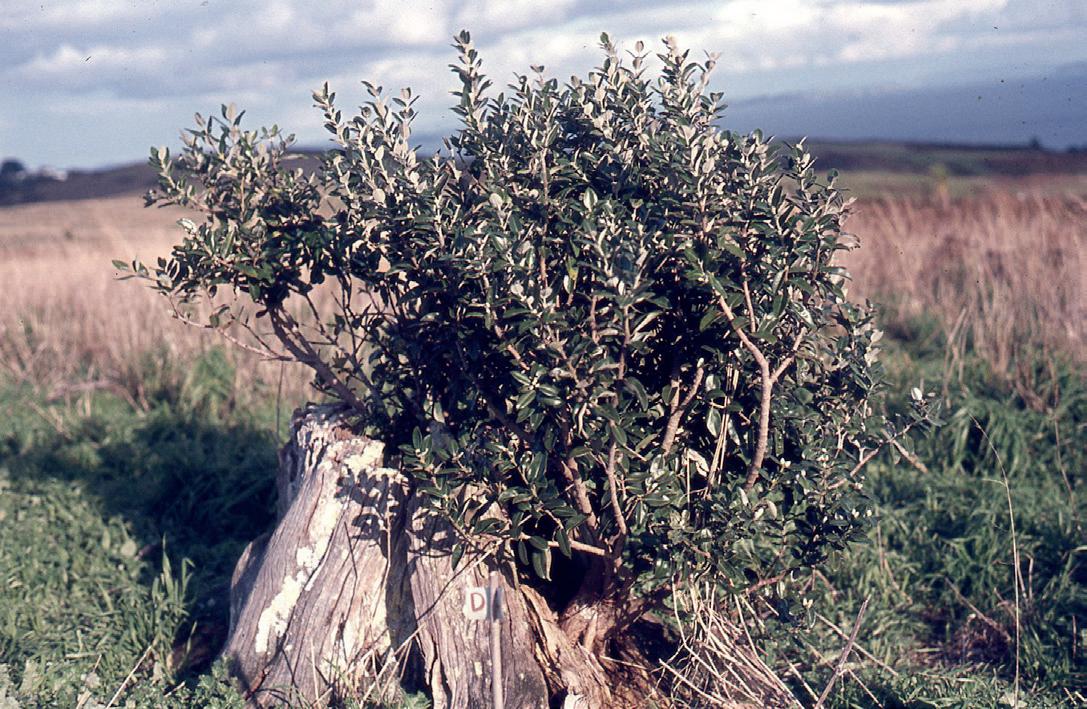
During replanting on the Island, the study ridge was left untouched. Carol has returned twice to survey the natural regeneration of vegetation there.
After grazing ceased, the first phase of succession was that perennial grasses and herbs took over from annual ones, as the annuals’ seeds struggled to find favourable conditions for germination in the increasingly tall and dense grasslands.
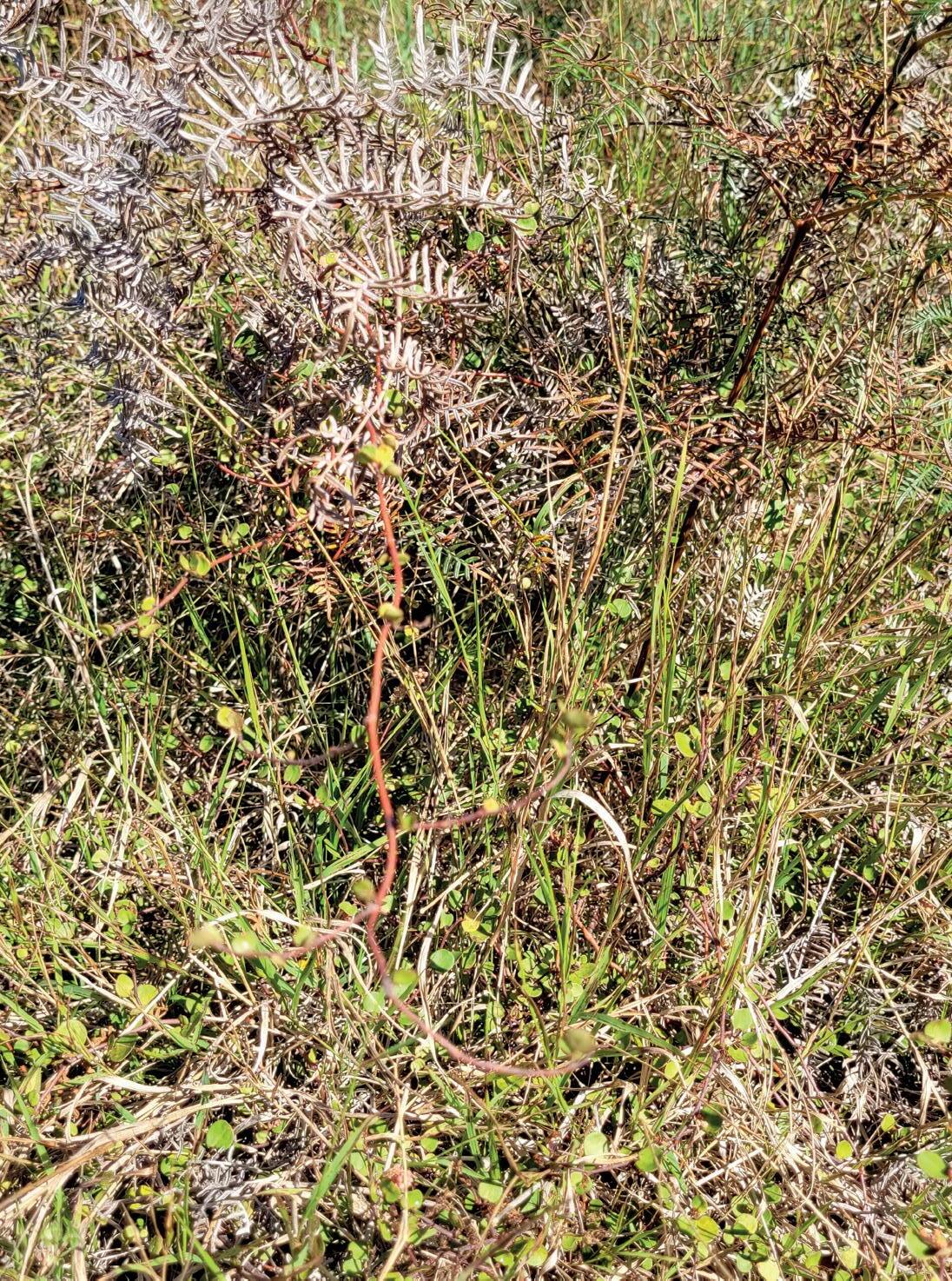
In her 2006 survey, Carol found that species diversity per quadrat in the study area was high, as native species entered the grassland succession. By the 2018 survey, species diversity had begun to decline, but the proportion of native species per quadrat had increased. Native vegetation was clearly replacing exotic vegetation. The three main native species in the grasslands at this stage were bracken (Pteridium esculentum), scrambling pohuehue (Muehlenbeckia complexa), and meadow or slender rice grass (Microlaena stipoides).
During a visit to the Island in 2001, Carol observed harakeke/ flax (Phormium tenax) growing randomly on the study ridge. This was unexpected. Carol asked Ray Walter whether he’d planted the harakeke. Ray was sure he hadn’t, and a subsequent check of the planting diaries by Supporter Katy Johns confirmed his recollection.
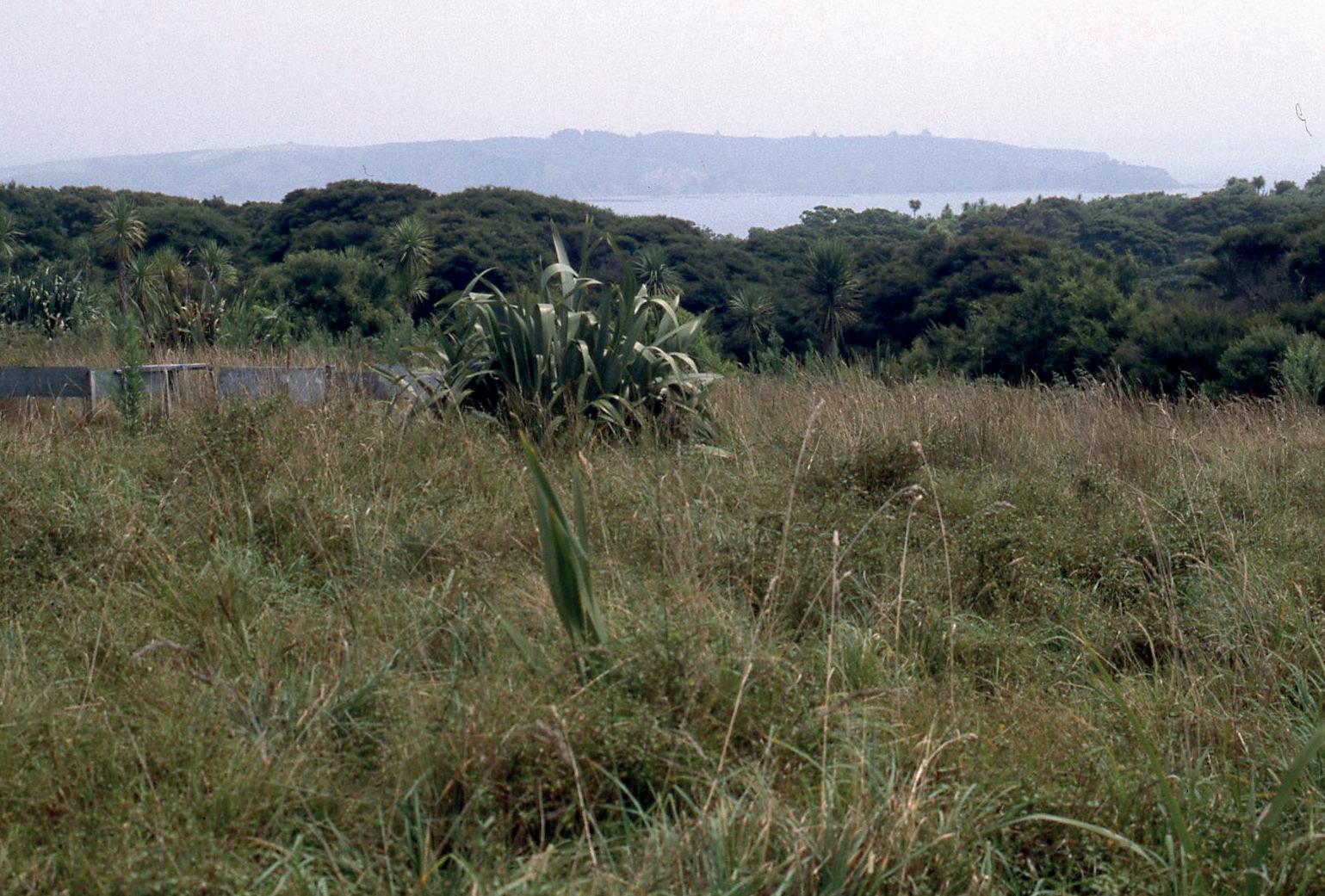
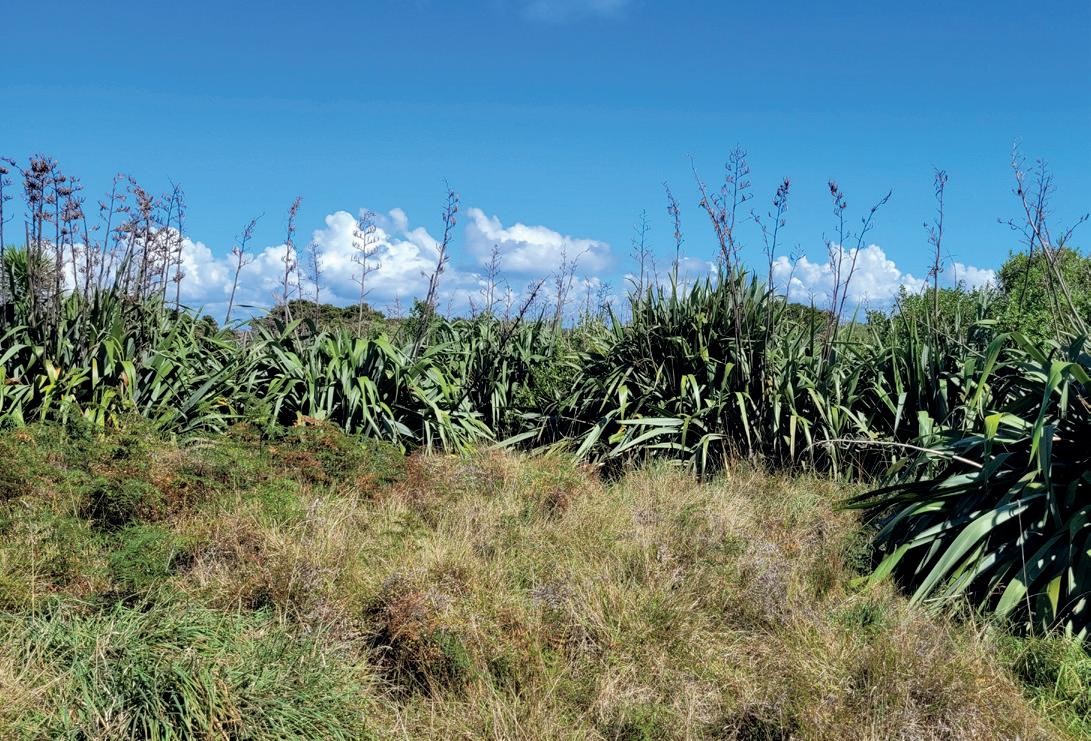
Top: Harakeke establishing in the grasslands in 2001
Bottom: A similar vantage – harakeke vegetation 'islands' in 2026
Harakeke is one of several native New Zealand plants that exhibit mast flowering (or masting), a phenomenon in which a population synchronises to produce massive amounts of flowers and seeds, typically every two to six years. There is a natural stand of harakeke north-west of the study ridge above Northeast Bay. Carol’s theory is that the presence of harakeke in the study area exemplifies the ‘Swiss cheese model’, in which holes in the cheese align perfectly to allow an unexpected event. The opening of vegetation due to low rainfall, a strong north-westerly wind in a harakeke mast year dispersing seed, and subsequent rainfall allowing that seed to germinate, could explain the arrival and establishment of harakeke.
Three main natives in the grasslands, bracken, scrambling pohuehue, and meadow rice grass
Photo: Carol West
Photos: Carol West
Where harakeke have established, they have provided a food resource for birds, a place for them to perch and poop, and shelter for other plants to grow. Thus, the study ridge now looks like a sea of grassland, with ‘islands’ of vegetation scattered throughout. The harakeke is accelerating the grassland succession to forest.
During our visit to the Island, Carol explained to me the two main ‘stories’ of succession evident today: the dominance of native species over exotic species in the grassland and the harakeke ‘islands’. She was thrilled to observe increasing natural diversity, with young trees growing from birddispersed seed and ferns growing under the trees. She hopes to return soon to resurvey the study ridge for a third time.
Janet Petricevich
National Geographic Traveller – Islands Collection
The Society has undertaken a marketing exercise to promote internationally the Tiritiri Matangi conservation project in a National Geographic publication titled the ‘Islands Collection’.
You can access the website page here: https://www.tiritirimatangi.org.nz/destination-tiritiri-matangi/
Winter on Tiritiri Matangi. Half the Fare.
Supporters enjoy 50% OFF ferry fares to Tiritiri Matangi Island. Make winter an island adventure. Quieter walks, curious wildlife, and fresh sea air for the whole family.
Valid for travel 1 June – 31 July 2026.
Maximum 2 adults and 3 children per booking. Direct bookings only via 0800 397 567 or info@exploregroup.co.nz. T&C's apply.


Kathryn Jones, our Fauna Notes compiler has been seconded overseas for work. We are looking for someone to take over from Kathryn, either long-term, or for the next three issues. If you are interested and want to know more, contact Janet and Stacey on editor@tiritirimatangi.org.nz.
Photo: Janet Petricevich
Photo: Kate Anderson
Photo: Carol West
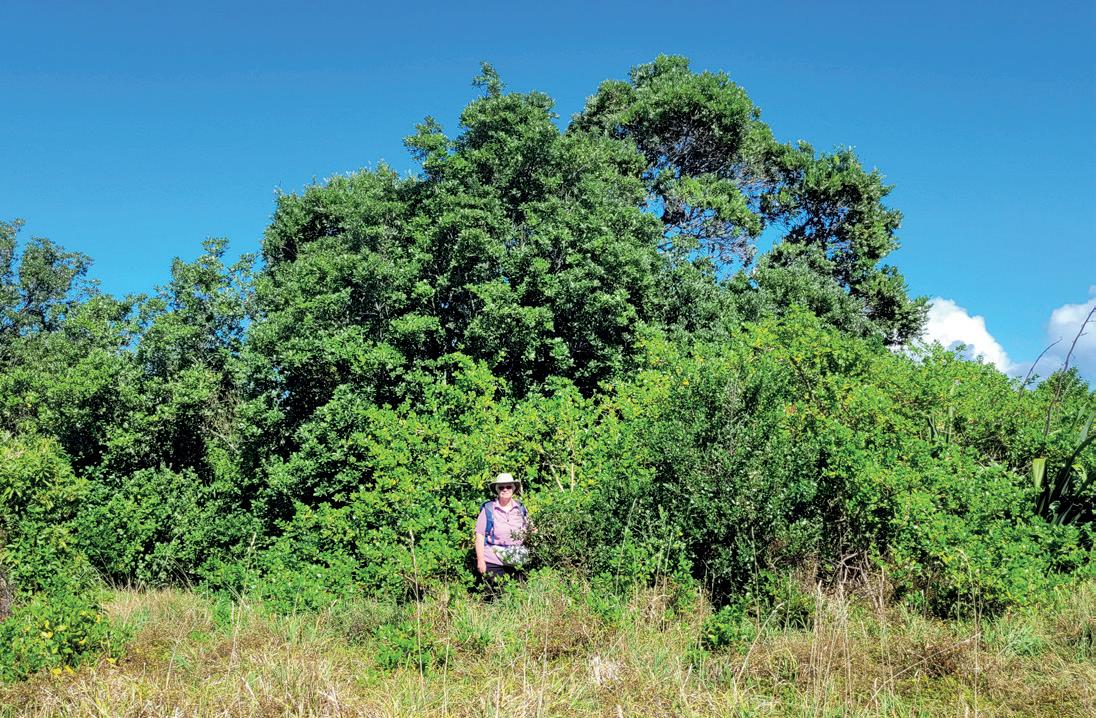
A self-seeded pōhutukawa growing on a tree stump in 1978 Carol in front of the same pōhutukawa in 2026
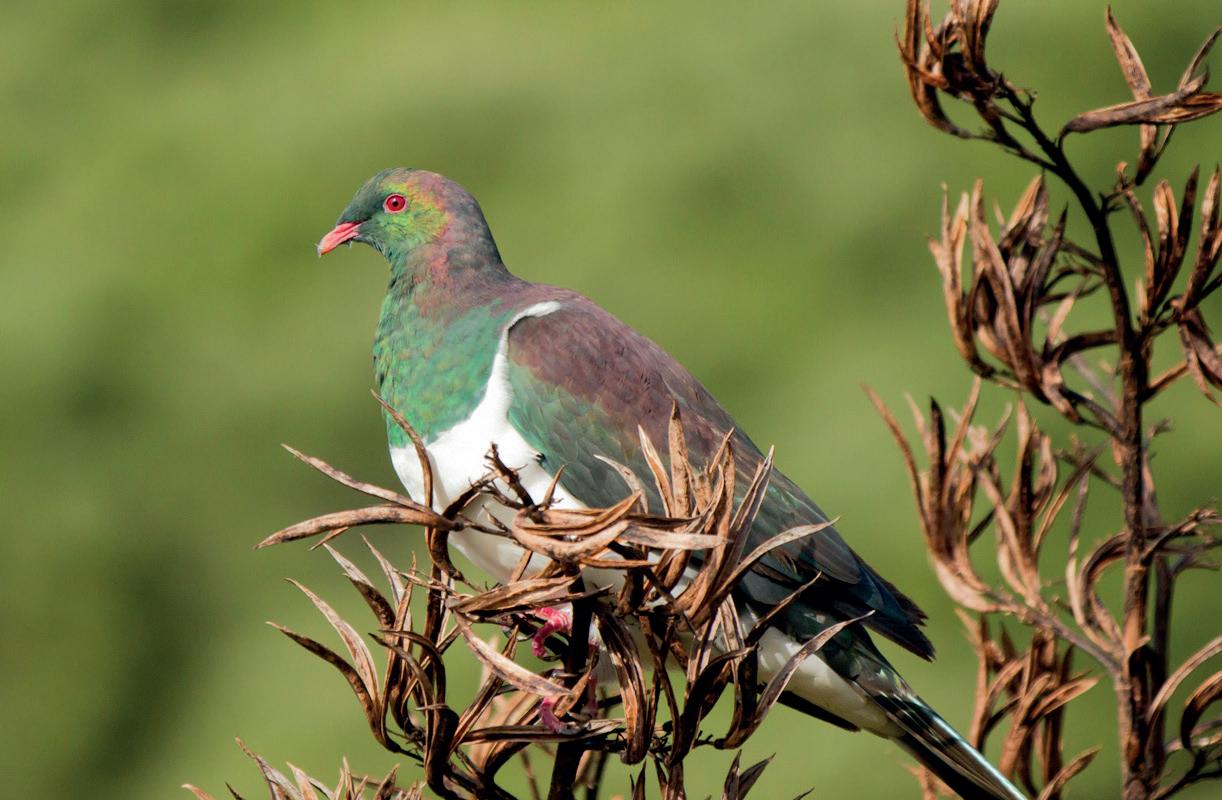
Harakeke stalks providing a kererū a place to perch
© Kay Milton
50% OFF Ferry travel
A conservation legend returns
A chance encounter on the ferry to Tiritiri Matangi led Liz Maire to capture the story of a conservation legend.
In late February, a conservation legend was spotted on the ferry to the Island. Dick Veitch was returning simply to visit a place that owes much to him. Dick had a long career with the New Zealand Wildlife Service and the Department of Conservation from the 1960s until his retirement in 1998, after which he continued to support many species conservation programmes, both locally and internationally.
Dick has an impressive record of achievements in NZ; his dedication and work helped save the South Island tīeke / saddleback, the Chatham Islands’ karure / black robin, and the kākāpō from extinction. He managed, with assistance from 140 staff and volunteers, the successful eradication of cats from Te Hauturu-o-Toi / Little Barrier. He then led rat eradication efforts on Tiritiri Matangi, Motuihe, Motukorea, and other islands, this time with many DOC staff contributing. These efforts represent major conservation successes, but Dick didn’t stop there.
His vision then turned to reintroducing species to these pestfree places. In 1973, as the NZ Wildlife Service’s protected fauna officer for Auckland, he obtained permission to release kākāriki on Tiritiri Matangi, which had initially been intended for Repanga / Cuvier Island. Ten years later, the transfer of tīeke from Repanga to Tiritiri Matangi was Dick’s sole responsibility, albeit with oversight from Peter Jenkins, who wanted to follow the song dialects of this marvellous bird.
In May 1991, at another historic milestone, Dick Veitch and Auckland University’s John Craig released the first two takahē to take up residence on the Island. On translocation day, they opened the cages and, with a flourish, released the two nowfamous male birds, Mr Blue and Stormy.
‘Bringing or returning those birds to the Island, as well as reptiles and insects, would be a waste of time and effort were it not for the work now being done by the Tiritiri Matangi Supporters,’ says Dick. ‘I was hugely impressed by the state of the tracks. Even after the huge weather events we have had, there was not a slip or washout to be seen. The forest regeneration has a lot to do with this, and the track design and drainage care ensure the rest.’

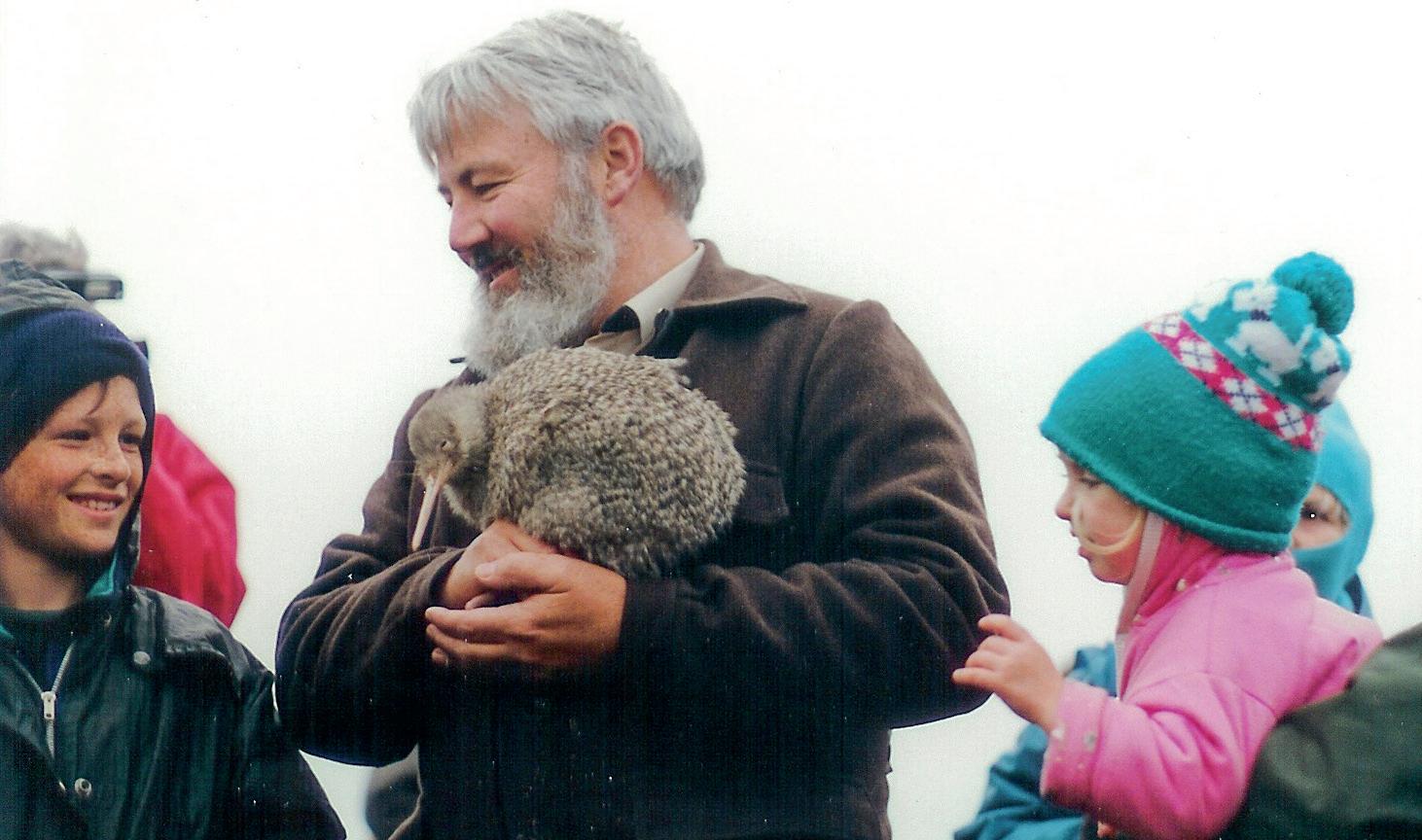
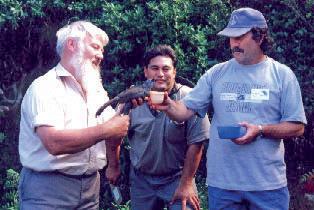
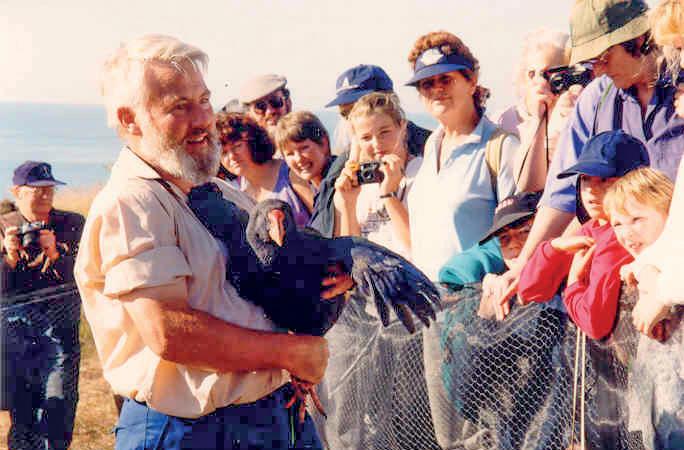
He adds, ‘It was wonderful to see the results after all these years, with so many thrilling achievements on this special island. What a privilege to have been involved – and to see the younger generation on the Island learning alongside old hands like me. We can do all the restoration and biodiversity work in the world, but it’s no good unless we inspire these young people to carry on this effort. We need more young champions for nature. I can see Tiritiri Matangi is doing that really well.’
We hope Dick has many more visits to Tiritiri Matangi to enjoy the results of his astonishing efforts, and we thank him for helping to protect somewhere that holds a special place in our hearts.
Photo: Neil Davies
Dick Veitch at the kiwi pukupuku release, July 1993
Dick and Mel Gabraith at the kōkako release, 1997
Photo: from the SoTM archives
Photo: Zane Burdett
Dick showing takahē Pounamu to a crowd
Dick Veitch on the ferry on his way to the Island
Photo: Liz Maire
Twenty-five-year anniversary of the translocation of mātātā/fernbirds to Tiritiri Matangi
Mātātā are secretive, ground-dwelling birds known for their distinctive long, frayed-looking tail. They are weak fliers and prefer dense scrub and wetland habitats. This year marks 25 years since their successful translocation to Tiritiri Matangi, making them the tenth bird species introduced to the Island. A bold rescue effort was launched in response to impending scrub clearance for the new Northern Motorway at RAP21, a regenerating forest habitat behind Orewa. The operation was supported by funding and backing from the Supporters of Tiritiri Matangi Inc. and the Auckland Regional Council, along with permissions and a blessing from Ngāti Pāoa kaumātua. Carl Hayson reflects on how what began as an urgent and uncertain operation has become a conservation success story, with these elusive birds now thriving across the Island.
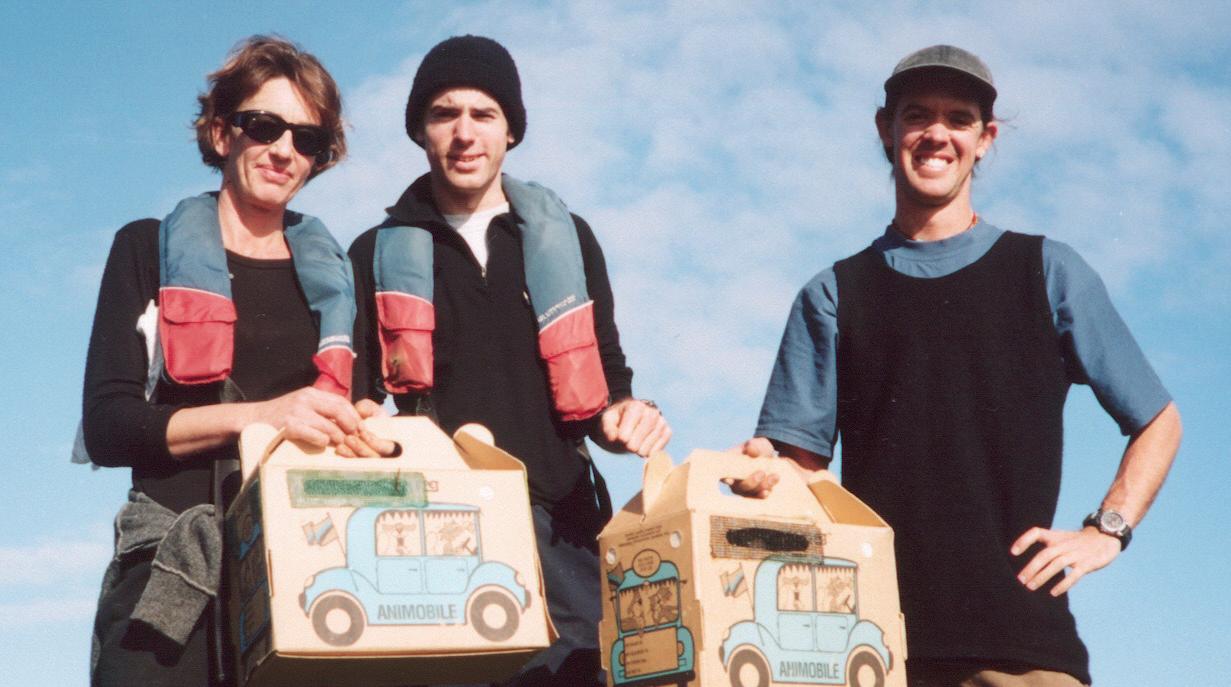
In the winter of 2001, a rescue operation was carried out to transfer mātātā in area RAP21 (recommended area of protection) behind Orewa, which were in the path of the ALPURT B2 motorway under construction from Orewa to Puhoi.
Although Transit NZ planned to create an eco-corridor to facilitate bird movement, Tim Lovegrove from the Auckland Regional Council warned that mātātā inhabit small territories and would be negatively affected by the road construction. Tim estimated there were around 100 mātātā in RAP21, as well as populations of miromiro/tomtit and tūī, and was unsure how many would survive. Mātātā had been included in the 1982 Tiritiri Matangi working plan, providing an incentive to carry out a translocation of this species to the Island. Tiritiri Matangi also offered advantages as a translocation site: it had been pest-free since 1993, and Tim had identified at least 28 hectares of prime mātātā habitat on the Island. Kevin Parker, then at Auckland University, initiated a rescue translocation document and I requested permission from DOC and iwi to proceed, which was duly granted.
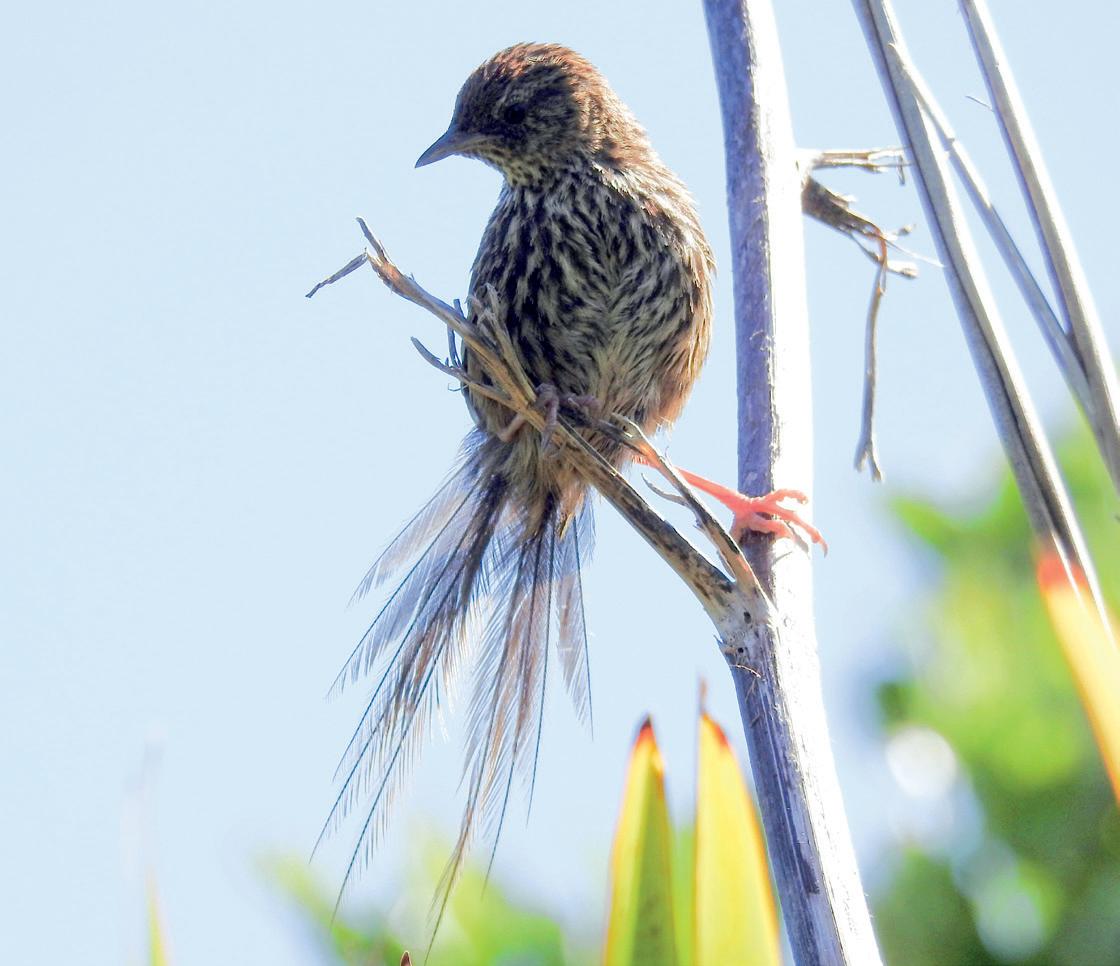
The distinctive long tail of the mātātā/fernbird is clearly visible here. Its feathers have fewer connecting barbs, giving it a loose, slightly ragged appearance— a key feature that helps identify this secretive, ground-dwelling bird in its dense scrub habitat.
Photo: Neil Davies
Sandra Anderson, Jonathon Boow and Kevin Parker with carry boxes for transporting the mātātā
Photo: Ray Walter
The main concern for Kevin Parker and me regarding the rescue proposal was that Andy Robert from DOC had advised us that only three transfers of mātātā had ever been attempted, with just one successful attempt (Whenua Hou/ Codfish Island). There had been high mortality rates during the capture, holding, and release of the birds in the transfers. Additionally, they were very difficult to catch in mist nets because of their poor flying ability, and they had to be enticed with lure tapes, which were only effective in spring. Transfers needed to be carried out as a ‘hard release’; there was no holding aviary, and they had to be released onto the Island within three hours to ensure their survival, or kept overnight if necessary. There was some uncertainty about whether the transfer would succeed.
With work on the motorway due to begin in October that year, time was short. A volunteer team organised by Kevin was established to catch the birds in the RAP21 area. Mist nets were positioned near sites where the birds had been seen, and lure tapes were used to attract them into the nets. Only the males responded to the tapes, and the females had to be flushed into the nets. They proved extremely difficult to catch; one bird was seen walking along the top of the mist net, and another burrowed underneath it.
Kevin and the team caught 13 birds in 2001 and a further 12 in 2002, bringing the founder population to 25. They were banded for monitoring purposes and released into Lighthouse Valley.
Once on the Island, the birds stayed quiet and elusive for several months. Gradually, birds began to be seen and heard but, surprisingly, most were unbanded, suggesting breeding had occurred. The translocation was labelled a success.
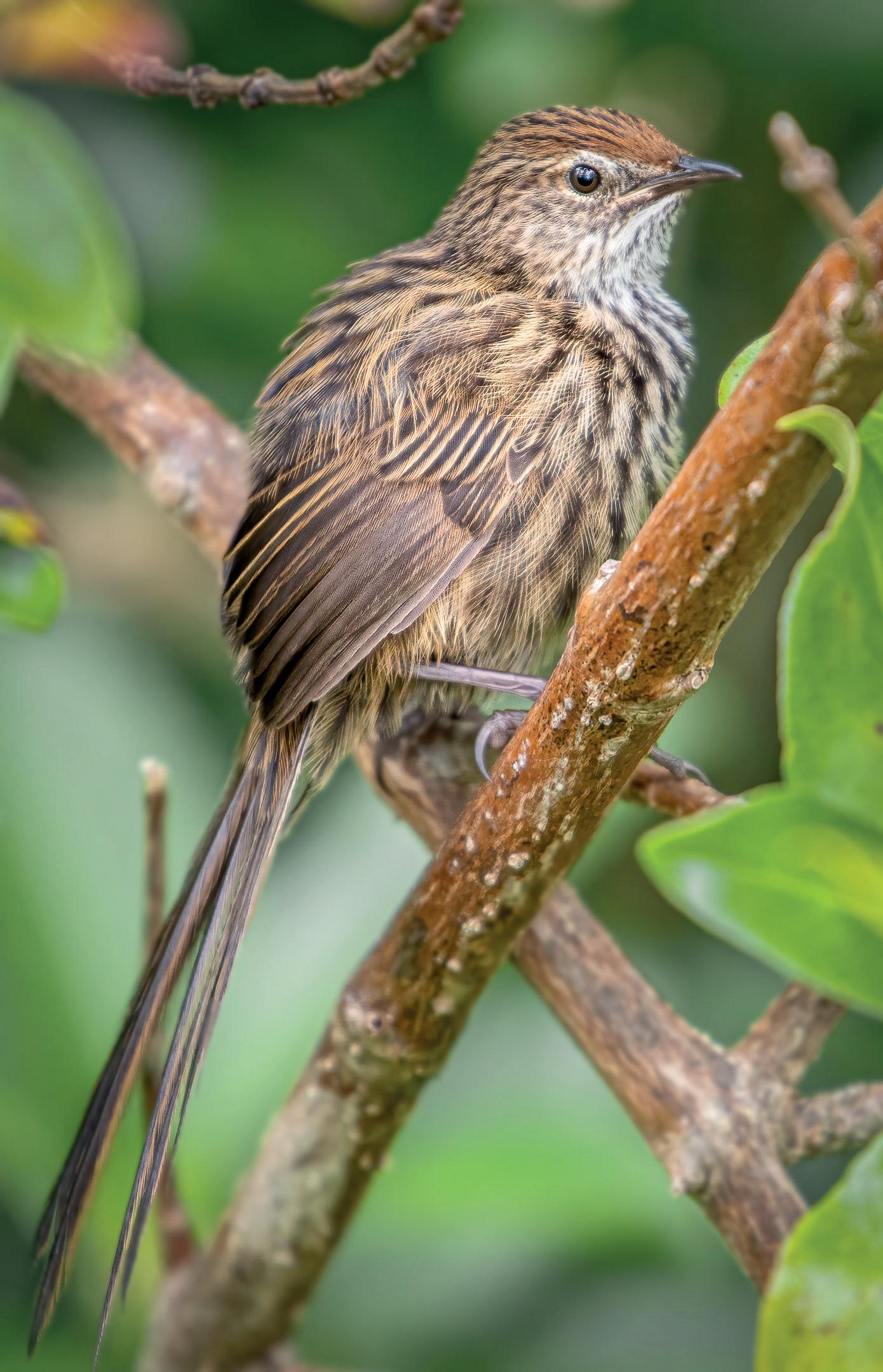
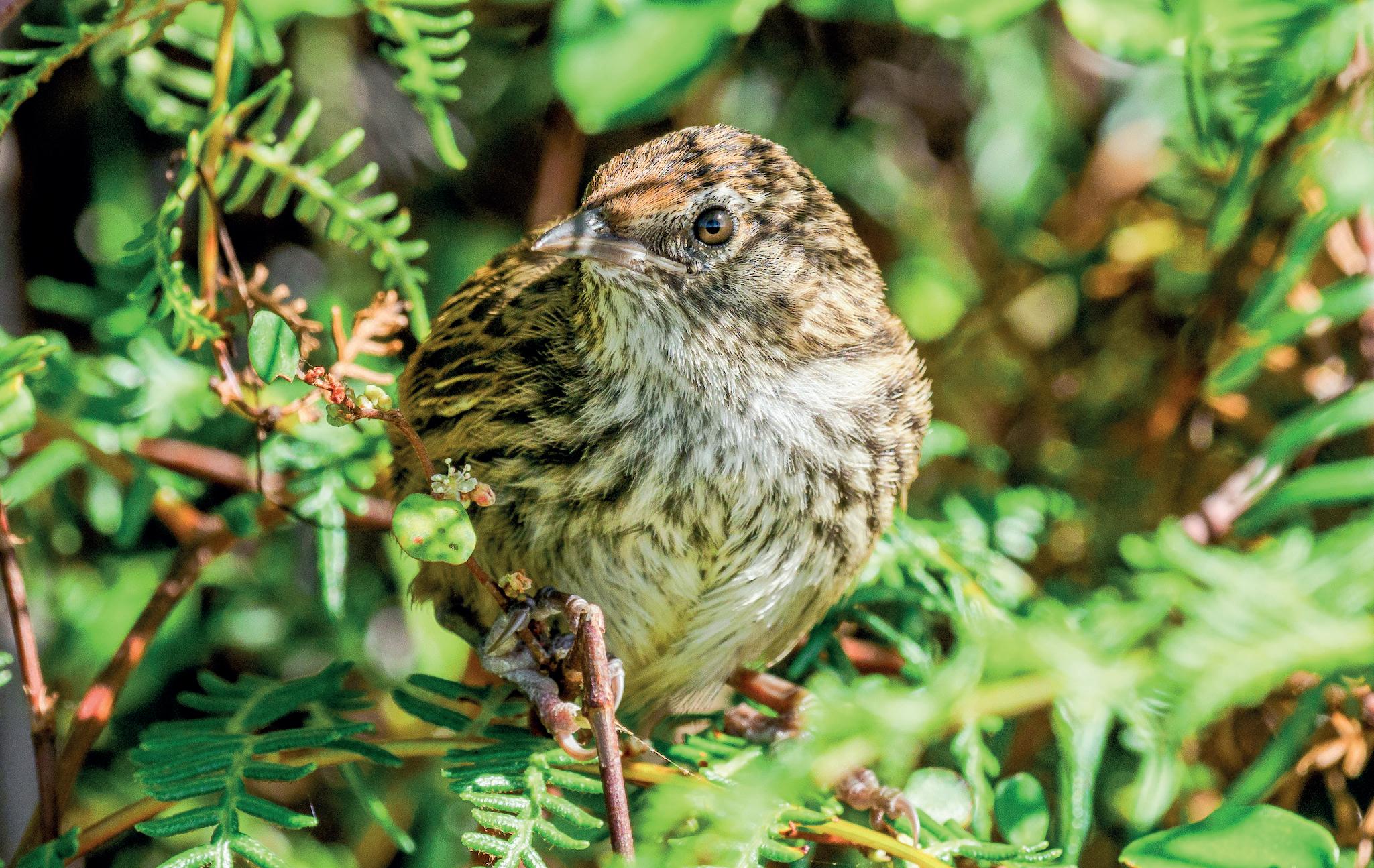
Now, mātātā are seen and heard all over the Island where thick scrub and coprosma occur, and have been encountered by biodiversity volunteers working in the bush areas.
The birds are too elusive to monitor closely and, although they inhabit small territories, can be difficult to catch for banding and research. It would be useful to determine the Island's population size and the number of birds it can support. Perhaps this could be a project for someone in the future.
On a side note, there are reports that the remaining mātātā in RAP21, where the ecocorridor was built, are doing well, even with the earthworks. This is good news all around.
Photo: Pamela Stephen
Top: The elusive bird is now thriving on Tiritiri Matangi Island Bottom left: Mātātā plumage blends perfectly with its habitat
Photo: Jonathan Mower
Lacewings of Tiritiri Matangi Island
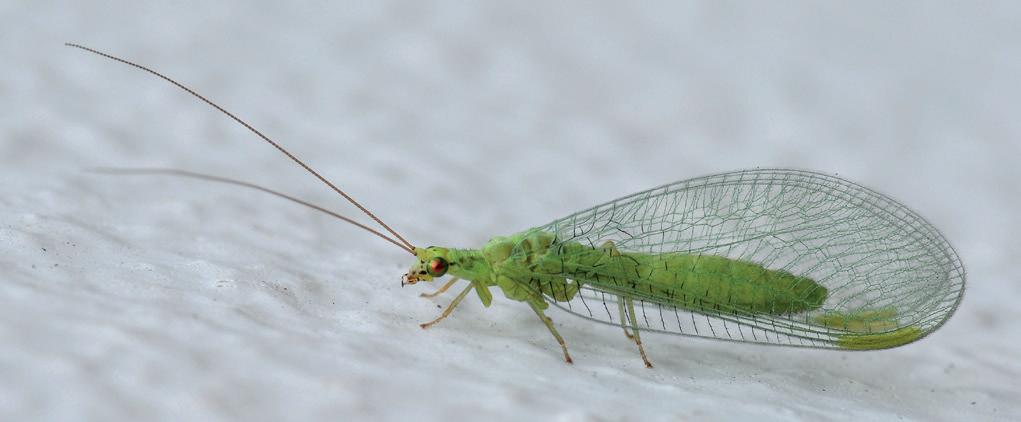
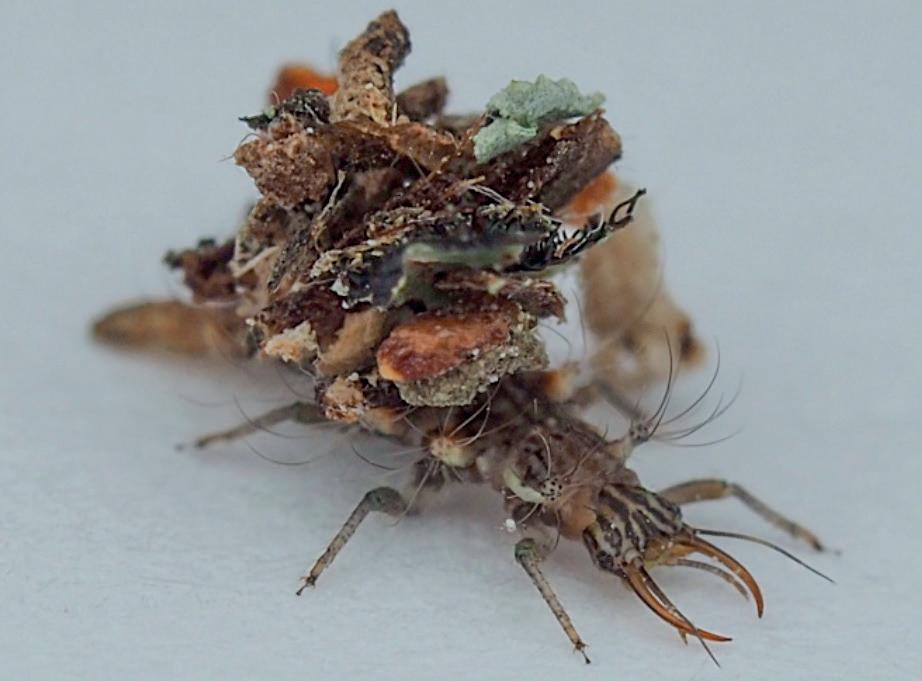
Lacewings are members of an ancient, worldwide group of more than 1,000 species in the Neuropteran (Net-Winged) Order of insects, within the family Chrysopidae. They are broadly similar in appearance to antlions –fascinating insects I will tell you about in a future issue.
The green lacewing Mallada basalis [Fig. 1] has established itself in the last decade in the North Island of New Zealand. Previously there had been several unsuccessful attempts to introduce it to New Zealand from Australia for the biological control of aphids and thrips on fruit crops. Then, in 2010, a self-introduced specimen was recorded on Tiritiri Matangi, and by 2019 it had become widespread as far south as Picton.
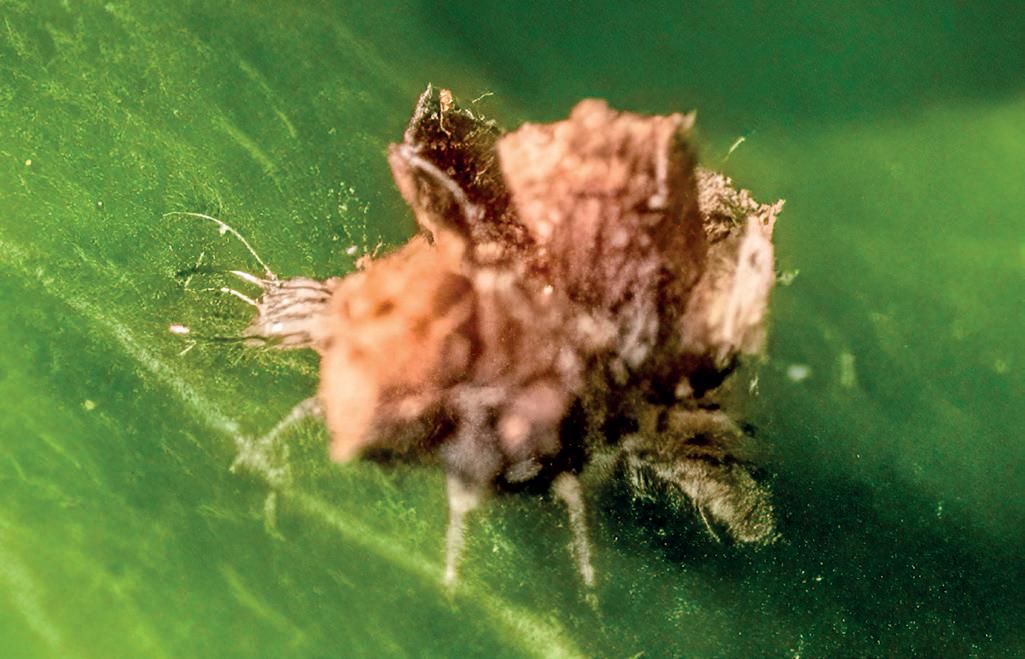
The larvae of M. basalis [Fig. 2] roam about actively on leaf surfaces, consuming most invertebrates small enough to subdue. Their impact on native insect populations is not known. The dry exoskeletons of prey, along with other detritus, are attached to long hooks on their bodies to provide camouflage. These larvae are often found on leaves, looking like small bird droppings. They are very annoying to photograph because they scuttle round to the underside of the leaf if they think they have been spotted! The one in the photo below right [Fig. 3] was found hunting in the Nikau Grove and was about 6mm in length.
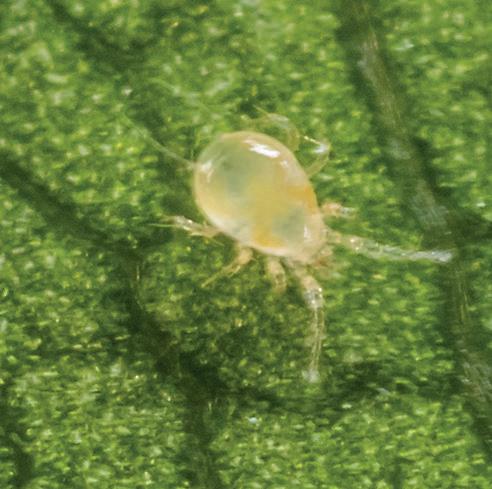
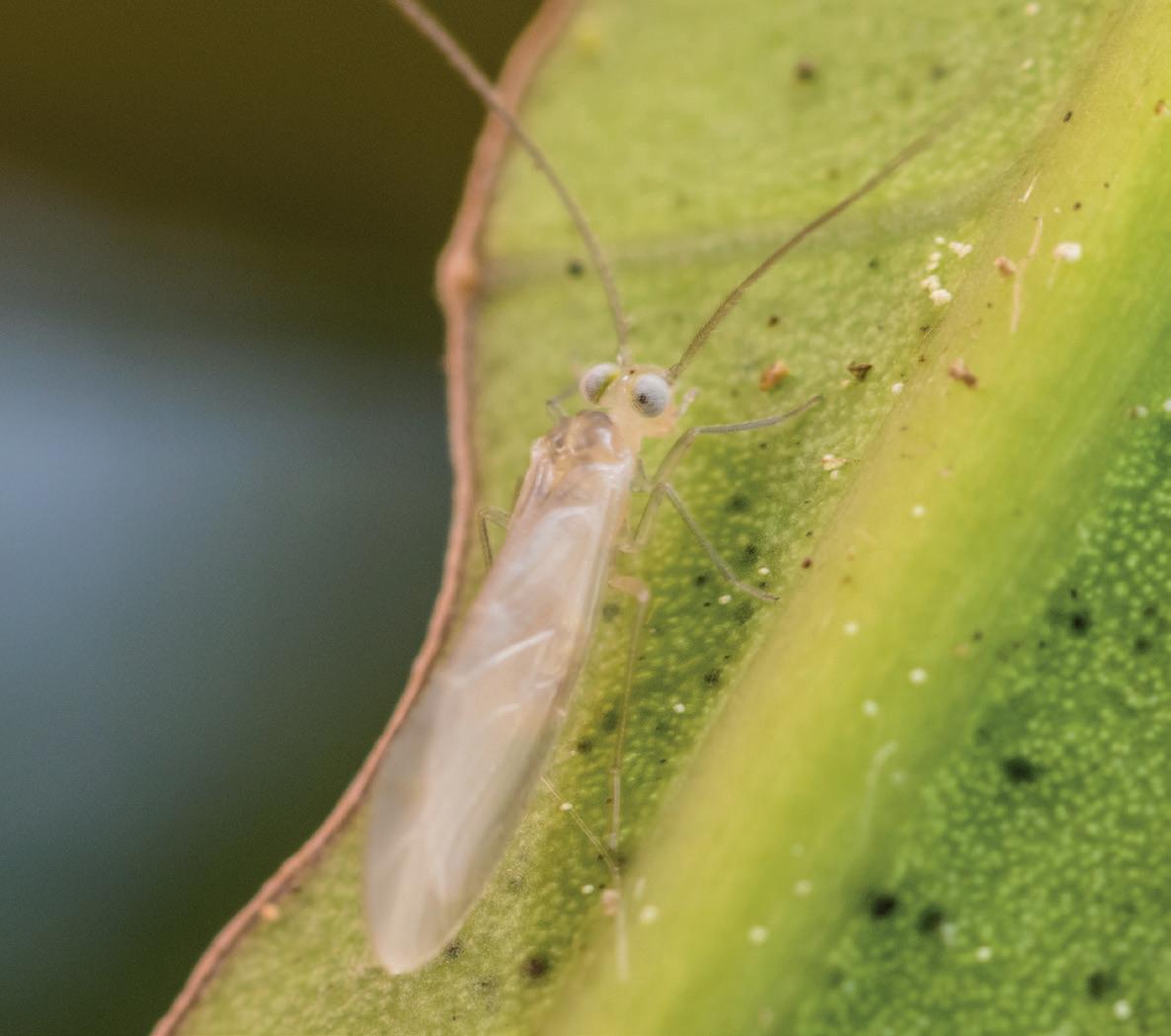
Micromus tasmaniae is another Australian lacewing useful to fruit growers, and whose impact on other native New Zealand insect populations is also unknown. Their larvae [Fig. 4] do not adorn their bodies as Mallada does. This adult [Fig. 5] was found on the Wattle Track consuming mites (inset) on coprosma leaves.
John Sibley
Copyright information:
Figure 1: Green lacewing; Photographer credit: Joaquim Alves Gaspar. Licence: Wikimedia Commons CC BY-SA-4.0.
Source: https://commons.wikimedia.org/wiki/File:Crisopid_July_2013-9a.jpg#/media/ File:Crisopid_July_2013-9a.jpg
Figure 2: Green lacewing larva by Tom Musson. iNaturalist. Licence: Public domain.
Source: https://inaturalist.nz/observations/35316212
Figure 4: Tasmanian lacewing larva by ‘sporadicnature’ (iNaturalist).
Source: https://inaturalist.nz/observations/64099007
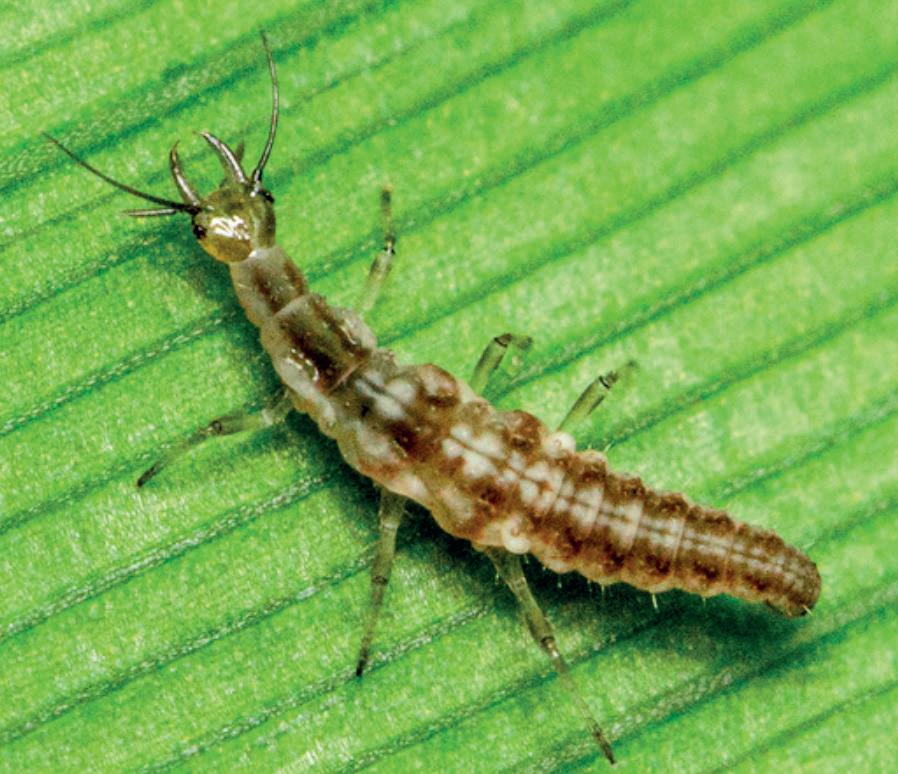
Figure 1: Green lacewing adult stage
Figure 2: Green lacewing larva
Figure 3: This larva was found on kawakawa on Tiritiri Matangi
Figure 5: Tasmanian lacewing adult and prey (inset)
Figure 4: Tasmanian lacewing larva
Photo: John Sibley
Photo: Tom Musson
Photo:
J.
Photo:
Photo and inset: John Sibley
National takahē update
New Zealand once had two takahē species – the South Island takahē and the North Island takahē / moho, which is now extinct.
Takahē numbers declined as environmental factors reduced their grassland habitat, and hunting and competition from introduced species, such as deer, followed. Thought to be extinct twice, first in 1850 and again in 1898, takahē were rediscovered in November 1948 in the Murchison Mountains/ Te Puhi a Noa on the western shores of Lake Te Anau. At the time, the population was probably in the low hundreds, and their numbers were threatened by the harshness of their environment and by introduced pests, namely deer and stoats.
Investment in intensive population management began, and the Burwood Takahē Centre was opened and remains the hub of takahē recovery to this day.
National Update
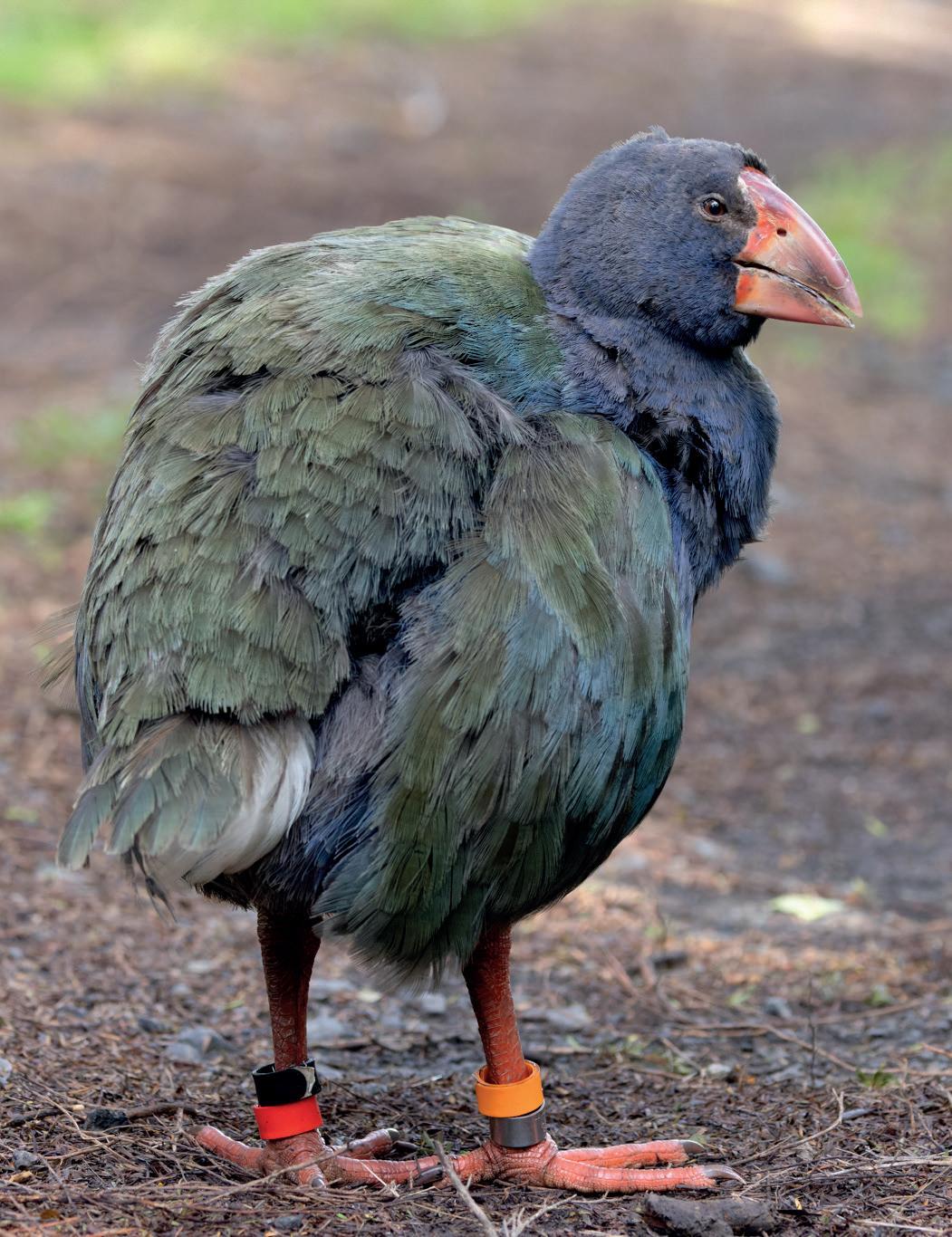
The latest breeding season was successful, with approximately 29 juveniles produced across the sanctuary sites and 15 at the Burwood Takahē Centre as of 13 April. Producing more than 40 takahē juveniles is a significant achievement that will enable continued support for populations at new and existing recovery sites.
The team recently completed the season’s final survey of takahē territory in the Murchison Mountains. We estimate the population there to be approximately 212 individuals. This suggests that, with continued supplementation and effective pest control, the population can be maintained and even increased until more advanced pest control techniques become available.
The Greenstone Valley population has stabilised since the issues with stoat predation in autumn 2025. At that time, approximately six takahē were confirmed to have died from stoat predation or as a result of stoat attacks. The suspected stoat was trapped in May 2025, and since then no further losses have been recorded. As of 13 April, the population is approximately 17 adults. All second-clutch nests appear to have failed. Juvenile recruitment has been low since the first post-establishment season, and the reasons for this will be investigated.
The Rees Valley population currently stands at around 72 individuals, following the initial release nearly a year ago. First breeding attempts have been recorded, with approximately ten nests found this season. Juvenile survival will be monitored over the coming months to assess survivorship. Further supplementation of the population will occur in March/April 2026, with around 37 sub-adults identified for release. This will take the population to over 100 individuals.
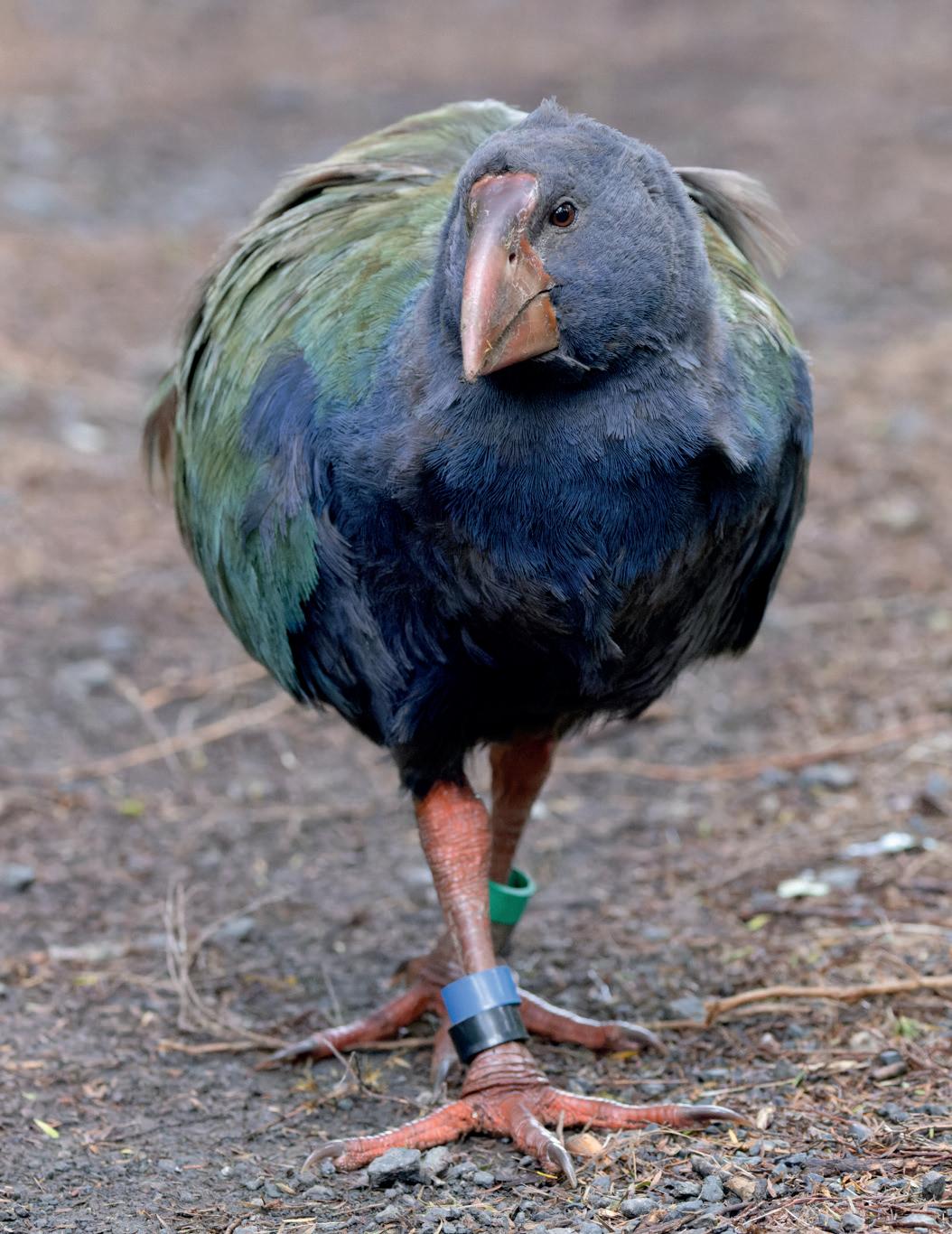
There have been several other interesting developments in the Takahē Recovery Programme.
The takahē and kākāpō programmes have purchased a drone suitable for aerial thermal imaging. Initial testing has been completed at the Burwood Takahē Centre, with the drone showing significant potential for future takahē management.
Initial in situ tussock training for untrained juveniles has shown enough promise at the Te Anau Bird Sanctuary / Punanga Manu o Te Anau to justify rolling out to further sites in the future. Some of the northern sanctuary sites will further test this in winter 2026.
The team is considering removing all remaining takahē from Gouland Downs before winter 2026. The population has been struggling for some time, with adult survivorship and juvenile recruitment falling short of what we hoped.
The team continues to identify potential areas for future takahē recovery sites. This is balanced with the ongoing assessment of how well other recovery sites are performing.
Compiled by Kathryn Jones, with contributions from Margie Luby, Philip Marsh and background information from The incredible takahē story: Takahē Recovery Programme
Donations received
SoTM thanks the following people for their generous donations:
• John Boscawen
• Doug Grant
• John White
• Gerhard Wette
https://www.doc.govt.nz/our-work/takahe-recovery-programme/the-takahe-story/
The northern takahē family fledged two chicks this season, the first for mum, Atawhenua
Photos: Janet Petricevich
Wasp whispers
Wasp whispers is a term coined by Talia (a former ranger on the Island) for conversations about assessing the wasp populations on Tiritiri Matangi.
Over the summer, a small band of volunteers has been slowly trekking up and down the walking tracks to monitor the types and numbers of wasps on the motu. As well as recording numbers and trends, they have also been destroying any smaller paper wasp nests and marking the larger ones, as well as any common and German wasp nests found, for the rangers to tackle.
Why? There are two reasons:
Firstly, the common and German wasps (the ones that invade your picnics and are attracted to sweet things – Vespula spp.) had become a nuisance over the 2024–25 summer. These wasps readily sting when annoyed. Attracted by the prospect of an easily accessible food source at the hihi sugar feeders, they had been posing a risk to the researchers servicing the feeders each day, as well as to the public watching the bird activity at the feeders.
Secondly, the SoTM Biodiversity Committee has been considering the feasibility of introducing native butterflies to the Island. Whilst assessing the food sources for these butterflies’ caterpillars, it became apparent that we also needed to assess the number of paper wasps present. The paper wasps (the long-legged, skinnier wasps – Polistes spp.) feed on live prey. Any of you who take note of or support monarch butterflies on the mainland will have noted that their numbers have declined sharply in many areas in recent years. Much of this reduction in numbers seems attributable to an increase in paper wasps and the number of caterpillars they consume. Native butterfly caterpillars would also be an addition to their menu.
What can we do about the wasps?
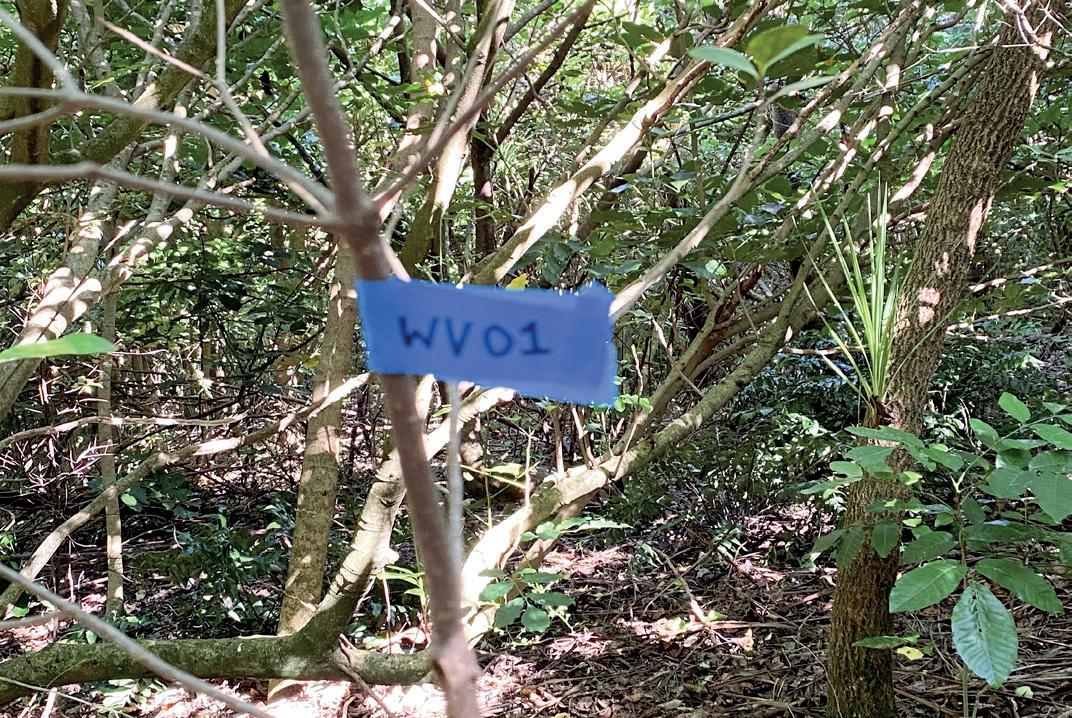
A New Zealand company has developed an insecticidal bait that can be deployed at specific points in the life cycles of the common and German wasps. The wasps carry the proteinbased bait back to their nests as they prepare for overwintering, and the nest is wiped out. This bait has proved highly effective in reducing Vespula wasp numbers in the South Island beech forests. In anticipation of possibly needing to deploy this bait, several yellow bait stations were set up around the hihi feeders. These were marked with a coded blue tag, and some of you may have spotted them on your walks.
Unfortunately, to date there is nothing we can deploy to reduce the number of paper wasps. They do not scavenge for protein; they are liveprey feeders, so the bait used for the Vespula spp. is not attractive to them. Many researchers around the globe are working on this issue, so we keep our fingers crossed for progress. Meanwhile, we continue to destroy as many nests as we can, as physical destruction or spraying the nests with insecticides remain the only methods of control.
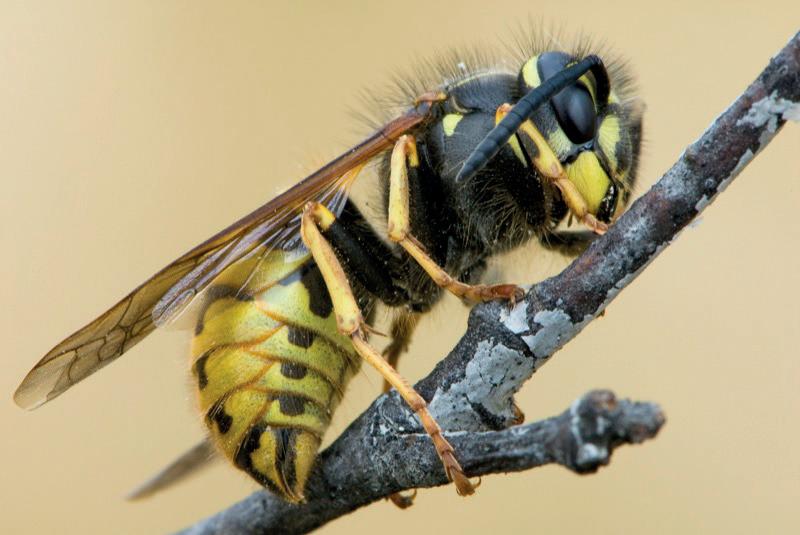
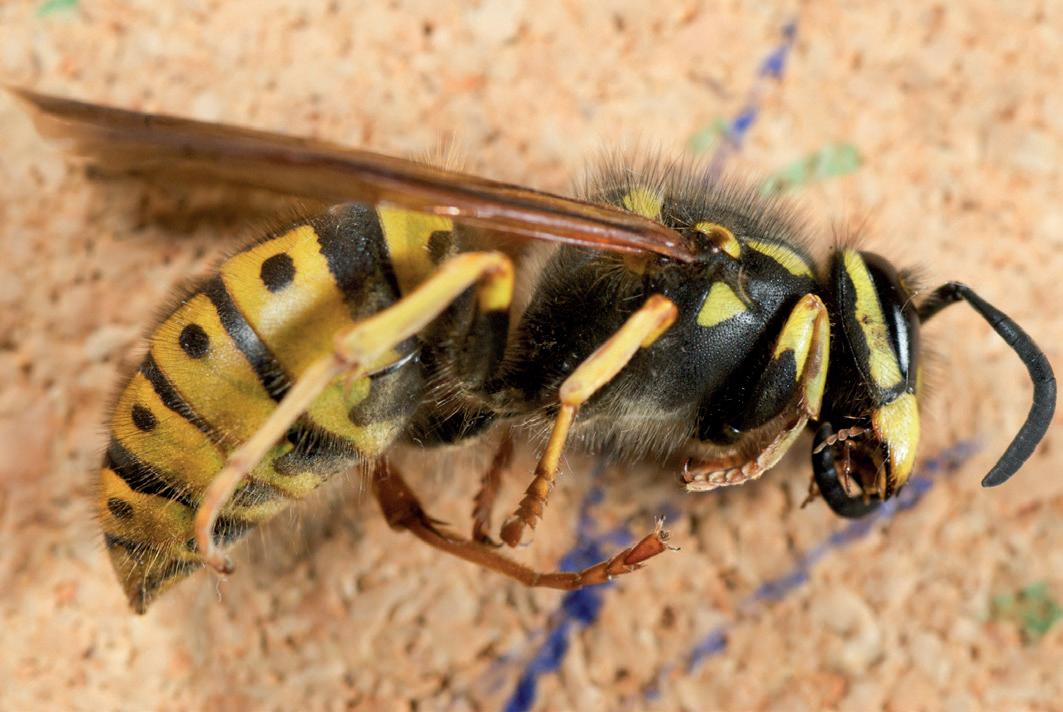
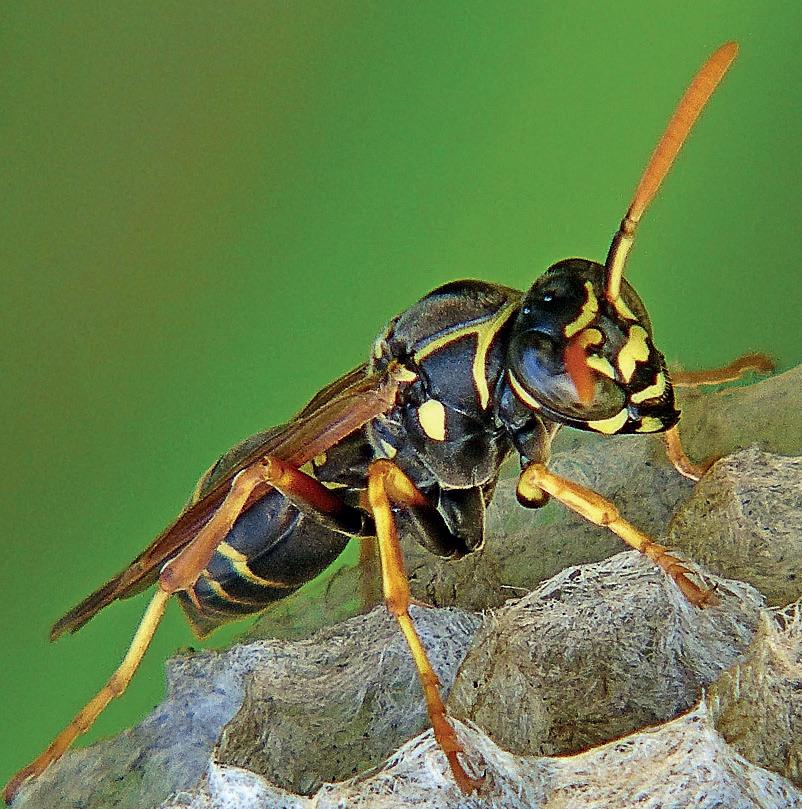
Common wasp
German wasp
Paper wasp
What did we find?
Common and German wasps were present in low numbers in late spring, but numbers began to climb quickly as the summer warmed. Just as they were becoming more of a problem at the sugar feeders, we had two storms in quick succession, and the numbers dropped sharply. We can only assume that the nests, often at ground level, were drowned in the heavy rain. The Island’s rangers, Nick and Vincent, also found and destroyed a large nest near the lighthouse, which helped greatly to reduce the number of wasps around the Visitor Centre feeder. The numbers never seemed to recover, so it was not necessary to deploy the bait. Most of the yellow bait stations have been removed and returned to storage. At the time of writing in mid-April, only three remain in situ, but they are empty, with no bait.
The paper wasp numbers continued to increase throughout the summer. Initially, some areas of the motu had lower numbers than others, but by mid-March they were present across the motu and were very active in the warm weather.
We will be fully assessing our data over the coming months and developing a plan of attack for further monitoring for next summer. Meantime, you now know the significance of the coded blue tapes and the yellow bait stations. If any of you ever notice any wasp nests on your visits to the Island, please do let Nick or Vincent know – they will be only too delighted to deal with them!
‘Spp.’ is the abbreviation for the Latin phrase species pluralis, meaning ‘multiple species’ within a genus.
Val Lee
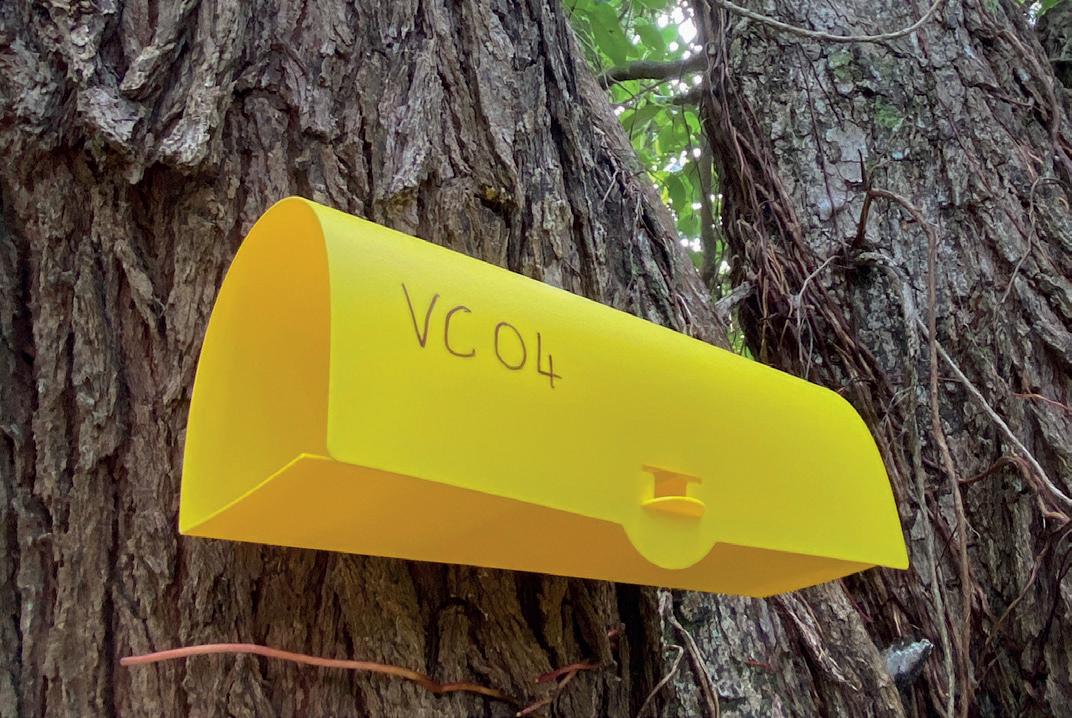
Above: Bait station
Below: Notation for bait station
A memory of a wasp encounter
Tiritiri Matangi has a steady stream of people who put themselves forward to join the ‘club’ and offer their services as a volunteer. I enjoy speaking with newcomers and invariably ask them how they became involved. The reasons are many and varied, as one would expect. A recent chat with Donna Miller, who is monitoring for the butterfly team, revealed a story from Tiritiri Matangi's past—long before most of us arrived.
Donna first visited the Island as a young girl during a long Easter weekend with her family in the late 1970s. Her father, Ross Weber, was employed in the Human Biology department at Auckland University and was on Tiritiri Matangi for work. One of the main aims of this trip was to catch as many locusts as possible for the Auckland Zoo, to feed their tamarin monkeys. The zoo later began breeding the locusts themselves. I spoke with Barbara Walter, who confirmed these details and mentioned that Ray’s daughter remembers catching ‘masses of locusts’ for Ross.
Hearing about his daughter doing wasp surveillance on Tiritiri Matangi brought back a vivid memory for Ross of his own wasp encounter on the Island.
In Ross’s words:
‘I saw first-hand the devastation of wasps on one trip when I went out. When we arrived on the beach, we could hear wasps flying around. They were killing cicadas and locusts and gradually devouring them, carting pieces of the victim’s body back to their nest. They were everywhere. That trip, we got stuck on the Island because of a storm, when our ride home returned to port early. After a day or so, we decided we needed a freshwater shower, so John Craig and I went over to the caves on the other side of the Island. I was leading, and as I parted the bracken growing over the track, I saw a giant hole in the ground with thousands of wasps flying in and out. I very quickly got back behind the bracken and told John to run. We abandoned the shower and, after assessing the situation, went to the lighthouse and got a can of petrol. Sneaking back when it was dark, we tipped the petrol into the holes and ran as fast as we could. After a short time, we ventured back, and the whole site was a mass of wasp bodies. Any wasps still alive were frantically fanning the residual fumes. The next day, the Island was strangely quiet – no wasps. Those in charge (this was years before DOC) went back and dug up the wasp nest, which they said was about the size of a VW car boot. So rather large. I am pleased we got that one when we did’.
Yvonne Vaneveld
Editor's note: The caves Ross remembers are no longer accessible. Ross and John had planned to shower in rainwater that fell from the air roots of a pōhutukawa at that particular spot.
Photos: Alison Forbes
Fauna Notes
At this time of year, it is especially rewarding to see young birds finding their feet alongside adult birds resplendent in fresh plumage after their late-summer moult.
Kākāriki / red-crowned parakeet
The past season was moderately successful for the kākāriki using our nestboxes. There were 13 nesting attempts, and at least 82 eggs were laid. One pair got off to an early start, with three eggs found on the first check on 22nd October. The smallest clutch was four eggs, and the largest nine. Half of the eggs hatched and, of the 41 chicks, 23 are believed to have fledged. The fledging rate is slightly lower than the long-term average.
Despite their large size, the nestboxes seem attractive to other species. This season, we recorded 12 rifleman/ titipounamu nests. Five boxes had records of wētāpunga, and nine had Duvaucel’s geckos on at least one occasion.
The volunteer team of Gerhard Wette, Tejo van Schie and Diane Irvine made a great effort to collect all the data.
Kōkako
There still appear to be at least 29 pairs. There were many failed nesting attempts, possibly due to frequent heavy weather events, which often led to nest abandonment.
The season ended with at least nine confirmed fledglings. Te Rae and Chatters, Phantom and Wakei, Waitangi and Lyric, Erenora and Tataki, and Joy and Awe Awe each produced a daughter. Atarau and Kiseki produced a son, and Wai Ata and Awenga had one daughter and one son.
Kopakopa and Noel also fledged one unbanded chick, gender unknown. A pair of unidentified adults was also seen with an unbanded fledgling, so there could be ten fledglings.
A Cappella and Te Koki’s fledgling was found dead. Not long after, Te Koki was seen with another partner, Kawata, and A Cappella was seen elsewhere on her own. Wairua is still with Nuka, and there have been no recent sightings of her previous partner, Parininihi.
Hime and Kaze are still being seen in the vicinity of the Visitor Centre. Kaze was recently caught and banded (WW-RM).
During the season, various unpaired birds from the previous couple of seasons have been seen either on their own or together. Some of them might stay together if they can establish a territory.
Tīeke/saddleback nest box scheme
As in the previous year, there were 152 nest boxes available for use at the beginning of the 2025-26 season. The most frequently recorded occupants were wētāpunga, tīeke and Duvaucel’s gecko, with titipounamu/rifleman showing interest in only seven boxes.
As of early April, wētāpunga have been recorded in 97 boxes (64%), down from 112 (74%) in 2024-25. This is not unexpected, given that wētāpunga occupancy has fluctuated markedly since we began recording them. In 2025-26, there have so far been 521 records of wētāpunga in tīeke boxes. This figure does not represent 521 individual animals, as many will have been recorded multiple times.
This season, for the first time, we have recorded the sex and size of individuals; there were 239 records of males and 245 of females, plus 37 cases in which sex couldn’t be determined –usually due to the way the insect had positioned itself in the box. The size of an individual, together with its sex, gives us a good indication of age. The size data has not yet been analysed, but it appears that the vast majority of wētāpunga were adult or near-adult.
Tīeke laid eggs in 19 of the boxes (12.5%), a small rise from 2024-25, when 17 boxes (11%) were used. Observations suggest that chicks fledged from 10 of these nests, eggs failed to hatch in five nests, at least two nests failed at the chick stage, and one other either failed at the chick stage or was successful. There is slightly less certainty about outcomes than in previous years due to a change in our methodology, which means longer gaps between visits.
Forty eggs were laid across the 19 nests. At least 25 eggs hatched, and at least 17 of these chicks appear likely to have fledged. This leaves seven or eight chicks that died before fledging, an unusually high proportion. This figure largely reflects just two nests – the one in Landing Valley (LaV-7b), from which four chicks disappeared (see the Feb’26 issue of Fauna Notes), and one in Bush 2, which held three chicks, at least two of which were found dead when the nest was removed post-breeding. We think the most likely explanation is that something happened to one or both parents, causing the nest to be abandoned and the chicks to starve.
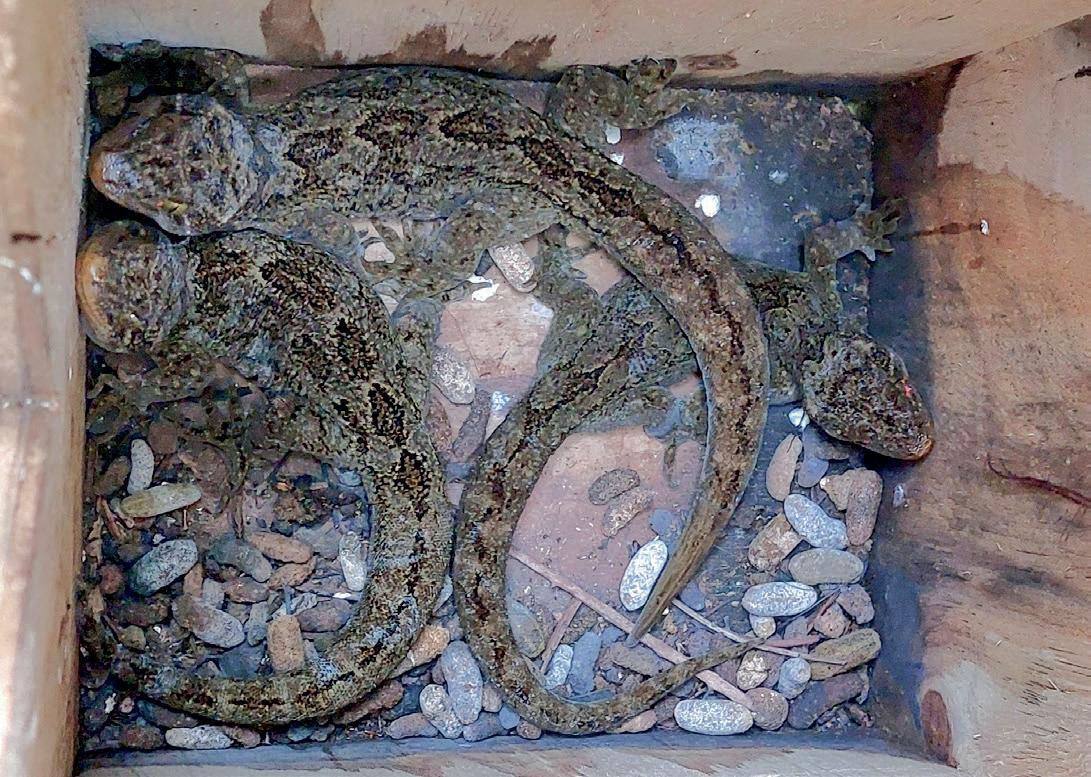
Duvaucel’s geckos increased their presence in tīeke boxes this season. In 2024-25, they were recorded in only five boxes. In 2025-26, they have so far been recorded in 17 boxes, sometimes in twos or threes, and sometimes sharing the space with a wētāpunga or two. We haven’t systematically recorded the number of individual geckos seen in nest boxes, but the increase in occupancy might make it useful to do so.
This year, for the first time, we shall continue to monitor tīeke boxes during the winter to determine whether occupancy, particularly by wētāpunga but also by Duvaucel’s geckos, shows any seasonal variation.
Three Duvaucel's geckos in a tīeke nest box
Photo: Kay Milton
Kororā / little penguin
Kororā had another poor breeding season, with only five chicks fledging from the nest boxes. In eleven of the boxes, at least one egg was laid, which is near-normal. Only five pairs laid their eggs at the typical time in August. They each laid two eggs, but only one pair hatched their chicks; both chicks died before fledging. Other pairs delayed laying until September, October, November and December. Across eight attempts, 15 eggs were laid. Seven of these hatched, and five chicks fledged. Two of these late attempts were pairs trying again after failing on their first attempt. They fledged one chick.
This season, we installed 20 new nestboxes south of the wharf at the bottom of Doug’s Alley. As expected, we encountered penguins in only one of them. It takes them time to adopt a new box. Duvaucel’s geckos had no such hesitation and were found in 15 of the boxes. The boxes are located on the coast, downhill from a gecko release site. Such high occupancy suggests the Duvaucel’s are doing well.
On another note, a young penguin was observed in shoreline seaweed on 30 December 2025, the morning after a severe storm. The bird was retrieved, weighed, and checked for signs of injury (there were none). It was then left to rest in a dark box for about eight hours. After the ferry departed, the penguin was taken to Little Hobbs Beach, where it swam away strongly, much to the delight of all present.
Titipounamu/riflemen
Primarily due to inclement weather, fewer birds were caught over December and January than during the last two summers. However, there is no indication of any reduction in the population, with regular sightings island-wide.
Unusual sightings
Pūkeko carrying wētāpunga
A pūkeko was seen trotting off with a large female wētāpunga clutched in its beak. The poor wētāpunga's legs were flailing as it was still alive. This occurred near the toilet on Ridge Road.
Rare channel-billed cuckoo
Mason Maron shares his account of an exciting bird sighting: For my first and long-overdue visit to New Zealand, I knew I had to stay overnight on Tiritiri Matangi Island. In the Auckland area, there’d be no better way to see so many amazing species.
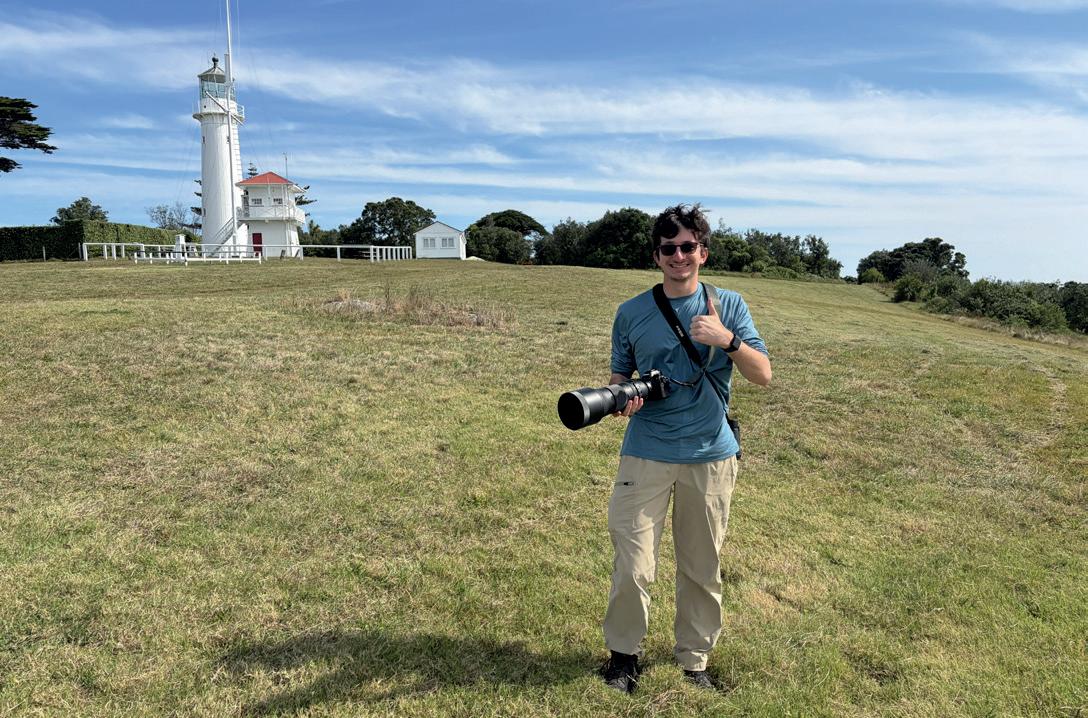
In the morning, I decided to visit the bunkhouse dam, in hopes of getting views of a mātātā/fernbird and a pūweto / spotless crake. After success on both fronts, I headed back up the hill to the bunkhouse, but was quickly distracted by a pair of non-native eastern rosella. I followed them southeast of the lighthouse until they vanished, before immediately encountering a new call I hadn’t heard yet. It sounded almost like a gull to me, but didn’t match any of the local gulls I’d already heard. I looked east over the water and locked onto an oddly shaped, gull-sized bird flying parallel to the cliff face. Getting my binoculars on it, I recognised the cuckoo shape and immediately dropped them in favour of my camera.
As I took pictures, I hoped this was a long-tailed koel (koekoeā / long-tailed cuckoo) though it’d be a bit past its season. However, looking at the photos, I was surprised by the large bill.
I was familiar with the channel-billed cuckoo, but didn’t want to jump to conclusions. I scrolled through long-tailed cuckoo photos on my phone, but they all seemed to have much smaller bills than the bird I’d seen.
At the bunkhouse, I sought support from the volunteers. They mentioned the koekoeā, long-tailed cuckoo, as a possible ID, and I was quick to accept it. However, when Simon Fordham saw the photo, he immediately called it out as a channel-billed cuckoo. I was happy to hear it, though I didn’t realise quite how rare it was until I looked up the New Zealand records for the species! With what had already been an extremely successful visit to Tiritiri Matangi, it felt like the Island had provided me with one last piece of incredible luck.
About the author: Mason Maron is a PhD Student in the Migration Biology Lab at the University of Illinois UrbanaChampaign. His camera was a Nikon Z6III with a Sigma 150600mm Contemporary lens on an FTZII converter.
The 2022 edition of the Checklist of the Birds of New Zealand, published by the Ornithological Society of New Zealand, lists six records of channel-billed cuckoo in New Zealand since 1924 – the most recent at Mangawhai Heads, Northland in October 2002. It breeds in Australia and winters in Indonesia, New Guinea and the Bismark Archipelago. Simon Fordham said that, to his knowledge, it’s the rarest bird ever sighted on Tiritiri Matangi.
Compiled by Kathryn Jones, with contributions from Scott Camlin, Morag Fordham, Simon Fordham, Mason Maron, Kay Milton, and John Stewart
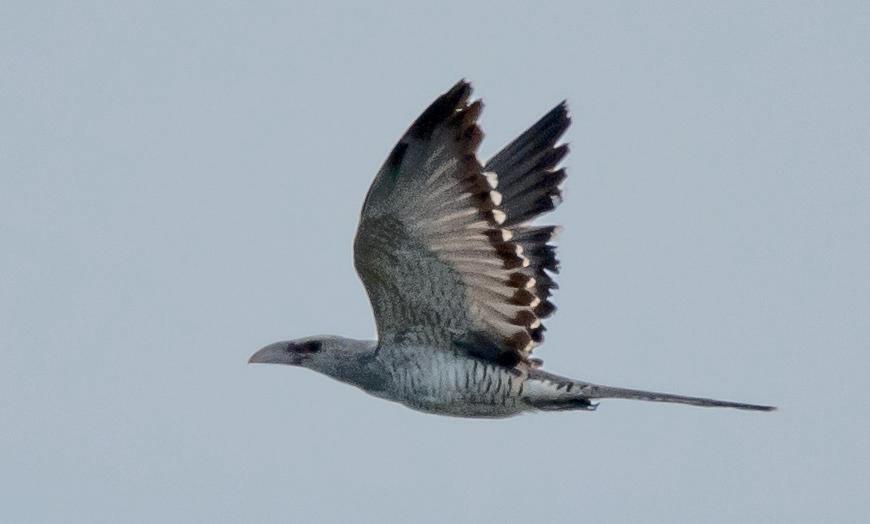
Above: The channel-billed cuckoo flying past the Island Left: A very happy Mason Maron after the rare sighting
Photo: Scott Camlin
Photo: Mason Maron
Summer fruits – kawakawa
The kawakawa tree plays a vital role in New Zealand’s ecosystems, especially during summer when its ripening fruit attracts a range of native birds. Its unique adaptations for pollination and seed dispersal highlight the intricate connections between plants and wildlife.
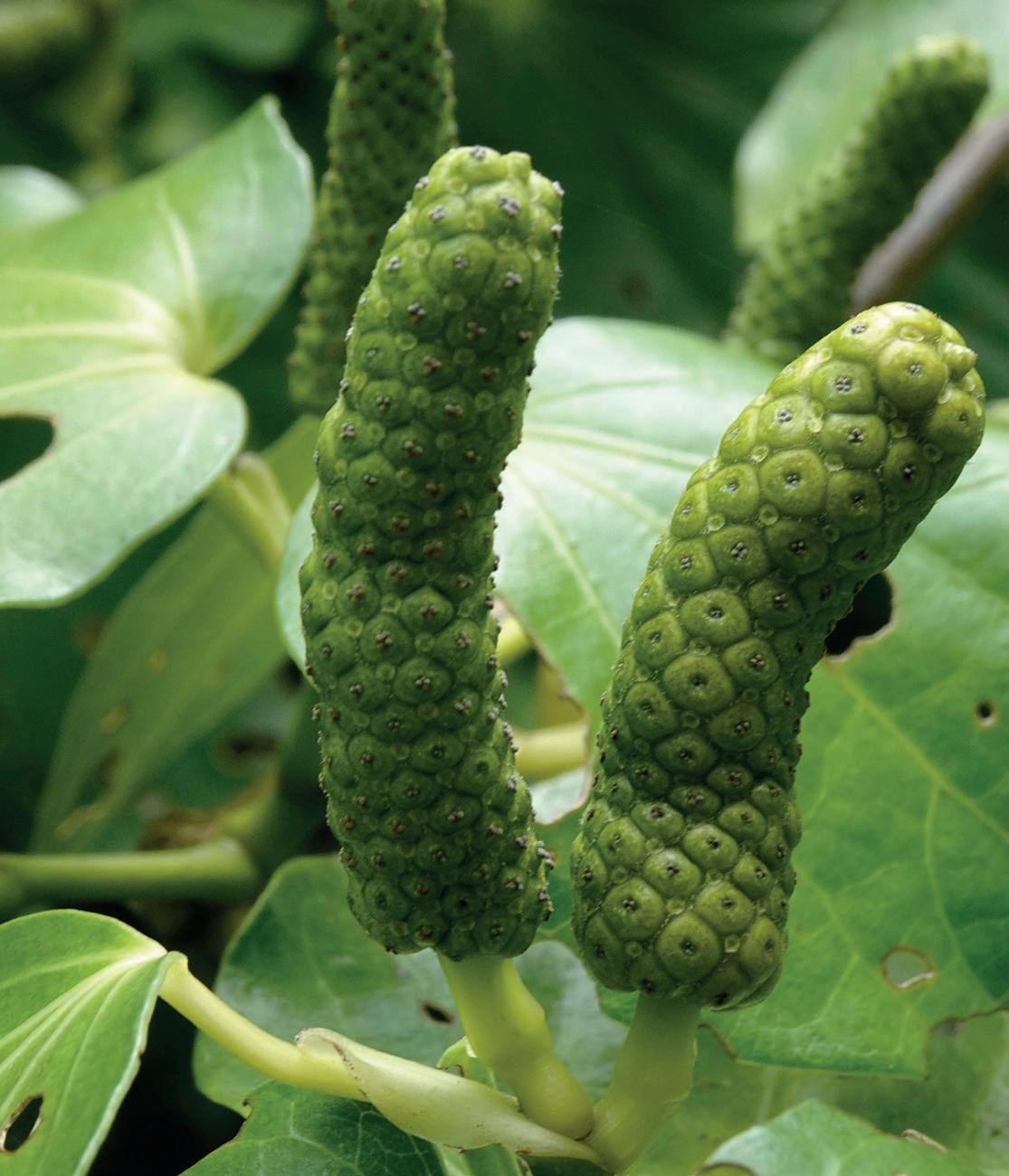
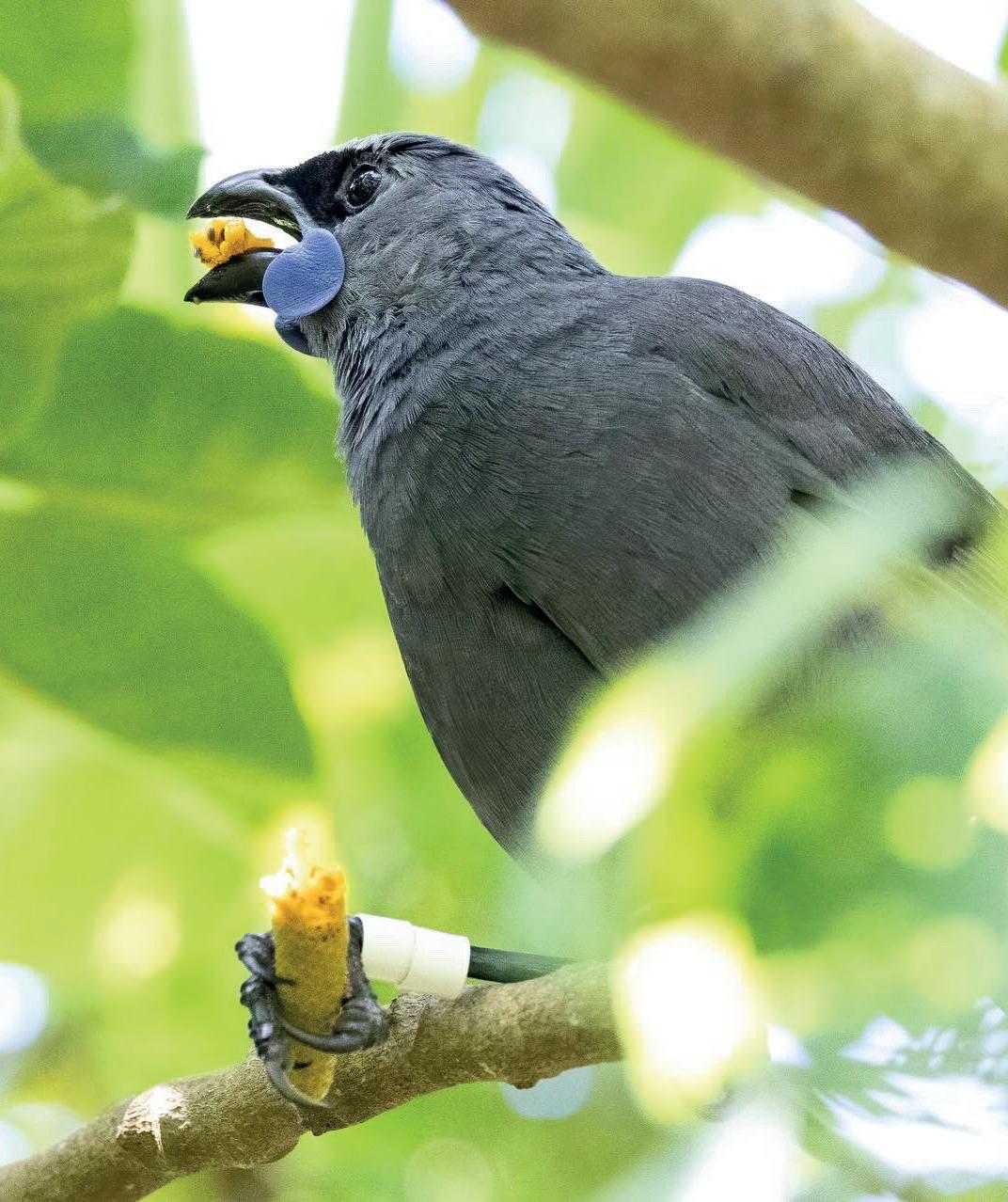
In January, during mid-summer, unripe green kawakawa fruit [Fig. 1] began to ripen to a bright orange colour, attracting many of the Island’s birds, such as tīeke, kōkako, tūī, kererū and kākāriki, to feed on the soft fruit [Fig.2].
The fruit ripens from the tip, gradually turning orange and softening, while the rest of the fruit remains green and firm. Birds that eat the fruit take the soft orange part, leaving the firm green part behind [Fig. 3]. In this way, the tree ensures that only ripe seeds are dispersed. The partly eaten fruit reveals tiny peppercorns, its seeds. In Titirangi, where I live, I have observed blackbirds eating the fruit and trying unsuccessfully to dislodge the green parts. When eaten by humans, the fruit leaves a mild peppery taste on the tongue.
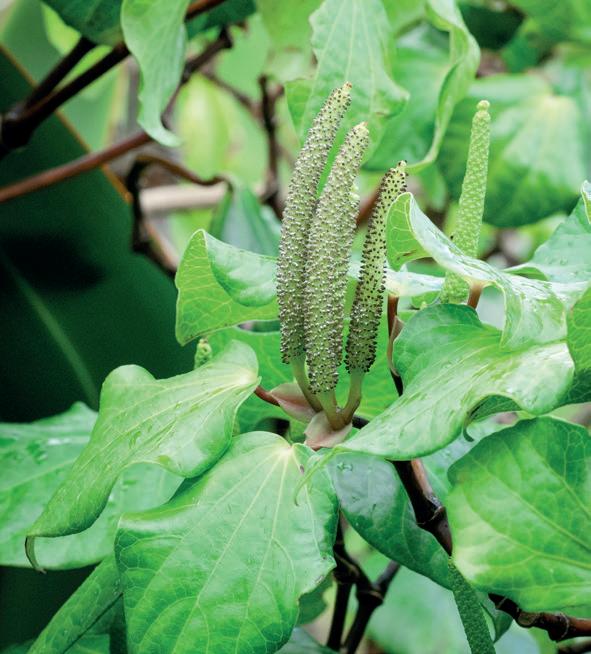
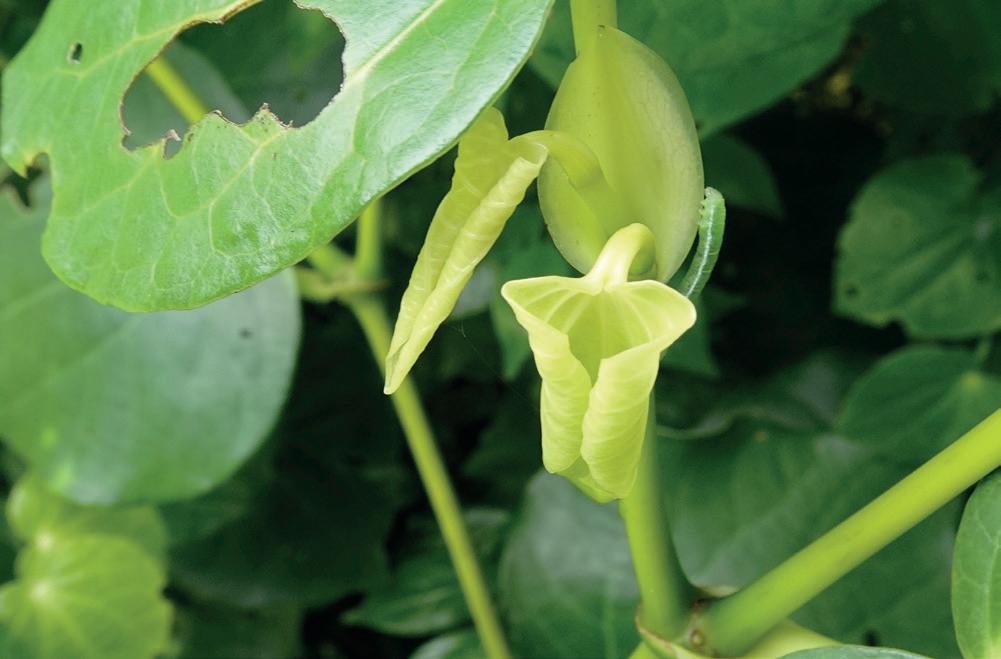
Kawakawa (Piper excelsum) belongs to the pepper family (Piperaceae; piper is Latin for pepper) and is a small tree that can grow up to six metres tall. Branches emerge from distinctive knobbly joints on the tree. Female and male flowers grow on separate trees (dioecious) and usually appear in pairs. Numerous tiny male flowers ripen on slender, upright spikes (inflorescences) in late winter and early spring. When the pollen on the male flowers is ripe, the spike takes on an ashy appearance [Fig. 4]. If touched, the spike releases a small, dense cloud of pollen grains into the air. The female flower develops shortly afterwards, receiving pollen from the air.
The tree uses the wind for pollination and birds to distribute its seeds, advertising the ripe fruit with bright orange colours. The kawakawa's heart-shaped leaves are pointed and shiny, lacking a midrib, with veins radiating from the base of the leaf [Fig. 5]. New leaves and flower spikes ‘arise out of the protective sheath of an older leaf, [and] the sheath opens to form a 'flange’ (1) [Fig. 6].
The leaves contain various organic substances and are important in traditional Māori medicine. When chewed, they produce a numbing sensation in the mouth due to a bioactive compound called myristicin, and can be used to alleviate mild toothache, similar to the effect of cloves.
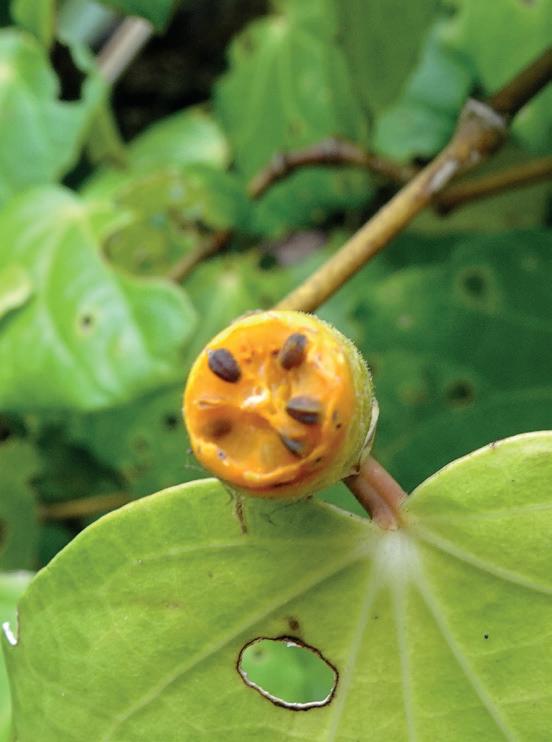
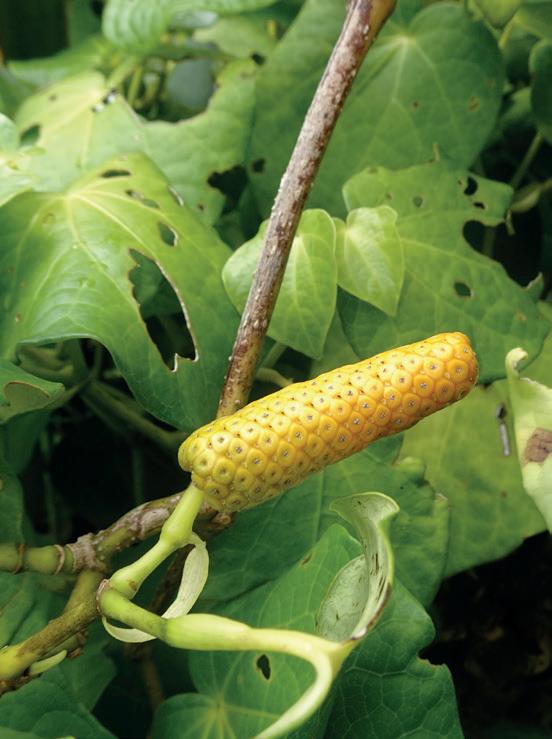
Fig. 3 Partially eaten fruit (left) and fully ripe fruit (right)
Fig. 2 Kōkako eating kawakawa
Photo: Beth Chapman
Fig. 1 Kawakawa, unripe fruit
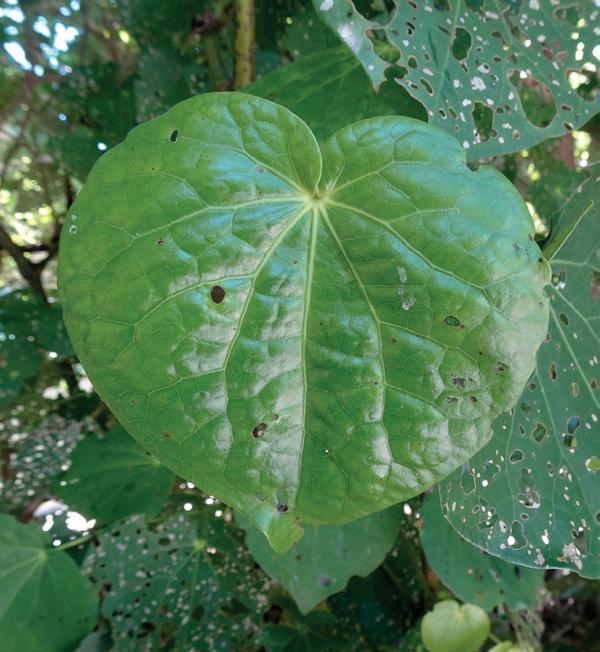
Holes and notches in the leaves are made by the kawakawa looper caterpillar, which mainly feeds at night. I recently learned from a visitor to Tiritiri Matangi that leaves with many holes are more sought after, as they contain more beneficial organic substances. This occurs as a defensive response by the tree, which sends more of these organic substances to that leaf as the caterpillar feeds on it.
The kawakawa looper caterpillar (Cleora scriptaria) is green when young and changes to a darker colour with fine markings as it matures. As a ‘looper’ or ‘inchworm’, it belongs to the Geometridae family. Spot the looper in Fig. 6.
Gerhard Wette (1) New Zealand native trees, John Dawson and Rob Lucas. 2011, p.321 All photos author's own, unless otherwise noted
Acknowledgements: Warren Brewer [Guidelines – Flora Notes, July 2023], Jonathan Mower and Rosemary Wette
Plant phenology – a new project on the Island
Have you ever thought about what the Island’s bush might be like in ten, 20 or even 50 years’ time? It will certainly be more mature and, hopefully, include more species. But the impacts of climate change and pollution are unlikely to be helpful. A study of changes to plant life should help us decide how we can help.
Phenology is the study of cyclic and seasonal natural phenomena, particularly in relation to climate and to plant and animal life.
A new phenology study would be interesting in itself – it would tell us more about the seasonal changes in our plants and about longer-term variations in the timing of annual cycles. These could well be influenced by climate change, as has already been noted in studies in the northern hemisphere, where it was found that over the past 100 years the average length of the growing season has increased by 3.3 days per decade. But there are also additional drivers and potential benefits for such a study on Tiritiri Matangi.
The Hihi Recovery Group has encouraged us to use phenology data to help determine the impacts on the hihi nesting season. An understanding of the seasonal availability of nectar, fruits and seeds would perhaps reveal critical periods when food is scarce and whether introducing new plants would help. Some of our trees, such as māhoe, are susceptible to both drought and heavy rainfall. Last season promised a bumper crop of fruit, with branches laden with ripening berries. However, ongoing low rainfall by early March caused māhoe to shed their leaves and drop their ripening berries. This was later followed by a new, late, second flowering.
About 200 trees and shrubs have been selected for the new study. At roughly fortnightly intervals, volunteers walk a route along the Island’s tracks, checking the marked trees and recording their condition in a phone app. There are 12 routes, each with 10 to 25 trees to check. I’ve recruited about half the volunteer teams needed, so there are places for more if you’d like to help. Kay Satherley was the first to join and, over the past year, has helped to test-run and refine the phone app and the checking process.
John Stewart
Email John at JohnReaStewart@gmail.com if you are interested in helping with the phenology study.
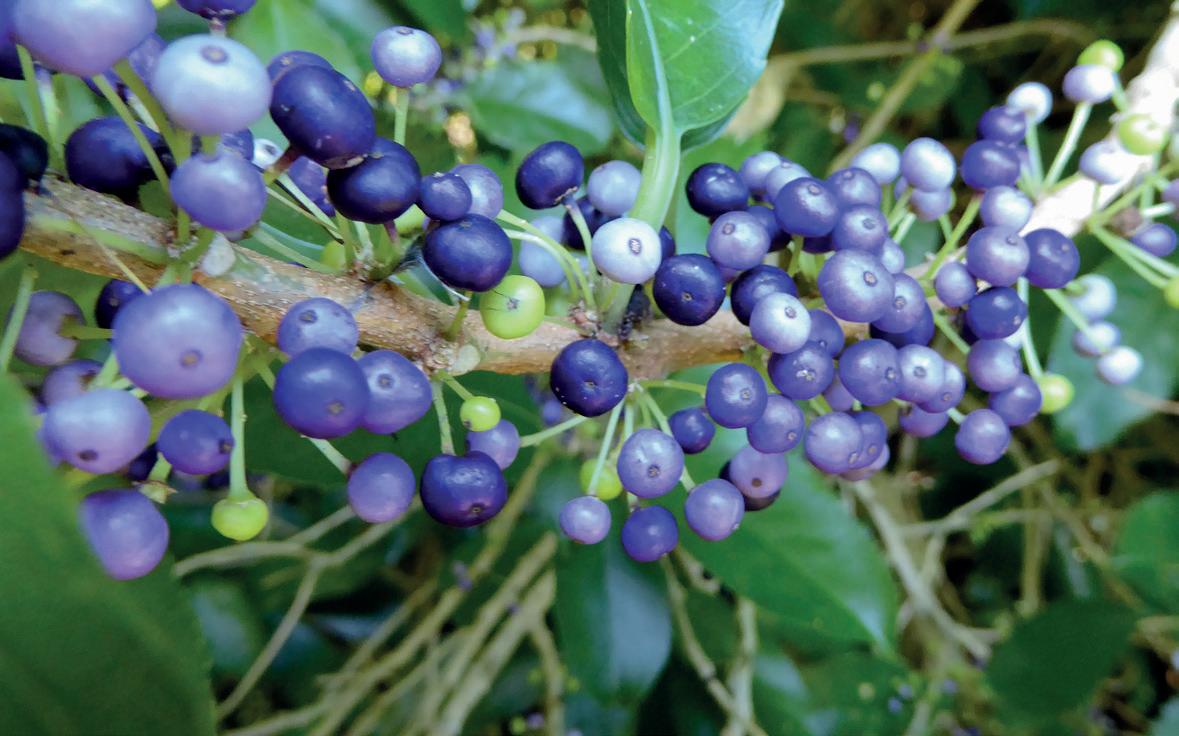
Fig. 6 New leaf growth with sheath
Fig. 4 Male flower with ripe pollen
Fig.5 Kawakawa leaf
Photo: Jonathan Mower
Māhoe berries
Photo: John Stewart
Tiritiri Matangi Kids,
by Stacey
I think it’s pretty amazing how clever plants can be. If you look closely at many of New Zealand’s native plants, you might notice something interesting; lots of their flowers are white or pale. This is not an accident. Many native plants evolved in shady forests under tall trees, where there is not much light. Pale flowers are easier to see in low light, especially in the evening, which helps insects like moths find them when they are flying around looking for nectar. Enjoy finding the flowers in the maze!
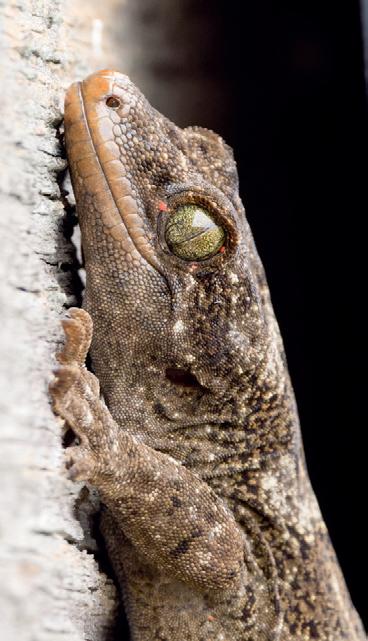
Long ago, before people arrived in New Zealand, there were no land mammals and no honey bees. Instead, native bees lived here. These bees are solitary, meaning they live alone, and they don’t make honey. They collect pollen to feed their young and only sip nectar for energy. Because of this, plants needed help from many different animals to move their pollen from flower to flower. Pollen needs to be moved so plants can make seeds and grow new plants. Animals like moths, flies, beetles, birds, bats, and even geckos visit flowers to drink nectar or collect food. As they move from flower to flower, they carry pollen with them, helping the plants reproduce.
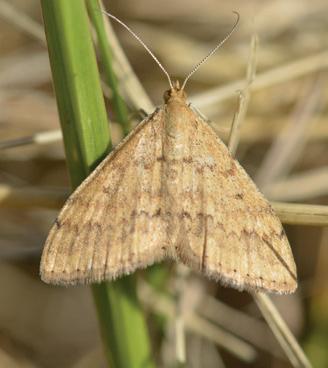
So when you see a small white flower in the forest, it might be sending a message to a moth:
‘Come visit me tonight! ’
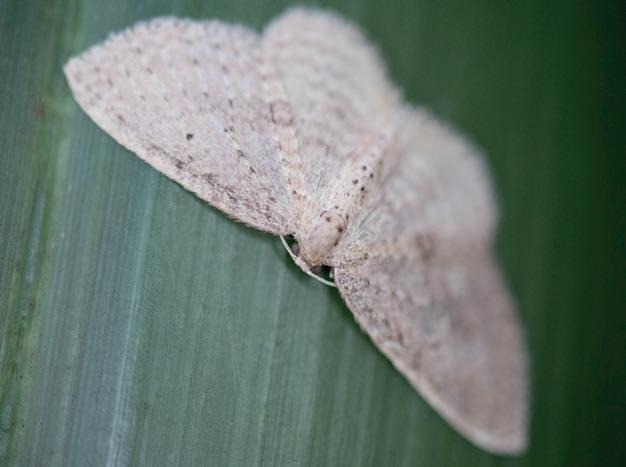
White flowers are helpful because they stand out at night, often smell sweet, and are full of nectar. This makes them easy for nighttime visitors like moths to find. Instead of depending on just one type of pollinator, many native plants became generalists, meaning they welcome lots of different creatures to visit their flowers.

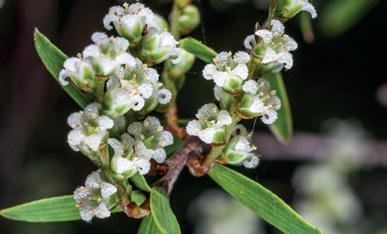
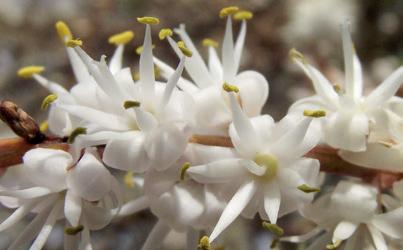
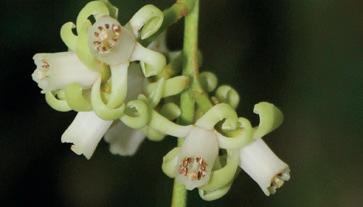
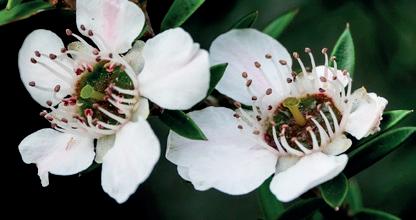
Source: https://www.sciencelearn.org.nz/resources/2635-the-uniqueness-of-new-zealand-plants
Supporters of Tiritiri Matangi
The Supporters of Tiritiri Matangi (SoTM) is a volunteer Incorporated Society that works closely with the Department of Conservation to make the most of the wonderful conservation-restoration project that is Tiritiri Matangi. Every year volunteers put thousands of hours into the project and raise funds through donations, guiding and our island-based gift shop.
If you'd like to share in this exciting project, membership is just $30 for a single adult or family, $35 if you are overseas, and $15 for children and students. Dawn Chorus, our magazine, is sent out to members every quarter. See https://www.tiritirimatangi.org.nz/support-us/ or contact PO Box 90-814 Victoria St West, Auckland.
SoTM Contacts:
Chairperson: Ian Alexander chairperson@tiritirimatangi.org.nz
Secretary: Meredith Blogg secretary@tiritirimatangi.org.nz
Treasurer: Vicky Toon treasurer@tiritirimatangi.org.nz
Board: Hester Cooper, Louise Delamare, Rosemary Gibson, Rachel Goddard, Carl Hayson, Andrew Nelson, Janet Petricevich, Parin Rafiei Operations Manager: Debbie Marshall opsmanager@tiritirimatangi.org.nz
Guiding and Volunteer Manager: Gail Reichert guidemanager@tiritirimatangi.org.nz, 09 476 0010
Retail Manager: Ashlea Lawson retail@tiritirimatangi.org.nz
Membership: Rose Coveny membership@tiritirimatangi.org.nz
Educator: Sara Dean
Assistant Educator: Liz Maire educator@tiritirimatangi.org.nz
Fundraisers: Rashi Parker and Louise Delamare fundraiser@tiritirimatangi.org.nz
Social Media: Bethny Uptegrove socialmedia@tiritirimatangi.org.nz
Dawn Chorus co-editors: Janet Petricevich and Stacey Balich editor@tiritirimatangi.org.nz
Island Rangers: Nick Fisentzidis and Vincent Alexander tiritirimatangi@doc.govt.nz, 027 536 1067

CALENDAR OF EVENTS
Tiritiri Matangi Talk
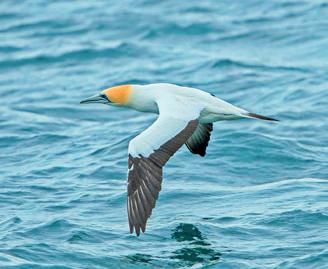
Feeding and foraging of tākapu/gannets
Monday 8 June 2026
Speaker: Nigel Adams
7:30pm at Unitec, Building 115, Mount Albert
Tiritiri Matangi Talk
Recloaking Papatūānuku – Aotearoa’s most ambitious nature-based solution
Monday 7 December 2026
Speaker: Simon Millar, Executive Director of Pure Advantage
7:30pm at Unitec, Building 115, Mount Albert
Working Weekends 2026
King's Birthday Weekend, 30 May - 1 June Labour Weekend, 24 - 26 October
Enquiries to the guiding and volunteer manager
Supporters' Weekends 2026
11 - 12 July
5 - 6 September
Enquiries to the guiding and volunteer manager
Visiting Tiritiri Matangi Island for recreation or education
Day trips:
Weather permitting, Explore runs a return ferry service from Wednesday to Sunday from Auckland Viaduct and the Gulf Harbour Marina. Bookings are essential.
Phone 0800 397 567 or visit the Explore website: https://www.exploregroup.co.nz/
Overnight visits:
Camping is not permitted and there is limited bunkhouse accommodation. Bookings are essential: https://bookings.doc.govt.nz/Web/
www.tiritirimatangi.org.nz
Come and experience Tiritiri Matangi's immersive islandbased education programme for Years 3-13. Students step back in time to a world where forests are alive with birdsong, gaining insight into Aotearoa New Zealand’s taonga species and the conservation work protecting them. Learners spend the day fully immersed in te taiao / nature, enjoying an unforgettable, hands-on experience that inspires curiosity, connection and care for the environment. The programme combines a guided walk through native forest offering close encounters with Aotearoa New Zealand’s unique species, with engaging educator-led learning sessions. For senior students, the education programme supports a range of NCEA Achievement Standards.
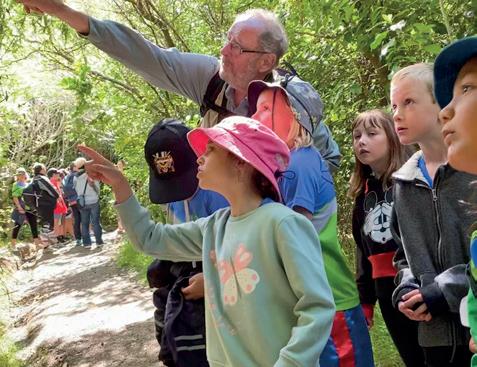
Subsidies are available through our Growing Minds programme for schools with an EQI of 430 or more. Book now to inspire your students and empower them to take action for nature. For full programme details and booking information, visit our website at https://www.tiritirimatangi.org.nz/education-programmes/ or contact Robyn Davies by email at schoolbooking@tiritirimatangi.org.nz
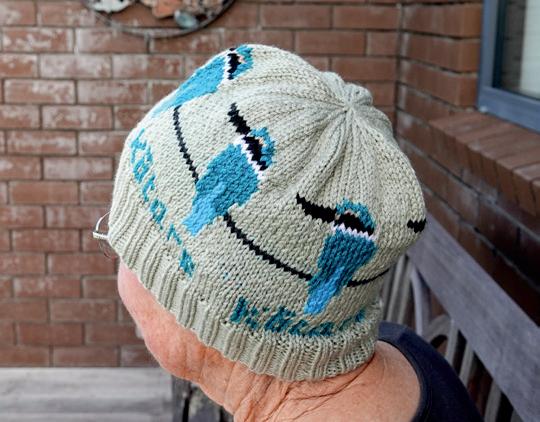
Do you want to knit your own beanie?
Kay Milton's follow-up to her first knitting pattern book has landed on Tiritiri Matangi Island.
The Tiritiri beanies project started 14 years ago with just one knitter and one species. There are now eight dedicated knitters and nearly forty species, and the project has inspired others in NZ and abroad to take up their needles in support of nature conservation.
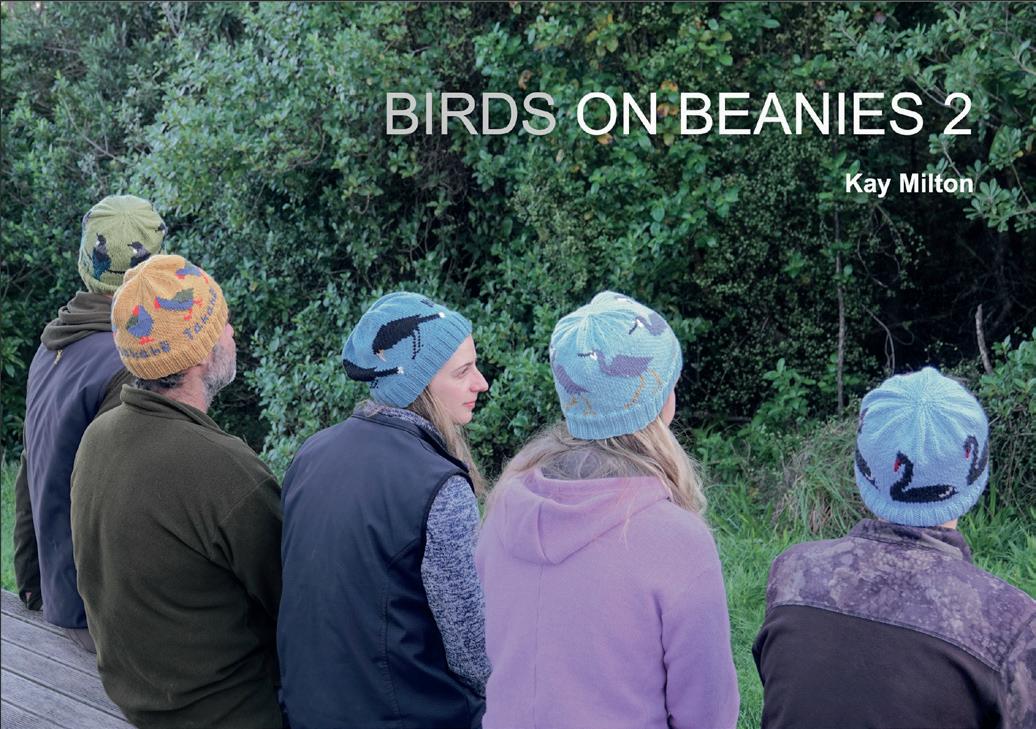
Price $40 – order online or contact the shop
Special deal: buy both BIRDS ON BEANIES books for just $50
www.tiritirimatangi.org.nz/online-shop retail@tiritirimatangi.org.nz
+64 9 476 0010 (during shop hours)
Tiritiri Matangi Island shop hours:
11am – 2pm Wed – Friday 11am – 3pm Sat, Sun, and public holidays

Scan this QR code for links to our shop social media accounts, newsletters and more!
In Birds on Beanies 2 you will find:
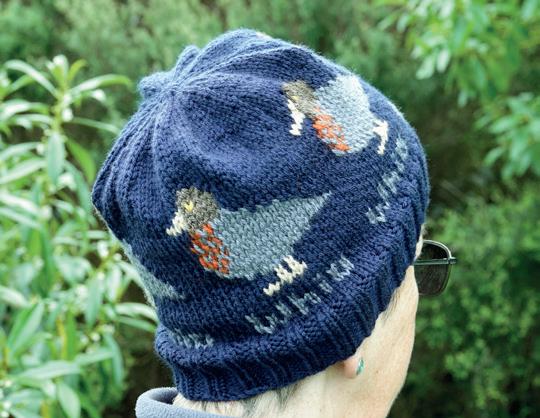
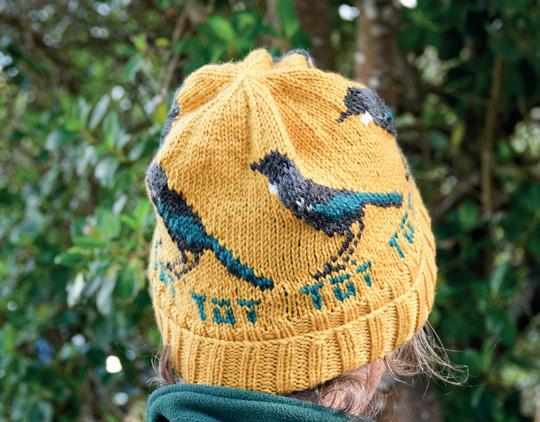
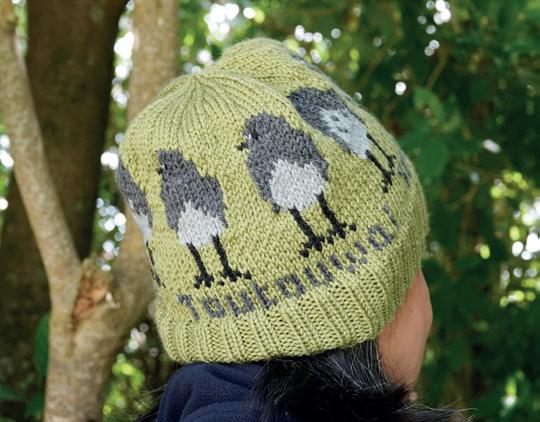
• Designs for 24 species, including 3 non-birds (a gecko, a marine mammal and an insect)!
• 28 patterns/charts in total, including new designs for some of the species featured in the first book
• Beautiful photographs of the birds (and other creatures) and images of completed beanies for inspiration
• Guidance on how to follow the patterns, the techniques involved and how to knit the beanies in different sizes.
Supporters of Tiritiri Matangi wishes to acknowledge the generous support of its sponsors














Heritage donors and bequests World Wide Fund for Nature (WWF) Fullers360 Peter Lorimer bequest
Supporters of Tiritiri Matangi welcomes all types of donations, including bequests, which are used to further our work on the Island. If you are considering making a bequest and would like to find out more, please contact secretary@tiritirimatangi.org.nz