Copyright Tracey Booth Owens 2025

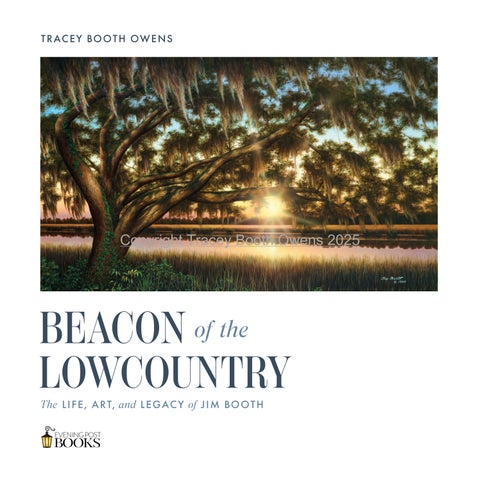
Copyright Tracey Booth Owens 2025
The LIFE, ART, and LEGACY of JIM BOOTH

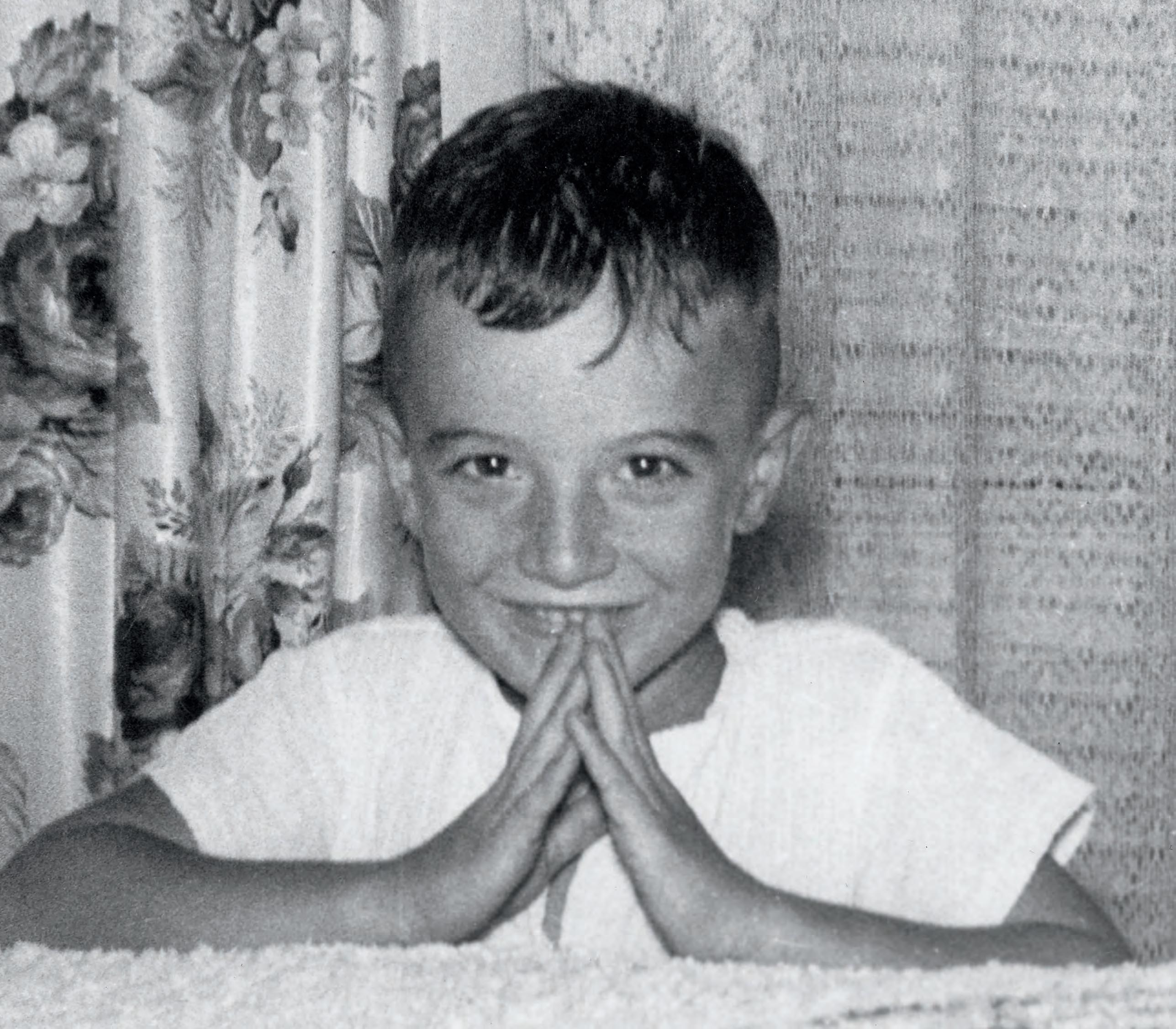
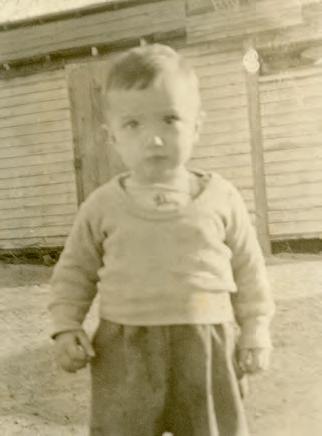
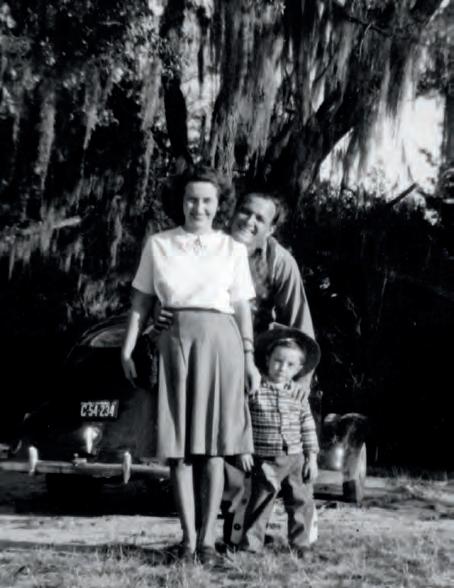
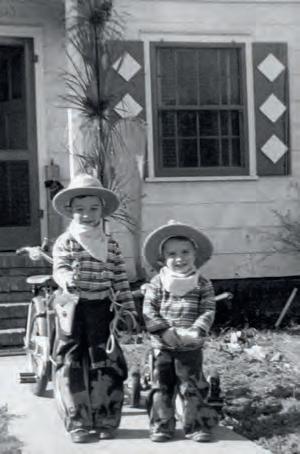
im spent the first ten years of his childhood living in North Charleston. His memories are rich with detail and lively sound effects as he relives events of his youth in the early 1950s. It was a time of hopeful optimism following the end of a major war. The soldiers, sailors, and airmen and women were back home raising their families, building the “Baby Boomer” generation. Characteristic of this period before television and any electronic entertainment, Jim spent much of his time in imaginative play outdoors or in creative building indoors.
“I was born in 1945 on November 25th. World War II was just ending. I remember living in one of these houses the government builds for people serving. I could stand out in the front yard and watch cargo planes flying across the sky — hundreds of them, rrrrmmmm, rrrrrmmm — with lots and lots of supplies. We used to call them flying box cars. The planes had two tails and the cargo section in the middle looked a box car. The planes would fly in and unload and go back and get more. This was before we had the big C-17s that we fly now and we had to have a lot more what I call people carriers. The Navy Yard was very useful during all this time. I think they built close to four hundred destroyers. And that was very important as far as defending troops because they had merchant ships crossing the ocean, bringing troops to England and Europe, and so on and so forth. We played a very, very big role in that, Charleston in particular. You know, when you see D-Day when all the ships were unloading troops? Well, that one boat — the Higgins boat they called it — that the front end dropped down and all the guys came out of — they were built in Charleston. Most people don’t know that.” Years later in 2015 after the Navy Base had closed and many areas fell into disrepair, Jim was able to help bring awareness to revitalization efforts with his painting Admiral’s Quarters A and donated a portion of the prints to help fundraising efforts.
They formed fast and lifelong friendships with their neighbors on Tabby Island and on Folly Beach. Jim was even a volunteer firefighter at a time, likely out of necessity from being one of few full-time residents on the then-quiet island. “Marlene Estridge and her husband — he was on the fire department, but he was helping us out with the Rescue Squad and all — had a twenty-eight foot Scotty craft. He lived right there on Tabby Island, had a dock and everything right there. They would load up with ice and something to eat then we’d take off and we’d go all the way out to the Gulf Stream and catch fish. Then you had the Pardees and Judge Bill Bradley and his wife, Bert. They hosted parties at their house.” They also had a couple of dogs during their time at Folly — a white German Shepard named Lady, and a Bassett Hound named Huckleberry — who got into their share of trouble.
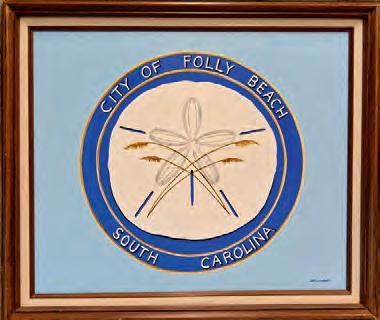
“I had created, and it still exists — the emblem for Folly Beach.17 It’s got a round seashell — a sand dollar — with crossed sea oats, two crossed sea oats, so the sea oats give you the effect of like a rifle or something and then the sand dollar gives you the effect of a badge. So it’s a real pretty badge. It’s on the side of every police car and when you go into the City Hall, it’s still there!”18
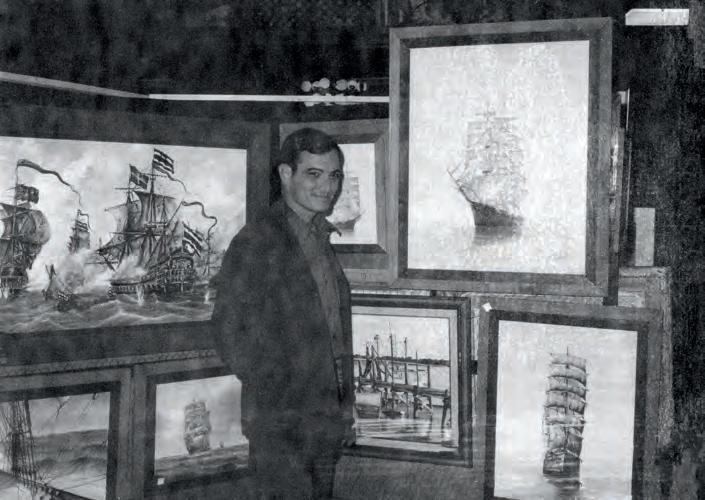
After leaving Ambassador to work as a solo artist, Jim began not only painting at his home studio but also selling his work from the home. “I had a pile of clients, people coming in all the time. Within the first year that I had left Chapman, still painting exactly the same stuff I was painting, but I was selling it out of my house, I had made a lot of money.”
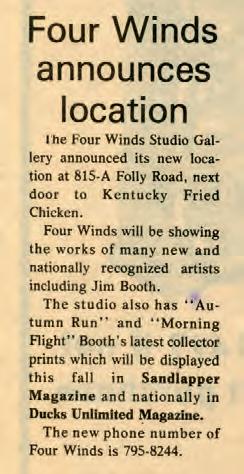
“Eventually I had to move the gallery off of Folly Beach because I had to have a business license and all kind of stuff. The city came down and said you can’t sell paintings out of the house — it’s against the rules — you cannot run business out of your house. We leased a building on Folly Road on James Island. It was a very small, like 800 square foot building, that we could do some framing and sell my work out of. My
A clipping announcing the change in location of his gallery, from his home on Folly Beach to a building on Folly Road.
own little gallery, which really took off. That gave me a lot of time for painting at the house, and I was able to hire different people to do stuff that I wasn’t able to do. I wanted to just paint.”
“Eventually (in 1978) we sold the house on Folly and bought a house in Clearview on James Island. That was a spec house that somebody built; It was brand new. By spec house, I mean nobody lived in it when we bought it and it was right there, close, within a block of my parents where I had lived in high school. In the backyard there was a freshwater pond; the James Island Yacht Club was right there. It had a double garage that I could park a boat in, so it had all the amenities that we wanted, and above all, we could afford it. Above the garage was a big double studio and it was plenty enough for me to paint. That’s what made the house feasible was that I could paint a lot faster, a lot better uninterrupted.”
“We had a boat and we would go driving around in it. That’s when I would get all my photos that I would be painting. That was kind of the beginning of my own career, personal career. I never looked back from that.”

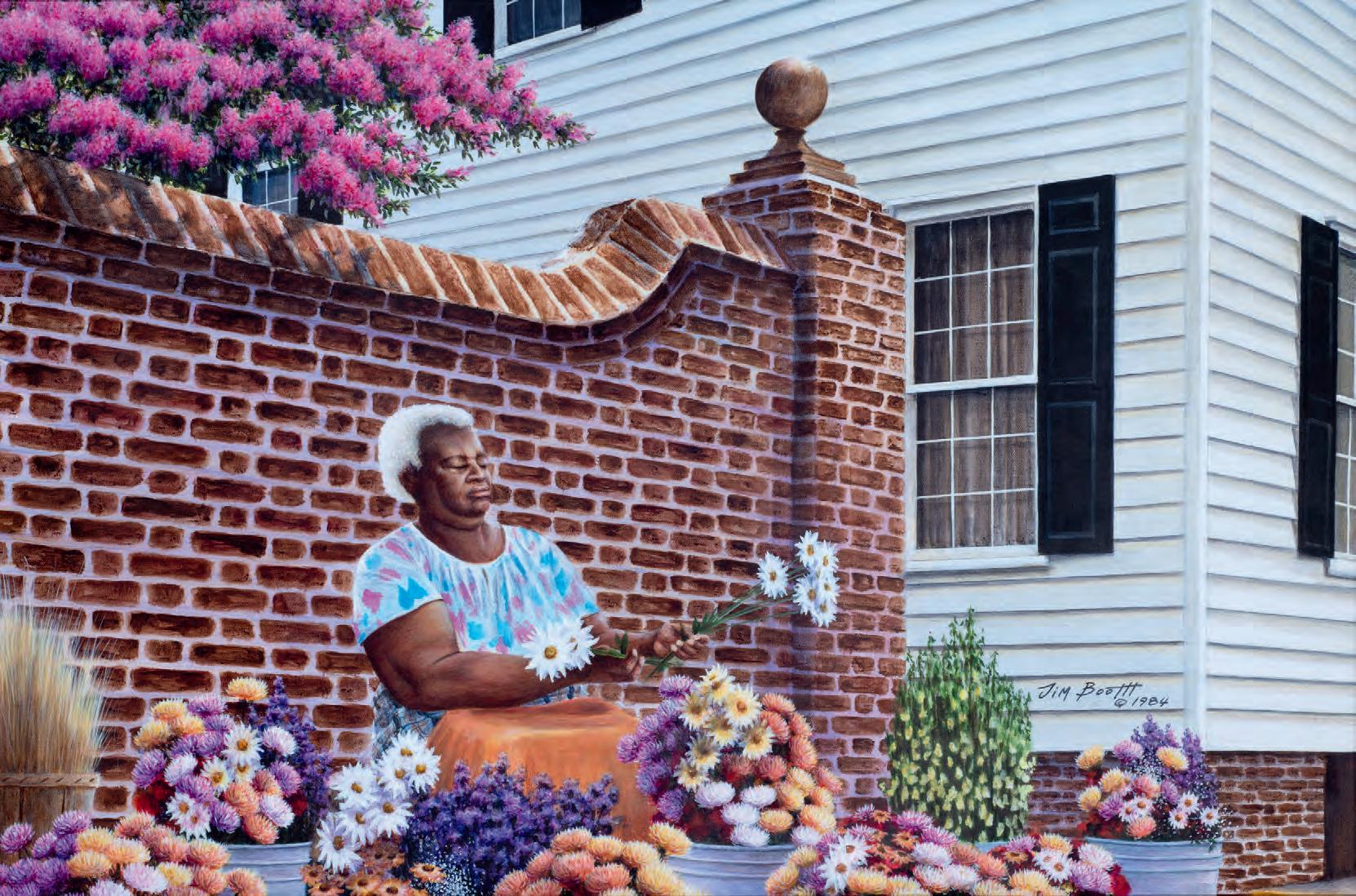
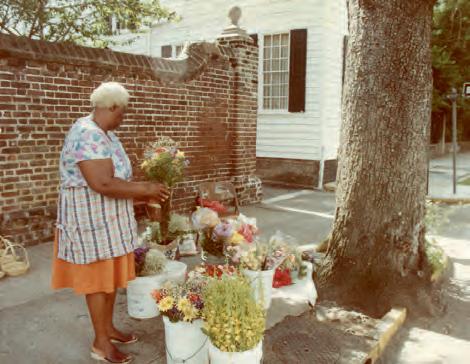
“This shows Miss Middleton, who set up at the Four Corners of Law. The wall behind her is a very good example of being able to tell what was built one hundred years prior. When you look around Charleston and you see brickwork, if you see a long brick and a short brick, that will tell you that it is over one hundred years old. This is because today, they use two-by-fours and wood to support the walls, and back then they did not have two-by-fours; they had wood, but they didn’t have the sawing and all that stuff, so you didn’t have two-by-fours like you do today. You would have two rows of horizontal brick and two rows of vertical brick going crisscross like. In other words, you’d lay one brick long and one brick across; one brick long, one brick across; and that maintained the structure of the wall.”
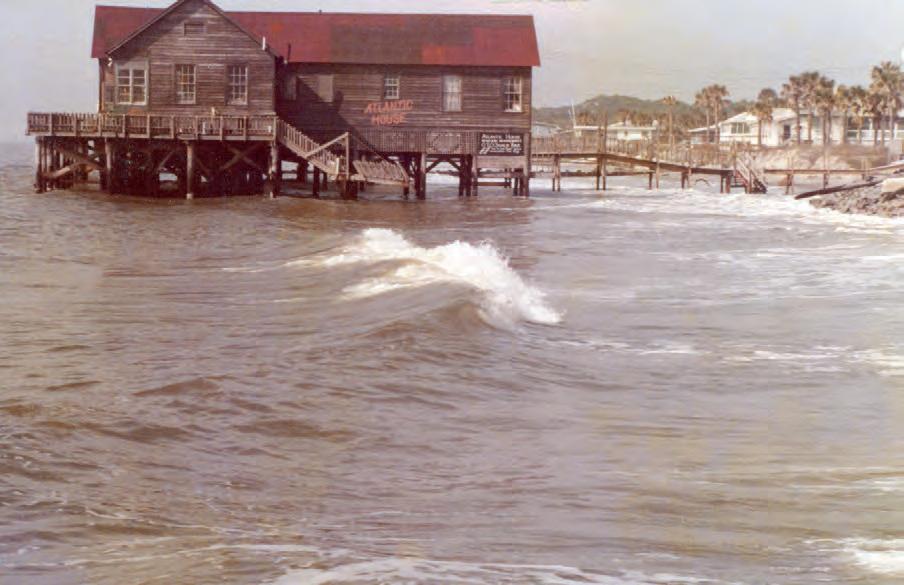
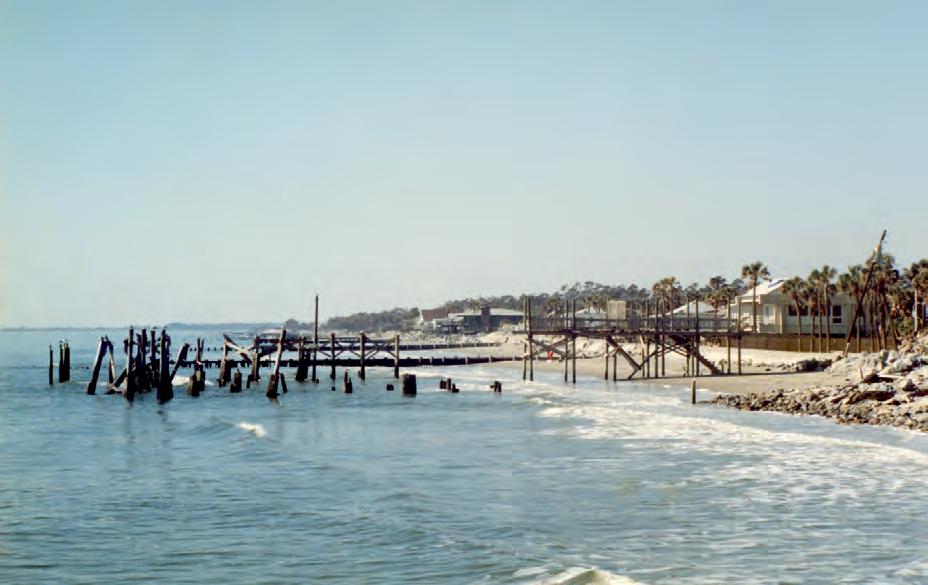
The Atlantic House restaurant, owned by Edwin Taylor, had been a favorite destination since 1979 and “was the site of many anniversaries, weddings, engagements and parties…serving about fifty thousand people a year.” 44 Perched atop the ocean itself, Taylor could not get permission to rebuild on the same site, but was exploring options prompted by local encouragement. “Support has come from the local arts community. Artist Jim Booth said it was a meeting place, and people used to picnic under it. Booth… said that ten to fifteen people a day since the storm asked for paintings of the Atlantic House. About three weeks ago he decided to paint the landmark from the perspective of standing on the seawall at the Holiday Inn. In the first one-and-a-half weeks, Booth said, he sold 750 limited edition prints and 50 artist’s proofs. He is now selling posters of the original. His original acrylic, which is on display, is not for sale.”45 Jim wanted to make the original painting of Atlantic House a little more special. “After Hugo I wanted
use some of the boards from the destroyed Atlantic House to frame the painting, but when I went down there, there were no boards. All that was left was the pilings and some of the steps. Hugo took it, took the whole thing and all the boards, so that’s what happened to the boards.” His description of the painting in advertisements read, “Now a part of the Atlantic Ocean, as the most powerful of all hurricanes, Hugo, claimed it for himself. A memory today, but one which will be long remembered.”
When they re-opened the gallery after the storm, they were surprised by what came through the doors. “Everybody shared their stories (of Hugo). They were bringing in prints that had hung halfway up the stairs to the second floor, and the prints were wet! So that gave me some idea how high the water had come from Hugo. They were talking about pianos stuck in the top of oak trees. Deer stuck in the top of oak trees. Deer swimming ten miles out in the water. It was just ridiculous. We were taking in a bunch
of that and trying to salvage it as far as the insurance companies were concerned. We were replacing the mat board and reframing everything. That alone, that surge, more than doubled what we would have normally done during that period.”
In an advertisement thanking the community and The Post and Courier newspaper in March 1990, Jim writes, “Painting the Lowcountry and what the people feel and love about it is what Jim Booth is all about. Since the storm this has been a tremendous challenge, just as we each have had out own challenges to cope with. This spring will be new for us as once again we will have the leaves on the trees and Charleston will return to being the beautiful lady she was.”
“In spite of the Hurricane, with the help of the News & Courier and our ad schedule, our gallery has flourished. During the months of October, November and December we ran two advertisements … During this period our sales increased six times over that of last year.”
46
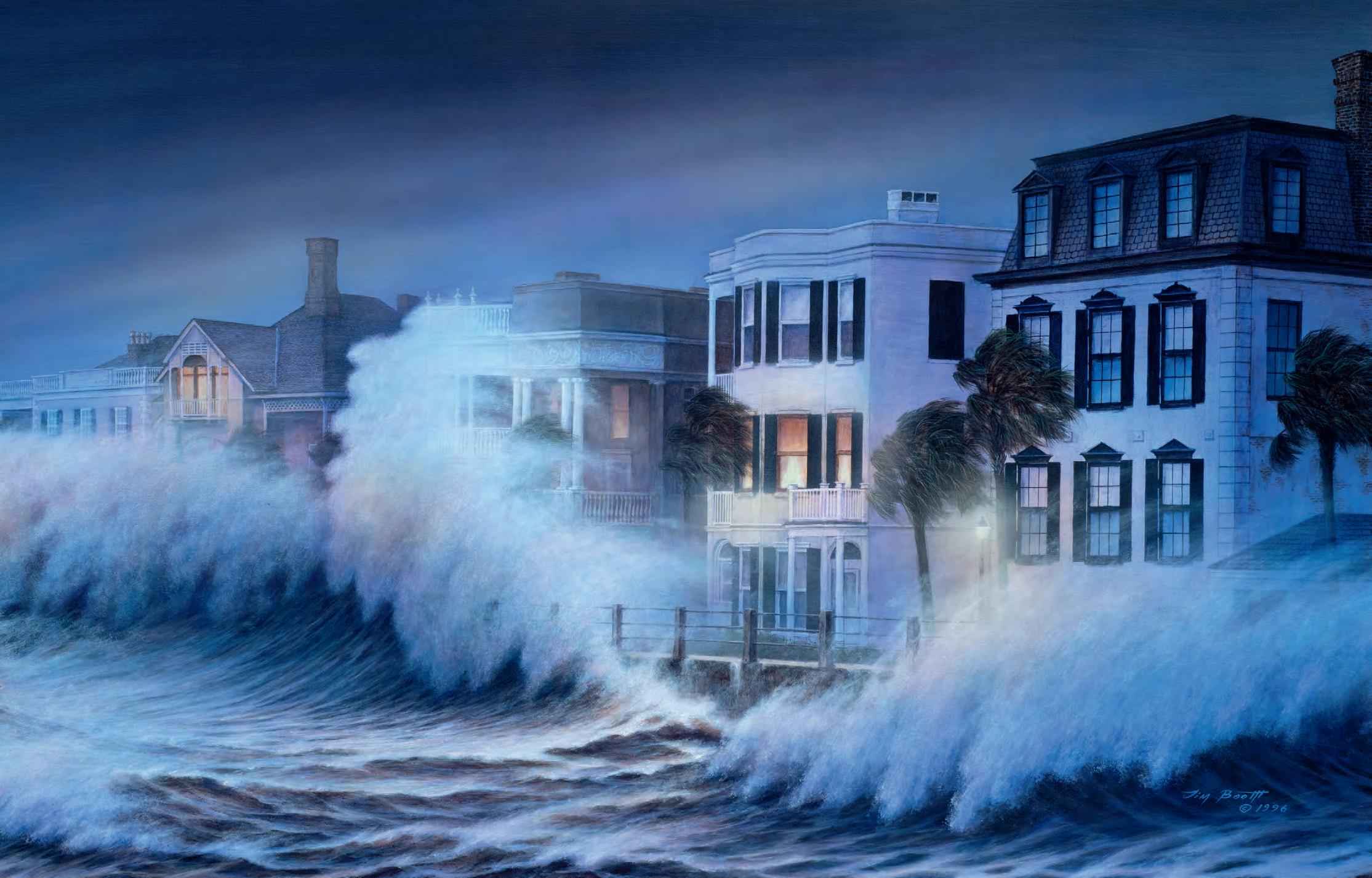
Jim realized that Hugo had been “the most intense time probably for everybody who’s ever lived in Charleston, and definitely in my lifetime. I thought since I’ve already got all the drawings and all the things I need as far as being able to paint Hugo, all I’d need to do is cut off the lights, make everything dark. I turned on some lights ‘cause you gotta be able to see something; if it’s total darkness you just got a black piece of paper. So, I turned on the lights and pretended like it was like 9:00 or 10:00 p.m., though I remembered that the storm didn’t come in until around 11:00 or 12:00 p.m. I had to guesstimate – Hurricane David was only about seventy-five miles per hour; it fizzled right at the mouth of the harbor. You could just look out in the ocean and see David just sitting there, it didn’t do a thing. But Hugo, it came in at
nighttime. The device that measured the wind speed at the airport broke off at 200 miles an hour, so we don’t really know how fast the gusts were or how fast it was going.”
Jim’s painting of The Storm would become by far his most popular work, likely due to the shared, intense experience of Hugo or for the awe of the power it depicts.
“And Hugo is still with us, too, because every time we have a storm, everybody panics. But it has been rebuilt, everything is back and it has all been redone. We’re not nearly as scared as we used to be.” As WCBD News 2 reporter Leslie Lyles recalled, “It did change our lives, and I think we take things seriously, but we know that we’re resilient and we can survive anything if we do it together.”47
Copyright Tracey Booth Owens 2025
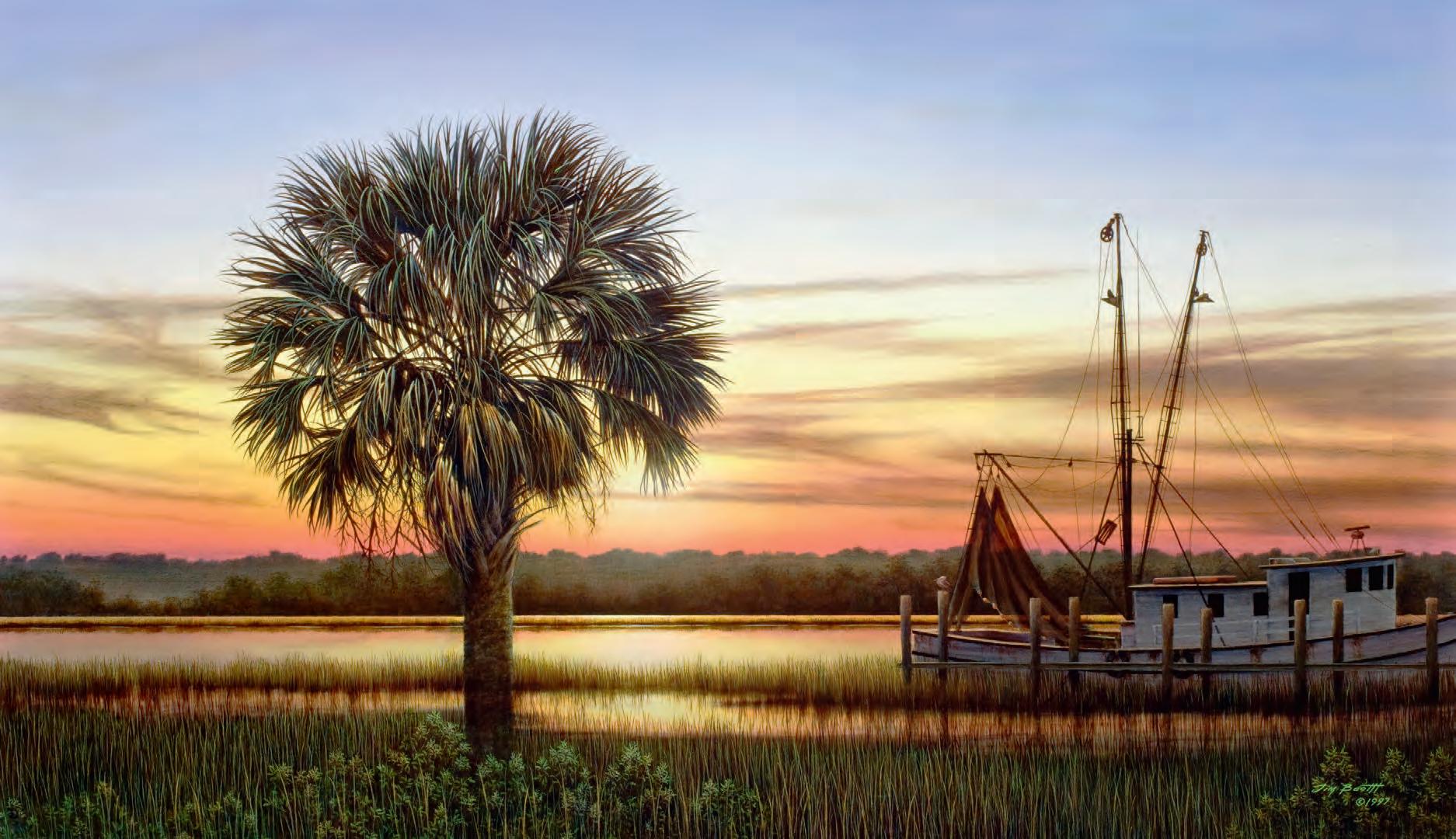

Sunset in the Lowcountry, with its broad expanse of marsh and water is like no other. South Carolina’s famous Palmetto is silhouetted against the sky as a shrimp trawler rests docked. (Jim Booth gallery brochure)
“Even now, it is one of the most popular paintings I have. It never has ceased to amaze me how sometimes the simpler a painting is, the more apt people are to like it. Like a lot of my other paintings, I used Crosby’s Seafood as a focal point.”
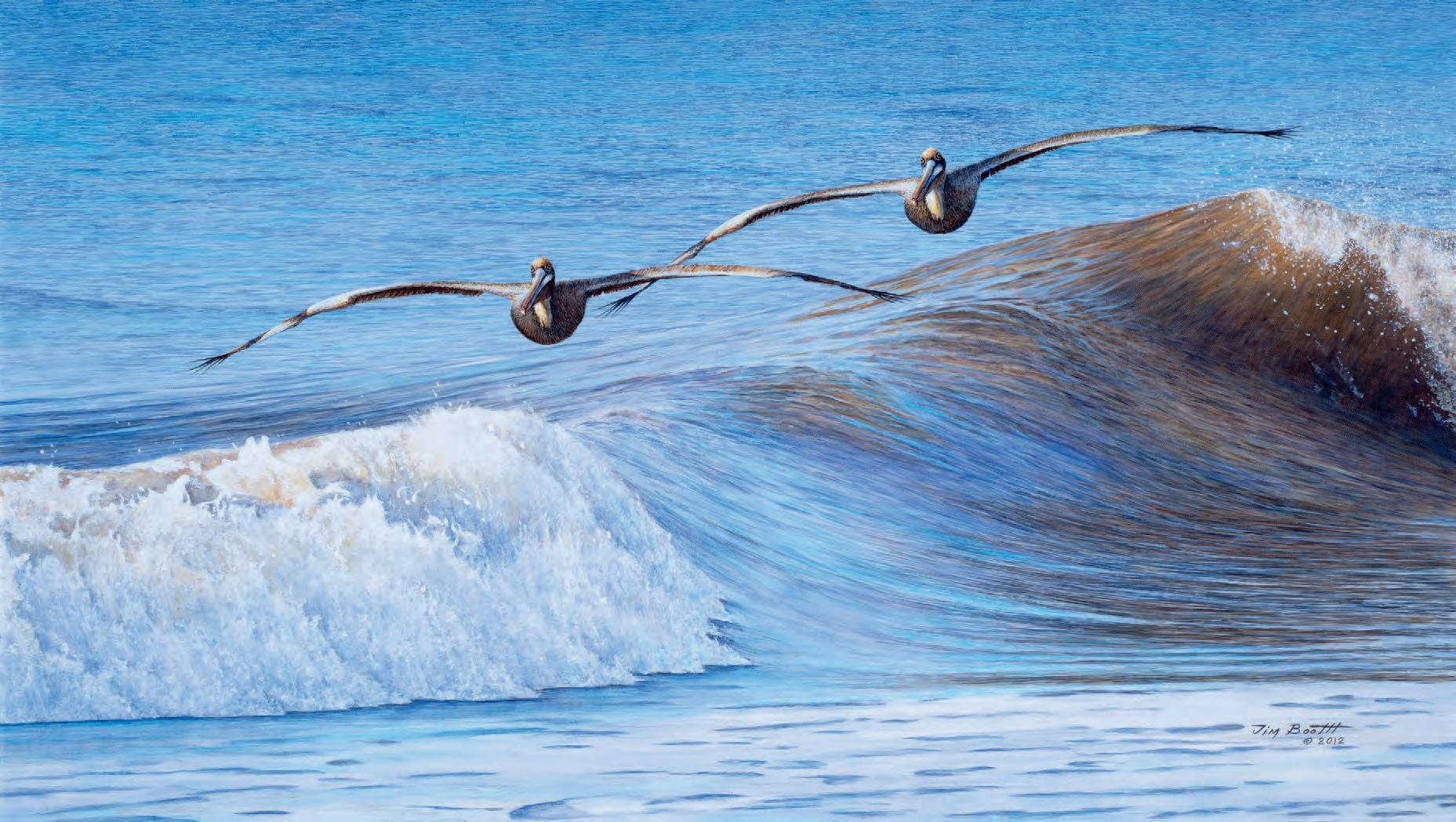
This book provides the background of the life and paintings of Jim Booth — the then and now — but there is still a next to come. After 50 years of painting, Jim’s art has served as a beacon to the people of the Lowcountry by illuminating its distinguishing beauty and stewarding its resources, just like the sunsets and lighthouses he admired and so frequently painted. His paintings continue to invite us to explore, encounter, and experience life in the Lowcountry. With over 200,000 reproductions of his paintings sold, he left the Lowcountry with a shared awe for the energy it holds.
Copyright Tracey Booth Owens 2025
Coinciding with the release of this book, Jim Booth Legacy Art will launch a new era of giving. Honoring what Jim and Virginia began by donating portions of print editions and the entire Environmental Edition of prints , Jim Booth Legacy Art will further enhance their commitment to the community by expanding the art available for donations. Not only will prints continue to be donated to area nonprofits, Jim Booth Legacy Art will also donate the net art sales to nonprofit organizations as well. Additionally, some original paintings will be shared with the community by loaning them to partner locations so they can be enjoyed by more people.
The last step in completing a painting is for the artist to sign it. Jim’s final signature is on the painting of his legacy. Jim believed art continues to communicate long after the artist has passed away. His art continues to speak not only through the beauty it shares, but also through the good that can still be accomplished.
The more that Jim’s art is in the community, the more good it can do for the community. The possibilities for good are as bright and endless as the prismed facets of the lighthouse’s Fresnel lens. With this guiding light forward, the beacon of the Booth legacy will continue to illuminate and steward the beauty of life in the Lowcountry.