Editorial Comments...
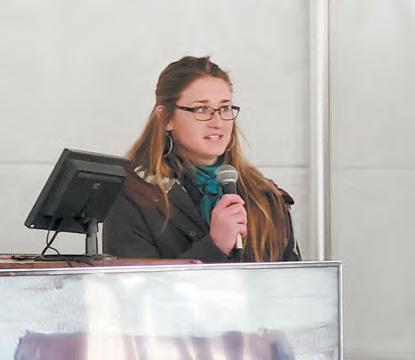
Jill Bayers HotchkissHow often in your lifetime have you heard U.S. beef exports have increased?

How often in your lifetime have you heard U.S. beef exports have increased?
 Jill Hotchkiss
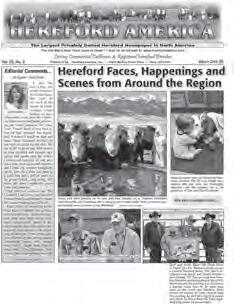
Believe it or not, the U.S Meat Export Federation recently issued a report stating beef exports are at an all time record level in “volume and value.” This is of particular interest since the U.S. cattle supply is very tight right now.
In years past, we considered beef exports primarily in terms of pounds exported so I find it interesting they are tagging it as volume and value. Nevertheless, it’s good news for the beef industry. As producers, however, we always wonder if the good news really applies to those of us out in the country raising cattle. According to an article in BEEF’s online magazine, the statement means these increases are “adding more value to U.S. beef cattle and providing markets for products not currently used in this country.” Those international markets for beef variety meats boosted exports by 15% in 2022 compared to 2021, accounting for $1.24 billion of the total $11.68 billion in U.S. beef exports. John Hinners, senior vice president of industry relations for the U.S. Meat Export Federation, says, “Beef exports add nearly $450 per head of fed slaughter value. Global export value is up 10% from the previous record and nearly 40% above the previous five-year average.”
Total U.S. beef exports in 2022 hit 1.47 metric tons. The top eight importers of U.S. beef include South Korea, China/Hong Kong, Taiwan,
(continued on page 6)
by Ruth WiechmannRon Behm’s father John was still a teenager when he started farming in 1929; his mother had to cosign a loan to help him rent the farm.
“My grandfather went through bankruptcy in 1927,” Ron said. “The family had moved from one rented farm to the next; my grandfather spent too much time in the pool halls. They had farmed a particularly poor, sandy quarter one year, and after they sold the crop the family had only $200 to live on through the winter.”
Ron recalled commenting to his father on how tough starting out in 1929, the year the stock market crashed, must have been.
“It kind of irritated him,” Ron said. “’We didn’t lose anything in the stock market crash because we didn’t have anything to lose,’ dad told me, rather irately.
“They had five milk cows and two teams of horses. Of course the 1930s were dry, so they went a couple of years with no
crops. Dad’s first two crops went to pay his dad’s debts to the elevator on advance grain sales which he never delivered. They didn’t have the money to buy coal, so they would stoke the wood cookstove with ash wood at night, and in the morning the water in the reservoir would be frozen.”
With time, hard work and persistence, the family gradually got ahead. John married his wife, Ethel, in 1947, and they raised their six children on their farm near Burlington, North Dakota. Hereford cattle played a key role in their business.
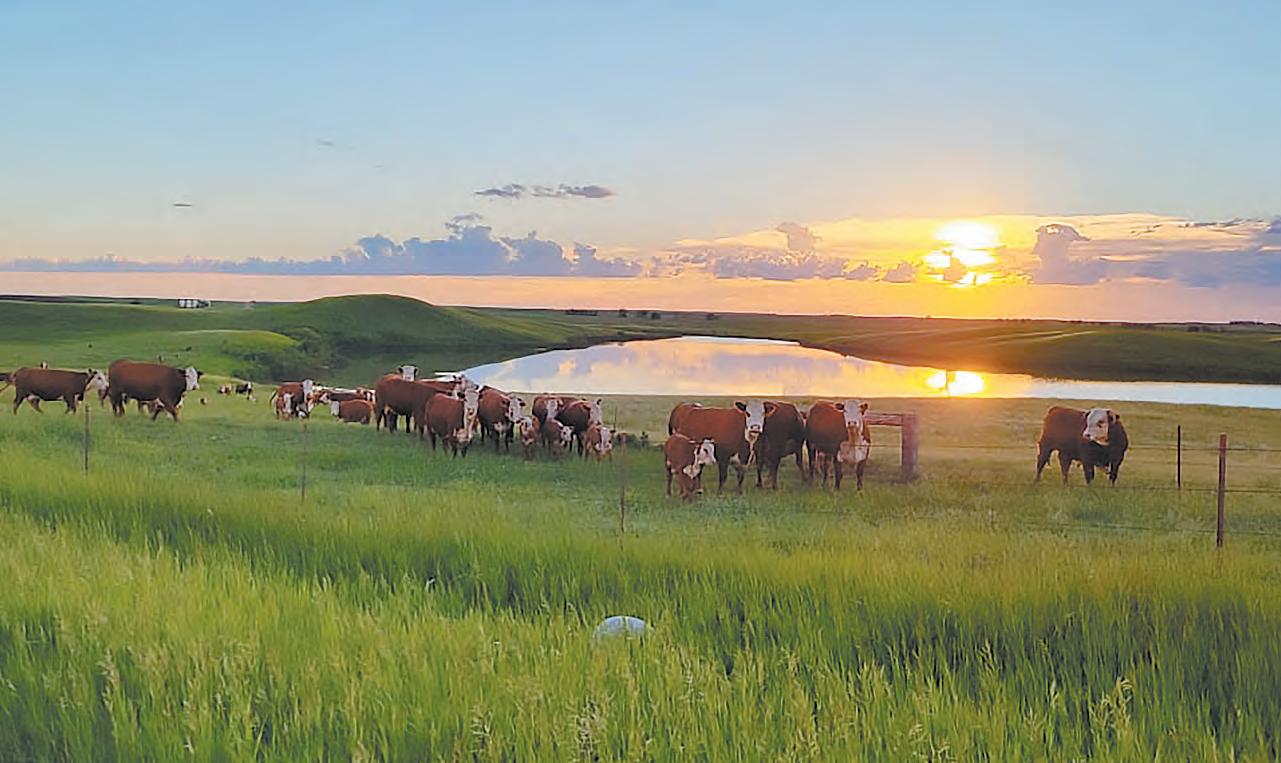
“Dad started raising Herefords in 1944,” Ron said. “When dad passed away in 1987 he had put together a fair sized farm, and mother lived on the farm until she passed away in 2016, just a few days short of her 98th birthday. Two of my brothers and I farm in a partnership, my brother, Russell, who is a veterinarian, owns cattle with us, and my son, John is also involved.”
Common sense wisdom, investing in quality cattle, and a family working together have been the building blocks for the Behm operation. Ron gained a lot of wisdom from his father, and from the many farmers and ranchers he’s done business with over the years, and John says that he has four of the best mentors and teachers in all of North Dakota to learn from.
have been the building blocks for the Behm operation.
“I went to North Dakota State University for one semester and then came home to the farm,” John said. “Dad was having a hard time coming up with hired help and said he might have to sell the cows. I didn’t think that was very feasible for my future so I quit college early. I have no regrets.”
Ron, too, quit college to come home to the farm, and he joked that between himself and his brothers they have one hundred sixty years of combined experience running the farm.
Ron and his wife Arlene raised their four daughters and son on the farm. Becky,
10
(continued from page 1)
Christy, Mary and Jenny are all registered nurses, and Ron joked that he might be able to take credit for their career choice.
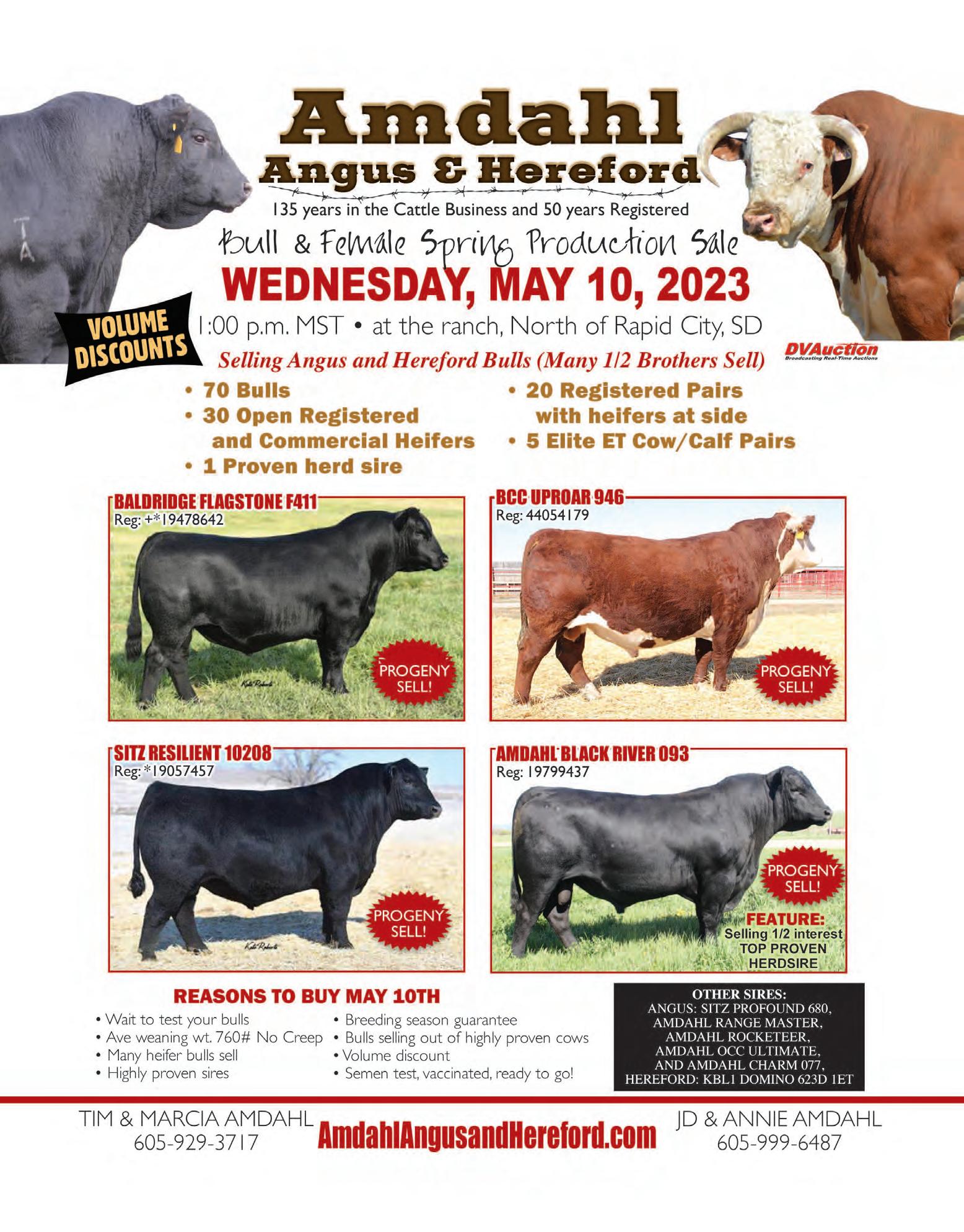
Amdahl Angus & Herefords Spring Production Sale
Rapid City, SD
2-4 Nebraska State Hereford Show
Kearney, NE
2-4 Ohio Junior Premier Preview Show
Mt. Gilead, OH
3 Indiana Junior Hereford Association Preview Show
Lebanon, IN
3 Pennsylvania Hereford Association Junior Show
Meadville, PA
Canadian & Foreign subscriptions — ____ $40 U.S. funds, one year
U.S. subscriptions —
____ $25 - one year, third class ____ $40 - t wo years, third class
____ $35 - one year, first class ____ $60 - t wo years 1st class
(Advertisers placing $150 or more in advertising for the season will receive a free first class subscription.)
Please let us know if we need to correct your address or if your local post office has started using “911 Locator” addresses.
Note: When submitting an address we need to have 3 lines including a PO Box, Route or Street for the second line. Thanks!
Send new or corrected address to:
Hereford America
13823 Beaver Creek Place
Reva, SD 57651
Name ___________________________________________________________
Address _________________________________________________________
City_____________________________________________________________
State _______________________________ Zip _________________________
Phone _______________________ E-mail _____________________________
____ Commercial Breeder ____ Registered Hereford Breeder
____ Registered Breeder, Other Breed ___ Other____________________
Signature_______________________________________________________
“When they were little they had to milk cows, deliver calves, and doctor sick animals,” he said. “They did it all. One time when Becky and Christy were in about the first and third grades we had a calf that was down and bloated. I sent them to put a tube down him and they got the air out all by themselves. The calf lived. I thought that was pretty good for a six year old and an eight year old!”
Arlene is also a registered nurse, and Ron acknowledged that it is more likely that his daughters took after their mother.
“Arlene could do about anything; when we first got married she helped with the cattle as much as possible,” he said. “She is a true partner, always in it for the long haul. She worked damn hard, taking care of the kids and working nights; she burned the candle at both ends. I don’t care what time it was when I came in at night, even if it was one o’clock in the morning she was still up and had a warm supper waiting for me. Our girls are just like their mom, they are good nurses, good mothers and have good marriages. I’m blessed. We have twenty-three grandchildren and two on the way. I would like to see some of them on the farm someday.”
Ron says that as he and his brothers are all nearing retirement age, John is the driving force on the ranch these days.
(continued on page 4)
Editor: Jill Hotchkiss
Ad Design/
Production: Robin Engel, Jill Hotchkiss
Editorial Assistant: Taylor Vroman
Proofreaders: June Hotchkiss, Taylor Vroman, Rosie Hotchkiss
Website Development: Taylor Vroman, Jared Peterson, Robin Engel
Coordinator: Jill Hotchkiss
Opinions expressed by our editors, columnists, letters to the editor or other writers or news sources are not necessarily those of the management. We welcome your comments, ideas, suggestions and letters to the editor. All correspondence (including e-mails) must be signed or must clearly identify the name of the author. Hereford America shall not be liable for slight changes or typographical errors that lessen the value of an advertisement. Hereford America’s liability for errors or omissions in connection with an advertisement is strictly limited to publication of the advertisement in any subsequent issue or the refund of any monies paid for the advertisement. Advertising placed after deadline must be approved by the Editors. All materials for such advertising must be in by date specified by Editor. Late charges may apply. If an ad is placed and all materials are not received by date needed all attempts will be made to compile the ad from available materials. Any cancellations after deadline are subject to full charges for the ad.
Hereford America reserves the right to refuse advertising to anyone.
All contents Copyright 2023 by Hereford America, Inc., except Trademarks and Copyrights otherwise noted in which Hereford America, Inc. disclaims any proprietary interest.
LJS MARK DOMINO 0945 {CHB}{DLF,HYF,IEF,MSUDF}
LJS MS MARK DOMINO 2029 {DLF,HYF,IEF,MSUDF} LJS MS MARK DOMINO1361 {DOD}{DLF,HYF,IEF,MSUDF}
P44151792 LJS MS DOMINO 1620 {DOD}{DLF,HYF,IEF}
CL 1 DOMINO 0150X {SOD}{CHB}{DLF,HYF,IEF}
LJS MS BOGART 1210 {DLF,HYF,IEF}
CE 7.6; BW 3.3; WW 60; YW 97; DMI 0.9; SC 1.4; SCF 10.3; MM 44; M&G 74; MCE 9.9; MCW 57; UDDR 1.60; TEAT 1.70; CW 83; FAT 0.070; REA 0.81; MARB 0.50; BMI$ 287; BII$ 384; CHB$ 155

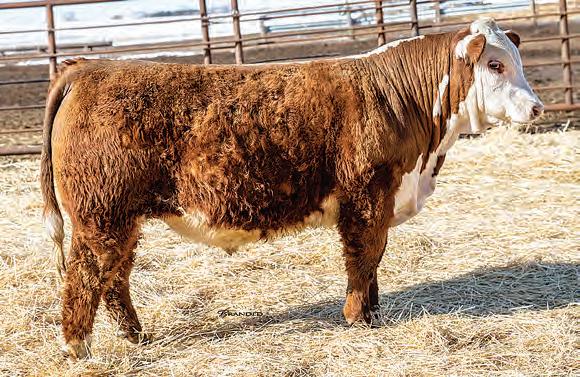
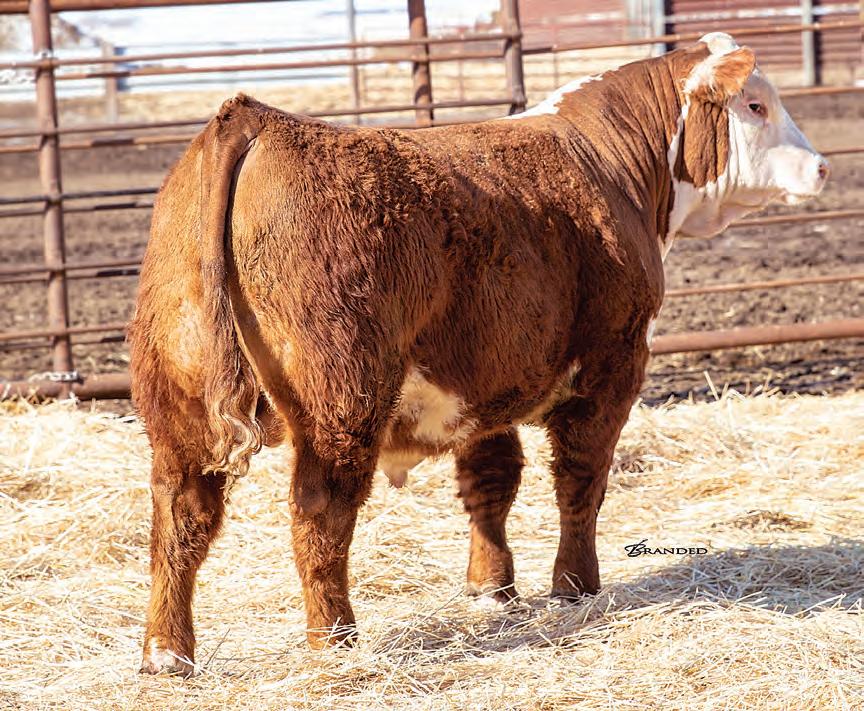
• BW 99 lb., WW 795 lb., scurred.
• Big time growth, maternal and carcass here. He’s the first calf for both parents and sets the bar high. His pedigree is a cross of two of our strongest cow families.
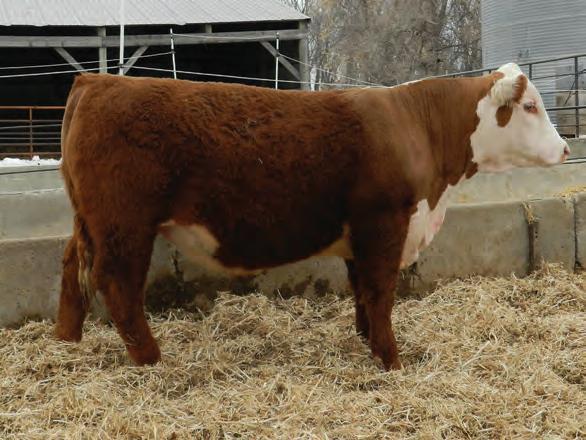
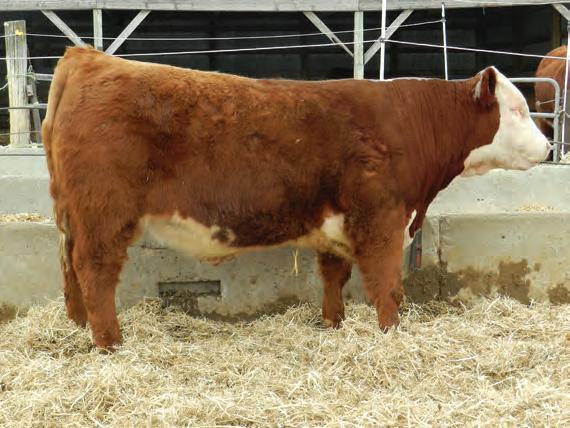
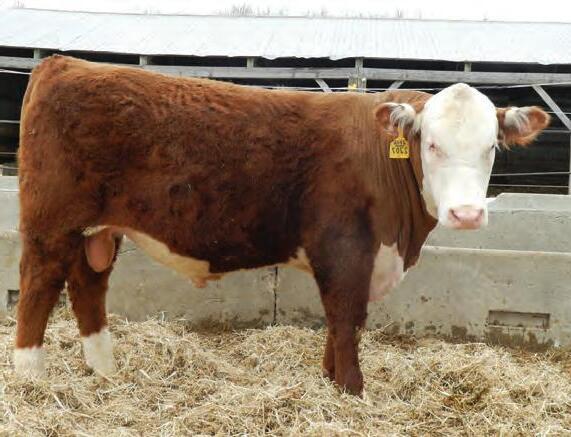
44 344473 — Calved: 3/23/2022 — Tattoo: LE 2216
LJS MARK DOMINO 1607 {CHB}{DLF,HYF,IEF,MSUDF} LJS MARK DOMINO 1321 {CHB}{DLF,HYF,IEF,MSUDF,MDF}
LJS MARK DOMINO 1954 {CHB}{DLF,HYF,IEF,MSUDF}
MS MARK DOMINO 1337 {DOD}{DLF,HYF,IEF,MSUDF}

P44036654 LJS MS MARK DOMINO 1125 {DLF,HYF,IEF}
YANKEE 0904 {DLF,HYF,IEF}
MS MARK DOMINO 0735 {IEP} LJS MARK DOMINO 1613 {CHB}{DLF,HYF,IEF,MSUDF}
LJS MS MARK DOMINO 1944 {DLF,HYF,IEF,MSUDF}
MARK DOMINO 1321 {CHB}{DLF,HYF,IEF,MSUDF,MDF}
(continued from page 2)
“It’s a team effort,” John said. “My dad and my uncles Jerome and Vern are all very involved with the farm, and my uncle Russ who also owns the Minot Vet Clinic is also a lot of help with the cattle side of the operation. Russ’ wife, Pam, helps with the cattle at branding time, taking pelvic measurements on replacement heifers, and pregnancy testing in the fall of the year. We wouldn’t be able to run the numbers we do without the Herefords’ good disposition. They are so easy to work with. I love Hereford cattle.”
John and his wife Brittny, who is also a registered nurse, married in 2018. Brittny works with an orthopedic surgeon in Mi-
not, but she also helps in the calving barn and runs a baler.
“We have a son, Art, and a daughter, Ethel, and we’re expecting our third child in September,” John said. “Our kids like to help with barn chores, and Brittny and the kids spend numerous hours driving tractor in the summer evenings helping haul hay after she gets home from work. It’s great family time spent together!”
Ron says there are no excuses for keeping poor quality cattle in the herd, no matter what breed you raise.
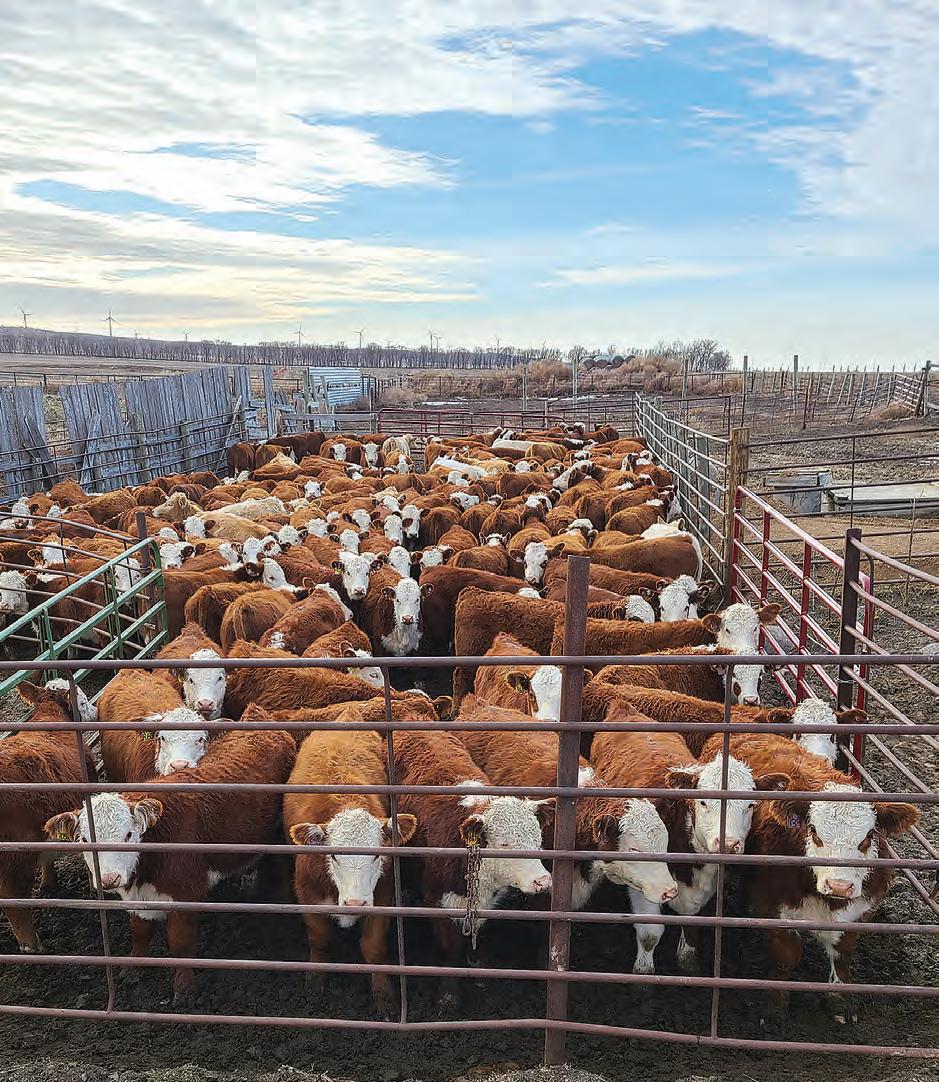
“If you’re not keeping at least 20% of your heifers, you’re not doing your herd justice,” he said. “My dad was a good cowman but not as good at judging cattle
as my son John is. John is good at knowing pedigrees and judging livestock. He’s a better cattleman than I’ll ever be and I remind him of that regularly. It might be hard to send a cow down the road, but as we saw with these drought years, if most commercial producers got rid of the bottom 10% of their herd, on sale day they probably wouldn’t even know they were gone.”
Through the years, the family has bred mainly Line 1 cattle. In previous years, they bought a lot of bulls from Ken Baker
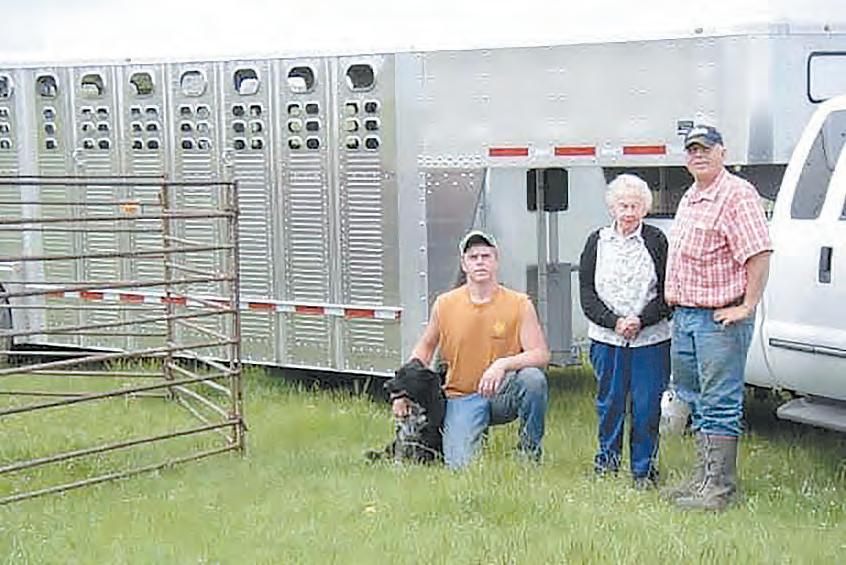
and Fawcetts. Currently, Coopers, Holdens, and L Bar W are their main sources for genetics, along with some good bulls from Van Newkirks, Strohs and Melcher Herefords.
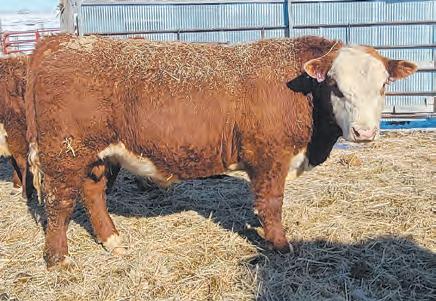
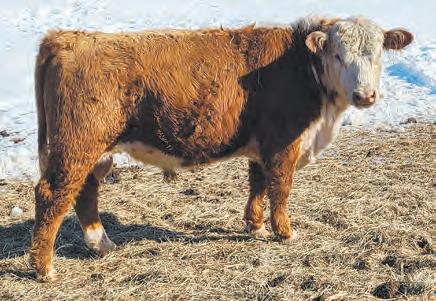
John said that one goal is to get their steers to look as uniform in the spring as possible. They background their calves and sell most of them by the potload in the spring. They have also started selling a couple of potloads of very nice replacement heifers to Melcher Herefords every year. Ron is thankful for the relationships he has built with other producers in the region and beyond.
“When you look across North Dakota and the surrounding states, we have one heck of a lot of good people here,” Ron said. “They are just the salt of the earth, and those friendships built over a lifetime are priceless.”
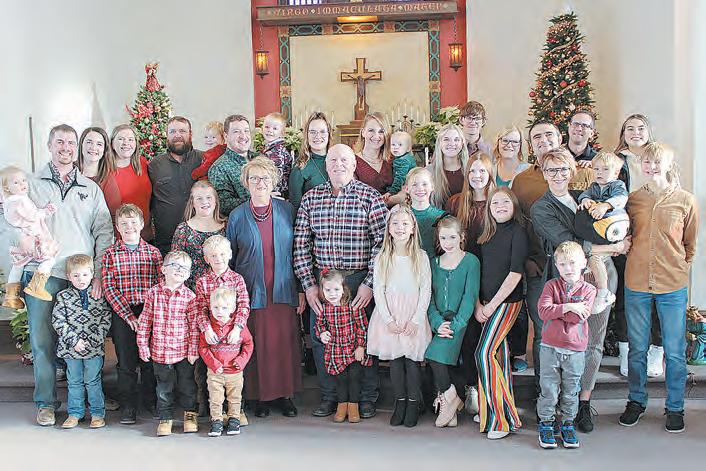
“If anybody is thinking about raising Herefords, I highly recommend them,” John said. “Hereford cattle have great dispositions which in the long run saves you time to be more productive at other tasks.”
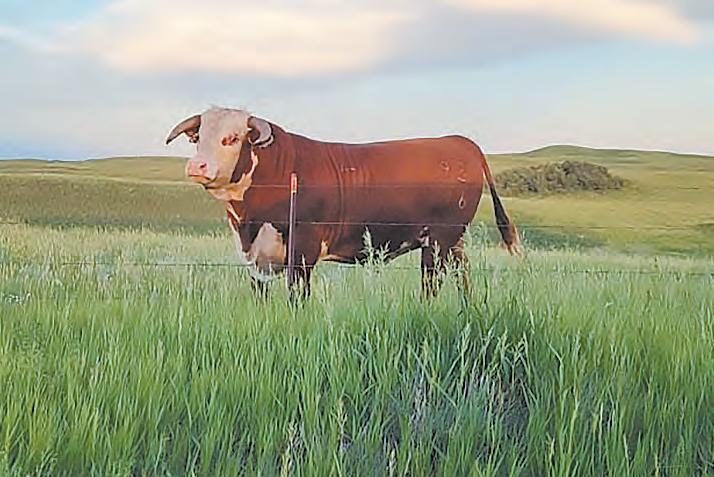
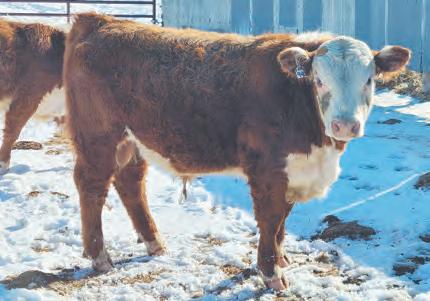
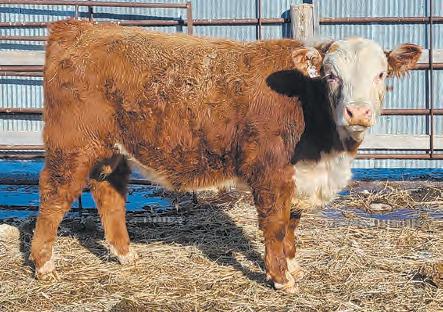
Still, John says that the biggest reason he gets up in the morning and goes to work is his family.
“If it wasn’t for my wife and kids I wouldn’t be doing this,” he said.
Seeing another generation of the family living and working on the farm is very important to Ron.
“When dad passed away my mother was very insistent that the farm was going to continue on and it did,” Ron said. “Of all the goals I’ve had around raising livestock and grains and making the farm successful, the biggest goal I’ve got is to pass this farm down to the next generation so that it will go on in the family.”
Ron says it’s discouraging to see someone’s cow herd sold in a dispersion sale, and a farm that one family built dissolve and scatter about like leaves in the wind. He has seen too many farms get sold or rented out when one generation passes away.
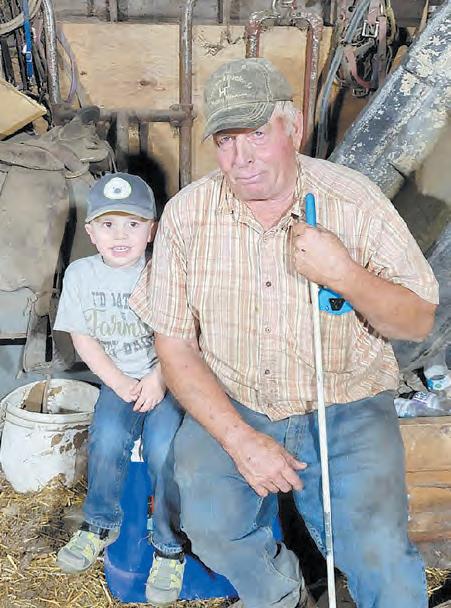
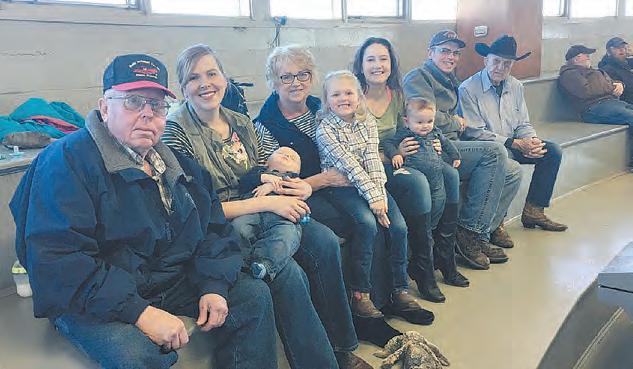
“The next generation doesn’t always have the grit or the finances or the drive or the want to carry on,” he said. “It’s too easy to find a job. It’s also very, very cost prohibitive to get started farming these days. When you look at the cost of a basic line of equipment and land costs — whether farm or pasture — it is pretty easy to end up with a couple million dollars of debt. Young people starting out now have it tough.”
Ron is hopeful that in their case the farm will stay in the family, and he and his brothers have worked hard to build on what their parents started. The Hereford cattle have been part of the place since the beginning, and Ron is passionate about continuing to raise high quality commercial cattle. He says he sometimes takes it personally when people make derogatory
comments about Herefords, because the cattle have done so much for his family.
“My parents experienced a lot of tough times,” Ron said. “We still do; just in the last few years we’ve had to deal with Covid, drought, and high production costs. How many cattle does it take to pay the bills, to buy a truck, a tractor, or a piece of land? Every rancher has a different program but at the end of the day it has to be profitable, or it won’t be sustainable.”
When Ron was 21, a man he worked for told him that a lot of people go broke breaking even. He took that advice to heart.
“So many people farming and ranching have the mentality that they are doing okay if they broke
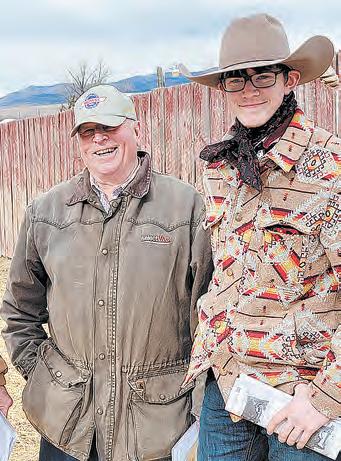
(continued from page 5)
even,” he said. “They might not be in the red ink, they certainly aren’t in the black ink. One thing you’re not figuring when you break even is depreciation on your body. Every year we figure depreciation on our machinery and our livestock but not on ourselves. When you look at a man’s lifetime, if you spent the productive years of your life just breaking even it is sobering.”
Ron considers his family to be his greatest blessing.
“If it wasn’t for John I wouldn’t be
calving cows out now, much as I love my cattle,” Ron said. “My wife and girls have also been very involved in the ranch. I’ve been blessed. We have built our farm with the help of Hereford cattle; you can do the same with any breed if you work at it.”
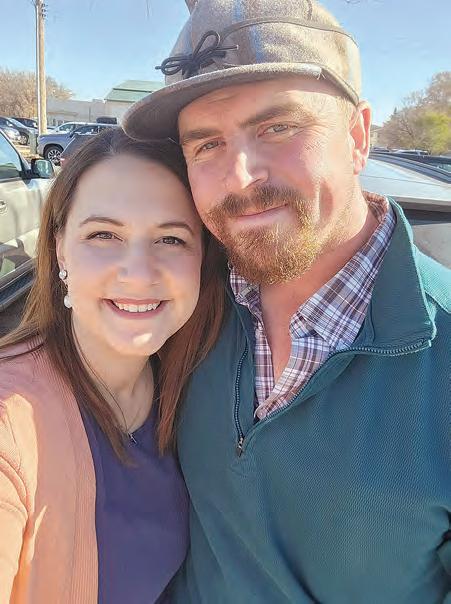
(continued from page 1)
the Philippines, Singapore, Colombia, Guatemala and the Dominican Republic.
According to the article, the three largest export markets for 2022 were South Korea, Japan and China/HongKong. New markets were added in South America, the Mediterranean, Caribbean and Dubai with exports to Canada and Mexico remaining strong.
“What’s so exciting for the beef industry is we have added that much value in 2022. Customers around the world continue to demand and buy our product,” Hinners says. “We will never be the cheapest, nor do we want to be, but we have so many stackable attributes with our product — branding, supply of a variety of cuts, impeccable food safety, and one of the best stories in the world as far as commitment to our livestock.”
There are a lot of factors that affect sale prices at the rancher level so I found these statistics interesting and positive. We know there is good demand for beef worldwide as well as in the United States especially since the return to good comfort food in 2020!
The nation’s cowherd is the lowest it has been since 1962. As of January 2023 it was down 4% from last year. The U.S. calf crop was estimated as
2% lower than 2021 and cattle on feed were down 4% from 2022. All this is according to the USDA.
In their March 17 Cattle on Feed report, Cattle and calves on feed for the slaughter market in the United States for feedlots was 4 percent below March 1, 2022.

The drought in a large area of the United States coupled with an increase in feed costs are driving factors in this decline. Parts of Kansas, Nebraska, Texas and other states remain dry. We hope and pray they get rain this spring.
Another bull sale season and publishing season has almost come to an end for us but we will be back in August with our September issue. We have a few more sales in April and one in May that we will attend. Look for coverage of those on our website and in the September issue.
It’s been a season for the record books, that’s for sure — crazy weather and bad roads but some great sales which we hope will continue. Overall quality of the cattle has been excellent which has made it a fun, although exhausting sale season.
Have a great spring and summer.
Hill 70 Quantock Ranch
53rd Annual Bull Sale
Feb. 4, 2023
Lloydminster, Sask.
Auctioneer: Col. Dan Skeels
54 Hereford Bulls — $6,337
55 Charolais Two Year Olds — $7,235
30 Charolais Yearlings — $5,713
75 Black Angus — $6,938
28 Red SimAngus — $6,761
23 Black SimAngus — $6,837
10 Gelbvieh Balancers — $5,750
94 Red Angus — $6,851
Philip Woodbury George
Philip Woodbury George, beloved husband, dad, papa & great grand-papa, as well as respected stockman & proud WW II veteran, passed away peacefully & ascended into eternal life, while in the presence of family, on February 12, 2023, at the age of 101. He was welcomed at the Gates of Heaven, by his parents & three siblings, as well as many cousins, extended family & friends.
Philip was born on September, 14, 1921, in the family home where he grew up, on Sunbyrne Farm, located along the county line road between Osage & Coffey Counties, east of Lebo. He was the second eldest of four children born to Frank Jackson George & Harriet Edith George (nee Woodbury), which included older brother, Frank Jackson, Jr, younger brother, Howard Douglas & younger sister Eleanor Louise.
Except for a brief time when the family lived in Garden City, KS, where his father worked as a receiver, settling the accounts of insolvent banks in Southwest Kansas during the Depression, Philip grew up on the family ranch & attended the one-room Elmwood country school. During his youth, Phil & his siblings were all active in 4-H, as well as being fully engaged in all aspects of the family livestock operation. After graduation from Lebo High School in 1939, Phil enrolled at Kansas State College of Agriculture & Applied Science (now, Kansas State University) & was a student there for two years during the early portion of World War II.
Phil had never seen & didn’t know anything about the sea, but in late August, 1942, just before his Junior year in college & just before the report date listed on the draft notice he’d received,
Bred Females — $2,352
369 Total Bulls — $6,873
The 53rd edition of the Hill 70 Quantock Ranch “Barn Burnin’ Bull Sale” was held north of Lloydminster at the ranch. A full capacity crowd representing nine Canadian provinces and six US states took part in spirited bidding through the day. A bull was sold every 36 seconds to a record 318 registered bidders. The families of Hill 70 Quantock Ranch would like to thank everyone who bid, bought or attended the sale on February 4th.
Jamison Ranch Bull Sale
Feb. 24, 2023
Quinter, KS
Auctioneer: Lynn Weishaar
107 Two-Year-Old Bulls — $5,379
Top Lots: Lot 3, JA L1 Domino 109J 2/7/21 by CL 1 Domino 6187D to Wordon Ranch, Cooper, TX, $12,000. Lot 56, JA L1 Domino 1637J, 2/28/21 by CL 1 Domino 6163D to B&B Herefords, Virgil, KS, $11,000.
Lot 1, JA L1 Domino 100J, 2/1/21 by CL 1 Domino 6187D to Phillip Paulich, Trinchera, CO, $10,000. Lot 72, JA L1 Domino 1804J, 2/25/21 by JA L1 Domino 6816D to Jim Helbling, Mandan, ND, $10,000.
Lot 25, JA L1 Domino 1301J, 2/12/21 by HH Advance 5322C ET to Taylor Farms, Morganville, KS, $9,500.
Lot 58, JA L1 Domino 1642J, 3/14/21 by CL 1 Domino 6163D to Currie Smith, Amarillo, TX, $9,500.
Lot 73, JA L1 Domino 1807J, 2/26/21 by JA L1 Domino 6816D to GraftBritton Ranch, Leedey, OK, $9,500.
he reported early & enlisted in the U.S. Navy. His decision to join the Navy was in part, because he didn’t think he wanted to be a “foot soldier” & in part, out of respect for & to honor his close friend & high school classmate, Harold “Skinny” Spatz, who had joined the Army Air Corps right after high school, and had volunteered for Doolittle’s Raid on Tokyo, which resulted in him being captured, tortured & ultimately executed, after his plane crash landed in occupied China.
During World War II, Phil served in the Pacific Theatre, where his first assignment was on the air craft carrier USS Intrepid. After the Intrepid was torpedoed at Truk Lagoon & returned to port for repairs, Phil was assigned to Torpedo Squadron 17 on the air craft carrier USS Hornet, where he was the gunner, in a three man crew (with the pilot & radioman), on a Grumman TBF Avenger, torpedo bomber. During WWII, Phil was involved in multiple significant battles at Marshall Islands, Truk Lagoon, Iwo Jima & Okinawa, which included sinking the Japanese Battleship Yamato. Phil flew over 25 missions, including missions in early 1945, that were the first flights to return to targets over mainland Japan, after the Doolittle Raid in April of 1942. As a result of his combat service, Phil earned numerous awards, including the Air Medal, Gold Star, Distinguished Flying Cross & Presidential Unit Citation.
After the end of WWII, Phil returned to Kansas State, where he competed on the livestock judging team. Phil received his degree in Animal Husbandry from Kansas State in May of 1947, then returned to the family ranching operation near Lebo.
It was during this post-war return to Kansas State that Phil met Julia Frances Gardner, a young coed whose family owned a livestock operation south of Hartford, KS, in south Lyon County. Phil & Julia were married at her parent’s home on June 12, 1949, just a month after her graduation from Kansas State, with a degree in Home Economics.
Before their wedding, Phil purchased the Elmwood school building, the oneroom school house where he’d attended elementary school, then moved a mile up the road to a spot near the house where he’d grown up & converted it into a residence. That converted oneroom school house became the home where they forged an abiding partnership, centered around faith, family & operating the ranch, a partnership that lasted the next 73+ years. That home was where they raised their family, including three sons, Jay Gardner, Philip Dana & Vern Woodbury, and daughter, Frances Ann.
Phil devoted his life to his family, to the family ranch & to the community. He was a 4-H leader, a Sunday School teacher & served the community in a wide variety of volunteer leadership positions, as a board or committee member over the years. He was a lifetime member of the Lebo United Methodist Church, a member & later leader of the Blue Ribbon 4-H Club. He was a member of the Key West Grange, the Flint Hills Hereford Association, the Coffey County Democrats, and was an especially proud member of American Legion Post #323. Following his return from WWII and continuing until his death, Philip had the honor of carrying the United States flag for the Lebo American Legion color guard, including at Lebo’s annual Memorial Day ceremony and also at the 4th of July Parade, where he rode horseback.
As a rancher & stockman, Phil devoted his life to raising quality cattle & quarter horses, and to being a good steward of the native prairie grass pastureland entrusted to him. An expert horseman, he worked cattle with a good horse & a little patience, and he remained actively engaged in the day to day operation of the ranch up until just the last couple of years. Even in recent years, it wasn’t uncommon to see him sitting straight up in the saddle as he rode his horse to check pastures or move cattle, almost daily.
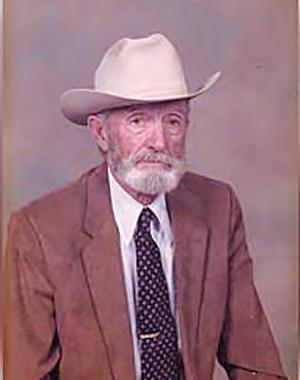
Phil was an avid baseball fan & grew up following the St. Louis Cardinals,
Kansas City Monarchs, and also the Kansas City A’s. He never missed a Royals game on the radio & he celebrated his 100th birthday by attending a Royals game as a guest of his Wingert cousins.
In later years, Phil became engaged in a role as a local historian, speaking at schools, sharing stories & information with younger generations about their ancestors, as well as, about his experience during World War II. He felt a strong responsibility to recognize the sacrifice of all those who had served our country & he embraced the opportunity to share their stories with future generations.
Philip was preceded in death by his parents, his brother Jackson & sister-in-law Margie, as well as their daughters Patricia Koons & Cynthia Simmons, his brother Doug & sisterin-law Roselyn, his sister Eleanor & brother-in-law Bob Pasley, his father & mother-in-law, Samuel Ray & Emilie June Gardner, sister-in-law, Annie Cunningham & sister-in-law, Virginia Gardner. He is survived by his wife, Julia, son Jay, Lebo, KS, son Phil & wife Lynna, Winslow, AZ, son Vern & wife Eileen, Denver, CO, daughter Frances Forbes & husband Chris, Bradford, PA, grandchildren, Tyler George (Jessica), Lebo, KS, Emilie Clarke (Collin), Margaret Gurley, Russell George & Tucker George, all of Denver, CO, Jackson George, Whitefish, MT, Julia George, Mission, KS, Madelaine Kimerle (Joseph), Lawrence, KS, Mitchell Forbes (Ashley), Lincoln, NE & Truman Forbes, Bradford, PA, and great-grandchildren, Samantha & Harper Gurley, and Barrett, Declan & Graham Clarke, as well as brother-in-law Gordon Cunningham, Goshin, IN, brother-in-law, Dan Gardner, Harford, KS, and numerous nieces, nephews & cousins.
Memorial contributions, if desired, may be made to The Benefit of Lebo Youth in c/o Farmers State Bank of Aliceville, P. O. Box 66, Lebo, KS 66856; Lebo American Legion, or a charity of the donor’s choosing.
Tegtmeier Polled Herefords Feb. 25, 2023
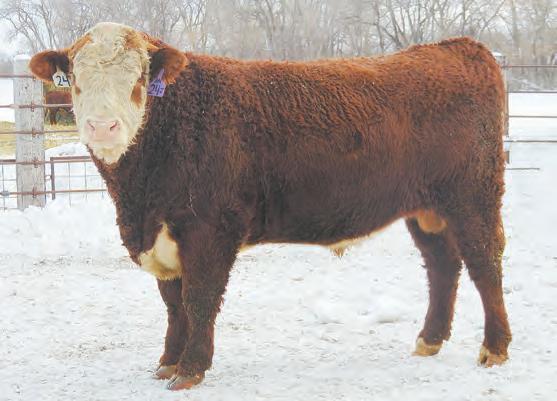
Burchard, NE
Auctioneer: Joel Birdwell
29.5 Bulls — $5,015
24 Bred Heifers — $3,091
10 Open Heifers — $3,310
7 Commercial Open Heifers — $2,250
Top Bull Lots:
Lot 6, CT Todd 130J, 12/19/21 to Sandhill Farms, Haviland, KS, $10,500, half interest, half possession.
Lot 34, CT 2504 4J, 3/12/21 to Thornberg Farms, Beatrice, NE, $10,000. Lot 21, CT Garfield19J, 2/26/21 to Schaardt Farms, Table Rock, NE, $7,000.
Lot 24, CT John 38, 3/5/21 to David Reuter, Humboldt, NE, $6,250. Lot 23, CT Garfield 34J, 3/6/21 to Schaardt Farms, Table Rock, NE, $6,100.
Top Females Lots:
Lot 36, CT Miss Test 122H and heifer calf by Loewen CMF Mendel to Blue Chip Herefords, Oxford, NE, $7,500. Lot 60, CT Miss Golden 1K, 3/19/22 by Loewen Garfield, Kole Svec, Milligan, NE, $6,500. Lot 63, CT Miss Garfield 44K, 3/15/22 by Loewen Garfield to Reynolds Herefords and Makayla Reynolds, Huntsville, MO, $5,500.
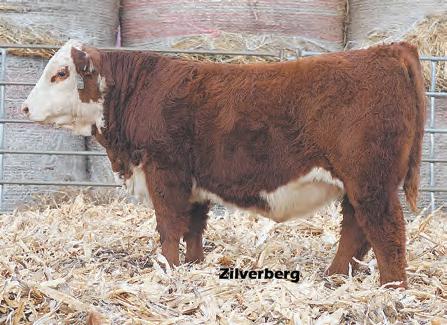
Wagner Herefords
Production Sale
Feb. 25, 2023
Redfield, SD
Auctioneer: The Livestock Link
14 Yearling Bulls — $4,304
15 Two-Year-Old Bulls — $3,400
Top Bulls:
Lot 1, WH 8G Benton 24K, 2/27/22 by JDH AH Benton 8G ET to Topp Herefords, Grace City, ND, $10,250. Lot 15, WH Benton 81K, 3/27/22 by JDH AH Benton 8G ET to Nelson Angus, Carpenter, SD, $6,250. Lot 10, WH Master Plan 38K, 3/5/22
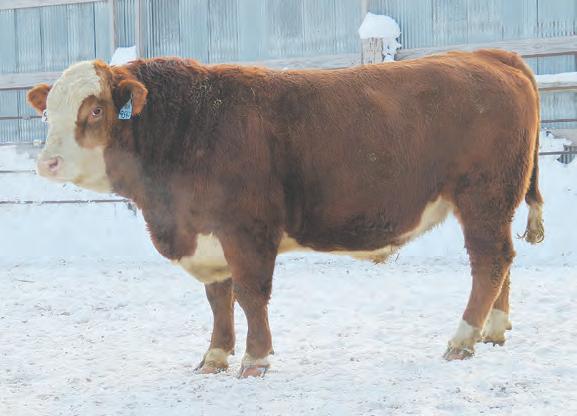
by TH Masterplan 183F to Garrett Masat, Redfield, SD, $5,250.
Lot 24, WH Good News 176J, 5/15/21 by TH 312A 206E Good News to Blue Farms, Cavour, SD, $5,250.
Lot 18, WH Lemonade 41K, 3/7/22 by WH 249E Lemonade 27G to Bottum Bros., Tulare, SD, $5,000.
Lot 35, WH 7150 Undisputed 102J, 4/4/21 by ECR 3304 Undisputed 7150, to Pearson Farms, Forestburg, SD, $5,000.
Bar JZ Ranches
Don & Peg Zilverberg
Seth & Bridget Zilverberg Holabird, SD
74th Annual Production Sale
Postponed to Monday, February 27, 2023
Auctioneer: Sonny Booth
62 Polled Hereford Bulls — $5,645
46 LimFlex and Limousin Bulls — $4,820
Top Polled Herefords:
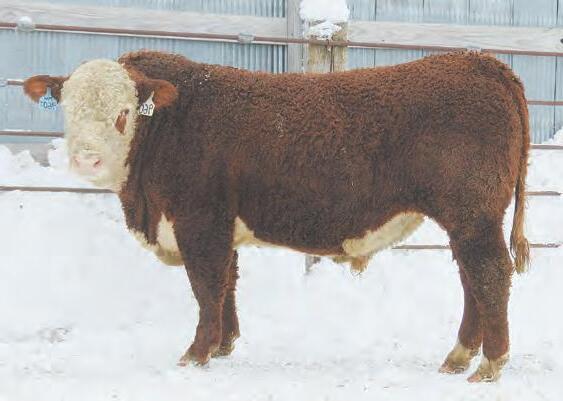
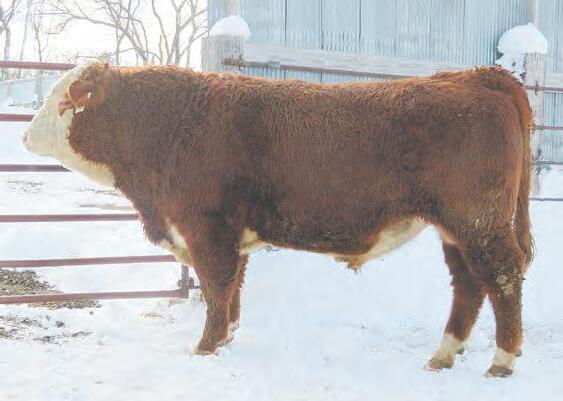
Lot 42, Bar JZ Valiant 619K, a homozygous polled 3/26/22 son of RV Valor 9444G ET and out of a NJW Homegrown daughter to Genex and Hoffman Ranch, NE, $51,000.
Lot 2, Bar JZ Rimrider 505K, homozygous polled 2/28/22 son of NJW 139C 103C Ridge 254G to Semex, Ontario, Canada, $13,500.
Lot 36, Bar JZ Valiant 508K, a homozygous polled 3/1/22 son of RV Valor 9444G ET to Smith Cattle Company, SD, $12,500.
(continued on page 10)
TOP-QUALITY WORKING CATTLE BRED AND FED WITH THE COMMERCIAL CATTLEMAN IN MIND.
17th in the nation for Dams of Distinction
24J Reg. #44322969
Born 5/3/21
BW: 89 • 205 WT: 634 Scrotal: 37 CM
BW: 2.6 • WW: 60
YW: 92 • M: 31 • REA: .48
A nice big bull with a lot of style. All dark red with big goggles. Extra long with good thickness and super quiet.
954J Reg. #44323002
Born 4/19/21
BW: 76 • 205 WT: 623
Scrotal: 41 CM
BW: 0.2 • WW: 60
YW: 92 • M: 24 • REA: .57
A heifer bull with a fancy look to him. Big goggles, solid red markings, very thick and deep bodied. Very tame.
957J
Reg. #44323003

Born 4/16/21
BW: 93 • 205 WT: 622
Scrotal: 40 CM
BW: 6.7 • WW: 82
YW: 124 • M: 29 • REA: .66
One of the most powerful bulls in our sale pen. Big, stout, extremely deep and thick. Big goggles on both eyes.
960J
Reg. #44323007
Born 4/14/21
BW: 99 • 205 WT: 578
Scrotal: 37.5 CM
BW: 7.6 • WW: 62
YW: 99 • M: 25 •REA: .42
Jimmy E. Carter
Jimmy E. Carter, 85, of Rock Lake, ND, passed away Monday, March 20, 2023 at the Towner County Medical Center in Cando, ND.
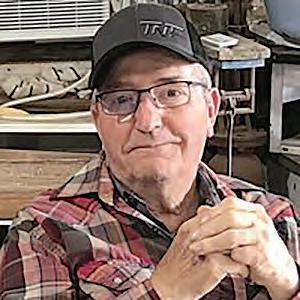
Services will be held on Saturday, May 13, 2023 at 2pm at Cando Lutheran Church in Cando with Pastor Bonnie Weaver officiating. Visitation will be two hours prior to the service at the church. Burial will be held at the All Nations Lutheran Cemetery in Rock Lake, ND.
A big stout, heavy muscled bull with lots of style, goggle eyes and red to the ground. A really long bull with power. Dam is a really good, big volume cow. Soggy made power bull with tons of muscle. A big butt end with loads of depth and thickness. Dark red.
WE ARE OFFERING CHOICE OF THE ENTIRE 2022 HEIFER CROP. CONTACT BILL FOR DETAILS.
For more information contact:
7480 26th St., Sheyenne, ND 58374
midwayph@gondtc.com
(2.5 miles south and 5.5 miles east of Sheyenne)
Bill and Karen Smith: (701) 996-3300
cell: (701) 302-0254
Jake and Whitney Burkhardsmeier: cell: (701) 650-8906 • home: (701) 996-3600
Visitors always welcome.
(continued from page 9)
Lot 44, Bar JZ Centennial 573K, a homozygous polled 3/17/22 son of APH 4356 Colorado 15G to Marvin & Nathan Antonen, SD, $8,500.
Lot 21, Bar JZ Borderline 666K, a homozygous polled 3/30/22 son of TH Frontier 174E to Leesman Ranch, SD, $8,000.
Lot 18, Bar JZ Borderline 536K, a homozygous polled 3/10/22 son of TH Frontier 174E to Nielsen Ranch, SD, $7,500.
Top LimFlex and Limousin Bulls:
Lot 112, Bar JZ Cable 557K, a homozygous polled, homozygous black, 47% LimFlex, 3/14/22 son of MAGS Cable to Matt Schultz, NE, $9,500.
Lot 102, Bar JZ Reserve 502K, a homozygous polled, homozygous black, 49% LimFlex, 2/27/22 son of MAGS Federal Reserve ET to Opheim Limousin, SD, $7,750.
Lot 115, Bar JZ Empire 567K, a homozygous polled, homozygous black, 56% LimFlex 3/16/22 son of TNGC Empire 736E to Matt Schulte, SD, $7,750.
Lot 144, Bar JZ Earnest 692K, a homozygous polled, homozygous black, 66% LimFlex 4/16/22 son of AHCC
Earning Power 214G to Kleinschmidt Ranch, SD, $6,500.
Lot 149, Bar JZ Earnest 453J, a homozygous polled, homozygous black, 78% Limousin 4/4/21 son of AHCC
Earning Power 214G to King Ranch, SD, $ 6,500.
In addition to South Dakota, bulls sold into North Dakota, Minnesota, Nebraska, Iowa, and Canada.
Colyer Herefords and Angus
Feb. 27, 2023
Bruneau, ID
Auctioneer: Butch Booker & Kyle Colyer
137 Hereford Bulls — $7,146
1 Older Angus Bull — $4,000
74 Yearling Angus Bulls — $7,327
26 Hereford Open Heifers — $4,288
22 Angus Open Heifers — $4,015
Top Hereford Bulls:
C 1311 Arlo (was Genesis) 2135 ET, 1/16/22 by Loewen Genesis G16 ET to Buck Cattle Co., Madill, OK, and Hoffman Ranch, Thedford, NE, ¾ interest, $165,000.
C 1311 Genesis 2105 ET, 1/11/22 by Loewen Genesis G16 ET to Duane Loy Farms, Shipman, IL, ¾ interest, $37,500.
C Cuda Belle 2111,1/11/22 by C Barracuda 0114 ET to Knox Brothers, Tennyson, TX, $37,500.
C 1311 Endure 2124 ET, 1/13/22 by NJW 79Z Z311 Endure 173D ET to WY Buyer, $22,000.
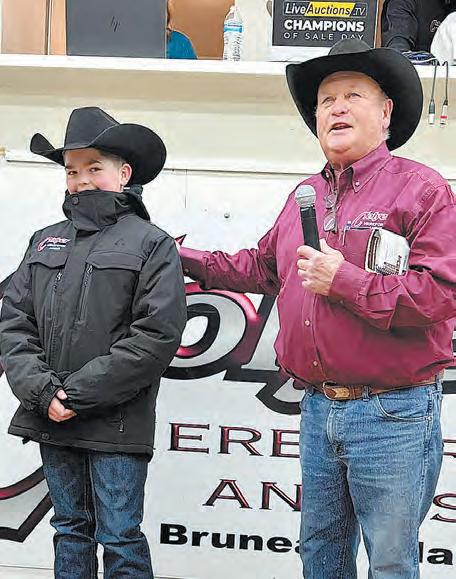
Colyer sale top was C 1311 Arlo (previously Genesis) 2135 by Loewen Genesis G16 ET. He sold for $165,000 for 3/4 interest to Buck Cattle Co. and Hoffman Ranch.
C 4196 Genesis 2113 ET, 1/12/22 by Loewen Genesis G16 ET to Mark Mackenzie, Jordan Valley, OR, $17,500.
C 8105 Genesis 2068 ET, 1/8/22 by Loewen Genesis G16 ET to TI Ranch, Lamoille, NV, $13,000.
Top Open Hereford Heifer:
C Donna West 2066, 1/8/22 by C Key West 0065 to Tudahl Herefords, Bigfork, MT, $8,750.
Top Angus Bulls:
C Alternative 2081, 1/7/22 by Baldridge Alternative E125 to Ira Brackett, Homedale, ID, $18,000.
C Growth Fund 2009, 12/29/21 by Deer Valley Growth Fund to GKB Cattle, Desdemona, TX, $15,500.
CCC Treasure 1207, 9/13/21 by Connealy Treasure 558H to Neil Helmick, Mayfield, ID, $13,500.
C 316 Exclusive 2013, 12/30/21 by Musgrave 316 Exclusive to Salmon Falls Livestock, Hagerman, ID, $13,000.
C Alternative 2061, 1/5/22 by Baldridge Alternative E125 to Wilson & Wilson, Hammett, ID, $12,500.
C Tahoe 2104, 1/8/22 by Tehama Tahoe B767 to Wilson & Wilson, Hammett, ID, $12,500.
Top Open Angus Heifer:
C Rita Rawhide 2067, 1/5/22 by Poss Rawhide to Trevor Roche, Parma, ID, $15,500.
C Rita Rawhide 2070, 1/5/22 by Poss Rawhide to Trevor Roche, $11,000.
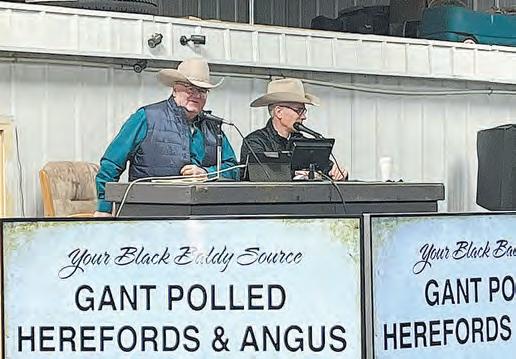
Gant Herefords and Angus Bull Sale
February 28, 2023
Geddes, SD
20 2-Year-Old Hereford Bulls — $4,010
30 2-Year-Old Angus Bulls — $5,056
8 Bred Hereford Heifers — $2,000
20 Bred Angus Heifers — $2,660
50 Bred Angus Cows — $2,110
Top Hereford Bulls: Lot 1, Gant Decorby 136 511, 3/26/21 by NJW 135U 10W Decorby 27F ET to Dennis Beckman, White Lake, SD, $7,250.
Lot 2, Gant Decorby 127 484, 3/20/21 by NJW 135U 10W Decorby 27F ET to Devin Backus, Platte, SD, $5,000.
Top Angus Bulls: Lot 44, Gant Cowboy Up 618, 3/30/21 by A&B Cowboy Up 8225 to Don Krcil, Wagner, SD, $8,000. Lot 42, Gant Cowboy Up 673, 4/7/21 by A&B Cowboy Up 8225 to Dwaine Junck, Carroll, NE, $7,750.
Kreth Herefords and Angus March 1, 2023
Mt. Vernon, SD
Auctioneer: Chisum Peterson
19 Hereford Bulls — $4,566
38 Angus Bulls — $4,901
57 Total Bulls — $4,790
8 Hereford Heifers $2,188
Top Hereford Bulls:
K Dominator 2134K, 2/12/22 by BCC Dominator 619D to Jeff Mezger, Marble Falls, TX, $10,000.
K Manifest 266K, 1/16/22 by NJW 133A 6589 Manifest 87G ET to Fawcett’s Elm Creek Ranch, Ree Heights, SD, $10,000.
High Selling Hereford Female:
K Lady Master 2199K, 2/28/22 by TR Masterplan 183F to Treston Zens, Mitchell, SD, $3,250.
Top Angus Bulls:
K Big Valley 240K, 1/13/22 by Connealy Big Valley to Eric Nowotno, White Lake, SD, $8,250.
K Big Valley 223K, 1/9/22 by Connealy Big Valley to James Horning, Huron, SD, $7,250.
S&S Polled Herefords Guide Rock, NE March 7, 2023
Auctioneer: Joel Birdwell
40 Bulls — $4,526 32 Bred Heifers — $2,925
Top Selling Bulls: Lot 17, S&S Endure 29J, 3/25/21 by NJW 79Z Z311 Endure 173D ET to Mark Bartlett, Cozad, NE, $8,500. Lot 8, S&S Leader 14J, 3/16/21 by KJ Nella 919E Leader 476G to Chad Ratliff, Athol, KS, $7,500.
Lot 2, S&S Victor 1J, 3/6/21 by JDH MRD 2Z 33Z Victor 6G ET to Robert Erickson, Wood Bine, IA, $7000.
Lot 6, S&S Victor 10J, 3/13/21 by JDH MRD 2Z 33Z Victor 6G ET to Gayle Kennedy, Falls City, NE, $6,750.
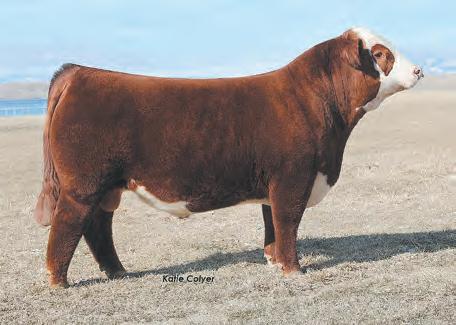
Top Selling Bred Heifers: Lot 52, S&S Miss Lamp 783J, 3/23/21 by JDH MRD 2Z 33Z Victor 6G ET to Kevin Jensen, Courtland, KS, $5,400. Lot 64, S&S Inas Mixer 796J, 3/28/21
by KJ Nella 919E Leader 476G to Duane Danielson, Aurora, NE, $5,000. Lot 48, S&S Miss Royal 775J, 3/20/21 by NJW 113D 1010 Tough 126F to Galen Gerdes, Grand Island, NE, $4,100. Lot 69, S&S Vickie 810J, 4/5/21 by S&S 53D Encore 38G to Casey Van Boening, Blue Hill, NE, $3,600.
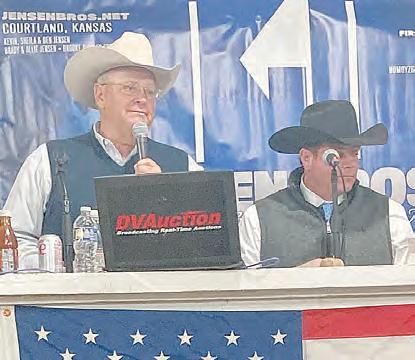
Jensen Bros.
Annual Production Sale Courtland, KS March 2, 2023
Auctioneer: Dustin Layton
84 Yearling Hereford Bulls — $5,632
16 18-month old Bulls — $3,531
100 Commercial Open Heifers — $1,672
Top Selling Hereford Bull: Lot 1, KJ F31 Rancher 763K, 3/7/22 by UPS Harvester 9985, Wiese & Sons, IA, $34,000.
Lot 5, KJ 753D Tomahawk 605K ET, 1/14/22 by EXR Benchmark 8240 ET, Moore Cattle Co, OK, $22,000. Lot 6, KJ 753D Porter 606K ET, 1/14/22 by EXR Benchmark 8240 ET, Roeder Hereford Farm, MN, $16,000. Lot 7, KJ 175F Benten 658K ET, 2/12/22 by JDH AH Benton 8G ET, Tim Schanbacher, IA, $10,000.
Selling for $34,000 in the Jensen Bros. Sale was KJ F31 Rancher 763K by UPS Harvester 9985.
Harrell Hereford Ranch and Mackenzie Quarter Horses
March 6, 2023
Baker City, OR
Auctioneers: Butch Booker and Rick Machado
107 Yearlings Bulls — $8,321
34 Two-Year-Old Bulls — $5,269
22 Yearling Angus Bulls — $7,989
33 Registered Hereford Heifers — $2,868
80 Commercial Heifers — $2,147
14 Quarter Horse Geldings —$14,464
9 Quarter Horse Mares — $6,026
Top Bulls: Lot 46, H5 9241 Advance 2132, 2/14/22 by H5 5019 Advance 9241 to Van Newkirk Herefords, Oshkosh, NE, $56,000.
Lot 26, H5 988 Advance 277, 2/7/22 by H5 5019C Advance 988 to Baumgarten
Cattle Co., Belfield, ND, $27,500.
Lot 65, H5 9241 Advance 2183, 2/19/22 by H5 5019 Advance 9241 to Indian Mound Ranch, Canadian, TX, $25,000.
Lot 77, H5 0136 Domino 2218, 2/21/22 by CL 1 Domino 0136H to Paul Mathews, Hiko, NV, $20,000.
Lot 70, H5 4013 Innisfail 2194, 2/20/22 by Innisfail WHR X651/723 4013 ET to Paul Mathews, $19,000.
Lot 104, H5 9241 Advance 2302, 3/7/22 by H5 5019 Advance 9241 to Dan Fawcett, Ree Heights, SD, $19,000.
Top Two-Year-Old Bulls:
Lot 133, H5 8232 Domino 1278, 3/1/21 by CL 1 Domino 8232F to Taylor Farms, Morganville, KS, $10,500.
Lot 116, H5 7167 Domino 119, 1/28/21 by H5 0945 DOMINO 7167 ET to V Bar Ranches, Westcliffe, CO, $9,500.
Top Angus Bulls:
Lot 156, H5 0403 Dynamic 17K, 1/29/22 by B A R Dynamic to Jaca Livestock, Murphy, ID, $12,000.
Lot 157, H5 9604 Executive 19K, 1/30/22 by T/D Executive 9604 to Davenport Cattle, Goldendale, WA, $10,000.
Lot 158, H5 M39 Fair-N-Square 23K, 2/14/22 by Myers Fair-N-Square M3 to Jaca Livestock, $10,000.
Top Hereford Heifer:
Lot 186, H5 MS 9241 Domet 2131, 2/14/22 by H5 5019 Advance 9241 to L Bar W Cattle Co., Absarokee, MT, $6,500.
Top Geldings:
Lot 11H, HR Trippen Sixes, 4/23/21 by Pay the Sixes to McGinn Ranch, Haines, OR, $20,000.
Lot 1H, Pay the Six Mack, 3/30/21 by Pay the Sixes to Rawhide Excavating, Madras, OR, $18,500.
Lot 13H, Pay the Guy Sioux, 4/26/21 by French Irish Spade to Perry Whittle, Angels Camp, CA, $17,500.
Lot 7H, Dublins Irish Chrome 4/16/21 by Chrome Plated Cash to Perry Whittle. $17,000.
Top Mares:
Lot 9H, HR Sixes Shawnee, 4/20/21 by Pay the Sixes to Sara Reynier McArthur, CA, $15,000.
Lot 12H, HR Smooth Pixie, 4/25/21 by Call Him Mr Smooth to Fairleigh Feed Yard, Scott City, KS, $12,000.
Tricky’s Herefords Dick and Betty Wettlaufer (Winfred, SD) Madison Livestock Auction Madison, SD
March 4, 2023
Top Lots: Lot 4, Trickys Endur E54 9142 K77, 4/10/22 by ECR 173 Endure 9142 to Buyer #157, $4,500.
Lot 1, Tricky’s Eagle F47 9G90K41, 3/26/22 by UPS Endure 8495 ET to Buyer #169, $4,000.
Lot 5, Trickys Endur 8086 9142 K78, 4/11/22 by ECR 173D Endure 9142 to Taylor and Claudia Vroman, Buffalo, SD, $4,000.
(See S&S on page 10)
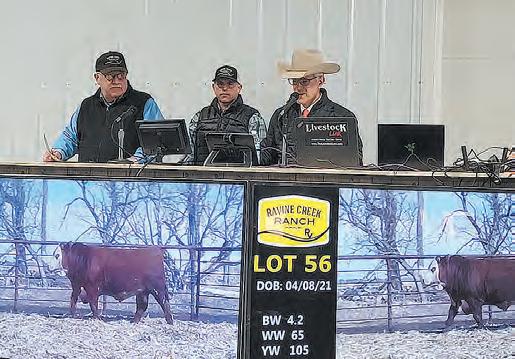
Bischoff’s Ravine Creek Ranch March 8, 2023 at the ranch, Huron, SD
Auctioneer: Chisum Peterson
16 Two Year old Bulls — $3,719
25 Yearling Bulls — $5,310
18 Registered Open Heifers — $2,542
18 Commercial Open Heifers — $1,667
48 F1 Baldy Open Heifers — $1,585
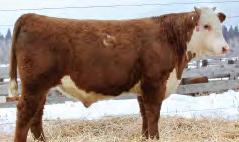
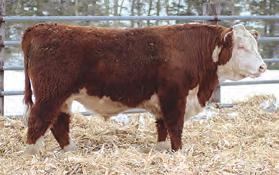
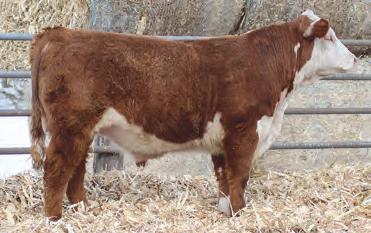
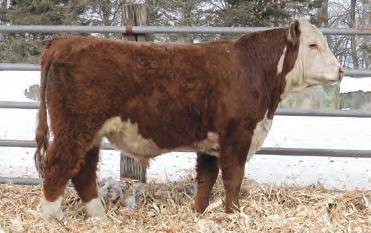
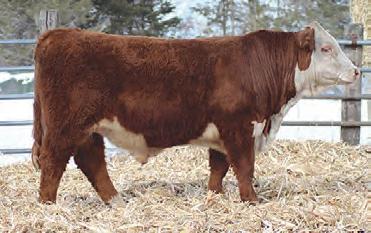
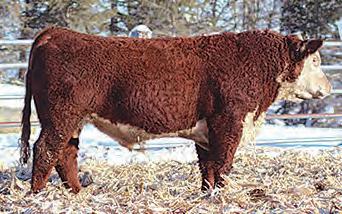
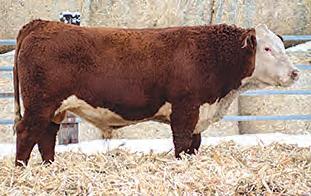
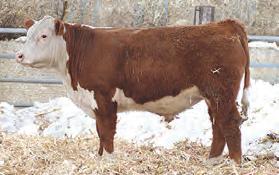
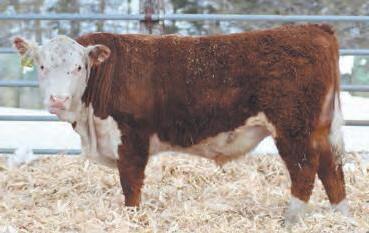
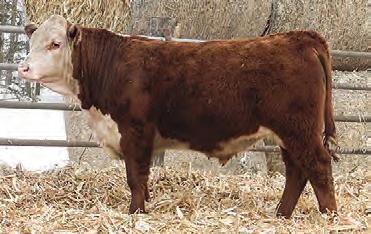
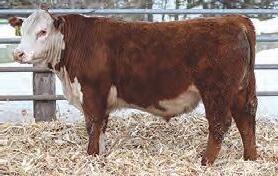
Top Selling Bulls: Lot 38, RV Valor Lad 899K, 3/29/22
by RV Valor 9444G ET to Weaver Herefords, Big Sandy, MT, $16,500. Lot 38, RV Cuda Ład 225K ET, 4/9/22 by BEHM 100W Cuba 504C to Sand Rock Ranch, Benton, WI, $11,500.
Lot 2, RV Valor Lad 540K, 3/5/22 by RV Valor 9444G to Klages Herefords, Ortonville, MN, $8,500.
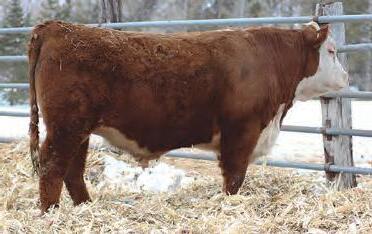
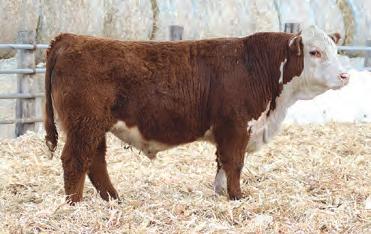
Top Selling Heifers:
Lot 72, RV Lady Bandit 954K, 3/16/22 by TH 535F Sleep On 181H to John Hadachek, Dysart, IA, $4,250. Lot 83, RV Entice Miley 445K ET, 4/2/22 by UPS Entice 9365 ET to John Hadachek, $4,250.
L-W Cattle Co. Production Sale Absarokee, MT March 10, 2023

Auctioneer: Justin Stout
52 Yearling Bulls — $5,668
9 Two-Year-Old Bulls — $5,111
6 18-Month-Old Bulls — $5,250 67 Total Bulls — $5,556
4 9-Year-Old Cow Calf Pairs — $3,613
730 Advance 2070ET, 1/17/22; by LW 3006 Advance 730E ET to Stangle Herefords, Marsland, NE, $15,000. Lot 2143, LW 7131 Domino 2143K ET, 2/13/22 by CL Domino 7131E 1ET to Matthew Ivy, Blackwater, MO, (continued on page 13)
Jackson Walsh (320) 368-0225 jackson.walsh.wfh@gmail.com
Halle Walsh (320) 444-7914 halle.walsh99@gmail.com
Tom Walsh (320) 760-2607 tom.walsh@riverviewllp.com
(continued from page 11)
$14,500.
Lot 2122, LW 901 Domino 2122K ET, 2/4/22 by LW 6128 Domino 901G ET to John Patterson, Columbus, MT, $13,000.
Lot 2067, LW 710 Domino 2067K ET, 1/15/22 by CL 1 Domino 710E 1ET to Behm Brothers, Burlington, ND, $10,000.
Lot 2011, LW 730 Advance 2011K, 1/4/22 by LW 3006 Advance 730E ET to Michael Gilbert, White Lake, SD $9,000.
Top Female Lot:
1 Pick of the Fall ET Heifer Calves to Colyer Herefords, Bruneau, ID & Bowling Ranch, Newkirk, OK, $15,000.
Sleepy Hollow Farm
The Strategy Sale
March 10, 2023
Centerville, SD
35 Bulls — $5,657 5 Hereford Bulls sold above $10,000
High Selling Hereford Bull: Lot 1, Sleepy Daybreak 211 to Hennebold Herefords, Winner, SD, $13,500.
Co-High Selling Angus Bulls: Lot 20, Sleepy Stock Fund 202, $8500. Lot 24, Sleepy Three Rivers 214, $8,500.
I-29 Bull Run IX
March 11, 2023
Sioux Falls, SD
Auctioneer: Chisum Peterson
56 Bulls — $4,353
14 Open Hereford Heifers — $2,221
13 Commercial Hereford Heifers — $1,175
24 F1 Baldy Open Heifers — $1,529
High Selling Hereford Bull: Lot 14, ESF 174E Frontier 259, 4/9/22 by TH Frontier 174E consigned by Eggers Southview Farm sold for $7,500.
High Selling Angus Bull: Lot 74, S16 MA Jackpot 1317J, consigned by Section 16, $7,000.
High Selling Simmental Bull: Lot 32, Mark’s Kobe 8K, consigned by Mark Family Simmental, $6,500.
High Selling Open Hereford Heifer: Lot 20, ESF 174E Gloria 221, 3/31/22 by TH Frontier 174E consigned by Eggers, $3,500.
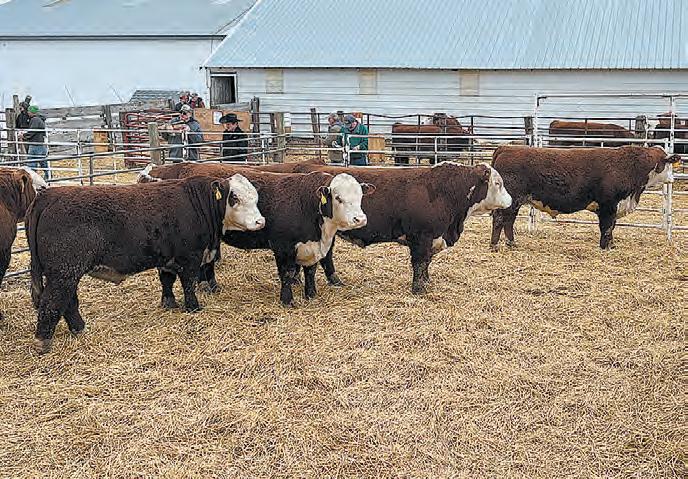
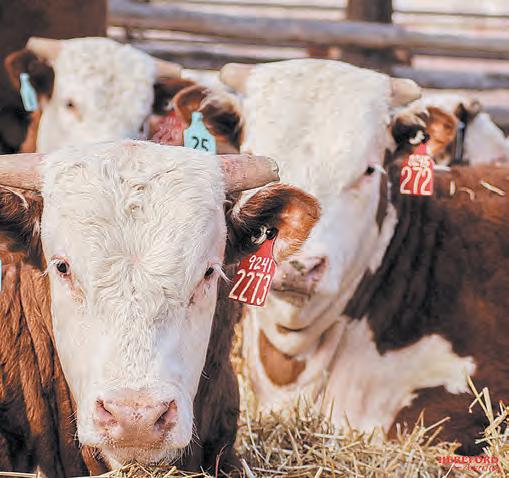
Holdens had two $100,000 high sellers. Pictured here is HH Advance 2116K, 1/13/22 by HH Advance 0022H. He sold to Andrew Laprath, SD; Harold Jones, TX; Double J Herefords, KS; Harrison Cattle Co., OK; EF1 Cattle Co./Engelhard Farms, ND; and Sierra Ranches, CA.
Top Donor Cow: Lot 4136B, CL 1 Dominette 4136B, 1/26/14 by CL 1 Domino 215Z to Miskimon Ranch, Lane, OK, $32,000. She sold with a bull calf at side by HH Advance 0074H.
Top Yearling Heifer: Lot 2142K, HH Miss Advance 2142K, 1/17/22 by HH Advance 0011H to Stellpflug Cattle, Glen Rock, WY, $22,500.
Top Yearling Heifer: Lot 238, CL 1 Dominette 238K 1ET, 1/8/22 by CL 1 Domino 0186H to L Bar W Cattle Co., Absarokee, MT and EF1 Cattle Co./Engelhard Farms, Carpio, ND, $23,000.
Evenson Angus Sale March 16, 2023
Lemmon, SD
Auctioneer: Lynn Weishaar
113 Total Bulls — $5,446
64 Yearling Bulls — $5,558
49 Fall Bulls — $5,301
10 Registered Open Heifers — $2,975
39 Commercial Open Heifers — $1,825
Top Selling Yearling Bulls: Lot 206, Evenson Commodore 206, 1/24/22 by Kesslers Commodore 6516 to Tyler Mendenwald of Peever, SD, $13,000.
Cooper Hereford Ranch
March 14, 2023
Willow Creek MT
Auctioneer: Joe Goggins
Holden Herefords Sale March 13, 2023
Valier, MT
Auctioneer: Joe Goggins
104 Yearling Bulls — $16,341
28 Fall Yearling Bulls Average
$9,596
130 Total Bulls — $14,992
2 Donors Average $23,000
24 Yearling Heifers Average
$6,927
15 Commercial Yearling Baldy Heifers Average $2,300
Top Bulls:
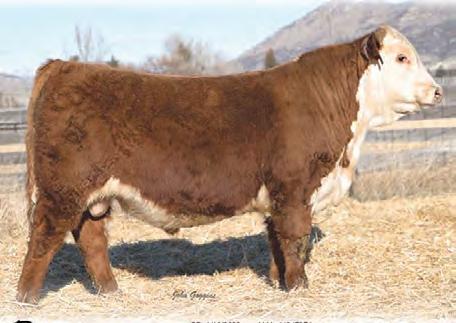
Lot 2116, HH Advance 2116K, 1/13/22 by HH Advance 0022H to Andrew Laprath, SD; Harold Jones, TX; Double J Herefords, KS; Harrison Cattle Co., OK; EF1 Cattle Co./Engelhard Farms, ND; and Sierra Ranches, CA, $100,000.
Lot 2054, HH Advance 2054K, 2/5/22 by HH Advance 0074H to Coates Ranch, Mertzen, TX, $100,000.
Lot 2034, HH Advance 2034K, 2/3/22 by HH Advance 0159H to Cooper Hereford Ranch, Willow Creek, MT, $85,000.
Lot 2123, HH Advance 2123K, 1/13/22 by HH Advance 0011H to EF1 Cattle Co./Engelhard Farms, $70,000.
Lot 2137, HH Advance 2137K, 1/15/22 by HH Advance 0074H to Mrnak Herefords, Bowman, ND, $52,500.
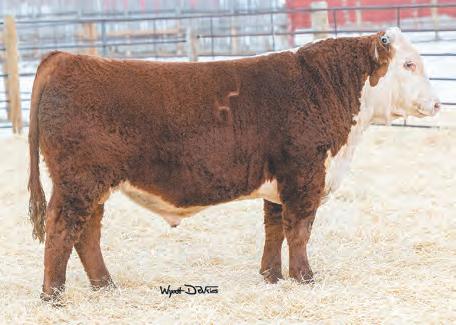
Lot 2052, HH Advance 2052K, 1/5/22
by HH Advance 1045L to CX Ranch, Pomeroy, WA, $45,000.
Lot 2199, HH Advance 2199K, 1/32/22 by CL 1 Domino 883F to Johansen Herefords, Castle Dale, UT, $37,500.
87 Yearling Bulls Average $13,480
6 Bred Cows Average $12,833
4 Pregnant Recips Average $8125
22 Yearling Heifers — $7,875
119 Total Lots — $12,231
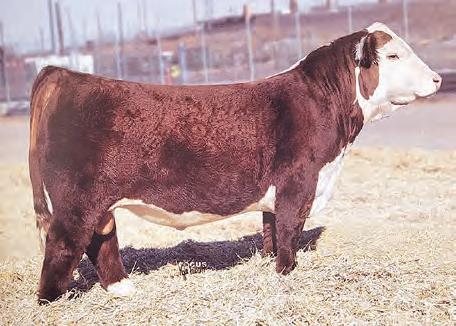
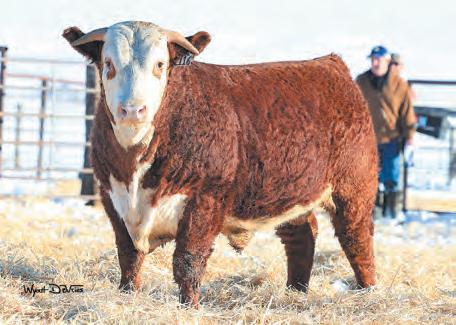
Top Bulls: Lot 267, CL 1 Domino 267K, 1/10/22 by CL 2 Domino 0186H to Churchill Cattle Co., Manhattan, MT; Hoffman Ranch, Thedford, NE; and Stellpflug Ranch, Glenrock, WY, $125,000.
Lot 2126, CL 1 Domino 2126K, 1/13/22; by CL 1 Domino 0186H to Ridder Herefords, Callaway, NE & Baumgarten Herefords, Belfield, ND, $50,000.
Lot 241, CL 1 Domino 241K, 1/8/22 by CL 1 Domino 0186H to Holden Herefords, Valier, MT and EF1 Cattle Co./Engelhard Farms, Carpio, ND, $45,000.
Lot 2230, CL1 Domino 2230K, 2/24/22 by CL 1 Domino 097H to Van Newkirk Herefords, Oshkosh, NE, $41,000. Lot 2191, CL 1 Domino 2191K, 1/31/22 by CL 1 Domino 0186H to Edwards Ranch, Laramie, WY & Berry Herefords, Cheyenne, WY, $40,000.
Lot 2172, CL 1 Domino 2172K, 1/26/22 by CL 1 Domino 001H to B&D Herefords, Claflin, KS, $40,000.
Top Bred Cow: Lot 719E, CL 1 Dominette 719E, 1/8/17 by CL 1 Domino 215Z, dam of high selling bull, to Churchill Cattle Co., Manhattan, MT, Kennedy Hoffman, Thedford, NE & Stellpflug Ranch, Glen Rock, WY, $25,000.
Top Selling Fall Bulls: Lot 1470, Evenson Everest 1470, 9/24/21 by Evenson Everest 964 to Lewis Angus of Black Hawk, SD, $11,000.
Top Selling Open Heifer: Lot 248, Evenson Blackbird 248, 2/10/22 by Sitz Resilient 10208 to Lindskov’s LT Ranch of Isabel, SD, $5,000.
Cane Creek Cattle Co. Mobridge, SD March 21, 2023
Auctioneer: Seth Weishaar
72 Horned and Polled Hereford Bulls — $4,612
6 Sim-Angus and Simmental Bulls — $3,900
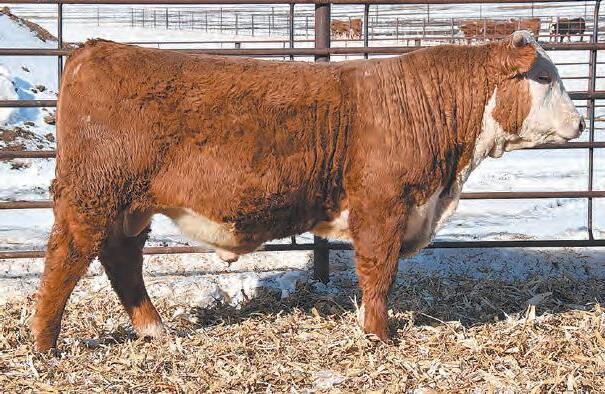
Top Bulls: Lot 1, CCCC Exodus 45C 203K ET, 1/4/22 by Loewen Genesis G16 ET to Fawcetts Elm Creek Ranch, Ree Heights, SD, $30,000.
Lot 3, CCCC Genesis 45C 206K ET, 1/7/22 by Loewen Genesis G16 ET
(continued on page 16)



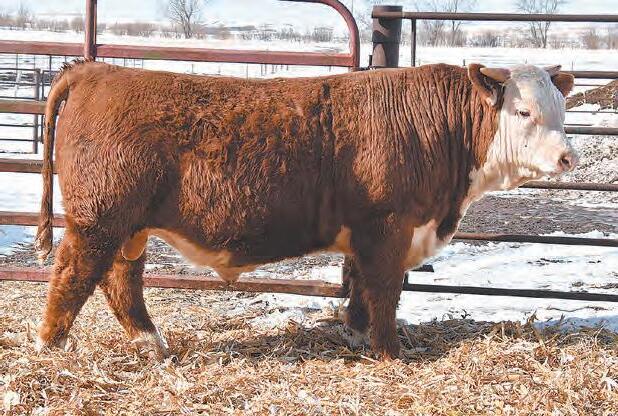
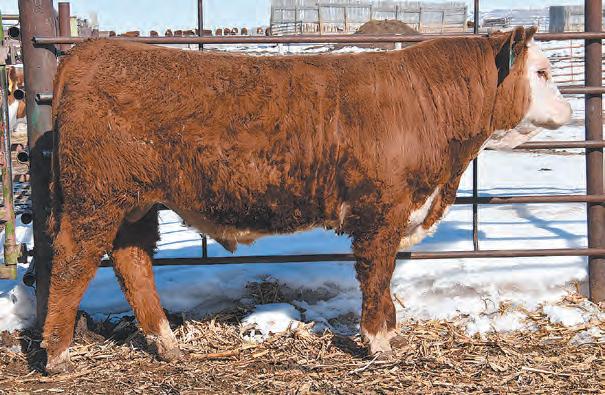
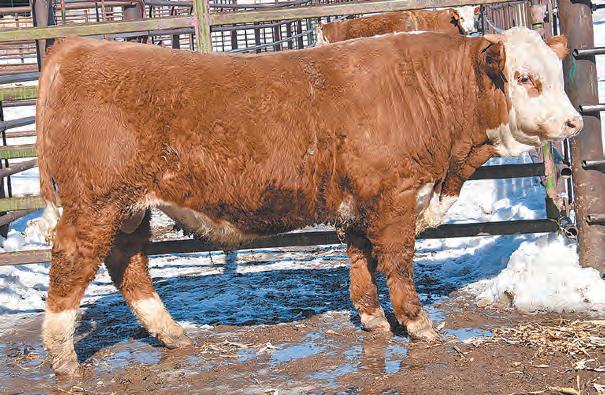
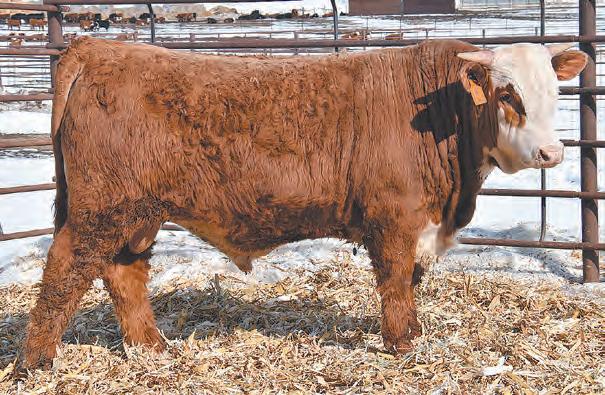
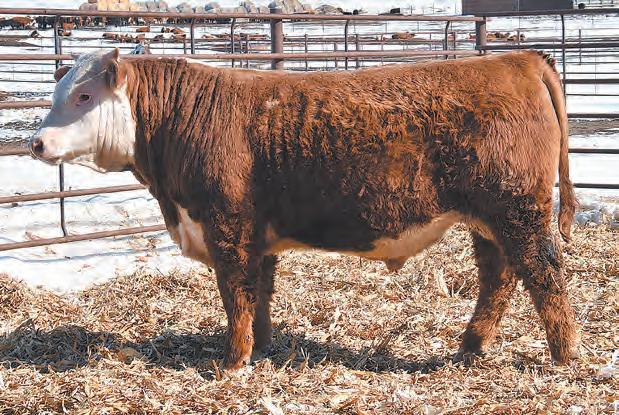
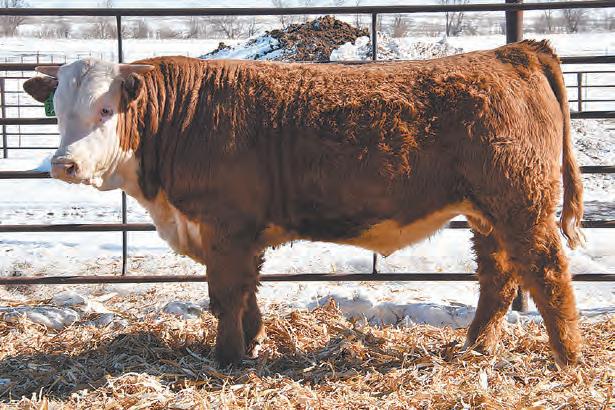
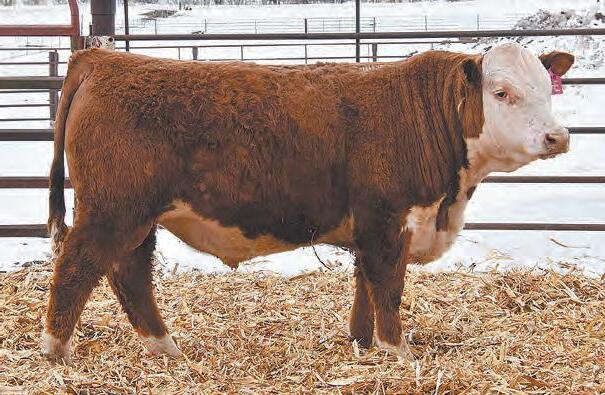
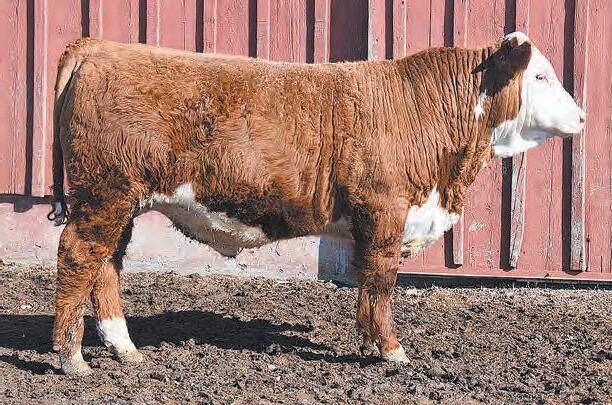
NOT ALLOW FOR HEIFER PICTURES, CHECK CATALOG OR VIDEOS ONLINE • SEMEN AVAILABLE ON MOST SIRES
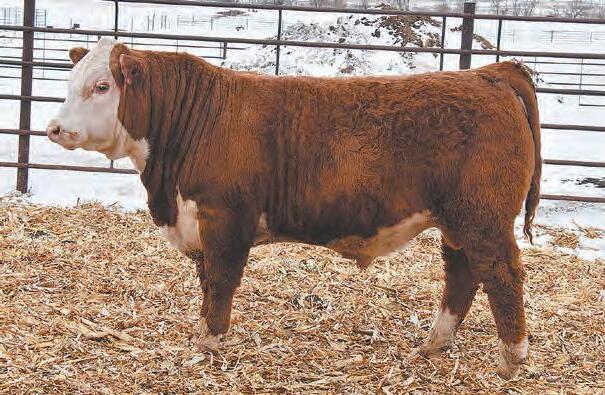
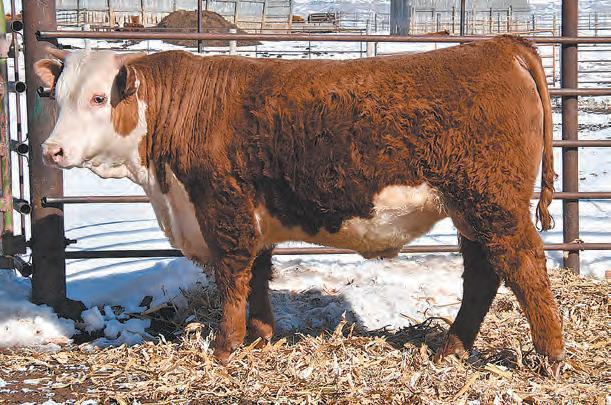
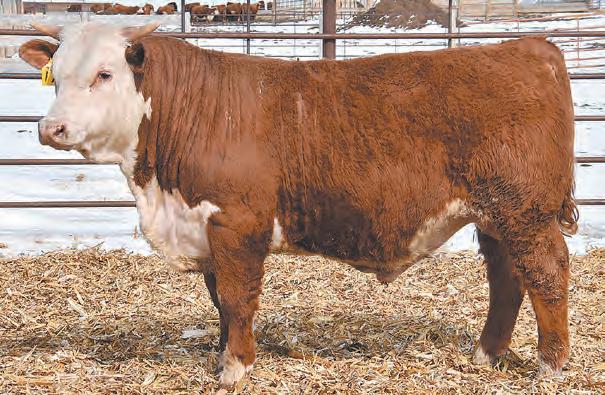
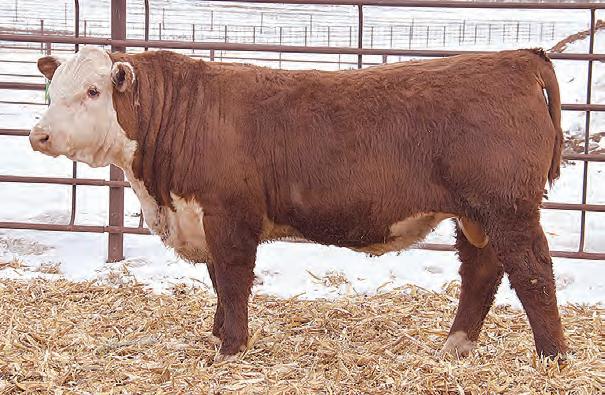
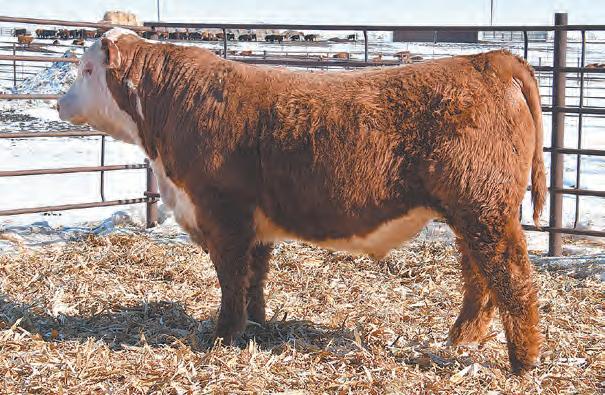
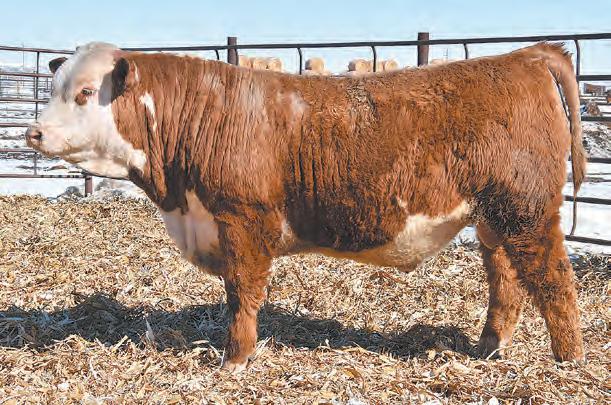
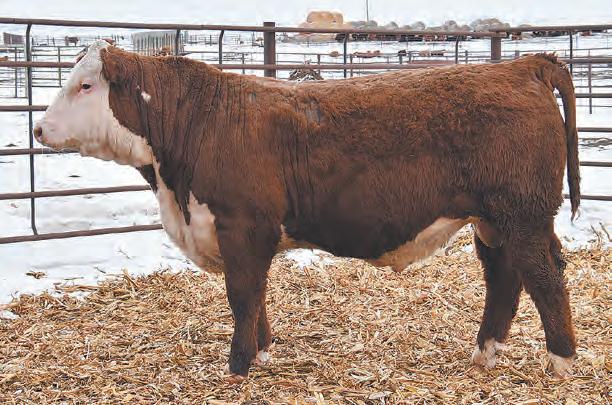
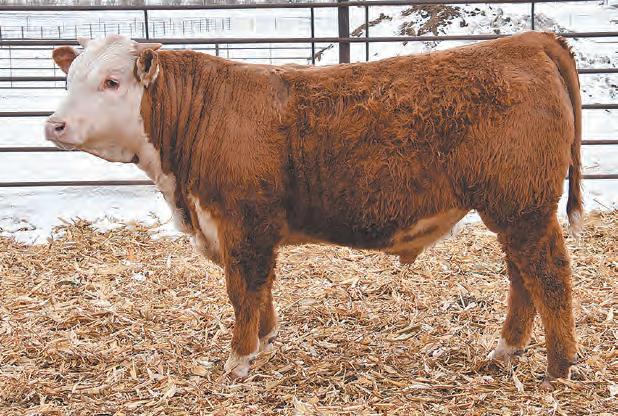
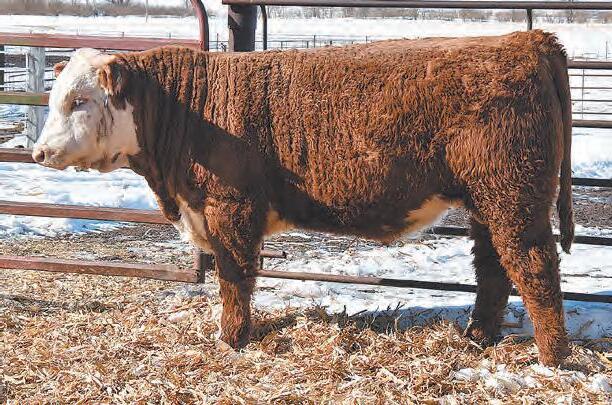



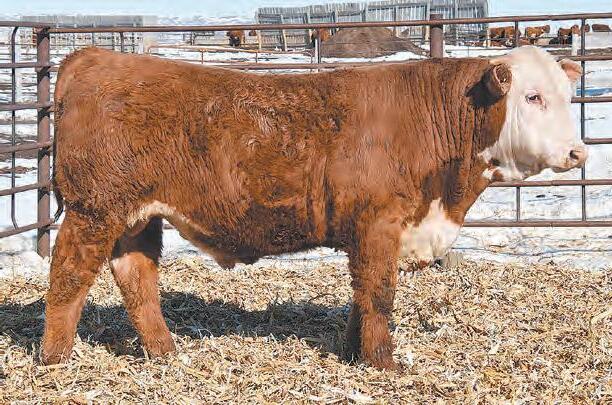
Lot 5, CCCC Entice 45C 223K ET, 2/24/22 by UPS Entice 9365 to Dakota Border Cattle, Herreid, SD, $11,000. Lot 51, CCCC Blueprint 179H, 12/7/20 by Boyd 31Z Blueprint 6153 to Dakitch Herefords, Ada, MN, $10,000. Lot 2, CCCC Genesis 45C 204K ET, 1/5/22 by Loewen Genesis G16 ET to Jerry & Kathy Schutte, Highmore, SD, $8,500.
DaKitch Farms Bull Sale March 25, 2023 Ada, MN
Auctioneer: Cody Crum
Angus Bulls — $5,531
Hereford Bulls — $3,750
Angus Opens — $3,001
Hereford Breds — $3,150
Bred Cows — $2,550
Top Hereford Bulls:
Lot 43, DaKitch MDK 107H Frontier 18K, 1/14/22 by TH Frontier 174E to Adam Kindem of Gonvick, MN $4,750.
Lot 38, DaKitch MDK 107G Strategy
84K, 2/18/22 by Dakitch MDK 181E
Strategy to Gerald Johnson, Mahnomen, MN, $4,250.
Lot 34, DaKitch MDK 12C Master
197J, 12/28/22 by TH Masterplan 183F to Kary Peterson, Ada, MN, $4,000.
Lot 41, DaKitch MDK 123 Frontier
8K, 1/7/22 by TH Frontier 174E to Steve Kincade, Wadena, MN $4,000.
Top Angus Bull:
Lot 7, DaKitch 140H Subzero 7K, 1/6/22 by Eathington Sub Zero, to Meder Farms of Dalton, MN $6,250.
Top Hereford Bred Heifer:
Lot 59, Ms DaKitch MDK 139G Dawn 157J, 4/6/21 by CRR 6015 Front Range 9435 to Kaleb Neshem, Berthold, ND, $4,250.
NJW Polled Herefords
March 22, 2023
Sheridan, WY
Auctioneer: Joe Goggins
81 Yearling Bulls — $7,407
1 Pick of the Spring Heifers — $40,000
38 Reg. Yearling Heifers — $10,007
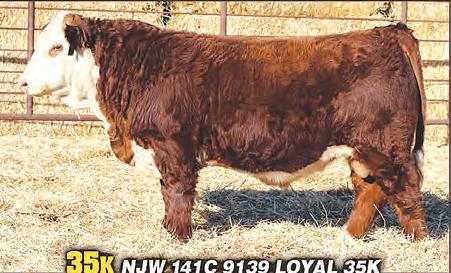
Top Bulls: Lot 35K, NJW 141C 9139 Loyal 35K, 2/5/22 by Pyramid Candor 9139 to Coyote Ridge Ranch, LaSalle, CO, $30,000 for 1/2 interest, 1/2 possession.
Lot 187K, NJW 95G 41E Hoss 187K
2/23/22 by NJW 11B 028X Hoss 41E ET to Sonoma Mountain Ranch, Santa Rosa, CA, $25,000.
Lot 183K, NJW 79Z 84E Highland
183K ET, 2/23/22 by NJW 11B 028X Hoss 41E ET to Rankin Ranch, Murdo, SD, $25,000.
Lot 163K, NJW 73S D287 Daybreak
163K ET, 2/19/22 by SHF Daybreak
Y02 D287 ET to Harvie Ranching, Olds, AB, $24,000.
Lot 100K, NJW 73S D287 Solstice
100K ET, 2/13/22 by SHF Daybreak
Y02 D287 ET to Matheny Herefords, Mayslick, KY, $21,000.
1 Pick of Spring Heifers to Stellpflug Cattle Co., Glenrock, WY, $40,000.
Top Reg. Yearling Heifers: Lot 99K, NJW 11B 27C Rita 99K ET, 2/13/22 by NJW 73S 38W Rimrock
27C to River Valley Polled Herefords, Newburgh, ON, $40,000.
Lot 274K, NJW 76S 4013 Stardust
274K ET, 2/14/22 by Innisfail WHR
X651/723 4013 ET to GKB Cattle Co., Desdemona, TX, $28,000.
Oleen Bros. Horned Hereford • Black Angus Dwight, KS March 27, 2023
Auctioneer: Jerry Lehmann
52 Hereford Bulls — $4,260
53 Angus Bulls — $6,470
61 BWF Pairs — $3,502
26 Hereford Pairs — $3,269
9 Angus Pairs — $3,883
27 Fall BWF Breds — $2,319
36 Fall Hereford Breds — $2,182
38 Fall Angus Breds — $2,220
101 Total Fall Breds — $2,233
13 Mares — $2,319
2 Geldings — $11,000
15 Stallions — $2,350
30 Horses - Riders — $2,913
Top Hereford Bulls: Lot 8, JAK L1 Domino J272, 9/5/21 by CO L1 Domino 748E to Augestein Herefords, Council Grove, KS, $9,000. Lot 12, JAK L1 Domino J291, 9/6/21 by FS Advance 8044F to Neal & Debbie Keeler, Whiting, KS, $8,000. Lot 20, JAK L1 Domino J318 9/8/21 by JAK L1 Domino D343 to Richard Thomson, Tarkio, MO, $7,700. Lot 25, JAK L1 Domino J333, 9/10/21 by LW 3006 Advance 714E ET to Arden Oleen, $7,400.
Top Angus Bulls: Lot 82, JAK Black Magic J332, 9/10/21
by Angus Alliance Beckett 8103 to Samuel Jahnke & Sons, Inc., Junction City, KS, $10,500.
Lot 91, JAK Ten Speed J357, 9/13/21 by Hinksons Ten Speed T16 647 to Bob Close, Chilhowee, MO, $9,900.
Top Geldings: Lot 32H, JAK MR Rowdy DIF 597, 4/17/20 by Big Rowdy Mo, to Luis Lopez, Salina, KS, $13,000.
Lot 30H, JAK MR Blue 543, 4/6/19 by JAK Blue McCue 118 to Daniel Crookham, Tonganoxie, KS, $9,000.
Top Stallions: Lot 11H, JAK MR Lena Pepy 689, 5/6/22 by JAK MR DR Badger 521 to Randy Henry, Goff, KS, $4,800.
Snowshoe Cattle Co. Arthur, NE March 27, 2023
Auctioneer: Greg Goggins
55 Bulls — $4,764
Top Hereford Bulls: Lot 136J, Snowshoe Long Range F121 136J, 8/22/21 by NJW 76S 27A Long Range 203D ET to Pine Valley Ranch, Gordon, NE, $8,000.
Lot 20K, Snowshoe 81E Historic H09 20K, 2/19/22 by NJW 160B 028X Historic 81E ET to Narjes Cattle Co., Sidney, MT, $7,500.
Lot 47K, Snowshoe Masterplan F07 47K, 3/1/22 by TH Masterplan 183F to Prarie Gold Farms, Heartwell, NE, $7,250.
Lot 71K, Snowshoe 19C Vigilante F26 71K, 3/10/22 by Snowshoe X51 Bannack Y27 19C to Mathew Miller, Glasgow, MT, $6,750.
Top Red Angus Bull: Snow Let’s Roll 04K, 2/19/22 by Bieber Let’s Roll B563 to Tercel Land & Cattle Inc., Potter, NE, $6,750.
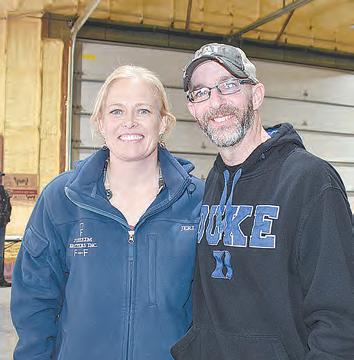
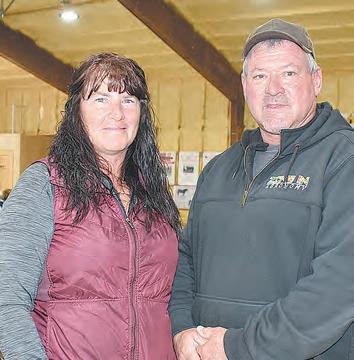
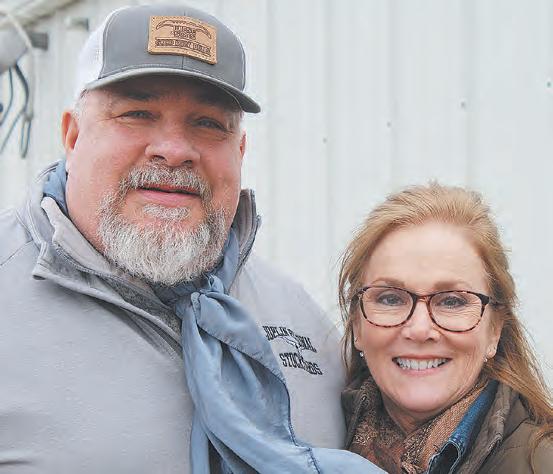
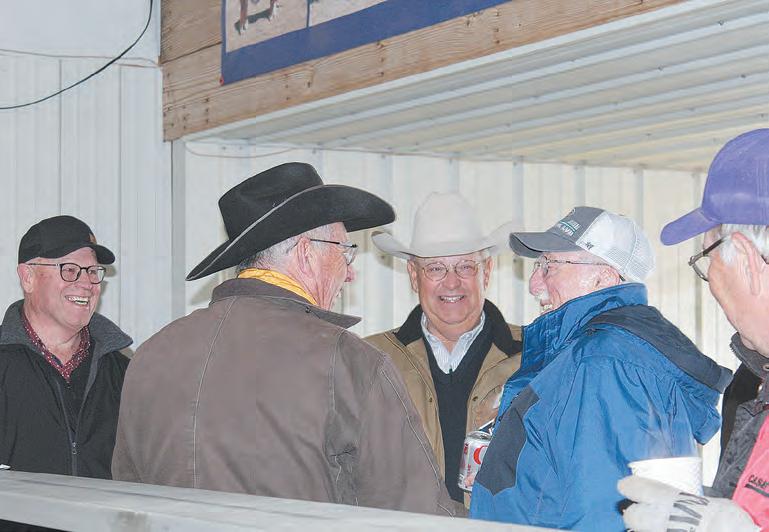
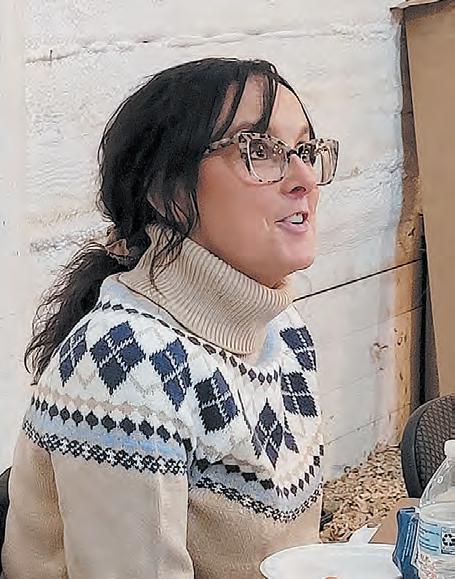
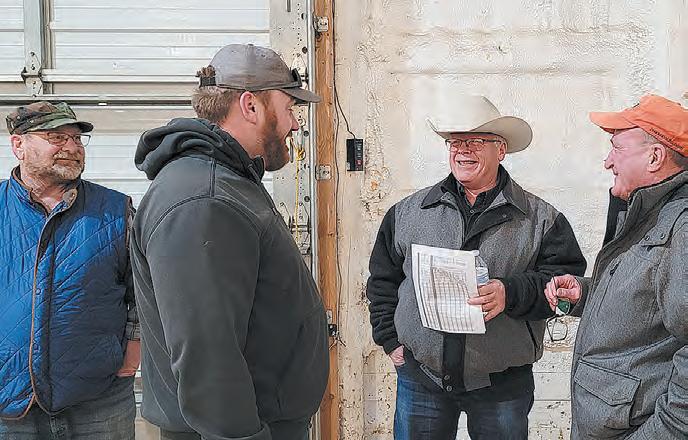
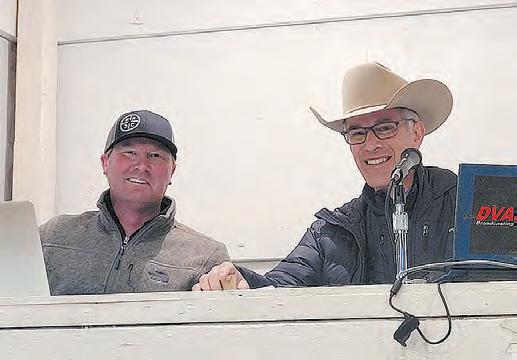
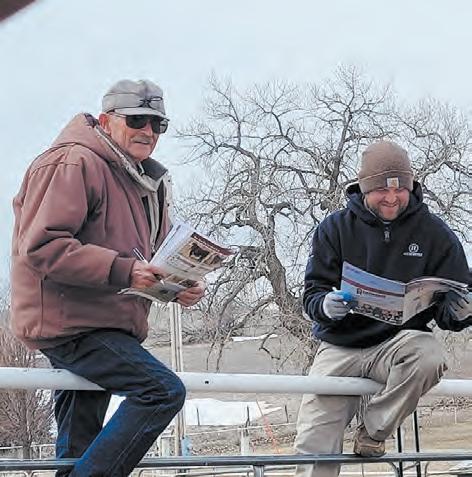
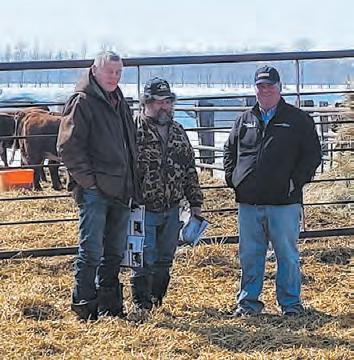
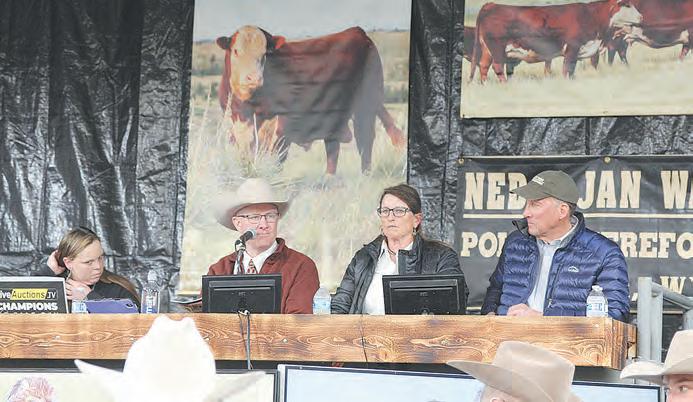
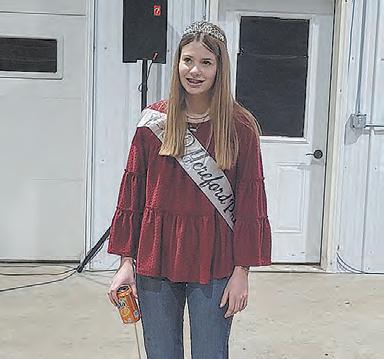
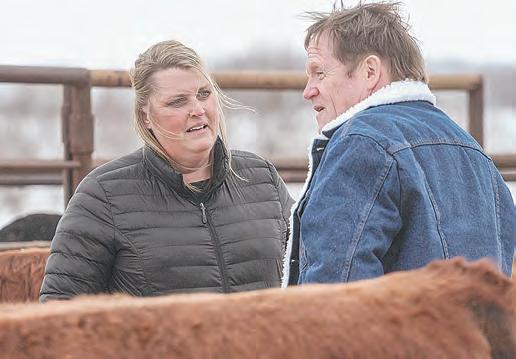
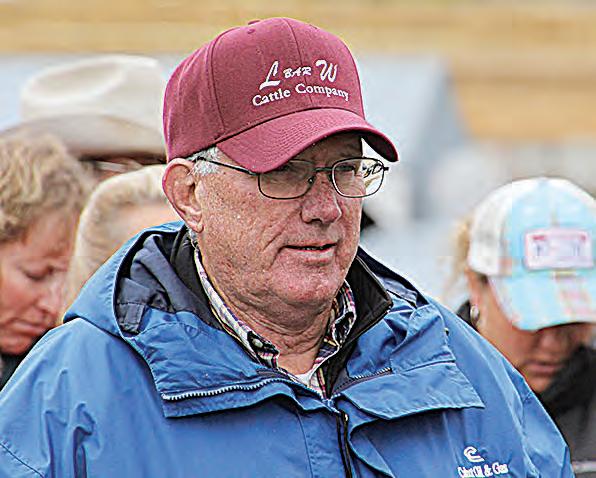
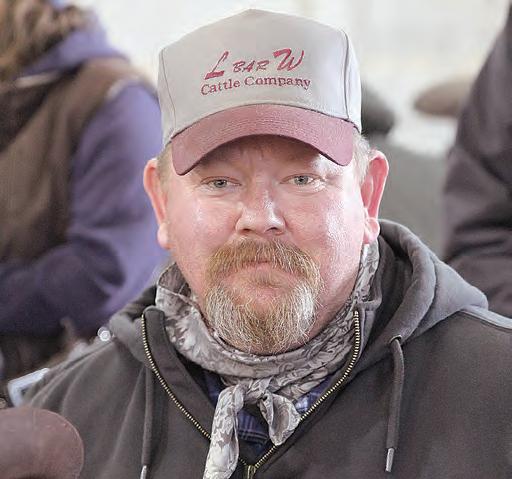
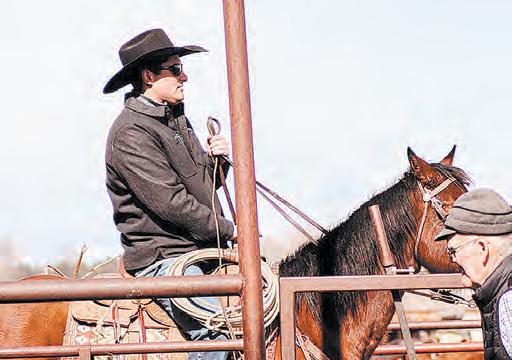
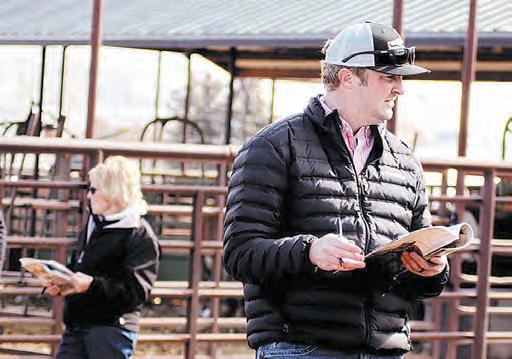
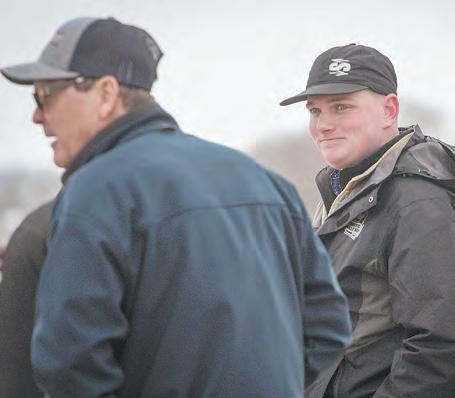
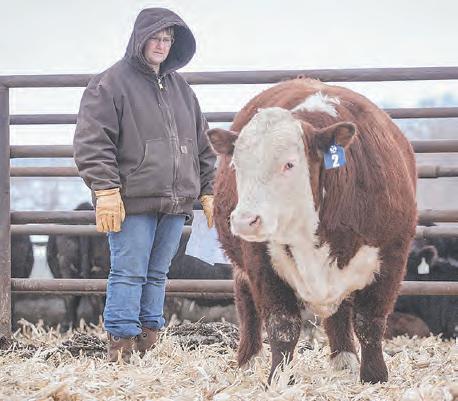
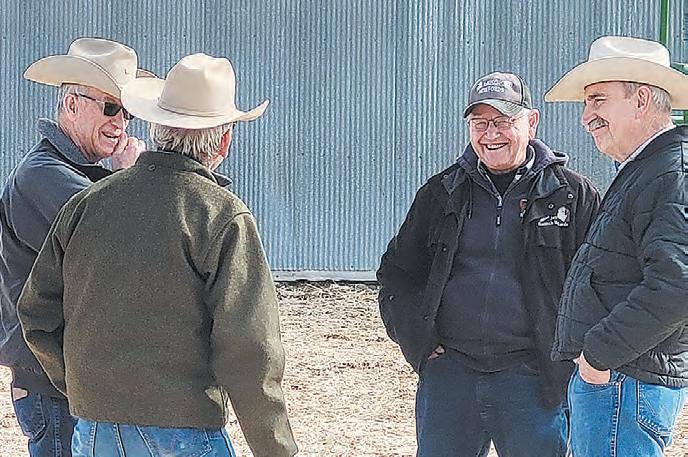
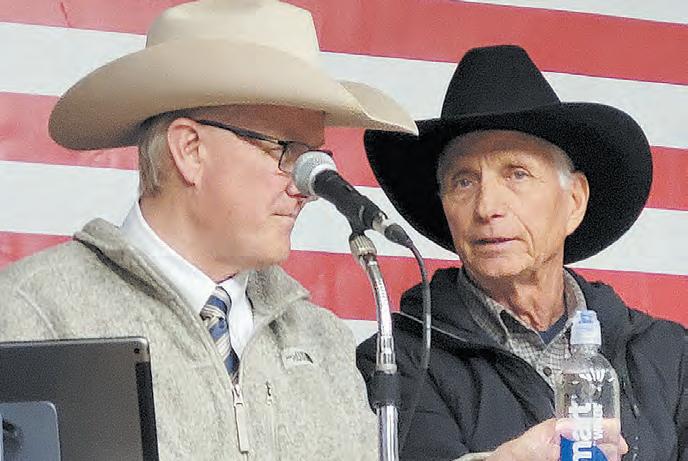
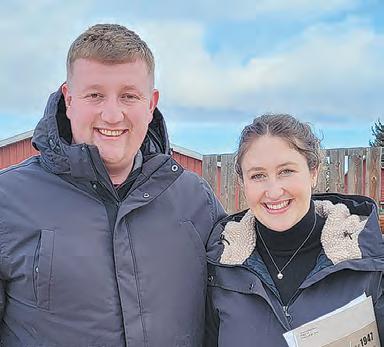
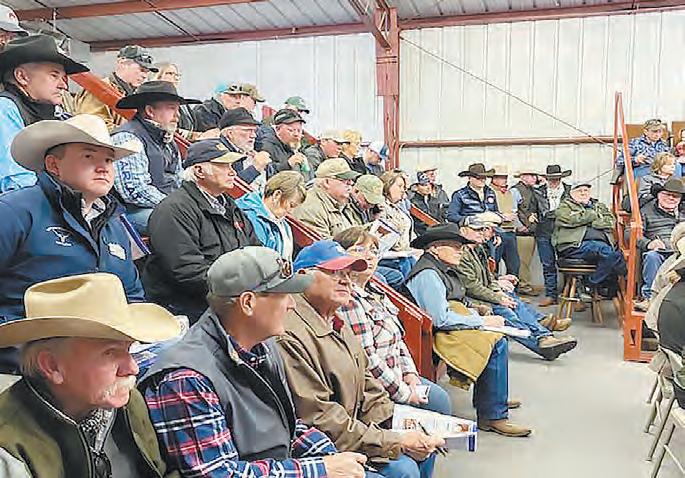
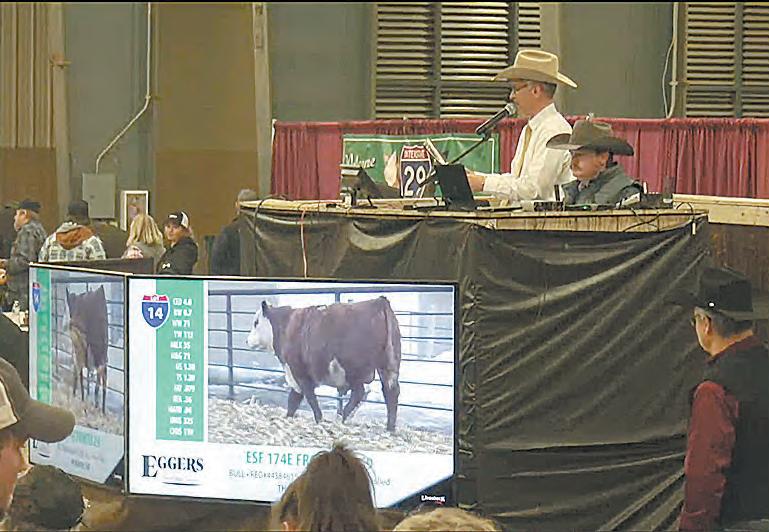
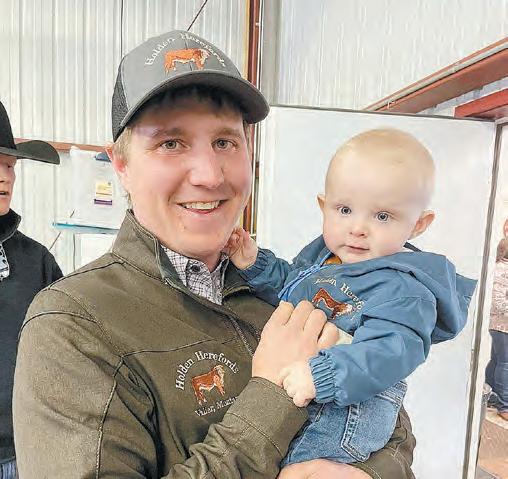
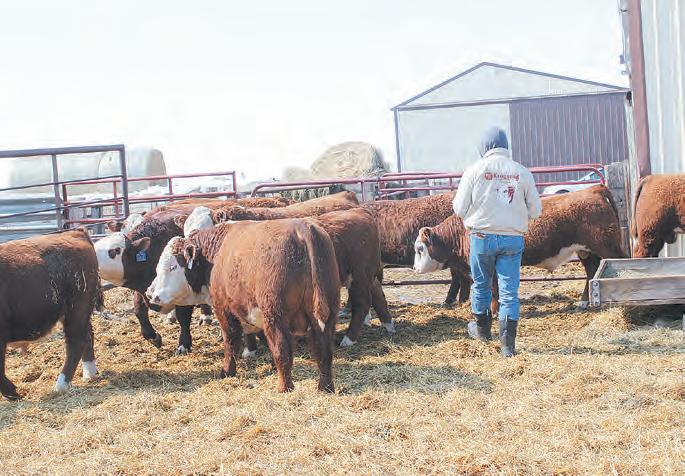
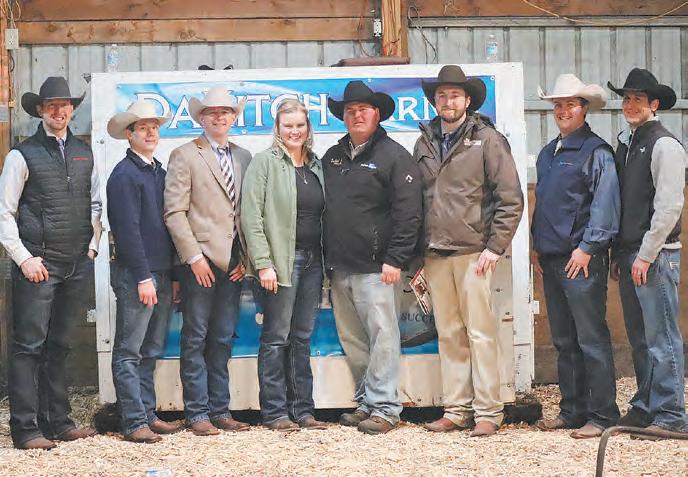
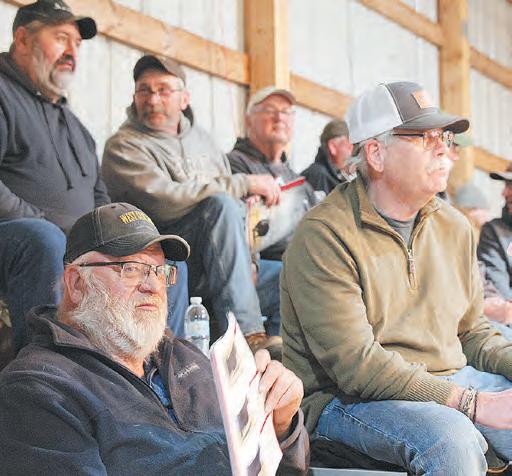
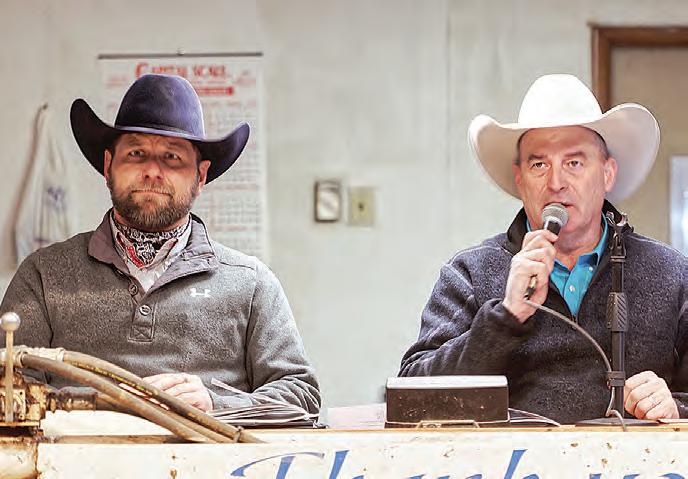
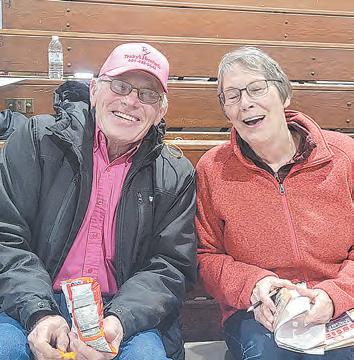
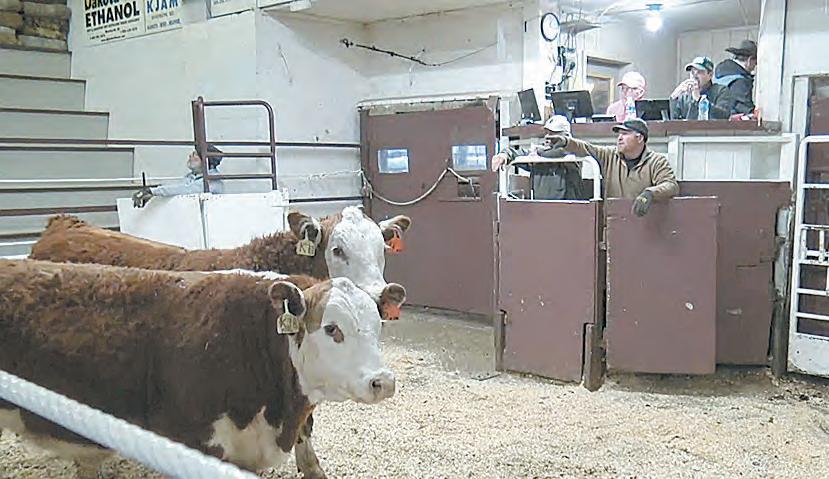
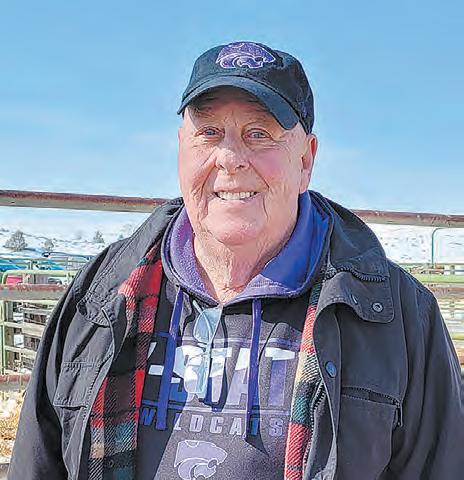
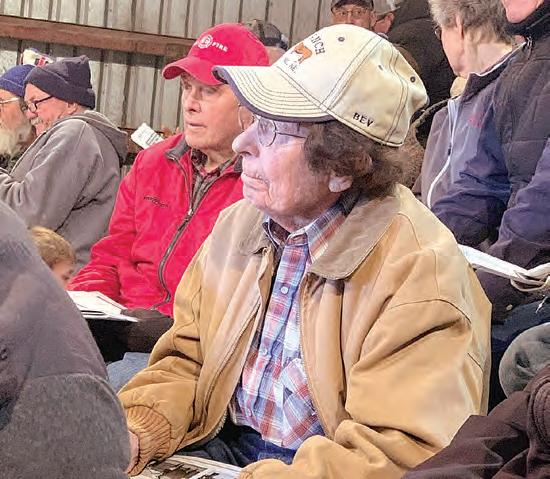
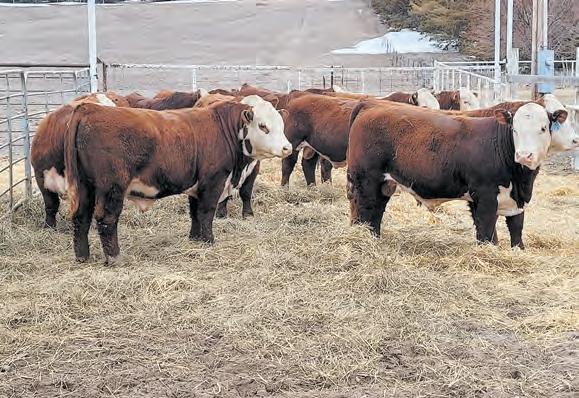
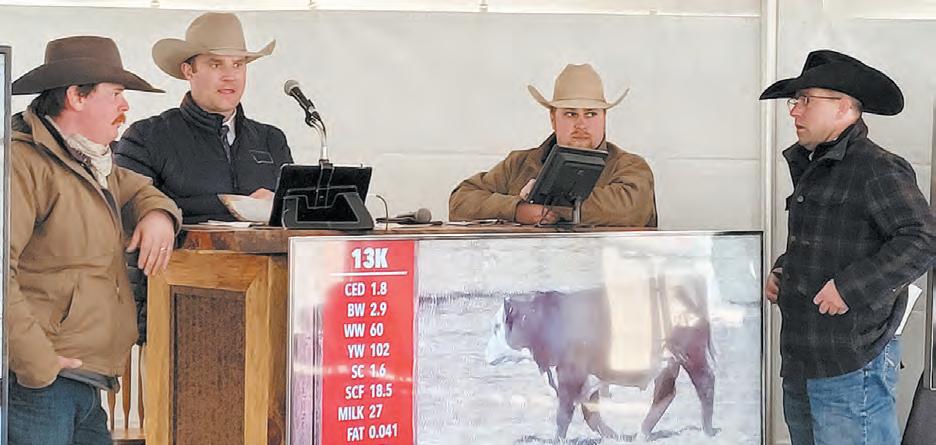
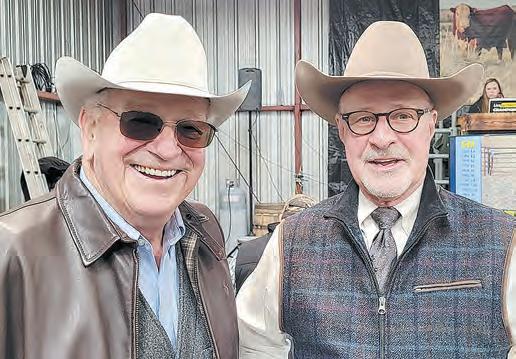
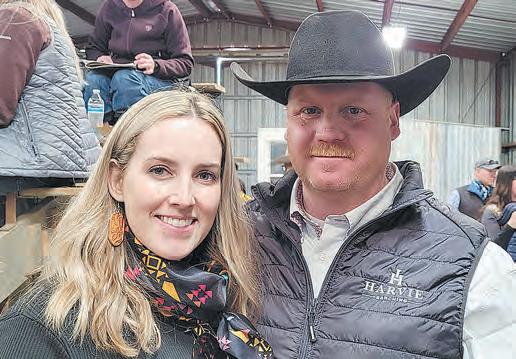
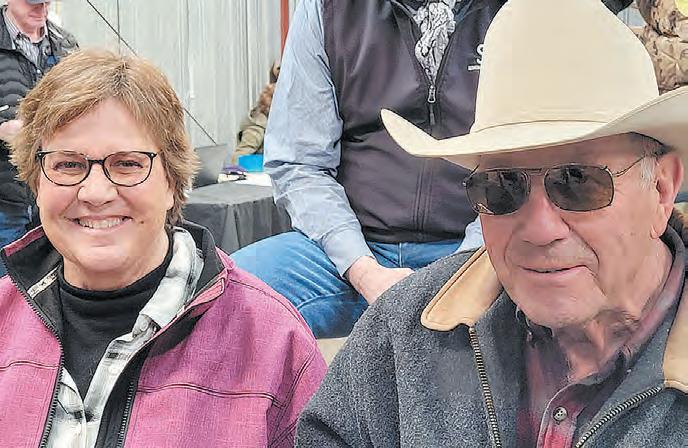
For any advertisers’ sale reports we may have missed, please e-mail your information to us and we will get it online and in the next issue! E-mail to jbh@herefordamerica.comDr. Bill Isaacson (left) from Park Rapids, MN and unidentified steakhouse owner with Matthew Kitchell (right) prior to the DaKitch sale, Ada, MN. Ted and Nathan Behlke from Benkelman, NE at the Snowshoe sale. They bought two bulls. On the block at the NJW Polled Herefords Sale, Sheridan, WY were Katie Colyer with LiveAuctions, Auctioneer Joe Goggins and Jan and Ned Ward.
1-877-320-1988 Fax:
Phone 605-374-3877 or 1-800-822-8853
Paul Huffman, General Manager • 605-645-2493
Chad Hetzel, Assistant Manager • 701-376-3748
Sales Every Wednesday •
We feature Hereford & Hereford-X Cattle in Special Sales
LEMMON LIVESTOCK, INC. Box 477 Lemmon, South Dakota 57638 www.lemmonlivestock.com
1975 E. Roosevelt Rd. El Nido, CA 95317
Gino & Mona Pedretti (209) 756-1609 Mark St. Pierre (209) 233-1406
Gino Pedretti Jr. (209) 756-2088
Gino Pedretti III (209) 756-1612
Total Performance Based on a Strong Foundation of Working Mothers
COYOTE
RIDGE RANCH
Hampton and Kay Cornelius 970-396-2935
P.O. Box 391 • Gridley, CA 95948
Lilybrook Herefords, Inc.

Practical, Efficient Cattle Are Our Livelihood!
Andy Schuepbach Box 2044 Claresholm, AB, Canada T0L 0T0
Marshall Ernst Family 5850 Crooked Stick Drive Windsor, CO 80550 970-381-6316 www.ernstherefords.com
Selling Quality Bulls & Females private treaty BULL SALE March 2024
THE

Shaw Cattle Co. 22993 Howe Rd. Caldwell, ID 83607 www.shawcattle.com
Greg: (208) 459-3029
Sam: (208) 880-9044
Tucker: (208) 899-0455
Ron Shurtz: (208) 431-3311
The Bull Business BrandsM
Angus Hereford red Angus
The Neal Ward Family 673 N. 825 W. • Blackfoot, ID 83221
Home (208) 684-5252 woodenshoefarms@gmail.com
Sires: 4013, Mandate and Blue Print Sale February 15th, 2024
out the latest VIDEOS at www.thelivestocklink.com
• Cell: 403/625-6316 Fax: 403/625-1500 andy@lilybrookherefords.com www.lilybrookherefords.com ULRICH Email: peter@ulrichherefords.com Website: www.ulrichherefords.com Box 843, Claresholm, AB T0L 0T0 From Claresholm, 8 mi. (12.8 km) E, 4 mi. (6.4 km) N, 1/4 mi. E. Peter Ulrich Cell (403) 625-1036 POLLED HEREFORDS Duncan & Val Lees • 306‐577‐9703 Jeff & Grace Lees • 306‐577‐1375 Annual Bull Sale 1st Friday in April Annual Female Sale 3rd Sunday in October WWW.BLAIRATHOLFARMS.COM Arcola, Saskatchewan Canada All cattle are exportable to the USA, we are only 60 miles north of the border! Take advantage of the weak Canadian Dollar! To schedule a shoot call Marc at 605/210-1956 BALOG DALE STITH Auctioneer 5239 Old Sardis Pike Mays Lick, KY 41055 cell 918-760-1550 dalestith@yahoo.com Lynn Weishaar Livestock Auctioneer 13567 SD Highway 79 Reva, SD 57651 605/866-4670 Box 786 Lethbridge, Alberta T1J 3Z6 Canada (403) 320-1980

Herefords
481 Church Rd. Kings, IL 61068


JAMES (815) 761-1523
MALCOLM (815) 761-8462
Deewall Family
1074 Hwy. 1 620-635-6511




Coldwater, KS 67029
620-635-5978 (cell)




Granzow Herefords

Tom, Mary & Tobyn Granzow 765 South 3000 Road Herington, KS 67449 785/466-2247 or 785/466-6438 www.granzowherefords.com
MEMBER OF THE PTP ALLIANCE
Horned & Polled Herefords F1 Baldy Heifers
7229 56th St. SW Staples, MN 56479
Roy & Tammy Bell
(218) 397-2579
cell (218) 296-1960
4 miles North of Leader
Jerry & Shelly Delaney 2071 Co. Rd. 101 Lake Benton, MN 56149
Home: 507/368-9284 • Cell: 507/820-0661 jdh@delaneyherefords.com www.delaneyherefords.com
Cattle for sale at all times.
Les Krogstad
3348 430th St. Fertile, MN 56540
(218) 945-6213
(218) 289-5685 (cell)
Darin Krogstad 16765 Welch Shortcut Welch, MN 55089 (651) 485-0159
kph@gvtel.com www.krogstadpolledherefords.com
1470 10th St. N.E. Murdock, MN 56271 rbmrc1@gmail.com

Ross, Beth, Mallory, Regan 320-366-3726
Rob, Jean, Brett, Bailey, Brook 320-366-3970
Since 1958
• Dan • Erika
Bulls & Females For Sale
joannlawrence8@msn.com
• Susie • Judy •
Contact: Dan Lind 200 E. Grove St. Rushford, MN 55971 (507) 864-2298 cell: (507) 458-2080

e-mail: Lind2@acegroup.cc


Visitors Always Welcome
Secretary/Treasurer
Kory and Michele Kruse 2075 51st St. Ellsworth, MN 56129 507-920-5474
kmkruse96@gmail.com
Minnesota Hereford Breeders minnesotaherefordbreeders.com
Lester & John Schafer
64664 170th St. Buffalo Lake, MN 55314
(320) 582-1458 John cell (320) 582-0489 Les
FOR SALE: Bulls
Females Semen
Tom and Lisa Walsh 705 100th St. SE DeGraff, MN 56271
Home: 320-875-3073, Cell: 320-760-2607 tom.walsh@riverviewllp.com
Jackson cell: 320-368-0225
Halle cell: 320-444-7914
Larry, Aneica, and Logan Behm 5944 Hwy. 1806 • Beulah, ND 58523 701-873-2646
Logan, cell: 701-891-9227
Larry, cell: 701-870-0227 behmpolledherefords@gmail.com
Registered Herefords Since 1946
Unpampered • Functional • Sound Cattle for Sale at All Times 8424 4th Ave N.E. Kramer, ND 58748
Jeff 701-201-0201 • Jared 701-201-0445 e-mail: jboehnke@icloud.com
Mark, Wanda and Shane Giedd Ashley and Trevor Woolley 552 18th Ave. SW, Washburn, ND 58577 Mark 701-315-0230
7480 26th St. Sheyenne, ND 58374
Bill & Karen • 701/996-3300
Wyatt Huso 612.518.1899
Jim Huso 701.650.5413
11922 17th St. NE, Aneta, ND 58212 www.husoandsons.com
Jake & Whitney Burkhardsmeier 701/996-3600 midwayph@gondtc.com www.midwaypolledherefords.com and on Facebook as: Midway Polled Herefords
(North Dakota card ads continued on next page)

701-516-7479
701-400-1880




ANGUS & HEREFORD
Bull and Female Sales
May 10 & Nov. 18, 2023
12 miles N of Rapid City, SD
Tim 605-929-3717
JD 605-999-6487
Email: timamdahl@yahoo.com
Website: AmdahlAngusandHereford.com
Tim & Philip Eggers 25750 S. 476th Ave. Sioux Falls, SD 57104 (605) 351-5438 • (605) 929-6560 eggerssouthviewfarms@gmail.com
I-29 Bull Run

Bull Sale March 9, 2024

Box 15
continued on next page....
Homozygous Polled Herefords Homozygous Polled Limousin
18542 326th Ave. Holabird, SD 57540
6924 Emerald Heights Rd. Summerset, SD 57718
E-mail: jbakerherefords@gmail.com www.bakerherefords.com
ELM CREEK RANCH
21115 344th Ave. • Ree Heights, SD 57371
Keith, Cheryl 605/870-0161
Dan, Kyla, Hollis & Ivy 605/870-6172
Weston, Kristin, Falon & Jensen Kusser 605/478-0077
www.fawcettselmcreekranch.com
Bull & Female Sale • February 12, 2024
Geddes, South Dakota
Mark • Phone (605) 337- 2340
Dennis
Phone (605) 337-2564
2 year-old Angus & Polled Hereford BULL SALE
February 23, 2024
Geddes, SD
2 Year Old Polled Hereford Bulls for Sale Annually
Darwin & Cindy Aman Andrew — Sam — Alex 32824 119th St. • Eureka, SD 57437 (605) 284-2721 dcaman@valleytel.net
Registered and Commercial Herefords
Internet bull sale in January at KnipplingHereford.com
Gann Valley, SD 57341
Randy 605/680-3185
Garin 605/680-4637
Lake Andes, SD
Bull & Female Sale
Feb. 2, 2024
Annual Production Sale Tuesday, Feb. 20, 2024
Don & Peg, Seth & Bridget Zilverberg 605/870-2169 web site: www.barjz.com email: cattle@barjz.com
Mike Fink P.O. Box 184 • 43610 SD Hwy 42 Bridgewater,
Hansmeier and Son Inc.
REGISTERED HEREFORDS
Private treaty bulls, steers and heifers
Spring and fall herd
Bristol, SD 57219
Call Larissa 605/216-5556
Colin & Mary Beth Hoffman (605)439-3623 • Colin cell: (605) 216-7506 11341 357 Ave. Leola, SD 57456-7105 Visit our website at www.hoffmanherefords.com
Steve, Amy & Casey Zell, SD
(605) 450-0550
Call or text
Sherry Hanson 15477 409th Ave. Conde, SD 57434 605-382-7477 hanson_herefords.hotmail.com
Joel & Pam (Hanson) Singrey 18155 440th Ave. Hazel, SD 57242 605-216-3528 Pam 605-261-5993 Joel pam_hanson@hotmail.com
17309 322nd Ave. Onida, SD 57564 E-mail: kbherefords@venturecomm.net
Kirk: 605-973-2351 Cell: 769-9991
Brooke: 605-765-2248 Cell: 769-9992
Ken: 605-765-2335 Cell: 769-9999
Consistent. Rugged. Structurally Correct. We take the assumption out of your bull selection!
Boyd Dvorak Cell: 605/491-7090 dvorakherefords.com
Jeff DVORAK Cell: 605/491-2068


57783 605/642-2139

The one that’s read from cover to cover.
7 Issues Per Year
• September through April •
For more information contact Jill Hotchkiss at 605/866-4495 jbh@herefordamerica.com
KLAGES HEREFORDS
Bulls for sale private treaty... please call for more information.
www.nuhsbaumerherefords.com e-mail: sanuhs@nrctv.com

Visitors Welcome Directions: from Zell, 3 m. West on Hwy 212, 5½ South

• Sale Third Mon. in February •
Vickie Mensch-Geuther & Son rainbowherefords@gmail.com
30734 456th Ave. | Volin, SD 57072
Vickie 605-661-3421 Cody 605-670-1807
Shannon: 605-769-0203 2mileswestofHovenonHwy.20
HEREFORDS rauschherf@rauschherefords.com www.RauschHerefords.com
Herefords | Quarter Horses | Corgis Jacob: 605-769-0552 Peter: 605-281-0471
Hoven, SD 57450
Brian & Colleen Simon Seneca, SD 57473
Cell: 605/765-4564
Home: 605/436-6725
The Bischoffs • Huron, SD 57350 SALE MARCH 13, 2024
605-350-0980 and 605-461-1555 E-mail: ravinecr@santel.net
South Dakota Hereford Association www.southdakotaherefords.org manager@southdakotaherefords.org
Shannon Marshall, Mgr. shannon.marshall06@outlook.com
605/520-4607 Mitchell, SD
Raising registered & commercial Herefords
• Bulls for sale private treaty •
Jim & Judy Schuette 605-852-2789
Jerry & Kathy Schuette 605-852-2046 PO Box 266 slc@venturecomm.net Highmore, SD 57345 www.slc-herefords.com