Subject: Winter2025/26Newsletter
From: "TheScottishFloodForum"<kasha@scottishfloodforum.org>
Sent: 26/02/202615:26:31
To: "JillCorlett"<kirkmahoe@gmail.com>


Subject: Winter2025/26Newsletter
From: "TheScottishFloodForum"<kasha@scottishfloodforum.org>
Sent: 26/02/202615:26:31
To: "JillCorlett"<kirkmahoe@gmail.com>
Welcometoourlatestnewsletter

The signs of Spring are starting to appear - days are lengthening, temperatures are on the rise and snowdrops are poking through the ground. After the rainfall of recent weeks it is a welcome sight. As I look round my home and garden and start to draw up my list of spring cleaning and maintenance chores, I am reminded to check our PFR and, if it hasn’t beenusedsofarthisseason,totestit.
Weatherpatternshavebeensounpredictablethatitpaystousethisopportunityofcheckingoveryour ownhouseholdmeasuresor,ifyouareagroup,toreplenishfloodpodsandreviewthosefloodaction plansiftheyhavebeendeployedduringtherecentweatherevents.
The team have some useful information to help new readers of this newsletter to better understand the different types of flood risk. Flooding can happen at any time of year. It is also the time of year to renew insurance policies for our homes and cars, and Shona has some useful advice to share which willhelpwithpreparation.
Flo,thefloodbus,hasbeenoutontheroadalreadythisyearand,ifyouwouldliketoseeherinyour areathisspring,thendropusanemail.
Lookingforwardtohearingfromyou!
Bestwishes
Carol and the SFF team
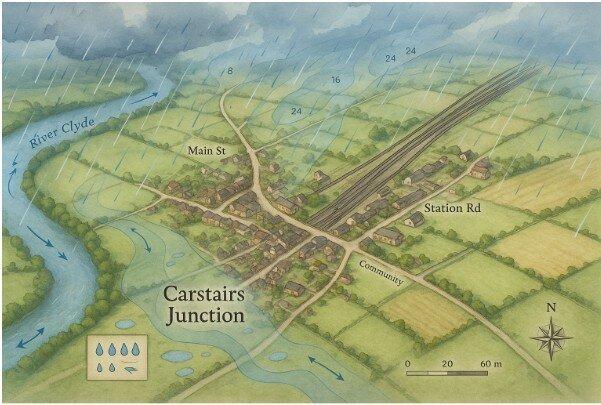
Over the past year, our small rural community of Carstairs Junction in South Lanarkshire has been working to better understand the flooding issues that affect local roads, access routes, and surroundingland.
As a newly formed charity, Soul of the Junction SCIO, we are used to responding to immediate community needs. However, flooding is one of those issues that often go unreported unless it directly affects homes. Many residents had experienced flooded roads, fields, and access paths, but there wasnosingleplacewherethisinformationwasrecorded.
With encouragement from the Scottish Flood Forum, we began a simple but structured process of collectinglocalevidence.
Howwegatheredtheinformation
Between September and December 2025, we carried out community-led research to identify and documentfloodinghotspots.Thisincluded:
Photographingrecurringproblemareas
Recordingapproximatedatesandconditions
Notingtheimpactonroads,accesslanes,anddailyroutines
Reviewingearlierphotosandvideosfromwinter2024–25toshowpatternsovertime
Wefocusedparticularlyon:
TheroadbetweenCarnwathandCarstairsJunction
Low-lyingsurroundingfields
ThelaneconnectingPettinainRoadandCoronationStreet,animportantroutetothelocal schoolandshop
We also compared our findings with SEPA flood map layers to understand how community observationsalignedwithofficialfloodriskdata.
Our aim was not to wait until properties flooded, but to help the community become more prepared and better informed. By gathering evidence early, we can support discussions with the Council and otherpartnersaboutpracticalmeasures,awareness,andlong-termresilience.
The process also helped bring residents into the conversation. People were keen to share their experiencesoncetheyrealisedtheinformationwouldbeusedconstructively
TheevidencehasnowbeensharedwiththeCouncil,withsupportfromtheScottishFloodForum.We hope this will lead to further discussions around community resilience, adaptation, and potential solutions.
This work has also connected naturally with wider climate adaptation priorities in the area, including nature-basedapproachesandcommunityawareness.
WearegratefultotheScottishFloodForum,andespeciallyKasha,fortheguidanceandpatiencethat allowedustocarryoutthisresearchthoroughly
For us, this has been a reminder that even small communities can take meaningful steps towards understandingrisksandpreparingforthefuture.
By Soul of the Junction SCIO

Perth Community FloodAid (PCFA) will have been a constituted group for 2 years in March.As well as providing Sandbag Stations and resources residents can use to protect their properties and trying to increase the awareness and installation of Property Flood Resilience (PFR), we are trying to increasevolunteernumberssothatwecanhelpmorevulnerableresidents.
Since the flood event on the 21st of July, Perth has been lucky compared to other areas over the last few months, with just one weather event causing limited surface water flooding on 27th January The Cherrybank PCFAsubgroup deployed their barriers, but they were not required in the end - a useful trainingexercise,nonetheless.
Doug from the Scottish Flood Forum spent time with us to develop our Community Deployment Plan. Thiswasaninvaluableexercise,andwewanttothankDougforallhishelp.
ThePerthFilmSocietywereshowingOscarwinningfilm“Flow”inJanuary - an independent animated film, with no dialogue, that follows a cat trying to survive along with other animals in a seemingly post-apocalyptic world as the water level dramatically rises, and I was invited to give a presentation regarding how PCFA came about, what we have helped achieve so far, and our plans going forward. If you have not seen Flow I can heartily recommend it. If you are fortunate enough to see it wait until afterthecreditsroll-thereisanextrascene!

When sharing SEPA and Met Office warnings, and the essential impact matrix, over the last few months, we have been trying to increase the understanding of the differences between the various levels; a further block of 4 flats had airbricks fitted, with another resident waiting for the installation of barriers and airbricks; we took delivery of our new branded polo-shirts and sweatshirts, which we will wear at information sharing events and talks and pens, which we can hand out to help spread the
wordaboutfloodresilience.WearealsocollatinginformationtoproducealocalisedFloodInformation Booklet.
PCFAattended the public consultation of the Perth Surface Water Management Plan. We had a table set up with some PFR measures and literature on others, along with our newsletters and information aboutoursandbagstationsandwebsite.IalsometresidentswhowerelookingforadviceonPFR
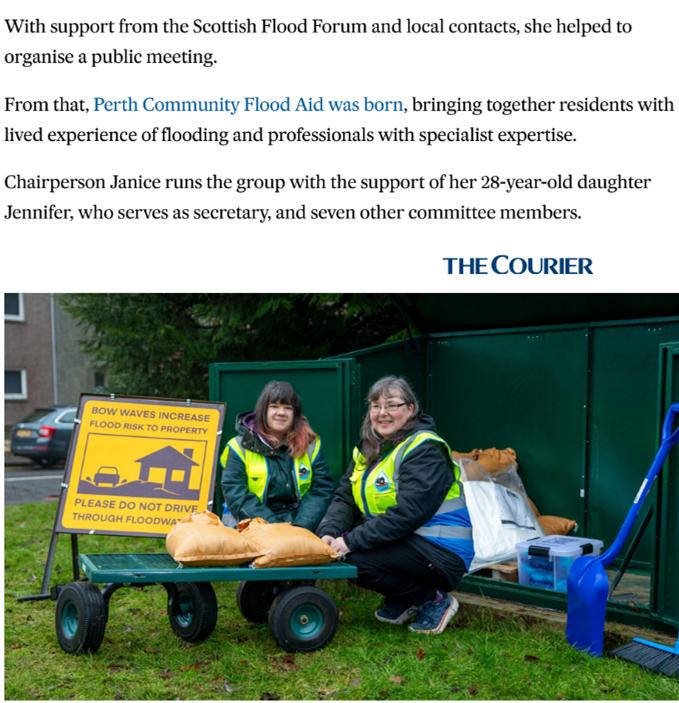
Finally, the local newspaper, the Courier, did a feature on PCFA and flood related experiences of my family. I hope you can read it using the link below:https://shorturl.at/ha3BV
By Janice Haig, Chairperson Perth Community Flood Aid

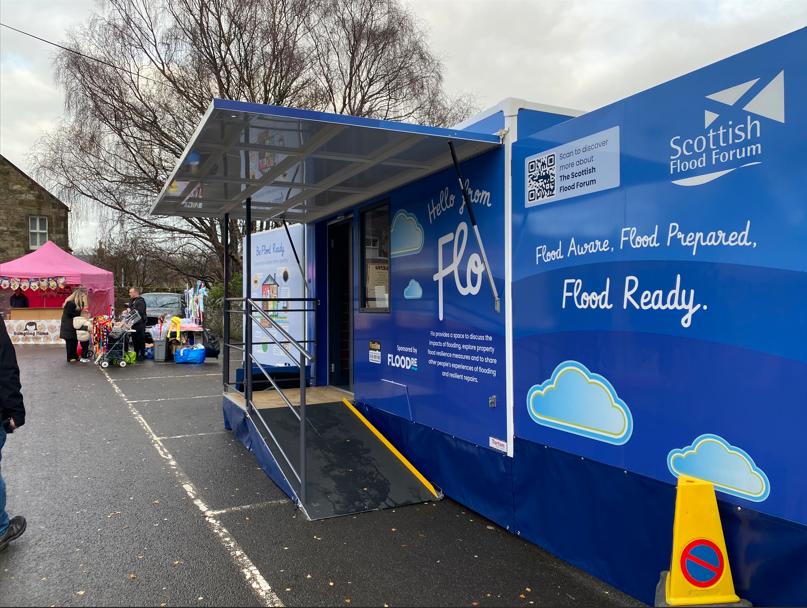
FLOwasinvitedtoFalklandChristmasMarketonthe6th ofDecember This was a well-attended event but, we did struggle for attention against Santa andhisreindeerthatday!
We visited Callander High School on the 16th of January, for a joint event with The Conservation Volunteers (TCV) and Callander Flood Group. Together with supporting partners, Stirling Council Resilience Team, Forth Rivers Trust and Climate Forth we held a variety of indoor/outdoor sessions foraround120S3pupils.
We had FLO again this year at Dynamic Earth in Edinburgh for the Venture Flood Resilience Conference on the 27th – 28th of January Unfortunately, the weather was not great on day one but thankfully the sun did come out ondaytwo.

Ifyouhaveanyup-and-comingeventsthatwouldbenefitfromFLOattending,thenpleasegetintouch bysendinganemaileithertoDerek@scottishfloodforum.orgortoinfo@scottishfloodforum.org.
By Derek Sloan
FloodingremainsoneofScotland’smostsignificantnaturalhazards.Frommajorcitiestoruraland coastalcommunities,severaldifferenttypesoffloodingcanoccur—eachwithitsowncausesand impacts.
Occursafterprolongedorheavyrainfallcausesriverstooverflow
Common along the River Clyde, River Don, River Nith, River South EskandtheRiverTay
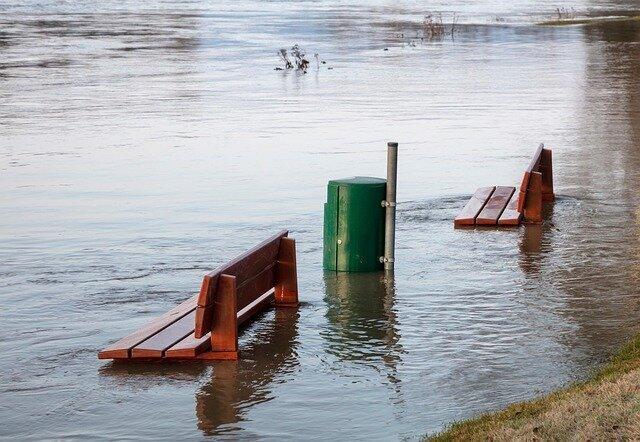
Oftenaffectsfarmlandandtownsbuiltonfloodplains
Morefrequentduringautumnandwinter
SurfaceWaterFlooding(Pluvial)
Happenswhenintenserainfalloverwhelmsdrainagesystemsorfallson groundalreadysaturatedwithwater
Increasinglycommoninurbanareas
Canoccurquicklyafterheavydownpours
Floodsroads,homes,andtransportnetworks
CoastalFlooding

GroundwaterFlooding

CausedbystormsurgesandhightidesalongScotland’sextensive coastline.
Sea-levelriseisincreasinglong-termrisk
Oftenlinkedtoseverewinterstorms
Often associated with scour or erosion damage that contributes to flooding
Resultsfromprolongedrainfallraisingundergroundwaterlevels.
Morecommoninareaswithpermeablesoils
Canpersistforweeksormonths
Maycausestructuraldamagetobuildings
LookingAhead
Infrastructure&DrainageIssues
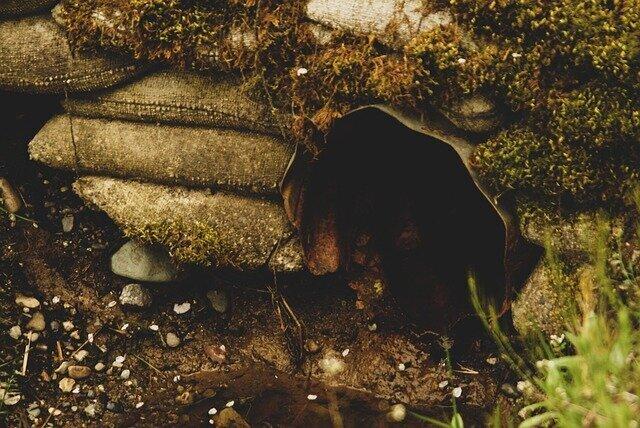
Floodingcanalsoresultfrom:
Blockedculverts
Overloadeddrainagesystems
Unmaintaineddrainagesystems
Climate projections suggest that Scotland will experience wetter winters and more intense rainfall events. This increases the likelihood of both river and surface water flooding. In addition, sea-level risewillheightencoastalrisks.
FindOutYourFloodRisk
Residents and businesses are encouraged to check their local flood risk using the official flood maps provided by SEPA. These maps show river, surface water and coastal flood risk areas and are regularlyupdated.
Visit the SEPAwebsite and search for “Flood Maps” to view detailed information for your area and signupforfloodalerts.
Stayinginformedandpreparedremainsthebestdefenceagainstfloodrisk.
By Doug MacPhee
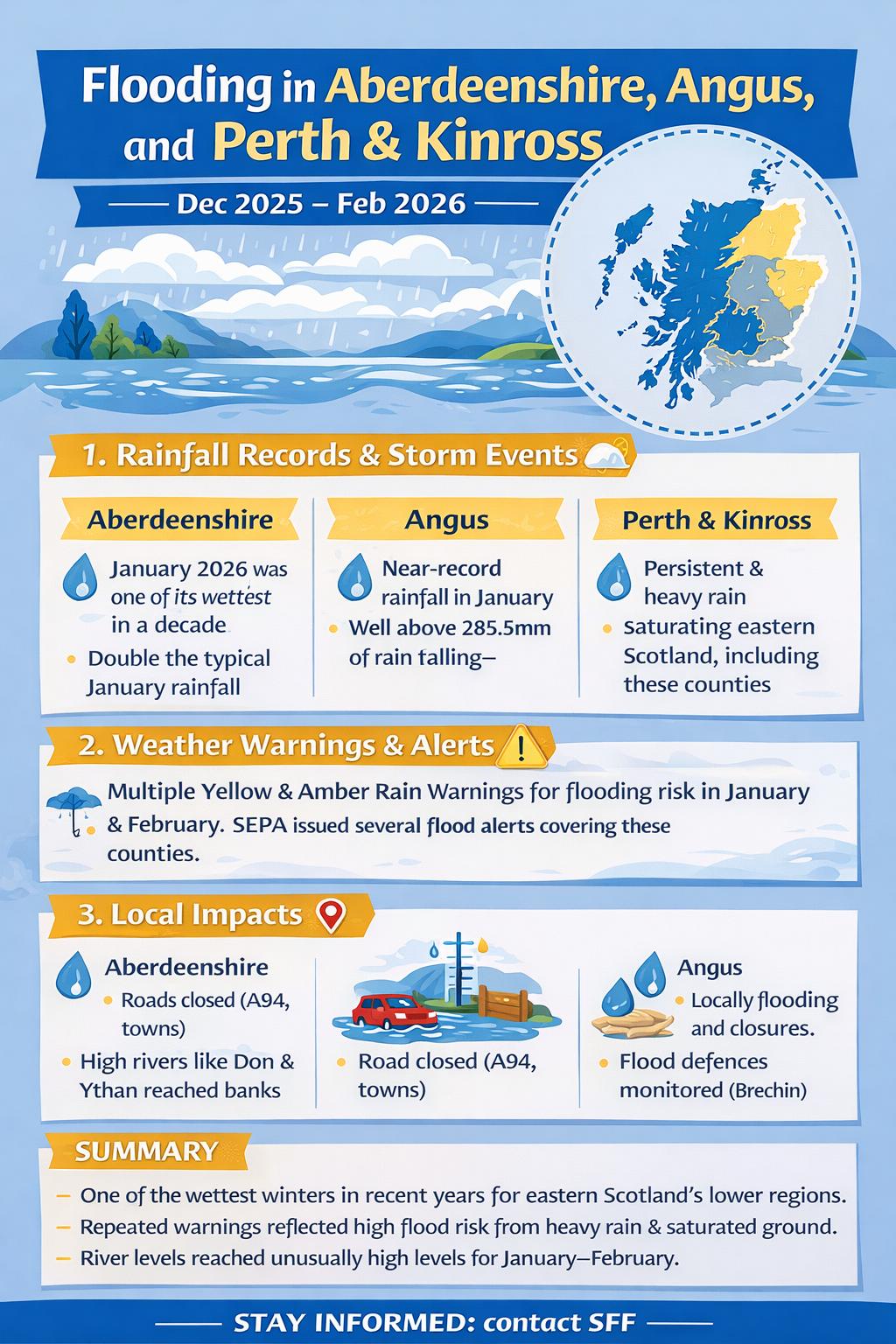
Before we look at what may happen in the spring, it’s helpful to briefly reflect on the conditions
experiencedoverthewinterperiod. Flooding impacts varied significantly across Scotland:
North & North-East Scotland experienced the most sustained flood risk through winter 2025–26.
Eastern regions (Angus & Perthshire) faced repeated heavy rain warnings and prolongedpressureonriversystems.
South-West Scotland was affected during major storm events, though impacts tended tobeshorterinduration.
Many areas across Scotland dealt with persistent ground saturation, meaning that even moderate rainfall had the potential to causeflooding.

By Kasha Jarosz
Spring brings lighter days and milder weather but it also brings seasonal flood risk. As winter shifts into spring, Scotland can experience a challengingmixof:
Persistentheavyrainfall
Snowmeltfromhigherground Hightidesandcoastalinfluence
Together, these factors can lead to rising water levelsandpressureonrivers,burns,anddrainage systems.
Here are the key impacts you may notice during spring:
Flooding can develop slowly over several hoursordays
Roads, farmland, and some properties maybecomeinaccessible
Travel delays and disruption are common inaffectedareas
The Scottish Flood Resilience Conference 2026, organised by Verture, took place on the 27 - 28 January 2026 in Edinburgh. Marking a year of progress since the launch of Scotland’s Flood Resilience Strategy, the conference focused on what needs to happen next. It brought together organisations, councils, community groups, and national bodies to discuss howScotlandcanbecomebetterpreparedforflooding.
Youcanwatchsomeofthesessionvideoshere:VertureVimeo’s
To join the discussion, hear directly what is happening and bring your communityvoice,youcantakepartonlineorinpersonin2027. Datesand further information will be available around October 2026 via the Verture website- FloodResilience
With persistent rainfall becoming an unwelcome visitor so far this year and groundwater levels rising insomeareas,itisagoodmomenttoreviewyourhomeinsurance.Moststandardpoliciescoverriver, coastal, and surface-water flooding, but groundwater flooding (when water rises from beneath the ground) isn’t always included and can sometimes be unclear in the small print.Take a few minutes to check your policy for any exclusions. If you’re unsure, contacting your insurer directly is the best way toconfirmwhat’scoveredandwhetheradditionalprotectionisavailable.
Flood Re is a UK scheme designed to keep flood insurance affordable for homes at higher risk. You don’t apply yourself, insurers do this automatically if your property is eligible. To find out more and checkeligibilityvisitwww.floodre.co.uk
The British Insurance Brokers’ Association (BIBA), the Association of British Insurers (ABI), and Flood Re have created a directory of vetted specialist firms who can help find suitable insurancesolutionsforhomeswithmorecomplex flood-riskneeds.
By Shona Sloan
Wantmoretipsandpracticalfloodadvice?

You’llfindplentyofusefulguidance,updates,andresourcesonourFacebookpage Clicktheiconbelow,giveusafollow,andstaypreparedallyearround!