How to Teach Kids the Basics of Paddle Boarding
Paddle boarding can turn an ordinary day near the water into an exciting family adventure. For children, standing on a paddle board, learning to balance, and exploring calm water can be both fun and confidence-building. However, teaching kids to paddle board requires more than simply putting them on a board and handing them a paddle. Parents need to choose appropriate equipment, introduce skills gradually, and make water safety the first priority.
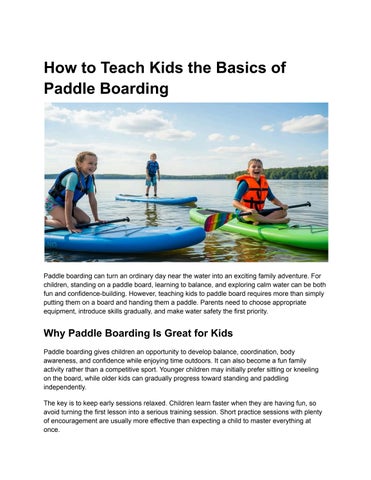
Why Paddle Boarding Is Great for Kids Paddle boarding gives children an opportunity to develop balance, coordination, body awareness, and confidence while enjoying time outdoors. It can also become a fun family activity rather than a competitive sport. Younger children may initially prefer sitting or kneeling on the board, while older kids can gradually progress toward standing and paddling independently. The key is to keep early sessions relaxed. Children learn faster when they are having fun, so avoid turning the first lesson into a serious training session. Short practice sessions with plenty of encouragement are usually more effective than expecting a child to master everything at once.
Before choosing equipment, parents can also look for ways to make the activity more affordable. For example, checking ATPROSS Board coupons can be useful when shopping for paddle boards or accessories. ATPROSS Board is an outdoor sports brand focused on inflatable stand-up paddle boards and related equipment, with products designed for recreational adventures, fitness, and exploration. Its range includes inflatable SUPs in different sizes and configurations, along with accessories such as paddles, fins, leashes, pumps, waterproof bags, and repair kits.
Start With Water Safety Safety should always come before technique. Children should never be treated as strong swimmers simply because they are comfortable around water. A properly fitted personal flotation device should be worn whenever appropriate for the child and local regulations, and an adult should remain actively responsible for supervision. Choose calm, shallow water away from strong currents, boat traffic, and heavy waves. Before launching, explain simple rules such as staying close to the supervising adult, listening to instructions, and never jumping into unfamiliar water. Parents should also check weather and water conditions before every session. Wind can make paddle boarding considerably more difficult, particularly for lightweight children who have less control over a board.
Choose a Stable Paddle Board Equipment can make a major difference in a child's first experience. A stable inflatable SUP is generally a practical choice for family recreation because it can be transported and stored more easily than many rigid boards. ATPROSS Board offers inflatable SUPs in several sizes, including models around 10'6" and larger boards designed to provide additional deck space. Some models include features such as removable fins, coiled leashes, paddles, hand pumps, backpacks, repair equipment, and waterproof phone cases. Certain Pro packages also offer additional accessories and kayak-seat configurations. For children, the most important consideration is not simply appearance or price. Look for a board that offers enough stability for the child's size, experience, and intended use. If a child is going to ride with a parent, a larger board with sufficient usable deck space may be more practical.
Let Kids Get Comfortable First
Don't rush straight into standing. Let children become familiar with the board while it is still on land or in very shallow, controlled water. Ask them to identify the nose, tail, center, fins, paddle, and leash. Then demonstrate how to climb onto the board safely. Start with sitting, progress to kneeling, and only introduce standing when the child feels comfortable. This gradual approach reduces anxiety and helps children understand how the board responds to their movements.
Teach the Kneeling Position Kneeling is one of the easiest ways for a beginner to learn basic paddle control. Once the child is comfortably positioned near the center of the board, demonstrate how to hold the paddle with both hands. Teach a simple forward stroke first. The child does not need to paddle quickly. Instead, focus on smooth movements and keeping the paddle blade correctly positioned in the water. Practice paddling on both sides of the board. This helps children understand that switching sides can change the direction of travel.
Introduce Standing Slowly When the child is confident on their knees, demonstrate how to stand. A simple sequence works well: 1. Place both hands on the paddle. 2. Move the feet underneath the body. 3. Bring the feet roughly shoulder-width apart. 4. Keep the knees slightly bent. 5. Look ahead rather than constantly looking down. 6. Maintain a relaxed posture. Parents should stand nearby and provide verbal guidance rather than immediately grabbing the child. Too much physical assistance can sometimes make a child more nervous. If the child falls, reassure them that falling into the water is a normal part of learning. The goal is to make the experience feel manageable rather than embarrassing.
Teach Simple Steering Once a child can stand comfortably, introduce basic turning. Explain that paddle strokes on different sides of the board can influence its direction. For example, repeated strokes on one side can gradually turn the board in the opposite direction. A wider sweep of the paddle can also help initiate a turn. Keep the first steering exercises simple. Ask the child to paddle toward an easily visible target, such as a floating marker or a nearby safe point. This turns practice into a small game and gives the child a clear goal.
Make Practice Fun With Games Children often learn better when practice feels like play. Parents can create simple challenges such as paddling between two markers, reaching a floating target, or seeing how quietly they can move through the water. Another useful activity is a “follow the leader” game. The parent paddles slowly and the child follows. This gives children an opportunity to copy correct posture and paddle movements without feeling like they are being formally taught. You can also use short exploration sessions to introduce different skills naturally. Resources such as Umbilz can be useful when looking for shopping deals and offers before purchasing equipment or accessories for family outdoor activities.
Teach Kids How to Handle the Paddle Board Paddle boarding isn't only about standing and paddling. Children should also learn basic equipment awareness. Show them how the leash works, why fins should be protected when carrying the board, and how inflatable equipment should be stored after use. If the board includes a pump, explain that inflation should follow the manufacturer's recommendations rather than relying on guesswork. ATPROSS Board provides accessories such as replacement fins, paddles, seats, SUP leashes, waterproof bags, pumps, phone cases, and repair kits, making it possible for families to maintain or customize their setup as their experience develops.
Keep Sessions Short and Positive Children don't need a two-hour training session to learn paddle boarding. Start with short outings and increase the duration as their comfort and ability improve. Pay attention to signs of fatigue, frustration, overheating, or discomfort. Ending a session while the child is still enjoying it can create positive anticipation for the next outing. Remember that progress will look different for every child. One child may stand within minutes, while another may prefer kneeling for several sessions. Both approaches are perfectly reasonable.
Build Confidence Before Independence The ultimate goal should not be getting a child to paddle independently as quickly as possible. It should be helping them develop safe habits, confidence, and respect for the water. As children become more experienced, parents can gradually give them greater responsibility. They can learn how to choose a safe route, check conditions, carry equipment correctly, and recognize when conditions are unsuitable for paddling. ATPROSS Board's range of inflatable SUPs and accessory options can support different stages of recreational paddle boarding, from beginner-friendly setups to more advanced configurations.
Final Thoughts Teaching kids the basics of paddle boarding can be a rewarding way to combine outdoor recreation, exercise, and family time. The best lessons are built around safety, patience, suitable equipment, and plenty of encouragement.
Start slowly, choose calm water, teach one skill at a time, and allow children to progress at their own pace. With the right approach and reliable equipment such as an appropriately sized inflatable SUP from ATPROSS Board children can develop the confidence and skills they need to enjoy paddle boarding while building lasting memories on the water.
Frequently Asked Questions What age can kids start paddle boarding? There is no single universal age because children's swimming ability, confidence, physical development, and local safety requirements differ. Young children can often participate with close adult supervision, while independent paddling should only come when the child has the appropriate skills and confidence.
Is paddle boarding safe for children? Paddle boarding can be a safe recreational activity when conditions are appropriate and proper precautions are followed. Children should have suitable flotation equipment, remain under active adult supervision, and practice in calm water away from hazards.
Should kids learn to paddle board on their knees first? Yes. Kneeling provides a lower center of gravity and can make it easier for beginners to learn paddle control and balance before attempting to stand.
What type of paddle board is best for kids? A stable inflatable SUP can be a practical option for family use. The appropriate board depends on the child's size, whether they will paddle independently or with an adult, and the water conditions where it will be used.
How do you teach a child to stand on a paddle board? Start with the child kneeling comfortably near the center of the board. Once they feel stable, have them place their hands on the paddle, bring their feet underneath them, stand with feet approximately shoulder-width apart, keep their knees slightly bent, and look forward.
What should kids wear for paddle boarding? Children should wear clothing suitable for the weather and water temperature, along with appropriate flotation equipment. Sun protection, secure footwear where appropriate, and protection from changing weather conditions should also be considered.
How long should a child's first paddle boarding session be? The first session should be short enough to prevent fatigue or frustration. Focus on learning one or two basic skills rather than covering everything in one outing. As the child becomes more comfortable, session length can gradually increase.
Can children use inflatable paddle boards? Yes, children can participate on inflatable paddle boards when the board is appropriate for their size and the activity is properly supervised. Inflatable SUPs can also be convenient for families because they are generally easier to transport and store than rigid boards.
What is the most important paddle boarding skill for a child? Water safety is the most important skill. Before focusing on speed, distance, or advanced techniques, children should understand basic safety rules, remain aware of their surroundings, and know how to respond if they fall into the water.