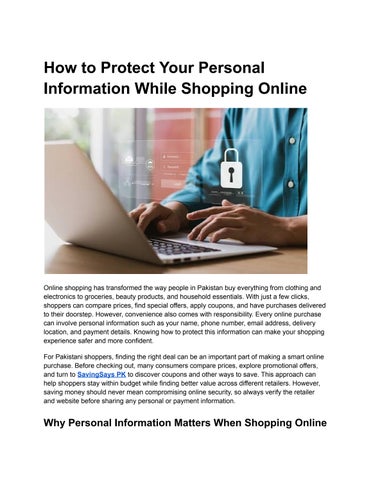
How to Protect Your Personal Information While Shopping Online
Online shopping has transformed the way people in Pakistan buy everything from clothing and electronics to groceries, beauty products, and household essentials. With just a few clicks, shoppers can compare prices, find special offers, apply coupons, and have purchases delivered to their doorstep. However, convenience also comes with responsibility. Every online purchase can involve personal information such as your name, phone number, email address, delivery location, and payment details. Knowing how to protect this information can make your shopping experience safer and more confident. For Pakistani shoppers, finding the right deal can be an important part of making a smart online purchase. Before checking out, many consumers compare prices, explore promotional offers, and turn to SavingSays PK to discover coupons and other ways to save. This approach can help shoppers stay within budget while finding better value across different retailers. However, saving money should never mean compromising online security, so always verify the retailer and website before sharing any personal or payment information.
Why Personal Information Matters When Shopping Online
Personal information may seem harmless when viewed individually, but several pieces of information together can become valuable to scammers and cybercriminals. Your name, phone number, email address, home address, account credentials, and payment information can potentially be misused if they fall into the wrong hands. Pakistan's National CERT has highlighted risks associated with inadequate protection of personally identifiable information, including identity theft, unauthorized transactions, and fraud. Its cybersecurity guidance also promotes awareness of phishing, secure online transactions, password protection, and other digital-safety practices. The good news is that shoppers can take several simple steps to reduce unnecessary exposure.
Shop Through Trusted Websites Before entering your personal or payment information, check that you are using the retailer's official website or legitimate mobile application. Be particularly careful when clicking links received through unexpected emails, SMS messages, WhatsApp messages, or social media advertisements. A website can look almost identical to a genuine retailer while actually being designed to collect login or payment information. Check the spelling of the website address carefully. Look for HTTPS in the browser address bar, but remember that HTTPS alone does not prove that a website is legitimate. The website itself and the seller should still be verified.
Avoid Suspicious Coupon Links Discounts are attractive, particularly when you're trying to save money on online purchases. However, fake coupon offers can also be used to direct shoppers toward fraudulent websites. Instead of clicking random coupon links shared in messages or unfamiliar social media posts, use established savings platforms and navigate to the retailer through reputable sources. SavingSays PK focuses on helping shoppers discover coupons, deals, and saving opportunities in Pakistan. Its homepage also includes different discount resources and shopping-related content designed to help consumers make more informed purchasing decisions. The key rule is simple: a discount should save you money, not cost you your personal information.
Create Strong, Unique Passwords
Using the same password for every shopping account can create unnecessary risk. If one website experiences a data breach, attackers may attempt to use the exposed credentials on other websites. Create a unique password for important shopping accounts. A strong password should be difficult to guess and should not rely on obvious information such as your name, birthday, phone number, or favorite team. Where available, enable multi-factor authentication. This adds another verification step and can provide additional protection if your password is compromised. Pakistan's National CERT specifically includes password management among its cybersecurity awareness resources.
Share Only Necessary Information Online retailers may request information required to process and deliver an order. However, you should be cautious if a website asks for information that appears unrelated to your purchase. Before submitting a form, consider whether every requested field is genuinely necessary. Avoid sharing sensitive personal information simply because a website asks for it. You should also be careful about saving personal information unnecessarily. If a retailer allows you to choose whether payment details are stored for future purchases, understand the convenience and security implications before selecting that option.
Be Careful With Public Wi-Fi Free Wi-Fi at cafés, airports, shopping centers, hotels, and other public locations can be convenient when shopping online. However, sensitive transactions are better performed on a trusted network. If you need to make an urgent purchase while using public Wi-Fi, avoid entering sensitive information unless you are confident that the connection and device are secure. Using your mobile data connection can be a practical alternative. Remember that device security matters too. Keep your smartphone, computer, browser, and shopping applications updated. Pakistan's National CERT emphasizes software updates and secure systems as part of broader cyber-hygiene practices.
Check Payment Methods Carefully When checking out, review the payment page before entering card or banking information.
Make sure you are on the intended retailer's website and that the payment process looks legitimate. Never share your card PIN, banking password, or one-time authentication code with someone contacting you unexpectedly. Be especially suspicious of anyone claiming that they need your OTP to “confirm” an order, release a refund, or unlock a discount. Legitimate customer-service processes should not require you to disclose confidential authentication codes to an unknown caller or message sender.
Watch Out for Phishing Messages Phishing is one of the most common ways criminals attempt to obtain personal information. A message may claim that your parcel is delayed, your account has been suspended, your payment failed, or you have won a special discount. It may then encourage you to click a link and enter your information. Instead of clicking immediately, open the retailer's official website or app independently and check your order there. Pakistan's National CERT operates awareness resources specifically addressing phishing and recommends learning how to identify suspicious online activity.
Review Your Orders and Bank Statements Protecting personal information does not stop after checkout. Regularly review your shopping accounts, order history, bank statements, and payment notifications. If you notice an unfamiliar transaction, investigate it promptly through your bank or payment provider's official channels. Also consider removing old shopping accounts that you no longer use, particularly if they contain stored personal or payment information.
Be Smart With Shopping Apps Mobile shopping apps can make online purchases faster, but only download them from official app stores and verify the developer before installation. Review the permissions requested by an application. A shopping app may reasonably need certain permissions, but requests that seem unrelated to its basic function deserve closer attention.
Keep apps updated and remove applications you no longer use. Regularly reviewing installed apps can reduce your digital footprint and help keep your device organized.
Save Money Without Compromising Security Finding a lower price is useful, but the cheapest offer isn't necessarily the safest one. When searching for Pakistan coupons and online shopping deals, compare offers through reputable savings resources, verify the retailer, and make sure the final checkout page belongs to the intended merchant. SavingSays PK can be useful for shoppers looking for coupons, deals, and saving guides in Pakistan. Its focus on smarter shopping allows consumers to look for savings while still making the retailer verification and payment-security steps themselves. A good deal should provide genuine savings without requiring unnecessary personal information.
What to Do If You Think Your Information Has Been Compromised If you suspect that your shopping account or payment information has been exposed, act quickly. Change the affected password and any other account using the same credentials. Enable multi-factor authentication where possible. Contact your bank or payment provider through its official contact channels if you notice suspicious financial activity. You should also be cautious about follow-up messages. After a security incident, scammers may impersonate retailers, banks, delivery companies, or customer-support representatives. Keep records of suspicious transactions and communications, and report the incident through the appropriate official channels.
Final Thoughts Online shopping should be convenient, affordable, and enjoyable but protecting your personal information should remain a priority. Use trusted websites, create unique passwords, avoid suspicious links, limit the information you share, protect your devices, and monitor your financial accounts.
For shoppers in Pakistan, coupon and deal platforms can also help find legitimate savings opportunities. The important thing is to combine smart bargain hunting with smart cybersecurity habits. A discount may save a few hundred rupees, but protecting your identity, account credentials, and payment information can save you from much bigger problems. Shop carefully, verify before you click, and make digital safety part of every online purchase.
Frequently Asked Questions How can I protect my personal information when shopping online? Use trusted retailer websites, create unique passwords, enable multi-factor authentication, avoid suspicious links, use secure networks, and share only information necessary to complete your purchase.
Is it safe to use online coupons? Legitimate coupons can be safe, but shoppers should verify the source before clicking links or entering personal information. Avoid coupon messages from unknown senders and use reputable coupon and savings platforms.
What information should I never share with a stranger? Never share confidential passwords, banking credentials, card PINs, or one-time authentication codes with unknown people contacting you. Legitimate organizations generally have official processes for account verification.
How do I know if an online shopping website is legitimate? Check the website address carefully, look for HTTPS, verify the retailer independently, review its contact and return information, and avoid websites reached through suspicious unsolicited messages.
Should I save my card details on shopping websites? It depends on your circumstances and the retailer's security practices. If you choose to save payment details, use a strong unique password and multi-factor authentication where available. Otherwise, you can avoid storing payment information when the option is available.
Are public Wi-Fi networks safe for online shopping? Public Wi-Fi can carry additional security risks. For sensitive purchases or account activity, a trusted private network or mobile data connection is generally a better choice.
Where can I find online shopping deals in Pakistan? Shoppers can explore reputable Pakistani coupon and savings resources such as SavingSays PK to discover coupons, deals, and money-saving guides across different shopping categories.