INSIDE JYF
SUMMER 2026
SUMMER 2026
It’s time to celebrate the 250th anniversary of American independence!
As we reach the pinnacle of this American milestone, it’s worth remembering that one of the most enduring threads in the pursuit of liberty is the belief that education, access to knowledge, and public learning strengthen a free society. Few embodied this more than Thomas Jefferson, who not only drafted the Declaration of Independence but spent his life expanding educational opportunity. Across the centuries and across cultures, the pursuit of knowledge has always been a shared American value — shaped by many communities, not only well-known founders.
In this issue, themed around all things “liberty,” read about how liberty was experienced through diverse perspectives, from notable founders to ordinary men, women and children, in the long-awaited debut of the VA250 signature exhibition, “Give Me Liberty: Virginia & The Forging of a Nation,” opening July 1.
We explore how Revolutionaries were liberated to express their political views through fashion, while examining the contested liberties of enslaved people who were forced to make difficult choices in their search for independence.
We roll back the clock to 1676, a century before to examine the complexities in the fight for liberty during Bacon’s Rebellion, a tumultuous event that impacted cultures and classes in the Jamestown colony.
Discover new ways our museums are engaging young people in civic learning through a new series of programs, designed to strengthen critical thinking and the importance of civic responsibility in their lives today.
Our museums serve as a place to discover America, not only to reflect on the complex events of our shared past but their importance as our nation turns 250.
Let freedom ring!
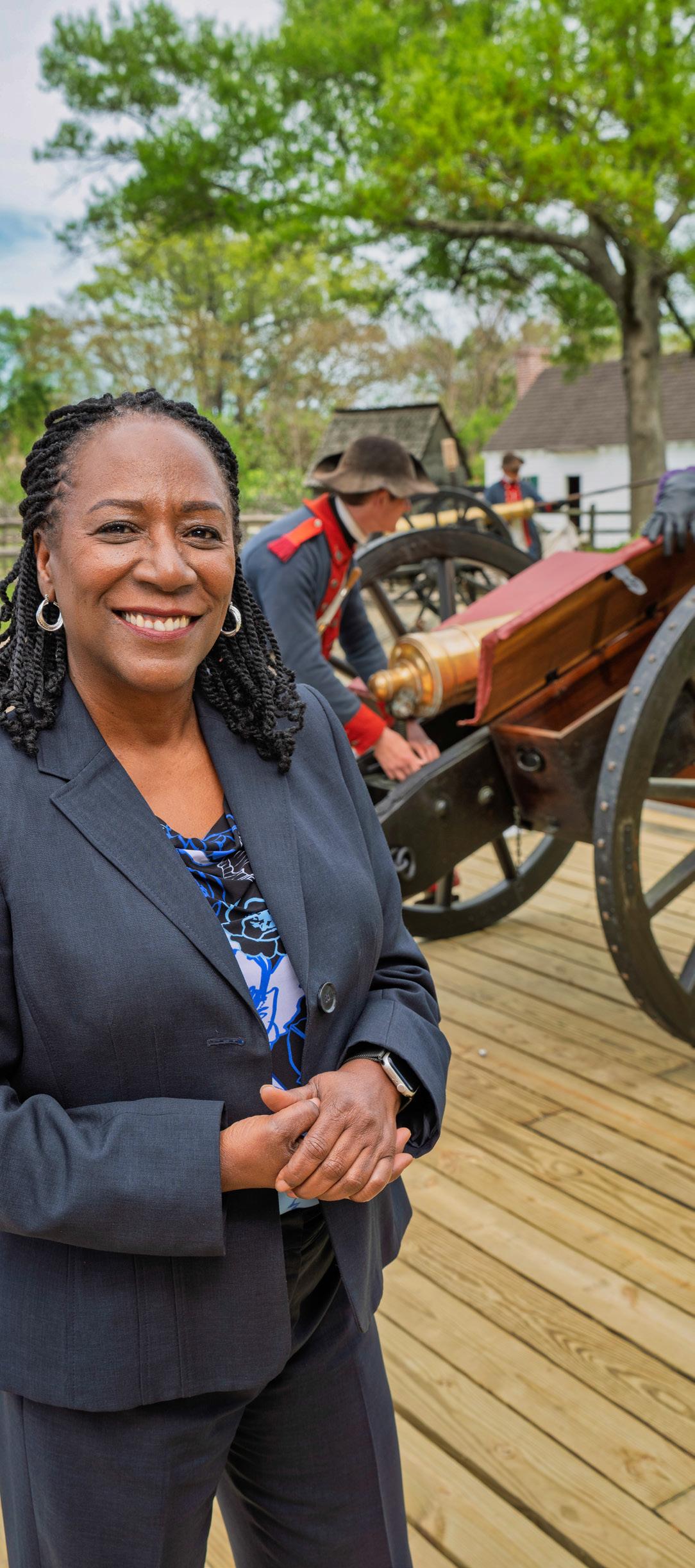
Christy S. Coleman Executive Director
EDITORS
Stephanie Johnson Mariruth Leftwich
Tracy Perkins Deana Ricks
PRODUCTION MANAGEMENT
Joan Heikens Janet Kane
Lianne Koch Glenda Turner
DESIGNER
Holland Winslow
STAFF CONTRIBUTORS
Elizabeth Bostelman, Brian Forrester, Constance Graham, Homer Lanier, Lisa Lucas, T.J. Savage, Melissa Gill Thompson, Meghan van Joosten
WRITERS/PHOTOGRAPHERS
Felicia Abrams, Harvey Bakari, Brenna Geraghty, Allyson Gray, Allen Hoilman, Dexter Johnson, Gretchen Johnson, Janet Kane, Julia A. King, Travis Henline, Heather Hower, Mariruth Leftwich, Glenn Lucker, Sarah Meschutt, Heather Minty, Coy Mozingo, Jaie Pizzetti, Edward Ragan, Konstantin Rega, Bly Straube
Enjoy INSIDE JYF? Support the museums by donating to the Jamestown-Yorktown Foundation, Inc. If you no longer wish to receive INSIDE JYF in print or would like to convert to digital, email insidejyf@jyf.virginia.gov or call (757) 253-4139.
Volume 6, No. 2—printed June 2026
The Jamestown-Yorktown Foundation, an educational institution of the Commonwealth of Virginia accredited by the American Alliance of Museums, fosters through its museums—Jamestown Settlement and American Revolution Museum at Yorktown—an awareness and understanding of the early history, settlement, and development of the United States through the convergence of American Indian, European, and African cultures and the enduring legacies bequeathed to the nation.
P.O. Box 1607, Williamsburg, VA 23187 (757) 253-4838
jyfmuseums.org
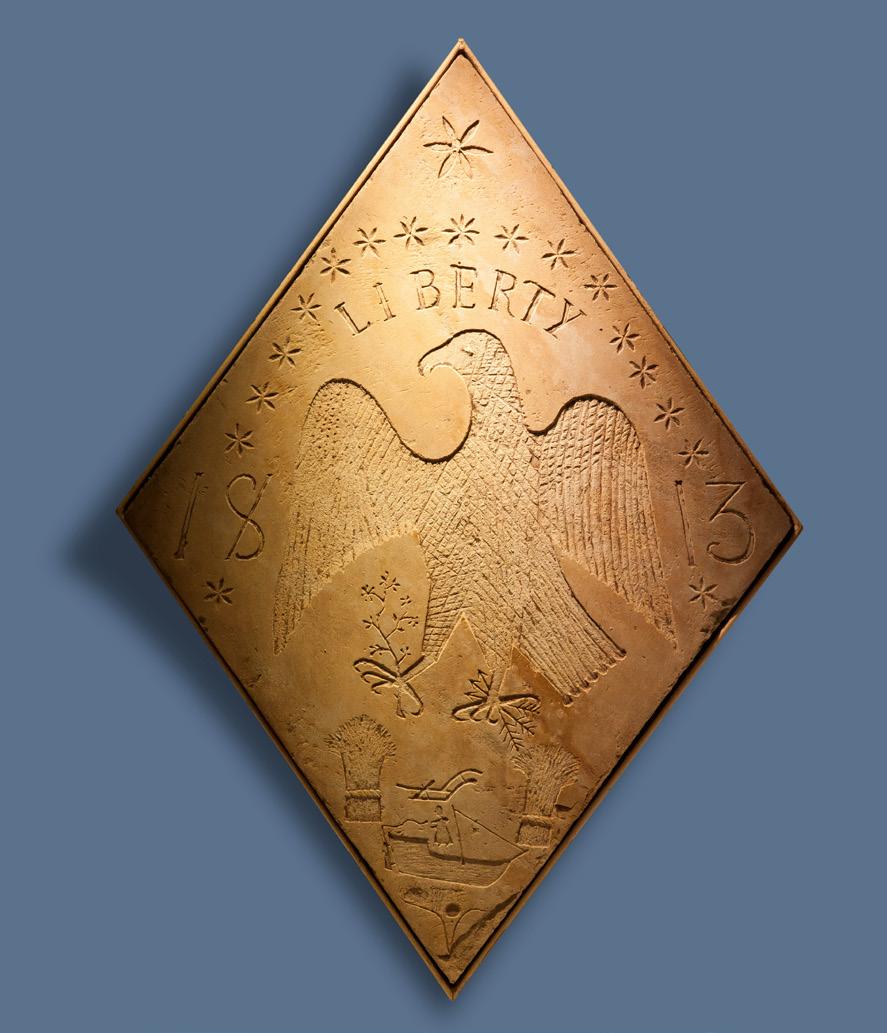
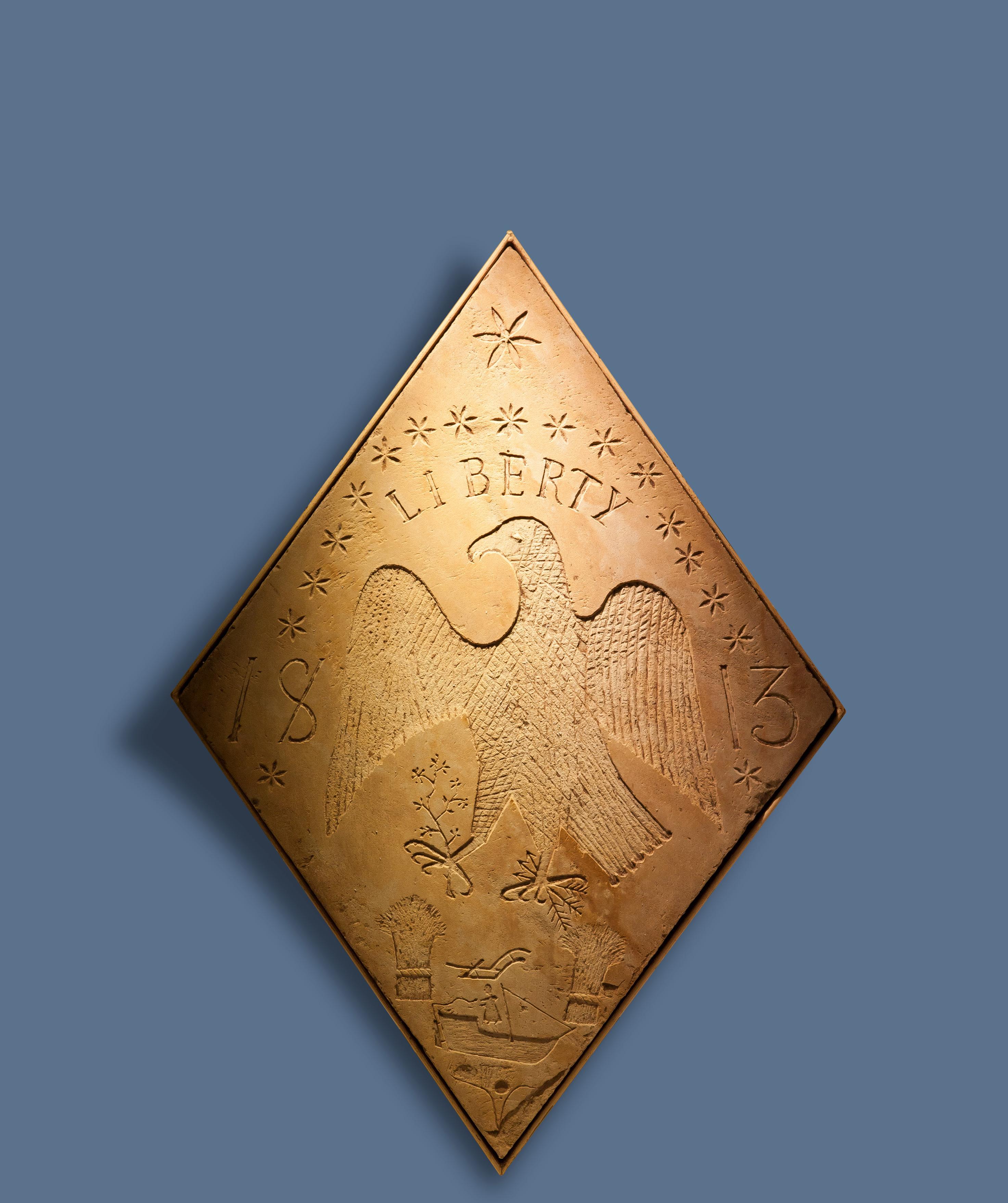
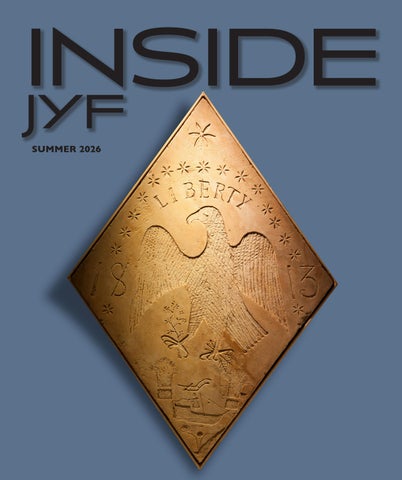
Emblematic of the new nation is an early 19th-century sandstone marker – carved with an eagle, stars and the word “Liberty” – from a ferry house that once stood along the Cumberland Road. The marker is on display at the American Revolution Museum at Yorktown in “The American People” gallery, which explores the emergence of a distinctive national identity following the Revolution, influenced by immigration, internal migration, and demographic, political, and social changes. This America 250 issue embraces all things liberty.
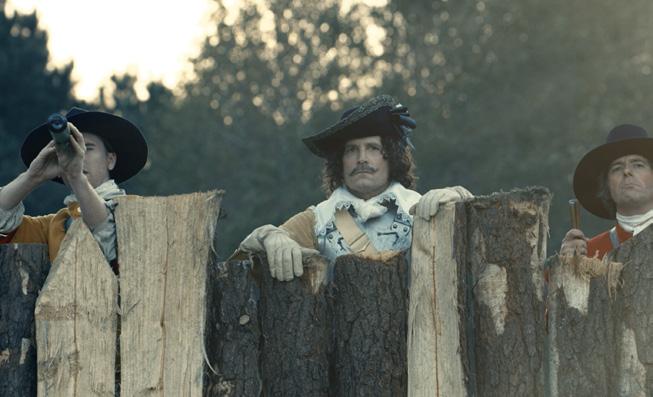
Bacon’s Rebellion One hundred years before 1776, Bacon’s Rebellion impacted cultures and classes in the fight for liberty.
The “Outlander: Costumes Woven in Time” exhibition at the American Revolution Museum at Yorktown, March 6 to May 18, transported museum-goers and fans of the Sony Pictures Television series across time and continents. From a blockbuster opening coinciding with the premiere of the final season, set during the American Revolution, to sold-out tours and events, the exhibition revealed how iconic fashions can be a powerful storytelling device. Read about this exclusive opportunity for the Jamestown-Yorktown Foundation to assemble 27 costumes and exhibit storylines and interactives in a short amount of time. 14
American Spirit Museum Shops spotlight unique merchandise perfect for America’s 250th anniversary.
Donor Spotlight
Jessica Brown leaves a legacy in memory of her grandfather and pride in her Polish heritage.
Staff Spotlight Raffe Harris-Walker, an interpreter in the Continental Army encampment, embraces liberty through service.
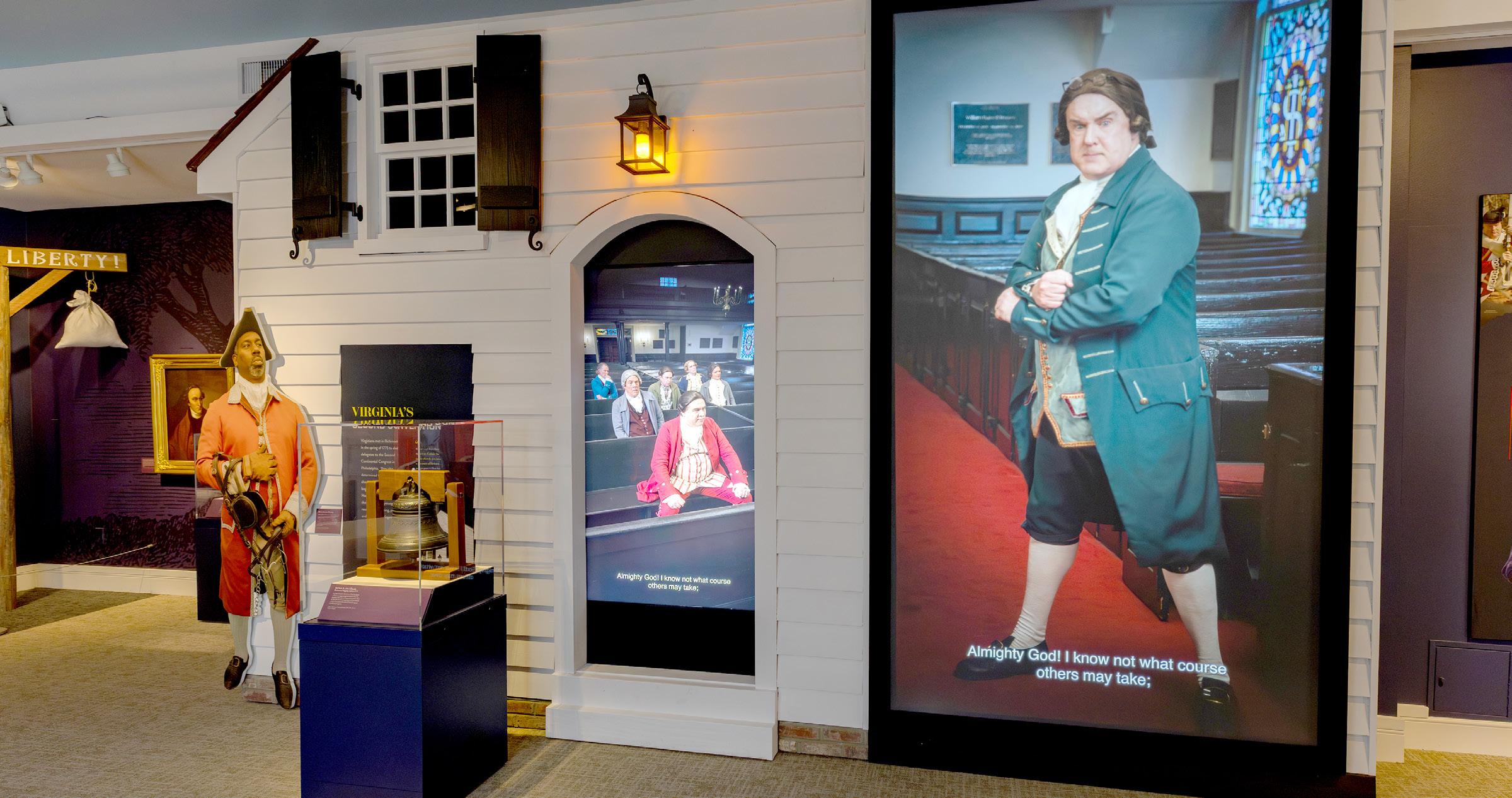
Multimedia video re-enactment of Patrick Henry’s “Give Me Liberty or Give Me Death” speech, staged within the historic St. John’s Church.
OnJuly 1, 2026, “Give Me Liberty: Virginia & The Forging of a Nation” opens at the American Revolution Museum at Yorktown as the Commonwealth’s signature exhibition to commemorate Virginia’s leading role in the nation’s founding. The Jamestown-Yorktown Foundation created “Give Me Liberty” in partnership with the VA250 Commission and the Virginia Museum of History & Culture to highlight the diverse perspectives of those impacted by the Declaration of Independence and its legacy. The exhibit was co-curated by JYF curators Harvey Bakari, curator of Black History and Culture, and Travis Henline, curator of Indigenous History and Culture, with support from an advisory group of scholars.
Combined with the American Revolution Museum at Yorktown’s permanent galleries, the “Give Me Liberty” exhibit allows visitors to fully immerse themselves in the world of the American Revolution during this landmark
anniversary. “Give Me Liberty” takes a distinctive approach by turning the lens toward the present and future, introducing new histories and perspectives that deepen our understanding of how liberty was experienced, contested, and claimed from the Revolutionary era through present day.
Centering the Declaration of Independence and its influence on the nation, the exhibition explores how Virginia’s leaders were central to the American Revolution and the expansion of liberties among White Virginians of every class, Indigenous peoples, and free and enslaved African Americans. The exhibit traces the seeds of colonial discontent that began with the contest for empire between England, France, and their Indigenous allies. Following the French and Indian War, the Royal Proclamation of 1763 established a boundary line intended to protect both American Indian territory and British
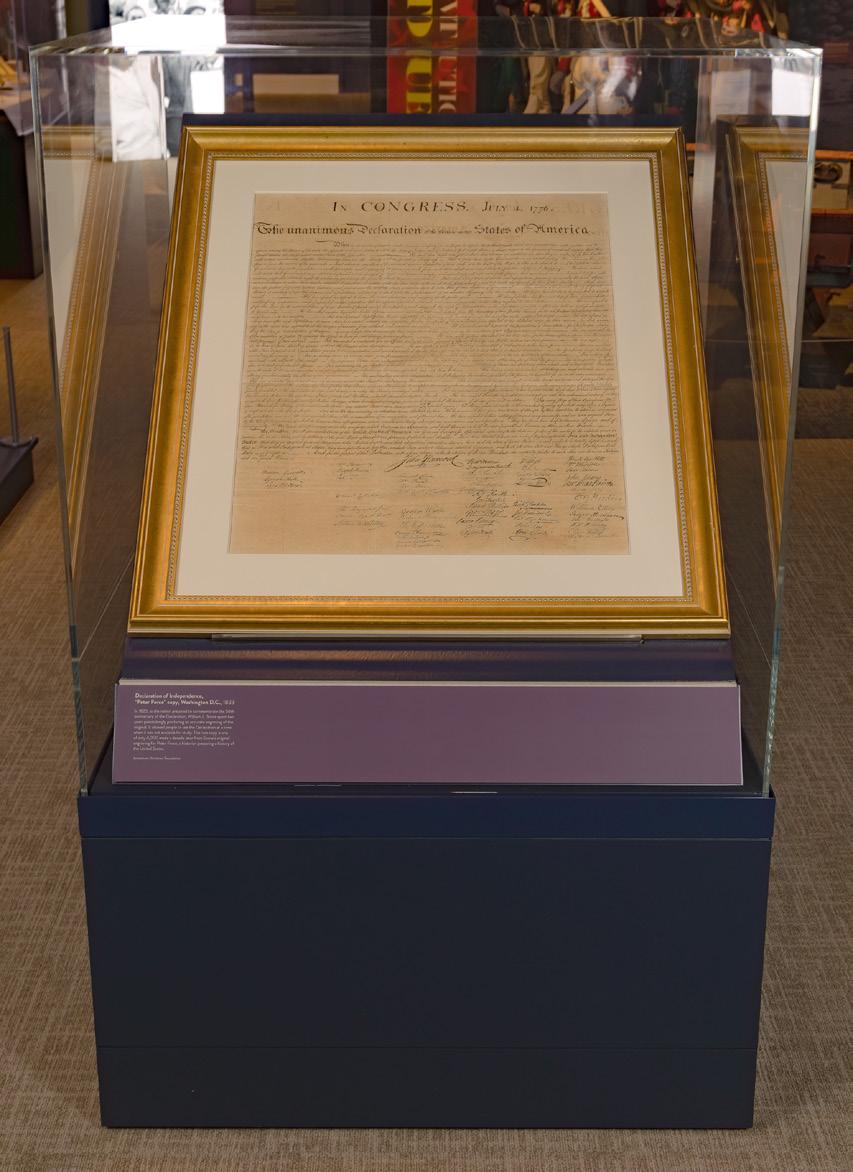
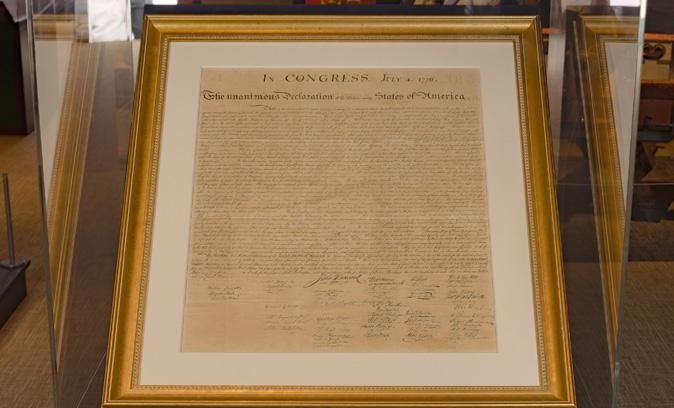
The Jamestown-Yorktown Foundation circa 1833 copperplate engraving of the Declaration of Independence is a centerpiece in the “Give Me Liberty” exhibition.
colonists, but the presence of 10,000 British soldiers kept in the colonies to enforce it unsettled colonists. When Parliament taxed the colonies to fund that military presence, the first organized protests took root, and the seeds of revolution began to grow.
The “Protest to Action” gallery features a multimedia print shop and tavern based on historic businesses owned and operated by Virginia women. It illustrates the power of the printed word and importance of taverns as communication hubs for both patriots and loyalists.
The exhibit’s immersive audio-visual elements were developed by the JYF Digital Media Services team.
The “Words to Action” gallery brings the growing conflict to life with Patrick Henry’s “Give Me Liberty or Give Me Death” speech through a re-enactment set within historic St. John’s Church. The exhibition documents how tensions escalated when Governor Lord Dunmore’s proclamation offered freedom to enslaved men willing to escape and bear firearms in Dunmore’s Royal Ethiopian Regiment. Hands-on interactive displays in the “Choices of Liberty” gallery allow visitors to explore diverse personal stories and the complex decisions of choosing between the patriot or loyalist cause, as civilians or soldiers. The exhibition concludes by inspiring visitors to consider what they can do in their own civic lives to continue the growth of liberty, including a tangible takeaway of seed paper on which visitors can write their personal pledge to liberty, plant it, and watch it grow. “Give Me Liberty” concludes on January 31, 2027.
—Harvey Bakari, Curator of Black History and Culture
“Give Me Liberty” is supported by York County and the Carter Cabell Chinnis Foundation. Explore more in the exhibition at jyfmuseums.org/give-me-liberty
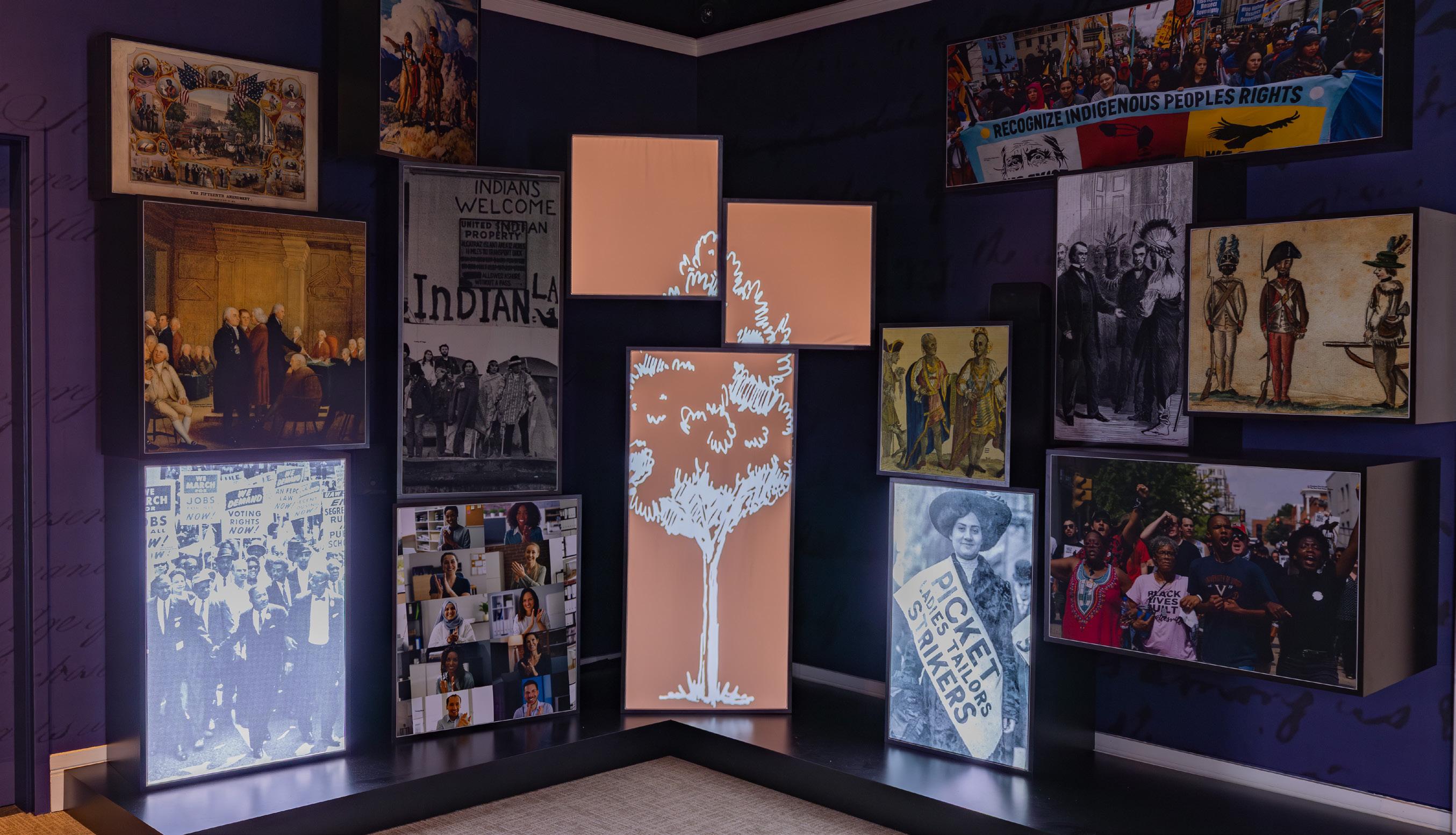
The “Call to Action” display uses multimedia to trace the growth of the American Liberty Tree through the centuries and invites visitors to contribute to its continued growth.
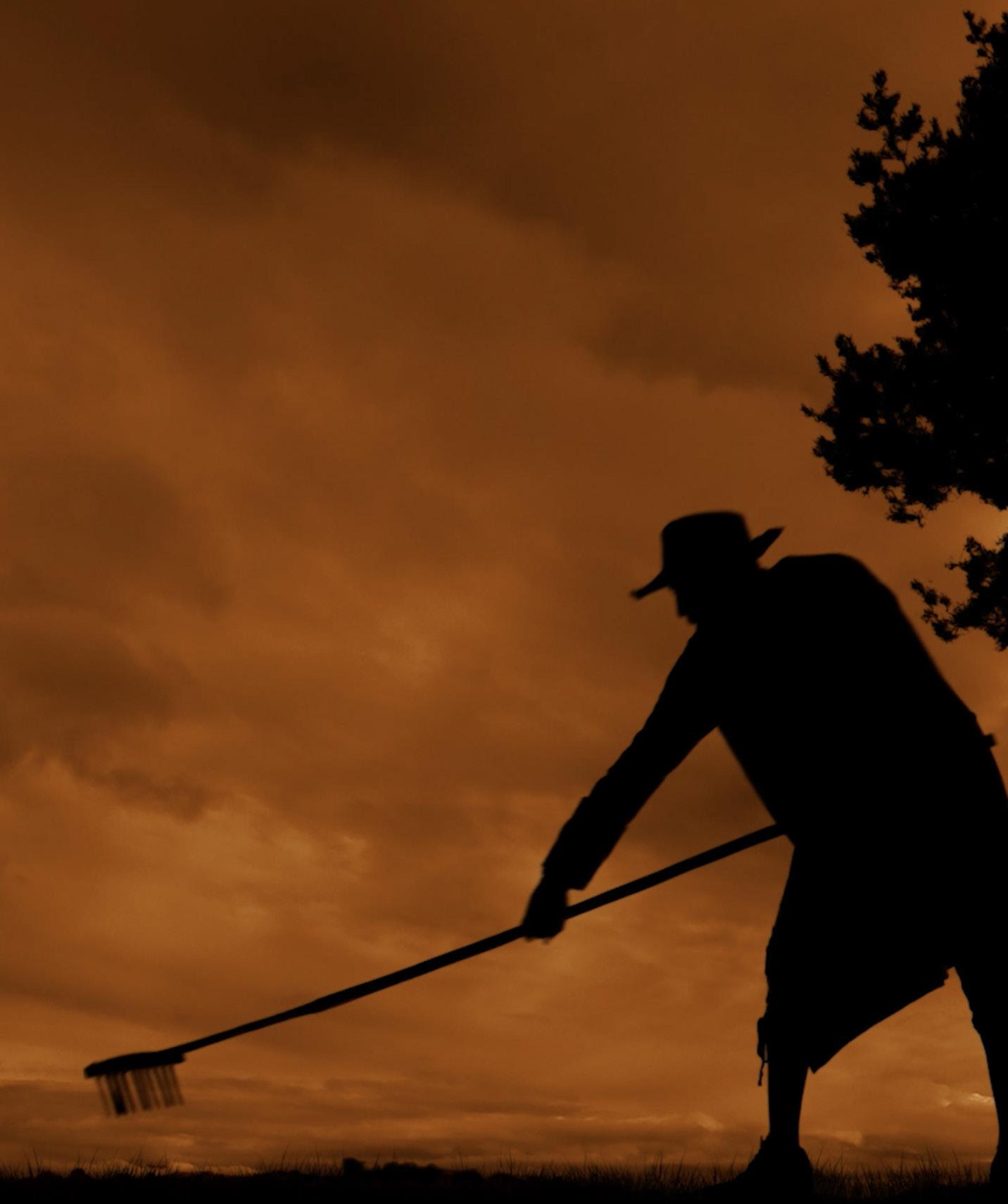
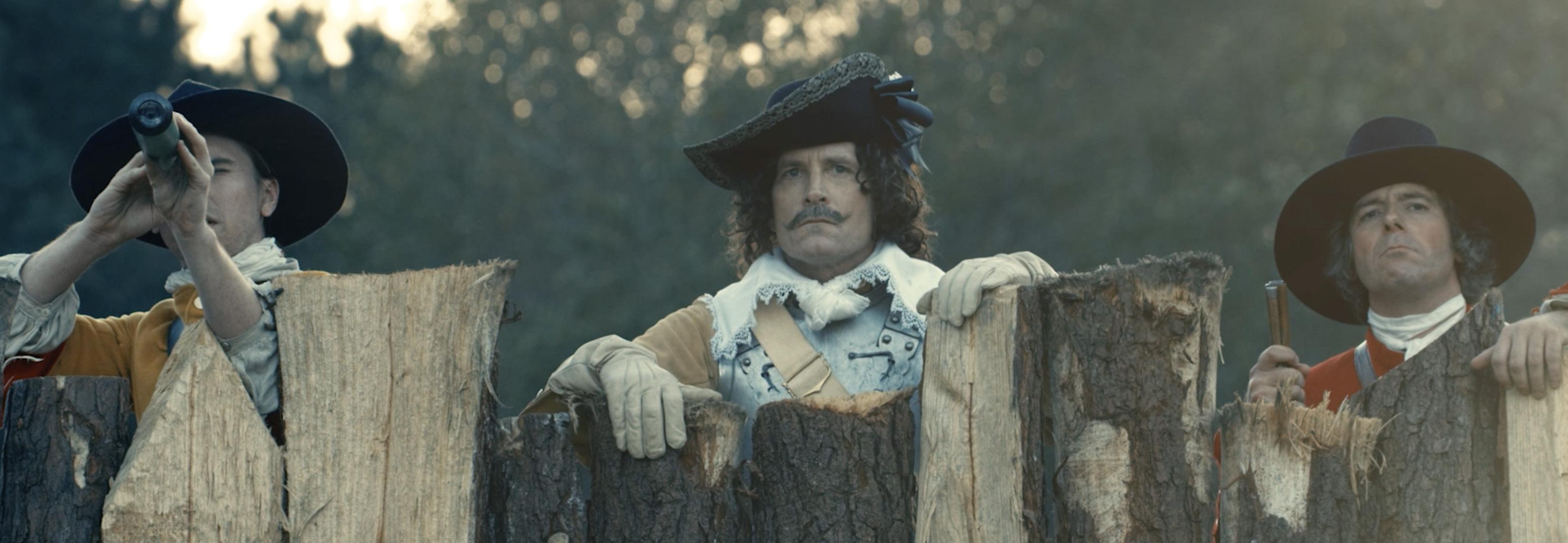
This year, as we mark 250 years of America’s history and reflect on the meanings of liberty, it is worth recalling a dramatic struggle in Virginia’s past that unfolded exactly a century earlier. In 1676, Virginians took up arms against one another in what became known as Bacon’s Rebellion, led by Nathaniel Bacon. Cousin-by-marriage to Governor William Berkeley, Bacon had recently arrived from England to escape financial and legal difficulties. Berkeley welcomed the young man and appointed him to the Virginia Council as a “gentleman of quality.” The amicable relationship did not last, as Bacon became the face of growing discontent with the colony’s leadership.
This was not a fight for independence from Britain, but a rebellion against Virginia’s colonial government—a convergence of competing grievances that exposed deep divisions within the colony. In Bacon’s Rebellion, liberty was not a shared ideal but a contested one, claimed by many and secured by few. Wealthy planters, land-hungry settlers, indentured servants, enslaved Africans, women, and Indigenous nations each understood liberty through the lens of their own experiences.
For Virginia’s wealthy planters, liberty was inseparable from property,
stability, and social order. Seeking a more stable government, Governor Berkeley pushed the legislature in 1670 to restrict voting to White male landowners and leaseholders, deepening resentment among the colony’s many landless settlers. Amid the rebellion in June 1676, the General Assembly passed “Bacon’s Laws,” extending the vote to all free men. King Charles II ordered the laws voided and the property requirement restored in line with English practice. The Assembly complied, claiming the measures had been enacted under duress. Virginia’s elite reasserted control, preserving a system in which liberty remained limited and unevenly distributed.
Middling planters and tenant farmers formed the backbone of Bacon’s movement, transforming discontent into rebellion. With the best tobacco lands in elite hands and landless freemen unable to vote, liberty for these men meant access to land, economic opportunity, and a voice in government. Many lived on the frontier, where conflict with Indigenous peoples was a constant concern. Opposing taxation for Governor Berkeley’s defensive strategy, which they viewed as ineffective, they supported Bacon’s call for aggressive action.
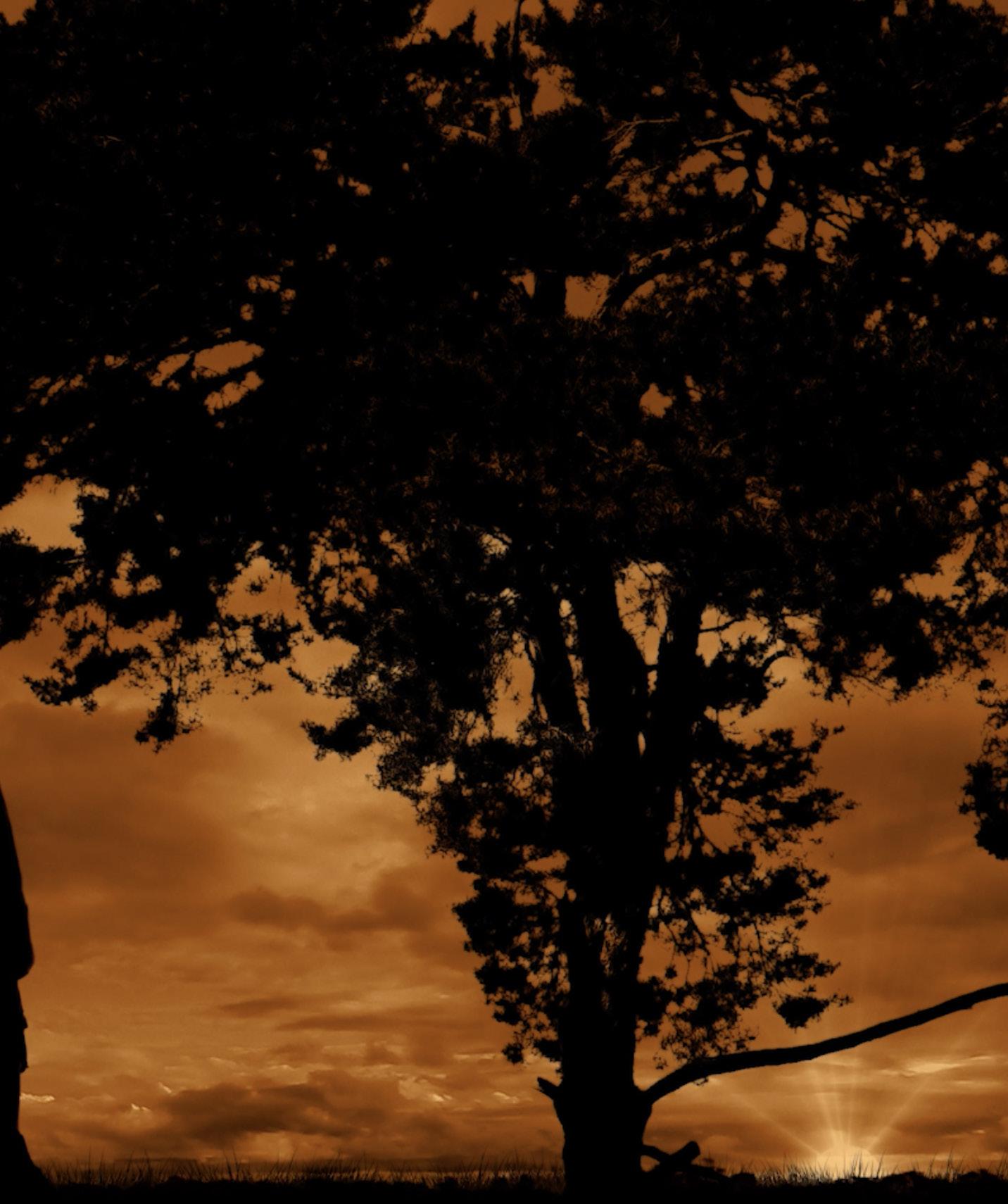
To these settlers, Berkeley’s restraint reflected competing interests as he moved to protect a lucrative trade with allied Virginia tribes. Though these men drove the rebellion in pursuit of denied opportunities, the outcome ultimately reinforced elite control and deepened inequality.
Liberty had a very specific meaning for indentured servants—freedom from servitude. Bound for years of labor in exchange for passage to Virginia, they lived under tightly controlled conditions with limited legal recourse. The rebellion offered a chance to seize that freedom early, as Bacon promised liberty to servants who joined his cause. Failure, however, could mean physical punishment and extended terms of service. By September 1676, Governor Berkeley promised freedom to servants of the rebels who supported his side. Liberty became a tool wielded by both sides —granted conditionally and withdrawn just as easily.
English women had little formal political power, but the rebellion briefly expanded their ability to
act. Women used their voices to shape events, defying expectations of silence. Rebel women such as Sarah Grendon and Mrs. Haviland supported the insurgency and urged resistance, while the governor’s wife, Lady Frances Berkeley, sought royal intervention in England. The rebellion disrupted social norms, creating space for women to speak and act
beyond the household, but this expansion proved temporary. Accused of treason, Grendon claimed she was merely “an ignorant woman,” revealing how quickly female agency could be denied. As order was restored, women’s voices were again confined, underscoring how fragile such moments of liberty could be.
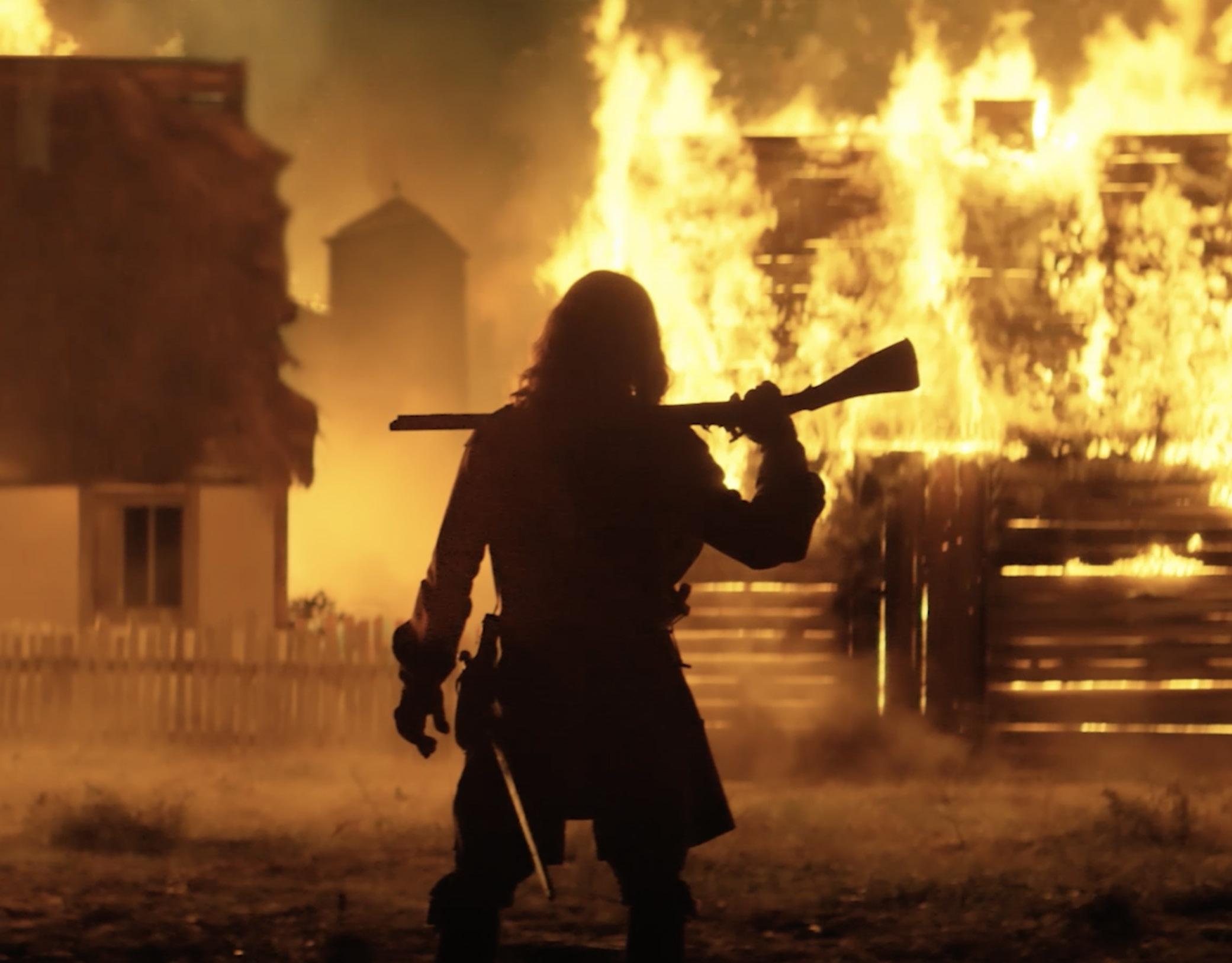

Enslaved and free African people took part in the rebellion, many siding with Bacon in hopes of gaining some measure of liberty. Their participation alarmed Virginia’s elite, who responded by hardening racial divisions. Drawing on models from Caribbean colonies, lawmakers enacted “slave codes” that restricted slaveholding to White colonists and denied enslaved people basic rights. In the rebellion’s aftermath, race-based slavery became more firmly entrenched. For enslaved people, the promise of liberty narrowed even further, as opportunities for freedom gave way to a more rigid and permanent system of bondage.
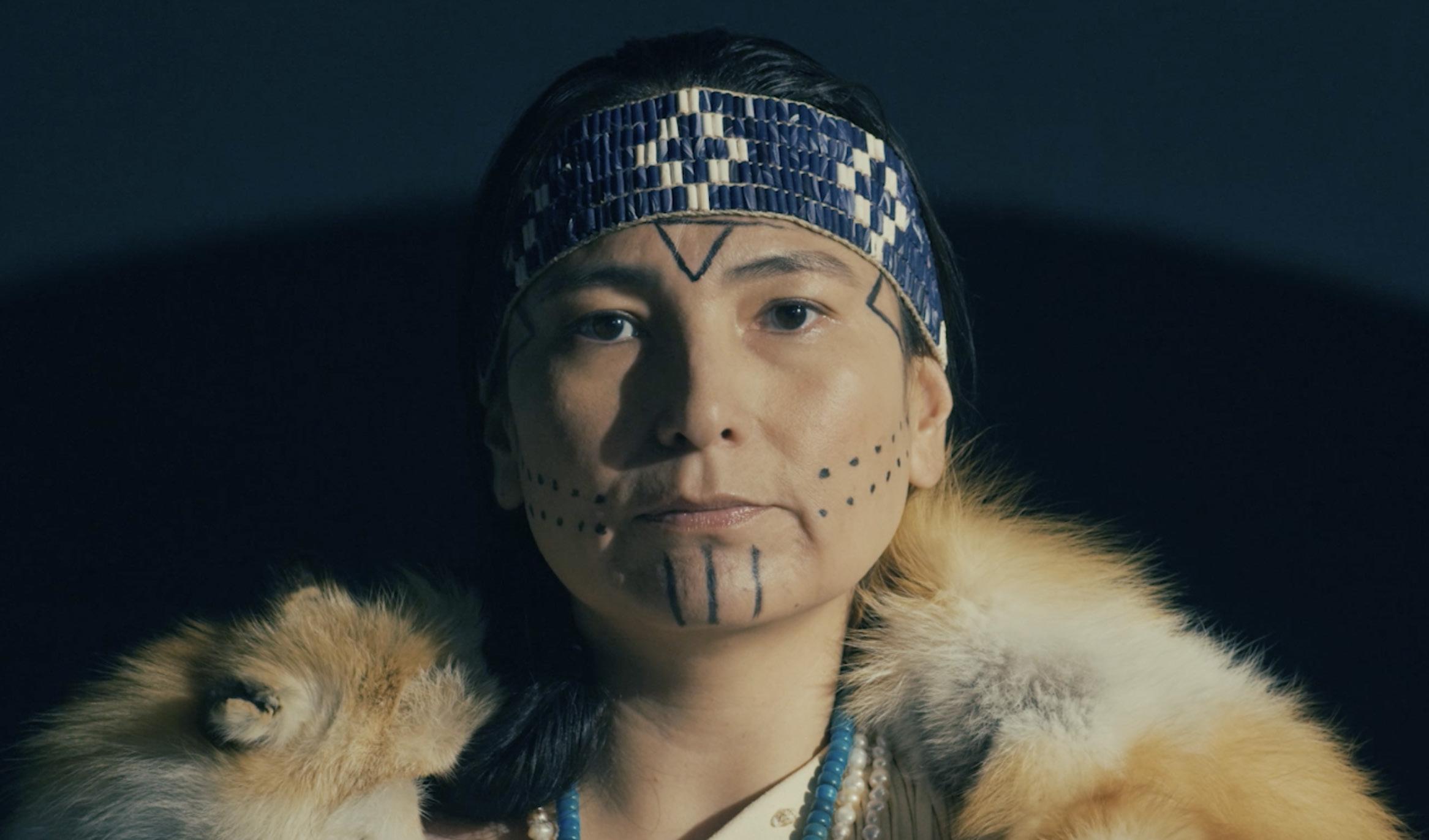
Bacon’s policy toward Virginia Indians was aimed at destroying the tribes. As his forces advanced, the Native nations of the Middle Peninsula and Northern Neck—Pamunkey, Mattaponi, Chickahominy, Rappahannock, and others—took up defensive positions in Dragon Swamp to wage a campaign against those who sought to annihilate them. This response to Bacon’s Rebellion is a powerful example of intertribal agency that upends the conventional narrative of frightened Native people running and hiding. Instead, these “neighbor Indians” secured a strategic but largely unrecognized victory that shaped the terms of peace that followed. The 1677 “Treaty of Middle Plantation” secured some liberties for the signatory
tribes, such as prohibition against enslavement, but it also made Native peoples subjects of the British Crown, placing constraints on their liberty for generations.
In 1676, Virginians fought in the name of liberty, but they did not fight for the same thing. For some, it meant land, opportunity, and political voice; for others, survival, autonomy, or freedom from bondage. The outcome of Bacon’s Rebellion did not resolve these competing visions—it hardened them, reinforcing a social order in which liberty was unevenly distributed. As we reflect on liberty today, this moment reminds us that it has never been a single, shared ideal. It is shaped by circumstance, contested in practice, and defined as much by exclusion as by aspiration.

Bly Straube, Ph.D., FSA, Senior Curator
Contributing Writers
—Brenna Geraghty, Education Manager, Preservation Virginia
—Allyson Gray, Pamunkey citizen and artist
—Travis Henline, Curator of Indigenous History and Culture
—Julia A. King, Ph.D., Professor of Anthropology, St. Mary’s College of Maryland
—Glenn Lucker, Learning Facilitator
—Jaie Pizzetti, Education Specialist
Edward D. Ragan, Ph.D., Rappahannock Tribal Historic Preservation Officer
For most people, liberty means the freedom to make choices about your own life, without unnecessary or unreasonable restrictions from others and without societal pressures or regulatory control of government. Clothing and accessories might not be the first things that come to mind when one considers expressing personal choices and liberties, but there are many examples of fashion activism throughout history in this country and around the world.
In the 21st century, political slogans on hats and T-shirts are commonplace and typically leave little room for the reader to debate which side the wearer aligns politically.
There is often an impressive dress sense conveyed by garments and accessories made in the 18th century, though a deep dive into their historical context is necessary for us to understand the full implications behind the wearer’s choice of cloth or cockade ribbon.
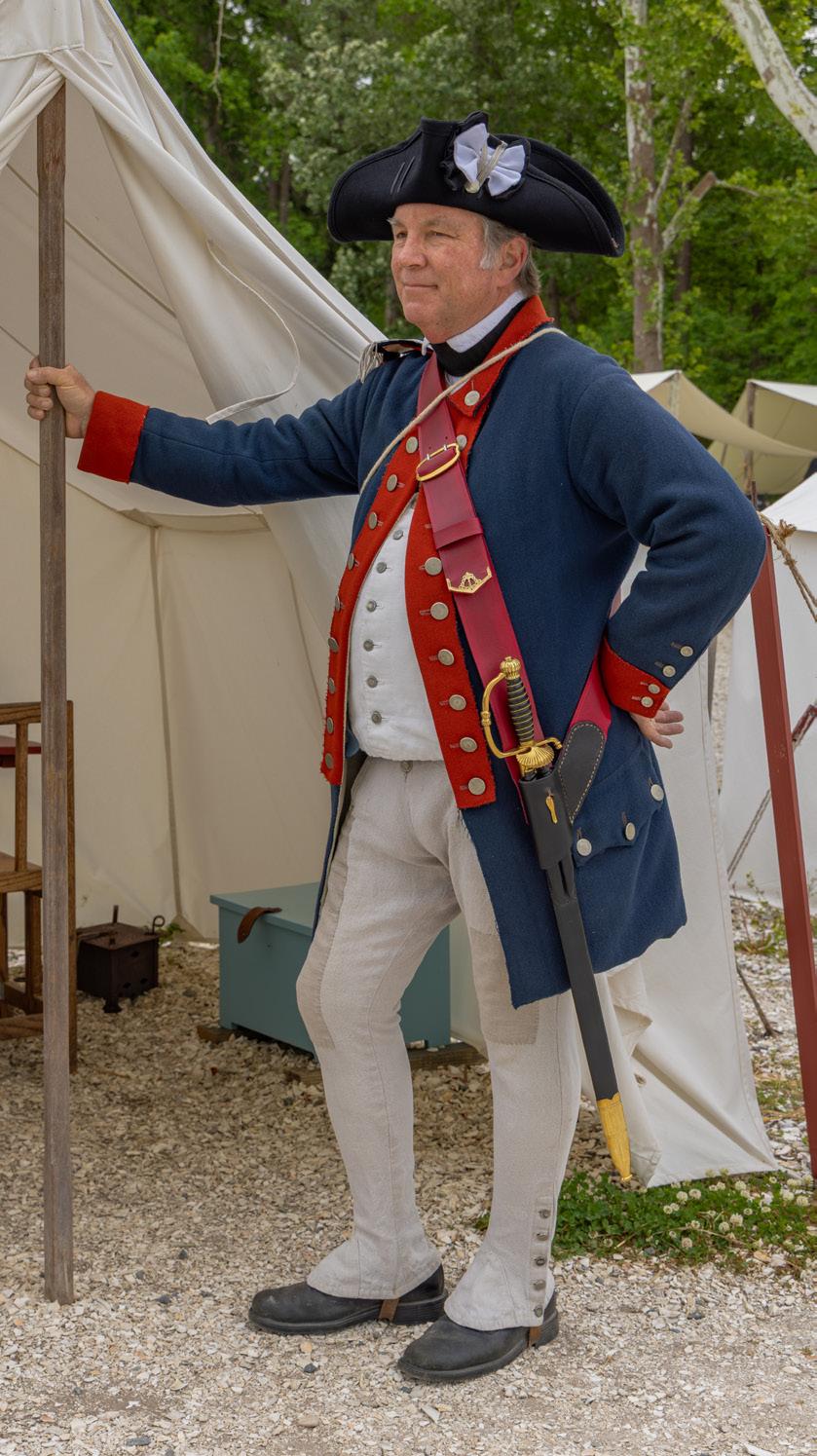
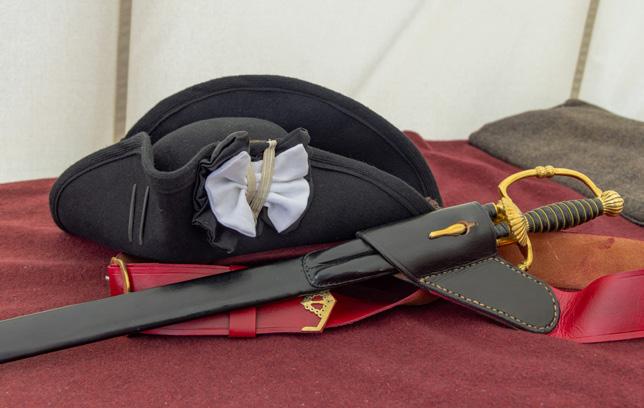
T.J. Savage, JYF Content and Training supervisor, is shown wearing an Alliance Cockade.
George Washington sought to encourage civic pride and domestic industry during his presidency and retirement by patronizing American manufacturers, noting in 1789 that “we have already been too long subject to British prejudices.” To that end, he wore American-made clothing to public speeches and private events. His granddaughter, Elizabeth “Eliza” Parke Custis described a certain blue coat Washington wore on many occasions, writing, it is “made of the first American cloth sent to General Washington and much worn by him.” The coat Custis referred to is still surviving and is held in the collections at George Washington’s Mount Vernon.
It no longer has its buttons because Eliza gave them to relatives and personal friends of the family.
Dressing to broadcast Republican virtue and simplicity in the aftermath of the American Revolution, President George Washington set an impressive example. At his inauguration in New York City on April 30, 1789, Washington wore a brown suit of homespun wool cloth.
Abigail Adams also championed the homespun movement, writing to her husband, “As for me I will seek wool and flax and work willingly with my Hands, and indeed there is occasion for all our industry and economy.”
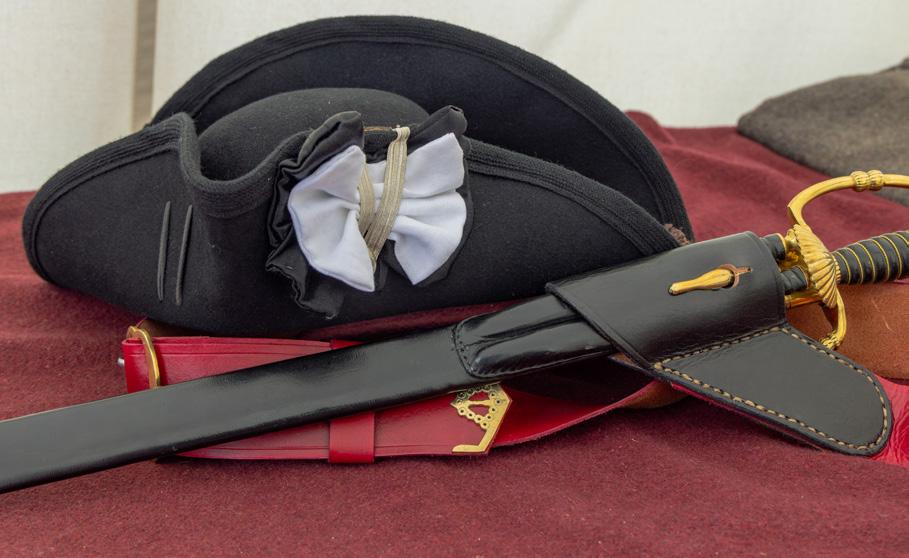
In Washington's General Orders, he directs Americans officers to put a white cockade (French) over the American/ British black cockade. The French reciprocated with a small black cockade over their white one to show their mutual support.
American-made homespun in the 18th century was not tainted with imported European frippery and extravagance; homespun sent a message during the Revolution that Americans would adopt plain and sober attire, the opposite of expensive imported British clothing fashions. Even after the Revolution, patriotic American elites, businessmen, and landed gentry sported a plain style of clothing that indicated their republican values and lifestyle.
—Sarah Meschutt, Senior Curator
—Gretchen Johnson, Living History Manager
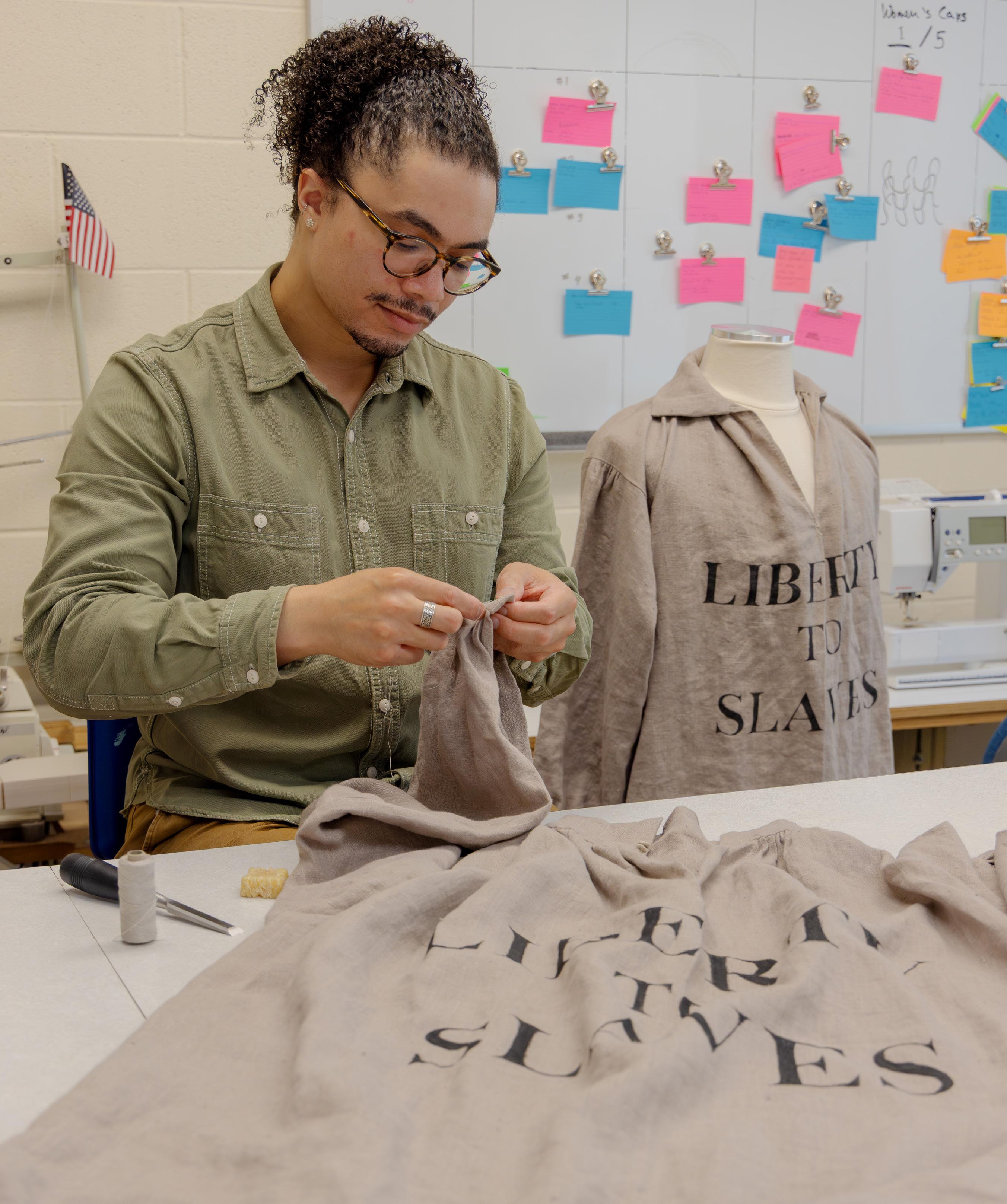
According to a Virginia Gazette article from December 2, 1775, Lord Dunmore’s Ethiopian Regiment had the phrase “Liberty to Slaves” inscribed on their breasts. Two shirts were created by JYF’s Historical Clothing Services for Abigail Schumann’s “‘Appertaining to Rebels’–The Proclamation Play” that premiered at the American Revolution Museum at Yorktown in November 2025.
At the Jamestown-Yorktown Foundation, we know that helping young people understand their role in the community is just as important as teaching them about the past. The Learning and Community Engagement team continues to expand initiatives that emphasize civic education and its relevance today.
Civic responsibility isn’t only about government structures or voting; it’s about recognizing how individual choices shape communities. This fall, JYF is launching an expanded pilot program for fourth-grade students, a group ready
to explore big ideas like fairness, leadership, cooperation, and the responsibilities that come with living in a shared society. These concepts help them see history as active and connected to their own experiences.
Our programs intentionally cultivate these skills. When students debate how to allocate resources that early settlers had or consider the diverse perspectives of those living in early Virginia, they practice listening, compromise, critical thinking, and understanding how different experiences shape decisions.
Generously funded by the Cameron Foundation, “Community Connections” is a three-part program designed to encourage critical thinking and link historical knowledge to students’ lives. It begins with a classroom program that establishes foundational knowledge of Jamestown’s settlement. During their on-site field trip some weeks later, students then apply this understanding to explore changes during early colonization, focusing on government and legal systems and how laws concentrated power. Finally, a virtual session engages students in analyzing a real 17th-century court case. They examine evidence, draw on historical knowledge, and reach their own conclusions before learning the actual outcome. Each component highlights personal stories and the lasting legacies of decisions made more than 400 years ago.
Early civic learning strengthens empathy, improves decision-making, and fosters a sense of belonging. By integrating civic responsibility into historical education, students come to understand what it means to participate in a community today. In every program, conversation, and hands-on activity, we’re not just teaching history, but helping students imagine the kind of citizens they can become.
—Felicia Abrams, School Programs Manager
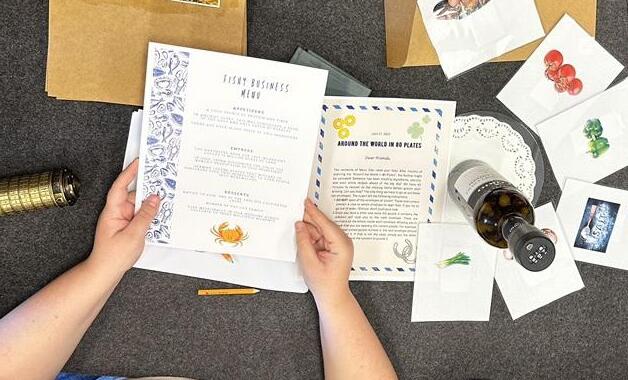
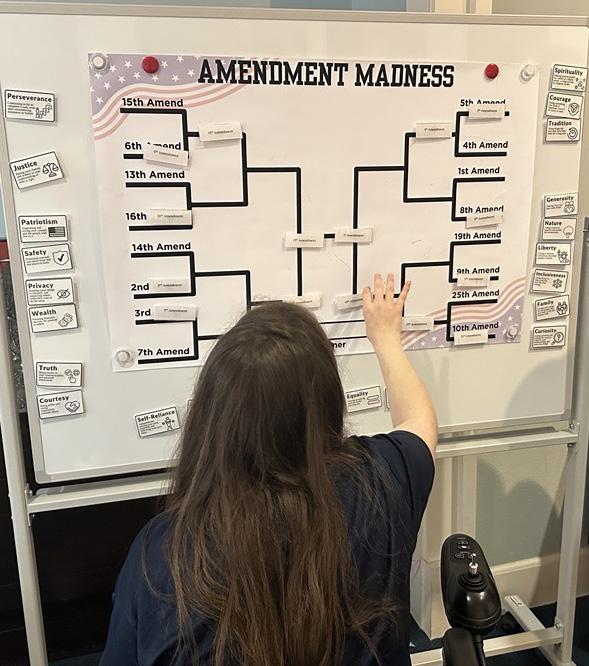
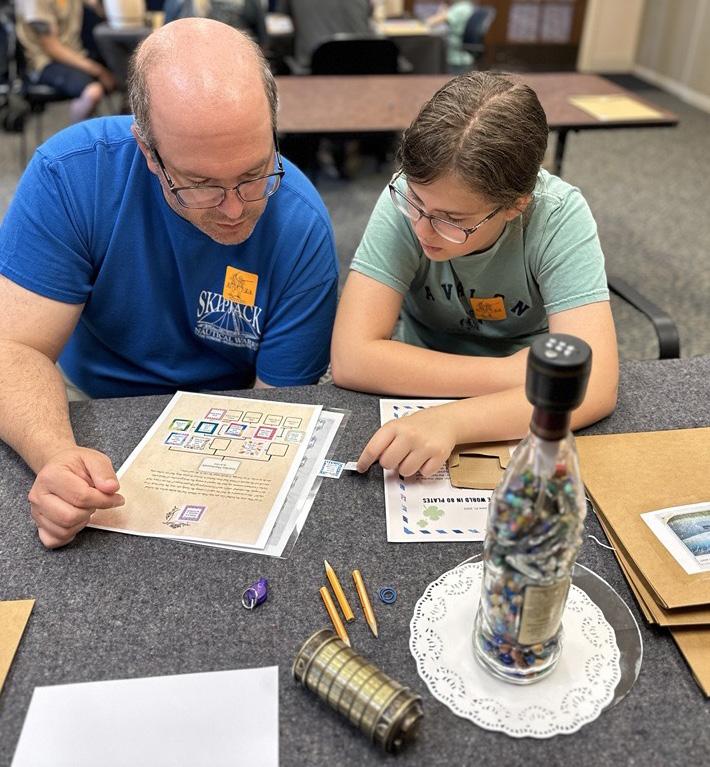
Hands-on activities in the “Community Connections” education program are designed to engage young people in civics of the past and present.

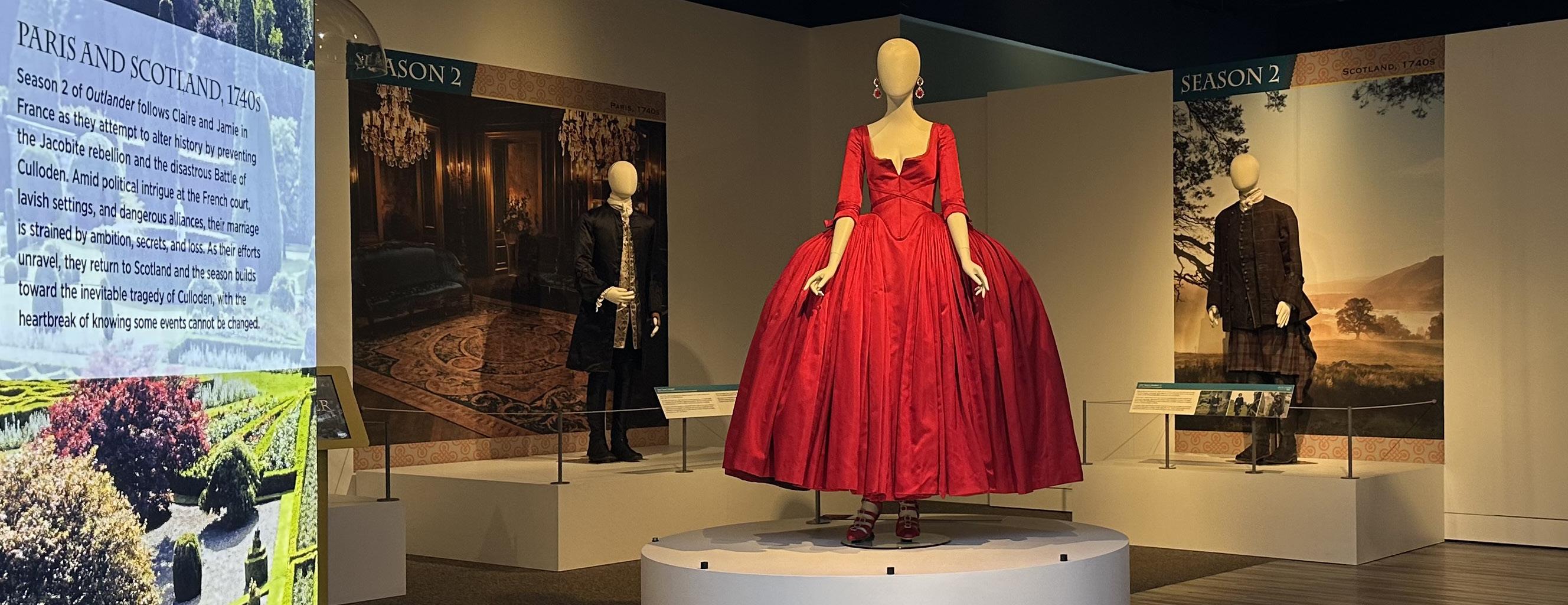
One year ago, there was no thought of an exhibition featuring the “Outlander” television show premiering at the American Revolution Museum at Yorktown in Spring 2026. After an initial call in April 2025, serendipitous timing and a strong programmatic foundation made it possible for JYF to seize the opportunity to create “Outlander: Costumes Woven in Time” in partnership with Sony Pictures Television.
In Fall 2023, connected to our “Reign & Rebellion” exhibition, we hosted “Outlander” author Diana Gabaldon for a remarkably successful event. The 2024 special exhibition, “Ruth E. Carter: Afrofuturism in Costume Design,” proved that connecting JYF’s work with popular culture and costuming attracted new audiences. Those successes planted seeds that quickly sprouted when JYF staff connected with Sony in Spring 2025 as their new franchise management team explored fan engagement strategies, including a costume exhibition.
With the final season of “Outlander” set to premiere in Spring 2026, we began developing an exhibition that fused historic clothing, storytelling, 18th-century history, and the global phenomenon of the “Outlander” series.
The historically rich costume work of Terry Dresbach, the costume designer for “Outlander” seasons 1-4, is central to the exhibition and she was eager to collaborate. Terry was asked to identify 25 costumes that defined the show’s visual identity and storytelling. This was no easy task, having designed hundreds of costumes for the show, so the final list had 27 costumes. While we normally hope to commit 12-18 months to develop, design, and install a special exhibition, the finalized costume list did not arrive until November 2025, giving us barely three months to meet the March 6, 2026, Season 8 premiere date that doubled as the exhibition opening.
We had very little time, but we did have Terry Dresbach’s insights to help inform the exhibition content and access to Sony’s library of photography, music, and film, alongside a skilled exhibition design firm who worked with us on a recent exhibition. We also had a pair of staff who stepped out of their normal roles to serve as curators with deep knowledge of “Outlander” and its connected history, a talented digital media services team, an experienced curatorial team sharpened by the installation of the Ruth E. Carter costume exhibition, and an exhibition
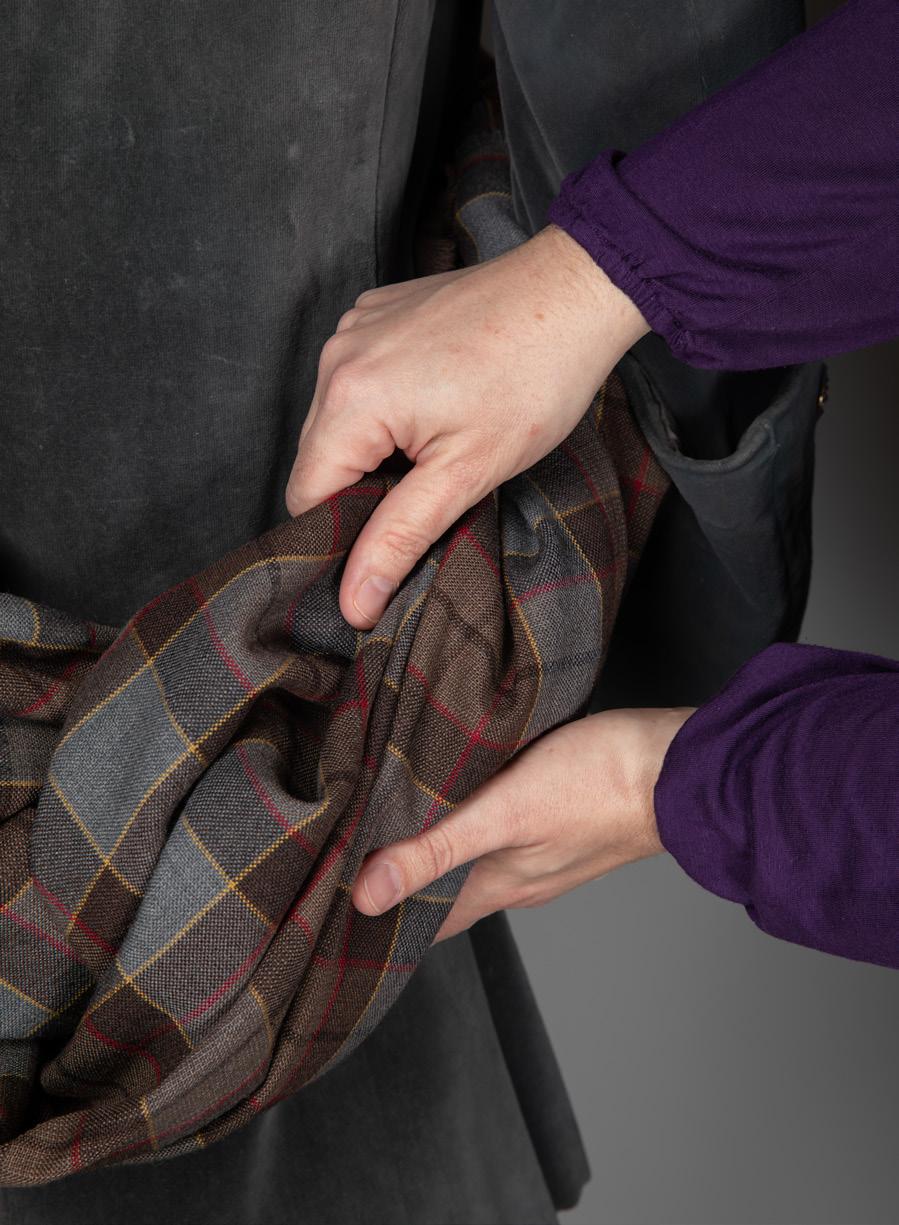
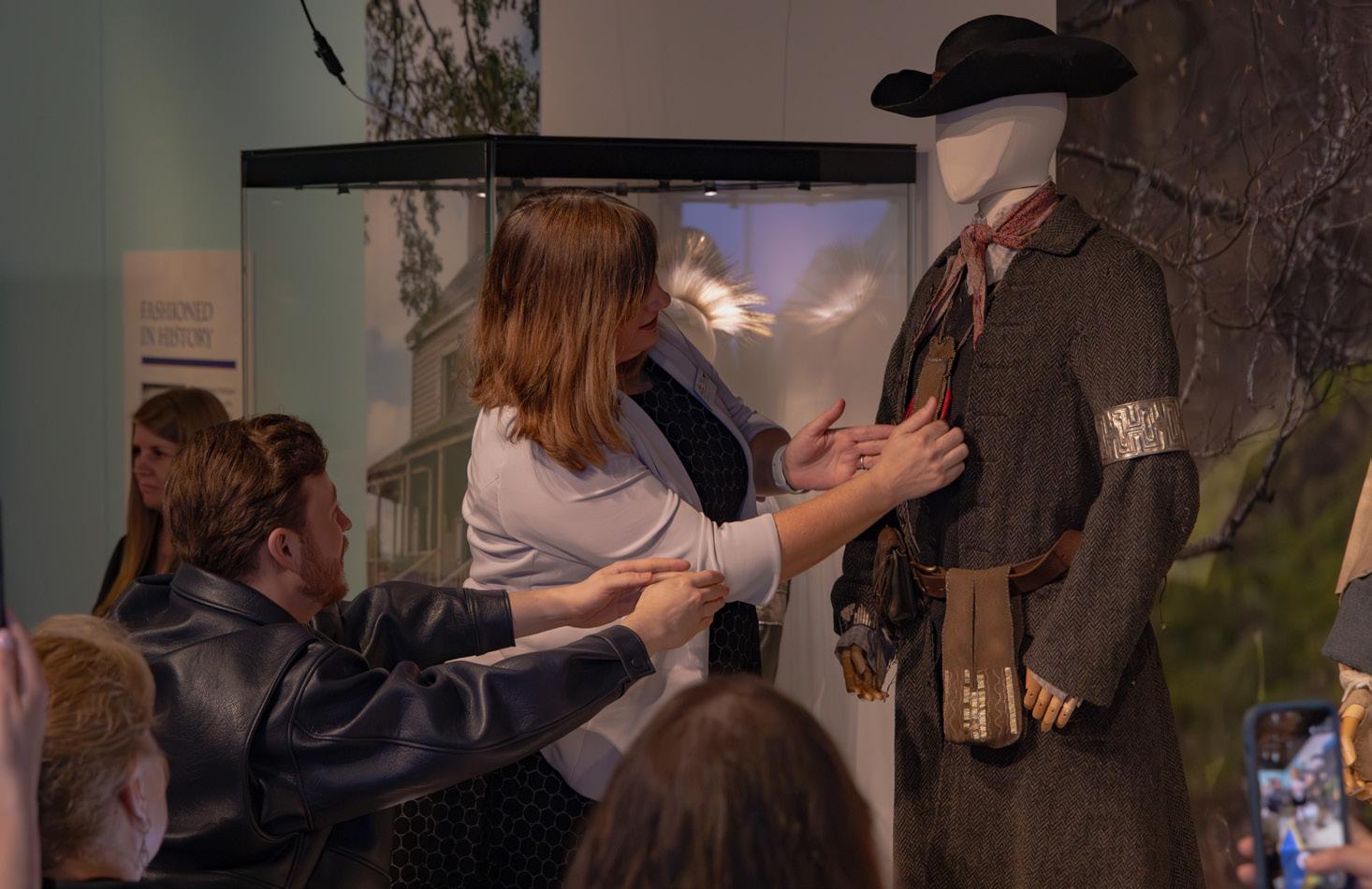
production team honed by challenging installation schedules. Now, all we needed were costumes.
The archives manager at Sony arranged the shipment of costumes via a cargo ship from Scotland, where the show was filmed, to Los Angeles, as he planned to review the costumes before sending them to JYF. Delays in shipping, however, meant that they were flown directly from the port in Los Angeles to Richmond, where they were transferred by truck and finally arrived at the American Revolution Museum at Yorktown in early February.
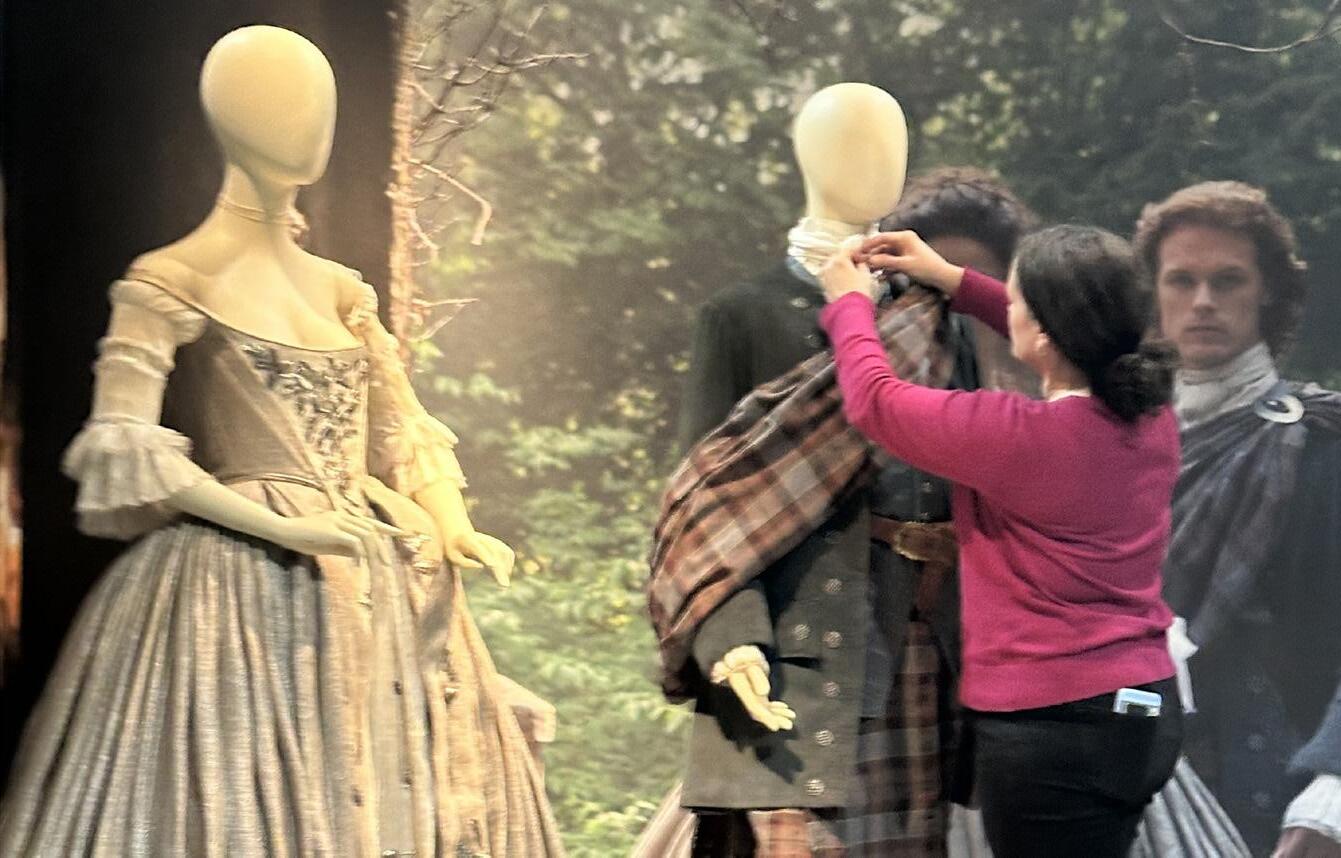
Our curatorial staff unpacked, inventoried, and completed condition reports before we began to dress the 27 mannequins. Many of the mannequins provided were unusable for the exhibition, prompting a frantic search for mannequins suitable for the costumes. In less than 48 hours, mannequins were found and ordered, to be delivered just a few days later. While these pieces were taking shape the co-curators completed the content and the digital media services team developed touch-screen interactives, videos, and the soundscape.
Finally, our exhibits team shepherded the installation of all the large photo murals, platforms, cases, and graphics, followed by the curatorial team installing the costumes in the gallery. It was down to the wire, but the exhibition was ready to open just in time for the preview event.
It required all of our diverse skills and talents to pull together, working at 110% to make this exhibition happen, but it opened on schedule to great fanfare and praise from thousands of fans who have traveled from across the country to enjoy the exhibition.
View exhibition photos at jyfmuseums.org/outlander.
—Mariruth Leftwich, Ph.D., Senior Director, Museum Operations and Education
—Allen Hoilman, Director of Exhibition and Curatorial Services
The American Revolution Museum at Yorktown Marks its Golden Anniversary in 2026 With Origins Rooted in the 1976 Bicentennial
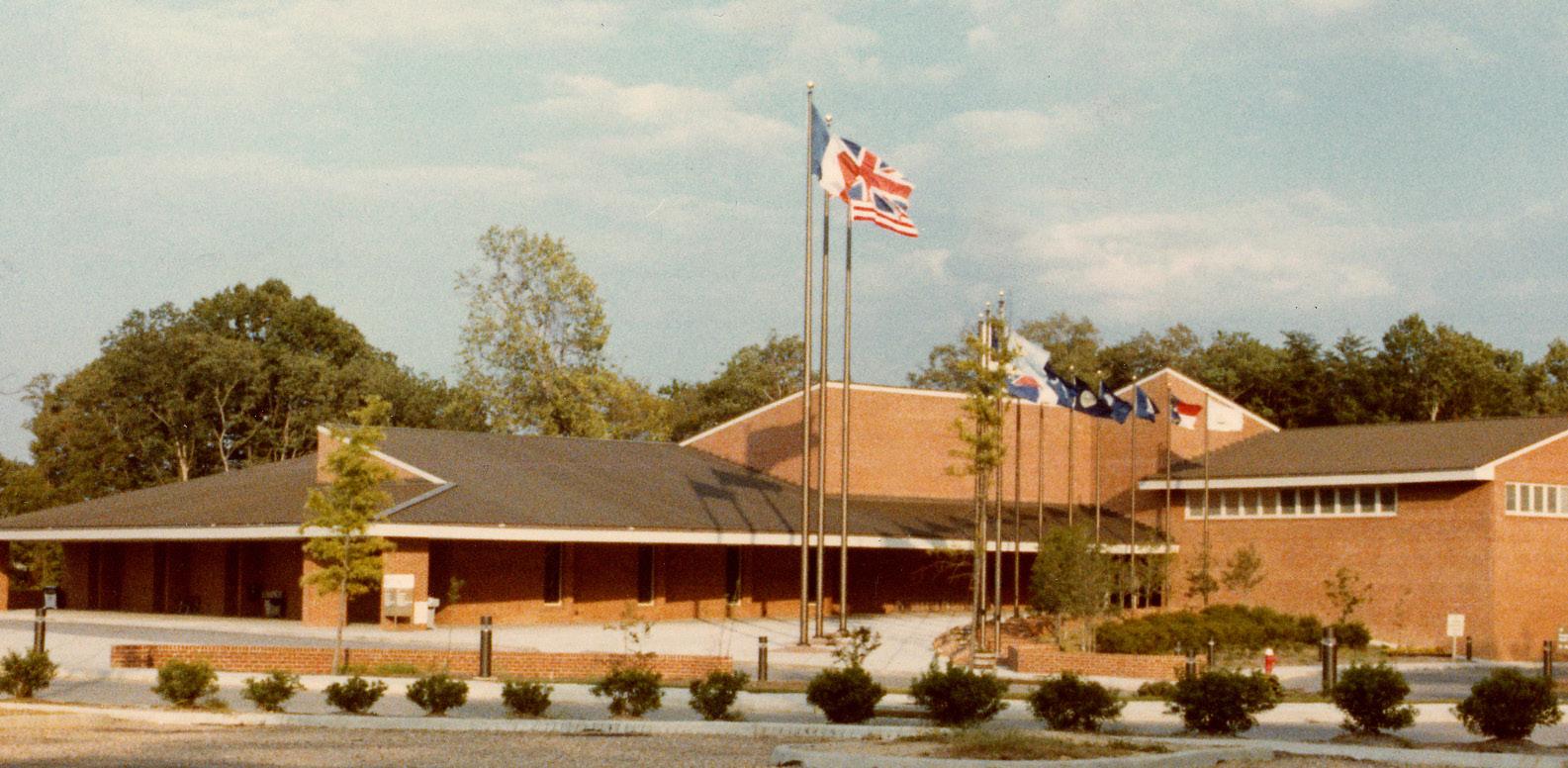
AsAmerica commemorates the 250th anniversary of the Declaration of Independence, the American Revolution Museum at Yorktown is marking its 50-year milestone this year and celebrating the museum’s 1976 origins rooted in America’s Bicentennial.
The museum opened on April 1, 1976, as the Yorktown Victory Center—the largest of three bicentennial centers established by the Virginia Independence Bicentennial Commission to celebrate the 200th
The Yorktown Victory Center, opened on April 1, 1976, as the largest of three bicentennial centers established by the Virginia Independence Bicentennial Commission to celebrate the 200th anniversary of America’s independence.
anniversary of America’s independence. Now administered by the Jamestown-Yorktown Foundation, an educational agency under the Commonwealth of Virginia, the museum underwent a 10-year transformation and renaming to the American Revolution Museum at Yorktown in 2016.
Today, the American Revolution Museum at Yorktown tells the stories of ordinary people in extraordinary times during the nation’s founding, from the twilight of the colonial period to the dawn of the Constitution and
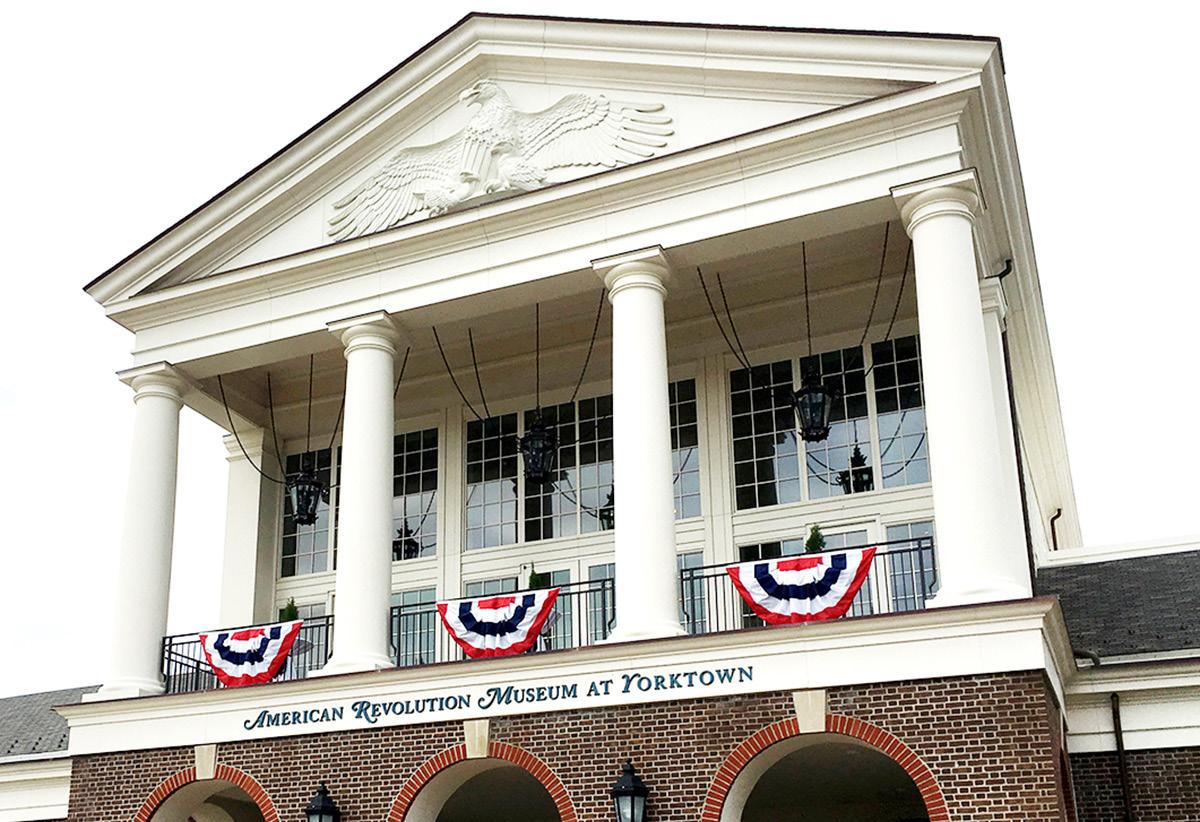
beyond. Comprehensive indoor exhibits—complete with period artifacts, immersive films, and interactives—and outdoor living history allow visitors to experience the transformational nature and epic scale of the Revolution and its relevance today.
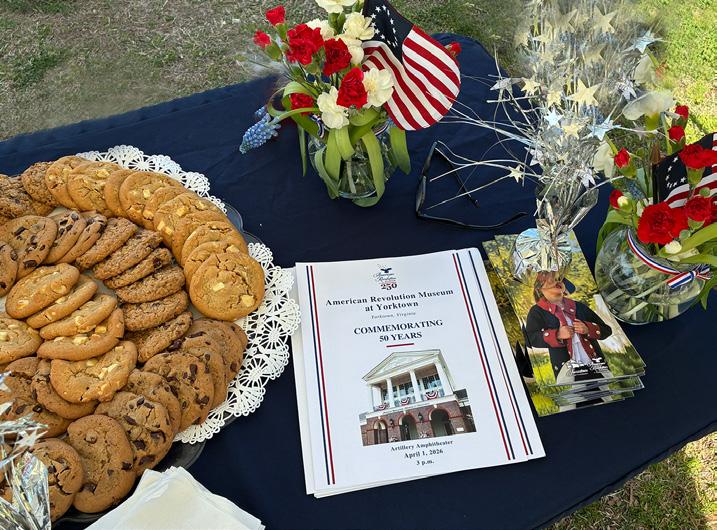
The museum’s golden anniversary was commemorated on April 1 with an artillery salute, celebratory remarks, and refreshments in the museum’s artillery amphitheater.
The occasion launched an anniversary year showcasing the museum and marked with special exhibitions, events, and programs as America commemorates its semiquincentennial.

“It’s not just a one-day celebration, it’s one we want to extend all year, especially as we mark America’s 250th anniversary,” said Christy S. Coleman, executive director of the Jamestown-Yorktown Foundation and member of the Virginia American Revolution 250 Commission.
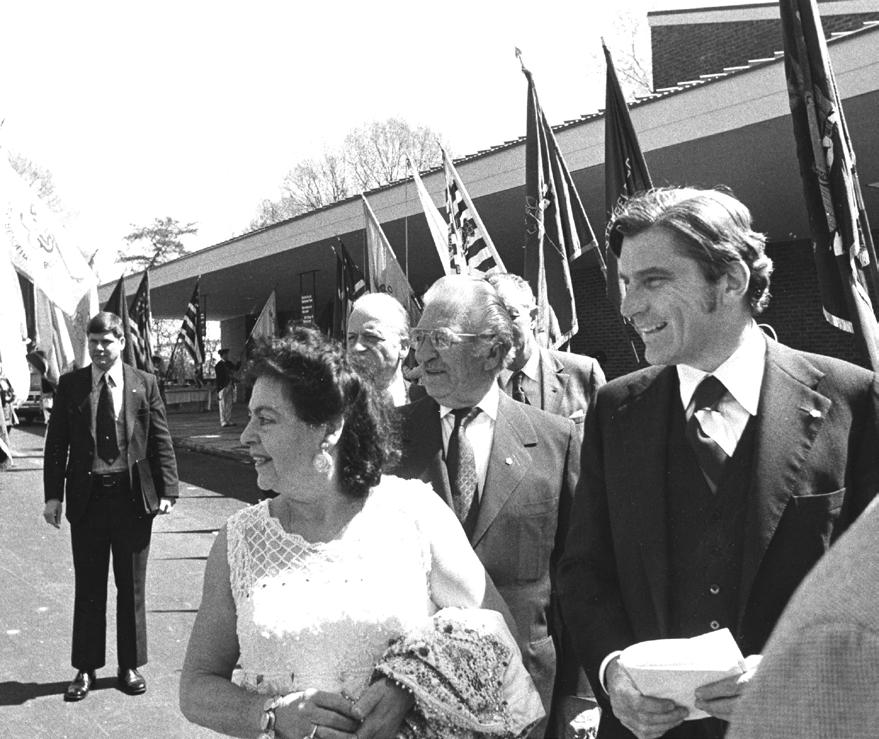
The late Mary and Nick Mathews are shown at the April 1, 1976 dedication of the Yorktown Victory Center, now known as the American Revolution Museum at Yorktown. Shown (to her left) is the former Secretary of the Navy and Senator John Warner (R-Va.).
1
“We invite visitors to join us throughout the year to reacquaint themselves with our museum, the story of our American independence, and the important role that Yorktown played in securing our nation’s freedom as the last major victory of the American Revolution.”
On the eve of America’s 1976 Bicentennial, the late Nick and Mary Mathews, natives of Greece who emigrated to the United States and established the world-renowned Nick’s Seafood Pavilion, generously donated the land for the Yorktown Victory Center so that others would know “…the blessings of democracy that commenced in my native land of Greece and later here in (Yorktown)…”
For 50 years, millions of museum visitors have benefited from the legacy of the Mathews’ generous gift, learning about the ideals and freedoms of the American Revolution and the significance of the Siege of Yorktown to secure American independence. The couple is buried on the museum grounds overlooking the York River.
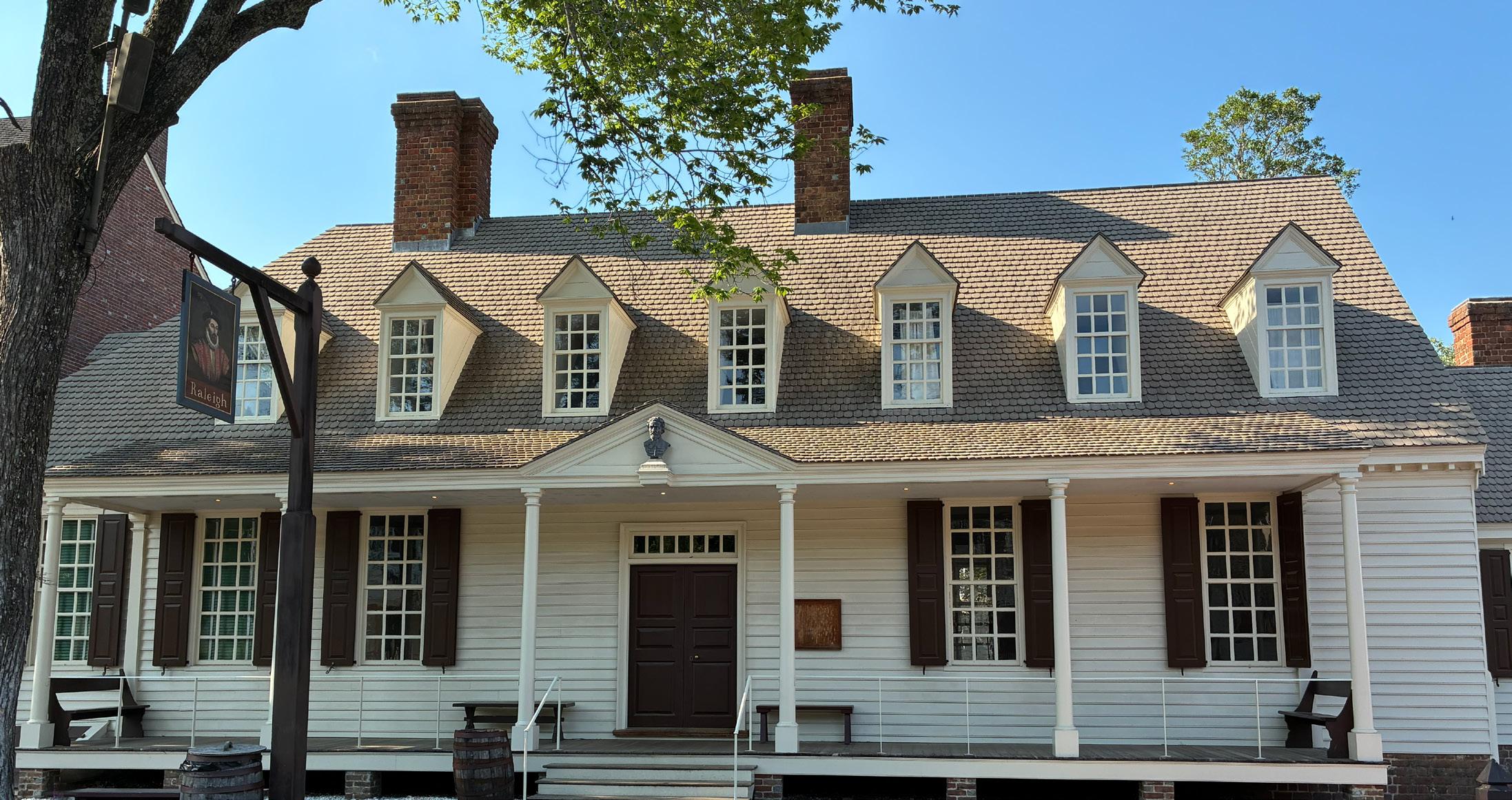
Today, the Raleigh Tavern in Colonial Williamsburg is one of the many lively spots on historic Duke of Gloucester Street. In 1774, the building served as a meeting place for the House of Burgesses after Governor Dunmore dissolved them for officially supporting the protests in Boston. Their meetings and planning helped set the colonies on the path toward independence for some, but not for all.
As British troops returned to Virginia in 1781, a Virginia Gazette notice announced that 12 enslaved people, including five children, would be sold “beofre the Raleigh door.” Their crime was fleeing their owners, seizing a schooner, and sailing to the British for liberty. Slavery and liberty were an unresolved paradox of the American Revolution. The Revolution created new opportunities for enslaved people to assert their agency and make decisions that shaped their families’ futures. Warfare created different possibilities of escape, especially when enslaved
people sought to liberate themselves from the American legal system that kept them in bondage. In times of peace from the 17th–19th centuries, enslaved people escaped to remote areas, free Black communities, Indigenous nations, or blended into society by impersonating free Blacks. Yet they remained legally fugitives.
Did the rewards of legal emancipation and protection promised by the British king outweigh the risks? Enslaved people did not know the future outcomes of the war, but many adults risked the dangers for their children’s future. Enslaved women faced different challenges than men. Women’s escapes became far more difficult when they fled with children or as entire families, requiring additional discretion to avoid detection.
In 1775, hundreds of enslaved people fled after Governor Dunmore’s Proclamation offered freedom to those owned by rebel masters. By 1781, thousands more free and enslaved Black people followed British troops as warfare returned to Virginia.
While many free and enslaved African American men supported the patriot cause as soldiers or laborers, nearly four times as many Black people joined the British. Scholars estimate that about half of these Black Loyalists were women and children. The 12 enslaved people who were to be sold “beofre the Raleigh door” were unsuccessful in their attempt to emancipate themselves. Yet, an estimated twenty
thousand Black Loyalists evacuated with British forces to other territories. Although formally freed, many continued to face contested liberties as they built new lives in unfamiliar lands.
—Harvey Bakari, Curator of Black History and Culture
—Gretchen Johnson, Living History Manager
Virginia Gazette (Dixon & Nicolson), Richmond, April 14, 1781.
To be SOLD, by order of the Honourable Court of Admiralty, on Tuesday the 24th instant, beofre the Raleigh door, the following slaves, lately recaptured from the enemy, viz. PRIMUS, who says he belongs to Governour Sharpe, of Maryland; PORTLOCK BREWER, who says he belongs to Joshua Poythress of Prince George; three men, three women, and five children, who say they belong to Samuel Snowdal of Maryland—At the same time will be sold, and small schooner boat almost new, in which 12 of the above negroes were taken, and 2 or 300 bushels of oats. Any person having a claim to make to the schooner boat or slaves are desired to attend the court of Admiralty, at the capitol, in the city of Williamsburg, on the 3d day of May, on which day the Court will fit to make a final decree. BEN POWELL. Marshal. WILLIAMSBURG, April 5, 1781.
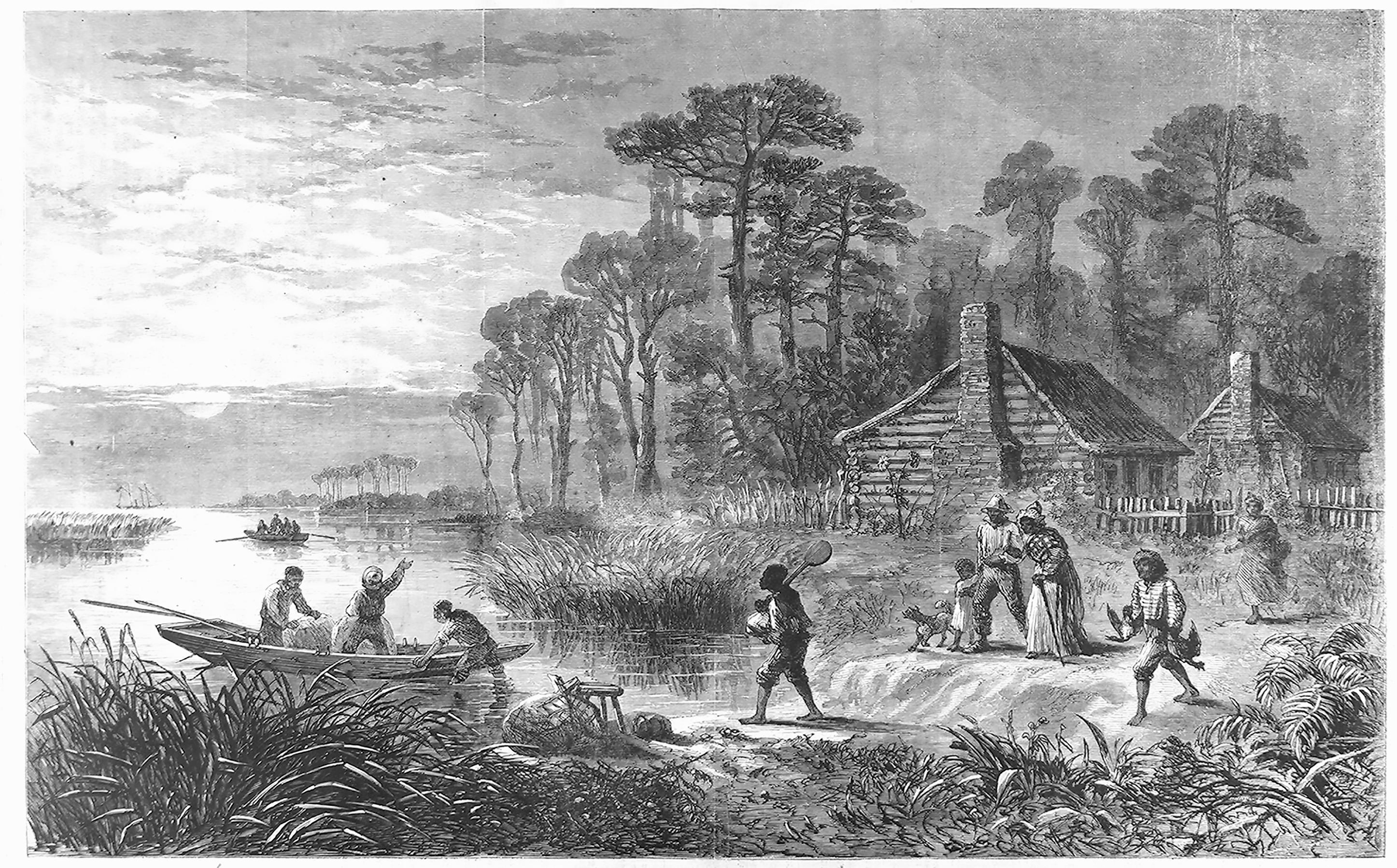
“Negroes leaving their home,” 1864. The New York Public Library Digital Collections. Schomburg Center for Research in Black Culture, Photographs and Prints Division.
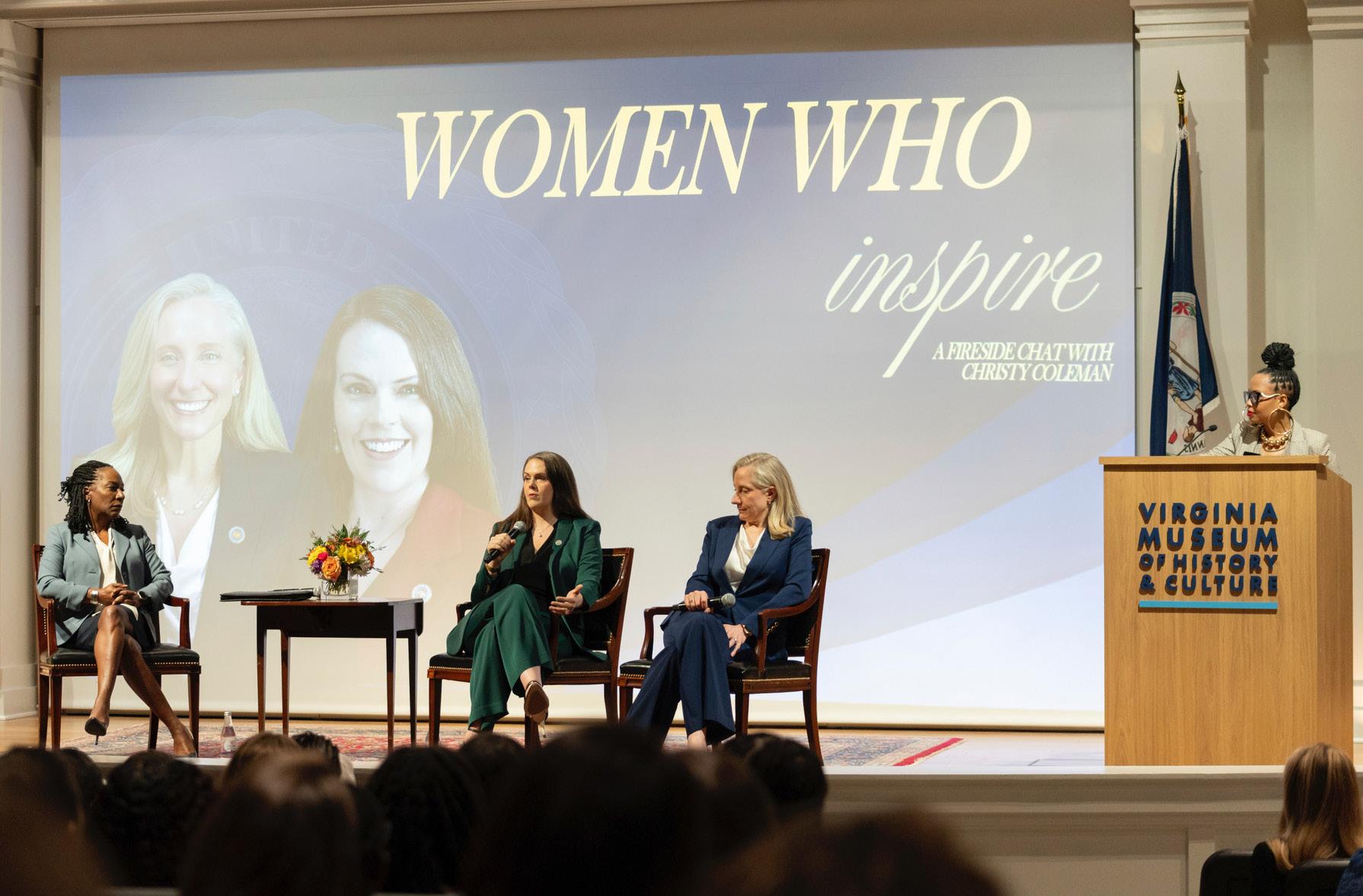
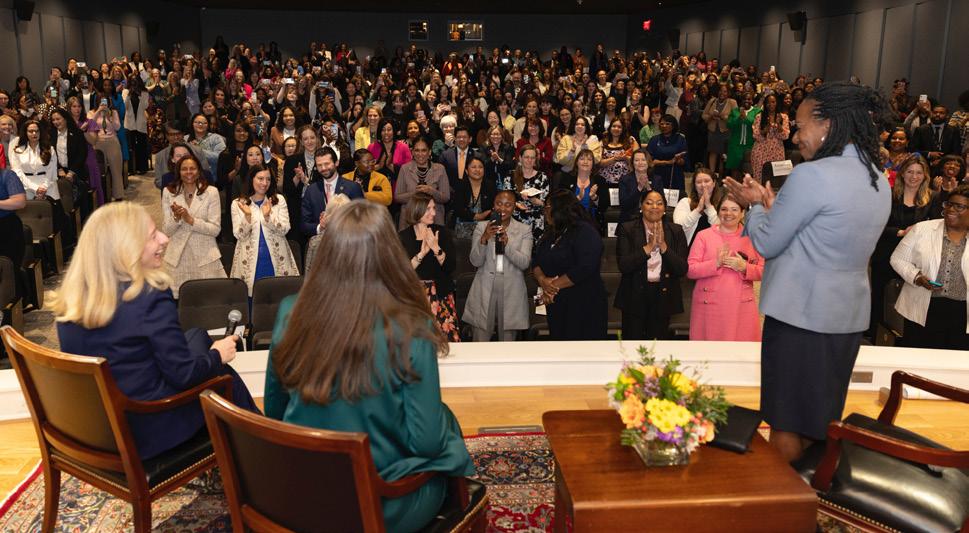
Coleman Moderates ‘Women Who Inspire’ With Virginia’s Top Leaders
In celebrating Women’s History Month, Jamestown-Yorktown Foundation Executive Director Christy S. Coleman moderated a “Women Who Inspire” fireside conversation with Virginia Governor Abigail Spanberger and Chief of Staff Bonnie Krenz-Schnurman as the first women to hold their respective positions. View the conversation of the March 26 event at the Virginia Museum of History & Culture on YouTube.
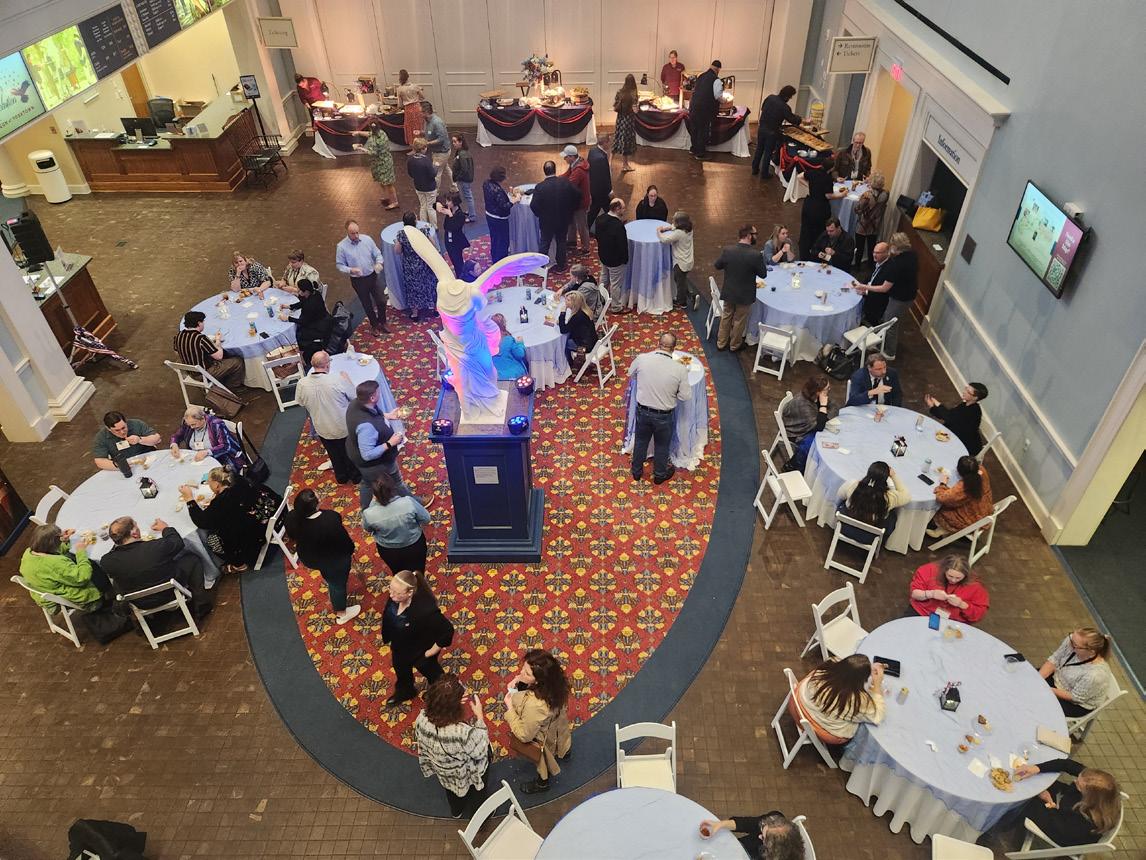
The American Revolution Museum at Yorktown was the setting for a Virginia Association of Museums evening reception on March 16 as part of its annual conference in Williamsburg. Using the theme, “Little ‘r’ Revolutions: Museum Transformations for Everyone,” the 250th anniversary of the United States offered an opportunity to showcase the transformative power of “revolutions” in our future planning, work cultures, and democratizing our institutions. VAM workshops, panels, and posters showcased the “small r” revolutions that VAM members are leading and offered opportunities to reflect on these changes in the museum field.
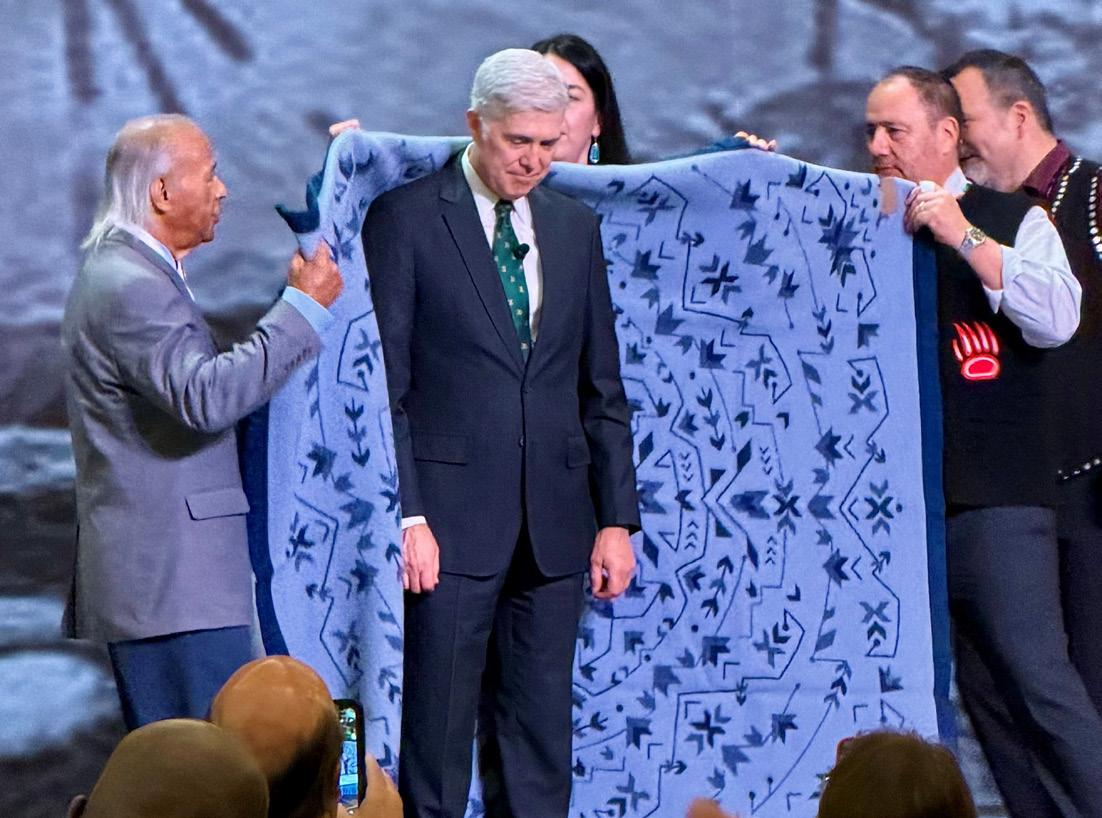
On April 25, the VA250 Commission in partnership with the Virginia Tribal Nations Leadership Advisory Council, Colonial Williamsburg Foundation, and the United South and East Sovereignty Protection Fund (USET SPF) hosted a unique national event: “The Inherently Sovereign Status and Existence of Tribal Nations.” Associate Justice of the United States Supreme Court Neil Gorsuch was the featured guest. Following the discussion, Gorsuch was enrobed in a blanket during a sacred ceremony meant to honor an individual for their contributions to the community. Shown with him are Chief Stephen R. Adkins, Sr. of the Chickahominy Indian Tribe, member of the VA250 Commission and JamestownYorktown Foundation Board of Trustees; Whitney Gravelle, President of the Bay Mills Tribe; Chief Kirk Francis, Penobscot Indian Nation; and Leonard Forsman, President of the Suquamish Tribe.
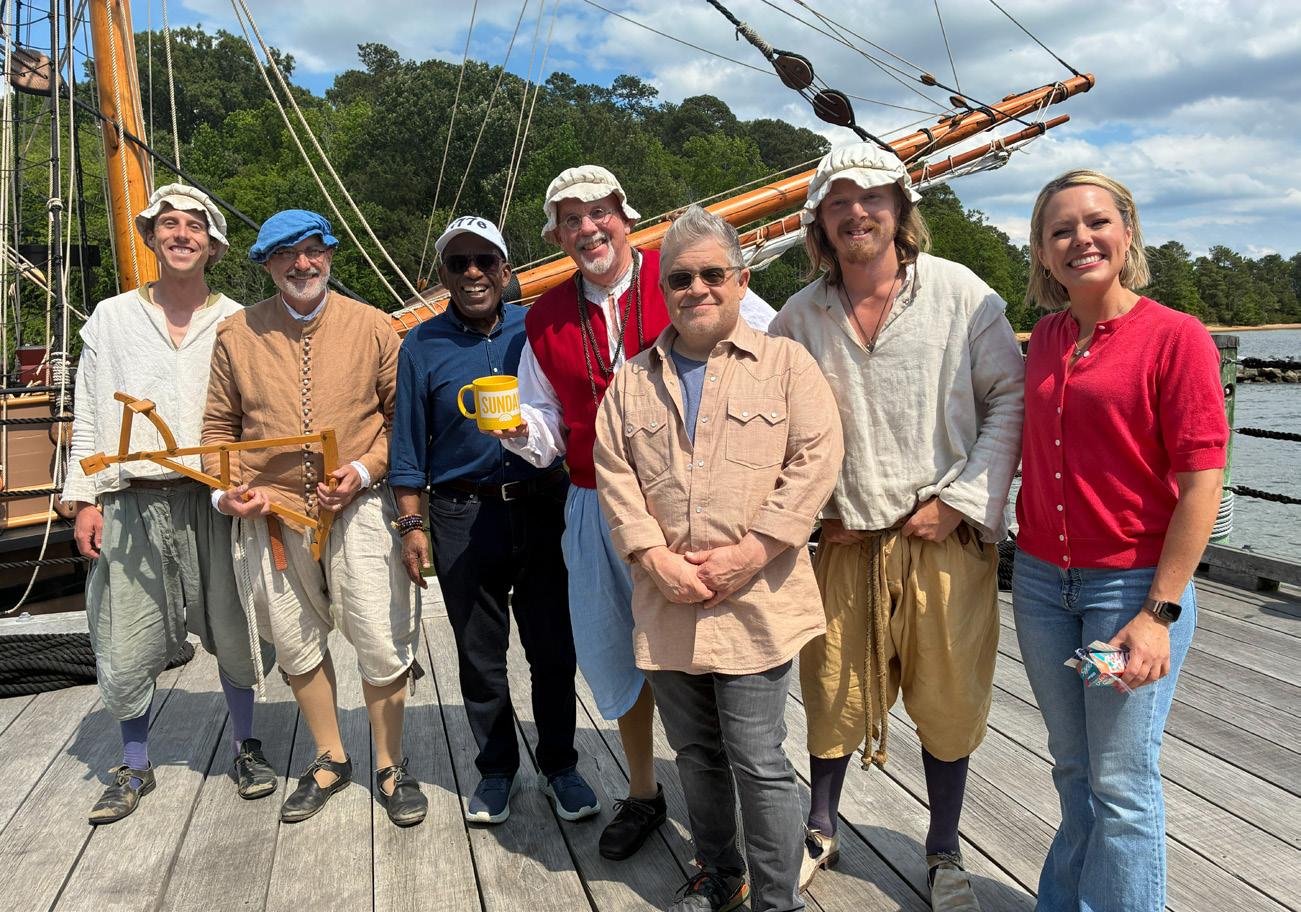
‘TODAY’ Hosts Visit Our Neck of the Woods Jamestown Settlement’s Godspeed was a backdrop for interviews with NBC’s TODAY show hosts Al Roker, Dylan Dreyer, and actor/comedian Patton Oswalt on May 14, in advance of a live broadcast in Colonial Williamsburg sponsored by Visit Williamsburg to celebrate America's 250th anniversary. Shown are Jamestown Settlement living-history interpreters posing with the hosts.
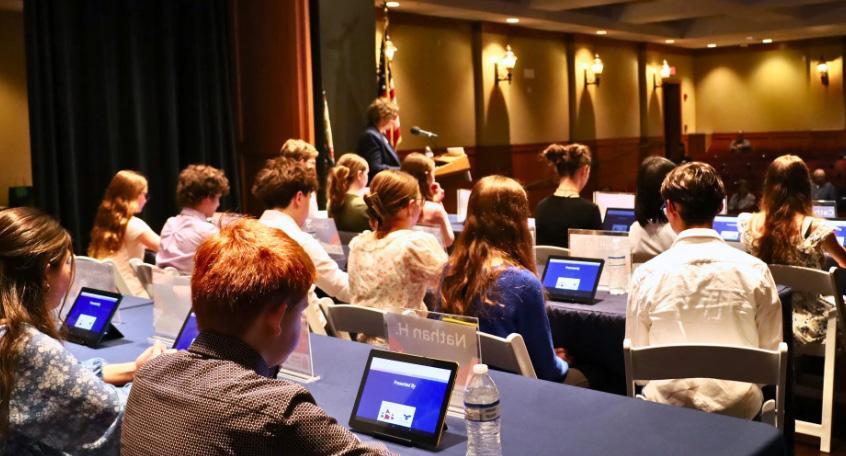
Jamestown Settlement Hosts Regional Competition of National Civics Bee
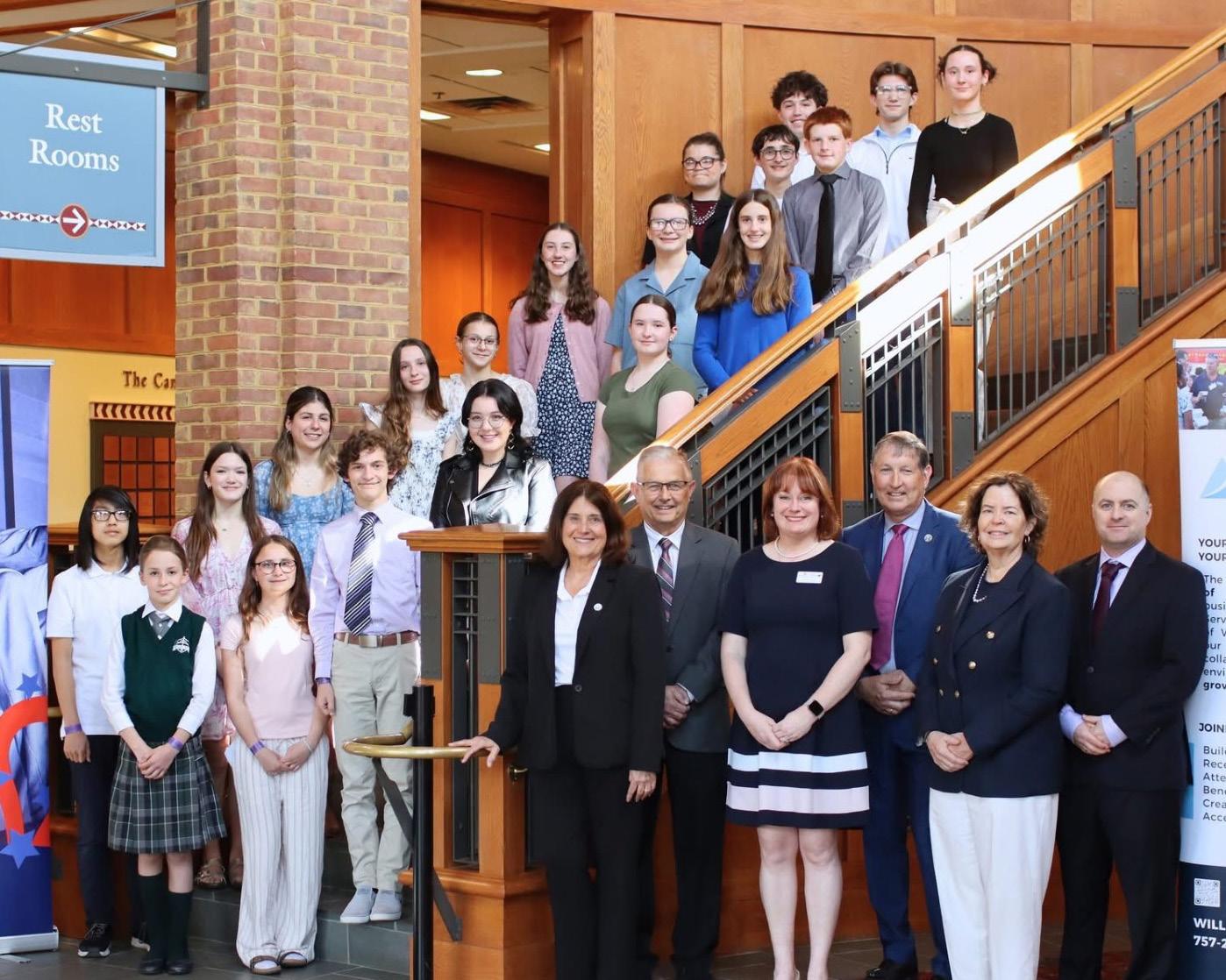
The Greater Williamsburg Chamber of Commerce hosted the regional-level National Civics Bee on March 26 at Jamestown Settlement. Presented by the Jamestown-Yorktown Foundation in partnership with the U.S. Chamber of Commerce Foundation, middle school students from across the region took the stage to showcase their civics knowledge for a chance to win cash prizes and advance to the next level of the competition. After three rounds of questions, the top five students advanced to the final round. The top three winners will advance to the state-level competition on July 24 hosted by the Colonial Williamsburg Foundation. JYF’s Leon Vaughan, living-history interpreter, and Alex Powell, museum learning specialist, served as emcees for the event. Photos courtesy of the Greater Williamsburg Chamber of Commerce.
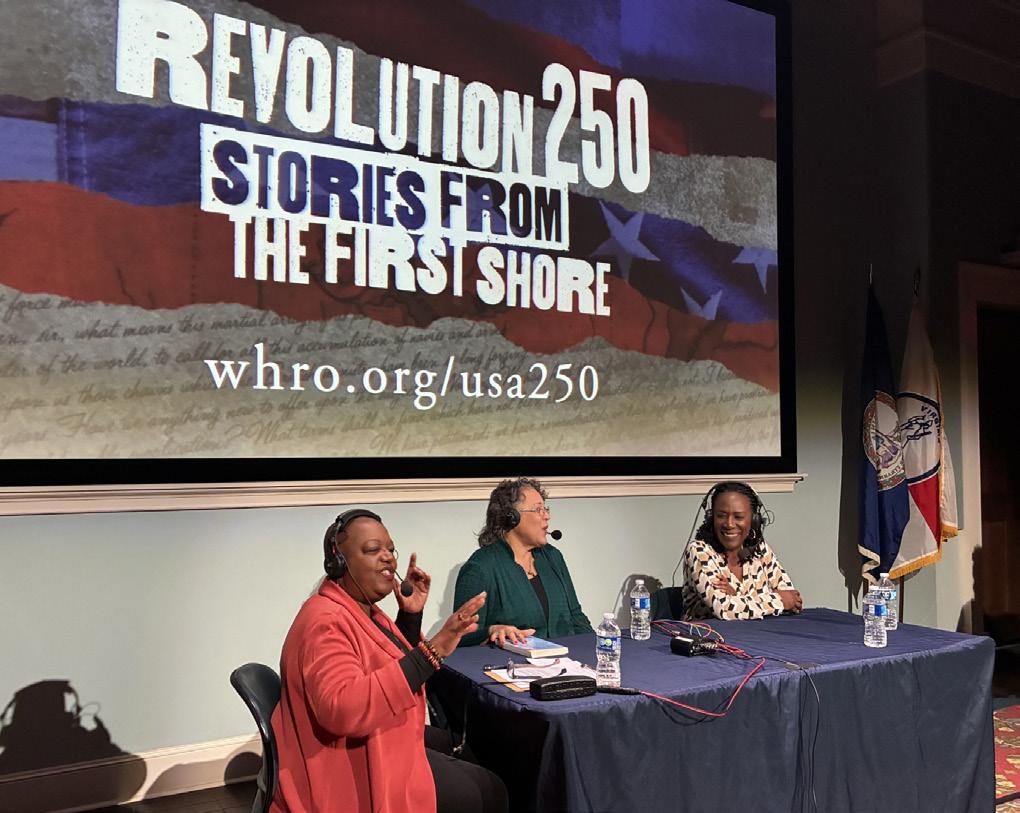
The American Revolution Museum at Yorktown hosted a March 19 live broadcast of WHRO’s “Another View” radio program on 89.5 WHRV-FM with a studio audience, hosted by Barbara Hamm Lee, a member of the Jamestown-Yorktown Foundation Board of Trustees, and featured JYF Executive Director Christy S. Coleman and Dr. Cassandra Newby-Alexander of Norfolk State University. Together, they discussed lesser-known perspectives on the role of Black Americans during the American Revolution.
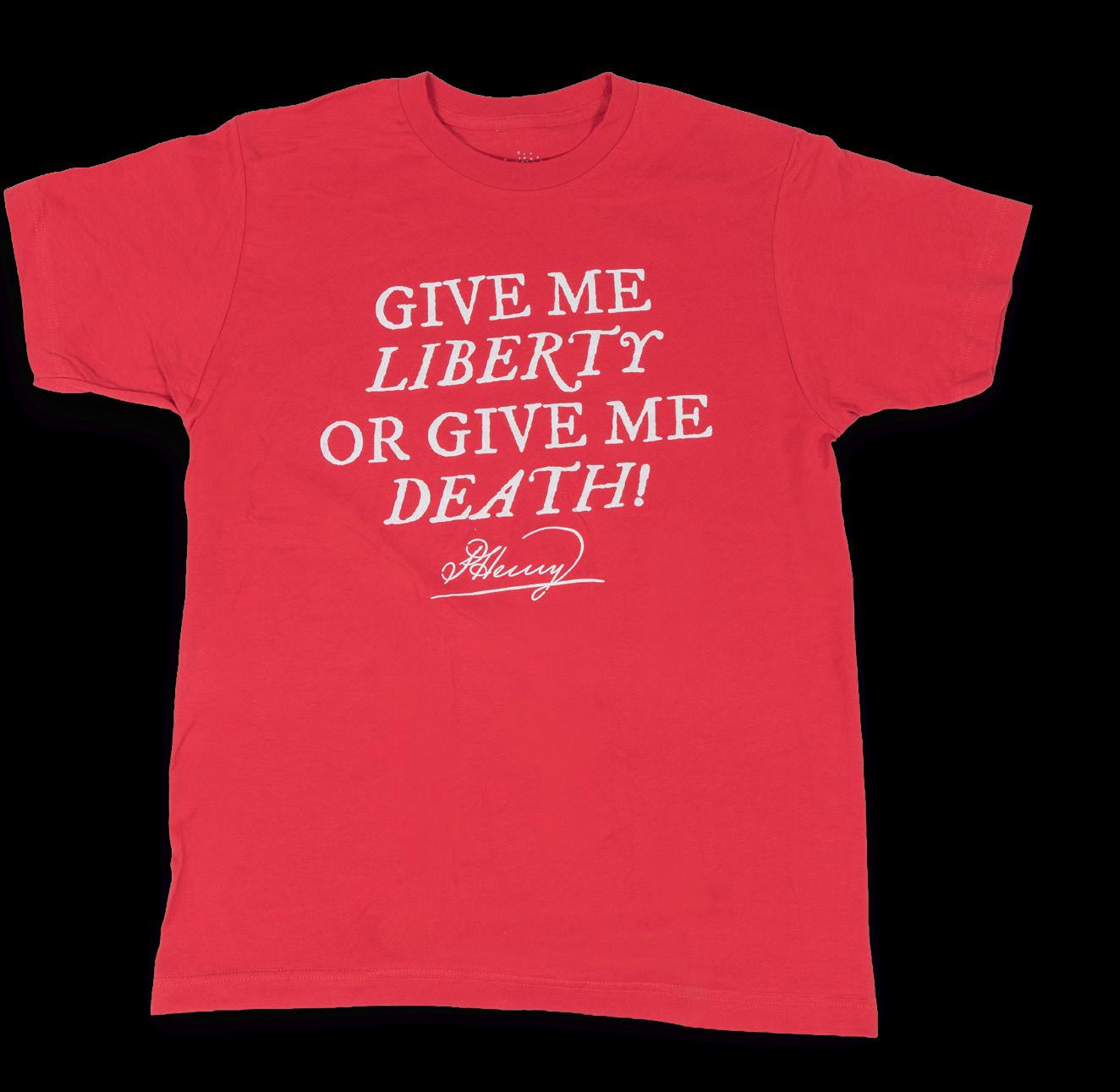
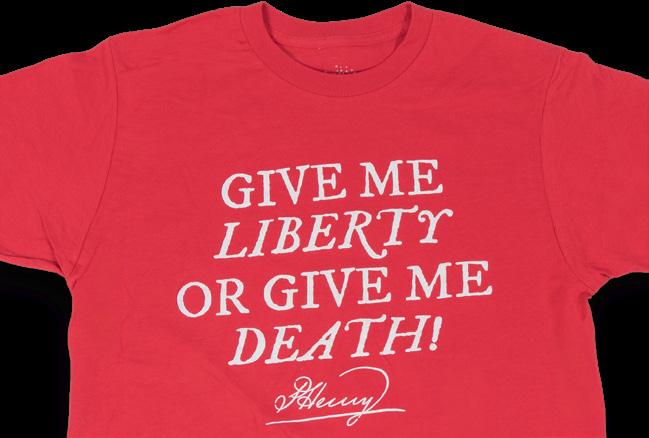
A statement-making tee in bold red captures the final statement from Patrick Henry’s powerful speech delivered on March 23, 1775, at the Second Virginia Convention, urging the colonies to arm themselves for the American Revolution. Designed exclusively for the American Revolution Museum at Yorktown.
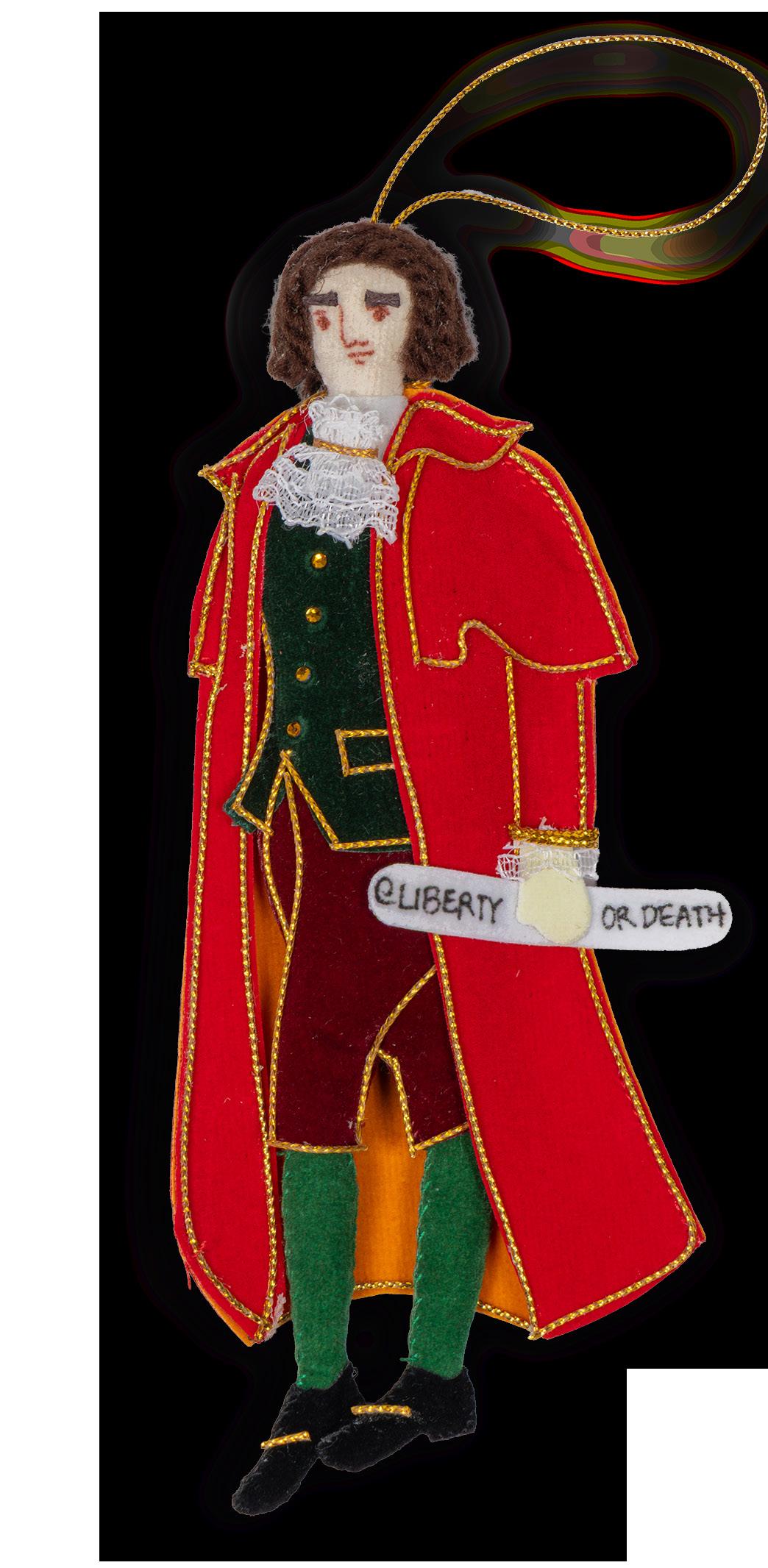
This highly-detailed, handmade ornament from St. Nicolas portrays Patrick Henry, the Virginia orator and statesman who served as a member of House of Burgesses, as the first third governor of the Commonwealth of Virginia, and member of the House of Delegates. He is best remembered, however, for the speech he delivered during the Virginia Convention of 1775 that famously ended with the words, “Give me liberty, or give me death!”
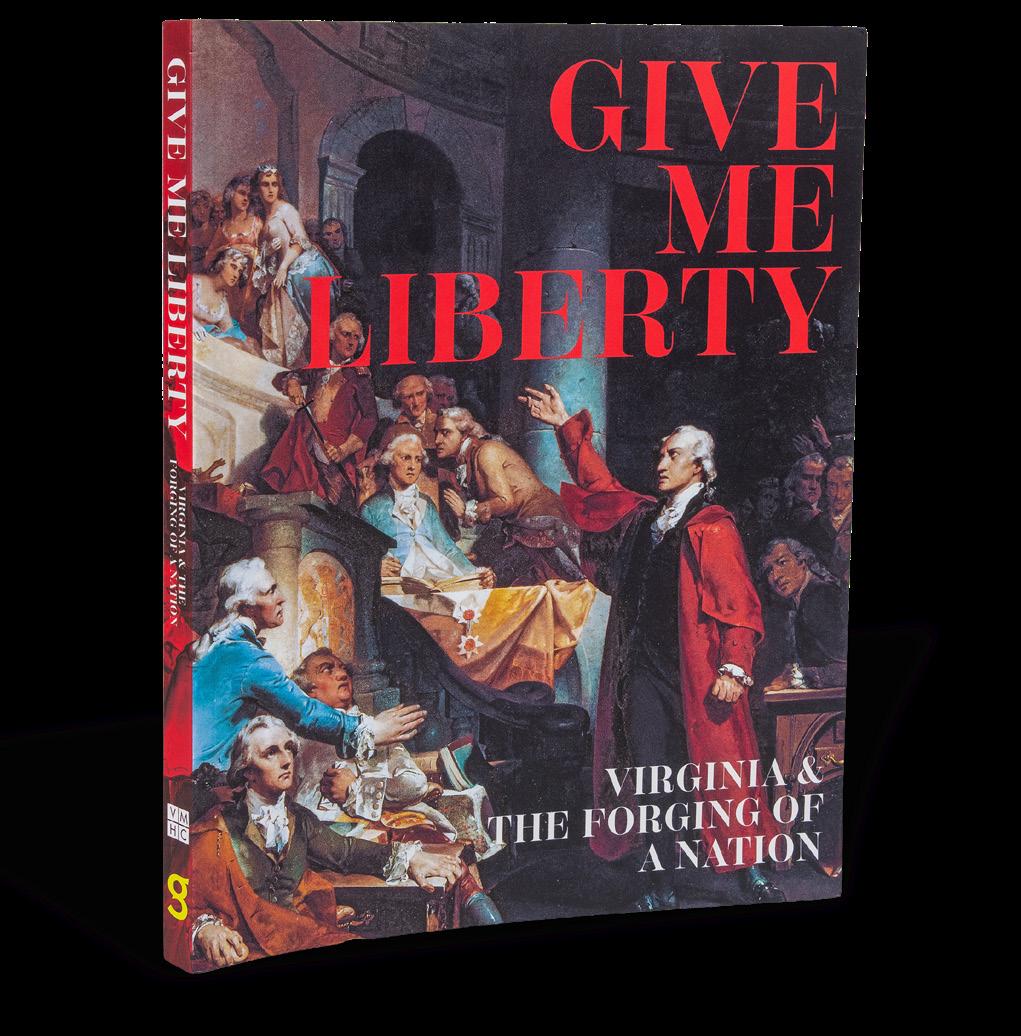
A signature souvenir volume celebrating the 250th anniversary of the American Revolution and exploring its impact and legacy in Virginia.
Accompanying the special exhibition at the American Revolution Museum at Yorktown, this highly illustrated publication marks the origins of a revolutionary new nation, focusing on the years 1775 and 1776, and the people who contributed to its formation.

Find these unique items, and many more books, gifts, and keepsakes, at our museum shop at the American Revolution Museum at Yorktown, and online at ShopJYF.com. Your purchase supports our museums as places of learning that inspire generations of Americans to understand the significance of our nation’s history.
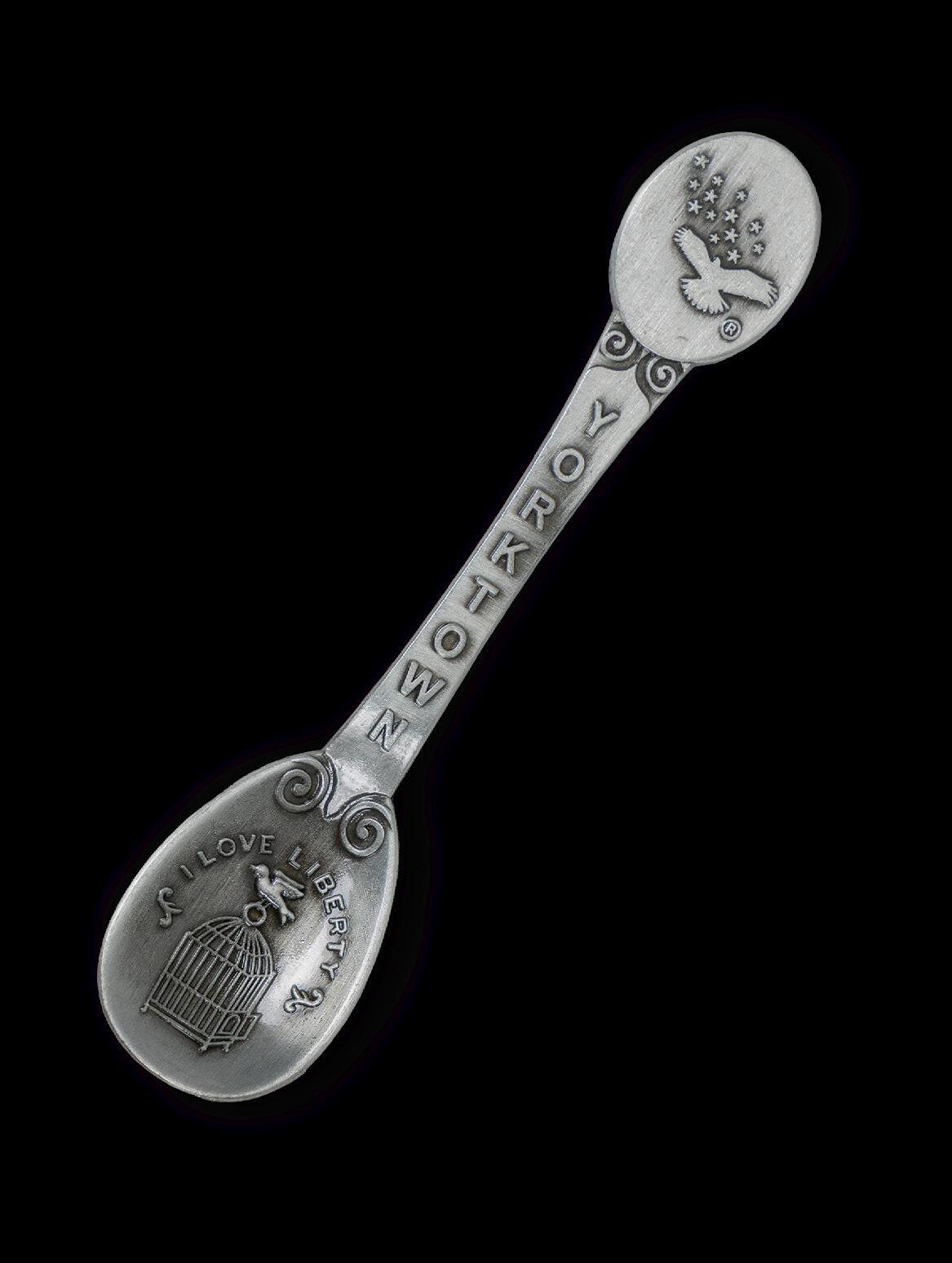
A set of five silver “I Love Liberty” Picture Back Teaspoons (English, circa 1765) are featured in the permanent gallery at the American Revolution Museum at Yorktown.
These silver “picture back” teaspoons were likely produced as a result of the public outcry over the prosecution of John Wilkes, a political activist during the period, who was imprisoned on “Libellous” and “treasonable” charges following his attacks in the North Briton newspaper against King George III.
The spoon shows a picture of a bird escaping from its cage and has the inscription “I Love Liberty.”
The imagery of a bird escaping from its cage was adopted by American patriots to represent their own cause. The souvenir version, in pewter, features YORKTOWN debossed along the handle and the museum’s eagle and stars logo graphic on its top.
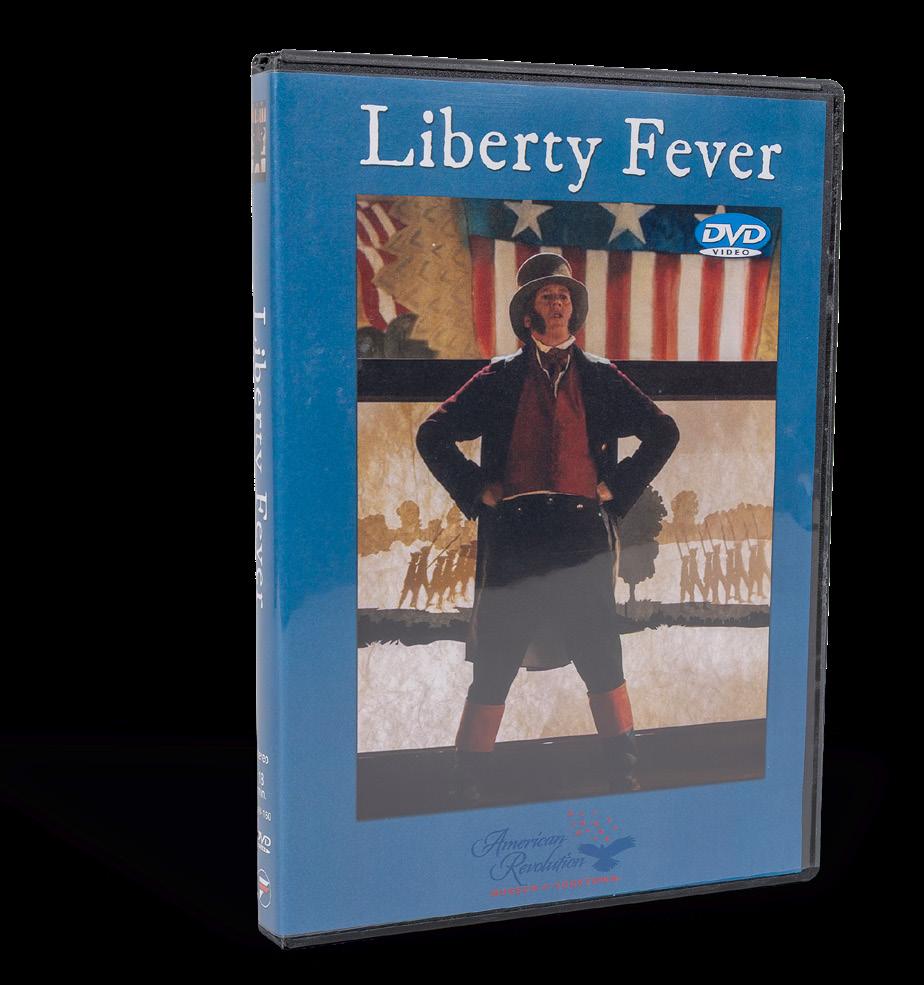
Shown daily at the American Revolution Museum at Yorktown, the award-winning film “Liberty Fever,” is set 25 years after the events of the American Revolution. In the film, an early 1800s storyteller shares accounts of the war using a moving panorama, or “crankie.” The storyteller’s performance is interwoven with live-action film segments featuring the real stories of five people who lived during the American Revolution.
This color, DVD version is the full 18-minute film.
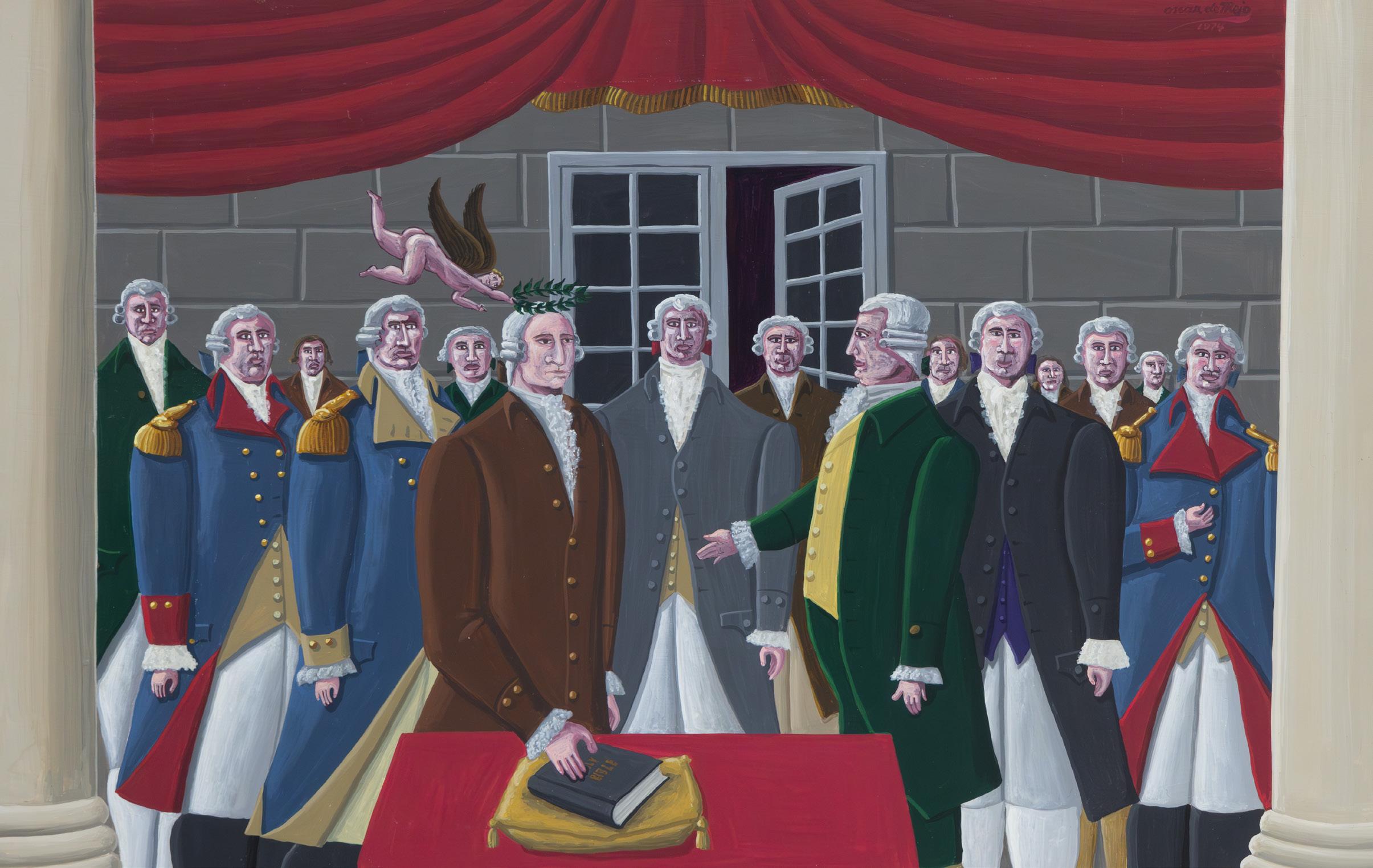
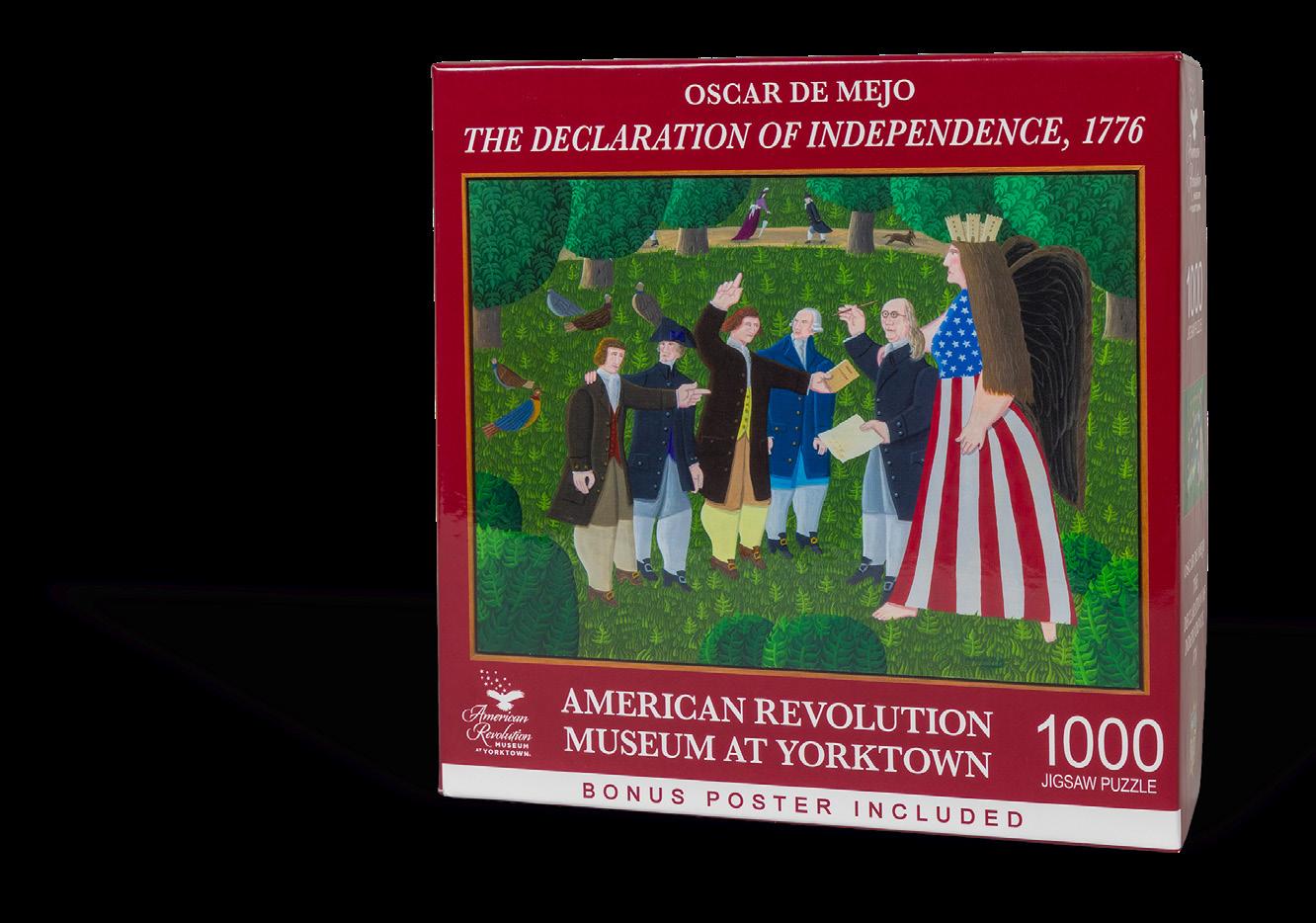
Oscar de Mejo’s “The Declaration of Independence, 1776” Puzzle
In time for the 250th anniversary of the Declaration of Independence and the American Revolution, the “Fresh Views of the American Revolution” special exhibition at the American Revolution Museum at Yorktown features original works of the artist Oscar de Mejo that were commissioned for the 1976 publication, “Fresh Views of the American Revolution,” written by historian Paul Foley.
De Mejo was an Italian immigrant who used his artistic talent to celebrate America and Americans.
The American Revolution Museum at Yorktown is fortunate to have a collection of his work devoted to the American Revolution, including The Declaration of Independence, 1776, featured here as a 1,000-piece puzzle, made exclusively for the JYF museum shops.

250 years ago, fifty-six men gathered to sign a document that would outlive every one of them; an idea so daring it reshaped the world: that a nation could rise on the promise of liberty and the hope of a better future. They signed for a future they would never see.
Today, that future is ours to protect.
As we commemorate the 250th anniversary of the signing of the Declaration of Independence, we look back with gratitude — and forward with responsibility.
Your gift of $250 to the Annual Fund in honor of the 250th is a declaration. It fuels the educational work that reaches hundreds of thousands of students each year. It supports the interpretation that brings history to life. And it ensures that, long after this anniversary has passed, future Americans will still be learning, questioning, and understanding the ideals first set down in 1776.
Honor 250 years of independence by investing in the next 250.
Make your gift of $250 to the Annual Fund today.
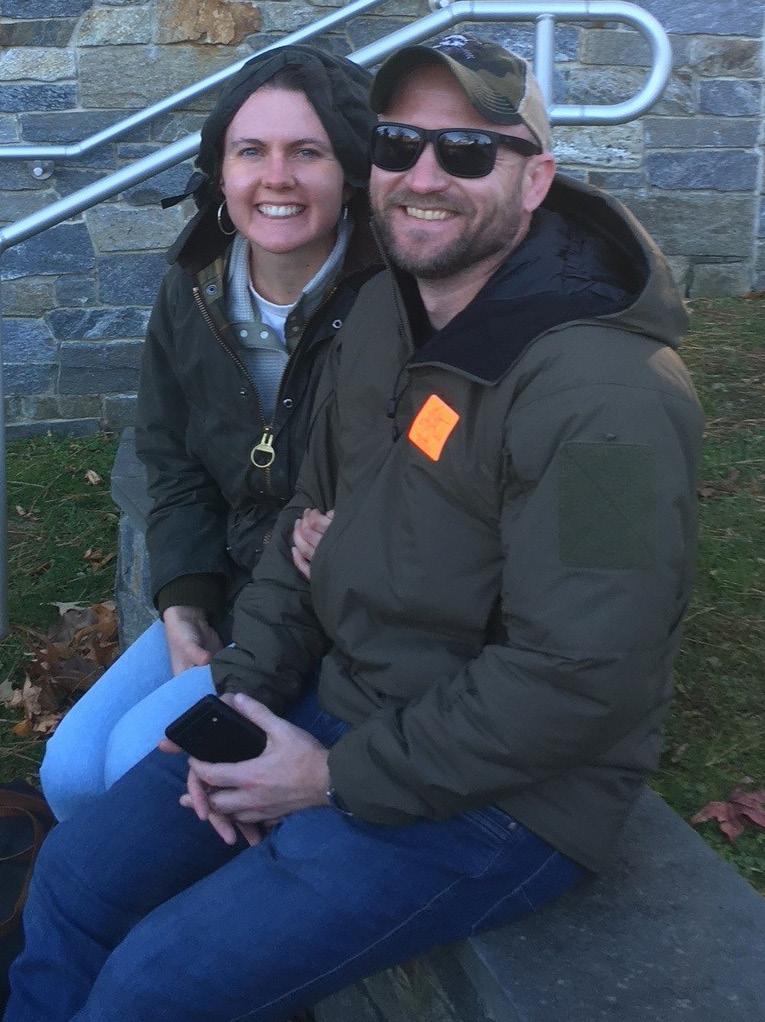
For Jessica Brown, history has never been confined to textbooks — it has been a place to return to, to learn from, and to share with those she loves. Her connection to the Jamestown-Yorktown Foundation began in childhood, shortly after her family moved to the Tidewater area. Surrounded by rich stories of early America, she felt history come alive in a way that shaped the course of her life.
That passion deepened during Jessica’s undergraduate years at the University of Virginia, when she interned with JYF. Working in both the administrative office and the Jamestown Settlement galleries, she saw firsthand what it takes to bring history to life. Even now, living outside the region, visiting both museums remains a cherished part of her holiday trips home.
It’s no surprise, then, that Jessica chose to support JYF—a place she calls “one of my favorite institutions.” She admires JYF’s commitment to innovative engagement and how each visit reveals something new.
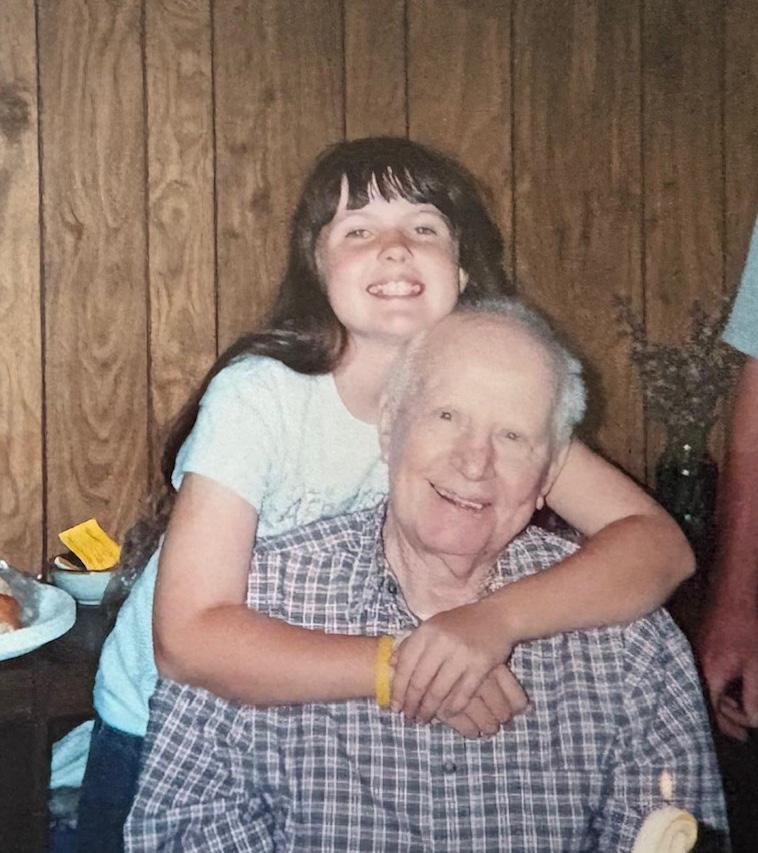
Her recent gift, made in memory of her grandfather, Thaddeus S. Blusiewicz, known to her as “Dziadzi,” adds deeper meaning to her connection with JYF. A proud Polish American and World War II veteran, Thaddeus served in Company C of the 134th Infantry Regiment under General George S. Patton’s Third Army. “I wanted to find the proper way to honor his contributions to my family and to the country,” she said. “He was and continues to be the guiding light for us.”
The gift also reflects her pride in the longstanding Polish contributions to America’s fight for freedom. Military leaders like Tadeusz Kościuszko, Casimir Pulaski, and Haym Salomon embody the shared values of liberty and independence that resonate deeply with her family’s heritage. One cherished item in her home—an ancestor’s immigration document where “subject” is crossed out and replaced with “citizen”—reminds her of the sacrifices and hopes that define the American story.
Through her support, Jessica hopes to help JYF highlight the vital roles foreign-born soldiers played in the American Revolution. “The international dimensions of the Revolution are critical to understand,” she noted.
To someone considering a gift in honor of a loved one, she said, “It’s the best possible way to honor someone. If it helps even one person learn one thing, we are collectively stronger for it.” She added that the process brought her family together in unexpected and meaningful ways. To anyone thinking about supporting JYF, Jessica’s message is simple: “Absolutely do it. It’s a wonderful institution with a worthy cause. The process of giving has been easy, enjoyable, and about so much more than finances. I hope to be able to do it again myself.”
—Heather Minty, Director of Membership and the Annual Fund
From his first days as a Jamestown-Yorktown Foundation youth volunteer to his current role interpreting the life of a Continental Army soldier, Raffe Harris-Walker has always been drawn to places where history and purpose meet. This summer, as he prepares to leave for basic training with the United States Army, that connection to service is something both personal and real.
Raffe first discovered JYF through a simple nudge from a family friend. “I have a friend in 4 - H, and his mom knew that I liked history, so she told me to see if I could volunteer,” he said. What began as a way to earn school service hours quickly became something he genuinely enjoyed. “I would have done it anyway because it’s so fun!”
At the American Revolution Museum at Yorktown, Raffe found meaning in the daily realities of a soldier’s life. “Food shortages and medical needs and just the living conditions in general,” he explained, “helps to try and put yourself in their shoes and their mindset and to try to relay to visitors all the sacrifices they made.”
Soon, he’ll step into a uniform of his own. With two grandfathers who served in Vietnam and an uncle who served in Iraq, military service has long been part of Raffe’s family’s story. Unsure of his path after high school, the Army offered clarity. “I thought the military would give me structure and purpose,” he shared.
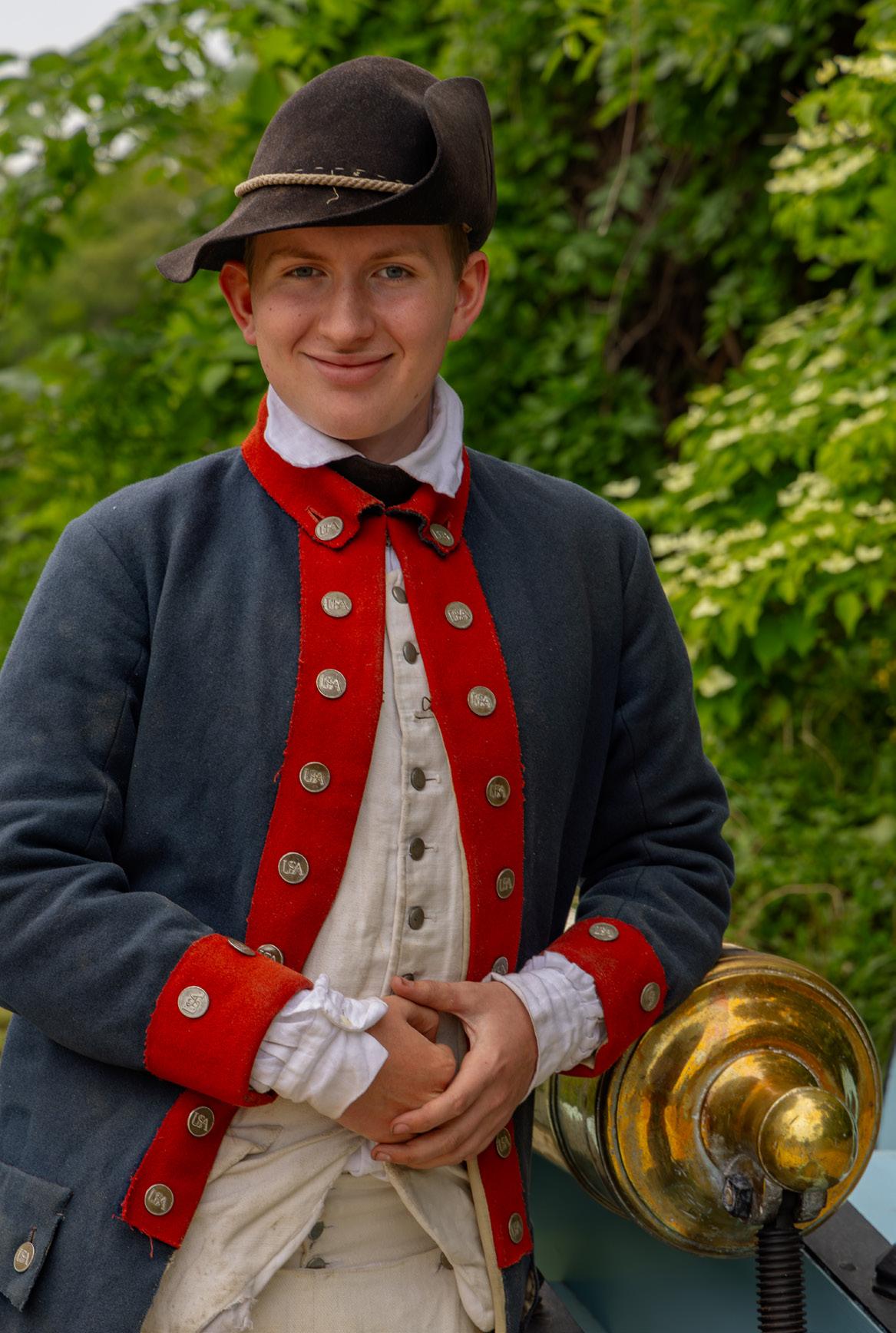
Though he doesn’t draw a direct line between Revolutionary soldiers and his own enlistment, he recognizes the broader idea of giving back. “They were fighting for independence from Great Britain. I am joining because I think it’s the best thing for me right now and because I want to give back to the country that has given me so much.”
Working at JYF has shaped him in practical ways as well. “I used to be super shy, and now I feel like I can communicate better and work in a team setting better,” he said. One moment stands above the rest: the day his grandfather visited and told him how proud he was of the work he was doing. Looking ahead, Raffe hopes for a strong military career, the chance to attend college, and the opportunity to teach history or work in law enforcement. When he thinks about liberty, he frames it simply: “That people can pursue their happiness without restrictions, whatever that means to them. As long as it’s not harming others, that is.”
For Raffe, liberty is lived through service, shaped by gratitude, and strengthened by the choices he’s ready to make.
—Coy Mozingo, Senior Director, Human Resources and Professional Development
—Gretchen Johnson, Living History Manager
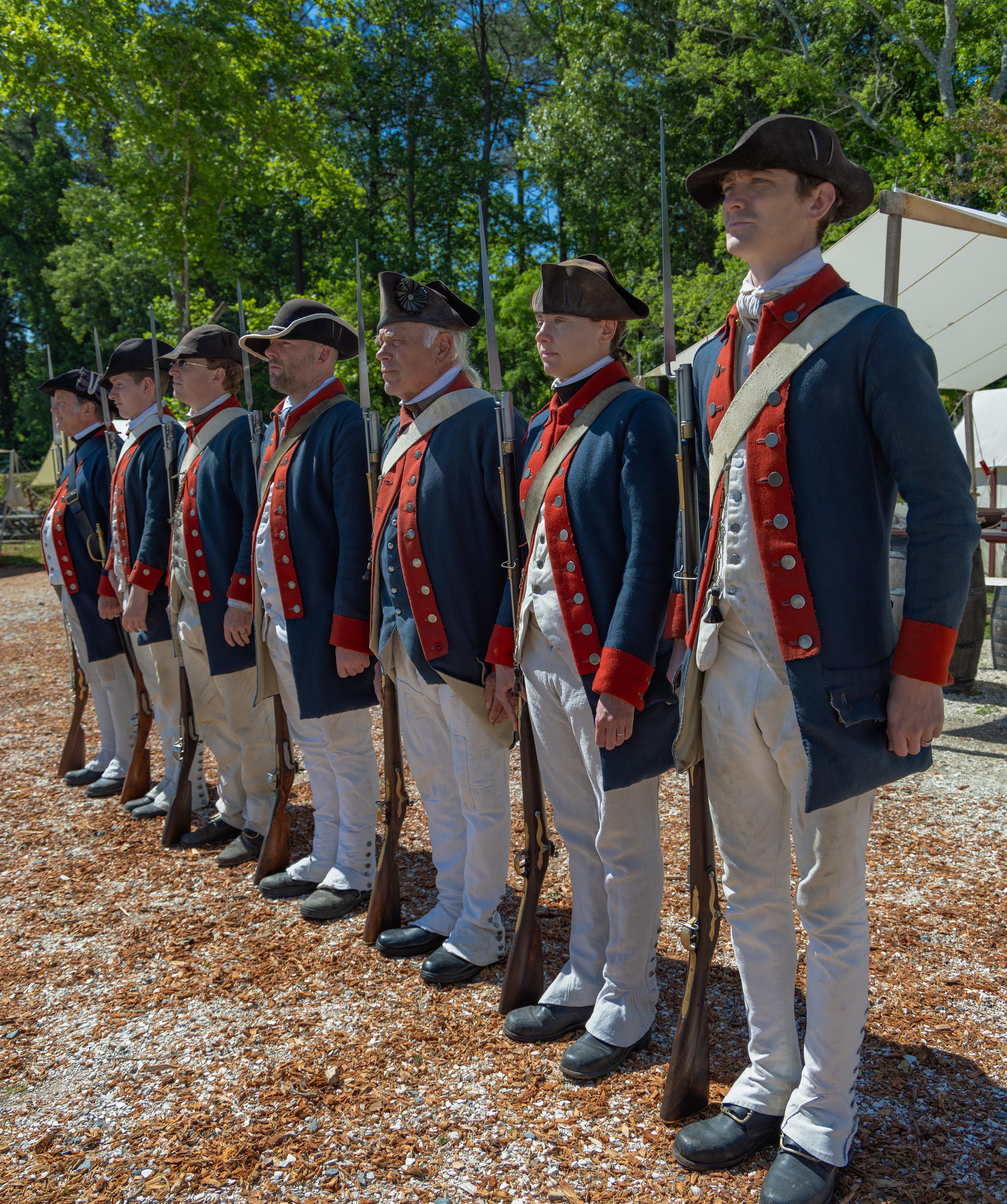
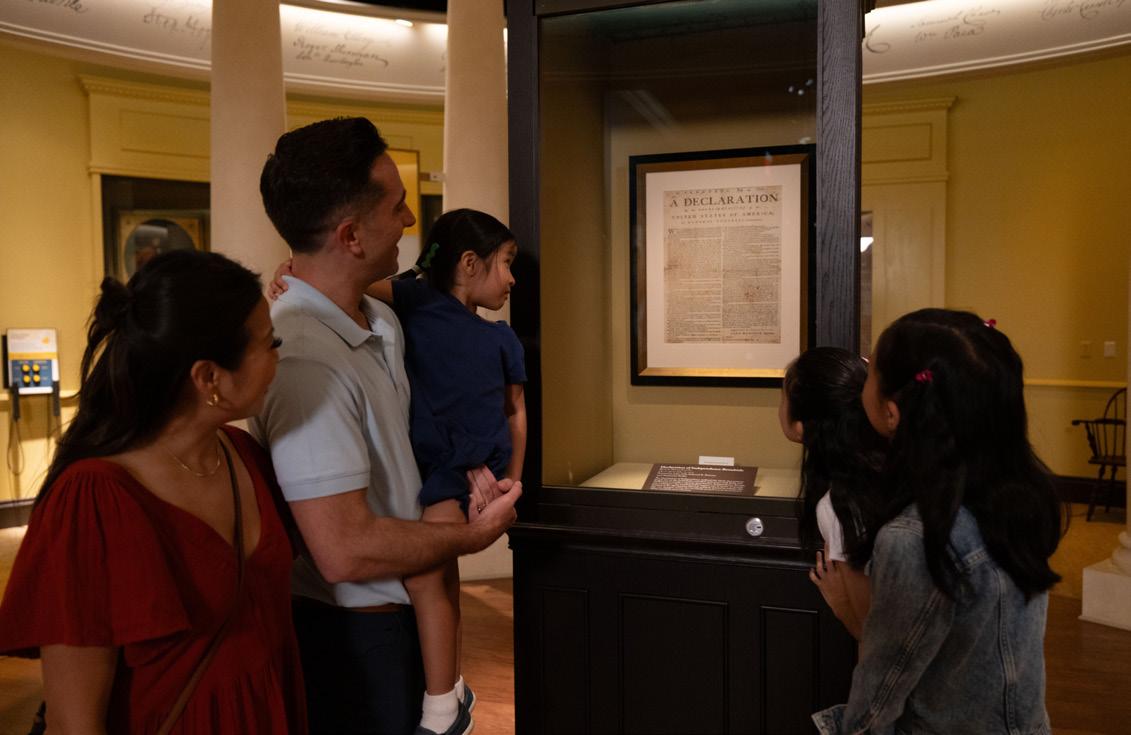
JUNE 27 AT AMERICAN REVOLUTION MUSEUM AT YORKTOWN, share your wish for America in 50 years, puzzle your way out of a civics-themed escape room and meet organizations that help people in the community.
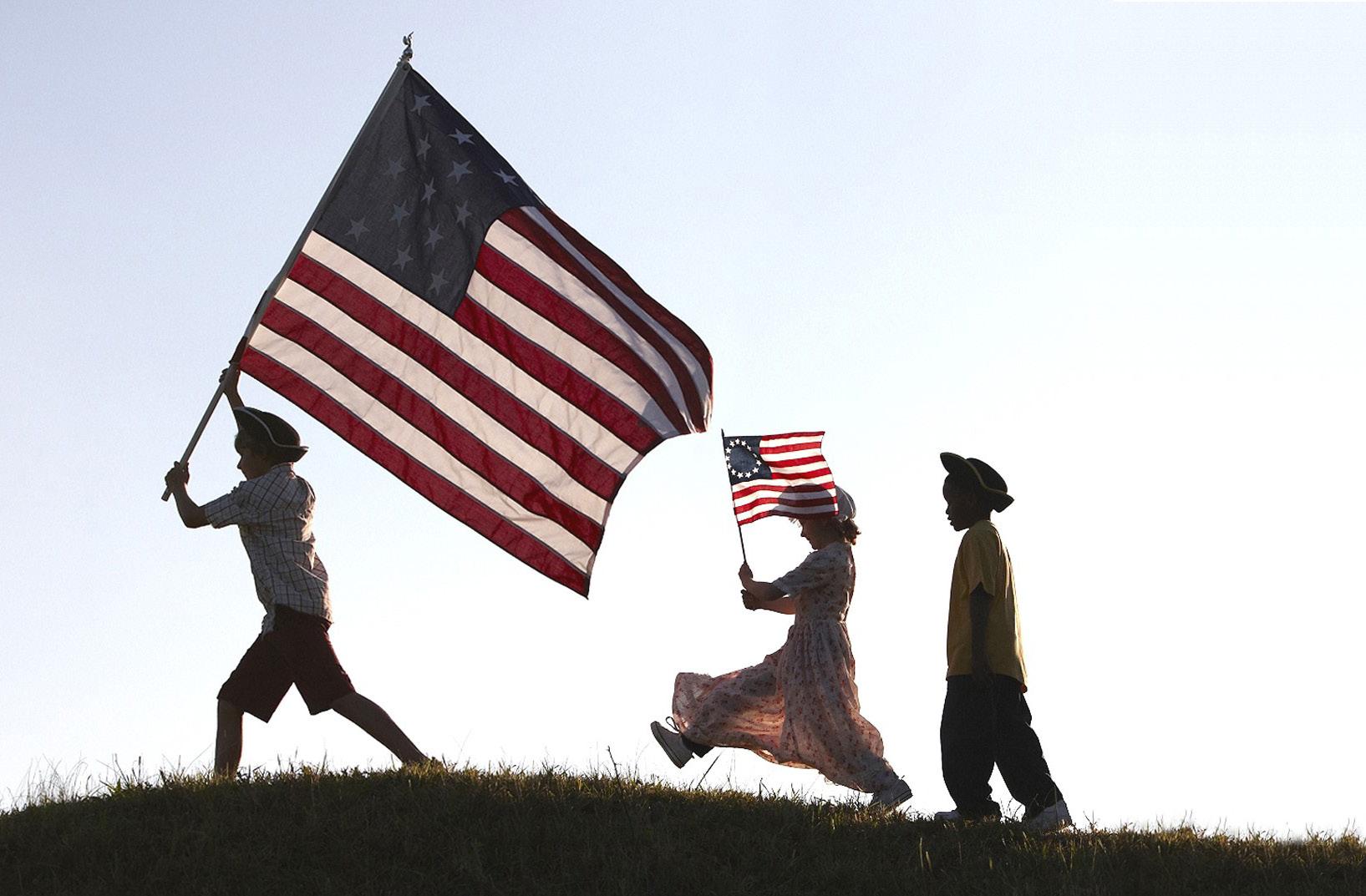
JULY 4 AT AMERICAN REVOLUTION MUSEUM AT YORKTOWN, celebrate the 250th anniversary of the founding of the country with traditional cookout fare along with music, puppet shows, crafts, and competitions.
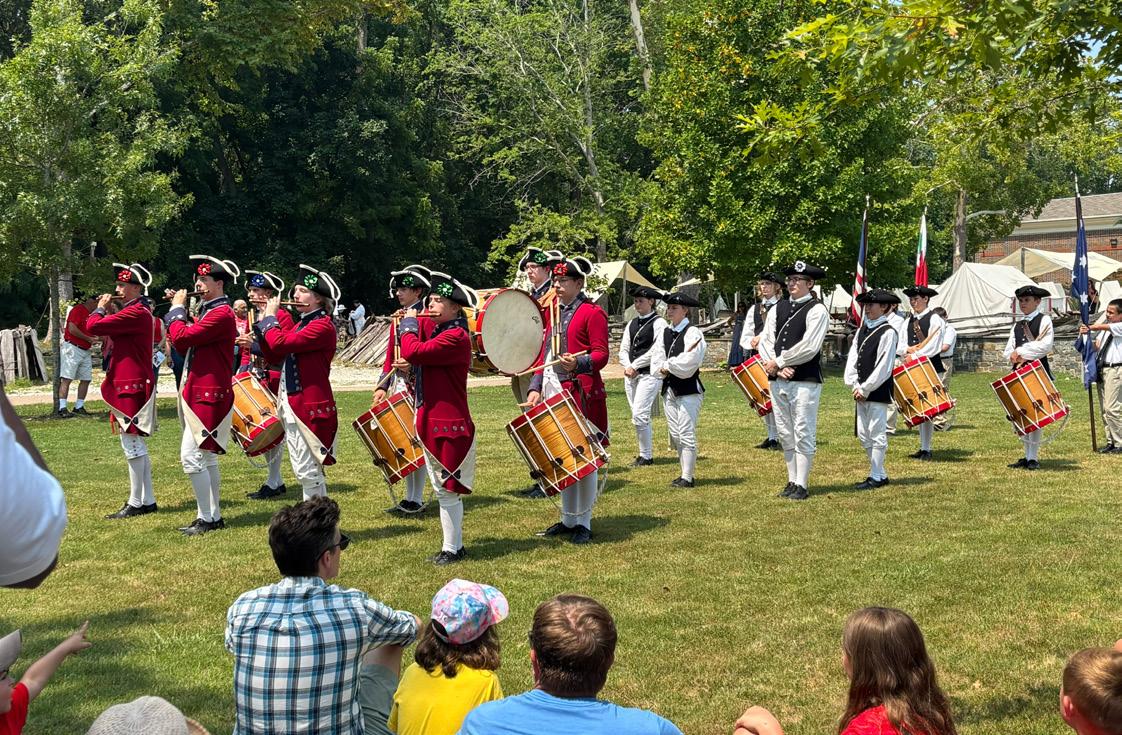
JULY 4 AT AMERICAN REVOLUTION MUSEUM AT YORKTOWN, during the day, salute the 250th anniversary of the Declaration of Independence with interpretive programs and artillery demonstrations.
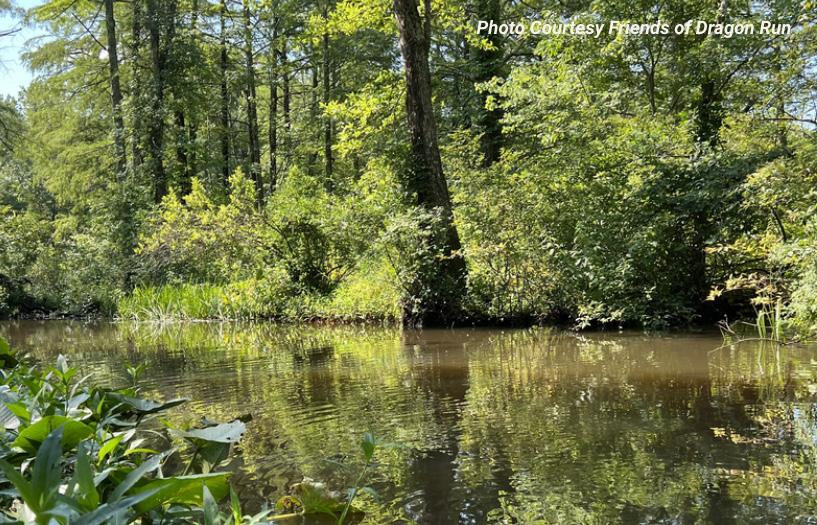
JULY 15 AT JAMESTOWN SETTLEMENT, our panel draws on traditional ecological knowledge alongside military history, environmental and archaeological evidence to highlight the Indigenous perspectives of what is now known as Bacon’s Rebellion.
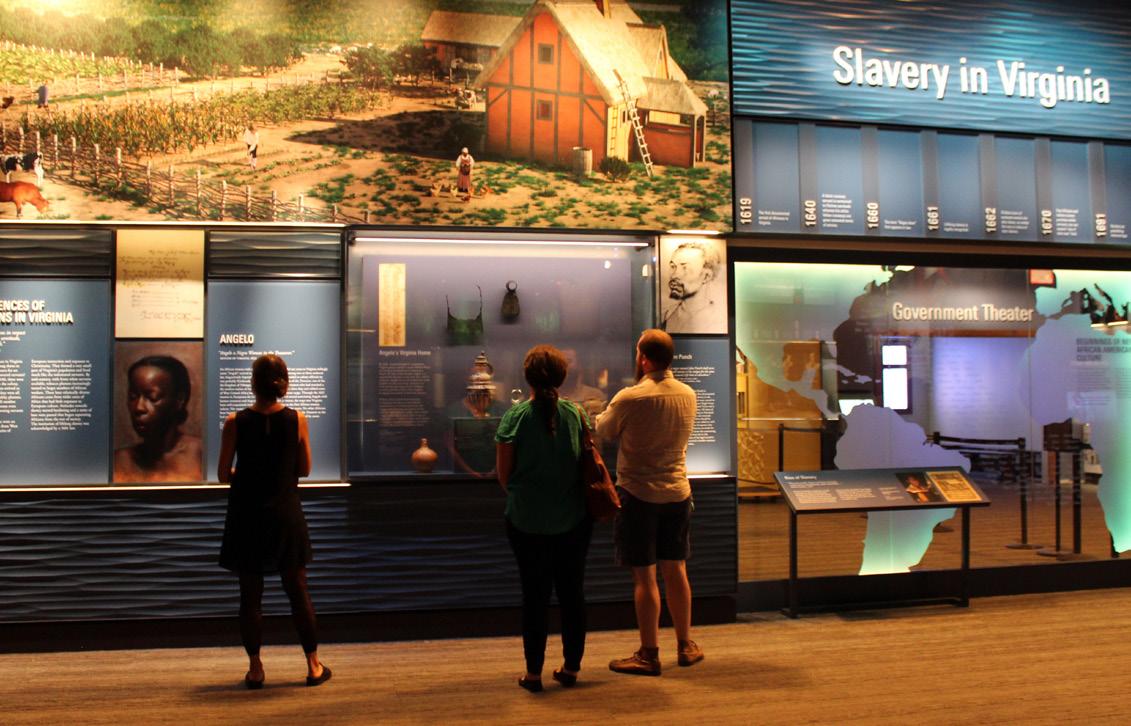
AUGUST 15 AT JAMESTOWN SETTLEMENT, honor the legacy of the first recorded Africans brought to Virginia in 1619 with reflections of history and modern perspectives through an African American lens.
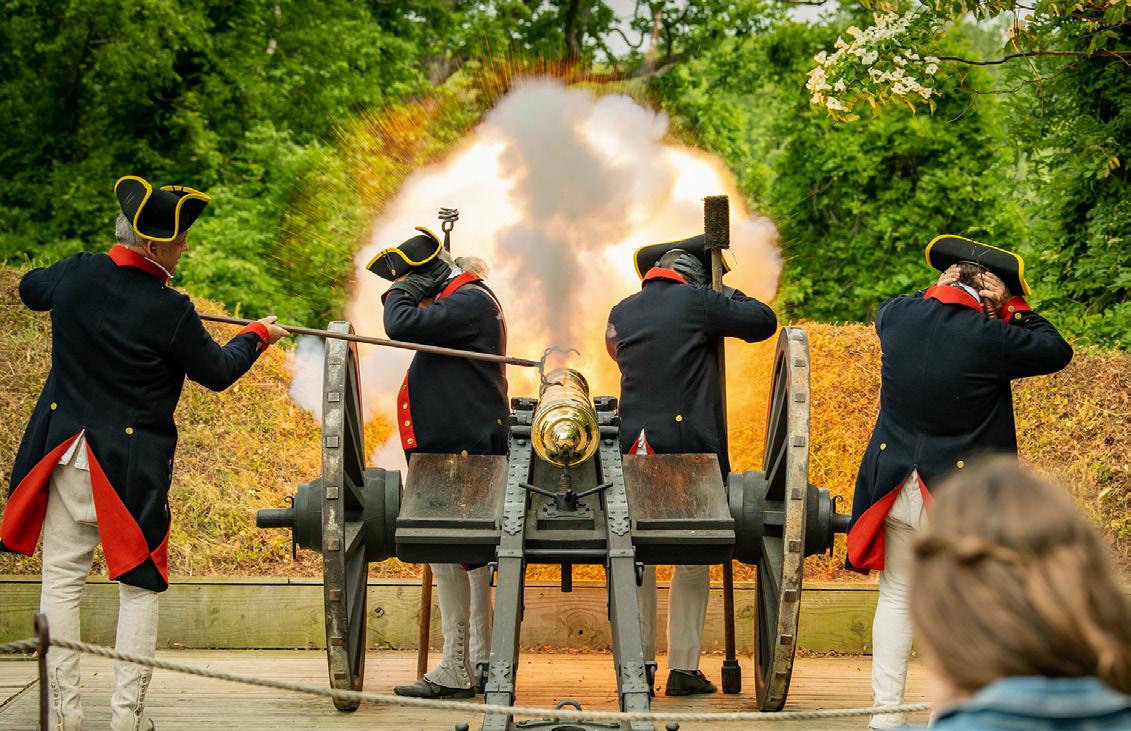
OCTOBER 17 & 18 AT AMERICAN REVOLUTION
MUSEUM AT YORKTOWN, celebrate America’s momentous 1781 Revolutionary War victory with artillery firings, exhibits, and interpretive programs examining the pivotal siege.
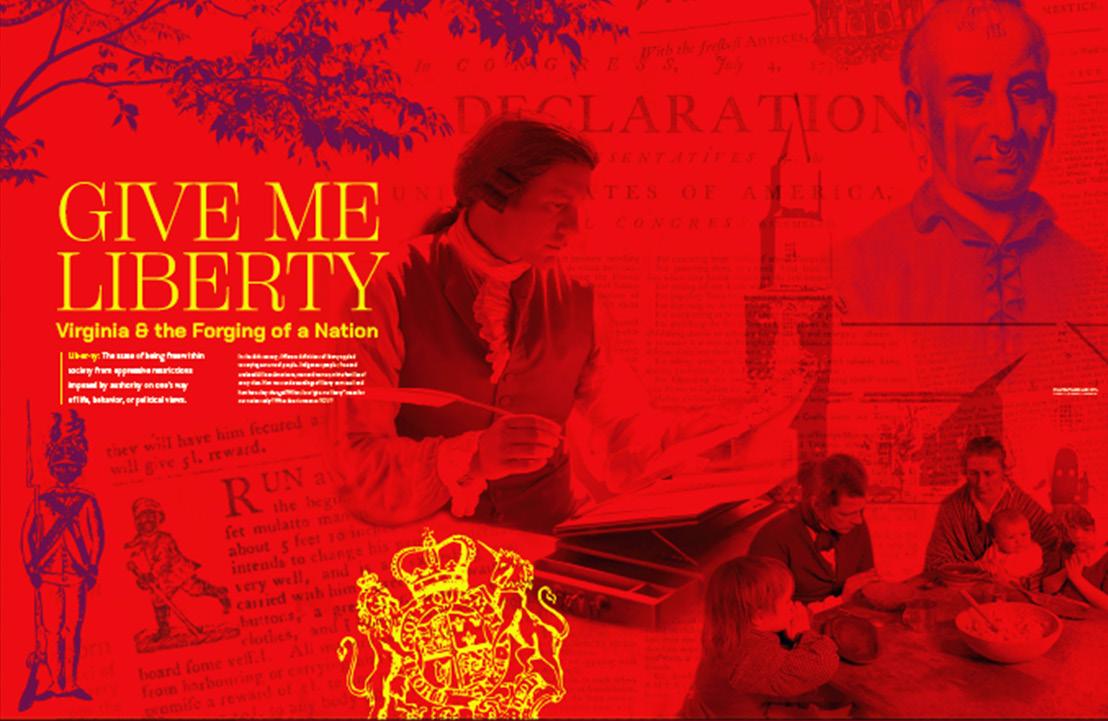
SEPTEMBER 19 AT AMERICAN REVOLUTION
MUSEUM AT YORKTOWN, explore stories from the VA250 signature exhibition —“Give Me Liberty: Virginia & The Forging of a Nation”—and engage with our Constitution Week activities.
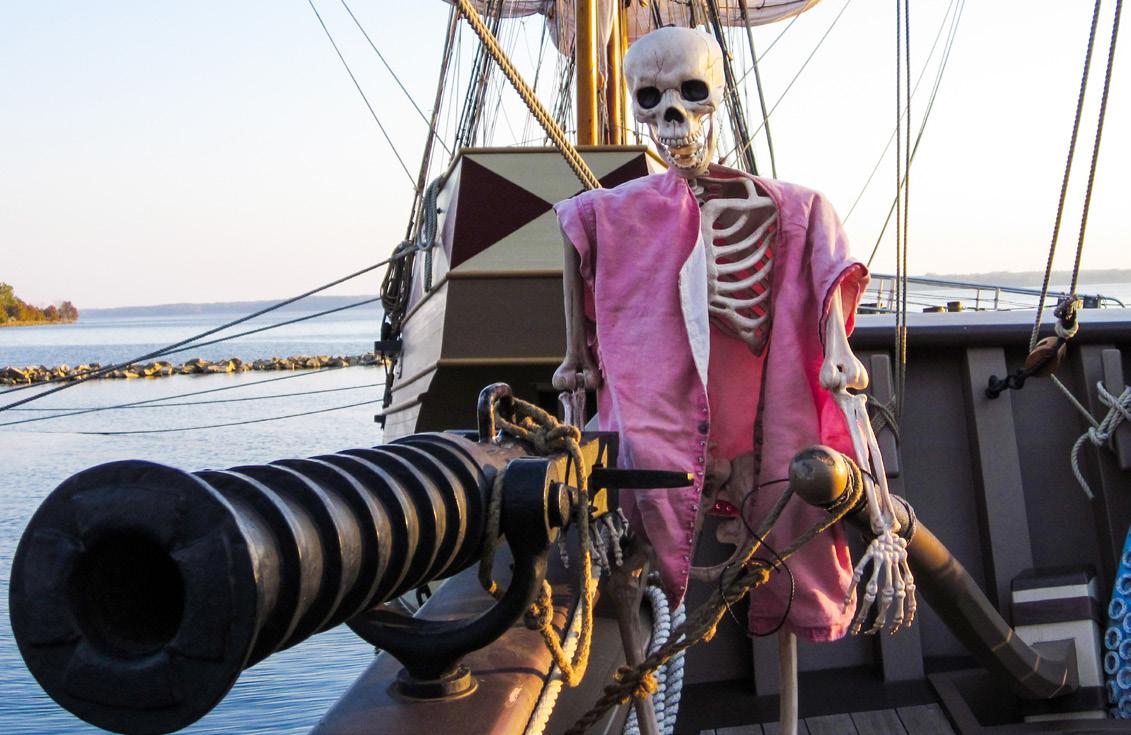
OCTOBER 23 & 24 AT JAMESTOWN SETTLEMENT, experience a spooky, not scary night, featuring creative crafts and games, festive music, face painting, haunted houses, and spectacular ships.
Civic Season • June 19 – July 4 | Kids Night Out: Revolutionary Spy Craft • August 8
“We Will Hold Our Land”: The Cherokee War of 1776 • September 12 & 13
Museums open year-round 9 a.m. to 5 p.m. daily. Tours and ticket information available at jyfmusums.org/visit .
Check out the complete calendar at jyfmuseums.org/events.