JYFMUSEUMS.ORG
|
1
INSIDE JYF FALL 2026
from the
EXECUTIVE DIRECTOR
A
fter years of planning, the 250th anniversary of the Declaration of Independence is underway! The Jamestown-Yorktown Foundation continues to present a plethora of programs, exhibits, lectures, and more to explore the genesis of this foundational document and its global meaning. More importantly, the commemoration serves as an opportunity to consider what was at stake for the founding generation and what legacies and responsibilities they left for the generations that followed. Consider for a moment, the elegant phrase written by Thomas Jefferson, “We hold these truths to be self-evident, that all men are created equal, that they are endowed by their Creator with certain unalienable Rights, that among these are Life, Liberty and the pursuit of Happiness.” What did he and the delegates mean? For whom did they mean it? These questions have been debated since the nation’s founding while the most profound element is often missed. What is most important is how people understood it then and now. The document quickly became not just a list of grievances against a monarchy, but a defining creed for a new nation. It served as the guidepost when drafting the U.S. Constitution. Its words served as a multigenerational reminder that when we fell short, we provided motivation to do better. The goal was simple: to ensure life, liberty, and the pursuit of happiness for all the nation’s people. Through 2031, we will continue to mark the 250th anniversary with compelling evidence-based programs that explore the American Revolution’s scope, losses, triumphs, and tragedies. Join us as we journey to the victory at Yorktown, exploring the stories of known and lesser-known peoples that made and make America. Best,
Christy S. Coleman Executive Director
INSIDE JYF
EDITORS Stephanie Johnson Mariruth Leftwich Tracy Perkins Deana Ricks PRODUCTION MANAGEMENT Joan Heikens Janet Kane Lianne Koch Glenda Turner DESIGNER Holland Winslow STAFF CONTRIBUTORS Lisa Bishop, Elizabeth Bostelman, Brian Forrester, Constance Graham, Melissa Gill Thompson WRITERS/PHOTOGRAPHERS Felicia Abrams, Colt Allgood, Harvey Bakari, Anne Marie Baker, Morgan Culbertson, Makayla Embry, Ruthann Gray Grabowski, Travis Henline, Allen Hoilman, Heather Hower, Dexter Johnson, Gretchen Johnson, Janet Kane, Homer Lanier, Mariruth Leftwich, Lisa Lucas, Sally Meyer, Heather Minty, Coy Mozingo, Tracy Perkins, Jaie Pizzetti, Konstantin Rega, T.J. Savage, Kendall Schoonover, LeeAnn Shelhorse, Eric Speth, Bly Straube, Dan Uptmor, Catherine VanDyke Enjoy INSIDE JYF? Support the museums by donating to the Jamestown-Yorktown Foundation, Inc. If you no longer wish to receive INSIDE JYF in print or would like to convert to digital, email insidejyf@jyf.virginia.gov or call (757) 253-4139.
INSIDE JYF The Jamestown-Yorktown Foundation, an educational institution of the Commonwealth of Virginia accredited by the American Alliance of Museums, fosters through its museums — Jamestown Settlement and American Revolution Museum at Yorktown — an awareness and understanding of the early history, settlement, and development of the United States through the convergence of American Indian, European, and African cultures and the enduring legacies bequeathed to the nation.
JAMESTOWN-YORKTOWN FOUNDATION P.O. Box 1607,Williamsburg,VA 23187 (757) 253-4838
jyfmuseums.org
PHOTO CREDIT: YORK COUNTY TOURISM / SEAN SMITH
Volume 6, No. 3—printed November 2026
2
|
INSIDE JYF
table of CONTENTS About the Cover
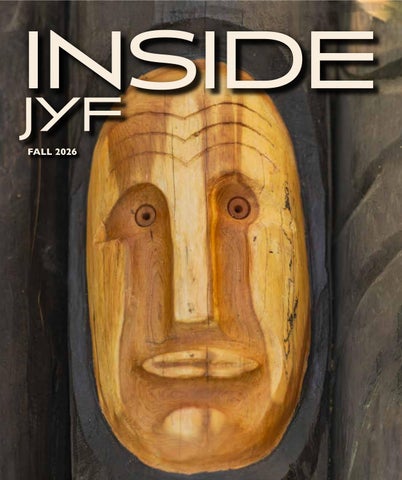
Ceremonial Posts carved anew for Paspahegh Town A stoic face of a red cedar post is one of seven carved anew for Paspahegh Town’s re-created ceremonial circle at Jamestown Settlement. Read about how Virginia Indian tribal citizens and elders with the Pamunkey, Mattaponi, Upper Mattaponi, and Chickahominy tribes have spent the past year working with the Indigenous Peoples Program to carve these new posts to honor an important aspect of their cultural heritage.
8
10
12
18
Howitzers Thanks to a generous gift, a pair of howitzers that witnessed the Siege of Yorktown go on permanent display.
Behind the Smile Bartmann jugs, famous for bearded faces in a range of emotions, are at the heart of a new Bartmann Goes Global study.
Sail250 ® Virginia Relive the summer of America’s 250th signature moments, from Sail 250 ® through the Fourth of July.
JYFMUSEUMS.ORG
Pursuit of Happiness
As America marks the 250th anniversary of the signing of the Declaration of Independence, scholars reflect on the “pursuit of happiness” and the inalienable rights for those living in the 13 Colonies. 4
20
25
31
Whet Your Appetite Culturally rich cookbooks and kitchenware make great gifts for holiday happiness.
Art as Happiness Exhibits and programs showcase art as a lens to reflect on the past and refract a spectrum of feelings.
FY26 Annual Report Read about JYF’s record-setting year and the top supporters who strengthen our educational and curatorial initiatives.
|
3
4
|
INSIDE JYF
Perspectives on HAPPINESS in REVOLUTIONARY AMERICA The “pursuit of happiness” is one of the most enduring phrases from the Declaration of Independence. While 21st-century Americans may imagine happiness as personal joy or fulfillment, the founders understood it as a lifelong quest for self-improvement and growth. During the American Revolution, people from different backgrounds pursued happiness according to their hopes, responsibilities, and lived realities.
A Patriot Leader: To Govern Ourselves For many Patriot leaders, the pursuit of happiness meant both the opportunity and responsibility to govern themselves. A successful republic required citizens capable of protecting their rights, participating in public life, and contributing to the common good. That demanded personal discipline, including the ability to place community interests above private ambitions. The Revolution created the opportunity to establish government based on the consent of the governed, but it had not guaranteed that the experiment would succeed. Happiness remained a lifelong pursuit of improving oneself while helping sustain the new republic. This balance of civic duty and personal virtue would determine whether the Revolution's promises could endure.
A Continental Soldier: To Return Home For Continental soldiers, happiness could be found in the camaraderie and shared purpose that sustained them until they could return home. Early in the war, soldier Joseph Plumb Martin struggled to adjust to army life. In 1776, he wrote that he “…was a stranger to such living; I began soon to miss my grandsire’s table and cellar.” 1 By war’s end, however, Martin had mixed feelings about leaving his fellow soldiers. When the time came to go home in 1783, he wrote that “…there was as much sorrow as joy transfused on the occasion.” The soldiers, he remembered, “were as strict a band of brotherhood as Masons and, I believe, as faithful to each other.” Happiness meant returning to civilian life while carrying the bonds forged through years of war.
Martin, Joseph Plumb. “A Narrative of a Revolutionary Soldier: Some of the Adventures, Dangers, and Sufferings of Joseph Plumb Martin.” Signet Classics, 2001. 1
JYFMUSEUMS.ORG
|
5
African Americans: To Make Liberty Real For African Americans, the pursuit of happiness was deeply connected to survival, family, and freedom. Neither Patriots nor Loyalists promised full emancipation or equal citizenship. William “Billy” Flora, a free man, and Jack, an enslaved man, reveal different ways these pursuits took shape. Billy Flora was a business owner and taxpaying property holder who could not exercise the full rights of a British subject. He fought for the Patriot cause at the Battle of Great Bridge in 1775, seeking to escape the legacy of Governor Gooch’s 1736 effort to “fix a perpetual Brand upon Free Negros and Mulattos,” excluding them from citizenship, “that great Priviledge of a Freeman…” 2 His military pension later enabled him to free his enslaved wife, while bounty land helped them build lives among an expanding free Black community, but within a legal and social system that kept their security and opportunities beyond their full control. Jack, described on a 1777 certificate as “a Negro man belonging to Mr. John Austin,” enlisted in the Continental Army as a substitute for his owner in exchange for freedom. Once free, he could use his military pay and pension to pursue freedom for his enslaved wife. For Billy Flora and Jack, the pursuit of happiness meant turning military service into greater freedom for themselves and their families.
A Virginia Farm Woman: To Build a Secure Home The Revolutionary War transformed households creating opportunities for some free women to exercise greater authority at home. Enslaved and poor free women also managed households, but under severe constraints, with fewer resources and choices and greater vulnerability to violence. Virginia Patriot women, such as Frances Bland Tucker, often assumed new responsibilities while their husbands served in the militia and army. In letters to her husband, St. George Tucker, Frances described raising children, coping with inflation, managing labor, and making difficult economic decisions in his absence. Her letters reveal a woman who had become accustomed to handling complex agricultural and financial affairs. On a turbulent and changing homefront, the pursuit of happiness could mean creating stability and security for family.
2
Brown, Kathleen. “Good Wives, Nasty Wenches, and Anxious Patriarchs: Gender, Race, and Power in Colonial Virginia.” University of North Carolina Press, 1996.
8 6
|
INSIDE JYF
Indigenous Peoples: To Protect Our People For Indigenous nations of the Eastern Woodlands, pursuing happiness centered on protecting safety, autonomy, homelands, and community during an era of profound change. Increasing threats to lands and cultures forced some tribes to relocate from their ancestral homelands and others to adapt to rapidly changing circumstances. Revitalization movements sought to preserve tribal sovereignty and cultures while families worked to maintain a sense of normalcy in the face of almost constant stress and anxiety. As their worlds were transformed, tribes sought to protect their families and homelands while navigating colonial conflicts and aggressive western expansion. Their pursuit of happiness required resilience while protecting identity, family, and community.
German Auxiliaries: To Begin Again For some of the approximately 6,000 German auxiliary soldiers who remained in America after the Revolution, the pursuit of happiness took an unexpected form with the opportunity to build a new life. More than 30,000 German troops augmented Crown forces during the war, not as “mercenaries,” but as part of the common practice of allied nations sharing troops. Congress tried to entice them to desert with promises of land and civil liberties, but the fiercely loyal, well-supplied soldiers largely ignored these offers. Captivity changed the possibilities. Prisoners were deliberately housed in German-settled areas and encouraged to stay. As their ties to home weakened, new relationships and economic opportunities took root. Friendships, marriage, and the prospect of greater prosperity gave some compelling reasons to remain and pursue happiness by beginning again in America.
For Indigenous nations of the Eastern Woodlands, pursuing happiness in the 18th century centered on protecting safety, autonomy, homelands, and community during an era of profound change. Shown are tribal citizens from the Eastern Band of Cherokee Indians and the Cherokee Nation who presented dancing and living-history demonstrations at the American Revolution Museum at Yorktown during a September event to commemorate the 250th anniversary of the Cherokee War of 1776.
“Soldiers in Uniform” watercolor depicting, from left, a Black soldier of the First Rhode Island Regiment, a New England militiaman, a frontier rifleman, and a French officer. French artist Jean Baptiste Antoine de Verger (1762-1851), who fought in the war as a sub-lieutenant in a French regiment, kept an illustrated journal of his experiences in the war. Image from The Anne S.K. Brown Military Collection at the Brown University Library, courtesy of the Library of Congress World Digital Library.
JYFMUSEUMS.ORG
| 7
Virginia Patriot women often assumed new responsibilities while their husbands served in the militia and army, including raising children, coping with inflation, managing labor, and making difficult economic decisions in their absence.
Pursuing Happiness Across Revolutionary America, happiness was neither a single experience nor equally available to everyone. Patriot leaders associated it with civic virtue and self-government. Free and enslaved African Americans sought rights and liberty. Women created security amid upheaval, while soldiers both longed for home and mourned wartime brotherhood. Indigenous peoples protected homelands and cultures amid profound change. Some who arrived to quell the Revolution even found it in the opportunity to begin new lives in America. Their experiences reveal the pursuit of happiness as an ongoing effort to build a meaningful life within the circumstances of revolutionary change.
Contributors — Colt Allgood, Living History Interpreter — Harvey Bakari, Curator of Black History & Culture —Travis Henline, Curator of Indigenous History & Culture — Gretchen Johnson, Yorktown Living History Manager — Jaie Pizzetti, Education Research Specialist —T.J. Savage, Yorktown Content & Training Supervisor
8
|
INSIDE JYF
Ceremonial Circle Connects
Indigenous People to the Creator A space to give thanks for nature’s bounty
I
n a wooded clearing outside Jamestown Settlement’s Paspahegh Town, seven carved posts with stoic faces form a ceremonial circle, symbolizing a sacred setting for Virginia’s Indigenous peoples. Weathered and worn over the years, each of the circle’s wooden posts have been carved anew. Traditionally, the circle “is a spiritual and sacred area for our people,” said Sam McGowan, a Mattaponi citizen. “Like a church, it is a place where we can give thanks for all the seasons, before and after. It’s respect for the Creator.” McGowan is a longtime educator for the Jamestown-Yorktown Foundation, and now manager of the Indigenous Peoples Program working with Virginia Indian communities to rekindle relationships and preserve their rich cultural heritage. “We’ve really seen a cultural revitalization,” said McGowan, noting the collaboration with Virginia Indian tribes. “I’m grateful to be able to incorporate our own story at our museum and do what I can for our community. People want to know our stories and hear our stories. And now we’re able to tell the stories through our own lens.” Over the past year, tribal citizens and elders with the Pamunkey, Mattaponi, Upper Mattaponi, and Chickahominy tribes have honed their skills in shaping distinct facial features into the grain of the red cedar posts, each with their own personality. “I went with an ‘old-school’ face,” said McGowan, pointing to the post’s deep-set eyes and jawline. He worked on the project with Chief W. Frank Adams of the Upper
Mattaponi, Chief Kevin Brown of the Pamunkey, Darryl Custalow of the Mattaponi, and Keenan Stewart of the Chickahominy Eastern Division, all descendants of Algonquian-speaking tribes. Using stone-and-bone tools to start, the craftsmen later traded traditional methods for modern tools to work the seasoned heartwood. “Red cedar was used because it is sacred to our people,” said McGowan. “In the old family cemetery, our people used red cedar marking our graves on the reservation.” He explained that for Virginia Indians, the circle represents Mother Earth and cycles of life, with posts representing spirits (Kewasowoks) that Manitou, the great spirit and creator of everything, put here to help keep balance and watch over the well-being of the people (Renapewe).
JYFMUSEUMS.ORG
|
Jamestown Settlement’s Paspahegh Town The Paspahegh were one of the 30-plus Algonquian-speaking tribal groups that belonged to the Powhatan paramount chiefdom. Jamestown Settlement’s re-creation is based on archaeological findings at a nearby site along the James River, oral tradition from Virginia’s state and federally recognized tribes, and descriptions and illustrations recorded by English colonists in the 16th and 17th centuries. Shown is a 1590 engraving by Theodor de Bry depicting the Algonquian town of Secota, located in the Outer Banks region of present-day North Carolina. The tribal group who resided in Secotan were closely related in language and culture of those in Tidewater Virginia. Written accounts from the English at Jamestown in the early 17th century noted that the Powhatan Indians danced almost every night.
“The Town of Secota,” Theodor De Bry, 1590. Library of Congress.
Depending on the occasion, the face of the post would be painted in different colors and hues, each with its own meaning and purpose. The celestial cycles of the earth, sun, and the moon keep everything connected and in balance, with celebrations in the spring and fall to give thanks for nature’s bounty and prayer for the next harvest. Traditionally, Mattaponi tribal ancestors would dance counterclockwise in the circle, moving in step with the earth’s cycle. “From farming to fishing, hunting, trapping, and gathering, every season has provided us what we need for subsistence,” McGowan said. “We know none of
this beautiful world and all its wonders would exist without the Creator. Our ceremonies give thanks to the one who makes that all possible.” The new posts are expected to debut in the re-created Paspahegh Town in time for Jamestown Settlement’s Taquitock Festival on November 7, when citizens from Virginia’s state and federally recognized tribes come together to celebrate the fall harvest. Take a virtual tour of Jamestown Settlement’s Paspahegh Town at jyfmuseums.org/paspaheghtown-360-video.
9
10
|
INSIDE JYF
The Gilpin (at left) and the Bowen howitzers are on display at the American Revolution Muesum at Yorktown.
T
wo powerful pieces of history now on exhibit at the American Revolution Museum at Yorktown give testimony to the remarkable events that unfolded during the Siege of Yorktown in October 1781. These two silent witnesses finally can tell their story of the end of the British Empire, and the victory of a new nation’s declared ideas that soon after became the United States of America. Two bronze 5½-inch howitzers, one cast in 1755 in London by William Bowen, the other cast in 1760 in London by Richard Gilpin, were present in the British defenses of Yorktown during the siege that effectively ended the American Revolution. General Cornwallis placed these two deadly field pieces on the south waterfront of his fortifications, likely to guard against an advance by the French forces from the York River. These guns were among 244 artillery pieces surrendered by Cornwallis’ forces at the victory of allied American and French armies after the lengthy siege. With generous financial support of the National Society Daughters of the American Revolution (NSDAR), the American Revolution Museum at Yorktown has prominently exhibited the
howitzers just outside the Siege Theater, where a 4D experiential film plays out the dramatic events that led to the British surrender to allied American and French forces. The NSDAR celebrated the new installation during an event in September. The Gilpin-cast howitzer is displayed on a detailed reproduction of a period-correct howitzer carriage, complemented nearby by a reproduction French siege cannon. The carriage-mounted howitzer is shown on a low platform allowing the visitor the best vantage point to view this remarkable artifact while simultaneously protecting it. The Bowen-cast howitzer, set on a customfabricated mount, presents a detailed, close-up view of the howitzer’s topside. The prominent display reveals the inscription “SURRENDERED BY THE CAPITULATION OF YORKTOWN Oct. 19 1781” astride the royal cypher of King George II and below the armorial badge of the Master of Ordnance, Lt.-General Sir John Ligonier. The gun founder’s name, William Bowen, is incised at the breech end. — Allen Hoilman, Director of Exhibition & Curatorial Services
JYFMUSEUMS.ORG
|
11
Guiding and fitting the howitzers into place was a monumental task by Curatorial, Exhibit Services, and Visitor Experience team members Chris Daley, Allen Hoilman, T.J. Savage, Homer Lanier, Paul Everett, Melissa Carruth, and Lisa Bishop.
History of the Guns The British howitzers, based on their inscription and an inventory, were surrendered to the victorious allies on October 19, 1781. Their location during the Siege of Yorktown is shown at the British battery in Sebastian Bauman’s 1782 map, “Plan of the Investment of York and Gloucester.” Records trace their history to Fortress Monroe at Point Comfort, Va., with photographs from 1903 and 1908 documenting them at Trophy Park. In 1924, the College of William & Mary procured their transfer to the Wren Building, where they remained for 100 years. As trophies of war under the authority of the U.S. Army Tank-Automotive Command, the howitzers were offered as a gift following a rigorous application and vetting process to the American Revolution Museum at Yorktown, where countless thousands more will know their story of the victory of ideas over Empire.
LIBRARY OF CONGRESS, GEOGRAPHY AND MAP DIVISION.
Test fitting the Gilpin howitzer on the reproduction carriage prior to installation.
12
|
INSIDE JYF
Bartmann Jugs: Behind the Why are these German fellows smiling? We do not know why the potters in Frechen, Germany chose these cheerful facemasks for their Bartmann (“bearded man”) stoneware jugs, but it is easy to imagine that these robust vessels made the colonists happy. As containers for alcoholic beverages, Bartmann jugs, found in the earliest archaeological contexts of James Fort, were welcome drinking companions at the remote outpost, where libations ran out quickly and colonists were sometimes forced to drink water until provisions arrived with the next ship. Bartmann jugs, with their distinctive bearded faces on their necks and medallions applied to their bellies, were produced in the Rhineland area of western Germany beginning in the 16th century. The original inspiration for the facemasks has been much debated. One popular interpretation is that they were intended to emulate the mythological Wild Man, who was believed to inhabit the forested and mountainous regions of Germany. Similar to the Yeti of Tibet and Bigfoot of the Pacific Northwest, the Wild Man was described as an innocent creature living close to nature and free from the burdens and
Courtesy, Jamestown Rediscovery (Preservation Virginia). Photo by Rob Hunter.
Smile
restrictions of society. The association of his imagery with a jug that traditionally contained an intoxicant such as wine may have expressed this freedom that was envied by 16th-century Northern Europeans. Although Bartmann jugs were not produced to represent any living person, by the 1630s English consumers of the jugs were popularly referring to them as Bellarmines. This was a satirical reference to the Jesuit Cardinal Roberto Bellarmino, a staunch opponent of Protestantism and vocal critic of King James I. To “argue with the Bellarmine” was to empty the jug full of alcoholic beverage!
Global Reach In the 17th century, the English and Dutch brought Bartmann jugs to colonial settlements in North America, where they are common archaeological finds. Of all these early sites, the ca.1607-1625 James Fort at Historic Jamestowne represents a particularly valuable resource because it contains many documented events when discarded jugs and other debris were deliberately buried during times of clean up or rebuilding which
JYFMUSEUMS.ORG
|
13
They have been found in South America, in shipwrecks around the world, and in places along coastal Africa, and Southeast Asia. The Bartmann faces, decorations, manufacturing techniques, and archaeological contexts reveal a complex network of production, trade, cultural exchange, and consumption, connecting the early Virginia colony to Europe and the wider early modern world.
A Bartmann jug located by archaeologists in the soils of James Fort. Courtesy, Jamestown Rediscovery (Preservation Virginia).
created convenient time capsules. Jamestown Rediscovery archaeologists have found over 150 Bartmann jugs on the site that will contribute important information to the understanding of the jug. Bartmann jugs were not only common storage and serving vessels at Jamestown, but they were truly a global product that traveled the expansive European colonial trade route.
Intact Bartmann jug discovered in a ca. 1611-1617 James Fort well.Courtesy, Jamestown Rediscovery (Preservation Virginia).
14
|
INSIDE JYF
Do you have a Bartmann? You can help discover what’s “behind the smile” of the Bartmann jug. If you have a Bartmann in your collection, the Bartmann Goes Global team would love to hear about it. At bartmanngoesglobal.org, you can record your jug and explore the growing digital collection of Bartmann jugs others have entered. The site also contains blogs and publications where you can learn more about the project — and about witch bottles!
Global distribution map of Bartmann jugs during the 16th to 18th century. Courtesy, Christoph Keller, LVR - Amt für Bodendenkmalpflege im Rheinland
Partnership The Jamestown-Yorktown Foundation is pleased to collaborate with organizations in the United Kingdom and Germany to find out what is “behind the smile” of the Bartmann. Titled Bartmann Goes Global — the cultural impact of an iconic object in the early modern period, the project is funded by a joint German-United Kingdom grant from the Arts and Humanities Research Council (AHRC) and the Deutsche Forschungsgemeinschaft (DFG). JYF is among team members from the Museum of London Archaeology, the universities of Bonn and Tübingen, the Rhineland Regional Association (LVR) — Landesmuseum Bonn, and the LVR-Amt für Bodendenkmalpflege im Rheinland (LVR-State Service for Archaeological Heritage in the Rhineland), to investigate archival sources, cultural contexts, global distribution, design and technology, and scientific analyses of the clay bodies.
Typochronology An intriguing aspect of Bartmann jugs being examined by the Bartmann Goes Global team is the chronological change in their shapes and decorative details. Already by the time of Jamestown, the richly decorated jugs, with realistic facemasks sporting ornately fashioned facial hair, were becoming simplified. Over time, the globular body became more ovoid, while medallions bearing coats of arms of European cities and royalty were replaced by floral motifs or pseudo-armorial devices. The smiling human-like bearded faces became frowning, grotesque masks. Bartmann jug, ca. 1590 –1610, with medallions of the double-headed eagle of the Holy Roman Empire and the coat of arms of Jülich-Cleve-Berg. Both medallions have been found in James Fort. JYF2018.19 Jamestown Yorktown Foundation.
Was the change a result of mass production, the loss of specialized carvers to produce the face and medallion molds, or possibly a response to political and religious tensions? These and other questions will be considered through the development of a standardized typology — a system for describing and classifying the jugs’ forms and features. By comparing these characteristics with the Bartmann jugs of known dates, a typochronology can be established. This is a sequence showing how the jugs changed over time. Once developed, the typochronology will be made available online, giving archaeologists, museums, collectors, and the public a standardized way to identify, describe, and date Bartmann jugs in their own collections.
Witch Bottles The Bartmann Goes Global project is also investigating the use of Bartmann jugs for the curious practice of bottle magic. Particularly associated with areas of southern and eastern England in the late 17th century, this custom involved cunning folk or healers who prescribed substances such as urine, iron nails, bent straight pins, and nail clippings to be placed in the stoneware jugs as a cure against bewitchment. The “witch bottles” were then buried or heated to complete the ritual. Witch bottles also have been discovered in America although glass phials and bottles were used instead of Bartmann jugs. Centuries after they were made, these smiling faces still have the power to make people happy. For archaeologists, the pursuit of the past can be its own pursuit of happiness, particularly on the occasions when the past truly smiles back. — Beverly “Bly” Straube, Ph.D., FSA, Senior Curator
The JYF Museum Shops are excited to announce a new partnership with White Hart Pottery, featuring replica Bartmann-style jugs and mugs. This artisan workshop, based in Snohomish, Washington, specializes in highly sought-after salt-glazed stoneware that mirrors 16thand 17th-century European designs.
Bartmann jug used as a witch bottle, found in East Suffolk, England. Courtesy, William C. and Susan S. Mariner Collection. Photo by Rob Hunter.
The Pursuit of
Knowledge and Happiness
Every summer, K-12 classroom teachers from around the country converge on Jamestown Settlement or the American Revolution Museum at Yorktown, spaces one educator fondly regards as their “happy place.”
“In addition to the invaluable knowledge I gained, the experience renewed my excitement to teach these things to my students, which I know will help them be more engaged in the learning,” shared one teacher.
These week-long, donor-funded teacher institutes immerse teachers in the stories and events of early Virginia and the United States, offering hands-on experiences and expert-led programs that allow history to not just be studied, but experienced. The staff at the Jamestown-Yorktown Foundation work diligently to provide an enriching, supportive, and rigorous environment where educators can explore the past, and dive deeper into the stories and events that shaped our time as well as theirs.
JYF’s approach to professional learning embodies what scholar Jeff Rosen calls “flourishing and growth” — the idea that happiness stems from purposeful engagement and intellectual curiosity. For educators, that means reviving the thrill of discovery and the satisfaction of passing it on to students and fellow educators.
In the 250th anniversary year, we hosted teachers at the American Revolution Museum at Yorktown for an examination into the causes, communities, and consequences of the Revolution. Participants explored life on an 18th-century farm and a Continental army encampment by participating in fiber processing and dyeing, drilling like soldiers 250 years ago, comparing medicine in the field to today, helping tend tobacco fields, and tasting the foods of the period. Along with the immersive experiences, each day blended informative lectures, primary source analysis, and creative teaching strategies, including scavenger hunts and escape rooms. Teachers left with kits of reproduction objects and ready-to-use classroom materials, but most importantly they left with a renewed enthusiasm for sharing history with their students.
—Anne Marie Baker, Teacher Programs Manager —Sally Meyer, Director of Learning & Community Engagement —Catherine VanDyke, Education Resource Specialist
Travel the Religious Liberty Trail In Summer 2027, teachers of grades 6–12 have an opportunity to explore the early history of the United States through the lens of religious liberty. By traveling between New England and Yorktown, Va., educators will examine the diverse and evolving beliefs, religions, faiths, and ways of being for 17th- and 18thcentury colonists that influenced the founding of the United States. Applications are open until January 4, 2027, at jyfmuseums.org/religious-liberty-trail. Read more about the Religious Liberty Trail and the Lilly Endowment gift that funds it on Page 13 in the Annual Report.
VOLUNTEER PROFILE
JYFMUSEUMS.ORG
|
17
Honoring JYF’s Inaugural Volunteers of the Year Like Em, Volunteer of the Year Jeanne Kinnett’s JYF service is characterized by extraordinary commitment, as well as mastery and mentorship. Over six years and more than 5,000 volunteer hours, Jeanne has become the heartbeat of the Ships Maintenance and Sailing Team. Her work in scraping, sanding, painting, caulking, rigging, and sailing keeps Jamestown Settlement’s three ships not just operational but thriving as ambassadors across the Commonwealth.
Emily Mackowski (center) celebrates her graduation with Revolution-era farm staff.
This year marks an important milestone for the Jamestown‑Yorktown Foundation. The annual Service Awards Ceremony included two new honors, Volunteer of the Year and Youth Volunteer of the Year, presented as part of the Executive Director’s Awards by Christy Coleman. The first honorees embody the heart of JYF’s mission and the spirit of service that strengthens our work every day. Youth Volunteer of the Year Emily (“Em”) Mackowski has been part of the Revolution‑era farm team since 2019, growing from a curious junior interpreter into one of the farm’s most dedicated young contributors. Staff have watched her move confidently through each new challenge, whether guiding visitors, supporting daily farm operations, or Family Frights.
Jeanne’s enthusiasm elevates every task, and her legendary patience guides new volunteers as they learn the rigging, furl the sails, and step confidently into shipboard life. On voyages, she is indispensable. She’s the first to rise, the one who prepares breakfast, and the teammate everyone turns to for questions about the pin rail or locating the nearest mop. She has taken on every job, even serving on the crew that delivered the Susan Constant to Mystic Seaport for a multiyear restoration. Jeanne’s expertise, leadership, and generosity have made her the Master Chief Petty Officer of the volunteer maritime program; its anchor, mentor, and MVP. Together, Em and Jeanne set a high bar for this new tradition, reminding us that volunteerism shapes not only what we do, but who we are as a Foundation. — Coy Mozingo, Senior Director of Human Resources & Professional Development
Her reliability is matched only by her enthusiasm. Even as peers transitioned to paid roles, Em remained a steadfast volunteer, returning as soon as the museum reopened after the pandemic. She tackles every task with good humor and humility, from cleaning chicken coops, and washing dishes to weeding tobacco in July heat. Em’s interpreting is confident, warm, and inclusive, ensuring visitors see the full breadth of Tidewater Virginia’s 18th‑century stories. Em graduated from Grafton High School and is a freshman at Virginia Commonwealth University, where she plans to study forensic science. Her absence at the farm is deeply felt but her impact remains.
Jeanne Kinnett (shown standing in the center) and fellow crew members gather in the Jamestown Settlement shipwright building for routine training.
AM E R IC A TURNS 250
A Salute to the Red, White, & Blue Booming artillery salutes, majestic ship sails, and signature patriotic moments defined a season of America’s 250th anniversary celebrations honoring the Declaration of Independence in 1776 — the United States of America’s Semiquincentennial. A summer heat wave didn’t keep the crowds away, as Jamestown Settlement and the American Revolution Museum at Yorktown offered venues for engaging exhibitions and events. Jamestown Settlement’s Godspeed served as an ambassador of Virginia’s founding fleet, saluting onlookers during Sail250® Virginia events and inviting guests to climb aboard to learn about the nation’s founding. Indoors and out, festivities for America’s birthday invited visitors to soak up America’s shared story through civic lessons in immersive gallery exhibits and hands-on interpretive programs. The icing on the cake included the rare opportunity to view two copies of the Declaration of Independence — an early July 1776 broadside printing and an 1833 engrossed printing from the engraved plate of W.J. Stone, both in the Jamestown-Yorktown Foundation collection.
Sail250® Virginia Jamestown Settlement’s Godspeed joined Sail250® Virginia, an international fleet of tall ships and military vessels in June. The Godspeed took part in Parades of Sail during affiliate events at the Sail Yorktown Festival, June 12–14, and Sail250® Virginia in Norfolk, June 19–23, and sailed into Mathews County’s Williams Wharf on June 17.
PHOTO CREDIT: DAVID STALFORT PHOTOGRAPHY
JYFMUSEUMS.ORG
The Godspeed joined Sail250 ® Virginia, a 10-day statewide maritime celebration across 12 localities in partnership with the VA250 Commission, with 77 tall ships and military vessels representing over 36 nations, along with thousands of officers, cadets, and crew.
JYF’s Gretchen Johnson and T.J. Savage await the Norfolk Harborfest Parade of Sail to fire artillery salutes to passing international and domestic maritime vessels.
The Sail Yorktown Festival, a collaborative effort led by York County Economic & Tourism Development with the Jamestown-Yorktown Foundation, National Park Service, Visit Williamsburg, and the U.S. Coast Guard, kicked off its opening ceremony on the York River with rousing sounds of “God Bless America” and a spectacle of pyrotechnic colored smoke in hues of red, white, and blue. The Godspeed, manned by Eric Speth, director of Maritime Operations, and a mighty crew of staff and volunteers, drew crowds along the shoreline for the Parade of Sail and deck tours of the ship. Homer Lanier, director of Visitor Experience, served as emcee during the Yorktown event, narrating the Parade of Sail and coordinating living-history experiences with artillery and interpretation along the waterfront.
|
19
At Norfolk Harborfest, international and domestic vessels showcased their maritime might representing over 36 nations, along with thousands of officers, cadets, and crew.
Give Me Liberty Curtains raised on the VA250 signature exhibition, “Give Me Liberty: Virginia & The Forging of a Nation” on July 1, allowing visitors to capture a glimpse of more than 60 of America’s iconic artifacts that shaped the founding of America. The exhibition, created in partnership with the Virginia Museum of History & Culture and curated by the JYF’s Harvey Bakari and Travis Henline, remains on display through January 31.
Fourth of July On July 4, Liberty Celebration entertained guests with artillery firings, period cooking, the Great American Fourth of July Sing-Along, and a performance by the Fifes & Drums of York Town. An evening of old-fashioned Fourth-of-July Americana during a Star-Spangled Cookout was accompanied by patriotic music, puppet shows, crafts, and competitions. The “Fresh Views of the American Revolution” special exhibition, featuring the folk art of Oscar de Mejo created during the 1976 Bicentennial juxtaposed with contemporary voices, served as a forum to examine the nature of liberty, freedom, equality, and revolutionary sentiments to interpret the meanings of this never-ending American Revolution. There’s still time to catch the revolutionary spirit, as the 250th anniversary of the American Revolution marches on to 2031, marking the momentous allied American victory at Yorktown in 1781.
Red, white, and boom! The American Revolution Museum at Yorktown fired artillery on July 4 as part of Liberty Celebration and as a finale to the Star-Spangled Cookout.
20
|
INSIDE JYF
Cookbooks Explore America’s Complex Culinary History
History books paired with recipes make unforgettable, culturally rich holiday gifts for foodies, history buffs, and home cooks alike. These selections seamlessly blend captivating storytelling, cultural education, and tested historical menus adapted for the modern kitchen. A Feather and a Fork: 125 Intertribal Dishes from an Indigenous Food Warrior by Crystal Wahpepah From an acclaimed Indigenous chef comes an extraordinary cookbook that weaves powerful storytelling with 125 intertribal recipes to heal our bodies and restore our foodways. Eat with the seasons, cure your disconnection with the land, and cook colorful, delicious food rooted in the oldest traditions.
For dedicated dinner party hosts.
Recipes were developed in collaboration with ethnobotanist and food sovereignty advocate Linda Black Elk to explore the environmental, spiritual, physical, and social benefits of each dish as well as raise awareness of and support for Indigenous food producers who are preserving heirloom foods and traditions. Hardcover. Published on March 17, 2026 | 304 Pages
For meticulous culinarians!
Turtle Island: Foods and Traditions of the Indigenous Peoples of North America by Sean Sherman, Kate Nelson, and Kristin Donnelly
Uncover the stories behind the foods that have linked the natural environments, traditions, and histories of Indigenous peoples across North America for millennia through more than 100 ancestral and modern recipes from three-time James Beard Award-winning Oglala Lakota chef Sean Sherman.
Organized by region, this book delves into the rich culinary landscapes of Turtle Island — as many Indigenous cultures call this continent. Learn to eat with the seasons, consume meat and fish nose-to-tail, focus on plant-forward dishes, and discover how to better feed yourself. Hardcover. Published on November 11, 2025 | 416 Pages
New Native Kitchen: Celebrating Modern Recipes of the American Indian
For the aspiring chef.
by Freddie Bitsoie and James O. Fraioli From Freddie Bitsoie, the former executive chef at Mitsitam Native Foods Café at the Smithsonian’s National Museum of the American Indian, and James Beard Award-winning author James O. Fraioli, “New Native Kitchen” is a celebration of Indigenous cuisine. This groundbreaking cookbook brings together modern interpretations of ancestral recipes from Indigenous communities across North America. From comforting stews and grilled game to plant-based dishes and seasonal specialties, each recipe honors cultural heritage while embracing contemporary tastes. Hardcover. Published on November 16, 2021 | 288 Pages
JYFMUSEUMS.ORG
For global history enthusiasts.
|
21
Sweet Taste of History: More Than 100 Elegant Dessert Recipes From America’s Earliest Days by Walter Staib
“A Sweet Taste of History” captures the splendor of the sweet table — the grand finale course of an 18th-century meal. Rather than serving something simple, hostesses arranged elaborate sweet tables, displays of ornate beauty and delicious edibles meant to leave guests with a lasting impression. “A Sweet Taste of History” will have the same effect, lingering in the minds of its readers and inspiring them to get in the kitchen. This gorgeous cookbook blends American history with exquisite recipes, as well as tips on how to create your own sweet table. This wonderful keepsake will bring a bygone era in America to life and inspire readers who love to cook, entertain, and follow history. Hardcover. Published on November 5, 2013| 256 Pages
Southern Biscuits by Nathalie Dupree and Cynthia Graubart
For brunch lovers.
The definitive biscuit-baking book is from the late James Beard Award-winner Nathalie Dupree and writer and producer Cynthia Stevens Graubart. Originally published in 2011, the book provides a short history of biscuit making, and then presents an extensive collection of recipes, from traditional Southern favorites with regional variations, to gourmet embellished biscuits, biscuit “relatives” like cheese straws and tea puffs, plus luscious toppings recipes for all. Includes step-by-step instructions with photos and text, this comprehensive collection of recipes will be a treasured keepsake, for the novice cook or experienced chef. Hardcover. Published on May 1, 2011 | 216 Pages
For your epicurious friend!
Africana: More than 100 Recipes and Flavors Inspired By a Rich Continent by Lerato Umah-Shaylor
Food writer and cook Lerato Umah-Shaylor’s magnificent cookbook is a delicious eating tour of the African continent, introducing vibrant and varied cuisines that are rich in flavor, diverse in culture, and steeped in tradition. Lerato adds her own modern twist and inventive style to traditional African dishes that have been passed down and enjoyed for generations and combines these recipes with personal stories of Africa infused with her delectable sense of adventure. Hardcover. Published on March 7, 2023 | 288 Pages
Find these titles and more at our shops at Jamestown Settlement and the American Revolution Museum at Yorktown, and online at ShopJYF.com.
CAPTAIN’S LOG
Breathing New Life into Susan Constant Multiyear Restoration Moves Ahead
At Mystic Seaport Museum Shipyard, shipwrights, mechanics, and blacksmiths have logged thousands of hours since last winter, breathing new life into the Susan Constant, flagship of Virginia’s founding fleet. This extensive restoration has transformed major structural elements of the vessel. Shipwrights completed replacement of critical hull frames using resilient Purpleheart timber, fashioned upper hull planking in durable Cypress wood, replaced weather deck bulkheads, crafted a new stern gallery, and forged custom high-strength straps for standing rigging deadeyes. Across the deck, crews rebuilt the aft hatch, replaced the main mast partners, shaped new anchor catheads, and recaulked weather deck planks.
Below decks, marine technicians upgraded cargo hold lighting, freshwater tank platforms, and engine mounts. U.S. Coast Guard personnel conduct regular inspections and continue to praise the high standard of repair work. Underneath the waterline, a detailed inspection by Foundation and Mystic Seaport Museum staff unmasked a major hurdle. Targeted destructive testing uncovered widespread, hidden wood deterioration deep within hull planks, around fasteners, at joints, and along caulking edges. To ensure structural integrity and full seaworthiness, JYF expanded the repair scope to replace all the bottom planking with naturally durable Cypress and White Oak woods recommended by a wood technologist.
The Susan Constant’s multiyear restoration is transforming major structural elements to extend the life of the vessel. Shown on the opposite page, a carver crafts intricate details for the ship’s new billethead. A view of the ship’s bow taken on August 28, 2026 (shown above to the left), reflects the progression of work accompanied by the many stages of construction undertaken by expert carpenters and shipwrights to create new fore channels, cathead timbers, caprails, and planking for the hull and bottom of the ship.
Due to these essential bottom planking repairs, the project completion date has shifted from Summer 2026 to Summer 2027. Despite the revised timeline, the extended schedule allows the Foundation team to refine key details: maritime historians are collaborating on a new, historically accurate 17th-century paint scheme, while Garmin Corporation is partnering with the Foundation to provide
a modern electronic navigation system upgrade to guide our 17th-century ship into the 21st century. As work continues beneath the large tent known at Mystic Seaport Museum as the “Mailbox,” all our effort ensures that the Susan Constant will return to the water stronger, more authentic, and ready for the next 35 years. — Eric Speth, Director of Maritime Operations
24
|
INSIDE JYF
Inspiring Students “Dear Mr. Prince, Hi! I really enjoyed learning new things about Jamestown. Mr. Prince, you were super kind to us. I also liked how you asked us questions. You were so funny! I like that we got to wear the clothing.” —
4th grader, Roanoke County
T
he pursuit of happiness can begin with experiences that spark curiosity, inspire connection, and empower students to see their place in the world. Whether students join us on field trips or participate in outreach programs brought directly to the classrooms, each encounter offers meaningful opportunities to learn, grow, and imagine new possibilities. Museum visits and classroom outreach programs open doors to cultures, histories, and stories that many students may never have encountered before. During their programs, students explore diverse cultures, examine primary sources, and encounter perspectives that challenge them to think critically. As they engage with history, they begin to see connections between their own lives and the experience of others. This builds empathy, an essential skill for understanding the world and working toward a more inclusive future.
We see the impact of our educational programs every day. Students arrive curious, engaging deeply in conversations and with objects and stories, leaving with new insights sparked by their time in our museums and living-history areas. Students occasionally share reflections through letters back to staff that reveal how their visit broadened their understanding and shaped their perspective. These messages show the lasting value of our work and highlight the role our museums play in nurturing inspired learners. By continuing to offer enriching experiences grounded in history, culture, and community, museums empower students to dream boldly, think deeply, and discover the joy that comes from learning something new. — Felicia Abrams, School Programs Manager
“We thank you for the generous grant for our visit to the Jamestown Settlement. Your contribution to our early American history education left us with new knowledge and an unforgettable experience. We’re grateful for the chance to explore living history in a hands-on, interactive way. Thank you again for the wonderful experience.” — High school student, Buena Vista County
JYFMUSEUMS.ORG
The Pursuit of Well-Being
|
25
T
he arts — painting, music, poetry, fashion, photography, and more — are essential to what makes us human. Across time and culture, they give us ways to express ourselves and share experiences. The arts have also demonstrated significant, measurable benefits for health and well-being at every stage of life.1
Even amid the American Revolution, John Adams recognized the arts as an important part of the human experience and a privilege not to be taken for granted. In a 1780 letter to Abigail Adams, John Adams wrote about the importance of the arts as part of the founders’ legacy. He asserted that he must study “Politicks and War” so his sons could study “Mathematicks and Philosophy,” giving their children the opportunity to study “Painting, Poetry, Musick…” 2 The essential nature of the arts and their role in well-being have inspired initiatives at the Jamestown-Yorktown Foundation. Since 2019, the annual Black Artist Showcase at Jamestown Settlement has featured phenomenal Virginia artists, expanding from one weekend to two months, due to the positive community reception and the inspiration it provides for programs and events. Art-focused exhibitions, including “Fresh Views of the American Revolution,” which was on display from October 2025 to September 2026, examined how the work of artists can help us understand the legacies of the American Revolution. Featured in both the Black Artist Showcase and “Fresh Views of the American Revolution” over the past two years, artist Charlene Manning closely connects this legacy to her work. Year-round, JYF offers art-making workshops for young people and adults, using media rooted in the stories told at Jamestown Settlement and the American Revolution Museum at Yorktown, inviting participants to create something that we hope will help foster their well-being. — Sally Meyer, Director of Learning & Community Engagement
“Recent exhibits at Jamestown and Yorktown brought me back to the canvas, which has now replaced writing. Working with acrylics provides a daily sense of focus and personal growth. Ultimately, creating art for a community showcase is an act of civic duty. The founders knew that political self-government is impossible without a virtuous, cohesive society. By bringing local art into public spaces, we transform ordinary venues into hubs for shared connection. This work fosters social cohesion, preserves cultural heritage, and drives local engagement, proving that the ultimate pursuit of happiness elevates both the individual soul and the community at large.” — Charlene Manning
arts.gov/impact/arts-and-health John Adams’ May 12, 1780, letter to Abigail Adams is available through the National Archives’ Founders Online at founders.archives.gov/documents/Adams/04-03-02-0258. The original document appears in “The Adams Papers: Adams Family Correspondence,” vol. 3, edited by L. H. Butterfield and Marc Friedlaender (Harvard University Press, 1973). 1 2
26
|
INSIDE JYF
AT THE HELM
Jamestown-Yorktown Foundation Welcomes New Board Leadership In 2026, the Jamestown-Yorktown Foundation welcomed new board members appointed by the Governor, the House of Delegates, and the JYF Board of Trustees. The JYF, Inc. Board of Directors also elected a new president and added two directors. Together, these leaders will help guide and strengthen the Foundation’s mission in the years ahead. Del. Jessica “Jess” Anderson was appointed by the House to the Board of Trustees. Elected in 2025, she has called Virginia’s 71st District home for the past 25 years, raising her family in each of its three localities: the City of Williamsburg and James City and New Kent counties. A lifelong Virginian, wife, mother, small business owner, and public school employee, she is a committed advocate for education, workforce training, and affordability. Deeply rooted in her community, she brings a strong understanding of the families and neighborhoods she serves. Del. Anderson is a proud alumna of Thomas Nelson Community College and the Sorensen Institute’s Political Leaders Program. Del. Gretchen Bulova, elected in 2026 and appointed by the House to the Board of Trustees, represents the 11th District, which includes the City of Fairfax, central Fairfax County, and George Mason University. A longtime leader in the museum community, she is active in the Virginia Association of Museums and American Alliance of Museums. As director of Historic Alexandria, she oversees the city’s eight museums and their archaeology and archives programs, earning the Virginia Museum Innovation Award and the Alexandria NAACP Community Service Award. Del. Bulova is a graduate of William & Mary, with a M.A. in museum studies from The George Washington University. She enjoys volunteering, hiking, and traveling with her husband, David, and their grown children. Sue Gerdelman was appointed by the Governor in 2026 to the Board of Trustees, where she serves as vice chair of the board. She previously served as president of the JYF, Inc. Board of Directors. A William & Mary graduate in elementary education, she began her career as a teacher before a career in public service in federal policy councils. Widely known for her extensive civic leadership and deep commitment to education and history, she brings a distinguished record of volunteer service, community engagement, and institutional leadership to JYF.
MG, USA (Ret.) Michael T. Harrison, Sr. was elected president of the JYF, Inc. Board of Directors in May 2026 and serves on the Board of Trustees. A Surry County native, Harrison served 34 years in the U.S. Army, commanding units from Lieutenant through Major General. In retirement, he’s led international security work, consulted in IT, and supported U.S. State Department programs. An engaged community leader, Gen. Harrison drives local service efforts through the Rotary Club of Williamsburg and the NAACP, strengthening civic partnerships across the region.
Professor Ervin L. Jordan Jr., appointed by the Governor to the Board of Trustees, returns to the board after previously serving from 2007 to 2023 as a gubernatorial appointee. He brings more than four decades of experience preserving Virginia’s diverse historical record. An associate professor and research archivist at the University of Virginia’s Small Special Collections Library since 1979, he is a noted scholar of African American and Civil War history. A Norfolk native and graduate of Norfolk State University and Old Dominion University, he remains active in statewide public history initiatives, including service on the VA250 African American Advisory Council. He lives in Charlottesville with his wife, Lorraine.
JYFMUSEUMS.ORG
|
27
Del. Alfonso Lopez, appointed by the House to the Board of Trustees, has more than 30 years of experience in federal and Virginia legislative work. An eight-term member of the House of Delegates and former Majority and Minority Whip, he has long championed issues central to Northern Virginia. He chairs key committees shaping environmental, workforce, and economic policy, and he has guided numerous impactful initiatives across the Commonwealth. An experienced public servant and community advocate, Del. Lopez continues to lend his expertise in support of Virginia’s historical and educational mission. William L. “Bill” Murray brings seasoned leadership and a deep commitment to public service. As senior vice president of corporate affairs and communications at Dominion Energy, he oversees federal, state, and local government relations, corporate communications, advertising, public relations, creative services, philanthropy, and community affairs. Murray joined the company in 2007, holding key policy roles across state and federal arenas, including service with the Virginia General Assembly and former governors Mark Warner and Tim Kaine. A graduate of the University of Virginia and Virginia Tech, he continues to champion initiatives that strengthen communities and preserve Virginia’s heritage.
Elected to the Board of Directors in 2026, Thomas W. Osgood is a high-impact executive known for strategic leadership and organizational growth. As CFO of Xenith Bankshares, he helped expand the institution to $3.3 billion in assets, guiding finance, risk management, and mergers and acquisitions. Osgood co-founded East Coast Fire Protection, earning the Richmond Chamber’s Entrepreneur of the Year Award. He holds an M.B.A. from the University of Richmond and a B.A. from Hampden-Sydney College. He enjoys time with family, river life, boating, grilling, and the outdoors.
Lana Real, appointed by the Governor to the Board of Trustees, embodies a strong commitment to cultural preservation and tribal sovereignty. A citizen of the Upper Mattaponi Tribe, she serves as paralegal in the tribe’s legal department, supporting governance, sovereignty, land, and federal Indian law. With a multidisciplinary background in libraries, museums, education, and government, she is dedicated to ensuring Indigenous perspectives shape how Virginia’s history is interpreted. Real holds degrees from the University of Arizona and lives in Virginia with her family, balancing professional service with a love of art, travel, and community. Roscoe C. Roberts, elected to the Board of Directors, brings a distinguished legal career shaped by decades of public service in Virginia. A North Carolina native, he earned degrees from Wake Forest University and William & Mary before beginning his work with Petersburg Legal Aid, representing clients across multiple communities. He was General Counsel for several institutions of higher education in Virginia, while employed in the Virginia Attorney General’s Office, including the University of Virginia. He spent most of his career in the Attorney General’s Office, advancing consumer protection, education, and appellate advocacy. Known for his integrity and commitment to service, he continues to support Virginia’s educational and historic institutions with steady, thoughtful leadership. Professor Jim Wheaton, appointed by the Governor to the Board of Trustees, brings a deep appreciation for history and decades of distinguished service in law and education. A graduate of Wake Forest University and the University of Virginia School of Law, he now directs the Special Education Advocacy Clinic at William & Mary Law School, where he champions students and families navigating disability and education issues. His career spans appellate advocacy, public service, and national leadership in disability rights. His lifelong passion for history and civic engagement enriches his contributions to the agency’s mission.
calendar of EVENTS GEORGE WASHINGTON BY CHARLES PEALE POLK AFTER CHARLES WILLSON PEALE, AFTER 1787. VIRGINIA MUSEUM OF HISTORY & CULTURE, GIFT OF ANTHONY M. KEILEY.
28
|
INSIDE JYF
Give Me Liberty: Virginia & The Forging of a Nation
VA250 SIGNATURE EXHIBITION ON DISPLAY THROUGH JANUARY 31 AT THE AMERICAN REVOLUTION MUSEUM AT YORKTOWN commemorates Virginia’s leading role in the nation’s founding. View a rare assemblage of iconic artifacts that tell the story of America’s fight for independence. LECTURE SERIES: November 12 with “Life in the Revolutionary-Era Virginia Backcountry” by professor Sarah McCartney, Ph.D., and December 10 with “Tower Hill: Creating a Plantation During a Revolution” by historian Alan Shaw Taylor. Presented in partnership with Virginia Museum of History & Culture and the Jamestown-Yorktown Foundation.
Winter Lantern Festival
ON SELECT DATES NOVEMBER 6 TO JANUARY 3 AT JAMESTOWN SETTLEMENT, ring out America’s 250th celebration with winter nights aglow in red, white, and blue. Produced by Kaleido Entertainment, glowing lanterns project a wonderland of color with woodland creatures, natural landscapes, and glimpses of American history and innovative spirit. Ticketed event.
Taquitock Festival
WELCOME THE FALL SEASON NOVEMBER 7 AT JAMESTOWN SETTLEMENT with a Virginia tribal celebration of cultural heritage through drumming, dance, games, art, and Pocahontas Reframed film screenings.
JYFMUSEUMS.ORG
|
29
Bean-to-Bar Chocolate Workshop
A HANDS-ON SESSION DECEMBER 5 AT THE AMERICAN REVOLUTION MUSEUM AT YORKTOWN, details the process of roasting, shelling, and grinding cocoa beans into chocolate. Ticketed event.
The Seven Sips of Kwanzaa
Christmastide in Virginia
DECEMBER 19-31 AT JAMESTOWN SETTLEMENT AND AMERICAN REVOLUTION MUSEUM AT YORKTOWN, celebrate colonial holiday traditions with musical performances December 26-31. Closed Christmas Day.
Black Artist Showcase
“SOLACE” BY AMARI WOOTEN
THIS DROP-IN HOLIDAY EVENT ON NOVEMBER 21 AT JAMESTOWN SETTLEMENT with “Once Upon a Kwanzaa” co-author Sidney Rose Mcall offers insight to the seven principles of Kwanzaa through reflection and storytelling.
ON DISPLAY JANUARY 30 TO MARCH 28 AT JAMESTOWN SETTLEMENT, the talents of Virginia Black artists interpret themes exploring historical legacies of Black founders and foundations after the American Revolution. A reception on March 27 closes out the exhibit.
FREE ADMISSION FOR MILITARY Veterans Day • November 11 MORE EVENTS & PROGRAMS Yorktown Tea Festival • November 13 | Foods & Feasts of Colonial Virginia • November 27-28 Museum Store Sunday • November 29 | Quarterly Homeschool Programs • December 1 & 3 Winter Traditions Family Day • December 12 | After Angelo • February 20 | Military Through the Ages • March 20-21 Museums open year-round 9 a.m. to 5 p.m. daily, except Thanksgiving, Christmas, and New Year’s days. For ticket details, check out the complete calendar at jyfmuseums.org/events.
32
|
INSIDE JYF
JYFMUSEUMS.ORG
ANNUAL REPORT
FISCAL YEAR 2026
|
33
2
|
INSIDE JYF
MISSION & LEADERSHIP MISSION The Jamestown-Yorktown Foundation shall foster through its museums — Jamestown Settlement and the American Revolution Museum at Yorktown — an understanding and awareness of the early history, settlement, and development of the United States through the convergence of American Indian, European, and African cultures and the enduring legacies bequeathed to the nation. The Jamestown-Yorktown Foundation, Inc. was incorporated as a 501(c)(3) nonprofit organization for charitable and educational purposes in support of the Foundation’s programs and its museums, Jamestown Settlement and the American Revolution Museum at Yorktown. The JYF, Inc. cultivates donors, expands funding, contributes to program development, and stewards resources to strengthen the Foundation’s museums.
JYF LEADERSHIP THROUGH JUNE 30, 2026 Jamestown-Yorktown Foundation, Inc. Board of Directors Mr. Terry E. Hall, President MG, USA (Ret.) Michael T. Harrison, Sr., Vice President The Honorable Frances C. Bradford, Treasurer Mrs. Mari Ann Banks, Secretary Mrs. Carolyn S. Abbitt Mrs. Bentley R. Andrews Mr. Herbert H. Bateman, Jr. Ms. Terry E. Buntrock Ms. Helen Zadarlik Cousins Ms. Barbara Hamm Lee Mr. William Longan, Jr. The Honorable Thomas K. Norment, Jr. Mr. Fred W. Palmore III Mr. Burchell F. Pinnock Mrs. Helen B. Reveley Mr. Thomas H. Tullidge, Jr. Ms. Adria Vanhoozier Dr. William E. White Dr. Karin A. Wulf
Jamestown-Yorktown Foundation Board of Trustees The Honorable Thomas K. Norment, Jr., Chairman Mrs. Sue Gerdelman, Vice Chairman
The Honorable Delores L. McQuinn, Treasurer The Honorable Mamie E. Locke, Secretary The Honorable M. Kirkland Cox, Chairman Emeritus The Honorable H. Benson Dendy III, Chairman Emeritus The Honorable Kenneth R. Plum, Chairman Emeritus Mr. A. Marshall Acuff, Jr. Chief Stephen R. Adkins, Sr. Mrs. Laura W. Bailey Ms. Ann G. Baise Mr. David B. Botkins The Honorable David L. Bulova The Honorable Jamie T. Burke The Honorable Betsey B. Carr Mrs. Gloria Marrero Chambers The Honorable J.D. Diggs Mrs. Julianna M. Dime Mr. P. Thomas DiStanislao Ms. Suzanne O. Flippo The Honorable Hyland F. Fowler, Jr. Mr. Terry E. Hall The Honorable Ghazala Hashmi The Honorable C.E. Hayes, Jr. The Honorable M. Keith Hodges Mr. Charles E. James, Sr. The Honorable Jay Jones
The Honorable L. Louise Lucas The Honorable Ryan T. McDougle Ms. Anne Marie Morgan Ms. Leslie Sanchez The Honorable Don L. Scott, Jr. The Honorable Shelly A. Simonds The Honorable Jeffrey O. Smith The Honorable Abigail D. Spanberger The Honorable Luke E. Torian The Honorable Schuyler T. VanValkenburg Ms. Victoria L. Vasques
Jamestown-Yorktown Foundation Senior Staff Ms. Christy S. Coleman, Executive Director Dr. Mariruth Leftwich, Senior Director of Museum Operations & Education Dr. Juliet Machie, Deputy Executive Director Mr. Coy M. Mozingo, Senior Director, Human Resources & Professional Development Mr. Will Nixon, Senior Director of Finance Mrs. Melissa Thompson, Chief Development Officer Mrs. Glenda H. Turner, Senior Director of Marketing & Public Relations Mr. Philip G. Emerson, Executive Director Emeritus
JYFMUSEUMS.ORG
MEMBERSHIP & GIVING:
IN THE PURSUIT OF HAPPINESS Museum membership at Jamestown Settlement and the American Revolution Museum at Yorktown invites individuals, couples, and families to discover stories that spark curiosity, joy, and a deeper connection to the American experience.
Museum Membership Our membership program offers meaningful ways to stay involved throughout the year. • Individual Membership — $65 • Dual Membership — $95 • Family Membership — $125 Members enjoy unlimited admission and exclusive communication. Stay involved throughout the year while supporting two museums that illuminate the ongoing pursuit of happiness at the heart of the nation’s story.
The 1607 Society For those who wish to amplify their impact, The 1607 Society recognizes donors contributing $1,607 or more annually to the Jamestown-Yorktown Foundation’s Annual Fund. Named for Jamestown’s founding year, this premier giving society brings together individuals who believe in the power of history to enrich lives. Leadership donors form the cornerstone of our philanthropic community. Their generosity ensures that the stories of Jamestown and the American Revolution continue to inspire purpose and reflection. Your support helps connect people today with the bold ideas that shaped our nation’s pursuit of happiness. Visit jyfmuseums.org/membership for more information.
For more information on The 1607 Society, please contact Heather Minty, director of the Annual Fund at (757) 253-4052 or heather.minty@jyf.virginia.gov.
|
3
4 |
INSIDE JYF
FINANCIAL OVERVIEW AND PHILANTHROPY REPORT Financial Overview: Fiscal Year Ending June 30, 2026 The Jamestown-Yorktown Foundation, Inc. (JYF, Inc.) is a 501(c)(3) not-for-profit organization that coordinates private fundraising to benefit the programs of the Jamestown-Yorktown Foundation (JYF), an educational institution of the Commonwealth of Virginia that operates two history museums, Jamestown Settlement and the American Revolution Museum at Yorktown. Jamestown-Yorktown Foundation’s annual operating budget is $25 million, with $2.7 million from private philanthropy.
Philanthropy Report: July 1, 2025 through June 30, 2026 Private support ensures that JYF can carry out its mission as an educational institution. The JYF, Inc. gratefully acknowledges the individuals, corporations, agencies, and foundations whose contributions are supporting our museums and programs. Information on the sources and use of private funds is provided.
JYFMUSEUMS.ORG
Sources of Funds Raised Individuals
$995,037
Foundations & Organizations
$4,147,952
Corporations
$67,418
Local Government/Municipal
$279,500
Total
$5,489,907
Purpose of Funds Raised Unrestricted
$945,184
Operating
$441,479
Exhibitions & Special Events $380,349 Museum Programs
$3,151,601
Endowment
$63,125
Digital Media Studio
$379,613
Acquisitions
$128,556
Total
$5,489,907
Local Government /Municipal 5.1%
Corporations 1.2%
Individuals 18.1% Foundations & Organizations 75.6%
Sources of Funds Raised
Digital Media Studio Exhibitions & 6.9% Special Events 6.9%
Operating 8% Unrestricted 17.2%
Acquisitions 2.3% Endowment 1.2%
Museum Programs 57.4%
Purpose of Funds Raised
|
5
IMPACT FUNDS: PURPOSE YOU CAN SEE Our Impact Funds offer you a way to support the Jamestown-Yorktown Foundation by directing Annual Fund gifts to the programs that matter most to you. Whether supporting hands-on learning, acquiring artifacts, or daily museum activities, Impact Funds create a personal connection that allows you to see your passion come to life. Through Impact Funds, you’ll see your gift make a tangible, meaningful difference in the areas most important to you.
Acquisitions
Grow our collection with artifacts that bring early America to life.
Education
Fuel hands-on learning, virtual programs, and teacher training that spark curiosity in students nationwide.
Exhibitions
Support special exhibitions that offer fresh perspectives and deeper insight into our shared history.
Jamestown
Illuminate the early encounters among Indigenous, European, and African peoples.
Yorktown
Celebrate the spirit of independence through dynamic stories of the American Revolution.
Give to what inspires your happiness. Visit jyf.museums.org/donate and select your preferred Impact Fund from the dropdown menu.
JYFMUSEUMS.ORG
DONORS $5,000 AND UP Annual Fund $5,000 to $9,999
Restricted $5,000 to $9,999
Carolyn S. Abbitt Lawrence A. and Amy Bernert Ms. Terry E. Buntrock Ms. S. Jane deSolms Richard K. and Judith G. Dowse Rear Admiral Thomas J. and Mrs. Jennifer L. Eccles Ret. Camden R. and Debra K. Fine Conrad M. Hall Bryce Hinsch and Sharon Willoughby John A. and Jeanne L. Hopke Mr. and Mrs. Lowell E. Jacoby Mr. Ted Mittler and Ms. Marcia Liebel Mr. and Mrs. Joseph W. Montgomery Noland Foundation Fred W. and Pamela Palmore James D. Penny Mr. and Mrs. Richard L. Ramsey Rouse-Bottom Foundation Richard W. and Josephine M. Schatzel David G. and Janet C. Stephens
Carolyn S. Abbitt Bentley R. Andrews Jessica Brown Randall S. and Shelby M. Hawthorne Ruth Camp Campbell Foundation, Inc. Leopold A. and Carol L. Schmidt Thomas A. Vanderslice, Jr. Foundation Ms. L. Kay Wilkinson Williamsburg Area Arts Commission York County Arts Commission
Annual Fund $10,000 and Up Bentley R. Andrews Douglas W. and Cynthia Arnold Linda T. Baker Charles Stewart Mott Foundation Carolyn T. Condon Roger W. and Judith E. Cross Dominion Energy, Inc. Kelly J. and Jennifer N. French Sue H. Gerdelman Jane T. Kaplan Mr. and Mrs. E. Claiborne Robins, Jr. Norbert F. and Mary Ellen M. Smith Thomas H. and Cathryn B. Tullidge
Restricted $10,000 to $49,999 American Historical Association Linda T. Baker Mrs. Scott Blankinship Ms. Terry E. Buntrock Cameron Foundation Camp-Younts Foundation Carolyn T. Condon Mr. Vietor Davis, Jr. Terry E. and Patti L. Hall Bruce H. and Eleanor Knowles Randolph D. Rouse Foundation, Inc. The Blocker Foundation The Chrisman Family Foundation The Huston Foundation Charles S. & Millicent P. Brown Family Foundation The Widgeon Foundation
Restricted $50,000 to $99,999 Mark A. and Iris Coblitz Caddy R. Meekins Ms. Stephanie M. Pope
Restricted $100,000+ Daughters of the American Revolution James City County Lilly Endowment Inc. Two Friends of History York County
|
7
8
|
INSIDE JYF
BUILDING THE FUTURE OF DIGITAL LEARNING AT JYF Thanks to the remarkable generosity of JYF supporters, the Jamestown-Yorktown Foundation has reached an exciting milestone: meeting the Cabell Foundation’s $250,000 challenge grant to create a state-of-the-art Digital Media Studio on site. This achievement marks a major step toward transforming how JYF creates and shares stories of early America with audiences near and far. The new studio will empower our Digital Media Services team to produce dynamic content for exhibitions, enhance interactive experiences throughout our galleries, and expand the reach of our virtual education programs. With more than 5,000 students already participating annually through online distance learning, this improved capability means richer, more immersive educational resources for learners across Virginia — and well beyond. Creating this space has been a true collaborative effort. JYF staff have worked diligently with the Commonwealth’s Division of Engineering and Buildings (DEB) to meet all necessary guidelines and approvals. After numerous revisions requested by DEB, the project’s working drawings received final approval in May 2026 — paving the way for the next phase of development. As we continue fundraising to secure the remaining $150,000 needed to fully fund the project, excitement is building about what this studio will make possible.
In FY27, JYF aims to broaden its digital reach by producing high-quality virtual content that brings history to life for students hundreds of miles away, while also introducing innovative multimedia components within our galleries. Digital engagement is vital to fulfilling JYF’s mission — whether visitors encounter history in our galleries, interact with costumed interpreters in our living-history areas, or explore our virtual offerings from home or school. The new Digital Media Studio represents more than a physical space; it is an investment in the future of accessible, impactful learning. To learn how you can support this transformative initiative, call (757) 253-4139 or email giving@jyf.virginia.gov. Your involvement helps JYF bring powerful stories to audiences everywhere.
Live on Through What Brings You Joy Planned Giving & The Mathews Legacy Society
The pursuit of happiness doesn’t end with us; it can live on for generations. Planned giving allows you to carry forward the joy, meaning, and inspiration you find in the stories of early America by supporting Jamestown Settlement and the American Revolution Museum at Yorktown far into the future. The Mathews Legacy Society honors supporters who include the Jamestown-Yorktown Foundation in their estate plans. These donors create lasting impact and enjoy a special relationship with JYF.
A Legacy That Inspires
Nick and Mary Mathews— Greek immigrants who built the renowned Yorktown landmark, Nick’s Seafood Pavilion — transformed their success into enduring generosity. Their gifts, including 23 acres overlooking the York River and their full estate, helped create what is now the American Revolution Museum at Yorktown. Their legacy ensures that visitors continue to learn, question, and find joy in the stories of freedom and democracy.
Your legacy can do the same.
Impact the Future Today
Planned gifts of any size can support endowments that strengthen JYF’s future: •S ailing Endowment •E ducation Endowment Expands classroom outreach, on-site learning, Supports “Virginia’s founding fleet,” including public programs, teacher professional maintenance and repair of Jamestown development, and special exhibitions. Settlement’s Susan Constant, Godspeed, and Discovery, maritime education programs, and •A rtifact Acquisition Endowment sailing outreach. Helps us acquire and conserve artifacts that • Unrestricted Endowment connect us to real people and moments of Provides flexible support for JYF’s highest the past. priorities. A named endowment may be established with a minimum gift of $100,000. Create a legacy rooted in joy, purpose, and the stories that shaped a nation.
jyfinclegacy.org
10
|
INSIDE JYF
A Unique Partnership Shaped by Donors “Following the Dragon: Chinese Ming Porcelain in Early Jamestown” not only told the story of ceramics in early America, but it also reflected a partnership many years in the making. The joint exhibition united the efforts of the Jamestown-Yorktown Foundation and the Jamestown Rediscovery Foundation to feature Chinese porcelain uncovered at James Fort at Historic Jamestowne, thus sharing a remarkable story that spans continents and empires. Developed in collaboration between Jamestown Settlement Senior Curator Beverly “Bly” Straube, Ph.D., FSA, and Jamestown Rediscovery Senior Curator Merry Outlaw, “Following the Dragon” connected early Virginia to vast networks of global trade. For this exhibition, a total of 31 vessels recovered during Jamestown Rediscovery excavations were paired with intact parallels from English, Dutch, and American museums, as well as private collections from across the globe. And while Jamestown curators and guests knew that the exhibition was something special, it was a great honor when “Following the Dragon” received the prestigious American Association for State and Local History Gold Award for Excellence. The groundbreaking exhibition, on display November 15, 2025 to July 12, 2026, was regarded by Rob Hunter, editor of Ceramics in America, as “one of the most significant 21st-century exhibitions of ceramics from the early colonial period.” Bowl, Jingdezhen, China, c. 1572-1620. Found in Bantam, Java and like one found archaeologically by Jamestown Rediscovery. Collection of Joseph P. Gromacki. Photo by Rob Hunter.
Jamestown Rediscovery Senior Curator Merry Outlaw (at left) and Jamestown Settlement Senior Curator Beverly “Bly” Straube, Ph.D., FSA, shared the story behind “Following the Dragon” to national and statewide media, including a live interview on CBS 6 Richmond’s “Virginia This Morning.”
The “Following the Dragon” special exhibition was supported in part by James City County, James D. and Pamela J. Penny, Wilma and Marc Sharp, Ms. Lydia Kay Wilkinson, Mark A. and Iris Coblitz, Linda T. Baker, Carolyn Abbitt, Bruce H. and Eleanor Knowles, Larkin and Danny Schmidt, Stephen and Jean Louie, and Jerry E. Dalton.
DONOR SPOTLIGHT
JYFMUSEUMS.ORG
| 11
Jim Penny For Jim Penny, the journey to Williamsburg was less a single decision and more a lifetime of subtle turns that drew him back to eastern Virginia. Growing up in a military family meant constant movement, but when Jim landed in Virginia Beach in the eighth grade, something clicked. The region’s history, its rhythm, and its sense of place felt like home.
“JYF is so special because you have these two incredible museums that cover these compelling times,” Jim recalled. A visit to the American Revolution Museum at Yorktown in 2016 left a lasting impression. “I went on this marvelous tour and saw what an amazing job is being done there with telling the story…Supporting the museums became incredibly important to me.” This past year, Jim and Pam’s generosity reached a new milestone with their contribution to “Following the Dragon: Chinese Ming Porcelain in Early Jamestown.” When curators Merry Outlaw and Bly Straube first described the project, Jim knew instantly that it was a story worth amplifying. “Here you have this incredibly difficult place to live at Jamestown — an outpost, to say the least. And to think that in that outpost you have Chinese porcelain, something rare and expensive. What an amazing story; that really tells you a lot about the settlers.”
PHOTO CREDIT: COURTESY OF WILLIAM & MARY
That early connection stayed with him. In 2008, he purchased an 18th-century house — an act that deepened his appreciation for the stories woven into the region’s architecture and landscape. After retiring, Jim and his late wife, Pam, made the natural choice to settle in Williamsburg. It didn’t take long for them to discover the Jamestown-Yorktown Foundation, and their support began almost immediately.
Not content with simply contributing, Jim and Pam encouraged friends and fellow ceramics collectors to join in supporting the exhibition. For Jim, one of the most rewarding parts was seeing the collaboration between JYF and Jamestown Rediscovery. “The whole thing was so very exciting to me,” he said. Today, Jim’s enthusiasm continues to ripple through the community. His support — rooted in personal history, curiosity, and a deep appreciation for storytelling —helps bring new discoveries to life and ensures that the past remains vivid, relevant, and beautifully told.
12 |
INSIDE JYF
SUMMER TEACHER INSTITUTE Every year, a very special group of donors supports JYF’s Summer Teacher Institute, and every year, teachers respond with handwritten thank you notes, sharing appreciation, special moments, and hopes for the future.
JYF, and I f o k r o w e “I trust th am long te ir e th y b d feel supporte e institute. th f o k e e w after the g-lasting n lo a g in d il u JYF is b rs across to a c u d e f o network the state.”
“One of the best weeks
of my summ er! It got me ex cited to back to work. go
”
“I would like donors to know that they’re sustaining and empowering teachers to bring the best of the best into their classrooms. The information and materials I receive at JYF’s Teacher Institutes are always reliable, practical, high quality, thoughtful, and adaptable to multiple contexts.”
“ This institute was more informative and resou rce-rich than any other continuing education program I have attended! Everyone involved in planning and executing this experience was respectful, knowledge able, passionat e about the mate rial, and eage r to deepen our unde rstanding of the time period so that we can more confidently teach the mate rial to our stude nts.”
This year’s Summer Teacher Institute was supported by Carolyn Abbitt, Paulette Blankinship, the Charles S. & Millicent P. Brown Family Foundation, John and Audrey Chiricotti, Randy and Shelby Hawthorne, the Randolph D. Rouse Foundation, and Leo and Carol Schmidt.
JYFMUSEUMS.ORG
| 13
A Generous Gift
from the Lilly Endowment 56
An iCivics game, “Road to Religious Freedom,” will help students explore the emergence and evolution of religious liberty in early America. Shown (from left) are character depictions of Thomas Jefferson, Gowan Pamplet, Martha Kimball, Isaac Backus, James Ireland, and Mary Perth.
Early in FY26, the Jamestown-Yorktown Foundation received an extraordinary $1.9 million grant from the Lilly Endowment to advance our Religion and Early America Initiative. This transformative gift fuels “Religious Freedom and Early America: Teacher and Student Engagement,” a suite of programs designed to illuminate the complex origins of religious liberty in the United States. At the heart of this effort is the “Religious Freedom Trail,” a 12-day teacher institute that takes educators to key historic sites across the East Coast. Additionally, JYF is partnering with iCivics — an innovator in educational gaming — to develop the “Road to Religious Freedom,” an interactive civics game to help students explore how the principle of religious liberty emerged and evolved from early America to the present. Teachers have repeatedly told us how urgently they need tools and confidence to address these nuanced topics in their classrooms — and this project answers that call. Through this generous grant, the “Religious Freedom Trail” will give teachers the historical grounding and practical strategies they need through powerful place-based experiences. Meanwhile, the “Road to Religious Freedom” game will help students explore how these early debates, and the cultural interactions that shaped them, continue to influence American society today.
14 |
INSIDE JYF
Local Partnerships, Tremendous Impact During FY26, the Jamestown-Yorktown Foundation benefited from remarkable support from local partners and the dedicated individuals who serve within them. James City County and York County have long championed our work at Jamestown Settlement and the American Revolution Museum at Yorktown, and this year was no exception.
James City County contributed $165,000 to help bring our special exhibition, “Following the Dragon: Chinese Ming Porcelain in Early Jamestown,” to life, along with supporting a variety of special events and lectures at Jamestown Settlement. York County provided $100,000 to bolster programs and community activities at the American Revolution Museum at Yorktown, ensuring these experiences remain vibrant and accessible.
Our arts programs also received meaningful investment from the Williamsburg Area Arts Commission and the York County Arts Commission. Their support helped elevate initiatives such as the Black Artist Showcase at Jamestown Settlement and youth arts workshops inspired by “Fresh Views of the American Revolution” at the American Revolution Museum at Yorktown. Thanks to these commissions, our arts programming continues to grow into dynamic community-centered experiences.
JYF is deeply grateful for the continued partnership of these local organizations. Their commitment helps us expand access, enrich our cultural offerings, and serve our community in impactful ways.
The Pursuit of Happiness
Begins with You
At Jamestown Settlement and the American Revolution Museum at Yorktown, every visit holds a spark— a story that resonates, a moment that inspires, a deeper understanding of our shared past. That spark exists because donors like you make it possible. Your Annual Fund gift powers bold exhibitions, unforgettable student programs, hands-on learning, and storytelling that keeps history vibrant and relevant. Most importantly, it sparks the connection between visitors of all ages and the American story. As the nation begins a multiyear journey through America’s 250th — from the recent commemoration of the Declaration of Independence in 2026 to the landmark 250th anniversary of the Siege of Yorktown in 2031— your support ensures our museums remain places where happiness is discovered, shared, and renewed.
This is your moment to make an impact. When you give, you ignite curiosity. When you give, you shape understanding. When you give, you keep the pursuit of happiness alive.
Be the spark. Support the Annual Fund today. Give now at jyfmuseums.org/donate.