
Why Mobile Fire Simulators Change Fire Prep Forever
Intoday’shigh-riskenvironments,a mobile fire simulator isredefininghowteamspreparefor emergencies.Insteadofrelyingsolelyonstaticdrillsorclassroomtheory,organizationsnowhave accesstoimmersive,realistictrainingthatmeetspeoplewheretheyare literallyandfiguratively. Firepreparednessisnolongerconfinedtotextbooks,outdatedvideos,oronce-a-yearliveburns. It’sbecomingdynamic,flexible,anddramaticallymoreeffective.
The Problem with Traditional Fire Training
Fordecades,firetraininghasfacedtwopersistentchallenges:realismandaccessibility. Live burn exercises are powerful, but they’re expensive, logistically complex, and limited in frequency.Theyrequirededicatedfacilities,safetypersonnel,andstrictweatherconditions.On the other hand, classroom-based instruction often lacks the emotional intensity and decisionmaking pressure that real emergencies demand. Watching slides about fire behavior simply doesn’treplicatesmokefillingaroomoralarmsblaringinyourears.

This gap between theory and reality can leave responders underprepared. In a real incident, hesitationorconfusioncostspreciousseconds.Andsecondsmatter.
Bringing Realism to Any Location
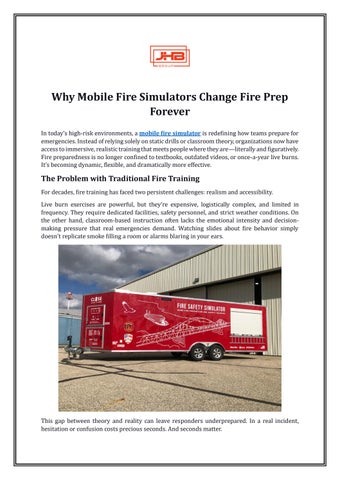
Thebiggestbreakthroughwithamobilefiresimulatorisportability.Trainingnolongerrequires participants to travel long distances or wait for access to specialized facilities. The simulator travelstotrainingcenters,industrialsites,corporatecampuses,andcommunityspaces.
Thatportabilitydoesmorethansavetime.Itincreasesparticipation.Whentrainingisconvenient, morepeopleattend.Whenmorepeopleattend,safetycultureimprovesacrosstheboard.
Even more importantly, mobility allows trainers to recreate scenarios tailored to specific environments. Industrial teams can practice handling equipment-related fires. Office staff can experienceevacuationdrillsthatfeelreal.Firstresponderscantrainintight,smoke-filledspaces withoutactualcombustionrisks.
Safe, Yet Intensely Realistic
There’sapowerfulparadoxatplay:thesafesttrainingenvironmentsoftenfeelthemostreal.
Advancedsimulationtechnologyusesheatgeneration,controlledsmokeeffects,soundsystems, anddynamicvisualprojectionstomimicrealfireconditions.Traineesexperiencesensorycues reducedvisibility,risingtemperatures,alarmsounds thatactivateinstinctiveresponses.

Butbecausenouncontrolledflamesareinvolved,therisksaredramaticallyreduced.Instructors canpausescenarios,repeatthem,orescalateconditionswithoutdanger.Thatabilitytostopand analyzeinrealtimeissomethingliveburnssimplycan’toffer.
This blend of safety and realism allows participants to build muscle memory under pressure. Insteadofmerelylearningwhattodo,theypracticedoingit.
Faster Skill Development
Repetitionisthefoundationofmastery.Traditionalfireexercisesarelimitedinfrequencydueto costandcomplexity.Simulatedenvironmentsremovethosebarriers.
Withamobilefiresimulator,teamscanrunmultiplescenariosinasingleday.Theycan practice different ignition sources, structural layouts, and emergency responses without resetting an entireburnsite.Mistakesbecomelearningopportunitiesratherthanliabilities.
Theresult?Fasterskillacquisitionandstrongerretention.
Whenindividualsencountersimilarsensorycuesinarealemergency,theirbrainsrecognizethe pattern.They’ve“beenthere”before evenifonlyinsimulation.Thatfamiliarityreducespanic andimprovesdecision-making.
Data-Driven Performance Insights
Anothergame-changingaspectofsimulationtechnologyismeasurablefeedback.
Instructors can track response times, communication effectiveness, equipment usage, and evacuation efficiency. Rather than relying on subjective observations alone, trainers can use performancemetricstorefinefuturedrills.
This transforms fire training from a compliance requirement into a continuous improvement system.Teamsdon’tjusttrain theyevolve.
Leaders can identify weak points in procedures, adjust protocols, and ensure everyone understands their role. Over time, preparedness becomes embedded in organizational culture ratherthantreatedasanannualcheckbox.

Cost Efficiency Without Compromise
Budget constraints often limit how often organizations conduct meaningful fire training. Live burnsrequirefuel,infrastructure,insuranceconsiderations,andsignificantstaffing.
Simulation dramatically reduces these recurring expenses. While the technology represents an investment,thelong-termsavings combinedwiththeabilitytotrainmorefrequently makeit astrategicasset.
More training sessions, less risk exposure, and lower operational disruption create a strong return on investment. And when safety improves, the financial benefits extend even further throughreducedincidentsandliability.
Building Confidence Under Pressure
Perhapsthemostprofoundshiftisn’ttechnical it’spsychological.
Realistic simulation allows individuals to experience controlled stress. They learn how their bodies react. They practice breathing, communicating, and acting despite chaos. Confidence growsnotfromtheory,butfromexperience.
Whenrealemergenciesoccur,trainedindividualsarelesslikelytofreeze.Theytrusttheirtraining becausethey’vealreadynavigatedsimilarscenariosinasafe,structuredenvironment.
Thatconfidencecanmeanthedifferencebetweenconfusionandcoordinatedaction.
Final Thoughts
Firepreparednessisnolongerlimitedbygeography,budget,oroutdatedmethods.Bycombining portability,realism,safety,anddata-driveninsights,simulationtechnologyistransforminghow organizationsapproachemergencyreadiness.
Thefutureoffiretrainingisn’taboutbiggerflames it’saboutsmarterpreparation.Andasthis approach becomes more widespread, teams everywhere will be better equipped to respond quickly,actdecisively,andprotectliveswhenitmattersmost.