Jewish OBSERVER


By BARBARA DAB
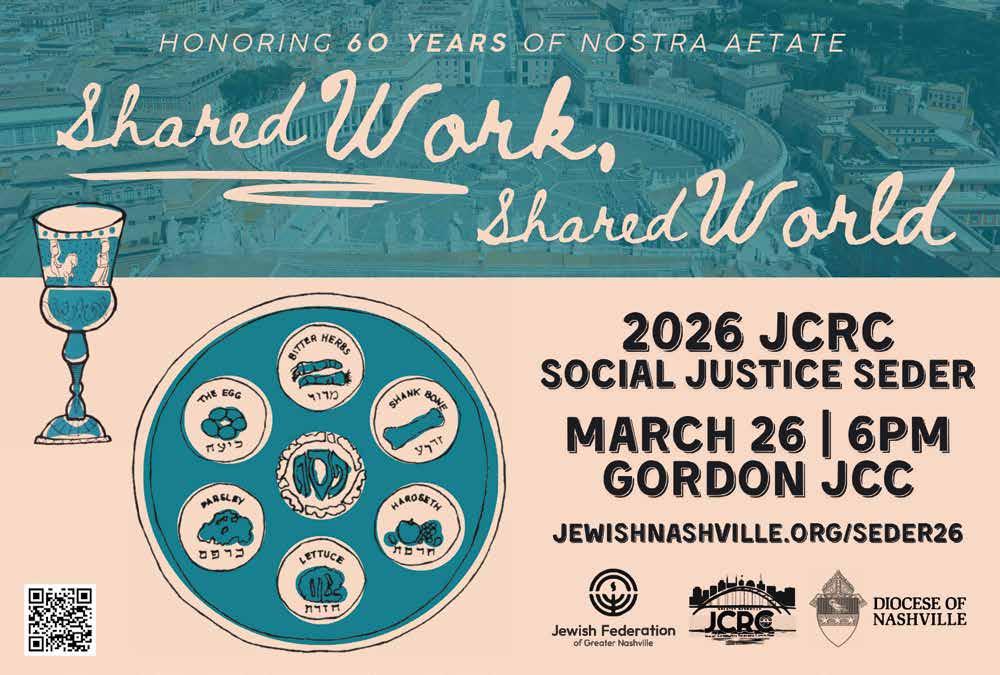
This year’s Jewish Community Relations Committee Social Justice seder, scheduled for March 26th, will celebrate the 60th anniversary of Nostra Aetate, the historic document resulting from the second Vatican council held 1962-1965. The purpose of the council was to modernize the church and to promote interfaith dialogue, notably the relationship with the Jewish community.
Amy-Jill Levine is professor emerita of New Testament and Jewish studies at Vanderbilt Divinity School. She
says there are three essential points in Nostra Aetate. “First, it affirms what is ‘true and holy’ in non-Catholic religions, with explicit mentions of Buddhism, Hinduism, and Islam. Second, it rejects ‘any discrimination’ based on ‘race, color, condition of life, or religion.’ Third, and taking up almost half of the document, Nostra Aetate emphasizes, ‘the bond of spirituality’ that ties Catholics to Jews, that the Church ‘decries hatred, persecutions, displays of anti-Semitism, directed against Jews at any time and by anyone,’ that Jesus’s death ‘cannot be charged against all Jews,’ and that in Catholic
preaching and teaching ‘the Jews should not be presented as rejected or accursed by God.’”
It is in this spirit that this year’s JCRC seder will welcome Bishop J. Mark Spalding of Nashville Catholic diocese as a featured guest. Spalding says he is excited about the church’s participation the seder once again since the last celebration 10 years ago. “The document was an opening of a great relationship. And seeing the Jewish people and the wonderful faith that they have and hold and rejoice in, they are a community that can help us as we journey through life and
appreciate the kinship we have.”
The theme of this year’s seder is “Shared Works, Shared World,” reflecting the common vision both faiths share to repair the world. Spalding says, “One of the key parts is our teaching around the corporal works of mercy to feed the hungry, to clothe the naked, to visit the imprisoned, to visit the homebound and those who are sick. Those are core teachings and we try to live by them.”
The seder will be led by Rabbi Joshua Kullock of West End Synagogue. He says it is important for the Jewish community
Continued on page 14
By BARBARA DAB
The new year began with an ice storm that swept through Nashville bringing with it downed trees, burst pipes, and prolonged power outages. The event marked the first of its kind in 40 years, came during the coldest days of the season, and sent thousands fleeing to hotels and community warming centers. Nashville’s Jewish community, led by Jewish Family Service, sprang into action assessing the needs and providing assistance. According to Toni Jacobsen, clinical director for JFS, unlike previous disasters, this time the struggles hit close to home. “This is the first time this was our emergency, too,” she says, “We had to put the oxygen mask on ourselves first because we didn’t know if the power would be back in eight hours or longer.”
Once it became apparent the situation would continue for a while, and with temperatures dropping, JFS mobilized its staff and network of volunteers. “When we realized this would be more long term, we knew what to do. And what we did first was call the seniors who didn’t live in a facility, that lived at home, had no family, and then just kept broadening out from that.”
As the temperature dropped, Jacobsen her team identified who was in distress and needed a place to stay. The challenge, she says, was needs kept evolving. “What we found was some people who said they were fine, were not fine a few days later. Their situation changed.” Her team helped find hotel stays for people who could not otherwise afford it. “For those who needed it, it was lifesaving,” she says.
Some of the hotels did not provide meals, which also necessitated problem solving. Jacobsen said. In addition to sending snacks and other items through Shipt, JFS partnered with The Temple, and Sherith Israel, and the JFS board to ensure everyone had at least one hot meal a day.
Jacobsen said one of the challenges was the wholesale loss of power, meaning the volunteer pool was smaller than usual. At The Temple, Rabbi Michael Shulman, says he was one of the lucky ones who had power along with a couple of others. “We were trying to be the point people because all of the other staff of The Temple, the clergy were all affected.” Rabbi Shulman contacted as many people as possible, using his own
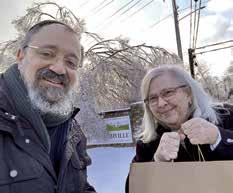
cell phone, to find volunteers and about a dozen answered the call.
The Temple’s group coordinated with Jacobsen, collecting food, snacks, clothes, toiletries, and arranging transportation and made deliveries to those staying in hotels. “It was good because we were itching to do something and wanted to help in any way we could.”
Shulman says it was gratifying to see people coming together to help each other. He says in one instance, the older


children of a couple who was out of town braved the icy roads. “They went to Target to shop for some things for someone who was displaced and who basically left without anything. They delivered to someone they don’t even know.”
Down the road, Sherith Israel’s power returned quickly, and Rabbi Saul Strosberg welcomed people in for meals, a place to charge devices, to sleep, and in some instances, to shower in the synagogue’s Mikvah. “Close to 30 people slept at the shul that week,” says Strosberg who was himself without power at his home, “There were a lot of families and people came and cooked. You’ve heard of too many chefs in the kitchen, we had every chef.”
Strosberg created a sort of resort atmosphere, complete with a ping pong table, movie nights, and slumber parties. And they also answered Jacobsen’s call for help. “Toni called and gave us the opportunity to send some meals to people in hotels.”
In the midst of all the activity, Strosberg says a highlight was Friday night Shabbat dinner. “That was beautiful on Friday watching all the different
Continued on page 14

By JUDY ALPERIN
he last time I visited Israel was the summer of 2023. At the time, I was working for Hadassah and had the privilege of traveling to Israel regularly. When I boarded my plane home at the end of that summer, I simply assumed I would be back soon—Israel had become a place woven into the fabric of my life.
Then came October 7.
Like so many, my world shifted. Travel became impossible, and what I thought would be months stretched into more than two years. Israel felt far away not only physically, but emotionally—an ache I couldn’t fully name until I finally returned this winter on the Jewish Federation’s Tikkun Together mission as part of Birthright Israel’s volunteer program.
I was unprepared for the intensity of emotion that washed over me the moment I arrived. It was as if a piece of my heart and soul—quietly missing—slid back into place. I felt whole again.
Thirty-two of us planned to travel. But winter storm Fern had other plans, and eleven remained in Nashville without power. Our group departed with heavy hearts, carrying our friends with us in spirit and sending up silent prayers of relief every time another household regained electricity.
Those who made the journey formed an extraordinary cohort. We represented a wide range of ages—30 to 50—and a tapestry of identities: men, women, singles, couples, parents, Israel first timers, and seasoned travelers. Some knew Israel intimately; others were just beginning
to understand its complexity and its deep ties to Nashville. But everyone came with open hearts and open minds. Several of us started as strangers; all of us left as friends.
Our itinerary balanced learning with hands-on volunteering nearly every day.
Everywhere we went, we witnessed Israel’s remarkable resilience. Construction cranes dotted the skyline of the Gaza envelope—new homes, apartments, and businesses rising from devastation. The determination to rebuild was inspiring. But beneath the progress lay a truth that every Israeli carries:
They are moving forward, but they are not okay.
Trauma is the undercurrent of daily life. Everyone we met had a story. Everyone we met had lost someone, something, or a sense of safety that once felt foundational.
Our very first stop was the Haas Promenade overlooking Jerusalem. As we gathered to take in the golden city, a local Jerusalemite approached us. She couldn’t contain her joy. “Thank you for coming,” she said, beaming. Her gratitude felt almost disproportionate to our simple act of showing up—yet it was echoed again and again throughout our week.
During Havdalah overlooking the Mediterranean Sea, our song leader reminded us that Israel cannot survive without the Jews of the diaspora. Later, in our Partnership2Gether region of Hadera-Eiron, we heard again how deeply our support, connection, and friendship matter—how they are lifelines.
On a farm where we volunteered,
the farmers thanked us with a humility that was hard to absorb. They shared that they had lost their Palestinian workforce because of the war, and their Thai workers had left out of fear. They didn’t fully understand why Jews from around the world would come to help harvest crops—but without that help, they simply could not continue.
And then there was our time with the mother of Adi Rivka Meisel—a beautiful young woman murdered at the Nova Festival. She told us that sharing her daughter’s story gives her strength to keep living. She urged us to embrace life, to find joy, and to refuse to let despair be the final word.
At every stop, in every conversation, gratitude flowed in both directions.
This is Klal Yisrael—Jewish peoplehood in its most profound form.
Our mission allowed us to see firsthand how Federation dollars—your dollars—are making an impact. We witnessed trauma counseling in action, food distribution for families in crisis, safe spaces for children, emergency response initiatives, and rebuilding efforts supported directly by our community. These are not abstract line items; they are real lives sustained and strengthened by your generosity.
This experience reaffirmed several truths:
• Presence matters. Showing up—physically—brings hope and strength in ways words cannot.
• Partnership is sacred. Our relationships with communities in Israel are mutual, powerful, and essential.
• Leadership requires heart. Listening, witnessing, comforting, and being present are sometimes the most important acts of leadership.
• Resilience is learned together. Israelis teach us courage; we offer them connection. Both are necessary.
• Missions transform. They deepen identity, expand understanding, and strengthen Jewish community at home and abroad. A mission doesn’t just tell a story— it creates one. For many participants, this trip reconnected them to Israel, to Jewish peoplehood, and to their own sense of purpose in Jewish communal life.
As our mission came to an end and we prepared to return to Nashville, one message echoed through every person we met, every hand we held, and every story we carried home: our presence matters. Missions are not simply trips—they are acts of solidarity, healing, and Jewish continuity. When we show up in Israel, our brothers and sisters feel it. And when we return home, we are changed, more committed, more informed, and more inspired to act.
Missions remind us why Federation exists: to strengthen Jewish life everywhere and ensure that no Jew, anywhere, ever feels alone. As we look ahead to the upcoming Yoms, to the work that continues, and to the future we are building together, may we carry with us the deep understanding that our unity is our greatest strength—and our shared journey is our greatest hope. •
By ADELINE ELLISON
A
gainst the backdrop of a global crisis facing Jews and supporters of Israel around the world, the Israeli-American Council (IAC) convened its 10th Annual National Summit around the unifying theme of Israel at heart in January. This year’s event was notably auspicious as it coincided with the completion of the IAC’s 18th year of unabashed pro-Israel community building and the strengthening of the bonds between the United States and the State of Israel.
What defines this annual event is its line-up of speakers, presenters, and facilitators who, in a collaborative spirit with the thousands of attendees, set the tone for three days of uplifting, meaningful, and critical engagement.
An important aspect of attending IAC is that it helps Jews and all support-
ers of Israel to get reoriented, to essentially regain their footing, especially during this time when things are feeling uncertain and, often, chaotic.
With the return of Master Sgt. Ran Gvili z”l, the final hostage, just two weeks later, hearing directly from his mother and sister was a powerful reminder of the duality of emotions the Jewish community holds. We continue to mourn and process October 7th and the tragedies that have unfolded since while looking for how to continue forward with joy
Learn more about the Jewish Federation of Greater Nashville at www.jewishnasahville.org
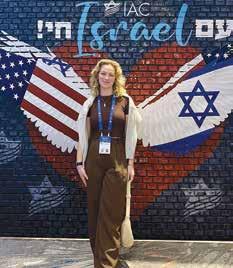
and strength. As Tal Shuster of the IAC National Board said, “Strong communities don’t retreat, they rise together.”
During a breakout session, I heard from Gideon (Gidi) Grinstein, founder of the Reut Institute. When asked how Jews can build relationships with other communities, he thoughtfully emphasized the critical role JCRCs play in
fostering strong and lasting community relations. His perspective underscored how intentional partnership-building and consistent dialogue are essential in today’s social climate. The discussion highlighted that relationship-building is not a one-time effort, but an ongoing commitment that requires both trust and shared responsibility.
Additionally, I had the opportunity to personally connect with former hostage Keith Segal and learn about his efforts to rebuild Kibbutz K’far Aza. He radiated a gentle spirit and spoke with sincerity on both his personal recovery and communal one. Hearing him describe the rebuilding of Kfar Azza with such determination underscored the resilience that continues to emerge even after profound, incomprehensible hardship. Our conversation served as a powerful reminder of the human stories behind the headlines and the importance of supporting longterm healing and rebuilding efforts.
The Summit highlighted not only the challenges before us, but the enduring connection to Israel that continues to anchor and inspire us. It was a reminder that progress often begins with conversation, presence, and collective resolve. •
By NORMA SHIRK, COMMUNITY COORDINATOR, LIFE & LEGACY™ PROGRAM
As the season changes to spring, Jews begin planning for Passover and the retelling of our exodus from slavery into freedom, and our wandering in the desert. It is a time to reflect on the resilience needed to survive hardship and suffering. While we may not be able to predict a catastrophic event (who knew Nashville would be flattened by an ice storm?), we can plan for difficult times. Planning begins with securing our family’s financial well-being and then helping our community build financial resilience.
Fortunately, the Nashville Jewish community can do both simultaneously through the LIFE & LEGACY™ program. A legacy gift made through the LIFE & LEGACY™ program allows a donor to use their resources now when their families need them. Later, after the donor’s lifetime, a gift will be made to the organizations chosen by the donor.
The Nashville Jewish community has been participating in the LIFE & LEGACY™ program since 2017. As of January 2026, the program has generated more than $29.4 million in promised gifts to 14 participating organizations. The organizations have already received $5,176,669 from donors.
The LIFE & LEGACY program was created by the Harold Grinspoon Foundation to support Jewish organizations across North America through partnerships with local Jewish Federations and Foundations to promote
Publisher Judy Alperin, CEO Jewish Federation of Greater Nashville
Editor Barbara Dab
Editorial Assistant Reiley Zeitler
Editorial Associate Emma Canter
Advertising Manager Carrie Mills
Layout and Production Tim Gregory
Editorial Board Frank Boehm (chair), Teena Cohen, Scott Rosenberg
Telephone 615/356-3242
E-mail barbaradab@jewishnashville.org
The Jewish OBSERVER (ISSN 23315334) is published monthly for $36 per year by the Jewish Federation of Greater Nashville, 801 Percy Warner Blvd., Nashville, TN 37205-4009.
Periodicals postage paid at Nashville, TN.
POSTMASTER: Send address changes to THE JEWISH OBSERVER, 801 Percy Warner Blvd., Nashville, TN 37205
This newspaper is made possible by funds raised in the Jewish Federation Annual Campaign.
The Jewish OBSERVER is a member of the American Jewish Press Association and the Jewish Telegraphic Agency.
While The Jewish OBSERVER makes every possible effort to accept only reputable advertisers of the highest quality, we cannot guarantee the Kashrut of their products.
The views and opinions expressed in The Jewish OBSERVER are not necessarily endorsed by Jewish Federation of Greater Nashville or its partners.
after-lifetime giving.
Becoming a LIFE & LEGACY™ donor is an easy, straightforward process. A donor must sign a letter of intent (LOI), pledging a gift to one or more participating organizations. Donors currently promise to leave a gift to an average of 2.2 organizations and may then take up to a year to formalize their LOI’s by adding a bequest to their will or adding their chosen organizations as beneficiaries to a retirement account or life insurance policy.
Many donors also decide that they would like their LIFE & LEGACY™ gift to be used to create an endowment fund. There are several types of endowment funds at the Foundation at the Jewish Federation of Greater Nashville, including a donor advised fund (DAF) and an annual campaign endowment (ACE) fund.
A donor who opts for a DAF can leave written instructions regarding how she or he would like the annual distributions from the fund to be used. Alternatively, an ACE fund contributes to the Jewish Federation of Greater Nashville’s annual campaign where the money supports a variety of organizations locally and globally.
Ensuring the financial resilience and longevity of the Jewish community has never been easier. The LIFE & LEGACY™ has already provided five million reasons demonstrating the resilience of Jewish Nashville.
If you have questions about the Foundation or the LIFE & LEGACY™ program, please contact the staff at the Jewish Federation of Greater Nashville for assistance. •
The Jewish Observer is committed to making corrections and clarifications promptly. To request a correction or clarification, call Editor Barbara Dab at (615) 354-1653 or email her at barbaradab@jewishnashville.org
The Jewish Observer welcomes the submission of information, news items, feature stories and photos about events relevant to the Jewish community of Greater Nashville. Letters to the editor must be no longer than 250 words, and op-eds must be no longer than 750 words. We prefer e-mailed submissions, which should be sent as Word documents to Editor Barbara Dab at barbaradab@ jewishnashville.org. Photos must be high resolution (at least 300 dpi) and should be attached as jpegs to the e-mail with the related news item or story. For material that cannot be e-mailed, submissions should be sent to Barbara Dab, The Jewish Observer, 801 Percy Warner Blvd., Suite 102, Nashville TN 37205. Photos and copy sent by regular mail will not be returned unless prior arrangement is made. Publication is at the discretion of The Observer, which reserves the right to edit submissions.
To ensure publication, submissions must arrive by the 15th of the month prior to the intended month of publication.
For advertising deadlines, contact Carrie Mills, advertising manager, at 615-354-1699, or by email at carrie@nashvillejcc.org.
By TONI JACOBSEN
They always tell you to put your oxygen mask on first before helping others, and that is exactly what needed to happen after the Winter Storm Fern hit Nashville. As a social worker, I have responded to many natural disasters throughout the years, but this was the first time that it was my emergency too. The first few days in my home with dangerously decreasing temperatures were rough. Being the social worker I am, I feared the worst and placed my medically fragile mom in a health center with generators to weather the storm. She got power back on the third day, so we stayed with her until our power was restored.

Once I warmed up and was able to go home, we hit the ground running. We began a series of daily conference calls with the staff at JFS and numerous calls between JFS social workers daily including nights and weekends. We worked 10 days straight on limited access to the internet and spotty cell service at times. But we made do with what we had, and it worked.
The strategy was to connect with the most vulnerable first. We made over 100 calls starting with the seniors and individuals with disabilities who live in private homes and those without family close by. Then we branched out and made calls to anyone whose number we had access to at home. We learned
that we needed to repeat calls because someone’s circumstances could quickly change. Making the calls was the highlight of my time working from home. Everyone appreciated hearing from us, and it became a method of being together as a community. If you didn’t hear from us, we likely did not have access to your number at home. Staying in touch with so many people was comforting to me too and was a source of my strength to continue.
I often to refer to Jewish Family Service as “family to everyone” but in times of crisis, we become surrogate family to those without family. These were moments when community members lacked a warm place to be, needed immediate food and prescriptions. They were cold, stressed, and needed help identifying and accessing resources. Others needed us to step in and make decisions for them. For the people who we cared for as surrogate families, their survival depended on us. It is a responsibility that no social worker takes lightly. We called upon our partners at the synagogues and JFS board members to join in being part of the surrogate families to provide basic needs to those community members most in need.
I finally took a day off which provided me with a long weekend to begin recovering from Winter Strom Fern. It will forever be a stressful event etched in my memory but not without the memory of those we cared for and the immense pride I have for the work we do at JFS Nashville. •
As Nashville’s warm and welcoming Orthodox synagogue, we aim to have an inclusive, big tent community. We unapologetically support the State of Israel. That said, we otherwise avoid taking positions on political questions in our programming, preaching and communications.
We welcome all groups that offer support to the Jewish People and the State of Israel, but we take no positions on their other political activities. Israel 365 is one such organization: it advocates fervently for the State of Israel and the Jewish people. Accordingly, we have on various occasions welcomed its
members as guests of our community and expect to do so in the future. However, Sherith Israel is not “partnering” with Israel 365’s weekend honoring the late Charlie Kirk who, while a committed supporter of Israel, was primarily engaged in promoting political causes. Israel365 is, in fact, renting space from our synagogue and its members will be welcome to attend our services, but their programming will be separate from our weekly programming and in no way should we be construed as partners.
Sincerely, Rabbi Saul Strosberg

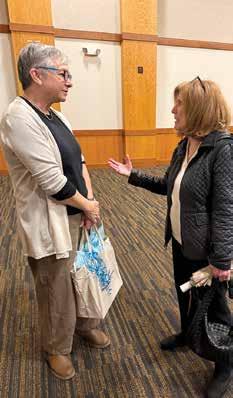
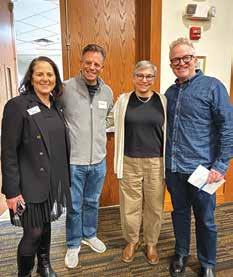
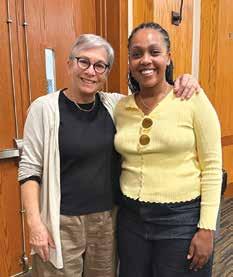
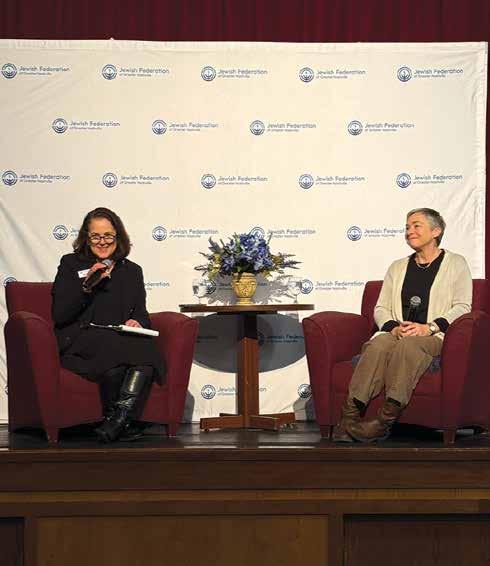
T he Jewish Federations of North America’s Israel in Focus series brought Retired IDF Col. Miri Eisin to Nashville where she spoke about the geopolitical landscape in Israel and the Middle East. Judy Alperin, CEO of the Jewish Federation of Greater Nashville, moderated the conversation, and then Eisin took questions from the community. •






Sincerely,















By RABBI JOSHUA KULLOCK
Amonth ago, I had the opportunity to spend a week in Israel as part of the Hartman Institute’s Rabbinic Leadership Initiative. This program brings together twenty-five rabbis from across North America who meet twice a year in Jerusalem over the course of three years to wrestle with the big Jewish questions of our time and to explore how we might shape a Torah that speaks compellingly to contemporary American Jews.
What makes this cohort so remarkable is its range. These rabbis serve very different kinds of congregations, represent multiple denominations, and hold a wide spectrum of political views. Some of my colleagues work for NGOs; others serve in Hillels on university campuses. Together, we form a multicolored mosaic of leaders deeply committed to Jewish life and to liberal Zionism, unafraid to engage in serious, thoughtful critique whenever needed.
We also share a deep love for the Jewish people. I am continually inspired by how much we care for those in our communities, and by the effort we make to hold everyone together—always balancing the desire to create a big tent with the commitment to meet people wherever they are. In a world that is increasingly polarized, it is no small task to bring Jews closer without demanding that they adhere to the same views about everything in life.
The main theme of our winter gathering was “Time as a carrier of Jewish values and ethics.” As you might imagine, the sessions explored different holidays and linked them to specif-
ic ethical questions. One teacher, for example, spoke about the High Holidays through the lens of responsibility and hope. Another reflected on Sukkot and Hanukkah, and on how we continually craft narratives around these—and other—moments in the calendar, making choices about what to highlight and what to leave in the background. A third, connected Purim to the way we live with, and respond to, trauma.
With Purim just around the corner, let me pause and linger here for a moment.
In the Book of Esther, Mordecai reacts with striking intensity when he learns of the edict the king has approved following Haman’s wicked advice. He tears his garments, puts ashes on his head, and enters a state of public mourning. No one has yet been harmed, but Mordecai is already overwhelmed by what he anticipates is coming. We can almost feel the weight of the trauma he carries. His family had been exiled from Jerusalem in the years leading up to the destruction of the First Temple, and the shadow of loss and devastation seems to awaken something deep within him, long before events unfold. He is in shock, despondent, and feeling incapable of changing the course of history.
Esther, by contrast, appears to respond very differently. When she sees Mordecai in mourning, she first seeks to calm him and understand what is happening. And when he urges her to intervene, she hesitates. She has never approached the king without being summoned. Esther seems to embody those who deal with trauma by minimizing the looming danger, hoping for the best
while remaining close to power.
What is remarkable about these two models is that the story of Purim moves toward an effective resolution when Mordecai and Esther come together and chart a different path. Mordecai awakens in Esther a sense of urgency, while Esther restores in Mordecai a sense of agency. Each brings something essential to the encounter, and together they become far greater than the sum of their individual parts.
We live in traumatic times. Here, in Israel, and—really—just about anywhere in the world, there are many reasons to worry. On top of that, each of us carries challenging personal stories alongside the stories of those who came before us. There is no shortage of trauma in our midst.
If we apply the “Purim models” to our own lives, we can see that each of us has different ways of coping with grief and pain. Some respond like Mordecai, stunned by a trajectory that seems to lead to disaster. Others resemble Esther, downplaying the warning signs and justifying troubling circumstances because of a few recent benefits. On their own, neither approach will keep us safe. We need to bring agency and urgency together— overcoming the paralysis of fear while also shaking off the complacency that blinds us to real threats. It is only in the encounter between Mordecai and Esther that our redemption becomes possible.
Take antisemitism as an example. With attacks on the rise—on both the left and the right—we cannot shut ourselves down and give up hope, nor can we adopt a narrative of victimhood that depends on others to act on our behalf.
At the same time, we cannot pretend these threats do not exist and live in denial. There is a deliberate rhetoric against Jews, and we will not overcome the many dangers around us if we choose to ignore them. The same applies to other pressing challenges in our country: immigrants targeted, refugees shunned, and minorities marginalized. In each case, we are called to confront reality with both awareness and action, urgency and agency—acknowledging the risks while refusing to be petrified by them. In a world full of uncertainty, taking the time to engage deeply with the lessons of our holidays can help us find a higher moral ground to articulate a message that is both meaningful and necessary nowadays. This is certainly not about partisan politics, nor about entering debates that continuously divide and polarize us. On the contrary, this is an opportunity to open a new, vital conversation about the core values we share—so that, together, we might see beyond our differences and remember that we are all in this together. For this, and for so many other reasons, I am grateful to be part of the Hartman Institute’s remarkable program, and that is why I wanted to share some of the insights I gathered during my time in Jerusalem.
May this upcoming celebration of Purim, with all its twists, tensions, and hidden layers, be a time of genuine joy. And may we, like Mordecai and Esther, find the courage and insight to bring our energy, compassion, and commitment to bear—working together to build a more just and caring world, for all who share in our congregations, our communities, our nation, and the State of Israel. •
Jews Attending Synagogue—For Any Reason— Shouldn’t Have to Run a Gauntlet of Anti-Semitic Abuse
By HON. RORY LANCMAN, DIRECTOR OF CORPORATE INITIATIVES & SENIOR COUNSEL THE LOUIS D. BRANDEIS CENTER FOR HUMAN RIGHTS UNDER LAW
There is a simple proposition that should not require argument in a pluralistic democracy: Jews attending synagogue—whether for prayer, study, community programming, or even an Israeli real-estate presentation—should not have to run a gauntlet of anti-Semitic abuse to walk through their own doors. Yet across the country—in New York, New Jersey, Los Angeles, and even here in Nashville—Jews have faced the same hostility, whether wrapped in anti-Israel rhetoric or, as we’ve seen locally, stripped of any pretense and expressed as straightforward, old-fashioned antisemitism.
Protesters who claim to oppose Israeli policies increasingly bring their demonstrations not to consulates or public squares, but to synagogue entrances. They shout anti-Israel slogans and explicitly anti-Jewish slurs. They block doors, intimidate congregants, and create an atmosphere of menace that no other religious community in America is expected to endure. They do it because they understand that for Jews, the connection between Israel and Jewish identity is lived reality.
This is not protest. It is targeted harassment at houses of worship.
At Congregation Keter Torah in Teaneck, New Jersey, protesters chanted “From the river to the sea” and “Globalize the Intifada,” while attendees were called “baby killers” and “Zionist pigs.” At Adas Torah in Los Angeles, masked demonstrators blocked entrances, confronted attendees, and forced some congregants to use side doors while others were turned away entirely. At Congregation Ohr Torah in West Orange, New Jersey, protesters shouted, “Globalize the Intifada” and accused attendees of “genocide,” targeting what the Department of Justice later described as “a religious event centered on the Jewish obligation to live in the Land of Israel.” The pattern continued at Park East Synagogue in Manhattan and Young Israel of Kew Gardens Hills in Queens, where demonstrators shouted, “We need to make them scared,” “Death to the I.D.F.,” and even “We support Hamas.” Nashville has seen this in its own stark form—antisemitism with no political veneer at all. In 2024–2025, the neo-Nazi Goyim Defense League targeted Jewish neighborhoods, synagogues, and the Gordon Jewish Community Center with a harassment campaign that included swastika flags, shouted slurs, and hate flyers. One GDL member even infiltrated the secured campus disguised as an Orthodox Jew and livestreamed antisemitic taunts inside the building before being removed.
This was not protest. It was a deliberate campaign of intimidation against Jewish life in Nashville.
These are not isolated incidents. They are a coordinated strategy: bring the fight to synagogues, intimidate Jews where they pray, and collapse the distinction between Jewish identity and political grievance.
Some might think the First Amendment protects this conduct. It does not.
The First Amendment protects speech—even ugly, offensive speech. But it does not protect blocking entrances, surrounding worshippers, physically interfering with religious practice, or intimidating congregants at a house of worship.
Congress understood this when it passed the Freedom of Access to Clinic Entrances Act (FACE Act), which makes it a federal crime to “injure, intimidate, or interfere” with anyone seeking to exercise their First Amendment right of religious freedom “at a place of religious worship.” Protesters who block synagogue doors or menace congregants are not engaging in protected speech. They are violating federal law.
But having the law is not enough. Jewish institutions must arm themselves with an understanding of how the law works in practice—and how protesters try to evade responsibility.
That means documenting conduct
meticulously; training staff to recognize when behavior crosses the line into unlawful obstruction; coordinating proactively with law enforcement; understanding the FACE Act; designing event logistics to minimize interference; and insisting that synagogue entrances be treated like the entrances to any other house of worship.
Jewish institutions cannot control who shows up outside their doors. But they can control how prepared they are to ensure that those who cross legal lines are held accountable.
I delivered this message to the Jewish Federation of Greater Nashville, whose leadership understands that protecting Jewish life today requires not only moral clarity but legal literacy.
Jews attending synagogue—for prayer, for study, for community, for aliyah events, for real-estate presentations, for any reason—should not have to run a gauntlet of anti-Semitic abuse. They should not have to choose between their safety and their religious life. And they should not be forced to accept intimidation as the price of being visibly Jewish. The law is on our side. The facts are on our side. The moral clarity is on our side. Our institutions, in partnership with law enforcement and our communal civil-rights organizations, must act affirmatively to defend Jewish life in this country. •








By JENNIFER FLEISCHER
This was not a sightseeing trip, and it wasn’t a trip centered on tragedy. It was a volunteer trip. A chance to show up in Israel after October 7 and provide people with the actual support they need right now.
I said yes because it felt like the right intersection of values and timing. It was a chance to travel with friends from our Nashville Jewish community, to serve in a real and needed way, and to experience Israel for the first time. I didn’t grow up Jewish. I came to Judaism as an adult, and my partner is Jewish. As we raise our boys with Judaism as their foundation, I wanted to deepen that connection in a way that went beyond ideas and into lived experience.
Through a partnership between Jewish Federation of Greater Nashville, Birthright Volunteer, and Partnership2Gether, our group spent eight days not just touring meaningful places but doing real work. We volunteered on farms, in warehouses, and in communities that are still carrying the impact of October 7.
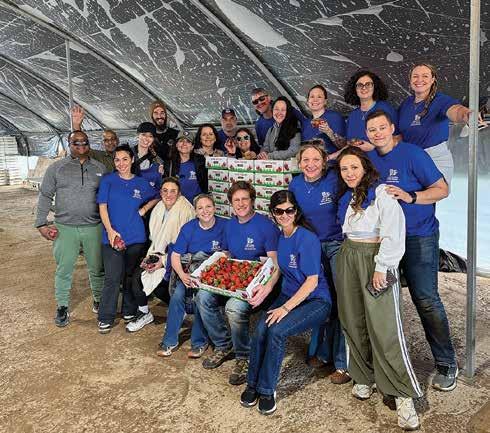
We worked at a strawberry farm, pruning plants so they could continue to grow and produce for families who come to pick their own fruit. Another day, we harvested cucumbers at a family farm that produces cucumbers for grocery stores. After October 7th, these farmers and others rely on the help of volunteers for labor because so many work-
ers were called to duty as soldiers, and many Palestinians can no longer cross the border to work. Without the help of volunteers, many farmers wouldn’t have enough help to get crops out of the fields. Thanks to Jewish Federation grant recipient organization, Leket, which steps in to bring volunteers to fill that gap, we were proudly able to provide needed support.
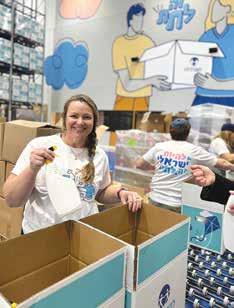
We also volunteered at Letet, another Federation grant recipient, to help those facing poverty. At the main Letet supply warehouse, we packed more than 600 boxes of household supplies for families in need. It was physical, hands-on work, but it was also genuinely fun. We got to know each other in the way you

only do when you’re working side by side, encouraging each other through sore arms and long hours, and ending the day tired in the best way because you can see exactly what you helped accomplish.
When we weren’t volunteering, we experienced Israel in other ways that felt just as meaningful. We shared Shabbat dinner together and attended a Havdalah service on the beach. We toured Jerusalem. We ate incredible food. And one evening, we had dinner in Nashville’s Partnership2Gether sister region, Hadera-Eiron, with host families. It was wonderful getting to know my host family and their children. We talked about what it’s like to be Jewish right now in Israel and the United States, what feels heavy, what feels uncertain, and what still gives us hope. Sitting at their table, it felt less like visiting and more like being welcomed into someone’s life.
Before we left, I’ll admit I was nervous. The safety and security of being in that part of the world weighed on me. The ongoing conflicts and constant headlines made it hard not to worry. But what we experienced, repeatedly, was genuine warmth and gratitude. People thanked us not only for volunteering, but for coming to see, listen and support their communities and their economy. We also saw resilience up close. In the moshav (community) of Netiv HaAsara in the Gaza Envelope, we heard how most residents chose to stay and rebuild after their community was attacked instead of leaving. Their commitment to one another was striking. We also met with students in the Ethiopian National Project SPACE program and students in the Partnership2Gether B’tsafta Program. These remarkable students were curious, engaged, and determined to learn and contribute. The stories shared weren’t those of abstract “strength.” These were people and communities choosing, day by day, to keep going and to keep building.
One of the most meaningful experiences for me was learning about HaOgen, which means, “the anchor,” a volunteer-based organization founded after October 7, 2023. HaOgen provides cooking, childcare, and household support
to families of IDF reservists. Meeting the wives of reservists and hearing their stories made something very real. After October 7, many of these reservists had to leave their families almost immediately. HaOgen doesn’t just fill practical gaps. It creates community and connection at a time when both are essential.
We also visited the Nova festival site and a nearby community that was attacked, and it gave further weight to everything else we were doing. It’s one thing to read about loss from far away. It’s another to stand in a place shaped by it and then go back to work the next morning, harvesting food, packing boxes, and sitting at dinner tables with families who are choosing, somehow, to keep moving forward.
Since coming home, I keep thinking about one central theme: what I can only describe as a village mindset. In Israel, I saw a culture where people show up for one another. They ask for help when they need it. They ask how they can help. And then they actually do. It feels less like, “every family for themselves,” and more like, “we’re in this together.” As Jews, we ARE all in this together. It brings comfort knowing we can continue to help those we met and many more who need our support through gifts made to the Jewish Federation of Greater Nashville’s Nashville annual campaign. I also came home with a deeper sense of connection, not just to Israel but to our own community. Our group bonded in a way that only shared work and shared experiences can create, and we’re already talking about future trips, monthly Shabbat meals, and more ways to stay connected to each other and our local Jewish community.
This trip reminded me that showing up matters. Not just in words, not just in donations, but with your time, your hands, and your presence. For anyone considering a volunteer trip like this, I can honestly say it’s not about having all the answers. It’s about being willing to step into new relationships, to do the work, and to be part of something bigger than yourself. I went hoping to feel more connected. I came home knowing I am. •
By BARBARA DAB
T
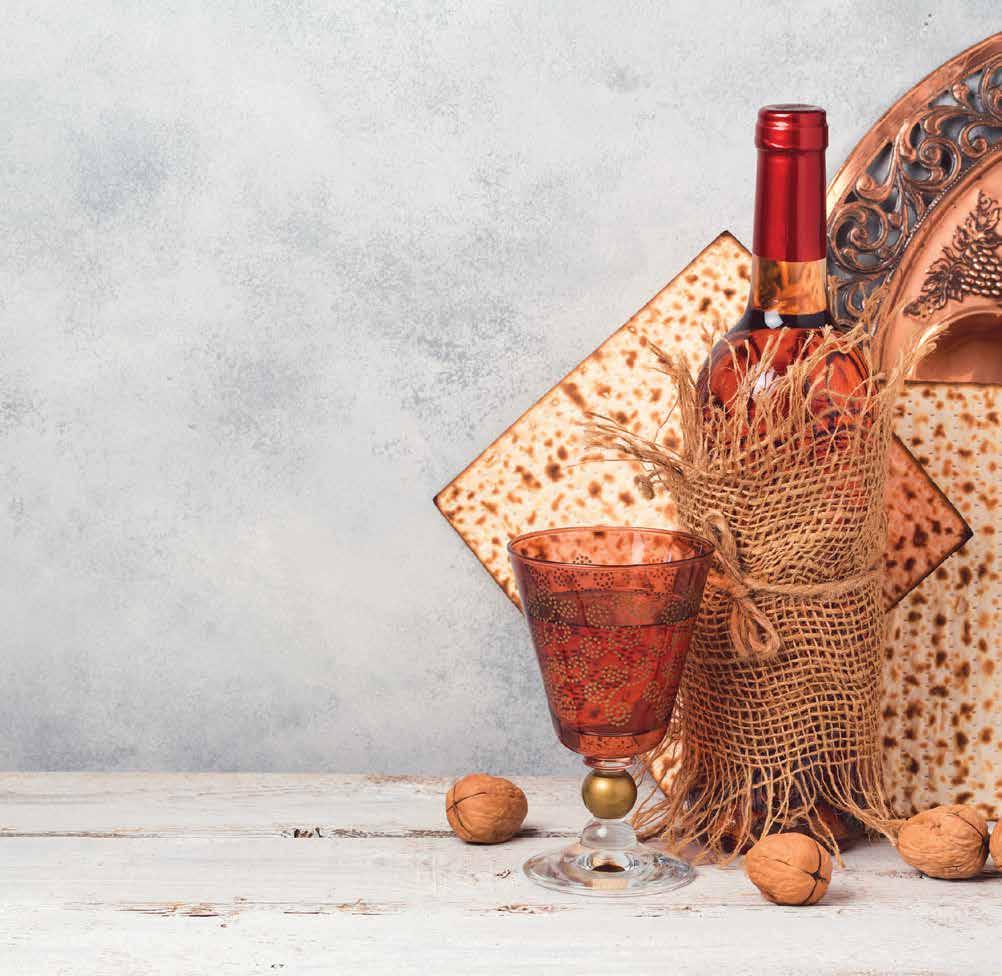
he traditional Passover seder focuses on retelling the story of the Jews’ experiences in Egypt and subsequent exodus following the 10 plagues. The historic goal of the telling is twofold. First is to remember the history of the Jewish people, and second is to educate the children. It is this second goal that typically leads the seder to include songs, symbolic foods, and often other types of toy props to aid in the telling.
But the themes of freedom, spring renewal, and enduring hardship are often adapted and interpreted for modern times and modern issues. This year, Jewish Family Service of Nashville is hosting a Mental Health Seder. The seder will be held on March 19th and will be led by Rabbi Lindsey Danziger. She says the goal is to use Passover as an opportunity for spiritual and mental renewal during challenging times. “By bringing best practices grounded in mental health research into our ceremony of spiritual renewal and recommitment to working towards freedom, we can bring in another layer to the seder and make it more impactful in our lives and meet the needs of the community, when mental health needs are acute and most people are suffering from overwhelm.”
The Haggadah to be used was created by the Blue Dove Foundation, an organization that seeks to foster communication, education, and dialogue around mental illness and substance abuse through a Jewish lens. The Haggadah uses traditional seder elements and
explores the connection between biblical oppression, and the burdens of modern challenges.
Toni Jacobsen is the clinical director of JFS. She is happy to present the concepts of self-care through the lens of the seder. “The seder plate has things you can do to take care of yourself. One thing on the plate says, ‘This is one thing I can do to calm down,’ ‘One thing I can do on a bad day.’ And people will fill in their own seder plate with different coping skills and support systems.”
Other key elements of the mental health seder are the four questions which ask participants to think about personal freedoms, struggles, and finding help. The plagues, as well, offer a different perspective on the traditional theme. “They are 10 mental health plagues: fear, self judgement, imposter syndrome, burnout, substance abuse, depression, trauma, isolation, loneliness, anxiety, and suicidal ideation.”
The seder is open to the community and according to Danziger will be a meaningful way to prepare for the Passover holiday. “We hope that anyone who feels the need to a mental reset and some connection will join. It would be a great opportunity for mental health professionals, those who are in pursuit of mental health wellness, and anyone who is curious.”
The JFS Mental Health Seder will be held on March 19th at 5:00 at the Madeline Pargh Arts & Crafts Center. To RSVP, contact Toni Jacobsen, tonijacobsen@jfsnashville.org, 615-3541672. •






SPTZ-62OB PassoverAD_2026.qxp_SPTZ-57OB PassoverAD_2025 1/28/26 2:31 PM Page 1





Navigating Life’s Transitions. Together. jfsnashville.org | (615) 356-4234
THURSDAY, MARCH 26 at 11:30 am at the GORDON JCC 801 Percy Warner Blvd, Nashville, TN 37205
Please join us for the Senior Seder led by clergy from The Temple
In memory of the mothers of Lynn and David Barton: Hannah Kayser Palmer and Fannie Leone Barton Open to Seniors of All Ages in the Nashville Jewish Community
$10 per person
Please RSVP to Nancy Dorman: 615.354.1686 or helpinghands@jfsnashville.org 801 Percy Warner Blvd Nashville, TN 37205

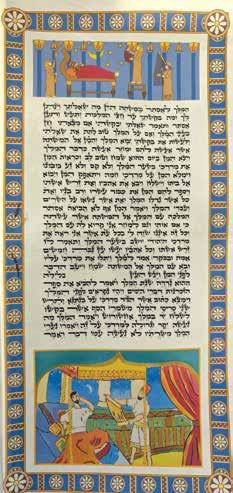
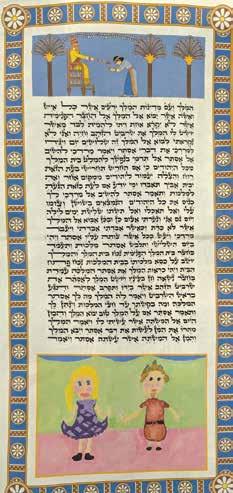
This upcoming Purim, the West End Synagogue will have the distinct honor of reading from a truly remarkable scroll: the Silbert Megillah.
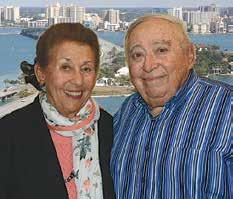
But the themes of freedom, spring Dedicated in loving memory of Burt Silbert z”l and in honor of Estelle Silbert, this Megillah stands as a testament to a family whose presence shaped our community for many years. Burt and Estelle were devoted members of the West End Synagogue long before their relocation to Florida, and their impact continues to be felt in our sanctuary and beyond. This meaningful initiative was spearheaded by Paul Barnett, himself a lifelong member of our congregation, who sought a fitting and lasting way to honor his dear friends and their enduring connection to our shul.
The Silbert Megillah is unique in several profound ways. It was written in Ashkelon, Israel, in the months following the tragic events of October 7, 2023. Ashkelon, a city in southern Israel that has known both resilience and vulnerability, became the place where this scroll was lovingly crafted. In a time of uncertainty and pain, the writing of a Megillah—telling the story of Jewish survival and hidden miracles—felt especially powerful.
Adding to its distinctiveness, the Megillah features drawings created by children living in Ashkelon. Their artwork, woven into the sacred text, reflects innocence, hope, and the enduring spirit of the Jewish people. The result is not only a ritual object, but a living expression of connection between our
Nashville community and families in Israel.
The Silbert Megillah is also one of the very few Megillot written with vowels and trope markings included. Their presence transforms this scroll into an extraordinary educational tool. Future generations of readers—especially those learning to chant the Megillah for the first time—will find guidance and inspiration within its columns. It is, therefore, both a work of art, with beautiful calligraphy and vibrant illustrations, and a resource that will help cultivate new voices in our congregation.
On Sunday, March 2 at 6:30 p.m., members and non-members alike are invited to join us for the public reading of the Silbert Megillah and a joyous celebration of Purim. Together, we will honor the Silberts’ legacy, celebrate the resilience of our people, and add our voices to an ancient story that continues to unfold in every generation. •

West End Synagogue is proud to present this year’s annual fundraiser: West End Unplugged. West End Unplugged is a Nashville-style songwriter round that will feature prominent and up-and-coming songwriters from the Nashville Jewish community. The show will also include drinks, dinner catered by Goldie Shepard, and a silent auction.
This event will provide essential funding for West End Synagogue’s yearly operational expenses to power the ritual, educational, and communal roles that the Synagogue plays for its members and for the Nashville Jewish community.
The featured songwriters in this event will be Melissa Carter, Aron Rosing, Lexi Sidders, and Eitan Snyder.
Melissa Carter is a member of the country trio Due South and is a singer/ songwriter whose music has been featured in film and TV shows on NBC and other outlets. In addition to her music career, Melissa is a newer toddler mom, an experience that continues to shape her perspective and creative voice.
“I’m incredibly honored to have been asked to be part of this event and grateful that I can share my passion for music in a way that supports and brings together our community,” Carter wrote.
Aron Rosing is a songwriter, producer, and the lead singer of the band ROM COM. Aron grew up in Nashville amongst the Jewish community and participated in the Get Connected program as well as Birthright. Aron’s songs have been featured in film and TV and have won numerous awards including SongTown Song of the Year and the Whiskey Jam Song of the Summer.
“As someone who was born in Nashville, I’m excited to be able to give back to this community where I was raised,” Rosing wrote.
Lexi Sidders is a country-pop artist whose music has received SiriusXM airplay on The Highway, including her single “Plead the Fifth”, reflecting grow-
ing national recognition. She has shared stages with renowned artists such as Colbie Caillat, Gavin DeGraw, Brandi Cyrus, Russell Dickerson, MacKenzie Porter, and Lindsay Ell, and has performed as the intermission band for the Nashville Predators.
”I am so honored to share my music in support of this congregation and to celebrate the Jewish community bringing us together through song,” Sidders wrote.
Eitan Snyder is a multigenre, multilingual songwriter whose songs have been highlighted in Billboard, MusicRow, Rolling Stone, and CMT. He is a former Engagement professional for the Jewish Federation of Greater Nashville, and reads Torah, Haftarah, and leads Wednesday morning minyan at West End Synagogue.
”My hope is that this event will emphasize why institutions like West End Synagogue are important in our community,” Snyder wrote. “They give us a center of gravity that brings us together in good times and bad and give us the infrastructure to support each other.”
The chair of the event, Helen Crowley, shared that this event represented an opportunity to showcase talented members of our own community.
”Whenever we have opportunities to get everyone together like this, it’s always good to do something that lets people share more of themselves with the community,” Crowley said.
West End Synagogue is hoping this event will help them hit their fundraising goals while also building and deepening relationships within its members.
“The stated goal, of course, is to raise money for our operating budget each year. But that’s only part of the story,” wrote West End Synagogue President Ben Doochin. “It’s just fun to put on an entertaining show in a casual setting with great food surrounded by friends. All of us at West End are really looking forward to this event!” •
Immerse in an evening of joyful music making and celebratory song at Congregation Micah’s Shabbat In The Round. On Friday, March 13th at 6 pm, our social hall transforms into an inviting Shabbat song circle filled with laughter, connection, and delight.
For this sacred Shabbat gathering, we will try something a little different: a service in the round, with chairs arranged in a circle instead of our usual seating. This experience allows Shabbat participants to look around and see every face, creating a sense of equality and belonging. Prayers, songs, and reflections feel more intimate as voices rise together from within the community rather than from a singular


direction. The circle itself becomes a symbol of wholeness, an unbroken space of warmth, spirit, and togetherness.
Rooted in a desire to foster deep connection, Shabbat in the Round invites us to slow down, listen closely, and sing boldly. The melodies are accessible, the spirit is open, and every voice matters. Whether you love to harmonize, clap along, or simply sit and absorb the sound, your presence helps create the sacred rhythm of the evening.
We invite all music makers and meaning makers into this participatory Shabbat service intended to uplift our souls, nourish our hearts, and heal our bodies. •

The Gordon Jewish Community Center has announced a new date for its annual fundraiser, Big Night Out, after February’s severe ice storm forced the organization to postpone the event.
Originally scheduled during the week of the storm, the celebration was delayed due to hazardous weather conditions and facility impacts that made gathering safely impossible. The event will now take place on Sunday, April 19, giving the community an opportunity to come together later this spring.
Big Night Out is one of the J’s signature annual events, bringing together members, supporters, and friends of the organization for an evening centered on community connection and philanthropic support. This year’s theme,
Jukebox Journey: Dancing Through the Decades, will highlight music and memories from across generations while supporting the J’s programs and services.
Proceeds from the event benefit a wide range of Gordon JCC initiatives, including early childhood education, wellness and fitness programming, cultural events, and community engagement opportunities serving families throughout Nashville.
Tickets are now available and may be purchased online at nashvillejcc.org/ bignightout, or by contacting Marilyn Rubin at marilyn@nashvillejcc.org for additional information.
The rescheduled event will offer the community an opportunity to gather, celebrate, and support the Gordon JCC’s ongoing mission this spring. •
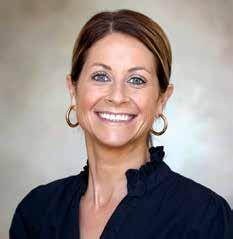
The Gordon Jewish Community Center recently welcomed a familiar face back into a leadership role as Dara Freiberg returns to the organization as Interim Executive Director.
Many in the Nashville community remember Dara from her previous tenure at the J as Membership and Development Director. Over the past three and a half years, she has continued her involvement through service on the Board’s Executive Committee, most recently serving as Board President. Her return to day-today leadership marks both a professional homecoming and a personal one.
Dara and her husband Craig and two sons, Archer and Rory, have been deeply connected to the Gordon JCC throughout the 14 years they have lived in Nashville, participating in programs across nearly every area of the organi-
zation. She describes stepping into the interim role as a meaningful opportunity to support a community that has long
been central to her family’s life.
Her leadership began during a challenging period for the J, as the facility navigated closures and recovery efforts following February’s severe ice storm. During that time, Dara worked closely with staff and leadership to help guide operations, maintain communication with the community, and support the organization through one of its most difficult moments. Colleagues note that her steady presence and familiarity with the J’s mission helped provide continuity during the transition.
A higher education and nonprofit development professional with more than 25 years of experience, Dara has held roles at institutions and organizations including Yale University, Emory University, the Atlanta Jewish Film Festival, the Frist Art Museum, and the
Gordon JCC. Earlier in her career, she served as a Teach For America Corps Member in Washington, D.C., later continuing her work with the organization after completing the program.
Originally from Chicago, Dara holds both bachelor’s and master’s degrees from Northwestern University. She currently serves as Immediate Past President of the University School of Nashville Association. Outside of her professional work, Dara and her dog Penny Lane are a certified pet therapy team, providing support to residents at Abe’s Garden Community and students at schools across the Nashville area, including Vanderbilt and Covenant.
As Interim Executive Director, Dara looks forward to continuing to strengthen the J’s role as a hub for connection, wellness, and community life in Nashville. •
W
hen February’s severe ice storm forced the Gordon Jewish Community Center to close for more than a week, the building fell quiet, but the spirit of the community did not.
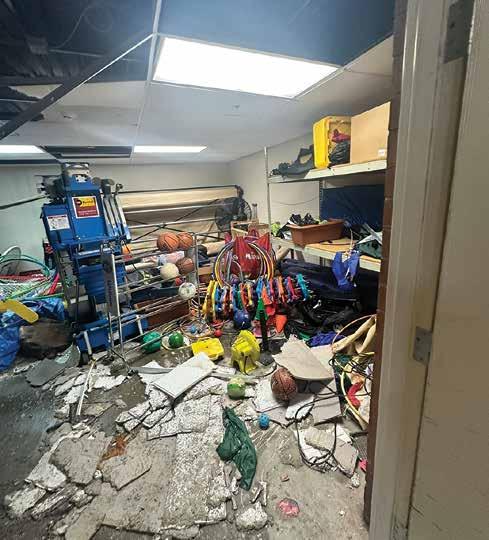
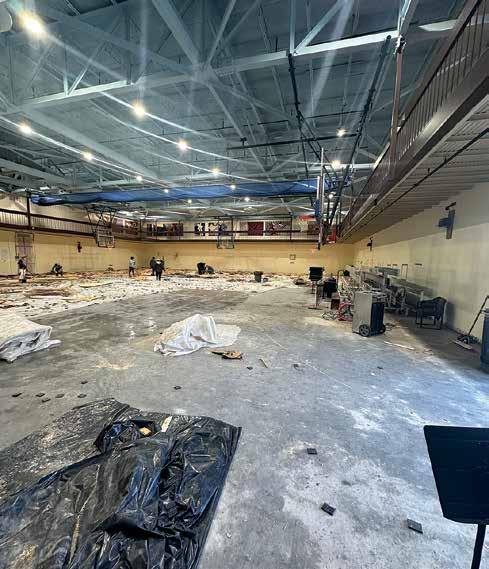
The storm caused a building-wide power outage and significant damage when a pipe burst in the gym, flooding the downstairs court and impacting multiple areas of the facility, including the elevator. After days of restoration and repairs, the J officially reopened on February 4, welcoming members back into a warm and fully operational space.
The indoor pool, which sustained damage to its heater and pump during the storm, reopened on Wednesday, February 11, restoring one of the J’s most beloved gathering spaces.
Behind the scenes, staff worked tirelessly throughout the closure, coordinating vendors, communicating updates, and ensuring members stayed informed every step of the way. The focus was not only on restoring the building, but also
on staying connected to the people who make the J a community.
In a particularly meaningful gesture, Carrie Mills, the J’s Older Adult Program Manager, personally called older members on her contact list to check in and make sure they were safe during the outage. Her outreach reflected what the J has always been about: care, connection, and showing up for one another.
While much of the facility is now fully operational, the downstairs gym remains under renovation. Rather than simply replacing damaged flooring, the J is installing a brand-new gym floor, turning a setback into an opportunity. A grand reopening celebration is planned once installation is complete.
As spring approaches, the J stands not just restored but renewed. The past month served as a reminder that while storms may disrupt schedules and spaces, the strength of a community lies in its people, and that foundation remains stronger than ever.•



Continued from page 1 to engage in events like this because it strengthens the relationship between people of different faiths. He has a deep understanding of this importance based on his personal experience. “Growing up in Argentina and then serving for seven years in Guadalajara, Mexico, the interfaith world was primarily working with the Catholic church.” He adds that during his time in Guadalajara, he developed a relationship with the Cardinal and worked on various tzedakah projects with the church.
The words, Nostra Aetate, translate to the English, “in our times.” Levine, who attended the Vatican’s celebration in October, says the document has evolved over the past 60 years. She says the Vatican as well as several national bishops’ assemblies have worked to remove antisemitic teaching and have encouraged dialogue between Catholics and Jews.
Continued from page 1 parents and children,” he says. And one guest brought a surprise. “We had one person from Long Island who either really wanted to get out of Long Island or wanted to feel like he was helping. He flew out here and brought his starter dough and on Friday took some of the kids and made these beautiful sourdoughs for Shabbat.”
The children made the most of the situation in what became a camp of sorts,
She cites some key examples, starting with the 1988 publishing by the US Conference of Catholic Bishops’ publication of “God’s Mercy Endures Forever: Guidelines on the Presentation of Jews and Judaism in Catholic Preaching.”
She says more recently, “Pope Francis acknowledged problematic New Testament teachings regarding Pharisees and insisted that loving the neighbor requires finding ‘ways to overcome ancient prejudices.’”
Levine is currently the vice president of the Catholic Biblical Association and will become president in August. She says the association has continued to produce guidelines on presenting Jewish practice and belief for Catholic priests and other religious educators. And she has continued to educate priests herself.
“In 2019 I both taught a New Testament course at the Pontifical Biblical Institute in Rome (the first Jew to do so) and did a workshop for the priests in the Diocese of Nashville on how to avoid antisemitic
with at least one surprising result. “The boys slept together and we had movie nights. One night a family got their power back and the son begged to keep staying at the shul with the other kids. And there was another family with teenagers and when they got power back, the teens wanted to keep sleeping at the shul so they came back and joined the group.”
Not every moment was fun filled, though. Strosberg says, “There was one mother with three little ones crying on another woman’s shoulder because she was so stressed.”
teaching and preaching.”
Kullock agrees that Nostra Aetate was a great step in uniting Catholics and Jews after a long and painful history, and says its importance continues to grow. “The document is powerful because it creates conditions for a deeper conversation and presents opportunity for a different understanding of the two groups.”
Levine agrees and says Nostra Aetate not only changed Catholic teaching about Jews, but it also prompted Jewish rethinking about the Church. She cites a December 2015 document published by a group of Orthodox rabbis titled, “To do the will of our Father in Heaven: Toward a Partnership of Jews and Christians.” She says, “It states, ‘Now that the Catholic Church has acknowledged the eternal Covenant between G-d and Israel, we Jews can acknowledge the ongoing constructive validity of Christianity as our partner in world redemption, without any fear that this will be exploited for missionary purposes.’”
The stories of warmth and community continued at Chabad of Nashville in Bellevue, which stayed powered up thanks to a generator. According to Rabbi Itzchok Tiechtel, a senior couple shared that they had been sitting in their home since Sunday morning, more than two and a half days, without power, heat, or light. They lived by candlelight, wrapped in layers, enduring the cold in silence. When a volunteer from Chabad knocked on their door with a hot meal and genuine concern, they were overcome with emotion. They later shared that they had tears in their eyes. Not only because of the food, but because when so few people were able to be on the roads, someone came for them. They felt seen. They felt loved. They felt they were not alone
And in one instance, even visitors to Nashville felt the need to reach out.
A businessman traveling to Nashville for work suddenly found himself stranded by the storm, unable to return home to his family. For days, he was confined to a hotel room as roads shut down and even food delivery services stopped operating. Hungry, isolated, and far from home, he did not know how he would manage.
When Chabad of Nashville learned of his


There is more work to be done by both Jews and Roman Catholics, including education about our distinct beliefs and practices, especially for Jewish and Catholic clergy and religious educators, better knowledge of the Jewish context of the New Testament, attention to textbooks and liturgies, and shared work in promoting peace
Kullock says events like this seder is part of what makes Nashville a more unified city. “It is a multi-cultural society in which we all come together. And at the same time, we celebrate both what unites us and also our differences. Together we all build this multi-colored mosaic that makes the wonderful city we want to create.”
And Spalding says he is looking forward to learning with the Jewish people.
The seder is scheduled to take place on Thursday, March 26th at 6pm at the Gordon Jewish Community Center. Registration is required. Visit https:// www.jewishnashville.org/seder26 •
situation, a volunteer brought him meals to his hotel.
“In moments like these, leadership means showing up, with heart and soul” said Rabbi Yitzchok Tiechtel, Director of Chabad of Nashville. “Every person is created with purpose and worth. Our responsibility is to care for each individual with love and warmth, especially when people feel afraid or forgotten. No one should ever feel alone.”
Even as the ice melted, people are still in need. Jacobsen says after focusing on survival and getting people settled back home, the crisis had evolved. “We’ve had at least two families who lived in apartments and water pipes broke and they lost everything.” She says there are those who need help replacing their food, as well.
All of those who volunteered, provided warm shelter, food, and companionship, say it was gratifying to see the community come together to help each other. Shulman says, “This is why we’re a community it’s allowing us to help.” And Strosberg says while some people remained in their homes, it was important for people to know they were not alone. “There is a tendency to just run away and shelter by yourself, and there’s the other tendency to run to the community.” •













…so that it’s not just a fairy tale.
By LORETTA SAFF
This month I’m talking directly to you 50–65-year-olds — you who call me and say, with great conviction: “I’ve decided. I’m cutting back. I can’t keep this pace.”
I know where we are going with this, so when we meet, I usually ask the innocent little question: “So… what does your ‘cutting back’ actually look like?”
And suddenly it’s as if I’ve asked them to solve a bonus question on a math exam. There is a long pause, a slight squirm, and a deep sigh.
“Well… maybe fewer hours?” Or …, “maybe not so many responsibilities?” After a silence the truth finally comes out:
“Look, if I cut back, I’ll have to take a SALARY CUT.” Ahhh, yes. There they are. The Golden Handcuffs.

Now you might think golden handcuffs are reserved for CEOs with dramatic bonus packages and complicated stock options. Not true. I see them on many smart, successful people who:
• Earn a solid salary
• Do good work
• Have strong reputations and are respected
• And are completely exhausted… and maybe a little bored
They tell me that often around 10:30 p.m., when they find themselves sitting at the computer answering, “just one
more email,” that the thought sneaks in: “IS THIS ALL THERE IS?”
But after a few moments the practical thoughts jump in:
• “The cost of living is ridiculous.”
• “If I leave before five more years, I’ll lose equity.”
• “The kids have college… and maybe grad school.”
• “I can’t let anyone down.”
Let me be clear: I am not your financial advisor. You absolutely should have someone guiding the investment side of your life. Yet even when the numbers technically work, it’s hard to walk away from those reliable monthly deposits.
But this isn’t just about the money. It’s about Identity. Status. Security. Fear – and Pride. So, here’s what we do to help you get out of STUCK. We get honestand we make a list.
STEP ONE: The PROS of staying exactly where you are
• Maintaining your family’s lifestyle
• Having relationships and being part of a team
• The satisfaction of accomplishment
• The comfort of knowing you’re good at what you do
Then we prioritize. Which of these truly energize you, and which are just familiar? Next,
STEP TWO: The CONS of staying exactly where you are
• Resentment
• Mental drain
• Chronic stress
• Feeling trapped
• Still whispering, “Is this all there is?”
Actually, most people already know their answer. They just haven’t given themselves permission to say it out loud. Remember, cutting back does not have to mean falling off a financial cliff. It can mean:
• Redesigning your role
• Negotiating responsibilities
• Consulting instead of managing
• Pursuing other interests which may be lucrative
In other words, building a bridge to your Happily Ever After instead of waiting to be pushed into it. So, remember: Golden handcuffs may be shiny. They may even look impressive. But they are still handcuffs.
Loretta loretta@coachingwithloretta.com
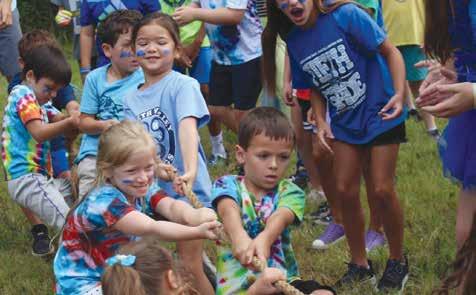
Many of us remember those summers at camp that inspired our connection to Judaism – the singing after dinner or Havdalah on the edge of the lake at sunset. The Jewish summer camp experience creates community for life, not just for a summer Year after year our children return from camp with stories, memories and friendships. For many of them it is the first time they’re surrounded by all things Jewish. Overnight Jewish camping is wonderful way to introduce children to the joy and celebration of Jewish traditions.
The Jewish Federation of Nashville and Middle Tennessee realizes the importance of building Jewish life and makes financial assistance available on a need basis for students to attend Jewish summer camps. If you know someone who could benefit from this information, please share it. Contact Becky Gunn at the Jewish Federation at becky@jewishnashville.org or 615-354-1624 to request information on summer camp opportunities, to request a scholarship application, or to send completed applications. All inquiries are confidential. The deadline for submitting applications is March 15, 2026.
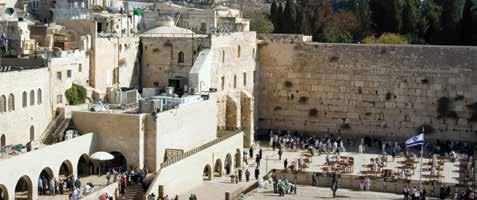
Over thirty years of research on the impact of the Israel Experience has shown that teens are at a critical time of development when they are shaping their patterns of adult Jewish identity and loyalties. An Israel program can enhance or complement a formal Jewish education. It can also a ect those who may have been deprived of a rich Jewish life. Positive moments and memories are central factors in the development of a rming group identification. The purpose is to strengthen Jewish identity
The next generation’s commitment to the Jewish people can be greatly a ected by the experience of being in Israel as a teen. The Jewish Federation of Nashville realizes this benefit and encourages families to consider sending their young people to Israel by o ering incentive grants. These grants are available to 9th-12th graders as well as college students through the Mary & Harry Zimmerman Youth Exchange Endowment Fund. Programs that may qualify for partial scholarship grants include March of the Living, JCC Maccabi Xperience, NFTY, Ramah, USY, Volunteers for Israel, High School in Israel and BBYO
For more information please contact Tania Bukengolts, o ce administrator at tania@jewishnashville.org or at 615.354.1668.
By REILEY ZEITLER
On Monday, February 2nd, NowGen hosted Tu B’shvat: A Festival for the Trees. The event took place in East Nashville at The East Room. Tu B’shvat, the celebration of the Jewish New Year for the trees, focuses on community and ecological awareness. One of the ways to celebrate is by planting trees. In Israel, there are many organizations that you can purchase trees through to support reforestation.
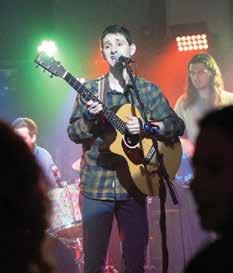
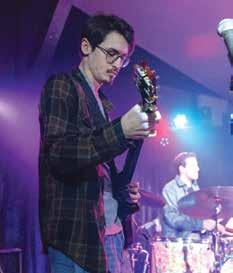
Here in Nashville, the Jewish community celebrated by working with NowGen to put on the festival. The event was hosted by comedian Evan Berke, with musical performances from multiple artists. Samuel Herb, Kaylee Federmann, MASON, Meryl Rudy, Dan Harrison, Lexi Sidders, Jacob Rubin, and Madeline Rose were the artists that performed for the community at the festival.
Samuel Herb was an integral part of organizing the event. Herb has been in Nashville for almost ten years, and in 2019, he wrote a song titled, Just a Tree, then decided to donate a tree to be planted for every 1,000 streams, and for every piece of merch sold. So far, Herb has planted just under 3,000 trees. This inspired him to want to do something for Tu B’shvat. “I wanted to put together a group of Jewish artists, and it was specific to artists because we have a lot of song writers in our community, and I love them and we need them.” Herb wanted to use this event to showcase different artists in our community and use it as a way to give back. Herb’s goal for this event was, “To do something for the
Jewish community and build something that could be long lasting, because we’re never going to have a shortage of artists in Nashville, and hopefully we never have a shortage of trees.”
Each artist that performed had a 15-minute set. After their set, they were able to go be fans in the crowd and celebrate the holiday with friends while enjoying the live music from the other artists. Tickets to the show were 20 dollars, and with the 85 tickets sold, all proceeds were donated to The Jewish Federation of Greater Nashville. Meryl Rudy was another artist who performed at the festival. She says that for her, it was about just having a really great time with a great community. “What I wanted to share with the audience, and have them remember from the night, was this kind of folk song about being happy by yourself, and being happy with your surroundings, and nature. And not needing someone else to validate you. Just being with the trees, and the earth, and the sun, and the moon is the point of that song, and that’s what I wanted the crowd to take from my performance.” Rudy voiced that with everything that is going on in our community, she loved that there was a space where everyone could come together and feel supported, loved, and seen.
For Dan Harrison, the importance of the festival was to be there with the Jewish and the creative community, and to show that there is a strong vibrate creative Jewish community here in Nashville. Harrison says, “Especially with everything that has been going on the last couple years in the world, it was real-
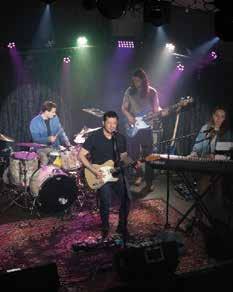
ly special to have people come together like that and just play music and be at a place surrounded by other Jewish artists.” Harrison feels honored that he was able to be a part of a performance with so many other talented artists and is taken away at the growth of our community. He stated that, “Just seeing the growth of the Jewish community and then the creatives in the community, it’s just been really amazing to see. It’s really special to me that I can be part of the growth, and the story of that here in Nashville.”
The festival demonstrated that even with the pain and suffering that is happening, the community can be united front and celebrate the holiday. Typically, Tu B’shvat is a holiday that slides under the radar, and many Jews don’t celebrate, or are just simply unaware of it. Now with NowGen’s goal to make this an annual
event, the Jewish community here in Nashville can come together to experience and share the beautiful meaning of Tu B’shvat. •
By RABBI MARK SCHIFTAN AND DR. FRANK BOEHM
F
rank: Mark, one of the essential elements of good character is kindness and it is this aspect of character that I want to discuss with you. An act of kindness – the conscious choice to do good - is never wasted and can take on a life of its own. A kind act not only brings pleasure to the one extending it but is often paid forward by those receiving it. There is a saying that if you want to change the world, start with one act of kindness.
I am reminded that kindness was the characteristic that allowed Abraham’s servant to choose Rebecca to be the wife of his son Isaac. In Genesis 24:19, Abraham sends his servant to find a bride for Isaac. The servant notices that Rebekah shows kindness by offering to draw water for the servant’s camels at the well and so the servant meets Rebekah’s family and takes Rebekah to Isaac who then marries her. Because of kindness displayed by Rebekah, she becomes a progenitor of the Jewish faith beginning as the mother of Jacob.
Kindness played a significant role in my medical profession when dealing with giving a patient unexpected bad news. I remember numerous times when I had to tell a pregnant patient that her unborn child had a significant anomaly and then explain what that meant for her unborn child. I realized that this finding would have a devastating effect on my patient and wanted to display as much compassion and kindness as possible in explaining what we found. I would often invite my patient and her spouse to join me in my office away from the noise and activities of our clinic environment. I
would delicately show them the ultrasound exam, explaining in considerable detail what was found and what it meant and then listened as they asked their questions. I would often reach out for my patient’s hand to add an element of human touch. Demonstrating kindness with words and touch is one of the most essential elements of human interaction and can help in reducing emotional pain as well as bringing a measure of comfort and peace.
Mark, I am quite certain that in your line of work, kindness played an enormous part in your relationships with congregants, especially in their times of grief. How would you conduct this role of bringing kindness into the lives of those who needed it the most?
Mark: Frank, there is a quote I love that goes like this: Kindness is the one thing you cannot give away; it always comes back to you. I believe this to be mostly true.
When I elected to become a member of the clergy, I made the commitment to love my congregants, no matter what. I made the commitment to pastor to them in any and all circumstances, with only extremely rare exceptions.
The greatest act of kindness I can offer people as their rabbi is to try not to judge them, but instead, to always attempt to love them. This means that in the sanctuary of my office, within that sacred space, I will listen to them with compassion, empathy and intentionality, without rendering my thoughts, feelings, concerns, or judgements, unless and until they ask for them
My job is to grant them the safest of spaces to unburden their hearts, whether thoseconcerns involve personal challeng-

es or professional struggles, marital woes, concerns about their children, fears of illness or worries about a devastating diagnosis. That is the greatest act of kindness I can offer them.
A dear friend of mine still painfully recalls the time he met with his rabbi, decades ago, to confess a moral transgression. He went to gain support and solace; what he received instead were condescension and condemnation. That is not the rabbi I wanted to be.
That is not to imply that I would not offer counsel or advice, or the wisdom of our tradition for a congregant to consider. But life is neither clean nor simple: we stumble, we struggle, we fail, we err in our thoughts, our words, and our deeds. At those times, we lean on our faith and our faith leaders for support, for a kind ear to listen and for words of gentleness and comfort. Not always, not in every instance, but certainly, in most of them.
Kansas City Chiefs coach Andy Reid has a single index card thumbtacked to the wall behind his desk. There are just two simple words written on it, though the message they offer is profound.
The words are: Don’t judge. Don’t judge a book by its cover. Don’t judge a bottle by its appearance: but rather, by what it contains. Don’t judge a human being by only one aspect of their lives, or by only one choice they have made, or by only the one mistake they have committed. Be kind in your judgement of others.
As a rabbi, sometimes that is the greatest expression of kindness I can offer to others.
As our tradition reminds us, sometimes the best thing to do is to “Shev v’al taaseh”: To sit and listen and to say and do nothing.
Frank: Clearly Mark, your words regarding kindness are words of wisdom and words we need to embrace in our dealings with others. While there are many examples that come to mind how kindness resulted in repair of the world, I am particularly fascinated by the story of the Meharry brothers and how they repaid an act of kindness shown to them by a family of newly freed slaves.
When two white brothers’ wagon broke down in the deep south, twoformer slaves, turned sharecroppers, took them into their homes, and repaired their wagon, enabling them to continue their travels through the south selling their wares. The Meharry brothers never forgot the kindness shown to them in their time of need. Years later in 1876, having made their fortune, they decided to fund a Medical School in Nashville, Tennessee for blacks, who at that time were not allowed to enter medical schools because of their race. The establishment of Meharry Medical School was the first medical school specifically created for training black doctors. To this day, due to one small act of kindness, Meharry Medical School remains vital in bringing thousands of black men and women into the field of medicine.
Yes, kindness can repair the world. The examples of Rebecca and the Meharry brothers are clear examples of this saying. All of us need to think of kindness as one of our most important intentional behaviors when interacting with our family, friends and even strangers. •
Rabbi Mark Schiftan can be reached at mschiftan@aol.com
Dr. Frank Boehm can be reached at frank.boehm@vumc.org
Saturday, March 21 at 4:00PM Tot Shabbat Passove r
Tuesday, March 24 at 6:00PM Women’s Seder Experience

ursday, Apr il 2 at 6:00PM 2nd Night Seder


Saturday, Apr il 4 at 9:30AM Passover Shabbat Mor ning Study & Ser vice with Yizkor
Saturday, Apr il 4 at 6:00PM LGBTQIA+ Seder

Tuesday, Apr il 7 at 6:00PM Sober Seder

Here are the websites for all five Nashville Jewish congregations, with information on services, upcoming events and more:
Congregation Beit Tefilah Chabad, www.chabadnashville.com
Congregation Micah, www.congregationmicah.org
Congregation Sherith Israel, www.sherithisrael.com
The Temple – Congregation Ohabai Sholom, www.templenashville.org West End Synagogue, www.westendsyn.org
The Observer provides congregational listings of events and services as a complimentary service to the community. If your congregation is not listed, it is because we did not receive the information in time to meet our publication deadline. Please give your rabbi, executive director, or synagogue volunteer a gentle nudge.
Start Your Mornings With Starbucks, Commnunity and Prayer
Chabad of Nashville hosts a daily morning minyan, bringing consistent communal prayer to the heart of Jewish life in Nashville.
Each morning begins not only with prayer, but with warmth and hospitality. Fresh Starbucks coffee is served daily, creating a welcoming atmosphere as participants start their day together.
On Mondays and Thursdays, the experience is elevated even further with a delicious catered breakfast from Nova, Nashville’s newest kosher market. The breakfast spread features freshly baked pastries, burekas, rugelach, poached eggs, Israeli salad, and a variety of other flavorful delicacies that make these mornings especially inviting.
The daily minyan schedule is as follows:
Sunday 9:00 AM
Monday and Thursday 8:15 AM
Tuesday, Wednesday, and Friday 8:30 AM
Shabbat morning 10:00 AM
Community members who wish to stay informed and connected are invited to join the Minyan WhatsApp group by texting 615-480-4731
All are welcome to join and experience the inspiration, camaraderie, and spiritual energy of beginning the day together in prayer as a unified community.
Fuel Your Week With Soul & Insight — All From Home
Start your Sunday morning with meaning, inspiration, and community.
Join Rabbi Levi Tiechtel every Sunday at 10:30 AM for a refreshing dose of Jewish wisdom drawn from the weekly Torah portion, timeless lessons that uplift, challenge, and empower.
From ancient truths to modern-day relevance, discover how the Parsha speaks to you, right now.
No RSVP, no pressure, just inspiration.
Zoom in from wherever you are.
Email chabadnashville@gmail.com for the link.
Presented by Chabad of Nashville:
Because your week deserves a deeper start.
All Are Invited To The TGIS Shabbat Dinner
There’s nothing like welcoming Shabbat surrounded by friends, joy, and delicious food—and that’s exactly what TGIS (Thank G-d It’s Shabbat) is all about!
Join us for a warm, all-inclusive Shabbat experience filled with traditional dishes, uplifting singing, a heartwarming Chassidic story, and the kind of community connection that makes Friday night feel truly special.
Mark your calendar for two beautiful evenings: Friday, March 13, Shabbat Vayakehel-Pekudei, and Friday, March 27, Shabbat Vayikra, at 6:30 PM, at Chabad of Nashville.
Whether you come with friends or on your own, you’ll leave feeling full—in every sense of the word. There’s no cost to attend, but we’d love to know you’re coming!
Kindly RSVP by emailing: chabadnashville@gmail.com
There is a seat waiting for you at our Shabbat table!
Torah & Tea — For Women By Women
Take a moment for yourself each Shabbat to nourish your soul, your mind, and your spirit.
Torah & Tea is a weekly women’s-only Torah study group that gathers every Shabbat afternoon following the sit-down lunch at Congregation Beit Tefilah Chabad, at 1:00 PM
Led by Rebbetzin Esther Tiechtel, these classes blend timeless Jewish wisdom with a fresh, engaging style, sprinkled with warmth, wit, and heartfelt connection. Together, we’ll explore meaningful topics that speak to the modern Jewish woman, drawn from
the most enduring source of all: the Torah.
Join a beautiful circle of Nashville women for:
– Inspiring Torah study
– Warm camaraderie
– Hot tea & delicious refreshments
Come as you are, and leave uplifted.
No RSVP necessary, just bring an open heart.
Your Saturday Morning, Elevated
Join us for an inspiring Shabbat experience at Chabad of Nashville.
Begin your morning at 10:00 AM with uplifting prayer, meaningful Torah reading, thoughtful learning, and an inspiring weekly message, all in an atmosphere of warmth, joy, and authentic community.
Following services, enjoy a beautifully prepared Kiddush featuring hot cholent, freshly baked challah, a gourmet buffet lunch, and a lively farbrengen with friendly L’Chaims and uplifting conversation.
Refined yet welcoming, meaningful yet relaxed, this is a Shabbat morning designed to nourish both soul and spirit.
Come experience Shabbat with depth, beauty, and connection.
Whether you are a regular or joining for the first time, you will find connection, inspiration, and community waiting for you.
The Matzah That Makes Your Seder Complete
Reserve your free Shmurah Matzah gift box today.
In honor of Passover, Chabad of Nashville is offering a complimentary box of authentic Shmurah Matzah for your Seder table.
Shmurah Matzah is handmade with care and tradition, bringing depth, meaning, and authenticity to your Passover celebration.
Request your free Matzah gift box by visiting chabadnashville.com, clicking on the Passover minisite, and submitting your request.
For more information, please call 615 646 5750.
Bring the spirit of Passover home and make your Seder truly meaningful.
Chabad of Nashville will be hosting a variety of Purim events that will be offered to the Jewish community for people of all ages, including study, ritual, cultural and spiritual.
The following are the programs that will be offered at Chabad of Nashville for Purim 2026:
Purim Gift Distribution
Chabad of Nashville will be distributing several hundred Purim gift packages to Jewish families across Middle Tennessee. If you know of someone that would enjoy receiving a Purim gift please contact the Chabad of Nashville office.
Multigenerational Hamentashen Bake
First It Was Bagels. Then Rugelach. What’s the Next Jewish Treat to Go Mainstream?
Could it be Hamantashen?
Hamantashen, the delicious filled, triangle shaped pastry of the joyous holiday of Purim, are beloved by both children and adults who look forward to them every year.
Join Chabad of Nashville for a fun and delicious Multigenerational Hamantashen Bake on Sunday, March 1, at 2:30 PM in the executive kitchen at Chabad.
This hands on experience is open to the entire community and welcomes participants of all ages. Bake a variety of Hamantashen flavors together, enjoy the fun of creating in the kitchen, and take home a box of freshly baked treats just in time for Purim.
Dough and fillings will be provided. All you need to bring is your enthusiasm and appetite.
Kindly RSVP at chabadnashville.com/hamantashen
For additional information, please call 615 646 5750.
Come bake, connect, and celebrate the sweetness of Purim together.
The Big Megillah
Monday, March 2, 6:30 PM - Purim Eve
Chabad of Nashville invites you to celebrate Purim 2026 on Saturday, March 2, at 6:30 PM at our exciting BIG Megillah Reading
The evening will begin with spirited Haman booing, an engaging Megillah reading, and a fun Hamantashen eating contest that the whole family can enjoy. Come dressed in your Purim spirit and experience an evening filled with joy, laughter, and community celebration.
All participants will receive a special Purim gift.
Bring your friends, bring your family, and join us for a memorable and meaningful Purim celebration.
Purim on a Cruise – Family Fun Celebration
Tuesday, March 3, 5:00 PM
Purim Around the World 2026 - Purim on a Cruise to the Bahamas
You are warmly invited to join Chabad of Nashville on Tuesday, March 3, at 5:00 PM for our annual Purim Around the World celebration, this year featuring Purim on a Cruise to the Bahamas.
Step into an evening designed to feel like a joyful cruise through life, filled with great food, laughter, music, and the uplifting spirit of Purim. Whether you are coming with family, friends, or joining on your own, you will feel welcomed and part of something special.
Continued on page 20
Continued from page 19
The celebration will include a dynamic multimedia Megillah reading where Purim characters come alive, followed by a delicious dinner buffet inspired by flavors from around the world.
Live Jazzical musical entertainment will set the tone as children and adults enjoy a cruise themed photo booth, fun face painting, a Purim bounce house, and other Bahamian inspired surprises. The evening will conclude with a lively costume contest and a special Purim gift for every participant. Please RSVP at www.chabadnashville.com.
Come celebrate, connect, and experience the joy of Purim together.
Congregation Micah – an inclusive and innovative Reform synagogue dedicated to exploring and celebrating Jewish life – is deeply committed to building meaningful community and repairing the world. We offer creative, engaging, and diverse pathways to Jewish living in Tennessee and beyond, grounded in the rich beliefs and practices of Progressive Judaism. Experience our beautiful 30+ acre campus in person or take part in our vibrant virtual programs anytime through our website, www.congregationmicah.org. Stay connected by following us on social media: Facebook and Instagram @ MicahNashville. Learn, pray, and celebrate with us in person, or livestream our services on our website or YouTube. In our tent, there truly is room for everyone.
Sanctuary Shabbat Services: Fridays at 6 PM
Shabbat at Micah offers many pathways to the Divine through inspiring words, the beauty of sacred space, heartfelt intention, and the power of music and song. Each service is thoughtfully crafted to be welcoming, participatory, and spiritually uplifting. Services reflect the diversity of our community and invite you to engage in ways that feel meaningful to you. Come early to schmooze with old and new friends beginning at 5:30 PM, when light refreshments are served. Services are available in person and online.
Torah Study: Saturdays at 9 AM on Zoom
Begin your Saturday with rich conversation and learning as we explore the weekly Torah portion together. Led by our clergy, this group brings together thoughtful, curious, and caring participants for in-depth discussions, diverse perspectives, and meaningful connections with the text and one another.
Storah Time: Tuesdays at 7 PM on Zoom
Storah Time is a reflective and accessible supplement to our weekly Torah Study. This evening gathering invites you into learning that blends story, interpretation, and spiritual exploration in a gentle, welcoming space designed to meet you exactly where you are.
Mah Jongg: Tuesdays from 12:30 PM–3:30 PM
Enjoy a lively and friendly afternoon of Mah Jongg in Micah’s social hall. Players of all levels are welcome for games, laughter, and connection. For more information, please contact Paula at pgkwn@comcast.net.
Schmooze & Views: Thursdays from 10:30 AM–11:30 AM
At Micah, we keep politics off the pulpit but not out of the building. Schmooze & Views offers a respectful, engaging round-table discussion of current events, facilitated by Rabbi Flip and Dr. Bob Smith. Bring your thoughts, listen deeply, and enjoy thoughtful conversation in a welcoming community setting.

Women’s Circle: Friday, March 13 at 12 PM
Rabbi Laurie warmly welcomes you to Women’s Circle, a relaxed and meaningful conversation group. All are welcome, and friends are always encouraged. Come as you are and enjoy thoughtful connection and community.
Shabbat in the Round: Friday, March 13 at 6 PM
Congregation Micah presents Shabbat In The Round—an evening of joyful music, connection, and celebratory song. The social hall will transform into an intimate circle-style service, with seating arranged in the round to foster equality, belonging, and shared spirit. With accessible melodies and a participatory atmosphere, every voice helps shape this uplifting Shabbat experience.
Micah Reads: Monday, March 16 at 7 PM on Zoom
Education Director Julie Greenberg guides an engaging and thoughtful discussion of Goyhood by Reuven Fenton. Reuven will join us for this session on Zoom. All are welcome to take part in a lively conversation, share insights, and explore the book together in a welcoming setting.
“All We Carry” Screening: Wednesday, March 25 at 5:45 PM
We are honored to present a film screening of “All We Carry.” Directed by Cady Voge, the documentary follows a mother seeking asylum in the United States and the community that rallies around her. The film focuses on the connections we have with one another and what it means to leave everything. Following a young Honduran family’s emotional, cultural, and spiritual journey through powerful storytelling, viewers observe the bonds that form between volunteers and asylum seekers.
Micah Minis: Saturday, March 28 at 9:30 AM
Experience a joyful, high-energy Shabbat celebration created especially for families with children 7 and under, where music, movement, and meaningful moments come together in a warm and welcoming space. This lively gathering encourages kids to be themselves, fosters a sense of community, and creates beautiful family memories filled with laughter, connection, and Jewish joy that carries into the rest of the weekend.
First Night Passover Seder: Wednesday, April 1 at 6 PM
Celebrate the beginning of Passover at our first night Seder. Together, we will retell the story of the Exodus with a blend of tradition and contemporary insight, uplifting music, and a delicious holiday meal. This family-friendly evening welcomes all—whether you are deeply familiar with the Haggadah or experiencing a Seder for the first time—and creates space for questions, connection, and spiritual reflection. Gather with friends, meet new faces, and experience the warmth of community as we mark this sacred moment of freedom and renewal.
Monday/Thursday mornings: 6:25 am
Tuesday/Wednesday/Friday mornings: 6:30 am
Sunday morning: 8:00 am
Weekday afternoons: 10 minutes before sunset
Friday evening: 5 minutes after sunset
Shabbat morning: 9:00 am
Shabbat mincha: 5 minutes before sunset
Celebrate Purim with Congregation Sherith Israel!
Join us for a festive and family-friendly Purim celebration packed with spirit and fun. The festivities begin Monday, March 2, with a Megillah Reading at 6:00 PM, followed by a lively Pizza Party at 7:00 PM featuring bounce houses, music, and drinks for all ages. On Tuesday, March 3, the celebration continues with Shacharit and Megillah at 6:00 AM and a joyful Seudat Purim at 5:00 PM. Cost for the meal is $18 for adults and $12 for children. RSVP online and come share in the joy of Purim with our community!
Honky Tonk Night Fundraiser at Congregation Sherith Israel!
Dust off your boots and saddle up for an unforgettable evening of fun at Sherith Israel’s Honky Tonk Night on Sunday, March 1 at 4:00 PM (3600 West End Avenue). Enjoy boot-scootin’ line dancing, toe-tapping live music, and delicious Southern comfort bites in a lively, Western-themed atmosphere. Tickets are $136 for adults and $18 for children, with sponsorship opportunities available from $1,000 to $10,000+. RSVP by February 20, 2026 at www.sherithisrael.com and get ready for a night of music, dancing, and community spirit!
Continued on page 21
Visit templenashville.org for all updated event information
Shabbat Schedule for March at The Temple
Our Shabbat Services will be held in person at The Temple at 6:00pm. You can also watch via zoom from https://www.templenashville.org/virtual-programming.html
• March 6th- Purim Service and Festive Purim Oneg
• March 13th – Family Service
• March 20th– Shabbat Service
• March 27th– Artist in Residence Service and Blue Jean Shabbat
Exploring the Prayerbook
Every Friday from 5:00-5:40 PM before Shabbat Services
Start Shabbat with a little study each week. We will explore the prayers of our Shabbat Service and discuss, and discover how these ancient Jewish texts still speak to us today.
Join us in person or via zoom at https://www.templenashville.org/virtualprogramming.html
First Fridays with Alyssa
Join us on March 6th for Nosh & Conversation with our Temple President, Alyssa at 5:00pm prior to Shabbat Services.
Chevrah Torah Study
9:30AM on Saturdays
Join us for our weekly Torah study on the portion of the week, led by the clergy.
You can join us in person
Temple Purim Service
Let’s celebrate Purim at our Friday night service on Friday, March 6th at 6:00pm with a festive Purim Oneg to follow. Come in your costume and enjoy all the fun!
You can also watch via zoom from https://www.templenashville.org/virtualprogramming.html
Purim Carnival
Sunday, March 1st at 10:30am-12:30pm
The Temple-Games, Treats, Costume Contest and so much more…!
Golden Lunch Bunch
Our Golden Lunch Bunch will meet at Temple from 11:30-1:00pm on March 3rd – Purim Party/ Costume Contest
March 17th- Brooklyn Snow & Matthew Greenblatt I Soprano/Tenor Duo RSVP to Jewish Family Service at 615-354-1686 or via email at helpinghands@ jfsnashville.org
Women’s Torah Study
March 5th, 12th, 19th, 26th
10:30 AM
Ongoing weekly women’s Torah study led by Patty Marks. Available in person at The Temple and via zoom through https://www.templenashville.org/virtualprogramming.html
Lunch with the Rabbi
March 5th, 12th, 19th, 26th
Lunch at 11:30AM
Program12:00-1:00 PM
$15 per person for lunch
Engage with Rabbi Danziger and guests in a discussion of current and important issues from a Jewish perspective. RSVP on templenashville.org/virtual-programming. html or by calling the Temple at 615-352-7620 Available in person and via zoom at https://www.templenashville.org/virtual-programming.html
Monday Mah Jong
Join us for MAH JONG Mondays at The Temple!
March 2nd, 9th, 16th, 23rd, 30th
1:00pm
Drop in for Mah Jongg. We’ll have coffee and water. Bring your friends, a card, and a set and have some fun. Mah Jongg cards and sets are available for purchase in The Temple Gift Shop.
Tot Shabbat –Tot Passover at The Temple Saturday, March 21, 2026 at 4:00pm
For families with children up to age 5
Tot Shabbat offers families the chance to celebrate Shabbat with their young children in a creative way!
Temple’s Young Professionals Group, Next Dor’s Trivia Night Tuesday, March 3, 2026 at 6:30pm Trivia begins at 7:00pm Jackalope Brewing Co. All young adults welcome First Drink on The Temple RSVP to sheri@templenashville.org
Vanderbilt University Special Collections and University Archives & The Temple Present Nashville Heroes and Heroines: Unknown and Known Rabbi Randall M. Falk, Civil Rights and Justice Leader Wednesday, March 11, 2026
5:00pm Program
Followed by catered reception Jean and Alexander Heard Library Community Room 419 21st Ave South Nashville, TN 37240 https://www.templenashville.org/falk
Women’s Seder at The Temple Tuesday, March 24 at 6:00 PM
All women are welcome to join our W.E.L.L. (Women Engaged in Living and Learning) group for this unique and interactive pre-Passover dinner experience! Visit https://www.templenashville.org/passover2026 for more information.
The Temple Welcomes Isaac & Rabbi Shawna B2 for A Paper Midrash Artist in Residence Weekend
For Torah, Art & Community March 27-29, 2026
Join our Artists in Residence for Hands-On Art Workshops, Community Art Projects, Pop Culture Torah and More! For more details visit, templenashville.org
For links to the following online services or programs, please scan the QR code for our LinkTree, email office@westendsyn.org, or visit our calendar on ShulCloud at https://westendsyn.shulcloud.com/calendar.

March 2 – Purim Dinner and Megillah Reading – 5:30 p.m.
Dinner: 5:30 p.m. Ma’ariv, Megillah Reading and Costume Contest: 6:30 p.m. RSVP by calling 615-269-4592, or by scanning QR code above.
March 3 – Beer Tasting with Trent Rosenbloom –630 p.m.
Join West End Synagogue and our resident Beer expert for a fun evening sampling and learning about unique beers. RSVP by scanning QR code above.
March 4 – The Sandi Goldstein Learn & Lunch Program for Ages 60+ –11:00 a.m.
Reservation required, catered lunch following the presentation. Speaker: Jean Roseman Lunch Catered by Goldie Shepard at 12:00 p.m. Cost: $5.00 RSVP by calling 615-269-4592 ext. 11 or emailing office@westendsyn.org.
March 7 – Kid-ish Club – 10:30 a.m.
Inviting all 2nd – 7th graders and their parents for Kid’ish Club, our monthly Shabbat T’filah Lab, led by our Teens and Morah Paz on Shabbat morning from 10:30-11:30 a.m. Kiddush lunch to follow.
March 9 – Sisterhood Book Club – 7:00 p.m. (Zoom)
Join Music City Sisterhood for book club. This month’s book is “Heart of a Stranger; An Unlikely Rabbi’s Story of Faith, Identity, and Belonging” by Angela Buchdahl. Please register on ShulCloud, or by scanning the QR code above for the Zoom link.
March 12 – Men’s Torah Class – 12:00 p.m.
Join us as we begin studying the Book of Daniel—over pizza and in the company of great friends.
March 18 – The Sandi Goldstein Learn & Lunch Program for Ages 60+ –11:00 a.m.
Reservation required, catered lunch following the presentation.
Speaker: Libby Werthan
Lunch Catered by Goldie Shepard at 12:00 p.m. Cost: $5.00
RSVP by calling 615-269-4592 ext. 11 or emailing office@westendsyn.org.
Continued on page 22
Continued from page 21
March 22 – West End Unplugged: – 5:00 p.m.
Mark your Calendars for March 22nd 2026, from 5:00p.m.-10:00 p.m., for West End Synagogue’s Annual Fundraiser. Join us for excellent music showcasing members of our local community, a kosher meal catered by Goldie Shepard, and an opportunity to spend a joyous evening with our community. Tickets are now available at https://tinyurl.com/ WES2026Fundraiser or by scanning the QR code above.
03/27 – Potluck Shabbat – 7:00 p.m.
Join us for Shabbat dinner following Kabbalat Shabbat services (6:00-7:00p.m.). Bring a dairy or pareve dish to share. RSVP by emailing spaz@westendsyn.org.
March 28 – Birthday Shabbat – 9:30 a.m.
Celebrating everyone with a March birthday. Come for a special birthday treat!
March 29 – Charoset Making – 10:30 a.m.
Get in the Passover spirit as we learn how to make different Charoset options for your Passover Seder. RSVP by emailing mjacobs@westendsyn.org
Shacharit: In-Person Monday-Friday at 7:00 a.m. and Sundays at 9:00 a.m.
Our minyanaires are always looking for more people to strengthen the only egalitarian minyan in town! Sunday services are at 9:00 a.m. and Monday-Friday services at 7:00 a.m. Thursday minyan is followed by breakfast.
Talmud Class with Rabbi Joshua: In-person on Tuesdays at 7:30 a.m.
Torah Study with Breakfast: In-person on Thursdays at 7:40 a.m.
Immediately after minyan on Thursdays, typically around 7:40 a.m.
Talmud for Young Professionals with Rabbi Joshua: In-person on Fridays at 9:00 a.m.
Maariv: On Zoom Sunday-Thursday at 6:00 p.m.
Join us for daily Maariv at 6:00 p.m., Sunday-Thursday.
Kabbalat Shabbat: In-person on Fridays at 6:00 p.m.
You are invited to join us every Friday for Kabbalat Shabbat at 6:00 p.m.
Shabbat Morning Services: In-person and Zoom on Saturday Mornings at 9:30 a.m.
Please join us every Saturday morning at 9:30 a.m. Great davening, insightful learning of the Torah portion, followed by a yummy (and nutritious!) Kiddush lunch following services.
“Holy Grounds” Coffee Bar: In-person on Sunday Mornings at 9:00 a.m.
Join our Engagement and Program Director, Marc Jacobs at “Holy Grounds” our onsite Coffee Lounge, every Sunday at 9:00 a.m. RSVP by emailing mjacobs@westendsyn.org, or just drop by. •
Bring together people 50+ who are new to Nashville and/or long-term members of the Nashville Jewish Community for monthly fun social, educational and service programs. Our members include both singles and couples who want to do interesting activities. Our next events will be our Progressive Dinner on March 8th and our Havdalah Dinner and Election Meeting on March 28th..
For more information, contact Joyce Levin at joylevin8@gmail.com or Gil Fox at gsfox3@comcast.net.
Group of Jewish widowers and widows who have lost his/her spouse either recently or in the distant past. This is not a dating service or a counselling or a meet/meat group, but it is a group of adult individuals who are interested in doing things with a group of people who have been through a similar loss as opposed to doing things by him/herself. We meet for lunch on the 2nd Friday every other month at various restaurants.
For more information, contact Gil Fox at gsfox3@comcast.net. •
Congregation Micah is honored to present a film screening of “All We Carry” on Wednesday, March 25th. Directed by Cady Voge, the documentary follows a mother seeking asylum in the United States and the community that rallies around her. The film focuses on the connections we have with one another and what it means to leave everything. Following a young Honduran family’s emotional, cultural, and spiritual journey through powerful storytelling,
viewers observe the bonds that form between volunteers and asylum seekers.
Following the screening, Rabbi Laurie will lead a community discussion of dialogue and reflection. Participants are encouraged to share their reactions, ask questions, and explore ways to support immigrant and refugee communities in Nashville.
For more information, or to register, visit: https://congregationmicah.shulcloud.com/form/all-we-carry •
Chabad of Nashville is inviting members of the Nashville community to participate in Shabbat in the Heights, an immersive weekend experience taking place May 1 to May 3, 2026, in the historic Crown Heights neighborhood of Brooklyn, New York.
Known for its vibrant Jewish life, Crown Heights offers visitors a unique blend of old world charm and modern urban energy. Streets lined with Judaica shops, kosher bakeries, and synagogues provide participants with an opportunity to experience Chassidic culture firsthand while engaging in meaningful learning and community connection.
participant, described the experience as transformative. “By the end of the weekend, it felt like the entire community had opened their homes and hearts to welcome us,” she said.
This year, Nashville will once again be represented by a group led by Rabbi and Esther Tiechtel of Chabad of Nashville.
“Living and serving in Nashville for nearly three decades makes this community home,” said Rabbi Tiechtel. “At the same time, Crown Heights is where I grew up, and I am excited to share this unique and meaningful experience with friends from Nashville
Learn more about the Jewish Federation of Greater Nashville at www.jewishnashville.org
The all-inclusive Shabbaton attracts hundreds of participants from Jewish communities throughout the United States, offering a weekend of inspirational lectures, study sessions, and guided visits to the Rebbe’s synagogue, office, and home. Programs throughout the weekend explore the teachings and worldview of the Rebbe and their relevance to contemporary life.
Heather Hackett of Nashville, a past
Alongside learning and spiritual inspiration, participants enjoy authentic Jewish cuisine, uplifting Chassidic music, and warm hospitality, creating what many describe as a spiritual retreat that brings renewed energy and perspective to daily life.
For more information about Shabbat in the Heights, visit www. shabbatintheheights.com or call Chabad at 615-646-5750. •
Can ancient faith withstand modern science? Can the Big Bang and the Book of Genesis speak the same language?
Know Chabad of Nashville will invite the community to explore these big questions when it hosts Rabbi Yechiel Krisch, a rabbi, biomedical scientist, and international lecturer, as Scholar in Residence for the weekend of March 27-28, 2025.
Known for his rare ability to make complex ideas both accessible and entertaining, Rabbi Krisch brings together the worlds of laboratory science and Jewish philosophy with clarity, humor, and insight. His talks do not just present information. They spark conversation.
Rabbi Krisch will speak at the TGIS Friday night dinner on Friday, March 27, following Shabbat services beginning at 6:30 p.m., and again at the Shabbat lunch on Saturday, March 28, at 12:30 p.m. Both events are open to the community.
A respected biomedical scientist and science communicator, Rabbi Krisch’s work has appeared in The New York Times, Scientific American, and other leading publications. At the same time, he is a rabbi deeply versed in Jewish law, medical ethics, and Hasidic philosophy. This combination allows him to tackle some of today’s most fascinating and challenging questions with intellectual honesty and spiritual depth.
Over the course of the weekend, Rabbi Krisch will explore how Judaism engages with modern science, medicine, technology, and ethics, not as an opponent, but as a partner in the search for truth. His lectures have captivated audiences at universities, synagogues, and conferences across the United States and around the world, including London, Spain, Australia, and Israel.
Among the featured topics are A Scientist’s Rational Proof for G d and Torah, a compelling look at belief through the lens of logic and scientific reasoning, and The Age of the Universe, which examines how a 13.7 billion year old universe and a 4 billion year old Earth
Please support the businesses that advertise in the Observer and help support our community in all ways!
Make sure to let them know... you saw their ad here!
can be understood alongside the opening chapters of Genesis.
“Rabbi Krisch does not ask people to choose between faith and reason,” said Rabbi Yitzchok Tiechtel of Chabad of Nashville. “He shows how they strengthen one another and he does it in a way that is engaging, approachable, and deeply inspiring.”
The weekend is designed for students, professionals, skeptics, seekers, and anyone curious about how ancient wisdom continues to speak to modern life.
For more information, visit chabadnashville.com. •
March 5th – Steven Womack
Author and Screenwriter Steven Womach began his first novel when he was eighteen years old. A short eighteen years later, he finally published one. His first published novel, Murphy’s Fault, was the only first mystery named to the 1990 New York Times Notable Books List. Steven returns with another engaging presentation.
Lunch – Bagels, lox, salad, sides, Birthday cake and ice cream.
March 12th – Cantor Josh Goldberg
Back by popular demand, Cantor Josh Goldberg and popular songbook entertainer returns with his engaging cabaret style and impressive set of pipes.
Lunch – Salmon, salad, sides, dessert.
March 19th – Andrea Czspruiz & Israeli teens
Physical therapist, Andrea Czspruiz returns with our ongoing Staying Healthy series. Andrea is a licensed physical therapist who makes staying healthy easy and fun with her extensive knowledge and engaging presentation.
Lunch – Baked ziti, salad, garlic bread, dessert
March 26th – JFS Senior Seder – NO TGIT
Jewish Family hosts the annual Senior Seder at the Gordon JCC. To attend, please contact Nancy at 615354-1686 or helpinghands@jfsnashville. org at Jewish Family Service to reserve your spot. •

By JULIE GREENBERG
Baruch ha-notein lanu ki’sharon litzor
yofi v’leh-hehnot mimeinu. Praised be the One who makes us able to create and enjoy works of beauty.
Micah members of all ages had such fun creating art with the help of the dynamic Paper Midrash team, Rabbi Shawna and visual artist Isaac Brynjegard-Bialik. After a whirlwind weekend exploring details and themes from the Exodus story, we are beyond proud of both our stunning “fingerprint mosaic” tallit as well as our “street art prophecy” graffiti wall that captures our teens’ take on Jewish values. For the tallit’s atara, we selected the text from Micah 7:15 – “Show us wondrous deeds.”
Individual participants of the
“Torah Study with Knives” session also took home their own midrashic papercut creations – each unique and personally revealing, much like the ongoing echo and unfolding of our shared Sinai experience.
We are delighted that future generations of students and families will be wrapped in or blessed underneath our new communal tallit. Likewise, powerful (and quite colorful!) prophetic messages will continue to inspire our teens from their newly-adorned youth lounge walls.
This hands-on embrace of hiddur mitzvah – beautifying the commandment – will remain a collective memory that our congregation will treasure for generations thanks to the talent and vision of Paper Midrash and our generous program donor - wondrous deeds, indeed. •
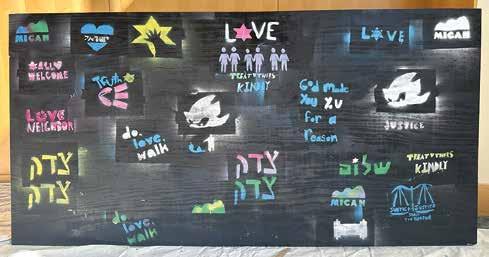


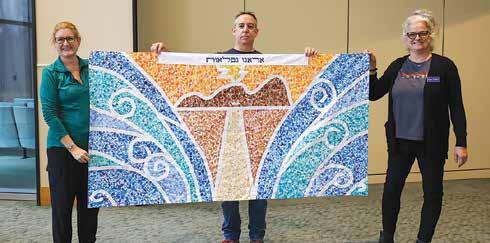
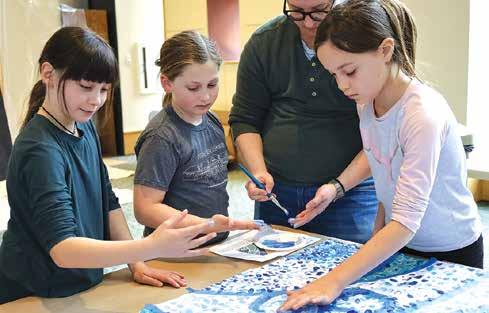
















By ERIN WIDES
Spirit and determination weren’t dampened, despite the rainy conditions, during Nice Jewish Runners Nashville’s Shalom Y’all Solidarity Run for Beth Israel Congregation.
When their group first planned the run, they anticipated chilly winter weather, not a citywide freeze.
An arctic blast swept through Nashville at the end of January, causing days of power outages and extensive tree damage across the city, which forced the group to postpone. For many, that might have been the end of it. But for this group, solidarity isn’t seasonal, and it’s not just when it’s convenient.
It’s a commitment. “As Jews, we understand the importance and power of responsibility. Our lives are shaped and impacted by it. We show up on the good days and difficult days,” said Erin Wides, NJR Nashville Team Captain.
After news broke of the arson attack on Beth Israel Congregation, a member of the run club suggested a solidarity run might be a nice gesture, being a neighboring southern Jewish community. As hours went on, it quickly became clear that many in the Nashville Jewish community had been impacted by Jewish life at Beth Israel Congregation, whether growing up there, attending youth group, bar and bat mitzvahs, services, etc.
When the rescheduled date arrived, the forecast once again threatened their plans. Rain fell throughout the morning and puddles gathered along the greenway. The skies remained heavy and gray. But as runners arrived, there was just enough break in the rain to make the day happen.
To onlookers, it may have appeared to be more of a tailgate, with SUV trunks sheltering check-in, t-shirt pickup, and post-run food, donated by community partners.
Nice Jewish Runners Nashville member Brad Krock shared what it was like for him growing up at Beth Israel.
“After growing up in Jackson, Mississippi, and being Jewish in the Deep South, it truly gave me a base for identity. You learned how to have conversations with both people likeminded and non-likeminded, of all religions and walks of life, and it was a very open and welcoming space,” Krock said.
Following Krock’s words, jackets zipped high and sweatshirts on; runners were counted down, and off they went for a three-mile loop. Shoes splashed through greenway puddles, and conversations continued between strides. What could have been a dreary morning instead felt purposeful.
“There was something kind of fitting about the weather,” Wides said. “The clouds overhead mirrored the heaviness many felt in recent weeks. Yet below them, our community moved forward anyway, steady, determined, and together.”
That’s what Nice Jewish Runners was born out of, a belief that people are stronger together and that through creating Jewish life and community they can help each other through the most difficult times.
Thanks to the generosity of sponsors, community partners, and participants in Nashville, and virtually in New York, and Saint Louis, the group was able to raise close to $3,000 to send to the Beth Israel Rebuilding Fund. •
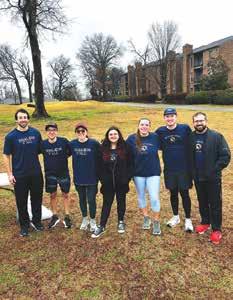
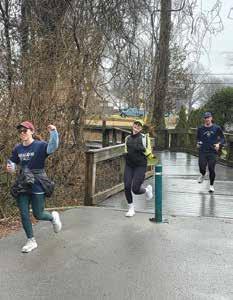
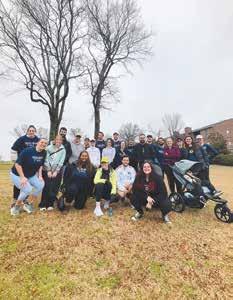

The Janet Levine March Gallery will feature the work of the students of Rhonda Wernick’s Oil Painting Class and the students of Kim Lane’s Watercolor Class. Rhonda Wernick has been teaching oil painting at the Gordon Jewish Community Center since 2006. As an instructor, she strives to nurture the style that each student already has and then guide them in drawing, technique, color and application. Even those who have not painted before have an individual manner in the way they see the subject, and the way paint flows off their brushes. The students in the class also experiment with different techniques and styles. Rhonda helps individuals find the joy of art.
Students find their way to Kim Lane’s classes for a variety of reasons. Some are rekindling a long-neglected passion, some are curious to master a new skill while others have been lifelong artists looking for a space to create within a community. Studio times are sacred hours spent focusing on something that brings joy, fulfillment, and struggle. All these experiences are welcomed and celebrated and are the fuel for creation. Kim’s watercolor and art classes at the J offer an inclusive and nonjudgmental space for art students to show off their progress, a moment to pause and reflect on what they have achieved.
The JLMG2 Gallery will feature the work of Kate Kinder. Kinder has a Master of Fine Arts degree from the University of South Florida, a Bachelor of Fine Arts in studio art, and Bachelor of Arts in graphic design, and minor in art history from Western Kentucky University, and currently lives and paints in Murfreesboro. With a culmination of work centered on interiority and object philosophies, Kinder has exhibited work internationally.
She has lived and taught in Florida, central Michigan as well as Stillwater, Oklahoma. Her work has been exhibited at the Tampa Museum of Art in Tampa Florida; the Holy Art Gallery in London; 621 Gallery in Tallahassee, Florida and others. Kinder ’s work has been curated into several private collections as well as the Carolyn M. Wilson collection of whom she received a Fellowship at the University of South Florida in 2014.
The Sig Held Gallery will feature the work of mother and daughter artists, Golda Siegal and Jilah Kalil. Their path to this point has not been a straight line, rather a route with many twists & turns. Golda’s artistic vision is through color, while Jilah is always chasing the light.
Golda uses contemporary materials of magazines, flyers, brochures, & more to express her feelings & emotions in a very immediate way. Typically, while reading through a magazine, something catches her eye & the collage process has begun. As well, she saves bits & pieces of materials (candy wrappers, tissue boxes,

& the like) to repurpose into her collage work, never knowing when that particular color or pattern is needed.
With the improved technology of the Iphone, Jilah uses this as her main device, and a digital camera with a holga lens as her second, to capture the light seen around her. No matter where she travels, locally or across the country, she always has a camera.
The Senior Lounge will feature the work of Robbie Lasky.
The House gallery will feature the Under One Roof collaborative exhibit. The Exhibition Dates are March 3 –29th. The Artist reception will be held on March 11th from 6-8 pm and feature music by DJ Joseph Harris.
The exhibitions are free and open to the public. For more information, contact the GJCC at 615.354-1699, Curator Carrie Mills at carrie@nashvillejcc.org, or go to www.nashvillejcc.org. •
Learn more about the Jewish Federation of Greater Nashville at www.jewishnashville.org

Please support the businesses that advertise in the Observer and help support our community in all ways! Make sure to let them know... you saw their ad here!
By ELLY EBIN
Some of the most impactful moments at Akiva School do not take place during a planned lesson or scheduled program. They happen in conversations; between a teacher and a student who is struggling with an issue, between an educator and a parent navigating concerns about academic or social growth, or in a classroom full of students asking big, complicated questions around identity, values, or beliefs.
Last month, Akiva School faculty and staff participated in an inspiring day of professional development focused on strengthening the skills needed to facilitate crucial conversations. Partnering with Facing History and Ourselves, a leading national organization dedicated to equipping educators across the country with tools to shape civic responsibility, empathy, and curiosity in their students, educators at Akiva engaged in hands-on learning designed
to build these skills across all areas of school life.
The session was led by Geffen Rosenthal, a Jewish Education Senior Program Associate at the organization, and centered on the Facing History and Ourselves’ Fostering Civil Discourse Guide. Through an interactive workshop that used real life scenarios that educators navigate every day, role-playing scenarios, and guided discussions, Akiva teachers practiced strategies for engaging in crucial but often difficult conversations. They explored strategies for connecting with parents about academic or social challenges their child may be facing, navigating differing family values and beliefs with sensitivity and respect, just to name a few topics. Time was spent thinking about how to support students and each other as they raise complex questions that often carry deep emotion and multiple perspectives.
The aim was not to arrive at easy answers, but to refine our capacity to
listen well, ask thoughtful questions, and create spaces where these difficult conversations can happen respectfully and productively.
Akiva Head of School, Rabba Daniella Pressner, said, “This program was a unique opportunity to sit together with the Akiva faculty and think about the courage it takes to enter into these conversations and how this commitment impacts not only our relationships with each other and the greater adult community, but also models for our children the need to engage with deep honor for each person.” Pressner added, “We thought through how to ask questions with curiosity and love, how to encourage our children to explore their assumptions more deeply and how to support our classrooms in tougher moments of conflict and disagreement, creating space for honorable dissent, patience and a desire to grow from and with each other.“
Rosenthal explained, “At Facing History and Ourselves, we encourage
students to consider the moral complexity in the world around them and apply these lessons to their own lives. With regards to civil discourse, we believe that how we talk about things matters. Students must learn how to bring their minds, hearts, and consciences to reflective conversations, so that they can fully extend their understanding when in challenging dialogue with others across differences. This is a skill they can learn early and develop over time.”
The investment into this type of professional development reinforces Akiva School’s commitment to both professional growth and to supporting a school culture and environment where dialogue, reflection, and empathy are at the center of learning. The impact of this program will be seen every day at Akiva, in communication, in the care taken during difficult moments, and in the confidence with which educators can guide students through the questions that matter most. •
By MELISSA UCHIYAMA
This
Shank bone, check. Haroset, check. Everything is there, on smooth pottery, but wait — is that… wasabi? This is the one item on my seder plate that draws smiles, and I get it. It’s not the norm. It’s my take on a bitter herb, maror. Welcome to our Passover in Japan!
Wasabi is a must at our JapaneseJewish table. It’s simply what happens when any of us live our Jewish life in a specific cultural stream and land: We make do with what’s available. To not include it at my Passover seder would be harder. I’d have to be oblivious not to use what is here, growing locally.
To be Jewish in Japan is to look for the connectors. After all, I am raising children who are proud and aware of their heritage – being wholly Jewish, Japanese and American. Food is one of the best avenues to express who we are because of its tangibility. Our hamantaschen feature the classics, like Nutella or apricot, sure, but also, matcha with a sakura crust, or a red bean/anko, a chestnut. Any chance I have to celebrate our children’s full identity, I’m taking it. When I could not source the white or red horseradish I was used to growing up in the U.S., I saw a great big wasabi root, nearly a foot long, in my local Tokyo veggie shop and thought, “bingo.”
Wasabi, the one you know from sushi, grows in moving streams of fresh
water. The white horseradish you’re probably familiar with, does not grow this way, in the wet ground of streams. Every wasabi root is different – twisty, thick, spicier than others, alive. It’s this plant before it’s the plastic packet in the sushi section of your Trader Joe’s or Prager’s.
Grate fresh wasabi with a traditional porcelain (or shark-skin) grater, and you’ll get it: bitter tears. Wasabi affects the olfactory/nasal passages, same as horseradish, clearing out sinuses. If you really go for it, spreading it on thick on your matzah, you may cry harder than the white, or definitely the purple horseradish. It is the strongest choice out there.
Of course, wasabi, an intrinsically Japanese plant, is a natural bridge between my life in the U.S., in Japan, and the Passover story, but it also stirs something in me about leaving my family and community for life in Japan. How do you tear away from such hugs? Sixteen years later, and it is not much easier.
I wish for there to be no ocean between us, no time zones or longing. I relate to the Israelites who missed the gorgeous leeks when they moved into their long journey. I wanted everything just so for those first holidays away from
my home in the U.S., but to be happy, we shift and adapt.
I include wasabi to not sink down in bitter tears, but consciously embrace where I am and the life I continue to make and choose. I look at my children, at their
precious identities, palettes, humor – their full heritage. Every parent wants to affirm their child’s identity. Fusion is not a gimmick if there is meaning and personal context. Then it is seamless.
Continued on page 30

“Always the right move ”


For advertisers who contract a 1/8 page ad or larger, we will be happy to contact you for articles pertaining to your
Deadline for ads is March 15, 2026




Douglas Small Honored with FAA Wright Brothers Master Pilot Award
Douglas Small has been awarded the Federal Aviation Administration’s Wright Brothers Master Pilot Award, the most prestigious honor issued by the FAA to civilian pilots. Named after aviation pioneers Wilbur and Orville Wright, the award recognizes individuals who have demonstrated exemplary aviation expertise, distinguished professionalism, and an unwavering commitment to flight safety for at least 50 years of piloting experience.
In addition to personal and professional aviation pursuits, Small has flown as a Volunteer Angel Flight pilot, generously donating his time and aircraft to transport patients and families in need to critical medical care.
The Wright Brothers Master Pilot Award honors not only longevity, but a lifetime of dedication to aviation safety, service, and excellence.
Jacob Arbanil
long-term support for those who call the streets of Nashville home.
Marin Elyse Arnold
Victoria Cohen Crumpton

Marin Elyse Arnold will celebrate her bat mitzvah on Saturday, March 21, at 11 a.m. at The Temple. She was born on December 18, 2012, in Park Ridge, Ill. Her parents are Sammi and Brian Arnold. Her grandparents are Florence and Howard Meron of Buffalo Grove, Ill., and Beverly and James Arnold of St. Peters, Mo.
A seventh grader at Rockvale Middle School, Marin loves art, musical theatre, music, make-up and time with friends and family.
For her mitzvah project, Marin is creating art kits with custom stencils designed by Marin for children at the Vanderbilt Hospital.
Ari Dylan Seigle
Condolences to the family of Victoria Cohen Crumpton. Victoria was a member of West End Synagogue, who, for many years, volunteered to call and remind members of their loved ones’ upcoming yahrzeit dates. She was also a steady and devoted presence in the WES minyan, first in person, and later on Zoom.
Aa past president of the Nashville Chapter of Hadassah (2009-2012), Victoria was passionate about all things Hadassah, and even when she moved from Nashville to Georgia to be closer to family, she remained a member of the chapter she cared so much about.
Howard Jeffrey Burke
Condolences to the family of Howard Jeffrey Burke, who died on January 20. He is survived by his mother, Judith Inman; sister, Elinore Burke; aunt and uncle, Mina and Myron Towbin.
Ralph Greenbaum
Jennifer Louis Condolences to the family of Jennifer Louis, who died on January 11. She was a devoted mother, wife, sister and friend celebrated for her generosity, integrity and warmth. Born in Harrison, N.Y., Jennifer was a competitive athlete who played varsity tennis for UCLA before embarking on a successful career as a marketing executive. After relocating to Nashville with her family, she became an active member of the West End Synagogue and University School of Nashville communities. An avid traveler, she delighted in planning immersive family vacations to myriad destinations including Denmark, Japan and Israel, and once even followed the Tour de France across the French countryside into Paris.
Jacob Arbanil will become a bar mitzvah on Saturday, March 21, at 10:30 a.m. at Congregation Micah. He is the child of Amy Strugazow and Hei an Ernesto Arbanil, the brother of Harrison Arbanil, and the grandson of Maria and Ernesto W. (z”l) Arbanil (Long Island, N.Y.), Haviva K. Strugazow (z”l), and Helen and Israel Sklarcyk (z”l).
A 7seventh grader at Rose Park Middle School, Jacob enjoys playing the trombone, chess, board games, and video games. He loves playing with his brother, Harrison, and his cat Mustachio. His favorite class in school is social studies, and he is very interested in learning about WWI. Jacob has volunteered with the Room in the Inn multiple times. He helps set up the space with cots, tables, and chairs. He serves food to the men and enjoys a meal with them. He plays cards (poker, Uno, whatever they like) and enjoys their company.
Jacob’s mitzvah project is raising money to buy additional cots for the men to sleep on. Room in the Inn’s mission statement is to provide programs that emphasize human development and recovery through education, self-help, and work, centered in community and

Ari Dylan Seigle will celebrate his bar mitzvah on Saturday, March 28, at 11 a.m. at The Temple. He was born on March 1, 2013, in New York City. His parents are Lori and Seth Seigle. His grandparents are Evelyn Seigle of Providence, R.I., Richard Seigle of blessed memory, Robin Szuchman of Fairfield, N.J., and Dr. Mario Szuchman of San Jose, Costa Rica.
A seventh grader at University School of Nashville Ari loves skiing, playing soccer, basketball, traveling with his family and spending his summers in Maine.
For his mitzvah project, Ari is working with the Nashville Diaper Connection to organize and lead a diaper drive in his community with friends and family.
Helen Bernstein
Condolences to the family of Helen Bernstein. Survivors include her daughters, Karen (David Flores) Bernstein, and Alison Greengard; her grandchildren, Rachel (Joe) Galt and David Greengard; and her great grandchildren, Jasmine and Jay Galt.
Ronald Bramson
Condolences to the family of Ronald Bramson, who died on February 12. He is survived by his daughter, Lindsay (Steven) Katz; and grandchildren, Brooklyn Katz and Wyatt Katz.
The Jewish Observer’s website www.jewishobservernashville.org … because your memories matter 479 Myatt Drive, Madison, TN 37115-3024 615-712-9521 • rdschultz@schultzmonument.com
Condolences to the family of Ralph Greenbaum, who died on February 11. He is survived by his children, Lori (Brad) Fishel, Betsy (Seth) Hoffman, and Brad (Lisa) Greenbaum; grandchildren, Scott (Annie) Fishel, Max (Antonella) Fishel, Jordan (Marina) Fishel, Gracie Hoffman, Jomah Hoffman and Halle Greenbaum; great granddaughter, Susie Raye Fishel; sister-in-law, Arlene Averbuch; and nieces, Alicia Berg, Jan Brackett and Lynn Ghertner.
Jennifer was a lifelong volunteer dedicated to advancing childhood cancer research, contributing her time and passion to both the Livestrong Foundation and Monroe Carell Jr. Children’s Hospital at Vanderbilt. Her advocacy also extended to Israeli educational and philanthropic causes, which she supported locally in Nashville and through her personal involvement with Hadassah Hospital.
She is survived by her husband, Roland Stein; her sons and daughtersin-law, B.J. (Leah) and Jarrett (Ava); her granddaughters, Isabel, Louisa and Sophia; and her sisters. •




By CARRIE MILLS
Till death do us part
It’s Valentine’s Day and I’m thinking about love and funerals. And it’s not because my love life is as good as dead. It’s because love and funerals are entwined. What is a funeral after all but the love and honoring of the deceased.
Speaking of which, I recently attended a community member’s funeral and upon reflection I realized how much I’ve come to enjoy on some level, attending funerals. And not because I’m some psycho or anything. Wait. I’m having to stop writing this column for a moment just to double check and google if there’s some psychotic disorder in the books for people who like funerals. I’ll be right back.
OMG! Turns out there is. Of course. Well, now that I mentioned it, I’ll fill you in. “Taphophiles. Derived from Greek, this term refers to those who appreciate the history, art, and culture of death, rather than just morbid curiosity.” At least now I don’t feel that cukoo since it mentions history, art and culture which are all an integral part of who I am in

a positive way. And the definition of taphophiles does not describe a psychopath with suggestions to lock her up. So that’s good.
Let me give you a little clue as to why and when I began to notice my appreciation of a good funeral. Two of my several day jobs are working with the senior population. Lo and behold, work somewhere long enough, 24 years now and counting, not only have I become a senior in the process, but part of my job entails getting to know a lot of elderly people over a long period of time and hey I’m not talking rocket science here, if that population is made up of senior folks, well, you do the math. All I can say is I’ve attended a lot of funerals over the years.
At some point in time, I noticed I started to enjoy the end-of-life ceremony on some level. And please, don’t get me wrong, I’ve cried at almost every single one of them. Let’s face it, when it’s someone you have known for years and on top of that a family member is bawling their eyes out, it would take a callous heart not to feel the pain and loss.
However, what I’ve noticed about funerals, and I’m going to be very specific here, basically Jewish funerals, it’s like a
whole theatrical procession. I mean it’s an event. Let’s face it, it is a meaningful social ceremony and tradition.
Right off the bat, there’s the fashion aspect of it. Funerals require getting dressed up. I found myself going to so many funerals at one point I started calling my little black dress my funeral dress. I’d wear it to work on days when I’d have a funeral to attend and time after time I noticed I actually would get a lot of compliments. My response to a, “Hey, you look good today” comment was, “Thanks, I’m going to a funeral.” To which there’d be an awkward moment of silence. And maybe an, “Oh, I wasn’t expecting that.”
Then there’s the actual attendance at the funeral which, in my experience, is quite the social scene. From my experience it’s generally a low key yet somewhat noisy, busy social encounter with all the community members catching up with folks they haven’t seen since the last holiday in shul, or the last funeral, or last week at Shabbat services. It includes lots of social hugging, nodding of heads while checking out the room to see who is in attendance and what they’re wearing, (well, that might be just me.) Anyway, it’s a scene until the moment the funeral starts.
The more I think about it, the more I realize there’s so much I love about the funeral itself. It starts right away with the music that is being played, at least in reform services. Usually, music that defines the person that has passed. The funeral I most recently attended, the piano player was playing a song that I actually played from a boom box at my mother’s funeral. My mom’s funeral was a whole thing in itself. She wasn’t very religious and did not have a lot of money, so there was a lot of improvisation going on, however it was nonetheless meaningful and quite a memorable day. I believe I wrote about my mom’s funeral a few years ago. To reiterate, not only was the Gambino family in attendance, my theatrical aunt, may she rest in peace, created quite a wailing disruption, it was a lot. Let’s just leave it at that for now.

Then, during the service, there are the family members of the deceased who choose to speak in remembrance and the Rabbi, who is somewhat like the conductor of this deeply moving symphony of stories, emotions, and ritual, who in the best-case scenario, has the ability to beautifully tie it all together in a profound way. I always find it so moving and telling what people will say about their loved ones who have just passed. Even the orneriest of characters gets sent off with a lot of love, tears and a few laughs, because let’s face it everyone’s got some quirk that makes them unique and who doesn’t like some Jewish humor and a well thrown in joke. I always find I learn so much about someone after they died that I never knew about them and quite honestly, about the family member who chooses or who are able to speak at such a moment.
It’s happened more than once where I’ve attended services where a person had passed away not long after their lifelong spouse had died.
And that’s the thing; it serves to remind me how much people love each other so deeply. Then there is the binding thread that ties us all together in life and death as a community and society. Which brings me around to love and funerals and how they are entwined in my impossibly single woman mind and may be the reason I am still single. The other day, while attending the forementioned funeral, the thought passed through my mind I’m somewhat embarrassed to admit, though obliviously not really, that maybe I’ll meet someone here. I mean, I’m dressed up, sitting alone, everyone’s looking at each other, in some convoluted way, it’s a social gathering of sorts. Anything’s possible. Right?
I quickly pushed that invasive thought away and brought myself back to the present moment. However, in defense of my twisted mind, if at my funeral, two people were to meet and fall in love, it would make me very happy, even if I weren’t alive to see it. I’d absolutely give them my wholehearted blessing.
Afterall, in the end, we are all heading toward our very own sendoff, however, while we are still here why not make it all about love. •
Continued from page 27
Last year, I discovered that I could order powdered white horseradish. I was shocked to notice that the label said “yama no wasabi,” or “mountain wasabi.” Turns out, horseradish is simply the cousin or sibling of Japanese wasabi – the family member who lives on a drier home in the mountains. Call it the same kind of plant but locally sourced.
All of my searching and wanting to source this ingredient and it was there all along.
I now want the spiciest, greenest wasabi. Or any horseradish, really. Why was I even on the hunt for something to make us cry when tears producing tears was never the problem? This year, like every year before, I’ll hold the sweet with the bitter, together.
This article was produced as part of The Nosher’s Jewish Food Fellows Program, which aims to diversify the voices telling Jewish food stories in media spaces. •
CATHY WERTHAN, CPA
CBIZ 1221 Broadway, Suite 1925 Nashville, TN 37203 (615) 245-4070 • CBIZ.com

ELECTRONIC EXPRESS is a leader in top quality, brand-name electronics and appliances at exceptionally low prices. Stocking the latest items, Electronic Express takes pride in providing customers with products at prices to fit any budget. From televisions, appliances, smart devices and cameras to security systems, furniture and mattresses, Electronic Express has everything to take your home to the next level. Electronic Express offers special financing, delivery and installation options. We make it happen! Visit us at any of our 18 locations or online at www. electronicexpress.com
MARTIN SIR, ATTORNEY
Family Law / Personal Injury / Probate 3200 West End Avenue, Suite 500 Nashville, Tennessee 37203 615-256-5661 (phone) 615-256-5115 (fax) www.martinsirlaw.com
Custom senior care for active, healthy lifestyles. Affordable/no minimums. Meals, meds, transp., outings, dementia care & assist with hospital discharge. Professional trusted care partners. Locally owned. Call Moises for Free Assessment: 615-678-9223 www.curaforcare.com
Elite Caregiving Services Compassionate Care In Your Home We offer aftercare from surgical procedures, part-time assistance, and 24 hour elderly care. 615-881-6528 Hannah@EliteCaregivingServices.com EliteCaregivingServices.com
DR. BRADLEY KROCK D.C.
Discover relief with Dr. Krock, DCExpert chiropractic care for pain, wellness, and injury recovery. Book your appointment today! 615-723-0201 www.krockchiropractic.com
STEVEN R. HECKLIN, DMD
DAVID M. SMILEY, DMD
ABBY DILUZIO, DMD
Cosmetic and Family Dentistry www.drhecklin.com 5606 Brookwood Place 615-356-7500

Home Maintenance Concierge Semi-annual Guidance and Upkeep. Perfect for busy homeowners, Seniors, Snowbirds, Caregivers. In-person service and trusted advice. No sales pitches, pressure or mark-ups. Mark Hill 615-823-8033 m.hill@tandemrealty.com www.TandemRealty.com

BILTMORE INSURANCE SERVICES
Greg Zagnoev, Agent 615-746-RISK (7475) Home, Auto, Business, and Life
JAMES A. ROTHBERG
ADAM ROTHBERG
James A. Rothberg & Associates Office: 615-997-1833 Fax: 615-665-1300 2000 Glen Echo, Suite 208 Nashville, TN 37215 Email: jrothberg@jarinsurance.com info@jarinsurance.com
ROBINS INSURANCE
Bruce Robins, CPCU, CIC, ARM; Van Robins, CIC Auto, Home, Life, Health, Business Insurance 11 Music Circle S Ph. 615-665-9200 • www.robinsins.com
ZANDER INSURANCE GROUP, INC.
Jeffrey J. Zander, CIC Auto, Home, Life, Health, Business, Long Term Care, Identity Theft Protection 6213 Charlotte Pike, Nashville, TN 37209 615-356-1700 www.zanderins.com
M JAFFA HEALTH INSURANCE
Marsha Ross Jaffa, CIC, LUTCF 615-482-3860
Medicare, Health, Dental, and Life
DR. MICHELE SONSINO Optique Franklin 436 Main Street, Franklin 615-591-4191 Optique Nashville 2416 21st Ave. S., #104, Nashville 615-321-4393
DR. JAMES W. KIRKCONNELL Bellevue Eyecare Center 7640 Hwy 70 S, Ste 102 Nashville 615-662-7588 www.bec2020.com

Specialists in Orthodontics
Dr. Jonathan Gluck DDS, MSD
Dr. Joel Gluck DDS, MS 2002 Richard Jones Road A-200 615.269.5903 drgluck.com
GHERTNER & COMPANY
Homeowner Association and Condominium Management Full Service and Financial Management Property Management since 1968 615-255-8531 www.ghertner.com
IRA HELDERMAN, PhD, LPC Psychotherapy for Individuals, Adolescents, Couples and Families nashvillepsychotherapyandcounseling. com Please contact: 615-473-4815 or ira.p.helderman@vanderbilt.edu

FRANKLIN PARGH
615-351-7333
franklin.pargh@compass.com
LANA PARGH 615-504-2685
lana.pargh@compass.com www.pargh.com Instagram: @theparghteam

JACOB KUPIN, REALTOR
HAYLEY LEVY KUPIN, REALTOR 615-281-9035
Jacob@TheKupinGroup.com Hayley@TheKupinGroup.com www.TheKupinGroup.com We’ve got your back!
JESSICA AVERBUCH
Broker/ Owner Zeitlin Sotheby’s International Realty 615-294-9880
jessica.averbuch@zeitlin.com
KAROL FARAGALLI 615-289-3359
karolfaragalli@gmail.com
LORNA M. GRAFF
Broker, GRI, CRS, ABR 615-351-5343
lorna.graff@zeitlin.com www.lornagraff.com
SETH HOFFMAN
Associate Broker 615-351-2150 seth@sethhoffmannashvillehomes.com
NAN SPELLER
Broker, GRI, ABR 615-973-1117 nanspeller2014@gmail.com
Nashville: 615.383.0183 Franklin: 615.794.0833 zeitlin.com

Jackie Roth Karr, REALTOR® ABR, CRS JackieKarr@gmail.com JackieKarr.com Mobile: 615-330-9779 Office: 615-463-3333

TEAM NASHVILLE Your Running/Walking Swimming Headquarters 3205 West End Ave. Nashville, TN 37203 615-383-0098
Expedia Cruise Ship Centers A Full Service Travel Agency Alan Cooper: Office: 615-454-6439 www.expediacruises.com/AlanCooper 7081 B Hwy 70 S / Kroger Shopping Ctr.
Preserving the Natural Beauty of Trees and Shrubs. Specializing in the care of shade and ornamental trees and shrubs for residential and commercial properties. Serving Nashville since 1978. 615-373-4342 www.druidtree.com
GREG ANSEL, REALTOR® Phone/Text: 615-815-6405 Email: GregAnsel@kw.com “Let’s Get Moving!”