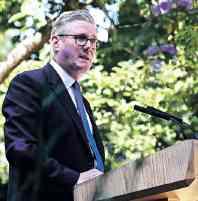
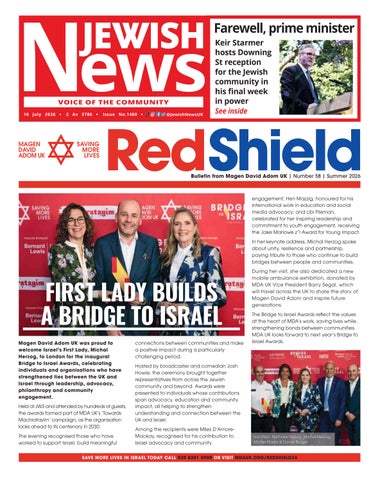
Farewell, prime minister
Keir Starmer hosts Downing St reception for the Jewish community in his final week in power See inside
Keir Starmer hosts Downing St reception for the Jewish community in his final week in power See inside
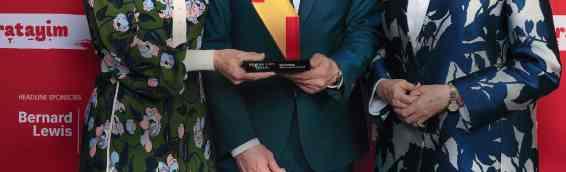

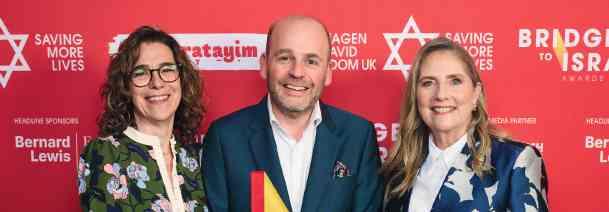
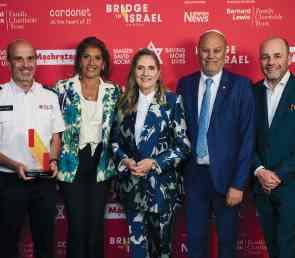
Magen David Adom UK was proud to welcome Israel’s First Lady, Michal Herzog, to London for the inaugural Bridge to Israel Awards, celebrating individuals and organisations who have strengthened ties between the UK and Israel through leadership, advocacy, philanthropy and community engagement.
Held at JW3 and attended by hundreds of guests, the awards formed part of MDA UK’s ‘Towards Machratayim’ campaign, as the organisation looks ahead to its centenary in 2030.
The evening recognised those who have worked to support Israel, build meaningful
connections between communities and make a positive impact during a particularly challenging period.
Hosted by broadcaster and comedian Josh Howie, the ceremony brought together representatives from across the Jewish community and beyond. Awards were presented to individuals whose contributions span advocacy, education and community impact, all helping to strengthen understanding and connection between the UK and Israel.
Among the recipients were Miles D’AmoreMackay, recognised for his contribution to Israel advocacy and community
engagement; Hen Mazzig, honoured for his international work in education and social media advocacy; and Libi Fileman, celebrated for her inspiring leadership and commitment to youth engagement, receiving the Jake Marlowe z”l Award for Young Impact.
In her keynote address, Michal Herzog spoke about unity, resilience and partnership, paying tribute to those who continue to build bridges between people and communities.
During her visit, she also dedicated a new mobile ambulance exhibition, donated by MDA UK Vice President Barry Segal, which will travel across the UK to share the story of Magen David Adom and inspire future generations.
The Bridge to Israel Awards reflect the values at the heart of MDA’s work, saving lives while strengthening bonds between communities. MDA UK looks forward to next year’s Bridge to Israel Awards.

One of the greatest privileges of my role is witnessing the extraordinary connections between our community here in the UK and the people of Israel.
Over recent months, that connection was brought vividly to life during the visit of Israel’s First Lady, Michal Herzog. As Magen David Adom UK continues its journey Towards Machratayim, “the day after tomorrow”, Michal has become a passionate champion of the mental health and wellbeing programmes helping Israeli society heal and rebuild. Through our support of MDA Israel, we are proud to be investing not only in saving lives today, but in strengthening lives for tomorrow.
Her visit to Heaton Park Hebrew Congregation in Manchester is something that will stay with me for a long time. It was the community’s first major gathering of remembrance ahead of the first anniversary of the Yom Kippur attack on the synagogue. The atmosphere was one of resilience, unity and reflection.
On a personal level, it was also a privilege to accompany Michal to JCoSS. As a parent of children who attended the school, I was proud to see her experience firsthand the warmth, confidence and vibrancy of one of our community’s greatest institutions. It was a reminder of the strength of our Jewish schools and the young people they help shape.
Machratayim is ultimately about making things better tomorrow than they are today, building a stronger society, supporting wellbeing and creating hope for future generations. These experiences reminded me how much there is to be optimistic about.

Daniel Burger Chief Executive Magen David Adom UK
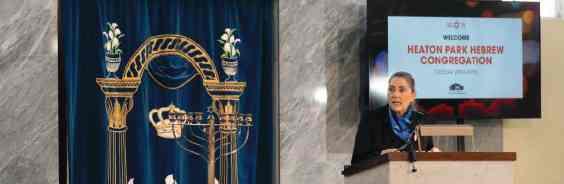
The congregation in Manchester came together for a moving day of reflection and remembrance, including firsthand accounts of the attack that took place at the synagogue on Yom Kippur 2025.
From the moment she arrived, it was evident how committed Mrs Herzog was to strengthening the bonds between Israel and Jewish communities around the world. Her visit was met with enormous warmth and appreciation, providing an opportunity to celebrate the enduring connection between the local community and Israel.
The purpose of the visit was the dedication of two Magen David Adom first responder cars in memory of Adrian Daulby and Melvin Cravitz. The ceremony was a moving tribute, ensuring their legacy will live on through the saving of lives across Israel. The community was grateful to Michal Herzog for her time, generosity and support. It was a visit that strengthened the bonds between Manchester and Israel, showing how remembrance and hope can unite communities across continents.
Joining the First Lady were broadcaster and barrister Robert Rinder, members of the synagogue committee and Rabbi Walker. Together, they spent time with members of the community, listening to personal experiences and reflecting on the challenges faced over the past year.
A particularly poignant part of the visit was hearing about the attack at the Synagogue on Yom Kippur 2025. Mrs Herzog and Robert were shown around
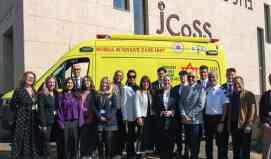

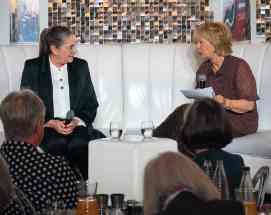

the building and told of the horrors of that day. For many present, it was an important opportunity to reflect on the lasting impact the attack has had on families and the wider community, while recognising the strength and courage shown in its aftermath.
One moment that stood out was Michal's emphasis on the importance of community, mutual responsibility and hope. Her remarks highlighted the role that strong communal bonds play in sustaining individuals and families through difficult periods and in building a brighter future for generations to come.
by Lee Harpin lee@jewishnews.co.uk @lmharpin
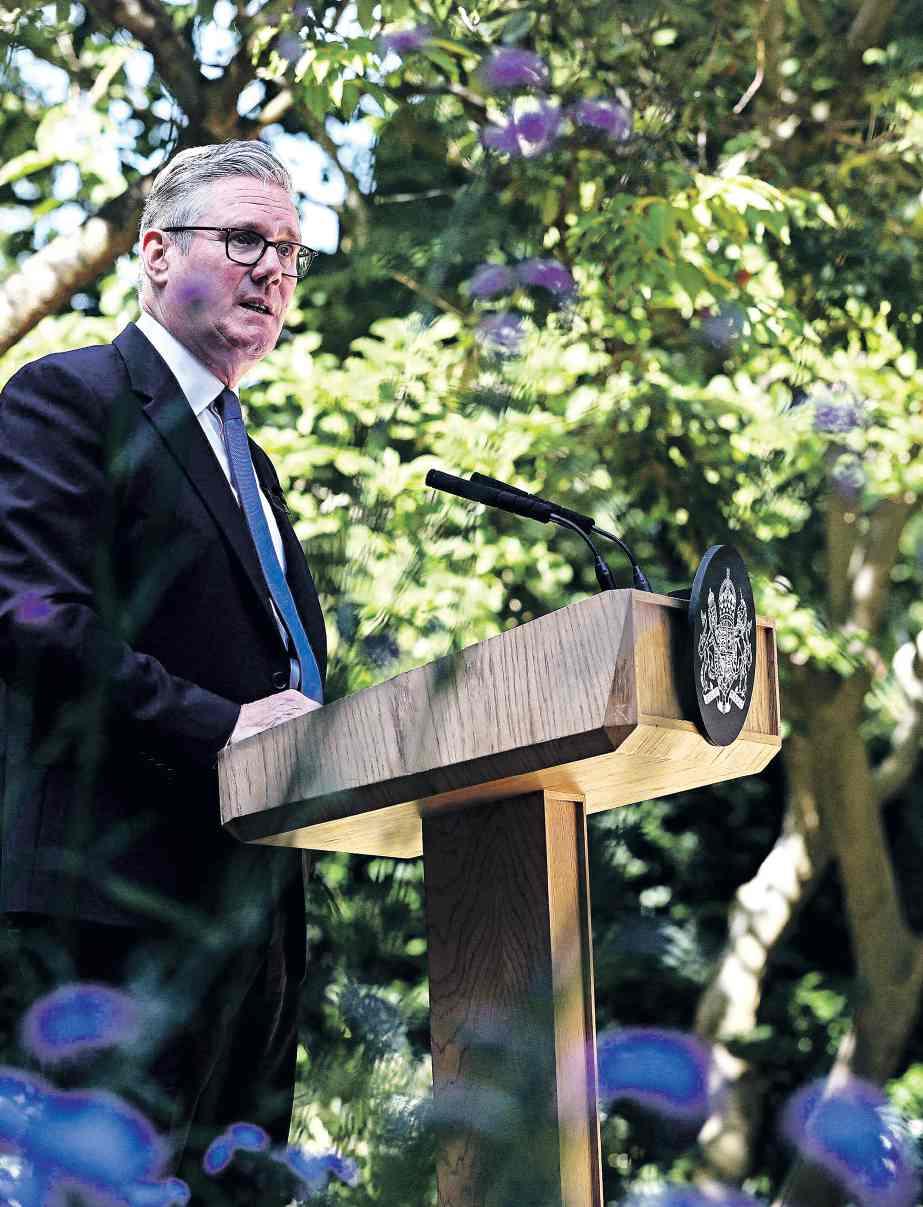
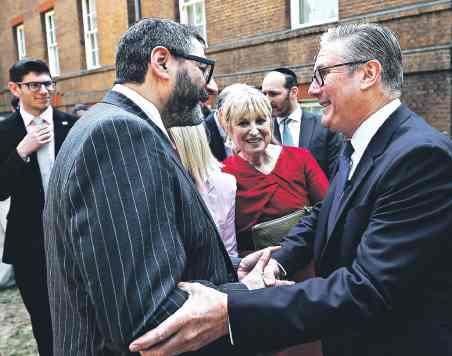
With tears visible in his eyes, outgoing Prime Minister Keir Starmer shared an emotional embrace with Finchley and Golders Green MP and Courts Minister Sarah Sackman, as sunlight flooded the Downing Street garden where Jewish supporters and communal leaders had gathered for a poignant farewell.
“Never forget what we went through together to turn this party around,” Starmer was overheard telling the Jewish parliamentarian, his words heavy with the weight of his two-year stint as PM drawing to a close.




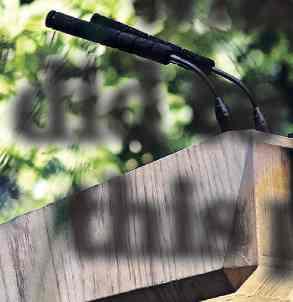


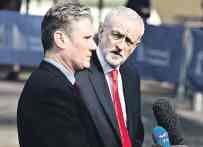
Starmer’s words, a clear reference to the pivotal role he and Sackman had played in ridding Labour of antisemitism, were Continued on page 6
‘Never forget what we did to turn this party around’

by Lee Harpin lee@jewishnews.co.uk
The UK government this week confirmed a £250m funding commitment to increase policing and protection for Britain’s Jewish communities over the next three years.
The announcement, welcomed immediately by communal leaders, follows a dramatic rise in antisemitic attacks that have left some in the community questioning their future in the country.
Outgoing Prime Minister Keir Starmer said the funding will deliver more than 500 additional o cers across England and Wales, It would, he said, boost security in Jewish neighbourhoods, schools, synagogues and community centres while also strengthening national counter-terrorism capabilities.
Sir Keir called the announcement “a stepchange in protection and policing so Jewish communities can live and celebrate their faith free from fear”.
Chancellor Rachel Reeves also hailed the quarter-billion-pound investment, telling Jewish News: “Being able to send your children to school, attend synagogue, and go about your daily lives without fear is not a privilege – it is a right, and we will defend it.”
The government’s announcement came after Jewish News recently raised concerns about the government’s funding commitment
to protect the community properly, following the deadly Heaton Park Synagogue attacks in Greater Manchester and the spate of serious incidents in London including the Golders Green stabbing and arson attacks.
The new £251m of funding will be split across policing priorities aimed at tackling antisemitism including:
• A further £86m to the Metropolitan Police which will go to funding around 300 additional o cers to enable an increased police presence in Jewish communities;
• More than £22m to Greater Manchester Police to enable the force to sustain the increase in policing presence following the tragic attack in Heaton Park last year;
• Around £43m to be distributed across seven other force areas with significant Jewish communities – Hertfordshire, Essex, Northumbria, Sussex, Thames Valley, West Midlands and West Yorkshire;
• £41m for national policing coordination and increased antisemitism capabilities. This will fund antisemitism training for all o cers in England and Wales, aimed at strengthening investigations and ensuring surge resources are available to all forces to protect Jewish communities, wherever they live;
• £59m to specialist counter-terrorism police to bolster protective security and counter state threats.
The funding announcement marks one of
years is a test of our values as a country and tackling it has been central to my

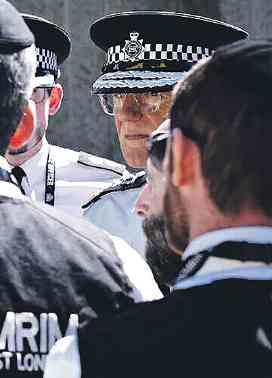
BY CHIEF CONSTABLE GAVIN STEPHENS CHAIR OF THE NATIONAL POLICE CHIEFS’ COUNCIL
Arson attacks, knife attacks, terrorism. There is little wonder the Jewish community are telling us you feel afraid when you have time and again been the target of such atrocious acts.
Not only have many of these incidents occurred in quick succession in recent months, they have occurred here on British soil – on the streets where you live, work, and at your places of worship – making the threat feel relentless and immediate.
And this is in addition to the atrocities of 7 October 2023, and the Bondi Beach attack –which, while geographically distant, would have had a significant impact on British Jews as they not only feared for loved ones in the a ected regions but were once again reminded just how deep-rooted antisemitism is in our society.
So, I sincerely hope today’s announcement the UK government has committed its largest ever investment to protecting our Jewish communities provides some reassurance and hope. I echo that pledge, and vow to do all I can to work with my fellow chief constables to ensure we do all we can to protect and engage with you.
Reassurance that those in power, and those responsible for keeping communities safe, are listening is vital. We recognise the threat you face, and we hear you when you tell us how fearful you are, in your homes, your schools, your places of worship.
Other police leaders, including the deputy commissioner for the Metropolitan Police – which serves and protects more than 50 percent of the UK’s Jewish population – have pushed for additional funding so that we can provide you with the service you deserve.
More than £250m will be spent on increasing security for Jewish communities specifically over the next three years.
The funding will enable us to increase o cer numbers to provide a much more visible presence and security in those places where you should feel safest but where you’re telling us you feel most at risk.
It will be spent ensuring Jewish people can go about their days free to observe and celebrate their religion without fear of persecution simply because of who they and what they believe in. It will be spent ensuring schools and synagogues can once more feel like safe spaces and not a magnet for hate and hostility.
The UK has always had a strong history of being an open and tolerant society, where people of all backgrounds can live and work together, and for too long antisemitism, hate, hostility and extremism have threatened that.
As a society, we must do all we can to call out and tackle hate and hostility in all its forms. We will continue to work alongside government and criminal justice partners to ensure all agencies are united in their commitment to tackling antisemitism.
We will also continue to engage with you, our local Jewish community, as well as organisations such as the Community Security Trust to do all we can to earn your trust and ensure you feel heard, understood, safe and protected.
leadership from day one. That is why earlier this year, I brought together leaders from business,
education, health, policing and civil society at Downing Street to drive a coordinated response across every corner of our society.
“We have also taken action across government to protect Jewish communities, tackle antisemitism in schools, universities and public services and strengthen our response to extremism and hate, including online.
“Today’s funding builds on that work – delivering a step-change in protection and policing so Jewish communities can live and celebrate their faith free from fear.”
Writing for Jewish News, the chancellor, whose future in the role under likely new prime minister Andy Burnham remains unclear, added: “The poison of antisemitism has no place in our country, and this government will always stand with our Jewish communities.
“Today’s announcement is a vital funding commitment to protect Jewish communities –over £250m across the next three years. Being able to send your children to school, attend synagogue and go about your daily lives without fear is not a privilege – it is a right, and we will defend it.
“This money will see more o cers on the streets, a stronger and more visible police presence around synagogues and schools, and stronger protection at community sites to ensure the Jewish community can live their lives peacefully. Antisemitism will not be tolerated. We will confront it at every turn.”
The government is to designate Iran’s Islamic Revolutionary Guard Corps (IRGC) as a terrorist group, making it a criminal offence to support, assist or obtain a material benefit from, writes Daniel Sugarman.
Draft regulations will be laid before Parliament naming the IRGC, as well as Russia’s GRU military intelligence corps and Harakat Ashab al-Yamin al-Islamia (Islamic Movement of Companions of the Right), a group which previously claimed responsibility for a spate of attacks on the British Jewish community back in April.
Foreign Secretary Yvette Cooper said: “As foreign states increasingly seek to back threats on our streets, we are cracking down on those who try to undermine our country and its security. Iran and Russia’s use of proxy groups to carry out state-backed activity on our soil is reprehensible.
“As I set out today, the IMCR publicly claimed responsibility for seven abhorrent attacks at locations linked to Jewish and Israeli communities, and Persian-language media in the UK earlier this year.
“Their malign behaviour, and anyone who acts on their behalf, must be held to account.
“My message to Iran and Russia, and anyone who does their bidding, is clear. We will take all measures necessary to protect the British people, at home and abroad.”
Addressing Jewish guests and communal leaders at a Downing Street gathering, prime minister Keir Starmer said: “A criminal group called the Islamic Movement of Compan-
In further details of the plan, the Home O ce said the cash boost will see £250m spread out across the next three years, providing Jewish communities with a major boost in protection and fund e orts to root out antisemitism across society, focusing on education, building cohesion and countering extremism.
The government says the funding will deliver more than 500 additional o cers across England and Wales, including around 300 additional o cers in London and around 80 in Greater Manchester, along with more o cers for forces serving other areas with significant Jewish populations.
The package will also continue Project Servator, deploying specialist and plain-clothes o cers trained to identify suspicious behaviour and prevent serious crime.
Among community leaders welcoming the move, Community Security Trust chief executive Mark Gardner said: “This serious increase in policing and government support comes not a moment too soon, because this is a critical time for the future of British Jews.
“CST and our many communal partners will keep working with police and government to ensure that these deployments are as e ective as possible.
“We thank everyone who plays their part in the continuing struggle against anti-Jewish racism and terrorism, all of which threatens society as a whole.”

ions of the Right has publicly claimed seven attacks at UK locations linked to Jewish and Israeli communities, and sitting behind them were members of Iran’s IRGC.
“Of course, the IRGC itself has a long history of using proxies and criminal networks to target people in the UK, including our Jewish communities.
“So today, under our new state threat powers, we’re designating this criminal group, the Islamic Movement of Companions of the Right, and we’re designating the IRGC.”
Jewish communal organisations, alongside Free Iran activists, have long campaigning for the IRGC to be proscribed in the UK. In 2022, those close to home secretary Suella Braverman indicated proscription was imminent, but nothing happened. Labour spoke in Opposition of its intention to proscribe the IRGC but did not pledge to do so in its 2024 election manifesto.
There have also been concerns the regular proscription method is not suited to organisations aligned with hostile foreign states.
Last week, however, the National Security (State Threats) Bill received Royal Assent, enabling the government to bring in new proscription-like powers.
For a body to be designated in such a manner, the home secretary has to have a reasonable belief the organisation concerned is or has been involved in foreign-power threat activity and must consider that “designation is necessary to protect the safety or interests of the UK.
Board of Deputies vice-president Karen Newman added: “We warmly welcome the government’s announcement of this major investment in policing to protect the Jewish community, and we are grateful for the commitment and work of all in government, from prime minister Sir Keir Starmer down, to ensure our safety.”
“Protection is one element of the response we called for after the recent wave of antisemitic violence, alongside prosecution of those inciting hatred, and partnership to tackle antisemitic extremism.”
Jewish Leadership Council director of public a airs Russell Langer added: “After the deadly terrorist attack against a synagogue in Manchester and the stabbings in Golders Green, this is an important step in ensuring increased protection for Jewish communities in the UK.
“Security and policing alone cannot address the fact that anti-Jewish hatred remains at record levels in modern Britain. Ensuring Jewish communities can live openly and without fear requires sustained e ort, leadership and action.
“We will continue to work with government and law enforcement to ensure communities receive protection they need.”
This latest announcement follows a commitment earlier this year by the government of a £25m fund to provide immediate protection for Jewish communities.



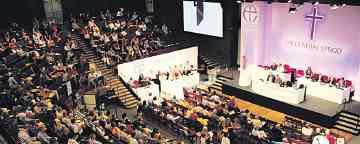
The future of interfaith relations was cast into doubt this week after the Church’s General Synod overwhelmingly voted in favour of a controversial resolution in support of the so-called Kairos II document, “A Moment of Truth: Faith in a Time of Genocide”, writes Jenni Frazer.
Speaker after speaker, led by the Archbishop of Canterbury, Dame Sarah Mullally, rose to support the motion, tabled by Archdeacon Stewart Fyfe. Dame Sarah, who referred both to her recent visit to Israel and the Palestinian territories, and to her rejection of antisemitism – particularly in the UK – said that “put simply, Palestine, which the British government recognised last year, is disappearing”.
But no matter how senior clergy, such as the Bishop of Manchester, David Walker, despite his concern for Palestinian Christians, warned that supporting the motion would send a worrying message to the Jewish community, the resolution was backed in all three “houses”
of the Church represented at the Synod. Bishop Walker, a friend of Heaton Park Synagogue’s Rabbi Daniel Walker, believed there should be “a less inflammatory way” to support the Palestinians.
In the House of Bishops, 25 voted for the motion, none against, while five abstained; in the House of Clergy, 115 voted in favour, 20 against, and 30 abstained; and in the House of Laity, 113 voted for the motion, 27 against, with 35 abstentions.
In the wake of the Synod vote, Chief Rabbi Mirvis condemned the resolution as “shameful”, referring to Kairos II as a document full of falsehood, which openly rejects dialogue, uses extreme rhetoric to challenge the very existence of Israel and objects to existing peace agreements in the region. He went on to describe it as “a sad day for Jewish-Christian relations”.
The Board of Deputies issued a briefing document for the Synod in advance of the debate, warning the “negative impact of the Church
engaging with the Kairos II document for British Jews and JewishChristian relations”. It argued that the Kairos documents, especially Kairos II, “spread a toxic narrative about Jews, and that their dissemination will do more to perpetuate conflict than make peace”.
Right from the beginning of the debate on Sunday evening, the resolution ran into controversy as Stephen Hofmeyr KC, who once acted on behalf of the Rev Stephen Sizer and defended him against charges
A man who racially abused an Orthodox Jew in April, accusing him of “killing babies” and threatening to break his jaw, has been sentenced to 16 months in prison, with a local police commander describing “a shocking and targeted antisemitic attack”, writes Adam Decker.
Shafiq Rahman, 48, of Lismore Park in Slough, was sentenced at Reading Crown Court. The incident, which took place on 20 April, saw Rahman, on a bicycle, approaching a Jewish man in Slough and verbally abusing him. Video footage was shown in court showing Rahman calling the victim a “dirty Jew”, accusing him of “killing babies in Palestine” and threatening to “break his jaw”.
Rahman was arrested the following day, and pleaded guilty to one count of racially/religiously aggravated common assault, one count of racially/religiously aggravated fear/provocation of violence by words, and one count of criminal damage.
He was also charged, in relation to a separate incident, with being in charge of a dog dangerously out of con-

trol causing injury, in which serious injuries were caused to a man in Thatcham.
In court in April, District Judge Devinder Sandhu described the attack as a “pure hate crime”, describing herself as “appalled and startled” by “a completely unprovoked attack on a man who was simply doing his job”.
Part of the victim’s statement to the police was read out in court, in which he said that he felt “physically targeted due to my religion” and talked about how “this incident has changed my perspective on what it is to be a Jew openly in public”.
Police commander for Berkshire East, Chief Super-
intendent Stuart Bosley, said: “This was a shocking and targeted antisemitic attack on a man simply going about his work. We understand that crimes of this nature cause distress and fear, having a profound impact not only on the victim, but on the wider community. Everyone should feel safe to go about their lives without fear of harassment or abuse.”
Detective Inspector Terry Dixon, who led the investigation, said: “Rahman was deliberately obstructive when interviewed by police, but had no choice but to plead guilty in court due to the weight of evidence against him.”
of antisemitism, sought to defer the debate altogether, telling the Synod it was more likely to promote “disunity” and that “the time is not right” to embrace Kairos II.
Kairos II, written by Palestinian Christians, appears to defend Hamas, saying that its attacks on southern Israel on October 7 2023 were “born out of decades of injustice, oppression and displacement since the Nakba of 1948”.
The majority of speakers went out of their way to deplore antisemitism – and also to deny that the language of Kairos II breached the terms of the IHRA definition of antisemitism, which was formally adopted by the Church’s College of Bishops in 2018.
But Archdeacon Fyfe, to applause, told the Synod that “silence does not promote unity”, and calling for solidarity with the Palestinian church, urged a stand “against the eradication of an indigenous church in the land of our Saviour”.
Eventually an amendment was accepted, which now means that the General Synod has agreed to “hear” Kairos II. But this is a nuance unlikely to find favour in the mainstream Jewish community in. The president of the Board of Deputies, Phil Rosenberg, described the decision as “highly problematic”. u Opinion, page 18
A tourist cancelled a hotel booking in Italy after receiving an automated confirmation email stating that the property supported a pro-BDS campaign called “No Room for Genocide”.
The traveller, identified only as R, had booked a stay at the Decumani Hotel De Charme in Naples but decided not to continue after reading the message.
Speaking to Israel’s N12, she said: “I wrote that I didn’t feel safe to go there. It made me a little less eager to travel, but I’m getting over it. It’s still a very unpleasant feeling.”
The confirmation email stated: “This property endorses the No Room for
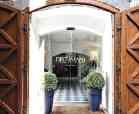
Genocide campaign and respects freedom and human rights of communities suffering racist, ethnic, social, and other forms of harm and discrimination. We warmly welcome Palestinians, refugees and all those peacefully resisting oppression and struggling to attain their internationally recognised rights.”
The wording matches
text published in campaign materials by BDS Italy, which encourages accommodation providers using booking.com to include the message in automated confirmation emails. The campaign toolkit also advises participating businesses to seek additional information from guests in certain circumstances, including their nationality or military service, although it is not clear whether this occurred in the Naples case.
In a statement to Jewish News, Decumani Hotel De Charme confirmed it supports the campaign but rejected any suggestion that it discriminates against Israeli or Jewish guests.
A government-backed employment programme run by World Jewish Relief has delivered an estimated £31.5m in economic and social benefits to the UK while helping thousands of displaced Ukrainians rebuild their lives through work, according to a new independent evaluation.
The assessment, commissioned by the Ministry of Housing, Communities and Local Government, examined the first phase of the charity’s Specialist Training and Employment Programme Ukraine, which ran from August 2023 to August 2024 and supported people arriving in Britain.
Britain’s Jewish community is viewed as the country’s least safe minority group, according to the Britain Under Strain report.
The report, by former Counter Extremism Commissioner Dame Sara Khan and extremism researcher Dr Matthew Godwin, argues that growing distrust of the state, increasing support for extremist ideas and the spread of conspiracy theories are all part of the same national challenge rather than separate problems.
Among its findings, only 38 percent of people believed Britain is safe for Jewish people, making Jews the minority group the public perceives as being at greatest risk.

Continued from page 1 underscored by the presence of Ella RoseJacobs, the Jewish Labour Movement’s national chair, who delivered the event’s opening speech.
Later, Sackman told Jewish News: “It was an emotional moment. Keir has been a true friend to the community.”
Emotions ran high. Former Board of Deputies president Marie van der Zyl, accompanied by her husband Adrian Cohen, embraced the Prime Minister, reflecting on their shared journey as the fight against Labour antisemitism culminated in the damning EHRC judgement.
In the garden, former Jewish Labour Movement figures Lord Katz and Adam Langleben were also present, both visibly moved as Starmer spoke.
Current Board president Phil Rosenberg presented Starmer with a beautiful kiddush cup, thanking him not only for defeating anti-Jewish racism in Labour but also for his e orts on policing, national security, and most recently, the designation of Iran’s IRGC.
Now, with Andy Burnham set to replace him as PM – largely due to Starmer’s failure to win over large sections of the parliamentary Labour Party and a string of dire election results – it is clear that Starmer has been searching for a legacy.
Reflecting on his six and a half years at Labour’s helm – his leadership beginning after the dark days of Jeremy Corbyn –Starmer has hinted at a future beyond Westminster, where the fight against antisemitism still lies at the heart of his mission.
Speaking to Jewish News, and addressing those at Downing Street, Starmer declared:



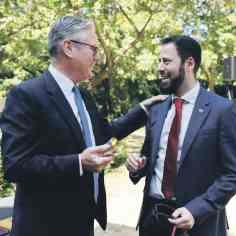
“It is the end of my political journey. But it’s not the end of me standing with you.
“I want to make you a further promise, because I promise I will stand with you, continue to stand with you, and do everything I can to support you in all of the years to come,” he added, his voice catching with emotion.
“I will do that whilst I have breath in my body. And I’ll proudly be with you in lockstep for the many, many years to come.”
This would certainly offer him the opportunity to address concerns within the Jewish community, that the UN can, with its regular singling out of Israel for intense criticism, serve as a hotbed of antisemitism itself.
hatred – targeting Jewish people, because you are Jewish,” he reflected. “I think, of course, of the despicable attacks in Golders Green earlier this summer. And that horrific day in October last year, on Yom Kippur at the Heaton Park Synagogue in Manchester.”
It is to the PM’s credit that a fair proportion of those invited to his communal farewell had regularly expressed criticism of his government.
Later, speaking to Jewish News, Starmer reflected on the anger that had greeted him as he visited Golders Green after another vile terror attack saw two Jewish men stabbed. He said: “When we went to Golders Green, it was clear that this was a community in high levels of distress.”
Some of the community will also never forgive Starmer for his decision to recognise a Palestinian state in September 2025, weeks before the last hostages held by Hamas were freed. But Starmer, who insiders confirm had resisted calls for Palestine recognition to have come earlier, will not now apologise for the “big step” he took.


Later, reflecting on his decision to host the Jewish community alone at the farewell, he told Jewish News he wanted to show gratitude to those who “gave me that space and that time, and that allowed us to do what I promised we’d do, which is root out antisemitism” from Labour. He said: “That, for me, doesn’t end with me stepping down as prime minister. It has to be a continuing fight.”


















Having carved a reputation as one of Britain’s leading human rights lawyers at the Doughty Street Chambers, it seems unlikely Starmer will simply make a return to his former day job.
Some who are close to him suggest Starmer could have his eye on the international stage – even the possibility of securing the top job at the United Nations.
But sources close to Starmer are keen to point out that while he immediately plans to spend time with his wife, Lady Victoria and their children, he intends to continue serving
For him, despite communal criticism, recognition of a Palestinian state represents the best hope of securing a safe and secure Israel, and of defeating both those who seek the destruction of the world’s only Jewish state, and yes, those who seek to make sure Palestine never happens, through the continued pursuit of wider borders for Israel.
Defending the Palestine recognition decision, which came at a time when European and other allies made exactly the same move, Starmer says: “The big question is, how do we take this forward? That has to be a two-state solution – I have firmly believed that all my life. We took a big step on that road with the recognition of Palestine. I genuinely believe that a lasting end to the conflict will only come about that way.”
Starmer was also keen to reflect on the genuine achievements of his time in No 10.
his constituency as an MP, which will include standing up for Jewish residents there.
Whatever Starmer does next, it would be wrong to conclude that a PM who has only managed to serve two years out of a five-year term has been a success in the role.
And for some in the Jewish community, Starmer, while successfully ridding Labour of its antisemitism problem, has failed to move strongly and fast enough to address the problem in wider UK society.
“It sickens me that in the last two years alone, we have seen such horrific acts of
“I really listened; really heard you,” reflected Starmer. “And I’ve had you in my mind’s eye when making decisions as Prime Minister. Because this is not who we are as a country. And it is a test of our values to change this.”
Starmer concluded: “If there’s one takeaway from the last two years, I’d say it’s got to be a whole of society fight.
“It’s got to be every single person in this country cares about this country in this fight. It isn’t a fight for others that we stand by and support. It is our fight. It’s got to be the fight of every decent, reasonable person in this country.”

















Jewish pupils are being advised to remove uniforms that identify them as Jewish, families are moving children to different schools because of antisemitic abuse and Jewish teachers are facing increasing hostility in the classroom, Baroness Berger warned at the launch of a new government-backed education programme, writes Rosa Doherty.
Speaking at a Parliamentary event, the Baroness said antisemitism had become an increasingly pressing challenge across the education system, as she launched the Tackling Antisemitism in Education scholarship, a programme designed to equip teachers, lecturers and education sta with the confidence and practical skills to recognise and respond to anti-Jewish racism.
The Department for Educationfunded-programme, which will be delivered by Palace Yard, is available to schools, colleges and universities across England. Participants will complete modules alongside

attending learning sessions and will receive CPD accreditation.
Addressing educators, parliamentarians and community leaders, Berger described the experiences of Jewish families who have seen antisemitism become an increasingly visible part of school life.
“We’ve had parents who’ve had to move their children to a di erent
Jewish schools, while Jewish teachers in non-Jewish schools were also experiencing abuse.
Berger said hostility encountered by young people was being fuelled online, warning that social media algorithms were exposing children to extremist material.

school because of the antisemitism that they faced,” she said. “Some schools are recommending Jewish children take o uniforms because they have identifying features.”
She added that Jewish pupils were being targeted because they wore kippot, Stars of David or attended


She said: “Education is the key to unpicking and challenging these misconceptions and prejudices. We need to ensure educators have the skills to recognise antisemitism, and... have confidence to call it out.”
Lord Mann, the Government’s Independent Adviser on Antisemitism, said the programme represented a shift away from responding to incidents, towards equipping every educational institution with knowledge to recognise and address antisemitism e ectively.
“If you’re not sure what’s working
and how... you can’t tackle prejudice and discrimination,” he said.
“The way to deal with antisemitism in a university, college, or school, is to deal with it within that institution. Somebody must have the basic knowledge of what antisemitism is, and the basic skill for dealing with prejudice.”
Drawing on his experience working across government, the peer said even senior o cials often lacked a basic understanding of Jewish history and Britain’s Jewish community.
“That basic knowledge can be taught in five minutes,” he said. “But if you don’t know that, how can you know how someone who you don’t even know is Jewish… is handling problems?”
He said the programme would help ensure educators had the confidence to respond appropriately when antisemitism occurred, adding that “having people with that basic understanding, that basic bit of training, is fundamental”.
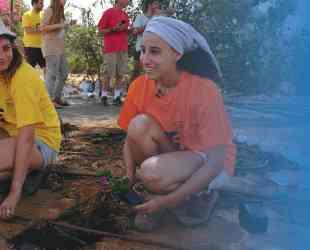
For over 120 years JNF UK has worked tirelessly to develop the Land of Israel.
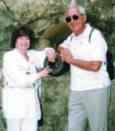
Much of our work has only been possible thanks to the generosity of our legacy donors like Sheila and John, who had a deep commitment to how the country had shaped their lives.

Leaving a gift in your Will, no matter how small or large, is one of the most valuable ways you can forge an everlasting bond with Israel.


Our expert and caring Legacy Team offer a range of professional services and first-rate pastoral care.
Dame Maureen Lipman has thanked supporters who gathered outside the opening night of her West End play after weeks of anti-Israel protests that forced the veteran actress to hire private security and sparked widespread concern across the Jewish community , writes Annabel Sinclair.
Dozens of people assembled outside the Harold Pinter Theatre on Wednesday evening ahead of the London premiere of Allegra , in a demonstration organised by grassroots campaign group Our Fight.
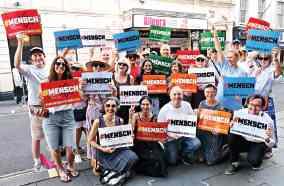
The group said the rally was intended to send a message that those protesting against Lipman did not represent mainstream Britain and to show solidarity with one of the country’s best-known Jewish performers after a string of demonstrations throughout her UK tour.
Lipman, 80, was unable to meet those gathered because her security team advised it was not safe for her to do so.
In a message shared after the performance, she thanked those who had turned out and criticised campaigners who had targeted her at theatres across Britain.
She said: “The theatre is a sacred space and not somewhere for you to make political points or air your grievances.
“If you think you have a right to free speech, then you must also believe I have the same right to think differently from you.
“My intention is to bring pleasure to hundreds of people every day; sadly, yours [the protesters] is to disrupt the trust between actor and audience in order to get publicity for such a hateful cause. I’m so grateful to those who turned out to support me.”
Ahead of performances in Aberdeen, pro-Palestinian campaigners called for the production to be cancelled because of Lipman’s outspoken support for Israel.
Protesters also demonstrated outside performances in Glasgow, where activists gathered outside the Theatre Royal and online campaigns targeted the actress.
During the Scottish leg of the tour, a doctored promotional image portraying Lipman with devil horns and a pitchfork was circulated online by activists. The image was condemned by Jewish organisations and politicians as using a classic antisemitic trope.
Police Scotland later recorded the complaint as a non-crime hate incident.
The rally formed part of Our Fight’s recently launched #Mensch campaign, which encourages non-Jewish allies to stand publicly with Britain’s Jewish community against antisemitism.
The organisation describes a “mensch” as someone who demonstrates “genuine decency and moral backbone” by standing with Jews at a time of rising antisemitism.
Teenagers as young as 15 are being arrested as police investigate plots by hostile states to destabilise Britain and target the Jewish community.
Counter-terror police bosses told how countries like Iran, Russia and China are “actively looking to intervene in our way of life” as they warned how easy it was for young people to be exploited and used as proxies to carry out crimes on UK soil, lured by the promise of cash rewards and protection.
Speaking to reporters, head of Counter Terrorism Policing Laurence Taylor said the number of national security investigations his officers are working on has risen by 50 percent since the end of last year, showing “no sign of slowing down”.
“We anticipate reporting even bigger growth in the coming months,” he added.
Describing the work as “our most rapidly escalating mission”, senior national coordinator Vicki Evans said using proxies was “tactic number one” for hostile states that consider them “cheap and replaceable assets”. It comes after news that Iran’s Islamic Revolutionary Guard Corps will be banned in the UK after new laws for the Home Secretary to crack down on groups working on behalf of hostile states came into force.
The National Security (State Threats) Act received royal assent, paving the way for a ban.
Tuesday 4 August 10am - 4pm
• Discover warm, welcoming retirement living in the heart of Hendon





A London mosque faces scrutiny from the Charity Commission after hosting an Egyptian preacher accused of repeatedly calling for the killing of Jews, writes Annabel Sinclair.
The regulator has opened a compliance case into Hounslow Jamia Masjid after concerns were raised by the National Secular Society (NSS), which also reported online sermons by the mosque’s head imam discussing the death penalty for gay people under Islamic law.
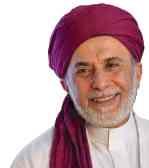
The mosque hosted preacher Yosry Gabr on Sunday and Monday despite previous controversy about his public statements.
According to The Telegraph, Gabr said in a YouTube video published in January: “Wars will stop after killing the Jews – there will be no wars after killing the Jews.”
In another video published in December, he said: “The final war will begin in which we will kill
The UN agency responsible for Palestinian refugees has been accused of failing to remove extremist material from its schools, despite pledging reforms following an independent review commissioned by the European Union.
A new report by education watchdog IMPACT-se claims the United Nations Relief and Works Agency for Palestine Refugees in the Near East (UNRWA) has not carried out most of the education reforms it promised after the 2024
every Jew. They know this, the Jews know they will be killed.”
The visit prompted political criticism before it took place.
Shadow Home Secretary Chris Philp called for Gabr to be “urgently banned from entering the UK,” while Labour MP Damien Egan urged Home Secretary Shabana Mahmood to do “everything in her power to stop this extremist coming to spread hate and division in Britain”.
The NSS said Hounslow Jamia Masjid is a registered charity whose charitable purpose is advancing the Islamic faith. It also runs Su ah Primary School and an after-school academy.
Earlier this year, Su ah Primary School failed to meet Ofsted standards after inspectors identified shortcomings in its safeguarding procedures.
The mosque was also attended by Asif Hanif, one of the two British suicide bombers behind
the 2003 attack on Mike’s Place, a bar in Tel Aviv, in which three civilians were killed.
The charity is already the subject of a separate statutory inquiry opened by the Charity Commission in 2025 into allegations concerning its financial management. It has also received more than £546,000 in government grants and benefits from Gift Aid.
Alongside its latest referral, the NSS highlighted a 2023 lecture streamed on the mosque’s YouTube channel in which head imam Ammar Siddiqui discussed a book entitled Advice for the LGBTQ.
Addressing what he described as the “LGBTQ” “agenda”, Siddiqui said it was “to destroy the human race”. He said: “When the Prophet says kill the doer and the receiver (of gay sex), meaning kill the ones that are doing it, it refers to those people that are in charge, that they put the punishment down.”
Megan Manson, the NSS’s head of campaigns, said: “It’s outrageous that a registered charity, which has received hundreds of thousands in public money, has hosted a preacher who calls for the death of Jews and suggests to children it is acceptable for Islamic states to execute gay people.
“We urge the Charity Commission to evaluate this organisation’s suitability as both a registered charity and the proprietor of a school.”
has not come of its
The Charity Commission has not announced the outcome of its compliance case.
Gabr

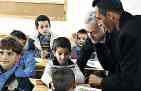
Colonna Report, raising fresh questions over international funding for the agency.
According to the report, many of the recommendations aimed at improving neutrality in UNRWA schools
remain incomplete two years later. IMPACT-se says pupils are still being taught material that promotes antisemitism, glorifies violence and presents armed jihad as a religious duty.
Among the examples, the report alleges a Grade 9 Islamic Education textbook teaches fighting and killing non-Muslims is an act of jihad that earns entry to paradise.
It also claims a Grade 5 textbook encourages girls to “kill, be killed and send their children to die”.
Ireland looks set to impose a ban on products sourced from the West Bank, after the lower house of its parliament passed The Israeli Settlements (Prohibition of Importation of Goods) bill.
The legislation was drafted by the governing centre-right coalition and while it still needs to be approved by the Senate, that is seen as little more than a formality.
The bill is largely symbolic
given the amount of trade from settlements entering Ireland amounted to less than a million Euros between 2020 and 2024, but politicians from left-wing opposition parties have criticised it for not going far enough, noting it bans only goods, but not services.
Alongside Spain, Ireland has become notable as one of the most vehement critics of Israel in recent years; in 2024, Israel closed its embassy
in Dublin, due to what it described as “the extreme anti-Israel policies of the Irish government”.
Ministers have stressed the legislation is intended to ensure Ireland complies with the viewpoint of the International Court of Justice, which in 2024 issued an advisory opinion on the illegal status of Israeli settlements and settlement goods. Israel denies the settlements are illegal.
Barnet Council is to award its highest civic honour to five Jewish organisations in acknowledgement of their “extraordinary service to the borough”.
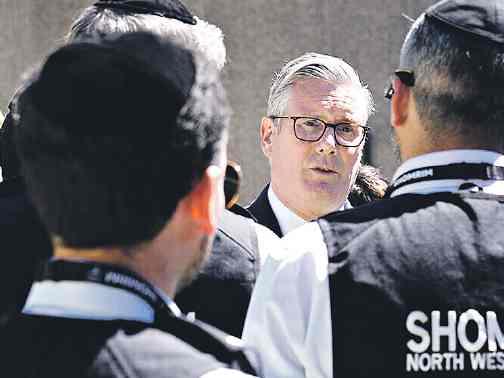
The Community Security Trust (CST), Shomrim NW London, Hatzola Edgware, Hatzola HBS and Hatzola Northwest will receive the Honorary Freedom of Barnet, after councillors agreed to a resolution tabled at an extraordinary general meeting last week.
The three Hatzola organisations, which between them cover areas of Barnet including Golders Green, Hendon, Edgware, Southgate, Hadley Wood, Whetstone and Totteridge, will be honoured for their exceptional contribution to the health and wellbeing of Barnet’s communities, providing a free, rapid-response emergency medical service to all.
The award notes its “resilience and steadfast commitment” following an arson attack on Hatzola Northwest’s ambulances in March.
CST is recognised for its “tireless work” to safeguard Jewish communities across the borough, while Shomrim NW London will be commended for “dedication and bravery”, including actions by its volunteers in helping to apprehend a person following the stabbings on Golders Green Road in April.
Barnet mayor Zahra Beg said she was “delighted” at the council’s resolution.








Jewish volunteer medical service Hatzola Northwest has bought a site on the corner of Limes Avenue and Golders Green Road in north-west London, with a view to creating a new permanent home for its team of 70 first responders, writes Michelle Rosenberg.
The purchase comes after four of the service’s ambulances at the charity’s base
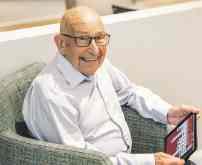
JOE TURNS 107 YEARS YOUNG Britain’s oldest Jew celebrated his 107th birthday. Great-grandfather Joe Slyper was born in 1919 in East London. He’s a resident of Nightingale Hammerson and enjoys playing games on his iPad.
in the car park of the Machzei Hadass synagogue were destroyed in a suspected antisemitic arson attack in March.
While the government stepped in with replacement vehicles, money was donated to an emergency Hatzola NW charity crowdfunding campaign, with more than half a million raised in the hours following the blaze.
Hatzola NW chairman Shloimie Richman said the site purchase “represents an amazing next step in the growth of Hatzola Northwest and will enable us to consolidate all our services under one roof from the heart of our community.”
He added that the purchase “provides a two year window to work up suitable plans and secure funding for the construction of the new premises.”
Hatzola Northwest covers the communities of Golders Green, Hendon, Hampstead Garden Suburb, and Finchley.
The proposed site is also currently home to the Iranian Freedom Wall, a space offered by the local Jewish community, dedicated to the thousands of anti-regime protesters killed in Iran during the January 2026 uprisings. A section of the wall

is also dedicated to those murdered at the Nova music festival on 7 October 2023.
A Hatzola NW spokesperson told Jewish News: “All parties involved in the purchase, sale and lease arrangements are aware of the sensitive nature of the Freedom Wall; the matter is being approached with great care. This includes ongoing coordinationwith Barnet Council and the site manager, both of whom have expressed their commitment to working constructively and doing everything possible to provide appropriate support.”
As part of the transaction, the new site will be leased to Kosher Kingdom, which will trade from the premises until its nearby shop is ready to re-open, following a major fire on 27 May at its flagship Golders Green branch.
• Tax-efficient investing before and after Aliyah
• Tax-efficient income after 10-year tax-free period
• Receive your entire pension pot tax-free
• Specialist portfolio management for Olim
• No Inheritance Tax (for non-UK-situated assets)
We are seasoned experts in providing long-term financial planning advice for those making Aliyah. Scan the QR code to read more
With investing, your capital is at risk. Tax treatments are subject to individual circumstances and are subject to change.
An exhibition paying tribute to heroes who helped Jews during the Second World War has opened at Swiss Cottage Library.
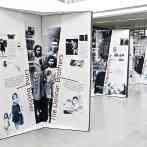
Between Life and Death combines the stories of rescuers and survivors, exploring acts of moral courage and the complexity of human relationships under extreme wartime conditions, placing each story within its broader historical context.
Presented by the European Network Remembrance and Solidarity (ENRS), based in Poland, the exhibition has been shown at more than 30 European venues, including the European Commission Headquarters in Brussels.
The British chapter of the exhibition, which features accounts from 15 European countries, tells the stories of Eva Paddock, who arrived in Great Britain as a child on one the Kindertransport.
Agnieszka Mazur-Olczak, Project Coordinator, said the exhibition “reveals both the light and the dark sides of humanity through stories of people who found themselves in extreme situations – those struggling to save their own lives and those who chose to risk everything to help others.
“What is most important to me is that, wherever the exhibition travels, people tell us that...it ultimately leaves them with a sense of hope.”
Between Life and Death: Stories of Rescue During the Holocaust is at Swiss Cottage Library until 31 July 2026.

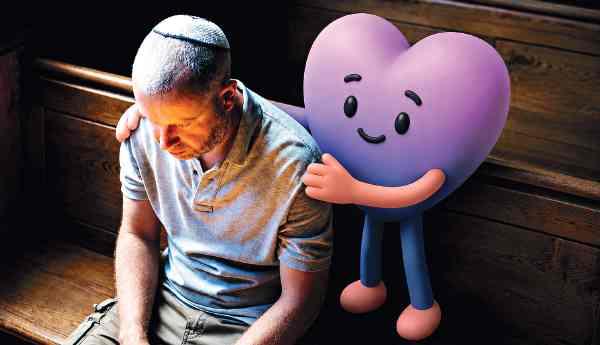
KNOWING HOW TO LOOK AFTER YOURSELF AND OTHERS GIVES YOU THE POWER TO PREVENT A CRISIS.
Learn how to manage stress, understand wellbeing and mental health, and reach out to someone who’s struggling - because simple skills can change lives. www.projectlily.org.uk/calendar
WHAT IS MENTAL HEALTH?: The essentials everyone should know
Wednesday 16 SEPT 1.00pm
Tuesday 6 OCT 8.00pm OR
UNDERSTANDING MENTAL HEALTH CONDITIONS: Identifying and responding to common mental health issues
Wednesday 14 OCT 1.00pm
Tuesday 20 OCT 8.00pm OR
SELF-CARE AND STRESS MANAGEMENT: Boost your wellbeing and reduce stress
Wednesday 12 AUG 8.00pm
PRACTICAL RELAXATION:
Master powerful techniques in 50 wonderful minutes
Tuesday 21 JULY 8.00pm
REACHING OUT TO SOMEONE WHO’S STRUGGLING: How best to show concern and o er help
Tuesday 3 NOV 8.00pm OR OR
Wednesday 28 OCT 1.00pm
Wednesday 19 AUG 8.00pm
Wednesday 11 NOV 1.00pm Tuesday 1 SEPT 8.00pm
Tuesday 17 NOV 8.00pm OR OR OR OR
Wednesday 25 NOV 1.00pm
Tuesday 1 DEC 8.00pm OR

www.projectlily.org.uk
by Annabel Sinclair annabel@jewishnews.co.uk
Sadiq Khan made his long-awaited visit to the Nova Exhibition in East London last Thursday, one week after Jewish News highlighted organisers’ disappointment that he was yet to attend.
The mayor of London toured the Shoreditch exhibition alongside London’s Victims’ Commissioner, Andrea Simon, viewing the installation that documents the Hamas-led attack on the Nova music festival on 7 October 2023.
Khan said: “It was humbling to visit the powerful and poignant Nova Festival Exhibition. The heinous terrorist attack of 7 October turned a peaceful festival into a horrific site of pain and su ering for innocent victims, and this exhibition is a stark demonstration of this terrible day and its long-lasting impact.
“This exhibition has played a vital role in educating more than 600,000 people of all backgrounds around the world about these atrocities, and it is a testament to the incredible fundraising efforts of London’s Jewish community that it has been brought to our capital for an extended stay.”
His visit fell on what would have been the 29th birthday of British-Israeli Jake Marlowe, the London-born musician who was murdered while working as an unarmed security guard at the festival.
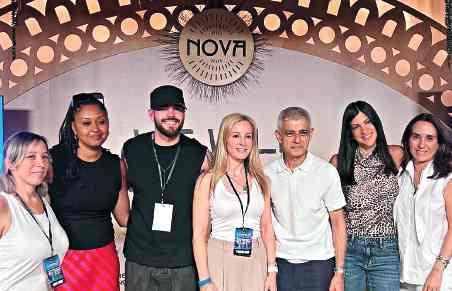
Later that afternoon, Jake’s parents, Lisa and Michael
spoke at a special event at the exhibition, sharing their son’s story and remembering his life.
Jake had taken the security job to earn extra money before planning to propose to his girlfriend. When Hamas terrorists attacked the festival, he chose to stay behind to help others escape rather than flee him-
He was later shot dead.
Last week, Jewish News revealed organisers’ frustration that, despite repeated invitations since the exhibition opened in May, the mayor had not attended.
Jo Woolfe, who led e orts to bring the internationally acclaimed exhibition to London, said at the time that City Hall had acknowledged receiving several invitations
before later proposing dates after the exhibition had originally been due to close. She described the delay as frustrating, particularly given the number of senior political and religious figures who had already visited.
The exhibition was extended until 15 July following public demand.
Its final programme featured talks from survivors, bereaved relatives and a former hostage, giving visitors the opportunity to hear first-hand accounts of the 7 October atrocities and their lasting impact.
British-Israeli survivor Sean Burns described how he helped rescue fellow festival goers during the attack.
Former hostage Bar Kupershtein, who was held in Gaza for 738 days before being released in October 2025, spoke about his captivity and recovery.
Visitors also heard from survivor May Hayat, who escaped after terrorists attempted to take her hostage; survivor Anita Conforty, who fled the festival with her husband after hiding from gunfire; survivor Eden Rozner, who now shares his testimony with audiences around the world; and Avivit Abady Yablonka, whose brother Hanan was kidnapped during the attack and was later recovered dead from Gaza.
Organisers said the programme aimed to give Londoners the opportunity to hear directly from those whose lives were forever changed by 7 October.




Norwegian police have dropped an investigation into a university professor who described Hamas’s 7 October massacre as “the most beautiful thing that has happened in our century”, prompting Jewish campaigners to accuse the authorities of failing to confront the glorification of terrorism.
Bassam Hussein, a project management professor at the Norwegian University of Science and Technology (NTNU) in Trondheim, made the remarks during a public lecture organised by the Socialist Forum on 21 April.
The case was reported to police by Norwegian anti-antisemitism campaign group StoppNRK after the comments came to light. According to The Jerusalem Post, o cers have now concluded that Hussein’s remarks do not amount to a criminal o ence.
In a decision issued last week, investigator Arild Hansen and prosecutor Sunniva Tronvoll informed the group by letter the complaint had been dismissed because “the reported conduct is not considered a criminal o ence”.
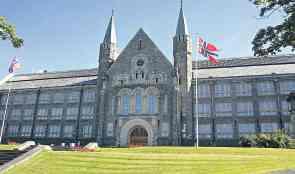
The letter, which The Jerusalem Post said it had seen, states StoppNRK has three weeks to appeal the decision to a higher prosecuting authority.
Tributes have been made to US senator Lindsey Graham, a Republican from South Carolina and one of Israel’s staunchest supporters in Congress, who has died aged 71.
He had returned from Ukraine, where he met prime minister Volodymyr Zelensky, the day before.
Graham was described as
a paragon of an era when support for Israel and for robust US intervention overseas were emblems of bipartisanship.
In the days after the 7 October Hamas attack, he engineered one of the last displays of bipartisan solidarity with Israel by organising a joint Republican-Democratic trip to the country, saying it
was designed to typify how Americans viewed and supported Israel.
“Ten percent of the United States Senate is in Israel,” Graham said at a Tel Aviv press conference on 22 October.
“Ten percent of the United States Senate is in Israel because we care. Five Republicans and five Democrats.

“If I had a bigger plane, we probably would have brought the entire Senate.”
Three years on, no one could convene such solidarity, and Graham’s death means the Senate and Republican Party have lost one of its most durable pro-Israel voices when anti-Israel sentiment is on the rise in both places.
The group’s chairman, On Elpeleg, condemned the ruling and confirmed an appeal would be lodged.
“It is unbelievable and unacceptable that Norway, a country where nearly half of its Jewish population was murdered during the Holocaust, allows the glorification of the genocidal terrorist organisation Hamas,” he told the newspaper.
He added: “It is becoming increasingly unsafe to be a Jew –or anyone who opposes terrorism – in Norway.”
The controversy first emerged earlier this year when Hussein’s comments were reported by The Jerusalem Post
At the time, NTNU distanced itself from the remarks, saying the event had taken place away from university premises and was not organised by the institution.
Vikas Thakur, dean of NTNU’s Faculty of Engineering, told the newspaper while the university understood the remarks “may be perceived” as glorifying terrorism, Hussein had spoken “as an individual citizen with a background from Gaza, not on behalf of the university”.
















JOSH GLANCY
Another day, another conversation about leaving Britain – this time with a media executive, seemingly well-adjusted, successful, networked into the core of British society. He’s thinking of moving to Israel, uprooting an entire life in this country, not so much because he’s su ered violence or harassment, but because it no longer feels entirely like home.
This is now the great question of Jewish life in Britain. Should we stay or should we go? Actual departures remain reasonably rare, but the thought now is very common.
Generally, I have found that when Jews actually leave this country (as opposed to talking about it), one typically finds several motivations beyond just discomfort: desire to be closer to family, a financial incentive, a long-cherished retirement plan.
But in this case, with the person I met recently, it was a decision he would never have considered until October 7, when the responses and sentiments of the people around him, even friends of long standing, fundamentally changed the way he relates to his own country.
What to make of this desire to leave Britain? People who have read my work over the years will not be surprised to hear that I do not share it. It’s not remotely my business to tell anyone else where to live or how to feel, but I personally find the idea of leaving Britain and moving to Israel on safety grounds fairly unappealing.
Why? I could make the obvious point that Israel is, by orders of magnitude, a much less safe place to be a Jew than the UK.
In London, we have pro-Palestine marches where protesters sing problematic chants. In Israel, they have Hamas.
Over here we have the occasional fat jihadi psychiatric patient wielding a kitchen knife, in Israel they have ballistic missiles coming over from Tehran.

In Britain, we Jews occasionally have to put on a stab vest and stand on security outside our synagogues. In Israel, teenagers give two or three years of their life up to put on a uniform and carry an assault rifle. Needless to say, not all of them come home.
I don’t mean to downplay the threat to Jewish safety in Britain. It is very serious and the situation has deteriorated markedly in the past three years. I will never forget the names of Melvin Cravitz and Adrian Daulby, modern Britain’s first Jewish martyrs, may their memories be a blessing. But it’s worth taking a brief reality check before booking a one-way ticket to Ben Gurion.
Others sometimes talk of going to America or Australia or Canada, the new world. But to that suggestion the obvious response is Pittsburgh, Bondi, Tucker Carlson and Nick Fuentes and Hasan Piker, attacks on synagogues from Ontario to Melbourne to Michigan. There are no safe havens now because what we are witnessing is a partial
JEWISH SAFETY IS SERIOUS BUT THE SITUATION NEEDS A REALITY CHECK
reversion to pre-Second World War hostility towards Jews globally. It’s happening everywhere all at once.
Of course, safety is also about state of mind, not just physical protection. What many Jews who are heading to Israel will tell you is that they would rather face Hezbollah rockets living side by side with their fellow Jews, than feel judged and isolated and alone in a changing Britain.
What we’re mostly talking about here in the UK is psychic discomfort rather than physical danger, though clearly both are present and the latter increasingly so. It
is an entirely understandable sentiment, though again I would argue that moving to a country trapped in not one but several semi-permanent and vicious tribal conflicts brings its own anxiety and stress.
If you think British politics is becoming increasingly sectarian, I’m not sure living somewhere whose politics is dominated by Bibi “Arab voters are heading to the polling stations in droves” Netanyahu is likely to calm you down.
Beyond these quotidian and practical observations, I suppose what I really resist in this discourse is an increasingly morbid fatalism towards Jewish life in Britain, or indeed Jewish life anywhere in the diaspora.
In 1917, when the Balfour Declaration was issued, the anti-Zionist Jewish intellectual Lucien Wolf expressed concern that Jews in Britain had now become merely “temporary sojourners” in this country, their political status “artificial” because of the second nationality which had been ascribed to them.
Wolf was wrong on many levels – we are still here over a century later. But he was right that, for British Jews, having a secondary national a liation does a ect their primary national a liation, namely that of being British.
It is not so much that, as Wolfe feared, ill-intentioned outsiders can hurl unfounded accusations of disloyalty at us. That can be borne because it is not true. The more apparent danger is that, in our own hearts, we are quicker to give up on our homes than we otherwise might have been. At the first or second sight of danger, we can leave.
This of course was part of Israel’s raison d’etre, somewhere strong to go when gentile communities turn against us, as they always have previously and perhaps always will. But to my mind this particular form of aliyah should be an act of last resort, not immediate recoil.
There is a remorseless but frustrating logic to this situation which is squeezing diaspora Jews: Israel’s wars make life for Jews less comfortable in London or Liverpool, so those Jews then start packing
Thank you for helping to make Jewish News the leading source of news and opinion for the UK Jewish community. Unlike other Jewish media, we do not charge for content. That won’t change. Because we are charity-owned and free, we rely on advertising to cover our costs. This vital lifeline, which has dropped in recent years, has fallen further due to coronavirus.
Today we’re asking for your invaluable help to continue putting our community first in everything we do. For as little as £5 a month you can help sustain the vital work we do in celebrating and standing up for Jewish life in Britain.
Jewish News holds our community together and keeps us connected. Like a synagogue, it’s where people turn to feel part of something bigger. It also proudly shows the rest of Britain the vibrancy and rich culture of modern Jewish life.
You can make a quick and easy one-off or monthly contribution of £5, £10, £20 or any other sum you’re comfortable with. 100% of your donation will help us continue celebrating our community, in all its dynamic diversity.
Support Jewish News by visiting our donor page at jewishnews.co.uk
IF PEOPLE WANT TO MOVE TO ISRAEL THERE ARE MANY REASONS TO DO SO ❝
their bags for Israel. It creates a sense of inevitability, inexorability even.
I reject this logic. If people want to move to Israel there are many perfectly good reasons to do so, the lifestyle, the economy, the sense of Jewish fulfilment. My hope is that despair about Britain is not one of them though, not yet at least.
In this article I’ve mostly made a negative case for why I do not wish to move to Israel, a country I love to visit and have a deep if somewhat tortured relationship with. But what about the positive case for Britain? What about centuries of relative peace and quiet rarely found in the annals of Jewish history? In this country, the majority of people remain broadly benevolent towards Jewish life, which has long been unusually compatible with this ancient and liberal democracy. Should we give up on that so fast?
For me personally, if you’ll excuse a moment of mawkishness, Britain is home in the kind of deep-souled way that cannot easily be replicated. It is home because of Test match cricket and pubs and Manchester United, of George Eliot and George Orwell, of Anthony Trollope and Private Eye and The Sunday Times and Hampstead Heath and Ullswater and Oban harbour and the Yorkshire dales and on and on.
It is the place where my family has lived and flourished for well over a century after fleeing pogrom and persecution. It produced the English language in all its multitude and magnificence, which is the enduring feature of my every passing day. Nazism failed here. Judaism succeeded.
Is that story ending? I don’t think so. Not if we stay here and keep telling it.


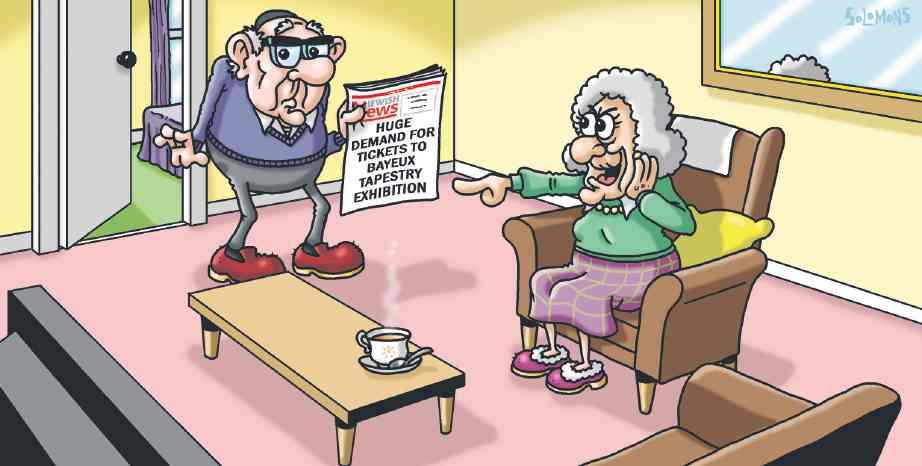
‘People are paying good money to see a length of old embroidered schmutter?! Quick, Harry, go get your tallit!’

n the coming days, Britain will have a new prime minister. Andy
Burnham has been elected by politicians via what could be seen as a left-wing coup from within his party.
He and his comrades have been plotting his return to power – he wasn’t even a Member of Parliament a few weeks ago – for at least a year. That is, they have been plotting almost exactly since Labour won a landslide election.
One of the first things he has done, before telling us about his plans for the UK, is attack his predecessor’s actions on Israel. Stopping the sale of arms, recognising a Palestinian state, funding UNWRA and insisting Benjamin Netanyahu would be arrested if he stepped on British soil was not enough for Burnham. He wants to hurt Israel.
This is an easy win to shore up the far left and sections of the Muslim community who left Labour in droves because it was seen as too soft on Israel. So-called ‘progressives’ are obsessed with Israel.
It has dominated our politics to such an extent that Israel is discussed in the House of Commons more than our failing national health service. This is despite – or perhaps because of – the fact that whatever the UK
does or says about Israel will really have very little impact on the reality of attempting to fight Hamas. Sometimes we forget we are no longer the colonialist superpower that once told a quarter of the world how to run things.
I am concerned by Burnham because I am tired of being ruled by stupid binary virtuesignalling politics. The worldview of too many on the left when it comes to Israel is framed purely in the victim vs aggressor narrative.
In this simplistic re-telling, yes, Hamas did a really bad thing on 7 October, but one can hardly blame them. And since then, Hamas, in their eyes, has disappeared from view. When you ignore Hamas’s presence, then it is easy to rail at Israel for killing too many people or attacking hospitals and schools.
Burnham first called for a ceasefire a mere 20 days after the October 7 attack. There appears to have been no understanding that if a terrorist state attacks you by slaughtering more than 1,200 of your people and taking 251 of them hostage, they have started a war, and it is a war you must fight if you want to stop further attacks.
In Burnham’s latest statement, apart from the mention of 7 October, Hamas is entirely missing, even though they still effectively rule the parts of Gaza not currently under direct Israeli control.
Anyone who wants to talk properly
about the region will one day have to grapple with the Hamas problem.
Why mention Hamas when it is far more popular to attack Israel?
But if you fail to recognise that Hamas is still refusing to lay down its weapons – prolonging the agony of the Palestinians – you are telling only half the story.
Tackling Islamist extremism is di cult. It is why, even in the UK, which has been subject to a number of terrorist attacks and a greater number of thwarted ones, trying to discuss the subject leads inevitably to accusations of Islamophobia.
Andy must, surely, have his eyes open to this: the Manchester Arena bombing had a huge impact on the city, and just in the last year we saw one terrorist attack on a synagogue in Manchester and several people jailed for a plot to carry out what was intended to be one of the most deadly terror attacks this country would have ever seen. But instead, he caves in to their supporters.
This is what is concerning. Britain has a problem of people being radicalised into hating not just Israel and Jews but the West over the Hamas war. Until we have a politician grown up enough to explain why this is a problem, things will only become more dangerous.
Of course, the pro-Palestine obsessives won’t see Burnham’s comments as going far
enough. They want him to say the Gaza war is a genocide. They want to boycott Israel entirely and stop giving it parts for the F-35 stealth fighter jet programme, which both countries are part of. The way the F-35 system is designed means that the only way to ensure Britain does not give Israel F-35 parts is to walk away from being part of the programme entirely.
I am tired of stupid student politics dominating the House of Commons when our country has so many real issues it should be dealing with.
Focusing on the Jews has long been used as an excuse or a diversion tactic for nations in trouble. It is hard not to feel that some of that is happening here.
If you don’t explain what Israel is fighting (however imperfectly and cruelly, because wars are cruel and democracies aren’t pure), then, whether you intend to or not, you are agreeing with the narrative that there is a genocide and Jews somehow enjoy killing babies.
Jews are being demonised for being ‘genocide lovers’ and ‘baby killers’, and if no senior government politician dares tackle these libels head-on, then there will be more attacks on us.
• This article was originally published on Nicole Lampert’s Substack, Diary from the Diaspora

ELIZABETH HARRISSAWCZENKO VICE PRESIDENT, COUNCIL OF CHRISTIANS AND JEWS (CCJ)
As I sat down to listen to the Synod 2026 debate on whether to receive or merely ‘hear’ Kairos II, among other recommended documents, I felt a deep sadness.
My own journey into Christian Jewish relations began with Kairos, while serving as public a airs director at the Board of Deputies, following 23 years living in Israel, including as a director at a leading Israeli civil society organisation. Kairos I was a watershed moment in Christian Jewish relations, due to its singular narrative, selectively theologising the conflict, and for example, referring to BDS as ‘loving resistance’.
I had lived through, among other wars, two intifadas and crucially the Oslo Accords, during which I had the unparalleled opportunity of working with Palestinian civil society. This was
the beginning of a life-long personal and professional journey, that I am still and will always be on, to acknowledge and engage with the Palestinian narrative alongside my own.
I think the lessons I learned from these encounters and since then are these: not to demonise or other an entire community, not to delegitimise another’s identity, and most importantly, to sit with multiple truths, even where they challenge my most deeply held beliefs, side by side. And this was what I endeavoured to model while serving as Council of Christians and Jews (CCJ) director, taking over 100 Christian and Jewish leaders and clergy to Israel and Palestine, to encounter multiple narratives, and to wrestle with deep seated prejudice and complexity together, from within both our communities, in order to build empathy with all the peoples of the Holy Land.
Kairos II achieves none of these things. Instead, it seeks to demonise and deny the very legitimacy of the modern state of Israel and the enduring historical and spiritual connection of the Jewish people to Israel, integral to Jewish identity. And while the

voices of indigenous Palestinian Christians, where there is su ering or discrimination, should not only be heard, but also advocated for by Christians and indeed my own community, Kairos II undermines this very goal, shutting down dialogue and empathy, with hateful language, including disengagement with any Jew that considers themselves a Zionist. By commending and disseminating this document, the window of opportunity to engage with UK Jewry seems far narrower, and this is why I am so sad. The fact that this document was overwhelmingly endorsed by the House of Bishops, without equivocation, is troubling. The fact that there were also clergy and laity that spoke eloquently,
acknowledging the greater complexity to be considered and the damage this will inflict on community relations, was deeply moving.
In recent years, in large part due to the war in Gaza, there has been insu cient dialogue and engagement between Christian and Jewish leaders. Potentially more engagement has taken place at the grass roots, given the more nuanced local interventions at Synod. I am hopeful that through existing and new networks, we can rebuild trusting and sustainable relationships, but this will undoubtedly include some very di cult conversations, that will need to be carefully curated. I do not underestimate how hard it will be. We should take example from Palestinian and Israeli peacebuilders.
Listening to Synod, I was reminded of a visit to Ramallah in 2019, where our group of Christian and Jewish leaders met with a Lutheran priest. At the end of the meeting we asked him: “What is the message you want us to take back to the UK?”. His answer was simple: “Don’t be more Israeli than the Israelis and don’t be more Palestinian than the Palestinians. Be peace builders.”







them). Alan made ambition look not merely possible, but obvious.
Alan Senitt died 20 years ago in July 2006 in Washington DC. He was 27 years old and had lived a lot more than most.
He’d led BBYO, chaired UJS, worked at BICOM and for Lords and MPs. He had immersed himself in coexistence work, Israel advocacy, student leadership and politics.
He had stood for council. He had gone to America to work on a political campaign. He was forever on his way somewhere, forever moving towards the next thing but never too busy to show o the fact he had important people’s numbers saved in his book of contacts.
Everyone who knew Alan had a version of his future in their heads, usually because he kept telling us his plan for his own future but with some new refinement to it. Last I remember, he had decided he was going to become minister for sport.
None of these plans felt unrealistic to those who heard them (and many heard
That was one of his gifts. He was never embarrassed by wanting to do something significant. He didn’t dress up his ambition in false modesty. He didn’t wait for permission. He saw a ladder and climbed it. If there was no ladder, he built one. If the first rung broke, he laughed, found another and carried on.
One thing I remember is that he loved including metaphors in his speeches, there was always a seed about to grow into a beautiful flower or a warm day following a cold night. These devices were his way of connecting people with the aims he had for
HIS LEGACY IS THAT YOU CAN ACHIEVE WHAT YOU SET YOUR MIND TO
whatever organisation he happened to be running at the time.
But this was Alan and it was part of the way he had of making people feel that they mattered. Not in the cheap way politicians sometimes do, where every handshake is a transaction and every conversation a calculation. With Alan, you felt that for the few minutes he was speaking to you, you were the person in the room who counted.
He could be standing among MPs, diplomats, communal grandees and future leaders, and still make a friend feel as important as any of them.
Twenty years on, the temptation is to turn Alan into a saint. He wasn’t, he was a real person with his own hopes, dreams, fears and foibles, but he was also a very driven man who knew exactly what to do to get where he wanted to be. And really that lesson, that you can achieve the things you set your mind to, is a legacy that remains.
The Alan Senitt Memorial Trust has, through its programmes that bring teenagers from different backgrounds together, through its insistence that leadership is not
something reserved for the old, the wealthy or the already powerful, has kept faith with who Alan was. Personally I also always get a kick out of seeing that there’s a meeting room in the UJS office named after him.
Twenty years after Alan died, those of us who were lucky enough to know him are older (and fatter) than he ever became.
That fact does not get easier. We have had the years he was denied. We have had the ordinary blessings, the frustrations, the mortgages, the school runs, the work worries, the grey hairs, the quiet Friday nights, the family barbecues. He had none of it.
Alan was robbed of his future. No tribute can soften that. No anniversary can make sense of it. But 20 years later, his life still poses the challenge to me. Did I do all I could do, did I really chase after the things I wanted in life and achieve the goals I set for myself? I’m still trying, but he made it look so easy. I do think sometimes about what he’d make of the world as it is today but he was never a philosopher, he was a doer. He would have rolled up his sleeves and simply got on with making things better.












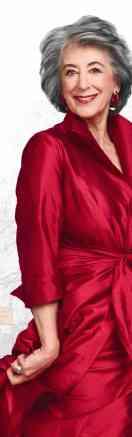



After performing at the Edinburgh Festival for the eighth time last year, comedian Bennett Arron decided he wouldn’t be returning. “Not because the show hadn’t gone well – quite the opposite. It played to full houses and received excellent reviews,” he says. “Nor had I been cancelled, protested or chased down the Royal Mile by an angry antisemitic mob.”
No, the reason was much simpler: he felt he was getting a bit old for it. “I used to love going to the industry parties during the Festival. But last year I felt like I was someone’s dad who had come to pick them up. So why have I decided to go back this year? Well, one reason is because I am someone’s dad.”
Arron’s son Zander returns to Edinburgh for the second year. Last year he and his fellow acting graduates brought the comedy play Holly Street to the Fringe and it picked up four and five-star reviews across the board. “I was incredibly proud… also slightly jealous. At his age I was celebrating if a joke got a laugh from someone who wasn’t related to me.”
This year they are returning with a new play, Is This Your First Crime? and Arron wants to see it –“although hopefully not six times, which was my tally last year and I knew the lines so well, I was one step away from demanding my own dressing room”.
He is also returning to perform his own show. He is one of more than 50 Jewish performers taking to the stage at Edinburgh this year.
Here is our pick of the ones to watch – literally.
Rachel Creeger: Queen of the Jews!

Rachel returns to the Fringe with a new show following the cancellation of her appearance last year. Queen of the Jews! is a warm and funny exploration of the line between paranoia and reality, asking when people really are out to get you. Described by The Telegraph as “one of the Fringe’s big talking points”, Creeger once again brings her trademark sharp observations and clever banter to the stage.
There is also another chance to see Rachel’s long-running Ultimate Jewish Mother show, where she shares relationship advice, solves family dramas and debates the correct way to cook brisket with warmth, wit and plenty of Jewish humour.
Edinburgh Festival Fringe returns next month with more than 50 Jewish acts.
Emily Shulman earmarks ones to watch
Daniel Cainer: What Am I, Chopped Liver?

Award-winning songwriter Daniel Cainer returns to the Fringe for his 21st year with a new collection of stories told through song. Inspired by current affairs, family life and relationships, What Am I, Chopped Liver? blends comedy with heartfelt storytelling accompanied by piano.
Joe Bor: The Adventures of Jasper Cromwell Jones
offbeat humour, she examines relationships, difficult decisions and the feeling of chasing happiness as though it were a competitive sport. Strangely relatable yet unimaginable and joyfully unhinged, Brownstone’s latest show is an unconventional take on modern life.
Julia Atkin: Crying at my Podiatrist

characters, Jewish humour and stories of marital survival, she takes aim at family drama, Botoxed New Yorkers and the horrifying challenges of US immigration. A fearless, funny and personal stand-up show, it celebrates being “too loud, too Jewish, too much” and discovering that is exactly the point.
A floating synagogue in Venice; Washroom tech
original songs and dark humour to explore anxiety, generational trauma and growing up with the belief that you should always be prepared to run.

Telling deeply personal stories with music and comedy, Wolbrom examines how family history can continue to shape the way we think about the future.
Leslie Gold: 101 Rules for a Better World (by Comedians)
Comedian Joe Bor swaps stand-up comedy for character comedy as he revives the eccentric explorer Jasper Cromwell Jones. The hopelessly upper-class adventurer recounts his latest exploits in an hour of storytelling, absurd encounters and larger-than-life adventures. As seen on BBC, ITV and Channel 4, Bor was also crowned Jewish Comedian of the Year and called a “must-see’’ by Alan Carr.
David Benaim: Excel Comedy & Mathem-antics


Julia makes her Edinburgh Fringe debut with a dark comedy that begins when she loses her big toenail and gains an unlikely spiritual adviser in her UkrainianJewish podiatrist. Revisiting medical mishaps, identity crises and grief, Crying At My Podiatrist combines absurd body horror with a reluctant search for meaning. Blending existential dread with unexpected tenderness, Atkin finds humour in life’s more uncomfortable moments.

David combines stand-up, storytelling and live Excel demonstrations in a show for spreadsheet experts and casual users alike. Alongside the comedy, audiences can pick up practical Excel tips from the self-confessed maths enthusiast and Excel YouTuber, who regularly advises Microsoft on future developments for the software.
Zoe Brownstone: How to Be Happy All the Time
Two-time award nominated Canadian comedian Zoe Brownstone presents an hour-long survival guide exploring hard choices, family drama and the search for happiness. Combining honest storytelling with
Bennett Arron: I Regret This Already

Bafta-shortlisted comedian Bennett Arron returns to Edinburgh with a new hour about a life where everything seems to go wrong. Despite making the Top Ten Jokes of the Fringe, Arron insists life still finds ways to laugh at him. Packed with self-deprecating humour, the show comes from the comedian described by The Guardian as “A Welsh Seinfeld” and praised by The Times as “genuinely original and funny”.
Debra Tammer: Extraordinary Alien
Debra Tammer brings Extraordinary Alien to Edinburgh, charting her journey from Leeds misfit to New York oddball. Through combining
Ben Dali: Humdinger Words for Lollygaggers & Fuddy-Duddies

Ben presents a comedy, cabaret and poetry show exploring language, childhood and the unusual path that took him from seven-year-old poet to stage hypnotist and primary school teacher. Dali uses sharp wordplay, visual humour, comedy rap, trivia and improvised rhyming mentalism to celebrate the richness of the English language in all its forms. Packed with many surprises, the show promises an inventive hour that encourages curiosity, laughter and plenty of unforgettable talking points.
Nick Cassenbaum: Bubble Schmeisis (REMIXED)
Leslie Gold brings back the hit panel show and podcast that sold out at last year’s Fringe. Joined by a rotating line up of guest comedians, the audience is invited to hear and vote on a series of humorous proposals designed to make the world a better place. Every performance features a different line up and a fresh set of ideas.
James O’Donoghue: James O’Donoghue Is Normal

James presents a stand-up show discussing a lifelong struggle to be “normal”. Mixing surreal observations with stories ranging from Soviet tank warfare and artificial intelligence to childhood hecklers and an ongoing grudge against Mickey Mouse, the show embraces life’s absurdities. O’Donoghue blends personal experiences with alternative comedy in a performance that celebrates spectacularly failing to fit in.

Fringe First winner Nick Cassenbaum returns with a new version of his sellout international hit Bubble Schmeisis. Staged inside the UK’s first purposebuilt sauna theatre, the promenade production follows Cassenbaum on a personal journey through identity, belonging and home. Sharing intimate stories with live klezmer music, ritual and memories of the Canning Town bath house, the show explores Jewish identity through humour and reflection in an immersive theatrical setting unlike any other at this year’s Fringe.
Sophia Wolbrom: Danger Plan!
Sophia Wolbrom’s Danger Plan! combines solo theatre, cabaret,
Jess Robinson: Elton Reimagined
Hot on the heels of a London show, multiaward-winning impressionist and singer Jess Robinson returns to the Edinburgh Fringe with Elton Reimagined, celebrating Elton John’s greatest hits through the voices of iconic female performers. This is Robinson’s 10th Edinburgh Fringe, combining pitch-perfect impressions with powerhouse vocals, reimagining Elton classics as sung by the likes of Britney Spears, Barbra Streisand and Amy Winehouse.
◆ Edinburgh Fringe Festival runs 7 – 31 August. Tickets at edfringe.com
Natable consists of a traditional shtetl synagogue perched on a suspended rock floating above the water

FIn a win for Jewish visibility, a giant inflatable sculpture of a synagogue will float above the Venice Lagoon. By Anthea Gerrie
ive hundred years ago, synagogues were banned in Venice.
Jews had to practice covertly, concealing their houses of worship inside existing, unassuming buildings, so to see one rising out and proud above the city is a matter of deep and emotive pride.
However, for artist Anna Kamyshan the fact her synagogue must float for lack of any permanent land to stand on is the most important aspect of her installation, a reminder of the centuries when Jews had no nation of their own in which to build their synagogues.
“Of course artists want their work to be visible,” she says, “but my main intention was for it not to be rooted, because as Jews we are always moving, being everywhere but nowhere at the same time.”
Nabatele, as the shtetl-style shul, modelled on the hundreds of wooden synagogues which once stood across the whole of rural eastern Europe, is also a reminder to its creator of a long search for her own sense of belonging. Growing up Russian-speaking in Ukraine, working in Moscow and Graz as well as Kyiv, she came to London when war broke out but is also partly based in New York. And that’s just the geography of her life; the most profound impact on her identity was learning at the age of 11 that she had Jewish heritage.
“It was massive for me at the time, but I really started to engage with Judaism when I started working on the vision for a Holocaust memorial centre for Babyn Yar
(a ravine in Kyiv),” says the London-based artist and architect, whose own Jewish family were murdered by the Nazis in another such ravine, Drobitsky Yar outside Kharkiv.
“The event was so traumatic for my grandfather, who escaped, that he never talked about it until my father came back from a trip to Israel raving about the country,” says Kamyshan, who gets her surname from the former Dmitri Zilberberg, who changed it to an amorphous, non-Jewish-sounding name to save his life.
But her father’s exuberance about Israel, which he had visited only by chance for work – “he loved it so much he wanted our whole family to move there,” says Kamyshan – broke Dmitri’s decades of silence about his past. “Only then did my grandfather share the stories of his past and tell us we were Jewish.”
Although she embraced this news – “it became a massive part of my self-identity” – after the longed-for aliyah failed to happen, causing massive disappointment to her father, Anna put it to one side for a few years as she entered art school and embarked on an architecture degree: “My profession took me over.” But the engagement with her Jewish identity resurfaced when she started work on Babyn Yar, where she served as director of conceptual development and research for the memorial for the 33,000 Jews murdered there in 1941.
Nabatele – its name is a diminution of the Yiddish word for ‘call to action’
– started life last year as a video for the
Yiddishland Pavilion, which has created a forum for Jewish art from all nations at the Venice Biennale. Kamyshan’s Castle of Yiddishland shows a lost wooden shul flying from above a Venice canal across the skylines of Chicago, London, Warsaw, New York, Berlin, Jerusalem, Odessa, Antwerp, Vilnius and LA – all but Jerusalem diaspora cities containing their own, often precarious Yiddishlands – before spinning back to the heart of Venice in San Marco.
To bring the concept to fruition as a physical object – “this was a prequel; at that time I didn’t have the engineering solution or the money” – took every skill in Anna’s multidisciplinary toolbox.
“I can do many things, from visualising a project to its detailed execution. I talk to engineers in their own language and serve as my own production manager. I raise the money and work with independent companies instead of building a team of my own.”
There are, of course, the technicians who will be present on site for the duration of the installation – “we have to babysit this object 24/7” – after she has spent several days in Venice setting it afloat.
Security in a highly visible position –where the Arsenale, one of the two chief Biennale sites, meets the lagoon – is a must to keep vandals at bay and make sure the helium-filled object stays afloat.
The original plans were for the most prominent site in Venice of all, the water facing San Marco: “But one of the city author-
ities which had to give approval was afraid of the public reaction to the subject.”
The change of site delayed the opening by two months and increased the cost of the project exponentially, involving moving two cranes and paying rent for the land above which the model will now be set afloat.
While its o cial expiration date in Venice, where there will be an event with the modern community enjoying a resurgence of Jewish life, is mid-September, Anna hopes the installation will stay afloat for at least a month longer, and is in discussion with not only the Montreal Jewish Museum, who organised the Venice event, but others overseas who are keen to give the artwork new life in their own corner of the diaspora. “For this synagogue, all they need is space, not land.”
Nabatale debuts in Venice on 16 July
Nestled in the heart of Bushey, Villa Bianca is an elegant, family-run Italian restaurant bringing authentic Italian hospitality and exceptional cuisine to the local community. Talented chefs prepare every dish using carefully selected ingredients, from fresh fish and homemade pasta to premium meats and classic Italian favourites, all served in a warm and welcoming setting. Whether you’re having a relaxed lunch, an intimate dinner, afternoon tea, or celebrating a special occasion, Villa Bianca offers an unforgettable dining experience with space to host parties and gatherings of up to 70 guests.
We have a three-course Italian dining experience for two at Villa Bianca Bushey to give away. The prize includes:
• Three-course meal for two people
• One bottle of house wine
• Tea or coffee to finish villabianca-bushey.com
To enter visit jewishnews.co.uk/villabianca. Competition closes 2 August 2026. Winner will be contacted by email.

and Friday to Sunday lunch, except Christmas Day, Boxing Day, New Year’s Eve, Valentine’s Day and other special event dates; the prize is non-transferable, non-refundable and cannot be exchanged for cash; any additional food, drinks or extras not included in the prize must be paid for separately; one voucher per booking; management reserves the right to amend or withdraw the prize if necessary.



Serial
entrepreneur Avi
Anais explains why he and partner Ran Sinai are using AI and data to transform commercial washrooms. By Candice Krieger
hile much of Israel’s technology sector is focusing on cyber, defence and space technology, serial entrepreneurs Avi Anais and Ran Sinai saw an opportunity in an unlikely place: washrooms.
WTheir data-drive cleaning com pany, BuzzzTech, is using artificial intelligence and real-time data to modernise how public toilets in offices, hospitals, shopping centres and public buildings are cleaned.
Its platform combines occupancy monitoring, user feedback screens and AI-powered analytics to monitor commercial washroom usage in real time.
relying on fixed cleaning schedules.
Already working with major companies including Intel, Google, TikTok, HP and Philips, the Israeli company has now set its sights on the UK after securing its first British customer at The Leadenhall Building – better known as the Cheesegrater – in the City of London.
Visitors can report issues at the touch of a button, while the system alerts cleaning teams when attention is needed, helping facilities managers deploy staff more efficiently instead of
“When most people see a washroom, they see somewhere to do what they need to do,”
Anais tells Jewish News.
“When I see one, I see data, technology and opportunity.”
He adds: “Everyone is talking about cyber, AI and space. But at the end of the day, they are sitting in an office that needs to be cleaned. Even Elon Musk has to go to the restroom.”
Anais, who lives in Tel Aviv, believes commercial cleaning represents one of the last major industries still operating largely without data. “Cleaning is

one of the biggest budgets in a commercial building, but it is still managed without enough data or validation.
“It has been done in much the same way for hundreds of years. I saw a huge opportunity in entering a field that nobody else wanted to enter.”
The problem with traditional scheduling, explains Anais, is that “a washroom could be spotless at 9.15am and in poor condition less than an hour later.
“At other times, a cleaner may enter an already-clean facility simply because the timetable says they should.
“At rush hour, the cleaning team might need to enter three or four times. Then there are quieter periods when a cleaner goes in and everything is already clean. Why waste their time and materials?”
That inefficiency has implications not only for cost and productivity, but also for environmental targets, with unnecessary cleaning consuming water, chemicals, paper products and other materials, says Anais.
Users can alert cleaning teams when attention is needed, helping facilities managers deploy staff more efficiently.
BuzzzTech operates in 10 countries, working with over 300 companies in more than 5,000 sites.
The Cheesegrater marks BuzzzTech’s first UK deployment, but the company is already in discussions with a number of other commercial buildings across the City of London as it targets further expansion.
Ian Lipowicz, who is leading BuzzzTech’s UK operations together with Adam Hamilton, believes Britain represents one of the company’s biggest growth opportunities.
“The UK is a huge opportunity because commercial cleaning is still very inefficient,” he says. “What we’ve seen at the Cheesegrater is that you can deliver cleaner washrooms with less cleaning because it’s being carried out at the right time.
“You reduce complaints, shorten response times and improve the experience for everyone using the building.
“The technology can also deliver a clear return on investment by helping facilities managers deploy staff more efficiently while reducing unnecessary cleaning rounds.”
Anais believes commercial washrooms are only the beginning.
Within the next six months, the company plans to launch a broader platform capable of managing cleaning across entire buildings, from offices and hospitals to shopping centres, universities and airports. “The industry is changing. Artificial intelligence will play an even greater role in facilities management.
“We’re already testing technology that can use existing security cameras to identify spillages and other issues.
“Eventually, AI will know what has happened, decide what action is needed and coordinate the response.”
The interface is visual, intuitive and is designed for users with language barriers
That does not mean human cleaners will disappear overnight, he stresses. “While robots are becoming increasingly common in large open spaces such as airports and shopping centres, they remain expensive and face practical challenges in everyday office buildings. People won’t disappear.
“But what will change is that they become much more efficient.”
Before founding BuzzzTech, Anais built businesses in the automotive and telecommunications sectors.
He launched his first company in the car industry in 1986, developing several patented products that became market leaders, but says he has always been drawn to industries where technology can solve overlooked problems.
BuzzzTech was founded in 2015 as BuzzzTV, after Anais and his co-founder, Ran Sinai, explored installing television screens on hand dryers and selling advertising in commercial washrooms.
“We realised the big brands didn’t want to advertise in washrooms. But while we were there, we discovered a much bigger problem.”
That insight led the pair to abandon the original idea and focus on using technology to improve how commercial cleaning is managed. The Covid pandemic accelerated that shift, placing hygiene and cleaning under greater scrutiny, reinforcing the founders’ belief that facilities managers needed better data rather than more cleaning.
BuzzzTech has since raised seed funding and is planning a Series A round in 2027 to support expansion across the UK, western Europe and the United States. The company currently employs 18 people – each one working alongside three AI agents to help analyse data and automate routine tasks.
buzzztech.co.uk

In our thought-provoking series, rabbis, rebbetzins and educators relate the week’s parsha to the way we live today
RABBI ELCHONON
BUSHEY UNITED SYNAGOGUE
I’m writing this on Sunday. By the time you read it, you will know something I don’t: whether England have beaten Argentina in the World Cup semi-final.
As things stand, the game is still to be played. England could be through to the final, or out of the tournament altogether.
Both outcomes exist simultaneously in my mind and I have absolutely no way of collapsing them into one.
We are, this Shabbat, a people living with this uncertainty – for
us it is no experiment at all.
We currently find ourselves in Bein Hamitzarim, the Three Weeks between two fasts, walking towards the darkest date in our calendar.
And yet, this Shabbat carries a curious title: not Shabbat Eichah, but Shabbat Chazon, the Shabbat of Vision, named for the opening word of this week’s haftarah from Isaiah. Vision, not lament, gives the day its name, even as the lament draws closer.
The Torah portion itself performs a quiet act of the same kind.
Weekday Torah readings, the first aliyah of Devarim ends at the verse in which Moshe blesses the people: “May the Eternal, the God of your ancestors, increase your numbers a thousandfold, and bless
you as promised.” (Devarim 1:11) Straightforward enough.
But on Shabbat, our custom is to end one verse earlier, so that it now concludes: “The Eternal your God has multiplied you until you are today as numerous as the stars in the sky.” (Devarim 1:10)
Why the di erence? Because the next verse after the weekday ending begins with the word Eichah – “How can I bear unaided the trouble of you?” (Devarim 9:12) – the very word, and the very mournful dirge lament, with which we will soon read the Book of Lamentations.
Our sages could not bring themselves to let a Shabbat portion open on that plaintive note. So they borrowed a verse from the previous section and used it as a bu er, ensuring the reading opens


Hope, sung out loud, is not naivety
instead in blessing and multitude.
The sorrow has not vanished; Eichah still appears a few verses later, exactly where it always did.
But we have refused to let it have the opening word on Shabbat.
We have found room, within a genuinely di cult stretch of the calendar, to engineer a moment of light before the darkness resumes. That, I think, is the real skill
of the Three Weeks, and perhaps of Jewish living more broadly. Not denial, and not despair, but a determined creativity in how we hold both possibilities at once.
We know exactly where the calendar is heading. We do not pretend otherwise.
Yet we still find a verse to borrow, a tune to hold back, a moment of vision to name the day by, even while the box remains closed.
So, as to Argentina: your guess, this week, is genuinely as good as mine. I hope, fervently, that “It’s Coming Home” will be sung in this country in the joyous key it deserves, rather than in the dirge it can so easily become.
But whichever way the box opens, may we take with us the deeper lesson of Shabbat Chazon: that hope, sung out loud before we know the ending, is not naivety. It is, in its own quiet way, a kind of faith.
Rabbi Elchonon Feldman is Chair of the Rabbinical Council of the United Synagogue



RABBI KATH VARDI MENORAH SYNAGOGUE
Is there a northsouth divide in Judaism?
As Andy Burnham prepares to step into the role of prime minister, he has promised to establish a “Number 10 in the north”. The focus, as I understand it, is to balance the gravitational pull of London by ensuring that policy is shaped by the lived experiences and aspirations of people in the north.
But what about our Jewish community? Do we have a north-south divide akin to that suggested by Burnham? Are our communities in the north disadvantaged?
As a rabbi who has served both in the southeast and now here in Manchester, this is a question I often find myself pondering. But I think we might be asking the wrong thing.
We should instead ask whether the concentration of communal institutions in and around London exerts a gravitational pull of its own. Many of our major communal organisations, cultural institutions and national conversations remain centred in and around the capital.
Wherever I have served, I am struck by how similar the questions people bring are. Our concerns and conversations are remarkably alike. How do we respond to difference? How do we hold disagreement in ways that avoid contempt for those whose perspectives we do not share?
Whether the issues at hand are our relationship with Israel, how we respond to antisemitism, or what living Jewishly might look and sound like, these are concerns that occupy all of us. Perhaps what di ers are not the conversations we want to have, but the infrastructure that supports them.
Londoners and those within commuting distance have JW3 – a shining example of a cross-communal resource where theatre,
Andy Burnham, MP for Makerfield
debate, film and discussion can be facilitated and shared. We need more of these kinds of spaces in the rest of the country.
We need cross-communal spaces where Jews of all stripes and colours are welcome;
A stimulating series where our progressive rabbis consider Judaism in the face of 21stcentury issues
spaces where local, national and international speakers can come and share their ideas; spaces where we can gather to listen, think, and debate. We need spaces where the variety of Jewish experience and thought can be shared, and where we learn to explore our di erences with curiosity rather than fear.
Each of us brings our own unique experience of Judaism – experiences shaped not only by the synagogue we belong to, or do not belong to, but also by the nuances of our geographical location. Communities beyond London need more robust access to crosscommunal conversations, bringing a wide variety of experiences and perspectives that can enrich us all.
It will be our willingness and capacity not only to embrace but to nurture that diversity that is going to make us richer and more resilient.
The challenge is not simply to hear regional voices, but to ensure that they have equal opportunities to shape the conversations that define our communal future.

10 Golders Green Road London NW11 8LL Opposite Cafe Nero Open











Top prices paid
Antique – Reproduction – Retro Furniture (any condition)
Epstein, Archie Shine, Hille, G Plan, etc.
Dining Suites, Lounges Suites, Bookcases, Desks, Cabinets, Mirrors, Lights, etc.
House clearances
Single items to complete homes
MARYLEBONE ANTIQUES - 8 CHURCH STREET NW8 8ED 07866 614 744 (ANYTIME) 0207 723 7415 (SHOP)
Sunday & Monday
STUART SHUSTER - e-mail - info@maryleboneantiques.co.uk MAKE SURE YOU CONTACT US BEFORE SELLING


Furs, Jewellery, Old Costume Jewellery, Watches, Silver, Designer Bags, anything vintage.
Friendly Family Company established for 30 years
We clear houses, flats, sheds, garages etc. No job too big or too small! Rubbish cleared as part of a full clearance. We have a waste licence. We buy items including furniture bric a brac.
For a free quote please phone Dave on 07913405315 any time.


Confidential Bereavement Counselling for adults and children individually. Support Groups available. We offer in person, online and telephone counselling. Contact Jewish Bereavement Counselling Service in confidence. 0208 951 3881 enquiries@jbcs.org.uk | www.jbcs.org.uk












MDA UK supporters have once again gone above and beyond, raising vital funds through challenge events in support of Israel's national emergency service. Whether running, walking or playing padel, every participant played a part in supporting Magen David Adom's lifesaving work.
Our Manchester Padel Tournament saw 80 people compete, raising £21,750 towards a Magen David Adom motorbike.
Congratulations to padel winners Emma Avery-Gee, Sara Furnival, James Lindemann, Mike Filson and everyone who took part.
We also congratulate and thank our London Marathon runners, Ollie, Adam, Ricki and Zac, who raised £18,500, as well as everyone who took part in the MDA Fun Run and Lake District Challenge.
If you want to rise to the challenge and support MDA, visit mdauk.org/challenges for inspiration.
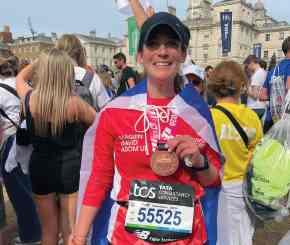




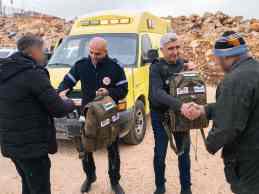
supported the transfer of five decommissioned ambulances to assist Christian and Druze communities in southern Syria, in a humanitarian initiative developed in partnership with the International Fellowship of Christians and Jews.

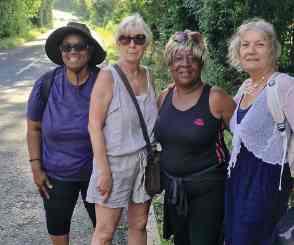
The ambulances, formerly in service with MDA Israel, were refurbished and equipped with medical kits before being handed over to local emergency teams. MDA paramedics also provided hands-on training to Syrian responders to ensure the vehicles can be used effectively in life-saving situations.

For more information visit our website Powered by

The initiative reflects a long-standing commitment to standing with communities on Israel’s border who have shared the burden of living in a volatile region, and who have paid a heavy price for their identity and faith. It forms part of wider efforts to strengthen emergency medical response capacity in some of the most vulnerable areas of the region.






Thanks to the generosity of our supporters, a Mobile Intensive Care Unit and two First Responder Cars were dedicated, helping Magen David Adom continue its lifesaving work across Israel.
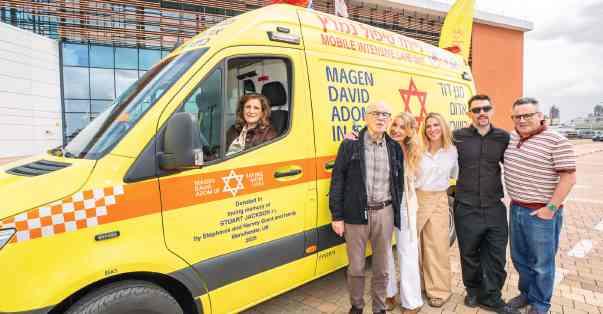
Magen David Adom UK was delighted to celebrate the 20th anniversary of Christian Friends of Magen David Adom UK (CFMDA UK) this year.
Founded in 2006, CFMDA UK has donated more than £1 million in support of Israel’s national emergency service, funding 12 Ambulances, Medicycles, a Bloodmobile and other lifesaving projects that have made an immeasurable difference across Israel.
MDA UK extends its deepest thanks to the Christian Friends, particularly Barbara Dingle and Reverend Mark Madeley, for their unwavering commitment and friendship, and looks forward to many more years of shared purpose and support for Israel.

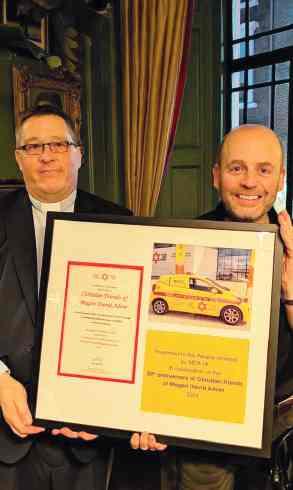
@Magen David Adom UK
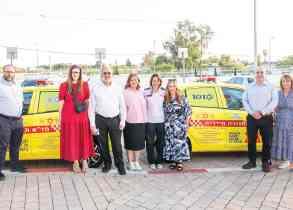

As missile sirens sounded across Israel on 28th February 2026, Magen David Adom teams responded immediately. MDA activated emergency protocols, with ambulances and intensive care units deployed across the country. During the Iranian missile attacks, MDA teams provided medical treatment to more than 2,390 people, with paramedics and volunteers treating the injured, delivering urgent care at the scene and transporting patients to hospital, while continuing to operate under threat.