Alan’s legacy
The Senitts reflect on the son and brother they lost 20 years ago Page 23
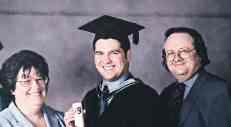


The Senitts reflect on the son and brother they lost 20 years ago Page 23
Your kosher guide to England’s next World Cup opponents P16


London mayor Sadiq Khan has told Jewish News he’s looking forward to attending the Nova Festival exhibition before it closes next week, to see for himself how the powerful and moving installation has “enabled Londoners to bear witness to the horrific events of 7 October”, writes Michelle Rosenberg.
The mayor’s pledge comes after this newspaper revealed organisers were disappointed that while many senior political and religious figures –including Wes Streeting, David Lammy, Angela Rayner and the Archbishop of Canterbury had attended since the exhibition opened in East London on 20
May, the mayor had not.
Jo Woolfe, chair and lead partner of the Nova Exhibition London, had expressed frustration in regard to how the mayor’s office appeared to have approached her invitations, suggesting they had eventually corresponded with her proposing dates after the exhibition was meant to have closed – although it has subsequently had its run extended.
Woolfe said: “He’s the mayor of London. He really should be here. This is not political, it’s not religious. There were non-Jews killed, there
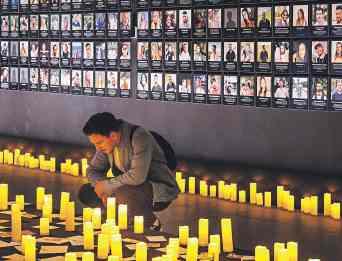
were Druze murdered, people from all over the world and there was a Brit, Londoner Jake Marlowe, all murdered. He needs to recognise everything in his city, and this is a major event in his city. It’s wrong he hasn’t been.”
A spokesperson for the mayor said: “He is looking forward to attending the exhibition very soon and seeing for himself how this powerful and moving installation enables Londoners to bear witness to the horrific events of 7 October.
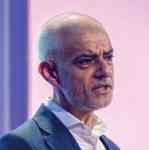
“From the beginning the mayor’s office have been proactive in working with organisers to find a date the mayor can attend the exhibition. Later dates were only considered once it had been announced online that the exhibition was being extended.
“Throughout the process, the mayor’s office has continued to reach out to event organisers to find a date that works for both the mayor and the exhibition.”
Woolfe expects visitor numbers at the end of the exhibition run to exceed 35,000.
by Lee Harpin
lee@jewishnews.co.uk
Keir Starmer’s former chief of staff has given his first interview since leaving the role, describing his efforts to drive antisemitism out of what he called a “morally broken” Labour Party.
Morgan McSweeney, 49, described one of his key goals after Starmer became Labour leader: “I was very angry about antisemitism, but even more angry about the denial of antisemitism, because in lots of ways that was almost worse.”
In an interview with BBC presenter Nick Robinson’s Political Thinking podcast, McSweeney rejected claims that he had set out to marginalise the far-left in a sectarian fashion. Instead, he argued: “We had to drive antisemitism out of the Labour Party.
“The Labour Party had got into a very bad place morally on antisemitism.”
“Jewish members felt uncomfortable about being in the Labour Party, felt they were victimised inside the Labour Party and we had to be very, very focused on getting it out.”
Responding to claims from Corbynite MP
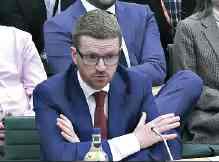
Morgan McSweeney
Ian Byrne, who labelled him a “sectarian operator who wanted the left dead,” Irish-born McSweeney said he was “very comfortable” with the fight against anti-Jewish racism.
This, he explained, meant “taking out the kind of organisations that were supporting it, suspending people, passing the rules that were necessary.” McSweeney emphasised: “The party was morally broken on that issue, that wasn’t about focusing on the left, that was about focusing on antisemites and antisemitism within the Labour Party.”

Rejecting claims that he harboured animosity toward individual figures such as Jeremy Corbyn, McSweeney added: “The failure to tackle a problem is obviously a serious matter in itself, but to deny the problem even exists felt like gaslighting people.
“So, I thought it was getting into a very bad place, morally, and I didn’t like that that was happening to the Labour Party.”
McSweeney also said his other key aim was to get the Labour Party to focus on the country rather than ideology.
“We needed to reorientate the party to be laser-like focused on the voters, because when it’s not, it doesn’t serve people in government, it doesn’t serve people in local government, and it doesn’t win elections, and that is its purpose.”
However, McSweeney admitted that Labour was not prepared enough for government or for the volatile world when Starmer was first elected.
McSweeney, widely credited within Labour for the scale of its 2024 victory, said the party lacked a clear plan to deliver rapid change for those who wanted it.
The former No 10 aide, who quit in February,
A leading organisation dedicated to preventing antiJewish racism has joined a coalition of charities, campaign groups and academics in urging Andy Burnham to strengthen online safety laws if he becomes prime minister.
The Antisemitism Policy Trust is one of 47 organisations to join the Online Safety Network in calling for Burnham to intensify the government’s response to online harms.
The coalition is advocating
said he wanted to speak on the record for the first time because he now wished to “move on to a new chapter” beyond Labour and UK politics.
He said he now wanted to go in a “completely different direction” professionally, with no plans to return to politics soon. “I mean, I can’t say forever, but certainly for the next few years I’m committing to being out of politics for at least the next few years ahead,” he said.
As Labour Together director, McSweeney had declared his aims to be “to move the Labour party from the hard left” and to “build a sustainable winning electoral coalition.”
In 2020, he led the successful Labour leadership campaign of Starmer and subsequently led Labour’s successful campaign in the 2024 general election.
On 8 February 2026, following increasing internal pressures, McSweeney resigned as Starmer’s chief of staff.
In a written statement, McSweeney took responsibility for the decision to appoint Peter Mandelson, acknowledging it was wrong and had damaged the party and trust in politics. He stated that stepping aside was “the only honourable course”.
for new legislation that would be regularly updated to keep pace with evolving technology.
Danny Stone, the charity’s chief executive, told Jewish News: “Successive administrations have not done enough to meet the challenges posed by big tech and online hate. In the balance between growth, innovation, and safe, reliable systems, the latter has never been given enough priority.
“A Burnham-led government would do well to put action against online hate at the centre of its plans, because the costs to our democracy and economy will be huge if someone doesn’t get a grip on this problem without delay.”
The network of groups –which also includes Internet Watch Foundation, Hope not Hate and the Centre for Countering Digital Hate – wants the proposed Digital Media, Data and Communications Bill to be scrutinised by a standing committee of both Houses.
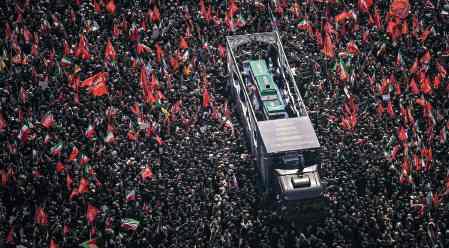
One of the founders of Palestine Action has urged people to join new groups committed to the same aims, after her pro-Palestinian group was proscribed as a terrorist organisation, writes Adam Decker.
Huda Ammori, who co-founded the network in 2020, reportedly told audience members at a talk on “Why Palestine Action was banned” that they should consider joining other groups with the same aims and techniques, according to The Telegraph
The 32-year-old is understood to have told listeners that “none of us are willing to give up until Elbit Systems [an Israel defence firm with offices in the UK] is shut down. Direct action is still a viable tactic available to all of us, with a range of different actions for different types of people.
“And so, I do ask you to check out Direct Action Training. You can contact them directly to see how to learn more about direct action and… take it from there.
“I do believe that one way or another, the Palestine Action ban will be overturned. But in the meantime, Elbit Systems is still operating in this country and other
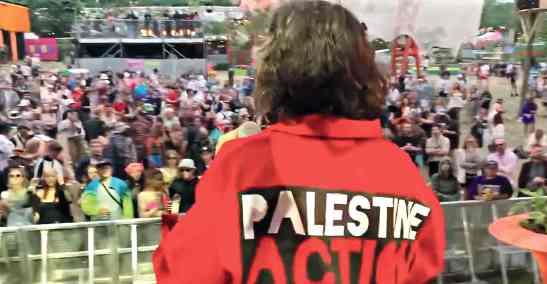
groups are taking up the mantle, and you can join them.”
The government proscribed Palestine Action as a terrorist organisation last June, in the wake of members of the group breaking into an RAF base and damaging military aircraft, something which the organisation praised and con-
doned. A High Court ruling initially ruled that the government’s action was unlawful, but that ruling was overturned by a Court of Appeal judgement a few weeks ago.
Ammori told those at the meeting that she believed that the judgement against Palestine Action would ultimately be overturned. It is unclear
A man has been cleared of attempting to burgle the home of Labour peer Luciana Berger and stealing possessions from her family’s car.
Sarbast Lokman, 34, was charged with burglary, theft and attempted burglary after being accused of going to the politician’s London property twice in two days in April.
CCTV footage showed a man clambering over the fence in Baroness Berger’s back garden, during a trial at City of London Magistrates’ Court on Monday.
A similar-looking figure returned the following day and managed to get into Baroness Berger’s Audi Q5, stealing items valued at
£350, including a paid of Marc Jacobs sunglasses, three pairs of wellington boots and an emergency blanket, the court heard.
Lokman maintained that he was not the man in the footage, despite evidence from a police community support officer (PCSO) who said he had “no doubt” it was him.
District Judge Louisa Ciecióra called the footage “dark and grainy”, and determined it insufficient “to conduct an identification”.
Lokman, of no fixed address, denied all charges and was cleared of those relating to Baroness Berger. He was convicted of one count of attempted burglary of a different property from March.
Iran’s deputy ambassador has been summoned over the attack on a journalist in the UK that a judge said was carried out on behalf of the Iranian state.
Iran International journalist Pouria Zeraati was left bleeding in the street after being stabbed three times outside his home in Wimbledon on 29 March 2024.
Two Romanian nationals were convicted over the attack; the judge said at sentencing that the evidence “overwhelmingly points”
to it being carried out on behalf of the Iranian regime.
Ali Nasimfar, charge d’affaires at the Iranian embassy in London, was summoned to the Foreign Office.
A Foreign Office spokesman said: “We take threats posed by Iran and those who do its bidding extremely seriously.
“Iran’s actions attempt to undermine UK sovereignty and security are completely unacceptable.”
whether the Supreme Court would consider hearing the case.
In a social media response, Ammori said: “All I apparently said was ‘check out Direct Action Training”, providing a link to the website in her post.
As reported by the Telegraph, the “Direct Action Training” website
describes how “Direct action is for everyone who is committed to the anti-colonial struggle. If you would like to gain the skills to dismantle the Zionist machine brick by brick, drone by drone, then register.”
It also includes calls to “pick up a sledgehammer”, “occupy the death factories” and “join the resistance”. The home secretary has the power to proscribe groups if it is believed that they are differently named re-manifestations of an organisation which has already been banned.
US forces said they launched “over 80” strikes on Iranian targets in response to Iran’s targeting of tankers in the Strait of Hormuz.
Iran said it had retaliated with strikes against Bahrain and Kuwait.
The attacks came just hours after Washington also pulled Tehran’s license to sell oil,, which was only issued last month following an interim ceasefire deal.
The strategic waterway remains a flashpoint in the fragile truce, having sparked a previous exchange of fire between the two sides after a cargo ship was struck, threatening the agreement aimed at ending the war.
In a statement on Wednesday, the US military said: “U.S. Central Command (CENTCOM) forces completed a new round of offensive strikes against Iran, hitting over 80 targets with precision munitions as an immediate response to Iran’s latest attacks on commercial vessels transiting the Strait of Hormuz.
“U.S. forces struck Iranian air defense systems, command and control networks, coastal radar sites, anti-ship missile capabilities, and more than 60 Islamic Revolutionary Guard Corps small boats in and near the strait to degrade Iran’s ability to continue attacking international commerce flowing through the international trade corridor.
“Iran recently attacked three commercial vessels transiting the strait, including Mar-

shall Islands-flagged M/T Al Rekayyat, Saudi Arabia-flagged M/T Wedyan, and Liberianflagged M/T Cyprus Prosperity.”
The statement said the “unwarranted aggression by Iranian forces” marked a “clear and dangerous violation of the ceasefire and undermines freedom of navigation”, adding: “CENTCOM forces remain postured and prepared to hold Iran accountable when the agreement is not adhered to or obeyed.”
Bahrain, which plays home to the US Navy’s 5th Fleet, and Kuwait – where US Army personnel are based – sounded missile alerts early on Wednesday.
A statement by Iran’s Revolutionary Guard confirming strikes on military sites in their neighbouring countries said the “child-killing and terrorist U.S. army” had “openly violated the ceasefire” with attacks on coastal bases and civilian stations.

from
Police are investigating videos which appear to show Jewish participants in London’s Pride parade being verbally abused, although organisers of the Jewish bloc refused to let the incidents mar what has been described as an overwhelmingly positive experience, writes Luka Shaw.
Videos, that circulated on social media after Saturday’s event, showed Jewish marchers targeted by some in the crowd. One video showed someone telling a Jewish person, standing next to both a rainbow-coloured Star of David flag and an Israeli flag, to “Go back to your Zionist homeland, because it won’t last much longer” and “you kill Arab children, you kill gay children”. Another video showed a participant being repeatedly asked “how many babies did they kill?”
The Metropolitan Police was present at the event, with a spokesperson telling Jewish News: “Officers are reviewing footage to assess and investigate. The Met continues to work hard to tackle hate crimes of all types and officers across London have made more than 90 hate
by Annabel Sinclair annabel@jewishnews.co.uk
A woman has been convicted after directing antisemitic abuse at children outside a Jewish secondary school in north London before assaulting a father who challenged her behaviour.
Syeda Khatun, 39, was found guilty at Stratford Magistrates’ Court on Friday, 3 July, over the attack, which happened outside a school in Stamford Hill on 10 May.
The court heard that Khatun approached pupils who were waiting outside the school gates after returning from a school trip. After shouting antisemitic abuse at a mother pushing a baby, she turned towards the children and began aggressively swinging her arms at them.
When the father of one of the children asked why she was targeting youngsters, Khatun struck him in the face, pulled his beard and continued shouting antisemitic abuse.
The Crown Prosecution Service authorised charges within 24 hours of receiving evidence from the Metropolitan Police. Prosecutors said eyewitness testimony and CCTV footage formed a strong case against Khatun.
She was convicted of three counts of racially aggravated assault, one count of racially aggravated assault occasioning actual bodily harm, and one count of using racially aggravated words and behaviour causing harassment, alarm or distress.
She is due to be sentenced at Thames Magistrates’ Court on 24 July.

Ragvesh Singh, Senior Crown Prosecutor for CPS London North, said: “This was a shocking attack where Syeda Khatun targeted people with antisemitic abuse in a public place, including children who were waiting outside their school.
“When challenged about her behaviour, she went on to assault a member of the public while continuing to make antisemitic remarks.
“Violence motivated by antisemitic hatred is abhorrent, and nobody should have to fear going about their daily life because of their race, religion or identity.
“I hope this outcome reassures the public, particularly the Jewish community, that hate crime will be prosecuted robustly and offenders will be brought to justice.”
Detective Chief Superintendent Brittany Clarke, who leads policing in the area, said: “This was a despicable assault on young members of our Jewish community in Stamford Hill. We take incidents of this nature extremely seriously. Officers were on scene within minutes of the assault being reported to police.”

crime arrests since the end of March.”
Jewish attendees stressed that the day itself had been a primarily positive experience. One said that the incidents were “not reflective of that day”, adding that “there were far more people who joined who came and danced with us than people who came and shouted abuse”.
The same participant was also quick to point out that the footage circulating on social media did not occur during the march itself, but at an after party for Jewish participants.
There was joy at the fact that a Jewish bloc was again present at London Pride itself. The bloc had been absent for the last two years, with the UK’s most prominent Jewish LGBT organisation, Keshet UK, writing last year: “We feel unable to say to British Jews that Pride in London has done everything in their power to keep us safe. We desperately wish this was not the case.”
Writing for Jewish News, Max Royston, co-founder and primary spokesperson of Stop the Hate UK, described how, “After three years of being told, in a hundred quiet ways, that LGBTQ+ Jews complicated things, the loudest sound on the street was a welcome.”
Royston added: “You can stage a photograph. You cannot fake the noise of thousands of strangers deciding, in the moment, that they are pleased to see you.”
Reflecting on the future of Jews at Pride, another attendee said: “From Harvey Milk to Larry Kramer, and so many of the big LGBTQ activists – it’s a movement that we helped build and it’s a movement that we absolutely have a place in.”
Religious education is set to become part of England’s National Curriculum for the first time after the Government reached agreement with faith groups on what pupils should learn.
Education Secretary Bridget Phillipson announced that a public consultation on the proposed curriculum will open in September, following what she described as a consensus reached by representatives from across Britain’s faith communities.
Although religious educa-
tion is already compulsory in schools, it currently sits outside the National Curriculum, meaning its content is decided locally and can vary widely. Under the proposals, national expectations would be introduced for the subject while faith schools would continue to teach RE in line with their own religious ethos.
Phillipson said: “Learning about the world’s great faiths and traditions teaches children not just about the world, but how to live alongside and tolerate one another within it.”

The Board of Deputies, welcomed the announcement. Vice President Jeremy Michelson said: “Widespread religious literacy is important for social cohesion in the UK and good quality RE in schools plays a vital role in achieving this. ”
The UK’s oldest Zionist youth movement is sending 16 separate tour groups to Israel this summer, as the numbers of Jewish teens taking part are expected to return to pre-7 October levels, writes Bradley Grant.
FZY, which celebrated its 115th anniversary last year, will be dispatching its largestever cohort for the traditional rite-of-passage trip. The movement’s programme coordinator told Jewish News that it was “sending a record number of tour groups to Israel”, with hundreds of young people choosing to visit.
“The fact that so many families and young people have chosen to participate reflects a
determination to not let recent events define their relationship with Israel.”
UJIA works with 11 different youth groups – including Bnei Akiva, Tribe, Habonim Dror, Noam, LJY and RSY – to help organise the Israel tours for teenagers.
Adam Waters, director of UJIA Israel Experience, said: “We were proud to run Israel Tours in 2024 and 2025.
“The return in numbers for this year’s programme to pre-7 October levels show that resilience once again and highlights the deep connection our community continues to have with Israel.”
It’s no secret that David Baddiel helped create the England football team’s most iconic anthem – Three Lions, writes Luka Shaw.
Now a trio – two Jews, Ian Rubens and Fenton Gee, with their friend Andrew Blake – are looking to follow in his footsteps. Their new dance group, Bassline Lions, has launched a debut single, The Time is Right Now, aiming to give England’s 2026 World Cup a fresh new sound
“It’s a song for everywhere,” says Rubens, an Immanuel College alumnus and Stanmore United synagogue member, who is the group’s lyricist. “The pub, the club, the stadium, the radio. Everywhere.”
Unlike other songs launched to spur on the England team – including 1970’s Back Home, 1998’s Vindaloo and even Three Lions itself, the latest tune has a more driven, electronic beat, with the trio describing influences from the likes of The Prodigy and David Guetta. Rubens, Blake
and Gee reckon that, taking into account all platforms, the song has been listened to hundreds of thousands of times so far.
One thing immediately apparent speaking to the Bassline Lions is the strength of their friendship, which spans more than twenty-five years.
All self-described “die-hard Spurs fans”, they hope their song will resonate across England.
“I’ve known Blakey (Andrew Blake) since about 2000,” says the Bushey-based Gee. “We hit it o straight away. He’s one of my besties. When Ian brought me this, I knew he would be the right one for this project.”
For his part, Rubens describes Gee as “a lovely man and a really great father.”
Their message to the England squad? The Time is Right Now!
◆ The Time Is Right Now is available to stream and download on Spotify and other platforms

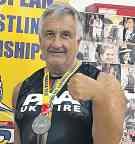
A Jewish athlete has won a silver medal at the International Federation of Arm Wrestling (IFA) European Championships after competing against younger opponents and defeating national champions from across Europe.
Marc Sidney, 63, represented Great Britain at the championships in Codlea, Romania, on 13 June, where
he claimed silver in the left-arm super heavyweight Masters 50-60 category.
Sidney originally expected to compete in the 60-70 age group, but entered the younger category after there were a lack of competitors in his own division.
His run to the final included victories over reigning champions from
Italy, Poland and Slovakia before narrowly missing out on the gold medal.
His result also helped Britain finish second overall in the Masters team standings at the championships.
Speaking to Jewish News, Sidney said representing his country was a privilege.
“It is an honour to be selected and
Your local beach bar awaits, serving refreshing kosher cocktails all summer long.

SUN - THU FROM 5PM
represent the UK in arm wrestling, which I had previously done in my 50s and 40s, respectively in Greco Roman Wrestling and powerlifting; “Embracing the victor, what was gratifying was learning that he was 53, ten years my junior. Always rise to a challenge, and you will be a winner, regardless of the outcome!”

























‘7/10
Fifty years after Entebbe, survivors reflect on how 7 October reshaped the legacy of Israel’s mythologised military operation
For the survivors of Operation Entebbe, marking the 50th anniversary was less a celebration of one of Israel’s most mythologised military operations than a reckoning with the distance between the country that rescued them and the one that failed to prevent another mass hostage crisis decades later, writes Deborah Danan.
About two dozen of those rescued at Entebbe and their relatives gathered on Monday at the Peres Centre for Peace and Innovation in Ja a for an event honouring Sorin Hershcu, the Israeli paratrooper gravely wounded in the 1976 raid. Teasing and jokes repeatedly broke through the formalities, giving the room the feel of an unruly extended family.
The hijacking began when an Air France flight from Tel Aviv to Paris carrying 246 passengers was seized after a stop in Athens by terrorists from the Popular Front for the Liberation of Palestine and Germany’s Revolutionary Cells.
The plane was diverted to Uganda, where the despotic, notoriously unhinged dictator Idi Amin gave the hijackers safe haven. They separated Israeli and Jewish passengers from most of the others, who were released over two days.
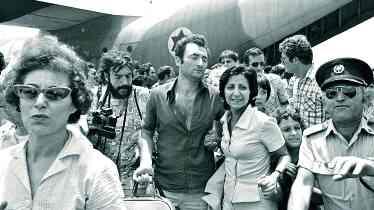
On 4 July, Israeli commandos flew thousands of miles to Entebbe and rescued more than 100 hostages in an audacious raid that became one of Israel’s defining military operations.
To mark the 50th anniversary, Israel released previously classified protocols from the raid, later renamed Operation Yonatan, after Yonatan “Yoni” Netanyahu, Prime Minister Benjamin Netanyahu’s brother and the operation’s commander who was killed during the mission. Uganda’s military chief Muhoozi Kainerugaba in February announced plans to erect a statue of Yoni Netanyahu at the airport in the exact spot where he was killed, saying it would strengthen his country’s “close blood relations with Israel”.
The documents, including cabinet minutes and phone records, show the government abandoning its long-standing policy of not negotiating with hostage-takers even as it prepared the military rescue.
Most of those at the anniversary gathering were the so-called children of Entebbe, the youngest hostages from the raid now in their 50s and
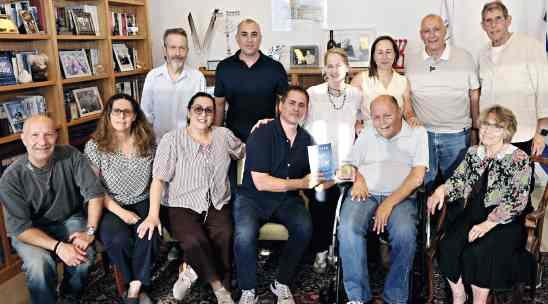
60s who still meet regularly. Three of them – Benny Davidson, who was 13 at the time, Shay Gross, who turned 6 in Entebbe, and Tzipi Cohen Gonen, who was 8 – had just returned from their first trip back to Uganda, where they visited the old Entebbe terminal in which they had been held at gunpoint for a week.
Cohen Gonen’s return to Uganda meant going back to the place where her father, Pasco Cohen, a Jerusalem doctor, was shot and killed, one of four hostages who lost their lives. She was terrified to return, she said, but accepted the Ugandan government’s invitation because she wanted to confront the site directly.
“I wanted to look evil in the eyes,” she said. “It closed a circle in that way, because the Ugandans were so nice to us. But there was no closure for my father’s death.”
Standing again near the tarmac where she and the other children had played during their captivity, Cohen Gonen said the memories came back with force, but through adult eyes. “I stood on the runway crying my eyes out and had a long conversation with my father,” she said.
Gross said he was also terrified to visit. Gross, the only one of the hostages formally recognised as a victim of terror, said he remains in treatment until today.
But what happened on 7 October, with no army, no government, no nothing, it shook me to my core.”
She remembered flying home on one of the Israeli Hercules transport planes that carried the rescue force and the hostages back from Uganda, wrapped in blankets as soldiers handed sweets to the children. “You say to yourself, okay, something bad happened here, but the army was here,” she said. “You feel like someone is watching out for you.”
She viewed Rabin as a father figure, recalling running into him years after Entebbe at a mall when she was a student at Ben-Gurion University in Beersheba. “I told him I was there because of him,” she said. The two hugged and spoke for half an hour. When Rabin was assassinated in 1995, she turned to her husband, Oren, and told him, “Dad was murdered a second time.”

“I didn’t know what going back there would do to me,” he said. When he reached the old terminal, he said, everything looked the same, as if 50 years hadn’t passed.”
Recalling the moment a terrorist struck him and knocked him to the floor, Gross said, “I broke down.”
Davidson, who said he returned to Entebbe to “meet his 13-year-old self,” compared the sense of public pressure and mutual responsibility then with the response to Israel’s hostage crisis following Hamas’ attack on 7 October, 2023.
“There was no WhatsApp, no protest movement,” Davidson said. “But the people of Israel demanded that the state do something. And they did it. There was actual leadership, both military and political.”
The newly released records show the government weighing whether to break with Israel’s longstanding refusal to yield to terrorist demands and discuss the release of imprisoned terrorists. The pressure came most directly from the
hostages’ families, who wrote thenPrime Minister Yitzhak Rabin that “human life is more precious than principles,” pressed ministers to negotiate, and at one point, forced their way into the prime minister’s o ce to demand a meeting.
The rescue allowed him to move on quickly, Davidson said. “Maybe that’s why I’m not scarred.” From the seat next to him, Gross interjected: “Oh, you’re definitely scarred.”
Laughing, Davidson said he remained hopeful about Israel’s ability to endure the current crisis.
“We’ll get through this,” he said, “because we have no other choice.”
Cohen Gonen did not share Davidson’s confidence, comparing the army that reached them in Entebbe with the absence many Israelis felt on 7 October.
“I wish Benny would inject me with some optimism. Until now, I don’t feel safe,” she said. “In Entebbe, it didn’t even come as a shock that the army came to rescue us. It felt natural and logical.
To Cohen Gonen and others in the room, Rabin’s readiness to resign in the event of failure stood in contrast with Netanyahu, who has resisted calls for a state commission of inquiry into the failures of 7 October and has not publicly accepted personal responsibility.
“Today I have no Dad, in both senses of the word,” she said.
For Hershcu, Entebbe’s lesson was that terrorism could be confronted rather than accommodated. As a 21-year-old paratrooper nearing the end of his compulsory service, he had already been sent on discharge leave when the mission was put together. Determined to join, he grabbed the rifle of a fellow soldier who was in the shower and reported for duty – a decision he said he remains ashamed of to this day.
Shot during the raid, Hershcu was left paralysed from the neck down. Years later, he helped found LOTEM, an organisation that makes nature accessible to people with disabilities. He was reluctant to draw direct comparisons with 7 October, saying he had “no new insights” about what lessons Entebbe might hold. Even an operation that became part of Israel’s national mythology, he said, can fade in a country repeatedly overtaken by new crises.
Hershcu said: “Entebbe may be singular, but there have been so many others. In Israel, we don’t have quiet periods. There is just a chain of dramatic and tragic events.”








The General Medical Council has opened a formal investigation into Lewisham GP and Green Party councillor Dr Rebecca Jones, after lawyers raised concerns about social media posts attacking Israel, Zionists and Israelis, writes Michelle Rosenberg.
Jones, a vegan blogger, was one of 39 Greens to win council seats in Lewisham in May’s local elections, receiving 1,890 votes and coming first out of 15 candidates.
Her social media posts include claims, “I’ve yet to see a Zionist act in kindness or with love and compassion”, while The Spectator and online investigator GnasherJew reported she shared posts that claimed Israel was “using infectious diseases to help their genocidal onslaught” and stating: “They’re burning babies again.”
Many of the posts quoted appear to have been subsequently deleted or hidden.
In response to the GMC’s investigation, Jones wrote she was “in good company”, referencing “wonderful doctors” including BritishPalestinian Dr Ghassan Abu Sitta, the rector of the University of Glasgow.
Abu Sitta was exonerated after a hearing by the Medical Practitioner Tribunal Service in January this year after it claimed charges he had supported terrorism were “not proved”. The GMC has appealed the ruling.
Jones also quoted British-Jordanian Dr Nadeem Crowe, who alleges the Royal Free Hospital discriminated against him after complaints about pro-Palestinian posts.
Posting on her Facebook page, Jones claimed the GMC is “being used to censor and silence doctors who speak out against Israel’s genocidal regime”, and alleged fellow doctors are being “kidnapped, tortured and killed because of their profession”.

She added she is fighting for justice “in this upside-down world where right is wrong, killing children is self-defence and destroying hospitals and performing surgery without anaesthetic is acceptable”.
She has previously written: “I’ve often said that Zios seem to use doublethink and doublespeak a lot … I’m still amazed by the way they, the media and the colonialists try to make us believe that anti-zionism [is]…. extreme. “There’s only one side showing hate here, and it’s definitely not from this love-filled, vegan anarchist.”
“Zios” is a term popularised by the farright, most notably by the former Imperial Wizard of the Ku Klux Klan, David Duke. The majority of Jews in the UK and worldwide identify as Zionists.
Jones has also called on people to ‘burn Zionism to the ground’, described musician Bob Vylan’s chant at last year’s Glastonbury Festival, ‘Death, death to the IDF’’ as ‘amazing’ and posted support for Palestine Action, a proscribed terror organisation in the UK.
A Jewish woman has received a life sentence after being convicted of murdering her husband at their home.
Daryl Berman, 72, was sentenced at Manchester Minshull Street Crown Court after a jury found her guilty of murdering David Berman, 84.
She must serve a minimum 12 years before becoming eligible to apply for parole. The conviction fol-
lowed a retrial after an earlier jury was unable to reach a verdict.
David Berman died on 13 March 2025 after su ering a stab wound to the chest at the couple’s home in Prestwich.
Daryl Berman initially told police and paramedics her husband had accidentally fallen on to a knife after slipping in the kitchen.
When o cers arrived at the house, paramedics were treating Mr Berman, but he was pronounced dead at the scene later that afternoon.
According to Greater Manchester Police, Daryl Berman questioned why o cers were present, asking one of them: “You don’t think I have murdered him, do you?”
She later told o cers she heard
what sounded like him stumbling. She said he called back to reassure her that he was “fine”, but when she entered the room she found him lying face down beside a broken plate in a pool of blood and dialled 999.
Detective Inspector Alex Wilkinson of Greater Manchester Police said: “Our thoughts remain with David’s family and loved ones.”





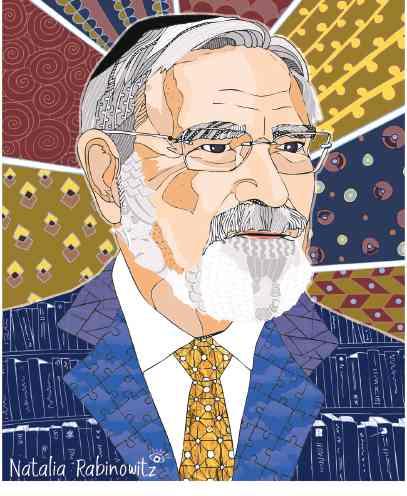
Natalia Rabinowitz grew up in Cape Town surrounded by music icons, writes Louisa Walters. Her father is Stephen “Sugar” Segerman, the record-store owner whose hunt for a vanished American musician became the Oscar-winning 2013 documentary Searching for Sugar Man. That reverence for music’s heroes became hers, and she has now turned it somewhere unexpected.
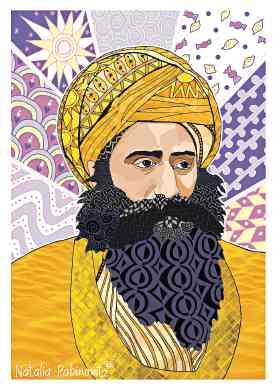
Rockstar Rabbis is her debut solo exhibition: 14 hand-drawn portraits that reim-
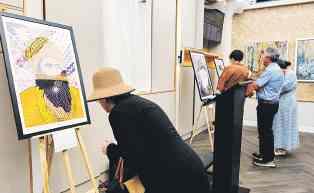
agine Judaism’s great sages, among them the Lubavitcher Rebbe, Rabbi Lord Jonathan Sacks and the Baba Sali, as the cultural icons she believes they always were, set against the kaleidoscopic look of the concert posters she was raised among. The 14 works were shown together for the first time last week at Chabad of Hampstead Garden Suburb.
The series began as a private 40th-birthday gift for Natalia’s husband – a portrait of the Rebbe. She then drew one rabbi a week, studying each through that week’s Torah portion until she could capture, in her words, “not just a likeness but an essence”.
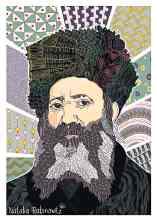
At a moment when Jewish life in Britain feels under pressure, Natalia framed her exhibition as “celebration rather than defence”.
She said: “This body of work is a coming together of the two chapters of my life. My musical unconventional upbringing and my spiritually rich adult life. I hope to take it to di erent cities around the world, each time adding new members to the band.”



























An independent appeals process has upheld a decision by the United Synagogue to dismiss the chair of one of its shuls, writes Daniel Sugarman.
Daniel Anderson was re-elected unopposed as chair of Cockfosters and N Southgate Synagogue in May at the shul’s annual general meeting. One day later, the United Synagogue informed him he was being removed from his position; the first time the organisation has exercised such a power for many decades.
Anderson has maintained that the reasons for his dismissal are based on “governance, procedural fairness and constitutional accountability”. The United Synagogue told Jewish News “Daniel was removed from his position for gross misconduct after Trustees found he had been bullying sta over a sustained period.”
At an informal shul meeting a week after the AGM, Anderson told the crowd “the allegations were said to involve gross misconduct, gross default, and/or reputational damage.

“I reject the findings and the way they were reached... this is not a case involving financial impropriety, safeguarding issues or any abuse of o ce. What this case actually concerns is disagreement about tone, communication, how di cult issues were pursued in a contentious period.”
Jewish News understands multiple bullying complaints were made against Anderson in late 2025, with
an investigation into his conduct then launched.
allegations raised at the meeting. It is unclear whether members present were aware.

At the meeting, Anderson described the board raising “governance concerns” about “accountability and the relationship between shuls and head o ce”, and “somewhere along the line, those concerns were turned into a disciplinary matter focused on me personally.”
There was no mention of bullying

Whether you have an
policy or not, let’s have a chat.

It is also unclear whether they knew about previous allegations of bullying levelled at Mr Anderson. In March 2020, when he was serving as a local councillor, Enfield Council’s monitoring o cer ruled he had breached the local authority’s code of conduct and had bullied o cers, claims Anderson described as “completely unsubstantiated and often libellous”. In September 2020, the council’s conduct committee upheld the original ruling.
Jewish News understands the appeals panel process, chaired by a top KC, concluded the findings reached by United Synagogue trustees were supported by the evidence and fell within the range of reasonable responses, and that the sanction of removal from the role of Chair was
The Board of Deputies and London Jewish Forum have secured £1.5 million in National Lottery funding to launch a major new programme aimed at tackling health inequalities and antisemitism a ecting Jewish patients and healthcare professionals across England.

The five-year funding package will establish the Jewish Health Equity Partnership (JHEP), which the organisations say represents the largest investment to date focused on addressing health inequalities facing England’s Jewish communities.
proportionate in light of the findings. Anderson subsequently told JN the appeal process, “did not address any of the central issues I raised. I remain firmly of the view that I was removed through a process that lacked basic procedural safeguards. I was never provided with proper particulars of the allegations against me, and the appeal process did not permit the evidence or witness accounts relied upon against me to be properly tested.
“While the United Synagogue may regard this matter as concluded, I do not.”
Jo Grose, chief executive of the United Synagogue, said: The wellbeing and safety of our sta is a top priority. We take all allegations of this nature seriously and will act where concerns are substantiated... We are grateful to those members of sta who came forward, often in di cult circumstances, and we continue to ensure that appropriate support is available to them.”
JHEP will build on the work of the London Jewish Health Partnership, which was established by LJF after COVID, and will gradually expand its work to Jewish communities across England.
Working with NHS organisations, local authorities, researchers and community groups, the partnership will aim to help improve understanding of Jewish health needs and work to ensure Jewish patients and sta receive fair and equitable treatment.
Board vice president Karen Newman said: “We are hugely grateful to the National Lottery Community Fund. This five-year commitment will be transformative to our work.”
LJF co-chair Amanda Bowman said: “This partnership will turn greater understanding of Jewish health needs into practical action that improves people’s experiences of care.”
writer behind Arcadia, Rosencrantz and Guildenstern Are Dead, Leopoldstadt and the film, Shakespeare In Love, who died in November 2025.

According to ATG Entertainment, the renaming acts as a “lasting tribute” to “one of the most influential playwrights in British theatre”.
Sir Tom’s children: Ollie, Barny, Will and Ed Stoppard, said: “We are moved and delighted that ATG has chosen to honour our father with this fitting tribute.
“The West End was close to his heart and we feel sure he would be thrilled and humbled in equal measure by this great honour.”
Over his six-decade career, Sir Tom won a string of Tony and Olivier awards, as well as a Golden Globe and an Academy Award for co-writing the Shakespeare in Love screenplay. Born in Czechoslovakia to a Jewish family, Sir Tom was forced to flee his home when the country was occupied by the Nazis and found refuge in Britain.


by Jenni Frazer
@Jennifrazer
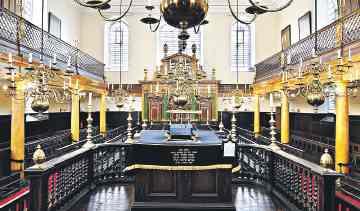
Bevis Marks, Britain’s oldest synagogue, has launched a public consultation on proposals it has made to safeguard the Grade 1 listed building from future development plans in the City of London.
The synagogue, the heirloom community in the S&P movement, has faced threats from developers in recent years, after plans were put forward to build a multi-storey tower block, which would overshadow Bevis Marks and prevent worshippers from accessing both the daylight and moonlight necessary for prayers in the 18th century building.
In December 2024, Welput, an American-owned development company, received its second setback after its proposal to build a 43-storey building — an amended proposal from its previous plans of 47 storeys — was again rejected by the City of London planning committee in a nail-biting
Friday afternoon session at Guildhall.
Welput announced it would appeal to the Secretary of State, then Angela Rayner MP. Rabbi Shalom Morris, Bevis Marks’ minister, said he hoped this appeal would not proceed — and the developers withdrew their appeal.
It is understood that in the ensuing months, close consultations have taken place between Bevis Marks and Welput. The synagogue says that it has put forward proposed ‘guiding principles’ to encourage discussions that will result in changes to the built environment that it can support.”
Rabbi Morris said: “The Grade I listed Bevis Marks Synagogue is one of the great treasures of London. It is an important place of Jewish worship and congregation that has maintained its regular, uninterrupted traditions for over 300 years, and is still the thriving heart of a minority community in the 21st century.
“The synagogue understands the need for economic growth and for new buildings to shape the future,
but we cannot support ‘progress at any cost’ and our proposed guiding principles are put forward for discussion to help everyone understand what is of special significance at the synagogue, and what steps need to be taken to protect it.”
Bevis Marks launched these “guiding principles” last week, aimed
at getting prospective developers to understand the congregation’s concerns, together with an exhibition showing the potential impact of a skyscraper on the synagogue.
In a carefully worded 22-page document, Bevis Marks explains: “Developers must recognise the unique importance of the synagogue from
the outset, and ensure their design teams appreciate that the setting, the sky view, daylight and sunlight, and the functioning of the courtyard are major contributors to the significance of the heritage asset”.
It points out that precisely because the sky view and the setting are “so significant”, even development on sites some distance away from Bevis Marks may block out the light.
Most important of all, says Bevis Marks, is “prevention of harm. Development proposals must form a positive relationship with the synagogue and its courtyard.”
Among Bevis Marks’ concerns is the about-to-open Dangoor Visitors’ Centre in the courtyard of the synagogue building, which it hopes will attract thousands of tourists.
The synagogue has arranged a public consultation on its proposed guiding principles, with an online consultation for four weeks from July 2. For more details visit www.protectbevismarks.co.uk

The 2026 Yoni Jesner Awards, run by social action charity GIFT in conjunction with the Yoni Jesner Foundation, welcomed 350 guests to the Arts Depot in north Finchley, writes Michelle Rosenberg.
Glaswegian Yoni Jesner was a 19-yearold student and youth leader whose life was tragically cut short in a suicide bombing in Tel Aviv in 2002.
The awards were created by his family in his name to ensure his spirit of selflessness and giving lives on, inspiring a new generation of young people to do more. Year 7 and Year 8 students travelled from as far as Manchester and Brighton to take part, with 15 schools represented on the night.
Gesher special educational school and young people from Brighton and Hove Jewish community attended for the first time, alongside pupils from JFS, JCoSS, Yavneh College (Borehamwood), Yavneh Girls School (Manchester), Hasmonean Boys School, Hasmonean Girls School, City of London School, Immanuel College, Henrietta Barnett, Haberdashers and North London Collegiate School.
Every student celebrated had completed
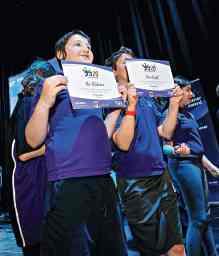
a minimum of 20 hours of volunteering, with many going further and achieving 50 or even 100 hours. There were 220 award completions and over 6,000 hours volunteered across a wide range of charities and community causes.

Introduced by GIFT’s programme director Shira Joseph, Yoni’s mother, Marsha Gladstone, opened the evening with a moving address about Yoni and the legacy these awards have inspired. She urged students not to let this be the end of their volunteering journey, reminding them that the habits of giving they build now can shape who they become.
Chief Rabbi Sir Ephraim Mirvis spoke of how the family’s response to tragedy has never been one of anger or bitterness, but one of inspiration. A conscious choice to take something devastating and turn it into something positive. The spirit of the evening, he said, was captured in a single phrase: “The joy of giving”.
A highlight of the evening was the presentation of the Yoni 1000 award, which recognises students who have gone above and beyond, not just completing their hours but making a lasting impact.
This year’s recipients were Kol Tov, a musical group who began their journey through the Yoni Jesner awards in 2012 as The Four Sons. Rather than stopping once they received their certificates, they con -
tinued and grew, eventually changing their name to Kol Tov, meaning ‘good voice’ and ‘all good’ in Hebrew, and raising over £100,000 for charity through music.
The award was presented by Zahra Berg, the mayor of Barnet. Wowing the audience with an acapella performance on the night were Asher Levy, Noam Bernstein, Nathan Kelion, Gideon Caplan, Ben Caplan, Shimon Hurst, and Yonah Citron.
Barry Colman, GIFT’s high school manager, has ensured that as part of the programme, Yoni’s story has been shared with more than 1,800 students.
He said: “The atmosphere was one of pride, inspiration and excitement. These young people have given thousands of hours to support the vulnerable and strengthen our community, embodying the values Yoni Jesner lived by. It has been an enormous privilege to work alongside Marsha Gladstone, whose passion and commitment has ensured Yoni’s legacy continues to inspire a new generation.”
The next cohort of Yoni Jesner awards will be launched for students in Year 8 in the 2026 autumn term.
South London Liberal Synagogue former chair Eve Samson has become the first woman to be appointed to a key Parliamentary role in its 663-year history.
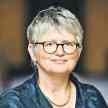
Samson, who has worked at the House of Commons for four decades, has been named the 53rd Clerk of the House, following approval from the King. She has previously served as clerk of several different Parliamentary committees; most recently as Clerk of the Journals, serving as principal adviser to the clerk of the House and the Speaker.
Samson was chair of South London Liberal Synagogue from 2022 until earlier this month.
The Clerk of the House of Commons is the
chief executive of the House and acts as its principal constitutional adviser, on issues of parliamentary procedure and business.
Among those congratulating Samson was Baroness Merron, a former vice-president of Liberal Judaism and a member of SLLS, former MP for Lincoln and chief executive of the Board of Deputies, who described Samson as “a trailblazer… the first woman to occupy this hugely significant role.” Samson is also believed to be the first Jewish person in the role. A predecessor, Sir David Natzler, had Jewish paternal grandparents, although his father, an agent in the SOE during the Second World War, was raised as a Lutheran.
Students from JCoSS have been recognised for helping create the new Queen Elizabeth Digital Memorial after volunteering to digitise 70 years of the late monarch’s engagements.
The Cabinet Office-led project has reached a major milestone with the launch of a fully searchable version of the Court Circular – the official record of Queen Elizabeth II’s public duties throughout her reign from 1952 to 2022.
JCoSS is among eight schools whose students
helped convert decades of Court Circular records into searchable digital data, work that now forms part of the permanent online memorial.
JCoSS assistant head teacher and head of sixth form Benjamin de Jong said: “We were honoured to have contributed, however modestly.
“The hours our students spent poring over the Court Circulars and the myriad engagements undertaken by the late Queen, painstakingly transferring them from pages of analogue records into an
extensive digital spreadsheet, taught them a great deal about the nature of dedication and public service.”
The memorial website, which launched on 21 April to mark the centenary of Queen Elizabeth II’s birth, has now been expanded with thousands of official engagements, new archive material and the first collection of memories by members of the public.
Among the latest additions is a video message from the Prince of Wales, who reflects on childhood visits to Windsor.
The government is facing renewed questions about the ability of extremist media organisations to operate in the UK after a Londonbased Arabic-language TV channel ran an interview in which an individual claimed “on Jewish Passover they have to get a gentile child – a non-Jewish child – and knead the matzah they eat in the morning with his blood”, writes Lee Harpin.
Al-Hiwar, a TV channel based in Acton, west London, ran an interview with Dr Mona Sobhy, an Egyptian family therapist, in which she claimed Israel “is the o spring of Western culture”, where Jews have been gathered “in order to get rid of their traditions, the problems they cause, and their usury”.
The interview was translated by the MEMRI (Middle East Media and Research Institute) watchdog, which referred to AlHiwar as a “Muslim Brotherhood TV channel”.
In it, Sobhy cited what she called “a very famous story in the Levant, in Damascus … it used to be a Christian neighbourhood, but on Jewish Passover they have to get a gentile child – a non-Jewish child – and knead the matzah they eat in the morning with his blood.”
At this point the interviewer interjected, but only to a rm the existence of what was being referred to as “the blood matzah”.
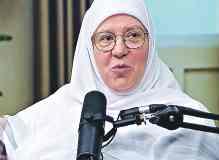
Sobhy went on to claim the Jews “couldn’t find” a child, because “the Muslims would take precautions, and hide their children before Passover. They would not let them go out to the street. The neighbourhoods were closed down, and no stranger could go in.
“So they found themselves in a pickle, they needed gentile blood. So they had no choice but to trick one priest, who worked as a doctor and would do rounds, with his bag and everything.
“They told him: ‘We have someone sick in the Jewish neighbourhood,’ and they killed him and took his blood.
“It is hatred towards Islam, towards Christianity and all the non-Jewish communities.”
The interview itself was reportedly filmed in Turkey, but subsequently run by Al-Hiwar
A report about Al-Hiwar by Jewish security group CST last year detailed how the channel has “repeatedly broadcast content that is at least sympathetic to, and at times appears to be supportive of, Hamas, a proscribed terror organisation”.
The report also noted “programmes broadcast by Al-Hiwar include antisemitic views and expressions of hostility towards Jews, especially by viewers via phone-in shows. Sometimes this is challenged by the show’s host, but at other times it is broadcast without any challenge and without the caller being cut o .”
The CST report also noted “if a viewer watches Al-Hiwar via its existing satellite broadcast, the content is regulated according to the Broadcasting Code but if that viewer watches that same programme on the same TV on Al-Hiwar’s o cial branded YouTube channel, it is subject to a di erent regulatory framework. This is nonsensical.”
At the time, Ofcom responded to a story in The Times by saying: “Al Hiwar stopped broadcasting in the UK in 2023, and prior to that, we twice found it in breach of our rules. Broadcasting Code does not apply to YouTube.”
• Voice of the Jewish News , page 22
A newborn baby was taken to hospital after an alleged burglary and arson attack at a Jewish family home in Stamford Hill, where Shomrim volunteers helped rescue the family from the smokefilled property.

Shomrim said a man forced his way into the house while the parents and their baby were upstairs.
The family locked themselves inside a bedroom as the intruder allegedly set fire to the kitchen before barricading himself inside.
Shomrim said its volunteers arrived within a minute of being called and evacuated the family from the building.
The baby was taken by Hatzola to Homerton Hospital after su ering smoke inhalation. No other injuries have been reported.
A Shomrim spokesperson said: “Shomrim were called urgently by the family.
“A burglar had kicked open their front door with a family, mum, dad and baby upstairs.
“Whilst they locked themselves in a bedroom in terror, the burglar set fire to the kitchen and barricaded himself in the burning kitchen using the kitchen table.
“Shomrim were on scene in under a minute and evacuated the family.”
More than five decades after Israel’s only World Cup appearance, the Israel Football Association says it has no intention of trying to leave Europe for the Asian regional qualifying system that once took the country to the tournament before Arabled boycotts helped force it out, writes Deborah Danan.
The current tournament has renewed attention on Israel’s absence. Despite a thriving local football scene and success in competition abroad, the only time the country appeared in the tournament was in Mexico in 1970.
That’s because Israel seeks to qualify through the Union of European Football Associations, whose ranks are so strong that even a solid campaign can become a long shot. Even titans like four-time World Cup winner Italy failed to qualify this year.
Israel is the only non-European country trying to reach the tournament through UEFA, while most of its neighbours seek places through the Asian Football Confederation from which Israel was ousted in 1974. It bounced around the qualifying zones for a few years – it played in the Oceania qualifiers ahead of the 1986 and 1990 World Cups – before settling in the European grouping in 1991.
Israel Football Association head of communications Shlomi Barzel said a return to Asia is not on the table, both because Israel does not want to leave European football, where it has built a standing, and because he does not believe the Asian confederation would accept it back.
The only upside to such a move, he joked, would be if Israel’s opponents boycotted matches against it: “Israel would automatically qualify.”
A boycott of Israel did affect the
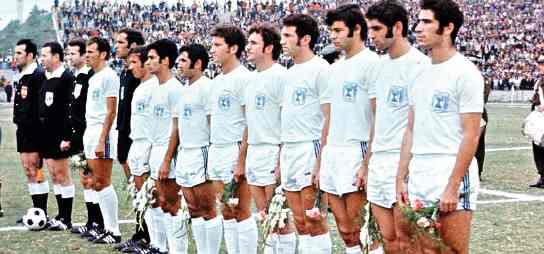
team’s path to the 1970 World Cup. North Korea was ejected from the Asian qualifying tournament after refusing to play in Israel. As a result, Israel advanced to the final round after winning only two games against New Zealand. In the finals, Israel faced an Australian team already exhausted after fending off South Korea, Japan and Rhodesia (itself in the Asian tournament after being banned in Africa over its white governing regime).
In the tournament in Mexico, Israel’s all-amateur team defied expectations, losing 0-2 to Uruguay but notching draws against Sweden and Italy before being eliminated.
Four years later, Israel was ejected from the Asian confederation following a resolution from Kuwait that passed 17 to 13, with six abstentions, a day before a high-profile Israel-Iran game in Tehran that Iran won 1-0 on an Israeli own goal.
Today, Barzel rejects the premise rejoining the AFC would guarantee
Israel a place in the World Cup. “It would be a little patronising and arrogant for me to say that,” he said, adding he’s not sure Israel would beat teams such as Jordan or Qatar.
Barzel also cited Israel’s place inside UEFA’s institutions as a benefit for sticking with the current arrangement. Current IFA chairman Moshe “Shino” Zuaretz was elected to UEFA’s executive committee in April 2025, despite the war in Gaza and growing calls to sanction Israeli football, while former IFA chairman Avi Luzon previously served in a senior role on the same body.
Institutional backing has extended beyond Europe, Barzel said, pointing to the 2022 World Cup in Qatar, where Israeli fans were allowed to attend despite the absence of diplomatic ties. He also cited global football body FIFA’s decision to move the 2023 under-20s World Cup from Indonesia to Argentina after Indonesia objected to hosting Israel’s team. Israel went on to finish third.
Still, Israel’s formal place in international football has done little to shield its teams and supporters from hostility. Maccabi Tel Aviv fans were attacked in Amsterdam after a match against Ajax in November 2024, and the club’s supporters were later barred from attending an Aston Villa match in a decision that became a political and policing scandal in Britain.
Days later, a viral video from the Iran-New Zealand match in Los Angeles showed security guards confiscating an Israeli flag from a fan — who was told they were acting on orders — while other spectators held Palestinian flags.

Despite its absence from the World Cup, Israel has remained a political flashpoint around the event, which US president Donald Trump vowed to make “an unprecedented success.” Speculation Trump’s hopes for a World Cup untainted by war spurred his push for an Iran ceasefire were by the White House.
That didn’t keep the conflict from seeping into the events. In Boston on 19 June, kilted Scotland fans waiting in block-long lines for shuttles to the stadium where their team would face Morocco accepted Palestinian flags from activists lining the route.
Any limits on Israel’s football association are on security grounds, Barzel said, though in October UEFA came close to an emergency vote on whether to suspend Israel over Gaza. At FIFA’s congress in Vancouver in April, Palestinian Football Association president Jibril Rajoub refused to shake hands with Israel FA vice-president Basim Sheikh Suliman despite appeals from FIFA president Gianni Infantino, who called on the sides to “give hope to the children.” Despite such gestures, Israel continues to compete as usual — almost. It has been unable to host matches at home for close to three years because of war and has had to play its home World Cup qualifiers in neutral third countries. It is hosting several contests this autumn in Moldova, which last year gained an Israeli embassy, and direct El Al routes, for the first time. (Russia, by contrast, has had its national teams and clubs suspended from FIFA and UEFA competitions since its invasion of Ukraine.)
Despite the controversies, FIFA has kept pressing ahead with its vision of football as “a force for unity, peace and hope”, including reported discussions about opening a new under-15s tournament in the US in September with a symbolic match between Israeli and Palestinian youth teams.
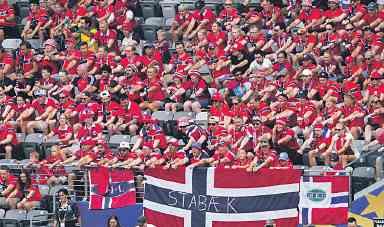
Even the most religiously observant will be able to catch most of England’s quarterfinal match against Norway this Saturday, as it kicks off not long before Shabbat goes out, writes Bradley Grant. With a coveted semi-final spot up for grabs, a nation awaits, but how much do you know about the opposing country when it comes to Yiddishkeit? Before the whistle blows, test your knowledge of Norway’s surprising Jewish story.
1. Norway has two Jewish communities: the larger in Oslo and the
smaller in Trondheim. The city of Trondheim is the northernmost Jewish community in Europe.
2. Jewish slaughter (shechita) has been banned in Norway since 1929, therefore kosher meat is imported.
3. Norway is a big supplier to Israel’s seafood market, with more than 80 percent of Israel’s salmon imported from Norway.
4. Norway played a central role in bringing together Israeli leaders to help facilitate the Oslo Accords, signed in 1993 and 1995.
5. Only 320 Norwegian Jews have made aliyah to Israel since 1948.
6. The Nobel Peace Prize is entirely managed and awarded in Norway.
7. Norway’s largest import from Israel is industrial chlorides, which are vital for its manufacturing and metallurgical industries.
8. During the Holocaust more than half of Norway’s Jewish population of 1,800 escaped the Nazis by fleeing into neutral Sweden.
9. The premier tool used by Norway’s police force to extract data from locked mobile devices is developed by the Israeli cyberintelligence firm Cellebrite.
10. Norway is home to around 1,500 Jews today. Chabad has a presence in Oslo, and Bnai Brith and Bnei Akiva both run programmes.
KNOWING HOW TO LOOK AFTER YOURSELF AND OTHERS GIVES YOU THE POWER TO PREVENT A CRISIS. Learn how to manage stress, understand wellbeing and mental health, and reach out to someone who’s struggling - because simple skills can change lives.
Special Session: ANTISEMITISM: Responding to Stress and Trauma WHAT IS MENTAL HEALTH?: The essentials everyone should know

UNDERSTANDING MENTAL HEALTH CONDITIONS: Identifying and responding to common mental health issues
SELF-CARE AND STRESS MANAGEMENT: Boost your wellbeing and reduce stress PRACTICAL RELAXATION: Master powerful techniques in 50 wonderful minutes

REACHING OUT TO SOMEONE WHO’S STRUGGLING: How best to show concern and o er help
Two men who filmed themselves shouting antisemitic abuse at a Jewish man in east London for social media have avoided jail, writes Joy Falk.
Adam Bedoui and Abdelkader Amir Bousloub, both 21, were handed a six-week prison term, suspended for 12 months at Thames Magistrates’ Court on Friday after they were convicted of an antisemitic hate crime, the Crown Prosecution Service (CPS) said.
The pair travelled to a predominantly Jewish area of the capital to film antisemitic content for TikTok on May 7, and pleaded guilty to religiously aggravated intentional harassment at the same court just a few days later. Police were called at 9pm after the men targeted a Jewish man in Hackney.
Bousloub approached the man and started shouting abuse while filming it on a mobile phone, while Bedoui stood alongside him, laughing, and also harassed the man, the Metropolitan Police said. The pair tried to flee but were detained.
The CPS said Bousloub told police in an interview that he had gone to the Stamford Hill area to film with a fishing rod with the aim of getting a reaction, copying what he had seen

in another video on Instagram. He said he was expecting hundreds or thousands of people to watch the video and claimed he thought the Jewish community would find it funny, the CPS added.
Varinder Hayre, district crown prosecutor and hate crime
Eleven Jewish charities have partnered to launch a new community-wide service providing a single access point for Jewish families seeking support for children, young people and family life, writes Orly Landeck.
Created in response to
growing demand and the increasingly complex challenges families face, We Connect Families is intended to make it easier to find the right help at the right time across issues including parenting challenges, emotional wellbeing, school or SEND con-
cerns, serious childhood illness, family relationships, and di cult life events such as illness or bereavement.
Led by Norwood, the UK’s largest Jewish charity supporting children, families, and people with learning disabilities, the partnership includes
Kisharon Langdon, Camp Simcha, Jami, Jewish Care’s mental health service, Jewish Women’s Aid, Jewish Family Centre, KEF Kids, Hand in Hand, Arts Therapies for Children, GIFT and Noa.
The charities aim to create one clear route into support.
lead for London North Magistrates’ Court unit in CPS London North area, said: “These men deliberately targeted a member of the Jewish community, and subjected him to antisemitic abuse in a public place.
“They filmed the incident with the intention to upload it to social media and amplify the harm caused to the victim.
“The CPS worked closely with the Metropolitan Police to build a strong case, securing a conviction less than 48 hours after the incident. Hate crime has a serious impact on victims and communities. We will continue to prosecute these o ences robustly.”
Detective Chief Superintendent Brittany Clarke, who leads policing in the area, said: “There is no place for antisemitic hate in this city and this case carries a clear warning for anyone tempted to commit hate crimes in pursuit of online notoriety. These men were arrested within minutes of the incidents being reported to us.”
Bedoui and Bousloub, both of West Drayton in Hillingdon, west London, were also sentenced to 150 hours of unpaid work and 20 days of rehabilitation activity, and required to pay prosecution costs of £85.

MACCABIAH GAMES OPEN IN ISRAEL
A smaller, more subdued Maccabiah Games has opened in Israel, in the wake of war with Iran. Around 5,000 athletes are competing, half the number from four years ago.





The Israeli government has indicated that it will refuse to comply with a ruling by the country’s Supreme Court, leading to bitter condemnations by leading opposition politicians, with just a few months to go until the legally mandated deadline for a general election.
The Supreme Court had ruled that the Second Authority for Television and Radio, a commercial broadcasting regulator, could continue to operate temporarily, despite a number of resignations having left its council without a legal quorum to make decisions. The main issue at stake is a proposed takeover bid for Channel 13 by a consortium of tech entrepreneurs led by Assaf Rappaport, a vocal critic of the Netanyahu government.
In a statement on Sunday Justice Minister Yariv Levin and Communications Minister Shlomo Karhi said that “the government unanimously approved a proposal declaring that it will not recognise any decision, approval, appointment, or action taken by the Council of the Second Authority as long as the council does not meet the explicit minimum requirements established by law”.
In even stronger language, Karhi subsequently said that “High Court justices are not the Knesset, and an abuse of power does not

give them the authority to erase an explicit statutory requirement simply because they find it inconvenient.”
He went on to say that a two thirds majority by the regulator’s council in respect of decisions was “a legal requirement, not a recommendation”, and that the government had “made its position clear: when the High Court tramples the law, the state will not cooperate.”
The government statements were met by vehement criticism from leading opposition politicians, including Yair Lapid, Naftali Bennett and Gadi Eisenkot.
In a social media statement on Monday, Lapid said that “the government’s decision

yesterday that it will not accept the High Court ruling had a purpose: the government wants to reach the elections without a court. The poison machine is steadily pumping this idea, until the madness sounds logical. This is a calculated plan aimed at stealing the elections.”
In a similar vein, Naftali Bennett described how “if the government of Israel decides not to obey a Supreme Court ruling, from that moment every citizen is forced to ask himself: Who do I obey? The government? The court? And when there is no single answer – there is no single state. There is anarchy. Chaos. That’s how they split Israel into two kingdoms. It’s already happened to us twice, and twice it ended in destruction”.
Gadi Eisenkot, the former IDF Chief of Sta who has recently become a key political challenger to Prime Minister Netanyahu, said: “The Israeli government is raising a hand against Israeli democracy. Netanyahu is dividing Israel. Israeli citizens deserve a government that unites the people – not a government that works to divide it.”
Israel must hold new Knesset elections by the end of October, after which a new government coalition – either led by Mr Netanyahu or opposing political parties, will need to be formed.
By Bradley Grant
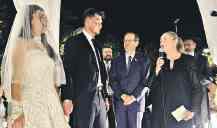
Two former hostages taken by Hamas on 7 October celebrated their wedding on Sunday in an emotional ceremony attended by Israel’s President and First Lady, as well as a number of other survivors of captivity in Gaza.
Sasha Troufanov and Sapir Cohen, who were captured at Kibbutz Nir Oz on 7 October, announced their engagement last July.
The couple had been visiting Troufanov’s family during Succot in 2023 when Hamas launched its mass invasion.
Cohen was released as a part of the November 2023 ceasefire deal – the first ceasefire since the war began. While she was in captivity, the 5-year old Emily Aloni, a fellow hostage, drew a picture of how, one day, Cohen and Troufanov would be married; a drawing which has now become reality.
Israeli President Israel Herzog was present with his wife Michal, the first lady. The presidential couple blessed the newlyweds.





















On paper it makes perfect sense. But home isn’t just paper. It’s everything familiar. Everything yours. Birchgrove is a collection of self-contained apartments, available to rent. No buying. No exit fees. No hidden charges. And when you’re ready to explore the idea, we’ll help you through every single step. At your pace. On your terms.


Retirement apartments to rent in Mill Hill






You’re noticing things. You’re not sure when it started, exactly. The garden looking a bit less loved. Unopened post lying around A careful way of moving around the kitchen you hadn’t noticed before.
Nothing absolute you can point to. Just a feeling that’s settled in and doesn’t quite leave.
What you don’t know is that the person you’re worried about has noticed things too. They know the house is more effort than it used to be. They’ve made their own quiet calculations, had their own private thoughts, and said nothing. Not wanting to worry you. Not wanting to make a fuss. Not quite ready to say out loud what they already know.
Psychologists call it role reversal anxiety, the profound discomfort of finding yourself, however gently, in a position of apparent authority over a parent. It cuts against everything the
relationship has always been. And so your thought stays unspoken. Not from indifference. From love, and from a quiet, deep respect for everything your parent has always handled alone. For some families, that respect runs deeper still. A value passed down through generations, quietly held, and never more present than in moments like this.
This is a conversation being quietly avoided in homes across the country. Not the dramatic one. The quiet one. Two people who love each other, both thinking the same thing, neither sure how to voice it aloud.
What families tell us, again and again, is they wish they'd started this conversation sooner. Not because anything was urgent. Because once the conversation began, it stopped being about loss and started being about something nobody had quite expected. Relief. Not just for Mum or Dad. For everyone who loves them.

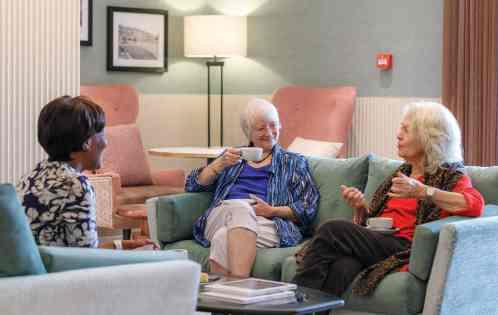
Birchgrove was built for exactly this moment. Selfcontained apartments to rent, with no buying, no exit fees, no pressure of any kind. Your own front door, your own life, with support available when it’s wanted and invisible when it’s not. Utilities, housekeeping, broadband and 24/7 staff presence all included.
Families tell us the visit changes everything. It stops being a conversation about what might be lost and becomes one about what might be gained. The thinking shifts. The heart catches up.
Sometimes the hardest part is simply finding a gentle place to start. Come and talk when you’re ready. There’s no rush and no pressure. Just an honest conversation at your own pace. If this sounds like something you want to explore give us a call on 020 4634 7109
Last month, a UK based TV channel, Al Hiwar, ran a segment during which a guest was allowed to spew vile antisemitism, parroting the deranged blood libel about Jews murdering people and using their blood to make matza. What is more, Ofcom, which regulates TV channels, will do nothing about it.
Why will the regulator not act? Because, as Jewish News reports this week, there is a loophole in the law. If Al Hiwar had broadcast their hate via satellite, it would be subject to Ofcom. But if they upload the footage onto their social media channels instead – which is what they did – then this is not deemed to be within the regulator’s domain. A CST report last year into Al-Hiwar’s conduct diagnosed this exact issue, correctly described it as ‘nonsensical’.
It is no secret that the UK, along with many other Western countries, has struggled with the issue of how to regulate online spaces. Successive governments have grappled with the need to combat online hatred and misinformation, while trying to avoid measures that would risk mass-censorship and surveillance. Fortunately, in this case, there should be no such di culties. All that the government – any government – would need to do is to extend Ofcom’s purview to include all video content disseminated by such channels, whether via terrestrial TV, satellite TV or social media platforms. However, an additional layer of uncertainty here may well have been caused by the rather awkward split between government departments. Media is in the realm of the Secretary of State for Culture, Media and Sport, but social media is within the purview of the Secretary of State for Science, Innovation and Technology.
While this issue is unlikely to be at the very top of Andy Burnham’s to-do list, whoever he appoints to those two cabinet positions should seek to work together to resolve the problem. Failure will mean turning a blind eye to media channels, based in this country, spewing the most grotesque antisemitic propaganda.
THIS WEEKEND'S SHABBAT TIMES... Shabbat comes in

Sadiq Khan’s decision to visit the Nova Festival exhibition is genuinely welcome. It is the right thing to do, and it matters.
There is a tendency, particularly in today’s febrile political climate, to view every gesture through a partisan lens. This should not be one of them. The exhibition is not about politics. Every civic leader should want to see it.
The London mayor has, over many years, built a strong relationship with London’s Jewish community. It is easy to forget that one of his very first official engagements after becoming Mayor was attending a Yom Hashoah commemoration, signalling that remembrance of the Holocaust and solidarity with Britain’s Jews were priorities
It was a happy occasion when Peter Phillips, the son of the Princess Royal, recently married paediatric nurse, Harriet Sperling, who works in the National Health.
Harriet, in fact, is a descendant of the Dutch Jewish banking family de Zoete, through her paternal grandmother, Eleanor de Zoete, which became part of the Barclays banking group.
Eleanor married Major Geoffrey Thomas Sanders, who became the High Sheriff of Gloucestershire and the first editor of Stroud News.
The founder of the English family, Samuel, arrived in Georgian England from Amsterdam when that city was occupied by French troops. First recorded as a hatmaker and then as a merchant in Mincing Lane, he is buried in Highgate Cemetery. His son, Samuel Herman de Zoute became a stockbroker and rose to become chairman of the Stock Exchange and a noted art collector. Descendants include cricketer Herman Walter de Zoute, who played for Essex and Hertfordshire, and the distinguished dancer and teacher, Beryl de Zoute.
Members of the de Zoute family were victims of the Holocaust in Holland, but the English branch are no longer of the Jewish faith. Harriet has worked at the Evelina Children’s Hospital, which was named after Evelina de Rothschild, and has a special interest in the early brain development of babies.
Doreen Berger, Jewish Genealogical Society of Great Britain
Thank you for helping to make Jewish News the leading source of news and opinion for the UK Jewish community. Unlike other Jewish media, we do not charge for content. That won’t change. Because we are charity-owned and free, we rely on advertising to cover our costs. This vital lifeline, which has dropped in recent years, has fallen further due to coronavirus.
Today we’re asking for your invaluable help to continue putting our community first in everything we do. For as little as £5 a month you can help sustain the vital work we do in celebrating and standing up for Jewish life in Britain.
Jewish News holds our community together and keeps us connected. Like a synagogue, it’s where people turn to feel part of something bigger. It also proudly shows the rest of Britain the vibrancy and rich culture of modern Jewish life.
You can make a quick and easy one-off or monthly contribution of £5, £10, £20 or any other sum you’re comfortable with. 100% of your donation will help us continue celebrating our community, in all its dynamic diversity.
Support Jewish News by visiting our donor page at jewishnews.co.uk
from the outset. That should not be overlooked. His visit to the exhibition will carry significance beyond a diary appointment. It offers an opportunity to reaffirm that the victims of 7 October deserve to be remembered with the same humanity afforded to victims of every other atrocity.
I hope the mayor does more than quietly tour the exhibition. I hope he speaks publicly afterwards. Londoners, particularly Jewish Londoners, deserve to hear what he saw, what affected him and why this story belongs to all of us, regardless of our politics or views on the wider conflict. I hope his reflections afterwards are as important as the visit itself.
Mr S Rudolf, by email
For centuries, blood libels accused Jews of deliberately killing innocent children. Today, the accusation has been updated by the UN: the Jewish state is accused of genocide including targeting Palestinian children.
“Genocide” was coined to describe the deliberate extermination of a people. Applying the term to a war in which Israel facilitates aid, issues evacuation warnings while fighting terrorists embedded among civilians, dishonours the victims of real genocides and does irreparable damage to the safety of Jews, who inevitably bear the consequences when the only Jewish state is falsely portrayed as genocidal.
The UN is an institution that failed to prevent the Rwandan genocide, failed to protect Srebrenica despite designating it a UN “safe area”, and has repeatedly allowed some of the world’s worst humanrights abusers to sit in judgment of others.
The greatest enabler of the modern blood libel is no longer the village gossip or street-corner agitator. It is the international institution that lends such accusations an undeserved veneer of legitimacy.
Eli Cohen, NW11
I enjoyed reading your interview with Felicity Kendall in the most recent issue of your excellent Life magazine. I have to ask: who is Felicity’s plastic surgeon?
I gotta know!
Sue Grossman, By email


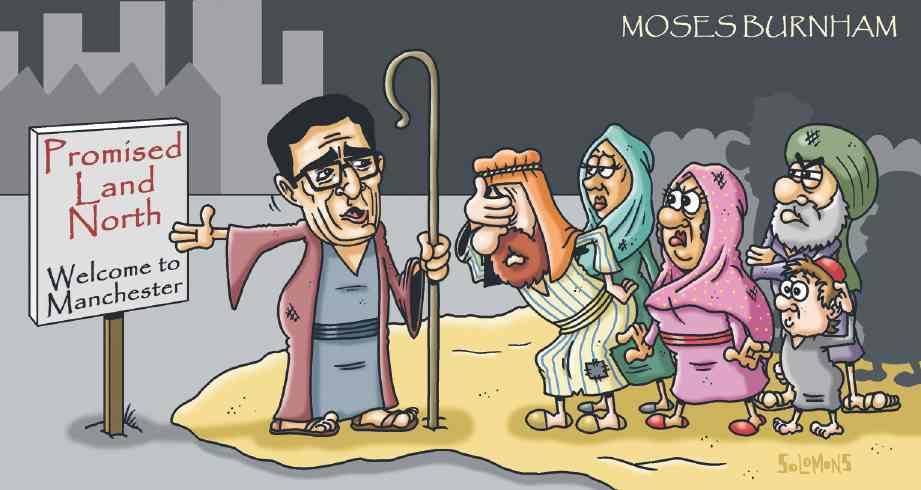
“What?!”

THE SENITT FAMILY
in fairness, kindness and doing the right thing, even when it wasn’t the easy thing.
ALAN SENITT MEMORIAL TRUST world
Twenty years have passed since we lost our beloved son and brother, Alan Senitt. It is a milestone we never wanted to reach, yet one that reminds us just how much one person can leave behind.
Twenty years later, people still ask us what Alan was like. We always give the same answer: he was impossible to forget.
Alan had an infectious smile, boundless energy and an extraordinary ability to make everyone he met feel like they mattered. He could walk into a room full of strangers and leave having made lifelong friends. Whether he was talking to a world leader, a journalist, a community volunteer or someone he’d just met, he treated everyone with the same warmth, respect and genuine interest.
He had a remarkable gift for bringing people together. Even today, we still meet people who tell us Alan inspired a career move or simply changed the course of their lives through a conversation.
He made people believe in themselves, often before they believed in themselves.
Alan lived life at full speed. By the age of just 27 he had already led BBYO and the
Union of Jewish Students, worked at BICOM, became the first director of the Co-Existence Trust and was in Washington, DC, working for a US Senator while pursuing a career in public service that many believed would one day take him to the very highest levels of politics.
We often joke that if Alan had become prime minister, as so many confidently predicted, perhaps the country wouldn’t have needed quite so many of them over the last 20 years. Looking back now, with the revolving door at Number 10, it’s hard not to smile at the thought. Of course, we’ll never know what might have been, but we do know he had the vision, determination and rare ability to bring people together.

Alan Senitt: “He was impossible to forget”
Despite everything he achieved, Alan never judged success by titles or positions. He judged it by people. By whether you had made someone’s day a little better, solved a problem, opened a door or helped someone who needed it.
His life was tragically cut short while defending a friend, and somehow that final act captured exactly who Alan was. He instinctively stood up for others. He believed
have saddened him deeply.
As a family, we often find ourselves wondering what Alan would make of the world today. The rise in antisemitism, the division we see across society and the anger that so often replaces conversation would have saddened him deeply. But if there is one thing we know, it is that Alan would never have accepted that nothing could be done. He wouldn’t have been shouting from the sidelines. He would have been picking up the phone, bringing people into a room, challenging hatred and building relationships across communities. That was simply who he was.
from the sidelines. He would
Following Alan’s death, we established the Alan Senitt Memorial Trust. It was never about replacing him-that would be impossible. It was creating a positive from a negative. It was about ensuring that the values which defined his life could continue to inspire others. Through our Upstanders Leadership Programme, more than 2,000 young people from di erent faiths and backgrounds have learned that leadership starts with kindness, courage and standing up for others.
Twenty years on, we still grieve. We always will. But alongside that grief is enormous pride. Pride that Alan’s name is still spoken with such affection. Pride that so many people continue to tell us how he changed their lives. Pride that his legacy is not simply remembered, but lived.
Twenty years later, the thing people remember most isn’t Alan’s CV. It’s how he made them feel. Seen. Encouraged. Believed in. That is a legacy no title could ever match.
To us, he wasn’t the future Prime Minister everyone predicted, he was simply Alan. The son who raided the fridge at midnight, the brother whose cheesy grin you hated and loved in equal measure, and the one who somehow made every family gathering louder, funnier and happier just by walking through the door. Alan taught us that one person really can make a difference. In a world that too often rewards division, he believed in dialogue. In a time when people are encouraged to pick sides, Alan chose people.
Twenty years later, we still miss him. But we also smile every single day because we were lucky enough to call him our son, our brother and our Alan. That is the legacy he left us. And one we will carry with us forever.
u To donate to The Alan Senitt Memorial Trust visit www.charityextra/hub/alansenitt

It was a privilege to participate in the JNS International Policy Summit in Jerusalem alongside leaders, diplomats, policymakers and public figures from around the world. The summit made international headlines.
On the panel on which I sat, speakers o ered perspectives on how Israel can better explain itself to an increasingly sceptical or hate-filled world. Some focused on digital media and journalism, others on strengthening strategic partnerships, including the growing opportunities presented by certain Gulf states. My own contribution drew on my professional experience.
Working in public relations and lobbying for a myriad of causes has taught me the most successful campaigns are those that aim to broaden minds. Growing up, I’d often hear my father quip “shouting merely deafens”.
Over many years, whether advocating for oil, gas, aircraft landing rights, planning permission, shechita, brit milah or Jewish
education, we have tried to create opportunities for people to engage with subjects they may otherwise never encounter.
We bring together politicians, experts and stakeholders, respectfully, in good faith and without apology. Regarding shechita, we explain what it actually is, the origins of mechanical stunning and the latest peerreviewed scientific evidence which demands requalifying the whole debate.
We explain the reality of Jewish education, and broaden the understanding of the wide range of educational choices across Britain, from radical home schooling to unschooling.
Of course, there are those who reject
cious. If minds are to be changed, they will be changed through a broadened perspective. Nothing diminishes the importance of Holocaust remembrance, the testimony of survivors or the extraordinary work of Yad Vashem. But perhaps we should ask a di cult question. Why is every king, pope and visiting dignitary taken straight to Israel’s Holocaust Museum? Perhaps instead, or as well, they should visit the Ir David site. Standing among excavations dating back more than 3,000 years, overlooking the glistening Old City of Jerusalem, nobody needs to justify the existence of a Jewish state.
I had another thought in Jerusalem – the conspicious absence of Britain’s communal leadership. Chief Rabbi Warren Goldstein of South Africa was there, and North American Jewish leaders. Delegations had travelled from across the world. Where were ours?
There perhaps remains a belief within British Jewish life that influence is best exercised quietly, from the inside, and publicly identifying with Israel somehow weakens our position. Is that really the case? We have not been nearly as e ective behind closed doors as we sometimes imagine. So there is no reason we cannot continue that work



People watching from afar sometimes treat empathy as though it must be rationed. I work with Israelis and Palestinians demonstrating the opposite: even amid war, the suffering of one people never justifies the dehumanisation of another.
Spending seven weeks in Tel Aviv earlier this year, mostly during the war, gave me a glimpse of the trauma Israelis have endured for far too long. It also sharpened my sense of the violence Palestinians in Gaza, the West Bank and across the region have lived with for generations.
Reflecting on five years as chief executive of New Israel Fund UK, that experience is the most visceral of many that have deepened my connection with the people and place we serve.
Compassion for Israelis traumatised by 7 October, for former hostages and their families, for murdered loved ones, uprooted communities and all living under fire. Compassion too for Palestinians in Gaza facing bereavement, devastation and displacement, and in the West Bank living with occupation, dispossession and extremist violence.
When I joined NIF UK five years ago, we were emerging from a previous escalation in Gaza and violence between Jewish and Arab communities inside Israel. The warning was clear: Israel’s future could not be secured by force alone. A society divided by inequality, occupation, and discrimination needed investment in people willing to build a shared future.
In 2023, hundreds of thousands of Israelis took to the streets to defend democracy and the rule of law against the government’s so-called judicial overhaul. It was not a perfect movement; too many were late to understand that democracy cannot stop at the Green Line. But it helped block attempts to weaken courts and protections for minorities.
Then 7 October tore through everything. I remember the dread of that morning: frantic messages to family, friends and colleagues; the horror of what Hamas had done;
the trauma that would reshape all our lives.
I also remember being brought to tears as colleagues mobilised within hours to house, protect and provide for thousands of Jewish and Bedouin residents across southern Israel. We were among the first supporters of the Hostages and Missing Families Forum and aided citizens often neglected by their government.
One privilege of my life has been to play a small part in the £6 million NIF raised globally for emergency response and rehabilitation in the Negev. I feel the same pride that our Gaza humanitarian appeal, initiated by Palestinian and Jewish colleagues, raised £3 million. It is possible – indeed essential – to hold deep commitment to Israelis alongside urgent compassion for Palestinians.
NIF UK has grown because thousands in Britain share that conviction. We have raised £21 million in the last five years, compared with £13 million in the previous five, and over 1,600 gave since 2021 to join the 1,100+ continuing their support. Behind those figures are people choosing not to give up.
We have become a home for values-led
engagement. In 2025, more than 3,000 people joined 43 events, from memorial spaces with Israeli and Palestinian speakers to screenings, exhibitions, synagogue conversations, and briefings on war, democracy and fake news.
Five years in this role have taught me that compassion for both Israelis and Palestinians resonates. Many are looking for a place where grief is not weaponised, where seeking Jewish safety and Palestinian freedom is mutually dependent, and where moral seriousness means refusing to erase anyone’s humanity.
Looking ahead five years, a better reality is possible. The end of regular periods of war and sheltering from missile fire. Gaza rebuilt and Palestinian self-determination back on the diplomatic horizon. Israelis and Palestinians – in Jerusalem and Jenin, Kiryat Shemona and Khan Younis – living in peace, governed by people committed to democracy, not theocrats, ultranationalists and autocrats. Jewish and Palestinian citizens of Israel sharing a society built on dignity and the rule of law.
Extremists will not deliver that future. It will be built by people, projects and ideas that refuse to surrender to the present cruelty.


The hijackers took an Air France flight, not an El Al jet. They didn’t sort by passport. On Idi Amin’s Entebbe tarmac they separated the Jews, re-staging a “selection” scene Jews knew from the Third Reich. They knew the echo of the camps and the ramps.
This was July 4 1976 – 28-year-old Israel sent its commandos, men around the same age as the state itself, to bring them home.
At their head was Yonatan “Yoni” Netanyahu. Yoni who? Yes, Netanyahu – Bibi’s elder brother. Before politics ever attached to that name, he was one of Israel’s most seasoned special-forces o cers, who had led mission after mission and, at thirty, died at the front of the assault team in Entebbe. The logic was blunt: if Jews are held at gunpoint because they are Jews, Israel goes.
Some of the hostages were Israelis. Most were not. The gunmen selected Jews. Or Jewish-sounding names.
Israel flew across Africa to save them anyway. The message was clear: if you pick out Jews as Jews, you have chosen to confront the Jewish state, whatever passports those Jews carry.
By sorting the hostages this way, the hijackers revived the Nazi method: separation, inspection, life and death – for being a Jew. For Jews watching in 1976, this was not symbolism; it was a live replay of the Shoah.
But this time it was di erent. In the 1940s, selection led to trains and death, while across much of Europe states turned on their Jews, delivered them, or closed their doors. There was no Israel. But in 1976, there was. Sovereign Israel’s commandos were ready.
Sovereign Israel had tracked down Adolf Eichmann, living under a false identity outside Buenos Aires, in May 1960. Israeli agents seized him and brought him to Jerusalem to be tried – not for crimes against Israelis, as Israel hadn’t existed at the time of his crimes. Israel tried him, above all, for crimes against the Jewish people.
That was Zionism as the revival of Jewish responsibility in and through Israel. Not only
religion, language or culture, but power based on a new covenant: Jews do not leave other Jews to be sorted and slaughtered.
“Kol Yisrael arevim zeh bazeh” – all Israel are responsible for one another – meant rescue.
Some say 7 October was “like” the Shoah. I don’t. I say it was the Shoah again. Not that it matched the Shoah in scale, or in its machinery, but that it carried the same exterminating idea – Jews marked for murder because they were Jews, and the presence in Israel of people who were not Jewish made them collective Jews, because the ground they stood on was Israel. That was why.
Families butchered in their homes. Children taken as trophies and leverage to break a people’s will. The Shoah reappeared 80 years later under di erent flags with the same aim. And again, large parts of the world looked away, explained, “contextualised”, denied and minimised. And still do.
Entebbe’s 50th anniversary is bound to bring Netanyahu comparisons. But this story isn’t about politics. Not about coalitions and oppositions. The point is not to reduce Entebbe to today’s arguments about Pales-
tinians, Gaza, Lebanon or Iran. It is about why, regardless of our politics, Israel needs to exist. It is about people who seek out Jews because they are Jews, and the one state that has taken on the responsibility to stand between those people and their prey. There was no Israel when, across much of Europe, states turned on their Jews, delivered them, or closed their doors. What if there had been?
In 1976, Entebbe looked like self-defence by a small state under threat. Today, would it be seen as justified rescue, or condemned as raw power?
The world is less willing to see Jewish danger but more willing to feed it. Sometimes, too often, it says that Israel brings that danger on to Jews. But to believe that you have to believe that Israel created the danger. The truth is that danger to Jews created Israel. Today, 50 years on, remembering Entebbe is not sentimentality. It is a way of reminding ourselves that Zionism means more than self-determination, more than return from exile. It means revival of Jewish life, from the dry bones, and the centrality of Israel to Jews. Regardless of politics.
DARREN RICHMAN
Towards the end of the last century, my father’s parents would frequent a hotel in Florida. They were not the only regulars and, since old Jews have a habit of sticking together, they struck up friendships that would resume on an annual basis, despite being separated by an ocean for the majority of the year.
One fellow guest they considered a pal was a slightly older woman named Leah.
After a few years of this, by which point my grandparents felt they knew Leah reasonably well, their American friend brought along her son. His name was (and indeed remains) Steven Spielberg. The Steven Spielberg, not his non-union Mexican equivalent.
It transpired Leah had failed to ever mention the fact that her lad was the most successful living filmmaker, quite probably the most popular in the history of cinema and the Family Fortunes top answer if the general public were asked to name a movie director.
Knowing I was fanatical about the man’s work ( Jaws was my favourite film by a mile and one I watched with a hot
Ribena each and every time I was off school through illness), my grandma asked his mum whether he wouldn’t mind signing an autograph for me. She had an abundance of grandchildren, but knew just how much it would mean to me personally.
Grandma Shirley was never backwards in coming forward and just came out and asked the old dear. Her reply?
“No, Steven’s on holiday; he shouldn’t have to do any work.”
No doubt it’s annoying to get autograph requests near constantly, but “work” seemed a bit strong, and it would have been three seconds out of the day for something the recipient would genuinely still treasure
decades down the line. And yes, of course I’m over it.
I’ve never known who to blame for this incident. Did Spielberg’s mum make the decision on her own? Did my hero inform her of the party line in advance should anyone ask? All I know is that it happened in 1994 and seemed to coincide with the end of the great man’s imperial phase. Whether my grandmother cursed him or not is open to debate.
My grandfather on my mother’s side had the privilege of meeting the filmmaker years later through his life’s work educating people about the Holocaust and the dangers of hatred. Given that my grandpa survived Auschwitz while Spielberg only made a film about it, the correct construction of that sentence should be that Steven Spielberg had the privilege of meeting Zigi.
My grandparents are no longer around, and neither is Leah, since time always does its thing sooner or later.
Spielberg will turn 80 this year, but he shows no signs of slowing down. Disclosure Day opened this month and has become the director’s most commercially successful film since Ready Player One in 2018. Halfway between that film and this came The Fabelmans, Spielberg’s most autobiographical film and one that explored the breakdown of
his parents’ marriage in the 1950s. Michelle Williams was magnificent as the mother of the Spielberg proxy, but there was, regrettably, no flashforward to the 1990s and a scene in which one bubbe resolutely refused an autograph request from another.
Spielberg is one of just 22 people to have won an Emmy, a Grammy, an Oscar and a Tony. Perhaps unsurprisingly, nine of those to have achieved EGOT status are Jews (one of whom, Mel Brooks, just turned 100). More impressively, his films have defined childhoods for half a century. Jaws, E.T., Indiana Jones, Jurassic Park. Like that other great populist, Charles Dickens, the popularity of his work has occasionally caused critics to bristle. In both cases, though, the general public is absolutely to be trusted, and how rare it is for that to be the case.
He is the highest-grossing film director in history and all but invented the concept of a blockbuster. He had the range to make both Hook and Schindler’s List.
Four generations of my own family have had their lives enhanced by his art, and we are far from unique. He started the Shoah Foundation to archive the testimony of Holocaust survivors, an invaluable resource of greater importance than any film.
In short, I forgive Steven Spielberg.

















Despite extremely hot weather conditions, 72 golfers gathered at Moor Park Golf Club to take part in the fourth Malki Foundation UK Golf Day. The charity empowers families of severely disabled children, helping them afford essential therapies and specialist support within the comfort of their home. The golfers raised a magnificent £20k in support of Keren Malki in Israel.
Around 150 people gathered at Mill Hill Synagogue on Thursday 25 June to celebrate Jewish housing association jLiving’s 60th birthday. Guests included the Chief Rabbi, Sir Ephraim Mirvis and Kate Henderson, chief executive of the National Housing Federation, members of the charity’s board, employees and heads of organisations such as Kisharon Langdon, Paperweight and Norwood. jLiving chief executive Jane Goodman said: “From its earliest days to the present, jLiving’s mission has been clear: to respond to the housing needs of the community with care, responsibility, and foresight. While much has changed over 60 years, this commitment has remained constant.” The leading Jewish housing association operates across London boroughs including Barnet, Brent, Harrow, Westminster, and Lambeth, as well as the wider Southeast.
Menorah Synagogue welcomed Ariel Chapman, executive director of Keshet UK, the UK’s Jewish LGBTQ+ education and training charity, to their inaugural Pride Shabbat. The service incorporated contemporary liturgical and musical elements throughout, and Ariel delivered the sermon. Rabbi Kath Vardi said: “We aimed to create space to reflect on the values of welcome, inclusion, and justice – particularly as members of LGBTQI+ communities who have historically not been well served by religious institutions, and who, in many parts of the world, continue to face exclusion from religious life. We look forward to building our relationship with Keshet in synagogue life over the coming year and to celebrating Pride together again next June.”
Learning disability charity Kisharon Langdon welcomed a team from HSBC for a corporate volunteering day last month, focused on connection, learning, and shared experiences including a ‘Shop, Cook & Eat’ session, where volunteers worked alongside members to prepare and enjoy a healthy meal. HSBC volunteer Ben Berelowitz said: “It was truly special to get to know the students and learn about their interests. Being able to spend time with them in a careersfocused setting allowed us to share our experiences while also learning from them. It’s something we’ll definitely take back into our roles.”
Twenty-nine cyclists who completed Norwood’s Tuscany challenge raised £120k cycling along the slopes of Chianti, covering 270km of ground in 3.5 days, in temperatures of up to 28 degrees. Among the group was Jonathan Tobin, cycling in tandem with his non-verbal autistic son Jacob, to raise money for the charity and its Unity short breaks schemes. He said: “It was a special experience for both of us,
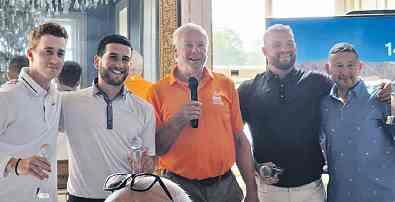

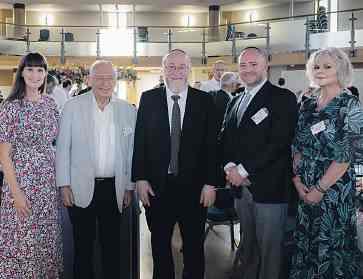
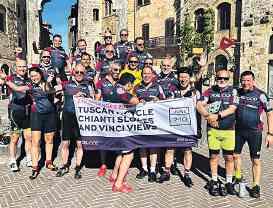

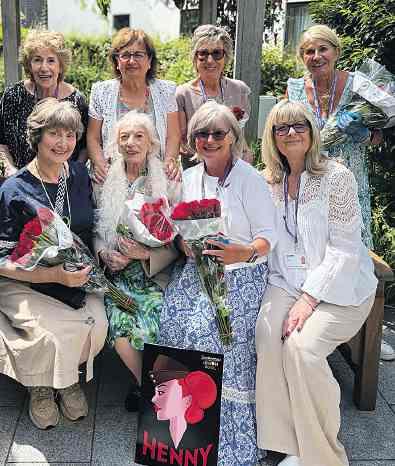
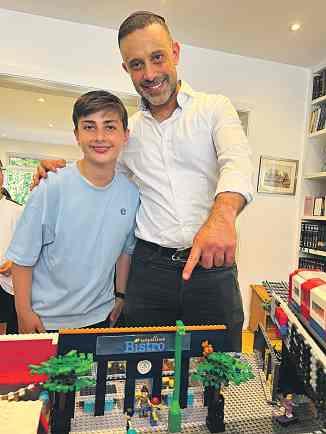
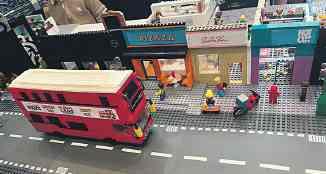
particularly the warmth and love everyone in the group gave Jacob. A huge thank you to the many friends and colleagues in my professional network who supported us by donating.”
Camp Simcha’s annual Mums’ Spa Day returned in June, marking 15 years since the charity first set aside a dedicated day of self-care and respite for the mothers it supports. Swapping hospital appointments for spa robes and medication schedules for a full day of pampering, the spa day provided a rare opportunity for 50 mums to step away from the daily challenges of having a seriously ill child. Hosted in the North London home of a generous supporter, mums selected from a menu of treatments, rejuvenating massages and facials, manicures and pedicures, reiki, hair and make-up sessions as well as an opportunity to take a swim, before sitting down to a lunch. The London Mums’ Spa Day is one of six annual wellness events Camp Simcha runs for parents.
Starmaker Performing Arts, which has been running since 2010, celebrated a successful show at The Radlett Centre, with more than £5,000 raised for breast cancer charity Future Dreams. Members of the adult Dancercise class took to the stage for a special performance with two participant cancer survivors who received invaluable support from the charity. The show was a joyful celebration of dance, friendship and resilience, showcasing the talent and dedication of performers of all ages. The event highlighted the power of community and demonstrated how dance can bring people together to make a real difference.
8 HOLOCAUST SURVIVOR HENNY FRANKS CELEBRATES 103rd BIRTHDAY
Centenarian Henny Franks celebrated her 103rd birthday with fellow Holocaust survivors, friends, staff and volunteers at a garden party held by Jewish Care’s Holocaust Survivors Centre. Representatives from AJEX and Chelsea Pensioners joined the celebrations, AJEX member Paul Bentley surprised Henny with 120 roses and she received a personalised birthday card with original artwork by cartoonist and animator Zoom Rockman and the wider Lemon Soul team who produced Henny, one of eight new animated films celebrating the extraordinary lives of Holocaust survivors in the UK. Reflecting on her remarkable longevity, Henny said: “I’m 103 years old and I don’t look it, but my bones know exactly how old I am! The reason I got old like this is because I belong to the Holocaust Survivors’ Centre – while they’re alive, I’m alive.”
After spending months building, 12-year-old Shloimy Brukier from Hasmonean Boys High School opened his home to visitors to view his Golders Green High Street Lego cityscape, featuring local shops, buses, restaurants (complete with rotating rotisserie chicken) and everyday street-life, painstakingly recreated from memory, brick by brick. Asking for a donation of £2 per person, he raised more than £1000 online with funds supporting MARS, a charity helping patients at every stage of their medical journey. Featuring his favourite restaurant Novellino, owner Yaniv Barashi came to visit and praised the extraordinary attention to detail.


EXCLUSIVE CRUISE & STAY HOLIDAYS ABOARD SEABOURN QUEST
Immersive Mediterranean itineraries and unhurried days ashore, with every detail arranged by The Cruise Line – the UK’s original luxury cruise specialist
✓ Intimate all-suite ships, just 450-600 guests
✓ Spacious ocean-view suites, most with a veranda
✓ Longer stays & overnight calls in iconic ports
✓ Almost one crew member per guest
✓ Kosher meals on request (advance notice)
✓ Elegant, relaxed atmosphere – no formal dress code
FEATURED 2026 VOYAGES � 9-NIGHT FLY-CRUISES
Greece & Dalmatian Delights Jewels of the Dalmatian Coast Grecian Delights & Roman Gems
Athens ⟶ Dubrovnik 24 July 7, 13 & 21 August 2026
Dubrovnik ⟶ Dubrovnik 13 Jul 2026
Athens ⟶ Rome 23 October 2026

As a major exhibit of portraits of Marilyn Monroe opens, Anthea Gerrie looks at why the star turned to Jewish photographers, and why they were drawn to her
Drawn to Jewish men who had the intellect to which she aspired herself, Marilyn Monroe had many to thank for shaping her image and career as well as filling an emotional hole in her psyche.
The blonde bombshell described playwright Arthur Miller, her third husband, for whom she converted, as the first man with whom she had been really in love, and you don’t have to travel far to learn what Sam Shaw – to whom she made the confession, Milton Greene, Bert Stern and half a dozen more Jewish snappers brought to the party.
All are showcased in a shimmering new exhibition at London’s National Portrait Gallery, but only in LA can you get an insider’s analysis from Peter Fetterman, the London-born art dealer who spent two years researching his own show of images by acclaimed photographers, many sharing an immigrant outsider background like his own.
“Empathy is so aligned with Jewish beliefs and is a trait of many of the photographers who shot Marilyn,” explains the self-described “poor boy from Hackney” who started life in Hollywood as a filmmaker. “Those who struggled in their own
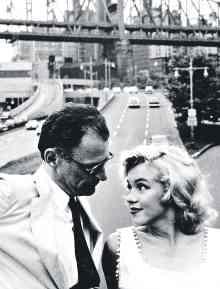
lives and careers identified with other people who struggled.”
And the former Norma Jeane was emotionally handicapped from the moment she was born to a mentally unstable filmcutter, who surrendered her daughter’s care to others within two weeks. “She was a natural subject because of her innate beauty, but when you delve into the story of her life – being put into an orphanage, having a crazy mum and an absent father – it’s something to which these photographers were very sensitive,” says Peter.
This is why Bert Stern’s image of what looks at first glance like a crucified Marilyn, whose shock suicide at 36 was o cially recorded by the coroner as “questionable”, resonates with viewers aware that her rumoured a air with JFK had made her as much of a loose cannon in political circles as Diana was to the Royal Family before her own conspiracy-surrounded death at the same age.
But the jarring, lipstick-coloured cross staking Marilyn’s body in the Stern image from her last professional shoot – his pictures were published in Vogue a week after she died – only seems imbued with baggage in light of her untimely death. Peter says: “She actually crossed that shot out; she didn’t like it, and for years had had editing rights.”
It was Milton Greene, who met her way back in 1949 and in whose family she sought refuge from studio conflicts, who first convinced Marilyn she could take control of her own image, says Peter: “He became her quasi-business manager, convincing her that she had the clout to control her own destiny. They set up a production company together.”
But it was Sam Shaw, whose portraits of Miller with his new Jewish bride are the most tender and intimate in both the Fetterman and London shows, who helped her to gain the respect she sought as a serious woman who was never taken seriously as she thought she deserved.
“He was a very talented, intelligent man, who was part of that New York intellectual circle Marilyn wanted to be part of. She studied at the Actors’ Studio with Lee and Paula Strasberg, and Shaw and Arthur Miller moved in that same circle.
“Shaw’s pictures of Marilyn and Miller are

very moving, and knowing how the story ends, very sad,” adds Peter of their marriage, which despite being her longest, lasted less than five years. Marilyn invited Shaw to the couple’s Connecticut country home during the early years of their marriage, as the NPG’s tender portraits of the couple picking flowers reveal.
Even after they broke up, Marilyn stayed close to her Jewish father-in-law, bringing Isidore Miller to Madison Square Garden as her guest when she famously sang Happy Birthday to JFK in 1962, the year after her divorce.
It there is one thing that connects all the photographers who captured Marilyn so intimately, it is their intellect and a desire to create something special, says Peter, who sees them as a body of kindred spirits.
“So many came from nothing and struggled to make it – great photographers with immigrant stories. That’s what makes America – the country where you can still come and achieve your dreams,” adds the man whose own career was built on selfbelief after he became disillusioned with Hollywood. “Here you can always reinvent myself, and I set up my first gallery out of the back of my little Honda.”
• Marilyn Monroe: A Silent Life is at the Peter Fetterman Gallery in LA until 5 September; Marilyn Monroe: A Portrait is at the National Portrait Gallery until 6 September

Not every Jewish creative working with Marilyn was in love with her, notably Billy Wilder, whose rant about her “unprofessionalism” on set of her most critically and commercially successful film Some Like It Hot, has been unveiled in a new Marilyn Monroe exhibition at Hollywood’s Academy Museum.

“From the first day… her chronic tardiness and unpreparedness cost us 18 shooting days and hundreds of thousands of dollars,” he complained, although the troubled shoot culminated in her miscarriage.
“I cannot let your vicious attack on Marilyn go unchallenged,” Miller telegraphed back.
“You were officially informed by Marilyn’s physician that she was not able to work a full day. You chose to ignore that fact during the making of the film and worse yet, assiduously avoided mentioning it in your attack on her.”
Commenting that her miscarriage began within 12 hours of the last shooting day, he continued: “Now that the hit for which she is so largely responsible is in your hands and your income for it assured, this attack on her is contemptible... you are an unjust man and a cruel one.”
Wilder sent his own return telegram: “In order to hasten the burial of the hatchet I hereby acknowledge that good wife Marilyn is a unique personality and that I am the beast of Belsen.”

Frank Wildhorn thought it was just another musical, but the Broadway composer became part of a Japanese cultural phenomenon.
By Brigit Grant
When Japanese producers asked Frank Wildhorn to write a musical based on the bestselling manga Death Note, he had one problem. He had no idea what manga was.
The Broadway composer behind Jekyll & Hyde and Bonnie & Clyde turned to someone who did – his eldest son, Justin, designer of League of Legends, one of the world’s biggest and most successful video games.
“I called Justin to ask what he thought and he said, ‘You have to do it. It is hipper than anything you will ever do in America’.”
That leap into the unknown has brought Frank to the Barbican this summer, where Death Note: The Musical arrives in English after winning Best Musical in Japan and South Korea, where it was performed in the native languages.
That this nice Jewish composer has been described as “Korea’s most beloved musical composer” by The Korea Times was followed by his original Chinese-language musical of Osamu Dazai’s No Longer Human, seeing him become the first American to be named Best Musical Composer in China.
Frank smiles a lot for good reason. He was

also kind enough to elaborate on the mystery of manga and its appeal once he understood it.
“It’s almost as if you didn’t know what Greek or Norse mythology was yesterday, and today you know it all,” he says beaming.
“There are so many stories, and so many giant, bigger-than-life characters, and it’s just great source material for musicals.”
Death Note, which has sold over 30 million copies worldwide, is the best-selling manga comic series of all time. It tells the story of a gifted student who discovers a supernatural notebook with the power to kill anyone whose name is written inside it. Cue the battle over justice, morality and power, though Frank believes the emotional heart of the story is why audiences love it.
“My philosophy of life is that music, like love, knows no borders. If it’s performed with the same feeling, soul and passion that I write it with – it doesn’t matter what language it’s in. The audience will feel that.”
The Barbican production has an all-Asian cast, which Frank sees as a necessary and respectful way of introducing it to Western audiences. “I don’t know that you have to,” he says. “But I think it’s smart when bringing a story with Japanese characters and it also gives that talent pool a wonderful opportunity to shine.”
If Frank’s journey into manga was unexpected, so was his path into music. Growing up in Florida after moving from New York,
he imagined a very different future.
“All I ever wanted to do was play American football,” he laughs. “Then I woke up one day and realised I wasn’t going to be that size... and I was still Jewish. So, I thought, time to get another dream.”
That dream began at the piano. “Selftaught,” he says proudly. “Since I was a teenager, that’s all I’ve done.”
The boy who taught himself to play would go on to become one of Broadway’s most successful composers, but he insists theatre was never a solitary pursuit. “When I was doing mostly pop music in the 80s and 90s, I wrote most of it on my own,” he says. “But Leslie was my first partner in theatre, and if that’s going to be your first partner, then you want to collaborate.”
That’s composer Leslie Bricusse who he talks of with obvious a ection. “He really was kind of the father figure... what I called, and always do, my dad in the business.”
Frank has an equally warm relationship with composer Don Black, with whom he wrote Bonnie & Clyde and also Dracula with the book by Christopher Hampton. “Don is a mentor and a champion and a friend and a partner,” he adds and he believes collaboration has enriched his work. “It’s much more fun than spending time by myself. I like playing tennis.”
Among the many artists to record his songs, one memory still shines brightest.
“I taught her the song,” he says of Whitney Houston and the hit Where Do Broken Hearts Go . “That was back in 1988 or 89, when she was so healthy and looking like a goddess and singing like an angel. That’s the best voice I know, and I’m so lucky to have had that experience.”
His own family story has never been far from his music. His mother was born in Odessa, while his father was born in Romania before being smuggled out as a boy by the French underground. “That’s my DNA,” he says. “It’s part of who I am. It will always be part of who I am.”
And that identity has inspired one of the projects closest to his heart – a musical about Bronisław Huberman, whose vision and determination led to the founding of the Israel Philharmonic Orchestra by rescuing Jewish musicians from Nazi Europe.
“It’s a story I want to tell,” says Frank, suddenly less smiley. “I’ve been told, even by the Lincoln Center, that this is not the time – even though it’s really about saving musicians’ lives.”
For now, his focus is on introducing London audiences to a world he once knew nothing about. “You should experience it for yourself,” he says. “Then we’ll have another conversation.”
◆ Death Note: The Musical is at the Barbican 30 July–12 September.
barbican.co.uk
Smar t investors have identified Ashkelon as the most promising area to buy proper ty now in Israel
Great sea view properties
Best beaches in the countr y & lovely Marina 40 minutes to Tel Aviv and 60 minutes to Jerusalem
Growing vibrant Anglo community
Prices less than half of similar properties in Netanya!
4th largest city
Slated to become the in Israel ocal University Garden city originally designed and built by South Africans! High speed trains linking the North to the South Golf course in the initial planning stages
Contact us now for details!







A
er raising more than $250 million across his companies, Jay Bregman believes the prescription drugs market could be his biggest challenge yet
efore booking taxis through an app became part of everyday life, serial entrepreneur Jay Bregman cofounded Hailo, a platform that connected passengers with London’s black cabs. Before ondemand delivery became the norm, he was building eCourier, one of Britain’s earliest same-day delivery businesses.
BAnd before digital insurance became mainstream, Bregman was helping reshape the market through Thimble, a technology-driven insurance platform for small businesses.
Now, after raising more than $250 million across four companies – including backing from Sir Richard Branson – the American entrepreneur is taking on his biggest challenge yet: prescription drugs.
His latest venture, Andel, aims to transform how high-cost medicines are bought and paid for, targeting what he describes as a market approaching $1trn in size and still organised “medievally”.
For New York-based Bregman, however, the common thread is not transport, insurance or healthcare. It’s a fascination with challenging broken industries that others have simply learned to live with.
“The world is a tremendously inefficient place,” Bregman tells Jewish News. “Most people are blinded to that. They just accept the way things are.”
That philosophy has shaped a career that has taken him from the US to Britain and back again. He was raised in a medical family – his father was a heart surgeon who helped invent the intra-aortic balloon pump, while his mother is a nurse anaesthetist.
Yet medicine was not the path he chose. “I grew up in the 1980s and it was a difficult time for physicians, who, in many cases, were the unhappiest they had been.”
After studying at Dartmouth College, he considered becoming a lawyer and secured an internship at Harvard Law School’s Berkman Centre. “I would speak to students and most of them told me they didn’t really want to be lawyers,” recalls Bregman. “They wanted to be entrepreneurs.”
Bregman found himself drawn to technology after taking philosophy classes focused on artificial intelligence in the late 1990s. When the dot.com crash hit and opportunities in the US dried up, he moved to London to study at the London School of Economics – a decision that would ultimately lead to more than 13 years in Britain.
It was in London that he launched eCourier, developing technology to make sameday deliveries more efficient – years before smartphones and on-demand logistics became commonplace.
“I never wanted to be typecast as an entrepreneur. Some people just want to do food, or just AI. I always thought that was



boring.” He adds: “Your feet get cold a bit. You stop seeing the angles on a market when you’ve been in it for so long.”
That mindset would eventually lead him to Hailo. The concept was simple: connect passengers with London’s black cabs through a smartphone app.
Convincing investors it could work was another matter.
“When I first pitched it to venture capitalists, I was given a zero percent chance of pulling it off. The problem was: how do you get thousands of black-cab drivers to actually download and run the app before you ever have a single customer?”
His answer? Three black-cab drivers –Terry, Russ and Gary – who became cofounders and helped recruit fellow drivers one by one.
By the time Hailo launched, around 3,000 drivers were already using the platform. “The minute we put it in the App Store, it blew up instantaneously.”
Hailo’s rapid growth soon attracted high-profile investors, including Sir Richard Branson.
Introduced through investor Toby Coppel, who managed Branson’s technology investments at the time, Bregman was invited to meet the Virgin founder at a café in New York. “I was very nervous. But he was so disarming.”
Asked how much Branson invested, Bregman laughs and admits he “can’t actually remember the exact figure. I think it was around $1m”.
What he does remember is the meeting itself. “Everybody’s been talking about you,” he told me. “As a relatively young entrepreneur, it was great to have somebody like that be so positive about what we were building.



And I thought he was a class act.”
The investment helped fuel Hailo’s growth into one of Britain’s best-known technology businesses.
The company later merged with Daimlerbacked mytaxi, by then part of a rapidly changing global ride-hailing market.
backed mytaxi, by then part of a rapidly Today, however, Bregman is focused on
Today, however, Bregman is focused on a challenge that he believes could dwarf even Hailo. “Healthcare is probably the worst market, for its size, that exists in the whole world.
as a cooperative marketplace, allowing employers and healthcare providers to access expensive medicines directly from manufacturers, while giving members access to lower-cost drugs through Andel’s own pharmacy network.
The company recently launched with a $4.5m funding round and an anchor manufacturer relationship with pharmaceutical giant Eli Lilly.
“My whole family is in medicine,” says Bregman. “I’m the black sheep who went into markets instead. Andel is where the two finally meet.”
While the company is initially focused on the US, Bregman sees Europe as one of its biggest long-term opportunities. “There’s less and less money in the NHS to supply drugs, but more and more demand for them. So who is going to fill that gap?”
As new medicines come to market, he believes that pressure will only intensify. “If you have a drug in the NHS and they can’t give it to you, you are kind of screwed and have to pay for it.”
That imbalance, he argues, could create significant opportunities for alternative models of access. “Europe is a great phase two for us,” he says. “I think it will be a very vibrant market.”
“We’ve become so much better at coming up with new drugs. There are drugs in the FDA approval process now that can cure cancer, can cure obesity.
worst market, for its size, that exists in coming up with new drugs. There are that can cure cancer, can cure obesity.
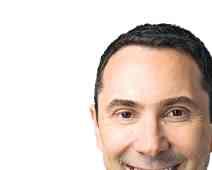
“More and more drugs are coming out, them
“More and more drugs are coming out, especially with AI, but paying for them doesn’t work.
“The market is still run through layers of intermediaries, limited transparency and very little control for the people actually paying the bill.
“A market of this size should not be run this badly.”
Through Andel, Bregman hopes to create a more direct route between pharmaceutical companies and the organisations funding treatment.
A Danish word, andel refers to the member-focused cooperatives across Scandinavia. Andel acts
“The market is still run Scandinavia. Andel acts
So what still drives him after more than two decades of entrepreneurship? “To fix broken
drives two decades of entrepresystems. To do things that people say are impossible.


“Everybody thinks fixing the prescription drugs market is impossible. I’d like to give it a shot.” andel.org

In our thought-provoking series, rabbis, rebbetzins and educators relate the week’s parsha to the way we live today
HENDON UNITED SYNAGOGUE
During the Blitz in London during World War II, many families lost their houses overnight. One teacher later recalled that the children who adapted best were not those whose parents managed to save the most belongings, but those whose parents preserved the atmosphere of home.
Even in cramped bomb shelters, they insisted on family meals, bedtime stories, prayers and songs. The furniture was gone, but the values remained. Years later, many of those children said they never felt they had truly “lost home”.
Their parents had understood
that a house is made of bricks, but a home is built through the environment, priorities and values that a family creates together.
In parshat Matot-Masei, the tribes of Reuven and Gad approach Moshe with a surprising request, asking to remain to the east of the Jordan River rather than enter Eretz Yisrael with the rest of Am Yisrael.
In presenting their plan, they first mention building shelters for their livestock and only afterwards mention homes for their families (Bamidbar 32:16). Our sages (Tanchuma Matot 7) understand this as revealing a misplaced priority – concern for possessions before people.
How could these two tribes have miscalculated such basic priorities?
Following the wars in Parsha Chukat, Rashi states (Bamidbar

The homes we build ultimately shape who our children become
21:23) that God miraculously gathered the enemy nations together for battle. As a result, their cities remained easily conquered after Am Yisrael’s victory.
The Be’er Yosef explains that the tribes of Reuven and Gad assumed there was no urgent need to build homes for their families as suitable houses already existed. Their live-
stock, however, required additional shelter due to the sheer quantity of animals they possessed, hence their request to prioritise their animals.
Moshe understood their reasoning yet still corrected them. Even if physical homes already stood, a Jewish home cannot simply be inherited from the nations around us. A house filled with traces of idolatry and foreign values cannot automatically become a home fit for a Jewish family.
Moshe therefore responds by reversing their order: “Build cities for your children and [then] enclosures for your sheep” (Bamidbar 32:24). Before worrying about material needs, first create the proper environment for your family to live and grow. He told them to “make the main thing the main thing”.
The message is deeply relevant.
Raising children is not only about providing physical comfort or stability. It is about actively building an atmosphere conducive to holiness and growth.
Children absorb far more from the environment we create than from the words we say. The homes we build ultimately shape the people our children become.
We spend time and money ensuring our possessions are fit for purpose. We get our possessions serviced and upgraded where relevant. But too often we fail to spiritually ‘service’ and ‘upgrade’ our approach to educating our children and ourselves.
These tribes realised their judgement error and rectified their ways. We, too, need to “make the main thing the main thing”.


RABBI LEA MÜHLSTEIN SENIOR RABBI, THE ARK SYNAGOGUE
Delegates from 25 countries gathered last weekend in London at the Liberal Jewish Synagogue to mark the centenary of the founding of the World Union for Progressive Judaism.
At the risk of oversimplifying history, I would summarise the first 100 years of the World Union as asking: can Progressive Judaism build institutions strong enough to hold us? And I want to suggest that the question for the next 100 years must be: can Progressive Judaism build ideas strong enough to carry us?
Not idea-building as an afterthought to institutional survival, but idea-building as its prerequisite. For Progressive Judaism may endure even where particular institutions change, merge, weaken or disappear.
But it cannot endure if we lose the ideas that make it spiritually compelling, morally
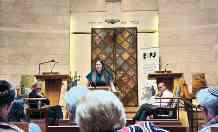
serious and Jewishly alive.
In 1899, Lily Montagu wrote in her essay Spiritual Possibilities of Judaism Today that Jews needed “energy to examine their religious needs and courage to formulate them”. Without that courage, they would fail “to restore to Judaism its life”.
Progressive Judaism was born from discontent: not contempt for tradition, but the conviction that tradition itself asks us to tell the truth. If the next 100 years are to be a century of

United Hebrew Congregation, Leeds is seeking an inspirational Senior Rabbi, ideally together with a Rebbetzen, to lead a warm, modern Orthodox congregation into an exciting new phase of growth, renewal and potential communal amalgamation.
We are looking for a Rabbi with recognised Orthodox semicha, strong Torah knowledge, halachic confidence and outstanding communication skills. The successful candidate will be able to inspire from the pulpit, provide pastoral and halachic guidance, lead lifecycle events and build meaningful relationships across a diverse congregation.
This role requires someone who can uphold Orthodox standards with warmth and accessibility, engaging both highly observant members and those whose connection to synagogue life may be more occasional, cultural or family centred.
The community would particularly value a rabbinic couple able to help strengthen engagement across families, young adults, women’s learning and wider communal life.
To apply, please send your CV and covering letter to alicia@uhcleeds.com
Closing date: 9am, Wednesday 30th September 2026
UHC may begin selection activity before the closing date and reserves the right to close applications earlier
For more information about the role please scan the QR code

idea-building, we will need to recover that holy unease. We will need to be discontent with any version of Judaism that is proud of its values but unsure how to transmit them, open to the world but uncertain of its own Jewish voice.
Above all, we will need to be discontent with any version of Progressive Judaism so anxious about survival that survival itself becomes the mission. We do not exist merely to keep our institutions alive. We build institutions because Judaism has something to say about justice, holiness, responsibility, God, Israel, humanity and the possibility that the world can be otherwise.
One of the dangers for Progressive Judaism in the next century is not that we will be too progressive. We must embrace the bold and creative spirit of our forebearers.
But we must be careful not to speak eloquently about values without knowing the texts that formed them; not to invoke tradition without having wrestled with it; not to claim intellectual honesty without doing the intellectual work; not to ask our children
A stimulating series where our progressive rabbis consider Judaism in the face of 21stcentury issues
to choose Judaism without giving them a Judaism rich enough to choose.
We must ask how inherited practices can become pathways to holiness rather than monuments to nostalgia; how prayer can be spoken with integrity; how Jewish law can be engaged with seriousness without being treated as immune from moral scrutiny; how feminism, queer experience, ecological responsibility, disability justice, interfaith encounter, the advent of AI, Israel and diaspora, grief and joy, all become part of our living Torah.
And perhaps this is where the next century’s idea-building becomes most urgent.
In 100 years, I hope those looking back will be able to celebrate the Progressive Jewish hermeneutics we have developed: ways of reading tradition that are neither defensive nor dismissive; rooted in love of Torah, the Jewish people, the human being created in the image of God, and truth itself; historically conscious, morally serious, spiritually humble and communally responsible.
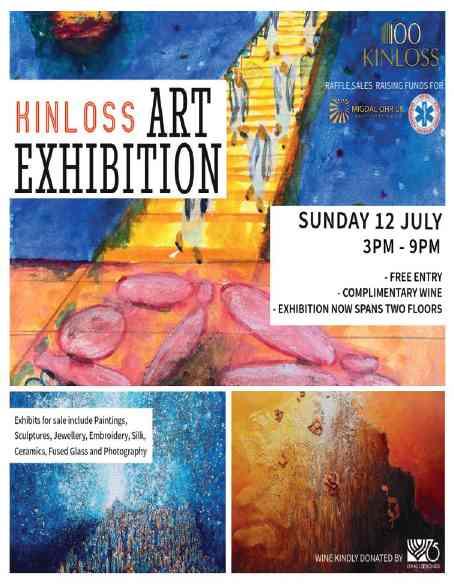
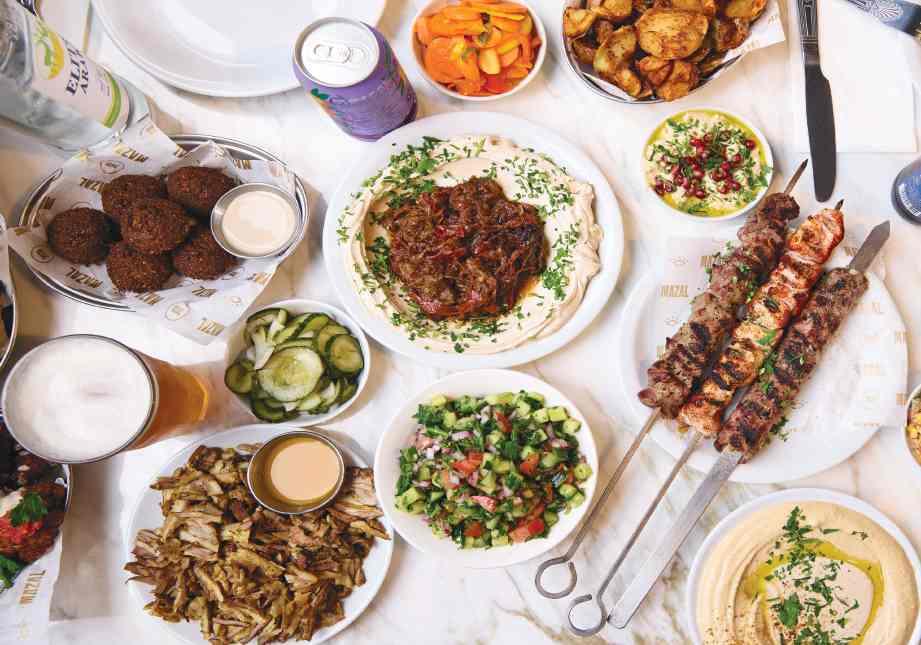

Top prices paid
Antique – Reproduction – Retro Furniture (any condition)
Epstein, Archie Shine, Hille, G Plan, etc.
Dining Suites, Lounges Suites, Bookcases, Desks, Cabinets, Mirrors, Lights, etc.
House clearances
Single items to complete homes MARYLEBONE ANTIQUES - 8 CHURCH STREET NW8
07866 614 744 (ANYTIME) 0207 723 7415 (SHOP)


Furs, Jewellery, Old Costume Jewellery, Watches, Silver, Designer Bags, anything vintage. 01277 352560
Friendly Family Company established for 30 years
We clear houses, flats, sheds, garages etc. No job too big or too small! Rubbish cleared as part of a full clearance. We have a waste licence. We buy items including furniture bric a brac.
For a free quote please phone Dave on 07913405315 any time.


Confidential Bereavement Counselling for adults and children individually. Support Groups available. We offer in person, online and telephone counselling. Contact Jewish Bereavement Counselling Service in confidence. 0208 951 3881 enquiries@jbcs.org.uk | www.jbcs.org.uk