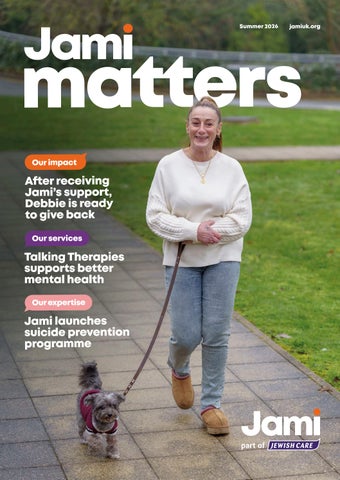
A er receiving Jami’s support, Debbie is ready to give back
Our services
Talking Therapies supports better mental health
Jami launches suicide prevention programme Our expertise
You don’t have to face it alone.
Whether you’re dealing with depression, anxiety, or simply feeling overwhelmed, Jami’s Talking Therapies o ers adults, children and young people over 11, a safe, non-judgemental space to talk, reflect and heal.
Our experienced trainee and qualified therapists work with you to explore your concerns, helping you to make sense of any issues and allowing you the chance to move forwards with more confidence.
We o er:
• Individual therapy (online & in person)
• Couples’ therapy (online & in person)
• Support and counselling for children and young people aged 11–18 (in person)
• Warm, welcoming Wohl Counselling Suites in Golders Green
• Subsidised rates for those facing financial hardship
Call us on 020 8458 2223 or visit jamiuk.org/talkingtherapies
Welcome
Home and world events continue to have a profound impact on Jewish communities here in the UK and internationally. Since 7 October 2023, we have seen a marked rise in antisemitic incidents, from harassment and vandalism to more serious and deeply distressing acts. Alongside wider uncertainty and tension, it’s understandable that this can a ect our mental health and sense of safety.
And yet, in challenging times, we have also seen an outpouring of support, resilience and cooperation. Our shared commitment to care, connection and standing together has helped our community feel stronger – and that’s something we can all be proud of.
Being part of a community plays a vital role in supporting good mental health. It can reduce loneliness, which is o en a cause or consequence of mental illness and distress, and it can unlock deeper connection and wellbeing. Warm human relationships, camaraderie and belonging matter. Community is where we know we are welcome and, if we are absent, someone will check that we are okay. It is where we are seen as a person, not a statistic.
At Jami, we believe our services embody that sense of community –whether through Head Room, Jami’s mental health hub on the high street, supported by The Maurice Wohl Charitable Foundation; our community hubs in Redbridge and Finchley; our befriending and hospital visiting; or our group volunteering days. If community means practical and emotional support, meaningful contact and a sense of purpose, then Jami is a community in the same way that places of worship, workplaces, schools, clubs and neighbourhoods can be.
Belonging matters for all of us and especially for those struggling with their mental health or experiencing loneliness or isolation. Just as importantly, we all have a role to play in looking a er one another. We feel reassured that, as part of the Jami community, you do.
Louise Kermode Interim Director of Community Services and Mental Health
Daniel Carmel-Brown CEO
Our Jami round up
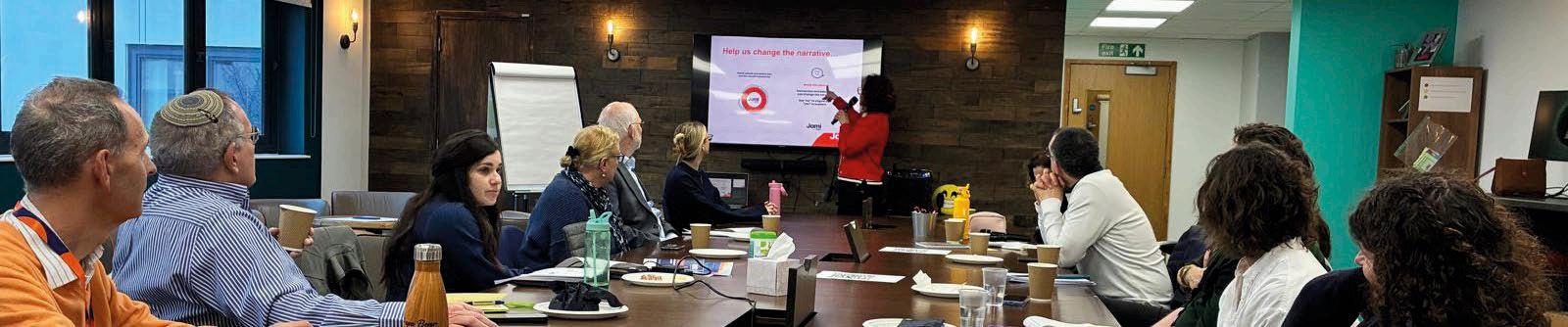
Charity leaders highlight community’s needs with MP
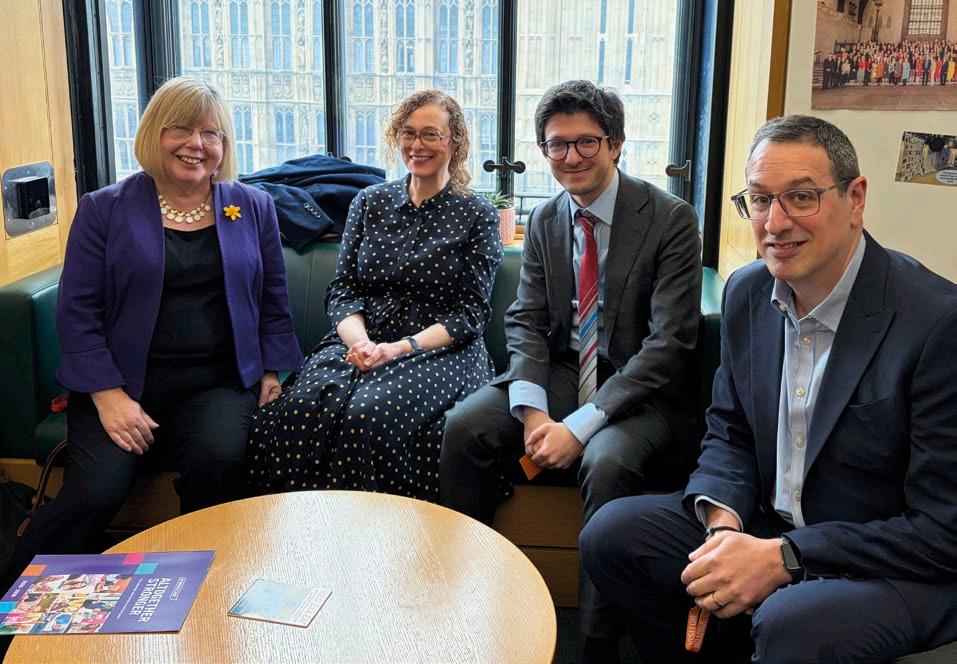
Jewish Care CEO Daniel Carmel-Brown and Philippa Carr, Senior Mental Health Education and Suicide Prevention Manager, recently met Liz Twist MP at Westminster to highlight the challenging environment for social care providers and issues facing the Jewish community.
Liz Twist, MP for Blaydon and Consett and Chair of the AllParty Parliamentary Group (APPG) for Self-Harm and Suicide Prevention, has long supported Jami’s work, having previously chaired a suicide prevention roundtable at Head Room café, Jami’s mental health hub on the high street, supported by The Maurice Wohl Charitable Foundation.
The meeting, which also included Jewish Leadership Council representative Leo Brosh, saw Daniel outline the increasing strain on providers caused by government reforms, including National Insurance changes placing additional financial pressure on employers, and the real-world impact on frontline services.
Daniel and Philippa also raised concerns about anxiety within the Jewish community, driven by antisemitism, the post-7 October world and wider social pressures. They described Liz as “warm, wellinformed and highly aware of the di iculties facing local authorities and specialist mental health organisations”. Philippa added, “Liz recognised the financial constraints on services and expressed her support for Jami’s continued work in
Here’s a snapshot ofsome ofthe key moments at Jami overthe past few months…
suicide prevention and mental health.
“Maintaining this dialogue in Westminster is essential. We stressed the importance of MPs understanding the direct impact of national policy on vulnerable people and the organisations supporting them. At a time of uncertainty, it is vital the community knows Jewish Care and Jami are advocating on their behalf.”
Thank you to Leo Brosh and the JLC for their support.
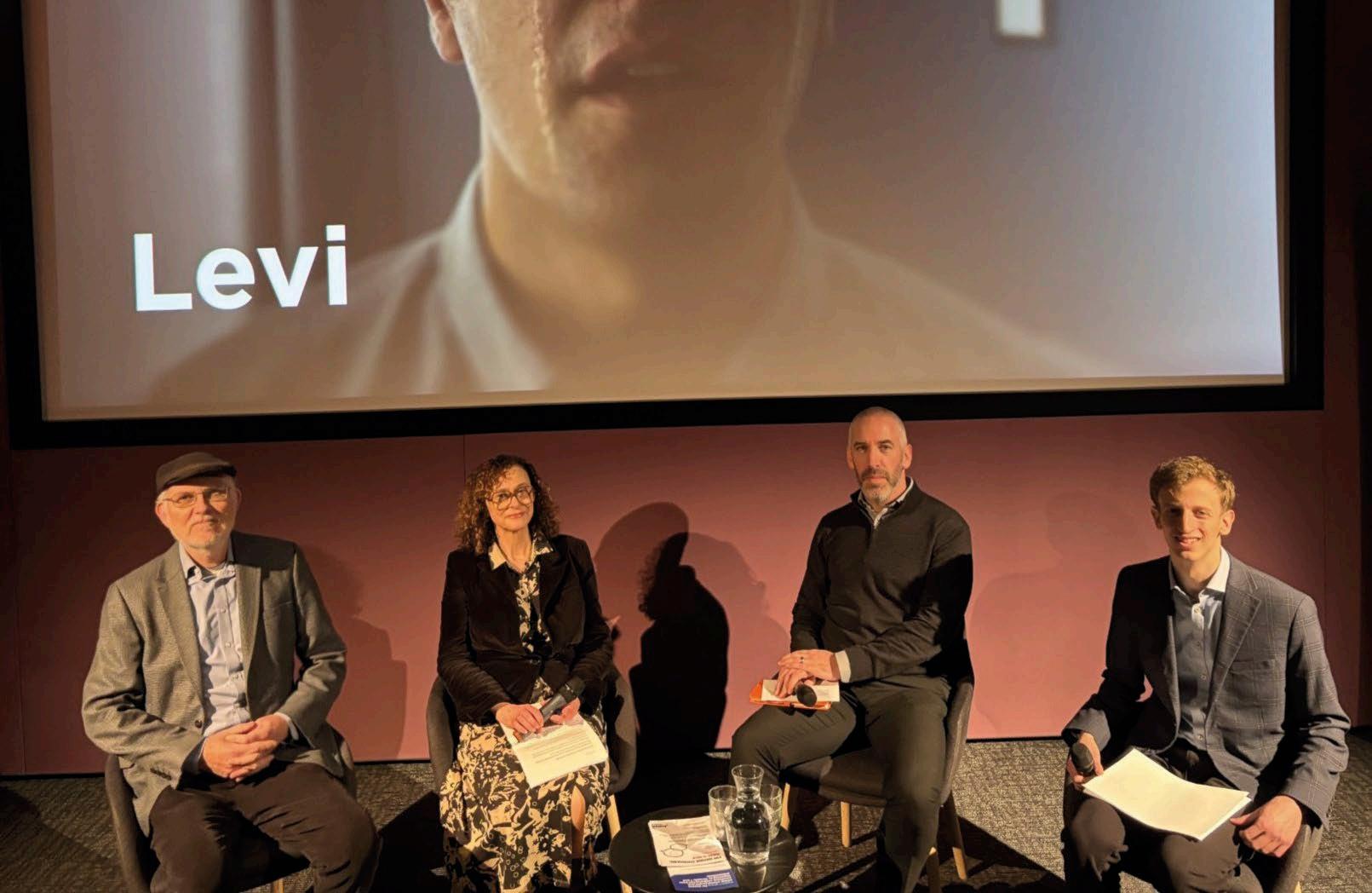
(l-r) Panel discussion with Dr Stuart Linke, Philippa Carr, Ben Ingber and Eli Hassell at the screening of Levi at JW3
Jami screens mental health film to help save lives
Jami has screened a film for diverse audiences that highlights how listening without judgement and signposting to support can help save lives.
Levi, a short film about mental health challenges among Orthodox Jewish youth, produced by Eli Hassell (Evsate), follows a young Jewish man returning home from Yeshiva who feels overwhelmed and unable to communicate his distress to his family. Levi dreams of becoming an architect but feels trapped by expectations, fearing he will disappoint those closest to him. As his
isolation grows, he becomes increasingly despairing, losing hope. The film contains references to suicide and was created to raise awareness, encourage discussion, and direct individuals to vital support.
The film’s first London screening at JW3 was followed by a panel and audience Q&A featuring Jami’s Senior Mental Health Education and Suicide Prevention Manager Philippa Carr, producer Eli Hassell, CEO of The Listening Place Ben Ingber, and Dr Stuart Linke, Consultant Clinical Psychologist, who chaired.
The event opened up honest conversations about mental health and suicide prevention, highlighting the importance of early support and understanding. Eli said, “The most important lesson is the importance of talking, sharing, opening up. Levi shows those first steps to seeking help and carries a message of hope.”
As part of Jami’s community suicide prevention programme for lay, communal and spiritual leaders and community members, Levi was recently shown at Mosaic Jewish Community synagogue in Stanmore.
Young Jami service users help shape new mental health guide
Young people supported by Jami’s Dangoor Children and Young Person’s Service have helped shape a new online national mental health guide produced by YoungMinds in collaboration with Jami. YoungMinds approached Jami to contribute to a community-centred, faithsensitive resource for the Jewish community, asking the charity to consult directly with young people to ensure the content reflected their lived experience.
Jami carried out a survey of service users aged 11–25, gathering views across secondary school, sixth form, university and post-university groups. Young people were asked about the challenges they face, the cultural and faith-based factors shaping their wellbeing, and the
support they feel most comfortable accessing.
A strong theme emerged around belonging and community. Many described their Jewish identity and traditions as a source of connection and protection, with Shabbat, festivals and communal life o ering moments of respite, grounding and closeness. Many also highlighted rising antisemitism and the post-7 October climate as significant stressors.
Young people also shared where they would seek support, with friends and family ranking first, followed by religious leaders, youth workers and teachers. Half said they do not use social media for mental health information.
Jami combined these insights with input from
For more information, visit youngminds.org.uk/youngperson/coping-with-life/ jewish-mental-health/
practitioners in the Dangoor Children and Young Person’s Service and Jami Education teams, and worked closely with YoungMinds to create a guide reflecting Jewish nuances around identity, spirituality, community and self-care.
The completed guide, now available on the YoungMinds website, o ers culturally relevant mental health advice tailored for young Jewish people.
Jami Mental Health Shabbat marks 10 years
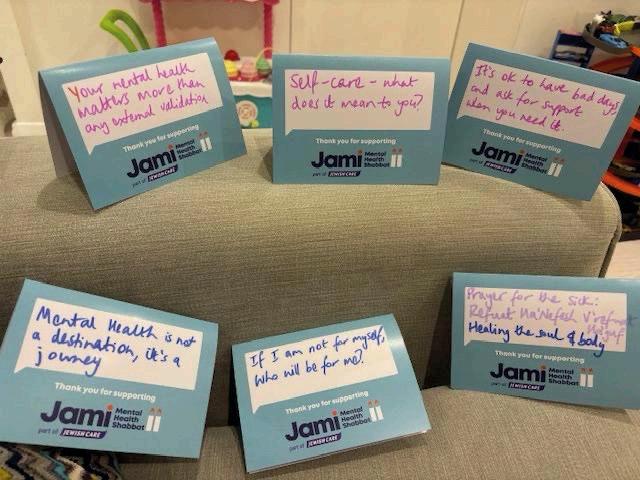
Thank you to everyone who came out to mark our 10th Jami Mental Health Shabbat at the end of January, raising awareness of mental illness and distress.
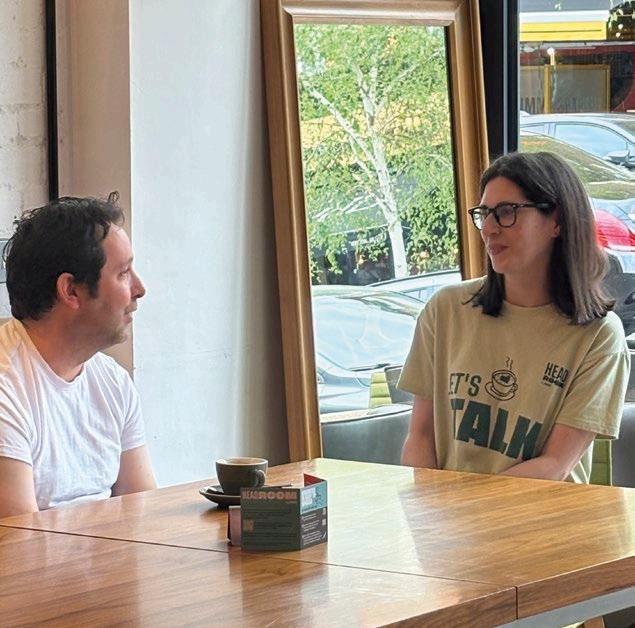
This year we focused on “bringing mental health to the table”, holding our first Friday night dinner at Head Room café, Jami’s mental health hub on the high street, supported by The Maurice Wohl Charitable Foundation. More than 40 community members, volunteers and sta attended, with volunteers guiding conversations on mental health awareness and community support. Gay, a regular participant, said, “I felt very welcome. The food was generous and delicious, and I hope this event will be repeated.”
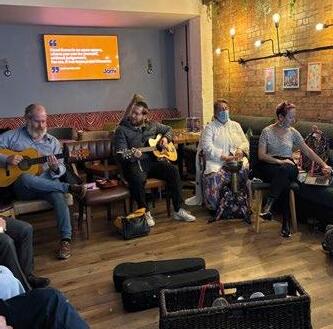
Head Room also hosted a special music group in the
lead-up, with attendee Sam saying, “Coming to the group makes me feel joyful, relaxed and engaged. And Jami Mental Health Shabbat gives me a sense of belonging.”
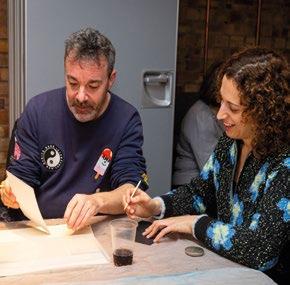
Jami Ambassadors also helped open up conversations. Victoria Dadds hosted a dessert-themed Friday night with friends and family in honour of her late brother, who would have been 50. Meanwhile, Joey Kolirin addressed burnout and anxiety at a Young Jami Jewish Care (YJJC) Committee Challah Make,
saying, “Jami’s one-to-one therapy was lifesaving. Head Room allowed me to feel normal again.”
The Jami Mental Health Shabbat Toolkit helped synagogues, schools and university J Socs take part. The Host a Meal booklet, with recipes, conversation starters and family-friendly cards and games, helped people host Shabbat meals and request donations to Jami instead of gi s.
Please save the date for the 11th Jami Mental Health Shabbat on 15–16 January 2027
(Far right) Emilia Isaacs, Vice Chair of YJJC, with fellow Challah bakers
Mental Health Shabbat
Jami launches Hearing Voices support group
Plans are in place to run Jami’s Hearing Voices support group again, following the success of the first five-session, peer-led group. The group, led by a Jami peer support worker with lived experience and a clinician, focused each week on a specific aspect of hearing voices. Hearing Voices is an umbrella term for symptoms including auditory
hallucinations, unusual thoughts and beliefs, visions and tactile hallucinations, all experienced by group members. Together, they discussed how these symptoms make them feel, how they are perceived by others and how they would like to be treated.
Isolation, stigma and a lack of belonging are common among voice hearers. The group aims to o er connection, coping strategies and resource sharing. Senior Peer Support Worker Joanna Hahessy said, “We felt a connection and camaraderie
which united the group. Sharing lived experiences brought us together, and now members want to meet monthly at Head Room.” For those experiencing Jewish-significant hallucinations, the group o ered culturally sensitive support. This was particularly vital for one member who faced antisemitism at another support group. Joanna said, “He found our group a very safe and supportive environment.”
A resource pack was also provided, containing coping strategies, sleep support, ways to manage disturbing voices, and facts and figures on hearing voices.
Young Jami Jewish Care supporters raise vital funds for Jami
Over 350 Young Jami Jewish Care (YJJC) supporters raised £40,000 for Jami’s mental health services at Jewish Care’s annual Young Professionals Dinner.
Clark Norton, Chair of YJJC and Committee member, said, “Jami is here for every single one of us, ensuring first-class provision for those struggling with their mental health in the Jewish community.”
Dinner guests were shown a film featuring Victoria, who shared how Jami supported her through teenage anxiety. She described how the tools and coping strategies she gained helped rebuild her confidence and resilience,
inspiring her to train as a mental health practitioner to support others facing similar struggles.
Guests also heard from a mother of a young person diagnosed with anorexia, who spoke movingly about the fear and crisis her family experienced. She described the profound di erence
Jami made by supporting both her and her daughter, helping them feel less alone, better informed and more able to cope.
Jewish Care’s Director of Fundraising and Marketing, Ellisa Estrin, said, “This support ensures Jami can continue to provide essential mental health services in our community.”
Jami launches first-of-its-kind community suicide prevention programme
Jami has launched a community suicide prevention programme, built on three years of research, consultation and lived-experience insight. The initiative equips people with the confidence, skills and understanding to support someone experiencing thoughts of suicide, while recognising the cultural and emotional barriers that can make reaching out harder.
Why it was created
The programme grew from extensive community conversations. Jami gathered insight from service users, carers, those with lived experience and people bereaved by suicide, alongside focus groups with Barnet Council and interviews with rabbis and other pastoral leaders. A dedicated advisory panel of individuals a ected by suicidality also guided the work.
These discussions revealed a clear need: people want to help but o en don’t know how. Stigma, taboo and cultural narratives can make it harder to seek support. The programme responds
by prioritising compassion, confidence and “holding space”.
How it was developed
Content was shaped with a panel of community champions who feature in films created for the programme. Expert input and peer review came from Consultant Clinical Psychologist Dr Stuart Linke, while a partnership with Middlesex University enabled a baseline survey exploring attitudes and knowledge around suicide.
Pilot communities include Kol Chai – Hatch End Reform Jewish Community, Potters Bar and Brookmans Park United Synagogue, Welwyn Garden City Hebrew congregation, the Mosaic Jewish Community and Merseyside Jewish Community Care with Liverpool Jewish communities including Allerton Synagogue. Recruitment is ongoing.
Each community will complete a baseline survey, followed by a preprogramme questionnaire. A er the half-day interactive session, participants and communities will be surveyed
again to measure changes in awareness, confidence and attitudes.
Who will deliver it
The programme will be facilitated by Jami’s Senior Mental Health Education and Suicide Prevention Manager, Philippa Carr, who developed it, alongside Emma Dorman, Senior Education Coordinator CYP Education Lead.
What it aims to achieve
The initiative helps people recognise when someone may be experiencing thoughts of suicide, start supportive, nonjudgemental conversations, understand barriers to seeking help and strengthen pathways to support. It also emphasises self-care and promotes realistic hope.
Looking ahead
For Jami, this launch marks both the culmination of three years’ work and the beginning of a long-term commitment to strengthening community resilience. “Now the challenge is getting it out there,” Philippa says, “and giving our community the tools, confidence and humanity to be there for one another when it matters most.”
The programme was launched with a test training to a small group in March
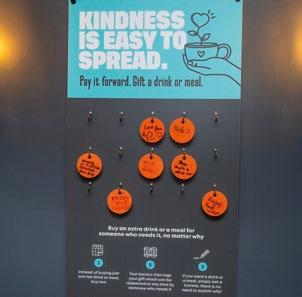
Delivering a decade of mental health support on the high street
This year marks 10 years since the opening of Head Room café, Jami’s mental health hub on the high street, supported by The Maurice Wohl Charitable Foundation. Here, Louise Kermode, Interim Director of Community Services and Mental Health, explains why we o er mental health support from a café in the heart of Golders Green and the benefits this model brings to the community.
Why was Head Room created?
Head Room opened in 2016 with a bold aim: to bring mental health support directly to the high street. Instead of placing services behind closed doors, Jami created an everyday space where anyone could walk in, feel welcome and access support without stigma.
From the start, Head Room was designed to be more than a café. It became a community hub o ering free mental health groups, connection and routine in an informal, non-institutional environment. The goal was to
reach people earlier, reduce isolation, prevent crises and make support visible and accessible.
A key aim was also to reduce pressure on traditional hubs. By referring people into Head Room, Jami reduced waiting lists and delivered support more e iciently.
Why a high street location instead of a typical mental health centre?
The high street makes mental health part of everyday life. Stigma decreases when people have natural contact with those with lived experience,
and a café creates that contact. Someone may come in for lunch unaware that a support group is happening nearby – and that normalisation is intentional. High-street locations are accessible, familiar and far less intimidating than clinical settings. Crucially, no referral is needed. People who struggle with formal processes can simply walk in.
As public health guidance encourages “healthy high streets” and communitybased care, Head Room exemplifies this by creating a visible, welcoming, stigmafree space that prevents issues before they escalate.
Why is it a café rather than a dedicated mental health building?
The café setting is deliberate. Clinical spaces can feel daunting; a café provides a non-judgemental, supportive environment. People choose their level of engagement –ordering a co ee, joining a group or simply sitting quietly until ready.
This informality preserves dignity and allows people to access support on their terms. The model also grew organically. Before Head Room, people using Jami’s services gathered in a charity shop for tea and connection. The café formalised what people were already seeking.
Head Room is not a commercial café with mental health added on; it is mental health support delivered through an inclusive, e ective setting.
What support does Head Room provide?
It o ers daily peer-led activities, including walking, discussion and creative groups, alongside onthe-spot emotional help from volunteer community befrienders. Waiting sta are also trained in mental health awareness, suicide prevention and safeguarding.
Around 600 people engage in the programme each year. Many who would never enter a mental health centre feel comfortable opening up here.
The café also hosts local organisations, faith groups and statutory services, reducing isolation and increasing inclusion.
A UCL evaluation, in partnership with Jami, found the open, social, nonclinical setting crucial to Head Room’s impact. People report stronger connections, better routines, a sense of belonging and feeling respected.
Is this support free?
For many years, Head Room’s
daily groups have been open and free for everyone. We know how much these groups mean to people and are proud of the community that has grown here.
To help them continue, those who are able are now invited to contribute towards running costs through a monthly donation (£15, £25 or £50) or £3 per group. This is a trust-based approach. Everyone remains welcome regardless of ability to contribute.
If it’s a café, does it pay for itself?
No – and this is a common misconception. Head Room requires charitable funding. Venue hire and co ee sales contribute modestly, but their real value is social – reducing stigma, bringing people together and enabling accessible support.
The priorities are clear –mental health, social impact and suicide prevention first; income generation second. What makes Head Room unique?
Its inclusivity, diverse mix of people, research-backed model and innovation. Recognised by academics, MPs and mental health professionals, it is one of the strongest examples of a mental health hub embedded in community life.
People come for co ee, company, groups, support or crisis help – and anyone around them may be there for the same reasons. That’s what makes Head Room work.
To find out more, visit headroomcafe.org/ support-head-roomscommunity-programme
Why our talking therapies are key to better mental health
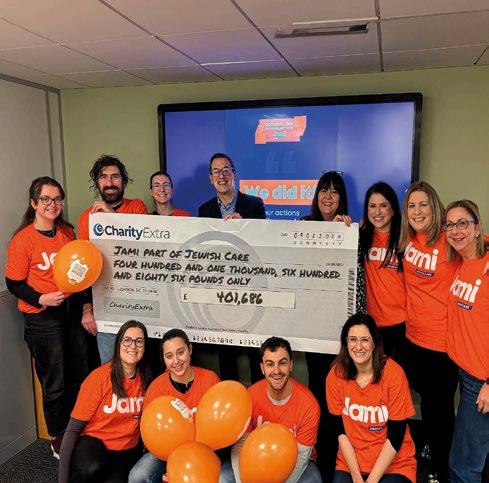
We are thrilled to announce that, thanks to the community’s generosity, we raised more than £425,000 through our 36-hour crowdfunder campaign in February to make our Talking Therapies service accessible to everyone who needs it. Together, we have ensured that more people can benefit from a safe, non-judgemental space where young people and adults can speak openly, feel heard and receive specialist support.
Tracey Davidson, Senior Talking Therapies Service Manager
Jami’s Talking Therapies service is for anyone in the Jewish community who may be struggling and has no one to talk to about their inner thoughts and feelings. Even if we have friends or family, they may only pick up on the essentials and try to fix things for us. Our therapists help clients achieve what they want from counselling – whether that’s improving daily life, o loading to someone who will truly listen or exploring what’s bothering them.
We support people facing a wide range of challenges, including bereavement, abuse, depression, anxiety and homelessness. Our therapists work with each person on whatever they bring, and everything shared is confidential.
Jami’s therapists work within the Jewish community, and everything stays within our service. We have nearly 50 counsellors across adult and children’s services, including qualified and trainee therapists, with a range of backgrounds from non-religious to orthodox, as well as some non-Jewish therapists experienced in working with the community. Given the current climate, it is especially important to o er a service where people feel
understood.
In recent years, many adults have benefitted, so we expanded to include 11 to 18-year-olds. We aim to support young people before crisis, help shape their futures and support their families. Therapists working with young people use creative approaches, such as games and drawing, to help them feel safe and able to open up. Sessions take place at our welcoming Wohl Counselling Suites in Golders Green.
Clients over 18 can choose in-person or online sessions, allowing us to support people across the UK, including Scotland, Wales, Manchester, Birmingham and the south coast. Many come to Jami because they value a service from within the community.
Therapy is low-cost to ensure accessibility. Private therapy elsewhere can cost £60–£100 per session, and NHS waiting times can be 12–18 months. Our goal is to ensure no one is excluded from support.
Sophie, trainee psychotherapist
I joined Jami’s Talking Therapies service in September 2025. I’m training in Transactional Analysis Psychotherapy, which helps people understand themselves and their relationships. I also provide neurodivergent-a irming therapy, particularly for autistic and ADHD clients.
Talking therapies can benefit everyone. For those struggling, it helps to speak to someone impartial, non-
David, Talking Therapies client*
My wife and I were planning to have a baby, but I felt anxious and unsure, partly because of my di icult childhood. It a ected my confidence, relationships and ability to cope. I became withdrawn and struggled to talk to people.
I turned to Jami because having a Jewish service mattered to me. Previous therapy hadn’t fully understood cultural pressures, so a er my assessment I began talking therapies with Faye.
We explored my fears about becoming a father, which led to conversations about my upbringing. It was di icult, but it helped me understand myself and move forward. Faye was empathetic, gave me space to talk and helped
judgemental and focused entirely on them. Talking to someone outside your circle can o er new perspectives and deeper understanding.
I’ve seen talking therapies transform lives, giving people time and space each week to reflect and develop new ways of thinking. Clients come with a wide range of issues, including antisemitism, relationships and work challenges, and o en reflect between sessions, where
much of the work happens. Everyone deserves empathy, validation and compassion. I believe this service provides that.
Jami’s Talking Therapies service is also unique in being Jewish. Antisemitism and synagogue life are common themes, and cultural understanding helps build rapport quickly and supports faster progress.
me think practically.
The flexibility of weekly online sessions suited my shi work. Each session built on the last, helping me address current challenges and reflect between sessions. I felt listened to and able to be myself without judgement.
Talking therapies has given me greater confidence at work, in relationships and in myself. I am now better able to handle di icult situations and feel more prepared for parenthood.
Being unsure about therapy is normal, but accepting support enables change. There should be no stigma –if we’d treat a physical injury, we should also support our mental health.
Jami’s Talking Therapies
service is accessible, a ordable and culturally aware. I believe I could have been a father, but Jami helped me be a better one. They helped me work through anxiety, fears and worries. Jami is incredible.
To find out more about Jami’s Talking Therapies service, visit jamiuk.org
Team Jami: three runners, one powe ul cause
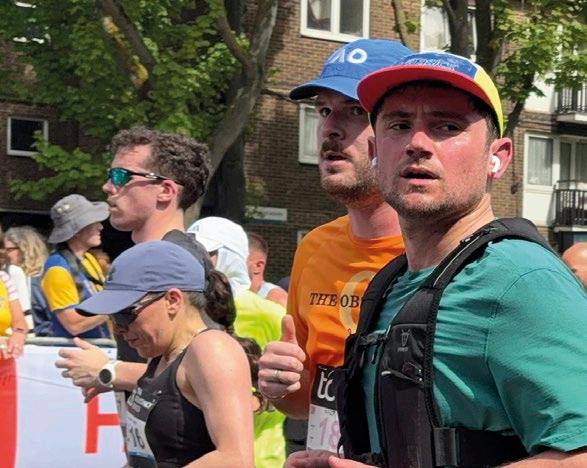
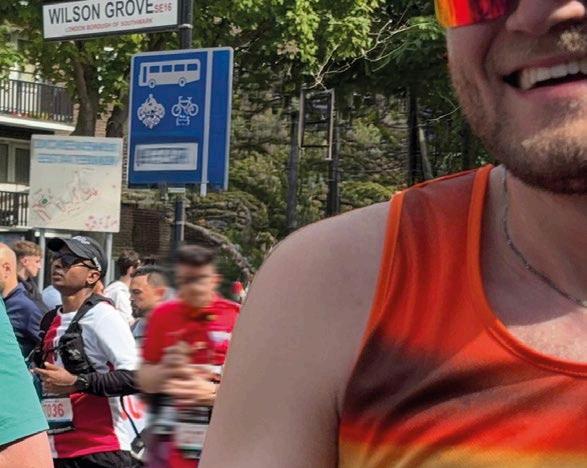
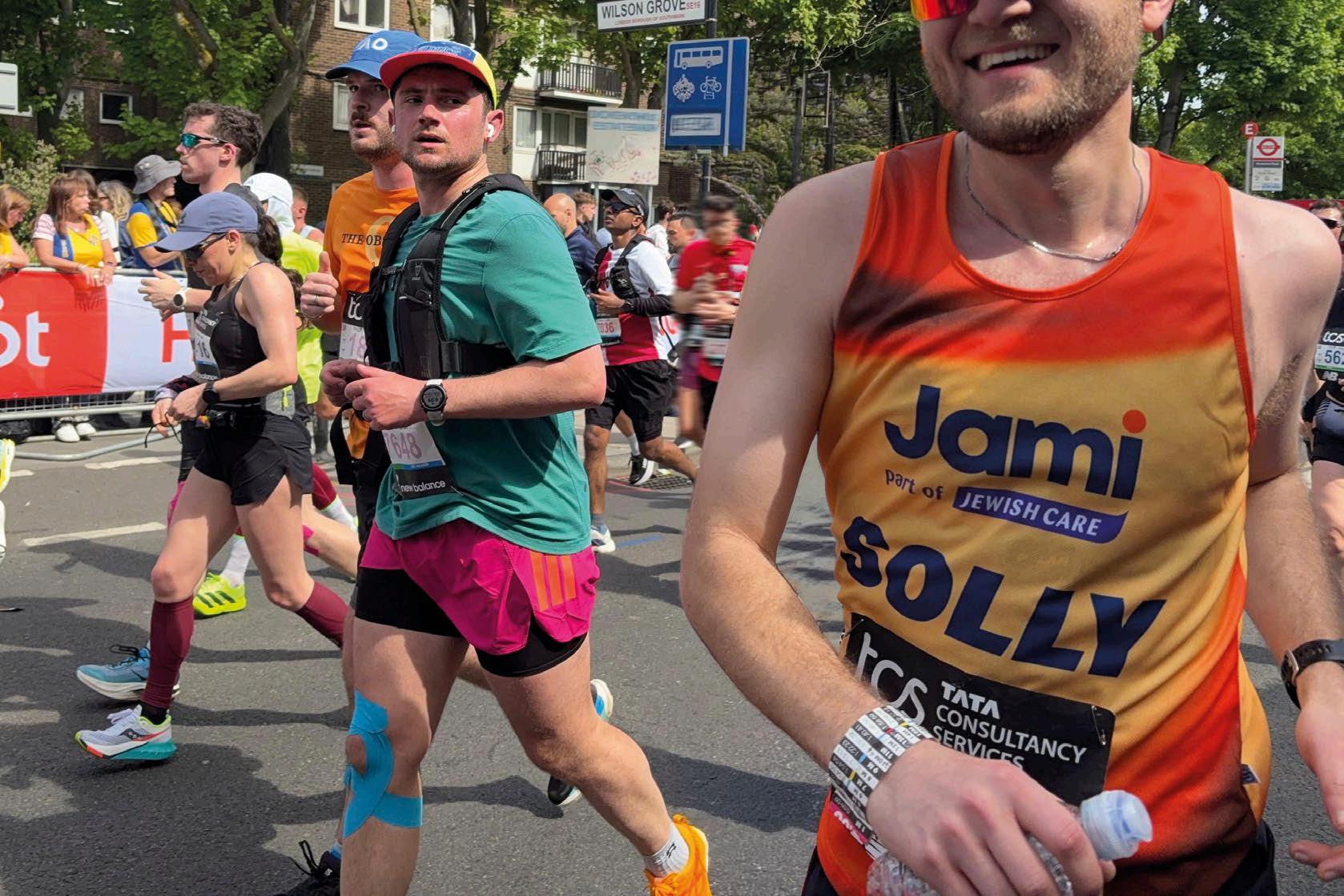
Injury, winter miles and even training amid sirens and rockets – nothing stopped these supporters from reaching the finish line. Meet Jake, Debby and Solly, three of the five people who ran the London Marathon for Jami – and hear why they chose to take on the challenge.
Jake Russell
Nothing was going to stop 26-year-old Jake Russell from completing his second London Marathon on Sunday 26 April in support of Jami, despite the challenges he faced. He says, “I would have crawled over the line if I had to.”
He believes an injury to his Achilles tendon last year a ected his calf, meaning that just three weeks before the big day, he started undergoing physiotherapy twice a week “to keep ticking over”. But he didn’t let this setback, work commitments or getting stuck in Israel for two weeks – and having to run while there were sirens and rockets going o –
stop him from finishing the race in just 3 hours and 48 minutes.
“My goal, pre-injury, was to complete it in 3 hours and 38 minutes. That was the dream –my A goal. But considering my injury, I was happy with my time.”
He’s also proud to have run for Jami. “To run for a charity like Jami, which does such vital work in the community, is a no-brainer. Like Jewish
use. Mental health is also a very unde unded part of the NHS, so it’s vital to raise money through events like this.”
About two years ago, Jake joined the Young Jami Jewish Care (YJJC) Committee. “We brainstorm ideas for events, look for venues, and organise ra le prizes to raise as much money as possible and increase awareness.”
“I just want to help Jami in any way I can.”
Care, it’s one of the most important pillars of the Jewish community in the UK, providing a service that many people
Talking about the Young Professionals Dinner he attended in 2025, he says, “Hearing firsthand the story of someone who had used Jami’s services, learning about the hard work of frontline sta and finding out where the money raised goes showed me just how important Jami is to the community.”
That’s why Jake braved his injury, trained despite sirens and rockets, and crossed the finish line, saying, “I just want to help Jami in any way I can.”
“It was such an honour to run for Jami and represent those experiencing mental health di iculties. I’m ready to go again!”
Debby
“It was an unbelievable experience that I will never forget,” says Debby, who ran her first London Marathon on 26 April. Thanking family, friends, Jami and Jewish Care for their support, she says, “It was such an honour to run for Jami and represent those experiencing mental health di iculties. I’m ready to go again!”
As a nurse working with young people experiencing mental illness and distress, Debby is passionate about mental health. “There was no better way to combine my passion for running and mental health,” she says. “Jami felt like the right choice. I know quite a few people who have benefitted from their services, and I wanted to run in honour of those who struggle and the resilience they show.”
Debby showed that same resilience in the lead-up to the race. She spent five years trying to secure a place and refused to give up. Like many runners, she also found it di icult to fit in training. “When life is busy, there’s so much to balance. It’s about how you continue everyday life alongside it,” she says.
Nevertheless, she made time for training and more, including cycling, strength sessions and yoga. “It’s not only about the distance. It’s also about rest, nutrition and strength. Without those in place, the risk of injury increases.”
Fortunately, Debby avoided injury – though not bad weather. “One of the biggest challenges was the rain and the cold, especially in December and January. There was one point when I was
running in waterproof trousers and a jacket, but nothing stays waterproof a er three hours.”
Her persistence paid o . She completed the Marathon in 4 hours and 28 minutes – a real triumph. “Early on, I wanted a really good time. But then I decided to focus on the experience and enjoy it.”
Celebrations continued well a er the finish line, as her birthday fell two days later.
“That week, I enjoyed good food, a spa day, wearing my medal, being proud of it, and annoying everyone who heard about it.” And rightly so.
Solly Sperber
When Solly Sperber ran the London Marathon, he quite literally wore his heart on his sleeve, having designed the shirts worn by Jami and Jewish Care runners on race day. Finishing in 4 hours and 46 minutes, he says, “It was incredibly tough, especially the second half, but the support from friends, family and everyone who came out on the day really carried me through. There was an overwhelming positivity. It was fantastic. It was also quite emotional running through the city where I was born and grew up. It’s such an inspirational event, especially seeing people run
for so many charities and raise so much money.”
living and community centres through Young Jami Jewish Care Super Sundays, Solly has seen the impact of the charity’s work firsthand.
He chose to raise money for Jami, saying, “Running is an escape for me – a mental health release. So, using it to support Jami’s work, helping people facing mental health challenges, felt like the ideal combination.”
Solly is no stranger to the Marathon. “I grew up watching my dad run, so it’s always felt like a benchmark of personal challenge. There is something powe ul about finishing and saying, ‘I did that.’”
Having volunteered in Jewish Care’s care homes, retirement done
And he may not be done yet.
“I don’t have that never-again feeling. I’ve definitely been inspired to do it again.”
If you’d like to run for Jami at next year’s London Marathon, please email events@jcare.org
Why listening is vital to mental health support
As the Jami Ambassador at Northwood and Ruislip United Synagogue, part of Sally Kelion’s role is to signpost Jami services to her shul community and provide support. Here, she explains why o ering mental health support means o ering a listening ear.
Good communication is essential in supporting someone with mental health di iculties. However, talking alone is only part of the story: it’s hearing and, more importantly, listening that makes the di erence. While hearing is a passive process, listening is an active, voluntary one. Simply put, listening is giving though ul, focused attention.
What makes a good listener?
A good listener not only hears but seeks to understand. This approach, known as active listening, means trying to see things from the speaker’s perspective and showing that you understand.
There are three key elements:
1
Checking understanding through summarising or paraphrasing (for example, “So you’re saying…?”)
Listening can be undermined by rushing to o er advice or solutions. When relating personal experiences, listeners should avoid taking over the conversation, remain openminded and try to see things from the speaker’s perspective. Crucially, they must accept the speaker without judgement, even when this feels di icult.
2
Responding to feelings, showing belief and support (for example, “How did that make you feel?”)
3
Noticing verbal and non-verbal cues, such as tone, body language and pauses, and o ering gentle feedback like nodding or brief acknowledgements.
Why is listening so important for mental health?
When people feel heard, valued and respected, it strengthens relationships and can reduce emotional distress, anxiety and depression while boosting self-esteem.
It is equally important to look a er our own mental health when supporting others. Without doing so, we risk burnout and losing the resilience needed to help. Caring for ourselves enables us to be fully present for others.
If you need support or are supporting someone else, visit jamiuk.org/get-support or call 020 8458 2223. You can also contact Shout’s 24/7 crisis text service by texting Jami to 85258 for free, confidential support.
Sally Kelion
“Knowing that Jami is there for you in your darkest days makes all the di erence.”
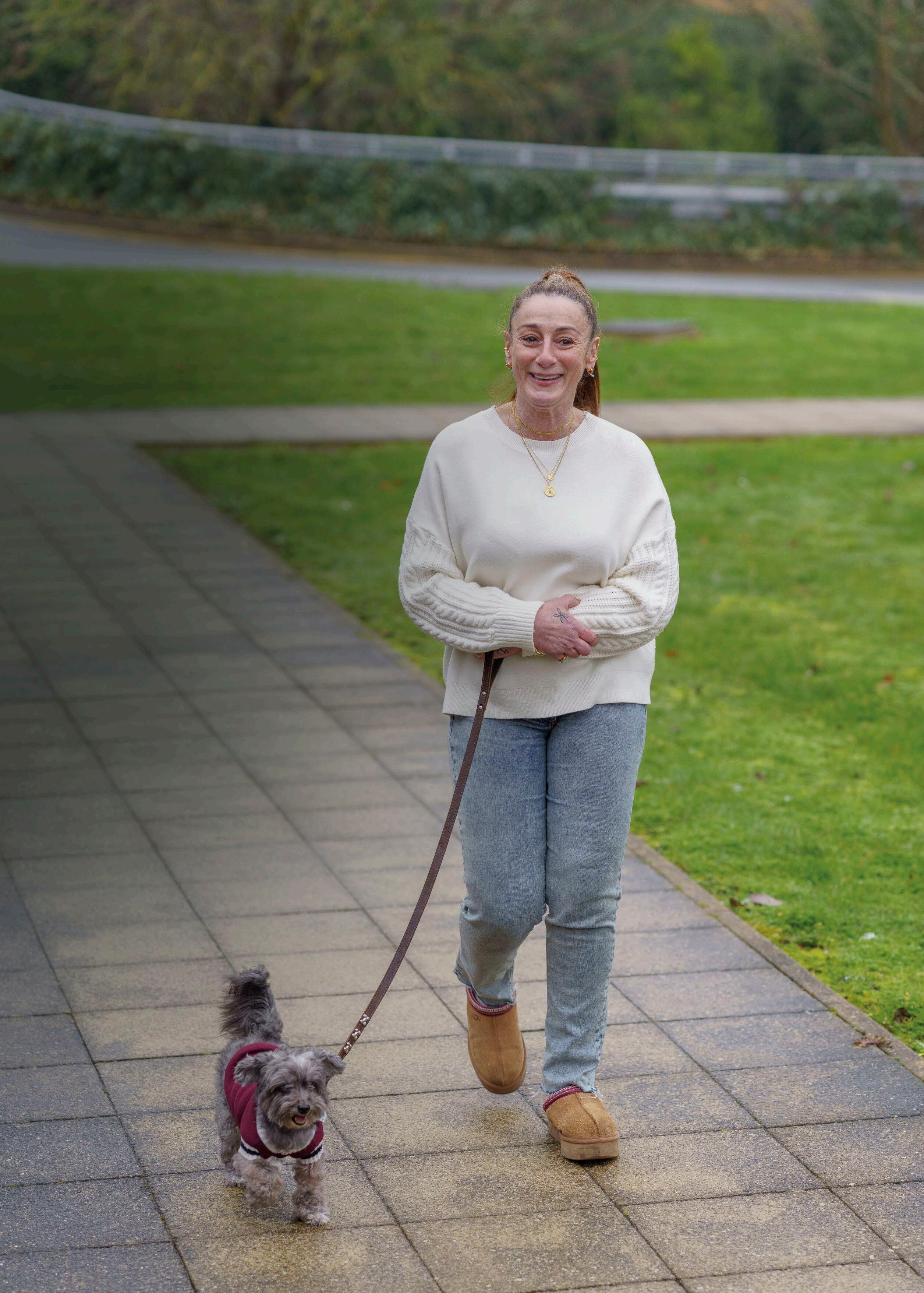
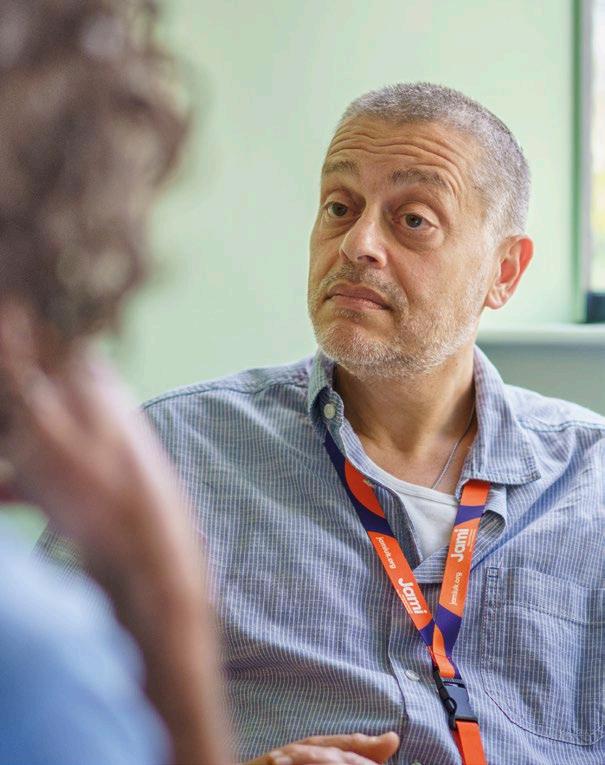
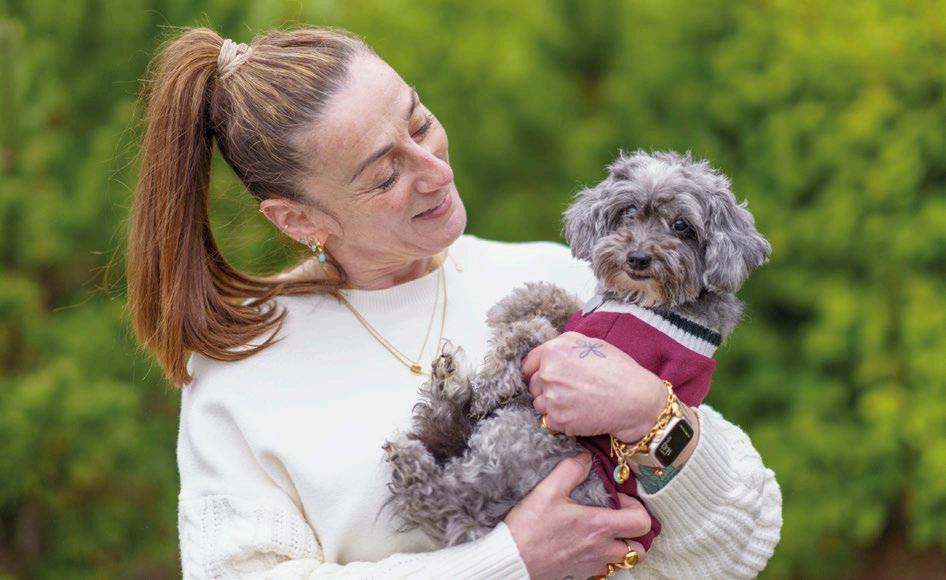
Thanks to Jami’s unwavering support, Debbie has rebuilt her confidence and now brings joy to others with her PAT dog Mazie – proving how the right help at the right time can transform lives.
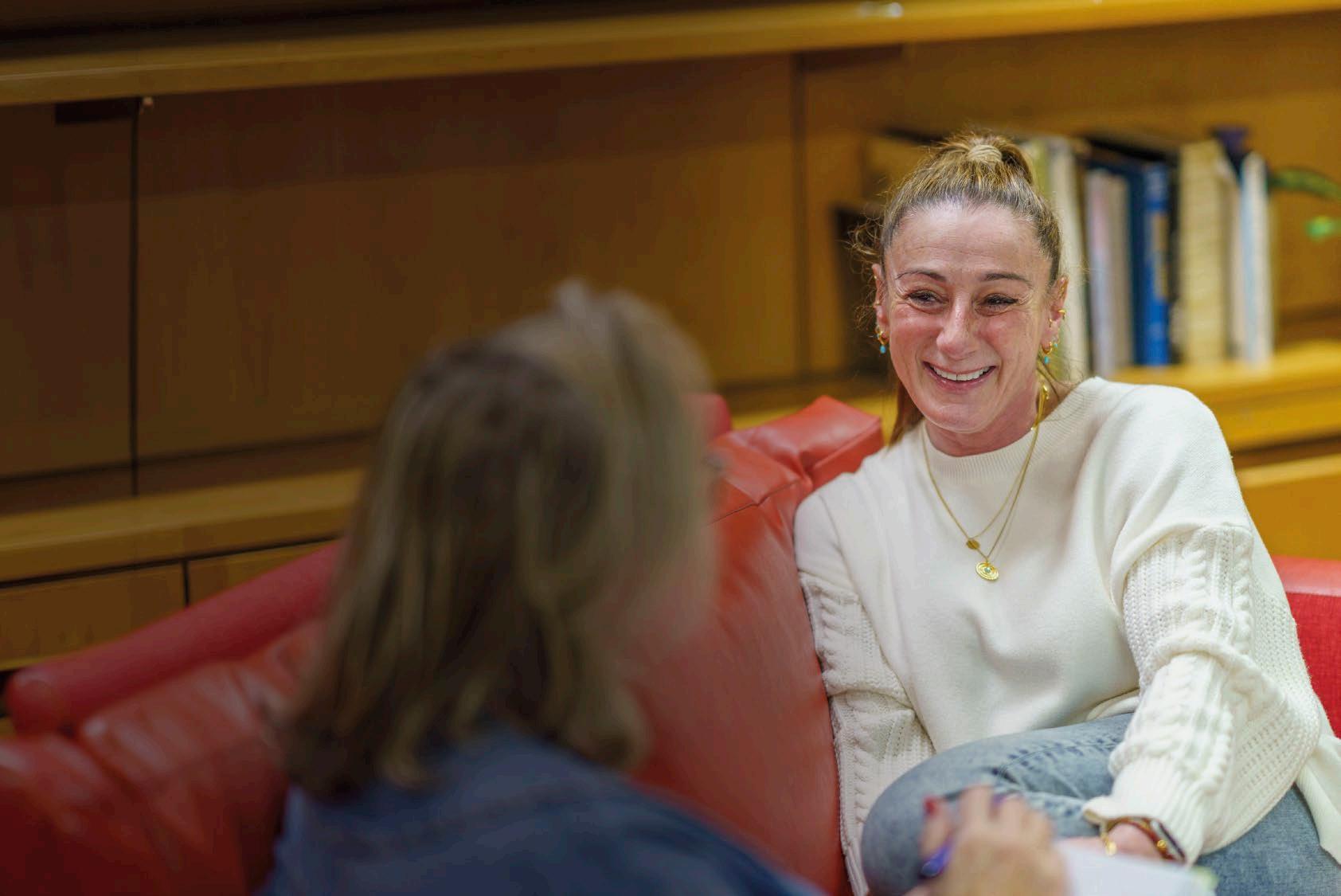
Debbie and her adorable newly registered Pets as Therapy (PAT) dog, Mazie, are proving a hit with residents at Jewish Care’s Kun Mor and George Kiss Home at The Betty and Asher Lo us Centre in Friern Barnet. Debbie has just started volunteering there with Mazie who Debbie dresses up and encourages to do little tricks. Casey Jolly, Volunteer Hub Manager, says, “Debbie can see the potential and joy this brings to many of our residents, some of whom are living with dementia and may have had a dog in the past.” Knowing that Debbie is helping to make others happy is also helping her too. Debbie says,
“Jami and Jewish Care have done so much for me and it feels rewarding to give back. Visiting the home with Mazie makes me feel very special. I feel like we are giving comfort and support. She is such a calming influence.”
Sadly, Debbie was feeling anything but calm when she first contacted Jami more than two years ago. Serious physical health challenges and a loss to her daily routine, which she relied on, had le Debbie feeling very anxious, uncertain and alone. She began to find everyday tasks overwhelming and as she felt her life unravelling, her mental health started to deteriorate. Debbie says, “I was in a really
bad way. My housemate walked out on me. I was waiting to see a consultant because I needed major surgery. And I wasn’t able to go to the gym, which played a massive part in my life because the group exercise, the social side and the routine gave me a sense of purpose. I felt I no longer had any quality of life, and I was struggling with all of that.”
A er receiving an assessment, Debbie was
“Jami and Jewish Care have done so much for me and it feels rewarding to give back.”
put in touch with Angela, a Jami Assistant Social Worker.
Angela provided calm, consistent and practical help at a time when things felt impossible for Debbie to manage. She o ered reassurance, stability and understanding when Debbie needed it most. “We would meet every other week over co ee,” explains Debbie. “Angela would come to hospital appointments with me. She supported me all the way through. I loved having the support and it really helped keep me going.”
Angela adds, “I saw Debbie very regularly and this increased as her anxiety around the operation grew. On the day of the operation, I went with her to the hospital at about 6.30am and stayed nearby so I could be there when she came out of theatre. Then I helped her through the recovery period, making weekly home visits
to check in and provide consistency and reassurance. Once she was feeling better, I supported Debbie to join another gym, going with her to meet the sta , disclosing her mental health needs and discussing what support might be required.”
Slowly, things began to change for Debbie. With the right support in place, she started to regain her confidence and feel steadier day to day. Knowing that someone was there –someone who understood – made all the di erence.
Debbie says, “Angela was calming, practical, reliable,
and always followed through. She gave good advice and helped me organise myself. She also listened and supported me emotionally when I needed it. Her positive mindset really helped me.”
So, when the opportunity arose to take part in Maccabi GB’s Strictly Come Dancing competition last November in support of Jami, Debbie’s growing confidence encouraged her to embrace something completely new –and she smashed it. Debbie danced to ‘I’ve Had the Time of My Life’ from Dirty Dancing and raised an impressive £1,295.
“Jami is so important because it helps people like me get through very hard times. Feeling understood – and knowing that someone is there for you in your darkest days –makes all the di erence.”
She says, “The journey was absolutely amazing. I worked so hard and I stepped right out of my comfort zone. Jami supported me through a really challenging period, and this was my way to give back. Jami is so important because it helps people like me get through very hard times. Feeling understood –and knowing that someone is there for you in your darkest days – makes all the di erence.”
If you need support, or are supporting someone else, visit jamiuk.org/get-support or call 020 8458 2223.
For immediate help, text Jami to 85258.
For those facing mental health challenges, work is not always possible. Jami’s Vocational Support service helps people to gain confidence, purpose and routine through volunteering and employment.
Rachael de Jesus Jones, Jami’s Occupational Therapist and Vocational Initiatives Coordinator, explains how through partnership working, we are opening up lifechanging opportunities to benefit more people.
How Jami’s vocational support is transforming lives
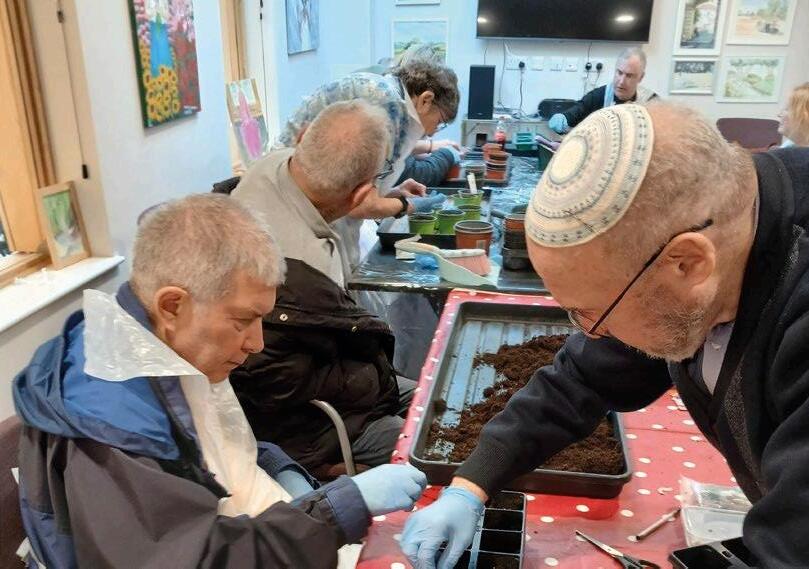
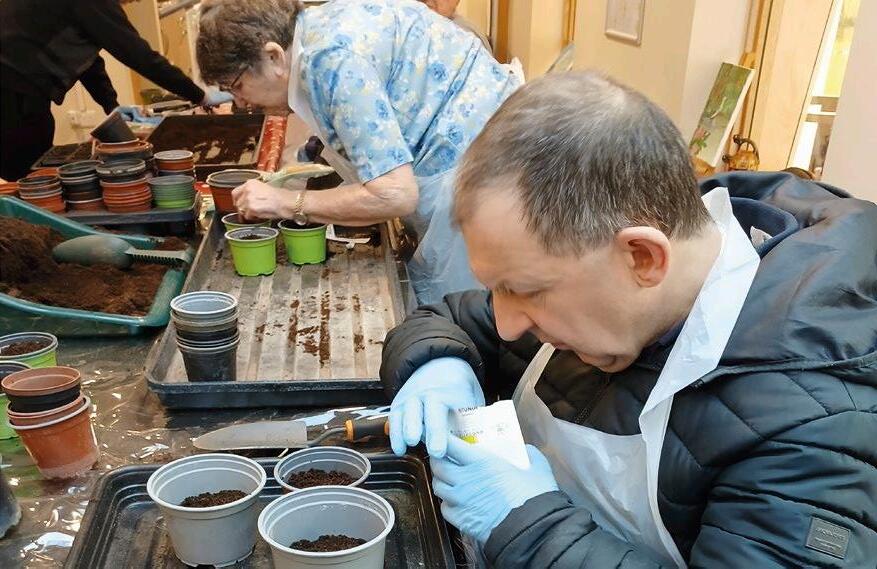
As part of Jami’s monthly group volunteer days, service users have spent the morning at Jewish Care’s Sandringham campus in Stanmore, sowing seeds for the allotment. These days were created to encourage people who may not yet feel confident volunteering alone to come together and do something positive. One participant said, “It was a very enjoyable day. I enjoyed planting the seeds because I know they will grow into flowers,
and I thought that would be a lovely environment for the residents.” Another added, “It was absolutely fantastic! I can’t wait to go back.”
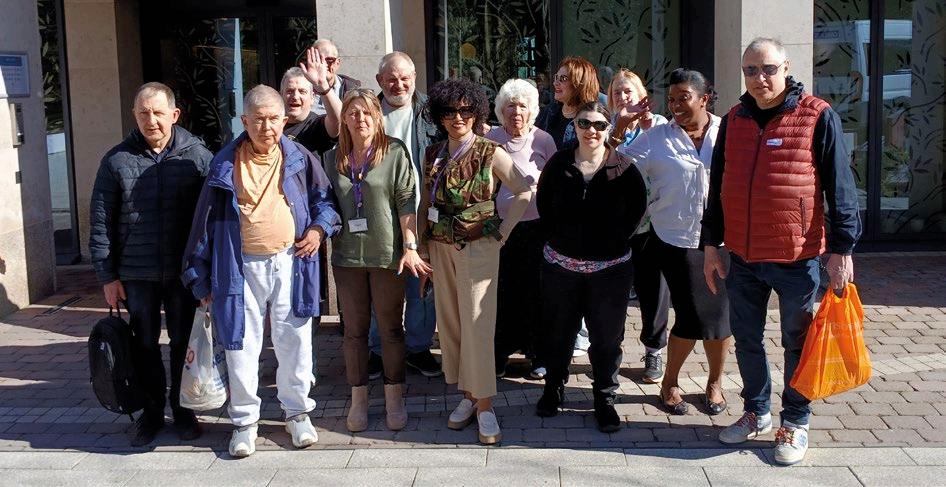
Rachael agrees the day was a success. “Quite a few people came today who are members of our Finchley hub but would never normally join activities or outings, so that was lovely. Everyone was really engaged. Some residents from Pears Court’s retirement living also came to help, so our Jami clients got to mix and chat with new people. They were so confident – laughing, joking,
socialising. It was so nice to see. Enabling our clients to help others gives them a sense of reward when they see their hard work come to fruition.
“These volunteer days, which we have now done with Jewish Care, Sadeh Farm, GIFT, the Jewish Vegan Society and a food bank, are changing people’s lives and making a real di erence.”
Opportunities for Jami’s Vocational Support team to connect with Jewish Care in this way are also benefitting those who want to volunteer independently. Rachael
explains, “Since we linked up with Rachel Rachel, Jewish Care’s Senior Community Volunteer Hub Manager, we’ve been able to get a lot of people into volunteering roles in Jewish Care’s services, which suits many of our clients well. It’s a valuable connection because it’s enabling them to use their skills, return to what they love and give something back.
“For example, we had a client who is a pianist. He loves to play but can’t always do so because of his mental ill health. He’s now going into
“Enabling our clients to help others gives them a sense of reward when they see their hard work come to fruition”
Jewish Care’s care homes and playing golden oldies to residents, which is pe ect – and this opportunity has really opened the door for him.”
This partnership with Jewish Care’s Volunteering team is also creating a smoother pathway. The team is open to exploring clients’ interests and shaping roles that
benefit both them and older people using Jewish Care’s services.
“What’s also important,” adds Rachael, “is being able to continue supporting clients in these roles. If they’re struggling, Rachel will let us know and we can check in. This connection means we can provide a better level of support.”
Establishing links with the Shaw Trust, a leading employment charity providing education and training, has also been a success. Rachael says, “The Trust o ers tailored support depending on people’s needs – for example, those with neurodiversity or physical disabilities – helping them overcome barriers to employment.”
The Trust has already held its first drop-in at Head Room café, Jami’s mental health hub on the high street, supported by The Maurice Wohl Charitable Foundation, with plans for more sessions. It will also run workshops for people wanting to explore specific topics related to employment.
Rachael explains, “The Shaw Trust can help with coaching, job searching, identifying transferable skills, and supporting clients to explore new career options if they can no longer return to what they did before. At the first drop-in, some of our clients referred themselves, which was great to see.”
Through these partnerships and opportunities, Jami is helping people rediscover their strengths and take meaningful steps forward.
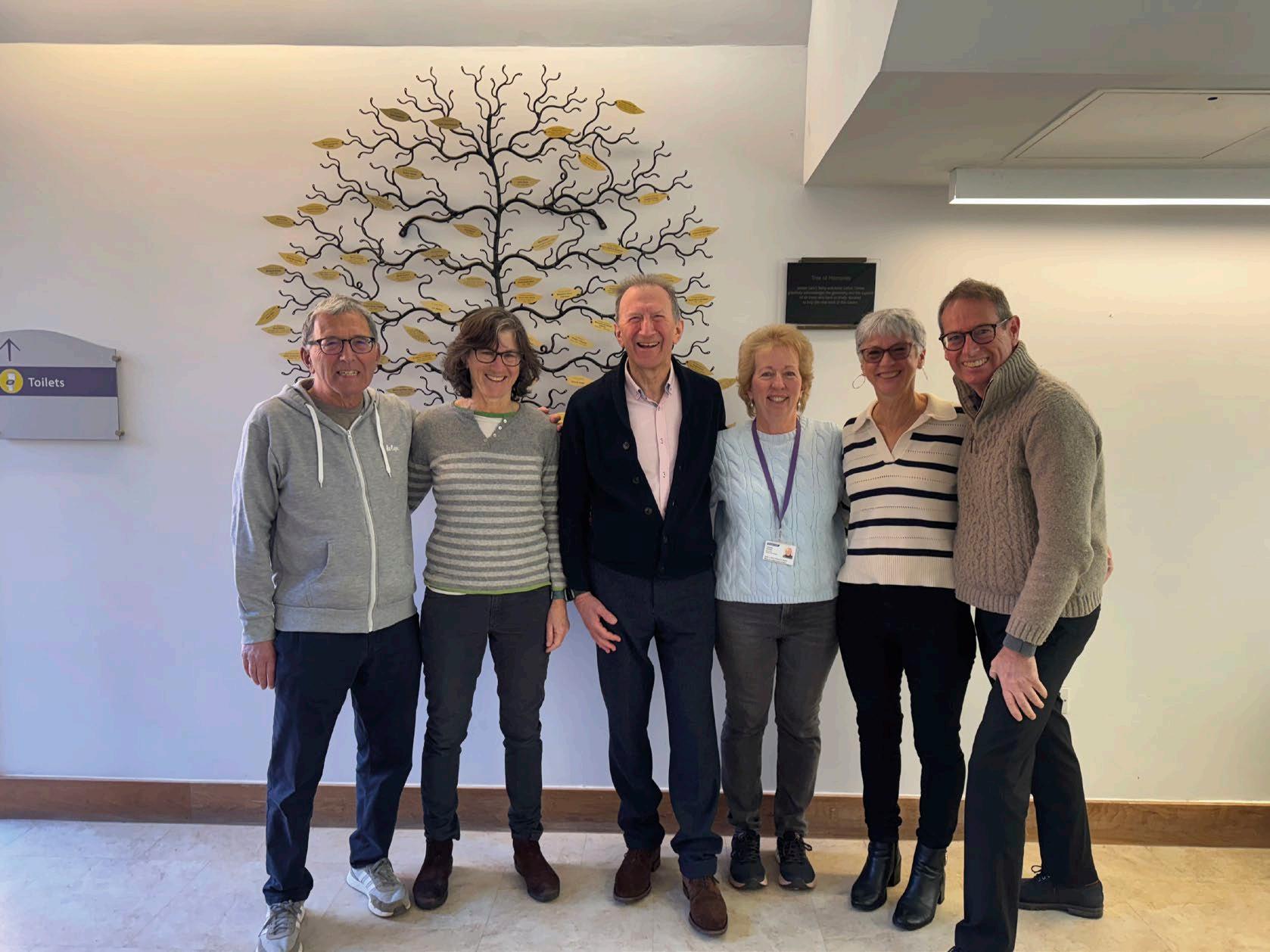
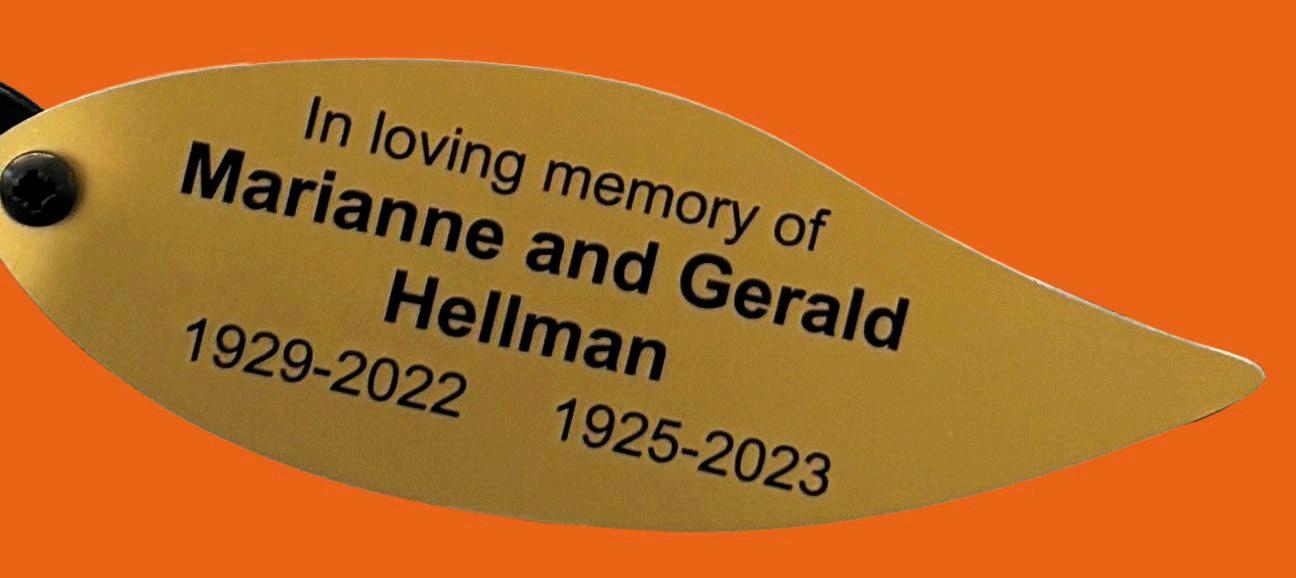
Pictured (l-r): Howard Pedro, Yvonne Hellman, Anthony and Amanda Hellman, Sue Hellman, Andy Head
One family’s legacy of care
A er their parents passed away, Anthony Hellman together with his sisters, Sue and Yvonne, chose to honour their memory in a way that reflected a lifetime of generosity – by supporting Jewish Care and Jami through their parents’ estate.
“They were very loving and kind parents. They taught us to give generously and supported many charities throughout their lives,” says Anthony, explaining
why he and his twin sisters decided to vary their Will.
As refugees from the Holocaust, Gerald fled Nuremberg with his parents and brother in April 1933. Marianne arrived from the Czech Republic with her parents and brother in 1939. “They both felt lucky to survive,” says Anthony, whose paternal grandfather escaped arrest by the Nazis and transportation to Dachau, “and this was their way of helping others.”
Anthony and his sisters’ decision to give a gi to Jami,
as well as Jewish Care, was inspired by the very good job he believes Jami does in the Jewish community for those impacted by mental illness and distress. “Mental health issues a ect people and families, including our own, and are something we should all be more aware of. Mental health is a very worthwhile but unde unded cause within the community and nationally.”
Leaving a gi from his parents’ estate to Jewish Care was a natural choice for Anthony,
when we needed them.”
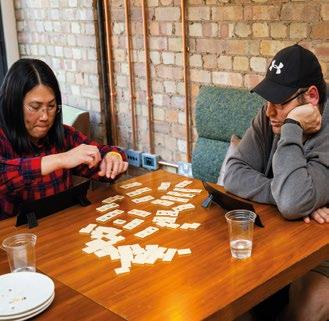
Their father regularly attended Jewish Care’s Holocaust Survivors’ Centre, where he took part in groups and enjoyed playing Rummikub and other games. Anthony adds, “He was a keen artist and painter, and enjoyed socialising with other members and going to talks and lunches.”
When Anthony’s mother had health issues several years before she passed away, his first port of call was Jewish Care’s Jewish Listening Line. “I was a bit shocked and traumatised and it was nice that I could talk to someone,” he says. Jewish Care was also there when his mother needed a place to move into a er a long stay in hospital. We needed to find a nursing home very quickly. Later on, when the hospital told us to find a nursing home quickly, Jewish Care
What is a Deed of Variation?
A Deed of Variation is a legal way to change what happens to part or all of an inheritance a er someone has died. For example, it can be used to pass some of that inheritance to family members or to a charity. Varying a Will in this way must be done within two years, and it is vital to seek advice from a solicitor to ensure that this is carried out correctly.
found a place for her in a Jewish Care home. But she sadly passed away days before her move.”
Amanda, Anthony’s wife, volunteers with Jewish Care’s Connect@Friern Barnet service, which supports older adults to live independently and stay connected to their community. Together, they visited Jewish Care’s campuses.
“Jewish Care and Jami have always been there when we needed them.”
Anthony says, “Seeing firsthand what Jewish Care does and how it changes people’s lives reiterates my feeling that our money has been put towards exceptionally good work. Jami and Jewish Care are an essential part of our community.
Why might someone choose to do this?
People may choose to do this if they want their inheritance to reflect changed family circumstances, or if they would like to support a cause that matters to them or mattered to their loved one. It can also be a taxe icient way to give to charity directly from an estate.
I know my parents would have been delighted that our contribution will help others to benefit from their services. Mental health issues a ect a lot of people and families, including our own, and is something we should all be more aware of.”
He adds, “I’ve also been exceptionally impressed with the sensitivity and gratitude with which the Legacy team has responded and followed up on our legacy gi s. We feel every single penny we’ve given has been worthwhile. If it wasn’t for the generosity of those who can a ord to donate, the community wouldn’t be supported. And this is why I strongly encourage others to give as well.”
For further information about varying a Will and/ or leaving a gi to Jami and Jewish Care, please contact Sarit Simon on 020 8922 2819 or email sarit.simon@jcare.org
It is with great sadness that Jami shares the passing of Alan Lazarus MBE, co-founder and Life President of Jami, who died at the age of 89
Remembering Alan Lazarus MBE, Z”l
Alan Brian Lazarus was born on 22nd February 1936 at City Road Hospital in London –the same year “stress” was first recognised as a medical condition.
In 1957, he qualified as a solicitor and met Marilyn, who became his wife two years later. Their daughter, Lorraine, arrived in December 1961, and their son, Steve, followed in 1964. When Lorraine was diagnosed with schizophrenia at age 16, Steve stated that everything changed. “It was a defining moment for Mum and Dad, and they responded with compassion, strength and tireless energy.”
In 1989, through the work of Alan, Marilyn, and Dr Martin and Jean Aaron, Jami was registered as a mental health charity, recognising the gap in communal mental health service provision and social care in the Jewish community. This was in the face of significant stigma and discrimination, at a time when fundraising for mental illness was particularly challenging. From meetings in living rooms in the 1980s to the established organisation it has grown into, helping thousands each year, Jami is part of Alan’s enduring legacy.
Dr Martin Aaron, Life President of Jami, and for many years a friend and colleague of Alan, said, “Both of us had firsthand and family experience of mental ill health – the plight of so many families in our Jewish community and beyond. Together we campaigned for the recognition of mental illness and the urgent need for support. During the Covid pandemic period, the numbers calling on Jami dramatically increased –proof again of the huge need in our community.”
In 2016, Alan was awarded an MBE for Services to Mental Health in the Jewish community, with special recognition for his role as co-founder of Jami. In the same year, he was also honoured with a Lifetime Achievement Award by the Jewish Volunteering Network. And four years later, Jami appointed Alan as Life President.
Indeed, Alan dedicated almost 40 years to raising awareness of mental illness and building Jami – an inspirational mental health charity. A lifelong charity volunteer and fundraiser, he was also Chairman of the Residential Homes Committee, which
successfully raised funds to build Jewish Care’s Jack Gardner House, a residential home for people with enduring mental health conditions.
Laurie Rackind, former Jami CEO, said, “Alan was a constant force behind Jami. He brought a rare combination of passion, purpose and pragmatism. Alan was a champion for mental illness when few understood the need. His commitment to recruiting ‘caring professionals’ underpinned Jami’s values, but he ensured that the voices and perspectives of carers were never lost. His respect and support for everyone involved in the organisation was upli ing and unmatched. Jami and I will miss him immensely.”
How we changed lives in 2025/6
Front door
620
We believe we must continue to meet the changing needs of our community and deliver on the promises that we made to those who seek our advice, treatment, support and education.
We continuously evaluate our work, listen to the views of those who use our services, and take these learnings to improve what we do and how we do it. Over the past financial year, we have achieved the following.
Guiding people through the challenging journey of navigating mental health services and providing emotional support and expert advice from the moment someone contacts Jami.
36% 437 1.6 people increase working days new service users received information and advice at our front door. on those seeking our Counselling service compared to last year. were referred to Jami.
was the average response time of our Intake team across the year.
Results from our annual survey
100% 100% 85% 91%
of respondents who were new to Jami services in the last 12 months said they felt listened to with compassion and understanding. said they received the information they needed to decide what to do next. of respondents who were new to Jami services said they were satisfied with the waiting time (70% last year). agreed that we met their needs (83% last year).
“Life is not easy when you struggle with confidence, self-worth, and feeling lost. However, feeling heard, seen and understood has been healing.”
Treatment and support services
Providing professional, person-centred and peer support services for young people and adults with mental illness, as well as their families and carers.
one to ones were conducted with clients. needed psychological support. attendances seen at our Head Room community programme through over 414 events.
people were reached through our treatment and support services.
people accessed our Head Room community programme.
of people sought social connection support.
“Jami has given me a healthy routine, opportunities to socialise, and a place to express myself – things I never had before Jami.”
turned to Jami for practical support with everything from housing to medical appointments.
Our Counselling service almost doubled in size, and we introduced counselling for children and young people.
In our annual survey, respondents told us that Jami improved their access to appropriate support, enabled them to feel heard, increased their social connection and led to improvements in their mental health.
62% 95%
people who came into our counselling service experiencing significant distress reported a meaningful improvement in their wellbeing by the time they le , based on a valid and reliable outcome measure. This exceeds the NHS Talking Therapies target of 50%
respondents agreed that we have worked with them on the goals and priorities that are most important to them.
of the clients who completed their sessions in our Counselling service reported that they felt supported by their therapist.
of carers said they were satisfied with the Carers and Family Support service.
of those using our Counselling service said they felt understood by their therapist.
of the carers using our Carers and Family Support service, who completed their support, said they were empowered to make their own choices and decisions about their situation.
agreed that we have supported them to make decisions.
Education and suicide prevention
Focusing on specialised areas where we can provide an expert voice to the Jewish community and beyond.
Jami launched a landmark suicide prevention programme this year designed specifically for the Jewish community, built on three years of research, consultation and lived-experience insight. It is designed to build confidence and skills to support those experiencing suicidal thoughts.
12,340
people reached through our education events, with learning shared with wider audiences and organisations.
We worked with Parliamentarians to ensure that the psychological needs of the Jewish community are seen and heard at the highest levels.
attendances were counted at our education events.
1,280 1,234
people accessed our Education and Suicide Prevention services.
Our partnership working with Barnet and their Public Health team has led to opportunities to engage with policy makers on the impact of recent antisemitic incidents.
98%
rated our training as good or excellent following our education events.
events were run by our Education team.
72 62
community leaders were reached through our Mental Health First Aid and other bespoke programmes.
Results from our training evaluation
98%
agreed they have gained knowledge, skills or ideas about the topic of the training.
“For a long time, I was stuck in a cycle of challenges and lacking self-awareness. [Sta ] helped me to help myself and find a greater sense of autonomy and change, which I would not have been able to do in the chaotic situation I was in at the time.”
We partnered with Streetwise (Maccabi GB) to produce “Unplugged, Switched On” – a practical guide supporting parents, carers, educators and youth workers to navigate the online world with young people.
“Jami provides a ‘homefrom-home’, creating a strong social nucleus. It reaches all sections of the Jewish community, o ering structure to the lives of people who might otherwise feel isolated.”
“If it weren’t for the sta at Jami, I would feel far less able to navigate the challenges I need to address. I have been supported across all areas of need.”
Head Room is Jami’s social enterprise café, supported by The Maurice Wohl Charitable Foundation. Jami is part of Jewish Care, a UK Registered Charity