Supporting Aviva’s family to cope when their world fell apart
Our services
The power of peer support
Our expertise
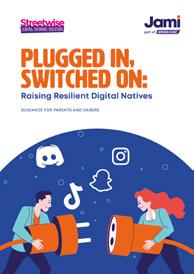
Jami’s parent guide to help young people navigate the digital world
You don’t have to face it alone.
Whether you’re dealing with depression, anxiety, or simply feeling overwhelmed, Jami’s Talking Therapies offers adults, children and young people over 11, a safe, non-judgemental space to talk, reflect and heal.
Our experienced trainee and qualified therapists work with you to explore your worries, helping you to make meaningful choices and to move forwards with confidence.
We offer:
• Individual therapy
• Couples’ therapy
• Support for children and young people aged 11–18
• Warm, welcoming Wohl Counselling Suites
• Subsidised rates for those facing financial hardship
Call us on 020 8458 2223 or visit jamiuk.org/talkingtherapies
Welcome
The past several months have not been an easy time for our community – nor the last two years. Events in the Middle East and at home have had an impact on many people’s mental health, which is why having a mental health service like Jami in our community is so incredibly important. Because we have knowledge and understanding of the cultural nuances of Judaism, we can better meet the needs of our service users who often say they feel more comfortable and reassured about using our services than organisations outside the community. However, we don’t just provide services for adults. We also support young people aged 11–25 with their mental health through our Dangoor Children and Young Person’s Service and through our Talking Therapies service which, in addition to supporting adults, was recently extended to include 11–18-year-olds.
Thanks to a generous gift from the Dangoor family, through the Exilarch’s Foundation, we now have capacity to take on more young people from the community. We are aware that there are many young Jewish people attending Jewish and non-Jewish schools who could benefit from this support, as well as university students, young working adults and those who aren’t able to work or study.
If you’re the parent or grandparent of a young person or young adult, we encourage you to think about their mental health needs and to get in touch with Jami if you think our services could help them. Please also tell your friends or family about the support we offer. We want to reach as many as possible –and word of mouth is key. Whether your young person is struggling with exam stress, relationships, anxiety, depression,
self-harm, suicidal thoughts or anything else, we can help them get through this difficult time.
We also support carers and run a variety of carers’ groups if you’re finding it hard to cope, as well as many other services for those whose mental illness and distress make everyday life a challenge. Our one-to-one and group sessions offer practical and emotional support. Our befriending service and hospital visits provide social connection to those who may be feeling lonely or isolated. Our vocational support provides help in finding work, volunteering opportunities and training, while our advice and signposting links people to other relevant services and entitlements.
Head Room, our social enterprise café, supported by The Maurice Wohl Charitable Foundation, provides a free daily programme of activities and groups open to everyone in the community, and we also offer specialist courses to community leaders and provide advice and support following a suicide or tragic event.
In short, we are here for you, your family and everyone else in the community who may need us – today, tomorrow or anytime in the future. Thank you for supporting us, so that we can support all those who rely on our services each and every day.
Louise Kermode Director of Community Mental Health Services (Jami)
Daniel Carmel-Brown CEO
For the latest news, follow us:
Jami is here for when mental illness and distress make everyday life a struggle. Last year, we reached over 3,000 individual children and adults through our mental health support. Not only do our services benefit those who have mental health problems; they also support those who look after them. Thanks to Jami, Aviva is one of many carers who has lived with the often-devastating impact of mental ill health and come out the other side.
“I honestly don’t know how we would have managed without Jami.”
“ My husband and I were enjoying a holiday abroad when we had a telephone call from a friend of my son saying that he was in a terrible state and was having suicidal thoughts. Obviously, it was very devastating for us and being so far away, we didn’t know what to do. I decided to contact Jami, explaining what had happened.
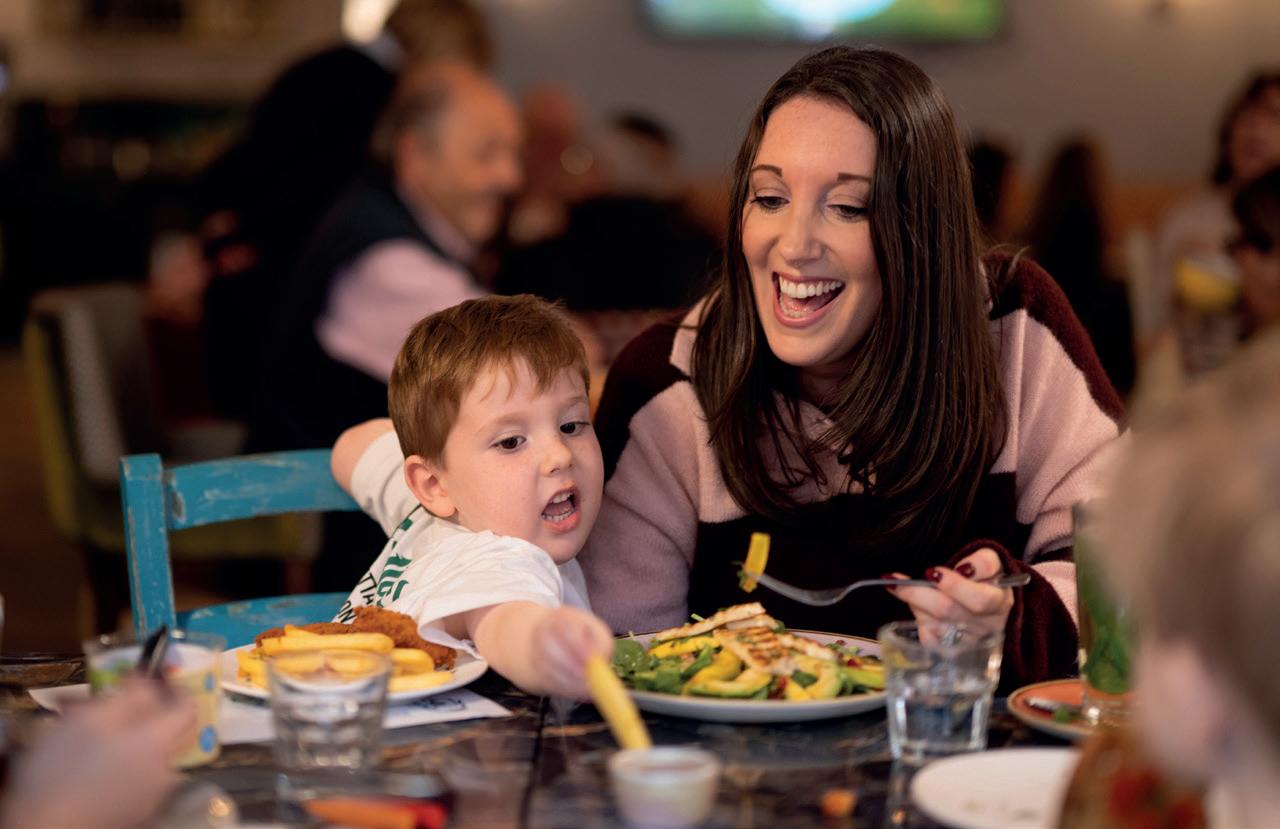
When we came back from holiday and our son came home from university, we realised we needed some support for ourselves too. We felt we were in the bottom of a very deep black hole and didn’t really know which way to turn. It was very difficult for us to talk to each other. You start this journey feeling terribly ashamed of yourself and feeling like a dreadful parent because you haven’t recognised the pain your child is going through.
Jami put us in touch with a carer peer support worker. Jami’s peer support workers have been through similar issues, so they really understand what’s happening to you and how you’re feeling. We started off having a weekly Zoom meeting with Jess and I honestly don’t know how we would have managed without her. She is the most amazing woman.
We could laugh with Jess, we could cry with Jess. Our sessions enabled us to talk in our own separate ways about how we were dealing with the problems that our son was going through. Being able to speak to somebody who didn’t know us, our family or our friends, about how we were feeling was wonderful.
At that time, we couldn’t talk to our friends because we felt very uncomfortable. And it was particularly difficult having to pretend that everything was all right when we were out socialising with them. Listening to friends talking about how well their children were doing at university, while sitting there wishing that our son was in the same situation, was hugely stressful. It left us feeling very isolated.
But, as we learnt to open up in our sessions with Jess, we grew to become more open with others. She helped us to reframe the language we used with our son, encouraged us to talk to and be honest with our friends, and gave us the tools to cope ourselves. I honestly don’t know how we would have managed without her and Jami.
Receiving support from a Jewish organisation felt very comforting too, because we felt everyone understood our values and the way we had brought up our children.
We now realise there was nothing we could have done to prevent how our son was feeling or why he was feeling the way he did, but he’s much improved now and has gone back to university to complete his course.
Recognising that we needed help too was the key to us being able to cope – not only with our son and his issues, but also with our own. I honestly don’t think we would have been able to do that without Jami behind us.
Jami is an incredible organisation, and I would encourage anybody who has a child with mental health issues to reach out. You cannot deal with it yourself. It is often more difficult for the carer than the cared for.
If you need support or are supporting someone else, visit jamiuk.org/getsupport or call 020 8458 2223.
For immediate help, text Jami to 85258.
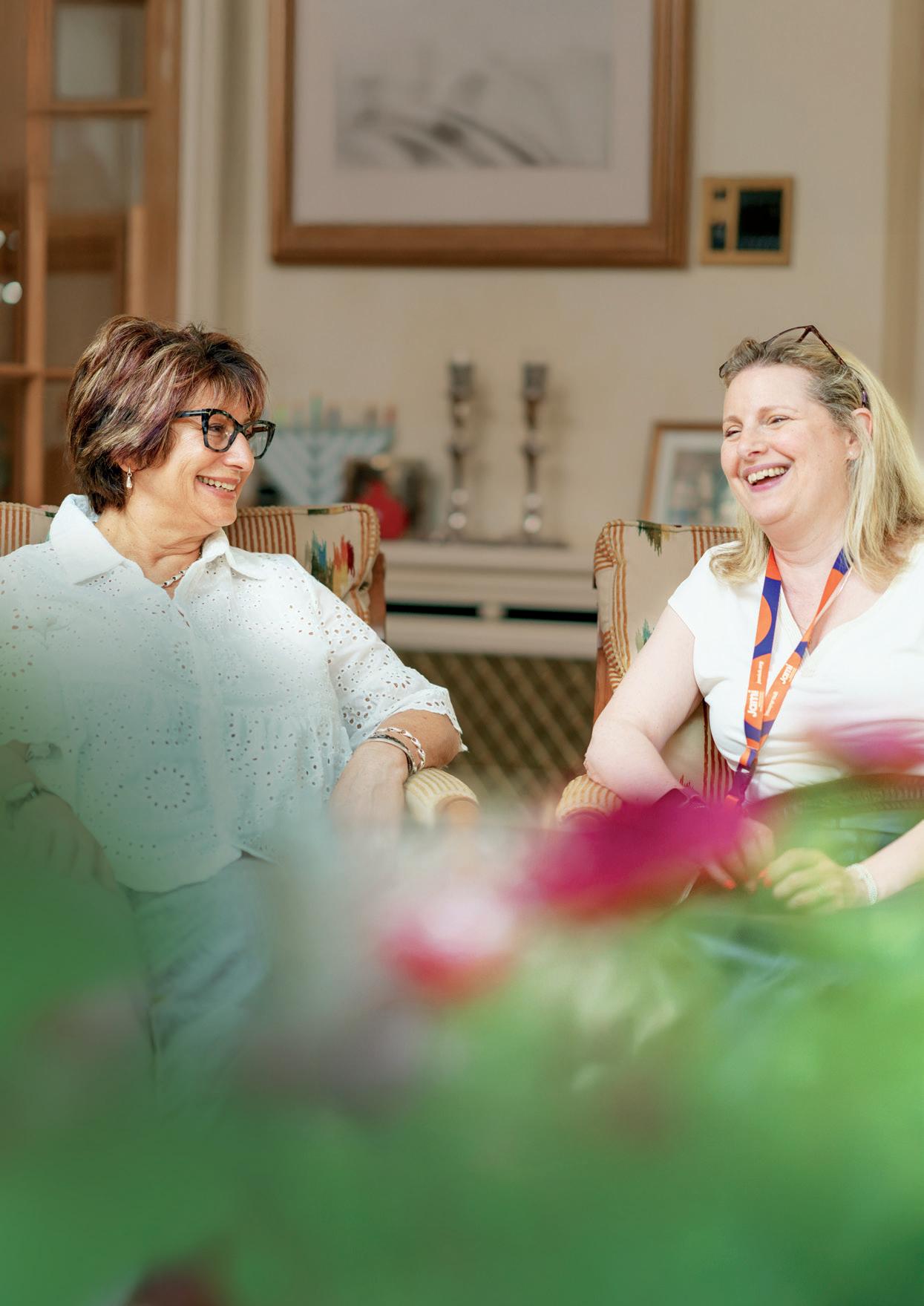
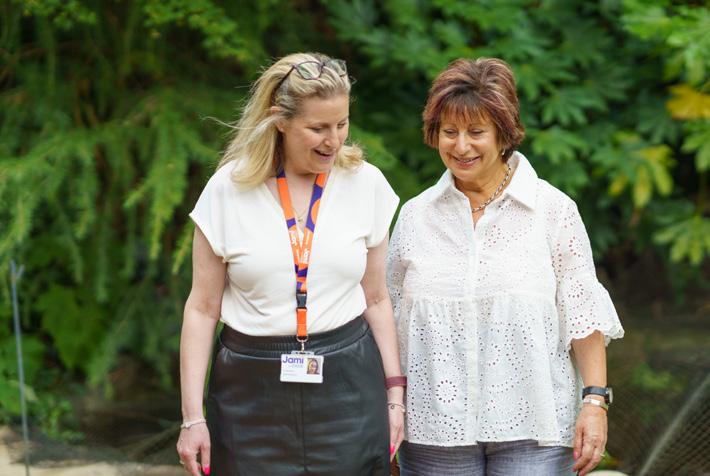
Jess Green, Jami carer peer support worker, with service user Aviva
Our Jami round up
To keep you in the know, we wanted to give you a taster of some of the key things that have happened or been celebrated at Jami over the past few months…
MPs join Jami for World Suicide Prevention Day
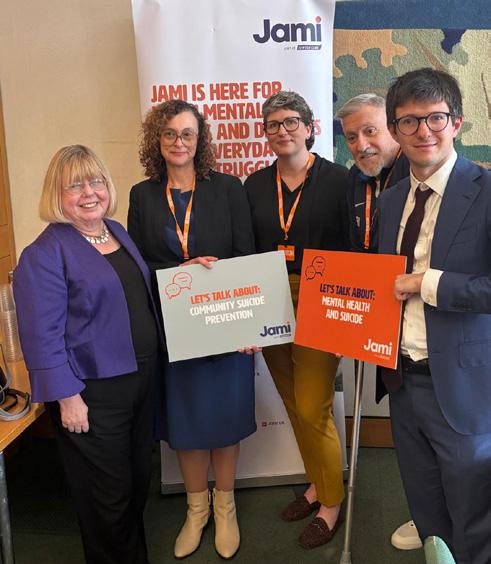
MPs flocked to hear about Jami’s vital work in the community when we held a parliamentary drop-in session at Portcullis House for World Suicide Prevention Day on Wednesday 10 September.
For Jami, preventing suicide in the community and educating people around the subject are a priority every single day of the year – and our mental health practitioners are often first responders when it comes to people going through a mental health crisis. They will accompany our service users to hospital and stay with them until they are safely admitted and “often walk alongside people in their darkest moments,” according to Sophia, a senior peer support worker and peer support colead at Jami, who has lived experience of mental illness and distress.
The drop-in session attracted a number of parliamentarians, including House of Lords member Baroness Lucianna
Berger, as well as David PintoDuschinsky, MP for Hendon; Fabian Hamilton, MP for Leeds North East; and those from further afield, such as Jim Shannon, Democratic Unionist Party MP for Strangford; and Mary Glindon, MP for Newcastle upon Tyne East and Wallsend.
They gained an appreciation of how challenging mental illness and distress can be when they heard from Jami’s community champion, John, about his lived experience. John told them, “When I woke up in the hospital, I saw all my family and friends around me, and it was very humbling to realise I meant a lot to people. The
way Jami supported me made me feel understood and appreciated. They have changed my life.”
Huge thanks go to the Jewish Leadership Council for inviting us to hold this parliamentary drop-in and to Liz Twist, MP for Blaydon and Consett, who kindly hosted it.
Liz Twist MP, Philippa Carr, Louise Kermode, John, Leo Brosh from the JLC
Guidance given on parenting in the digital age
Jami was invited in October to partner with The Jewish Chronicle for a profound discussion with two leading voices about parenting in the digital age.
During an evening with Nova Eden, a respected educator and advocate for digital wellbeing, and Luciana Berger, a passionate mental health campaigner, parents, carers and educators of young people were able to gain practical advice on promoting healthy digital habits.
The engaging session provided strategies to help families support their children’s development and build a positive, mindful relationship with technology; explored the
If you would like a copy of Jami’s digital guide, it is also available to download at jamiuk. org/resources impact of digital technology on children’s mental health, friendships, and identity; and offered insights into current and emerging policy work around youth mental health, the use of smartphones and social media.
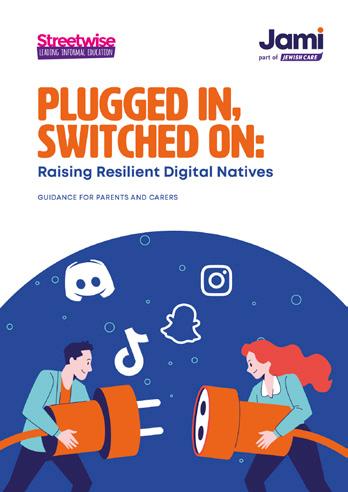
Printed copies of Jami’s digital guide, Plugged In, Switched On, produced in partnership with Streetwise, were given out to all those who attended.
Philippa Carr, Jami’s senior mental health education and suicide prevention manager, told the audience, “This guide promotes a collaborative approach between parent and young person, enabling us to grow together in our relationship with each other
and our usage of modern technology. It explores how we communicate with our young people around the digital world, negotiate those boundaries and preserve our relationships with them.” She also thanked panellists for their invaluable contribution to this prescient conversation.
Jami to launch suicide prevention programme in new year
Jami will be launching a new community suicide prevention programme for communal lay and spiritual leaders and motivated community members, early next year. Based on Jami’s consultation and research with community members, the programme has been designed to reflect the community’s sensitivities and needs and will also cover postvention – the actions Jami takes to support the community after a suicide.
A panel of community champions with lived experience has guided the process of creating the new course and Jami is working with Middlesex University to evaluate the process.
Philippa Carr, senior mental health education and suicide prevention manager, says, “This is a unique opportunity for our community to acquire the skills and further develop their understanding and compassion to support people affected by suicide. We hope
the programme will provide many opportunities for essential conversations. We know from our tradition that to save one life is as if we are saving the world. Communities have a vital role to play in suicide prevention.”
Jami will be launching a campaign from 8–9 February 2026 –and we’re calling on the community to give it their full support.
Support our campaign to make Talking Therapies accessible to everyone
The campaign will be raising money for our Talking Therapies service, which provides a non-judgemental, safe space where people can talk about what may be troubling them and explore how to make changes to improve their mental health and wellbeing. The service aims to prevent people’s emotional issues from worsening and having a significant impact on their life, as well as supporting their recovery when their mental health is impacting on their ability to function in their day-to-day life and in their relationships. More recently, our Talking
Therapies service expanded to support those aged 11–18 years old too, because research tells us that a staggering 55 per cent of under-25s in the Jewish community report living with mental illness, distress and trauma.
Please help us ensure that we can make our Talking Therapies service accessible to all, whether they are caring for someone with mental health issues, have their own mental health diagnosis, or just want to talk about their struggles as a couple.
This service, like all Jami’s
other services, receives no government funding. We, therefore, rely on the community’s generosity to help us deliver them. By donating to this campaign or volunteering to become a team champion, you will be ensuring that we can give people support early on when they are feeling low to avoid them needing more severe mental health services in the future.
If you would like to become a team champion, please email Alex Morris at alex.morris@jcare.org or call 020 8922 2000.
Jami connects with Jewish Care team for learning and sharing
Philippa Carr, Jami’s senior education and suicide prevention manager, worked with staff from Jewish Care Direct and Jewish Care’s social workers to offer valuable resources and make meaningful connections between Jami and the wider Jewish Care team.
On World Suicide Prevention Day in September, Philippa provided a second and more in-depth training course on suicide prevention, called Suicide Prevention – A Deep Dive, to members of the Jewish Care Direct team.
The team’s staff receive calls from people seeking help and information on Jewish Care’s services but often discover, when they dig deeper, that there are often unmet needs and in rarer cases safeguarding issues.
Shuli Greenstein, Jewish Care’s helpline manager, was enthusiastic to collaborate with Philippa on this second training course, and now the two are working up ideas for further training involving the use of actors. Shuli says, “We have managed to put our thinking caps on to explore an exciting new interactive workshop to demonstrate good practice in working
with community members in crisis. The theory is great, but practice really brings to life how we can make a meaningful difference to people calling for support.”
Meanwhile, Philippa also delivered training to Jewish Care’s Social Work and Community Support team on anxiety and depression in older adults, creating unique case studies to illustrate all the nuances in this work. The team considered the literature in this area of mental health and key areas, such as the signs and symptoms and how to support older adults to get the treatment that might benefit them. Social work and community support staff also explored the social care aspect.
Feedback was excellent and Jackie Kramer, social work team manager, north west & central London, felt that the training added value to the team’s continuing
Carr professional development needs, saying “Having the skills to address suicidal ideation and the impact of suicide is important in the work that we do. Being in a safe space to discuss language, endings, support, trauma and impact of suicide, supported us in our development and confidence in dealing with these situations. Philippa was able to turn our questions and learning needs into an accessible training session, where our social workers, community support workers, students, occupational therapy and family carers’ team were able to learn and discuss together.”
“Having the skills to address suicidal ideation and the impact of suicide is important in the work that we do. Being in a safe space to discuss language, endings, support, trauma and impact of suicide, supported us in our development and confidence in dealing with these situations.”
Jackie Kramer, social work team manager, north west and central London
Philippa
The power of peer support
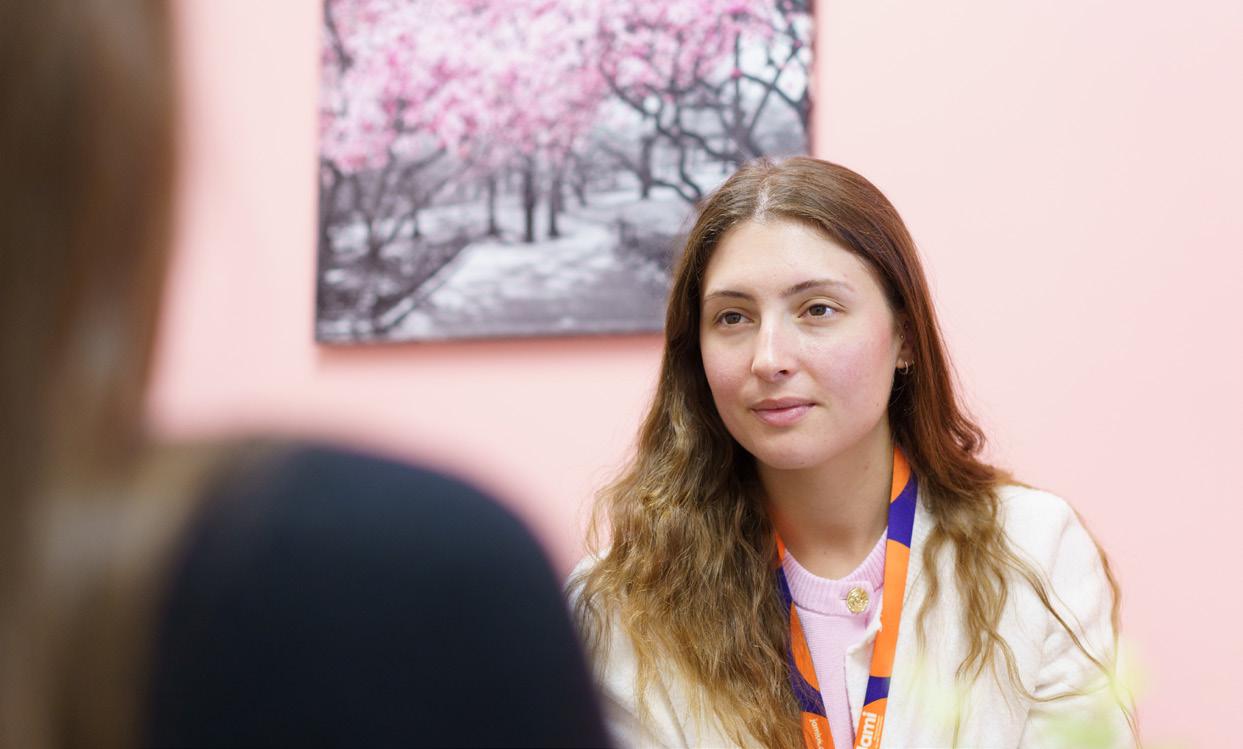
Peer support underpins much of the work that Jami carries out with adults in the community living with mental illness and distress. Our peer support workers use their own lived experience of mental ill health to help others. Daniel, Jami’s community development manager and peer support co-lead, explains why Jami’s approach to using this type of help continues to be so effective. Meanwhile, Sophia, Jami’s senior peer support worker and peer support colead, and David, one of Sophia’s many clients, share with us the impact that their connection has had on both their lives.
Daniel, community programme manager and peer support co-lead
Peer support is about people coming together through shared experiences of mental health struggles, recovery, and life’s ups and downs. It’s based on mutual understanding rather than hierarchy. Instead of one person being the “expert”, both people learn from each other. It’s about connection, empathy and walking alongside someone rather than leading them. Peer support offers something different from traditional services. It builds trust and equality, helping people feel less isolated and more empowered in their own recovery. It’s relational and real – about being human together, not fixing or diagnosing. It also helps both people to grow. Supporting someone else can be deeply
grounding and healing.
At Jami, peer support grew out of the recovery movement. Louise Kermode, director of community mental health services (Jami), played a big role in bringing these ideas into services, advocating for the value of lived experience and mutual support. Over time, Jami became one of few UK organisations to make peer support central to its ethos, staff structure and training.
It’s now at the heart of so much of what we do, shaping how we work with individuals and communities.
I was drawn to peer support because of my own experiences with mental health challenges and the difference it made when someone met me with understanding rather than judgement – someone who really got what I was going through. People often feel more comfortable opening up to someone who’s been through similar struggles. I wanted to offer that same sense of being seen and of not feeling alone to others. It felt like a way to transform something painful into something meaningful, to connect through shared humanity.
When someone sees that another person has been through something similar and found their own way forward, it can make things feel possible again. Peer support also provides a space where people can explore what recovery or wellbeing means for them personally.
Jami has taken peer support beyond individual relationships and woven it into the organisation’s culture. It’s not just an add-on; it shapes how we understand recovery, train staff, and build community.
It offers hope and connection. And the authenticity of that connection can break down barriers and help people engage in ways that feel empowering rather than clinical.
I’ve been involved in peer support since 2015. Over that 10-year period, I’ve seen how much the approach has evolved and how the principles of mutuality, connection and shared learning have influenced not only one-to-one work, but also community projects and training.
Jami has taken peer support beyond individual relationships and woven it into the organisation’s culture. It’s not just an add-on; it shapes how we understand recovery, train staff, and build community. This approach creates spaces where people can be real, supported and part of something bigger.
Sophia, senior peer support worker and peer support co-lead
When I first started seeing David in January 2023, he was at rock bottom. He was so depressed he wasn’t able to work or function. He wasn’t even able to talk. I think that’s what struck me most. There were just these extremely long silences between us. And yet I saw so much of myself in David. I could see Daniel
Sophia
my own depressed state, when I too couldn’t speak and didn’t have the energy to say words. But I also had so much hope for him because I knew that just as I had emerged from the depths of despair, he could too. And I knew he could get better. I think what really helped David in those early days of meeting was that I was able to share that I’d been in a very similar situation with my own severe depression. I think this instantly created a bond between us because he felt that he was speaking to someone who really understood. I felt so much compassion for where
David was at, and I think he probably felt that too. And I believe this shared mutual understanding of what it’s like to suffer and struggle –and then emerge from that struggle and find meaning to continue in life – brought us closer together.
Our sessions weren’t just about me giving David the tools to manage his condition and symptoms in a clinical way. They were also about David getting to know himself better and enabling him to become the person he was before he became unwell. There were so many aspects to David that needed to have space and room to shine. This peer support space allowed that to happen and to make David realise that he wasn’t just someone with a mental illness, but someone with many more dimensions.
Over the course of our sessions together, David became more confident as a person. He gained more confidence around his own identity and about the direction he wanted his life to take, including where
“I think peer support showed David that it was possible to emerge from what he was going through – because there were others who had – and go on to live a healthy, fulfilling life that need not be limiting.”
Sophia
he wanted to be living and what he wanted to be doing. He began to find so much meaning in his Judaism, which he hadn’t had before, and I was very encouraging of this because I think it gave him a sense of purpose and filled him with passion. And sometimes, finding a passion is what keeps us well.
Having a culturally specific organisation like Jami also allowed David to engage with staff who are very aware of Judaism and what it means in connection with mental health.
In our sessions together, I was also a sounding board for David, which I think made him feel more confident and less alone about the life decisions he was making. And that’s really important. In the beginning, his condition controlled him but towards the end, he was firmly in the driving seat, navigating his own life and reaching out for support when he needed it.
I think peer support showed David that it was possible to emerge from what he was going through – because there were others who had –and go on to live a healthy, fulfilling life that need not be limiting. Most importantly, I hope it also showed him that having a mental health condition doesn’t have to destroy; it can also build and create.
David, Jami service user
I’ve had periods of depression my whole life but then I had a crisis, probably brought on by isolation during lockdown. I don’t have children. I’m not married. And
I live alone. And when I came to work, there was hardly anyone there, so I really wasn’t getting the contact I needed.
Everything just started getting on top of me. I wasn’t able to cope with even basic tasks. I remember developing a problem with mould in my flat, but I didn’t know how to deal with it. Some days I could barely do anything at all. I had to take time off work but that didn’t really help because it just meant that I was more isolated. I’d also been prescribed medication, but it seemed to make my condition worse. Friends and family were really worried about me.
I was put in touch with Sophia at Jami. Initially we met online and then later at Head Room in Golders Green. We hit it off from the start. Sophia’s an excellent listener and very empathetic. I found our sessions even more helpful when we met face to face. There was something very warm and human about our relationship. It was like being with a friend – only better.
Because Sophia has her own experiences of mental illness, as well as knowing a great deal about mental health issues, she really understood how I was feeling. She was able to offer me basic advice and signpost other services, including some psychotherapy through Jami’s Talking Therapies service.
Although Sophia would ask me questions about my emotional and mental health problems, I always felt that she was interested in me as a person. She really does
care about people. She has a stability and strength of character that made me feel that I could say anything to her – even my worst fears –without her panicking.
The difficulty in telling close friends or family about how you’re feeling is that you don’t want to upset them. So, you hold things back because you don’t want to make them worried. But with Sophia, I could say anything to her. I could talk to her about difficulties I was having with work and with relationships, and feel like she was not just giving me directive advice.
It was also very helpful that Jami is a Jewish organisation because I could talk to Sophia about things that were affecting me because of my community, concerns I had around what was happening, or just pleasant
things like which Jewish festivals were coming up. With Sophia, our sessions together were very holistic. She would listen to all sorts of different problems and ask incredibly pertinent and insightful questions. She didn’t judge me in any way.
As a peer support worker, Sophia makes you feel that your emotions are valid and acceptable, and that what you’re going through is something that many other people have been through too, rather than something that somehow diminishes you as a person. And, as somebody who’d experienced difficult situations herself in the past, Sophia inspired me because she’d come through it.
This knowledge certainly helped my recovery. I think in many ways peer support has
“I’d just like to say a huge thank you to Jami – and to Sophia especially. She really is an angel and such a kind, compassionate, warm-hearted person. It’s wonderful that Jami and its peer support service exists in our community.”
David, Jami service user
made me more resilient. It has helped me to take better care of myself and be a little less judgemental of myself.
If it wasn’t for Jami, I really hate to think where I’d be right now. I don’t feel that any of the other support I had was enough on its own to help me get through this period. I really owe so much to Sophia for helping me to do so.
I still have bad days, of course, but I have a lot more good days, and generally I am feeling much more positive about my life and my mental health. I’ve made changes too. I’m still with the same employer, but I found a job which is much less stressful. I’m now more involved in Jewish life than I was before, and the community is something that really does help support me.
I’d just like to say a huge thank you to Jami – and to Sophia especially. She really is an angel and such a kind, compassionate, warmhearted person. It’s wonderful that Jami and its peer support service exists in our community. If someone came to me in the same situation that I was, I would certainly recommend it. May it long continue!
Putting the physical in fundraising
There are many ways to support Jami, and we couldn’t be prouder of Debbie and Ruben who each pushed themselves to the limit to raise vital funds for our mental health services in the community.
Debbie, the dancing queen
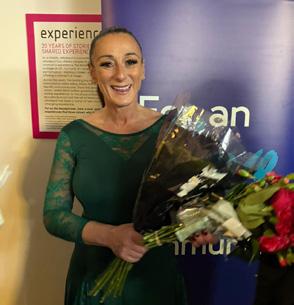
Debbie Marks, a Northwest Londonbased personal trainer and sports massage therapist, raised over £1,400 to support our work when she represented Jami in the Maccabi GB Dancing Strictly London event on Sunday 2 November at the Arts Depot in Finchley. She was among 12 other contestants, many of whom have never ballroom danced before, to take to the stage alongside her professional dancing partner, Danny, whose performance was critiqued by a panel of expert judges, including head judge Vanessa Feltz.
Debbie has always used fitness to boost her mental health and cope with challenges. However, when she found herself unwell and in need of support, she
reached out to Jami and was matched with a Jami social worker. “They helped me through my surgery and later, when things got difficult again, they were there for me.” She is also a community member at Head Room, Jami’s social enterprise café, supported by The Maurice Wohl Charitable Foundation. “Jami has been amazing,” she says. “Without Jami’s support, I can honestly say I wouldn’t be here, or the person I am, today.”
Despite being active and energetic, Debbie had never done anything like this before. She says, “Rehearsals were a lot of work and there was a lot to remember, but the dance school and my teacher were fantastic, and they made the whole process very enjoyable. I threw everything I had into it and really wanted to give back and say thank you in a big way for the support that Jami has given me over the past 18 months. Being able to take part in this event and support Jami has felt incredible.”
If you would like to boost Debbie’s fundraising further, please visit her JustGiving page at https://www.justgiving.com/ page/debbie-marks-1
“They helped me through my surgery and later, when things got difficult again, they were there for me. Without Jami’s support, I can honestly say I wouldn’t be here, or the person I am, today.”
Debbie
Ruben, the teenage trekker
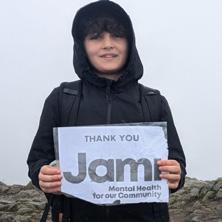
In honour of his bar mitzvah, Ruben took part in a Bnei Mitzvah Challenge to raise money for Jami. In early July, Ruben and his dad travelled to the Lake District, where they climbed both Blencathra and the iconic Helvellyn. The challenge tested their endurance, determination, and teamwork, as they faced steep climbs and unpredictable weather along the way.
Despite the tough conditions, Ruben stayed motivated and inspired by the cause and the support he received from family and friends. Thanks to his incredible efforts, he raised over £500 to support Jami’s vital mental health services in the community.
Jami Mental Health Shabbat 23–24 January 2026
Help us make Jami Mental Health Shabbat 10 out of 10
1. Encourage your school, shul or community to mark the weekend
Discuss with a teacher, your rabbi, youth group, Jewish society or any other Jewish organisation you belong to how together you can organise an activity or event to get people talking openly about mental health. Whether it’s a learning session or a discussion; a Friday night dinner or an organised walk and talk, if it gets people sharing ideas on how to support ourselves and each other, that’s a perfect ten in our book.
2 Share the Jami Mental Health Shabbat Toolkit with others
Filled with everything from youth activities to rabbi sermons, our toolkit will help make Jami Mental Health Shabbat extra meaningful for everyone.
Sign up to get your copy at jamiuk.org/get-involved/ jmhs/#signup
3. Become a Jami Ambassador in your community
Help raise awareness about mental health in your synagogue and community during Jami Mental Health Shabbat – and all year round.
We’re encouraging everyone to get on board in marking the 10th Jami Mental Health Shabbat on 23–24 January to raise awareness of mental illness and distress in our community. There are many different ways to get involved, but here is our “starter for 10”.
Help educate, be open, and listen to members of your shul community who may need help and could benefit from Jami’s support.
To find out more, visit jamiuk. org/get-involved/ambassador
4. Host a meal to raise money for Jami
Invite family and friends over for a Shabbat meal and request a donation instead of flowers or wine.
For more information, visit jamiuk.org/get-involved/ jmhs/#host
5. Organise a Challah Make
This is another great way to raise some dough for Jami’s mental health services in the community.
6. Attend a talk or give one yourself
Many organisations will be hosting talks on mental health, so come along, listen and bring your friends and family. We’re looking to build a bank of speakers, so if you’d like to share your own mental health journey, please email Emma Dorman at edorman@jamiuk.org.
7. Remember to collect your candles
In kosher shops around the community, we’ll be giving away Jami Shabbat candles, so don’t forget to pick up yours!
8. Volunteer for Jami
Give your time and skills to Jami through one of many volunteering opportunities available.
To find out more, visit jamiuk. org/get-involved/volunteering
9. Donate to Jami
Every donation, big or small, can make a real impact in supporting people with their mental health.
For the easiest way to give a gift, visit jamiuk.org/donate
10. Join us at Head Room
Come along to see our welcoming and inclusive café if you’ve never visited before or, if you’re a regular, drop by and check out what we have in store.
To find out more, visit headroomcafe.org/whats-on
Altogether Stronger
Daniel Carmel-Brown, chief executive of Jewish Care, explains the thinking behind Jewish Care’s new five-year strategy: caring better, thinking bigger, acting together
At Jewish Care, everything we do has always begun with people: the people we support, their families, our staff, volunteers and our incredibly generous supporters. Over the past year, we have been listening carefully to representatives from all those groups, as well as to many respected experts and lay leaders. Our aim? To understand how life has changed for our community and what people need from us in the years ahead. We heard about the challenges of living longer, of managing illness or dementia, of the growing pressures on carers and the loneliness and isolation that can come with growing older. We learned that many people want to stay in their
own homes for as long as they possibly can, and that they may only need our support at the very end of their lives.
We also heard about the increasing demand for mental health support, especially among younger generations, and how important it is that we continue to respond to all these needs with care, understanding and expertise. Meeting those needs is at the heart of the strategy we have been developing to take us through the next five years – and enable us to continue meeting the changing needs of the Jewish community.
This will mean offering some services that are
“Altogether Stronger is about strengthening, protecting what matters, and being ready to meet the needs of the community now and in the future.”
new for Jewish Care, such as mental health support for children and young people. Some of our existing services will be expanded or delivered in new ways, like those for people living with dementia. We will offer more community services, to enable people to live better lives in their own homes for as long as they choose.
I want to reassure you that we will still deliver the many vital services on which so many people rely today. That includes the Holocaust Survivors’ Centre, residential care homes, retirement living schemes, community centres, our Helpline and social work, and many others – all these
will remain core to our work. But we are also adapting, so that Jewish Care is ready to meet the needs of people in our community tomorrow as well as those of people in our community today.
Jewish Care has always been at the heart of this
Altogether Stronger
How Jewish Care supports our community
Choice and control
We help people make informed decisions, live as independently as desired, and plan their care with confidence.
So that: People have the knowledge, skills and resilience to make informed choices, take control, and have agency on their care journey.
Connection
We offer connection and meaningful daily activity through our community centres, Head Room, volunteering and befriending.
So that: People are able to engage meaningfully, feel less lonely or isolated, regain confidence, and feel part of a community. Carers find understanding and connection through shared experiences. Volunteers rediscover a sense of purpose and belonging in everyday life.
community, powered by generosity, professionalism, and Jewish values. We can never know what the future will hold, but Altogether Stronger will help make sure that heart keeps beating, caring better, thinking bigger and acting together for everyone who depends on us.
Our care and services are designed to ensure a positive difference to people in the Jewish community, in four key areas
Health and wellbeing
We provide specialist elderly care, dementia support, mental health services through Jami, and counselling.
So that: People have their care needs met. They are better able to cope with mental and physical health challenges and experience improved wellbeing.
Identity and self worth
We help people regain control over their own lives by listening, respecting individuality, and offering a personcentred approach to care.
So that: People feel heard and understood. They feel comfortable to be themselves and receive support which is person-centred, and respects their identity, needs and wishes, often with a renewed sense of control and self-belief.
Care. Connection. Community. Altogether Stronger.
To find out more about Jewish Care’s new five-year strategy, Altogether Stronger, visit https://jewishcare.org/resource/strategy-2020-2025
Helping young people navigate the digital world
Jami, in partnership with Streetwise, which provides essential support services for young people aged 11–25, has launched an interactive digital wellbeing guide for parents and carers to support them in helping children build healthy online habits.
The thinking behind Plugged In, Switched On: Raising Resilient
Digital Natives is to ensure that young people are able to navigate the digital world, build resilience, manage screen time and use social media safely and responsibly. Emma Dorman, Jami’s senior education coordinator, says, “The aim of the guide is to empower those with young people in their lives to have open, honest and productive conversations, and to grow
the confidence of both adults and young people in this area.”
Plugged In, Switched On: Raising Resilient
Digital Natives begins with three questions to help people locate the content they are looking for and is split into sections, depending on whether the young person is just starting their journey with smartphones and social media, or are already using them.
A refrigerator guide has also been produced by the charities. Providing both a quick overview and a reminder of the guide, the refrigerator version encapsulates the following key messages:
1. Be in partnership with your child.
Engage in open, honest conversation, ensuring their opinion is heard with non-judgement. Aim to be curious rather than combative. Use “I” statements eg, “I’m wondering how you use this social media platform?” and “I’m concerned that people you don’t know can see your content.”
2. You are the parent. Stick to your boundaries.
Your children might not like them or agree with them. If you discuss the boundaries, explain your thinking and hear your young person’s thoughts, it will minimise and de-escalate conflict. Be open to compromise, where appropriate, and offer a timeframe for review.
3. Consider your child/ children’s age and stage.
Age ratings are a guide only. They are there to safeguard our young people, not punish or restrict them.
4. Only you know your child and what may be appropriate for you and your family.
5. Explain which information needs to be kept confidential online.
Check their knowledge of privacy settings and reporting mechanisms.
6. Social media is a learning curve. Learn with and from your children about their usage.
Discuss trolling and cyberbullying when appropriate, and the use of algorithms and clickbait to drive our attention to content.
7. Recognise the impact social media can have on mood.
Help children consider what they view and upload. Discuss options and alternatives that might better support their mental health and wellbeing.
8. Offer yourself as a sounding board if they see/ hear something online they are unsure of.
Respect that you may not be the person they wish to talk to. Help them think who else might be an appropriate trusted adult.
9. Actions should have fair and reasonable consequences.
First, check your child is safe and OK. Give them space to be heard and supported. Avoid narratives of shame which create future obstacles.
10. Role model safe social media use by implementing your own boundaries and being thoughtful about the content you see and what you upload.
Share your thinking with your child/children and show how you navigate what content you choose to share online and how you support your own mental health.
11. Discuss creating a social media feed which is uplifting and inspiring.
Support them to unfollow or mute accounts or group chats which are unhelpful or have a negative impact. Help them to be more thoughtful about the content they share. And encourage pausing before posting.
Hear from Head Room’s community members
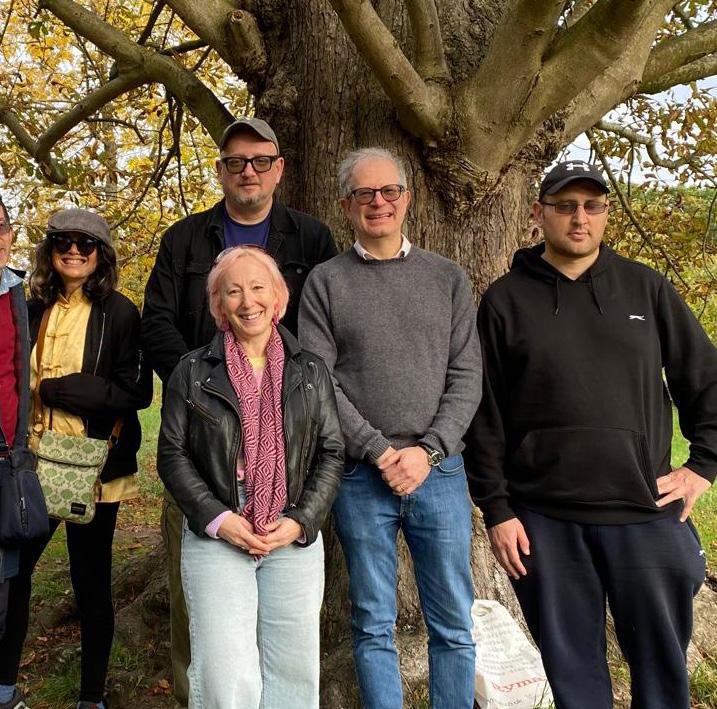
At Head Room, Jami’s social enterprise café, supported by The Maurice Wohl Charitable Foundation, everyone is welcome to join the café’s community programme. Zoe Reese, co-facilitator of Head Room’s music group and community walking group, and a volunteer community befriender at the café, chats to a few of the café’s community members to find out why they enjoy coming to Head Room.
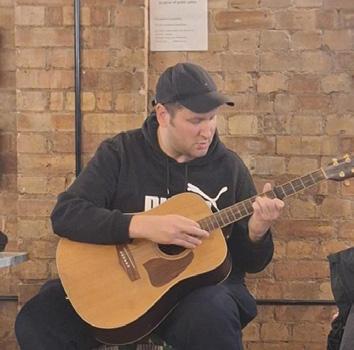
Head Room’s free weekly drop-in groups, activities and events run from Sunday through to Friday and focus on art, writing, walking, games and community discussions. There’s also the chance to enjoy a friendly meet-up and chat with others over a cup of coffee or chocolate milkshake, and a monthly music group and Open Mic Night event.
“Everything’s fantastic,” says Lee, who’s been coming to Head Room for almost two years. He relishes the company, conversations and connection with people at the community walking group, Sunday games group
and open mic night.
“Jami’s community programme performs such a good service,” he says. He believes it’s added a sense of normalcy to his life and keeps his mind healthy. “It’s given me light at the end of the tunnel.” Lee also enjoys the friendly rivalry and banter at the games group. He adds that there’s a mutual respect shown to everybody at Head Room and describes everyone as fantastic, friendly, welcoming, warm and funny.
The community walking group gives Lee, who has become well known for his fascinating weekly updates about his now famous parrot,
“Jami’s community programme performs such a good service,” he says. He believes it’s added a sense of normalcy to his life and keeps his mind healthy. “It’s given me light at the end of the tunnel.”
Lee
Zoe Reese
Miss Hicks, an opportunity to exercise and meet new people. “I love the walk,” he says. “It’s excellent and enlightening.” He explains that it’s also essential for him because, aside from his parrot, he would be alone otherwise.
Adam, who comes to nearly all the groups, enjoys seeing the people he’s friendly with and having a chat. He finds the Sunday games group fun and says he’s improving at Scrabble, which seems to have become a rather popular board game at Head Room. Adam also likes the music group because the relaxed atmosphere means he feels comfortable to perform.
Jonathan has been coming to Head Room for three or four years now. He attends many of the groups and has performed at Open Mic Night. He says: “It’s been good to have structure and a place to go and make friendships.”
His favourite group is Writing4All, which he thinks is great. “We do various things, including individual writing and also collaborative work, where we work together to do stream of consciousness writing.” Explaining the latter, he says: “It’s when you just write words without thinking about them.”
Jonathan’s sister, Diana, comes to the walking group too, and is also there to support him. She says: “I think Head Room, Jami and Jewish Care provide a brilliant service and I hope they continue forever. They save people’s lives.”
For anyone thinking about coming along to the groups at Head Room, take encouragement from Diana, who says, “Give it a try!” She explains that the environment is very relaxed and welcoming, and she wishes that every high street had a Head Room café. “It would be wonderful if there were more places like this,” she says. “It helps people going through all kinds of different difficulties and the support is fantastic.”
If you feel like joining the community programme, do check out what’s on at headroomcafe.org/whats-on or just drop in anytime the café is open. And if you’re looking for a friendly chat or some support, you’ll find the café’s volunteer community befrienders available at various times throughout the week.
Jonathan
Adam
Youth Mental Health Partnership
While Jami predominantly provides direct mental health services to adults and young people in the Jewish community, there is much activity that goes on behind the scenes. Here, Maneesha Pathmarajah, senior mental health children’s & young
person’s; carer & family services manager, and Edie Watson, children’s & young person’s mental health partnership & intake lead, share what’s been happening to improve mental health support for our young people and the plans that lie ahead.
Partnering to support young people’s mental health
What is the Youth Mental Health Partnership that Jami helps lead?
The Youth Mental Health Partnership was an initial partnership set up between four Jewish organisations, which work with young people struggling with their mental health. These are Jami, Noa Girls, Camp Simcha and Norwood.
Why was it established?
The CEOs of these four organisations, together with the Jewish Leadership Council (JLC), wanted to
collaborate and look at how they could best support young people with their mental health.
And what does the partnership do?
As the Youth Mental Health Partnership lead for Jami, I work with the other partners to look at where there are gaps in support. We all reach different populations and offer something slightly different. But, as part of wider networks and forums, we look at whether other organisations can fill those gaps. For example, it was
through this partnership that we were able to gain evidence about why Jami’s Dangoor Children and Young Person’s Service was really needed.
I am also working with the partnership to develop a service directory where people can log in and access mental health services that are available in the Jewish community. Having only one intake form, which could be accessed by professionals, would avoid duplication and prevent families from having to repeat their story multiple times to different organisations.
Maneesha
Edie
Maneesha
Has anything else developed as a result of the Youth Mental Health Partnership?
Yes, it has. The JLC supported the partnership to create an extension of itself, which is now known as the Youth Mental Health Network. The partnership comprises several organisations, including the four partner organisations and the JLC, as well as Maccabi, Jewish Women’s Aid, Kisharon Langdon, PaJeS, Art Therapies for Children, New North London Synagogue and Gesher School.
So what does the Youth Mental Health Network do?
Edie
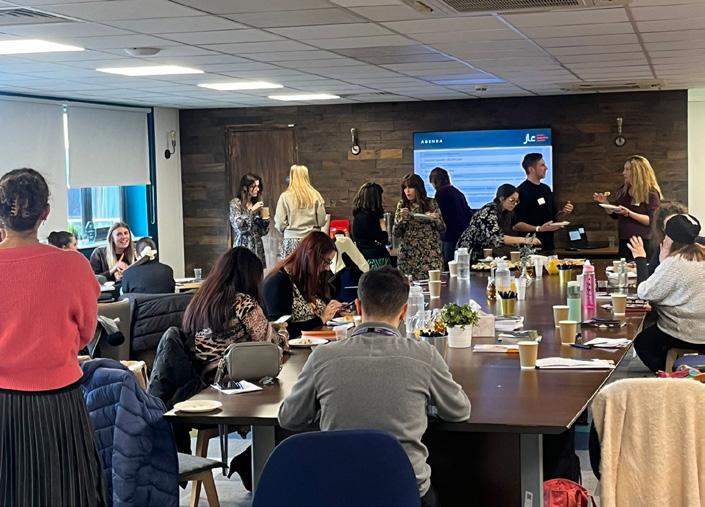
These organisations come together every six months for a workshop on various different themes around youth mental health. Some of these events have been held within the Jami space and have covered topics, including mental health and neurodiversity, emotionally based school avoidance, and transgenerational trauma and anxiety. Our last event at the end of November focused on supporting the transition of young people from primary to secondary school. And who decides on and leads these workshops?
There’s a planning committee that meets every so often to organise each event, which usually features a speaker with a high level of expertise in a particular field of youth mental health, a serviceuser perspective, plenty of discussion and networking. For example, we’ve invited
rabbis, psychiatrists and people with lived experience to speak, including parents of children who’ve received support from Jami. As a result of the networking sessions at the end of these workshops, there are lots of follow-up conversations that occur between the organisations around joint working.
So, what other plans do you have in store?
We have found that there is a real need for a forum specifically for those organisations within the Jewish community, working within intake or triage, to have a space to network. The idea is that this space would provide an update on each charity’s work and ensure that we’re all signposting effectively. And finally, we are also looking at setting up a youth forum, to gather the voices of more young people and find out where further gaps in support may be.
And what will this youth forum look like?
Edie
That’s a good question. It’s very much in the early stages, but it would be looking to involve either young people who’ve accessed services in the community or those who haven’t, and the barriers that may have prevented them from doing so. We would also want to get their opinions on what mental health and perhaps other support is missing in the community and then take that information and work out whether Jami or another organisation within the community would be better placed to meet these needs. In an ideal world, our aim would be to hold this kind of youth forum on a yearly basis to get service-user involvement and hear young people’s voices. After all, this is a service for them. But, as Edie said, it’s still a work in progress although we hope it will come to fruition at some point soon. Watch this space!