Syracuse, New York
Syracuse, New York
Miguel Rodriguez
EXECUTIVE EDITOR
Sophie Davis
EDITOR IN CHIEF
Brenne Sheehan
MANAGING EDITOR
EDITORIAL
FOB EDITOR: Jojo Wertheimer
FOB ASST. EDITOR: Hannah Peters
BITCH EDITOR: Kiran Hubbard
ASST. BITCH EDITOR: Caroline Erskine
SMUT EDITOR: Fei Chan
ASST. SMUT EDITOR: Laura Lemgruber
GAWK EDITOR: Joelle de Poto
ASST. GAWK EDITOR: Chandler McCoy
NOISE EDITOR: Kelly Matlock
ASST. NOISE EDITOR: Camden Cyr
Janai Berrocal, Blaire Brown, Karli Coskun, Ava Demcher, Audrey Farris, Elizabeth Hample, Maggie Hoffman, Kaila Hu, Mollie Kuritzky, Adelaide Larson, Colette Leto, Jerry Morris, Isabella Perrotta, Blakesley Rhett, Julia Yezukevich
BUSINESS MANAGER
Hannah Wilson
FRESHMAN INTERN
Adelaide Larson
JERK SWEETHEART
Catherine Scott
Megan Radakovich
CREATIVE DIRECTOR
EXECUTIVE DIRECTOR: Emma Novy
DIGITAL EDITORS: Jaymee Hinz, Alexis Landrini, Téa Sklar, Madelyn Taylor, Navya Varma
DIGITAL WRITERS: Lee Bruton, Helena Chernosky, Evan Edmiston, Nina Gugino, Kaila Hu, Parisa Nosrati, Jack Pasquale, Julia Raass
DIGITAL GRAPHIC DESIGNER: Hayden Chilcutt
VIDEO DIRECTOR: Mickey Maroulis
VIDEO TEAM: Leslie Arestegui Saldana, Jackson Barnes, Blaire Brown, Chloe Lee
SOCIAL DIRECTOR: Kylie Adedeji
SOCIAL TEAM: Evan Edmiston, Sophia Fotter, John Lakeman, Irene Lekakis, Meghan Elena Lenis, Emilia RuizMichels, Maude Royce Terwilliger
CONTENT CREATION DIRECTOR: Brenna Desmond
CONTENT CREATION TEAM: Grace DeSimone, Anna Long, Eleri Martin, Beckett Painchaud, Chloe Pusey
DESIGN DIRECTOR: Abigail Aggarwala
DESIGNERS: Claire Arveson, Caroline Connerton, Alexa Lakeman, Cole Kaneshiro, Julia Yezukevich, Ailani Wong
ILLUSTRATORS: Sophia Chen, Julia English, Andrea Victoria Hernandez, Marina Lee, Audrie Malmstrom, Sara McConnell, Soren Moos, Addison Pavone, Meredith Rogers, Max Weinstein
PHOTOGRAPHY DIRECTORS: Kailyn Peng & Collin Snyder
PHOTOGRAPHERS: Rebecca Beckas, Maddy Cox, Shane Grates, Nathaniel Harnedy, Andrea Hernandez, Alicia Hoppes, Brynne Hurt, Celeste Jenkins-O'Reilly, Christine Kao, Maddie Kim, Molly Mellinger, Soren Moos, Chloe Pusey, Alexandra Rice, Owen Sellers, Ailani Wong
Harriet Brown ADVISOR
Through its content, Jerk is dedicated to enhancing insight through communication by providing an informal platform for the freedom of expression. The writing contained within this publication expresses the opinions of the individual writers. The opinions expressed herein are not those of Syracuse University, the Office of Student Activities, the Student Association, or the student body. Additionally, the ideas presented in this publication do not necessarily reflect the opinions of the Jerk Editorial Board. Furthermore, Jerk will not be held responsible for the individual opinions expressed within. Submissions, suggestions, and opinions are welcomed and may be printed without contacting the writer. Jerk reserves the right to edit or refuse submissions at the discretion of its editors. Jerk Magazine is published monthly during the Syracuse University academic year. All contents of the publication are copyright 2024 by their respective creators. No content may be reproduced without the expressed written consent of the Jerk Editorial Board.
Before I started working on this letter, my Executive Editor, Miguel, gave me some inspiration with a paraphrased, out-of-context quote from the poem “Lines in the Mind, Not in the World” by Donella Meadows, where the poet muses about how all the world’s borders are imaginary:
“Even between you and me, even there, the lines are only of our own making.”
Feminist thinker Gloria Anzaldúa believed that the sheer violence and artifice of borders forged the tenacity of those within them. Creativity and resistance in their purest forms could be found in the in-between.
All this to say, everybody’s got a lot to say about borders—certainly enough to fill a whole magazine. In this issue, Jerk invites you to take a look at the invented, arbitrary nature of lines of all kinds while celebrating the incredible acts of resistance going on inside of and in spite of the cruelty they cause.
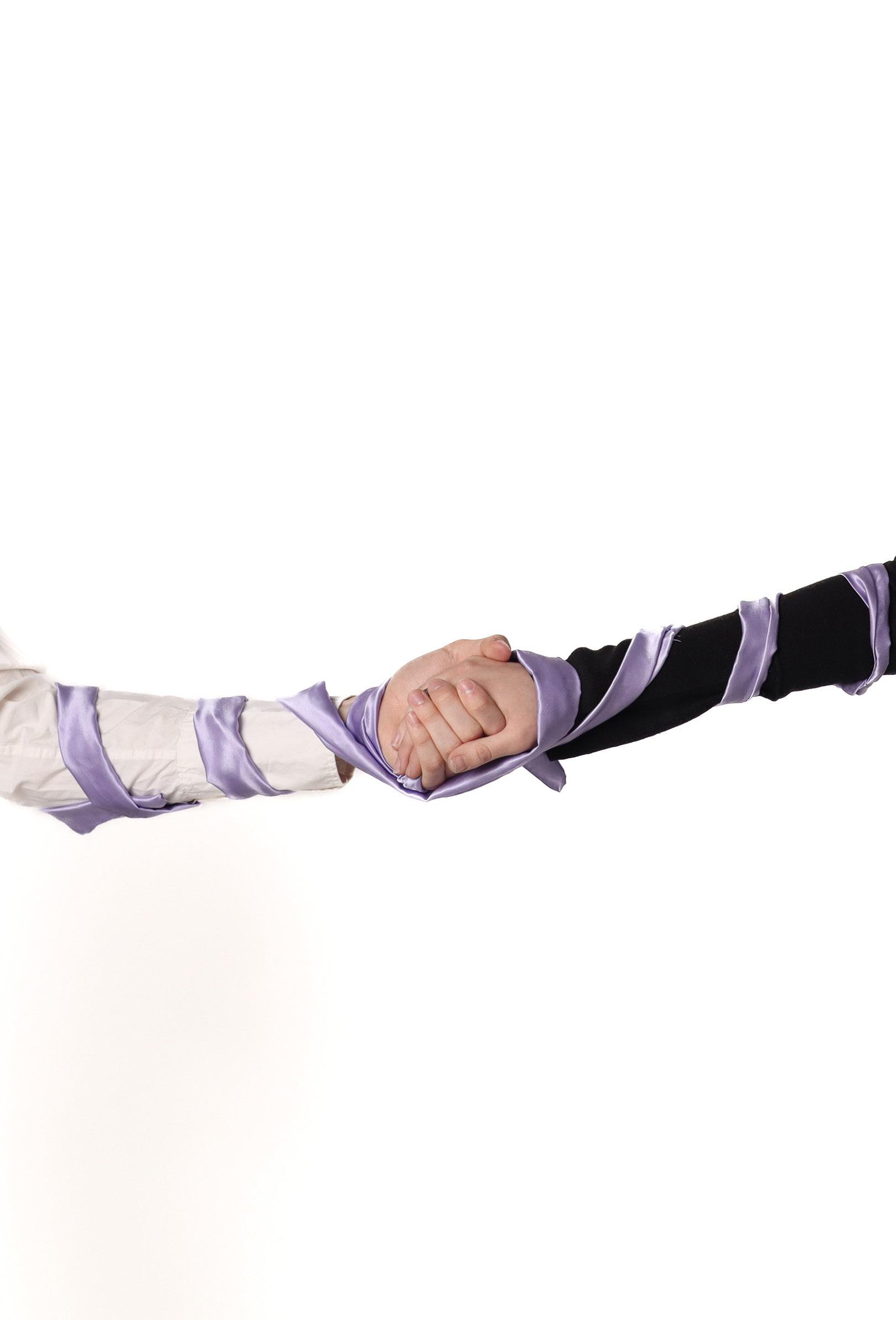
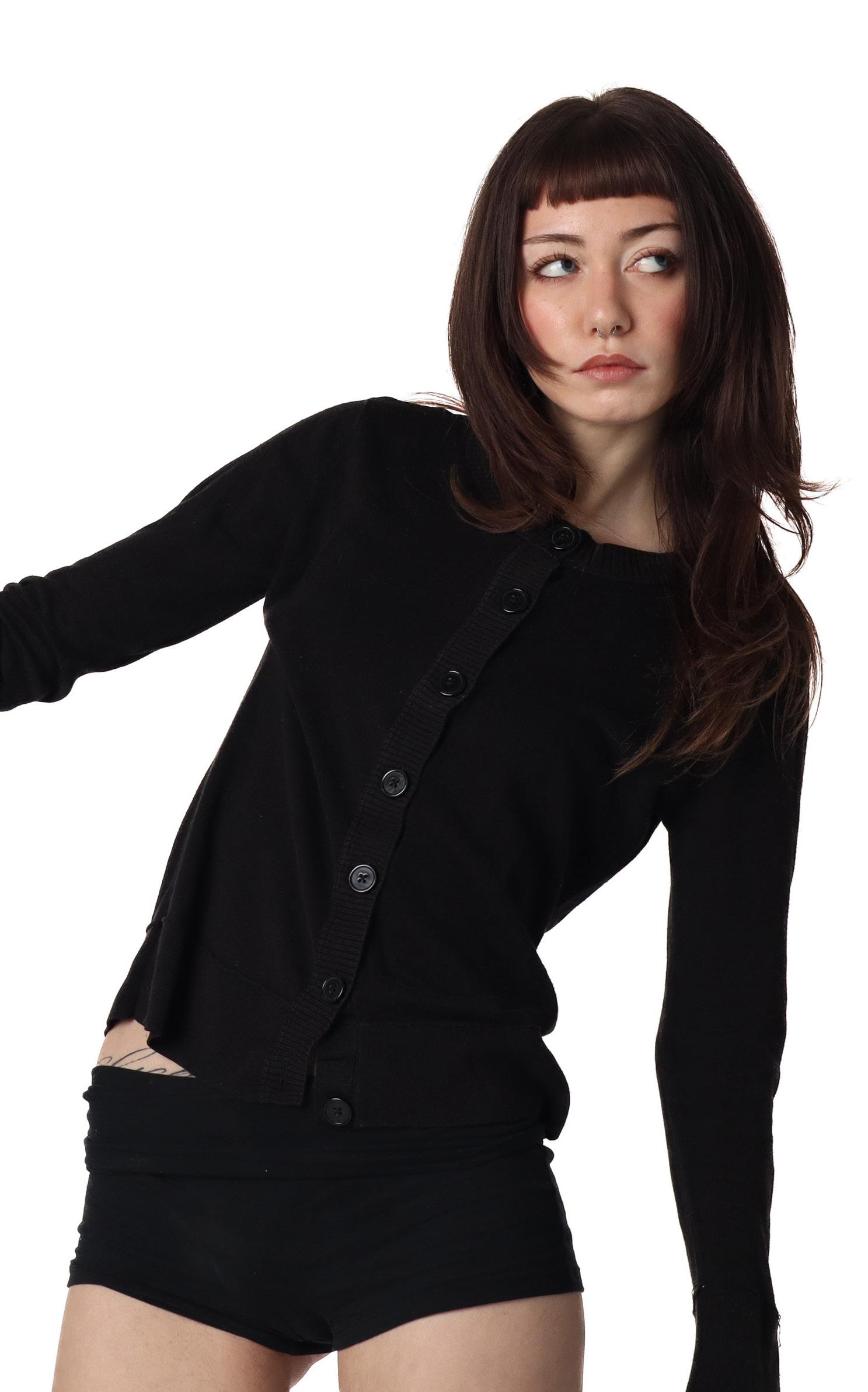
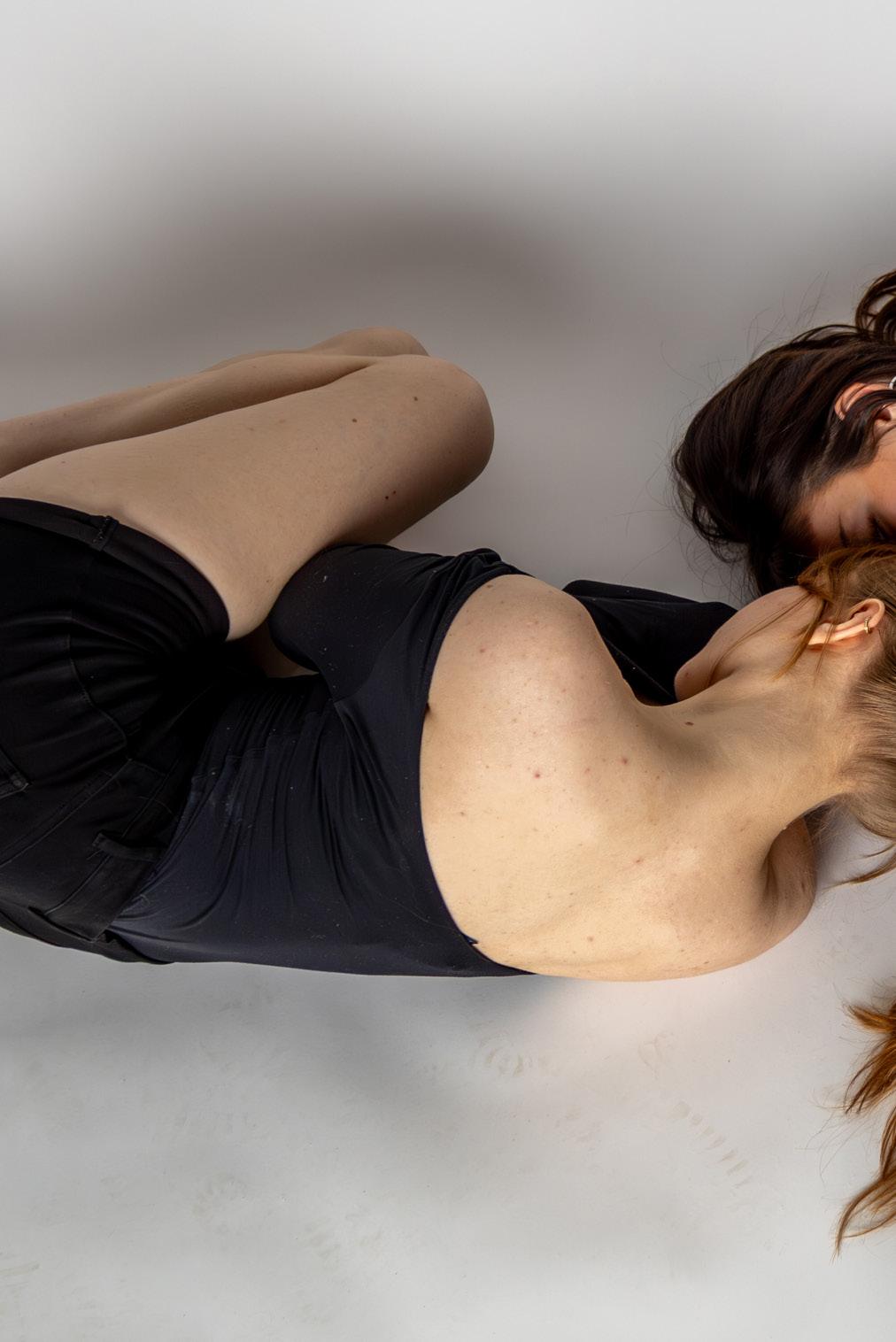
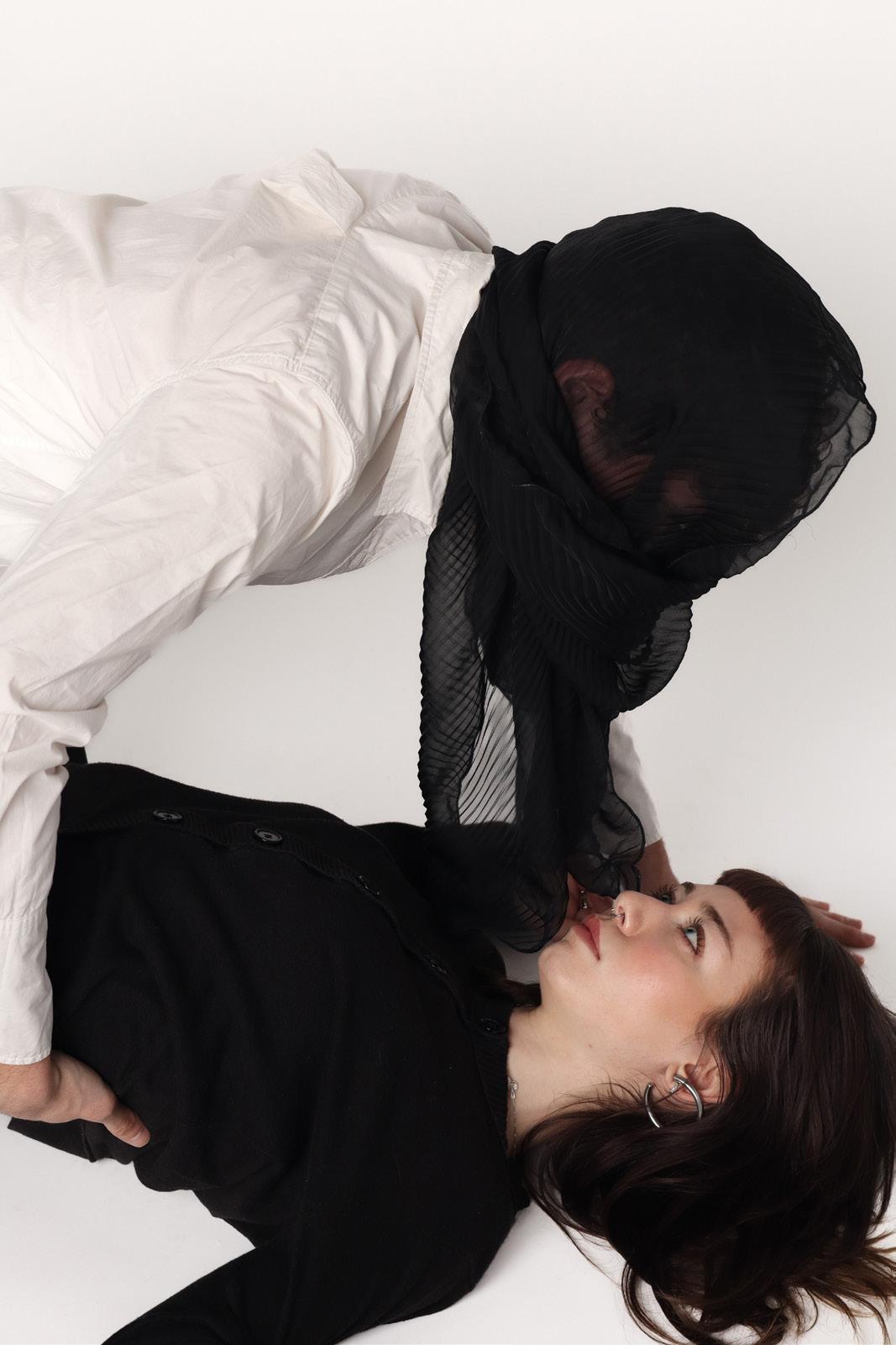
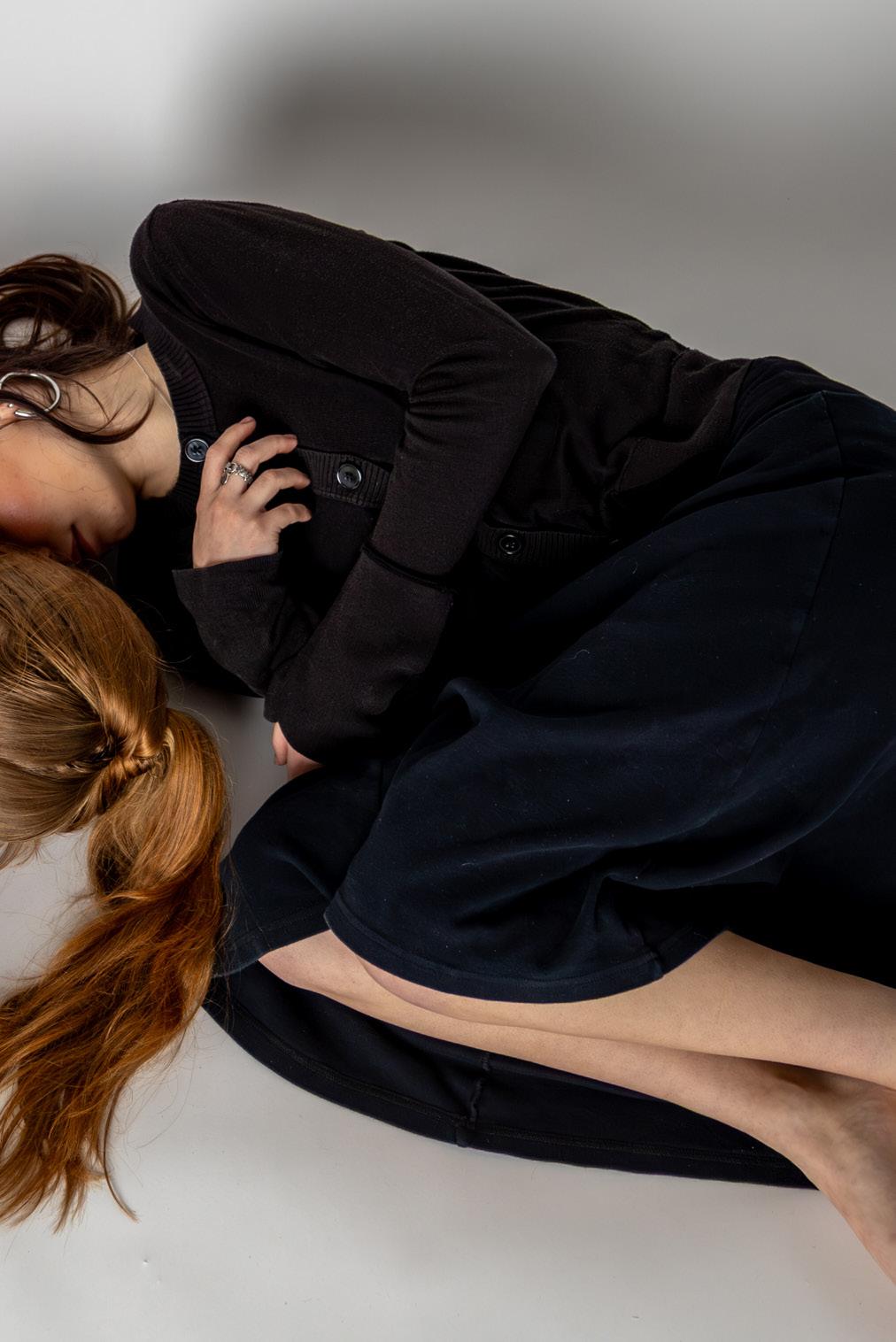
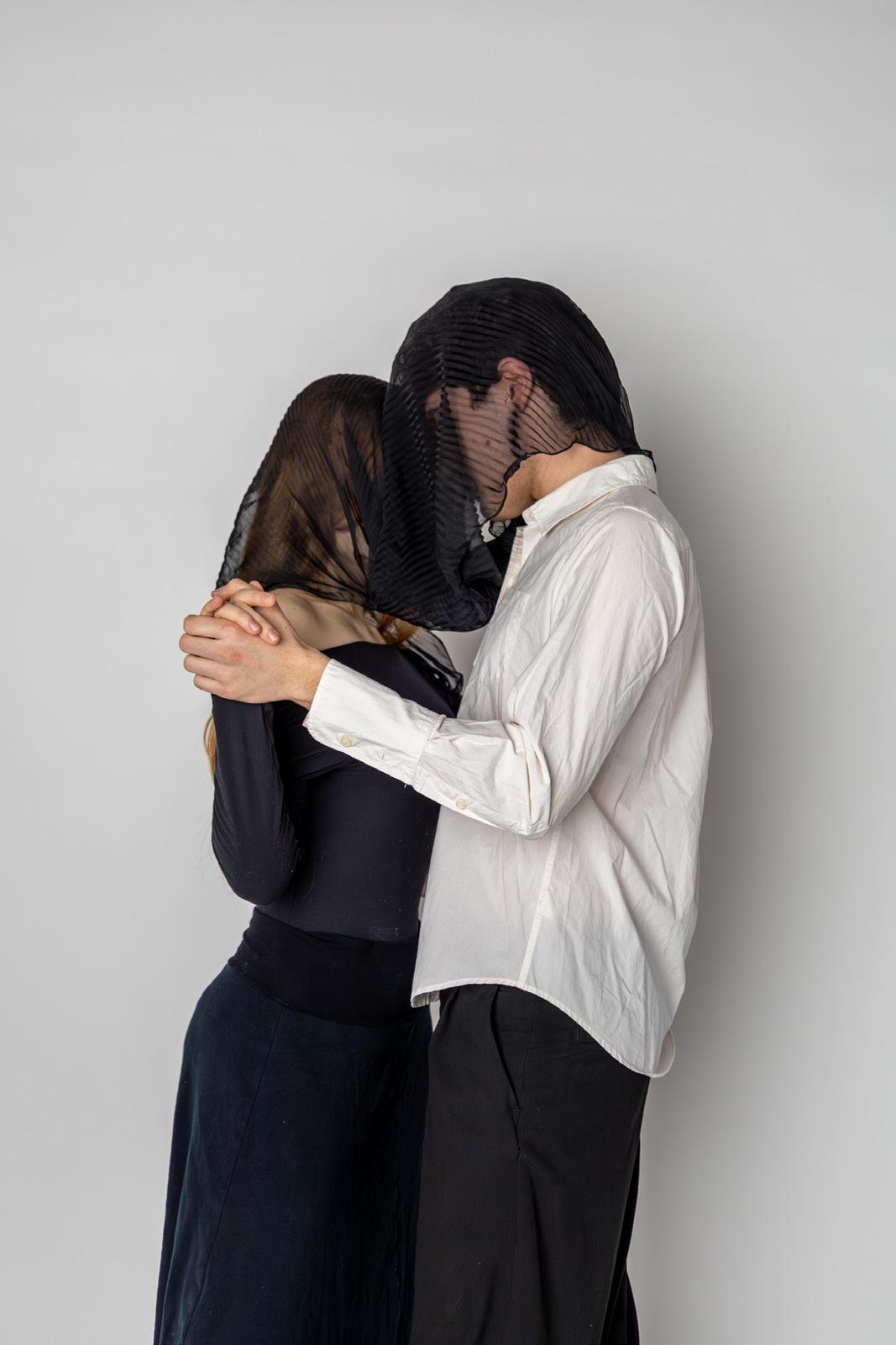
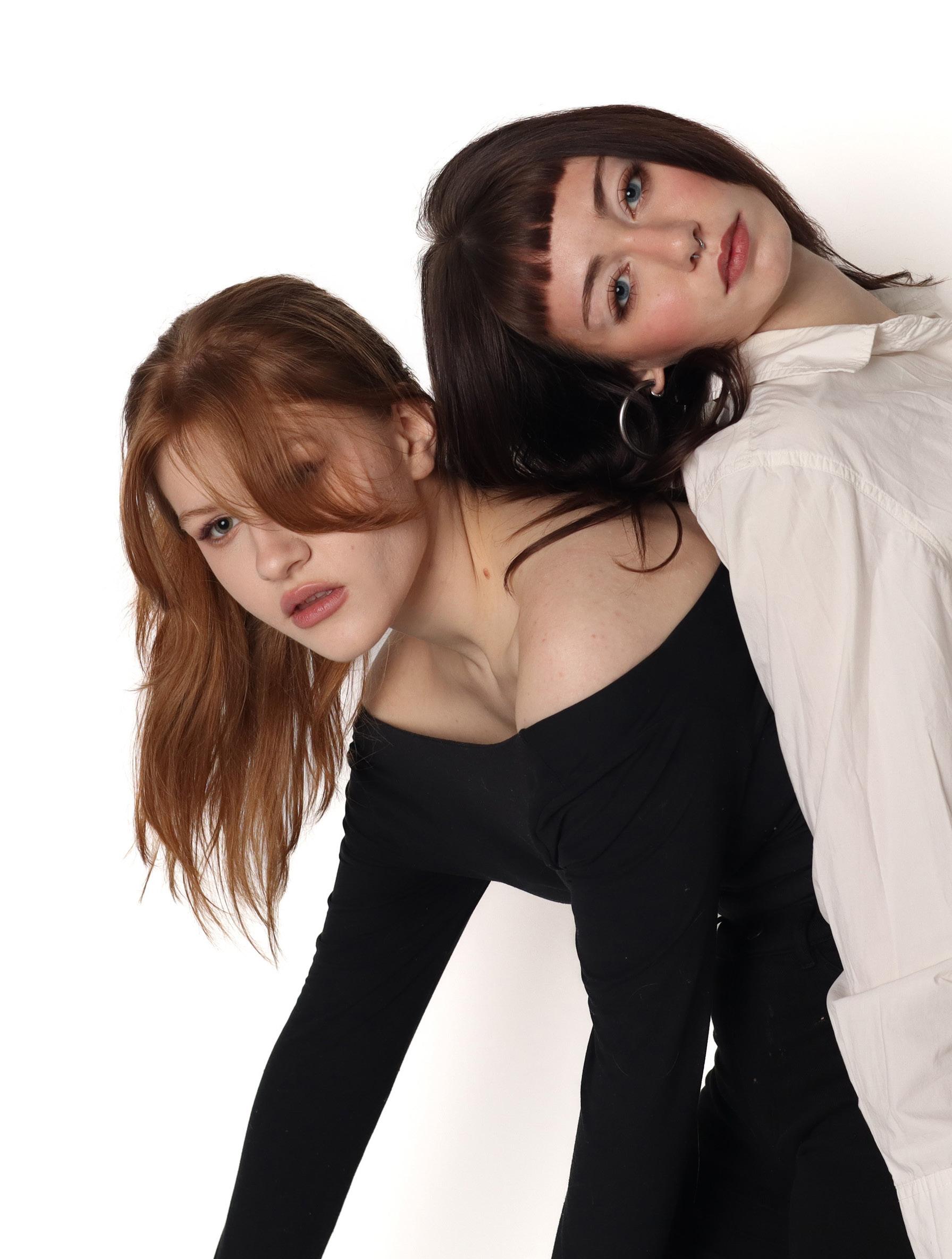
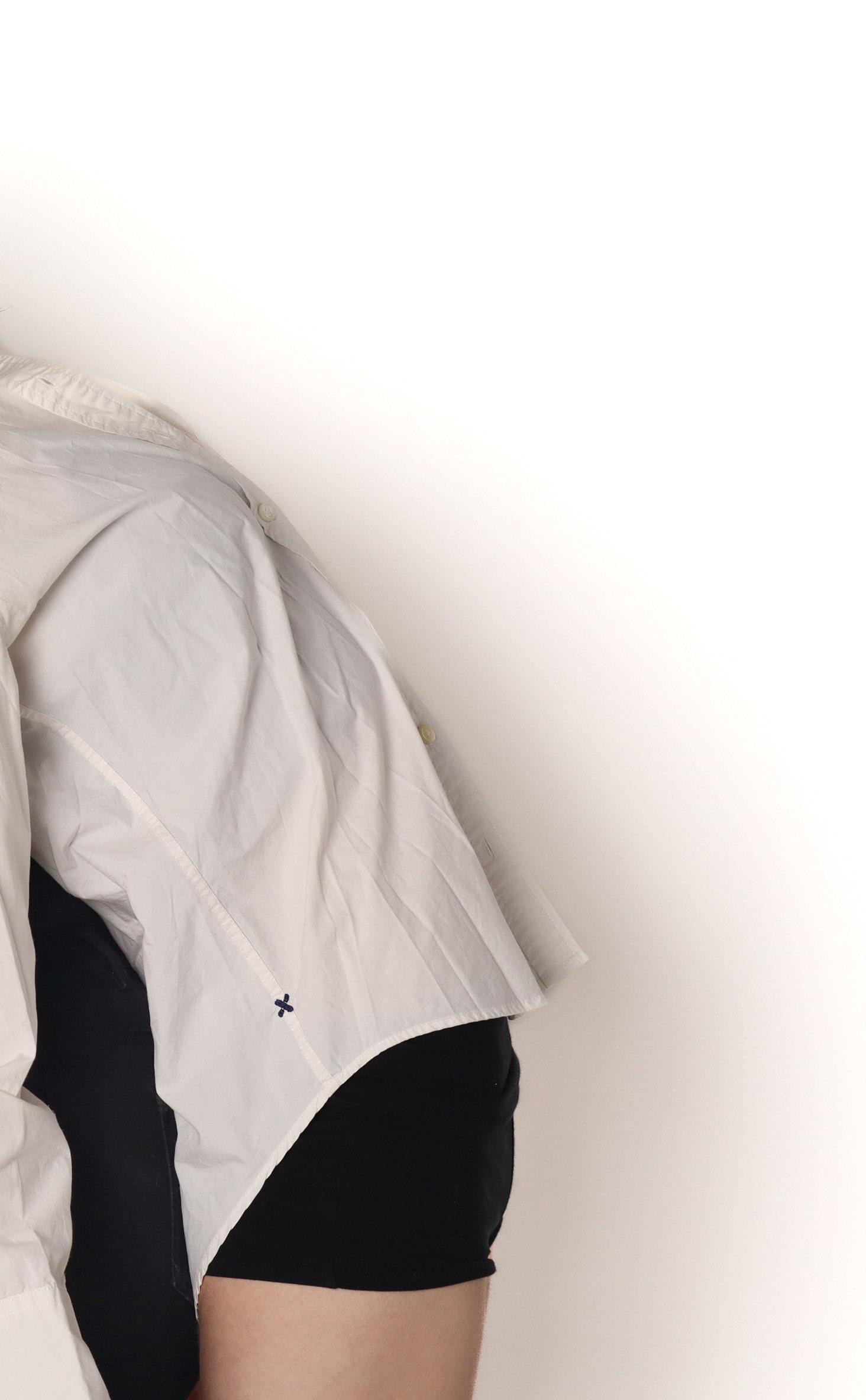
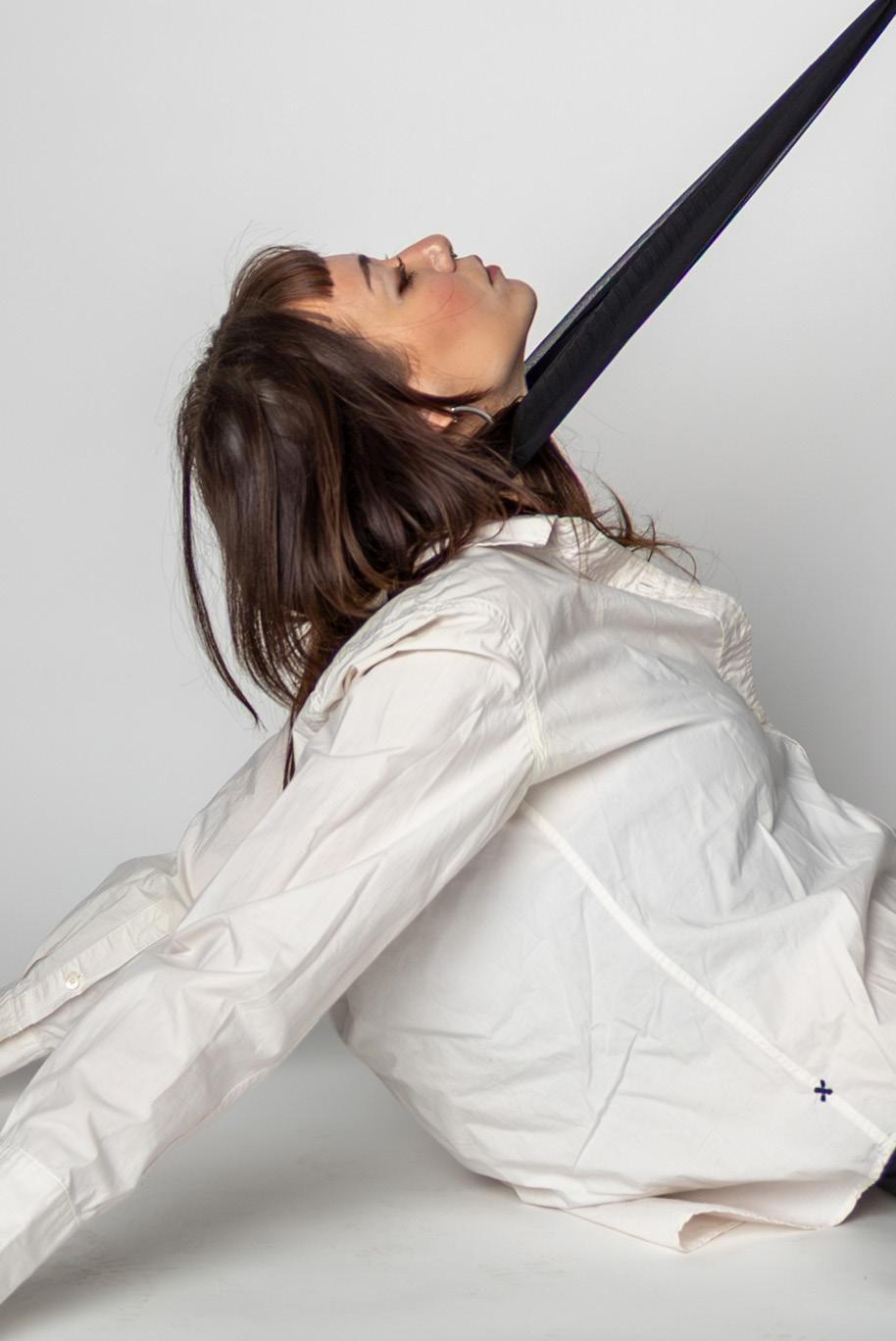
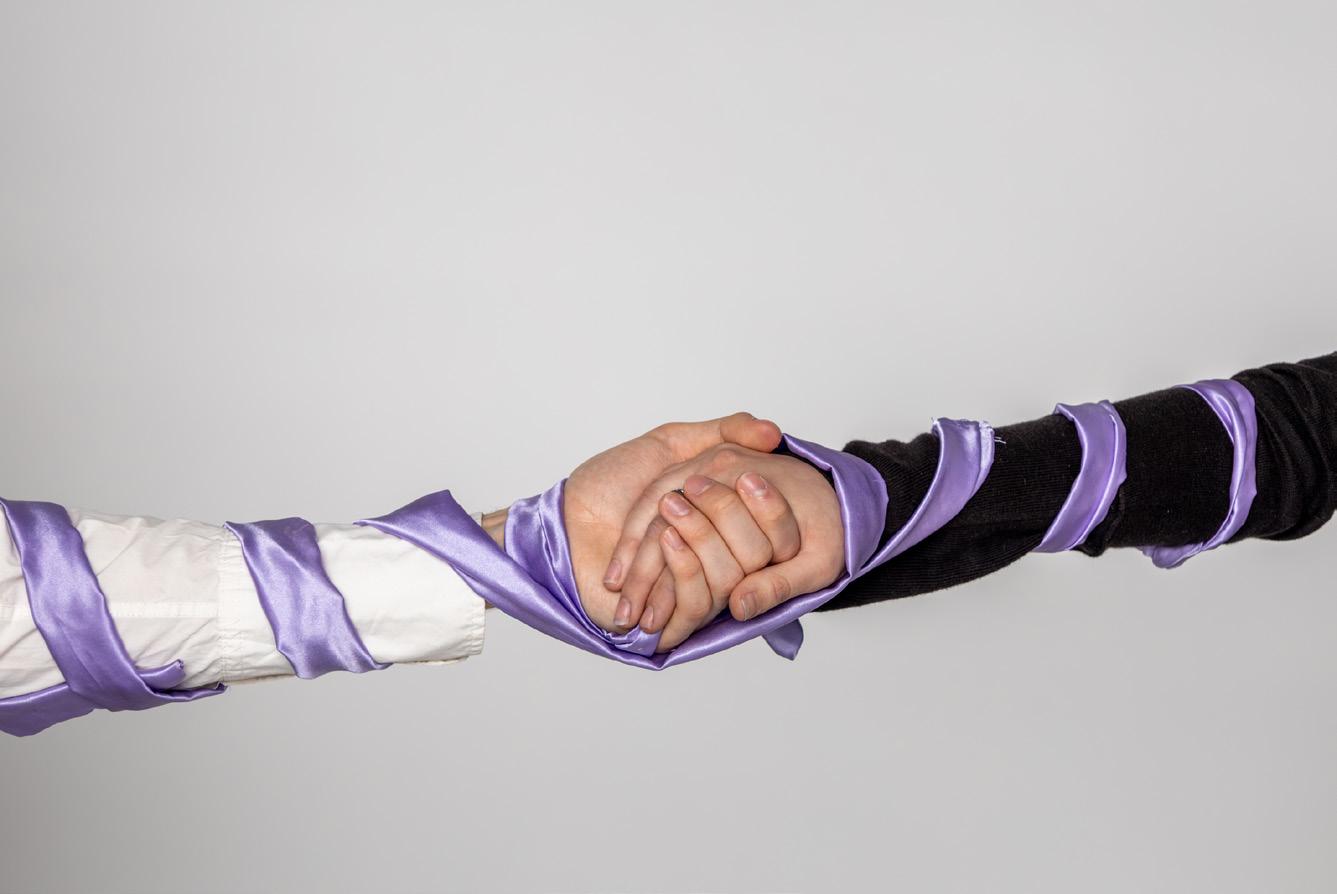
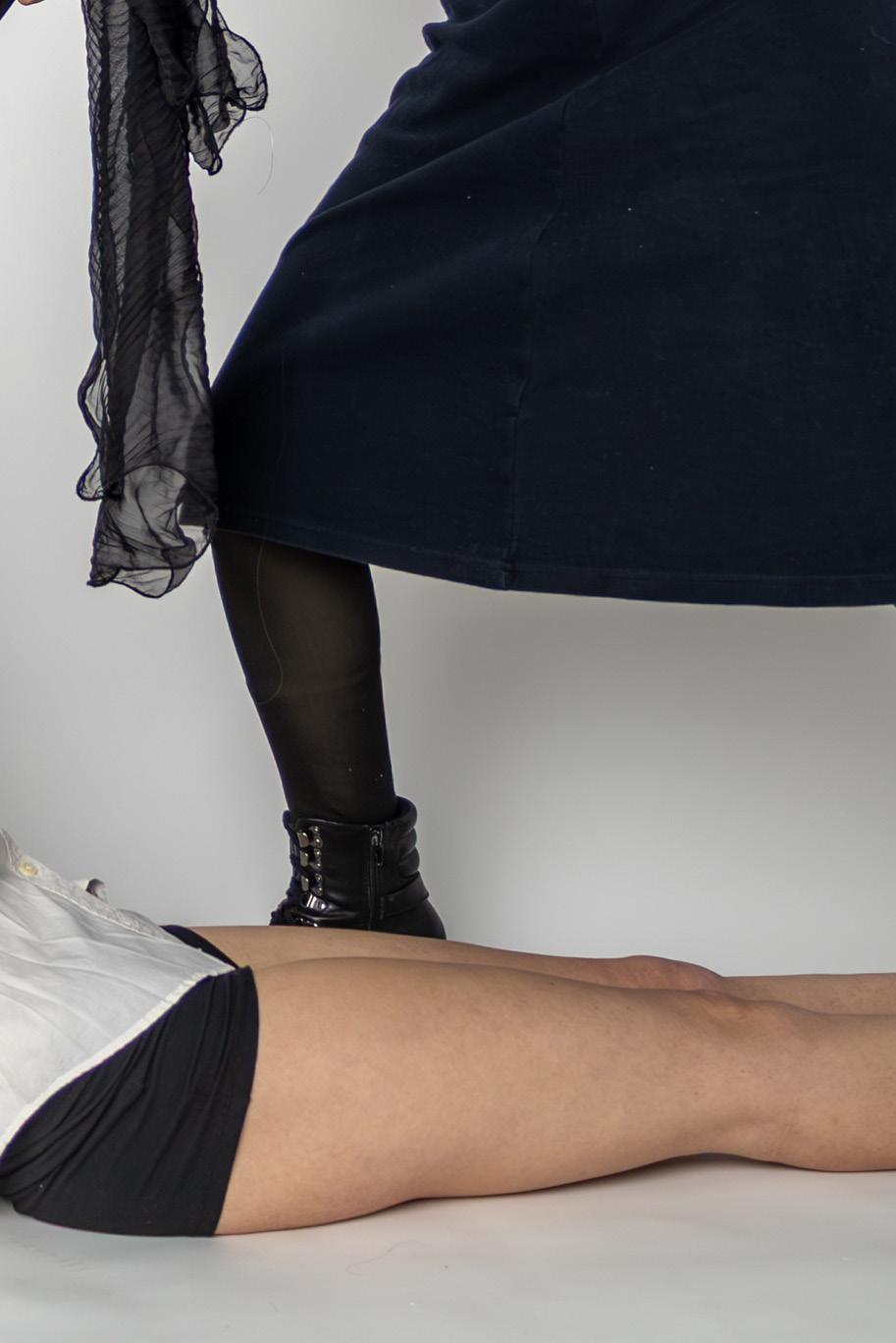
Bask in the liminal borderland between yourself and others with our photoessay exploring physical intimacy and tension on page 41. Pack your suitcase and traverse geographic borders in our world tour package on page 57. And interrogate the societal boundaries that determine personal responsibility with opinion pieces on selfishness on page 17 and the importance of staying informed on page 19.
Myself and the rest of Jerk ’s senior staffers are about to cross a line of our own: the stage at graduation (yuck! Cheesy!). And as terrifying as it may feel to look at the Faegan’s graduation countdown clock right now, it’s comforting to think that the line, between us and each other, between now and forever after, is only as real as we believe it to be.
Oftentimes throughout my four years at Jerk , it has been hard to tell where others end and I begin. Meadows would tell me that this issue is mine, but it is also ours—me, Miguel, Jojo, Joelle, Kiran, Fei, Kelly, Cam, Megan, Kailyn, Emma, Kylie and Mickey—and now it is yours too.
I hope you enjoy it.
Signing off,
Sophie Davis Editor In Chief (she/her/hers)
Jerk
But
Isabella Perrotta
Jojo Wertheimer Sex:
Kaila
Julia Yezukevich
Kiran
Brenne Sheehan and Jerry Morris
Fei Chan
Kailyn
Laura Lemgruber
Form & Function: How to Dress Like a Girl Who Is Going to Be Okay
Caroline Erskine
Closet Case: From the Studio to the Street
Adelaide Larson On the Record
Camden Cyr
Package: Jerk World Tour!
Adelaide
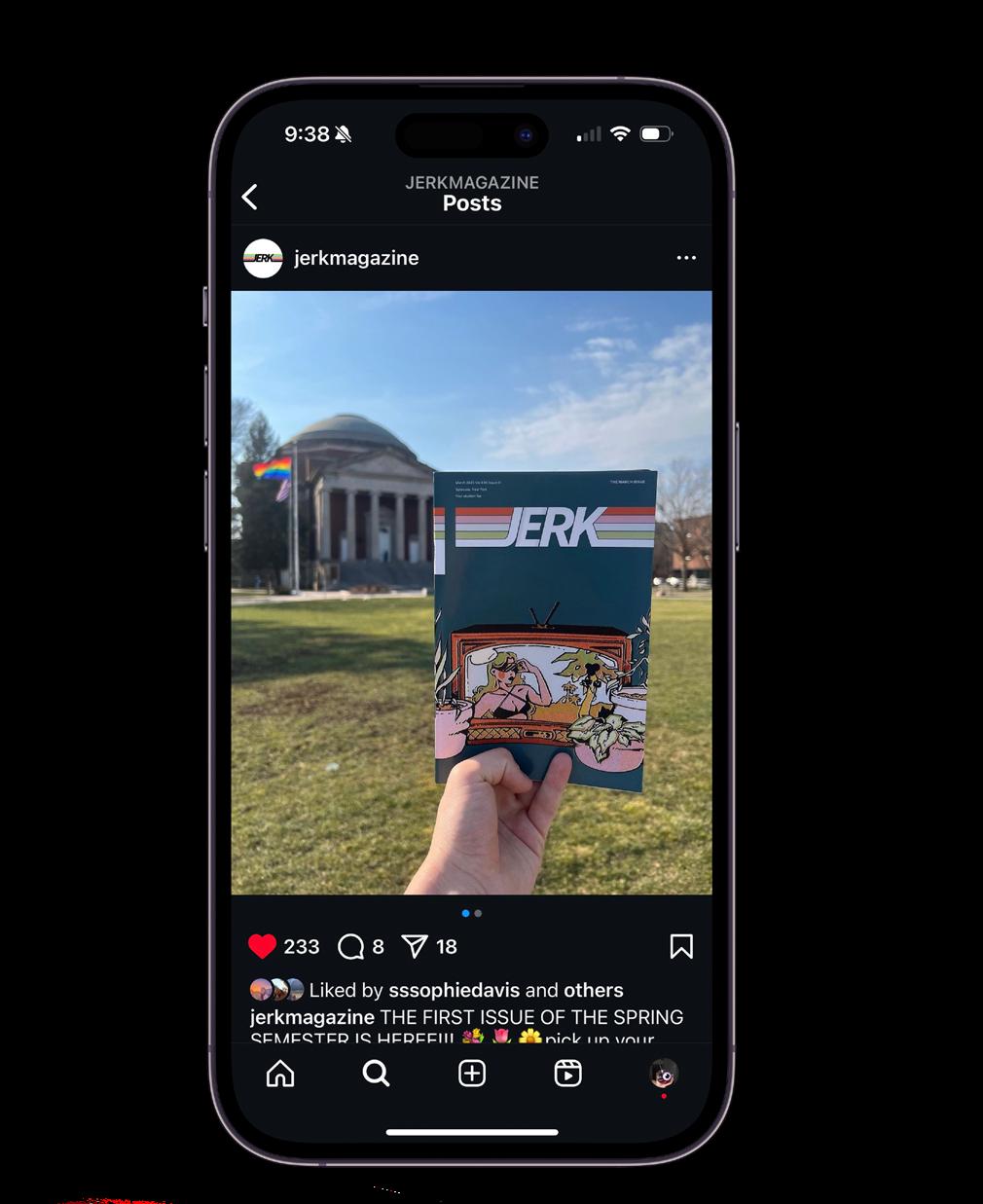


Jerk Magazine is exploring new ways to compliment our print mag. Find additional content on social media @jerkmagazine and our website jerkmagazine.net.
Words by Isabella Perrotta
MAY 8
MUNA is finally breaking their four-year musical celibacy, and it's just in time for summer. Titled Dancing on the Wall, MUNA’s pop-synth energy is going to have us dancing all over the house.
MAY 22
Keke Palmer has struck again! And by that, we mean she continues her streak of being watchable in almost anything, especially as a fashionable shoplifter. With a dash of eyebrows from Will Poulter to the direction by Boots Riley, this movie is sure to be one of this summer’s hits.
MAY 29
What started as a niche online urban legend with endless empty rooms, flickering fluorescent lights and signature yellow wallpaper is now set to become an academy sensation thanks to A24. With the cinematic world experiencing a psychological horror movie recession, this movie will hopefully be an incredibly unsettling affair.
MAY 5
There’s something about hearing the birds chirping or the bees buzzing that makes people just a little bit braver than usual. It might very well have to do with the looming presence of the end of classes, making consequences feel almost temporary—for about four months at least. Anyhoo, slide into those DMs and inquire about that makeout sesh you’ve been fantasizing about! What’s the worst that could happen?
MAY 9
Nothing screams congratulations and appreciation quite like being shoved in a tacky polyester gown and forced to sit through grueling hours of endless names and unnecessarily long speeches about “your future.” It’s all very inspiring until you remember it’s a glorified sendoff into the lion’s den of bills, the job market and saying goodbye to everyone and everything from the last four or five years of your life.
MAY 21
For some reason, late show hosts seem to have become society’s number one public enemies. Even though ratings were not as high as they used to be, The Late Show and Stephen Colbert himself still had plenty of supporters, but we guess he wasn’t pleasing the right kind of people. But hey, huge shout-out to CBS for making the realm of late-night shows all the more boring.
MAY 1
If you’ve read this far, you can tell that we here at Jerk are very excited for some of the movies coming out this May. These two, however, do not make the cut! There is no other way to describe this unfortunate occurrence other than “Barbenheimer” from hell. Seriously, no one asked for either of these. Rest assured, George Orwell did NOT die for this. Hollywood, can we please come up with something good, or at least new?
What we hate
March 21 - April 19
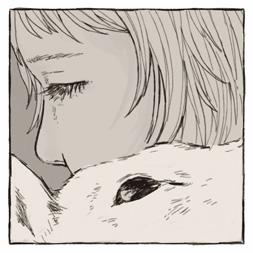
Congrats, Aries! You made it through another Syracuse winter without sliding down the Booth hill and breaking an arm on the way to class. We'd give you a medal of honor, but we did see you face-plant in front of Harry’s the other day, belligerently drunk. We think the medal is going to stay in its case.
April 20 - May 20
May 21 - Jun. 20
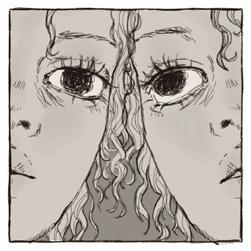
Turning to your friend with six unpaid parking tickets, an eight-month situationship and a week-long open tab at Crate for advice is not the move. Please, for the love of God, Taurus, just ask your mom. We’ve heard yours knows best.
Sometimes (rarely), when we’re at a loss for words, we consult our Magic 8 Ball. Right now, it says the answer to your current existential question is “chill the fuck out.” Experts say a few deep breaths go a long way, Gemini.
Jun. 21 - Jul. 22
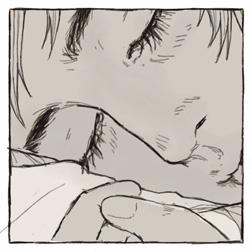
As the school year comes to a close, it’s time to shoot your shot with the cutie you sit next to in class, Cancer. The worst they can do is crush your dreams and obliterate the fantasies that have been getting you out of bed for months. You could also find love, though—TBD.
Jul. 23 - Aug. 22
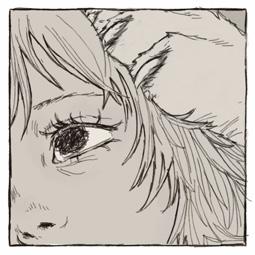
Aug. 23 - Sep. 22
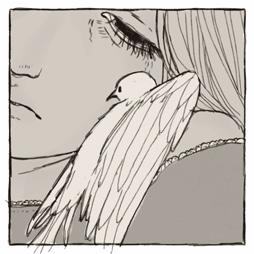
Idk, Leo, you might just be above our pay grade with what you got going on right now. Have you tried making an appointment at Barnes?
We hate to say it, but you don’t want to be that girl in your psych class; you want to be with her. If you’re describing getting coffee with her as “opening Pandora’s box,” you mighttttt be bisexual. We hope this summer is good to you and filled with self-discovery, Virgo.
Sep. 23 - Oct. 22
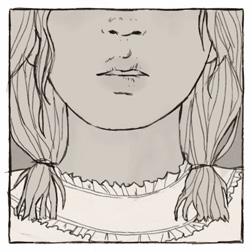
Now that you mention it, we’ve never seen Otto and a Libra in the same room. Holy shit. Now we all know your secret...
Oct. 23 - Nov. 21
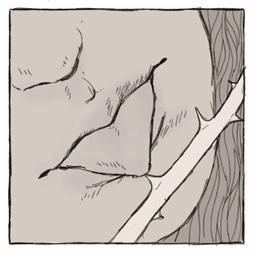
Using your vibrator is a great form of self-care, but not when it dies in your hour of need. Planning ahead is a life skill—acquire it, and charge your laptop too, while you’re at it. We both know how important it is to finish strong (the semester, of course.)
Nov. 22 - Dec. 21
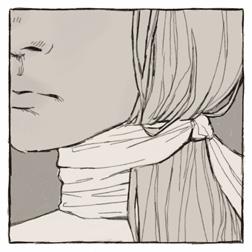
Once upon a time, a young Sag finished the semester with all As. Of course, this is an urban legend, but it’s always good to have goals, Sag. Try again next year!
Dec. 21 - Jan. 20
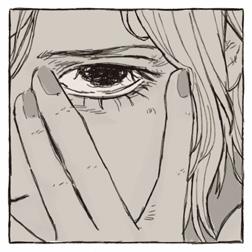
According to the book of Genesis, God rested on the seventh day. Unfortunately, that’s false—he was actually counseling a group of Capricorns dealing with chronic FOMO. Keep your head up, Cap, you’ll get over it one day.
Jan. 21 - Feb. 18

Feb. 19 - March 20
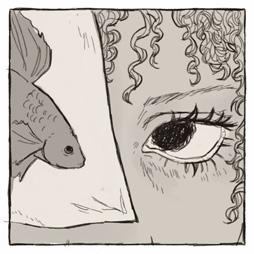
Your depressive symptoms have finally subsided for the first time in six months! Incredible. What’s not incredible is your plan to go cold turkey off SSRIs since all of your problems seem to have magically disappeared after a few 70-degree days. That’s ill-advised by us, and, of course, pretty much every doctor in the world.
Words by Jojo Wertheimer | Art By Sophia Chen
So, Pisces, you’re graduating with no job. Welcome to the club! Of course, nothing’s impossible, but the chances of you getting one are... probably likely! Hang in there, Pisces. Go visit your newly long-distance college friends in the meantime.
Words by Mollie Kuritzky
Art by Andrea Hernandez
Designed by Alexa Lakeman
A young person sits in the airport with their family, waiting for their flight. In the distance, they see someone cute, definitely not their exact type, but within their age range. As the person walks closer, they realize that they are at the very same gate. Their cheeks heat up and their stomach flips as they begin to fantasize about chatting the entire flight, exchanging information and meeting up in their shared destination.
“Airport crush.” “Camp goggles.” “Work wife.”
In the often uncomfortable and almost always awkward realm of adolescent dating, phrases like these pop up to accurately describe the shared experience of attraction within contained settings.
This categorization of attraction is simply a modern take on the Gestalt Law of Proximity, which states that people are most likely to form an attraction to, and build relationships with, those closest to them. In a scholarly context, this principle is mostly thought of as existing in the human subconscious, something that we are not aware of doing. People don’t usually make the decision to develop feelings for someone.
This may not always be the case, however, in modern daily life, where the concentric circles surrounding you and that one hot guy with the terrible haircut keep getting smaller and smaller until eventually you’re soft launching him on your Instagram story. In a way, attributing short, catchy names to the proximity principle makes it more digestible for the masses. People may start to seek out their new “class crush,” taking away from the subconscious element of psychological theory.

Alex Rosenberg, a freshman at Syracuse University studying psychology, has manufactured crushes in the past as a motivational tool to get through tedious tasks and realities.
He recalled being on a flight where someone cute sat in front of him. Rosenberg then used that physical closeness to fantasize about a possible connection and entertain himself during the flight. Maybe their eyes would lock as they exited. Maybe they would strike up an oh-so-casual but oh-soromantic conversation when they then realized they were meant to be.
Rosenberg has also done this in a school setting.
“[In classes], it's something to keep me motivated and keep going,” Rosenberg said.
The Gestalt Principles, including the Law of Proximity, serve as a way to understand human perception and how humans individually apply structure to better understand the world around them. Like perception, attraction is a very subjective phenomenon. With different degrees of hotness, it makes sense that someone you deem attractive in an airport may level down in attractiveness when encountered in the real world. But, this variation does not always change from uglier to hotter, or hotter to uglier.
August Lazzaro, a freshman at SU said she believes that an element of the attraction goes beyond physical, and becomes more about time constraints.
“They're probably cuter just because you know that you're not going to see them again,” Lazzaro said.
Mystery may just be the new nonchalance— the ultimate strategy for attracting people. By never conversing with this person or seeing them interact in a more typical setting, we never have to see their inevitable flaws that would have to be confronted in a real-life relationship. It can be great to envision a beautiful connection with “John Doe” without having to acknowledge a crippling video game addiction or his habit of weaponized incompetence.
But what happens when the tryst continues beyond the original setting? Does the Law of Proximity that originally sparked the attraction remain in the long term?
Lizzie McCollum, a freshman biomedical engineering and neuroscience major, perceives a change in setting as distinctive.
“I also noticed that it changed depending on the location because I thought that [the crush] was really attractive at camp, but then after we started dating, when camp ended, he was not so attractive,” McCollum said.
When we think about attraction so clinically, it can take the magic out of what seems like a quite random universe. If humans’ attraction to one another is just based on being in the right place at the right time, it may affect how we view the value of relationships and extended courtship. What good is a relationship if the only reason a connection began is because they were sitting in the cubicle next door? If someone else was in their place, would it have been them instead? In an era where young people are known to be cynics, this arbitrary nature of dating may invoke a sense of pessimism.
The surprising flipside of the Law of Proximity is that humans are also most likely to despise those physically closest to them. Your ultimate opp at camp may very well have been an irrelevant person in your life back home, having no effect on you.
Existing in this fine line between love and hate, making the choice to love may just be the latest act of revolutionary optimism.
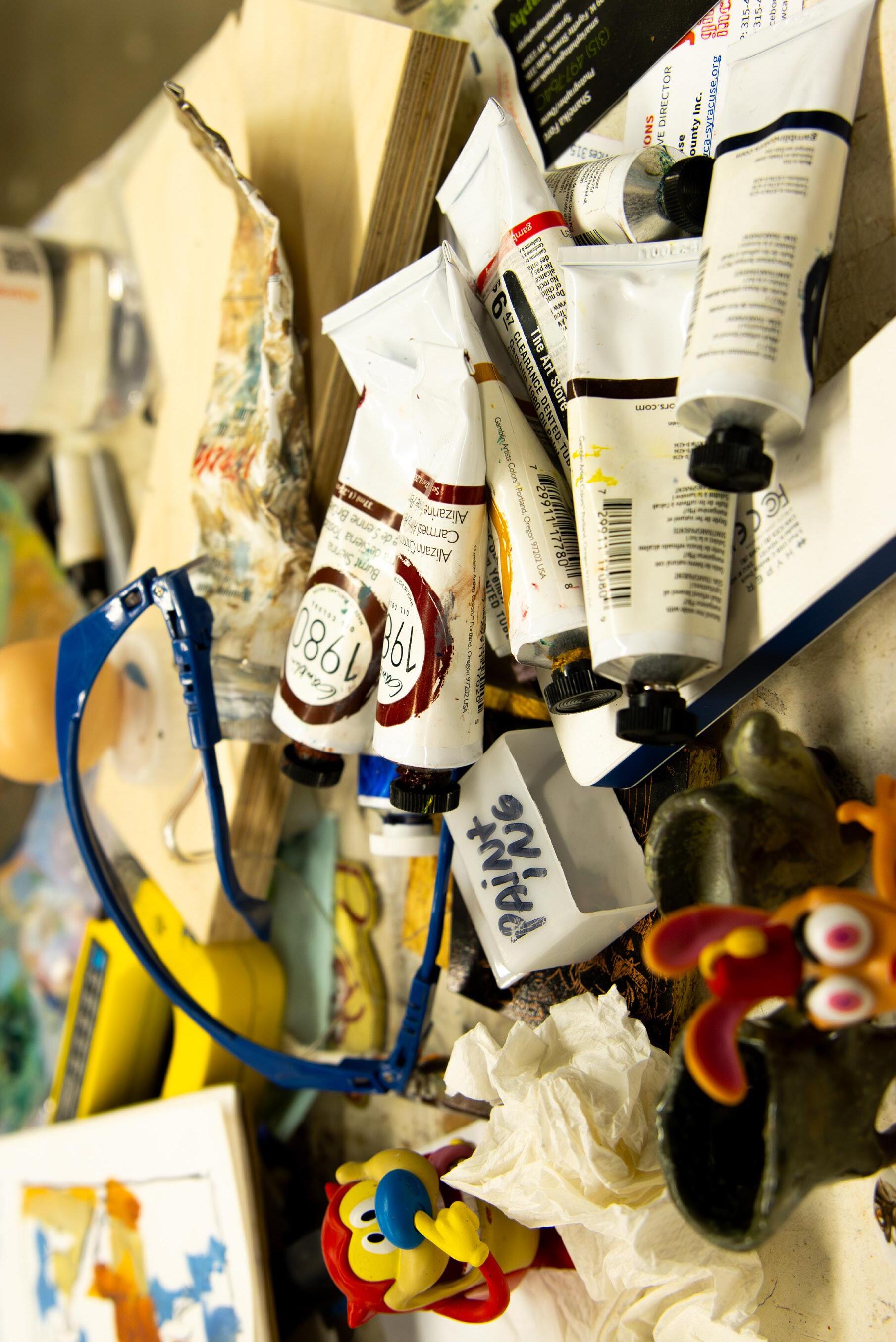
Sophomore Jay Cronkite shares how his identity inspires and shapes his artwork
Words by Kaila Hu | Photos by Maddy Cox
Jay Cronkite, a sophomore majoring in studio art, is known online as @lemon.chips.
“At my middle school, we had these vending machines with plantain chips called ‘Plaintinitos: chips with lemon,’ and I thought the combo of lemon and chips was cool. It just stuck,” Cronkite said.
His username is as fun and memorable as his work, which has amassed him more than 10,000 Instagram followers.
Much of his animated work draws on fandoms of artists like Tyler, the Creator, along with old Tumblr art blogs and YouTube animations. However, just as much of his inspiration comes from the people around him.
“I have a lot of art friends who make it easy for me to bounce ideas back and forth and see what works best,” he said.
Cronkite’s work also reflects his identity as a queer artist and the struggles of the LGBTQ+ community.
“In a lot of my college art, my identity impacts every single aspect of the work I create,” he said. “Not that every piece is about my identity, but my lived experiences have shaped the work I am making.”
He conveys this through his physical and professional work rather than his fun animations.
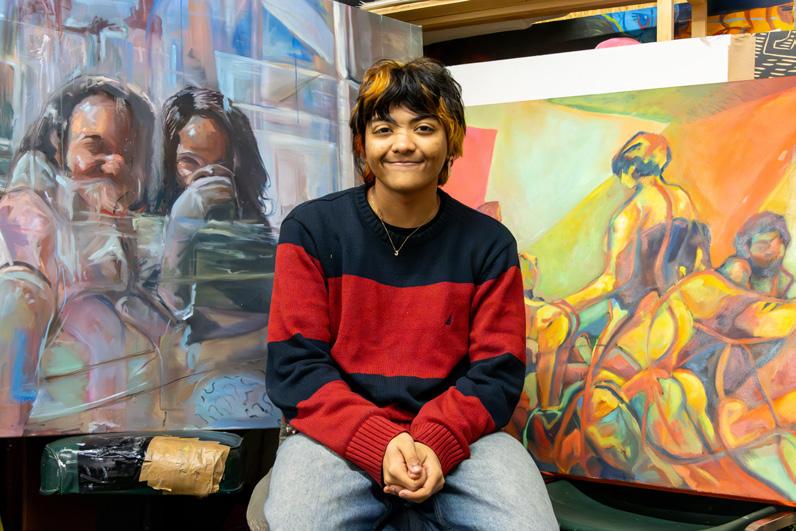
One of his larger installations, titled 0.25, was about his personal journey with transitioning.
“I had lots of other gay or transgender students tell me how they felt so understood by my art in a way they haven’t felt with traditional paintings in gallery spaces,” Cronkite said. “Hearing stuff like that lets me know that I truly am making an impact.”
His interactive project, You Can Make the Choice, further explores questions of identity and autonomy within the LGBTQ+ community. Standing at 5 feet tall, 16 inches wide, the acrylic piece features a spinning wood cube with 16 possible combinations, allowing viewers to physically construct and explore different versions of the human body. Using what is reminiscent of a tic-tac-toe board, Cronkite explores the idea of figuring yourself out and exploring the range of human expression in the body.
“I believe all people should be allowed to have fun with what their bodies look like, especially those who do not confine themselves to the rigid binary society has forced everyone under,” he posted on his studio art Instagram account, @ch4insawthedoor. “Even in a piece that is playful and open, it is still governed by strict and invisible rules.”
For Cronkite, putting out work that can resonate with other queer students here at Syracuse University can be rewarding. It allows him to reach other members of the community and foster bonds over shared lived experiences.
In the future, Cronkite hopes to continue creating more art and animations, as well as focusing on self-expression and aiming for more ambitious pieces. He has begun submitting pieces to art professionals and exhibits and is currently working on a solo show that opens on May 1 in Comstock Art Facility Gallery 022.
Words by Adelaide Larson and Julia Yezukevich
Photo by Molly Mellinger
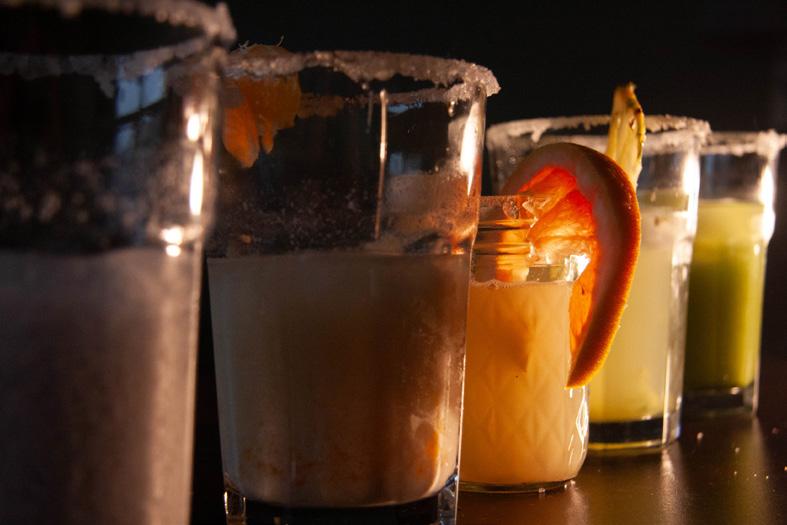
This year, we’re welcoming spring by combining the flavors of the season along with a Cinco de Mayo celebration. We here at Jerk have made you not uno, not dos but cinco margaritas for you to try out. Shake up your cocktails this season with this festive flight and you’ll be thanking us sooner than you can say “margarita”!
• 2 oz tequila
• 1/2 oz triple sec or cointreau
• 1 oz lime juice
Sugar or salt for rim; whatever floats your boat!
ADD
• 1 oz cream of coconut
• 1 oz lavender syrup
ADD
• 1 oz pineapple juice
• 3 jalapeño slices, one muddled to enhance the flavor
• Pineapple wedge for garnish
ADD
• 2 peeled sumo orange slices (muddled)
• 1-2 tablespoons sweetened condensed milk
• Splash of vanilla extract
Strain before drinking unless you like pulp!
ADD
• 1 oz ginger beer
• 2 oz grapefruit juice
ADD
• 1 oz lemonade
• 2 teaspoons of matcha powder whisked with a splash of water
Add chosen ingredients together, shake and enjoy!
Words by Kaila Hu
Art by Soren Moos | Designed by Alexa Lakeman
The em dash (—), known as the “Swiss Army knife” of grammar, is widely considered the most versatile punctuation mark. You can use it for pretty much anything—replacing colons for emphasis or semicolons to connect ideas—and it adds a bit of flair to everything it touches. Its flexibility is also why it’s been unfairly targeted by artificial intelligence detectors—but many writers have always leaned on em dashes to express themselves.
“I used em dashes before everyone started saying they were AI,” Syracuse University journalism professor and published author Seth Gitner said. “Now, when I use them, people think I’m using ChatGPT when I’m actually writing. When I was writing my textbook, my editor said I used em dashes too much, like it looked like it was spit out of ChatGPT.”
The em dash has become increasingly associated with AI writing, despite many people— us at Jerk included—already using it. We’re just saying, if you didn’t know how to use an em dash before ChatGPT hit the scene, maybe AI shouldn’t be writing for you.
But what if some of us actually write like that? After all, ChatGPT can only generate ideas by using what already exists. And what was already there before ChatGPT is human expression. Using certain punctuation marks or actually being somewhat articulate shouldn’t be enough to get your essay flagged for being “AI-generated.”
Alexandra Milchovich, a senior majoring in English and textual studies and communication and rhetorical studies, believes that the increased
use of AI for writing is a prime example of the erosion of critical thinking in this day and age.
“I definitely think AI is dumbing people down, but this also comes from academic stress and pressure to perform well, rather than actually wanting to learn and grow through education,” Milchovich said. “AI is definitely gonna have an impact on literacy rates, and I think that using ChatGPT for humanities is just another way to propagandize us into being complacent.”
Simple punctuation like the em dash shouldn’t be conquered by these new AI tools. Instead, students should focus on reading books and exploring the styles of other writers, rather than further plummeting literacy rates.
“When you read great writers, you naturally begin to emulate them and take what you appreciate from their words into your own,” Milchovich said. “My majors both deal heavily with reading and writing, and any long-form content is better than an 11-second AI slop video.”
She recommends slowly reintroducing reading into your life to help redevelop your attention span and cut reliance on AI when writing.
Some students have even begun writing more casually or making “careless” mistakes just to prove their work is human. Researchers at Stanford University found that AI detectors flagged over 61% of genuine essays by non-native English speakers as AI-generated.
Since OpenAI launched ChatGPT, worries have grown that it’s stripping away creativity and expression. Its generated sentences are way too polished and take away the distinctiveness
and flaws that make personal writing styles recognizable and unique.
Gitner, however, doesn’t see AI as a bad thing when it comes to writing. In fact, he said he encourages his students to use it as a tool in everyday life.
“What I usually do is just write down everything that I want to say, and then I have [AI] fix it up,” he said. “But I have to read it after. You can’t just not read it.”
He claimed that when used this way, AI isn’t really replacing writing, but instead helping to refine it.
“I actually think that it pushes you to be a better writer,” he said. “I sent an email to some colleagues. Someone wrote back, ‘Good job with your AI letter,’ making fun of me. But it teaches you how to write better prompts. How to have a different way of thinking and creating.”
While AI can be useful for many everyday tasks and assignments when used properly, being too reliant on these tools can take away from human creativity, individuality and even reduce critical thinking skills.
One study reported by The Atlantic found that after reading chatbot-generated responses to a survey, people's answers became longer, more in-depth and polished. They stopped expressing their thoughts as their own and instead tried to match the AI, almost as if they were the ones thinking artificially.
Personal writing styles and proper grammar shouldn’t be taken away just because of some AI bot. We shouldn’t have to dumb ourselves down to prove we’re human, and certainly shouldn’t be
trying to “match the AI” or speak in a way that isn’t truly us.
We want our em dash back.
Brad Gorham is the former head administrator of the S.I. Newhouse School of Public Communications’ infamous Grammar Competency Test. After seeing thousands of students cram to remember the parts of speech they learned in middle school, Gorham understands that being a good writer doesn’t—and shouldn’t— happen overnight.
“Writing is hard to begin with, and you get better with more experience working through the difficulty of writing,” Gorham said. “AI tools don’t train you to be a better writer because they take the hard work out of it.”
Gorham also shared that the use of these generative tools takes away the conversational aspect of writing, saying that we would all be better off if people focused on making their writing clear and expressive, rather than trying to impress others with their vocabulary.
So, reclaim the em dash. Write however you want—and don’t let the threat of artificial intelligence dim your sparkle.

Words by Julia Yezukevich
Art by Andrea Hernandez | Designed by Julia Yezukevich
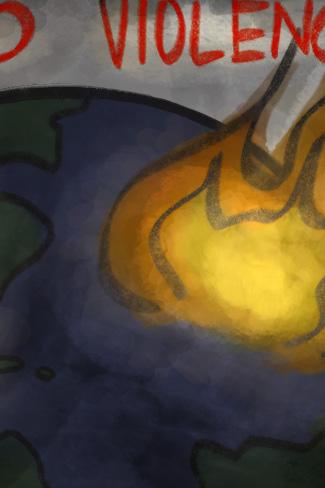
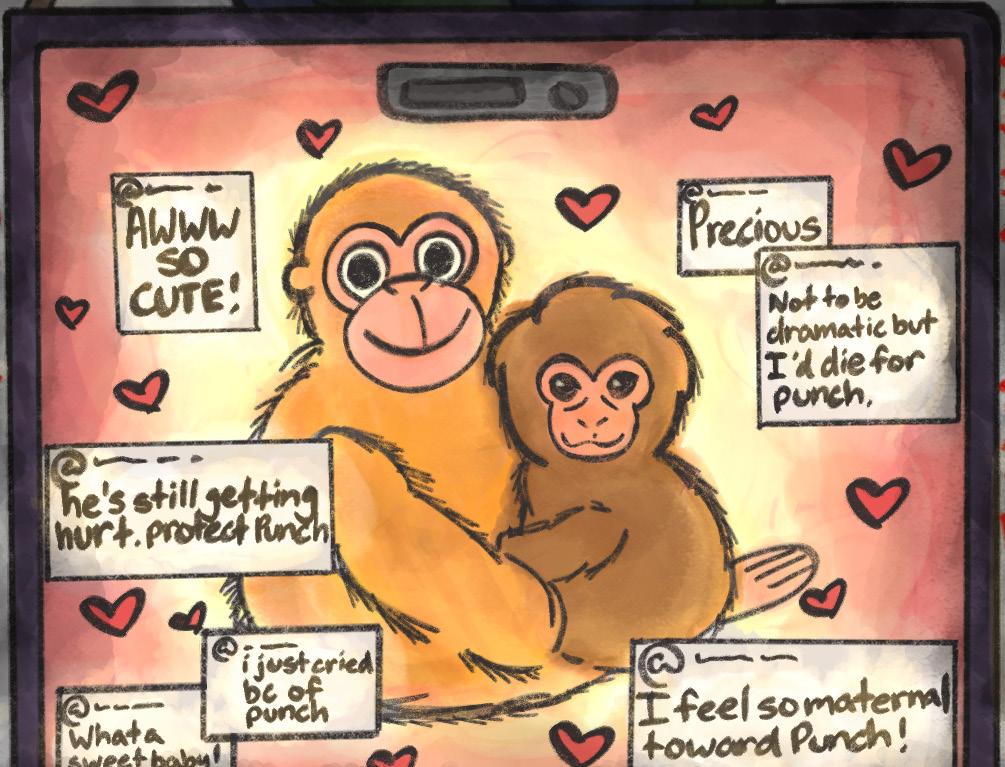
You’ve all heard of Punch the monkey, or at least seen a picture of the baby primate clutching a stuffed orangutan in Japan’s Ichikawa City Zoo. He was abandoned by his family and bullied by the other monkeys in the zoo, so the staff gave him a plush orangutan to mimic a mother figure. They also posted TikToks of Punch, which quickly shot to virality to the point of IKEA stores selling out of the stuffed animal he was holding.
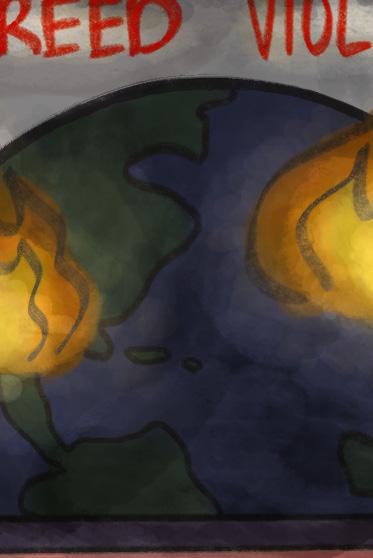
Punch is adorable and his story is heartbreaking—there’s no questioning that. But are people being genuine in their concern for this baby monkey? And why have they not extended the same level of concern to other humans suffering?
According to a study conducted at Pennsylvania State University, humans tend to show more empathy for other animals than members of their own species. This may explain the outpouring of love for little Punch while other humanitarian issues go unnoticed. But aside from that, people assuming their own lives are more important than everyone else’s is becoming a clear phenomenon.
Biologically, the human race is wired to treat life as an “every man for himself” battle, according to biologist Richard Dawkins. This dates back to early days, when cavemen prioritizing themselves over others determined the difference between survival and death.
Now, even though most people don’t need to compete for food and shelter, some still feel the need to act like it. TikTok philosophers preach day in and day out about “protecting your peace” and how you don’t owe anyone anything. But in doing so, they foster a lack of empathy in the impressionable minds consuming their content. Kindness and respect are the bare minimum. They’re not something you “owe” someone—they’re fundamental, obligatory traits of being human.
Whether people have grown sour because of the lingering effects of social isolation or constant exposure to horrifying news, it’s growing clearer every day that society is shifting in a dangerous direction. People smile at strangers less, “please” and “thank you” have disappeared from the common vernacular and it seems like everyone has decided that they’re the single most important person in the CoreLife line.
The New York Post shared a TikTok recently where they interviewed young people on a beach and asked what issue facing America was the most important to them. They got answers ranging from “what

bikini I’m going to wear next,” “getting a tan on the beach” and “ICE. Not personally though, I’m legal.” When asked about Donald Trump, one girl stated that the last thing she knew he did was rename the Gulf of Mexico as the Gulf of America. The reporter then questioned if people knew about the war in Iran or the killing of the ayatollah, about which they were all confused.
The news has been so awful recently that people have begun to shut it out as a way to keep themselves happy—but this can be a slippery slope of selfishness. Being politically aware in this climate is mandatory to keep yourself and others safe.
Sociology professor Gretchen Purser theorizes that the problem has less to do with selfishness, and is more about the individualistic nature of society.
“[Selfishness] places blame on personality traits of the individual. Individualism, by contrast, refers to a broader cultural pattern in society that is nurtured by institutions,” Purser said.
The prevalence of social media has not only become an outlet for people to distract themselves from the news, but has also turned users into armchair psychologists, going as far as diagnosing strangers on the internet. This can lead to misinformation and the spread of calling people narcissists or gaslighters, even those who don’t fit the definition.
Real narcissism can lead to even more performative empathy. In a video called “Narcissists and performative empathy,” clinical psychologist Dr. Ramani Durvasula said that, “performative empathy is the way a narcissist can brand themselves as ‘a good person’ to other people.”
Though they may preach on social media about helping people, their actions in real life contradict what they proclaim online. This begs the question of whether people cooing over Punch the monkey are truly feeling for the little guy, or if they just think it’s an easier, less controversial issue to defend.
True empathy is the main thing setting humans apart from artificial intelligence in this day and age.
Computers can now do nearly anything humans can do. But nothing can compare to the way it feels to have a genuine conversation with someone who loves you, or have someone do something nice for you that you weren’t expecting.
Research from the National Library of Medicine on the COVID-19 pandemic shows lingering decreases in social empathy, but, surprisingly, an increase in emotional empathy. In social settings, the participants indicated a struggle to empathize. However, their ability to feel for fictional characters and their cognitive empathy actually increased. This signifies a fear of showing the world that they care, but, privately, a genuine feeling of love and respect for other people.
The results of the study indicated that empathy is linked to mental health: because the pandemic had such a staggering impact on mental wellbeing and halted social interaction, empathy in social situations became more difficult to grasp. People still feel empathy, it’s just more buried than it used to be.
Psychologists assert that this can be worked on in therapy, and that it isn’t an end-all be-all. People can return to the level of social empathy that they once had.
“ The mass resistance to ICE, and the mutual aid networks that have been created in cities like Minneapolis speak to the very opposite of selfishness. They demonstrate profound social solidarity,” Purser said.
When you don’t clean up your table in the dining hall, think about the people who have to pick up your chicken bones and wipe up your sauce smears. If you don’t hold the door for someone behind you, think about the person who just got the door slammed on them.
Please, don’t act like the cavemen. We’ve evolved past that mentality, there’s no need to go back in time. Carry the empathy you hold for baby Punch for your fellow humans, and smile at the next person you see on the street. You never know if it could make their day.

Being informed is for more than COM 107 News Quizzes
We’ve all been there. You’re engaging with a few duds from your intro-level sociology or political science class, discussing pressing contemporary issues—neoliberalism, systemic anti-trans legislation, welfare, the works. Spaces like these are reserved for thoughtful discussion based on informative rhetoric, right? Wrong.
When discussing the implications of the ongoing Iran war, Emily, a blonde wholesale distributor heiress from Westchester County cites a pink-and-blue-template @mattxiv Instagram infographic. Seamus, the resident intellectual of the Delta Upsilon brotherhood, reflects on the scrupulous documentarianism of Channel 5 with Andrew Callaghan.
You, a career-obsessed journalist and “wellinformed” braggart, wince at what will soon become a humiliating 30-point current event presentation, where you will soon reduce the wartime slaughter of over a thousand people to a five-word, all-lowercase melodramatic Instagram caption.
The culture of political discourse in the age of social media thrives on misinformative, visceral alternatives to news media. Whether it's evident in our elders' obsession with AI slop Facebook reposts or neo-tabloid Instagram pages who make thousands in advertising dollars by posting aesthetically pleasing, information-devoid infographics—it’s clear we’ve lost the integrity of well-informed journalism.
At this point, it’d be cliche to say it's a problem that “everyone gets their news from social media.” But it’s not even that—it’s the fact that nobody is truly consuming news at all. A culture of disawareness and classist convenience has kept us in a landscape of saturated news in the form of short-form and summarized, pointed social media content to shape our understanding of the world.
We’re all guilty. It’s a tale as old as time— touting you read an article when you actually read a lukewarm opinion.

It’s a phenomenon easily explained by Jennifer Stromer Galley, a professor at Syracuse University’s School of Information Studies who studies social media algorithms and engagement. Monitoring the use of social media by political candidates, SuperPACs and other ideologically-persuasive bodies, Galley has conducted several studies analyzing how users engage with politicallycharged content.
In a 2021 study, Galley found that users that discuss politics on social media platforms like Facebook, WhatsApp and Instagram were marginally more likely to spread misinformation. It’s a concept described as the misinformation paradox: where attempts to “better inform” with others ends up spreading even more falsehoods. The paradox is twofold—short-form social media content that summarizes big issues makes room for misleading interpretation, and media consumers naturally fill in the gaps when they don’t have all the information.
It’s the dual responsibility of both content creators and media consumers to undermine these gaps. While everyone should constantly engage in critical thinking and deliberation when they read a headline, watch a TikTok or see the AI-generated
Words by Brenne Sheehan & Jerry Morris | Art by Sara McConnell | Designed by Claire Arveson
blue search at the top of a comments section, it is also critical that short-form content pushes their readers to read full articles.
This shift towards bite-sized information through social media is emblematic of a change within our culture. Technological advancements over the past 10-15 years have created the advent of algorithmic and personalized news feeds— tailored to keep us engaged and on the platform. The content that is favored on these platforms tend to be brief, consumable and reactionary. With this strategy in mind for news organizations and political influencers to stay alive, journalistic integrity could risk getting lost in the process.
The fragmentation and commodification of our news cycles didn’t start with social media. Cable news and talk radio in the ‘90s and 2000s saw the potential of the news not just as a tool, but as a product. Rush Limbaugh, CNN’s Crossfire and Fox News capitalized on the captivating stories of their time, and presented it as a performance rather than a public service announcement. They made it a loud, polarizing crucial daily viewing, that was frankly hard to look away from.
This notion of news as entertainment has been carried into the age of social media. Non-legacy media creators have become only more popular as more people flock to these platforms. Creators like Nick Fuentes and Hasan Abi thrive on political theater, reactionary issues and controversy, which gather clicks and revenue towards their content. Now, the real problem that begins to emerge with social media platforms being a one-stop-shop of entertainment, social connection and news, is how to differentiate what’s real nuanced news worth consuming, and what’s not.
Greg Munno, a journalism professor at SU, has many theories as to why this information problem is happening and how we got here.
When the internet first emerged as a tool for news, there was genuine optimism that the democratization of news was going to be a net
positive, however Munno isn’t quite sure this is the case.
"[Social media] was going to bring us all closer together and was going to solve all our problems. We have shown decidedly that that's not what's happened," Munno said.
What emerged instead was something more tribal. Rather than broadening perspectives, our feeds began reinforcing them. Munno argues that the media landscape stopped trying to inform different sides of the political spectrum entirely. "So much media now isn't even really talking about democratic positions to a democratic audience," Munno said. "It's reinforcing the otherness of the conservatives. And of course, vice versa."
Munno also shares the concern that this otherness in the social media era has become a point of entertainment.
“These algorithms thrive on that,” Munno said. “Social media thrives off of division and thrives off of the politics of intense emotions and feelings you layer Trump on top of that and you have someone who almost doesn't want us to take what he's saying seriously. It's a performance of emotion."
Reading the news just looks better. Being able to field questions and have answers about a particular current event or ongoing issue is all the more dignified, and could even make you excited to learn more about something you haven’t looked into before. Don’t humiliate yourself—or get ratioed—just because you thought “neoliberal” meant cool, new, sexy leftist.



If you can pay $85,000, you have some change to spare, right?
Words by Fei Chan | Art by Sara McConnell
Toward the end of March, you might have gotten some classroom visits from Syracuse University staff, during which your class received donuts, Otto pins and bingo cards—but you should know at this point that nothing is truly free here. It was all to ease you into a conversation about donating money. Not to get your parents to donate money, but you: a student. We here at Jerk have just one question: In this economy?
March 24 was SU Giving Day, an event completely dedicated to fundraising even more money for a school that can currently cost over $94,000 to attend, according to SU’s website. While most people know that colleges will bother you for the rest of your life about donating once you’re officially an alumnus, getting asked to give money while you’re still paying to go to school is a different kind of awkward.
This year, over $3 million was raised from donors, according to SU’s website. It’s a new record for the amount fundraised in a single day. Whether this was a result of boosted morale from
the conveniently timed hiring of Gerry McNamara, or just a testament to the persistence of everyone who dons the Otto the Orange suit, we really couldn’t tell you. Regardless, we have to ask: When is it enough?
Sure, SU isn’t known for its socioeconomic diversity, and that’s no secret. But there are still plenty of students who work jobs—often more than one—and take on loans to afford to go to this university that constantly boasts its school spirit and opportunities, because sometimes financial aid just isn’t enough. They’re already giving all they can through their cost of attendance, and nobody wants to be asked to donate what they don’t have. And it certainly doesn't soften the blow when someone’s making the ask while they give you a free golf cart joyride around campus.
Furthermore, seniors were especially encouraged to donate a class gift of $26 each. Sure, it seems like a small ask. After all, that amount of money wouldn’t even cover the cost of a non-illegallyscreenprinted Senior Send Off Bar Crawl t-shirt. But is it really a respectful thing to ask seniors when they’ve spent the last four years of their lives paying to go to school at SU and are actively preparing for what might be the biggest life transition they’ve experienced?
We’ll be the first to admit we’re grateful every day to go to a college that emphasizes such a strong sense of community and alumni network, but at the same time, are we just numbers and sources of money to this institution before we’re people? If so, at least wait till we’ve graduated to ask us for money. Maybe by then, we’ll have fulltime jobs and actually be able to give.

SU’s Students for International Labor Solidarity have spent a year pulling threads the university would rather leave alone
Words by Hannah Peters
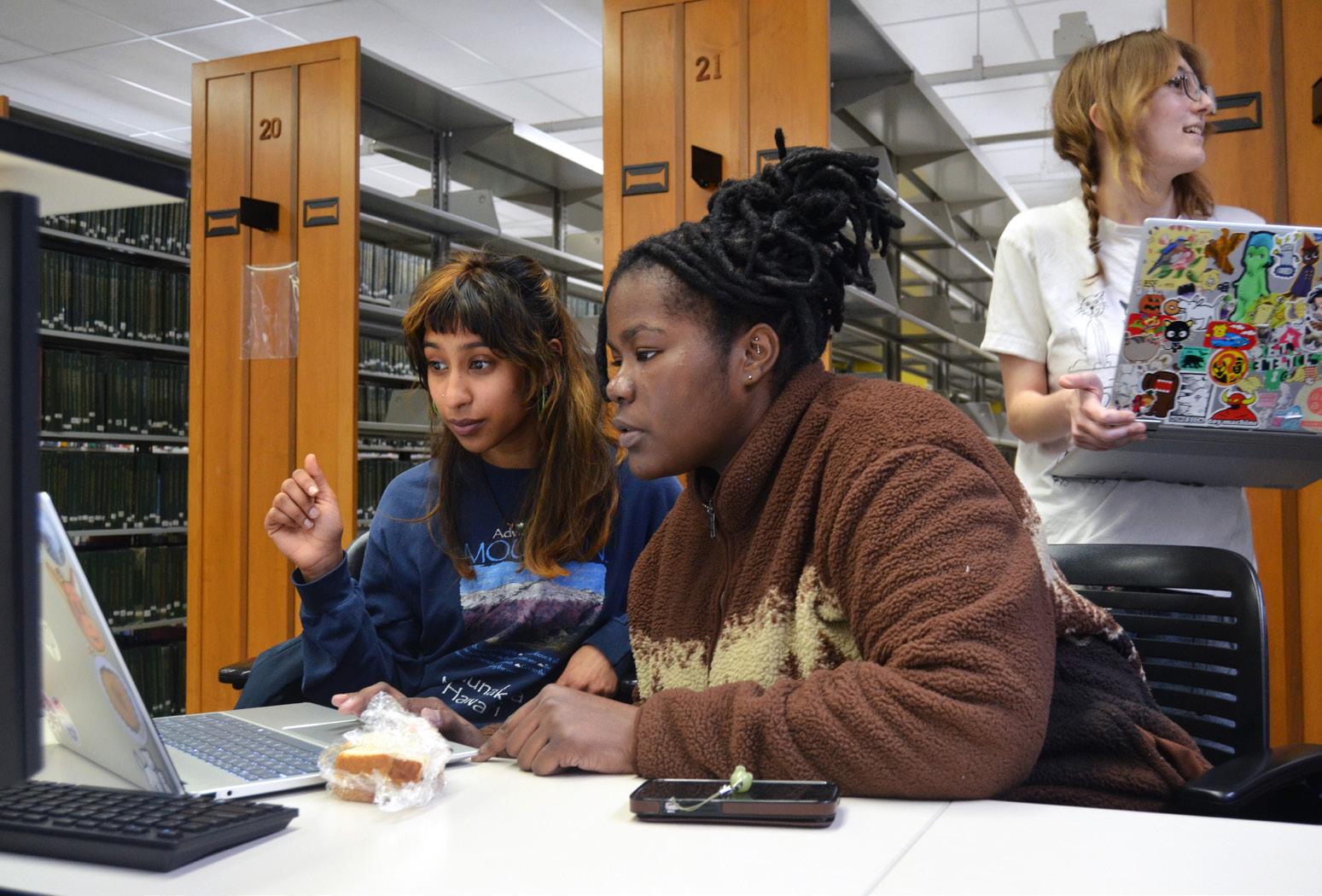

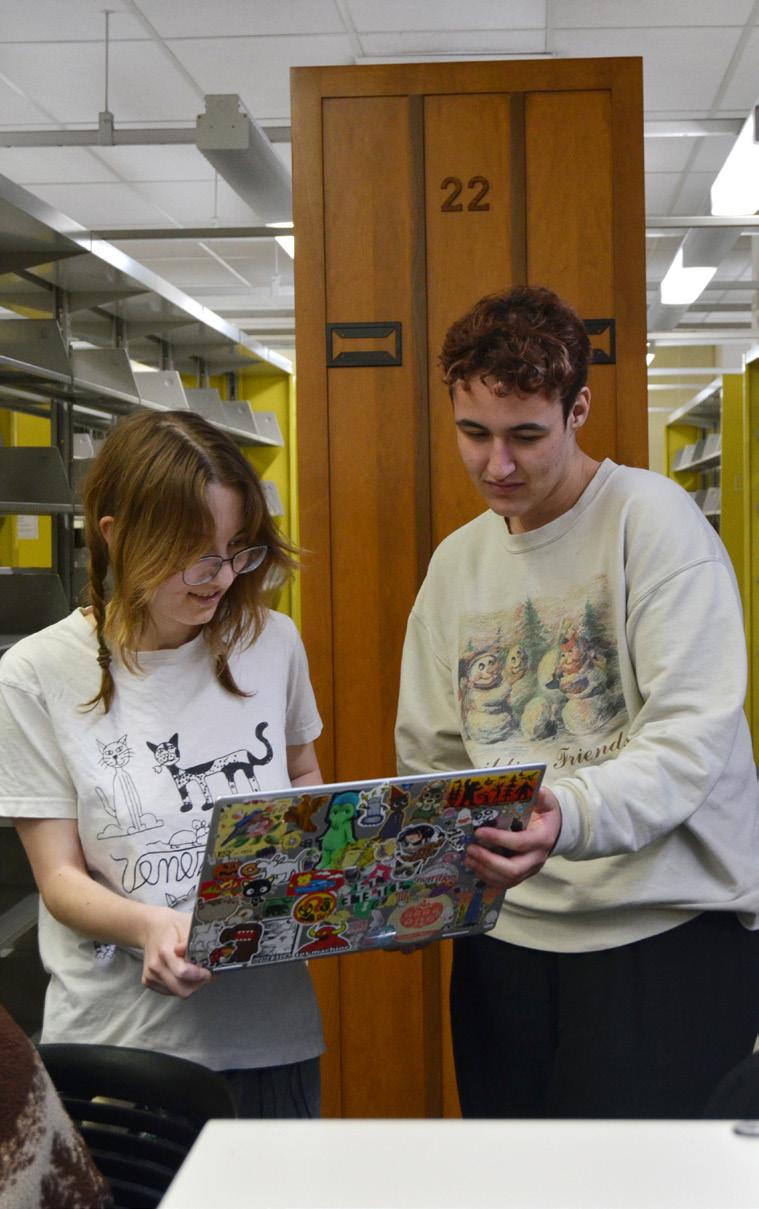
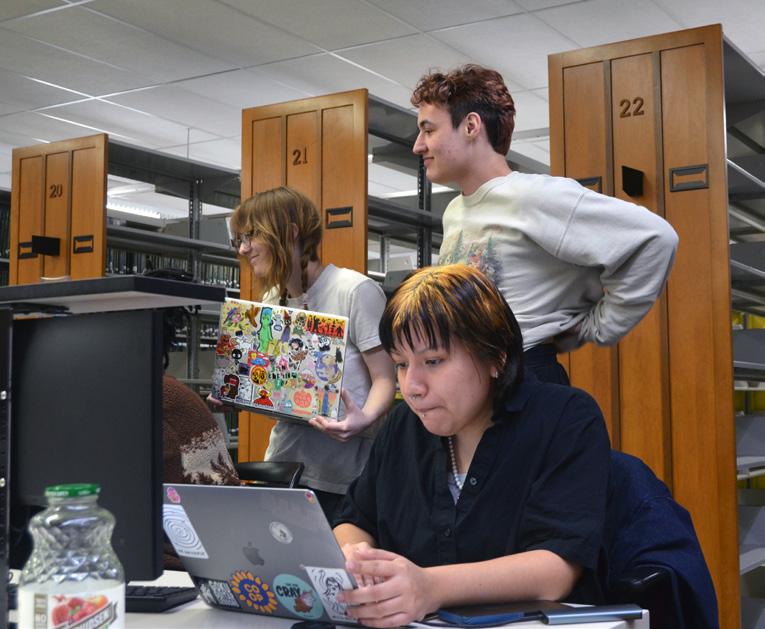
Students for International Labor Solidarity (SILS) has $50, a group chat, a university administration actively working against them and about 30 people who actually give a shit. It's been an uphill battle, but they can't stop winning.
SILS is a national student labor organization with chapters across the country. Syracuse University’s chapter is just over a year old, and in that time they've joined and helped win a four-year international labor campaign (a coordinated effort across SILS chapters targeting specific issues and brands), gotten five SU apparel brands signed onto factory safety accords protecting 800,000 workers and launched two more campaigns. All of this has been accomplished without Registered Student Organization (RSO) status, without tabling at a single Involvement Fair and while SU was creating burner Instagram accounts to spy on their meetings and threatening to send DPS to their classroom.
Co-president Lillie Parr, a senior, puts it plainly: "Students have a lot of power and we don't even realize it. You can do a lot without funding."
SILS is built around a strategy vice president Violet Gonzales-Baird calls "the pressure sandwich." Workers at the bottom pressure the brands. Students pressure the universities. The universities pressure the brands. Squeeze from both sides, and eventually something gives.
This mechanism turns the university's own hunger for Nike contracts and licensed merch into a liability. SU has a code of conduct for its licensees that includes labor standards.
"A lot of what we campaign on is stuff that's already written into SU's code of conduct. It's stuff that we shouldn't even really have to campaign on," Parr said.
Their first major campaign was the Hong Seng Knitting case. In 2020, Nike laid off roughly 3,000 workers from a Thai factory without severance, through contracts written in Thai that most workers—many of whom were Burmese immigrants—couldn't read. One worker, Kyaw San Oo, spoke out, got threatened and fled to Myanmar with his wife and infant daughter. Four years of pressure later, SILS won the campaign. Kyaw San Oo received $42,000—the largest individual worker payout in Thai labor history.
When the news came through, Gonzales-Baird cried.
"He was now able to pay off his daughter's medical bills. His daughter could go to school,” they said. "I wasn't doing the most, but I did something—and that pushed the needle forward."
Parr didn't arrive at SU with plans to run a labor solidarity organization. A women’s and gender studies major, they had spent years learning about the garment industry, "the specific ways gender, colonialism and capitalism work so that your clothes are fucking cheap,” Parr said, but didn’t have an outlet for their frustrations.
Then, last spring, Parr ended up seated next to SILS founder Nina Tran in three-and-a-half-hour women's and gender studies seminars, twice a week. Nina was making a flyer. Parr asked what it was. Tran told them to come to the meeting.
"There were four of us in the basement," Parr recalled. "Nina gave this presentation about why we have power as students to make a difference in the garment industry. And I saw it and it just clicked. Here is genuinely a way that I, as an individual can make material difference in people's lives."
At a SILS national conference in Washington, D.C. this January, a Service Employees International
Union organizer described the group as "organizing with joy." Gonzales-Baird took it to heart.
"There is something really inherently joyful about what we do. SILS has just been winning nonstop for the past year,” Gonzales-Baird said. “Companies are changing. People are starting to care."
That joy coexists with a lot of unglamorous work; the Bangladesh and Pakistan Accords campaign— which SILS just wrapped this semester—is a prime example. The accords came out of the 2013 Rana Plaza disaster, an eight-story building collapse in Bangladesh where managers beat workers back into a visibly cracked building before it fell. More than 1,100 people died. The accords that followed mandate things like non-collapsible stairwells, unblocked fire exits and safety training. They protect 800,000 workers. Five of SU's apparel brands weren't signed on, in direct violation of SU's own code of conduct.
But they ran it anyway—petitions, in-person letter deliveries to the chancellor and meeting after meeting with SU's Director of Strategic Partnerships and Licensing, Rachel Duffy. Eventually, Duffy reached out to the brands. They signed on.
"Sometimes it really is as boring and unsexy as that. Just weeks and weeks of going back and forth being like, ‘No, Rachel, you do have to care,’" Parr said.
Their current campaign, Follow the Thread, is about supply chain disclosure. A garment isn't made in one factory—it moves through up to six tiers of production. Brands are currently only required to disclose one. The other five are, in Parr's words, "six tiers worth of secret sweatshops filled with labor violations."
The ask is simple: they want Duffy to send one email to SU's licensed brands asking what full disclosure would require.
She hasn't sent it yet. When Jerk reached out for an interview, Duffy declined and offered a written statement instead, describing her work as "ensuring those standards are meaningfully applied in real supply chains" and noting that "student advocacy plays an important role in reinforcing transparency and accountability, even when there are differences in expectations or timelines."
While it is a very well-constructed statement, it does not mention the email.
Reaching 30 members without any of the usual infrastructure means running directly into the ways a university obstructs organizing efforts. SILS can't table at the Involvement Fair. The posters they hang come down. When a former leader booked a campus room for a meeting, administration found out by watching SILS's Instagram stories and sent a threatening email warning that Department of Public Safety officers would be dispatched to monitor what was discussed. When SILS blocked the account, burner accounts appeared.
SU's enthusiasm for SILS getting RSO status reads, to Parr, as something other than genuine support. Tier-one RSO funding can reach $7,000 to $10,000 per semester—and money, it turns out, has a way of making groups more cautious.
"You can see how quickly the conversation turns from 'Yeah, let's do it' to 'But what if we lose our funding?'" said Parr. Once you're institutionalized, you have something to lose.
"That's not a judgment," Parr adds. "It's understandable. I even find myself thinking that."
SU, meanwhile, gets a club roster—a list of names, emails and faces to attach to the organizing.
With Parr’s impending graduation, the question of continuity looms over SILS.
"Administrators count on turnover to kill your movements,” Parr said. “Every four years, students graduate. If the chapter dies, you start from square one, and that's a place you never want to be."
Gonzales-Baird, a sophomore, is poised to take over. The criteria for SILS leadership, per Parr, are simple. "Do you show up? Have you done shit? Does it seem like you care? Can you be friends with the people in the club?"
The chapter is also dual-campus, shared with SUNY Environmental Science and Forestry (ESF), and new members continue showing up. Fiorella Buitron, a chemical engineering student at ESF who is set to take over as ESF co-lead, describes SILS as a place to build organizing skills at a moment when other spaces feel riskier.
"Work around Palestine or immigration can feel a little scarier or more dangerous for minority students to step into right now," they said. "SILS gave me a place to build those skills."
Parr wants 50 to 100 students engaged with SILS in the next two years. SU's Workers Rights Consortium affiliation—the only collegiate supply chain monitor free of corporate funding—exists today because students in 2003 marched naked through the quad until the university agreed to it. That affiliation is still intact because students are still pushing. The work doesn't stop when people graduate. It stops when no one shows up to replace them.
"I genuinely think the more students hear about us, the longer we exist, students care," Parr says. "They want to give a shit. It's just that the university doesn't want you to know about us."
The orange crewneck on your floor was made by someone. SILS would like you to think about that. If you want to do more than think—they meet on campus, they're not hard to find and Parr will probably text you personally if you leave your number.

Words by Kelly Matlock
Photos by Soren Moos | Designed by Cole Kaneshiro
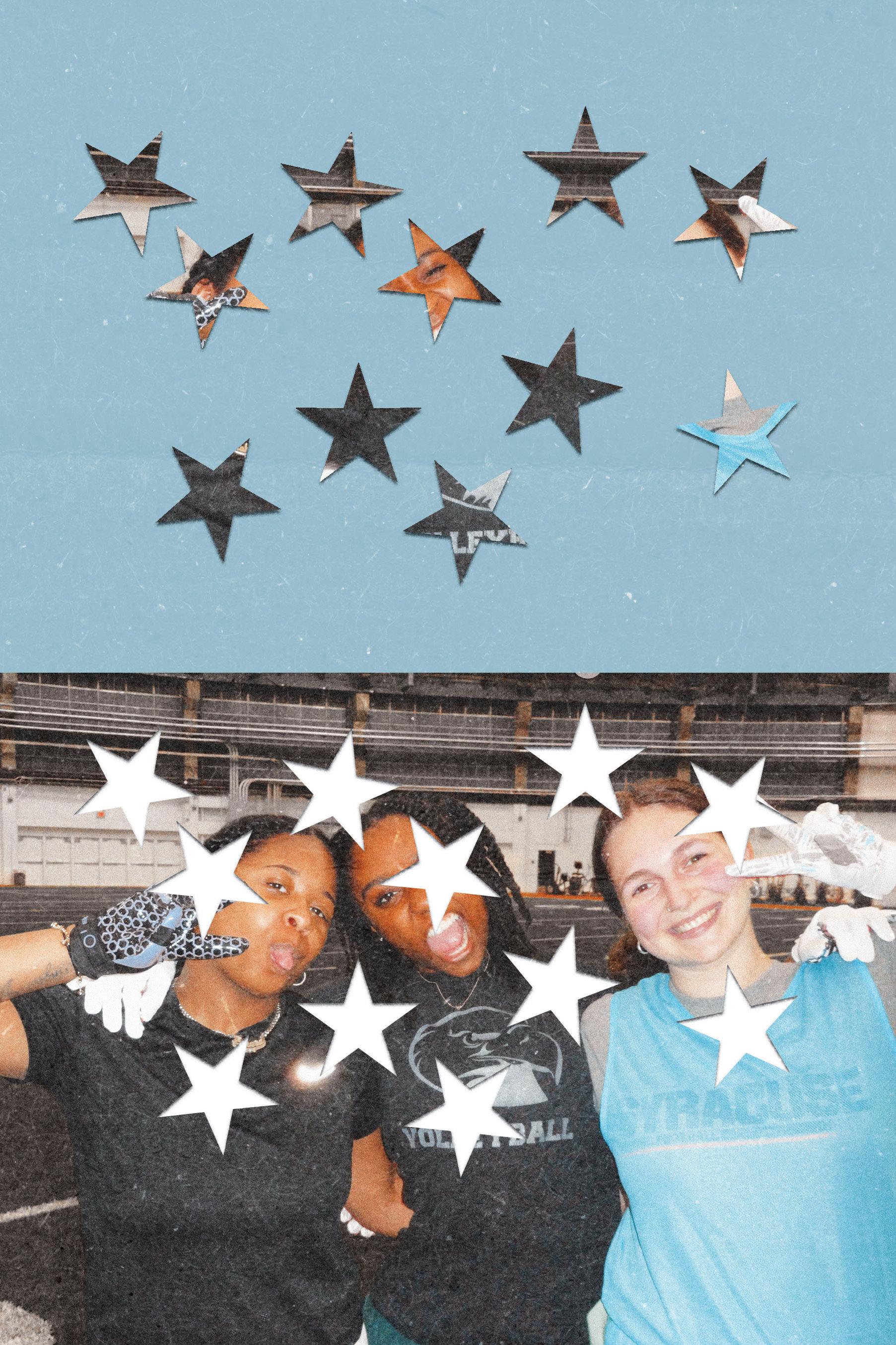
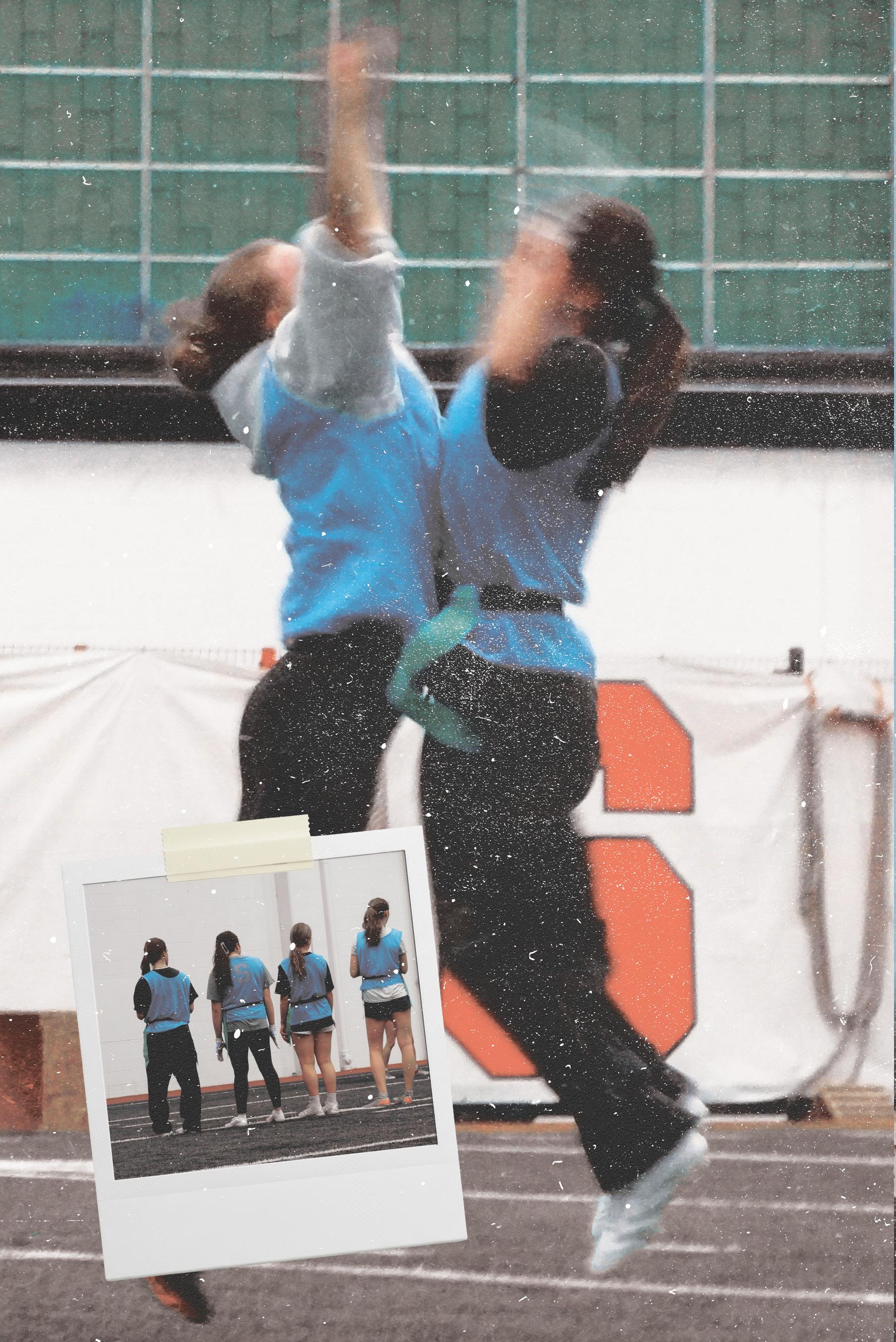
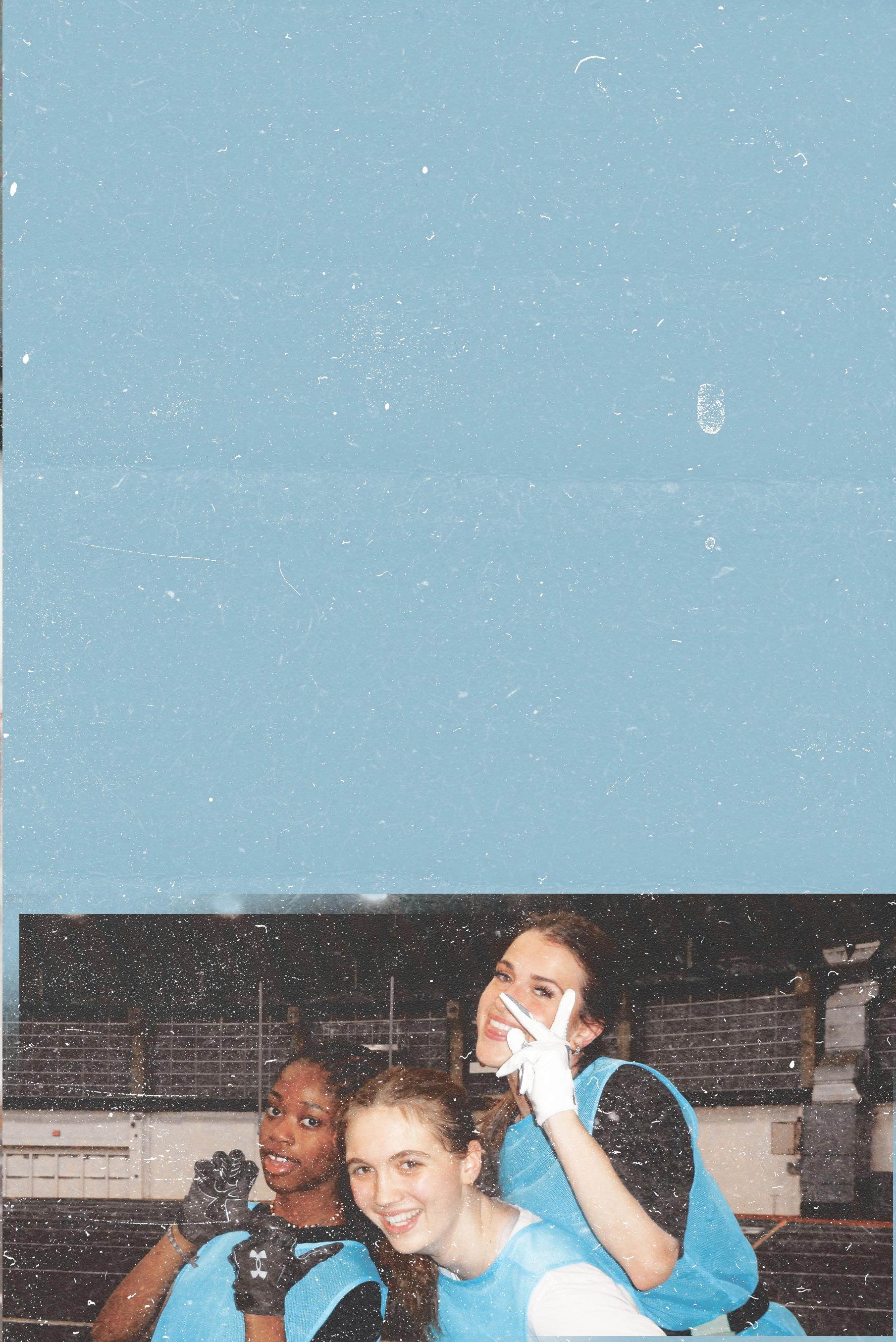
Sophomores CJ Connors and Julia Labbate lasted four months playing co-ed flag football at Syracuse University before they decided to free themselves from the shackles of the sport’s maledominated culture.
“Playing on an intramural team with men can be fun, but it doesn't create the sense of community that the two of us had been craving since coming to college,” Labbate said. “We saw an opportunity to do something new.”
Last September, the pair spoke to Director for Competitive Club Sports Pete Way about forming their own group. They started playing on Skytop a couple hours a week, then eventually founded SU’s first inclusive women’s club flag football team.
Famously, men’s sports don’t always provide the same inclusivity as women’s spaces. For female and LGBTQ+ athletes at SU, the flag football team has become an outlet and safe haven for connection with other players.
Labbate, the team’s vice president and running back, said she feels more like herself spending time among other women. The team provides her an opportunity to end her day in a place where she knows she will laugh, have fun and enjoy herself.
When Connors, the team’s president and coach, played club rugby last year, he had a very inclusive and welcoming experience. He wanted to bring that sense of community to this group.
He is one of several trans and nonbinary players on the team along with a number of LGBTQ+ players like Labbate.
“Often when you're in a space that doesn't really fit people like you it can be hard to truly be yourself and to connect with others and to be the person that you want to be,” Labbate said.
Regardless of race, religion or sexuality, everyone is welcome in their space. At a politically divided university—and yes, College Republicans, we’re talking about you—safe spaces like these are more important than ever.
For freshman and upstate New York native Sylvia Jessie Walters, flag football is home. She played during her senior year of high school and has fond memories of playing in regional championships. When she returned to campus this semester after taking a leave of absence, joining flag football was a top priority.
Walters said the team is special because of each player’s unabashed confidence in who they are and what they do. She said the team belongs to the players, not to anyone who is looking down on the sport.
“Every time I tell a guy that [I play flag football] they'll be like, ‘Oh, I used to play flag football when I was like four’ or ‘Oh, I played that when I was like six’,” Walters said. “[But] we know who we are. We're college athletes.”
She said the entire team is on the same page about their pride for the sport and respect for each other. While in high school, some girls on her team excluded others, but she has experienced nothing but welcoming, positive encouragement from the SU crew.
“In my head, I'm like, ‘Yup, this is where I belong.’ It really makes me happy,” Walters said.”I mean, it's not easy having practice 8 [p.m.] to 10 [p.m.] and waking up for an 8 a.m. the next day, [but] it's just so worth it to me.”
Part of the team’s community aspect comes from the ages of its members. Labbate and Connors are both sophomores and the team is
mostly made up of freshmen, so it’s a chance for underclassmen to build a campus group from the ground up.
“We want to grow. We are very young,” Labbate said. “It gives these freshmen an opportunity to really make their mark on campus.”
Some younger players on the team, like Connors and Walters, played flag football in high school. Labbate said it is an increasingly popular sport for high school athletes.
The Atlantic Coast Conference announced plans in 2025 to be the first NCAA conference to incorporate flag football as a varsity sport. Throughout the U.S., the National Football League is working with more than 2,000 schools in 12 states to add flag football to high school sports programming.
At Conners’ high school, the women’s flag football team was sponsored by the New York Jets. He played football his entire life and after playing in high school, he knew that he wanted to play in college.
He was only ever a player in the past, so coaching was a new challenge. He was recently joined by an assistant coach, who has added more structure and organization to practices.
As a player, Walters said coaches like Connors are a big part of the team’s relaxed, fun atmosphere. She encourages everyone she meets to join flag
football. Whether they have experience or not, she said the team’s collective passion and camaraderie makes everyone perform better.
The group wants to continue growing. Next year, they plan to join a league in central New York and play against other local teams. They have fundraisers coming up and uniforms on the way.
"It's so empowering to see just a group of like 18, 19-year-old girls and young women just being themselves and showing how much we can do to make a difference and how much we can accomplish in such a little period of time,” Labbate said.
The group has an active TikTok account with most posts getting more than 2,000 views. They make videos to viral trends like Sabrina Carpenter’s “House Tour” and confessionals from players.
One video highlights the bond the group shares by joking about their unserious team meetings. Connors said the first half of the meeting is business, then the second half is just everyone joking around.
“Everyone is just there to have a good time, to meet new people and to play some kick-ass football,” Labbate said. “Our team has created a safe haven for people to feel completely like themselves and to just take a break from all of the good, the bad and the ugly.”

Designed by Claire Arveson
Rejection hurts. Whether from a potential employer, the situationship you swore you were fine being casual with or a group of friends you wanted to join, a “no” is rarely a welcome answer.
Places like our university can be ripe with opportunity for this kind of rejection, especially as many students navigate moving and living alone for the first time. Although social injuries aren’t as obvious as a broken limb, they can ultimately last longer and hurt just as badly.
For the past several decades, psychology researchers across the country have found that social pain triggers activity in some of the same brain regions as bodily injury does. Kipling Williams, a social psychologist at Purdue University who studies ostracism—ignorance and exclusion from others—prompted feelings of exclusion in participants by intentionally leaving them out of a ball-throwing simulation. The corresponding neuroimaging showed the anterior cingulate cortex, which is implicated in the regulation of emotions, was more active during exclusion than inclusion, aligning with studies of physical pain.
“There’s this whole theory called the pain overlap theory that suggests our neural architecture basically started with physical pain, and then social pain borrowed from that,” Williams said. “So it’s using the same regions to tell you that it’s painful.”
Williams clarified that failure, rejection and ostracism are neurologically different, but asserted they all strip a person of a sense of control over their circumstances by preventing them from doing something they wanted to do.
Ostracism goes a step further and threatens someone’s sense of belonging and the importance of their existence. Feelings of ostracism can arise in little ways from mundane situations, like friends going to see a movie without you or not inviting you to a party. How individuals react to these scenarios can vary from conciliation to isolation, but most strategies are ultimately designed to take back that missing sense of control.
Rejection and failure are negative social experiences more closely tied to professional experience, something soon-to-be-graduates are all too aware of.
Marin Stott graduated from Syracuse University last year, moved back home to Colorado and got a job at a local market while she looked for work in the world of television, radio and film. She wasn’t necessarily worried about landing an industry job right out of college, but now, she feels driven to find more creatively fulfilling employment.
“Of course there’s going to be an internal pressure to be doing what I want to be doing,” Stott said. “It’s also a social pressure, like I don’t feel like I’m being very successful because I have a degree. There’s an ego attached to it that a lot of Newhouse students have.”
She said a school like the S.I. Newhouse School of Public Communications has no reason to teach its students work-life balance—it wants them to put career first, always, to bolster its own reputation. Stott added that getting time and physical space away from the college environment, where the stress and status of landing a flashy job are constantly reverberating, was the only way to escape that cycle.
But in her eyes, professional achievement is not the ultimate measure of success or worthiness. Instead, she prioritizes being a kind person.

Alex Perry, an SU alumna who graduated in 2025 with a biology degree, took a different route and stayed in Syracuse for a two-year graduate school program. She plans to go to law school next in the hopes of eventually practicing patent litigation. Up until her senior year, she’d been following a pre-med track, before a patient giving her scabies became the final straw in a list of grievances she had with the program.
“I felt like I was just kind of being outshined, or people were superior [to] me in every kind of aspect,” Perry said. “Even though I was doing really well, I was doing other things, I just felt like there was always someone better than me and it was kind of very disheartening.”
This sense of negative social comparison took a toll on her mental health—she’d sink into slumps of putting off her work and ignoring the people reaching out to her, and used nicotine as a coping mechanism. Now that she’s out of that system, Perry says things are “much, much better.”
The most obvious overlap between the ostracism Williams discusses and professional success comes in the form of networking. Although we know recruiters don’t have time to answer every email or remember every conversation, we’re hardwired to take it personally when professional connections ignore us.
“Networking is really exhausting, because it’s constantly putting yourself out there, possibly setting yourself up for rejection,” Stott said. “Am I afraid to send a networking email? Absolutely not. That is a great skill to have. On the other hand, they don’t teach us that that whole process can be so overwhelming and confusing.”
Instead of avoiding situations of social harm, some coping mechanisms are focused on building resiliency, or the ability to withstand and recover from difficulties. These often rely on the preexisting support system someone has in place, like family and friends back home.
“Just thinking about those people can allow you to kind of cope with the ostracism and get over it more quickly,” Williams said. “If you lack a social support system, then you’re very vulnerable, and you may go from trying to cope to just giving up.”
The presence of support has practical implications as well as emotional ones, especially when dealing with the possibility of failure. Stott said she felt comfortable graduating and moving back home because of her relationship with her family. People without the reassurance of these relationships may feel higher demands from more facets of their lives, building up the possibility for a more severe psychological response.
“I was different than most of my peers, because I knew it was going to be okay if I went home and didn’t have a job,” Stott said. “I don’t hate living at home, so I didn’t feel that [familial] pressure.”
Institutions like SU are meant to have their own support structures in place for students, ranging from professional development workshops to designated counselors. Workshop topics include building resiliency, emotional intelligence and time management. Campus groups like Lab THRIVE conduct research on student mental health and wellbeing, while individual colleges have their own career readiness centers.
Perry criticized the system in place for prehealth students: she felt advisors only saw students in terms of their statistics and subtly pushed the notion that nothing was good enough.
“You could see and feel the doubt without having been told it,” Perry said. “If there was a better
position in place, a better support system where they were open to helping you, rather than just immediately shutting you down when you didn't meet the statistics, I would have been much more open to retrying and pushing past the scabies.”
Success is not a cut-and-dry phenomenon, and it isn’t always the opposite of failure. Williams warned that leaning too heavily into niceness after exclusion can reconcile relationships at
the expense of individuality. Stott cited people who land lauded jobs only to realize they don’t really like their industry. Perry pivoted away from the path she envisioned for herself and was accepted into every graduate school program she applied to.
“I came into college knowing exactly what I wanted to do, and I left not really being sure,” Stott said. “Everybody has their own journey.”

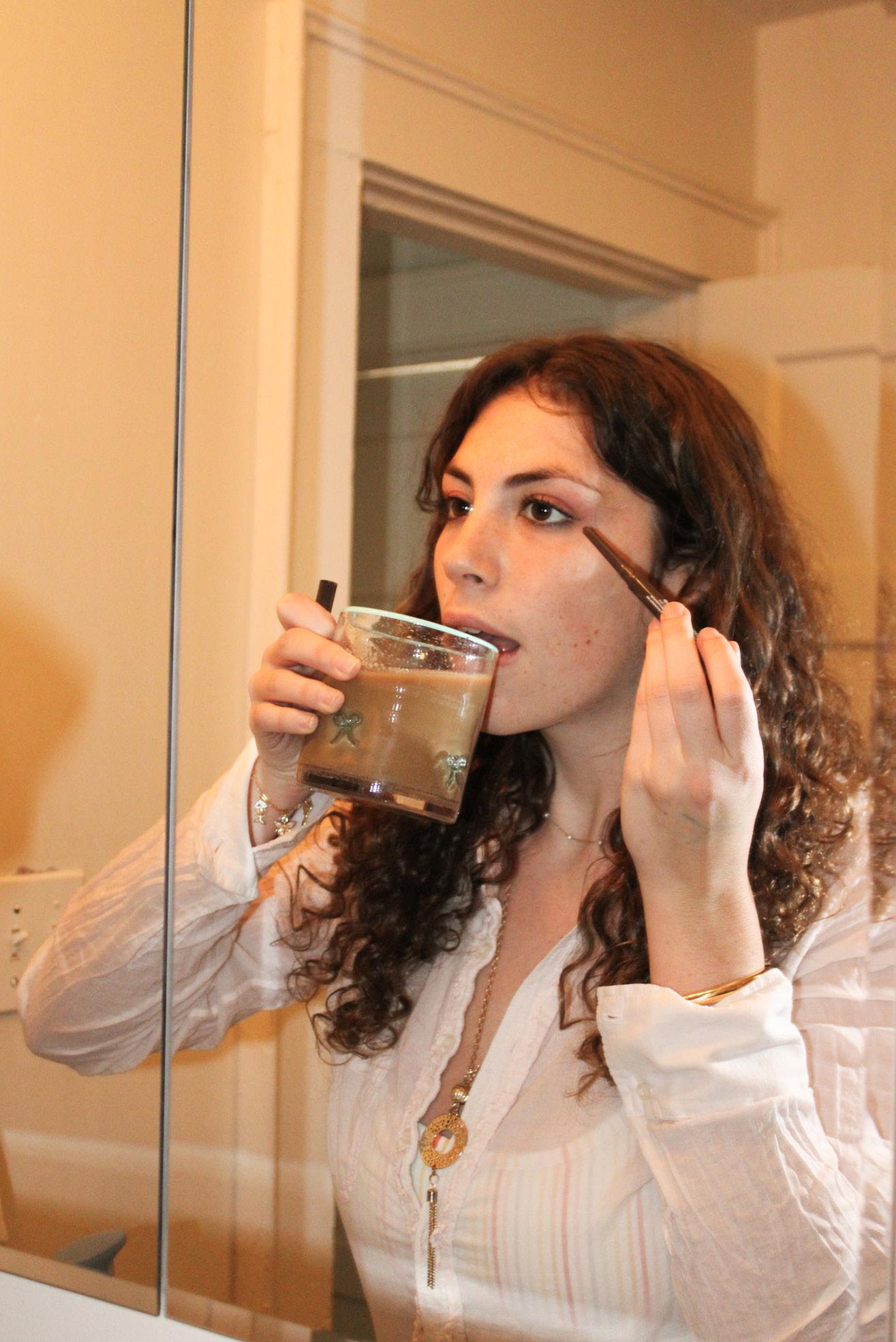
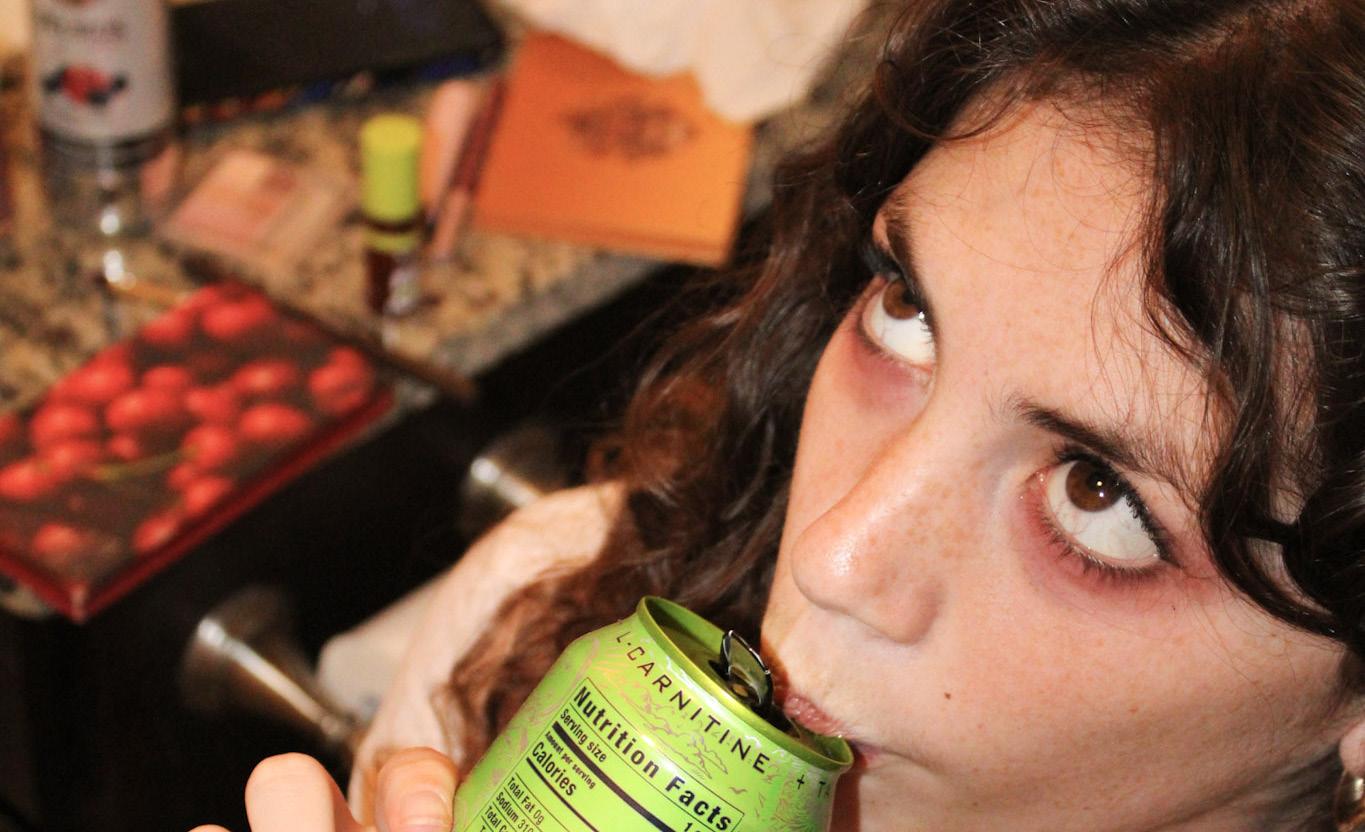
It’s impossible to walk anywhere on campus and not see a half-empty Dunkin’ cup or crushed can of Celsius lying around.
While coffee used to be the default caffeine source, there are now endless options to choose from, with more entering the scene that we at Jerk haven’t even heard of yet. They’ve snuck into our daily lives—so much so that no one would bat an eye at your classmate chugging their third Monster
According to a 2021 study done by Kamil Rodak, Izabela Kokot and Ewa Maria Kratz, a student and faculty members of Wrocław Medical University, respectively, caffeine has “multi-directional influence on various organs of the human body.” In small doses, it can have positive effects on brain function and memory. In larger doses, however, it can cause increased blood pressure, sleep disruption, anxiety and more.
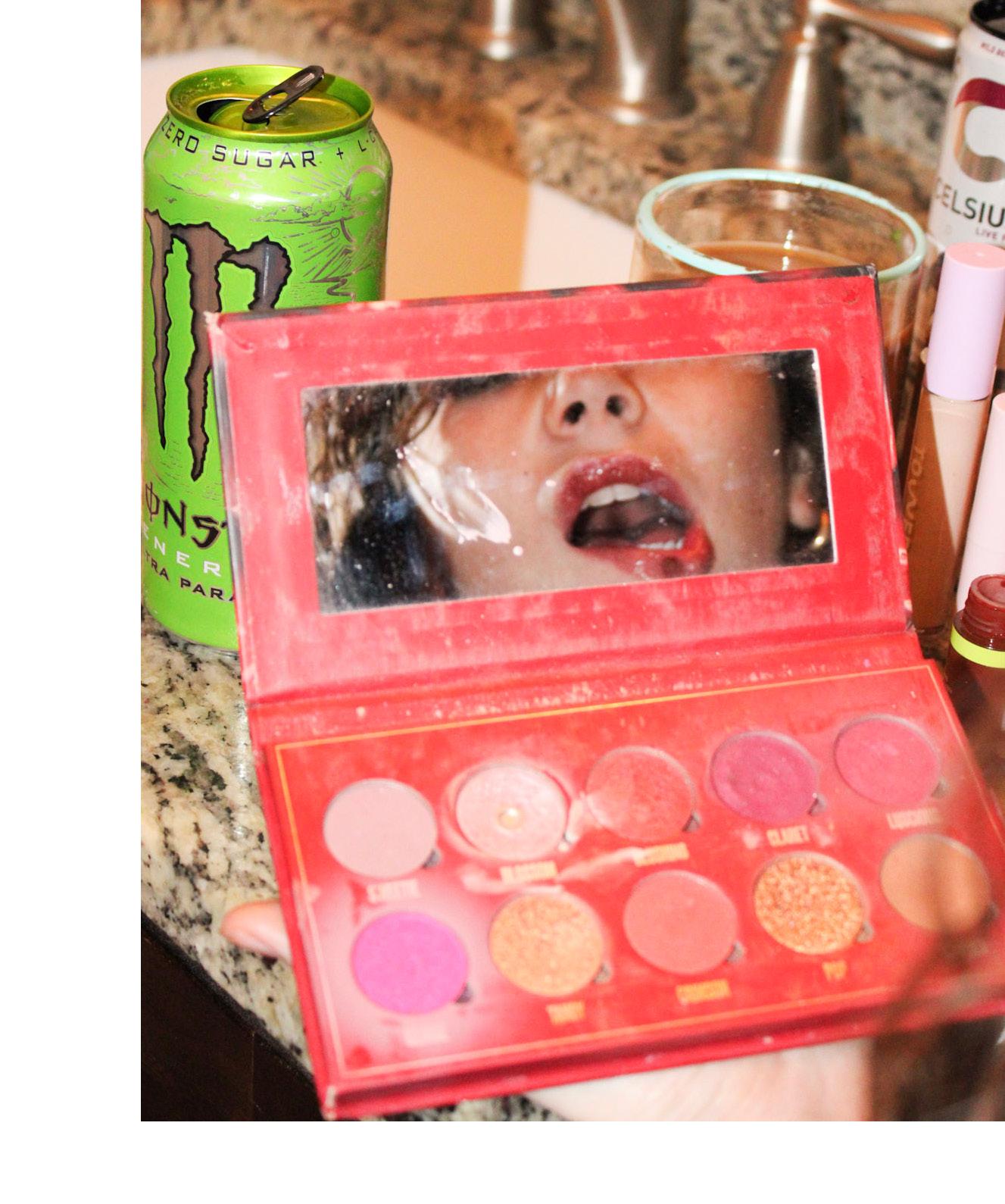
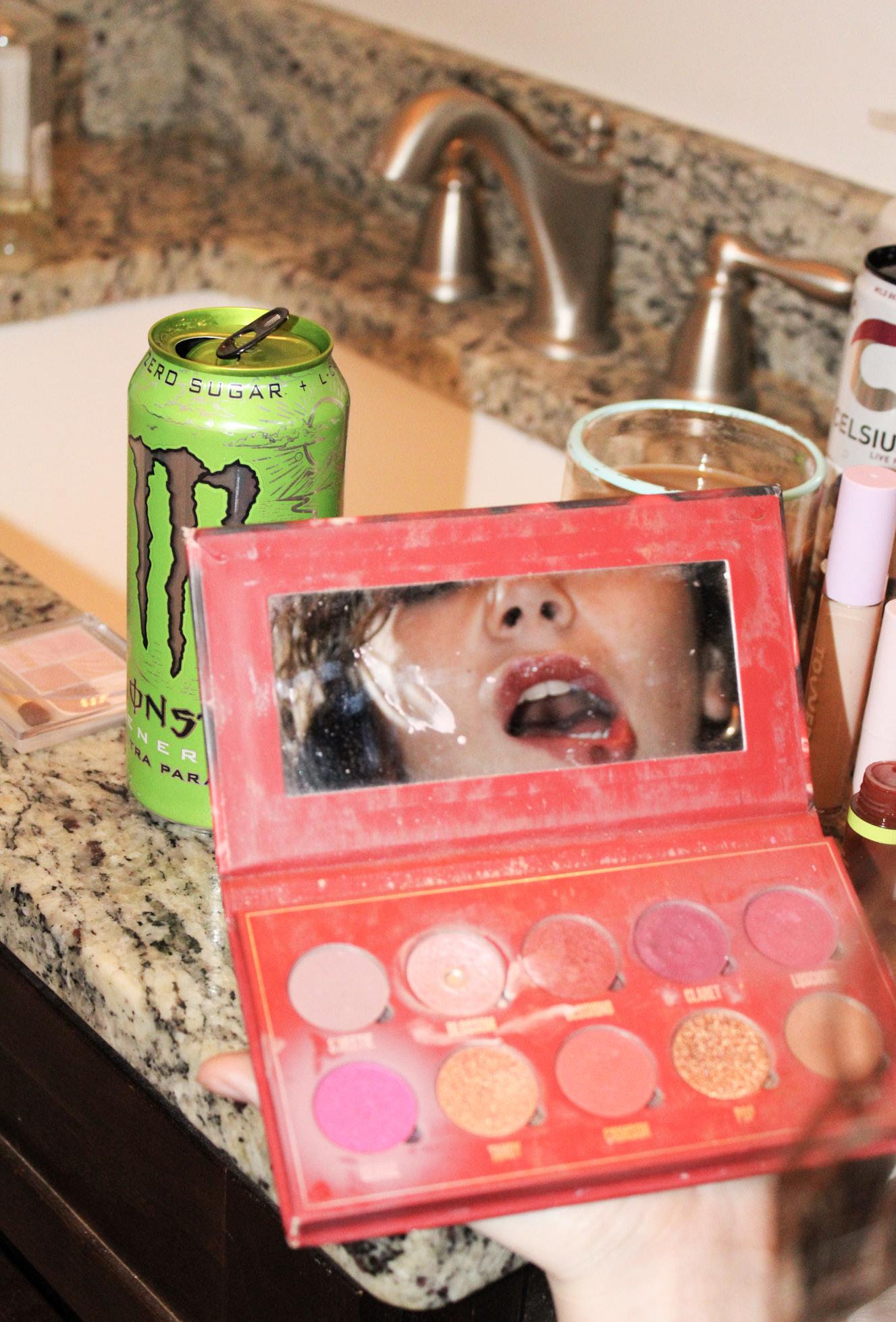
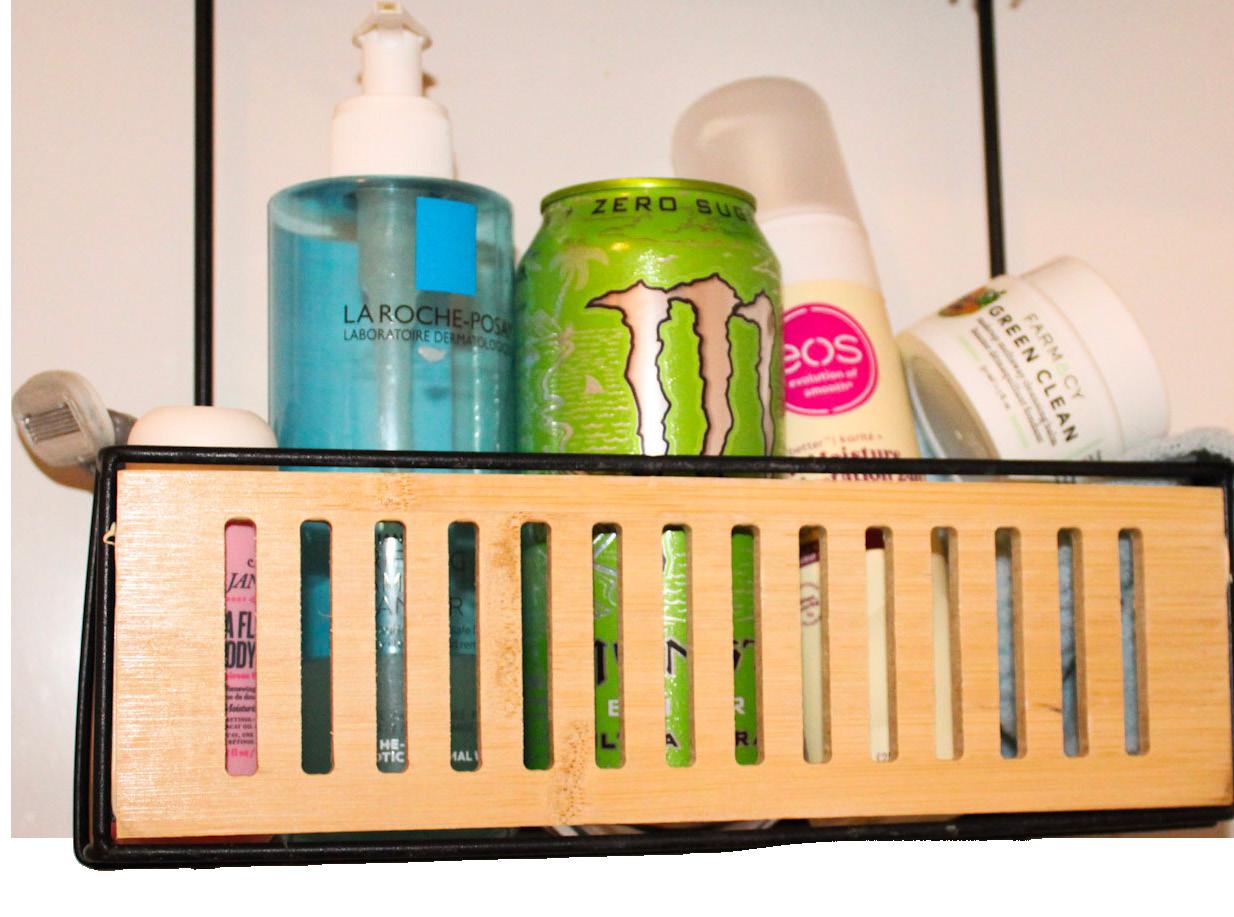
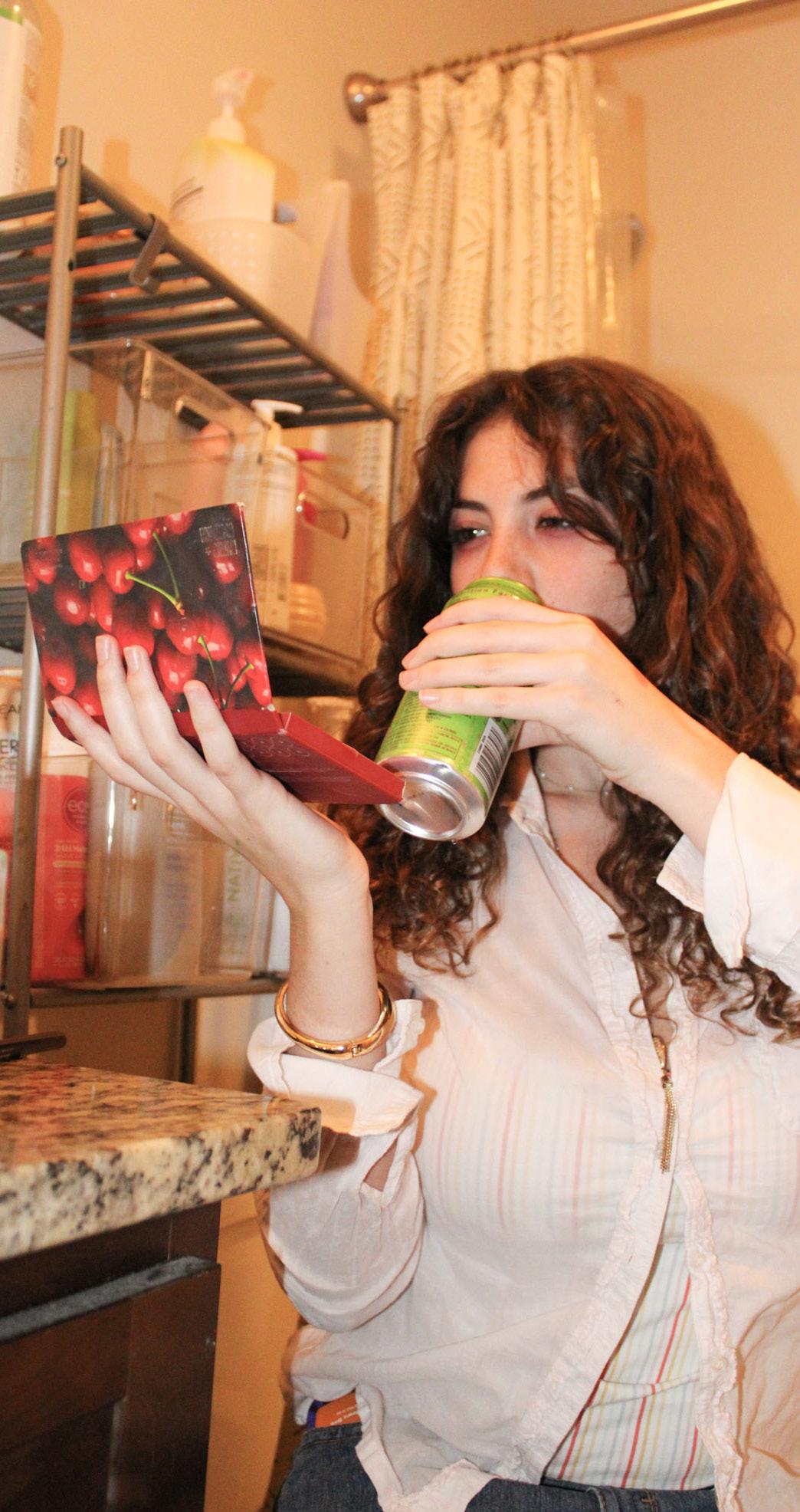
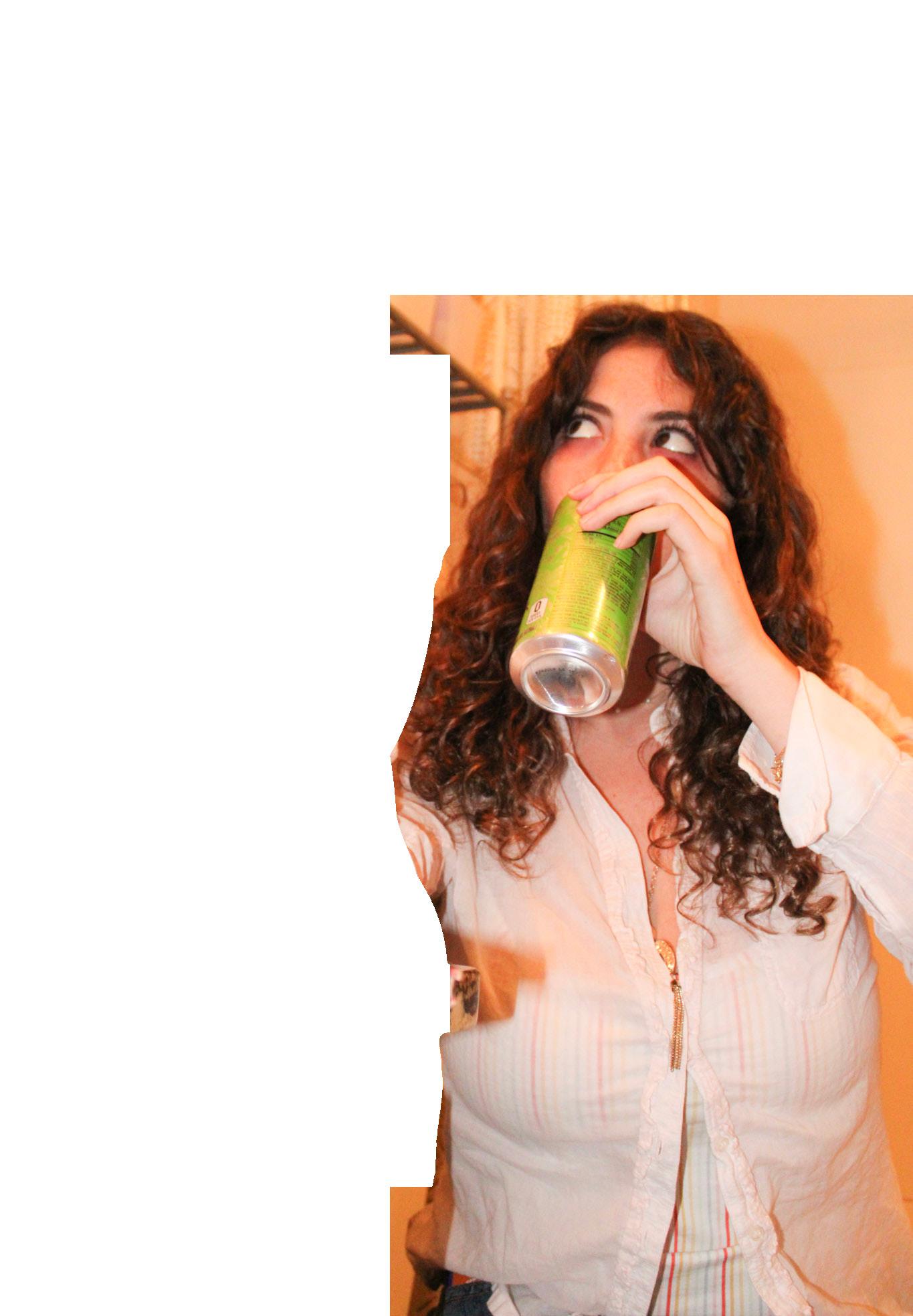
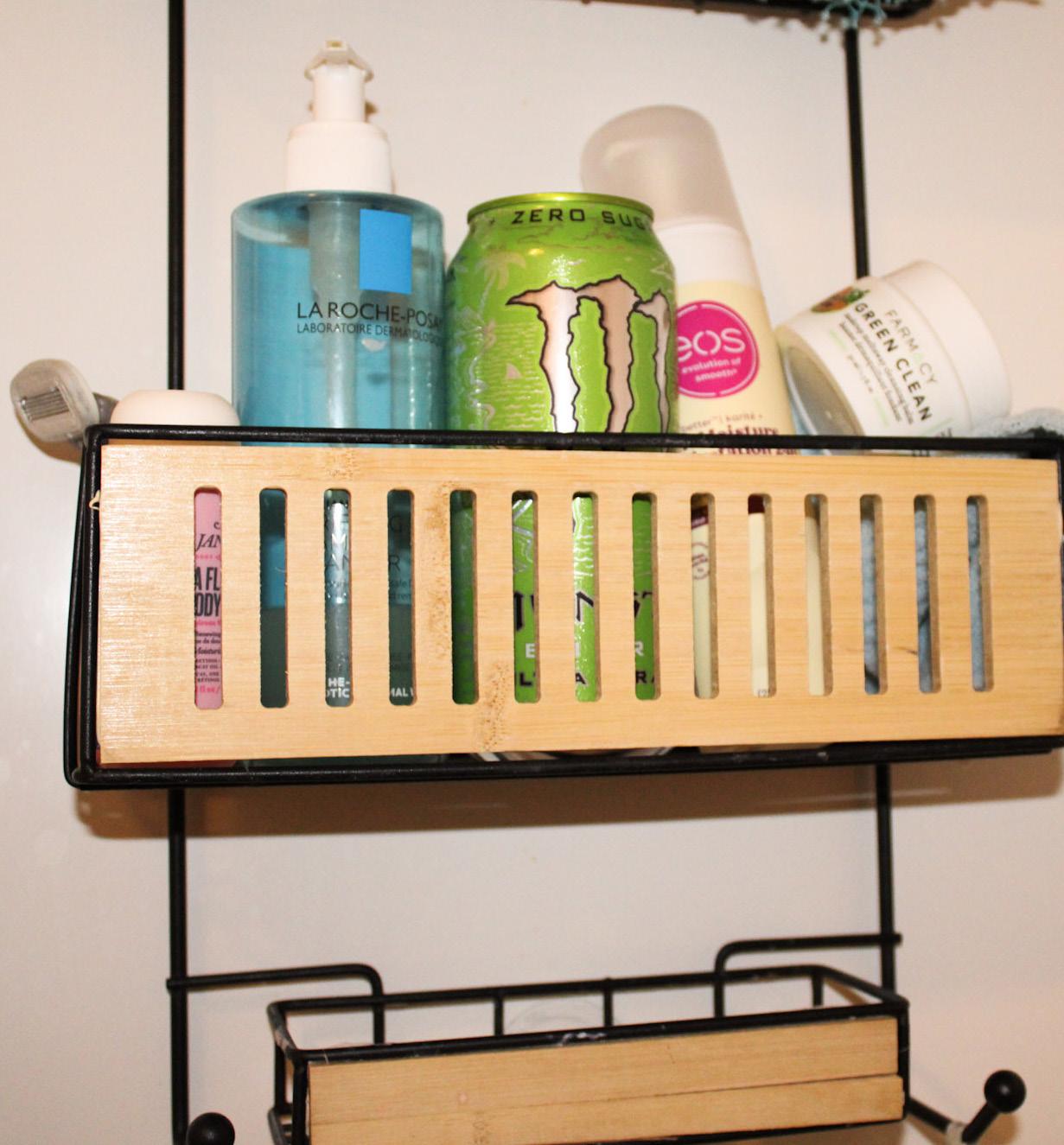
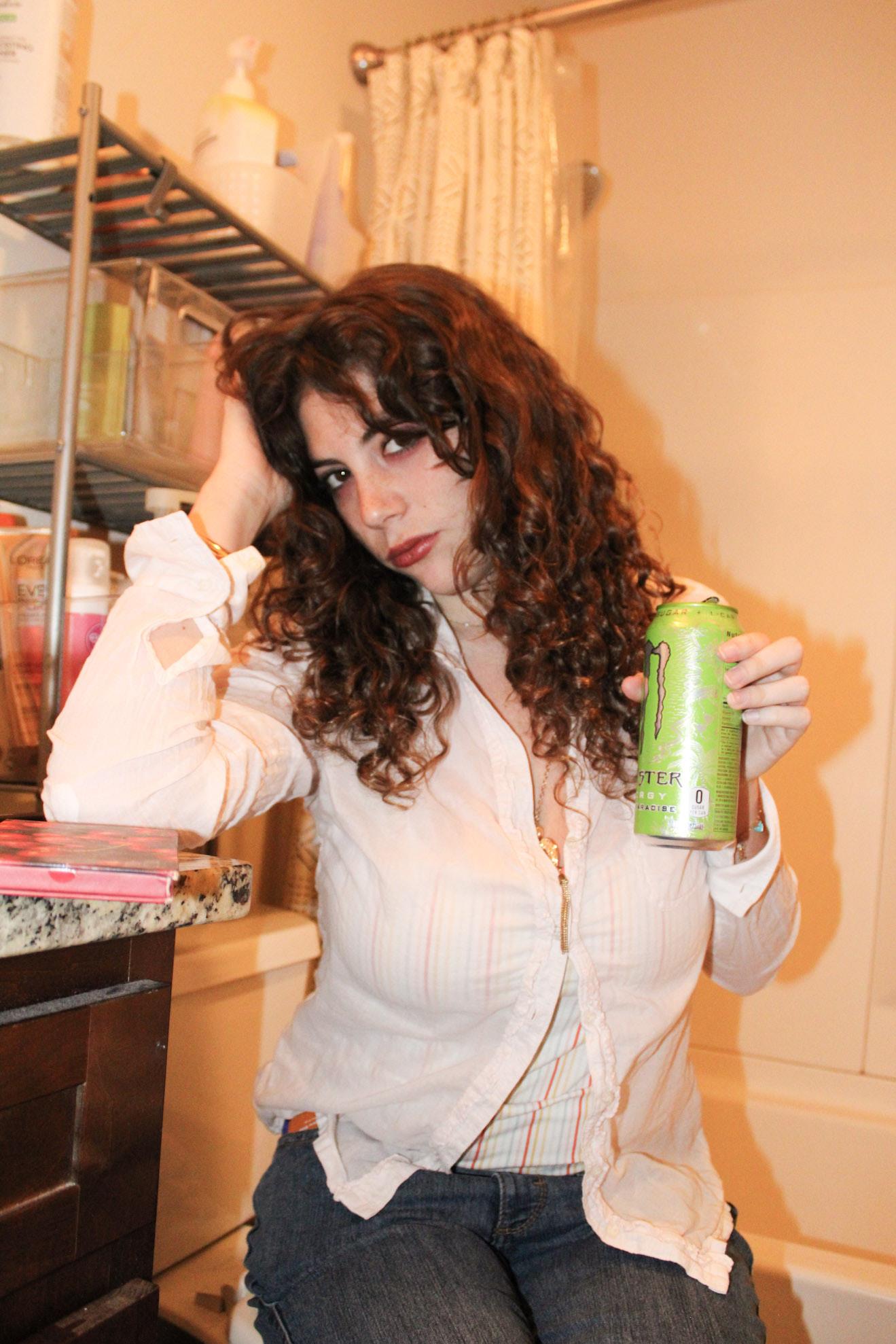


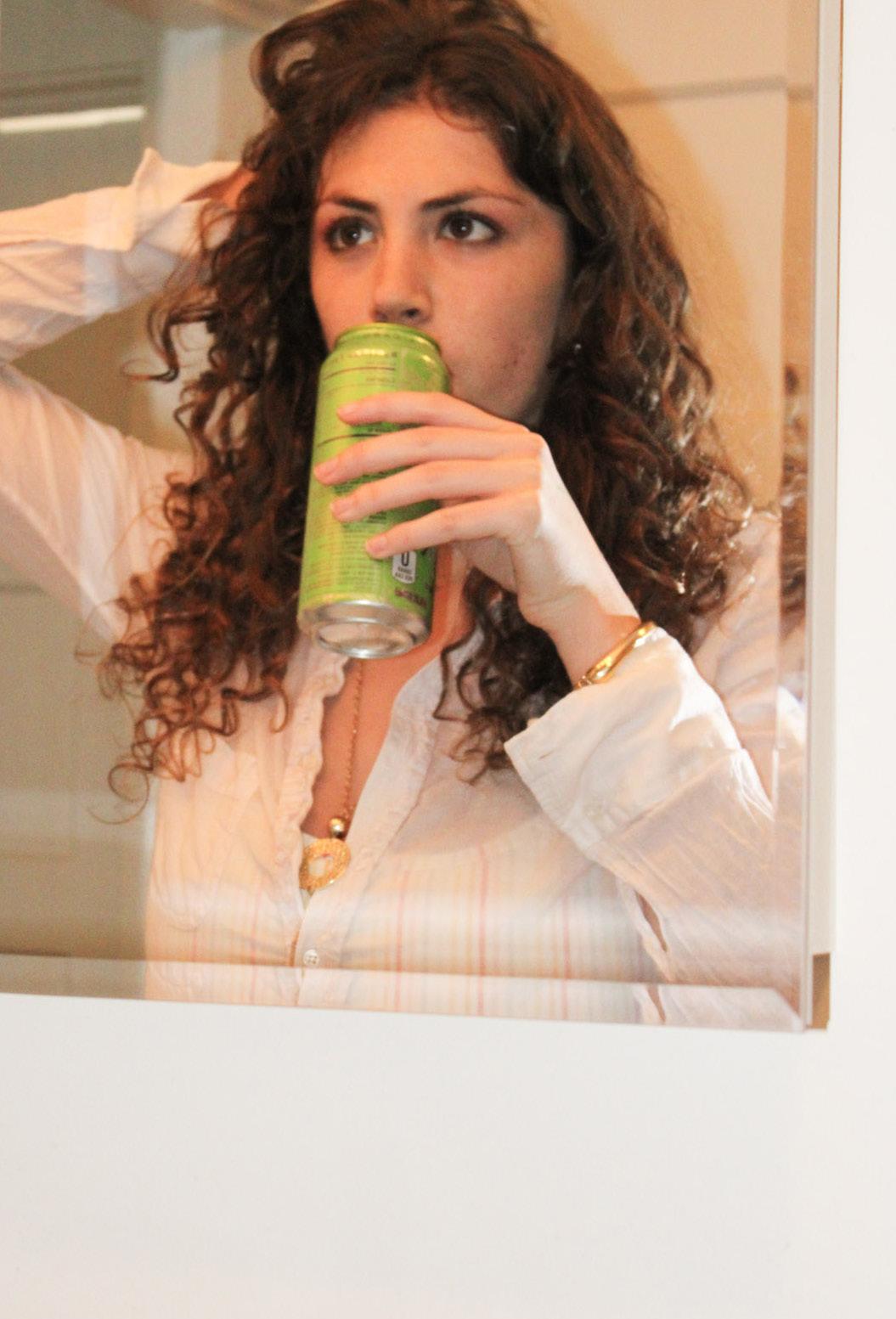
Syracuse University senior Danielle Blyn averages three to five doses of caffeine per day: three Diet Cokes, one cup of coffee and sometimes a can of Celsius to top it off. This totals to about 433 milligrams of caffeine daily, just over the 400-milligram standard that the U.S. Food and Drug Administration considers safe.
Blyn explained that she consumes the amount of caffeine she does because she gets tired easily and eventually sees her typical “midday crash.” But, she admits that it could all be traced back to the caffeine consumption itself.
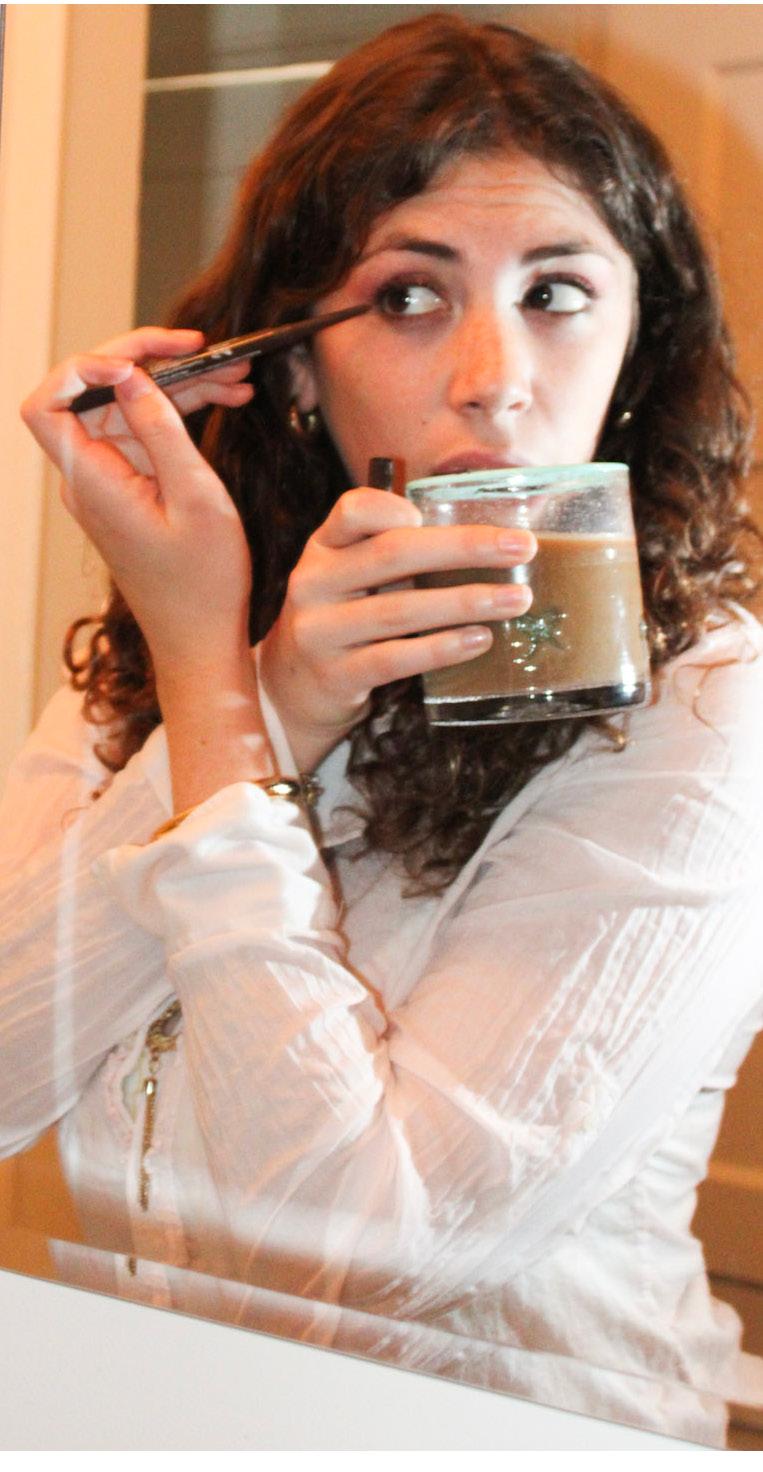
Sam Popnik, a recent graduate of SU who started a full time job in the area, claims he needs to have a Celsius on the days he works. While he makes sure to not exceed 300 milligrams of it per day—below the recommended guideline of up to 400 milligrams according to the FDA—he considers himself “caffeine dependent.”
He compares it to “the spice,” a fictional narcotic from the Dune series.
“If you have it, it usually makes you mentally sharper and heightens your awareness. But if you stop having the spice, it literally kills you,” Popnik said. “Caffeine is something similar where it's an addiction. As long as you're not overdoing it, it really doesn't hurt you in any way. But if you don't have caffeine—once you're addicted—you
Words by Laura Lemgruber | Photo by Chloe Pusey
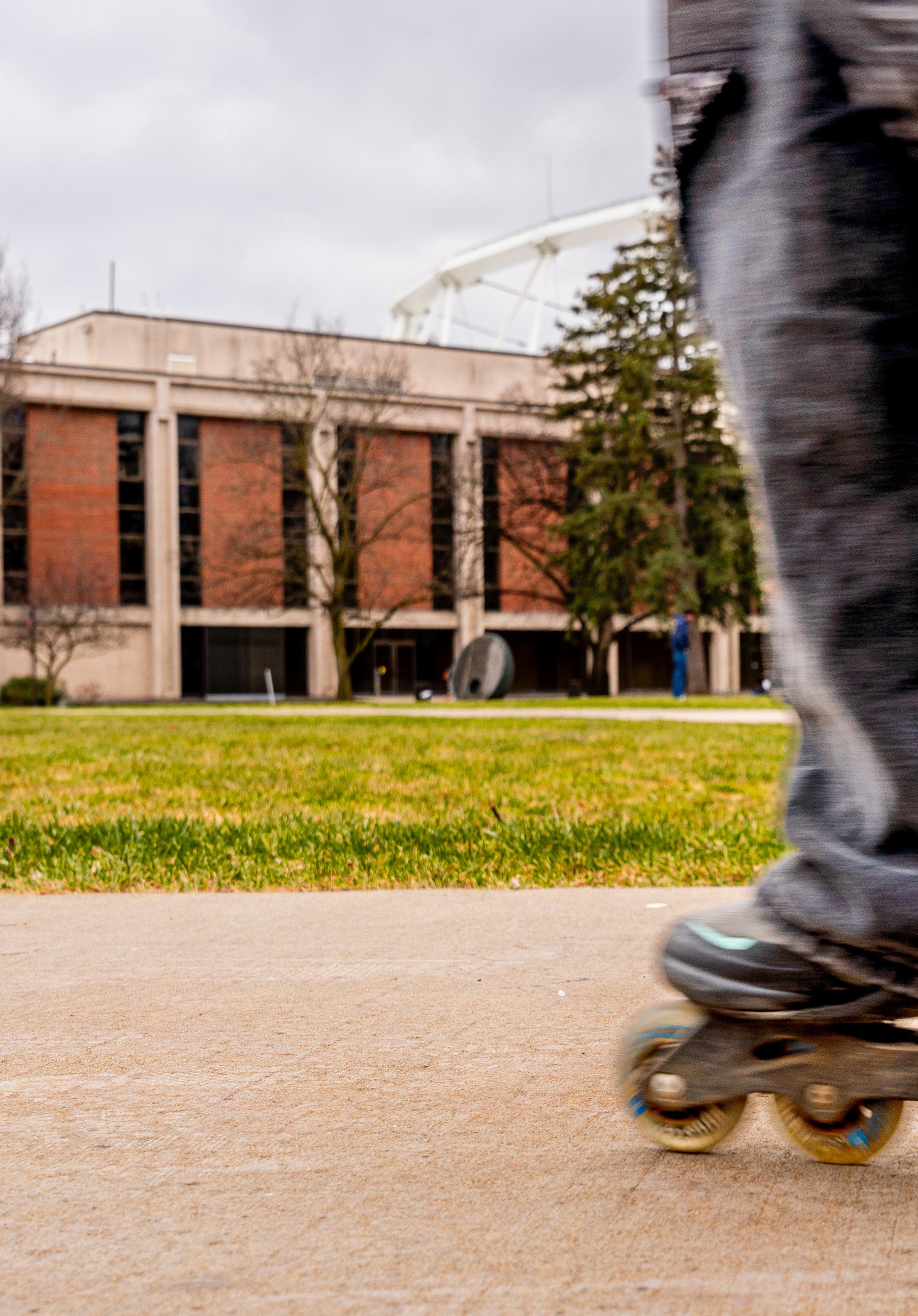
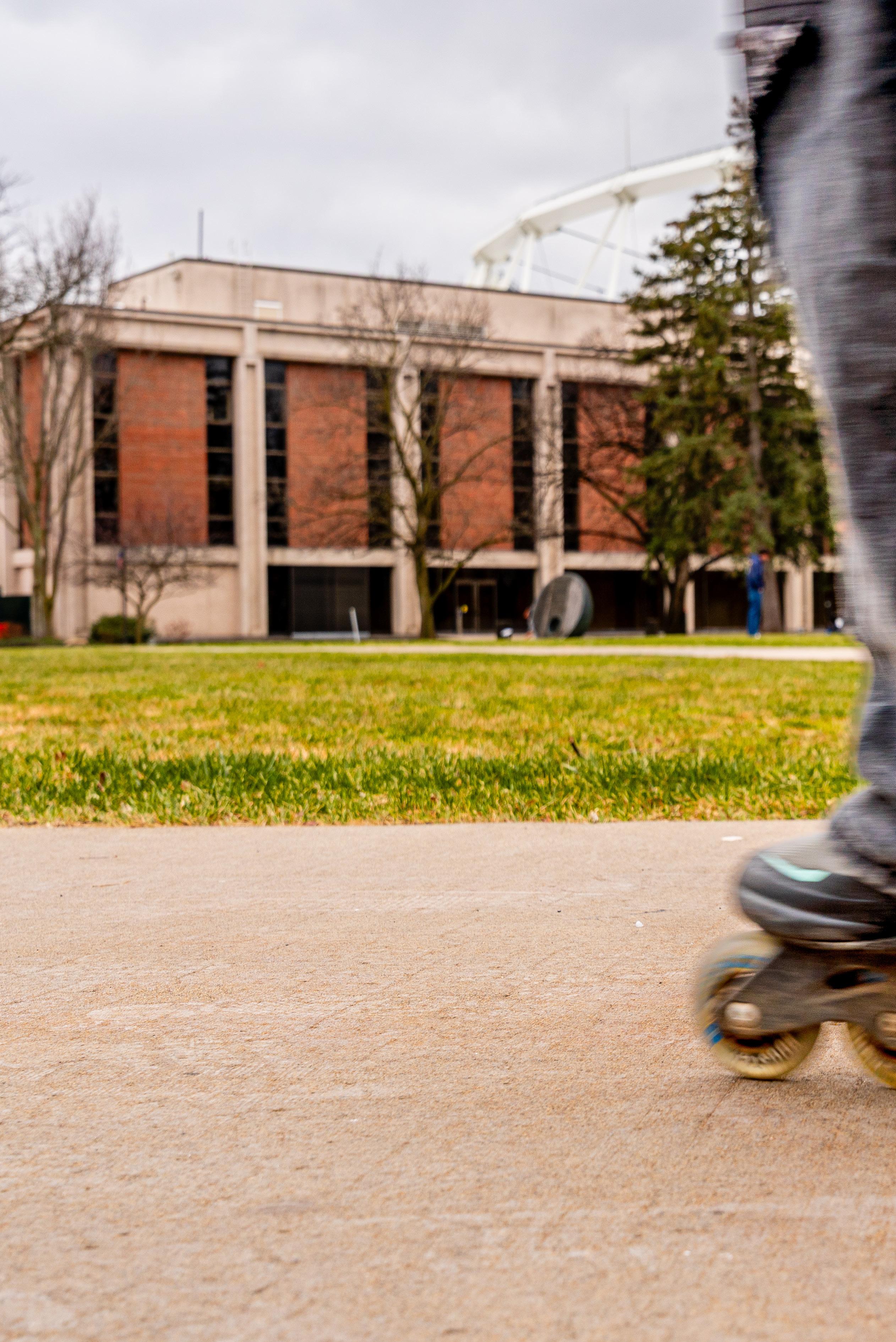
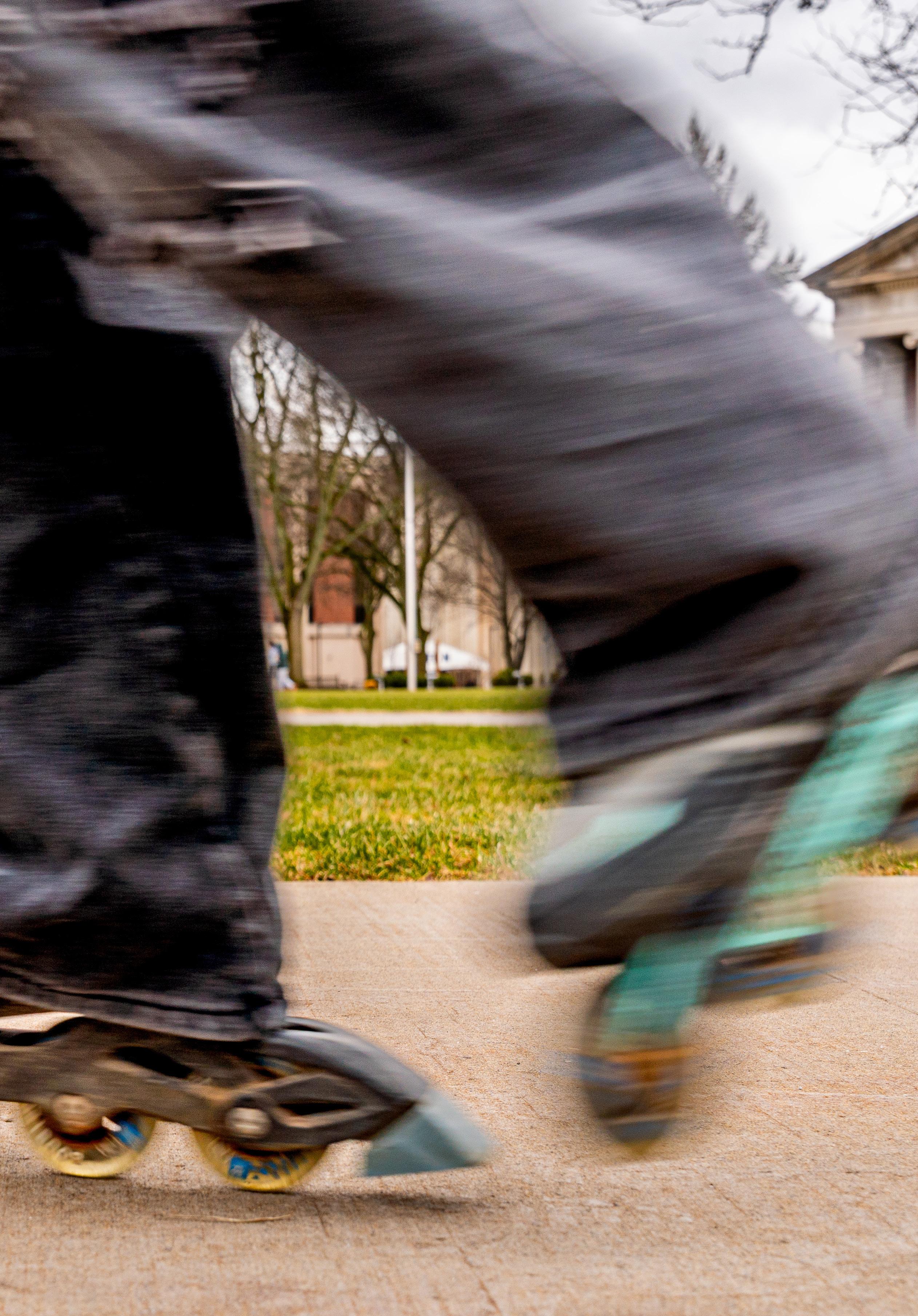
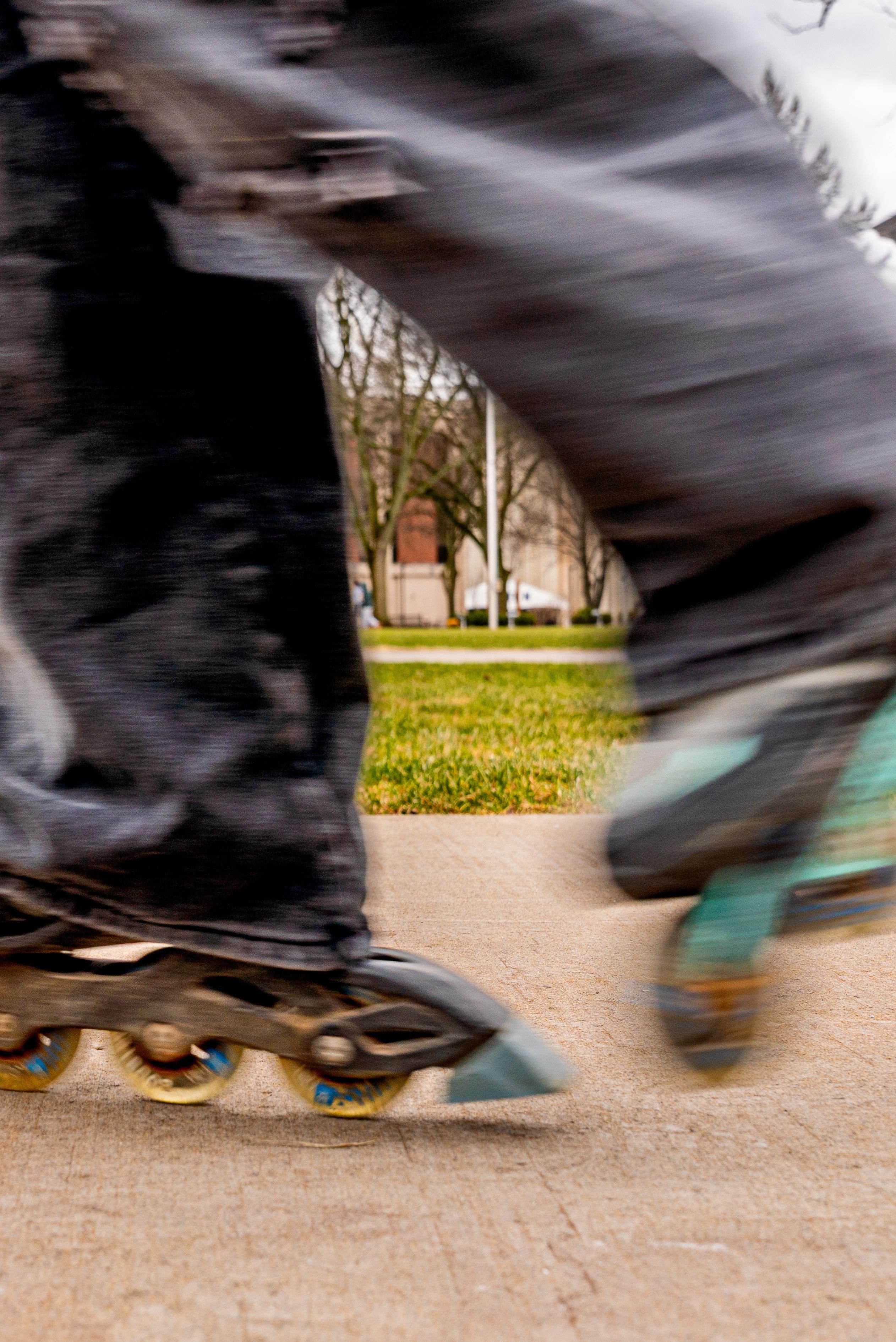
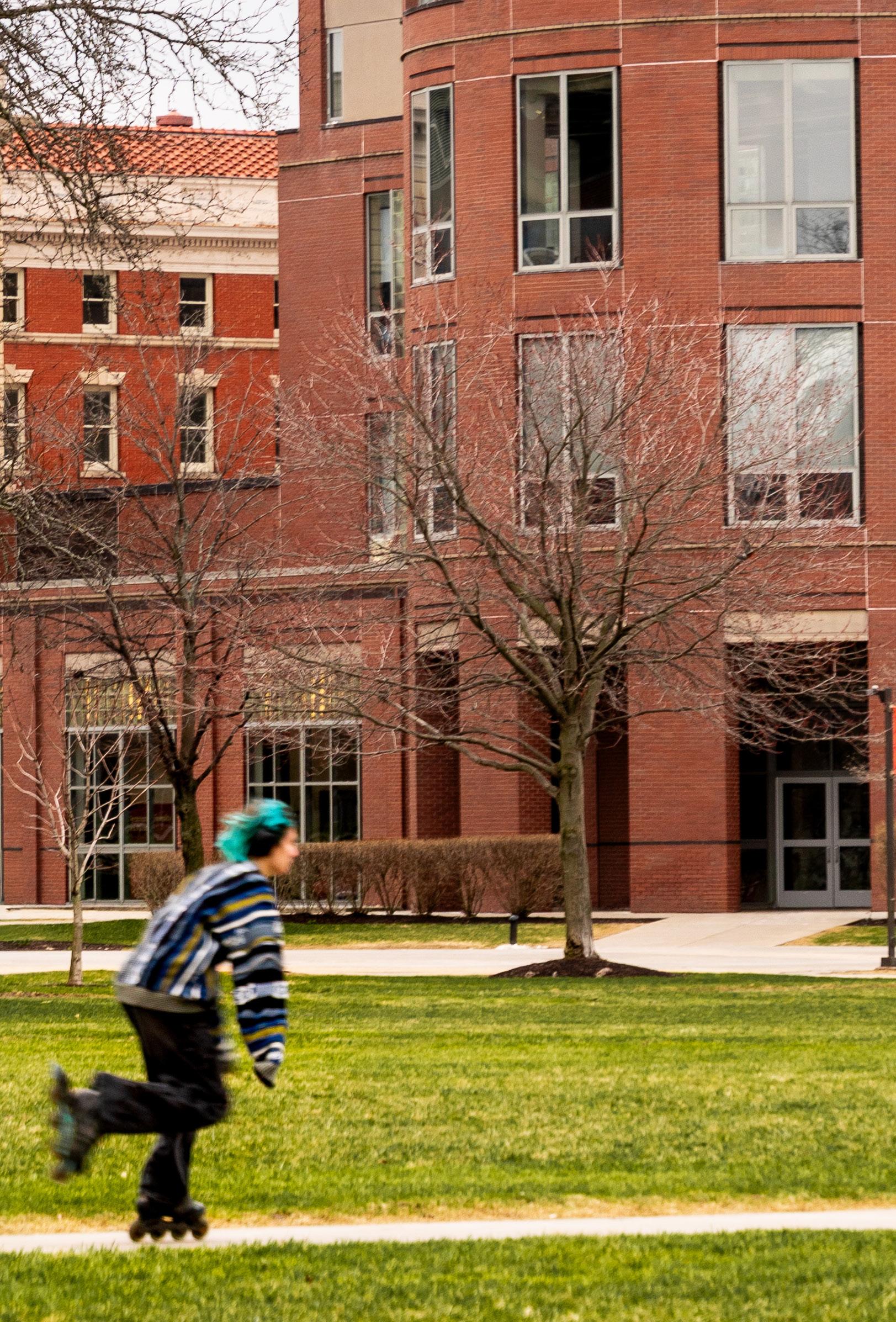
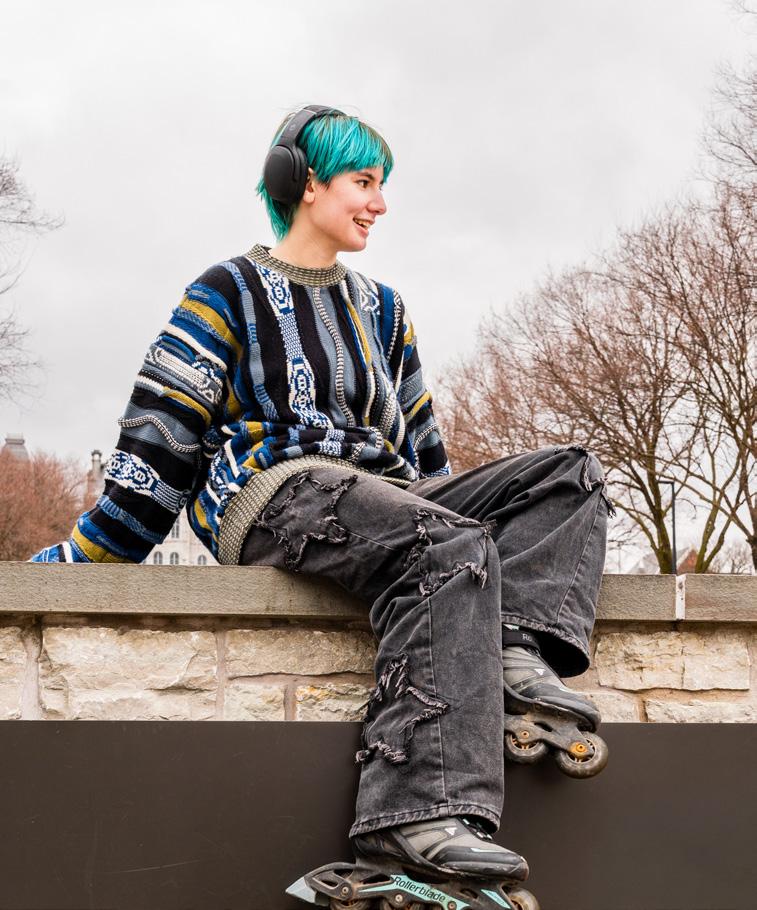
When Sophie Mays glides through campus, it’s impossible to miss her. From her blazing blue hair down to the rollerblades on her feet, Mays’ look has earned her a celeb-like status at Syracuse University.
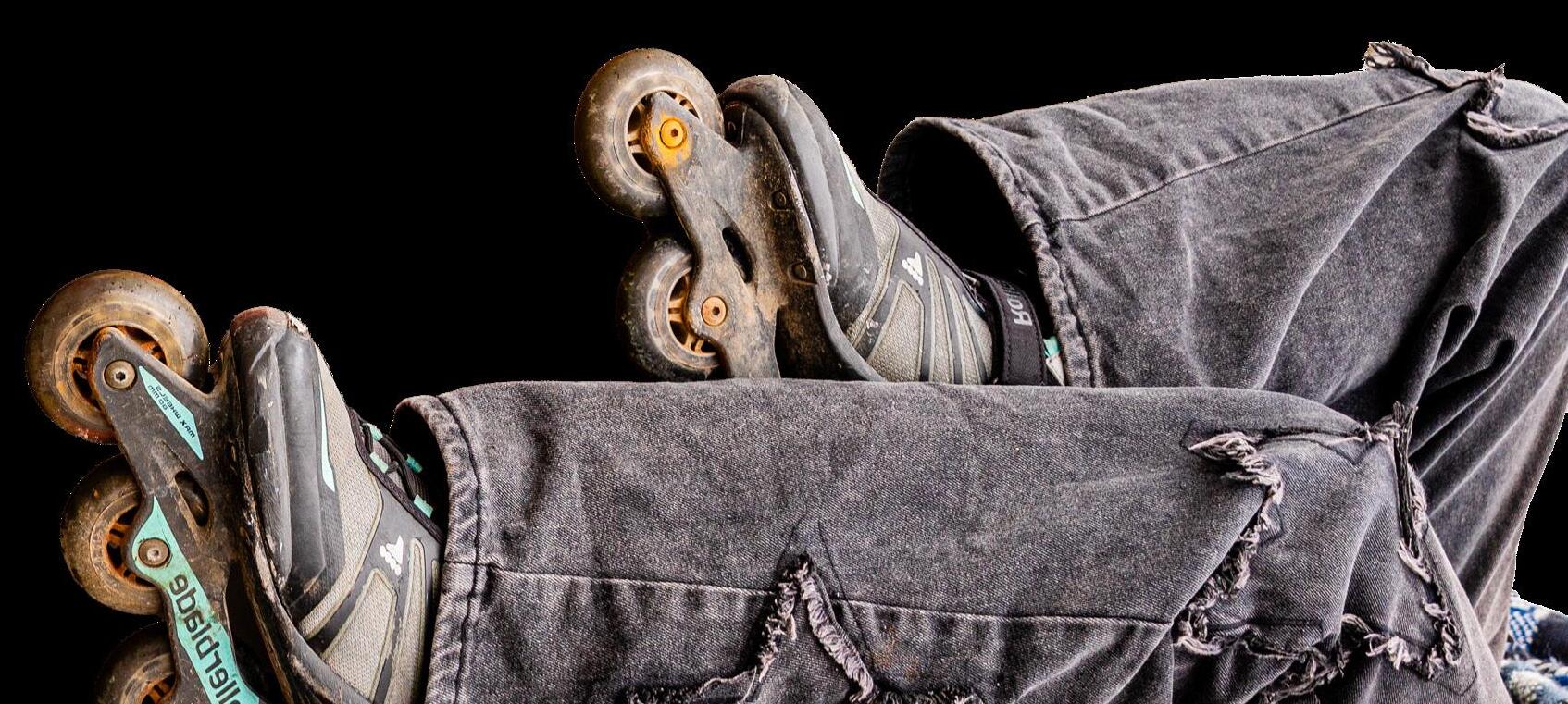
“I would rather people have an opinion about me than be a person who just blends in,” Mays said. Mays, a sophomore studying architecture, caught the rollerblading bug her freshman year and hasn’t been able to stop since. This year, Mays said she rollerblades practically every day. The snow, ice and notorious hills of campus don’t stop her from wearing her wheels. In fact, Mays said she’s found that rollerblading around campus is actually more convenient—she can’t imagine how others walk to class.
Apart from practicality, Mays enjoys the reaction she gets from the people she passes while she skates. The overwhelmingly positive response inspires her to be more adventurous and stop assuming people will react negatively.
“Life gets so much better when you move through the world slightly amused rather than slightly annoyed,” she said.
Mays has learned to welcome the vulnerability it took to put herself out there. Her skates help others feel more comfortable around her too, and they allow themselves to open up when they see her.
“I've seen desk receptionists who look like they hate everyone, and then they smile when they see me,” she said.
However, Mays’ hobby has also earned her some embarrassing falls and a couple scars.
“Was I scared of falling in front of people? Yeah,” she said.
But, to Mays, the benefits far outweigh the possibility of looking silly.
Mays recalled one of her worst accidents— when a Veo scooter crashed into her in front of a tour group on campus, earning her a Yik Yak post later that day.
Over time, recovering from her falls has gotten easier. The first time she got injured kept her from skating for a week. Now she’s able to put her skates back on immediately and keep rolling.
Always encouraging her friends to join her, Mays said she’d love to create a rollerblade club on campus for people of any skill level to learn. For Mays, the lessons you learn from skating translate to many other aspects of life.
“I've realized that you shouldn't assume there's going to be a negative response to things you do,” she said. “You should dress how you want, act how you want. Usually, people will react positively rather than negatively if you stand out.”
Words by Sophie Davis
Photo by Owen Sellers
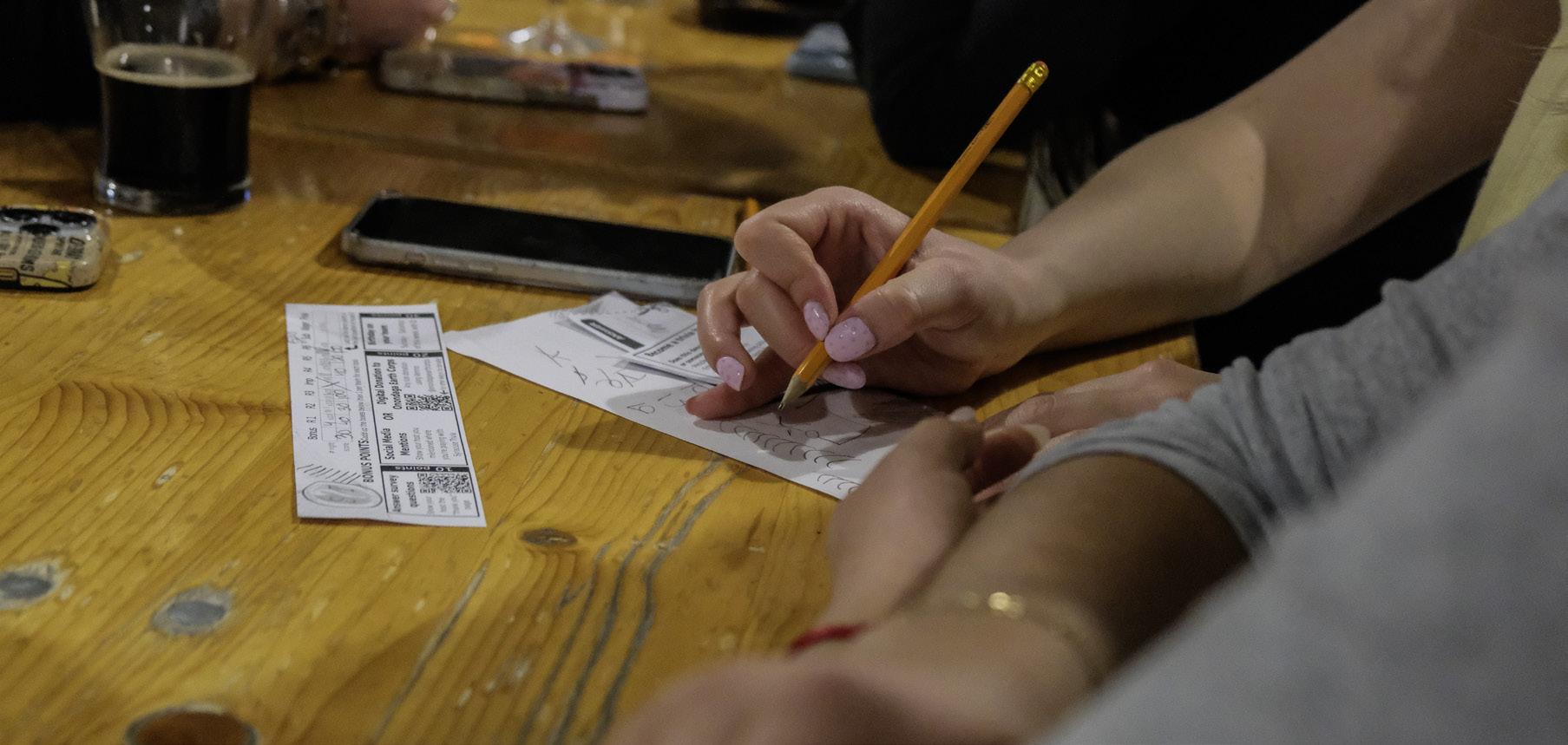
When Brian Cocca first moved to Syracuse’s Tipperary Hill neighborhood from Philadelphia, he was disappointed in the lack of local trivia offerings. Armed with a library card for researching answers to potential game questions and a handful of flyers to plaster around the neighborhood, Brian Cocca set his sights on Coleman’s Irish Pub, where he hosted his first trivia night in 2009.
“I benefited greatly from entering this field when there was not a lot of competition, so I could make mistakes and I still wouldn’t lose market share,” Brian Cocca said.
After finding success at Coleman’s, he looked to expand.
“I’m writing all these questions, I’m doing all this work, and I get one use out of these questions,” Brian Cocca said. “I was like, ‘I should find another place and then I can go there and I can basically use the same questions.’”
Over the past 17 years, the idea snowballed into a full-time gig for both Brian and his twin brother, Dale. The brothers supply questions, game hosts and scoring materials to 56 local businesses.
The questions may be the same at each location, but the pair take pride in the range of experiences the company offers, from crowded, social nights at Harvey’s Garden to subdued evenings at the Tanner Valley Golf Course. Whether you’re itching for boozy, occasionally trivia-oriented chatter or looking to enjoy a scotch and steak frites whilst you compete with the 60 and over crowd, there’s a Syracuse Trivia Company location for you.
As the company’s reach has expanded, the brothers have amassed no shortage of stories about highly contested questions. One such incident involved a slightly misworded clue about courtroom procedures, wherein the Coccas found themselves on the receiving end of “scathing” letters from attorneys active in the local trivia scene.
“It was brought once again to our awareness that lawyers make a living out of fighting nuance,” Dale Cocca said with a chuckle.
The pair have since adopted a no-law-questions policy to curtail the possibility of future incidents.
The brothers’ most recent venture? Collaborating with Syracuse University to host weekly trivia nights at The Inn Complete, South Campus’ new restaurant.
“The college students in our experience don’t venture too much further than like a mile off campus,” Brian Cocca said.
Now, students have an opportunity to play trivia in their own backyard.
Enthusiastically chatting about Syracuse Trivia Company’s future, the brothers show no signs of slowing down. They’re keeping their focus local, but are determined to continue widening their scope.
“We’re coming up with new ways of engaging multiple types of groups so that we’re all connected doing slightly different things and we’re offering things to different audiences,” Brian Cocca said.
With so many options, it’s about time you grab some friends, venture off the hill—or just hop on the South Campus trolley—and start studying up.
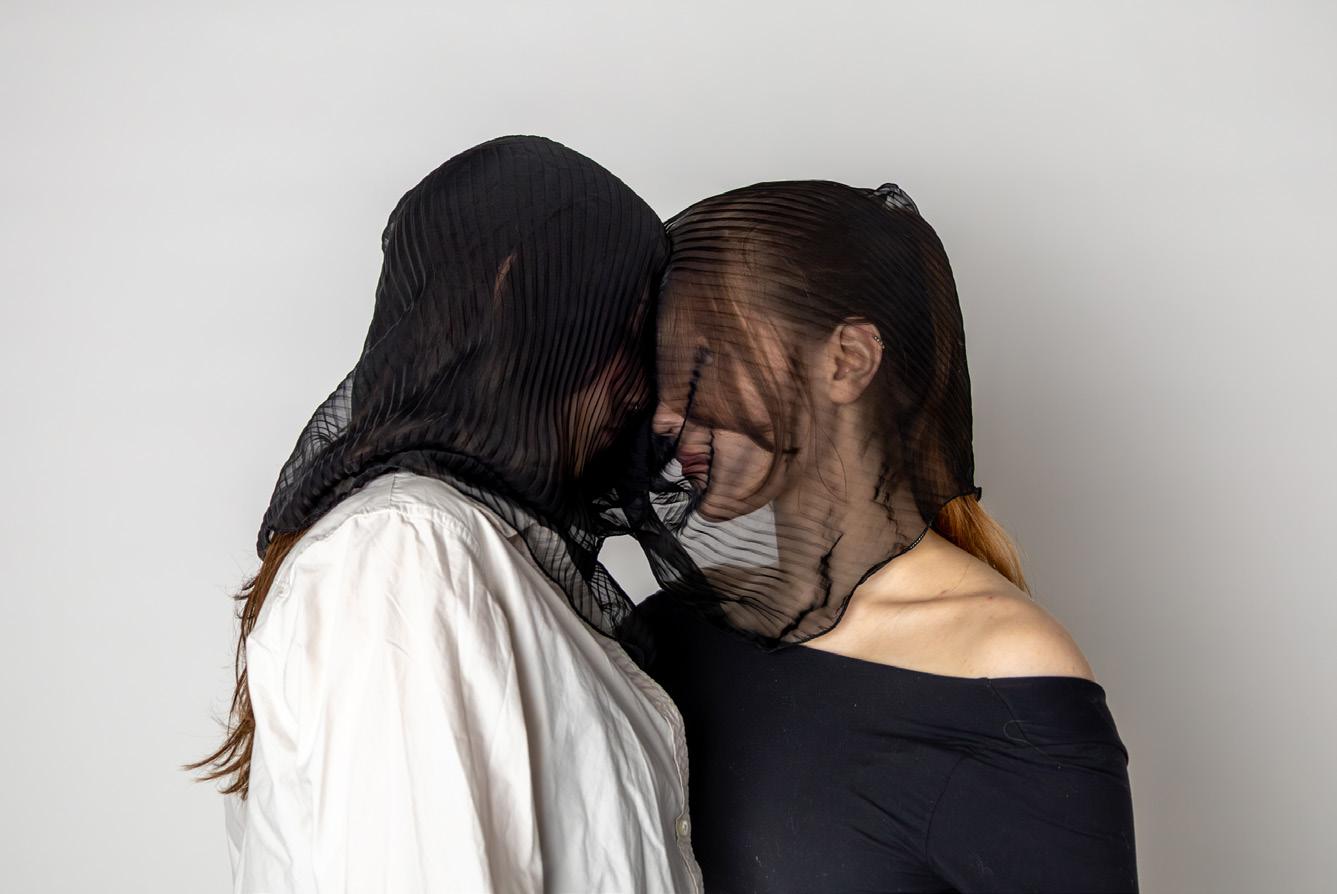

Words by Laura Lemgruber
Photos by Maddie Kim | Designed by Abigail Aggarwala
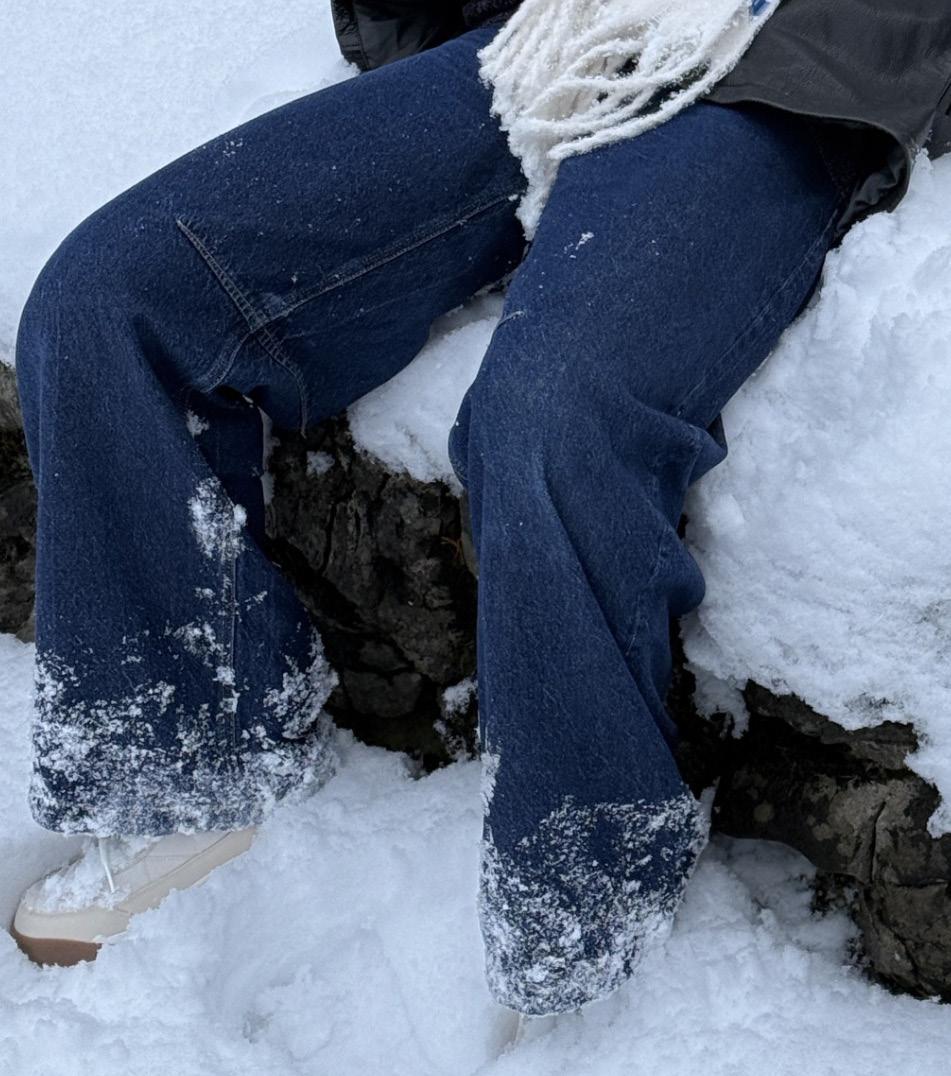
On Syracuse University’s infamously snowy campus, the harsh winter weather is an unavoidable part of attending SU. From decadeslong sledding traditions to the comically long jackets students buy in anticipation of their first Syracuse winter, the cold inevitably weaves itself through every aspect of student life.
By the end of four grueling years filled with endless complaining, the winters have shaped us. Students learn to become appreciative of the handful of warm spring days and every precious moment of sun they get. Closets are left with the true marker of an upstate student—a collection of shoes and clothing weathered by ice and salt.
These stains are proof of trudging your way through an arctic snow storm on a Friday night out, or cutting through the muddy quad as you trek to the 8 a.m. class you manage to be late for every week. It’s just part of being a student on a campus where it’s sunny and 60 degrees one day and
blizzarding the next—and where getting the stains out of your shoes doesn’t necessarily rank highly in the college version of Maslow’s hierarchy of needs.
At its core, clothing has always been a form of expression and a way for people to tell a story. But that story isn’t complete without the wear and tear that reflects the experiences of the item’s owner.
For Syracuse fashion and apparel design senior Kieran Romano, the rips and stains are part of the intrigue. As he finished his senior thesis collection, Romano said he was fascinated by vintage clothing and often referenced 1950s workwear and durable fabrics in his work.
As part of his research process, he studied wear patterns (the marks of daily movement and stretching on fabrics) and how they developed so he could replicate them in his own work. Over the past few months, Romano has experimented with different ways of dyeing and distressing fabrics in the studio to achieve the vintage look.
“I really love the look of a worn-in garment,” Romano said. “Having that specific wear pattern kind of shows you that it has been worn before, and this wasn't how it was produced.”
Thinking back to when he used to skateboard, Romano recalled a staple at the skatepark—what he called “heel bite.” The baggy pants he wore would sit on the heel of his board and grind against the ground, leaving his pants missing a chunk.
“When I look around, I'm like, ‘You're either from Syracuse or you skateboard because the back of your pants are destroyed,’” Romano said.
For fellow skateboarder Makenzie Sproles, the distressed look goes beyond her clothes. She said a banged up board typically earns respect rather than judgment amongst other skateboarders.
“They'd rather see it scratched up,” she said. “They'd rather see it ruined.”
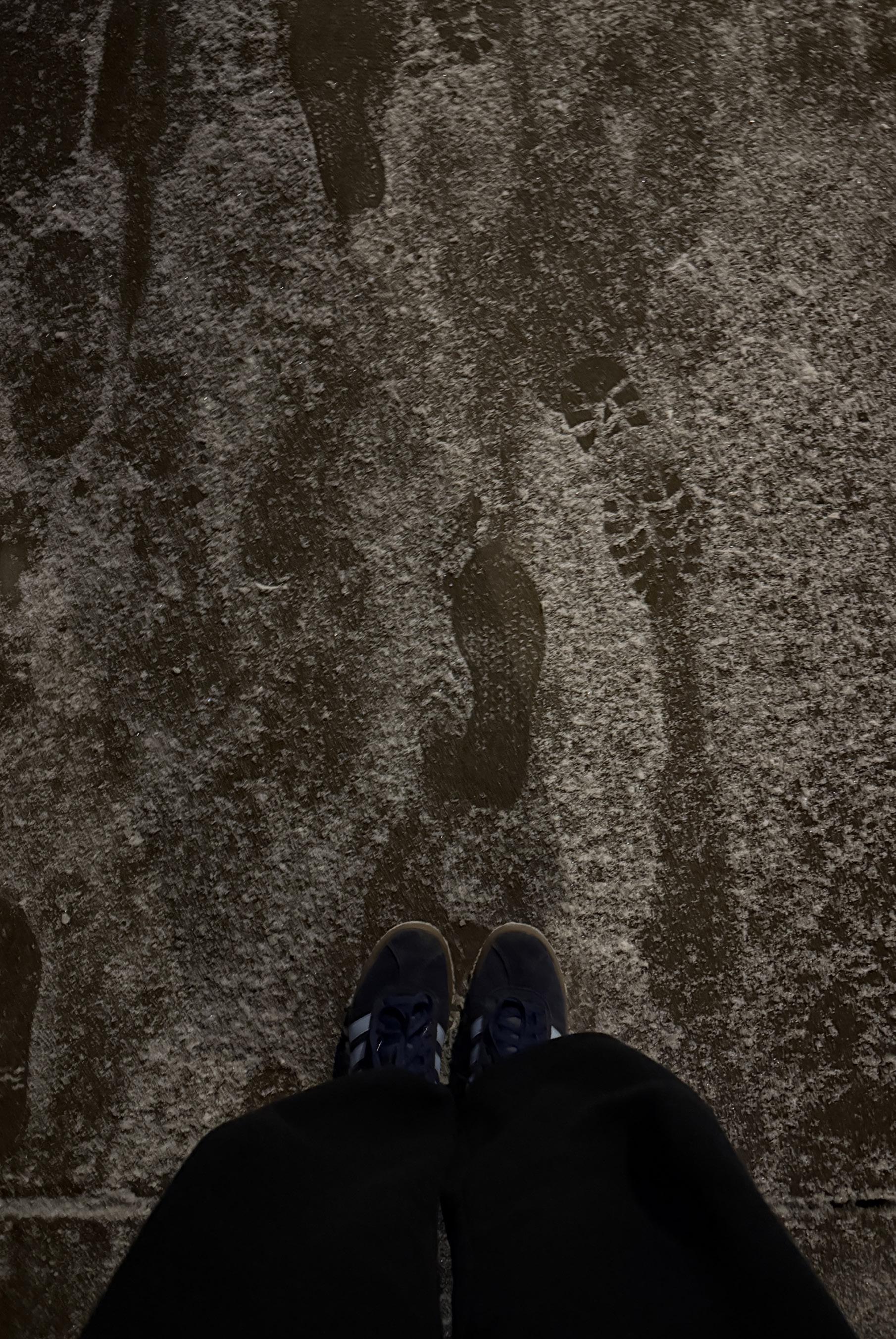
Sproles, the former president of SU’s Skateboarding Club, has been skating since her high school years. Now a junior at SU, Sproles said she’s earned her fair share of ripped pants and banged up shoes. But that doesn’t stop her from wearing her clothes with pride.
“I like to wear my clothes as much as I can,” Sproles said. “I'm the type of person who [gets] a dollar a wear, you know? So if it's $120, I'm wearing it 120 times.”
The next time you glance down at your shoes to find that your pair of new UGGs are no longer brown, but a dusty, salt-stained white, think of them as an emblem of your days as an upstate student—a time when life wasn’t serious enough yet to be concerned that half of your jeans were ripped away during a late-night expedition across our icy campus.
FORM AND FUNCTION: How to dress like...
She's been through it, she's still here, she's got a latte
Words by Caroline Erskine | Photo by Andrea Hernandez
It's almost the end of the semester, it's getting warm again and summer is right around the corner. Your mental health has been through the wringer, your to-do list is longer than your situationship's list of excuses and somehow you still showed up today looking like that. Take a breath, grab something sweet and remember: we are going to be okay.
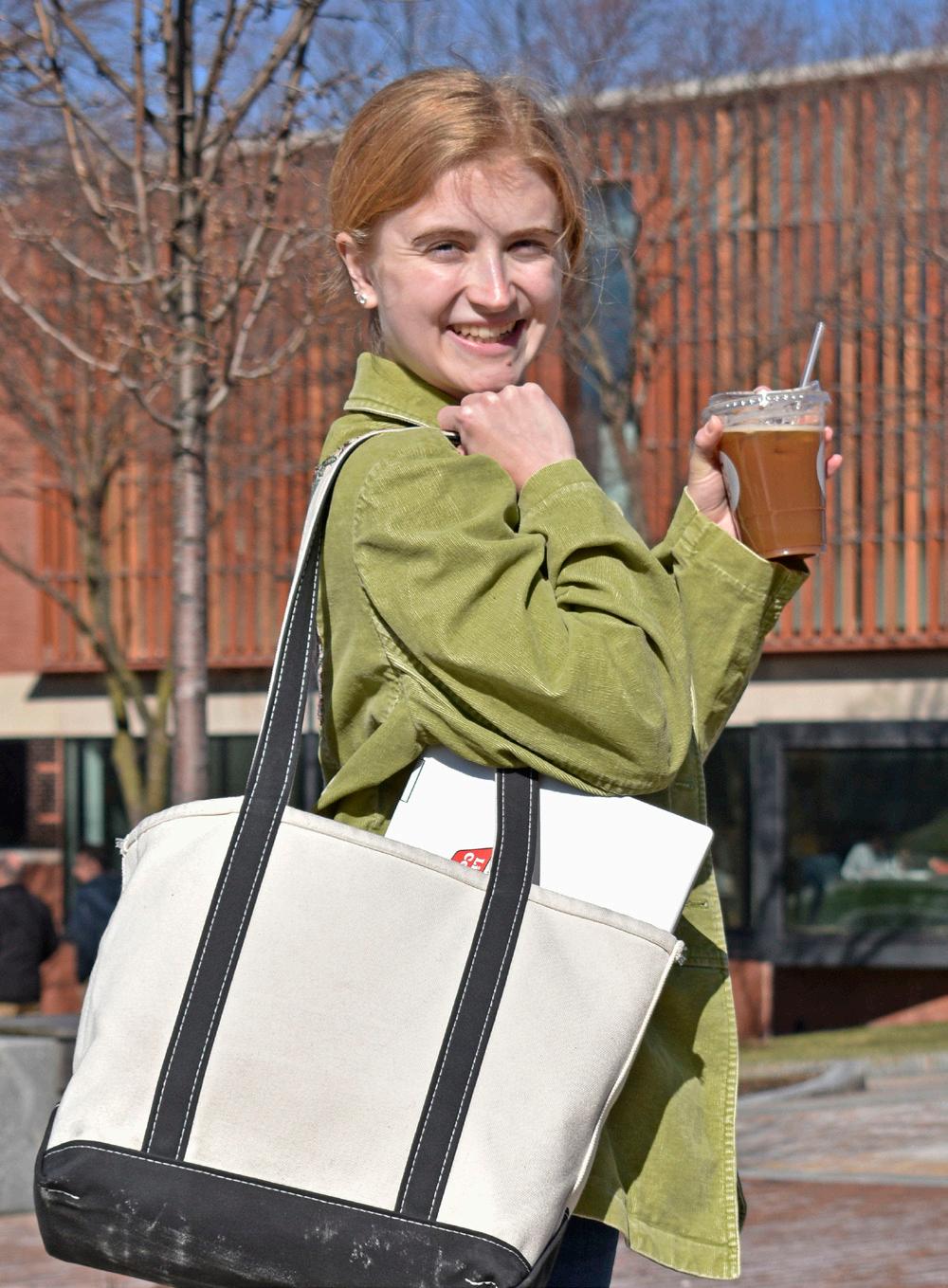
TOTE BAG: Overstuffed and slightly mysterious, this bag contains a journal she writes in when things get really bad, a book she's been 40 pages into since February and at least one item she genuinely cannot explain. It contains multitudes. Kind of like her.
CLAW CLIP: It took three minutes and looks intentional. That's the secret.
LATTE AND SWEET TREAT: Non-negotiable. Load-bearing, even. When the world feels like a hydraulic press, you find joy where you can get it—and today, it tastes like an iced vanilla latte and whatever pastry was left in the case. She deserves it. She knows she deserves it.
LAPTOP: There are approximately 10,000 tabs open and one Google Doc titled "Manifesto" with nothing written in it. Is she thriving? Absolutely. Is she also one email away from closing the whole thing and staring at the wall? Possibly. Either way, the laptop is open and that automatically means she’s being productive, right?
BLAZER: Did she wake up like this? No. She woke up in a panic and threw on the first thing that said “my life is together.” Perfect for a 9 a.m. class, a last-minute interview or a very calculated run-in with an ex. Classy, comfortable and quietly threatening.
Words by Adelaide Larson
Photo by Becca Beckas | Designed by Julia Yezukevich
As the snow melts and the salt slowly leaves the sidewalks, you may start to hear the familiar pitter-patter of ballet flats jetéing across campus.
From wearing ‘90s minimalism on Monday to 2010s twee on Friday, it seems like ballet flats always come out on top as the best shoe to fit almost any of your style switch-ups. Dressed up or down, the ballet flat can fit almost any aesthetic.
Syracuse University sophomore Ella Castrillon tries to wear her flats to every event she can.
“They work so well with any business casual or professional outfit,” Castrillon said. “I have also started to wear them when I go out, both for the look and comfortability.”
SU freshman Ava Fiore says there is room for creativity when styling ballet flats.
“I like to play around with knee-high socks or tights,” Fiore said.
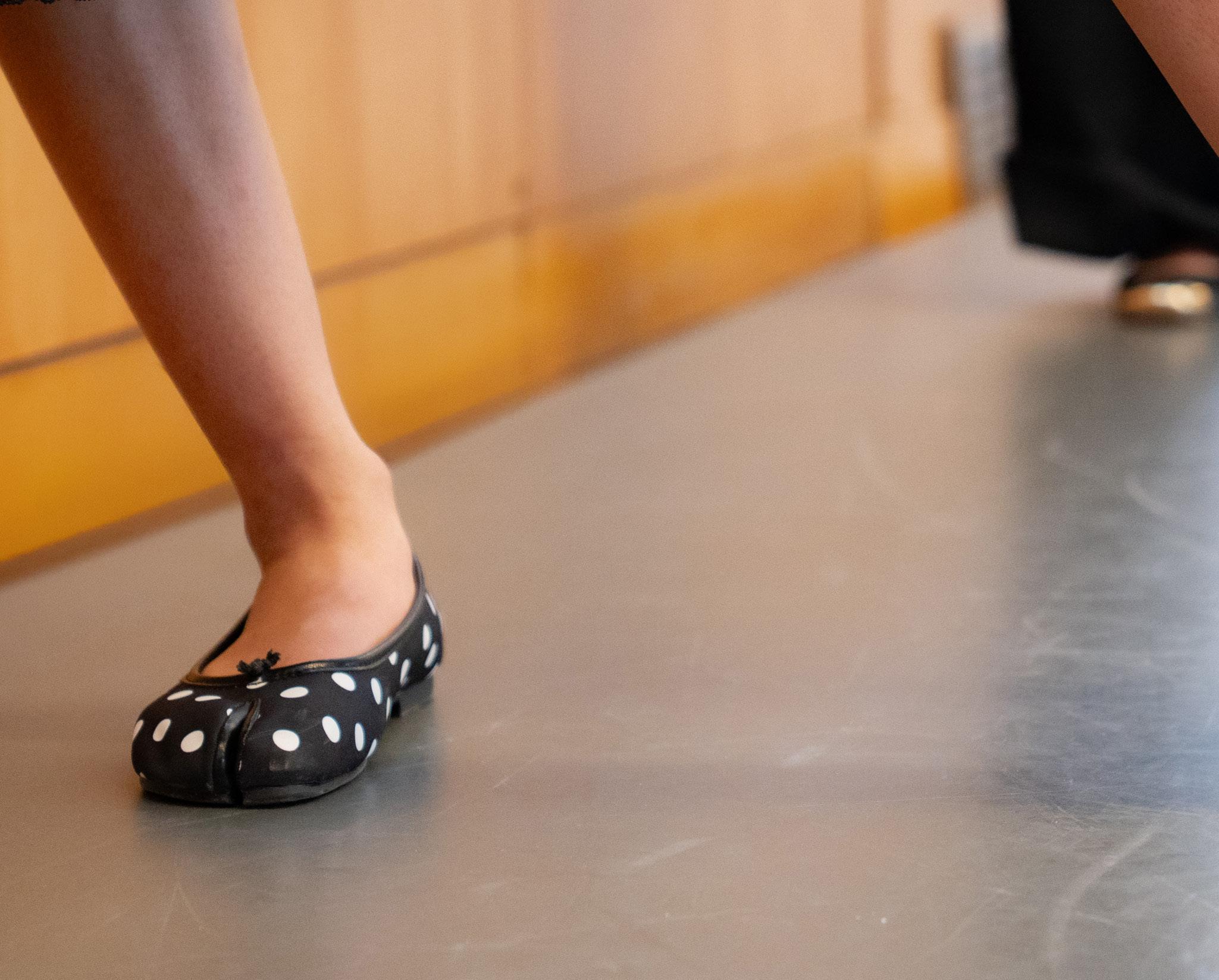
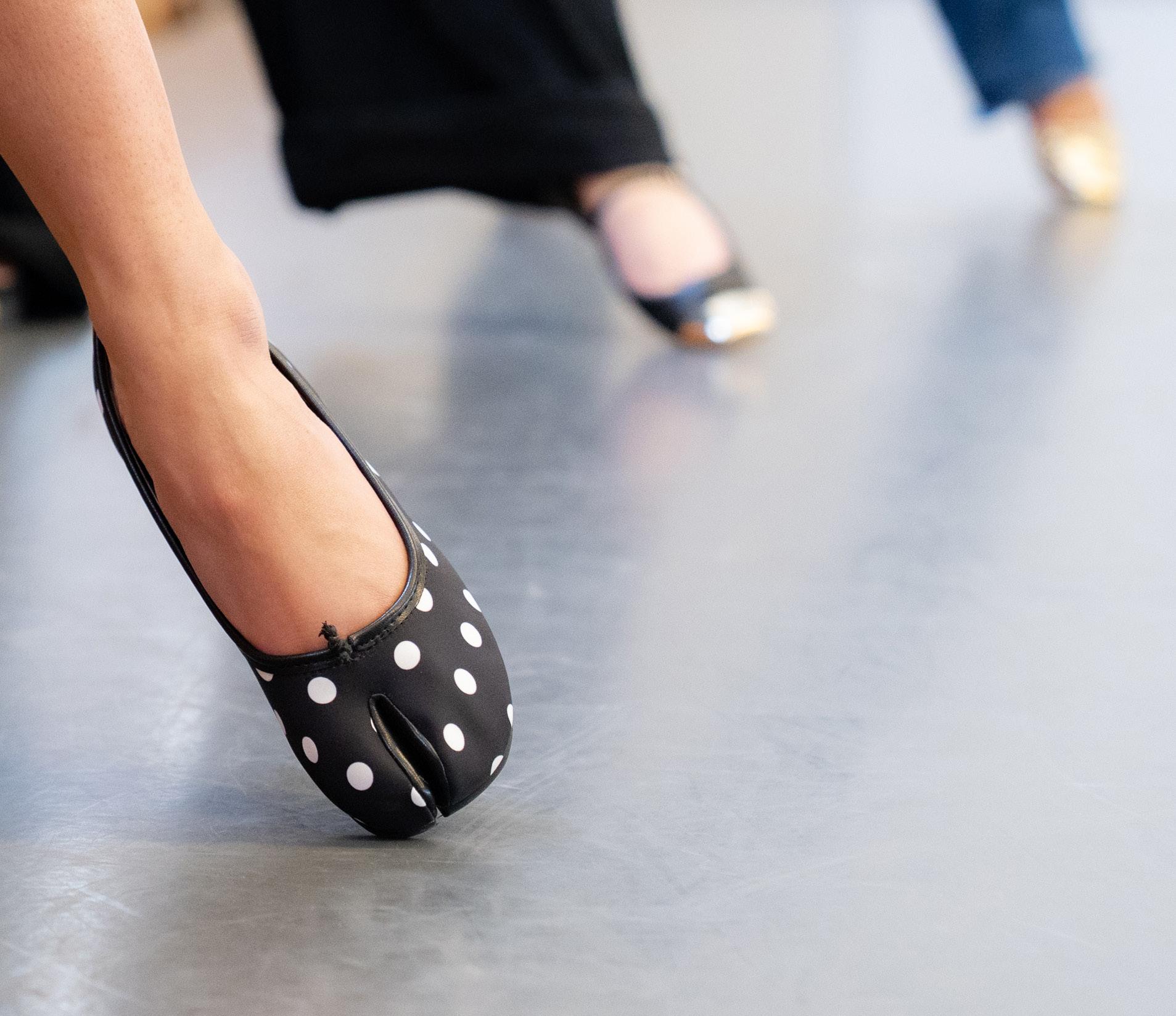
Have you ever thought “I wish my flats looked more like the cloven hooves of baby deer?” If so,
then, boy, do we have the shoe for you! The tabi splits the classic ballet flat down the middle—a seemingly recent trend. However, they were first worn in 15th century Japan, where it was thought that separating the big toe would promote balance for whoever wore the shoes.
Sophomore Dylan Marshall, who considers all five of her pairs of ballet flats to be closet essentials, said ballet flats are the gateway shoe into wearing tabis. Even though many people, including her own friends, don't understand the appeal of the shoe, Marshall says they can spice up any outfit.
“@Mananamariee on TikTok or Drew Joiner on YouTube are who influenced me to style my first pair of tabis,” Marshall said. “However, inspiration for wearing flats is everywhere. They go along with anything you want them to.”
Jerks, let's channel our inner Zooey Deschanel this spring by jumping into the ongoing ballet flat revolution!
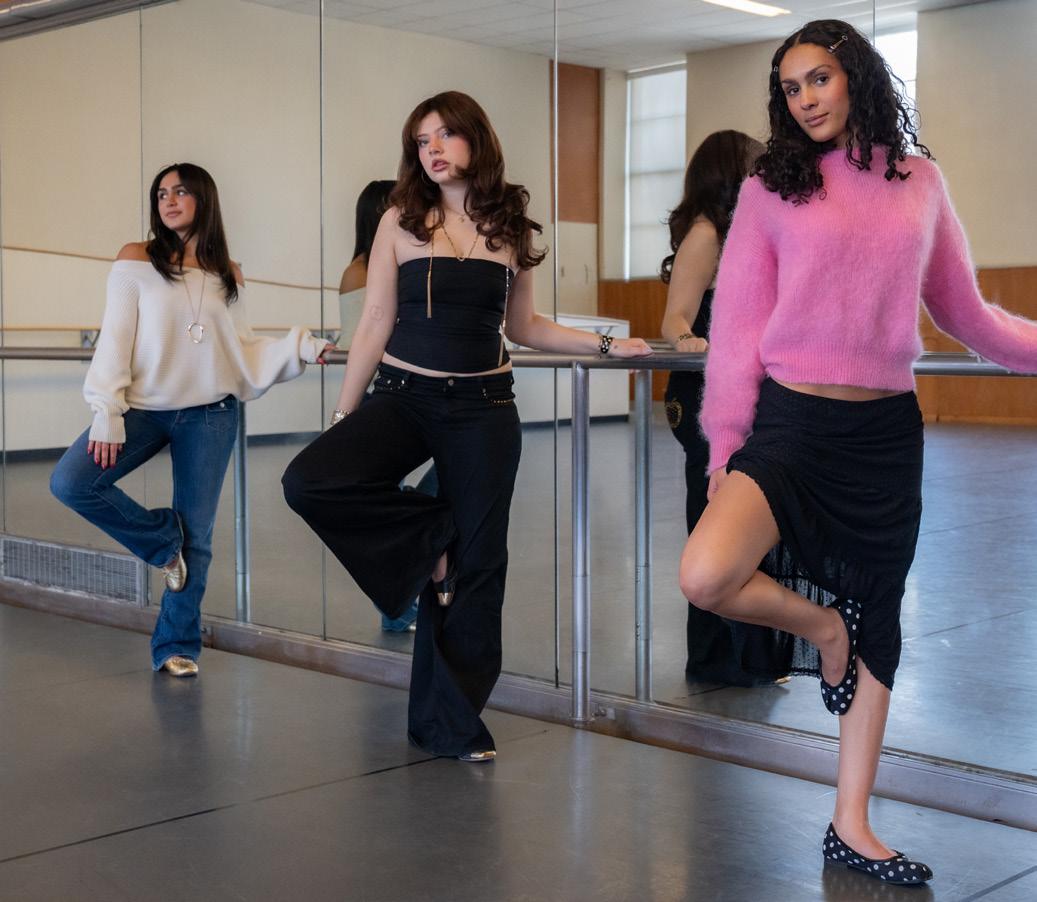
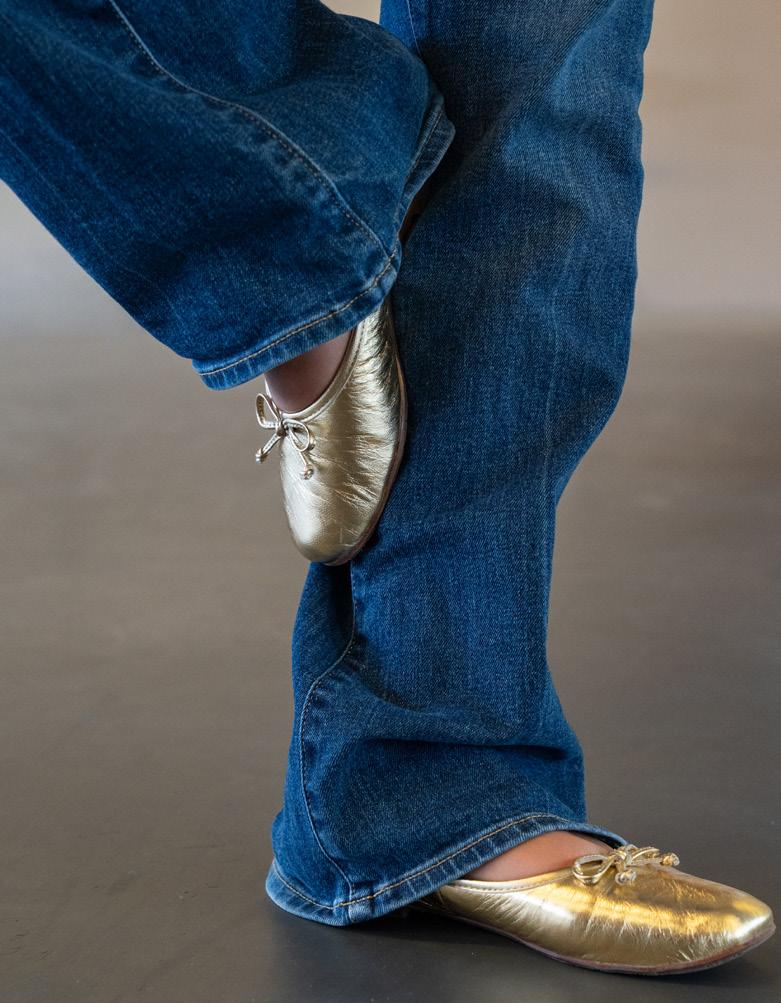
SU Records allows students across campus to get hands-on experience in the music industry
On the artist side, Nalon looks for more than a
“A very important thing is that they know who they are and what their brand image is,” she said.
Artists who come in with a clear sense of their voice, story and visual identity make it easier for the marketing and design teams to craft a rollout
“At the end of the day, the artist needs to have a great energy on stage and needs to be
Behind the scenes, Nalon and Quintero juggle calendars, emails and pitch documents. SU Records has partnerships that push the label beyond campus, including a release-party collaboration with Sony Music’s The Orchard and distribution support from the Swedish company
“Our purpose is to oversee everything and just make sure there is communication and flow,” Nalon said. “But at the end of the day, we do make posts ourselves, we’re kind of part of all teams.”
Community-building is central. SU Records has hosted a number of events on and off campus— ranging in vibe, setting and number of attendees. Acts regularly appear on WAER’s “Sunday Spotlight” and collaborate with campus media groups like Reel Talk and student creatives across
“It’s all about partnership and people in the Syracuse community that want to be part of it and
Running a label out of a college classroom has its limits. Students are stretched thin managing homework, tests and internships alongside recording sessions and marketing campaigns.
“The biggest challenge that I have is communication and making sure that people do their part sometimes,” Nalon said. “We’re still a student-run record label, so it’s hard because people have other priorities as well as being a student.”
Despite their busy schedules, the SU Records team’s passion for music and collaboration powers the work they do—and the future of the label.
“Seeing that our group grew from 10 people to 22, and two artists to five, is something that makes me proud, because it shows that we put a lot of work into it,” Nalon said.
Dunkle continue to release music, Katie Lee recently debuted her first single, Grace Ferguson is launching her solo career and alumni Ben Scott— whose TikTok cover of The Bug Collector gained over 200,000 monthly listeners—is blending folk and rock with SU Records’ guidance.
Senior Katie Lee, whose debut single Cliché launched under the label’s guidance, praises the label’s structure for pushing her to think intentionally about her image and promotional strategy.
“It’s definitely gotten me thinking a little bit more about my image and how, you know, in this day and age, you kind of do also have to be an influencer,” Lee said.
For the artists themselves, SU Records provides both support and creative freedom.
The current roster includes a mix of emerging and experienced artists: Passing Grade and Nancy

Recording sessions with junior Grant Harding, the label’s main producer, helped Lee finalize the single.
“He's been working with all four of us, which is quite a crazy feat when you think about all the different genres that we bring in different songs,”
Lee said. “He’s kind of been the mastermind of the recording end of things and producing. So he’s been an absolute dream to work with,” Lee said.
SU Records also emphasizes stage presence and live performance opportunities. In February, the label hosted Stripped, a Tiny Desk-style living room show where each artist performed originals in an intimate setting.
“There’s nothing like playing with much more of an intimate singer-songwriter kind of vibe to me, to see the audience face to face and see how they’re reacting to your work,” Lee said.
Other seniors have used the label to transition from DIY approaches to professional guidance.
Senior Grace Ferguson, an indie pop artist, described her pre-label approach as “free balling,” handling releases, gigs and promotion alone. For Ferguson, joining SU Records has made the process feel more manageable.
that’s kind of just organizing stuff for me, even just telling me, like, you have to post a TikTok today,” Ferguson said.
For the team behind the label, encouraging artists like Ferguson to reach her full potential doesn’t just benefit her, it helps the whole team.
“Everybody is kind of collaborating and helping each other out,” Ferguson said. “It feels less cutthroat, and it’s just like a friendlier environment generally.”
Senior Henry Powers’ indie rock band, Passing Grade, is represented by SU Records. For Powers, the connections he’s made with the students behind the label have been valuable both personally and professionally.
“These people are my friends now,” Powers said. “I can reach out to these people. They're never not going to be good at this stuff, so it's cool.”

“Before working with SU Records, I did everything myself. So it’s really nice to have a team

Words by Adelaide Larson
Art by Audrie Malmstrom | Designed by Abigial Aggarwala
Whether it be spring break vacations or semesters abroad, traveling is political. Jetsetters may not be looking to consider the social ramifications of what it means to go on vacation when they are just trying to “get away,” but that ignorance creates an issue that needs to be addressed.
Travel is an exchange of cultures that should be viewed as an opportunity to reflect and broaden your own perspective by observing and interacting with others. When people travel to tourist attractions and Instagram hot spots, this takes away from the opportunity to interact with new cultures in an authentic way.
Syracuse University junior Ohemaa Asibuo grew up in Ghana, which has given her a firsthand perspective on how tourism can change the culture of a country. Recently, Ghana has seen an increase in tourists traveling via African Ancestry programs. These programs strive to help African Americans learn more about their specific areas of origin within the continent, drawing thousands of tourists into the country. While these programs have been beneficial to those who wish to connect with their ancestry, they have taken somewhat of an economic toll on the country. Now, because of these increased tourist rates, food prices and other everyday items have skyrocketed. For Asibuo, flights home for break are upwards of $4,000 for a one-way ticket.
However, overall Asibuo credits this increased interest in her country as a good thing.
“It has helped put us on the map,” Asibuo said. “People are starting to actually recognize where I am from.”
Timur Hammond, assistant professor of geography at SU, has been traveling to Istanbul for his research over the past decade. Over time, he has seen how the increased presence of tourists has reshaped businesses and made locals feel like “a stranger in their own city.”
“One thing that has transformed the political economy is the rise of coffee shops,” Hammond said. “Because of consumers who are willing to pay top dollar for a cup of coffee, corporate coffee shops have slowly replaced old mom and pop tea shops around the city, which used to sell the traditional drink of the region but now have phased into selling trending products.”
While tourism may be economically damaging and often leads to the commodification of traditions, at its core, travel is a remarkable opportunity. The ability to leave your familiar world and step into the perspective of another is a once-in-a-lifetime experience. Because of the privilege travel holds, it is very important that it is done ethically.
“Because you're forced to see the world from a different point of view, tourism is inherently always going to involve some kind of inequality, whether it's economic or political or social,” Hammond said. “Privilege is necessary to be able to engage in travel.”
Hammond notes that recognizing the privilege to travel is one of the first steps to take when traveling ethically. Additionally, adding humility and modesty to your attitude when traveling to new and exciting locations helps you approach with an open mindset.
Studying abroad is an alternative form of tourism, combining the act of traveling with

through the university’s summer programs three times. Before studying in Japan, De Vos researched the country’s customs.
“Learning something that may seem like just a little gesture to anyone else, like a bow when saying thank you, actually means so much to [the locals],” De Vos said. “That stuff really helps set you aside as more than a tourist, but as someone who respects them and their culture.”
Asibuo also studied abroad in Chile for a semester through SU.
“Studying abroad or traveling is really what you make it. Everyone should go out and explore, and that doesn’t necessarily mean going up and talking to strangers, but just trying to keep taking advantage of the unique situation that you are in,”
So, Jerks, the next time you hop on a plane for your next big trip, go ahead and visit the exotic beaches or historical sites, but be sure not to forget about all the little things that make the place truly special. That way, you’ll gain new understanding and respect for a culture along with every stamp

Words by Miguel Rodriguez | Art by Marina Lee | Designed by Abigail Aggarwala
When I called my dad during his trip to Mexico in 2021, I heard horns, guitars and cheers. He was at my grandfather’s funeral, a service that did not end at burial, but metamorphosed into a parade that saw the entire town gather for a celebration of life, high up in the mountains of Mexico’s Tejupilco region in a town known as Los Pinzanes.
It’s where my mom and dad grew up, met and got married. It’s the same town all of my American family members immigrated from in the ‘80s and ‘90s, yet are always returning to, because life in Mexico’s rural mountain towns, also known as Los Montes, is different and hard not to yearn for. We here at Jerk read the literature, spoke to community members and interviewed experts to catch us up on the culture of our next few stops: the loving communities of Los Montes.
What most separates the United States’ culture from Mexico’s is the difference between individualistic and collectivist societies, a contrast that results in totally opposite approaches to community and celebration.
“Individualism implies a loosely knit social framework in which people are supposed to take care of themselves and of their immediate families only,” said Geert Hofstede, a Dutch social psychologist known for his research on crosscultural groups. “Collectivism stands for a society in which people from birth onwards are integrated into strong, cohesive in-groups, which throughout people's lifetime continue to protect them in exchange for unquestioning loyalty."
Nowhere is this more visible than Los Pinzanes, where any event warrants inviting the whole town—a population of less than 100—over for a


moved to the United States in the early 2000s, described to us what these gatherings mean to her.
“Anyone who wants to come is welcome to do so. And anyone who wants to eat—well, they get fed,” said Ureta. “Everything goes smoothly when we support one another—both when people arrive and when they leave.”
What’s lost when celebration is private rather than communal is a sense of belonging. Harvard political scientist Robert Putnam observed that social capital—the traditions and trust that enable people to feel united—has been steadily declining in the United States since the 1960s. In his 2000 book Bowling Alone, Putnam notes that Americans were bowling more than ever, but alone, not in leagues. Hitting strikes against competitors isn’t the point here—it’s the lack of regular time spent with others. Choosing instead to literally stay in one's own lane.
“Our gatherings are the most beautiful thing there is,” Ureta said. “You can run, jump, and dance much more freely. But [in America], everything is cramped.”
When every day in America brings with it another stretch of separation, we should consider the communal love of Mexican mountain culture. Things don’t have to feel constricted. Invite all your neighbors over and feed them. Miss them when they leave. This is community. I’ve been trying to replicate this way of being ever since I heard those cheers through the phone—when I realized we don’t have to bowl alone. Even now, readers, no matter how far away or unfamiliar we may seem, know that in my head, there will always be a parade for you.













Words by Miguel Rodriguez
Art by Julia English | Designed by Claire Arveson
Language is more than a form of communication—it's a map, charting how a culture understands the world.
In their 2024 paper "Linguistic Characteristics of Untranslatable Words and Their Unique Aspects,” linguists Luiza Seytjanova and Akerke Baxbergenova wrote that untranslatable words are terms that defy direct translation without losing what is most essential: cultural reference, emotional nuance and perception. These words serve as windows into the worldviews of the people who use them. Cultures
develop unique phrases and terms when a shared experience or emotion is so prominent that it warrants naming. When language is untranslatable elsewhere, it tells us something about what that culture has chosen to notice and what others haven't. As Gustavo Pérez Firmat wrote in his poem Bilingual Blues: "The fact that I am writing to you in English already falsifies what I wanted to tell you.”
Jerk asked four bilingual students to tell us about their favorite words and phrases that don’t quite cross the language barrier.

"Doing something because it was said you couldn't do it" is how Marko Ljuboja, a native Serbian speaker, explained the . It’s a word that most closely resembles "spite," but means far more. The word has Ottoman Turkish origins, the result of nearly 500 years of occupation.
"Inat is deeply tied to the cultural identity of Serbia," Ljuboja said. "A long history of oppression—and then that just carries over into their identity now."


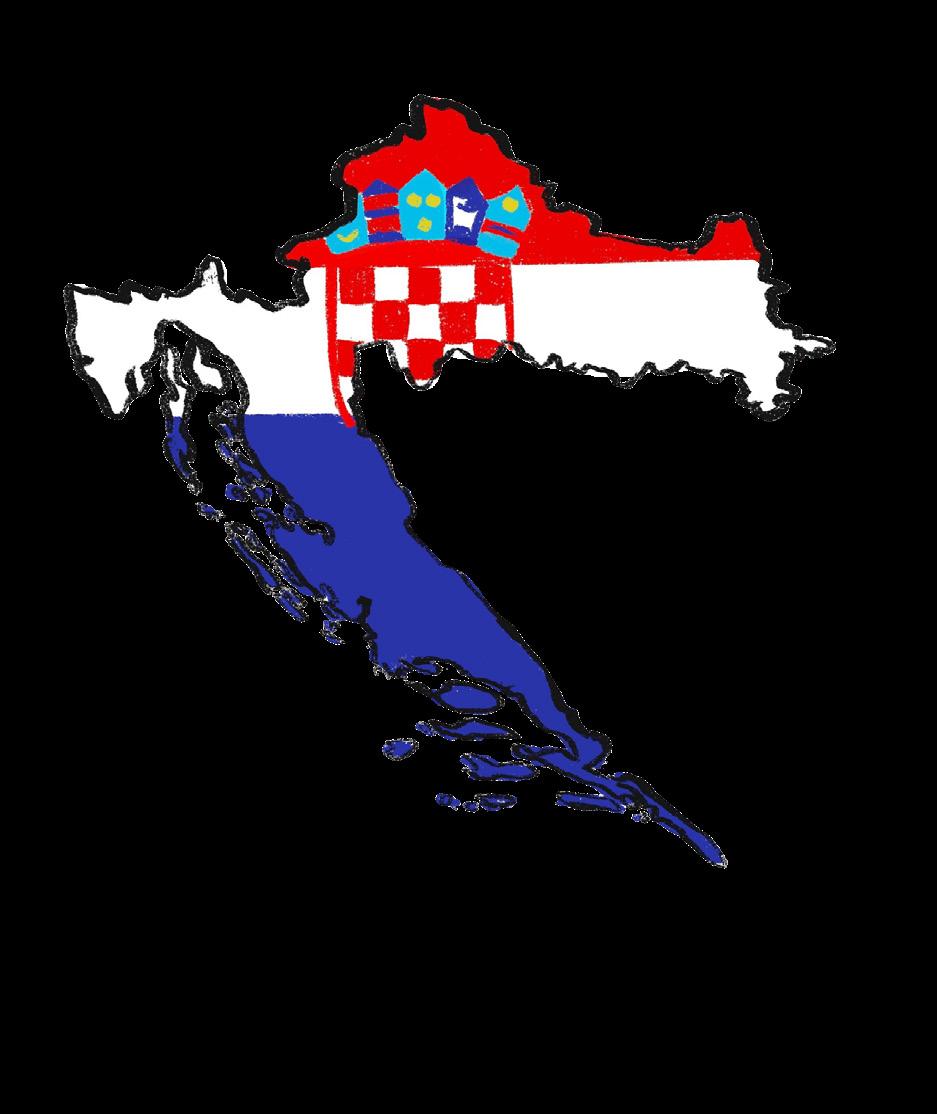
"It's supposed to be used sarcastically," said Megan Halsey, a native Croatian speaker, on the phrase kako da ne.
On paper it means "How could I not," but Halsey said depending on tone it can either signify an enthusiastic "Duh!" or a pointed "Yeah, right."
"Croatians are very witty and quick with a joke," Halsey said. "Teasing each other is just another way of saying I love you."
"I'm not sure how to translate it in a way that does it justice," said Aanya Sharma, a native Hindi speaker, on the meaning of the phrase "
(Dekho magar pyar se).
Broken down, she said it means "look, but with love." The phrase’s roots are in the cultural fear of the evil eye—the belief that a malicious gaze can bring real harm.
“It’s very telling about Indian culture because we are often afraid of the evil eye, which is basically when someone looks at you maliciously,” Sharma said. “So this phrase or saying tells people to look at others in a less judgmental or malicious manner and instead look at someone with kindness or love.”


"It's your most important person, or someone you go to for advice," Anna Bayly, a native and fluent German speaker, said about the Bezugsperson.
It's a word made up of two parts: "bezug" meaning “relation” and "person" meaning, well, person. When you put it in English, though, relationperson doesn’t quite capture the same meaning the German phrase does. "My parents said it's someone you can trust," Bayly said. "The central idea is around trust.”

In the mood for a good old-fashioned Irish treat? Try this family recipe from one of our editors
what a “faff” meant and I ate classic food like potato farls and soda bread. One of the best foods I ate during that trip was pavlova, so I asked my cousin to send me her recipe.

to make pavlova like Kelly’s Irish cousin
8 oz caster sugar
½ teaspoon of white vinegar
Beat egg whites vigorously, then add in the caster sugar and beat for several minutes until the mixture is shiny and peaks.
Then add in the vinegar and beat again, briefly.
Spoon the meringue mixture into a round shape onto a baking tray covered with baking paper.
Make sure the pavlova mixture is flat so the bottom is completely sealed to the paper—very important, or it won't work.
Put the oven at 130 degrees for an hour, then turn the oven off and leave the pavlova in the oven overnight.
Next day—decorate it with fresh cream and
“Unfortunately, my name and frat culture don't mix well” -Spike
Words by Hannah Peters
Photos by Shane Grates
With a name like Spike, maybe it was inevitable.
Sumner "Spike" Michel, Syracuse University sophomore and member of the Pi Kappa Alpha fraternity (Pike) is a DJ. Don't everyone cheer at once. While it might seem like everyone and their mom is trying to be a DJ these days, especially frat guys, Spike was made for this.
“When you tell somebody you're a DJ, they kind of roll their eyes,” Michel said. “That's when you have to be like, ‘No, I do this, this and this.’ So I say 'professional DJ' a lot. I get paid to do it and people hire me.”
Michel was surrounded by music growing up—musical theater, dancing in the outfield while waiting for fly balls and trying and quitting the piano and saxophone. But none of it stuck.
"I wanted to find a way to manipulate music because I couldn't play it," Michel said. "Getting into producing is really hard. So I went with DJing instead."
His senior year of high school, he joined a production company. He watched their DJs work for a month before buying his own board and teaching himself. No YouTube tutorials. Just watching and grinding until it clicked.
At SU, it snowballed fast. Pike parties. Shows at local bars. DJing SU's women's volleyball
games. A two-day gig for a David Yurman store in Massachusetts.
Toward the end of last semester he played three bar nights a week on top of two personal gigs—five nights total.
“The money's great but the burnout was real,” Michel said. “So I wanted to pull back.”
Lately, Michel has been rotating with other brothers who want reps.
The secret to good DJing is less flashy than you'd think. He reads rooms, tests unfamiliar songs early in the night when fewer people are listening and knows song structure well enough to get out of a dull moment fast. He skips the house remixes most college DJs lean on and sticks to originals. Spike displays a QR code during sets so people can request songs or leave feedback in real time.
“I haven't gotten 'This sucks' yet, which is great.” Michel said.
The bartenders at Orange Crate Brewing Company told him he was the best DJ who’s come through.
Spike has two upcoming gigs under NonDisclosure Agreement and sees the industry shifting toward media and concerts. He's not sure exactly where he fits into that yet, but he's paying attention.


Words by Isabella Perrotta | Art by Sara McConnell
“CUT!”
The word that serves as a fine line between the polished, edited scenes put out for an audience’s viewing pleasure and the seventeen different takes of an actor who can’t stop laughing at their own joke. Among all of those missed lines and actors breaking into fits of laughter lies something just as memorable as the movie itself—blooper reels.
Most popular in the late 1990s and early 2000s, bloopers once served as a reward for anyone with the patience to sit through the credits. They reinforced the revolutionary idea that actors are just as human as we are. Behind every perfectly delivered line was just a normal person messing something up and trying again.
This endearing and humbling connection still exists today on smaller scales, such as in small or student-made films, where the finished product is just as important as the steps it took to get there.
“After projects, professors usually ask for behind-the-scenes footage,” said Syracuse University television, radio and film (TRF) student Javi Berczely. “Being on set and just knowing how to have fun is something that professors want to see.”
These little accidents and mistakes are a big part of what makes the process of filmmaking so enjoyable, and in some cases can even improve scenes—a random honk of a car, or a weird tilt of the camera could very well become the next Wilhelm’s scream. Initially unintentional, but powerful enough to make the cut!
Recently, however, the professional world of film has decided to develop a personality comparable to that of a soggy piece of cardboard.

Sadly, blooper reels became the newest inmate in the asylum of irrelevance. This isn’t because actors suddenly became perfect—trust that they did not—but because of recent changes in the film industry. Fewer comedies are hitting theaters, and with them go the unscripted, playful moments from which most bloopers flourish. Actors also juggle tighter schedules from booking multiple roles, and budgets leave less room to linger on anything that is not essential for the overall product, and apparently, fun was included in that cut.
“There's certainly plenty of laughs that happen on set, but there's not a focus on capturing those moments outside of what we're capturing on the camera,” SU TRF professor Molle DeBartolo said.
In other words, the mysterious case of the missing bloopers was not caused by a lack of interest, but because they stopped being a priority. The film industry has made the shift from joy and whimsy to speed and efficiency.
Likewise, marketing is a driving force behind the decrease in blooper reels. Bloopers were once an incentive for someone’s dad to drop his entire paycheck on a special edition Monsters, Inc. DVD to see what Mike and Sully were getting up to when they thought the cameras weren’t rolling. Now, audiences get that behind-the-scenes content through social media constantly, as more celebrities feel the need to inform the public about their lives every time they inhale.
The appeal of blooper reels has not disappeared completely. If anything, they are needed now more than ever. In a world where everything is polished, the people yearn for imperfections and mistakes that are nothing but human.