2025_Yun-Chen Lee_Digital Design and Creative Coding Portfolio
Portfolio
Dynamic Inflatable
Soft Robotics Workshops 2024-2025
Specimem of Air
Computational Craft Project 2024
Aeriflutter
Tech-Art Research & Exhibition 2023-2024
The Drop Robotic Fabrication Studio 2022
05
06
Generative Tonal Art
Technical Research
2025
07
Snowflake Designer
Algorithm Design Project 2022
08
GenArt for Beginners
Creative Coding Workshops 2023-2024
Point-Based Stylization
Technical Research
2024
2023-2024
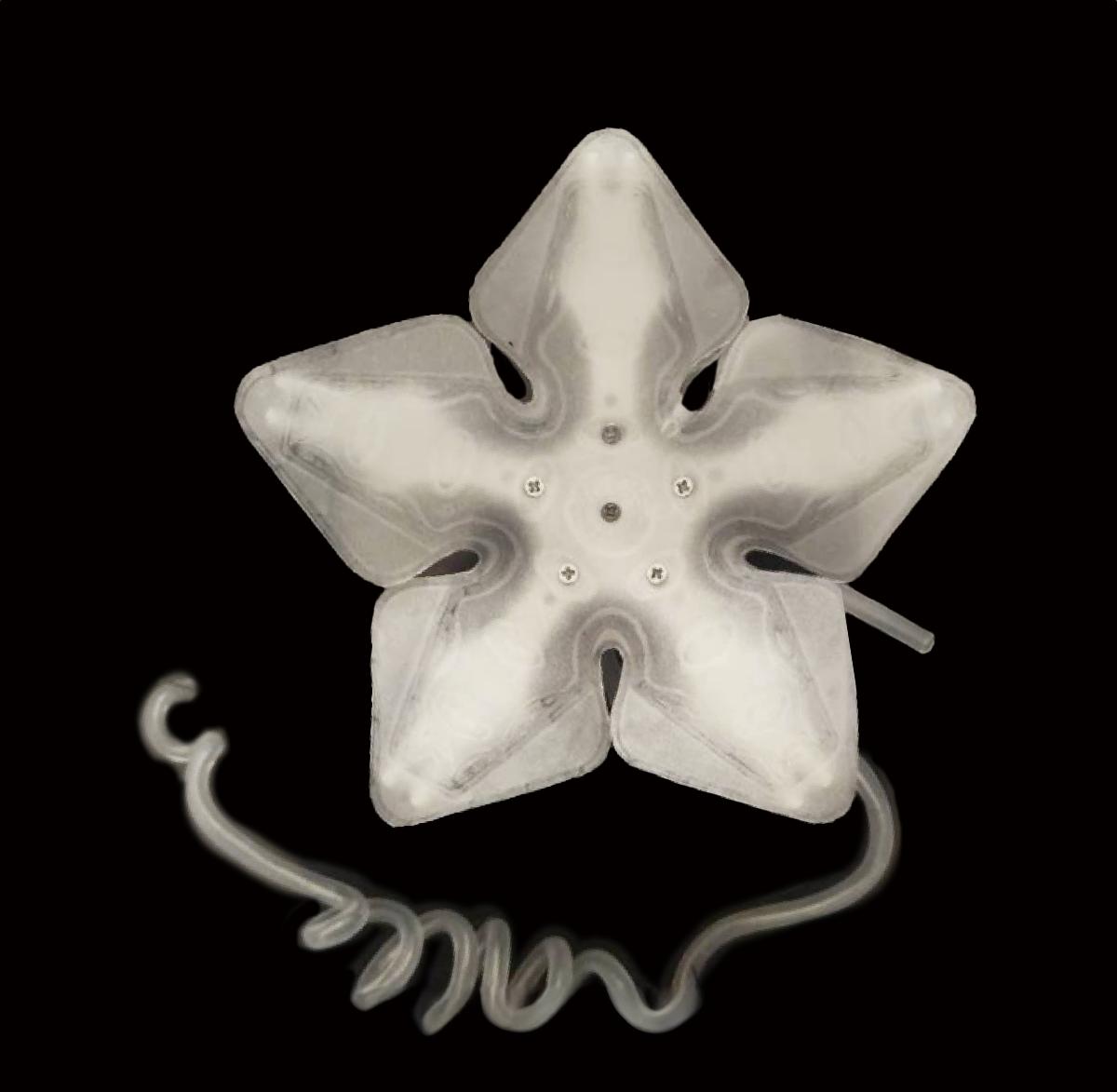
Aeriflutter A Pneumatic Flower Sculpture Using TPU Heat-Sealing Techniques
Tech-Art Research & Exhibition
GIAAIL Group Work (Collaborators: Pan-pan SH, Hsin Chen)
Advisor: June-Hao, Hou
My Contributions
├─ Technical Research
│ ├─ Investigated shape-changing mechanisms
│ ├─ Conducted material studies for bending mechanisms
│ └─ Developed a color-TPU fabrication method
├─ Soft Robotic Installation
│ ├─ Designed generative floral visual patterns
│ └─ Developed the structural assembly system
└─ Tech-Art Exhibition
├─ Visualized the signal-communication system
└─ Designed the specimen-box narrative documentation
This project investigates the relationship between matter, mechanism, and lifelike expressivity. The main challenge is to extend soft-robotic fabrication techniques to create biomimetic simulations that evoke the behaviors and morphologies of living systems. To address this challenge, we experiment with various shape-changing mechanisms in TPU inflatable structures that are conceptually related to natural forms.
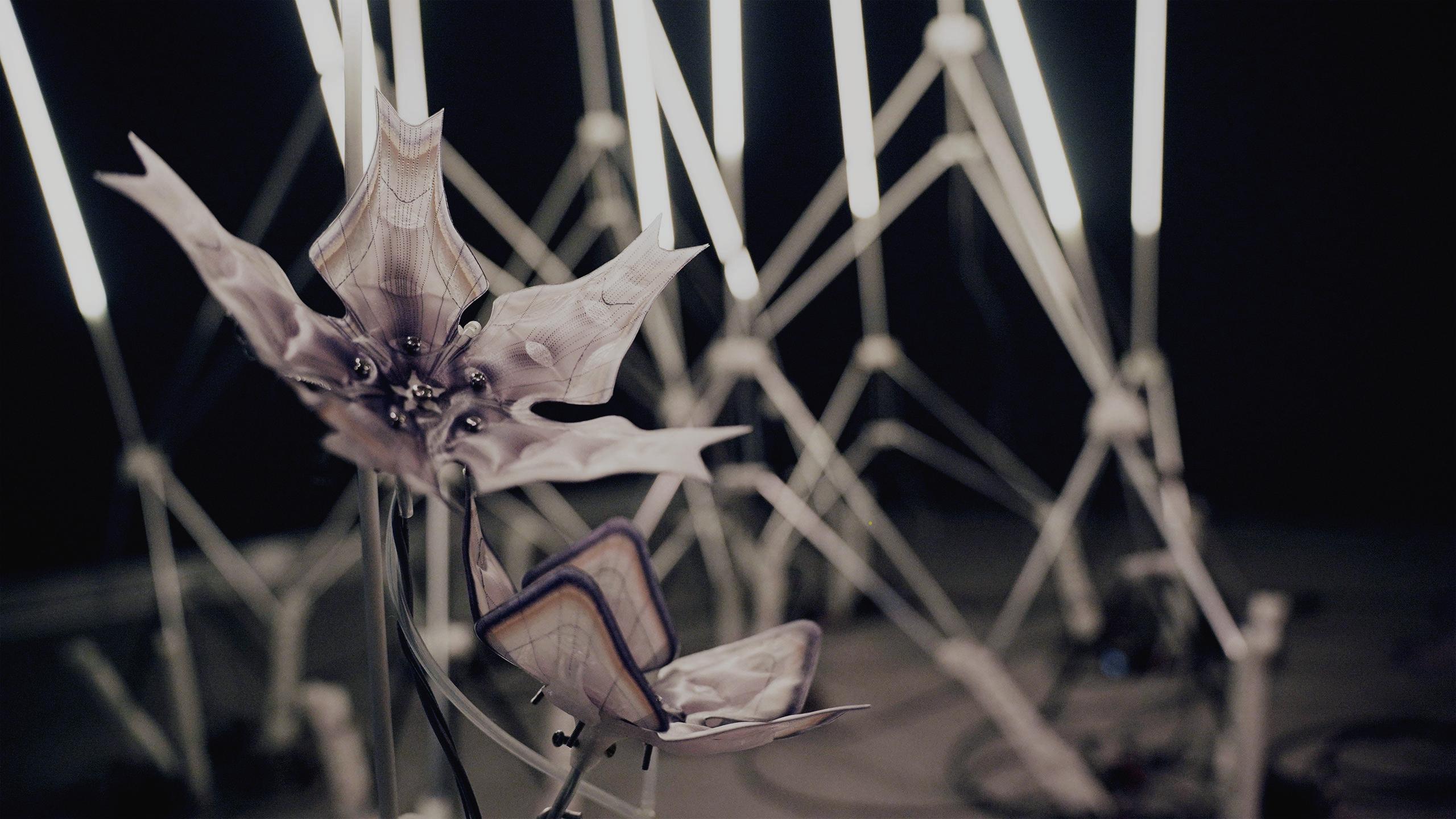
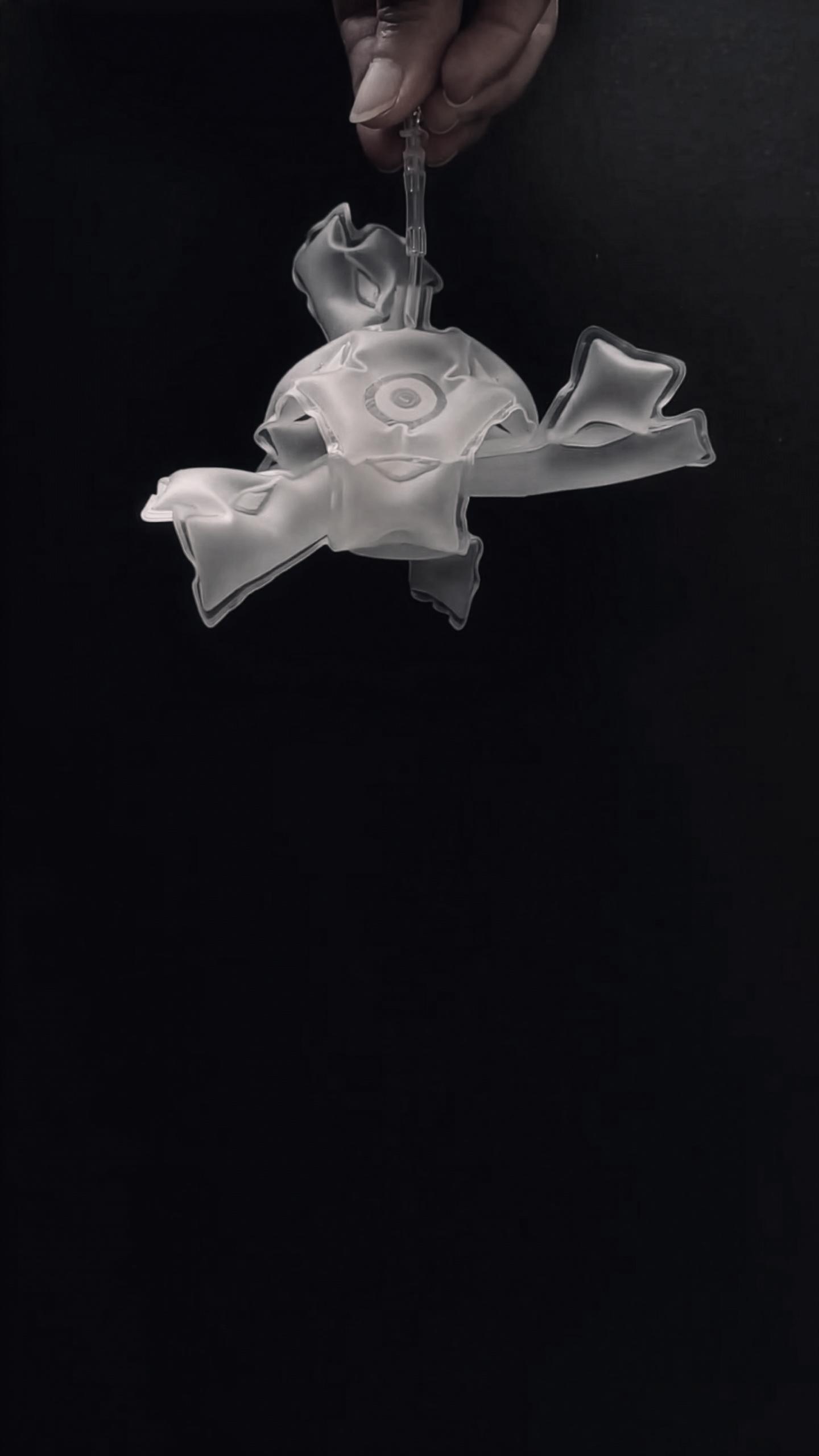
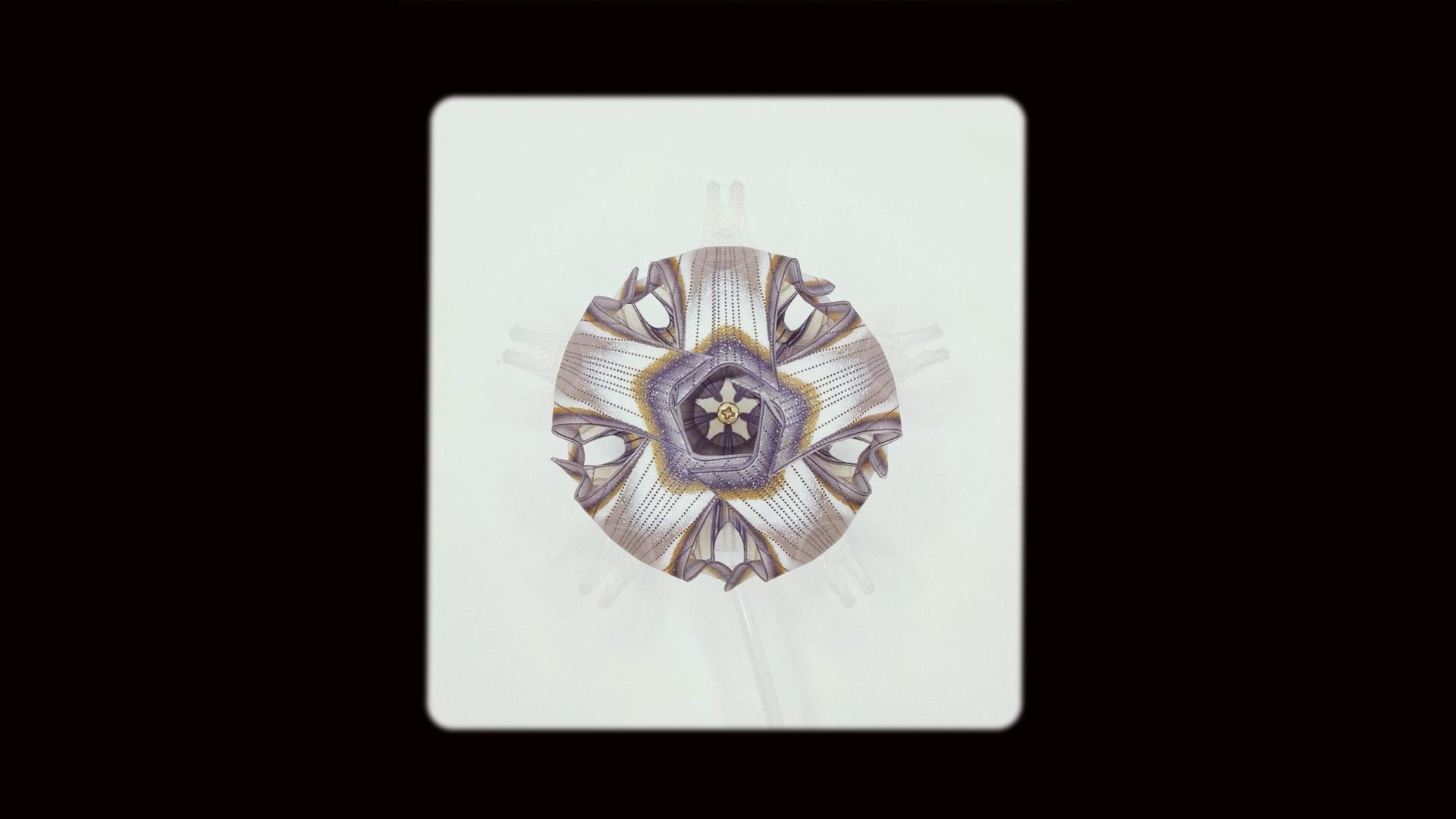
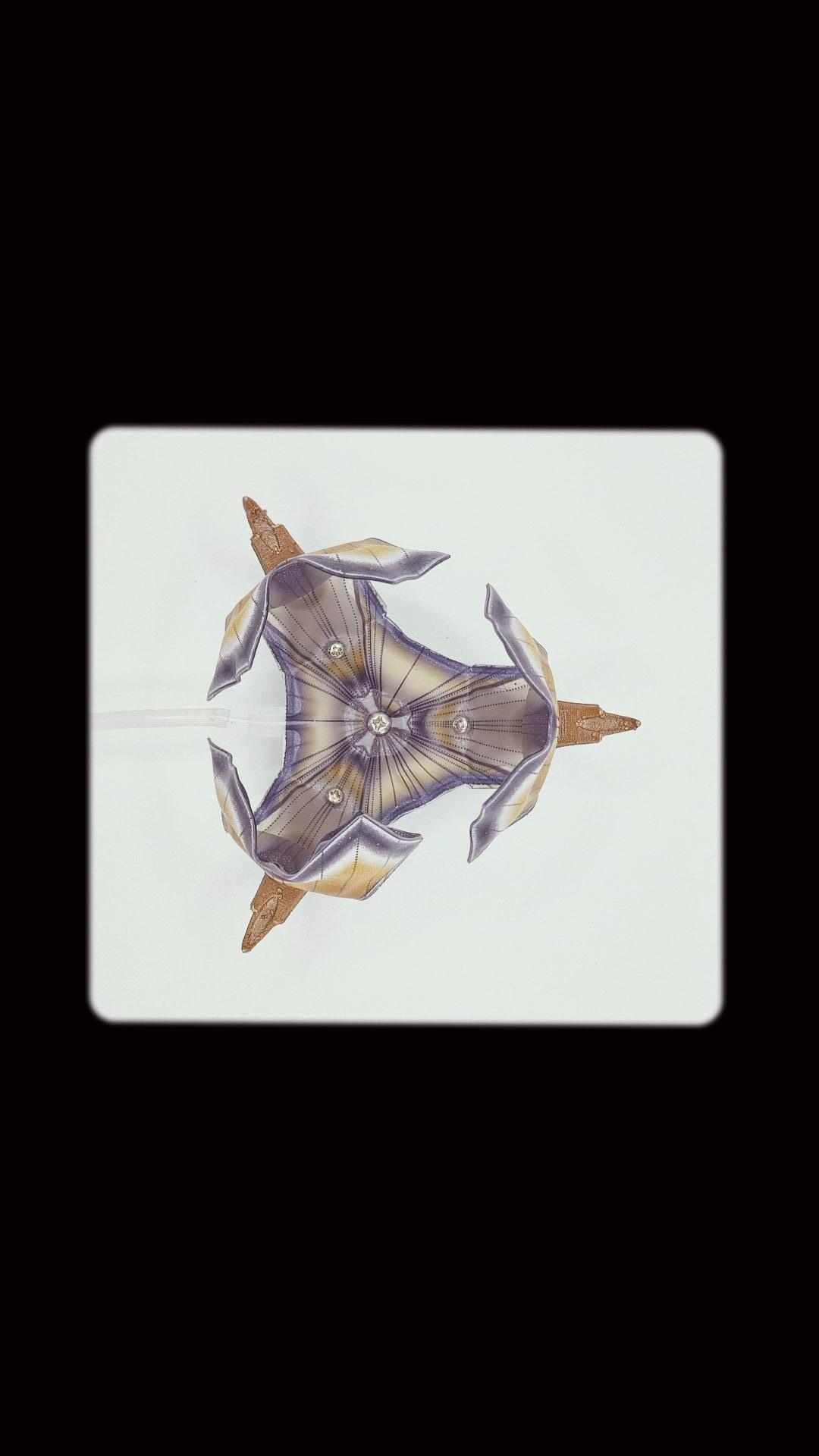
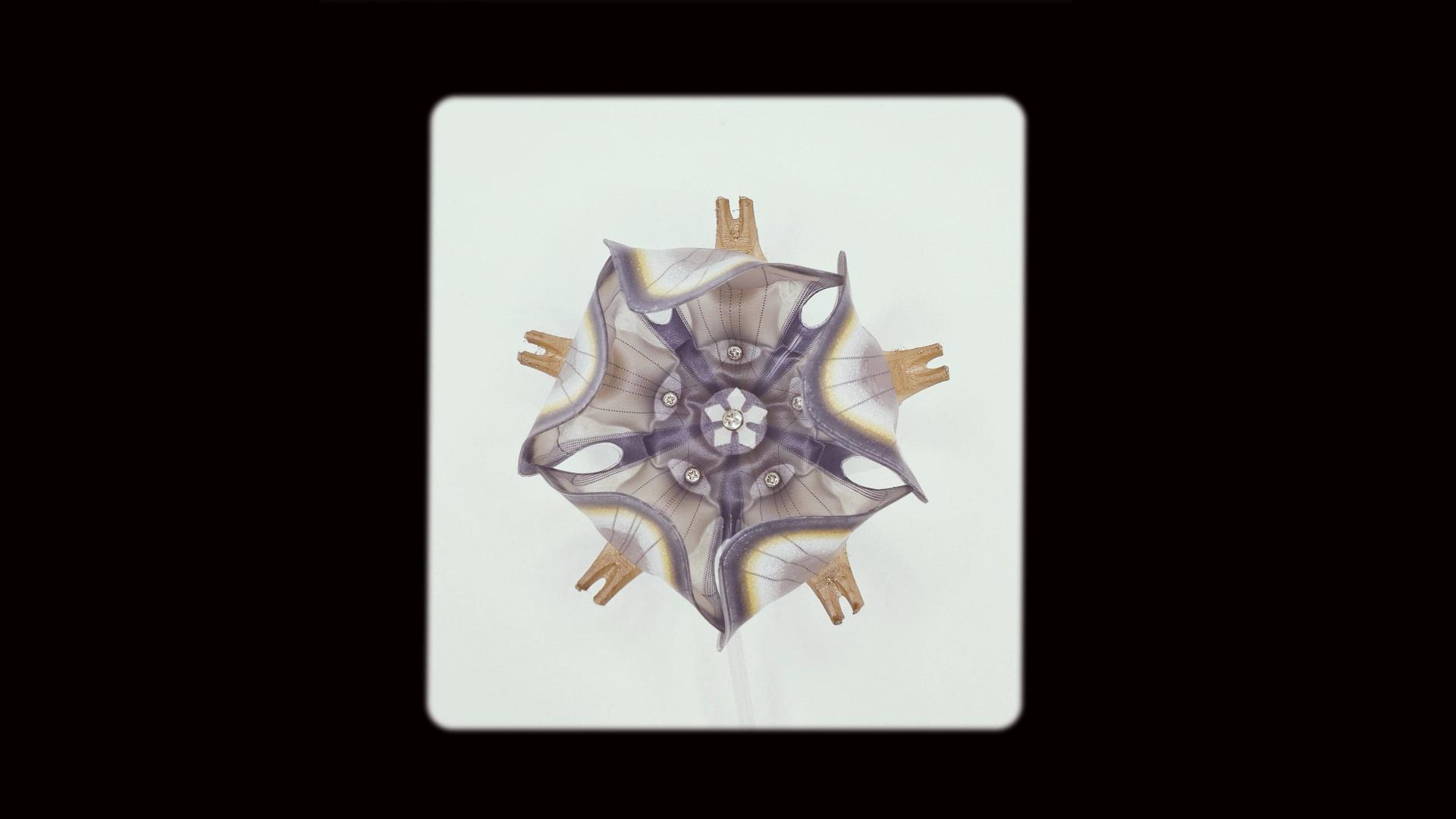
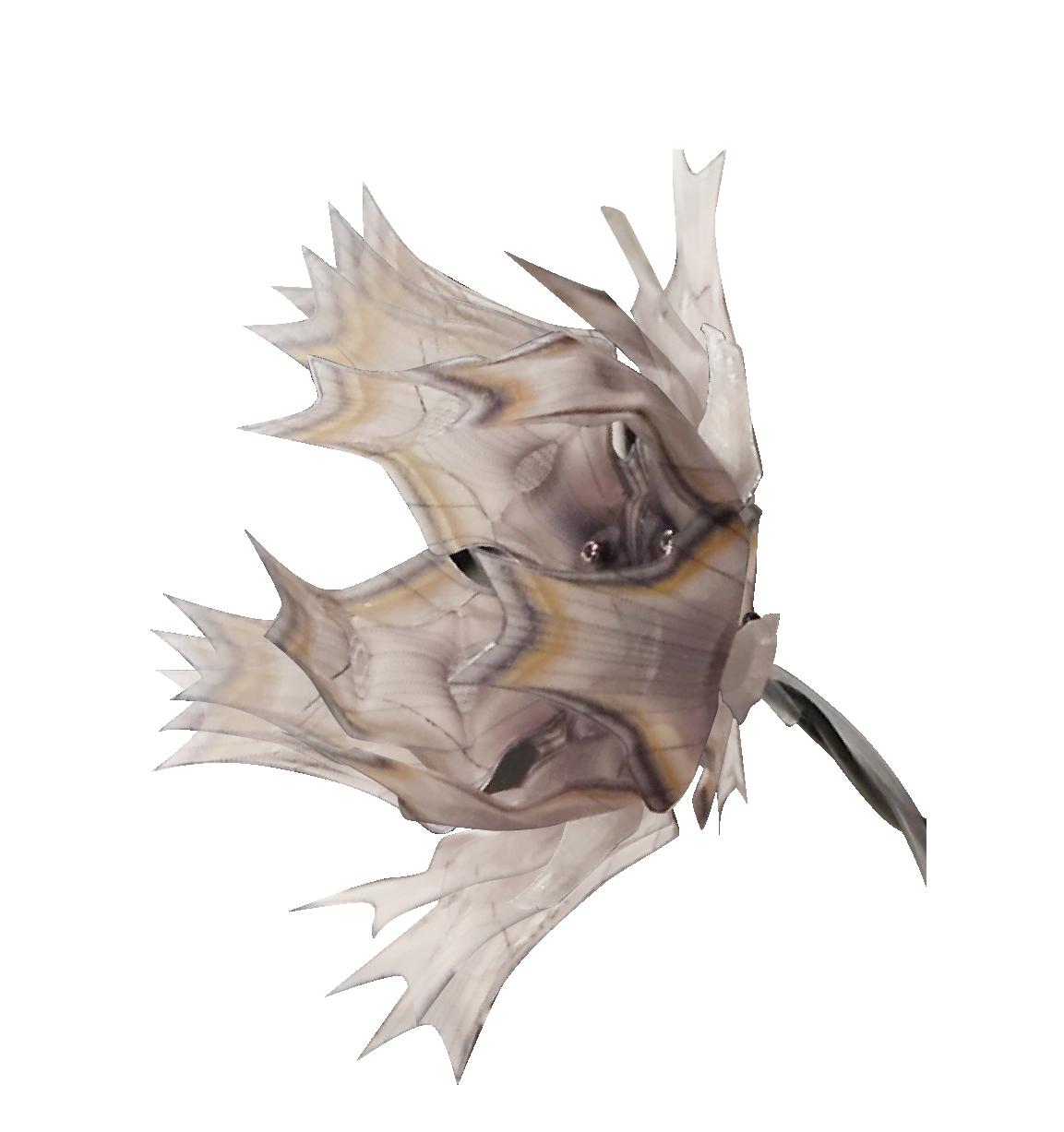
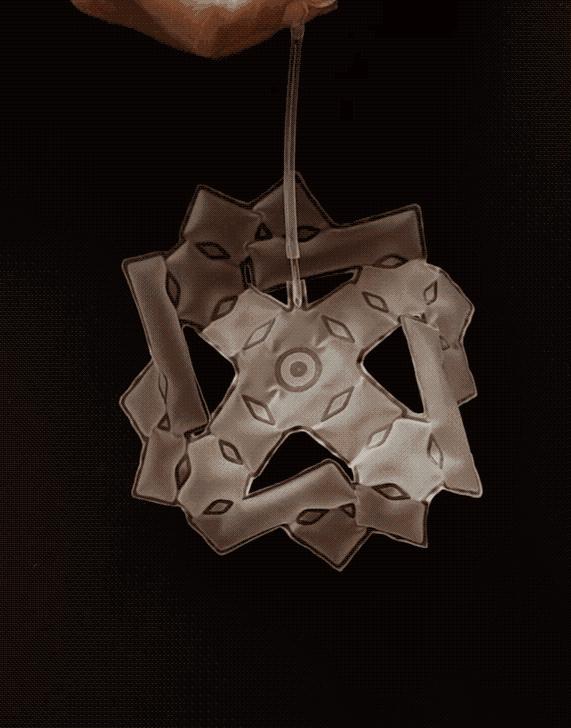
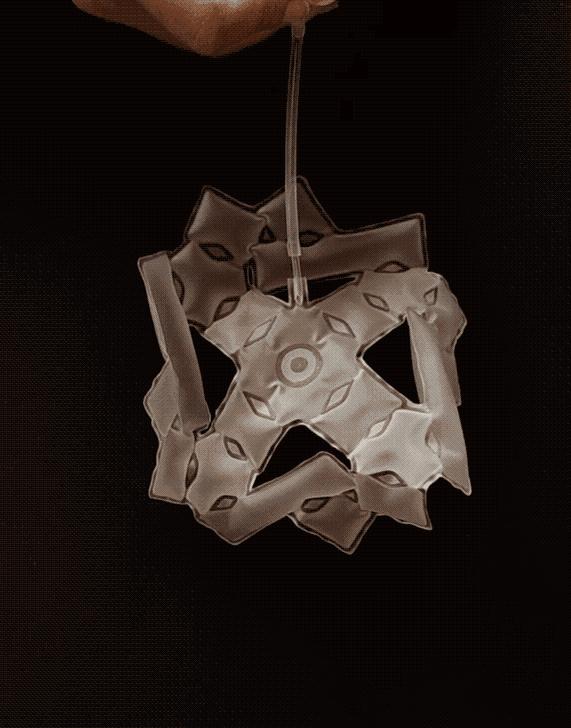
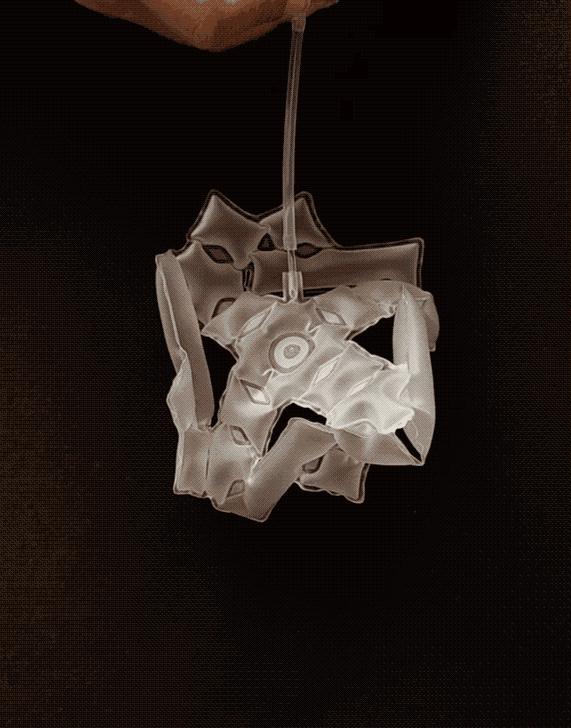
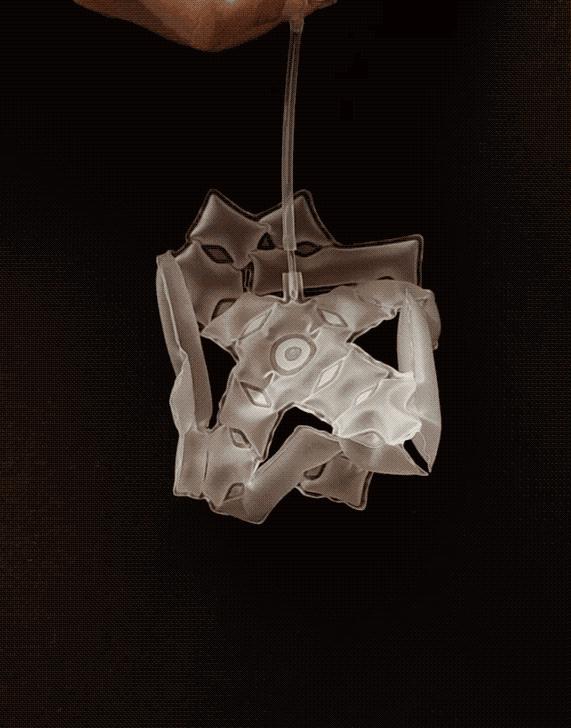
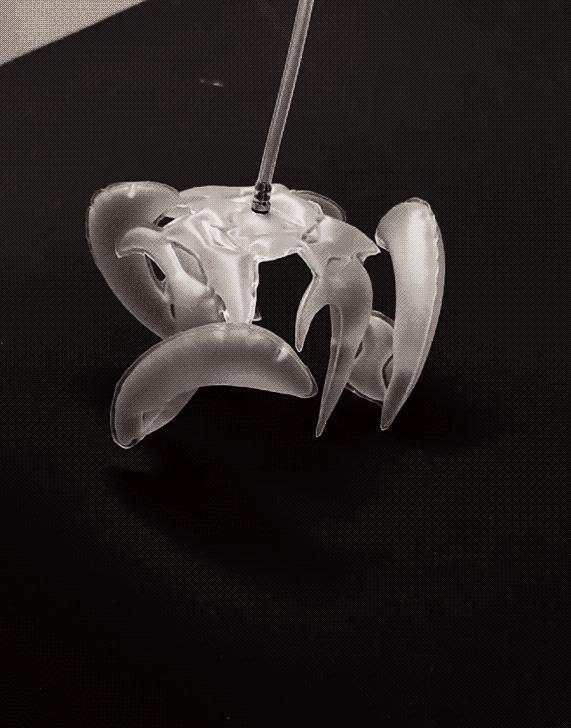
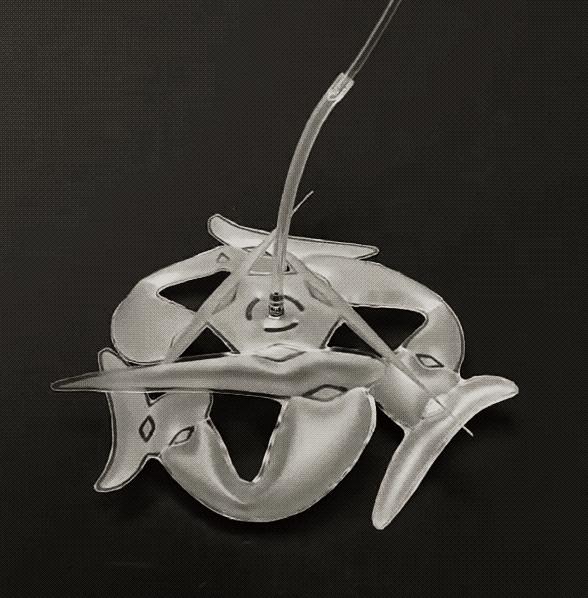
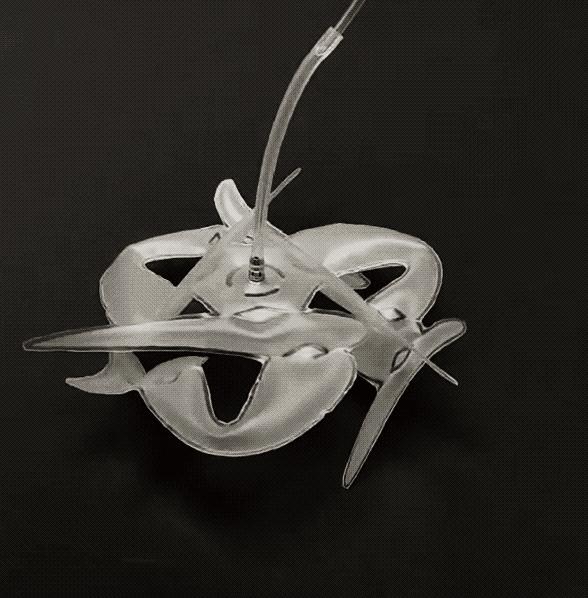
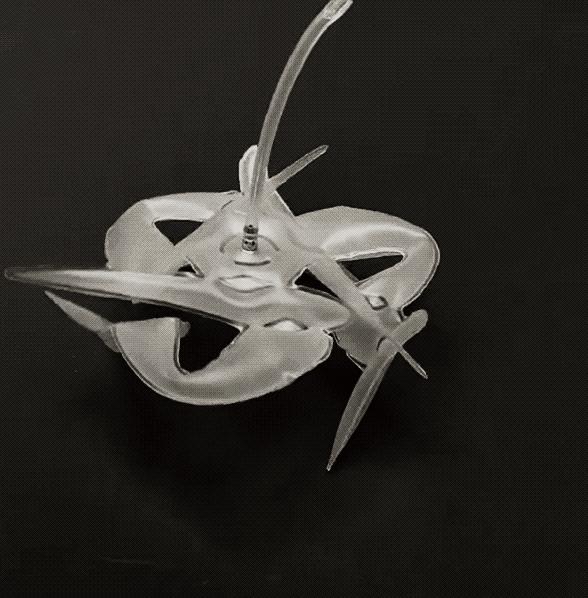
The final work, Aeriflutter, is a pneumatic flower installation that integrates inflatable petals with environmental interaction, inviting viewers to examine the evolving relationship between humans, materials, and artificial forms of life.
Sea Anemone hinge mechanisms formed by folded paper Paper Folding
a sequence of extendable body segments
a serial twisting and curling motion
Shape-Changing Mechanism
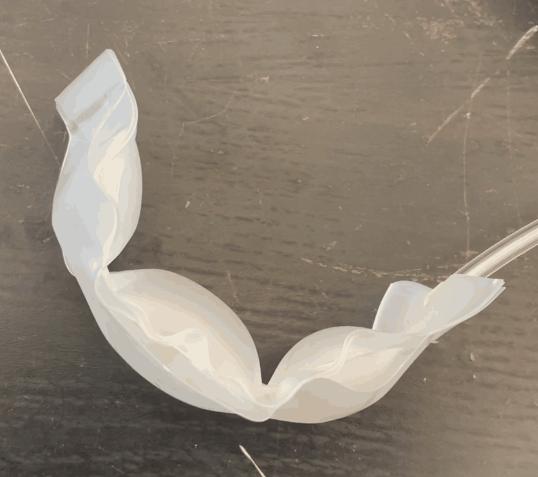
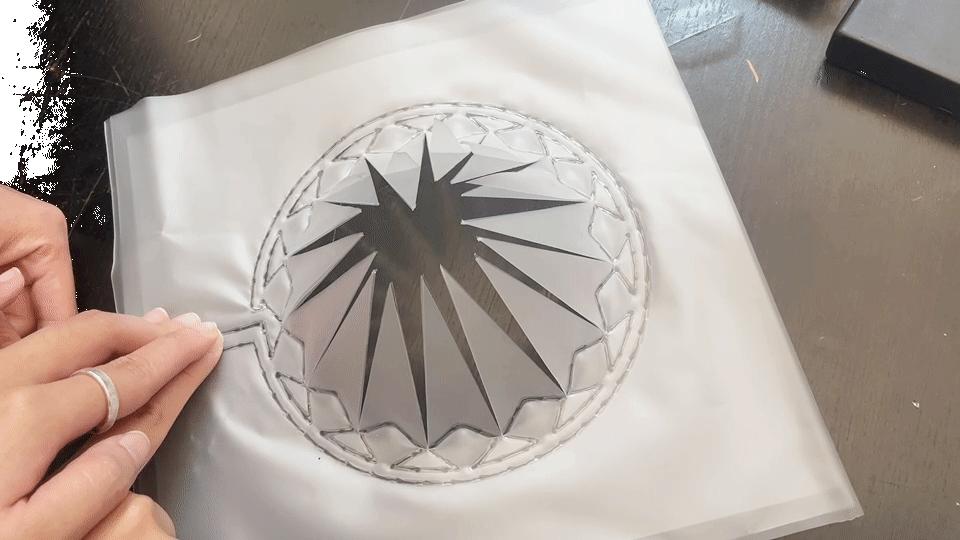
To explore dynamic movement through airbag fabrication, we studied a series of self-folding mechanisms inspired by nature, mathematics, and craft-based practices.
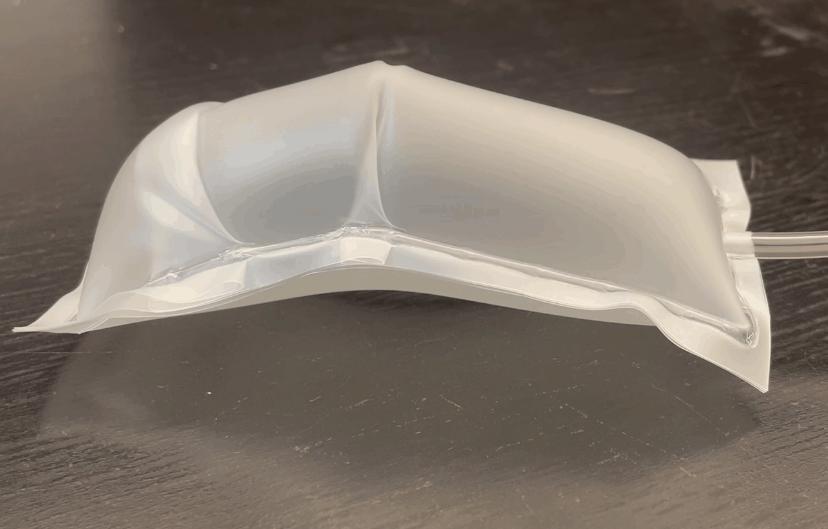
surface deformation characterized by a hyperbolic paraboloid
Vine the Japanese art of folding and cutting paper into intricate 3D forms
additional foldable skin allows bending and stretching Finger Joint bending tentacles used for grasping or feeding
Caterpillar
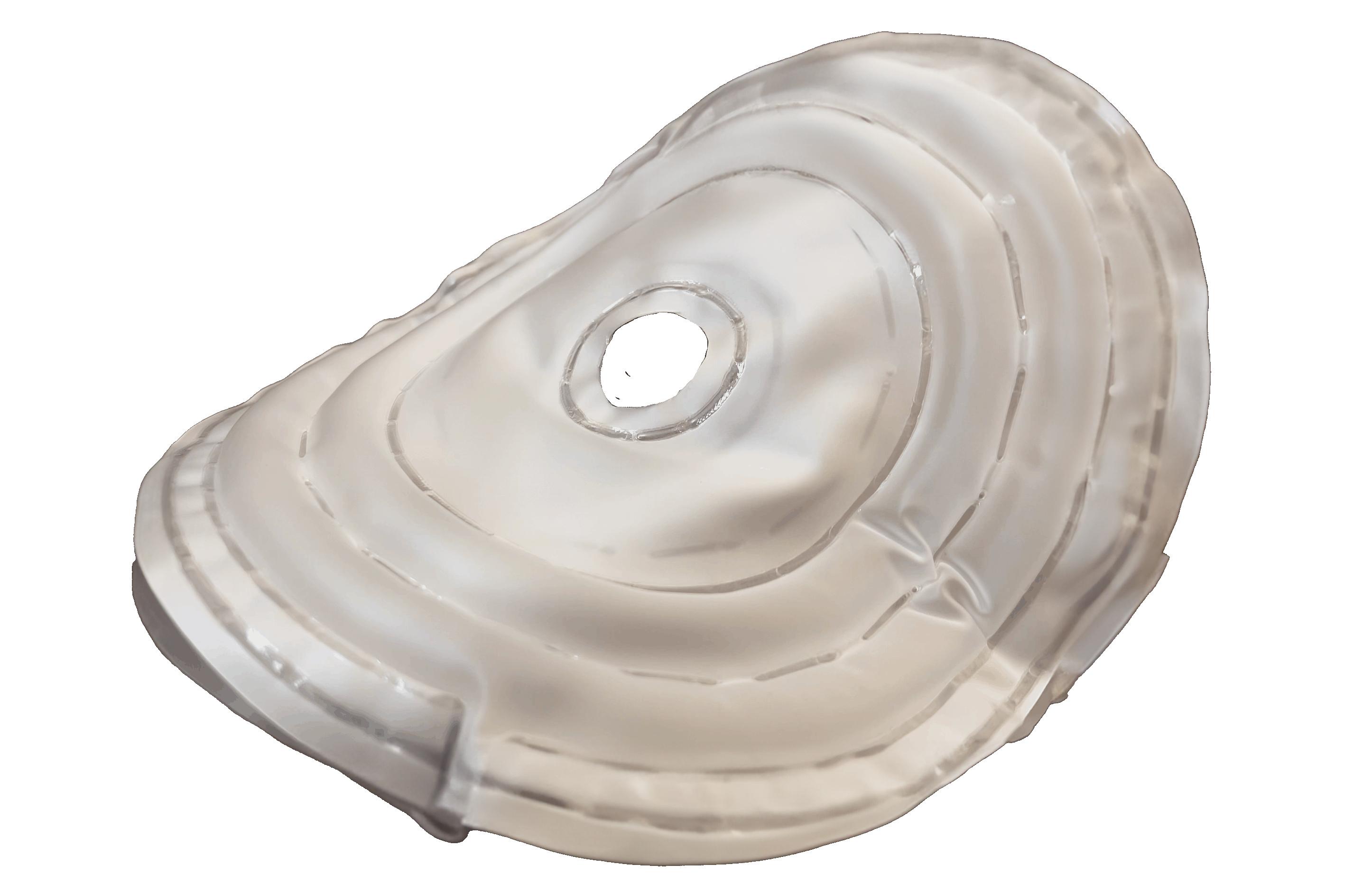
Potato Chip
Kirigami
Heat-Pressed Petals Receptacle
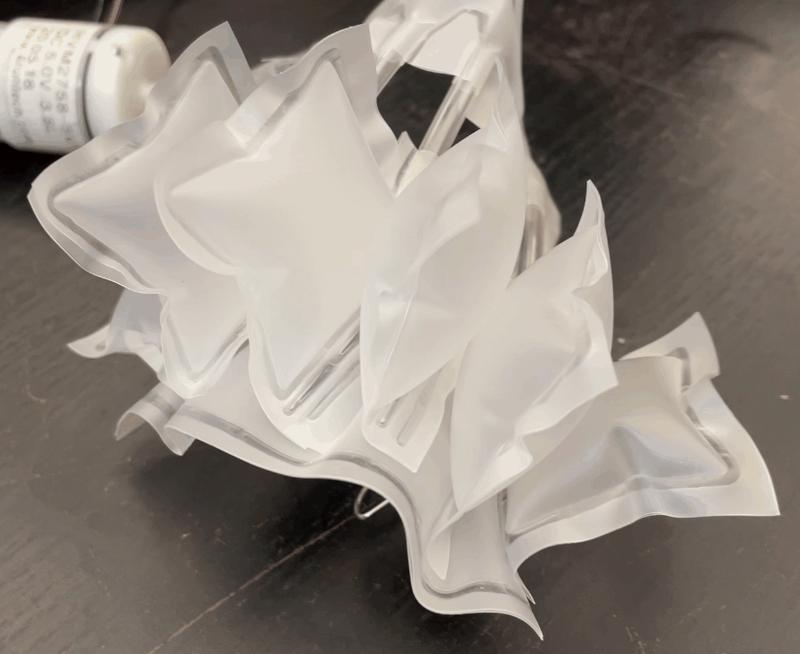
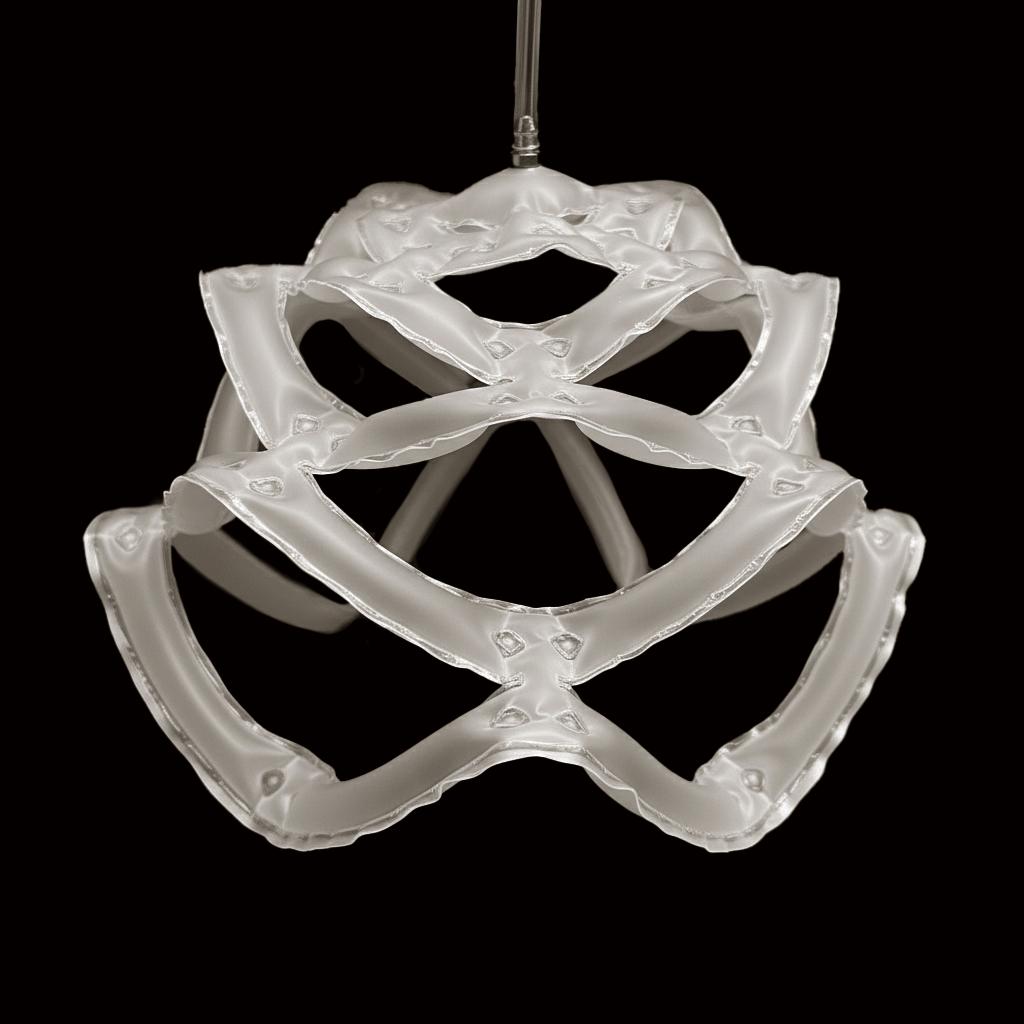
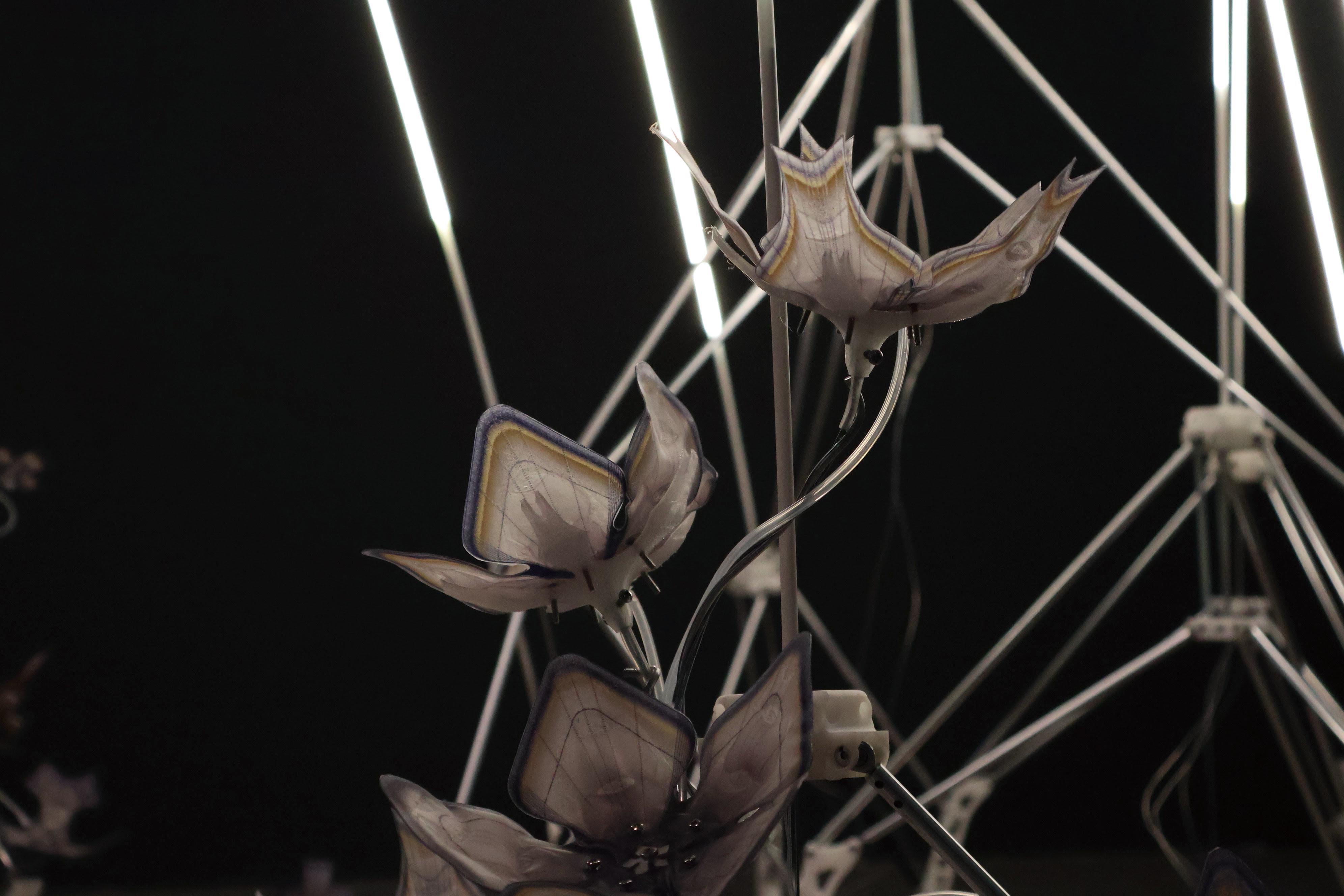
Aeriflutter is a speculative future plant that emerges from soft materials and pneumatic actuation—thriving even in environments without sunlight. Instead of biological nutrients, Aeriflutter consumes data as its “food,” responding to and communicating with its surrounding ecosystem through signals. (Co-designed with Pan-Pan and Hsin)
Pneumatic Turgor Tissue
Aluminum Stem
Aerial Root
Aeriflutter.S
1
Generative Drawing System
2
Multi-Color Gradation
3
Color‐TPU Fabrication Method
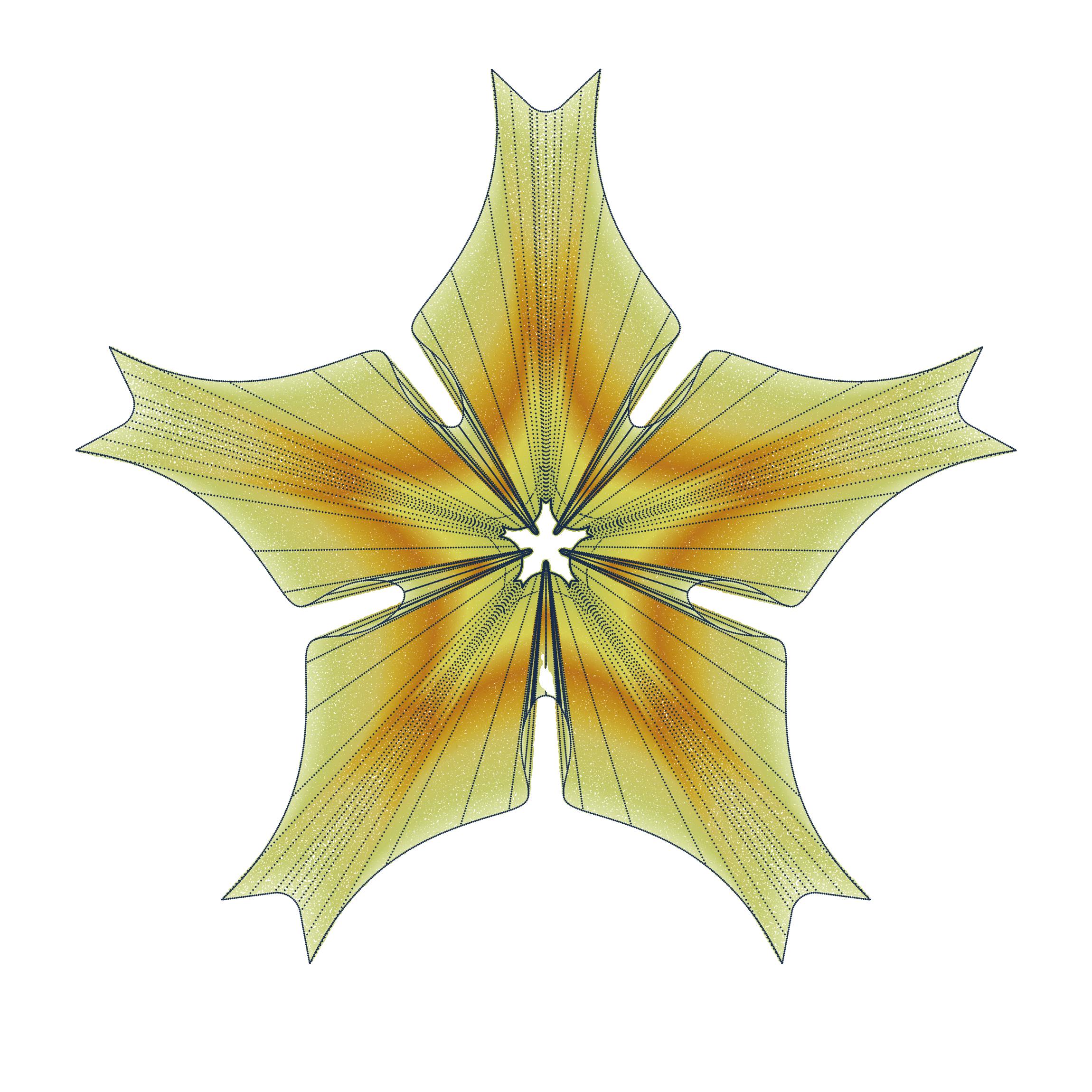
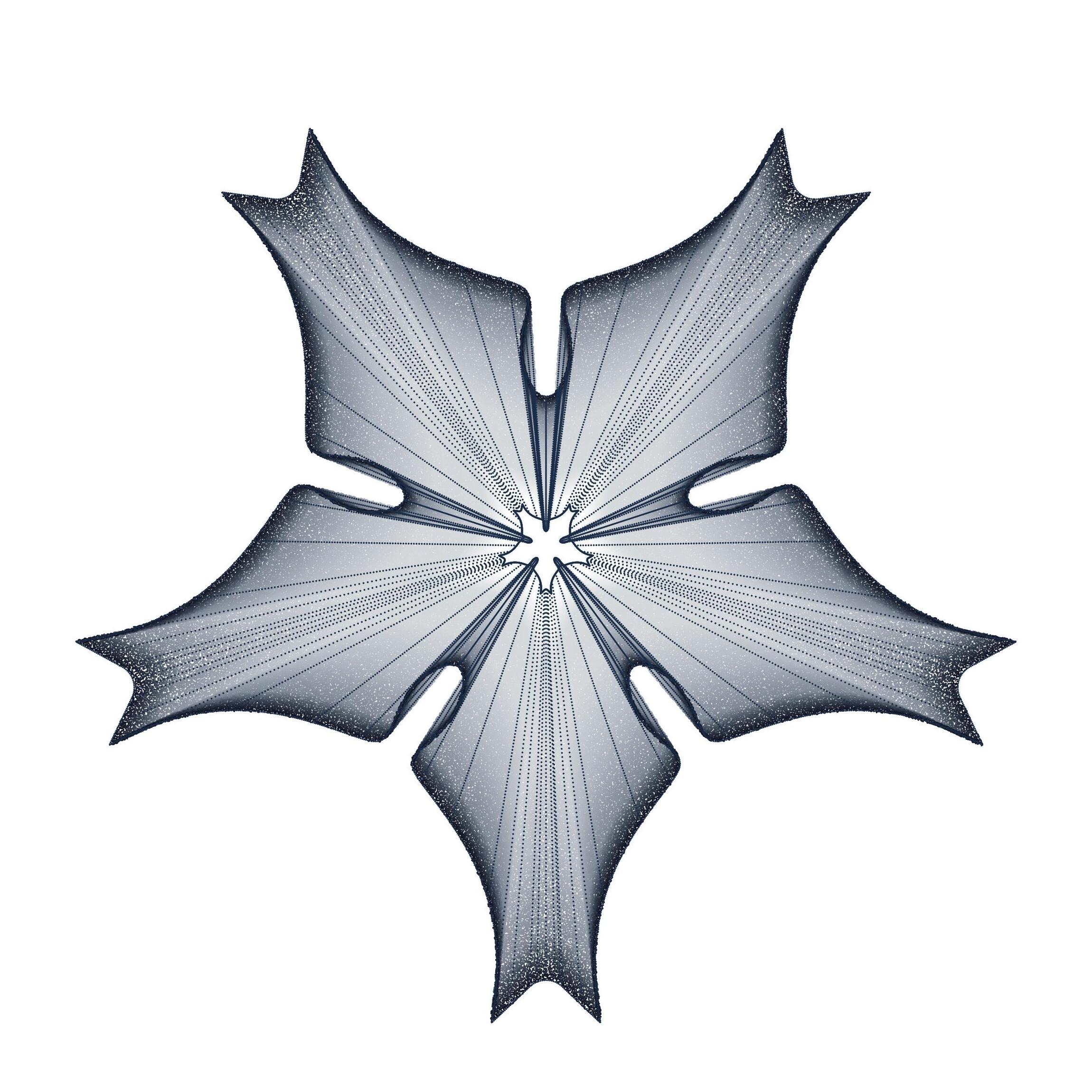
Generative Floral Patterns
Control points
Divided points
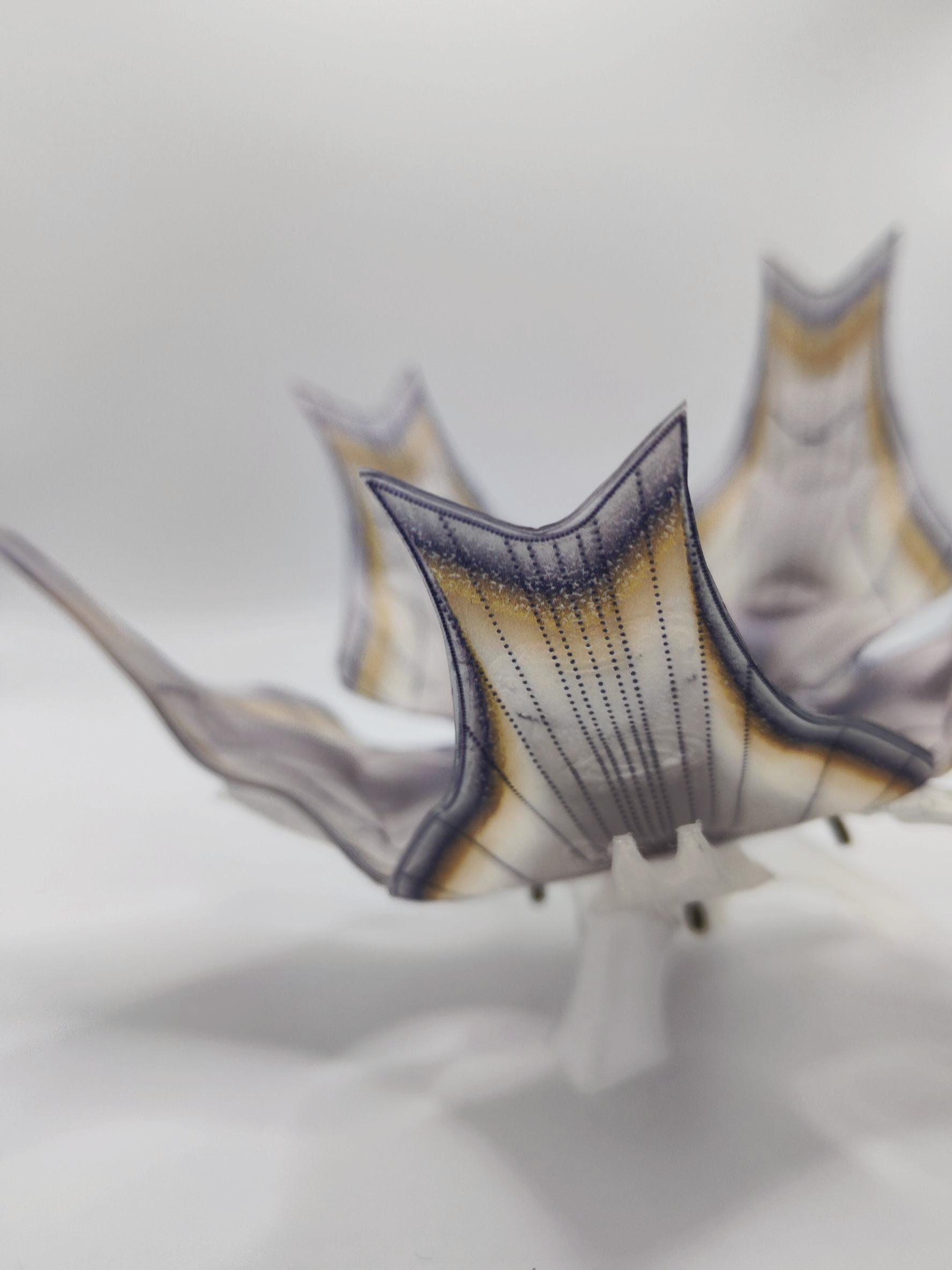
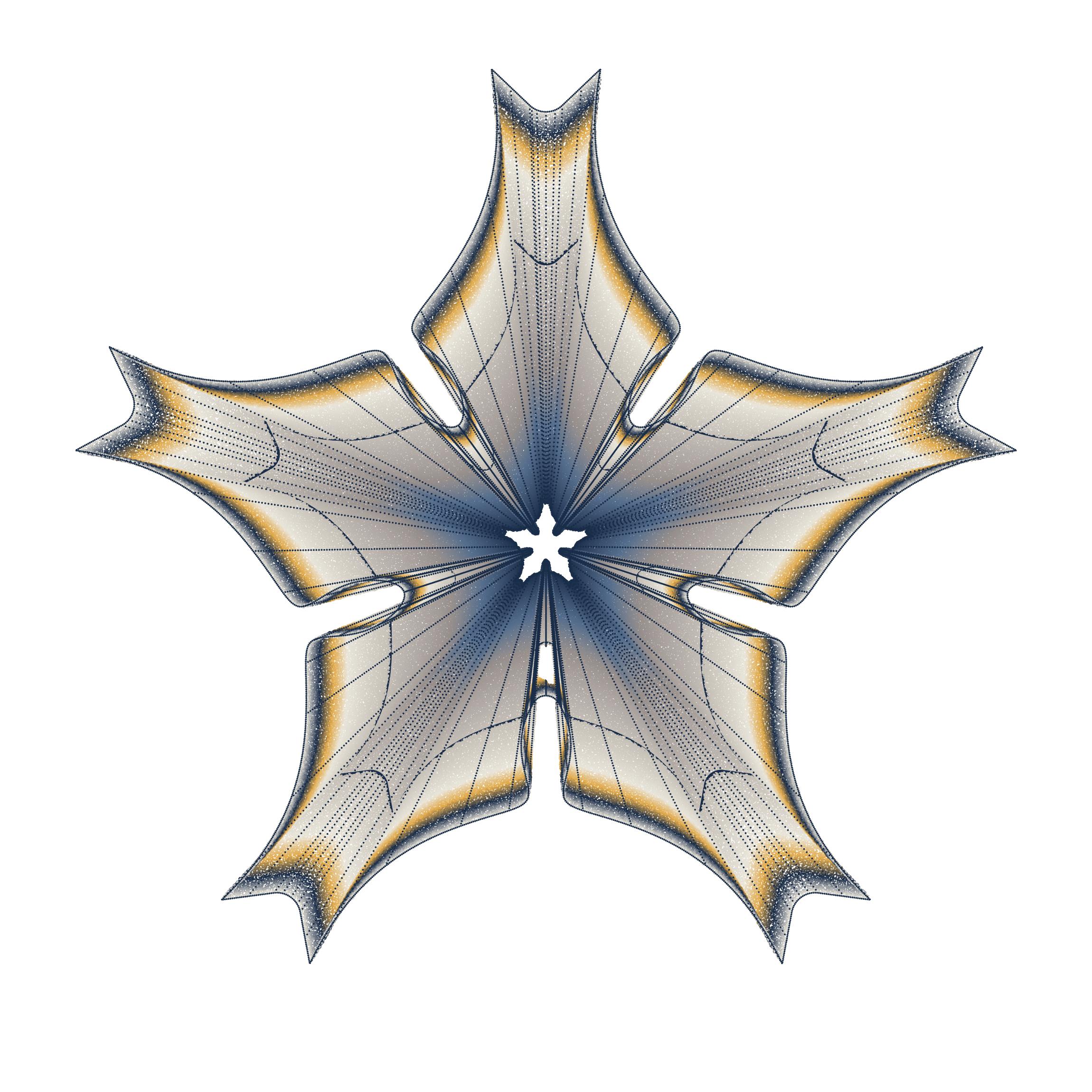
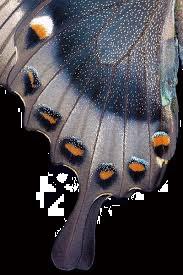
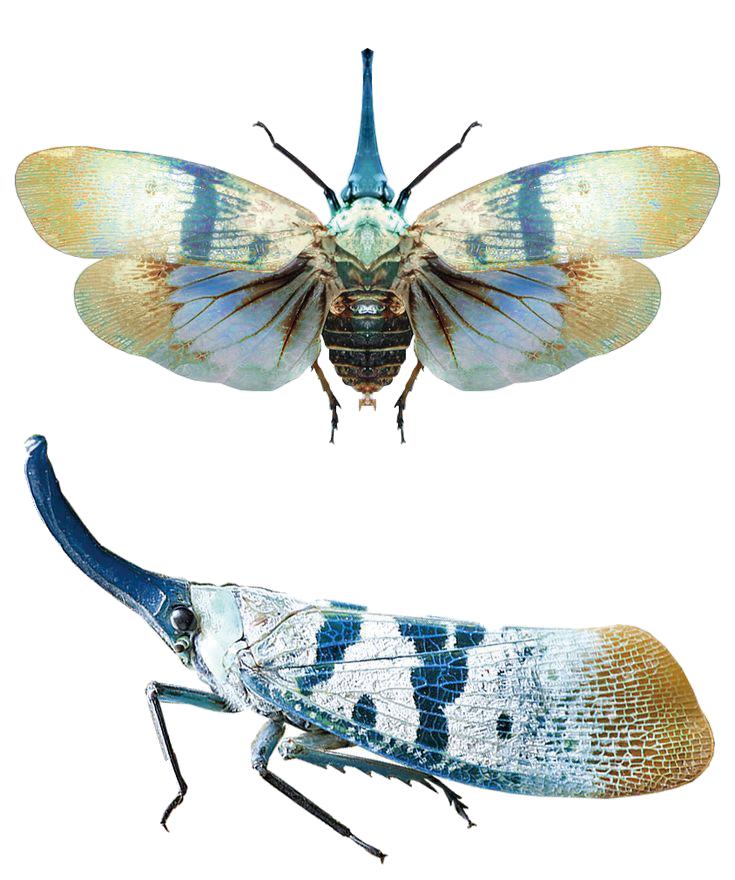
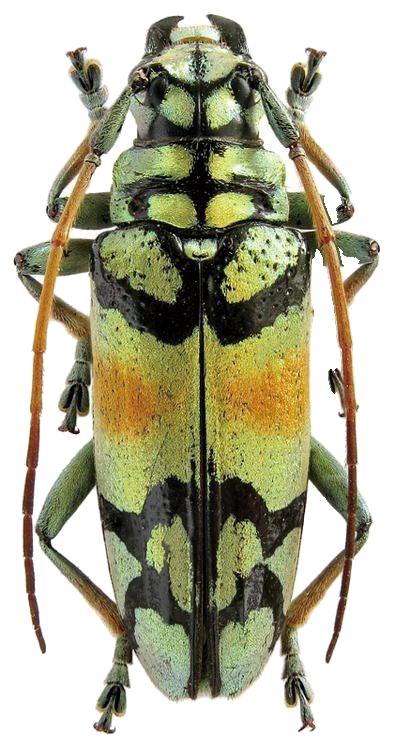
Inspired by the morphological logic of plants and insects, the system generates visual motifs that emulate natural pigmentation patterns.
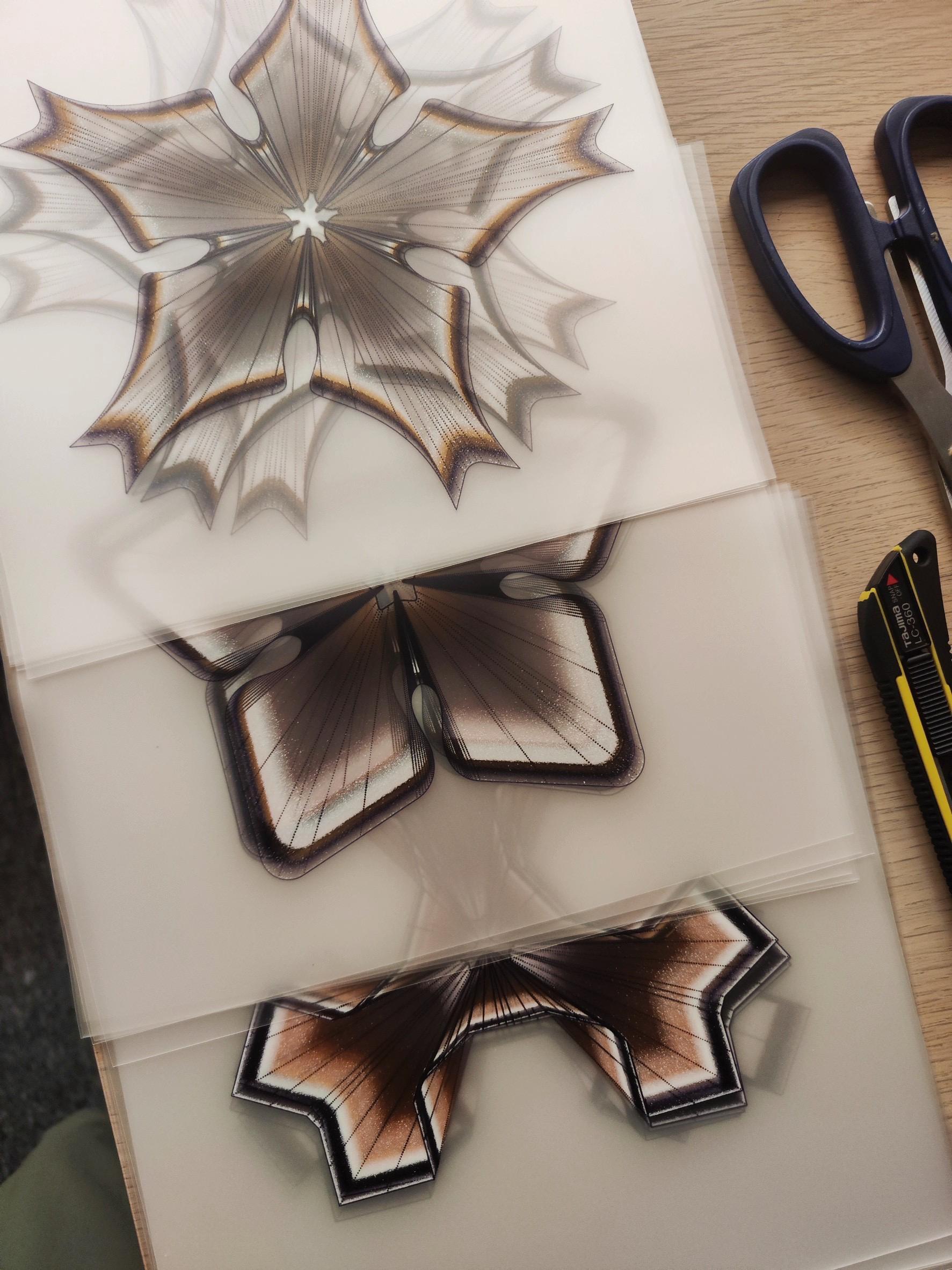
To physically realize the color patterns, a UV-printing technique was applied to TPU surfaces. This method enables precise control of translucency through variations in ink density.
Living organisms generate intricate surface patterns that mediate interaction with their environment and other species. This workflow extends the visual potential of blank TPU sheets into expressive patterns suitable for artistic and exhibition contexts.
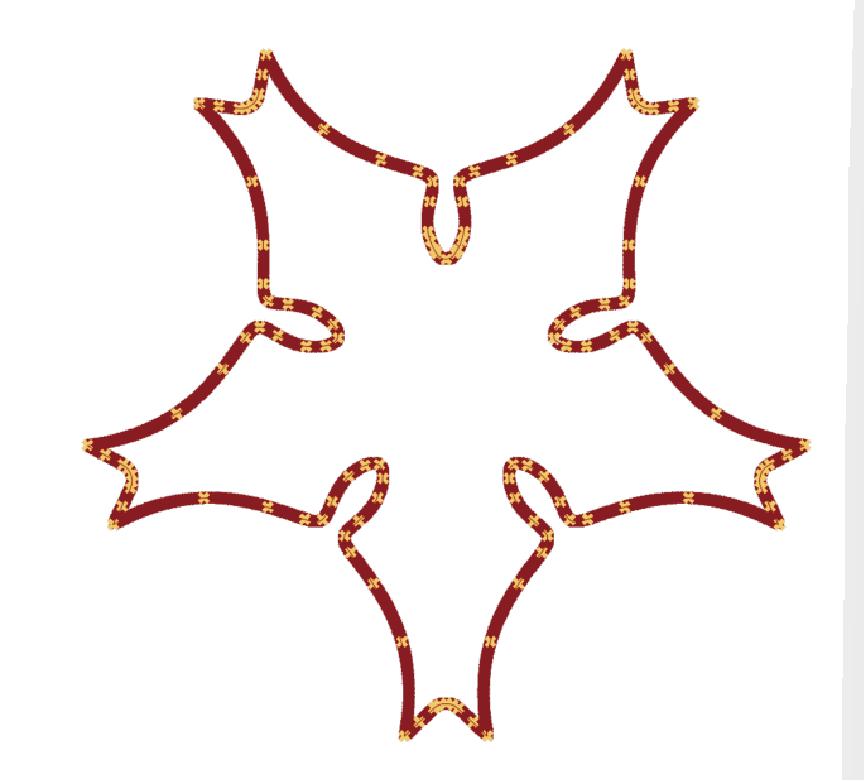
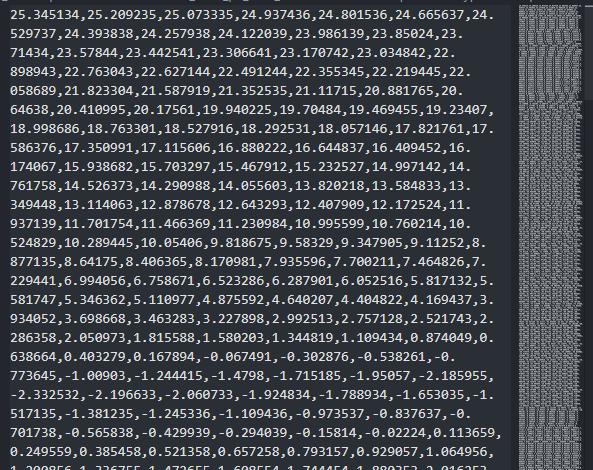
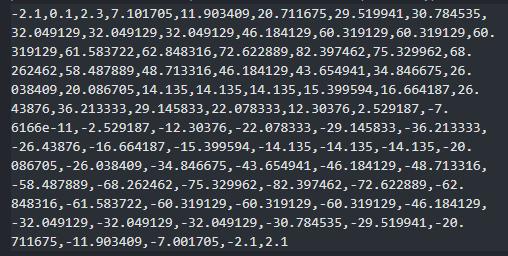
The generative drawing process reconstructs floral patterns by extracting feature points points are then converted into coordinate data for graphic generation in p5.js.
heat sealing path (Rhino) feature points (Grasshopper) convert points into text files (python) read pattern
from geometric paths in Grasshopper. These
read coordinates and generate pattern (p5.js)
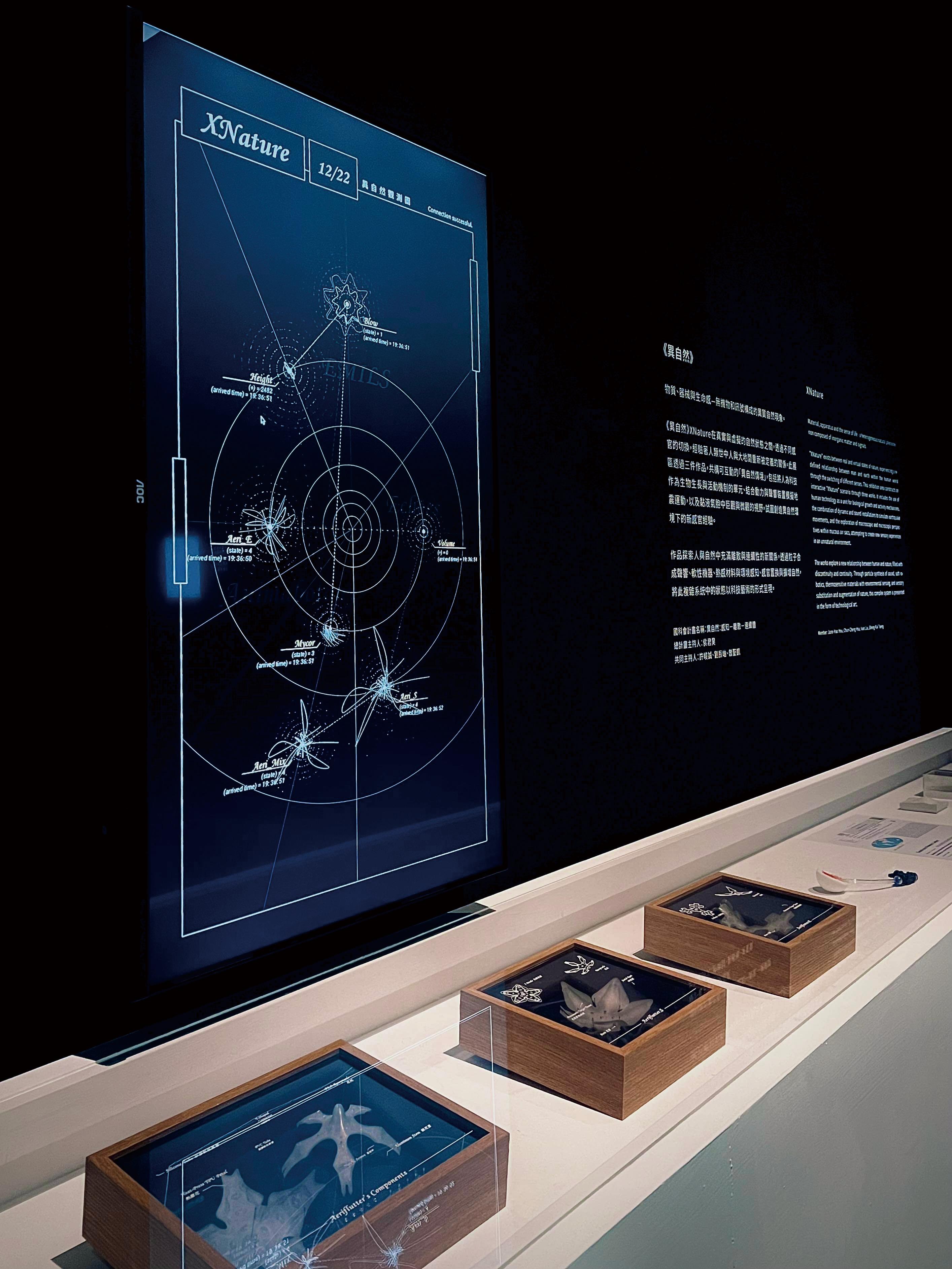
1/ Visualization of the communication system and the specimen-box narrative documentation.
2/ Assembly process of the specimen-box components.
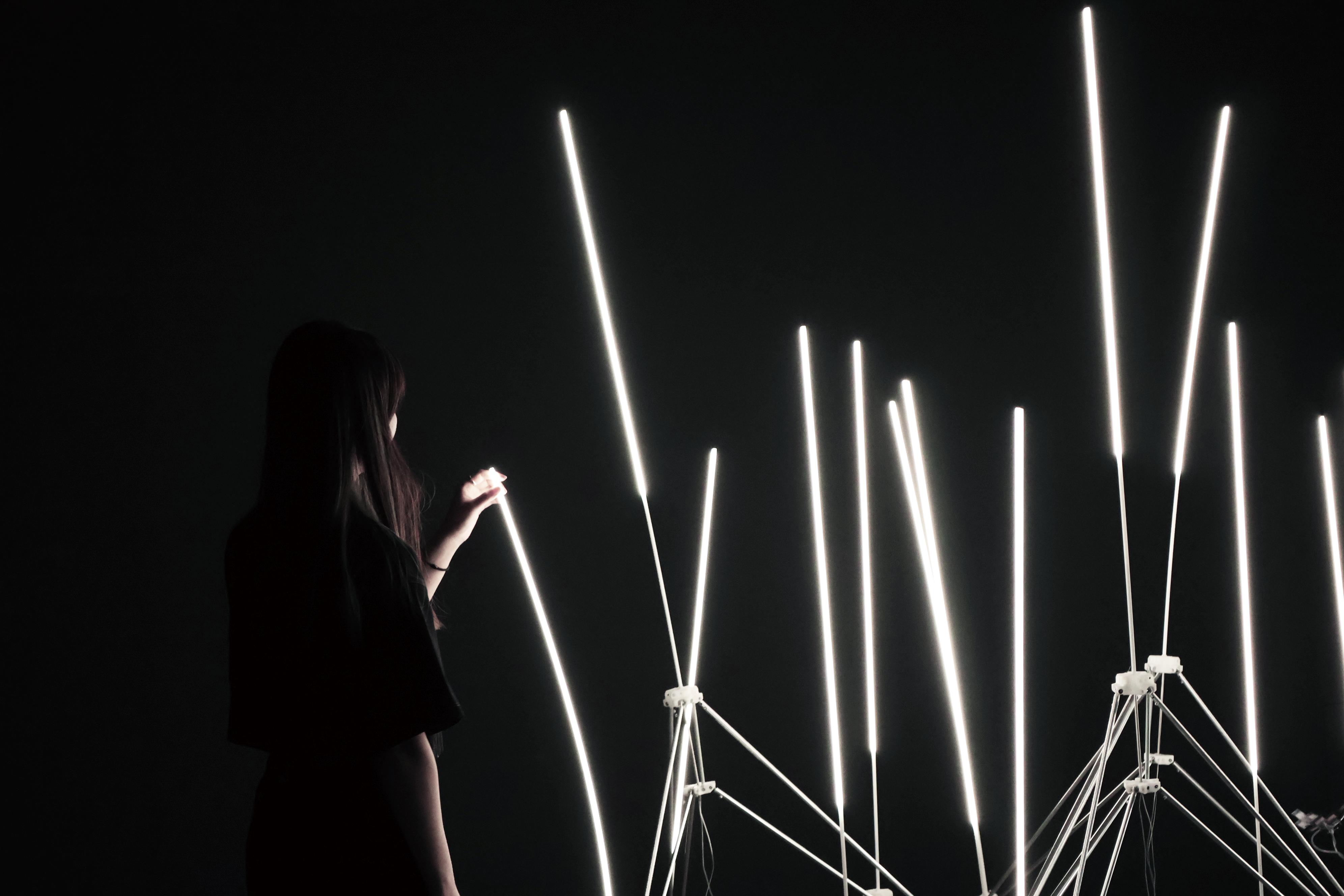
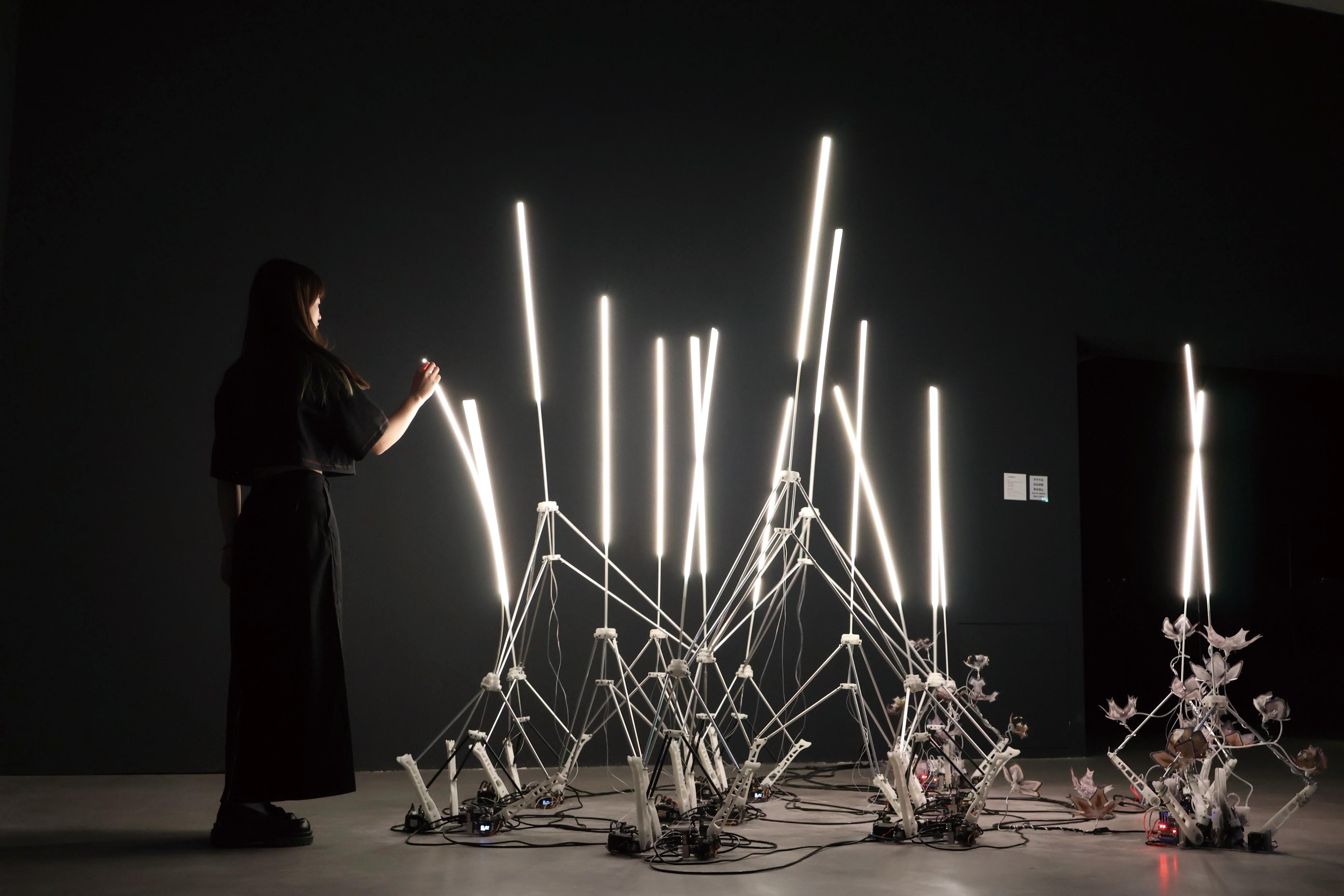
3/ XNATURE Animabotany, integrating rigid linkages with soft materials to create an interactive environment.
4/ Aeriflutter, as part of Animabotany, emitting a glowing translucent effect in darkness.
/3/
Exhibited at NYCU Arts Center, the Museum of Fine Arts, and the Academy Gallery.
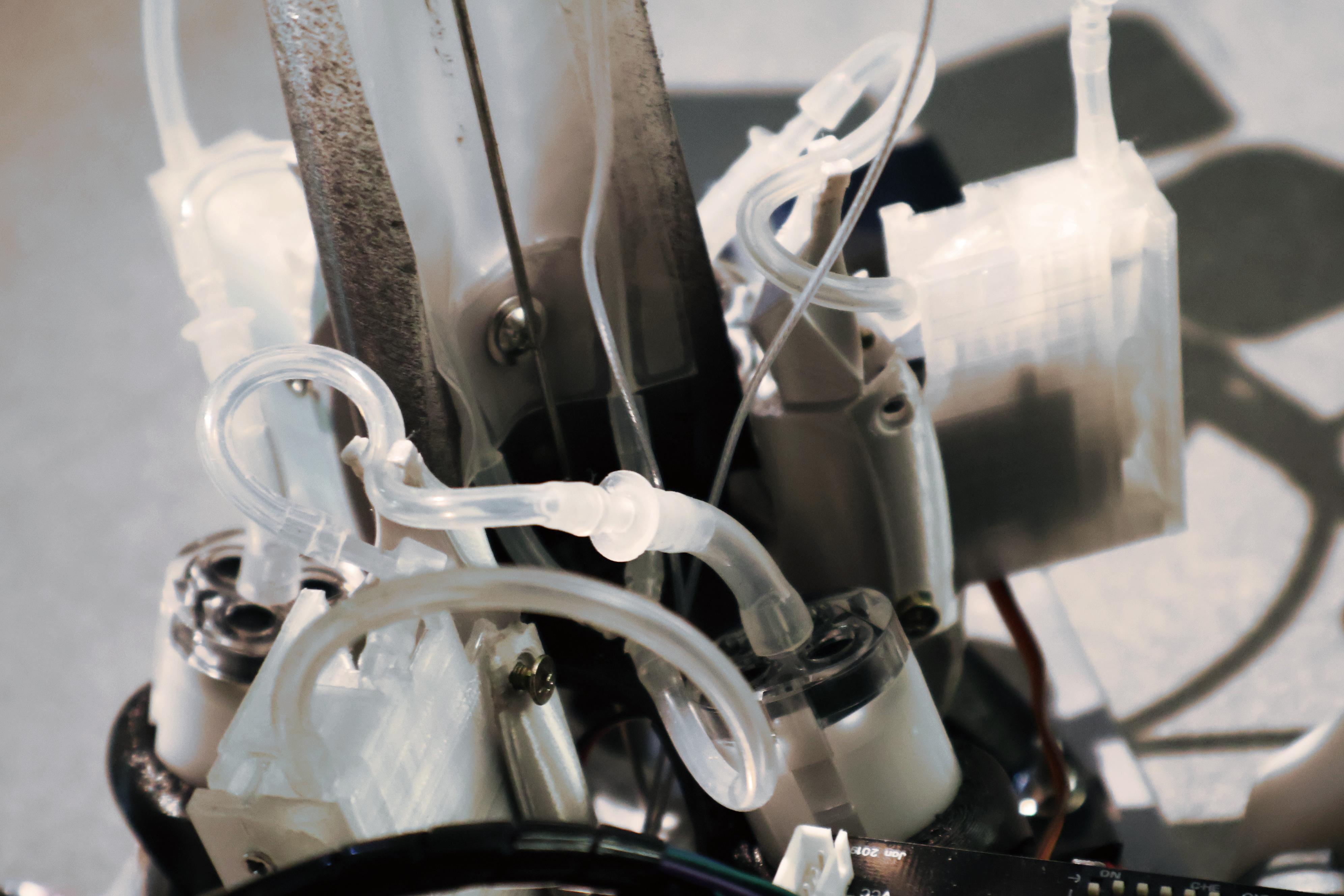
5/ Pneumatic device actuating the inflatable structure (designed by Hsin).
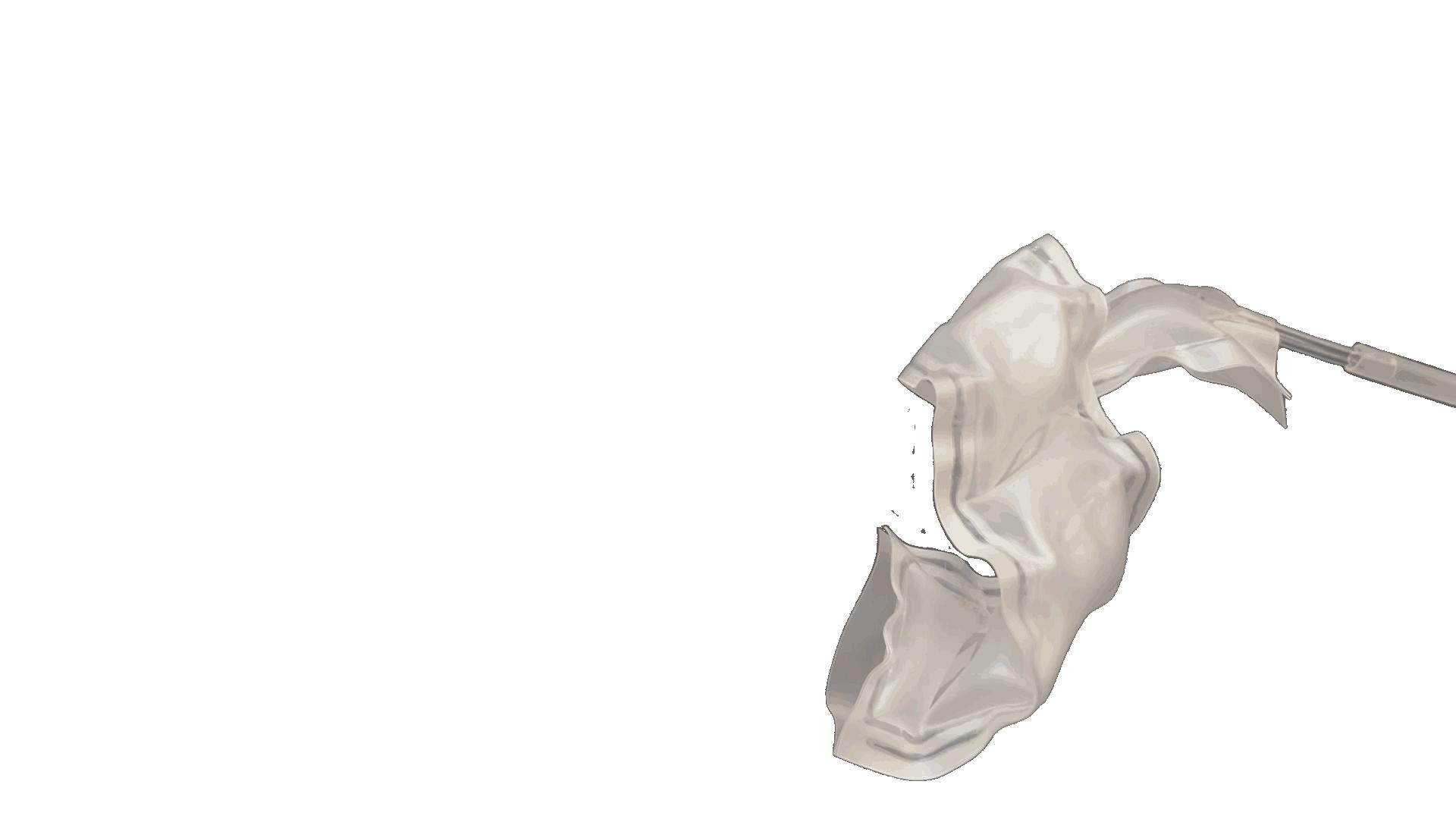
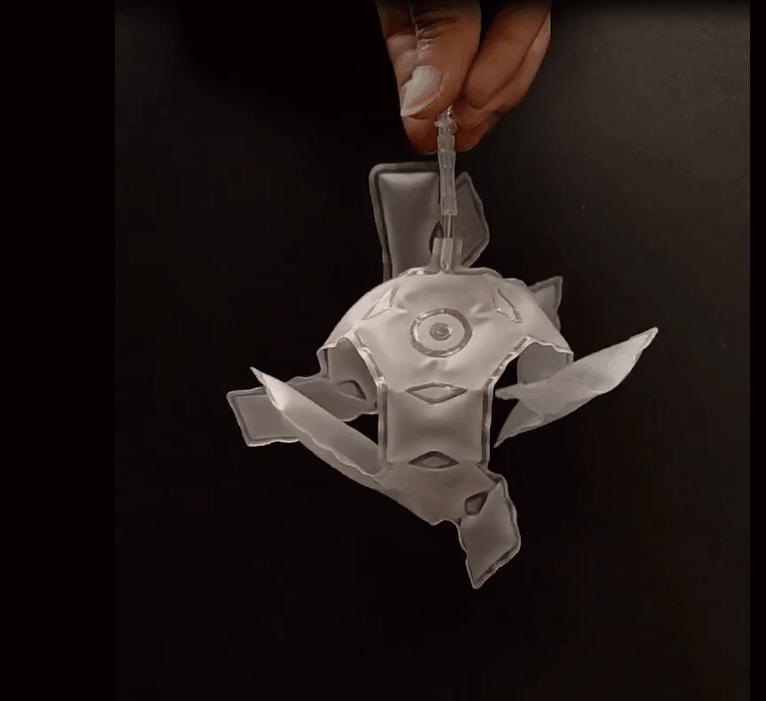
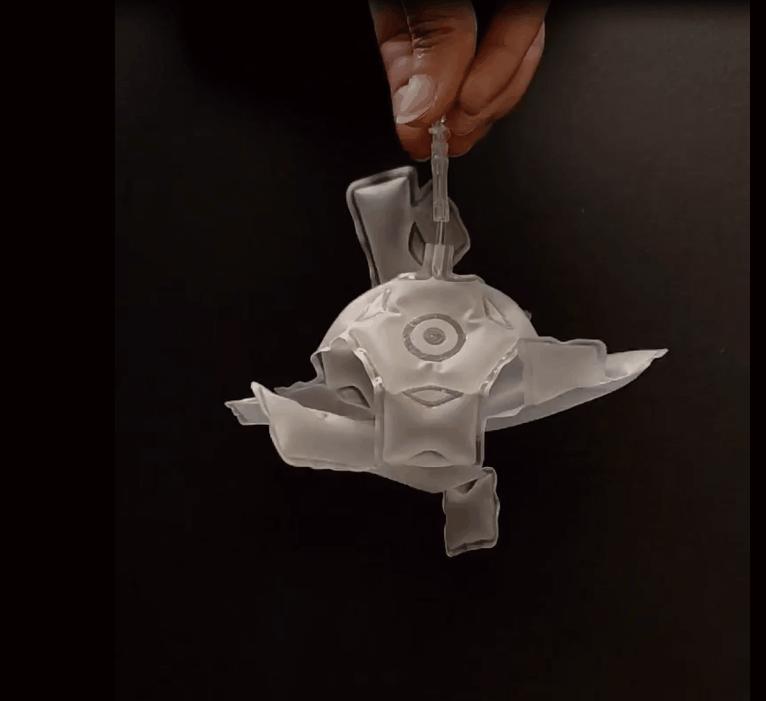
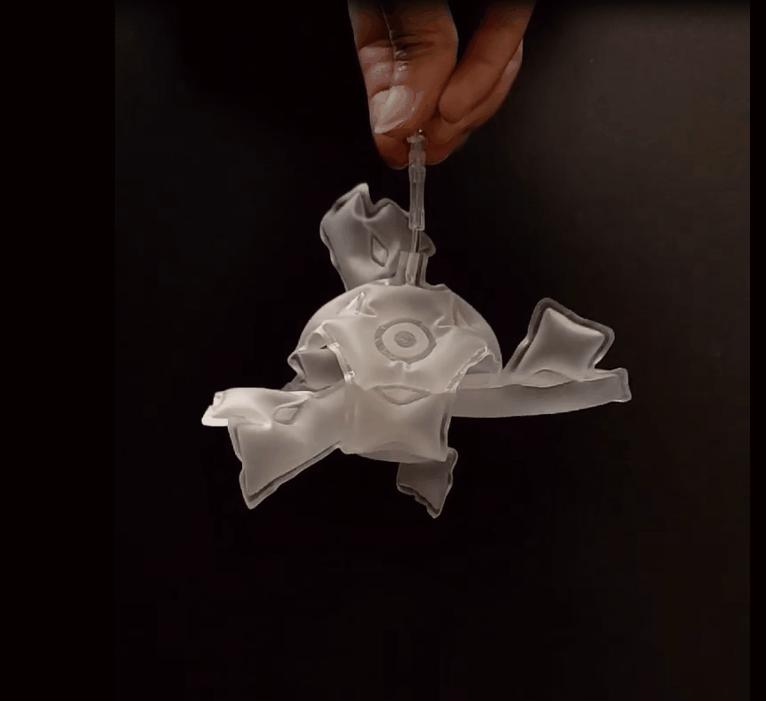
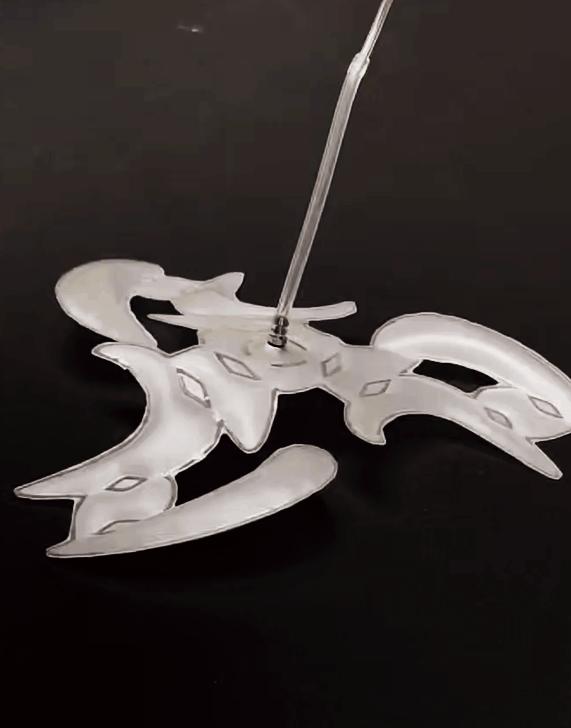
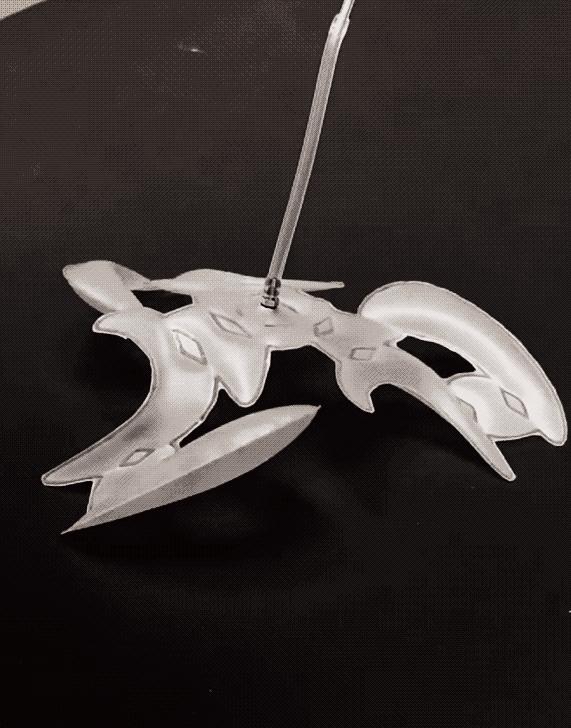
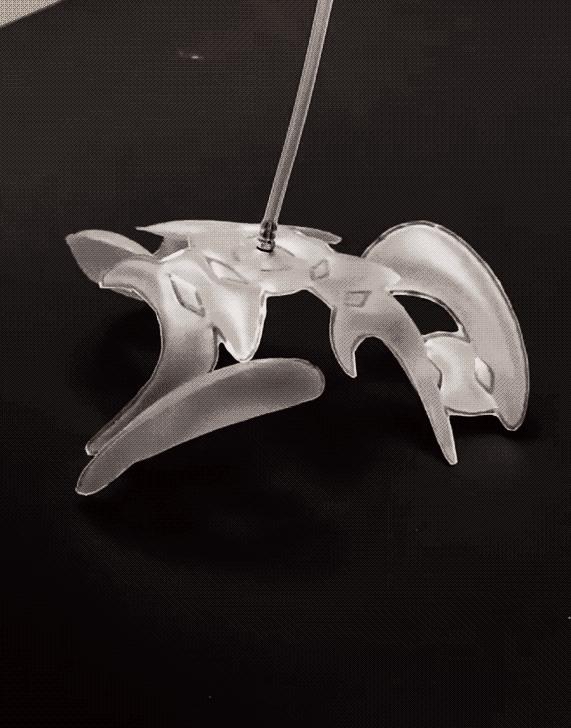
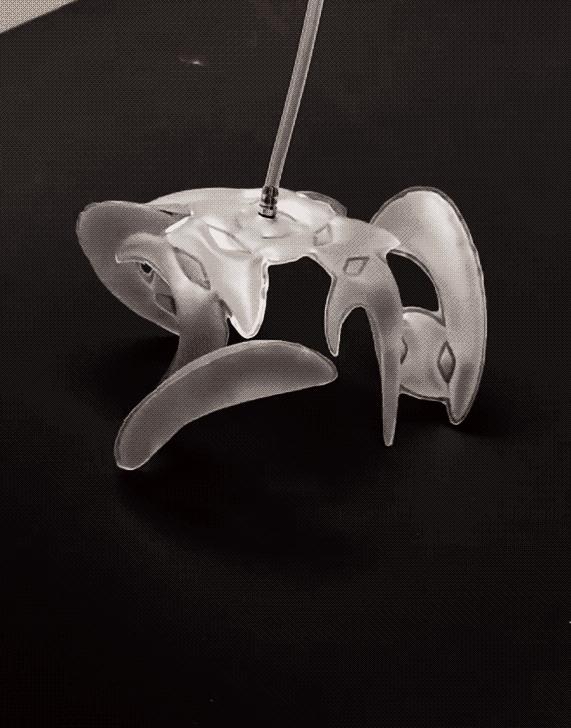
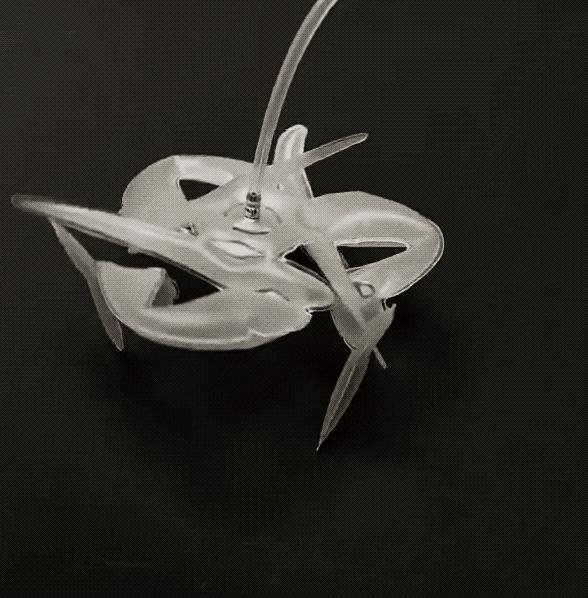
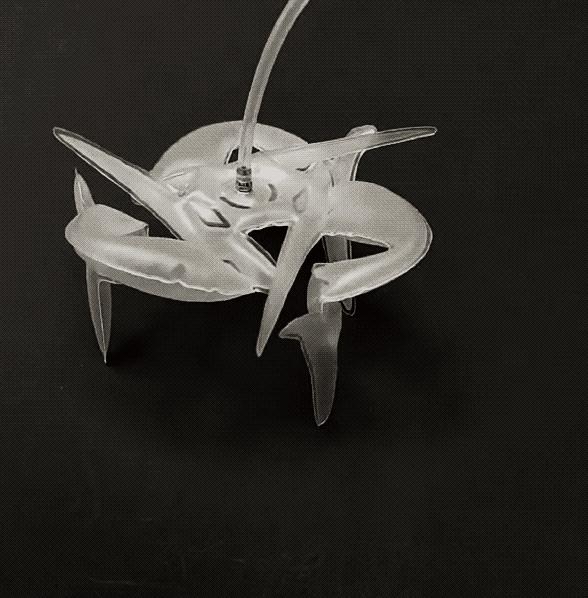
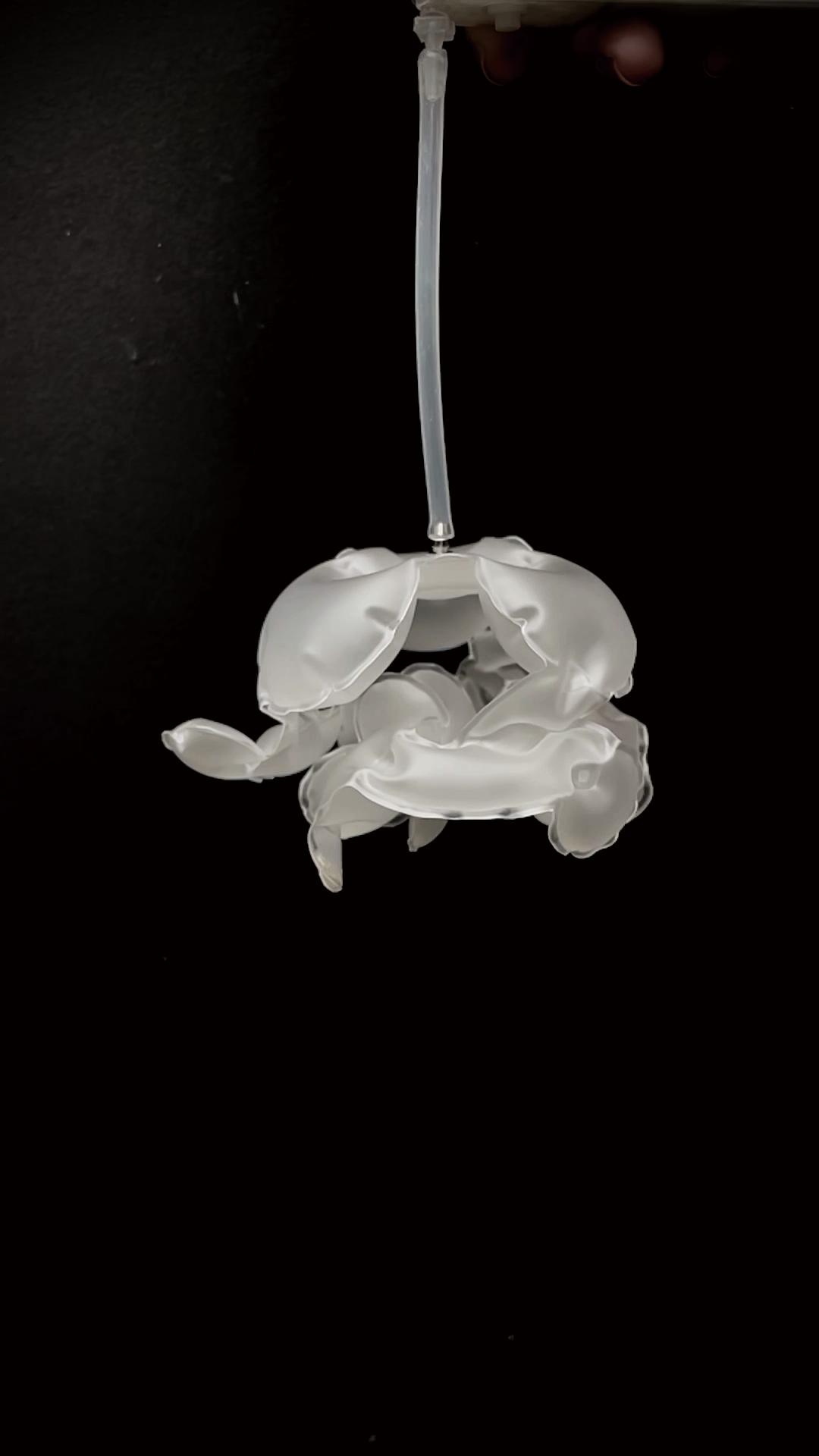
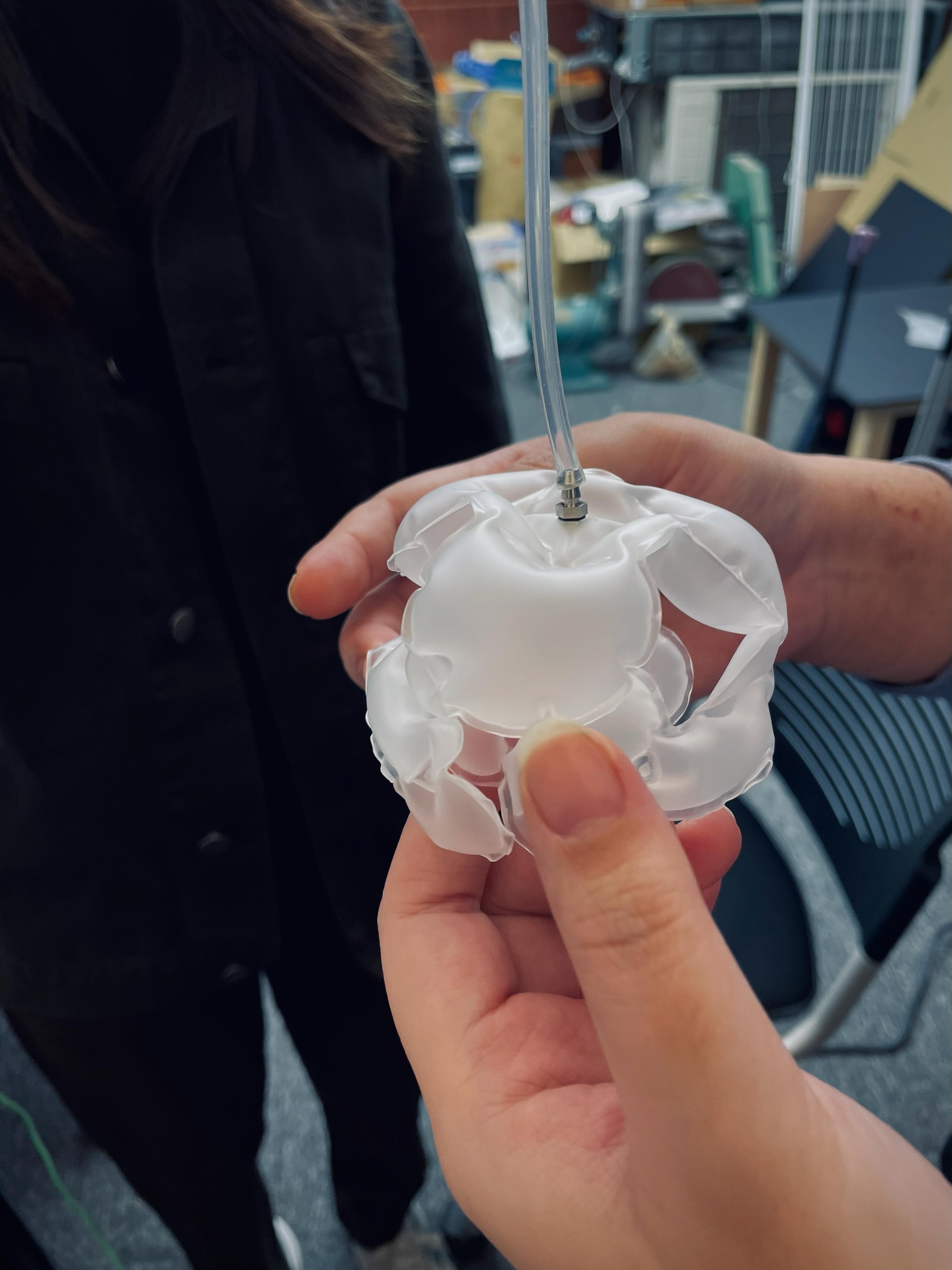
6/ Pneumatic shape-changing process of the floral module.
/4/
/5/
Dynamic Inflatable Public Workshop for Creative Inflatable Design
Soft Robotics Workshops
GIAAIL Group Work (Collaborators: Pan-pan SH, Hsin Chen, Yu-Yun Chang) Advisor: June-Hao, Hou
My Contributions
├─ Technical & Design System
│
│
├─ Developed the tangram-based inflatable generator
└─ Created a Grasshopper-based real-time preview system
└─ Teaching & Workshop
├─ Co-designed and taught public workshops
└─ Created instructional materials, including step-by-step diagrams, slides, and fabrication guides
This workshop is designed to introduce the public to parametric design and heat-sealing inflatable fabrication within a three-hour session. The main challenge is to simplify the workflow while expanding the design possibilities for participants.
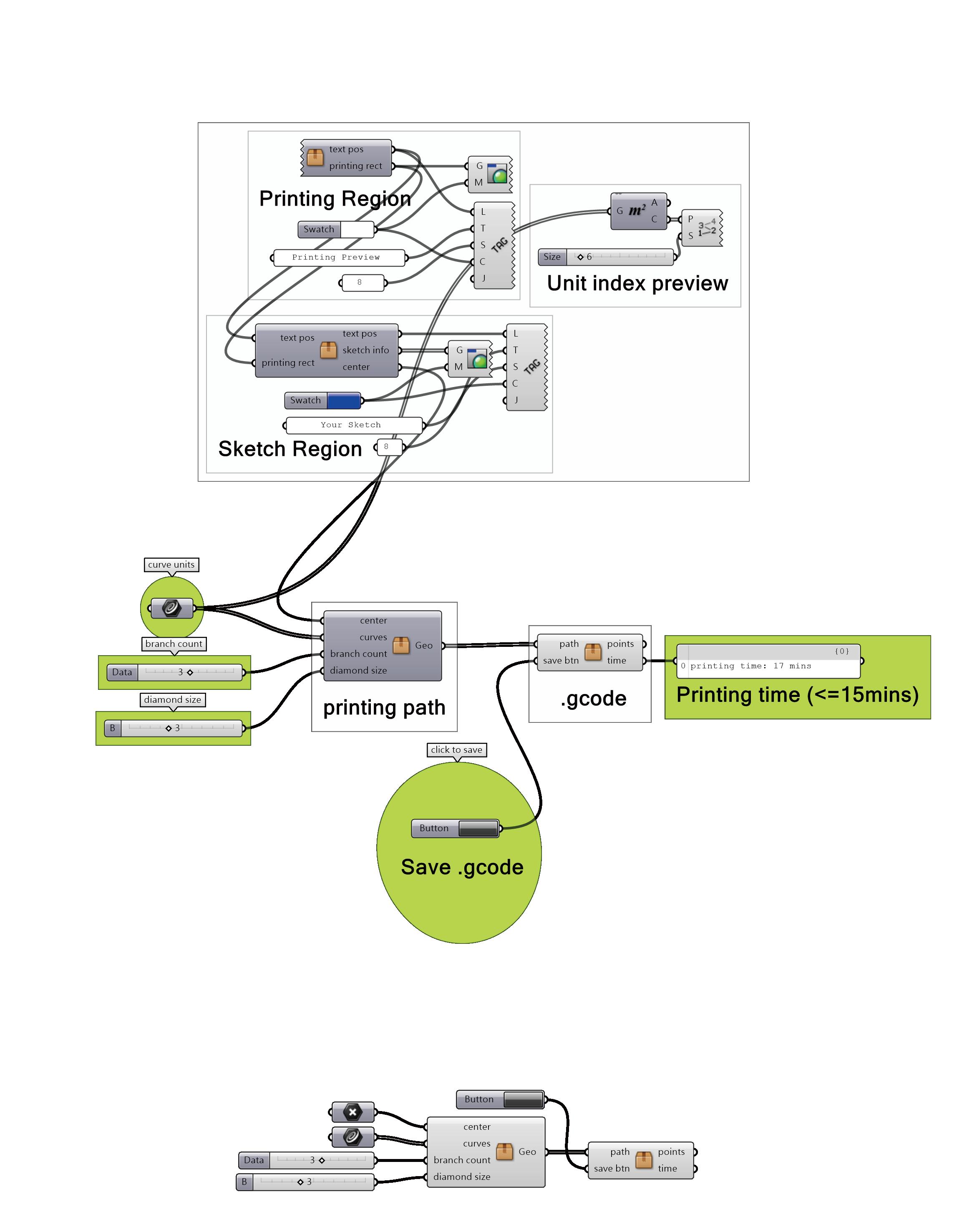
I developed the parametric sealing-path system that automatically generates air chambers and hinge structures. This system allows users to design dynamic inflatables by assembling and repositioning shapes in a tangram-like interface.
The great variety of results show that people become creative when they work with tangible interaction.
Simplifying Folding Principles: Fun & Easy Experiments!
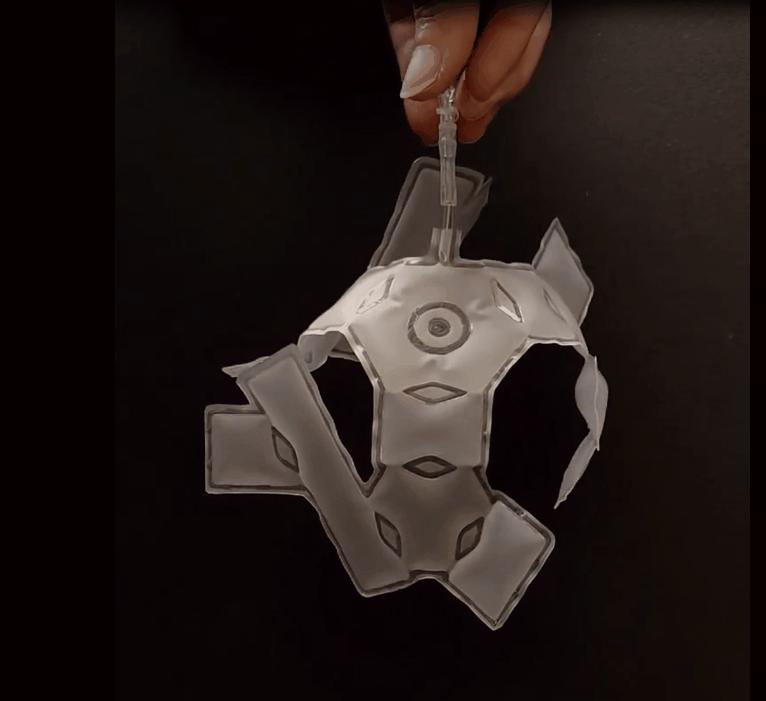
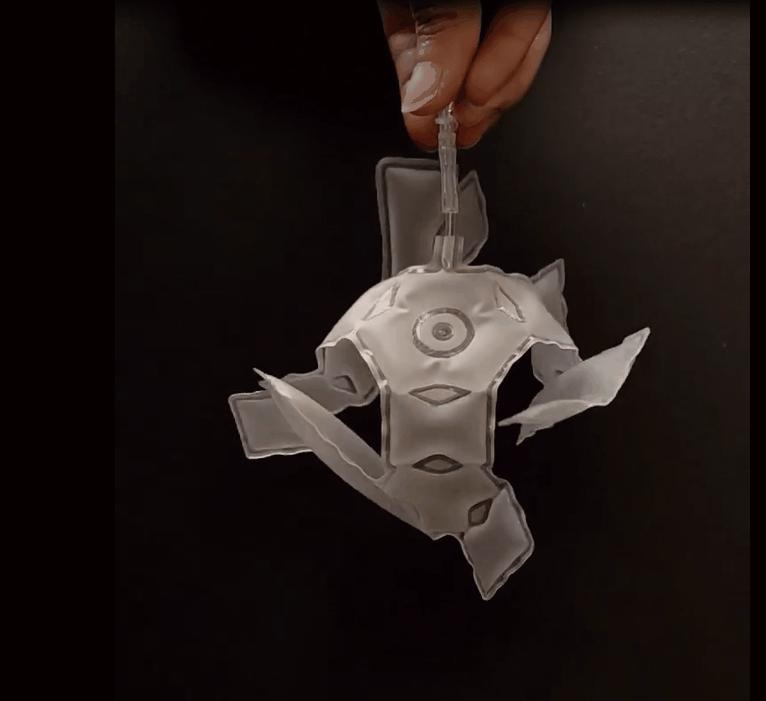
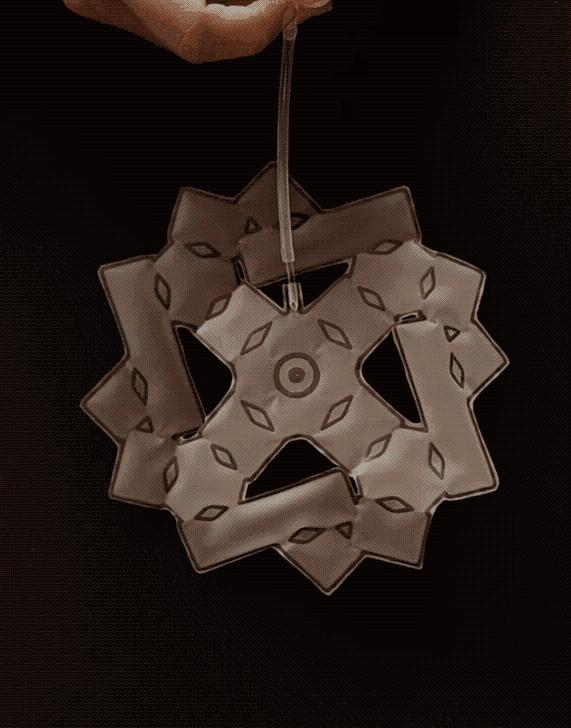
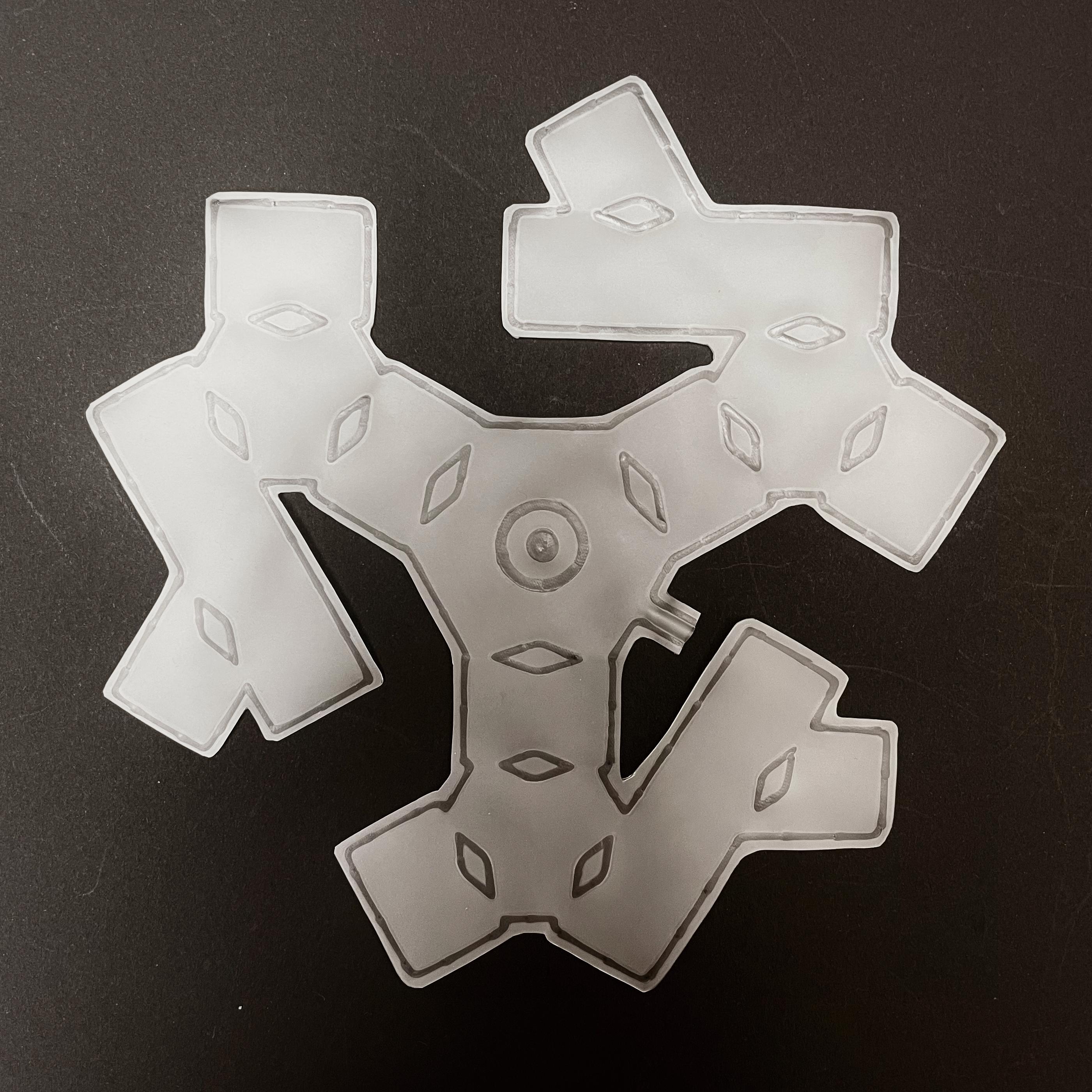
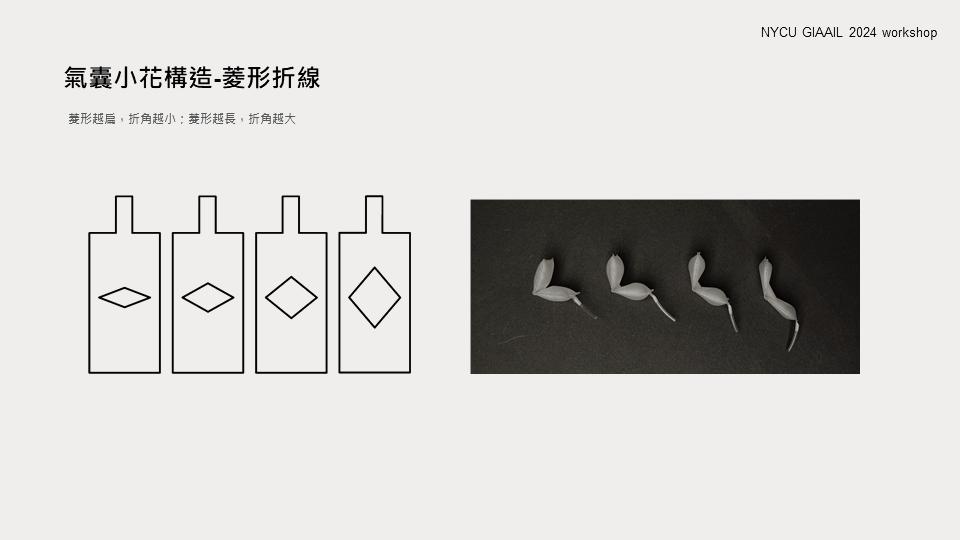
In this workshop, participants learned about soft inflatable structures and parametric design, using Rhino and Grasshopper (Rh/Gh) to design custom heat-sealed inflatables. Our system simplifies the structure of an inflatable into two core components: gas cells and diamond-shaped hinges. Participants can assemble various input shapes, and the system generates the corresponding parametric heat-sealing paths and hinge configurations.
Hinge
In addition, each hinge folds in two possible directions, allowing a single inflatable to exhibit multiple behaviors and transformations. This workflow enables participants to rapidly explore diverse pneumatic forms through intuitive shape composition.
Gas Cell
Hinge
Inflate...
Your Sketch
Parametric Path Generator
By adjusting the distribution and orientation of the shapes, a single inflatable can exhibit multiple dynamic behaviors. 1 2 3 4 5
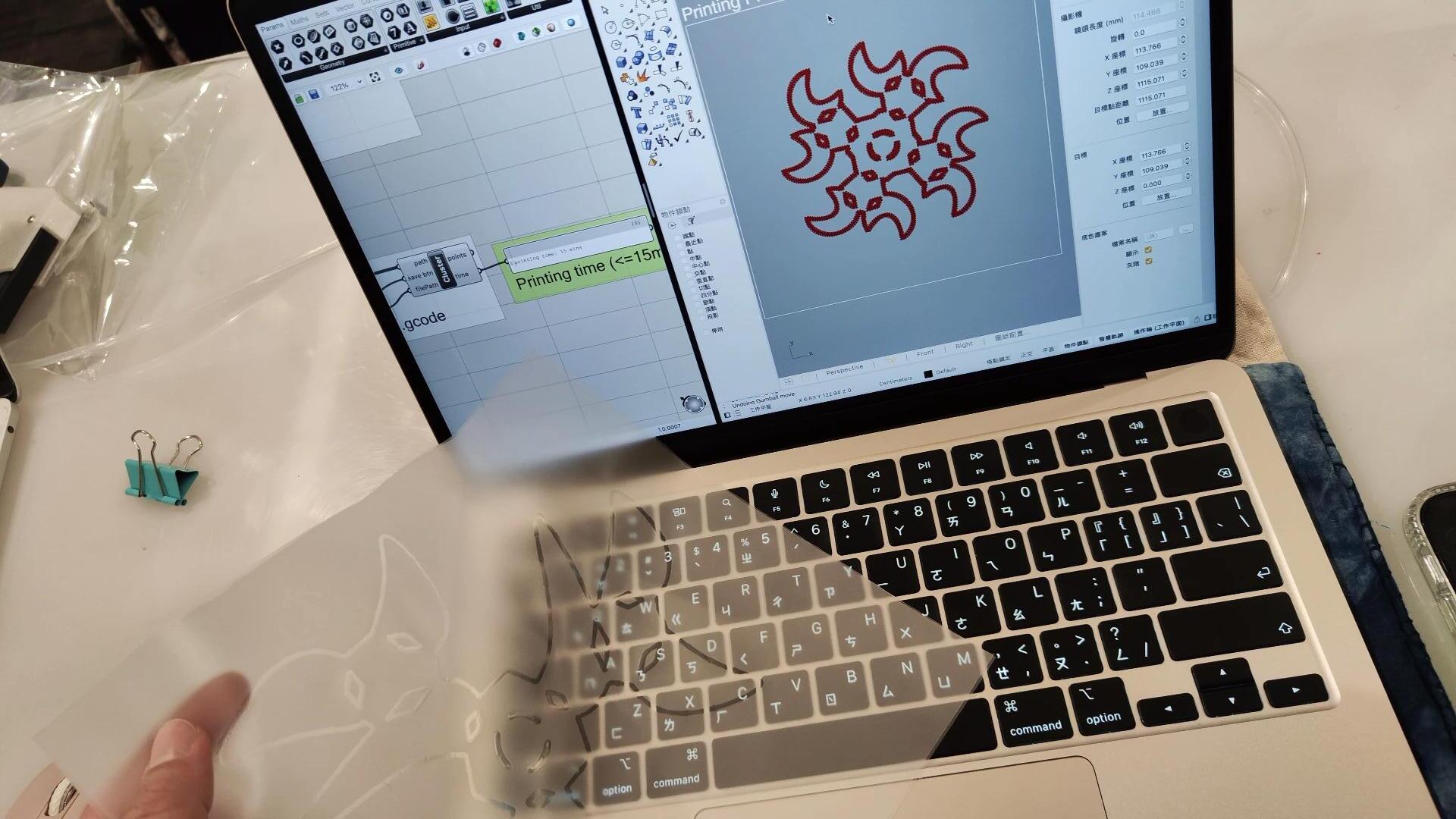
The inflatable design was translated into a parametric system inspired by tangram puzzles. I developed an automated script in Rhino/Grasshopper (Rh/Gh) that generates both the inflatable outline and the hinge-based fold lines (see right). Participants can experiment with different shape assemblies and preview their inflatable designs in real time.
Path Preview
Folding Mechanism Used in This System
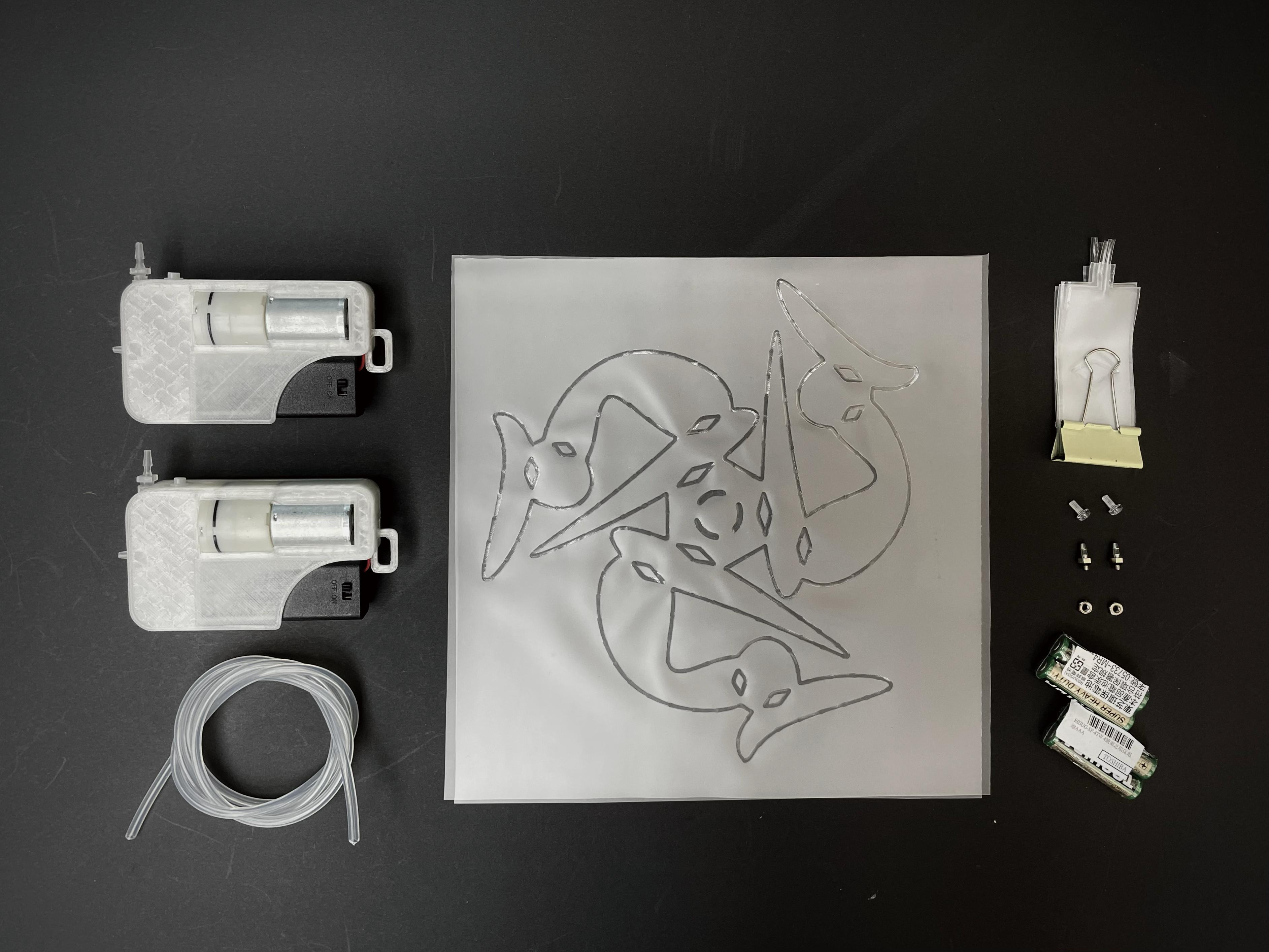
1/ Material kit containing TPU sheets, silicone tubes, pneumatic devices, and batteries.
2/ Prototype composed entirely of circular geometric elements.
3/ The same inflatable form exhibiting different behaviors based on hinge-folding direction.
4/ Unique forms generated using a parametric pattern-design system in Rhino and Grasshopper.
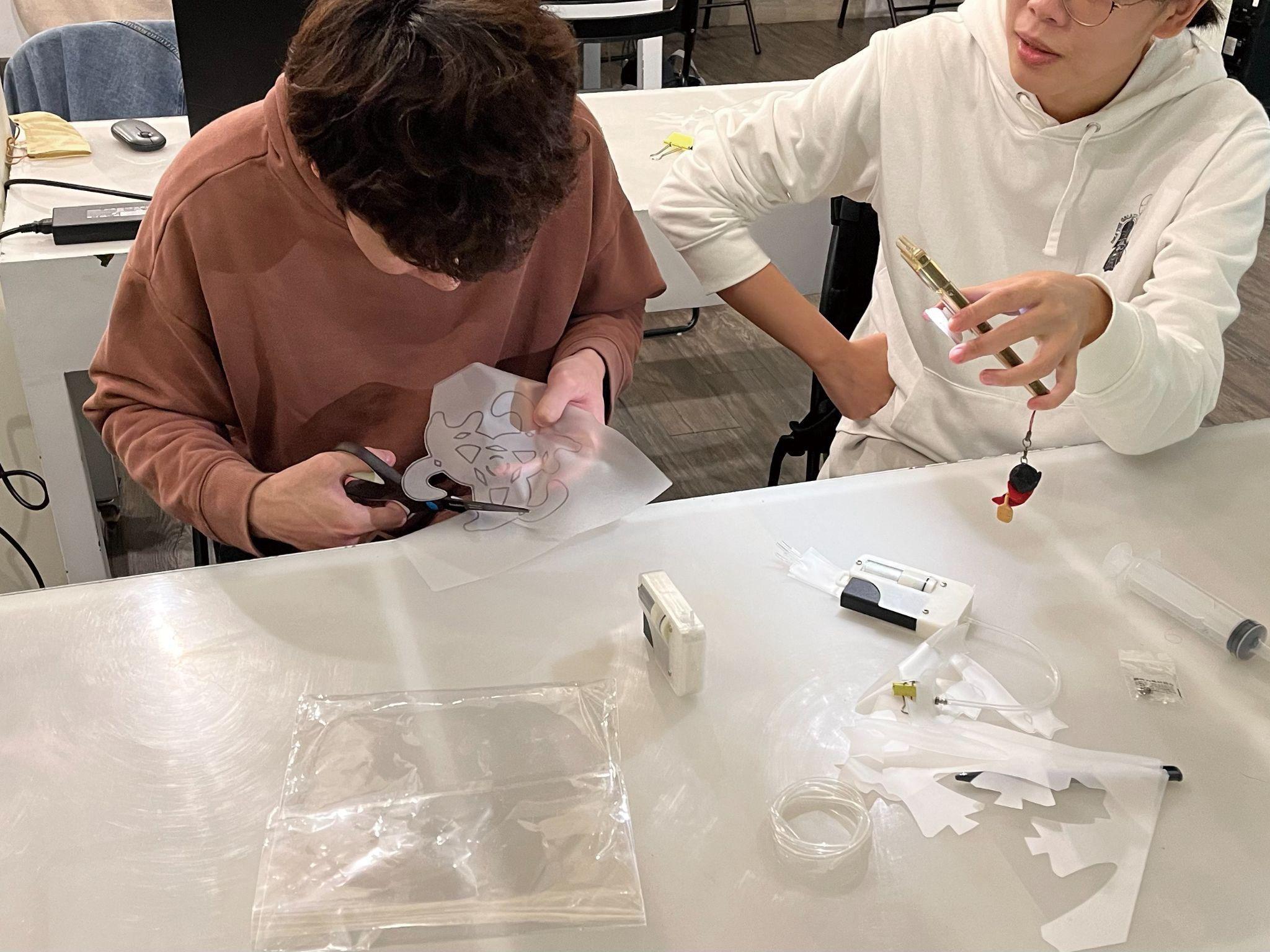
5/ Students cutting out their printed inflatable patterns from TPU sheets.
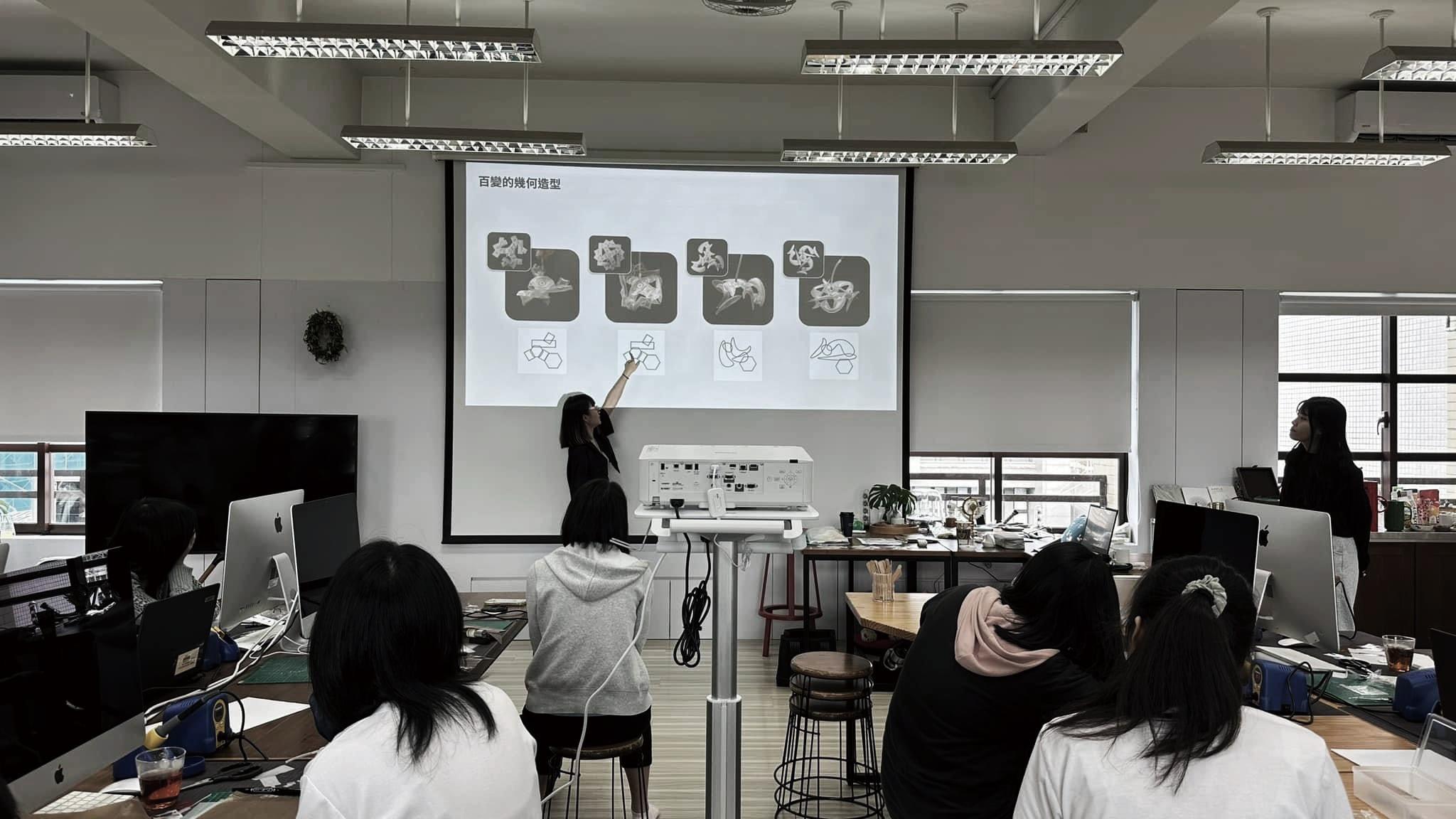
6/ Workshop session for high school students.
/4/
/5/
/6/
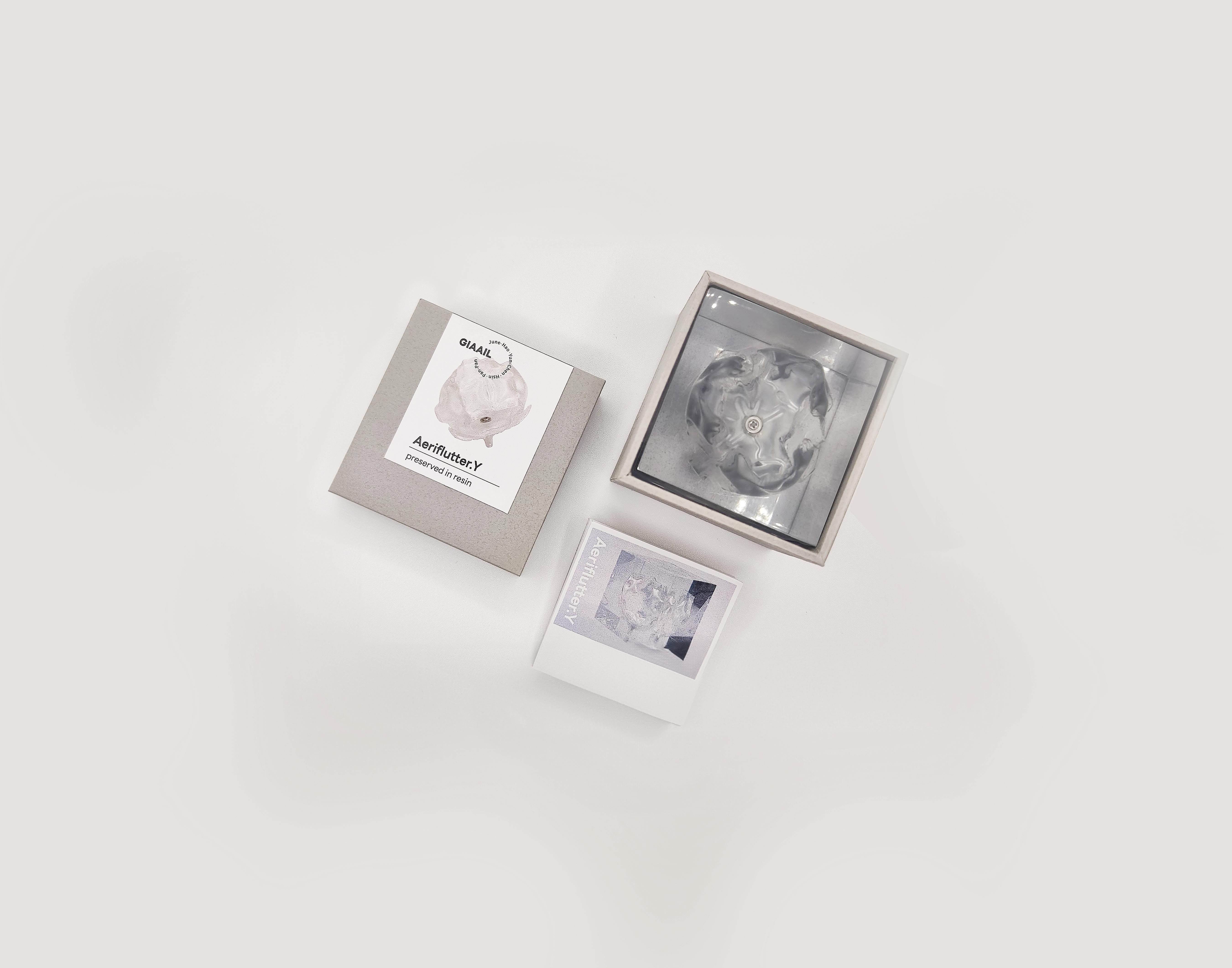
Specimen of Air A Handcrafted Resin Preservation of Miniature
Pneumatic Sculptures
Computational Craft Project Group Work (Collaborators: Pan-pan SH, Hsin Chen)
My Contributions
├─ Material Behavior Analysis
│ ├─ Researched TPU–resin interactions for long-term preservation
│ ├─ Examined optical effect when airbag embedded in resin
│ └─ Developed iterative prototypes to refine the casting workflow
└─ Designed the specimen-box packaging presentation
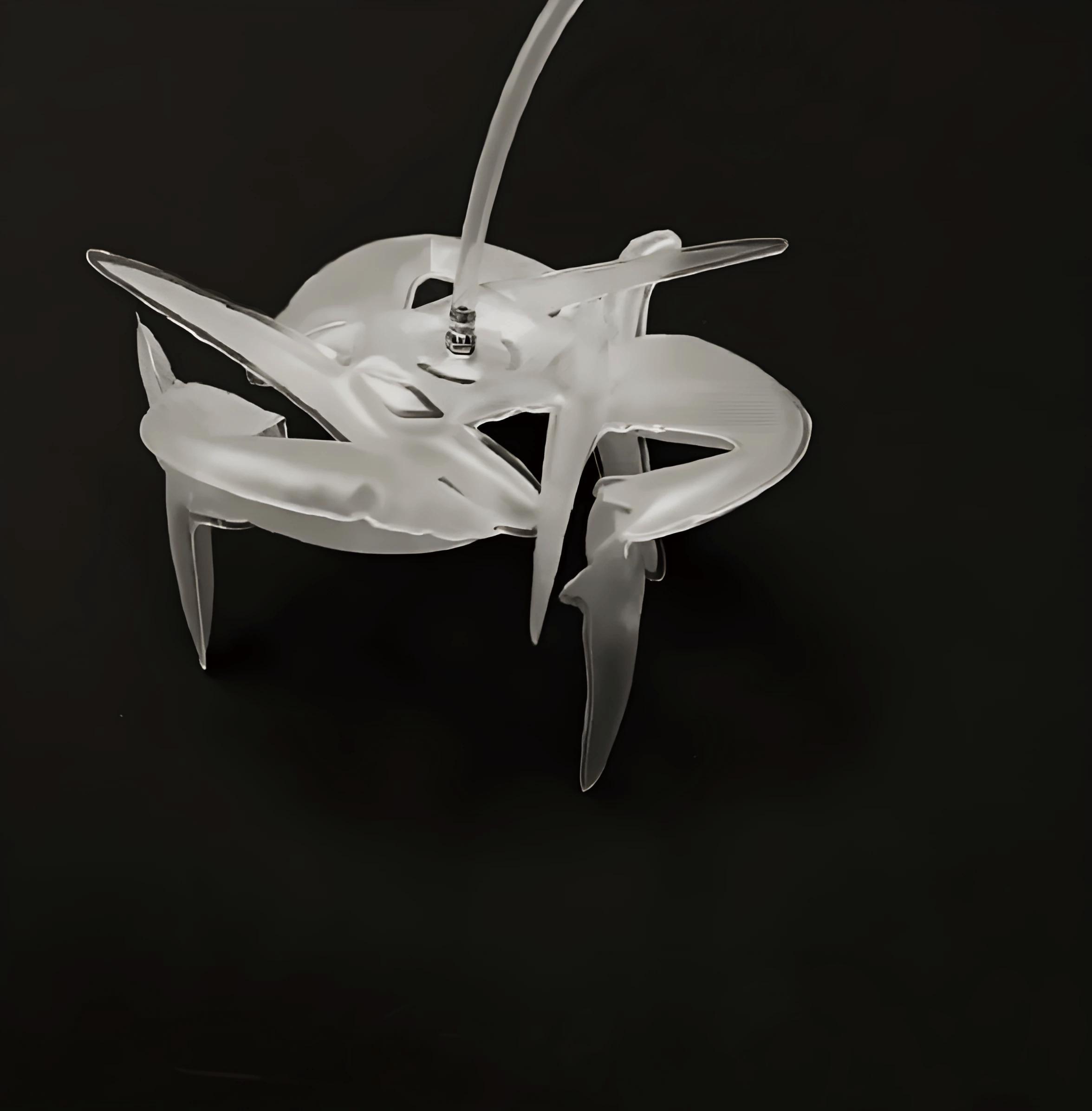
This project examines the interaction between heat-sealed inflatable structures and resin. We developed a crafting workflow that addresses two major issues in resin preservation: floating and air leakage caused by heat during curing. The experiment also reveals a unique optical phenomenon—heat-sealed paths become visually transparent, while the enclosed air chambers produce metallic reflections with silver-lined boundaries.
These findings demonstrate how hybrid fabrication between TPU and resin can offer new possibilities for long-term artistic preservation and display.
Casting resin in multiple controlled layers to stabilize temperature and prevent floating during curing. #digital fabrication #inflatable structure #crafting #resin #preservation
Refining heat-sealing paths to achieve stable folding behavior at a miniature scale.
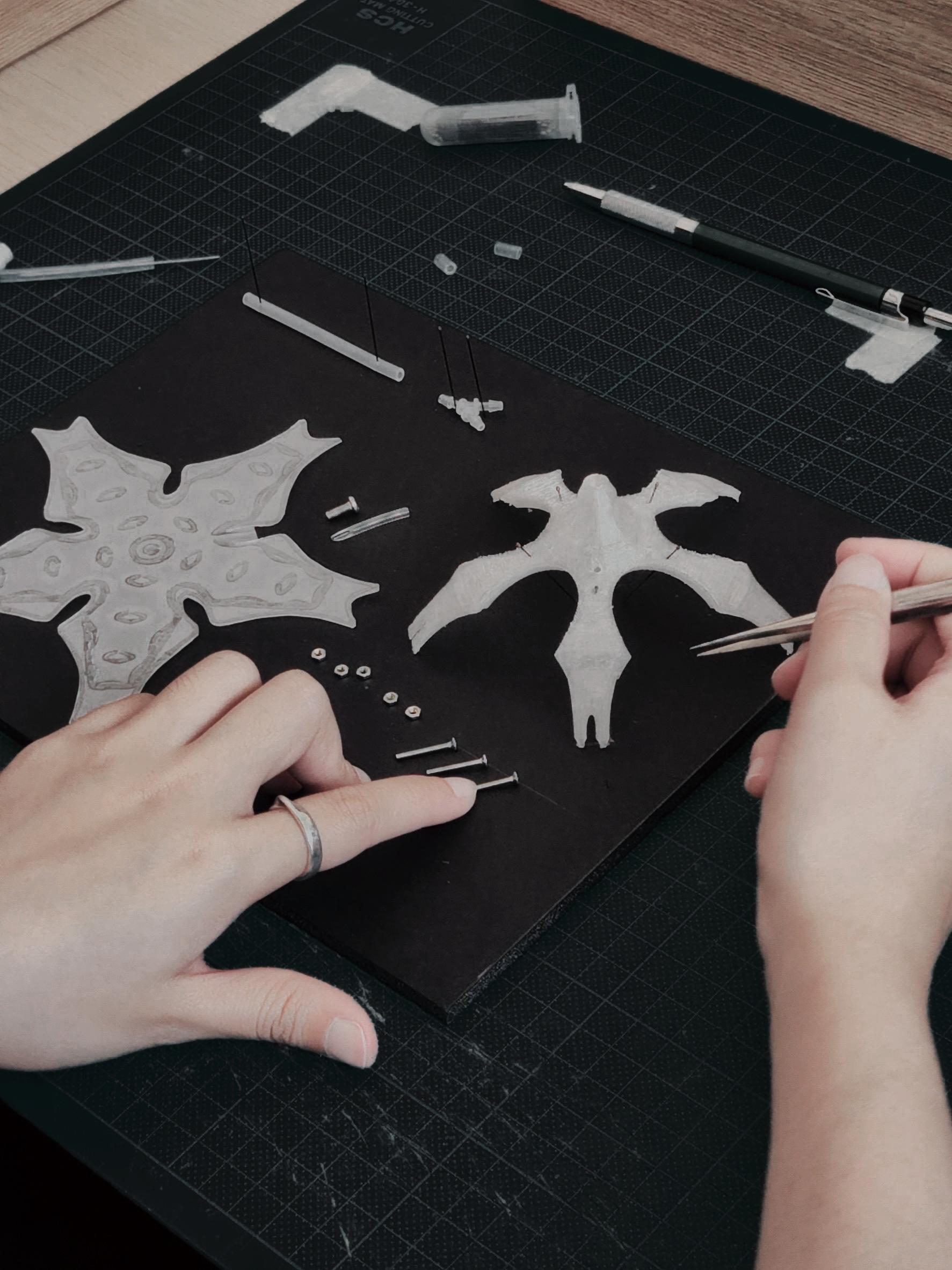
Assembling the module with 3D-printed connectors and micro screws.
The Drop Large-Scale Robotic 3D-Printed Framework for Concrete Casting
Robotic Fabrication Studio
Group Work (Team member: Pan-Pan SH, Yu-Hsuan Lo, Lu-Chieh Young)
│ └─ Proposed the concept of a single-path robotic formwork strategy
├─ Fabrication System
│ ├─ Participated in PETG material testing
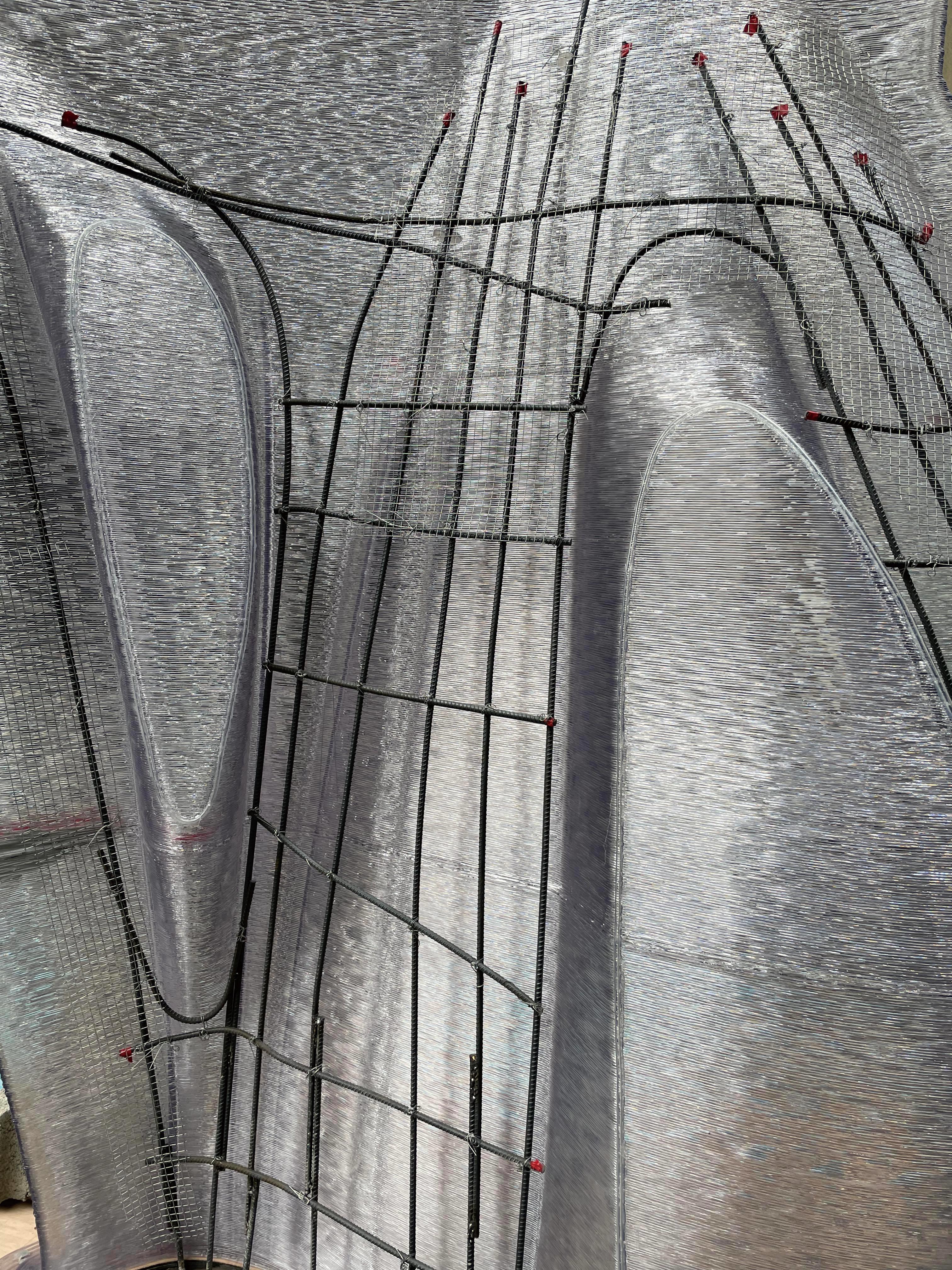
│ ├─ Conducted concrete-casting experiments
│ └─ Contributed to workflow optimization that reduces warping
└─ Visualization System
└─ Developed visualization tools for printing and casting processes in Grasshopper
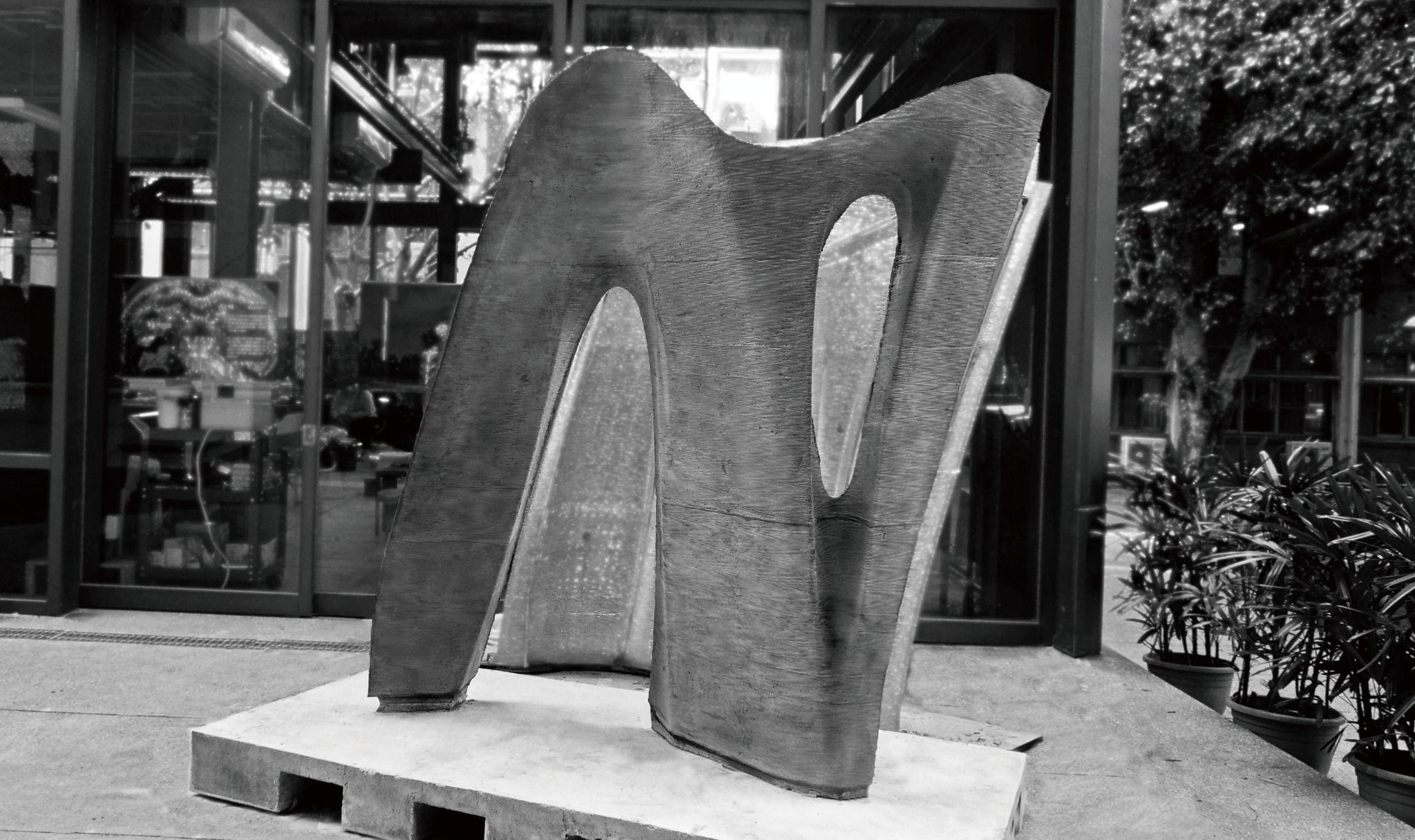
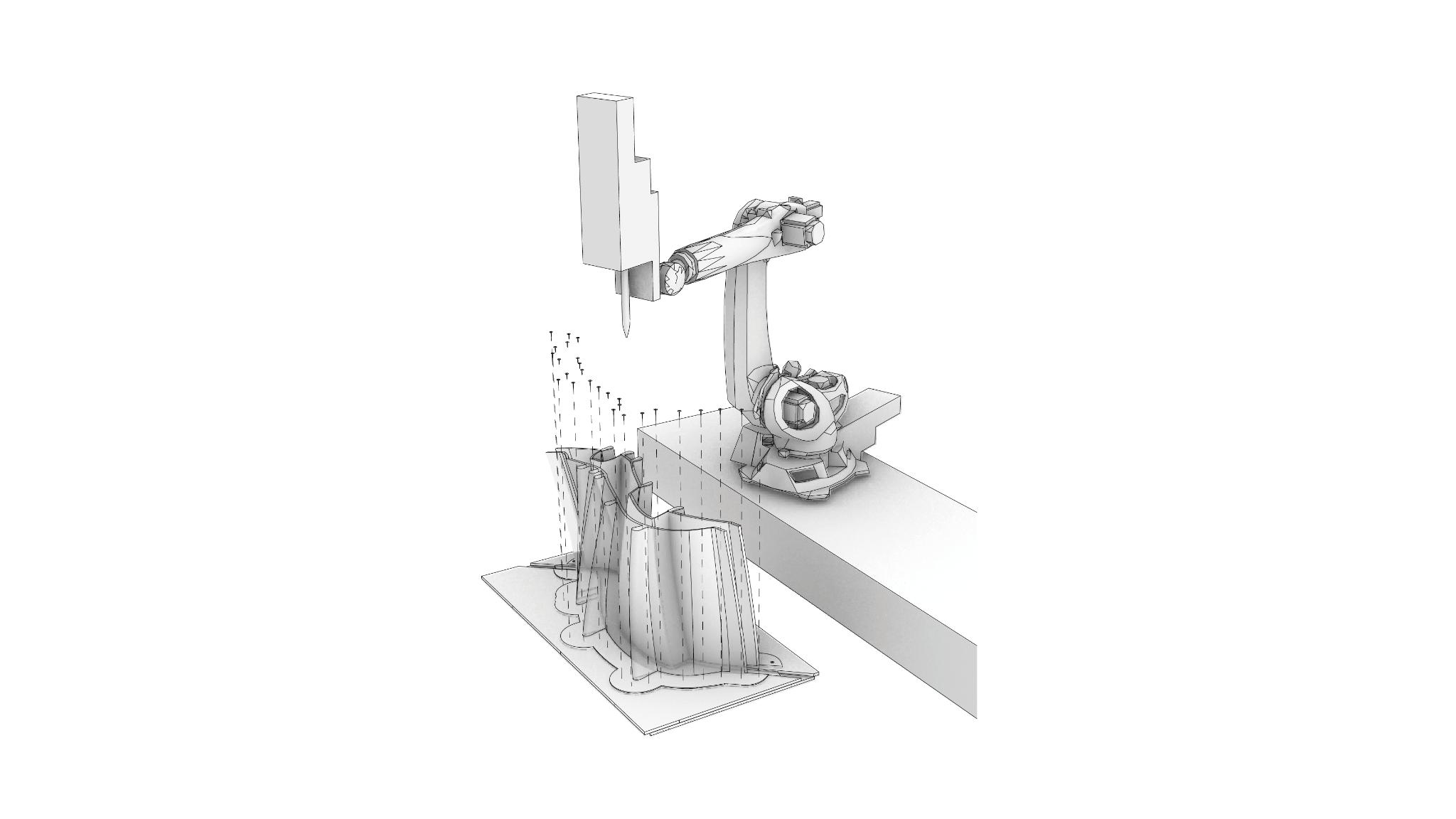
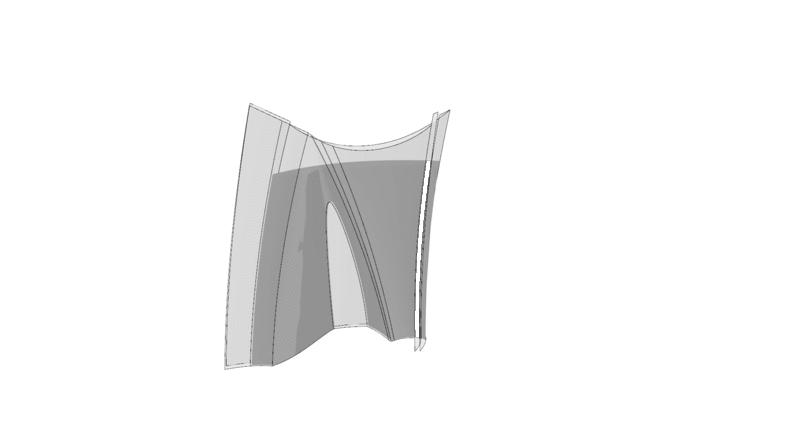
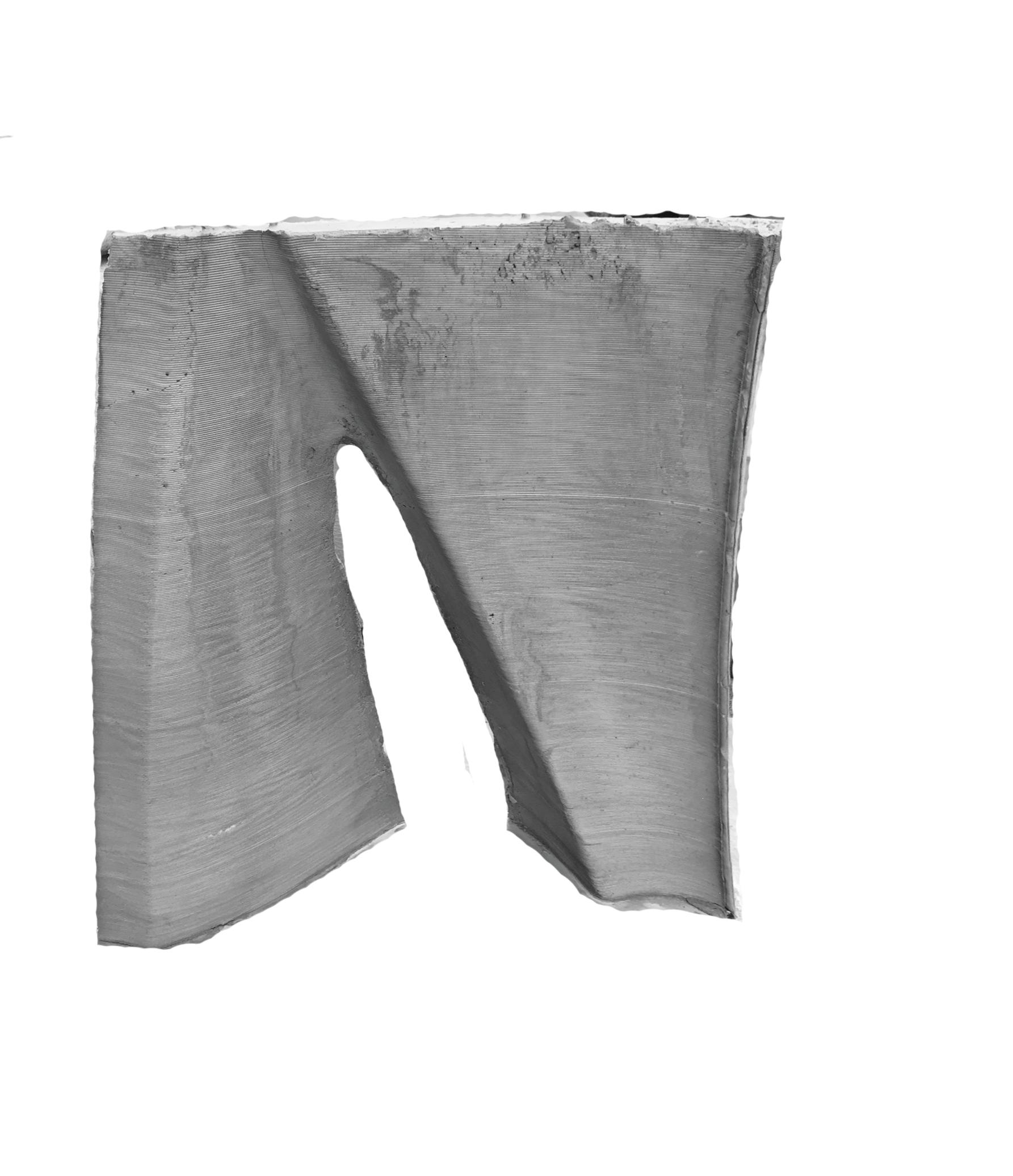
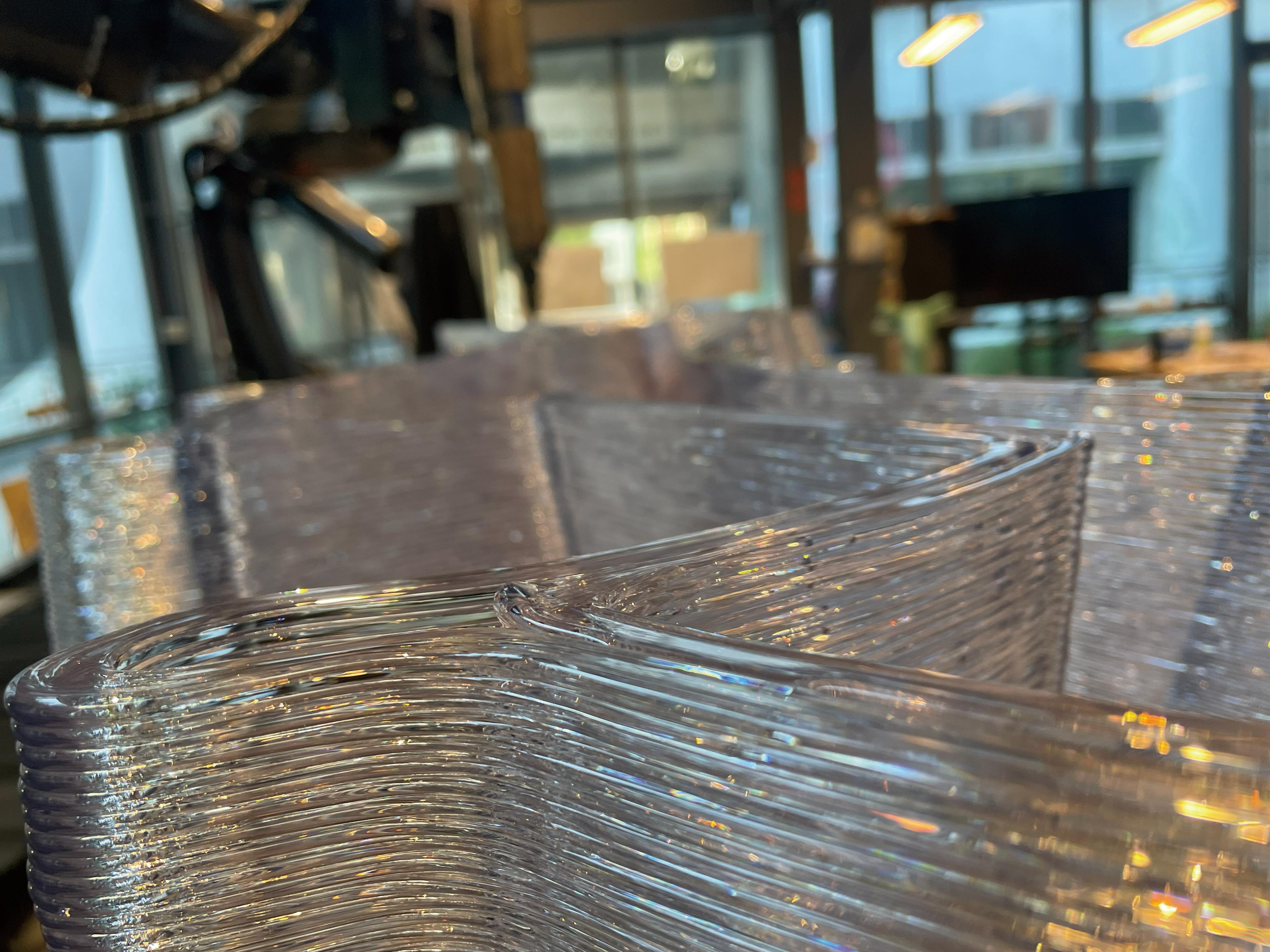
This project develops a digital fabrication method for constructing large-scale freeform concrete surfaces. The framework utilizes robotic 3D printing to fabricate PETG formworks and successfully completes an 800 kg concrete casting within three hours — without any external support structure.
The main challenges include handling freeform shapes, creating openings, making the formwork easy to remove, keeping the concrete casting continuous, and maintaining stability without any support structures.
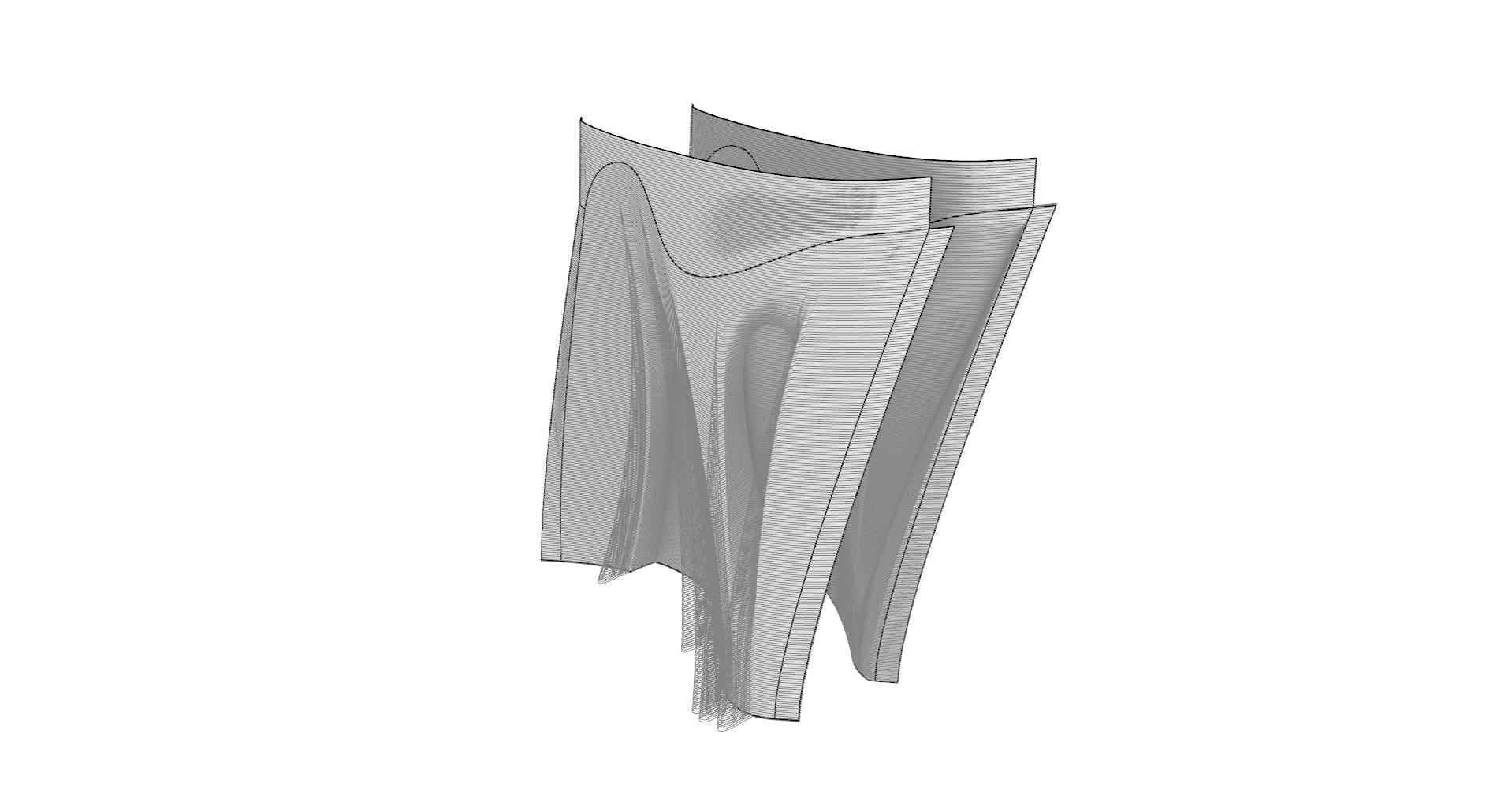
The parametric framework design system extends droplet-shaped printing paths at structurally critical regions, effectively reinforcing the mold and optimizing material use. This system significantly reduces the time required for printing supporting structures. Moreover, the wall openings are also generated through controlled variations in the printing path, demonstrating how robotic extrusion can integrate structure and ornamentation within a single fabrication process.
The research integrates key challenges of digital fabrication into three coordinated subsystems: the printing system, the casting system, and the formwork design system.
Within the formwork design system, we developed a method called “The Drop,” which addresses two major challenges—creating openings on freeform geometry and reducing printing time for support structures.
This method uses parametric control of the printing path and curvature, enabling both the formation of geometric openings and a 90% reduction in support-printing time through strategic path modulation.
halves
Framework for Casting
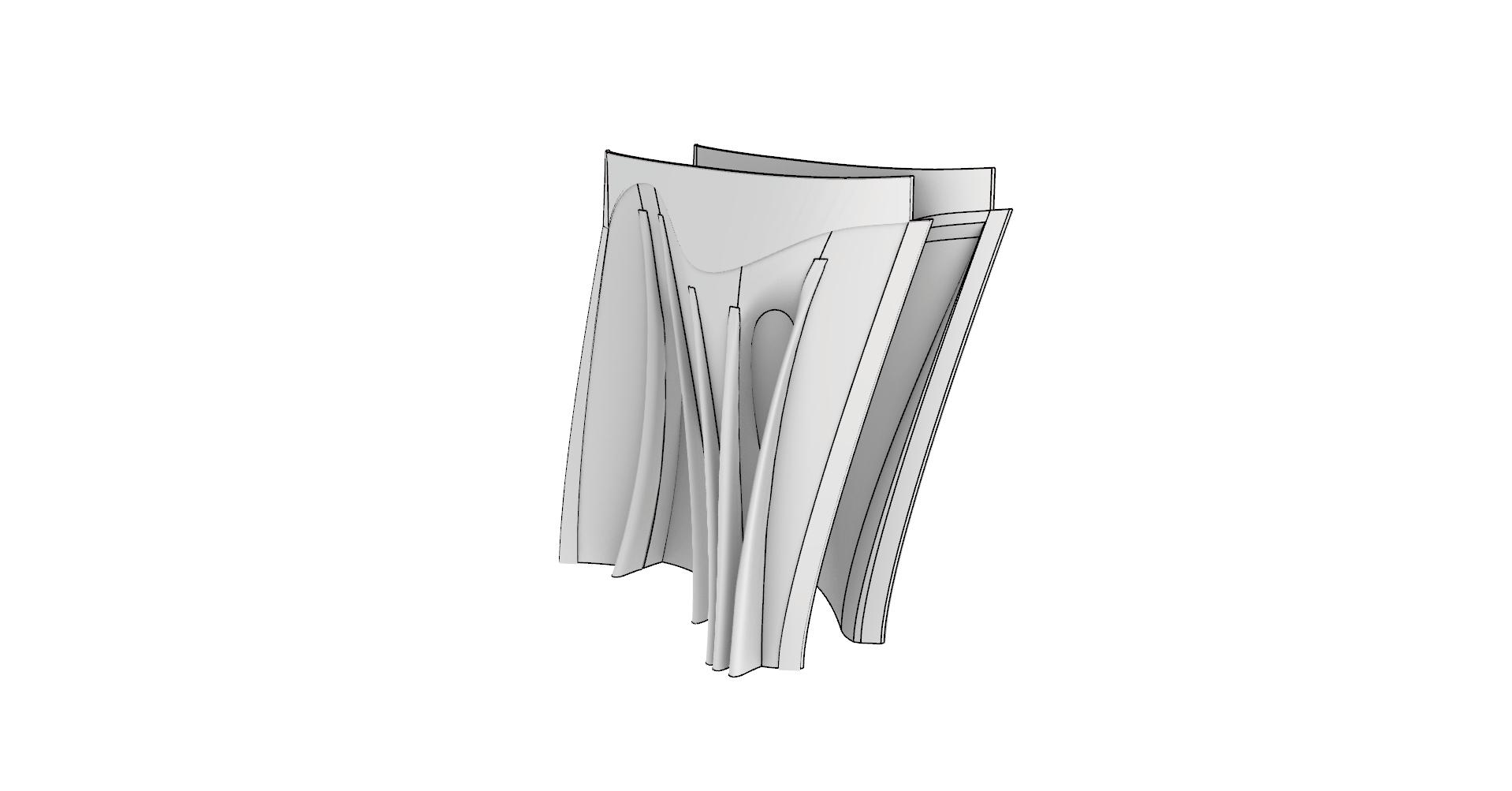
This support framework is automatically generated based on the geometry of the formwork.
Proved by structural analysis in SolidWorks (special thanks to ROSO COOP), the support system effectively reduces internal pressure during casting and minimizes the risk of mold failure.
Compared to traditional truss-based systems, the droplet-shaped support elements significantly reduce printing time, material usage, and overall mold weight—while simultaneously improving structural strength during concrete casting.
The first half of the formwork incorporates a thin internal support layer, effectively reducing deformation during casting.
#1 #2
#1
Type 2
/1/
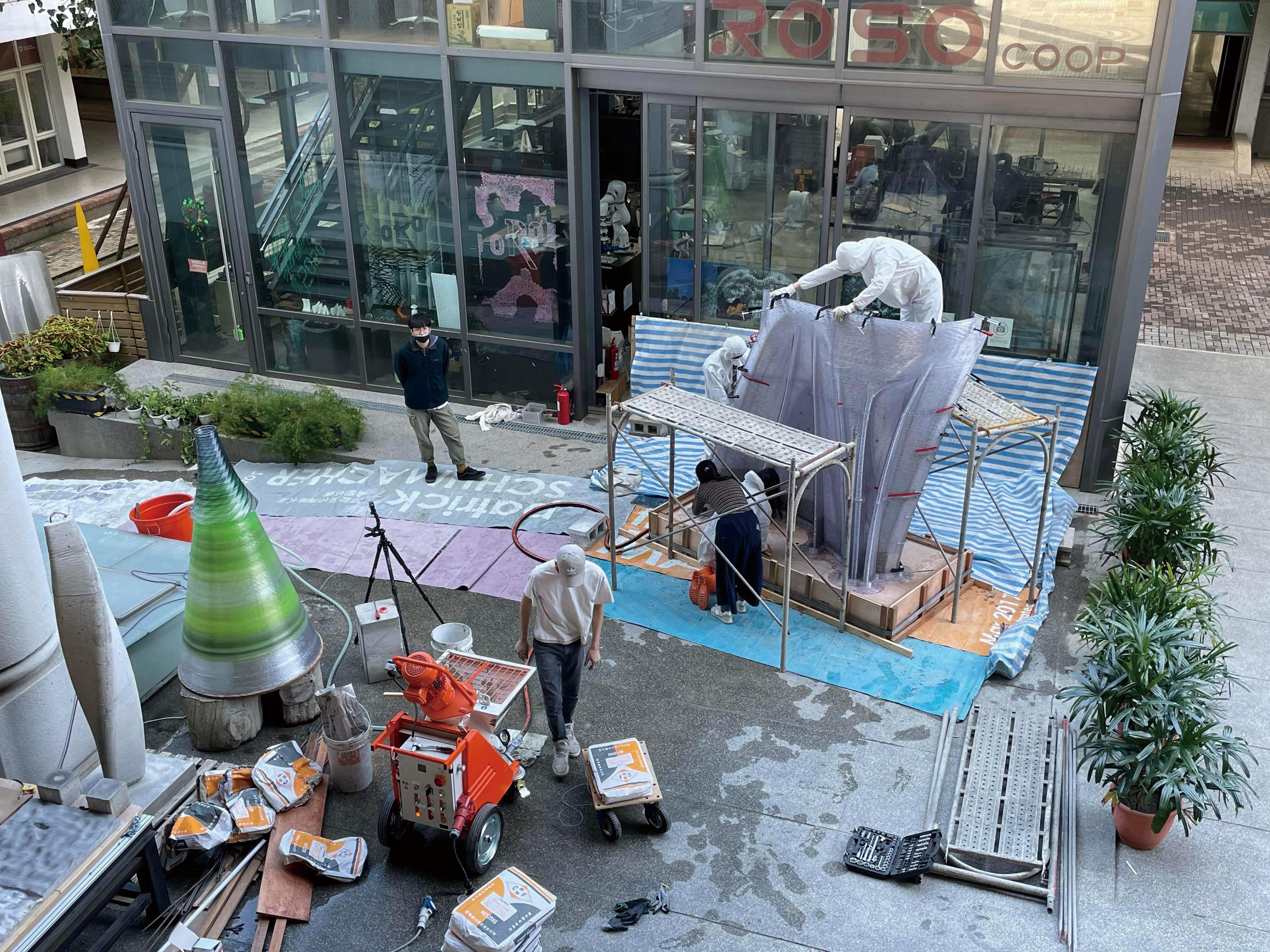
1/ Robotic 3D printing of the large-scale PETG formwork.
2/ Layout and assembly of curved steel reinforcement.
3/ On-site documentation of the concrete casting process.
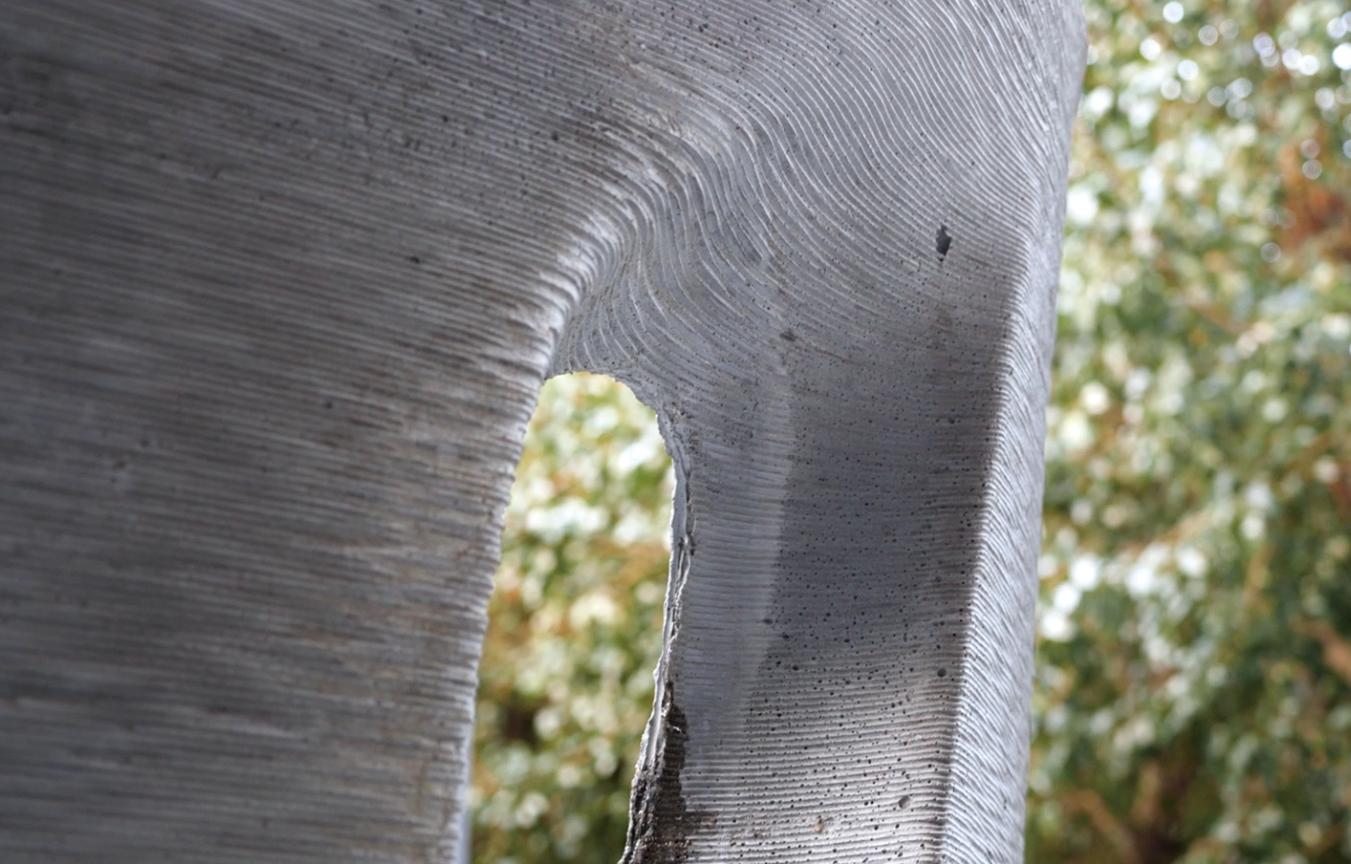
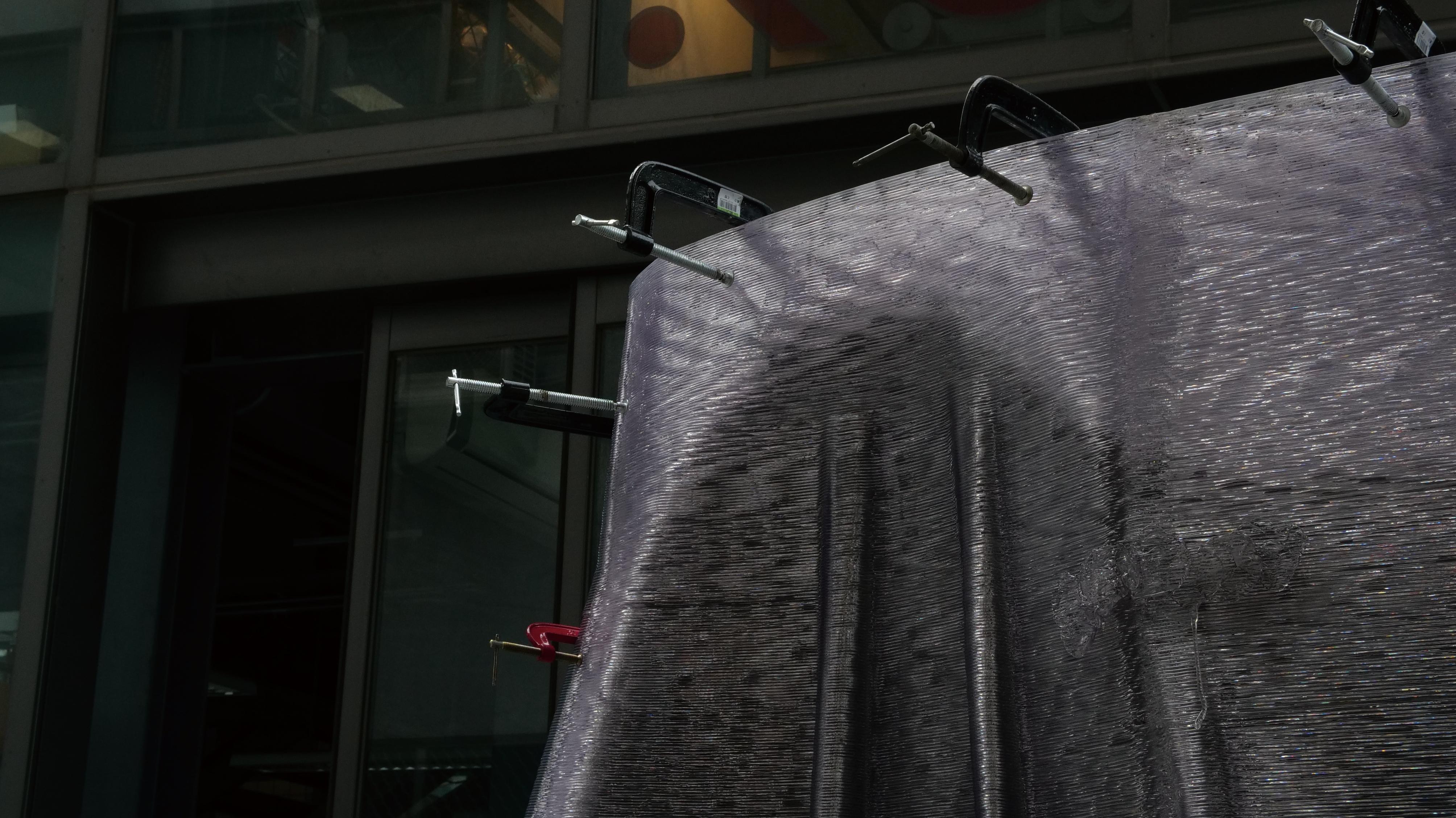
4/ Surface texture details of the printed PETG wall.
5/ Casting concrete into the freeform 3D-printed framework.
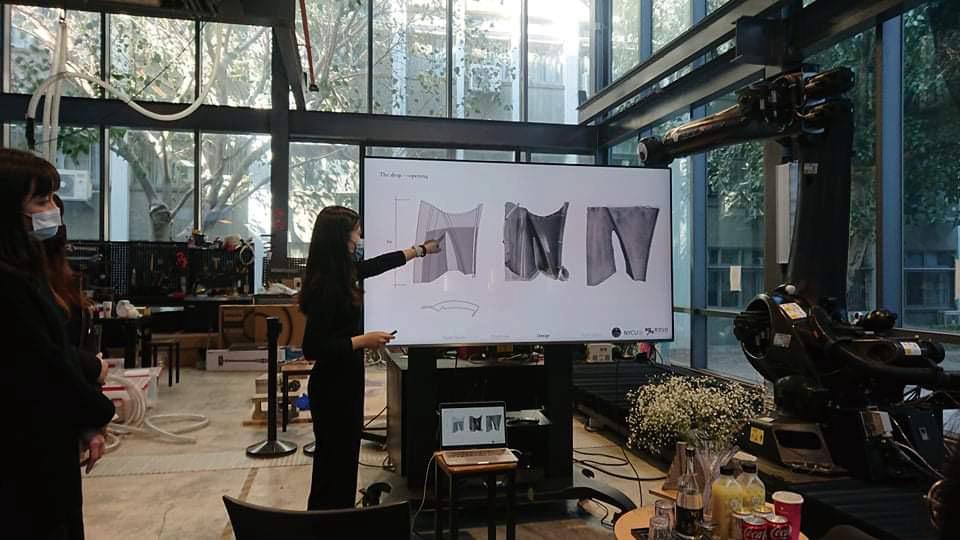
6/ Final presentation of the design studio results.
/2/
Exploring Stylization Methods and Point Clouds
Technical Research
Partially published in the proceedings of Arts IT 2023
Advisor: June-Hao, Hou
My Contributions
├─ Design Theory
│ ├─ Established a stylization framework for non-uniform point clouds
│ └─ Proposed the concept of dual-proxy mapping
├─ Technology
│ ├─ Implemented a custom downsampling and skeleton-extraction algorithm optimized for 3DGS
│ ├─ Designed a modular painterly rendering pipeline
│ └─ Engineered a proxy-geometry system that encodes stroke metadata per point
└─ ├─ApplicationEnabled varied NPR styles via proxy combinations
├─ Reduced point count to improve real-time rendering efficiency
└─ Converted dense 3DGS into editable painterly forms for artistic workflows
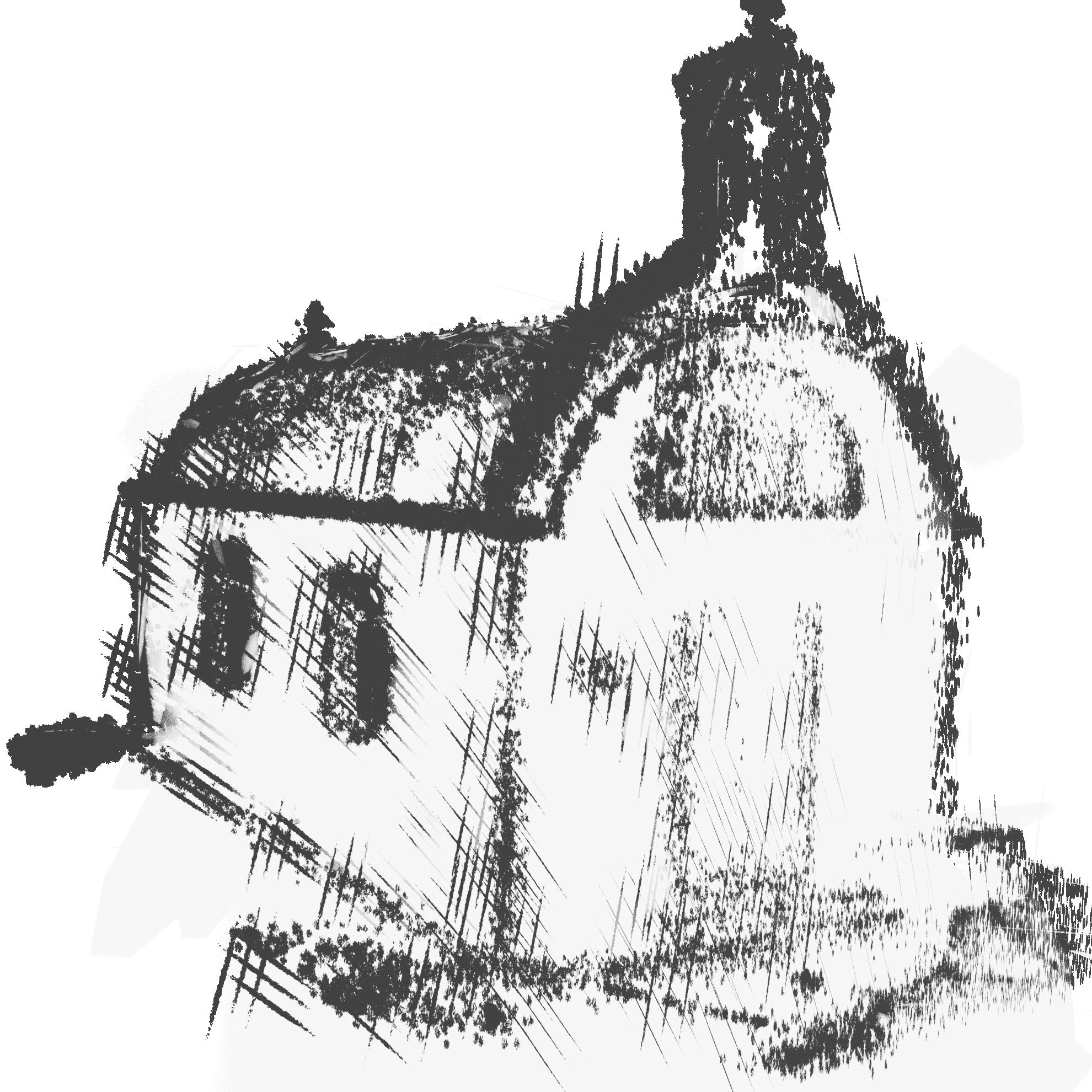
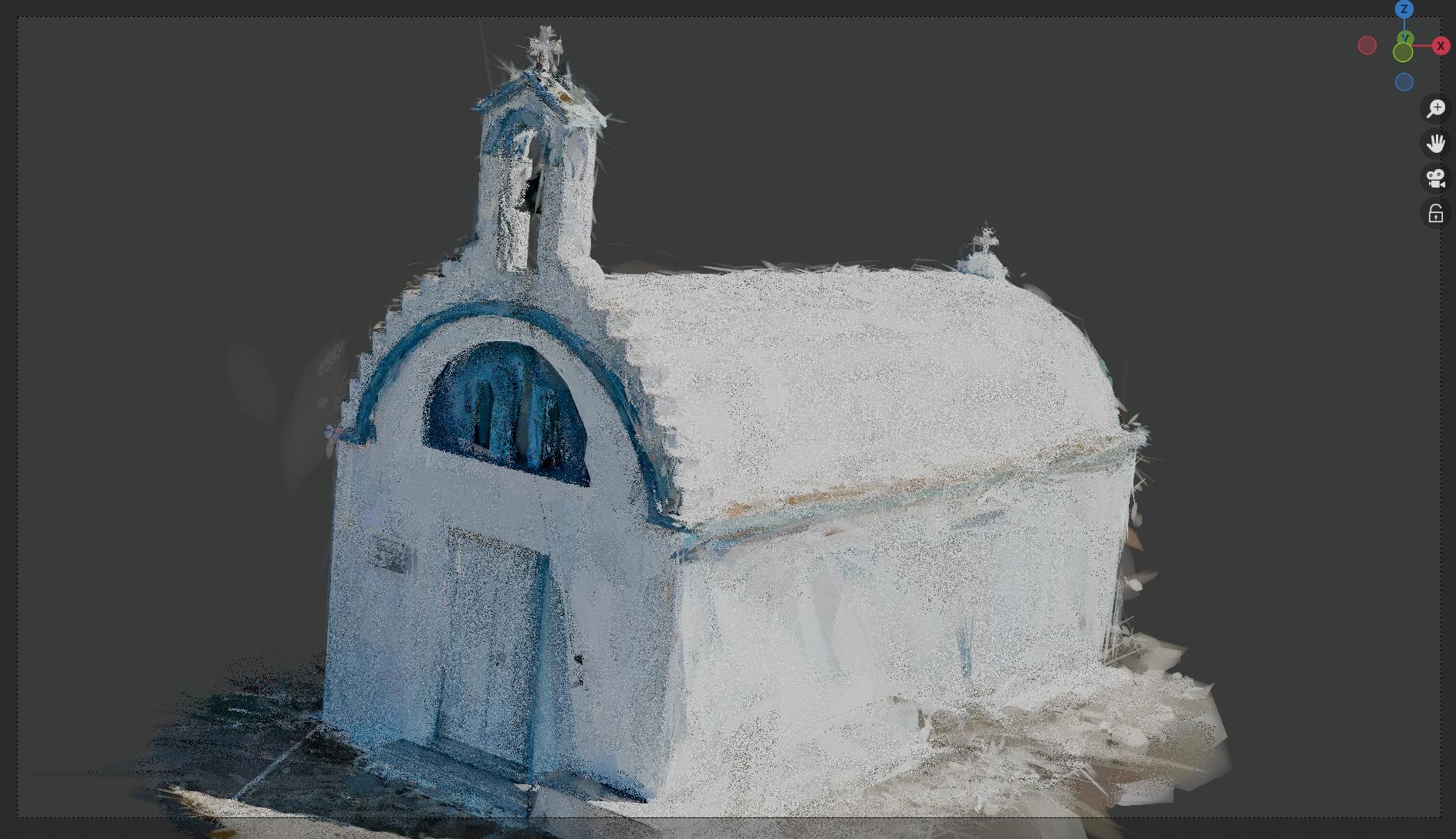
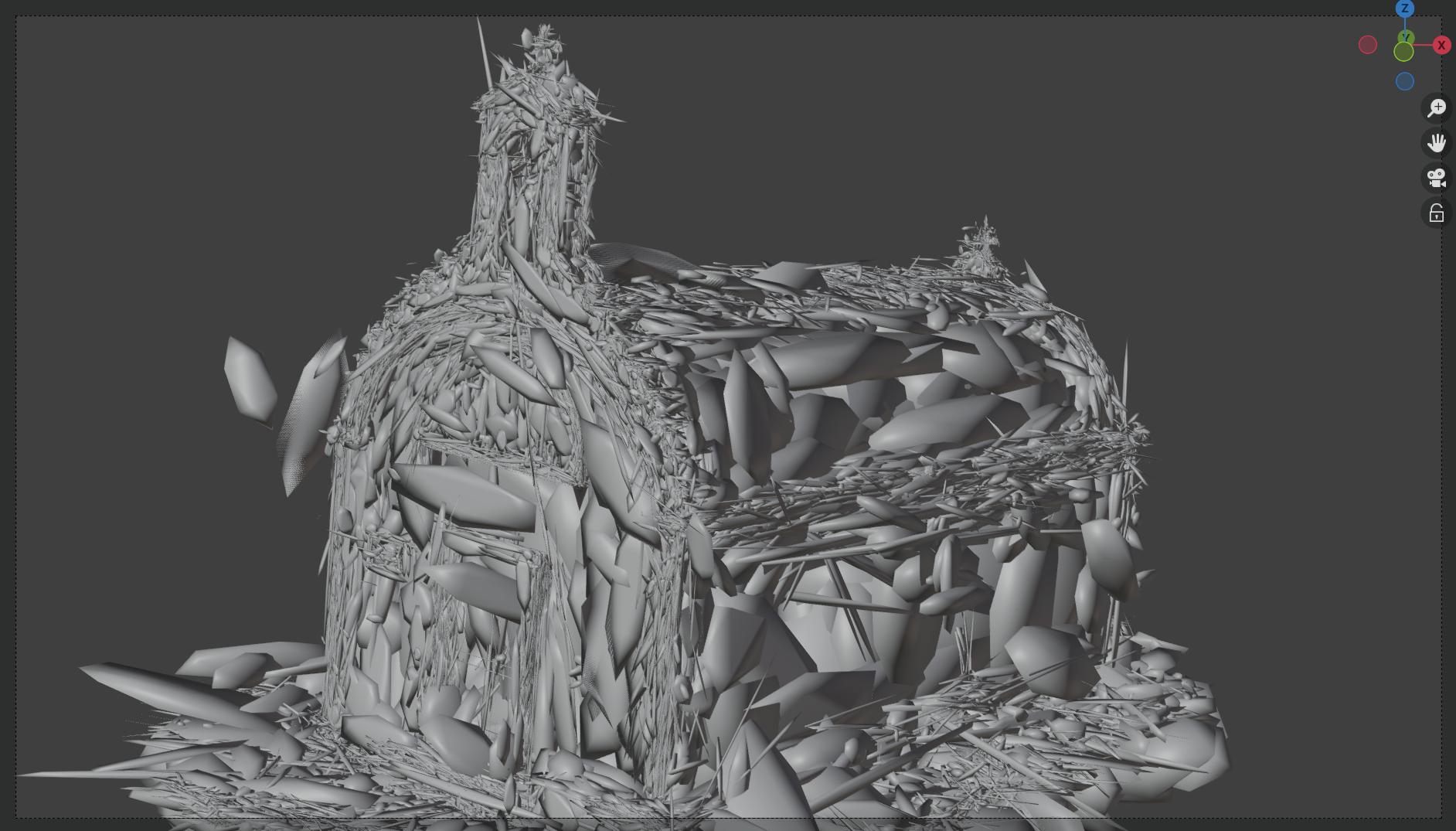
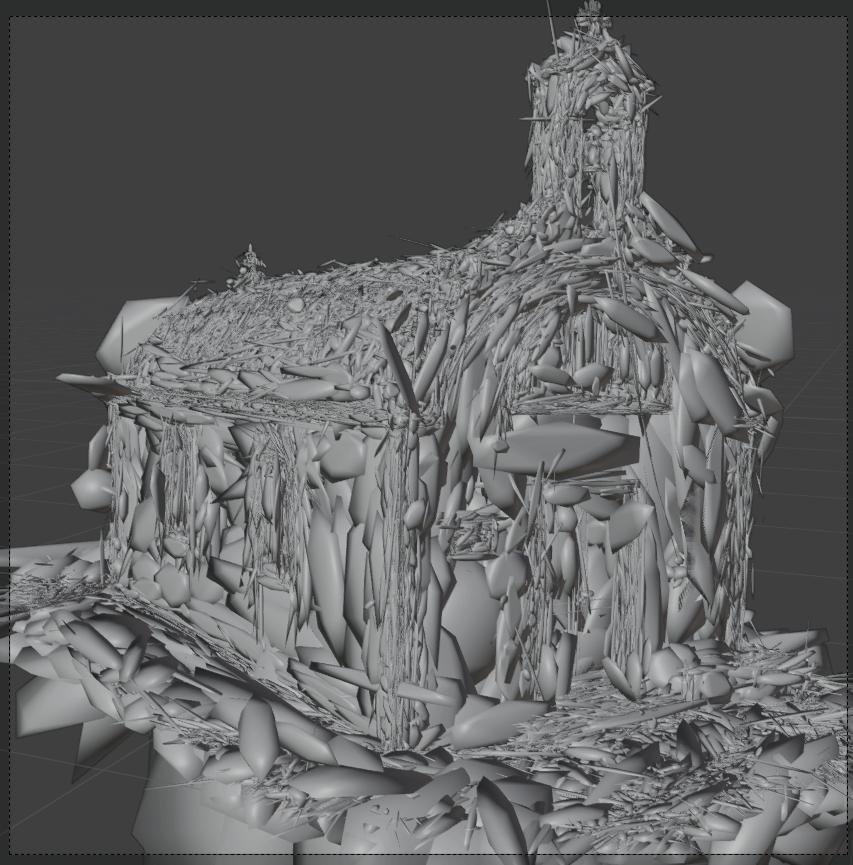
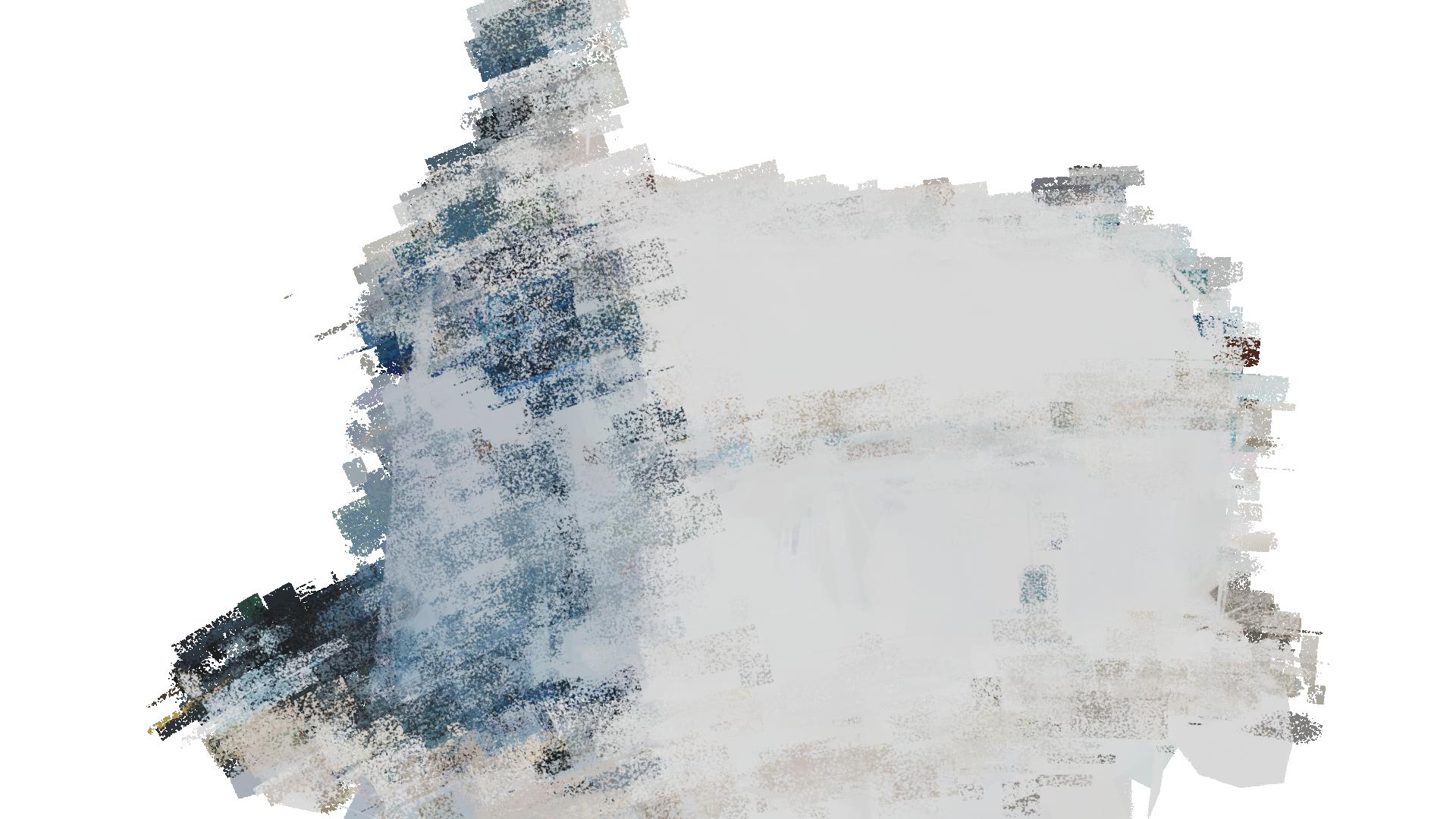
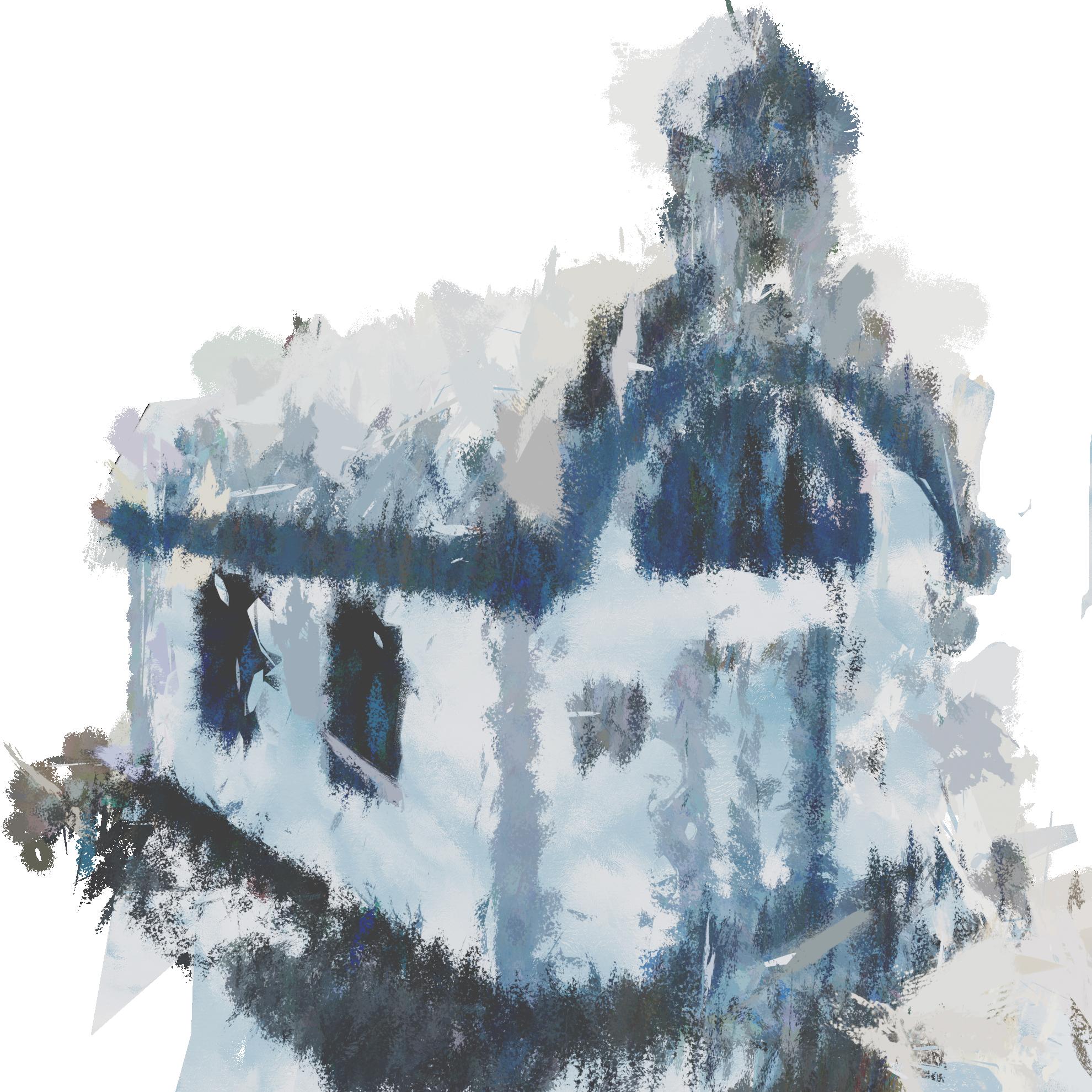
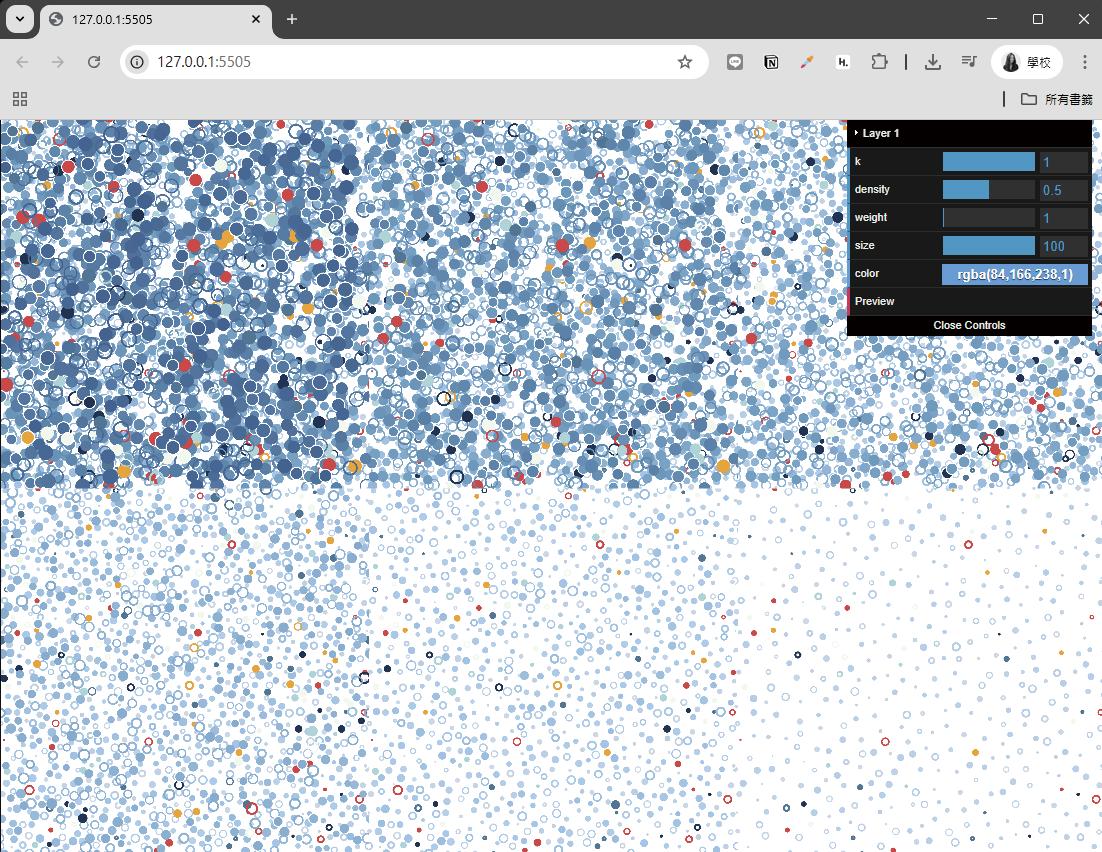
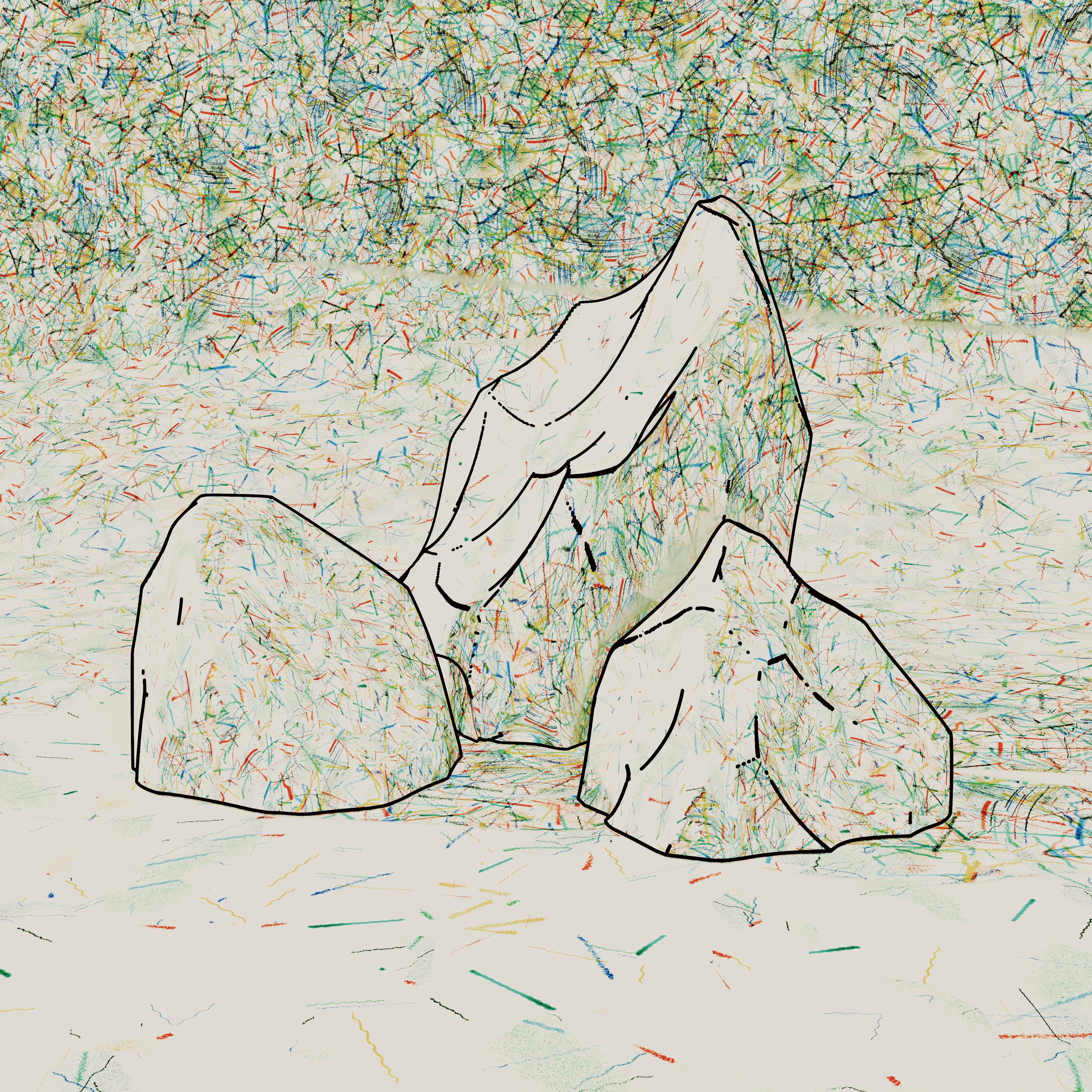
This project investigates painterly rendering techniques for non-uniform point clouds derived from 3D Gaussian Splatting (3DGS). Inspired by brushwork art, the study explores a stroke-based approach that integrates textured ellipsoids and parametric strokes as proxy geometry. By controlling point density and distribution, the system enables diverse non-photorealistic effects such as oil painting, hatching, and pointillism.
The workflow bridges generative art and computational rendering, creating scientific data into expressive visual forms. Each layer of stylization is defined through color clustering and parametric control, allowing artists to compose unique painterly results of 3D scenes in real time.
Point Clouds Sorting
Array Slicing
Textured Ellipsoids
Non-Uniform Point Cloud Processing and Rendering
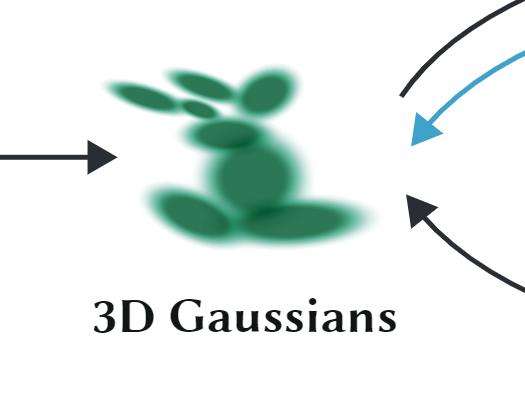
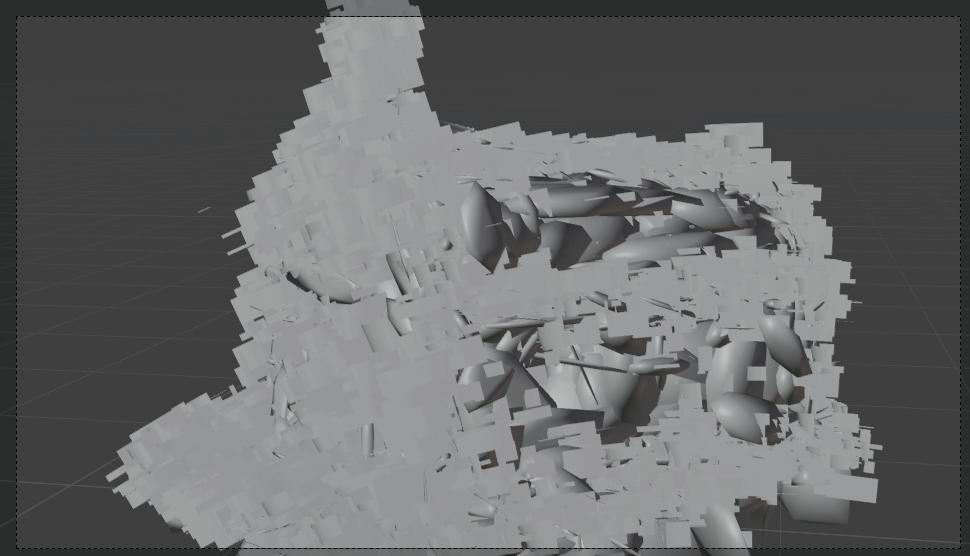
This work explores a method for a new digital medium, 3D Gaussian Splatting (3DGS), which represents scenes using non-uniform ellipsoids. Our method replaces raw points with two types of proxy geometries—parametric strokes and textured ellipsoids.
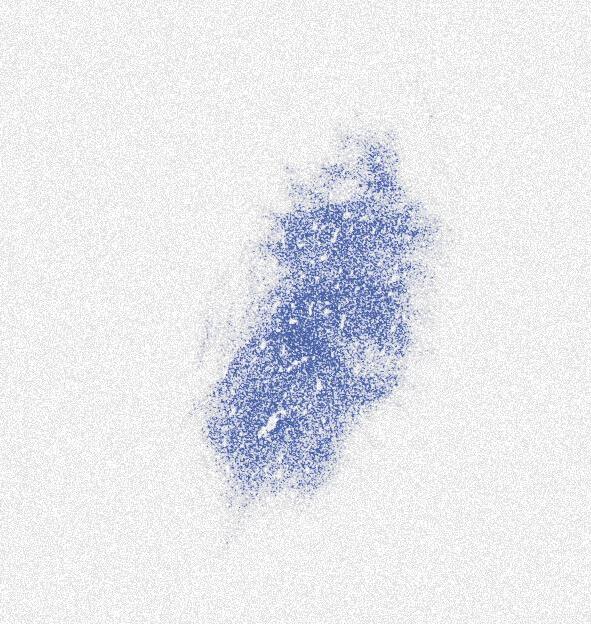
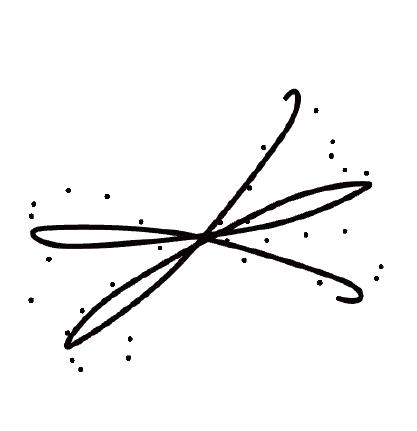
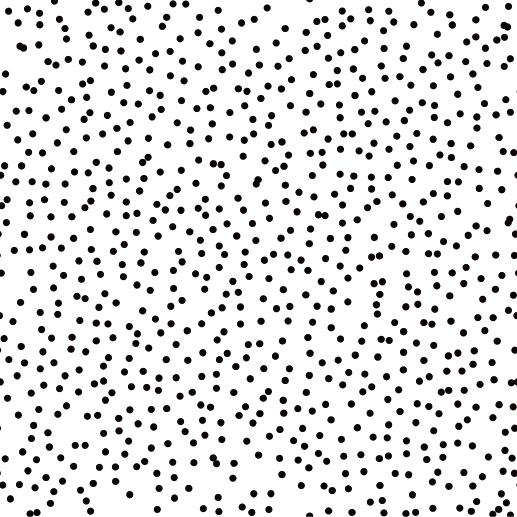
To process non-uniform point clouds, we implement a custom downsampling algorithm that extracts the underlying structural skeleton and controls density through array slicing.During the slicing stage, the distribution of sampled points exhibits Poisson-like characteristics, producing patterns similar to hand-drawn strokes.
By combining parametric strokes and textured ellipsoids in different proportions, the system can generate diverse painterly rendering styles while significantly reducing the number of points required for visualization.
textured ellipsoids
parametric strokes
Oil painting
Hatching
Pointillism
Painterly rendering produced using parametric proxy geometry
opacity
A rendering pipeline was developed to translate point data into customizable painterly strokes. Each point is treated as spatial data that stores stroke parameters such as shape, orientation, color, and noise.
Gaussian Ellipsoid
rot3
(rot_0, rot_1, rot_2)
(x, y, z)
color = (f_dc_0, f_dc_1, f_dc_2)
Parametric Stroke Rendering Pipeline
During rendering, these parameters generate proxy geometry defined by vector coordinates in camera space, allowing strokes to inherit spatial consistency and depth from the original point cloud.
The system supports various stylization modes—including pressure, taper, smudging, edge effects, and noise—created by modifying the alpha mask and texture mapping of each stroke. By layering multiple stroke types and adjusting their distribution fields, users can compose hybrid painterly styles that merge digital simulation with artistic intuition.
Generative Tonal Art An Artistic Rendering Workflow using Programmable TAMs
Technical Research
Published in the SIGGRAPH Asia 2025 (poster)
Advisor: June-Hao, Hou
My Contributions
├─ Integrated creative coding into NPR workflows
├─ Implemented tonal-control techniques including Poisson sampling, │ seed-based nesting, and seamless boundary generation
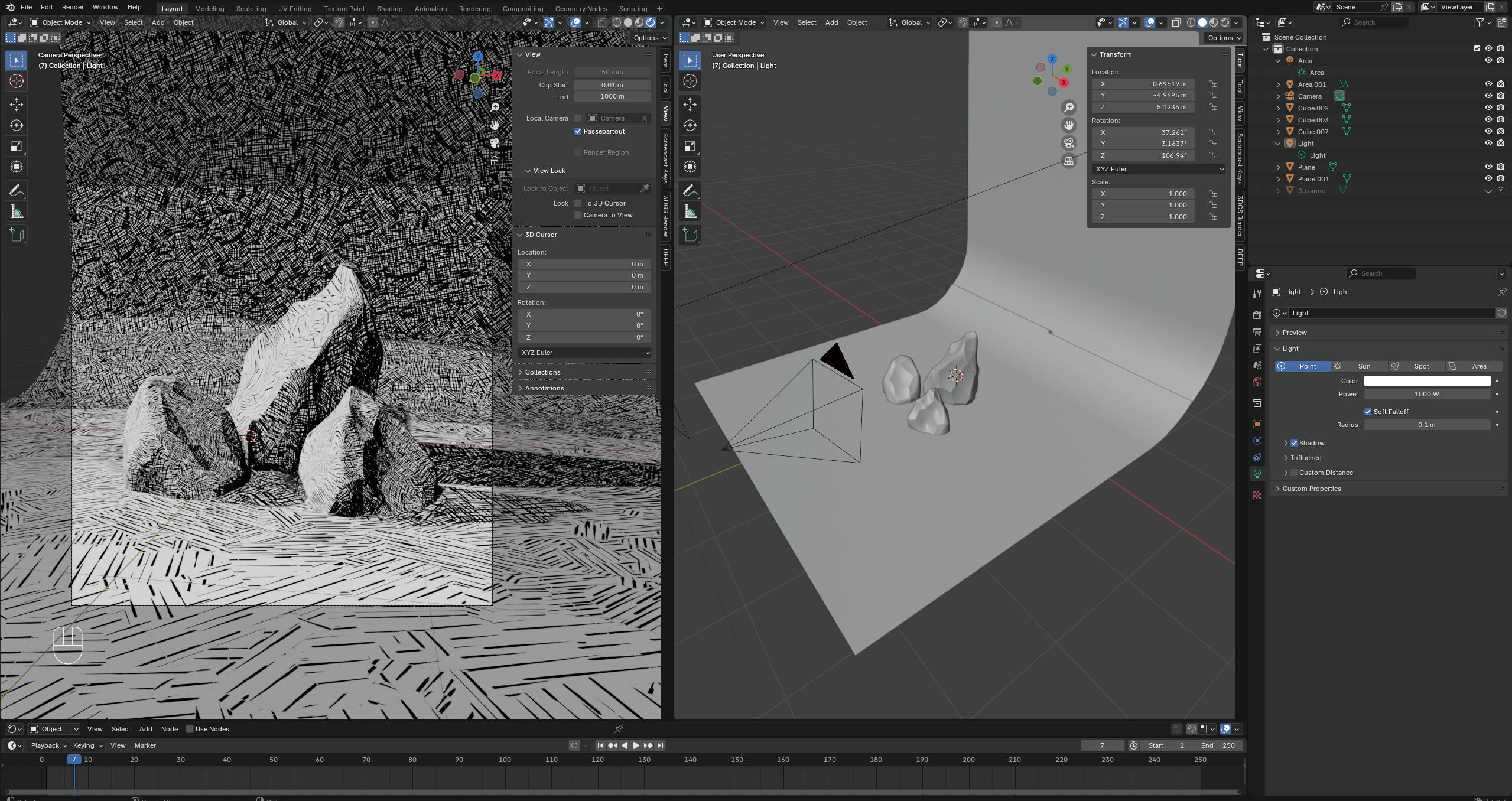
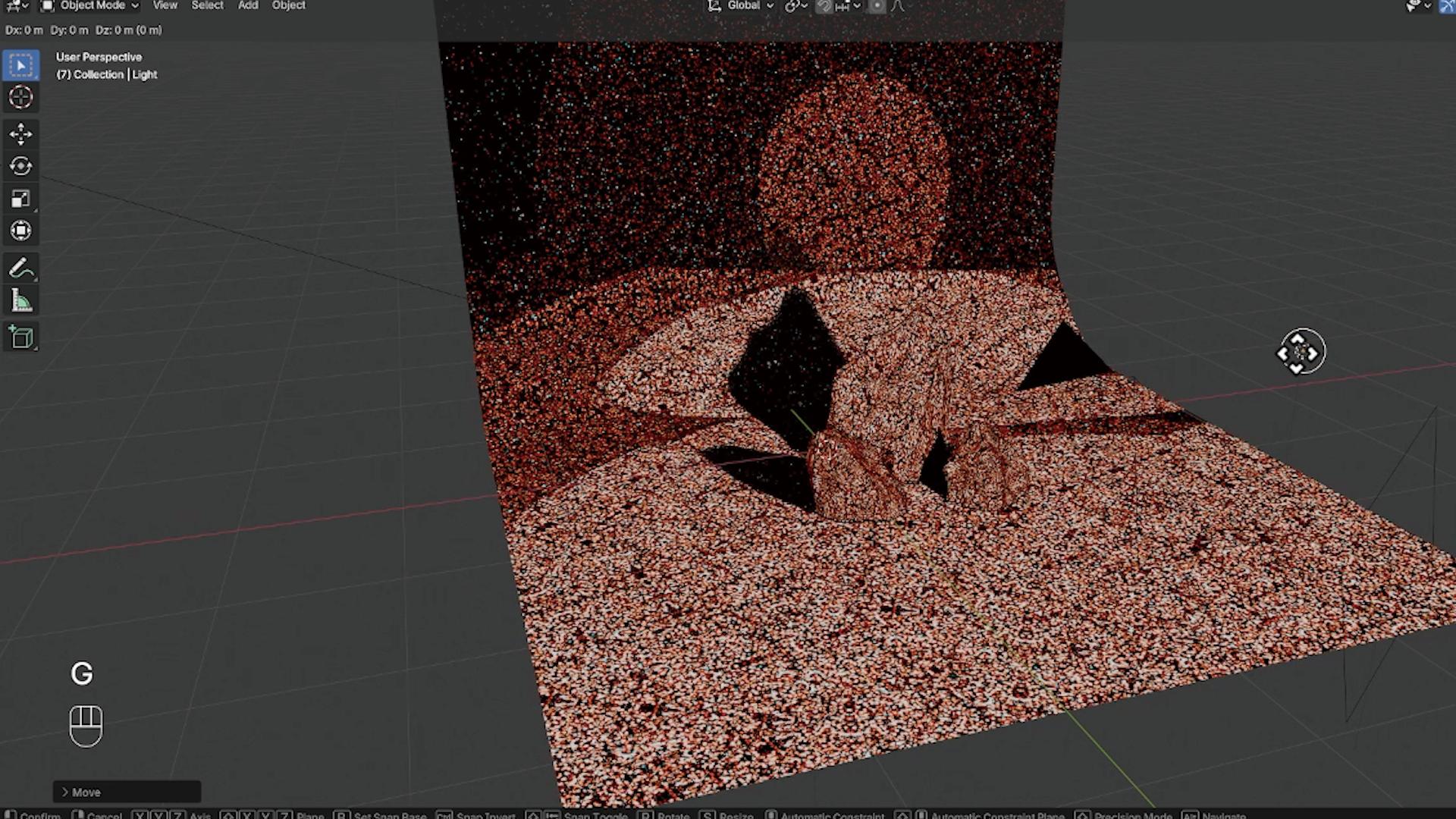
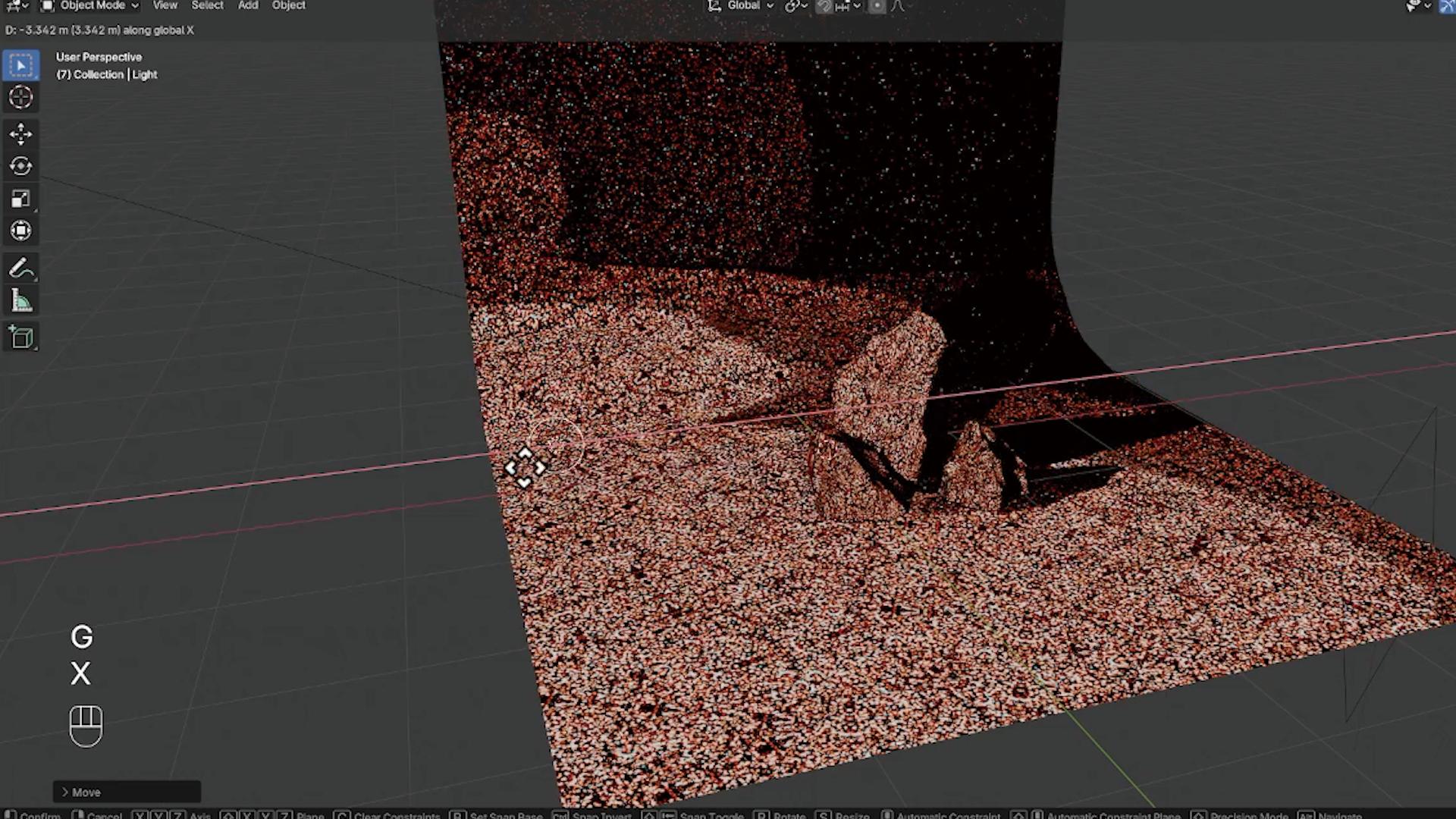
└─ Developed a rendering workflow linking 2D generative patterns to 3D toon shading in Blender
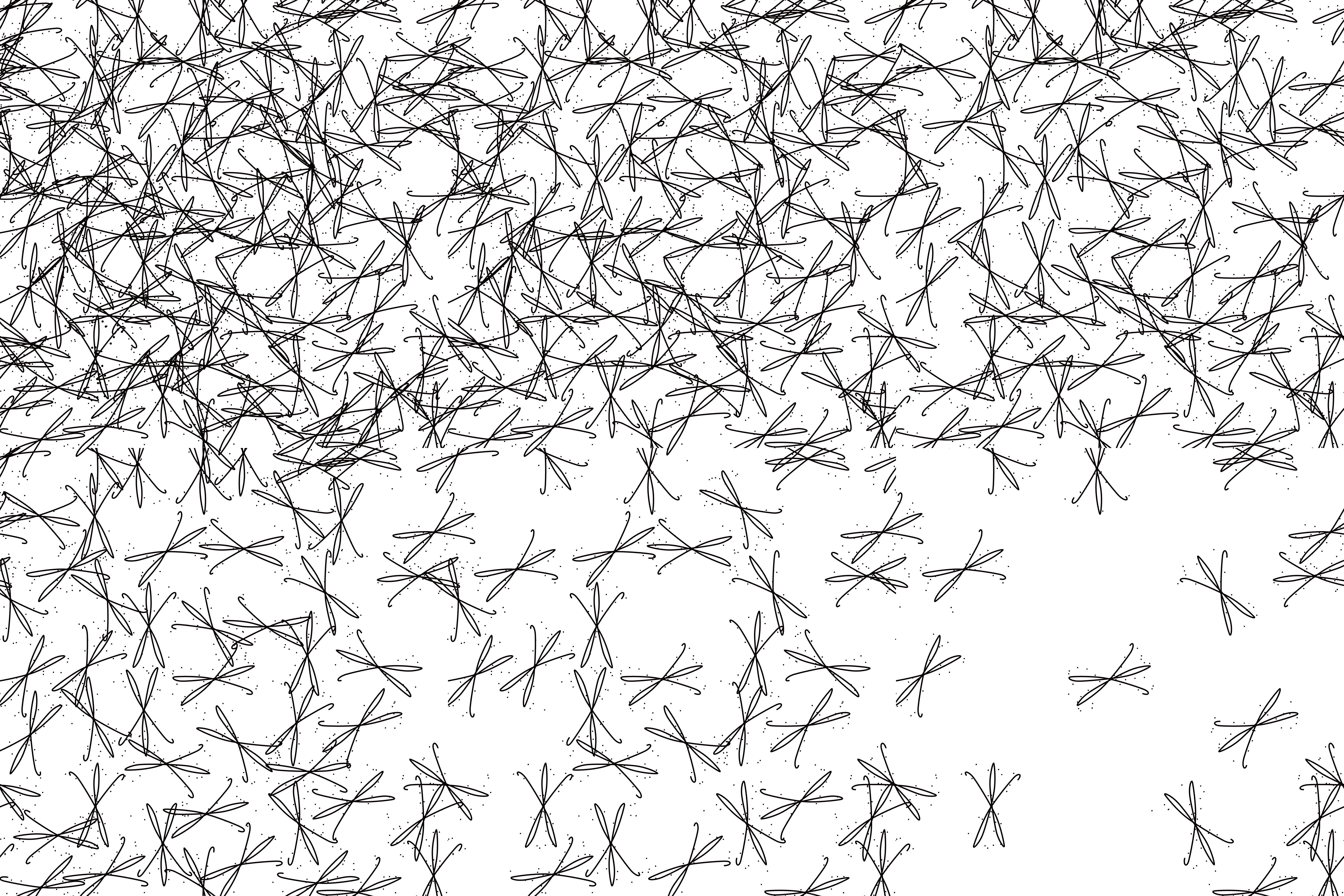
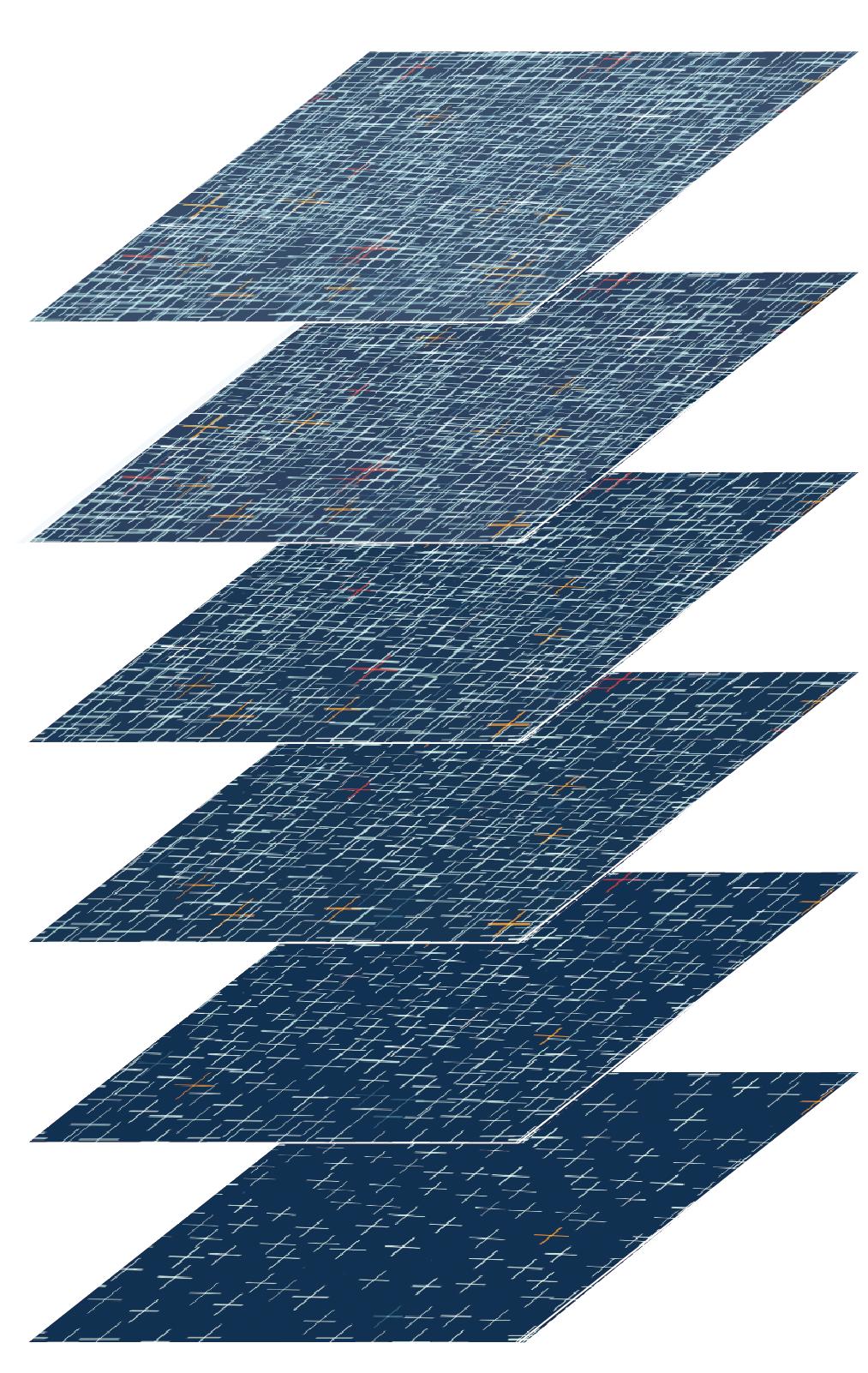
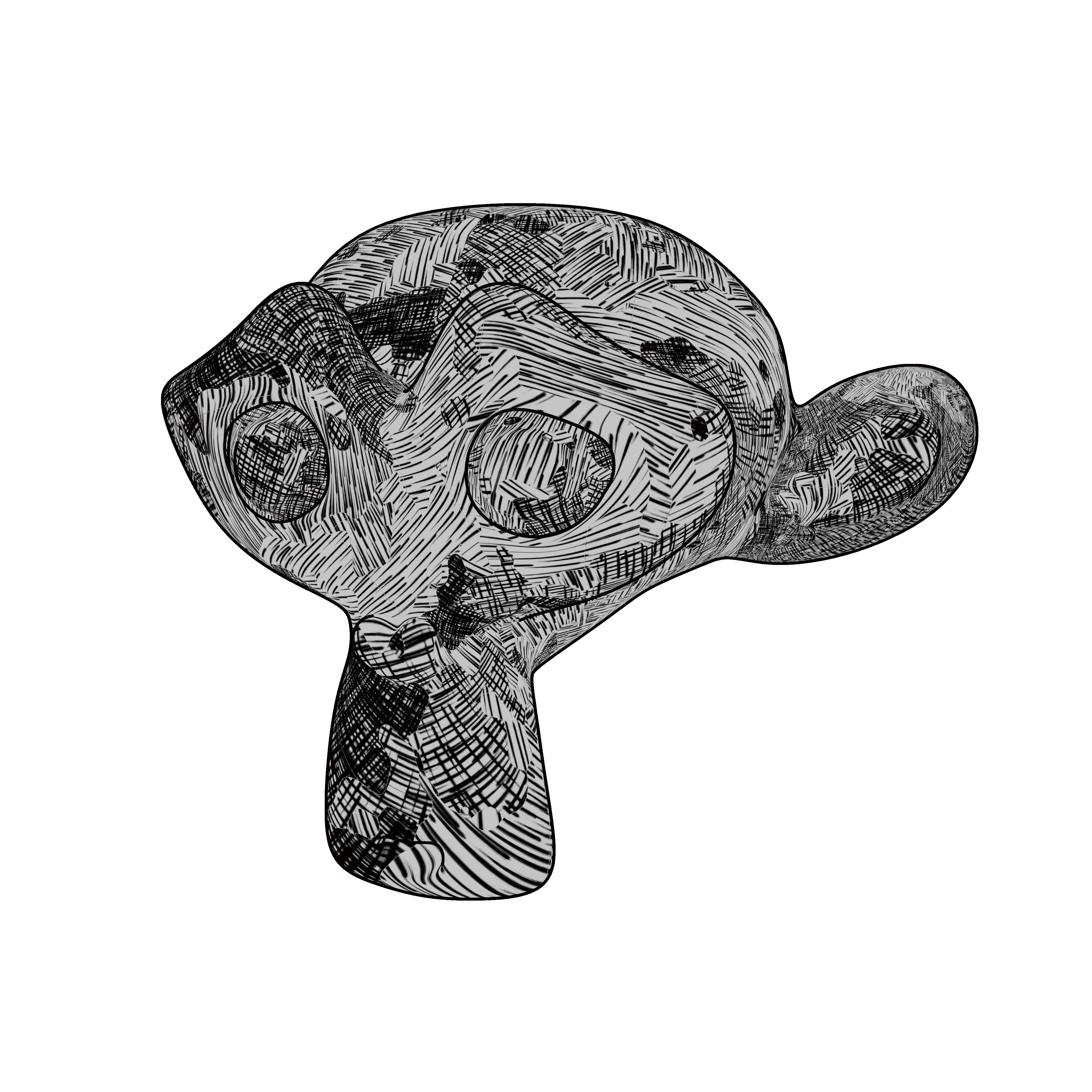
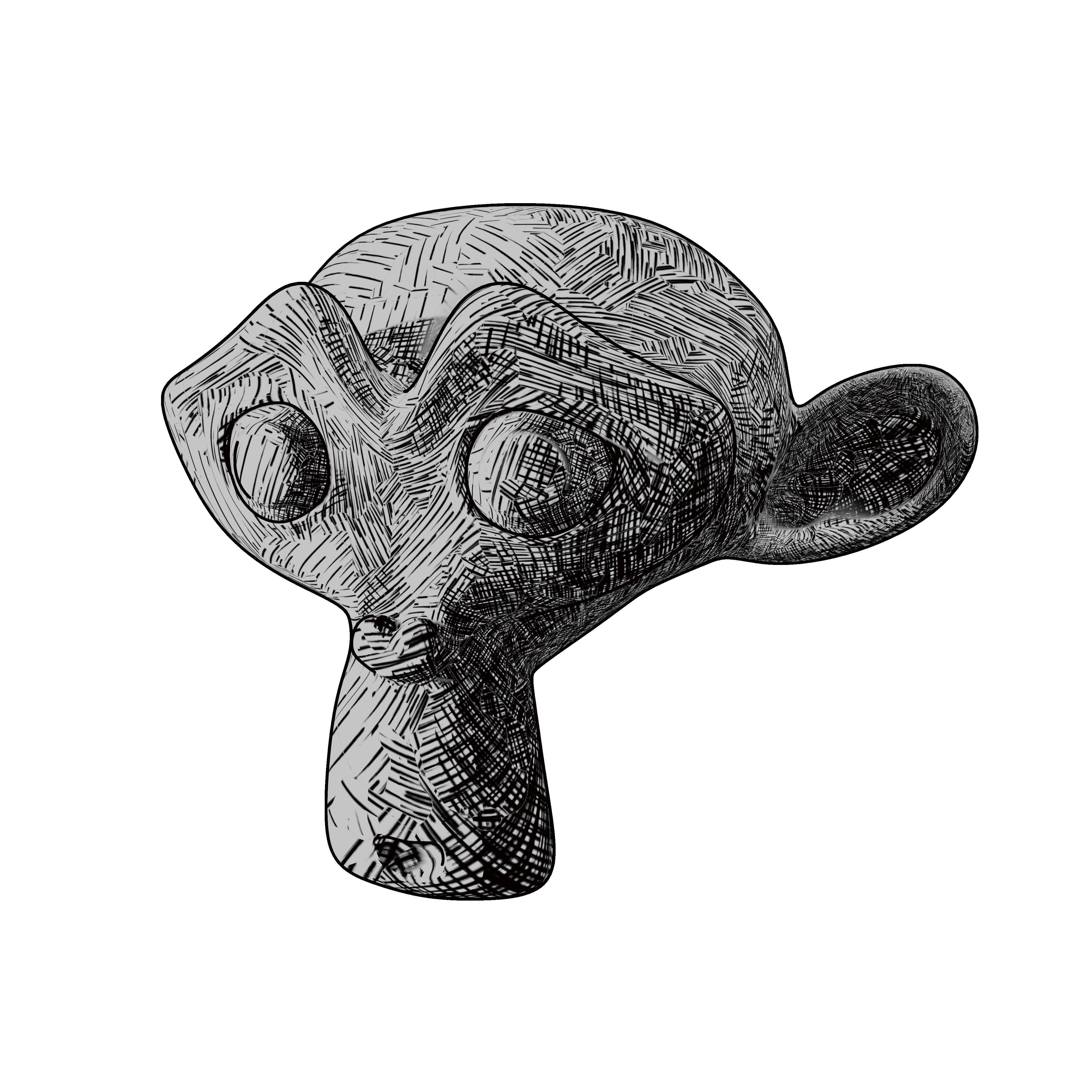
In this work, we explore a workflow that bridges the gap between generative art and non-photorealistic rendering (NPR) for the creative coding community. Our goal is to enable artists to design customized rendering styles for their 3D scenes using p5.js, a user-friendly and open-source programming language, without the
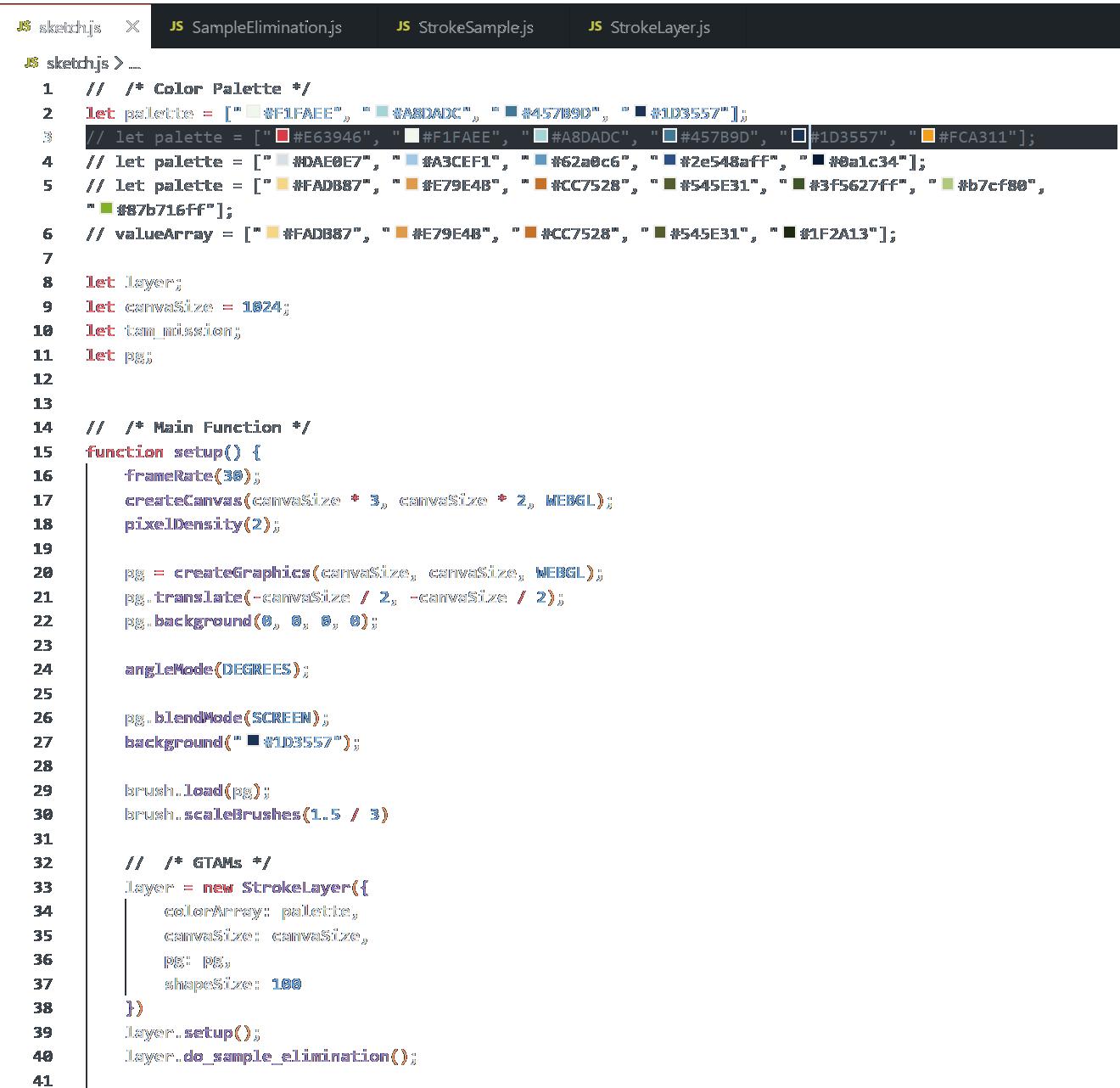
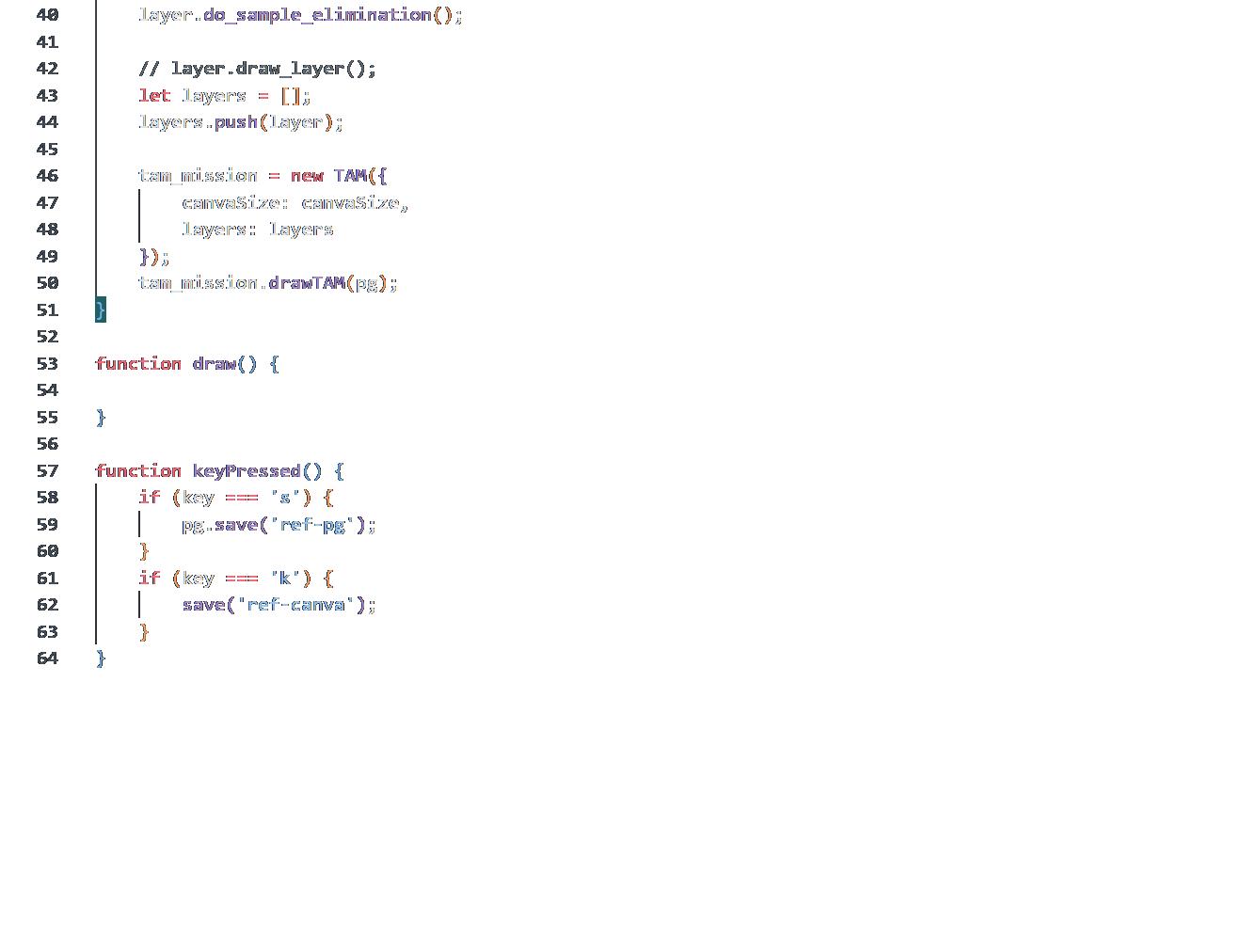
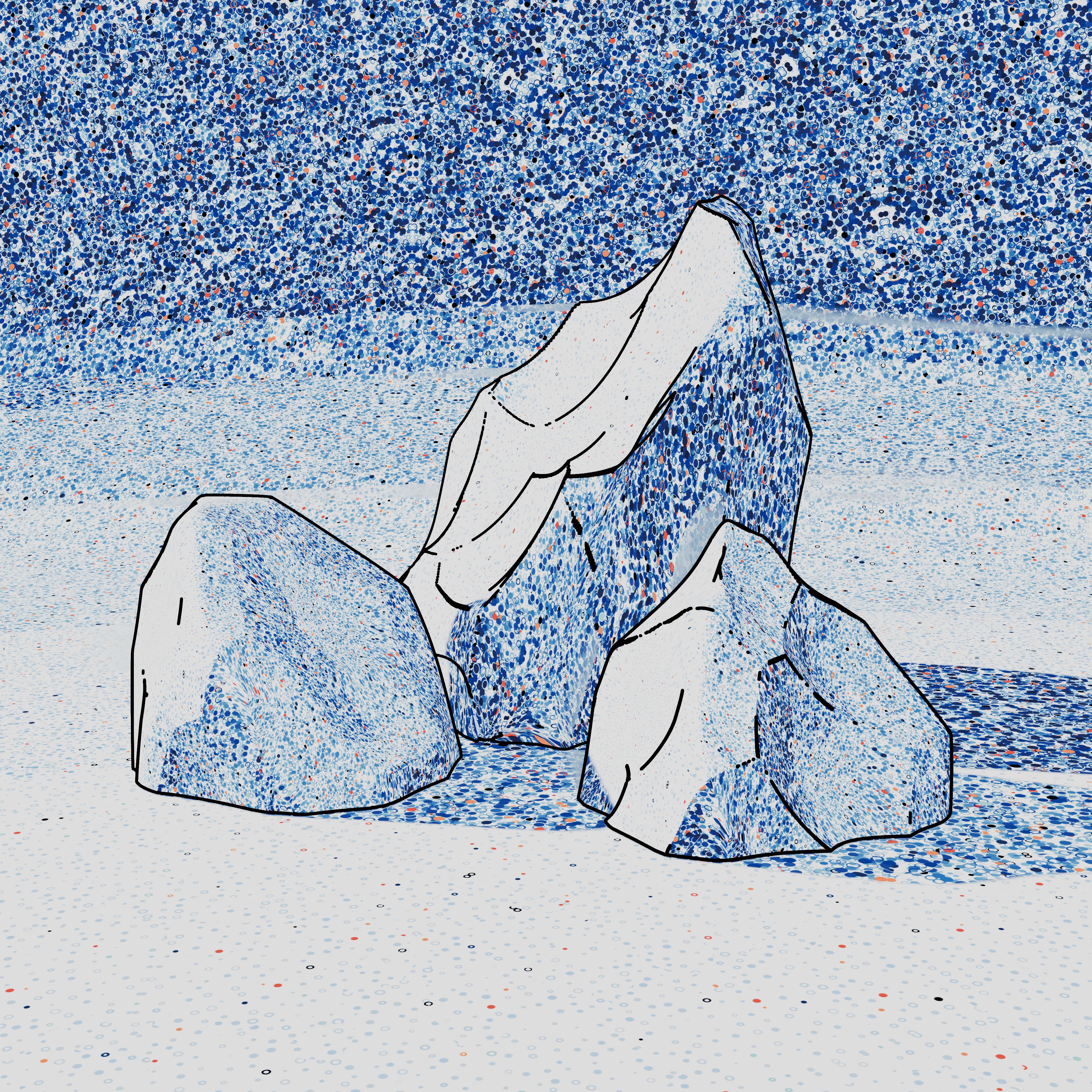
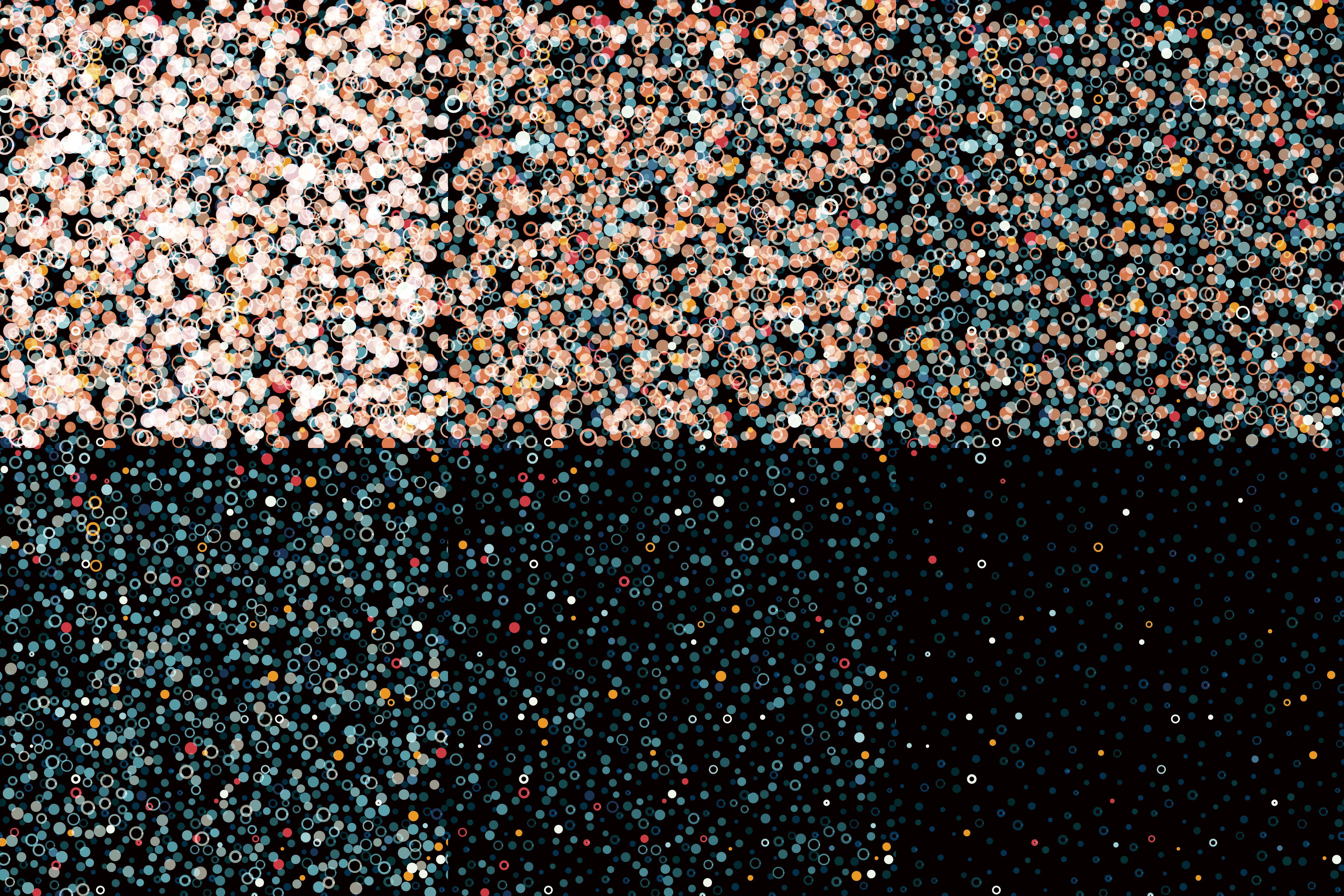
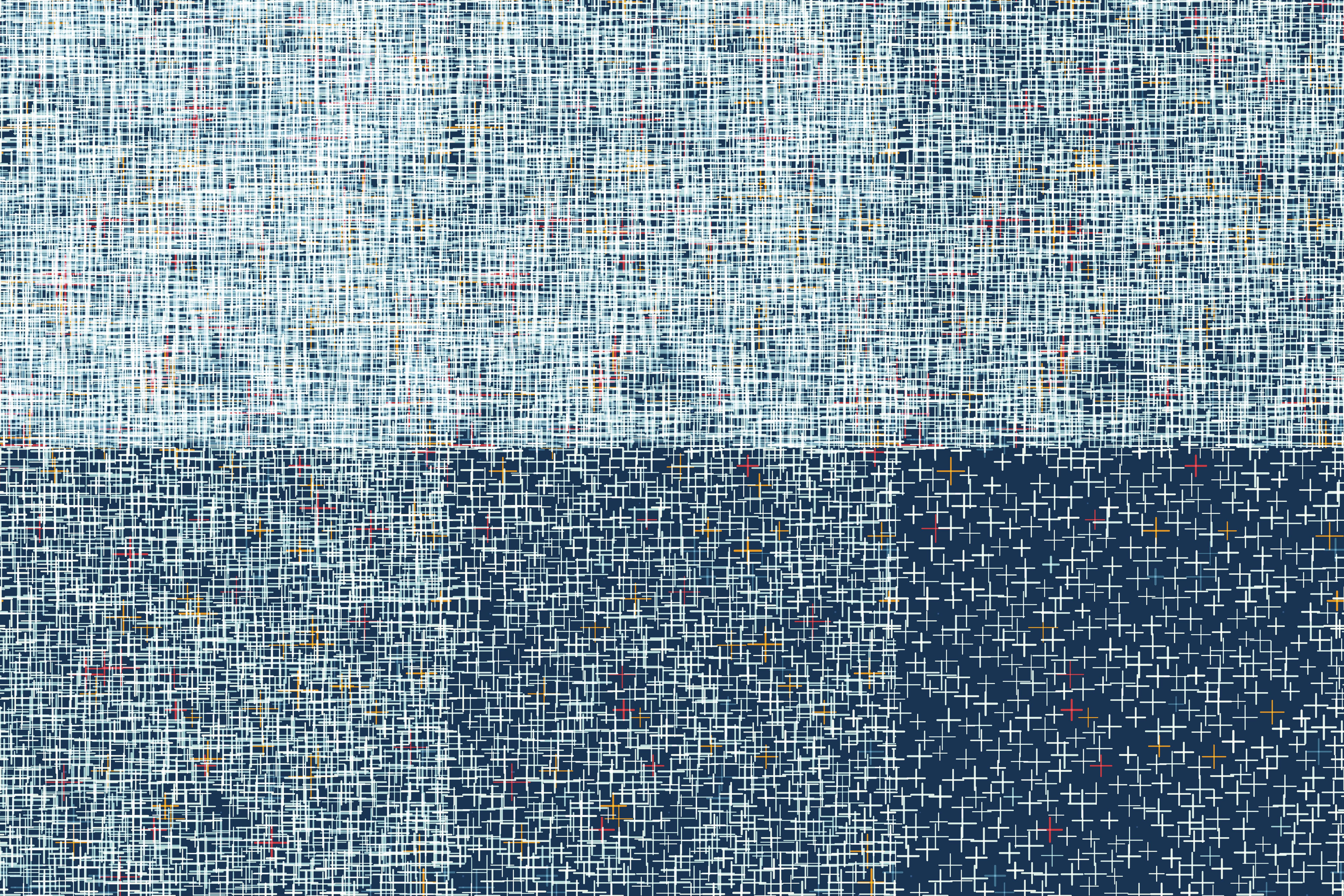
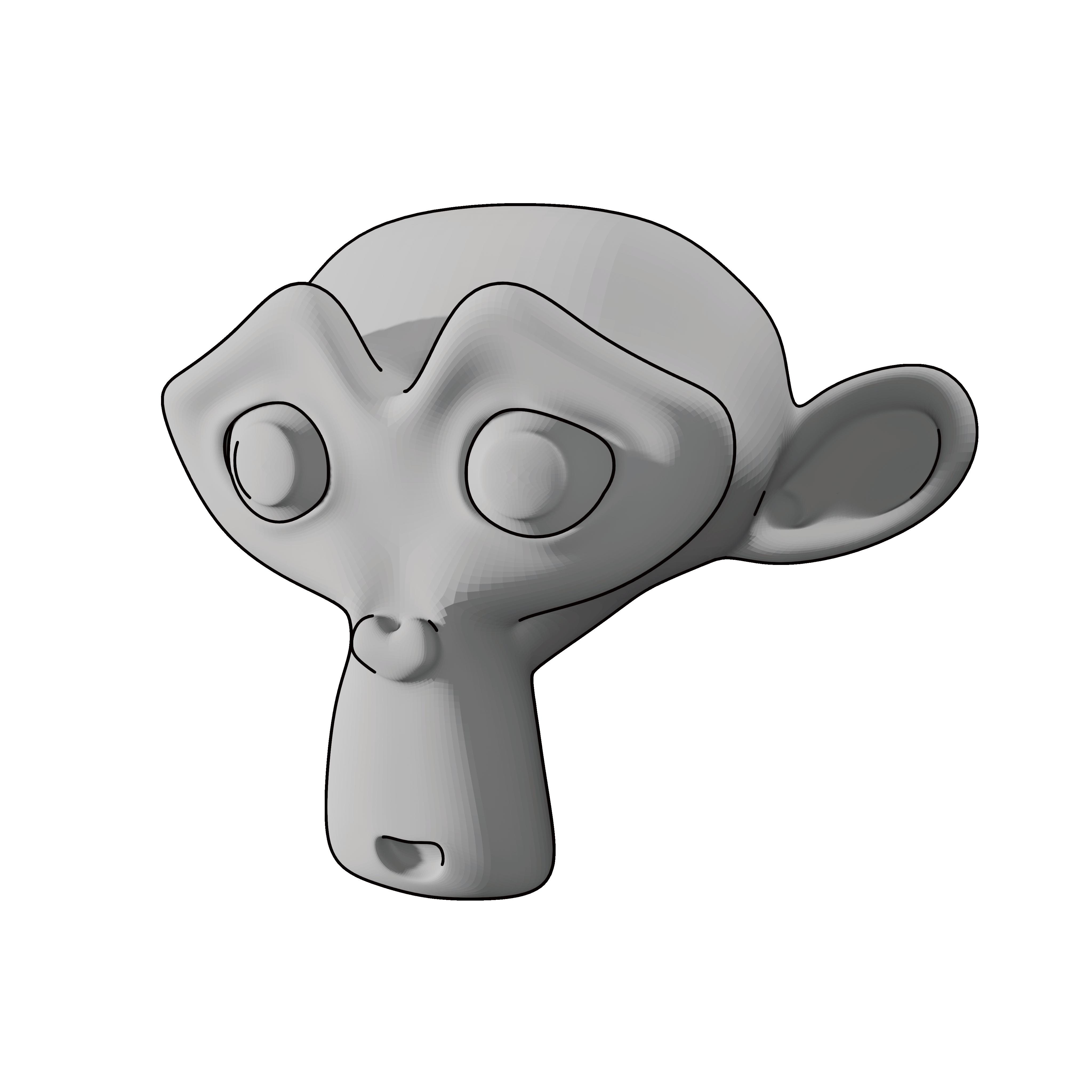
We introduce the concept of Generative Tonal Art Maps (GTAMs) as a mediating layer linking 2D texture design to 3D NPR rendering. The workflow involves two parts: (1) In p5.js, GTAMs are generative value scales composed of multiple parametric layers. (2) The generated GTAM image can then be imported into Blender through our tonal art rendering pipeline, allowing for NPR rendering with dynamic light sources.
We have provided a proof of concept based on various textures generated by p5.js and envision an open-source platform where artists can share their own GTAMs and generative parameters.
#generative art #NPR #3D rendering #tonal art
GTAMs generator Artistic rendering pipeline
Create 3D Rendering Textures with Creative Coding
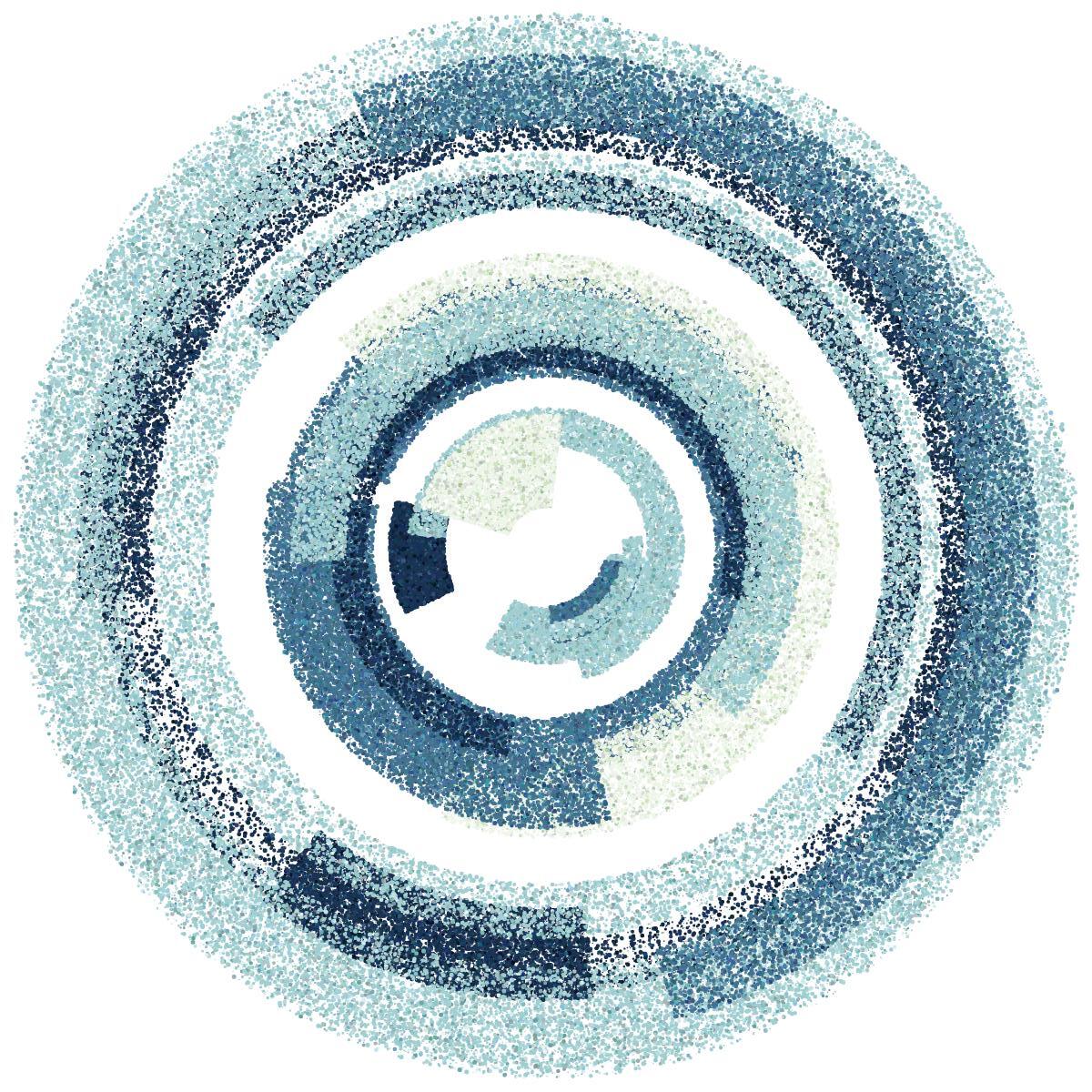
This study introduces a generative workflow that connects creative coding with non-photorealistic rendering (NPR). By designing tonal textures programmatically, the process enables artists to construct personalized rendering materials without manual painting. Each generative texture serves as a tonal map that translates parametric rules into stroke-based visual expressions, bridging the gap between algorithmic generation and artistic intention.
Gradients
Color Source (x2, y2) r (x1, y1) (x, y)
BlendMode(SCREEN)
Generative Tonal Art Rendering Results
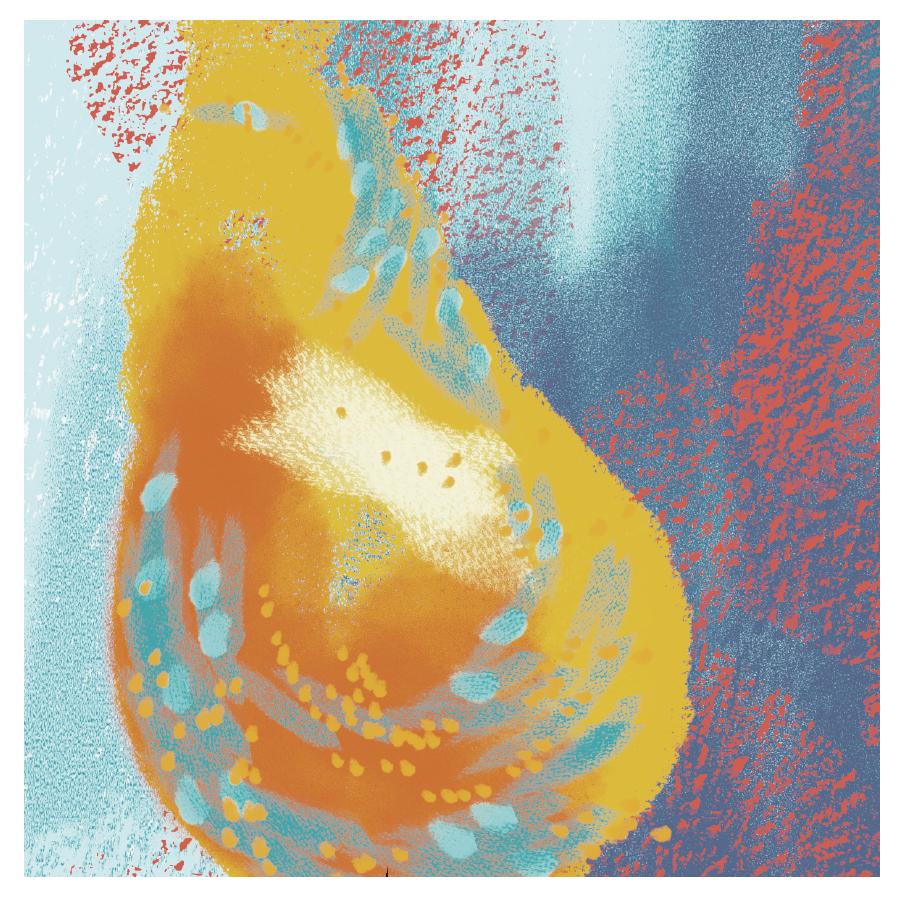
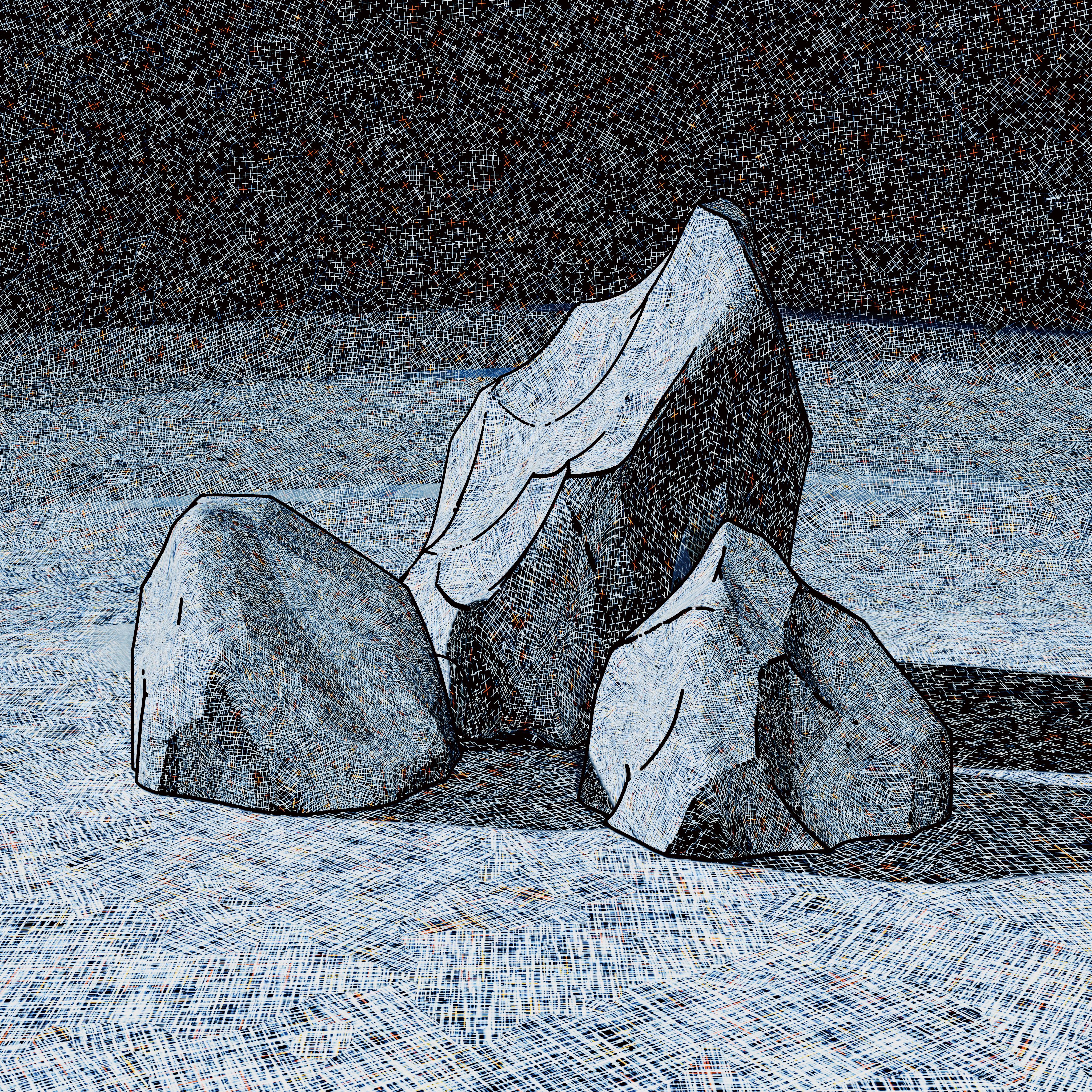
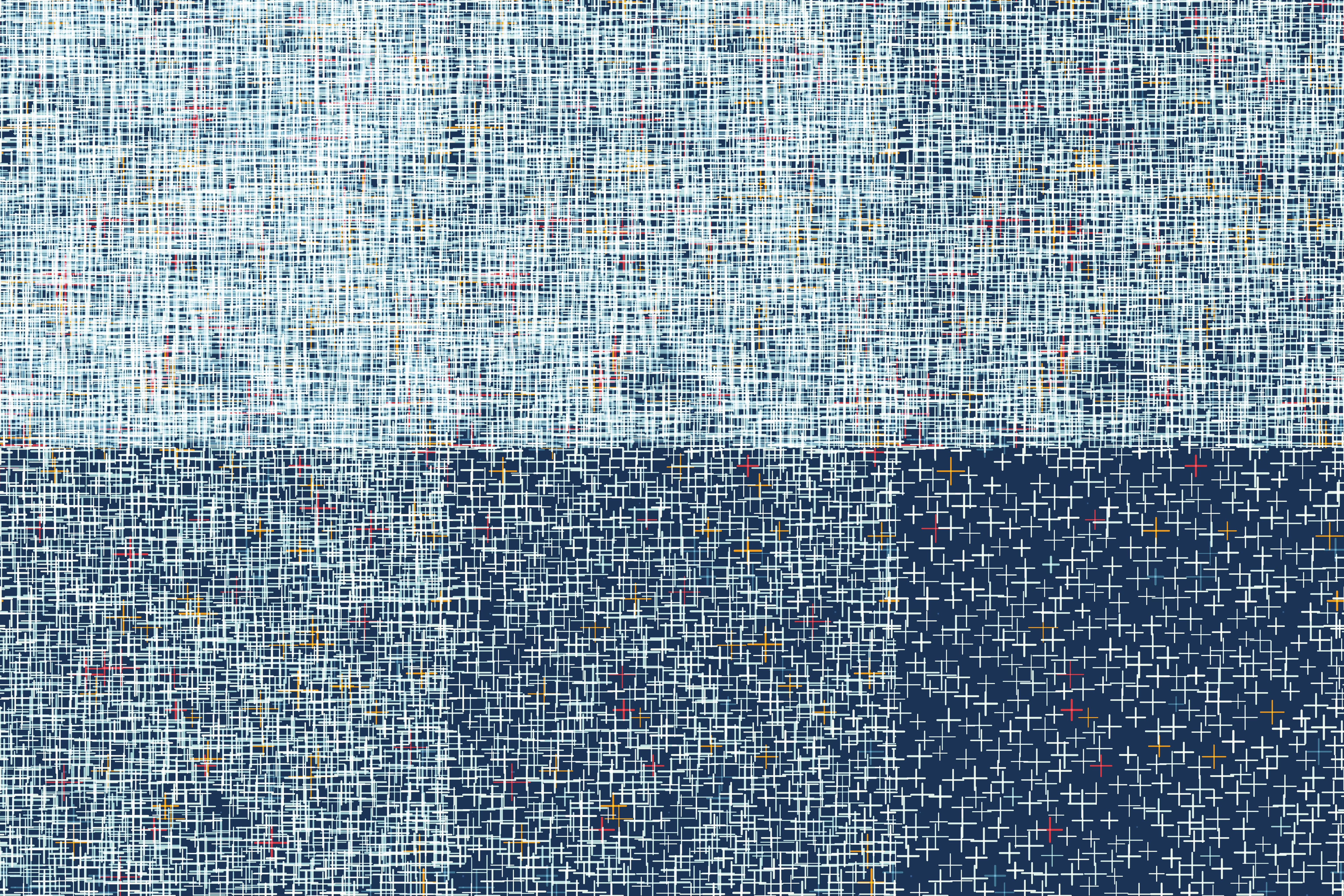
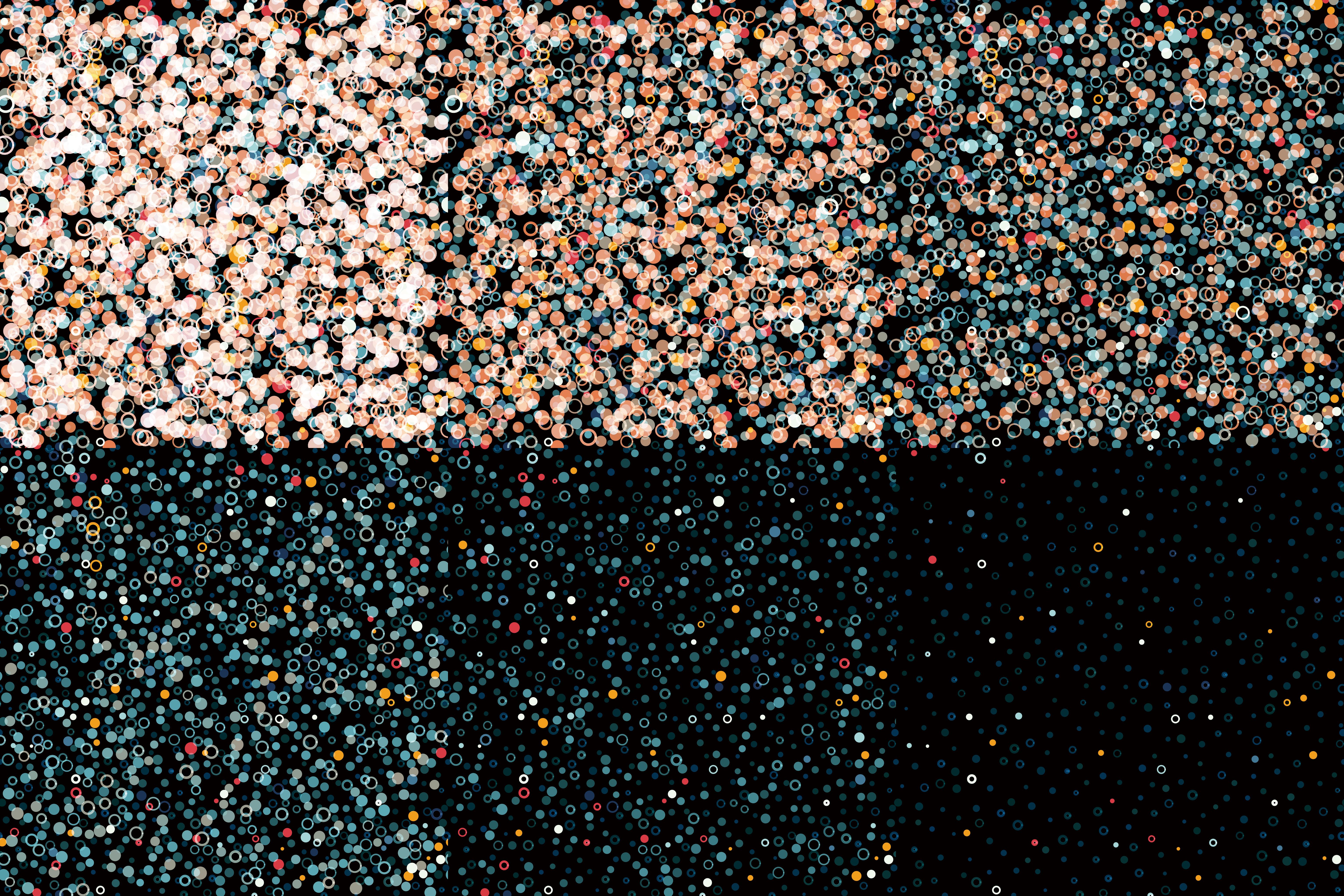
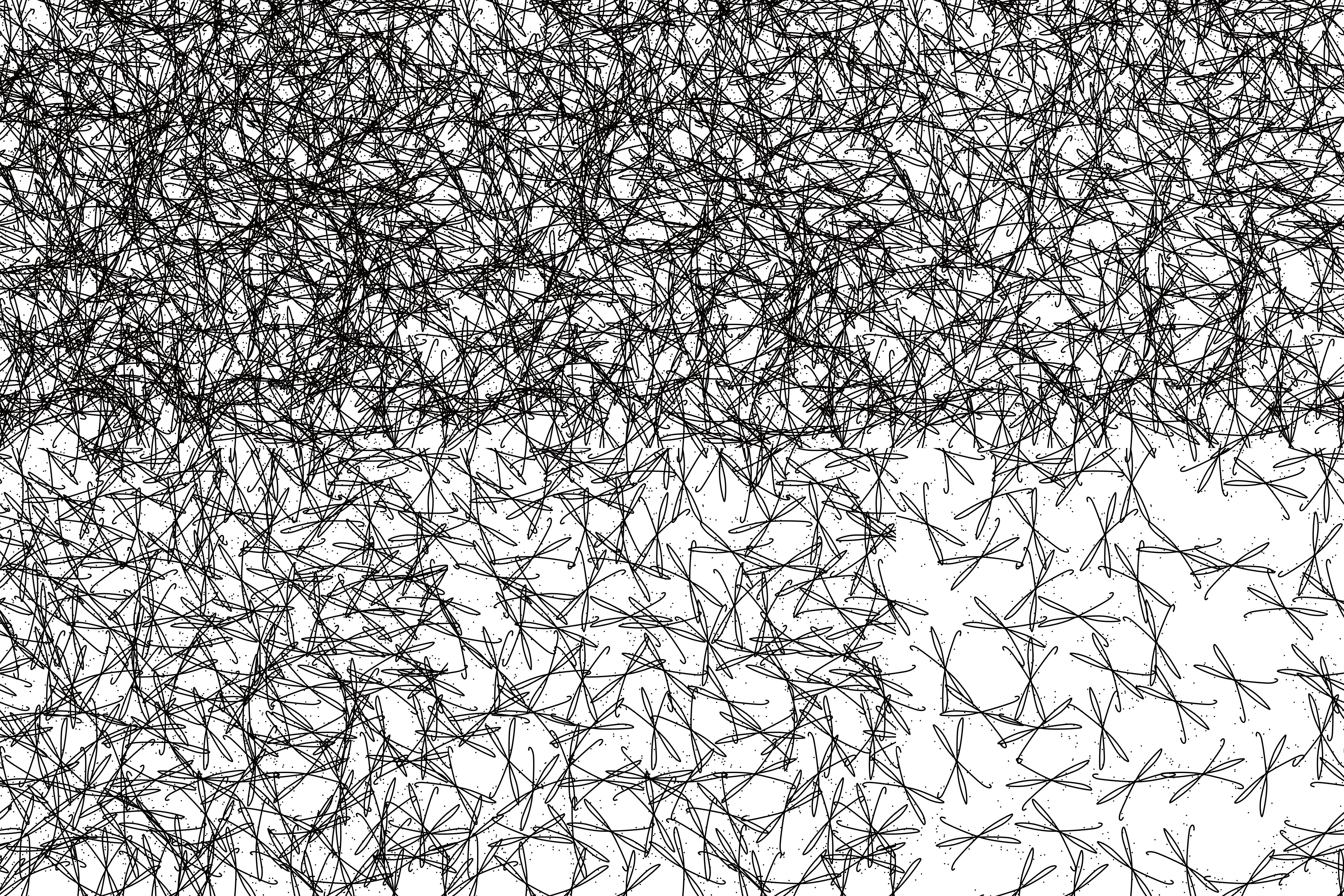
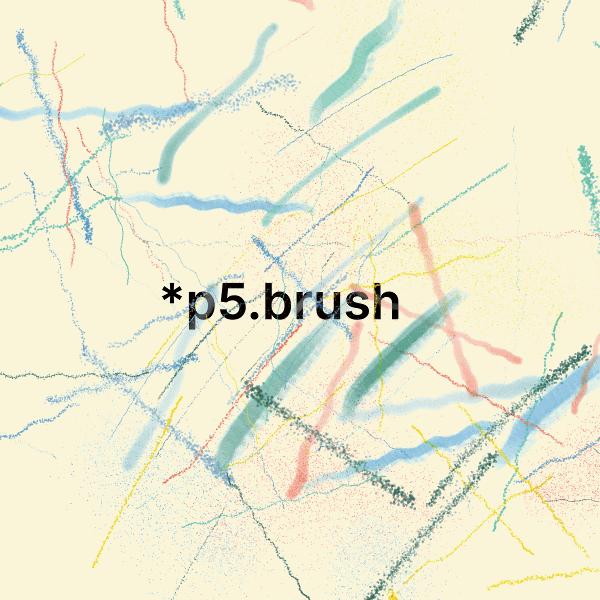
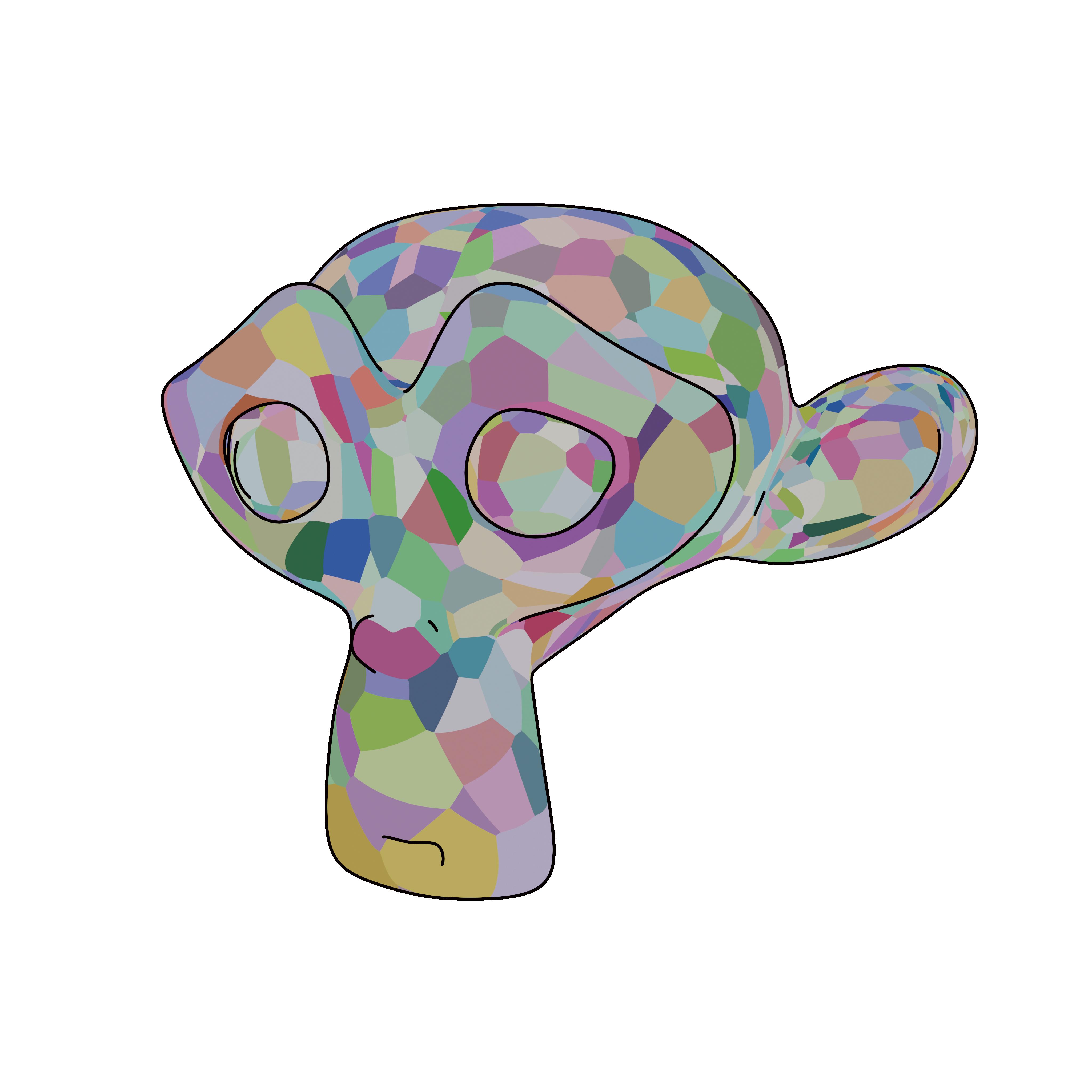
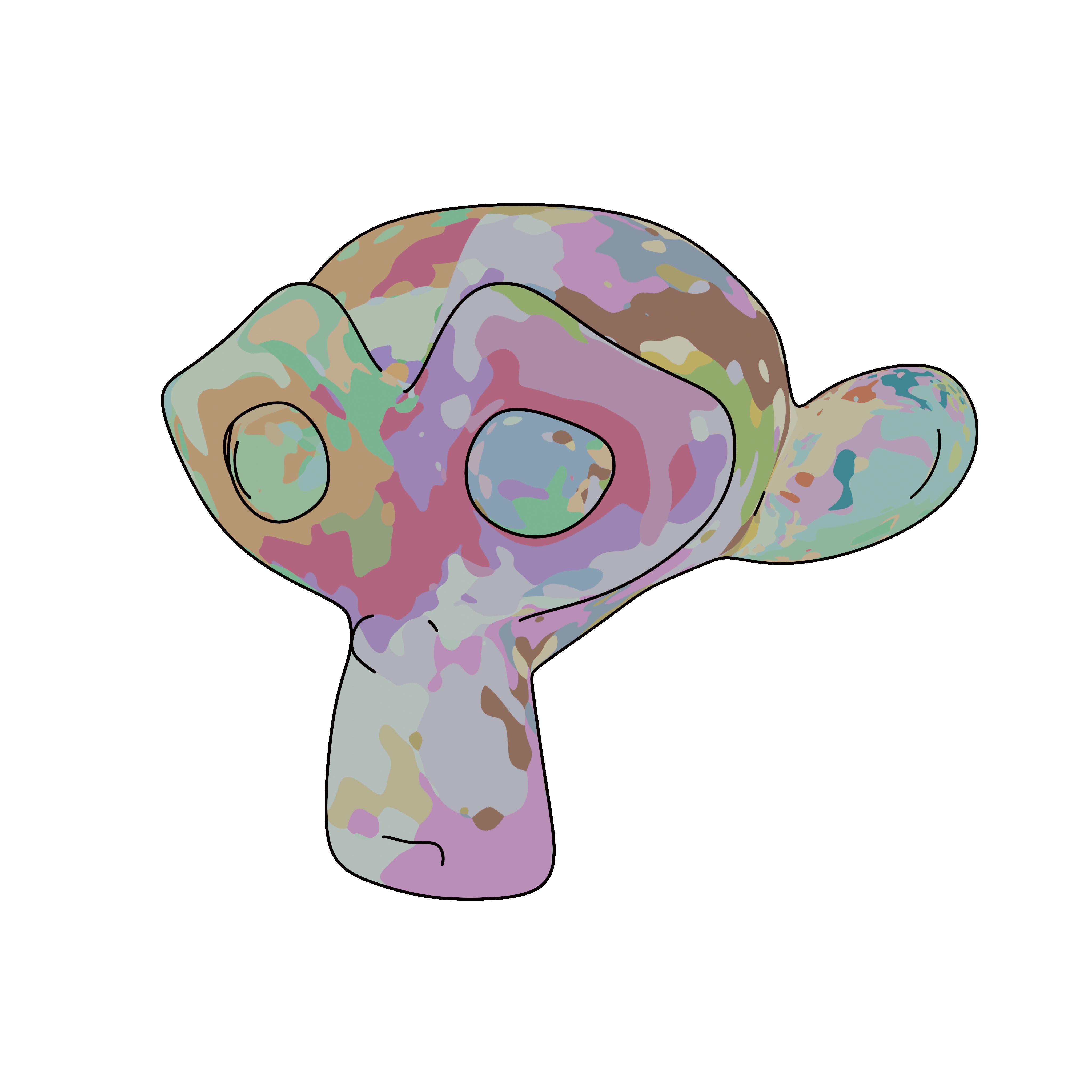
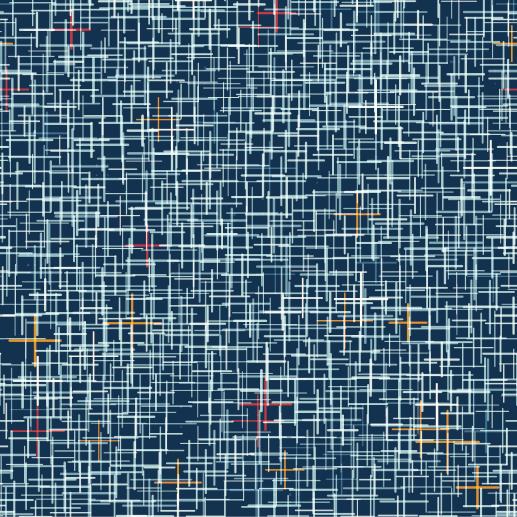
With this tool, users can create diverse rendering outcomes derived from familiar creative elements such as geometry, color, and pattern. These examples demonstrate various tonal rendering styles generated from different inputs, showcasing how generative textures can define artistic tone mapping within 3D scenes: (a) Using 2D primitives (lines) generated in p5.js. (b) Using circles with p5.js blend mode (SCREEN). (c) Using hand-drawn image assets. (d) Using custom strokes from the p5.brush library.
Color Palette
Density control by array slicing
To achieve uniform point distribution, we adopt sample elimination instead of traditional additive sampling. This method sorts points by their elimination order, allowing users to control density simply by slicing a subset of samples, without regenerating them from scratch. To ensure the stroke nesting property, each stroke is assigned a unique random seed so that its appearance remains consistent across tone levels. For seamlessness, a boundary offset threshold is defined based on stroke size. Strokes within this boundary region are duplicated to the opposite side, ensuring continuous and tileable textures.
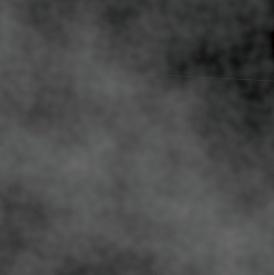
The GTAM is integrated into a toon-shader framework, where tonal layers are sampled by diffuse lighting. To reduce visible tiling, camouflage-like patches with local noise-based rotation create natural stroke patterns.
Snowflake Designer
Generative Crystallization with Marching Triangles and Cellular Automata
Algorithm Design Project
Tutor: Shin-Yuan Wang
My Contributions ┬─ Linked snowflake crystallization logic to a marching-triangles framework
Developed a parametric snowflake design system in Grasshopper
Explored generative variations through user-controlled parameters
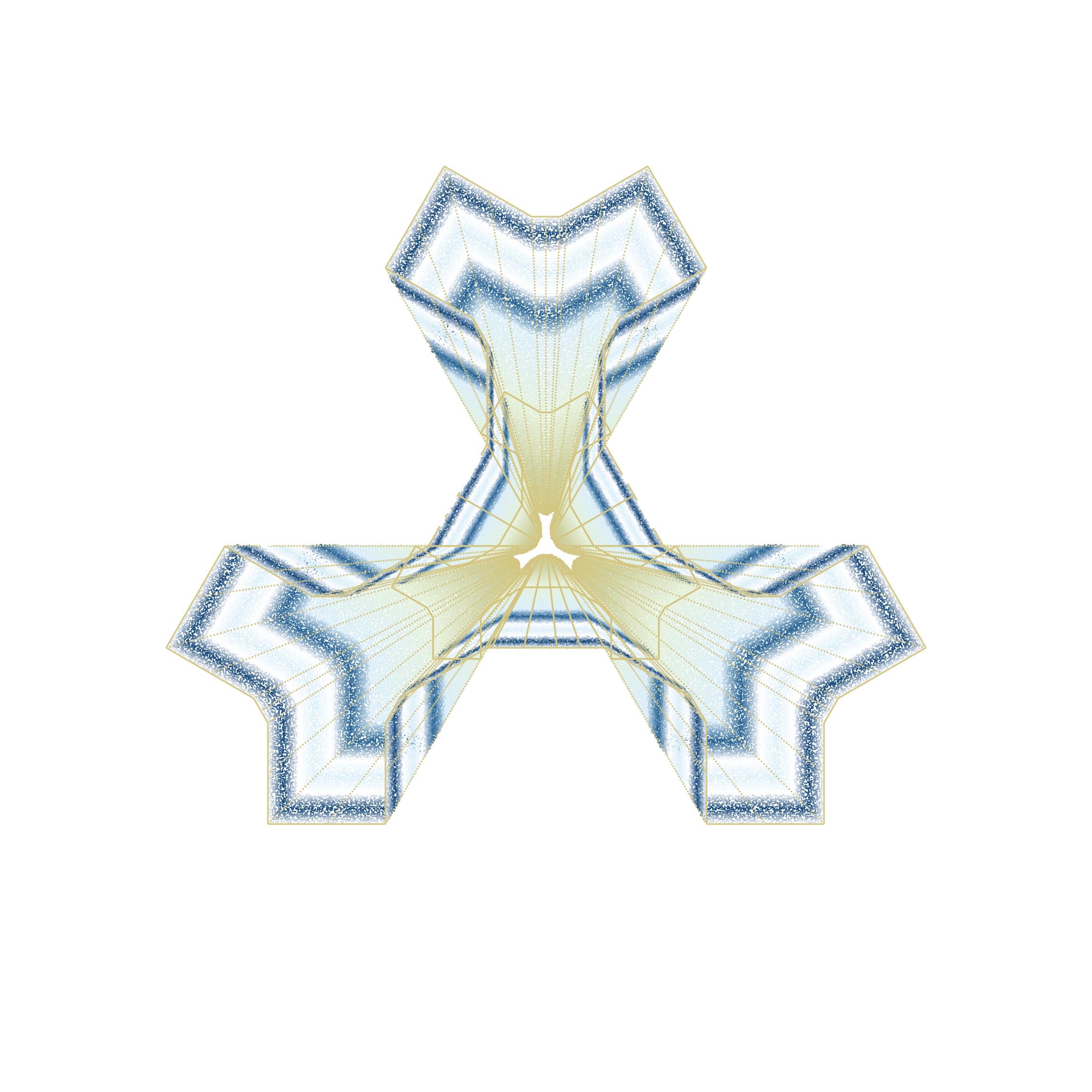
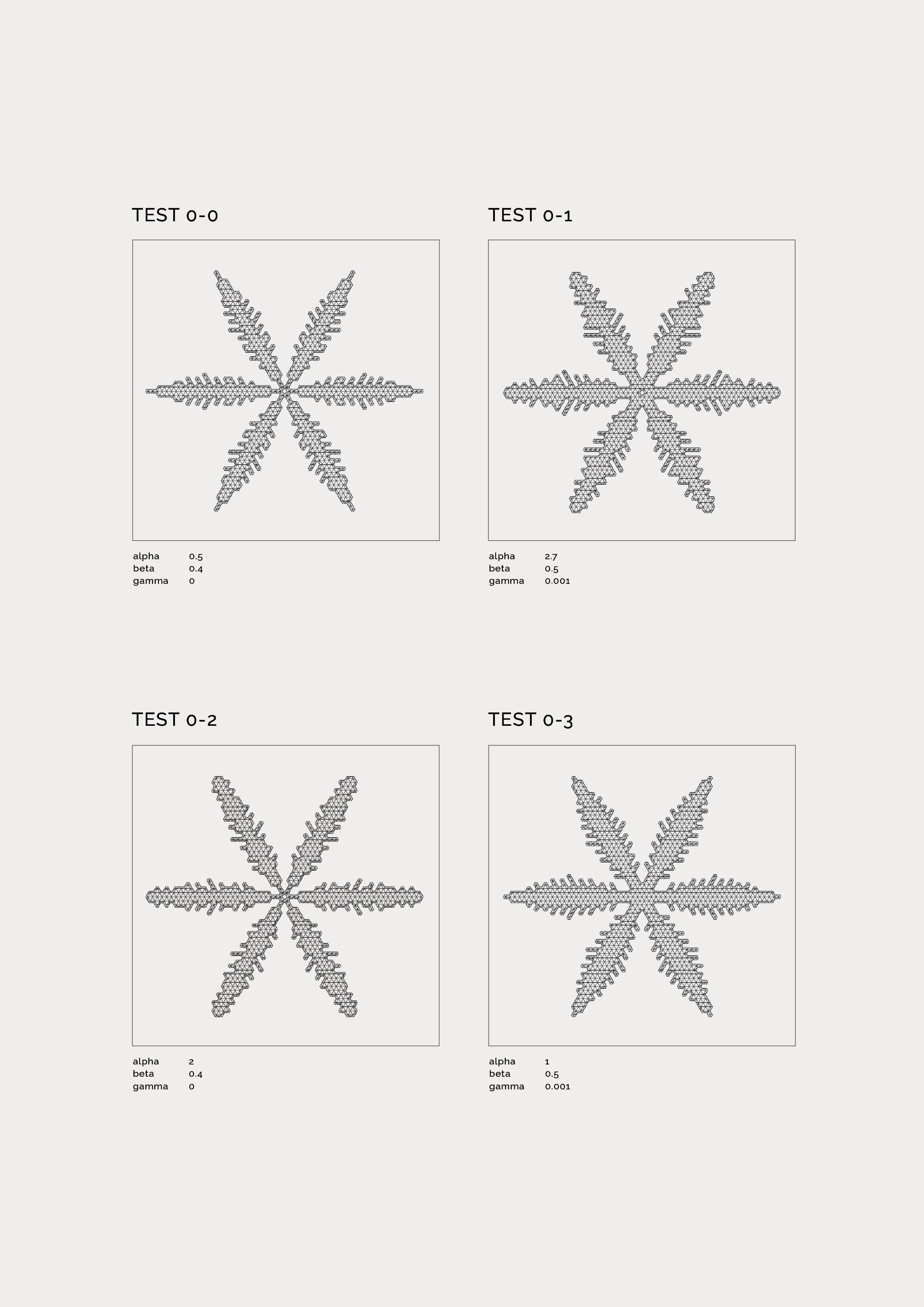
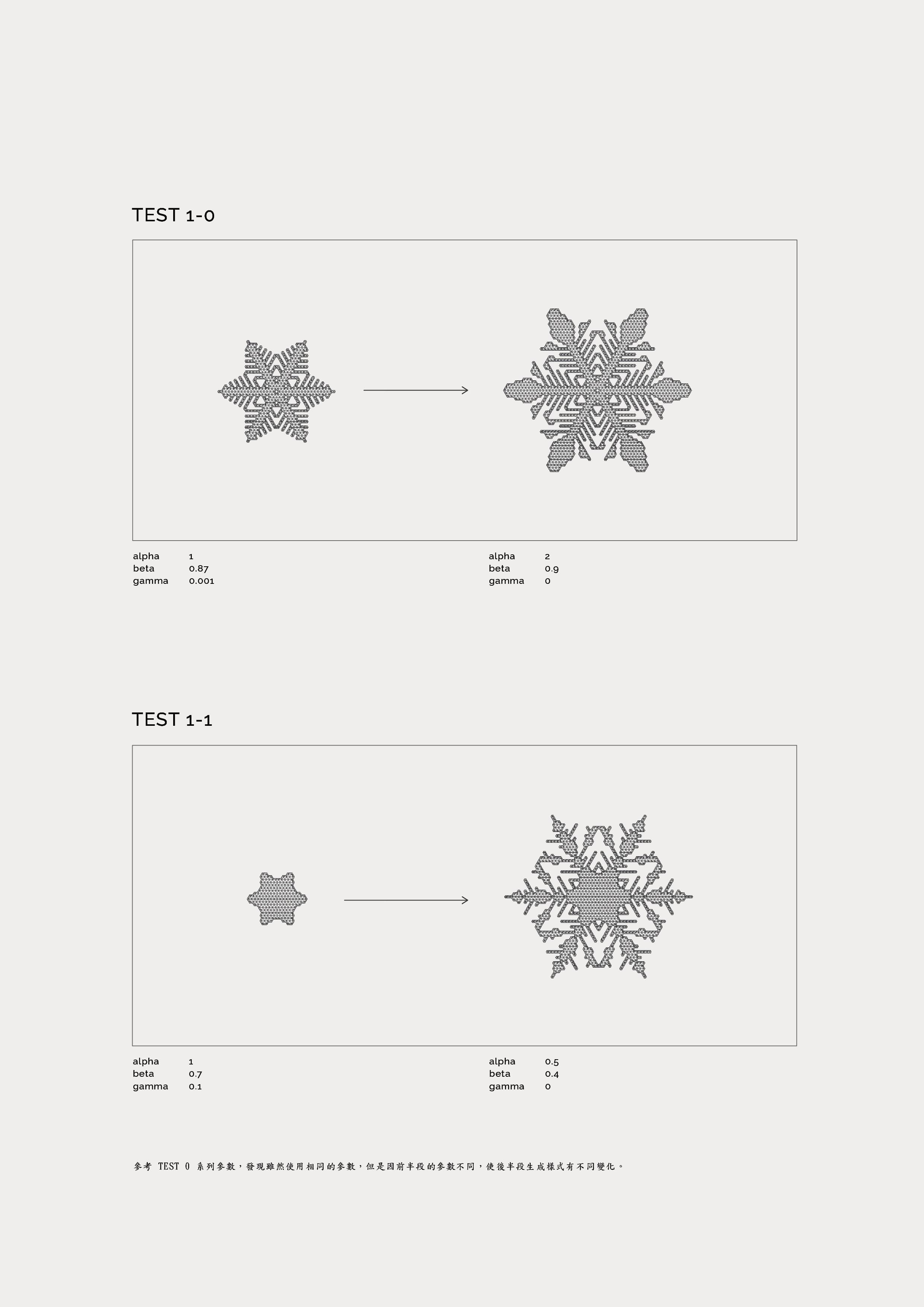
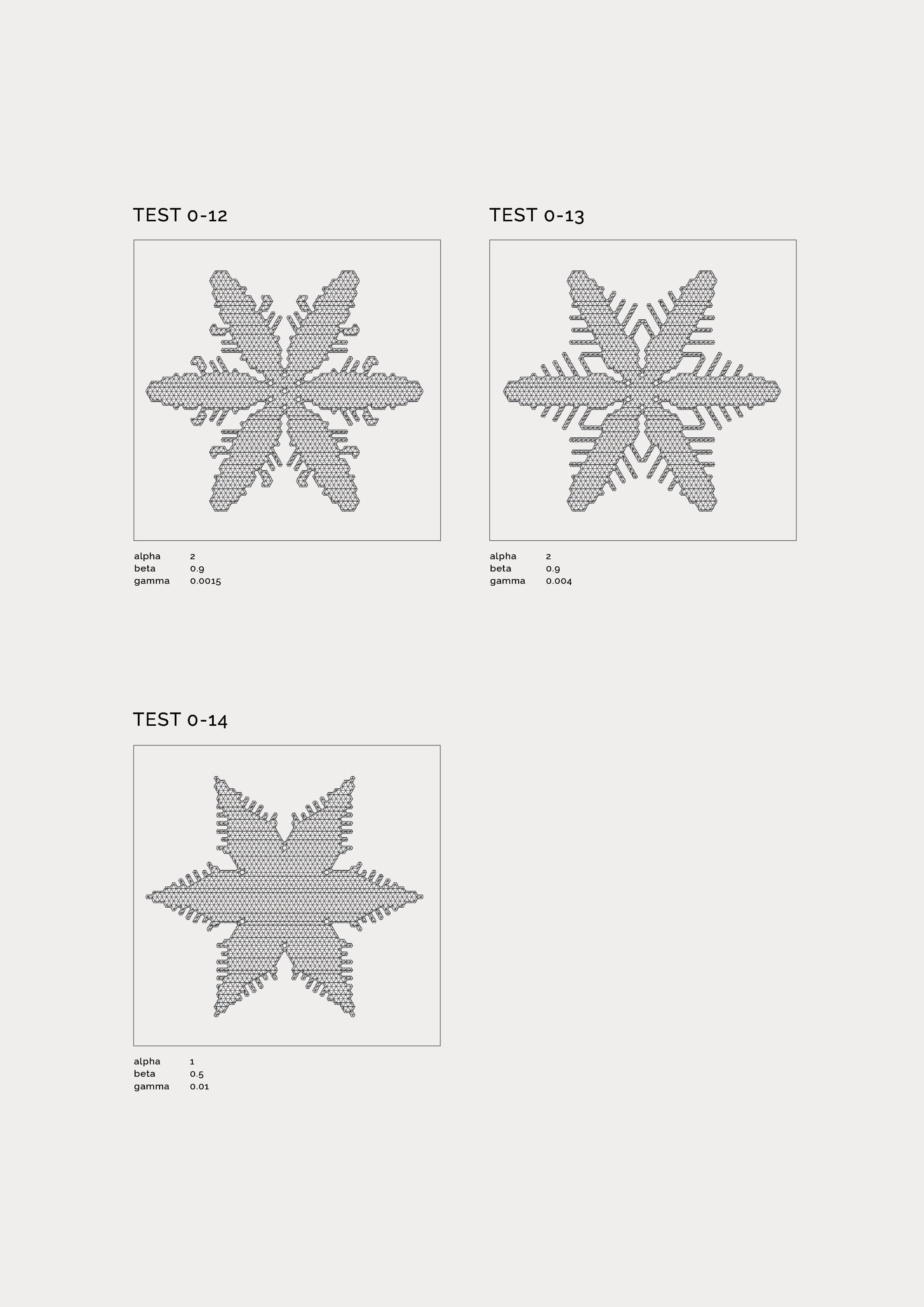
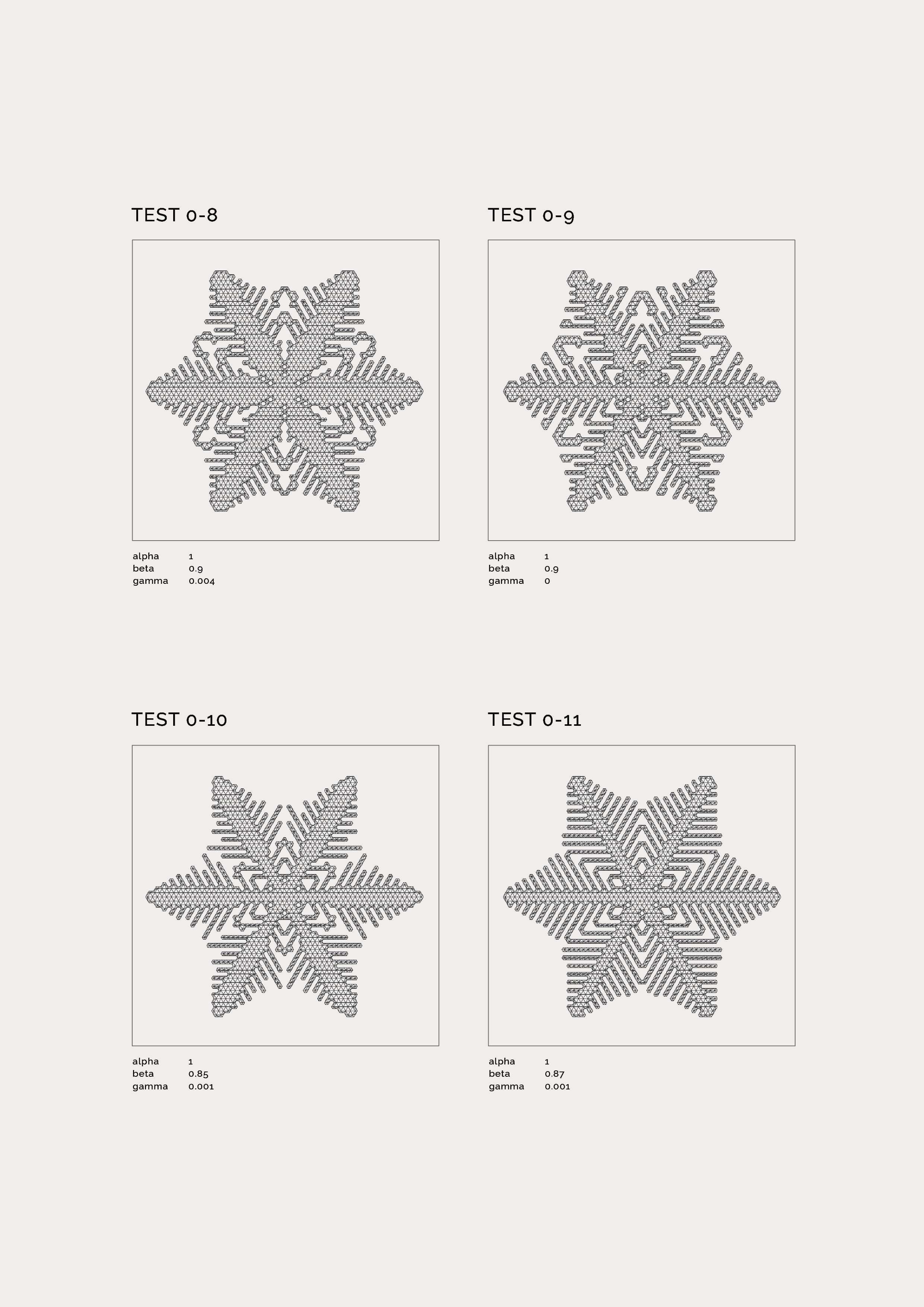
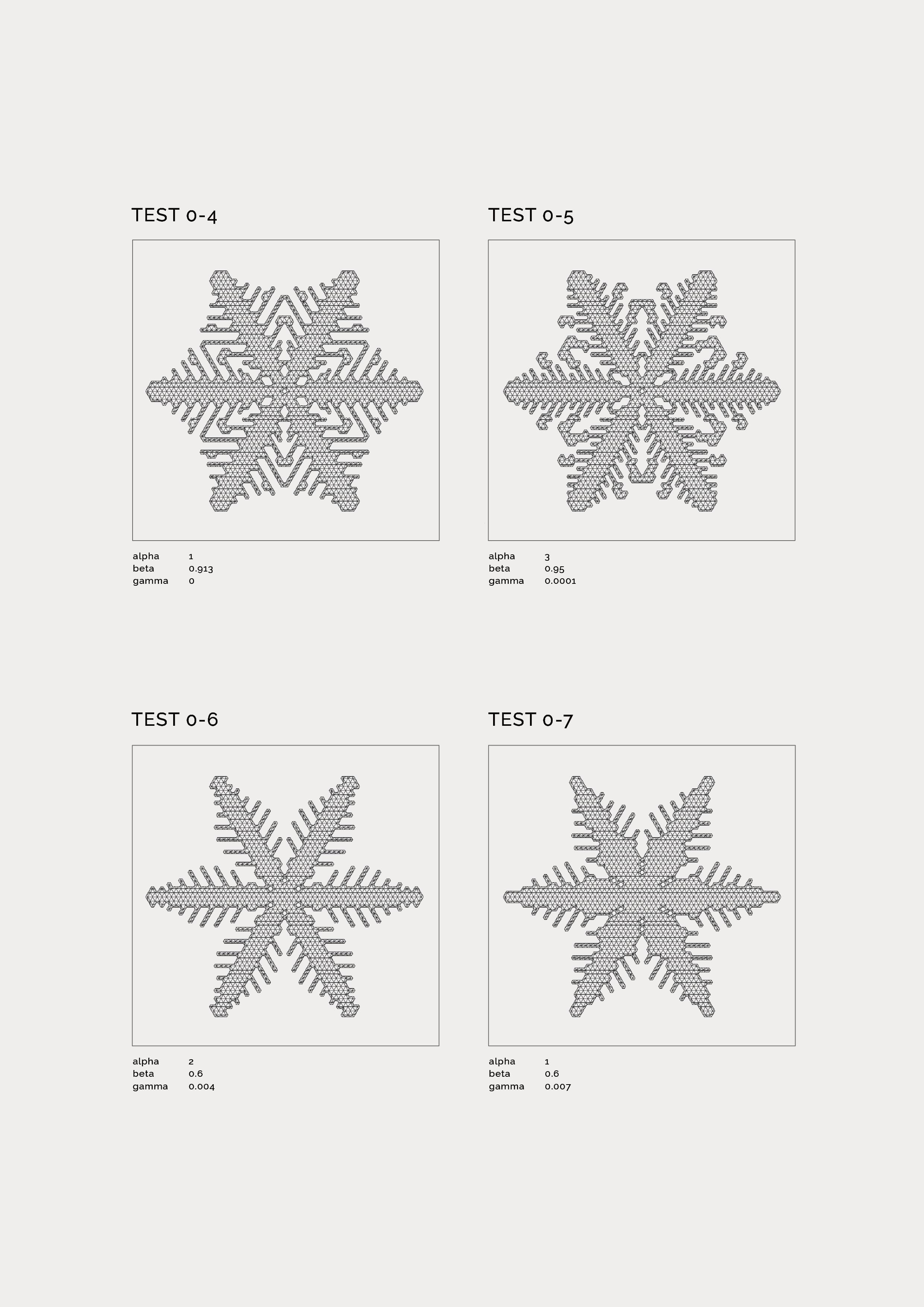
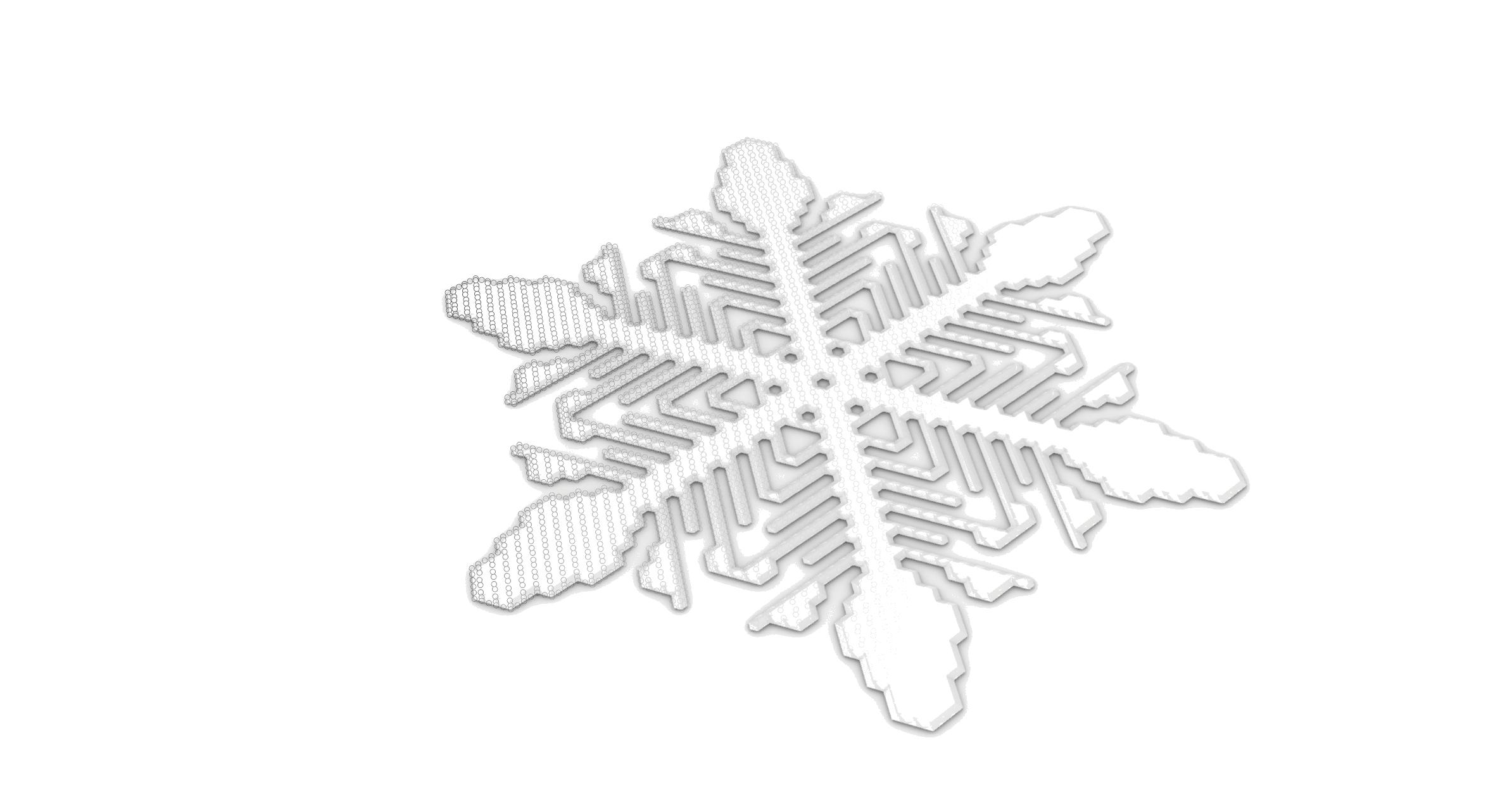
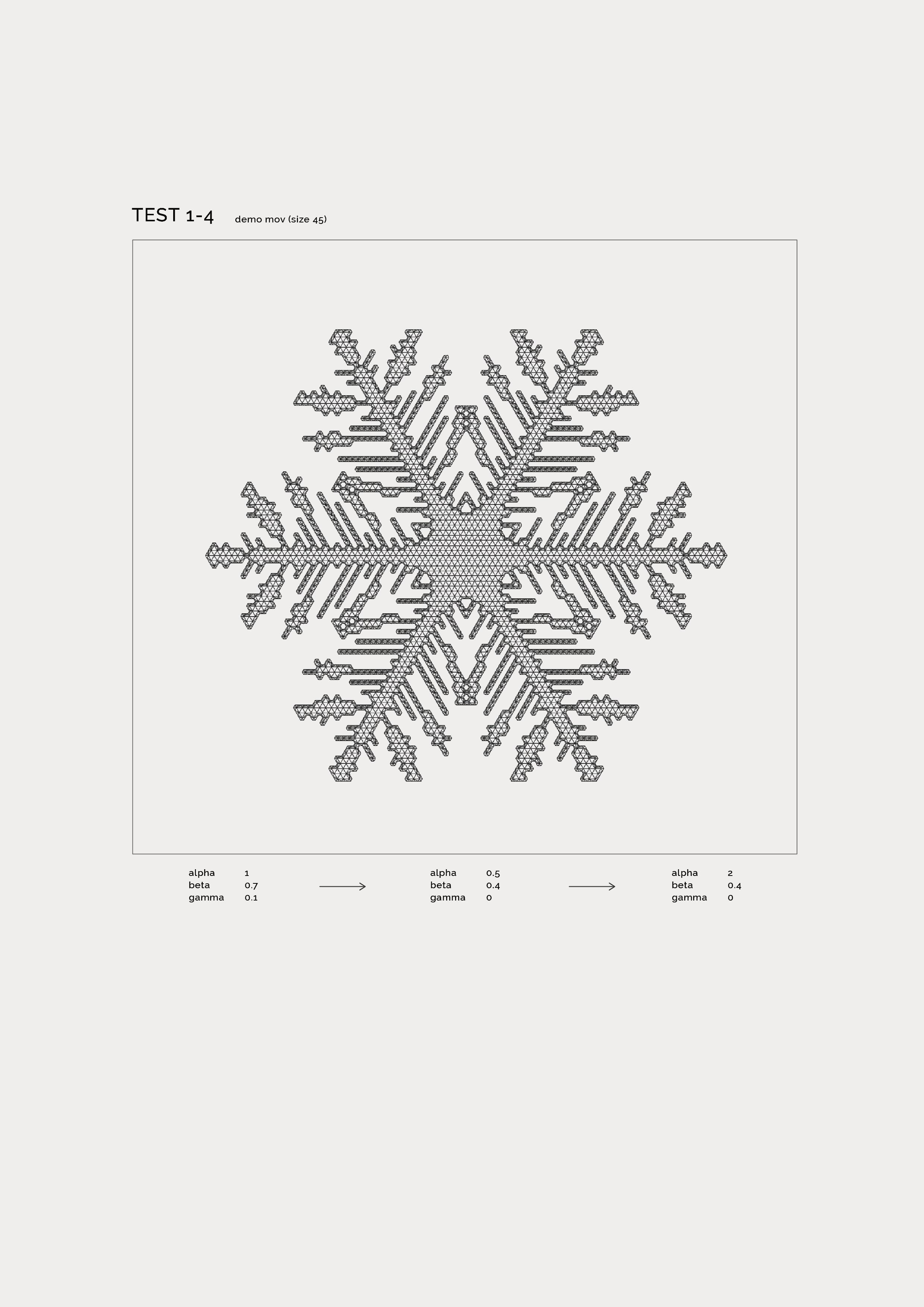
The form of each snowflake varies under different environmental conditions, and these conditions can dynamically evolve over time. This system allows users to interactively adjust parameters and design unique snowflake formations within the virtual environment. The system simulates the crystallization process of snowflakes through a cellular automata-based algorithm. The model employs a triangular–hexagonal lattice structure to represent molecular bonding and diffusion behavior. Three main coefficients—diffusion (α), background saturation (β), and vapor addition (γ)—control the local growth rate of each cell.
This project extends the marching cube algorithm to a hexagonal lattice, effectively mimicking the molecular structure of ice crystals in natural snowflakes. By wrapping frozen lattice vertices with mesh faces, the method provides an efficient approach for sculpting snowflake-like patterns on geometric or architectural surfaces.
coefficient)
(background level)
Coefficient
2023-2024
Generative Art for Beginners
Creative Coding Bridging Math, Art, Code and Craft
Creative Coding Workshop Series
Special thanks to:
Teaching Assistant Pan-pan SH, Tunglee Academy Gallery, Taipei Municipal Zhong Shan Girls High School (ZSGH), The Affiliated Senior High School of National Taiwan Normal University (HSNU), Design and Innovative Technology Program (DITP), NYCU
└─ Supported student exhibitions across different public platforms
#generative art #p5.js #creative coding #math+art #3D coasters
For participants without any prior experience, programming often feels abstract and disconnected from everyday creativity. To address this challenge, each workshop reframes code as a crafting tool. The three highlighted workshops explore texture studies, tree-ring growth patterns, and generative 3D-printed coasters, allowing students to learn programming concepts through concrete
creative tasks rather than through syntax alone. This practice-based approach demonstrates how simple algorithmic rules can empower meaningful personal expression. From student works presented on Web3 platforms to large-scale screens and physical exhibitions, these workshops show how accessible creative coding can cultivate curiosity, creativity, and computational thinking.
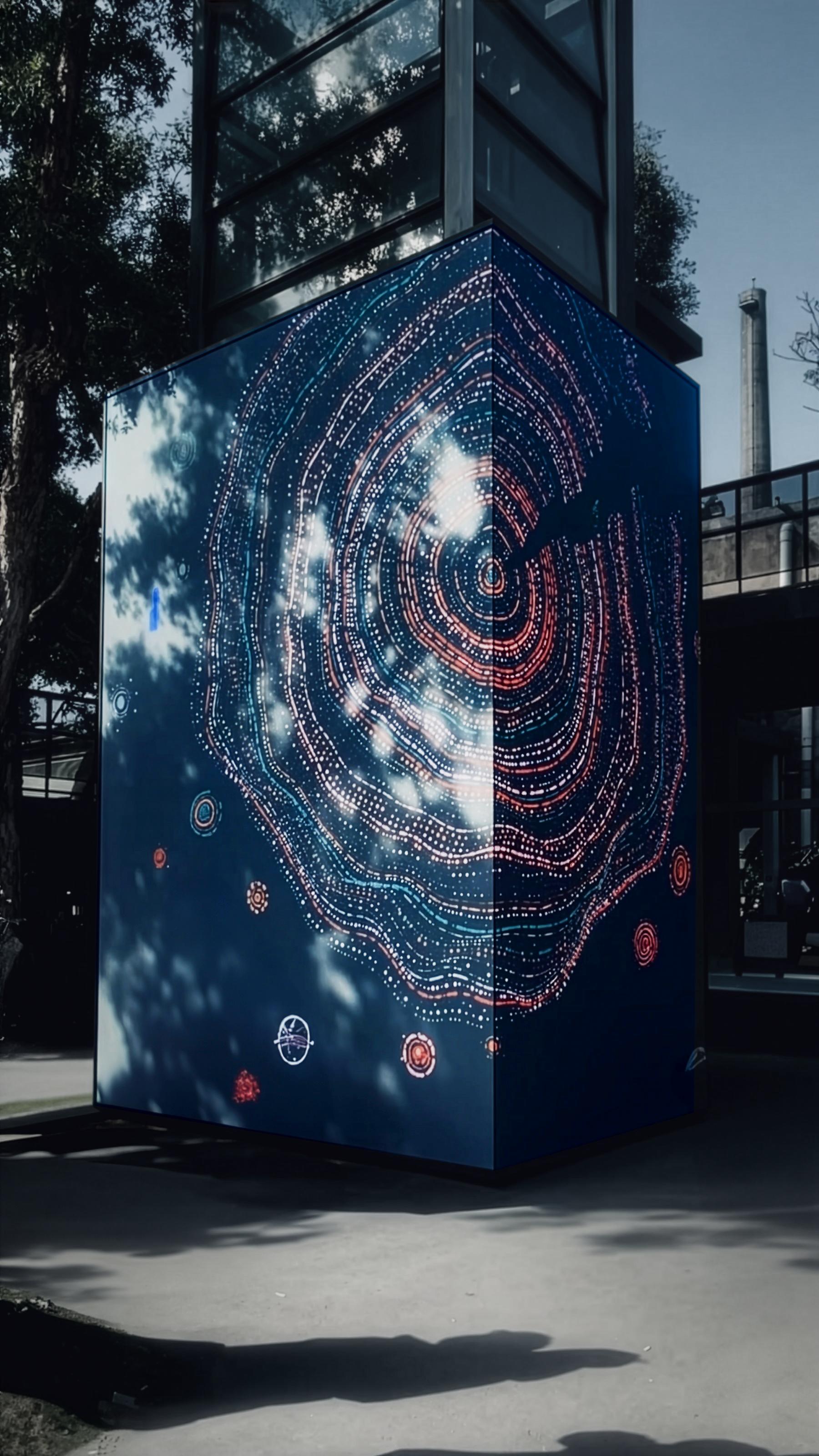
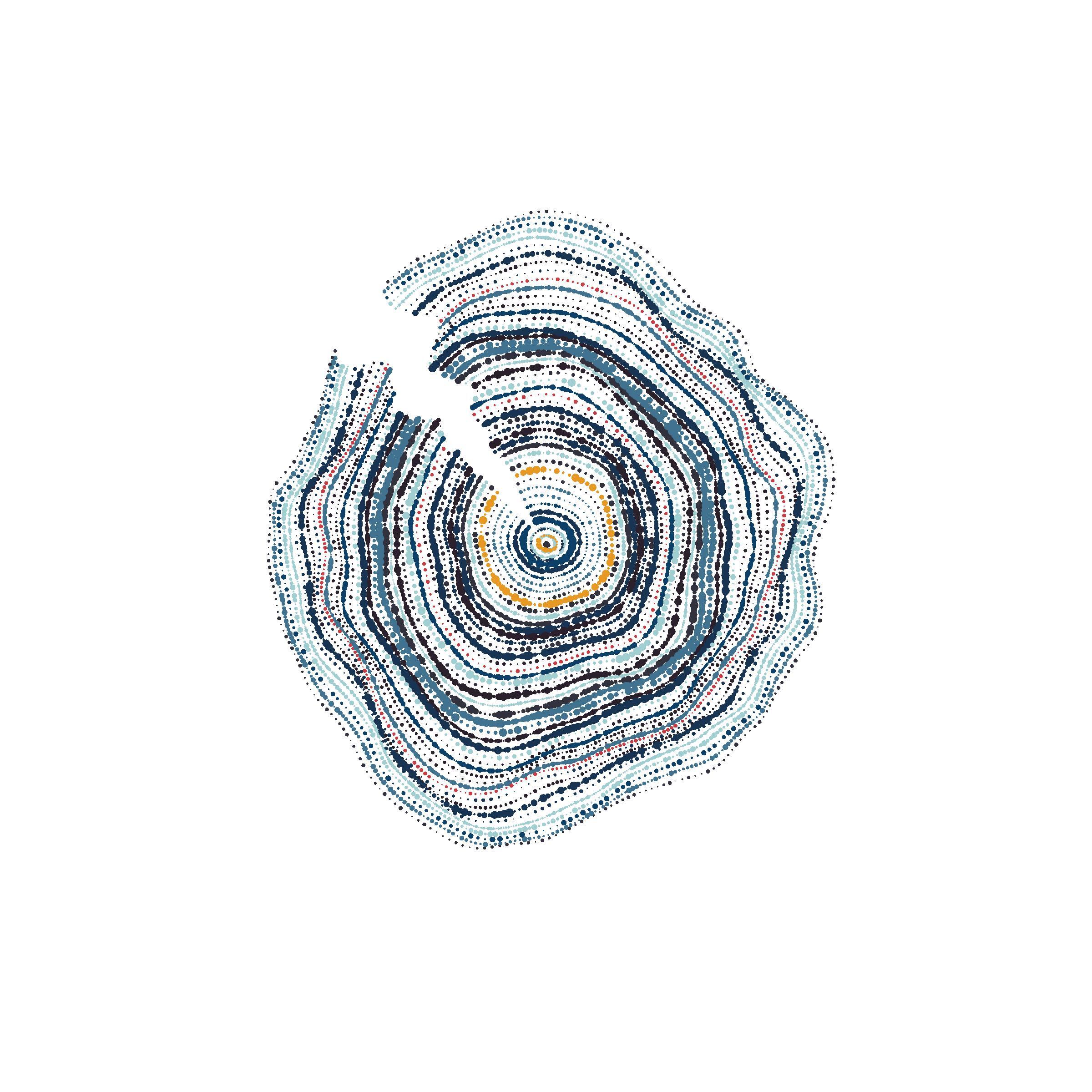
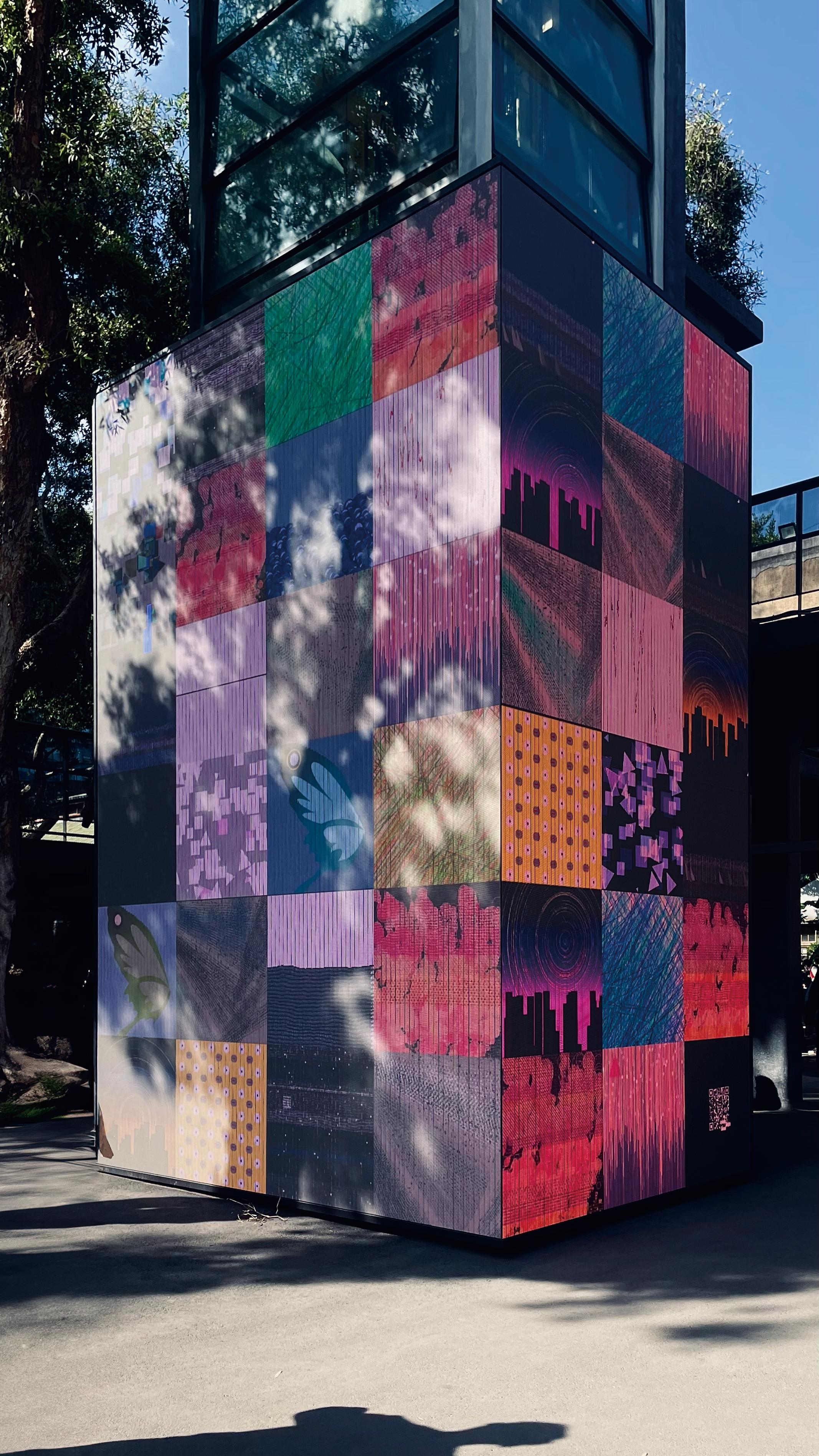
Echoes of Growth (2024) Presented on Asia’s largest outdoor digital screen at Huashan 1914 Creative Park.
Back of the rug (2023) My demo piece minted on fxhash and successfully sold out.
Workshop#1
Texture Studies: Programming Fundamentals Through Pattern-Making
45students published artworks on fxhash!
2023.8
Summer Camp in Art Gallery Tunglee Academy
2023 Fall Elective Course at High School ZSGH x HSNU
20 students’ artworks were exhibited on a large-scale screen
2023.12
Math × Art Workshop special Workshop for ZSGH
2024.11
3D Coaster Workshop at university Interdisciplinary Program, NYCU
12 students showcased physical works in a school exhibition
This workshop reframes abstract programming principles into hands-on making activities. Instead of teaching syntax before creation, computational thinking is introduced through drawing, layering, and composing textures. This approach allows beginners to intuitively understand loops, randomness, and noise while engaging with tangible design practices.
We begin with simple shape compositions and gradually build toward woven textures. Repeating elements reveal the logic of loops, organic irregularities illustrate the role of noise, and stacking rules demonstrate how functions define repeated patterns.
Students generated unique textures and published their works on fxhash, demonstrating that simple computational rules can empower personal expression.
If-Else → diverse texture patterns
Back of the rug (2023)
My demo piece minted on fxhash and successfully sold out.
Workshop
#2
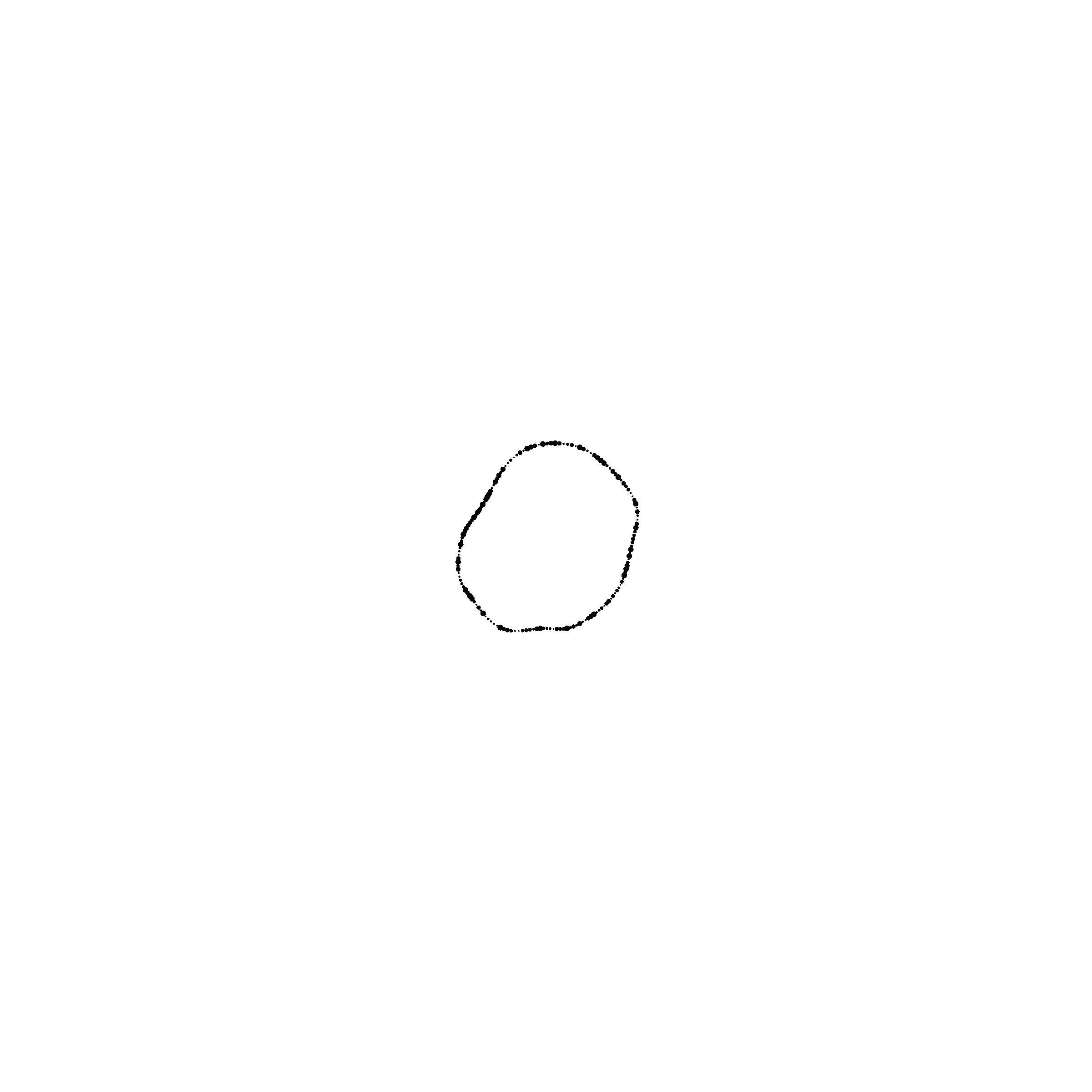
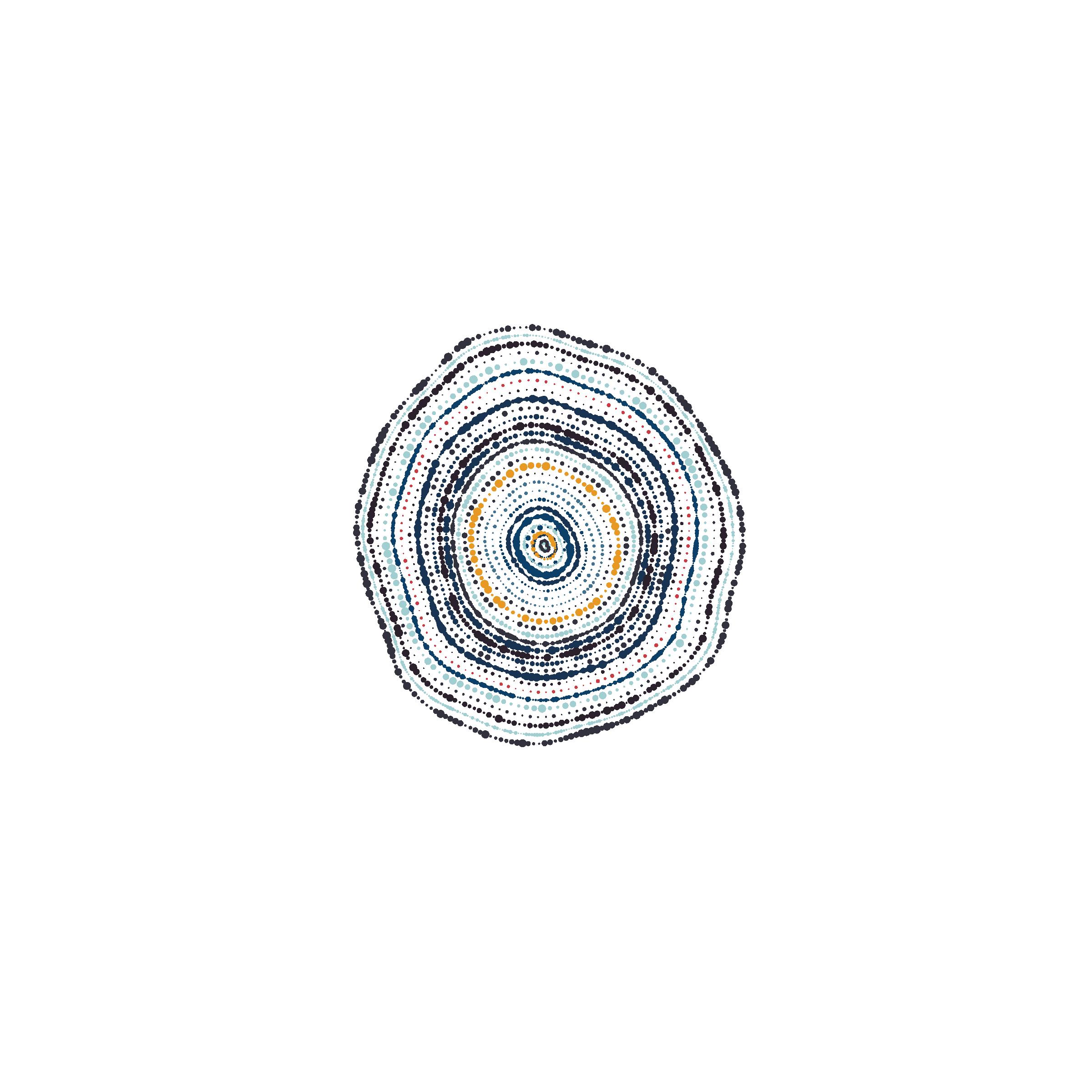
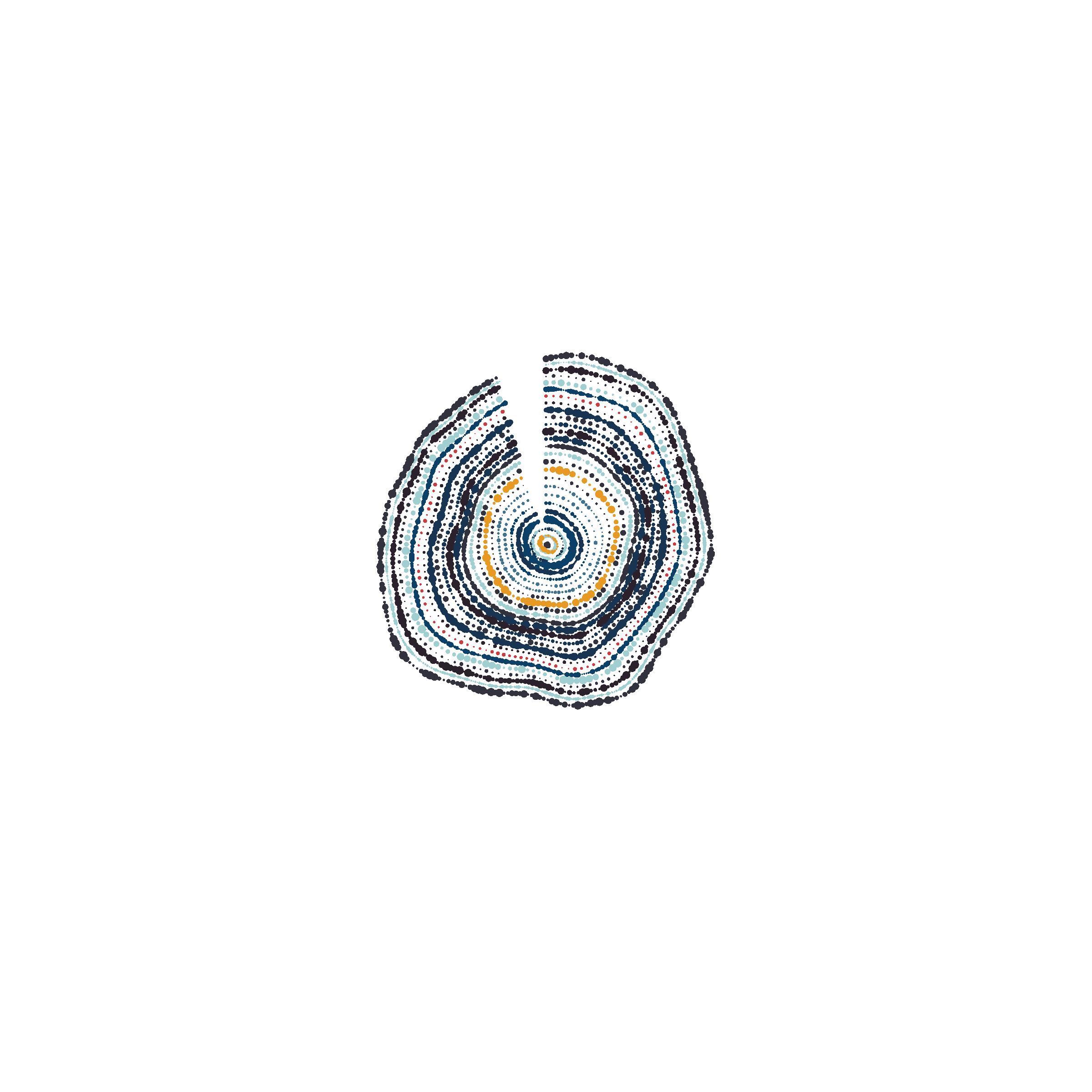
Tree Rings: Exploring Nature with Polar Coordinates and Noise
origin
r
5/ The natural tree trunk!
Learn Math by Drawing a Tree! Using Visual Examples to Understand Abstract Concepts
This workshop focuses on reconstructing natural tree-ring patterns through polar coordinates and noise-based variation. Participants begin by observing the structure of growth rings, then translate these observations into computational steps—center, angle, radius, and irregularities. By repeatedly applying polar transformations and controlled noise, students learn how a simple generative system can capture the organic evolution of natural forms.
Workshop#3
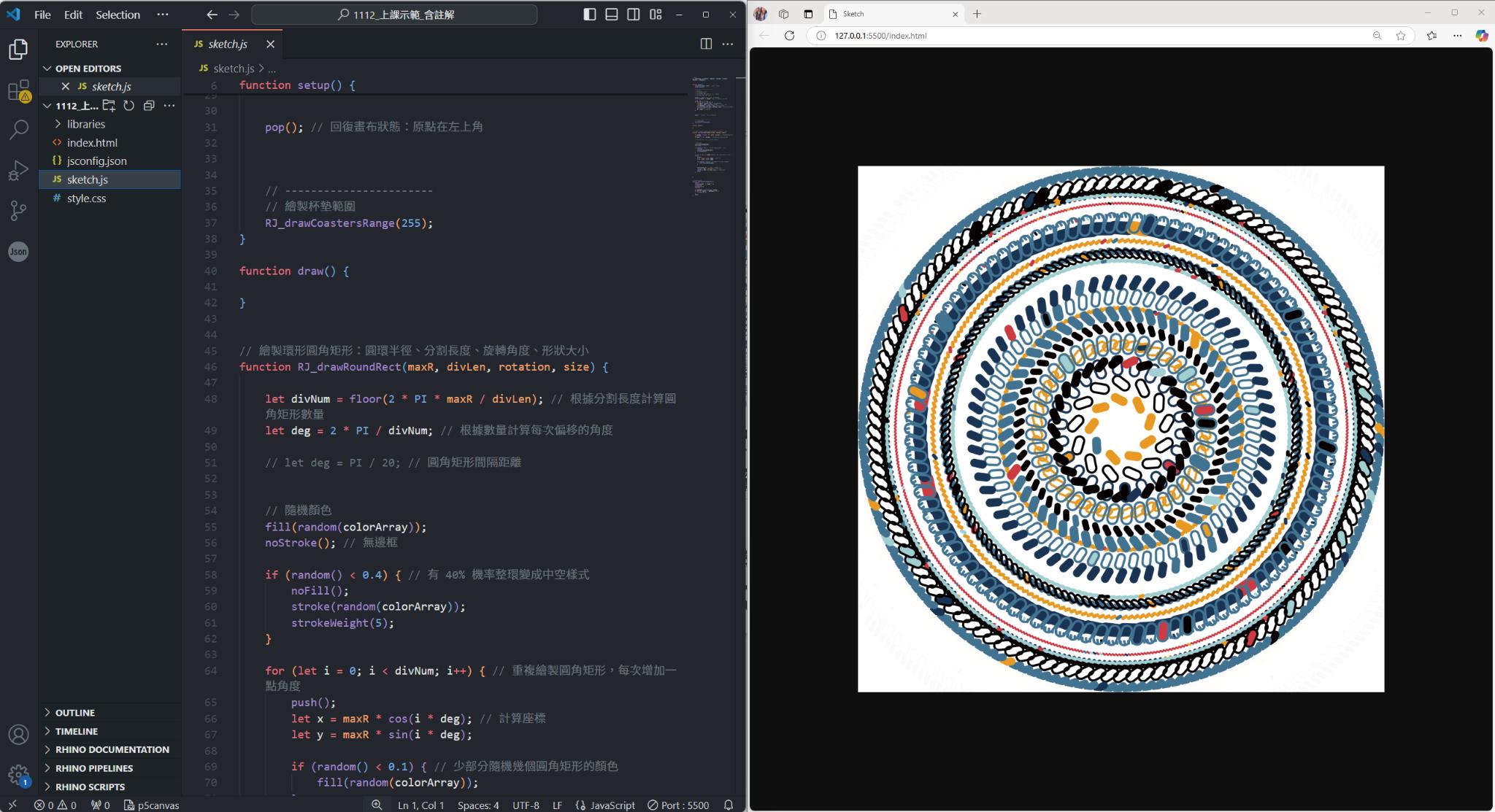
Tactile Algorithms: Creative Coding for 3D-Printed Patterns
1/
2/
Program circular pattern systems using polar coordinates.
Design 3D ink regions through black-and-white mapping.
3/ Print the final work using UV-ink fabrication.
Generative Patterns × 3D Coaster Fabrication
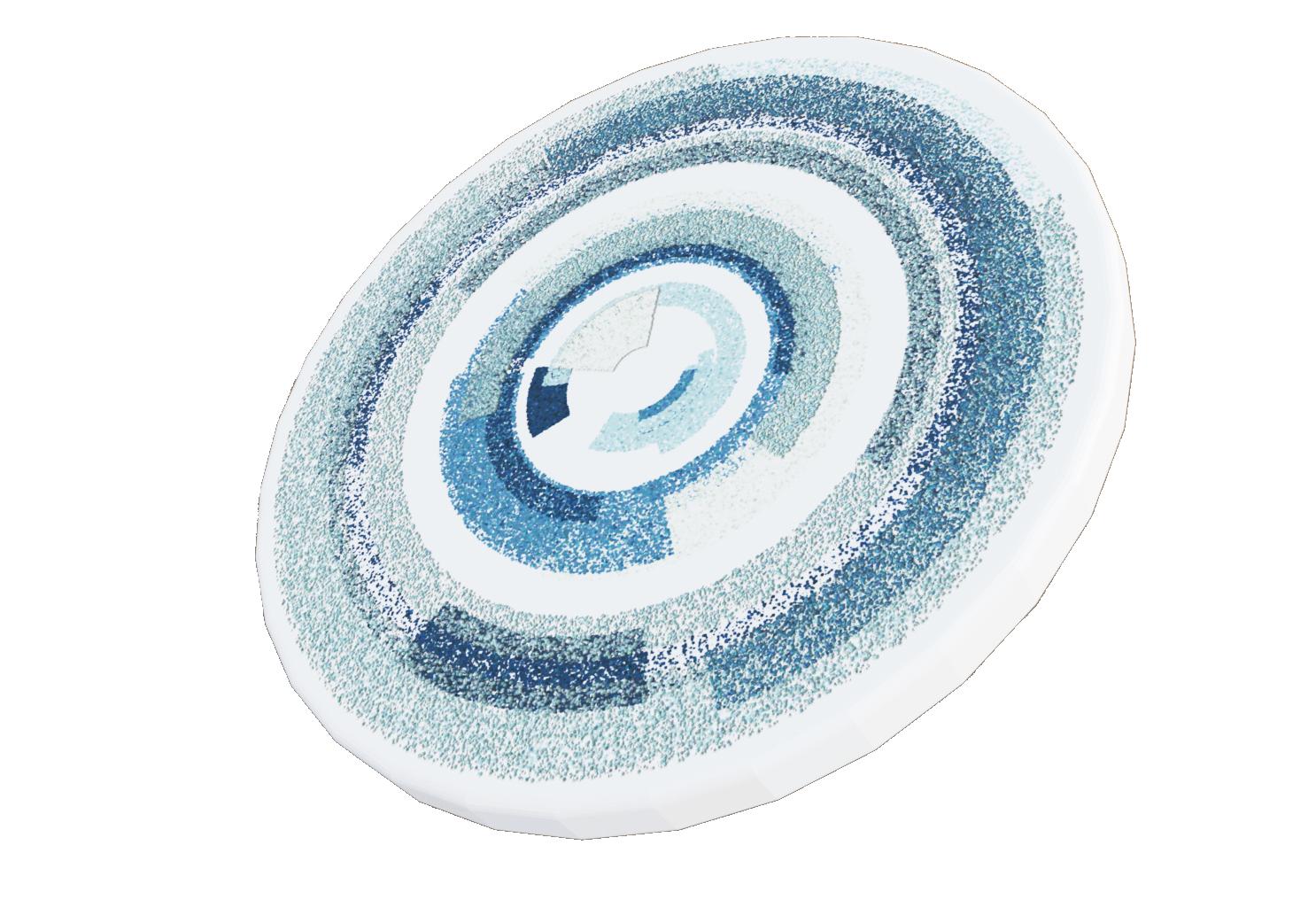
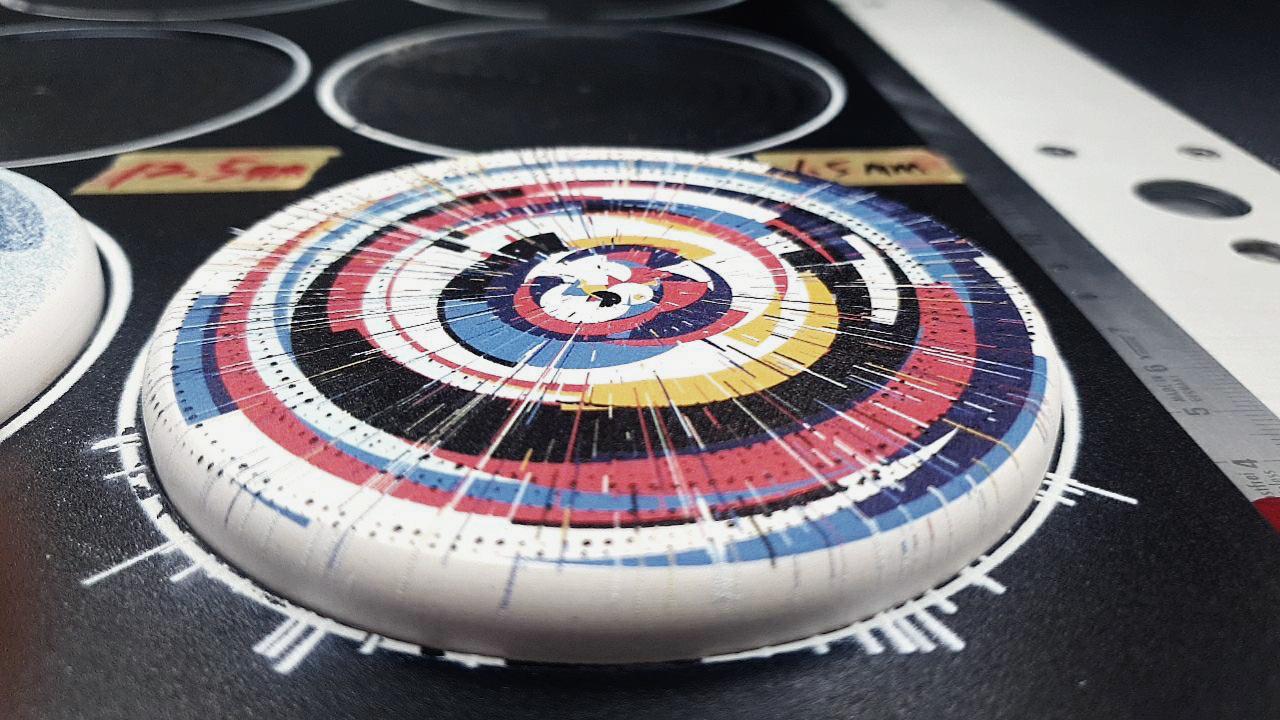
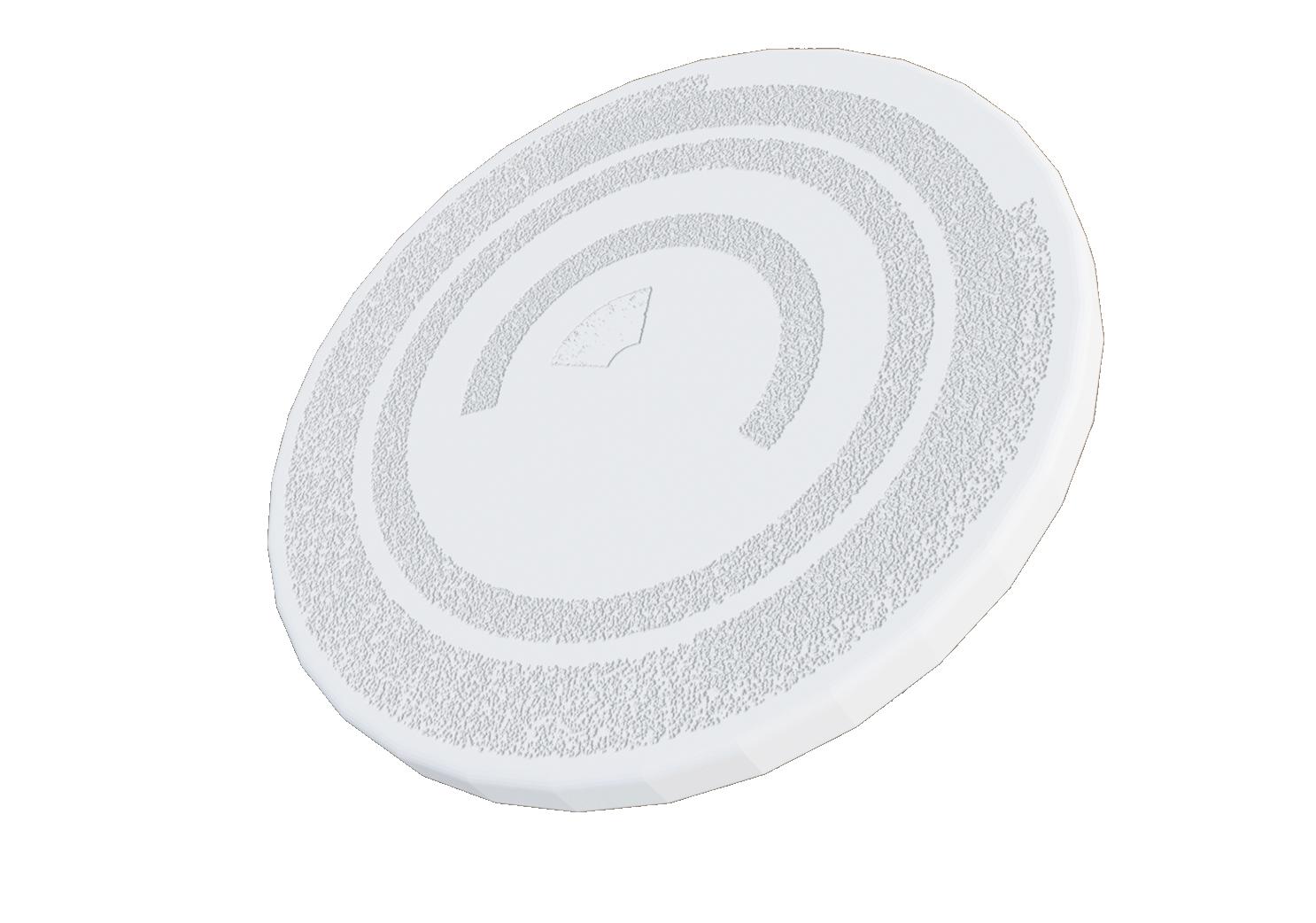
This workshop integrates generative pattern design with digital fabrication. Participants first explore circular and radial pattern generation, experimenting with rhythm, density, and texture. These digital outcomes are then mapped onto a physical 3D-printed coaster by converting grayscale values into tactile height differences. Through this translation, students learn to relate visual composition to tactile experience, designing graphics that become physically perceivable textures.
By linking digital parameters to material output, the workshop demonstrates how computational rules can be adapted to fabrication constraints, bridging creative coding with sensory design.
UV Ink Printing
3D
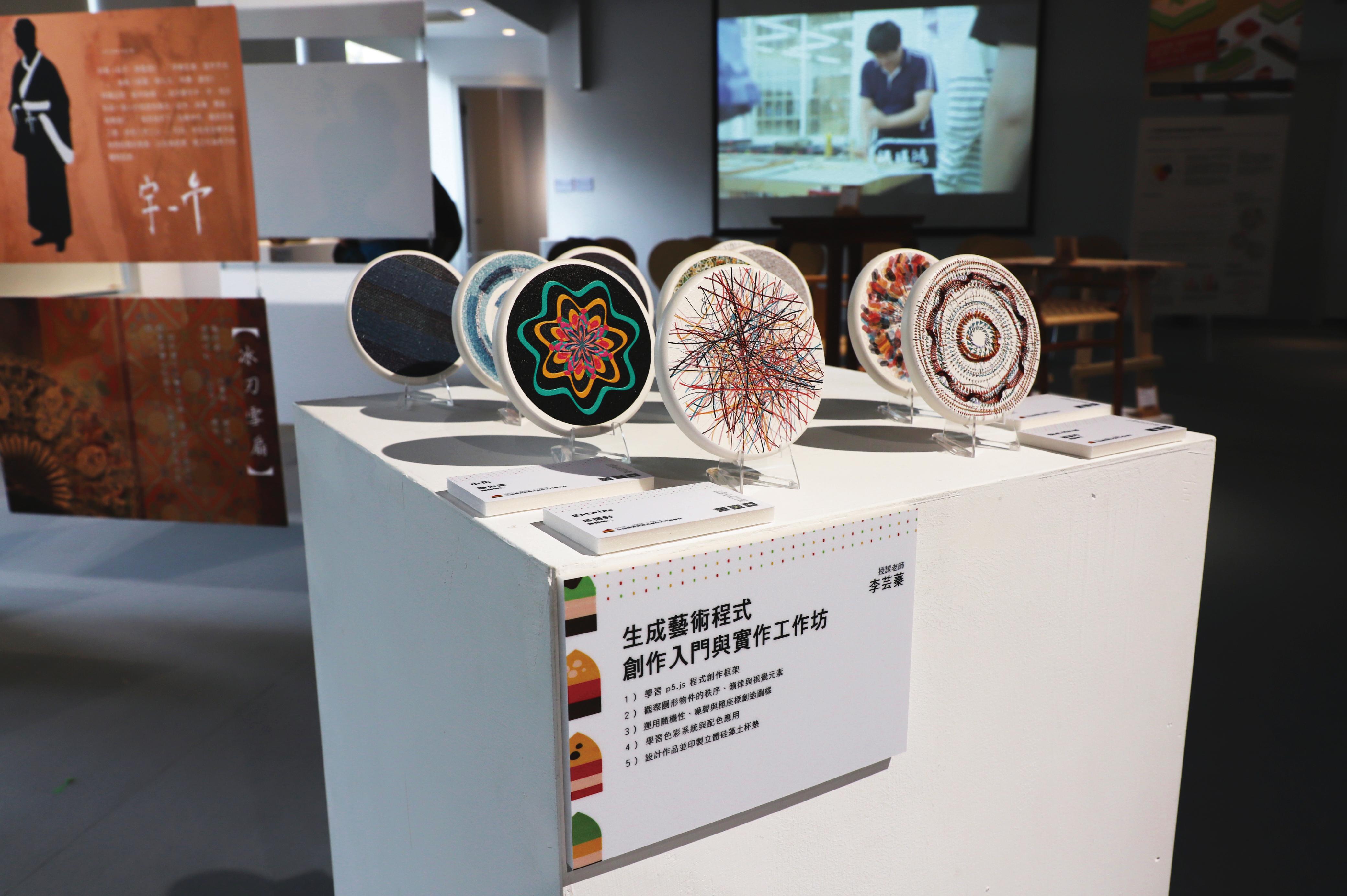
1/ 3D-printed coasters exhibited at the Interdisciplinary Design Program
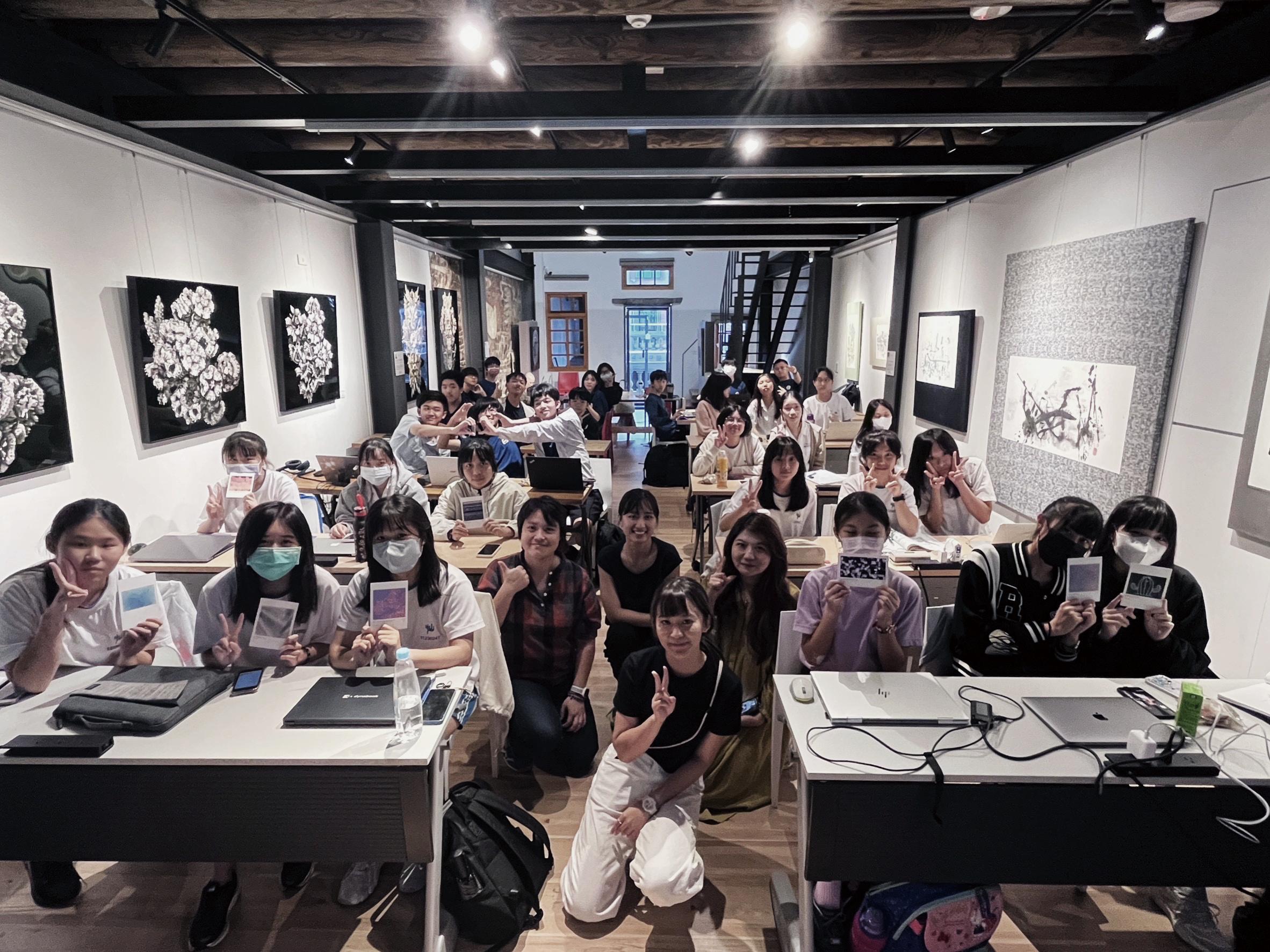
2/ Final class photo with students and their printed postcards.
3/ Students’ generative artworks showcased at Huashan 1914 Creative Park, Taipei, displayed on the largest outdoor screen in Asia. /1/ /2/