The Cost of Cotton: From Farm to Clothing
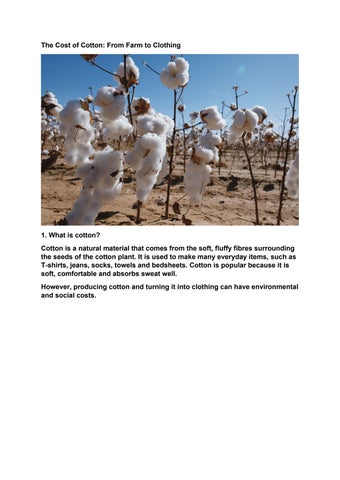
1. What is cotton? Cotton is a natural material that comes from the soft, fluffy fibres surrounding the seeds of the cotton plant. It is used to make many everyday items, such as T-shirts, jeans, socks, towels and bedsheets. Cotton is popular because it is soft, comfortable and absorbs sweat well. However, producing cotton and turning it into clothing can have environmental and social costs.
2. Cotton farming
Cotton plants need warm weather, sunlight and water to grow. Farmers prepare the soil, plant cotton seeds and care for the crops until the cotton is ready to harvest. Cotton farming can cause several problems: •
High water use: Cotton plants need water to grow. In dry areas, using too much water for irrigation can reduce the water available for people, animals and other crops.
•
Pesticides and fertilisers: Some farmers use chemicals to protect cotton plants from pests and help them grow. If these chemicals enter rivers or the soil, they can harm wildlife and pollute the environment.
•
Damage to soil: Poor farming methods can reduce soil fertility and make it harder to grow crops in the future.
•
Workers' health: Farmers who handle harmful chemicals without proper protection may become ill.
3. From cotton to clothing
After harvesting, cotton goes through several stages before becoming clothing. Step 1: Grow and harvest Farmers grow cotton plants and collect the cotton fibres. Step 2: Make cotton yarn Machines clean the cotton and spin the fibres into yarn. Step 3: Produce fabric and clothing The yarn is woven or knitted into fabric, which is cut, sewn and dyed. Step 4: Sell and wear Clothing is transported to shops for people to buy and wear. Making clothing also uses water and energy. Dyeing fabrics may produce wastewater containing chemicals. Factories can create air pollution, while transporting clothes over long distances produces greenhouse gases.
4. Social issues in clothing production
Clothing production provides jobs for millions of people. However, some workers face unfair conditions, such as low wages, long working hours and unsafe workplaces. In some places, workers may not receive enough breaks or proper protection. Consumers can help by choosing clothing from companies that treat workers fairly and provide safe working conditions. 5. What happens to unwanted clothes?
Many people throw away clothes when they no longer want them, even when the clothes are still in good condition. Some unwanted clothing is sent to landfills, where it takes up space and contributes to waste. We can reduce this problem by: •
Buying only the clothes we need.
•
Wearing clothes for longer.
•
Repairing damaged clothing instead of throwing it away.
•
Donating or swapping clothes that are still in good condition.
•
Reusing old clothes or sending suitable textiles for recycling.
6. How can we make a difference? Everyone has a role to play in reducing the cost of cotton. Farmers can use water more carefully and adopt safer farming methods. Clothing companies can reduce waste, manage wastewater responsibly and provide fair working conditions. Consumers can make thoughtful choices when buying and disposing of clothes. Remember: The cheapest clothing is not always the least costly to the environment or the people who make it.