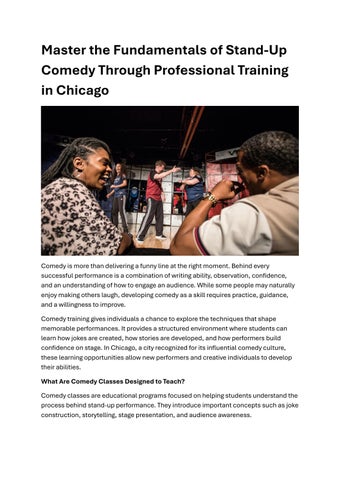
Master the Fundamentals of Stand-Up Comedy Through Professional Training in Chicago
Comedy is more than delivering a funny line at the right moment. Behind every successful performance is a combination of writing ability, observation, confidence, and an understanding of how to engage an audience. While some people may naturally enjoy making others laugh, developing comedy as a skill requires practice, guidance, and a willingness to improve. Comedy training gives individuals a chance to explore the techniques that shape memorable performances. It provides a structured environment where students can learn how jokes are created, how stories are developed, and how performers build confidence on stage. In Chicago, a city recognized for its influential comedy culture, these learning opportunities allow new performers and creative individuals to develop their abilities. What Are Comedy Classes Designed to Teach? Comedy classes are educational programs focused on helping students understand the process behind stand-up performance. They introduce important concepts such as joke construction, storytelling, stage presentation, and audience awareness.
A comedy course helps students move beyond simply having funny ideas. It teaches them how to organize thoughts, strengthen their material, and deliver performances that connect with listeners. These skills require practice and feedback, which are key parts of the learning process. The purpose of comedy education is not limited to preparing professional performers. Many students join because they want to become better communicators, explore creativity, or gain confidence in expressing themselves. Why People Are Interested in Learning Comedy? People choose comedy classes for many personal and professional reasons. Some dream of performing in front of audiences, while others want to develop a creative skill that challenges them in new ways. Comedy encourages individuals to observe the world differently. Everyday experiences, conversations, and personal perspectives can become sources of creative material when students learn how to approach them from a comedic point of view. Another benefit is personal confidence. Speaking in front of others can be challenging, but regular practice in a supportive environment helps students become more comfortable presenting their ideas. Starting the Journey With Beginner Comedy Classes For those new to performance, beginner comedy classes offer an introduction to the essential elements of stand-up. These programs help students understand how comedians develop ideas, write routines, and prepare for live performances. Beginners often learn that comedy is a process rather than a single moment of inspiration. A joke may require several revisions before it becomes effective, and performers improve by testing ideas and learning from audience responses. Early training also helps students discover their personal style. Every comedian approaches humor differently, and classes provide opportunities to explore different techniques until students find an approach that feels natural. Benefits of Comedy Training Learning comedy can support personal growth in several ways: •
Develops stronger communication and storytelling skills.
•
Builds confidence through practice and performance.
•
Encourages creativity and original thinking.
•
Provides feedback that helps improve ideas.
•
Creates connections with other creative individuals.
Who Can Benefit From Comedy Classes? Comedy classes are suitable for people with different backgrounds and goals. Individuals interested in becoming comedians can use them as a foundation for developing performance skills and creating original material. Professionals can also benefit from comedy education. Public speaking, presentations, and leadership often require the same abilities comedians practice, including engaging an audience, organizing information, and communicating clearly. Creative professionals may find comedy training valuable because it encourages experimentation. Writers, performers, and content creators can learn new ways to develop ideas and make their work more engaging. For those simply searching for a unique hobby, comedy classes provide a chance to try something different while meeting people with similar interests. What Students Experience During Comedy Training? Comedy classes typically combine instruction, writing activities, and performance exercises. Students learn how comedians approach material development and how different techniques influence audience reactions. Writing is a major part of the process. Participants create their own jokes and stories while learning how to improve them through editing and feedback. This teaches the importance of preparation and persistence. Performance practice helps students apply what they learn. Sharing material in front of others allows participants to improve their timing, confidence, and ability to respond to an audience. A classroom setting also provides a safe place to experiment. Students can try different approaches, learn from mistakes, and gradually become more comfortable performing. Comparing Stand-Up Comedy Classes With Other Ways to Learn When comparing stand up comedy classes chicago with learning independently, formal training provides advantages through direct interaction and structured practice. Online resources, books, and videos can offer useful information, but they may not provide personal guidance. In a classroom environment, students receive feedback from instructors and peers. This allows them to understand what works, identify areas for improvement, and continue developing their skills.
Independent learning can still be valuable for those who prefer flexibility. However, people who want consistent practice and real performance experience often benefit from joining a structured program. Risks & Considerations Learning comedy requires patience because improvement happens gradually. New performers may feel nervous sharing material or may experience moments when jokes do not receive the expected reaction. These experiences are normal parts of developing as a performer. Selecting the right course is important. Students should consider their goals, experience level, and preferred learning approach before choosing a program. It is also important to understand that comedy depends on perspective. Different audiences respond differently, and learning how to adapt is an essential skill for anyone developing performance abilities. Frequently Asked Questions Do comedy classes require previous performance experience? No. Many courses are created for beginners and teach fundamental skills from the beginning. Can comedy training help with everyday communication? Yes. Comedy teaches storytelling, confidence, and audience awareness, which are useful in many situations. Do students have to perform during a comedy course? Most programs include some performance practice because applying skills is an important part of learning. Are comedy classes only useful for aspiring comedians? No. Many people join for personal development, creativity, and improving communication skills. How can someone improve after completing a comedy class? Continued writing, performing, and receiving feedback are important ways to keep developing comedy skills. Final Thoughts Comedy training provides a practical way to understand the art of performance while developing creativity and confidence. It allows students to learn the techniques behind effective humor and discover how to share their own perspectives with an audience.
For anyone interested in exploring comedy in Chicago, classes can provide valuable knowledge, practice opportunities, and a supportive environment for growth. Whether the goal is performing professionally, becoming a stronger speaker, or simply exploring a new creative interest, learning comedy can be a rewarding experience. Contact Us: • • •
Name: The Lincoln Lodge Address: https://maps.app.goo.gl/fTG8R7PPcuSV9pZq6 Phone No: +17732511539