PORTFOLIO
Jennifer Hsu
Columbia University
Masters of Architecture ‘27

Jennifer Hsu
Columbia University
Masters of Architecture ‘27
+1 317 626 1670 | JENHSU20@GMAIL.COM | NEW YORK, NY 10027 | https://www.linkedin.com/in/jennifer-hsu-127082188/
An analytical and highly motivated Masters of Architecture student at Columbia University with a diverse background in Computer Science, Psychology, and scientific research in AI applications interested in the intersection of public Architecture, technology, and broader social impacts
EDUCATION
2024 - 2027, COLUMBIA UNIVERSITY, Masters of Architecture
2020 - 2024, CLEMSON UNIVERSITY, BS in Computer Science, Minor in Architecture and Psychology, GPA 3 92/4 0, Presidential Scholar, National Merit Scholar
VISUAL DESIGN: Adobe InDesign, Illustrator, Photoshop, Rhino, AutoCAD, Revit, Blender, V-Ray
APP AND WEB DESIGN: HTML, CSS, Javascript, Figma, Adobe Xd, Swift, RestAPI, Unity
VIDEO AND ANIMATION: Premiere Pro, After Effects, Blender COMPUTER PROGRAMMING: C, C++, Java, Python, Neural Networks, SQL LANGUAGES: English, Chinese
resume
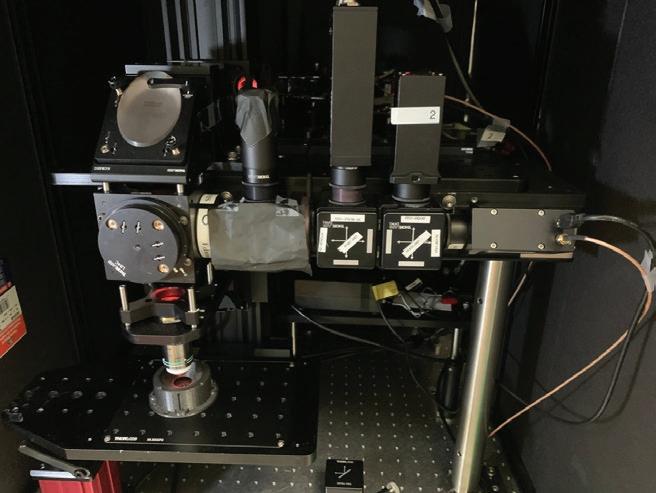
2020 - 2024, Research Assistant @ Nano Functional Imaging Laboratory, Clemson University
Assisted with image data preparation and neural network algorithm training for cell classification and segmentation AI
Created the new lab website from scratch via HTML and CSS (https://cecas clemson edu/nfil/index html)
2022 - 2024, Research Assistant, @ TRACE Research, Clemson University
Built game model visuals and flow via wire frames in Figma, and 2D game environments / maps in Unity
Conducted data collection via interviews with human participants
2022, Teaching Assistant @ Software Development Foundations, Clemson University
In charge of grading and managing 2 hour weekly labs for a class of over 50 student
2020, Marketing Volunteer @ Education For All (efaglobal org)
Used Adobe Illustrator and Photoshop to create marketing/social media campaigns focused on educational injustices
*Hsu, J , Ihekweazu, C , McDowell, K , Shelton, A , Smathers, P (2022, December) “Improving the Efficiency of Deep Learning for Medical Applications ” Watt AI Creative Inquiry Showcase, Clemson, SC
Fan, H , Xu, P , Chen, X , Li, Y , Zhang, Z , Hsu, J., Le, M , Ye, E Gao, B , Demos, H , Yao, H , Ye, T (2023, November) “Mask R-CNN provides efficient and accurate measurement of chondrocyte viability in the label-free assessment of articular cartilage ” Osteoarthritis and Cartilage Open, Volume 5, Issue 4, 2023, 100415, ISSN 2665-9131, https://doi org/10 1016/j ocarto 2023 100415
Lancaster, C , Flathmann, C , Hsu, J., McNeese, N , O’Neill, T , Salas, E (2024) “Preparing for Tomorrow’s Teamwork: Understanding Training Needs for Human-AI Teams in the Workforce”, Journal of Organizational Behavior, under review
1. fall 2024 garden
2. fall 2024 climate
3. fall 2023 birdhouse
1. fall 2023 databases project
2. fall 2022 research poster
3. spring 2019 AI magazine
Assignment: Studio I Garden
Title: Seeds of Play
Site: NYC City Hall
Duration: 4 weeks
*Partner Project with Ruby Li
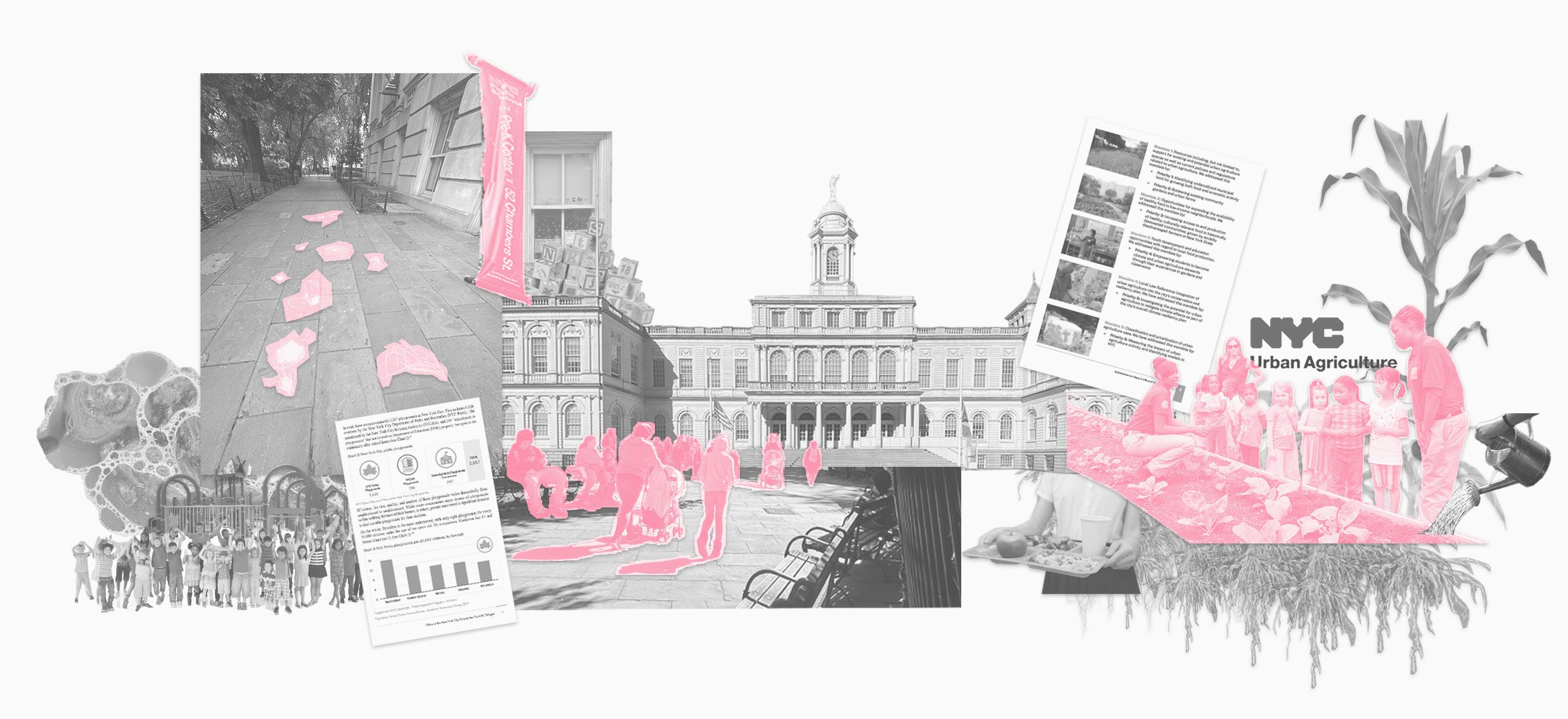
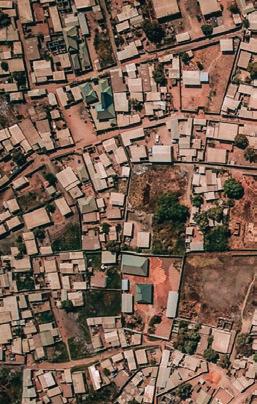
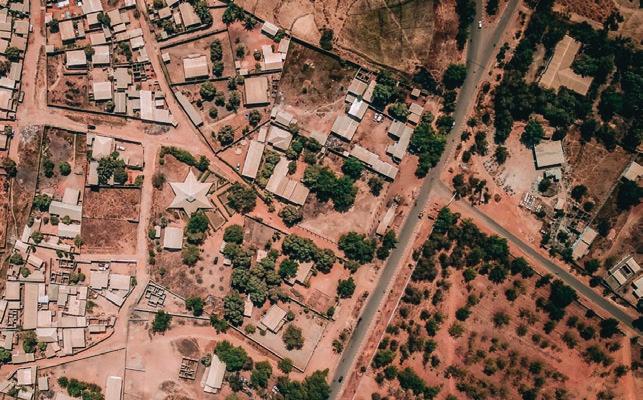
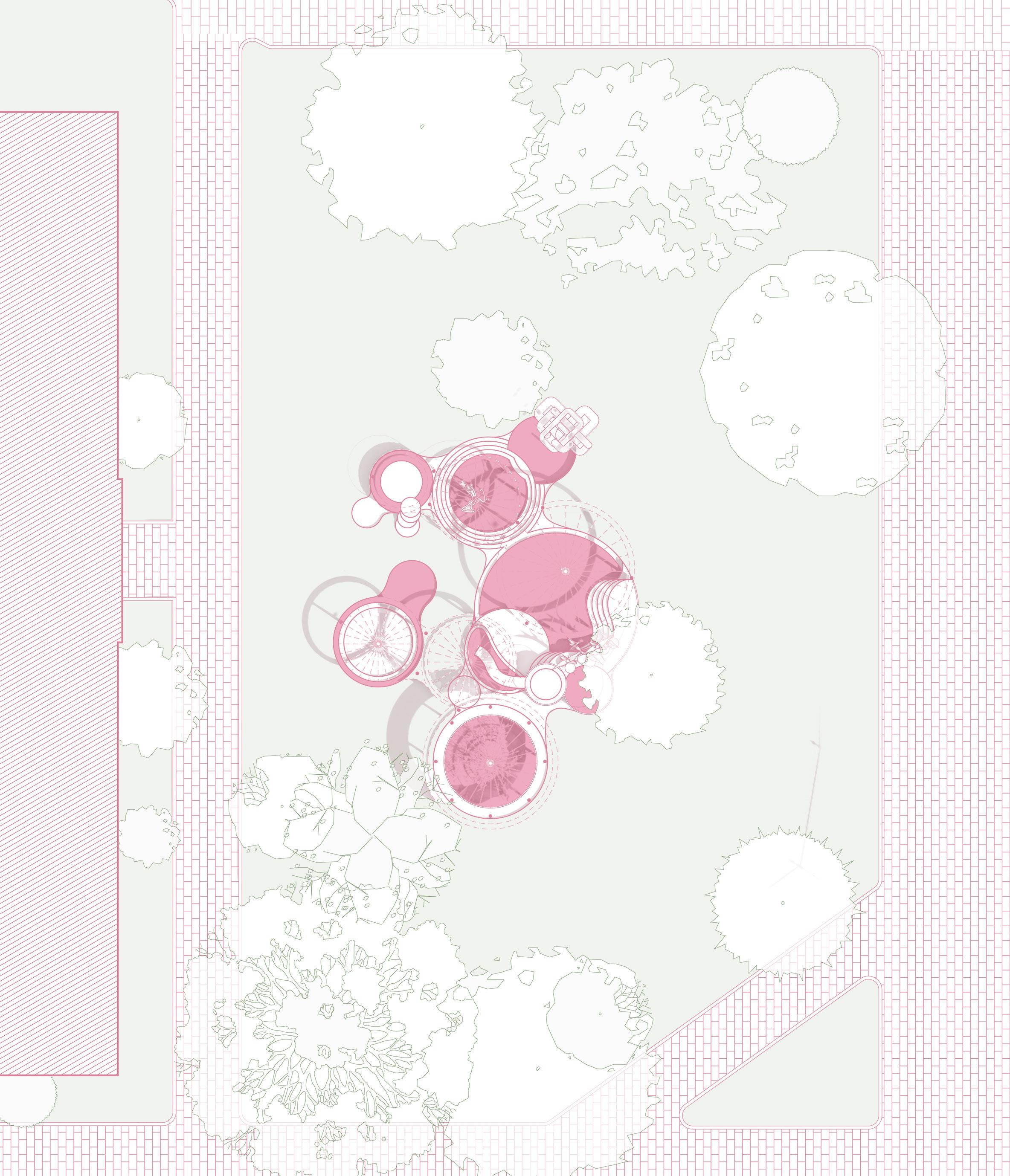
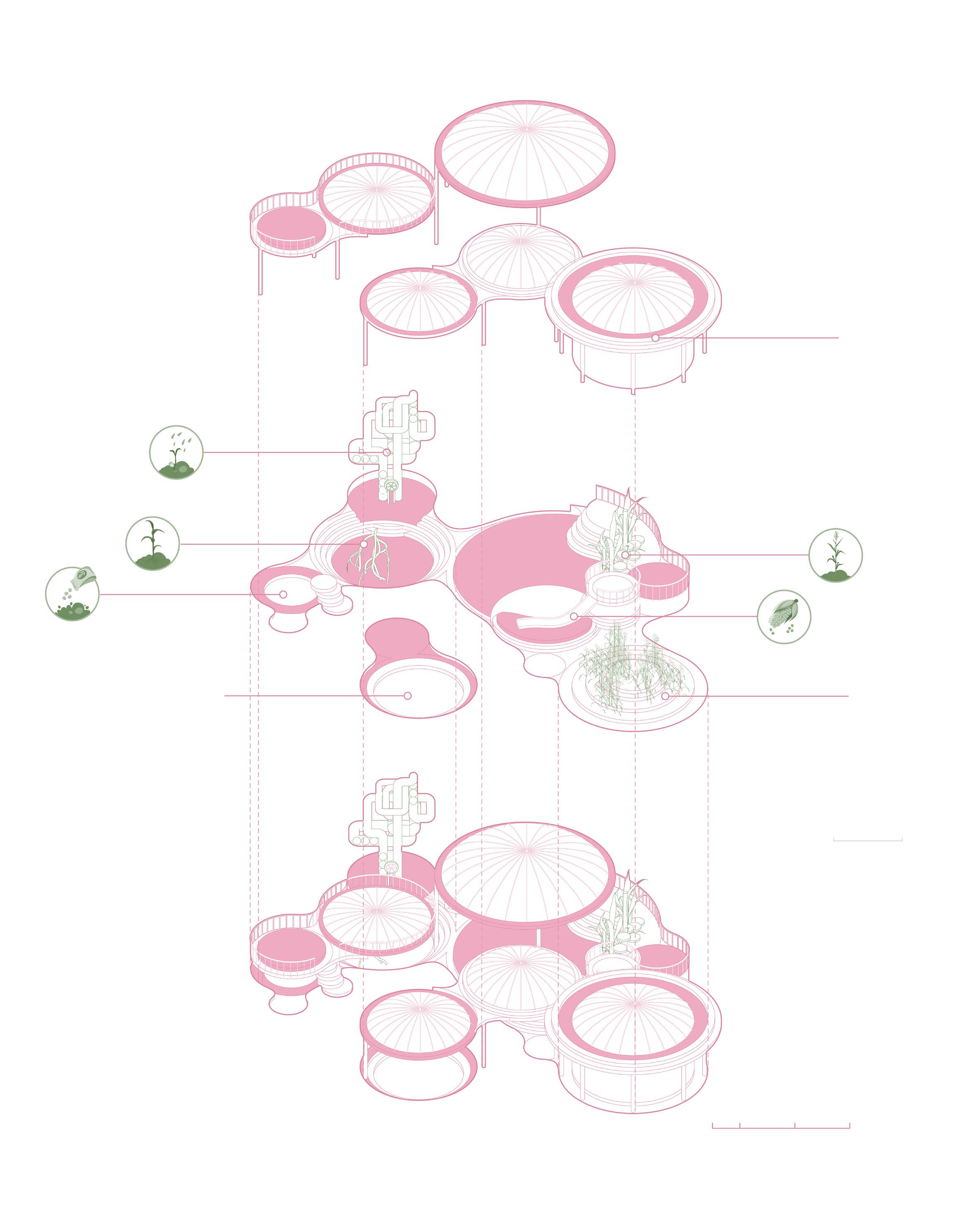
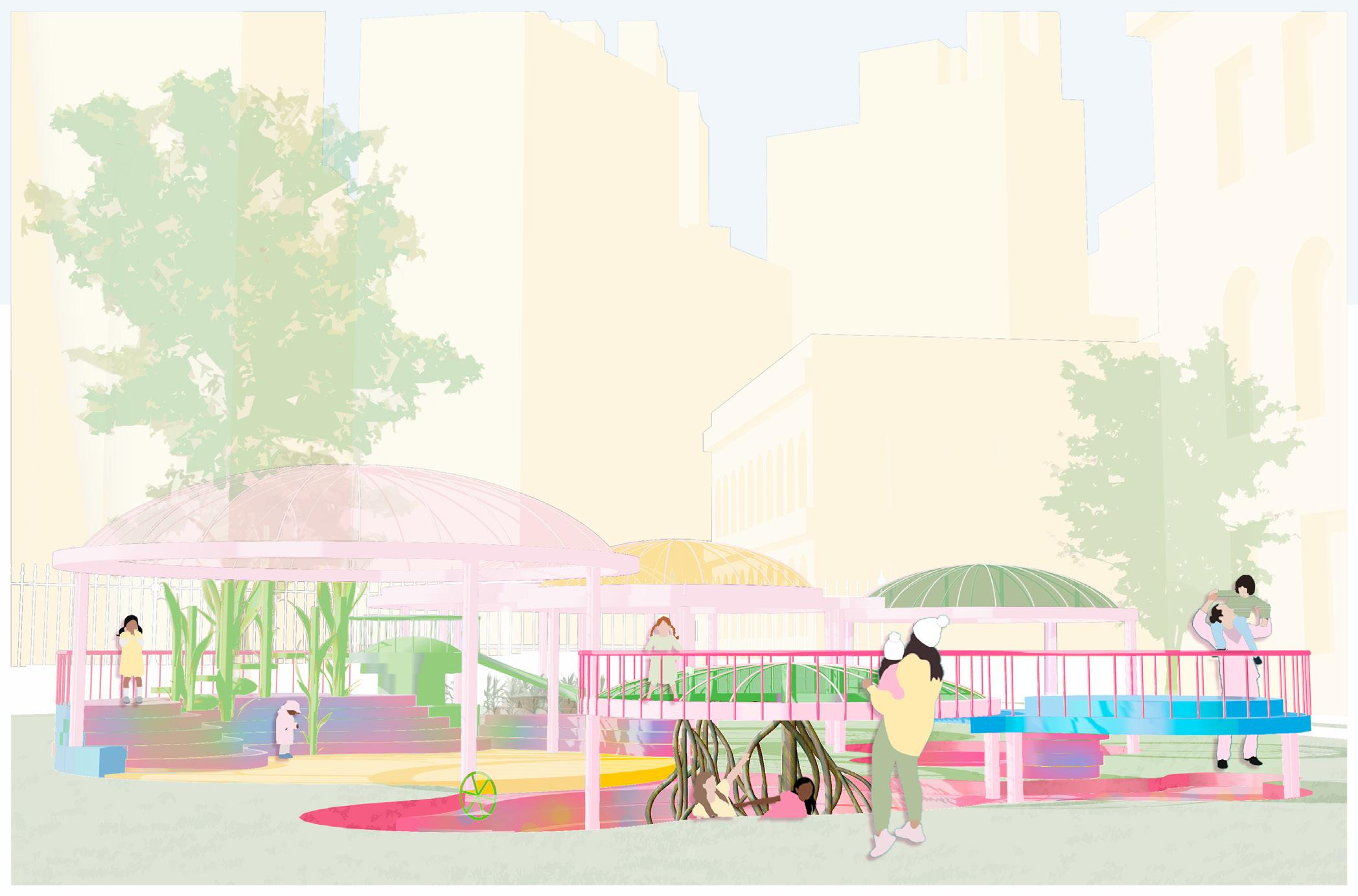
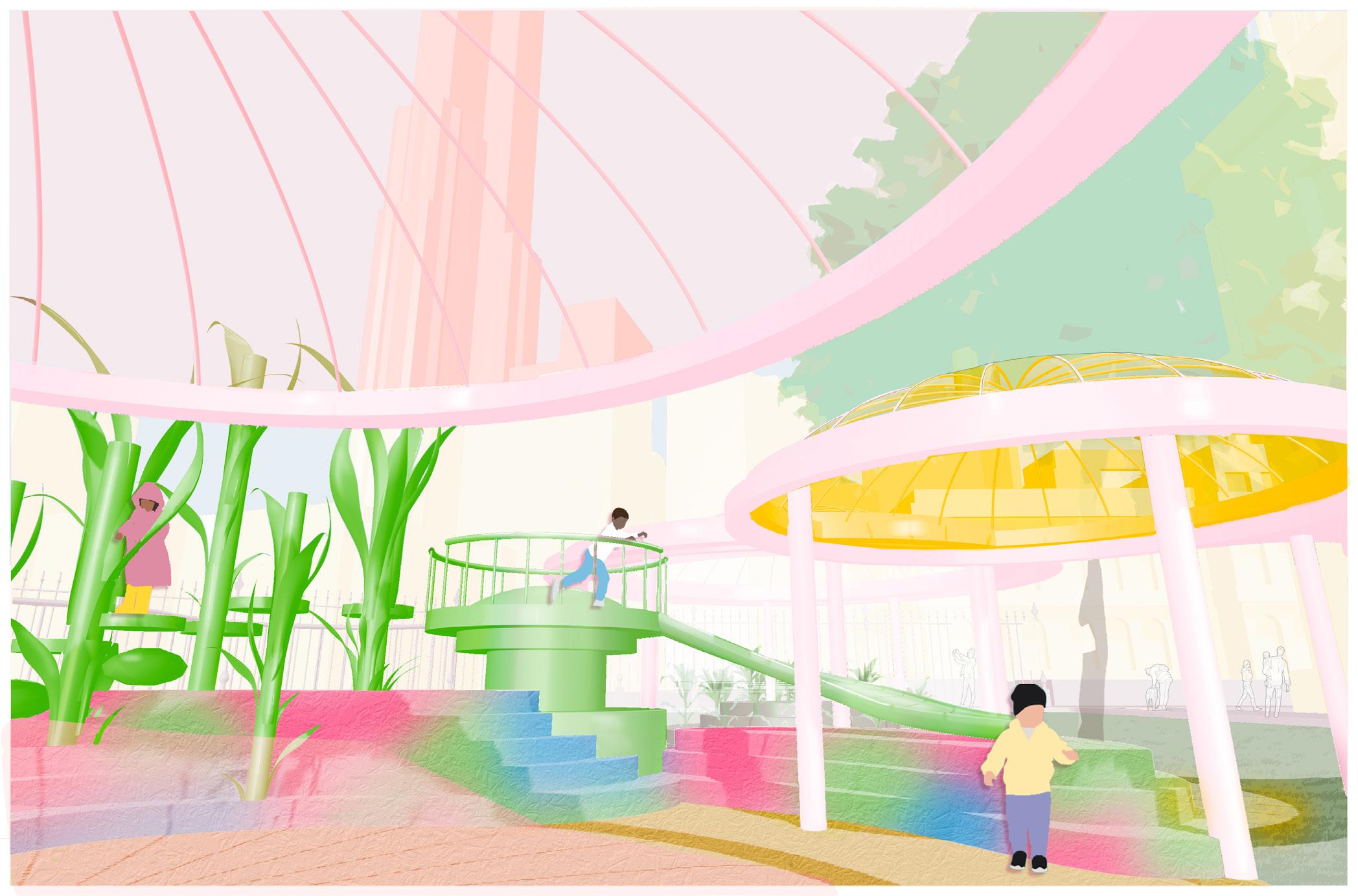
In City Hall Park, despite the presence of many children and a nearby preschool at 52 Chambers Street, there is no designated space for their engagement. In response, a playground structure was developed to engage young children, particularly those aged 3-4, in both physical and intellectual play. Beyond promoting social interaction and motor development, this playground capitalizes on its setting, City Hall, to introduce children and the local community to City Hall programs. Inspired by Ruby’s work on learning systems and Jenny’s precedent on mono-agriculture, the playground highlights the Mayor’s Office of Urban Agriculture and its efforts to promote sustainable urban farming practices.
Assignment: Studio I Climate
Title: Crib of Life
Site: Christopher Street Pier, NYC
Duration: 4 weeks
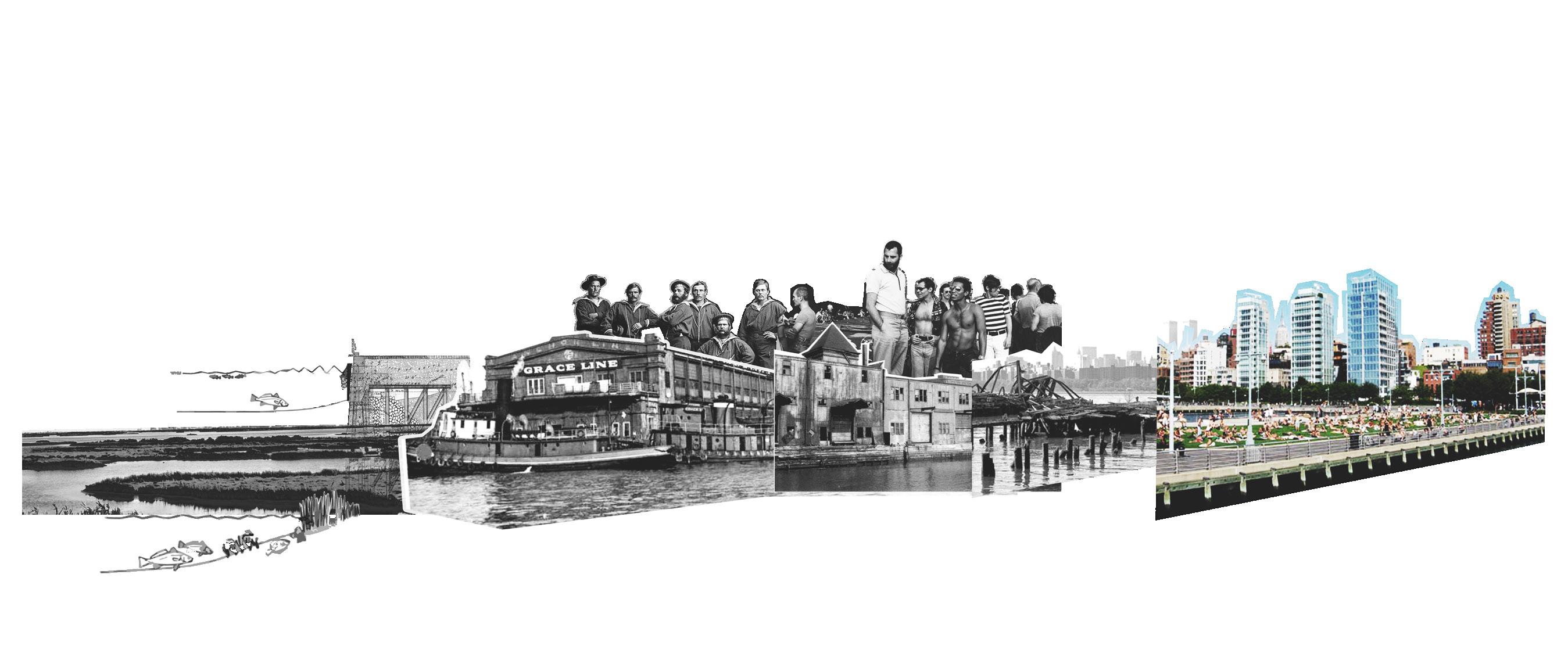
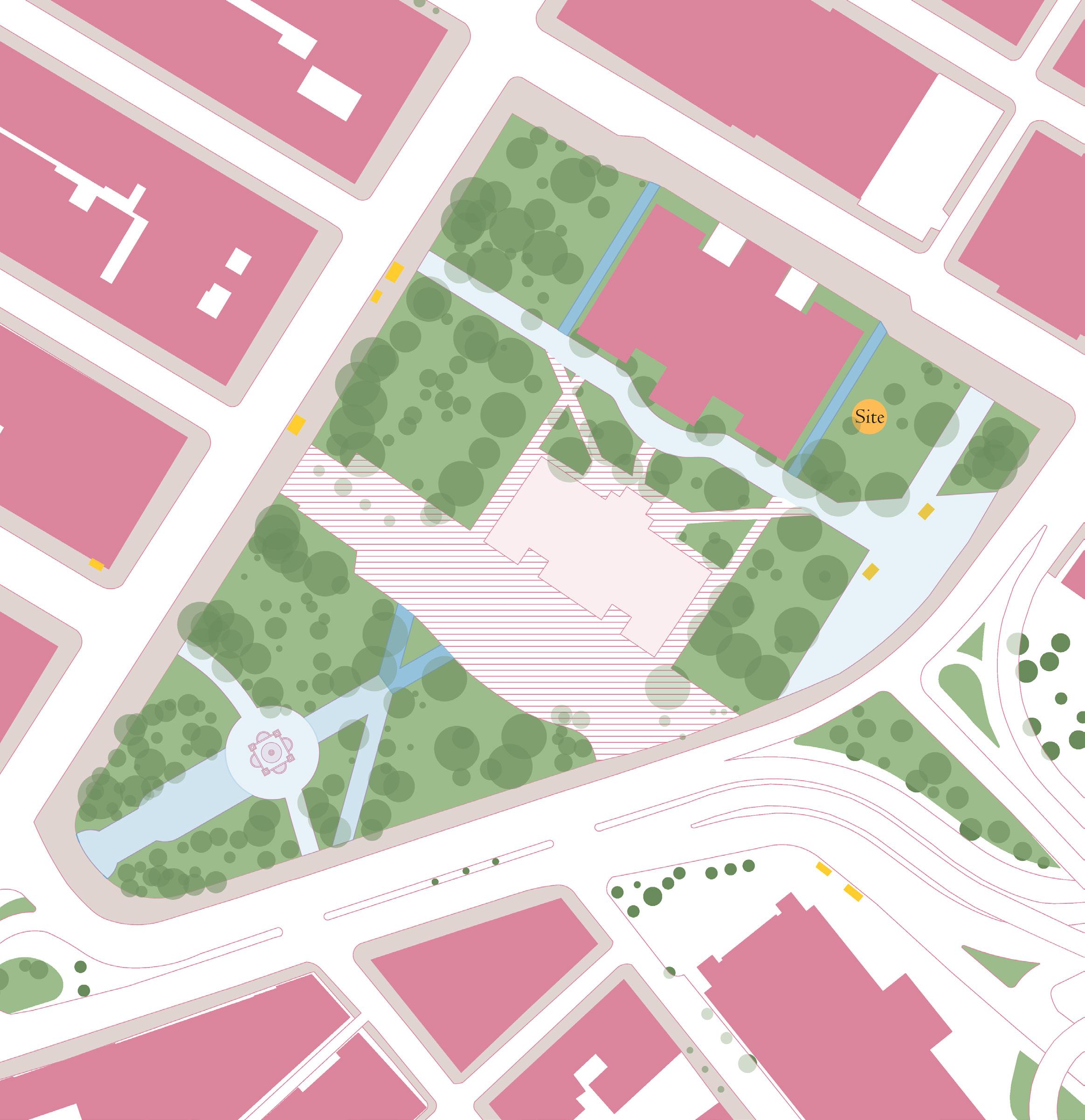
Abandonment does not mean the structure ceases to be used. Just the opposite, in fact. Abandoned structures create space for the fringes of life. Corn cribs, once emptied of corn, become a shelter for plants, such as trees which struggle to grow in windy conditions without shelter, and a nesting place for birds hiding from predators. Without man-made purpose, the building becomes nature, and in turn works symbiotically with its environment. When one demolishes or paves over an abandoned structure, one is not merely tearing down crumbling material; there are entire mini-ecosystems, including relationships and material exchanges, which get lost. This project seeks to invite people to see the natural life and complex processes that end up occurring once a structure gets abandoned as well as present the opportunity for a symbiotic presence of humans in these spaces. The result is a structure which floats on the Hudson River and interacts with the natural environment to cultivate a microclimate which would have existed centuries ago, before human industrial development and a bulkhead was formed along the western edge of Manhattan. Ultimately, this becomes a place where the human is not the center, but merely a small player, or perhaps even steward, in a larger natural process.
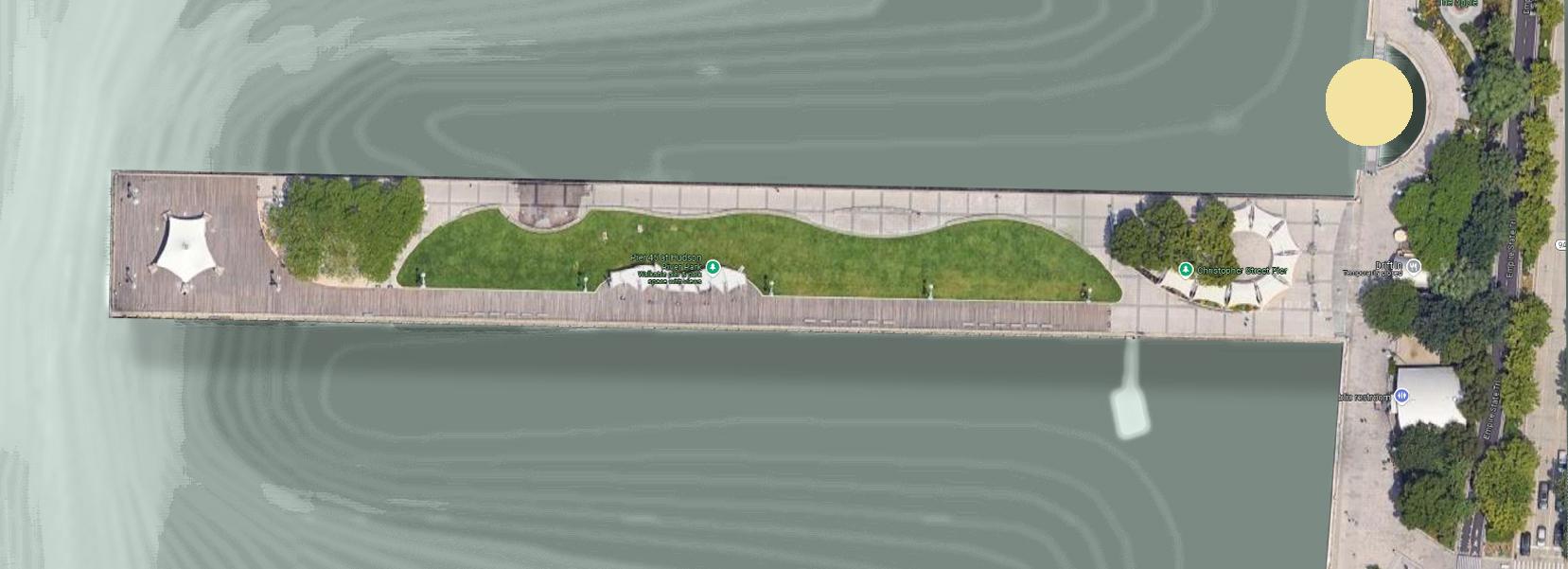
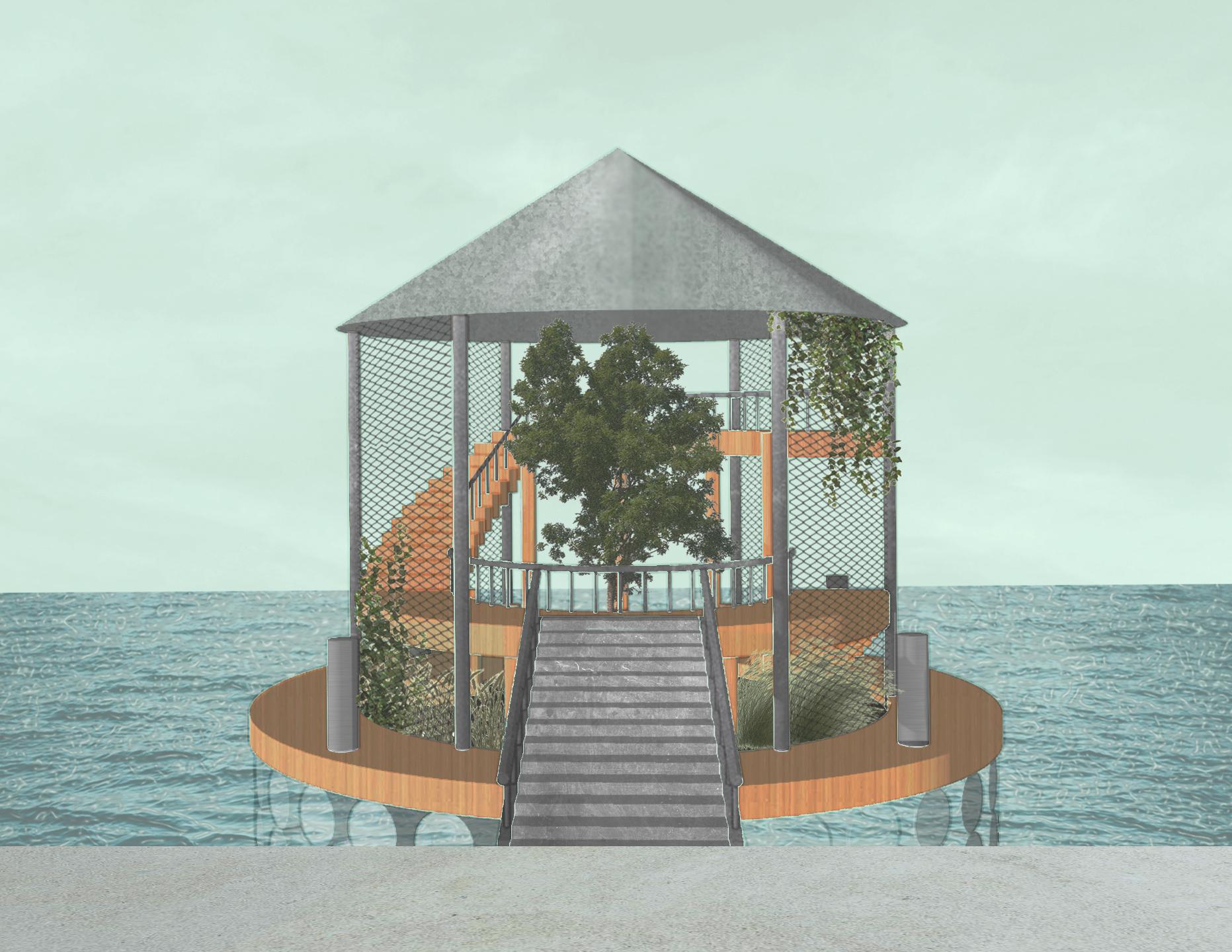
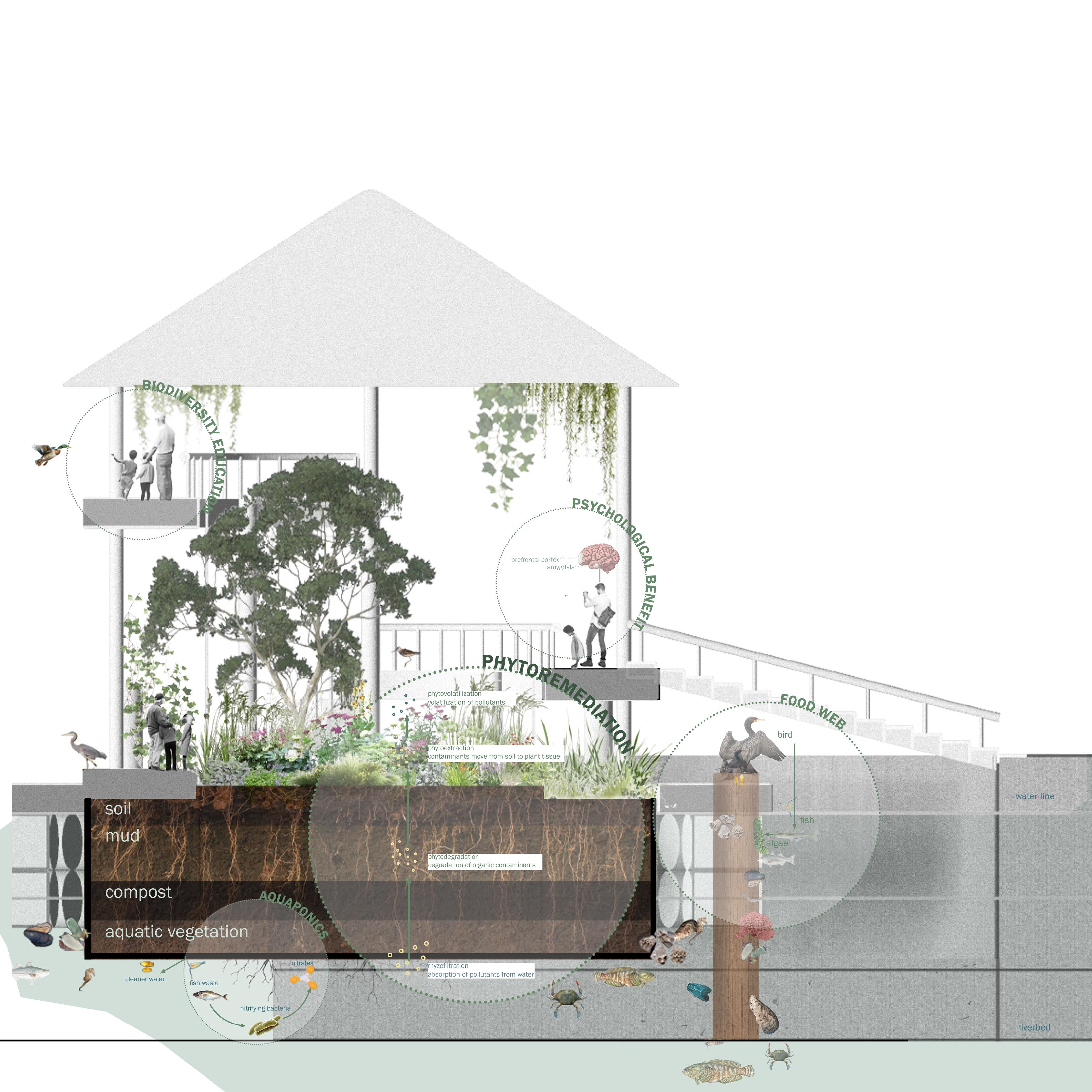



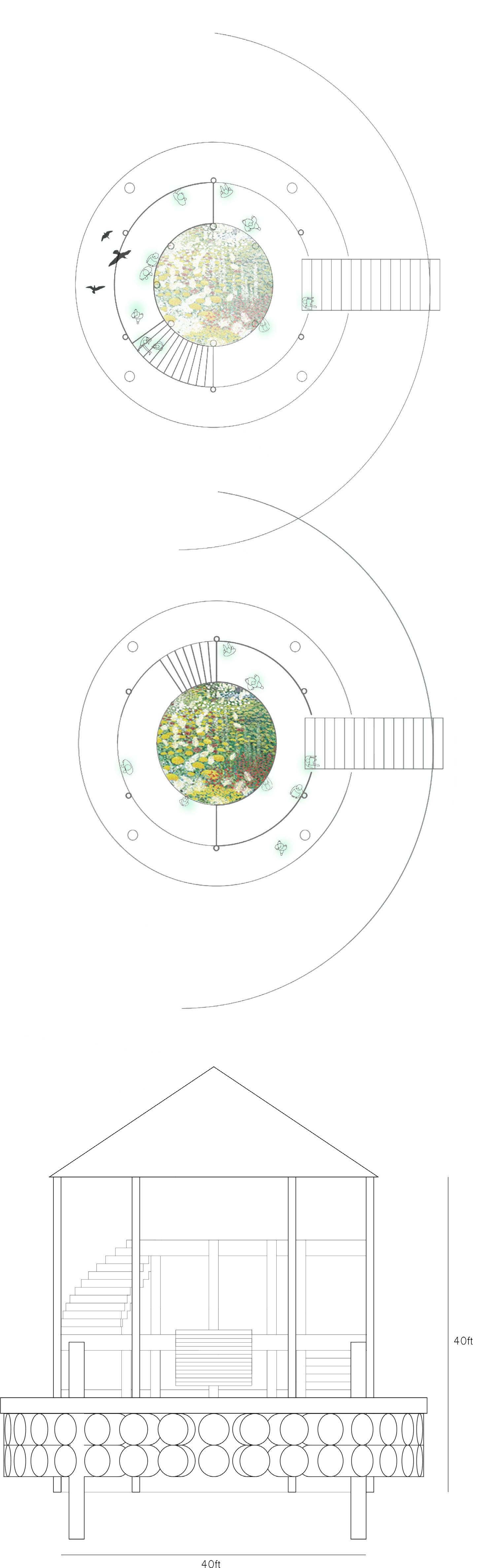
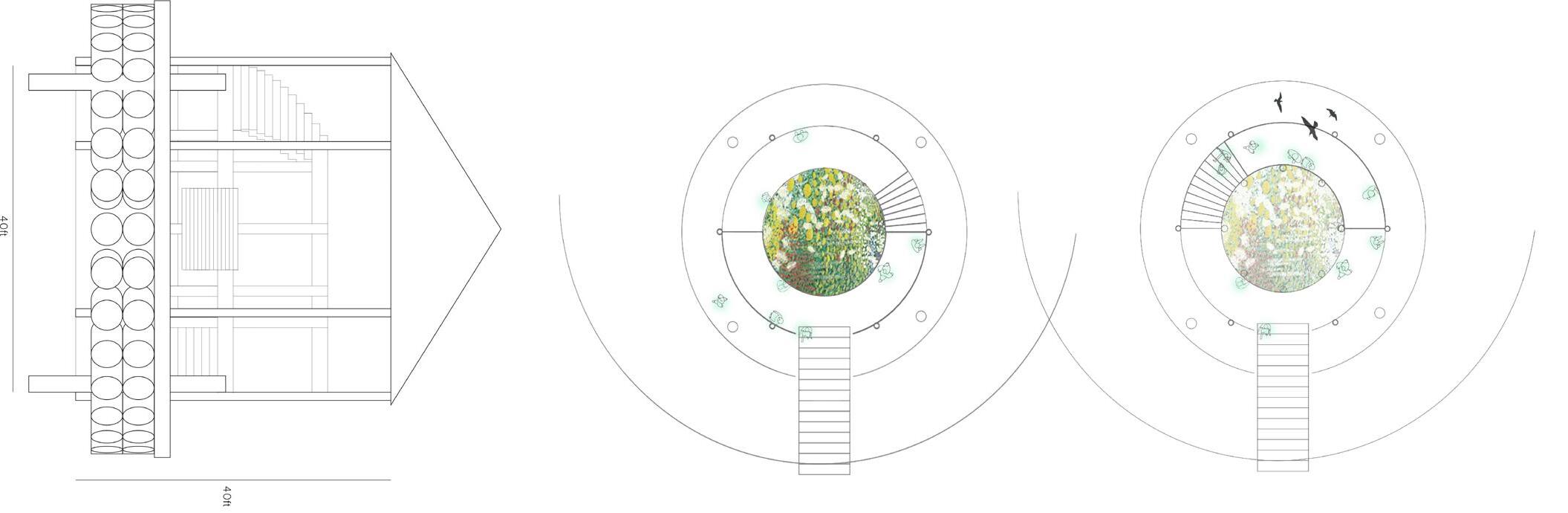
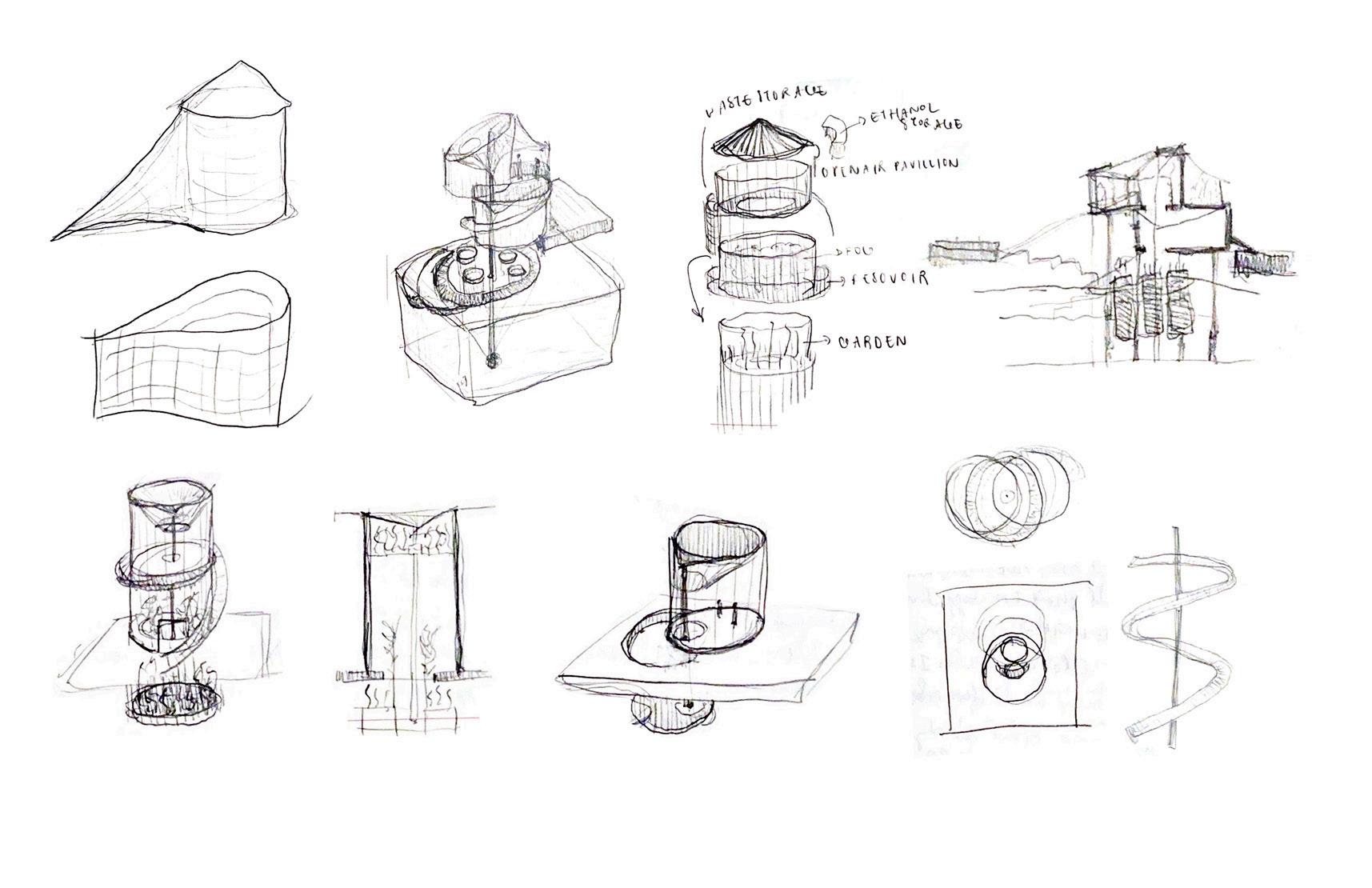
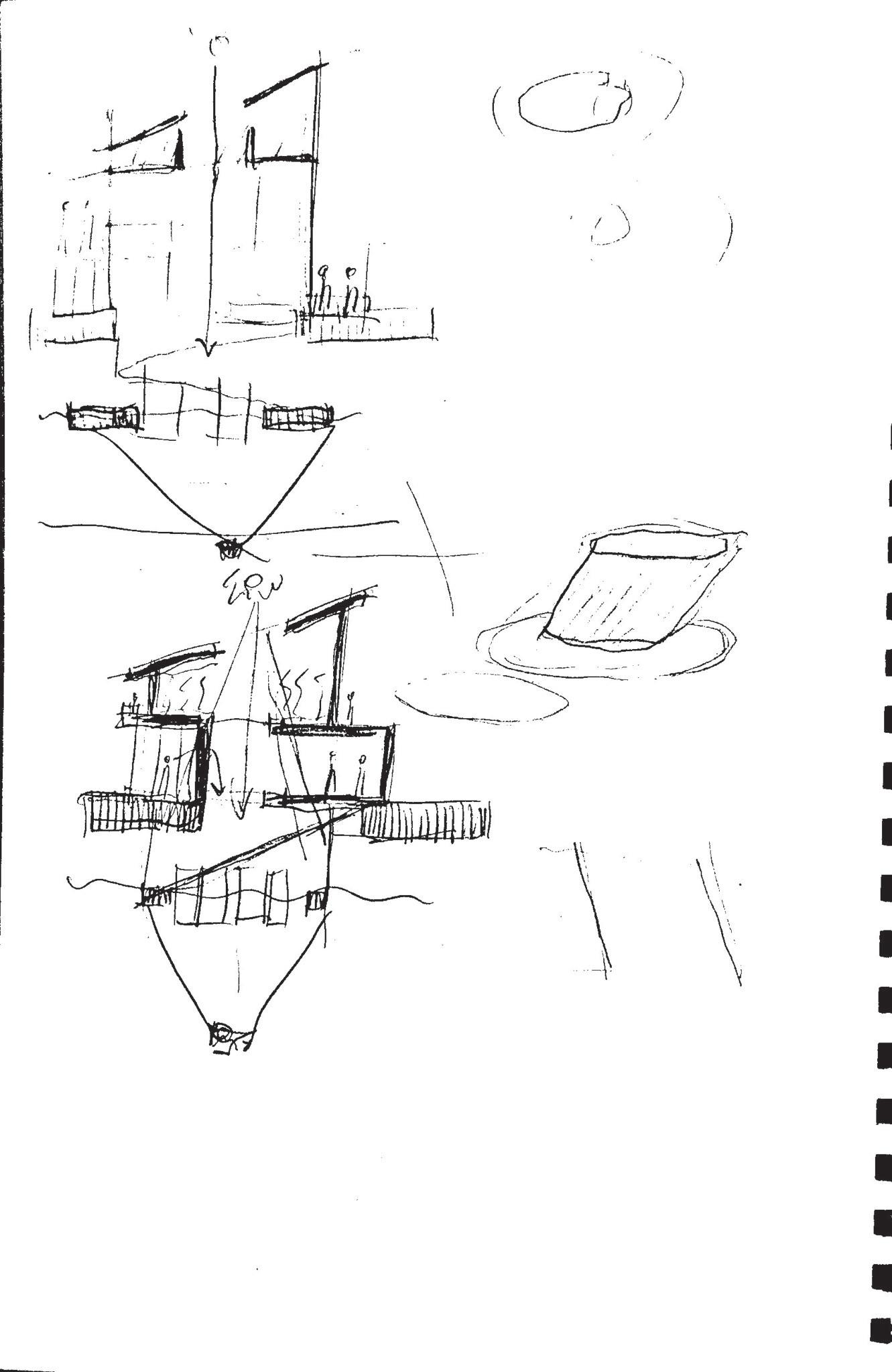
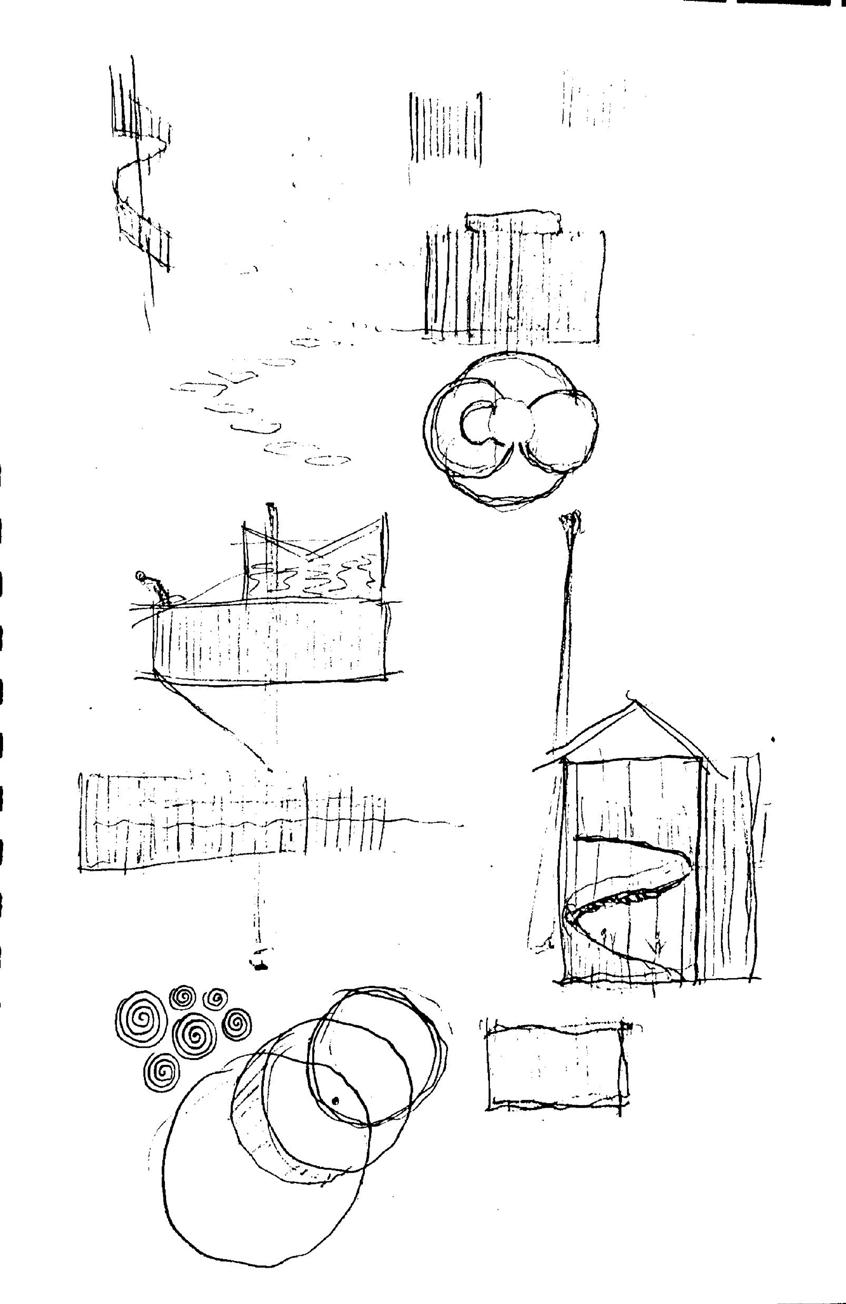
Form finding was one of the primary challenges of the project. I decided to stay as close as possible to the imagery of the corn crib, and commit to the idea of its readaptability, and think about how abandoned objects can serve as natural mediums for growth. The end product is a simple floating wetland climate which uses rain barrels, a corn crib, and piles to facilitae interspecies processes and growth. The circulation path gives the human a way to immerse themselves in the environment without disrupting it. The ultimate goal is to provide a sanctuary for interspecies connection in the midst of a highly urban, extractive human environment.
Assignment: Architecture of Databases
Title: Pizzeria Project
Duration: 8 weeks
DATABASES
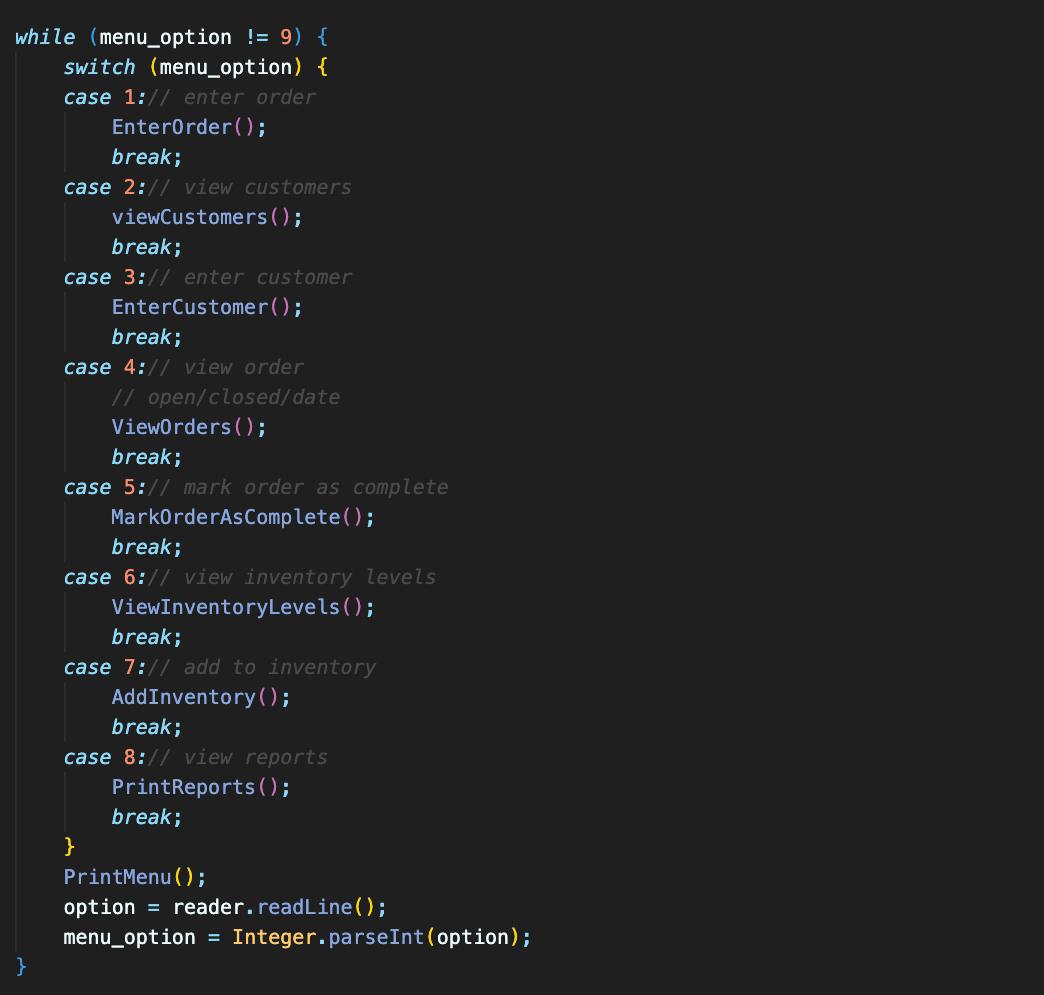
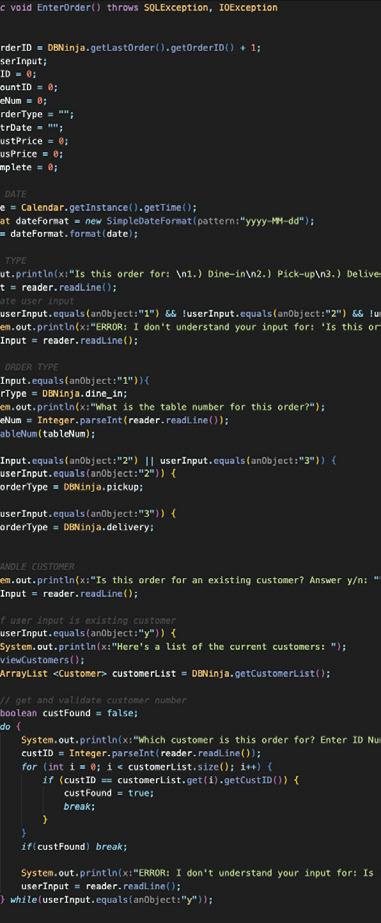
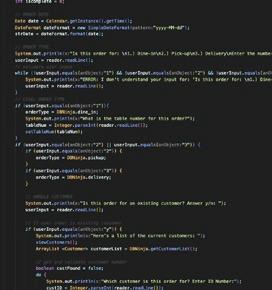
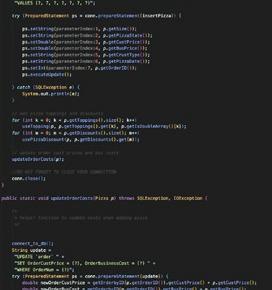
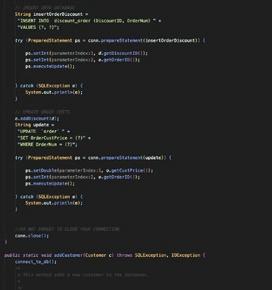
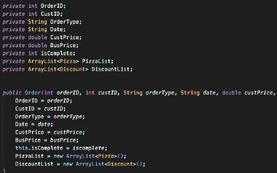
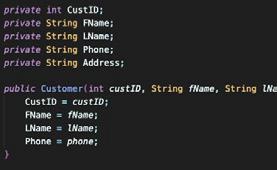
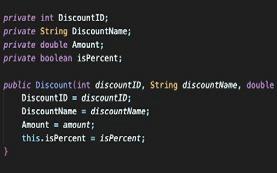
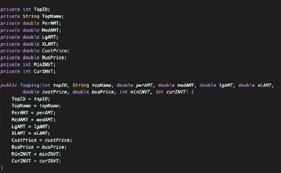
The goal of this semester-long project was to build a full program which can take pizza orders from customers and store these orders in a database for business use. I created with a partner the full application, from the brainstorming and planning phase all the way to the implementation of the program.
The goal of this semester-long project was to build a full program with a front and back end which could take pizza orders from customers and store these orders in a database for the use of a pizzeria business. With a partner, I created a full application from the planning phase all the way to the program implementation. It required considering various user needs, including the customers, drivers, and program administrators, and their relationships. Below is an example of how the program takes an order from a customer, and how the order calls upon other objects to update the database with the order.
Duration: 1 week
This course explored discrete structure algorithms—mathematical frameworks used to solve computational problems—through graphic techniques, visualizing concepts like graphs, trees, and combinatorial structures to enhance problem-solving and algorithmic understanding. The prompts every week were an unfinished discrete math problem that I solved and then created a visual representation of the solution.
1
Hamiltonian Path 1 Hamiltonian Path 2
15 - (8, 1, 15, 10, 6, 3, 13, 12, 4, 5, 11, 14, 2, 7, 9)
16 - (8, 1, 15, 10, 6, 3, 13, 12, 4, 5, 11, 14, 2, 7, 9, 16)
17 - (17, 8, 1, 15, 10, 6, 3, 13, 12 4 5, 11, 14, 2, 7, 9, 16)
18 - no
22
23 - (2, 23, 13, 12, 4, 21, 15 10, 6, 19, 17, 8, 1 3 22, 14, 11, 5, 20, 16, 9, 7, 18)
24 - no 25 - (2 23 13 12 24 25 11 14 22 3 1 8 17 19 6 10 15 21 4 5 20 16 9 7 18)
26 - (2 14 22 3 13 23 26 10 6 19 17 8 1 15 21 4 12 24 25 11 5 20 16 9 7 18)
27 - (1, 8, 17, 19, 6, 3, 13, 12, 24 25, 11, 14, 22, 27, 9, 16, 20 5, 4, 21, 15, 10 26, 23, 2, 7, 18)
28 - (1, 15, 10, 26, 23, 13 3 6 19, 17, 8, 28, 21, 4, 12, 24, 25 11, 5, 20, 16 9 27, 22, 14, 2, 7, 18)
29 - (1, 24, 25, 11, 5, 4, 12, 13 3 6 19, 17, 8, 28 21, 15, 10, 26, 23, 2, 14, 22 27, 9, 16, 20, 29, 7, 18)
30 - (1 24 25 11 5 4 12 13 3 6 30 19 17 8 28 21 15 10 26 23 2 14 22 27 9 16 20 29 7 18)
31 - (1 15 10 6 30 19 17 8 28 21 4 5 31 18 7 29 20 16 9 27 22 3 13 12 24 25 11 14 2 23 26)
32 - (1 8 28 21 4 32 17 19
34
35 - (1 3 6
Problem 6 Arrangements (revisited)
Jennifer Hsu
Assignment: Human-Computer Interactions Final App
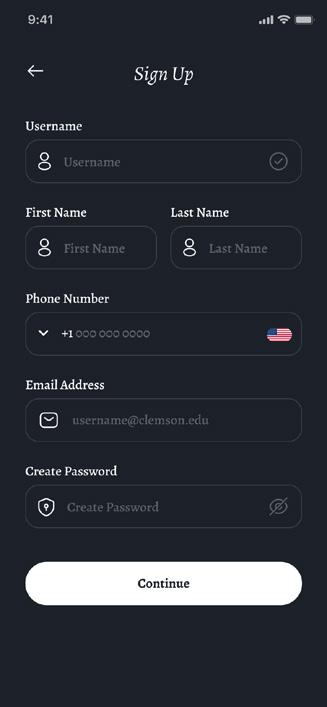
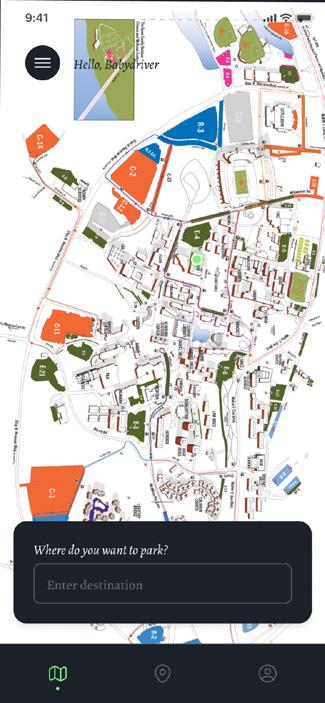
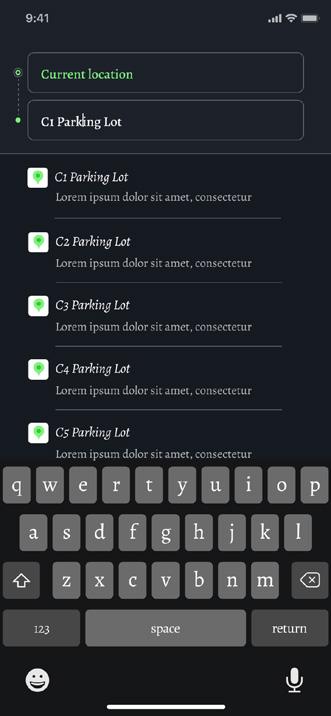
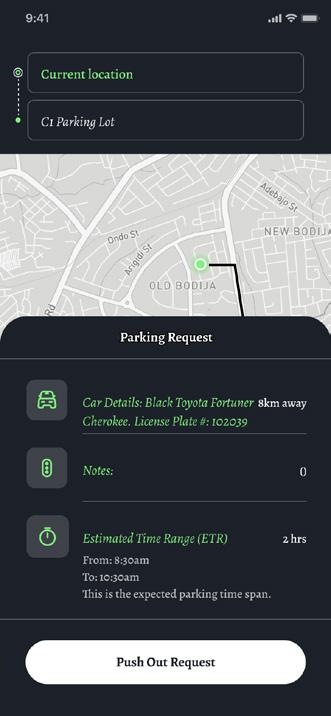
Title: CU Park
Duration: 8 weeks
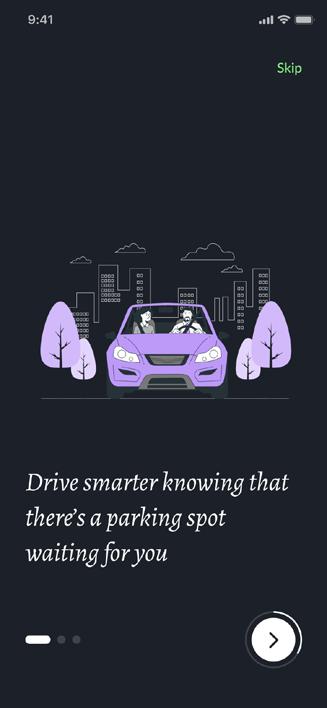
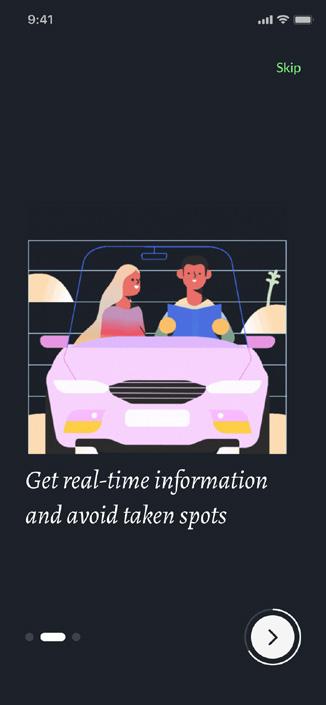
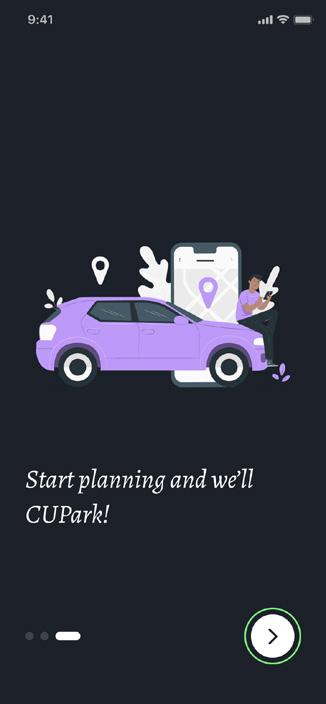
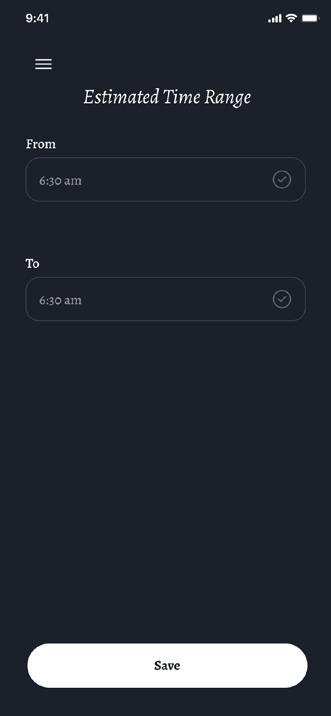
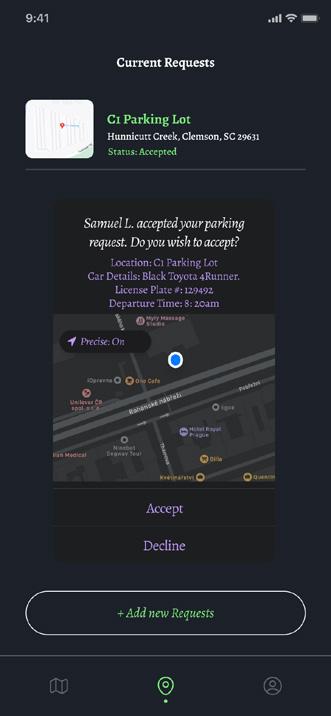
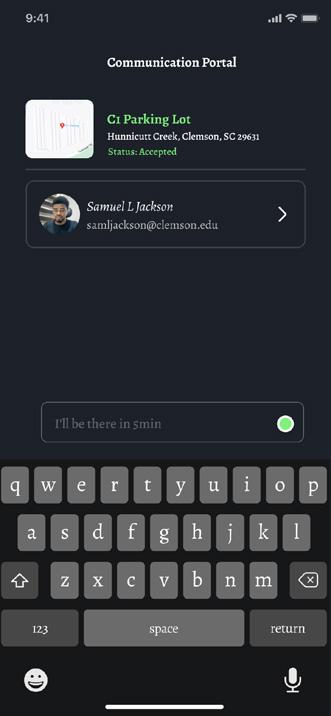
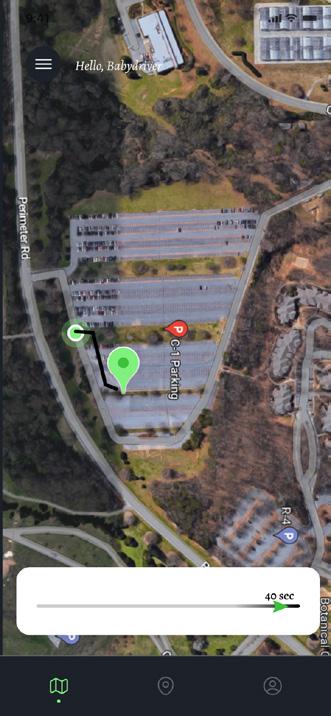
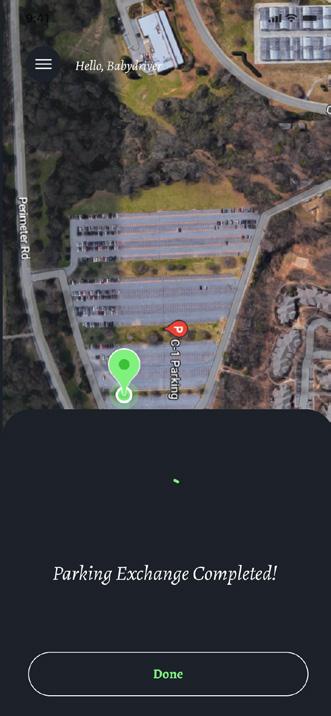
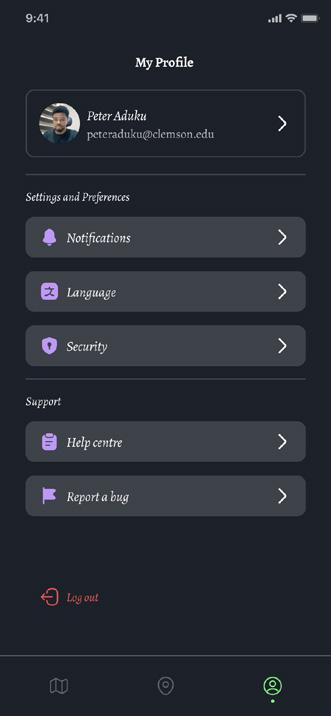
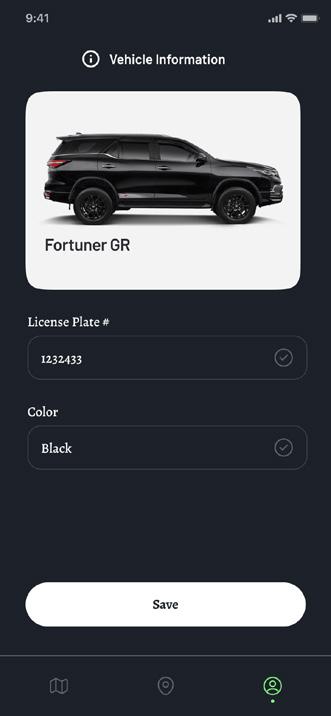
This project used Figma to simulate the user experience of a frontend app designed to help Clemson University students find parking. Working as a team, my group and I developed the concept, conducted user research, created user stories, and designed the interface based on data and HCI principles.




Evaluating cartilage health relies on (the percentage of live cells) However, most rely on dyes, making it difficult for in vivo We twophoton autofluorescence (TPAF) generation (SHG) microscopy take high resolution images of articular tissue, which cell may be identified visual observation However, human which is inefficient. cell-based have low accuracy.
show that deep-learning algorithms than conventional chondrocyte viability strategies
Evaluating cartilage health relies on determining chondrocyte viability (the percentage of live cells). However, most methods for finding cell viability assays rely on dyes, making it difficult for in vivo or longitudinal studies We use twophoton excitation autofluorescence (TPAF) and second harmonic generation (SHG) microscopy to take high resolution images of articular cartilage tissue, in which cell status may be identified by visual observation. However, this method of classification requires human involvement, which is inefficient Other methods for automated cell-based imaging processing have low accuracy In this study, we attempt to show that deep-learning algorithms provide higher accuracy and efficiency than conventional chondrocyte viability analysis strategies
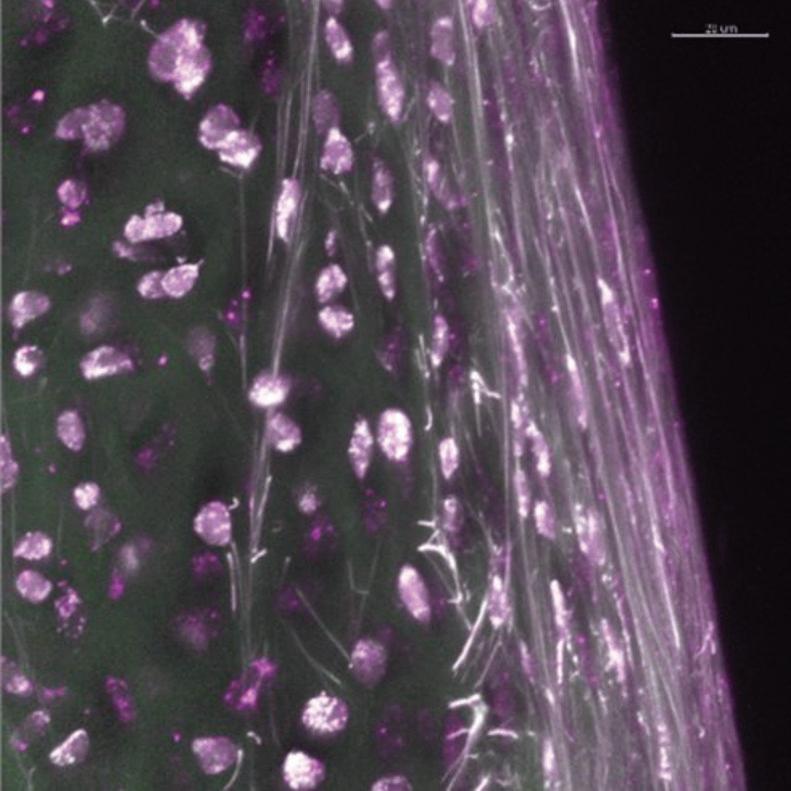
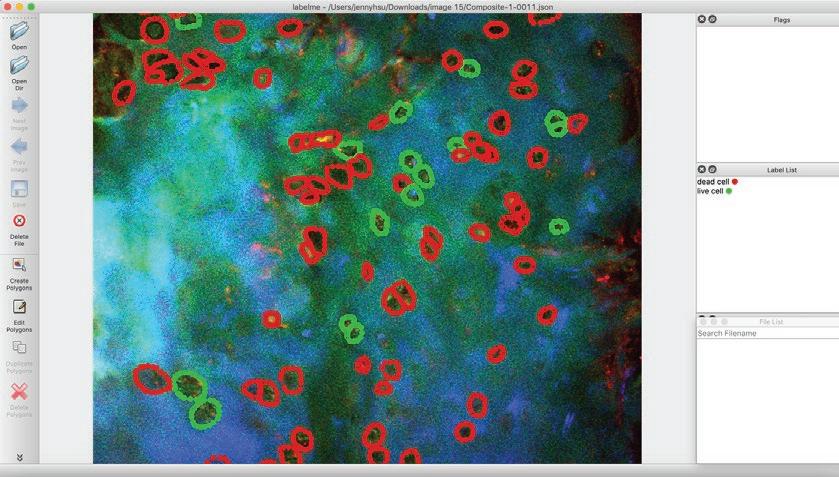
We acquired images of cartilage samples using a customized syst second harmonicgeneration (SHG) microscopy. Autofluorescenc proteins (FP), and the extracellular matrices (ECM) were collecte respectively The violet channel was also used to collect the SHG We then visually classified and segmented the cells as dead or live merging three channels of an acquired image with Red assigned t fluorescence channel (NAD(P)H) and Blue to the SHG channel. We manually traced the edge of each chondrocyte in LabelMe, an brightness, red and dim for dead cells and bright and green cells f dead or live. The viability of cartilage samples were determined by served as the ground truth for cell segmentation
TPAF/SHG imaging
We acquired images of cartilage samples using customized syst second (SHG) Autofluorescenc proteins matrices respectively The violet channel was also used collect the SHG We then classified and the cells as dead or live merging three channels of acquired image with Red assigned t fluorescence channel (NAD(P)H) and Blue to the SHG channel We manually edge chondrocyte in LabelMe, an brightness, red and dim for dead cells and bright and cells f dead or live The of were ground segmentation.
trace cells in images
trace cells in images
train deep learning algorithm with images
train deep learning algorithm with images
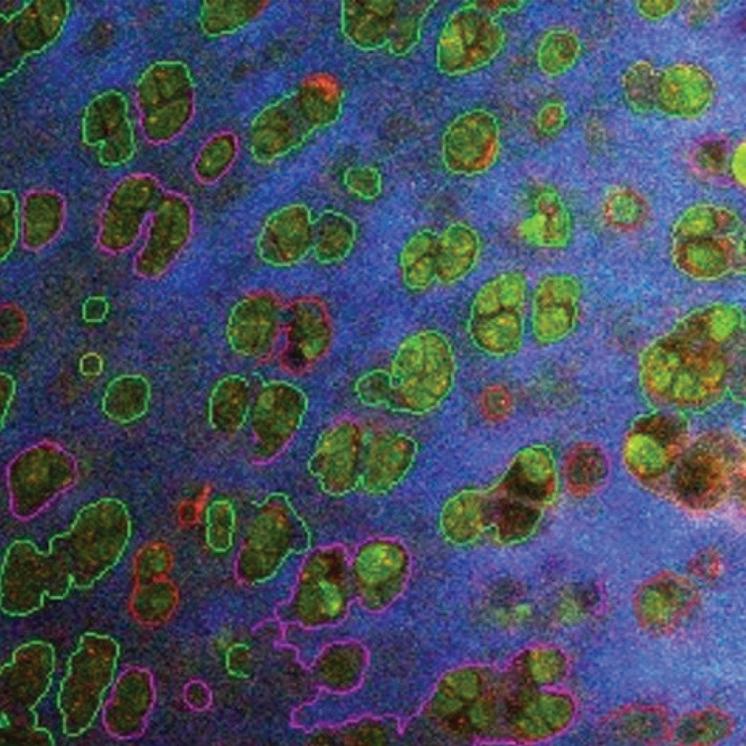
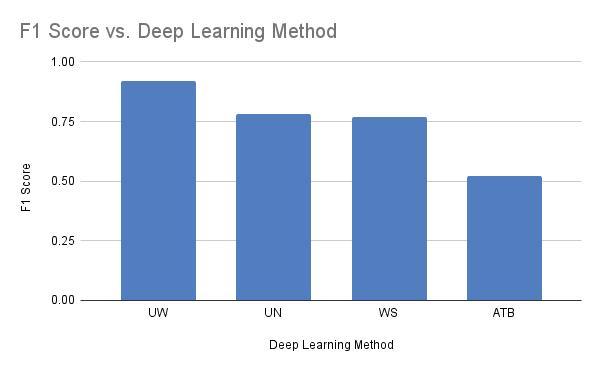
In this study, we use the method to compare four deep learning used for cell segmentation to determine the most efficient metho of the classification process, which evaluates the live and total c separately The first two algorithms are conventional: specifical with blob detection (ATB) and watershed segmentation (WS) T convolutional neural network U-Net (UN), and the final method with watershed (UW) UW obtains the best score (0 92±0 02), w methods respectively obtain F1 scores of 0 78±0 03, 0 77±0 04 results demonstrated show that UW significantly improves cell s
In to to most separately. two segmentation (WS). T U-Net (UW). UW (0.92±0.02), respectively 0.78±0.03, 0.77±0.04 significantly improves
Michael Le , Tong Ye b b


em, utilizing two-photon excitation autofluorescence (TPAF) and e of nicotinamide adenine dinucleotide phosphates (NADPH), flava ed by the violet (420–460 nm) and red (575–630 nm) channels G signal at 430 nm
ve. Using ImageJ (Fiji), a single RGB-color image was formed by o the red fluorescence channel (FPs), Green to the violet
n Anaconda environment based in Python, based on the color and for live. Thus, the chondrocytes were classified two categories, by calculating the ratio of live cells vs total cell population. This
The developed deep learning algorithm is able to analyze cell viability from cell images obtained from a nonlinear optical microscope This method for determining chondrocyte viability analysis shows high accuracy and will impact the study of cartilage health and degeneration A perfect segmentation was still hard to achieve due to cell touching, so we will continue testing a dual multivariate classification using CNN to evaluate the live and total cell populations separately.
This work was supported by NSF EPSCoRE and NIH COBRE South Carolina Translational Research Improving Musculoskeletal Health (SC TRIMH) MADE in SC is supported by NSF Award #OIA-1655740.
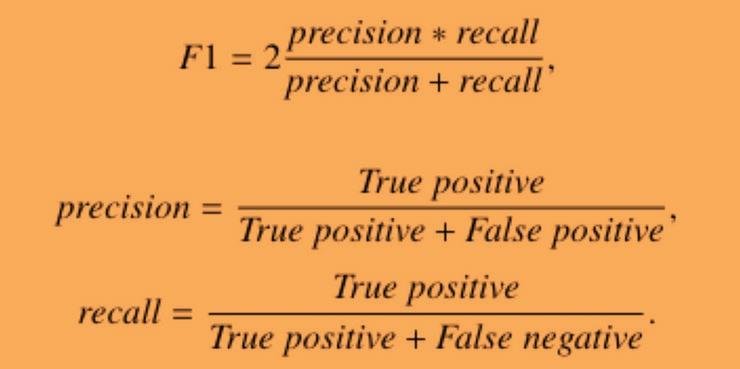
1 algorithms commonly od This is the first step ell populations ly adaptive thresholding The third is the is a U-Net combined while UN, WS and ATB and 0.52±0.03. These segmentation.
X Chen, “Deep Learning Provides High Accuracy in Automated Chondrocyte Viability Assessment , ” OSA Publishing, 2021, Vol 12, pp. 2759-2772.