Injured Motocross Racer Fights to Recover Ability to Walk
Mike Myers, 50, of Hammonton, NJ, was a Motocross Racer for 38 years who started riding dirt bikes at age 8. In an off-road motorcycle racing sport that takes place on enclosed, off-road circuits with obstacles like jumps and hills, motocross racers compete against 20 to 30 people at a time. In March 2024, Mike was racing in Maryland when he suffered a horrific accident that included a brain injury, spinal cord injury and numerous broken bones.
His family is thankful for the incredible team at the University of Maryland-Baltimore Shock Trauma Unit for saving his life. Doctors in Maryland “sewed him back together,” as he explains it, but the real health journey came later when he went to Jefferson Moss-Magee Rehabilitation Hospital — Center City for a grueling regimen of physical and occupational therapy that lasted nearly two months.
He told his physical therapist, Melissa “Missy” Koscinski, “Push me as hard as you can because I’m not here to fail!”
continued on next page
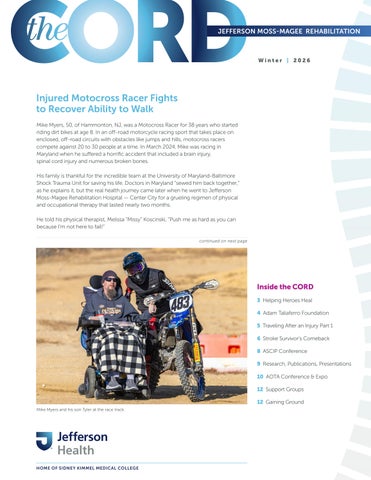
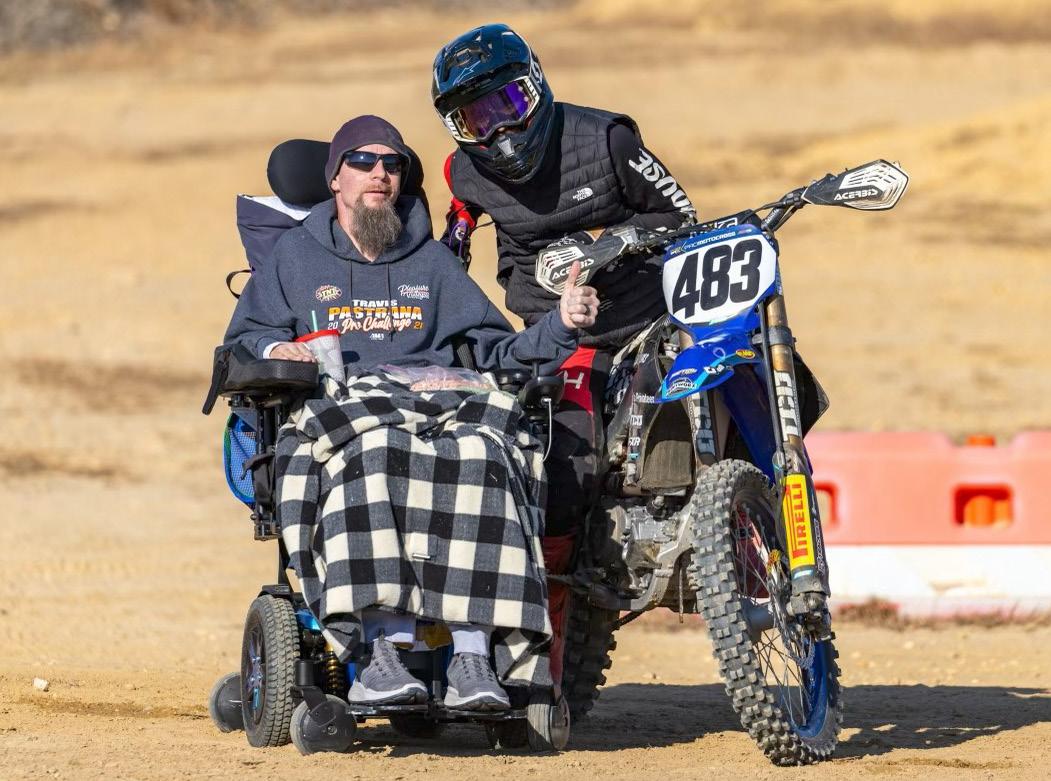
Mike Myers and his son Tyler at the race track.
Mike’s wife Kat is his sole caretaker and has been by his side throughout his treatment. When his inpatient insurance ended, she began taking Mike every Monday and Wednesday to Jefferson Health’s Riverfront Wellness Center in South Philadelphia from their home in South Jersey. Mike paid out-of-pocket to use the locomotor training equipment and the wellness gym amenities.
“After over a year of attending therapy at the Riverfront, we are even more excited to see other patients in their incredible
recovery,” says Kat. “That truly gives us more hope than anything.”
Mike received a grant from Jefferson Moss-Magee Rehabilitation Hospitals’ annual “Walk It Out” fundraiser that enabled him to get back into physical, occupational and speech therapy at the Riverfront.
“An accident like this will put you in a very dark place. It took me a year to get out of that mindset, but trust me, it will all work out,” says Mike.
Like most spinal cord injury patients, Mike suffers from intense nerve pain. He says his spirits have been “up and down” since his accident but he is now feeling better.
“My legs are working a lot more which is giving me hope,” he says. “My goal is to get out of this chair in six months.”
A Pepsi delivery truck driver for many years, Mike hopes to return to his job in some capacity.
Push me as hard as you can because I’m not here to fail!
Mike Myers
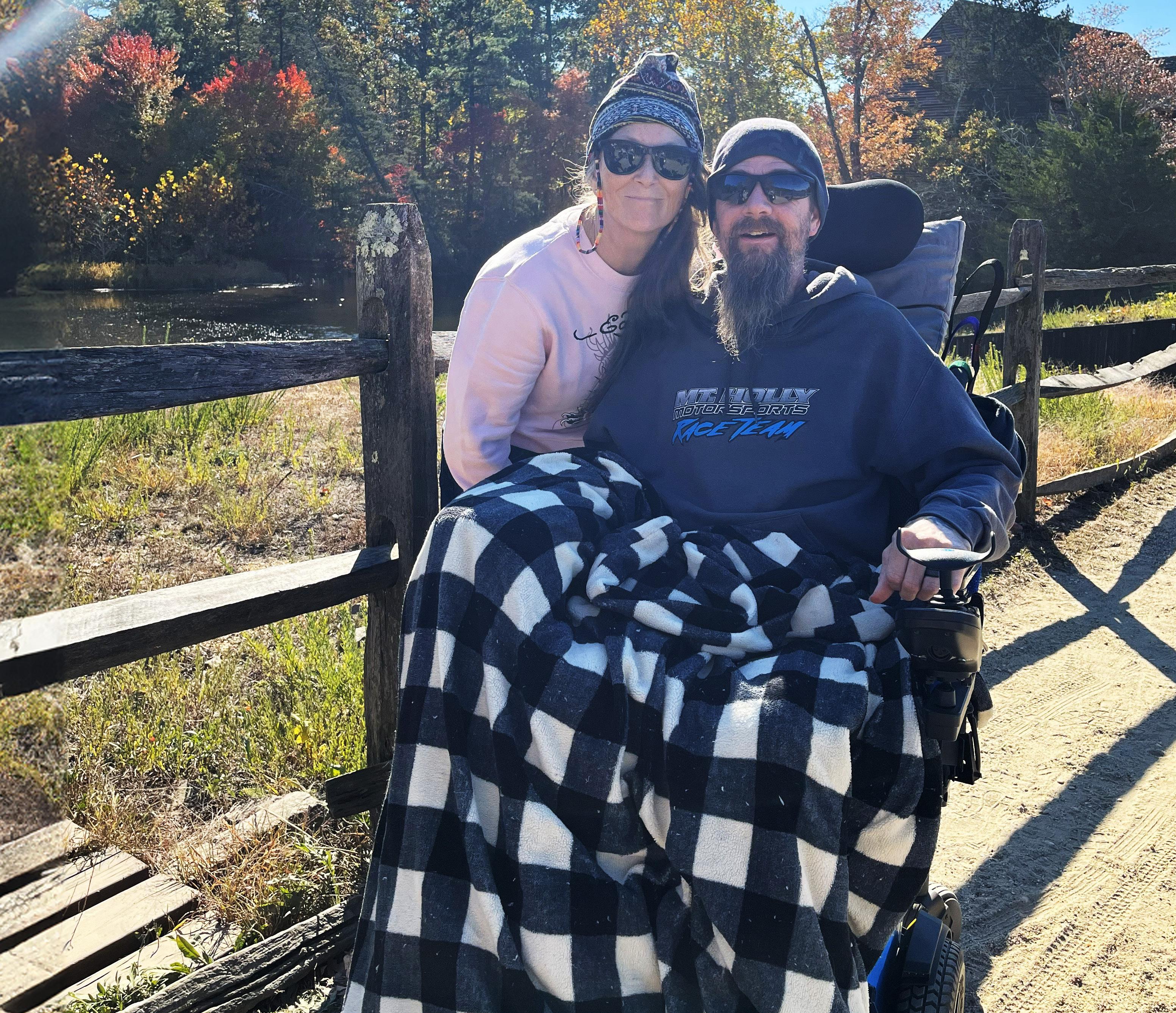
Mike and his wife Kat enjoying some fresh air in South Jersey.
Helping Heroes Heal: Inside the Jefferson MossRehab Institute for Brain Health
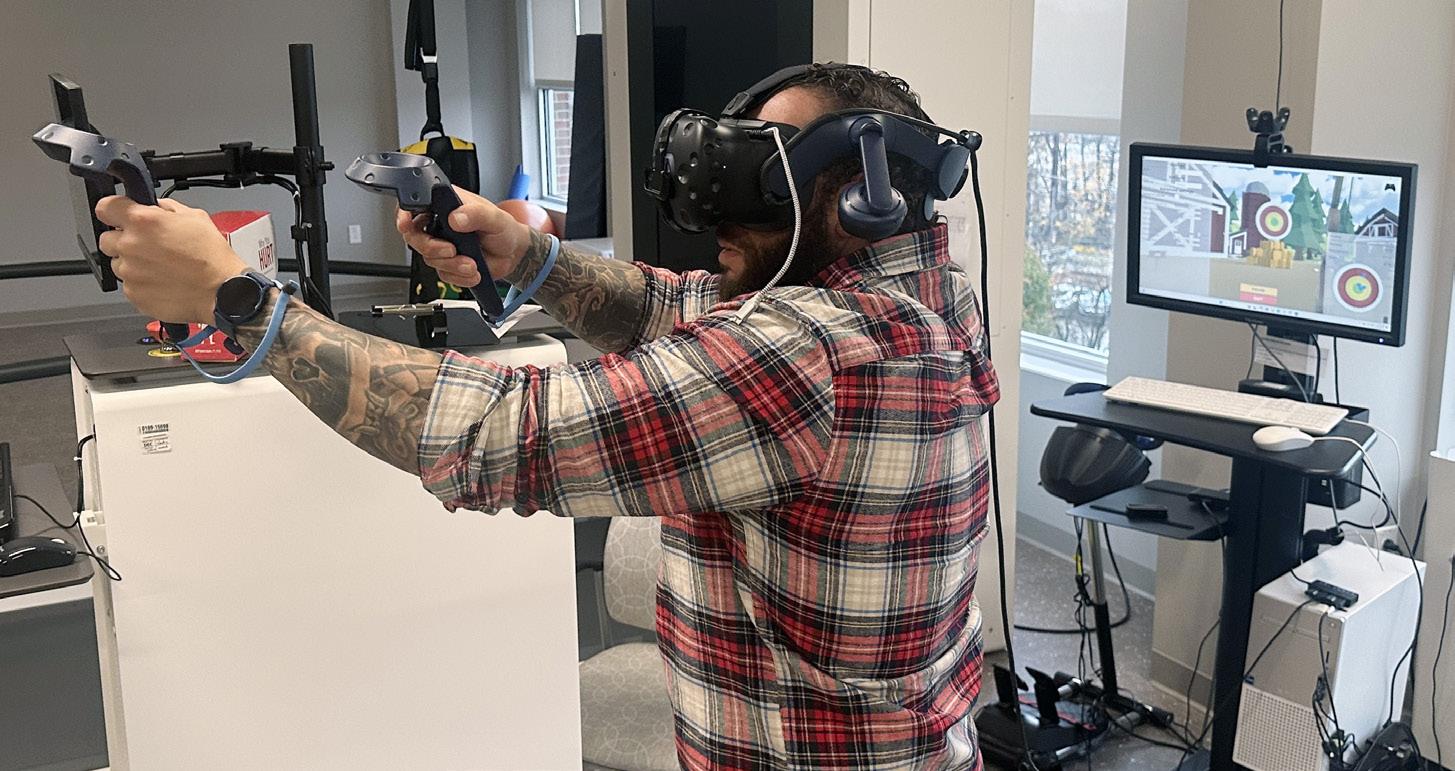
For many veterans and first responders, living with a traumatic brain injury (TBI) means navigating a world that suddenly feels unfamiliar. Bright lights, crowded spaces and loud environments can become overwhelming, but asking for help often feels harder than pushing through the symptoms. That’s where the Jefferson MossRehab Institute for Brain Health (MRIBH) steps in.
At its core, MRIBH is built around a simple but powerful mission: to provide life-changing TBI care at no cost to veterans and first responders. Through private funding and partnerships with national nonprofits, the program removes one of the biggest barriers to care – financial strain – so patients focus entirely on healing.
What sets MRIBH apart is its intensive, interdisciplinary approach. Patients receive physical, occupational and speech therapy, plus a full spectrum of supportive services, including vision therapy, art and horticultural therapy, movement and mindfulness work and more. “We truly provide individualized care from a complete health perspective,” says Rob Guillory, MSN, RN, a Navy veteran and outreach coordinator for MRIBH. “Every patient’s experience is different, and their treatment should be too.”
Veterans may enter the program directly through Jefferson or their nonprofit partner, Avalon Action Alliance. From there, an intake team helps them complete every step of the application process, ensuring they’re prepared for both a three-day evaluation and the three-week outpatient program that follows. “We walk with them from day one,” Guillory explains.
The changes he sees in participants are often profound. Many arrive feeling discouraged or unsure, unable to shop in a grocery store or sit through a family event without sensory overload. Over the course of the program, individualized strategies help them identify triggers, regain control and rebuild confidence. “Understanding your own brain injury, where it shows up and how to manage it, is absolutely life-changing,” Guillory says.
He also wishes more people understood that TBI isn’t always tied to a dramatic explosion or catastrophic event. “Many brain injuries come from smaller, repeated exposures or everyday accidents. Headaches, light sensitivity, hearing issues – these are all things we can help with.”
As a veteran and clinician, Guillory’s connection to the community runs deep. He knows the stigma that can come with seeking help, and works hard to meet people where they are. “I’m not selling anything,” he says. “I just want them to know they’re not alone and healing is possible.”
For veterans or families wondering how to begin, the first step is simple: Visit the MRIBH website and reach out. The team helps schedule care around work and family life, and even coordinates travel, lodging and meals.
And Guillory offers one more piece of advice: Tell a friend. “Many people aren’t sure if what they’re experiencing ‘counts’ as a brain injury. But if you know someone who is struggling with headaches, light sensitivity or speech or hearing issues, encourage them to connect with us. We literally help heroes heal.”
To learn more about MossRehab Institute for Brain Health, contact us at mribh@jefferson.edu or visit us at JeffersonHealth.org/MRIBH.
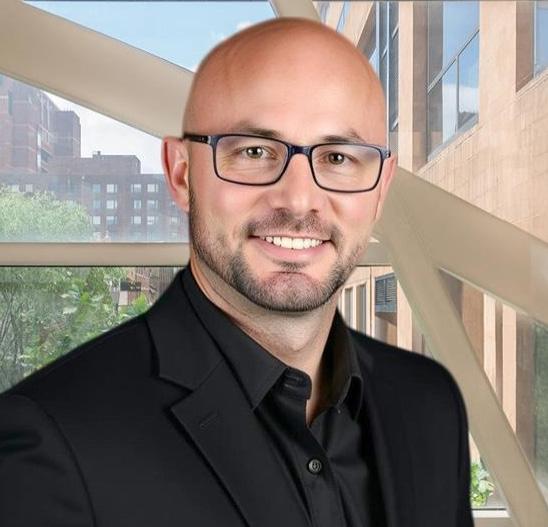
Rob Guillory, MSN, RN
Client using a virtual reality system during a therapy session.
The Birth of the Adam Taliaferro Foundation and Its Powerful Collaboration with Jefferson Moss-Magee Rehabilitation
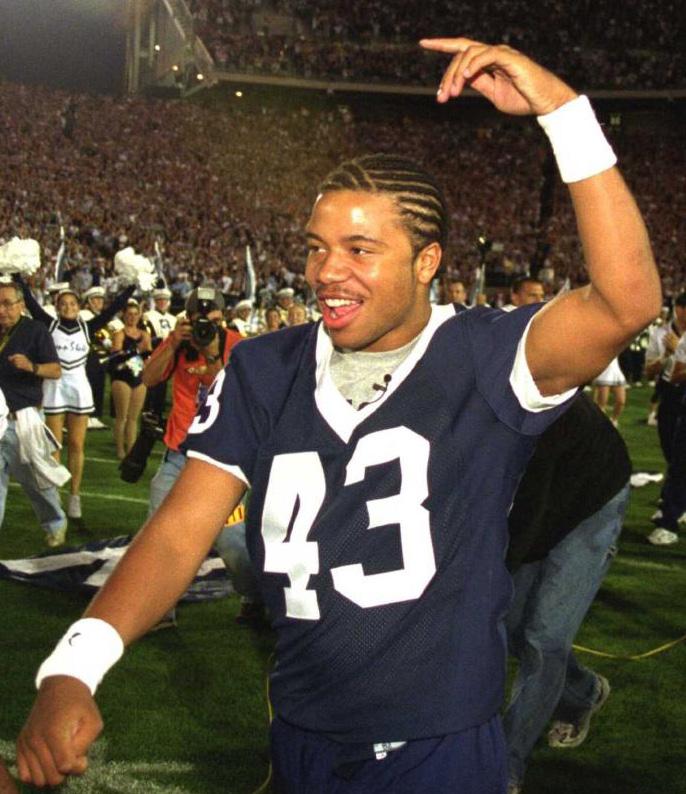
When former Penn State football star Adam Taliaferro made a routine tackle resulting in a catastrophic spinal cord injury (SCI) in 2000, it seemed his life’s dream on the football field had come to a sudden end. Doctors gave him only a 3% chance of ever walking again. Yet, through enormous effort, courage and the support of dedicated rehabilitation staff at Jefferson Moss-Magee Rehabilitation Hospital — Center City, he reclaimed his mobility and a new purpose. From that devastating experience arose the Adam Taliaferro Foundation (ATF) – borne not only from his personal journey but also from the recognition that when someone is hit by a life-changing spinal cord injury, they and their families face a multitude of challenges: financial, emotional and logistical.
ATF provides emotional, financial and educational support to individuals who sustain catastrophic head or spinal cord injuries in New Jersey, Pennsylvania and Delaware. The Foundation raises funds, offers grants or assistance and shares information on prevention and recovery of brain and spinal cord injuries. As Adam himself said, his goal became helping others have “the same chance of recovery that I had.”
Partners in Care: ATF and Magee Rehabilitation Foundation
One of the most powerful ways ATF fulfills its mission is through a partnership with the Magee Rehabilitation Foundation and its rehabilitation and follow-up programs. As a collaboration, ATF leverages the clinical and community reintegration expertise of Jefferson Moss-Magee Rehabilitation with the Foundation’s resource-mobilizing, advocacy and individual support mission. What kinds of resources can someone who sustains a life-changing brain or spinal cord injury tap into, thanks to the combined efforts of ATF and the Magee Rehabilitation Foundation?
Here are a few key areas:
• Financial assistance & grants – ATF raises funds that can assist with medical costs, assistive equipment, mobility aids, adaptive home modifications or other unexpected expenses.
• Educational and emotional support –Beyond money, ATF provides emotional understanding and access to educational opportunities (scholarships, tuition help) for individuals whose lives are disrupted by injury.
• Rehabilitation and a lifetime care network – Jefferson Moss-Magee Rehabilitation programs are designed for lifelong care: outpatient therapy, community integration, peer mentoring and tackling issues like employment, accessibility and quality of life after a brain or spinal cord injury. By aligning with ATF, individuals can more easily navigate the transition from injury, to rehab and to life afterward.
• Prevention and advocacy – The ATF raises awareness around brain and spinal cord injuries through education (especially in athletics) and advocates for safer practices, which helps reduce the incidence of these catastrophic injuries in the first place.
The Adam Taliaferro Foundation, along with the Magee Rehabilitation Foundation, make a meaningful difference for individuals whose lives are upended by brain or spinal cord injury. What begins as a devastating medical event is met with compassion, practical resource support, rehabilitation expertise and a commitment to helping individuals rebuild purpose. For many, what might have been the darkest chapter in their life becomes the foundation for perseverance, growth and renewed hope.
The ATF-Magee Rehabilitation Foundation partnership stands as a strong example of how a personal story of survival can evolve into a community of support and transformation.
For more information about the Adam Taliaferro Foundation, and the resources it provides, please visit TaliaferroFoundation.org
Adam Taliaferro – before his injury – playing football for Penn State.
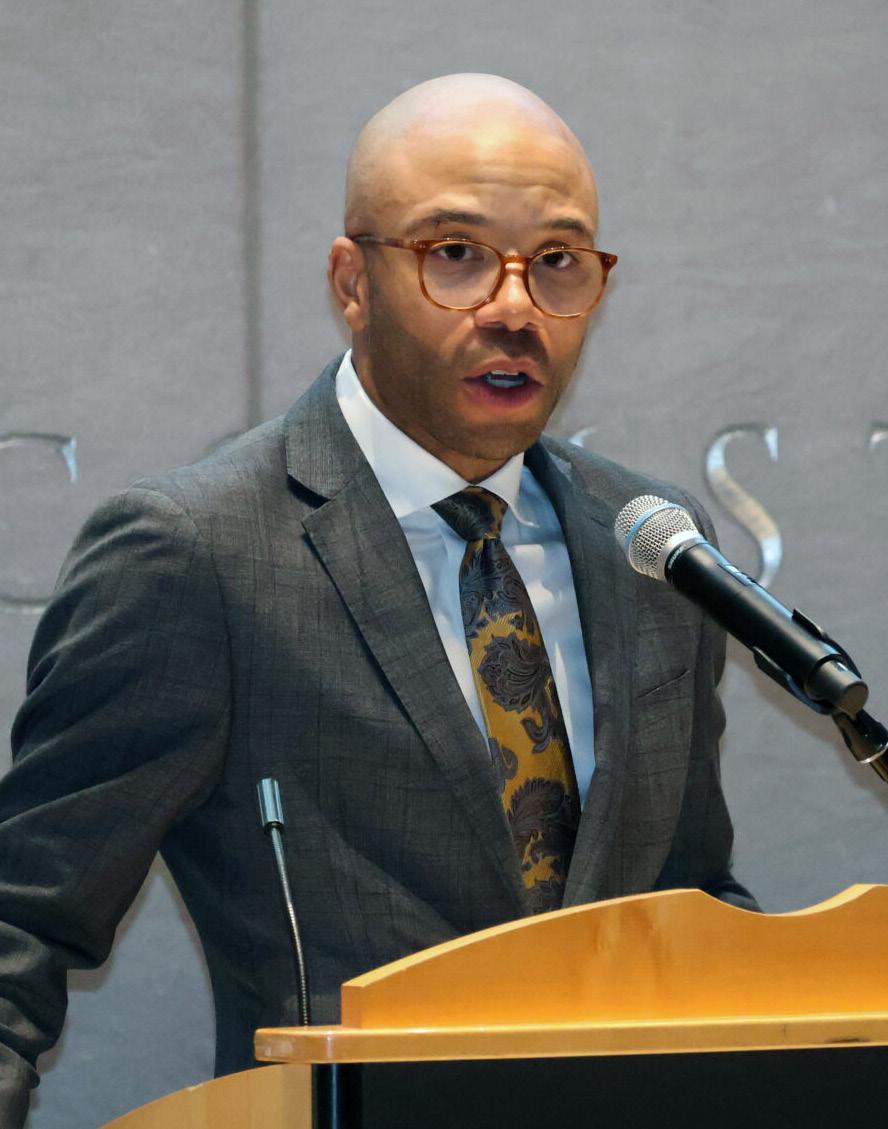
Speaking at The Constitution Center at the Adam Taliaferro 25th Anniversary Gala in March 2025
Traveling After an Injury –A Two-Part Series
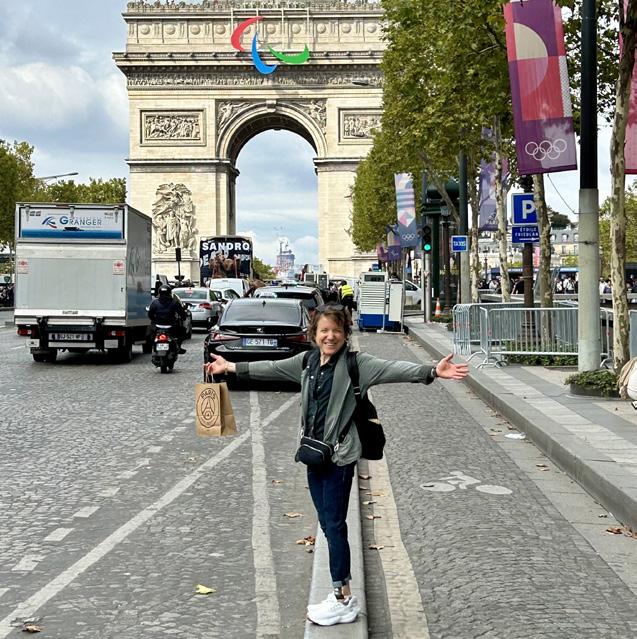
Even though our injuries were very different, our desire to travel again was exactly the same … get outside, see new places and have FUN!
Yes, some things have changed now that we live with a disability. We can’t really be spontaneous, since it takes more planning, but many things have not changed. Throughout this two-part series we want to take you along on our journeys, give you some practical tips, and, while doing that, hope to plant some seeds to help you realize you can get back out there, even if you have to do it a little differently.
It’s natural to feel safe in your home routine, knowing the bathroom and shower meet your needs, the bed is the right height, and you can open and close the door. We can assure you that with a little bit of planning, you can find those same creature comforts in fun and different destinations.
How Mark got started:
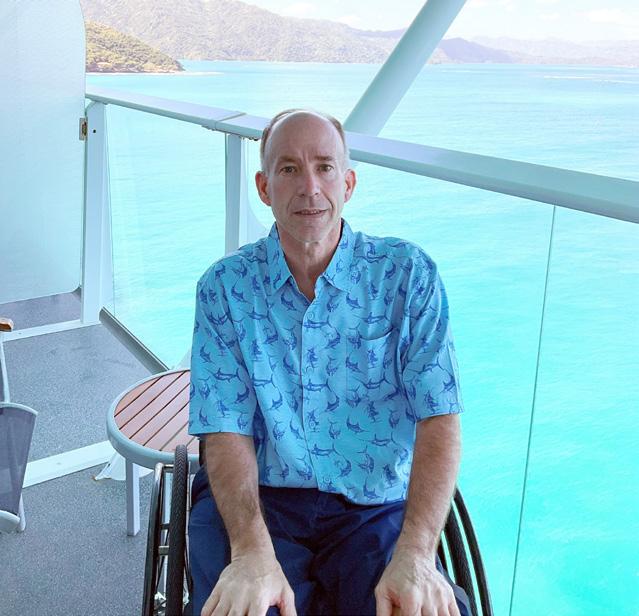
Social media wasn’t a thing when I was injured in 1996, so it took digging through the internet, making phone calls and talking to others I met at outpatient therapy to get good information. I got back on a plane just a few months after my injury and learned pretty quickly that there are people at the airport who want to help people like me, and they can do it better if I can give them a little guidance.
I learned to show them how I could transfer into the chair that would take me to my seat on the plane, and how they can assist. I’ve gotten to be a pro after all of these years, but it took some time, and some trust.
My first hotel stays involved asking direct questions about a roll-in shower and bed height. I’ve learned to sleep with the lights on in a hotel from time to time because the switch is on the other side of the room. Sometimes I’ve had to wash my hair in the sink, but have still been able to enjoy being away from home.
How Rebecca got started:
When I first learned to walk with a prosthesis, even a trip to the mailbox on my street felt like a journey! I packed a backpack with leg supplies, phone, snacks and even a water bottle. I’m not sure what I expected to happen on that “trip,” but when you’re a brand-new amputee, just stepping out of the house feels uncertain!
A few months later, friends invited me to go on a weekend road trip to Maine. My equipment filled our car’s trunk: a shower chair, crutches, medication, wound care supplies, extra prosthetic parts and a mini-DVD player I watched when I couldn’t sleep. I could barely manage my body at home. How could I take it “on the road?”
That trip was different – and at times difficult – but it provided my first taste
of freedom. I learned that small adaptations – researching accommodations, setting up the bathroom, planning for rest time and telling my companions what I needed –could open a world of possibility!
A few tips to get you started:
• Take a day trip or book an overnight stay in a local hotel to try it out. You’ll be close to home just in case something isn’t right, but it will give you a chance to see how you can do it.
• Find some fun blogs or stories about traveling with a disability. Look up “Curb Free with Cory Lee” as he is one of our favorites!
• Join or ask in a support group about others’ experiences.
• Talk with someone who has a similar disability about their travel experiences and strategies.
• Travel with a friend or family member who understands your needs and can help you in challenging moments.
In the next issue, we will feature some specific tips for booking hotels, air travel, cruises and other fun adventures.
About the Authors:
Mark Chilutti has lived with a T5 spinal cord injury for 29 years and uses a manual wheelchair for mobility. While his favorite type of travel is cruising, he has traveled the world in a variety of ways. He has been on staff at Jefferson MossMagee Rehabilitation Hospital — Center City for 25 years and raises funds for important programs and services.
Rebecca Levenberg has lived with an above-knee amputation for 15 years. She walks with a prosthesis during the day and uses crutches as night. She loves international travel, local road trips and walks around the block. Rebecca is the author of The Adaptive Traveler’s Guidebook. She coordinates the Amputation Support Program at Jefferson Moss-Magee Rehabilitation Hospital — Center City.
‘Just Don’t Give Up’: Stroke Survivor’s Remarkable Comeback Through Leading-Edge Therapy and Relentless Rehab
After a sudden ischemic stroke, Bob Craven lost the ability to speak and move his right arm. With support from his wife, Linda, and a pioneering treatment at Jefferson Health, he’s reclaiming his strength –and his voice – one day at a time.
Robert Craven, who goes by Bob, had his routine. In the morning, he would teach a class at a nearby high school, and then return home and rest in the basement. His wife, Linda, might come down to ask if he was hungry, and they’d continue their day.
On Oct. 17, 2023, Bob came upstairs to Linda, who was hanging curtains in their bedroom. “I said, ‘Great, you can help me put these curtains up,’” Linda remembers. And then Bob slowly slid down the wall to the floor.“I knew right away this was an emergency, so I called 911,” says Linda. “I told them I thought he was having a stroke.”
EMTs arrived at their home shortly thereafter. “It was a blur,” Linda recalls, “We were whisked to Jefferson Torresdale Hospital. They did a thrombectomy on him.” The procedure was successful. Bob recovered in the hospital for a week.
“Thinking back, if he hadn’t come up, it would’ve been a while before I went down to check,” says Linda. “We were very fortunate with the timing.”
Starting On the Road to Recovery
Bob suffered an ischemic stroke, one that occurs when a blood clot blocks blood flow to the brain. When he woke up, he couldn’t move his right arm and was completely nonverbal. “It seemed like he was comprehending everything we said,” Linda says.
“We would ask him questions, and he’d shake his head yes or no. Our kids visited, and we were all thrilled when he finally said hello before we left the hospital.”
Bob completed inpatient rehabilitation at Jefferson Moss-Magee Rehabilitation –Elkins Park before returning home.
“The inpatient rehab was intense,” Linda recalls. “Bob is a very hard worker, but he was managing recovery without having a lot of energy and had a hard time keeping up with the tasks he had to perform as part of his physical therapy.”
“Bob was a great patient,” says physical therapist Jason Luna. “He worked as hard as he could. He benefited from seeing pictures of his family and having their support.”
“I
Strength Found Through Intensive Outpatient Rehab
Each year, about 795,000 people in the United States have a stroke, which is a leading cause of long-term disability. While intensive rehab in the first few months can help patients regain some abilities, progress can slow over time or plateau.
After treatment at the hospital, Bob had a long road to recovery. He still could not move his right arm and struggled to communicate. Bob has apraxia, a motor speech disorder that can occur after a stroke, and aphasia, a communication disorder due to his stroke.
would also say hang in there. There were times in the beginning when I was absolutely depressed. But it does get better ... You can do this. You really can. Just don’t give up.”
— Robert Craven, stroke survivor.
Bob Craven and wife Linda
Innovative Treatment Options
After discharge, Bob’s neurosurgeon, Dr. Reid Gooch, recommended implantable vagus nerve stimulation (VNS) paired with intensive rehabilitation therapy to encourage his hand and arm recovery. This is a new treatment offered at Jefferson Health that helps patients regain motor abilities with intensive rehab therapy, providing the potential for improved hand and arm function even in patients several years out from their stroke.
While Bob considered this treatment, he participated in outpatient therapy at Jefferson Moss-Magee Rehabilitation –Jenkintown in the Stroke Comprehensive Outpatient Rehabilitation (SCOR) program. The SCOR program provides specialized outpatient occupational therapy, physical therapy and speech therapy services for stroke survivors. SCOR therapists work with Dr. Gooch to provide the intensive rehab required following implantable VNS therapy.
Bob participated in multiple sets of outpatient therapy for a total of seven months. The speed of recovery typically slows down after six months poststroke. During this time, Dr. Gooch encouraged Bob again to consider paired implantable VNS, and this time Bob decided to go for it.
About Vagus Nerve Stimulation (VNS)
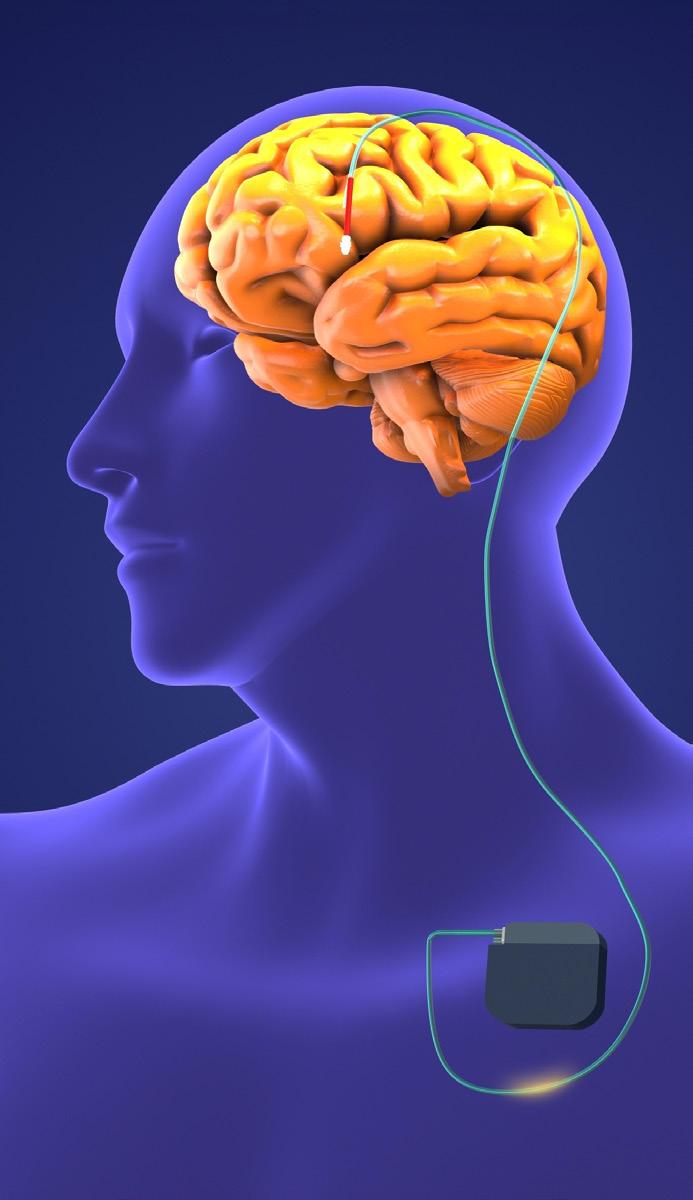
VNS involves implanting a device like a pacemaker, which is connected to the left vagus nerve by a wire placed under the skin. During rehab therapy, the occupational therapist activates the device to send electric pulses through the vagus nerve to the brain while the patient performs exercises and activities to strengthen and improve motor learning and performance in everyday activities.
“The device is approved through the FDA for ischemic stroke patients like Bob, specifically for upper limb motor
recovery,” Dr. Gooch explains. “We’re also seeing that this treatment potentially helps beyond upper limb recovery, as some patients report improvements in their walking or their speech. Research is ongoing, and we are still early on in this process.”
After the device was successfully implanted, Bob needed to recover for two weeks before he could return to therapy in the SCOR Program.
“Not only did he participate in intensive occupational therapy visits, but he also participated in physical therapy and speech therapy as part of his care in our comprehensive program,” explains occupational therapist Kristin Beltz. “Since paired VNS therapy targets motor learning and recovery, we did this to maximize potential gains not only in right dominant arm and hand function and strength, but we also wanted to see if there would be improvements in his walking and speech and communication skills.”
Returning to a New Normal Bob has made significant progress since his journey started. His dedication has resulted in notable milestones in his recovery.
“I can feed myself. I can go to the bathroom by myself. I’m able to watch TV again and read a little more,” explains Bob. “My speech has gotten so much better. Now I think people want me to stop talking again,” he jokes.
“Following paired VNS therapy, Bob made improvements in motor coordination for speech production, resulting in gains in speech fluency and ability to engage in conversation,” says Allison Mack, a speech therapist with the SCOR program.”
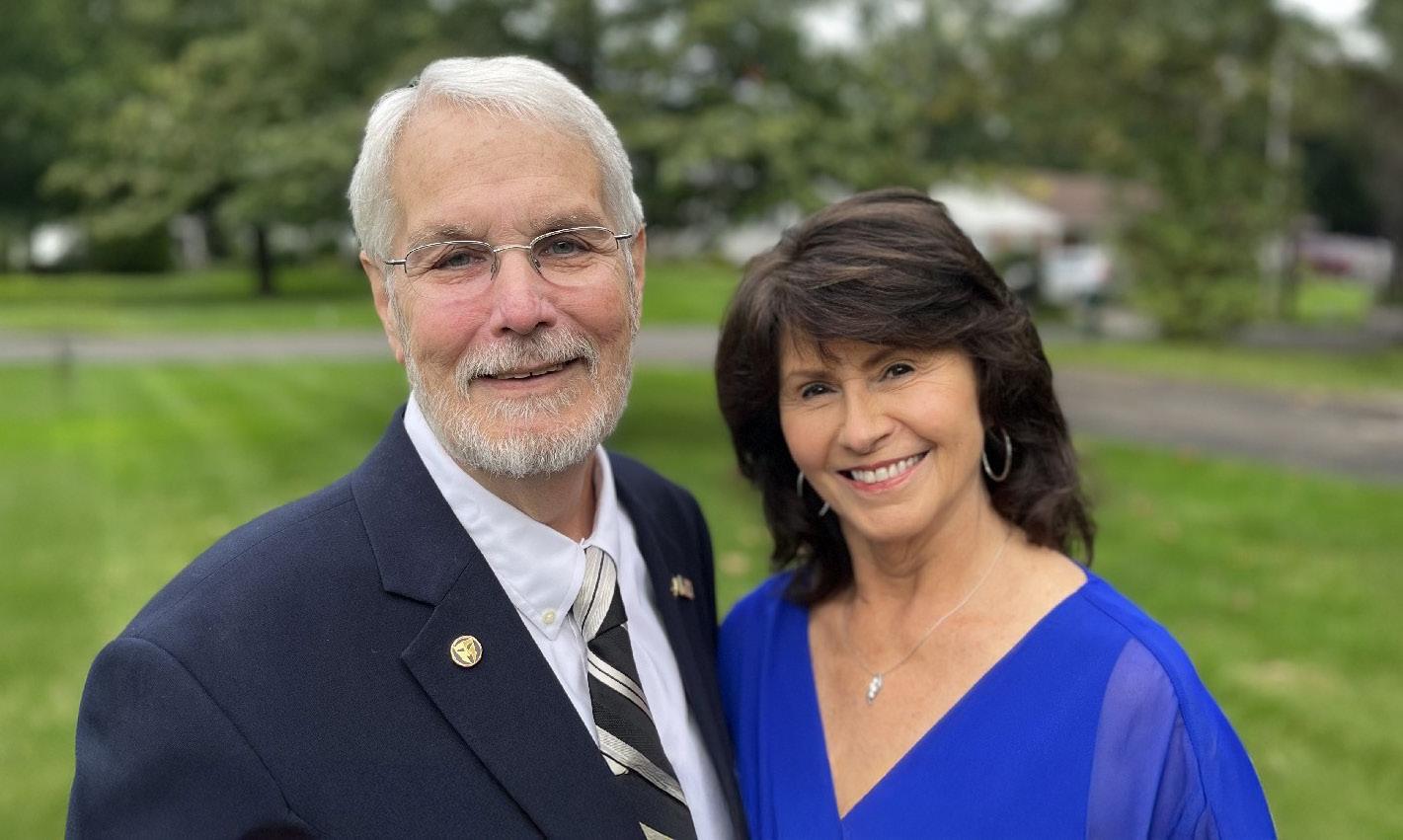
Bob and Linda have been married for 54 years. Bob recognizes he wouldn’t have come this far without Linda’s support. “This really is a team effort,” he says. “I couldn’t have done this alone. Linda does so much because I can’t.”
“It’s the hardest thing I’ve ever done in my life,” Linda explains, as a caregiver. “You have to be in fairly decent shape because it’s demanding. You realize everything has to be done by you. But you love that person. So, you do it.”
Bob continues making progress at rehab therapy and encourages other stroke survivors to consider implantable VNS combined with intensive rehabilitation. “If you have the opportunity,” he says. “I would do it. It doesn’t hurt. And the intensive therapy really does so much for recovery. I would also say hang in there. There were times in the beginning when I was absolutely depressed. But it does get better. Just hang in there. You can do this. You really can. Just don’t give up.”
To learn more about Vagus Nerve Stimulation (VNS) at Jefferson Health, visit us at JeffersonHealth.org/Rehab.
Research, Publications & Presentations
Here are research, publications and presentations by our staff since the last issue of The Cord:
PUBLICATIONS AND PRESENTATIONS
Modeling the importance of life exposure factors on memory performance in diverse older adults: A machine learning approach Alzheimer’s & Dementia, 21(8), e70428. Fletcher, E., Chanti-Ketterl, M., Hokett, E., Lor, Y., Venkatesan, U., Chen, R., Bubu, O. M., Whitmer, R., Gilsanz, P., & Zlatar, Z. Z. (2025)
doi.org/10.1002/alz.70428
Association between disability and life satisfaction, participation, and psychological health: A Traumatic Brain Injury Model Systems study Neurology, 105(6), e214072.
Golden, K., Ketchum, J. M., Talley, K. G., Rabinowitz, A., Juengst, S., Dams-O’Connor, K., Weaver, J. A., O’Neil-Pirozzi, T. M., Giacino, J. T., & Bodien, Y. G. (2025)
doi.org/10.1212/ WNL.0000000000214072
Assessing the relationship between chronic pain and cognition: A NIDILRR and VA TBI Model Systems collaborative project Journal of Head Trauma Rehabilitation, 40(5), 356–367.
Peckham, M., Beaulieu, C. L., Hays, K., Lundstern, M., MacIntyre, B., Osborne, C., Rabinowitz, A., Service, A. L., Sevigny, M., Abbasi, K., Walker, W. C., Welch, A., & Tefertiller, C. (2025).
doi.org/10.1097/ HTR.0000000000001045
Competition between tool and hand motion impairs movement planning in limb apraxia
Journal of Neuroscience.
Thibault, S., Yates, J. B., Buxbaum, L. J., & Wong, A. L. (2025).
doi.org/10.1523/JNEUROSCI.0692-25.2025
The serial order system in word production and working memory: A case series approach Cortex, 186, 128–146.
Tian, Y., Mailend, M.-L., & Middleton, E. L. (2025).
doi.org/10.1016/j.cortex.2025.04.001
Developing cognitive control training for aphasia: Insights from treatment theory and enablement theory
Archives of Physical Medicine and Rehabilitation. Advance online publication. Krason, A., Middleton, E. L., Whyte, J., & Thothathiri, M. (2025).
doi.org/10.1016/j.apmr.2025.07.001
Effects of a modular telehealth intervention on comorbid conditions in service members with mild traumatic brain injury
Frontiers in Neurology, 16, 1594748. Fann, J. R., Hart, T., Bell, K. R., Cole, W., Jain, S., Raman, R., Barber, J., Dikmen, S., Richardson, J., Stein, M. B., & Temkin, N. (2025).
doi.org/10.3389/fneur.2025.1594748
The role of enablement theory in rehabilitation practice, education, and research
Archives of Physical Medicine and Rehabilitation, 106(8), 1285–1293.
Pinto, S. M., Whyte, J., Packel, A., Fasoli, S. E., Sisto, S. A., Tierney-Hendricks, C., & Zanca, J. M. (2025).
doi.org/10.1016/j.apmr.2025.04.003
Behavioral activation with remote technology for emotional distress following moderate-severe traumatic brain injury: Results of a randomized controlled trial
Journal of Head Trauma Rehabilitation. Advance online publication. Hart, T., Rabinowitz, A., Vaccaro, M., Banks, J., & Chervoneva, I. (2025).
doi.org/10.1097/HTR.0000000000001072
Factors associated with cardiovascular mortality after complicated mild to severe traumatic brain injury (TBI): A TBI Model Systems study
Journal of Head Trauma Rehabilitation. Advance online publication.
Pinto, S. M., Thakur, B., Kumar, R. G., Venkatesan, U. M., Hicks, A. J., Driver, S., Ding, K., Watanabe, T. K., Bell, K., Walker, W. C., Katta-Charles, S., Zafonte, R., Rabinowitz, A., & Hammond, F. M. (2025).
doi.org/10.1097/HTR.0000000000001087
Refined operational definitions for the Apraxia of Speech Rating Scale
American Journal of Speech-Language Pathology, 34(4S), 2519–2532.
Mailend, M.-L., Jacks, A., & Haley, K. L. (2025).
doi.org/10.1044/2025_AJSLP-24-00229
Traumatic brain injury diagnostic interview: Development, interrater reliability, and 2-week post-injury clinical profiles Journal of Neurotrauma, 42(15–16), 1404–1415.
Simons, M. U., Maio, A., Huber, D. L., Corrigan, J. D., Temkin, N., Darsie, M., Kitagawa, R., Whyte, J., Giacino, J. T., Stein, M. B., Manley, G. T., McCrea, M. A., & Nelson, L. D. (2025).
doi.org/10.1089/neu.2024.0402
Cognitive neuropsychological and neuroanatomic predictors of naturalistic action performance in left hemisphere stroke: A retrospective analysis Cortex, 185, 301–315.
Thibault, S., Wong, A. L., & Buxbaum, L. J. (2025).
doi.org/10.1016/j.cortex.2025.03.004
PRESENTATIONS
“From Rehab to Reality: The Journey Back Home after SCI” Atlanticare Trauma Symposium May 19-21, 2025, Atlantic City, NJ
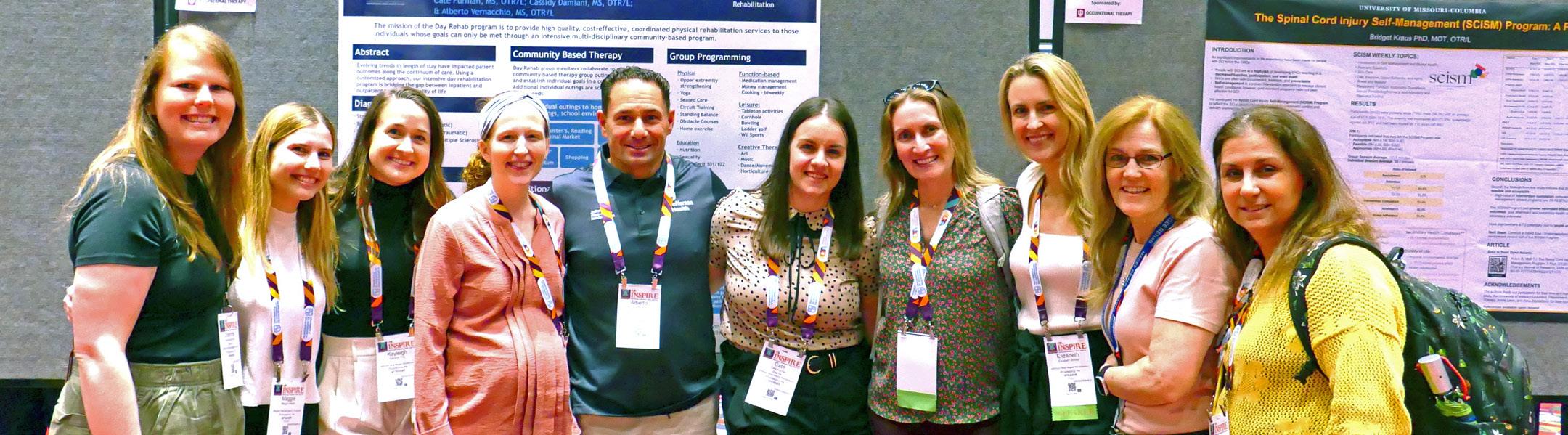
The American Occupational Therapy Association (AOTA) hosted its Annual Conference & Expo in Philadelphia from April 3-5, 2025.
Jefferson Moss-Magee Rehabilitation was proudly represented, with many of our talented Occupational Therapists delivering insightful presentations and sharing their expertise with peers from across the country.
PRESENTATIONS
Occupational Therapy’s Role in Diabetic Management in Acute Rehabilitation
Elizabeth Stokes, MS, OTR/L
Functional Vision Assessment for New Clinicians: Where to Begin
Innovative Use of Thermoplastic Splinting Materials as Temporary Prosthesis Following Bilateral Upper Extremity Amputations: A Case Study
Charlotte Banzhof, MS, OTR/L
Prompting Real-Time Practice of ADLs Skills Using an Interdisciplinary Approach for Patients in an Acute Inpatient Rehabilitation
Joseph Woltemate, MOTR/L; Jaun May, MOTR/L; Justin Sutter, OTR/L
Occupational Therapists from Jefferson Moss-Magee Rehabilitation attend AOTA conference. From left: Charlotte Banzhof, Maggie Mistek, Kayleigh Frey, Cassidy Damiani, Alberto Vernacchio, Cate Furman, Natalie Collins, Elizabeth Stokes, Sheila Wilson and Paula Bonsall.
Academy of Spinal Cord Injury Professionals
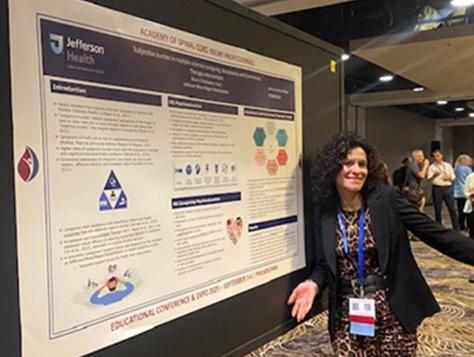
The Academy of Spinal Cord Injury Professionals (ASCIP) hosted its Annual Conference in Philadelphia from September 3 – 6, 2025. Jefferson Moss-Magee Rehabilitation was well represented, with our staff delivering both platform and poster presentations. In addition, Jefferson Moss-Magee Rehabilitation Hospital–Center City proudly hosted a special meet-and-greet for professionals new to the field of spinal cord injury. Attendees enjoyed networking with colleagues from across the country while taking in stunning views of Center City Philadelphia from the rooftop Creative Arts Center.
PRE-CONFERENCE PRESENTATION
Mission Unlocked ... Adaptive Gaming
Jacquelyn O’Hara, OTR/L
Brandon Schwartz
Jaclyn Schwartz, CTRS
PLATFORM PRESENTATIONS
Tracking Social Determinants of Health of People Living with Spinal Cord Injury Across the Continuum of Care.
Authors: Erin Freimuth, PT, DPT; Sarah Klieger, MPH, CPHQ; Sarah Myer, MSS, LSW; Amy Bratta, PT, DPT, MRMC
Presenters: Sarah Myer, MSS, LSW and Amy Bratta, PT, DPT, MRMC
Treating the Trauma in Spinal Cord Injury Care: Resilience and Post Traumatic Growth
Authors: Marni Nutkowitz, PsyD and Naomi Greenberg, PT, DPT
Predicting Wheeled Mobility Prescription for Users with Spinal Cord Injury
Authors: Ben Ayzenberg, PT, DPT, NCS and Kiley Cruit, PT, DPT NCS, ATP
POSTER PRESENTATIONS
FIRST PLACE Sustainable Infection
Control: Increasing Staff Satisfaction, Limiting Environmental Impacts and Reducing Isolation for Colonized Infections
Lessons Learned: A Fluid Rehab Approach to Managing the Complexities of a Patient with Cancer
Authors: Ben Ayzenberg PT, DPT, NCS; Sarah Myer LSW, MSS; Lisa Flemming, MSW;Thomas Moore MSW; Melissa Koscinski, PT, DPT, NCS; Peter Delong, MS, OTR/L
Presenters: Peter Delong, MS, OTR/L; Thomas Moore, MSW; Melissa Koscinski, PT, DPT, NCS
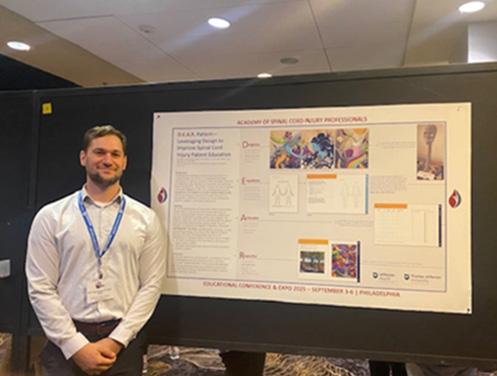
Dear Patient: Leveraging Design to Improve Spinal Injury Patient Education
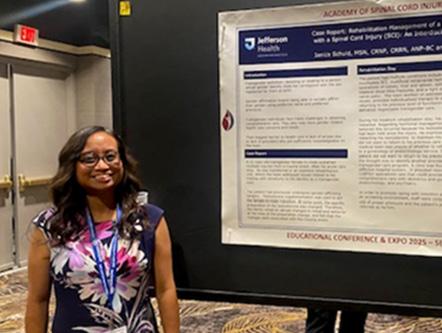
Authors: Gerardo Rivera-Colon, DO; Jonathan Phillips, MD; Janice Schuld, MSN, CRNP, ANP-BC, CRRN; David Leong, DO
Presenters: Gerardo Rivera- Colon, DO and David Leong, DO
Ben Ayzenberg
Dr. Marni Nutkowitz
Janice Schuld
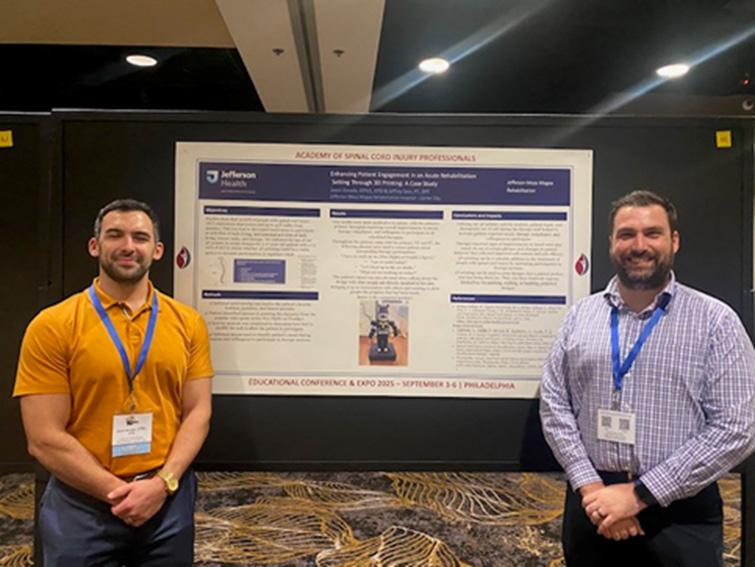
Jason Amado and Jeff Sass present their poster at the Academy of Spinal Cord Injuries.
Support Groups
For dates and details, contact the individuals listed below or visit JeffersonHealth.org/Rehab
Jefferson Moss-Magee Rehabilitation Hospital – Center City Support and PEER Mentoring Groups
• Amputee Peer Mentoring
Rebecca.Levenberg@jefferson.edu or 215-587-3205
• Amputation Support Group
Rebecca.Levenberg@jefferson.edu or 215-587-3205
• Aphasia Support Group
Svjetlana.Vitor@jefferson.edu or 215-218-3909
Sarah.Lantz@jefferson.edu
Sarah.Troy@jefferson.edu
• Brain Injury Peer Mentoring Keira.Aviles-Rivera@jefferson.edu or 215-587-3411
• Brain Injury Support Group for Patients and Families
Keira.Aviles-Rivera@jefferson.edu or 215-587-3411
• MS Healthy Living Colleen.McAllister@jefferson.edu or 215-218-3900
• SCI Family Peer Support Group
Ruth.Black@jefferson.edu or 215-587-3030
• SCI Peer Mentoring
Marie.Protesto@jefferson.edu or 215-587-3174
Keira.Aviles-Rivera@jefferson.edu or 215-587-3174
• SCI Resource & Support Group
Marie.Protesto@jefferson.edu or 215-587-3174
• Stroke Patient and Family Support Group Vilma.Mazziol@jefferson.edu or 215-587-3024
Jefferson Moss-Magee Rehabilitation – Elkins Park Support Groups
• Amputation Abilities Support Group Anne Wieland at 215-663-6405 or Anne.Wieland@jefferson.edu
• Aphasia Center Talking Book Club Nikki Benson-Watlington at 215-663-6344 or Nikki.Benson-Watlington@jefferson.edu
• Brain Injury Support Group at Elkins Park Rachel.Cataldi@jefferson.edu or 215-456-9560
• MS Support Groups at Elkins Park Barbara Cohen at 215-317-3441
• MS Support Group at Tabor Road (facilitated by MS Society local volunteers) ryedmoore@yahoo.com or 267-601-2642
• Spinal Cord Injury Patient/Family Support Group – Elkins Park Dr. Marni Nutkowitz at Marni.Nutkowitz@jefferson.edu or 215-663-6271
Gaining Ground Helps Clients Build Strength
Gaining Ground is a “boot camp” that provides an intensive, personalized approach to neurological recovery. Trainers and therapists create an individualized exercise program to help each participant increase function. Clients meet three times a week, five hours per day, for one-on-one training and education.
Upcoming sessions for 2026
• March 2-26
• April 20-May 15
• June 1-25
• September 14-Oct. 8
• Oct. 19-November 12
• Stroke Peer Mentoring Keira.Aviles-Rivera@jefferson.edu or 215-587-3411
• Wendkos Stroke Club Fritz.Louisjean@jefferson.edu or 215-587-3180
• Young Adult SCI Social Group Katie.Eckert@jefferson.edu or 215-218-3911
Colleen.McAllister@jefferson.edu or 215-218-3900
• Caregivers Support Group – Elkins Park Dr. Marni Nutkowitz at Marni.Nutkowitz@jefferson.edu or 215-663-6271
• Young Empowerment Survivors Support Group (YESS) for stroke and non-traumatic brain injury survivors Melissa Meyers at 215-884-9050 or Melissa.Meyers@jefferson.edu
For additional information, including patient testimonials, photos and videos, please visit our website: JeffersonHealth.org/Rehab
Interested? Questions?
Contact Liz Watson at Elizabeth.Watson3@jefferson.edu or call 215 218-3913
Save the Date
Saturday, April 18, 2026
10th Annual Walk it Out annual 12-hour Step-A-Thon will be held at Jefferson Moss-Magee Rehabilitation—Riverfront. To learn more about this event, scan the QR code.