WE ARE BREAKTHROUGH T1D!
Type1
Issue 103/Autumn 2026
Professor Shareen Forbes
T1D care in older age
On breakthroughs and personal motivation
Katie Hards on why technology is truly for everyone
Heading to university? Insights for parents and teens navigating this next chapter
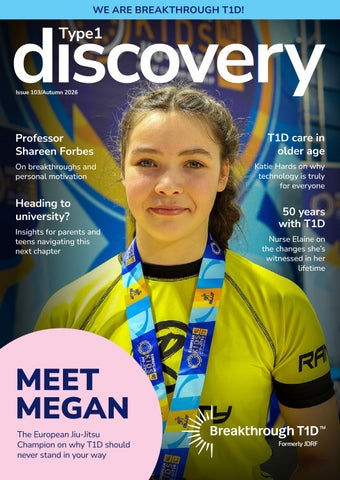
MEET MEGAN The European Jiu-Jitsu Champion on why T1D should never stand in your way
50 years with T1D Nurse Elaine on the changes she’s witnessed in her lifetime
ask for the CGM that ticks all your boxes... If you’re living with type 1 diabetes, you’re eligible for a continuous glucose monitoring (CGM) system on the NHS, and may be offered a choice of system based on your individual preferences and needs.1 So, here’s a tick list to help make choosing the best system for you and your lifestyle, a little simpler: BOTH DEXCOM ONE+ AND DEXCOM G7 GIVE YOU A RANGE OF BENEFITS High and low alerts A choice of 3 wear locations*,†,2,3 A waterproof sensor‡,§,2,3 The Dexcom Follow app||,2,3 – so you can share your glucose levels with up to 10 followers
AND DEXCOM G7 OFFERS ALL THESE EXTRAS, SHOULD YOU NEED THEM Connects to a choice of insulin pumps Connects directly to your Apple Watch¶,#,3 – so you don’t have to have your phone with you to receive CGM readings
Predictive alert – warns you up to 20 minutes before you go low
Use the Dexcom Follow app||,3 – whilst on a Hybrid Closed Loop (HCL)
Screen widget Enhanced Bluetooth with Rapid Reconnect
Speak to your diabetes team about the best Dexcom CGM for you.
see the difference for yourself with a free Dexcom ONE+ sample *Dexcom ONE+ is approved for wear on the arm and abdomen, and children 2-6 years can also wear their sensor on the upper buttocks. †Dexcom G7 is approved for wear on the arm and abdomen, and children 2-6 years can also wear their sensor on the upper buttocks.‡Dexcom G7 and Dexcom ONE+ are waterproof for up to 2.4 meters for up to 24 hours. §Keep display device close to the sensor. Bluetooth doesn’t work as well through water. Alerts and readings will not be provided if signal loss occurs. During signal loss, use your meter to check your glucose levels and make any treatment decisions. ||Separate Follow app and internet connection required. ¶Smart devices sold separately. For a list of compatible devices, visit dexcom.com/compatibility. #Compatible smartphone is required to pair a new Dexcom G7 sensor with a compatible Apple Watch. To use Share/Follow the smartphone must be within 6 meters of the Dexcom G7. 1 NICE. Type 1 diabetes in adults: diagnosis and management. Accessed May 2025. https://www.nice.org.uk/ guidance/ng17. 2 Dexcom ONE+ User Guide. 3 Dexcom G7 User Guide. Dexcom, Dexcom Clarity, Dexcom Follow, Dexcom ONE+, Dexcom Share, and any related logos and design marks are either registered trademarks or trademarks of Dexcom, Inc. in the United States and/or other countries. © 2025 Dexcom International Ltd. All rights reserved. Dexcom International Ltd and its affiliated European entities. This product is covered by U.S. patent. dexcom.com | +1.858.200.0200 Dexcom, Inc. 6340 Sequence Drive San Diego, CA 92121 USA | MDSS GmbH Schiffgraben 41 30175 Hannover, Germany. MAT-8862.
Truly transformative
6
News Find out the latest T1D news
17
4 Screening for siblings of children with type 1 diabetes Stay Updated Explore the digital edition and sign up to receive the latest news at breakthrought1d.org.uk/ discovery-magazine
10
There are moments in my career when I’ve had the privilege of witnessing truly transformative change, the culmination of decades of research and dedication. I was fortunate enough to experience one of those moments this summer. In June, the National Institute for Health and Care Excellence (NICE) approved teplizumab for use on the NHS in England and Wales. This landmark decision marks the beginning of a new era; it is incredible news for anyone who may develop type 1 diabetes (T1D) one day. It also represents significant progress toward finding cures. The more we understand how to stop the immune attack, the closer we get to a cure, especially as we enter a new era of cellular therapies. Milestones like these are only possible because of the unwavering support of our community. We are deeply grateful to everyone who continues to champion and fund our research to turn breakthroughs into real-world access. Through our global research programme, we continue to support world-leading research wherever it takes place. One such project is led by Professor Shareen Forbes who, in this issue, tells us more about her work to improve islet transplantation rates, and the personal motivations that drive her research. For young people, the move from school to university is an exciting milestone. But when you live with type 1, it can bring additional considerations. Our Youth Ambassador, Eden, shares her insights on preparing for university and approaching this important transition. We also hear from our supporter Andy Buckle, who shares how his passion for giving back to the T1D community has inspired years of dedicated volunteering. From research breakthroughs to personal journeys, these stories show the real-world impact of our shared mission. Thank you for being part of it.
Karen Addington MBE Chief Executive
Join us on social media breakthrought1duk @BT1DUK
Managing Editor: Odette Myall Contributors: Hannah Warsame, Mollie Hillis, Eden Valk, Becky Gates, Pioli Perera Cover image: Megan Stacey
breakthrought1duk breakthrought1duk
Breakthrough T1D does not endorse any of the products or services advertised in Type 1 Discovery. Articles in Type 1 Discovery written by freelance contributors do not necessarily represent the views of Breakthrough T1D.
We would like to thank all the trusts and foundations that generously support our work, including: Beefy’s Charity Foundation
The Jeffrey Kelson Foundation
Steve Morgan Foundation
The Cadogan Charity
Michael Lewis Foundation
The Syncona Foundation
The Elizabeth and Prince Zaiger Trust
The Morrisons Foundation
TIOC Foundation
Hollyhock Charitable Foundation
The Shanly Foundation
The Hugh Fraser Foundation
Sir Samuel Scott of Yews Trust
To find out about the projects you help to fund, visit breakthrought1d.org.uk 3
NEWS & VIEWS
Steve Morgan Foundation funding to strengthen mental health support for young people
First of its kind immunotherapy approved for use on the NHS NICE has approved teplizumab for use on the NHS in England and Wales, marking the first time a disease-modifying treatment for type 1 diabetes (T1D) will be available to eligible patients. The immunotherapy is designed for people in stage 2 T1D and can delay the need to take insulin by targeting the immune attack on insulin-producing beta cells. Clinical trials found that a single course of teplizumab delayed the development of T1D by an average of nearly three years, with some people experiencing even longer delays. “For decades, a diagnosis of T1D has meant immediate insulin therapy and lifelong management. Teplizumab changes that,” said Karen
Addington, CEO at Breakthrough T1D. “It gives us a window to intervene earlier, reduce the risk of serious complications like diabetic ketoacidosis (DKA), and support people before symptoms begin.” NICE’s decision means teplizumab will become available on the NHS in England and Wales for children over the age of eight and adults in stage 2 of type 1 diabetes. We will continue to work with clinicians, researchers, and the T1D community to ensure equitable access across all four nations.
The Steve Morgan Foundation has awarded £280,000 to Breakthrough T1D and DigiBete to expand “Coping with Diabetes”, an online tool designed to support the emotional and psychological wellbeing of children and young people living with T1D. The tool, which is available free through the NHS via the DigiBete app, provides age-appropriate videos, animations, and interactive activities to help people manage the psychological challenges associated with the condition. This next stage of the tool builds on the existing platform with support from the Steve Morgan Foundation and the Pardoe Family. The new funding will enhance the platform with personalised user journeys, integrated emotional wellbeing screening, faster access to support, and improved data insights to strengthen services.
Eledon trial update: 12 out of 12 participants no longer injecting insulin In June, new data presented at the American Diabetes Association’s 86th Scientific Sessions showed all 12 participants in the Eledon pharmaceuticals trial, testing the immunosuppressive drug tegoprubart, are no longer injecting insulin. Presented by Dr. Piotr Witkowski, of the University of Chicago, the study administered insulin-producing cell transplants (islet transplants) to 12 adults with long-standing 4
T1D and severe hypoglycaemia. The trial is testing a drug called tegoprubart, which targets a specific immune pathway rather than broadly suppressing the immune system. Researchers are exploring whether the drug can offer a more precise way to prevent transplant rejection while reducing side effects commonly experienced with other immunosuppressive drugs. Results so far have been extremely promising, recording zero rejection episodes, increased islet cell survival and no kidney or nerve damage complications.
NEWS & VIEWS
Breakthrough T1D appears in lights alongside film starring Kate Moss
When we come together, we make change happen. Whether it’s volunteering our time, taking on a fundraising challenge, or making a donation, together we are improving the lives of everyone living with T1D. Find out how you can support at breakthrought1d.org.uk/get-involved
Experimental treatment offers early hope for protecting vital cells Researchers at Johns Hopkins University, with support from Breakthrough T1D, have developed an experimental treatment that could help protect insulin-producing beta cells from damage caused by inflammation in T1D.
In May, Breakthrough T1D was featured on London’s iconic Piccadilly Lights as part of the premiere of a new short film for media and entertainment company EE72, starring supermodel Kate Moss and captured by renowned photographer Nick Knight. The ten-minute cinematic takeover of Europe’s largest digital advertising screen brought our mission to one of the world’s most recognisable public platforms. Our logo and mission statement appeared alongside the film in recognition of our work to accelerate research, improve lives, and advocate for people living with T1D. Breakthrough T1D is close to the heart of Kate Moss, whose daughter Lila has T1D and is a prominent advocate for the type 1 community. “For the millions of people affected by type 1 diabetes, moments like this help shine a spotlight on a condition that is often misunderstood,” said Orna Joseph, Deputy Director of Brand. To coincide with the screening, EE72 launched a limited-edition poster featuring Kate Moss, which raised £8,000 in support of Breakthrough T1D.
In animal studies, the treatment enabled insulinproducing cells to survive for longer and even reversed disease progression in newly diagnosed models of T1D. The therapy targets a protein called ZnT8, which is found almost exclusively in beta cells and is known to play a role in the development of type 1. Scientists used specially engineered antibodies to reduce cellular stress and inflammation, helping beta cells remain healthier and less susceptible to immune attack. If this approach is successful in humans, it could help to preserve the remaining insulin production after diagnosis and slow down the progression of T1D. But while results are promising, the research remains at an early stage and has not yet been trialled with people. Further studies and clinical trials will be needed to assess its safety and efficacy. For the latest type 1 news go to breakthrought1d.org.uk/news
5
YOUR STORIES
“Type 1 diabetes shouldn’t stop you doing what you love” At just 14, Megan has an array of impressive sporting achievements to her name, last year becoming the under13s European No-Gi Jiu-Jitsu champion. Together with her mum, Kate, she shares her love of the sport, how she balances training alongside her T1D, and why she hopes other young people with type 1 never let their condition stand in the way of their ambitions. How did you first get into jiu-jitsu? Megan: I started with karate when I was younger, about five or six, and then gave jiu-jitsu a try. I just loved it. We found a gym not far away that was just starting a kids class after COVID. I was in that first group of kids and I’m actually the only one from the original class who’s still there. Kate: She’d always enjoyed contact sports. When she was little, she was just this fierce little monkey, she loved the sparring side of things. And she started just after her diagnosis too. Luckily, the guys who ran the club were just brilliant and never saw her T1D as a barrier to Megan participating, which was very different to some of the experiences we had at school.
You’re now competing fairly seriously – what does training look like for you? Megan: I train about five days a week. Sometimes that’s an hour or an hour and a half, but sometimes it’s two or even more than that. As well as the physical part, I always have to think of my T1D alongside that too. One of the tricky things is that I can’t train with my pump on because jiu-jitsu is such a contact sport. It would easily get ripped out, so I have to disconnect it. Sometimes I go quite high during training because I haven’t had any insulin for a while, so it’s a bit of a balancing act. 6
Kate: We’re always there while she’s training because we want her to focus on her jiu-jitsu rather than constantly checking her numbers. It does mean we have to be really careful what tech we opt for. We’ve had to say no to things like the Omnipod because you can’t remove that easily and it’s quite big. So, she’s on the Tandem T-Slim so she can just unplug it. When she was younger, she was hypo and hyper-unaware, so we’d really have to keep an eye on things. She’s getting much better at recognising lows now, but managing T1D alongside training is still something we’re always thinking about.
You mentioned discovering contact sports just after diagnosis. Kate, can you tell us about this time? Kate: Megan was nearly four when she was diagnosed, and we’re coming up to ten years since that day. She’d been losing weight all summer and drinking ridiculous amounts, but because you see your child every day, you don’t always notice how much they’re changing. I look back at photos and think ‘how did I not realise?’. Even worse, I’m a biology teacher, so you’d think I would have realised straight away but I didn’t. The moment I realised something was really wrong was when she was riding her bike to the end of the garden and said, ‘Mummy, I can’t get back to the house. I’m too tired.’ We phoned 111, got seen urgently, and they tested her urine
YOUR STORIES Last year you became the European No-Gi JiuJitsu champion for under-13s. What was that moment like for you? Megan: Winning the European No-Gi title was incredible. I’d been training for ages and it was so nerve-racking because there were cameras everywhere and everyone was watching. I got through to the final and was convinced I was going to mess it up. When I won, I was close to crying, I was so happy.
And for you Kate?
straight away. Her ketones were through the roof. Not long afterwards, we were in an ambulance on the way to hospital. She was very close to DKA. When I look back at the photos now, it’s heartbreaking, she looked so poorly. It was a really difficult time. And then of course, there’s the realisation that you now had a new normal and you just had to adjust even if you didn’t quite know how you were going to do it.
And for you Megan, being diagnosed so young has meant that T1D has always been a feature of your life Megan: Yeah, I don’t really know anything different, so it’s hard to tell how different my life would have been if I didn’t have it. Sometimes it’s frustrating. If my blood sugar is high and other people are eating, I might have to wait. But mostly it’s just part of my life. I’m lucky to have friends around me who understand and look out for me, that stops it from making me feel different. Kate: We’ve always tried to make sure T1D doesn’t stop her doing things. We’ve never really said no to things, just maybe ‘not now’. I think competing in sport has actually helped her understand her body, nutrition, and what she needs to perform.
Winning the European No-Gi title was incredible. I’d been training for ages and it was so nerve-racking because there were cameras everywhere and everyone was watching
Kate: The European title was amazing, but the moment that stands out most for me was when Megan won a title belt at Young Subs. I think just considering everything she’s faced, how hard she’s worked. She became the under-50kg champion and was the first female competitor ever to win a belt there. Nobody can ever take that away from her. Seeing her win that belt was probably the most emotional I’ve ever been watching her compete.
And now you’re preparing to defend your European title! Megan: Yes, this October. I’m a bit worried, definitely! But we’re going there to defend it, I’m up for it!
What’s next on the horizon for you? Megan: Well, I’m starting my GCSEs so that’s a big one! And as part of my Youth Ambassador role at Breakthrough T1D, I’m creating a video for Diabetes Awareness Month for my school assemblies in November and organising a nonuniform day to hopefully raise awareness of T1D and raise some money for charity.
We’re seeing more and more T1D athletes in elite sports, which is incredible. What would you say to other young people with T1D who want to get involved in sport? Megan: Just go for it! It’s fun, you’ll make loads of great friends and make loads of great memories. Having type 1 shouldn’t stop you doing what you love. I think it’s just about finding your way to manage it because everybody’s different. Kate: It might take a bit more planning and you have to think through different situations, but you can absolutely still take part in sport. There are so many amazing athletes with T1D out there, and there’s a really strong community too. Diabetes can add challenges, but it shouldn’t stop you from chasing your goals.
Read real life stories from people living with T1D at breakthrought1d.org.uk/stories 7
8
COMMUNITY
“Being diagnosed with T1D is life-changing, not just for the individual, but families too” Diagnosed at just seven years old in 1975, Nurse Elaine Conway-Huelin reflects on living with T1D for over half a decade and the monumental changes she’s witnessed in her lifetime.
Oranges and metal syringes “I was nearly eight when I became very unwell. Bedwetting, losing lots of weight, and my hair was falling out. As one of four siblings, my Mum and Dad were so busy that they didn’t notice until my school got in touch. I think they thought I was being neglected. However, we had a very happy home. Luckily, Mum took me to the doctors that day, and after a urine test, I was taken straight to the hospital and diagnosed with T1D there and then in November 1975. I was terrified going into hospital alone. At the time, visiting was restricted, and this was my first time away from home. The nurses were only concerned about getting my blood sugar stable and starting me on injectable insulin. Big glass and metal syringes, with long and thick needles, they were horrid! The nurses gave me injections at first, but on day two, the nurse taught me how to draw up insulin from the bottle and inject it. We practised on an orange. Insulin at the time was taken from the pancreas of pigs or cows. Horrendous to think about now. But it was all there was at the time, and the diet was also more restrictive than these days. It was all about carbohydrates and not eating too much to maintain glucose control. At the time, it was just one big 8
injection a day every morning and only urine testing was available to detect glucose. So, everything had to be counted, 10 grams of this and that, I don’t know how my Mum and Dad managed. They were never told about the complications that can occur as a result of the body not being able to regulate blood sugars. I made it home for my eighth birthday, and the district nurse came each morning to give me my daily injection, but I soon started doing it myself.
Navigating T1D together It was a terrible time for my Mum and Dad; they’d never heard of diabetes and all the extra care involved in keeping me alive. Being diagnosed with T1D is pretty life-changing, not just for the individual but for their families too. About a year into my diagnosis, my sister found me unresponsive at home and had to run to the local phone box to call an ambulance. I don’t remember anything, only waking up in the hospital. Doctors explained I was in diabetic ketoacidosis (DKA). I had been resuscitated and was very lucky to be alive. Thinking of career prospects, I wanted to be a tennis player but that wasn’t to be. I remember the careers adviser at school telling me, ‘you could be a secretary!’ I was totally nonplussed by that, but I never imagined I’d end up training to be a qualified nurse. Maybe someone suggested it to me, or time in hospital as a child influenced me.
XXXXXXXXXXX COMMUNITY
It has been 50 years since my diagnosis and for that I was awarded the Alan Nabarro Medal. Over the years I have always believed how important it is to be involved in research as someone with T1D, and I have participated in many projects over the years
Changing treatment options There was a huge amount of kit at home for my diabetes management when I was diagnosed. Ten years later, when I was on my nursing course, treatment had progressed. We had thinner, less painful needles and synthetic insulins, long and short acting, to better maintain control. It was a revelation. Then came blood sugar testing. No more mini lab in the loo for me! And after much campaigning, blood test strips were available on prescription.
Better control meant less risk, but an increased chance of hypoglycaemia. Always, always carry emergency supplies wherever you go, it’s potentially lifesaving. I’ve had bumpy rides in my quest for good glycaemic control. There have been days when life events happen and end up with very high and very low blood glucose. I unfortunately developed diabetes-related eye disease, but because of trying hard to keep glucose levels under control for so long, that’s it for complications. I have been using a hybrid closed loop (HCL) system for two years and I cannot imagine life without it. I’m thankful for the doctors, researchers, and fundraisers who have helped bring this about.
Here’s to the next milestone It has been 50 years since my diagnosis and for that I was awarded the Alan Nabarro Medal. Over the years, I have always believed how important it is to be involved in research as someone with T1D, and I have participated in many projects. My first involvement with research was with the nasal insulin trial in the 1990s! I also believe fundraising for organisations who are working hard to find a cure is crucial, like Breakthrough T1D. They are reliant on fundraisers to aid this – I am pleased to be able to help in any way I can and have just completed the step challenge! So, here’s to my next medal at 60 years of living with diabetes. Or, who knows, there may be a cure in my lifetime.”
Find more information and T1D support at breakthrought1d.org.uk/resourcehub 9
INFO & SUPPORT
Screening for siblings of children with type 1 diabetes If you have a child or children living with T1D, you may wonder whether screening their siblings could be helpful. Early detection screening can spot the early signs of T1D before symptoms begin, and insulin therapy is required.
10
INFO & SUPPORT Screening options available in the UK In the UK, routine screening for T1D is not routinely offered through the NHS. But research studies are giving people like you the chance to take part if they want to:
How does screening work? Early detection screening typically uses blood samples to look for markers called autoantibodies. These are signs that the immune system has begun attacking the insulin-producing cells in the pancreas. Autoantibodies can be present long before any symptoms appear. Screening programmes can also look at genetic risk factors. Having a parent or sibling with T1D can increase the likelihood of developing the condition, but genetics alone do not determine who will be affected. Many people who have a genetic risk never go on to develop T1D, and most new diagnoses happen in people with no family history. Early detection and screening cannot predict when symptoms will develop or prevent T1D from occurring. What it can do is offer information earlier. This early insight can be helpful when thinking about what support might be needed in the future.
• The ELSA Study offers screening using a simple finger prick blood test to anyone aged 2-17 years old. Families are invited for further checks and conversations with a specialist team if autoantibodies are found. • The T1DRA Study focuses on ages 18-70, offering similar screening for adults. People who test positively can then receive support to better understand their results and possible next steps. Both studies are free to join and provide a structured way to explore screening for people of different ages, including siblings of people living with type 1.
Why you might consider early detection screening Understanding what screening can do may help you think about whether it is something you want to explore for your family. When one or more children in the family are already living with type 1, it is natural to want clarity about what the future might look like for their siblings. Early detection screening can highlight T1D-related changes that are not yet visible, giving your family time to think ahead in a way that’s manageable. Having this information early can provide more time to help your family prepare with the support of specialists. This time can also be used to help prepare for the additional needs of caring for two or more children managing type 1 without the pressure of urgent treatment decisions. You might also consider choosing screening because it can connect you with ongoing research that focuses on the earliest stages of T1D. Choosing whether to take part in screening is a personal decision. Every family will feel differently about what information they want and when. Screening is simply one option available to you.
We weren’t worried about taking part in the study because it seemed a straightforward process. Emily didn’t seem phased about being screened
Clare’s daughters Lauren, Sophie and Emily
Clare’s story Clare’s daughter Sophie lives with type 1. She made the decision to sign up Sophie’s sister, Emily, for the ELSA study when she was 13 years old. “I decided to get Emily screened for T1D as Sophie’s diagnosis was a shock for us. We wanted to know if she had a raised possibility of developing type 1 so that we could be prepared. Sophie was diagnosed in diabetic ketoacidosis (DKA), and we knew that if Emily tested positive, the study team would help us to prevent this happening to her too. We weren’t worried about taking part in the study because it seemed a straightforward process. Emily didn’t seem phased about being screened. The finger prick initially made her a tiny bit anxious, but she soon overcame this. Sophie supported Emily going through the trial, talking her through the finger prick. The wait for the results was a bit nerve-racking, but we received the results by text first then received a letter. Fortunately Emily was negative.”
Find out more about the early detection of T1D at breakthrought1d.org.uk/screening
11
12
RESEARCH
“In a lot of projects I’m running, collaboration is key” Our Youth Ambassador Eden sat down with Professor Shareen Forbes from the University of Edinburgh to find out about her fascinating research exploring the role of antigens in improving islet transplant success rates, made possible through our global research programme. She tells us about the personal reasons driving her work and how her findings could help people with T1D. Why did you choose to focus on T1D research in your career? Members of my family, going back generations, have had diabetes. Many of them had it before the discovery of insulin. I used to hear a lot of stories of how they managed back then. It was remarkable to me that there was a treatment, whether it be tablets or insulin that came years later, that could actually control it. That made me keen to go into it as a research area because I felt that there was a way of making people’s lives better.
What has your journey in the medical field looked like so far? I began by studying medicine, then specialised in diabetes and endocrinology before deciding to focus on T1D years later. It’s been an amazing journey and fantastic to see the new treatments that have evolved. That’s really what’s kept me in the field and kept my interest, and why I’ve gone into academia. It’s been so incredible to see the new therapies that can move us towards a cure, particularly over the past 10 years.
So, what are you researching? I am investigating whether specific proteins found on the surface of cells, known as antigens, and particularly a group called HLA antigens, can affect the success of transplants in people with type 1 diabetes. People have a unique set of these antigens, which allow the body to recognise whether a cell belongs to 12
them or not. This then affects the response of their immune system. In T1D, many of the people affected are more likely to also have a specific antigen called HLA-DQ8 – which is the one I am researching.
What is the focus of your project? I have a long-standing collaboration with the Edmonton Islet Transplant Programme, which is the biggest islet transplant programme in the world. Islets are the small clusters of cells in the pancreas that contain the insulin-producing cells (beta cells) and an islet transplant replaces the insulin-producing function that’s been lost in T1D. The islets come from the pancreases of donors. These pancreases come to the lab, and we isolate the islets. We then put them into a bag, and transplant them into the recipient with T1D. What we did in this project was look at the HLA type in the recipients of those beta cells, as well as the donors. What we wanted to understand was whether the donor’s HLA type made any difference to how well the transplant went.
So, how have HLA-DQ8 typings been studied in your research project? We asked the question: what happens if you receive islets from donors that are DQ8 positive? Because not everyone is DQ8 positive, and we wanted to see if this made a difference. We thought that these islets would actually worsen the condition of patients with T1D, but what we found was the opposite. People who received islets from donors who were positive for DQ8, which is an at-risk antigen for the development of T1D, actually did better.
Together, we’re making research like this possible
Just to be clear – those donors were positive for the antigen, but they didn’t have T1D themselves? Correct! That’s an important point, just because you have the antigen doesn’t mean you develop T1D, you’re just at an increased risk to develop T1D.
How did you measure that success of the transplants? We looked at the outcomes by measuring something called c-peptide, which is something we use to test the function of beta cells. We have to measure c-peptide instead of insulin so we can measure how much insulin the cells are producing, rather than external insulin the person has injected. We looked at it across all the transplants, so they had up to five transplants in the Edmonton Islet Transplant Programme. It showed that anyone who received this DQ8 antigen seemed to have much better graft survival. This is what we call a ‘retrospective observational study’, so it’s not a randomised controlled trial. And we don’t really understand yet why it is that these people had significantly better transplant function.
What has surprised you most about this project? Well, you might expect that a recipient would do better if they were somehow matched to the donor. But that’s not what we found. Whatever their background – whether the recipient was DQ8 positive or DQ8 negative, they did well. That’s exciting, because that’s research! You set out expecting one thing, and you find another.
Are beta cell transplants the most viable option for finding a cure for type 1? I think it’s certainly a very promising avenue, but there are a couple of other things we need to think about. One of the main downsides at the moment, of all transplants, is the requirement for anti-rejection drugs. These drugs dampen down the immune system, otherwise it recognises the cells as
foreign and starts to attack them. If we can edit genes to avoid this process, we can then open up this idea to many more people, including children. There are some really exciting developments in this field across the globe. It really is the most exciting period for research.
What is a typical day in the lab? There is no typical day, which is why it’s very exciting! A lot of my day is about meeting my research group. I have a big group of scientists from all sorts of backgrounds, and I really want to make sure I give credit to these people, because you’re as good as your team, and mine is amazing! I might talk to chemists, engineers, or people doing clinical trials. It’s a very varied day, and in a lot of the projects I am running, collaboration is key. It’s very exciting, cuttingedge work that my whole team is doing.
What is the next step in your research? The overarching aim is to really understand why we are seeing these results. We’re going down many different avenues to try and understand that. This is a big project, so collaboration is everything. We’re working with the Edmonton Transplant Group, along with international specialists, data scientists, and lots of other people here at the university. We’re using a technique called next generation sequencing, which means we get a really good look at the genetic sequence of the recipients and the donors. We will have so much data that we’ll be working with specialists in the field to really get a good handle on it. Interview by Eden Valk.
Find out more about our research at breakthrough.org.uk/research
13
RESEARCH
Why we need to rethink T1D care in older age Katie Hards, Diabetes Specialist Nurse at Oxford University Hospitals NHS Foundation Trust, shares how hybrid closed loop (HCL) technology is helping older people with type 1 diabetes live with greater confidence, flexibility, and support. “When people talk about T1D technology, the focus is often on children, young people, or newly diagnosed people. Yet one of the most important conversations we need to have is about what happens as people grow older, especially when they develop additional health needs or become reliant on others for their care. Over the past few years, I’ve been involved in introducing HCL technology to some of our most complex patients; people supported by district nursing teams, people with learning disabilities, people living with frailty and, in some cases, people living with advanced dementia. What we’ve learned is simple: we should never assume that technology isn’t suitable for someone because they are older, frailer, or have complex care needs.
For me, the starting point is always the person, not the condition. Too often, healthcare focuses on fixing a problem rather than understanding an individual. My approach has always been to ask: what’s happening in this person’s life, what matters to them, and how can we make things work around them? That philosophy shaped our approach when we began introducing HCL technology to people who, historically, might never have been considered for it. Many were receiving support from district nursing teams because they could no longer manage insulin independently. Some had highly unpredictable glucose levels, resulting in frequent interventions and admissions. On paper they were eligible for technology, but the assumption was often that it would be too difficult to implement.
What we’ve discovered is that the opposite is often true. One of the first people we supported through HCL had extremely unstable glucose levels and required significant nursing input. Since starting on the system, his glucose levels have become far more predictable and both his health and quality of life have improved dramatically. The district nurses caring for him described him as “a new man”.
As people live longer with T1D, these conversations are becoming increasingly important. Today, there are thousands of people in the UK aged over 80 living with type 1, and that number is only expected to grow. Better treatments, improved cardiovascular care, and advances in diabetes technology mean people are living longer than ever before. That’s something to celebrate, but it also means we must think carefully about how we support people as they age.
This is where technology can help. HCL systems can absorb some of the variability that comes with everyday life. They can help manage a piece of cake, extra roast potatoes at Sunday lunch, or changes in routine in a way that traditional insulin approaches often struggle to accommodate. For many people, that creates greater flexibility and allows them to continue enjoying the things that matter to them. For too long, older adults and people with complex needs have been overlooked in discussions about innovation in diabetes care. Yet the benefits we are seeing, both in quality of life and in the confidence of those providing care, show just how much potential there is. The future of T1D care isn’t only about helping people live longer. It’s about helping them live well.”
That philosophy shaped our approach when we began introducing HCL technology to people who, historically, might never have been considered for it
Of course, technology isn’t right for everyone. Some people simply don’t want it, and that’s okay. I strongly believe in person-centred care. Nobody should feel pressured into using technology because someone else thinks it’s the right thing to do. Instead, we should create opportunities for people to try it, understand what it can and can’t do. 14
Find out more about ageing well with T1D at breakthrought1d.org.uk/older-age
Now available in the UK A medical device patch dedicated to protecting glucose sensors, insulin pumps and catheters.
Hold Stay secure, even during intense activity. Discretion Skin-toned or colorful for everyday confidence. Protection Hypoallergenic. Protect your skin and sensor from friction, moisture and impact.
Capteur Protect patches (class I medical devices with CE marking) are indicated for patients with diabetes. Read instructions carefully. Not covered by health insurance organisations. This document in intended for healthcare professionals only.
“
Scan to discover the full collection and learn more!
With this technology… sometimes I even forget that I’m living with diabetes.1,2
“
1. Graeme was paid a fee to share his story. The views expressed are his own and not necessarily those of Abbott. 2. The information provided is not intended to be used for medical diagnosis or treatment. People with diabetes should consult their healthcare professional about their diabetes management. Individual symptoms, situations and circumstances may vary. © 2026 Abbott. All Rights Reserved. Libre, the sensor shape and appearance, and related marks are marks of Abbott. ADC-2695313 v1.0 08/26.
15
REAL LIFE
Flying the nest: preparing for university with T1D For young people living with T1D, the transition from home to university life can be a tricky one to navigate. Eden shares with us her experiences of preparing for this change. “When I was 11, freshly diagnosed, my mother carried a scale everywhere. I mean, everywhere. She’d count out the exact carbohydrate values of everything I consumed with scientific precision. The kitchen, it seemed, was stocked with a neverending supply of diet soda, sugar-free jello, and every form of cheese imaginable. My room looked like a pharmacy: boxes of orange juice lined up neatly beside my bed, vials of insulin stacked on the bookshelf. These are the small things you take for granted as a kid with T1D. Gradually, I’ve learned to take responsibility for those little things myself, in preparation for university.
Facing the unknown My first big hurdle came when my parents decided to ship me off to tennis camp in Spain. Not only was I faced with unknown territory, but I was separated from the guidance of my doctors (sorry, I mean my parents) completely. The prospect couldn’t have been more terrifying – this was a sports camp, going low was inevitable. I’m not going to say I had it all under control by the end of the trip but gradually, I learned to maximise my safety by keeping up with the small things. I finally forced myself to wear my diabetes alert bracelet. I was solely responsible for keeping my insulin vials in the fridge. I made sure to bring glucose tabs with me to every session, and I overcame the embarrassment of asking the teacher for a time-out if I needed one. The idea of letting go of vigilant control over my carbohydrate count scared me, but by the end I learned to guesstimate with pretty good accuracy (there are about 44 grams of carbs in a cup of white rice, in case you were wondering). Ironically, loosening that control actually helped me to keep my sugars in check, and to have a better time at camp overall. I was less worried about getting things ‘exactly’ right, so I had fewer spiralling moments. My attitude shifted: ‘if I go low, I’ll just have an ice cream. That’s not so bad’.
Navigating night-time lows My mom and I always joke that it’s ironic that a lifethreatening condition like T1D can be treated with jelly beans. My mom has always been my personal ‘jelly-beansfeeder’ at night if my blood sugars drop (a title I’m not sure she’d appreciate) and pod-changer if I catch it on something when I’m asleep. Night-times without your parents are daunting. It’s not until I went on a songwriting course at an American University’ that I came face to face with those scary nights alone. The changes were small and gradual: setting 16
my low alarm slightly higher than the usual 3.9, so I woke myself up in time to deal with it. Keeping pods and insulin ready to go beside my bed in case one fell off, which it often did. Having the slightly (very) awkward conversation with my roommate, apologising in advance if she heard a baby crying rather loudly (my alarm) during the night, but to wake me up if she heard it. It wasn’t easy and there are some things you just can’t get around. Night-time lows and pod changes won’t suddenly go away, difficult conversations with strangers will have to be had. What I’ve realised, though, is that I really can deal with those things on my own.”
Ironically, loosening that control actually helped me to keep my sugars in check, and to have a better time at camp overall. I was less worried about getting things ‘exactly’ right, so I had fewer spiralling moments
REAL LIFE
“It helped me understand what you go through daily” As university approaches, Eden sat down with her mum Lisa to reflect on their journey towards greater independence. In this interview, Lisa shares her experience of supporting Eden to take on more responsibility for managing her T1D, along with practical tips for other families preparing for this next chapter. Looking back, what did T1D management look like day-to-day when I was first diagnosed? You were 11 years old when you were diagnosed. For the first two years at least, your dad and I were basically acting as your human pancreas. We would calculate your carb intake, bolus you – at first with the manual injection and then not long after, with the handset. We would sleep with one eye open, always ready for night-time highs and lows. We would often say that it was like looking after a newborn and I remember it being very hard. But it not only gave us empathy, it really connected us to your T1D because we managed it all for you which I think has really helped us understand what it is like for you. And although of course we don’t share your physical symptoms, we at least learnt how to better predict lows and what things cause you to go high.
Do you remember when you first noticed I wanted to take on more myself? The first ‘big moment’ was when you went for a sleepover. We agreed to it being with someone who we felt comfortable waking up at 4 in the morning and who would be happy to take on the responsibility. Sure enough we did wake up our dear friend at 2am to give you juice but it was an important step towards being independent.
What was easy to hand over, and what took more convincing or trust? School was the easiest to handover as you have lots of support there but harder to let go of were the nights. I was so accustomed to the alarms and jumping out of bed to wake you. But as you got older you do wake for most of your lows naturally and give yourself juice before I’ve gotten to you. The Pixel clock has made sleeping easier as the alarm is loud enough to wake you and means you don’t need to sleep next to your phone. It has all gotten so much easier. Five years ago I would have never imagined we would be in this place.
Was it hard to let go? I think a little part of me felt sad that you don’t need me as much for the nights. Happy obviously but just a bit redundant watching you deal with it all on your own. But I know, of course, that allowing you to deal with it all independently is a greater help.
What do you still keep an eye on today, even if it’s not your job to manage anymore? The one thing you haven’t really taken ownership of is packing your supplies ahead of a trip. However with university a year away, I think we should start getting into the habit of leaving you to pack your own diabetes kit!
What would you tell a parent who’s just starting this transition with their own child? Trust that it will evolve naturally. Trust that type 1 matures your child – it may be unfair but it is also a tool for life. Just like your child knows how to sleep and eat, your kid knows what their body needs in order to stay healthy and more importantly, stay alive.
Is there anything you’d do differently, looking back? I may have been an enabler by doing a lot of the heavy lifting: packing your supplies, bolusing for you, running up and down the house looking for your handset etc. I don’t regret it, I think it made it a lot easier for you to cope with and less shocking, and I think it helped me understand what you go through daily. I am happy with how it’s all gone and I hope you are too.
Read stories from other people with T1D at breakthrought1d.org.uk/stories 17
Life just got easier for people with type 1 diabetes MiniMed™ 780G System
Experience the #1 insulin pump in preventing highs and lows based on user satisfaction.1-3 Now available with the 15-day Instinct sensor, made by Abbott.
3
MiniMed Go™ System Remembers. Reminds. Recommends.
So you don’t have to.* Automatically tracks doses, active insulin and glucose trends in one app*. Available with the 15-day Instinct Go sensor, made by Abbott.
Discover more about our products References: *Compatible smartphone, pairing, connectivity and settings required; some manual logging may also be needed. Incorrect dosing and serious injury can occur without proper setup. See user guide for full details.. 1. dQ&A US Patient Voice Q2 2025. p. 77. n=2152. Data on file. Abbott Diabetes Care, Inc. 2. Choudhary P, et al. Diabetes Technol Ther 2024; 26 (Suppl. 3): S32-S37. 3. Arrieta A, et al. Diabetes Obes Metab. 2022; doi: 10.1111/dom.14714. Mean 80% TIR is reached using the recommended optimal settings of 2 hours active insulin time and 5.5 mmol/L as glucose target for at least 90% of the time. UK-DBA-2600139 © 2026 MiniMed and MiniMed logo are trademarks of MiniMed. The sensor shape and appearance, Abbott and “a” logo are marks and/or designs of the Abbott group of companies in various territories and used under licence. Sensor image © 2026 Abbott. *Third–party brands are trademarks of their respective owners.
For Tess, living with type 1 diabetes has never meant putting limits on what she can achieve. Diagnosed at just 17 months old, she has grown up learning to manage her diabetes while embracing everything life has to offer. Today, Tess manages her diabetes with the MiniMed™ 780G system. “Transitioning onto hybrid closed loop in my teens gave me much more independence,” she says. “It allowed me to relax more when socialising and actually be in the moment instead of constantly worrying about my blood sugars.” Now, she’s taking that determination even further by running the London Marathon for Breakthrough T1D. “I want young people with type 1 to be proud of their diabetes and know that it’s possible to live a normal life.” For Tess, 26.2 miles isn’t just a challenge – it’s a celebration of how far she’s come and what’s possible with type 1. Find out more about the MiniMedTM 780G System here: https://bit.ly/4ce89fi
For Daniel, life is about staying active, enjoying good food and spending time with friends. Whether he’s in the gym, cooking or out playing golf, he doesn’t want type 1 diabetes to define what he can do. Diagnosed at eight, Daniel grew up managing his diabetes with finger-prick checks. Now 25, technology has become a helpful part of his routine, and he currently uses the MiniMed™ Go system to support his day-to-day management. Having access to his glucose and insulin information helps Daniel better understand how different parts of his lifestyle can affect his diabetes, while giving him greater confidence to get on with the things he enjoys. His relationship with diabetes has changed too. What once felt daunting has simply become part of everyday life. “Diabetes is something I manage, but it doesn’t define me. I’m excited by how far technology has come and what the future could bring.” Find out more about the Minimed GoTM system here: https://bit.ly/4qGbFF1
19
THANK YOU
Inspirational, committed and amazing
Your passion and support make our vital work possible – thank you!
Our One Walk Volunteers We’d like to say an enormous thank you to our brilliant One Walk participants and corporate sponsors. Over four events this summer supported by 25 volunteers, 1,863 walkers raised a phenomenal £336,000, boosted by a generous double-match commitment from the Reuben Foundation! Through taking part, your incredible efforts have helped drive forward vital progress in T1D research. Thank you!
From John O’Groats to Land’s End for T1D From June to August, Victoria Wilson took on the incredible challenge of walking from John O’Groats in Northern Scotland to Land’s End in Cornwall – covering over 1,000 miles on foot in one of the hottest summers on record! Victoria’s daughter, Shyloe, was diagnosed with T1D aged six and is Victoria’s inspiration for the challenge. “If my walk can raise awareness, fund research, and help move us closer to a future where no family has to face the daily challenges of T1D, then every blister, every hill, and every rainy day will have been worthwhile”. Victoria completed the challenge in just over 50 days and raised over £5,000 – thank you so much for your wonderful support!
100 Half Marathons, One Incredible Cause We would like to thank Joseph Cox, who between April 2020 to August 2026, completed 100 half marathons, dedicating his landmark 100th race to his sister who lives with T1D. To mark this fantastic achievement, he chose to fundraise for Breakthrough T1D and has raised over £1,000 to support our research. Joseph’s achievement is truly inspiring. Thank you, Joseph, for going the extra mile, not just once, but 100 times! 20
A Special Diaversary Celebration A huge heartfelt thank you to Laurence, his parents Wendy and Joe, and his brothers and sisters for hosting their annual coffee morning and family fun day to mark Laurence’s fifth Diaversary. This year’s lunch gathering, complete with some delicious soup, brought everyone together and raised an incredible £901.22. We’re so grateful for your continued support, generosity, and community spirit. Your kindness is helping to create hope for a brighter future for everyone affected by T1D.
Walking for Change This June, Pete Davies walked a large section of the North Wales Coastal Path in memory of Lyla Story. Covering an impressive 155 miles, Pete’s challenge is a remarkable achievement, but it also marks a deeply personal milestone. This year, Pete marks his 70-year diaversary – having been diagnosed at just two years old. Accompanied by Lyla Bear, Pete met friends and fellow walkers as he raised awareness about T1D and Lyla’s Law, raising an incredible £6,472, which will support our work. Thank you, Pete, for your dedication and support.
GRAND CHALLENGE
“You don’t get any advances in healthcare and medicine without clinical trials” Diagnosed with T1D in his late 30s, Gary Wilkinson has since taken part in six clinical trials. This includes the first human trials of a study funded by the Type 1 Diabetes Grand Challenge, focusing on beta cells. Here, Gary shares what it’s like to take part in clinical trials and why he believes research is the way forward. “I was diagnosed with T1D five years ago at the age of 39 after a routine blood test. It came out of the blue and I was in shock. Before that, I felt like I was pretty immortal. About a week after my diagnosis, I started thinking about how I could be more proactive. The technology for diabetes management has come on leaps and bounds, but the go-to treatment is still taking insulin. This hasn’t really changed in the last 100 years. I’m part of a medical regiment in the army, so I work with clinicians all the time. I believe that you don’t get any advances in healthcare and medicine without clinical trials.
I decided to get involved in research I went hunting around the internet trying to find out where clinical trials were being held and signed up with the diabetes unit at University Hospital Wales in Cardiff. I thought if I signed up, I’d have a second clinical team looking after me, especially in those early days. I also realised that a trial might not help me directly, but in the years after, it may lead to a fundamental change in T1D management. It could benefit me going forward, and everyone else.
What taking part actually involves So far, I’ve taken part in six clinical trials. The trials are random double-blind. This means neither myself or the researchers know who is getting active treatment. This protects the integrity of the trial. There are usually pre-trial baseline blood tests. After that, how often they take blood depends on the study and what they’re looking for. There are maintenance tests throughout the trial. I’d usually complete a questionnaire each time I attended, just to make sure that my health was up to scratch.
Balancing the immune cells behind type 1 One of the trials is focused on helping keep the right balance of immune cells. This is part of the Type 1 Diabetes Grand Challenge. I was approached by the clinical trials team as they thought I could be eligible and I was. I went every fortnight for blood tests. For around six of those sessions, I also had a drug infusion for about an hour.
One group of people received abatacept, which can stop immune cells from mistakenly attacking beta cells. Another group received abatacept with another medicine, IL-2, to see whether it can help to keep the right balance of cells. As part of the study, they used radioisotope (a chemical element) to track where the immune cells are in the body, and when and how they are doing their job. I spent six weeks on heavy water, called deuterium. It can be used as a non-radioactive tracer in the body, often used in cancer research to monitor how immune cells respond to different therapies. It’s a very expensive water costing around £70,000 or more for six weeks.
Fitting trials around my everyday life As well as my job in the army, I also work shifts for the local health board on a clinical level. I found the trials fitted well around my life. For the more intensive clinical trials that I joined, I’d have to go in every fortnight. But it’s close to where I live and I’d only need to go in for two hours at a time. You get to know the research team well. They’d always ask me how I was doing and whether they could help with my day-to-day diabetes management, supporting me to adjust my insulin regime better. It’s a very caring approach.
Find out what’s involved, then go for it My advice to anyone thinking about getting involved with a trial is to find out as much information about it as you can. Speak to the clinical team about what it’s going to involve and what interventions are going to be part of it. Some trials are less intensive than others. Understanding that can help settle your mind before you get involved. Apart from that, I’d say jump right in.”
Find out more about the Type 1 Diabetes Grand Challenge at: type1diabetesgrandchallenge.org.uk 21
TAKE PART
What’s on Connect with the T1D community, share stories and tips, raise funds, and have fun when you join a Breakthrough T1D event. For full details and to view the latest list, visit breakthrought1d.org.uk/events
Run
Find a charity running event to raise money for Breakthrough T1D UK
Virtual February Run Challenge
February 2027
Cape Town Marathon
23 May 2027
Brighton Marathon
4 April 2027
Edinburgh Marathon Festival
29-30 May 2027
London Landmarks Half Marathon
4 April 2027
Ultra Challenge series 2027
Manchester Marathon
18 April 2027
Various dates and locations
TCS London Marathon*
24-25 April 2027
*Got a ballot place? Join Team Breakthrough and help fund life-changing type 1 diabetes research and support.
Special events The Promise Ball (World Diabetes Day)
Find a charity event to raise money for Breakthrough T1D UK 14 November
World Diabetes Day – Fundraise your way
14 November
To sign up to any of our events, go to breakthrought1d.org.uk/events
22
VOLUNTEER
“I realised I wanted to give something back to the type 1 community” Retired accountant Andy Buckle has lived with type 1 diabetes for almost five decades. After a demanding career, he began to think about how he could contribute something meaningful. “I’ve lived with T1D for almost 50 years. I was diagnosed in September 1976, when I was 11 years old. There was no family history of type 1, so it came as a complete shock to my family. Looking back, I realise how difficult it must have been for my mum. In those days, diabetes care was very different. There were no continuous glucose monitors, no insulin pumps and no way to see what your blood sugars were doing in real time. You managed with urine tests, strict routines, and a lot of resilience. School was challenging too. As far as I can remember, there were no care plans and very little understanding of type 1. It’s one of the reasons I’m so pleased to see the support available for young people today. I often managed hypos on my own and there were times when teachers simply didn’t understand what was happening. It was a lot of responsibility for a kid.
Giving back to the community I spent my entire career at a Big Four Firm, eventually becoming a partner. It was a high-pressure, demanding job and, although I was always open about having T1D, balancing my condition with such an intense role wasn’t always easy. During those years, I wasn’t particularly involved in the diabetes community. Like many people, I was focused on work, family, and everyday life. That changed when I retired during the COVID pandemic. Retirement wasn’t exactly planned, but it gave me time to think about how I could contribute to something meaningful. I realised I wanted to give something back to the type 1 community. Through my consultant, I was introduced to Breakthrough T1D and began volunteering. Since then, I’ve had the opportunity to get involved in a wide range of activities. I’ve volunteered at Discovery Days, attended conferences, shared my lived experience with potential corporate supporters, supported enquiries from the community, and even represented the charity at Comic Con in Portsmouth. It’s been incredibly varied, and that’s part of what makes it so enjoyable.
close colleagues knew, I never wanted to be stuck in a situation where I’m having a massive hypo and no one knew what to do. That’s why my first Discovery Day in Bristol really stands out to me. Being surrounded by people who shared the same condition felt special. It was an environment where nobody needed diabetes explained to them. Everyone simply understood. Seeing parents of newly diagnosed children meet others who had walked the same path was particularly moving. You could see the relief on people’s faces as they realised they weren’t alone.
No ‘right’ way to live with T1D Volunteering has shown me a lot of humility. It would be easy to think that someone living with type 1 for nearly five decades would have all the answers. The reality is that every person’s experience is different. I’ve learned just as much from other people as they may have learned from me. Some people love data and technology, like I do. Others find it overwhelming and simply want diabetes to take up as little space in their lives as possible. Those conversations have broadened my perspective and reminded me that there is no single ‘right’ way to live well with T1D.
The importance of shared understanding Everyone should volunteer What I’ve found most rewarding is the chance to connect with other people who truly understand life with T1D. For much of my life, I didn’t have that. Back, in an organisation of 20,000 people, I only met a handful of colleagues with type 1, even though statistically there must have been many more. And for those who don’t live with it, I found I constantly had to educate people. There was always a barrage of questions, ‘Oh, which one’s that? Is that the serious one? Does that mean you can’t eat sugar?’. The usual nonsense. But I always made sure my
When I think of the future, I feel hopeful. For the first time, I genuinely feel we can glimpse a future where children diagnosed with type 1 may have options we could only dream of when I was diagnosed. If I could say one thing to anyone thinking about volunteering, it would simply be: do it. It’s rewarding, inspiring, and a fantastic way to connect with others. You get learn from other people and make a real difference. As far as I’m concerned, there’s no downside.”
To find out more about volunteering at Breakthrough T1D visit breakthrought1d.org.uk/volunteer 23
Send Christmas wishes. Fund life-changing breakthroughs for type 1 diabetes (T1D) Every pack you buy could help improve lives today while creating a brighter future for people living with T1D. All our packs… • Cost £4.99 • Have 10 cards in them (150mm x 150mm) • Are handpicked by everyone here at Breakthrough T1D for you
How to buy: Scan the QR code to buy online Visit our website at breakthrought1d.org.uk/christmas Call us on 020 7717 2030
DMO26
I want to give a gift towards life-changing research 1 Here is my gift of…. £10
£25
£50
Other
2
Please make any cheque payable to Breakthrough T1D. To give by Mastercard/Visa (delete as appropriate) please fill in below:
Card no.
CVV
Expiry Date
Card Holder’s Name
3
Your details Name:
Address: Postcode:
4
Keep in touch
To sign up to our emails and hear about the latest type 1 research, news, events and how you can help advance our work please complete your email address below:
You can change the way we contact you at any time by calling us on 020 7713 2030
5
Gift Aid
Yes I want to increase the value of my donation to BreakthroughTD1 by 25% at no extra cost. Yes, I want to increase the value of my donation to Breakthrough T1D by 25% at no extra cost. I am a UK taxpayer and want to Gift Aid this donation and any donations I make in the future or have made in the past 4 years to Breakthrough T1D. I understand that if I pay less Income Tax and/or Capital Gains Tax than the amount of Gift Aid claimed on all my donations in that tax year it is my responsibility to pay any difference. Date:
I am not a UK tax payer.
Thank you. Please return your form in the freepost envelope provided or to Freepost RUHY–ZXXL–LJJS, Breakthrough T1D, 28 Harbour Exchange Square, London E14 9GE. You can also donate online at breakthrought1d.org.uk/donate or call us on 020 7713 2030.
DMO26
Leaving a gift in your Will We understand that deciding to include a gift in your Will is a very personal decision. But if you are happy to let us know your plans it would be a great help. Anything you tell us is strictly confidential. I am considering leaving a gift in my Will I intend to leave a gift in my Will I have already left a gift in my Will
To find out more about leaving a gift in your Will, visit our website at breakthrought1d.org.uk/legacy or call our Supporter Care team on 020 7713 2030 or by scanning the QR code.
“Children should never have to struggle with type 1 – it’s so important to come up with a cure and better treatments. I want to leave a gift in my Will to help”. Margaret grandmother to Fleur who was diagnosed with type 1 aged 9
Thank you. Please return your form in the freepost envelope provided or to Freepost RUHY–ZXXL–LJJS, Breakthrough T1D, 28 Harbour Exchange Square, London E14 9GE. Breakthrough T1D Ltd is a charity registered in England and Wales (No. 295716) and in Scotland (No. SC040123). Registered as a company limited by guarantee, in England and Wales (No 2071638). Registered address as above.