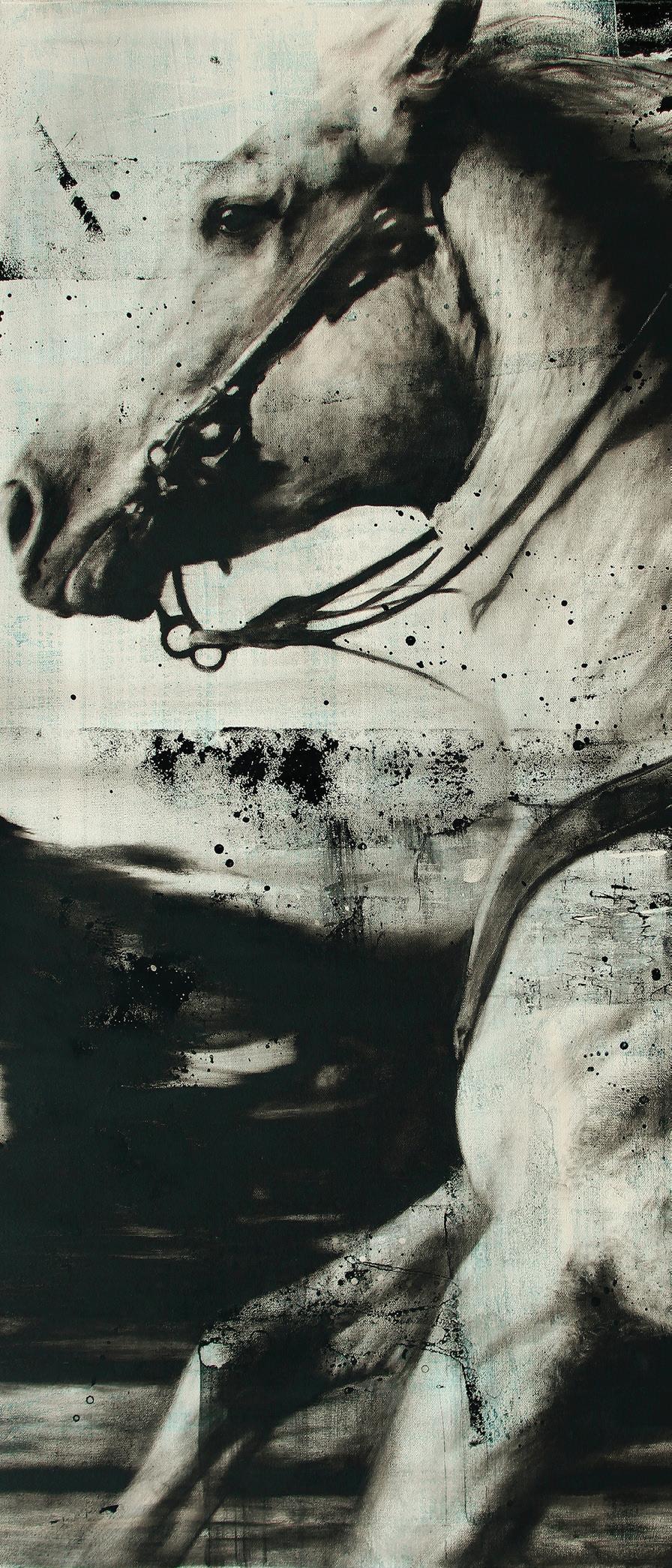
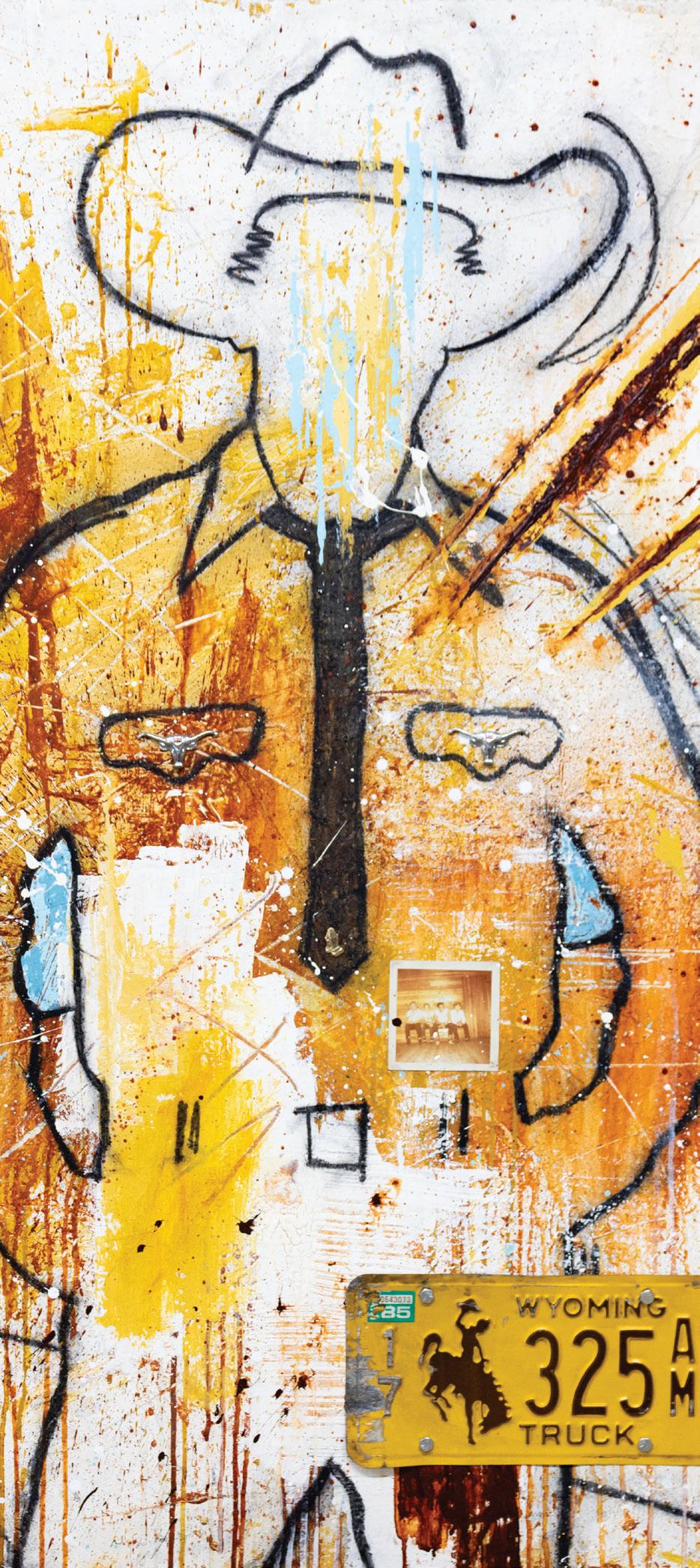
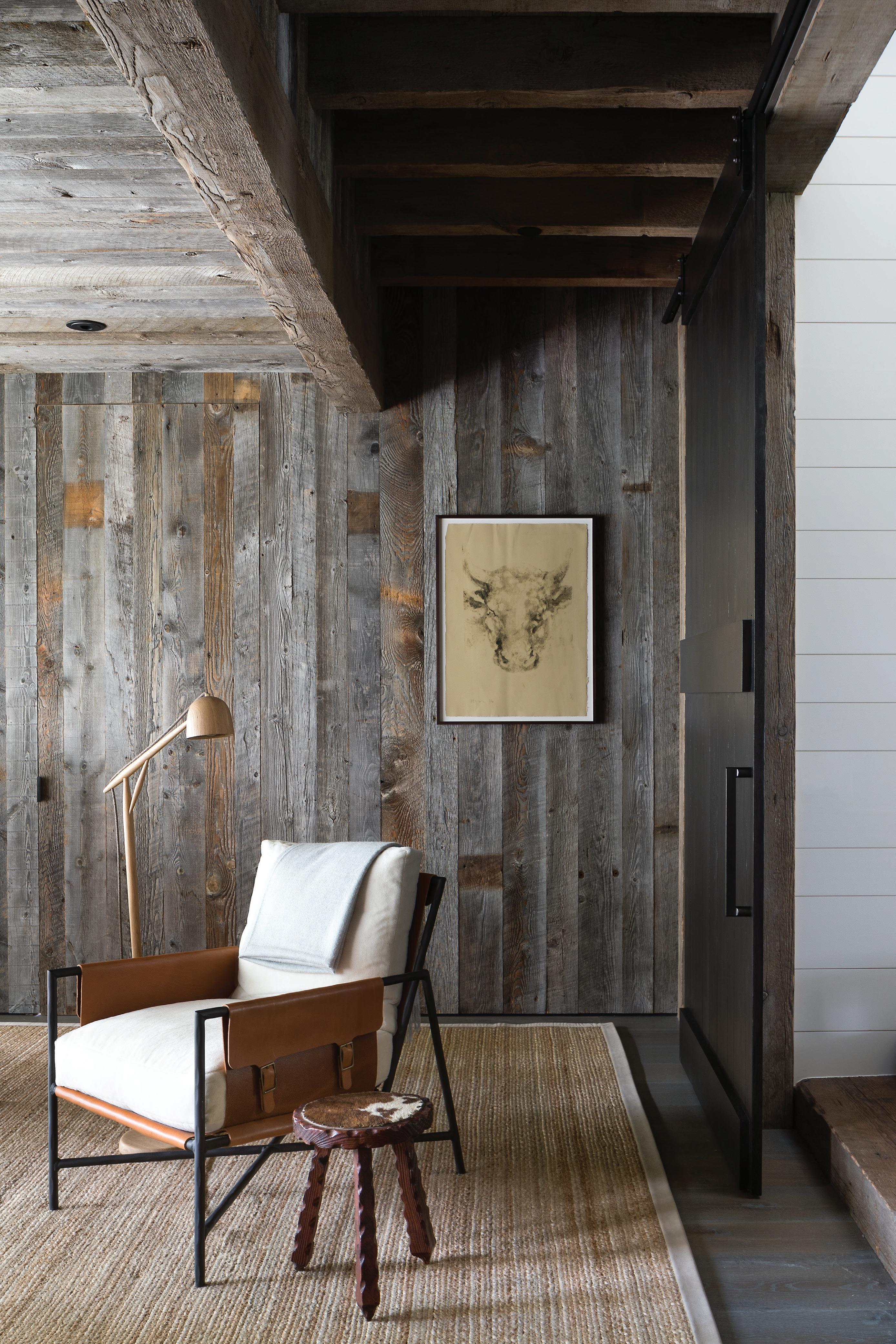
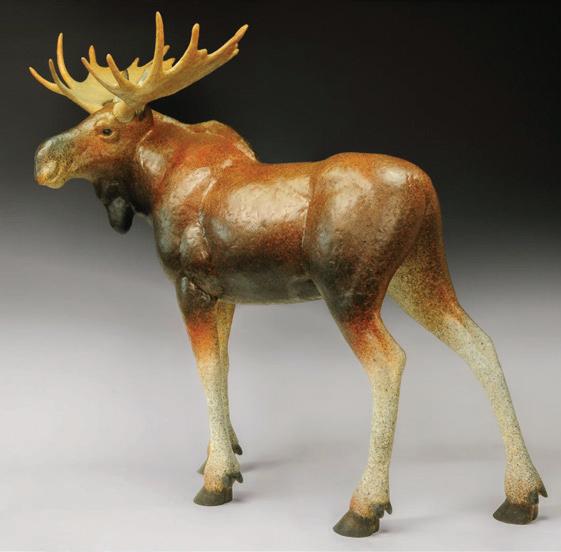
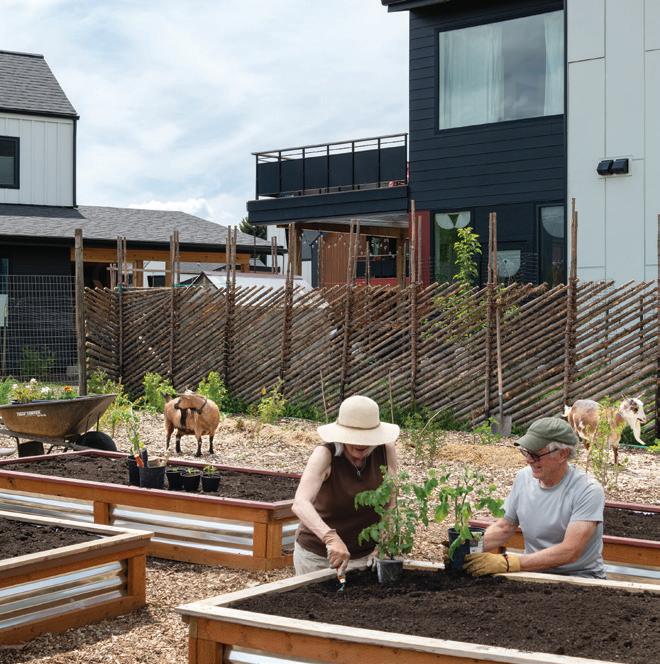
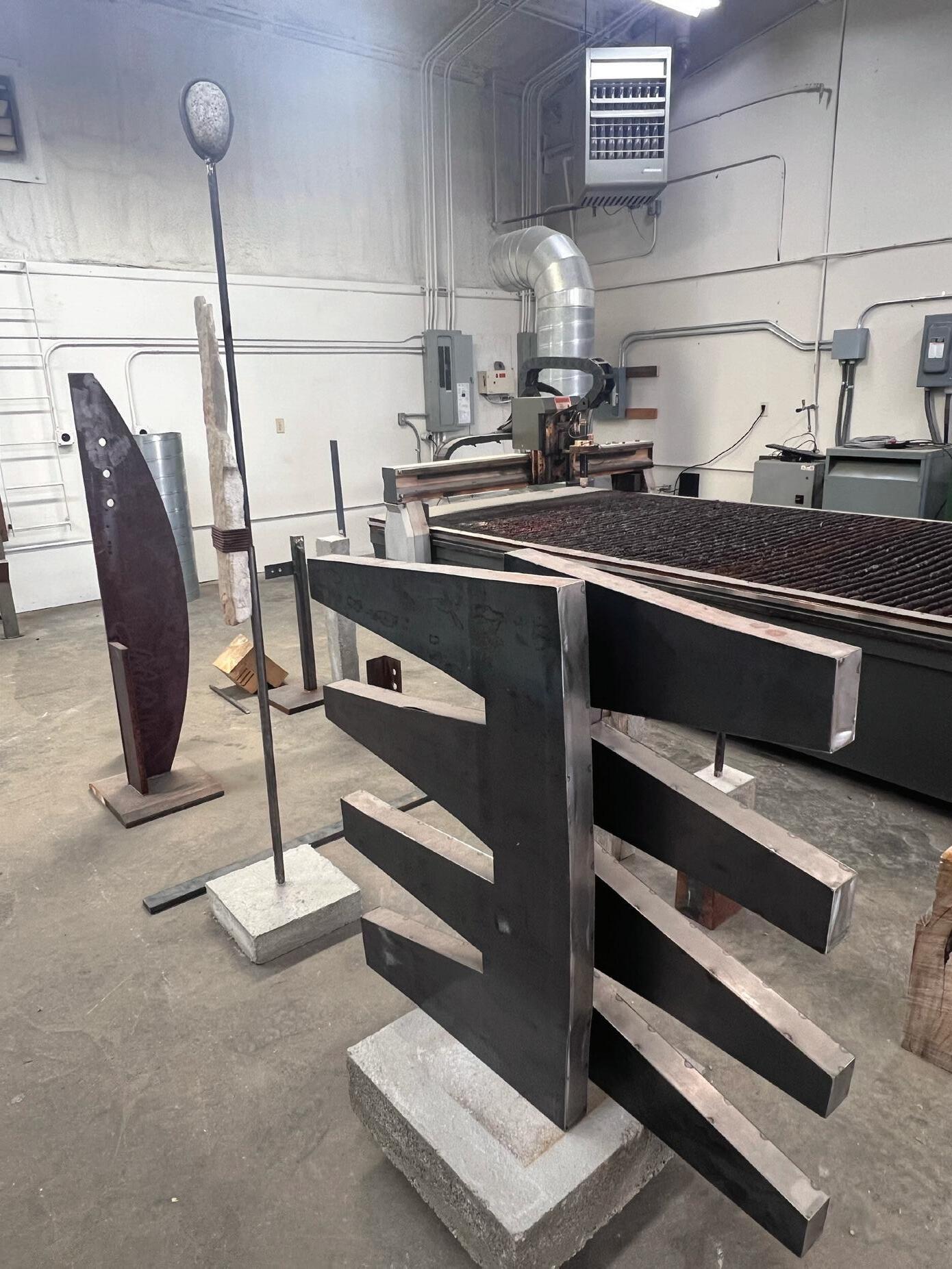
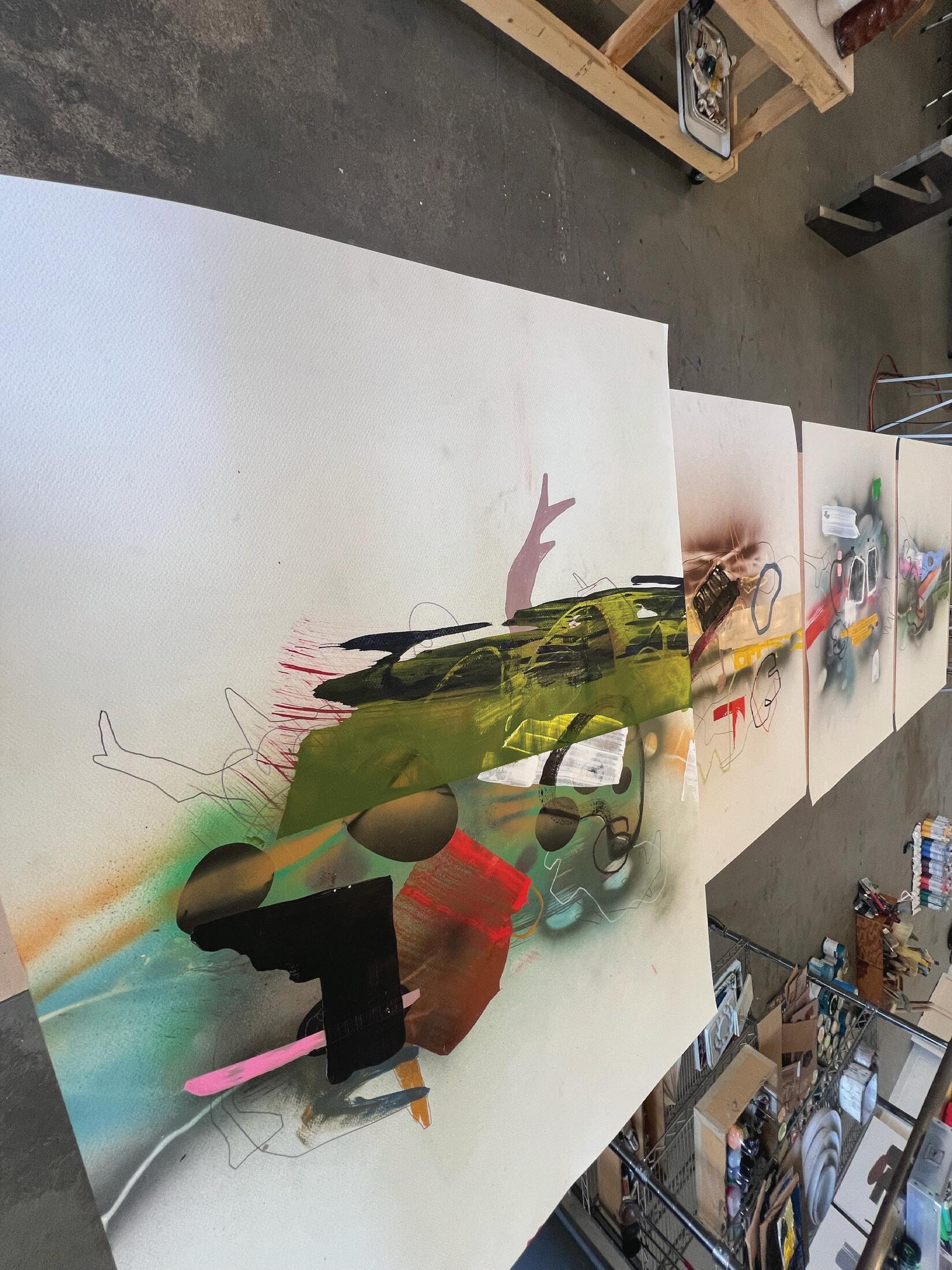
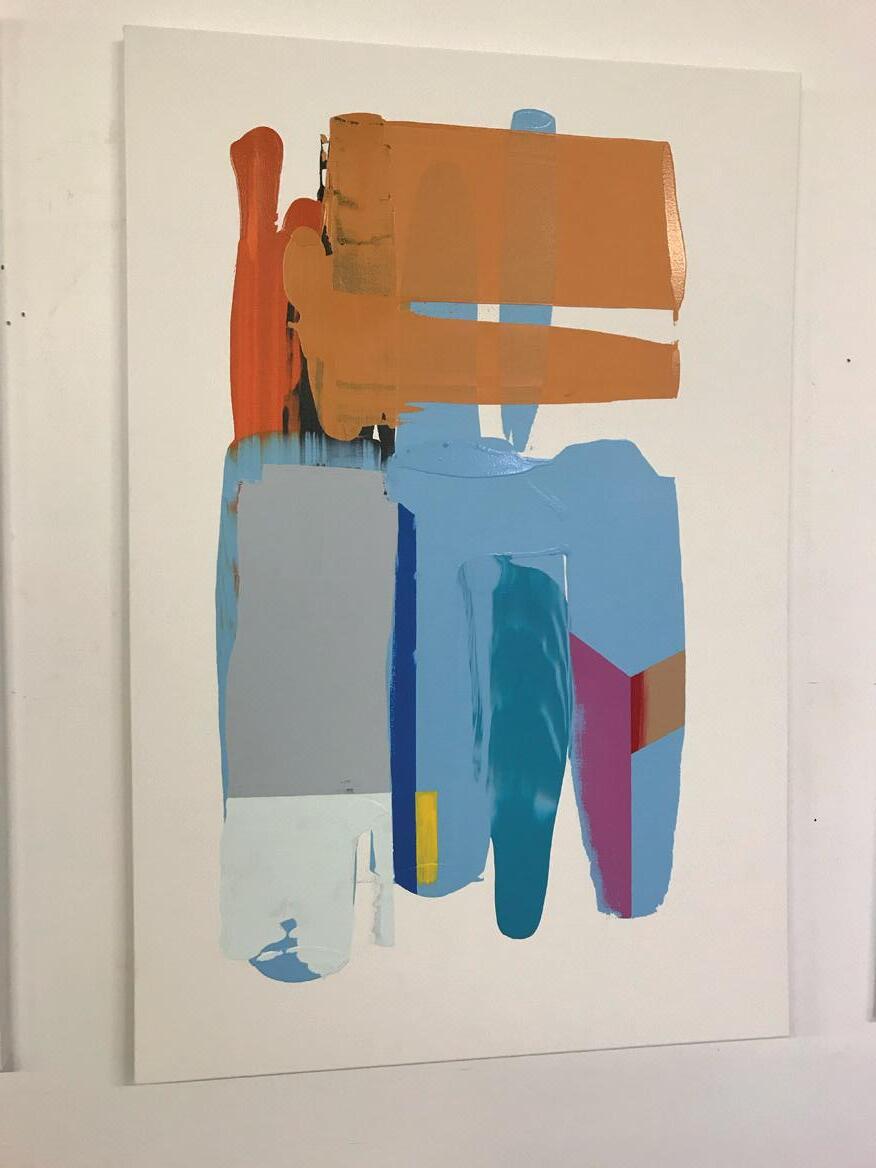
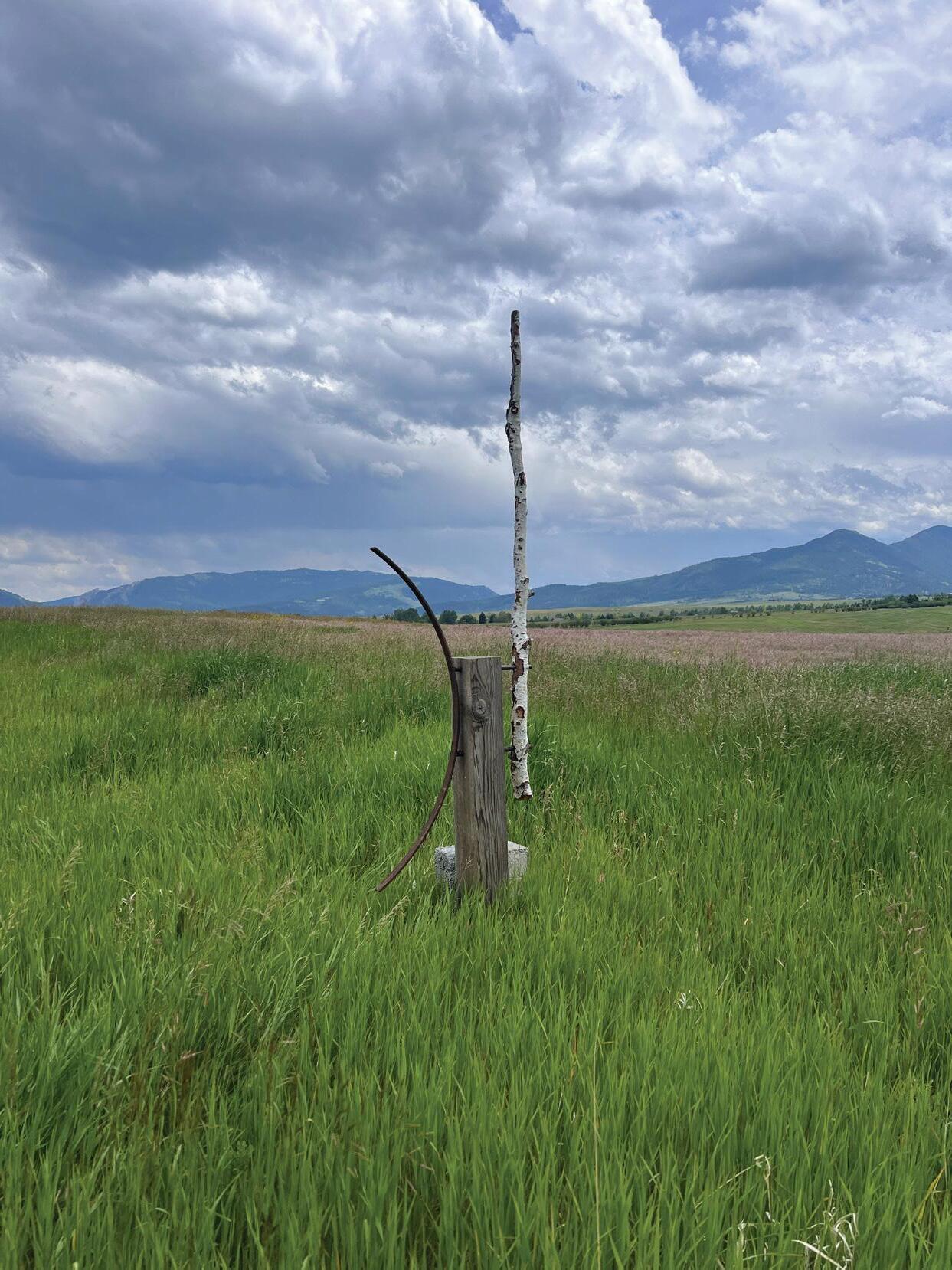
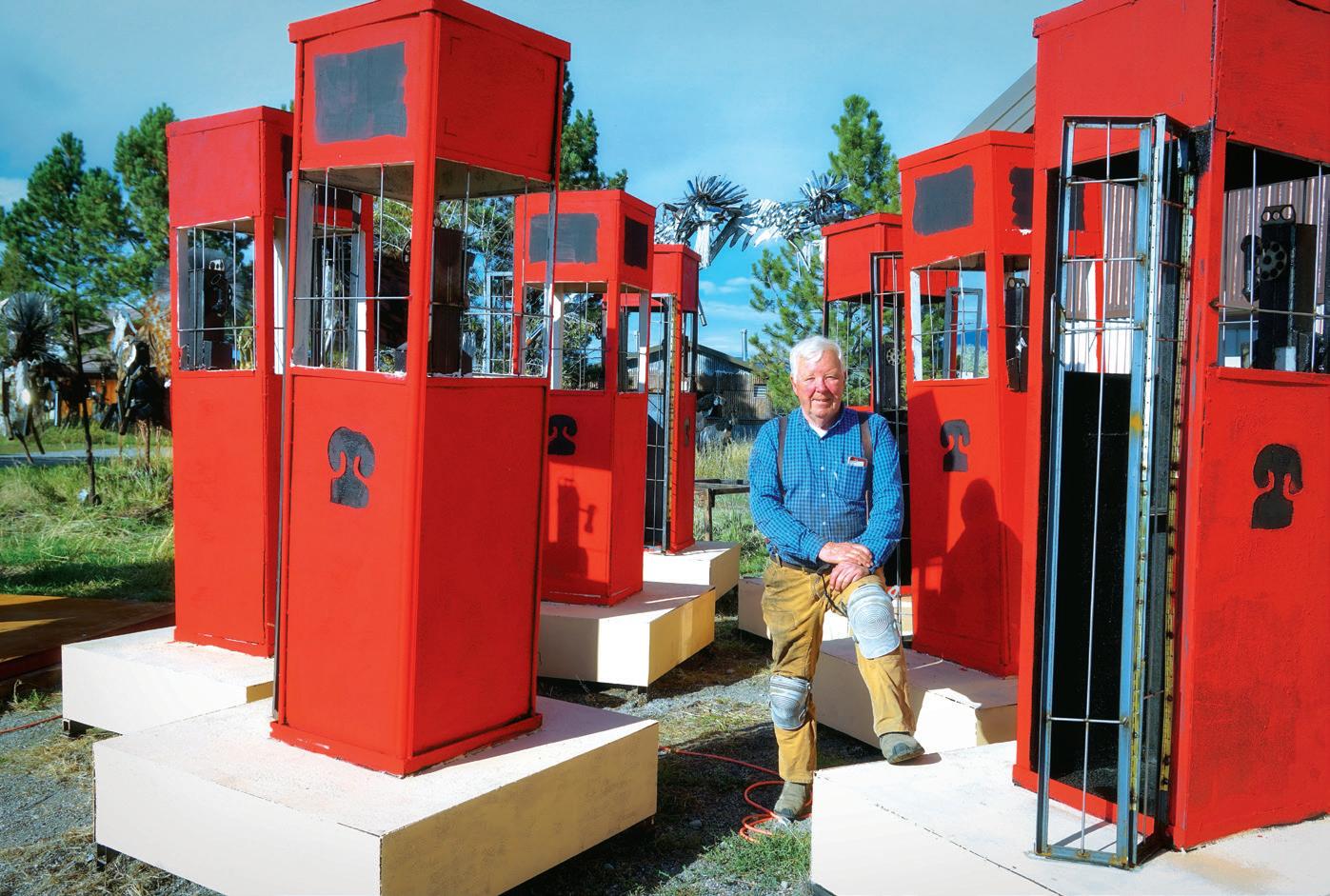
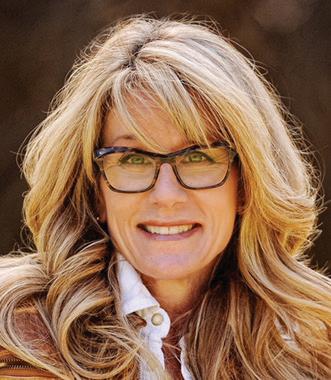
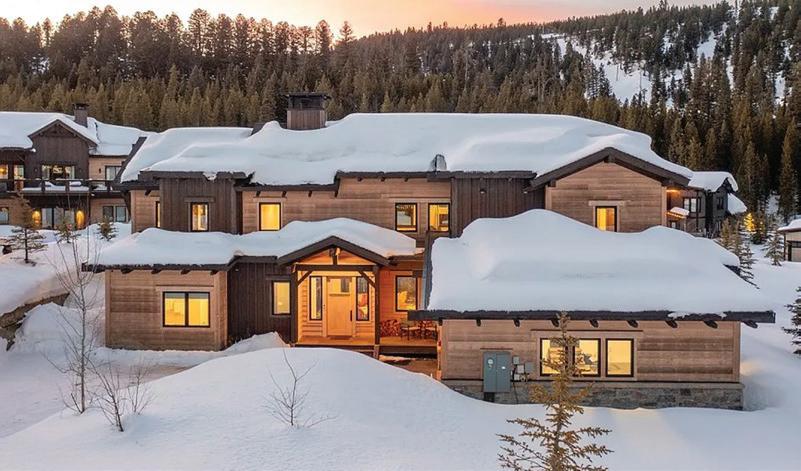
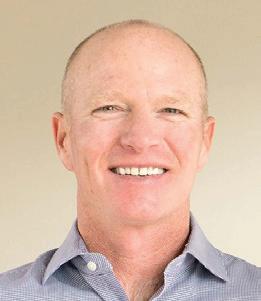
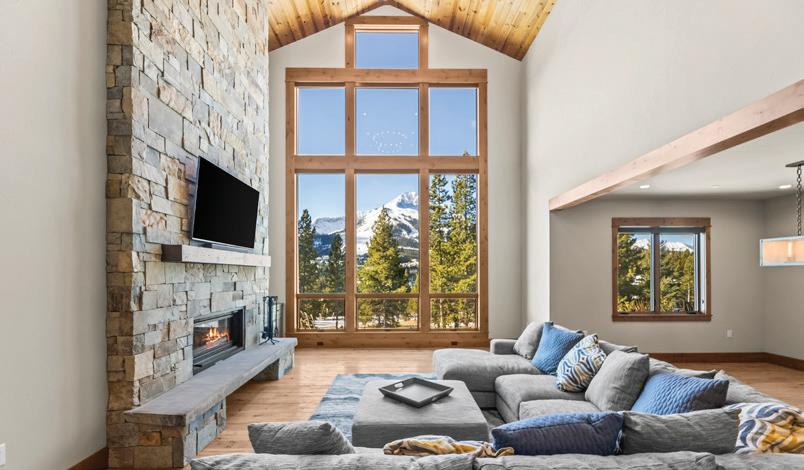
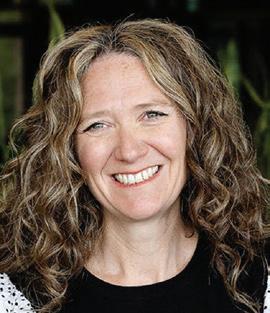
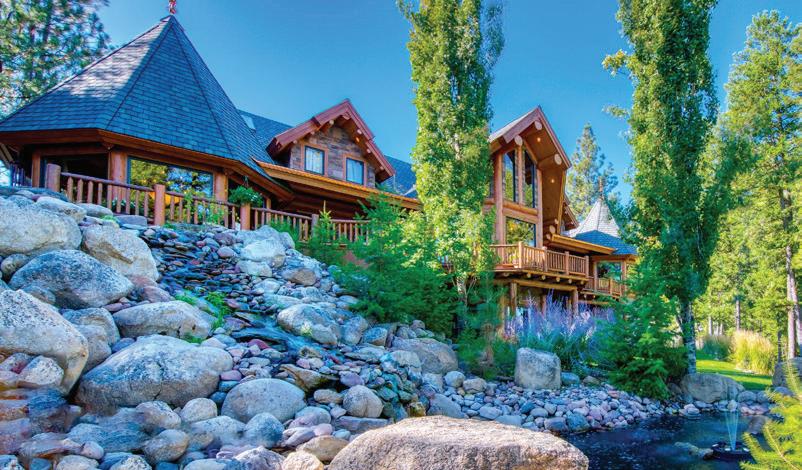
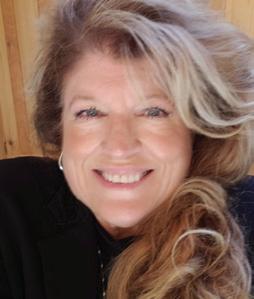
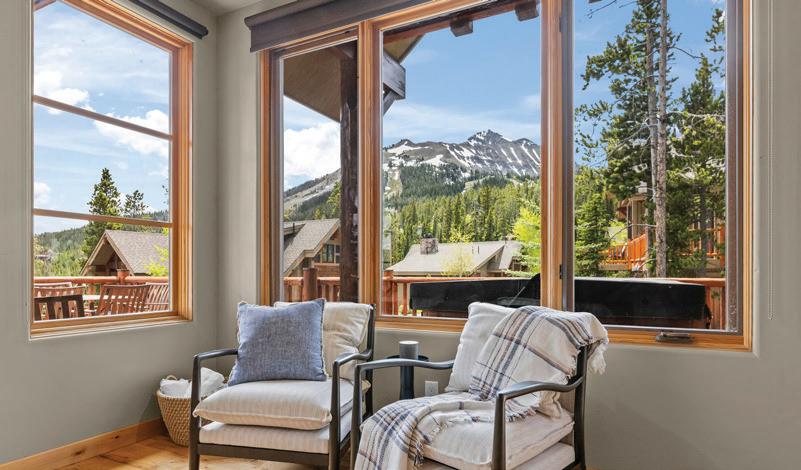
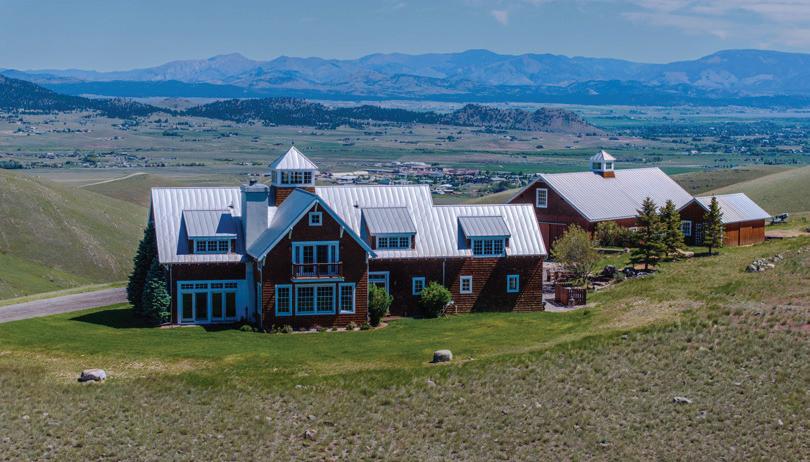
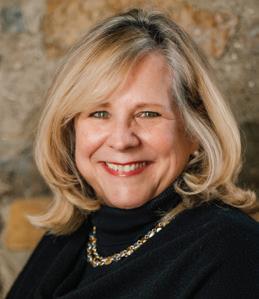
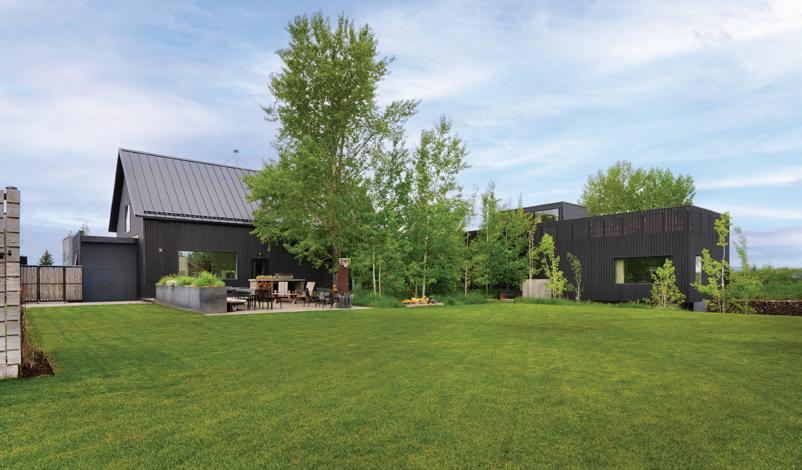
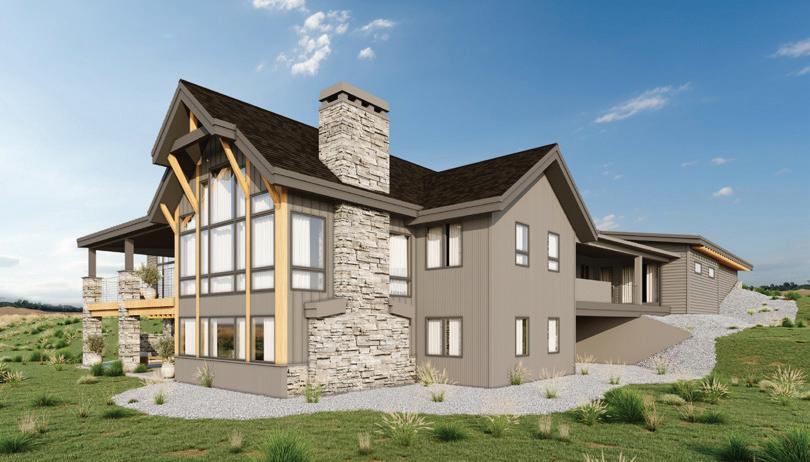
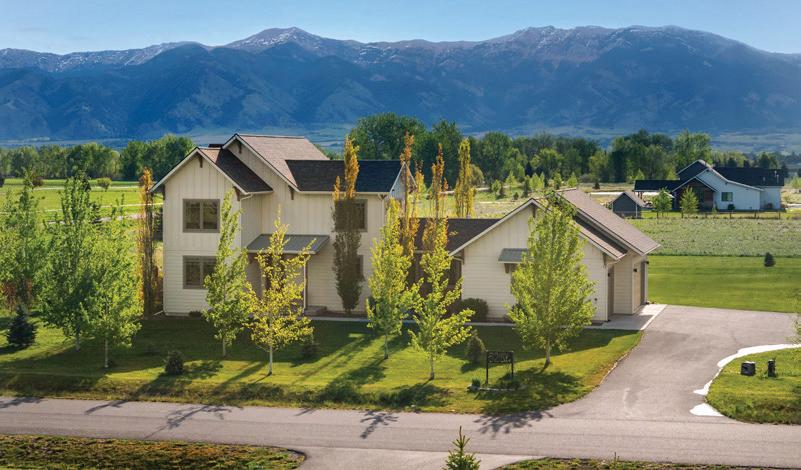
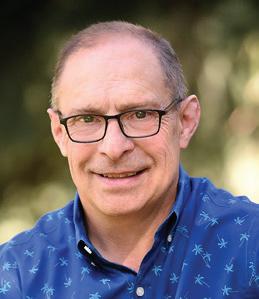
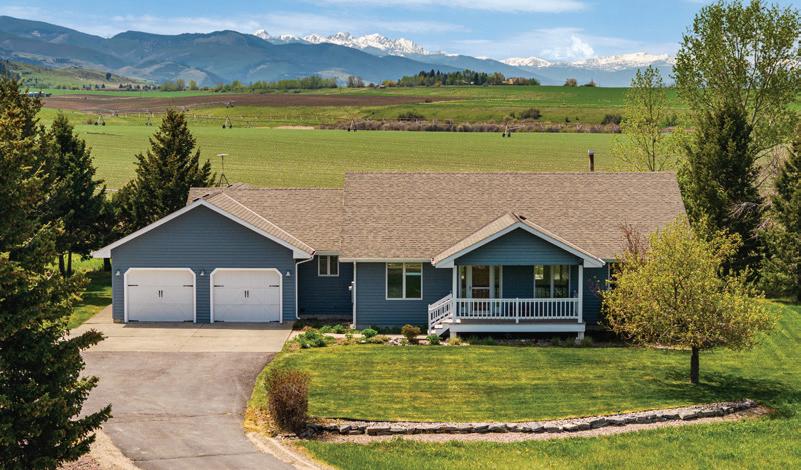
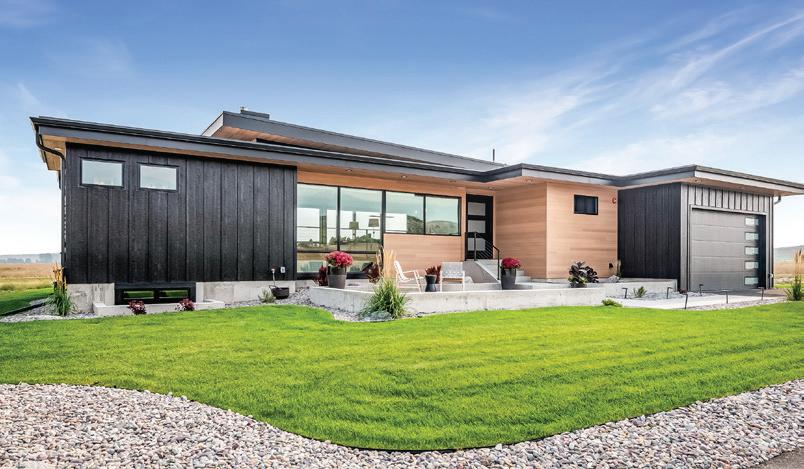
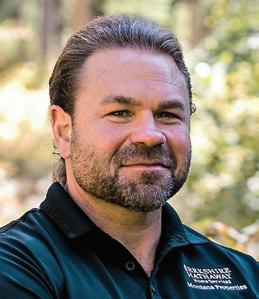
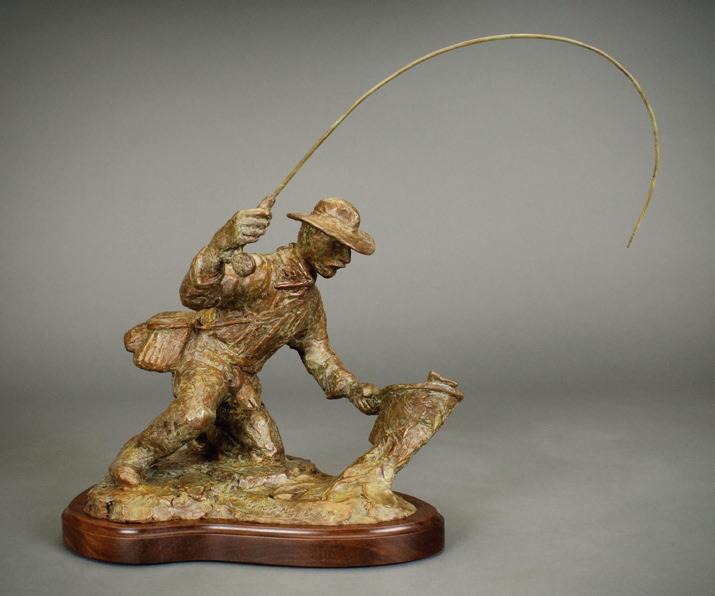
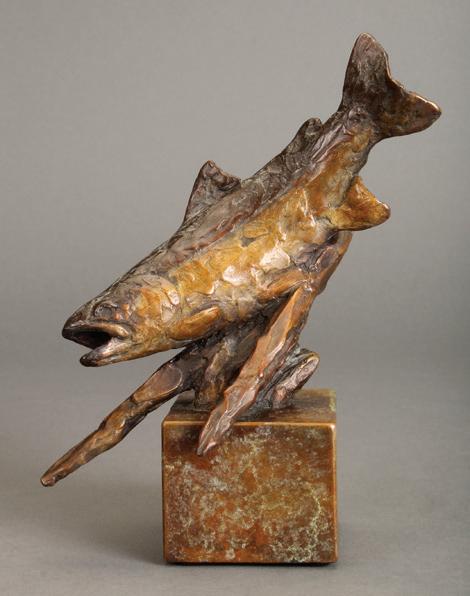
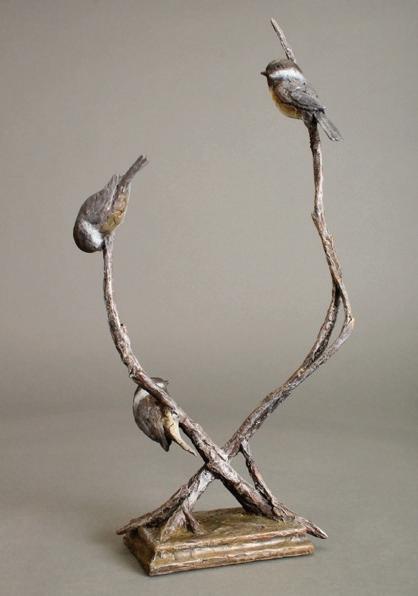
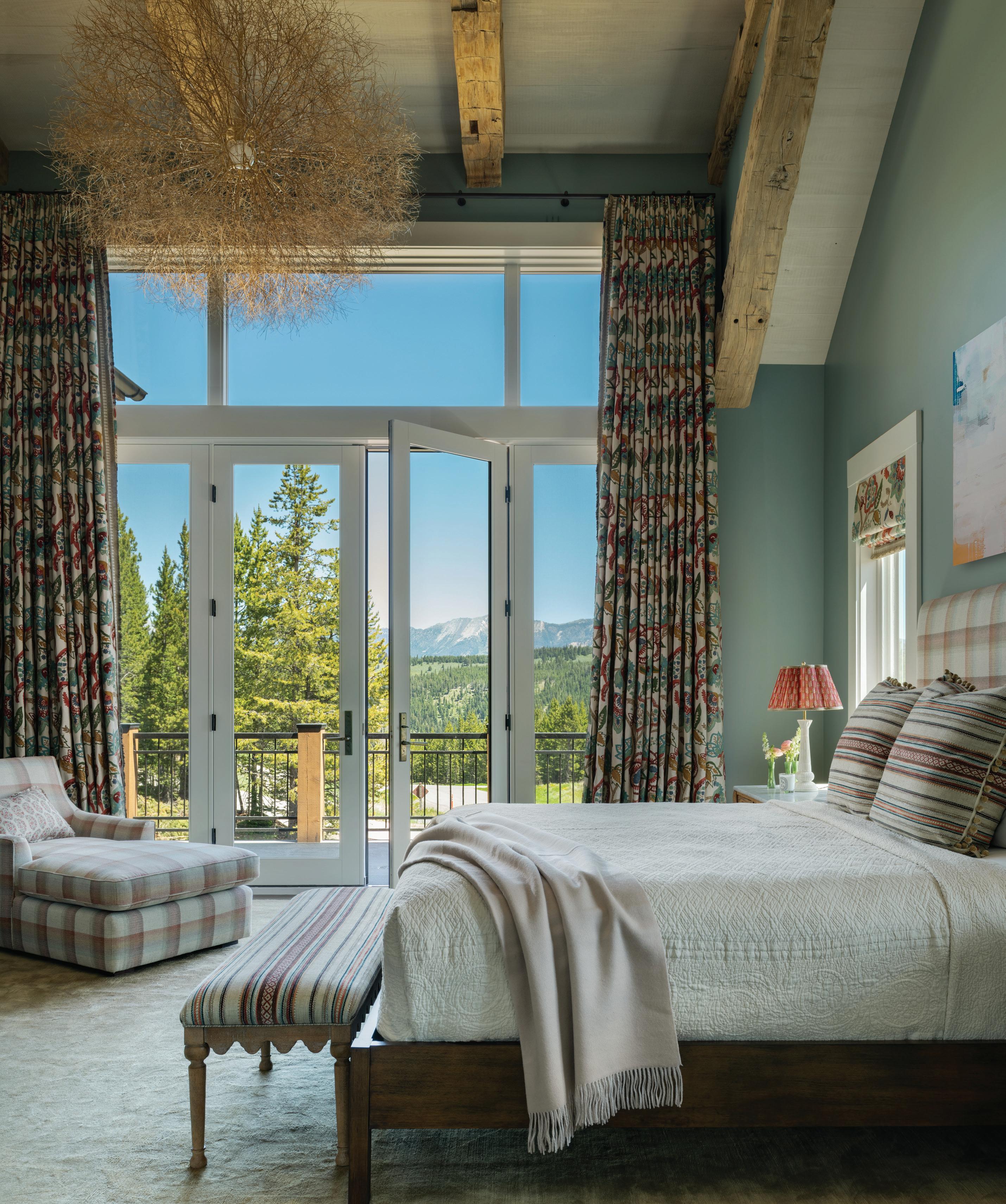
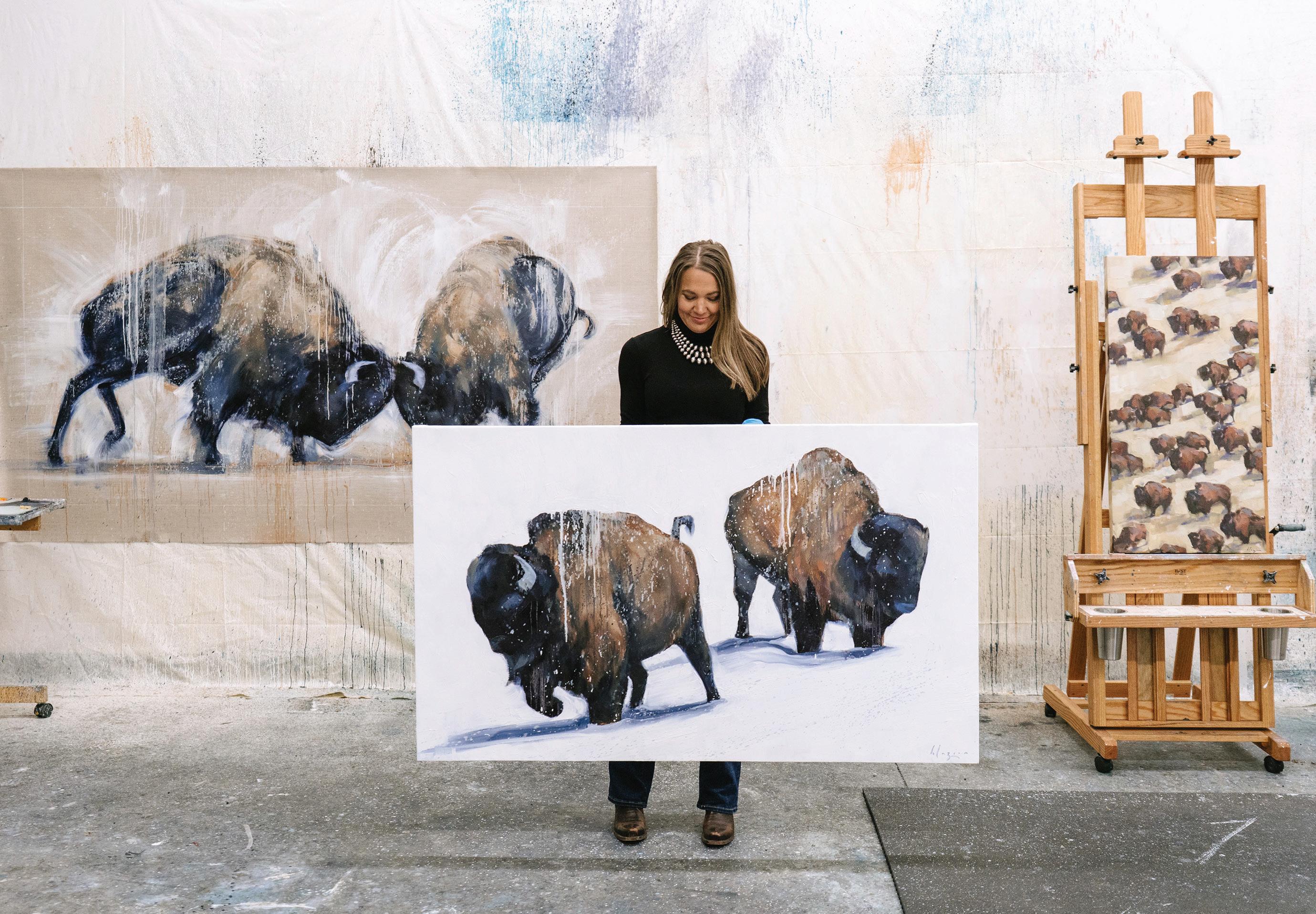
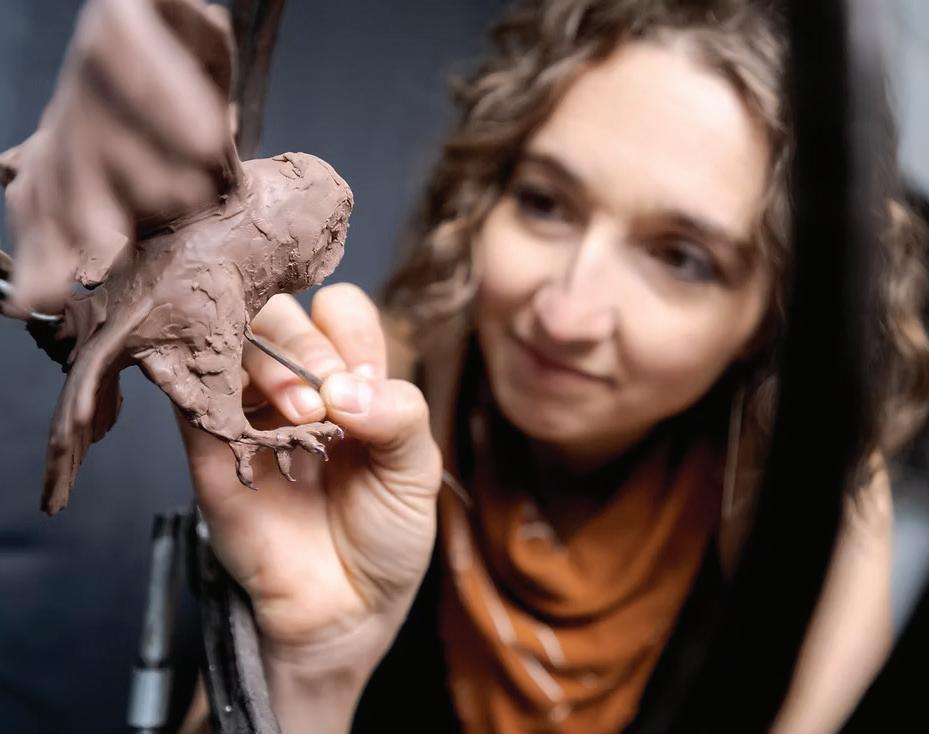
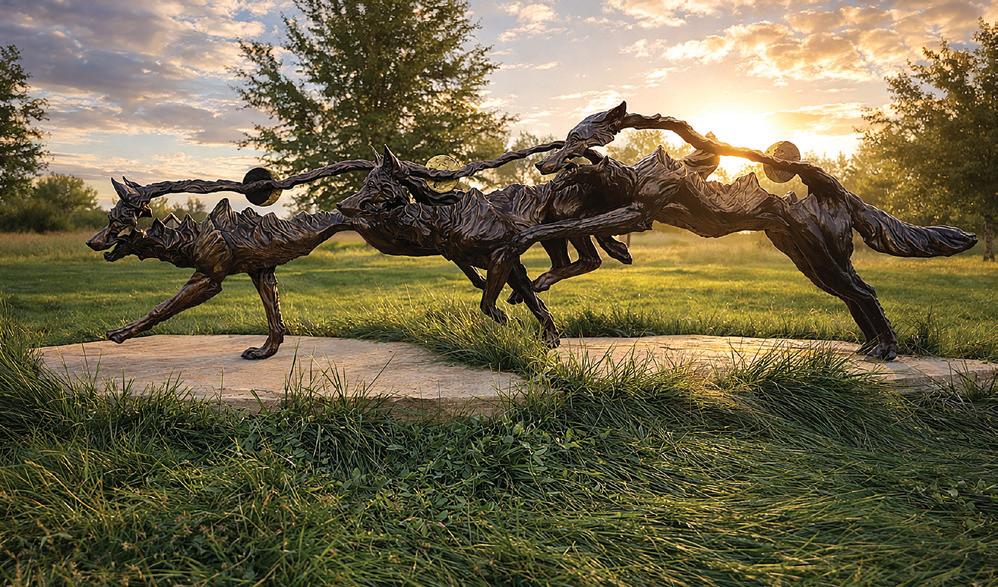
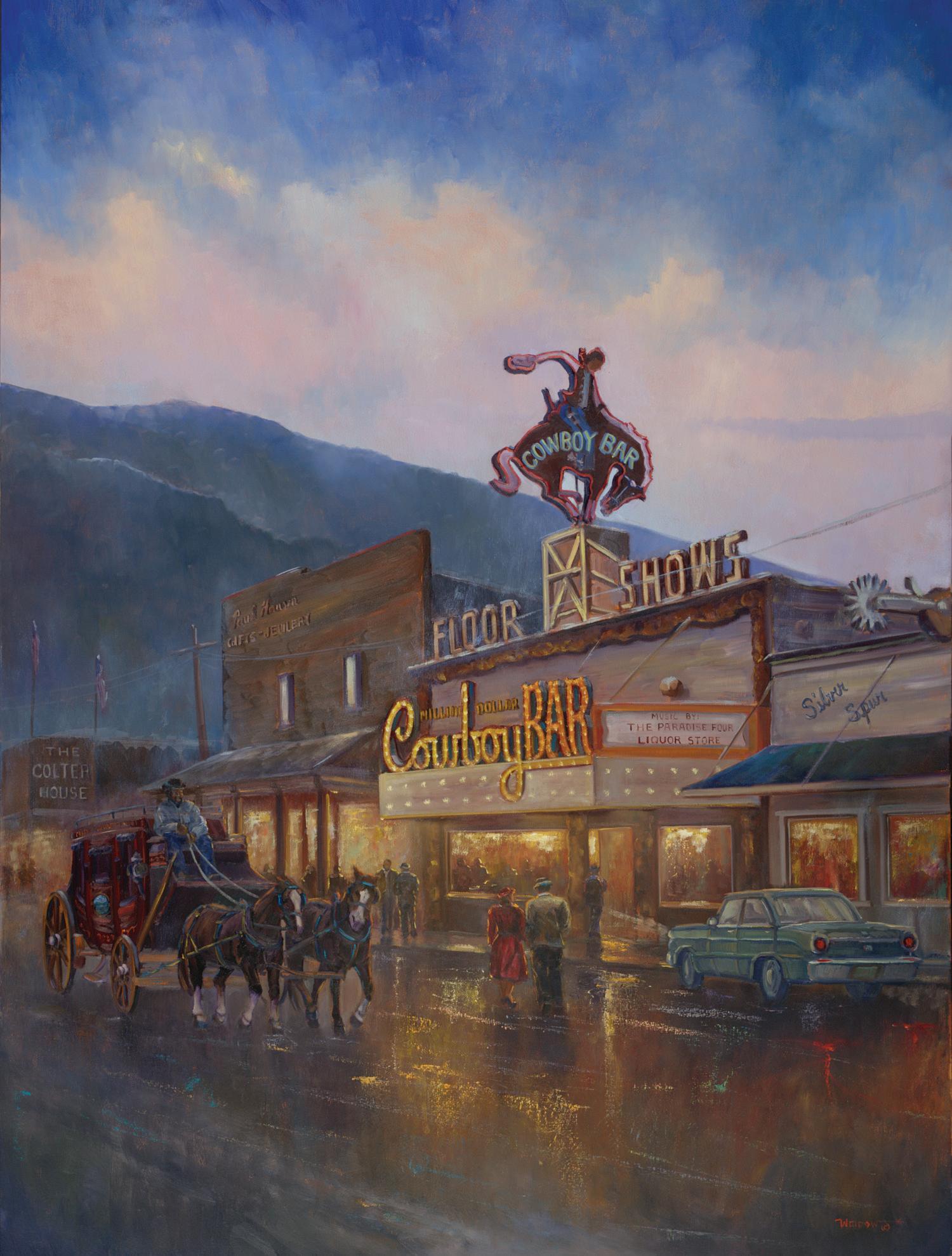
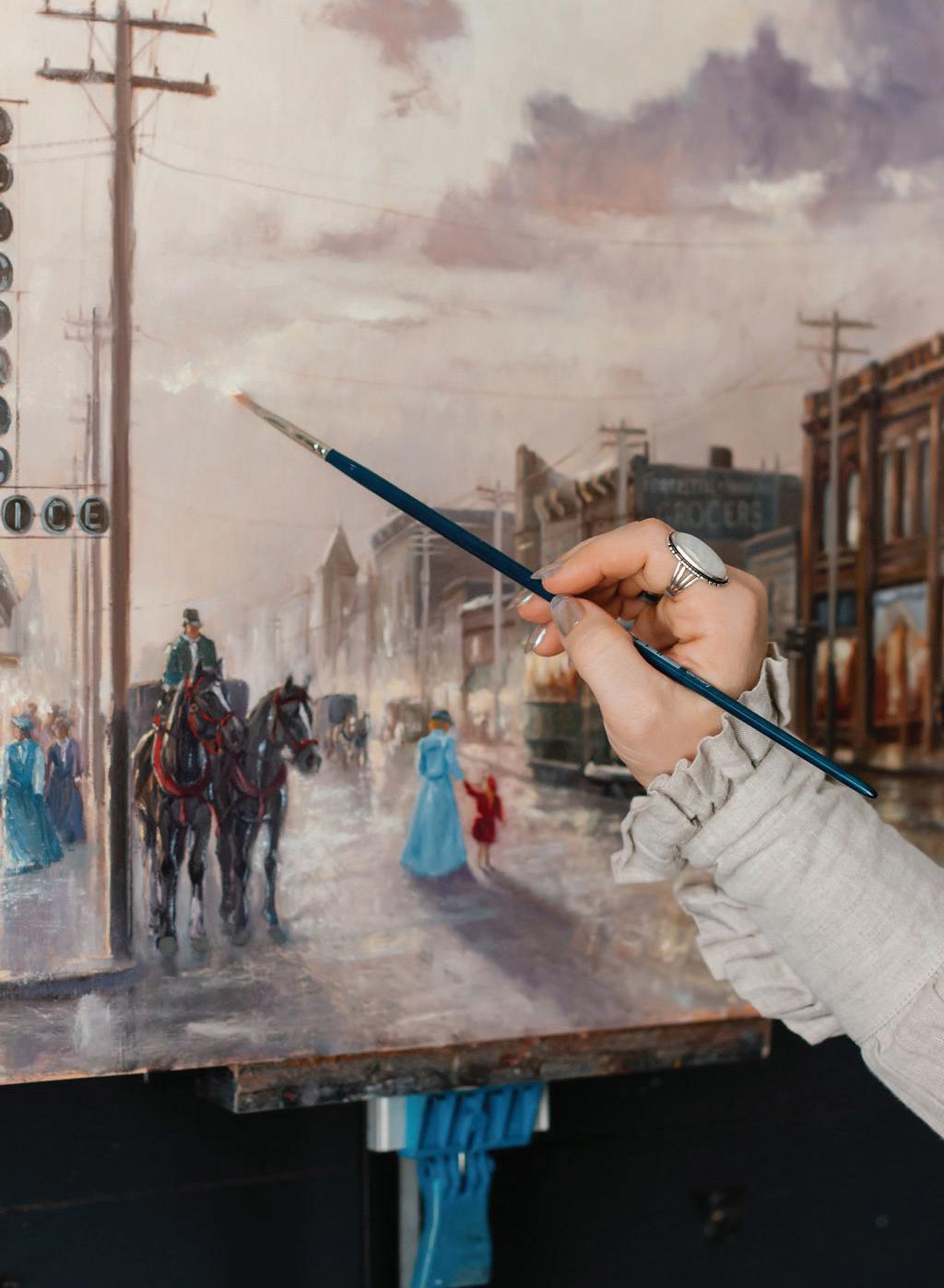
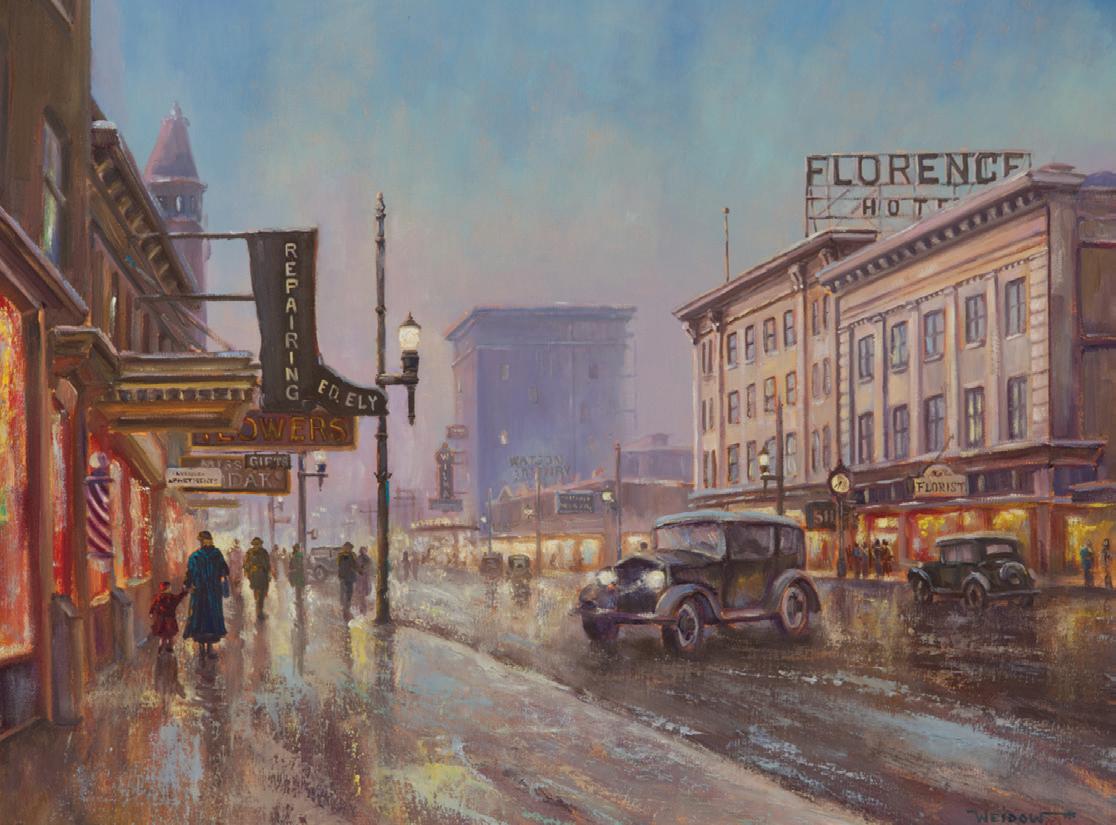
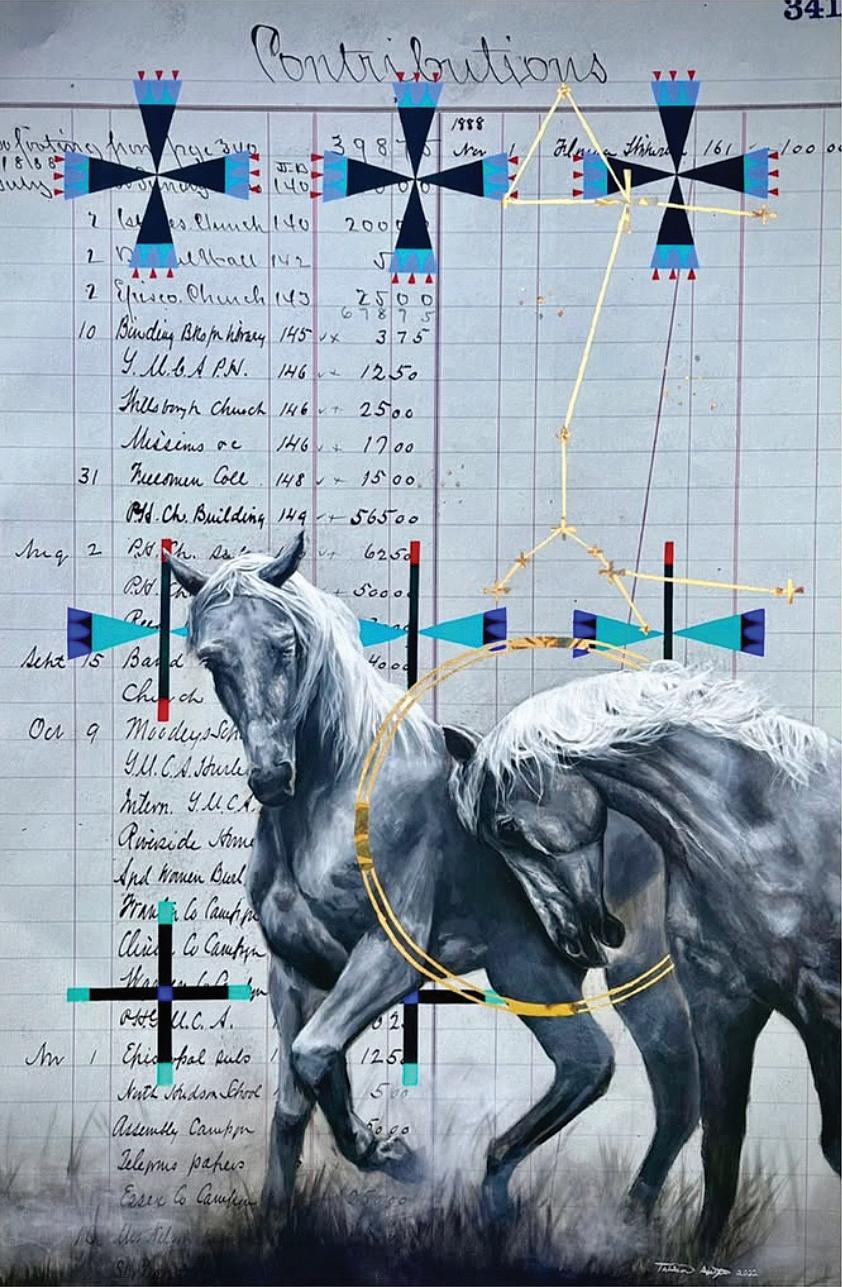
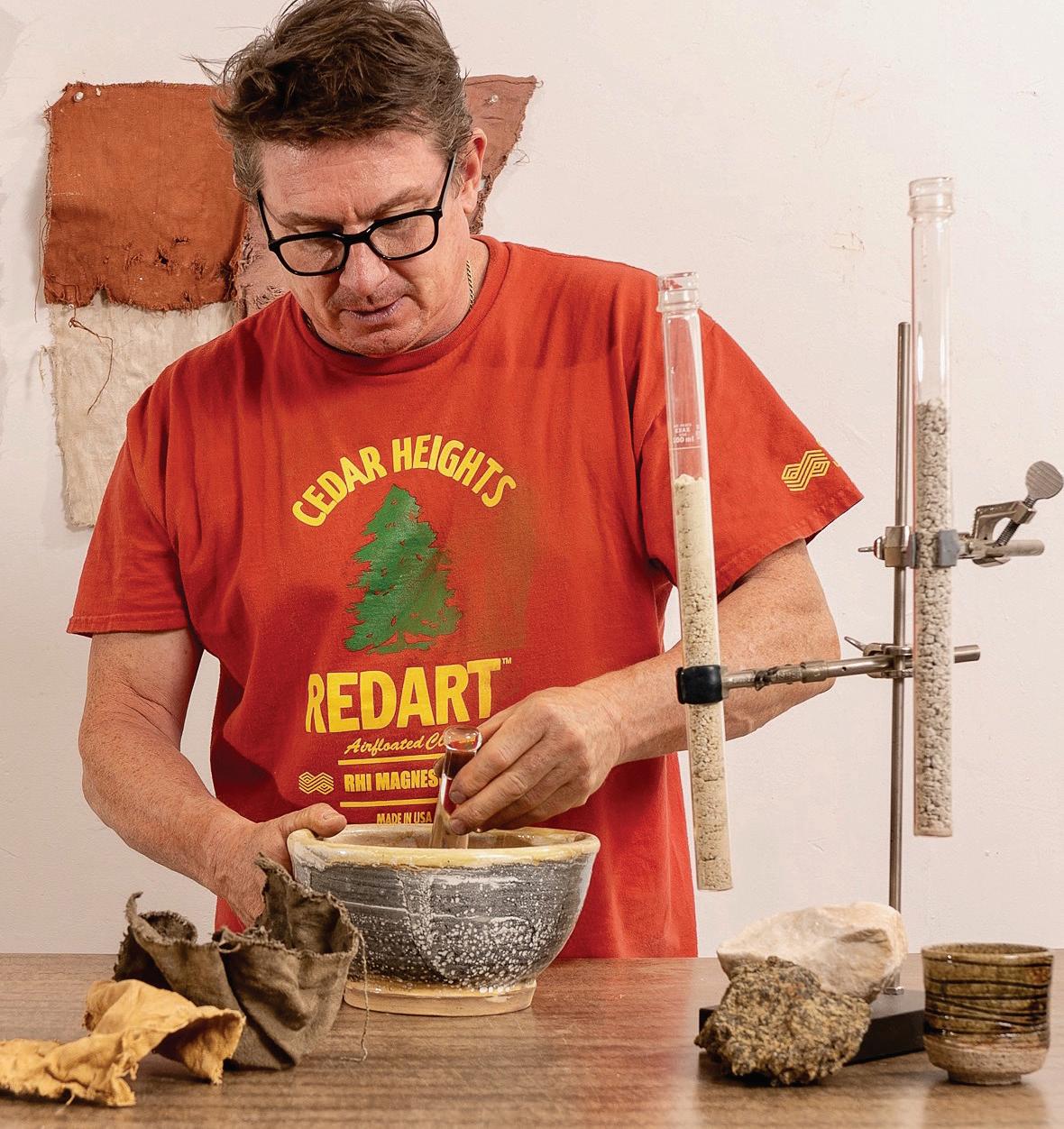
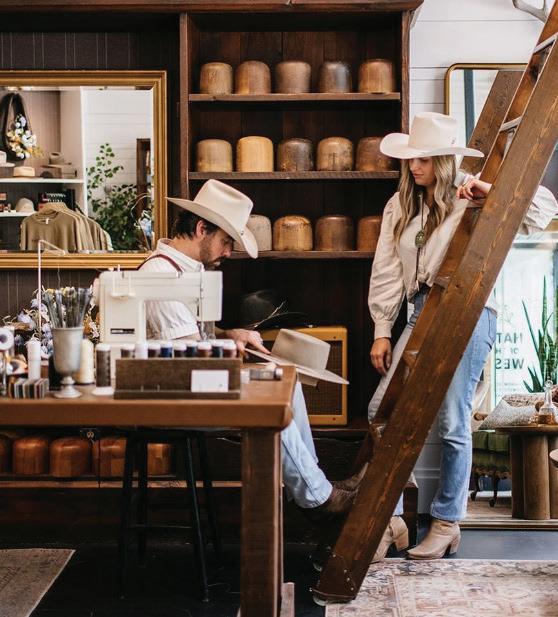
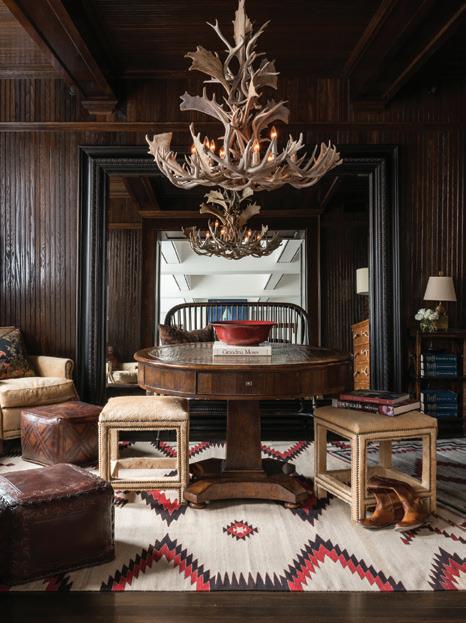
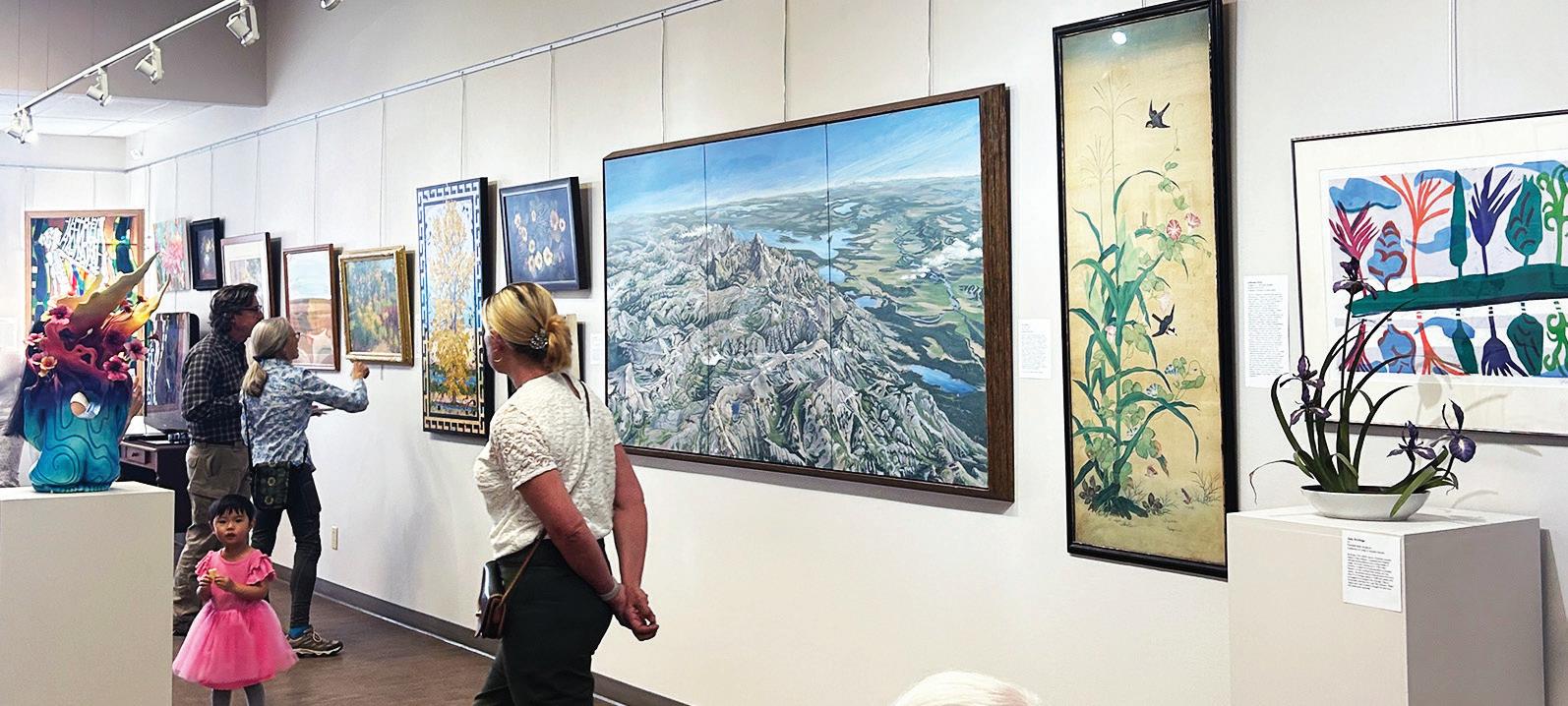
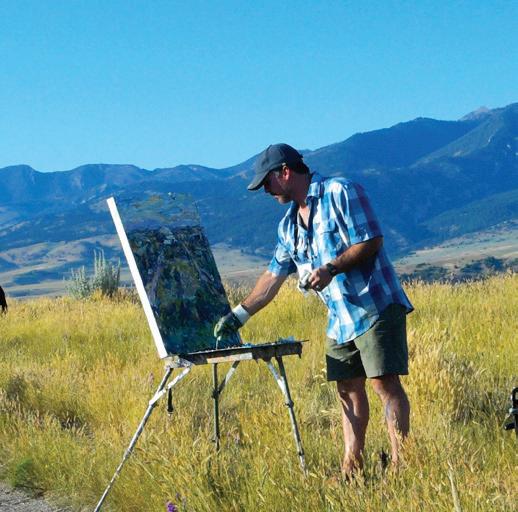
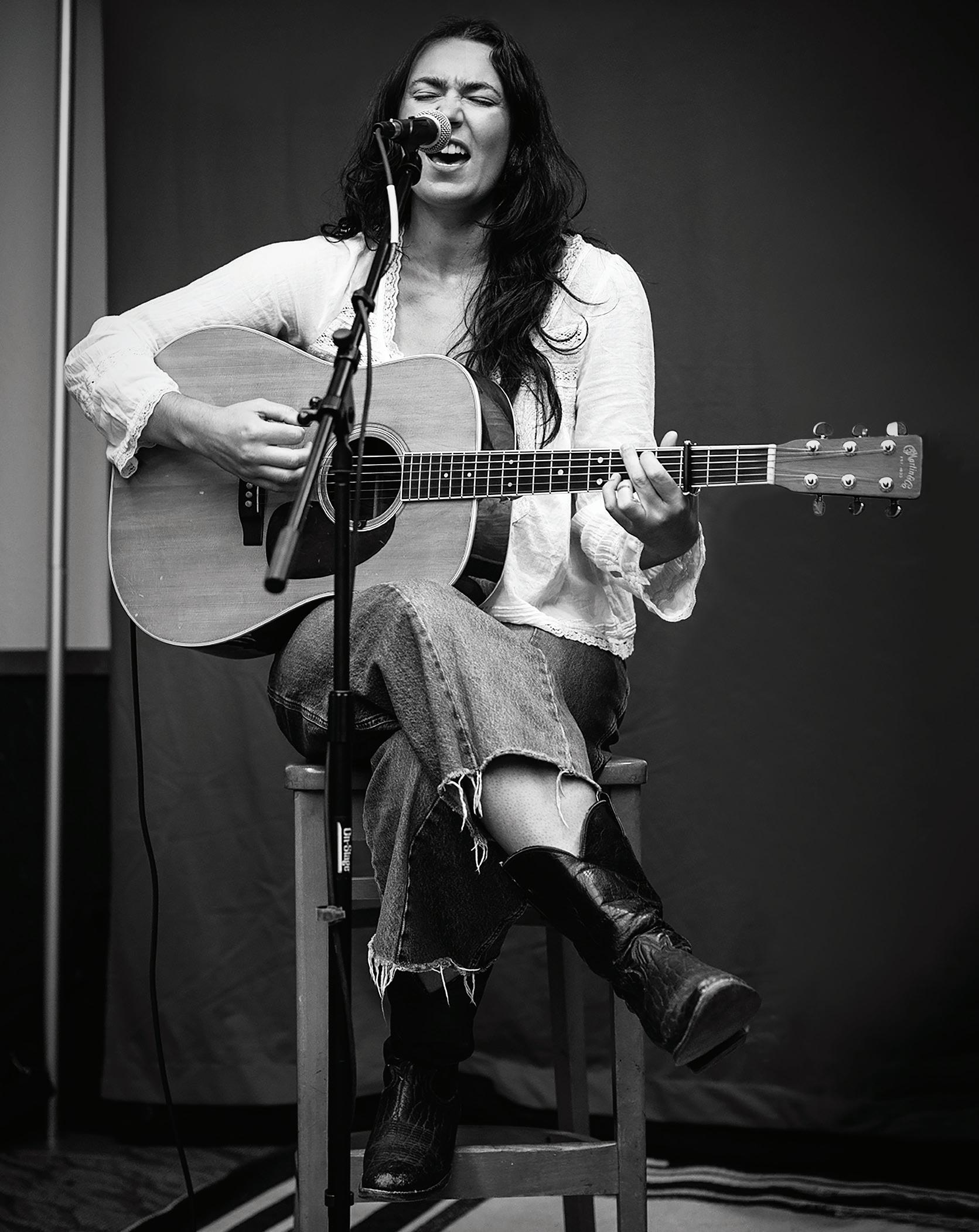
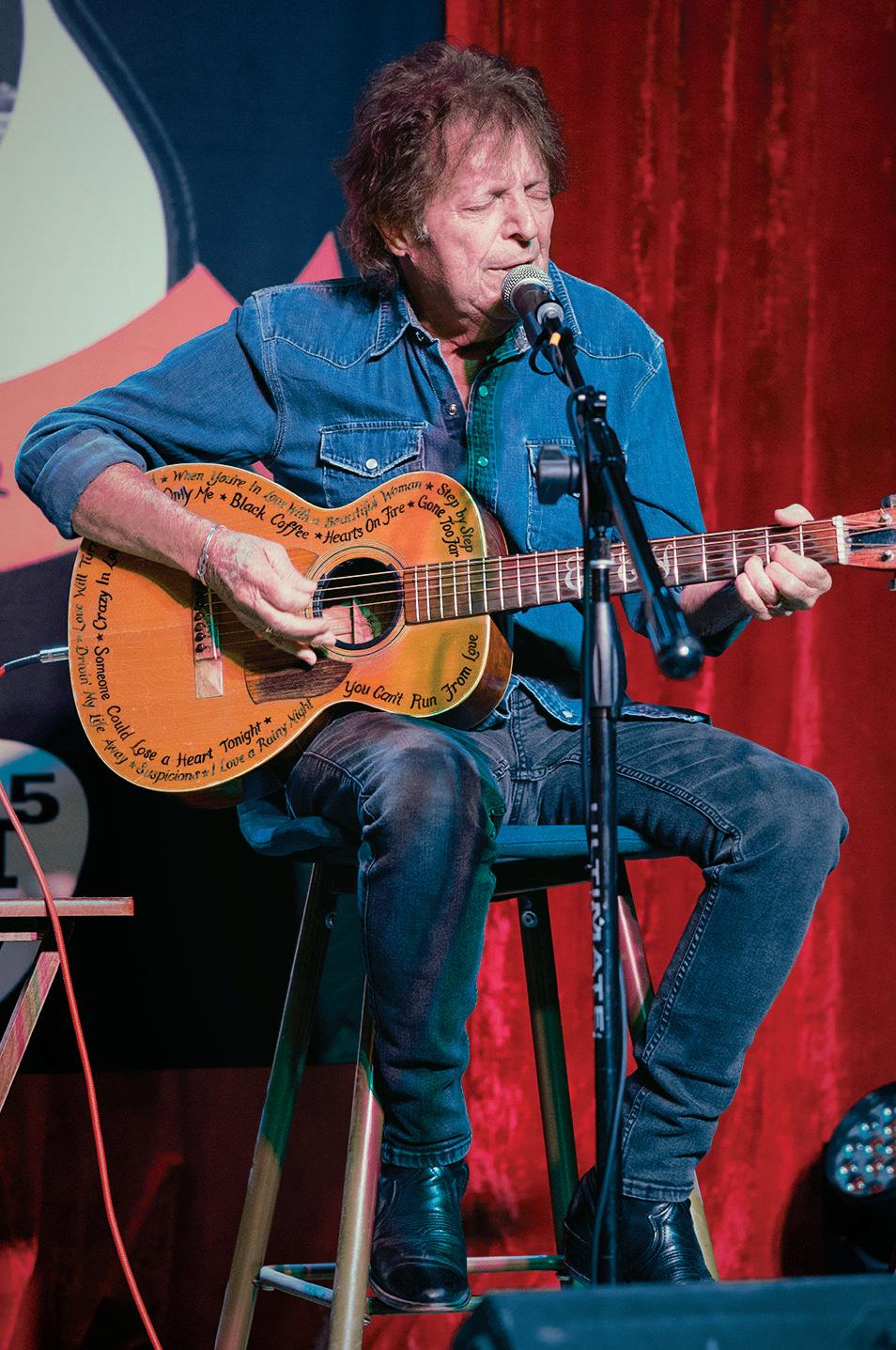
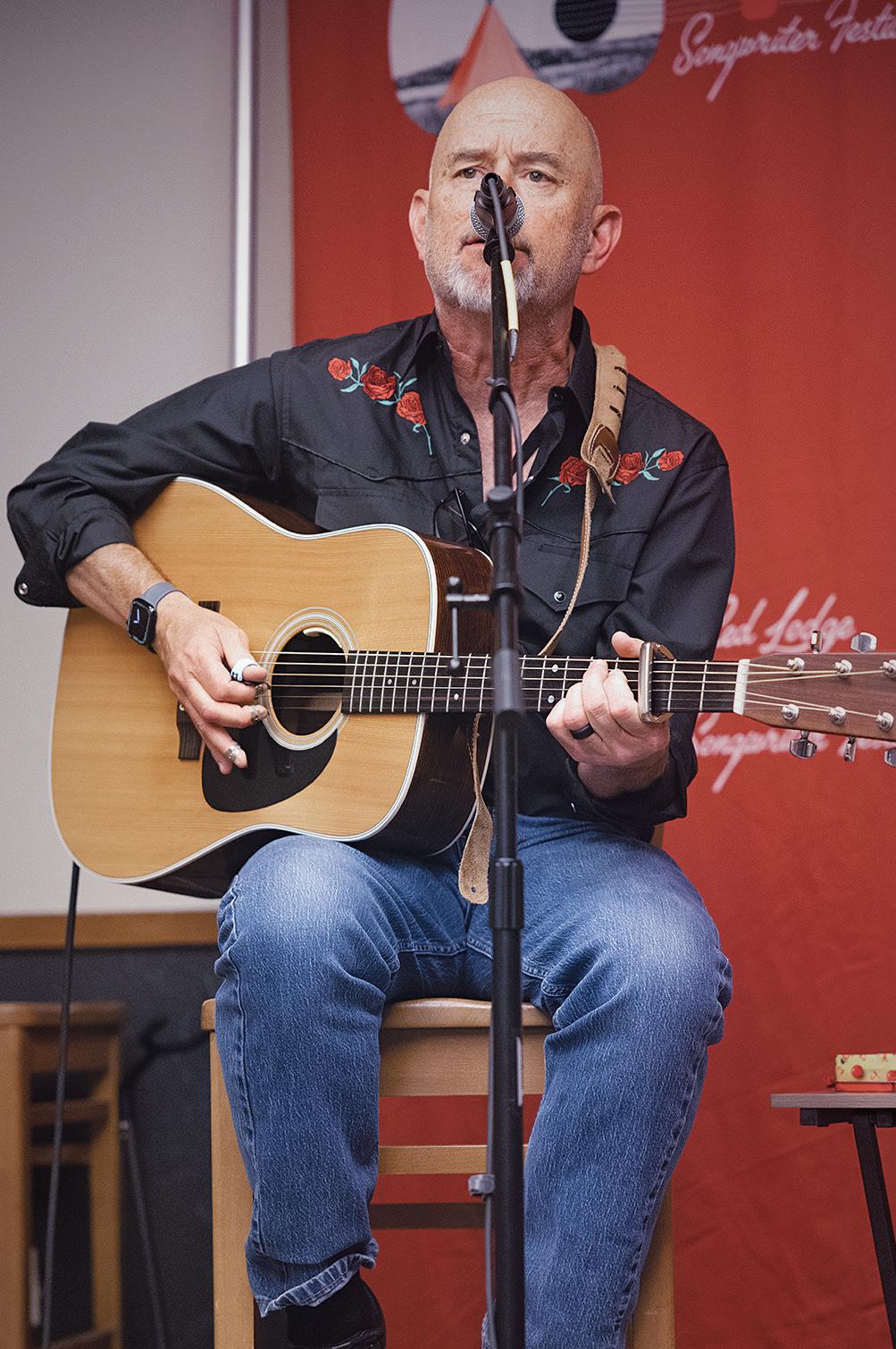
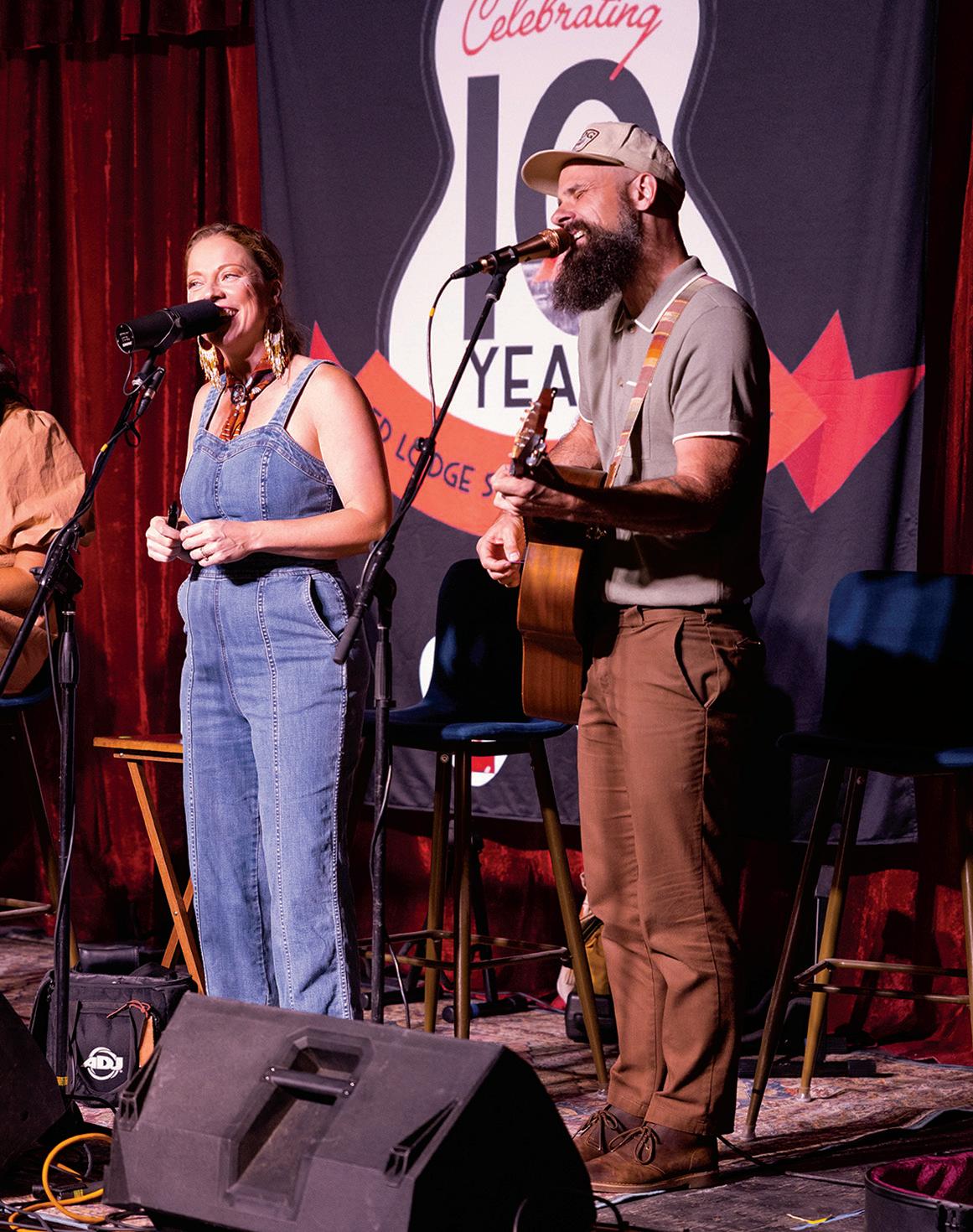
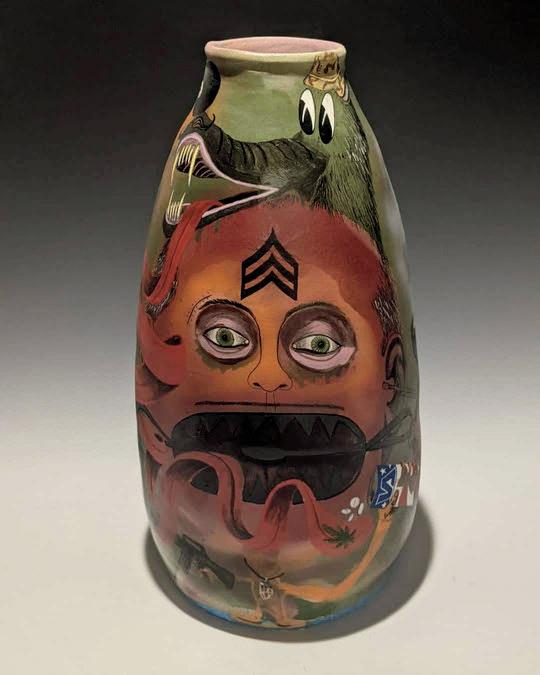
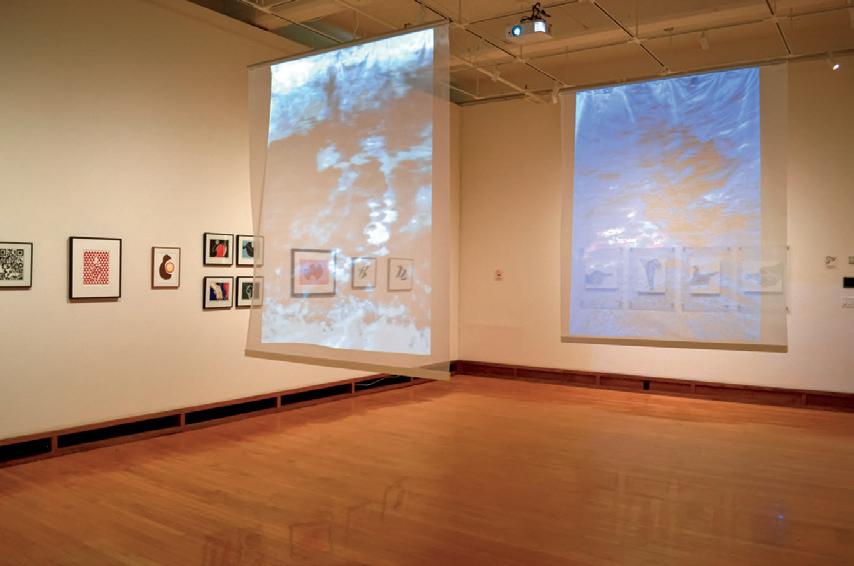
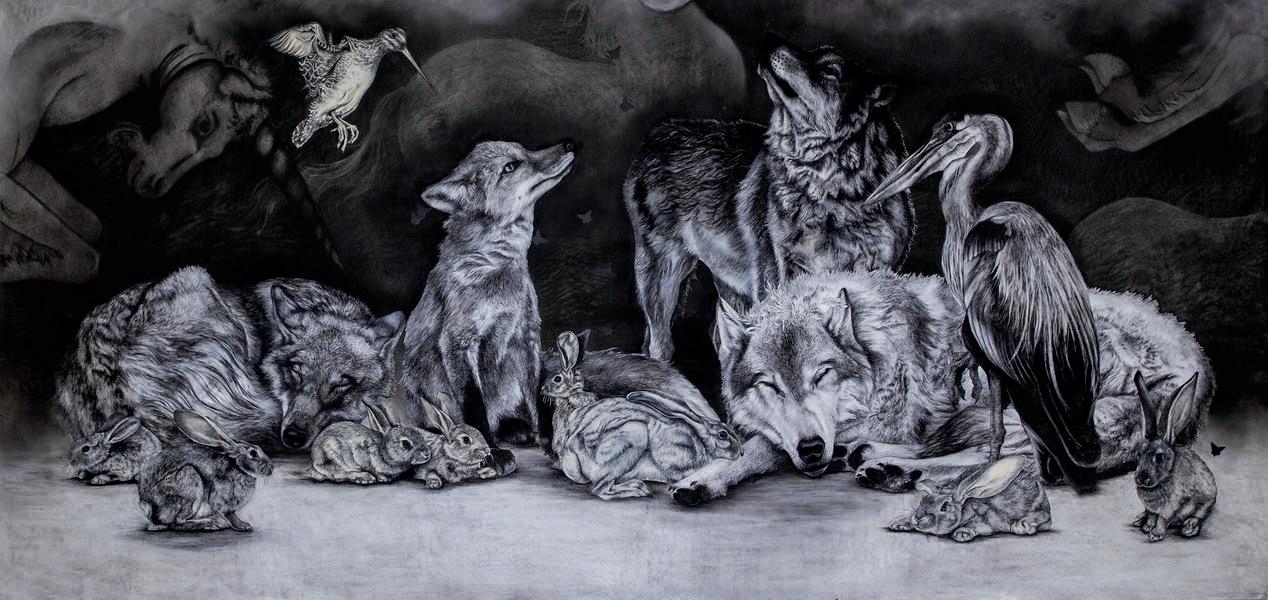
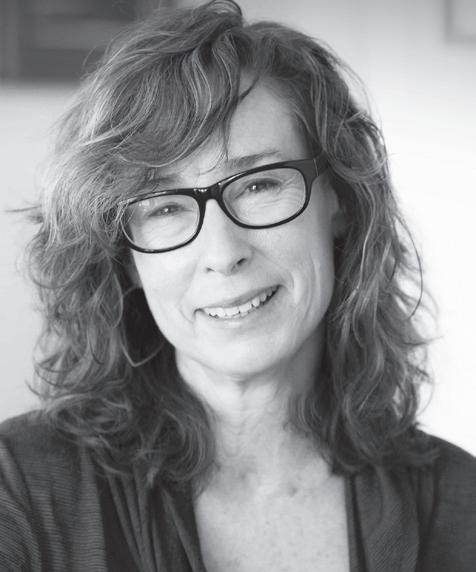
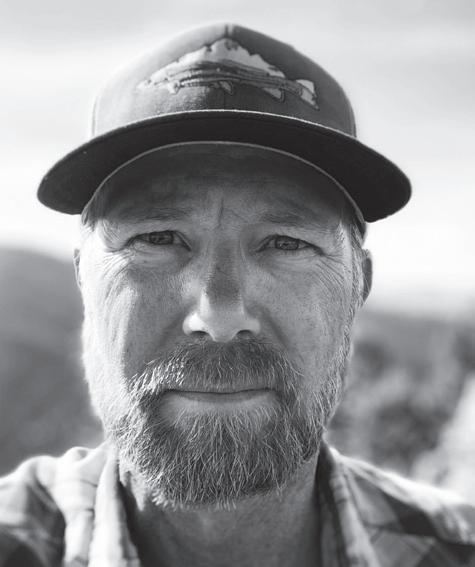
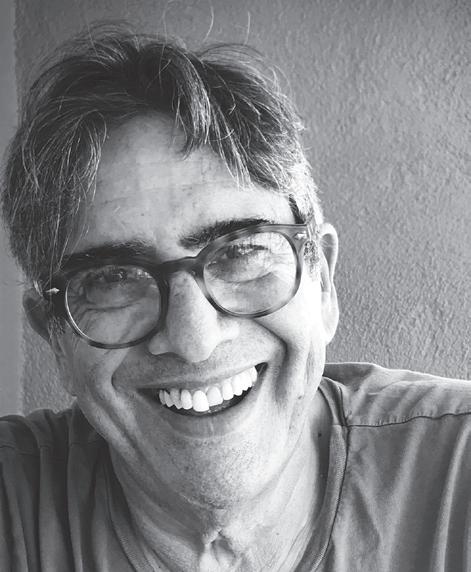
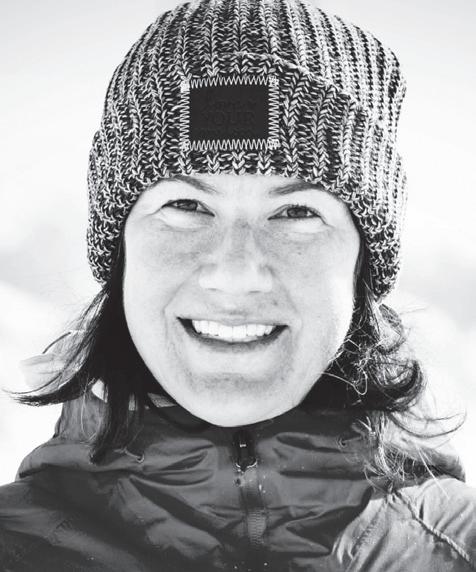
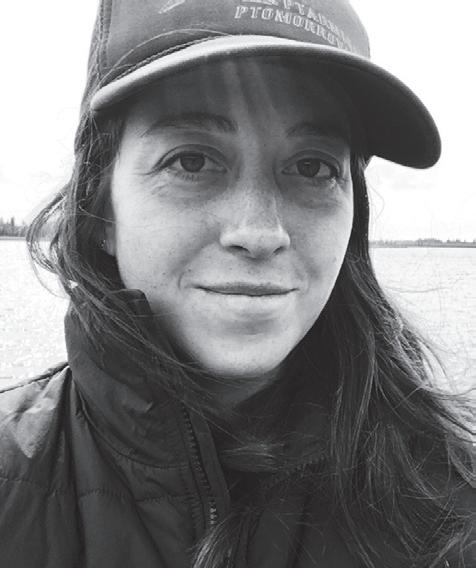
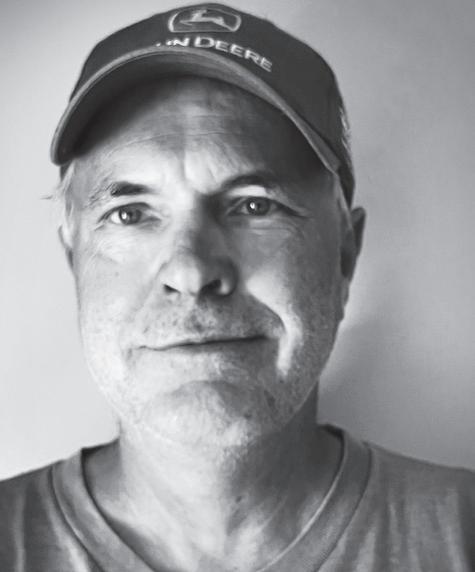
L to R : Jeremy Bradshaw, Carrie Penley, Patricia A Griffin, Caleb Meyer, Christy Stallop, Silas, Thompson, Amber Blazina, Aaron Hazel, Carrie Wild
•
•
•
•
•
•
FEATURES
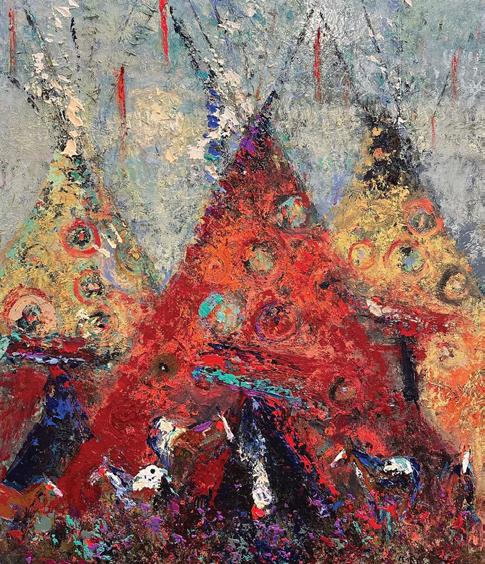
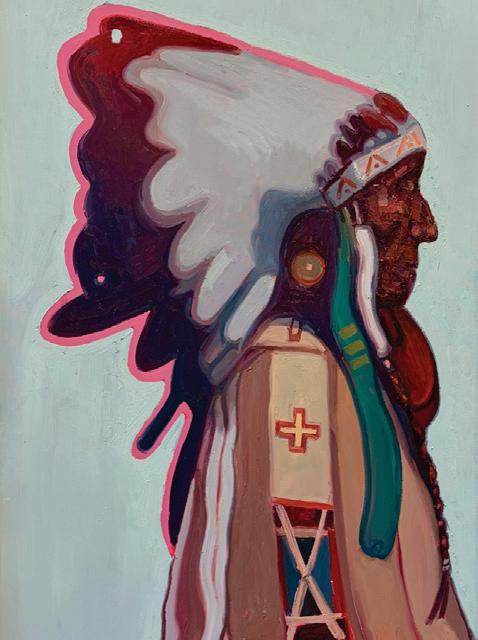
102 ONES TO WATCH
Artists on the Rise
Written by Michele Corriel
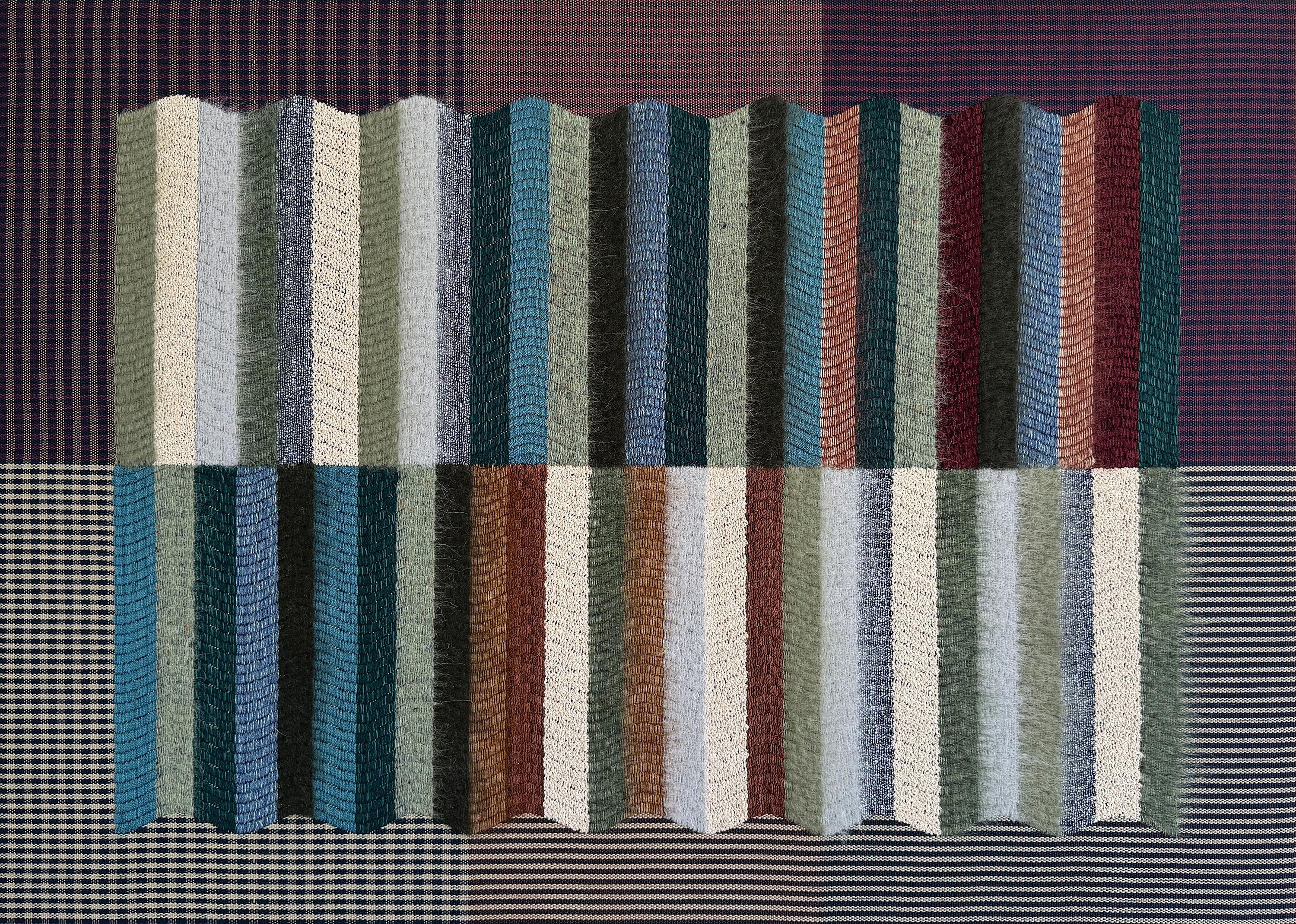
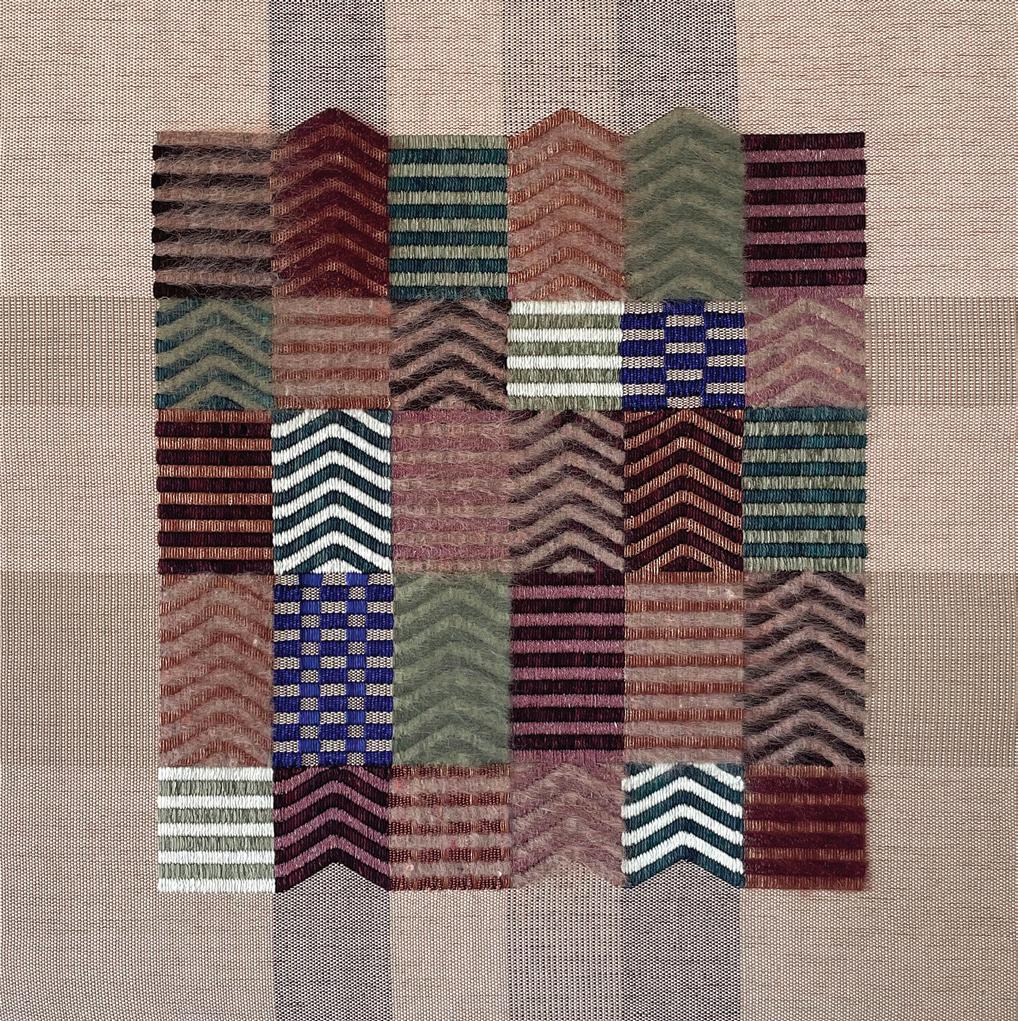
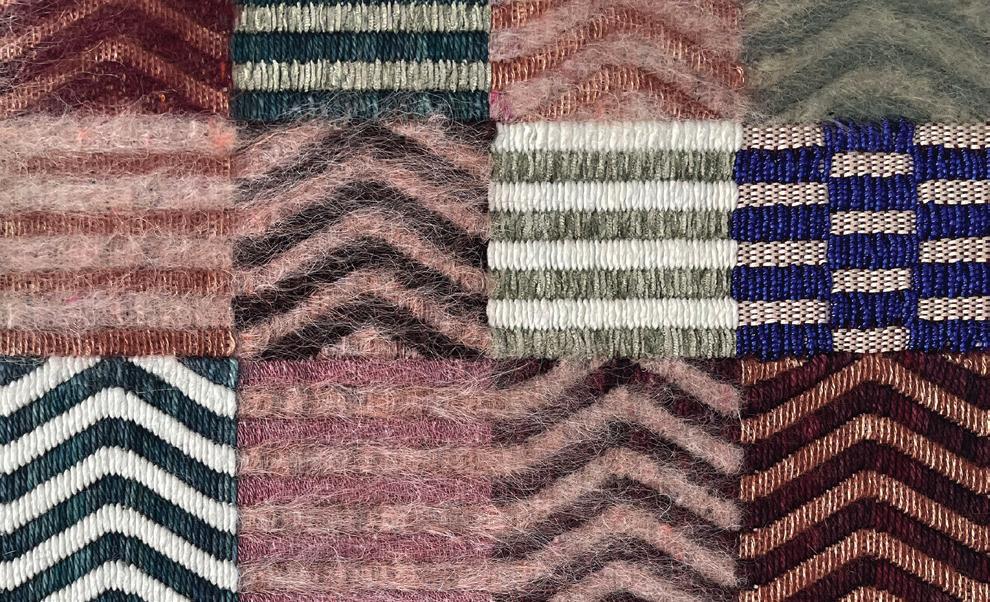
110 WEAVING BETWEEN BOUNDARIES
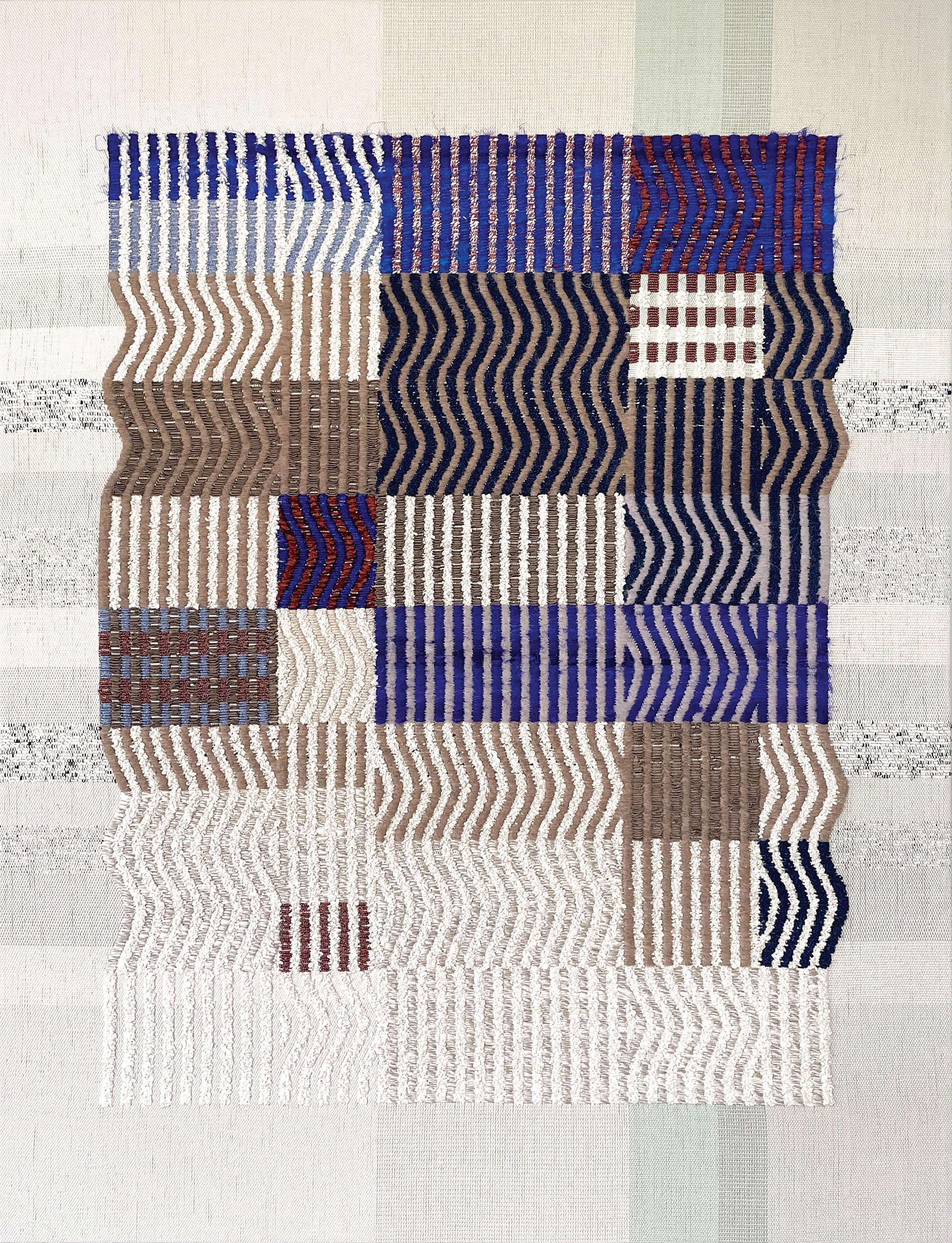
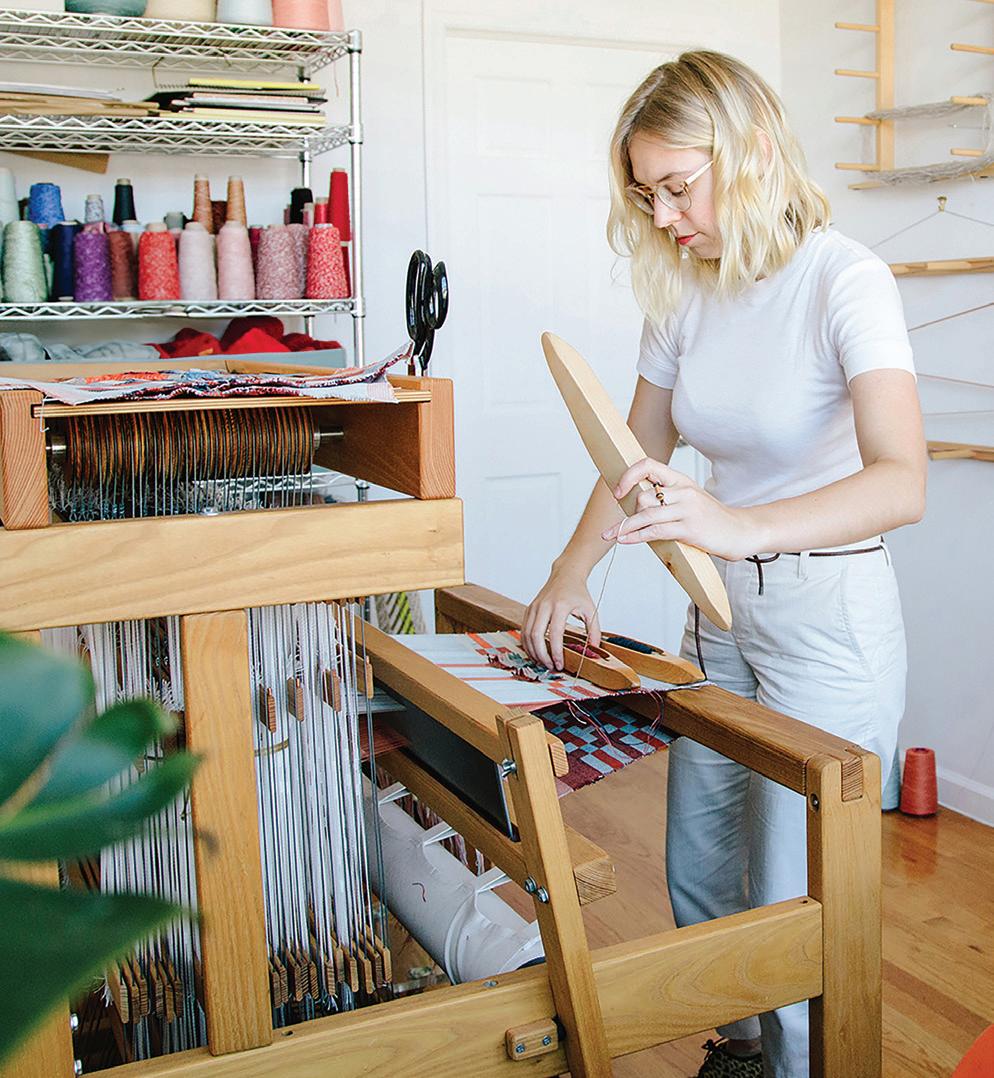
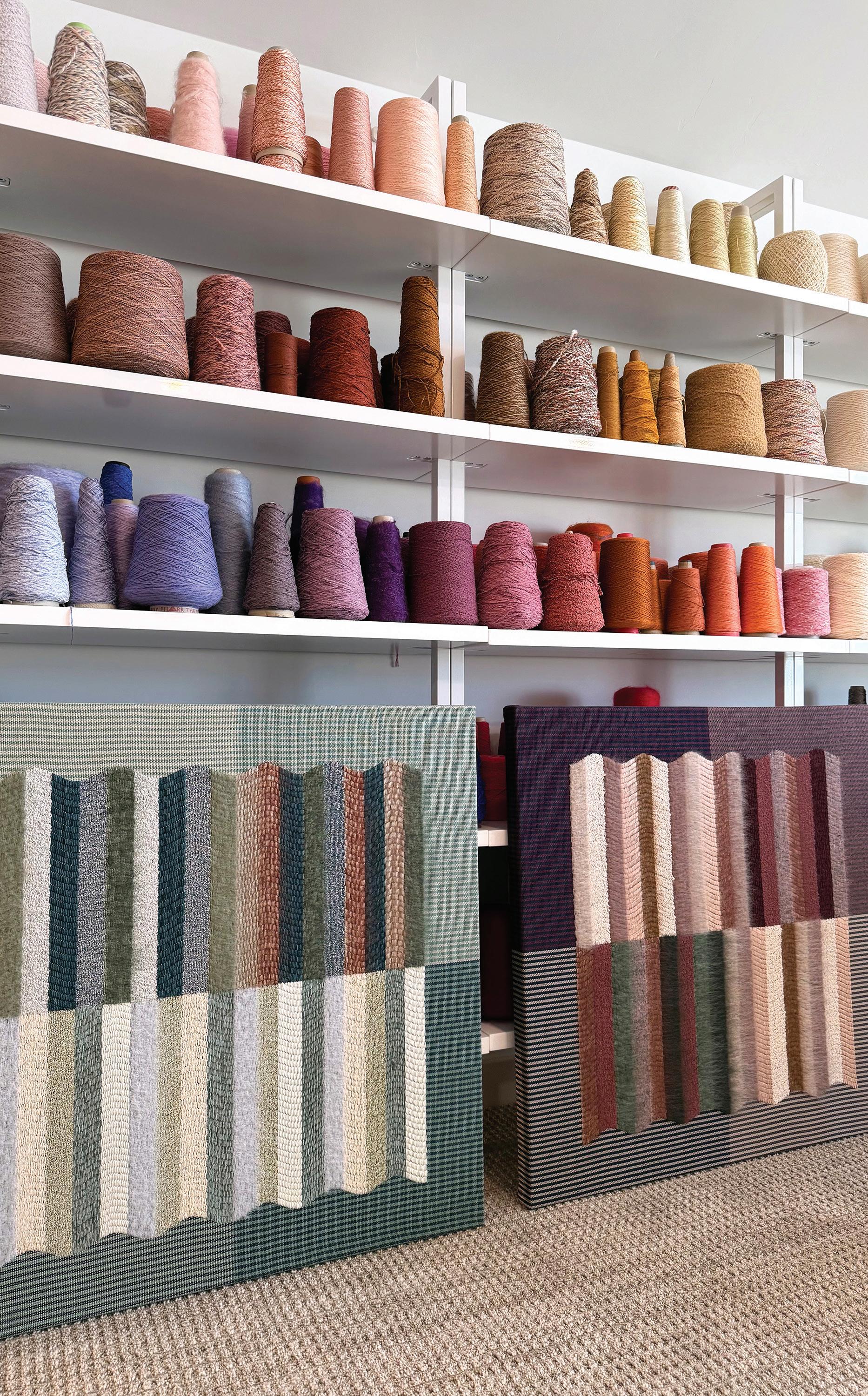
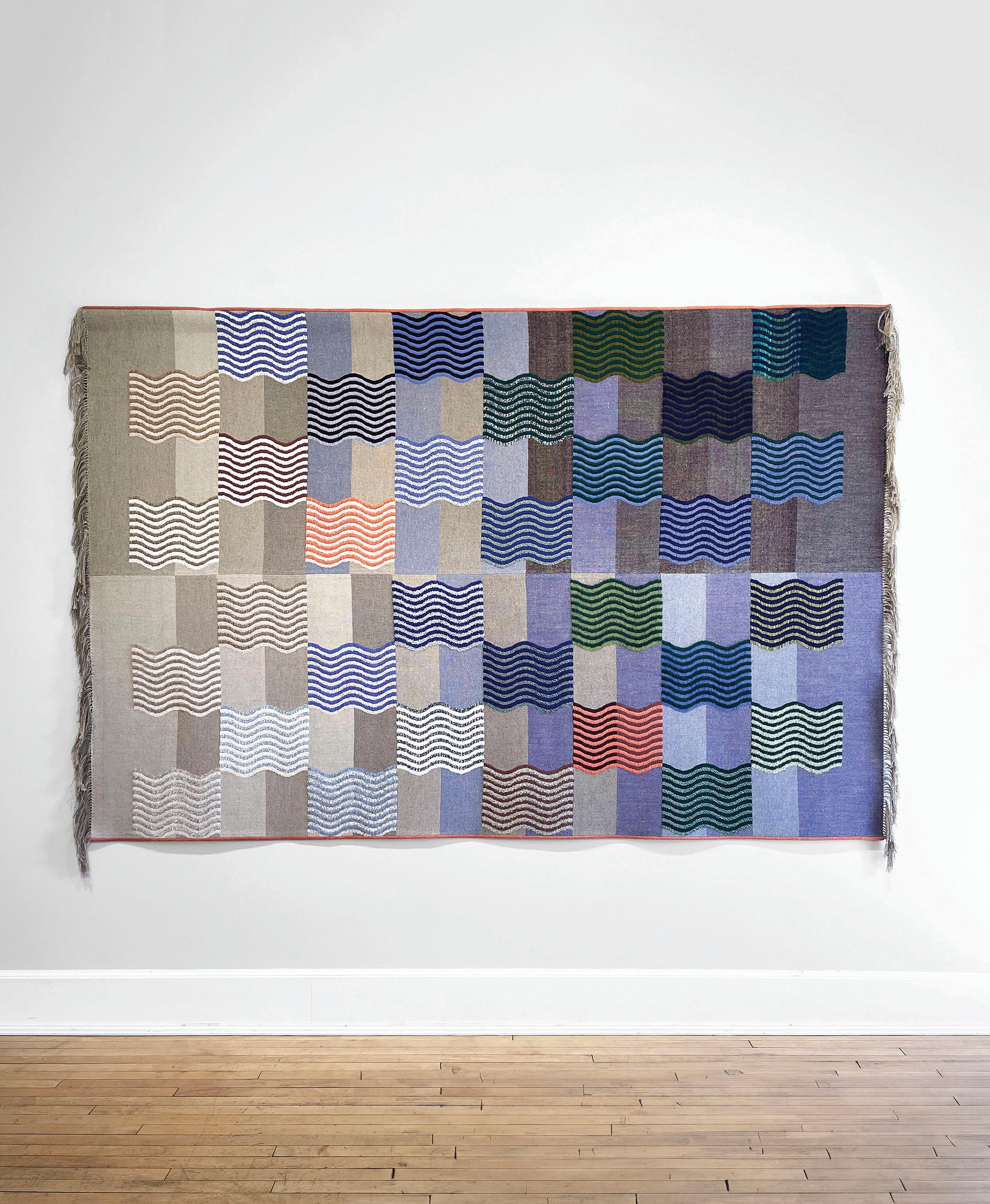
Meghan Spielman explores material constraints, evolving color pallets, and a deliberate pace to transcend functional works into art
Written by Dina Mishev
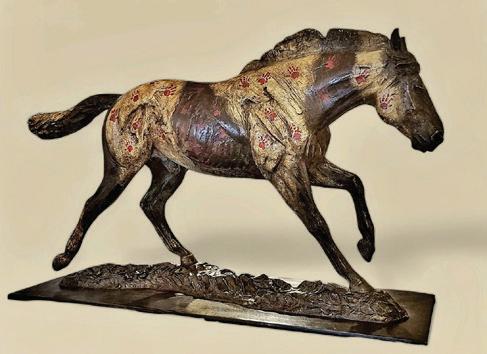
118 ANIMALS IN ACTION
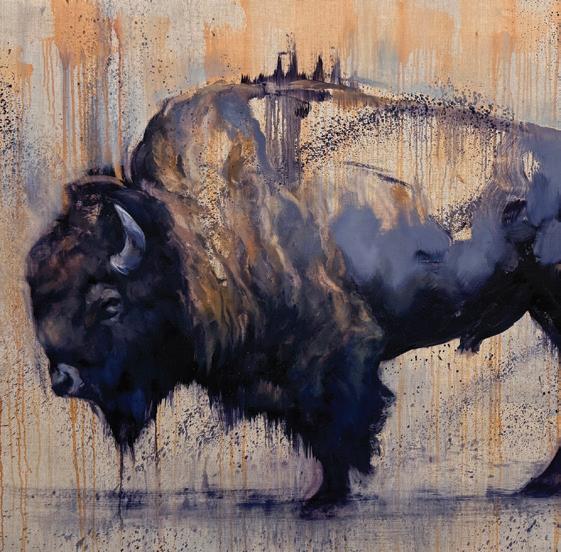
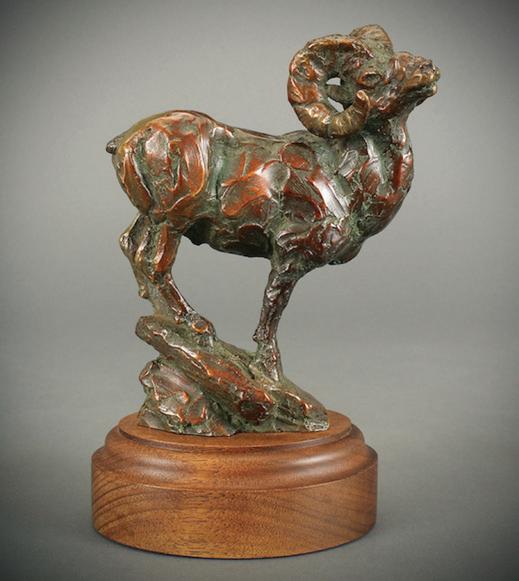
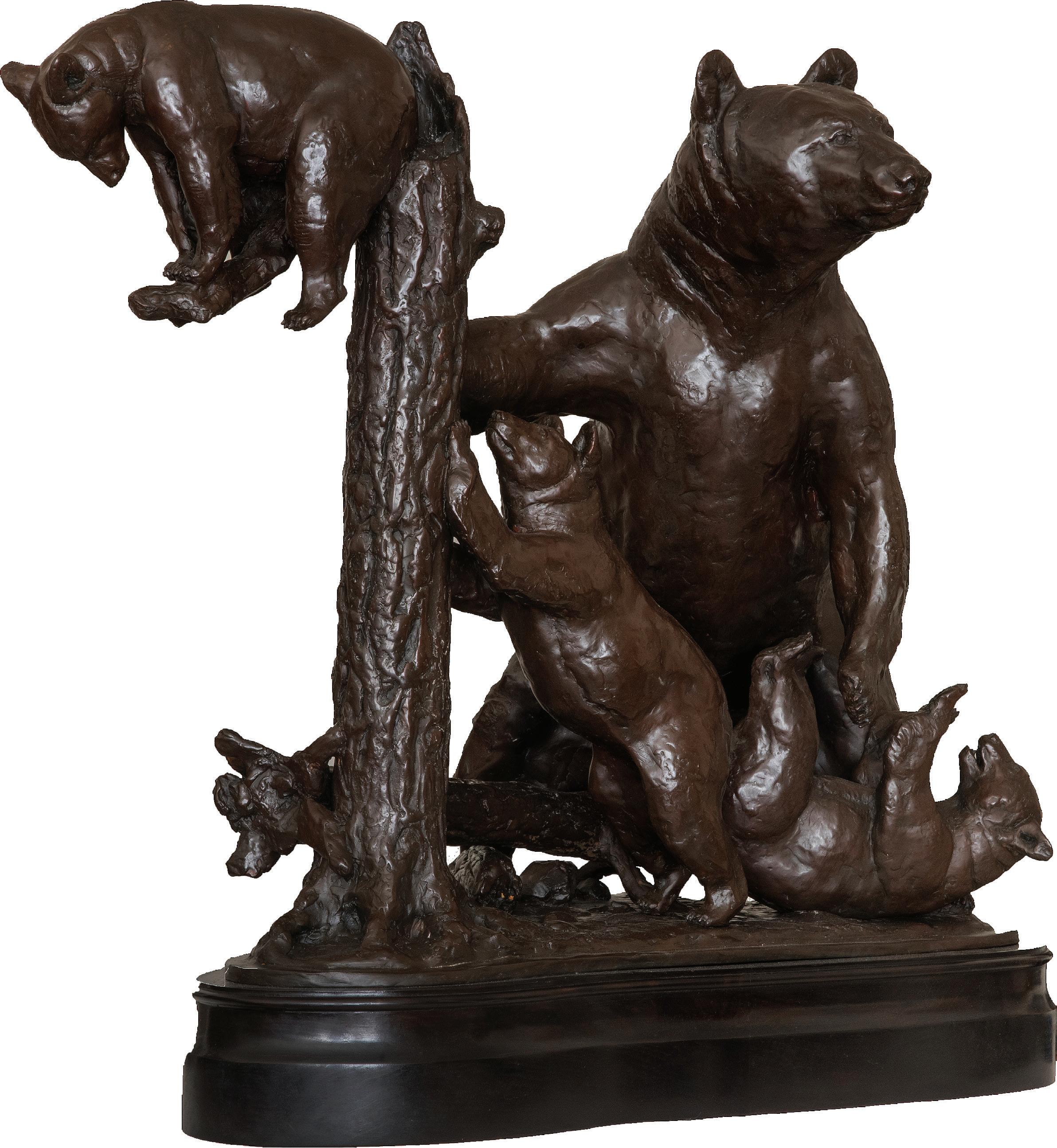
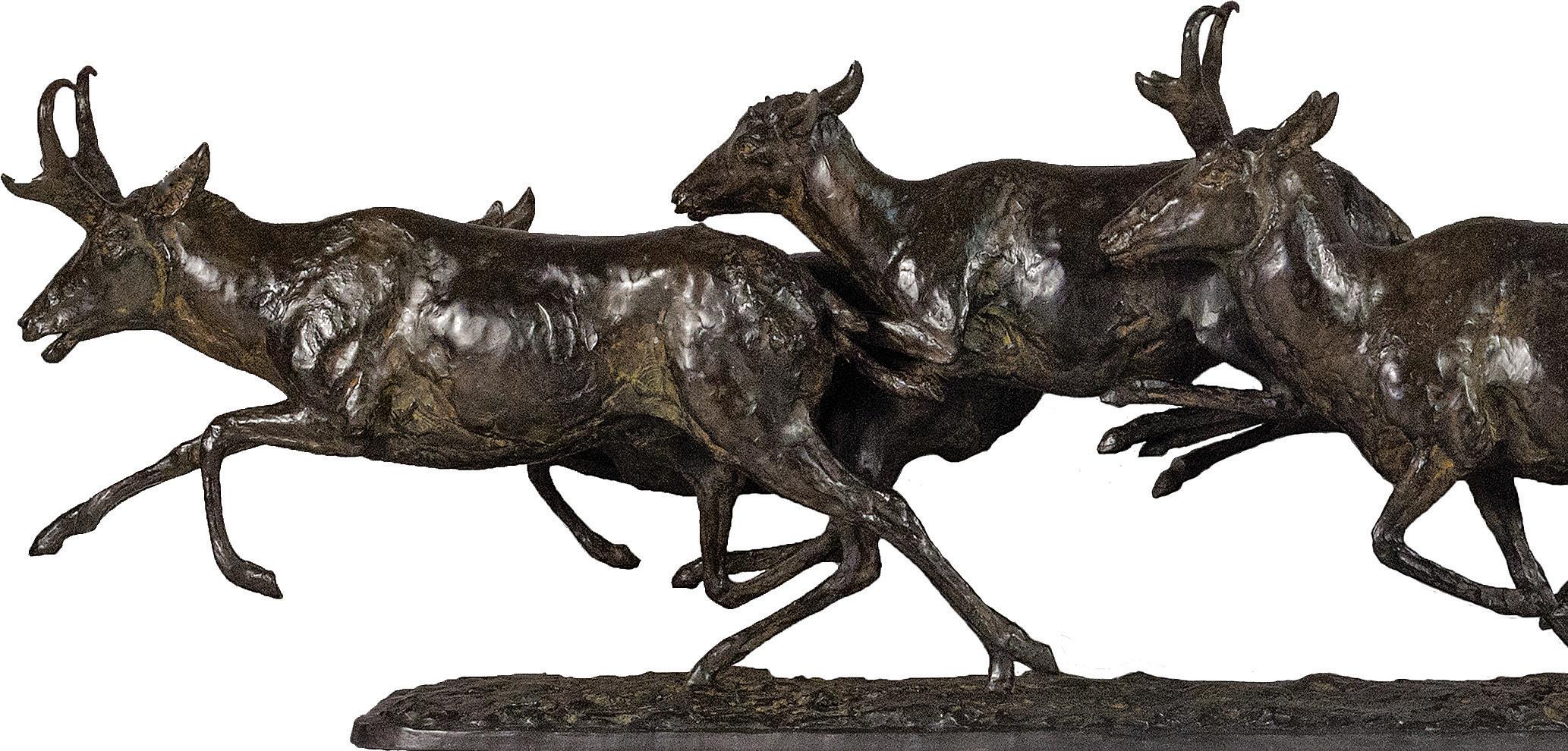
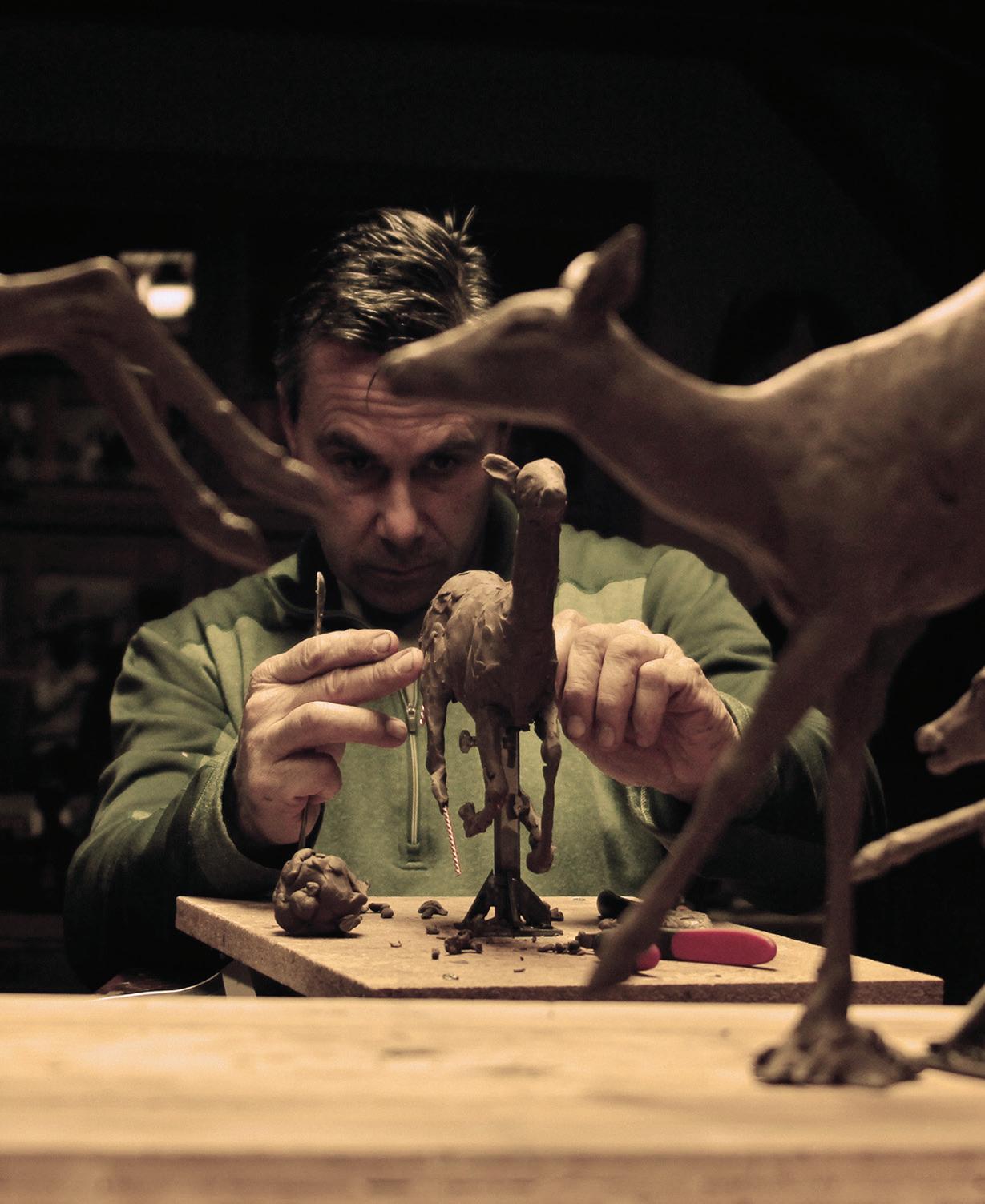
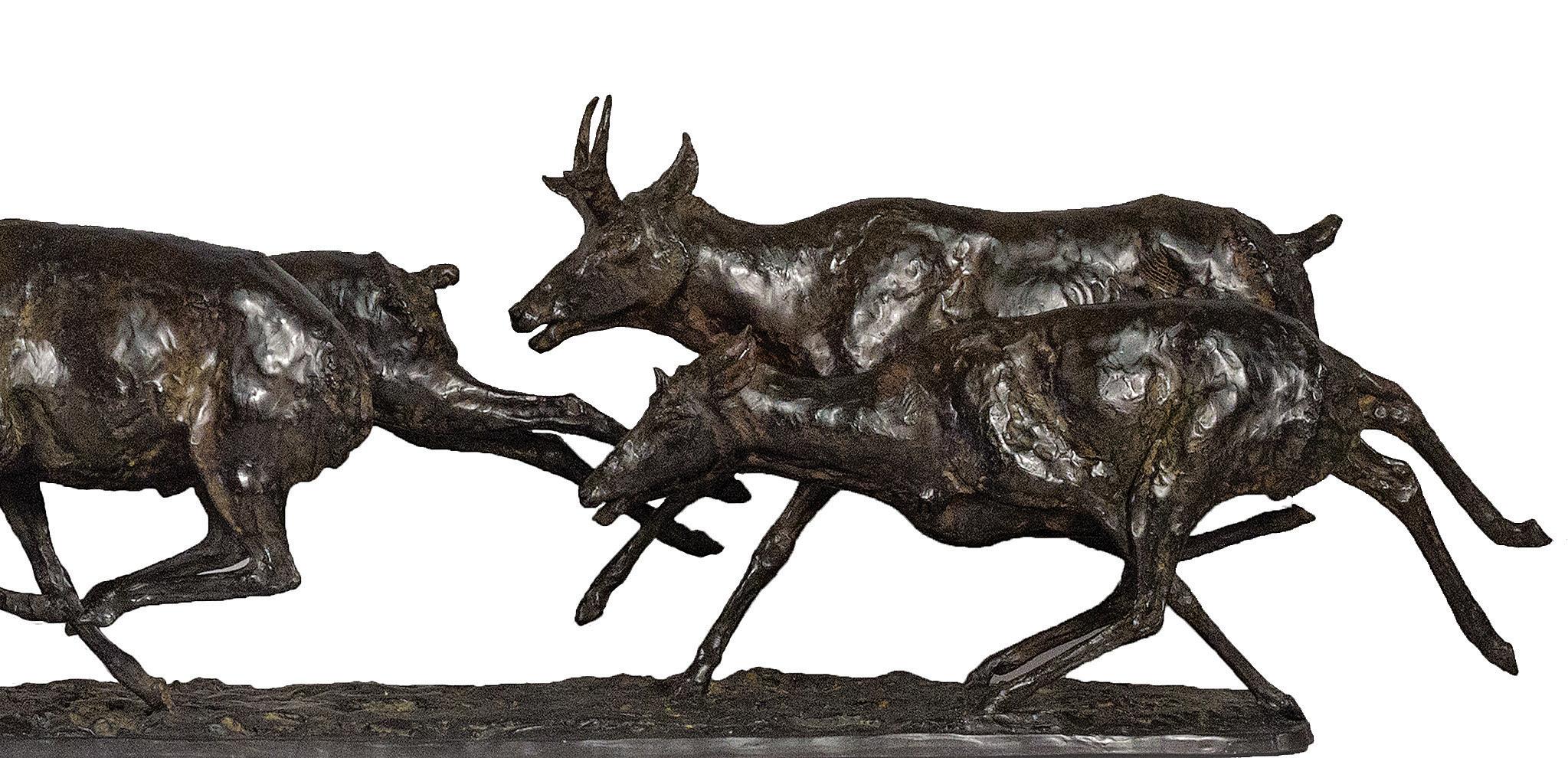
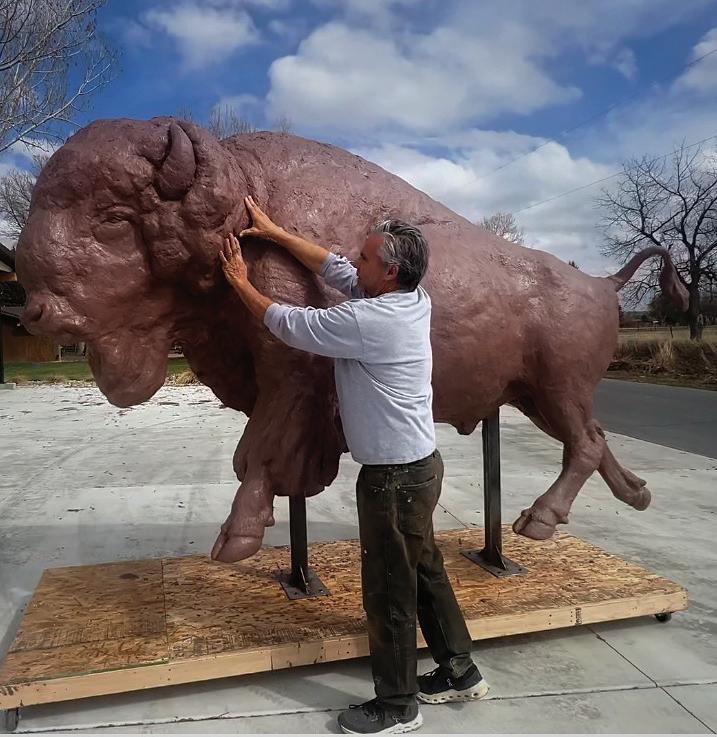
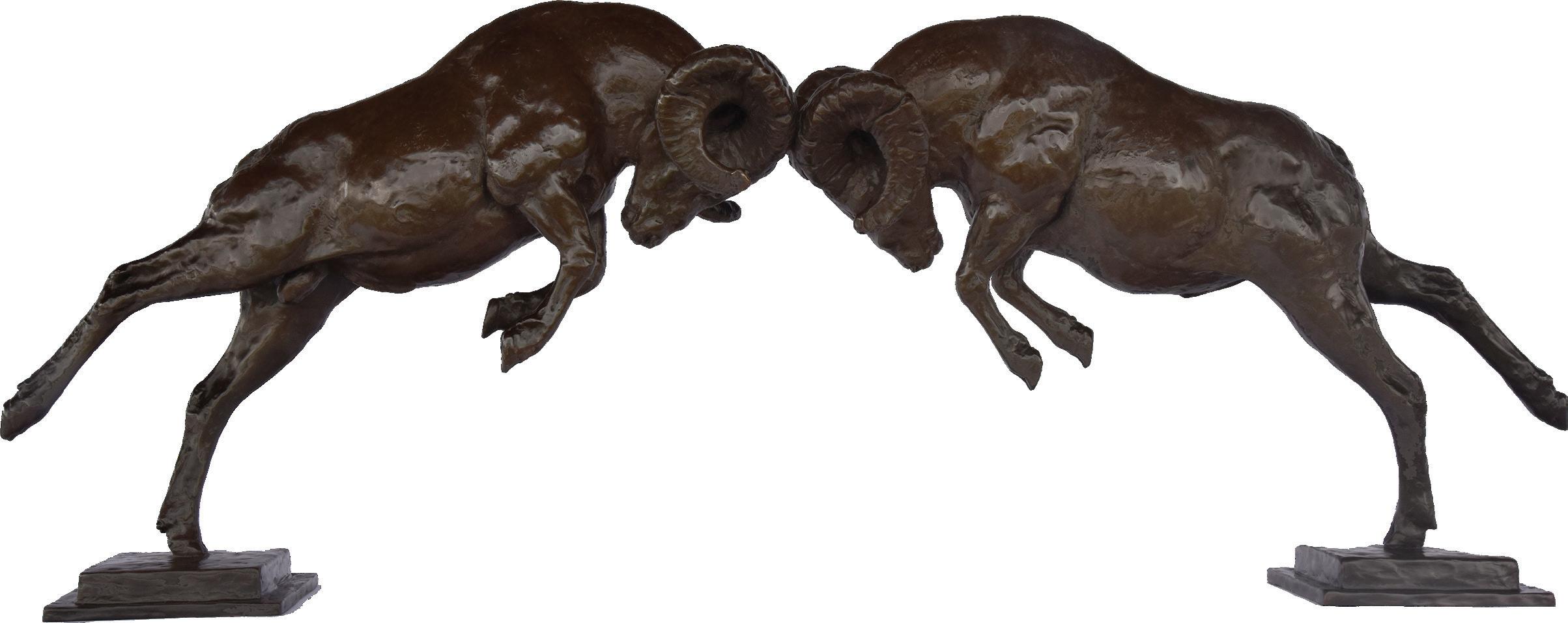
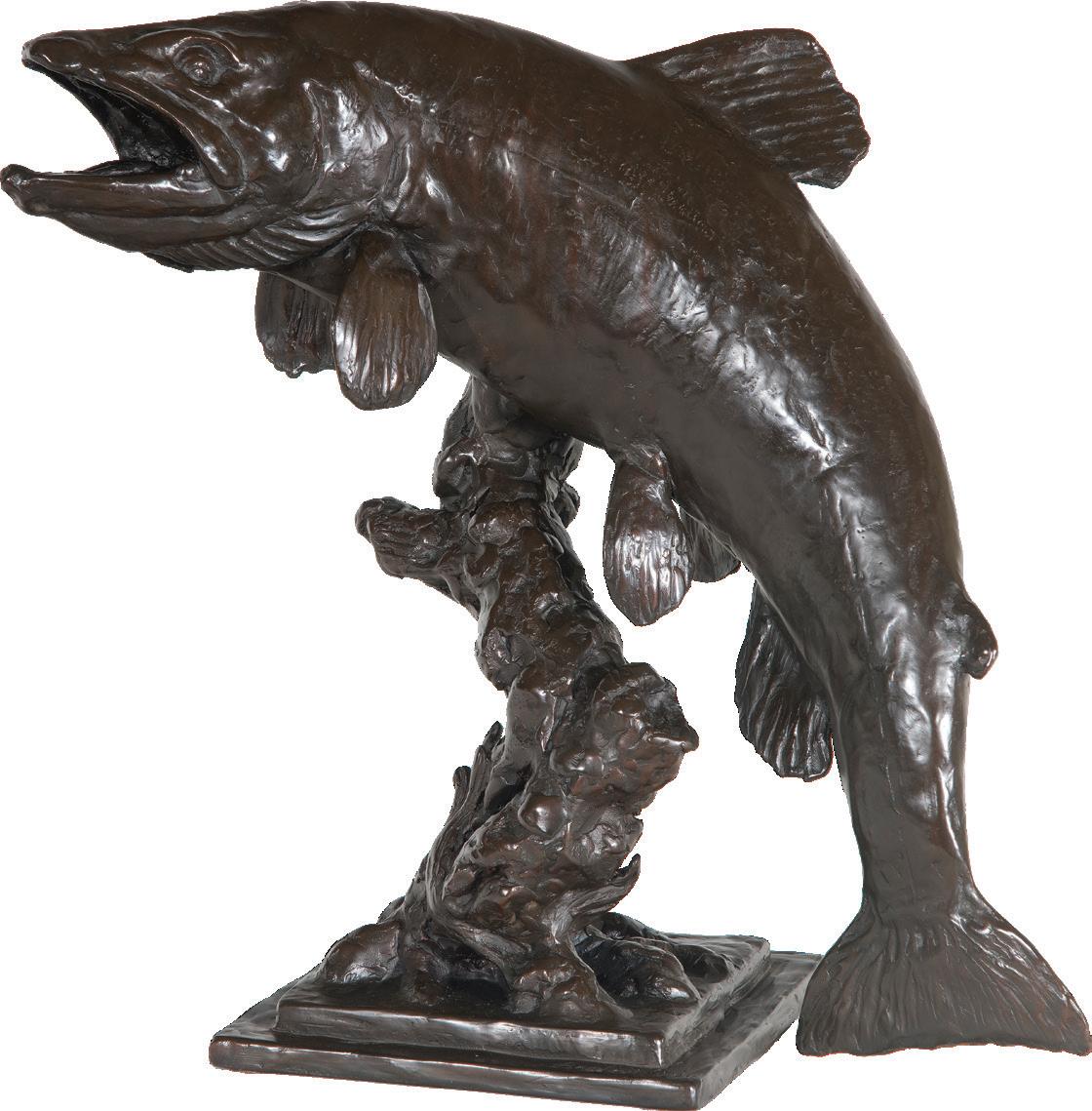
Montana sculptor Mike Barlow’s works marry dynamic impact with distinguished form
Written by Aaron Parrett
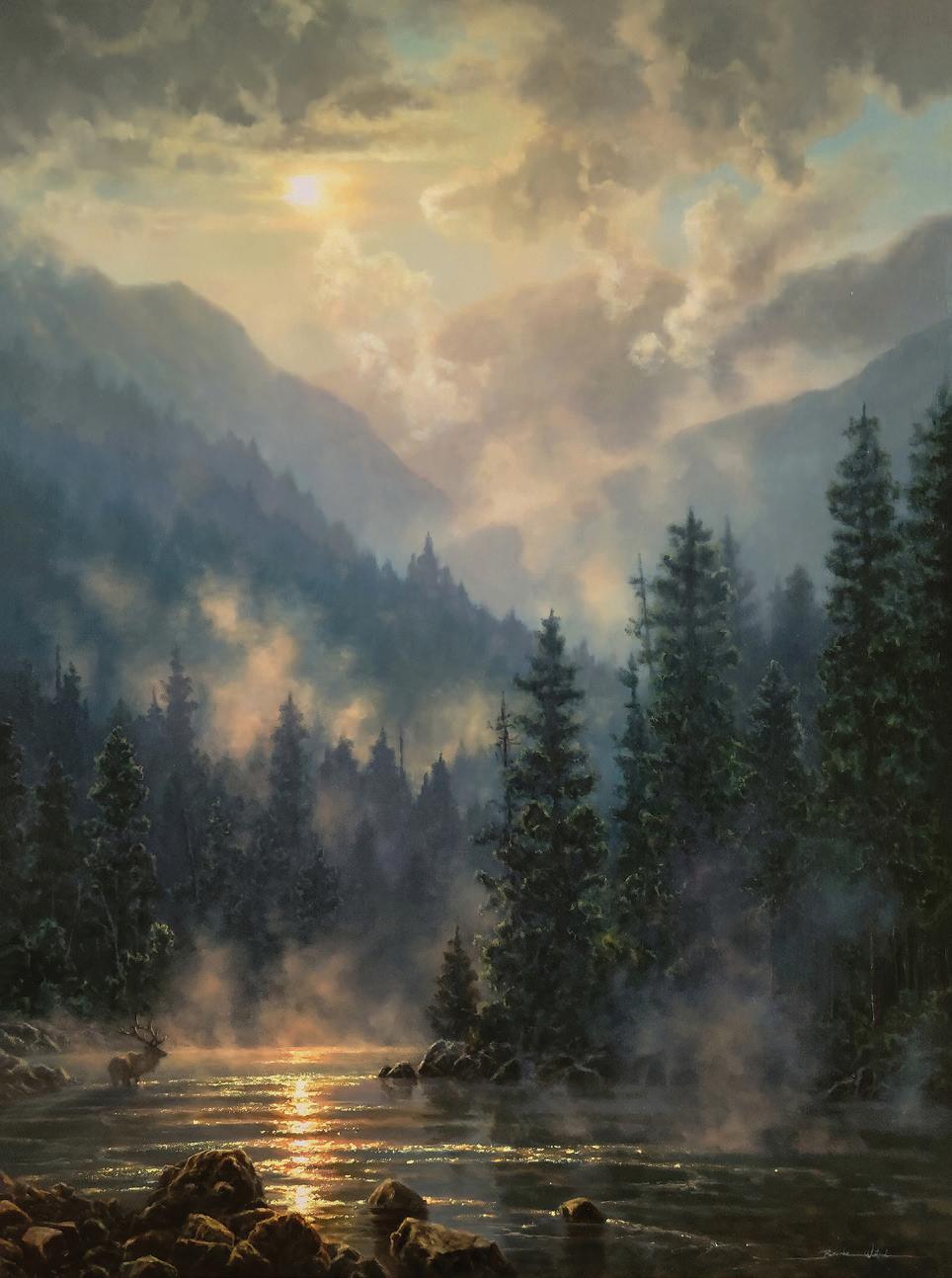
126 ATMOSPHERIC SENSIBILITY
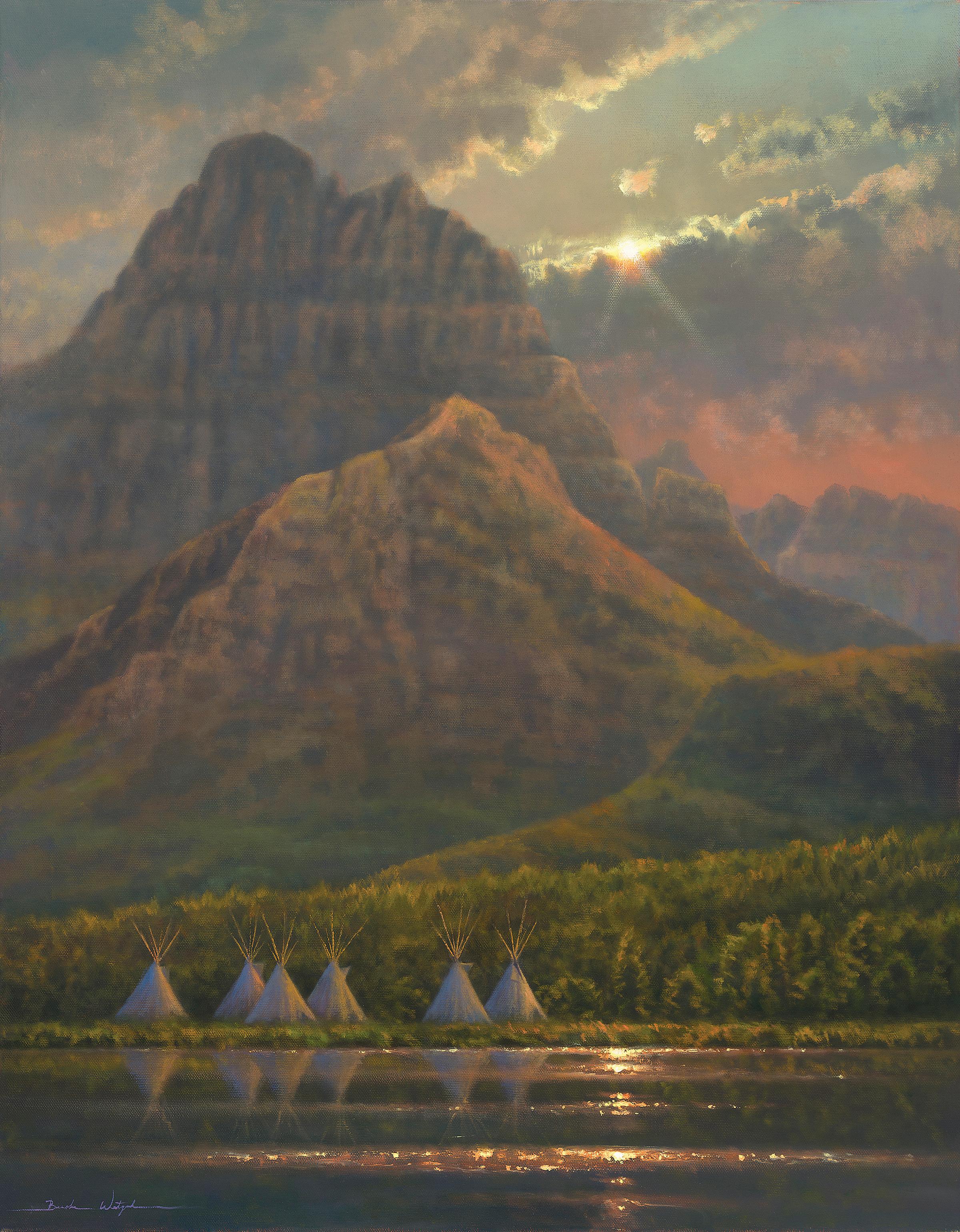
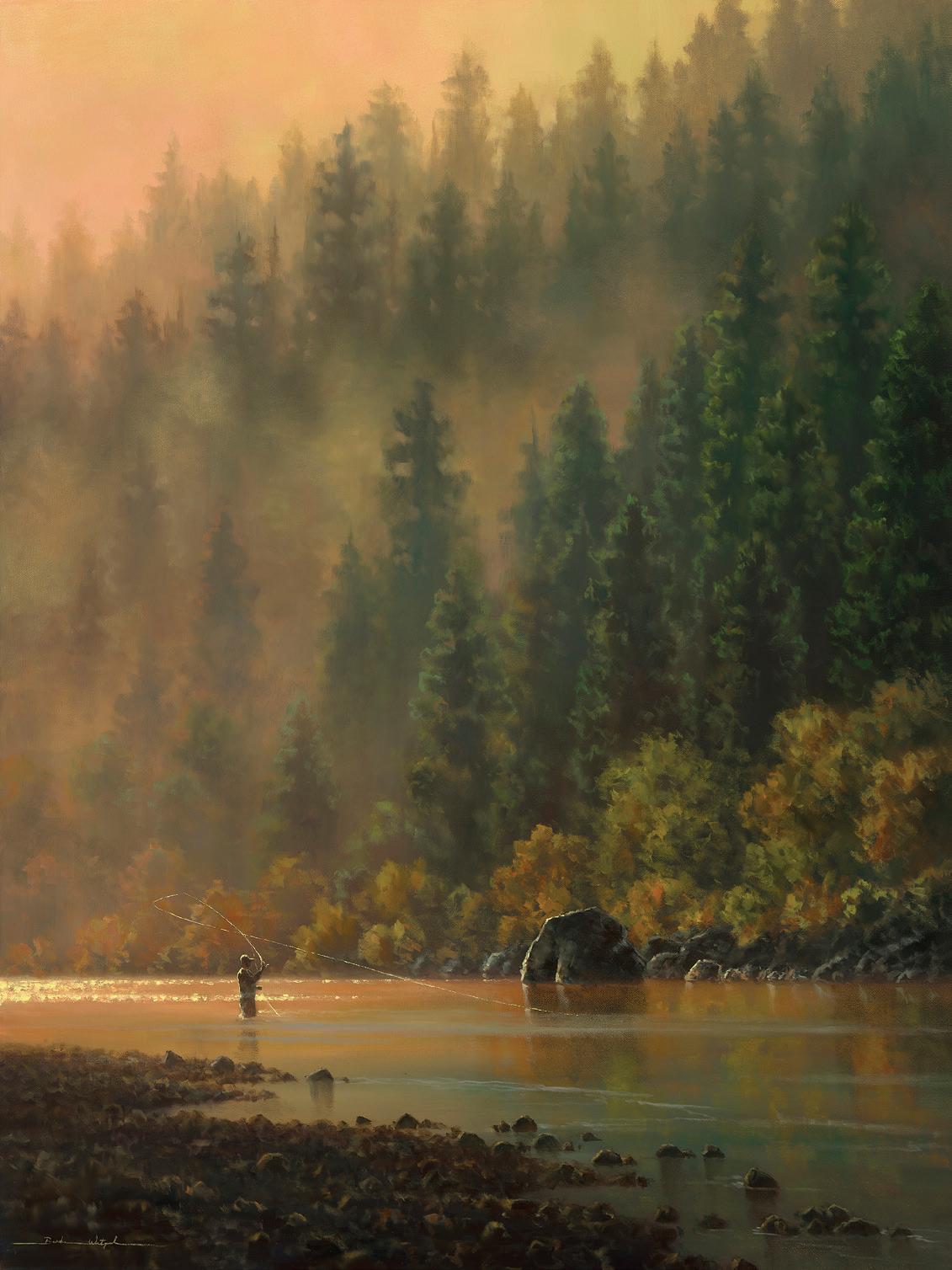
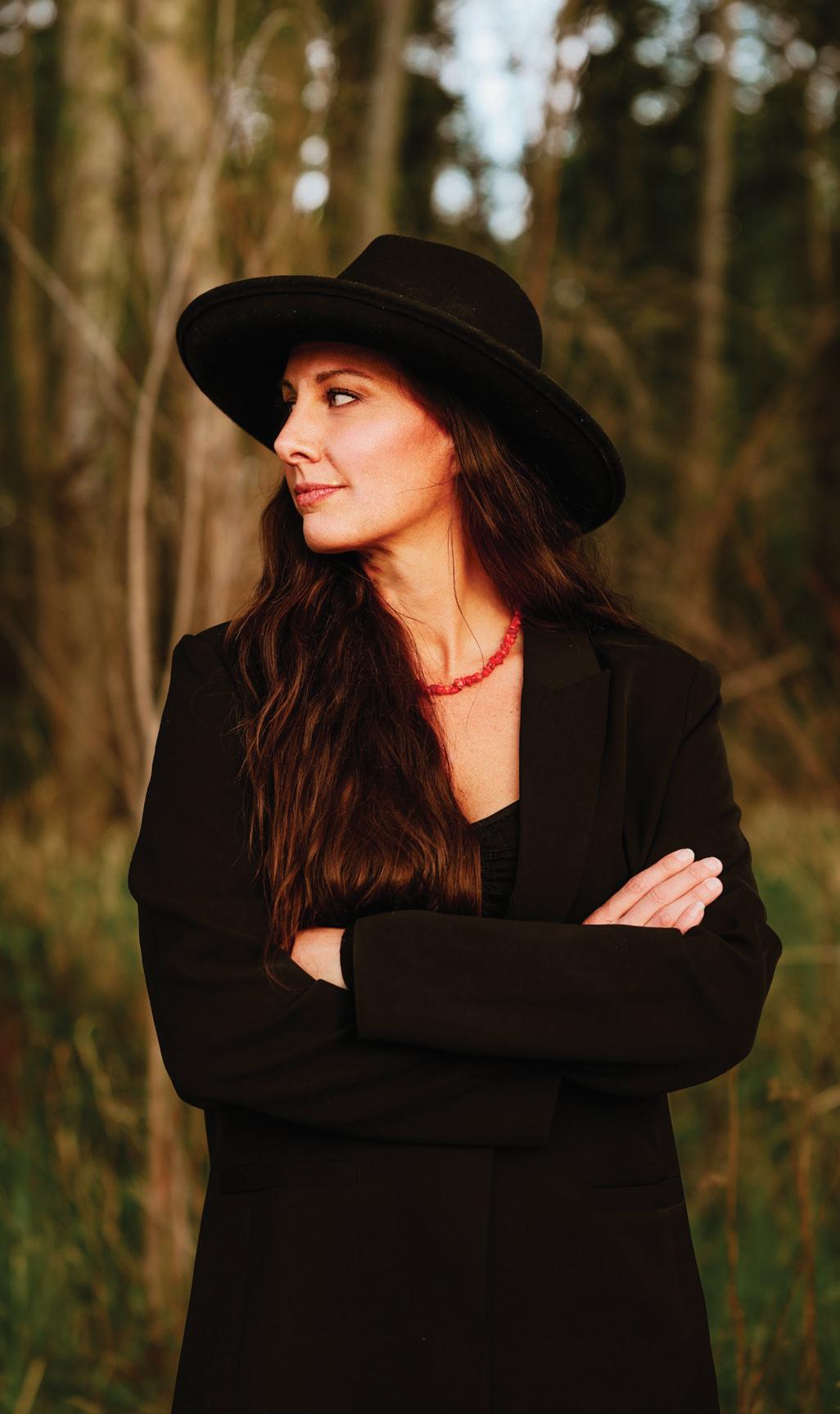
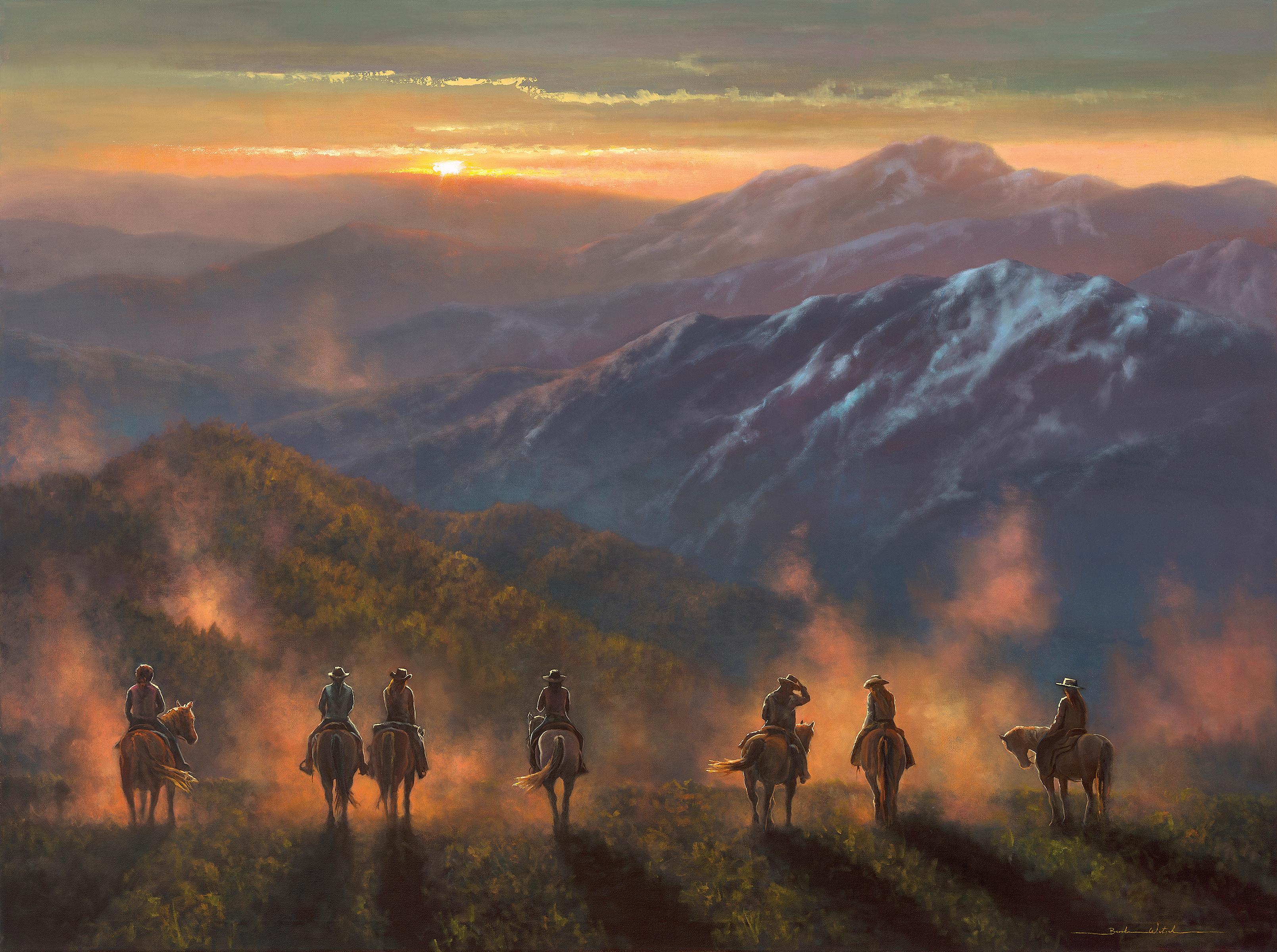
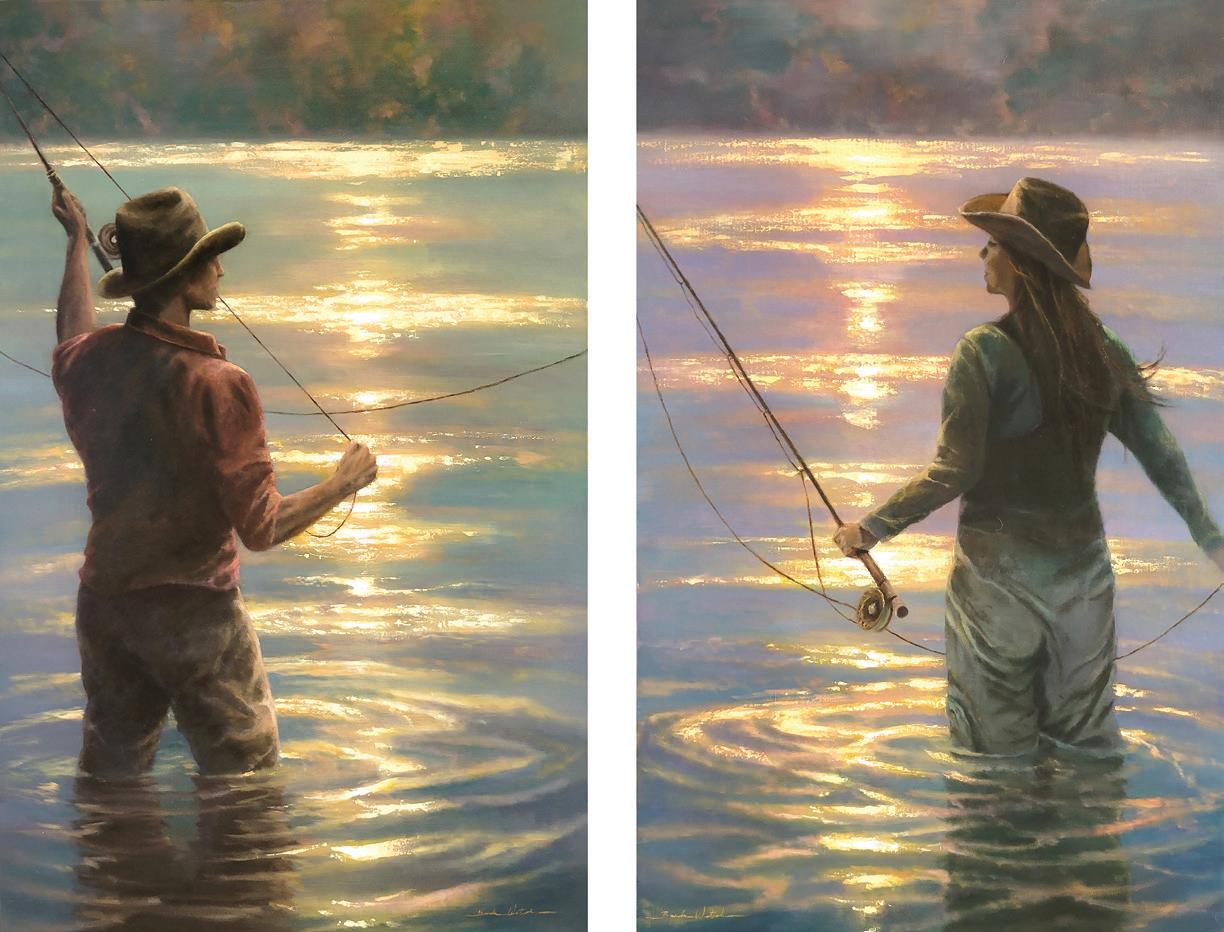
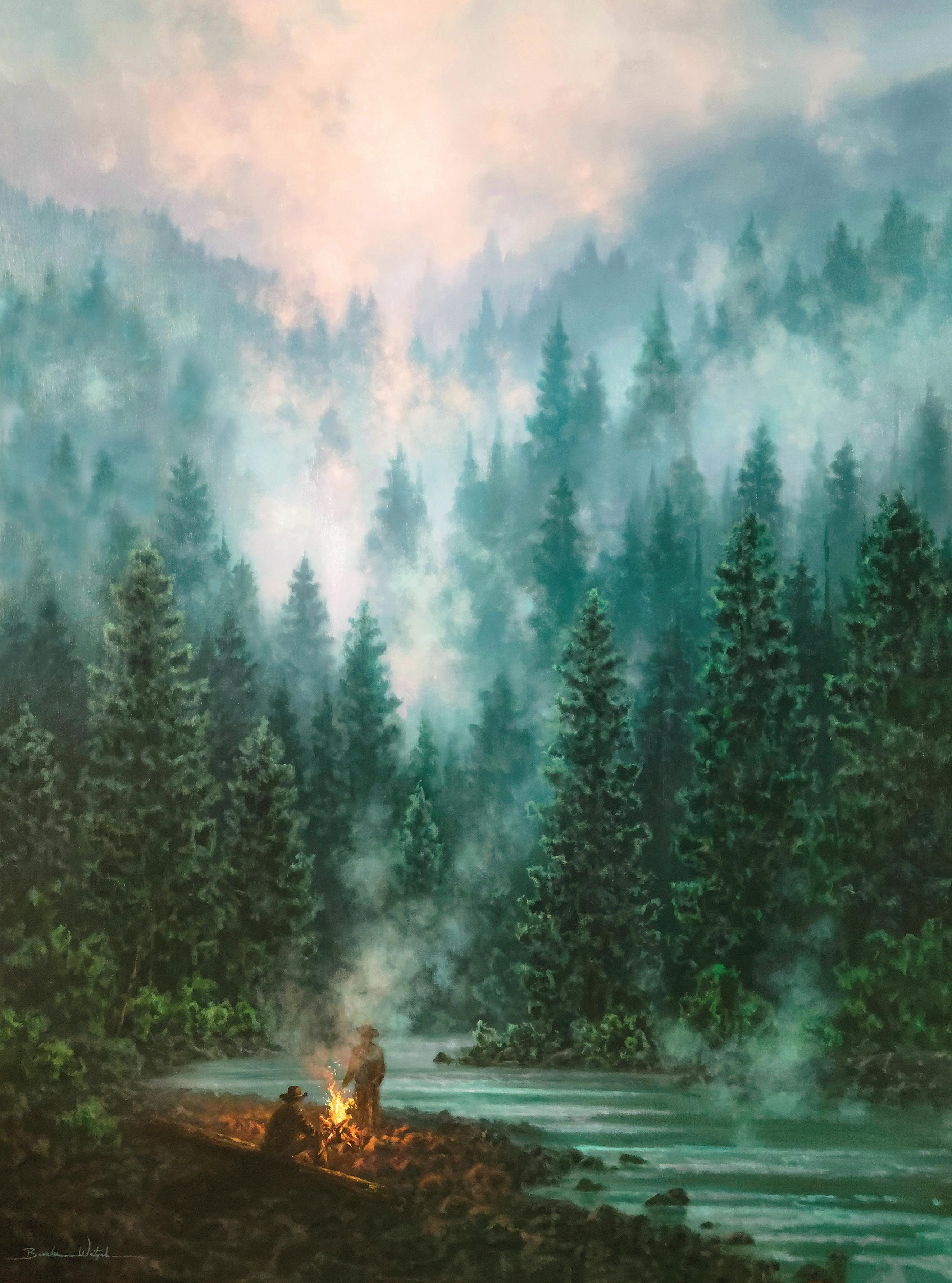
Painter Brooke Wetzel’s visceral scenes capture the subtle moments of life in the West
Written by Melissa Mylchreest
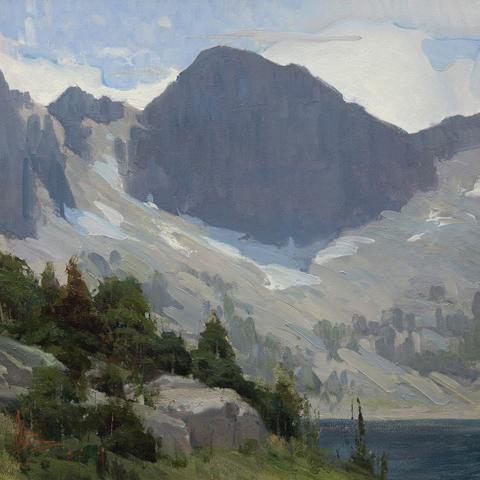
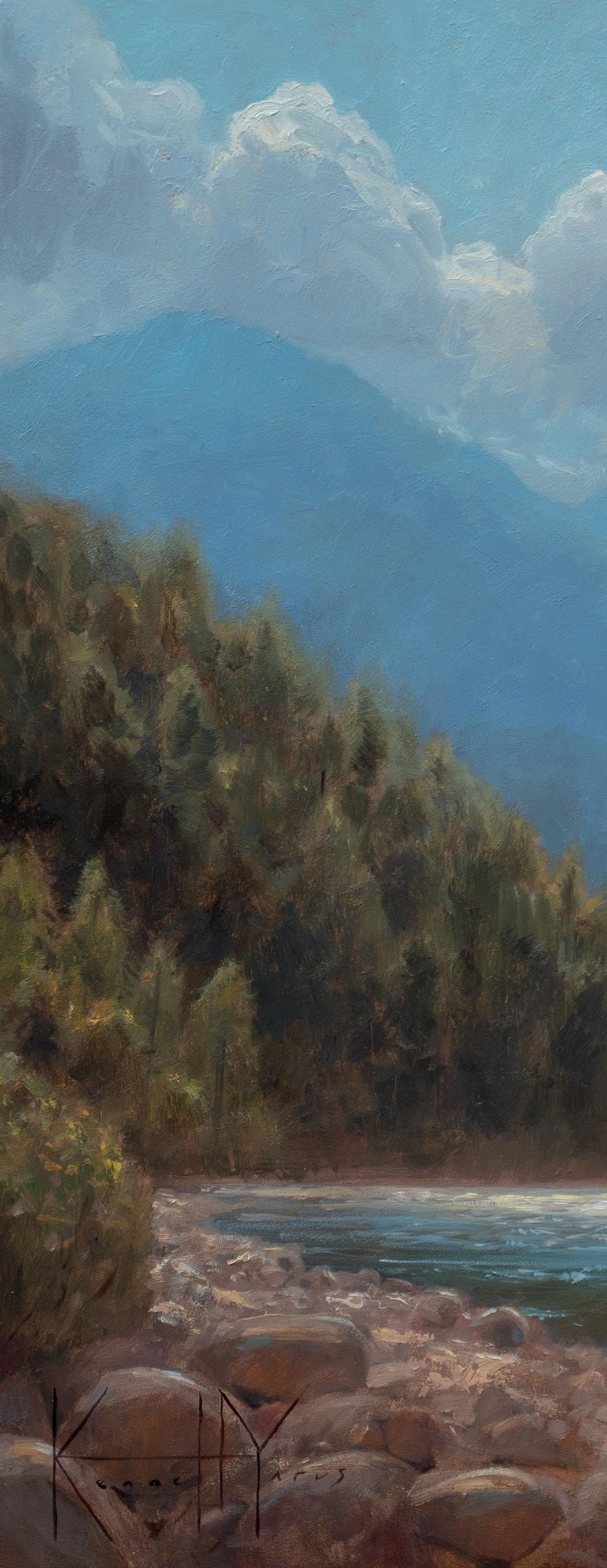
134 TUNING IN TO SACRED SPACES
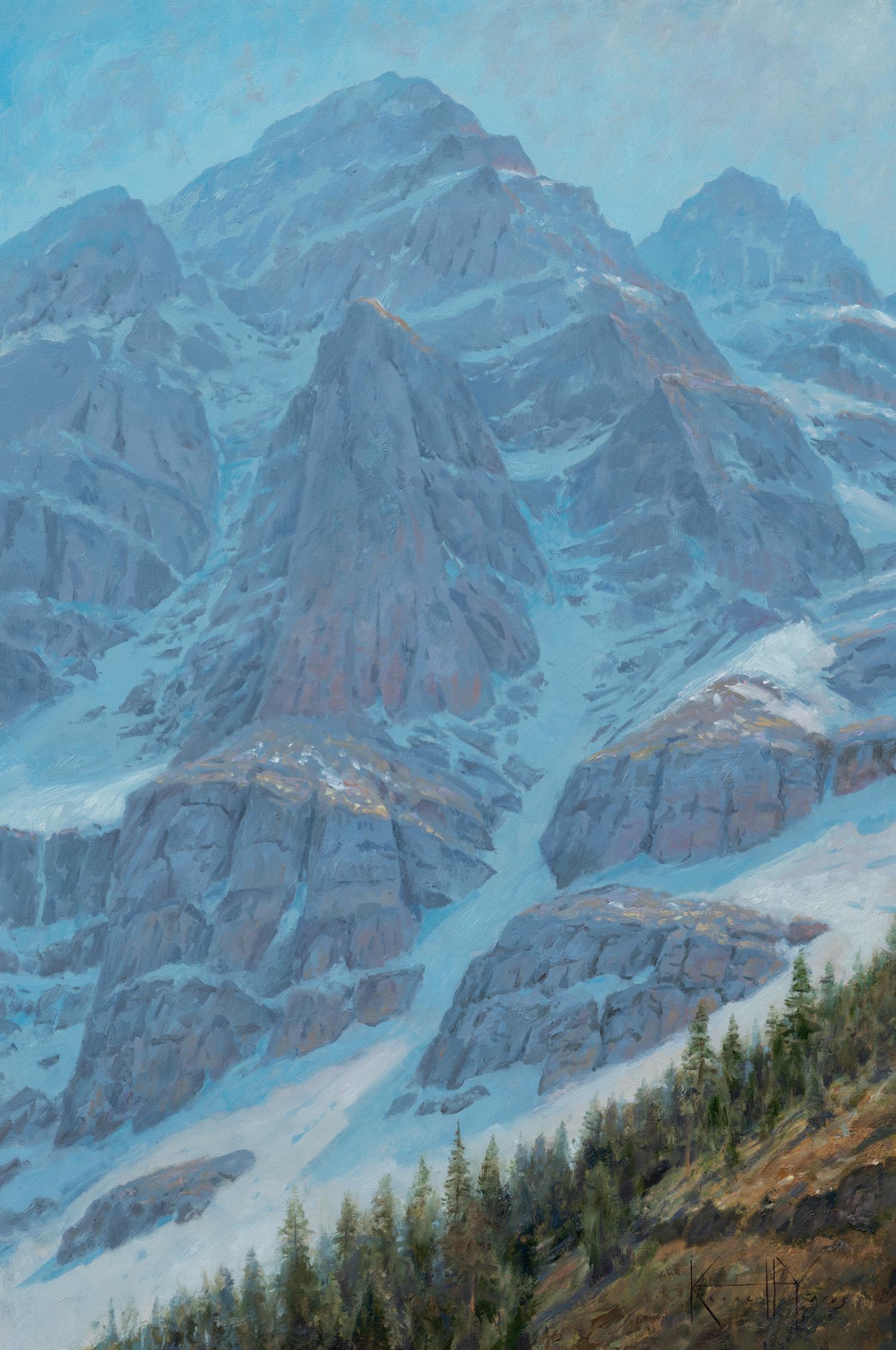
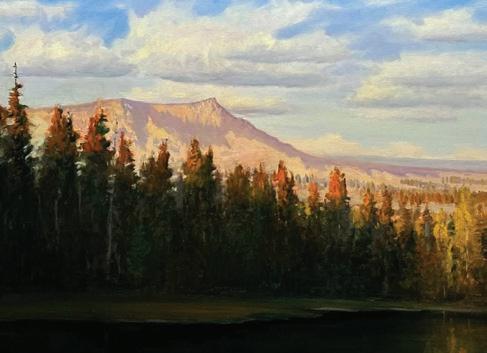
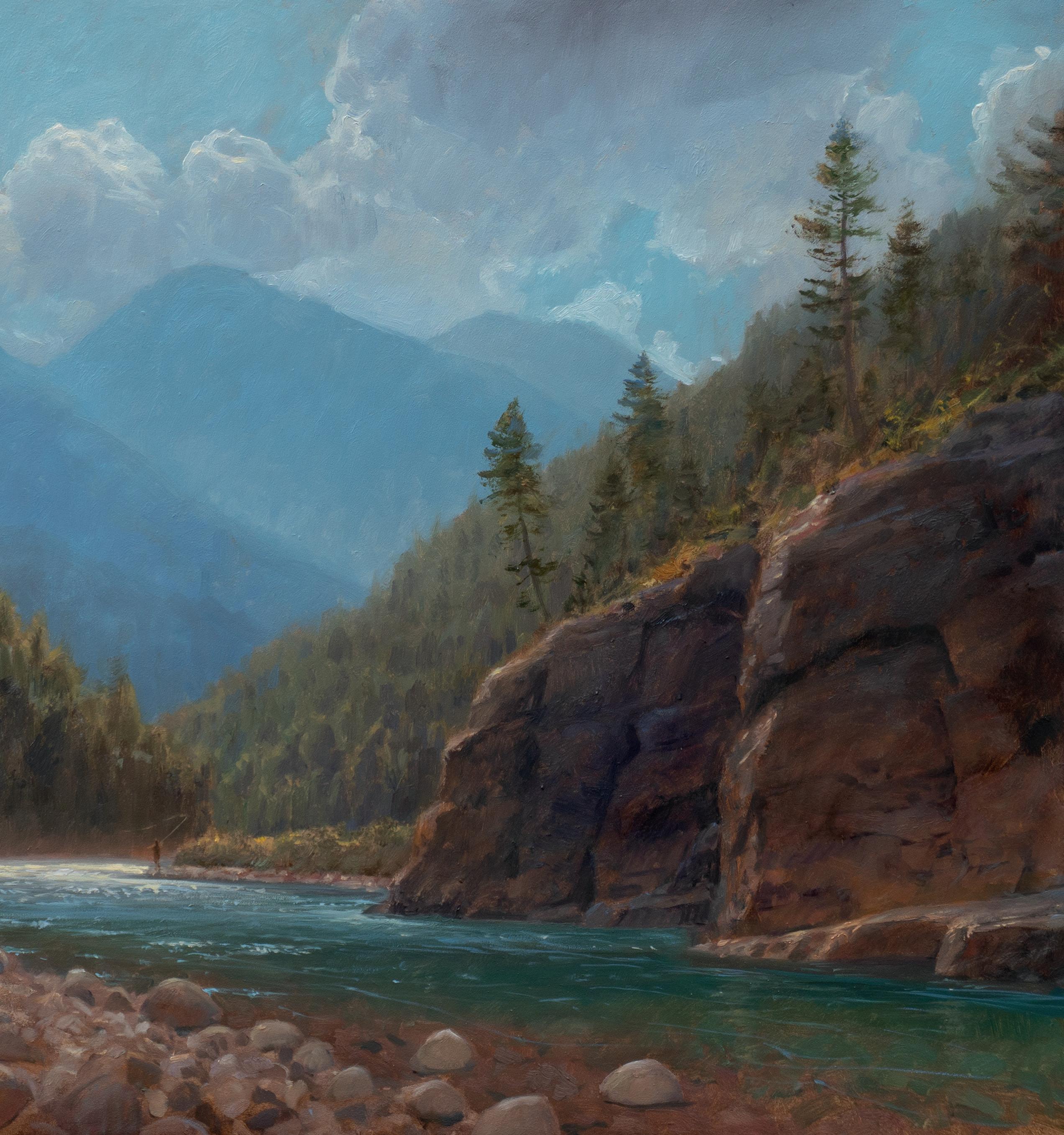
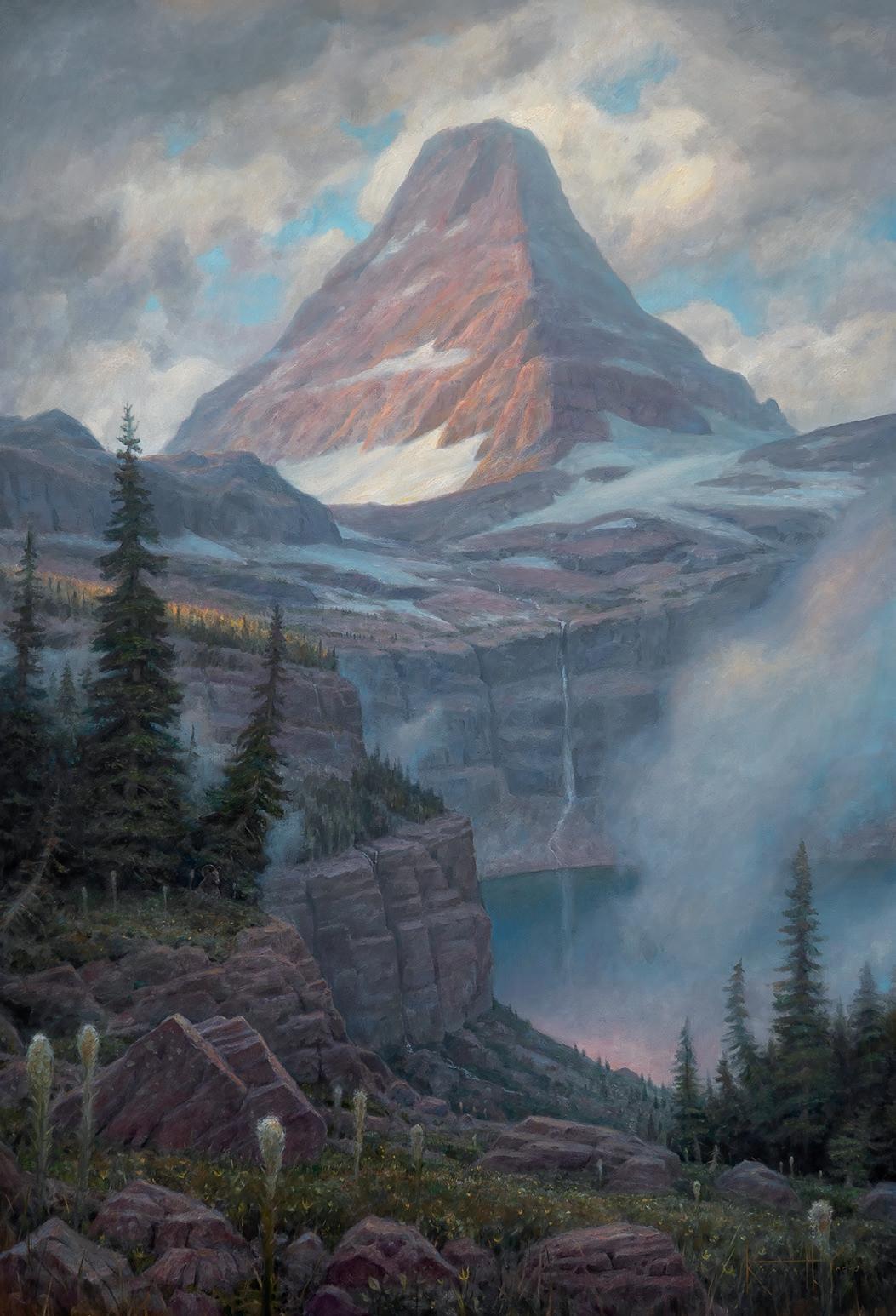
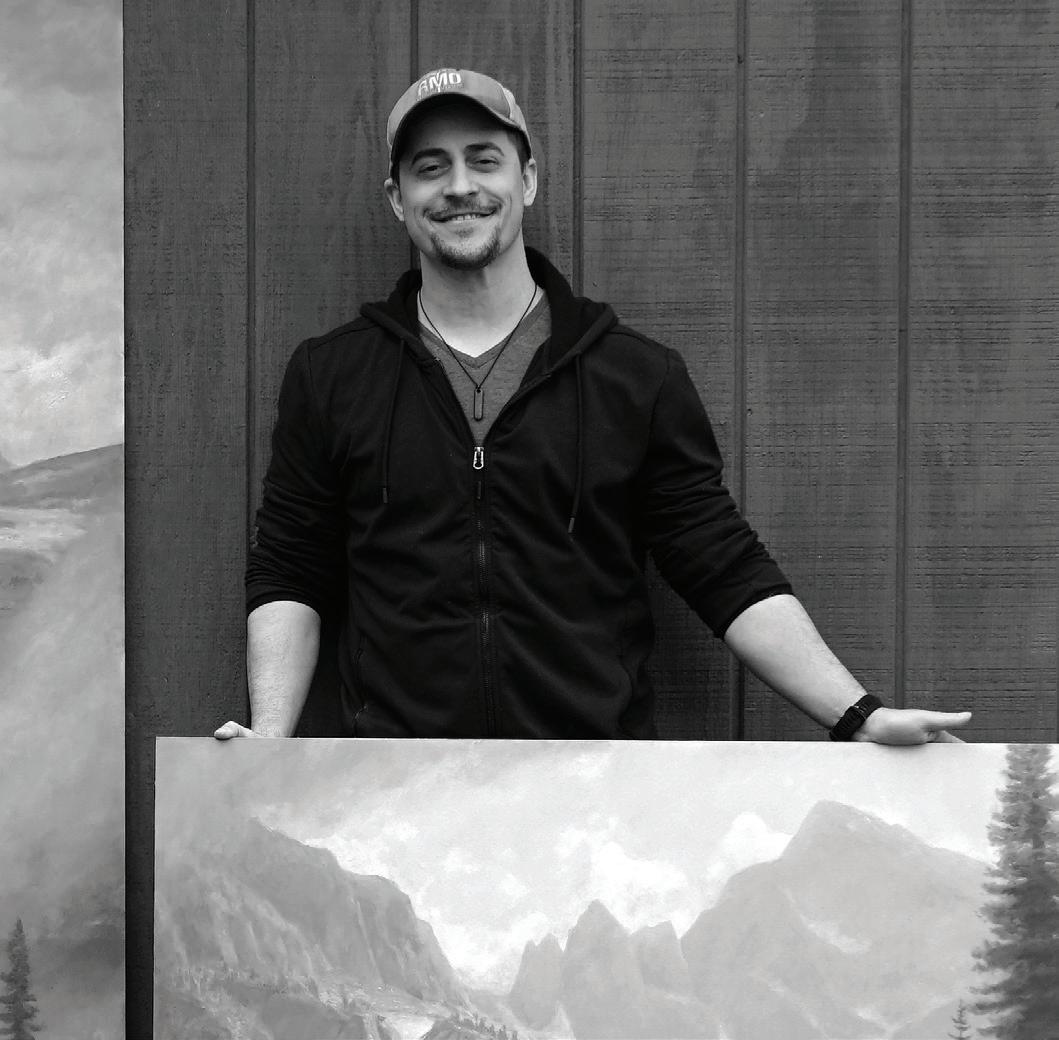
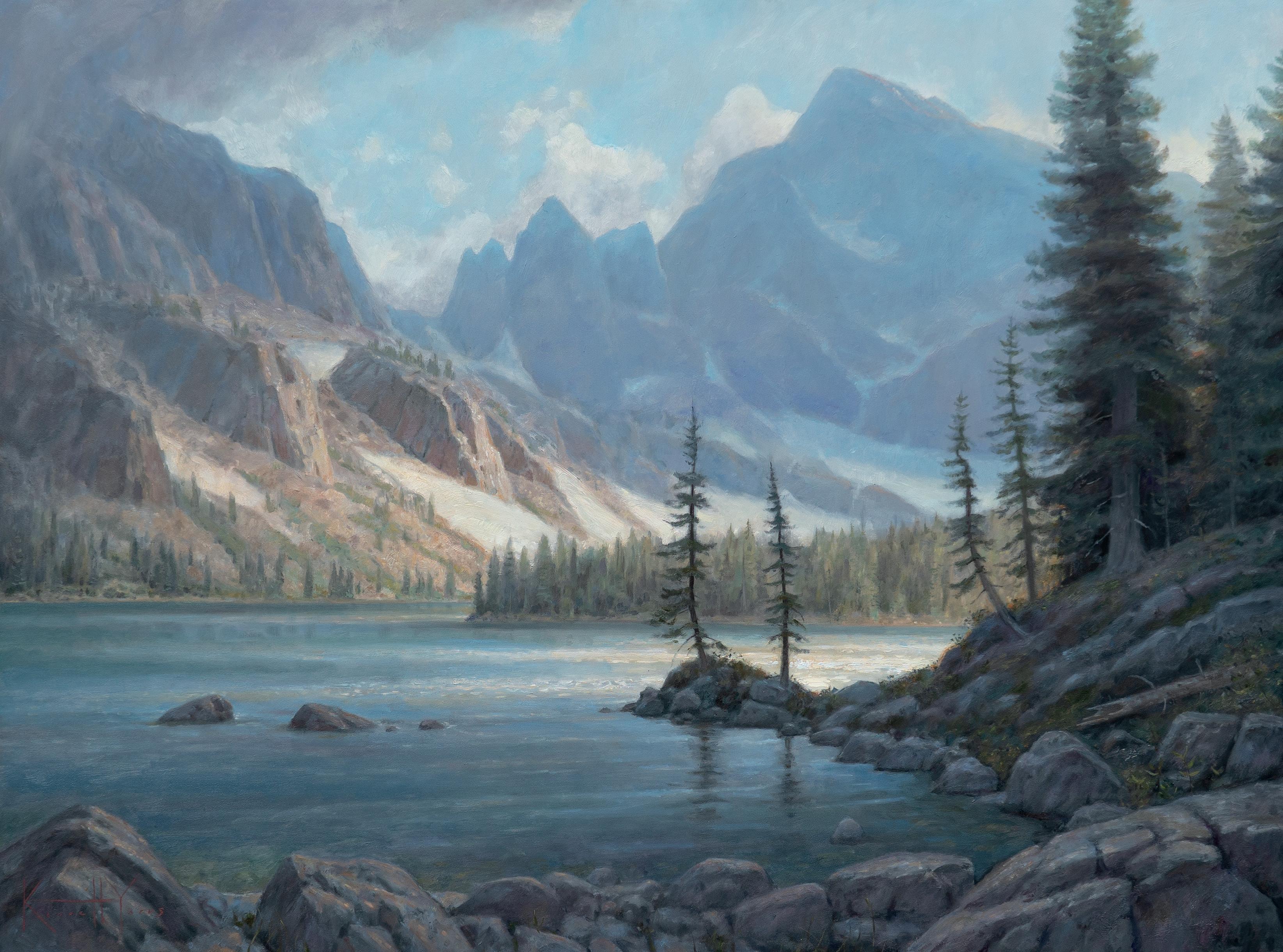
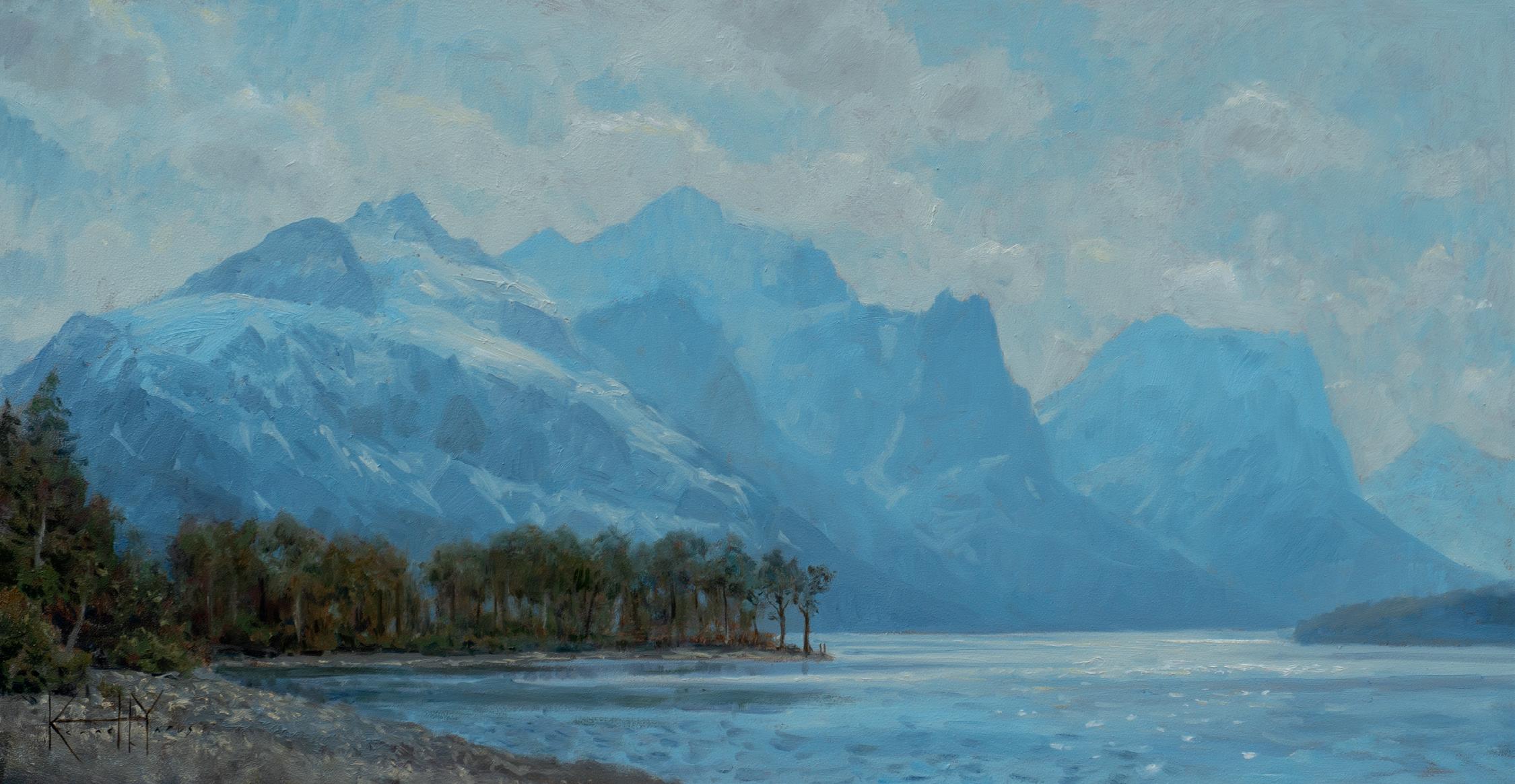
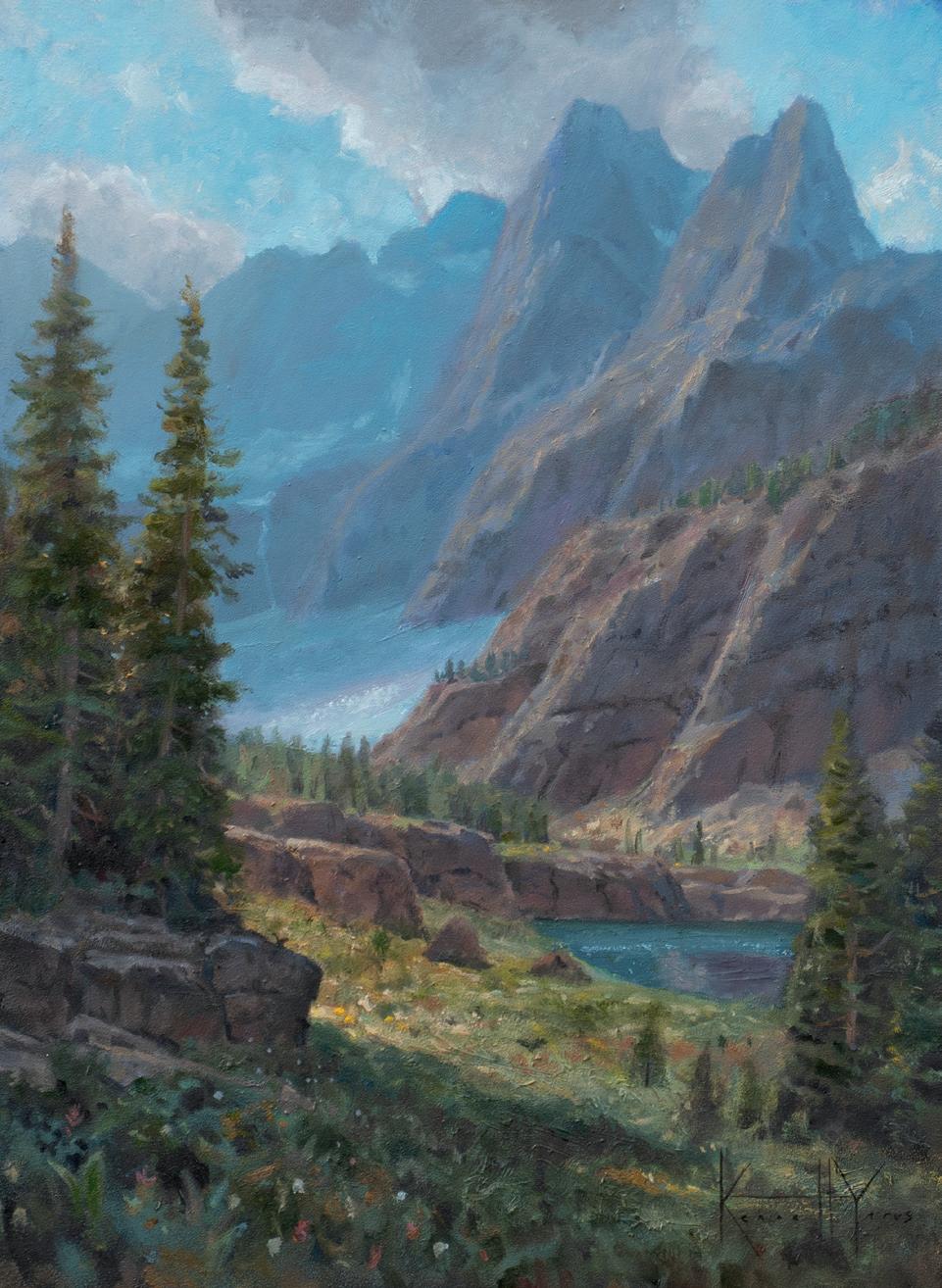
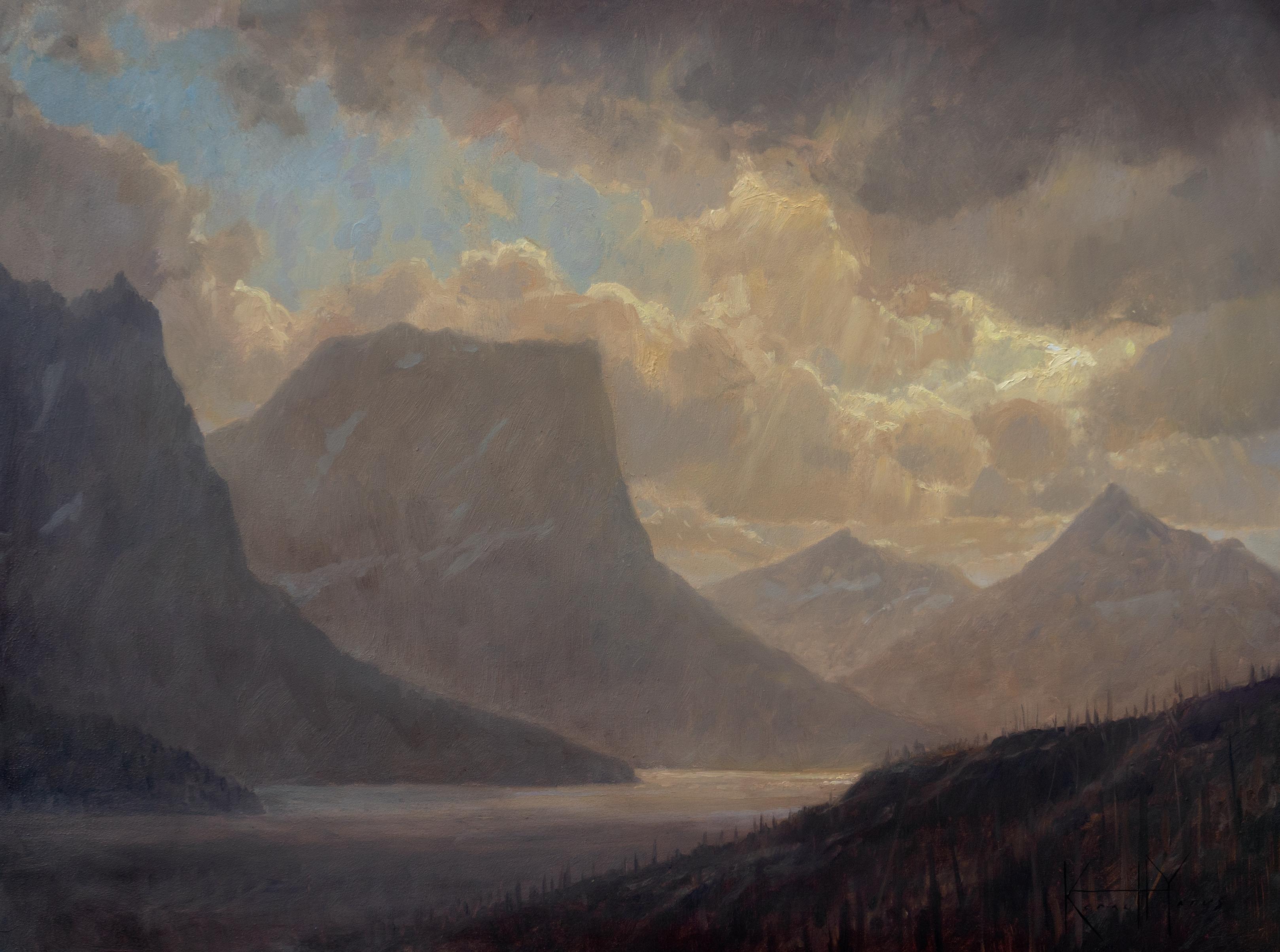
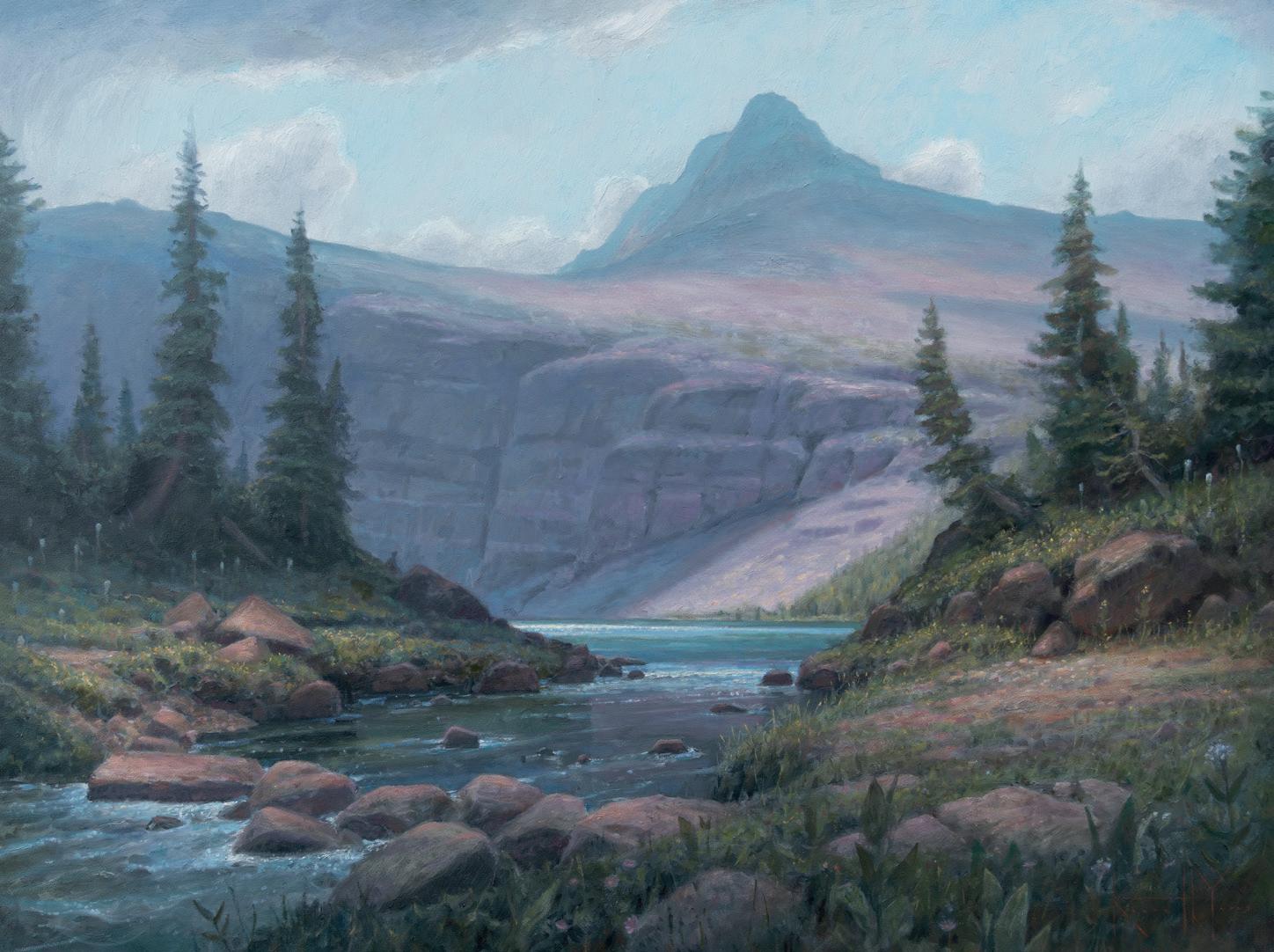
The landscape art of Kenneth Yarus celebrates the majesty of the region
Written by Christine Phillips
146 WINDOWS INTO THE WILD WORLD
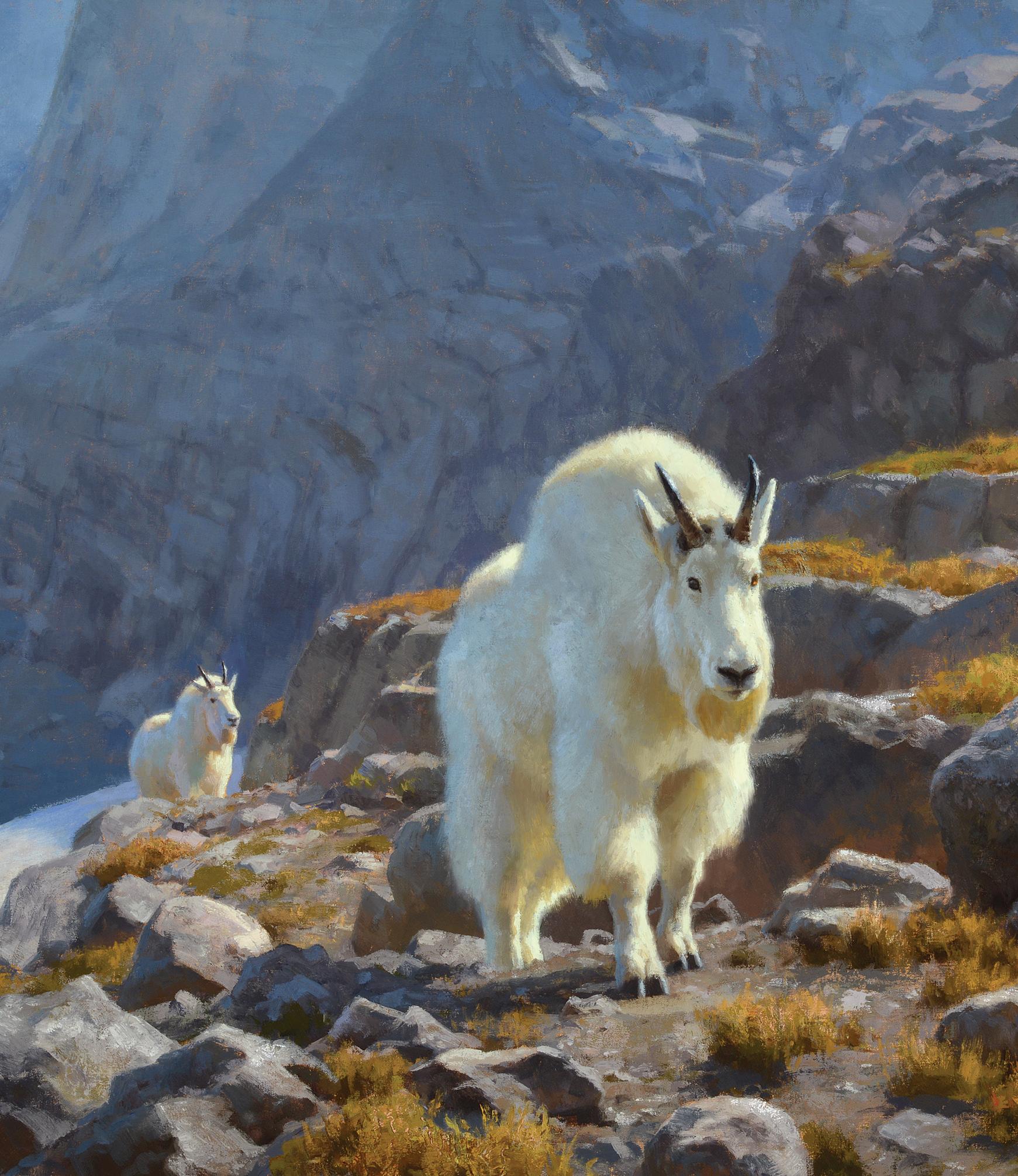
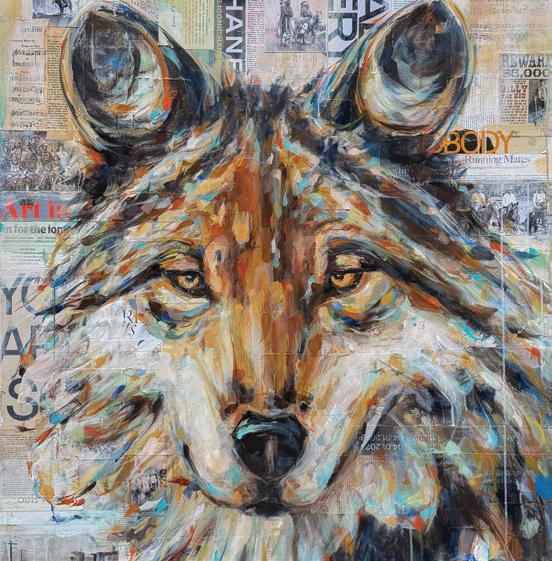
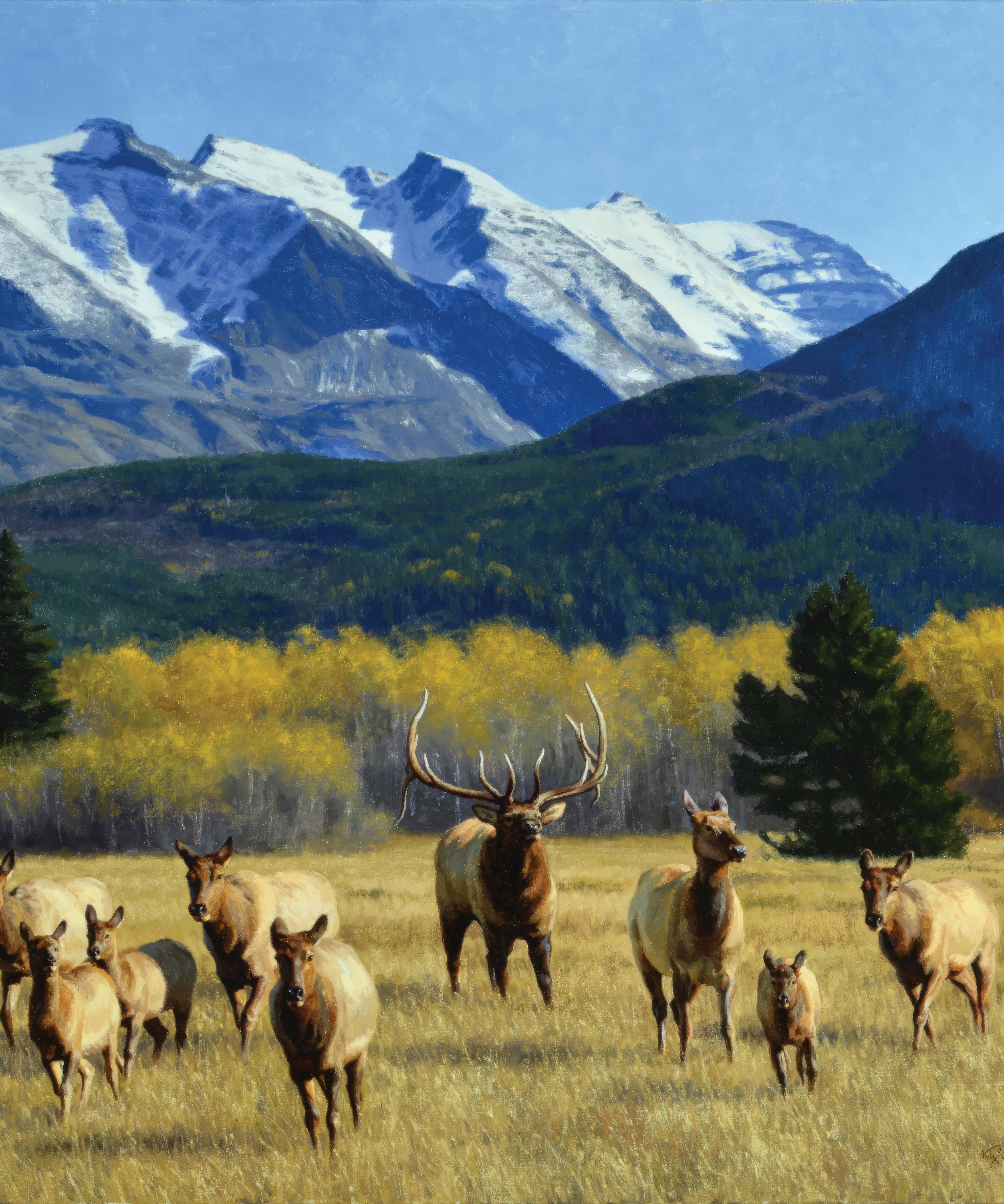
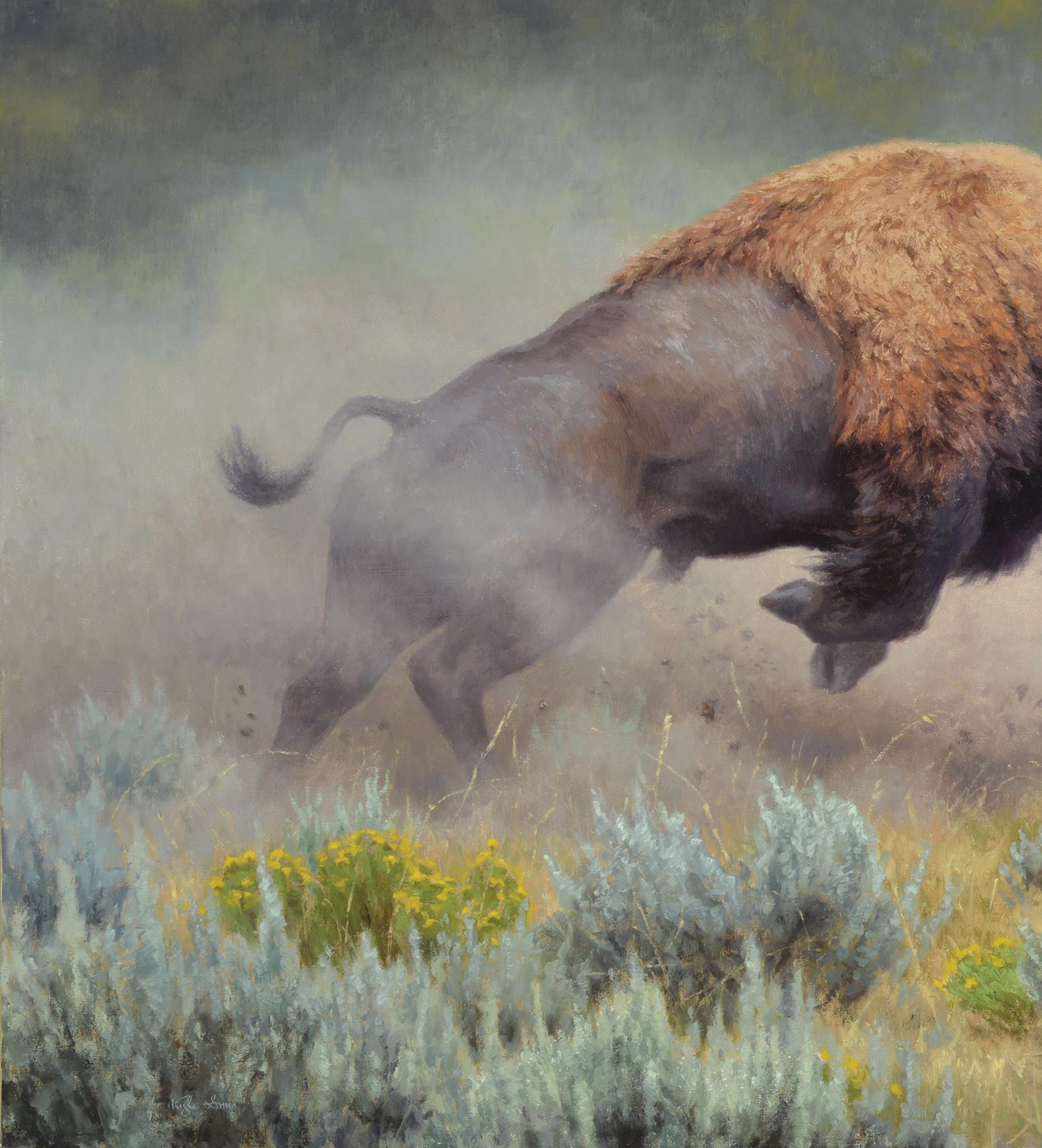
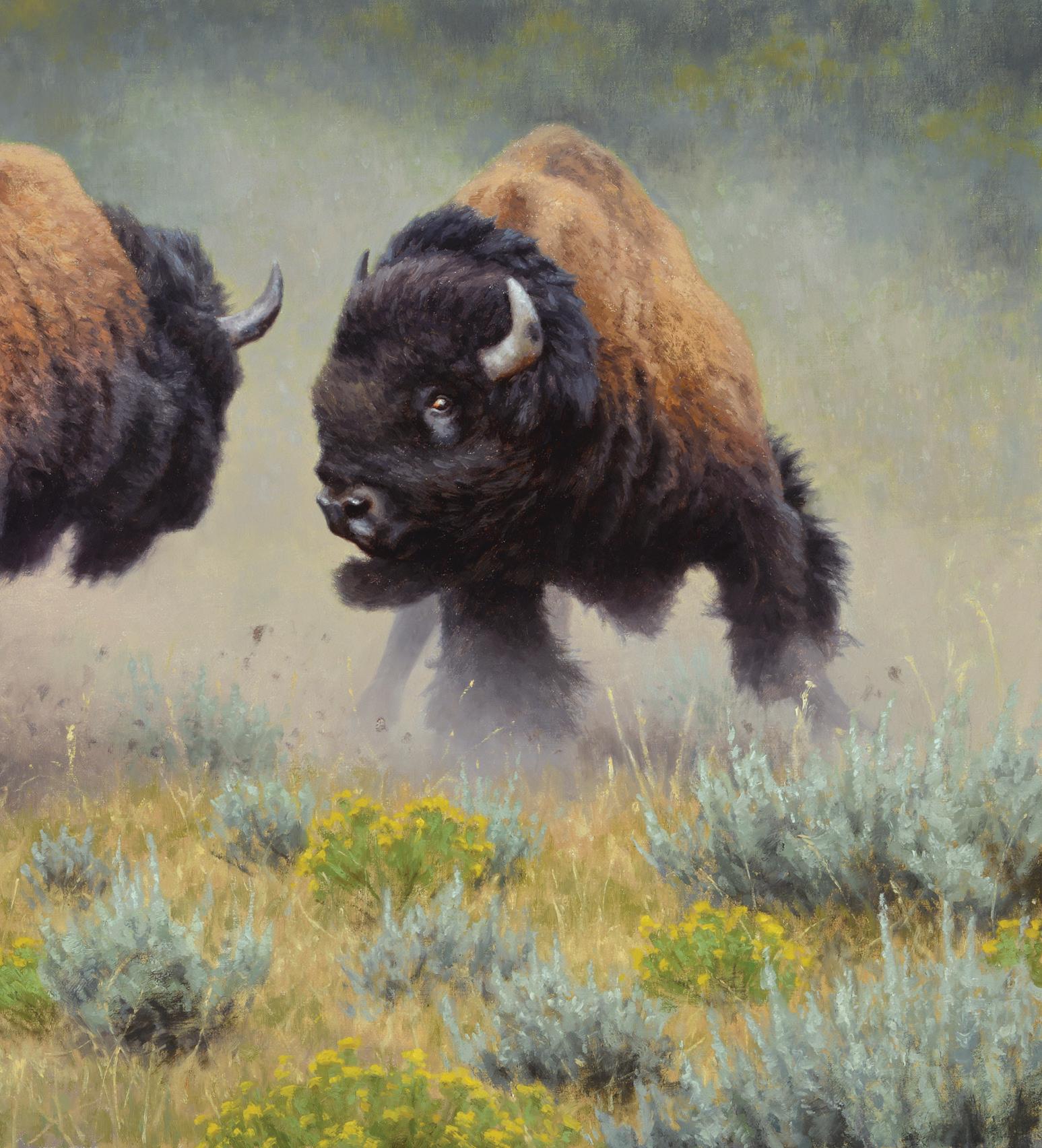
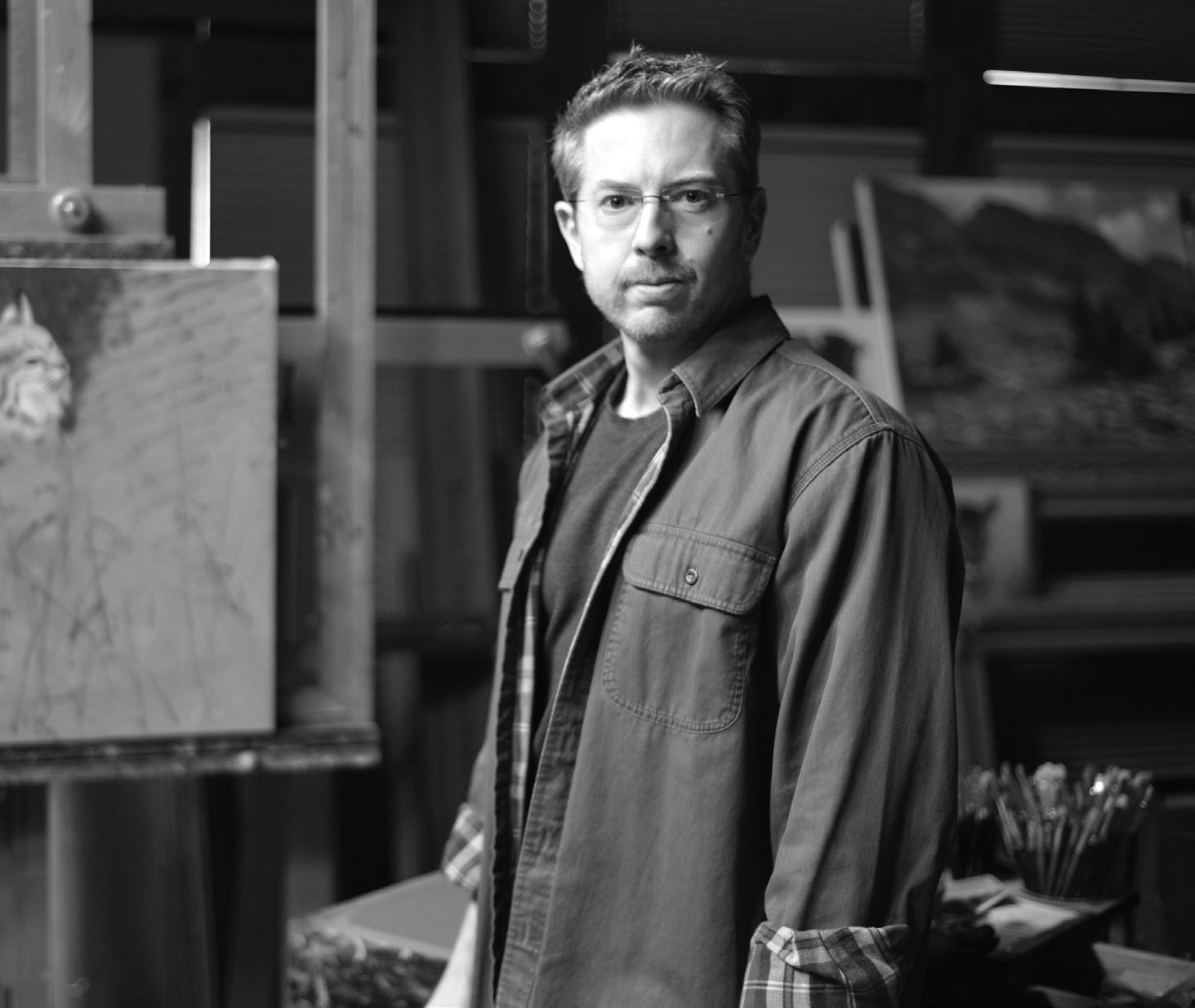
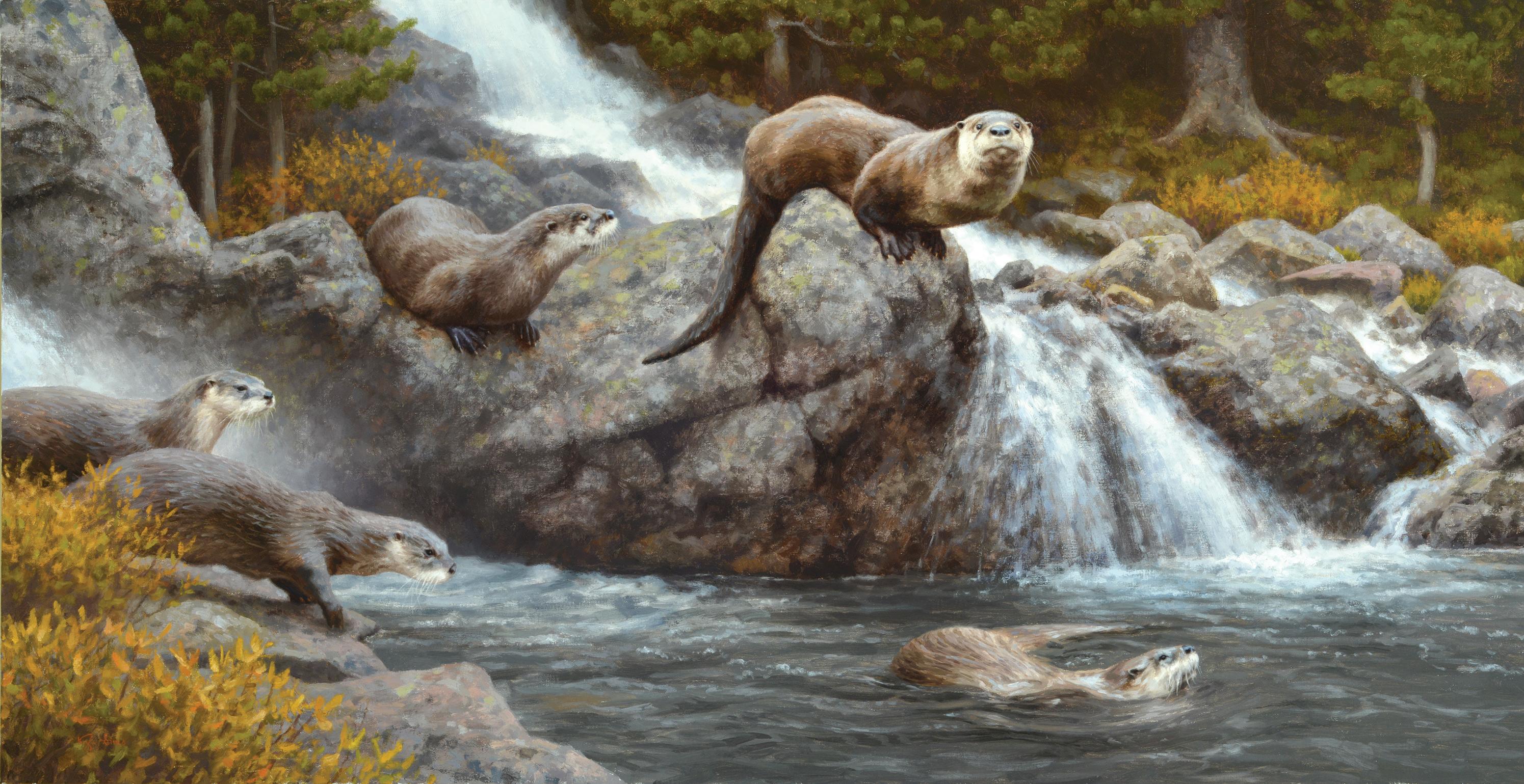
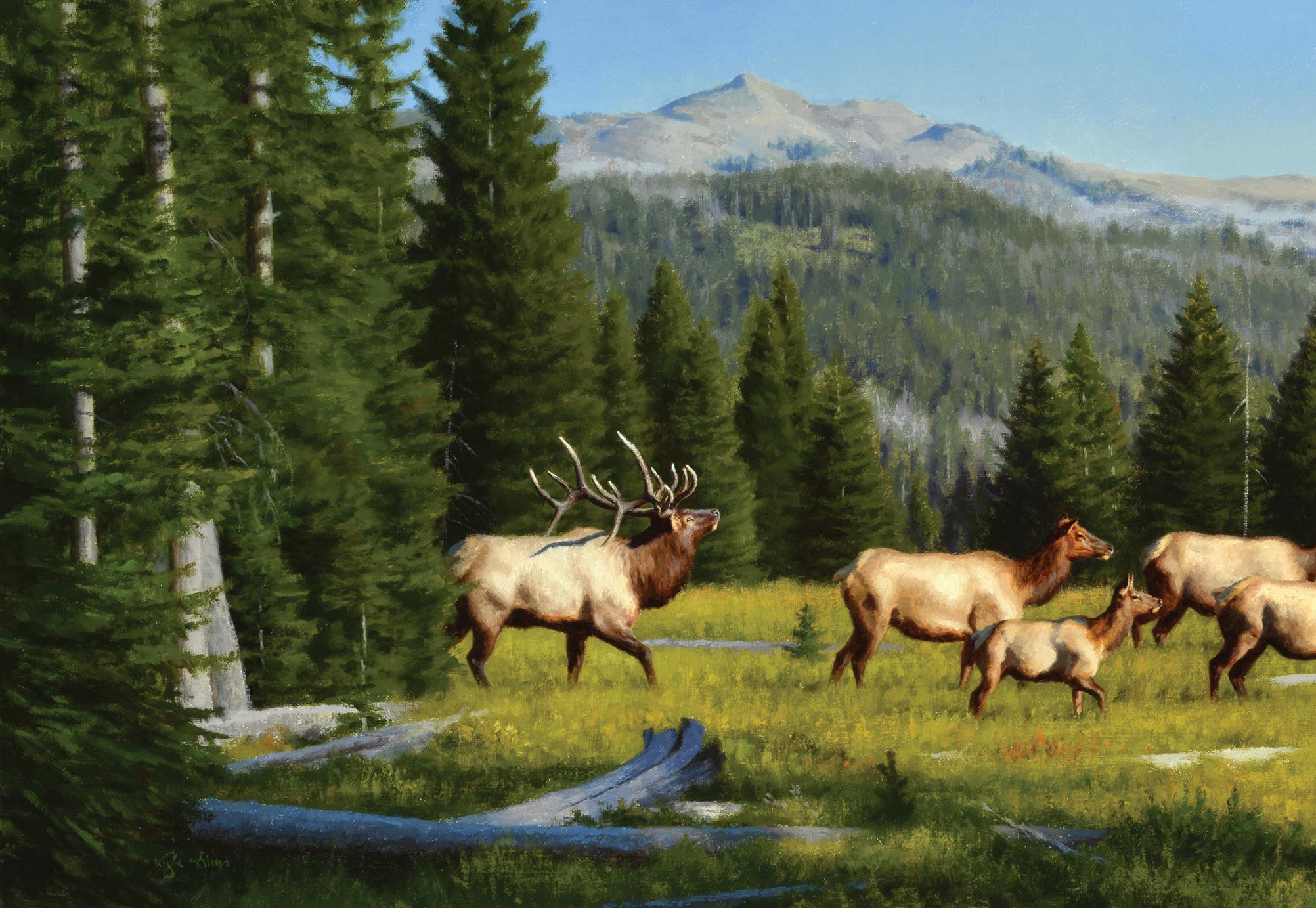
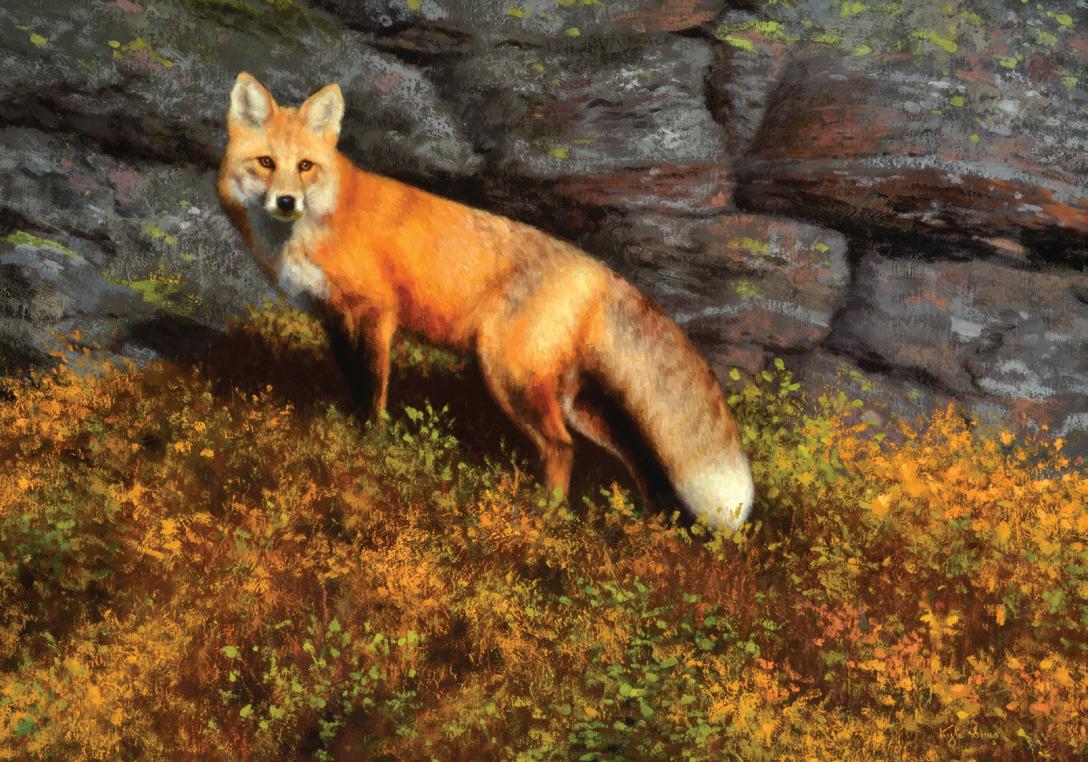
Painter Kyle Sims portrays Western wildlife with uncanny intimacy
Written by Norman Kolpas
160 FOR THE LOVE OF MUSIC
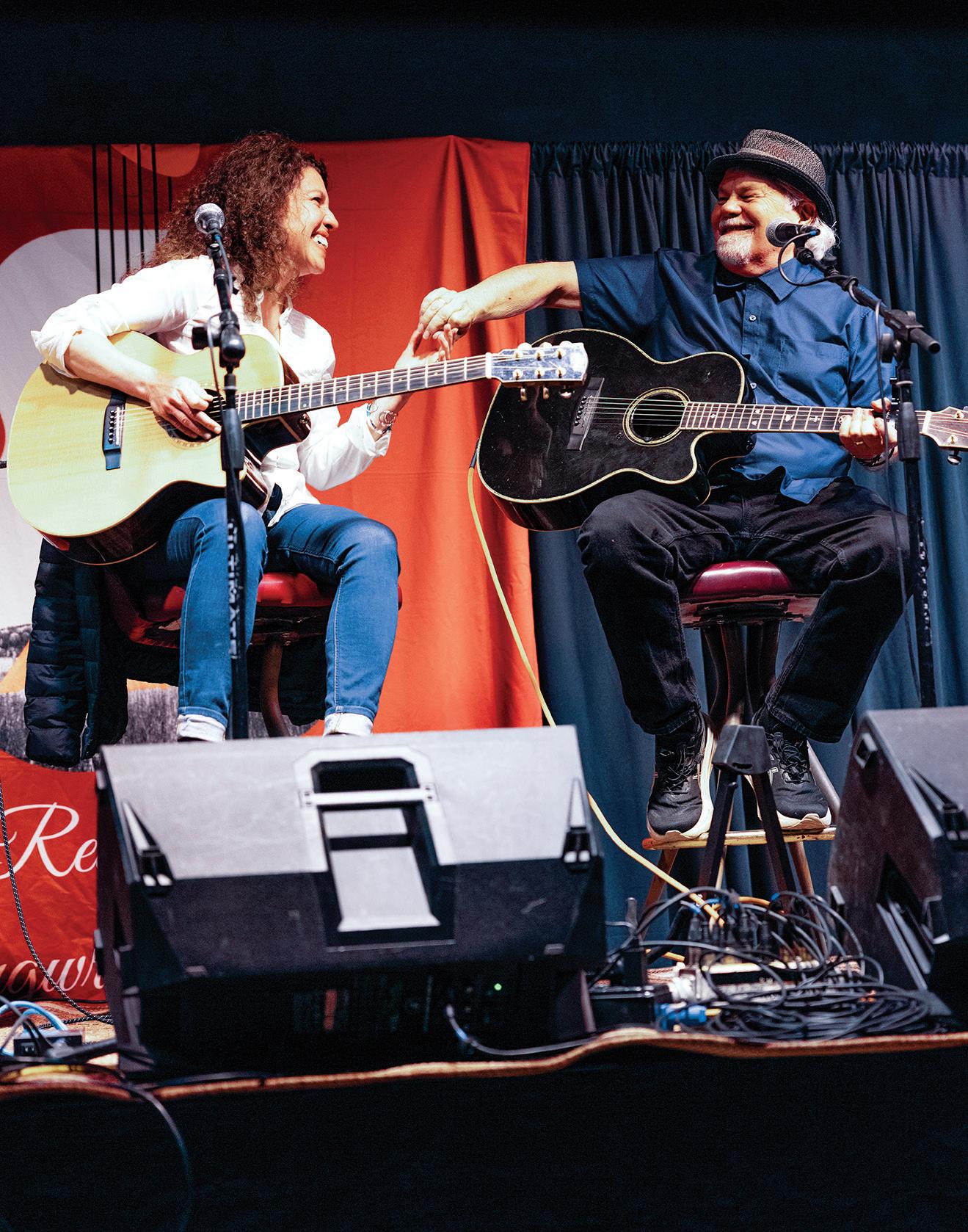
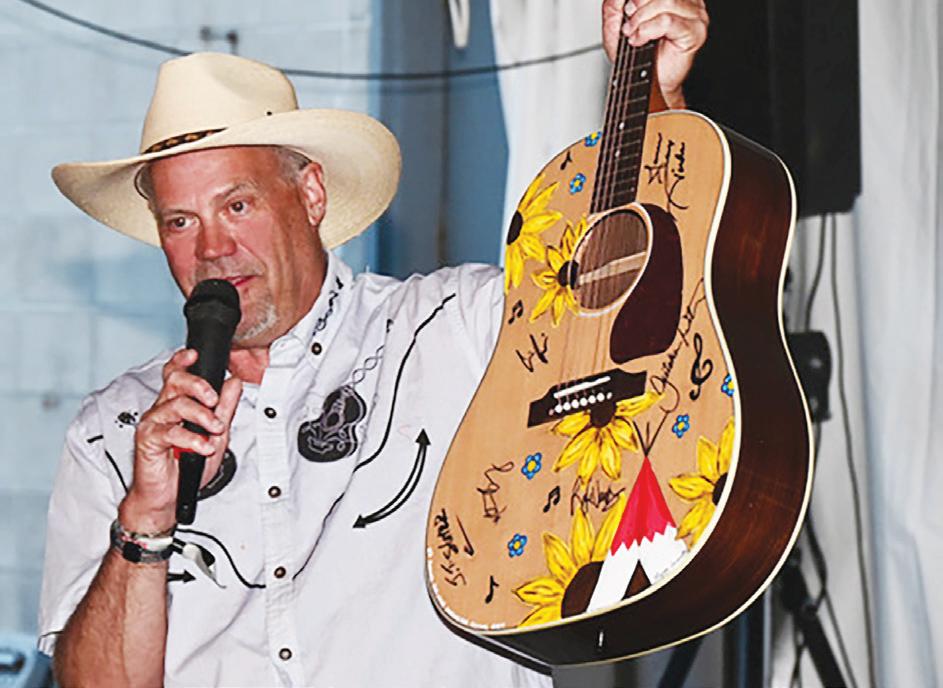
Montana’s songwriter festivals bring musicians together for moments of resonance
Written by Brian Hurlbut
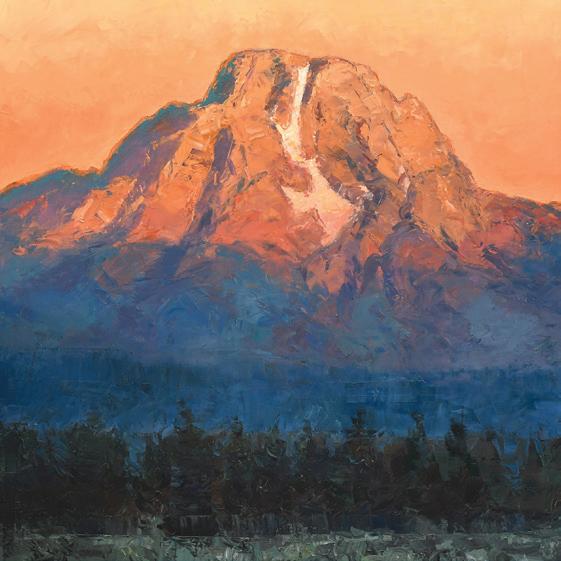
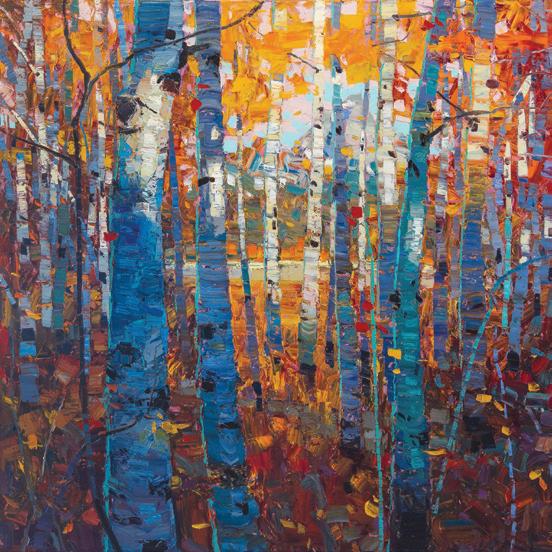
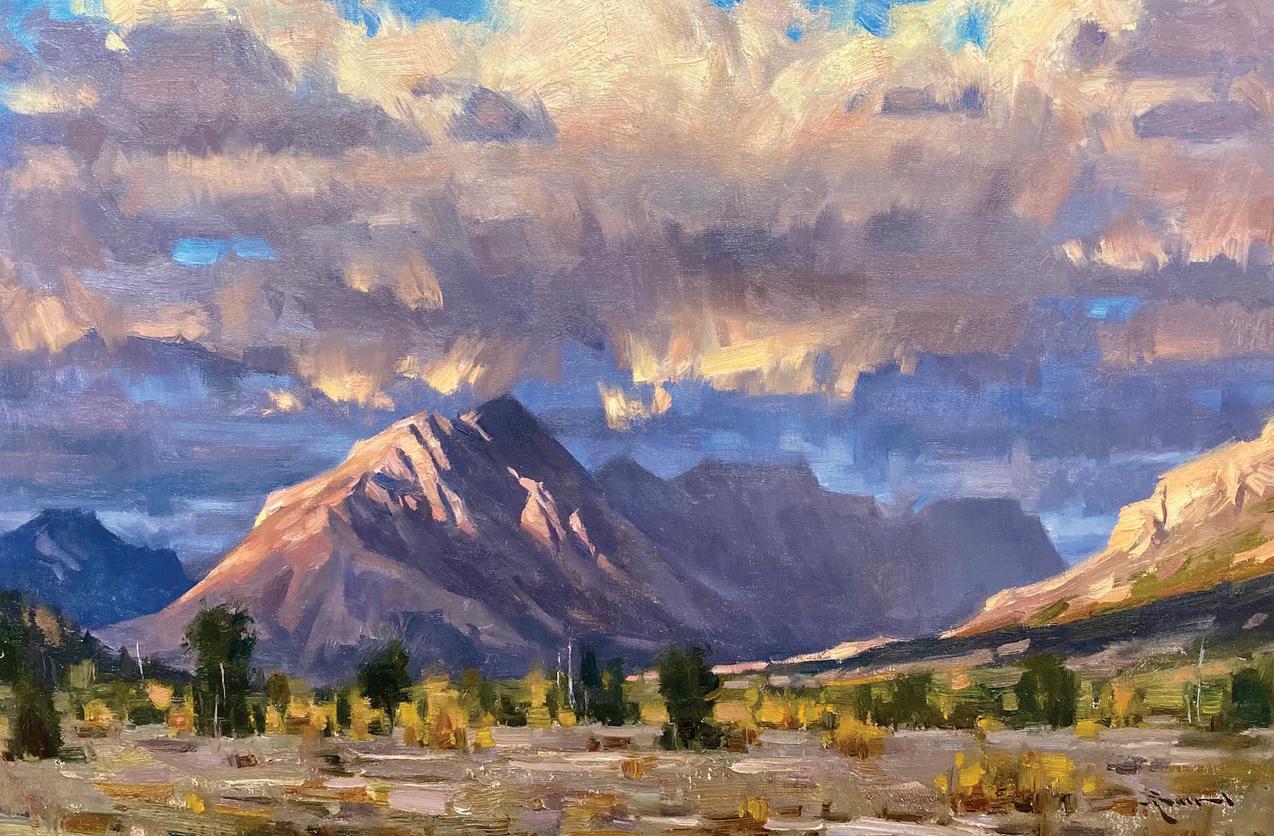
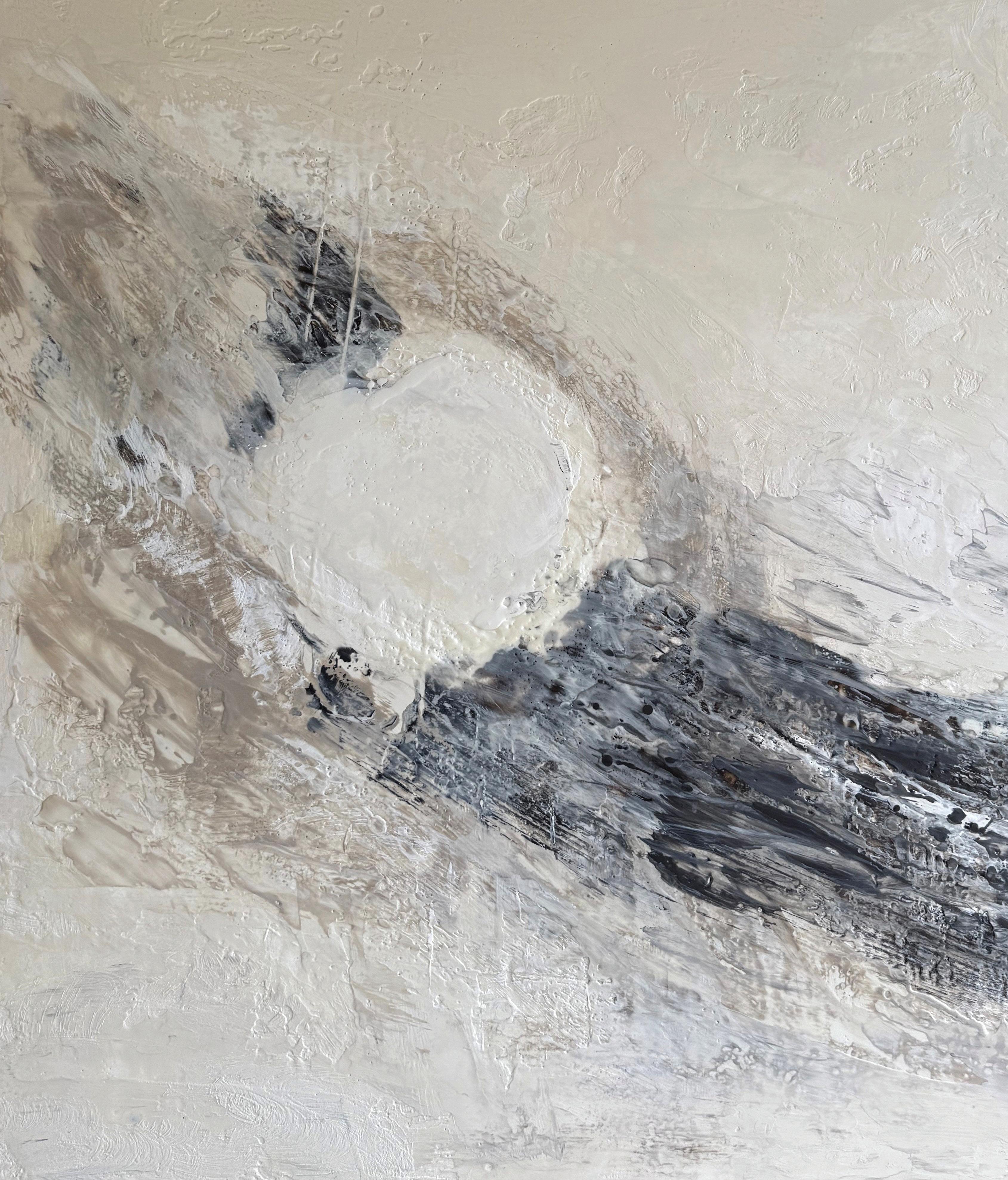
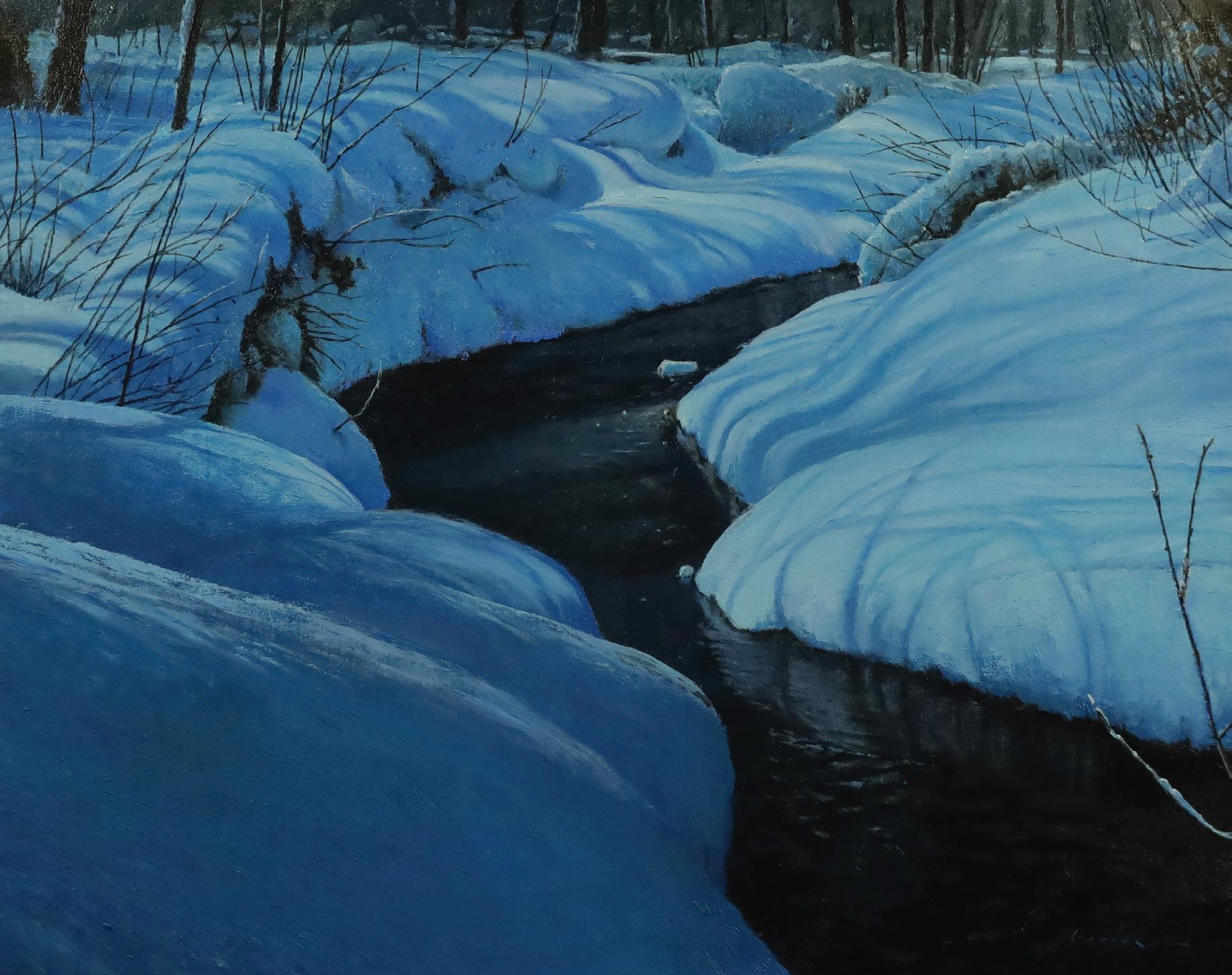
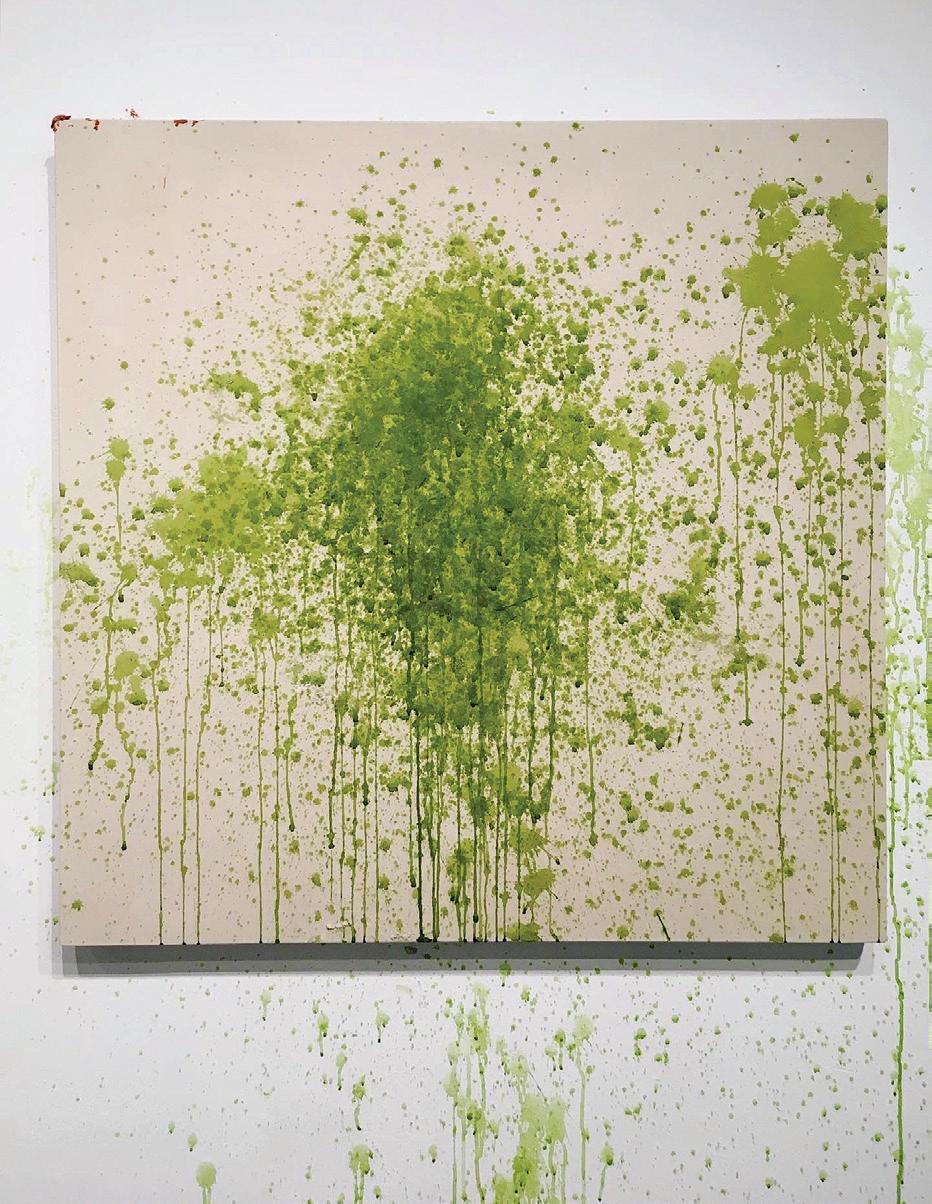
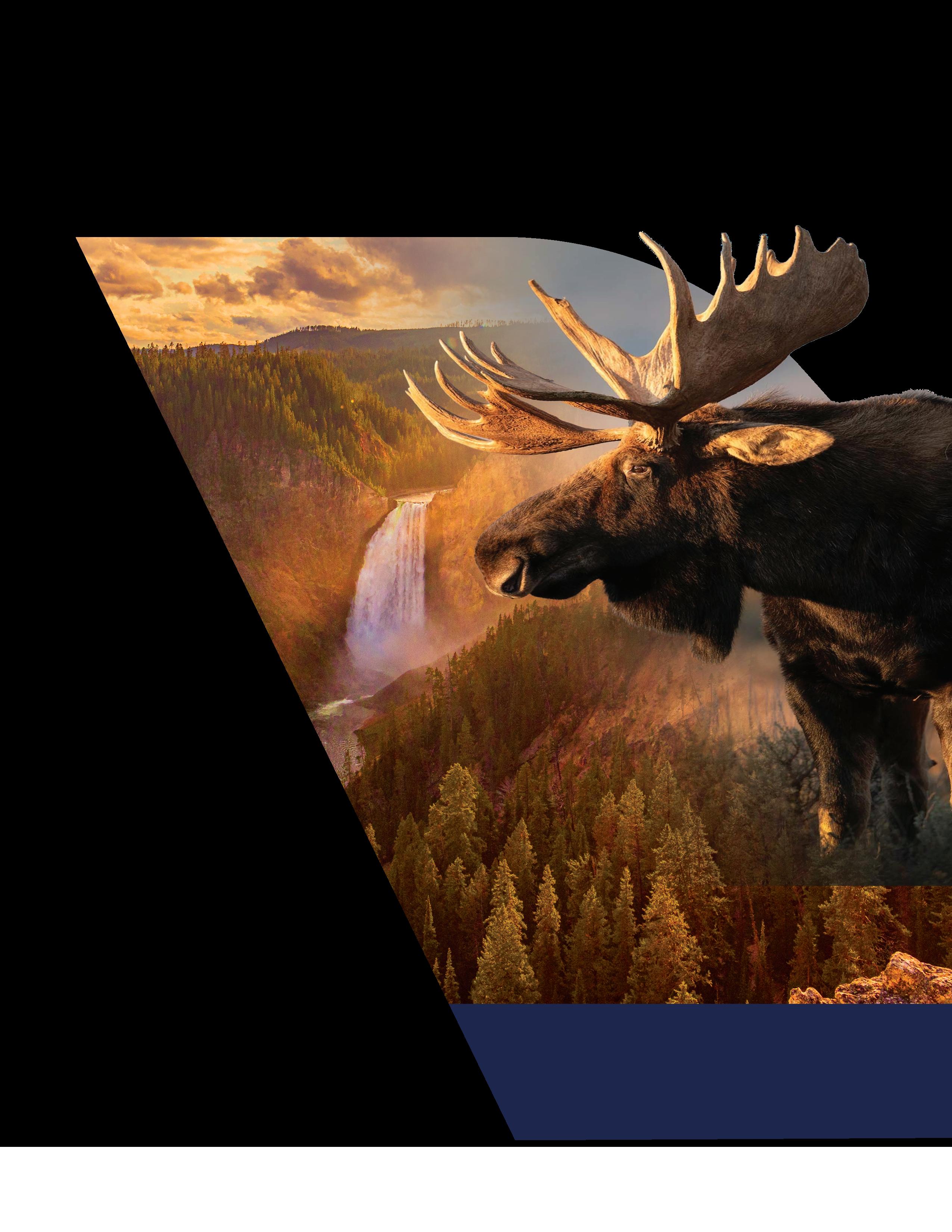
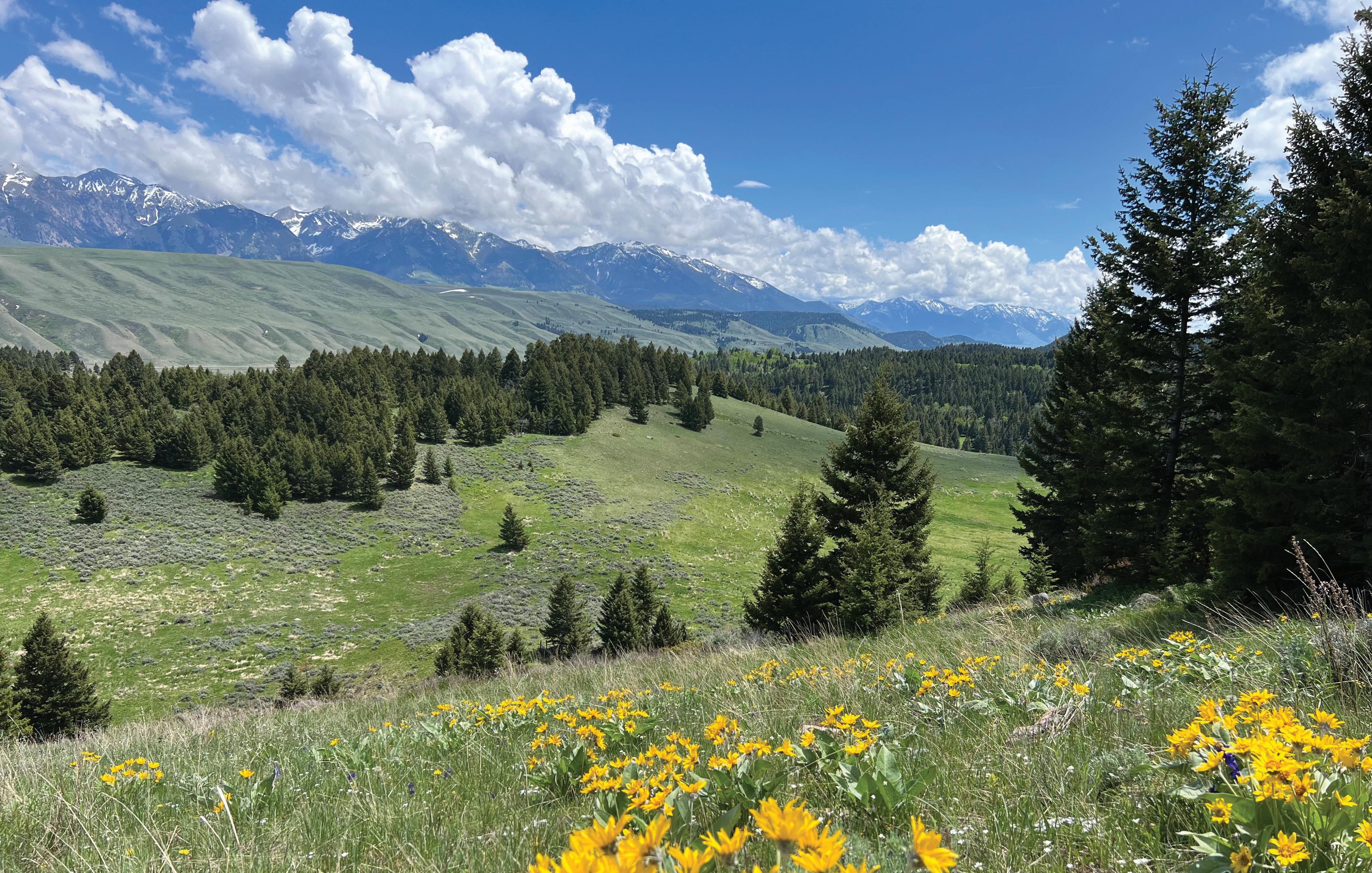
COVER : Trail Mates , painting by Kyle Sims THIS PAGE: The Reaches , painting by Kenneth Yarus
DEPARTMENTS
56 Dining Out
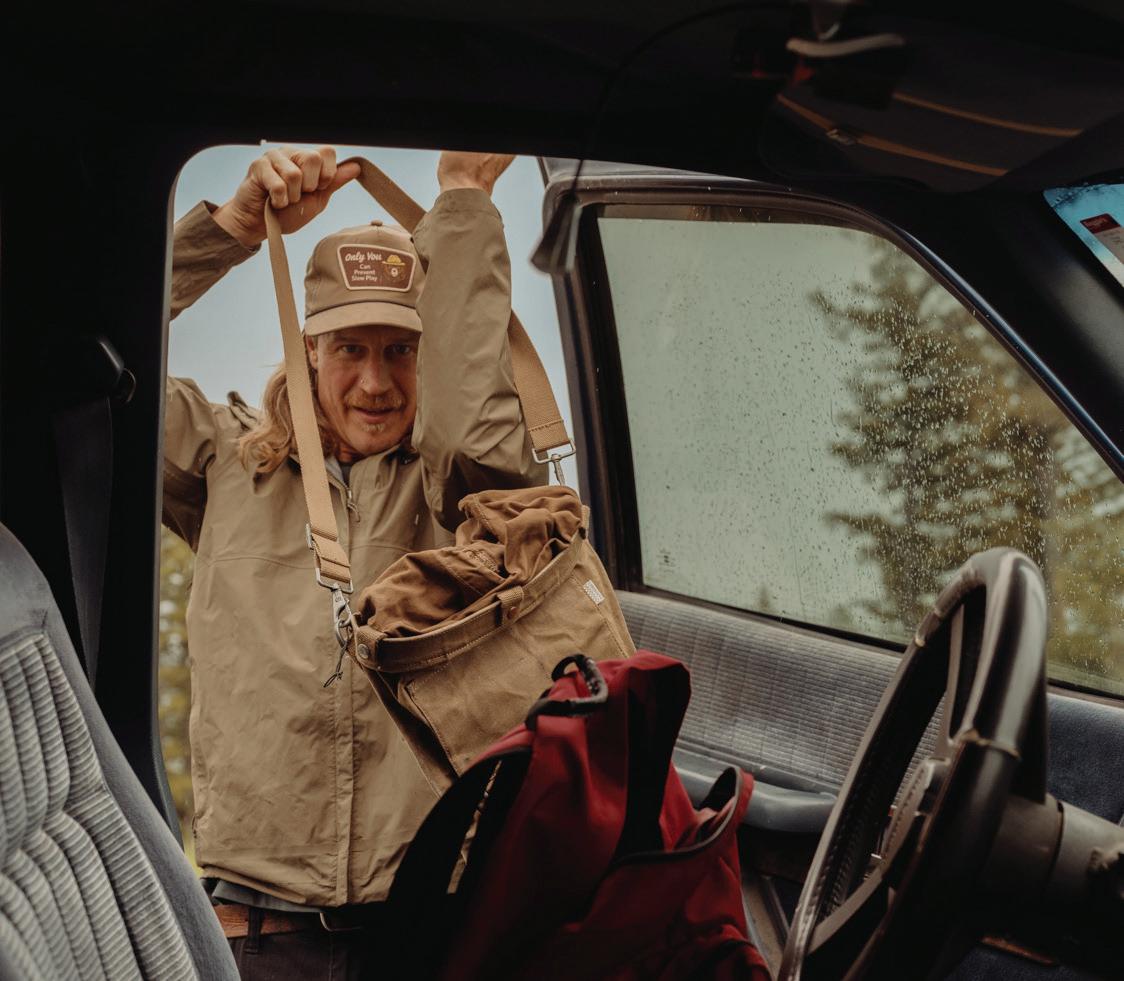
Bringing Montana to the Table: At Herb & Omni in Whitefish, award-winning chef and hometown boy Earl James Reynolds believes in playing with your food
Written by Carter Walker
Photography by Aaron Agosto
62 Local Knowledge
Wandering and Wonder: Silk painter Christy Lynn Greene seeks to slow down and stay longer to reveal awe in the world
Written by Jeanne Allgood Gaisford
70 History
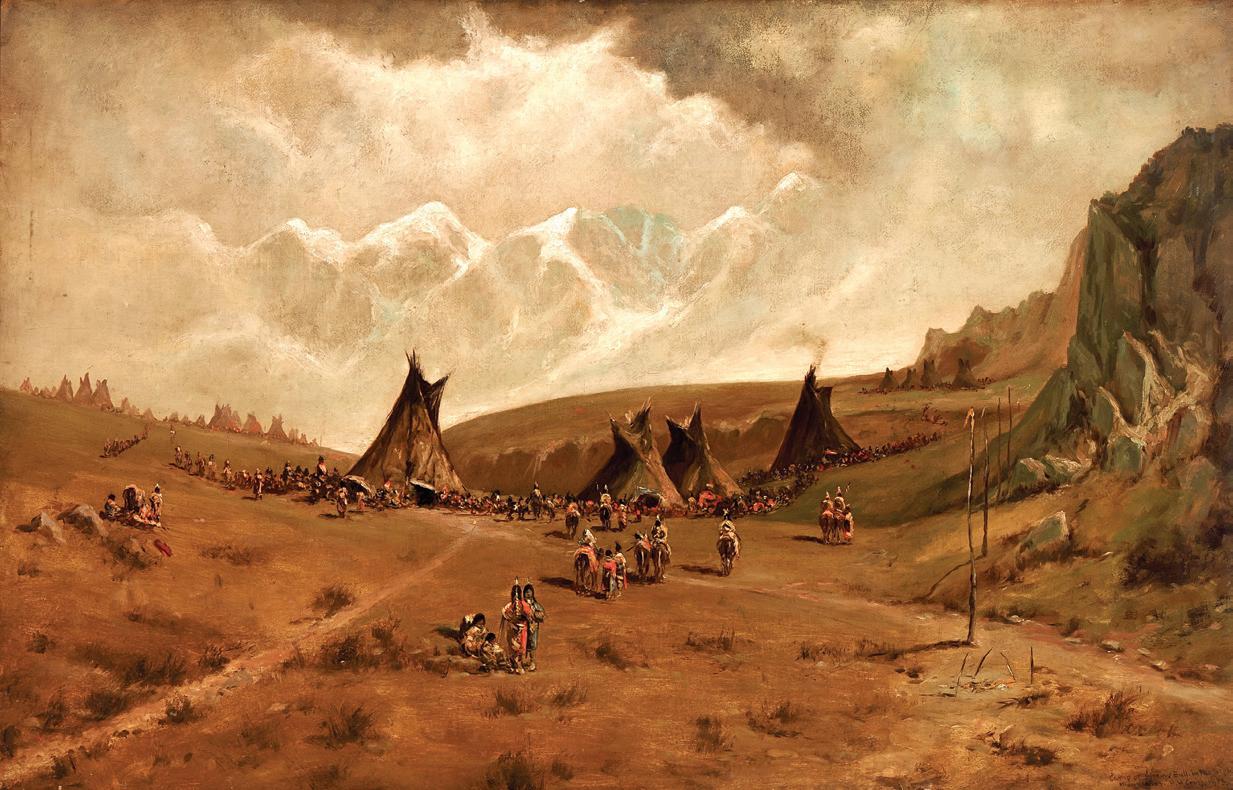
From Circus Wagons to the Bitterroot Valley: Artist Henry Cross’s work portrays a romantic view of the West
Written by Brenda Wahler
78 Images of the West
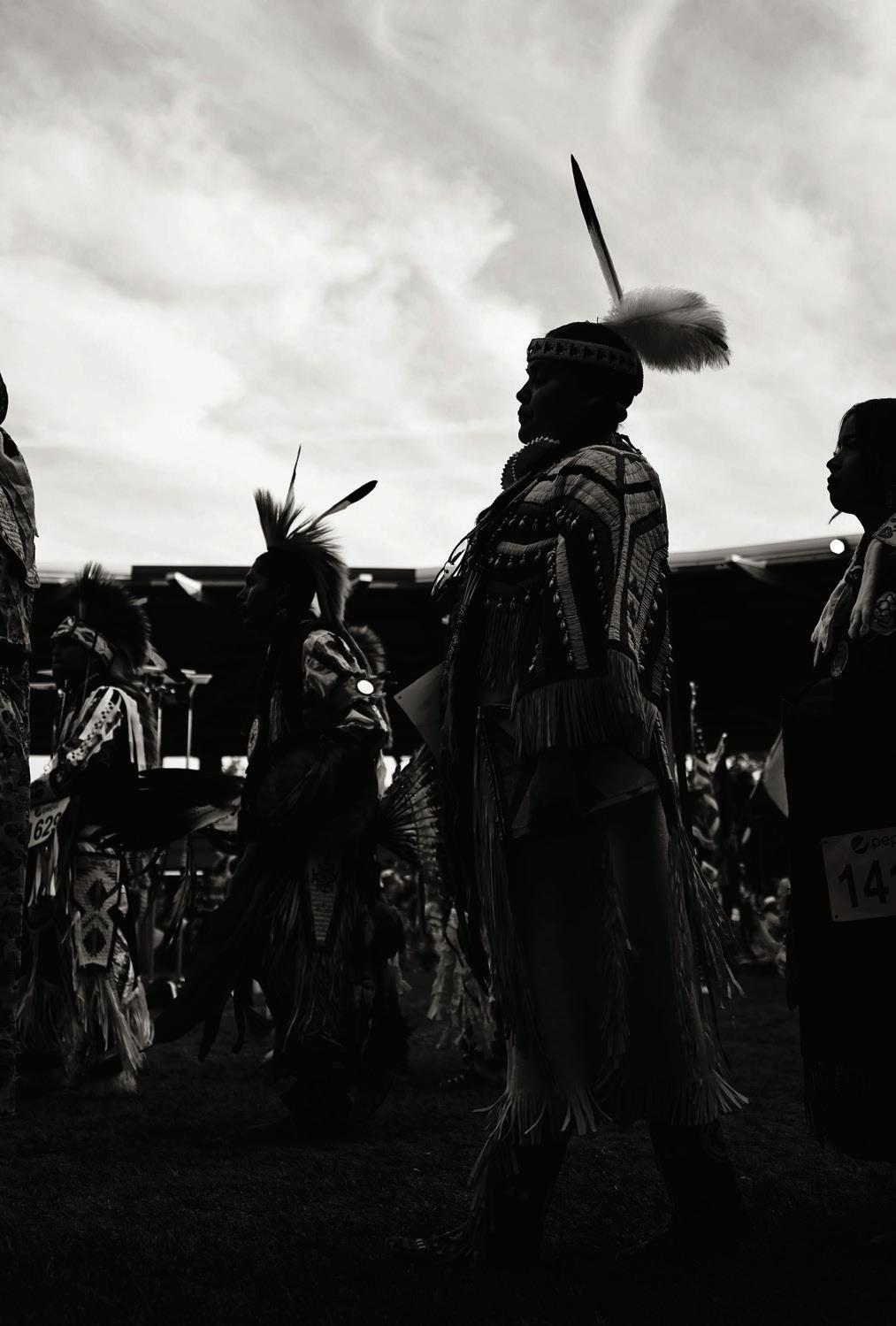
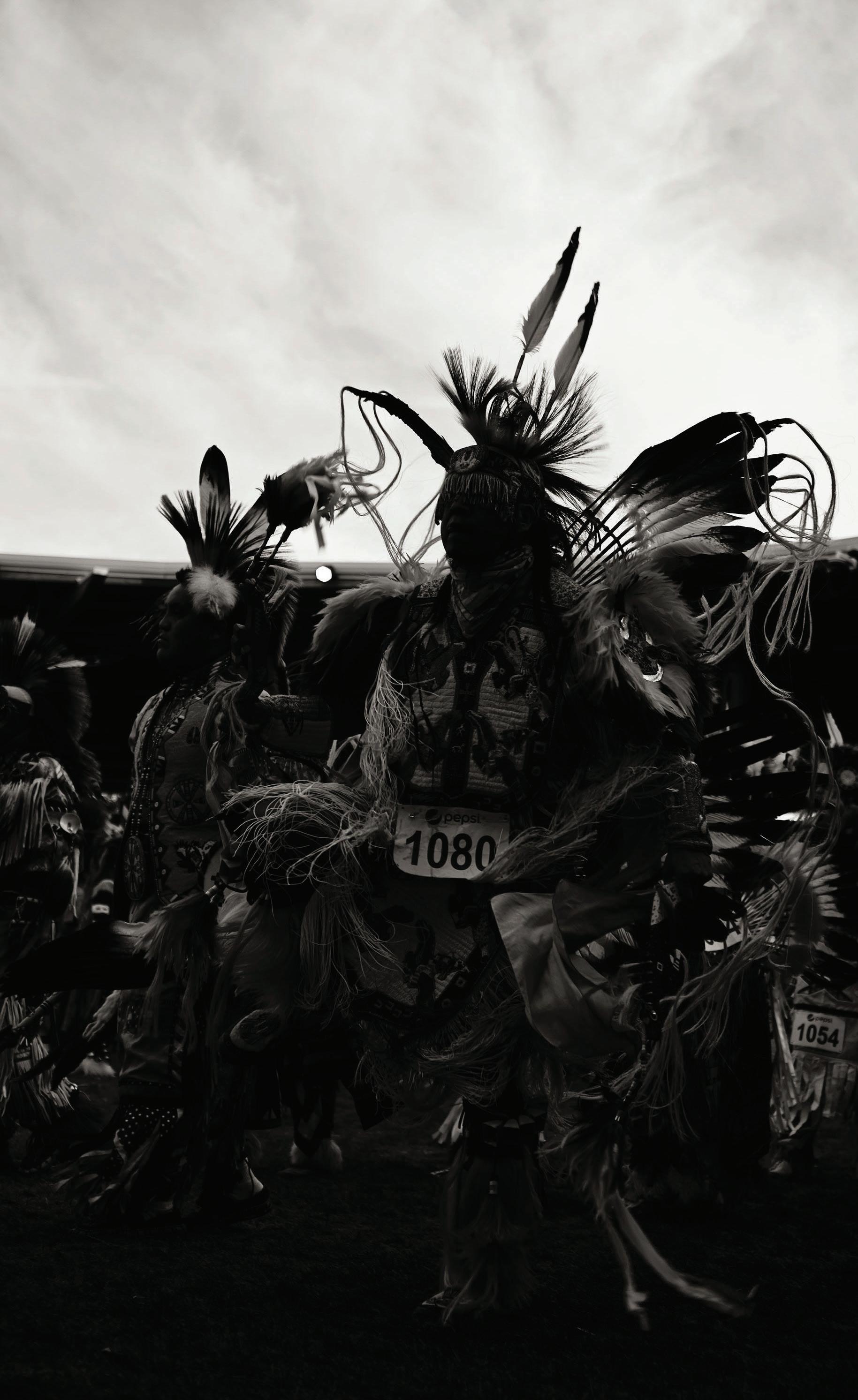
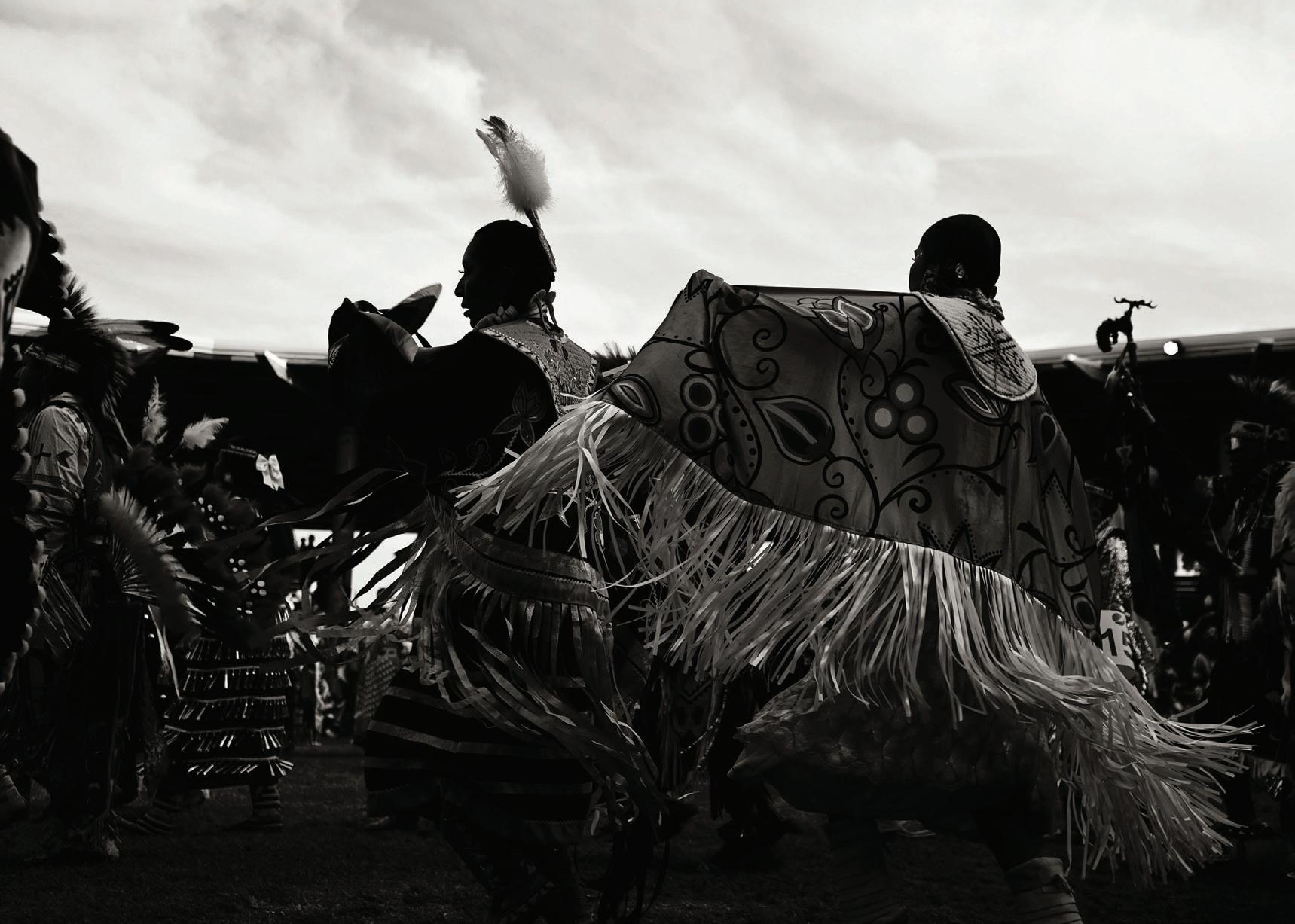
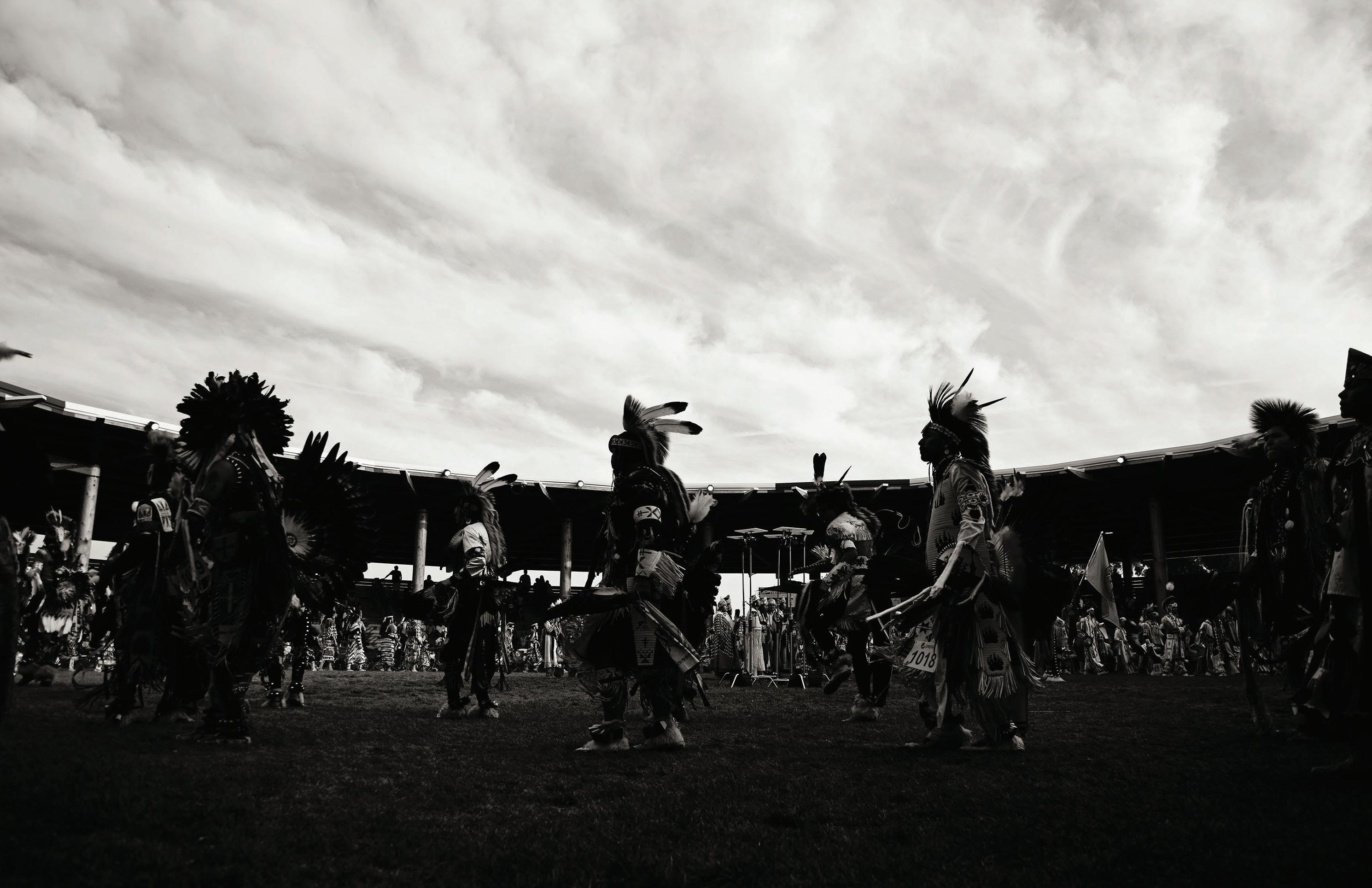
Silhouettes of Crow: A photographer’s dream
Written & Photographed by Erika Haight
84 Western Design
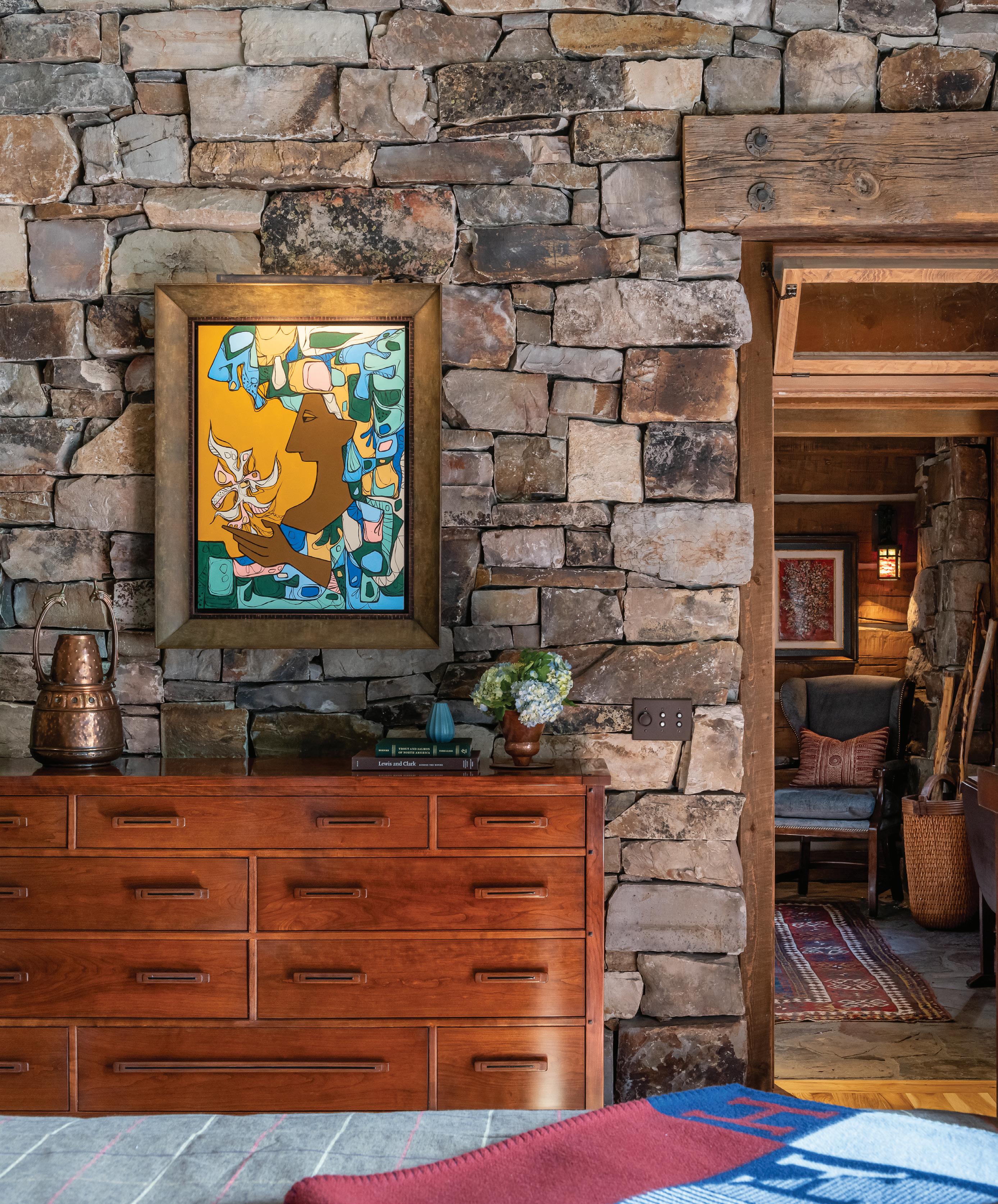
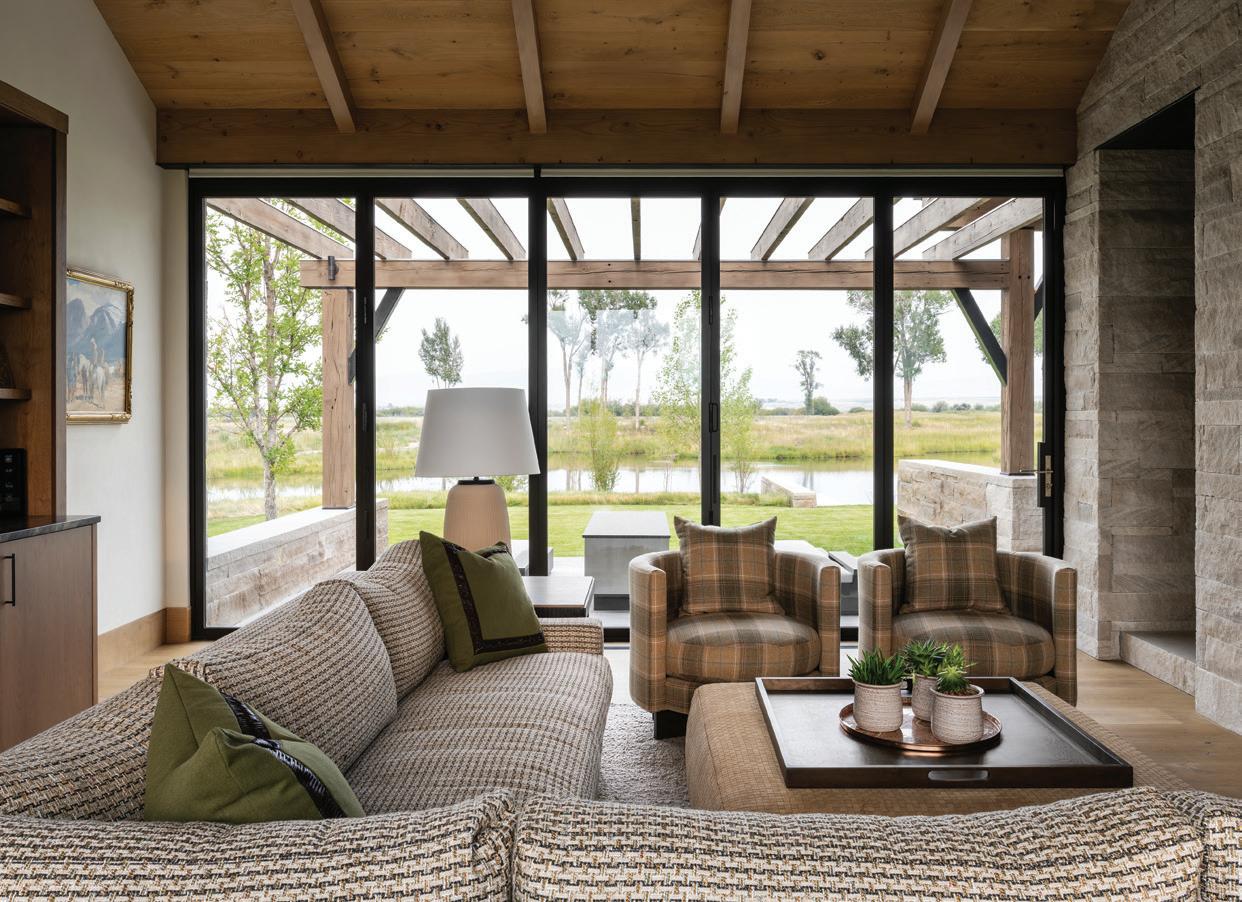
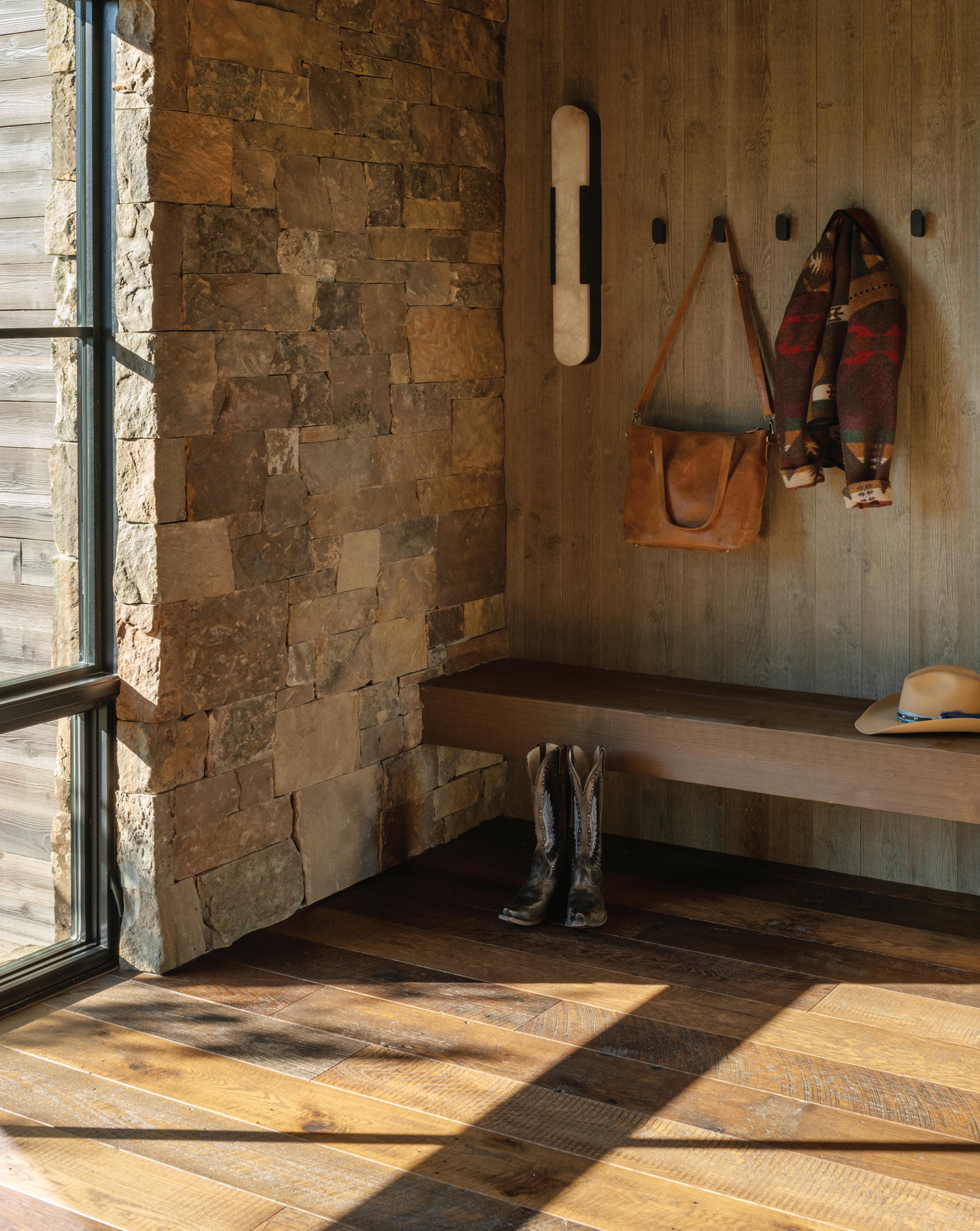
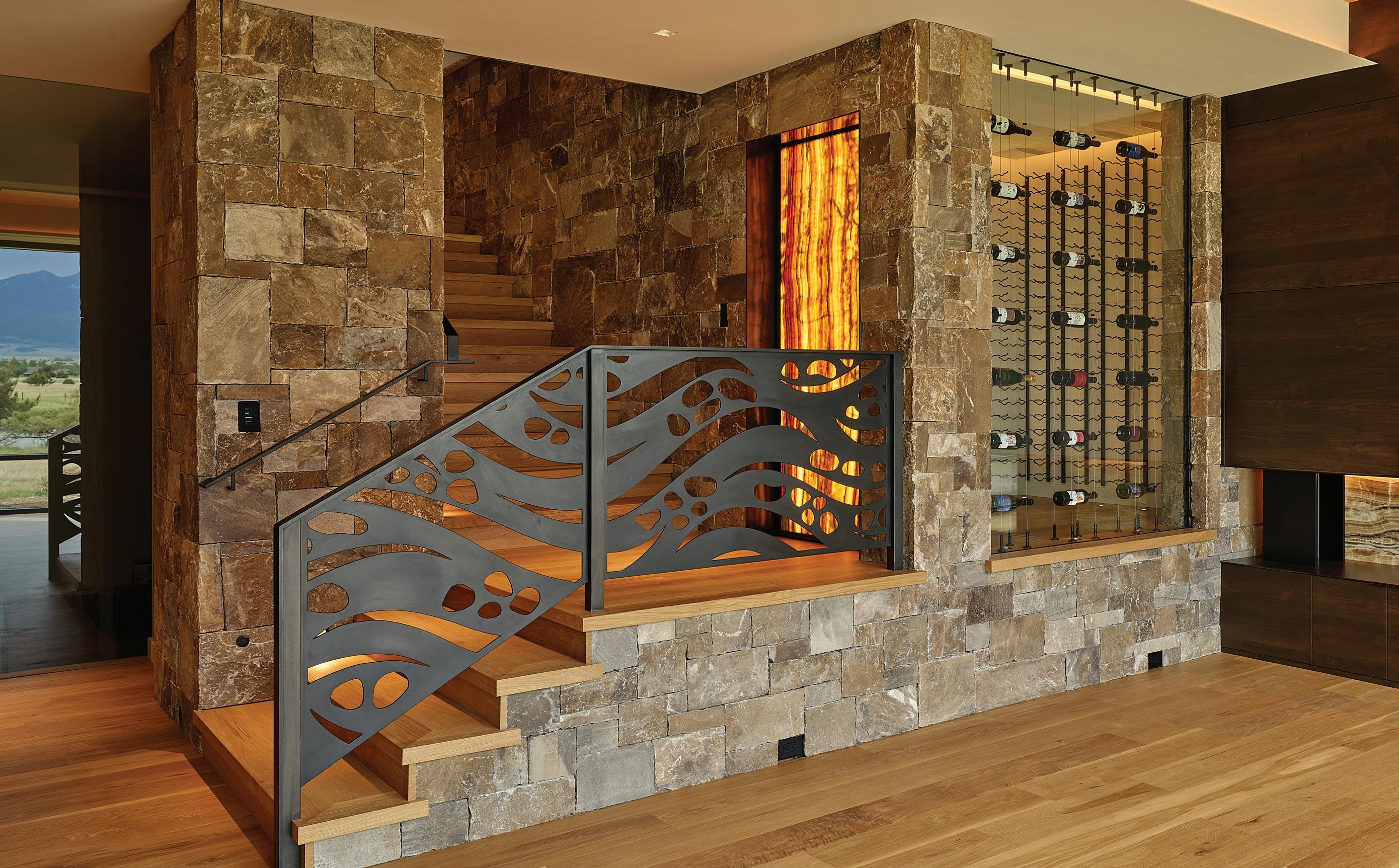
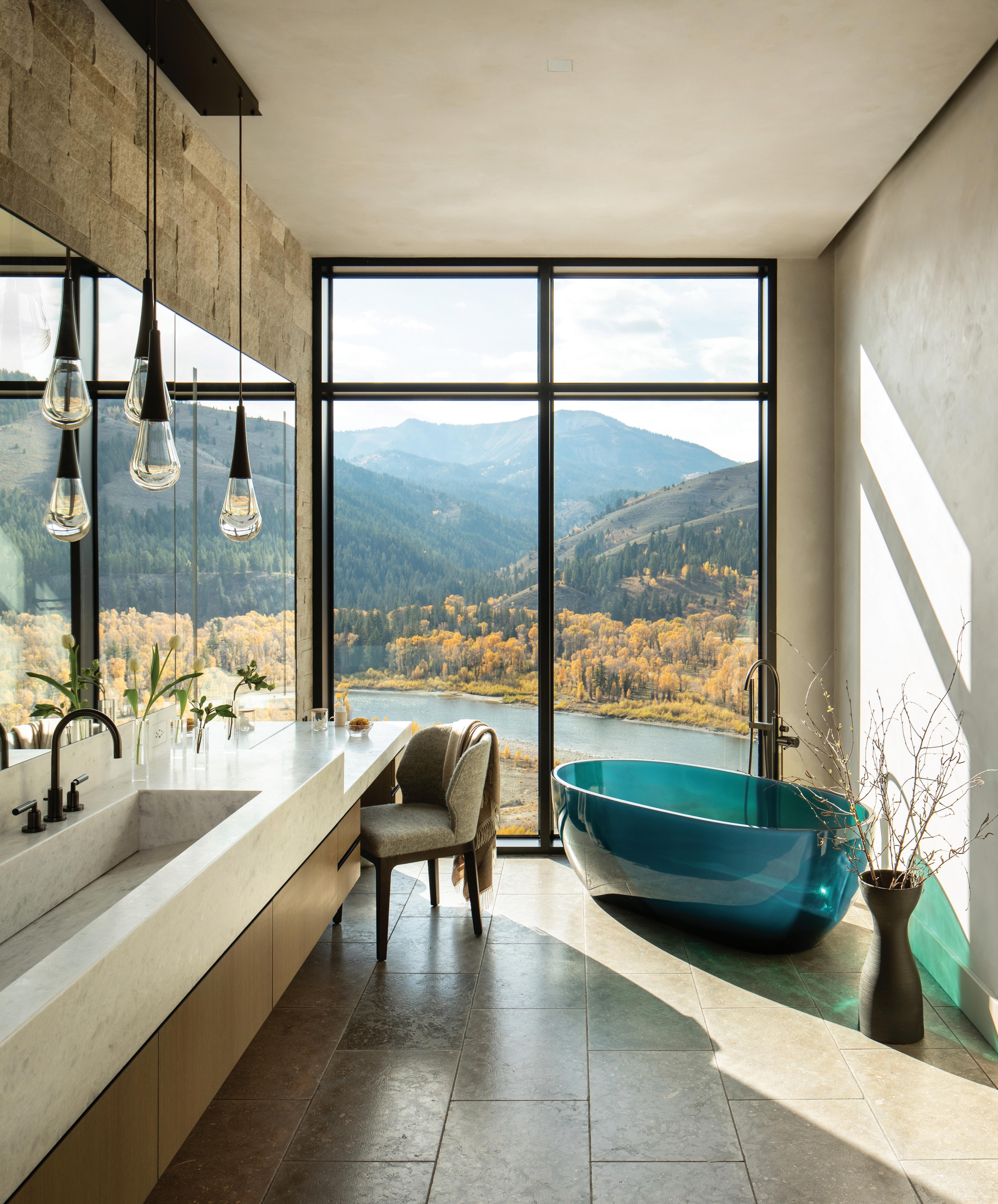
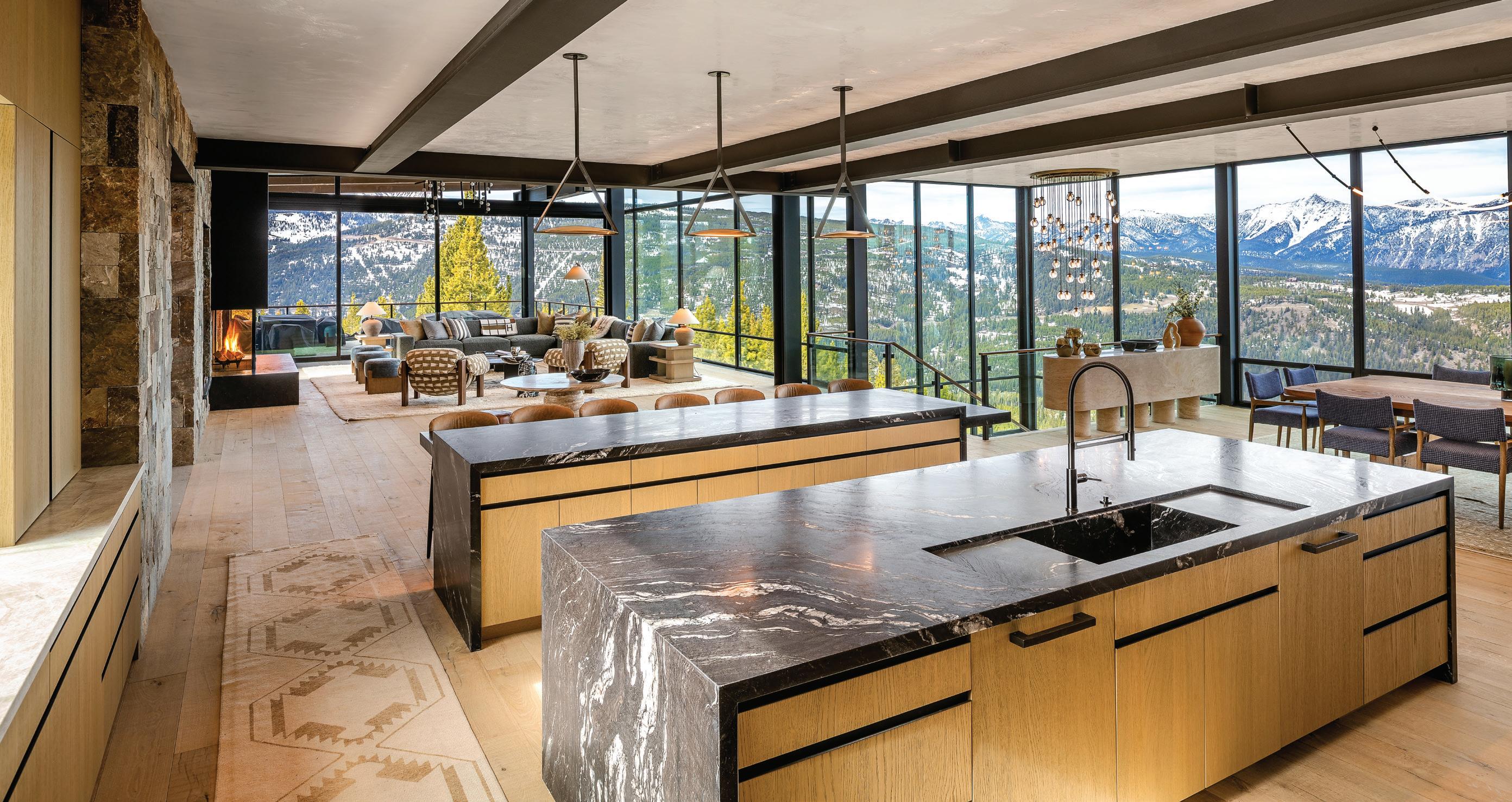
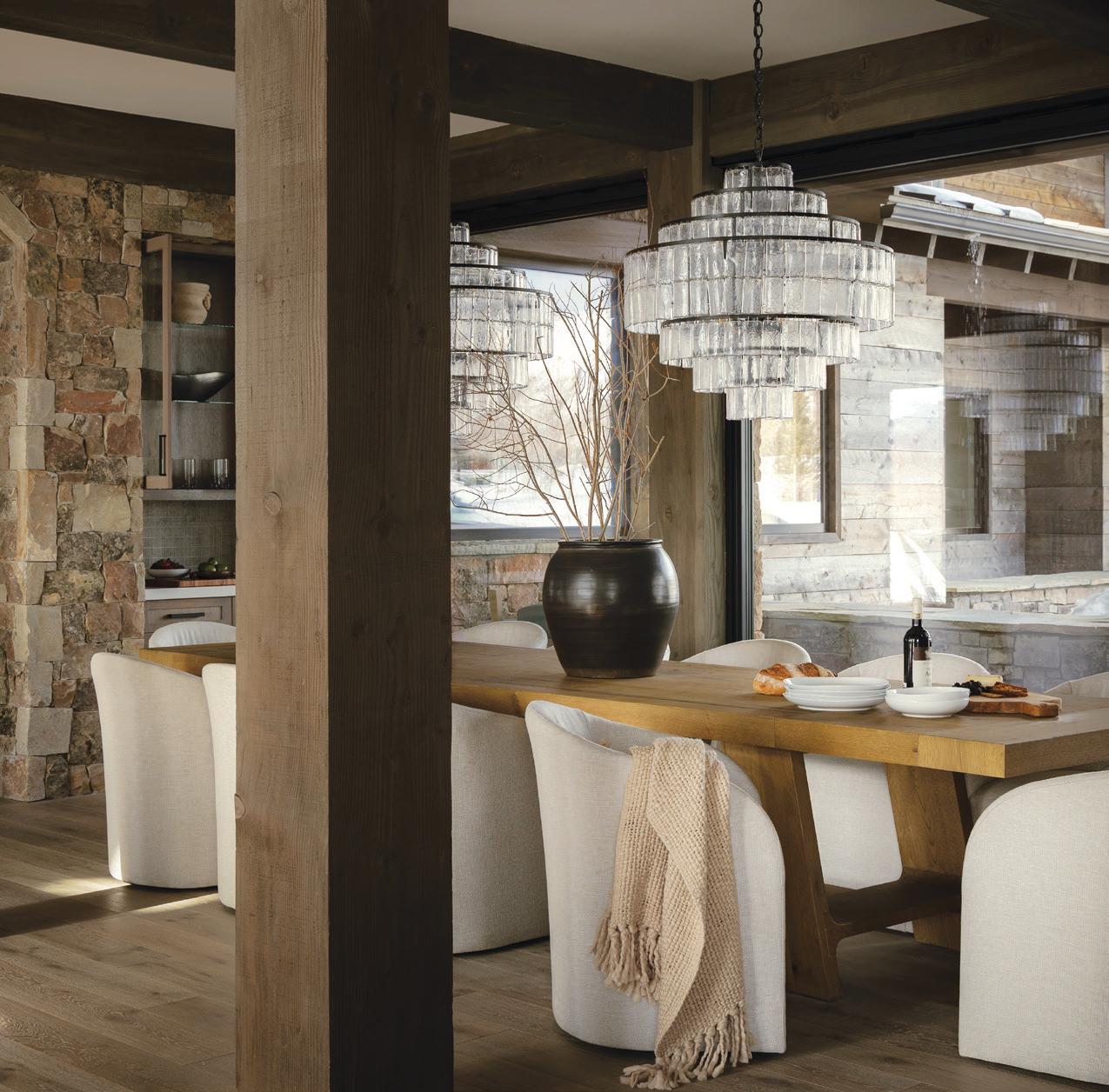
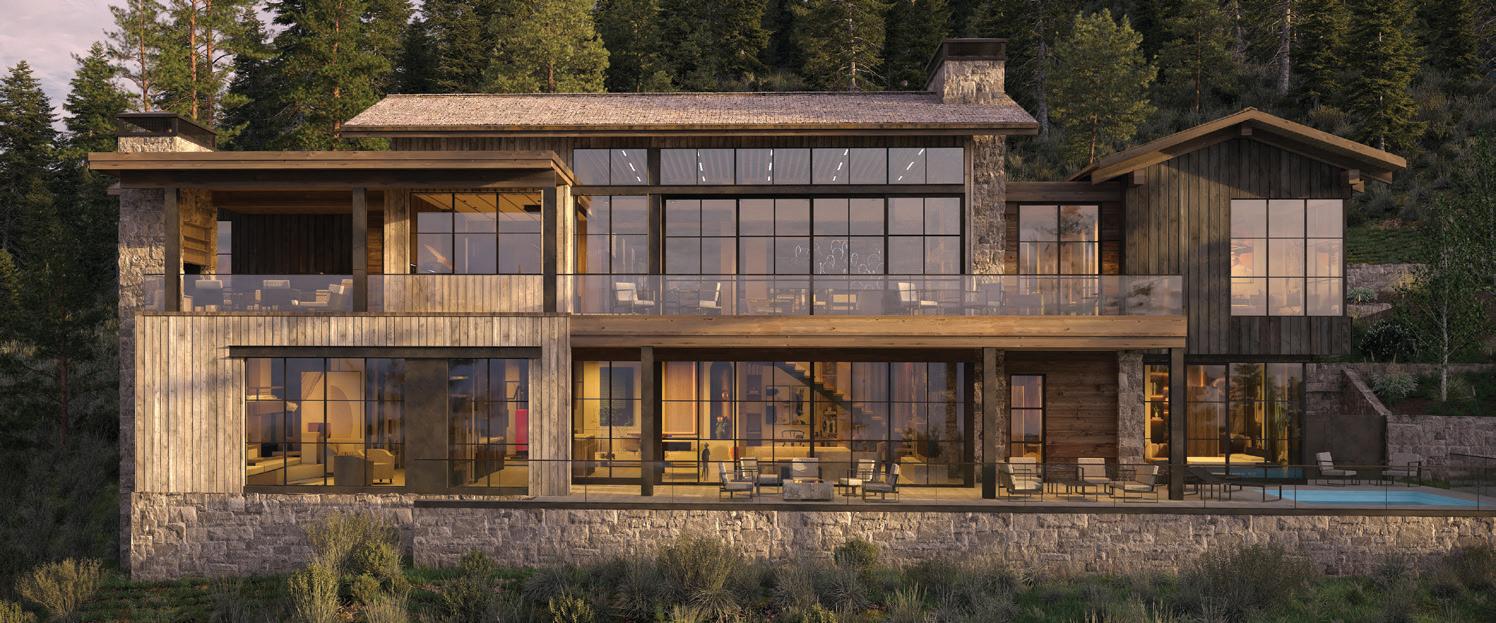
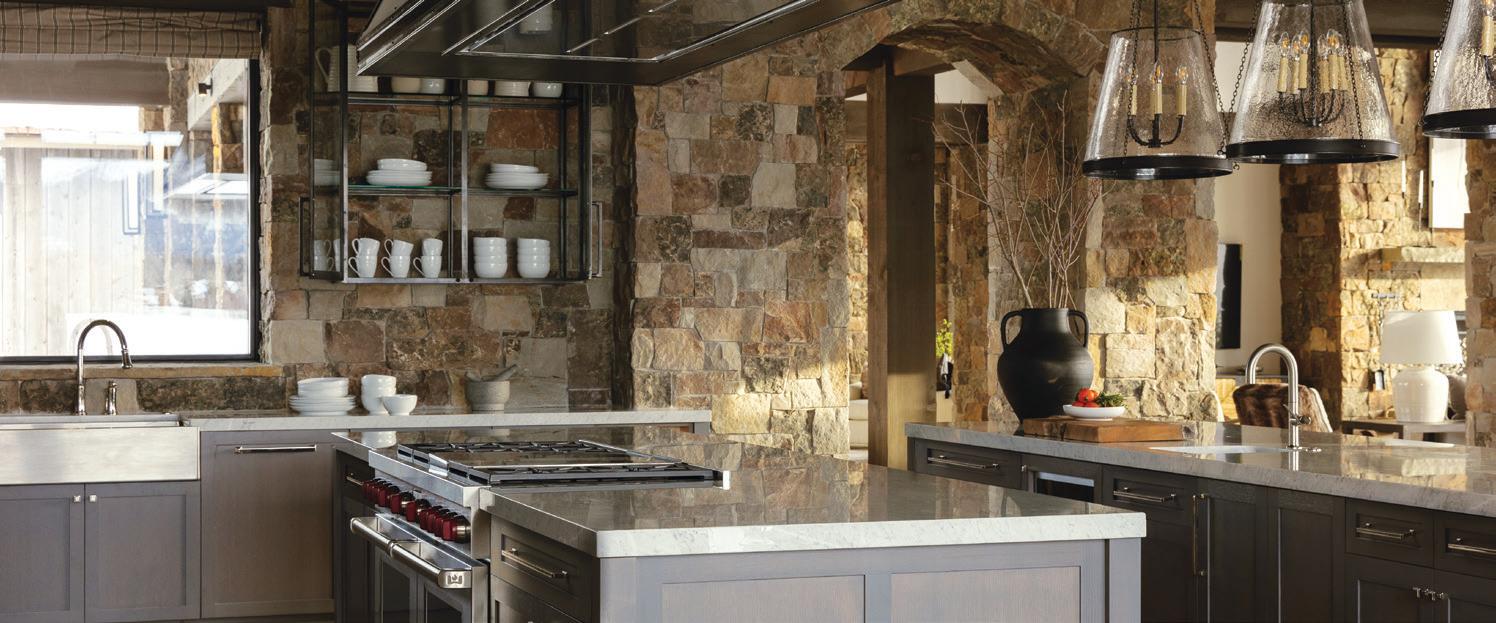
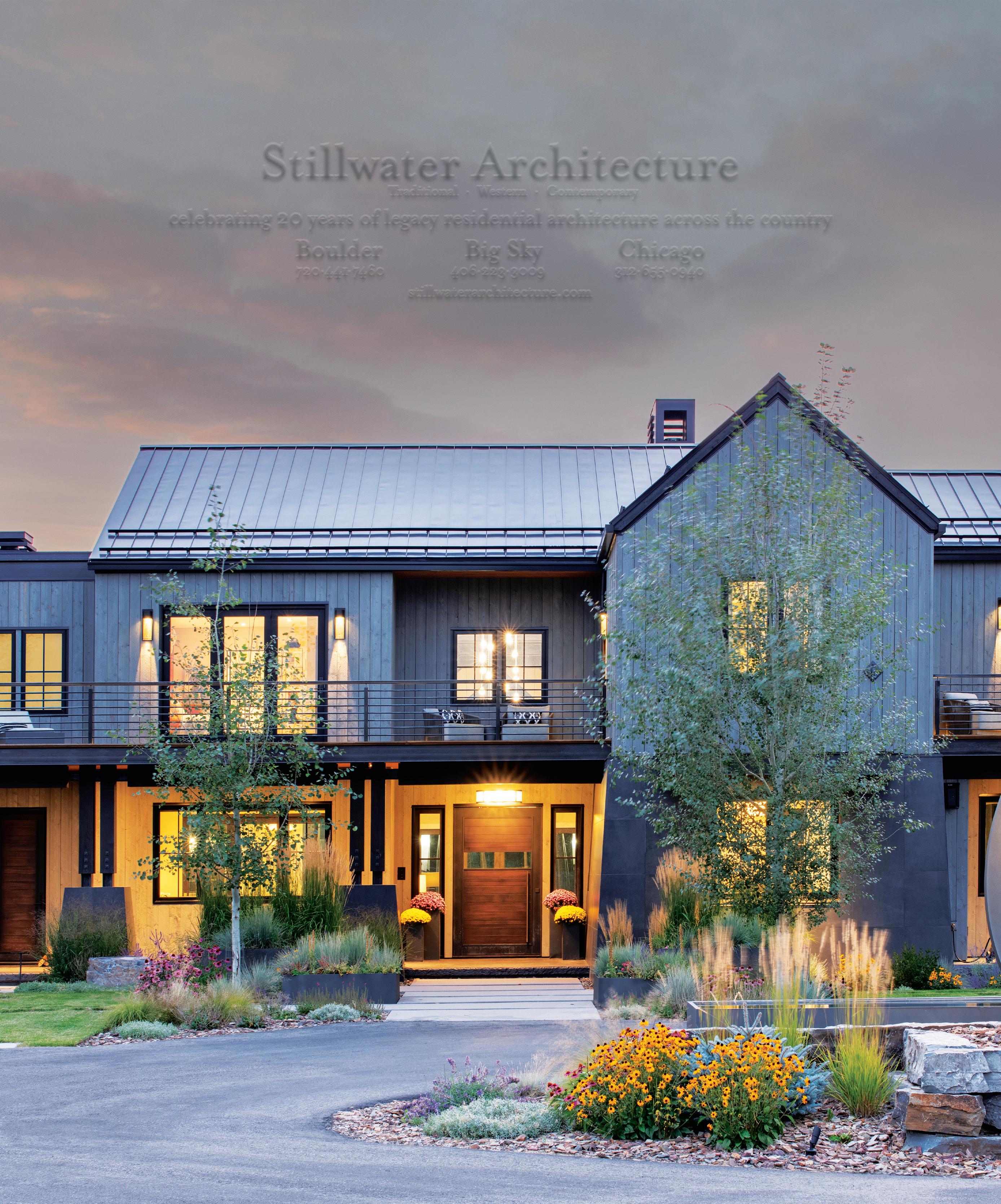
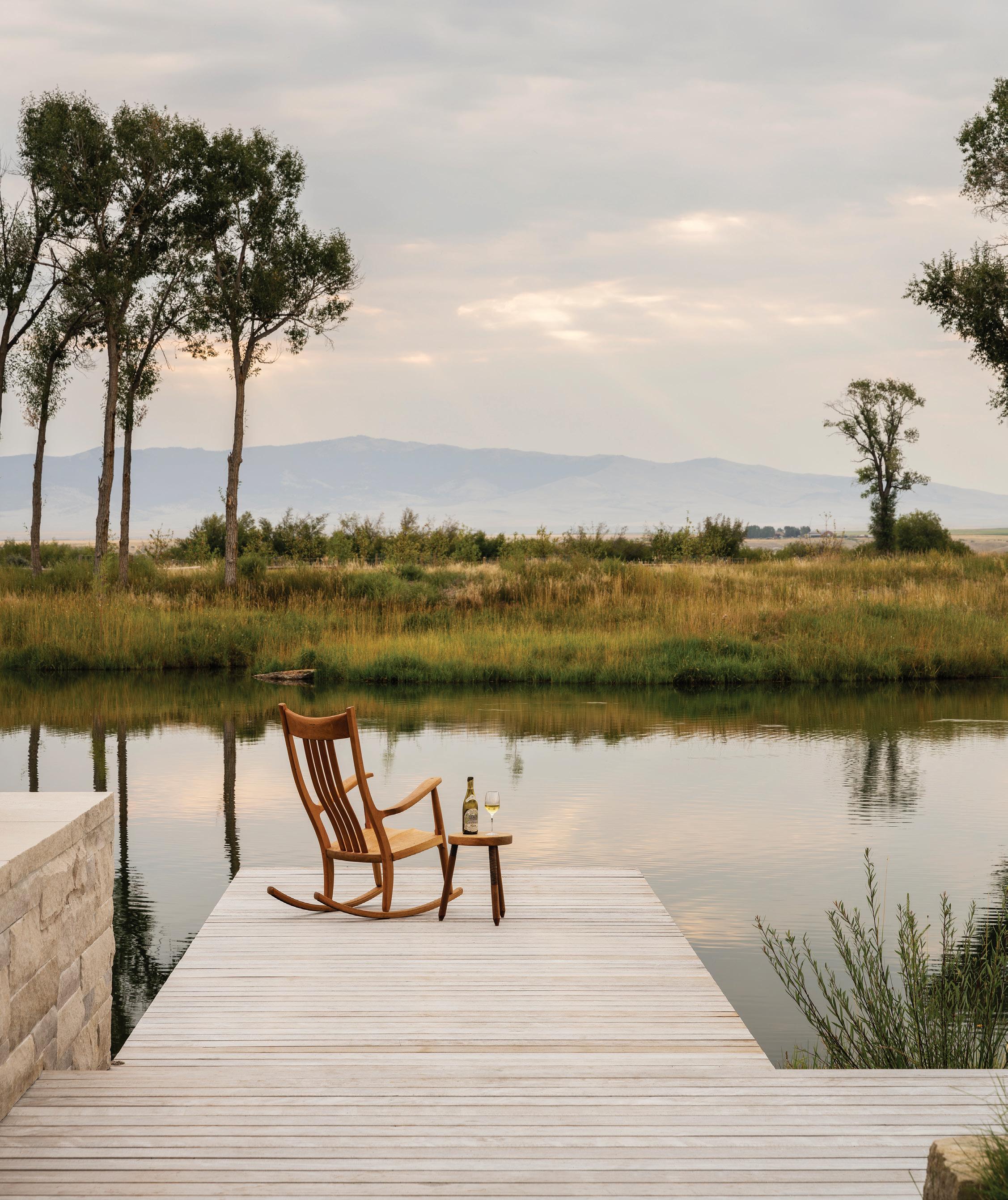
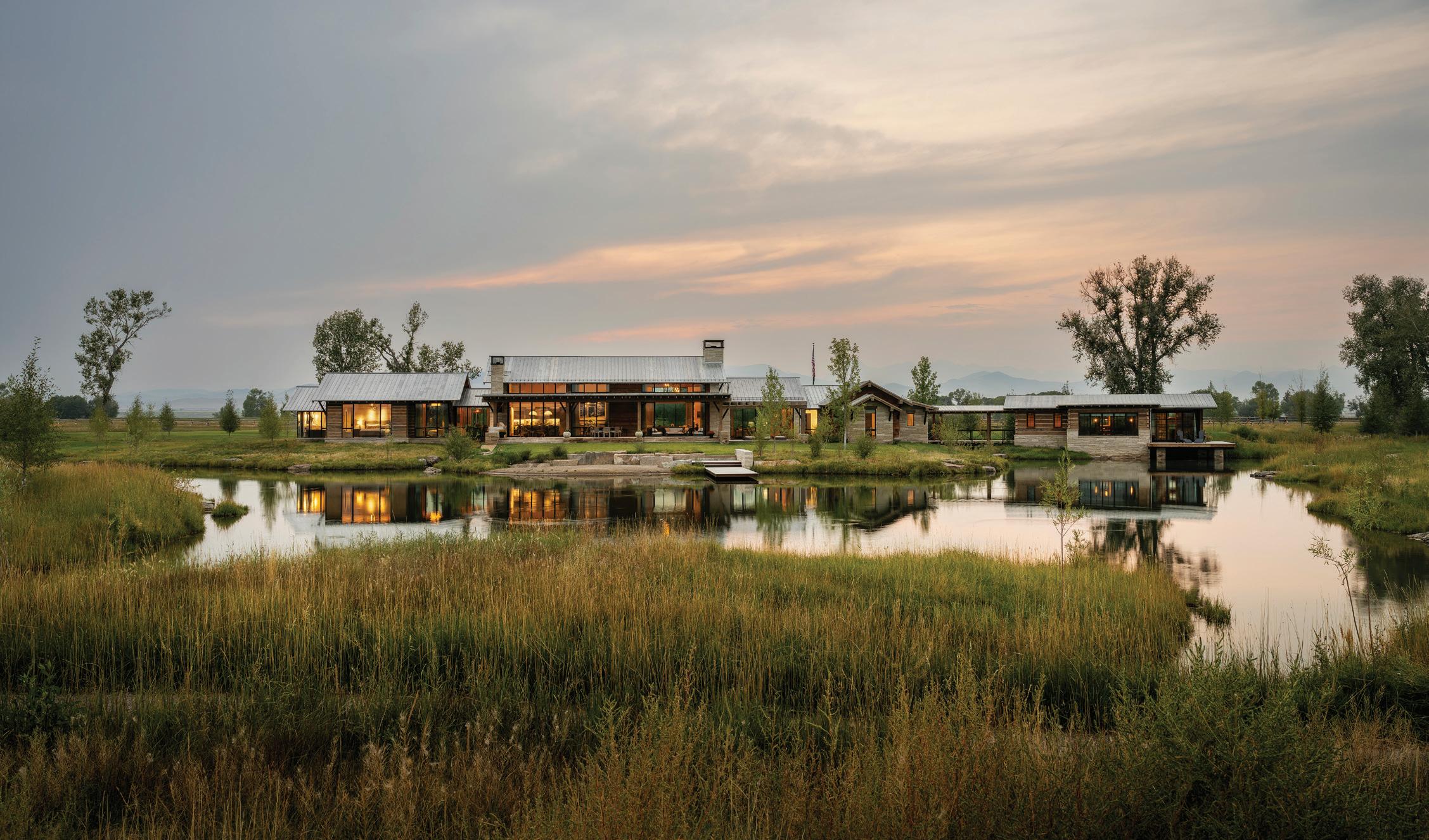
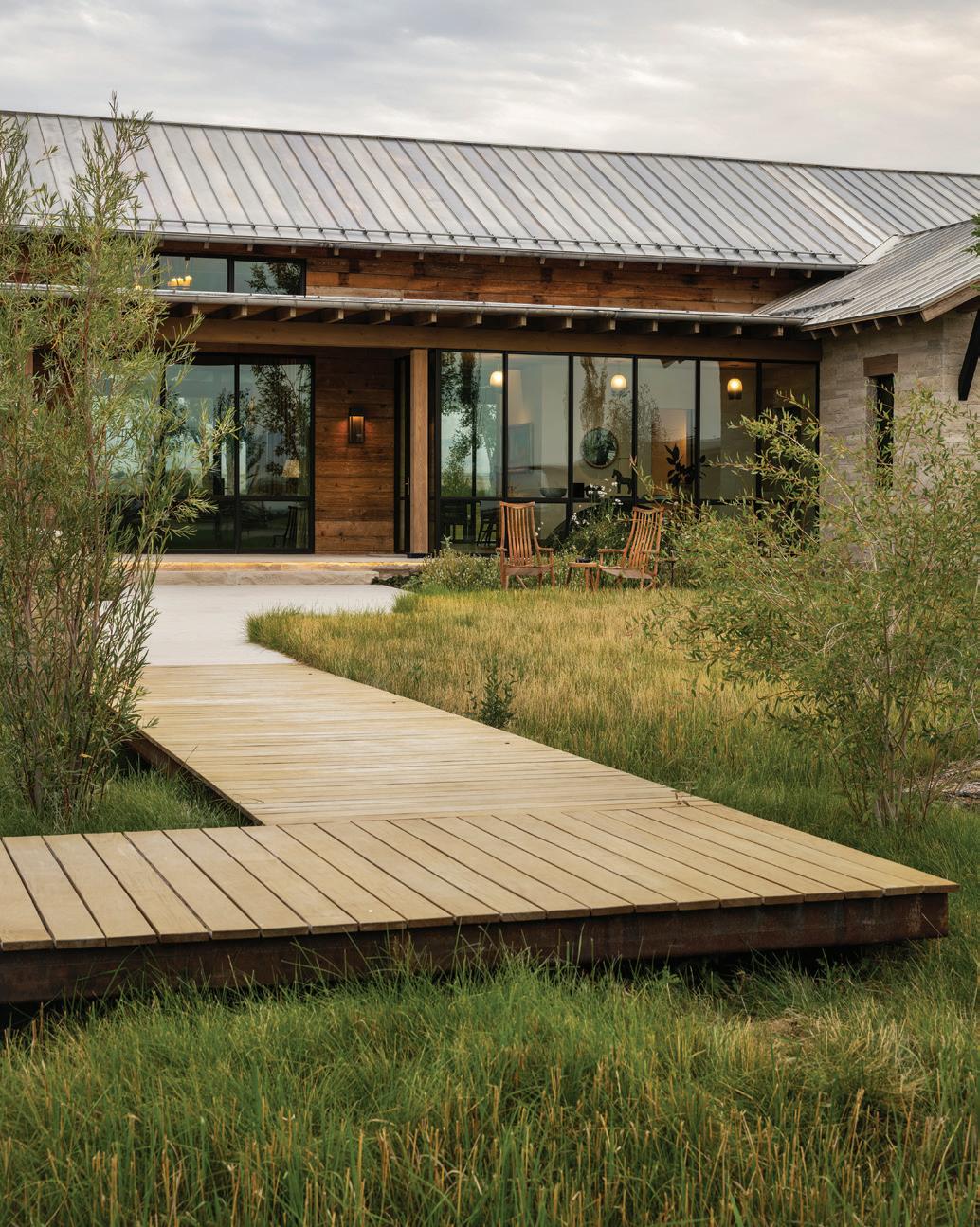
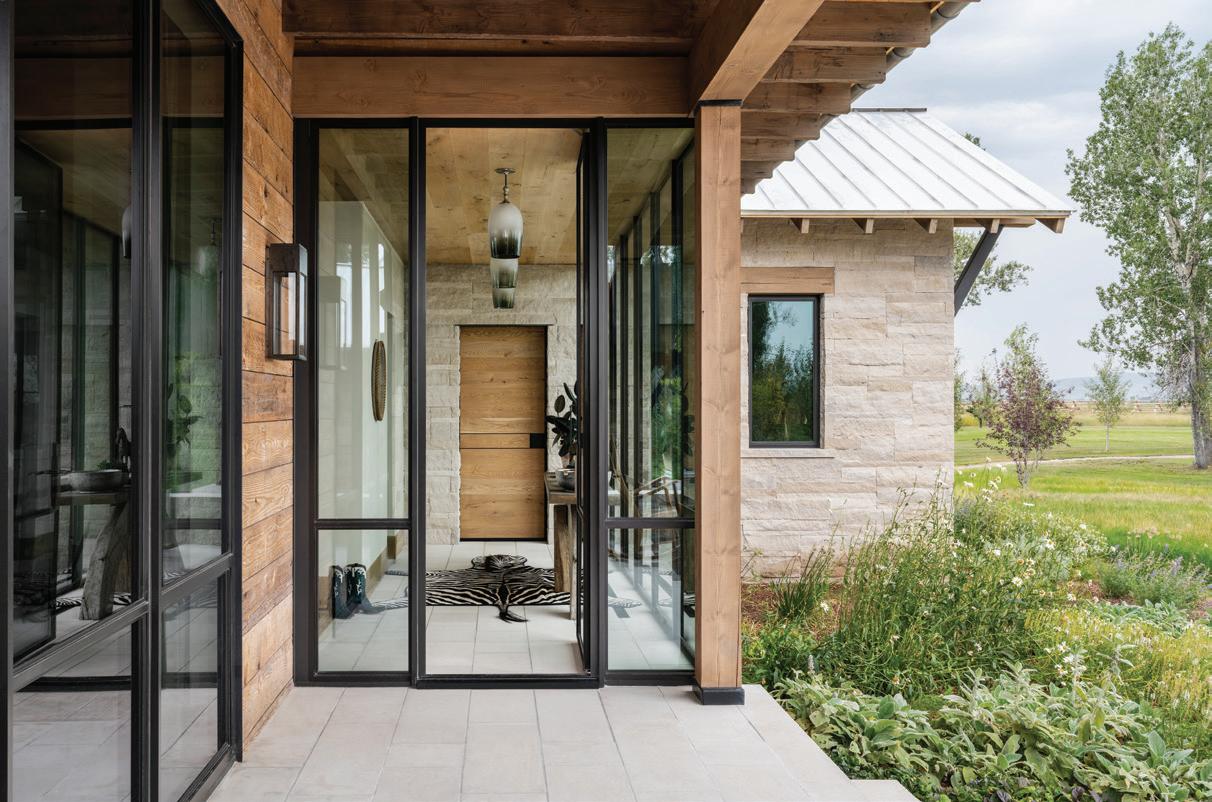
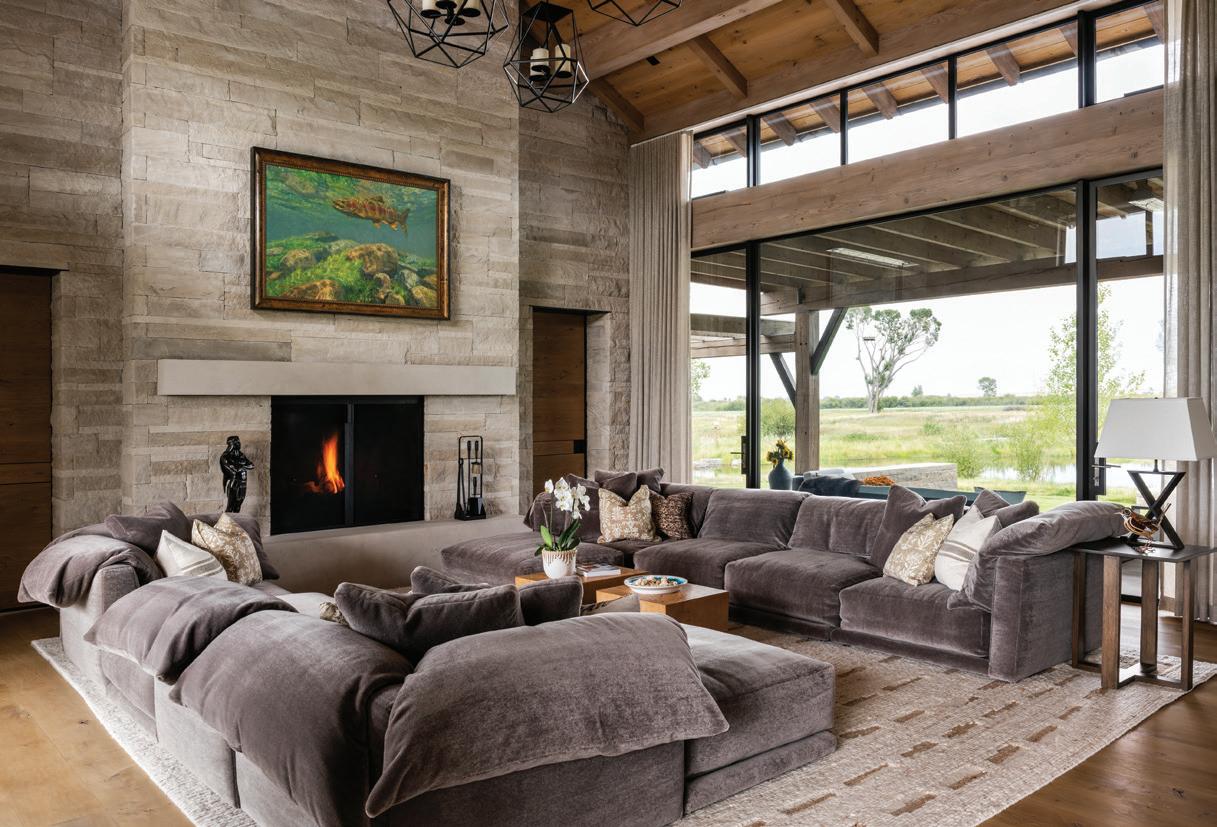
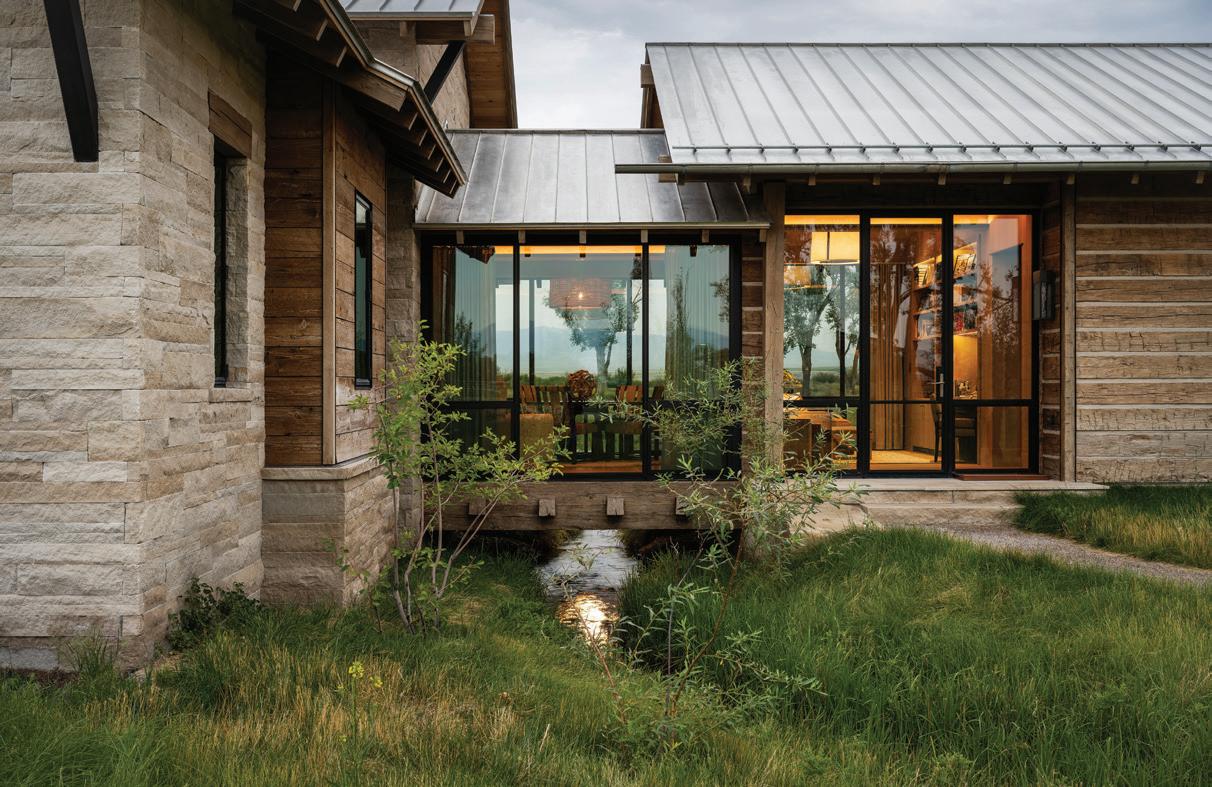
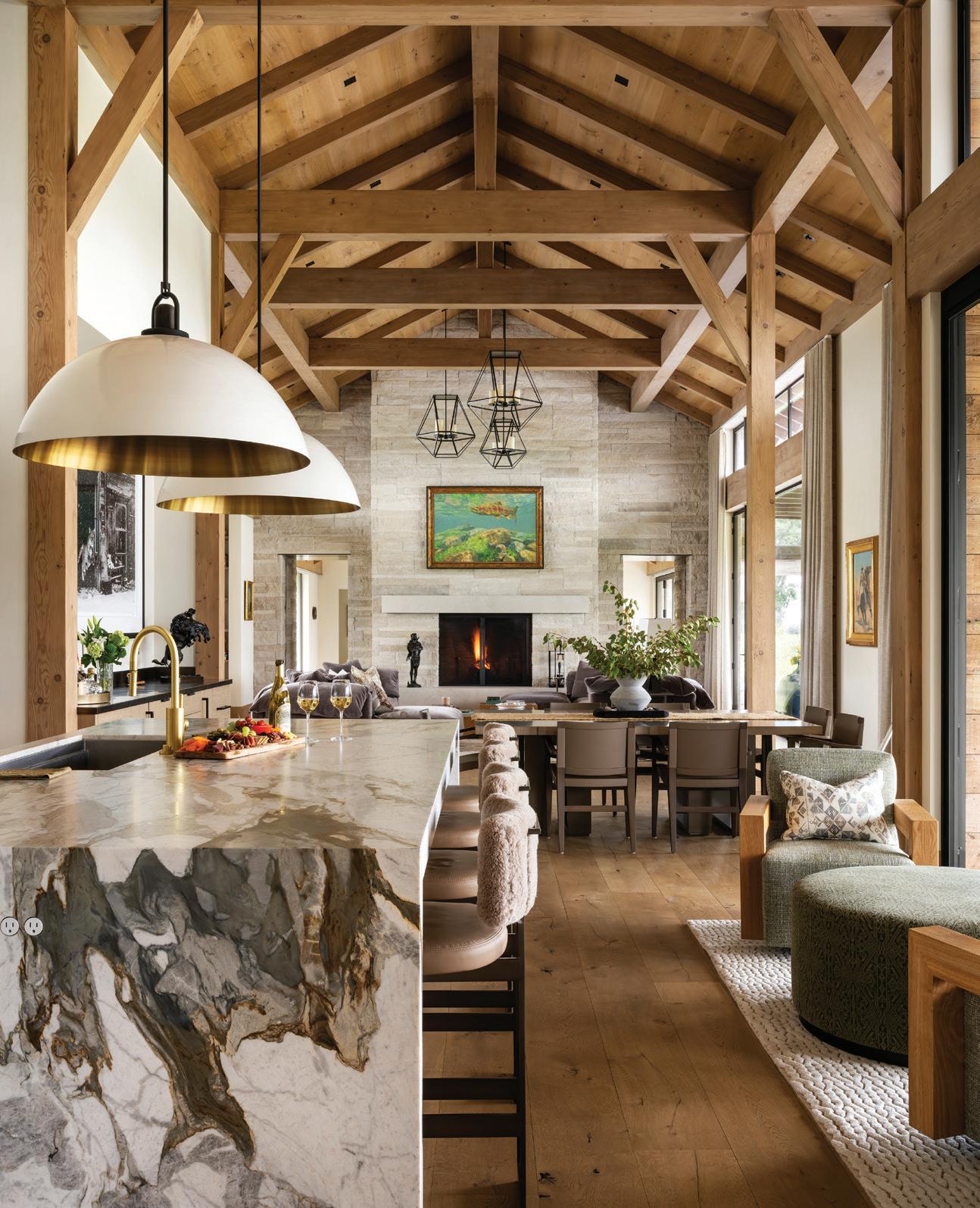
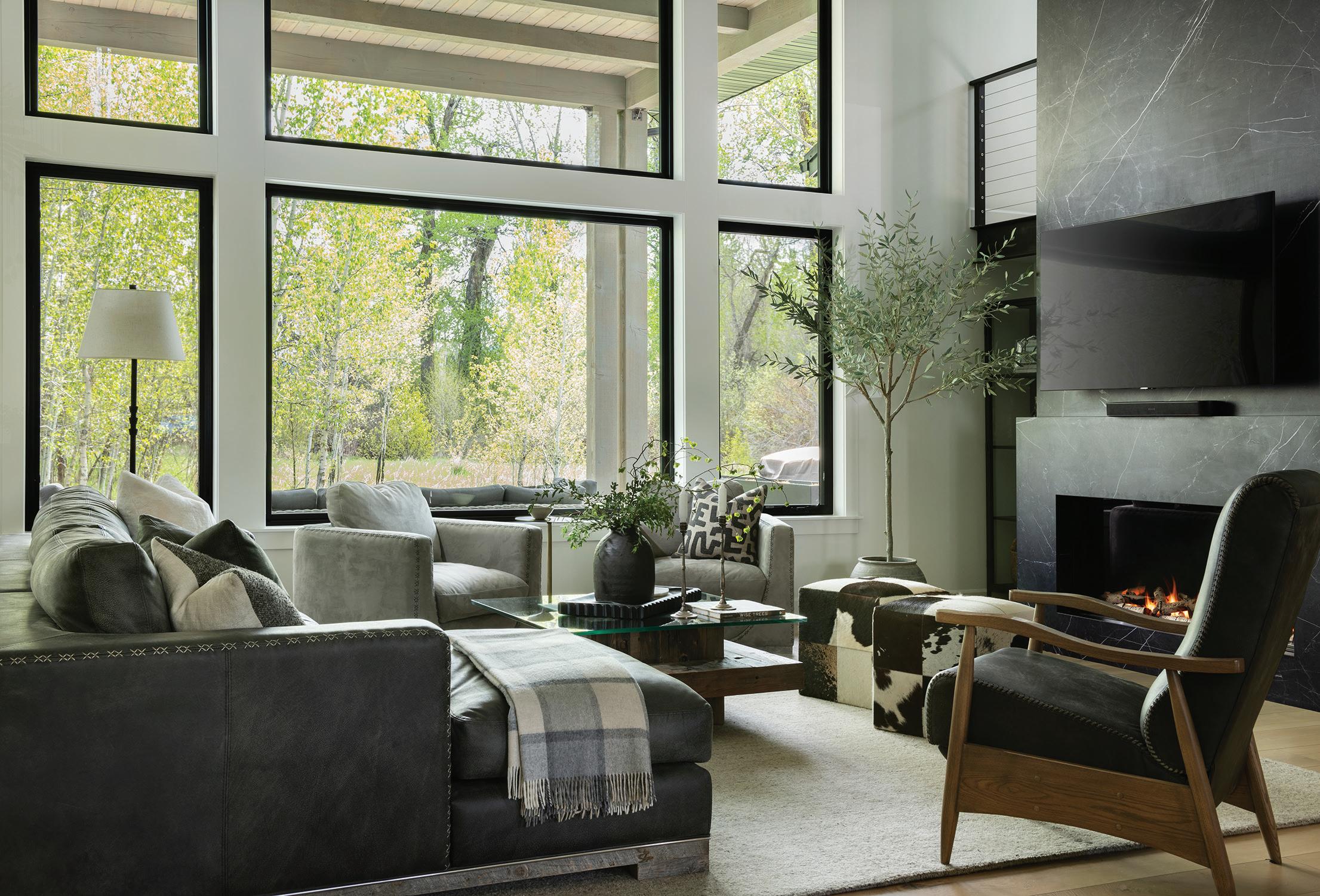
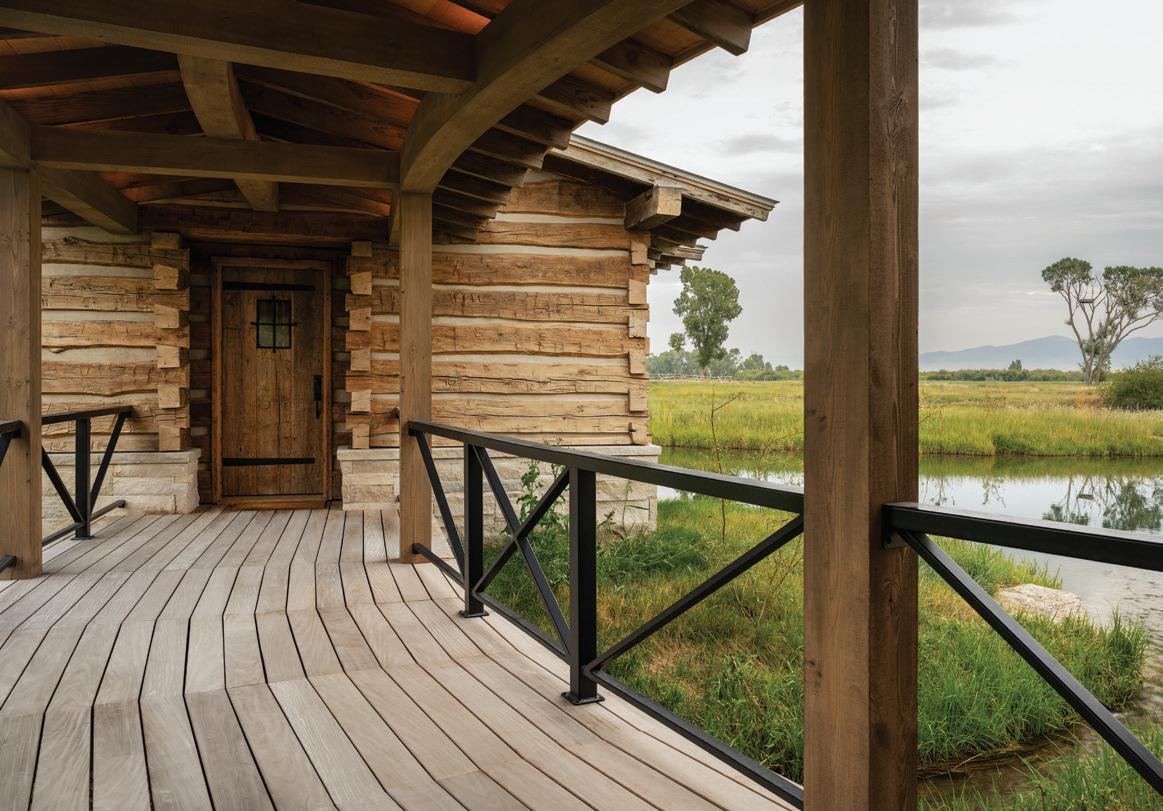
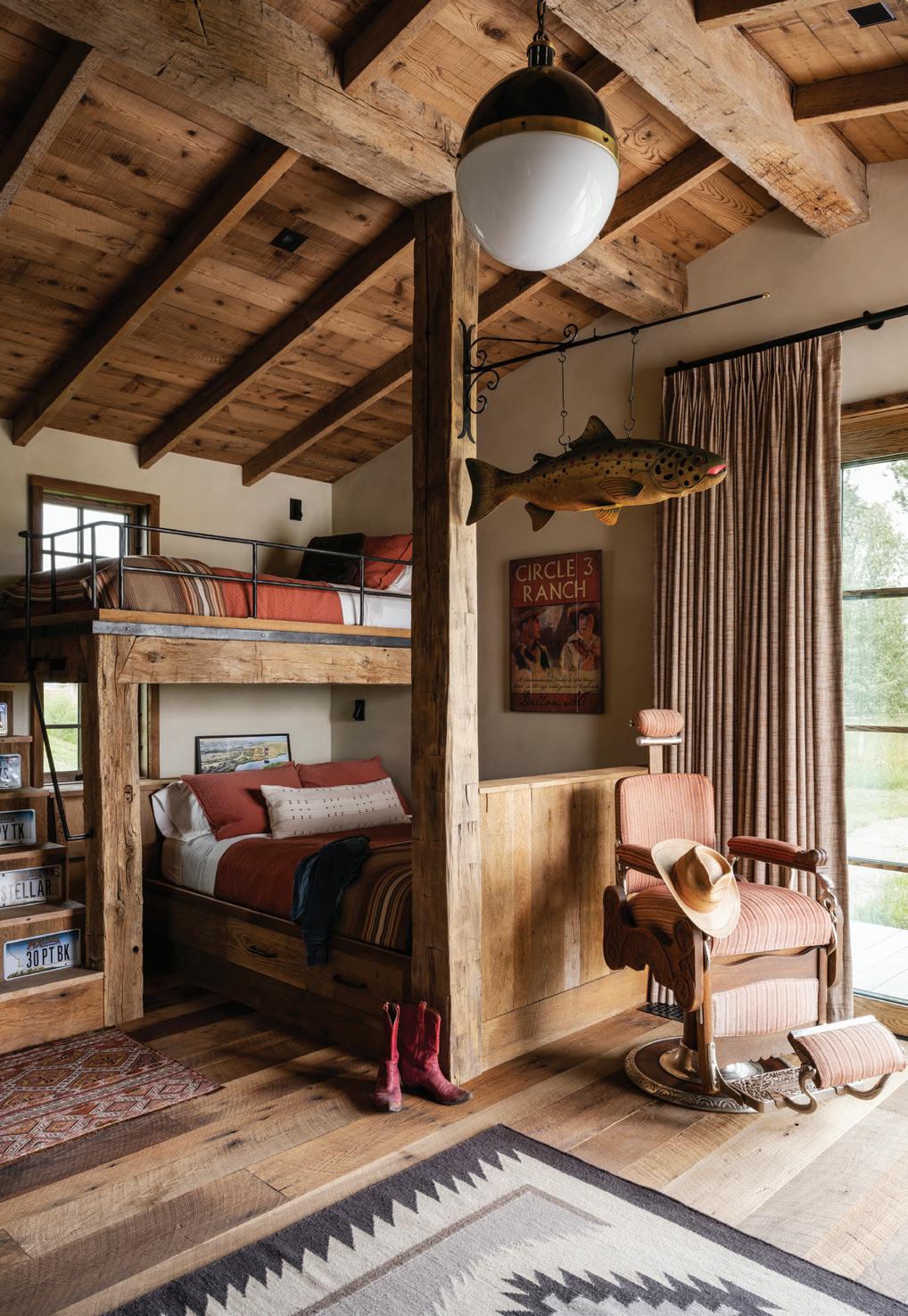
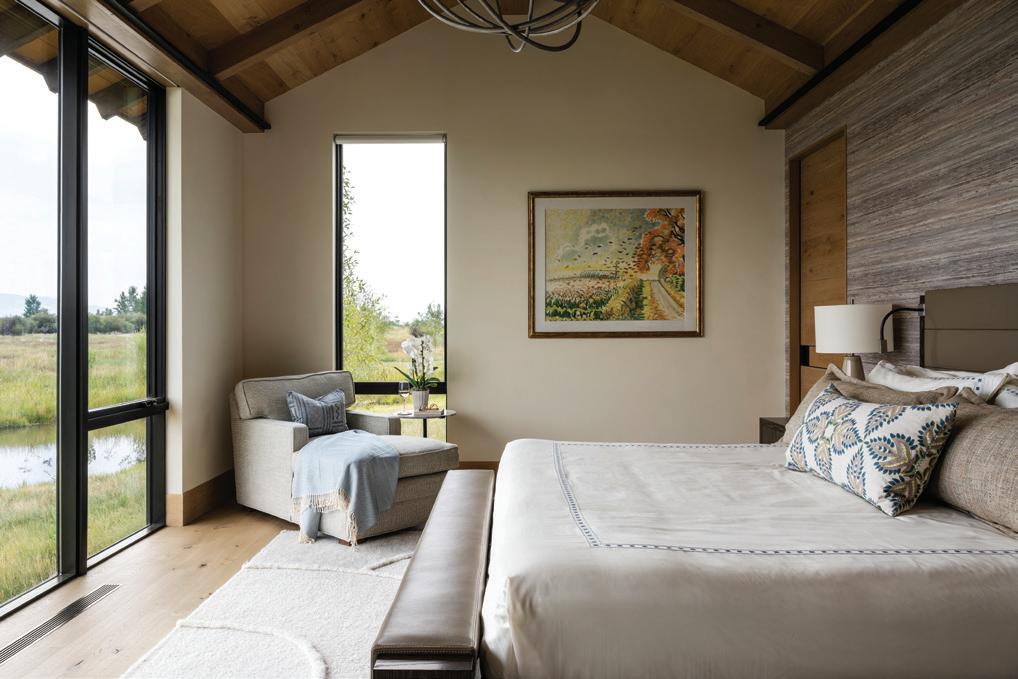
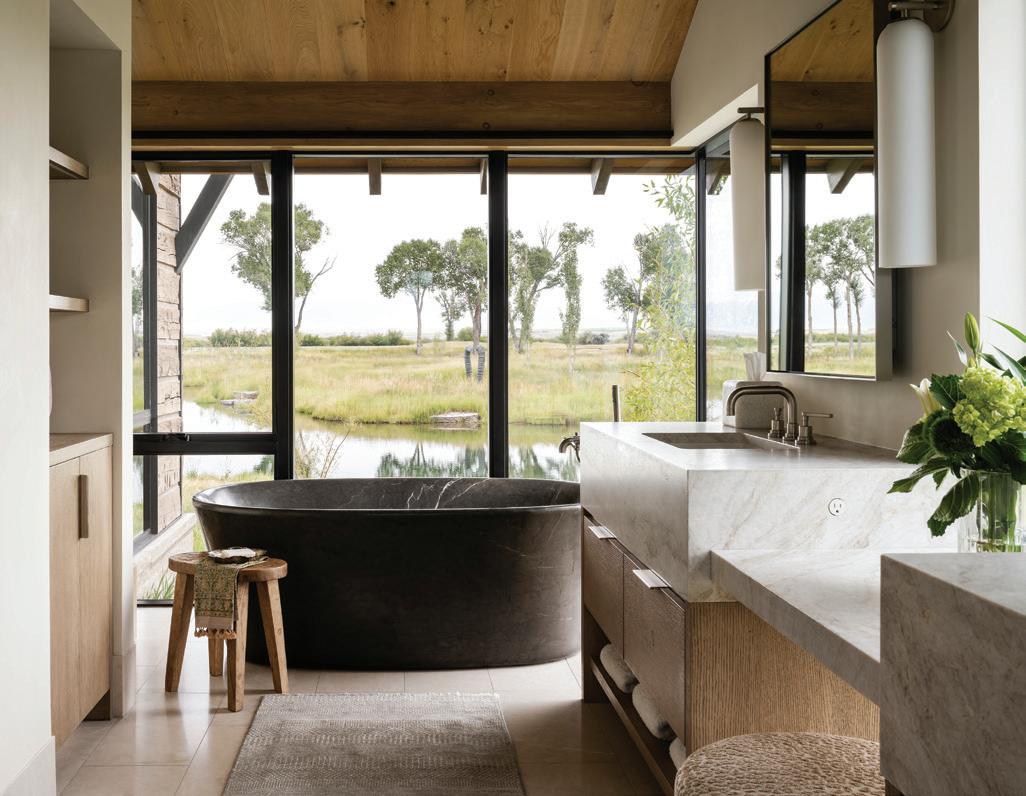
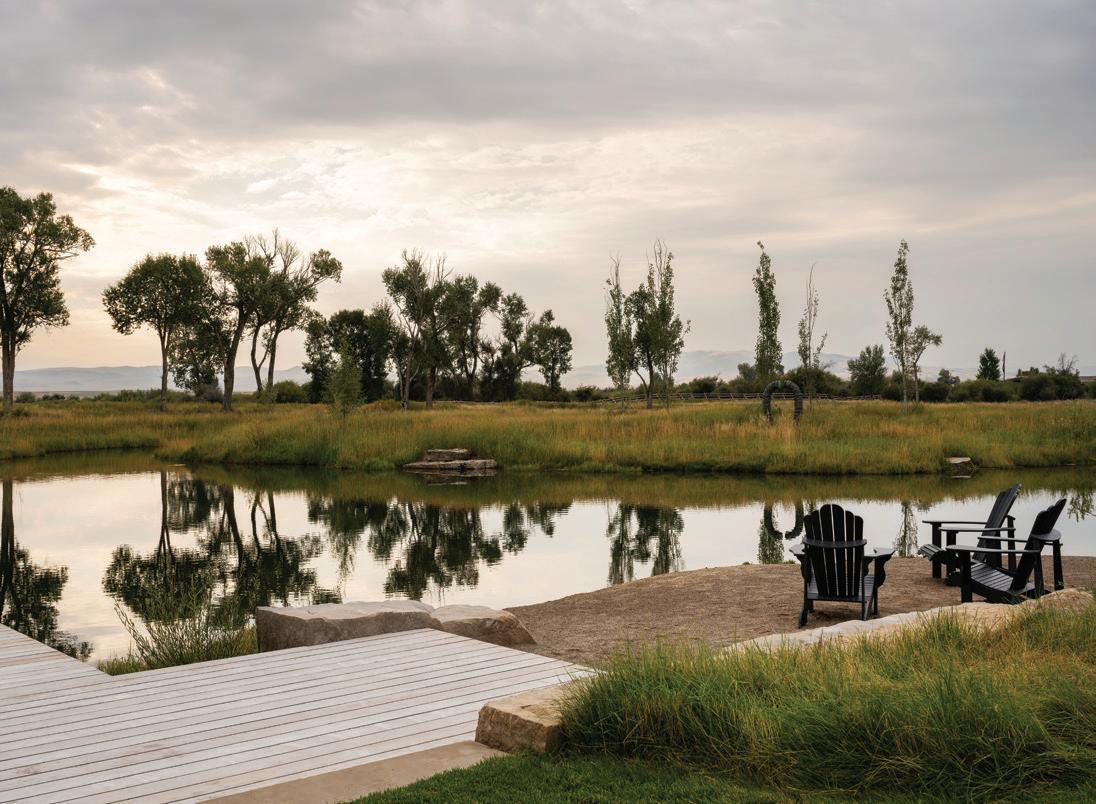
Preserving Wild Places: Conservation drives the design of a Montana legacy home that honors the land
Written by Dana W. Todd
Photography by Lucy Call
92 Outside
Fiction: Bear Claws
Written by Michael J. Ober
Illustrations by Jason King
Written by David Masello
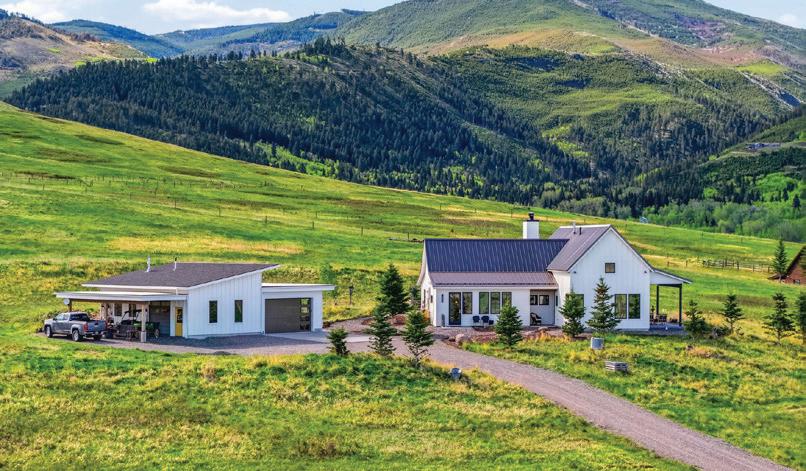
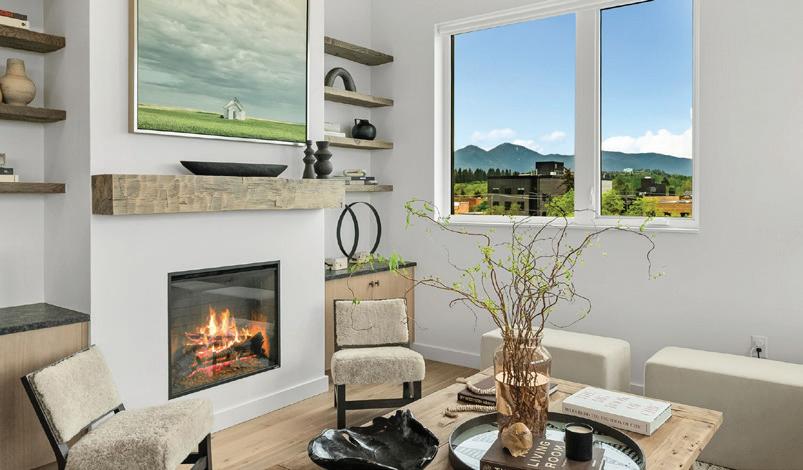
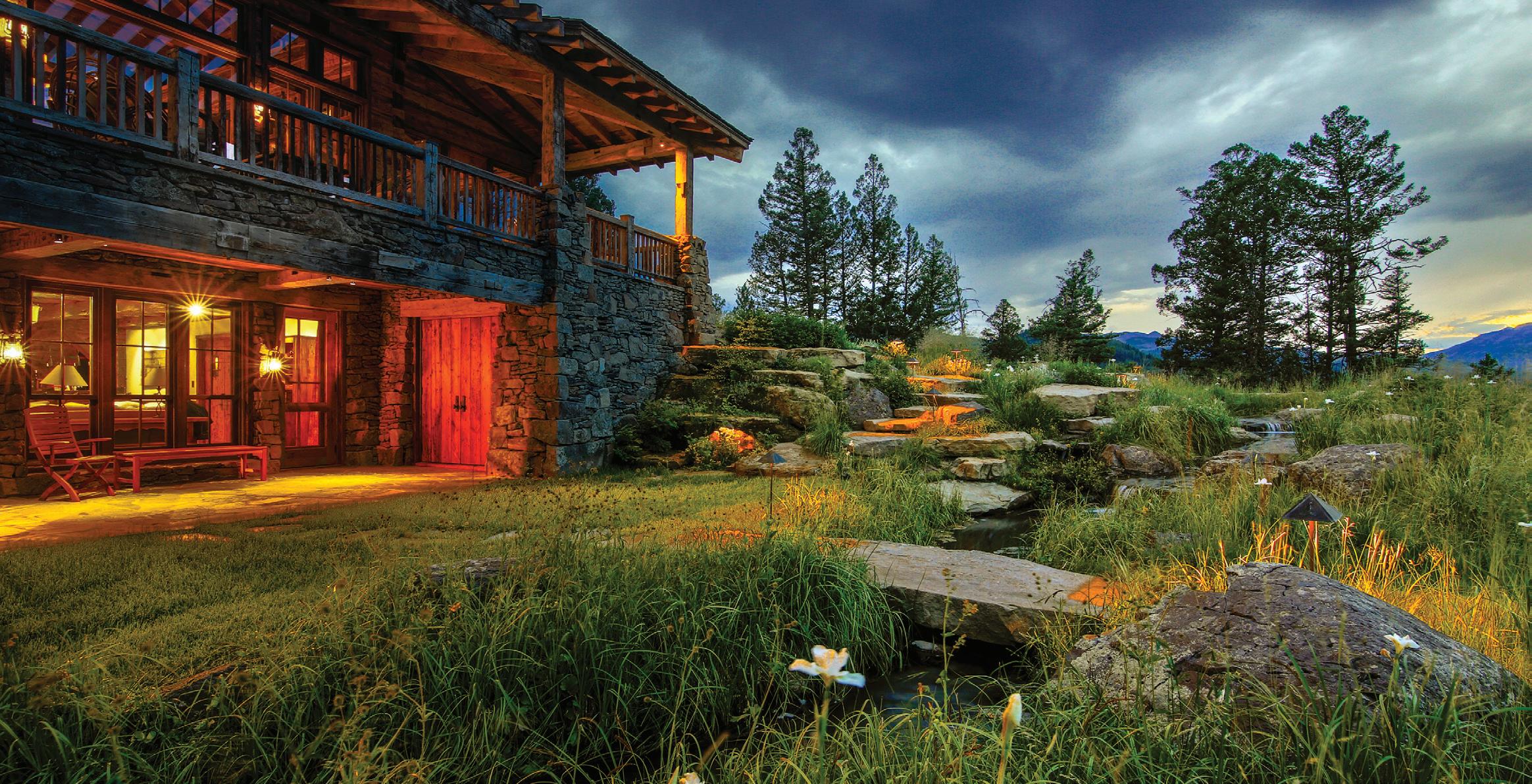
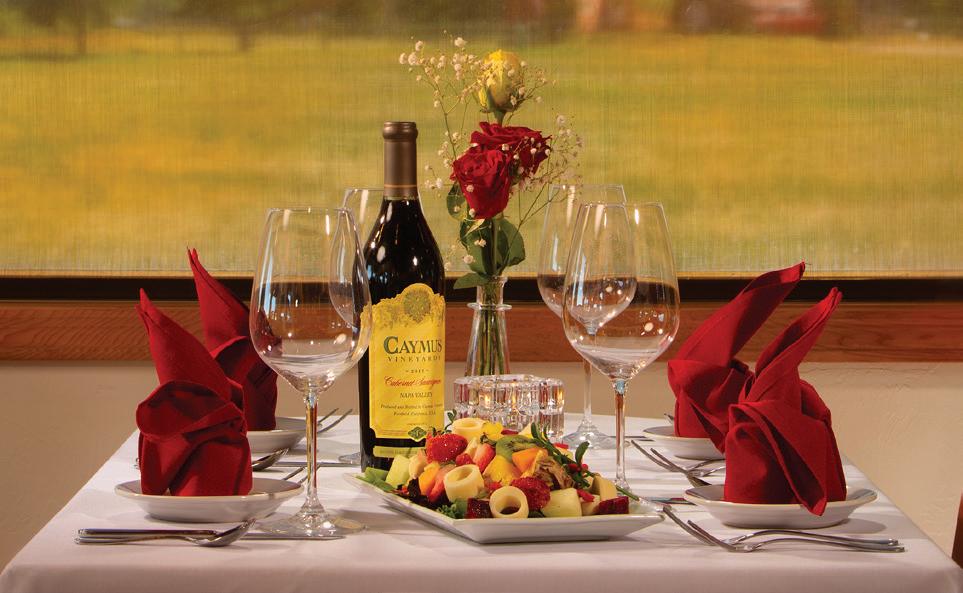
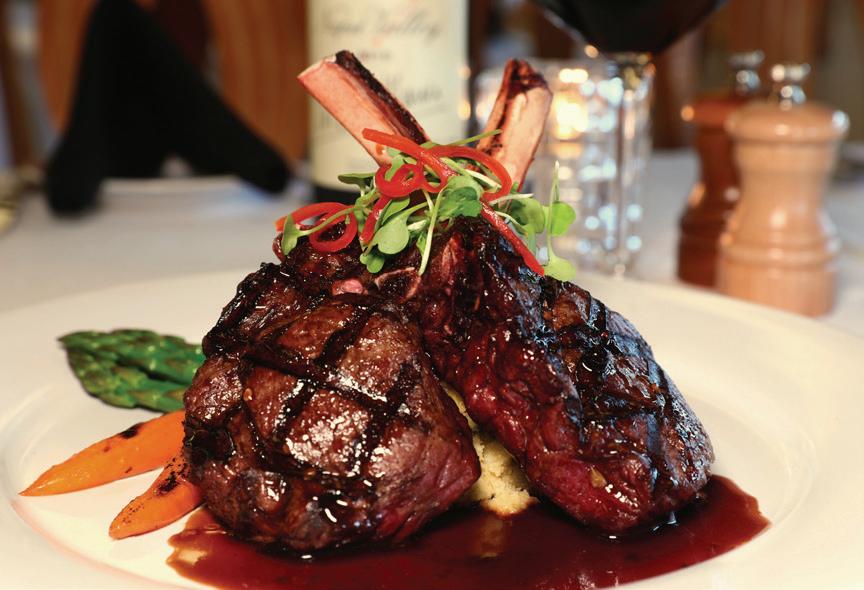
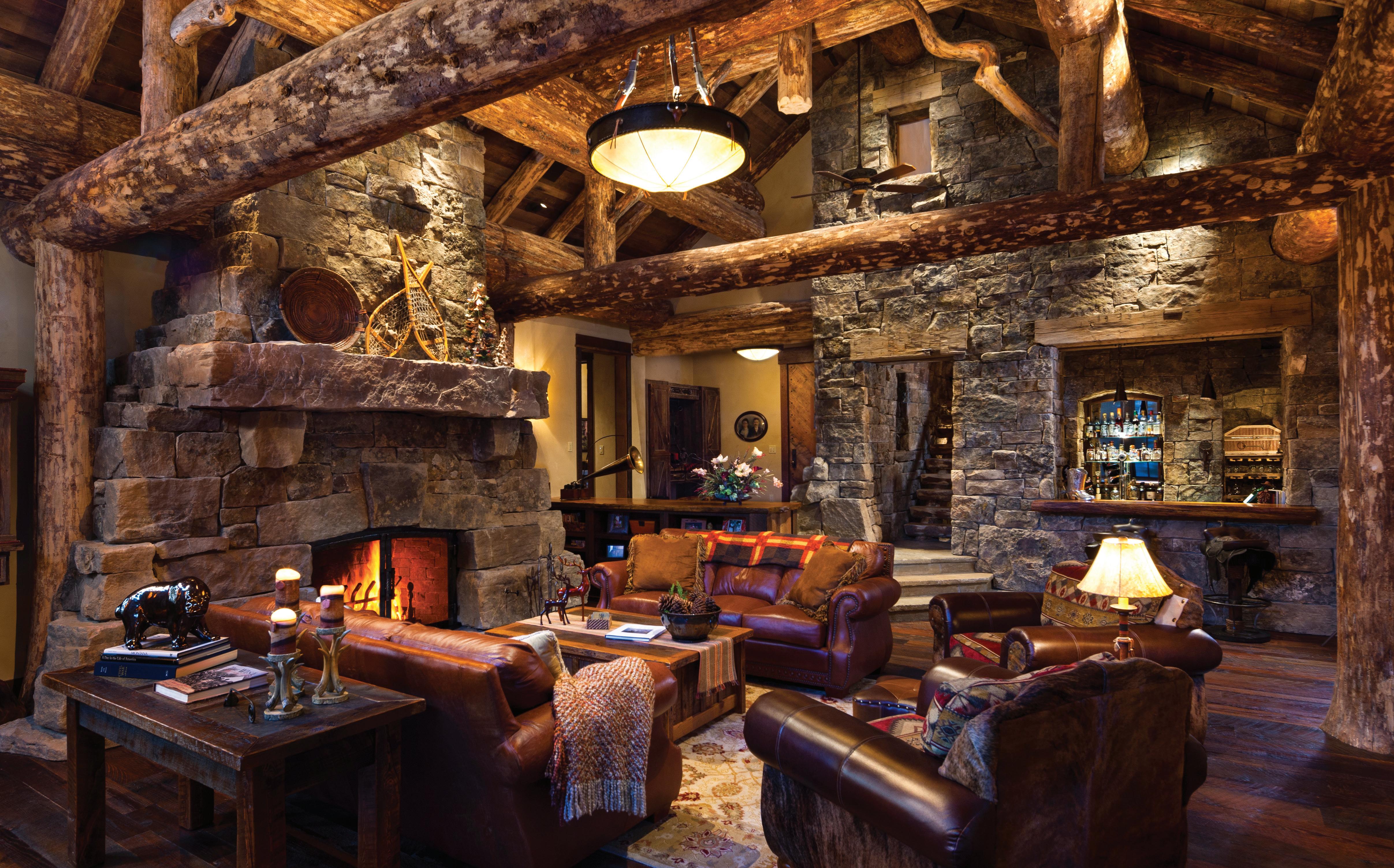
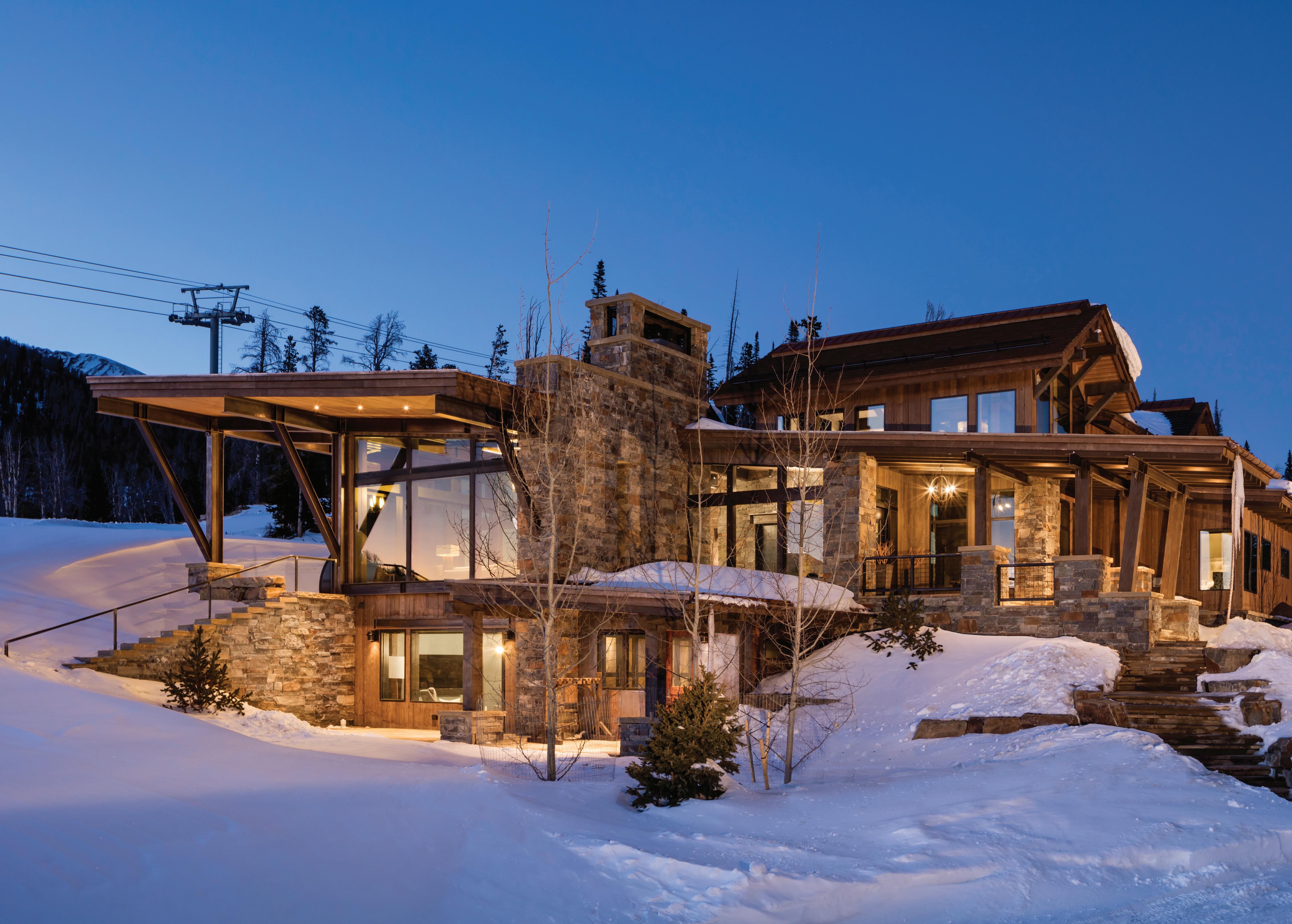
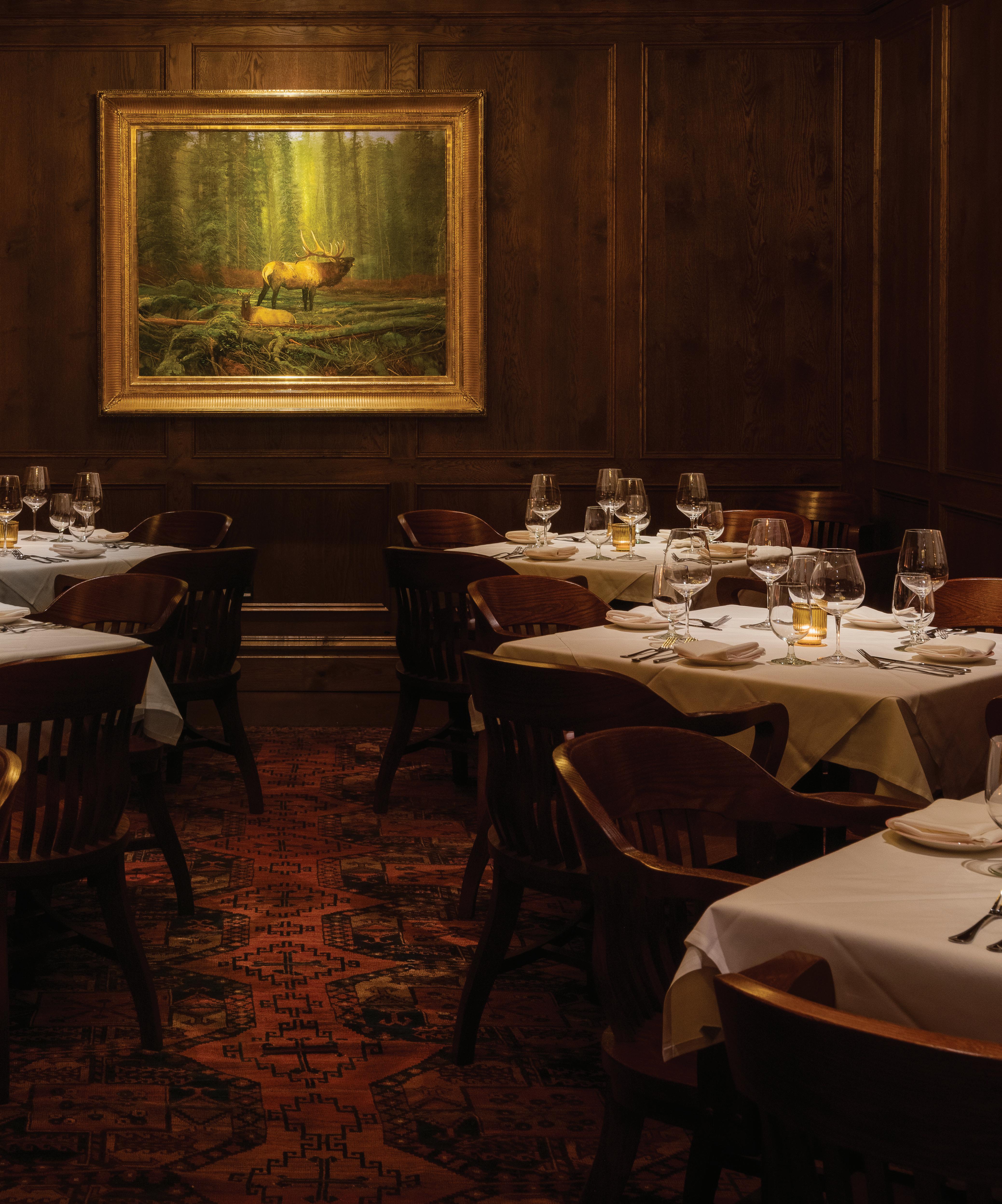
FROM TOP: From “Dining Out,” photo by Aaron Agosto; from “History,” Sitting Bull’s Camp, Big Horn Mountains artwork by Henry Cross; from “Western Design,” photo by Lucy Call.
Volume XXXIII, Number 4
Jessianne Castle editor-in-chief
Jeanine Miller art director
Elaine Leonardi Dixon advertising design
Sylas Wright copy editor
Josh Warren publisher | advertising director
Stephanie Randall advertising
Jared D. Swanson advertising
Owen Raisch operations manager | circulation
field editors
Rick Bass, Marc Beaudin, John Clayton, Michele Corriel, Seabring Davis, Jeff Erickson, Chase Reynolds Ewald, Andrew McKean, Melissa Mylchreest, E. Donnall Thomas Jr., Carter Walker
field photographers
Lynn Donaldson, Gibeon Photography, Audrey Hall, John Juracek, Whitney Kamman, Heidi A. Long, Melanie Maganias, Jeff Moore, Karl Neumann, Janie Osborne, Ryan Turner
artists / illustrators
Jesse Greenwood, Carol Ann Morris, Bob White BIG SKY JOURNAL, LLC
Jared D. Swanson CEO
Our passion is helping travelers discover new adventures.
As Big Sky’s largest locally owned vacation rental company, we help thousands of travelers every year experience big-time adventure with a small-town touch. Featuring a wide selection of high-end properties and the most personalized service in the area, we ensure each guest experience is free of hassle and full of memories. Give us a call or visit our website today and discover a better way to vacation.
406-995-2299
info@twopines.com
twopines.com
EDITOR | JESSIANNE CASTLE
Leaning In
LIFE’S SPLENDOR IS a ll around, from the luminous quality of light during a Rocky Mountain sunset, to the magnificent stance of a grizzly bear lumbering along a hillside, to the transcending moment of triumph when a wild trout hooks onto a fly. These are the makings of memories, moments that beckon, inspiration for a body of work that tells the story of the West.
For many artists, the physical act of using ordinary objects to produce a work that speaks to a viewer is a form of intimate expression. It’s a processing of experiences and memories that serves to connect the artist to the subject and the viewer. For painter Kenneth Yarus (page 134), it’s about rendering the landscapes of the region with such
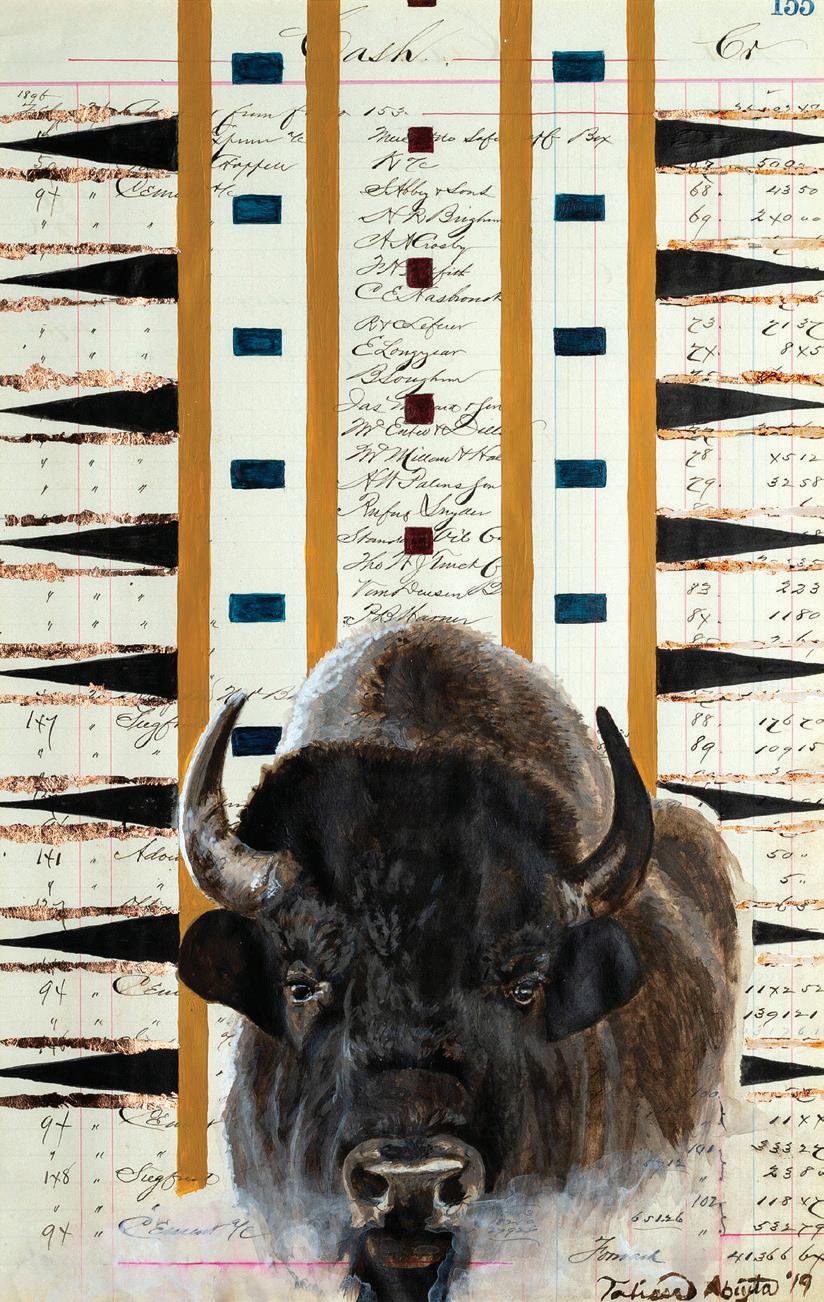
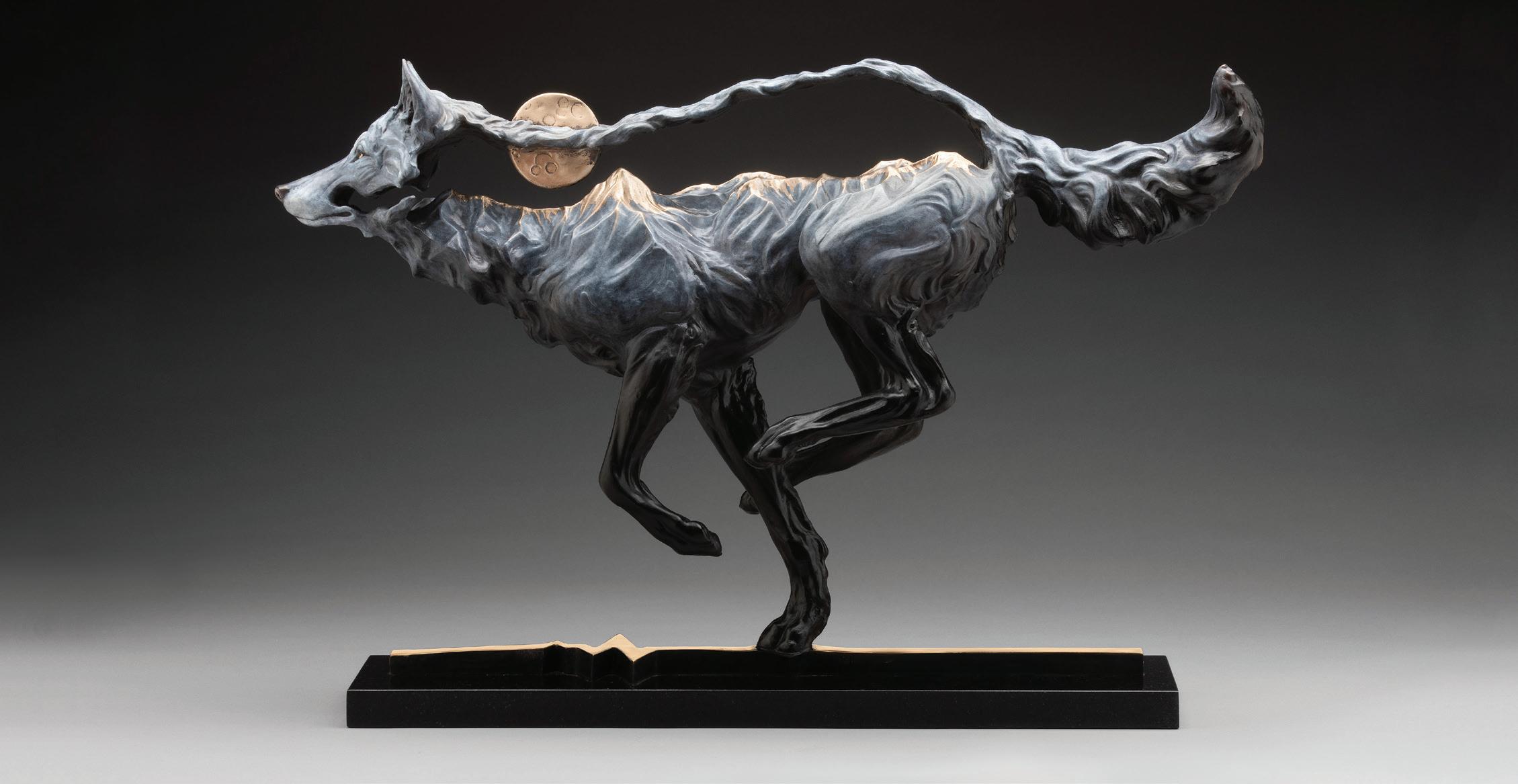
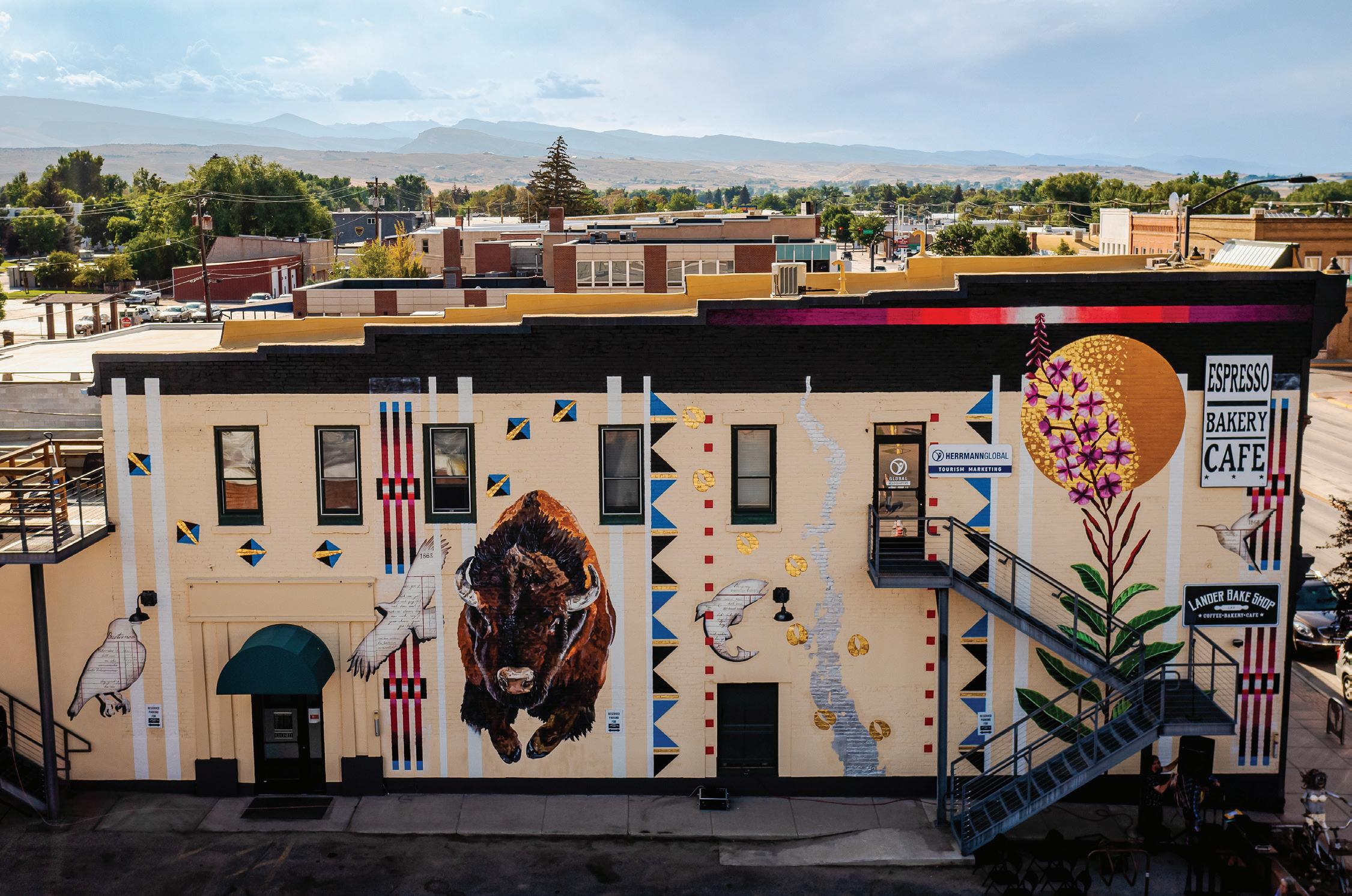
quality that a viewer can feel the experience. For muralist and painter Talissa Abeyta (page 106), it’s a form of discovering her own voice and connecting to her heritage. For sculptor Mike Barlow (page 118), art is a way of appreciating the very identity of an animal. Chef Earl James Reynolds (page 56) engages all the senses in his art form, creating tastes inspired by place.
These are just a few of the many talented artists in our region seeking to create something beautiful as a small contribution to the larger narrative of life in the Rocky Mountains.
Textile artist Meghan Spielman (page 110) enjoys that her preferred medium challenges the boundary between fine art and craft. “[Textiles]
ask the question, When is something defined as art? ” Indeed, what activities transcend the ordinary to produce meaningful results, ones that move people during moments of experience?
Painter Brooke Wetzel (page 126) describes it thus: “Rather than just telling a story or creating a passive experience, I’d rather create an active, resonant one that moves the viewer from observing to feeling. I think a good painting should draw out something intangible.”
Equally so for all art forms: architecture, design, music, you name it. As the viewer leans into the experience, the creator leans in too. The result is catharsis.
Treasures of Montana
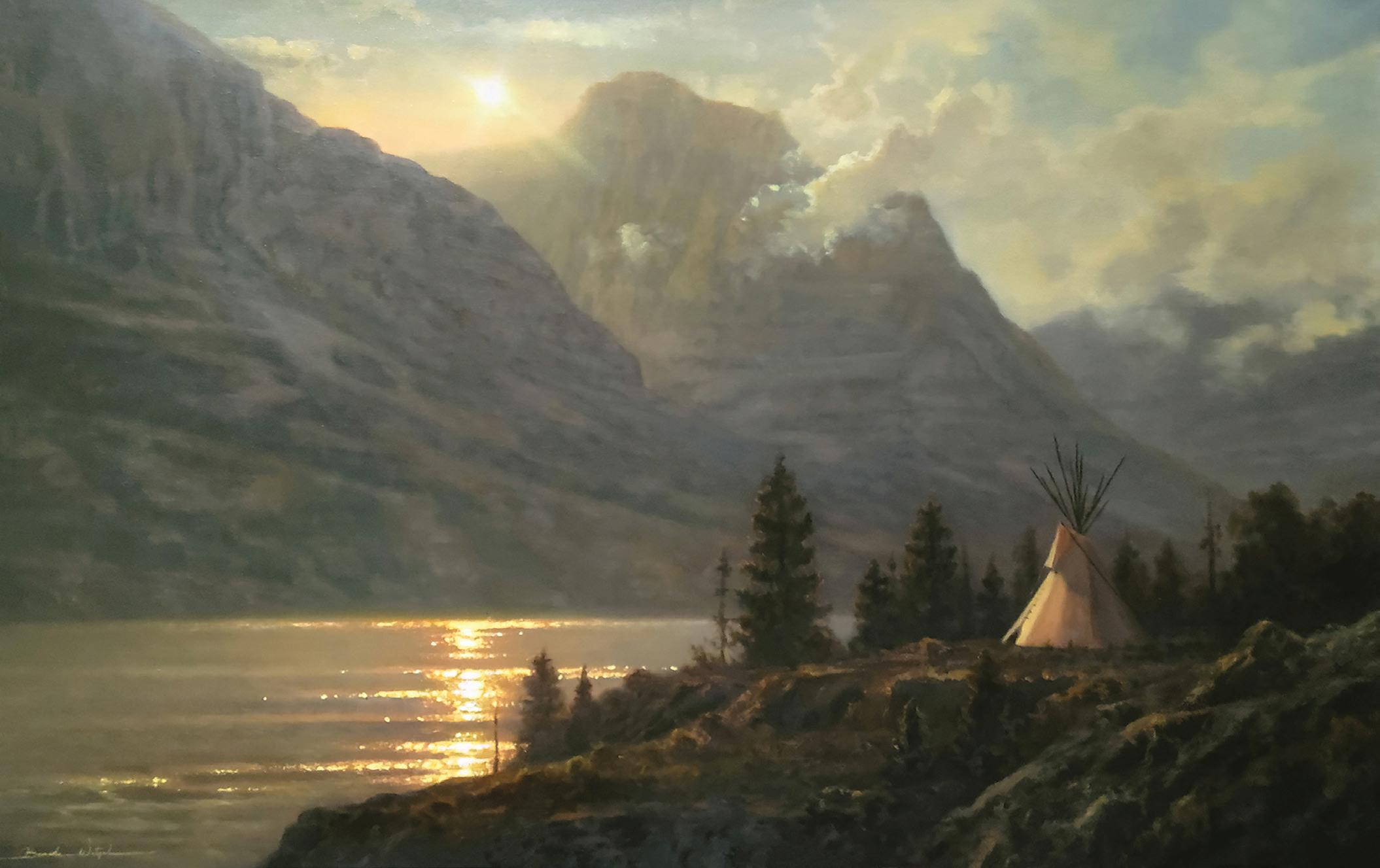
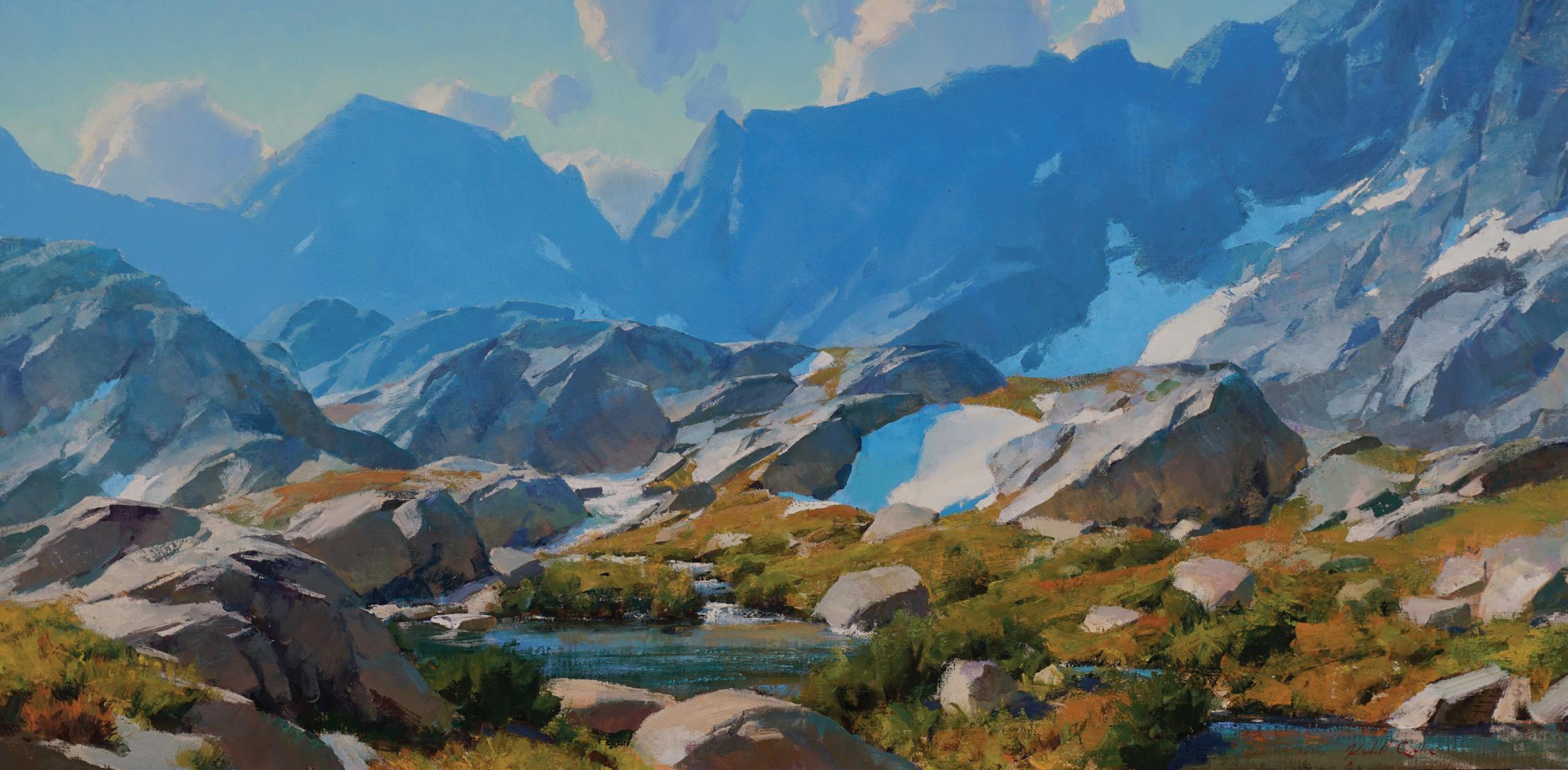
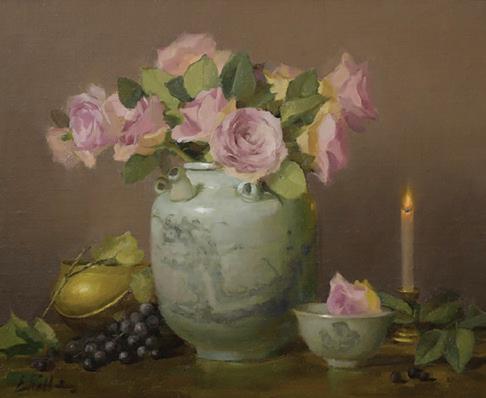
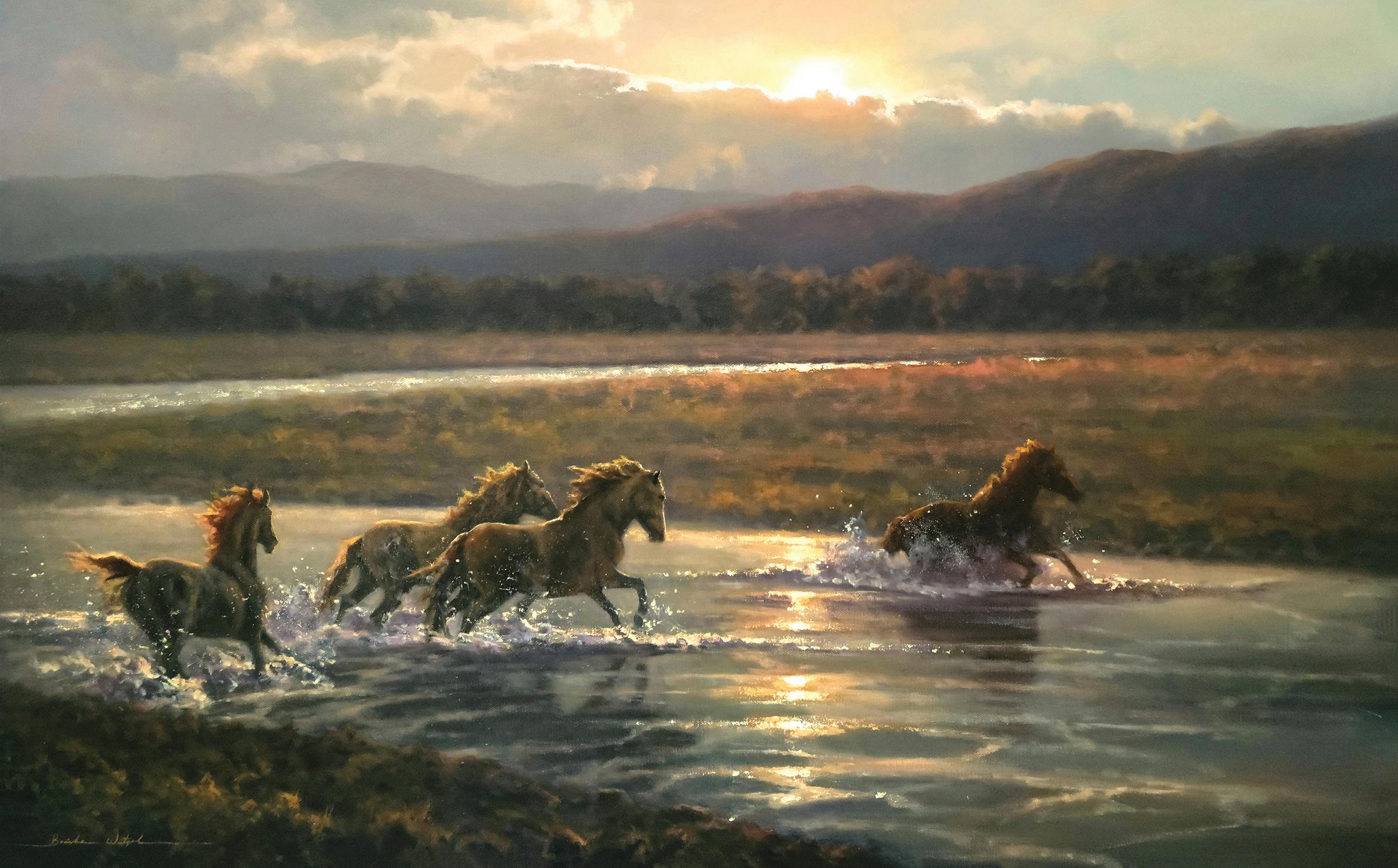
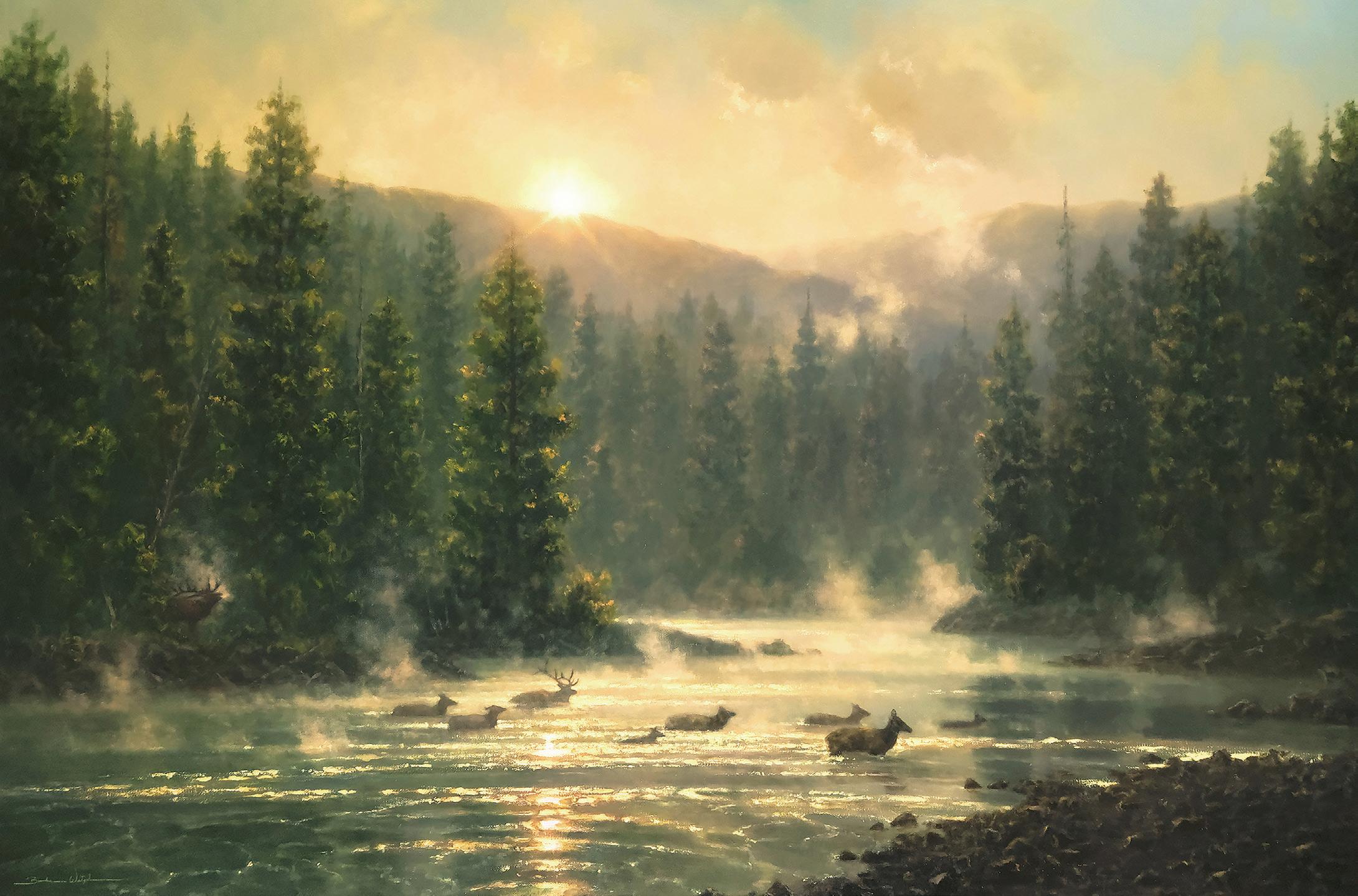
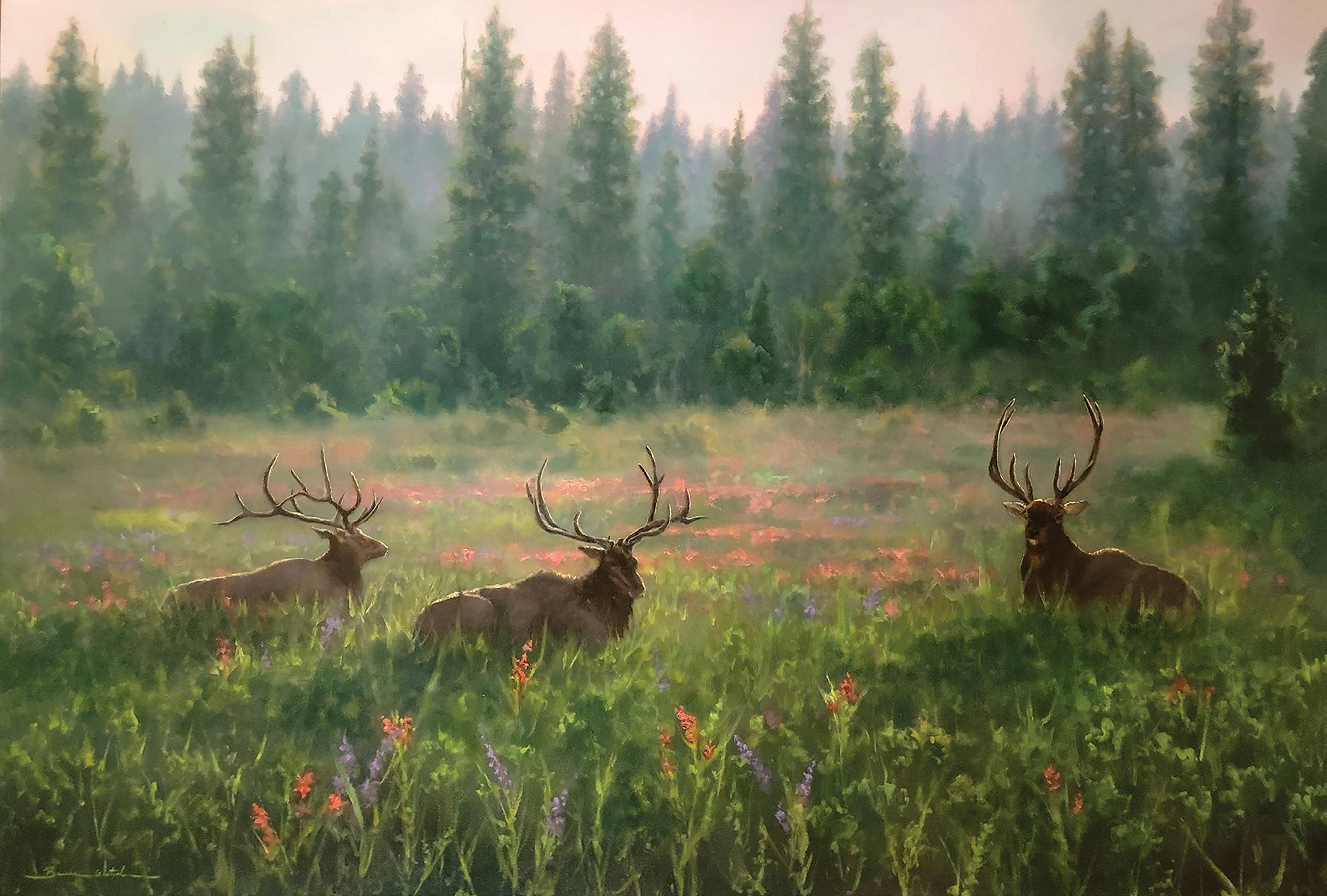
BROOKE WETZEL | OIL ON CANVAS | 24 X 36 INCHES
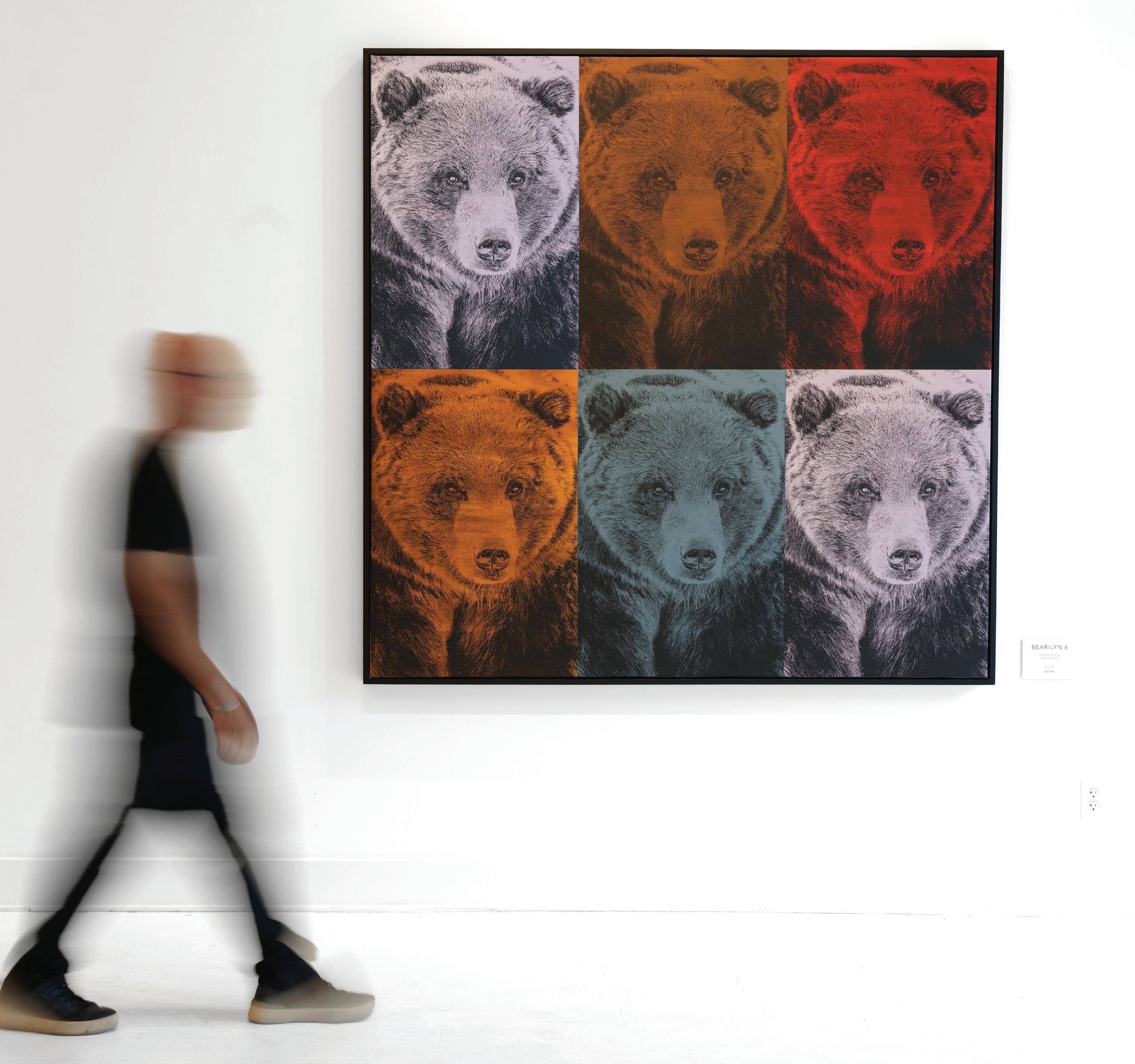
Pop art makes a splash in Bozeman.
Pop art makes a splash in Bozeman.
Noble’s newest series channels his lifelong love of pop art. Each silkscreen painting pairs a hand-painted background with his bold, signature imagery—making every piece a true one-of-a-kind.
Noble’s newest series channels his lifelong love of pop art. Each silkscreen painting pairs a hand-painted background with his bold, signature imagery—making every piece a true one-of-a-kind.
Now on display at Studio Noble’s expanded gallery in Bozeman. Nationwide shipping available.
Now on display at Studio Noble’s expanded gallery in Bozeman. Nationwide shipping available.
STUDIO NOBLE 129 E.
STUDIO NOBLE 129 E. Main Street Bozeman, MT 59715 www.StudioNoble.com 406-624-6062
www.StudioNoble.com 406-624-6062
“BEARILYN 6” 74” x 74” Silkscreen painting, acrylic on linen.
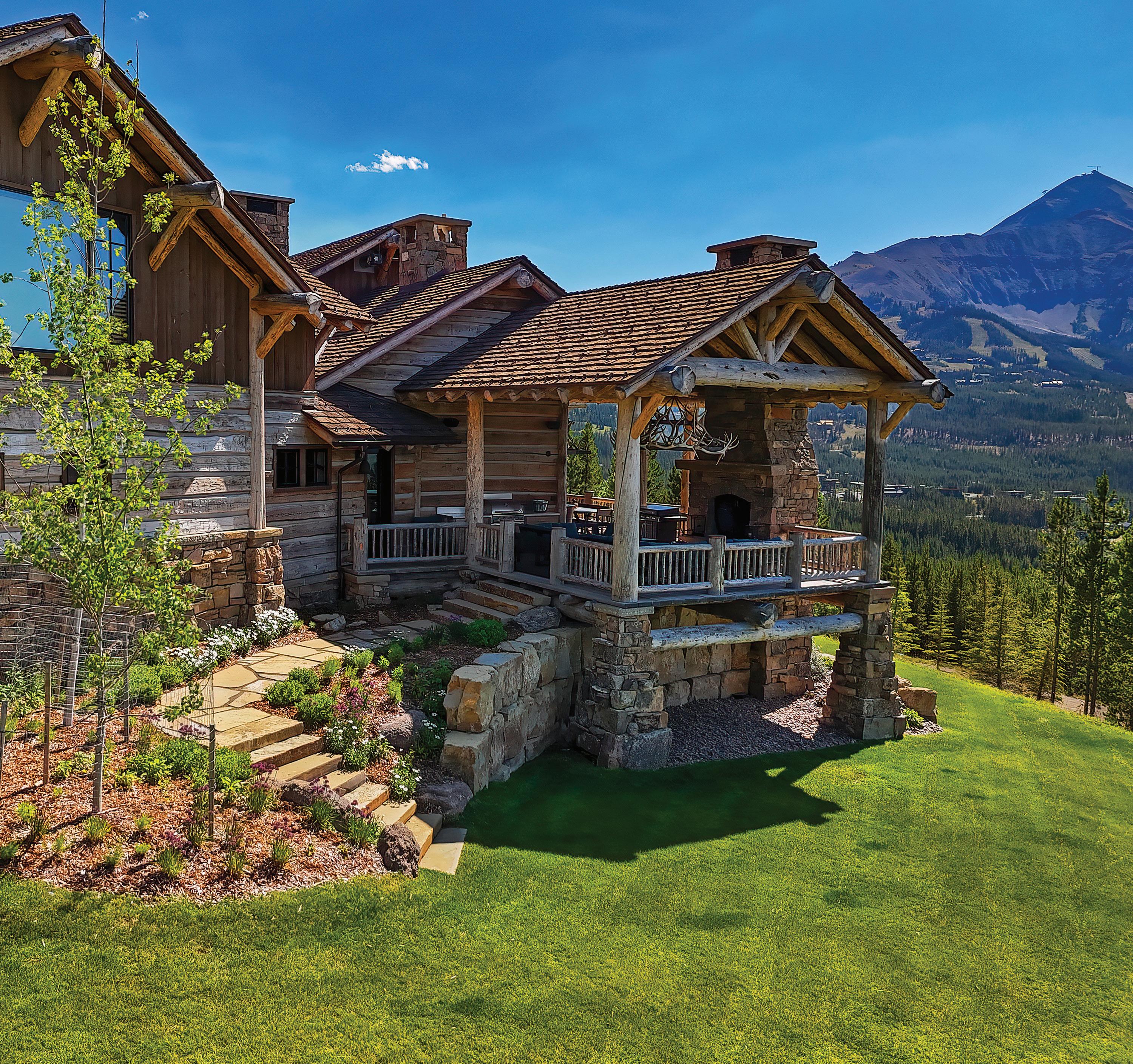
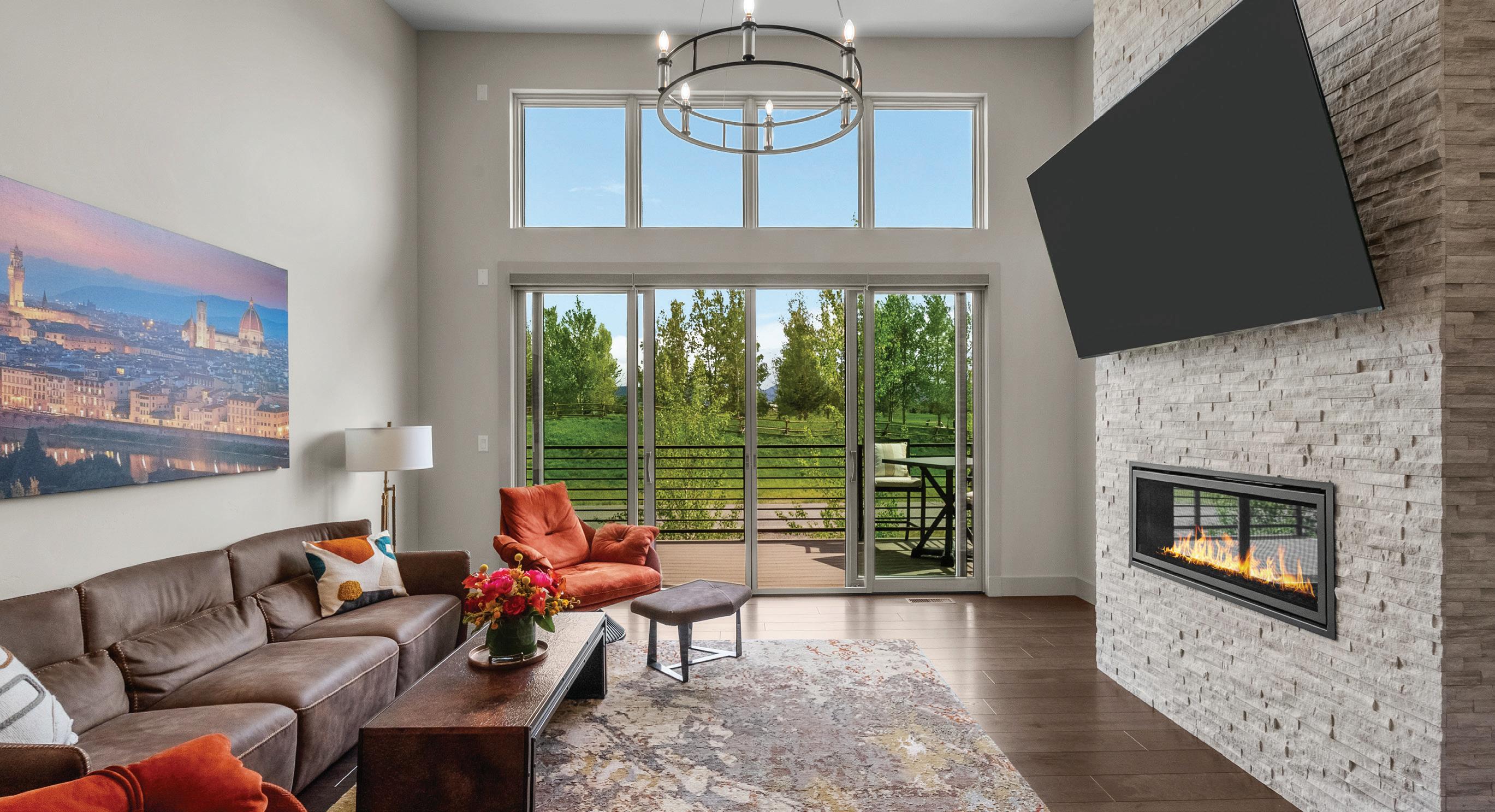
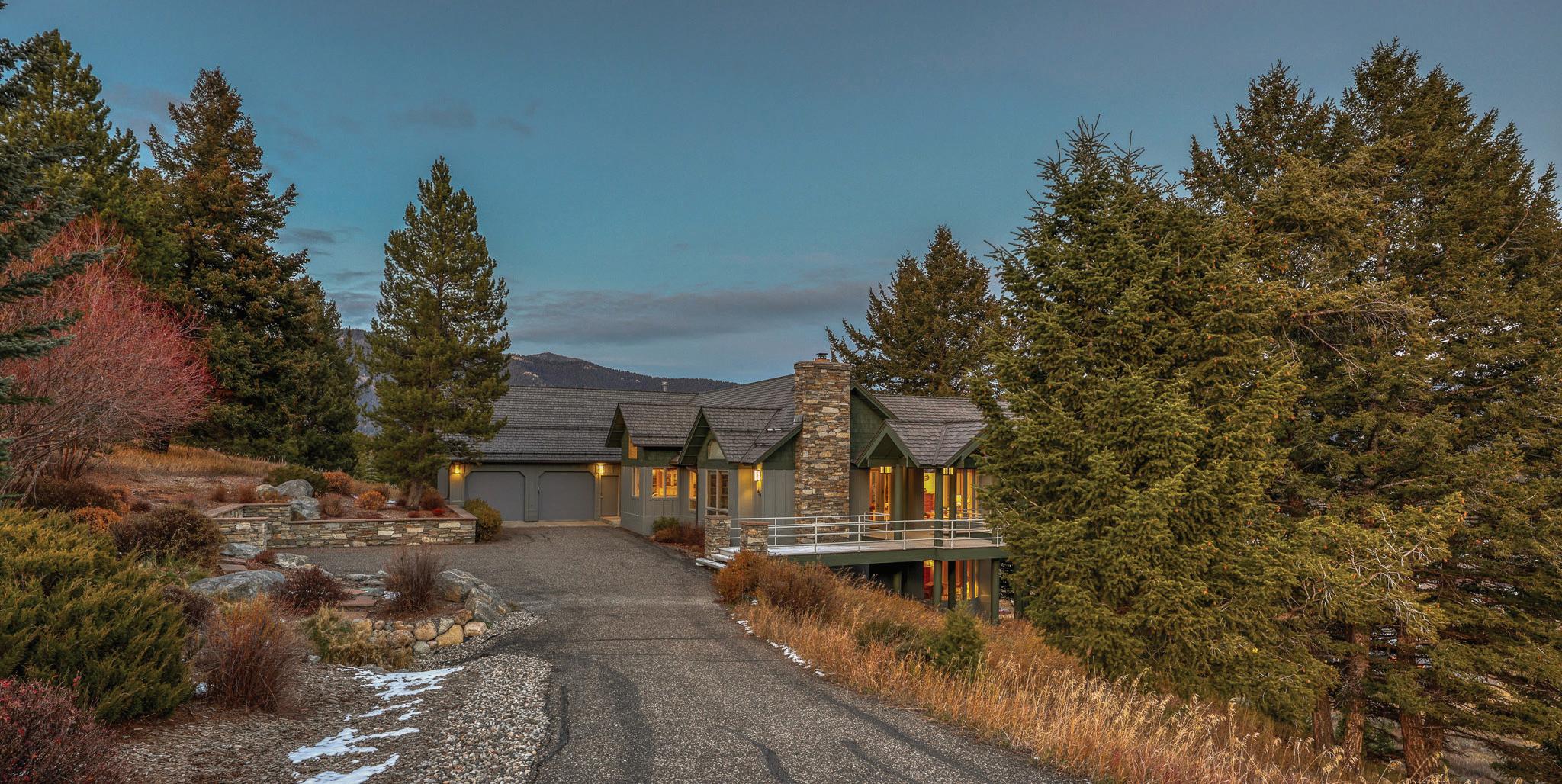
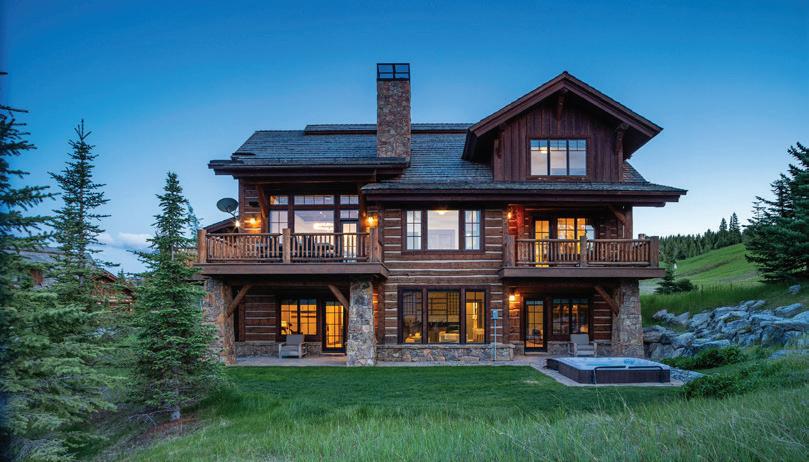
Stunning new western/ modern home w/ 4 BR, 4.5 BA. Just a stroll to the Stock Farm golf course, clubhouse, & more, offering exceptional views & privacy! Open-concept home with an expansive, magical outdoor space, perfect for gatherings
MLS 30057893
$5,500,000
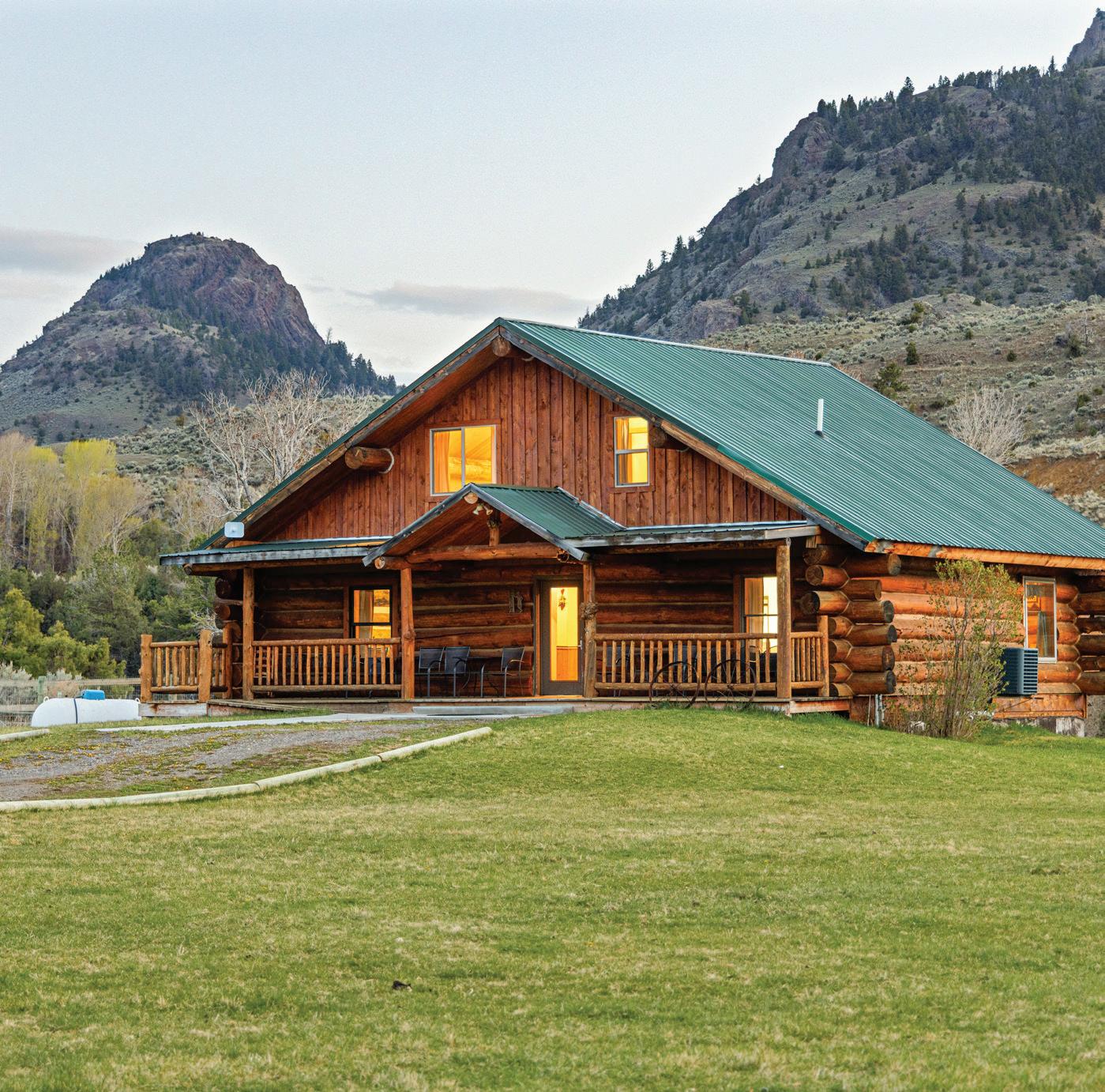
Cayuse Cabin. 4-br, 4-ba log home at Stock Farm is well-suited for a lg group with its separate living spaces. Each includes 2 br, a private kitchen, & 2 ba. The common area, great room, is perfect for gatherings. Plenty of privacy, Sapphire & Bitterroot Mountain views. Furnished & close to the members-only clubhouse.
MLS 30054927
$3,150,000
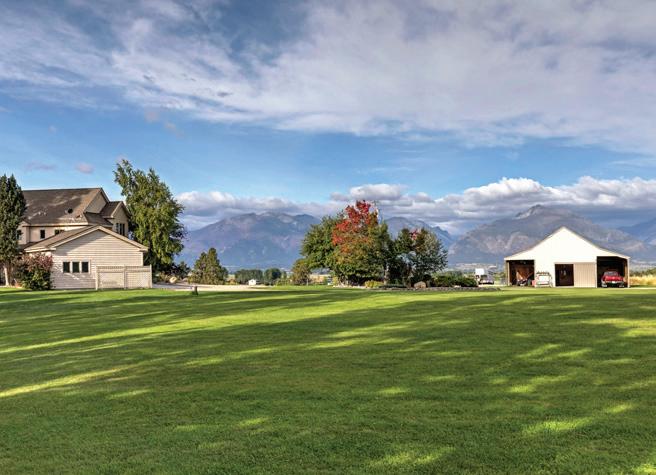
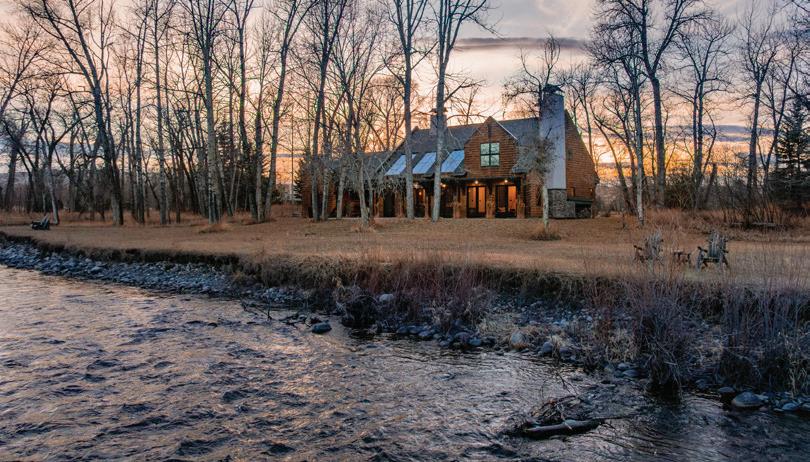
3 BR, 3 BA, 2,952 sf home, the north fork of magical Bear Creek, mountain views, & a detached 30 x 40 workshop/garage on 5.03 private acres.Open-concept layout with living & dining areas that open to the patio and lovely yard, leading to the creek.
MLS 30052947
$1,200,000
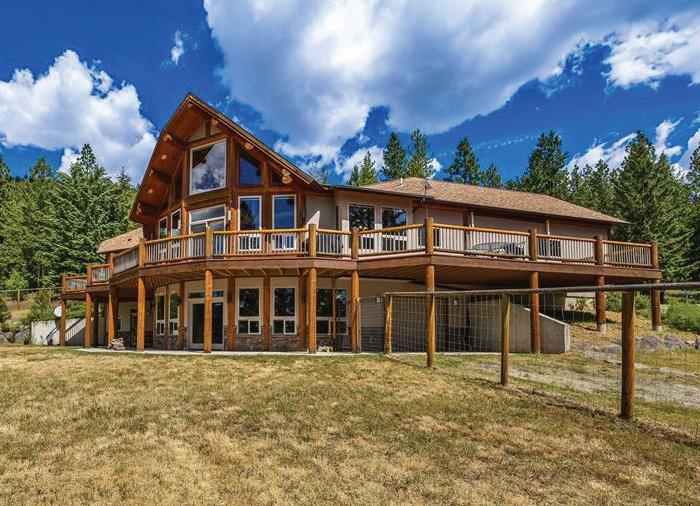
Majestic 28.9-acre property bordering protected lands in conservation easements and ranch land. Well-maintained 3 bedroom, 2.5 bath, 2,304+/square foot log home with 50-mile views!
MLS 30044431
$1,299,000
CONNER CUTOFF ROAD, CONNER
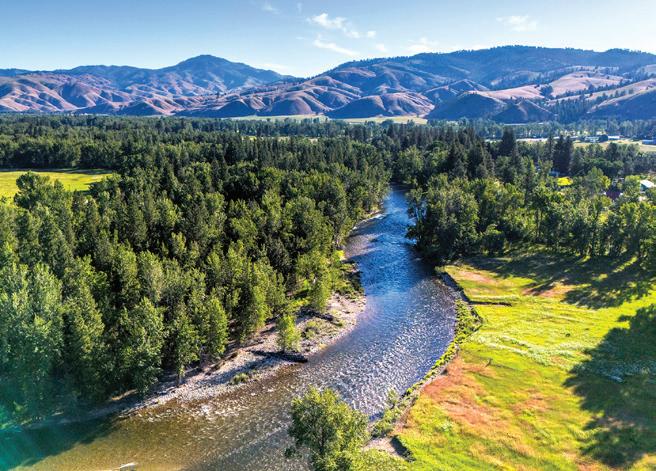
Discover your own slice of Montana paradise with this lovely 5.083 acre parcel located alogn the pristine waters of the Bitterroot River. 20 gpm well, power, and a new septic permit is in place! Close to town and amenities.
MLS 30039161
$549,000
FARM, HAMILTON
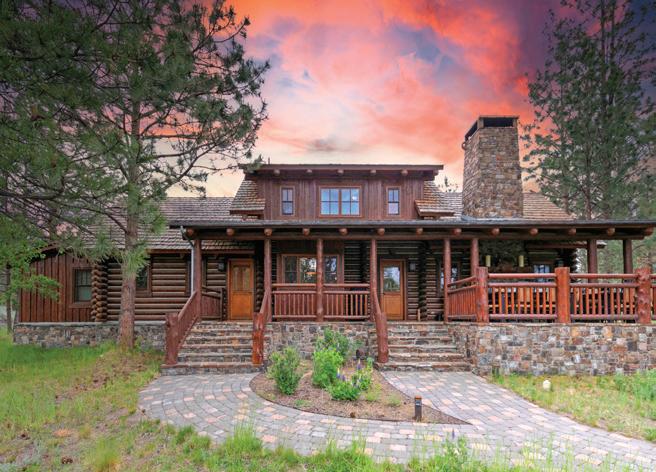
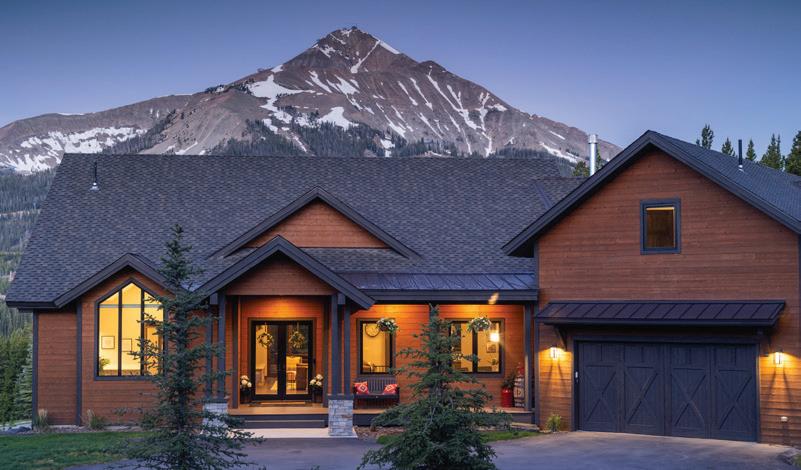
This Rocky Mountain log home at Stock Farm Golf & Sporting Club isn’t just a home, it’s a lifestyle! 4 bedrooms, 4 baths, 3,094+/square feet. Incredible log and stone accents throughout. Stock Farm membership not included with purchase.
MLS 30051378
$2,850,000
Well-maintained ranch property. Amazing views, creek, and horse ready! Nice 3 BR, 4 BA home near the Calf Creek Elk Ranch and countless outdoor recreation opportunities. Irrigation & privacy with a nice, workable barn/tackshop, bunkroom.
MLS 30050833
$2,250,000
Stunning legacy 115.86 acre property in two parcels is nestled among towering pine trees & borders Forest Service This private & sophisticated home features 3 BR, 2.5 BA, 3,270 sf of luxurious living space. The property offers a great well, two ponds, mature fruit trees, and endless recreation opportunities! Contact Bobbi for more details.
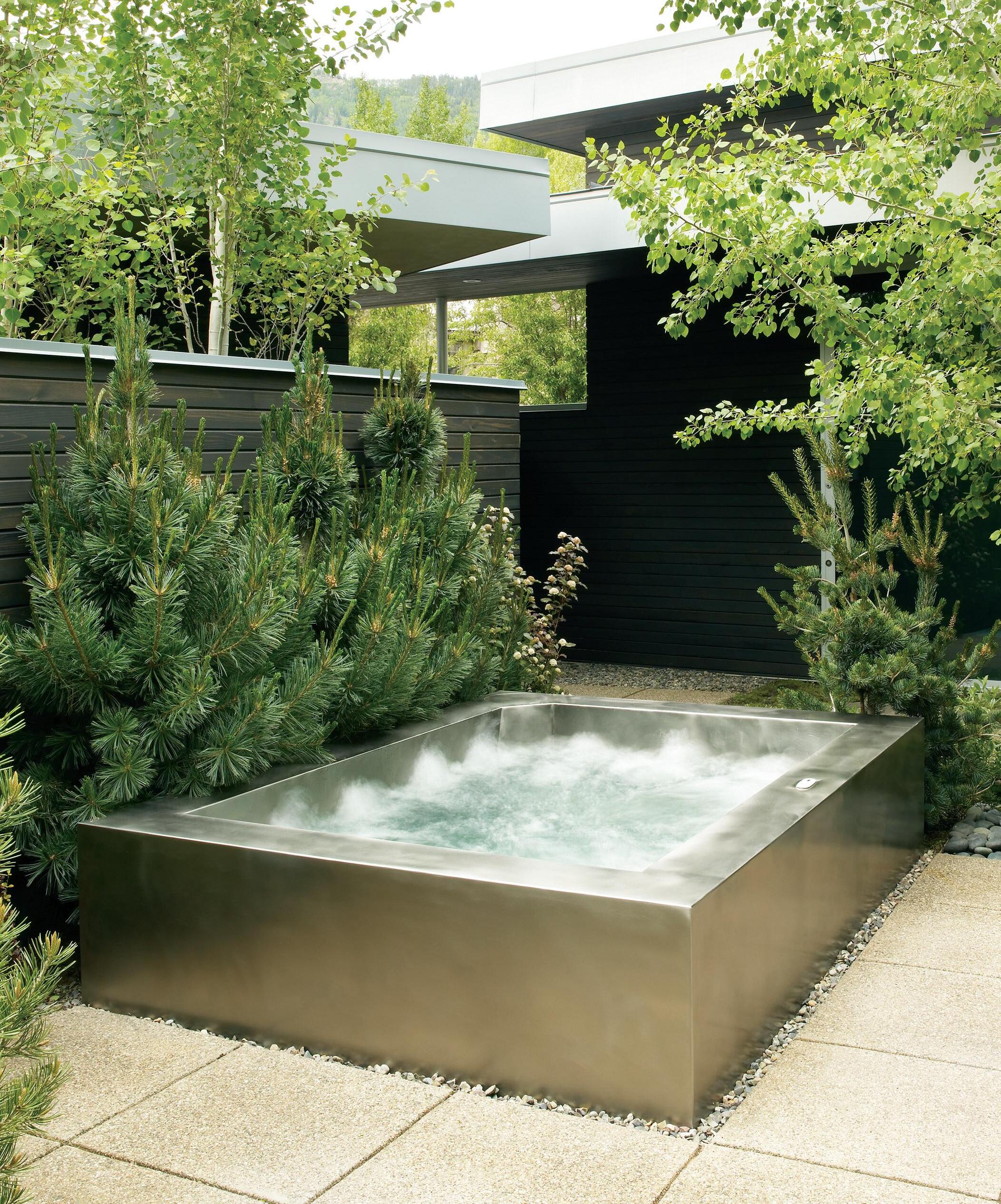
Water Features Luxury Custom Indoor & Outdoor Bath Fixtures
SPECIALIZING IN ELEVATED / ROOFTOP POOL & SPA INSTALLATIONS
LIGHTWEIGHT & DURABLE
TRUE ROOTS
TRUSTED QUALITY
Stock Custom Homes is an award-winning custom homebuilder with a reputation throughout the Mountain West’s most distinguished communities. Rooted in generations of Western heritage, the company carries a family legacy deeply connected to Montana and Wyoming, where ranching, craftsmanship, and community stewardship have shaped their approach for decades.
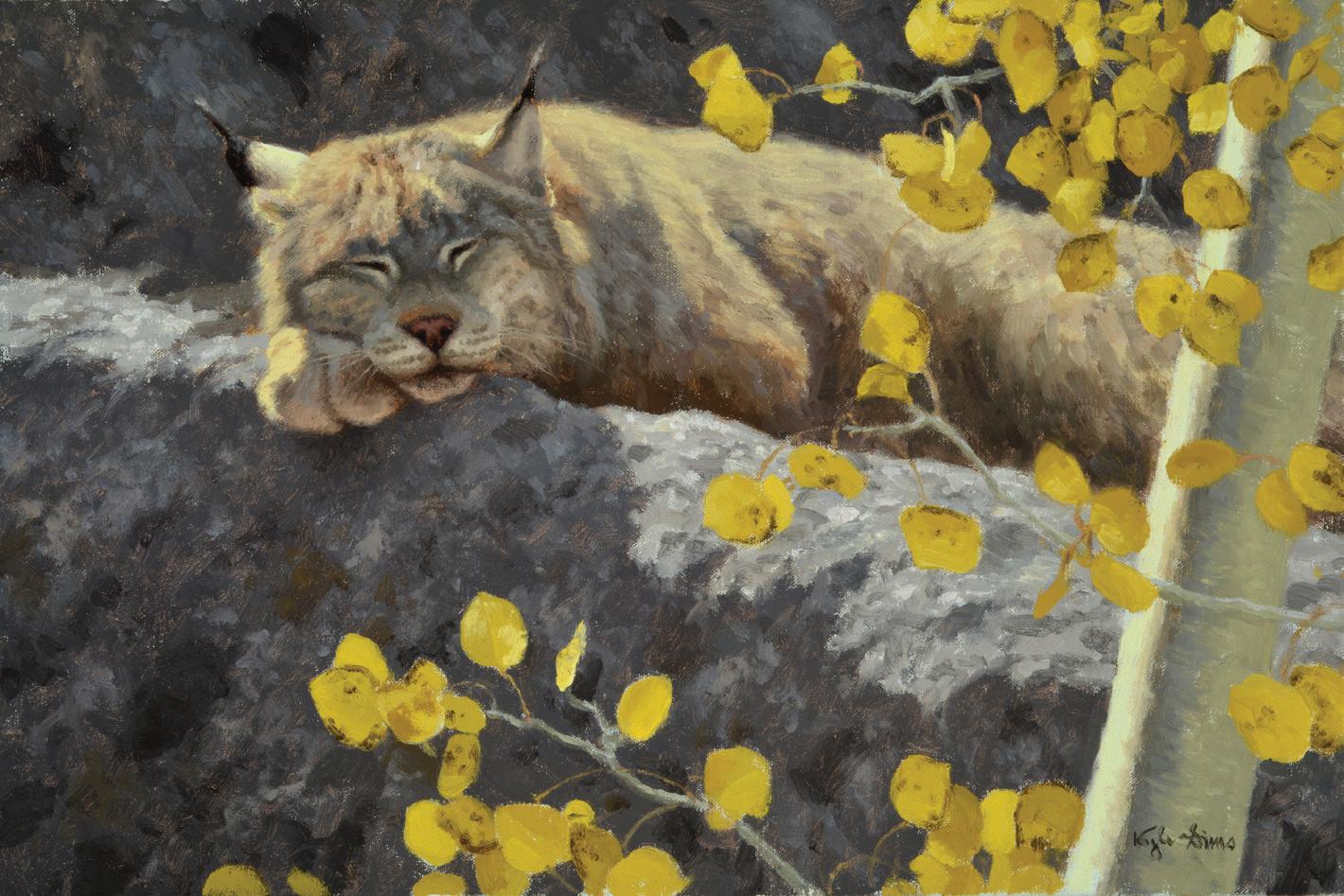
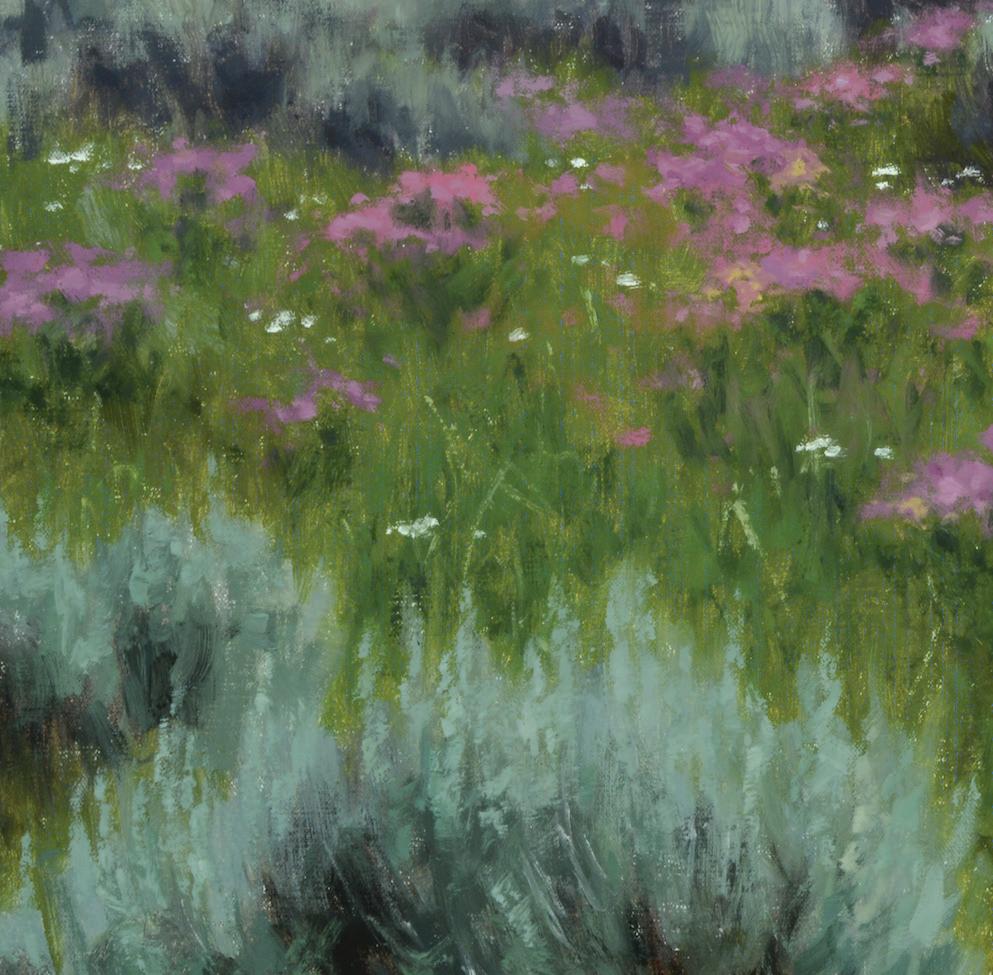
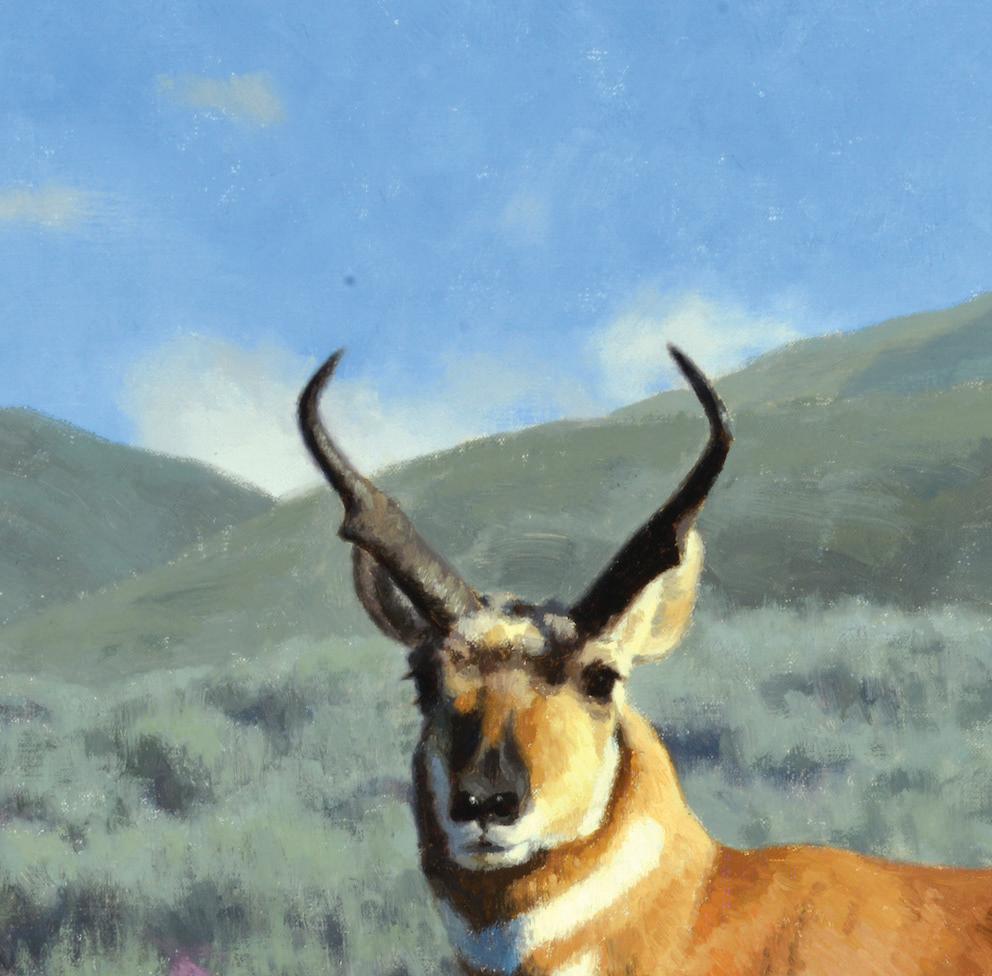
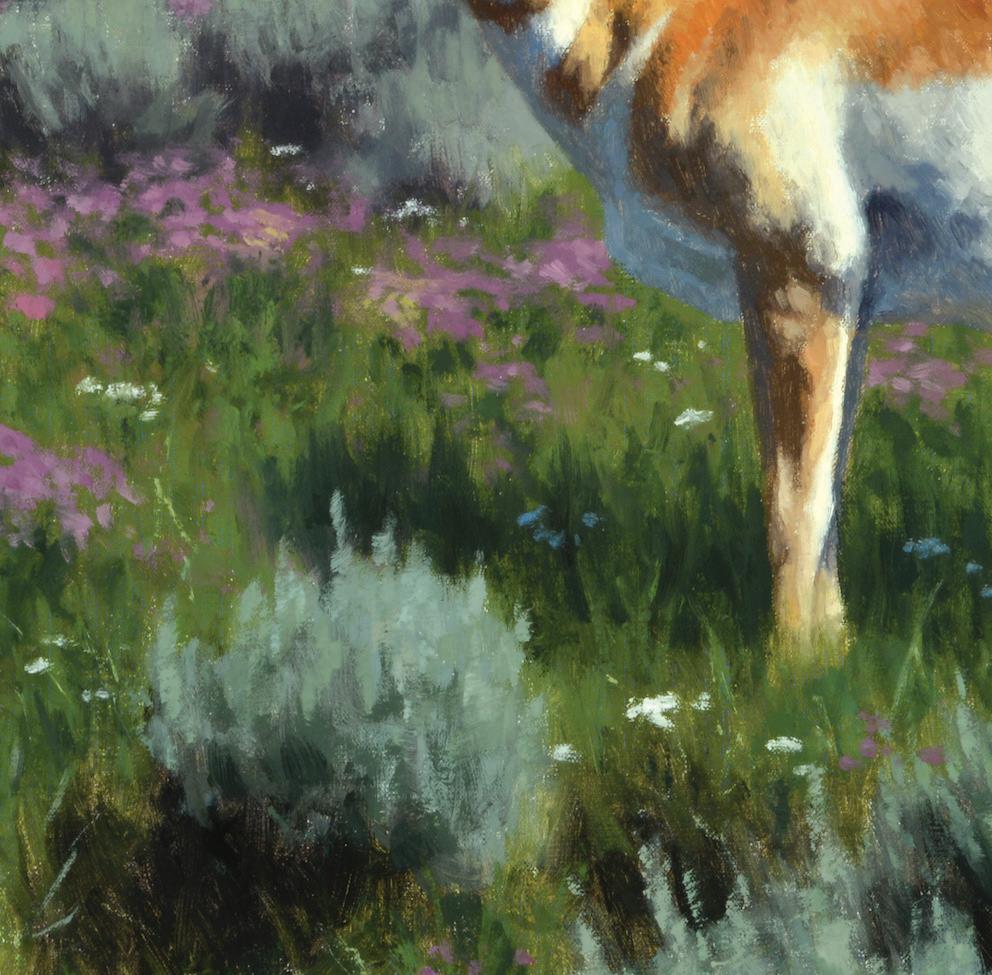
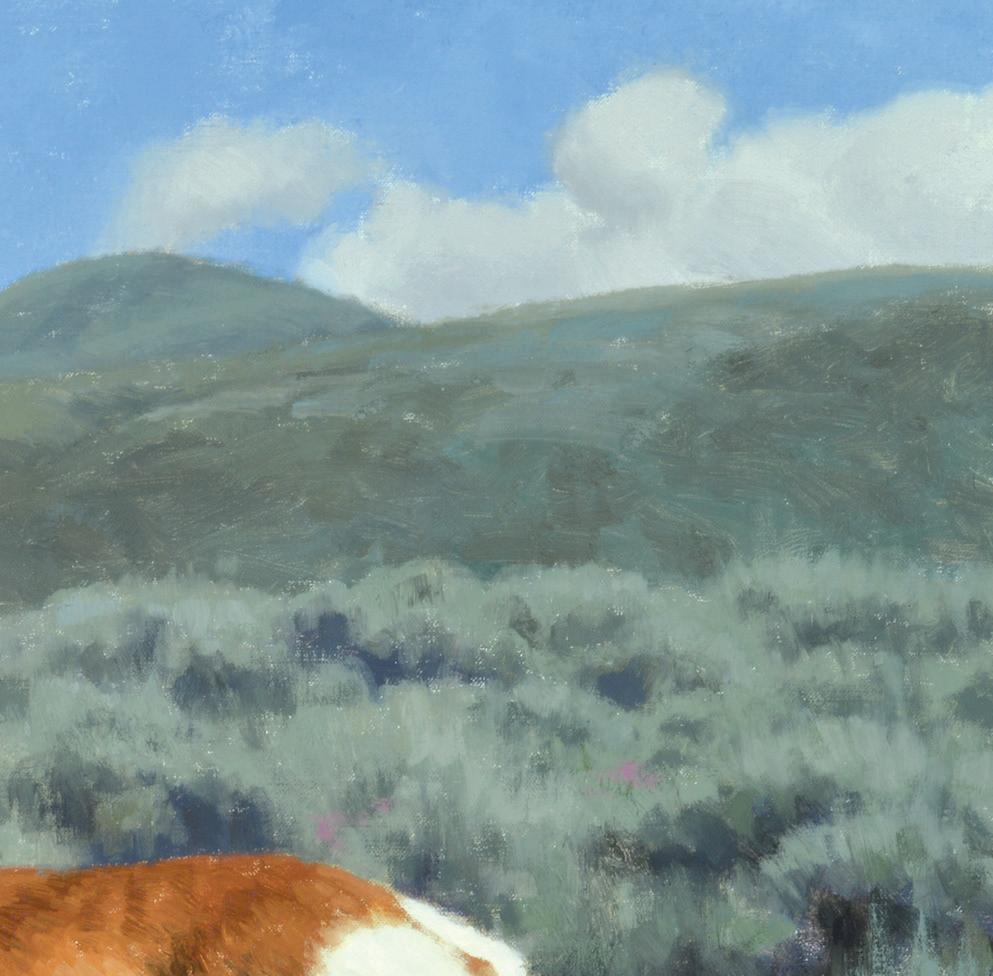
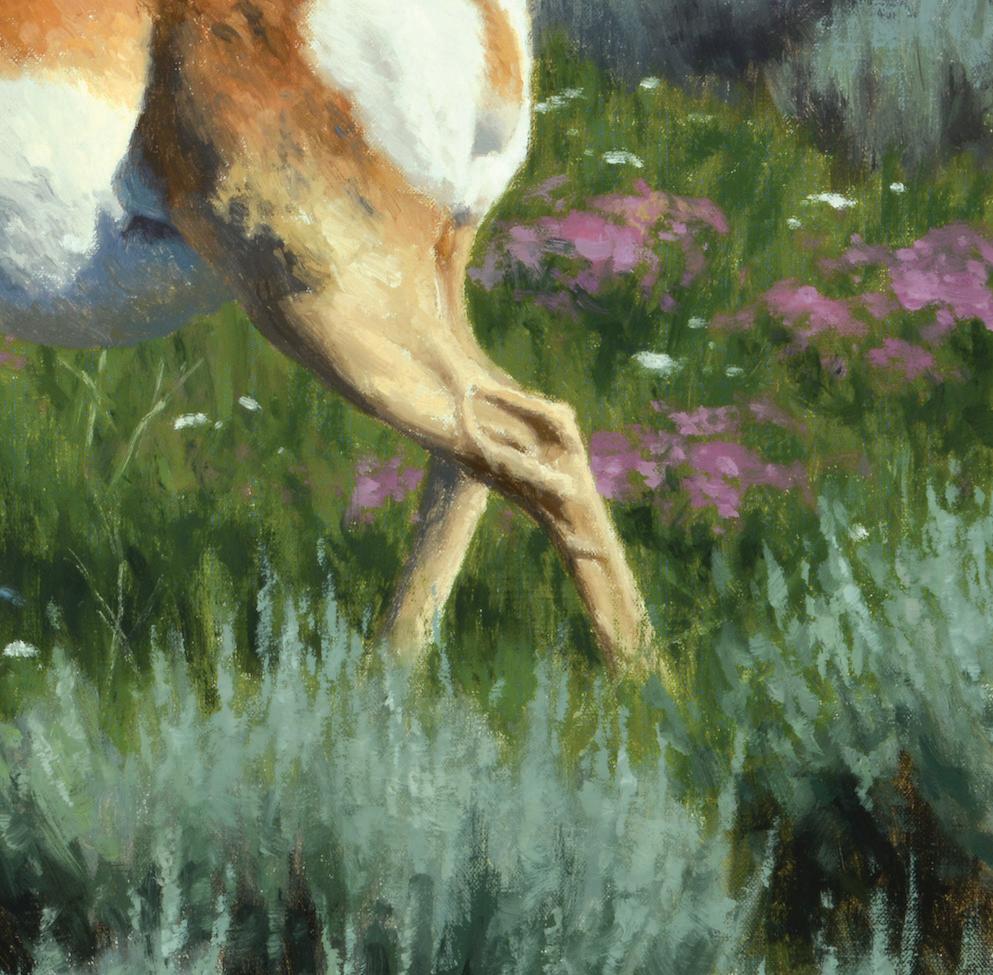
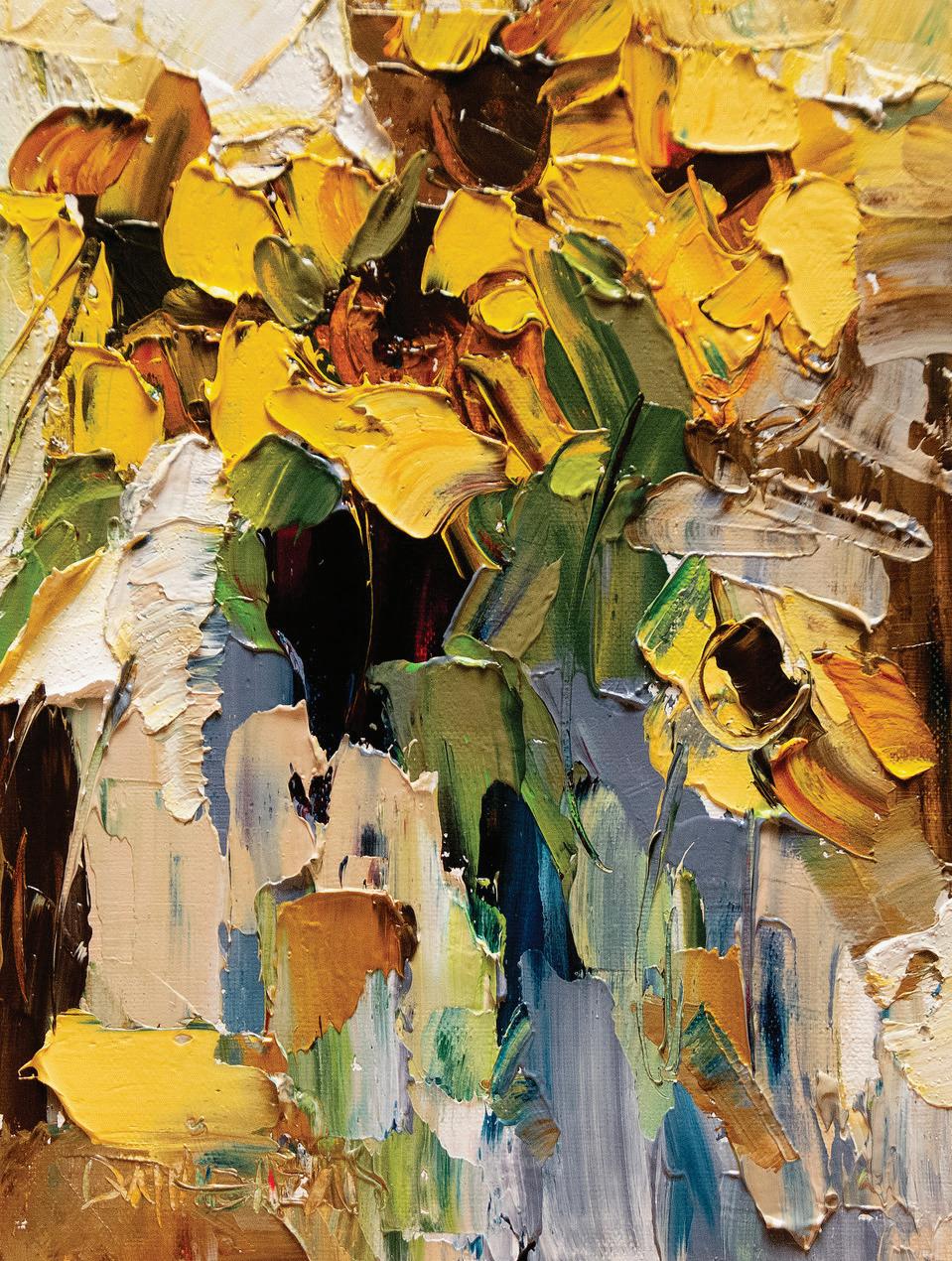
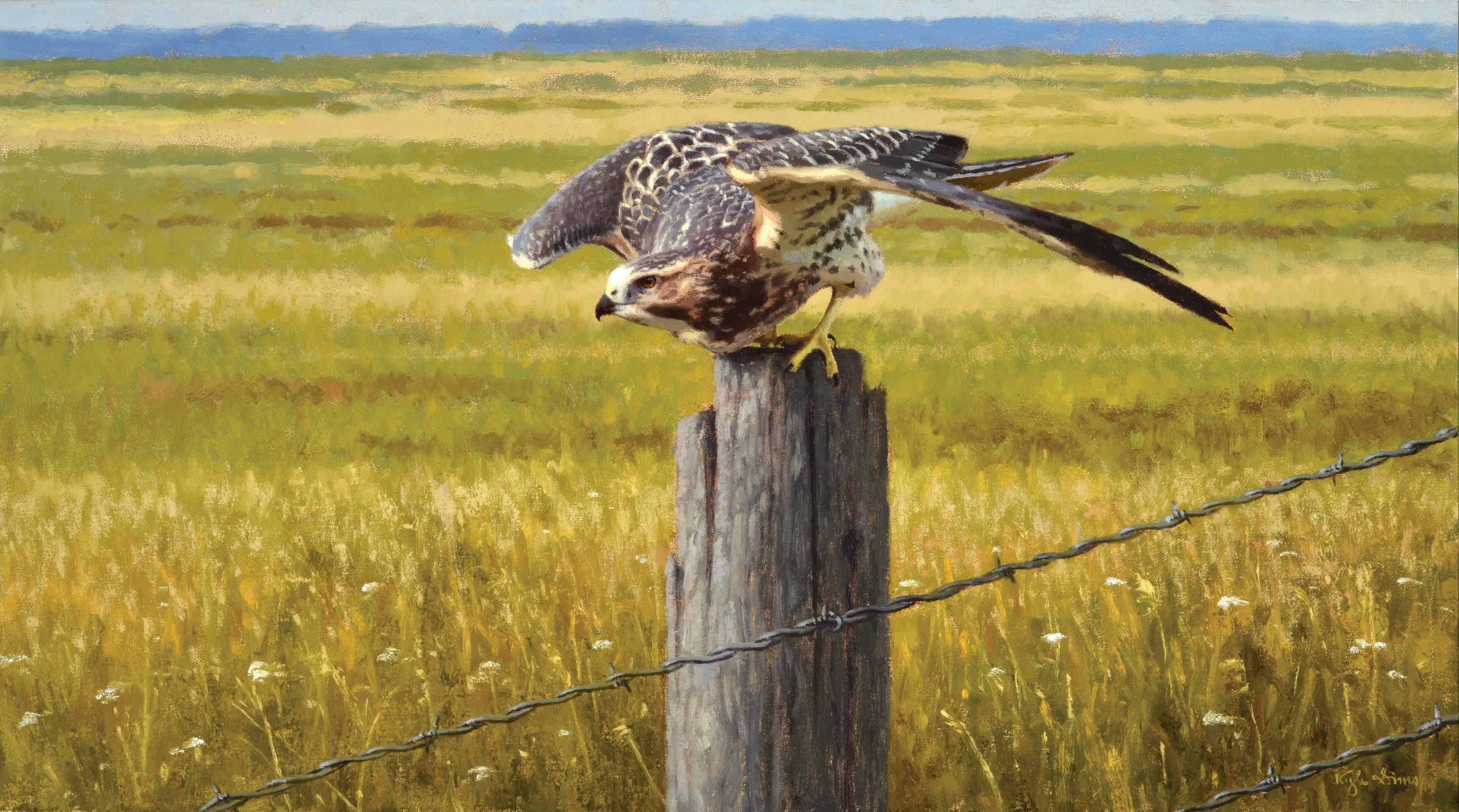
“Pronghorn and Wild Geranium” Kyle Sims 26" x 36" oil
DETAILS FROM THE REGION
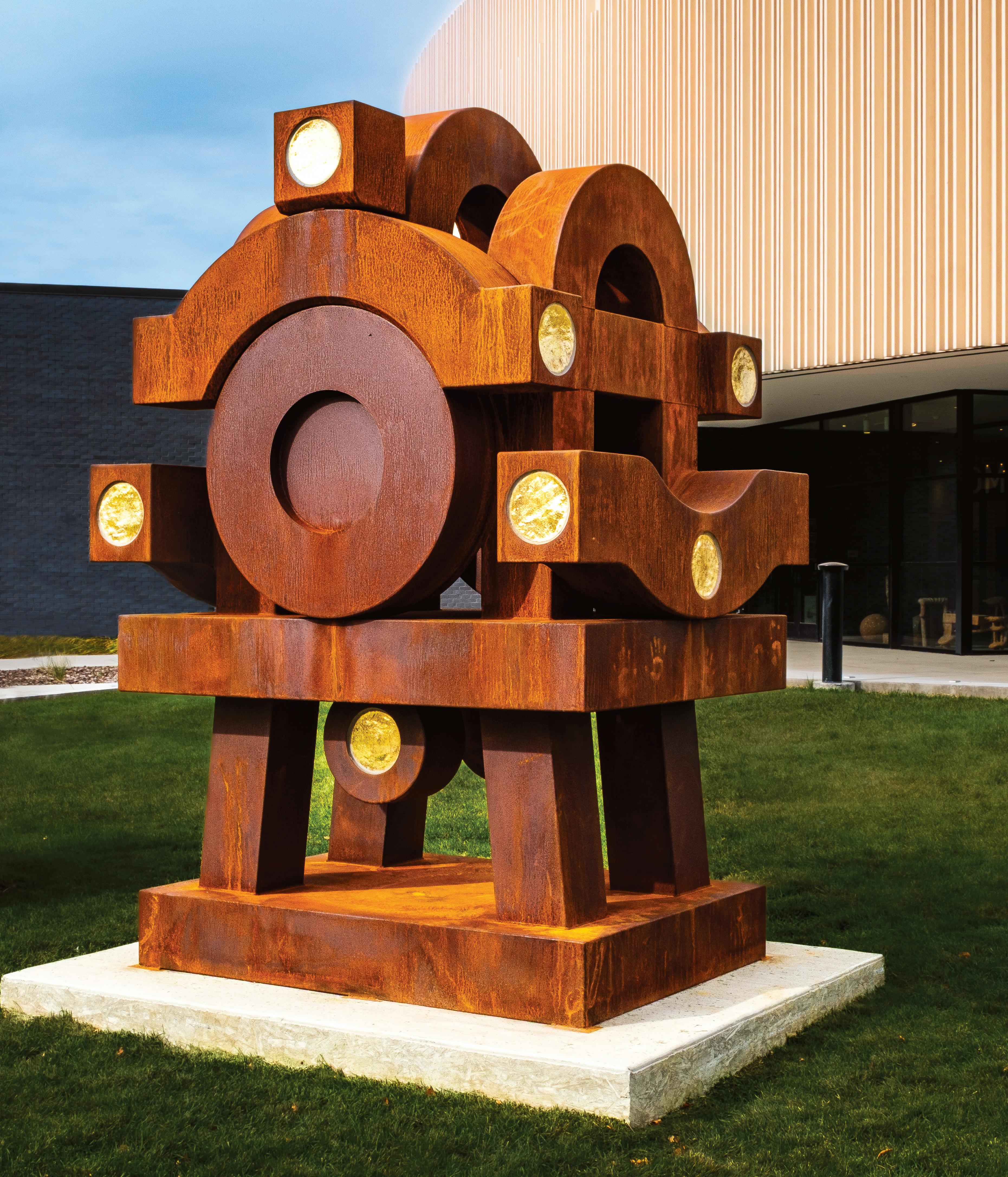
Signal, newly installed at the University of Montana in Missoula, replaces the original 1966 version by ceramic artist Rudy Autio.
LANDMARK
New sculpture at the University of Montana stands as a tribute to Rudy Autio
WRITTEN BY MICHELE CORRIEL
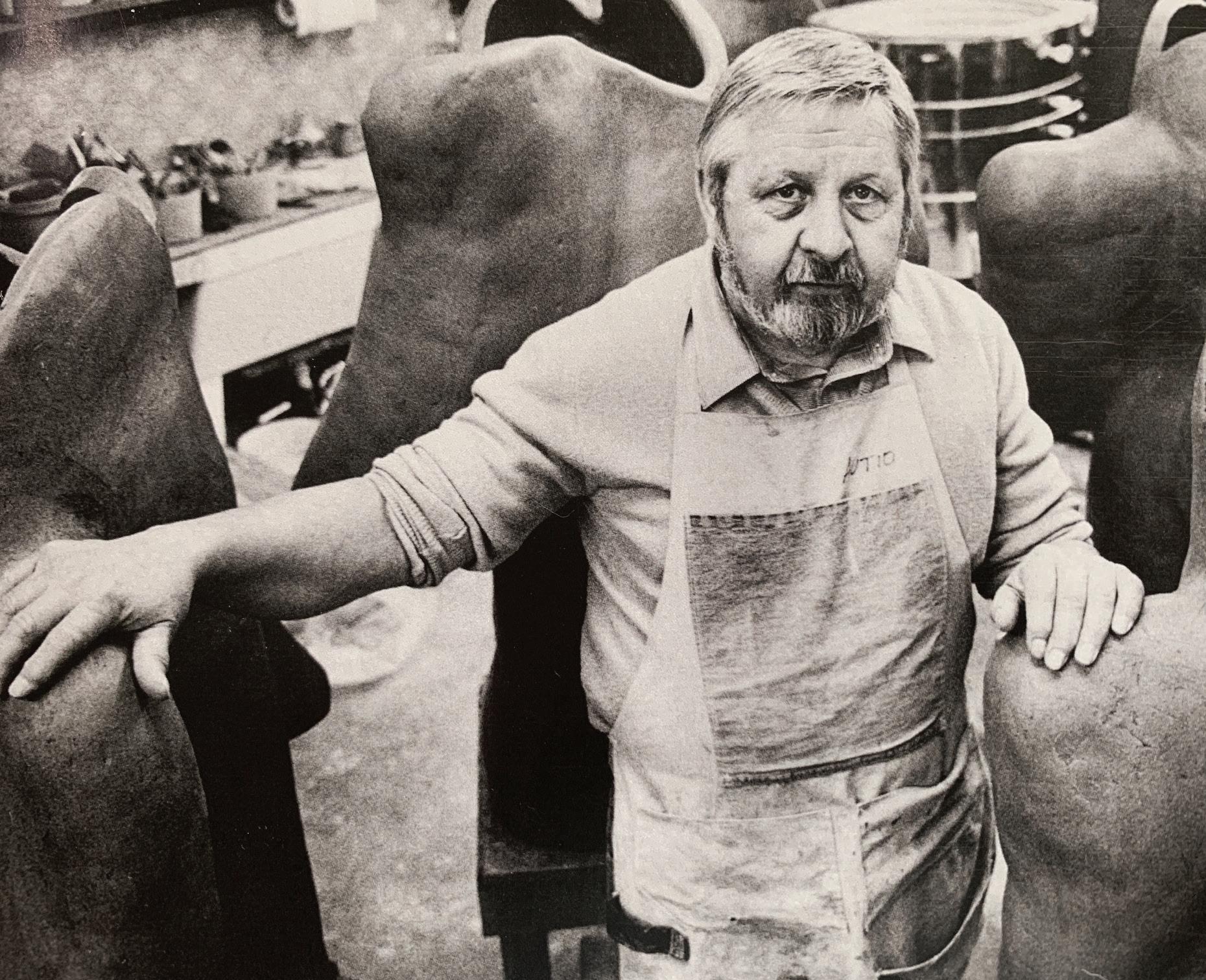
AFTER SEVEN YEARS of dedicated work and fundraising, Rudy Autio [1926–2007] is now remembered through a newly remade steel version of his 1966 sculpture known as Signal. The new piece stands at the entrance of the University of Montana’s Miller Hall in Missoula, where Autio, an internationally recognized artist, established the ceramics program in 1957.
“Signal had quite a bit of history,” says H. Rafael Chacón, director of the university’s Montana Museum of Art and Culture. “Rudy proposed pieces for both the University of Montana (UM) and Montana State University (MSU),
but neither institution gave him much money, so he built them from rebar and concrete. They were never meant to last. The one here was relocated around the campus and repaired twice.”
The one given to MSU disappeared, most likely taken down due to deterioration.
Though produced on a tight budget, Signal was an important sculpture for Autio’s career. Fresh from Montana State College (the former name of MSU), and before going to graduate school, Autio and Pete Voulkos became the first directors of the Archie Bray Foundation in Helena. Then, in 1952, Shoji Hamada and Bernard Leach visited the newly conceived clay center. At that time, Autio became fascinated with Hamada’s work, which was based on the Japanese Mingei movement that celebrates the beauty of everyday handmade objects and their spiritual connection to nature.
“That visit was a turning point for Rudy. He thought about that a lot,” says Hugh Warford, who repaired Signal in 1974 and in 1998 and worked alongside Autio’s daughter, Lisa Autio, to produce the new sculpture. According to Warford, Signal stands as the piece most closely connected to Autio’s artistic vision, reflecting his deep interest in Mingei.
Signal portrays balance and harmony. It’s an architectural project based on Japanese design principles. The structure’s elements are seen not just as physical components but as spiritual, which reinforces the sculpture’s significance as both an artistic and philosophical statement, says Chacón.
“Part of what Rudy was interested in was how materials are animus, containing spiritual energy,” Chacón adds. “He was combining gate forms with a more robust three-dimensional sculpture.”
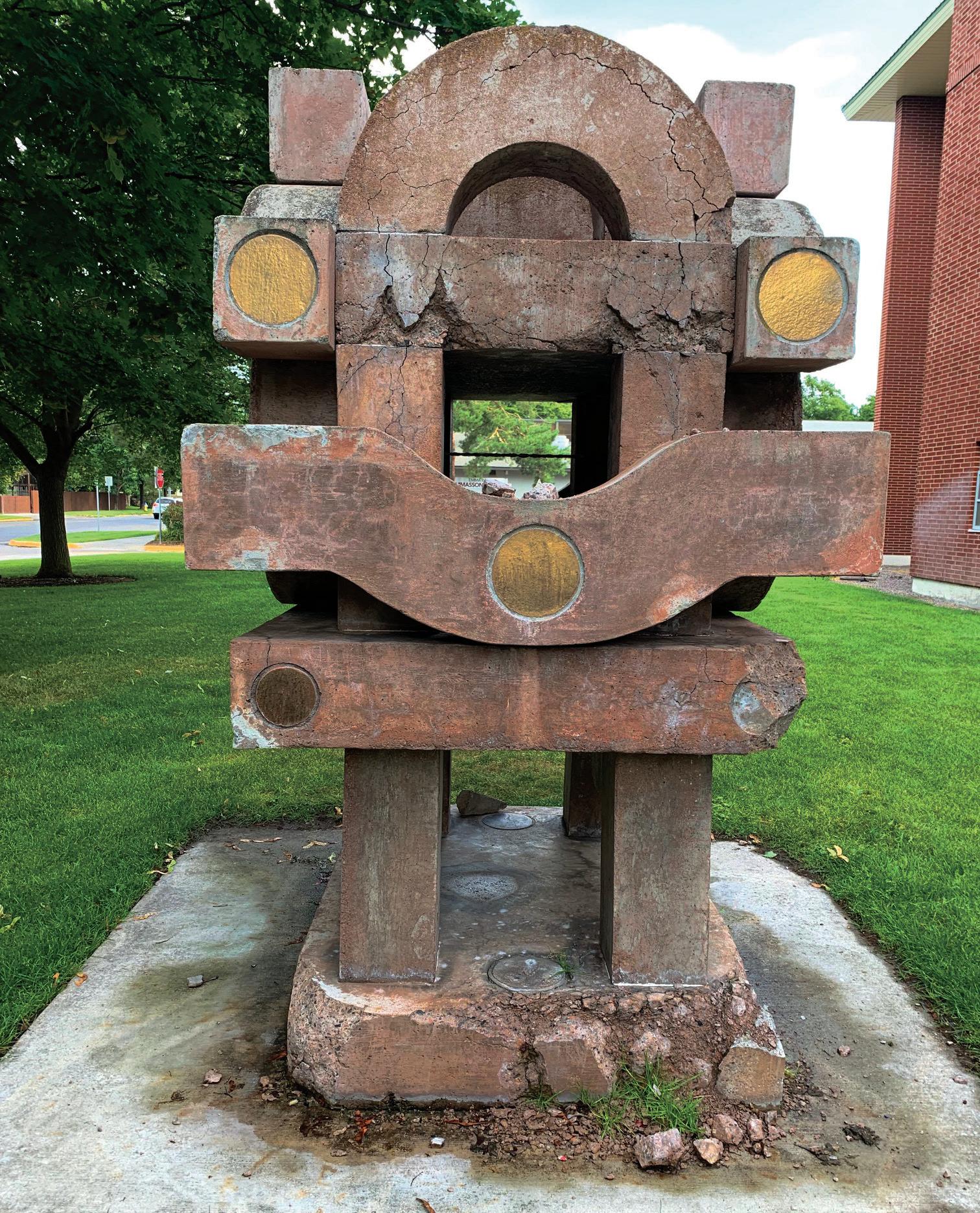
While a celebrated example of Autio’s artistic talent, Signal fared poorly under environmental conditions. “Over the years, when it sat between the music building and the art building, it deteriorated a little bit,” Lisa says. “Then eventually, it was moved to sit in front of one of the dorms on Arthur Avenue. One day in 2018, I was driving down Arthur Avenue to look at the old sculpture, and I was really, really shocked at its condition.”
Rudy Autio was a pioneering figure in ceramic art, with influence that extended from Montana to the international art world. His work bridged traditional pottery and contemporary sculpture, drawing on Japanese ceramic aesthetics and philosophical ideas to bring a broader cultural perspective to his practice.
In 2024, after being on view and exposed to the elements for nearly 60 years, the piece was retired from campus. Right away, Lisa set to work raising money to reproduce the sculpture after the university offered seed money for the project, ultimately raising over $70,000.
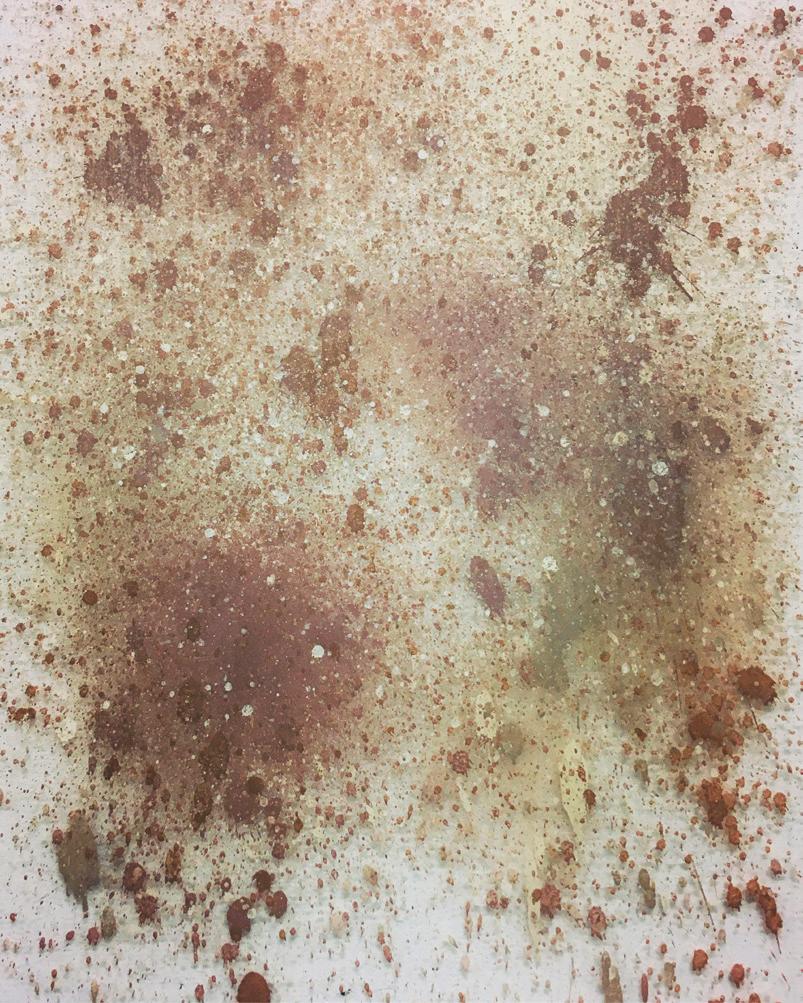
As Lisa and Warford neared completion of the reconstructed piece, they sought to finish it with a patina to match the original. The duo sprayed it with a sandblaster and applied hydrogen peroxide, salt, and vinegar to produce a rusty-brown homemade patina, and Warford found a way to develop a gold luster across the edges. Once complete, the refabrication was installed and dedicated on October 8, 2025, in celebration of what would have been Autio’s 99th birthday.
“We could not imagine removing the sculpture without replacing it; generations of kids grew up with it, climbing on it,” Chacón says. “We rebuilt it the way Rudy originally wanted it, in Cor-ten steel and ceramics. I think it’s going to last a lot longer than the original.”
Commissioned by the University of Montana, Signal was originally made of concrete and rebar, which deteriorated after nearly 60 years and was retired from campus in 2024.
COURTESY OF LISA AUTIO
Rustic luxury with interior designer William Peace
WRITTEN BY BSJ STAFF
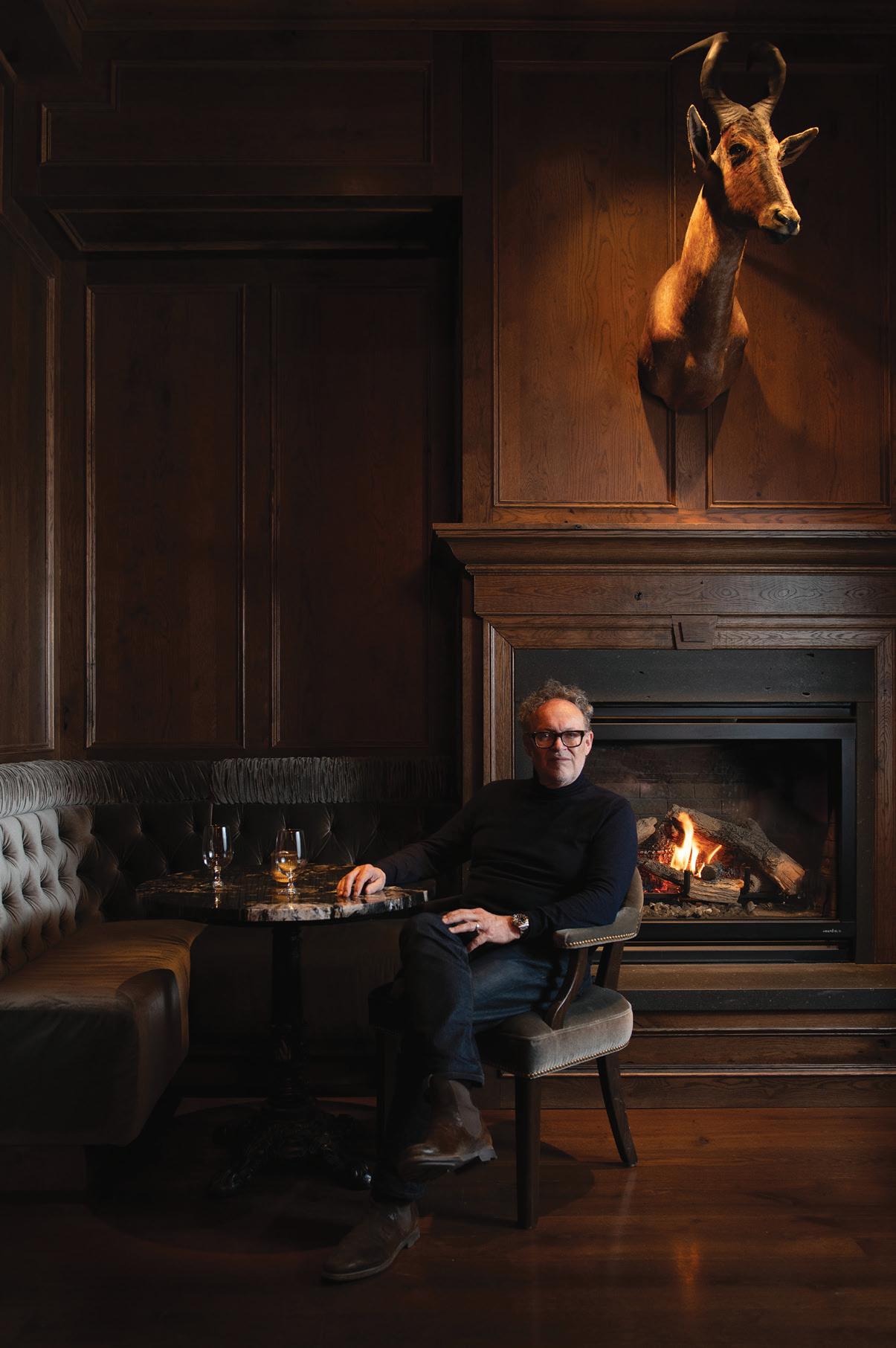
INTERIOR DESIGNER WILLIAM Peace has left his mark on homes across the West. With a soulful and timeless approach, he creates spaces that tell a story and reflect a connection back to the land. The founder and principal of Peace Design based in Bozeman and Atlanta, Peace works collaboratively with clients and the larger design team to accomplish a shared vision.
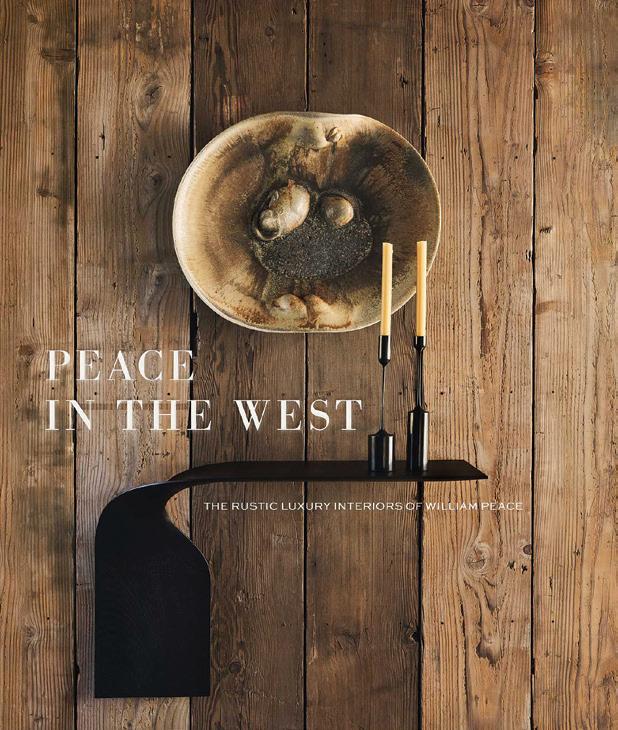
In the newly released Peace in the West: The Rustic Luxury Interiors of William Peace, the designer’s work is showcased across seasons and landscapes to craft a narrative that reveals his understanding of light, land, and life and how to create intersections between the three.
Here, Peace discusses his approach to design, exploration of material, and source of inspiration.
Big Sky Journal: Your interior design career has spanned more than 30 years. During this time, how have you responded to varying stylistic preferences across the Rocky Mountain West?
William Peace: Our design is always informed by location, natural materials, and authenticity. Since early in my career, these design tenets were honed throughout our firm and are still applied today, whether a traditional cabin interior of hewn restacked walls or a ski property that has clean lines and refined finishes. We respond to current lifestyles but always stay classic in design principles and approach.
BSJ: Natural elements widely dictate how people live in the West, from light and views to trees and snow. How do you consider the landscape, light, and weather in your interior design of a home?
Peace: We always want our design to complement nature and not compete. We use local repurposed materials inside and out and capture view corridors that celebrate mountain ranges, ranchlands, and lakes as the light shifts throughout the day. Having a deep understanding of light, wind, and weather patterns is paramount when designing throughout the West to keep a copacetic relationship with the land.
BSJ: Your new book is titled Peace in the West: The Rustic Luxury Interiors of William Peace. What does rustic luxury mean to you, and how does this play out in your ethos?
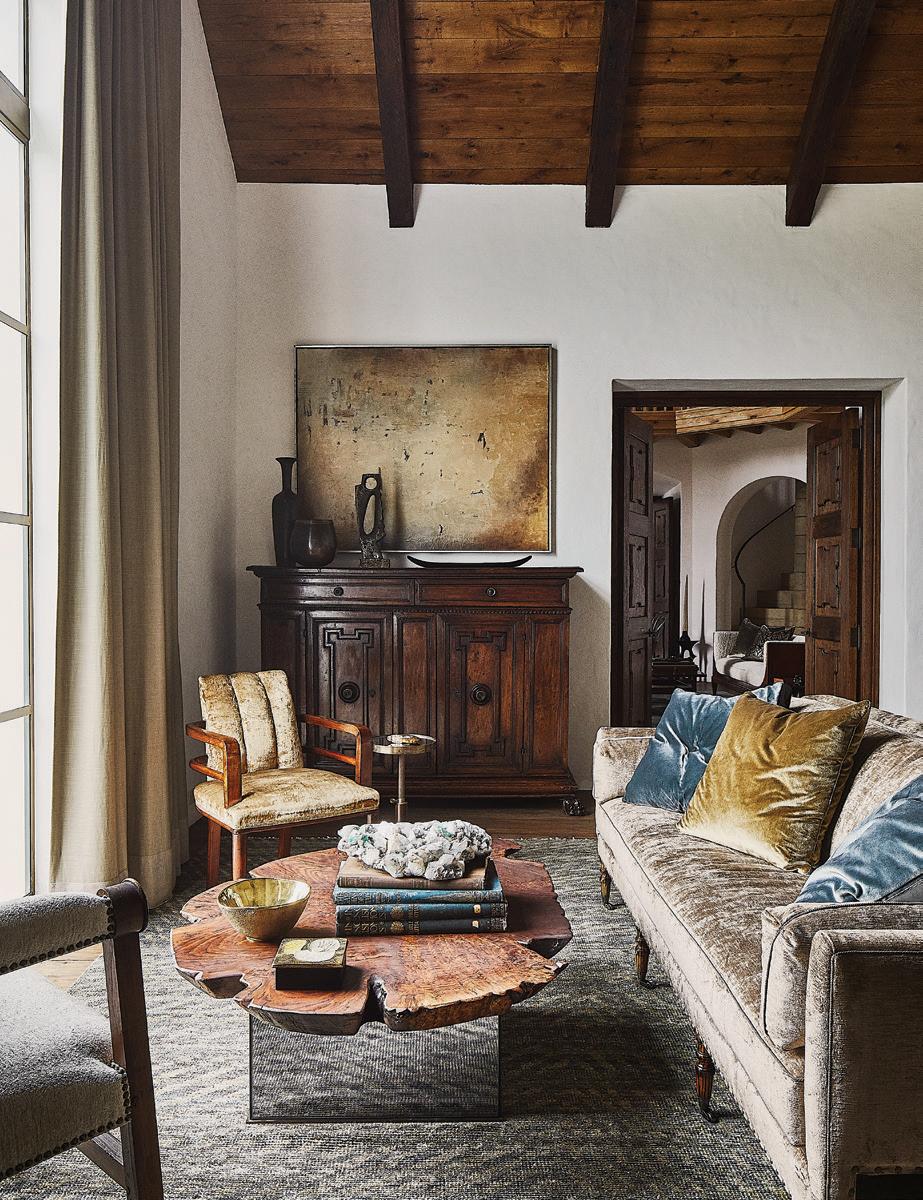
Peace: Rustic luxury is a sensibility where substantive architecture and settings meet luxurious lifestyles and interior design materials, whether it be the mountains, the coast, a lake, or in town. Rustic luxury is about balance. It is places rooted in and inspired by the land, layered with materials that feel settled, and enriched with luxurious details reflective of the way people live. Rough and smooth, weathered and polished, grounded and elevated. These contrasts create spaces that feel like they have always belonged. Our new book is about our design work in the American West over the last 30 years, where we celebrate the range of lifestyles that have evolved in the region and how our design work has helped inform style over time
BSJ: A well-appointed home is achieved when a designer understands people and place. The homes featured in Peace in the West reflect qualities of the West. What draws you personally to the American West, and how does that personal passion assist you when designing a home?
Peace: From my first visit to the Rockies, I have felt the strong emotional attachment that many of our clients do. The dramatic view of mountains, quality of light, and beautiful rivers are the reasons we are here. We design homes that embrace and give an opportunity for everything from family gatherings to moments of solitude in a warm and rich environment.
BSJ: Many hands come together to bring about a fully realized home. How do you work with clients and industry partners to achieve a unified vision?
Peace: Collaboration is the foundation for any successful project. Ideally, the team of architect, interior designer, contractor, and landscape architect — and of course the client — come together with respect for one another, have open communication, and work together to realize a common vision. The sooner we are all engaged, the more successful we are at designing a seamless relationship and creating a beautiful home.
BSJ: You take a layered approach to your design process, outfitting functional spaces with useful, attractive items that are complemented by art. What is your favorite part of selecting these singular pieces for equally singular homes?
Peace: We start early in the design process with the architectural team making material selections throughout the interior and exterior of the property, which may have multiple buildings. These decisions are pivotal for selections for decorative lighting, hardware, and plumbing. Simultaneously, our team is selecting furnishings, fabrics, rugs, and case goods. Art and accessories finish the spaces and are instrumental in the success of a project that is comfortable and captures the personalities and goals of our clients for legacy properties in the West and beyond.
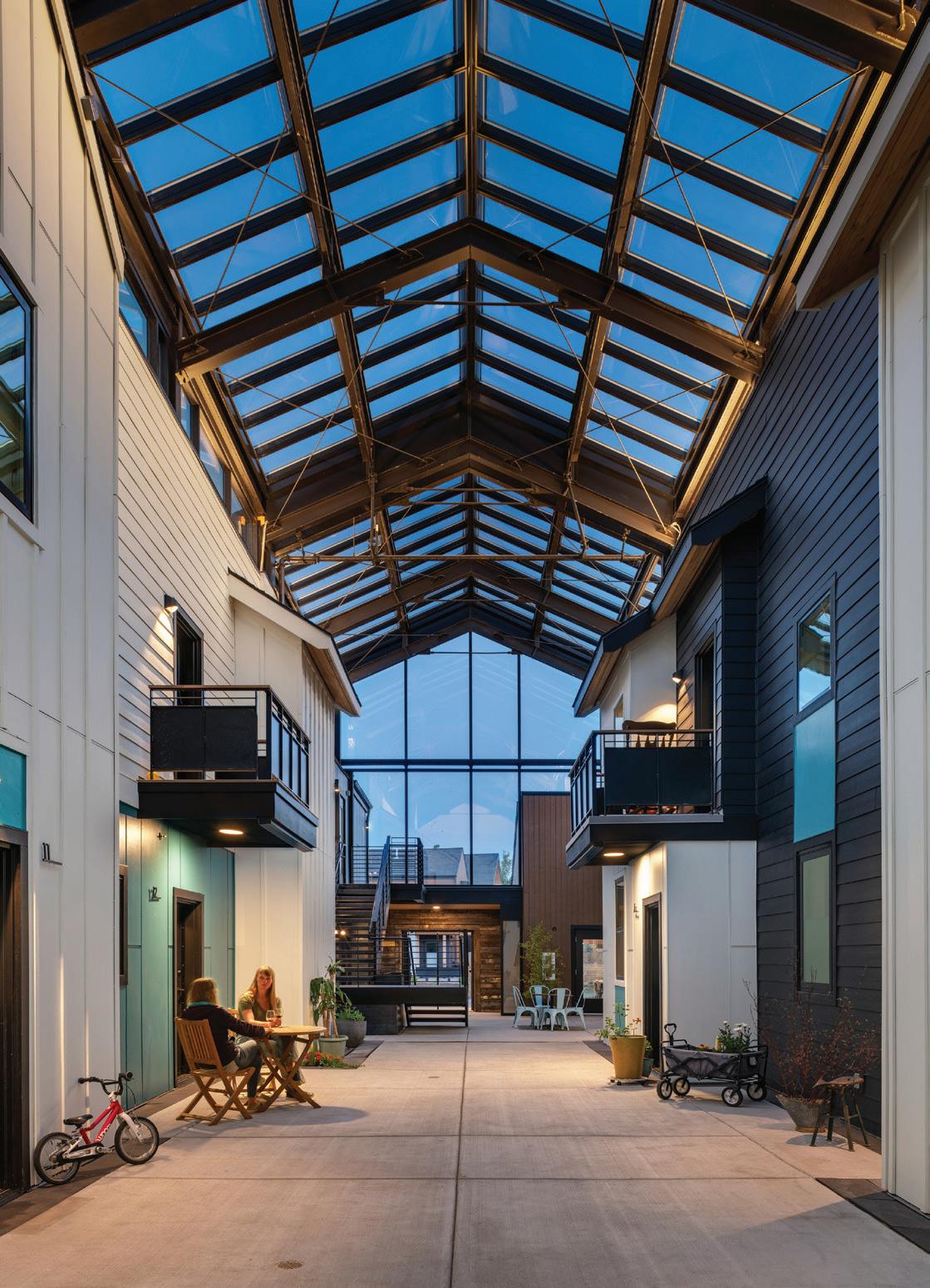
Bozeman’s
WRITTEN BY SADIE JENKINS
STUDIO COHAB, A design firm in Bozeman, focuses on creating innovative, sustainable spaces, including cohousing developments designed to encourage connection and community living. Their work is guided by the belief that housing plays a vital role in people’s well-being, and that thoughtful design can create opportunities, strengthen relationships, and contribute to a more equitable housing future. Rather than viewing each project as simply another residential development, the firm approaches design as a way to positively impact the people who use these spaces.
2026 |
a national level is really exciting.”
“I’m most proud that the people who live there now have a fantastic community that supports their needs and interests,” he adds. “We were able to create something beautiful while also supporting those larger goals.”
Montana sculptor Jim Dolan aims to destigmatize mental illness
WRITTEN & PHOTOGRAPHED BY JODI HAUSEN
UNDER A BLUEBIRD sky in early spring, Jim Dolan stands amid a grove of bright red “phone booths” outside his Belgrade, Montana sculpture studio. Over the coming months, he’s planting them throughout the state beside quiet country roads, in wheat fields, in places where they might catch people’s attention.
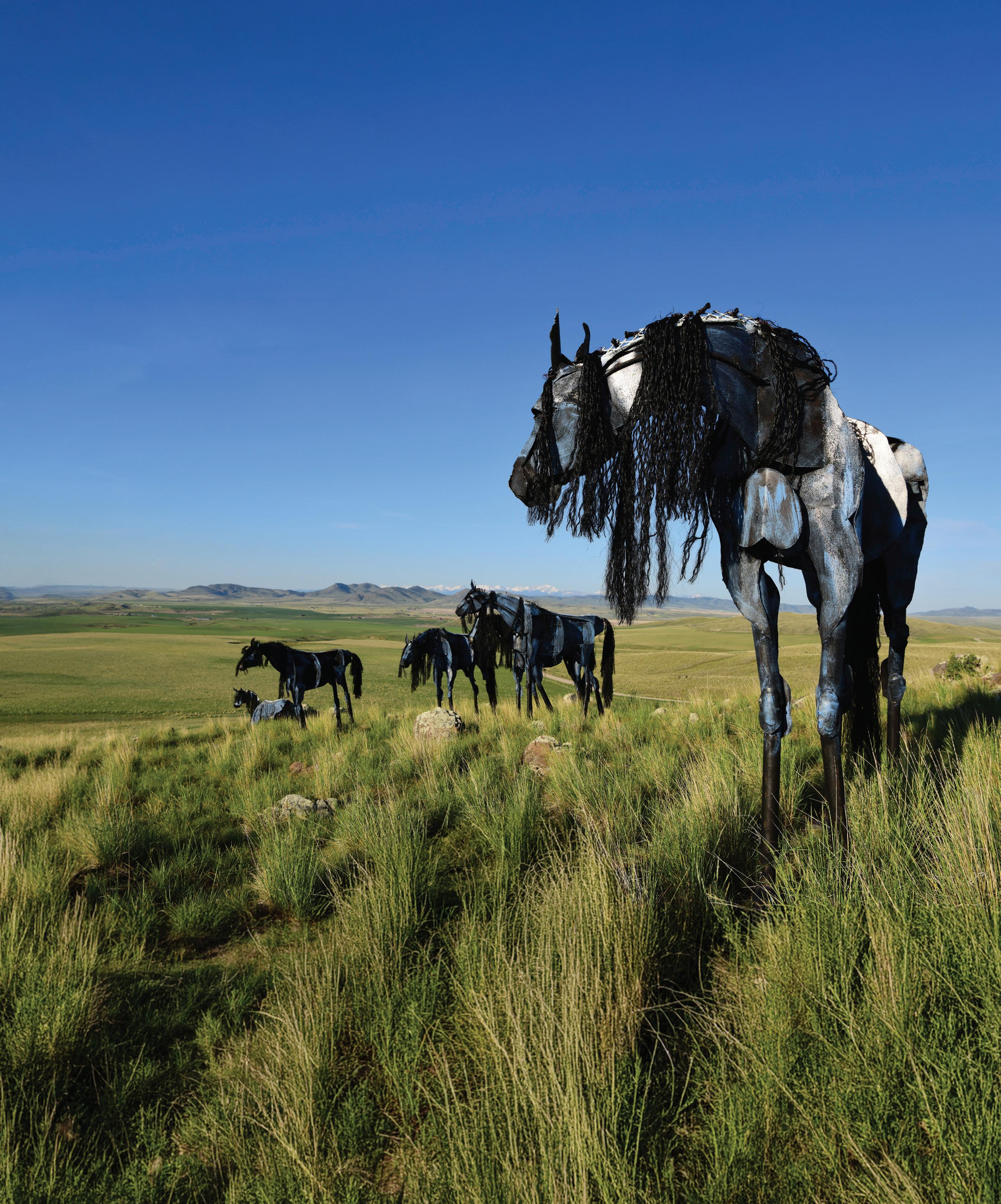
When Dolan learned Montana has one of the highest suicide rates nationwide, the 78-year-old artist and humanitarian known for public art projects, including the Bleu Horses in Three Forks, decided to do something. Using his metal-sculpting skills, he created 24 booths, each with a replica old-school dial phone inside. They’re not intended to make calls — they aren’t functional. But Dolan does mean to send a message. Atop each booth he inscribed messages: “Call home,” “Keep in touch,” and “Dial 988.” His hope is to uproot the spread of suicides that has plagued the state for decades and to fertilize discussions about mental health, particularly in the agricultural community.
Montana adopted the 988 National Suicide Prevention Lifeline in 2022, connecting callers to one of three Montana call centers. Karl Rosston, Montana’s suicide prevention coordinator, reports that in 2025, the state’s helplines responded to more than 16,000 calls, chats, and texts. Of those callers, about 83 percent felt stabilized enough not to need further medical intervention.
“So we know the 988 system works,” he says. “People just need someone to talk to.”
This is particularly true for youth. A study published in the Journal of the American Medical Association in April indicates that the national suicide rate between July 2022 and December 2024 for people aged 15–34 was lower than rates projected before the helpline launch. Researchers also saw a significant reduction in suicide rates for youth, with data from 10 states fielding the highest increase in answered calls, reporting an 18.2 percent reduction in suicides.
Rosston also says people in rural communities are at higher risk for suicide. Contributing factors include lack of behavioral health services, stigma, social isolation, access to firearms, and alcohol use. Farmers and ranchers often adopt a “bootstrap mentality,” considering depression a weakness or a burden on others. So Rosston was delighted to see one of Dolan’s phone booths peeking out of a wheat field outside Glasgow.
“If nothing else, it piques someone’s interest in what 988 is,” he says.
Others agree.
Nancy Schlepp lives on a ranch in Ringling that’s been in her family since 1896. She’s no stranger to the tragedy of suicide — an uncle, her husband’s step-grandfather, and her daughter’s best friend died by suicide. When Dolan, a longtime friend, contacted her about his project, she wanted her community of fewer than 50 residents to be one of the first to have a booth installed.
“I think we all have someone who we lost to suicide,” she says, sitting in the Ringling Church in front of which one of
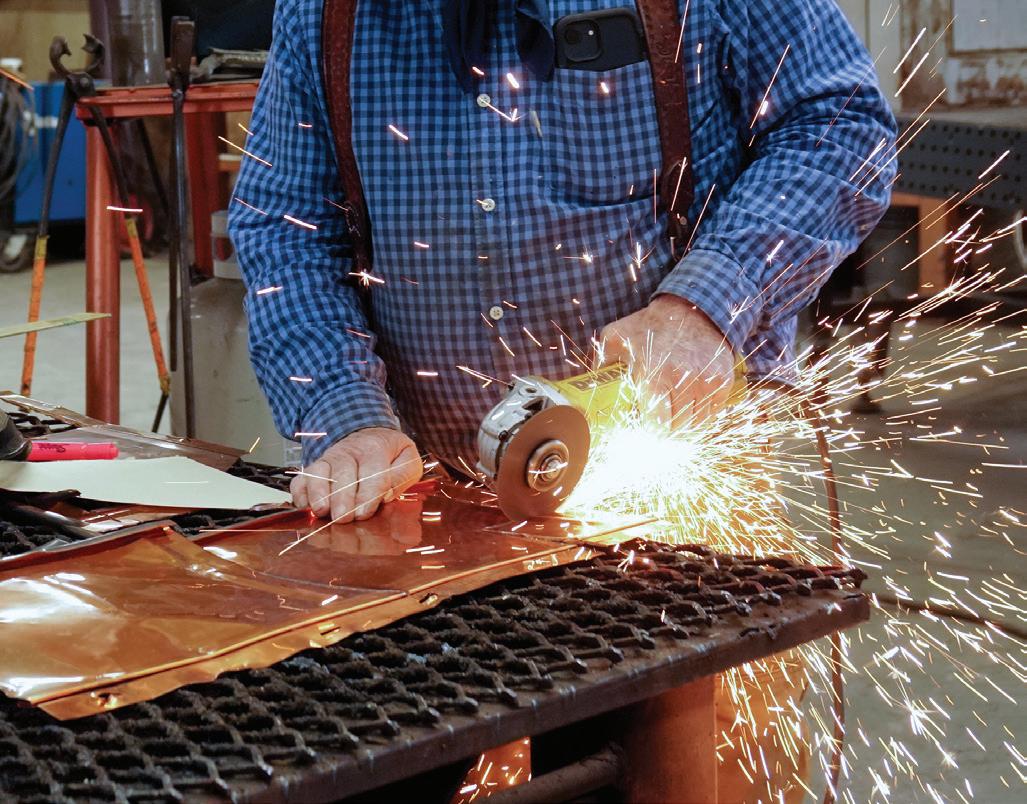
FROM LEFT: Sculptor Jim Dolan takes a break to pose among a collection of his partially completed phone booth sculptures. • Dolan cuts copper sheeting for a horse sculpture in his Belgrade studio.
the booths stands sentry over U.S. Route 89 between Livingston and White Sulphur Springs. “It’s just something we don’t talk about, but we should.”
Schlepp recalls a period in her life when she would have benefited from talking with a professional. In 2018, her mother, father, and sister all died within months of each other. In that same year, her family lost 12 calves in a ferocious snowstorm that isolated the herd. Neither she nor her husband sought help, but “looking back now, I wish we had,” she says. She’s optimistic the paradigm can shift.
“I hope the phone booths remind people to check on their neighbors because that’s how we got through [that year] — our wonderful neighbors graciously volunteering to help us.”
On the eastern side of Montana, Courtney Kibblewhite helped Dolan find locations and get permissions. She also printed informational resources to place inside the booths. Her media company, Northern Ag Network, launched Beyond the Weather in 2021 — an awareness campaign to eliminate the stigma of talking about and seeking support for mental health.
Beyond the Weather’s website hosts personal stories written or recorded by farmers and ranchers. In May, Trevor Schock, secretary of the Montana Grain Growers Association, wrote about his struggles when an arm injury left him unable to “even pour myself a bowl of cereal.”
“It took a lot for me to admit, even to myself, that I was not OK,” he wrote. “I could not shake the feeling that I was somehow less capable than before.” He worried about the upcoming planting season. But through conversations with friends and family, he realized that bottling up his emotions wasn’t healthy.
“Coincidentally, not long before my injury, Jim Dolan placed one of his red ‘Call Home’ phone booths near one of our fields along Highway 13 [near Vida],” he says. “Seeing that phone booth nearly every day has become a reminder that it is important to talk through both the good days and the bad ones.”
Though Dolan’s commitment is unassailable, creating the booths was more challenging than he’d anticipated.
“The hardest part was when I realized I wanted to do more than one,” he says. “The first one was creative. The next one was correcting the measurements. The next 22 were just doing the same thing over and over and over again. It was exhausting. It wasn’t doing art; it was just plain work.”
Soon, two dozen booths will abide the seasons along roads and in fields, reminding people that they matter. Dolan acknowledges the project is a small thing, but “it might get someone to think,” he says. “It’s not going to cure anything, but it’s one more tool in the box. My hope is that these spare some families the heartache.”
Titles for Aficionados
WRITTEN
BY
CAMDEN SORENSON
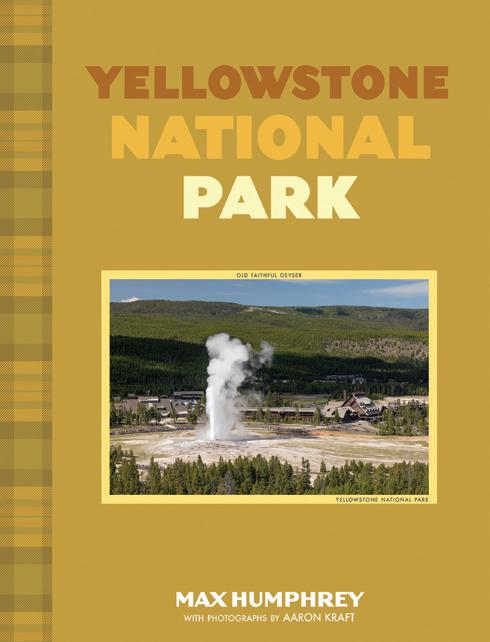
Yellowstone National Park
WRITTEN BY MAX HUMPHREY, WITH PHOTOGRAPHY BY AARON KRAFT
Yellowstone National Park by Max Humphrey is a reimagined take on a travel guide for one of America’s most recognizable national parks. In this new release, Humphrey, an interior designer and author of Lodge: An Indoorsy Tour of America’s National Parks, explores how the architecture, materials, and surroundings influence travelers. The book features stunning photographs and personal observations, pushing the reader to see the park through the atmosphere, design, and experiences it has to offer. It balances tourist hot spots with the quiet, secluded corners of the park, seeking to do justice to one of the most beautiful landscapes the world has to offer.
$50 | 224 pages | August 2026 Gibbs Smith
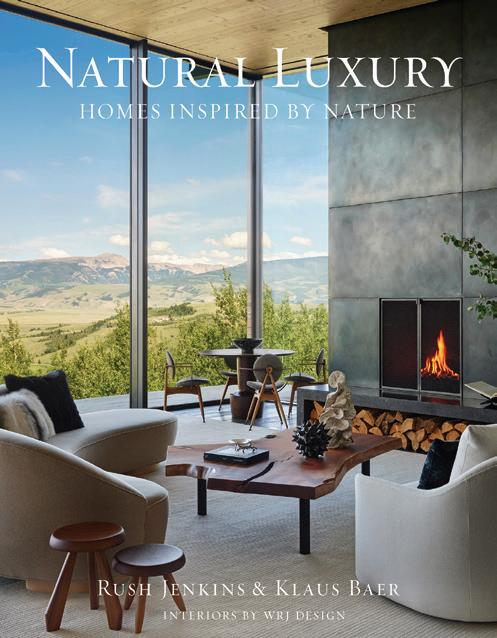
Natural Luxury: Homes Inspired by Nature
WRITTEN BY RUSH JENKINS AND KLAUS BAER
WRJ Design co-founders Rush Jenkins and Klaus Baer have released Natural Luxury: Homes Inspired by Nature in a celebration of the firm’s commitment to incorporating nature into architecture and design. From homes in Jackson, Wyoming and Star Valley, Idaho to a Manhattan penthouse, Natural Luxury features the design and the stories that went into each. Each featured project is a beautiful example of how WRJ designs elegance and reverence into every one of their homes to produce livable luxury interiors inspired by the natural surroundings they inhabit.
$75 | 288 pages | July 2026
Vendome
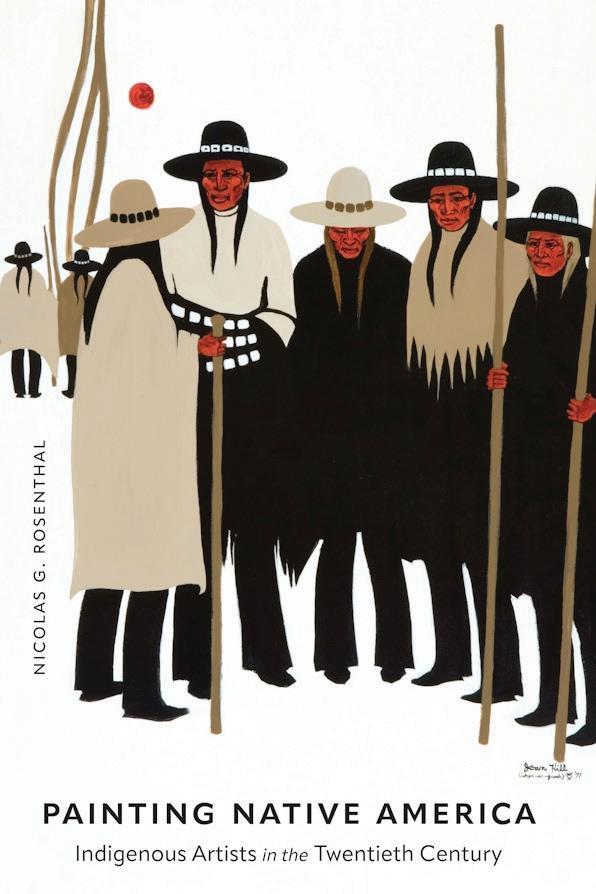
Painting Native America: Indigenous Artists in the Twentieth Century
WRITTEN BY NICOLAS G.
ROSENTHAL
In Painting Native America: Indigenous Artists in the Twentieth Century, Nicolas G. Rosenthal honors generations of Indigenous artists who have sought to make a place for Native art. The author writes from the intersection of history and art history, showing how different generations of artists have navigated the social and political issues of their times. The book includes 70 color illustrations and explores American Indian and First Nations painters, including Oscar Howe, Pablita Velarde, Allan Houser, Woody Crumbo, T.C. Cannon, Fritz Scholder, Frank LaPena, and Jean LaMarr, giving a voice to a group that is often silenced in art history.
$60 | 296 pages | January 2026 University of Nebraska Press
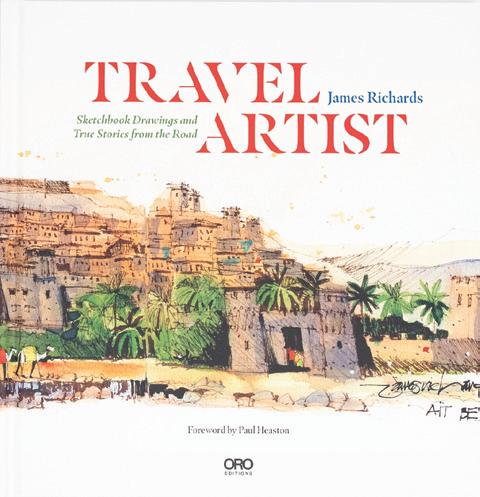
Travel Artist: Sketchbook Drawings and True Stories from the Road
WRITTEN BY JAMES RICHARDS
More than just another sketchbook, James Richards’s Travel Artist: Sketchbook Drawings and True Stories from the Road is a story told through handmade images. Readers are pulled through a narrative that spans more than 50 countries and 20 years with full color and blackand-white travel sketches and essays from the author’s journals. This book speaks to the creativity within us all, emphasizing the smallest details that make up a moment. Travel Artist is a peaceful juxtaposition to the busy world it documents.
$40 | 176 pages | 2025 Oro Editions
Art Events of Note AGENDA
Museums, galleries, and curated art events celebrating the artists of the Northern Rockies offer an intimate glimpse at life in the American West. Here are some upcoming calendar highlights:
ONGOING
Through August 23
BISON-TENNIAL: FROM COLONIZATION TO REMATRIATION
National Museum of Wildlife Art | Jackson, WY wildlifeart.org
Coinciding with the nation’s 250th anniversary and the 10th anniversary of the bison’s designation as the U.S. National Mammal, this exhibition features works by contemporary Indigenous artists as well as the late Charles M. Russell and Albert Bierstadt, among many others, to celebrate artistic traditions and new perspectives on one of America’s most enduring stories.
Through September 8 MONTANA SHAKESPEARE IN THE PARKS
Various Venues | shakespeareintheparks.org
Montana State University’s College of Arts and Architecture continues its annual Montana Shakespeare in the Parks productions, offering free, quality performances. Now in its 54th season, the traveling acting troupe will perform William Shakespeare’s “The Merchant of Venice” and “Much Ado About Nothing” in 65 rural communities in Montana, Idaho, North Dakota, Washington, and Wyoming.
Through September 21 11TH ANNUAL BIGHORN RENDEZVOUS
The Brinton Museum | Big Horn, WY thebrintonmuseum.org
This annual exhibition features more than a dozen nationally recognized, award-winning artists and their works in oil, pastel, and bronze. The show opens with a First Look
Sale on July 31, offering an early opportunity to preview and purchase available artwork while meeting participating artists. On August 1, artists will gather on the grounds of the historic Quarter Circle A Ranch for the annual Quickdraw, followed by the ticketed Brunch & Art Auction.
Through October 25
CHISEL + RAZOR, ACT I: THE ARTISTIC LEGACIES OF EDMONIA & SAMUEL LEWIS Tinworks | Bozeman, MT | tinworksart.org
This exhibition unites the stories of siblings Mary Edmonia Lewis, the first internationally acclaimed neoclassical sculptor of Black and Anishinaabe descent, and Samuel W. Lewis, a Bozeman-based performer, entrepreneur, and community leader. Presented as a play, art installation, storytelling, and 3D mapping film, the show expands beyond the Tinworks campus at venues such as the Rialto Theatre and Museum of the Rockies.
Kimball Geisler’s Cradle of the Green River is available at the 2026 Buffalo Bill Art Show & Sale in September.
Through December 19 IN COMPANY
Ucross Art Gallery | Clearmont, WY ucrossfoundation.org
In this exhibition exploring relationships and connections, seven former Ucross artists-inresidence will showcase their work alongside artists who have impacted their creative processes, weaving together literature, music, and film among paintings, photographs, sculptures, and installations to encourage viewers to consider how meaning is shaped both individually and collaboratively.
Through January 9, 2027 EMBEDDED IN THE OVERLAP
Yellowstone Art Museum | Billings, MT artmuseum.org
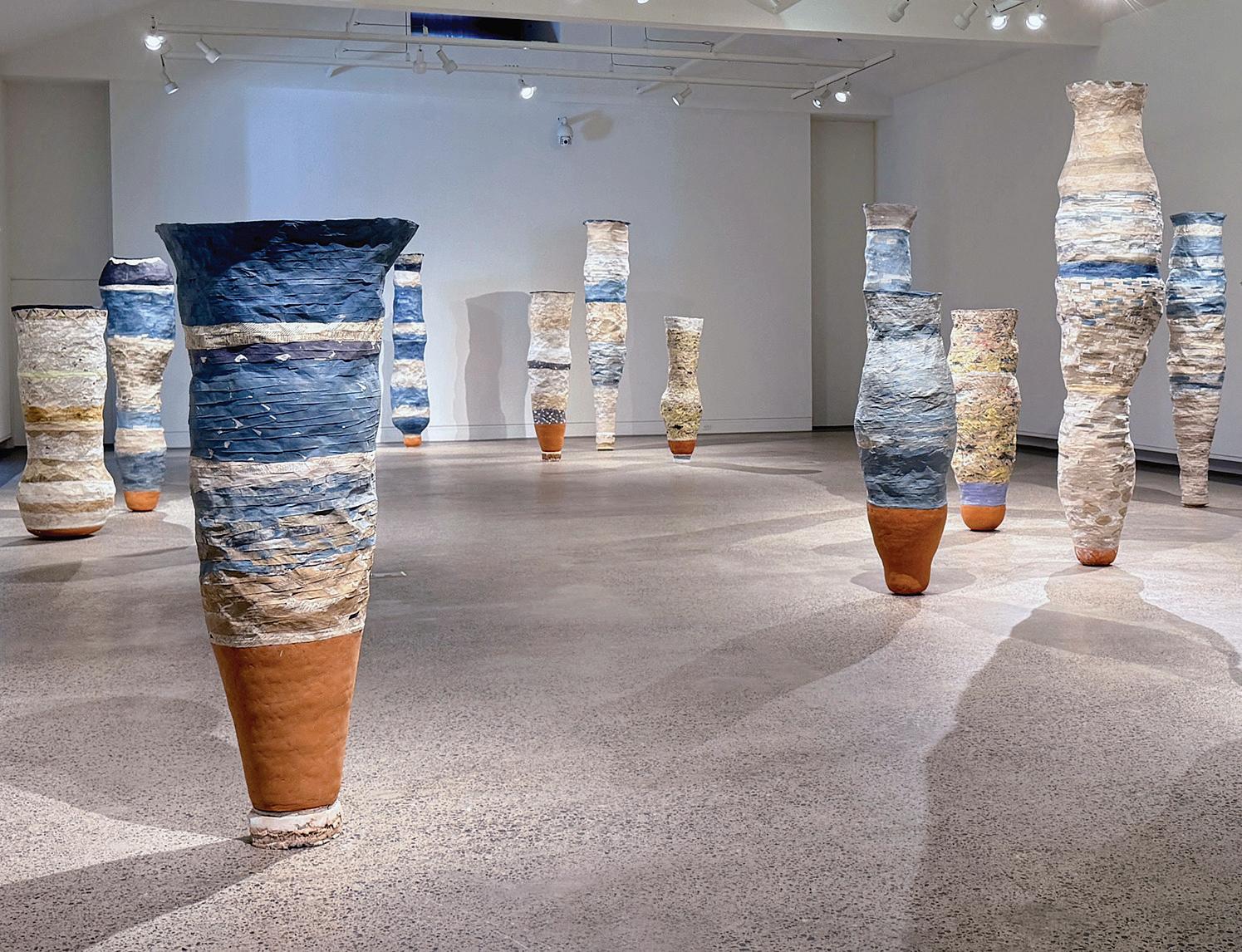
A presentation of 22 vessels, 45 prints, and two tumbleweed sculptures produced by artist Rebecca Hutchinson, this exhibition traces archaeology and explores Indigenous presence, settlement, and modernization.
Through February 13, 2027 VISIONS OF AMERICA: THE SPIRIT OF INDEPENDENCE
Yellowstone Art Museum | Billings, MT artmuseum.org
In celebration of the 250th anniversary of the United States of America, this showing of the 1974 Kent Spirit of Independence Bicentennial Portfolio includes 125 lithographs or serigraphs produced by 12 artists responding to the prompt, “What does independence mean to me?”
UPCOMING
August 1 – 31
THE LIVING INVISIBLE
Old Main Gallery | Bozeman, MT oldmaingallery.com
Moving beyond the scale of landscape art, the work of Sara Mast explores the cosmic, cellular, microbial, and galactic. The Living Invisible, with an artist reception on August 14, reveals the energetic aliveness that permeates all matter.
August 3 – September 5
WILD LORE
Turner Fine Art | Jackson, WY turnerfineart.com
From intimate wildlife portraits to sweeping Western landscapes, this exhibition celebrates the beauty, mystery, and enduring presence of wildlife with the work of artists Paul Rhymer, Gunnar Tryggmo, and Renso Tamse.
This premier exhibition and sale brings together artisans, artists, collectors, interior designers, architects, and others, with works on display in an open showroom, a fashion show, daily happy hours, and curated spaces by some of the best regional interior designers. After 18 years in Jackson, Wyoming, the event is relocating to Bozeman, where it will continue to provide an elevated experience dedicated to Western home, lifestyle, fashion, and design.
August 7 – 9
SWEET PEA FESTIVAL
Lindley Park | Bozeman, MT sweetpeafestival.org
Returning for the 49th year, this iconic summer celebration is filled with live music, dance, theatre, visual arts, children’s activities, local food, and more. In addition to a juried art show and curated Artists’ Marketplace, this year’s festival will include a preview of Opera Montana’s operatic adaptation of Norman Maclean’s A River Runs Through It on August 8.
Embedded in the Overlap by Rebecca Hutchinson is on view through January at the Yellowstone Art Museum in Billings.
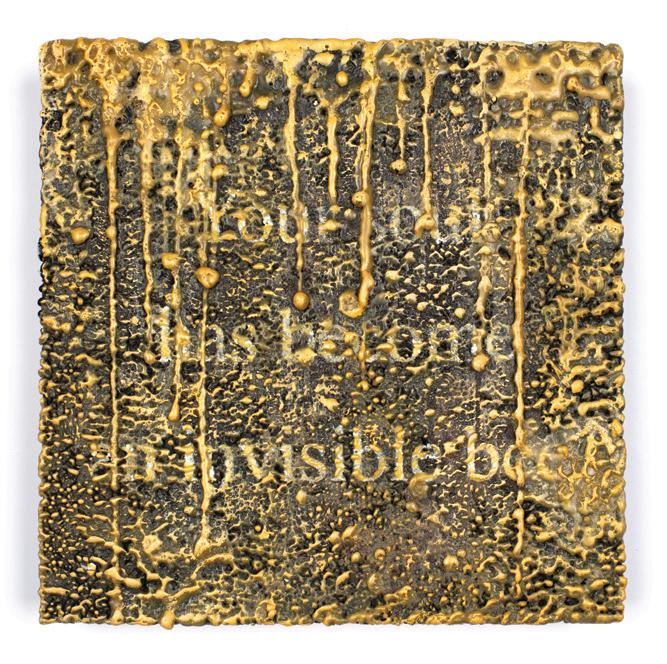
An Invisible Bee from The Living Invisible, a solo exhibition by Sara Mast, is on view this August at Old Main Gallery in Bozeman.
August 14 – 16
ART FAIR JACKSON HOLE
Art Association of Jackson Hole Campus Jackson, WY | artassociation.org
As the largest fundraiser for the Art Association of Jackson Hole, this annual juried show and sale celebrates more than six decades of the arts. The event showcases a range of local and national artists who will be on site presenting their ceramics, paintings, furniture, photography, and more.
August 14 – 16
SUN VALLEY ARTS & CRAFTS FESTIVAL
Atkinson Park | Ketchum, ID sunvalleyartsandcraftsfestival.com
This annual outdoor juried event showcases fine arts and crafts from local and national artists, offering activities for kids, food vendors, and a picnic area with live music.
August 21 – 23
ARTIST STUDIO TOUR OF THE WOOD RIVER VALLEY
Various Venues | Wood River Valley, ID artiststudiotour.com
For this annual celebration of the arts, 40 professional artists from Idaho’s Wood River Valley open their art studios to visitors and share about their inspirations and techniques.
August 21 – 31
WILDLIFE MASTERS
Astoria Fine Art | Jackson, WY astoriafineart.com
Featuring new works by Ken Carlson, Mark McKenna, Kyle Sims, and Adam Smith, this group exhibition honors the wildlife of the region.
August 28 – 30, October 2 – 4, & January 8 – 10
CHEYENNE HOME SHOW
Cheyenne Ice & Events Center and Event Center at Archer | Cheyenne, WY cheyennehomeshow.com
Featuring the latest in home improvement trends, this show includes displays and live demonstrations highlighting new home technologies, interior and exterior designs, remodeling tips, and more.
September 1 – 15
ROCKY HAWKINS & STEPHANIE REVENNAUGH
Altamira Fine Art | Jackson, WY altamiraart.com
Pairing painter Rocky Hawkins with sculptor Stephanie Revennaugh, this exhibition showcases the contemporary Western narrative, with a reception on September 4.
The Ucross Foundation’s biennial gala will take place this fall in Clearmont, Wyoming.
October 1 – 3
LIVINGSTON SONGWRITER FESTIVAL
Various Venues | Livingston, MT | livingstonsongwriterfestival.org
The third annual Livingston Songwriter Festival, an event organized by the nonprofit Rocky Mountain Songwriter Festivals and a sister event to the Red Lodge Songwriter Festival held in June, returns to Paradise Valley north of Yellowstone National Park to bring together songwriters and music lovers for intimate performances and storytelling. Turn to page 160 to learn more.
October 9 – 10
CHARLIE RUSSELL’S LEGACY: CELEBRATING 100 YEARS
Various Venues | Great Falls, MT | cmrussell.org
Marking a century since the passing of artist Charles M. Russell, this event brings together those who have been moved by his works and includes a parade, live music, cowboy poetry, Native games, and more.
LOOKING AHEAD
March 18 – 20, 2027
OUT WEST ART SHOW & SALE
Heritage Inn | Great Falls, MT | outwestartshow.net
A highlight of Western Art Week in Great Falls and a major fundraiser for the Out West Art Foundation, this show features painters and sculptors from across the U.S. and Canada. It includes quick-draw events, live music, and an awards ceremony for the Young Masters Program, an artist-run mentorship for Montana high school students.
March 18 – 20, 2027
THE RUSSELL: A WESTERN ART EXPERIENCE
Various Venues | Great Falls, MT | cmrussell.org
Celebrating renowned artist Charles M. Russell and benefiting the C.M. Russell Museum, this event-filled weekend offers something for every age and Western aesthetic, including auctions, Art in Action, and an educational symposium.
A. Banks Gallery, located in the heart of Big Sky Country, represents three dozen regionally and nationally acclaimed artists. Specializing in American, Western, Impressionistic and Sporting art, we provide an eclectic collection perfect for anyone’s taste. We look forward to serving you for all your art needs.
25 S. Tracy, Bozeman, MT 59715 406.577.8440 www.abanksgallery.com
Located in downtown Bozeman - the heart of Big Sky Country
M itch B aird
CARTER WALKER
Bringing Montana to the Table
At Herb & Omni in Whitefish, award-winning chef and hometown boy Earl James Reynolds believes in playing with your food
PHOTOGRAPHY BY
AARON AGOSTO
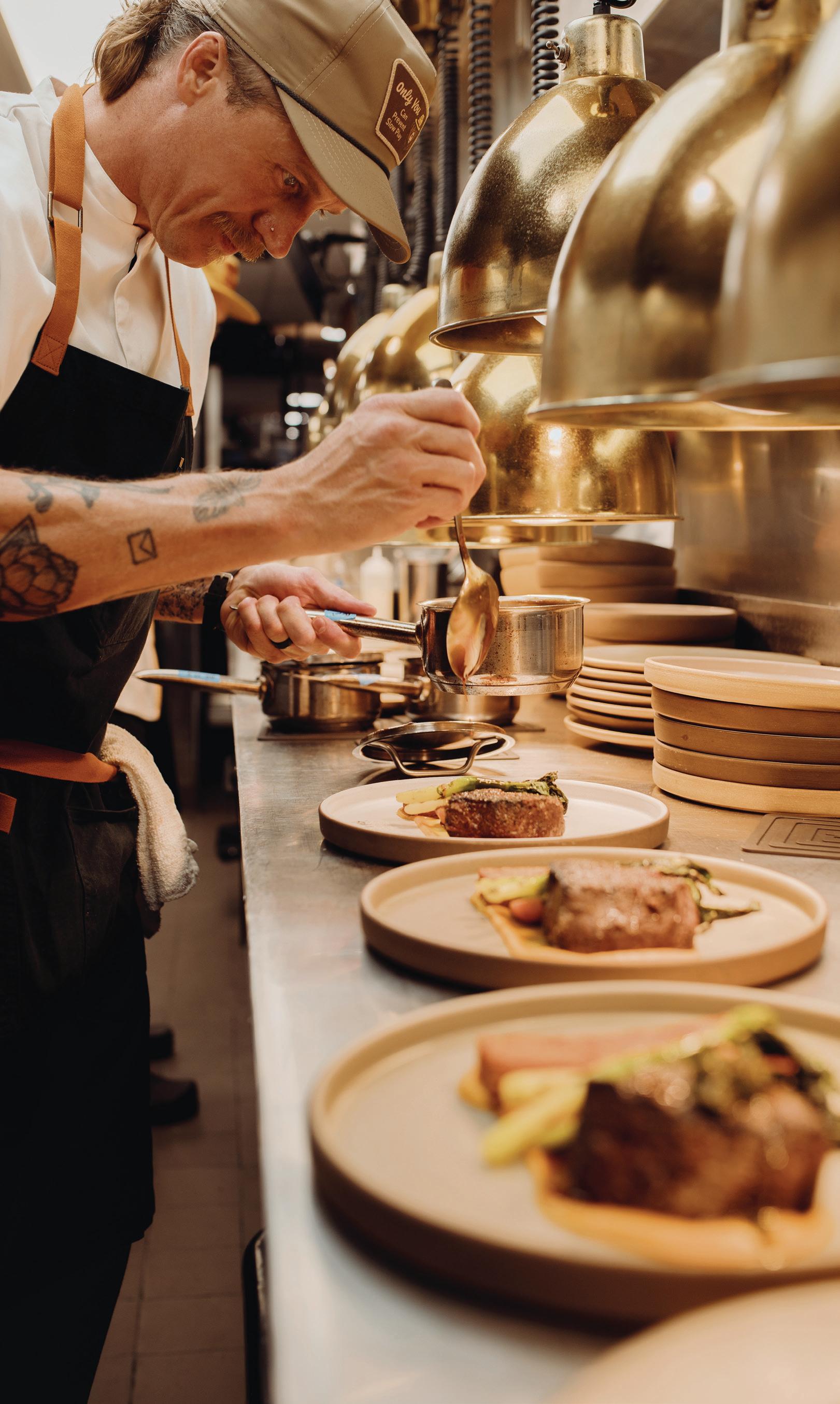
IF YOU BELIEVE, as Picasso did, that “the purpose of art is to wash the dust of daily life off our souls,” or, like Kurt Vonnegut, that art is “a very human way of making life more bearable,” or, as Mary Oliver wrote, that “art is one of the things that could save us,” it might not surprise you to know that Chef Earl James Reynolds studied art in college. Oil painting, to be specific. The boy from Whitefish, Montana, who grew up picking huckleberries and catching rainbow trout across the Flathead Valley, wanted to be a painter like his uncle. But somewhere along his journey, his medium changed.
Reynolds, the executive chef at Herb & Omni in Whitefish, makes art in the kitchen now — on the plate, in the dining room, and within the lines of every menu he writes. This spring, Reynolds was named one of five 2026 James Beard Foundation nominees for Best Chef in the Mountain Region.
But don’t let that fool you. Food is not about prestige for Reynolds. It’s not about awards or accolades. Food, for Reynolds, is about community. And it’s about fun!
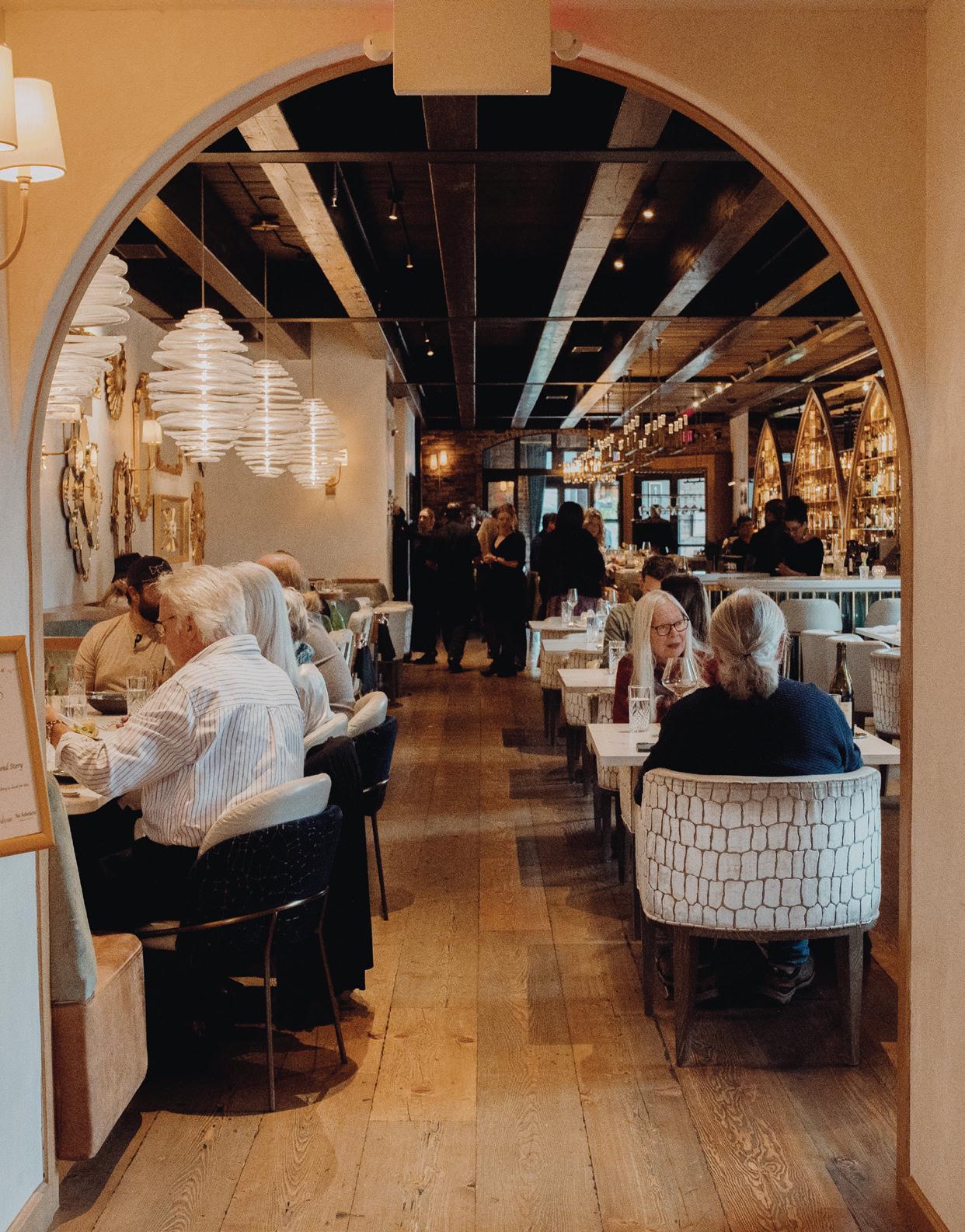
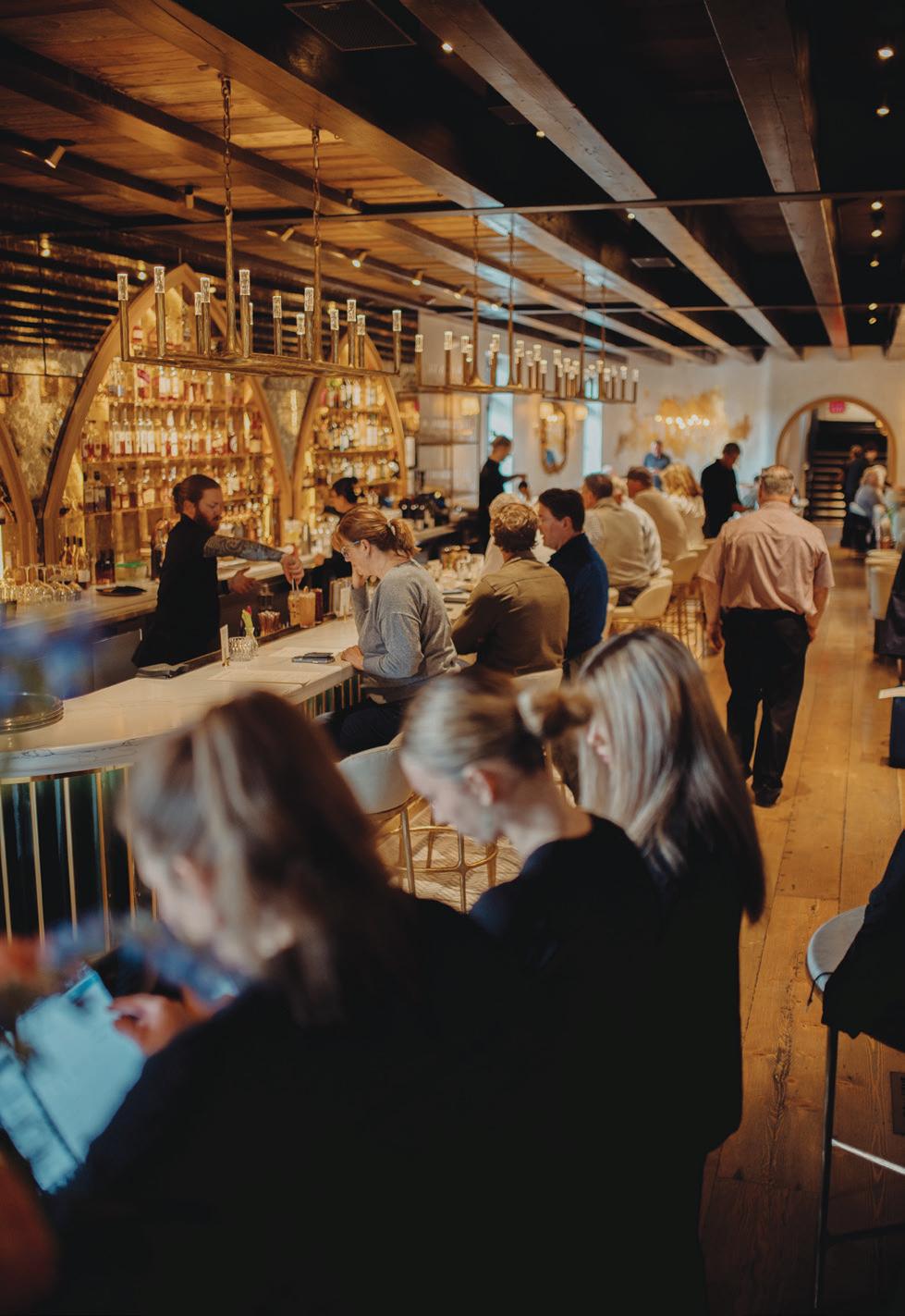
IT’S A FRIDAY night and the dining room at Herb & Omni in downtown Whitefish’s 101 Central building is bustling. We are three writers and two musicians, people watchers and story makers all of us. At a table nearby, an older couple still in gardening jeans is having a spontaneous date night, and next to them a family with two young children is stealing a moment of leisure at the end of a packed week. There’s a wedding party somewhere in the building; men in suits check their hair in the bathroom. Glammed-up women,
“Food
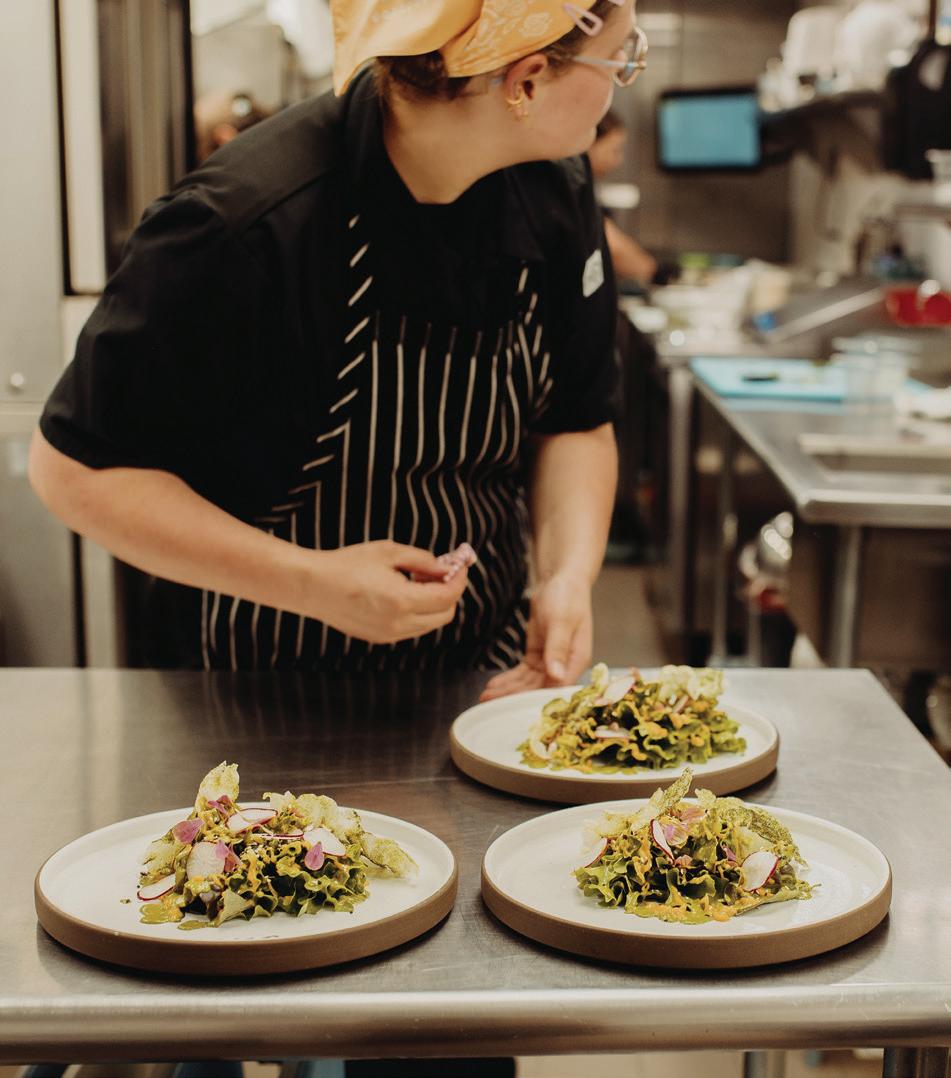
[as a medium] is not only visual; you can smell it, taste it, and feel it, so texture is a really fun thing for me to play with when I’m making a dish,” says Chef Earl James Reynolds, shown here plating entrées at Herb & Omni in Whitefish, Montana.
out-of-towners no doubt, with fur coats and cowboy hats, make their way to a table. Mirrors hang like paintings above velvet banquettes in peacock green. Everywhere there is sparkle and shine.
But never mind the gold mirrors and crystal chandeliers, or the fancy folk at the next table. This is Montana in the greenest days of summer, and Reynolds intends to remind us of that with every bite.
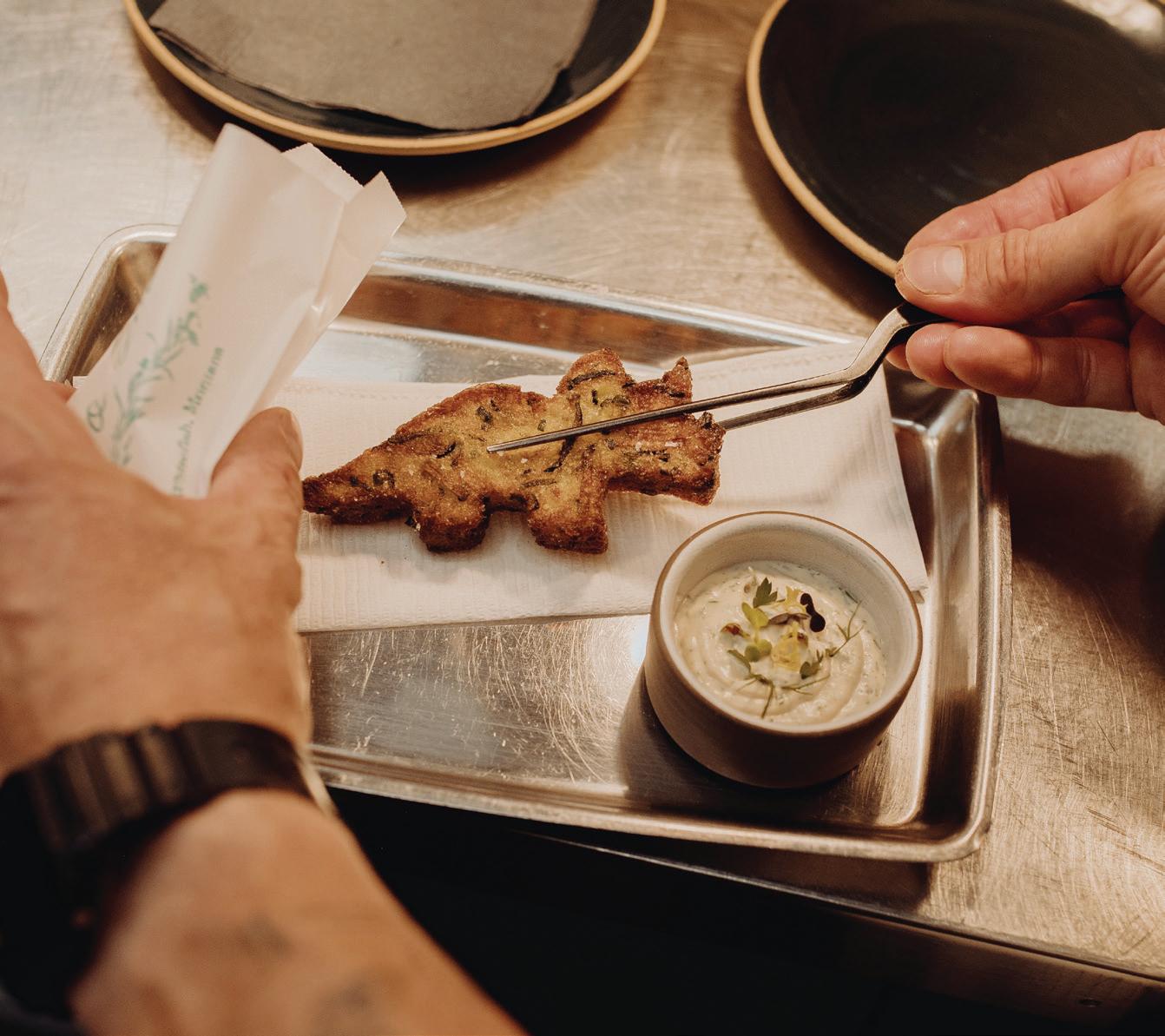
A special Restaurant Week menu tempts us, but instead we order à la carte so we can taste — and see, smell, and touch — as many of Reynolds’s creations as possible. We select the rainbow trout corn dog, a couple of zucchini dino nuggets with cashew garden ranch, and a buñuelo — goat cheese mousse with kraut powder and jalapeño relish. We laugh at the beauty of each plate as it is delivered. And then again with every bite.
The Incongruity Resolution Theory suggests that humans laugh after encountering the unexpected or the absurd so as to resolve the confusion with a sudden cognitive shift that makes sense of the contradiction. The relief of landing on a new understanding triggers happy laughter.
Ordering corn dogs and dino nuggets in the fanciest restaurant for hundreds of miles? Confusion. Uncertainty. But when they are placed before us, we take in the colors of the fresh herbs, the golden crunch of sweet cornbread, the nuttiness of trout, and the smoky tang of tomato tartar sauce.
Ah. Yes. Chef Reynolds is at work, and this is fun. We get it. More laughter.
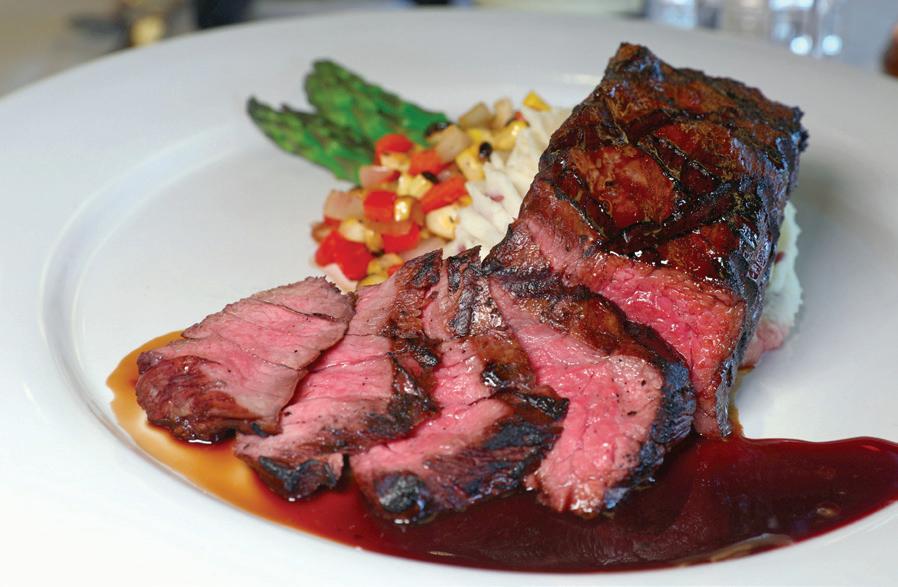
So goes the whole evening. The grilled Korean short rib with furikake crunch and pickled pineapple pop. The tomato and stracciatella with grilled apricot, milk bread crouton, burnt green harissa butter, and white balsamic. The Wagyu with tallow-fried tater tot, charred gai lan, brown butter carrot purée,
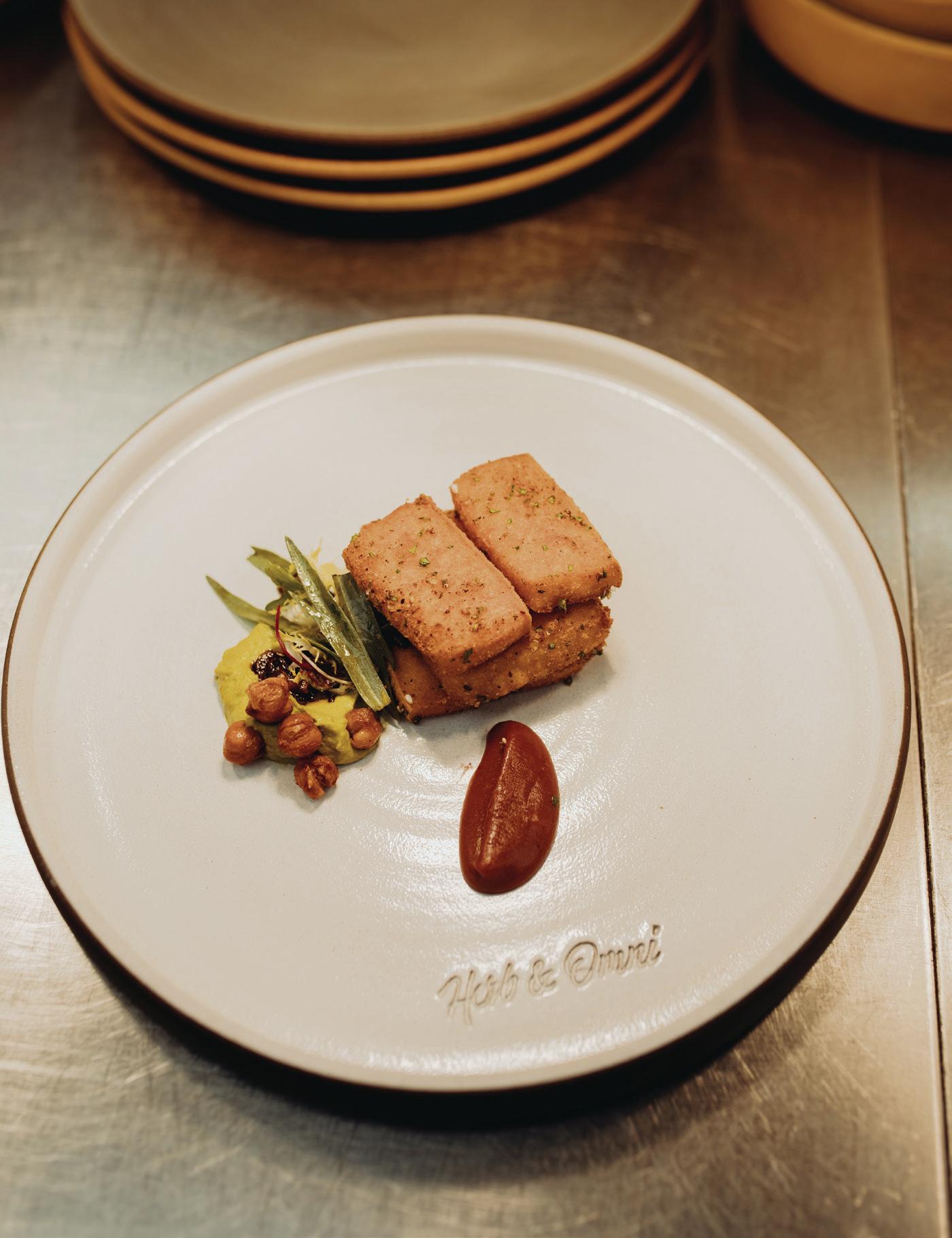
CLOCKWISE FROM TOP LEFT: The theme of bees and beehives — like hive-shaped glass chandeliers and the shelving cut-outs behind the bar — is present throughout the elegant dining room. • The ethos at Herb & Omni, short for herbivore and omnivore, involves making plant-based options both exciting and appealing, like these chickpea fritters with pistachio hummus, tamarind chutney, and crunchy chili oil. • The kitchen is bustling with up to 16 people making food magic over the course of any given day.
and garden-green chimichurri. At one point, one among us says he could be sated just reading the menu over and over.
But we don’t just read. We are indomitable and order on.
REYNOLDS, 41, TOOK the helm at Herb & Omni — short for herbivore and omnivore and specializing in thoughtful plant-based dishes — in December 2023 after an already storied culinary career that included such celebrated eateries as Canlis in Seattle under Chef Jason Franey and Restaurant Trokay in Truckee, California under Chef John Weatherson. His start in the industry, fittingly, came at age 16 when he washed dishes at Whitefish Lake Restaurant, where Reynolds remembers watching the chefs play with fire and sharpen their knives. “It looked like a pirate ship,” he says. (Read: which looked like fun!) Eventually, they let him start peeling potatoes, and, by 18, Reynolds took a prep cook job at another beloved Whitefish restaurant.
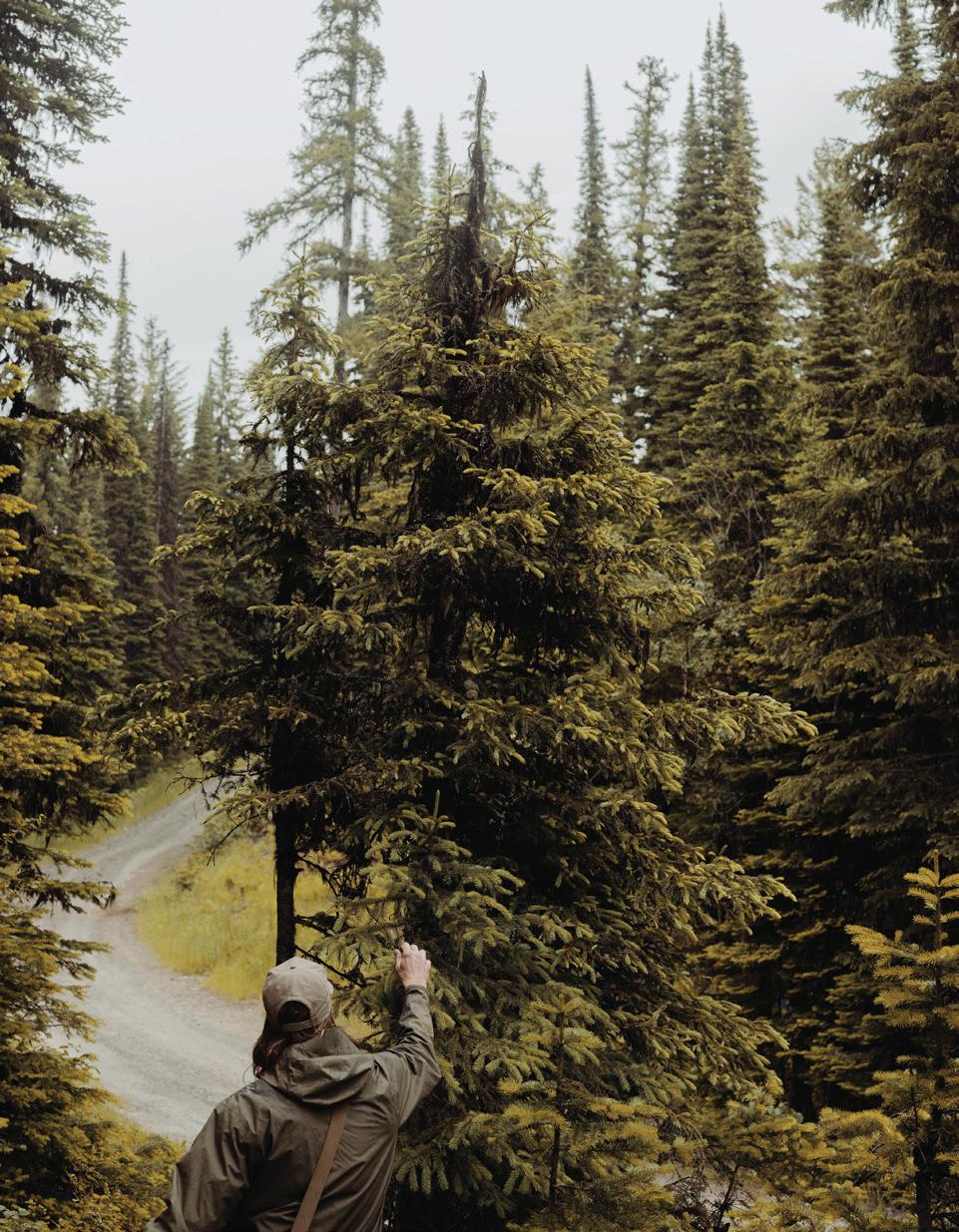
A culinary education in Seattle opened his mind to the importance of sustainable food sourcing, supporting local food systems, and cooking seasonally. But for Reynolds, the practice of picking nettles before service or harvesting herbs and thyme blossoms for that evening’s plates drove home the concept of local dining. It also led the chef home to his own Montana valley.
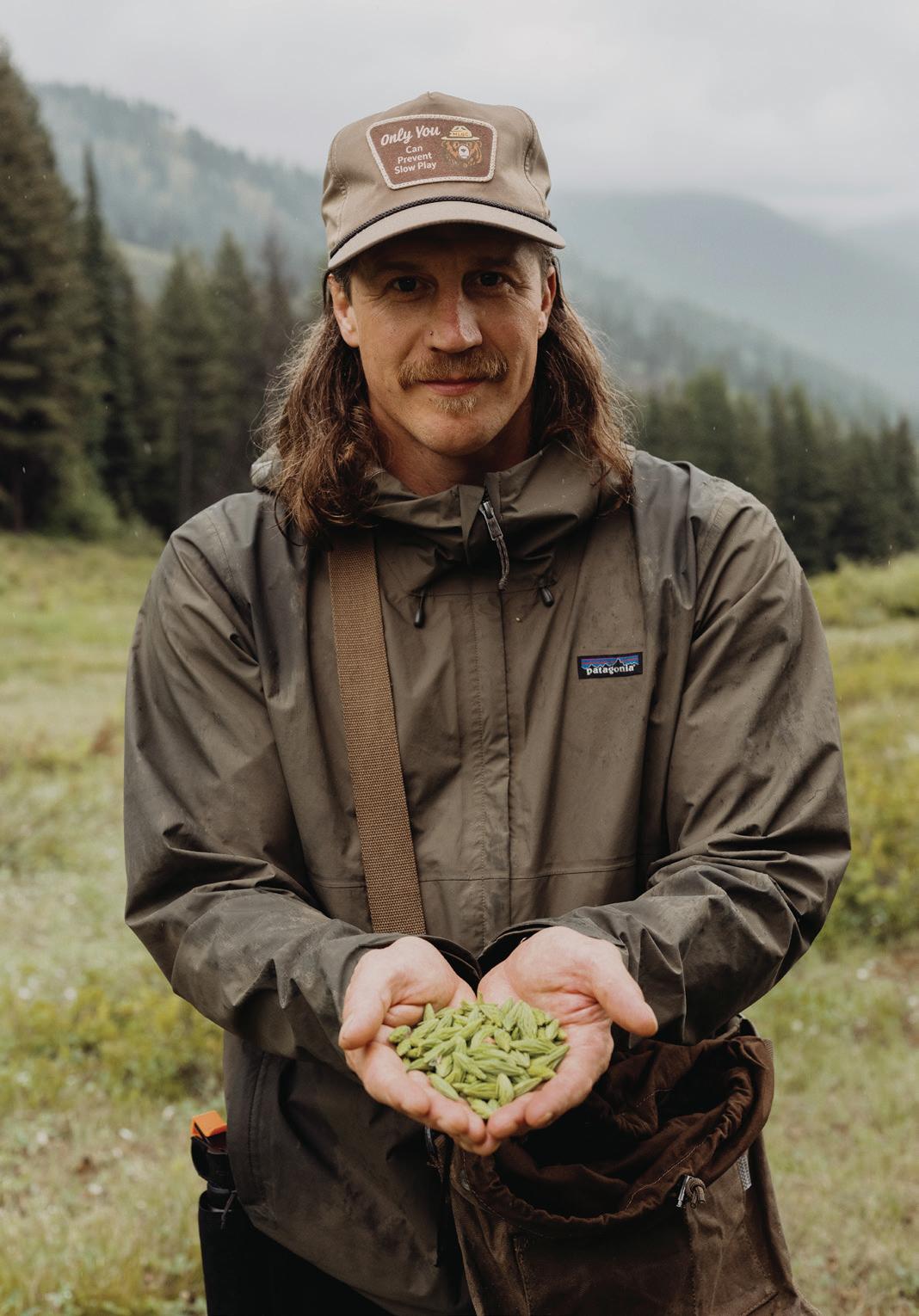
At Herb & Omni, sourcing, harvesting, and foraging locally are part of the magic for Reynolds. “You spend the day in the woods gathering spruce tips, morels, and miner’s lettuce, then bring them back to the kitchen,” he says. “The next day, guests are enjoying
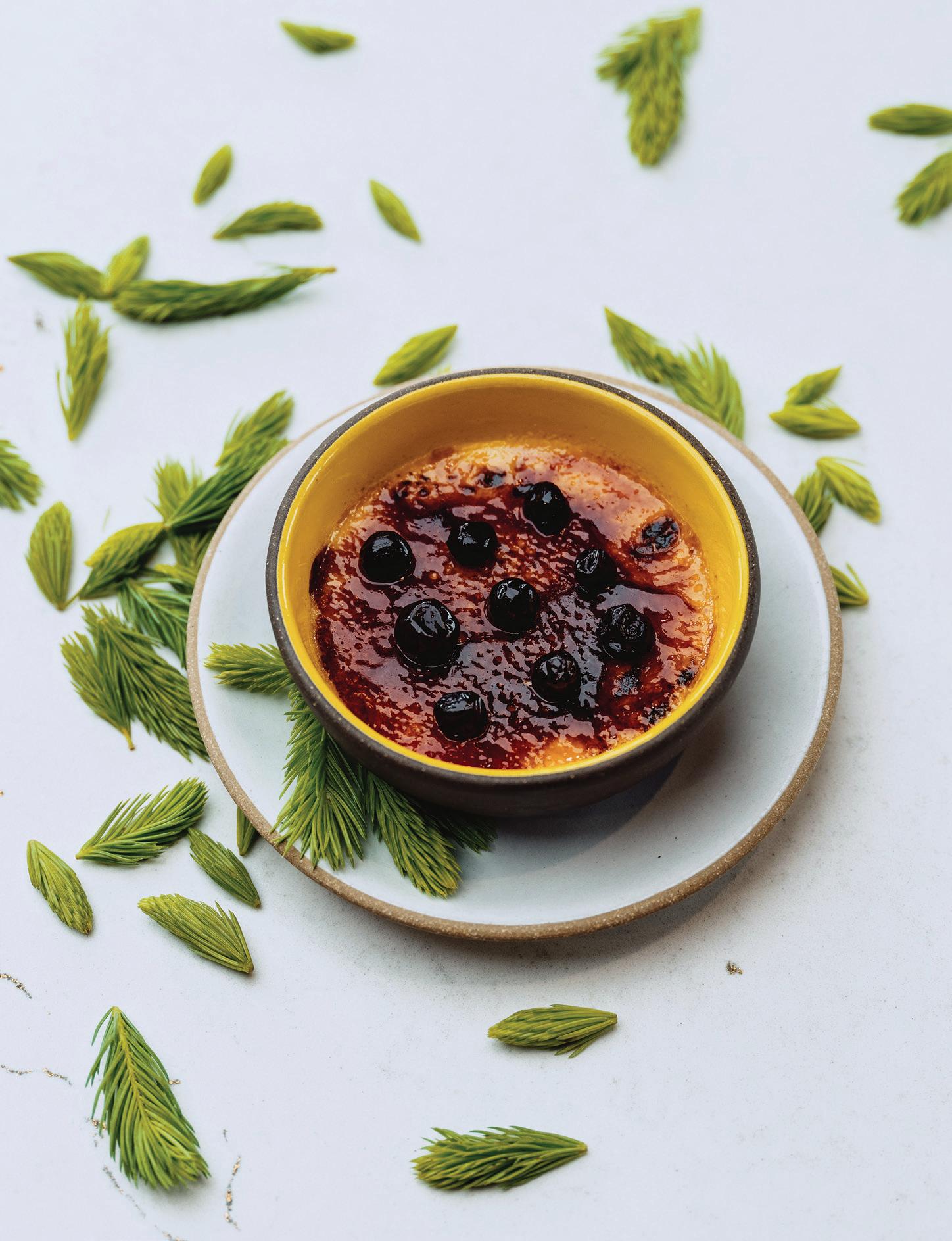
CLOCKWISE FROM TOP LEFT: Reynolds forages for the restaurant in the mountains and valleys around Whitefish. Being outside and spending time with his wife and daughter are a vital part of his life and allow him to balance the intensity of his time in the kitchen. • Here, Reynolds shows off freshly picked spruce tips which he uses in a variety of dishes, including crème brûlée. • While the zucchini dino nugget was created with kids in mind, the golden crunch and cashew garden ranch have made it a bestseller with grown-ups too.
those ingredients at the table. There’s an electric feeling in that process. Taking something from the mountains and carrying it all the way to the plate never gets old. It creates a connection to place that’s hard to replicate.”
And for Reynolds, being home in Whitefish, where he can cook for his family, friends, and community, is next level. “These are the mountains I grew up in. My connection to place is more personal,” he says, pointing out that he went to high school with the rancher who provides beef to the restaurant.
But any dining experience is more than the source of ingredients, and Reynolds and his kitchen team, which can swell to 16 on busy nights, think big picture about what they want for diners at Herb & Omni.
“Our goal is to create an experience where people can celebrate each other and celebrate themselves,” Reynolds says. “I think fine dining can come off a little stiff, and my goal is to create the opposite. I love the idea of people eating with their hands. I love making people smile.” Case in point, Reynolds created a three-course tasting menu for kids, inspired by his own nostalgia for food from his childhood.
Though his James Beard Award nomination has made Herb & Omni even busier, Reynolds keeps it all in perspective. “I think food and dining, from a very primal level, bring people together,” he says.
Spruce Tip Crème Brûlée
By Earl James Reynolds of Herb & Omni
Makes 4 (4–5 ounce) ramekins
This twist on a classic dessert embodies the idea of eating fresh, seasonal, local food, which is integral to the philosophy at Herb & Omni in Whitefish, Montana. Featuring freshly harvested spruce tips, this crème brûlée brings Montana to the table.
3 cups plus 1 tablespoon heavy cream
¼ cup loosely packed fresh spruce tips, roughly chopped*
1 vanilla pod, split lengthwise and scraped**
5 large egg yolks
⅓ cup plus 1 tablespoon granulated sugar
Extra granulated sugar for brûléeing
Preheat oven to 325°F.
Combine the heavy cream, spruce tips, and vanilla bean and pod in a medium saucepan. Heat over medium-low until steaming and small bubbles begin forming around the edges. Do not boil. Remove from heat, cover, and allow to steep for 15 minutes.
Strain through a fine-mesh strainer or cheesecloth, pressing gently on the spruce tips to extract flavor. Discard the solids and set aside.
In a mixing bowl, whisk together the egg yolks and sugar until fully combined and slightly lighter in color. While whisking, slowly add about 1 cup of the warm infused cream. Continue gradually whisking in the remaining cream until smooth. For the silkiest texture, strain the resulting custard through a fine-mesh strainer into a measuring pitcher.
Place four ramekins into a deep baking dish. Evenly divide the custard among them. Remove any foam from the surface with a spoon or by lightly passing a kitchen torch over the tops.
Place the baking dish on the oven rack. Carefully pour hot water into the dish until it reaches halfway up the sides of the ramekins. Bake for 35–45 minutes. You’ll know the custards are finished when the edges are set, the centers still jiggle slightly when gently shaken, and the internal temperature reaches 170–174°. Do not overbake. The custard will continue setting as it cools.
Once baked, remove the ramekins from the water bath and cool at room temperature for 30 minutes. Refrigerate uncovered until completely cold, at least 4 hours, preferably overnight. Custards can be made up to 2 days in advance.
Just before serving, remove from the refrigerator and sprinkle about 1 teaspoon granulated sugar evenly over each ramekin. Using a kitchen torch, heat until the sugar is the color of a golden retriever. Top with fresh huckleberries for bonus points.
Notes:
* Young, bright-green spring spruce tips produce the cleanest citrus-pine flavor.
** The vanilla should support the spruce, not dominate it. One whole vanilla bean gives enough floral warmth while allowing the spruce tips to remain the star of the dessert.
In addition to his passion and playfulness, Reynolds’s humility shows up when he talks about his recognition from the James Beard Foundation. He doesn’t so much deflect as redefine what is being recognized, describing it with a fundamentally new perspective and giving it new meaning. His words follow his actions, which follow his deeply held beliefs about food and community. “The recognition is for me as much as it is for my team,” he says. “And beyond that, I feel like it’s for our community that supports us in the dining room every night. It’s for the farmers and ranchers who put their hands in the dirt and their boots in the stirrups every day to bring Montana to the table.”
That idea of bringing Montana to the table is something Reynolds does with stunning creativity, appealing to all five senses with every dish. Whether he is saucing a plate, plating a dish, creating a recipe, or writing a menu, Reynolds is always focused on composition: how the elements relate to one another, visually, texturally, and in terms of flavor. Even the crunch is considered. Everything matters. And for Reynolds, the thrill of such creative freedom is more than enough. “It’s probably been eight years since I’ve picked up my oil paints because my desire to create art is quenched every time I write a menu.”
There is community in gratitude, too. We are all quenched, sated, and happy as we drift off into the summery evening, bellies full and imaginations on fire.
A writer and editor for various publications, Carter Walker covers art, architecture, food, travel, and culture. Her latest travel guide from Moon Books, Yellowstone to Glacier National Parks Road Trip, was released in 2026. She has a Master of Fine Arts in creative writing from the University of Southern Maine’s Stonecoast program and always has at least one creative project going. Walker is a founding board member of The Montana Project, which empowers Montana artists to advocate for the places that inspire them.
Aaron Agosto is a freelance photographer based in Montana’s Flathead Valley. His clients include Esquire Magazine, The New York Times, The Guardian , and The Wall Street Journal , among others. While not making pictures, he can be found out with his fly rod and his dog, Hayduke, on one of the state’s many rivers.
IIIMMM BEARTOOTH
TREVOR SWANSON
LOCAL KNOWLEDGE |
Wandering and Wonder
Silk painter Christy Lynn Greene seeks to slow down and stay longer to reveal awe
in the world
JEANNE ALLGOOD GAISFORD
FOR THE LAST century, a quintessential Montana artist might have been known for creating traditional images of the wide-open, beautiful vistas and rugged terrain that define the region. Walk into an area gallery, and you’re likely to find oil paintings and watercolors of “big picture” Western landscapes.
But there’s a new wave of artists in Montana changing the way we look at the beauty and wild majesty of the Northern Rockies. Enter Missoula-based silk painter Christy Lynn Greene. Greene wants viewers to find their way into the environment on her canvases and invites them to experience the whimsy and wonder of the natural world. It takes time to discover all the life inside her paintings. Her work visually asks us to slow down and explore the details, examining what lives inside the environment. And, she does it all on silk.
Greene is recognized as a Master Silk Painter by Silk Painters International and has exhibited across North America, Europe, and the Middle East. Her paintings are singular and unique
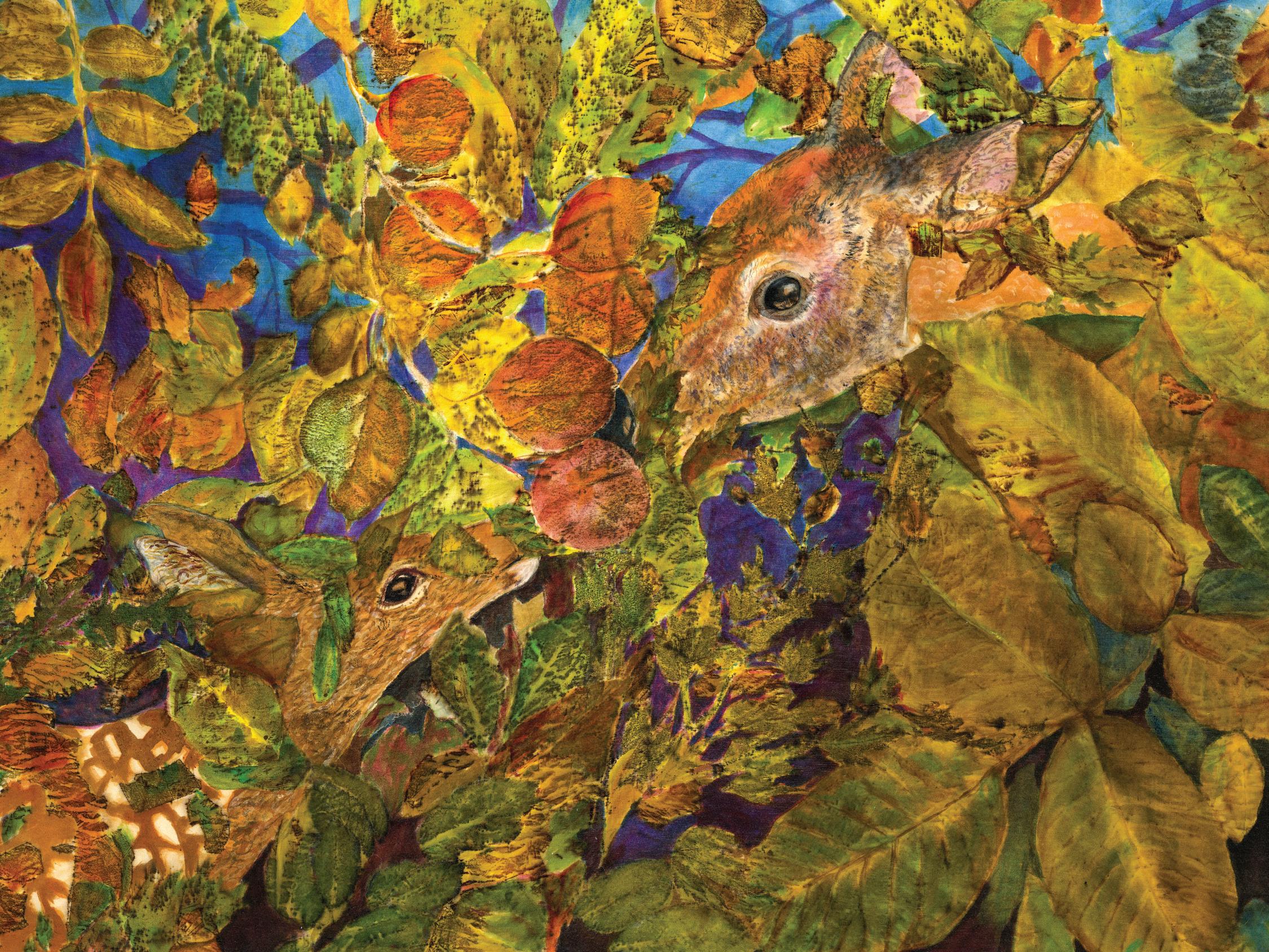
Gentle Hearts
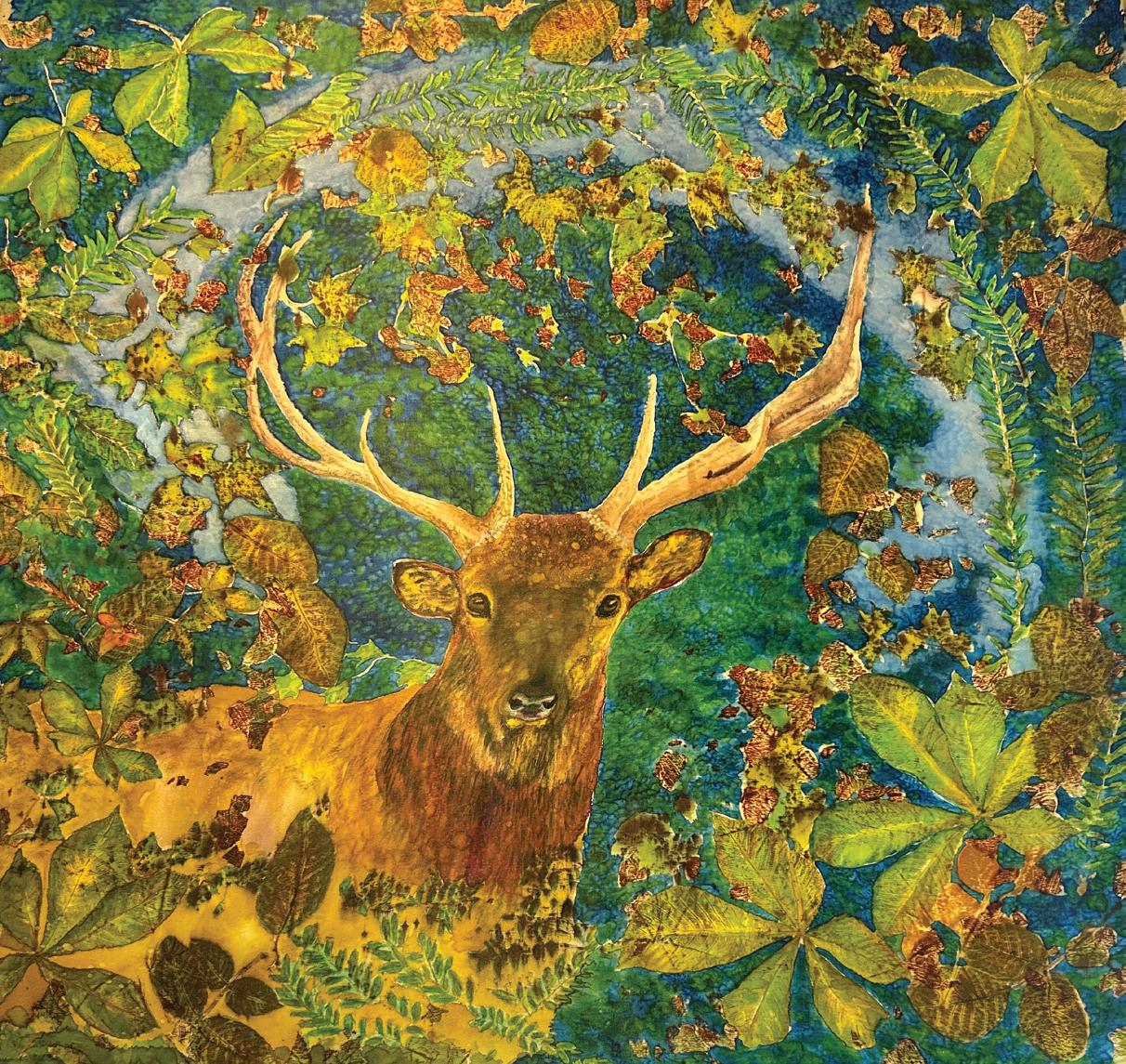
ECO-PRINTED FOLIAGE WITH DYES ON SILK | 22 X 26 INCHES
— layered with the natural pigments left behind by the flora and fauna she finds in nature and then painted to depict the world that lives inside that environment.
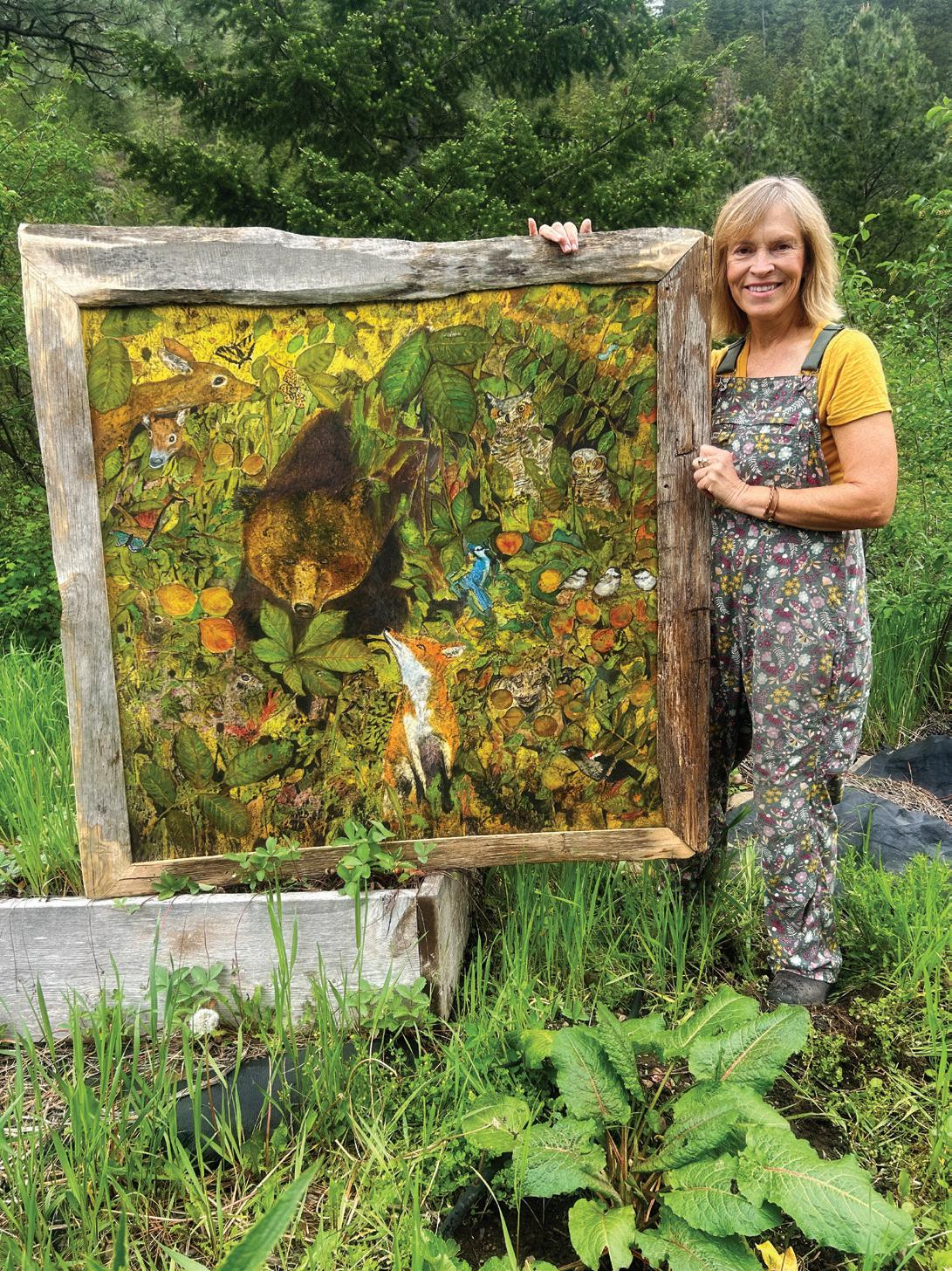
For example, she began her recent piece, Into the Woods, intending to paint a bear. “Somewhere along the way, the forest had other ideas,” Greene says. “Wildlife emerged from the foliage. Hidden stories revealed themselves.” What started as a simple portrait of a bruin “became a celebration of an entire ecosystem.”
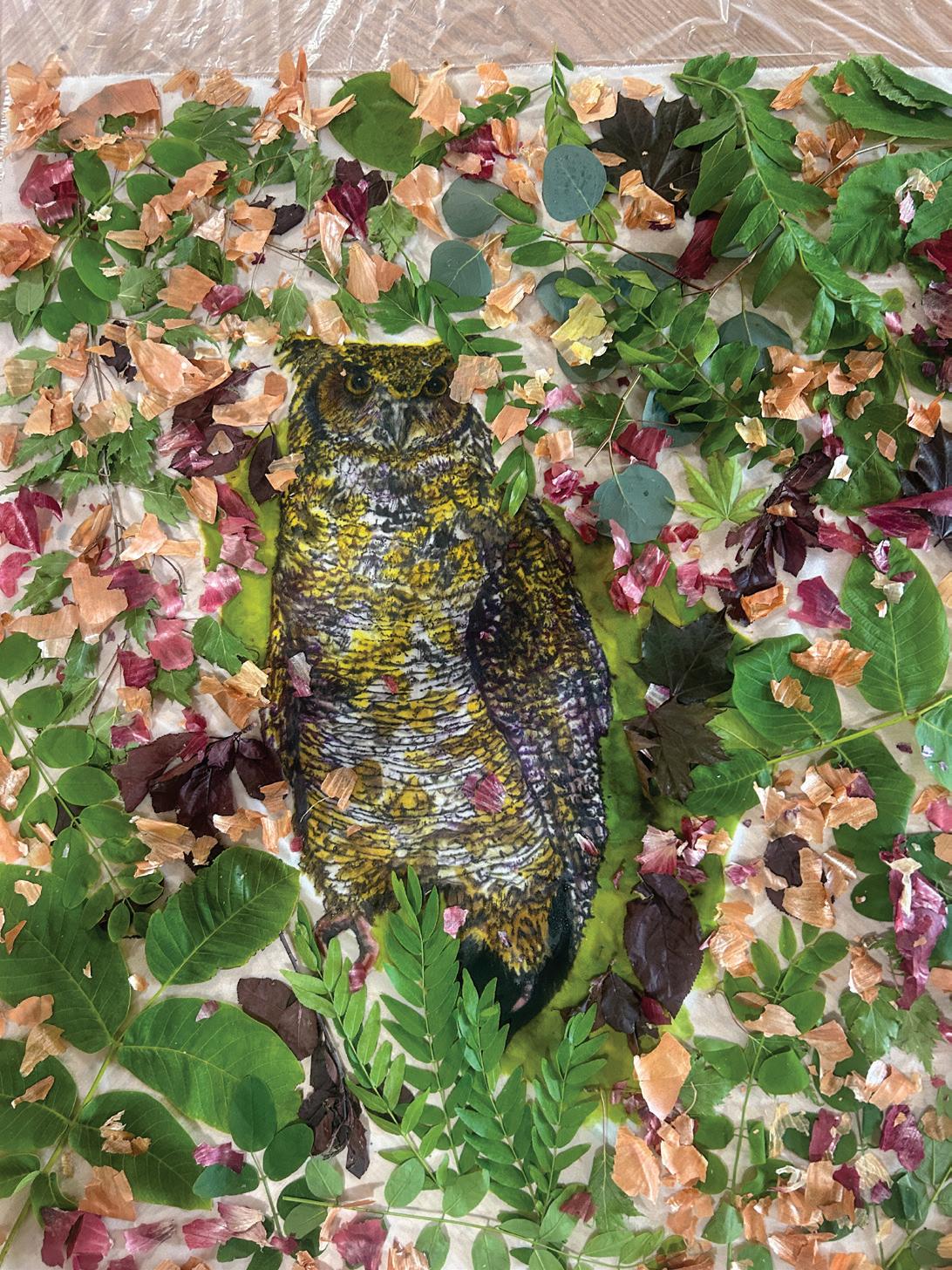
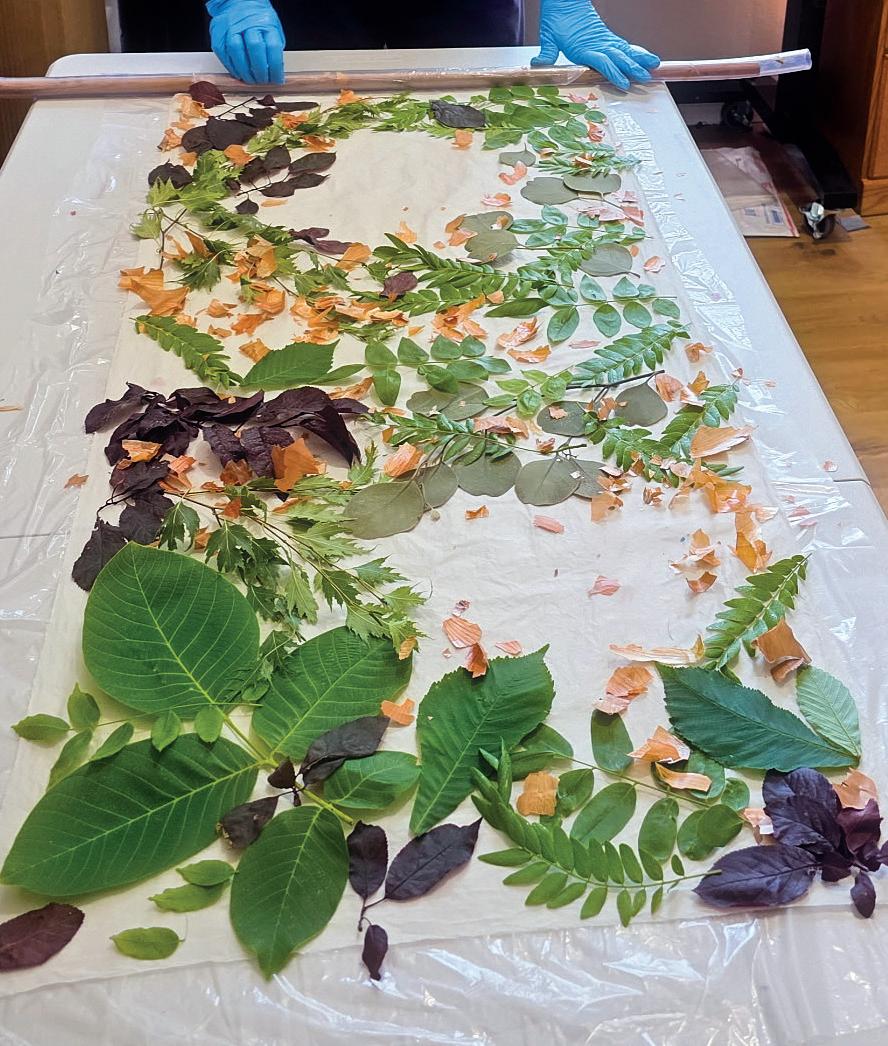
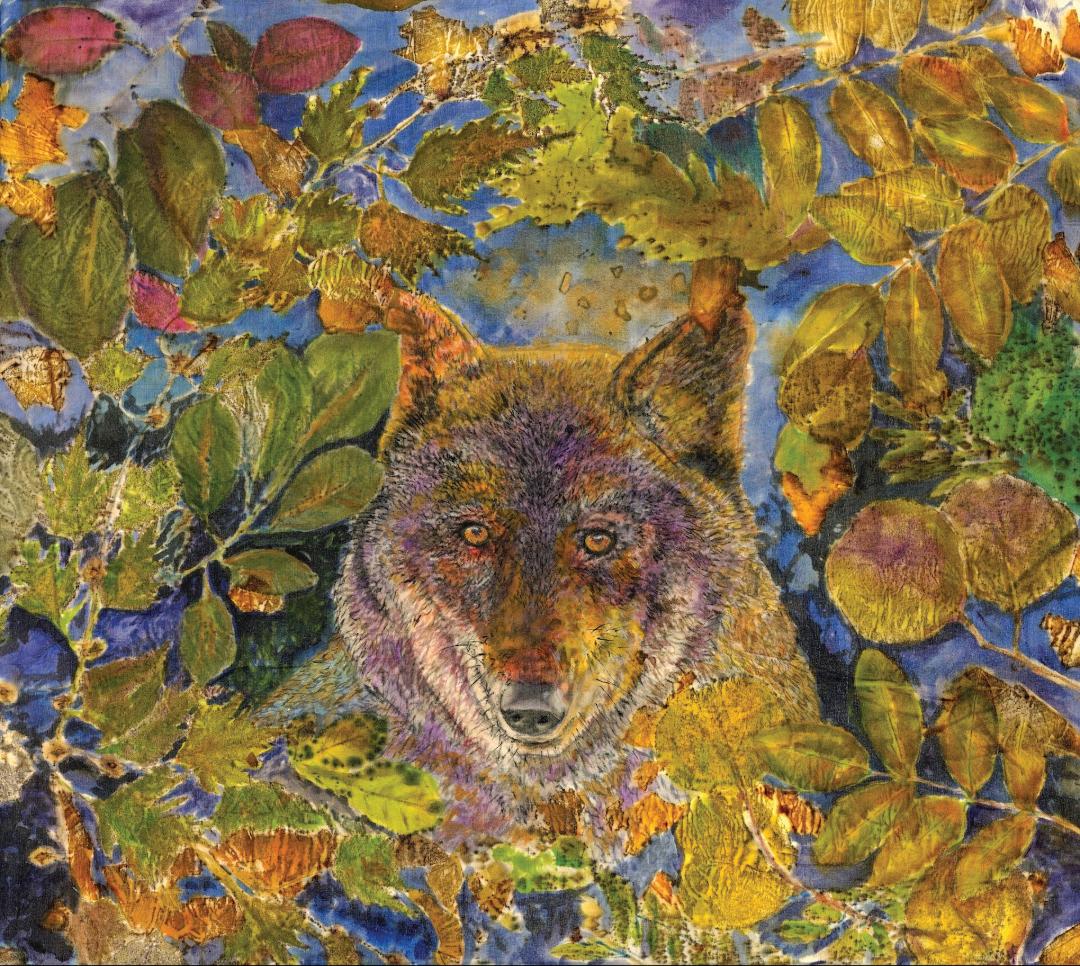
This point of view is reflected in much of Greene’s work, whether on silk canvas or on wearable art, including scarves and clothing. Greene begins every piece with a walk to gather supplies and develop ideas. She collects leaves, which she’ll later use to make direct imprints on silk. The process seems fairly straightforward, yet it contains elements of unpredictability and surprise. She soaks clean silk in a chemical fixative to make it absorb and adhere to the natural pigment in plants and flowers. After the soaking, Greene arranges damp leaves and plants onto the fabric and covers it with plastic, rolls it tightly around a wooden dowel, and then steams it. When the fabric cools, she unwraps and gently rinses it; what remains is an eco-printed silk. Greene then paints on the print, creating a world atop the design.
“There is something sacred about gathering leaves, wrapping fabric, waiting for steam and time to reveal their surprises,” she says. “The process feels a little like life itself — unpredictable, layered, imperfect, and full of quiet magic.”
Recognizing magic and wonder in nature is more challenging these days. We live in a world where astronomers can explain how the sun warms the earth and how the moon travels across the sky and creates waves and impacts gravity. Biologists can sequence human DNA, understand why some eyes are blue, and how to cellularly modify plants to defend against insects. Advances in science have, in some ways, stripped away the wonder in our world.
Greene wants us to slow down, to take time, and let nature reveal itself quietly and through experience. She reflects on her own life, on her path from being a young artist to studying forestry and ecology at the University of Montana in Missoula to a 25-year career with Northwest Airlines. She married, raised her children, and then found herself drawn back to art.
“I think I’ve always been an artist,” she says. “It is something that I was born with. My mother was an artist. I come from a family of artists. It was always in our life.”
FROM LEFT: Silk painter Christy Lynn Greene composes intricate wildlife scenes as seen in her work in progress titled Silent Watch, in which she invites the viewer to discover the dark leafy world of an owl. • In her recent eco-print and silk painted work titled Into the Woods , Greene started with the bear at the center and discovered the rest of the forest ecosystem along the way.
COURTESY OF CHRISTY LYNN GREENE
The Wayfinder
Greene grew up in the Minnesota countryside. She had horses and was in 4-H. Her mother was an art teacher and always had projects going. Greene excelled in art classes and loved anything to do with the creative process. She also really loved the outdoors. When she was in sixth or seventh grade, her family took a trip to Colorado, and she remembers crying when they left. She didn’t want to leave. The mountains were calling, and she wanted to answer the call with a resounding “Yes!”
So when high school graduation came and it was time to take her next steps, Greene found herself at the University of Montana — in love with the Bob Marshall Wilderness and committed to studying forestry and ecology. And while she took a few art classes, her pursuit of painting dwindled as she launched into a different life.
“Art kind of got lost along the way,” she says. “I took a 25-year hiatus, just because of family and three kids, and working full time. You know, life gets you busy.”
As her children grew, Greene found time to get back into art. It started with watercolors, just for the fun of it. And then an artist canceled an art walk event in downtown Missoula, and Greene was invited to fill in. She had two weeks to fill a gallery with art.
“In two weeks, I produced all these watercolors,” she says. “I was just getting into it again … just finding my old self a little bit there. And I sold all my paintings. I was shocked. … It was a blessing because it really helped me get motivated and more inspired to become more serious and continue on that path.”
A short while later, Greene faced a series of life changes: She was laid off from her 25-year position with the airlines, her marriage ended, and her kids were grown. But out of all those challenges, she says, “I found my art. When everything else just falls, nobody can take that [part of you] away. You just can’t take away that creative need.”
Greene says she threw herself into her art and began learning to silk paint after seeing several silk works by Nancy Dunlop Cawdrey. “I just thought, ‘Oh, my gosh … I love this work,’ and I wanted to learn how to do it,” she says.
Greene found an artist from Billings who was teaching a class in Bozeman, so she drove more than 200 miles from Missoula for a four-hour class and never looked back.
Greene begins her process by laying out leaves and foliage she finds in nature to create the backdrop for a future painting.
Spirit Guide
ECO-PRINTED FOLIAGE WITH DYES ON SILK | 16 X 20 INCHES
ECO-PRINTED FOLIAGE WITH DYES ON SILK | 36 X 36 INCHES
COURTESY OF CHRISTY LYNN GREENE
“I just kept painting and growing on my own,” she says. “I learned [the basics] and then just kept experimenting. … That was my therapy; that brought me through. And it still does — through difficult times or good times too.”
This personal need for the process translates through Greene’s work, pulling viewers into a scene and creating space to observe the details. It is grounding for Greene, and she hopes it has a similar effect on the viewer. It becomes a kind of visual therapy to process experiences and appreciate what surrounds us.
“I’ve just always wanted to be around wildlife and animals,” Greene says. “[This art is] a new rediscovery for me, and I’m so excited to be able to relay that as an artist.”
Greene’s newest collection of work is titled Nature Revealed, some of which will be available at the Western Design Conference in Bozeman from August 6–9 and at the Missoula People’s Market through September 26. She is also serving as co-chair at the biennial SPIN Festival Art Exhibition in Gatlinburg, Tennessee in September and will offer a silk painting workshop at the Arrowmont School of Arts and Crafts in Gatlinburg in October.
Jeanne Allgood Gaisford is a freelance writer based in Clyde Park, Montana. Her commitment to family, love of Montana’s untamed outdoors, and passion for stories about inspiring people and the world we inhabit informs everything she writes. Her work often appears in the pages of Edible Bozeman and occasionally on Instagram; @jeannjeannie.
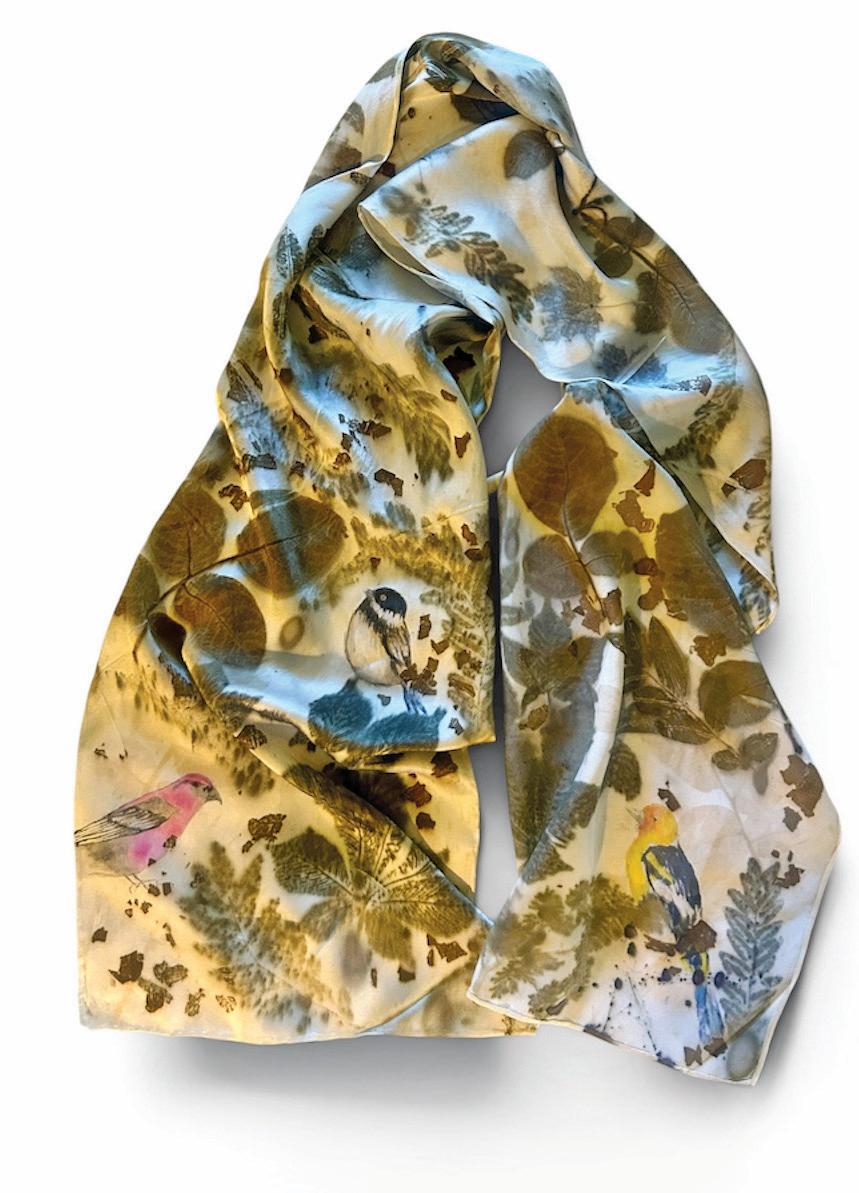
Greene also creates wearable art that celebrates the nature she loves to explore, including this scarf adorned with songbirds that populate the trees near her home in Missoula.
MONTANA’S
From Circus
Wagons to the Bitterroot Valley
Artist Henry Cross’s work portrays a romantic view of the West
IN SEPTEMBER 1892, artist Henry Herman “H.H.” Cross set up a studio at Marcus Daly’s Montana Hotel in Anaconda. There, Cross spent six months creating paintings of Daly’s racehorses, and on January 16, 1893, The Salt Lake Tribune reported that the hotel was “the Mecca for all the artloving tourists who pass through the state,” describing the horse portraits displayed there as “so true to nature that one is almost tempted to hold out a caressing hand.”
Anaconda’s newspapers called Cross “the prince of raconteurs” and “a capital story-teller.” Mentored by hucksters such as Phineas Taylor “P.T.” Barnum and Buffalo Bill Cody, Cross embellished his past and built his own myth, yet his actual story is one filled with adventure. Over 100 of his paintings still exist in museums, galleries, and private homes, providing a romanticized snapshot of a period that was already disappearing into nostalgia by the late 1800s.
HIRSCHL & ADLER
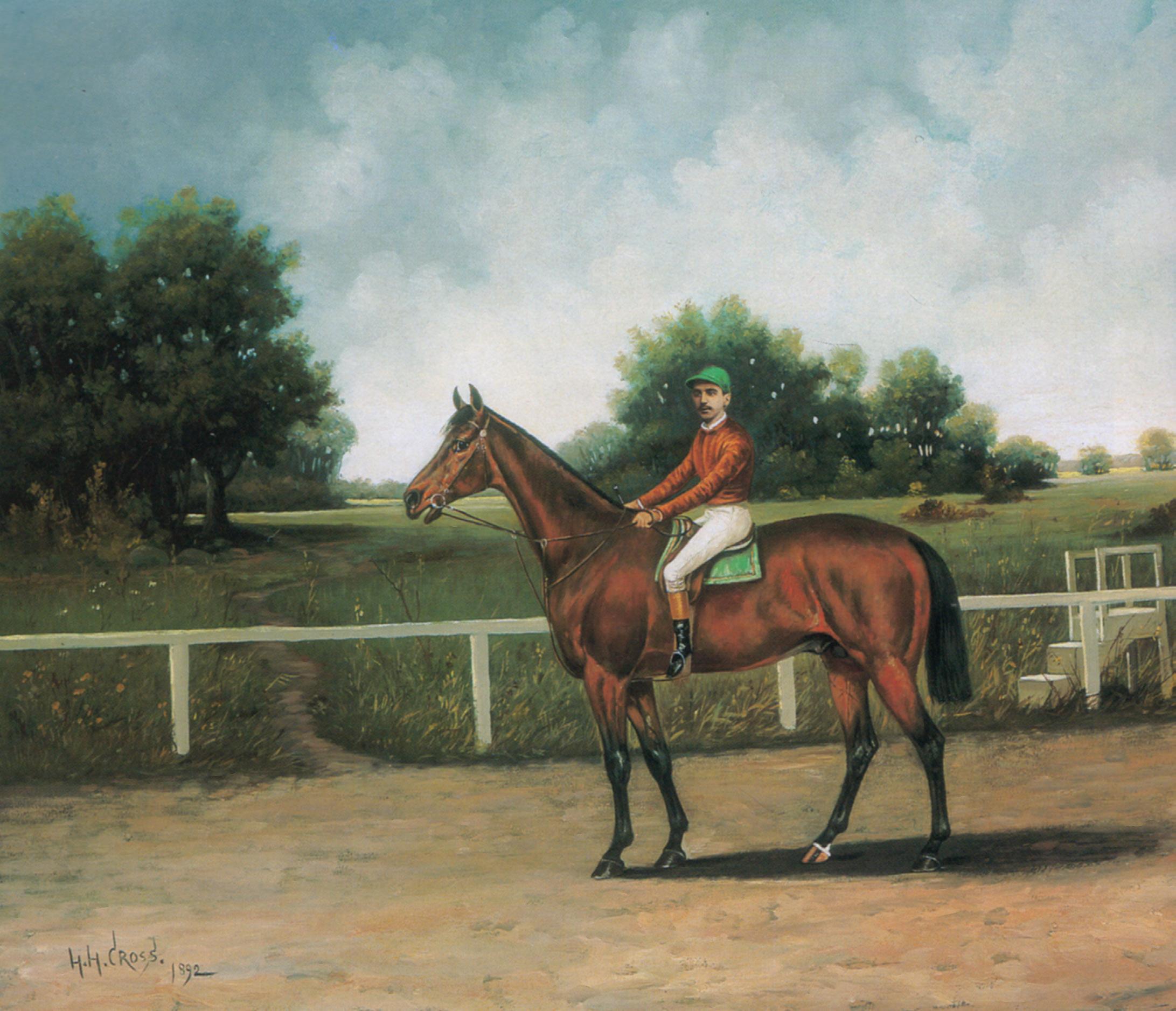
In Henry Cross’s depiction of Marcus Daly’s racehorse, Montana, with jockey Edward “Snapper” Garrison, the artist glued a photo of Garrison’s face onto the painting then hand-colored and varnished it.
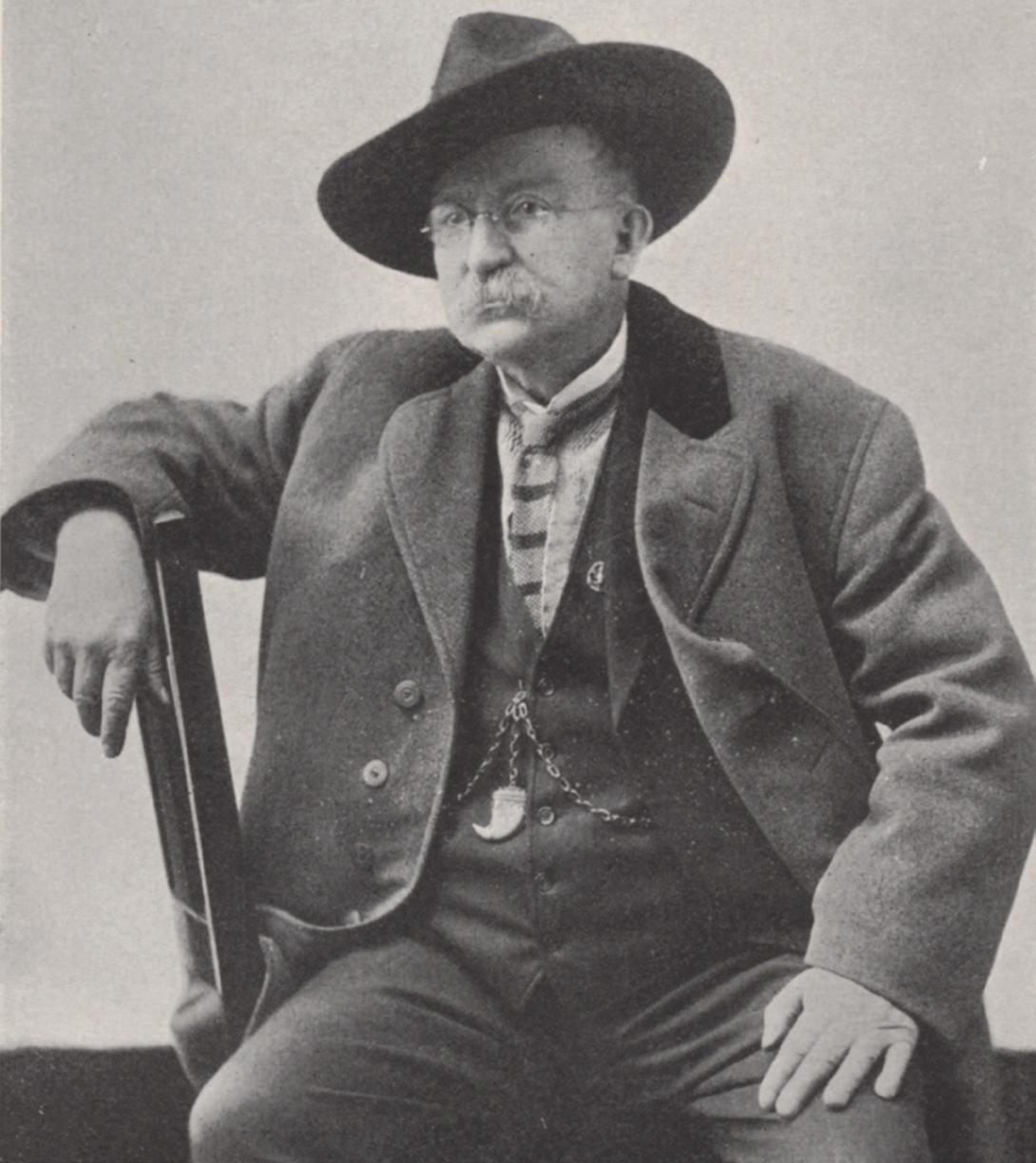
BORN IN UPSTATE New York in 1837, Cross ran away at age 15 to join the circus. A self-taught artist, he got his start painting animals on circus wagons, ultimately working for Barnum, who launched a traveling circus in 1871.
Cross may have served in the military in the 1860s, possibly in the West. However, during that time, he also created racehorse portraits for wealthy patrons, including shipping magnate Cornelius Vanderbilt. An early work captured the finish of an 1854 match race on Long Island, portraying Vanderbilt and other turfmen in the crowd.
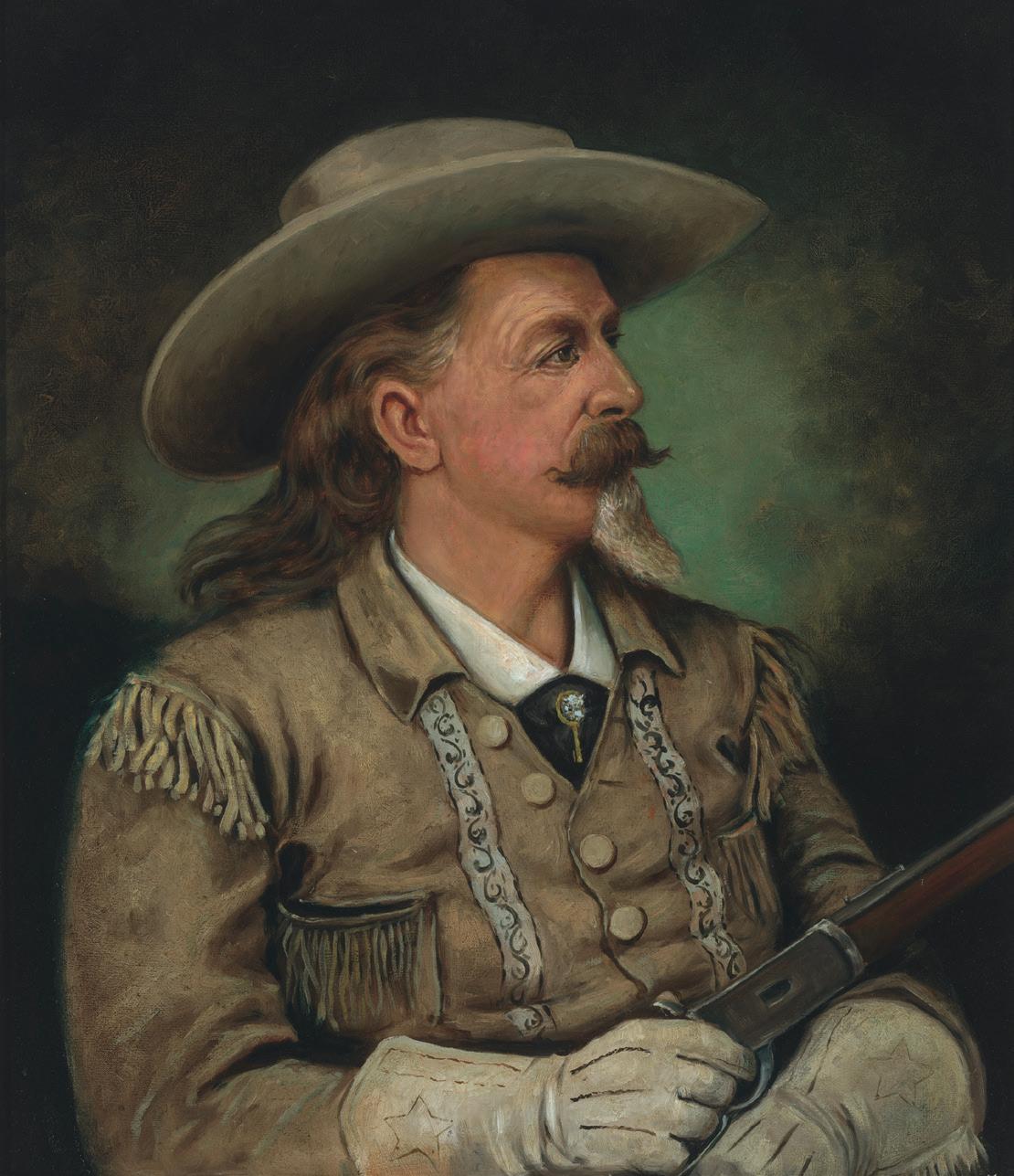
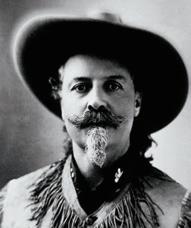
Along the way, Cross befriended William F. “Buffalo Bill” Cody, who first toured with an acting troupe in the mid-1870s before launching his Wild West Show in 1883. While the time of their first meeting is unknown, it’s possible they connected because Cross’s skill at painting circus wagons transferred to promoting Cody’s Wild West extravaganzas.
Though Cross eventually made Chicago his home base, he also spent time in California, painting for racehorse breeder and silver tycoon E.J. “Lucky” Baldwin. In 1894, Baldwin’s cousin, Elnora, a vaudeville performer, became Cross’s second wife, and though the couple separated, their daughter, Stastia Cross Curry, followed her father’s footsteps by joining a circus. She worked with elephants and horses, then became a trick rider and sharpshooter in 20th-century Wild West shows. When Cross died in Chicago in 1918, Stastia was at his side.
Marcus Daly — one of Butte’s Copper Kings — probably met Cross via Baldwin; both men loved racehorses. When Daly’s first
Thoroughbred champion, named Montana, began winning races on the East Coast, he offered Cross a $6,000 contract to paint. Cross visited Daly in December 1891, then returned in September 1892 and set up shop in Anaconda until February 1893, taking trips to Daly’s Bitter Root Stock Farm in Hamilton and capturing the landscape of the Bitterroot.
Newspapers reported that Daly ended up paying Cross over $30,000. In addition to several majestic 7- by 10-foot canvases, Cross completed over a dozen paintings of Daly’s individual racehorses, including Montana and the promising colt Tammany, but also harness racers such as the trotting stallion Prodigal and champion pacing mare Yolo Maid.
TRUE TO HIS character, Cross played as hard as he worked. On a two-week hunting trip to W.H. Raymond’s Belmont Park estate near Twin Bridges, he shot an “unusually large” grizzly bear. While in Anaconda painting for Daly, he spent evenings at the local Elks Lodge, where he regaled members with tales of his worldwide travels
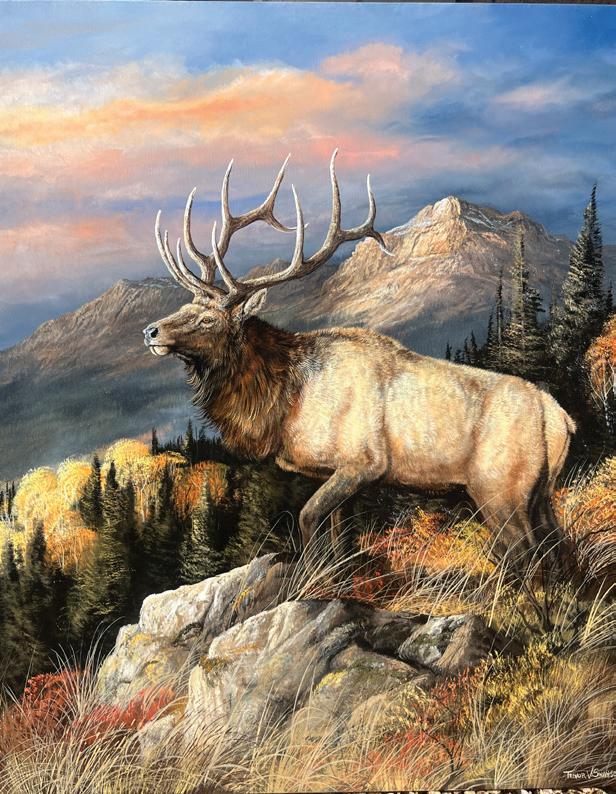
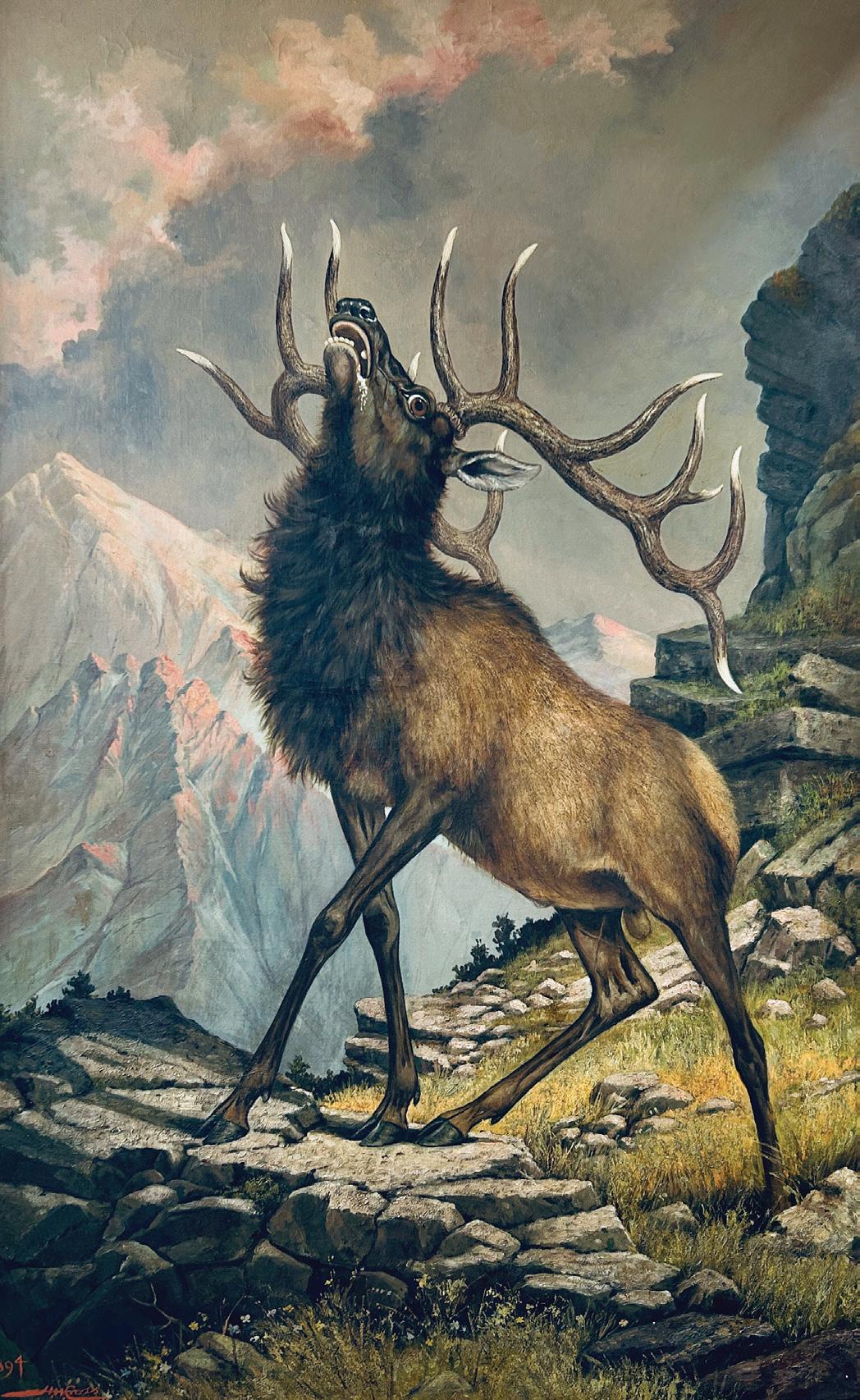
FROM LEFT: Buffalo Bill Cody was a patron and promoter of Cross, who produced a portrait of Cody in 1888. • Cross gave An Elk, a 75- by 45-inch oil painting, to the Anaconda Elks Lodge in 1894 and it remains there to this day.
ANACONDA ELKS LODGE #239
— some of which may have even been true. In December 1892, the Anaconda Lodge made him a lifetime member. In return, he created a 75- by 45-inch oil, simply titled An Elk. Delivered in December 1894, it still hangs in a place of honor at the lodge.
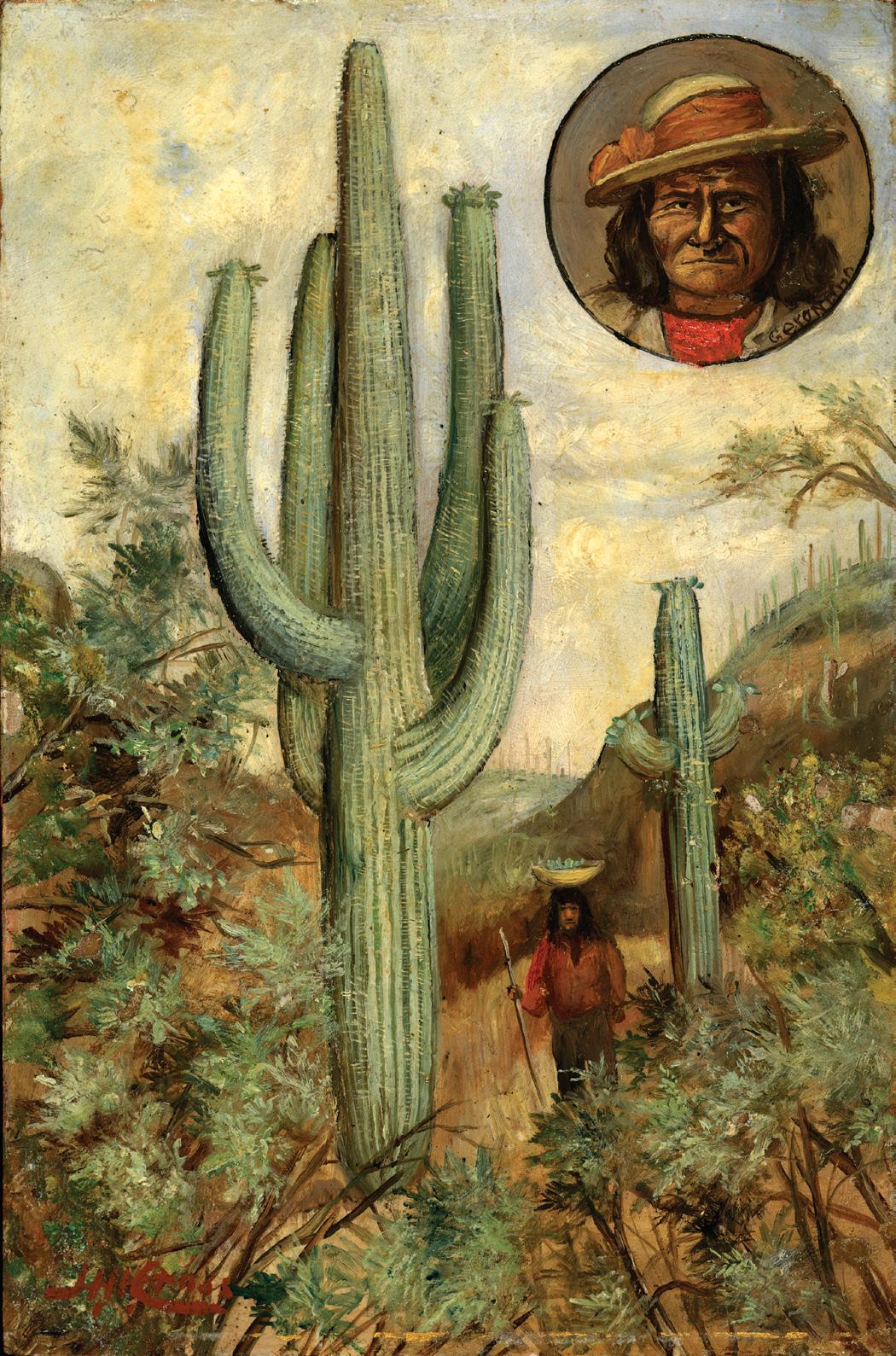
Cross went to Livingston and Yellowstone Park in 1895 to get some “studies of bears from life.” Soon after, he sent three paintings, one of a bison and two of “mountain sheep,” to an area friend, Joe Swindlehurst. This marked the point when Cross moved away from painting racehorses and turned to frontier nostalgia. He visited Wyoming in 1897 or 1899, where he created wilderness landscapes and portraits of Indigenous people.
The apex of his career came courtesy of Minneapolis lumber magnate Thomas Walker. After buying 13 Cross paintings from a New York art dealer, Walker reached out to Cody, who reassured Walker — probably falsely — that Cross had truly “lived with the tribes.” By 1909, Walker owned 26 paintings, and Cross had a new patron. Walker wanted a collection of “portraits of the prominent actors in the early history of the West and its Indian wars,” and these commissions allowed Cross to complete 125 works in the final decade of his life.
Cross’s storytelling made him many friends, though his tales stretched the truth. For example, he said that he went to Paris in 1855 to study art with noted animal painter Rosa Bonheur, a claim historians consider dubious. Given that Bonheur painted Buffalo Bill when the Wild West Show traveled to Paris in 1889, it is more likely that Cody and Cross developed the tale to enhance Cross’s credibility as an artist.
Other stories, such as Cross’s claim he visited Africa seeking animals for Barnum’s circus, may contain grains of truth, though not all details line up with documented facts. Similarly, historians dispute whether he lived with Native people or was in Minnesota in 1862–63 to sketch the Santee (Isáŋyathi) men sentenced to hang after the Dakota Uprising. However, he probably did meet Lakota leaders Red Cloud and Sitting Bull during the years they toured with Cody’s Wild West Show.
Though Cody claimed Cross was “the greatest painter of Indian portraiture of all times,” art scholars today are less enthusiastic, considering his work overly dramatic. Cross said his work was painted from life, but he clearly used photographs as reference material. He also took shortcuts. In the Daly racehorse paintings, some jockeys have oddly positioned heads, which, upon close examination, turn out to be small photographs of the actual people, glued onto the canvases, hand-colored, and varnished. Cross also backdated some of his paintings, such as placing an 1879 date on a work that could not have been painted until the mid-1890s.
FROM LEFT: Cross’s experiences in the West informed his subject matter, and in the late 1890s he shifted from painting racehorses to focus on frontier nostalgia, such as in Cactus Landscape with Portrait of Geronimo, 1886–1909 • Cross, a self-taught artist, left home at 15 to work for a traveling circus before his career would take him west.
UNQUESTIONABLY A RACONTEUR and strongly influenced by years spent painting wagons for two of the 19th century’s bestknown hucksters, Cross’s works and life story reveal a colorful look at life in the late 1800s. At least 18 of his Daly racehorse paintings are thought to exist today. After Daly’s granddaughter, Margit Sigray Bessenyey, died, the contents of the Daly Mansion went on the block in a 1986 auction in Hamilton. Seven Cross paintings sold.
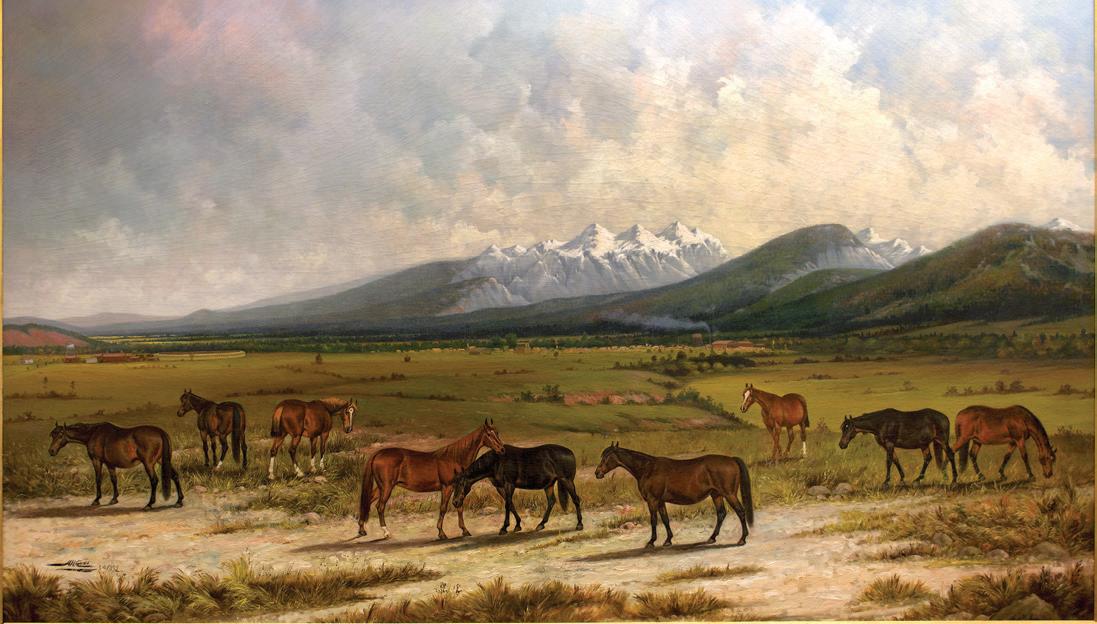
Today, two of Cross’s massive 7- by 10-foot landscapes hang on the main floor of the Mansfield Library at the University of Montana in Missoula. Purchased at the 1986 Daly auction for $23,500, they were later donated back to the Daly Mansion Preservation Trust and restored. Stallions at the Marcus Daly Bitterroot Farm showcases nine Thoroughbreds, with the background providing a snapshot of Hamilton in 1892, showing Daly’s half-mile covered racetrack and the “Big Mill” that processed timber used in the Butte mines. The other landscape, Horses with Keeper, Marcus Daly Bitterroot Farm, shows a herd of the “trotters” — Daly’s harness racing mares — some with foals at side. Behind this idealized, bucolic scene rises the majestic Bitterroot Range, the afternoon sun illuminating the highest peaks.
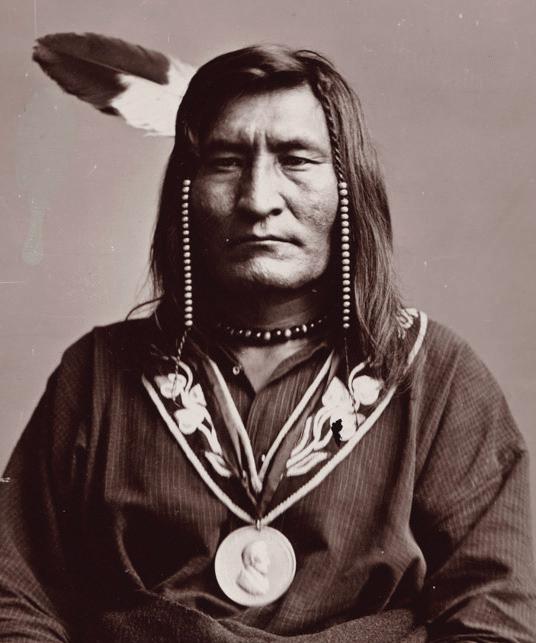
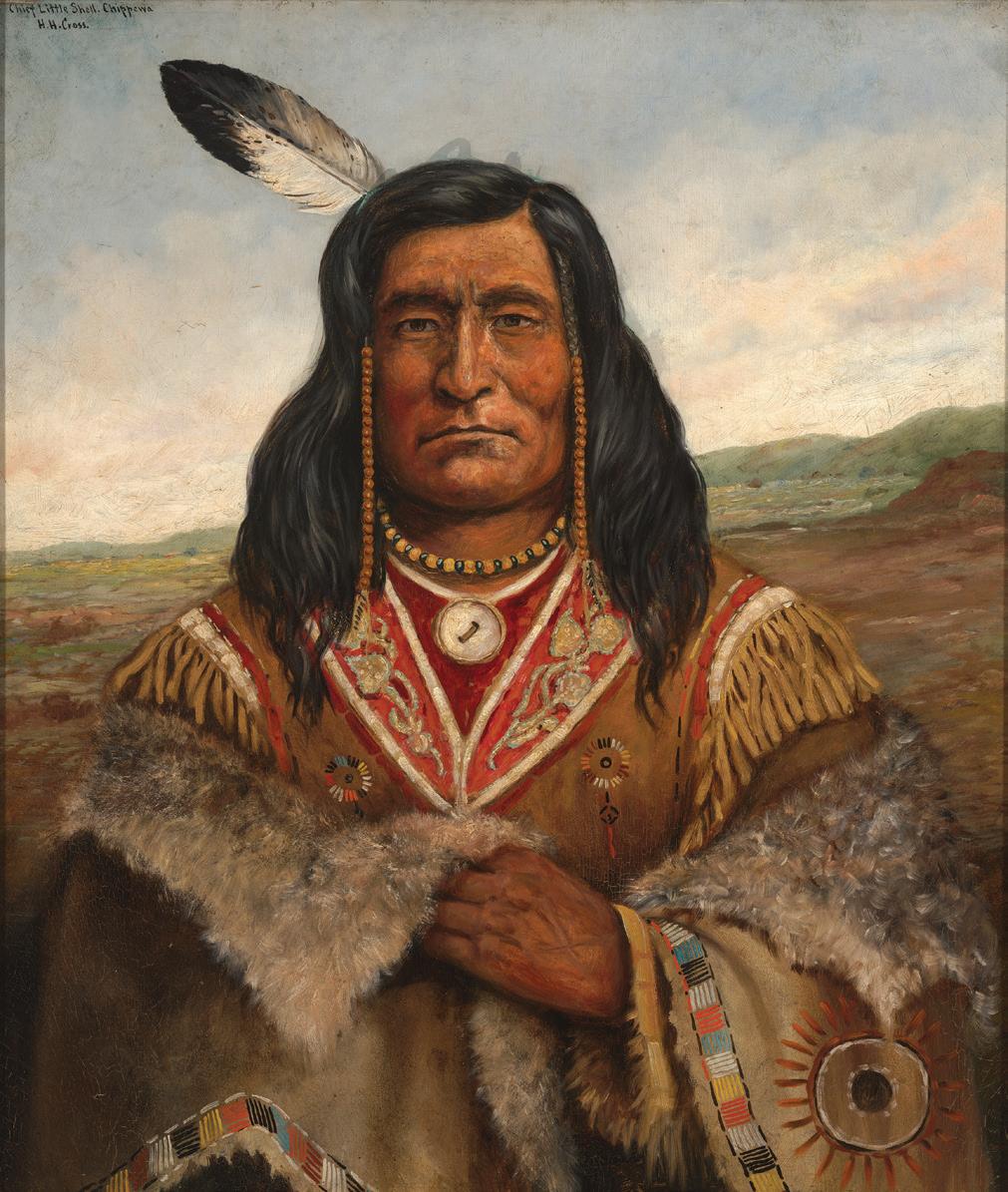
Cross sometimes used photographs as reference material, as in the undated Chief Little Shell, Chippewa for which he used a studio portrait of the chief from 1892.
Eleven Daly horse paintings went to Christie’s of New York and sold in 1987. New York City’s Hirschl & Adler Galleries purchased 10. According to gallery director Eric Baumgartner, of those 10, four are still available at the gallery for sale.
The fate of the 11th painting is almost a tale from Antiques Roadshow. Cross painted Daly’s Thoroughbred stallion Hyder Ali, sire of Spokane, the Montana-foaled winner of the 1889 Kentucky Derby. Christie’s sold the painting to a private individual in 1987.
More than three decades later, the buyer’s estate put it up on eBay, where it sold for about a 10th of its value. Seeing the artist’s signature, the new owner reached out to the Daly Mansion and this author for information on Henry Cross and discovered the provenance of the work.
Though Cross is largely forgotten today, his works are a time capsule of the late 1800s and deserve another look, if anything, to catch a view of Western life framed through high society. Many portraits are now at the Thomas Gilcrease Institute in Tulsa, Oklahoma, and other works are at the Buffalo Bill Center of the West in Cody, Wyoming. Yet, dozens of other paintings, such as Hyder Ali and An Elk, are scattered across the West. It’s a modern-day treasure hunt.
Brenda Wahler, a fourth-generation Montanan from Helena, combines her skills as an attorney, horsewoman, and independent historian to unearth the complex realities behind the myths of the American West. Her recent books, Marcus Daly’s Road to Montana and Marcus Daly’s Montana Empires , examine the Copper King’s complex legacy.
Where There is Freedom, There is Peace 24 x 36 Oil on Canvas
In Stallions at the Marcus Daly Bitterroot Farm, 1892, the landscape shows Hamilton, Montana’s “Big Mill” and Daly’s covered racetrack in the background. The models for the Thoroughbred “stallions” may actually have been mares.
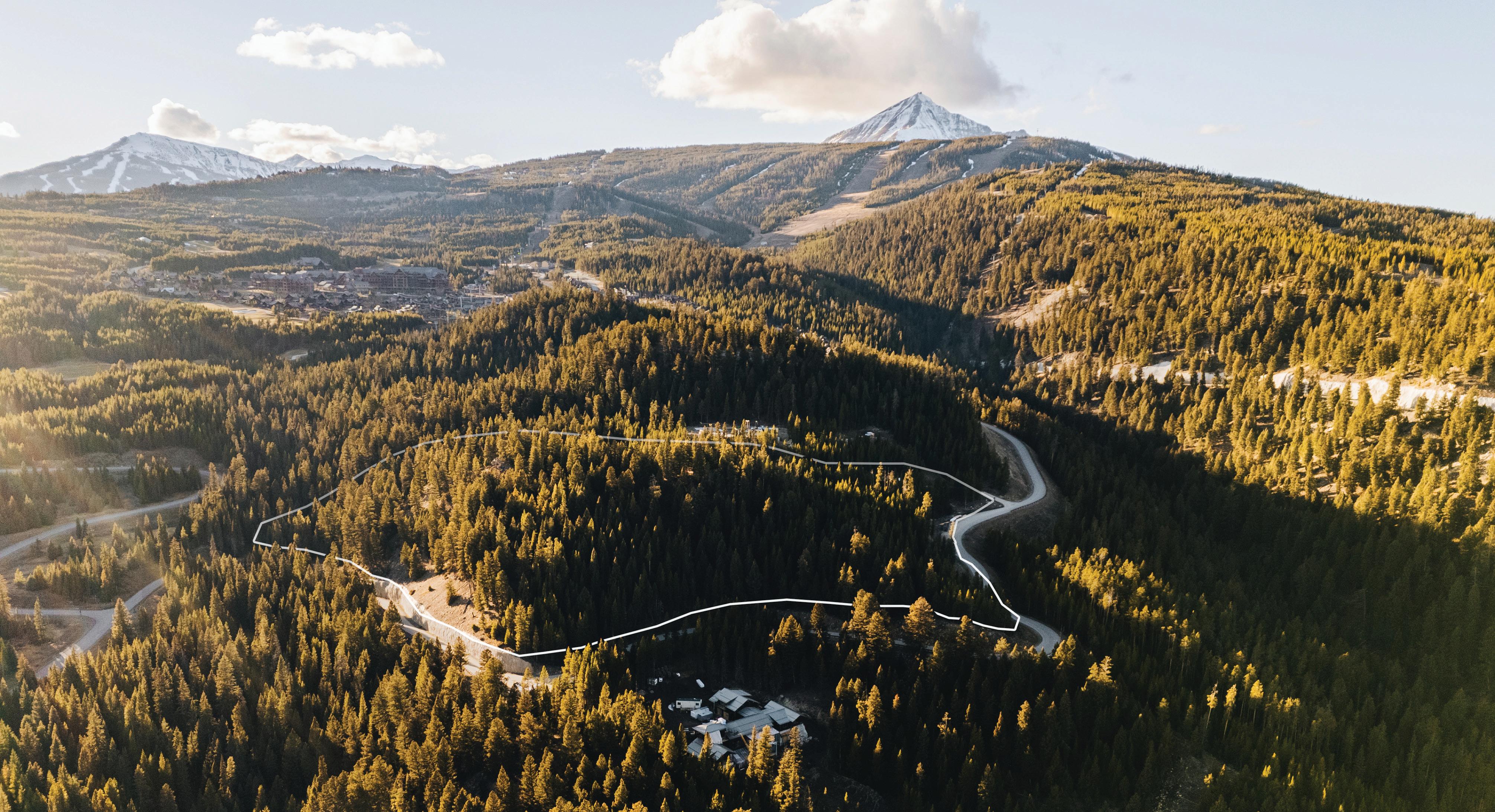
77 TANAGER FORK, BIG SKY
$7,600,000 | #412531
13 LITTLE PLUME, BIG SKY
$7,500,000 | #411799
In the heart of Spanish Peaks Mountain Club, this turnkey Settlement Cabin sits steps from the Montage, Weiskopf golf, and ski-in/ski-out access. Six bedrooms, refined mountain finishes, and move-in ready. Premier location. Exceptional property.
12500 AXTELL GATEWAY ROAD, GALLATIN GATEWAY
$7,295,000 | #408995
Luxury estate nestled on 40 acres of picturesque Montana landscape with over 1/2 mile of Gallatin River frontage. The residence boasts a captivating open floor plan with towering windows, etched concrete floors, an epicurean kitchen, outdoor fireplace and river views. A guest cottage and Historic 1919 Cabin complete the property.
453 OUTLOOK TRAIL, BIG SKY
$5,350,000 | #402106
A luxury residence in The Highlands at Spanish Peaks Mountain Club — 4 bedrooms, 3.5 baths, 3,227 square feet, with access to Spanish Peaks’ private ski terrain, golf, pools, and dining, plus proximity to the Montage Big Sky. Built in 2020, it’s turnkey mountain living just minutes from Big Sky Resort.
5 bed | 5.5 bath | 6116± SF | 1.519± Acres
Elegant furnished ski-in, ski-out residence with Lone Peak views, expansive entertaining spaces, private hot tub, and seamless indooroutdoor living in the Cascade neighborhood of Big Sky.
17 SWIFT BEAR, BIG SKY
$6,995,000 | #406778
5 bed | 5.5 Bath / Guest Apartment: 1 bed | 1 bath True ski-in, ski-out residence with panoramic Lone Peak views, five ensuite bedrooms, a separate guest apartment, chef’s kitchen, hot tub, and furnished mountain living designed for unforgettable days on the slopes.
541 RAVEN WOOD ROAD, DARBY
$4,993,000 | #30069158
Escape to your private luxury retreat just minutes from Darby, Montana. This stunning custom log estate offers 7,647± square feet, two residences, breathtaking Bitterroot and Sapphire Mountain views, live water, abundant wildlife, exceptional craftsmanship, year-round access, and every luxury amenity for unforgettable living, entertaining, and relaxation in nature.
2 HAPPY TRAILS DRIVE, BIG SKY
$4,500,000 | #412100
4 bed | 4.5 bath | 2560± SF | .216± Acres
1111 UPPER TOM BURKE ROAD, GALLATIN GATEWAY
$3,400,000 | #411243
Enjoy the best of Big Sky from this furnished Moonlight Basin retreat offering ski access, Lone Peak views, four ensuite bedrooms, wraparound deck with hot tub, and optional club membership.
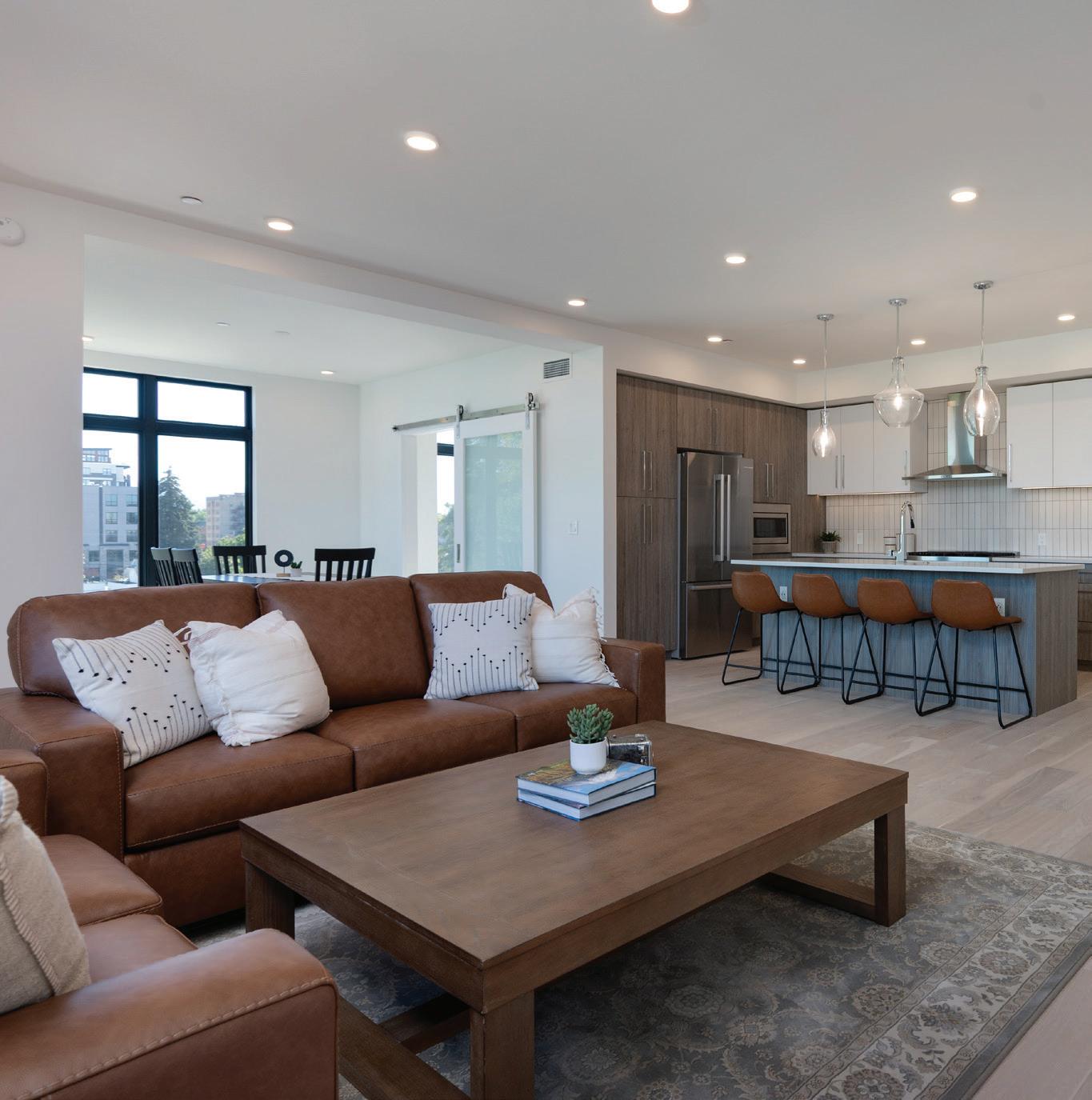
116 N BOZEMAN AVENUE, UNIT 502, BOZEMAN
$2,795,000 | #410638
A top-floor residence at The Merin in downtown Bozeman, two blocks from Main Street. 3 bedrooms across 2,406± square feet, with dual balconies, high-end finishes, and building amenities including secured parking and private storage. Access-controlled entry and a shared courtyard add a layer of privacy in the heart of downtown.
5325 ELK RIDGE ROAD, HELENA
$2,499,000 | #30072726
Experience mountain modern living at its finest in this exceptional home, where soaring trusses, expansive windows, and handcrafted woodwork seamlessly blend indoor and outdoor living. Take in breathtaking views of Gallatin Canyon, Spanish Peaks, and Bridgers, all within easy reach of both Bozeman and Big Sky.
31 LADYBUG LANE, BOZEMAN
$2,595,000 | #412238
This one-of-a-kind retreat perfectly blends sophisticated design with the best of Montana living. Offering clean contemporary lines, 4 + bedrooms, 4.5 baths, gym, office, rooftop sauna & hot tub. Sitting on 1.39± acres with flourishing garden beds, and a charming chicken coop. A perfect place to embrace luxury living and self-sufficiency.
7376 BROKEN BOW CLUSTER, MISSOULA
$2,499,000 | #30063713
Set on 39.19± acres just 15 minutes from Helena, this extraordinary Northwest coastal-inspired estate captures the rare balance of refined luxury, architectural character, and total Montana privacy. Surrounded by 360-degree mountain views, the property evokes timeless elegance, drawing inspiration from classic coastal lighthouses and historic lodges of Washington’s Olympic Peninsula.
Breathtaking Missoula Valley views. This to-be-built residence by Butler Creek Custom Homes offers elevated Montana living. Featuring 6 bd | 5 bth across two levels, and a 4-stall heated garage. Blending modern finishes with luxurious amenities, thoughtfully designed for comfort, style, and connection to the surrounding landscape.
$2,395,000 | #403495
7444 BROKEN BOW CLUSTER, MISSOULA
$1,999,000 | #30069296
Fully Remodeled Home on 2.5± acres with brand-new ADU and several large shops. Enjoy the best of both worlds with peaceful country living and mountain views just minutes from Manhattan and the Gallatin River. Additional outbuildings include a dairy barn/garden shed, greenhouse, chicken coop, and an open-front hay/equipment shed.
2 FINN MOUNTAIN ROAD, HELENA
$1,975,000 | #30071880
Privacy, simplicity, and elegance await you in this stunning 4-bedroom, 4-bathroom custom Scandinavian-inspired home. The extremely thoughtful floor plan was designed for living well. Main-floor living. Private soccer field for summer and an outdoor ice rink in winter. Walking access to miles of public BLM land.
52 DRY FLY LANE, BOZEMAN
$1,499,000 | #411634
Located at 52 Dry Fly in Bozeman, this 4-bed, 2.5-bath home offers 3,400+ square feet, Bridger Mountain views, and open-space privacy. Features include a main-floor primary suite, butcher block countertops, bonus room, steam shower, wood-fired hot tub, spacious patio, mature landscaping, and an oversized 3-car garage.
Breathtaking Missoula Valley views. This to-be-built residence by Butler Creek Custom Homes offers elevated Montana living. Featuring 3 or 5bds* | 4bth across two levels, and a 3-stall heated garage. Blending modern finishes with luxurious amenities, thoughtfully designed for comfort, style, and connection to the surrounding landscape.
4100 PASHA LANE, BOZEMAN
$1,775,000 | #412406
Set on 9+ scenic acres at 4100 Pasha Lane, this updated 3 bedroom, 2.5 bath home offers privacy, protected Spanish Peaks views, and quick access to Bozeman and Gallatin Gateway. Features include a Wolf range, back deck, hot tub, large basement, and a desirable location near Anderson School.
9791
$1,397,500 | #30069331
To-be-built Montana modern home offering nearly 2,400 sqft, 4 bedrooms, open-concept living, abundant natural light, views backing to common area. Ownership includes private Clark Fork River access and a shared island. Located in Freestone, Missoula’s premier community featuring 35 acres of open space, fiber-optic internet, city sewer, &
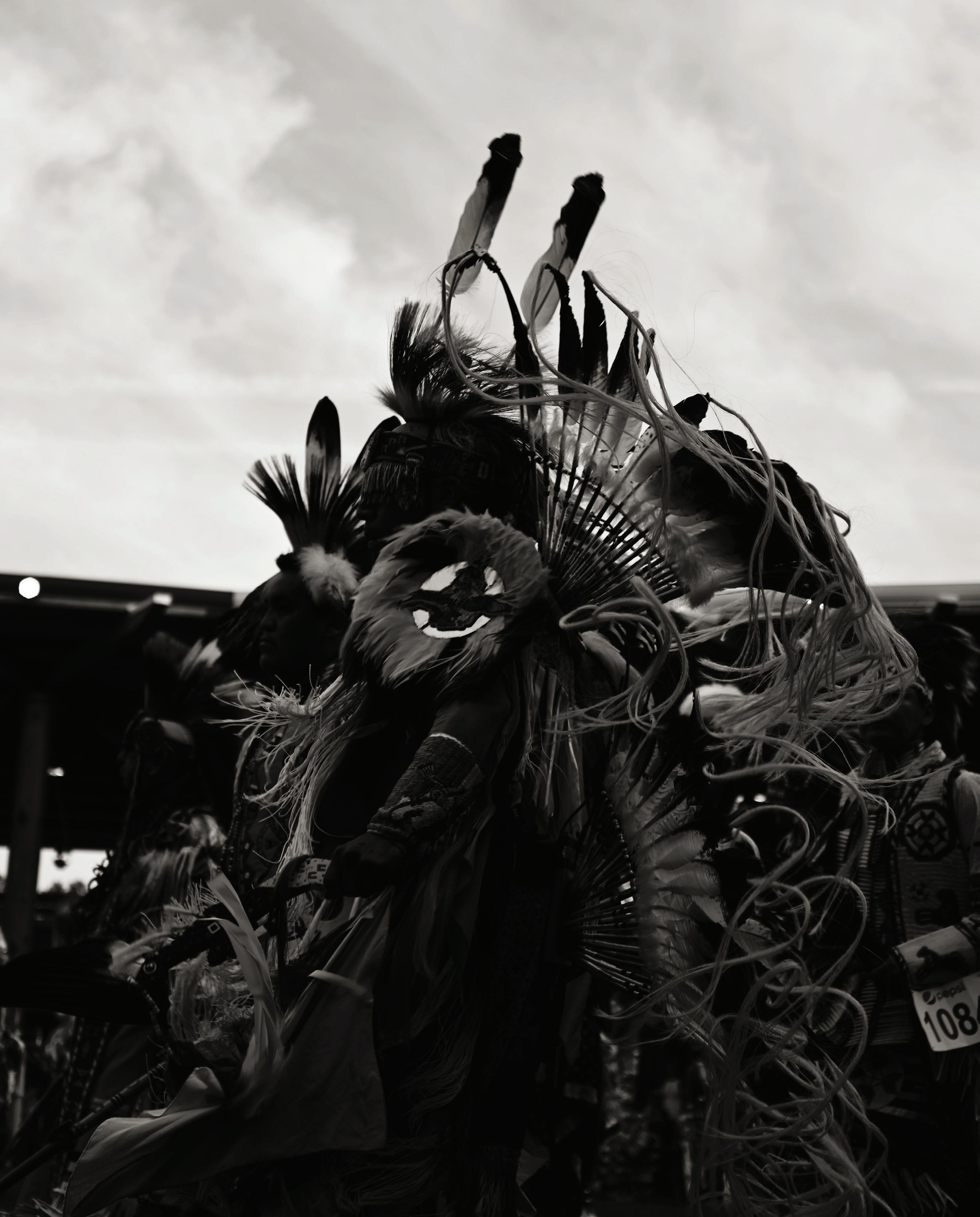
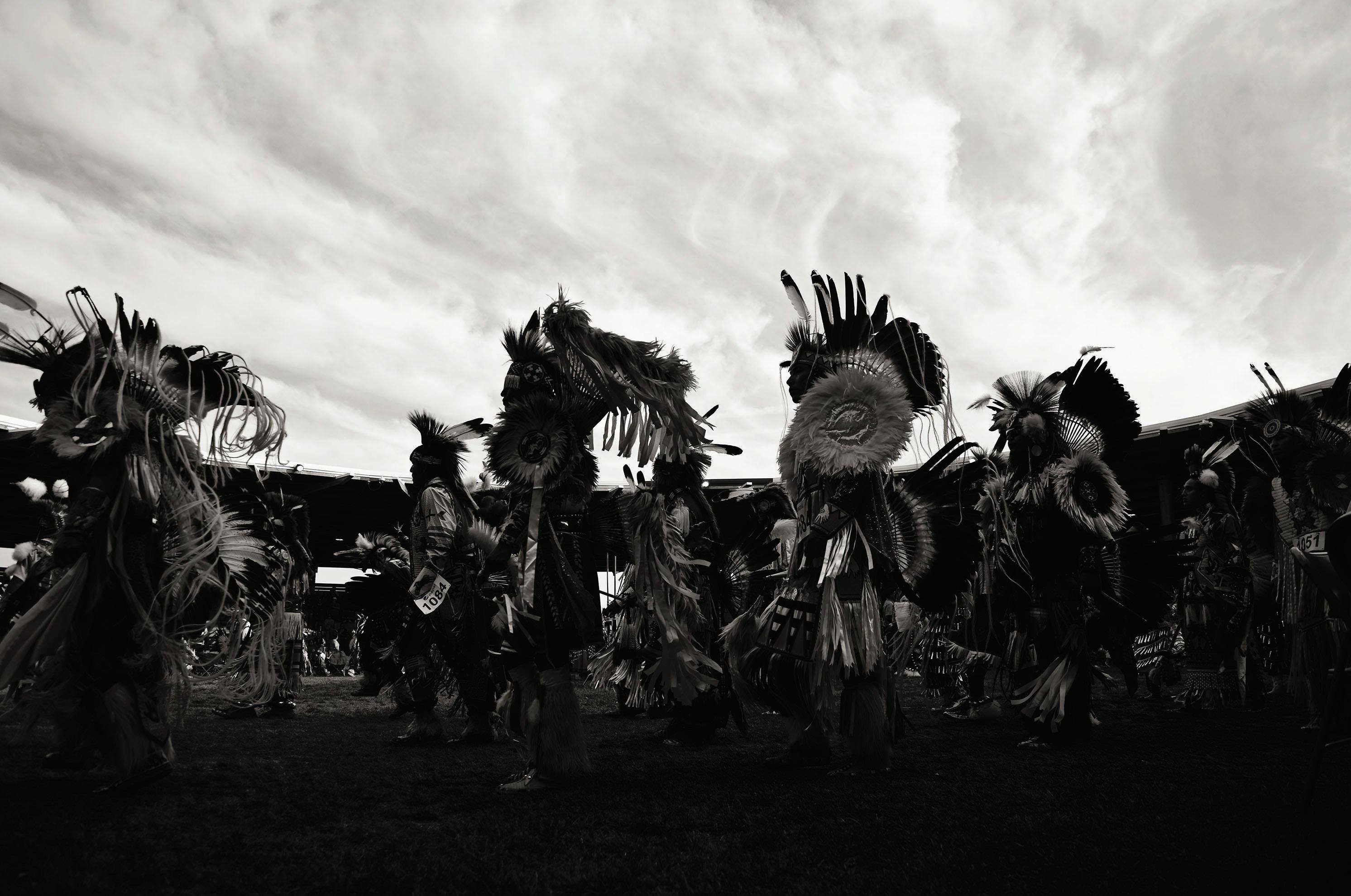
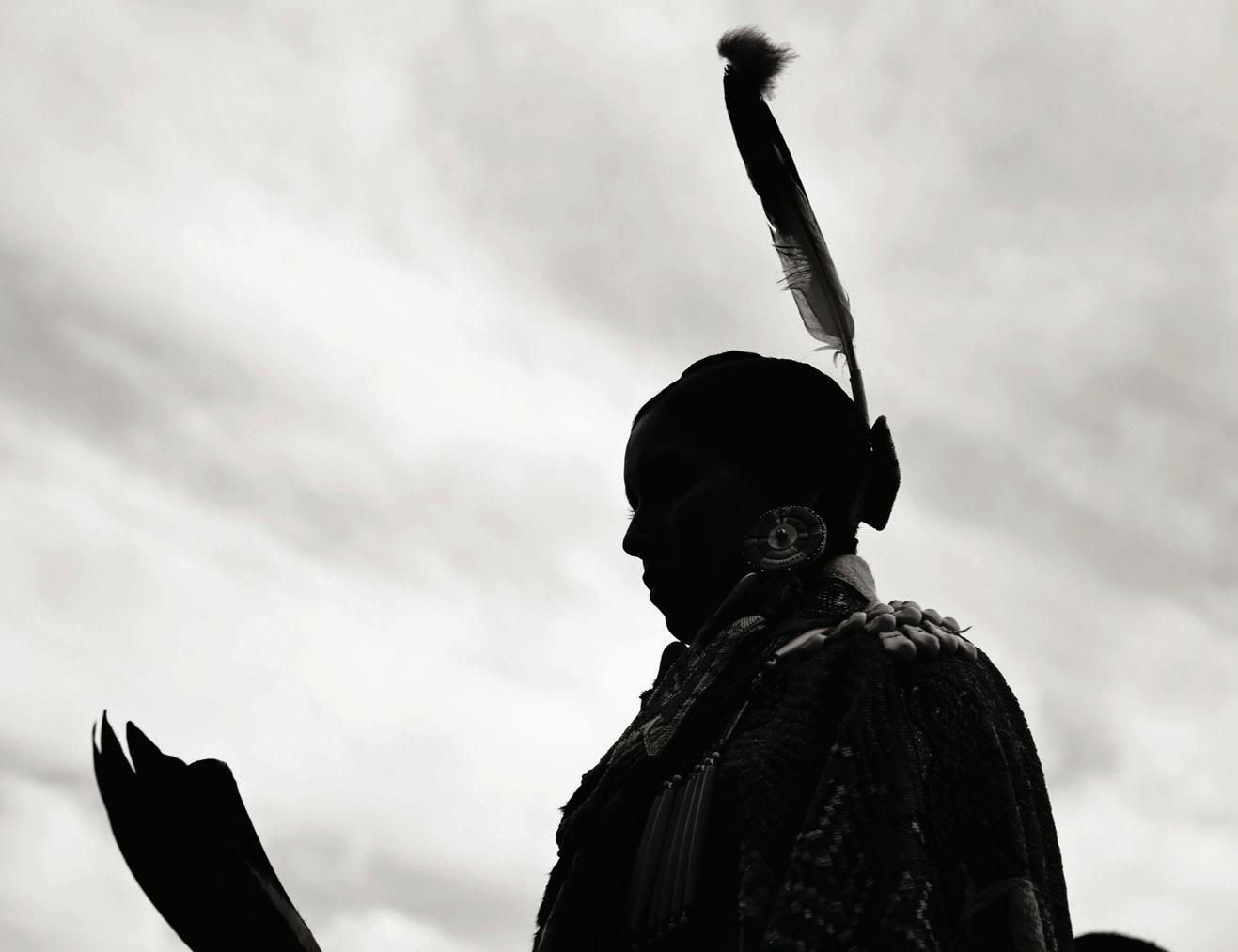
IMAGES OF THE WEST
Silhouettes of Crow
A photographer’s dream
CROW FAIR, KNOWN as the Tipi Capital of the World, is an unmatched cultural gathering in Crow Agency, Montana. The sheer volume of attendees speaks to the event’s popularity and is a testament to the resilience of the Crow (Apsáalooke) people.
This year marks the 107th anniversary of parading, rodeo, and powwow, all happening August 14–16. More than 1,000 tipis will rise up on the banks of the Little Bighorn River. Children will crisscross the roadways on their ponies, and smoke will rise from the camps. Visitors will have the opportunity to watch the parade, Indian relays, an Ultimate Warrior competition, and rodeo.
The Crow Dance Arbor at the center of the fairgrounds is a circular wooden structure designed to hold large crowds. Inside, onlookers use Pendleton blankets, folded and taped down to the risers, to hold their spots for viewing the powwow, an integral part of Native American culture. Generations of song and dance come together in full motion each evening. The summer’s heat is tamed by the arbor’s shade, the setting sun, and strawberry lemonade.
FROM TOP + OPPOSITE : During Crow Fair, dancers enter the arbor to form a massive circle moving in a clockwise motion. This honors the Creator and the cycle of life. • The sacred eagle feather adorned on a dancer’s head typically represents status within her community, having served in the military or accomplishing a brave act or deed. • Crow Fair, held in August every year in Crow Agency, Montana, is a celebration of Indigenous culture and ushers in the New Year for the Crow people.
The drum welcomes the dancers as they carry with them their ancestors’ traditions. Fringe sways to the beat. Bells chime in unison. It is a photographer’s dream.
This cultural event is an absolute must for me to photograph each year. Last year was no exception. I arrived intending to capture the proceedings differently than I had in the past.
I positioned myself low to the ground and shot toward the marbled sky. I applied low ISO, high aperture, and a fast shutter. This combined with warm lighting at dusk, allowing for the perfect opportunity to capture some stunning silhouettes.
Timing is key, as the break between the dancers creates negative space, providing necessary depth to the images. The distinct outlines of the dancers’ regalia and sharp movements are pronounced, but with this technique, facial details are often lost. I applied high-contrast black-and-white to further remove distraction, inviting the viewer to use their imagination.
A storyteller through still images, Erika Haight combines a bold and clean perspective of the camera, using negative space and framing to elicit a strong emotional response. Her work is both modern and timeless — seeking to be historically significant in the context of our times.
FROM LEFT: A statuesque figure exudes quiet strength and dignity. The repetition of her steps in conjunction with the beat of the drum is hypnotizing. • Fancy Dancers are best known for demonstrating intricate spins, turns, and jumps. Regalia is as complex as the dance, consisting of a bustle, headdress fashioned from two eagle feathers secured by porcupine and deer-tail hair, a fully beaded bodice with matching apron, moccasins, bells strapped below the knee, and armband cuffs. A coup stick whirls in hand while ribbons fly wildly.
FROM TOP : A Fancy Shawl dancer mimics the wings of a butterfly. She extends her arms wide and glides and twirls gracefully. The shawl is brightly colored with long fringe, often adorned with sequins to catch the light. This dance showcases the beauty, fancy footwork, and stamina of the dancer.
• Crow Fair is one of the largest Northern Native American gatherings in the country. Thousands flock to participate and take in the sights.
BLEU HORSES BY JIM DOLAN THREE FORKS, MONTANA
WESTERN DESIGN
| DANA W. TODD
ARCHITECTURE MILLER ROODELL ARCHITECTS
CONSTRUCTION BENCHMARK GROUP
INTERIOR DESIGN DESIGN ASSOCIATES
LANDSCAPE ARCHITECTURE FIELD STUDIO
LANDSCAPE ARCHITECTS
Preserving Wild Places
Conservation drives the design of a Montana legacy home that honors the land
PHOTOGRAPHY BY LUCY CALL
WHEN A COUPLE asked Miller Roodell Architects and Design Associates to compose a final estate for gathering their multi-generational family, they had more than just the architecture in mind. The legacy home was to be built on a southwest Montana cattle ranch near the Beaverhead River, where a series of ponds dot the land.
“It’s a magical property full of water,” says principal architect Joe Roodell, who worked with senior designer Beau Mossman and project manager Morgan Baxendale, also of Miller Roodell, to design the home in connection with the land. “As an avid fisherman, the land’s stewardship is important to the owner; he was interested in improving the habitat for wildlife.”
The architects worked with Charlie Kees of Field Studio Landscape Architects to further develop the water opportunities the land offered. “We wanted to embrace the water in this riparian setting,” Kees says. “We had the opportunity to integrate the existing streams and ponds that followed the natural topography of the land into a master plan for how the home was oriented.”
The resulting design provides a low-slung, single-level home settled between flowing streams, with the main pond at the front of the residence. “We harnessed one of the springs to create small, meandering brooks at the entrance to the home that ultimately pass under the residence in two places,” Roodell says.
Eschewing the traditional attached garage, the team instead designed a parking area at a distance so visitors can walk over a wooden boardwalk across a stream to the home’s entrance. “It’s a chance to experience a unique moment,” says Kees. “There also is a series of connecting trails around the ponds, which enable access to the water for fishing.” Once at the home’s front door, a glass-enclosed entryway is like a lantern at the boardwalk’s end, beckoning visitors inside.
The home’s elevated, rustic architecture uses traditional materials — reclaimed wood, stone, steel, and plaster — but in an elegantly detailed way. The team, with the homeowner’s input, used a unique limestone for the exterior and interior, cut in a refined manner in various heights in key rooms. “This particular limestone is an architectural statement by the individual homeowner,” Roodell says. “While a regional materials palette is typical in Western design, these homeowners have spent an extensive amount of time on the East and West coasts.”
Reclaimed wood, sawn to provide a refined appearance, and plaster walls add warmth to the interiors and belie its approximately 7,000 square feet. Steel elements are used as thresholds to create transition points between rooms and break up floor expanses. The architectural team added other subtle dividers in the open floor plan, such as stone that steps down from the living room to the media room to signal a new space.
“The home’s footprint doesn’t feel overly large when you’re inside,” says builder Garrett Jasinski of Benchmark Group. “You’re not sitting in too much volume, especially when you close the pocket doors between the open living room and TV viewing room.”
One of the homeowners’ requests was that the interiors be light and bright, so the design team matched the limestone with light wood tones on the floor and ceiling. “The toasty brown won’t soak up the natural light,” says Roodell. In addition, a ribbon of transom windows in the living, dining, and kitchen space — which reads as one room — is another opportunity to bring in natural light.
“The light changes throughout the day, and you can see the sunrise and sunset through those transoms,” Roodell says. “The room dances with light.” Below the transoms, expansive windows direct attention outward, framing the picturesque spring-fed pond that flows up to, around, and under the home.
FROM TOP : A glass-enclosed vestibule is a light-filled introduction to the main part of the home. • A Montauk sofa and Mimi London coffee tables add a measure of contemporary style to rustic elements such as limestone and reclaimed wood in the living room. • The landscape architect harnessed the land’s existing water elements, working closely with the architect to enmesh them with the home’s architecture. Here, a stream meanders under the breakfast area off the kitchen.
Like Roodell, principal designer Lynette Zambon of Design Associates had worked with the homeowners on several previous projects, so she knew their tastes well. “We let the architecture lead us in designing the interiors,” says Zambon, who brought in design assistant Sarah D’Amico to help. “We were excited about this home because it was different than any other projects we have done with them.”
The designers flowed a neutral palette throughout the interiors to help achieve the in-out flow requested by the homeowners. “They wanted the interiors to feel unpretentious and relaxed,” Zambon says. “We kept with simple, clean lines to let the timbers and stonework shine.”
Elevated finishes, such as a natural stone freestanding tub in the primary bathroom, moderate the rusticity. The design team specified an effortless blend of organic and contemporary lighting throughout the main home.
The designer sourced clean-lined pendants from Allied Maker and Powell & Bonnell bar stools to highlight a dramatically veined kitchen island with a waterfall edge.
The tone shifts to playful and more rustic in the bunkhouse, which the homeowners designed for their future grandchildren. This part of the compound is segregated on its own island, accessible via a covered bridge from the main home or by kayak or canoe for the adventurous. The design underscores the home’s interconnectedness with the site and the importance of the land and family legacy. “The bunk room is like an old cabin attached to a refined and updated home,” says Roodell. “The stream comes under the bridge in the constant effort to blur the lines between inside and out.” Once inside the bunkhouse, plenty of beds and a game room mingle with whimsical touches such as an antique barber chair from the homeowners’ collection. “It feels fun and casual, and the barber chair adds an element of surprise,” Zambon says.
“Sliding glass doors on two walls open up the entire corner of the bunkhouse onto a porch and dock,” Roodell says. “The homeowners envisioned the kids running out of the bunk room and diving into the pond.”
“We had a high level of excitement for this project,” says Jasinski. “Big mountain viewscapes often have big slopes to work with. We had fun with this unique property with distant mountain views and moving water that you can hear from the patio.”
Kees worked closely with the homeowners to preserve the existing cottonwood canopy while adding more vegetation to the site, sourcing only native plants that were already there. Shrub willows and narrowleaf cottonwoods improve wildlife habitat, especially for deer and birds. The landscape architect integrated the specimens with the aquatics and a custom hardscaping plan that used the warm tones
CLOCKWISE FROM TOP LEFT: A bridge connects the main home to the bunkhouse island, which was designed to be a casual, fun, and creative part of the residence set aside for grandchildren. • Designer Lynette Zambon worked in whimsicality in the bunk room through artwork and antiques (such as the barber chair), sourced from the homeowners’ collection. • Floor-to-ceiling windows and a neutral, nature-infused color palette on a contemporary Berman Rosetti bed blur the line between indoor and outdoor in the primary bedroom.
• “I love the way you can envision yourself being in the home, such as in the primary suite’s stone bathtub, where you feel a part of nature,” says the designer.
of Indiana limestone that are similar to the area’s geology. “The homeowner’s stewardship of the land extends beyond the landscape around the house,” says Kees. “He also was interested in additional restoration work of the wetlands. It was about more than just creating a pretty landscape around the house.”
A combination of covered, partially covered, and open outdoor living spaces further merges the concept of architecture and land. “I grew to love the home’s strong connection to the water,” Roodell says. “The home is all about the land, the water, and the legacy the family will leave. Some special places are worth preserving.”
Dana W. Todd is a professional writer specializing in interior design, real estate, luxury homebuilding, landscape design, architecture, and fine art.
Lucy Call is a photographer who specializes in interiors and architecture. She has more than 15 years of experience both as a freelance photographer and as an in-house director of photography. She has been published in numerous books and publications. When not photographing, she’s usually hanging out with her husband and two pups, riding bikes, or exploring the mountains and deserts of Utah where she is based.
Adirondack chairs on an Indiana limestone patio at the water’s edge are surrounded by restored wetlands and distant mountain views, embracing the homeowners’ interest in fishing and all things related to the outdoors.
MICHAEL J. OBER
Fiction
Bear Claws
ILLUSTRATIONS BY
JASON KING
THEY NEVER KNEW their locomotive engine had hit a bear that night. Up in the cab, amid all the engine noise and random conversation, Slug and Dillon droned down the rails, in the dark, westbound on Burlington Northern freight number 766. They didn’t feel so much as a shudder as the bear was broken into two. There were similar stories, of course, about rail crews plodding through dark nights, fierce blizzards, or ground fog hitting whole herds of cattle or deer and knowing nothing of it until they arrived at their next stop and saw the carnage stuck to the front of the engine.
Slug, the engineer, had gotten his nickname from his days as a Golden Gloves boxing champion. He had the crooked nose to prove it. And his ears had been so pummeled that they hung in contorted folds high up against his cheek. One day, while working in a dead-end trades job, a friend tipped him off that Burlington was recruiting engineers, and soon enough, he was off to Kansas City for training.
That was 11 years ago. He and his co-shift conductor, Dillon, had shared many miles in the cab of their 7,000-horsepower locomotive, and on this leg, they were grinding down Marias Pass, elevation 5,213 feet. Behind them, besides the two other helper locomotives, were 2.1 miles of hoppers full of grain and bound for Asia. Other days, it might have been car cars, the doubledecker enclosed automobile affairs headed eventually for some dealer’s showroom in Peoria or Pittsburgh. In more recent years, it might have been coal cars destined for West Coast terminals. Or oil cars from the Bakken.
Dillon had been to college years back but never finished his business finance degree and found little success in securing career pathways back in his hometown. He was drawn to the railroad because of its good pay, benefits, and retirement, sort of in that order. He liked to hunt and always filled his B tag in the fall, replenished his freezer, and fed his family. He wore a camo ball cap and read pithy books written by authors Slug had never heard of. That is, when he was not juggling his duties as Slug’s partner, doing load calculations, checkpoint alerts, speed settings, and brake pressures. Against company policy, Dillon often took over the engineer’s duties in the right seat while Slug took a brief nap. Lots of crews did it.
Upon arriving in the early morning light at Whitefish, Montana (a fueling station and switching point for crews), the personnel for the next shift walked up to Slug and Dillon.
“Looks like you guys hit a bear,” one of them said. “The Amtrak eastbound saw it at Snow Tunnel Number 7. Cut right in half. They couldn’t tell if it was a black or a grizzly, but it was really dark colored. Probably a black bear, so … oh well. But if it was a grizzly, they’ll be reporting it. The trainmaster was told to hold us up while they get some Fish and Game guy over here to pull some hair samples from the front of the engine. Pretty gross.”
Slug and Dillon glanced at each other, knowing there could be some kind of investigation since grizzly bears were a threatened species, the holy grail of megafauna lore in these parts, and Montana’s official state mammal. They walked toward the parking lot, threw their duffel into their truck beds, and lit up cigarettes, a practice they’d done for years at the end of their run.
“You thinkin’ what I’m thinkin’”? asked Dillon.
“What?” Slug said as he crushed out the first cigarette on the asphalt and reached for another.
“What if it is a griz? Whaddaya say we go back up there to the tunnel and check it out for ourselves?” And then, after a long pause, “There could be claws, you know.”
Slug studied his partner closely, looking for signs that he was kidding but knowing that he was not.
“You know what griz claws are going for?” Dillon continued. “There’s a whole black market for ’em. Hundreds, maybe thousands of dollars for the right buyer.”
“You crazy? They are federally protected. That would be a felony,” Slug snapped.
“Yeah, but we can get there before those investigators drag their asses out of their office chairs. Plus, we know how to get there on that maintenance road to the tunnel. C’mon, Slug. Let’s just go have a look. Time’s a-wastin’.”
Looking across at each other, each leaning on opposite bed rails of the pickup, the chasm between them could not have been more symbolic. Or deeper. Dillon was prone to impulsiveness, for sure, and Slug was steadfast in his resolve to conduct his
Frogs
Through September 13
Leap into a vibrant, multisensory rainforest world of 100 live, colorful frogs from around the globe in this immersive, hands-on exhibition for all ages!
Clyde Peeling’s Reptiland in Allenwood, Pennsylvania, an institution accredited by the Association of Zoos and Aquariums, created, tours, and provides a professional keeper for the exhibition.
affairs in proper ways. In the many years of sharing the locomotive cab, their disparate personalities seldom emerged, and their inner beliefs were largely kept secret. It was just better that way. But now, this unexpected standoff.
“I dunno, Dillon. It just don’t feel right.”
“Look, I got all the right tools here in my truck,” Dillon said, gesturing to his cross-bed toolbox. “Hop in. We can talk about it on the way up.”
Dillon climbed into the truck cab. Slug raised his hand to the passenger door handle, halted, then dropped it to his waist. “I dunno about this man. I dunno.”
THE PHONE RANG at Walton Ranger Station, but Kurt couldn’t get to it in time. He had been down in the fire cache shed preparing smokechaser fire packs for the coming fire season, pulling old MREs from each pack and replenishing them with “new” ones, which were just the same as the “old” ones he was discarding. It was a seasonal ritual. A small frame office sat adjacent to the tidy log cabin ranger residence. It had an outside phone ringer to summon employees around the station.
Truth is, nobody ever called Walton Ranger Station, known as the “soft underbelly” of Glacier Park, where just about any sort of mischief in the sprawling district often went undetected, like arson, fishing violations, illegal camping, poaching, and unauthorized firewood harvesting. There had even been a murder back in the ’60s. Walton was situated alongside Highway 2 and adjacent to the Burlington Northern’s main line that paralleled Glacier’s southern boundary. Tourist traffic whizzed by and seldom turned into the tiny station.
Kurt was in his fourth year as a seasonal ranger. His real career was teaching history at a small liberal arts college in Wisconsin, a nine-month faculty position that left his summers off to work in Glacier. When the phone rang again, he made his way to the office and snatched it quickly from the receiver.
“Walton Ranger Station, Kurt Kruger.”
On the other end was the chief ranger at the district office telling him of a possible bear fatality on the railroad tracks. The voice instructed him to investigate it. Even though the incident site was not within the park’s boundary, park rangers were obliged to respond through a mutual aid agreement with the adjacent Flathead National Forest. Within minutes, Kurt grabbed some gear from the fire cache and summoned two trail crew boys, Spiller and Turk, who were lounging in the bunkhouse on a day off. With the three of them in the truck cab, he headed up to Tunnel Number 7.
Upon arriving, they could see two black spots far down the track, one near the rails and the other farther down the slope on the ballast. After the long walk down the tracks, they approached the bear. It was very dead, having been cleaved exactly in half by the locomotive. But then they saw something that stopped them cold in their tracks and made the hair on their necks bristle. There were no feet.
“Oh man, this is spooky,” Turk said as he slid his ball cap off and rubbed his head. “Real spooky.”
“Think someone got here before we did,” Spiller concluded as he sat down on the rail and studied the scene. It was — or had been — a young male grizzly, maybe 200 pounds or so, not yet an autumn-fattened one preparing for hibernation. But he had been actively feeding, trying to build up body weight as evidenced by stomach contents strewn down the tracks: false hellebore and cow parsnip.
With little else to do, Kurt took some photographs and flagged the site. He and the trail boys gloved up, put bandanas over their noses, and set about loading plastic garbage bags with the poor ol’ bear’s ghastly remains. A grim task. Back at the truck, with the bags secured in the bed, they headed to the district office and met with the chief ranger, a Montana game warden, Forest Service law enforcement rangers, and a federal Fish and Wildlife officer. A dead grizzly was a big thing. Kurt knew he was handing over possible crime scene evidence and signed all manner of documents and forms to preserve the chain of evidence protocols. He told them of looking for clues at the site: a beer can, a cigarette, a snoose box, candy wrappers … anything. But there was nothing. After a briefing, he headed back to the station and returned to assembling his fire packs.
NOBODY EVER FOUND out who took those bear claws. Around the Flathead Valley years after, someone would be seen wearing a necklace sporting a single bear claw, polished and in a wellcrafted setting. When asked, the wearer usually said something like, “Oh, this? My grandfather shot this grizzly in 1908 down on the South Fork.”
Many years later, post-career, widowed, and with grown kids, Kurt made his annual pilgrimage to Glacier from his retirement home in Tucson. There, he sought old friends — those who were still alive, anyway — hiked familiar trails, ate at his old haunts, played tourist.
One day, he drove the long and dusty North Fork Road to Polebridge, a small hardscrabble community of back-to-the-landers, gimme-shelter-in-a-log-cabin types, and off-the-grid folks. The center of their community was the vintage 1914 Polebridge Mercantile, now a bustling and popular tourist site. From a small bakery at the back of the store wafted the smells of cinnamon rolls, set to come out and join the crammed bakery case next to the cash register. Peering at the tempting display of cookies, donuts, and bread, Kurt leaned over.
“Those are ‘bear claws.’ Really popular here,” said the woman at the counter. “Folks from down the valley drive all the way up here
to buy ’em. We can’t keep them on the platter. They always sell out.”
True to her story, the rounded donut did look like a bear’s forefoot, with the central pad radiating to five crudely etched toes in the dough.
“Want one?”
Kurt nodded.
When he left, he settled into an antique bench on the covered porch and withdrew the bear claw from its little white bag. He took a bite and chewed thoughtfully. Then he put the pastry back into the bag and headed toward his truck. As he stepped off the porch into the sunlight, he dropped the bag into a trash can.
Born in Havre, Montana, Michael J. Ober spent 40 years as director of library services at Flathead Valley Community College, where he also taught Montana history. Seasonally, he worked 44 years as a wildland firefighter, backcountry ranger, and law enforcement road patrol ranger in Glacier National Park. He is the author of Glacier Album: Historic Photos of Glacier National Park and Montana Historic Places on the National Register: From Banks and Barns to Bridges and Battlefields.
jakegaedtke@gmail.com s landscape-art.com
Moon Shadow | AMANDA MARKEL BRONZE | 16 X 16 X 5 INCHES
ONES to WATCH
Artists on the Rise
WRITTEN BY MICHELE CORRIEL
THE NORTHERN ROCKIES REMAIN A treasure trove for artistic talent, with many new and emerging artists hitting their stride. Here are a few artists catching our attention.
AMANDA MARKEL
SCULPTOR AMANDA MARKEL TAKES THE fluidity of paint and translates it to bronze. Through the idea of negative space and unmarked areas, she completes a work by tapping into the viewer’s own imagination. A technique often used in painting, Markel harnesses the power of space to incorporate an open-ended narrative.
Her sculptures lead the viewer to new kinds of landscapes. For example, with her bronze Mountain Heart, a wolf stands on an EKG symbol for a heartbeat, the jagged dip and climb outlined in gold. Instead of presenting the wolf’s full body, Markel carved out space to create a mountain range visible inside the animal.
“It’s not a specific mountain range,” she says. “I wanted to show a broken and fractured process and create strength and beauty. Most of my ideas are born from my own journey. I create work because I love the process; I sell art because it fundamentally changes the buyer’s experience of life. There is a lot of hardship in life. People can get stuck in the darkness, but art sheds light on that.”
Drawn to sculpt animals such as wolves, elk, owls, and foxes, Markel, who is based in Bozeman, sees the forms as a way to speak a universal language. It’s something she’s comfortable with, having grown up in Colorado with a lot of animals around. “I use them to represent archetypes,” she says.
Good Medicine | TALISSA ABEYTA ACRYLIC PAINTING ON ANTIQUE LEDGER PAPER 15.5 X 9.75 INCHES
Clay Spittle | KEVIN TRACY
LOCAL CLAY AND SALIVA ON PLEXIGLASS 30 X 26 INCHES
During the COVID pandemic, Markel endeavored to ramp up her art practice, moving from painting into bronze. Then all her booked shows were canceled. She lost her job.
“When everything around you is changing, what do you hold on to?” she asks. “I allowed myself to experiment. It was a season to play without pressure. The idea of incorporating negative space into my sculpture work began to take shape.”
She desired to bring in the parts of painting she loved — the blurred edges, the unresolved aspects of the canvas — and explore different ways form can engage the viewer. “I wanted to address how we let go and transform,” she says. “The coping mechanisms that kick in when we don’t feel safe or when we feel captive.”
An example of this idea comes across in her piece Liminal. The wolf’s back seems to be released from his body slowly — can slowly be said of a bronze sculpture? — step by step, shifting into a flock of birds overhead. “It’s a letting go of pieces of ourselves,” Markel says.
While most of her earlier works were smaller than life-size, Markel has recently begun working on much larger pieces. Last year, Ridge Runners, a 14-foot permanent installation that depicts three wolves in motion, was placed in the Benson Sculpture Garden in Loveland, Colorado. This year a client commissioned a life-size grizzly bear bust for his collection in Great Falls, Montana.
“I love the idea of public art,” Markel says. “And working bigger is just so much fun.”
Markel is represented at Old Main Gallery in Bozeman and Gallery Wild in Jackson, Wyoming.
Amanda
Amanda Markel puts the finishing touches on a clay sculpture before she turns it into bronze at the foundry.
Ridge Runners | AMANDA MARKEL BRONZE | 4 X 14 X 3 FEET
Mountain Heart
AMANDA MARKEL
BRONZE | 21 X 30 X 6 INCHES
WHITNEY WEIDOW
USING HISTORIC PHOTOGRAPHS AND IN-DEPTH research, Whitney Weidow of Hamilton, Montana paints Montana cityscapes from the turn of the 20th century as they might be remembered — through a gauzy lens and a dream-like nostalgia.
“The premise of my work is to send people back to those simpler times,” Weidow says. Her oil paintings show old street corners with carriages, horses, and Model T Fords. “They are mostly hazy with glittery spots. Then I like to fill in those gaps with sparkly aspects. The periphery is hazy, and key moments are pronounced. That’s what the glow in my work is supposed to represent — those ‘good ol’ days.’”
Weidow relies on museums and historical societies across Montana to research scenes for her art. Depending on where she’s having a show, she will visit the area, either in person or online, to gather historic photographs of the town, then crossreference those with how the town stands currently.
“I’ve found the Polk directory very helpful, as it gives me business addresses during a certain year,” she says of the R.L. Polk & Company’s series of business directories published throughout the 1900s. “If I nail down the date
and I need to know which businesses were around and where, I can recreate a whole town.”
She also reads newspaper articles published during the era she’s painting.
“The 1890s to 1930s are my sweet spot,” she says. “It’s that transitional period, where there are streetcars, horses and carriages, and early vehicles. I put all those things in the painting at once. It’s kind of romantic. A coming of age, and a call back to traditional roots.”
While she’s gained momentum as a painter, Wiedow had no intention of becoming an artist.
“I wasn’t artistic as a kid; I was always athletic,” she says. “Then I was going to be a nurse, got a scholarship, but then I realized that skin creeped me out.”
She ended up back in her old stomping grounds of Montana’s Bitterroot Valley, cleaning the studio of artist Gary Lynn Roberts, who is known for his historical paintings of cattle drives and cowboys on horseback. As she cleaned, she watched him work.
Then art found her.
“One day I asked if I could try to paint,” she says. “I painted every time I cleaned his studio. After a couple of months, he told me to quit my day job. I worked with him for two years. He taught me the business side and how to make a living doing artwork. I was very fortunate to land in that position.”
Without meaning to, she had discovered that she was an artist.
Whitney Weidow works on an oil painting of a turn-of-the-century Montana town in her studio in western Montana.
Cowboy Reflections | WHITNEY WEIDOW OIL ON CANVAS | 40 X 30 INCHES
TALISSA ABEYTA
RAISED ON THE WIND RIVER Reservation in Wyoming, Talissa Abeyta is an Indigenous contemporary artist and sixthgeneration descendant of both Chief Washakie of the Eastern Shoshone and Wovoka of the Paiute. She’s inspired by her heritage and culture, and her artwork reflects the feeling of having one foot in the present and one in the past.
“I feel blessed to be a Native American female artist in the modern era,” Abeyta says. “Through my art I found my voice.”
In her ledger-art-inspired paintings, she uses the images of ledger paper as an underpainting, then adds contemporary touches to situate the works in modern times. Ledger drawing emerged in the 1860s in response to U.S. government policies that forced Indigenous peoples onto reservations. Due to the destruction of buffalo herds and other game animals, the traditional practice of painting on hides gave way to works on paper, muslin, and eventually canvas. Once held inside forts, without
“A lot of different circumstances had to happen,” she says. “I remember coming home one day and my world exploded — I went from seeing black-and-white to full-blown color: values, shapes, and tones.”
As an artist, she seeks to portray authenticity, albeit with that added sparkle. Recently she finished research for a collection of Jackson Hole portraits set in the 1940s to 1970s in preparation for the September Jackson Hole Fall Arts Festival.
“I am preserving moments of history, and that’s why I find it so important to be accurate,” she says. “My biggest dream is to work with historic preservation societies in each state and create a body of work for them.”
Whitney Weidow is represented by Mountain Trails Gallery in Bozeman, Montana, Jackson, Wyoming, and Park City, Utah.
Written in the Stars | TALISSA ABEYTA ACRYLIC ON CANVAS WITH GOLD LEAF | 60 X 42 INCHES
Weidow finds the right color to accent her oil painting of a Great Falls cityscape in the early 1900s.
Missoula Memories, 1935 | WHITNEY WEIDOW OIL ON CANVAS | 16 X 20 INCHES
the traditional materials to tell their hunting and war stories, they sought out any materials they could find, usually leftover administrative paper — also known as ledger paper.
“I want to remind people of the history behind ledger art,” Abeyta says. “I connected with that resilience, but I do modern imagery to make my works very present. It’s more about honoring where ledger art comes from. I tie it into my artwork to show how far we’ve come as people and that we’re always going to be here.”
Human figures and animals often show up in her pieces, and Abeyta concentrates on getting motion into these forms.
“I want to use movement to show emotion,” she says. “I love painting the emotions, and I do my best to get that into my animals.”
For portraits, she says she loves doing dancers. She also completed a series in honor of her ancestors. “My dad was in the foreground, and Chief Washakie was in the background,” she says. “That piece speaks to the idea that our ancestors stand behind us throughout our lives.”
In addition to ledger art, Abeyta has found a talent for mural painting and recently finished her second mural. The first is on the exterior wall of a café in Lander, Wyoming, and the new work spans across the lobby ceiling of the Museum of the Rockies in Bozeman.
Muralist and painter Talissa Abeyta reflects her Indiginous heritage while adding her own contemporary perspective by working in the ledger-art tradition and using colorful geometric shapes in her murals, such as one on an exterior wall of a café in Lander, Wyoming (top), and on the ceiling at the Musuem of the Rockies in Bozeman (bottom).
Constructed Archive | KEVIN TRACY BEAKERS OF CYANIDE AND ACID MINE DRAINAGE, INDIGO-DYED COW SKULLS, IRON-STAINED CERAMICS, CAPSULES FILLED WITH NATIVE GRASS SEEDS, GLASSES PIERCED WITH NAILS, CRUSHED BUTTE, MONTANA SLAG, AND A SINGLE SHEET OF GOLD LEAF | 36 X 36 INCHES
Bozeman-based interdisciplinary artist Kevin Tracy is the recipient of the Crawford Wildlife Habitat Graduate Fellowship and the Mary Edsall McLaughlin Award. His work begins with locally sourced clay and extends the concept of “earth-flavor” (tsuchi-aji ) into video, performance, and installation. Through material investigation and site-responsive processes, his practice explores the relationships between place, extraction, and transformation.
Her murals incorporate colorful shapes that refer to mountains and canyons alternating with trails. She uses geometric shapes to reference the landscape as a nod to the parfleche bags of the Indigenous peoples of the Great Plains, which were usually decorated with brightly colored designs.
Abeyta expresses her deep connection to her culture through her artistic style, showcasing beauty, grace, and strength. Through her artwork, she strives to reconcile, heal, enlighten, and honor her ancestors.
Talissa Abeyta’s work can be viewed at Underscore Art Gallery in Whitefish, Montana.
KEVIN TRACY
EXPERIMENTAL ARTIST KEVIN TRACY OF Bozeman questions the relationships between the earth and the body, between open and closed systems, and how conditions interact or change over time.
“My early work emerged from a process-based investigation into clay as both material and system,” he says. “I used clay as a dye, looking at the amazing variety of local soil in Montana.”
The idea of art systems stems from a branch of conceptual art based on natural, social, or computational structures. Tracy looks at natural systems in relation to biology — earth and soil.
His studio reads as a narrative, tracing his journey from clay to printing to growing spirulina and working with the pattern of native grass networks. On one wall is a plexiglass “canvas” where he chewed clay and then spit it onto the surface. That design reappeared as a cyanotype — a cameraless photography that uses sunlight to produce prints in Prussian blue.
“The progression of this work moves from direct material engagement to bodily interaction, and ultimately to the construction of interdependent systems,” he says. Another shelf holds the low-fired cups he recently used for an exhibit. The viewer juiced wheatgrass, drank some, and threw the rest — cup included — at a hanging surface, creating a green drip and splatter. The broken ceramic pieces then dropped into a vat of water, where the shards returned to their original clay state.
“I’m interested in how materials shift between states without reaching a final resolution,” he says. “The viewer encounters not a fixed narrative, but a set of unfolding conditions that reveal themselves through time, interaction, and material behavior.”
The intimate act of putting clay into our bodies, either through eating, drinking, or tattooing, brings in other questions about our connections to the earth and how that affects our identity as humans.
At age 14, Tracy began working at Evans Ceramics in Healdsburg, California, where he was introduced to the full cycle of ceramic production. From that point onward, he was hooked on ceramics and the process of making. He sharpened his craft working within the design-focused studio, producing slip-cast decorative vessels and assisting in mold preparation, casting, firing, and finishing. Tracy saw both standardized production methods and experimental techniques, including post-firing reduction processes such as raku, where vessels are removed from the kiln and placed into reduction chambers to alter surface and color. The alchemy of
materials exposed to fire introduced him to both the excitement and the tension of unpredictability.
“It’s an awareness that continues to inform my approach,” Tracy says. “Early exposure to layering materials, combining clay with other substances, and observing transformation through heat and atmosphere contributed to an ongoing experimental curiosity that extends into my current work.”
That kind of learning, by literally getting his hands dirty, initiated a career of curiosity, filled with untold avenues of investigation and discovery.
Lately, Tracy has dipped his talents into the questions of extraction, both as an act and as an art form. Prior to this body of work, Tracy presented the actual remnants, a kind of residue or map of human interaction with the material. His new work centers around the idea of extraction as an active condition.
“Materials are held in tension, bodies are embedded within the environment, and processes are not represented but enacted,” he says. “The viewer does not simply observe the system — they move within it, encountering a landscape that is at once constructed, inhabited, and continuously unfolding.”
Kevin Tracy’s exhibition Seek the Sun is on display August 7–November 1 at the Holter Art Museum in Helena, Montana.
Creating a sense of place.
Photo by: Dan Armstrong Photography
Wheatgrass Action Painting | KEVIN TRACY LOCAL
Soliloquy XI | COTTON, SILK, MOHAIR, WOOL, CHENILLE, SEED BEADS | 42 X 32 X 1.5 INCHES
WEAVING BETWEEN BOUNDARIES
MEGHAN SPIELMAN EXPLORES MATERIAL CONSTRAINTS, EVOLVING COLOR PALLETS, AND A DELIBERATE PACE TO TRANSCEND FUNCTIONAL WORKS INTO ART
WRITTEN BY DINA MISHEV
GROWING UP IN BILLINGS, MEGHAN Spielman and her sister were encouraged to explore every kind of art. They took classes at the Yellowstone Art Museum, studied watercolor painting during the summers, and were rarely told there was a right or wrong way to create.
Today, Spielman’s work is shaped by constraints. In her Bozeman studio, she creates textile works on a 32-harness computerized dobby loom, embracing the technical limitations that first drew her to weaving.
“The boundaries imposed by the loom fascinated me,” she says. “I could have an idea in my head, but when I sat down to work it out, I’d discover it wasn’t possible. There’s something exciting about being forced to adapt. The boundaries push me in directions I wouldn’t otherwise go, and I think the work is stronger because of that.”
Weaving itself occupies a similarly liminal space. For millennia, woven objects have served practical purposes — from clothing and blankets to baskets and ceremonial textiles — earning weaving a place among the traditional crafts. Yet textiles have also long functioned as vehicles for storytelling, cultural identity, spirituality, and artistic innovation. From medieval European tapestries to Indigenous, African, Asian, and Latin American textile traditions, weavers have used color, texture, and pattern to communicate ideas and emotions.
Bozeman-based artist Meghan Spielman says she finds inspiration in the boundaries imposed by the 32-harness computerized dobby loom she uses to create textiles. “There’s something exciting in the challenge of being forced to adjust and evolve an idea,” she says.
Spielman’s ability to bridge those worlds caught MAGDA’s attention. The organization sponsored Windows and Doors, a traveling exhibition of 20 handwoven fiber and mixed-media works produced by Spielman and inspired by Eliza Calvert Hall’s 1912 A Book of Handwoven Coverlets. Since debuting at the Copper Village Museum in Anaconda in September 2024, the exhibition has traveled to museums and galleries across the region. Its final stop will be at the MonDak Heritage Center in Sidney from October through December.
“Everywhere it has gone, people have loved it,” Kost says. “It is so accessible for any viewer. Based on traditional American coverlet designs, there’s a whole different audience seeing this contemporary show by a young gal who went to Parsons School of Design because she is connecting it to something they are familiar with.”
SPIELMAN’S PATH TO WEAVING WAS anything but direct. Despite her broad artistic upbringing, she initially gravitated toward fashion. She enrolled in Parsons School of Design’s highly competitive fashion design program in New York, only to discover that fabric interested her more than garments. “During design projects, I’d spend all my time manipulating the fabric,” she says.
Already a knitter, Spielman began creating her own textile swatches and became increasingly fascinated by the material itself. After graduating, she spent two years as a textile designer for Michael Kors, working with Italian mills and specialized luxury fabrics. “It was while I was there that I started seeing textiles as art,” she says.
That realization led her to London’s Royal College of Art, where she earned a master’s degree in woven textiles. Her master’s dissertation — titled “The Perception of Textiles as a Medium in Fine Art and the Influence of its Feminine Historical and Cultural Context” — examined the very questions that continue to animate her work.
“I like that there isn’t a clear boundary between craft and fine art in textiles,” Spielman says. “I look at heirloom objects like quilts that were made to be functional but can transcend that function and become something that should be appreciated as artwork.”
Looking at Spielman’s work, there is little doubt where it falls on that spectrum. “She has turned a traditional craft into a contemporary art form,” says Alissa Kost, executive director of the Montana Art Gallery Directors Association (MAGDA). “Her work blew my mind the first time I saw it. I had never seen anything like it.”
“What I love about textiles is that they challenge the boundary between fine art and craft,” she says. “They ask the question, When is something defined as art?”
The Royal College also gave Spielman the technical foundation she needed as a weaver. Though she had begun teaching herself through instructional DVDs by weaving educator Peggy Osterkamp, she learned even more from her classmates. “Everyone else had undergraduate weaving degrees,” she says. “I could ask them how to do things.”
Andante III and VII are part of Spielman’s newest series, Andante, the title of which comes from the Italian musical term meaning “at a walking pace.”
COURTESY
Kaleidoscope
72 X 108 X .5 INCHES
LINEN, COTTON, SILK, CHENILLE, MOHAIR, WOOL
WHILE THE ROYAL COLLEGE SHARPENED her weaving skills, her job after graduating profoundly shaped her artistic voice. For five years, Spielman worked as a colorist for interior textiles, developing dozens of colorways from a single fabric design. “My job was to look at one piece of fabric and come up with 20 to 40 different colorways,” she says. “It pushed me to think about color very intentionally.”
Today, color is often the starting point for her work. “I begin by wanting to discover a palette,” she says. “I start pulling yarns from my library and combining them to find interesting relationships.”
Here, another boundary enters the process. Unlike many textile artists, Spielman does not dye her own yarns. Instead, she works from a carefully assembled personal library of existing materials. If a particular shade isn’t available, she must search for it, combine fibers to approximate it, or adjust the palette altogether.
More often than not, she chooses adaptation, and, as with the structural limitations of weaving itself, material constraints often lead her somewhere unexpected. “I end up with color combinations I wouldn’t have come up with otherwise,” she says.
Andante VI | COTTON, SILK, MOHAIR, WOOL, CHENILLE | 30 X 42 X 1.5 INCHES
Parabola V | COTTON, SILK, MOHAIR, WOOL, CHENILLE, SEED BEADS | 24 X 24 X 1.5 INCHES
However a palette evolves, color has become one of the defining elements of Spielman’s work. With it, she deftly balances calm with moments of energetic accents. “Meghan’s work in color theory allows her to create these two-dimensional textiles that are compelling but also accessible,” Kost says. “Hers is a beautiful, beautiful niche form of creation that just blows me away.”
IT IS BECAUSE OF HOW deftly Spielman balances color, calm, and energy that several of the new homes at One&Only Moonlight Basin in Big Sky include her work in their art collections. “Her work makes people feel comfortable,” says Anna Hawkins-Saurer, director of Echo Arts in Bozeman, which represents Spielman and placed her work in the homes. In each dwelling, Spielman’s weavings are near the entry. “You walk in and immediately feel at home,” Hawkins-Saurer says. “She knows when to take a breath and let a piece be quiet, and the colors she uses are so warm and welcoming.”
Spielman’s newest series, Andante, continues her exploration of traditional textile forms, this time through stripes. By subtly shifting color relationships and introducing small accents, she creates movement within a pattern often associated with order and repetition. “In the Andante pieces, I’m trying to create movement within the stripes through color placement and the way accents can activate an otherwise rigid pattern,” she says.
The title comes from the Italian musical term meaning “at a walking pace” — a reminder of the deliberate rhythm weaving demands. For Spielman, it also reflects another boundary imposed by her medium: time. “There is always pressure to keep up with deadlines, commissions, work, life,” she says. “But I can only weave as fast as I can weave.”
In an era that rewards speed and constant production, she has come to appreciate a deliberate pace. “It’s a slow process,” she says. “But that slowness makes the work intentional. There’s beauty in making something thoughtfully.”
A 2011 exhibit at New York City’s American Folk Museum, Infinite Variety: Three Centuries of Red and White Quilts , helped show Spielman the possibility for endless variety even within traditional designs. The exhibit included 650 red-and-white quilts. “They were all geometric, but no two were the same,” says Spielman, whose newest series, Andante, explores movement within stripes. Above is a detail from her piece Parabola V
Bozeman
Art Museum
July 25 - Sept 19
Plein Air Montana 2026
27 artists were invited to paint plein air in Bozeman and show the completed work in the Plein Air Montana exhibition.
Oct 9 - dec 12
Foundations of Vision: Architecture & Imagination in Bozeman
Explore Fred Willson’s work, Artwork by architects, & student models inspired by BAM’s new land & building plans.
November 6th
Miniature Art Auction
Baxter Hotel 5-8pm. Our biggest fundraiser of the year, artists are invited to donate work to support BAM’s fine art community.
The Baxter Hotel by Fred Willson
Turner Vinson in PAM 2025
Gwendolyn Kern 2025 Miniature
It’s no small thing to protect something this great.
The Greater Yellowstone Coalition works with all people to safeguard the lands, waters, and wildlife of the 22-million-acre Greater Yellowstone Ecosystem. It’s a big job that starts small: in conversations, connections, and finding common ground. And it turns out these steps aren’t small, because when we take them together, they build into something greater.
TOGETHER, WE’RE GREATER.
LEARN WHAT YOU CAN DO TO HELP
ANIMALS
I N AC TI ON
Montana sculptor Mike Barlow’s works marry dynamic impact with distinguished form
WRITTEN BY AARON PARRETT
MONTANA ARTIST MIKE BARLOW
is enamored with his subject matter. Like many artists, Barlow can be shy when talking about aesthetics. Serious artists, after all, are in the business of making art and are happy to leave judgment regarding its merits to philosophers. But when pressed to explain his use of the word “beautiful,” Barlow pauses to give it some serious thought.
“What makes an animal’s movement or gesture beautiful?” he muses. “To me, it’s when, in one split second of captured time, the identity of an animal is
characterized. A bull elk’s bugle, a graceful leaping whitetail, or a standing, alert grizzly tells the story of who they are to me. It’s like each animal species has a signature movement that distinguishes it from all others. I try to capture that beautiful signature.”
It’s evident that Barlow has become versed in capturing exactly that kind of beauty: consider Prime Time, a 2015 piece that depicts two bighorn rams butting heads. The tabletop piece is prominently displayed in the Montana Governor’s office, and because the TV show Yellowstone sometimes films on location there, Barlow’s work has appeared in several episodes.
“Few things embody the rugged, untamed spirit of Montana like bighorn sheep, and Mr. Barlow has a unique talent for capturing their energy and vitality through sculpture,” says Governor Greg Gianforte. “I am proud to have his work on display in the Capitol.”
BARLOW WAS BORN IN GILLETTE, Wyoming in the early 1960s and grew up hunting and fishing in some of the finest wild country in the U.S. in and around the Bighorn Mountains. In childhood, he developed a passion for wildlife, which his father cultivated by giving him free rein in his vast library of books on wildlife art. As it happens, his father, Bob Barlow, was himself a well-respected plein air landscape painter. He occasionally made sculptures, too, and was happy to share modeling clay with his young son.
“I started sculpting at 6 years old,” Barlow says. “I’ve just always had that urge to try to mold what I see.”
As a teenager, Barlow began to intensively study the American and European masters of sculpture and painting, which developed into something of an obsession that would pay off later when he became seriously interested in making his own sculptures. He studied works by Alexander Phimister Proctor [1860–1950], for example, considered by many to be America’s foremost animalier. But François Auguste René Rodin [1840–1917] also ignited his passion for expression, along with other notables such as Antoine-Louis Barye [1795–1875], one of the leading animaliers of the Romantic era in Europe.
“I started sculpting at 6 years old. I’ve just always had that urge to try to mold what I see."
— Mike Barlow
Before he’d even reached the age of 20, Barlow had immersed himself in a self-directed, intensive curriculum in art history, having visited art museums all over the world: Florence, London, Los Angeles, Madrid, Moscow, New York City, Paris, and St. Petersburg. In fact, Barlow has since traveled the world in pursuit of his muse: In his 20s, he toured New Zealand, Australia, Nepal, India, Egypt, Kenya, Israel, Turkey, and various countries in Eastern Europe. Even while studying in college, Barlow spent his breaks in places like the USSR and China, gaining an appreciation for the world’s immense treasury of wildlife and diverse landscapes.
The philosopher Elaine Scarry once observed that, “the eye sees beauty, and the hand wants to draw,” an insight that seems to cut right to the heart of Barlow’s own aesthetic principles: From an early age, he was entranced by the intense beauty of nature, especially wildlife, and he was compelled to try to make art that captured those moments he found profoundly moving.
One Minute Mile BRONZE | 15 X 73 X 11 INCHES
LONG BEFORE HE GAINED MOMENTUM as a bronze artist, Barlow sharpened his eye as a photographer. While at the University of Wyoming in Laramie, Barlow studied the liberal arts but always had a camera nearby. Photography became his life’s blood after graduation.
“Photography took priority in my youth,” he says. “For 15 years I lived in Gardiner, Montana, photographing the life cycle of pronghorn antelope. That series was published in 1990 in a French magazine.” For a decade and a half, Barlow immersed himself in the wildlife around Yellowstone National Park, shooting hundreds of photographs every day.
“I developed a real relationship with those animals,” he says. “I made long expeditions into the park, and then I went to Alaska and did the same thing.” Barlow explains that immersive experience in wildlife photography provided a requisite skill set for shifting to sculpture. “Fifteen years of daily photography gave me a great background in movement, gestures, anatomy.”
While many sculptors work from photographs, probably not many can say that they have tens of thousands of images they’ve shot themselves, all categorized and archived. Years of intimately studying animals in the wild gave Barlow a firsthand familiarity with the most subtle features of animal movement. Movement, of course, is a tricky concept to create in painting and sculpture, since the forms literally render still life. But it’s an almost innate sense of physiology and gesture gleaned from patient study that allows an artist like Barlow to present the illusion of
With patient precision, sculptor Mike Barlow carefully pares away clay,
COURTESY OF MIKE BARLOW
Although the majority of Barlow’s sculptures are designed for the tabletop, he sometimes sculpts life-size animals. “This is one of three life-size bison that I am doing for a commission project about Theodore Roosevelt — which will depict the hunting trip he took to North Dakota after his wife died,” Barlow says.
BARLOW SAYS ON HIS WEBSITE that “I work to express the strength and power of the animals I sculpt in a classic context while incorporating a contemporary flair.” That flair is exemplified in Barlow’s tendency to minimize or almost eliminate the sculpture base. This is coupled with his skill in depicting dynamic anatomy —
the subtle, almost imperceptible nuances of the artist’s touch in presenting the illusion of motion — and results in a classic Western sculpture that practically floats in space.
“When I told Clyde Aspevig that I wanted to be a sculptor, he said to me, ‘If you want to be a sculptor, you have to be a master of anatomy,’” Barlow reflects. “He was right, of course. You need to know bone structure and musculature, what they do, what they do under stress or under load. Animals in action — the big challenge is to make a static thing look like it is moving. Compression, contraction, extension. Showing action is very challenging.”
Part of the difficulty is the fact that animals often move in ways that are not particularly striking or beautiful. A moose, for example, can look awkward and ungainly. “A lot of animal movements or gestures are not necessarily pleasing to the eye,” Barlow says. “But you have to focus in on the beautiful movements. Even a horse can look awkward.” Barlow has realized over time that those moments of “stress” in the anatomy — those instances when the animal is “about to do something,” as Barlow puts it — are what generate the natural lines Barlow thinks about when he uses the word “beautiful.”
“A whitetail running — when the deer is stretched out — that creates a symmetry and balance between positive space and negative space, those flowing curves,” Barlow explains. “I find that simply pleasing to the eye.”
Perhaps the most stunning example of what Barlow is talking about may be discerned in his 2026 sculpture of a brace of pronghorn antelope racing across the horizon, aptly titled One Minute Mile Barlow’s sculpture does more than simply offer a freezeframe of North America’s fastest land mammal in action, which would be impressive by itself. But the nuance of each animal’s form
COURTESY OF MIKE BARLOW
and gesture crystallizes millions of years of evolution, capturing in visual form a simple equation between speed and survival. The effect is reinforced by the minimal presence of the base, which the animals extend beyond in both directions.
Or consider the clever arc of the leaping salmonid rendered in Brown Trout. By presenting the stately fish open-mouthed and nearly vertical, Barlow compels the viewer to think about the streamlined physiology of fish in general, and their kinship with other waterborne creatures, including mammals like the porpoise. Barlow has an uncanny ability to depict the dynamic range of whatever animal he’s sculpting, distilling the innate force of its anatomy in a way that shows us both the genius of its evolutionary design and its connection to geologic time. It’s hard to imagine the individual personality of a fish, but Barlow’s Brown Trout exudes determination in the subtle hook of its lower jaw and the intense curiosity of its wide eye.
Several of Barlow’s most recent sculptures present the theme of what Barlow calls “feminine strength,” a concept that is central to his understanding and appreciation of the natural world he has spent most of his life portraying. “I’m interested in representing feminine strength,” he says, and points to Girls Got Rhythm, which displays an Andalusian mare mid-stride, neck curled in a nearly perfect golden-ratio curve. When it comes to human anatomy, of course, women are celebrated for their curves, especially
Brown Trout
BRONZE
13 X 12 X 7
INCHES
by artists, but Barlow points out that straight lines are practically nonexistent in nature. This underlies his contemporary approach to sculpture. In fact, he says, “Traditional sculptors often used large bases that incorporated habitat and emphasized intricate details like hair. But in many of my works, the base is the only element that incorporates straight lines, as they are never found in nature.”
Barlow’s affinity for the nonlinear reality of nature also comes out in his sculpting style. His dedication to the beauty of a gesture or muscle movement reveals itself in understated abstraction, without the need for sculpting every last tuft of hair or articulation in a fin. The mare in Girls Got Rhythm exudes elements of anatomical understanding that would be obscured by obsessive detail, and Barlow instead distills the essence of the mare’s rhythmic strength by way of curves and the suggestion of tension beneath them.
BARLOW’S WORK RANGES IN SCALE from one-quarter life-size down to five- or six-pound pieces “about the size of a softball,” as he puts it. He uses the classic lost wax method, sculpting in clay that is then cast in plaster. Once the clay is removed, then a wax casting is made in the plaster, which then becomes the core of a ceramic mold that, when fired, loses the wax and becomes the final mold for the bronze casting. Almost all his work is cast at Boyer Bronze, a foundry in Livingston.
Barlow still loves photography but observes that sculpture is almost a more meditative form simply because of the time involved. “Back in the day, with film, every shot cost basically a dollar, and you’d shoot reel after reel,” Barlow says. “The hard part about sculpture is the time it takes. You can’t be thinking about the foundry stage the way you think about what will happen in the darkroom.” Barlow may spend from a few weeks to a few months on a given sculpture. One piece Barlow made after a trip to Africa took seven years to finish. “I get more patient as I get older,” he says. “I don’t think about rushing something off to the foundry.”
Probably the most important plaudit an artist can receive must come from a colleague who understands what’s at stake in the creative process. Western painter Charles Fritz was close with Barlow’s father, Bob Barlow. “The great Golden Age illustrator, Harvey Dunn, used to tell his students, ‘Don’t paint the thing, paint the spirit of the thing,’” Fritz says. “Mike Barlow accomplishes in sculpture what Mr. Dunn enthused.” Fritz remembers watching an enthusiastic young Mike immersing himself in photography, surrounded by “nature, art, and good literature.” It was an upbringing that served him well. “Of all the elements I value in an artist, authenticity is the greatest,” Fritz says. “Mike has lived with enthusiasm and dedication, and it shows.”
ATMOSPHERIC SENSIBILITY
Painter Brooke Wetzel’s visceral scenes capture the subtle moments of life in the West
FWRITTEN BY MELISSA MYLCHREEST
OR BROOKE WETZEL, EXPERIENCES IN the great outdoors inform her creativity. “We spent a lot of time outside and on the rivers,” she says of her childhood. “It’s where my love of nature came from. I’m a mountain girl. I’ve spent my life in the wilderness, and that translates into my paintings.”
Born in Montana and raised partly in the mountain town of McCall, Idaho, Wetzel credits her upbringing for the inspiration that fuels her work — not only her time in the outdoors, but her family’s artistic talent as well. “I grew up watching my dad create art, and it was always landscapes. He loved to paint ocean scenes,” she recalls. And though he pursued it as a hobby, Wetzel had other relatives who made art a career.
As Morning Sweetly Unfolds OIL ON CANVAS | 30 X 42 INCHES
It Will Be Called Montana OIL ON CANVAS | 28 X 22 INCHES
“My great-uncles worked as illustrators for Walt Disney, and they’d illustrate birthday cards and Christmas cards,” she says. “I loved it. It always had my attention, ever since I was young.”
DESPITE HER INTEREST IN AND access to art — and even though she had a fondness for making it as well — Wetzel didn’t recognize her own talents until she was nearly out of high school. She recalls the fortuitous meeting with a school counselor that ultimately led Wetzel to realize her potential.
Having never taken an art class in school, “I was called into the counselor’s office and told if I didn’t have a fine art credit, I wouldn’t graduate.” She was loath to consider chorus or band, so she resigned to enroll in Art 101 — and was convinced before even starting that she was destined to fail the class. Instead, the opposite happened.
“I remember my very first assignment: It was a grayscale. We had to take white and black paint and do a grayscale on a little piece of paper,” she recalls. “Students were taking their work up to the teacher, and he would rip them up and throw them in the trash. He was really very hard, which at the time was a little scary. Well, I did the best I could,
and I took mine up to him, and he didn’t say a word to me. He pinned it up on the board behind him and said, ‘Class, this is what I want it to look like.’”
It was Wetzel’s first inkling that she had natural ability. Soon after, her teacher informed her that she was no longer constrained by the regular class curriculum — she was free to pursue art as an independent study and create her own path.
Even though she had discovered her talent and love of painting, Wetzel didn’t immediately consider it as a profession.
In college, she explored the medical field before ultimately majoring in business. And while she couldn’t have known it at the time, her degree provided the acumen necessary to become a successful artist.
Brooke Wetzel credits her upbringing in rural Montana and Idaho, along with her Osage heritage, for the enduring love of nature that informs all of her art.
LIZZY HUMPPREY FILM
To Fish Is To Hope OIL ON CANVAS | 40 X 30 INCHES
It wasn’t until after she’d given birth to her first child that Wetzel returned to art. “I was at home and wanted something to do, so I started painting again and discovered that was really my life passion,” she says.
RATHER THAN RETURN TO SCHOOL for art, she pursued it on her own with the occasional guidance of others. “I’m mostly selftaught,” she says. “I spent a couple of years mentoring with Gary Lynn Roberts, and then just developing friendships and mentors along the way. But mostly, it’s just hundreds of failed paintings in my studio.” Though she does acknowledge that not everyone would consider them failures. “I throw them in the burn pile, and later find that my husband has pulled them from the burn pile and hidden them from me in the garage.”
Wetzel’s humility and pursuit of perfection have earned her plenty of fans over the years, not least of which are the galleries that represent her. One such example is Beartooth Gallery in Red
Lodge, where Steve Galloway has worked with Wetzel for more than a decade.
“She’s very talented, and she’s got a great personality,” says Galloway. “From my end in the gallery business, being able to work with her has been such a pleasure. She’s been a big hit from the beginning, and it’s very clear that she’s definitely in the right profession.”
Galloway has witnessed Wetzel’s exciting arrival on the Western art scene and her ever-increasing popularity in collectors’ circles.
“I first met Brooke at the C.M. Russell show and sale that happens every March. That year, I noticed this room next to ours, and there was this young lady moving her work in and setting up her display. I peeked in there and said, ‘Oh, wow! This is some really good work here.’” Later in the week, Galloway wanted to approach Wetzel about representing her, but “it was like you had to get in line. She had just made such an impression on everyone.” It wasn’t until well after the show had wrapped up that the two were able to chat and launch the relationship that endures to this day.
The Ride at Dawn OIL ON CANVAS | 36 X 48 INCHES
Looking at her work, it’s easy to see why Wetzel made such a splash. Her paintings are captivating in a quiet, enchanting way. While the scenes they depict are standard fare for Western art — horses, mountains, fly fishing — her approach renders them with a gentle, atmospheric quality that sets them apart. Rather than depict the landscape as something magnificent to behold from a distance, she invites the viewer to experience the places and scenes she paints more intimately.
“I like to make my subject secondary, so it becomes really more about a feeling,” she says. “Rather than just telling a story or creating a passive experience, I’d rather create an active, resonant one that moves the viewer from observing to feeling. I think a good painting should draw out something intangible.”
And, indeed, hers do. For anyone who has spent time out in the wild places of the West, Wetzel’s work will strike a chord because she precisely captures the way those subtle, unforgettable moments feel: The transcendence of mist on the river at dawn, the relief provided
Tender and Tough OIL ON CANVAS | 24 X 36 INCHES
Montana Love Story OIL ON CANVAS | (DIPTYCH) 36 X 24 INCHES EACH
Fire and Faith OIL ON CANVAS | 40 X 30 INCHES
Nature's Awakening OIL ON CANVAS | 40 X 30 INCHES
by a campfire at the end of a cold, rainy day. The result is visceral and nebulous, like a memory.
There’s no question that Wetzel’s ability to evoke a feeling in the viewer comes at least partly from her skill with light, a study that has been foundational to her work. “I’ve always just been drawn to light,” she says. “Being out in the wilderness, spending my life out on the water — boating, hiking — I’ve always studied the elements. I love the sunrise, the sunset. Who doesn’t, really? But I’ll sleep on the middle of the lake just to catch the sunrise and all of the fleeting moments that you only see when most of the world is asleep.”
It’s her ability to capture those fleeting moments — and render them with such sensitivity — that separates her work from that of so many other Western artists. “I consider my paintings primarily landscapes,” she says. “But it’s funny — I like the solitude of the landscape, but the inspiration typically comes during the process of pursuing the landscape,” whether that’s on the river or in the mountains, on horseback or mid-stream in waders. What she’s after isn’t just the place itself, but the effect the place can have on us if we let it.
Tuning In to
SACRED SPACES
The landscape art of Kenneth Yarus celebrates the majesty of the region
WRITTEN BY CHRISTINE PHILLIPS
FOR MANY VIEWERS, THE FIRST thing that emerges when observing a Kenneth Yarus painting isn’t the sheer scale of the mountains, the glint of glacial water, or the depth of the alpine sky. It’s how the piece makes a viewer feel — an emotional resonance. More than merely depicting scenes in Glacier National Park, Yarus’s works impart a clear sense of what it feels like to be there, breathing thin air and watching shadows slide across the peaks.
“Ken really wants the viewer to experience the landscape the same way he did,” says Derek Vandeberg, owner of FoR Fine Art in Whitefish and Bigfork, Montana. “There’s a compelling, nostalgic quality to his work — a romanticization that I’ve always found incredibly powerful. He really knows how to celebrate the majesty of these incredible outdoor places.”
At its core, Yarus’s art is about quiet listening and tuning in — to the landscape, the temperamental mountain weather, and the subtle, fleeting ways that light transforms a familiar facade. It’s about bringing to life these sacred spaces so that someone in a town, in a home, or in a gallery can truly feel the experience.
“The process of going out into nature always feels like a recentering of my compass,” Yarus explains. “Everything in my life seems to fall more into place when I’m out there. My process of making paintings is simply trying to share that quietness and that resonance with other people.”
Time Slowed OIL ON CANVAS | 16 X 20 INCHES
YARUS’S WORK IS SHAPED FIRST and foremost by place, and much of the emotional power in his paintings comes from his own time spent outside.
“Most of these views don’t come from the parking lot,” he says. “It typically takes me a mile or two of hiking, sweating up switchbacks, and getting up to a place where, suddenly, I feel it again. I feel myself. I feel that connection that can get easily lost when you’re down in the franticness of everyday life.”
Painting is, in part, Yarus’s way of revisiting that feeling — long after the hike is over and the body is back in the studio.
Take, for example, his dramatic large-scale canvas titled The Way to Rest. The piece grew out of a grueling trek to a high alpine lake. For Yarus, the journey and arrival felt like a form of renewal. “It’s how I choose to rest,” he says. “Some people prefer to rest by sitting on a couch. Me? I want to climb a mountain and suffer a little bit to find my peace.”
For Yarus, a painting is more than a detailed record of a particular location. His are rooted in very real, iconic geography — St. Mary Lake, Iceberg Lake, the Bob Marshall Wilderness, the Mission Mountains, and the Cabinets — but his finished pieces evolve into something far truer than a photograph could ever capture.
“As an artist, I feel like it’s my job to make something more than the place itself — something bigger, deeper, and completely saturated with the awe I felt in that moment,” he says. “I want to share the emotional truth of the experience.”
Consider What Points the Way, a piece that explores how peaks act as landmarks of orientation. On a map, they are physical markers to guide a hiker. Metaphorically, though, they represent points in life — the hardships and steep climbs that give our everyday experiences shape, beauty, and meaning.
“I think about these places as sacred,” he says. “There are a lot of threats to our natural places right now. Painting them is my way of trying to honor them, to keep them safe, and to remind people why they matter.”
WHILE YARUS’S FINISHED PAINTINGS EXUDE a romantic, dreamlike quality, his technical execution is organized, analytical, and deeply rooted in historical academic traditions.
Yarus grew up in Kalispell, Montana, surrounded by the very peaks he now paints. His high school art teacher, Susan Guthrie, recognized his talent early on and pushed him to take his creative ambitions seriously. She helped him secure a spot in a student exhibition at the Museum at Central School, and his father reached out to Vandeberg, in search of frames. “They came in and started unwrapping these paintings, and my jaw just dropped,” Vandeberg recalls. “I thought, This kid is seriously good.”
Yarus went on to pursue his academic education at the Ashland Academy of Art in Oregon and the Grand Central Atelier in New York City, both known for their intensive, skills-focused training modeled after rigorous 18th- and 19th-century European academy
What Points the Way OIL ON CANVAS | 72 X 48 INCHES
As an artist, Kenneth Yarus feels that it's his job to capture something more than simply the place itself: His goal is to share the emotional truth of the experience.
KENNETH YARUS
traditions. The first thing the teachers did was take away Yarus’s paint. Instead, he worked with pencil, charcoal, Conté crayon, and graphite — drawing apples, trees, the curve of a back, muscles under skin. The focus was pure draftsmanship.
“To this day, when it comes to drawing ability, Ken is one of the finest artists I’ve ever worked with,” says Vandeberg. “It is astonishing how he can sit in front of a mountain and make it come to life with just a few precise, structural lines.”
Friend and fellow artist Nate Closson reflects on Yarus’s process and ability with a pencil, noting that the artist “doesn’t just wing it. He does a highly refined, finished sketch first. He solves all of his composition and value problems in the drawing, and only then does he transfer that grid to his panel.”
Yarus draws on the legacy of 19th-century American landscape painters, particularly the artists of the Hudson River School and the Rocky Mountain School of Art, such as Albert Bierstadt and Thomas
Moran. This Old World training shows up in Yarus’s skillful handling of value, color temperature, and composition. There is a classical, reassuring clarity to his paintings, and like his predecessors, Yarus isn’t afraid to rearrange trees, deepen canyon shadows, or exaggerate vertical scales to better convey the overwhelming majesty of the American wilderness.
There are limits to how far he’ll bend a place — iconic Glacier views like Mount Wilbur or St. Mary Lake have to remain recognizable — but so many of the elements are free for Yarus to interpret and shape.
“With every artist, a painting is a window directly into how their brain processes the world,” says studio mate Richie Carter. “Ken’s work is incredibly realistic on the surface, but it’s also very imaginative. He takes tons of artistic liberties with foliage, rock formations, and light paths to serve the composition. He is OK with letting go of his reference photos and moving into a purely creative, imaginative space.”
The Way to Rest
Maintaining a sense of playfulness, many Yarus paintings feature a tiny, almost hidden chipmunk — a personal signature and a nod to the reality of most wildlife encounters. “For me, it’s always an absolute treat to spot wildlife when you’re out in the backcountry — and 90 percent of the time … it’s just a little chipmunk,” Yarus says with a laugh. “I’ll paint the scene, and then I’ll stand back, look at the composition, and think, Yeah, a little chipmunk would definitely be sitting right on that rock. So, I paint him in, just for the fun of it.”
Vandeberg points out that this tiny addition serves a dual purpose. “People don’t always understand the scale of these mountains,” he says. “Ken’s little chipmunks and the figures he adds from time to time are a subtle way to help inform the massive scale of these scenes.”
YARUS IS OFTEN ASSOCIATED WITH colleagues Closson and Carter. The three connected years ago during Western Art Week in Great Falls, Montana, when their exhibition booths happened to be adjacent. A conversation forged into a creative camaraderie that quickly migrated beyond the gallery floors.
“Soon after we met, we went painting up in Glacier Park for three or four days in a row,” Closson remembers.
Those early trips evolved into longer road trips across Montana and beyond, and friendship grew as they talked about everything from brushwork and art history to philosophy and the world’s problems. “The running joke is that we haven’t actually solved a single one of the world’s problems yet — but we keep exploring, we keep talking, and we keep painting,” says Closson.
Almost There OIL ON CANVAS | 16 X 12 INCHES
Before the Thaw OIL ON CANVAS | 12 X 24 INCHES
These shared adventures are more than just stories; they form a core part of the artists’ creative processes. In recent years, schedules have gotten fuller. There are children now — Yarus’s son, Will, is almost a year old, and Closson is father to three. Their outings aren’t as frequent, but the influence remains.
Sharing a studio with Carter for the past decade has also cemented this collaborative spirit. “We are both so lucky to be two painters working in the same studio who are focused on the same genre but handle different subject matter,” Carter says. “We are constantly ‘borrowing’ each other’s brains — we call it ‘superbraining.’ When we have a problem with the painting that we’re trying to solve, or some sort of technical issue, we can bounce things off each other. And the best part is our brains work very, very differently.”
When Yarus discusses his friends’ work, he speaks with immense reverence for their unique strengths — Closson’s luminous, atmospheric skies, and Carter’s thick, expressive paint textures. And when asked what he uniquely brings to the trio, Yarus points back to his obsession with monumental scale.
“I tend to be known for biting off more than I can chew,” he says.
But what he also brings to the group is a big heart, his magnetic personality, and a witty sense of humor.
“Spending time with Ken is just incredibly fun,” says Closson. “He inspires you not just with his polished technique, but in how he deeply looks, thinks, and responds to the wilderness in front of him.”
Carter agrees, adding that “he is one the funniest human beings I’ve ever met. Whether he’s in a good mood or a bad mood,
Through the Storm OIL ON CANVAS | 36 X 48 INCHES
it doesn’t matter, Ken just makes us all laugh. He is also one of the most generous teachers. Whether it’s in the studio or outdoors painting in Glacier, he’s always willing to help. If someone has a kid who wants to paint, he says, ‘Send them over!’ I think one of his neighbors did that for him when he was growing up, and he continues to do that, just really paying it forward. It’s inspiring.”
Yarus says he enjoys being in a position to give back. “You realize you have a linear, teachable process to share. Great art isn’t necessarily some magical, unattainable talent you’re born with. It’s a process. It’s a discipline that you practice every single day.”
In the end, what distinguishes Yarus is not just his rigorous training, his eagerness to get out and explore, or his passion for sharing what he has and knows with others. It’s a balanced blend of the three to translate emotion into paint.
Pitamaken Lake OIL ON CANVAS | 36 X 48 INCHES
•Expo Hall, over 70,000 sq. ft. of wall-to-wall exhibitors featuring the finest guides and outfitters from North America and wherever mountain game hunting is found, plus the best in gear for all outdoor adventures, artwork, gift items, and more.
•$15,000 in Floor Credit drawings for all attendees
•Sheep Show® Mega Raffle
•Entertaining and inspiring nightly receptions, socials, banquets & auctions
•<1Club & <1Club hunt giveaways and beer reception
•RAM Awards and Ladies Luncheons
•Life Member Breakfast and sheep hunt giveaway
•Horse Packing Competition & Backpack Races
•Free Seminars from industry experts and the latest films
•Sheep Show Sporting Clays shoot
•TOUGHSHEEP workout and sheep hunt drawing
•Youth Wildlife Conservation Experience
•More ways to win a sheep hunt than anywhere on the planet!
SAVANNA VAN DIEST
WINDOWS INTO THE WILD WORLD
Painter Kyle Sims portrays Western wildlife with uncanny intimacy
WRITTEN BY NORMAN KOLPAS
IN A SCENE PULSING WITH tense energy, two bison bulls, each weighing as much as a ton, battle for primacy. Amid the clouds of dust they’re kicking up, one of them launches himself from the ground, hindquarters powerfully pushing, forelegs airborne, head and horns lowered. The other stands resolute, awaiting the collision.
Yet, viewers of Imminent Impact — one of the paintings Kyle Sims debuted this June at the Prix de West Invitational Art Exhibition & Sale in Oklahoma City — might well find their attention drawn at first not to the dynamic atmosphere, the faithful rendering of the beasts’ might, or the subtly evocative surroundings of scrubland and tree-covered hills. Instead, maybe most riveting of all in a perfectly enthralling, large-scale artwork is the gleam in the bracing bull’s left eye, a detail that captures in barely more than a brushstroke a sure sense of fierce determination.
“The challenge with a bison fighting piece — and I’ve done them several times — is that you’ve got to figure out a way to make one of them a focal point,” Sims explains. “I started the painting with that eye and then worked out from there.” Of course, so many other elements of the piece combine in support of the drama, which found its inspiration in a photo the artist took one recent summer in Yellowstone National Park’s Lamar Valley.
“There was no dust in the photo, and I invented the sagebrush in the foreground, arranging it all to force your eye toward the action and make
the scene more dramatic,” he says. “And the colors of the bison were more uniformly dark brown, so I added more natural contrast between their shoulders and hindquarters.” And the gleaming eye? “I didn’t have to imagine that,” the artist says warmly. “I probably wouldn’t have done the painting if I hadn’t originally caught that.”
SIMS PORTRAYS THE WILDLIFE OF the Rocky Mountain West with a skill he has diligently honed during his lifetime living in the region — from his childhood spent near Laramie, Wyoming, to his home outside of Bozeman, where, now in his mid-40s, he lives with his wife, Joy, and their 8-year-old son, Isaak. Over the years, Sims has developed a deep familiarity with and love for the region’s animals and the landscapes in which they live.
“Kyle doesn’t just create portraits that bring his subjects into our world,” says Sydney Weeks, director of Montana Trails Gallery in the heart of Bozeman, which has shown the artist’s work for about a decade. “He has a way of painting animals that feels like a window into their world.”
The artist has been honing that talent since at least the age of 5. “Every child likes to produce some form of art,” he says. “And around then, I had the urge to recreate the dinosaurs I’d seen on a television program. I thought I wanted to be a paleontologist, so that’s what I drew.”
By 13, he’d begun to shift his focus to an art career and to a broader range of subjects — transitioning from giant prehistoric reptiles to basketball legend Michael Jordan to, at last, wild animals. His love of and commitment to wildlife art only deepened as he discovered published works on such greats as Carl Brenders, Robert Bateman, and Daniel Smith, among others. “Then, at 16, I took my first professional workshop with wildlife painters Terry Isaac and Rod Frederick in Jackson Hole. And Terry told me, ‘Kyle, if you want to, you could do this.’”
So Sims furthered his studies with workshops from other luminaries, including Smith and, most notably, Paco Young, who taught at the Beartooth School of Art in Bozeman. “Paco was a bit of a father figure to me, and wildlife painting became my interest and my passion,” Sims says.
He followed that passion to the undergraduate art program at Rocky Mountain College in Billings. “There was figure drawing and other standard stuff,” he reflects of a program that didn’t greatly impact his creative path. Most importantly, though, he says, “I met Joy there.”
Kyle Sims stands near his palette table and easel in the 480-square-foot studio a short stroll from his home. An array of almost 100 hog-bristle, sable, and mongoose brushes enable him to lay down oils in a wide variety of thicknesses and textures.
Children of the Water OIL ON CANVAS | 34 X 66 INCHES
Ready for Launch
ON CANVAS | 19 X 34 INCHES
After graduating, Sims pursued painting full time, though his schedule at the easel was odd. “For about eight months, to make ends meet, I worked at FedEx Ground as a package handler. So, first thing in the morning, I’d get my workout in, paint until lunch, work my four-hour FedEx shift, get home, eat dinner, and paint until bedtime.” In the little spare time left, he adds, “I’d get out and meet people,” including at local frame shops. Eventually, the sales he made through such contacts allowed him to give notice at FedEx.
Meanwhile, at Young’s urging, Sims started heading outside to paint from life with oils. “Paco and his wife, Toni, took over the Beartooth School of Art for a while, and I was helping them, kind of like their waterboy. And John Banovich taught a workshop there, which I got to attend for free. Seeing his controlled, slow process enabled me to get used to working in oils in the studio.”
After one workshop at Beartooth in 2004, some of the attendees visited Trailside Galleries in Jackson Hole, where they enthused about Sims and his work to its managing partner and CEO, Maryvonne Leshe. “She called Paco and told him she wanted to see my stuff,” Sims says. “Within a year, she had sold some, and by 2008, I had my first showcase of six to eight pieces there.”
Though he’s no longer with that gallery, Sims is currently represented not only by Montana Trails but also Astoria Fine Art in Jackson, Wyoming; Broadmoor Galleries in Colorado Springs; and Paderewski Fine Art in Beaver Creek, Colorado. Over the past two decades, his work has earned him ever-growing recognition, including — to name just a few — repeated appearances in the Buffalo Bill Art Show & Sale in Cody, Wyoming; Masters of the American West at the Autry Museum of the American West
The Morning Show OIL ON CANVAS | 27 X 58 INCHES
in Los Angeles; the aforementioned Prix de West; and Western Visions at the National Museum of Wildlife Art in Jackson.
ALONG THE WAY, SIMS’S WORK has grown only more assured, lifelike, and dramatically immediate.
Almost all his paintings begin with his travels across the West. “My first step is always to get out in the field,” he says. By making oil studies, “I start to get a true sense of my subjects’ color, what real life looks like.” He also takes copious reference photographs, grateful for the change from slides to digital photography. “It’s hard to view slides,” he says. “And with digital, you can take a picture, compare it on the spot to the real thing, and adjust the settings.”
Beyond such technicalities, he says, his approach to creating a painting differs from one work to the next. “Sometimes I start with
the landscape and incorporate the animals. For others, I’ll start by drawing the animals because I know exactly where I want them, and then draw the landscape around them, making some changes along the way for the sake of the composition.”
And at times, he’ll make changes to both the central subjects and the setting as a particularly complex painting continues to evolve. Take, for example, his recent Children of the Water, which measures 34 by 66 inches. Featuring a quintet of river otters gathered in and around a pool at the bottom of a rushing, rocky cascade, it began with a photo of a “hero otter” — the one in the painting that’s poised on a rock, staring directly at the viewer — from a trove of images that were passed along to him after Young’s too-soon demise in 2005 at age 47.
Wild and Free OIL ON CANVAS | 26 X 36 INCHES
A Rich Fall OIL ON CANVAS | 24 X 34 INCHES
Glider
OIL ON CANVAS | 16 X 32 INCHES
“In thumbnail drawings, I started with [that otter], but it just wasn’t working,” Sims says. “So, I decided to go bigger, more epic, and he became the focal point for the painting’s overall shape. And I just started creating around that, adding the other otters and the rocks and water as I went along. I love painting otters and falling water, but this is probably the most epic piece of its kind I’ve ever done.”
Epic, indeed. In a close study of the painting, viewers may marvel at the overall composition, the lifelike verisimilitude of the semi-aquatic mammals, and the setting’s high drama. Yet, as with all Sims paintings, a closer consideration offers up even more, deeper pleasures. Consider, for example, how what appear to be almost photorealistic animals are, in fact, rendered in richly expressive brushstrokes that seem to imbue them with their very lifeforce. And the surrounding scenery, unmistakably a mountain course backed by deep, dark woodlands, appears, when inspected inch by inch, to be marvelous passages of impressionism verging on abstraction. “But when you back away from it,” the artist concludes, “it just feels alive.”
Weeks, the director of Montana Trails Gallery, sincerely agrees with that assessment and applies lifelike qualities to all of Sims’s pieces. While his wildlife subjects may be traditional, she says, his compositions “allow the animals to stand out. Kyle’s work feels unmatched, fresh, and very much of the present day. When people are looking to invest in their collections, he’s among my first recommendations. And yet, in the grand scheme of things, he’s still in the early days of his career.”
For the Love of Music
Montana’s songwriter festivals bring musicians together for moments of resonance
WRITTEN BY BRIAN HURLBUT
IT’S A SATURDAY AFTERNOON IN Red Lodge, Montana, and I’m on my fourth cup of coffee as I take my seat in a small room above Black Canyon Bistro. Three songwriters — Montana’s Lena Rich and Tom Catmull, along with Nashville’s Tai Shan — tune their acoustic guitars in preparation for another performance. As they take turns playing songs and telling the stories behind them, the crowd never loses attention, hanging on every word until the last chord resonates throughout the room. By the end of the hour-long session, there isn’t a dry eye in the place, and I can tell that everyone feels the same way: We have just witnessed something truly special. Again.
A few hours earlier I was bellied up at the Snag Bar, where the usual dive bar vibe turned into a listening room for a session with Catmull and Sean Devine, both veterans of Montana’s growing music scene. This time it was laughter, not tears, that brought the packed crowd together, as the two traded stories and songs peppered with selfdeprecation and wit. The experience was certainly different, but no less special.
This is often the theme when multiple songwriters come together and was evident throughout the three-day Red Lodge Songwriter Festival held in June in the quaint mountain town. The annual festival celebrated its 10th anniversary, proving that even in the days of huge arena concerts and packed stadiums, listening to music is just as important as hearing it.
Montana singersongwriter Lena Rich belts out a tune at the Red Lodge Songwriter Festival this past June. Rich was part of a select group of up-and-coming musicians who performed at the three-day event.
JENNA KIRBY
A DECADE AGO, RED LODGE resident Mike Booth had left his job and was looking for something else to do. With experience running large corporate conventions and gatherings, he thought something like a multiday music festival could add to the town’s already bustling tourism economy. A friend mentioned a songwriter festival as an idea — something Booth hadn’t even heard of — and it resonated. He flew to Florida to attend the well-known 30A Songwriters Festival and returned committed to making something similar happen in Red Lodge.
The first festival in 2016 featured just 10 songwriters and a handful of shows, but the audience loved it.
“Between the few sponsors we had and the people that bought tickets, they all thought it was really cool,” Booth says, adding that he kept getting asked if he’d be doing the event again.
He did, of course, and 10 years later the festival has grown to include 24 songwriters performing nearly 40 shows over three days. Activities are held at nine different venues, each with its own feel, creating a cohesive performance schedule at coffee shops and in conference rooms, wine bars, and watering holes. The 1,000 people that attend each year stroll between shows, walking around downtown morning to night.
“It makes a significant impact on the local economy,” Booth says. “That’s what it was originally designed to do.”
Kat Porco and her husband, Mike, own One Legged Magpie, one of the festival’s central venues, where at the end of each night all the songwriters
gather in the restaurant’s upstairs ballroom. It’s a high-energy, fun vibe, and some 200 patrons stay for every last note.
“One of the things that first drew us to this building was the possibility of music filling its old brick walls and bringing people together,” says Porco, who has seen her dream come to fruition during the festival. “We had more than 200 people packed into folding chairs, captivated by the stories, humor, and hard-earned wisdom of the songwriters. The room felt alive.”
THE FESTIVAL BRINGS TOGETHER SEASONED, successful songwriters, called Legends, and up-andcoming songwriters, dubbed Troubadours. Events are designed to let everyone mingle, meet, and make music. Legends are those who have written songs for well-known artists, many of whom have become famous around the world and have reached number one on the charts. Three of the six Legends at the 2026 festival — Gary Burr, Gary Nicholson, and Even Stevens — are Nashville Hall of Fame inductees.
JENNA KIRBY
JENNA KIRBY
JEFFERSON SEES
BRIAN SUMAN
The others, including Georgia Middleman and Bridgette Tatum, have written hit songs for stars like Jason Aldean, Keith Urban, Faith Hill, Gretchen Wilson, and Trisha Yearwood. Each evening, the Legends perform in groups of three — mixing it up for each show — where they tell the stories behind hit songs.
“In Nashville, they really don’t see each other much,” says Booth of the songwriters, who are often busy with work, family, and their daily lives. “Here, they can get together, talk, and play music into the night if they want to. I think they really enjoy that.”
The performers also get to see the area, often spending time in nearby Yellowstone National Park, and Booth usually takes a group on a drive to Beartooth Pass and rafting on the Stillwater River.
“It’s pretty magical for them,” Booth says.
The Troubadours are mostly regional songwriters from Montana and Wyoming who are working musicians, often playing hundreds of shows each year. During the festival, they perform together in duos or trios — usually in a “round” format, meaning they take turns playing a song — and keep going late into the night with an all-star jam that adds a louder element to the festival.
“My favorite part of the weekend is trading songs and stories with writers from all over,” says Marcades Carroll, a Montana musician who has performed at the festival for five years. “Getting to know and perform with wellknown songwriters is always inspiring.”
•
Carroll appreciates how the audience pays attention to the words and listens to the songs, something harder and harder to come by these days.
“You can hear a pin drop when someone is singing their song,” she says. “The community that supports this festival and listens to our music is tremendous.”
Ben Wilson of the Nashville duo Goldpine fell in love with Red Lodge the first time they came to the festival for its songwriting contest a few years ago. They won the competition in 2022 and have been coming back ever since. Now, they help judge the event while performing throughout the weekend.
“Combine a beautiful place with such great camaraderie, and it’s a really powerful experience for the songwriters and the attendees,” says Wilson, who
FROM FAR LEFT: Even Stevens is a legendary songwriter best known as the co-writer of a string of pop-country hits with Eddie Rabbitt. • Missoula-based songwriter and guitarist Tom Catmull has been a mainstay in the Montana music scene for more than 25 years.
Nashville-based duo Goldpine has returned to the festival each year after winning the songwriting contest in 2022.
JENNA
KIRBY
plays up to 200 shows a year alongside his wife, Kassie. “Montana in the summer will always be a place we want to be.”
The contest is a way for emerging songwriters from around the country to break into the festival. Limited to 100 entries, it’s narrowed down to the top 25 songs, and those songwriters are invited to Red Lodge to play their chosen tune. The winner gets a brand-new Gibson guitar and an invitation to come back the following year as a paid performer.
“Among the hundreds of songs, there are always several that shine like a diamond,” says Wilson. “There’s a lot of musical potential out there with regional songwriters.”
The contest entrants attend the festival on their own dime and just get to play one song, something Booth says speaks volumes about the commitment to their craft.
“They play a four-minute song for a chance to win,” he says. “It’s just amazing to me. They do it for the love of music.”
WHILE CONTESTANTS CERTAINLY COME TO the festival to engage in their musical passion, Booth puts on the festival for his own love of music as well. It’s clear that throughout the weekend, his efforts combine with the work of more than 60 volunteers and are valued not only by the artists but by the local community. The festival’s success has trickled down in the form of donations to local schools and music programs, totaling nearly $160,000 over the past 10 years. Booth runs the festival through Rocky Mountain Songwriter Festivals — a nonprofit he launched in 2016 to help kids keep music in their lives — and he started an annual music scholarship fund at Montana State University-Billings.
“It’s getting harder and harder in schools to sustain music programs,” Booth says, noting that the Red Lodge School recently lost its music teacher. “I feel like any little bit will help a music program.”
With the festival’s 10th anniversary in the books, Booth is looking forward to the future. He wants to increase the level of talent in the Troubadour category and is intent on creating another version of the festival in a different town as a complement to Red Lodge. He has held one-off festivals in Whitefish, Montana and Cody, Wyoming, and for three years he’s partnered with John Lowell and Joanne Gardner-Lowell to host a festival in Livingston. Just north of Yellowstone, Livingston is home to numerous musicians and has a similar feel to Red Lodge, and Booth is looking forward to the third annual festival there October 1–3.
“To partner with Mike’s successful festivals within a nonprofit structure was the ideal situation for us to get involved,” says Gardner-Lowell, a Livingston resident who has spent decades in the country music industry. “We’re able to do what we love do-
Award-winning songwriter Georgia Middleman (left) has had songs recorded by country music stars such as Keith Urban, Faith Hill, Kenny Chesney, Martina McBride, and Reba McEntire. Grammy-winner Gary Nicholson (right) is best known for his work with Willie Nelson, Waylon Jennings, Garth Brooks, George Strait, Ringo Starr, B.B. King, Fleetwood Mac, and Billy Joe Shaver.
JENNA KIRBY
ADOBE STOCK
ing, with the result being extraordinary songwriters and a benefit to local schools. It’s a win-win.”
This year’s Livingston festival will feature 14 Troubadours playing alongside successful veteran songwriters, including Radney Foster, Will Kimbrough, Matraca Berg,
and Gretchen Peters. Like Red Lodge, it’s designed to take place during a typically slower time of year to help stimulate the local economy.
“We scheduled this event for the first weekend in October to miss the busy summer season,” Gardner-Lowell says. “We want the festival to work for the performers, the attendees, the volunteers, and the sponsors. Livingston is standing by to welcome all visitors.”
BACK IN THE LISTENING ROOM above the Red Lodge bistro, Tai Shan finishes a heart-wrenching, deeply personal tune about her husband’s struggle with alcohol. It’s a theme that is familiar to musician Lena Rich, whose own father’s struggles have led to estrangement, a difficult subject for anyone to talk about, much less sing. As she composes herself and tells her story through song, everyone in the room is rapt until the final note rings out. It’s like the audience is one big family, rooting for each other in the good times and bad, lifting everyone up through the power of music.
“The musicians really appreciate people that come and care about their music,” Booth says.
Indeed, the feeling is mutual. As patrons lean into the tune and reflect on the words of the song, the musicians lean in too, embraced in a moment of catharsis.
Mike Booth founded the Red Lodge festival in 2016 and it has since become a staple of the town's summer season. He's also expanded to hold the third annual Livingston Songwriter Festival this October.
by Artists FISH FISHER & RILEY FISHER
BOOKS | ANDREW GUSCHAUSKY
Reading the West
“I HARDLY KNOW myself / and this has always been true,” says the speaker in the poem “Evening Song.” Former Montana Poet Laureate Tami Haaland’s new collection of poetry, If I Had Said Beauty (Lost Horse Press, $20), is a deep and thoughtful investigation into the self — how it is formed by those who came before us, how it relates to the natural world, and how we may expand our understanding of it.
This work looks back through family letters and photographs, handed-down objects, and memories. Pulled back through time, it reaches toward distant ancestors, different continents — back further still to earlier hominids, shared DNA. “The lines go deeper, become invisible, lead everywhere and nowhere, to molecules, to the sea.”
The breath of life flows through these poems as they expand and contract. The smallest detail of our own selves we so often leave behind. Memory. Hair. Saliva. “How can we not get along?” the speaker in “Entanglement” asks. “We are everywhere, among each other, / already mixed and woven.”
With wisdom born of patient listening and careful observation, Haaland also shows us how expansive our sense of self can become — “a glimpse of the infinite / takes hold and all connection is possible.”
As the world has grown fraught with division, it can be difficult to recognize our common humanity. If I Had Said Beauty shows us how our vast selves intersect and how futile it is to cling to our divisions. We would do well to listen. We would do well to honor our connections.
One of Haaland’s many gifts as a writer is to reveal the beauty within the ephemeral nature of existence. The details of everyday life are often easy to overlook. Sometimes we hardly know ourselves. Her work can show us how to listen, to look closely. We begin to better know our own self and, like the mountain ash in the final poem, it “seems to / glow from within.”
“I’M TRYING TO puzzle through our curious and bewildering existence,” writes Sean Hill. A professor of creative writing at the University of Montana, Hill has crafted something beautifully singular with his new work, The Negroes Send Their Love: Poems, Perspectives, and Possible Futures (Milkweed, $20). This book is composed of poems, personal reflections, letters, essays, short stories, recipes, etymologies, redacted documents, and a futuristic documentary script. There are conversations with his young son and meditations on the climate crisis. There are imaginings of humanity in the 25th century, mining asteroids in the darkness of outer space.
But let’s start at the beginning. The Negroes Send Their Love opens in the Antebellum South. The Old Governor’s Mansion in Milledgeville, Georgia (the town
where Hill was born and raised) was built in the 1800s. Those who built it (“enslaved hands shaped clay // to make bricks to build storied big houses”) and those who took care of it are all given a voice. The third-person perspective becomes the first-person, and, through time, the “I” is “encompassing and tries to consider all the Negroes before me and in this collection and after me, the poet.”
There are moments in The Negroes Send Their Love that offer such unbridled creativity that you feel jolted from the encounter. And there are moments both of pain and of beauty that will make it impossible for you not to cry. Hill’s largeheartedness welcomes every reader into these transforming pages as we collectively try to puzzle through our own existences. We simultaneously ask and answer, “ What holds a world together? ”
GABRIEL FURSHONG IS a poet based in Helena, Montana. Beginning in 2000, he spent five years volunteering for human rights organizations in Guatemala in the raw aftermath of the country’s brutal civil war.
Former Montana poet laureates Melissa Kwasny and M.L. Smoker edited the 2009 anthology, I Go to the Ruined Place: Contemporary Poems in Defense of Global Human Rights. It features a contribution by Furshong titled “Reburial” about witnessing children’s bodies exhumed in a village in Guatemala — the remains placed into pine crates.
In his debut collection, Surrounding the Country a Chasm (Slapering Hol Press, $15), Furshong includes a reworked version of “Reburial,” ending with a moment impossible to forget: “Kneeling at the grave / mothers old enough to be grandmothers // their voices quaver and wail / their voices mend the sequence.”
How do we collectively understand these dissonant aberrations of war and violence? What if we are simply incapable of living peacefully? “Then we must cultivate a
disbelief / in moral limitations / we will go now / we will be / each feeling leading to a word / each word leading to a hand.”
Furshong’s poems refuse to let these survivors’ stories fade. The light within Surrounding the Country a Chasm seeks to redress the darkness. That light was kindled by the survivors in the war-ravaged villages and cities, and carried forth considerately, compassionately, reverently in the beautifully spare verse of Furshong’s collection. We are left to witness the resilience of the human spirit: “With their backs turned away / the future is where they face.”
IN HIS REVISED and expanded edition of Vagabond Song: Neo-Haibun from the Peregrine Journals (Elk River Books, $20), Marc Beaudin has created a portrait of the poet as a young hitchhiker. Lighting out with only a canvas rucksack and a journal, Beaudin spent nearly 20 years on a
personal journey not as a tourist but as a traveler.
“A tourist is from a definite place called ‘Home’ and going to a definite place called ‘Vacation.’ But a traveler is home wherever he is. There is no from or to. No past or future.”
To travel on the open road first requires an open mind and an open heart. Beaudin displays both in poetry and prose as he walks along back roads and blue highways, his thumb raised in the air, embracing the mystery of where the open road takes him. From the woodsy state of Michigan to the desert of the Southwest, from Mexico to Ireland, the poet’s wanderlust is infectious.
In fact, you might not travel through Vagabond Song long before you, too, feel beckoned to light out on your own journey toward a destination unknown, with a rucksack on your back and Beaudin’s book tucked under your arm.
FROM FLY FISHING for trout on a small creek in rural Pennsylvania to casting a lure from the ninth floor of a cruise ship in Bermuda in hopes of landing a jack, Stephen Sautner’s
CAPTURE THE SOUL OF YOUR PET
This fall, give yourself the gift of memories that last a lifetime. At Grateful Journeys Photography, every session is designed to celebrate your pet’s unique spirit—whether fireside, out on the ranch, or against Montana’s breathtaking landscapes. Fall bookings are open now. Limited dates available—reserve your session today and create art that lives on your walls and in your heart.
https://gratefuljourneys.slickpic.site/
interests in fishing are catholic enough that he will pursue just about any fish in any conditions using any method.
A longtime contributor to several publications, including The New York Times, Sautner has been writing about fishing almost as long as he has been a fisherman. His new book, Every Cast: Chronicles of a Deeply Hooked Angler (Lyons Press, $29.95), features 60 essays that span decades of fishing adventures.
Learning long ago that fishing was not merely a pastime, Sautner admits in the introduction: “When I’m not on or in the water, my days are spent thinking about the next hatch or the waxing moon. I pantomime double hauls while walking to the bathroom. I drift off to sleep thinking of rising trout or busting stripers. I sometimes jar myself awake with a hook set or broken line.”
As a self-confessed “fish junkie,” his pursuit balances itself somewhere be-
tween crazed obsession and spiritual devotion. Sometimes poignant, sometimes hilarious, always engaging, Sautner proves to be the consummate fishing buddy.
After just a couple of stories, you may well find yourself hooked.
FILMMAKER AND AUTHOR Kris Millgate’s most recent wildlife documentary, Sage Wisdom West, took her through the high desert landscapes of Oregon, Idaho, Nevada, Wyoming, and Montana as she captured footage of one of our most elusive upland game birds: the greater sage-grouse.
Millgate’s new book, My Place Among Birds: Misadventures in the Desert (Tight Line Media, $18.87), is a behind-thescenes look at her own personal experience of making the documentary, and also the dismal circumstances of its subject.
The greater sage-grouse population has declined by 80 percent in the past half century. Millgate states that it is the loss of sagebrush that has plunged the bird’s population from several million to only a few hundred thousand.
Already losing great swaths of sagebrush steppe to ever-expanding development, the remaining ecosystem is losing its hold due to increased fires. Approximately 1.3 million acres of sagebrush are lost every year and, as Millgate writes, “sagebrush is quick to burn, but slow to grow.” After fires, invasive weeds quickly displace the native shrub. Without sagebrush to provide essential habitat and food, the greater sage-grouse population will continue to dwindle.
Thankfully, there are conservation efforts to keep remaining sagebrush landscapes intact. But that depends on public lands remaining public. “Undeveloped public land ensures food, shelter, and migration for wildlife,” Millgate explains. “Sell public land, develop public land, dismantle the priceless priority of public land in exchange for private profit, and you not only disown the poor man, you abandon the wild.” Sage wisdom, indeed.
Andrew Guschausky is a former bookseller. In 2014, he opened Cassiopeia Books in Great Falls, Montana.
CONTRIBUTORS
Freelance art writer, teaching professor, and author Michele Corriel earned her master’s degree in art history and her doctorate in American art. She has received a number of awards for her nonfiction, as well as her poetry. Her latest book, Montana Modernists: Shifting Perceptions of Western Art (Washington State University Press, 2022), won four awards, including a national award from the Western History Association.
Big Sky resident Brian Hurlbut is the author of Montana: Skiing the Last Best Place and Insiders’ Guide to Yellowstone and Grand Teton National Parks . A former editor at the Bozeman Daily Chronicle , his writing has appeared in Big Sky Journal , Montana Quar-
terly, Mountain Outlaw, Distinctly Montan a, The Oregonian , and more.
From his base in Marin County, California, Norman Kolpas writes about art, architecture, travel, dining, and other lifestyle topics for magazines, including Western Art & Architecture and Southwest Art . He’s a graduate of Yale University and the author of more than 40 books, the latest of which being Foie Gras: A Global History. Kolpas teaches in The Writers’ Program at UCLA Extension, which named him Outstanding Instructor in Creative Writing.
Although writer David Masello lives and works in New York City, he always longs for his next trip to the great American West. He is executive editor of Milieu ,
as well as editor-in-chief of Art & Antiques magazine. In addition to his feature writings about art, culture, and architecture, he is a muchproduced playwright, essayist, and poet. He is also the author of three books about art and architecture.
Based in Jackson, Wyoming, Dina Mishev is the editorin-chief of Jackson Hole magazine as well as Call of the Wild , the annual magazine of the National Museum of Wildlife Art.
Melissa Mylchreest is a freelance writer and artist based in western Montana. When she’s not at her desk or in the studio, she can be found enjoying the state’s public lands and rivers with her two- and four-legged friends and family.
Aaron Parrett is a writer and musician who runs a letterpress shop called Territorial Press in Helena. He has published essays in many fields, and his book of short fiction, Maple & Lead, won a Montana Artist Innovation Award and a High Plains Book Award. Most recently, his essay, “Idgas and Montana Literary Criticism,” appears in a recent issue of Whitefish Review. He lives with his wife and daughter in Helena, Montana.
Christine Phillips is a freelance writer based in Whitefish, Montana. She enjoys writing about art, architecture, design, health, and outdoor recreation. When not playing with words and working with her clients, she loves hiking, biking, snowboarding, taking care of her two little dogs, and teaching Pilates.
LYNN
DUBINSKY
ADVERTISING INDEX
A. Banks Gallery ................................................. 53
Alara Jewelry ..................................................... 132
Altamira Fine Art ................................................. 8
Amber Blazina Fine Art..................................... 91
Arts Council of Big Sky ................................... 170
Art Week Park County - Livingston Depot Ctr . 51
Astoria Fine Art .................................................. 38
Four apple trees, boughs planed, hover shoulder-height above the ground, trunks twisted, coiled like dancers at the moment of a pivot. If these trees were to move, make their turns, reread the grooves
creasing their bark, their red fruit would fly off into the dark and scatter far over the grass — like beads of sweat flinging from the dancers’ necks and brows, pollinating an audience. Only here, at the farm, those in attendance are the crickets who come to throb in a rite as a single voice each night.