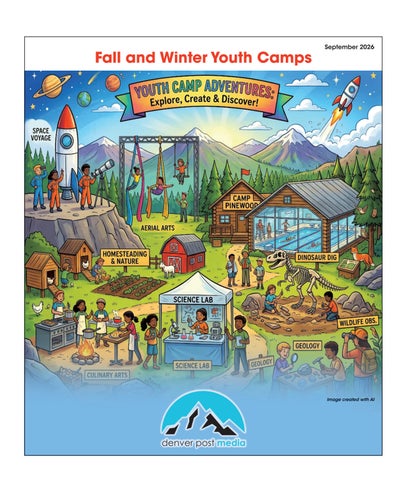
Fall and Winter Youth Camps
September 2026
Image created with AI
2
|
Q
ADVERTISING |
DENVERPOST.COM
TUESDAY, SEPTEMBER 29, 2026
Kids Page
copy the picture
SPACE VOYAGE 2026-27 SCHOOL YEAR A NEW SCHOOL YEAR. A NEW MISSION.
FOR FAMILIES • Saturday Maker Lab Four in-person Saturdays across two months
• Maker Lab Virtual Online, project-based making
• AstroScribe
Handwriting, cursive and calligraphy
• Summer Camp 2027 Full-day, week-long programs
FOR SCHOOLS + COMMUNITY • Ultimate Field Trip 2.0
2-3 hour school seminar 10 STEAM challenges.
• School Convocations
This is zigzag word search puzzle. Words go left, right, up, down, not diagonally, and can bend at a right angle. There are no unused letters in the grid, every letter is used only once.
Grid size: 10 x 10 squares, 10 x 10 letters, 90 x 90 mm. Square size: 9 x 9 mm.
Space, Science Fairs, Invention
• AstroScribe
Classes & homeschool groups
Explore programs and request dates
www.SpaceVoyage.com
ANSWER:
TUESDAY, SEPTEMBER 29, 2026
DENVERPOST.COM
| ADVERTISING
Q
Jumble for Kids
Jumble for Kids 5
Jumble for Kids 6
Get creative in Lakewood
Make school breaks unforgettable with cooking, art, homesteading and holiday themed camps!
Fall Break Oct. 12–13
Cook up tasty creations in 5 hour camps for less than $100 a day. Jumble for Kids 7
Thanksgiving Break
Winter Break
Nov. 23–25
Create art and dive into winter themed activities.
Make art, try homestead crafts and enjoy throwback games.
Dec. 21-30
Full and half day options available for around $100 per session. Get details and register at LakewoodCO.gov/Register. Search keyword “Camps.”
|3
4
|
Q
ADVERTISING |
DENVERPOST.COM
TUESDAY, SEPTEMBER 29, 2026
Rest Helps Make Better Decisions
When life gets busy, sleep is often one of the first things to go.
Homework, sports, jobs, activities and screen time all compete with a good night’s rest. But getting enough sleep is about much more than feeling alert the next day. It plays an important role in supporting mental health, emotional well-being and healthy decision-making. Research shows that sleep helps the brain regulate emotions, solve problems and control impulses. For children and teens, whose brains are still developing, healthy sleep habits are an important part of overall wellness. The National Institutes of Health
report that a lack of sleep is linked to a smaller volume of gray matter in the parts of the brain that are responsible for memory, attention and inhibition control. It also reports that sleep-deprived youth display higher rates of impulsivity, stress, anxiety, depression and aggressive behavior.
SLEEP SUPPORTS A HEALTHY BRAIN During sleep, the brain processes memories, strengthens learning and prepares for the next day’s challenges.
© ADOBE STOCK
When young people don’t get enough sleep, they may have a harder time concentrating, managing stress or thinking through decisions.
Sleep deprivation can affect mood. Teens who are consistently sleep-deprived may become more irritable, anxious or emotionally overwhelmed. While poor sleep doesn’t cause substance use, it can make it more difficult to cope with stress and resist impulsive choices. Getting enough rest helps the brain work the way it’s designed to, making it easier to handle everyday challenges.
HEALTHY HABITS MAKE A DIFFERENCE
The American Academy of Sleep Medicine recommends that school-age children and teenagers get the amount of sleep appropriate for their age, with teens typically needing 8 to 10 hours each night. Families can encourage healthy sleep habits by establishing regular bedtimes and wake-up times, even on weekends. Creating a relaxing bedtime routine and limiting screens before bed can make it easier to fall asleep. Physical activity during the day, exposure to natural daylight and avoiding caffeine
late in the day can further support healthy sleep.
REST IS PART OF PREVENTION Substance use prevention isn’t built around a single conversation or one school program. It’s supported by everyday habits that strengthen physical and emotional health. Sleep is one of those habits. Along with healthy relationships, regular exercise, balanced nutrition and positive activities, adequate sleep helps young people build resilience and navigate life’s ups and downs. During Red Ribbon Week, remember that prevention isn’t only about avoiding harmful substances. It’s also about giving children and teens the tools they need to thrive. A good night’s sleep may not seem like a prevention strategy, but it’s one of the simplest ways to support a healthy brain, sound decision-making and long-term well-being.
TUESDAY, SEPTEMBER 29, 2026
DENVERPOST.COM
| ADVERTISING
Q
Shaping Healthy Behaviors Have you ever brushed your teeth without really thinking about it? Or automatically buckled your seat belt as soon as you got into a car? Those everyday actions are examples of habits, behaviors that become more automatic through repetition. Our brains are built to create habits because they help us navigate daily life more efficiently. The same process that helps us remember healthy routines can make unhealthy behaviors harder to change. Understanding how habits form can help young people build routines that support their health and well-being.
HABITS START SMALL Many people imagine habits appear overnight, but they usually develop one small step at a time. Researchers have found that habits often follow a simple pattern: a cue, a routine and a reward. For example, a student may come home from school (the cue), go for a walk or practice an instrument (the routine), and feel more relaxed afterward (the reward). Over time, the brain begins to associate the cue with the positive outcome, making the behavior easier to repeat. This is why healthy routines don’t require perfect motivation every day. The
more often we practice them, the more automatic they become.
HEALTHY HABITS BUILD RESILIENCE
Good habits do more than save time. They strengthen the skills needed to make healthy decisions. Regular sleep, physical activity, nutritious meals, spending time with supportive friends and managing stress in healthy ways all create routines that support both physical and mental health. These habits can improve mood, reduce stress and make it easier to respond thoughtfully instead of impulsively when challenges arise. Building healthy habits creates confidence. Every positive choice reinforces the belief that future healthy choices are possible.
© ADOBE STOCK
hundreds of small choices that gradually become part of everyday life. By helping young people understand how habits work, families,
schools and communities can empower them to create routines that support healthy minds, healthy bodies and a healthy future.
A licensed, licensed, field field trip based based adventure adventure day day camp camp that visits visits 3+ destinations destinations per per day! day! Est Est 2015 2015 that
PROGRESS MATTERS MORE THAN PERFECTION
One of the biggest misconceptions about habits is that missing one day means you’ve failed. In reality, everyone has days when routines are interrupted. The key is to begin again. Instead of focusing on dramatic changes, experts encourage starting with small, realistic goals. Reading for 10 minutes, taking a short walk, putting away screens before bedtime or practicing a hobby for a few minutes each day can all become meaningful habits over time. Substance abuse prevention isn’t built on one big decision. It’s built through
W We e tr travel avel together together in one one van van driven driven by founder, director director and lead lead chaperone, chaperone, Sam. Sam. founder,
Ge Gett full de details tails and ho hold ld y your our se seats ats a att denvertourclub.com denvertourclub.com before before the the van van fills up! up! Ca Call/text ll/text Sam Sam directly directly at at 720-309-1828 720-309-1828
|5
6
|
Q
ADVERTISING |
DENVERPOST.COM
TUESDAY, SEPTEMBER 29, 2026
Kids Page
copy the picture
This is zigzag word search puzzle. Words go left, right, up, down, not diagonally, and can bend at a right angle. There are no unused letters in the grid, every letter is used only once.
Grid size: 10 x 10 squares, 10 x 10 letters, 90 x 90 mm. Square size: 9 x 9 mm.
ANSWER:
TUESDAY, SEPTEMBER 29, 2026
DENVERPOST.COM
| ADVERTISING
Q
What Makes A Trusted Adult?
Every child and teenager needs at least one trusted adult they can turn to when life becomes confusing, stressful or overwhelming.
While parents and caregivers often fill that role, trusted adults can also be grandparents, teachers, coaches, school counselors, neighbors, faith leaders or family friends. Research has found that having supportive relationships with caring adults is one of the strongest protective factors against risky behaviors, including substance use. Knowing someone is ready to listen can help young people feel less alone and more confident asking for help.
WHAT DOES A TRUSTED ADULT LOOK LIKE?
A trusted adult isn’t someone who has all the answers. Instead, they’re someone who makes a young person feel heard, respected and safe. Trusted adults listen without immediately judging or criticizing. They keep conversations calm, ask thoughtful questions and let children know it’s okay to talk about mistakes, worries or difficult feelings. Just as importantly, trusted adults are dependable. They follow through on promises, make time to connect and show up consistently over time. Trust is built through everyday interactions, not just during major life events. Young people should understand that trusted adults help keep them safe. Sometimes that means involving another responsible
adult if someone is at risk of being harmed. Seeking additional help isn’t a betrayal of trust. It’s an important part of caring for someone.
BECOMING SOMEONE KIDS CAN CONFIDE IN
Adults don’t have to be perfect to become trusted mentors. Small actions often make the biggest difference. Take time to ask about a child’s interests. Attend games, concerts or school events when possible. Listen more than you speak. Avoid rushing to solve every problem before hearing the whole story. According to a 2025 study in Children and Youth Services Review, the qualities teens look for in adults when deciding to trust them are reliability and traits that encourage seeking advice and guidance. When children share something difficult, thank them for trusting you. Even if a conversation is uncomfortable, responding with patience and compassion helps build confidence that they can come to you again. Talk about difficult topics before there’s a crisis. Regular conversations about friendships, stress, mental health and substance use create a foundation of trust that makes future discussions easier.
A CHILD NEEDS A TEAM
No single adult can meet every need, and that’s okay. Many young people benefit from having several trusted adults in their lives, each offering encouragement, guidance and support in different ways.
© ADOBE STOCK
Prevention begins with connection. Helping children identify trusted adults and encouraging adults to become reliable, caring mentors,
families and communities can create a network of support that helps young people make healthy choices for a lifetime.
|7
8
|
Q
ADVERTISING |
DENVERPOST.COM
TUESDAY, SEPTEMBER 29, 2026