



















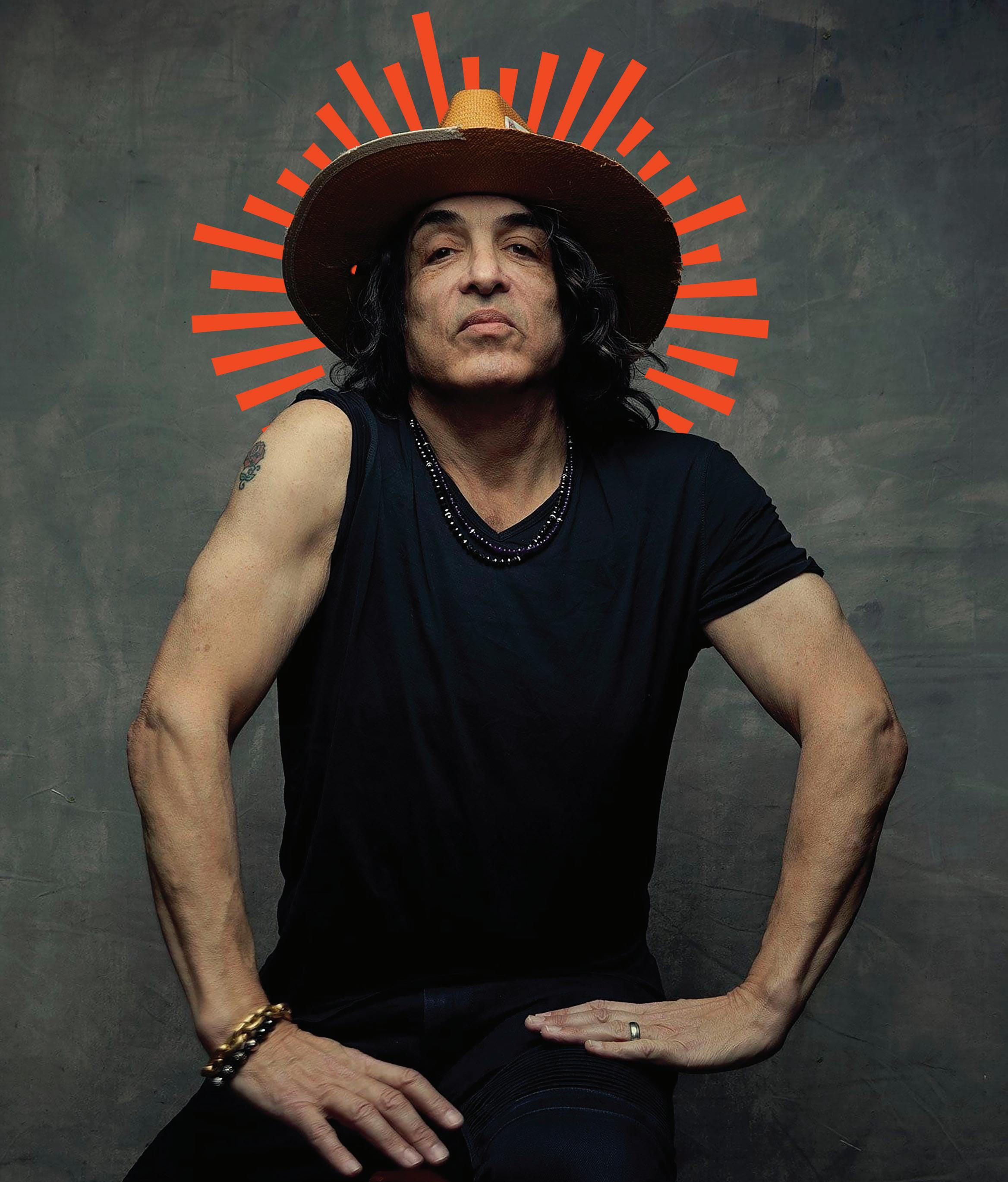
‘A GIANT LEAP FORWARD IN TONE, PLAYABILITY, AND DURABILITY.’
–PAUL STANLEY


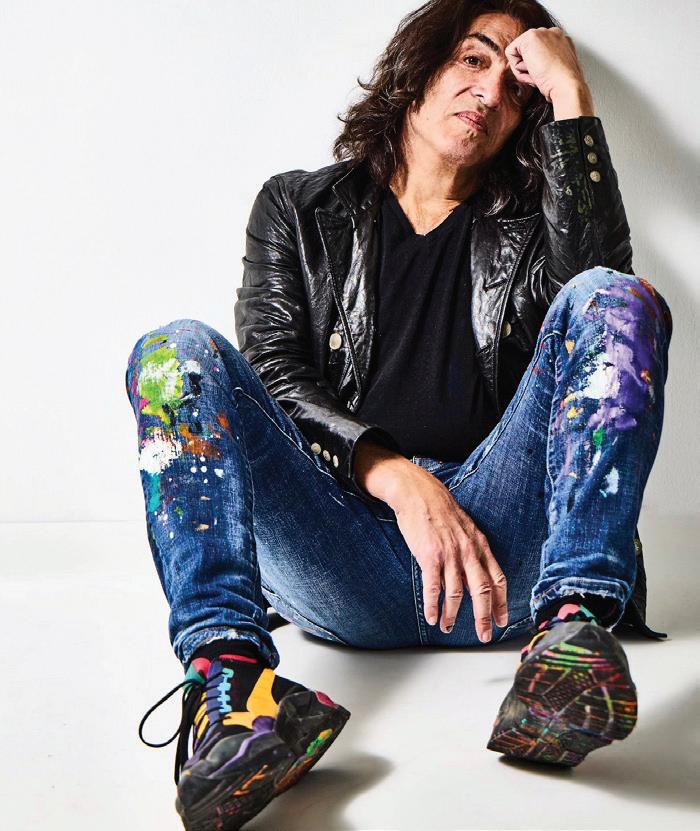
Hey Music Fans,
Trust is everything in music. I’ve spent my life on stage and in the studio, living and breathing music, so I know how much every note matters. When you’re under the lights in front of hundreds of thousands of fans or alone working on a track in the studio, the sound has to be right. No compromises.
Music isn’t just what I do, it’s who I am so I need gear I can count on. That’s why I’ve turned to JBL for decades. From first hearing my music and the music of my heroes played through JBL speakers at Electric Lady Studios in NY in the late 1960s, that sound became my gold standard by which I measured all others. That's why JBL has been part of my creative process ever since, on stage, in the studio and at home.
This year, JBL celebrates 80 years of shaping sound and how the world hears music. Eight decades of innovation fueled by the passion and dedication of people who care about sound as much as I do. That’s not just a milestone...it’s a legacy built by thousands of visionaries who live for sound. What will they do next? Your guess is as good as mine, but knowing JBL, it’ll be great.
So kudos JBL - thanks for keeping the music alive as only you can.

Co-Founder of KISS
If you’ve listened to Outkast’s Player’s Ball, TLC’s Waterfalls, or Tyler, The Creator’s Igor, you already know Neal Pogue’s work. What you might not know is how one unlikely Christmas track helped launch one of the greatest careers in mixing history.
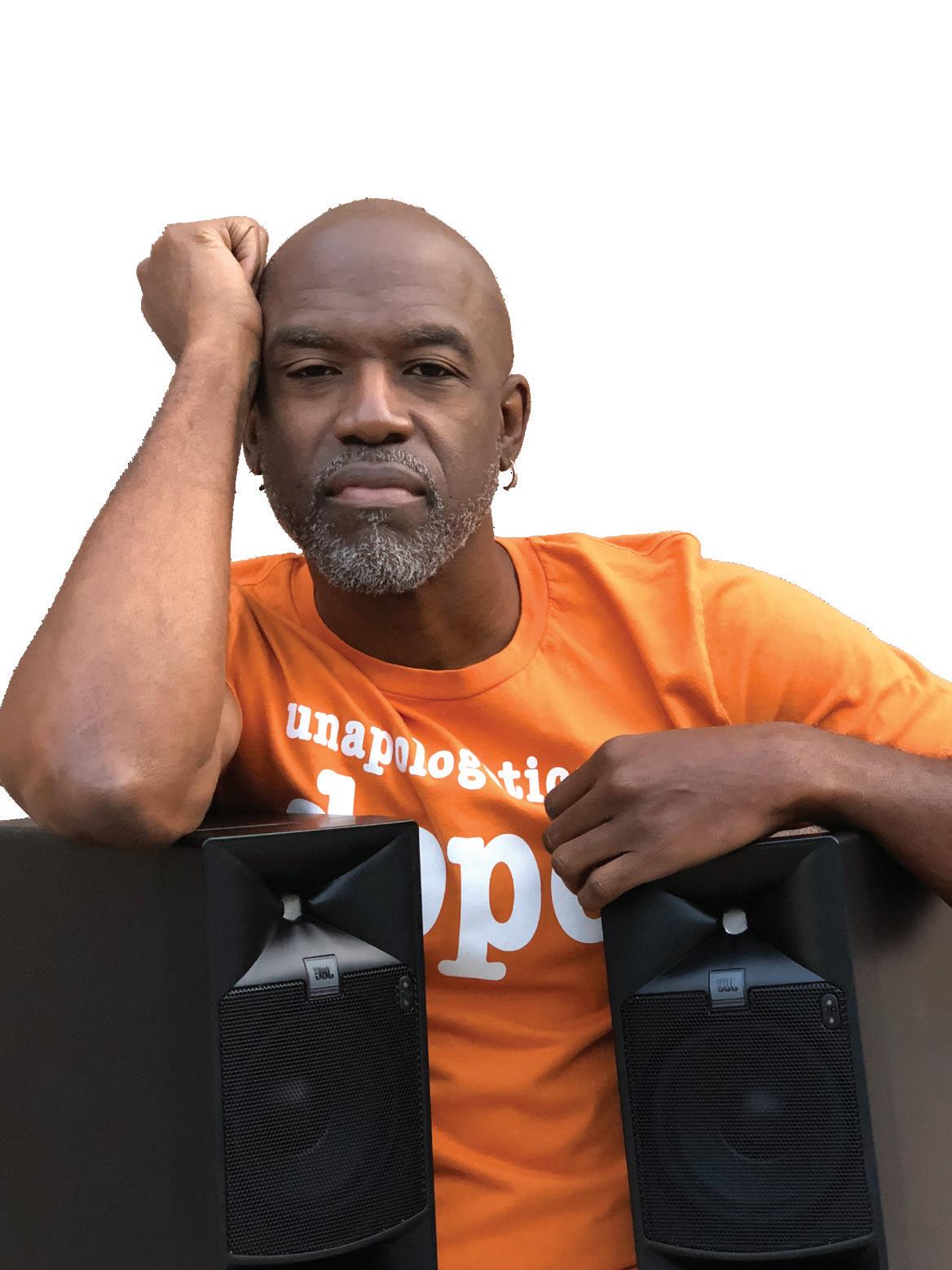
In the early ’90s, Outkast recorded a Christmas track for a LaFace Records holiday compilation. But when the label heard the groove, they realised it could be something bigger than a seasonal song. Up stepped producer Neal Pogue, who remixed it into a standalone single. The result was ‘Player’s Ball’, a funky, unexpected hit that no longer sounded like Christmas.
“The label said, ‘This has to be a single’,” Pogue recalls. “But we were on tape, no Pro Tools, so I had to literally cut the Christmas out of it by hand and make the new vocals blend like nothing had changed, so no-one would notice.”
And they didn’t notice. The song went gold and #1 on Billboard’s Hot Rap Songs chart. And Pogue had officially arrived.
CRAFTED BY CURIOSITY
Pogue didn’t grow up planning to be a mixing engineer. Raised in Roselle, New Jersey, he was surrounded by music – Motown, rock, funk, even Sammy Davis Jr. He started to play trumpet, switched to drums, and led local bands before heading west to chase a dream.
"I came to LA thinking I’d tour in a band," he says. "That didn’t pan out. But I saw an ad for engineering school and thought, let me try that."
It was a fit. After studying at Sound Master and getting fired from a few early gigs for mysterious reasons, he found his footing assisting at Randy Jackson’s (The Jacksons) private home studio and then at Larrabee Sound Studios, a mixing-focused spot where
he learned from greats like LA recording and sound engineers, Taavi Mote, Alan Meyerson and Keith Cohen. Within a year and a half, he was out on his own - young, untested, and hungry.
Pogue was invited by MCA Records A&R legend Louis Silas Jr. to record with Bobby Brown in 1990, who was one of the biggest names in music at the time. After the session, Bobby asked him to come to Atlanta for a few months. Pogue planned to stay for six months, but ended up staying for 12 years.
"At that time, Atlanta was just starting to bubble," he says. "L.A., Babyface, and Cameo were there. It was fresh and I wanted to be a part of it."
The city was on the brink of becoming a global music capital – a vibrant fusion of hiphop, soul, and Southern identity. Pogue soon connected with production duo,Organized Noize, and helped define the sound of a generation – recording and mixing records for TLC, Usher, Toni Braxton, and of course, Outkast.
His role was technical and transformative. On tracks like "Get Up, Get Out," he rearranged entire verses on tape, stitching the performance together to feel seamless. It was instinctive, analogue artistry.
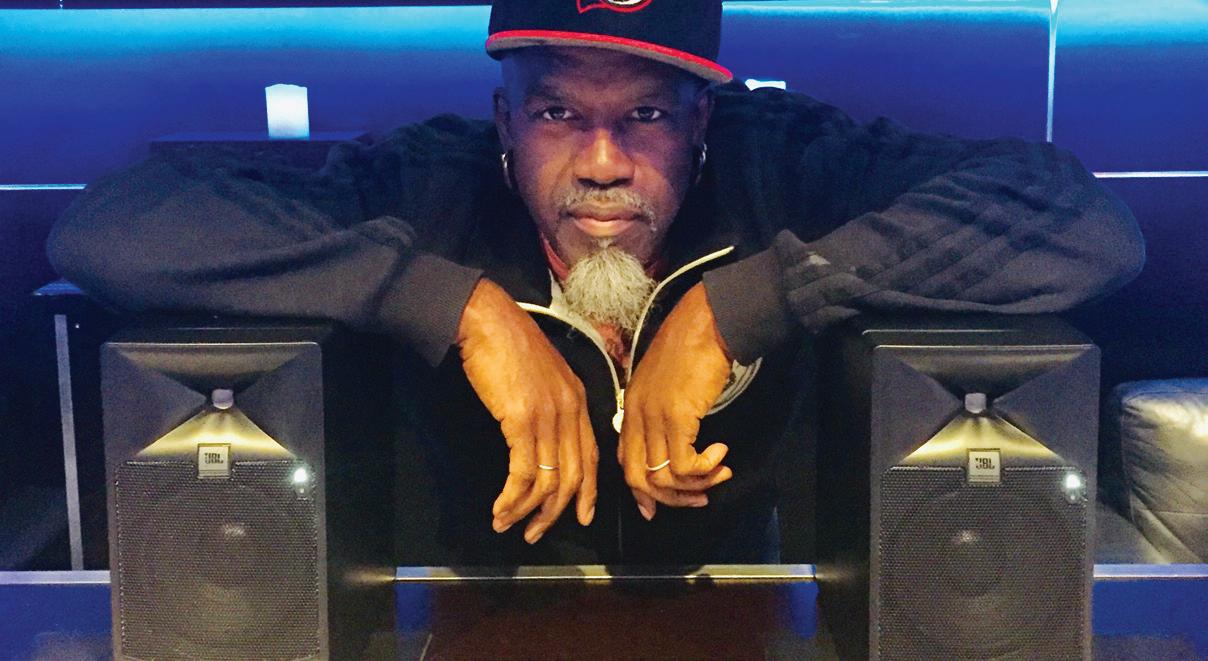
Through it all, one thing has remained consistent: his JBL studio monitors. But it wasn’t love at first listen.
"I wasn’t a JBL fan back in the day," he admits. "But my friend Damien asked me to
come check out the 708Ps. I sat down, listened, and I was like ‘where’s the subwoofer?’ I couldn’t believe the sound was all coming from those speakers." Now, he won’t mix without them. "I use 708Ps in my home studio and 705Ps as nearfields in outside studios. They’ve been my go-to for almost a decade. They’re clear, warm, and tell me the truth. I know if a mix works on these, it’ll sound good anywhere.”
More than a brand choice, JBL is part of Pogue’s creative DNA. PHILOSOPHY IN THE MIX
For Pogue, mixing is about more than balance, it’s about trust. "I always say, protect and serve the artist. It’s not about me. It’s about making them look good," he says.
That humility comes with instinct. He’s no perfectionist. “You can tweak forever. But at some point, you have to let it go and trust your gut. And that’s what JBL’s monitors allow me to do. They help me hear it right every time.”
LEGACY IN MOTION
Today, Pogue remains a vital force in music, working with visionaries like Tyler, The Creator, Doja Cat, Kehlani, and Steve Lacy. His mixes don’t chase trends. They create space for artists to shine.
"I tell young engineers, trust your ears. My motto is 'See With Your Ears.' And don’t get into perfection. What is perfection? Sometimes, the magic is in the mistake.”
And at the center of it all, still: JBL.
"After all these years," he says, "I’m still chasing the perfect mix... whatever that means. However, I’ve got the right speakers to help me find it."
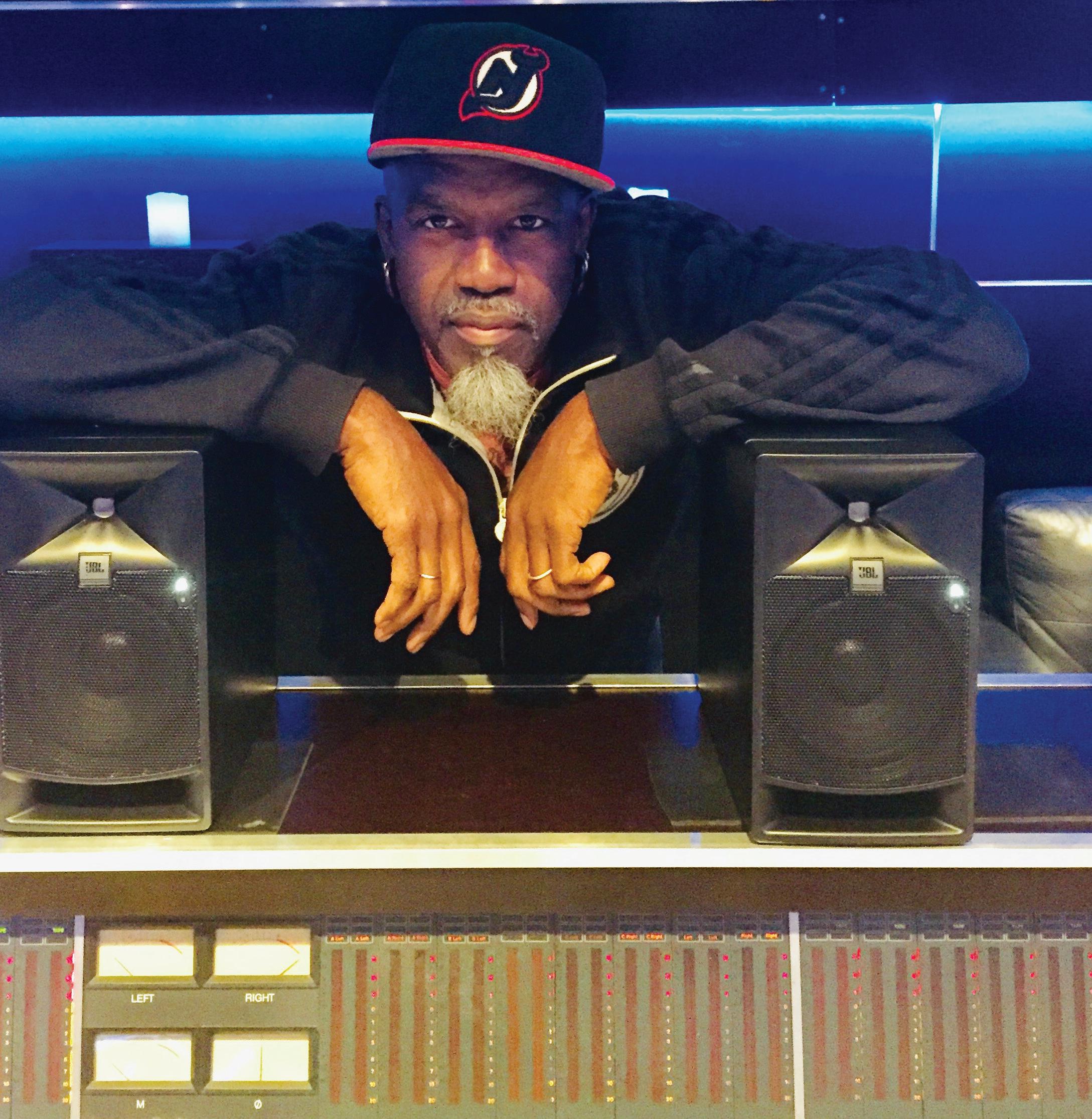
With seven Grammy wins, Neal Pogue is an award-winning mixer, producer, and engineer known for his genre-spanning work in Hip-Hop, R&B, Pop, Rock and Funk.
BREAKTHROUGH WITH OUTKAST
He made his mark mixing Outkast’s Speakerboxxx/The Love Below (2003), which earned the Grammy for Album of the Year. He also mixed their breakout single “Hey Ya!”
Pogue has worked with some of music’s most influential artists, including Outkast, Tyler, The Creator, TLC, Stevie Wonder, Doja Cat, Janelle Monáe, and Earth, Wind & Fire.
GRAMMY CREDENTIALS
In addition to his win with Outkast, Pogue has won a total of seven Grammy awards out of 11 nominations, including for Victoria MonetJaguar II (Best Engineered Album 2024).
SOUND WITH SOUL
Pogue is celebrated not just for technical mastery, but for bringing warmth, depth, and emotional punch to every project he touches.

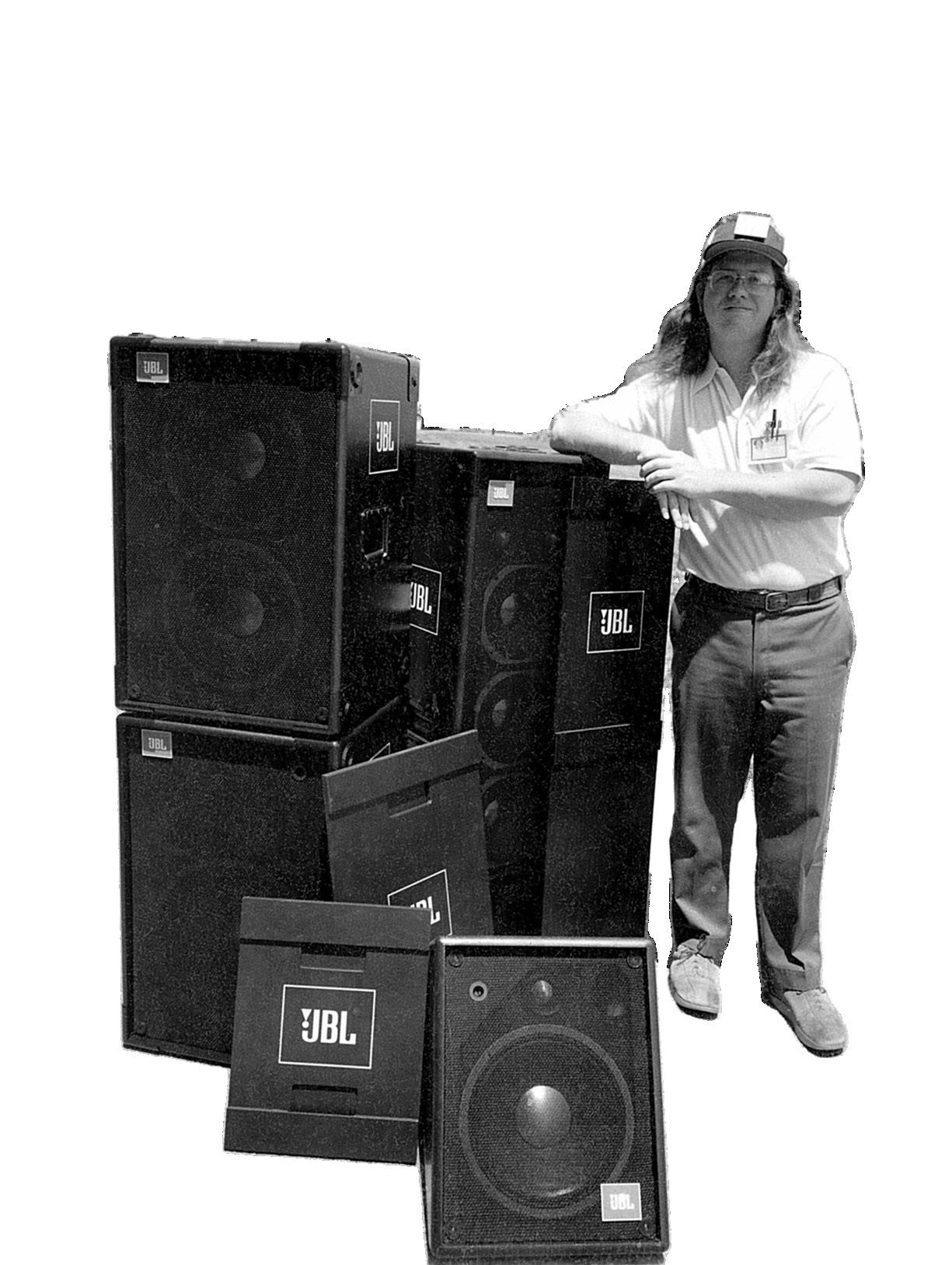
HOW THE LAUNCH OF JBL'S CABARET SERIES IN 1979 CREATED THE PROFESSIONAL PORTABLE SPEAKER CATEGORY
Portable PA changed where we hear music. Meet the godfather of Portable PA –the visionary who unleashed sound
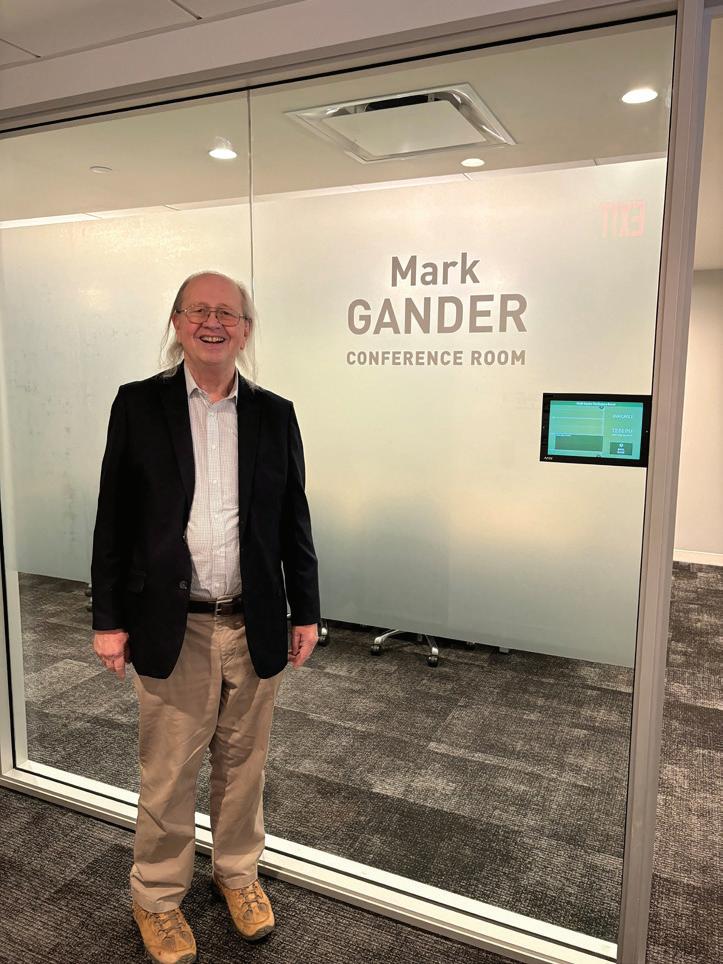
It all started with an idea for Mark Gander – what if great professional sound could go anywhere?
The small seed was sown of what came to be a total reimagining of where sound could live. A rethinking of who gets to be heard, where, and how. And the visionary and driving force of that shift was Gander – engineer, evangelist, and the quiet revolutionary behind JBL’s rise in the world of professional, portable sound. He recalls: “I wanted sound systems to go where the trucks didn’t. If someone had a voice, they deserved to be heard - no matter where they were.”
Gander didn’t set out to start a sound revolution. Trained in electrical engineering but raised on rock ‘n’ roll, Gander’s first love was the stage. Not performing, but making performances feel alive to the audience.
“Between college and grad school, I worked for a year on the road as a sound engineer and mixer,” he recalls. That’s where he saw the limitations of the industry firsthand: “If you didn’t have a truck full of gear, you didn’t get heard.”
When he joined JBL in the mid-70s, he wasn’t content to sit behind the bench. “I didn’t want to be the engineer locked in the lab,” he says. “I wanted to talk to the roadies, the musicians, the crews sweating it out in small venues. That’s where the magic happened, and the problems lived.”
It was that on-the-ground curiosity, and respect for the people using the gear, that sparked what would become known as ‘Portable PA’: rugged, easy-to-use, professional-quality sound systems that could go wherever people wanted to be heard.
This is where everything changed. The Cabaret Series wasn’t just another product line. It was the moment professional sound stepped off the stage and into the wider world.
At a time when live audio meant truckloads of gear and specialist crews, Gander pushed for something radical: a self-contained, professional-grade sound system that anyone could set up and use. It didn’t exist, because no one thought it could. “No one was asking for portable pro sound,” he says. “Because no one thought it was possible. But I knew what musicians needed, because I was a musician.”
The Cabaret Series shifted the power. Suddenly, sound wasn’t reserved for venues with budgets. It belonged to anyone with a voice and a purpose. A turning point for street corners, and backyard gigs, family gatherings and house parties.
“I called it the ‘democratization of sound,’” Gander says. “Suddenly, a singer with a rented mic and a dream had the same clarity as a headliner.”
While other engineers pursued patents, Gander chased conversa tions. “I’d show up at the Forum in LA or wherever bands were load ing in,” he says. “Not to schmooze, but to listen. To see how our sys tems were received, what was cursed, and what was loved.”
This feedback loop between field and factory became JBL’s secret weapon. Gan der brought back war sto ries from the road and turned them into technical briefs, product pitches, and performance breakthroughs.
As Portable PA matured, so did its reach. From preachers to poets, wedding DJs to youth organizers, the systems became tools of connection. Suddenly, anyone could host a moment with clarity, confidence, and the kind of presence that sticks.

“Every speaker was a stage-in-waiting. We just needed to give people the tools to claim it,” says Gander.
It wasn’t about perfection. It was about presence. “You don’t remember the EQ settings,” he jokes. “You remember how it felt when the bride sang to her new husband with her whole family in tears.”
FROM ENGINEER TO ENABLER
Gander didn’t stop with the Cabaret Series. He shepherded generations of JBL innovation, folding in digital tech, reshaping rigging systems, exploring new verticals from cinema to houses of worship. But his passion always circled back to Portable PA.
And while Gander is now a name revered in professional audio circles, he never stopped seeing himself as a user first.
“I’ve always said engineers need dirty boots. Because you can’t fix what you don’t see up close.”
Today, Portable PA is woven into culture. You hear it in the driveway concert, the baseball field, and the rooftop gig with a dozen friends and a dream.
Gander’s vision lives on in every street singer with a rig they carried themselves. In every coach calling drills over a wireless mic. In every parent who says: “Wow, you can hear that like it’s a concert.”
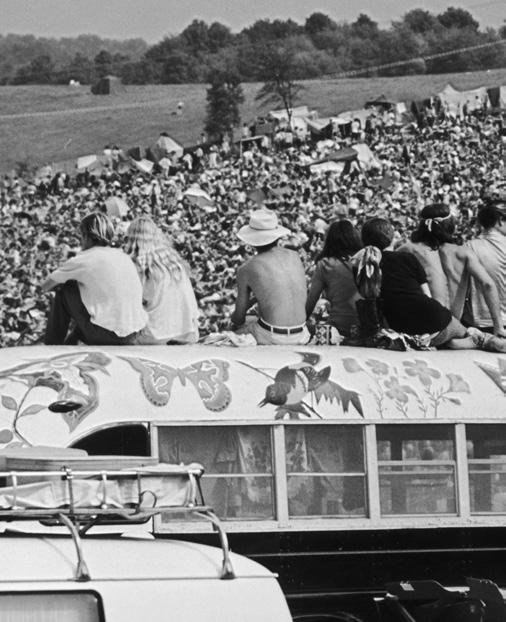
JBL speaker components delivered the epic sound at the firstever Woodstock, making the festival one of the most pivotal moments in popular music history with performances from Jimi Hendrix, Janis Joplin, and The Who. 1969
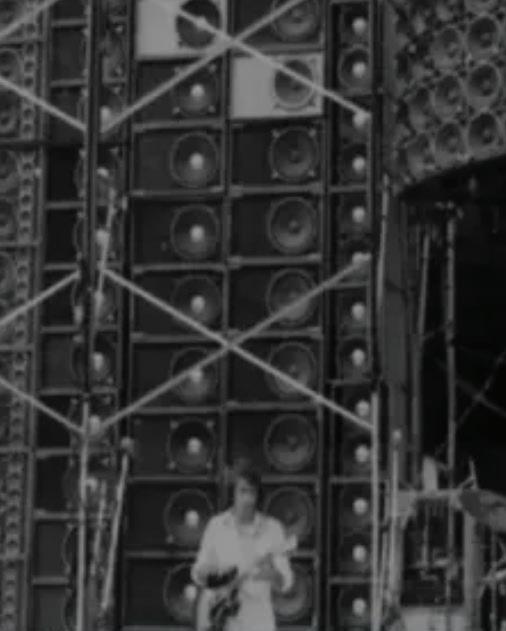
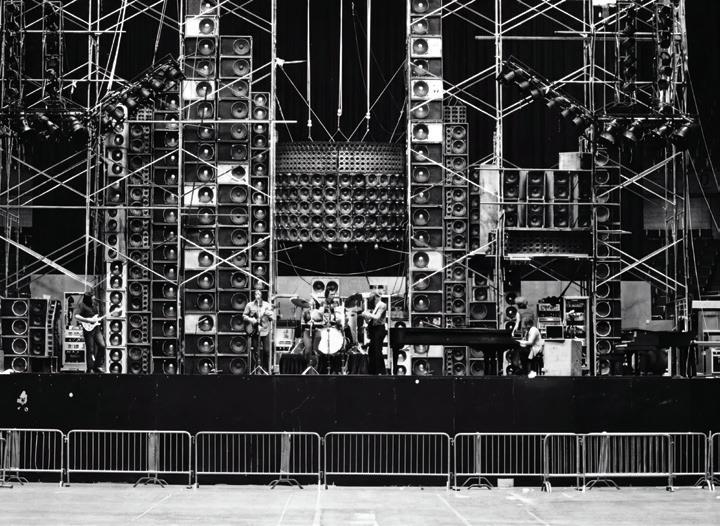
JBL co-developed the Wall of Sound for the Grateful Dead, which at the time would be the largest concert system free of distortion.
1970
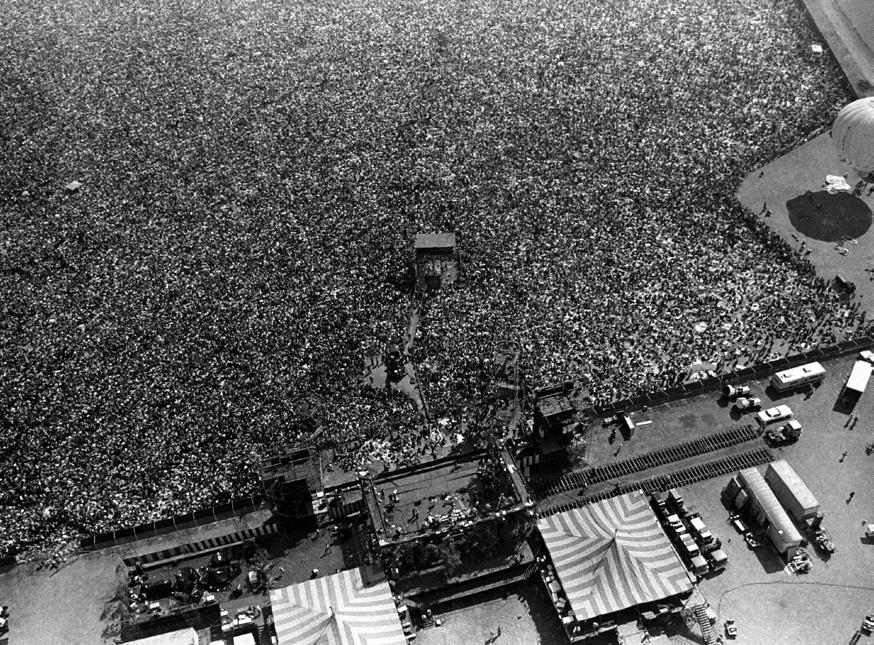
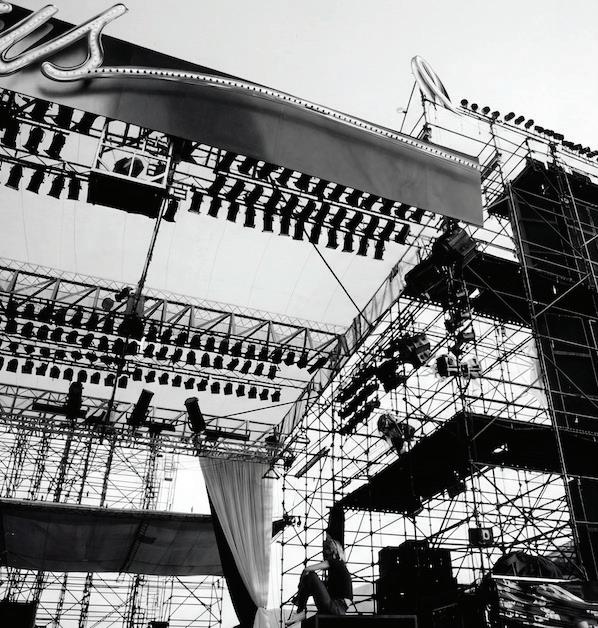
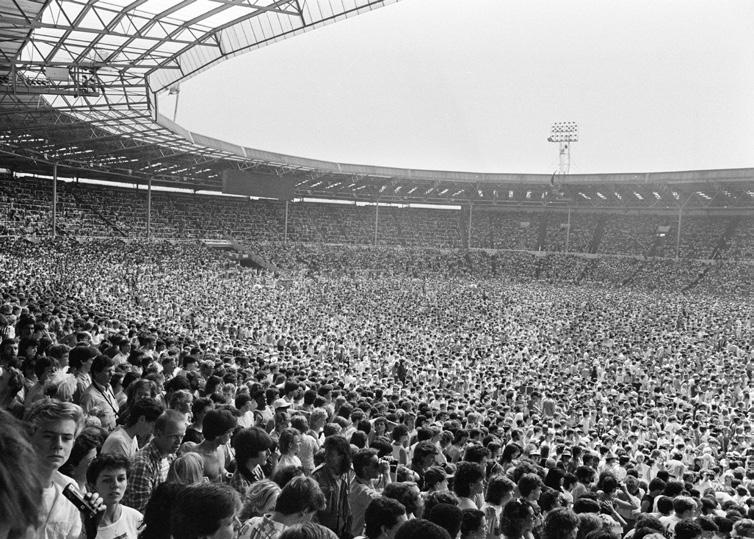
JBL was part of the largest and loudest sound system ever assembled at its time, with 54,000 watts of power. A watershed event for pop-culture, bringing together 400,000 rock music fans to see performances by Earth, Wind & Fire, Deep Purple, and The Eagles.
JBL sound powered the groundbreaking event organized by Apple Co-founder Steve Wozniak. Blending technology with rock music, the festival introduced the first implementation of the US-Soviet Space Bridge while hosting some of the biggest acts of the era, like The Talking Heads, The Police, and David Bowie.
JBL systems supplied the sound at John F. Kennedy Stadium in Philadelphia, where 90,000 fans gathered for one of the most iconic benefit concerts in history. As stars took to the stage to raise funds for Ethiopian famine relief, JBL systems ensured every note carried with clarity, power, and purpose.
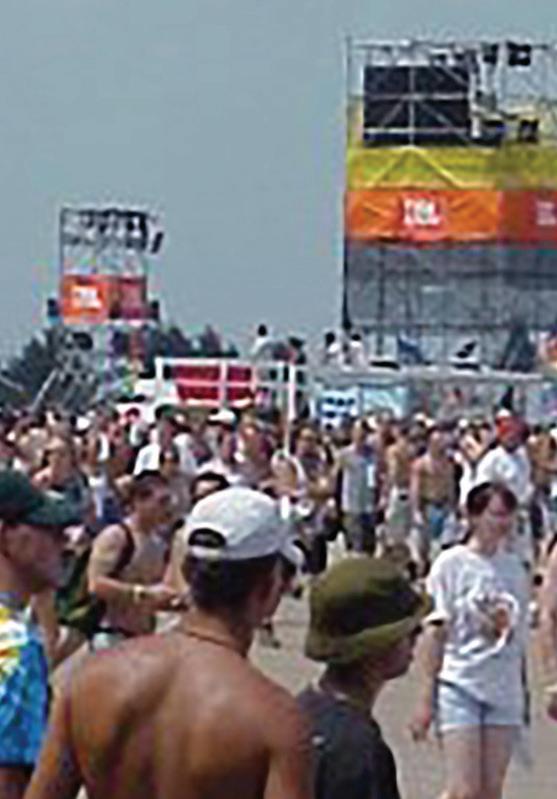
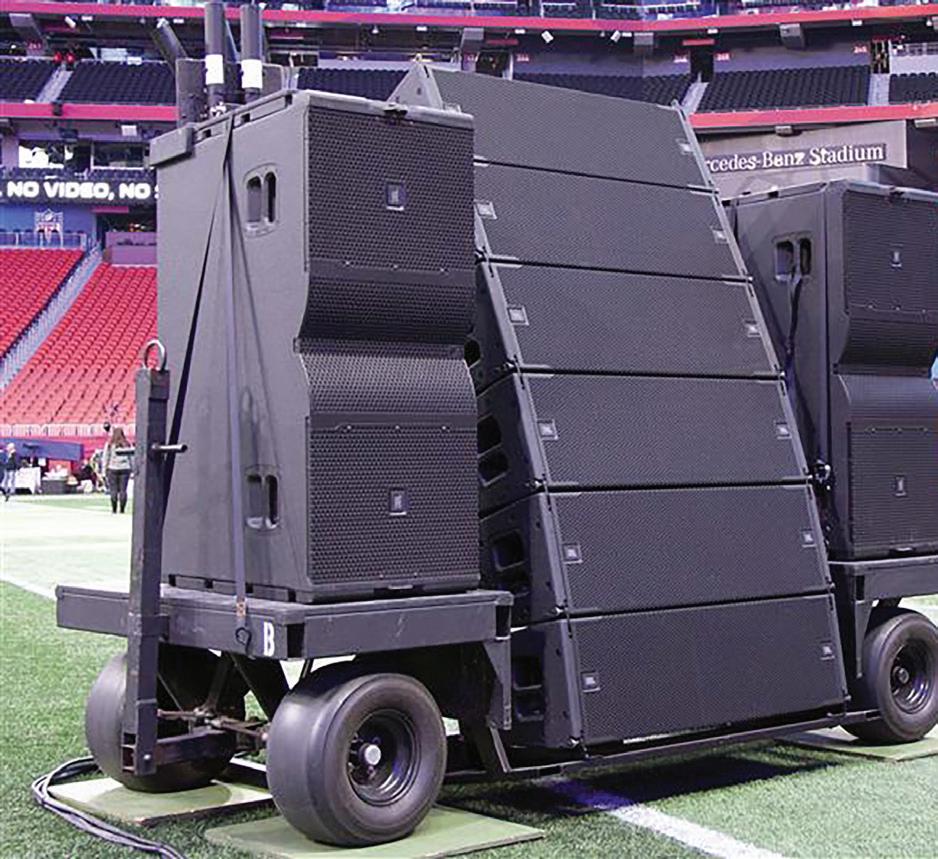
Thirty years after featuring at the original 1969 festival, JBL returned to Woodstock as an official sponsor across a weekend of wild energy with Metallica, Red Hot Chili Peppers and Korn.
JBL brought epic sound to key performances from international artists such as Prince, Jennifer Lopez and Shakira, making the halftime show just as thrilling as the championship game itself. Following Prince’s unforgettable performance in 2007, JBL continued to support most of the iconic halftime shows since then.
1974 1983 1985
1999
2002+
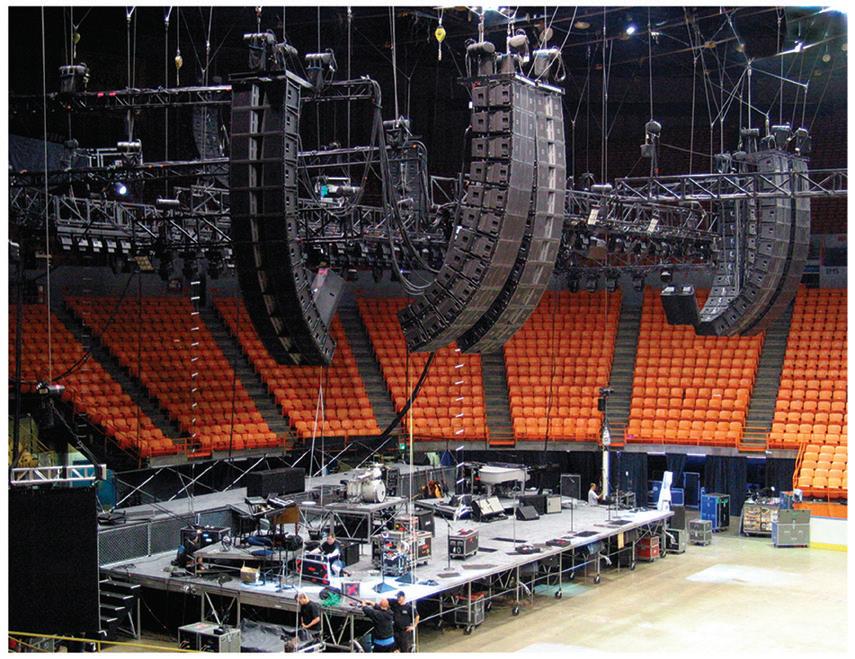
BRUCE SPRINGSTEEN
- THE RISING TOUR -
In the wake of 9/11, Bruce Springsteen and the E Street Band launched The Rising Tour – 120 shows across 17 countries. Powered by a JBL audio system, the tour brought messages of resilience and hope to arenas around the world.
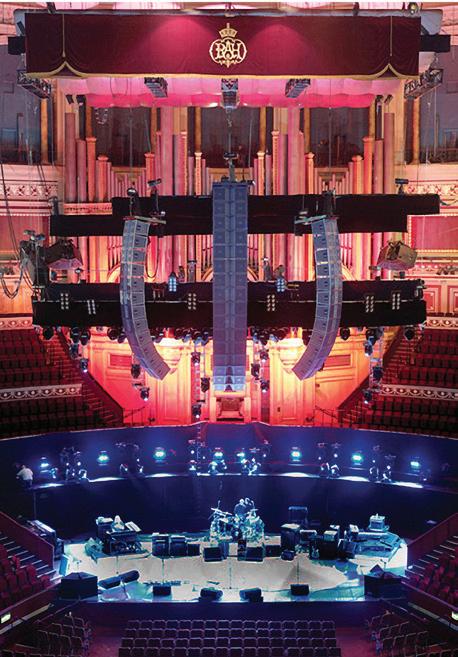
ERIC CLAPTONROYAL ALBERT HALL -
Eric Clapton performed seven concerts at London’s iconic Royal Albert Hall, using JBL’s line array system. Known for its complex acoustics, the venue benefited from JBL’s precise engineering, delivering consistent, high-quality sound to every seat in the house.
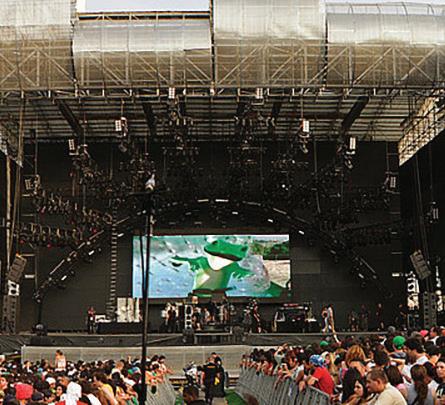

JBL powered the Rock in Rio music festival in Portugal and subsequent festivals in Brazil and Las Vegas.
THE SUMMER OLYMPICS - BEIJING -
JBL delivered powerful, crystal-clear sound across multiple venues at the Beijing Summer Olympics, helping bring some of the world’s biggest sporting moments to life to this and Summer and Winter Olympics since then.
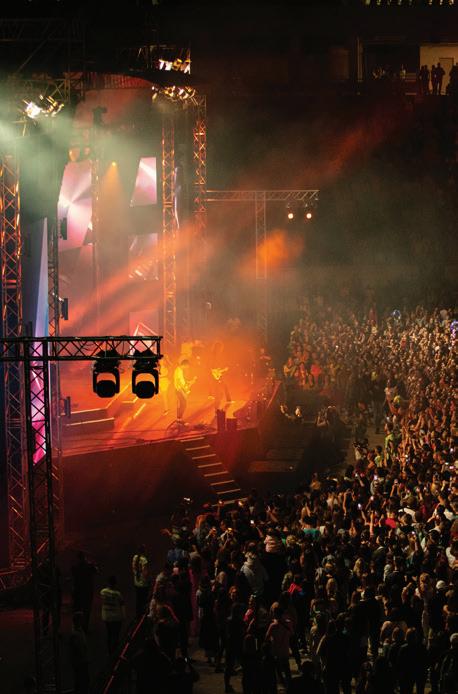
LENNY KRAVITZ, -ALWAYS ON THE RUN TOUR -
JBL traveled the world with Lenny Kravitz, supporting a relentless global schedule for one of rock’s most iconic performers and a four-time Grammy Award winner.
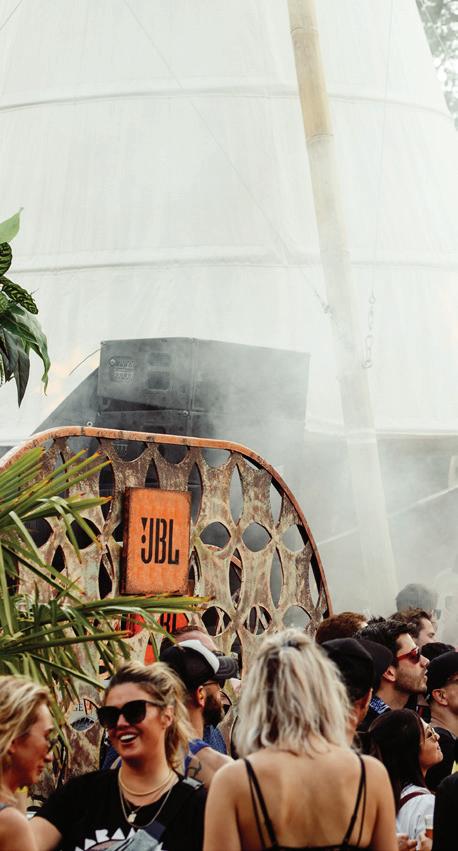
LAND FESTIVAL
JBL joined forces with Tomorrowland, one of the world’s largest electronic music festivals, bringing bold sound and immersive experiences to fans from Europe, China, and the Asia-Pacific region. The partnership marked a milestone in uniting global music lovers through powerful live audio and innovation.
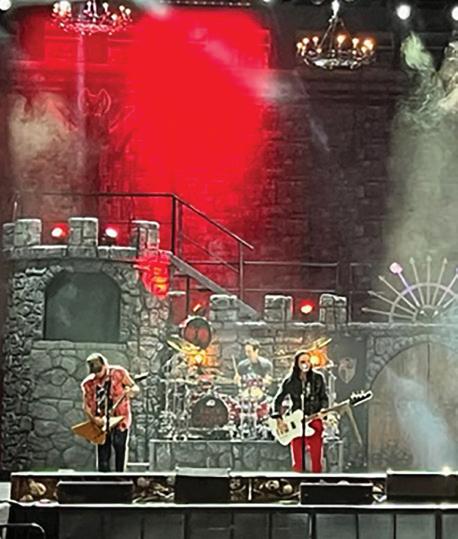
ALICE COOPER - US TOUR -
Alice Cooper took JBL on the road for his 2022 US tour – delivering signature shock rock with bone-rattling clarity. He returned to VTX systems again in 2025 for his latest tour.
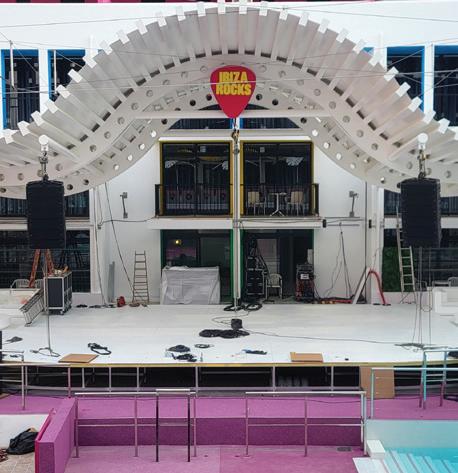
Ibiza Rocks recently replaced its aging sound system with a comprehensive Professional live audio solution consisting of JBL Professional loudspeakers to ensure high-impact audio for its guests while minimizing disturbances to local residents.
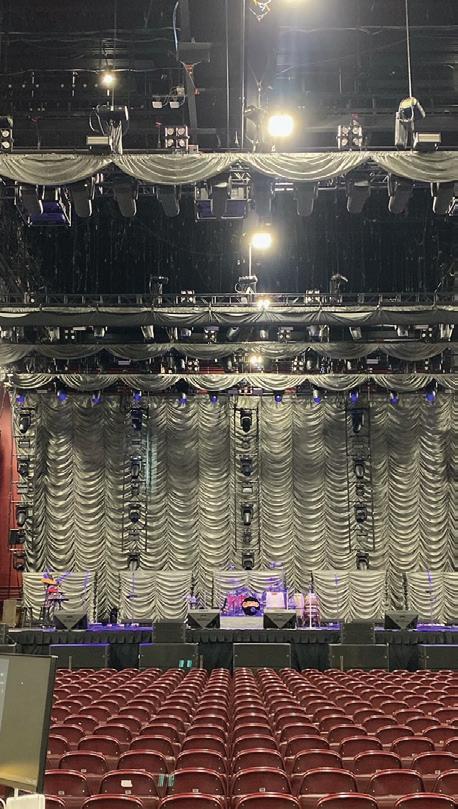
HEART - ROYAL FLUSH TOUR -
JBL deployed a sound system capable of supporting the band’s dynamic catalogue –shifting from high-energy rock arrangements to intimate vocal moments while maintaining consistency across arenas and theaters.
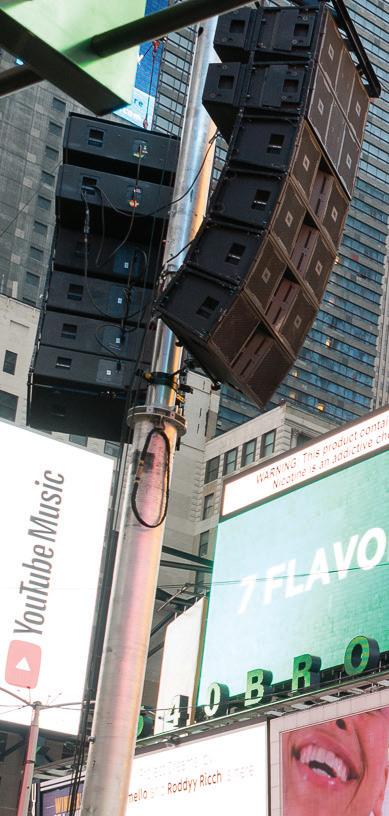
NEW YEAR'S, - NYC'S TIMES SQUARE BALL DROP -
For years, millions of revelers in Times Square have rung in the New Year listening to performances and the countdown through JBL loudspeakers lining the streets.
For 80 years, JBL has shaped how the world hears music, from golden age of cinemas and the world’s biggest stages to recording studios and living rooms.
Now, the JBL Playback Gallery brings that legacy to life. This traveling experience will journey through eight decades of sound innovation, showcasing the products that defined eras, powered cultural moments, and set new standards in audio performance.
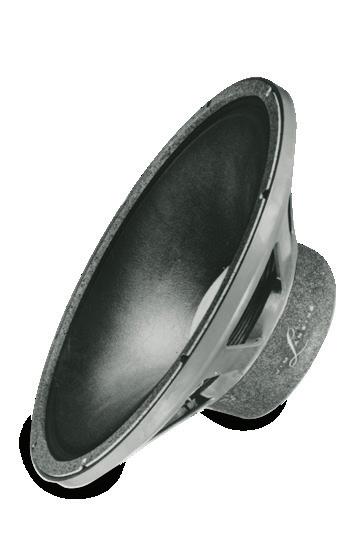
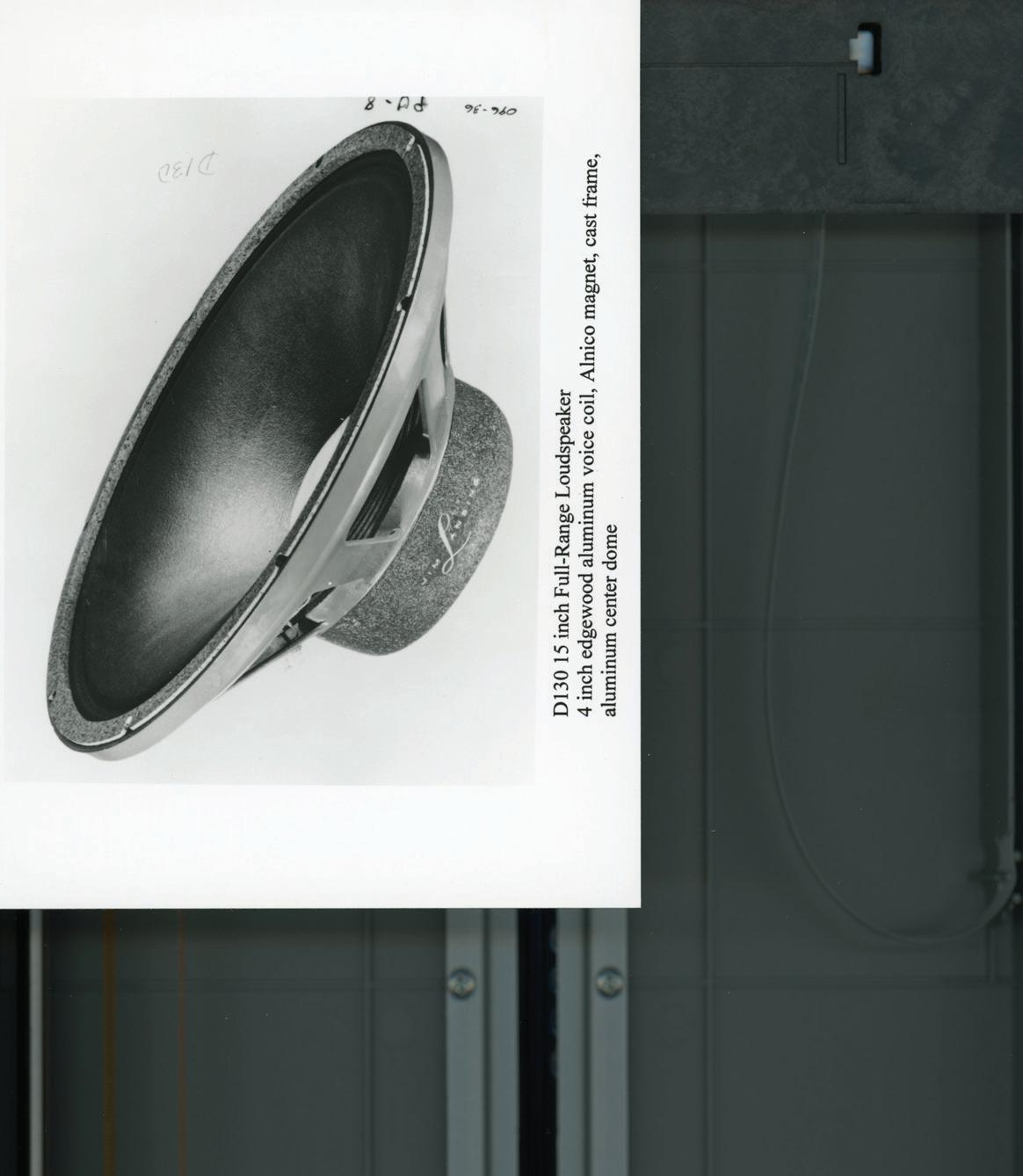
THE D130 DRIVER
The first mass-produced loudspeaker driver released by JBL following its founding in 1946. Celebrated for its clarity and efficiency, the D130 was used in cinemas, hi-fi systems, guitar amplifiers, and legendary concert sound systems, including The Grateful Dead's famed "Wall of Sound."
THE PARAGON DD44000
Launched in 1957, the JBL Paragon was the first stereo loudspeaker for the home. Nearly nine feet wide, it combined sculptural design with acoustic breakthrough. Its curved diffusion panel solved stereo listening for multiple people at once, cementing its status as one of the most iconic and collectible speakers ever created.
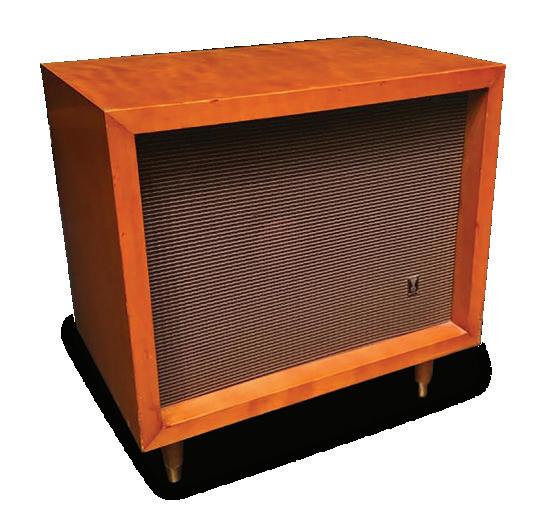
THE C38 BARON
The C38 Baron brought JBL’s highperformance drivers into a compact, stylish enclosure for home use. Popular in the 1950s and 60s, it offered audiophiles a taste of studio-quality sound without sacrificing living room aesthetics. Its success helped JBL establish a strong foothold in the consumer hi-fi market.
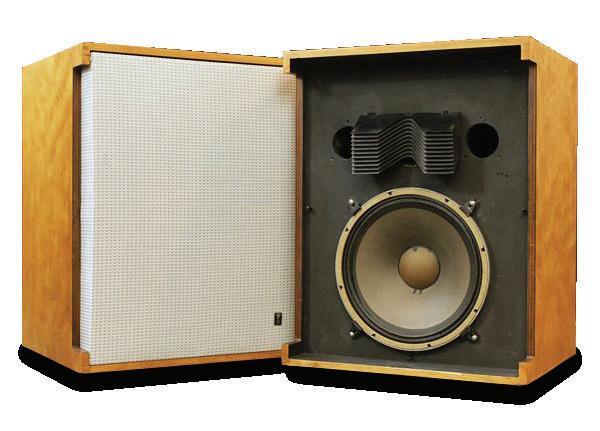
THE 4320 STUDIO MONITOR
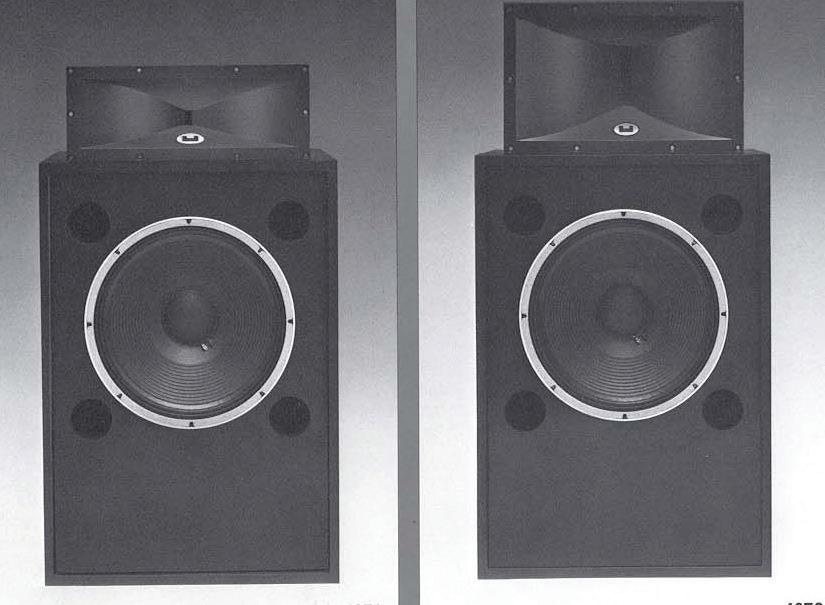
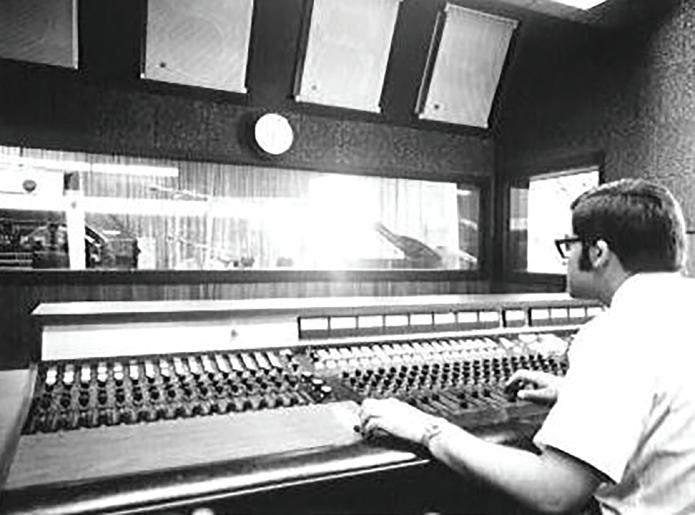
Developed in the early 1960s, the JBL 4320 was one of the first loudspeakers built for modern recording control rooms. Its powerful 15-inch driver and horn-loaded compression driver gave engineers new levels of accuracy and output, setting the standard for professional studio monitoring.
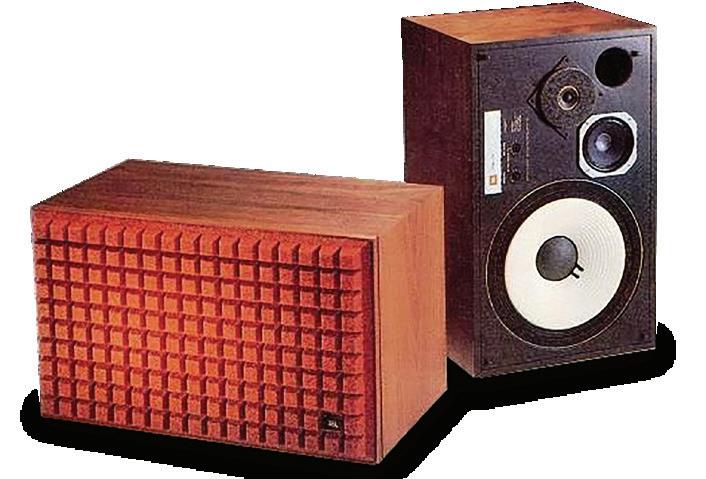
THE L100-A CENTURY
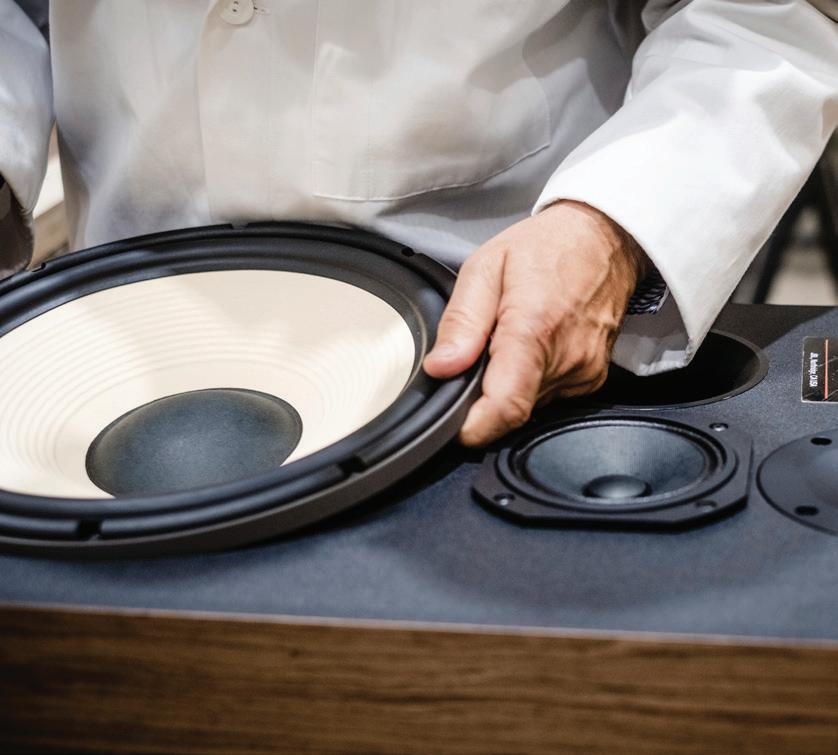
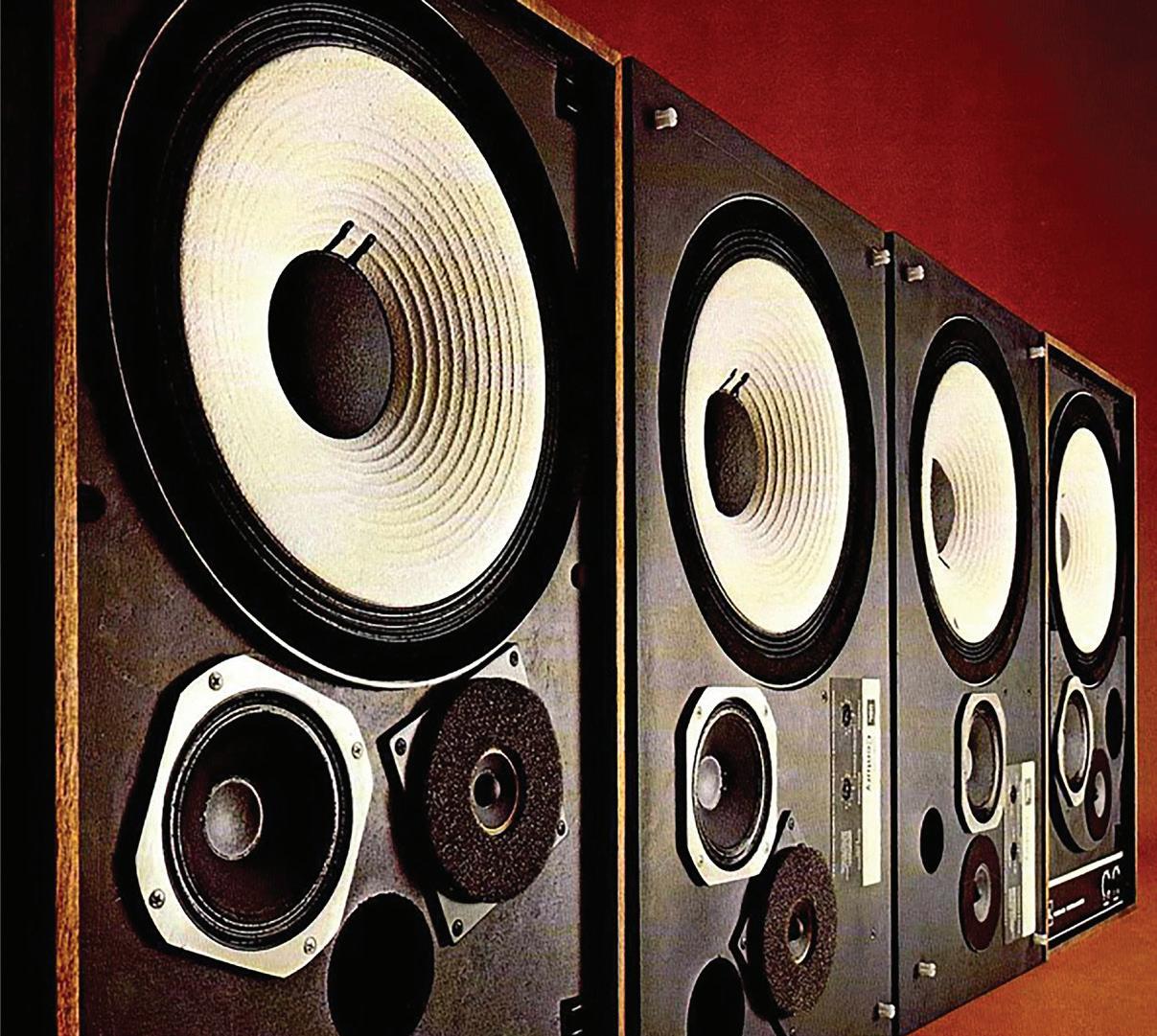
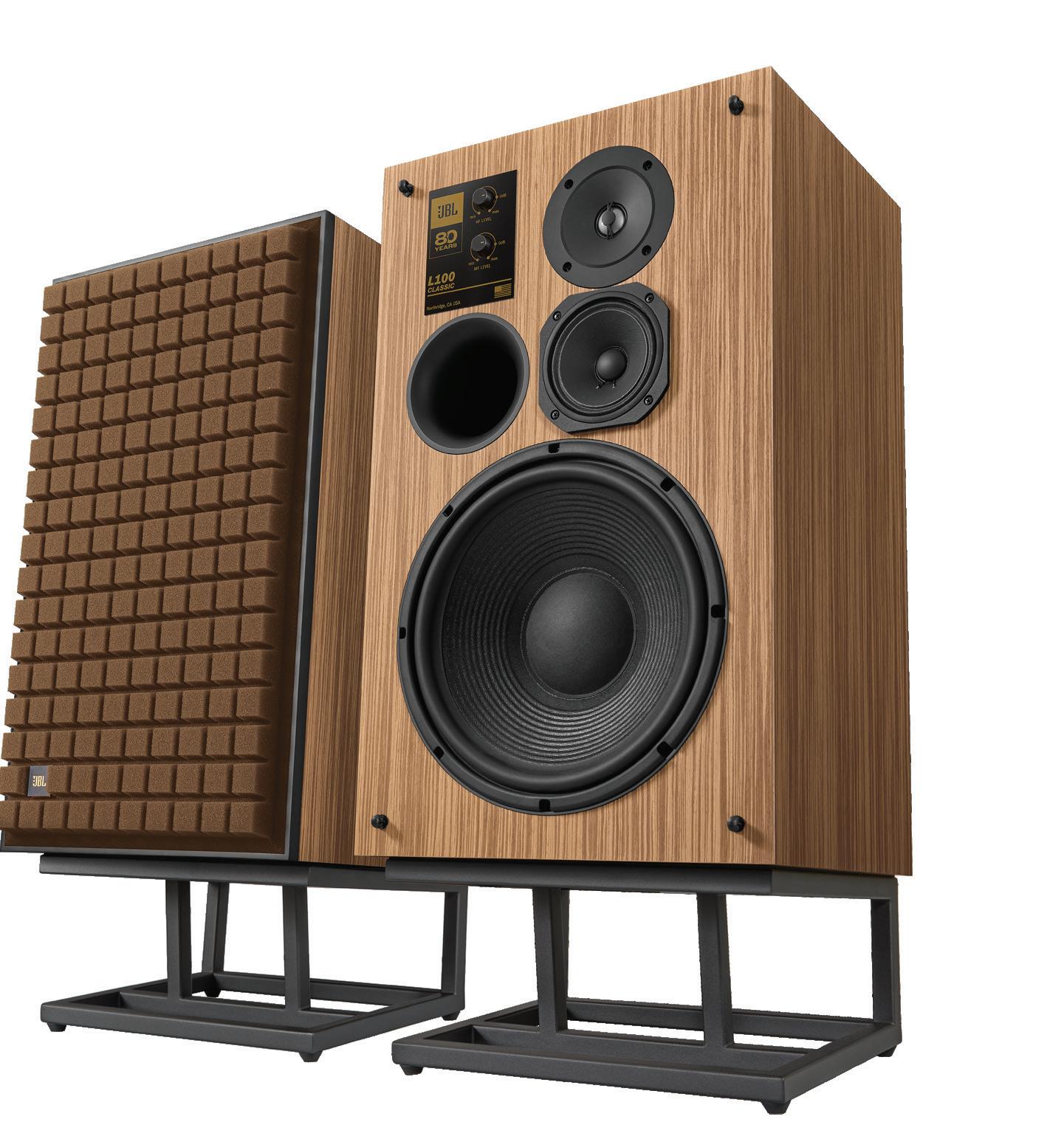
Originally launched in 1970, the L100 Century became one of JBL’s most iconic loudspeakers. With its signature Quadrex foam grille, white cone woofer, and walnut veneer cabinet, it defined an era of home hi-fi. Reimagined for today, the L100 Classic blends timeless design with modern acoustic engineering, bringing a legend back to life.
THE 4310 STUDIO MONITOR
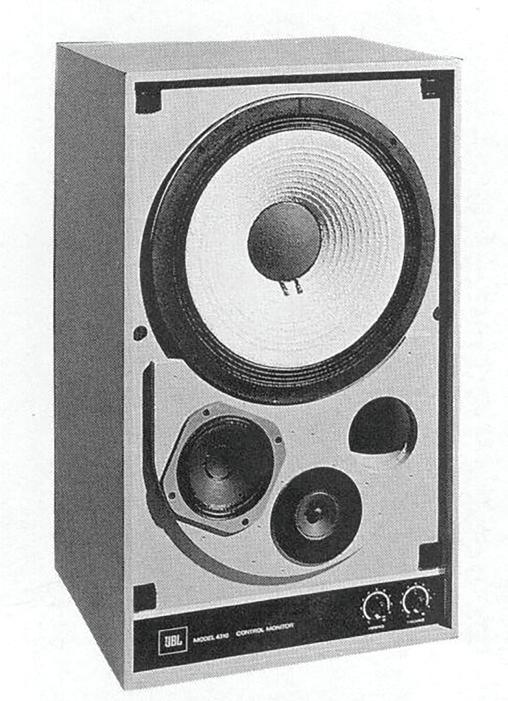
The JBL 4310 helped pioneer nearfield monitoring, allowing engineers to hear greater detail close to the console with minimal room influence, making it a control room staple worldwide. As its successor, the 4311 became even more common, and monitors from this family were used during the creation of many influential recordings of the era -including sessions later associated with artists like Michael Jackson and The Eagles.
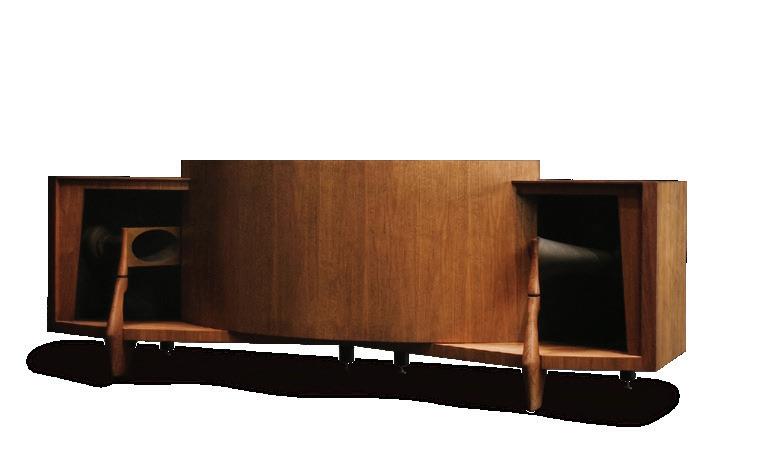
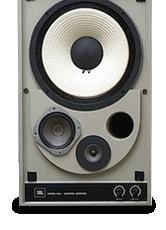
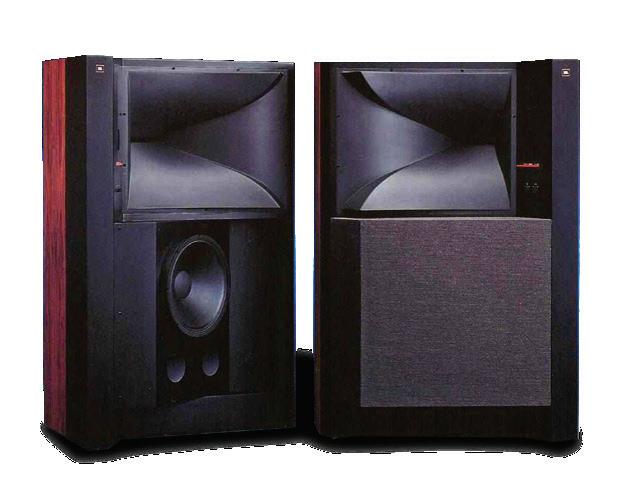
THE DD55000
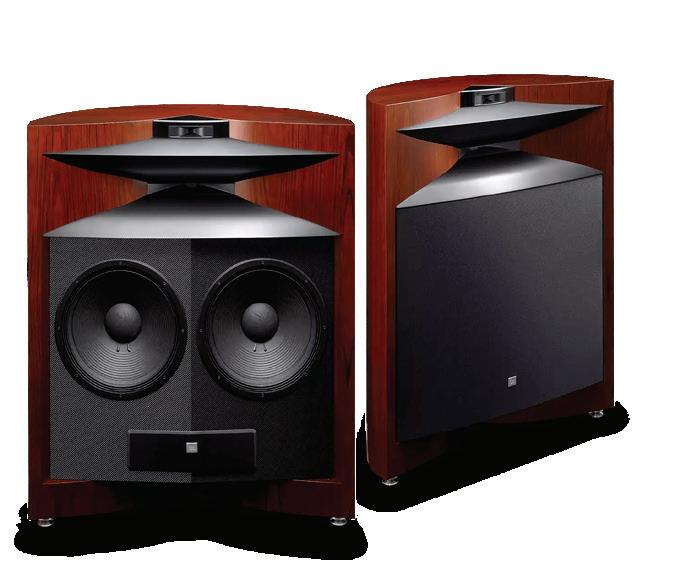
The JBL DD55000, also known as Everest, debuted in the 1980s as a no-compromise statement speaker. Its imposing design and advanced horn technology delivered effortless dynamics, reaffirming JBL’s leadership in high-end audio innovation for the home.
THE CABARET 4623
Part of JBL’s groundbreaking Cabaret Series portable sound reinforcement line. Designed for durability and high output, it brought professional audio performance in a portable package to touring musicians, DJs and live events in the 1970s and 1980s.
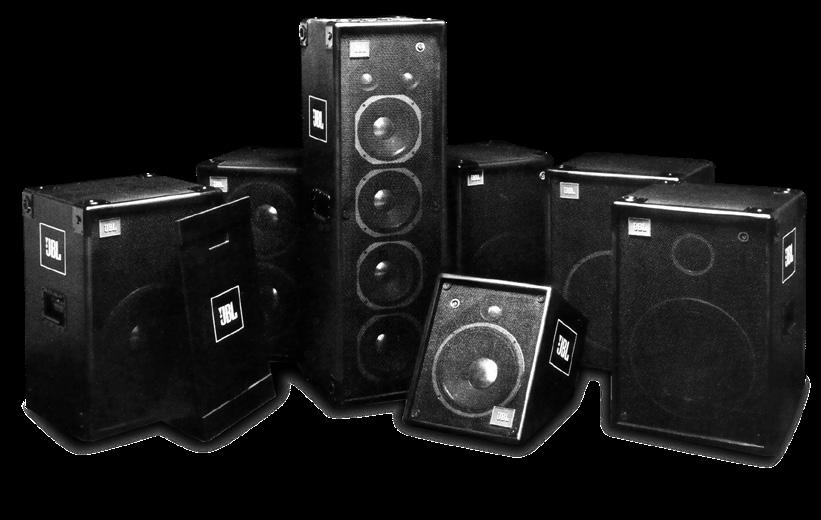
These are only a few highlights. Experience these icons, and many more, as the Playback Gallery tours the world this year.
From the early drivers that transformed theater to the systems trusted by today’s leading artists, each piece tells a story of how sound continues to move us.
Here’s a look at some of the icons on tour.
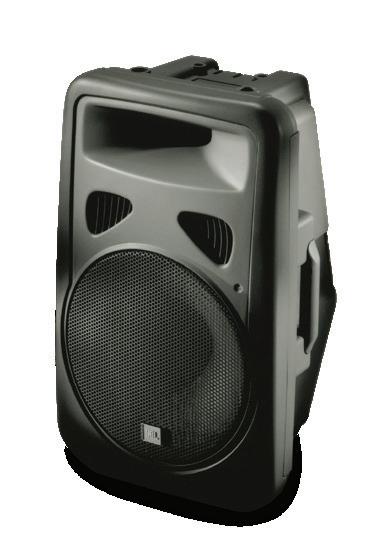
THE EON POWER15
The first model in the influential JBL EON family of powered loudspeakers. Lightweight and self-contained, it transformed portable sound by making professional PA systems accessible to musicians, presenters, and event producers. Its success created an entire category of powered speakers that are still popular today.
THE 250Ti
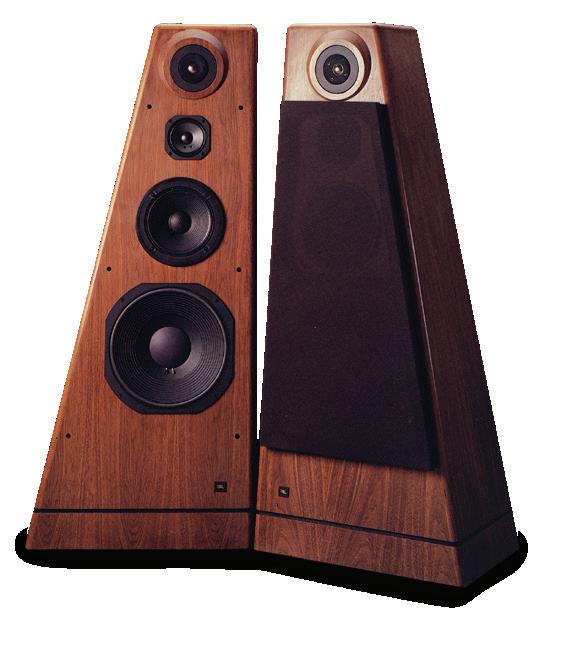
Introduced in the 1980s, the JBL 250Ti was a flagship floorstanding loudspeaker that combined advanced driver technology with striking industrial design. Featuring titaniumdome high-frequency drivers and a sculpted cabinet by renowned designer Greg Timbers, it delivered powerful, precise sound with unmistakable presence.
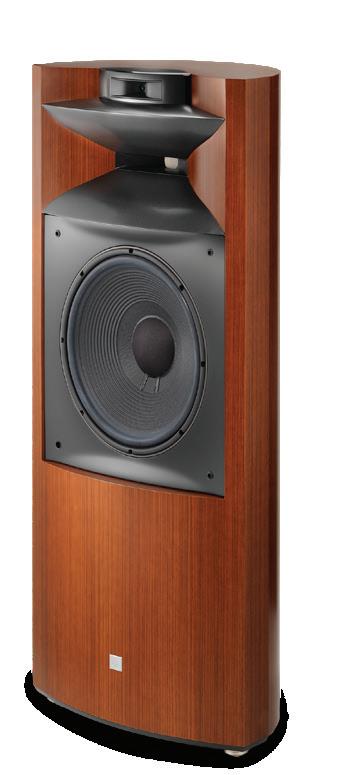
The K2 S9800 represented the evolution of JBL’s legendary compression driver heritage. Drawing inspiration from icons like the Paragon, Hartsfield, and Project Everest, it refines stereo imaging to a level once thought beyond reach. Blending 21st-century engineering with years of tradition, the K2 S9800 stands as a true synthesis of past and future.
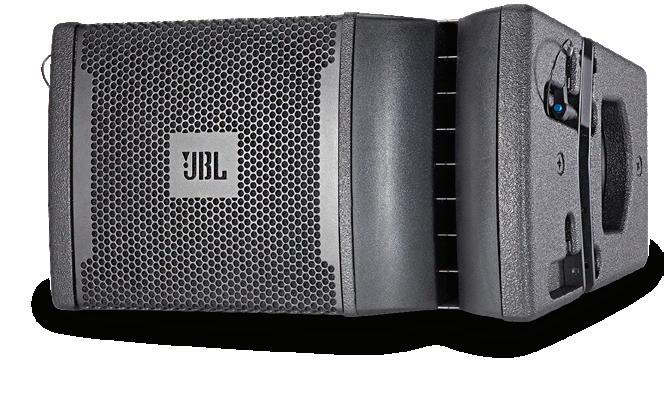
THE VRX928LA
Launched in 2007, the VRX Series introduced JBL's line-array technology to smaller venues. Compact, portable, and scalable, it delivered concertquality sound for touring acts, houses of worship and fixed installations. The VRX exemplified JBL's commitment to scalable professional solutions.
THE SUMMIT MAKALU
Named after the world’s fifth-highest mountain, the Summit Makalu represents JBL’s 3-way, 12inch floor-standing reference loudspeaker and midrange system in JBL’s Summit Series. The result is powerful, precise performance worthy of its summit name.
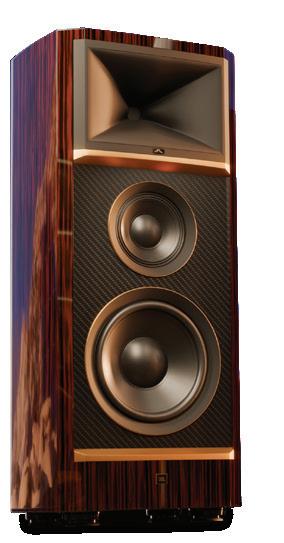
This three-way system using the most advanced technologies and finest components available, stands as one of the most sophisticated and sought-after speaker systems ever created.
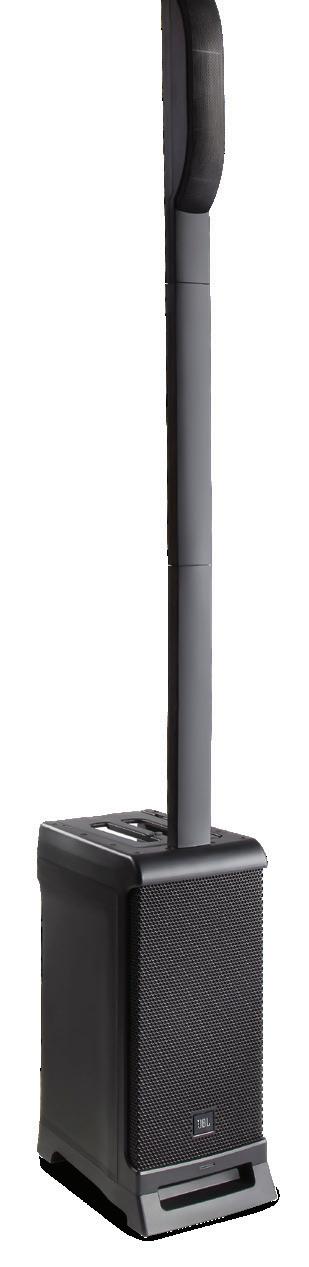
JBL’s first professional all-inone PA system, integrating mixing, amplification, and loudspeakers. Combining JBL sound with Harman pro brand technologies, the EON One redefined portability for modern performers and presenters.
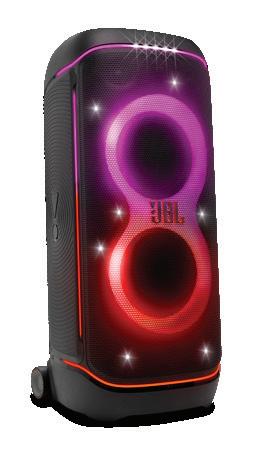
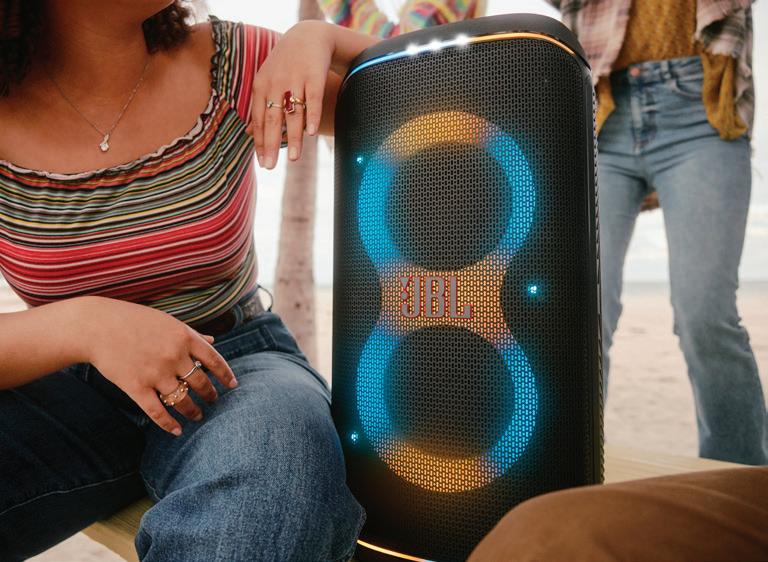
Part of JBL’s modern PartyBox lineup, the PartyBox 720 delivers powerful JBL Original Pro Sound built for large gatherings and live entertainment. With deep bass, a bold dynamic light show, and a rugged portable design, it brings clublevel energy to parties, events, and celebrations wherever the music goes.
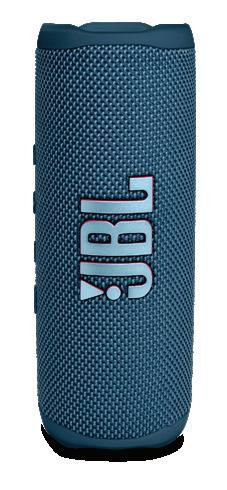
THE JBL FLIP 7
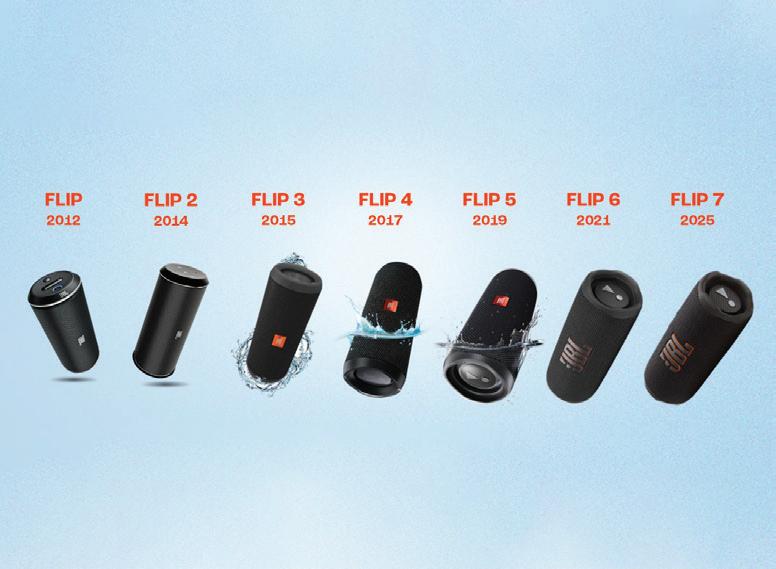
The JBL Flip 7 continues the legacy of JBL’s popular Flip Series of portable Bluetooth speakers. Compact yet powerful, it delivers bold JBL Original Pro Sound with punchy bass in a rugged, waterproof design built for music on the move, from outdoor adventures to everyday listening.
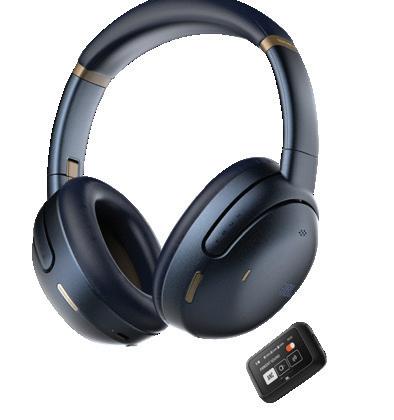
THE JBL TOUR ONE M3 TX
The JBL Tour One M3 TX represents the latest generation of JBL’s premium over-ear headphones. Combining advanced adaptive noise cancelling, high-resolution audio, and a dedicated Smart Tx audio transmitter, it delivers immersive, highquality sound and seamless connectivity for travel, work, and everyday listening.
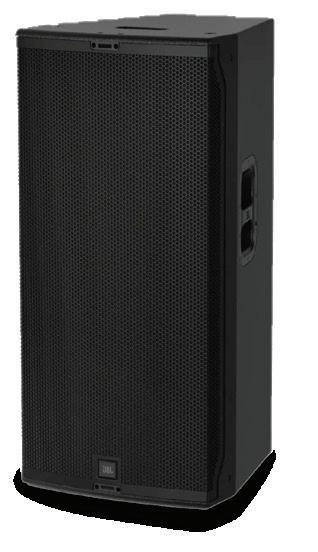
THE SRX922
Introduced in 2026, the SRX922 represents the latest extension of the 2022 SRX Series designed to provide provide a powerful combination of deployment versatility, voicing, amplification, and digital signal processing.
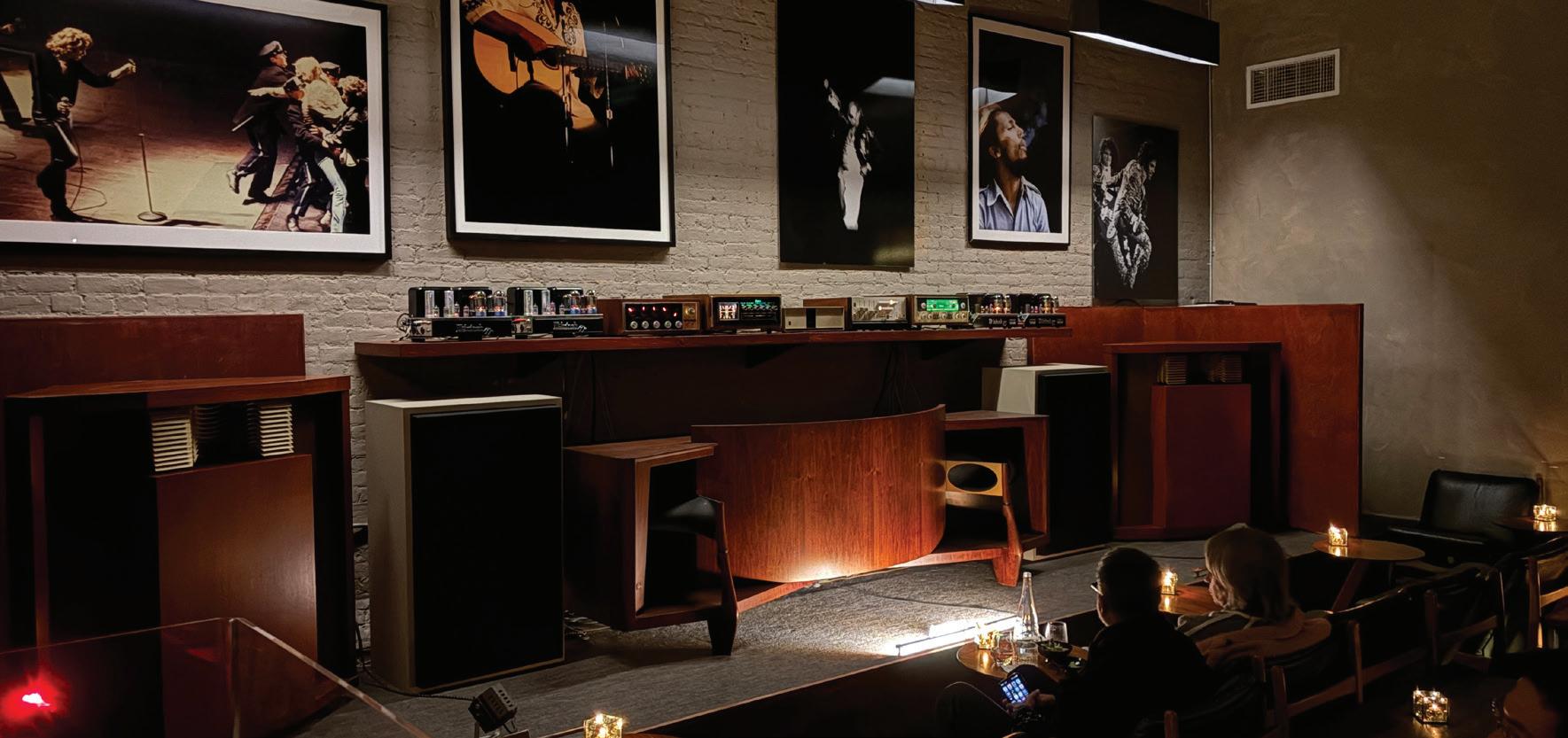
Born in post-war Japan, Kissa bars (known locally as Jazz Kissaten) have made listening a thoughtful and intentional ritual. These small cafes emerged in the 1950s, offering highend audio systems and deep vinyl collections – a place to sit, and listen to Jazz music. By the 1970s, there were more than 600 across Japan. While the original scene faded, its influence is growing. In recent years, listening bars inspired by Kissa tradition have opened in cities around the world –each offering a new generation the same rare invitation: slow down and listen with no distractions.
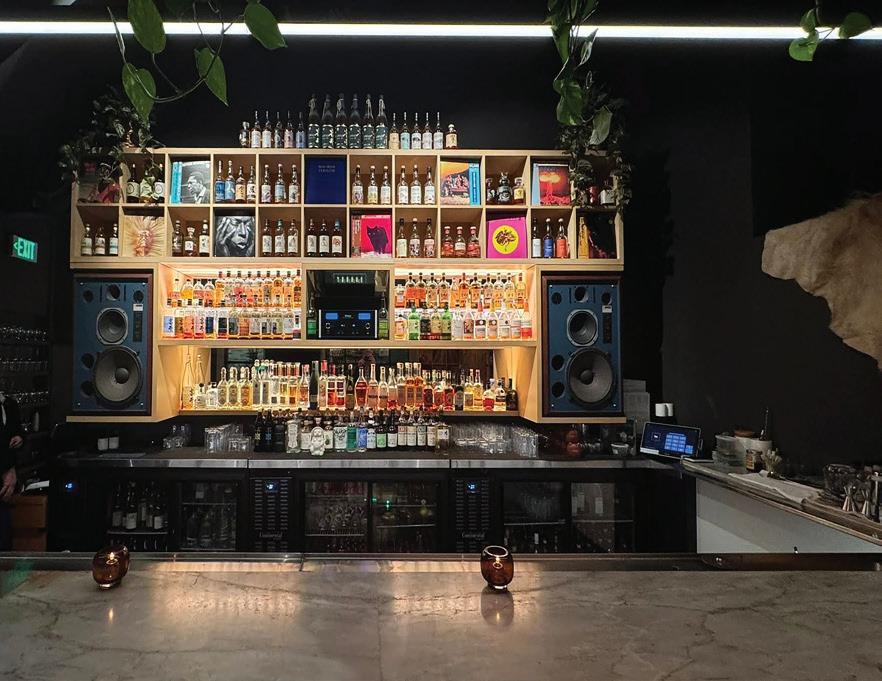
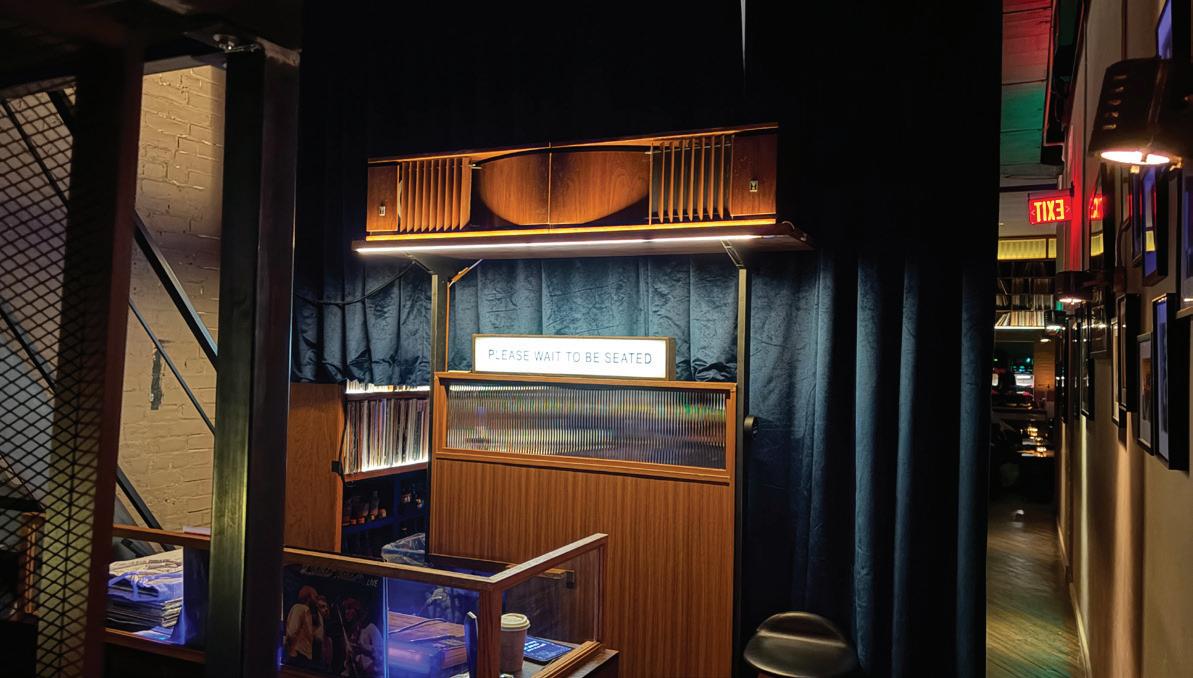
At All Blues, tucked away on Walker Street in NYC’s Tribeca, each night’s playlist is a one-off – a live act of storytelling from behind the turntable. The message is simple: Let the music do the talking. Built by a lifelong music enthusiast from Japan, the bar curates nightly vinyl sets across genres – from jazz and soul to movie soundtracks and classics from the '60s to the '90s – all played through rare, vintage JBL speakers.
“I wanted to create a haven for people like me who truly love music and need it in their daily lives,” says the founder, Yuji Fukushima. “I call it a musiquarium – an oasis for music lovers where you can experience music with high-end audio for hours.”
There are no distractions. No conversations overpowering the sound. Just a high-fidelity experience in a room designed to listen. “Some guests hear a song they’ve known for years – but through our system, it’s like they’re hearing it for the first time,” he says.
Meanwhile, in Jakarta, Indonesia, Iwan Arjanto passionately states that Kissa bars are about intention. “Music is played with care, on systems built to reveal its full emotional weight. Every track is chosen for that moment, in that space, for those listeners.”
“AND AFTER THAT, MORE CAFÉS FOLLOWED. THAT MOMENT SHOWED ME HOW POWERFUL THE LISTENING EXPERIENCE COULD BE WHEN THE MUSIC, SPACE, AND SOUND SYSTEM ARE TREATED WITH RESPECT.”
His fascination started with old audio magazines featuring classic JBL systems. Inspired, he began collecting drivers, horns, amplifiers, and salvaged components – slowly piecing together systems, learning the craft, and sharing his builds with an online community of fellow enthusiasts.
“For me, everything started with a love of music, which later became a deep audio hobby – some people might call it audiophilia,” he says.
As his knowledge grew, so did the scale of his work. He began restoring aging monitors, rebuilding cabinets damaged by humidity, and even constructing full systems from scratch using surplus parts and original JBL schematics.
Then it all came to life after a JBL L100 install in a café in Bandung, West Java. “Many listeners immediately loved the sound,” he recalls. “And after
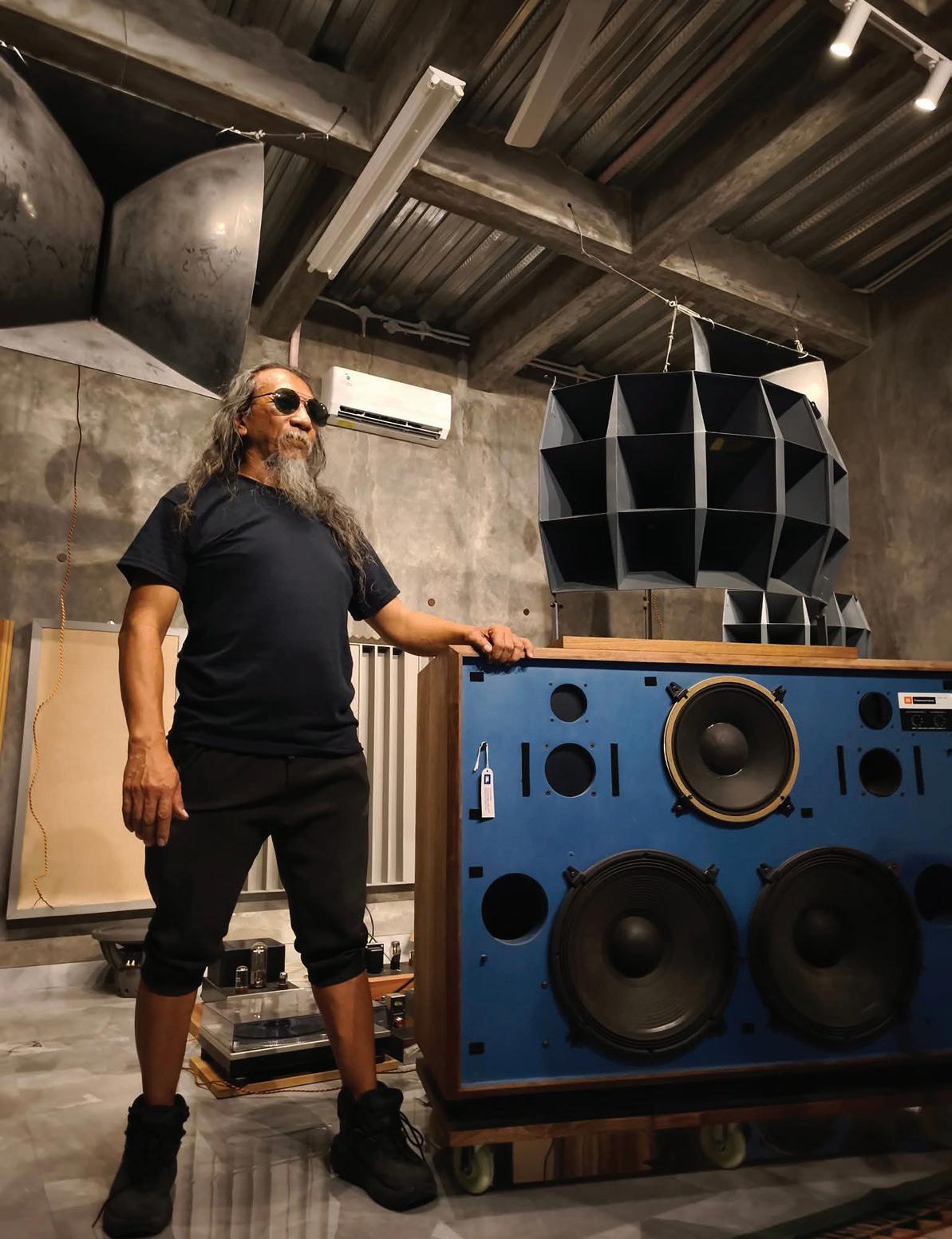
that, more cafés followed. That moment showed me how powerful the listening experience could be when the music, space, and sound system are treated with respect.”
Today, Arjanto’s restored and custom-built systems are used in cafés and bars across Asia. And while the systems are stunning, he’s quick to remind you: the magic isn’t just in the hardware, it’s in the immersive experience.
Kissa culture is growing – one room, one record, one listener at a time. No matter if you walk in off the street in Tokyo, Jakarta, or New York, the feeling is the same. You’re not just hearing music. You’re part of it.
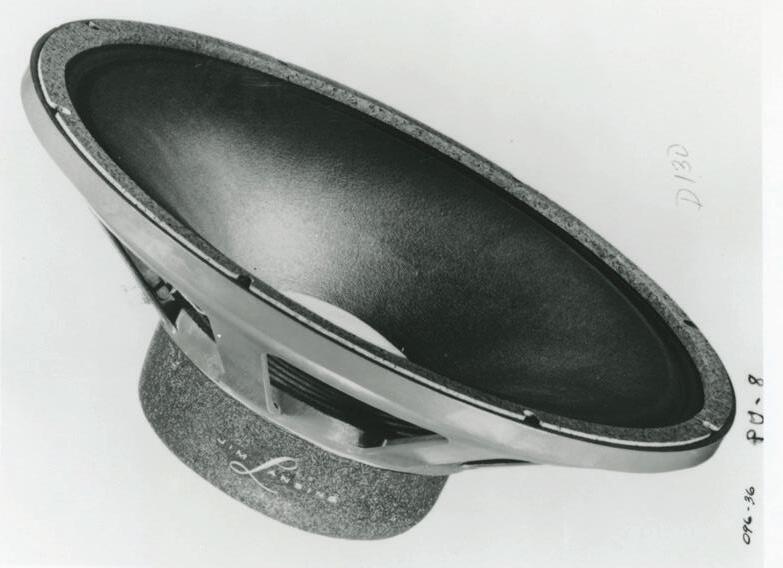
JBL IS FOUNDED IN 1946 AND RELEASED THE D130 DRIVER SOON
AFTER JBL uses its first commercial voice coil to create a sound so impressive that Fender integrated it into its guitar amps in the 1950s and beyond. One could argue that the sound of rock’n’roll would not have been the same without JBL in it.
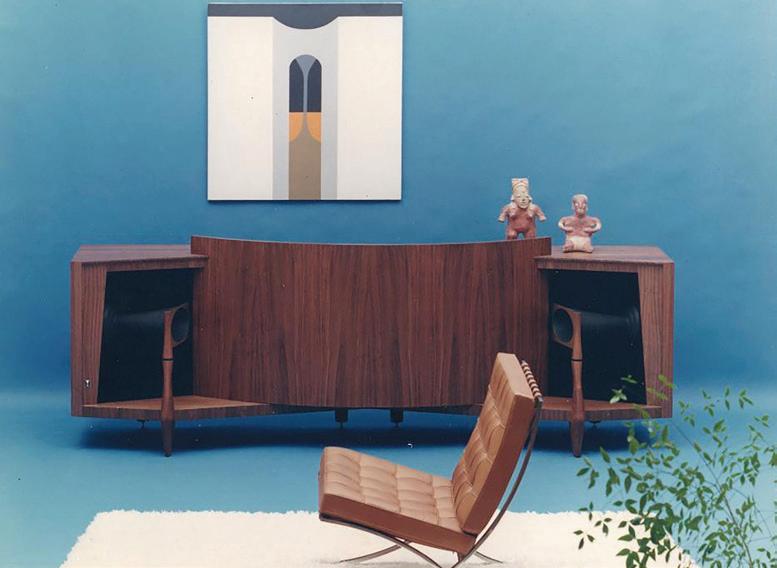
JBL INTRODUCES THE PARAGON STEREOPHONIC LOUDSPEAKER
SYSTEM World’s first home stereo loudspeaker system. A landmark product, based on a unique design principle, that remained in production longer than any other speaker system from JBL.
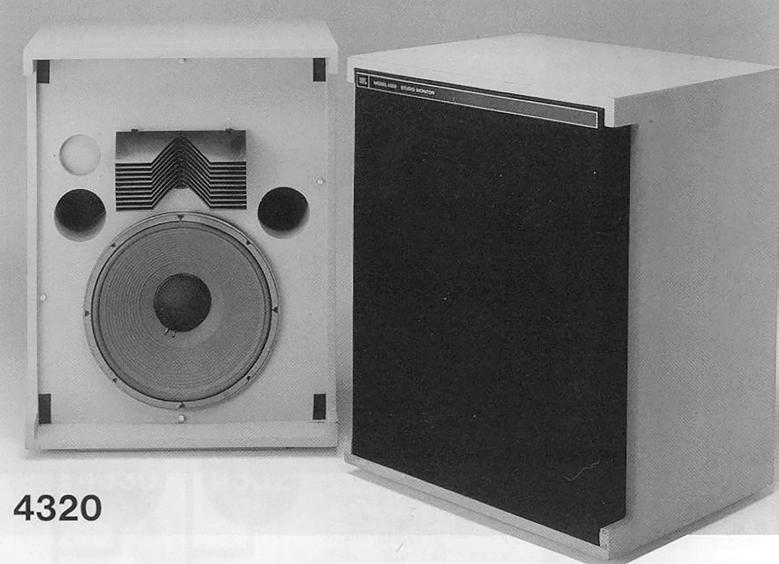
FIRST 2-WAY STUDIO MONITOR
that utilizes a high-frequency compression driver with acoustical lens is introduced by JBL. Initially called the D50SMS7 (later named JBL 4320) and designed with Ed Uecke of Capitol Studios in Hollywood, the monitor set a new bar for sound by allowing frequencies more room in the sound output and became a standard monitoring speaker for EMI’s global network of studios.
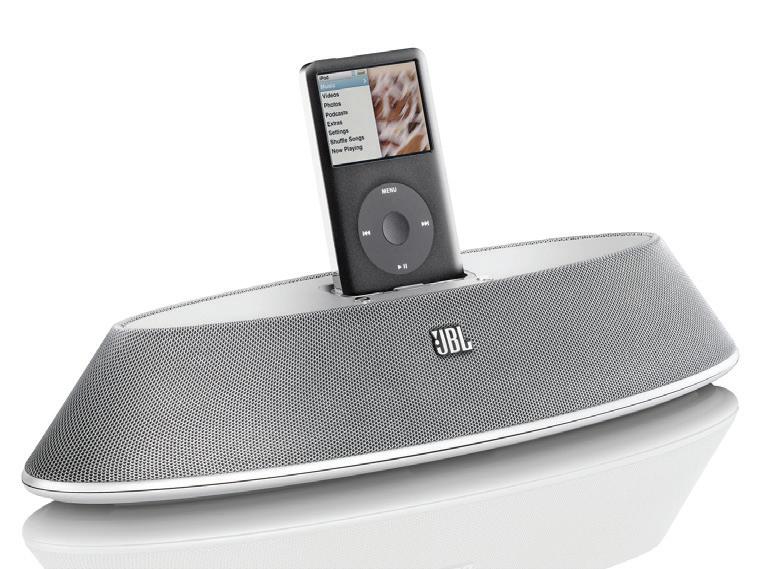
JBL IS ONE OF THE FIRST BRANDS TO RELEASE AUDIO DOCKS for the iPod – a move that helped propel the concept of portable audio among mainstream consumer audiences.
JBL LAUNCHES FLIP in the portable Bluetooth speaker category and new generations remain the best-selling portable speaker in the world.
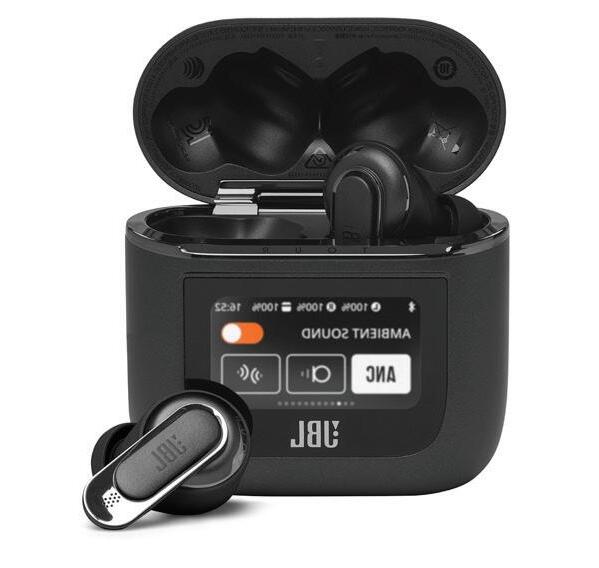
FIRST TWS WITH VIDEO SCREEN
The JBL Tour Pro 2 TWS earbuds feature an industry-first 1.45-inch LED touch display on the charging case, offering full control over settings without a phone. It enables managing music, ANC/Ambient modes, EQ settings, viewing message notifications, and finding earbuds. The screen allows customization of wallpapers and brightness.
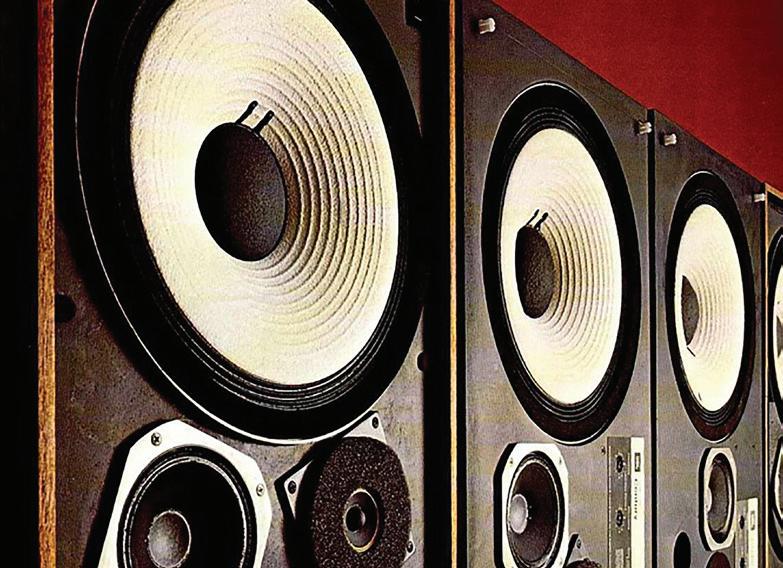
JBL 4310 STUDIO MONITOR first released in 1968, laid the foundation for a sound that would define a generation. Its influence carried through to the L100, introduced at the 1970 CES show, before evolving further into the 4311 in 1974. Along the way, it became synonymous with the sound of the 70s, standing out with its distinctive white cone woofer and status as one of the most popular small recording monitors in America.
DIAPHRAGMS were introduced to improve high-frequency performance and power handling and used in the JBL 4675 cinema system, a high-output screen speaker that was widely installed in early THX-certified cinemas.
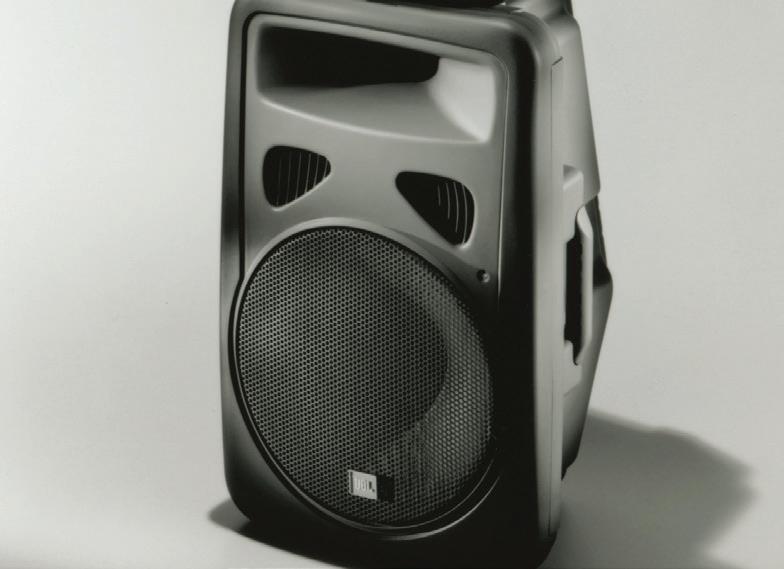
JBL’S EON SPEAKER SYSTEM
INTRODUCED a new kind of speaker to the world of sound. Its exclusive neodymium differential driver was 20 pounds lighter than anything else on the market and helped make musical performances mobile when paired with its sturdy design and high-quality audio.
2020s 2020s 2020s
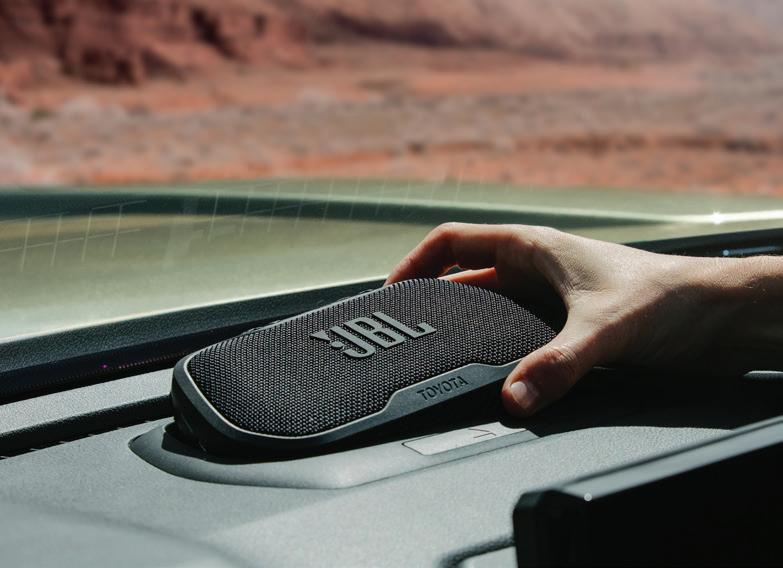
TOYOTA TACOMA LAUNCHES JBL
FLEX Toyota introduces the JBL FLEX, a removable Bluetooth speaker seamlessly integrated into the vehicle’s audio system. Acting as the center channel in the Tacoma and 4Runner, it delivers a powerful audio experience and marks a first for Toyota, featuring patented design and solid-state battery technology.
JBL INTRODUCES AI SOUND
BOOST in several of JBL's portable speakers and again raises the bar of technology-led audio innovation.

A NEW ERA OF SUSTAINABLE SOUND JBL introduces the first portable JBL Bluetooth speaker made from recyclable plastic and responsible design.
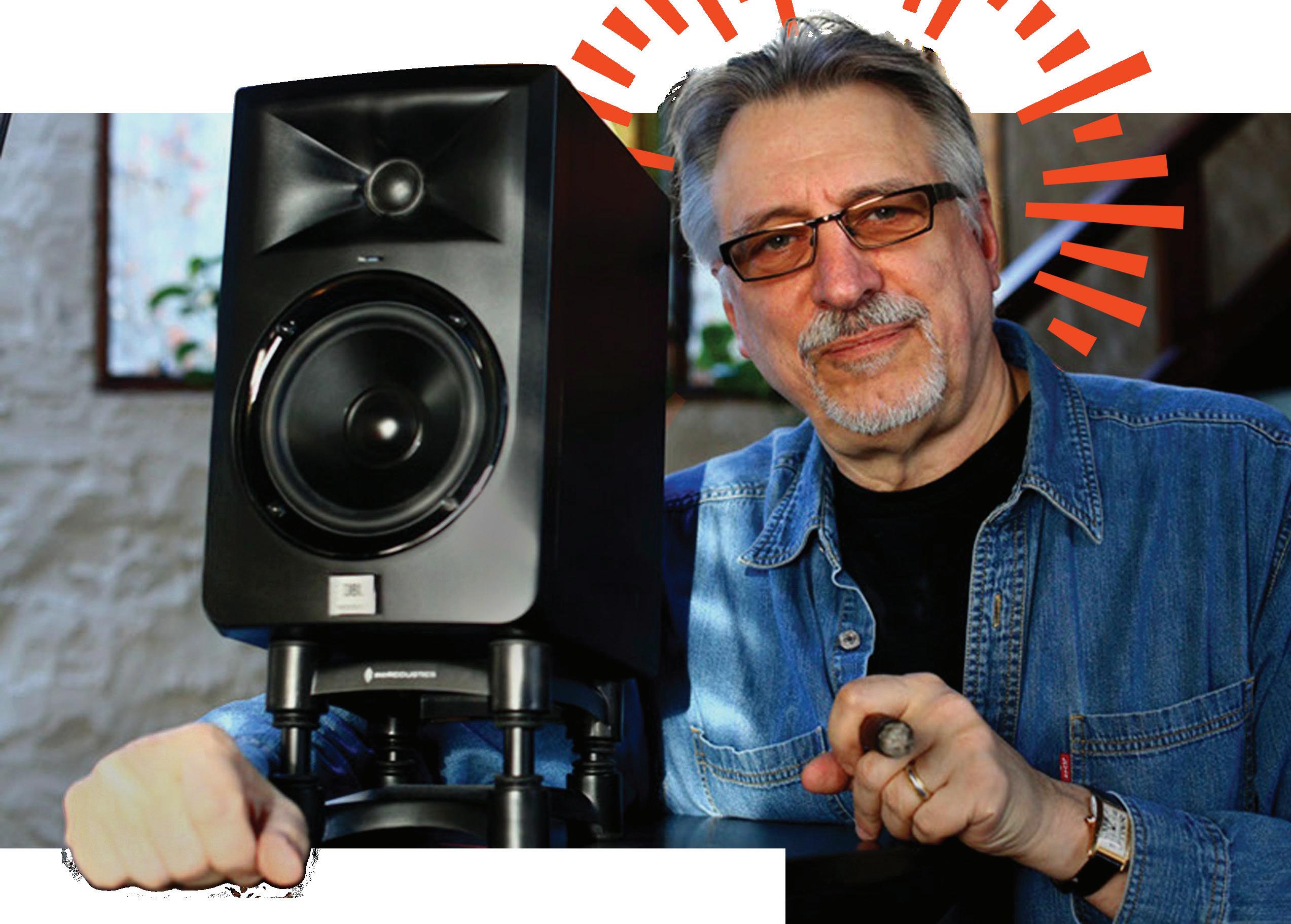
After more than four decades behind the production glass, seven Grammy wins, and a discography that runs from Carly Simon to Korn, from Wicked’s Broadway cast recording to opera, Filipetti still judges a session by a simple test.
“If it doesn’t move you, it’s not done,” he says. “I don’t care how good it sounds on paper. Music has to make you feel something in your chest.”
This belief has guided everything he has done, and it sits at the heart of his reputation as one of the most trusted ears in music. Filipetti does not record songs so much as moments. His job, a record producer and audio engineer, as he sees it, is to protect the fragile emotional spark that appears when an artist forgets the studio and simply performs.
One of his most vivid memories captures that philosophy perfectly. During the final stages of recording Foreigner’s “I Want to Know What Love Is,” Jennifer Holliday, working in a nearby studio, stopped by to listen.
Inside the lifetime career of the multiGrammy winning producer who believes the best moments happen when no one is thinking about the studio.
As the track played, she felt the gospel undercurrent and the ache in Lou Gramm’s voice. She didn’t analyze it. She responded to it. So instead of isolating her in a booth and constructing a part, Filipetti kept it raw. Lou and Jennifer stood face to face in the control room, sharing a microphone and singing live. “They weren’t thinking about takes or technique,” Filipetti recalls. “They were reacting to each other, answering from the soul. That’s the stuff you can’t plan. I remember sitting there thinking, this is why I do this for a living.”
Watching it unfold, Frank found himself in tears. No walls or over-analysis. Just two voices meeting in real time. Much of that spontaneous exchange made it onto the final record.
“That’s the difference,” he has said of moments like this. “When people hear a finished song, they rarely know how many edits, punch-ins, or fixes went into it. But when emotion is captured live, in the room, it carries a truth that no amount of technical refinement can replace.”
This instinctive approach has defined Filipetti’s career.
“People always ask how you jump from rock to pop to opera. The truth is, I don’t think about genre at all,” says Filipetti. “I think about intention. What is this person trying to say, and how honest does it feel?”
He works across genres with ease because he is not chasing a sound that belongs to one style. He is chasing intent. From recording James Taylor’s understated intimacy, to shaping the grandeur of Elton John, to capturing the razor-sharp precision of The Book of Mormon on Broadway, his focus remains the same. What is the artist trying to say, and how does it need to feel?
A FIERCE DEFENDER OF THE HUMAN TOUCH
That mindset also explains why Filipetti has become such a vocal defender of the human touch in music. He is not anti-technology. Far from it. He was among the first engineers to embrace digital recording and surround sound, and he continues to adopt new tools when they help him hear more clearly. What
he resists is the idea that technology should lead the process.
“When everything is locked to a digital click track and snapped perfectly into time, something gets lost,” he explains. “Real musicians speed up, pull back, lean into a note. That’s where the emotion lives.”
Over-quantized rhythms and perfectly tuned vocals can smooth out those tiny human shifts, draining the emotional arc from a performance. The result may be technically flawless, but it no longer breathes.
For Filipetti, tools like Auto-Tune are not evil, but they are dangerous when used without thought. “Auto-Tune doesn’t know what you meant,” he insists. “It just assumes. And if you let it, it starts teaching people what ‘normal’ sounds like. That’s a scary place to end up.”
Used carelessly, it trains listeners to accept sameness, to mistake familiarity for feeling.
USING TECHNOLOGY WITHOUT LOSING THE SOUL
This is where his relationship with technology becomes more nuanced. Filipetti believes deeply that gear should disappear once the session begins. It should support instinct, not interrupt it. That belief is why his JBL studio monitoring systems matter so much to him.
Because they tell him the truth.
“I need to feel the music, not fight the speakers,” he says. “If I’m thinking about the gear, something’s already gone wrong. The system should disappear so the performance can show up.”
During a recording session with Korn mixed in a challenging room with overwhelming low-end issues, he found that tuneable JBL studio monitors allowed him to feel the music properly without guessing. Later, when JBL introduced the M2 system, Filipetti became an early adopter, drawn to monitors that delivered power, clarity, and accuracy without flattening emotion.
What matters to him is not brand loyalty, but trust. When he listens, he needs to know that what he is hearing reflects what the audience will feel. His system must translate the physical impact of music without exaggeration or softness. If the gear gets in the way, it breaks the spell.
PASSING THE CRAFT FORWARD
This emphasis on feel over finish has also shaped Filipetti’s role as a mentor. He is
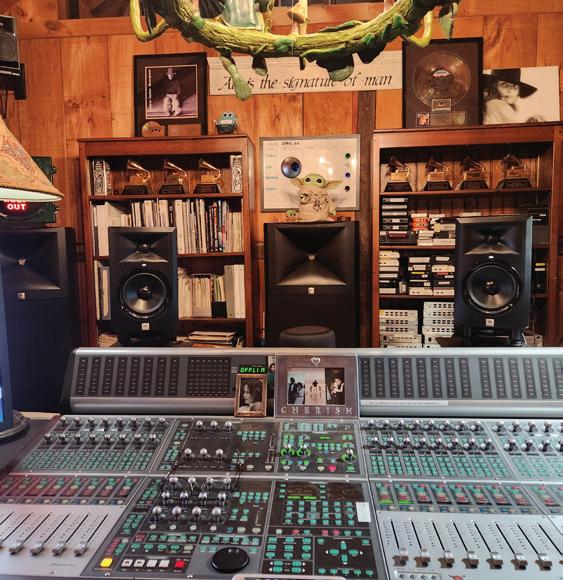
a founding member of the Met Alliance, a collaborative community of globally recognized audio engineers and producers that works with technology manufacturers to maintain the highest standards in recording.
Alongside pioneers such as George Massenburg, a trailblazer in modern audio engineering, Sylvia Massy, known for her work with artists from Tool to Prince, and the late Al Schmitt, one of the most decorated engineers in Grammy history, Filipetti is part of a group determined to protect the craft of recording. Their shared concern is not nostalgia. It is continuity. Filipetti worries that younger engineers, raised in a world of presets and automation, are being taught to fix before they listen. He urges them to sit in the room, to watch the artist, to notice when a performance changes the air. Those moments cannot be programmed, and once lost, they cannot be recreated.
His own career offers proof of what happens when instinct is trusted. He has moved effortlessly from mixing KISS at night to Carly Simon during the day, from George Michael’s breathtaking vocal performances to Broadway cast recordings that demand both precision and soul. The common thread is empathy. He listens like a musician.
That empathy extends to how he thinks about the listener. Filipetti often imagines a single person, alone in a room, pressing play. He asks himself what that listener should feel in the first bar. Comfort. Tension. Hope. Release. Every decision in the mix flows from that imagined emotional journey.
Artificial intelligence and automation are reshaping music production. Filipetti isn’t against progress. He simply believes it must serve expression, not replace it.
“Perfection is easy now. Emotion isn’t,” he says. “If the next generation only learns how to clean things up, we’re in trouble. The magic lives in the cracks.”
After nearly fifty years in studios around the world, his message has distilled to this: protect the performance. Use the tools, but don’t let them lead.
Technology can make a record flawless. It cannot tell you why a song matters. That still belongs to humans, listening closely and choosing to record a feeling.
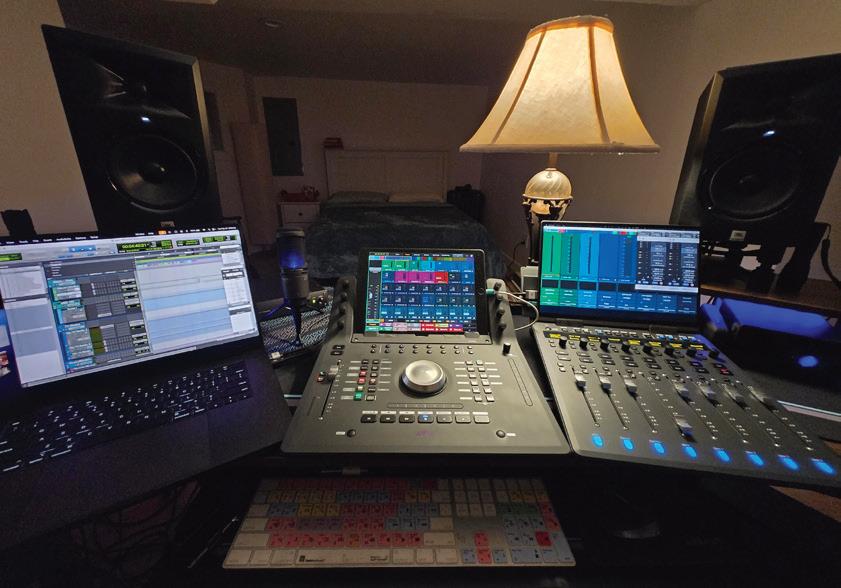
Frank Filipetti is a seven-time Grammy Award–winning recording and mixing engineer whose career spans more than five decades. Known for moving effortlessly between genres, he has worked across rock, pop, classical, Broadway, film, and opera.
Filipetti began his career in New York studios in the 1970s, building a reputation for musical sensitivity as well as technical skill. Early collaborations with Carly Simon marked the start of a creative partnership that has continued for more than forty years.
Over the years, he has recorded and mixed music for an extraordinary range of artists, including James Taylor, George Michael, Barbra Streisand, Elton John, Billy Joel, Kiss, Meat Loaf, Foreigner, Korn, and Carly Simon. His work is equally at home in stadium rock, intimate singer-songwriter records, and large-scale orchestral productions.
Filipetti has won seven Grammy Awards, including multiple wins for Best Engineered Album, Non-Classical. Some of his Grammy-winning projects include James Taylor’s Hourglass and October Road, the cast recording of The Color Purple and Taylor’s Pull Over live album.
Beyond record-making, Filipetti has engineered landmark Broadway cast albums including Wicked, The Book of Mormon, Aida and Spamalot. His film credits span Disney’s Enchanted, Pixar’s Cars, Across the Universe and August Rush, while his live and classical work includes the Pavarotti and Friends series, James Taylor’s Live at the Beacon, and Elton John’s One Night Only.
Across stage, screen and concert hall, his focus remains the same: capture the performance, keep it human.
He is also a founding member of the Met Alliance, a collective dedicated to preserving the highest standards of recording craft.
Still active in the studio, Filipetti continues to work with legacy artists while mentoring younger engineers. His focus remains unchanged: protect the performance, trust instinct, and let emotion lead.

When Sharon Peng, the SVP of Global Engineering at JBL, talks about immersive audio, she doesn’t start with specs. She starts with the listener.
“Sound is deeply personal,” she says. “When it’s truly immersive, you don’t just hear it, you feel it. It moves with you. It places you inside the story.”
This human-first mindset is what’s guiding JBL’s work in spatial audio. With eight decades of audio innovation behind it, JBL isn’t chasing formats or fads. It’s focused on what truly matters, and that’s the experience.
BEYOND THE BUZZWORDS: WHAT MAKES AUDIO IMMERSIVE?
For Peng and the team, immersive audio isn’t just about left and right, front and back. It’s about building soundscapes that respond to how people live, move, and listen. “Spatial audio is more than surround sound. It’s dynamic. Adaptive. Emotional,” she explains.
This belief is grounded in research. Neuroscience shows that immersive audio stimulates more areas of the brain than traditional stereo. It improves recall, boosts emotional impact, and even affects our sense of space. That’s why JBL’s engineers and designers aren’t just building for performance. They’re building for perception.
SCIENCE MEETS SOUND: INSIDE JBL’S INNOVATION LAB
JBL’s latest spatial audio developments are rooted in a combination of hardware precision and AI-driven adaptability. Immersive JBL Spatial 360 sound in JBL Tour Pro 3 and JBL gaming headphones powered by JBL QuantumENGINE showcases this convergence. These devices leverage head-tracking, environmental sensing, and personalized sound profiles to deliver a listening experience that adapts to the user in real time.
“We’re using intelligent sound to create what we call ‘audio presence,’” says Peng. “It’s not just about placing sounds around the listener. It’s about anchoring them in a believable environment.”
Immersive audio was once limited to premium home theaters and highend gaming setups. JBL is changing that by bringing spatial sound into everyday life - at the gym, on a call, or while walking through a busy city.
This democratization of immersive audio is no accident. It reflects a broader shift in how consumers experience content. As Peng puts it: “We don’t watch and listen anymore. We participate. Sound needs to keep up.”
Looking ahead, JBL sees audio not as a feature, but as a foundation. Peng points to the role of AI in shaping what’s next: “Intelligent audio will know when you need focus and when you need escape. It’ll adjust not just to your environment, but to your mood.”
Behind every decibel of innovation is a story. And for Sharon Peng, the story is always about people. “We’re not just engineering better headphones or speakers,” she says. “We’re designing experiences that connect, inspire, and move people. That’s what sound should do.”



Speakers are getting smarter, more social, and more reflective of how we live now. Portable sound is evolving. Here's what’s coming next…

Today, it’s easy to take music anywhere, blasting it from a speaker at the skatepark, cooking with it on the balcony, or soundtracking sunsets at the beach. But there was a time when music stayed put. Portable sound wasn’t always part of the plan; someone had to build it.
That shift started with the Bluetooth revolution and a change in consumer behavior. As music stopped being tied to one space, a new challenge emerged: could sound systems keep up with people?
Retired after 30 years as Marketing Director at JBL, Christopher Dragon, who was one of the driving forces behind JBL’s move into wireless, remembers the moment clearly. “For most of my career, sound lived in big boxes,” he says. “Systems that stayed put. When Bluetooth arrived, I wasn’t sure we were ready. Early versions were patchy and flat. It wasn’t just a tech challenge, it was a risk to everything we’d built our name on.”
But as music moved, so did expectations. “The real bet wasn’t on wireless,” Dragon recalls. “It was on whether we could keep the emotional punch of great sound without the wires. I stopped looking at specs and started watching faces. When someone hears something and just smiles, that’s the

tion that continue to evolve with how we live, connect and move.
Tech like Auracast lets multiple speakers sync in real time, making solo listening instantly social. “Interoperability is becoming expected,” Carsten Olesen, President of Consumer Audio at Harman says. “If you buy a product, you want it to connect with what you already use. That simplicity really matters now.”
Meanwhile, AI Sound Boost adjusts playback based on content and environment, boosting clarity, reducing distortion, and matching the mood of the moment. “New technology breaks down music into individual elements, reacts to the space you’re in, or shifts based on your mood or intent. The goal is to make sound feel alive and responsive,” Olesen adds.
Design is evolving too. Color, shape and lighting help younger listeners express their identity, just as much as playlists do. Larger models like PartyBox don’t just play music, they inspire the atmosphere. “There’s this beautiful tension,” says Olesen. “Speakers need to blend into your life, but also be ready to take over the room when the moment calls for it. When the music kicks in and the lights pulse, you feel something shift. It stops being just

For Brazilians, music isn’t just consumed – it’s lived. It fills streets, rooftops, and public spaces. And few objects capture that spirit quite like the JBL Boombox.
From the 1980s through to today, Bluetooth speakers have shaped Brazil’s soundscape and culture – from beaches and parks to favela rooftops. These speakers let people be heard, seen and felt. Whether tuned to samba, funk, sertanejo, or hip hop, they turn private playlists into public moments. Why is it so iconic? Because in Brazil, music lives outdoors. It’s woven into street life, weekend rituals, and cultural
identity. Boombox is more than just tech. It’s social glue, a vibe-setter, and often, the loudest thing in the room. According to Anderson Oliveira, Marketing Director, Harman South America, the Boombox became iconic because it fit seamlessly into this lifestyle.
“Brazilians love sharing music with friends – on the beach, at parties, wherever they go,” he says. “When we launched the Boombox in 2018, it took
center stage as the life of the party, and it continues to grow in popularity.”
Today, Brazil accounts for almost 50 percent of JBL’s global Boombox sales – a sign of just how deeply it resonates in Brazilian culture. It remains a familiar sight at parties, gatherings, and on the move – a reminder that shared sound is part of how Brazil moves, celebrates and connects.
HOW SHARED SPACES, NEW TECHNOLOGY, AND HUMAN NEED DEFINED THE WAY WE LISTEN
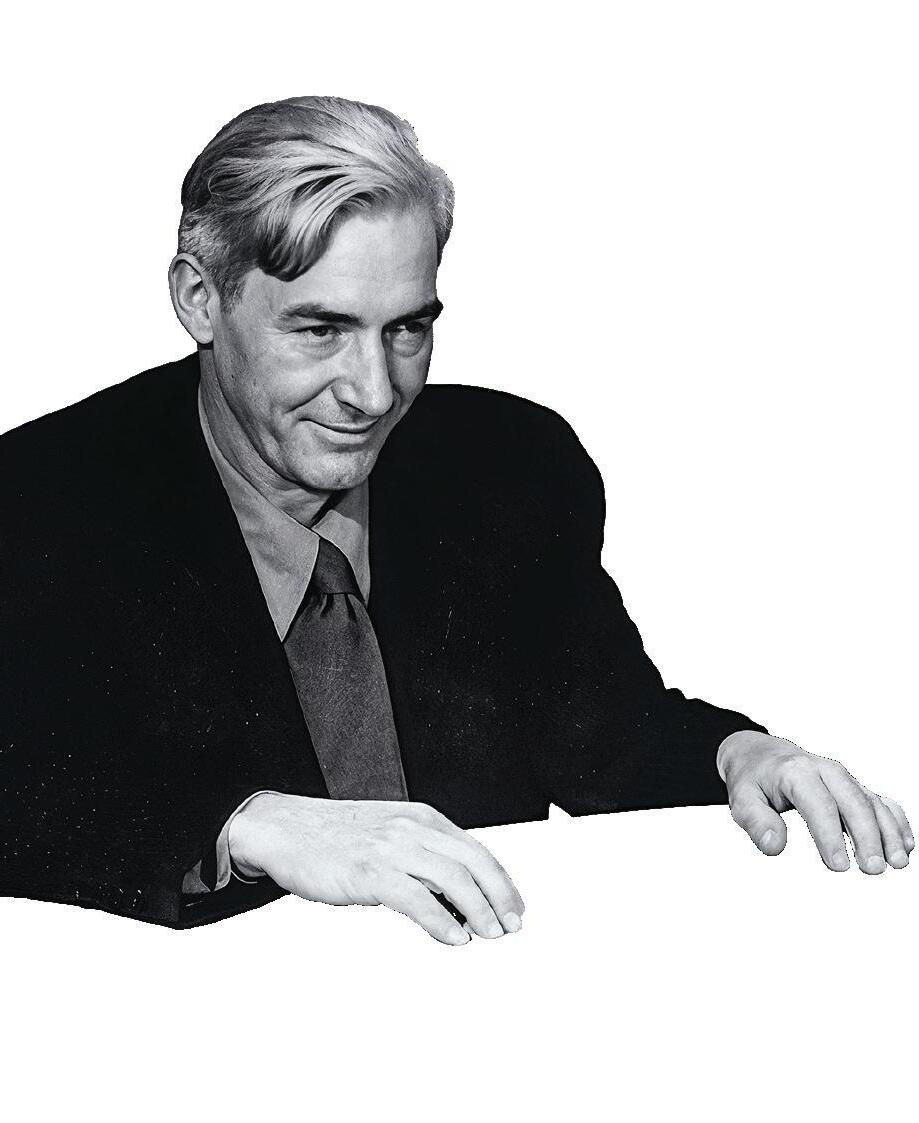
The story of how a personal signature became one of the most recognizable marks in sound.
SOUND DIDN’T ALWAYS TRAVEL EASILY. IN THE EARLY DAYS OF MODERN ENTERTAINMENT, CINEMA WAS ONLY JUST FINDING ITS VOICE, RADIO WAS RESHAPING HOW MUSIC REACHED THE HOME, AND AUDIENCES WERE LEARNING WHAT IT MEANT TO LISTEN TOGETHER. THE CHALLENGE WASN’T LOUDNESS FOR ITS OWN SAKE, BUT CLARITY. VOICES HAD TO CARRY. MUSIC HAD TO FEEL PRESENT AND BELIEVABLE.
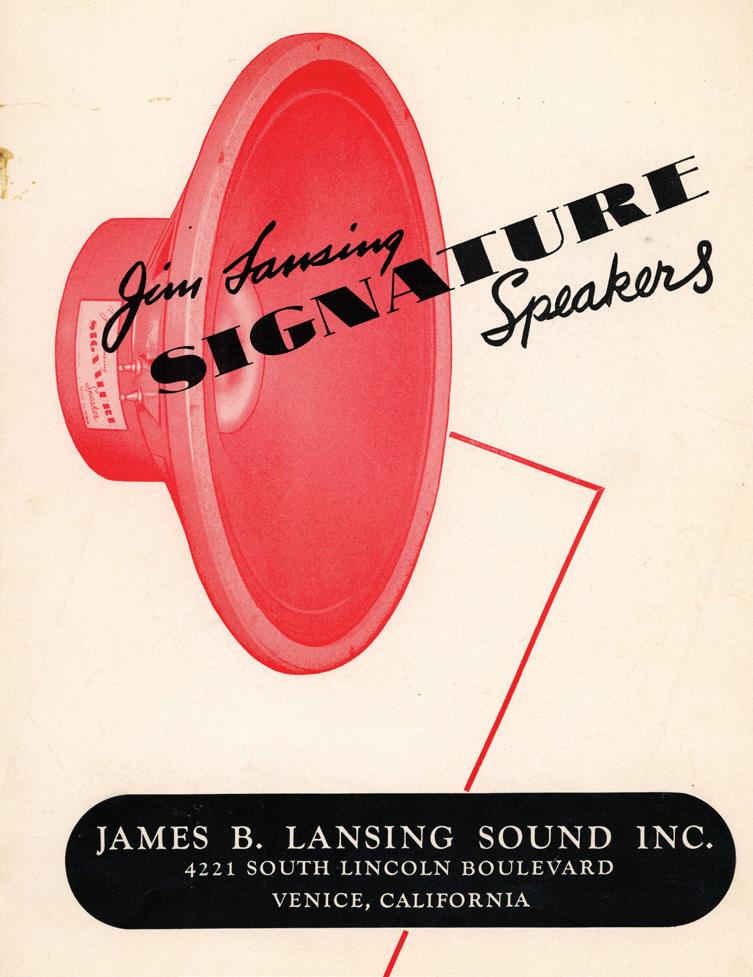
In 1964, the president of James B. Lansing Sound, Inc. sent a creative brief to industrial designer Arnold Wolf, specifying that the new corporate identity should feel “contemporary, clean, precise, machine-like, and dignified.” The logo introduced in 1967 fulfilled that vision, capturing the spirit of a company devoted to precision engineering, exacting sound, and forward-thinking design. It also firmly established the JBL initials as the emblem of the brand, a mark that has endured for 59 years.

1946 - 1948
1948 - 1952

1948 - 1950
Making dialogue carry when movies first found their voice.
James B. Lansing began his work inside this shift. Loudspeakers were becoming cultural infrastructure, not technical novelties. Sound systems needed to serve the performance, not announce themselves. Lansing’s early experiments shaping metal, paper and magnets by hand, were driven by real spaces and real audiences, chasing sound that travelled further, stayed intelligible, and felt true.
As sound moved beyond the cinema, listening became more social and more mobile. Music spilled into clubs, arenas and open fields. Live performance placed new demands on sound systems, where power mattered as much as control, and reliability mattered night after night.
Today, audio output is modeled in software before the loudspeaker is built, yet the goal is the same: integrity, fidelity and precision at scale, wherever sound exists. Across eight decades, listening has continued to adapt. The technology has and will continue to evolve, but the human need it serves has not.
Powering live music as concerts grew bigger and louder.
STUDIO
Shaping how records are made, not just how they’re played.
AUTOMOTIVE
Bringing high-quality sound into everyday driving.
EVERYWHERE
From stadiums to streets to pockets.
Earlier logos dating back to Lansing Manufacturing (1927–1941) bore James B. Lansing’s name and signature, a reflection of how strongly people associated him with innovation and excellence in audio. Guitar pioneer, Les Paul, later wrote that Lansing “was not just a speaker engineer, but also a great fan of music and musicians. He loved his art, and we considered him to be the only speaker guy we could talk to. He was truly ‘our man’ in technology.”




It’s 4pm at Madison Square Garden. Raul Gonzalez is side-stage, crouched over a tuning rig that will soon shake 18,000 people to their core. The venue hums with anticipation. Crew members shout instructions over radios. Cases roll across the floor. But Gonzalez isn’t thinking about the crowd. He’s thinking about ‘the canvas’.
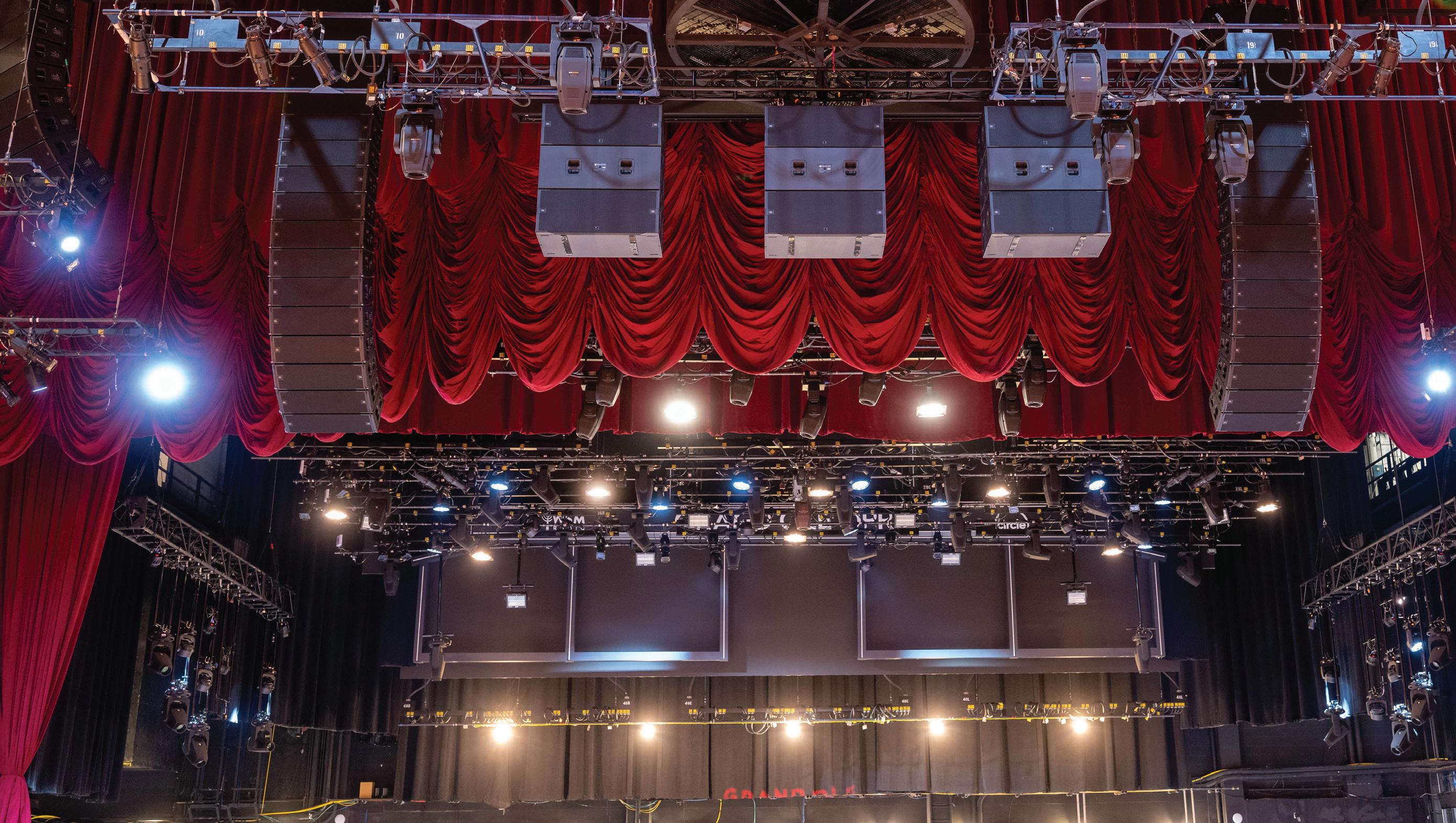
"We’re setting up a canvas," he says. "Like if you were going to create a painting. The system engineer and I design the sound system so the mix engineer can paint their picture."
He moves between stacks with practiced precision, ears tuned not just to frequencies, but to the mood of the room. The audience won’t see him. But they’ll feel his work in every beat and every breath of the performance.
THE INVISIBLE FORCE BEHIND THE BIG MOMENTS
For more than 25 years, Gonzalez has helped shape some of the biggest shows on Earth. From Vince Gill at the Grand Ole Opry in Nashville to Shakira headlining Rock in Rio, his quiet precision has powered unforgettable experiences. His name rarely makes the spotlight, but his influence echoes through every speaker.
Raised in Puerto Rico, Gonzalez fell in love with sound through Latin music at home, layered with pop, rock and jazz drifting in from the US. After earning an electrical engineering degree from Purdue and a master’s in theater sound, he spent five years on the road learning his trade, including a world tour with Spanish star, Julio Iglesias, before joining JBL. Before long, he quickly became the go-to expert for supporting live music tours, permanent systems installations, and large, high-stakes global events.
"I always had a fascination with how the science works," Gonzalez explains. "It’s about the artistic side of mixing, but also the math and acoustics that make it possible."
BACKSTAGE, AND AHEAD OF THE CURVE
At JBL, Gonzalez isn’t mixing tracks - he’s shaping the tools that power them. As a principal applications engineer, he supports live sound teams by ensuring every component of the system performs to spec. From calibrating line arrays in a stadium to troubleshooting rig configurations on the fly, Raul works shoulder-to-shoulder with system and front-of-house engineers to deliver sound that’s both powerful and precise.
"You're balancing three inputs at once – the system engineer, the mix engineer, and what you’re hearing," he says. "You’ve got to move fast, think clearly, and stay calm when the pressure’s high."
One of his most high-stakes moments came before a Lenny Kravitz
performance to a crowd of 80,000 at the iconic Estadio Azteca in Mexico. The original plan allowed time to build and tune the system ahead of rehearsal. Then the schedule changed. Suddenly, everything – setup, tuning and rehearsal – had to happen in a single day. There was no time to run detailed predictions or fine-tune every element. Faced with the scale of the venue and a ticking clock, Gonzalez fell back on fundamentals. The result was one of the most memorable concerts in the stadium’s history – proof that preparation and instinct still matter most under pressure.
"There was no time to run predictions or tweak every speaker," he recalls. "You fall back on your fundamentals: trust your ears, trust your crew, and make fast decisions. That’s the craft."
HIS MANTRA? CLARITY IN THE CHAOS.
"It’s not about being the loudest," he adds. "It’s about delivering clean, clear sound that lets the performance speak for itself."
THE CANVAS AND THE CHEMISTRY
Before every show, Gonzalez works with the mix engineer to understand their preferences. "You want the sound system to be 80% ready before soundcheck," he says. "Then, during soundcheck, you make the final adjustments based on how the band sounds live."
He brings a painter’s mindset to his work – adjusting EQ curves, amplifier settings, and frequency response with precision.
"Your canvas is air," he says with a smile. "You can't see it, you can't touch it, but you shape it with sound. Everything you do moves through that space, and if you've done it right, it disappears. The listener just hears the music."
Over the years, Gonzalez has adapted to countless engineering styles. "Some engineers want the subs to really hit. Others want more warmth in the mids. You have to be able to read those needs quickly and translate them into settings."
LOYAL TO THE SCIENCE
What keeps Gonzalez loyal to JBL isn’t branding, it’s the science inside the box. He’s had the chance to work alongside innovators like leading acoustics engineers and innovators, Dr. Alex Voishvillo, Mark Engebretson, Mark Ureda, and Dr. Sean Olive, whose breakthroughs in materials, psychoacoustics and measurement continue to shape the sound industry.
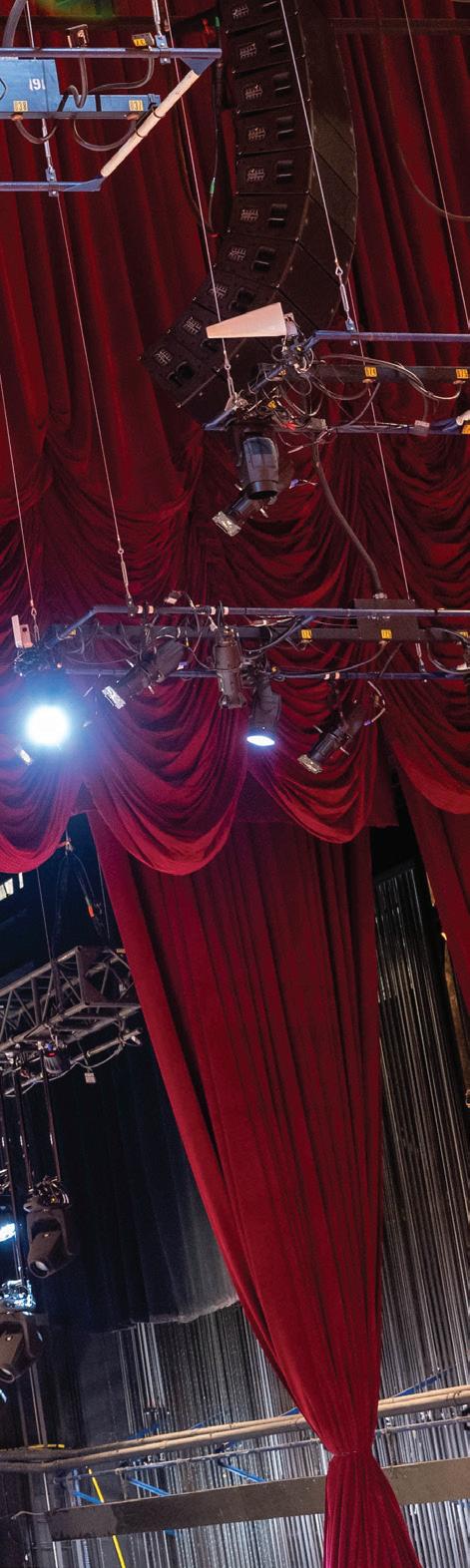
"The best loudspeaker is the one you don’t notice," he says. "It just lets the emotion flow."
Gonzalez sits at the intersection of theory and application, taking designs into stadiums, then returning field insights to JBL’s engineers. "I get to close the loop between design and real-world performance. That’s what keeps it exciting."
Across theme parks and stadium tours alike, his approach is consistent: listen first, measure second, adjust with care.
For all the accolades, Gonzalez measures success in quieter ways. His sons and niece proudly tell friends their stepdad/uncle works at JBL. That kind of validation sticks.
These days, Gonzalez teaches seminars at Purdue University and mentors early-career engineers. "At some point, you stop doing everything yourself. You start sharing it," he says. "That’s when it becomes legacy."
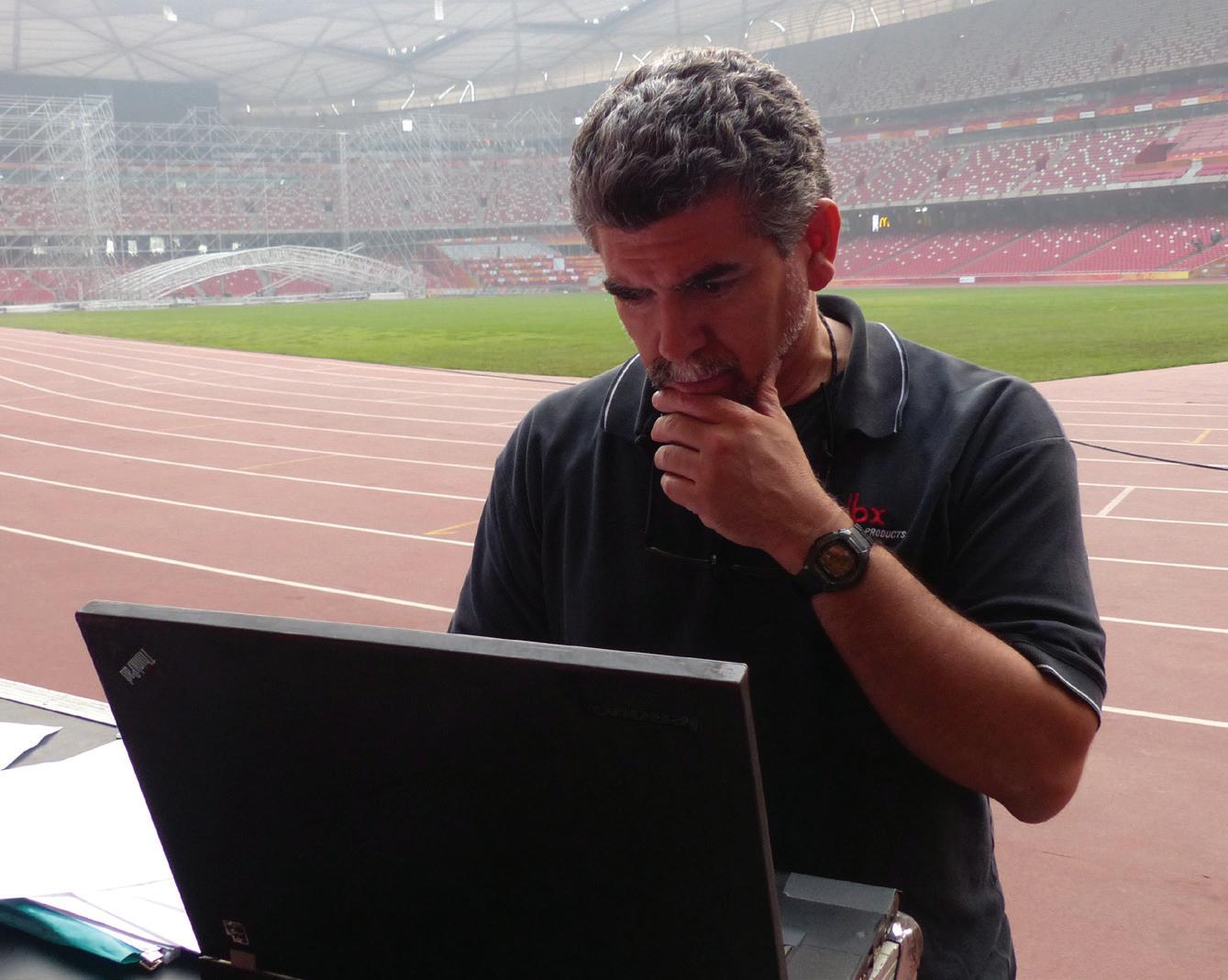
Gonzalez mentors with the same intent he mixes: patiently, precisely, with an ear tuned to each person’s potential.
Even now, Gonzalez approaches every venue with curiosity. "You’re always learning. Every artist, every space teaches you something new. Live sound isn’t about mastering it. It’s about getting better at responding."
He still walks each venue before doors open, listening for reflections, dead zones, or clues the room is hiding. It’s this constant attention to detail that keeps him sharp.
THE TAKEAWAY
Gonzalez doesn’t seek perfection. He looks for connection. His role is to shape sound so it carries meaning, reaching every corner of the room with clarity, presence, and feeling.
AFTER 25 YEARS, THE WORK STILL MOVES HIM.
"When it’s right," he says, "you don’t hear the speakers. You feel the music."
"It's not about being the loudest. It's about delivering clean, clear sound that lets the performance speak for itself."
SONG YOU NEVER SKIP
"Brothers in Arms by Dire Straits. Fast forward to 2:10 and start there.”
FAVORITE VENUE
“The Acropolis in Athens. Time stood still. We were doing a show in a place that’s thousands of years old. It was bizarre and beautiful."
TOUGHEST SETUP
"The Bird's Nest in Beijing. Massive venue, language barriers, complex rigging, miles of walking, but 80,000 people for two nights. Unforgettable."
MUST-HAVE ITEMS ON THE ROAD
"I always carry a comprehensive first aid kit, a waterproof bag, money, credentials, passport, and my audio analysis kit."
PRE-SHOW RITUAL
"If I’m mixing, I always say a prayer. I also like to get there early, walk the venue, listen to the room, and check in with the crew to make sure all systems are go."
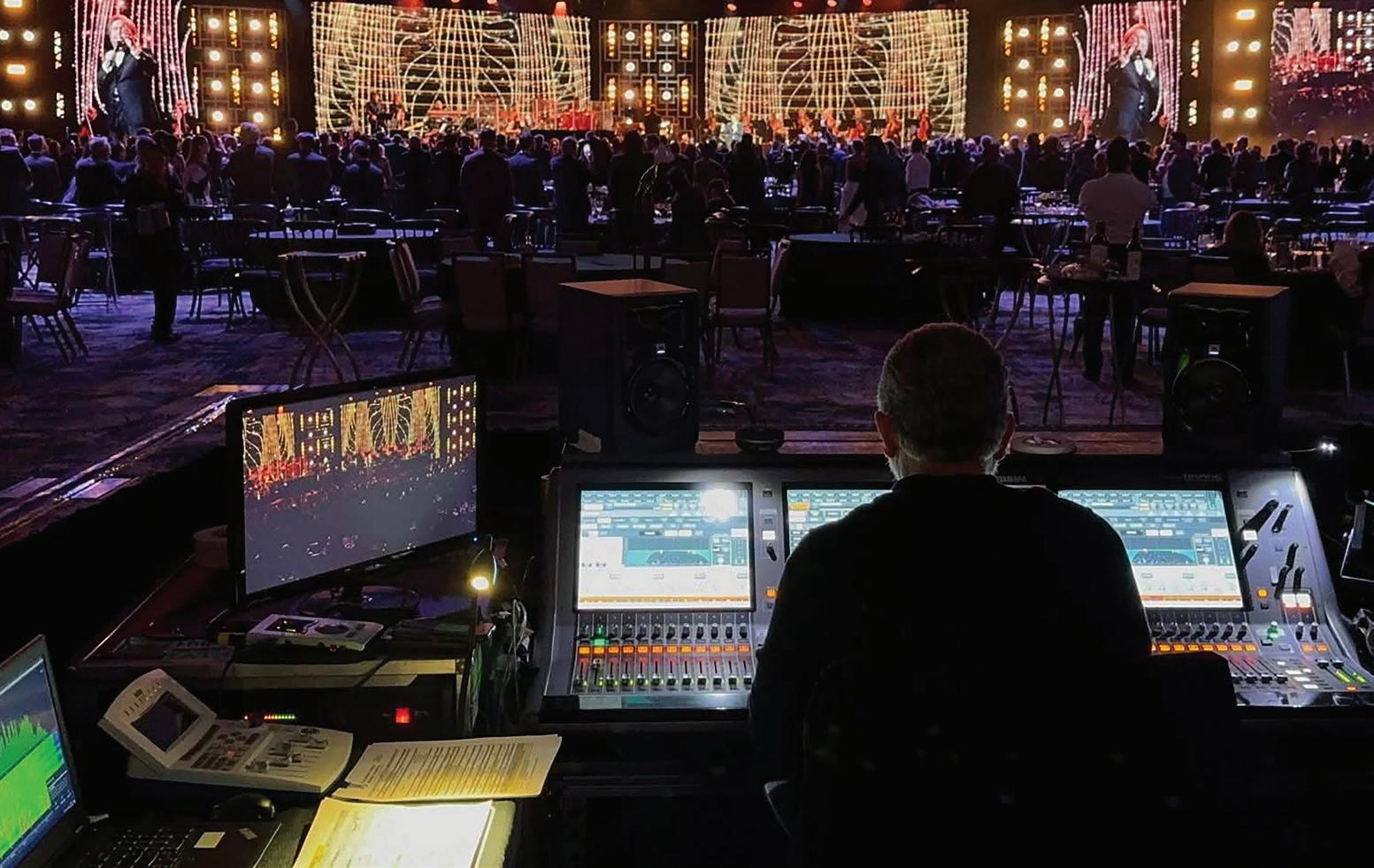
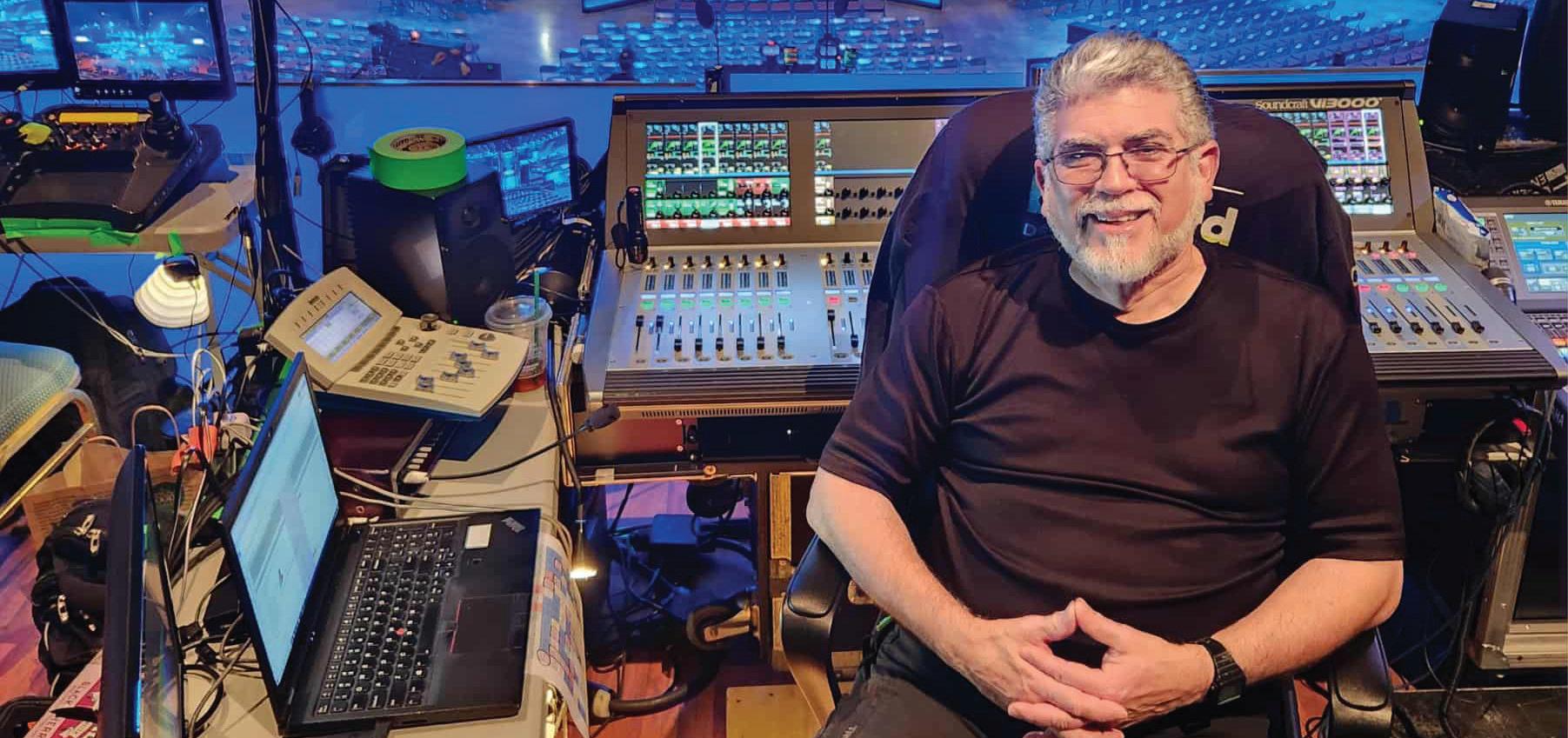
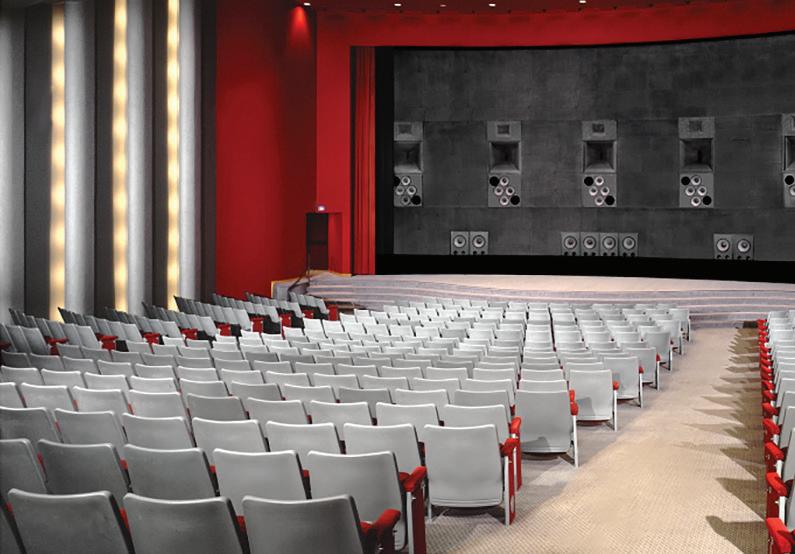
"THE SOUND AND MUSIC ARE 50 PERCENT OF THE ENTERTAINMENT IN A MOVIE."
– GEORGE LUCAS.
A profound statement from a movie icon highlighting how integral audio is to cinematic immersion. As one of the pioneers of modern blockbuster filmmaking, he acknowledged that sound design and music do more than complement visuals, they shape emotional engagement.
Removing sound or music from a film often reveals just how much a moment depends on audio cues to build tension, evoke memory, and pull audiences deeper into the story. And it all began about 100 years ago.
In the late 1920s, JBL founder James B. Lansing developed loudspeakers for radio. By the early 1930s, his larger field coil speakers found a dual use for theaters and were the precursors for what would go on to become the foundation for MGM Studios' Shearer Horn system – a breakthrough in clarity and coverage that set new standards.
This was the start of the ‘Golden Age of Hollywood’, where sound innovation didn’t just change movies; it changed the way we experience cinema.
The Shearer Horn proved to be a resounding success, winning a Scientific Technical Award from the Motion Picture Academy in 1936. Theaters across the US adopted the technology which would eventually make JBL a central partner in the rise of blockbuster cinema.
In the early 1940s, Lansing, having merged his Lansing Manufacturing company with Altec, created the ‘Voice of the Theater’ cinema speakers, which set a new standard for the motion picture industry and continued to develop cinema speakers after founding JBL in 1946.
Fast-forward to the 1980s, when JBL engineers developed a completely new concept to cinema: the JBL Bi-Radial constant-directivity horn technology, which grew to become the JBL 4675 system and set a whole new industry standard again.
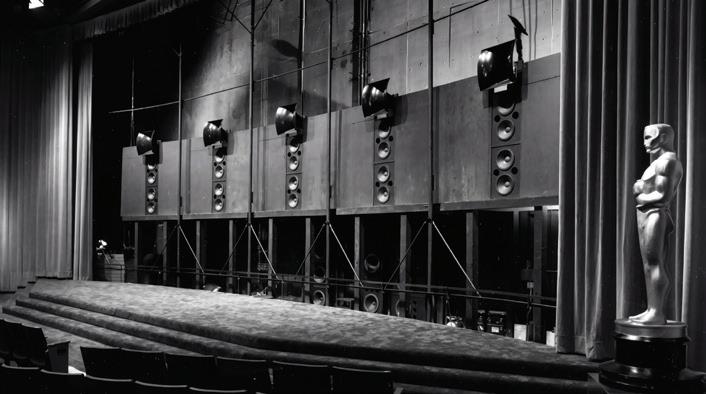
The system was installed in the industry’s reference theater, the Motion Picture Academy’s Goldwyn Theater in Beverly Hills, and was also selected as the first THX Approved speaker system. And innovation didn’t stop there, the company collaborated with Lucasfilm to help it meet THX specifications for its productions in the 1980s.
During the next decade, JBL introduced the first modern three-way screen channel system, the JBL 5674, which was installed during renovations of the Goldwyn Theater in 1996 along with custom JBL surrounds and subwoofers, delivering incredible impact, detail and clarity to every seat in the house.
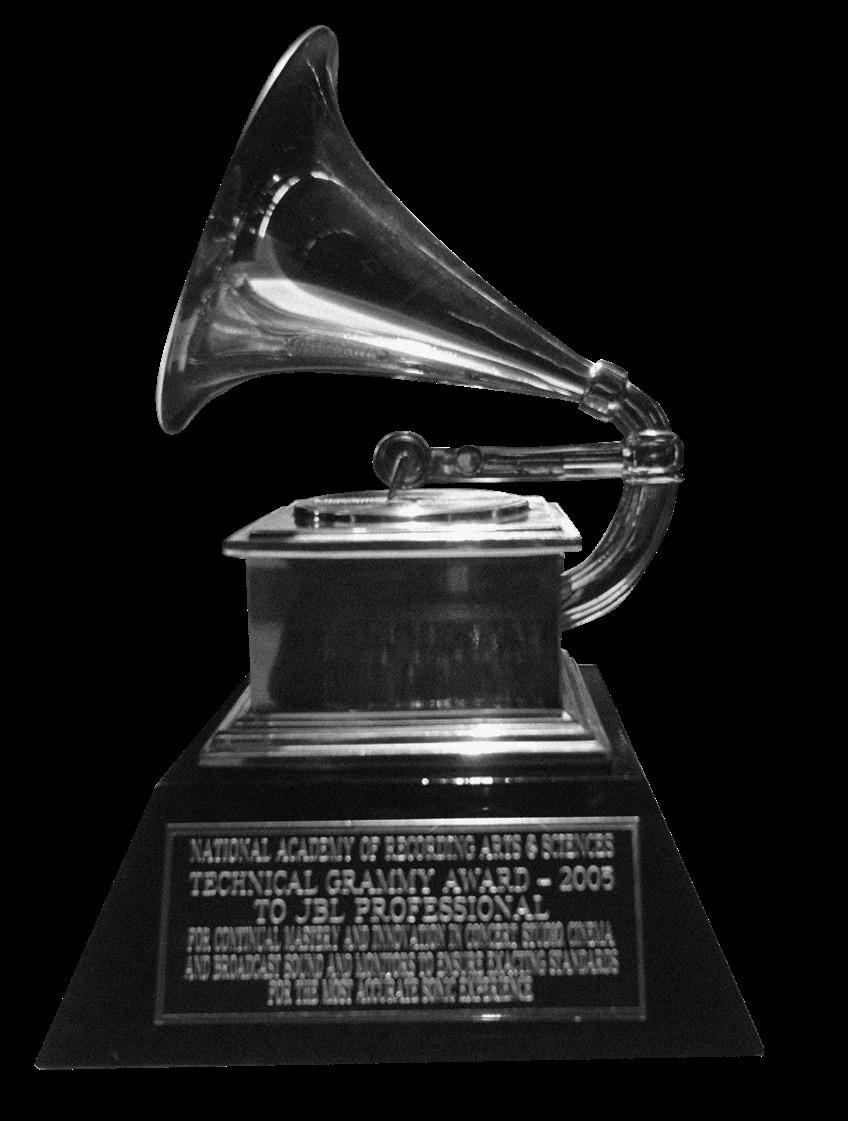
By the turn of the millennium, JBL even won its own Oscar. In 2002, three JBL engineers were presented with two of the most prestigious honors that the Motion Picture Academy can give for technical achievements in loudspeaker technology: a Scientific and Engineering Award for the ‘concept, design and engineering of the modern constant-directivity, direct radiator style motion picture loudspeaker systems’, and a Technical Achievement Award for the ‘engineering and design of filtered line arrays and screen spreading compensation as applied to motion picture loudspeaker systems.’
Today, JBL remains a market leader in cinemas worldwide, delivering immersive, detailed and precise sound to every seat. JBL took their cinema know-how and applied it to home experiences whether in high-end home cinemas or the living room. JBL also appears in Warner Brothers, Technicolor and Dolby screening rooms, as well as The Directors Guild of America and the Academy of Television Arts & Sciences.
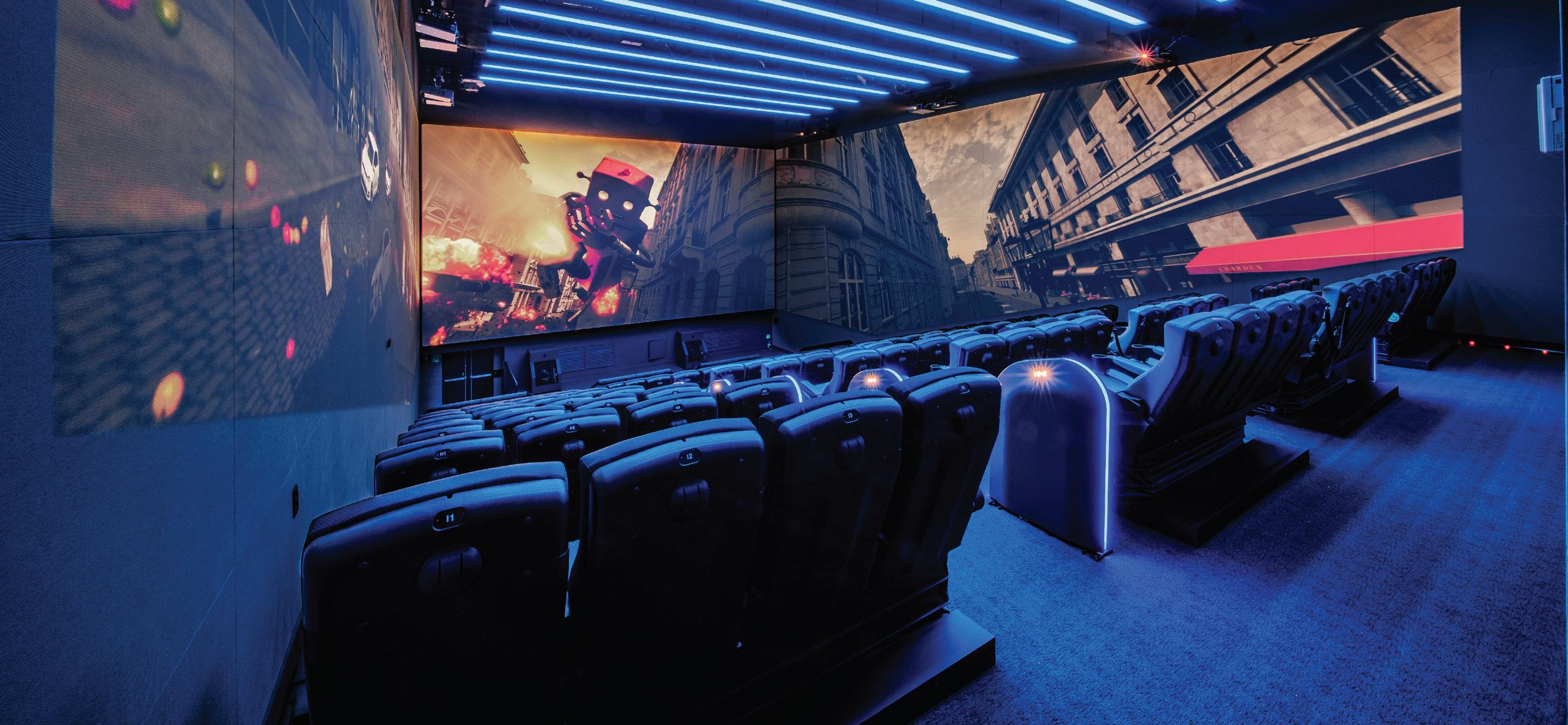
"Over the decades, JBL hasn’t just changed how movies sound. It has played a leading role in defining the entire cinematic experience."
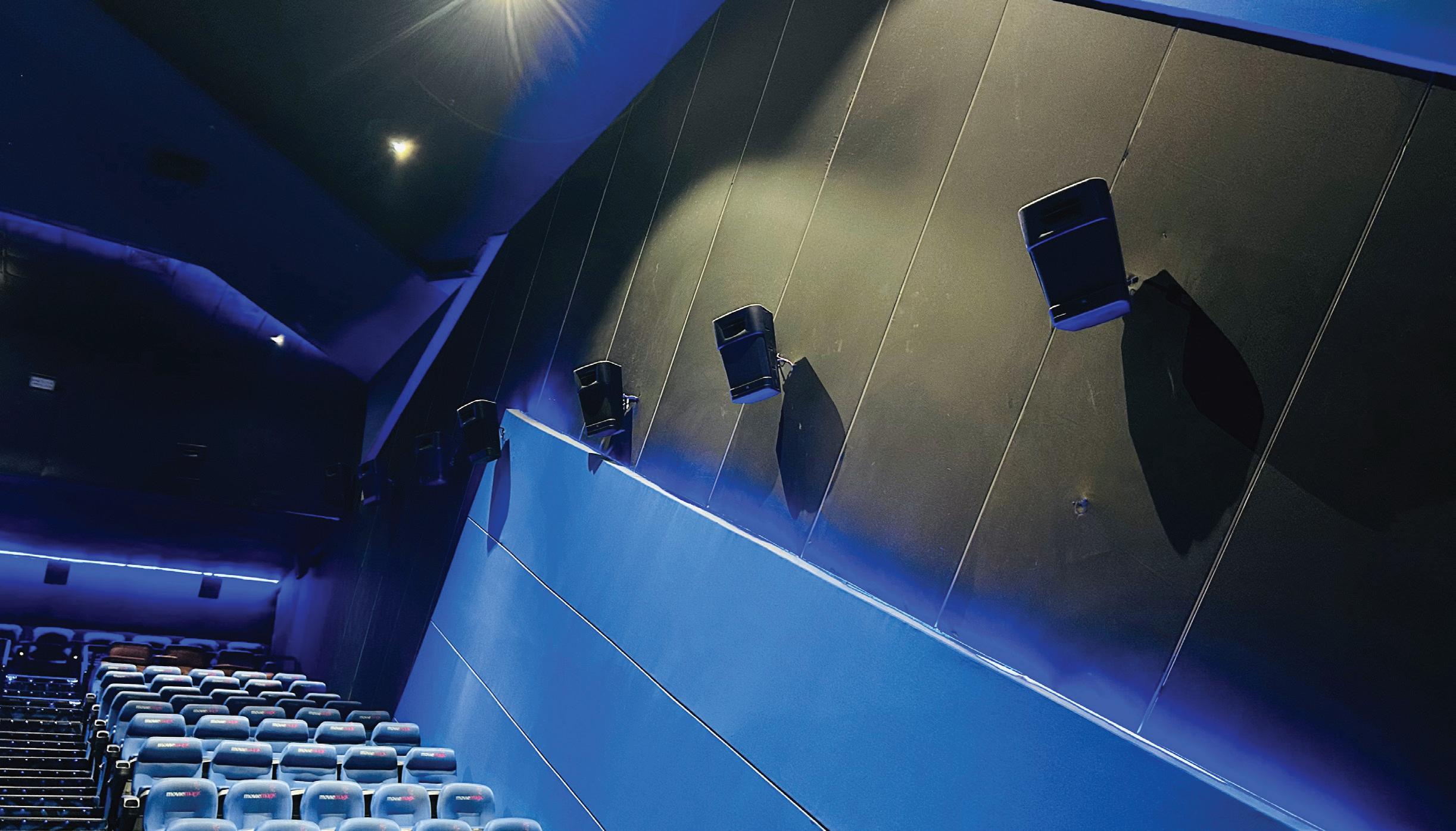
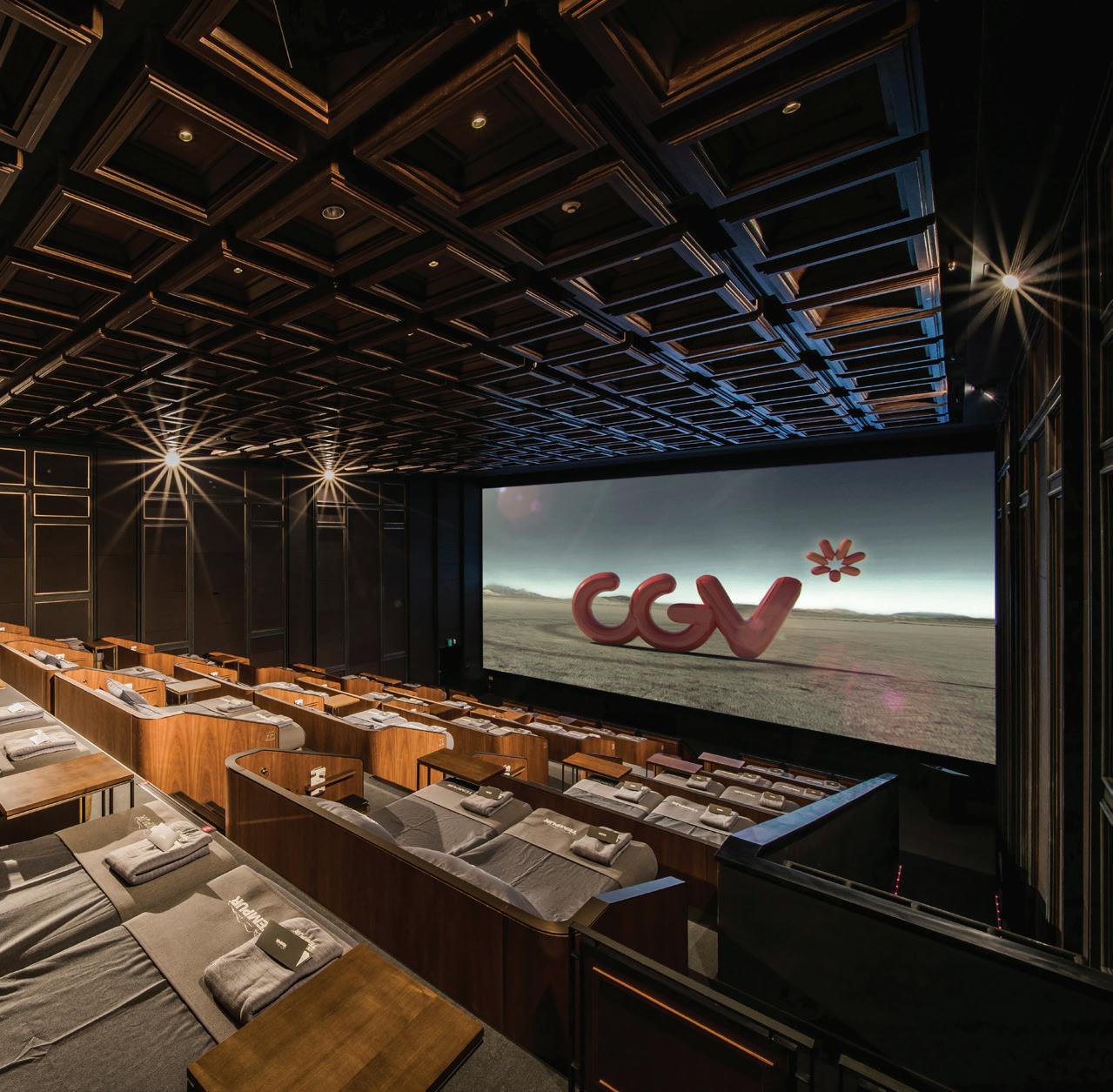
JBL systems have powered some of the most memorable live moments on Earth - from backroom gigs to global broadcasts. Here we take a look at those shows that moved millions, and the sound behind them.

MTV VIDEO MUSIC AWARDS
NORTH AMERICA
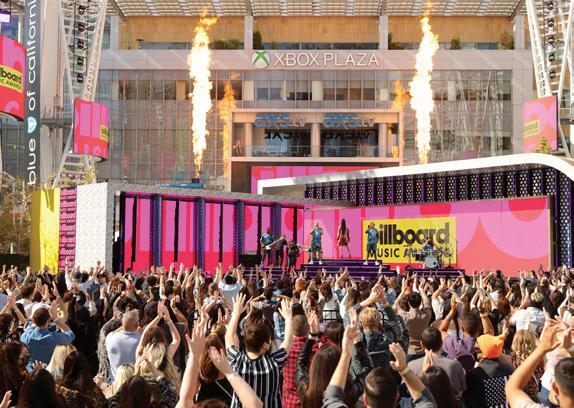
The 2025 VMAs featured a record 180 JBL speakers to deliver both arena and broadcast energy.

GLOBAL CITIZEN FESTIVAL
NEW YORK CITY, NEW YORK
Using JBL VTX loudspeakers, over 60,000 attendees experienced world-class sound from the barricades to the back of Central Park.

JACK WHITE AT AMERICAN LEGION POST 82
NASHVILLE, TENNESSEE
For his album release party, White selected a permanent upgrade of JBL SRX900 Series loudspeakers, benefiting the venue and its community for many years to come.
The 2024 Comic-Con, held at the San Diego Convention Center, attracted over 135,000 fans. The hybrid cinema and live panel set up featured JBL VTX A Series line arrays and B28 subwoofers, with JBL Venue Synthesis.

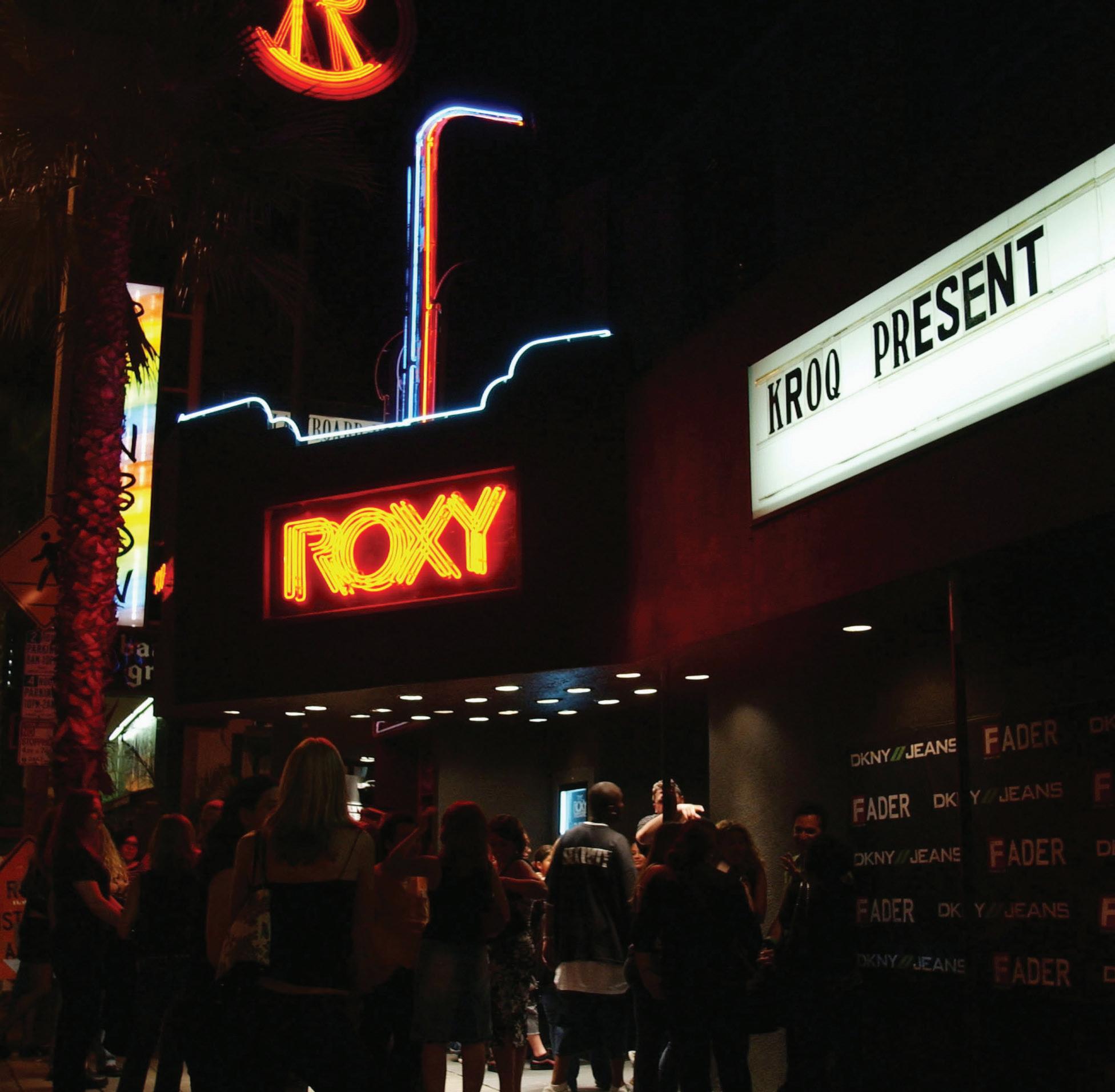
The iconic Sunset Strip venue, with JBL VTX A-Series, has a long history of hosting the who’s who in the music industry.
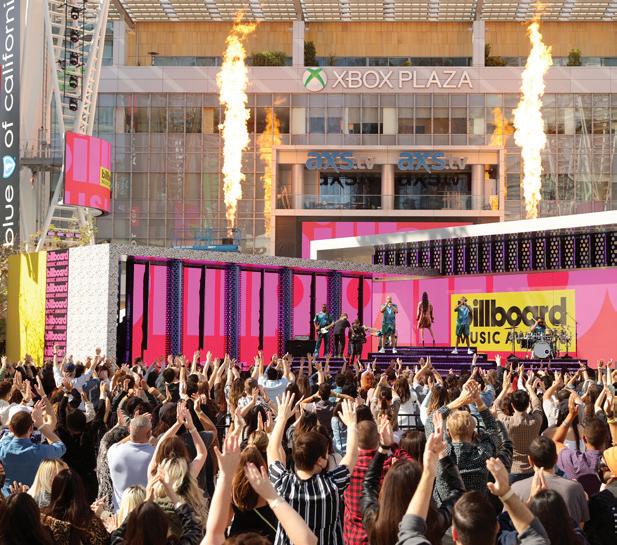

JBL can be found throughout Telemundo’s editorial, postproduction, broadcast suites, and of course, the Latin Billboard Awards.
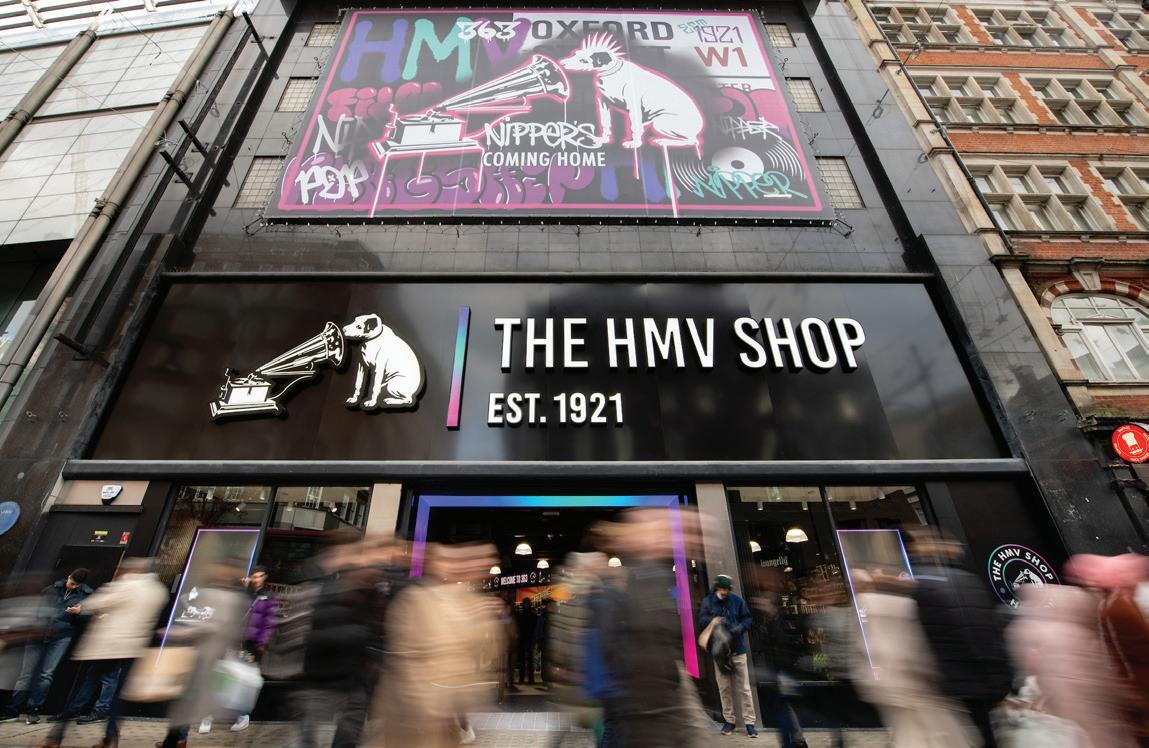
A unique cultural corridor pulses in the heart of the city. It beckons music lovers looking to connect with sound in unexpected places. Ready to explore?
You start out in the vibrant hustle of Oxford Street, at the gateway to London’s West End, where a bold graffiti-style mural signals you’ve arrived. Next, you head toward artsy Soho, popping into an effortlessly cool establishment on Marshall Street. Finally, you meander through the district’s lanes, reaching the iconic Denmark Street. Here, in what’s known as Tin Pan Alley, British music has been written, played, sold, and reinvented for over a century.
Here is where it dawns on you: you don’t just walk this short stretch of London, you hear it.
The journey has taken you from a flagship store to an artist-run record shop, before wrapping up in a community space shaped by self-expression. This isn’t a traditional music-inspired jaunt, but an exploration of the city’s diverse soundscape: from the thrill of discovery at HMV, to the reverence for authenticity at Third Man Records, and the immersive sense of belonging at B.R.A.T.
THE SOUND OF DISCOVERY: HMV OXFORD STREET
Tapping into the spirit of cult-classic 1990s film Empire Records, HMV brings back the joy of music as a physical ritual in a digital age. It’s a retail store where you can browse vast vinyl racks, CD spines, and merch - a place to slow down and engage with music beyond the screen.
Throughout the store, sound never feels incidental. Whether you’re browsing records or simply passing through, it shapes how the space feels — intimate, but still punchy. JBL helps bring that balance to life. Across the ground floor, music carries evenly and clearly, cutting through the noise of Oxford Street without overpowering conversation or movement — hallmarks of JBL Control 65 pendant loudspeakers and JBL Control 60 pendant subwoofers.
A sound journey from London’s cultural corridor to the Vatican’s grandest square
Sound has the power to connect — no matter the scale of the venue, no matter the cityscape. This connection doesn’t happen by accident. It’s designed, with professional audio systems that respect the needs of each space, so that sound consistently translates into memorable, shared experiences that are felt as much as they are heard.
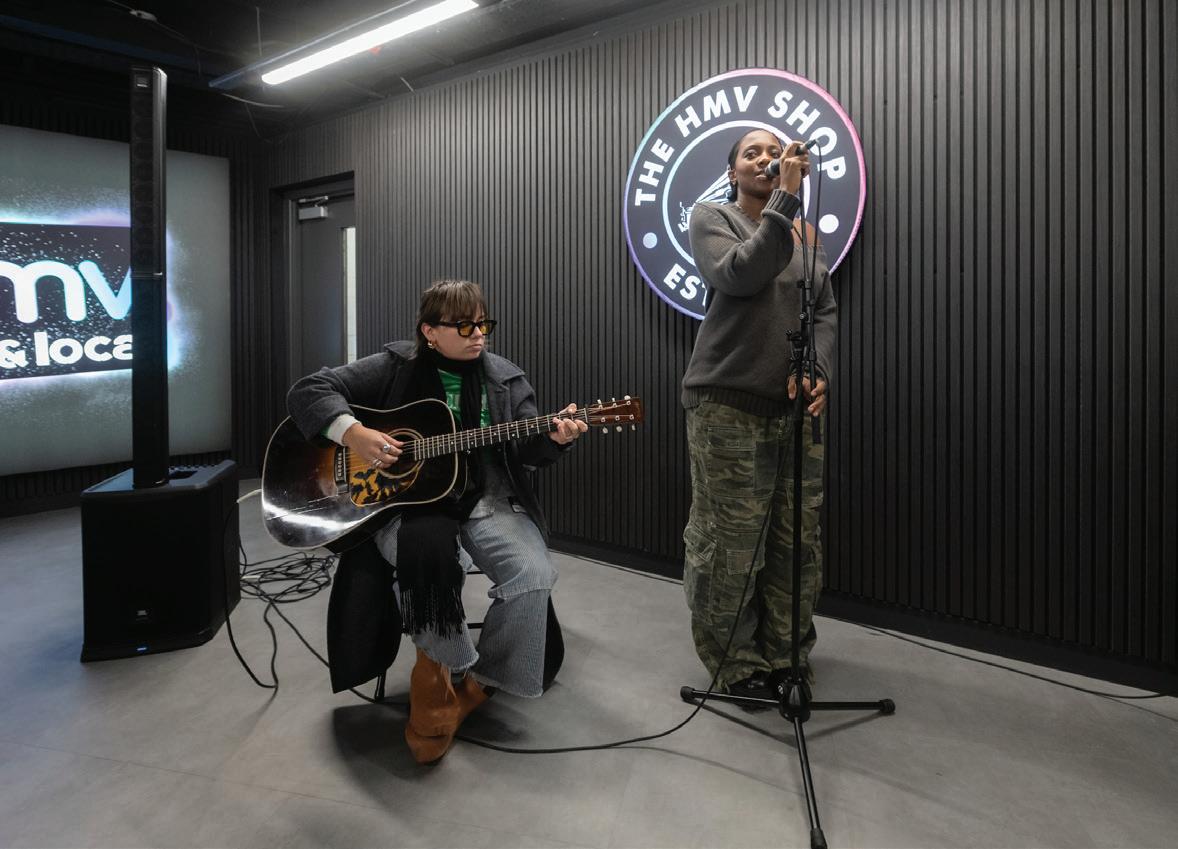
But it’s not just a shop floor experience. HMV Oxford Street also doubles as a space for instore performances and artist signings, where music stops being background noise and becomes the reason people come together.
Though spread across multiple floors, it makes no attempt to pass itself off as a club or theater. Instead, its live performance stage offers something more immediate: acoustic sets and stripped-back performances unfolding at arm’s length.
On the live stage, JBL SRX910 line array speakers bring concertgrade clarity and scale in this retail environment, which is no small feat. Meanwhile, JBL SRX928S dual 18” subwoofers provide the physical impact that live performances demand — you know what we’re talking about. Low frequencies are felt, anchoring you in the moment and creating the conditions for genuine emotional connection with artists on the edge of breakout.
At HMV Oxford Street, discovery is a shared experience.
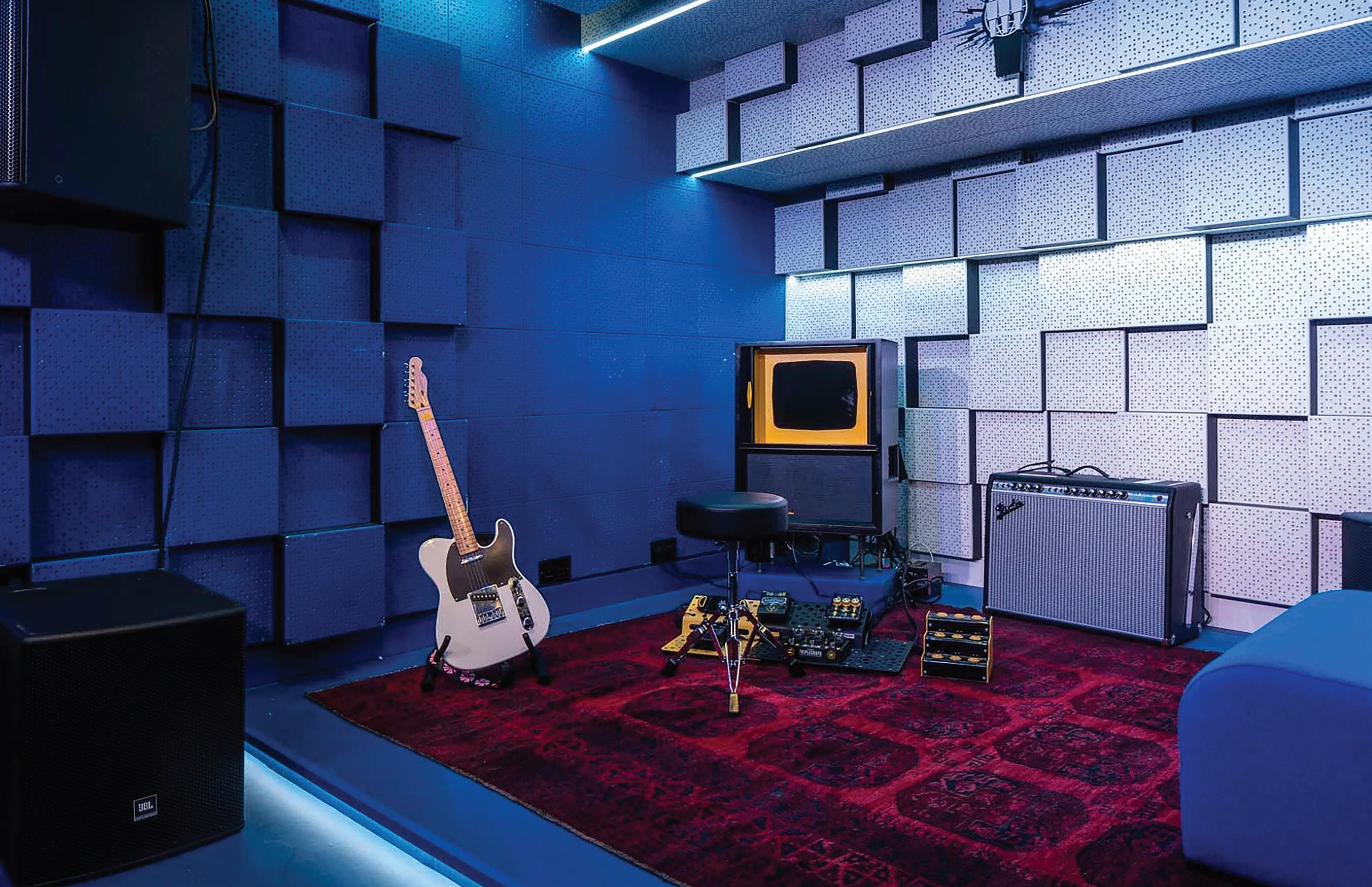
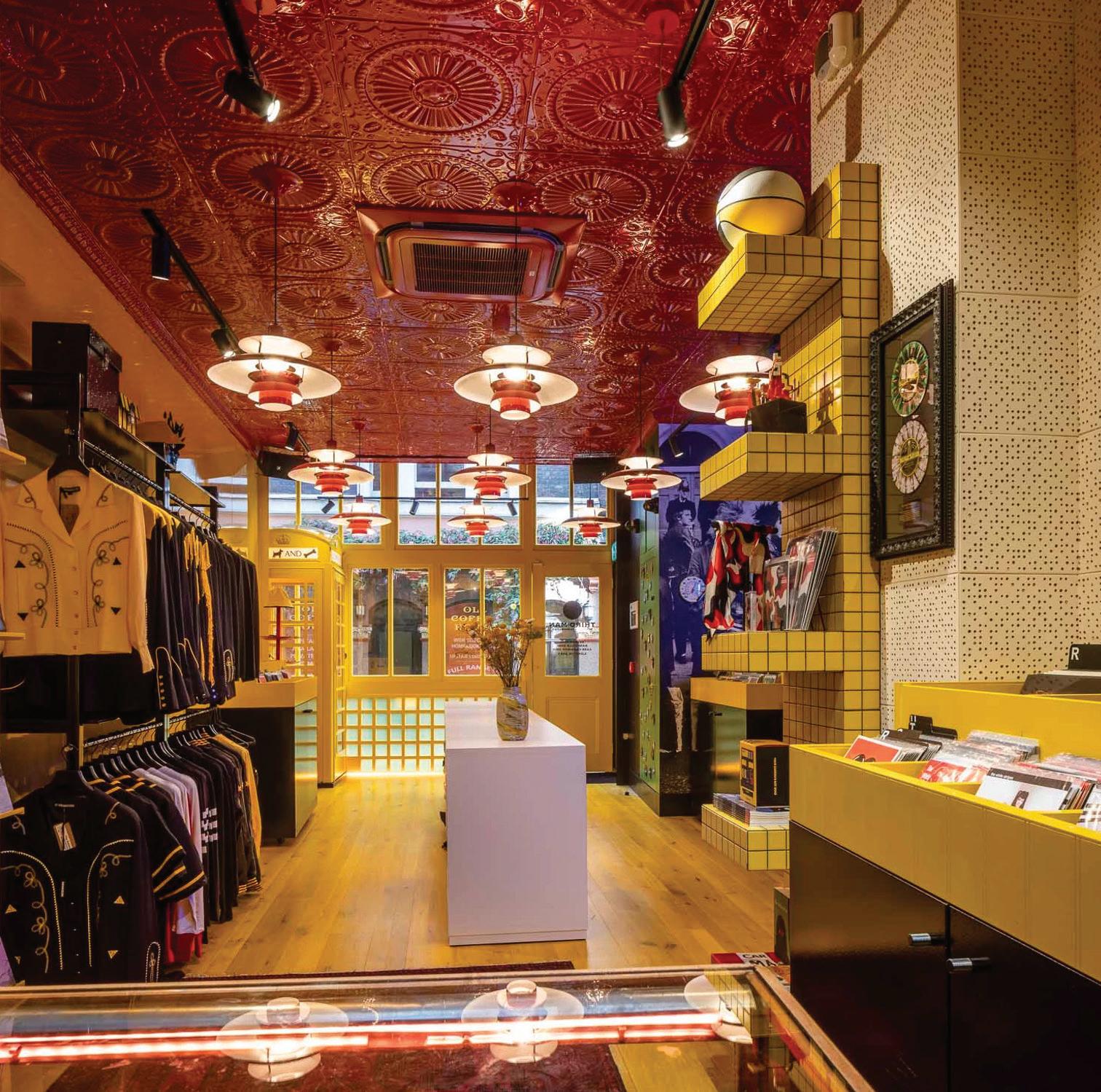
In a streaming-first world, Third Man Records stands apart as a shrine to an analogue era and to music as a craft. Owner Jack White’s fingerprints are everywhere — an audiophile’s insistence that music is more meaningful when the listener slows down and gives it their full attention. The acid-yellow shopfront hints at what lies within. Doors open to reveal a compact, eclectic retail space filled with vinyl, vintage record players and cassette tapes. Music remains present and physical, never dissolving into background noise. That clarity is delivered by JBL AE Compact AC16 loudspeakers, with JBL ASB6112 subwoofers adding depth and warmth to playback.
Head downstairs and yellow gives way to cobalt blue in the aptly named Blue Basement. Here, lowkey gigs and DJ sets unfold in close quarters, with an outdoor patio offering space to pause between songs. There’s even a ‘Literarium’: a tiny, old-school booth where artists and visitors alike can cut their own recordings straight to vinyl. This is a room with no distance and no distraction. Volume gives way to detail. Clarity matters more than force. You hear fingers on strings, breath between lines, the snap of a snare exactly as it lands.
In a space this close, the sound system can’t hide behind loudness or polish — it must be honest. JBL AM7215/95 high-power loudspeakers don’t correct the performance; they respect it, delivering power without sacrificing detail. Bass carries emotion without overwhelming the room, while JBL AE Compact AC18 & AC16 loudspeakers offer smooth coverage, so vocals stay grounded wherever you’re standing. Third Man has built its reputation on intimacy and authenticity, not scale or spectacle. Here, sound is sacred. You may not even notice the professional system at all — and that’s fine, because the point is to let go and simply trust that it’s giving you the most authentic experience.
“WE’RE ON A MISSION FOR PURITY, WE BUILD SPACES WHERE NOTHING IS TRANSLATED, NOTHING IMPERSONATING SOMETHING THAT IT’S NOT… JBL GETS THAT AND IT’S WHY THEY’RE OBSESSED WITH TRANSLATING SOUND IN SUCH A PURE WAY”
JACK WHITE, CO-FOUNDER AND CO-OWNER
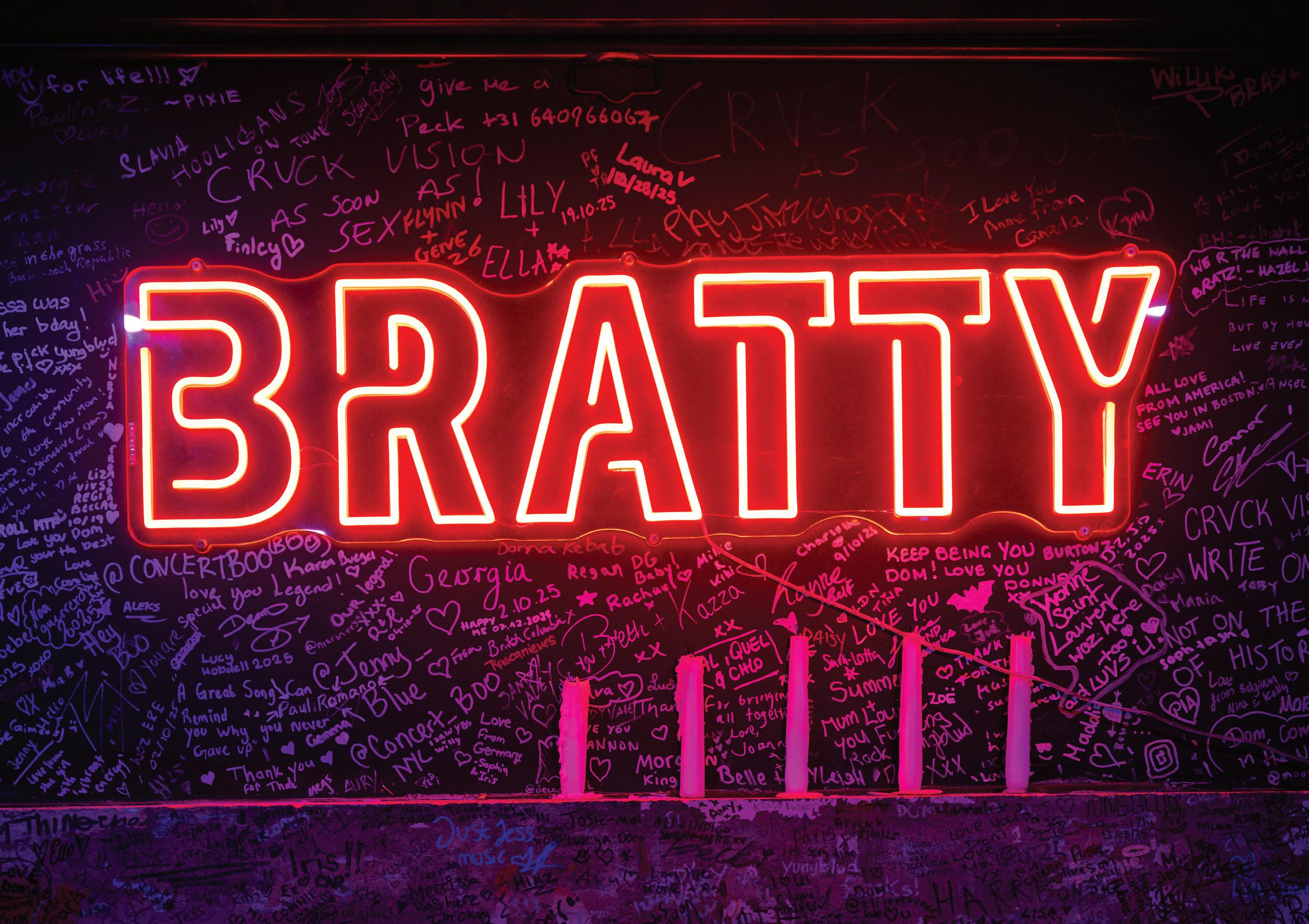
THE SOUND OF SELF-EXPRESSION: B.R.A.T
Across the 1950s, ’60s and ’70s, Denmark Street was a small avenue with an outsized voice — a magnet for trailblazing musicians, from the Rolling Stones and David Bowie to the Sex Pistols, who passed through its studios, cafés and rehearsal rooms while shaping new sounds and new scenes. Dubbed Tin Pan Alley, it was a place where songs were tested in tight spaces, scenes were forged in close quarters, and music was first heard at human volume. It’s fitting that the B.R.A.T hub now sits here, bringing that heritage alive for a new generation.
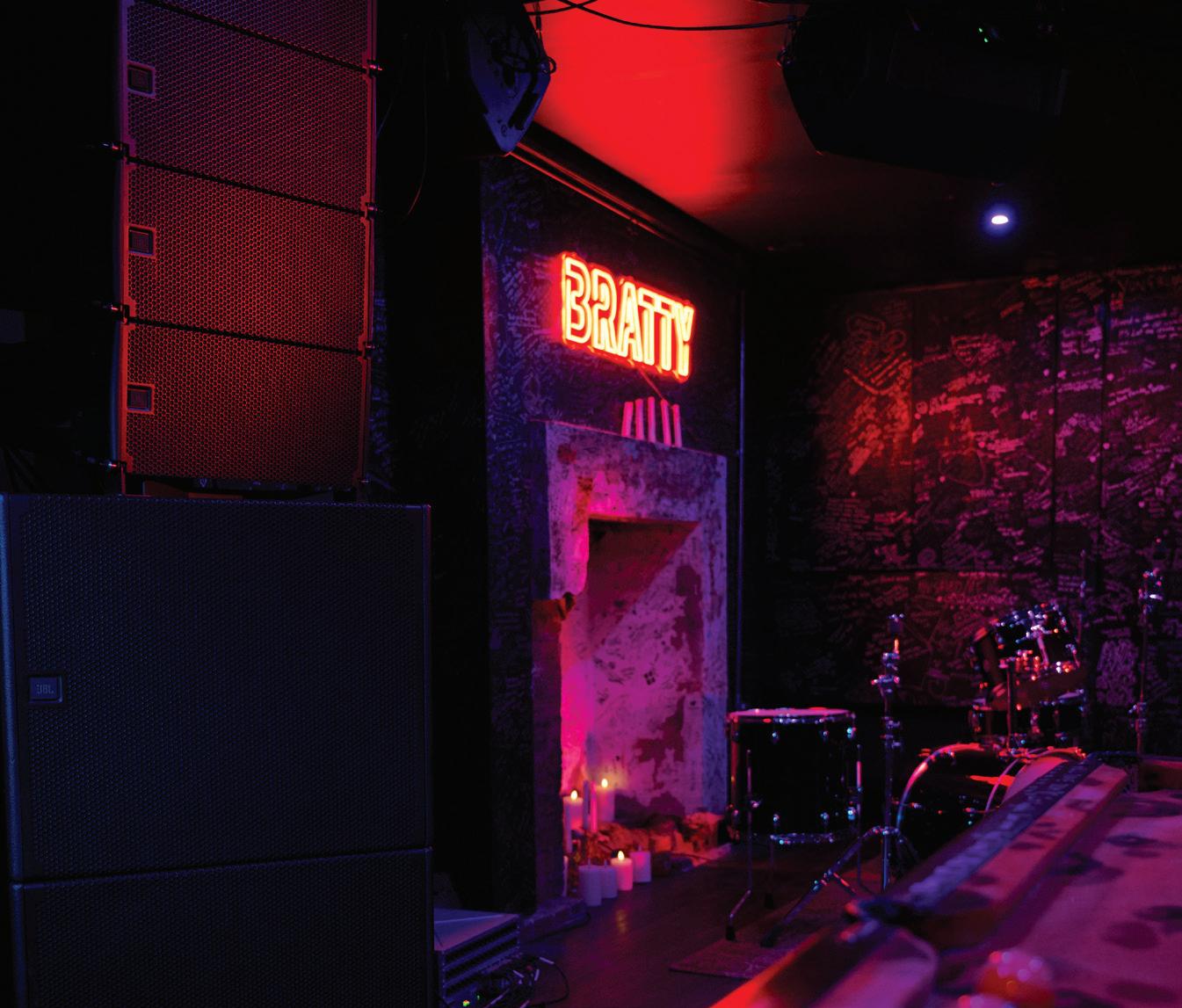
Founded by YUNGBLUD, B.R.A.T (Beautifully Romanticized Accidentally Traumatized) is an artist-led, values-driven community hangout where sound is part of a wider emotional ecosystem. Live music sits alongside poetry nights, art classes and film screenings. Upstairs, you can grab a coffee or a Bludbeer while browsing jewelry, cushions and tartan kilts — all made onsite in the adjoining workshop. Self-expression is everywhere: leopard print carpets underfoot, purple lighting bouncing off black painted walls. This punk-glam attitude gets more raw as you make your way to the basement. Once a rehearsal space — its walls still etched with artists’ names — the basement now hosts live performances from emerging artists at the future edge of the UK scene.
Whether upstairs or down, people need to talk, move, film and share as part of the community. This is a space built for a generation that experiences culture both in the moment and through a phone lens. JBL’s SRX900 line arrays and fixed monitor solutions are deployed to support that dual reality: audio that sounds as good on video as it does in the room. More importantly, it doesn’t smooth out B.R.A.T’s rough edges — it protects them, supporting the unfiltered self-expression that defines the space.
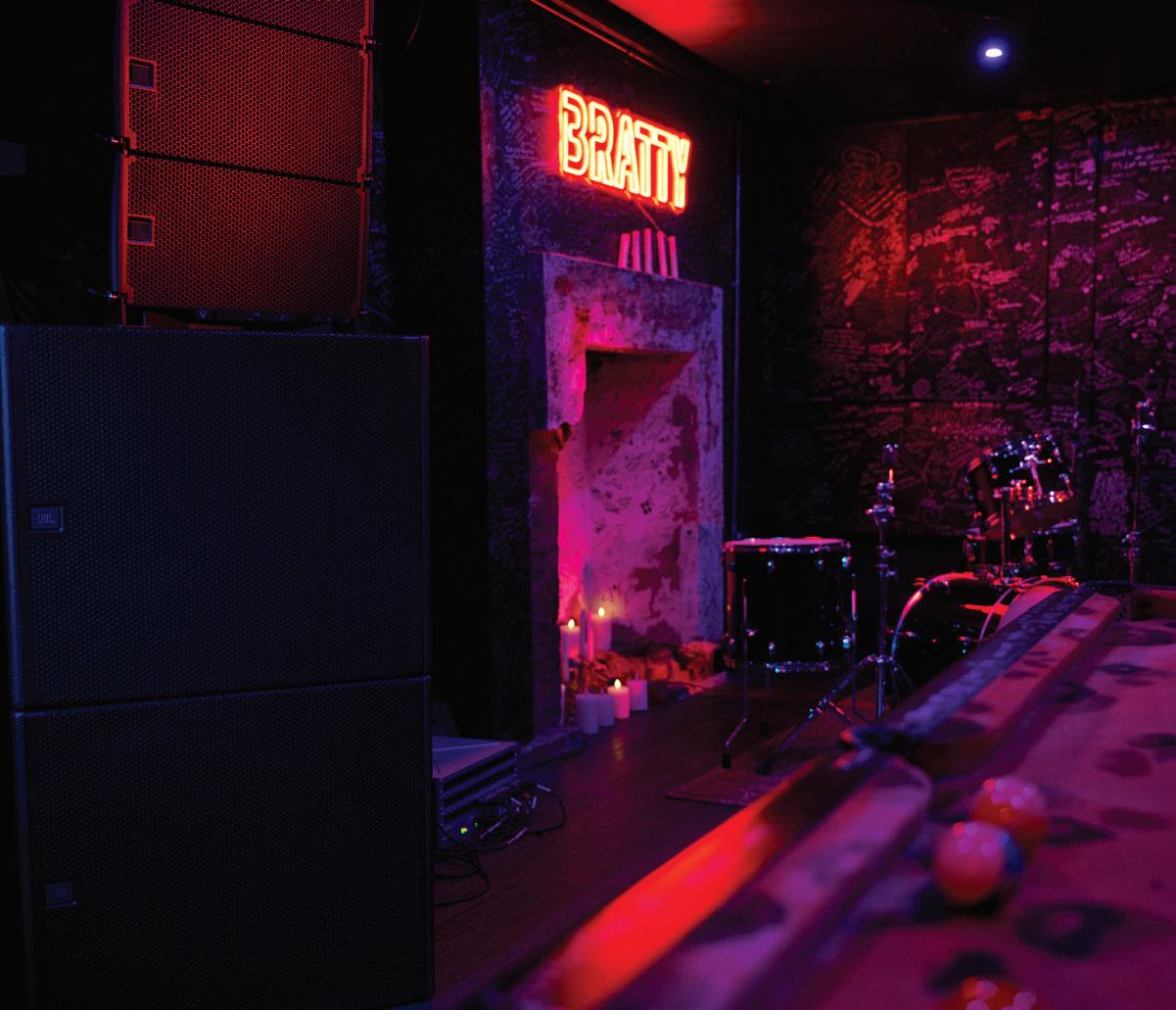
"THIS IS A SPACE BUILT FOR A GENERATION THAT EXPERIENCES CULTURE BOTH IN THE MOMENT AND THROUGH A PHONE LENS."
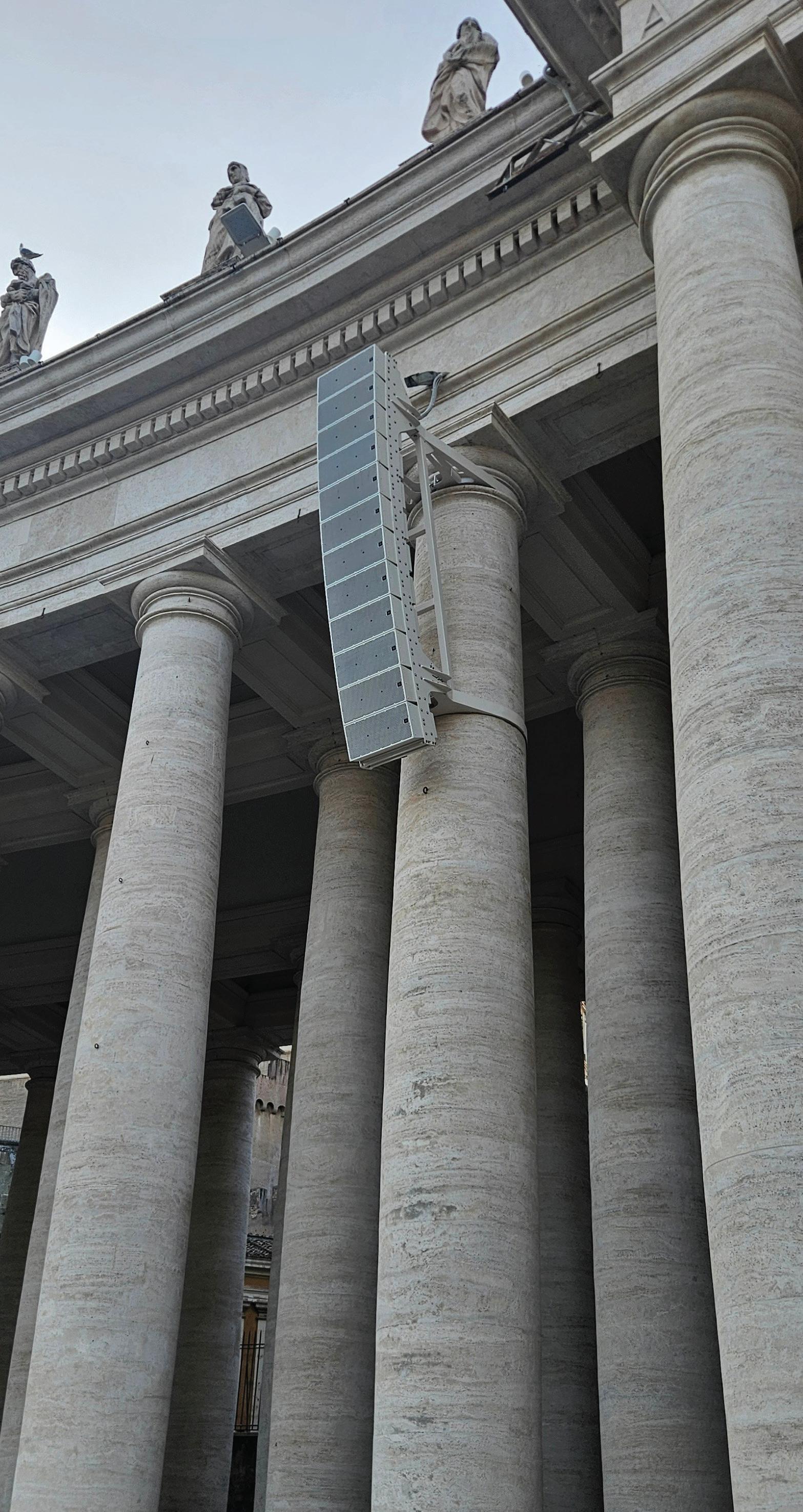
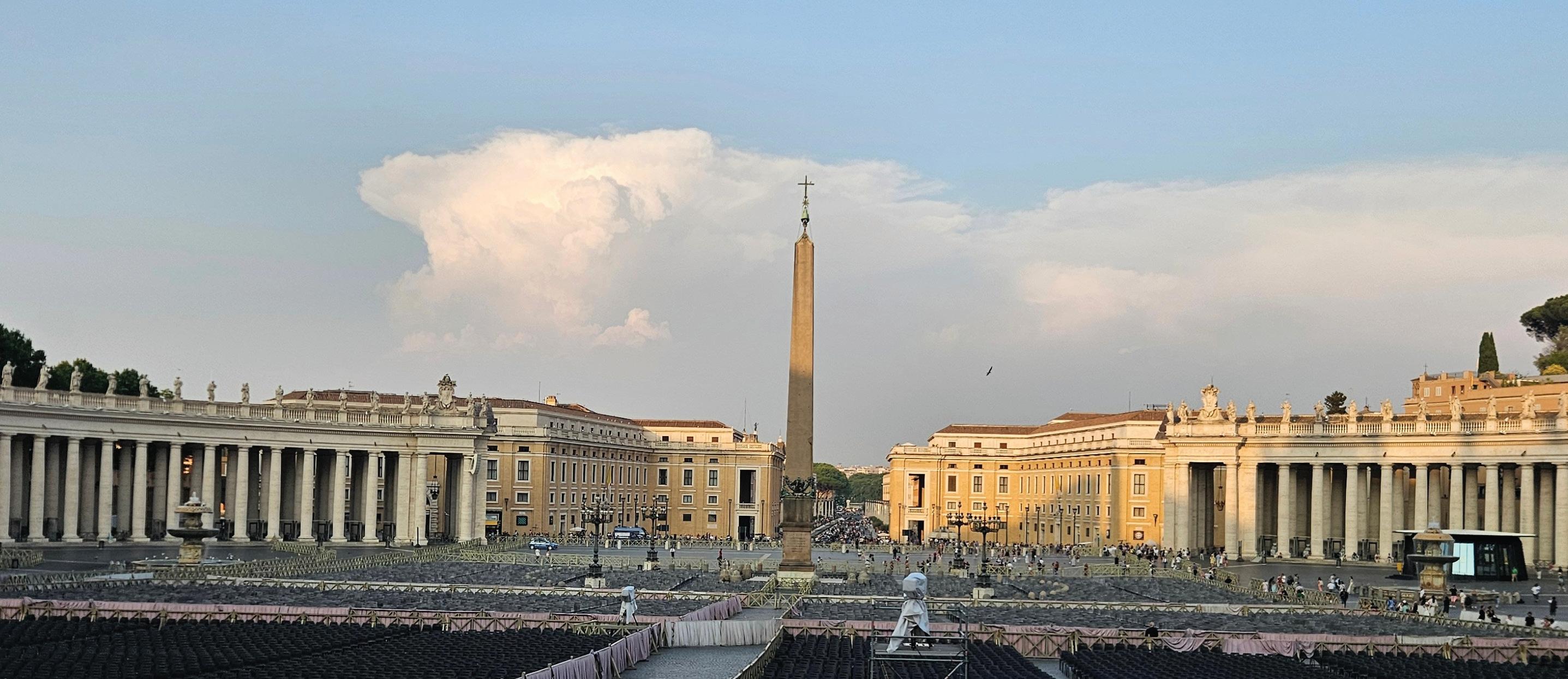
From London’s streets, the journey widens, unfolding in one of the world’s most recognizable open-air spaces. St. Peter’s Square sits within Vatican City, framed by Bernini’s sweeping 17th century colonnades. Designed to hold tens of thousands at once, its openness is as deliberate as its grandeur. Recognized as part of the Vatican City UNESCO World Heritage Site, the square embodies the challenge of any modern intervention: how to serve contemporary needs while preserving the integrity of such a culturally and architecturally significant space.
THE SOUND OF SCALE: ST. PETER’S SQUARE
If London’s venues explore sound at human scale, the Vatican demands audibility across great distance. When the Vatican entrusted JBL Professional with reimagining sound at St. Peter’s Square, it marked the start of a three-year mission guided by heritage, technical complexity and a belief that sound can bring people together.
The environment is as breathtaking as it is acoustically unforgiving. Spanning nearly 1,000 feet and serving crowds of up to 80,000 people, this vast openair square is built almost entirely of marble — a surface that reflects sound as readily as it carries it. The answer to great sound here lies in precision at scale.
JBL Professional engineered a system built around 10 strategically positioned VLAC arrays, powered by JBL's Harman brand siblings; Crown for amplifiers and BSS for digital signal processing across a network stretching nearly half a mile, allowing engineers to tune a profile uniquely tailored to the square’s acoustics and the Pope’s addresses. To meet the Vatican’s ceremonial rhythms, two complementary systems were deployed: one supporting communion delivered at the front of the square, the other serving Angelus, when the Pope addresses the crowd from his residence overlooking the square. Together, these systems ensure every message reaches the crowd with clarity and consistency, regardless of where it originates.
This installation stands as one of the most sophisticated and important audio projects ever delivered by JBL Professional. More than a technical achievement, it’s a testament to trust — and to what’s possible when innovation is guided by respect for place, purpose, and the power of sound to connect people at scale.
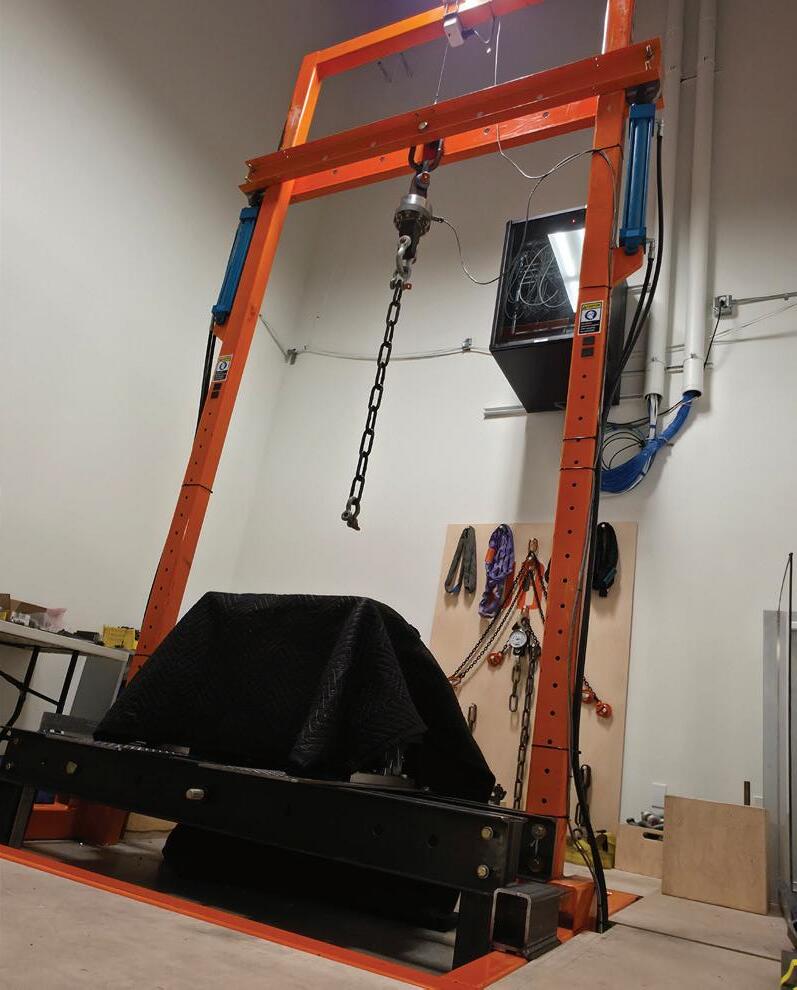
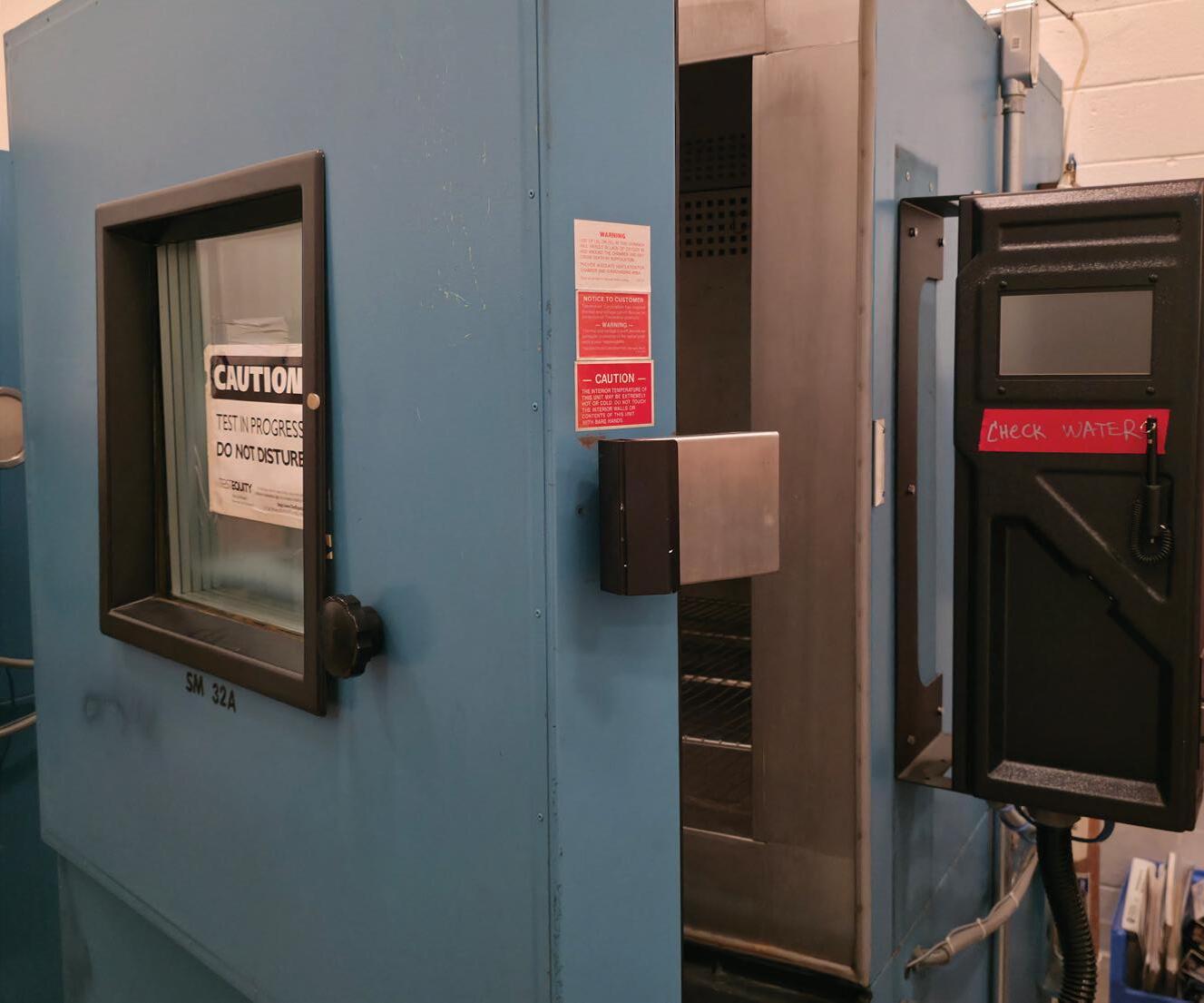
Before a JBL Professional speaker ever hits the stage or studio, the speakers are stress tested to extremes - shaken, baked, frozen, blasted - and pushed far beyond the limits of typical use.
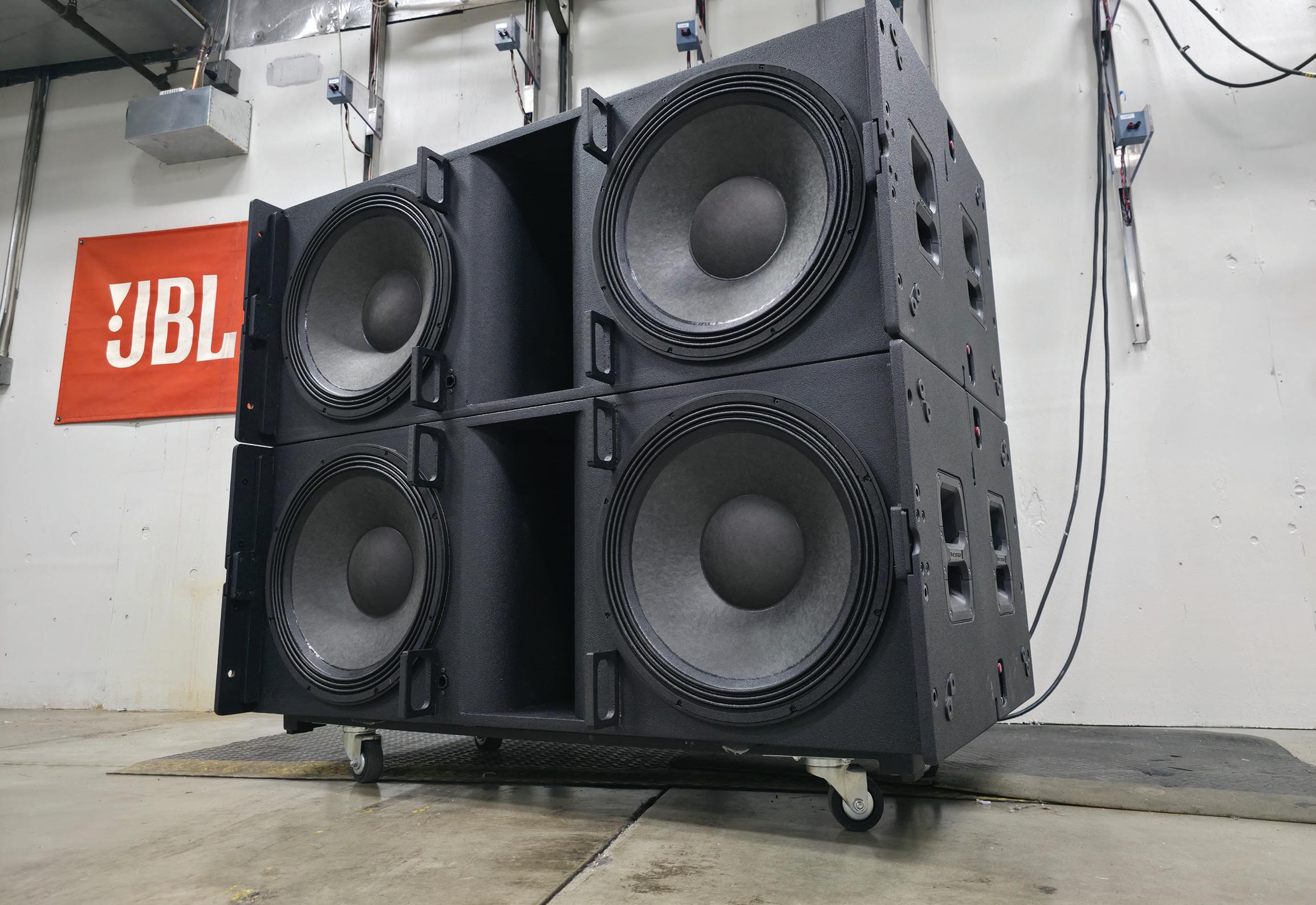
World-class, precision speakers are designed to thrive in stadiums, survive festivals and perform flawlessly in studios. Stress testing is more than a final check, it’s a core philosophy, where engineering excellence meets brutal reality.
THE SOUND OF SURVIVAL: ACOUSTICS UNDER PRESSURE
Real-world conditions aren’t gentle, and professional audio gear needs to show up and perform. No matter the conditions. Every JBL speaker must survive a series of intense quality control tests designed to expose weak points and ensure it can take a beating and still perform flawlessly.
PJ Rene, Global Manager of Acoustic Systems at JBL, describes the notorious ‘power test’, which pushes loudspeakers to their absolute limit –blasting nonstop at full volume, at full-rated power, for up to 100 hours. “Multi-day festivals don’t even use loudspeakers on such an intensive pace, but we do,” Rene boldly says. “That’s what our customers expect and the standards we set.”
These sessions reach up to 140 decibels, enough to cause potential heart palpitations for unprotected listeners. “You need double hearing
protection just to be in the room,” adds Kevin Bailey, who heads mechanical testing. “It’s abusive as hell!”
Yet, the abuse has purpose. The process gets very technical, with Rene’s team using a combination of continuous signals to test thermal resilience, and rhythmic pulses to uncover mechanical weaknesses in the transducers and enclosures. And every speaker is monitored the whole time, with the goal to find the weak points first.
Longevity matters too. Many JBL Professional speakers remain in use for 10 to 15 years. “We don’t just test for performance on day one. We’re accelerating aging – weeks of operation, plus temperature and humidity cycling, to simulate a decade of real-world use in a matter of days,” Rene explains.
While Rene is focused on clarity and tone, Bailey gets paid to deliberately destroy speakers to ensure they’re safe enough to fly, literally.
“Our systems are often suspended above crowds,” he says. “That means life safety is non-negotiable.” His team carries out destructive testing on cabinets, rigging, and enclosures. They tip, drop, shake and stress the systems until something gives. When something does fail, they check whether it only happened under forces no speaker would ever experience in real use. If not, JBL continues to design beyond the failure.
Testing begins at the concept phase and runs through to production. Across JBL’s Concept Verification, Engineering Verification, Design Verification and Production Verification stages, every prototype is put through increasingly intense rounds of physical punishment. “It can take up to two years before a speaker makes it to market, and we’re abusing them the whole time,” laughs Bailey.
To ensure consistency, better-performing units are passed to the acoustic team for detailed sound profiling, while others go straight to Bailey for physical trials. “We separate the lot. Some go to the sound guys, some come to me to get smashed up!”
This relentless testing isn’t just about ticking boxes. It’s about trust. From a touring rig on a 100-city world tour to headline sets pounding through tropical rain in Rio, to marathon DJ sessions in the heat of Berlin, JBL speakers are built to thrive under pressure. They’re engineered to survive the punishment of the road, the shake of sub-bass, and the extremes of both crowd and climate. Because as Bailey puts it: “We don’t just build speakers. We try to break them, so our customers never do.”
“WE DON’T JUST BUILD SPEAKERS. WE TRY TO BREAK THEM, SO OUR CUSTOMERS NEVER DO.”
“I LOVE DOING A JOB WHERE I MAKE SOMETHING THAT MAKES SOMEONE HAPPY”
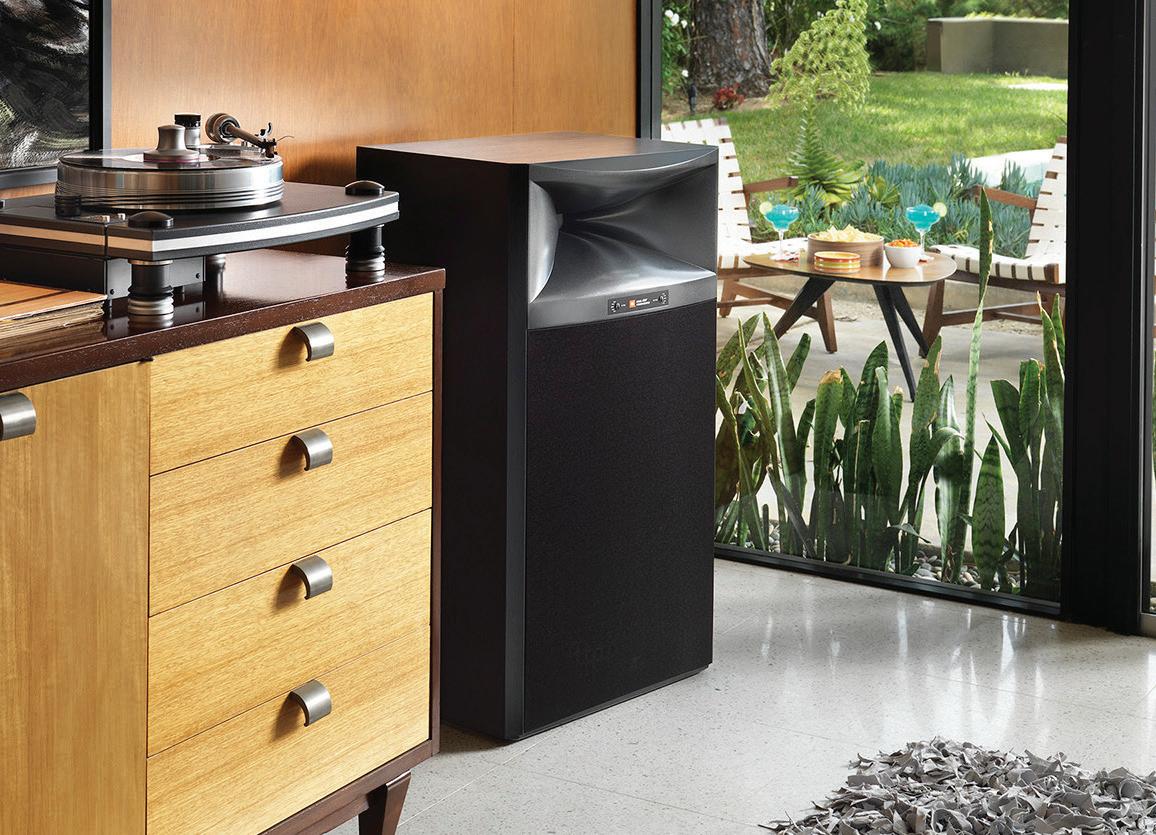
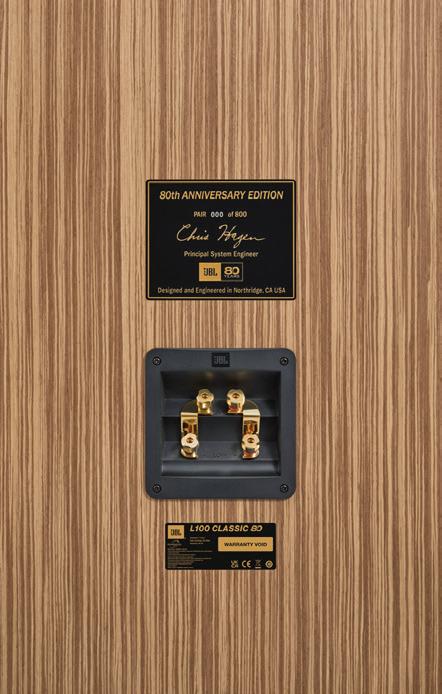
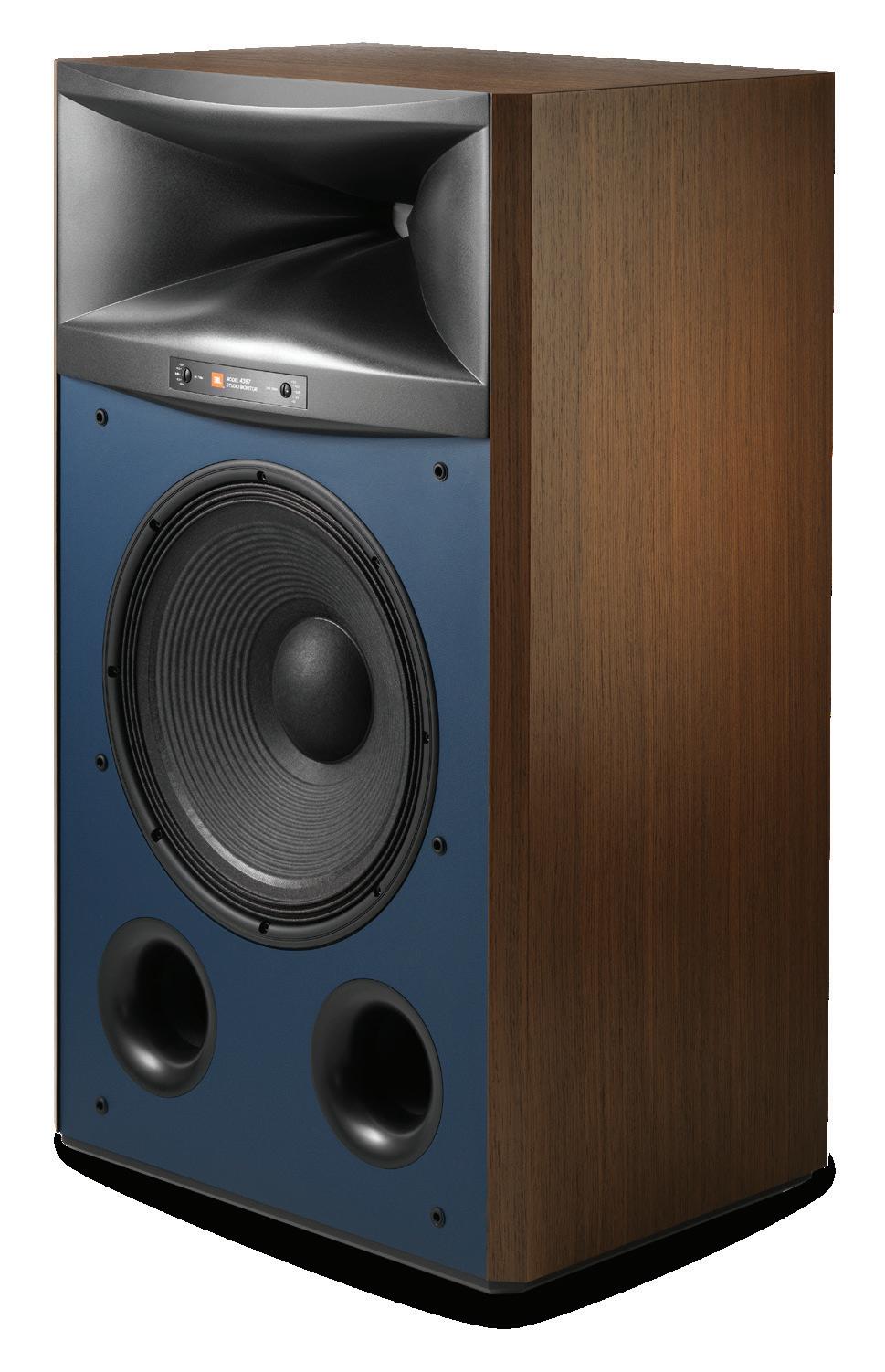
Chris Hagen, Principal Engineer at JBL, has spent more than 35 years designing speakers that create emotional reactions. For him, the real test of success is never just in the measurements. It’s in the moment someone hears their favorite track and feels something shift.
Growing up in California, Hagen listened to classical records and Motown on a handheld portable AM/FM radio. Those quiet weekends shaped his relationship with sound. It wasn’t background noise, it became the feeling of home.
A seasoned engineer with 40+ years in the industry, Hagen understands how to read curves and specs, but he focuses on the emotional and physical reaction. “You can
measure frequency response, but you can’t measure goosebumps,” he says. “Once we demoed a Multicap system to a music producer who sat in silence after a demo. When he turned around, tears were running down his face.”
At JBL, Hagen led the development of the Multicap crossover system, a refined approach to capacitor design that reduces sound distortion and delivers cleaner sound. This system powers flagship models like the JBL Summit Series, which recently earned top industry recognition, winning the Stereo Sound Grand Prix 2025, one of Japan’s most respected high-end audio awards.
“We don’t build for test labs. We build for people,” Hagen says. Every speaker must pass one final test: does it connect emotionally? If it doesn’t, he’s not done. “The listener is the judge. Always.”
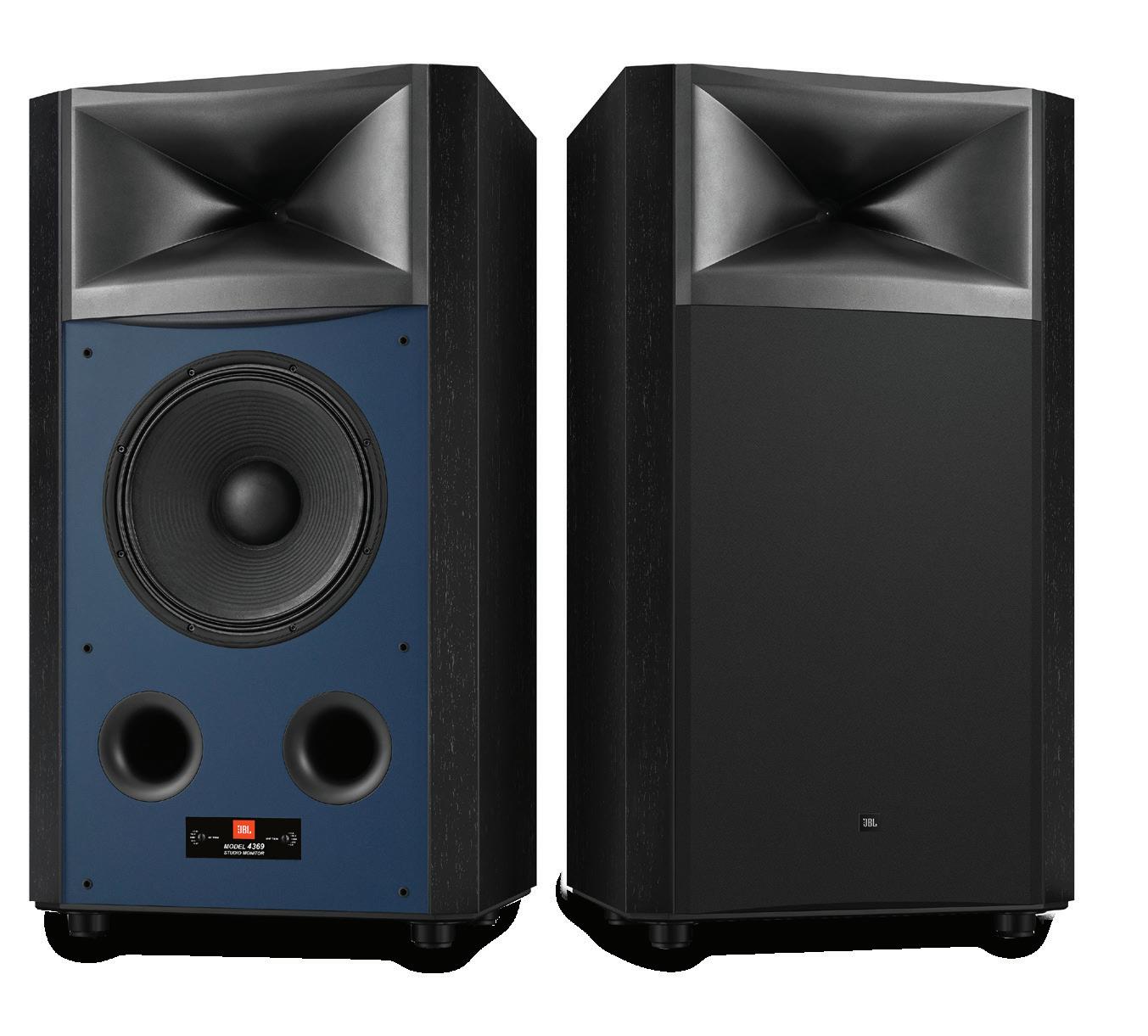
“ON YOUR SHORE” BY ENYA, from the album Watermark. A study in lack of extremes, Enya’s voice should walk the line between sibilance and a soft mute, its midrange be centered and even, and the bass line subtle and not over-blown or non-existent.
“THANKS TO YOU” BY BOZ SCAGGS, from the album Dig. This track includes deep bass, present vocals, wide and deep imaging, and a wood block that all point out a speaker's limits – not enough or deep bass, too forward vocals or too much/little high frequencies. But also it shows the space or darkness between instruments on a good speaker system.
“WE DON’T TALK ANYMORE” BY CHARLIE PUTH FEAT. SELENA GOMEZ, from the album Nine Track Mind. This track should play with strong deep bass tones that are distinctly different from each other. It is important to hit all of the bass notes, and produce them as different. Alternate is “Solar Sailor” by Daft Punk, from the Tron: Legacy soundtrack.
“MAYA SHAKTI” BY MY SLEEPING KARMA, from the album Atma. This track should start with the sound contained in a small monophonic ball between the two speakers and then expand to a full 3-dimensional sound field, extending beyond the speakers and wrapping around the side walls of the room.
“SAEED” BY INFECTED MUSHROOM, from the album Army of Mushrooms. With EDM, many instruments are electronic and this cut uses that to move instruments in the soundfield quite quickly. Also this type of music stresses a need for strong and tight bass. Alternate is “Love is Gonna Save Us” by Artbat/Benny Benassi.
"YOU CAN MEASURE FREQUENCY RESPONSE, BUT YOU CAN’T MEASURE GOOSEBUMPS”
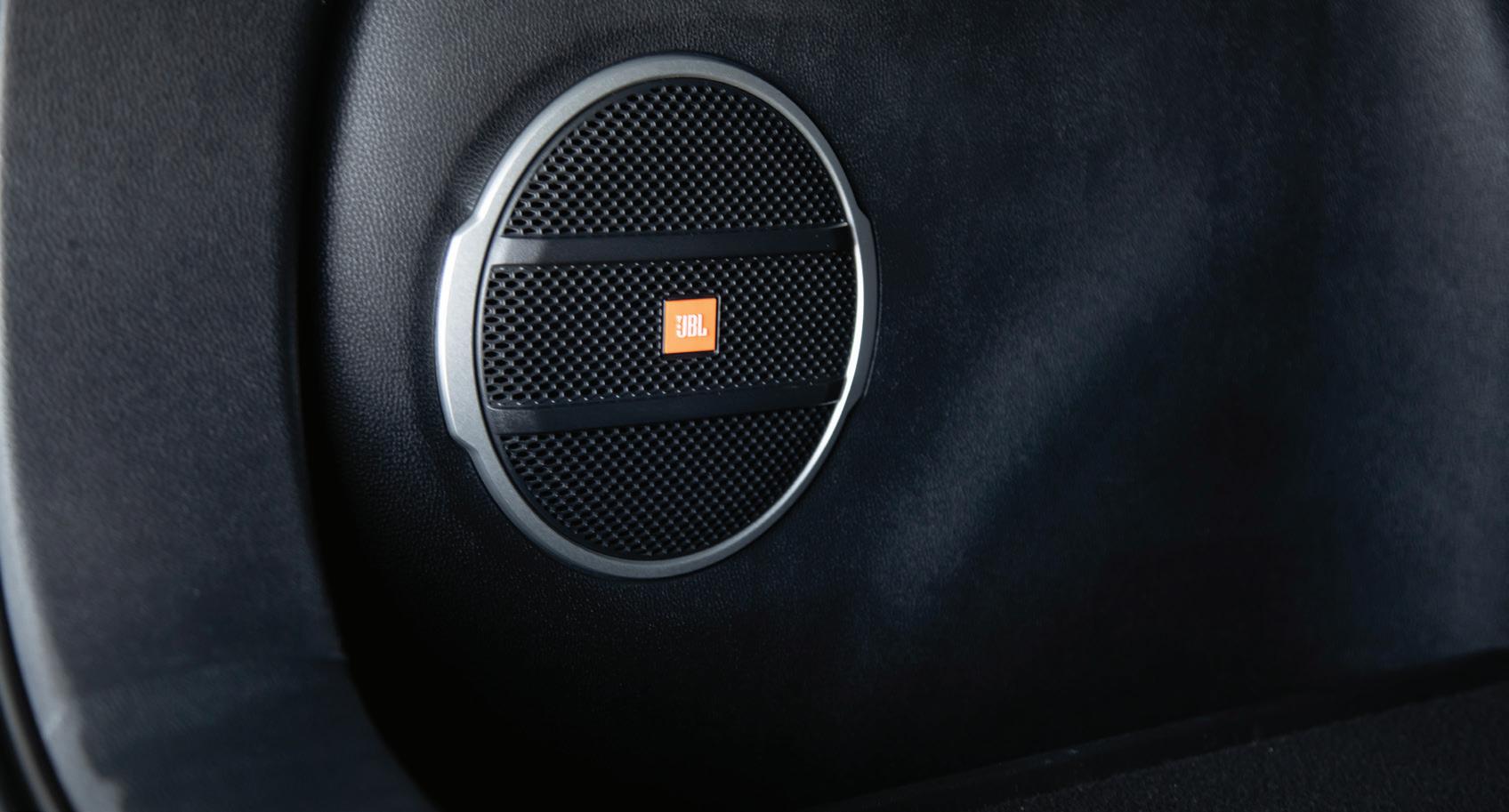
When JBL and Toyota first shook hands back in the mid 1990s, their goal was simple: to bring uncompromised audio into a personal and intimate space many of us inhabit daily, the interior of a car.
The first few years of the partnership were experimental. As Jeff Treige, VP Global Automotive at Harman Automotive, put it: "The relationship started as peers versus a customer-supplier type of relationship." It wasn’t a check box on a spec sheet. Instead, it felt personal, rooted in a shared love for sound.
That early work bore fruit in 1998, with the first JBL-equipped Toyota models. "We had rolled out in the first two vehicles in '98, the Aristo, then the Harrier, and then we started to expand into North America. By 2006, we were pretty much in every Toyota vehicle in North America," says Treige.
Over those first two decades, the growth was methodical and linear. Engineers on both sides painstakingly refined speaker placement, audio tuning, and system integration so that every audio component felt like a native part of the vehicle.
WHEN GROWTH WENT EXPONENTIAL: THE 2012 TURNING POINT
Then around 2012, there was an inflection point. The demand for branded audio inside cars began to surge, not because of one new model or one lucky break, but because of broader changes: in how people listen to music, how they value the audio experience, and how they use their cars.
As global consumer demand for more dynamic in-car listening ex-
periences grew, Toyota recognized an opportunity to bring premium audio to drivers everywhere. Expanding JBL premium audio into markets around the world made high-quality sound accessible on a global scale, meeting the growing expectation that a great vehicle should also come with great audio.
"JBL will always be an emotional brand with a strong impact that people can resonate with. To achieve that we doubled down on the experience of sound in the car. Punchy bass, crisp highs...bringing the JBL sound on the road," says Rishi Daftuar, Chief Engineer JBL at Harman Automotive. “And from a technical standpoint, we elevated our automotive speakers and introduced boosted rail amplifiers to deliver greater dynamics, a signature of JBL sound.”
ENGINEERING PLUS EMPATHY: BUILDING SOUND THAT BELONGS
What sets this partnership apart is not just timelines or market share, but the way JBL and Toyota committed early on to integrate audio as part of the vehicle design, not as an afterthought. Every speaker, every enclosure, every amplifier was carefully chosen, tuned, and placed to match the specific cabin acoustics.
Inside smaller cars, engineers worked around limited space and interior geometry. In larger SUVs and sedans, they calibrated powerful multi-speaker systems so sound envelops every passenger. The goal was not clinical studio reproduction, but something more personal: a sound that connects with listeners emotionally and physically, the kind you feel, not just hear.
"Our process incudes Toyota’s chief engineers listening to music
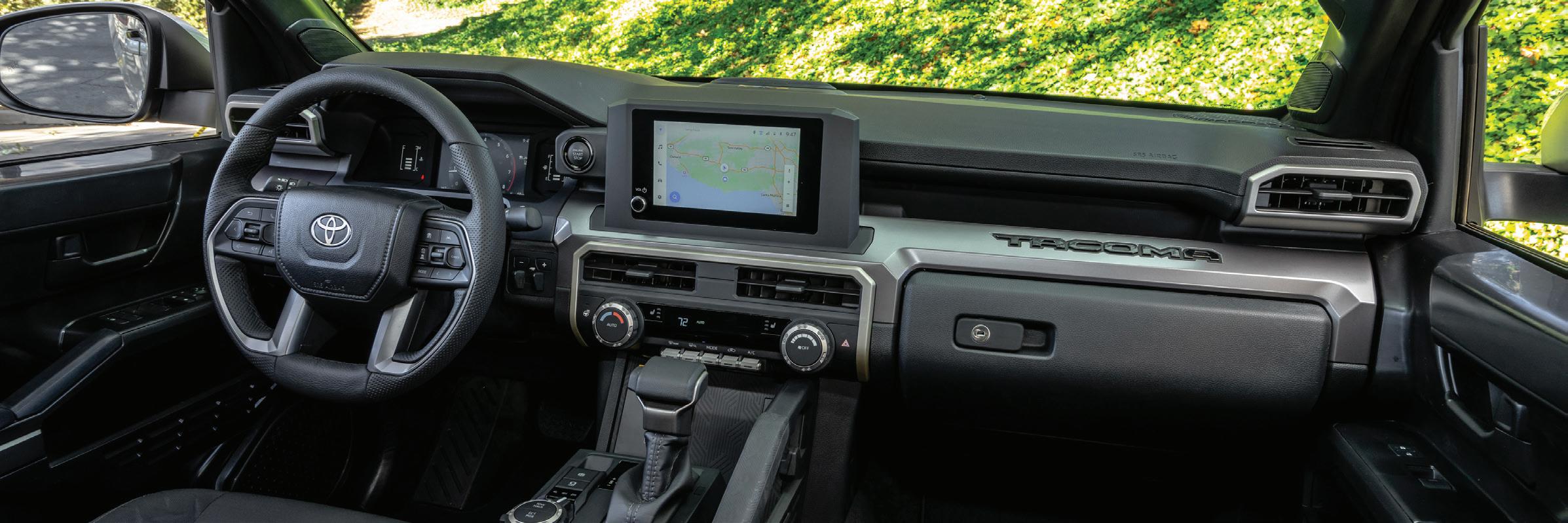
in the cars. Their emotional responses always prove how much JBL sound matters in these intimate spaces,” Treige recalls.
Today, millions of people use Toyota vehicles equipped with JBL systems. For many, those speakers deliver more than music. They soundtrack big life moments, road trip playlists, late-night phone calls, early morning commutes, and long drives to new homes. In those moments, the car becomes a shelter, and the speakers become companions.
"JBL in a car creates this cocoon of peace in some ways. It's exciting, and it gets you ready, something that you seek, and you want to enjoy," says Kyle Roche, Director of Brand Management at Harman Automotive. "People connect with the brand in a meaningful way. It makes your life easier, your phone calls clear, it's there to help."
And for many, the car audio becomes deeply personal. For some, it’s memories of soothing their babies to sleep while driving around the block with ambient music, for others it’s a soundtrack and a catalogue of the most important memories in their lives; the drive to a once-in-a-lifetime concert, the first road trip or car karaoke on the daily commute to work. It brings back memories. It amplifies moments. It connects you to the world outside and the world within, all with a simple turn of a knob or tap on a screen.
The branded audio movement in cars didn’t start with a big fanfare. It started quietly, with people who loved music and had a vision. Over decades, that quietly grew into a global standard.
Today, JBL and Toyota continue to collaborate, evolving technology, tuning sound for new cabin layouts, and blending comfort, clarity, and emotion in every drive. As cars become more connected and more central to daily life, the power of sound only grows stronger.
The story of JBL and Toyota is a testament to what happens when engineering meets empathy, when audio meets architecture, and when two teams commit to delighting people, not just with products, but with experiences.
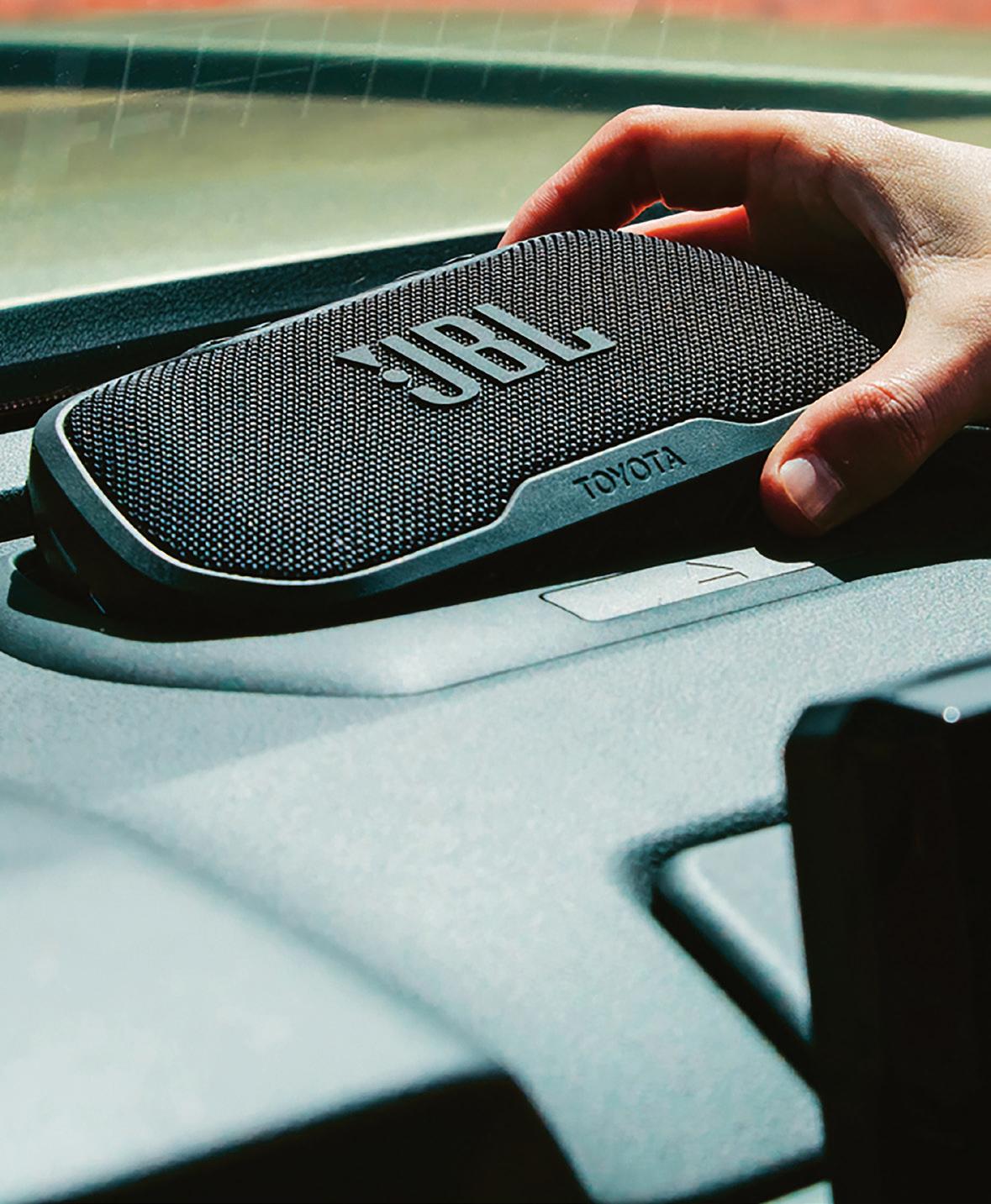
“THE RELATIONSHIP STARTED AS PEERS RATHER THAN A TYPICAL CUSTOMER SUPPLIER RELATIONSHIP AND FROM THERE WE RELENTLESSLY DEVELOPED AND DELIVERED BESTIN-CLASS AUDIO SYSTEMS.”
- JEFF TREIGE

Meet the superfan who meticulously brings vintage JBL speakers back to life, and shares his hacks with the world driven by the passion for what he loves.
If he ever has a minute to spare, you can bet that JBL enthusiast Charles Murdoch will be spending that time refurbishing his collection or fixing up and fine-tuning his classic JBL systems from his shop just outside in Montreal, Quebec, Canada.
The full-time cabinet maker has dedicated more than 25 years of his life to collecting and learning about the legacy of JBL and finding new ways to keep that legacy alive, whether that be through refurbishing components or working on large legacy systems and installations around the world.
His current JBL projects are a pair of iconic JBL 4345 for a local pub called Grace’s not far from his shop in Vaudreuil, Quebec; as well as a bespoke JBL system in Detroit, Michigan. He explains that these systems are designed with the Japanese Kissa aesthetic that have contributed to a resurgence in interest in JBL legacy products around the world.
This newest hi-fi bar trend has been growing, putting on show the best of JBL components to the masses. “To be installing these iconic systems and seeing so much interest in JBL history while JBL celebrates 80 years just feels right, it's a testament to the legacy. This is so much more than just gear. It’s history. When I work with vintage JBL systems and components it's the engineers that are behind these phenomenal products that I share a connection with. I feel like I’m giving these components a second life and keeping the JBL spirit of these amazing engineers alive,” he says passionately from his living room
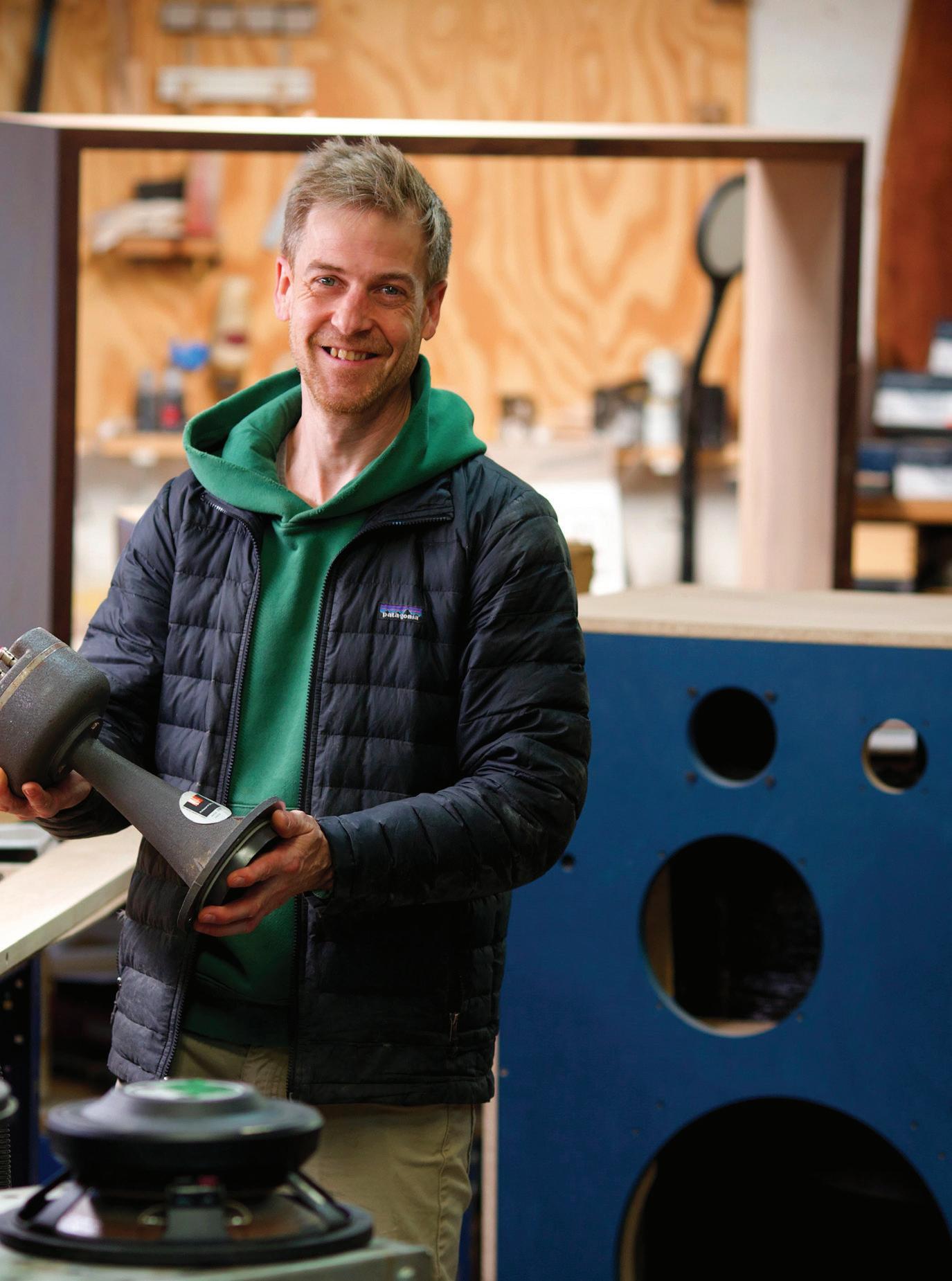
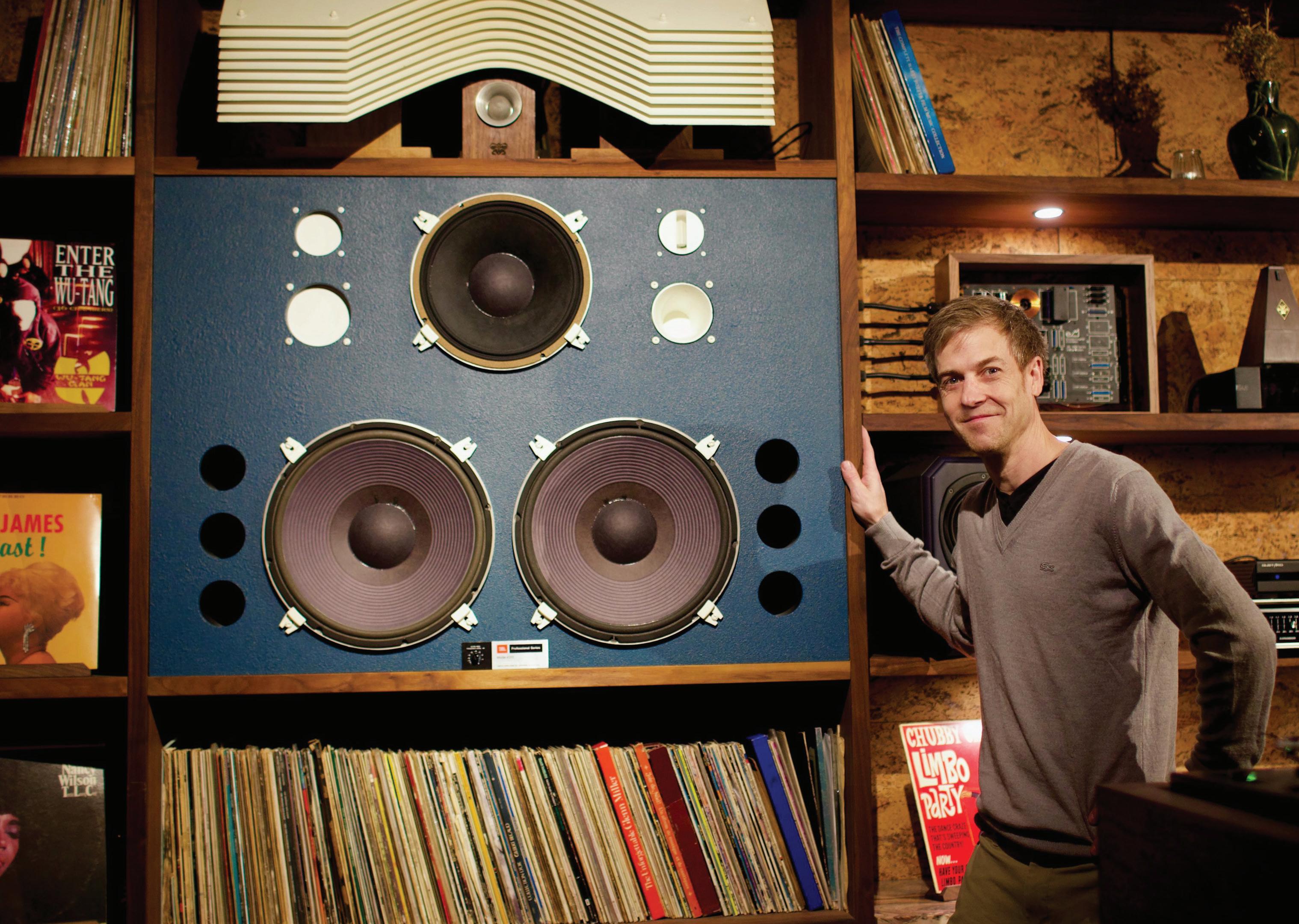
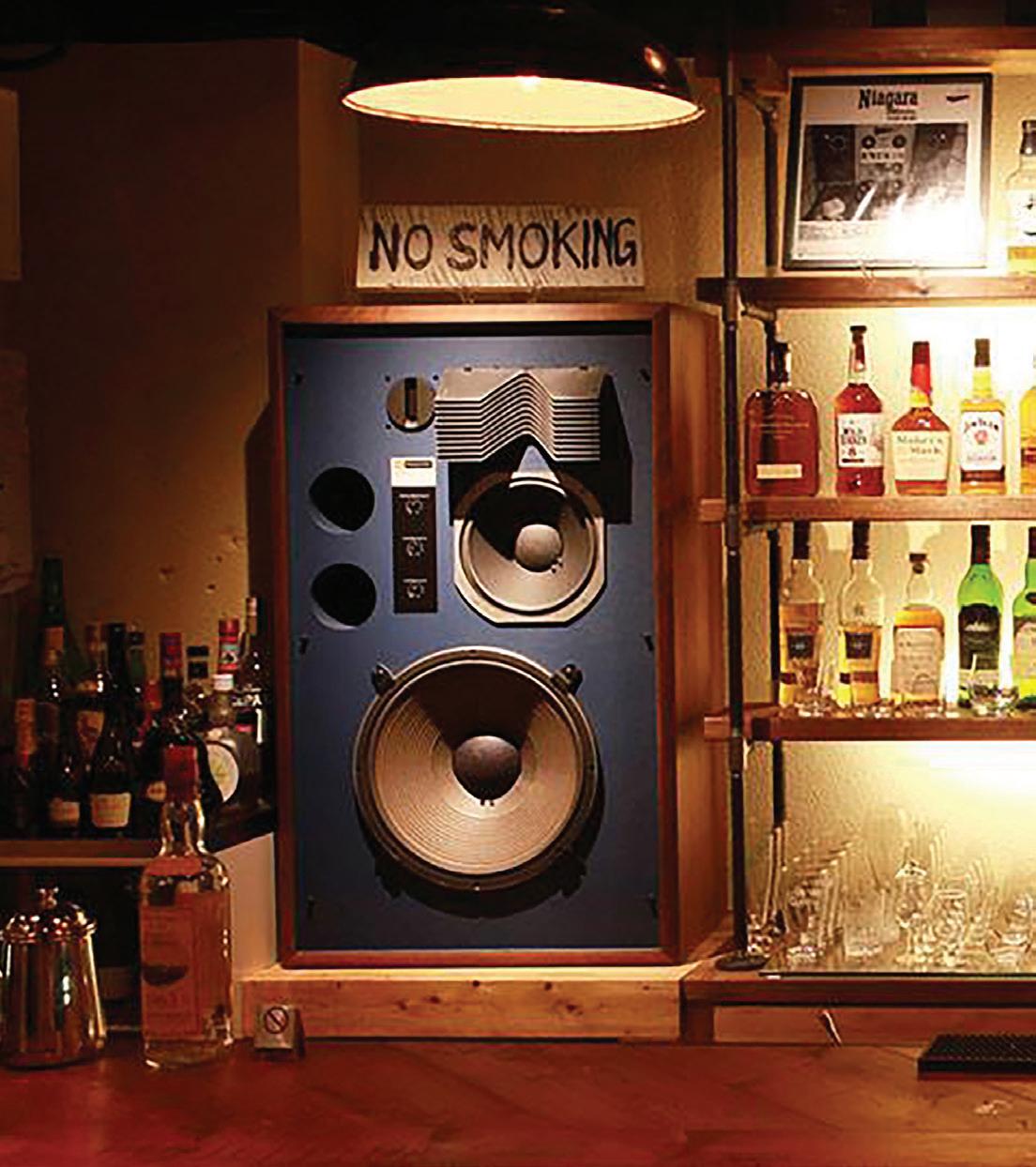
“JBL HAS BEEN A PASSION FOR MORE THAN HALF OF MY LIFE, AND I’VE ONLY JUST SCRATCHED THE SURFACE IN TERMS OF KNOWLEDGE AND UNDERSTANDING.”
adorned with large JBL horns and speakers. For Murdoch, vintage JBL information and experience is not something to keep to himself. That’s why he’s spent years contributing online to the burgeoning community of people collecting vintage speakers and offering advice on restoring and repairing them to bring them back to their best. “It’s about always trying to be a good resource and steward for a global community of die-hard fans, collectors, and tinkerers. If I can help someone with their project with my experience, I share it. Someone else may be stuck where I was and helping them with the right info makes the community stronger.”
Looking ahead, Murdoch sees the information contained online within sites like the Lansing Heritage forum and other social media platforms as a bridge to the future – a place where the next generation of builders, collectors, and music lovers can learn, ask questions, and carry the legacy forward. As speaker designs evolve and technology shifts, he believes the heart of JBL will stay the same – precise, standout engineering, made to move people. “The gear might change, but the feeling doesn’t. That’s what we’re really preserving.”
In the meantime, he’s planning on doing what he’s always done – getting ready for the next custom installations, whether that be through collecting parts or soldering and sanding. His goal is to be able to keep sharing tips online while continuing to learn and improve – anything it takes to ensure the legacy doesn’t just live in a timeline, but in living rooms, bars and clubs, or online in the forums.
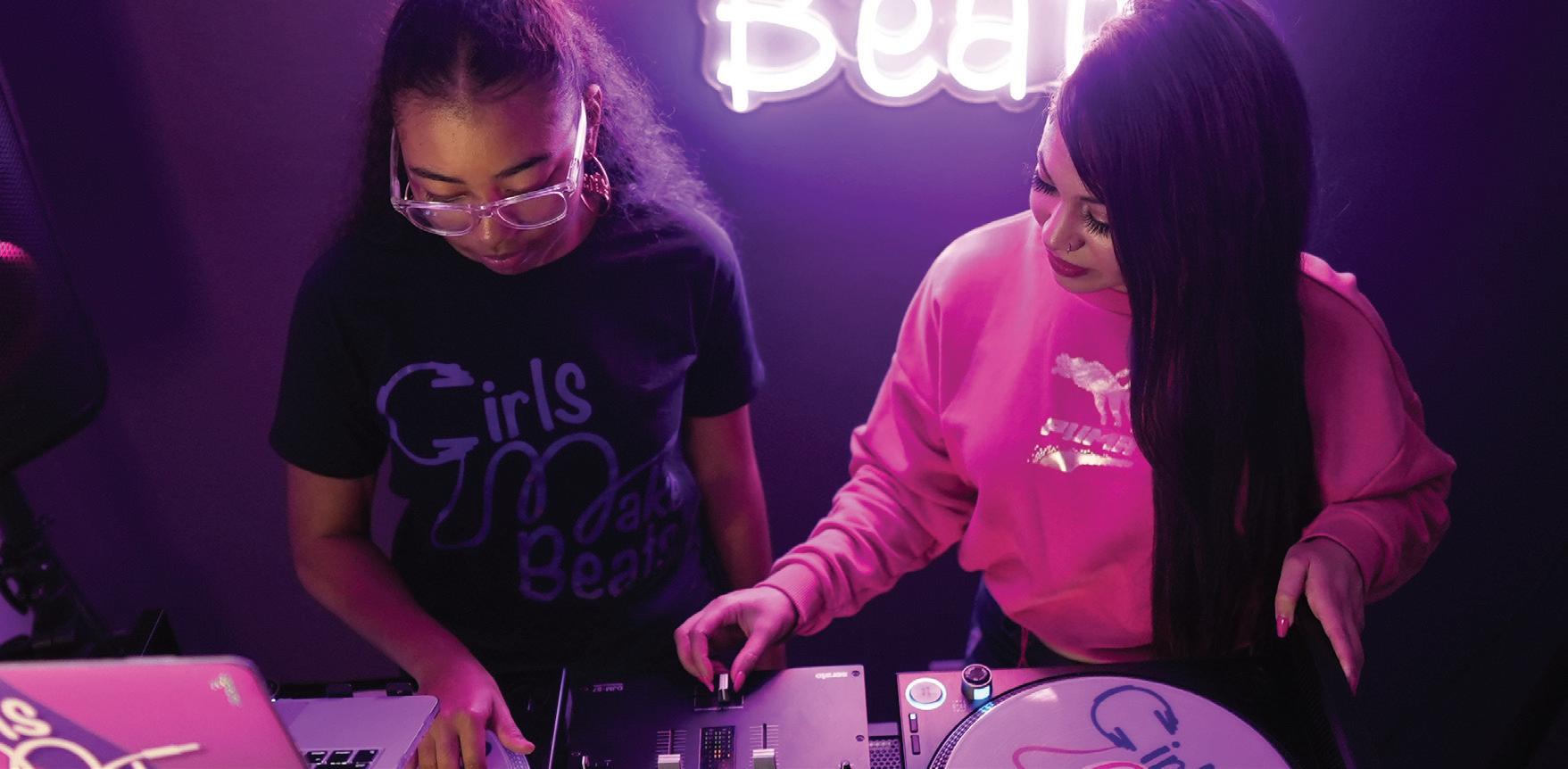
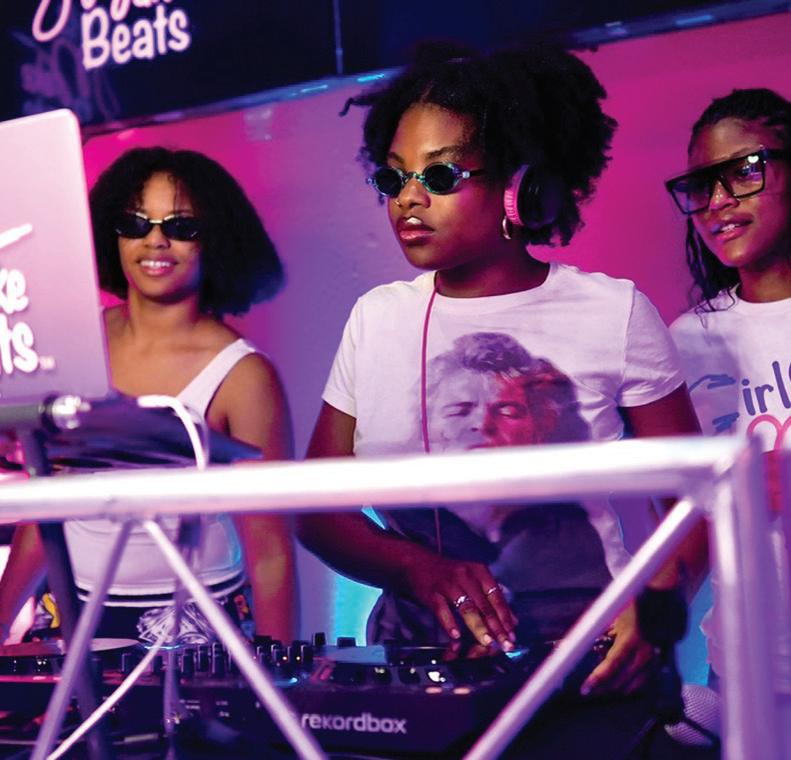
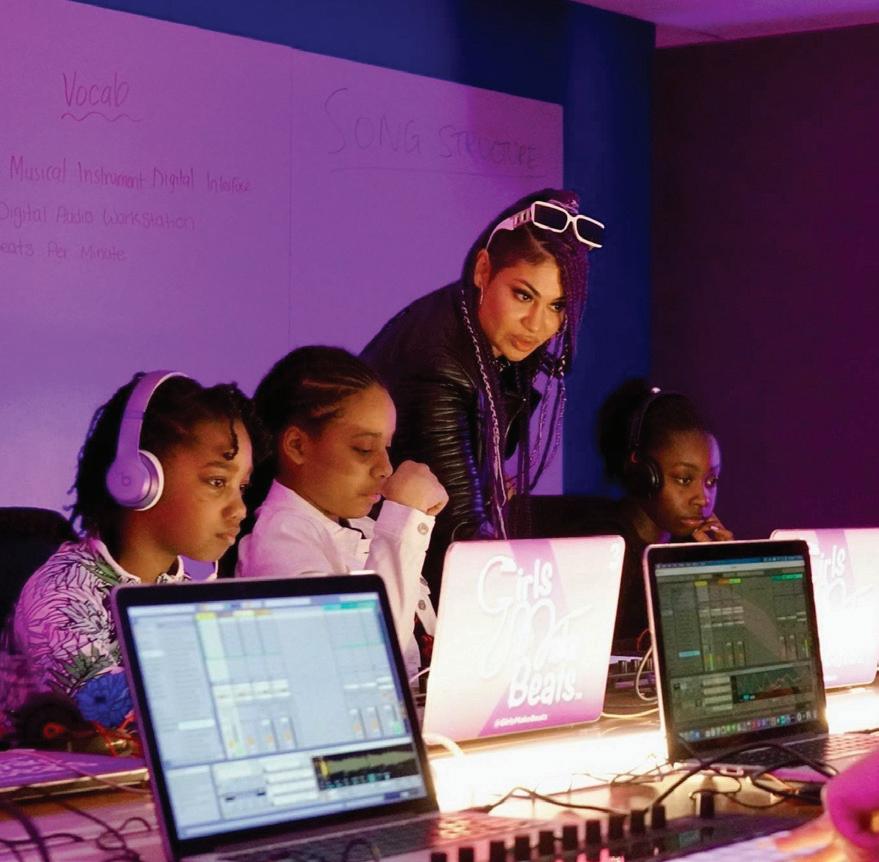
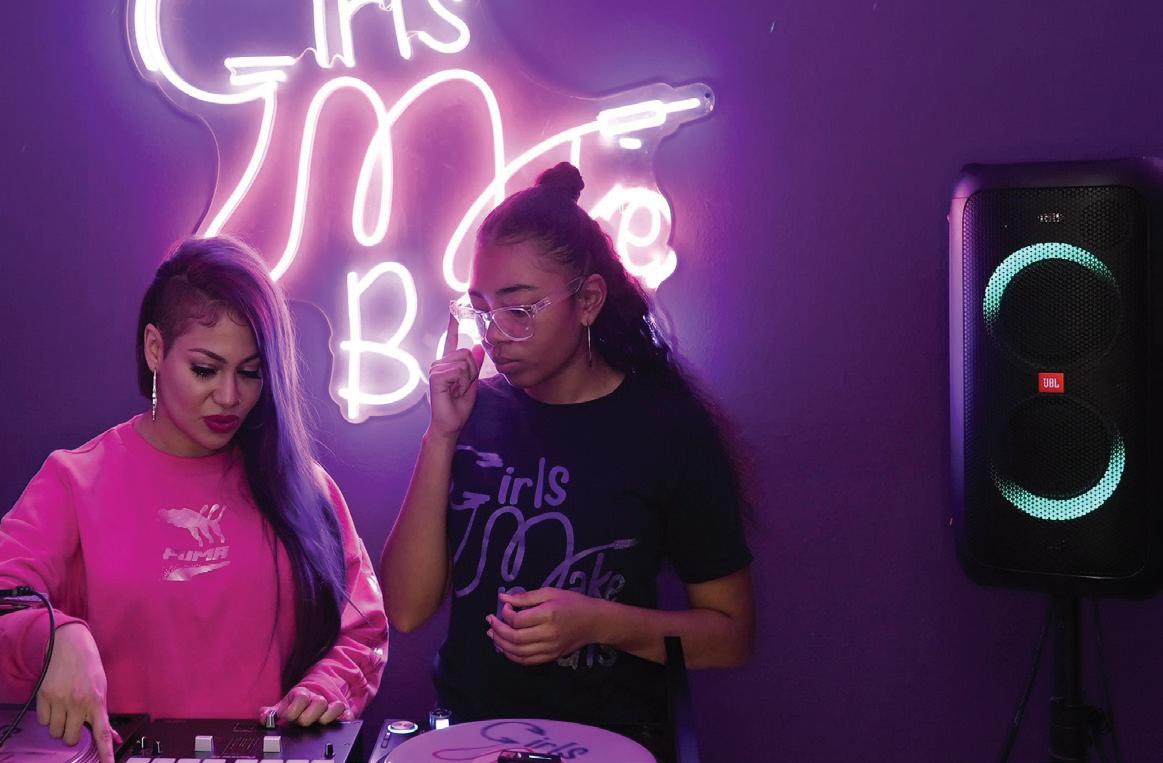
She learned how to use production software, engineered her own tracks, and now has a discography that includes collaborations with artists like DJ Khaled, Rick Ross and French Montana. Along the way, she realized that no one should have to navigate that path alone.
That realization inspired her to create Girls Make Beats (GMB) in 2012. What started as a passion project has become a movement, giving young girls aged 5 to 17 access to hands-on training, mentorship and real industry experience in music production, DJing and audio engineering.
Three-quarters of the girls GMB serves come from historically underrepresented groups, including Black, Lantinx and low-income households – many who wouldn’t otherwise have this kind of opportunity. GMB equips them with the technical skills, a creative community, and the confidence to find their place in the music industry.
“When I was starting out, there was no space like this,” she says. “GMB had to exist.”
TURNING UP THE VOLUME
In the early days, Miranda made GMB work with limited resources. She had the passion but not always the equipment or support needed to grow. Then she met Becki Barabas from JBL. That meeting shifted everything.
“She just said, ‘Whatever you need, we’re here,” Miranda recalls. “And she meant it.”
That moment marked the beginning of a powerful partnership. JBL didn’t stop at encouragement. It provided microphones, headphones and studio monitors so GMB students could use
Tiffany
Miranda
didn’t set
out to build a nonprofit. She wanted to make music. As a recording artist, producer and engineer, she pushed her way into an industry that rarely made space for women, especially to women of color.
real professional equipment. For these girls, the chance to work with high-quality gear changed how they saw themselves and their potential.
“The JBL support goes deeper than your average brand partnership,” Miranda says. “Our girls hear the difference. That motivates them to keep creating.”
Kaiya Nyasha is one of many girls who found their path through GMB. She came in as a quiet teen who loved music but didn’t know where to start. Through GMB’s workshops, performances and mentorship, she developed her skills and her confidence.
Today, she works in creative and A&R at Darkroom Records home to talents such as Billie Eilish and John Summit.
“She’s proof that access and belief can change everything,” says Miranda. “She’s not just mixing tracks. She’s showing what’s possible.”
“OUR GIRLS HEAR THE DIFFERENCE. THAT MOTIVATES THEM TO KEEP CREATING.”
Miranda plans to take GMB worldwide. “Music is the international language,” she says. “GMB should be international too.”
That vision connects directly with JBL’s own purpose. Through programs like the JBL Music Academy, the brand supports emerging talent and gives them access to tools, training and opportunities. GMB strengthens that pipeline by reaching young creators early and helping them grow.
Miranda built GMB because she saw a gap and chose to fill it. JBL supports that mission by showing up and backing it with action. Together, they’re helping change who gets to make music and what the future of the industry looks like.
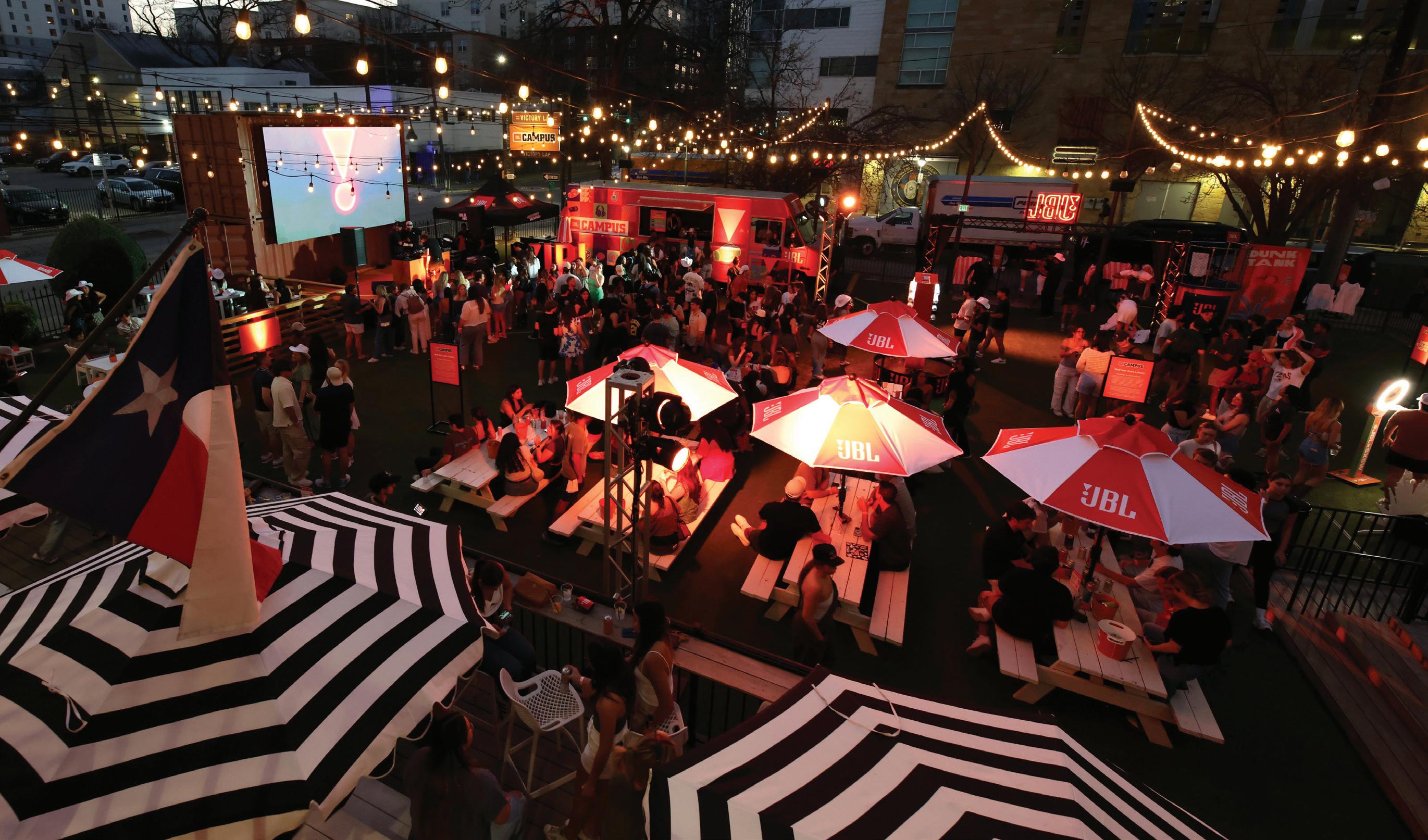
JBL DOES MORE THAN DELIVER GREAT SOUND. THROUGH THE JBL X MARTIN GARRIX MUSIC ACADEMY AND JBL CAMPUS, IT ACTIVELY BUILDS PLATFORMS THAT SHAPE MUSIC, YOUTH CULTURE AND COMMUNITY. THESE PROGRAMS STRENGTHEN JBL’S TOUCHPOINTS WORLDWIDE, DEEPEN CONNECTIONS WITH YOUNG AUDIENCES, AND REINFORCE WHAT THE BRAND STANDS FOR: CREATIVITY, PURPOSE AND MOMENTUM.
ting. This trust enhances JBL’s brand credibility and proves its commitment to culture.
The JBL Music Academy, created with Martin Garrix, selects 30 emerging artists each year and invites them to STMPD Studios in Amsterdam. Over four days, participants write, record and refine their music with expert guidance. They build performance skills, strengthen their personal brand, and learn how to manage contracts, publishing, streaming and promotion.
hort of artists in Amsterdam. While details are in development, the core structure will remain. The program will include four days of hands-on training, global networking andues to position JBL at the heart of emerging music culture and builds authentic relationships that scale beyond the studio.
The JBL Campus program connects the brand with students across universities and colleges. It recruits student athletes, gamers, creators and culture drivers who bring JBL into everyday life. Campus ambassadors host events, create launch content, organize parties and represent JBL at key youth events.
Students who join the program receive early access to JBL products, exclusive discounts, event access and mentorship from the marketing team. They do more than wear the brand. They help shape it.
In the year ahead, JBL Campus will expand further. The team will expand its diverse mix of student leaders and creators further. Activations will increase on campus and online, with new formats focused on collaboration, storytelling and inclusion. These plans help JBL connect with the newest generation of customers where culture is made, not just where products are sold.
JBL FUNDS THE ENTIRE EXPERIENCE, INCLUDING TRAVEL, ACCOMMODATION AND PRODUCTION TIME. BY INVESTING EARLY IN INDEPENDENT ARTISTS, JBL BUILDS MEANINGFUL RELATIONSHIPS AND CREATES ADVOCATES WHO FEEL SEEN AND SUPPORTED. ALUMNI HAVE PERFORMED AT JBL BACKED FESTIVALS AND EVENTS, USING THE ACADEMY AS A LAUNCHPAD TO GROW THEIR CAREERS.

For staff, partners and new team members, JBL Music Academy and JBL Campus show how the brand leads through action. These programs create real impact by providing fresh content, trusted voices and long-term value. They demonstrate JBL’s commitment to authenticity, creativity and community. More importantly, they tell a story that everyone can stand behind. JBL does not wait for trends to happen, it helps shape them.

For more than eight decades, JBL hasn’t just made speakers. It has made statements. From the earliest 1920s Lansing speakers to today’s icons, JBL’s creative legacy tells the story of relentless innovation and unmistakable identity.
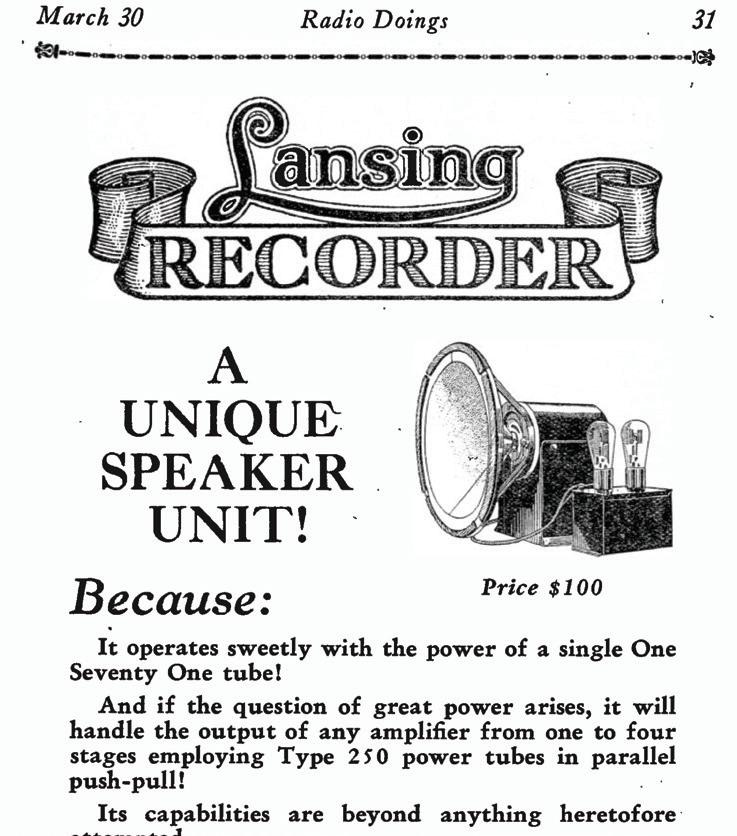
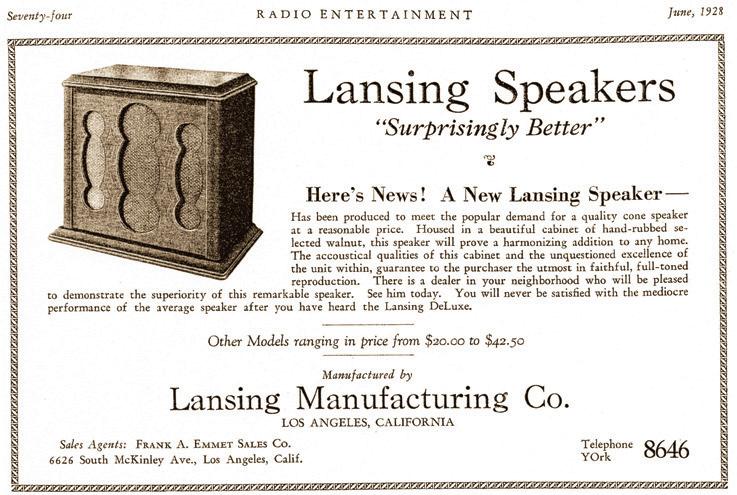
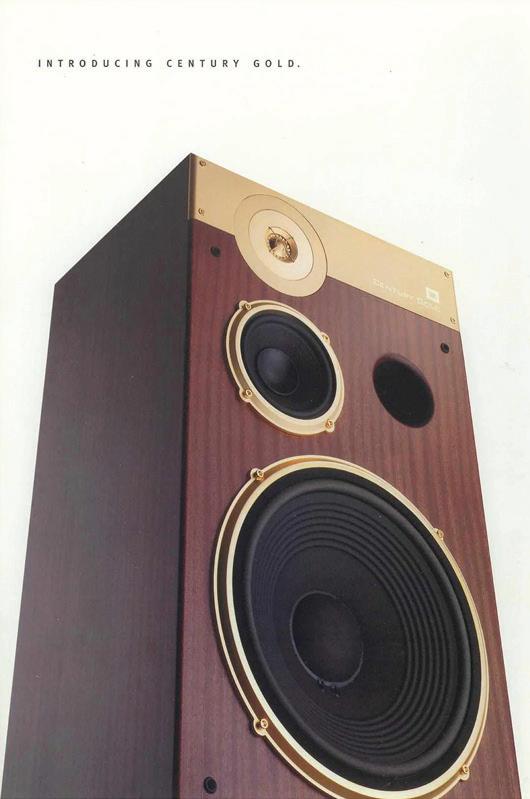
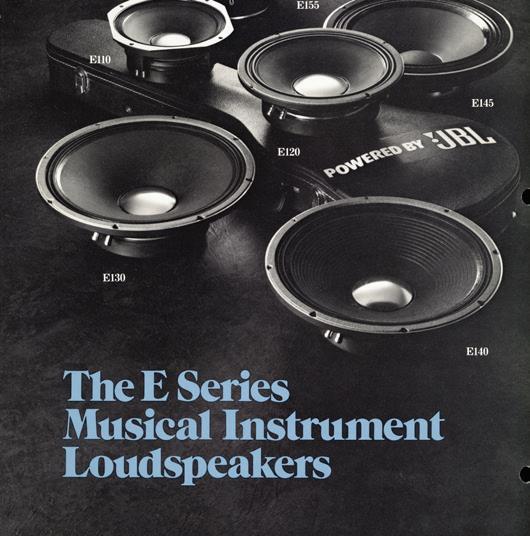
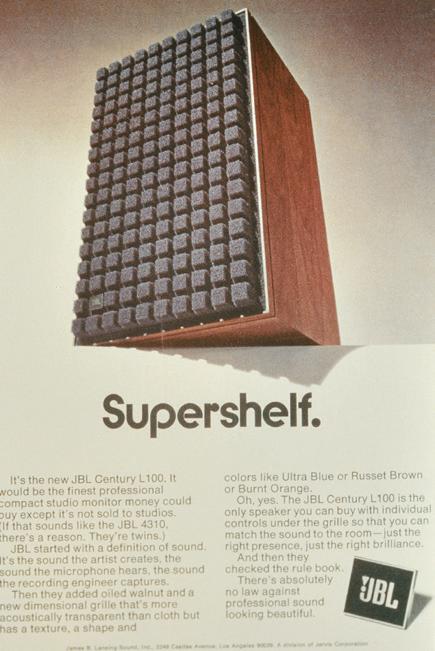
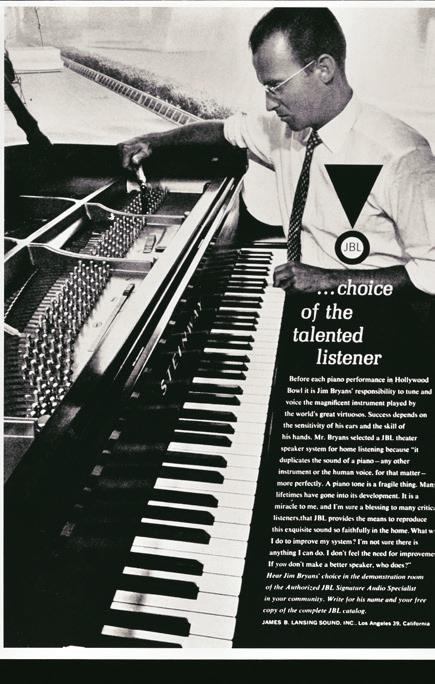
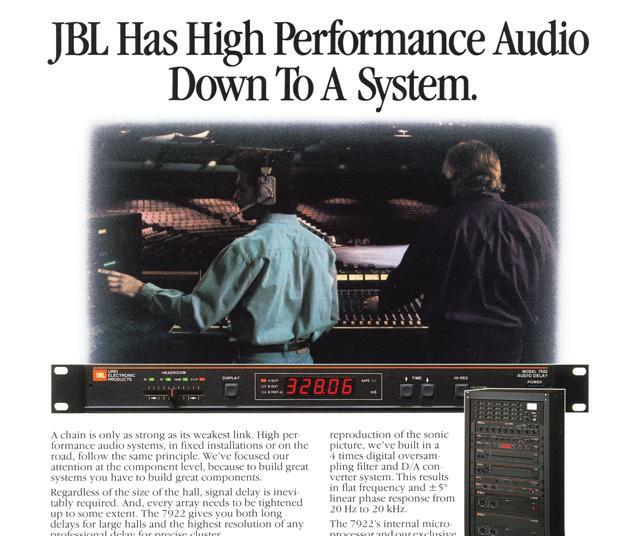

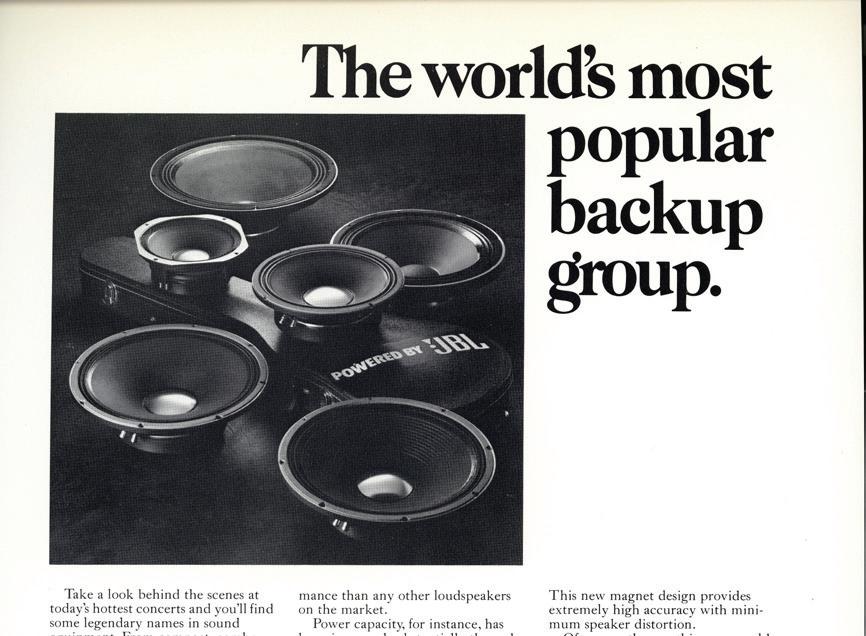
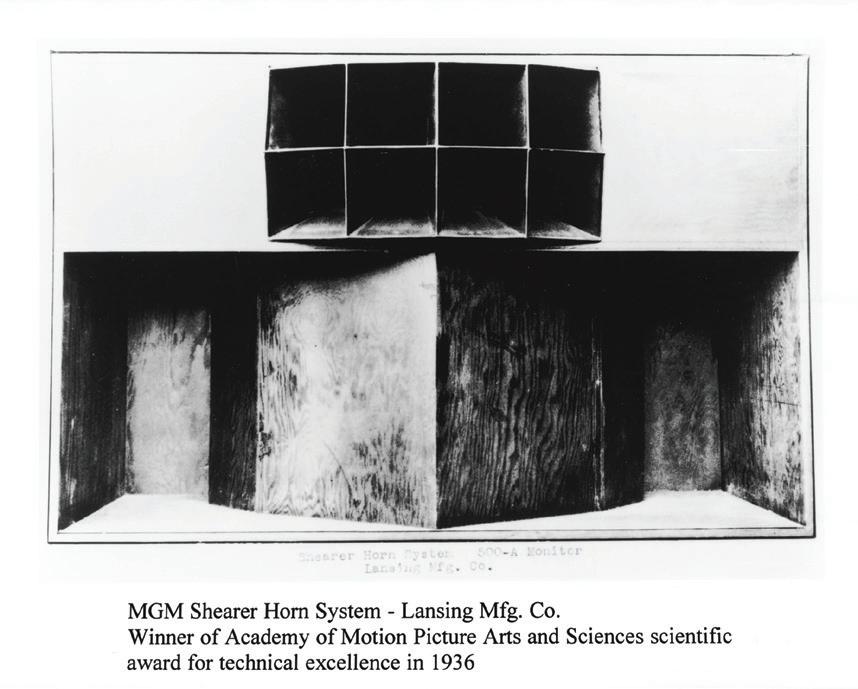

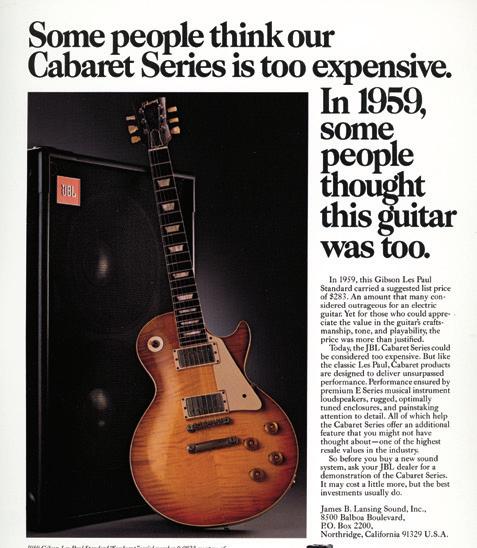
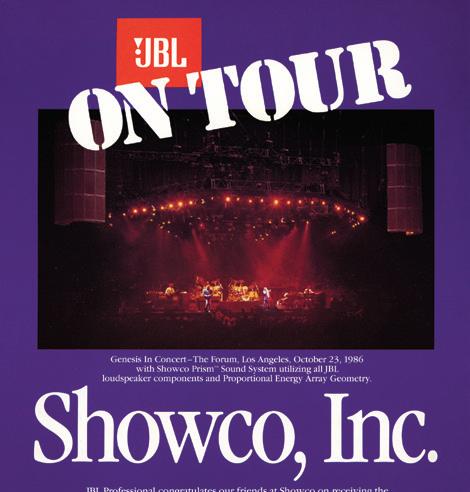
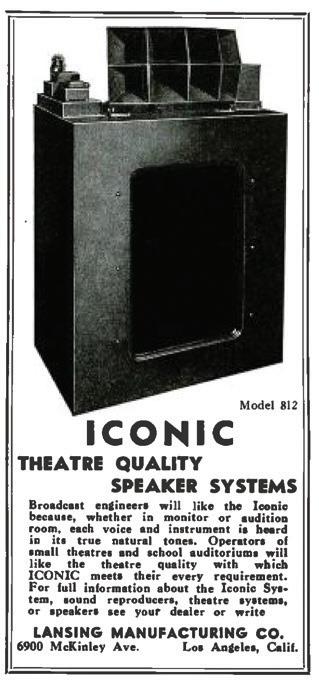
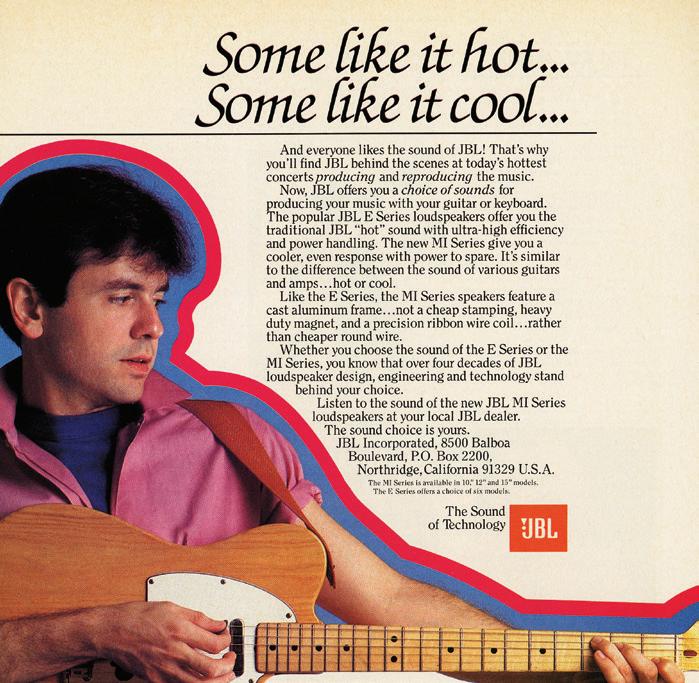

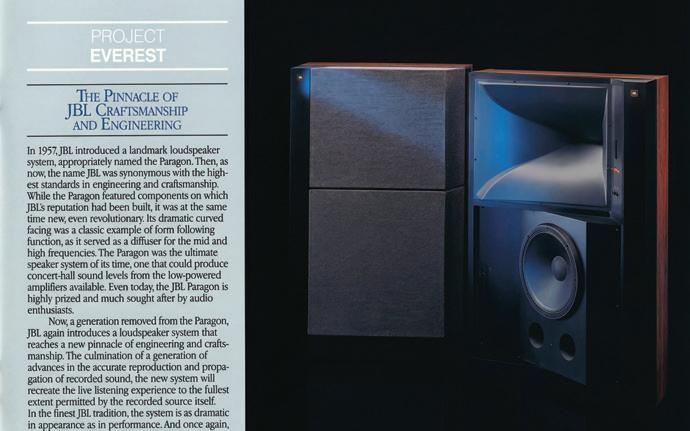
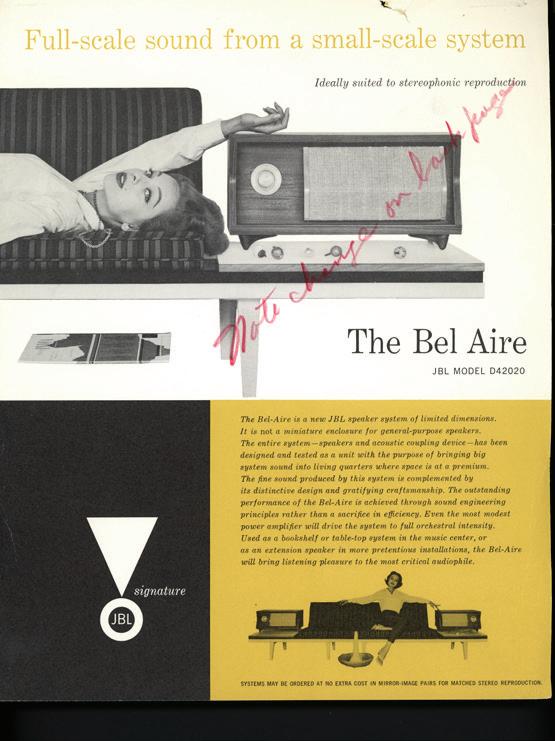
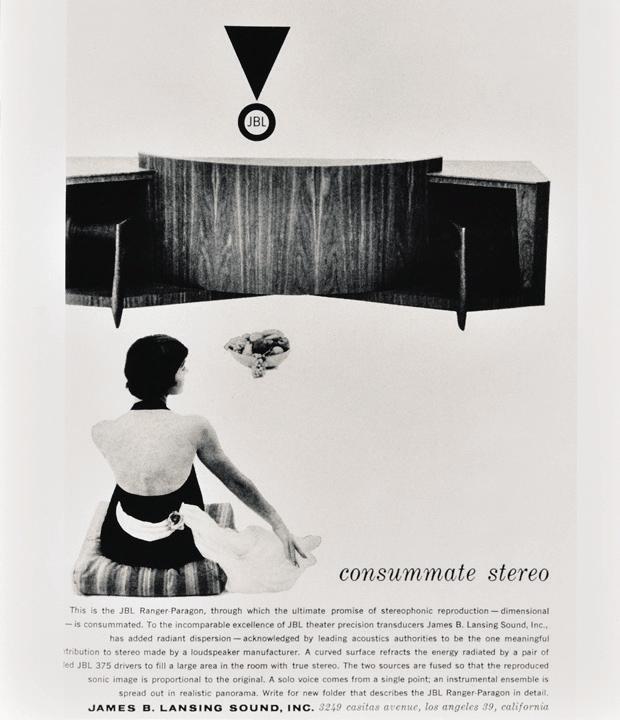
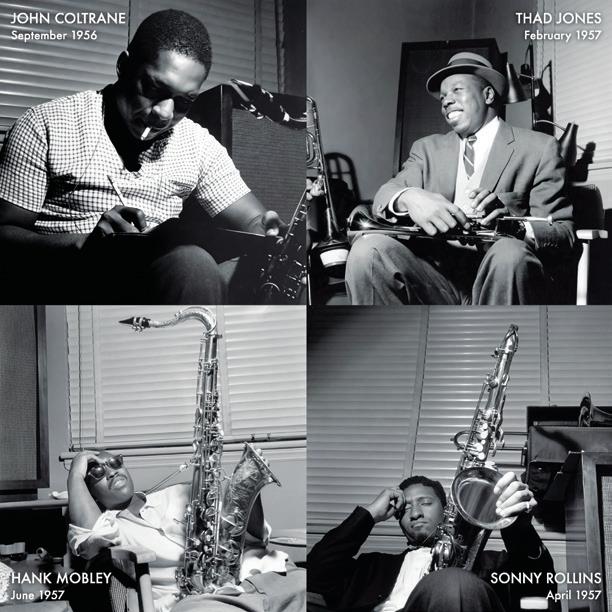
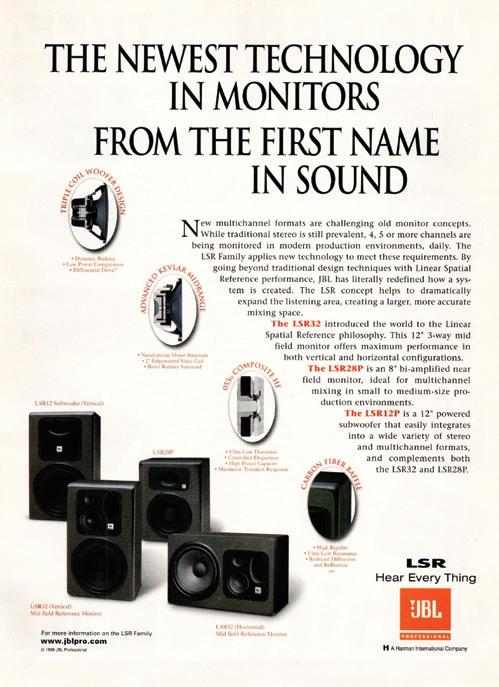
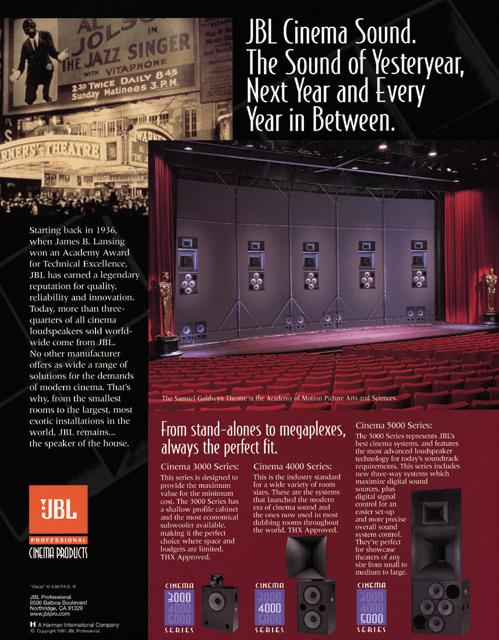
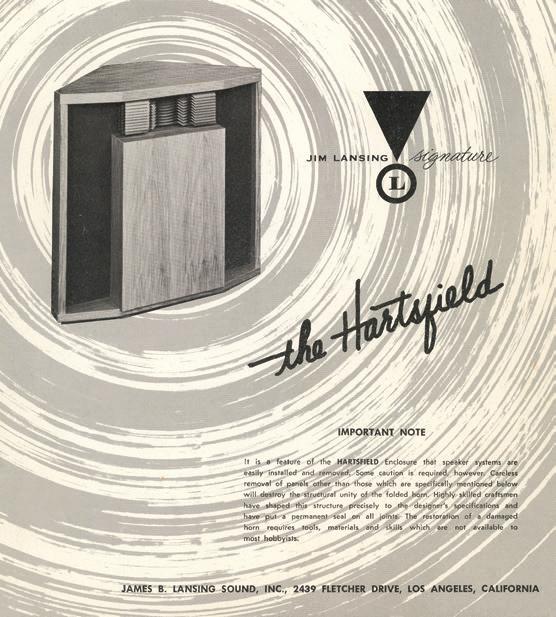
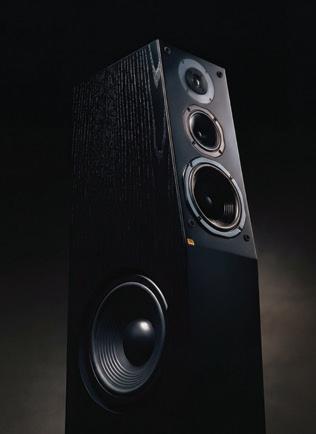
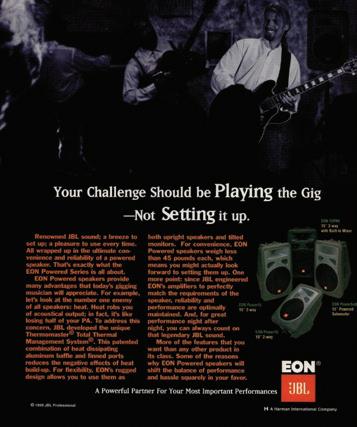
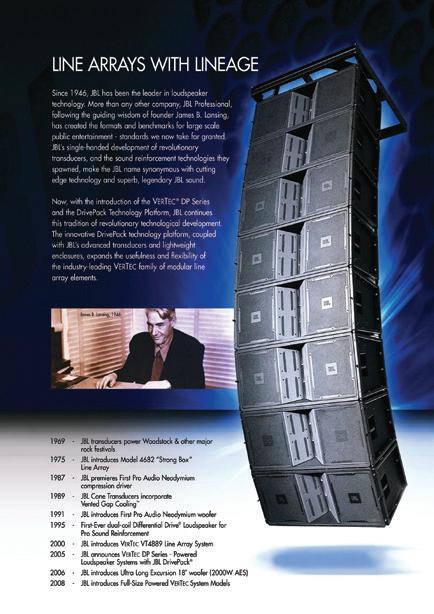
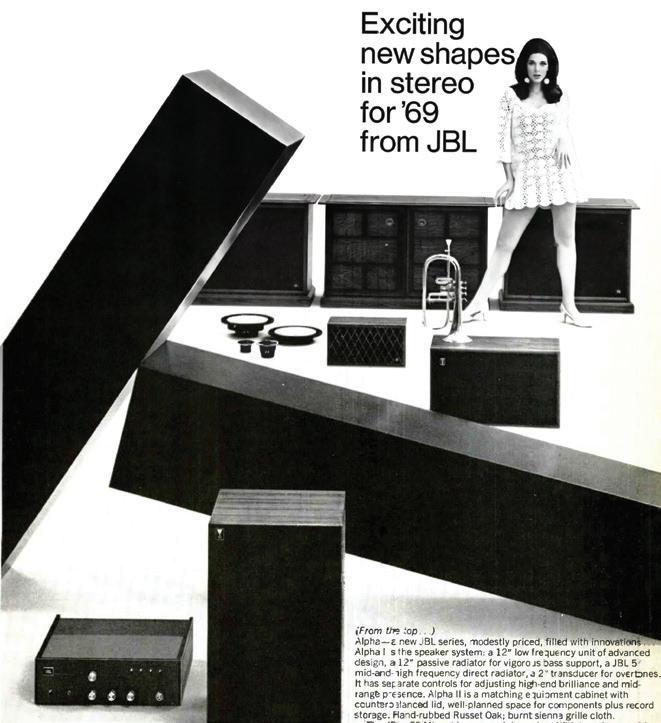
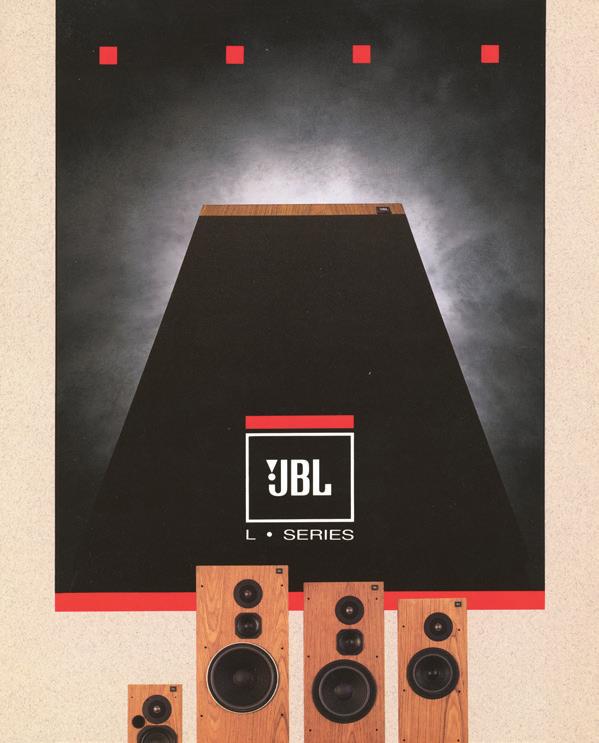
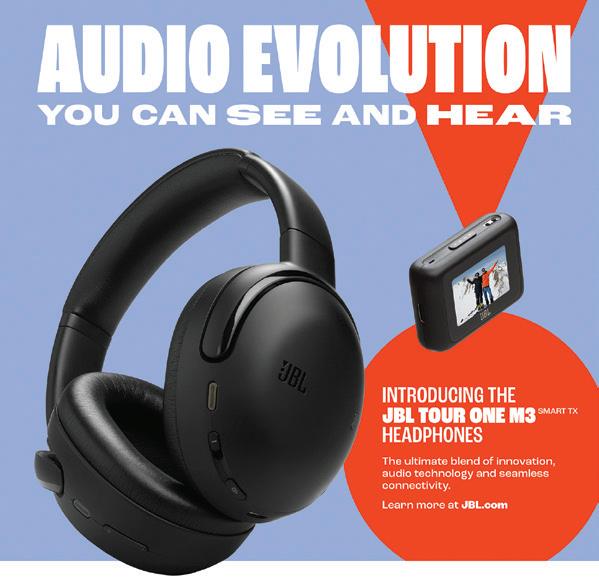
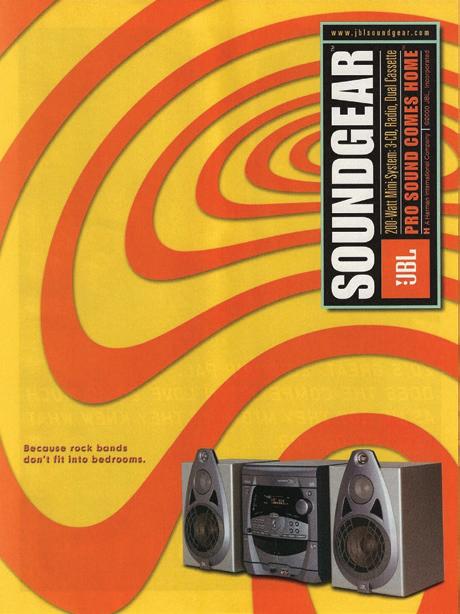
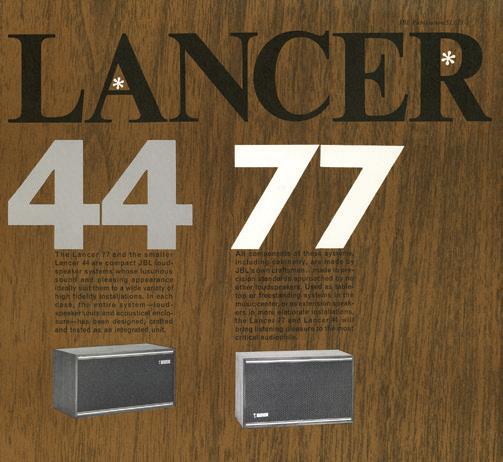
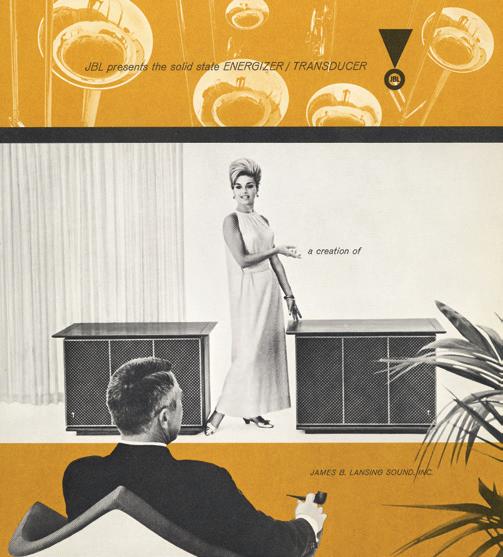
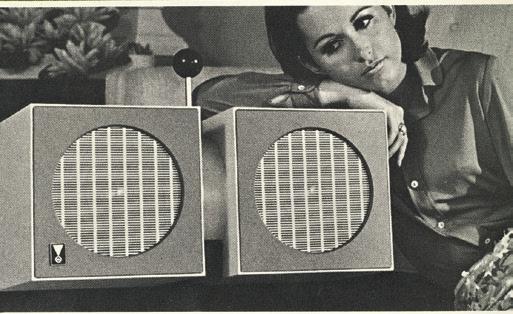
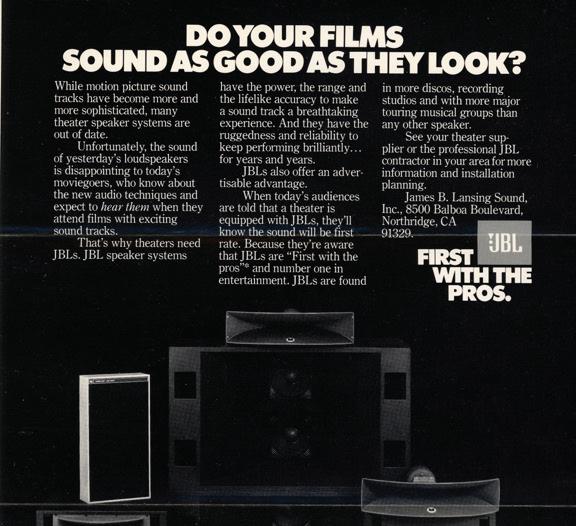
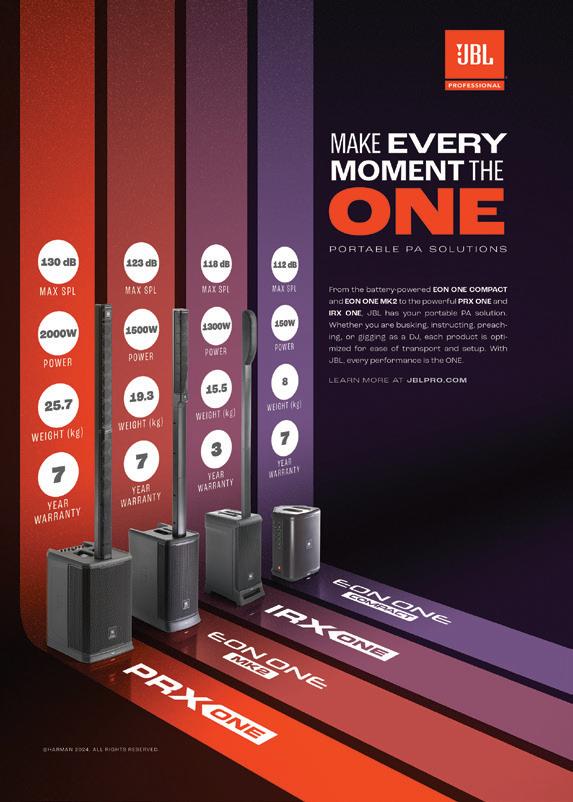
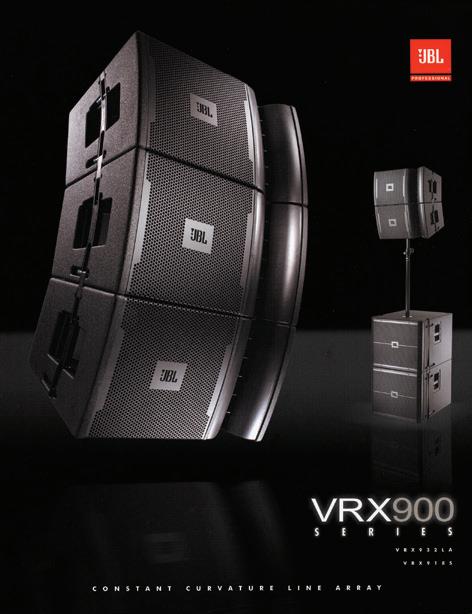
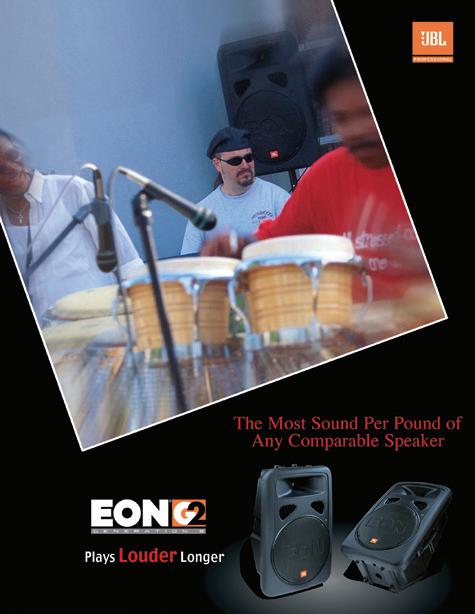
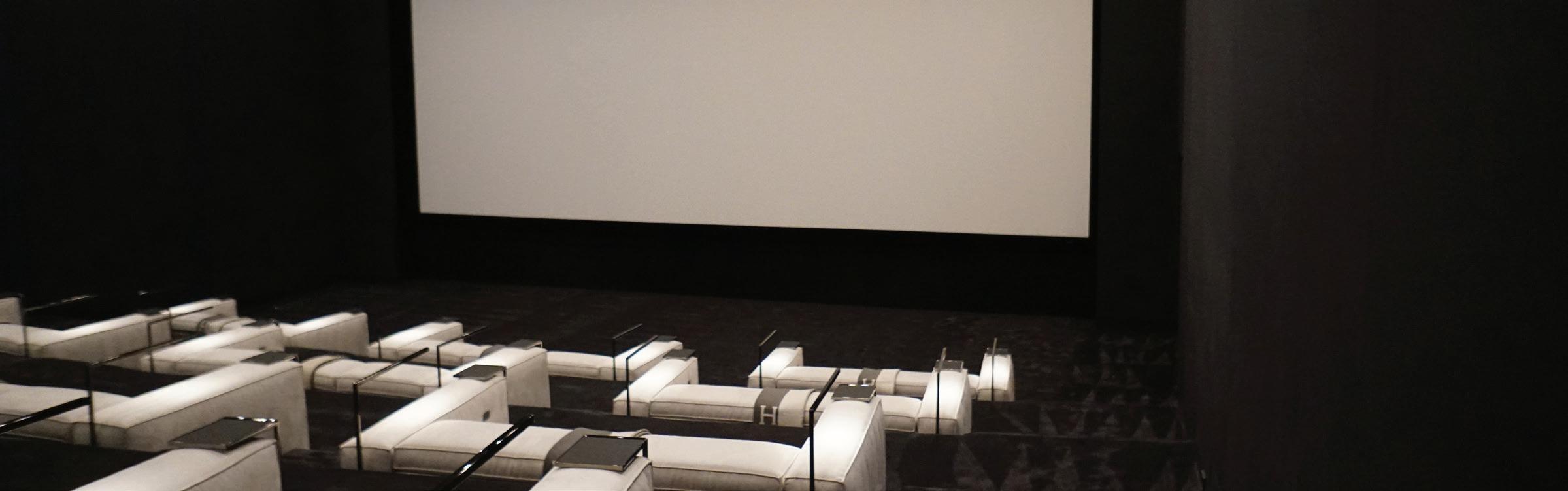
In the 1990s, JBL already led the cinema industry. Its speakers powered Hollywood studios, live stages, and blockbuster theaters. But a new challenge came knocking – at the front doors of A-list filmmakers, producers, and music legends. They didn’t want to just hear great sound in the movie studio screening rooms. They wanted it in their homes.
At JBL, the team saw this as more than just a product brief. It was a chance to break new ground in sound, to rise to the challenge, and to pioneer a system that pushed beyond what had been done before: the ultimate home cinema experience.
That spark led to JBL Synthesis – an ultra-luxury, customcalibrated home theater system that redefined what was possible in residential sound. It wasn’t just about recreating the cinema experience. It was about outclassing it.
"We had a transformative epiphany. To take our world-class, industry-leading audio technology that makes people laugh and cry in cinemas and music studios all over the world – and bring that into the home," says Jim Garrett, Senior Director of Product Strategy and Planning at JBL.
JBL Synthesis became the first THX-certified home cinema system in the world – a term most people knew only from movie intros at the time, but one that symbolized a seal of approval from the highest levels of audio engineering. The certification was just the start.
JBL Synthesis delivered full-system integration: loudspeakers, surround processors, amplification, and the room calibration tools to stitch it all together.
Once again, JBL was innovating and delivering the reality behind the idea that every home theater could deliver the same emotional, precise and powerful experience as a professional screening room. And each one was completely bespoke.
"I always describe it as a custom-tailored suit," says Garrett. "The system is designed around your space, your tastes, your entertainment habits, and then everything is calibrated for perfection."
Taking on the impossible
That level of personalization has taken JBL into some of the most audacious residential projects ever built. From circular rooms with no walls, to all-glass lofts and multi-use family lounges, JBL Synthesis has become the gold standard for ambitious home entertainment.
One standout install was in The One – a 105,000-square-foot Bel Air mega-mansion considered the largest private residence in the U.S. Among its bowling alleys and nightclub was a Dolby Atmos theater seating up to 30 people across seven rows, anchored by a JBL Synthesis system. "To deliver the right volume levels for that room, the designer had to go big, really big. It was on the scale of a commercial space, rather than residential. It was just massive," Garrett recalls.
Beyond sheer scale, the project also showcased JBL's design precision. From its 30-foot-wide screen to its custom-calibrated audio zones, every one of the seats was tuned for perfect playback. The result was a screening room fit not just for A-listers, but for actual premieres.
JBL Synthesis systems today range from $20,000 to $400,000+, and while early adopters were mostly Hollywood insiders, the audience has grown. Garrett compares it to buying a Ferrari: "Most people don't know the intricacies of a V12 engine, but they know how it feels when they drive one. It's the same with JBL Synthesis – you don't need to be an audio engineer to recognize you're experiencing the best."
Today, JBL designs for multi-purpose spaces, not just dedicated theaters. Clients want to watch live sports in the morning, stream concerts in the evening, and host friends for movie night all in the
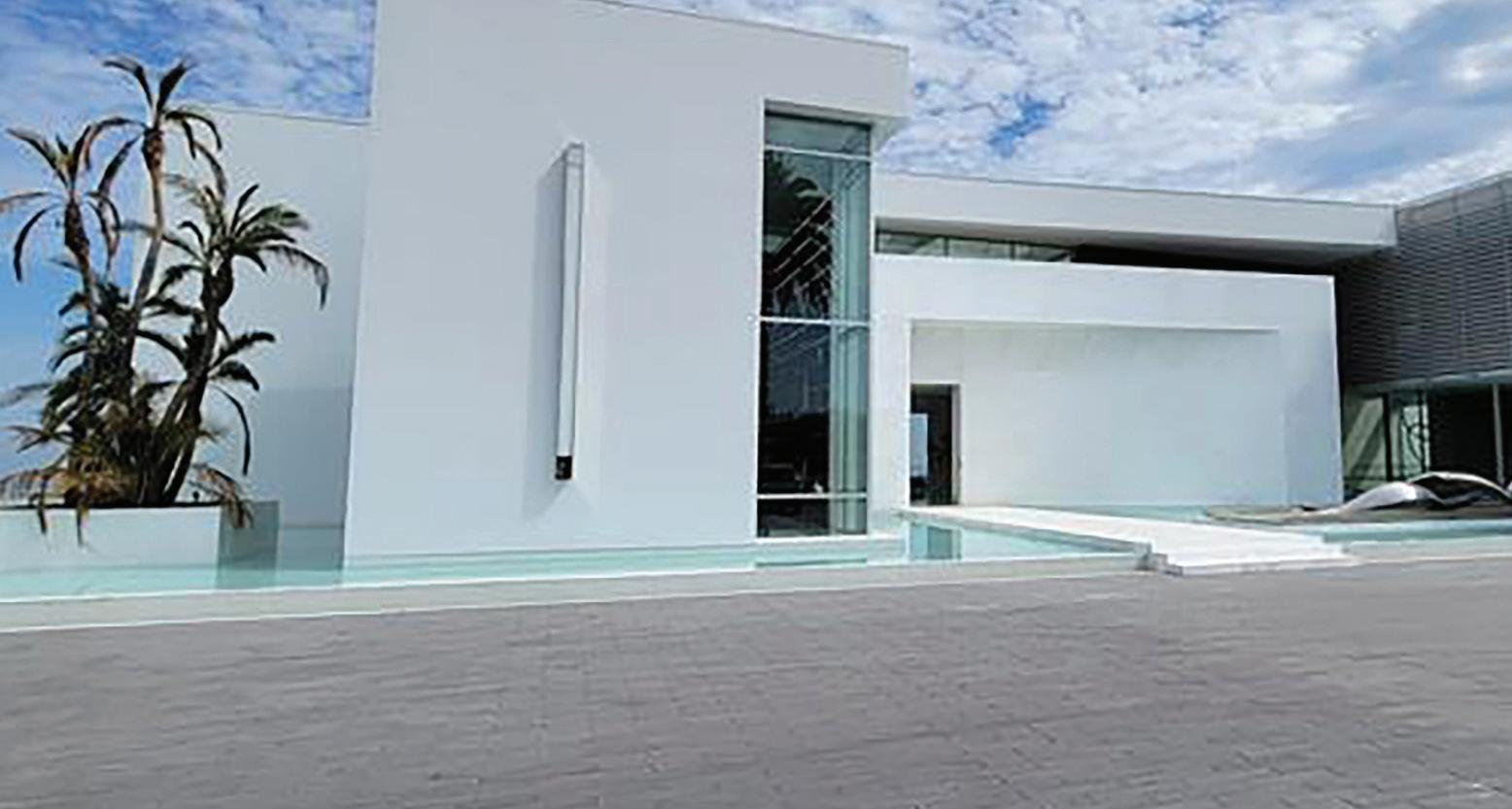
same room. During the pandemic, JBL Synthesis systems even stood in for live venues and cinemas.
And that versatility hasn’t diluted the wow factor. "You put someone in the seat for a demo and within minutes they’re blown away. They didn’t even know this level of performance was possible in a home," Garrett says.
JBL Synthesis stands apart in its engineering. It draws on decades of patented loudspeaker technologies, including compression drivers and High-Definition Imaging (HDI) waveguides, to deliver cinematic clarity, controlled directivity, and effortless dynamic range far beyond conventional systems. Its proprietary room calibration target curve, combined with a Certified Systems Program, ensures every installation is precisely tuned to its environment - across dedicated theaters, multi-purpose media rooms, and complex architectural spaces with unusual dimensions.
That scalability is central to the latest JBL Synthesis evolution. In 2026, the company unveiled 12 new products designed to expand configuration options across room sizes and performance levels, from more accessible reference systems to flagship, no-compromise installations. The modular architecture allows systems to be tailored to virtually any room shape or seating layout, while maintaining consistent tonal balance and immersive accuracy. From intimate media rooms to large-format private cinemas, JBL designs every detail to ensure the experience remains true to the artist’s or director’s intent.
JBL Synthesis is the kind of product that only a company like JBL could have built with unrivaled sound expertise. From the tools used to create music and film, to the sound systems used to share it with the world, and now to the private spaces where we experience it most intimately.
From blockbuster directors and sports legends to families building a dream home, JBL Synthesis offers more than performance - it offers immersion. For JBL, that’s the whole point. “We aren’t just installing speakers,” Garrett says. “We are engineering dreams.”
"THE SYSTEM IS DESIGNED AROUND YOUR SPACE, YOUR TASTES, YOUR ENTERTAINMENT HABITS, AND THEN EVERYTHING IS CALIBRATED FOR PERFECTION."
- Jim Garrett
Every JBL Synthesis system is built to exacting standards, but the real magic happens when it comes to life. That’s why Garrett and his team often start demos with music.
“We always love to start with something from a music clip… like The Greatest Showman or A Star Is Born,” he said. These scenes reveal how vocals, instruments, and emotion can fill a room with clarity and warmth.
For dynamic range and impact, they turn to:
Mission: Impossible
Dead Reckoning for tight, spatial effects
Fury to test low-end muscle in chaotic battle scenes
Sinners to showcase a rich mix of genres, layered sound design, and emotionally charged musical moments
Gran Turismo and F1 or high-speed soundscapes and sweeping scores
“It’s about showing how immersive and emotionally compelling the moment can be,” Garrett says. JBL Synthesis isn’t just heard, it’s experienced, and continues to set the global standard as the world’s leading brand for home cinema.

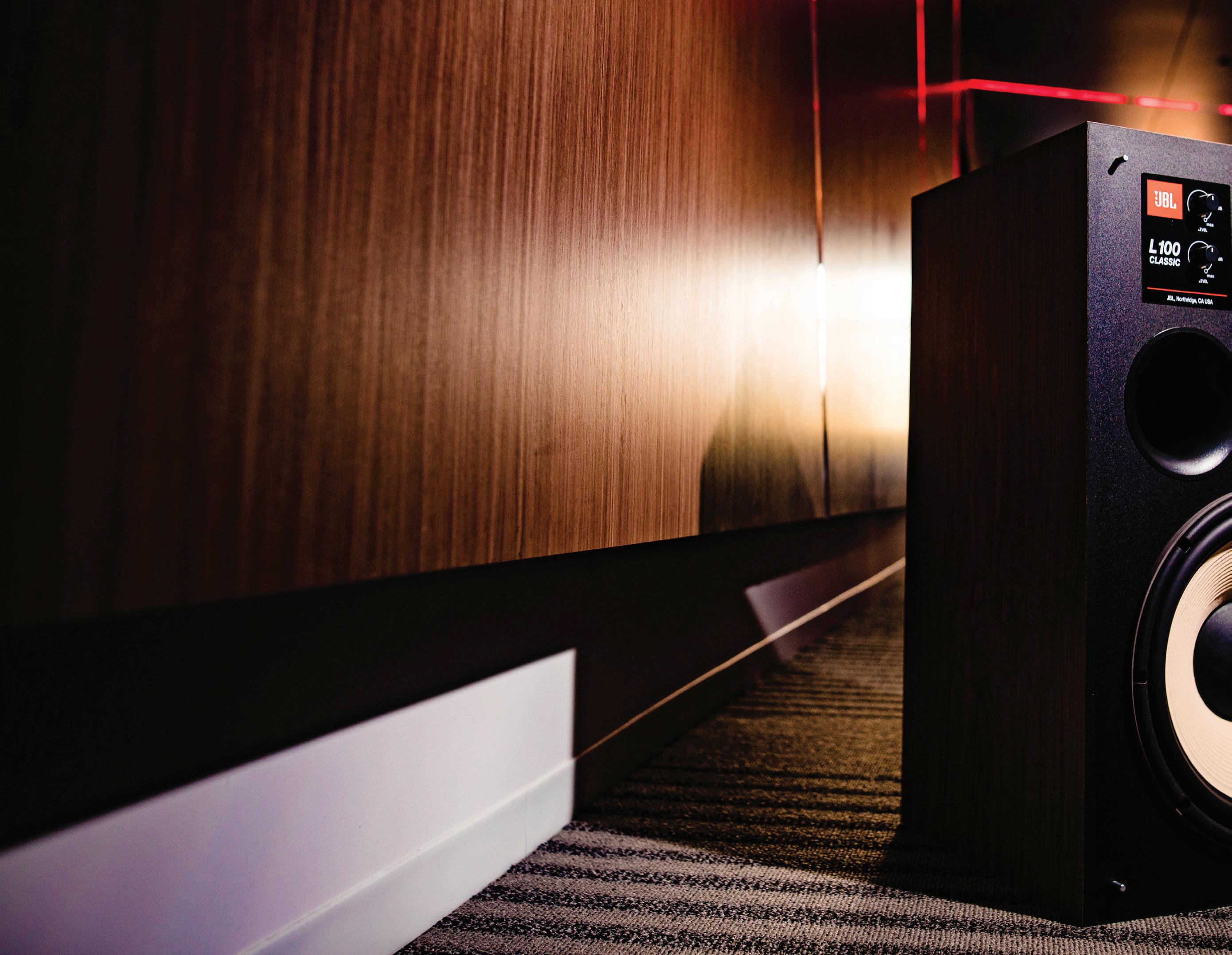
In luxury sound systems, design and engineering are inseparable. Material choice, form, and acoustic intent shape performance and presence in equal measure, defining how a speaker sits within a space.
These are the qualities that live in every JBL system. This is craftsmanship you can hear.
The design process begins not with sound, but with silence, with sketches, form studies, and hands-on material work. Designers shape each model to balance proportion, acoustic behavior, and visual harmony. Nothing is rushed. Every edge, every contour, every angle is deliberate. Even before it plays a note, it makes a statement.
Each model begins with focused form studies that balance proportion, cabinet volume, and acoustic intent. Geometry is refined to manage dispersion and presence, ensuring every enclosure
performs as purposefully as it stands.
Waveguides, the elements that shape and direct sound, are developed and measured in-house, refined through iteration to maintain clarity across the room. Materials follow function. Real wood veneers are chosen for grain and density, while high-gloss finishes are layered and tested for depth and durability.
Every core component is developed internally, allowing the system to be tuned as a complete whole. Concepts move through simulation, measurement, and listening before becoming a finished product.
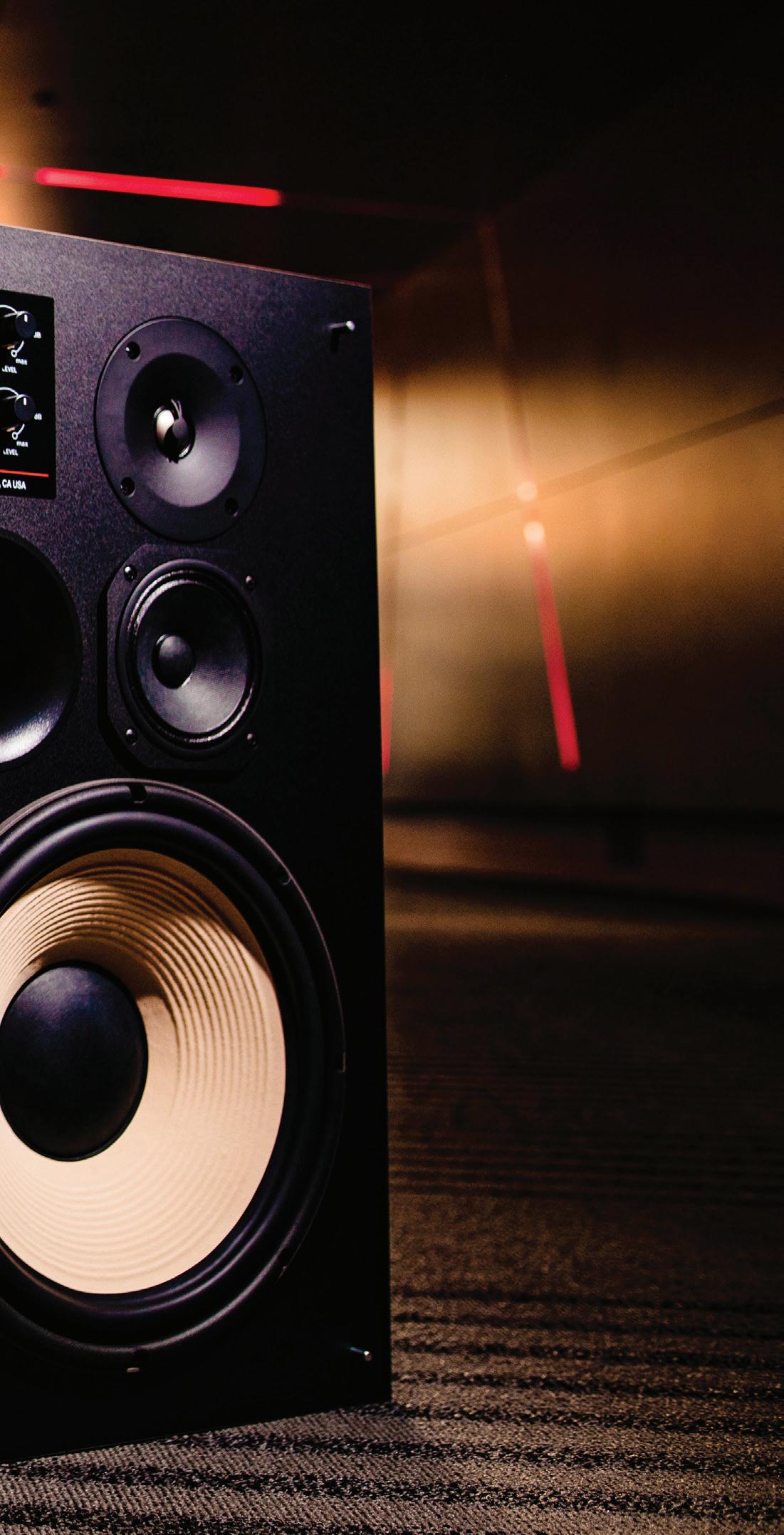
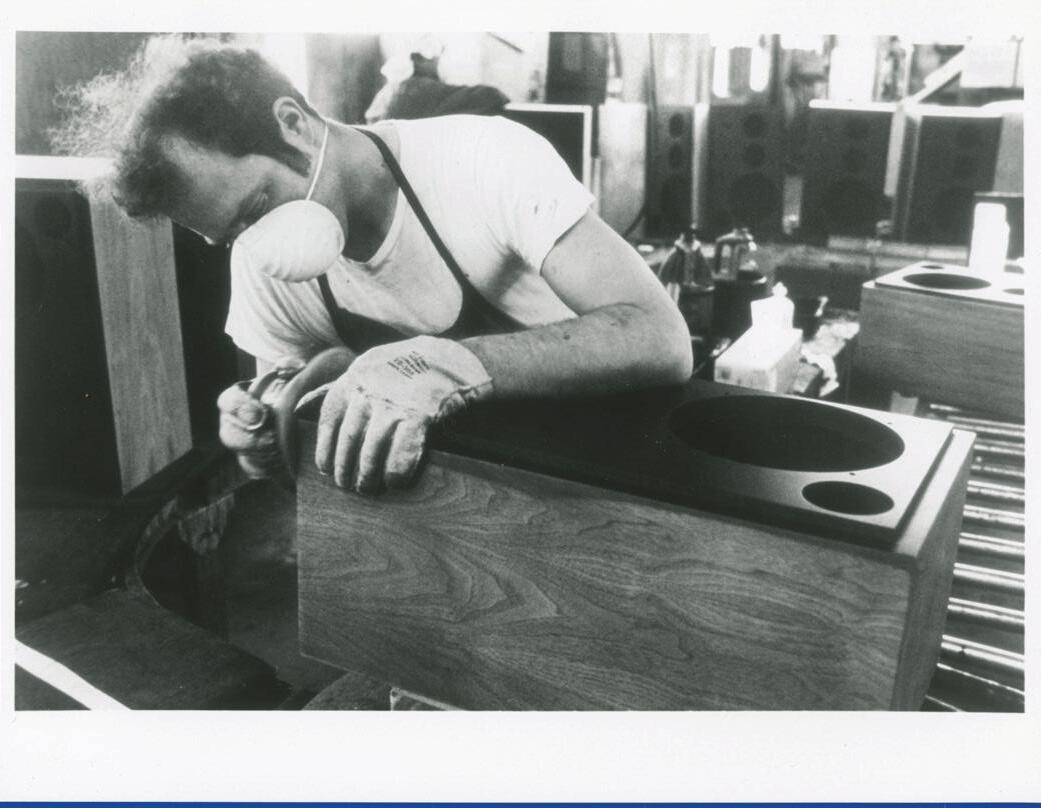
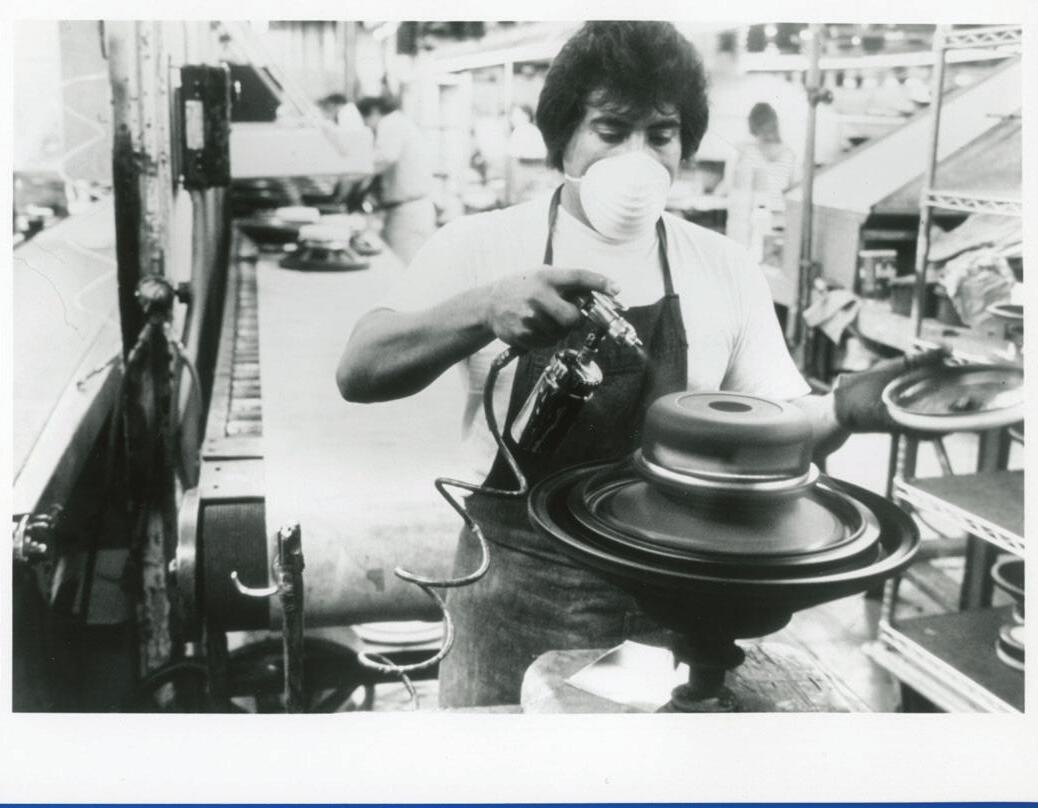
The iconic foam grille wasn’t just a style choice. Arnold Wolf’s design team tested dozens of patterns and densities before landing on the Quadrex shape - equal parts functional diffuser and graphic statement. The original orange, blue, and black options became an interior design flex.
The latest evolution of the Luxury line, the JBL Summit Series embodies the culmination of everything the brand stands for - acoustic precision, timeless design, and an emotional connection to music. Inspired by Himalayan peaks, it stands as a breathtaking example of advanced loudspeaker craftsmanship.
The result is the current expression of a long-standing design discipline: structured experimentation, intentional form, and engineering that serves performance above all.
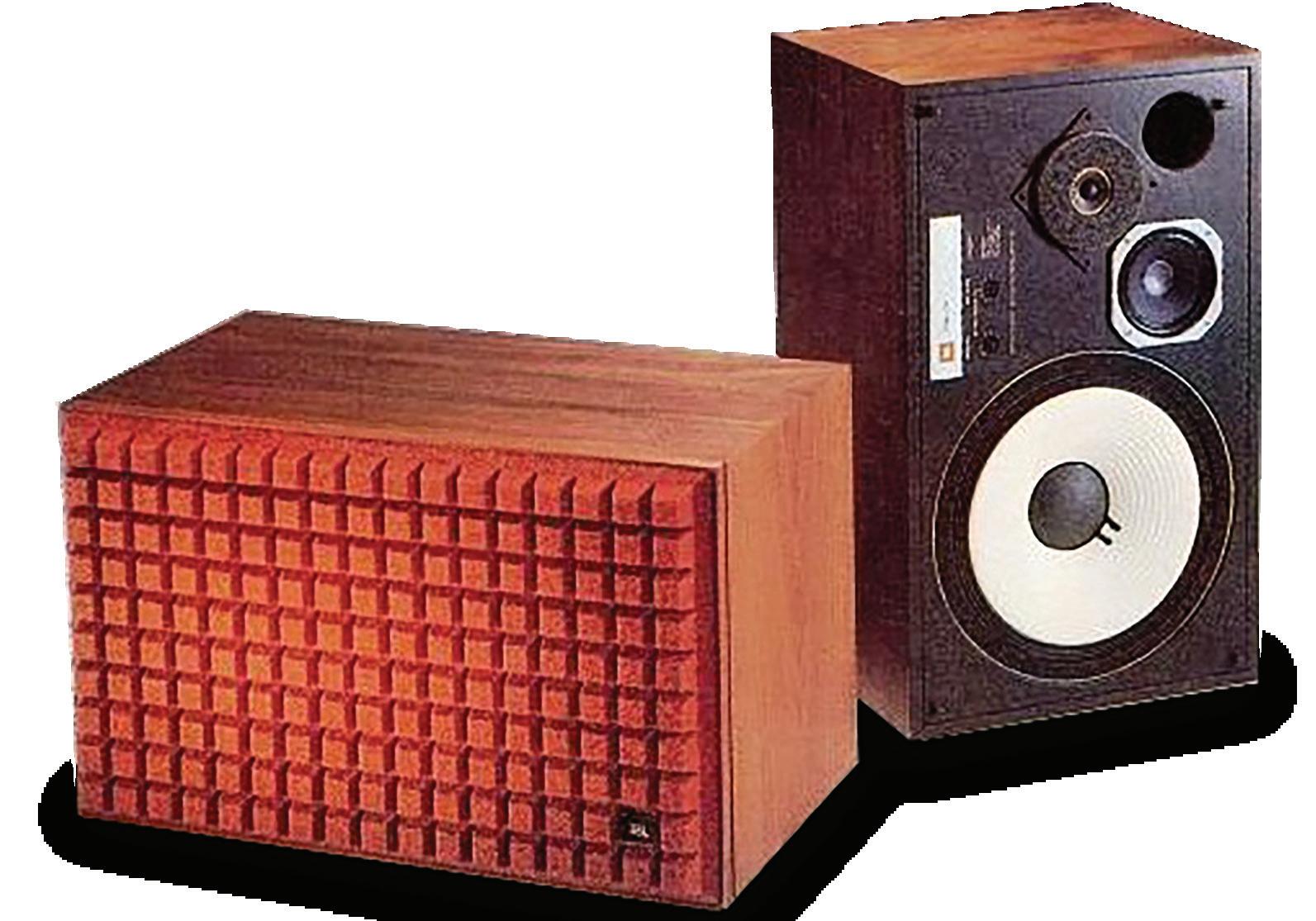
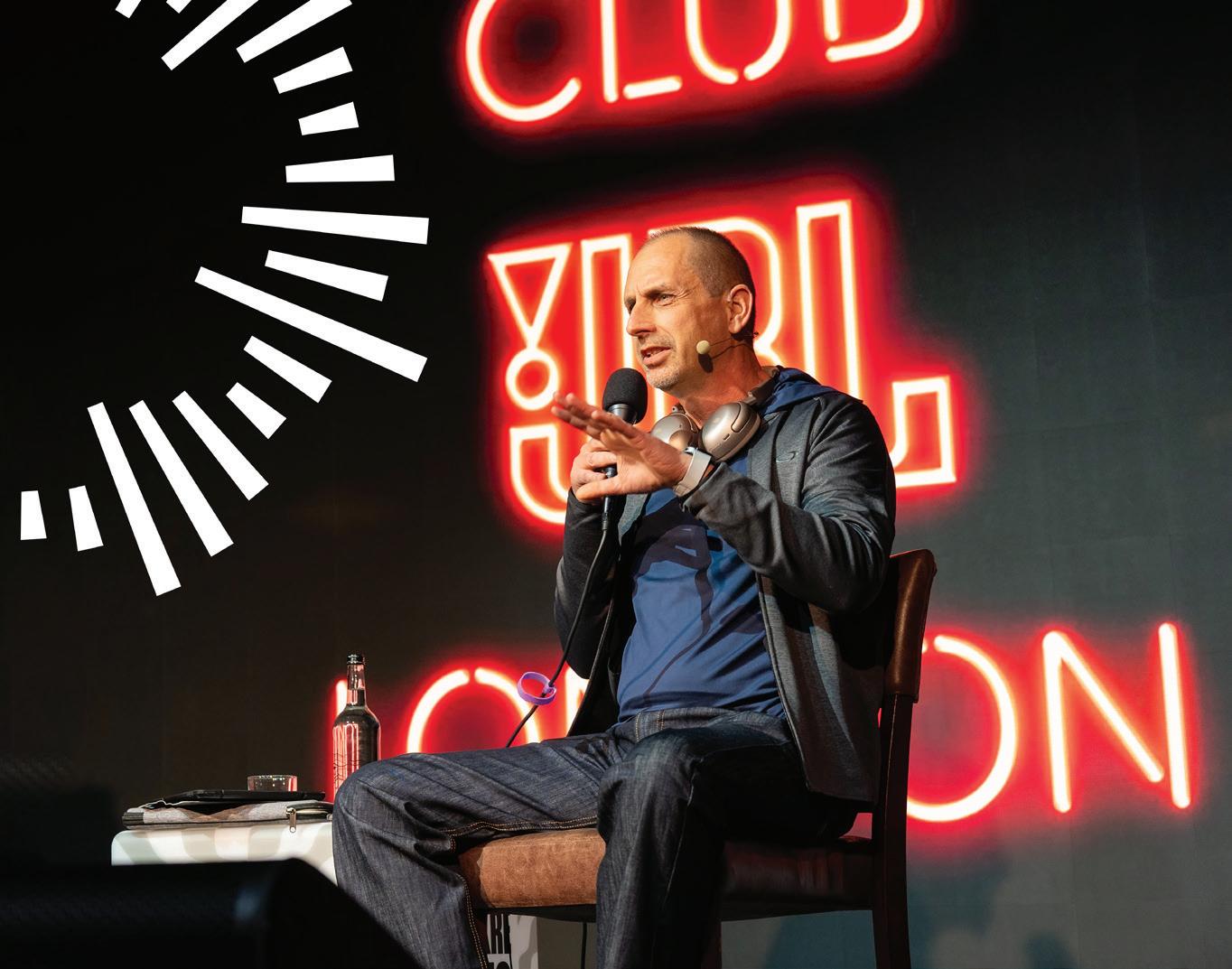
HARMAN CTO ARMIN PROMMERSBERGER GIVES US A PEEK INTO THE NEXT ERA OF AUDIO
SOUND THAT THINKS
“Today’s audio systems can fill a room,” says Prommersberger. “The next generation will read it.”
Artificial intelligence is no longer just enhancing audio. It is transforming it. The future speaker analyses what you’re playing, how loud you like it, how far it can safely push its own hardware, and then adjusts in real time. All in milliseconds.
That means compact speakers could sound bigger than physics should allow. Volume that will feel powerful but never distorted. Performance that can be pushed to the edge, without compromising durability.
AND THE NEXT STEP GOES FURTHER.
“Headphones will not just react to noise. They will anticipate it. Imagine your headphones knowing that a nearby speaker is about to increase in volume. Before the bass even lands, noise cancellation adjusts automatically,” suggests Prommersberger.
This is intelligent interoperability in action – devices sharing contextual data across an ecosystem, coordinating to deliver a smoother, more immersive experience.
The future of audio will be a connected, intelligent ecosystem. Devices will communicate, collaborate, and coordinate. Speakers, headphones, TVs, and mobile devices will share contextual data to create seamless, adaptive experiences.
Hosting friends? Ask about karaoke, and your ecosystem connects microphones, routes audio to the most powerful speakers, and syncs lyrics to your TV. You didn’t buy a karaoke machine, but your connected soundscape just became one.
“It’s not about how many devices you own,” says Prommersberger. “It’s about how intelligently they work together.”
One of the biggest shifts ahead is the move from product to service.
Audio will become an ambient, invisible layer that flows across spaces and moments – from your car to your earbuds to your living room. It will adapt to your environment and your behavior. You will not need to open apps or adjust settings. The technology will fade into the background – allowing the experience to take center stage.
“The ambition is to remove friction entirely, so that users do not have to manage their devices. Instead, devices understand their user, what they are doing, and what they need,” adds Prommersberger.
HUMAN-CENTRIC BY DESIGN
At its core, this new world of sound is deeply human.
With decades of expertise in how audio is created, processed, and perceived, JBL combines acoustics, physics, and human behavior to build systems that feel intuitive and responsive.
The goal is not simply louder sound or smarter gadgets. It is to create experiences that are seamless, immersive, and personal.
After 80 years of shaping the soundtrack to our lives, JBL’s next era is about intelligent interoperability, predictive performance, and sound that adapts to the moment.
“IT’S NOT ABOUT HOW MANY DEVICES YOU OWN, IT’S ABOUT HOW INTELLIGENTLY THEY WORK TOGETHER.”
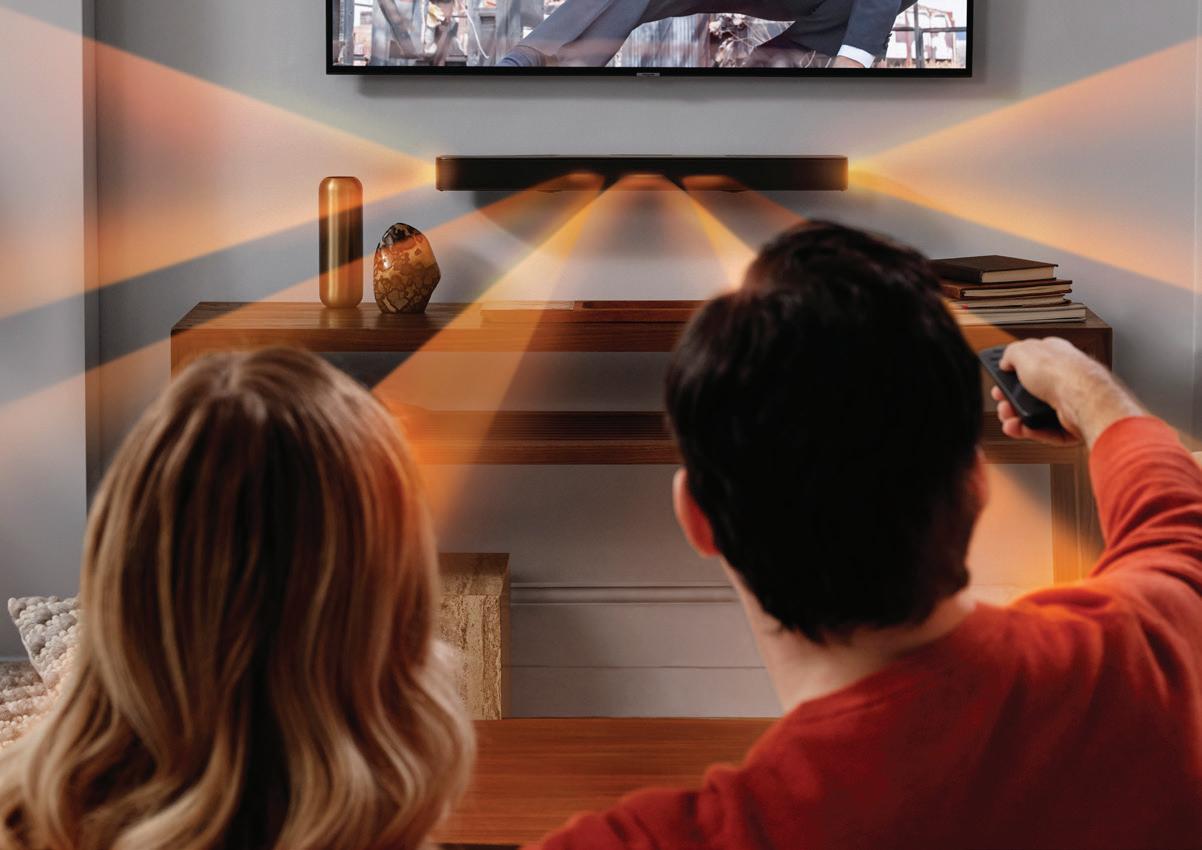
For 80 years, JBL has existed to help voices be heard - clearly, powerfully, and as they were meant to be heard. On stage, in the studio, and in the moments that stay with us long after the music stops.
This anniversary marks a legacy built by people who live for sound, the artists, engineers, partners and fans who trust JBL to make every note count.
To every voice that stepped up, leaned in, and believed in what sound can do, thank you.
The next voices are already lining up.
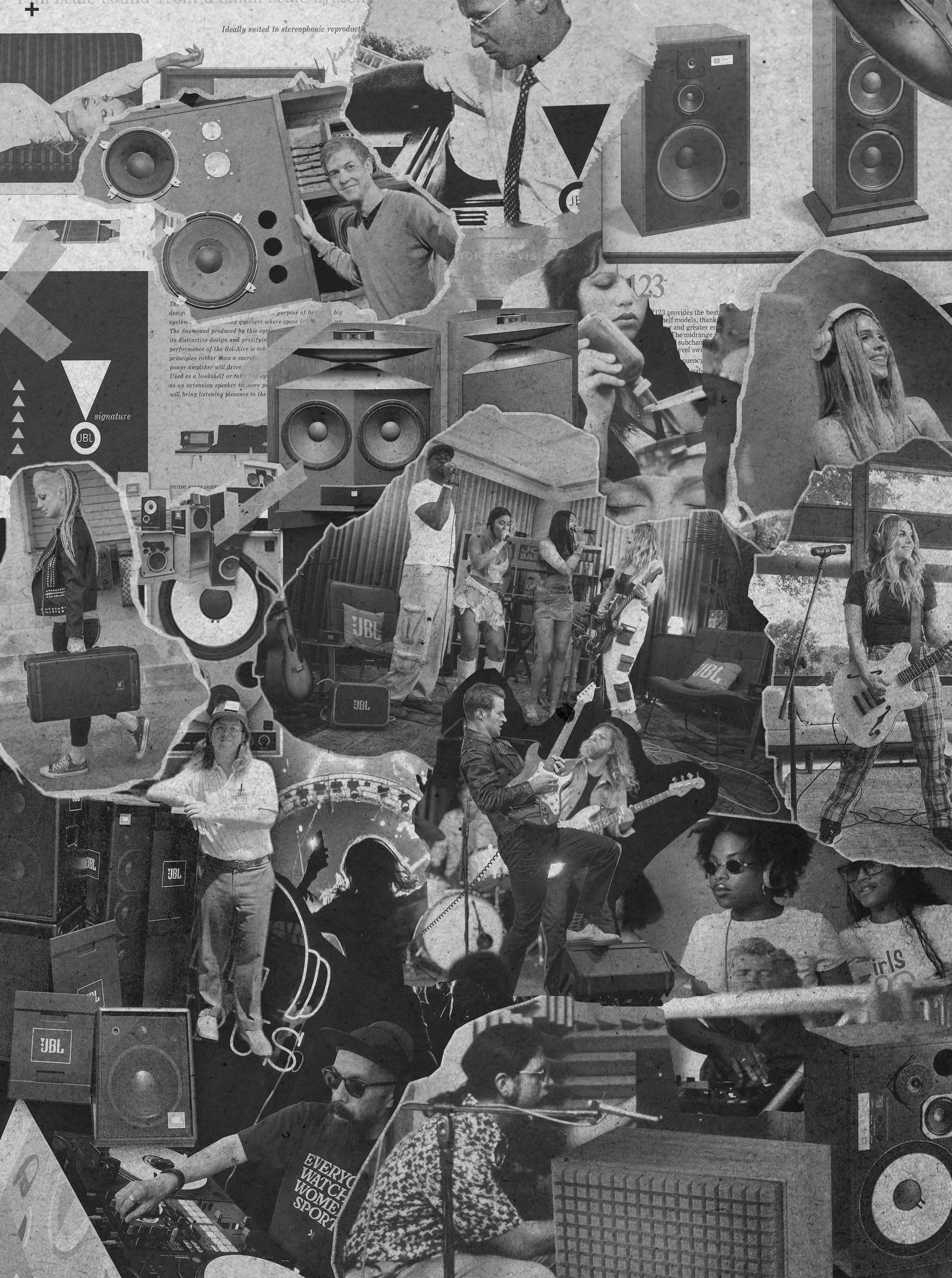
80 YEARS OF MAKING VOICES HEARD.




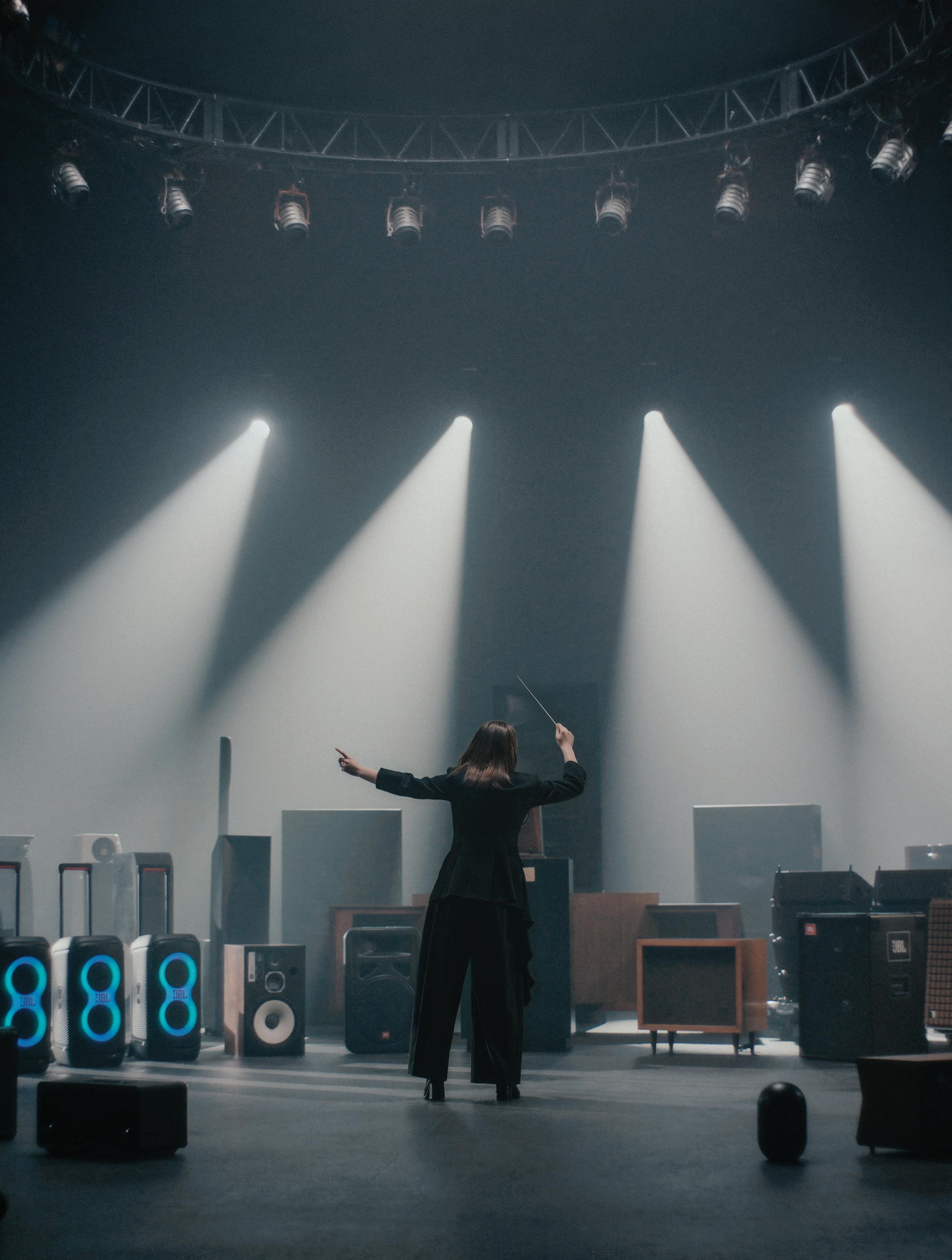







THE STORY DOESN’T END HERE. SCAN AND STEP INTO 80 YEARS OF SOUND.