THE DESART ART CENTRE OPERATIONS MANUAL
Publisher: Desart Inc.
11/54 Todd Mall (Reg Harris Lane), Mparntwe/Alice Springs, NT Australia
PO Box 9219, Alice Springs, NT 0871, Australia
2026 Desart Inc. and contributors as credited.
All rights reserved. Apart from fair dealing under the Australian Copyright Act, no part of this publication may be reproduced in whole or part without prior written permission from Desart and the relevant copyright holders.
DISCLAIMER
This Desart Art Centre Operations Manual is provided by Desart as a guide to assist in the management of Aboriginal art centres. While every effort has been made to ensure the accuracy and reliability of the information contained herein, Desart accepts no responsibility for any errors or omissions. Users of this manual should rely on their own policies and procedures relevant to their art centre or umbrella corporation or council, and ensure compliance with the laws, legislation, and standards of their specific state, territory, or regional area. Desart is the peak body for Central Australian Aboriginal art centres and provides valuable support and advocacy for member organisations. Desart’s resources and guidelines are essential for maintaining best practices in art centre management.
WARNING: Aboriginal and Torres Strait Islander readers are warned that this publication may contain images and names of deceased persons.
Proudly supported by
Proudly sponsored by
Desart Art Centre Locations
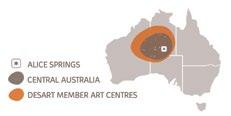
MPARTNWE / ALICE SPRINGS
CENTRAL AUSTRALIA
DESART MEMBER ART CENTRES
Martu
Kukatja Pintupi
Pitjantjatjara
Ngaanyatjarra
Ngaatjatjarra
Jaru Walmajarri
Warlpiri
Warlmanpa
Warumungu
Anmatyerr
Western Aranda/ Arrarnta
Eastern Arrernte Central Arrernte
Southern Arrernte
Alyawarr
Kaytetye
Luritja
Yankunytjatjara
Pitjantjatjara
Antakarinja
Barkly APY South Central Desert North West Ngaanyatjarra West
Message from the Desart Executive
Werte!
We are the directors for Desart representing art centres in the Northern Territory, Western Australia and South Australia. There are thousands of artists and art workers working in our communities to keep our culture strong. We are here to pass our knowledge on to the next generation, and our future depends on the continued success of Desart and all the desert art centres.
For us, culture comes first. Our culture is who we are. It came to us from our old people, and we have to carry it on for our young people. It shows us how to live our lives. We express this through our art, how we look after our country and how we teach our young kids.
Our Values
DIVERSITY
We respect the cultural diversity inherent to Central Australian Aboriginal peoples and their communities.
Our art centres keep our culture strong. They are places that keep our stories strong and safe. They belong to us, Aboriginal people. Art centres are important for us. Art centres are keeping places, holding the country and storylines.
We need good people to work with us in our art centres and to help us keep culture strong. Desart is here to help all the member art centres to be good at what they do. What’s most important is to look after each other and to help each other to do a good job.
Welcome.
CULTURE FIRST
AUTONOMY
We respect and support the independence and autonomy of our art centre members.
CONSULTATION
We ensure our work is based on consultation with Aboriginal artists, art centre governing bodies and staff.
ETHICAL
We work in a manner that is ethical and transparent.
Message from the Desart CEO
Welcome to the world of Central Australian Aboriginal art centres. It’s a world where you can be immersed in the oldest living culture on earth. Here, the work of community-controlled art centres is at the forefront of maintaining the cultural traditions of Aboriginal and Torres Strait Islander Australians.
Over the past 50 years Aboriginal and Torres Strait Islander artists have occupied a central role in the evolution of Australian contemporary art. This wellspring of creativity is the cultural heartbeat of the nation which resonates throughout the remote communities of central Australia. The work being undertaken daily in the art centres supports cultural maintenance so important to the ongoing development of our cultural identity as a nation.
Living and working in a remote Aboriginal community or town presents a unique set of challenges. You may face limited access to services that residents of cities and large towns take for granted, such as healthcare, education, and employment opportunities. Communication can also be difficult due to poor internet connectivity and the range and choice of everything from consumer goods to groceries can be severely limited. Despite the obstacles, these communities offer rewarding experiences. You’ll have the chance to learn about our law and language, and to form cross-cultural friendships that will last a lifetime.
It’s important to approach this experience with an open mind and respect for local customs and

knowledge. Remember that you’re a guest in the community and that simply listening rather than speaking or asking questions is often the best way to access that knowledge. Living and working in remote areas also comes with professional challenges. Logistics can be complex and services not always reliable so a flexible approach and an everpresent Plan B will serve you well.
The safety and wellbeing of everyone at the art centre is paramount and this includes you. Working in a remote Aboriginal community requires careful consideration of risks to physical and mental wellbeing. It’s important to be aware of the potential stressors and challenges that can arise in these settings. Always remember, Desart is here to help you manage these risks and promote a healthy work environment where everyone can prosper.
Philip Watkins Desart CEO
About Desart
Desart is the peak body for Central Australian Aboriginal art centres and provides valuable support and advocacy for member organisations. Desart’s resources and guidelines can help you maintain best practice in art centre management. As a valued member of Desart, you are part of an organisation dedicated to supporting and protecting the interests of member art centres.
Desart is committed to ensuring that your art centre has access to essential resources, training, and advocacy. We provide guidance on operational issues and funding sources and promote the cultural and economic value of art centres. Our goal is to ensure art centres can maintain safe and supportive environments for artists, art workers, board members, staff and visitors to the art centre.
Support
• Desart is here to support you. Check our website at desart.com.au for detailed information and current staff contacts. Talk to our staff, or managers at other art centres in your region for advice and problem solving. We work hard to ensure that our member art centres, their staff and boards, have the support they need to achieve their goals.
Industry reports:
• Desart produces an annual Art Centre Industry Report using de-identified data from the Stories, Art, Money (SAM) platform and publicly available financial reports to evaluate sales and production trends within the art centre sector.
Desart annual conference:
• A three-day event with industry specialists, presentations, artist workshops, and consultations with a range of stakeholders.
Photography by Devris Hasan.
IT support program:
• Desart can provide subsidised IT support, including computer and email setup, troubleshooting, virus removal, installation of peripherals, advice, and database setup and transfer. Contact Desart’s Strong Business program about subsidies available for this service.
Legal support program:
• Desart provides a subsidy for art centre members to subscribe to Arts Law including Artists in the Black resources.
Human Resources support program:
• General Human Resources advice, support, and referral service.
• Consultant register of professional service providers and art centre staff.
• When requested by an art centre’s board of directors, Desart can assist with manager recruitment, including reviewing position descriptions, advertising, shortlisting, interviewing, contract negotiation, and induction and Manager Performance reviews
• Desart promotes art centre employment opportunities at industry events and universities.
Board support:
• Support and training can be delivered on request based on each art centre’s individual needs and available resources.
Manager coaching:
• When requested this service is delivered by an experienced coach for new art centre managers in their first year.
Professional development:
• Desart provides a range of professional development opportunities throughout the year based on art centre needs and available industry programs and resources.
Employee assistance service:
• Desart offers its members 24/7 free and confidential counselling services through the NT Employee Assistance Program.
Desart Events
Desart stages events each year designed to benefit artists and member art centres including the Art Centre Conference, Desert Mob Exhibition, with artist talks and the hugely popular Desert Mob Art Market, and a range of other activities throughout the year. An annual guide to Desart events is sent to art centres with membership renewal each year and is also available at the Desart office.
Desert Mob is a key event on the national Indigenous arts calendar. Drawing high end buyers and collectors from around the world, the Desert Mob Exhibition is a prestigious event that showcases the best new works from member art centres. Expectations are high and art centres should plan their exhibition program around this annual event ensuring their highest quality works are available for this curated exhibition.
Other key events on the art centre calendar include:
National Aboriginal and Torres Strait Islander Art Awards (NATSIAA)
This prestigious event provides a platform for Aboriginal and Torres Strait Islander artists to showcase their work on a national stage, gaining recognition and opening doors to new opportunities.
Darwin Aboriginal Art Fair
This annual event attracts a wide range of visitors, including collectors, curators, and art enthusiasts as well as first time buyers. It offers artists the chance to sell their work directly to buyers and build valuable connections.
Tarnanthi Festival
As one of Australia’s largest festivals celebrating Aboriginal and Torres Strait Islander art, Tarnanthi provides artists with extensive exposure and the opportunity to participate in a variety of exhibitions and events. The festival hosts a range of exhibitions across numerous venues as well as an annual art fair
attracting thousands of art buyers from around the country and overseas.
Revealed
For Aboriginal art centres located in Western Australia this is the premier showcase event for new and emerging artists with an exhibition and art market in the heart of Perth.
AIATSIS Indigenous Art Market (IAM)
IAM brings together artists and art centres from across the country to showcase a diverse range of artworks including paintings, textiles, sculptures, jewellery, and much more.
Blak Market
This annual ethical marketplace features stallholders from remote art centres and Sydney’s Blak Market where you can purchase art, handmade jewellery, homewares, food and more. Held over two days at Sydney’s Overseas Passenger Terminal Blak Market is bursting with art, performances, panel discussions, bushfood and a communal weaving circle.
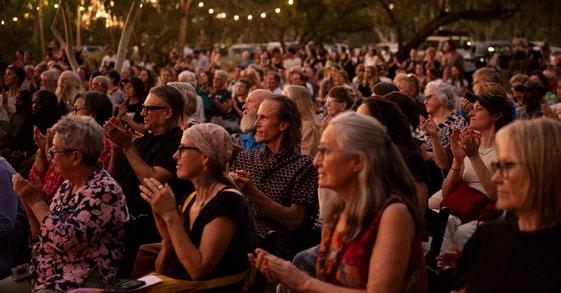
Image: Desert Mob official opening night 2024.
Photography by Sara Maiorino.
Desart Programs
Desart programs are based on the principles of culture first and industry best practice. We strive to facilitate activities that will enhance capacity building, better business practice, leadership and good governance. Our programs and activities are centred around four pillars: Advocacy, Business Support, Training & Employment, and Promotion & Marketing.
Advocacy – One Mob One Voice
Desart represents the interests of its members to government and the wider art industry through strong advocacy and participation in policy formulation. We work with other Aboriginal peak bodies and organisations to address industry-wide and cross-sector issues. We also serve on industry boards and advisory committees and work with industry and government partners to promote the local and global benefits of art centres.
Business Support – Strong Business
Desart’s Strong Business program supports art centres to run strong, healthy businesses. We work closely with art centre managers, coordinators, and directors to help them do their jobs well, so that artists can get on with creating art of the highest quality. The program is divided into several streams:
• Human Resource support.
• Resources development.
• Individual manager coaching.
• On-site board training and governance support.
• Legal support for art centres through subsidised membership with Arts Law.
• IT services and technical support.
• Employee Assistance Program (EAP) confidential counselling and support.
• Consultant register of professional service providers and experienced art centre workers.
SAM is an online artwork management system built specifically for Aboriginal and Torres Strait Islander (ATSI) art centres. The platform allows for the cataloguing of artwork, artists and products and is a Point-of-Sale system that links to artist payments. To find out more about SAM visit www.sam.org.au
Keep up to date with the latest information from Desart:
• SAM E-news: monthly updates about training, new features and resources.
• Desert Mob updates mailing list.
• Grants and Prizes Blast: regular information on available grants and art prizes.
• The Desart Radar shares stories and information on art centre happenings.
Training & Employment – My Job, My Learning
Desart offers training opportunities for art workers that aim to increase skills and career pathways for Aboriginal people in the arts. If you have identified appropriate training opportunities for art workers, support could be available from Desart. Contact the Strong Business program for advice and assistance.
Desart offers:
• non-accredited training, including SAM training.
• information about workplace rights and obligations.
• support to develop career pathways.
• training workshops at Desert Mob and the Desart annual conference.
Marketing & Promotion – Our Art, Our Culture
• Desart aims to strengthen ties between art centres and stakeholders while promoting ethical buying practices that support the ongoing success of Aboriginal art centres. Desart promotes member art centres with targeted marketing campaigns including:
• The Desart and Desert Mob websites and social media platforms.
• Desert Mob includes a curated exhibition, an art market and public programs.
• Newsletters.
• Targeted marketing campaigns in industry publications.
• Attendance at Art Fairs, major awards and exhibitions and other industry events.
• Desart online Christmas Marketplace.
• Art Centres on Screen promotes your films and animations online.
While Desart can assist with marketing and promotions, outcomes are dependent on the content provided by the art centre. Art centres should take the initiative and create engaging strategies and content which can be amplified through Desart’s promotional channels.
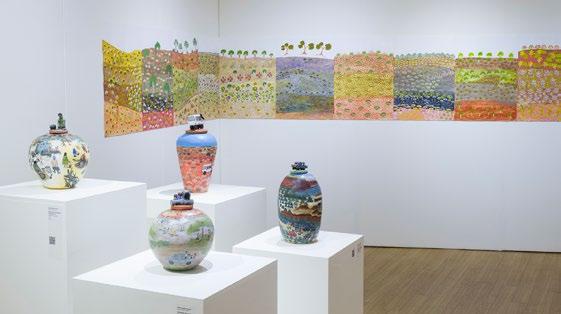
Image: Hermannsburg Potters & Artists of Ampilatwatja, Desert Mob 2024 installation view. Photography by Sara Maiorino.

The Art Centre Story
A Brief History
The Aboriginal art and craft centre movement began with the foundation of Ernabella Arts in South Australia in 1948—the first centre dedicated to supporting Aboriginal artists and providing them with economic opportunities and materials to foster creative expression and cultural maintenance. This set an important precedent, but through the 1950s and 1960s, Aboriginal artists worked mostly independently or within missions, with limited access to commercial or public audiences for their works.
A groundbreaking change came in the early 1970s. At Papunya in the Northern Territory, schoolteacher, Geoffrey Bardon, facilitated senior men to paint their Tjukurrpa, which led to the creation of Papunya Tula Artists in 1972, widely considered the genesis of the contemporary Aboriginal art movement. The movement rapidly gained momentum as art centres were
established in remote communities across Central Australia, the Kimberley, Arnhem Land, and the Tiwi Islands, allowing artists to organise collectively, gain materials, preserve cultural protocols, and access broader markets.
By the 1980s, art centres had become essential community institutions, fostering both the export of art and the internal strengthening of cultural identity. Success bred more art centres: from around 30 in 1996, the network grew to over 90 Aboriginal and Torres Strait Islander art centres in 2026, strengthening cultural identity in communities across the country. Art centres became pivotal in promoting vibrant local styles while safeguarding tradition and intellectual property.
Today, Aboriginal art centres embody not only thriving creative industries but also vital mechanisms for community development, cultural expression, and intergenerational knowledge transmission.
The Art Market
The Aboriginal art market has evolved dramatically over the past five decades, transforming from small-scale production of ethnographic art and craft into one of Australia’s most significant fine art movements with strong international recognition. Traditionally, Aboriginal art took the form of rock engravings, ceremonial body painting, bark painting, ground painting and woven objects, reflecting cultural stories and narratives. In the early 20th century, non-Indigenous collectors and anthropologists valued these works primarily as ethnographic artefacts rather than contemporary art.
This perception began to shift in the 1970s with the Papunya Tula Art Movement, where artists like Clifford Possum Tjapaltjarri and Johnny Warangkula Tjupurrula pioneered acrylic dot painting, merging ancient cultural traditions with contemporary materials. The success of artists such as Emily Kam Kngwarreye, whose works have sold for millions, and Rover Thomas, a leader in the East Kimberley style, helped elevate Aboriginal art to the global stage. Today, many Aboriginal and Torres Strait Islander artists continue to attract international acclaim.
Supported by art centres, galleries, and major institutions, Aboriginal art is now a multi-million-dollar industry, celebrated for its innovation and cultural depth while remaining deeply connected to country, identity, and storytelling. Gallerists located in capital cities and regional hubs like Broome, Cairns and Alice Springs, as well as international institutions and galleries, play a key role
in connecting artists and art centres with fine art collectors and institutional buyers. Established artists with strong reputations are generally well known to this cohort. Many of these gallerists are constantly looking for new and emerging talent so it’s important for art centres to maintain strong relationships and good lines of communication with them.
Emerging artists need to be nurtured and promoted into this space to attract the attention of buyers and collectors.
Most art centres are home to a number of new and emerging artists who paint intermittently producing a colourful array of work that varies in quality but is certainly saleable on the tourist and homewares market. Artist development programs and activities are the key to creating sustainable career pathways for these artists. In recent years licencing agreements with various homeware companies have created sustainable career pathways for these artists.
Art Sector Relationships
There are more than 90 Aboriginal art centres across Australia, 85 of which are currently funded by the Office for the Arts through IVAIS. These centres are community-based and support the creation and promotion of Aboriginal and Torres Strait Islander art. They play a vital role in preserving and sharing cultural stories and practices. A network of peak bodies like Desart , advocate for their regional membership base to government and industry stakeholders. These include Aboriginal Art Centres Hub Western Australia (AACHWA), Arnhem, Northern and Kimberley Artists (ANKA),
Indigenous Art Centres Alliance (IACA – Far North Qld), and Ananguku Arts and Cultural Aboriginal Corporation (Ku Arts SA).
State and Territory governments have policies and frameworks to support Aboriginal and Torres Strait Islander art centres which aim to strengthen the industry with funding, resources, and support for artists and art centres. They also focus on promoting cultural heritage and ensuring the sustainability of the Indigenous art sector.
The Australian Government has policies and frameworks to support Aboriginal and Torres Strait Islander art centres. The Indigenous Art Centre Framework is a key policy that encourages participation and employment for Aboriginal and Torres Strait Islander people within arts organisations. It outlines strategies for visual arts production, marketing, business management, and professional development. The framework also aims to maintain a thriving, professional, and fair Aboriginal and Torres Strait Islander visual arts industry. The federal government’s major funding vehicle for Aboriginal and Torres Strait Islander art centres sits within the Indigenous Visual Arts Industry Support program (IVAIS) administered by the Office for the Arts.
Creative Australia’s First Nations Arts is dedicated to empowering and celebrating First Nations creativity in Australia and internationally. Committed to First Nations self-determination, cultural authority and leadership, reflected in their strategic investment programs and initiative and overseen by the First Nations Board formed in 2024. www. creative.gov.au/first-nations-arts
Relationships with gallerists in Australia and overseas are key to the success of individual artists and art centres. Gallerists usually seek to represent established artists on an exclusive basis but can sometimes deal with high quality works from a range of artists within a particular art centre or from several art centres in a particular region. These relationships can be extremely valuable as a way of accessing private collectors with discerning tastes. The Art Galleries Association of Australia (AGAA) is the representative body for Australian commercial art galleries in the primary visual arts market.
Commercial galleries that can demonstrate their compliance with the Indigenous Art Code are eligible to display the IAC symbol indicating that they adhere to ethical practices in buying and selling Indigenous art.
Major collecting institutions such as the state and territory art galleries regularly acquire significant works by Aboriginal and Torres Strait Islander artists.
Curatorial staff from these institutions attend many of the major exhibitions and art prizes around the country. Acquisitions by major galleries confer great kudos on an individual artist and can add significant weight to the value of your art centre brand. The Australian Museums and Galleries Association represents a wide range of national, state, regional and community museums, galleries, research centres, Indigenous cultural centres and keeping places across Australia.
The Department of Foreign Affairs and Trade (DFAT) provides support for international programs through
embassies and consuls. They can assist in a variety of ways when your art centre is mounting international exhibitions or taking part in arts events overseas.
Safety First
The Work Health and Safety Story
Providing a safe, healthy workplace is the first priority for any governing body and, through their delegation, the manager of every art centre is responsible for ensuring safety at work. While legislation varies between states and territories, significant penalties exist in all jurisdictions making managers personally liable for compliance failures with fines and prison terms applying. Make sure you familiarise yourself with work health and safety standards in your state or territory (see links and QR Codes below).
Safe Work Australia
www.safeworkaustralia.gov.au
SafeWork SA
www.safework.sa.gov.au
NT WorkSafe
www.worksafe.nt.gov.au
WorkSafe WA
www.worksafe.wa.gov.au
Risk Management
Ensure that managers and supervisors are trained in workplace health and safety. This includes ensuring they understand their responsibilities and how to manage risks. Some basic strategies include:
• Conduct a safety audit of your workplace including vehicles guided by the requirements of WHS legislation in your state or territory
• Create a risk assessment and mitigation matrix - with a chain of command for reporting and have it on view for everyone working in the art centre
• Implement strategies to prevent burnout and promote a healthy work-life balance.
• Provide early support to staff experiencing stress or other issues and seek support for yourself when needed. Early intervention can prevent more serious problems.
• Train staff to provide initial support to colleagues experiencing mental health issues.
• Desart provides a subsidy for those art centres that do not sit under a broader organisation for two art centre staff per year to attend nationally accredited:
– 4-Wheel Drive course – First Aid course.
A designated health and safety officer may be good practice for the art centre where you work. Legal responsibility for compliance is delegated from the board of directors to the manager. The manager must exercise due diligence to ensure the business meets its Work Health and Safety requirements to protect workers and others from harm.
Conducting regular risk assessments helps identify potential vulnerabilities within the art centre. This includes assessing the structural integrity of buildings, the safety of storage facilities, and the potential impacts of local climate conditions. Planning should include mitigation strategies and contingency plans to address identified risks.
Heat and dehydration are significant concerns in remote art centres. Ensuring proper ventilation, access to clean drinking water, and cool working conditions are vital. Regular breaks and health checks can help mitigate the risks associated with extreme heat.
If you are involved in managing a small to medium business, then you are likely to have a duty as an ‘officer’ under work health and safety laws. This video features workers from a range of industries talking about why they are an officer in their business.
A YouTube link:

If the art centre where you work is registered with the Office of the Registrar of Indigenous Corporations you can access free online training called ‘Safety, risk and insurance.’ Call ORIC on 1800 622 431 to find out more.
For comprehensive information across Australia, refer to Safe Work Australia

This national body develops policy related to work health and safety (WHS) and workers’ compensation.
The Work Health and Safety (National Uniform Legislation) Act 2011 for Northern Territory

The Occupational Safety and Health Act 1984 for Western Australia

The Work Health and Safety Act 2012 for South Australia

Safe Driving
Driving is an essential part of art centre work. There are special considerations, particularly for outback and remote areas. Vehicles are valuable and essential art centre assets and maintenance is normally delegated to the manager who will usually garage the vehicle and report any issues.
Ensure your organisation has comprehensive road safety policies and procedures in place. These should cover driver behaviour, vehicle maintenance, and emergency procedures. If you cannot locate your policies and procedures or they are not fit for purpose, contact Strong Business at Desart for templates.
Provide regular training for employees on safe driving practices and ensure they are supervised appropriately.
Regularly inspect and maintain vehicles to ensure they are in good working condition. This includes checking tyres, brakes, lights, and fluid levels. When you travel into town arrange a service and any repairs for your vehicles and check all spare tyres.
Ensure all employees who drive 4 Wheel Drive art centre vehicles receive proper 4WD training. This includes understanding how to use the vehicle’s features and learning skills like de-bogging, hill climbs, and crossing obstacles.
Ensure all vehicles are registered and in roadworthy condition. Equip vehicles with first aid kits, water, emergency provisions, and emergency positionindicating radio beacons (EPIRB). Desart recommends purchasing an ezyjack or another tyre changing toolkit in addition to a manual jack in addition to an air compressor and sand tracks.
Keep a log of all vehicle related incidents and report serious incidents immediately to your work health and safety regulator. Notifiable incidents include work-related deaths, serious injuries, illnesses, and dangerous incidents. Ensure an incident
reporting system is in place in your policies and procedures and that all employees know how to use it.
Bush Trips
Excursions on country are a regular occurrence at many art centres to collect materials or create new work. Before a bush trip, ensure your vehicle is in good working condition. Check tyres, brakes, lights, and fluid levels and other items on your vehicle safety check list. Check the road conditions before departure. Use resources like local traffic updates for real-time information on road closures, roadworks, and traffic incidents, state and territory police and Land Councils and shires have up to date road information. Be aware of any cultural conditions and potential road closures or detours. Respect local customs and traditions and adhere to any road closure signs. Your directors and community members will have advice; make sure you listen.
Ensure you have plenty of water. At least 10 litres + reserves is recommended per person per day. It is also important to ensure you have food with you on trips. Extreme weather conditions require special attention to hydration, shade, sunscreen and sub-zero temperatures overnight in winter, and in summer daytime temperatures can be more than 40 degrees. There have been many tragic stories of vehicles breaking down and the passengers dying due to:
• Heat
• Lack of water
• Remoteness (no passing vehicles)
• No emergency communication device such as a satellite phone or EPIRB.
Psychological and Cultural Safety
It’s important to create a culturally and psychologically safe workplace at the art centre. This can mean a supportive space that is free from bullying behaviours, where stress is minimised and everyone feels a sense of trust and respect. Under the law, anyone conducting a business has a duty to do everything reasonably practicable to prevent exposure to psychosocial hazards and risks. Those in leadership roles should actively work to ensure everyone feels included, especially those from under-represented groups.
For Aboriginal and Torres Strait Islander peoples, social and emotional wellbeing is a holistic concept that encompasses the connections between individuals, family, kin, community, land, culture, spirituality, and ancestry. Be mindful of these key aspects:
• Being on and caring for Country improves physical and mental health outcomes.
• Participation in traditional customs and rites of passage provides a sense of continuity and identity.
• Spiritual connections are integral to wellbeing and are expressed through various forms such as language, stories, music, dance and of course, painting.
Cultural safety means an environment that is respectful of the cultural identities and needs of diverse individuals. It is essential for fostering psychological safety in a diverse and inclusive workplace. Key elements include:
• Recognising and valuing the diverse cultural backgrounds of all employees.
• Implementing practices that ensure all voices are heard and respected.
• Providing training and resources to enhance cultural competence and understanding.
Art centres are culturally diverse and multi-gendered environments that operate under Australian, state and territory compliance standards. It is the responsibility for those in leadership roles to plan and action safety for everyone. Key strategies include:
• Address the diverse needs of all employees by creating inclusive policies and procedures that promote equity and respect.
• Create a culturally safe workplace by recognising and respecting different cultures, values, beliefs, and ways of being.
• Adhere to state and territory regulations and standards to ensure a safe and compliant workplace.
Artists with special needs
Working with community members who have complex needs, such as acquired brain injury, Fetal Alcohol Spectrum Disorder (FASD), and disability, requires understanding and support. There are programs and service providers available
through the community health clinic or through visiting allied health services, that can aid these individuals. For example:
• Acquired head injury: The Brain Injury Community Inc provides social and support links for people with a brain injury, their loved ones, and their support network.
• FASD: The FASD Hub Australia offers resources and support for individuals and families affected by FASD.
• Disability: The Disability Gateway provides information and services to help people with disability, their family, friends, and carers find the support they need.
• National Disability Insurance Scheme (NDIS) service providers: To find NDIS registered providers, you can search the Provider Finder on the NDIS website.
• Local aged care services: For information on aged care services, visit My Aged Care
• Allied health services: Allied health care professionals provide a broad range of diagnostic, technical, therapeutic, and direct health services. For more information, visit Allied Health Professions Australia.
It is important to know that it is not the role of the manager to provide direct care for artists with special needs, but to ensure they are part of the community network of care. There is a large Aboriginal and Torres Strait Islander led network of Aboriginal Controlled Health Centres represented by their peak body, the National
Aboriginal Community Controlled Health Organisation (NACCHO). Managers should facilitate connections with local service providers and support systems to ensure community members receive the appropriate care and assistance.
Funerals
Due to complex issues related to poverty, poor health and low life expectancy, artists and art workers can often find themselves dealing with a death in the family which can have implications for attendance at the art centre over extended periods of time. Firm cultural protocols demand the presence of extended family members at sorry camps. It’s not uncommon for the art centre to be asked to donate food for sorry camps. Those in leadership roles should always prioritise the emotional well-being of artists and staff and their families whenever someone in their kinship network dies.
Workplace Violence and Aggression
Workplace violence includes any act or threat of physical violence, harassment, intimidation, or other threatening disruptive behaviour. It can cause both physical and psychological harm. Common forms of workplace violence include:
1. Verbal aggression: Threats, insults, and verbal abuse.
2. Physical violence: Physical assaults and threats of bodily harm.
3. Passive-aggressive behaviour: Subtle forms of aggression, such as exclusion and sabotage.
To prevent workplace violence, organisations can implement the following strategies:
1. Establish a zero-tolerance policy towards violence and aggression.
2. Provide training on conflict resolution and de-escalation techniques.
3. Offer support and resources for employees affected by violence.
De-escalation Techniques
De-escalation involves calming down a potentially violent or aggressive situation. Effective de-escalation techniques include:
1. Remaining calm and composed.
2. Listening to the other person’s concerns without interrupting.
3. Show compassion and understanding.
4. Clearly communicate acceptable behaviour and set boundaries.
Bystander intervention involves taking action to prevent or stop harmful behaviour. The “5 D’s” of bystander intervention are:
1. Directly address the situation.
2. Distract the aggressor to defuse the situation.
3. Delegate and seek help from others.
4. Delay checking in with the victim until after the incident.
5. Document the incident for evidence.
Police
State and Territory authorities in the Tri-border region of NT, SA and WA operate under a cross-border Justice Scheme which allows police, magistrates and correctional officers from one side of the border to act across the borders of the others within the designated region. Police can make arrests, conduct investigations and transport individuals across borders to face legal proceedings where the offence was committed.
Aboriginal liaison officers (ALOs) and Aboriginal community police officers (ACPOs) play a crucial role in bridging the gap between Aboriginal communities and various services, including health, policing, and community support. ALOs and ACPOs assist in resolving conflicts and misunderstandings with mediation and conflict resolution.
Police stations in communities can assist with a range of services and support including cultural liaison, assistance with community disputes, licenses and registration, road conditions, and support with circuit court and other justice matters.
Police Contacts
NORTHERN TERRITORY (NT)
Ali Curung: Police Station – (08) 8964 1959 Contact 131 444 for non-urgent assistance.
Finke: Police Station, Kwngelye Street, Finke, NT 0872. Phone: (08) 8956 0581.
Kaltukatjara (Docker River) Police Station, Kaltukatjara, NT 0872. Phone: (08) 8956 2767.
Kulger; Police Station, Stuart Highway, Ghan, NT. Phone: (08) 8956 0974.
Mutitjulu: Police Station, Mutitjulu, NT 0872. Phone: (08) 8956 2767.
Ntaria; (Hermansburg) Police Station, 24 Ilparra Cct, Hermannsburg. Phone: (08) 8956 7422.
Papunya: Police Station – (08) 8956 8510 Contact 131 444 for non-urgent assistance.
Santa Teresa; Police Station, 15 Alice Road, Santa Teresa, NT 0872. Phone: (08) 8956 0887.
Tennant Creek: Police Station –(08) 8962 0944 Contact 131 444 for non-urgent assistance.
Titjikala: Contact NT Police. Phone: 131 444 (for non-emergencies).
Yuendumu: Police Station(08) 8956 4004 Contact 131 444 for non-urgent assistance.
Yulara: Police Station, 207 Yulara Drive, Yulara, NT 0872. Phone: (08) 8956 2166.
SOUTH AUSTRALIA (SA)
Amata: Police Station, 1 Wattle St, Amata, SA 0872. Phone: (08) 8956 2928.
Ernabella: Police Station, Ernabella Ave, Pukatja, SA 5724. Phone: (08) 8956 2952.
Fregon; Police Station, Fregon, SA 0872. Phone: (08) 8954 7006.
Indulkana: Police Station, Indulkana, SA 0872. Phone: (08) 8670 7150.
Kalka: Contact SA Police. Phone: 131 444 (for non-emergencies).
Mimili: Police Station, Lot 313 Mimili Community, SA 0872. Phone: (08) 8954 7006.
Nyapari: Contact SA Police. Phone: 131 444 (for non-emergencies).
WESTERN AUSTRALIA (WA)
Balgo: Multi-Function Police Facility, 192 Luurnpa Circuit, Balgo Indigenous Community, Tanami, WA 6770. Phone: (08) 9115 8130.
Blackstone: Multi-Function Police Facility, Lot 123, Papulankutja Road East, Papulankutja, WA 0872. Phone: (08) 8960 8510.
Kiwirrkura: Contact WA Police. Phone: 131 444 (for non-emergencies).
Mantamaru: Contact WA Police. Phone: 131 444 (for non-emergencies).
Newman: Police Station, 48 Mindarra Drive, Newman, WA 6753. Phone: (08) 9175 4000.
Patjarr: Contact WA Police. Phone: 131 444 (for non-emergencies).
Tjukurla: Contact WA Police. Phone: 131 444 (for non-emergencies).
Wanarn: Contact WA Police. Phone: 131 444 (for non-emergencies).
Warakurna: Multi-Function Police Facility, Warakurna Community Access Road, Ngaanyatjarra-Giles, WA 0872. Phone: (08) 8960 8550.
Warburton: Multi-Function Police Facility, Lot 168, Warburton Community Access Road, Warburton, WA 6431. Phone: (08) 9107 9810.
Wiluna: Police Station, 58 Wotton Street, Wiluna, WA 6646. Phone: (08) 9918 8700.
Wingellina: Contact WA Police. Phone: 131 444 (for non-emergencies).
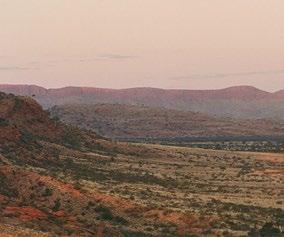
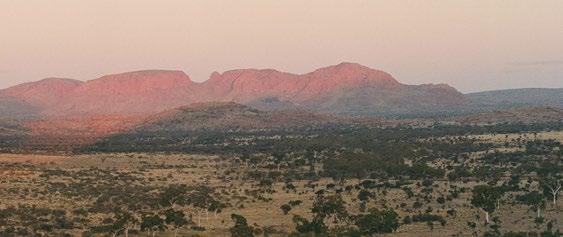
Image: Docker River, NT. Photography by Benjamin Bradley, Desart.
Governance
Leadership in Aboriginal and Torres Strait Islander communities is deeply rooted in cultural authority and customary law. Leaders are often chosen based on their cultural knowledge, wisdom, and ability to navigate complex social and cultural landscapes. Respecting customary rituals is integral to maintaining the community’s identity and cohesion. The incorporation of trauma informed care approaches is essential in recognising the impacts of historical and intergenerational trauma on communities. Staff must be sensitive to these issues, promoting healing and resilience through culturally informed practices.
To find out more about governance issues and to access information and resources on governance for Indigenous organisations contact Desart’s Strong Business program.
Corporate Structure
Most art centres are set up either as Indigenous Corporations under the Corporations (Aboriginal and Torres Strait Islander) Act, also known as the CATSI Act, or as Incorporated Associations under state or territory legislation. Others operate under the corporate structure of a larger organisation such as a regional or shire council or an Indigenous service provider such as NPY Women’s Council. In all cases, senior staff should be familiar with the constitution or rules of the organisation and be aware of your governance related duties and responsibilities. All art centres should have Aboriginal decisionmaking at the centre of their operations.
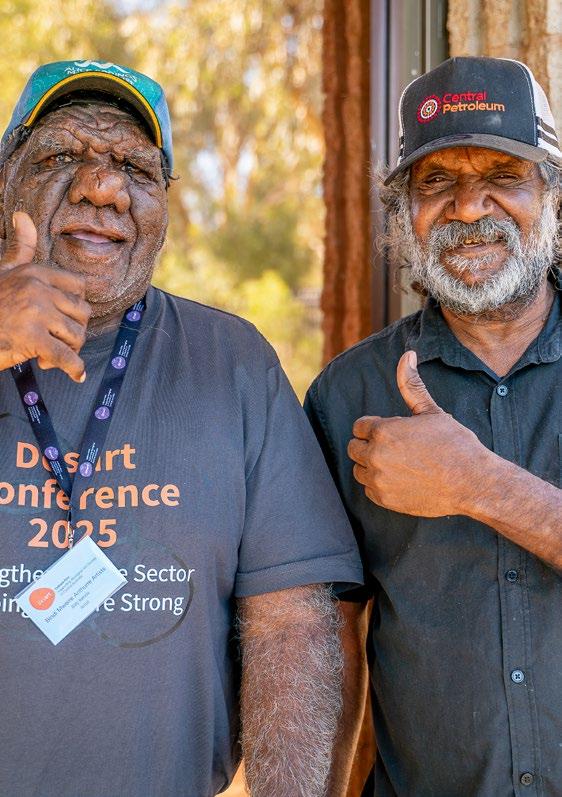
Image: Billy Tjampitjinpa Kenda and Charles Jangala Inkamala, Desart Conference 2025. Photography by Devris Hasan.
Indigenous Corporations
Corporations established under the CATSI Act are registered with the Office of the Registrar of Indigenous Corporations (ORIC). For managers, company secretaries and public officers of corporations, remember, ORIC is your friend. The ORIC website has clear information on every aspect of corporate governance including roles and responsibilities, directors’ meetings and the AGM, lodging financial reports and the legal responsibilities of directors. ORIC offers training, resources, recruitment assistance and more for registered corporations. You can register for training online and get prompt assistance over the phone.
ORIC Website

www.oric.gov.au
Incorporated Associations
Some art centres may be incorporated under state or territory legislation as Associations which can have less onerous reporting requirements but still require due diligence. If your art centre is an incorporated association, you will need to review the legislative reporting requirements and ensure that reporting timelines are met.
The Northern Territory Associations Act

www.nt.gov.au/industry/licences/ incorporated-associations
The South Australian Associations Act

www.sa.gov.au/topics/family-andcommunity/community-organisations/ incorporated-associations
Western Australian Associations Act

www.wa.gov.au/government/ publications
Regional Shires and Aboriginal Organisations
Aboriginal organisations and regional shires can operate community art centres as part of their operations and take on responsibility for corporate governance, compliance and reporting. For example,
The
NPY Women’s Council runs Tjanpi Desert Weavers and Tangentyere Council operates Tangentyere Artists. It is always important for artists to have some form of representation in decision making that effects their interests and art centre leadership should ensure that this occurs.
Compliance and Reporting
It is a key responsibility of the manager to ensure the art centre’s corporate reporting obligations are met each year. Requirements differ according to the type of corporate structure, but all managers should be working closely with their accountants to ensure timely production of financial reports, annual reports and other information. Reporting deadlines, auditing schedules and dates for annual general meetings should be
built into your administration calendar. Quarterly financial reports should be presented at board meetings and/or staff and artist meetings to ensure transparency around the operations and management of the art centre.
Language, literacy and numeracy
Leaders in tradition-oriented Aboriginal communities are often the most senior members of the community due to their respected position as elders who hold cultural authority. Especially in remote areas, English is not a first language and there may be low levels of English literacy and numeracy. This can create challenges around governance, particularly at board meetings and AGMs.
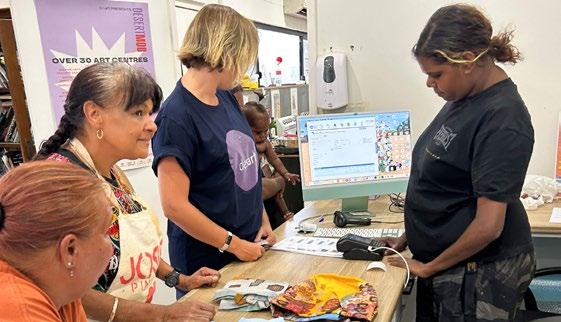
Image: SAM sales training at Hermannsburg Potters Art Centre with art workers Dalissa Brown, Donna McNamara and Josie Fly, Photography by Alana Holmber, Desart Digital Labelling Project.
It’s important that board members are valued for the positions they hold in the community and their extensive cultural knowledge. Many board members sit on multiple boards and are highly experienced in governance matters. Special measures should be taken when presenting financial reports, strategic plans and operational decision making to ensure all directors have a clear understanding of the material before them.
The most basic governance protocol in these circumstances is to always have an interpreter present at meetings to translate information being presented and allow for discussion to take place in language. Experienced meeting facilitators are available to devise innovative techniques to convey complex information in low literacy and numeracy environments. Desart’s Strong Business team can advise on these arrangements.
Languages spoken across the Desart membership include:
• Central Arrernte
• Eastern Arrernte
• Pertame (Southern Arrernte)
• Western Arrarnta
• Alyawarr
• Anmatyerr
• Antakrinja
• Kaytetye
• Kukatja
• Luritja
• Martu Wangka
• Ngaanyatjarra
• Pintupi
• Pintupi-Luritja
• Walmajarri
• Warlmanpa
• Warlpiri
• Warumungu
• Yankunytjatjara
Strategic Planning
All art centres should have a strategic plan that ranges over either 3 years or 5 years. These documents result from consultation with directors, staff, artists and other stakeholders to interrogate and refresh the aims and objectives of the organisation and devise achievable pathways to accomplish goals. The process of creating a new strategic plan can be onerous and should be planned and budgeted well in advance. External expertise is available to assist and the Desart Strong Business program has resources that can help including a register of consultants experienced in the art centre environment.
Strategic plans are essential documents for successful funding applications as they demonstrate a clear purpose for the organisation and the internal structure and capability to achieve goals. They also act as a unifying document which has brought together input from all stakeholders with the interests of the artists, their families and communities at the fore. In this way, the process is just as important as the document that is produced.
Policies and Procedures
“There must be clear rules: the use of the phone, vehicle, art materials, opening hours, artist payments, what happens when there is sorry business. This is done through talking, listening, taking time and letting everyone know.”
– Desart Director
Every art centre should have a clear set of policies and procedures that govern the way things are done. Some of these will be a legal requirement such as WHS policies while others are just good sense and will make life easier for everyone at the art centre. Some funding bodies or corporate partners will require certain policies and procedures are in place before embarking on financial partnerships.
The policies help prevent misunderstandings and mistakes. They make sure the art centre remains compliant with legal and funding requirements. Policies and procedures also provide a clear framework for decision-making, which is essential for maintaining a professional and supportive environment for both staff and artists.
Maintaining and updating key policies and procedures will ensure that your organisation is continually striving to improve its operational efficiency in order to achieve better outcomes. Reviews should take place at least on a biannual basis and policies changed whenever the need arises. Advances in technology or changes in workplace laws or industry standards are just a few things that will require a review of current practices.
Key areas include:
• Work Health and Safety including vehicle use.
• Human Resources Management including training, travel, and working remotely.
• Financial Management.
• Governance including meeting arrangements and protocols.
• Administration.
• Public Relations and Marketing (including copyright and ICIP).
• Technology including cybersecurity, social media and AI.
Desart’s Strong Business team can assist with templates for many different policy areas.
Indigenous Cultural and Intellectual
Property (ICIP)
Indigenous Cultural and Intellectual Property (ICIP) refers to the rights of Aboriginal and Torres Strait Islander peoples to manage, protect, and control their heritage, including traditional knowledge, songs, stories, art, and cultural objects. ICIP covers tangible and intangible heritage, including traditional knowledge, arts, and genetic resources. It emphasizes self-determination, requiring free, prior, and informed consent (FPIC) for any use of ICIP.
ICIP covers cultural expressions that are physical, like a painting, and non-physical, like a story that is not written down. ICIP represents a
communal right or group ownership rather than individual ownership. Some forms of ICIP like written or recorded material is protected by Australian copyright law, however there are gaps in the law where some forms of ICIP are not protected such as oral stories or community ownership of cultural information. The Australian government is developing laws to better protect these rights against exploitation and misappropriation.
Key Aspects of ICIP
• Intangible Heritage: Traditional knowledge, stories, language, and rituals.
• Tangible Heritage: Cultural objects, artifacts, and artworks.
• Cultural Expressions: Dance, music, and performances.
• Cultural Knowledge: Traditional medicine, ecological knowledge, and, notably, secret/sacred information.
Protection and Protocols
• Limitations of Current Law: Intellectual property laws like copyright often fail to protect ICIP because they focus on individual ownership, have time limits, and do not cover communal, ancient knowledge.
• Protocols: Because legal protection is limited, voluntary codes (such as True Tracks®) are recommended to guide ethical, respectful use.
• Consent: Proper engagement involves Free, Prior and Informed Consent (FPIC) from the relevant community.
Why ICIP Matters
ICIP is based on the right to selfdetermination. Article 31 of the UN Declaration on the Rights of Indigenous Peoples (UNDRIP) explicitly affirms this right. Protecting it ensures that First Nations communities can maintain their cultural identity, control their knowledge systems, and prevent the unauthorized commercialization or misuse of their heritage. For further information about how ICIP right may affect your art centre visit the links below.
Office for the Arts
Protecting First Nations Traditional Knowledge and Traditional Cultural Expressions.
www.arts.gov.au/what-we-do/ indigenous-arts-and-languages/ protecting-first-nations-traditionalknowledge-and-traditional-culturalexpressions
Creative Australia ICIP Protocols
www.creative.gov.au/first-nations-arts
Arts Law Centre Information Sheet www.artslaw.com.au/search
True Tracks ICIP Voluntary Code www.terrijanke.com.au/resources
Indigenous Art Code
Artists’ Perspectives on Indigenous Cultural and Intellectual Property (ICIP)
www.indigenousartcode.org/educationcampaigns/artists-perspectives-onindigenous-cultural-and-intellectualproperty
NOTE: QR Codes available in the Resources section.
Cyber Security
As the world moves deeper into the digital economy cyber security has become increasingly important for all organisations, including art centres. Every art centre should have a cyber security policy approved by the board of your organisation. Information and training should be made available to staff and board members to help them understand and navigate the risks associated with the information stored on your computers and how that information is used and protected.
A cyber security policy is important for all art centres, even those governed by a larger organisation such as a local government entity or community corporation. A clear policy helps your staff understand what they need to do to protect your art centre’s devices and information.
Make sure your cyber security policy explains:
• the type of information employees can share (Privacy Act).
• acceptable use of devices and online materials.
• how to handle and store sensitive information
• how to protect against an email security breach.
• how to detect and respond to a cyber security incident (such as phishing ).
• rules around social media use.
For small arts organisations
• Policies should be simple and focus on key risk areas like email scams and social media use rather than complex technical details.
• Ensure sensitive information including financial and HR records, grant information and donor details are protected from unauthorised access.
• Ensure your policies align with your legal obligations under the Privacy Act.
Use the links below to find out more about Cybersecurity and contact Desart’s Strong Business program for advice and assistance.
Arts Law Privacy Info Sheet www.artslaw.com.au/information
Create a Cybersecurity policy www.business.gov.au
Cybersecurity Checklist www. business.gov.au
The Privacy Act www.oaic.gov.au/privacy
NOTE: QR Codes available in the Resources section.
Artificial Intelligence
Australians are using Artificial Intelligence (AI) everyday as creators, participants and audiences in arts and cultural settings. It is widely recognised that there are both risks and opportunities associated with the use of AI and there is an ongoing debate around the need for regulation on different aspects of AI use.
AI effects many different aspects of arts and cultural production and consumption from the creation of new work to marketing, promotion and sales. Understanding the uses and impacts of AI in the arts and cultural sector has become increasingly important to ensure art centres remain competitive and safe in the digital era.
The Australian Government has committed to take action to protect the rights of artists in the use of artificial intelligence. Ongoing consultations with artists and arts organisations will inform the development and implementation of a range of measures over the coming years.
Risks
The obvious risk for Aboriginal and Torres Strait Islander art centres is the ability of AI tools to create convincing examples of Australian Indigenous art. This can be done when machine learning models use images of existing authentic Aboriginal and Torres Strait Islander art to create new images that can be used in the production of prints, digital designs and logos, and a wide range of homeware products from cushions and coffee
cups to T-shirts and wall hangings. This activity poses a serious threat to established markets for Aboriginal and Torres Strait Islander artists.
Opportunities
AI tools are constantly developing and can be utilised by artists to enhance the creativity of their work. Aboriginal and Torres Strait Islander Art Centres have employed innovative uses of AI in the creation of new work with significant outcomes in the past. In a 2014 exhibition at the Museum of South Australia, Ku Arts featured an interactive video display designed to engage children to play with an animated character created by an artist from Pipalyatjara in collaboration with a team of specialist computer programmers. The outcome was highly engaging for the audience including children and adults.
More recently the National Gallery of Victoria commissioned an artist to develop a continuously changing 3D audio visual display which credited over a dozen artists as well as the team responsible for the generative AI content. When using AI tools in the creative process consideration should always be given to transparency through full disclosure of AI elements and by crediting those responsible for the AI inputs.
Use the links below to find out more and contact Desart’s Strong Business Program for further advice.
Artificial Intelligence (AI) and Copyright – Arts Law Centre www.artslaw.com.au
AI and Copyright in Australia –Copyright Agency www.copyright.com.au
Preventing Culturally Unsafe AI Practices www.theconversation.com
Indigenous Data Sovereignty www.maiamnayriwingara.org
Good Data Practices for Indigenous Data Sovereignty and Governance www.lowitja.org.au www.researchcommons.waikato.ac.nz
A New Approach – AI Safety and Governance www.newapproach.org.au/wp-content
ANA Submission www.newapproach.org.au
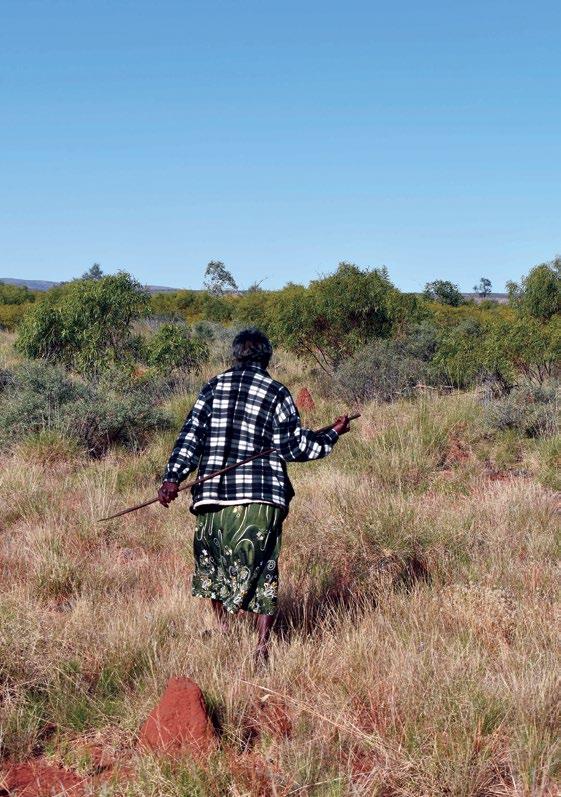
Image: Doreen Rankine Ngala on Country Karlu Karlu 2023. Image courtesy Arlpawe Art and Culture Centre. Photography by Harry Price.
Operations
Managing the operational side of an art centre includes a lot of administrative work, including important tasks like writing funding applications, chasing payments, and ensuring artists and staff are paid. These essential tasks come after the basic day-to-day operations such as opening the art centre and getting the space ready for artists, ensuring materials and equipment are ready for use, shopping for food and arranging transport for artists. However, the main task for art centre staff is to facilitate the creation of high-quality artwork and get it to market.
Your art centre is a business, and managers and directors need to have a solid understanding of how the business operates. These essential documents will give you a basic understanding:
• The current art centre business plan –review art centre goals, strategies, and Key Performance Indicators (KPIs).
• The most recent art centre annual report with audited accounts.
• The art centre’s most recent balance sheet – go through it with the accountant.
• All current funding agreements and contracts – make sure that you know the amounts, activities, KPIs, and reporting dates. Contact your contract manager for each grant as soon as possible to check in.
• The art centre policy and procedures manual – review and update it with new information.
• The art centre’s Rule Book (its constitution) – find it at www.oric.gov.au or your incorporated association constitution or Memorandum of Understanding with your governing corporation.
SAM
Desart has developed a unique administrative tool that is used nationally by almost every Aboriginal and Torres Strait Islander art centre.
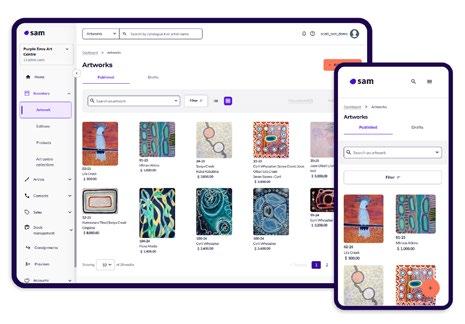
The Stories Art Money (SAM) software is designed to manage the documentation, sale and tracking of all artworks created at your art centre. SAM is an essential tool for your key administration tasks.
The SAM Platform helps you:
• Catalogue and label artworks, including using QR and bar codes.
• Document artwork provenance.
• Handle sales and consignment transactions.
• Issue certificates of authenticity and artist biographies.
• Manage stock.
• Promote artworks to customers.
• Facilitate online sales.
• Manage financial tasks, including payments to artists.
• Generate invoices and manage customer relationships.
• Produce artist CVs.
• It also lets you generate reports to track and analyse sales performance, individual artist sales, production outputs, and more. Multiple users can work simultaneously from any location with an internet connection, each with appropriate security levels. You can use it offsite at market stalls, galleries, and exhibitions for sales transactions and creating digital certificates of authenticity. Desart provides regular training sessions for SAM users.
The SAM Platform supports online sales by:
• Inventory management: Track and manage artworks available for sale, including their status and location.

Aspen AI guides learners through the SAM online training course.
• Sales transactions: Process online transactions securely and efficiently.
• Order tracking: Keep customers informed about the status of their orders.
• Integration with the website: Connect SAM with your website to provide real-time updates on available artworks and streamline the sales process.
Understanding the Art Market
The art market is dynamic and constantly evolving, influenced by economic conditions, cultural trends, and changes in consumer behaviour. Understanding these adjustments and fluctuations is crucial for art centres to navigate the market effectively and support their artists.
Keep an eye on current art market trends, including popular styles, themes, and mediums. This can help inform the art centre’s programming and marketing strategies.
Economic conditions, both locally and globally, can impact the art market. Be aware of economic indicators and how they might affect art sales and funding opportunities.
Changes in consumer preferences and buying habits can influence the demand for certain types of art. Stay informed about what collectors and art buyers are looking for and adjust your offerings accordingly. Subscribe to art magazines like ArtLink or Art Collector and talk with dealers and collectors whenever you get the opportunity.
The art market can experience seasonal fluctuations, with peaks during certain times of the year, such as major art fairs
and holiday seasons. Plan your exhibitions and sales strategies to align with these periods of increased activity. Develop pricing strategies that reflect the current market conditions. This may involve adjusting prices based on demand, artist reputation, and the overall economic environment.
Contact Desart’s Strong Business program or other art centre managers in you region for advice on price setting.
Build and maintain relationships with collectors, galleries, and other art professionals. Networking can help you stay informed about market trends and opportunities, as well as provide valuable support for your artists.
Sales and Marketing
The art centre is many things but at its core it is a business that relies on sales. There are a range of avenues to achieve sales, and all art centres should review their sales and marketing strategies regularly. Art centres are increasingly diversifying the products they make available to the art market with the development of branded merchandise, licence agreements for homewares and fashion and textiles.
Many art centres have established relationships with galleries in major urban centres. These relationships can often be focussed on individual artists but can also lead to exhibitions featuring a wider selection of artists from your art centre. It’s important to recognise and maintain these relationships as gallerists have networks of collectors and art investors they can influence.
Exhibitions at commercial galleries are a key vehicle for selling artworks either for individual established artists, group shows for emerging artists or exhibitions of works that address a particular theme. New managers should familiarise themselves with the existing exhibition schedule and retail commitments. Work back from delivery dates to make sure artists and the art centre stay on track to produce the quality and quantity of work required.
For art centres, understanding the processes involved in international importing and exporting of artworks is essential for participating in international exhibitions, sales, and collaborations. Contact Desart’s Strong Business program or other experienced art centre managers in your region for advice.
When it comes to moving a lot of stock in a short period, art fairs like Desert Mob Art Market, Darwin Aboriginal Art Fair or Tarnanthi Art Market, AIATSIS Indigenous Art Market, and Blak Market all draw big crowds looking for a bargain. These are a good opportunity to clear the stockroom of unsold work at marked down prices.
Direct sales to customers through the art centre’s physical space or online store allows for personal interaction with buyers and a direct connection to the artists with no gallery commissions or retail mark-ups. If your art centre is accessible to tourists it may be worth developing a relationship with tour operators to include you in their tours. Collaborating with retail stores, gift shops, and tourist attractions to sell artworks and related products can help
tap into the tourist market and expand the reach of the art centre.
Online platforms can reach a global audience and provide additional sales opportunities. Use online marketplaces and platforms like Artsy, Saatchi Art, or even social media channels to sell artworks.
Pricing artwork can be challenging, but it’s crucial to get it right. Overpricing can lead to unsold work, frustrating artists and jeopardising the art centre’s sustainability. The monetary worth of artwork is what someone is willing to pay for it. If you want to sell an artwork, price it to sell.
Pricing considerations:
• Market conditions: Research what prices similar artworks have sold for in the past. Consider the current market conditions and what it can bear.
• Artist’s input: Discuss with the artist what they think their work is worth and why. Always talk privately to the artist about pricing.
• Stock management: Be mindful of managing the art centre’s stock levels.
• Price sensitivity: Avoid raising prices just because something is selling well, as some market sectors are very price sensitive.
Establish the pricing model and method your art centre uses (as outlined in the policy and procedures manual). The model might be cost-based, demandbased, or competition-based. Some art centres use a method of set-sized artworks combined with a pricing matrix that ranks artists from high to low or
categorises artworks from small and affordable to famous and collectable. Apply common sense to any method: if a work is exceptional or below par, adjust the pricing accordingly.
Example pricing formula:
Determine the artist payment.
Subtract the gallery’s commission (e.g., $9500 – 40% = $5700).
Subtract the art centre’s commission (e.g., $5700 – 40% = $3420).
The remaining amount is the payment to the artist.
GST considerations:
Generally, no GST is applied to the selling price, except in cases where the artist is registered for GST or the art centre has purchased the works upfront. Ensure exhibition contracts specify whether the gallery’s commission includes GST.
By carefully evaluating artwork prices and mark-ups, you can ensure fair pricing that benefits both the artists and the art centre, fostering a sustainable and thriving art community.
When developing merchandise, it’s essential to work closely with artists to ensure their work is represented accurately and respectfully. Always obtain informed consent from artists before using their designs for merchandise. This means clearly explaining how their artwork will be used, where it will be sold, and how profits will be distributed. Ensure that artists fully understand and agree to the terms before proceeding. Draft clear and fair agreements with artists regarding
the use of their artwork for merchandise. Desart and Arts Law can assist with providing pro-forma contracts to ensure all agreements are legally sound and fair.
The Copyright Agency (CA) is an Australian not-for-profit organisation that facilitates the reuse of copyright material by third parties. They collect fees from licences and deliver payments to the creators. CA is officially appointed by the Australian Government to administer the management and payment of royalties to creators, including acting for educational institutions. This ensures that artists receive fair compensation for the use of their work.
The SAM Platform supports the management of merchandise by allowing art centres to track the use of artworks for different products. You can use SAM to:
• Catalogue merchandise designs and link them to the original artworks.
• Track sales and inventory of merchandise.
• Manage royalty payments to artists
• Generate reports on merchandise performance.
Marketing and promotions are a key activity for the art centre, attracting customers and generating sales.
Advertising and editorial coverage in national arts media should be strategic and align with your exhibition, awards and art fair programs.
Key marketing strategies:
• Familiarise yourself with current marketing strategies. Understand the goals, target audience, and key messages that have been successful.
• Ensure consistent use of the art centre’s brand, including the logo, colour scheme, and messaging, as outlined in your style guide.
• Maintain and update the art centre’s website and social media platforms. Share updates, promote events, and engage with your audience using the established brand voice.
• Produce high-quality content that aligns with the current strategies. Highlight upcoming exhibitions and events and use artist stories or behind-the-scenes views of the creative process to promote the artists.
• Continue building and maintaining an email list of customers, supporters, and stakeholders. Send regular newsletters and updates in line with the established communication style.
• Review the existing approach to targeted advertising, whether online ads, print ads in art magazines, or promotional materials for events. Invest in what works.
• Maintain relationships with local and national media, securing coverage for the art centre and its artists through press releases and pitches.
• Partner with galleries and cultural institutions for exhibitions and events to expand reach and boost your artists’ reputations.
• Use customer relationship management (CRM) tools to track interactions with customers, manage sales, and personalise communication, adhering to the art centre’s established practices.
Promotional Channels
Social media: This is probably the best way to broadcast what you are marketing. If you’re going to do one thing, use Instagram. If you’re going to do two things, invest in great photos that include artists. Whichever platforms your art centre is using, make sure to post regularly to help build audience. If your art centre has capacity, it’s a good idea to post daily. Tell simple stories that engage the audience with photos of artists working, bush trips, or simply everyone having morning tea. Posting daily with photos or video will help the algorithms expand your reach and build a following.
Websites: Key elements can include:
• Artist profiles: Highlight the artists and their works, including biographies, artist statements, and galleries of their art.
• Exhibition information: Provide details on current and upcoming exhibitions, including dates, locations, and featured artists.
• Online store: Many art centres have an online store where visitors can purchase artworks and merchandise.
• Promotional use: Some art centres use their websites for promotional purposes only, directing visitors to exhibitions and providing basic information about the art centre.
• Blogs and newsletters: Share updates, stories, and news related to the art centre and its community.
• Contact information: Make it easy for visitors to get in touch with the art centre for enquiries or further information.
• Online sales: Online sales extend the reach of an art centre beyond its physical location allowing for global transactions and wider audience engagement.
Online sales for Aboriginal art are becoming an important source of income for art centres. If your centre does not have an online sales portal, you should consider setting one up. Global commerce is moving online, and buyers are becoming more confident in making purchases this way, however, you do need the capacity to maintain and update the site regularly. Some successful art centres don’t have a website. Maybe all you need is a landing page to direct people to your social media.
Your website is a place where the story of your art centre can be told in detail and with an engaging array of images and information. Use the website to host profiles of your artists. Using text, video and images, share the history of the community and the foundation of the art centre. Include stories depicted in the art works and show viewers everyday scenes at the art centre. If you have an online store, regularly update it and ensure all important links are functional.
Search optimisation is vital for increasing the visibility of your website and attracting more visitors. Consider these steps to enhance search optimisation:
• Keywords: Use relevant keywords throughout your website content to help search engines find and rank your site.
• Quality content: Regularly update your site with high-quality, relevant content that engages visitors and encourages them to stay longer.
• Backlinks: Build backlinks from other reputable websites to improve your site’s credibility and search ranking.
• Local SEO: Optimise your website for local searches by including location-specific keywords and registering your art centre with online business directories.
Exhibition openings, art fairs, and markets: Travelling to art fairs, awards and exhibitions can be a rewarding experience for artists and art workers who get to interact with gallerists and collectors as well as the general public. It’s an important opportunity to connect with customers face to face and to network with important players in the industry. But it can be expensive and needs careful consideration. Do a full budget and a cost–benefit analysis before committing. It’s always good to weigh up the benefits of attending an opening with artists, against the value of a full-page glossy advertisement in a national arts magazine.
Desert Mob: The highly anticipated annual Desert Mob program includes a high-end curated exhibition, an art market that attracts thousands of local buyers and visitors from around the world, and a popular program of artist talks. Desert Mob is a key event on the Indigenous art calendar and there is a strong expectation that each art centre will showcase their finest work for the exhibition. Collectors begin lining up outside the gallery hours before the exhibition opening. This is an impactful event that attracts high end collectors and institutional buyers for the curated Desert Mob Exhibition, and the Desert Mob Art Market is legendary as a source of high quality, authentic and affordable art. Desert Mob also promotes satellite exhibitions by member art centres held at a range of local venues and galleries during that time. The Desert Mob Artist Talks are an excellent platform for your art centre to engage the attention of this valuable audience.
Digital labelling enhances transparency and provides valuable information to customers. By using QR codes and barcodes on merchandise, you can:
• Provide information about the artist and the story behind the artwork.
• Link to additional products or related artworks.
• Facilitate easy reordering and inventory management.
• Ensure authenticity and prevent counterfeiting.
The SAM Platform supports the integration of QR codes and barcodes. You can generate these codes directly within the system, attach them to artworks, and use them to manage inventory, track sales, and enhance visitor engagement.
By incorporating QR codes and barcodes, art centres can streamline their operations, improve inventory management, and provide visitors with easy access to detailed information about the artworks and the artists. This not only enhances the visitor experience but also supports efficient and transparent management of the art centre’s resources.
Labelling and provenance are critical aspects of managing and marketing artworks.
Labelling involves providing essential details about the artwork, such as the title, artist’s name, medium, dimensions, and date of creation. Labels give buyers and viewers immediate information about the piece and help track the artwork within the art centre and beyond.
Provenance is the documented history of an artwork’s ownership and origin. It details where the artwork has been, who has owned it, and any exhibitions, awards or significant events it has been part of. Provenance adds to the artwork’s authenticity and value, showing its journey and significance over time. The art centre catalogue number is crucial in this process. Provenance is especially important in Aboriginal art because it includes the cultural context, the artist’s connection to Country, and the stories and traditions behind the artwork. It helps preserve and respect the cultural heritage embedded in the art.
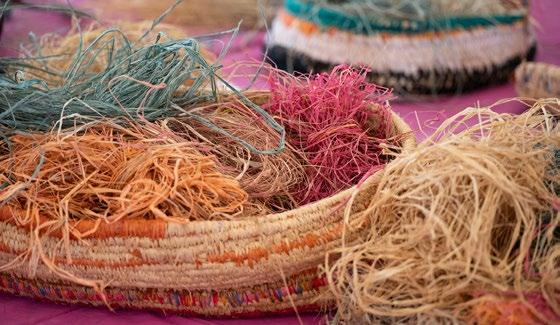
Image: Tjanpi Desert Weavers, weaving demonstration, Desert Mob 2024 public programs. Photography by Sara Maiorino.
Media
Desart supports its member art centres in navigating media relations effectively. This includes help with drafting media releases, preparing for interviews, and managing media enquiries. Desart offers guidance on best practices for engaging with the media and promoting artists and their work.
Effective media management involves accurately representing the art centre and its artists while minimising risks. Ensure all public statements align with the art centre’s values and mission. Be aware of potential risks, such as misrepresentation or negative publicity, and have a plan for managing these risks. Desart can provide advice on risk management strategies and handling sensitive issues in the media.
Engage with various media platforms to reach different audiences:
• Print media: Newspapers, magazines, and journals offer opportunities for feature articles, reviews, and advertisements.
• Broadcast media: Television and radio provide platforms for interviews, feature stories, and advertisements.
• Digital media: Websites, blogs, and online news outlets can reach a global audience with articles, reviews, and features.
• Social media: Platforms like Facebook, Instagram, and Twitter are essential for engaging directly with your audience, sharing updates, and promoting events.
Respond to media enquiries promptly, professionally, and preparedly:
• Assign a spokesperson responsible for handling media enquiries and providing consistent, accurate information.
• Develop key messages that align with the art centre’s values and objectives. Ensure all spokespeople are familiar with these messages.
• During interviews or media interactions, stick to the key messages and avoid divulging unnecessary or sensitive information.
• Honesty and transparency build trust. If you don’t know the answer to a question, say so and follow up later with the correct information.
Manage third-party photography or media recording to protect artists and the art centre’s interests:
• Ensure photographers and media personnel obtain written informed consent from the artists before taking photographs or recordings of their work.
• Ensure that written agreements or release forms clearly communicate any restrictions or guidelines for photography and media recording, such as where and how images can be used or respecting cultural protocols.
• Ensure all photographs and recordings are properly credited to the artists and the art centre as a condition of use.
• Track where and how the media is being used to ensure it aligns with the art centre’s values and agreements.
Journals for Australian contemporary arts
Art Monthly: A flagship Australian arts publication based at the Australian National University in Canberra, Art Monthly publishes reviews and essays fostering critical discourse across the Asia-Pacific region with increasing coverage of international art fairs and biennales. It provides thoughtful analysis on a wide range of topics related to contemporary art, including Indigenous art.
Artlink: A leading quarterly arts magazine in Australia, featuring reviews, essays, and critical writing on contemporary art practices. Artlink has a longstanding commitment to Indigenous art and cultural practices and regularly publishes whole issues dedicated to Indigenous art.
Art Collector: This high-end quarterly magazine features profiles on leading artists, gallerists and collectors. You’ll also find art news, analysis of important issues affecting collectors and previews of forthcoming exhibitions across Australia and New Zealand. They also publish a special Darwin Aboriginal Art Fair edition and a biannual Guide to Indigenous Art Centres. So be sure you know the publication dates.
Memo Review: A journal that publishes critical reviews and essays on Australian and international art. It covers exhibitions in Melbourne, Sydney and regional NSW and Victoria on a weekly basis publishing each Saturday morning. Memo Review Inc. is an independent not-for-profit organisation without institutional affiliation.
Runway Journal: Explores contemporary art and culture, with a focus on Australian and international perspectives. Runway Journal is a free, open-access digital publication that cultivates critical, bold and experimental practice. They commission artistic and written works that respond to current ideas in Australian and international contemporary art. Runway is powered by a dedicated team of voluntary artists and arts workers based across Australia.
Artist Profile: Quarterly journal of conversations and essays about artists and their practices, their personal, social and cultural histories, alongside reviews and previews and artists’ testimonies.
Art Almanac: Monthly art guide with comprehensive exhibition previews, listings, art services and artist opportunities across Australia.
Art + Australia: A biannual open access art journal with each issue focussing on a theme with cutting edge discourse and research about contemporary art in Australia.
Artist Development
It’s important to work with artists to develop career plans that align with their goals and aspirations. This includes identifying opportunities for exhibitions, residencies, and professional development such as workshops that provide training in new mediums and techniques. Offer established and emerging artists the opportunity to extend their practice by trying their hand at print making, 3-D work or digital formats. Art workers who are trained in photography for cataloguing might show a flare for photographic art.
Look for opportunities to match up emerging artists with gallerists who might be interested in their work and ensure that existing relationships between established artists and gallerists are honoured and maintained. Take the opportunity to network with gallerists at exhibition openings, art fairs and art awards and see if their interests align with the current output from your art centre. It is crucial to honour existing commercial relationships with galleries, curators, and other stakeholders. Provide continuity and stability for artists and galleries by maintaining established practices and upholding commitments. This helps to build trust and maintain a professional reputation.
If an artist has a solo exhibition booked, they may need assistance to ensure that they can deliver the work required on time and to the standards required. Work backwards from the delivery date and set adequate timelines for the production of the artwork.
Always conduct financial discussions with artists, in private. Talk to Desart’s Strong Business team or experienced art centre managers about different ways to assist artists with money management.
Studio support is critical in the production of fine art. Ensure the studio is well-equipped with the necessary materials and tools for art making. This includes canvases, paints, brushes, and other artistic supplies. Maintain a clean, safe, and welcoming environment where artists can work comfortably. Provide technical support and guidance to artists, helping them with any challenges they might face in their creative process such as colour
matching or managing large canvasses. Foster a collaborative atmosphere where artists can share ideas, techniques, and feedback with each other. Provide support to artists working from home through regular check-ins, ensuring that artists have access to the materials they need by organising deliveries or pickups.
Look for career enhancing opportunities for established artists. There are many art awards around Australia that even becoming a finalist for will boost an artist’s standing in the art market. Winning a major award will elevate an artist’s career and can justify price increases for both new work and sales on the secondary art market. Secondary sales benefit artists through the re-sale royalty scheme administered by Copyright Agency. Desart sends out a list of upcoming awards in its monthly Grants and Awards Blast.
Ensure your pricing approach, particularly for established and emerging artists, is robust and consistent. Setting prices too high can lead to unsold work and frustrated artists. Lowering prices can have a disruptive effect on the market and cause problems with gallerists and collectors and have a negative impact on the established price point for individual artists.
Promote the health and well-being of artists by providing access to counselling, healthcare resources, daily nutrition and work-life balance support.
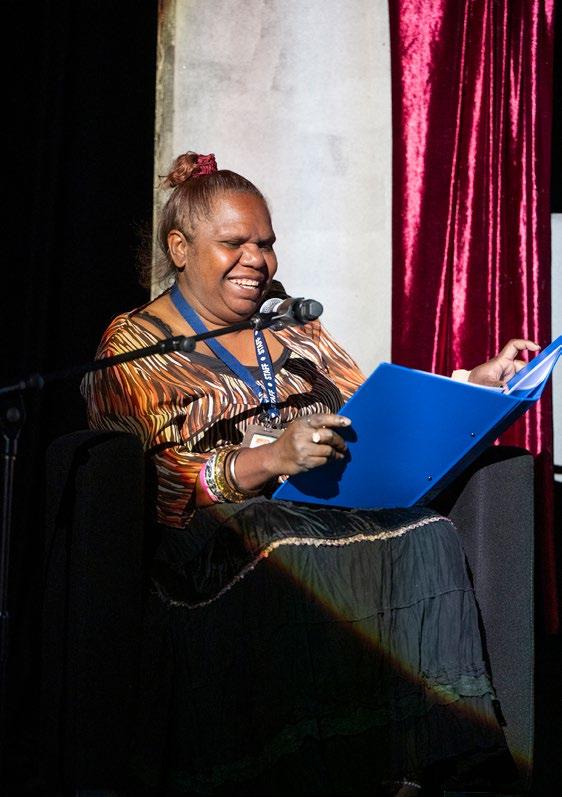
Image: Louise Robertson, True Stories from Yarrenyty Arltere Town Camp, Desert Mob Symposium 2024. Photography by Sara Maiorino.
Administration
Working in the studio with artists can be inspiring as well as demanding but the flow of administrative tasks can flood the office unless you give them constant attention. It’s important to establish a routine workflow so that important administrative and financial matters don’t get missed. Check emails regularly and set aside time to pay bills and send invoices. Work back from key reporting dates and book in time with your accountant and auditor well in advance to ensure that all deadlines can be met. Make sure you have time set aside for project planning and writing funding submissions to avoid missing out on important opportunities for your art centre.
Go through all current contracts and funding agreements and develop timelines to meet your reporting obligations. Some grants may require financial statements at different times of the year. Make sure your accountant is prepared for these and able to issue statements in a timely manner.
It’s incredibly important to keep accurate records of artworks consigned to galleries and to keep track of sales. Art dealers may want to hold on to unsold works beyond the life of the agreement, denying you the opportunity to sell them through another dealer.
Finance
Key financial tasks include:
• Daily transactions: Keep track of all sales, purchases, and payments. Use the SAM platform to record transactions, issue invoices, and manage receipts.
• Artist payments: Ensure timely and accurate payments to artists for their works sold. Some art centres nominate one day a week or fortnight (Money Story Day) to make artist payments in order to avoid constant requests for payments.
• Ensure payments to suppliers are made in a timely fashion as good relations often result in better service.
• Budget monitoring: Regularly review the art centre budget to ensure that expenditures align with allocated funds.
• Grant management: Track grant funding and ensure that funds are spent in accordance with grant agreements.
• Reporting: Work closely with your accountant to prepare quarterly financial reports for the art centre directors. These reports should provide a clear picture of your financial status highlighting areas of concern and should coincide with board meetings, so directors are kept up to date with the financial position of the art centre.
• Financial Returns: Depending on the corporate structure of your art centre you may need to provide annual financial reports to the corporate regulators, ORIC or ASIC, your state or territory government or your governing body if the art centre is not separately incorporated. All corporations need to have an annual financial audit to present to members at the Annual General Meeting. These must be provided to the regulators at the end of each calendar year. Check the details to ensure you don’t miss the lodgement dates as fines may apply for late lodgement.
• Seek advice: When in doubt, talk to your accountant or consult with financial experts. Desart’s Strong Business Program can provide advice and refer you to expert support services.
Artist Payments
Some art centres enforce a strict policy of making payments to artists only on a nominated day each week or fortnight. This strategy is designed to minimise repeated requests for payment which can be disruptive for management. Once everyone agrees to the rule, all requests for payment can be deferred to ‘money story day’ and the management team can get on with day-to-day operations leaving payments to be made in a more efficient manner on a single day.
Budgets
Plan art centre projects and programs with detailed budgets that show how expenses will be met. When all the projected costs are included, work out how the art centre can fund the activity. If there is no financial capacity in the art centre’s annual budget, then work out a strategy to fund the activity. Sources could include grants, donations, or fundraising drives.
The first priority for art centre funds is to cover operating costs including, wages, plant and equipment (buildings & vehicles), and consumables (art materials & office supplies) and communications expenses, (phone, internet, postage, freight). These should all be covered by core funding. Income to the art centre from sales can be allocated to covering consumables or
funding special projects such as workshops, bush trips, or attendance at exhibitions and events.
Balance Sheets
Art centres set up as Indigenous corporations will have a balance sheet included in their annual financial statements. If you are unfamiliar with how to read a balance sheet, spend some time with your accountant to gain a better understanding. It can be helpful to run a finance workshop for your board so that everyone gains an understanding of how the balance sheet relates to the financial position of the art centre. Desart’s Strong Business program can put you in touch with qualified and experienced facilitators who can assist with techniques to present complex financial information in ways that are easy to understand.
Insurance and Legal
It’s an essential part of the administration workload to keep all insurance policies up to date and ensure that any new assets are added to the insurance register. Some funding agreements will stipulate insurance amounts that must be in place before grants are awarded. Failure to keep insurance in place creates a potentially catastrophic risk for the art centre. There are many instances where independent legal advice is required for art centre projects ranging from contracts with suppliers or galleries to international export regulations, employment disputes, workplace accidents or copyright infringements.
Arts Law provides free legal advice for subscriber artists and arts organisations over the phone. Simply submit your inquiry by filling out the online Legal Query Form on the Arts Law website.
People and Culture
Human resources management (now commonly referred to as people and culture management) is an important aspect of any workplace management system. It comes with a set of obligations that govern the behaviour of both employers and employees. National laws under the Fair Work Act set out obligations around pay and conditions, workplace safety, behaviour in the workplace and dismissals. These laws are administered by the Fair Work Commission (FWC).
Many occupations are governed by an award which sets out specific rates of pay and conditions but there is no single comprehensive award that covers workers in the visual arts industry. Consequently, many visual arts and crafts workers are not covered by an award, leading to inconsistent employment conditions and pay rates. However, following a review of the modern award system in 2023-24, the FWC is considering making variations to the Amusement, Events and Recreation Award 2020 to ensure that it gives adequate coverage to arts workers.
The National Association for the Visual Arts (NAVA) has a guide to payment standards for artists and art workers in its code of conduct . The Desart Strong Business team can provide advice and resources around people and culture management.
Recruitment
Getting the right people for the job is important for the success of any business and demands close attention. Make sure the position descriptions you have on file are adequate and up to date and that the art centre budget has the correct allocation for wages for new and ongoing positions. For advice and assistance with recruitment contact the Desart Strong Business program.
Induction
A comprehensive induction process is essential for all new employees when they start a new position. Ensure that your art centre has an appropriate induction kit ready to deploy and keep in mind that different roles require variations in the induction process to ensure specific duties of that role are adequately covered. Induction kits normally include:
• Workplace Health and Safety briefing.
• Code of Conduct.
• Vehicle Use policy.
• List of policies and procedures relevant to the position.
• Employment Agreement.
• Employee details form (address, DOB, Bank Acc, Super Acc, next of kin).
Arts Law has contract templates available to members and Desart Strong Business can provide advice on drawing up or reviewing employment agreements. Creative Workplaces also provides advice on contracts and payment for independent contractors.
Creative Workplaces
Creative Workplaces is a one-stop-shop for people and culture management in the arts sector. They provide information, resources and referral information about pay, safety and respect. Their aim is to help everyone working in creative industries understand their rights and meet their workplace obligations. Creative Workplaces was established by Creative Australia for artists, art workers and arts organisations to promote and enable fair, safe and respectful workplaces in the arts and culture sector. Creative Workplaces recognises artists as both creatives and workers. The sector is diverse and applying workplace laws to creative workplaces can be difficult.
The Fair Work Ombudsman
Unlike the Fair Work Commission which sets the rules and adjudicates disputes, the Fair Work Ombudsman (FWO) provides education, advice and guidance to employers and employees to promote and monitor compliance with Australia’s workplace laws. It can also investigate breaches of the Fair Work Act. If you need information or advice, check the contact us pages on the FWO website.
Interns and Volunteers
For proper management of volunteers and interns, clearly defined roles and responsibilities should be set out in written position descriptions. New volunteers and interns should undergo a thorough onboarding process and receive ongoing training. Make sure volunteers are not exploited or performing the work of paid staff.
You should also implement policies for managing volunteers and handling complaints and provide a safe and inclusive working environment that upholds privacy and confidentiality and addresses any potential risks. Check your insurance policies to see whether you have volunteer insurance before taking on interns and volunteers.
Training and Professional Development
Most organisations make a commitment at the governance level to continuous improvement. A key element of this commitment is a comprehensive approach to staff training and professional development. Managers should regularly assess the training needs of staff and consult artists about undertaking professional development workshops.
Many art centres arrange artist development workshops on-site with arts practitioners in a wide range of artforms. These workshops are important to give artists the opportunity to expand and develop their arts practice, often taking up new forms and materials and experimenting with new techniques. Such workshops can be funded from art centre generated income or by applying for grants from arts funding bodies and philanthropic organisations.
If you have identified appropriate accredited or non-accredited training experiences for Aboriginal art workers contact Desart’s Strong Business program about available support.
Governance training for board members and senior management should occur at regular intervals to both induct new board members and build on the existing skills and knowledge of existing board
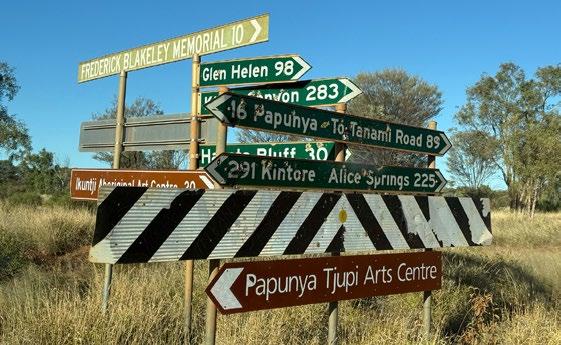
Photography, Desart.
members. ORIC offers governance training annually on a wide range of topics but you can also access expert training and mentoring delivered on site at your art centre by experienced trainers. Contact the Desart Strong Business program to find out how they can help.
Staff Management
Effective team management involves clear communication, delegation of responsibilities, and fostering a collaborative environment.
Understanding and respecting the roles and responsibilities of each team member is critical for effective people and culture management.
Regular meetings are essential for keeping everyone informed and aligned with the art centre’s goals. Clear communication during these meetings helps to address any issues, share updates, and gather input from all team members. This ensures that everyone is working towards common objectives. Agendas and minutes should be prepared and distributed to all participants to ensure transparency and accountability.
Travel
Art centre staff are regularly required to travel as part of their jobs and your art centre policies should stipulate entitlements for artists and staff when working away from base. Travel allowance, overtime and meal allowance rates should be included in your policies and procedures or if your art centre has a registered enterprise agreement it should be included there.
Travel and meal allowances are not a mandatory requirement under Australian law, but they are usually included in awards, enterprise agreements or individual employment contracts. As a guide, you can check the official government rates for travel, meals and overtime allowances on the Australian Tax Office website.
Image: Docker River, NT.
Photography by Benjamin Bradley, Desart.
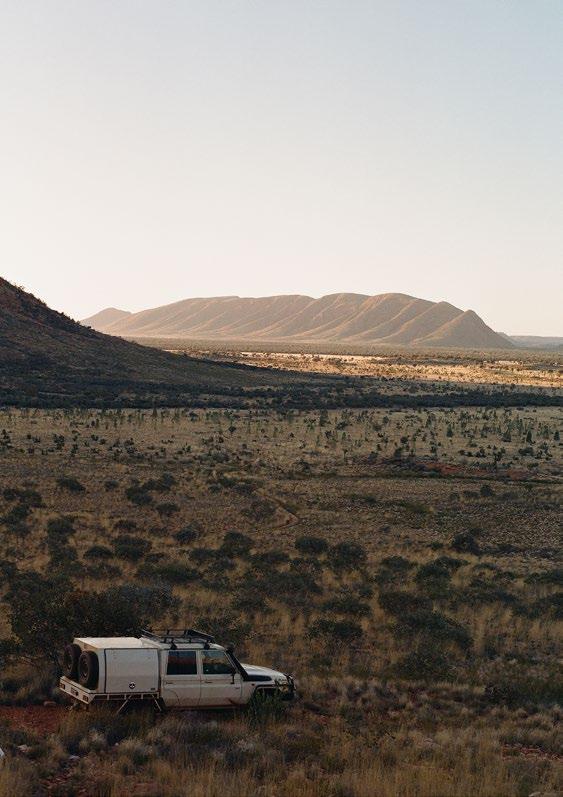
Resources
Health and Safety Resources
National: www.safeworkaustralia.gov.au
Northern Territory (NT): www.worksafe.nt.gov.au
South Australia (SA): www.safework.sa.gov.au
Western Australia (WA): www.commerce.wa.gov.au/worksafe
For comprehensive information across Australia, refer to Safe Work Australia
The Work Health and Safety (National Uniform Legislation) Act 2011 for Northern Territory
The Work Health and Safety Act 2012 for South Australia
The Occupational Safety and Health Act 1984 for Western Australia
Culture, Country & Spirituality: www.indigenousmhspc.gov.au/topics/culturecountry-spirituality
National Standards for Australian Museums and Galleries: www.mgnsw.org.au/ wp-content/uploads/2023/03/Nationals-Standards-for-Australian-Museums-andGalleries-2.0.pdf
Addressing Diverse Needs in the Workplace: www.hsi.com/blog/address-diverseneeds-safety-programs
Managing Psychological Health risks: www.safeworkaustralia.gov.au/system/files/ documents/1911/work-related_psychological_health_and_safety_a_systematic_ approach_to_meeting_your_duties.pdf
Safety Management - Hazard Prevention and Control: www.osha.gov/safetymanagement/hazard-prevention
Workplace violence and aggression: www.safeworkaustralia.gov.au/safety-topic/ hazards/workplace-violence-and-aggression
Our Guide to Conflict De-escalation: www.righttobe.org/guides/our-guide-toconflict-de-escalation
The Role of Bystander Intervention in Preventing Workplace Harassment: www. workforcebulletin.com/the-role-of-bystander-intervention-in-preventing-workplaceharassment
Guidelines for Working With a Trauma-informed Approach: www.blueknot.org.au/ product/organisational-guidelines-for-trauma-informed-service-delivery-digitaldownload
Indigenous art centres that sustain remote communities are at risk: www. theconversation.com/indigenous-art-centres-that-sustain-remote-communities-areat-risk-the-vet-sector-can-help-121179
Menzies School of Health Research resources: www.menzies.edu.au/page/Resources
Governance Resources

Indigenous Art Centre Framework
www.arts.gov.au/sites/default/files/documents/ indigenous-art-centre-framework.pdf





ORIC
www.oric.gov.au
Indigenous Governance Toolkit www.aigi.org.au/resources-page
Strategic Planning for Indigenous Organisations www.aiatsis.gov.au/sites/default/files/research_pub/ maps_prelims_pi-x_3.pdf
Legal Issues for Art Centres - Podcast Series. In partnership with Arts Law, Desart has developed a series of podcasts that address some of the most common legal issues for art centres. www.desart.com.au/publication/artslaw-x-desartpodcast-series-online-galleries-and-stores
Indigenous Cultural and Intellectual Property (ICIP) www.arts.gov.au/what-we-do/indigenous-arts-andlanguages/protecting-first-nations-traditionalknowledge-and-traditional-cultural-expressions
Arts Law Centre ICIP Information Sheet www.artslaw.com.au/information-sheet/indigenouscultural-intellectual-property-icip-aitb





Creative Australia ICIP Protocls
www.creative.gov.au/first-nations-arts/protocols-forusing-first-nations-cultural-and-intellectual-propertyin-the-arts
Arts Law – Privacy Info Sheet
www.artslaw.com.au/information-sheet/artistsprivacy-and-the-private-sector
Create a Cybersecurity policy
www.business.gov.au/online-and-digital/cybersecurity/create-a-cyber-security-policy
Cybersecurity Checklist
www.business.gov.au/online-and-digital/cybersecurity/cyber-security-checklist
The Privacy Act
www.oaic.gov.au/privacy/privacy-legislation/theprivacy-act





SAM Homepage
sam.org.au
Copyright Agency
www.copyright.com.au
Fair Work Commission www.fwc.gov.au
Fair Work Ombudsman
www.fairwork.gov.au NAVA
www.visualarts.net.au




Creative Workplaces
www.creativeworkplaces.gov.au
Indigenous Art Code ICIP Campaign
www.indigenousartcode.org/education-campaigns
Copyright Agency AI Information
www.copyright.com.au
Lowitja Data Sovereignty
www.lowitja.org.au
Funding Sources & Info
Key funding agencies that support art centres include:
Aboriginals Benefit Account (NT only)
www.niaa.gov.au/indigenous-affairs/grants-and-funding/aboriginal-benefit-accountaba-grant-funding
Arts NT
www.dpsc.nt.gov.au/arts-culture-libraries/about-arts-nt
Create SA
www.create.sa.gov.au
Creative Australia www.creative.gov.au
Indigenous Business Australia (IBA) www.iba.gov.au
Lotterywest (WA only) www.lotterywest.wa.gov.au/grants/about-lotterywest-grants
WA Department of Creative Industries, Tourism and Sport: www.cits.wa.gov.au/creative-industries
Don’t restrict funding searches to the arts. State/Territory and Federal government departments have funding programs for areas such as governance capability, tourism, economic development, and regional infrastructure.
Non-government investors in Australia that support Indigenous cultural initiatives include:
CA (Copyright Agency) Cultural Fund www.copyright.com.au/culturalfund
Gordon Darling Foundation www.gordondarlingfoundation.org.au
The Harold Mitchell Foundation www.haroldmitchellfoundation.com.au
The Ian Potter Foundation www.ianpotter.org.au
James & Diana Ramsay Foundation (SA focus) www.jdrfoundation.com.au
The Myer Foundation www.myerfoundation.org.au
Social Ventures Australia’s Diversified Impact Fund www.socialventures.org.au
Tim Fairfax Family Foundation www.tfff.org.au
Creative Partnerships Australia www.creative.gov.au/news-events/news/welcomecreative-partnerships-australia - for resources, funding and assistance with philanthropic approaches.
Philanthropy Australia www.philanthropy.org.au
Funding Centre Grant Database www.fundingcentre.com.au
Knowledge Bank (Books
and articles)
About art centres
The Art and Craft Centre Story: A survey of thirty-nine Aboriginal community art and craft centres in remote Australia, Desart, 2000.
Australian Art Collector Magazine – Indigenous Art Centres Guide, biannual, 2023-25.
Painting Culture: The making of an Aboriginal high art, F. Myers, Duke University. Press, 2002, Chapter 5, Burned Out Outback: Art Advisors Working between Two Worlds.
Books from art centres
This small selection of art books from art centres shows a range of publications undertaken by art centres over three decades:
Desert Art: The Desart Directory of Central Australian Aboriginal Art and Craft Centres, 1998, by Desart Inc., Mary-Lou Nugent (Editor), Iad Press.
Billy Benn, C. Peattie et al, IAD Press, 2011.
Hermannsburg Potters: Aranda artists of Central Australia, J. Isaacs & C. Ngala Inkamala, Craftsman House, 2000.
Ikuntji: Paintings from Haasts Bluff, 1992–1994, M. Strocchi (comp.) IAD Press, 1995.
Songlines: Tracking the Seven Sisters (2017/2018): This book remains a cornerstone publication for understanding Central and Western Desert art.
Keringke: Contemporary Eastern Arrernte art, Keringke Arts, 1999.
Painting on Country, K. Stevens, B. Tjalkuri et al, Tjungu Palya, 2017.
Painting the Song: Kaltjiti artists of the sand dune country, D. James, McCulloch & McCulloch and Kaltjiti Arts, 2009.
Ngaanyatjarra: Art of the Lands, T. Acker and J. Carty (eds), UWA Publishing, 2012.
Nganampa kampatjangka unngu – Beneath the canvas: the lives and stories of the Tjala artists, Tjala Arts (ed.), Wakefield Press, 2015.
Tjanpi Desert Weavers, P. Watson (ed.), Macmillan, 2012.
Warka irititja munu kuwari kutu: work from the past and the present: a celebration of fifty years of Ernabella Arts, L.Partos (ed.), Ernabella Arts, 1998.
On Aboriginal art
Aboriginal Art, H. Morphy, Phaidon, 1998.
Aboriginal Art, W. Caruana, Thames and Hudson, 2003.
Aboriginal Art (2025) Wally Caruana, Thames & Hudson Australia.
Double Nation: A History of Australian Art (2024) by Ian McLean, Piper Press.
Dot, Circle and Frame: The Making of Papunya Tula Art (2023) by John Kean, Upswell Publishing.
65,000 Years: A Short History of Australian Art (2025): A comprehensive survey edited by Marcia Langton, Judith Ryan, and Shanysa McConville, Thames & Hudson Australia.
Dreaming the Land (2022): Marie Geissler provides a survey of contemporary painting across 29 remote art centers. Thames & Hudson Australia.
Narrated World: Contemporary Indigenous Australian Art (2022): Open Access. Downloadable PDF.
The Stars We Do Not See: Australian Indigenous Art (2025) National Gallery of Victoria. Author(s): Leitha Assan, Tina Baum, Maxine Briggs, Daniel Browning & Myles Russell-Cook.
Recognising Aboriginal Art Transforming Australian Culture (Website) www. humanities.org.au/power-of-the-humanities/recognising-aboriginal-art-transformingaustralian-culture
McCulloch’s Contemporary Aboriginal Art, The Complete Guide. Authors: Susan McCulloch, Emily McCulloch Childs. Publisher: McCulloch & McCulloch (Updated Biannually).
Ancestral Modern: Australian Aboriginal Art - Pamela McClusky, Wally Caruana, Lisa Graziose Corrin, Stephen Gilchrist, 2012, Yale University Press.
Across the Desert: Aboriginal batik from Central Australia, J. Ryan et al, NGV, 2008.
Art + soul: a journey into the world of Aboriginal art, H. Perkins, Miegunyah Press, 2010 (TV series also).
Bell’s Theorem: Aboriginal art – It’s a white thing!, R. Bell, 2002: (Website) www. kooriweb.org/foley/great/art/bell.html
Contemporary Aboriginal Art, S. McCulloch, Allen & Unwin, 2001.
How Aborigines Invented the Idea of Aboriginal Art: Writings on Aboriginal contemporary art, I. McLean (ed.), Power Institute of Fine Arts, 2009. Over 100 essays.
One Sun One Moon: Aboriginal art in Australia, H. Perkins and M. West (eds), AGNSW, 2007.
The Oxford Companion to Aboriginal Art and Culture, S. Kleinert and M. Neale (eds), Oxford University Press, 2001.
Papunya: A place made after the story: the beginnings of the Western Desert painting movement, G. and J. Bardon, Miegunyah Press, 2004.
Rattling Spears: A history of Indigenous Australian art, I. McLean, Reaktion Books, 2016.
Streets of Papunya: The re-invention of Papunya painting, V. Johnson, NewSouth Publishing, 2015.
The Town Grew Up Dancing: The life and times of Wenten Rubuntja, Wenten Rubuntja with J. Green, IAD Press, 2002.
Tjungunutja: From having come together, L. Scholes (ed.), MAGNT, 2017.
On cross-cultural matters
Adapting to Difference: Another Look at Aboriginal – Western Interactions, M.S. Bain, BookPal, 2011.
‘Blow-ins on the Cold Desert Wind’, K. Mahood, Griffith Review, No. 15, 2007 (Website) www.griffithreview.com/articles/blow-ins-on-the-cold-desert-wind
‘Entering the inter: Power lines in intercultural communication’, A. Carrillo Rowe, in The Handbook of Critical Intercultural Communication, T.K. Nakayama and R.T. Halualani (eds), J. Wiley & Sons, 2011, 216–26.
Health Care and Indigenous Australians: Cultural safety in practice (2nd edn), K. Taylor and P. Guerin, Palgrave Macmillan, 2014.
‘Kartiya are Like Toyotas: White workers on Australia’s cultural frontier’, K. Mahood, Griffith Review, No. 36, 2012.
On Aboriginal culture
Every Hill Got a Story: We grew up in country / men and women of Central Australia and the Central Land Council, M. Bowman (comp.), Hardie Grant, 2015.
Iwenhe Tyerrte: What it means to be an Aboriginal person, M.K. Turner et al, IAD Press.
Listen Deeply: let these stories in, K. Kemarre Wallace & J. Lovell, IAD Press, 2009.
Traditional healers of Central Australia: Ngangkari, NPYWC, Magabala Books, 2013.
Yuendumu Everyday: Contemporary life in remote Aboriginal Australia, Y. Musharbash, Aboriginal Studies Press, 2009.
On languages
Alice Springs Language Centre: Classes on offer usually include Arrernte and Pitjantjatjara. www.alicespringslanguagecentre.com
Centre for Australian Languages and Linguistics: www.call.batchelor.edu.au
First Languages Australia – peak body: www.firstlanguages.org.au
IAD Press: www.iadpress.com Publishes a range of language resources for many of the languages of Central Australia.
Northern Territory Aboriginal Interpreter Service (NTAIS) for NT, APY Lands, Ngaanyatjarra Lands: www.nt.gov.au/community/interpreting-and-translatingservices/aboriginal-interpreter-service/about-the-aboriginal-interpreting-service
On selling and promoting art
How to Buy and Sell Art, M. Reid, Allen & Unwin, 2004.
Grants, awards, prizes, residencies: Desart’s regular e-blasts. Sign up if they are not landing in your inbox! Also: NAVA’s listings (members only) www.visualarts.net.au/ opportunities and, for prizes and awards (free): www.art-prizes.com
Peak Industry Bodies
Desart Inc. Central Australia desart.com.au
Aboriginal Art Centre Hub WA (AACHWA) www.aachwa.com.au
Arnhem, Northern and Kimberley Artists Aboriginal Corporation (ANKA) www.anka.org.au
Ananguku Arts and Cultural Aboriginal Corporation (Ku Arts) – SA www.kuarts.com.au
Indigenous Art Centre Alliance (IACA) – Far North Qld and the Torres Strait www.iaca.com.au/
Index
A
AACHWA 16, 68
Advertising 43
Advocacy 3, 12
Aggression 23
Ananguku Arts 68
ANKA 16, 68
Art Centres on Screen 13
art fairs 39, 40, 45, 48, 49
Artist payments 51
art market trends 39
arts media 43
B
Balance Sheets 53
Blak Market 11, 40
Budget monitoring 52
Budgets 52
Bush Trips 21
Business Support 3, 12
C
CA 43, 64
CATSI Act 27, 28
Christmas Marketplace 13
collectors 10, 11, 16, 17, 39, 40, 45, 48, 49
Commercial galleries 17
complex needs 22
Consultant register 10, 12
Copyright 2, 43, 49, 62, 63, 64
Copyright Agency Limited 43
counselling services 10
Creative Australia 17, 32, 54, 61, 64
Creative Workplaces 54, 63
Cultural Knowledge 32
Cultural safety 22, 67
D
Darwin Aboriginal Art Fair 11, 40, 41, 48
De-escalation Techniques 23
Department of Foreign Affairs and Trade 17
Desart annual conference 9, 13
Desart Events 10
Desart Radar 12
Desert Mob 10, 12, 13, 40, 41, 45
DFAT 17
Digital Labelling 29
Disability 22
E
Employee assistance service 10
EPIRB 20, 21
exhibition openings 49
F
Fair Work Act 53, 54
Fair Work Ombudsman 54, 62
FASD 22
Financial Returns 52
Funerals 23
FWC 53
FWO 54
G
Gallerists 16, 17
Governance training 55
Grant management 52
Grants and Prizes Blast 12
Human Resources 10, 31
IAC 17
IACA 17, 68
ICIP 31, 32, 60, 61, 63
Incorporated Associations 27, 28
Indigenous Art Centre Framework 17, 59
Indigenous Art Code 17, 63
Indigenous Corporations 19, 27, 28
Indigenous Data Sovereignty 35
Indigenous Visual Arts Industry Support 17
Induction 54
Industry reports 9
international exhibitions 18, 40
Interns 54
IT support 10
IVAIS 16, 17, 41
Journals 48
Ku Arts 17
Language 3, 29, 68
Leadership 27
Legal Query Form 53
Legal support 10, 12
M
Manager coaching 10
Marketing 3, 12, 13, 31, 40, 43
NACCHO 23
NATSIAA 11
NDIS 22 O
online sales 38, 44
ORIC 19, 28, 41, 52, 56, 60
P
Performance reviews 10
Police 24, 25
Policies 31, 33
Pricing considerations 42
pricing strategies 40
Privacy Act 33, 61
Professional development 10
Professional Development 55
Provenance 46
Q
QR Codes 18, 32, 33
R
recruitment 10, 28, 54
Recruitment 54
Regional Shires 28
Reporting 3, 29, 52
Revealed 11, 41
Risk Management 18
road safety policies 20
Rule Book 37
S
Safe Driving 20
SAM 3, 9, 12, 13, 29, 38, 39, 43, 46, 51, 62
search optimisation 45
social media 13, 31, 33, 42, 43, 44
Stories Art Money 3, 38
Studio support 49
T
Tarnanthi Festival 11
Training 3, 12, 55
trauma informed care 27
Travel 56
V Violence 23
virus removal 10
W
websites 13, 44, 45
Artwork Credits
Page 15:
(background) Apmer malangk (Beautiful land) (detail) 2024, synthetic polymer on paper, 70 x 600 cm. Rita Pitjara Beasley, Colleen Ngwarraye Morton, Rosie Kemarre Morton, Elizabeth Ngwarraye Bonney, Denise Ngwarraye Bonney, Michelle Pula Holmes, Alana Ngwarraye Holmes Leanne Pula Teece, Kathleen Nanima Rambler, Julieanne Ngwarraye Morton, Kindy Kemarre Ross & Sevania Kemarre Bonney. Artists of Ampilatwatja.
(foreground) Judith Pungarta, Inkamala Pmara Nukanga Kuta (Near to My Country) 2024, terracotta and underglazes, 31 x 23 x 23 cm / Dalissa Brown Irrpmankara (Runnning Waters and Boggy Hole) 2024, terracotta and underglazes, 27 x 21 x 21 cm / Andrea Pungarta Rontji Pmara Arna Nuka Aritjika Lhama (I went to see my Country) 2024, terracotta and underglazes, 38 x 20 x 20 cm / Beth Mbitjana Inkamala West MacDonnell Ranges, Going Out Country Visiting with my Family 2024, terracotta and underglazes, 34.5 x 19 x 19 cm. Hermannsburg Potters,
Photo by Sara Maiorino. Desert Mob 2024.