
uinte Arts

What's Under the Umbrella?
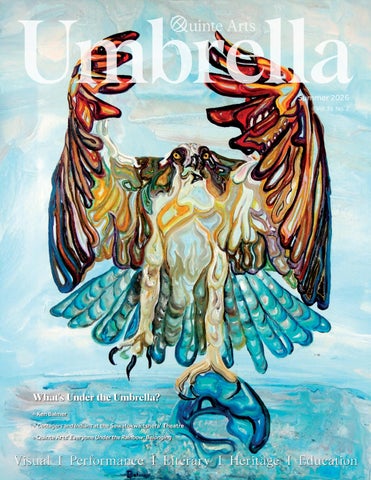
o Ken Balmer
o Cottagers and Indians at the Sewatokwà:tshera’ Theatre
o Quinte Arts' Everyone Under the Rainbow: Belonging

uinte Arts
Janet Jarrell, Executive Director janet@quinteartscouncil.org
Andrew Gray, Program Director drew@quinteartscouncil.org
Kim Lidstone, Bookkeeper qac@quinteartscouncil.org
Graphic Design: Drew Gray
Quinte Arts is a not-for-profit, charitable organization, registration number 107869448 RR 0001.
Published by: Quinte Arts, P.O. Box 22113 Belleville, Ont. K8N 2Z5.
Material may be reprinted only with permission. Umbrella is available in digital format through Issuu. The information contained within is believed to be reliable, but accuracy cannot be guaranteed. We do not assume responsibility for any errors and/or omissions related to submitted content.
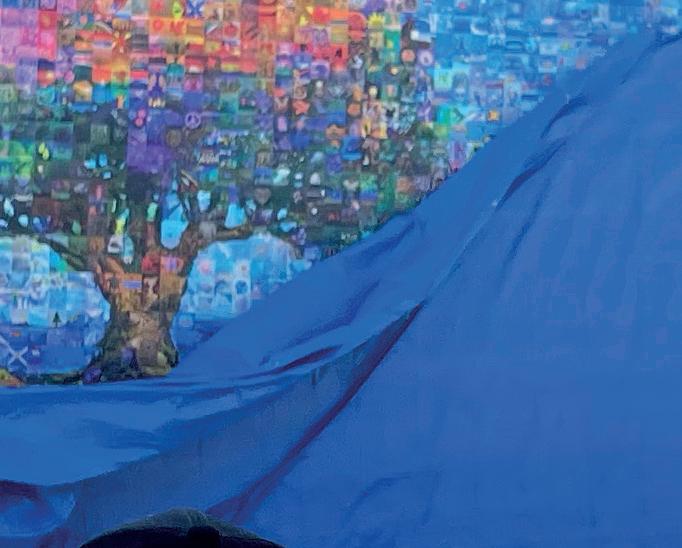
There’s something incredibly rewarding about seeing a community come together through the arts. That spirit was on full display with the QAC Community Mural Mosaic, where hundreds of local residents helped create a lasting work of public art. It’s a powerful reminder that creativity belongs to everyone, that connection matters and that, together, we can create something far greater than any one of us could alone.
This issue also celebrates an exciting milestone for Quinte Arts. We were honoured to receive the Accessibility Excellence Award from the City of Belleville, recognizing our ongoing commitment to making arts and culture more welcoming and inclusive for everyone. That work continues to grow through our partnerships, programs, and the incredible people who help make it happen.
You'll find that same spirit woven throughout these pages. We celebrate the 8th annual Rainbow Exhibition Belonging in partnership with Bay of Quinte PRIDE, recognize Carl Wiens, whose iconic Canadian Toonie design continues to put Belleville on the map, and applaud the presentation of $7,000 in Quinte Arts student bursaries, helping the next generation of artists pursue their dreams.
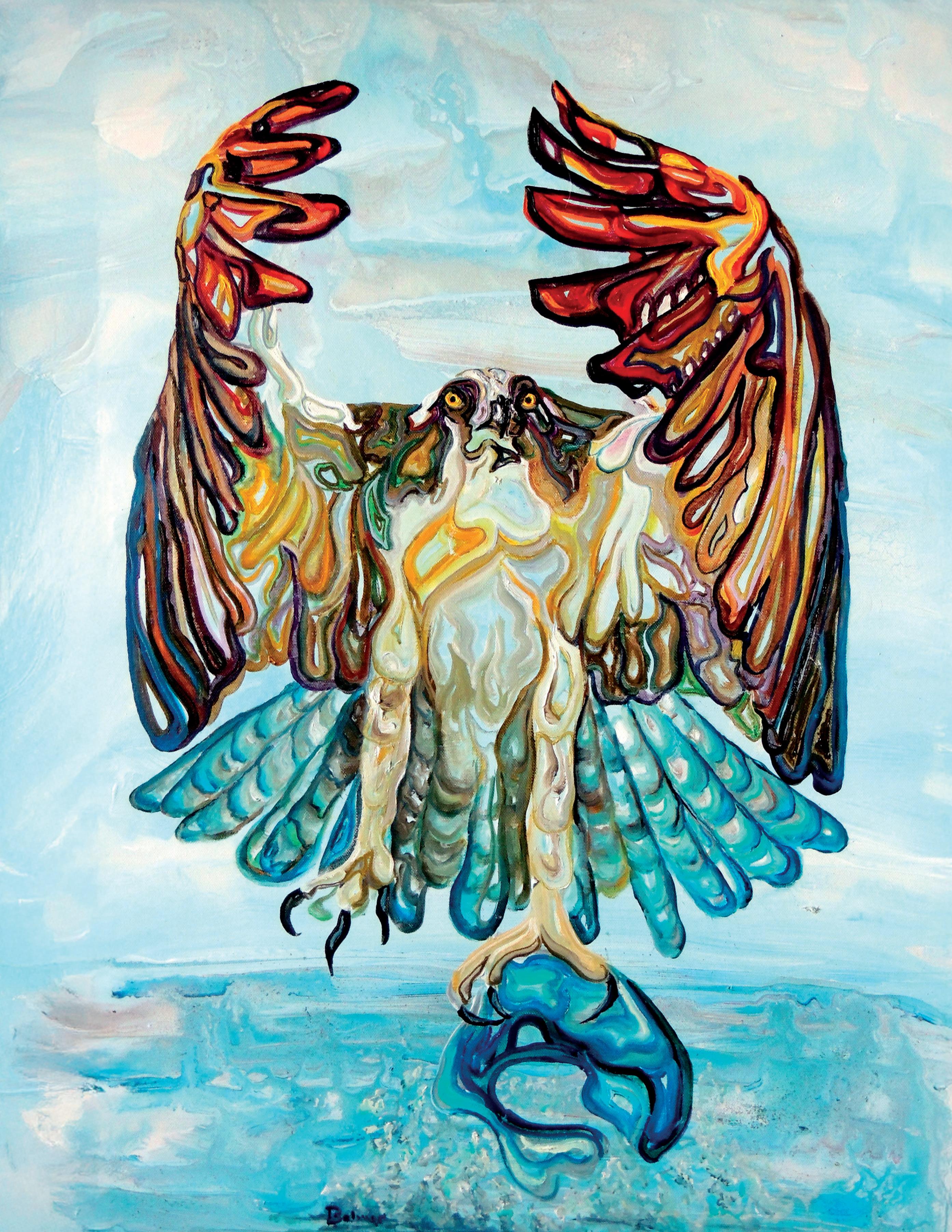
This edition is filled with remarkable stories: the breathtaking paintings of Ken Balmer featured on our cover, sculpture by James Cameron Smith, Dawn Iehstoseranón's thoughtful Pass the Feather, the history of the Upper Canada Opera House, the music of Dead Root Revival, and the inspiring collaboration between Tweed & Co. and Eighty Twenty Studio that brings seniors into filmmaking. We also explore accessibility through Deaf artist
Cassie-Hope Aubin in When ASL Becomes Part of the Performance, celebrate local filmmaking with Cottagers and Indians, enjoy the energy of the Belleville Theatre Guild's One Man, Two Guvnors, and showcase beautiful photography by Kidan Singer.
Finally, thank you to our amazing team—Drew, Lauren, and Arlo— whose passion, creativity, and dedication help bring Umbrella Arts to life. Every issue reflects the remarkable artists, organizations, volunteers, and supporters who make this region such a vibrant place to create.
We hope you enjoy every page.



Quinte Arts programs are funded in part by: John M. & Bernice
Cover: Ken Balmer Back: Nick White
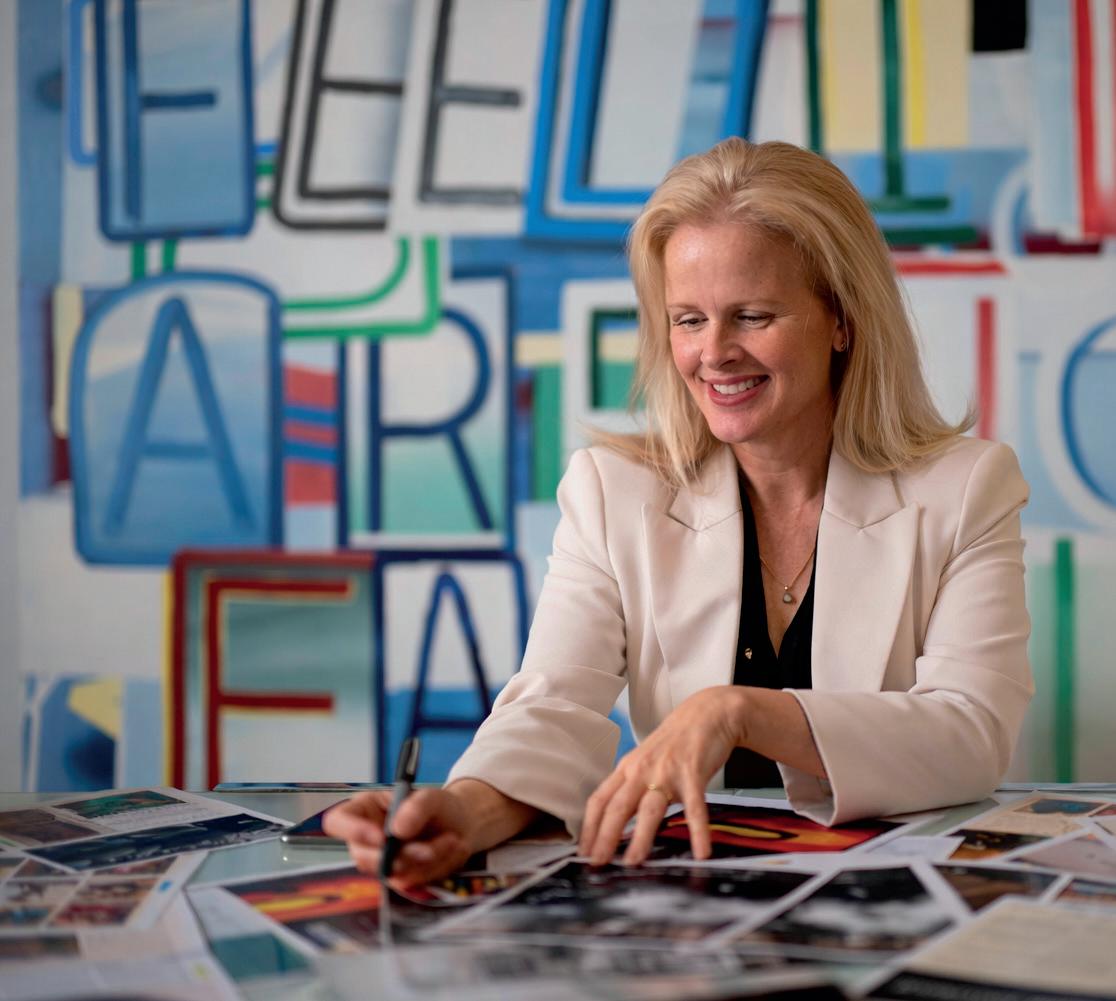
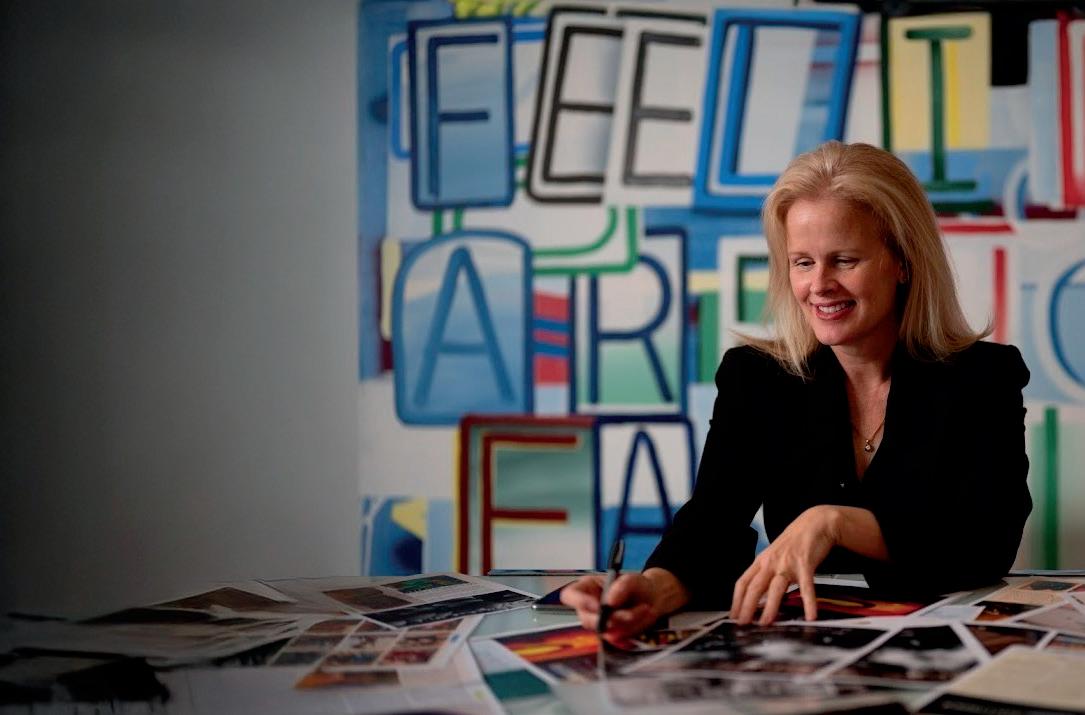
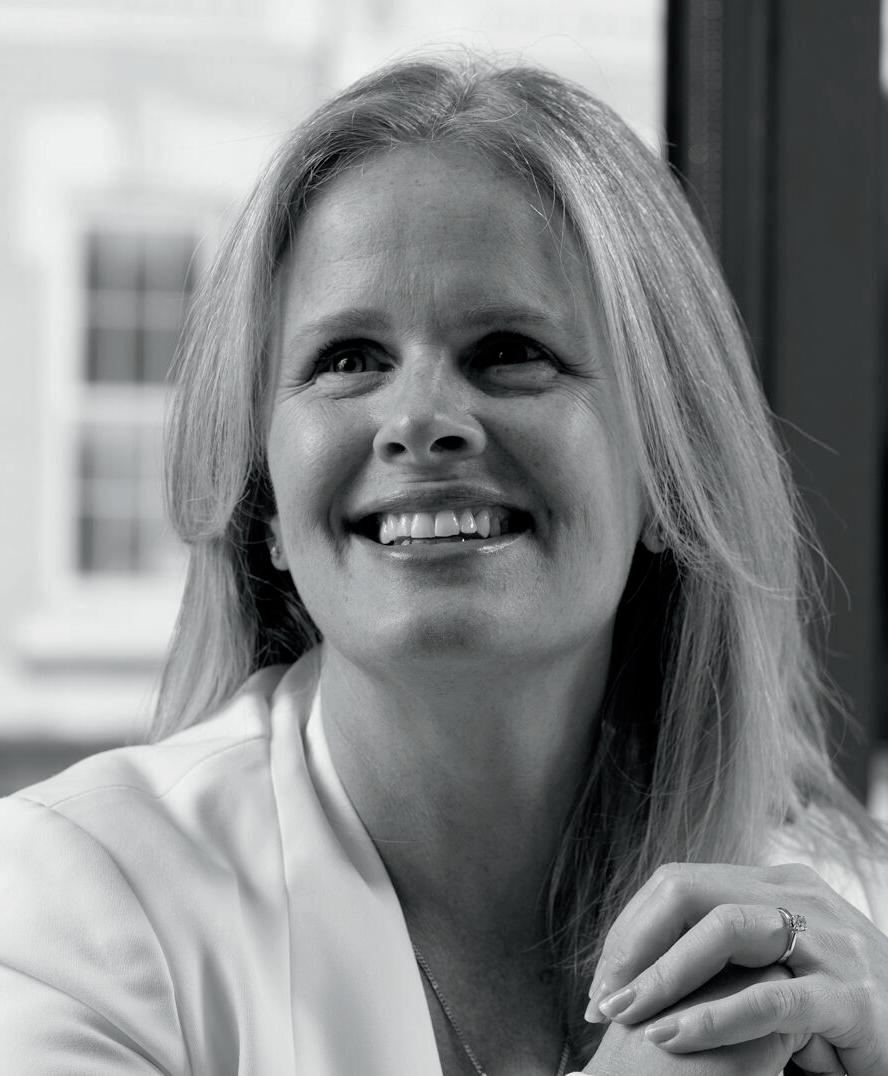
Janet Jarrell, Executive Director, Quinte Arts Artwork: Graham Gillmore, Photo: Ash Murrell


Quinte Arts Contributors
Excellence in Accessibility Awards
Quinte Arts' Community Mural Mosaic
Carl Wiens' Shiny New Glow-in-the-Dark Toonie
Carto / Topo / Geo / Graphic: Rediscovering Lost Maps
Detailed Harmony
Photography
Kidan Singer
Music
Dead Root Revival
Fine Arts
Ken Balmer
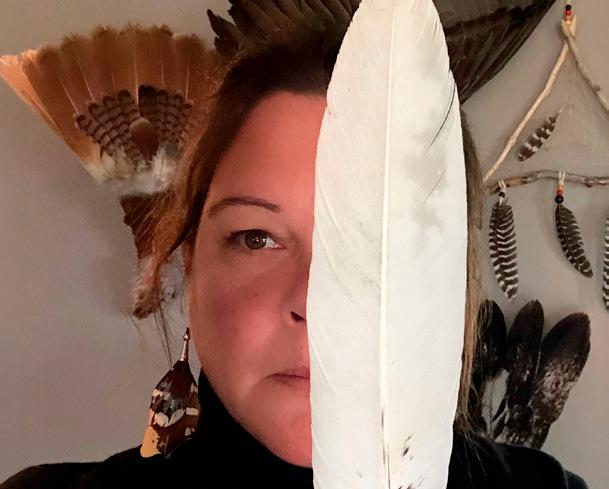
Pass the Feather: Dawn Iehstoseranón:nha
James Cameron Smith's Vinifera Arrives on the Shore of the Niagara Craft
Spence
When ASL Becomes Part of the Performance
Theatre
The Belleville Theatre Guild's One Man, Two Guvnors Cottagers and Indians at the Sewatokwà:tshera’ Theatre
Heritage
Upper Canada Opera House
Film
Filmmaking for Seniors
Arts Education
Quinte Arts' Graduating Student Bursaries
Quinte Arts
Quinte Arts celebrates Everyone Under the Rainbow: Belonging
Bay of Quinte Regional Marketing Board Artist to Watch
Chris Manley






Janet Jarrell
Greg Teal
Lise Lindenberg
Richard Hughes
Ardith Racey
Jennifer Shea
John Cameron Smith
Scott Williams
Lauren Little

Accessibility Excellence Award
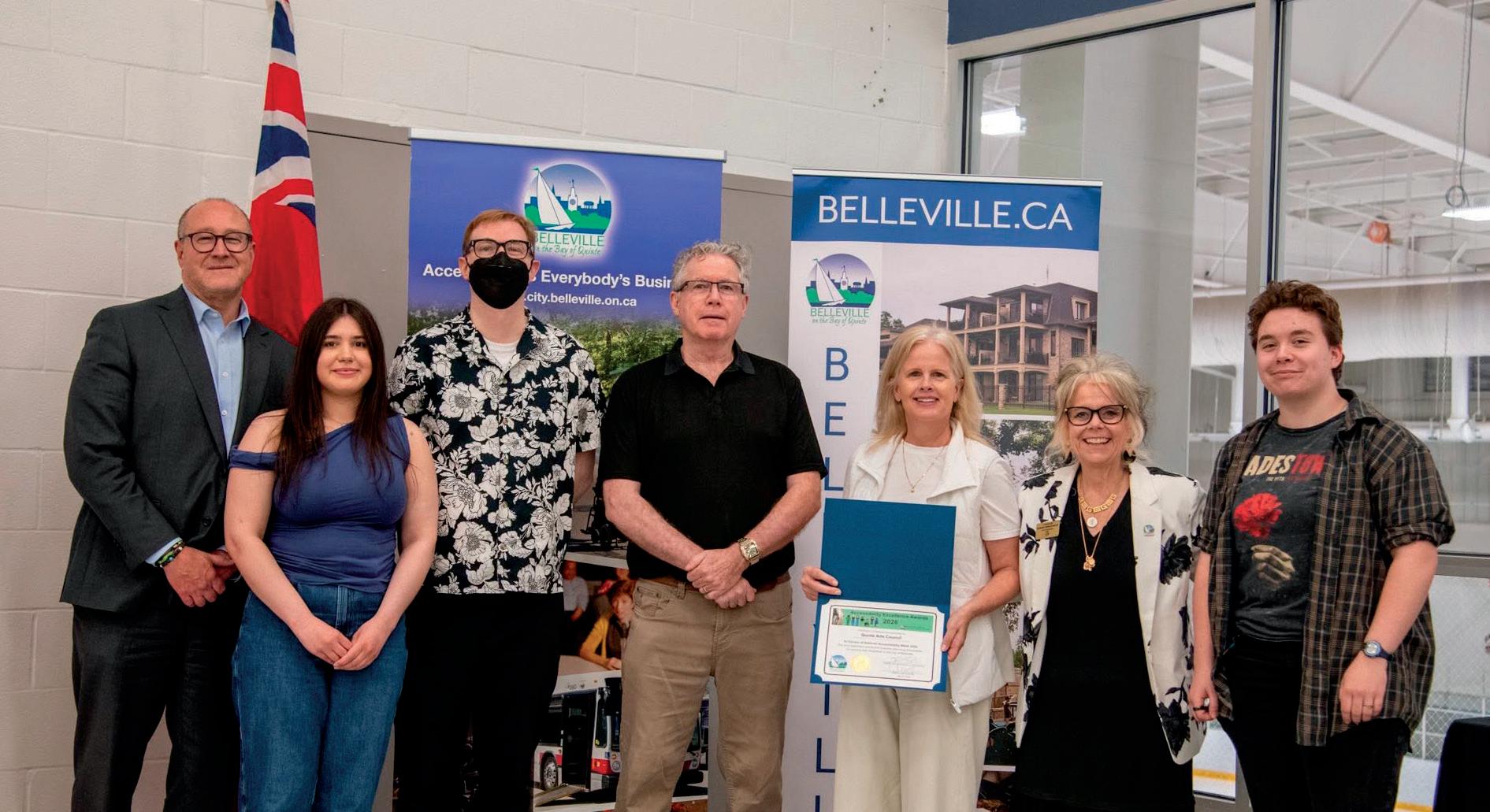
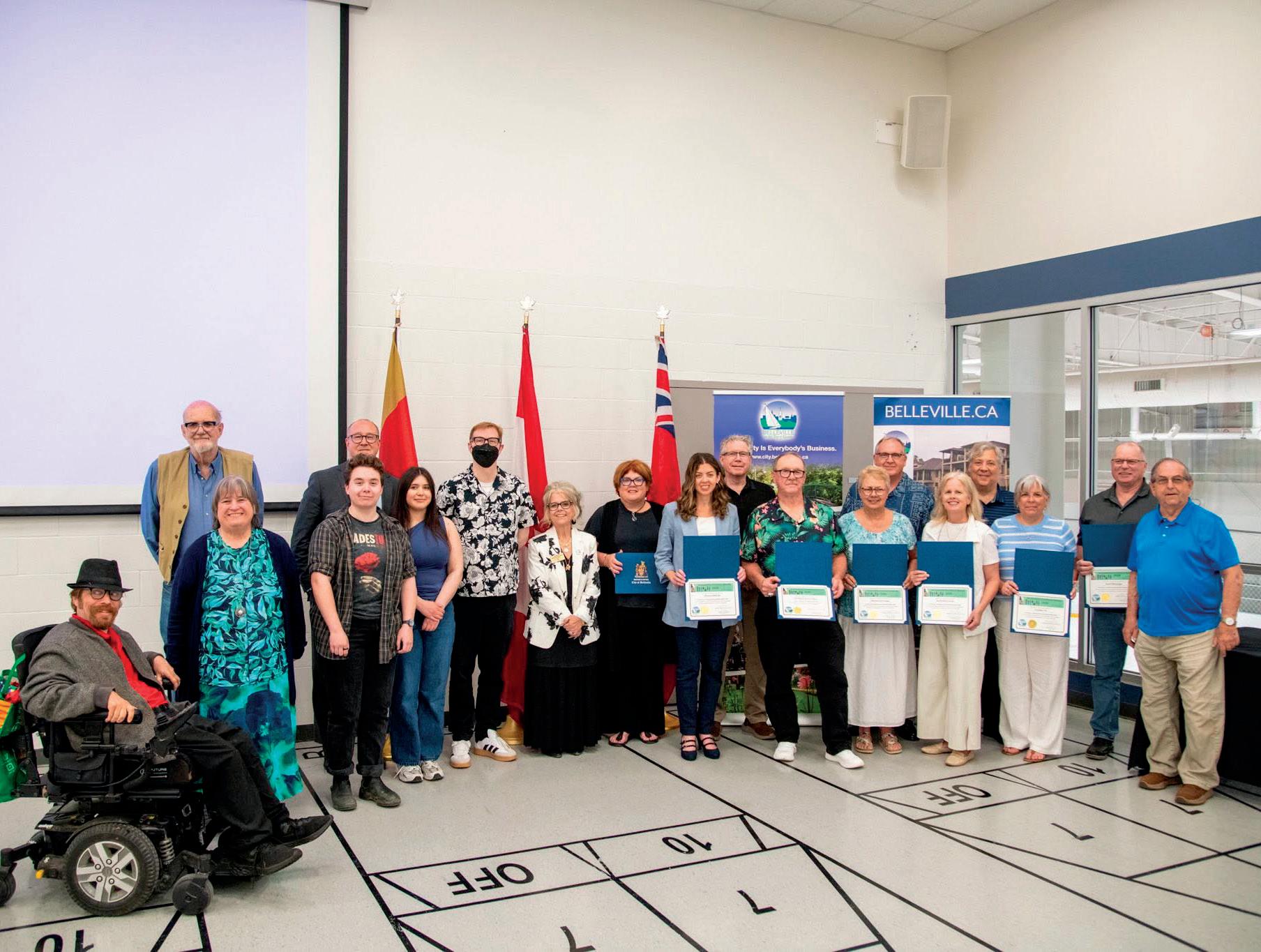
We were honoured to receive an Accessibility Excellence Award from the City of Belleville in the Customer Service/Information category at this year's Accessibility Excellence Ceremony.
We are deeply grateful for this recognition and for the many people who make this work possible—our community, supporters, partners, funders, and everyone who believes that the arts should be welcoming and accessible to all.
At Quinte Arts, we believe accessibility in the arts isn't just about awareness—it's about action. That is why we are taking meaningful steps forward with our Accessibility pilot project. Together, we are working to build more accessible spaces and inclusive programming for artists and audiences of all abilities.
Photography by Caleb Sayer
Sean Kelly, Lauren Little, Andrew Gray, Rick Moulton, Janet Jarrell, Barbara Enright-Miller, Arlo Newman
Quinte
City of Belleville's 2026 Excellence in Accessibility Awards
Community Mural Mosaic: Bringing People Together
By Quinte Arts
Quinte
Arts was deli-
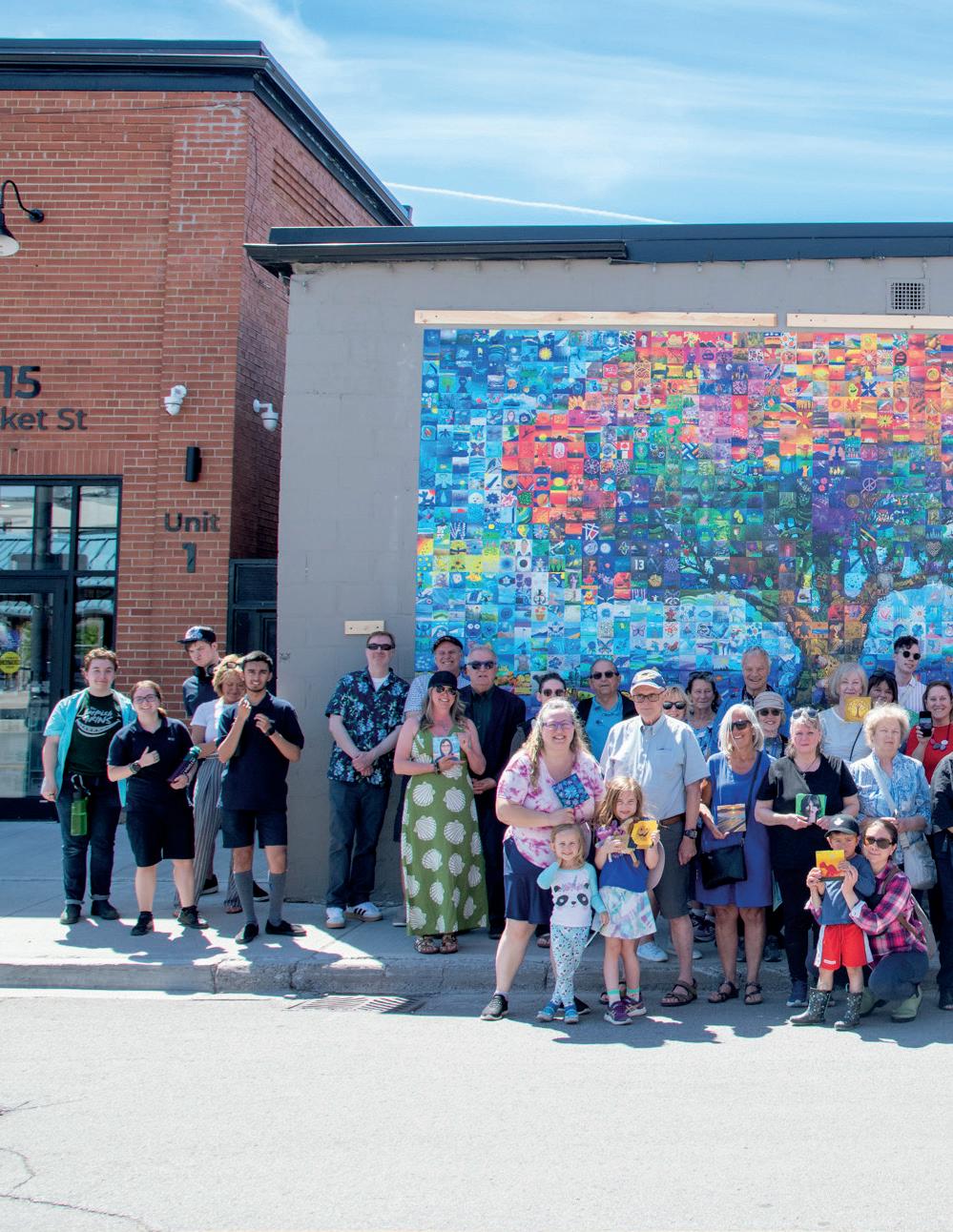
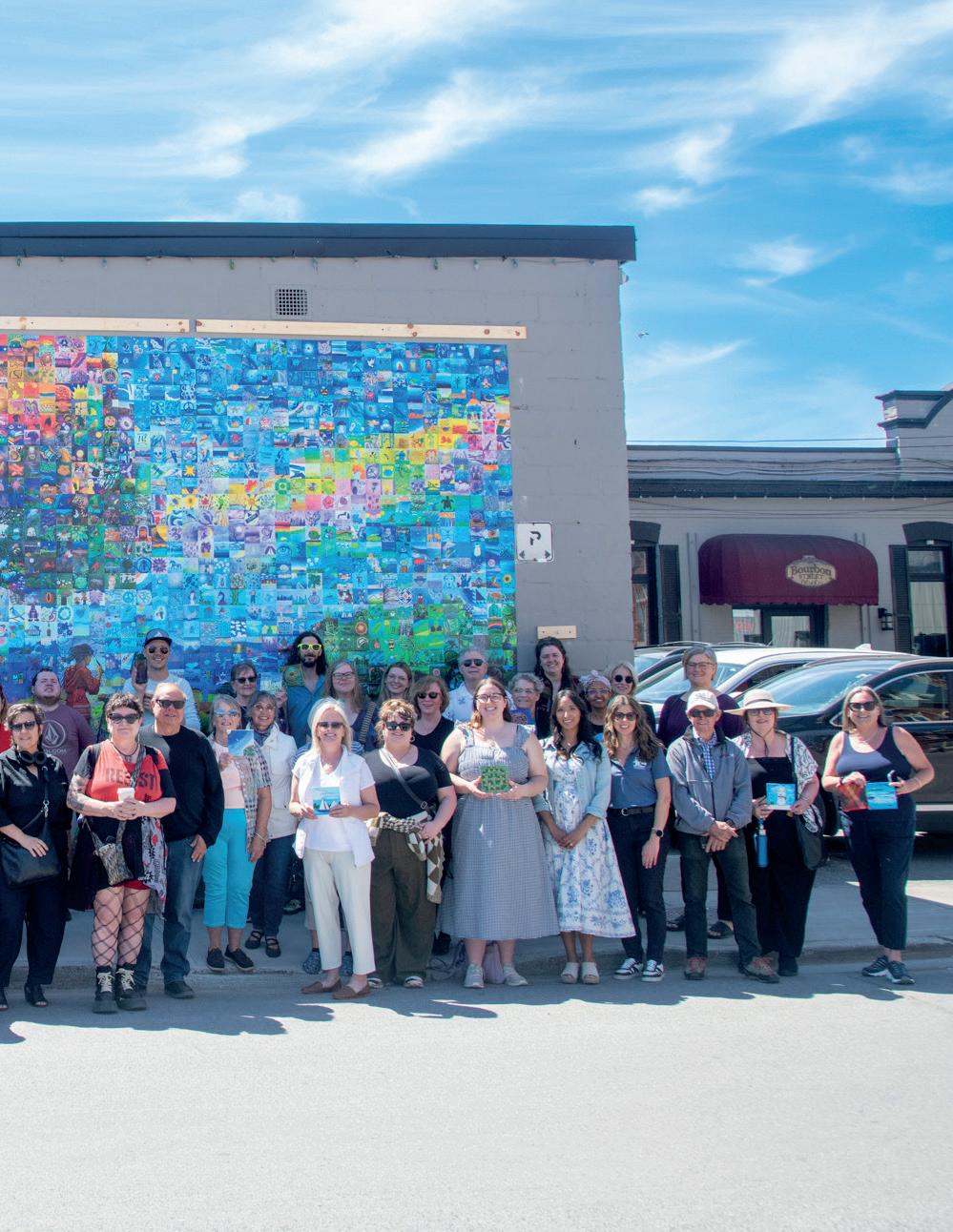
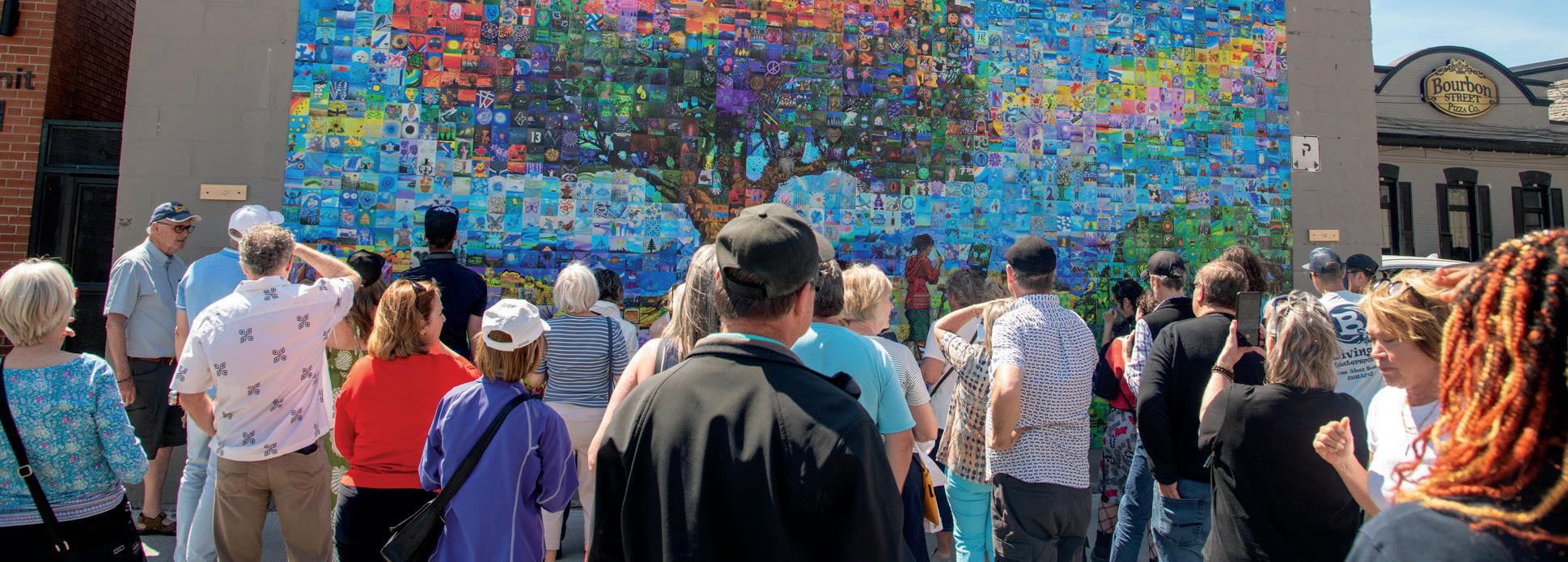
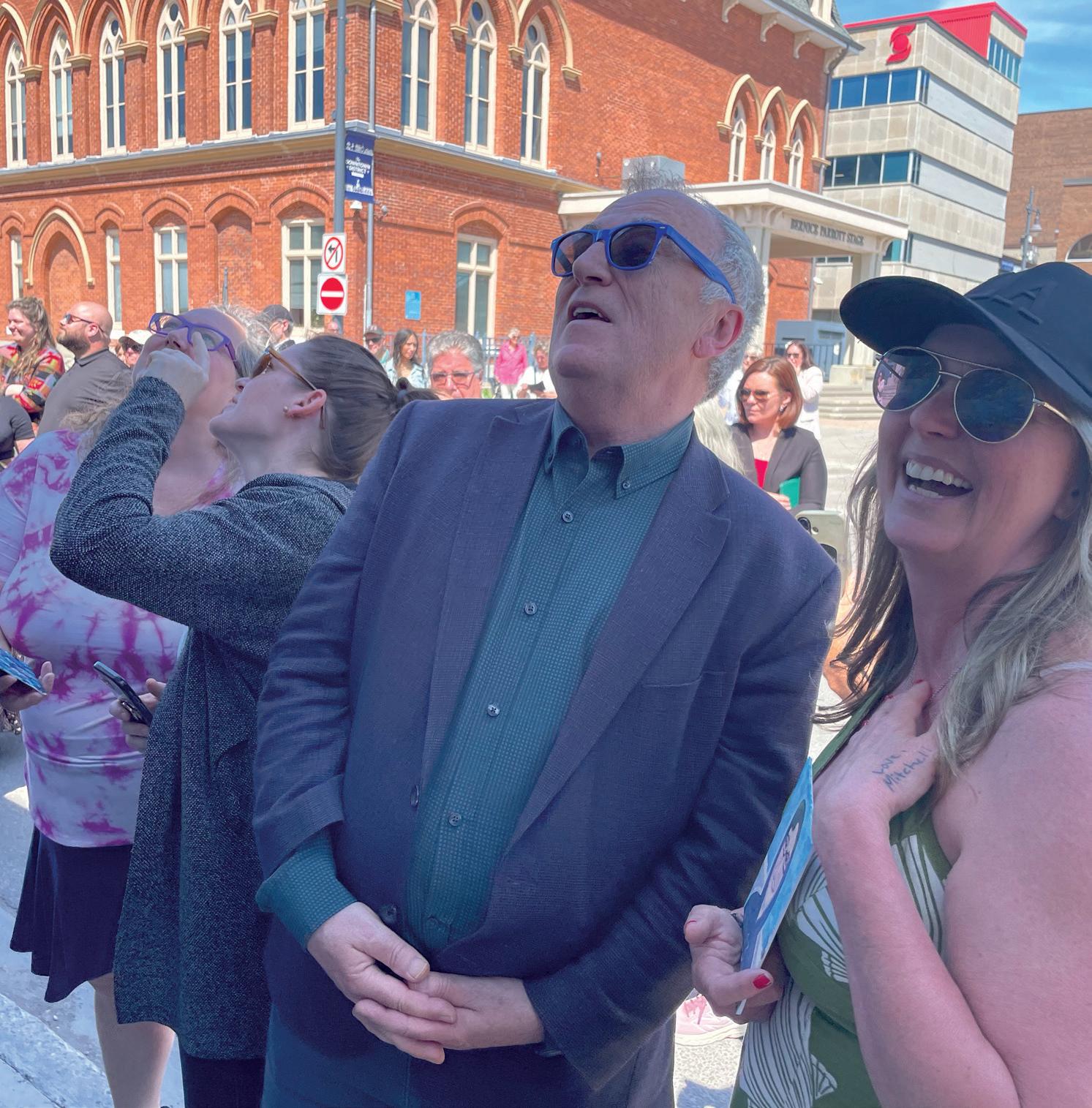
ghted to collaborate with Mural Mosaic's Global Roots Project, culminating in the unveiling of the Canada Connects Nature's Canvas National Mural on June 2, 2026, in the heart of Downtown Belleville.
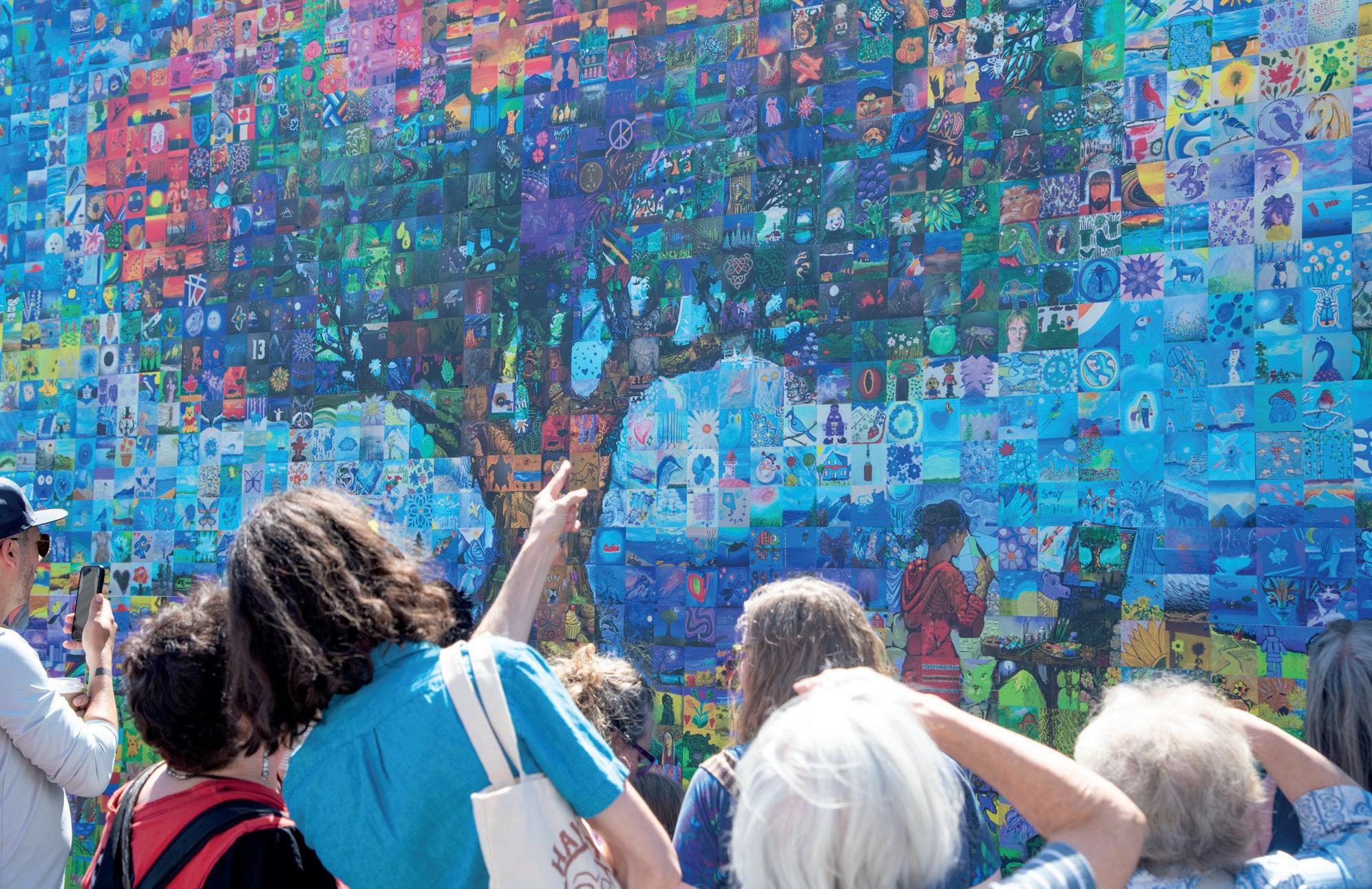
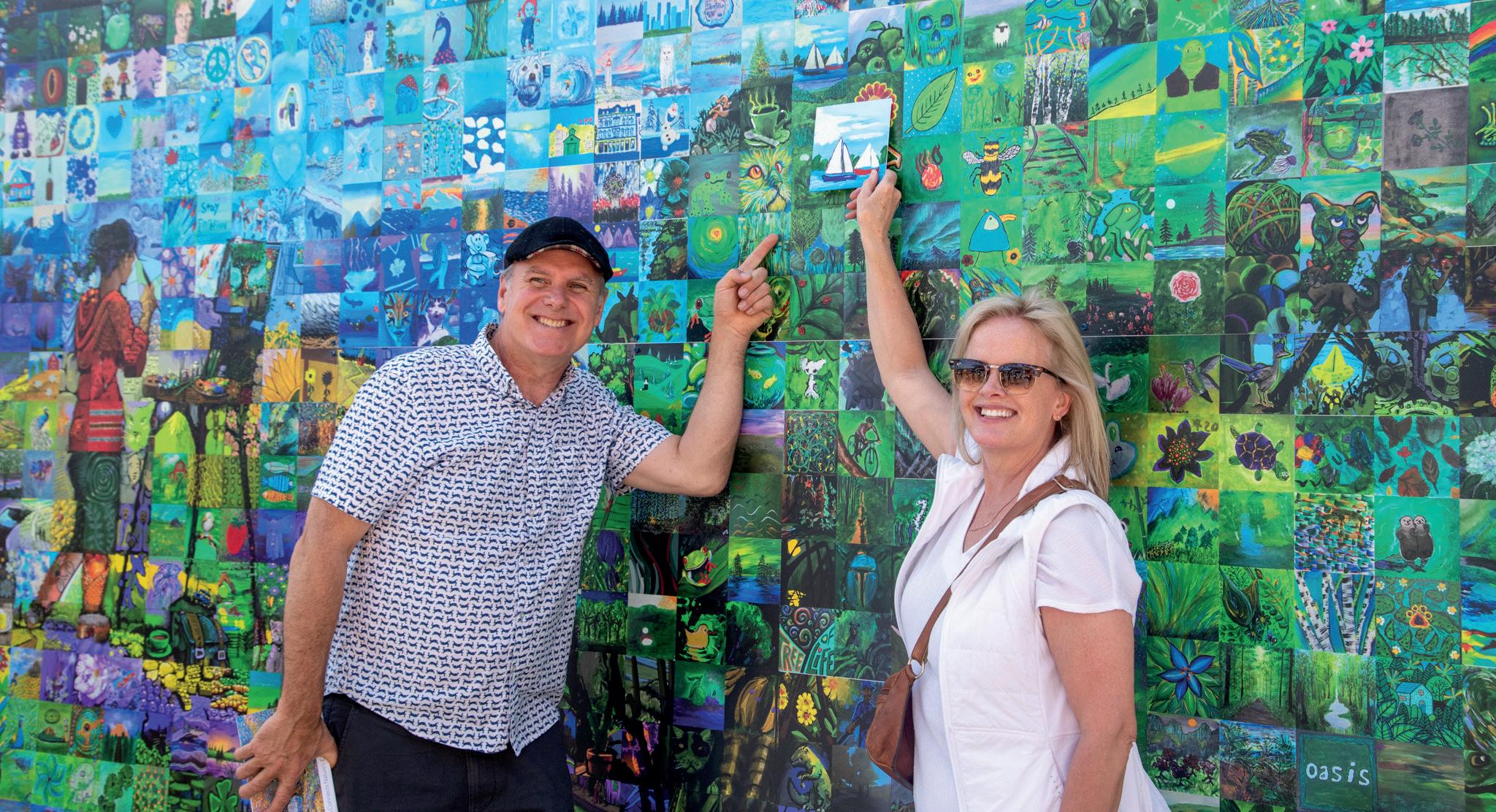
Now proudly displayed in Market Square, the one-of-a-kind mural features a custom design by renowned Canadian muralist Lewis Lavoie
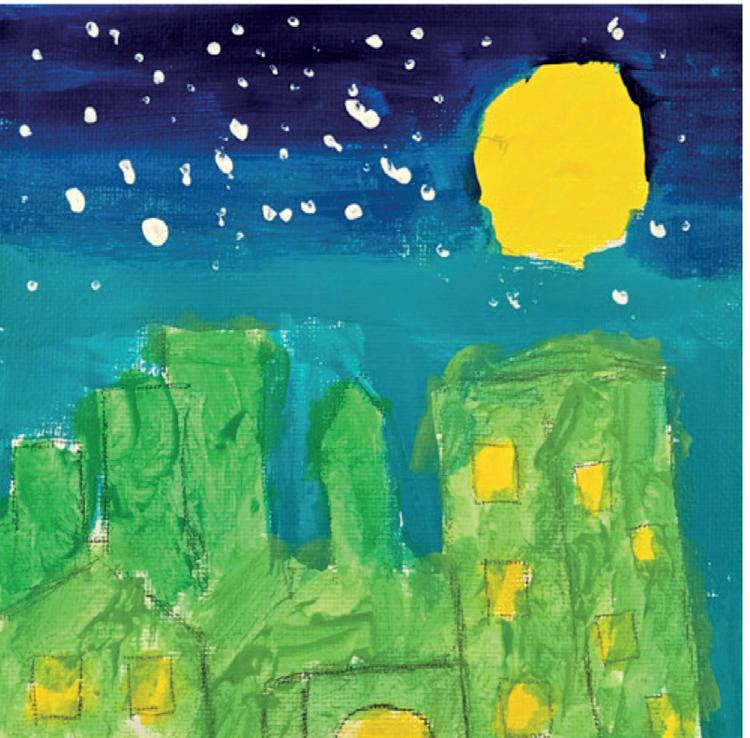
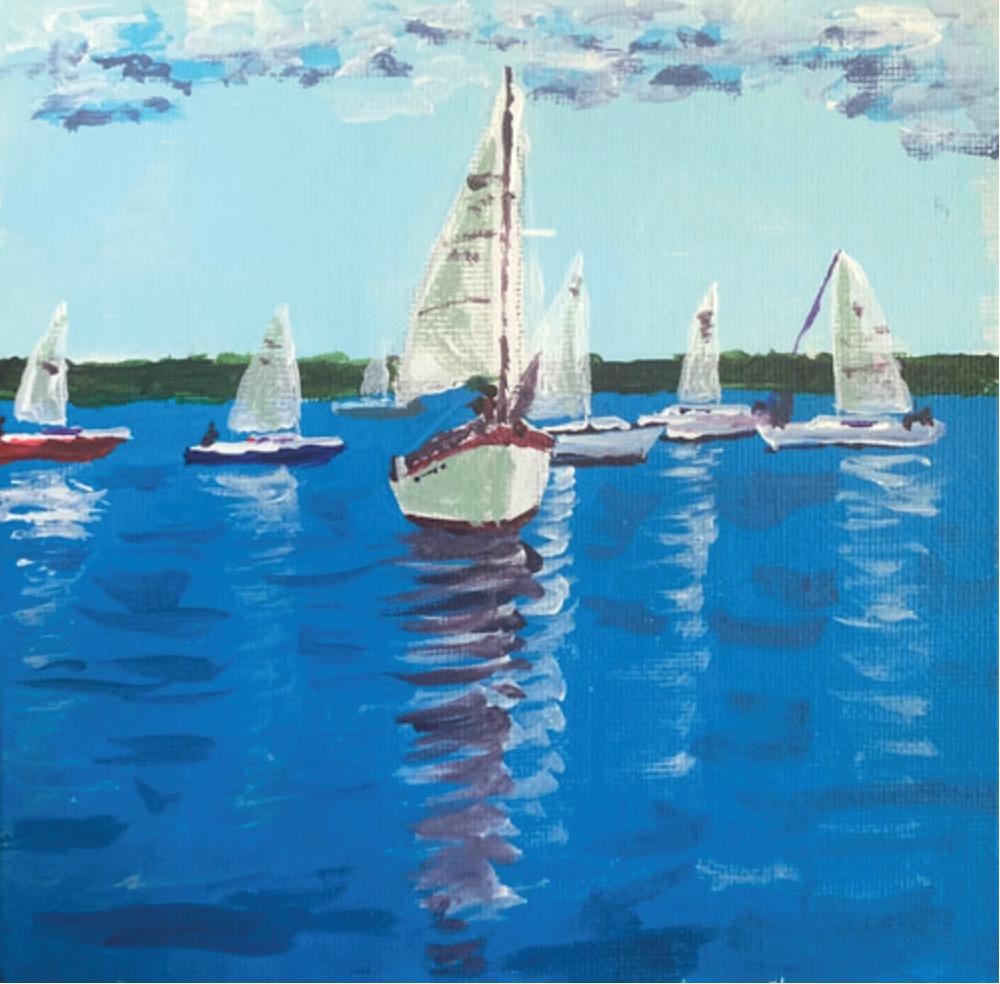
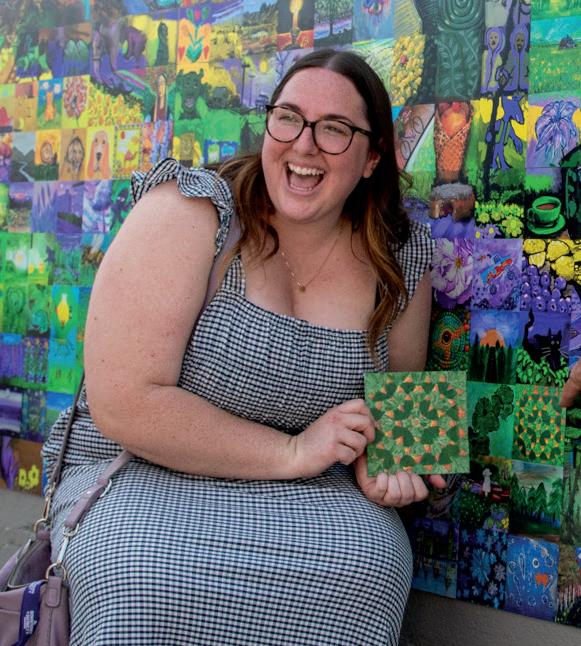
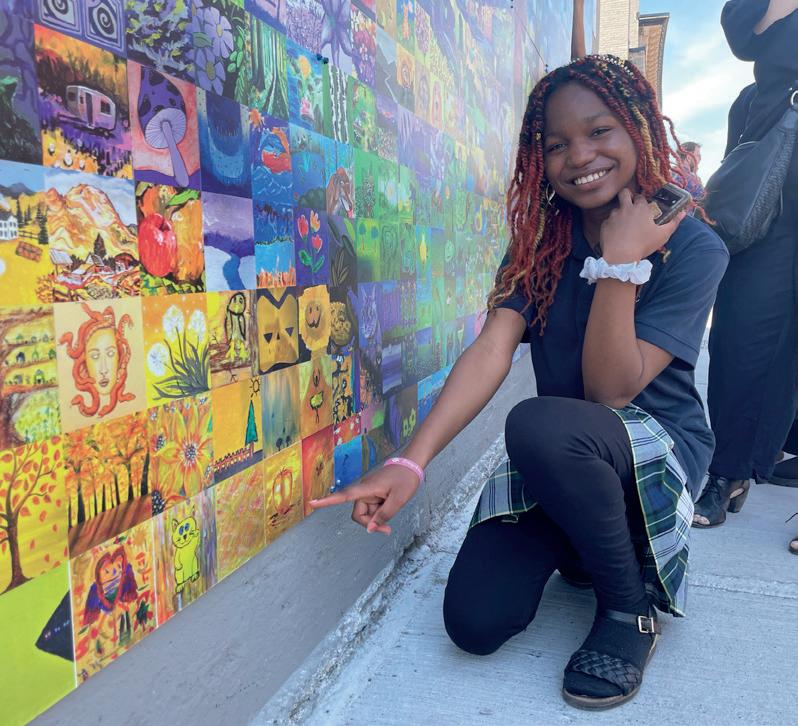
The completed mural is made up of individually hand-painted tiles created by communities from across Canada. Of those, 150 tiles were painted by members of the Quinte region, giving local participants a meaningful place within this powerful national artwork.
More than a mural, the project is a celebration of connection, belonging and collective creativity. Each participant contributed a single tile—a personal expression that became part of something
far greater. Together, thousands of individual works create a striking visual story, demonstrating how art can connect communities from coast to coast.
Since 2003, Mural Mosaic has been creating collaborative public artworks that celebrate diversity, inclusion and unity. Founded by artist Lewis Lavoie, the organization is guided by a mission to bring people together while honouring individual creativity, perspectives and identities.
Belleville
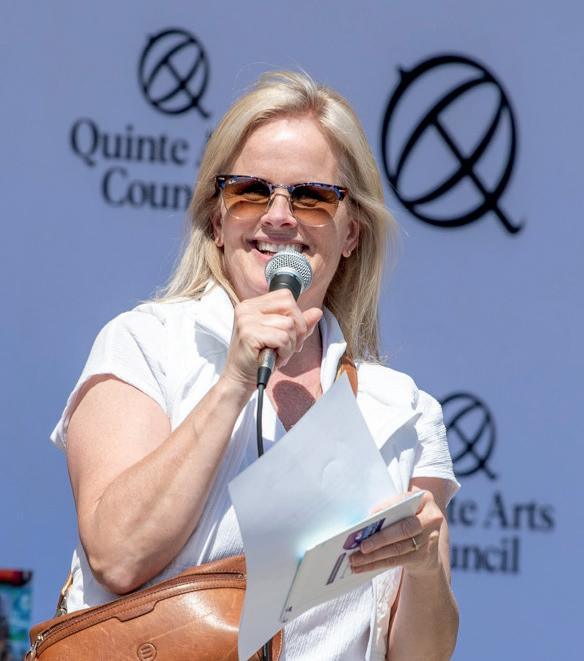
“This mural is a powerful reflection of what happens when a community comes together with creativity and pride. We’ve seen incredible enthusiasm from participants at every level—two full classrooms, including a kindergarten and a Grade 5 class, alongside professional artists and community members who simply wanted to be part of something big. That collective energy is what makes this project so meaningful.”
— Janet Jarrell, Executive Director, Quinte Arts muralmosaic.com
Chris Finkle
Landon Peterson
Drew Gray
Drew Gray
Quinte Arts

Carl Wiens' Shiny New Glow-in-the-Dark Toonie
By Quinte Arts
Belleville-based artist
and illustrator Carl Wiens has built a dynamic and evolving creative practice over a career spanning more than 30 years. Known for his thoughtful integration of collage, screen printing, painting, pattern, and woodworking, Wiens creates work grounded in strong conceptual thinking and refined design. His artistic voice is both analytical and imaginative, reflecting a lifelong curiosity about the natural world, science, and systems of visual communication.
Wiens’ career began in the world of conceptual illustration, where he developed a distinctive style that has been featured in major international publications including The New York Times, The Wall Street Journal, Time, Barron’s, and Esquire. His ability to translate complex ideas into compelling visual narratives has earned
him recognition from leading industry organizations such as the Society of Illustrators, American Illustration, 3x3 Magazine, and the Applied Arts Awards.
Alongside his editorial work, Wiens has made significant contributions to children’s publishing. His illustrated books, Wild Buildings and Bridges and The Science of Song: How and Why We Make Music (written by Alan Cross and published by Kids Can Press), reflect his fascination with the intersection of science, nature, and design. These works invite young readers to explore how the world functions, blending education with visual storytelling.
One of Wiens' most remarkable accomplishments is his design for the
new Canadian Toonie, issued in celebration of the CN Tower's 50th anniversary. The design features Toronto’s skyline–capturing its past and present, lighting up the night sky. This type of toonie contains a unique feature, phosphorescents, where the sky surrounding the CN Tower illuminates.
The beautiful scenery of the Bay of Quinte region serves as a profound source of Wien’s inspiration that drives his unfathomable commitment to the arts community. Not only has he represented Belleville on a National stage, he inspires emerging artists and strengthens our local cultural identity. This is a proud moment for Belleville that celebrates creativity, innovation, and community impact.


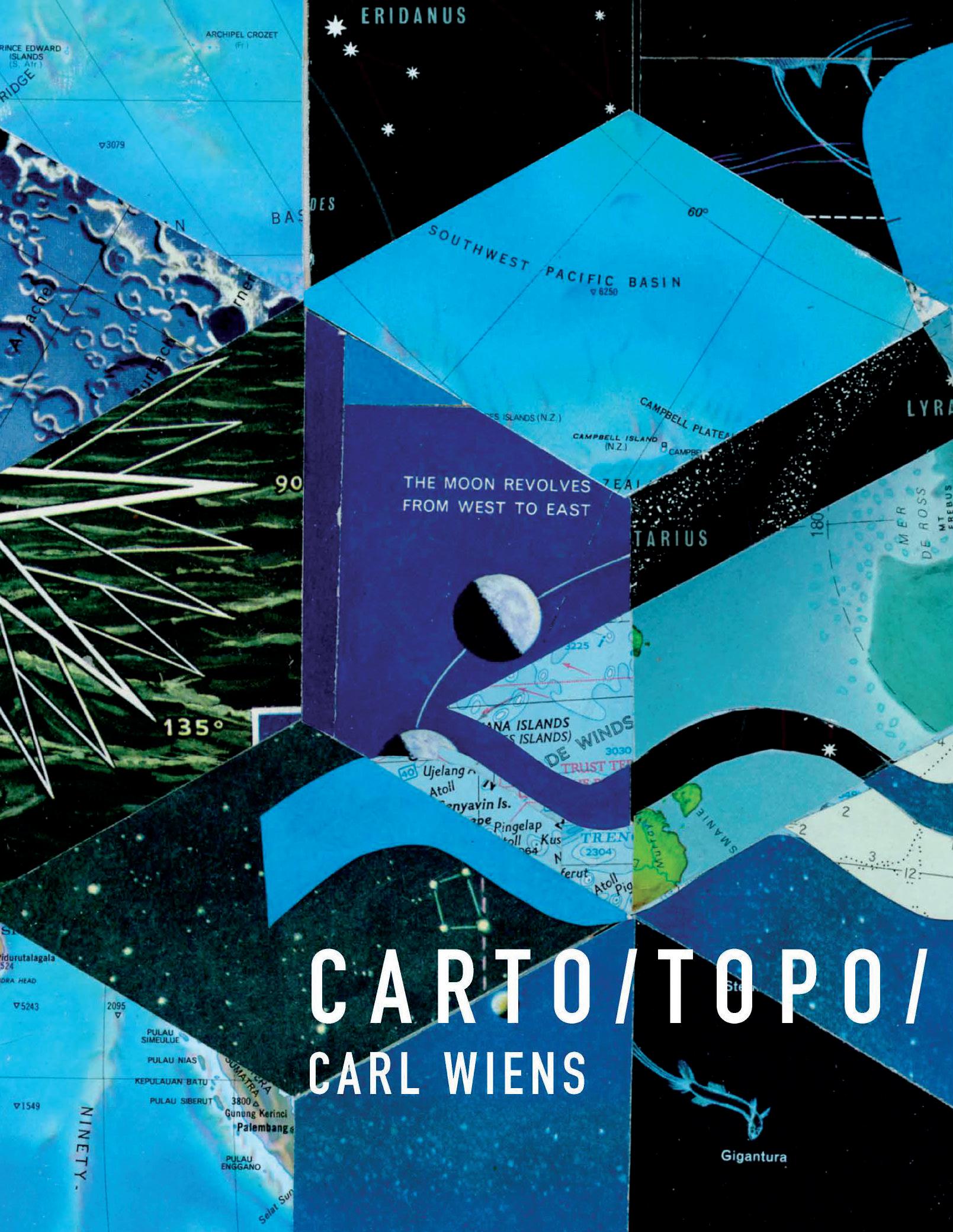
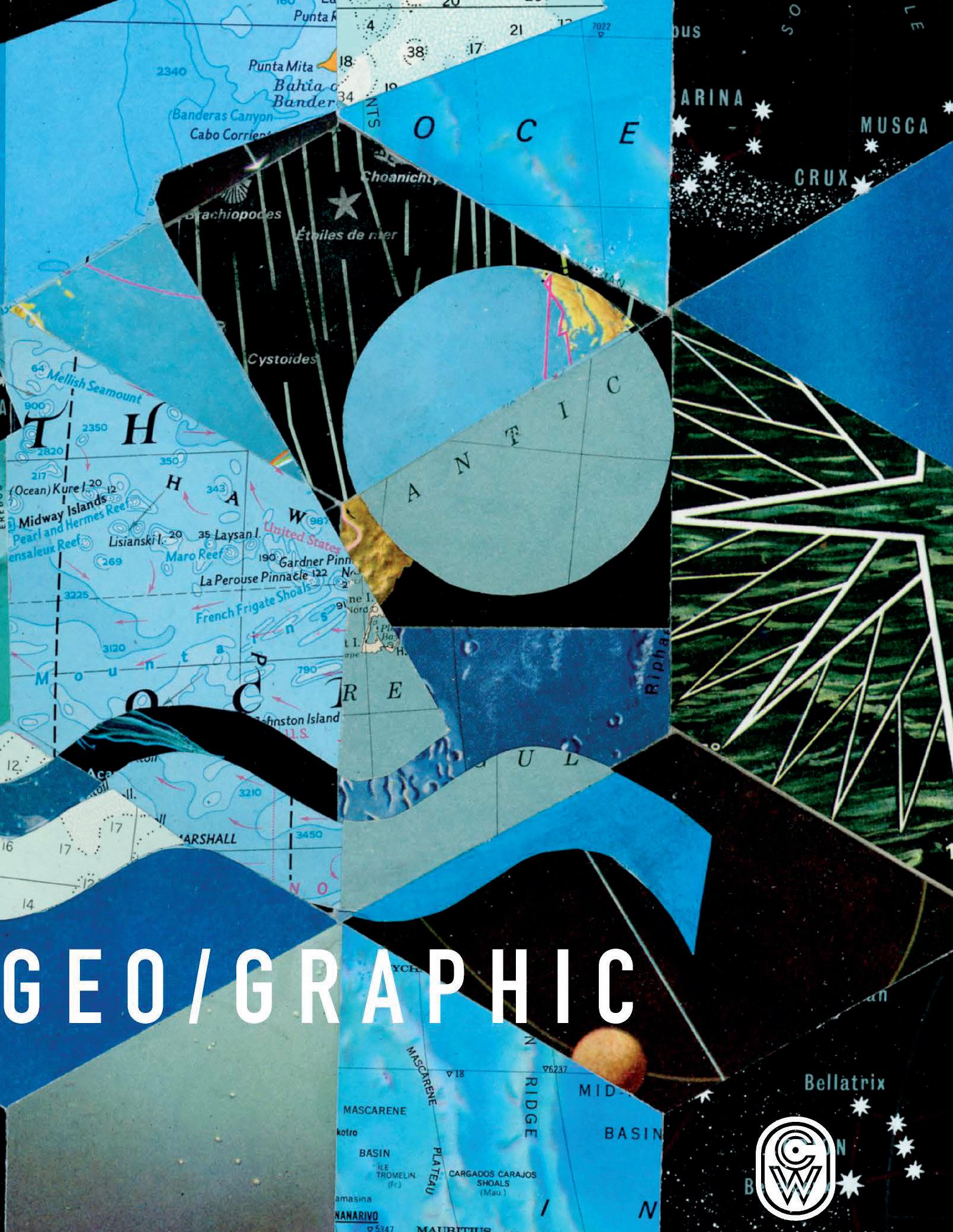
Carto /Topo/Geo/Graphic: Rediscovering Lost Maps
By Quinte Arts
In recent years, Carl
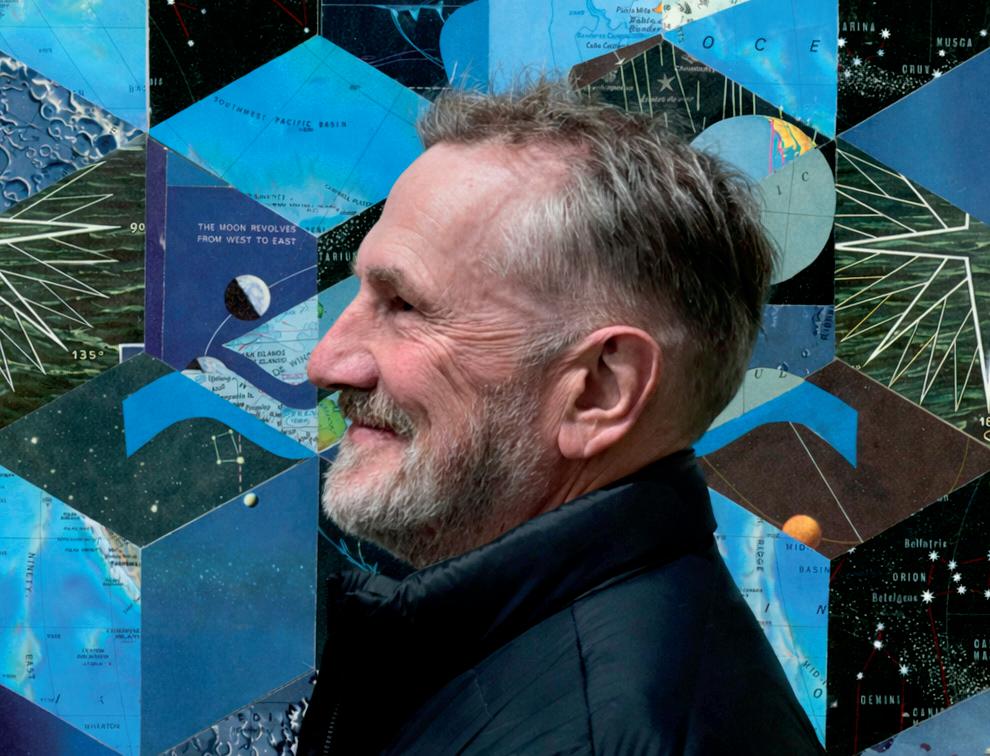
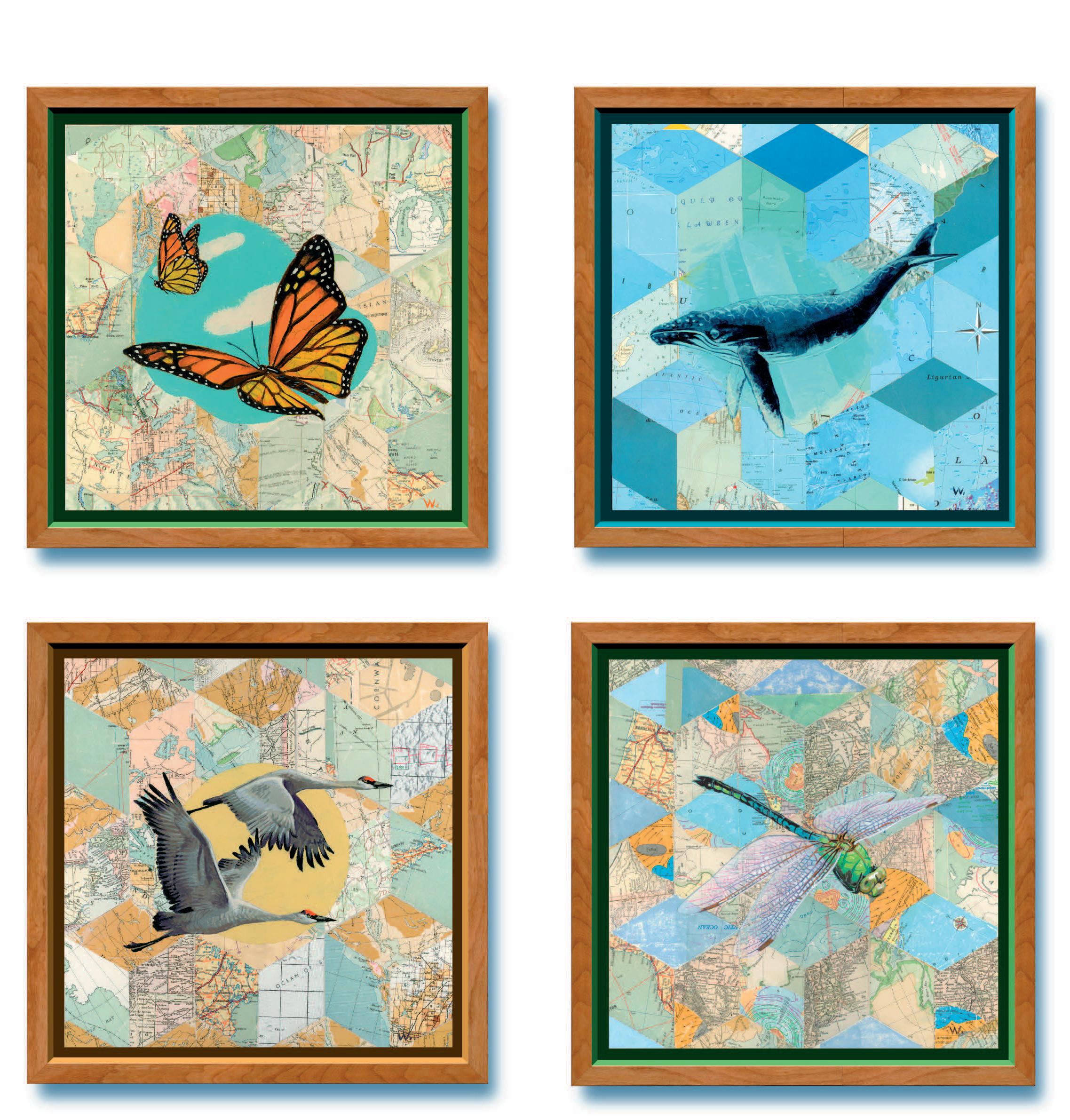
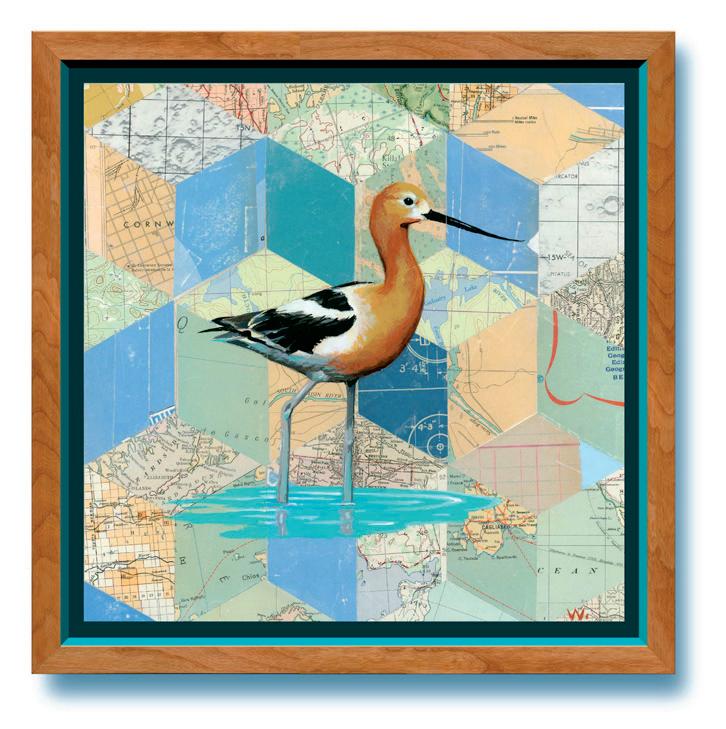
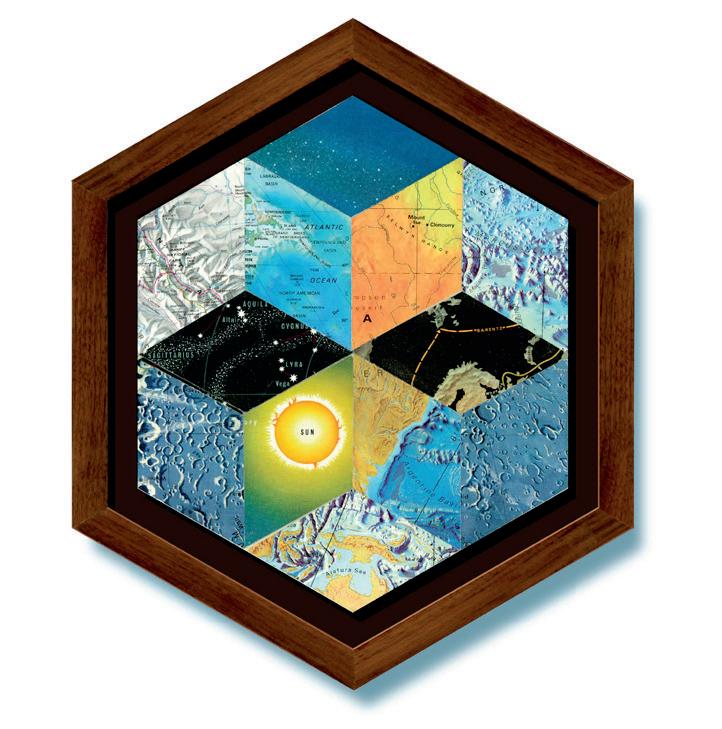
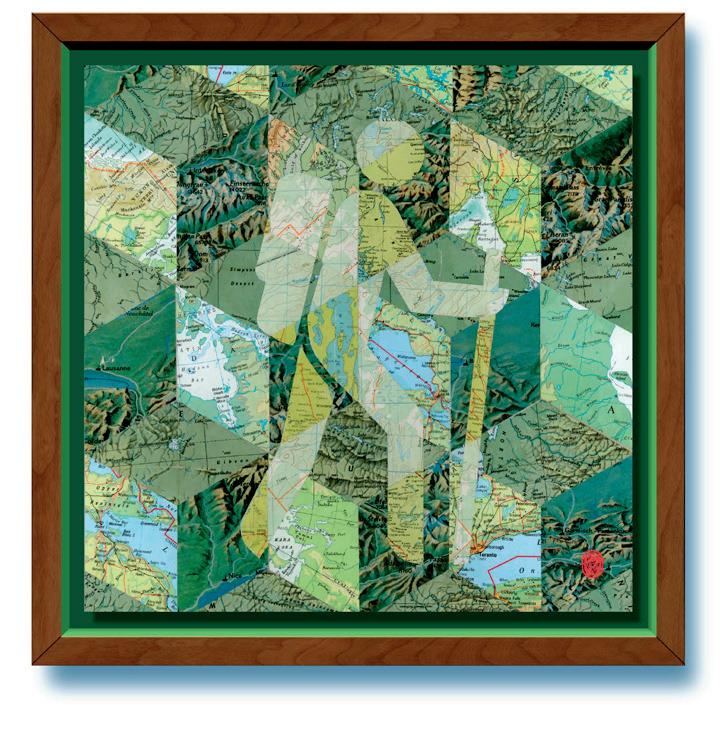
Wiens has increasingly focused on gallery-based work, exploring materiality and process through mixed media. His latest exhibition, Carto / Topo / Geo / Graphic: Rediscovering Lost Maps, presented at the Quinte Arts Council Cultural Hub and Gallery in April 2026, marks a significant new direction. This body of work is the culmination of a year spent collecting, cutting, layering, and reimagining vintage maps and atlases.
Through intricate collage, Wiens transforms these historical materials into contemporary compositions that speak to memory, geography, and the human impulse to map and understand the world. In his hands, maps become both medium and metaphor—charting imagined landscapes as much as physical ones.
“This exhibition started out small, using found objects and materials in the studio. I've always loved old maps and atlases and began the process by deconstructing and rearranging them. The first series utilized topographic maps passed on by my father-in-law, reclaimed fir plywood pieces from my father's workshop, framed with offcuts of teakwood from the studio of printmaker Peter Mennacher. This was the Planetary series. Then I decided to expand, to see if I could make hexagon-shaped frames for the Terrestrial/Celestial series.”
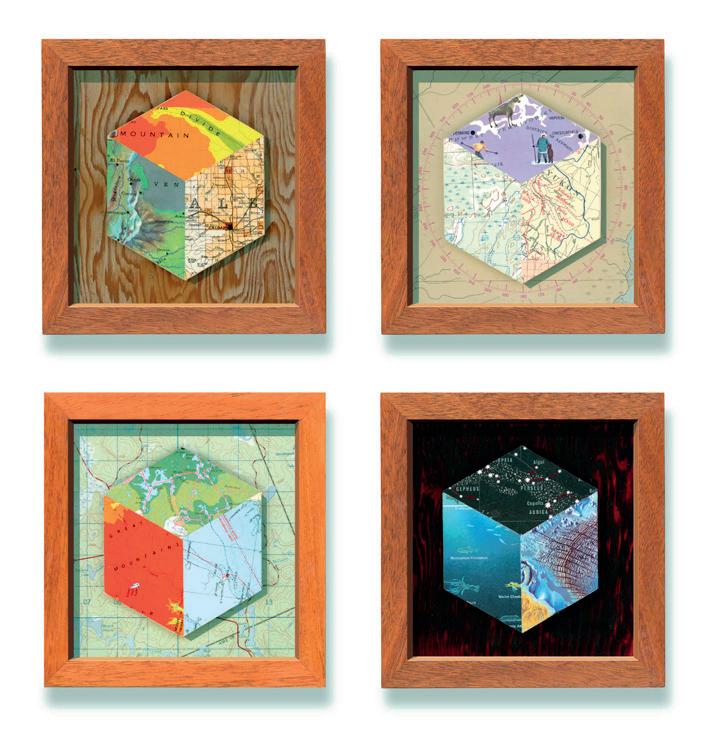
Wiens adds, “People I talk to about this work usually tell me about an old family atlas, a collection of topo maps or how much they just love poring over old maps. Maps are a remarkable resource to work with, and I still have plenty of ideas to work through, so many possibilities.”
Teaching remains an important part of Wiens’ practice. As an instructor of
science and technology-based illustration at Sheridan College, he mentors emerging artists while continuing to explore his own interests through collaborative learning. His “citizen scientist” approach encourages students to engage deeply with both observation and community.
Wiens draws ongoing inspiration from the Bay of Quinte region. Whether cycling, kayaking, hiking, or observing birds and insects, his connection to the natural environment continues to inform and energize his work, resulting in art that is both intellectually rich and visually engaging.
carlwiens.com


Detailed Harmony
By Quinte Arts
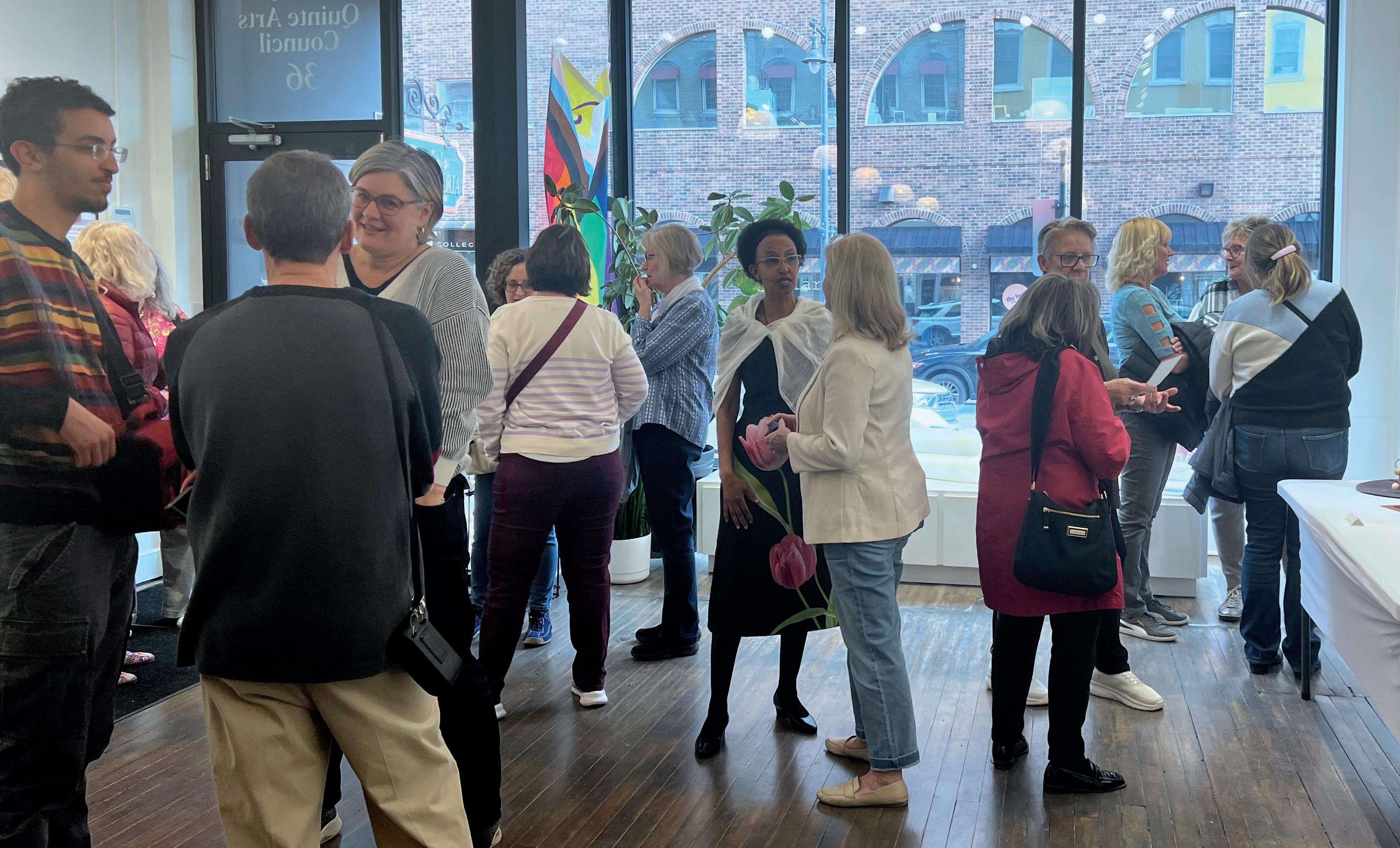
May's exhibition, Det-
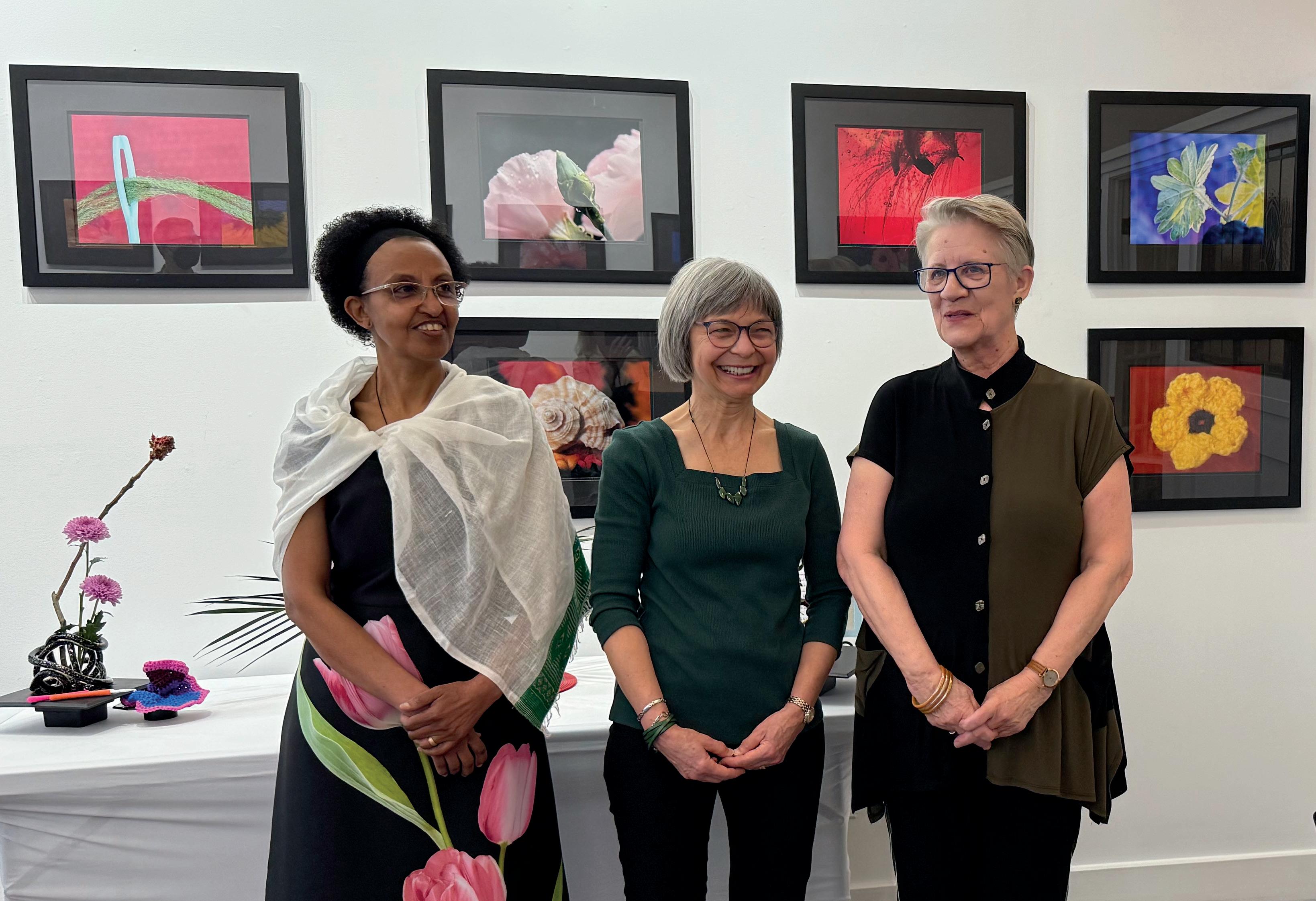
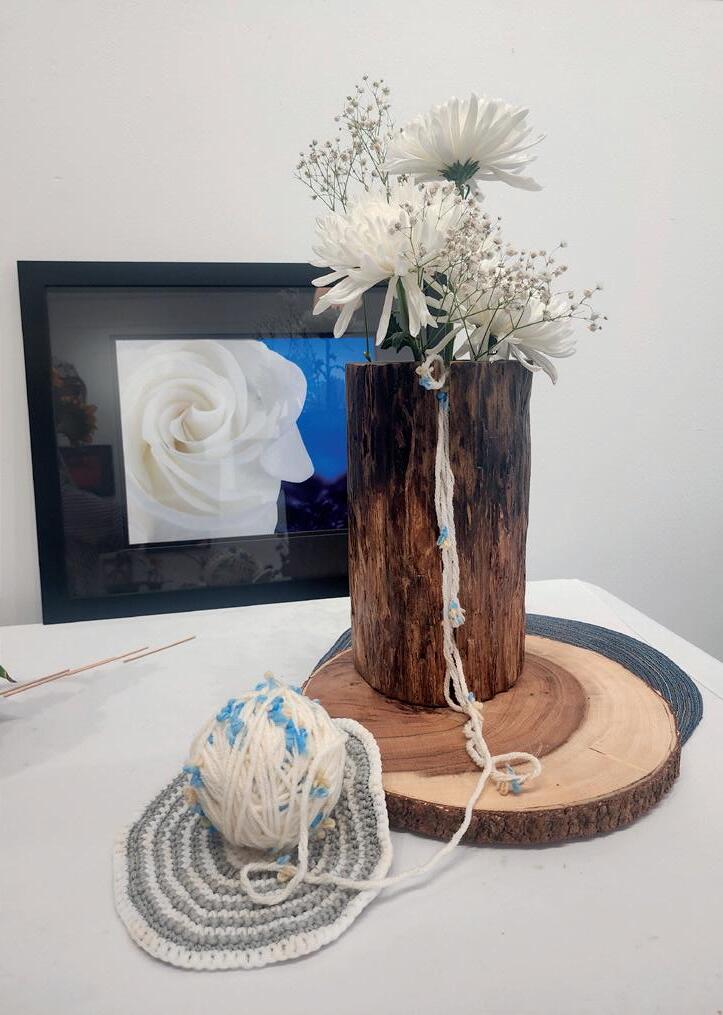
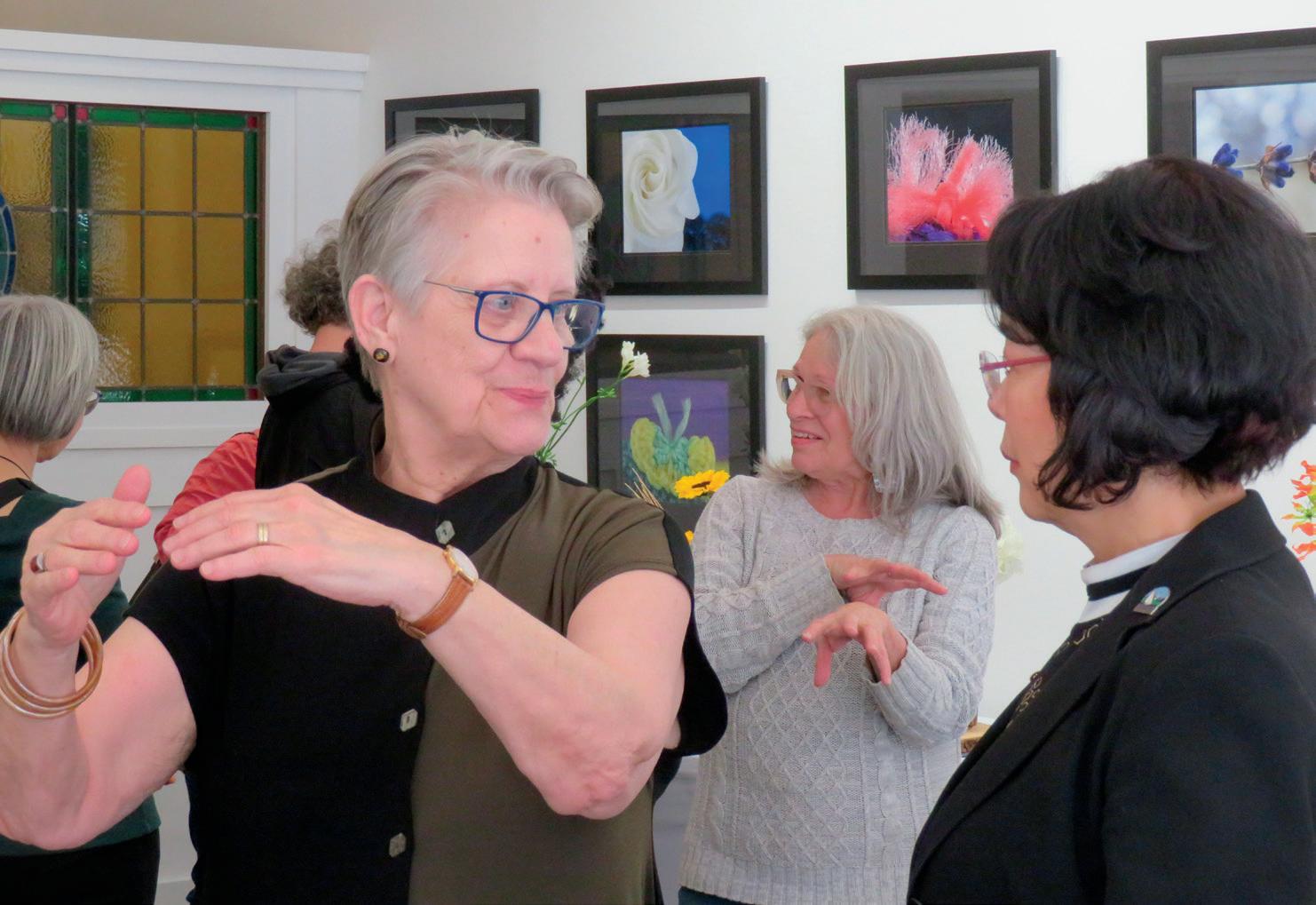
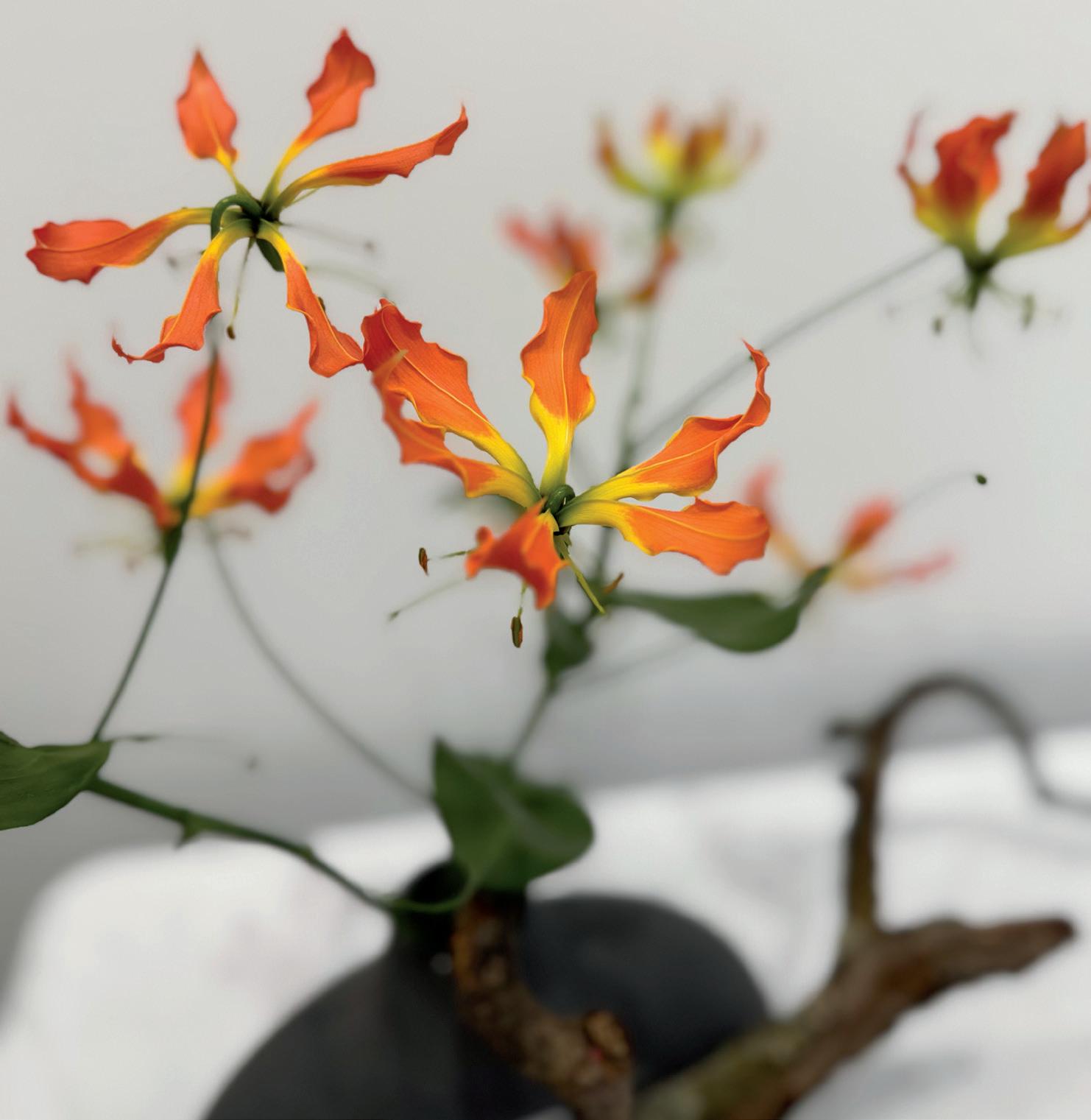
ailed Harmony, featured the complementary artistic practices of Emebet Belete and Grazynka Shaarani. Belete's macro photography and Shaarani's Ikebana-inspired floral arrangements share a quiet appreciation for balance, simplicity and the beauty found in nature's smallest details.
Using macro photography, Belete explores the expressive possibilities of close-up imagery. By magnifying the intricate textures and patterns of crochet work, she transforms familiar materials into abstract compositions. Her photographs emphasize colour, line, shape and texture, inviting viewers to discover unexpected connections between
handmade craft and the organic forms found in nature.
Shaarani draws inspiration from Ikebana, the Japanese art of floral arrangement. Guided by centuries of tradition and a philosophy rooted in careful composition, Ikebana emphasizes the thoughtful placement of line,
proportion and space. While governed by precise principles, the resulting arrangements convey a remarkable sense of simplicity, openness and serenity. Its guiding philosophy—"less is more"—encourages viewers to pause and appreciate the delicate relationship between nature, form and negative space.
Together, Belete and Shaarani create a thoughtful dialogue between photography and floral art. Their work explores the meeting point of structure and spontaneity, tradition and contemporary expression, revealing how careful observation and creative intuition can uncover extraordinary beauty in the everyday.
The artists gratefully acknowledge the funding support of the Ontario Arts Council and the Government of Ontario.
Photography by Kidan Singer
John M. & Bernice
PARROTT
Quinte

Kidan Singer has been passionate about photography ever since he got his first camera at the age of twelve. He loves experimenting, finding creative compositions, and changing his point of view to get unexpected details.
Kidan Photography

Photography


Photography


Photography


Photography
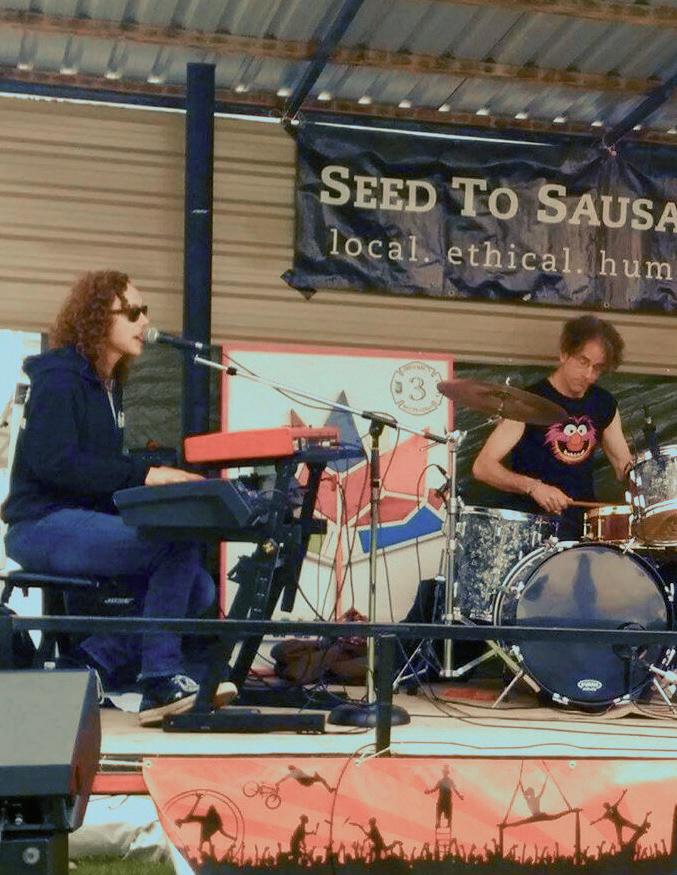
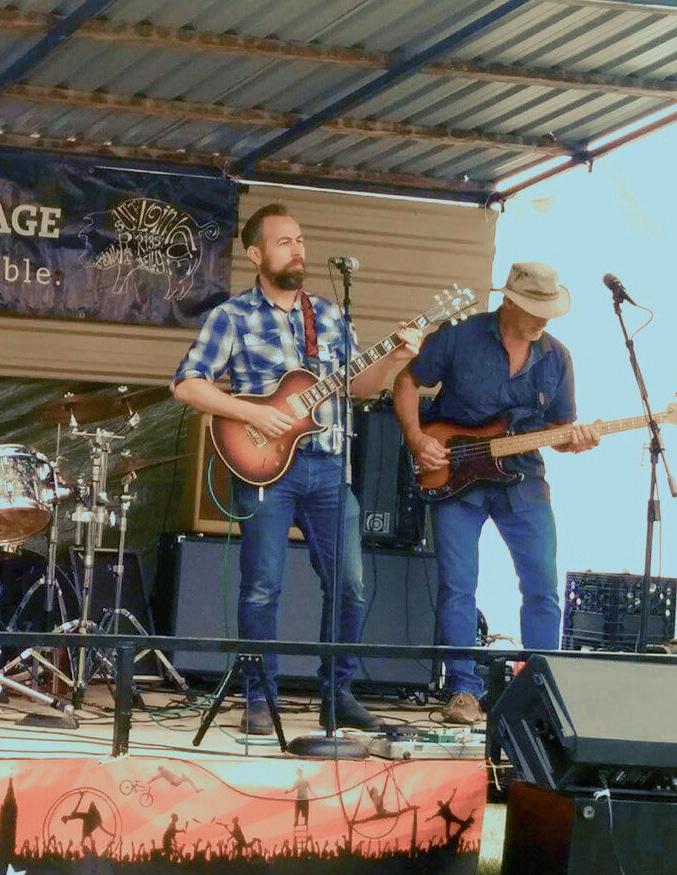
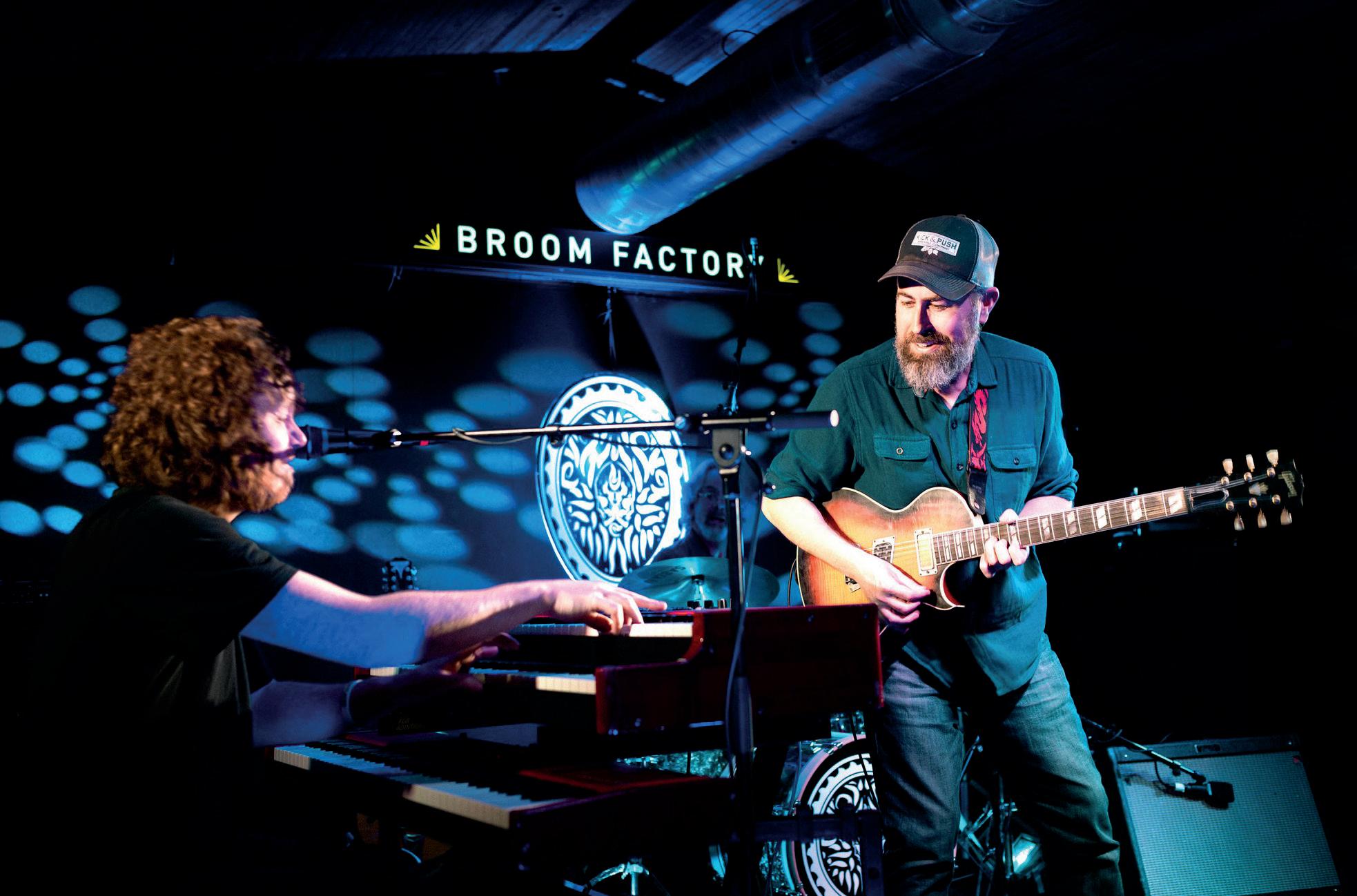
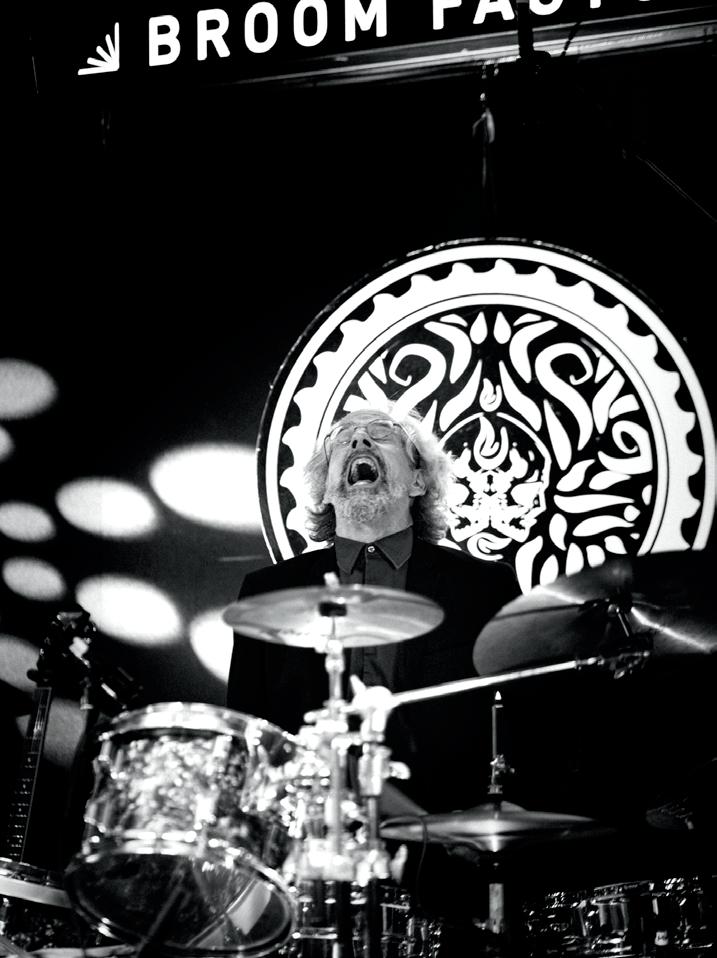
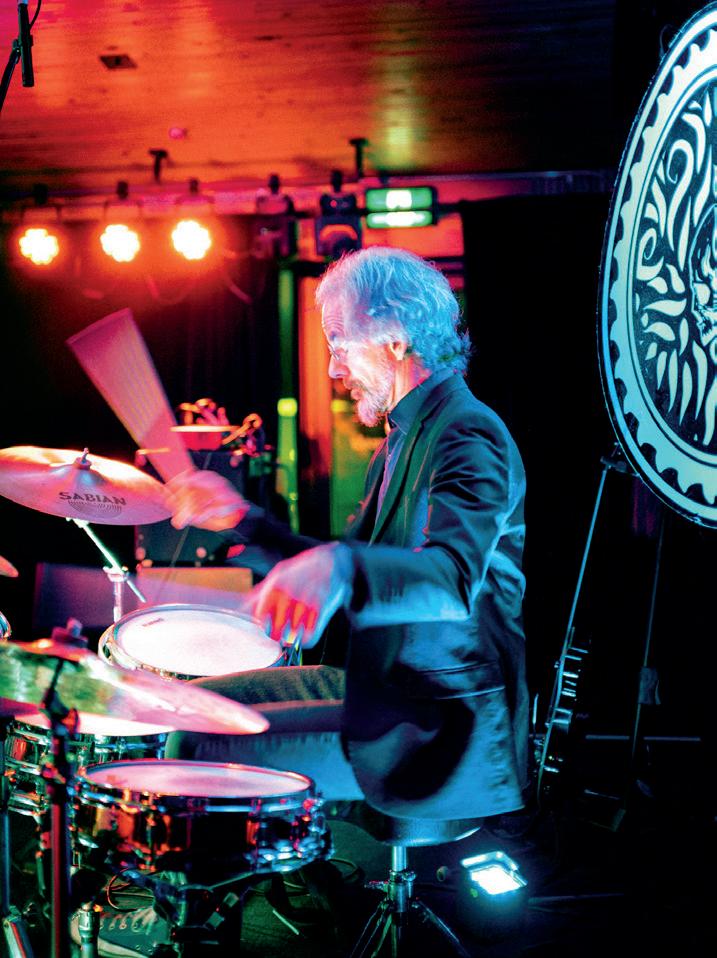
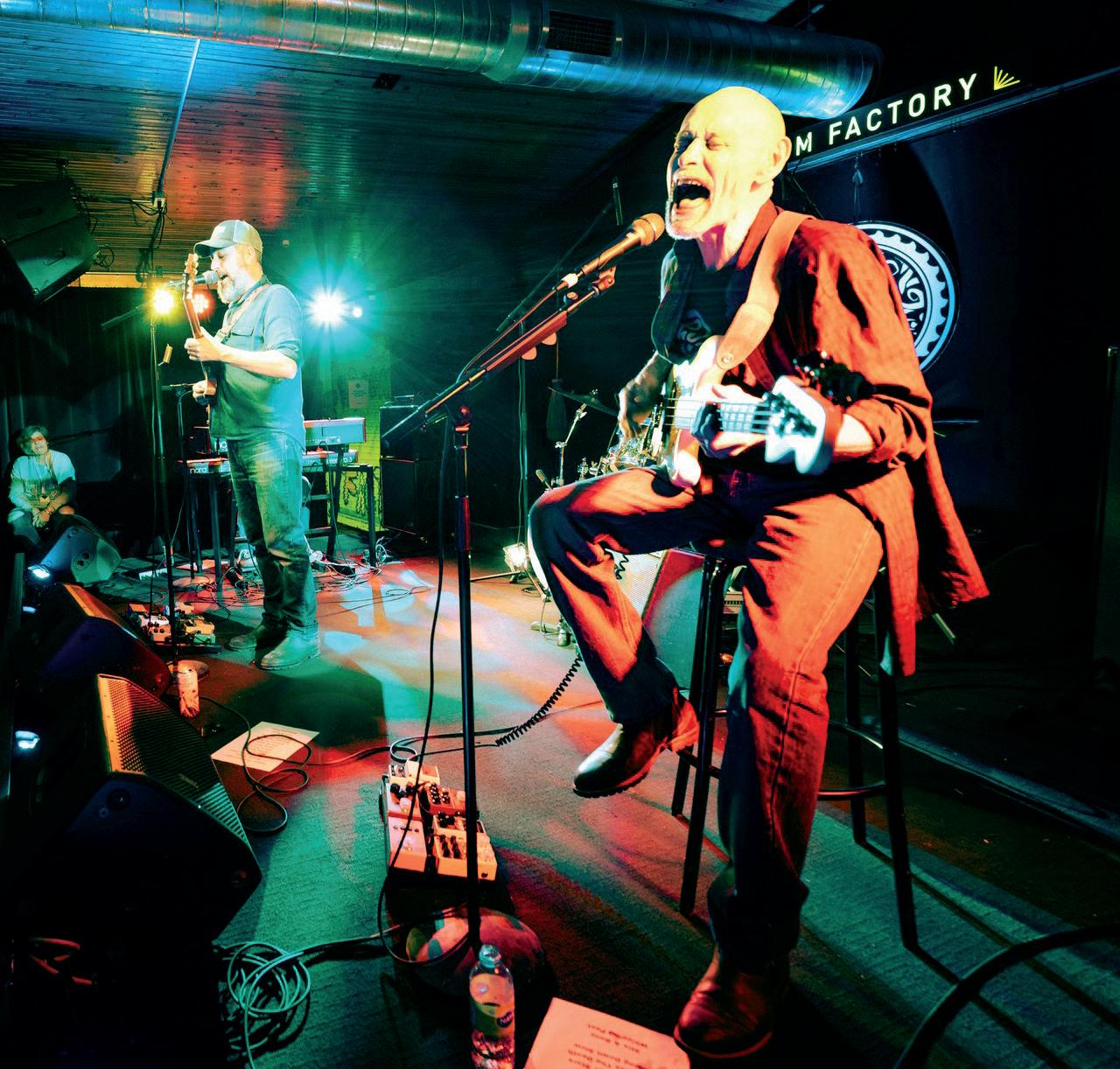
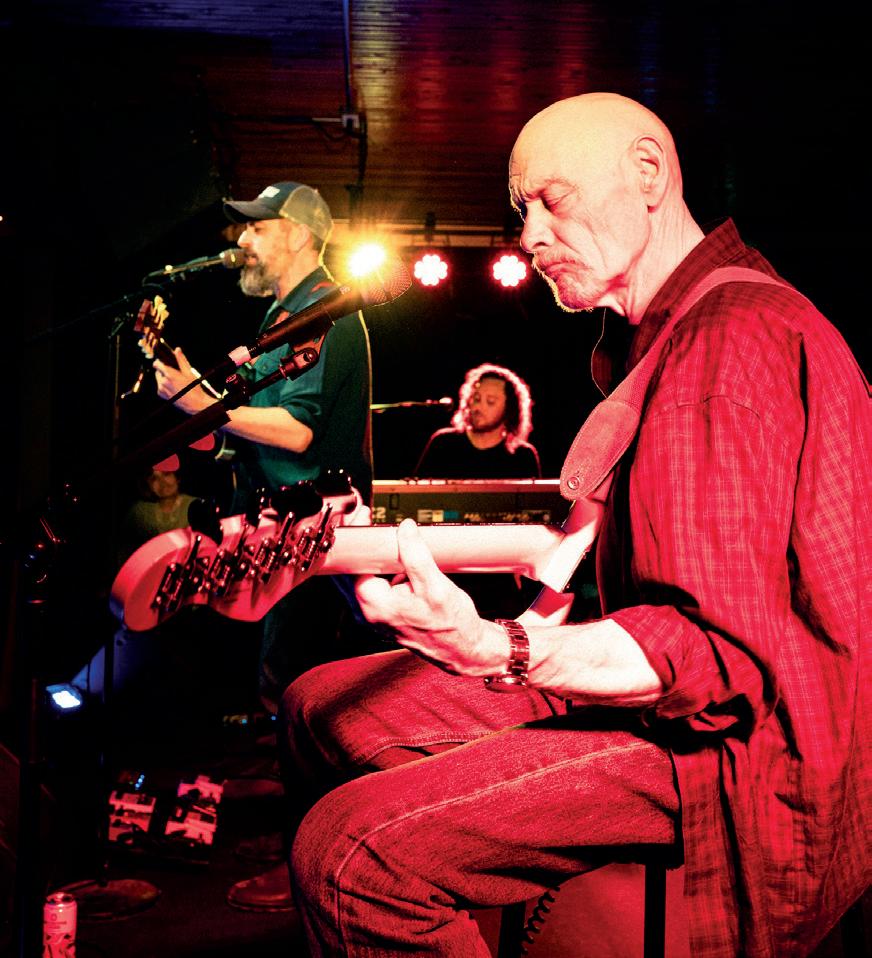
Thereis a particular kind of moment Dead Root Revival seems built to chase. It is not just volume, although there is plenty of that. It is not just musicianship, although the band clearly has it. It is something stranger and harder to pin down: it is the instant when a song stops feeling like a rehearsed arrangement and becomes a living thing.

Chasing the Edge
By Greg Teal
For Tom Savage, that feeling goes back to his earliest live performances with a band.
“Moments would come around, when the band’s really cookin’ or I’m in the midst of an extended guitar solo, and you find yourself moving into a different space, a different way of thinking... a different way of being,” he says. “Once
that happens, you’re like, ‘I want more of that!!’”
That hunger for transcendence sits at the heart of Dead Root Revival. The Kingston-based band moves through blues, rock, soul, folk, and classic jamband energy without ever sounding especially interested in choosing one lane. Ask Savage whether the band conKingston
sciously resists labels, and his answer is simple: “We serve the song.”
That phrase could almost be the band’s operating principle. Dead Root Revival’s music has the feel of players who know exactly what they are doing, but are still willing to let the room, the audience, and the moment push the songs somewhere unexpected. There is structure, but not stiffness; no polish for its own sake.
“Our approach to performance is to take things right to the edge, but not allow ourselves to go off the rails,” Savage says. “This requires a trust and cohesiveness between the band members.”
That trust is essential because Dead Root Revival’s songs are not treated as fixed objects. They breathe, shift, and stretch. Improvisation is not a decorative extra, it’s part of the engine.
“We allow a song to breathe and change and grow,” he says. “We have our structure but when improvisational elements are added to the mix, you need to be ready to adapt. The rawness goes back to serving the song... sometimes playing the wrong note is the right thing to do.”
For listeners who know Savage primarily from his acoustic singer-songwriter work, Dead Root Revival may feel like a louder, heavier extension of the same emotional core. He has moved between acoustic and electric music throughout his career, but he acknowledges that many people first encountered him in a more folk-oriented setting. Dead Root Revival does not abandon that intimacy so much as amplify it.
“I think fans of my solo work have become fans of DRR, and vice versa,” he says. “They know they’re going to get an honest, heartfelt performance... it’s just that sometimes those performances will be more face-melting than others.”
That mix of honesty and force is part of what separates Dead Root Revival from bands that merely recreate the sounds of blues and classic rock. The influences are there, and the band does not seem embarrassed by them. Savage says they will happily lean into a straight-up blues number or a Stones-like groove, as they do on “Maybe Baby.” But nostalgia is not the destination.
“I think we as a band have an internal editor,” he says. “We kind of just know when something is working and when it isn’t.”
The band’s music works best when it feels less like a tribute to the past and more like an argument for why those older forms still matter. Blues, in particular, is not treated as museum music. For Savage, its themes remain urgent.
“Economic inequality hasn’t been this egregious since before the French Revolution, so a lot of people have good reason for the blues. We also need music that not only points to what is wrong with the world, but also offers new perspectives and potential solutions,” he says. “In other words, hope.”
That word, hope, matters. For all of Dead Root Revival’s grit and volume, there is a deeply emotional current running through the band. Their own bio speaks of music that can “steal your heart,” a phrase that might sound too vulnerable for rock and roll if the band did not seem so committed to meaning it.
Savage believes audiences are ready for that kind of sincerity.
“I think people are slowly starting to wake up from decades-long techno social media fever dream,” he says. “They want to get back to something real. They want to feel things and they want to be present.”
That desire for presence also explains the band’s relationship to the current music landscape. In an era of algorithmic discovery, short clips, and endless digital noise, Dead Root Revival’s music asks for immersion. Their songs build.

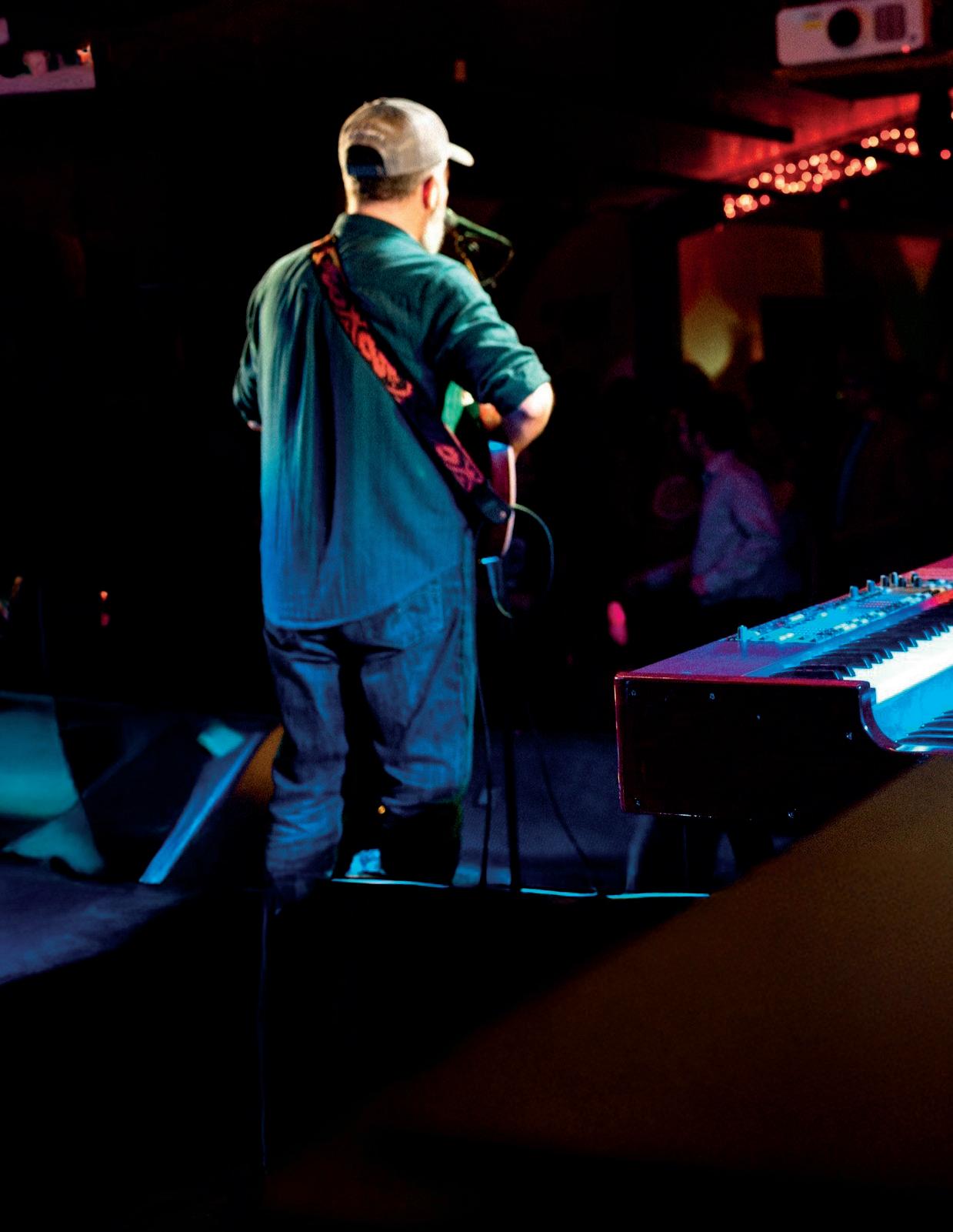
Their sets move through peaks and valleys. Their shows depend on the energy of a room.
“We feel very much at odds with the current musical landscape,” Savage says. “We are a throwback to another time musically and how we approach our business. We will rent the hall, do the sound, work the door, and even print and sell good ol’ fashioned paper tickets!”
There is something fitting about that. Dead Root Revival is not simply playing music inspired by an earlier era; they are trying to preserve a way of experiencing music that feels increasingly rare. Grassroots, physical, communal, and human.
“I personally feel rejecting technology and getting back to the analog way of doing things is what will ultimately save the music industry,” Savage says, “on a grass roots level anyway.”
That grassroots spirit is also tied to Kingston, a city with a music scene Savage describes as unusually supportive. He compares it to Winnipeg, despite Kingston’s much smaller size, and points to a culture where musicians show up for one another rather than treat the scene as a competition.
“Musicians will go out to other musicians’ shows on their night off and cheer them on,” he says.
The city has also benefited from having a strong network of venues, though Savage notes that Kingston has taken some hits recently with the loss of important long-running spaces. For a band like Dead Root Revival, the venue matters. They have played major stages, including Rockfest, but Savage speaks with particular affection about smaller and more unusual rooms: a big old barn at Furnace Falls Farm, a cottage clubhouse in the woods north of Wakefield, and Jimmy Joy’s Music Room in Bracebridge, an industrial-sized garage converted into what he calls “a top notch music venue.”
“I would say we are partial to smaller venues and the vibe they create,” he says. “Big enough so we aren’t destroy-
ing people’s ear drums, but small enough that they have an intimacy to them. Either that or outdoors.”
Playing outdoors, he adds, offers its own kind of freedom.
“I love the way the sound carries without the constraints of a building.”
That sense of space, whether indoors or outside, seems central to how Dead Root Revival thinks about performance. Setlists are not just collections of songs. Savage thinks of them almost as emotional architecture.
“I’m thinking about creating a vibe and hopefully carrying the listener away,” he says. “I want the set to ebb and flow, and
have peaks and valleys, so I suppose it’s a bit like acts in a play.”
To make that work, the band has to balance structure and trust. Tony Silvestri’s keyboard work, along with the rhythm section, gives Dead Root Revival the ability to move quickly between delicacy and full-force rock. But those shifts only work because the players are listening closely.
“It’s all about trust,” Savage says. “We go to the edge of the track and hope we don’t fall off.”
Most songs have defined structures, rhythmic changes, and planned shots. But the improvisational sections are where the band’s chemistry becomes
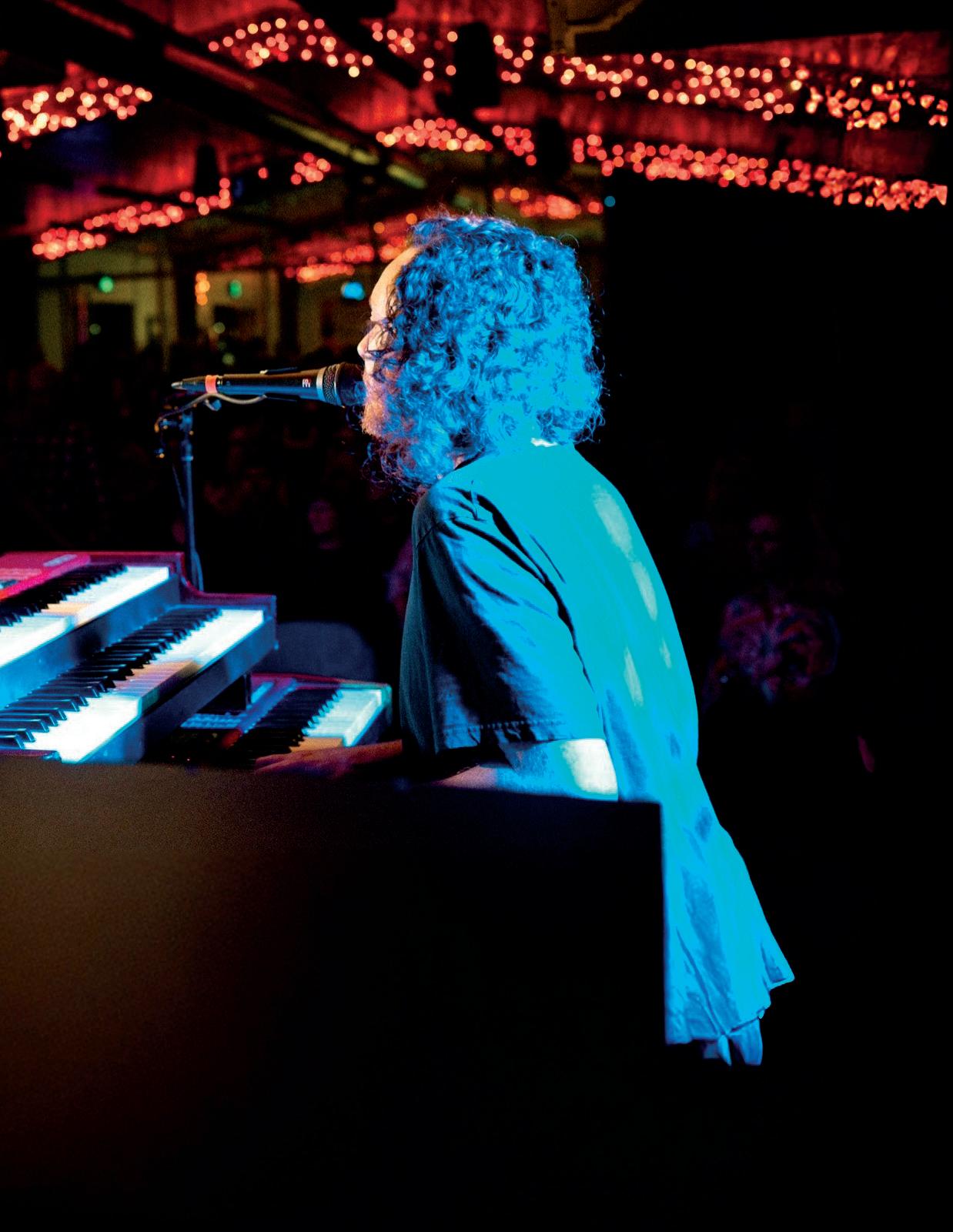
most visible. That is where listening matters most. That is where a song can suddenly open up.
“The vibe,” he says. “And yes, that is hard to explain… I would like them to feel invigorated,” he says. “Like we lifted their souls up, and recharged their batteries or something.”
For Dead Root Revival, that may be the whole point: to plug into something older, louder, rawer, and more human than the moment we are living in, and to send people back into the world feeling a little more alive than when they arrived.
Photgraphy by Adam Brooks

Beyond Likeness: Finding the Orenda in Wildlife
By Janet Jarrell
Ona quiet beautiful
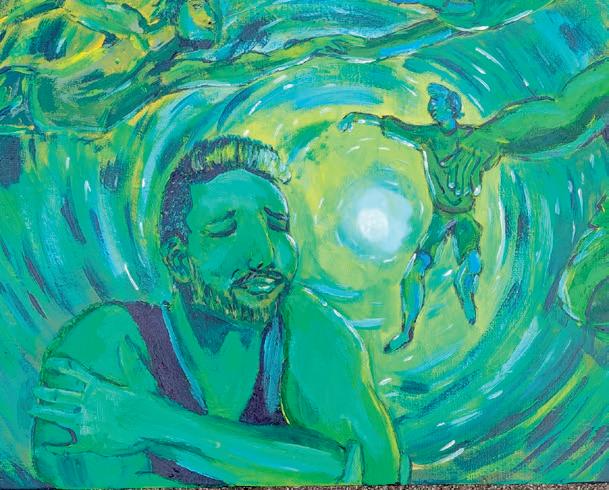
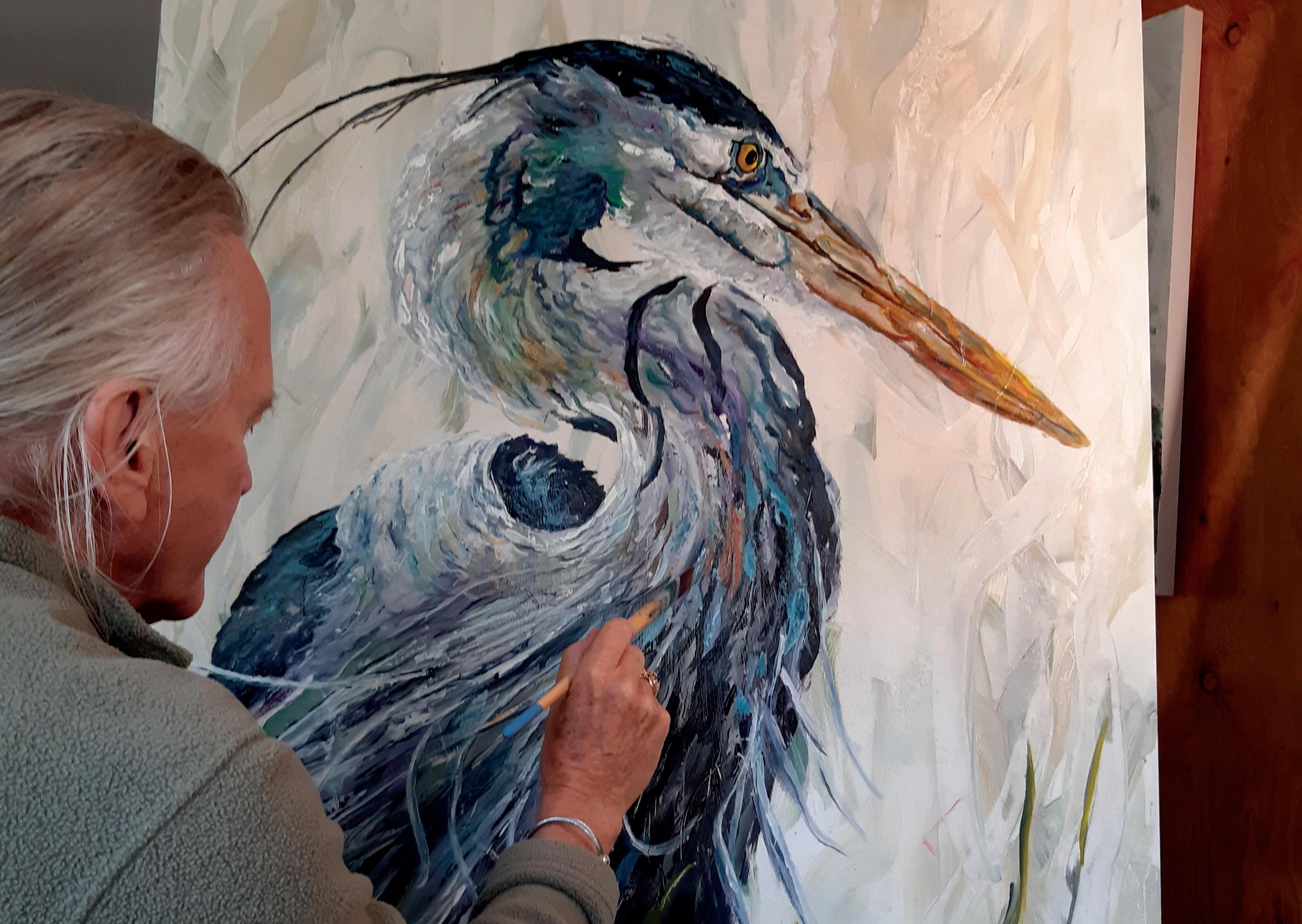
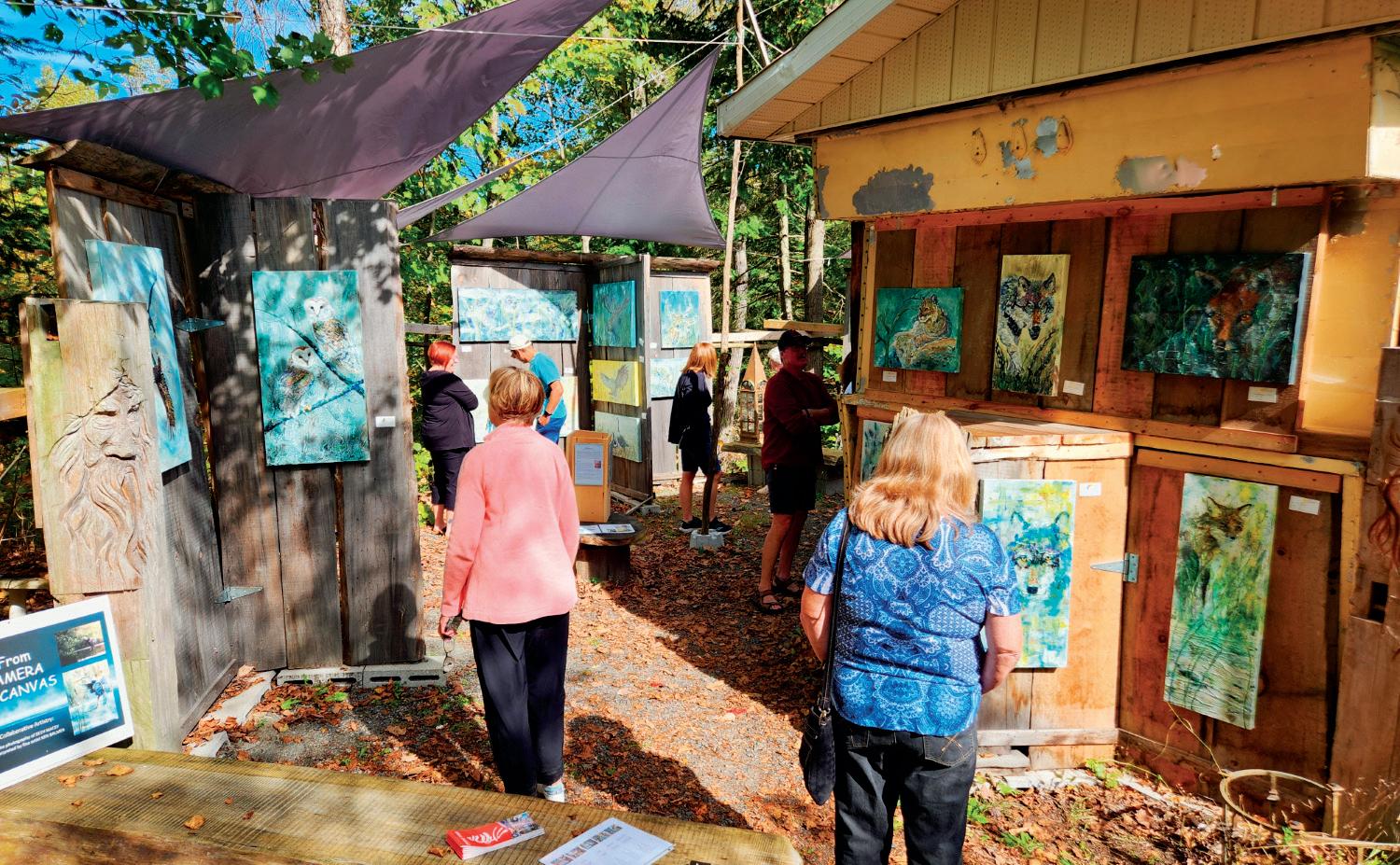
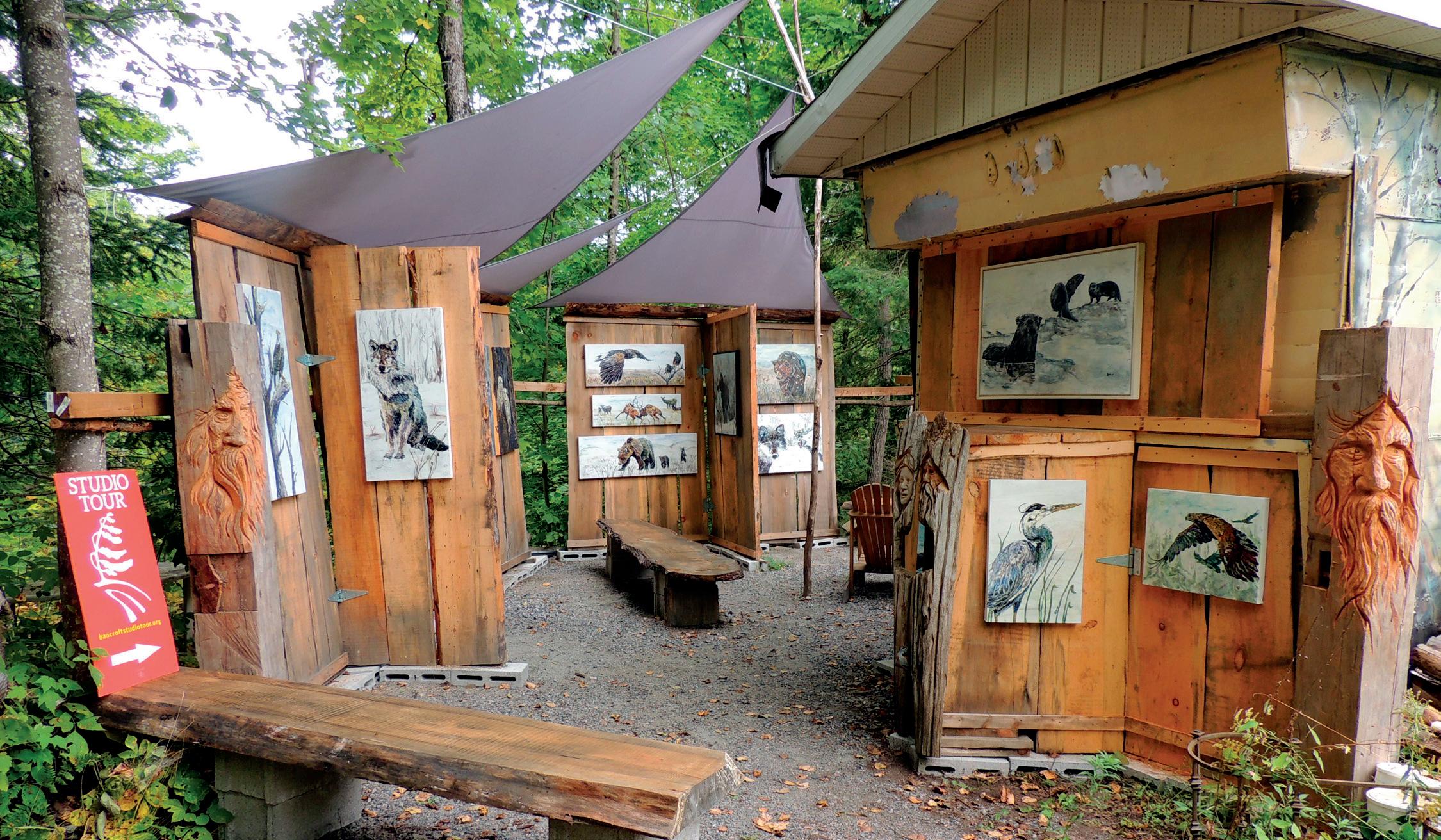
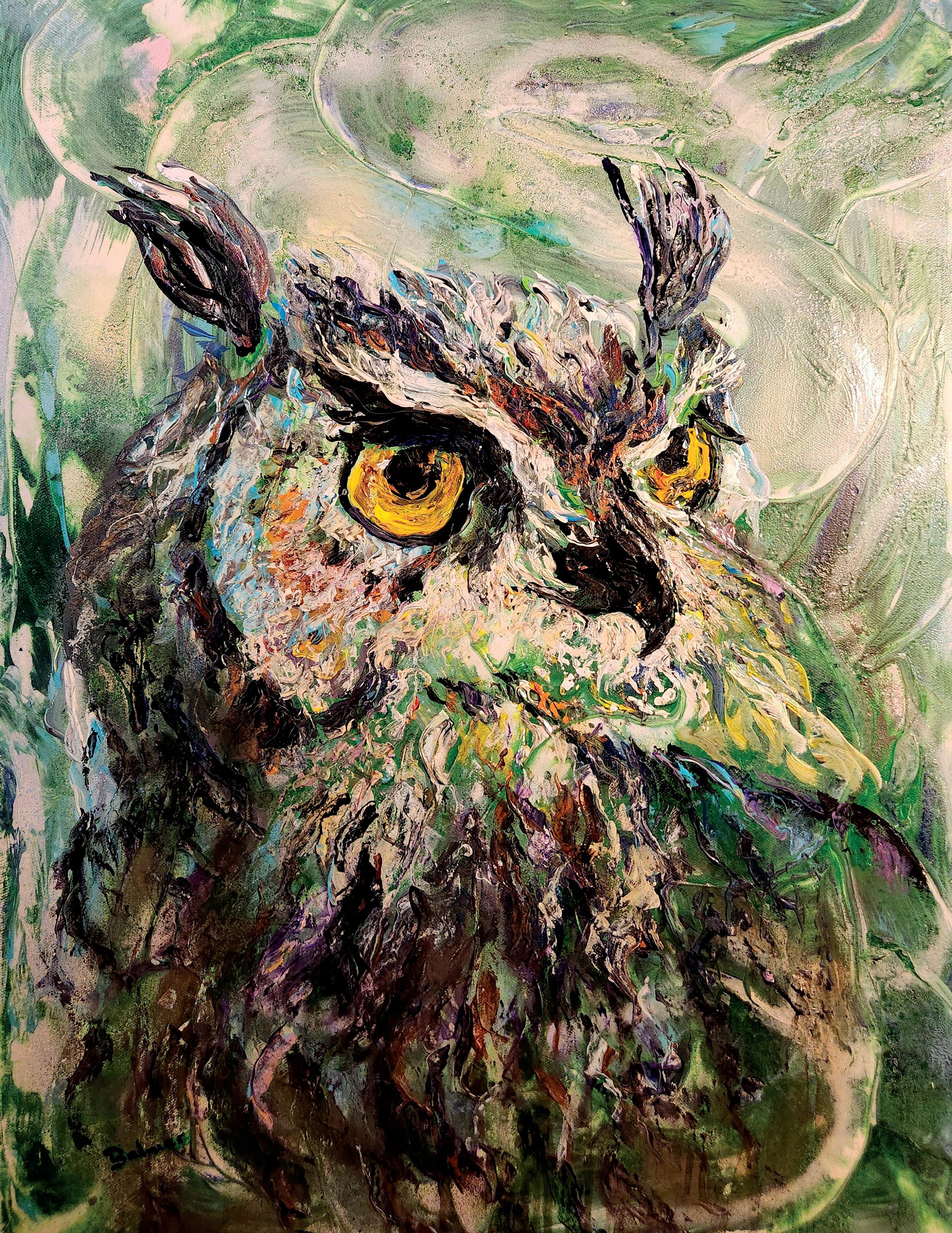
property near the edge of Algonquin Park overlooking the high falls where Baptiste Lake ends and the York River begins, visual artist Ken Balmer creates paintings that are deeply connected to the landscape around him. Surrounded by towering trees, wildlife, and the stillness of nature, Balmer’s studio in Bancroft, Ontario is more than a workspace — it is part of the creative spirit that shapes his art. His paintings invite viewers not only to observe wildlife, but to experience a deeper emotional and spiritual connection with it.
"I grew up in nature," Balmer reflects. His father was a camp counsellor, and from an early age he was immersed in the outdoors. "The environment shapes me," he says. Those formative experiences fostered a deep respect for wildlife and an appreciation for what he describes as a healthy spirituality—a sense of connection between people, animals, and the natural world.
Before dedicating himself fully to painting, Balmer explored creativity through music. Stepping away from that world, he searched for another artistic outlet and began painting in 1970. With a Ph.D. in geography and planning, Balmer brought both intellectual curiosity and
careful observation to his artistic practice. After retiring in 1976, he devoted himself entirely to art, developing a style that is uniquely his own.
Largely self-taught, Balmer refined his work through years of experimentation
Bancroft
and guidance from a few carefully chosen mentors. His academic background may have shaped the way he understands landscape and the relationship between people and the natural world, but it is his intuitive connection to wildlife that defines his work today.
While many wildlife artists focus on realism, Balmer is interested in something deeper.
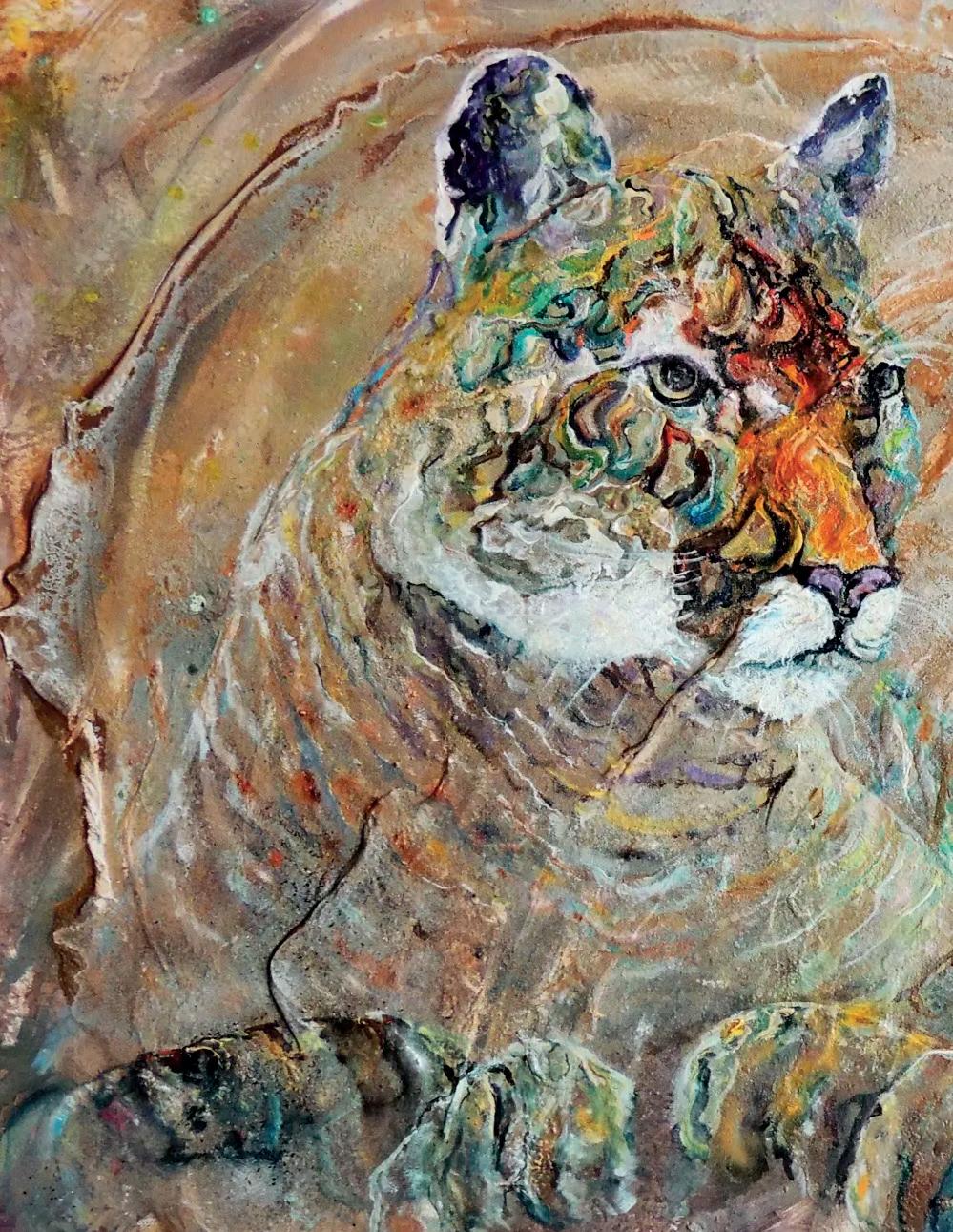
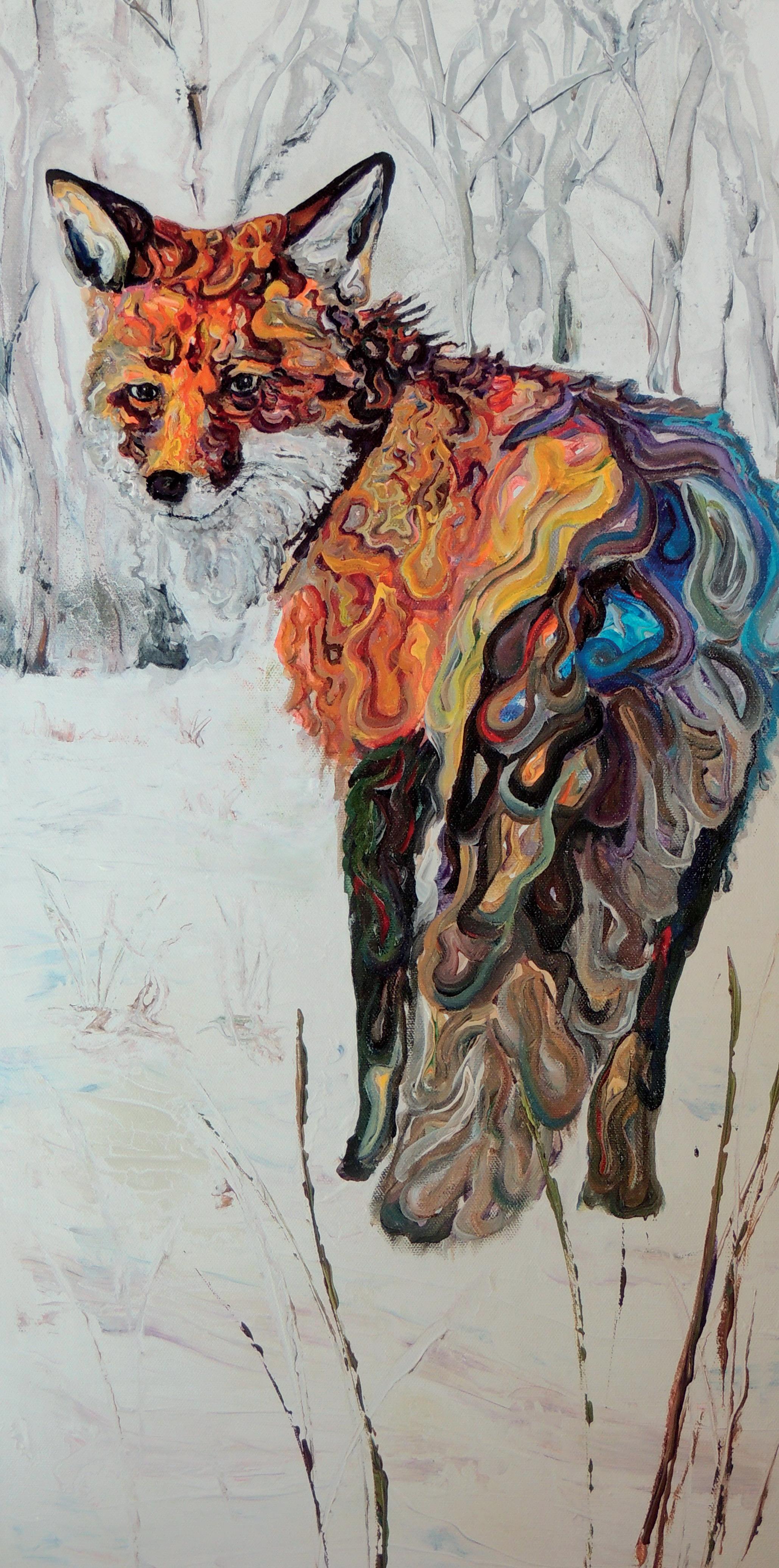
"I am more interested in capturing the ‘orenda’ than the likeness of the creature," he explains. Whether painting an owl, wolf, bear, or deer, he seeks to reveal what he describes as the orenda of the animal — the inner spirit or force that makes each creature unique.
In his book Orenda Wildlife Art, Balmer explains that “Orenda is an Iroquois name for a supernatural force believed to be present in all people and creatures.” Through both his writing and paintings, he encourages viewers to look beyond the surface and consider what each animal may symbolize and be telling us.
To understand that spirit, Balmer spends time quietly observing wildlife in their natural habitat. "I sit silently in nature and the wildlife comes to me," he says.
The animals are often simply following their daily paths, but through patience and observation, Balmer develops a sense of familiarity with them. He watches their behaviour, their interactions, and their presence within the landscape.
"That is what I am trying to do—understand the creature."
For Balmer, wildlife becomes a mirror for self-reflection. An owl, for example, is not simply a nocturnal bird painted with remarkable realism. It represents solitude, patience, and “finding higher self in silence.” His animals appear thoughtful, watchful, and wise, as they carry messages about how humans might better understand themselves and the world around them.
Through vibrant colours and abstract treatments, Balmer intentionally challenges viewers' expectations. The goal is not merely to depict an animal accurately,
Fine
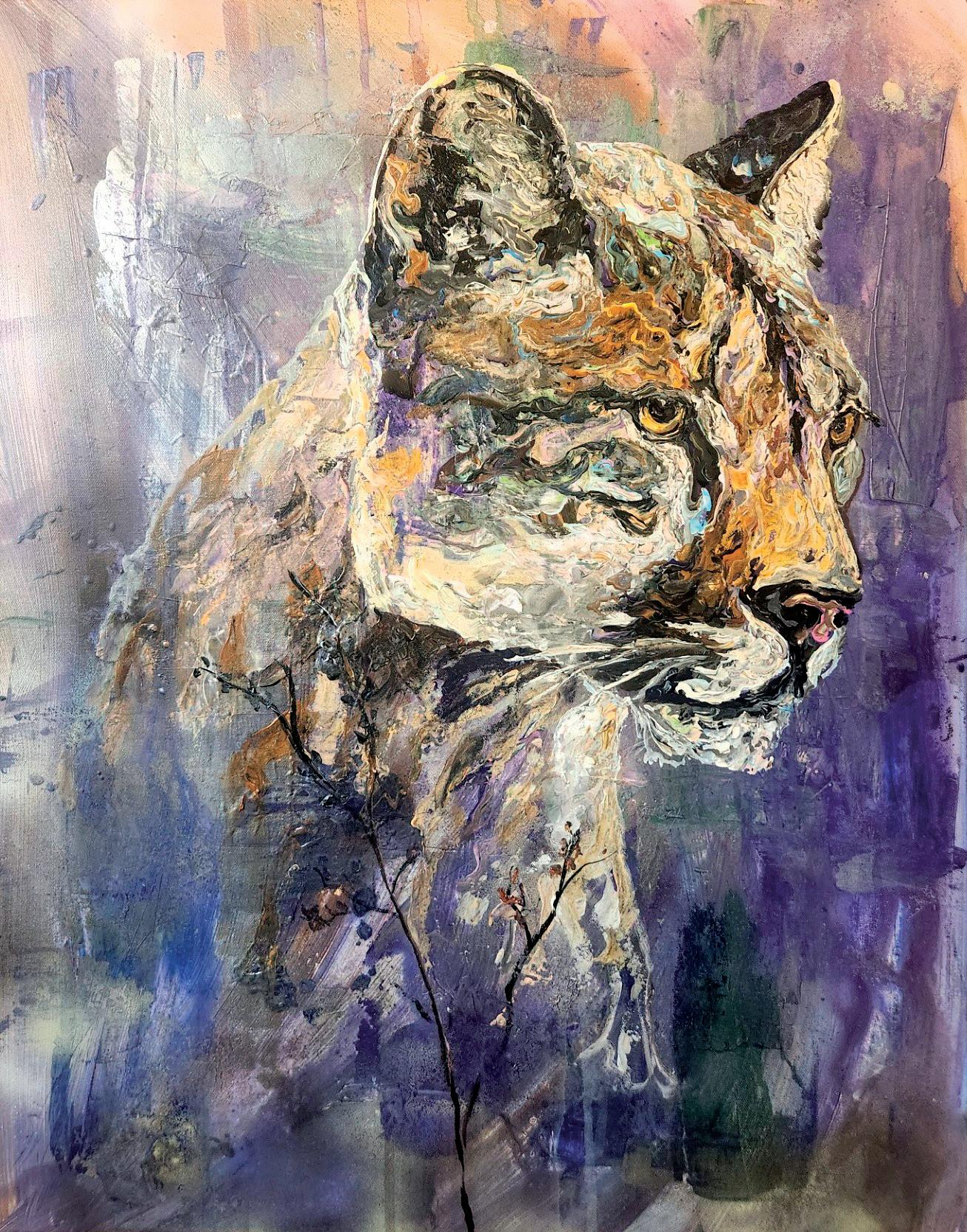
but to encourage people to stop, think differently, and consider the deeper qualities each creature embodies.
Speaking with Balmer mirrors the experience of viewing his artwork. His soft, raspy voice naturally slows the pace of conversation, encouraging careful listening and reflection. His paintings demand much the same attention. They ask viewers to pause, look beyond appearances, and engage with the spirit of the subject.
Ultimately, Balmer sees his work as a pathway to connection. He believes many of today's environmental challenges stem from a growing disconnect between people and nature.
"Humans are destroying the environment because they are disconnected from their actions and the consequences, we have to have respect. We have to tune into that thinking for our own survival," he says.
His hope is that art can help bridge that gap. By connecting with the spirit of wildlife, people may develop greater respect for the natural world—and a deeper understanding of their place within it.
In Ken Balmer's work, art becomes more than observation. It becomes an invitation to reconnect with nature, to listen more carefully, and perhaps, for our own survival, to rediscover our relationship with the living world around us.
balmerart.com
Pass the Feather: Dawn Iehstoseranón
By Scott Williams Madoc
Eighty years ago,
George Orwell wrote that “if thought corrupts language, language can also corrupt thought.” Since the 1980s, the term “Sixties Scoop” has been part of the Canadian lexicon, but the term itself corrupts our thought. It sounds familiar, friendly and fun: conjuring images of a happy child with a scoop of ice cream balancing precariously atop a cone.
Dawn Iehstoseranón:nha (pronounced “Ya sto sah la nuhk hna”), herself a Scoop survivor, sets the record straight.
“These kids were stolen. They were taken from their mothers at birth. Women came to the hospital and left without their babies. Their children were stolen.”
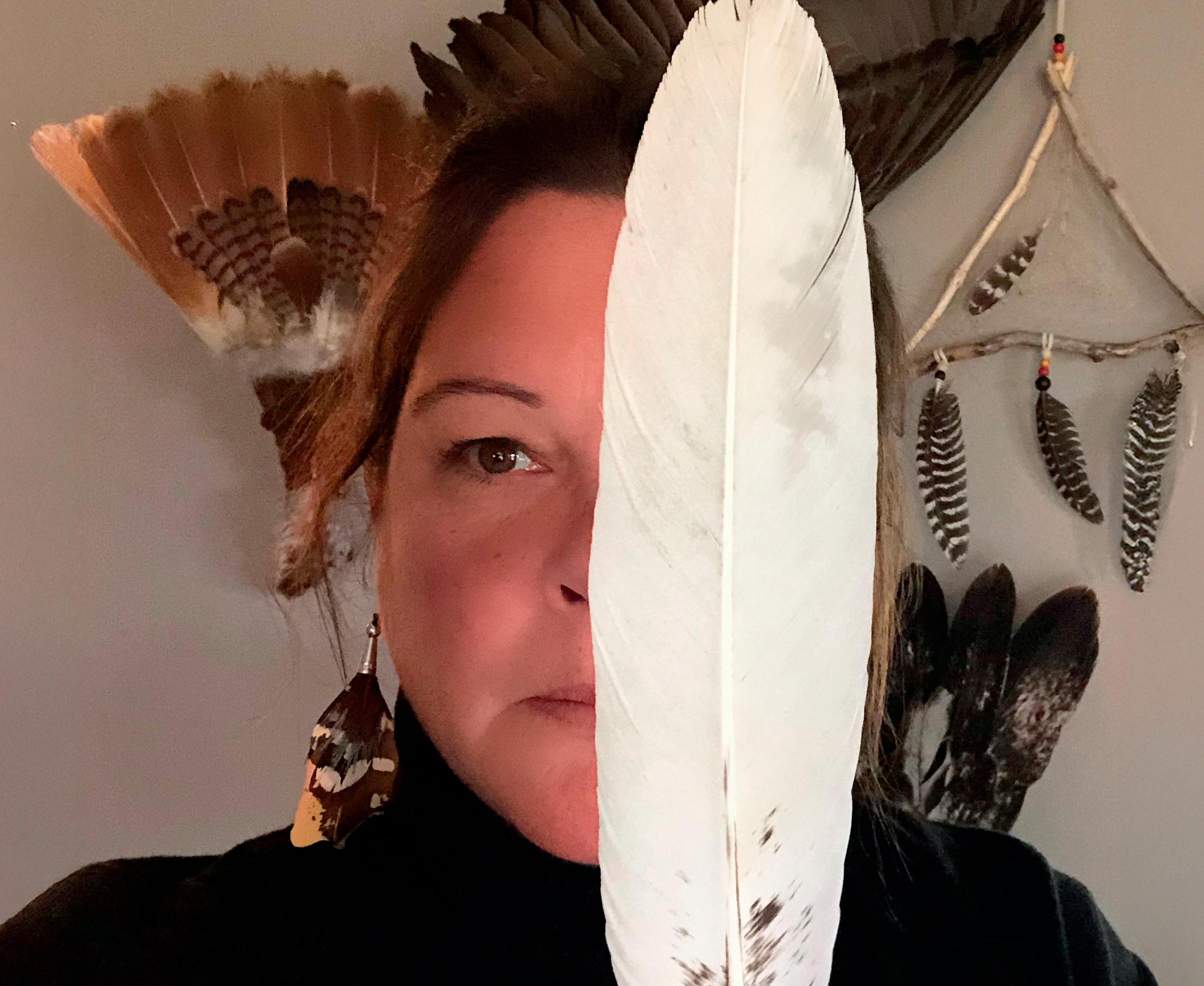
Iehstoseranón:nha (“she keeps the feathers”) is a Mohawk entrepreneur, artist and activist living just north of Madoc, not far from where her maternal great-grandfather settled in the late 1800’s after leaving Akwesasne with his wife and a few family members.
She places the Scoop within its broader historical and cultural context, revealing its profound impact.
“Our culture is matrilineal. Everything comes from a mother. When you harm a mother, whether it's Mother Earth or a human mother or an animal mother, there's a scar and a fear that's always left there. Everything changes when you hurt a mother: the whole line after her is damaged.”
And is that genocide?

“Yes. In every culture around the world, that's genocide. That's how you break people, how you erase culture: you separate mothers from children. It's the first go-to.”
That kind of brokenness can manifest itself in many unpredictable ways. For Iehstoseranón, it has become not only a remarkable survival instinct but also an almost compulsive drive to create something from nothing.
“I come from a place where I had no culture, no mother. I evolved into someone who was essentially fabricating their own identity.”
In the process, she has also created a remarkable legacy.
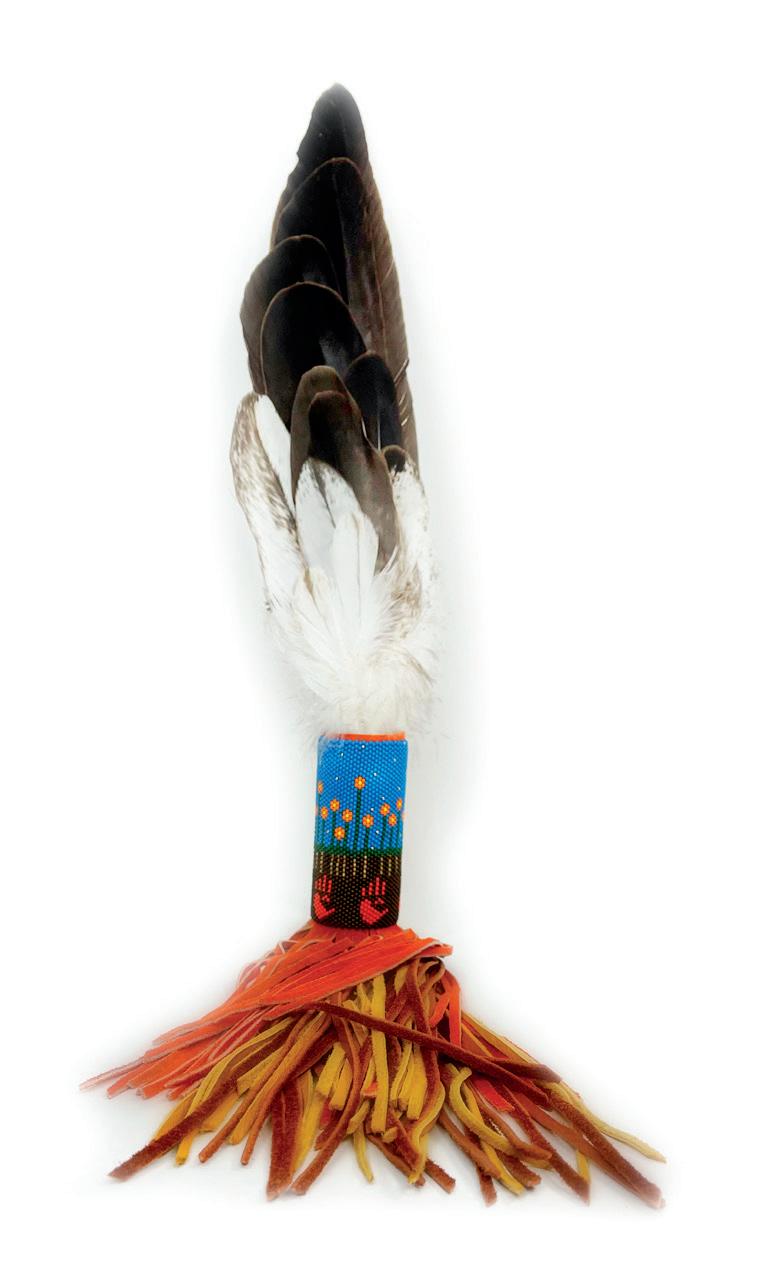
In 2012, she founded Pass the Feather, a business specializing in the bundling of sacred feathers while also providing graphic design services to Indigenous artists, businesses and community organizations.
That same year, recognizing the limits of what one person could accomplish alone, she established the Indigenous Arts Collective, a not-for-profit organization that now supports more than 400 members through business development, networking and advocacy.
In 2019, through the Indigenous Arts Collective, she created the Indigenous

Women's Arts Conference, providing artists with opportunities to showcase their work through a vendor marketplace while developing artistic, cultural and entrepreneurial skills through a comprehensive workshop program.
When the COVID-19 pandemic halted in-person events and threatened the livelihoods of many Indigenous artists, she responded by creating IndigenArtsy, an online marketplace designed to support artists and makers, including those with limited access to the internet.
Then, in 2021, after the Tk’emlúps te Secwépemc First Nation announced the discovery of the remains of 215 former residential school students, Iehstoseranón brought together a network of partners and volunteers to create Remember Me, a national act of remembrance held on Parliament Hill during the first National Day for Truth and Reconciliation. The event drew thousands of participants in person and thousands more online.
Through it all, Iehstoseranón has continued her own creative practice, producing design work for clients while creating calendars, posters, prints and a series of Little Books of Wisdom. Beautifully written and illustrated, they offer a gentle introduction to Indigenous ways of knowing, being and sharing.
Iehstoseranón's ability to create something from nothing—to recognize a need and instinctively work to fill it—is remarkable. Yet it is the way she pairs creativity with compassion and an unwavering commitment to her community that is most inspiring.
“I think growing up without a community or a family that I could relate to in any way makes me that much stronger in coming back to what I was originally supposed to be a part of, which is my community. That’s why everything I do is for them. I’m obsessed by it.”
passthefeather.ca

Vinifera Arrives on the Shore of the Niagara
By James Cameron Smith
James Cameron Smith
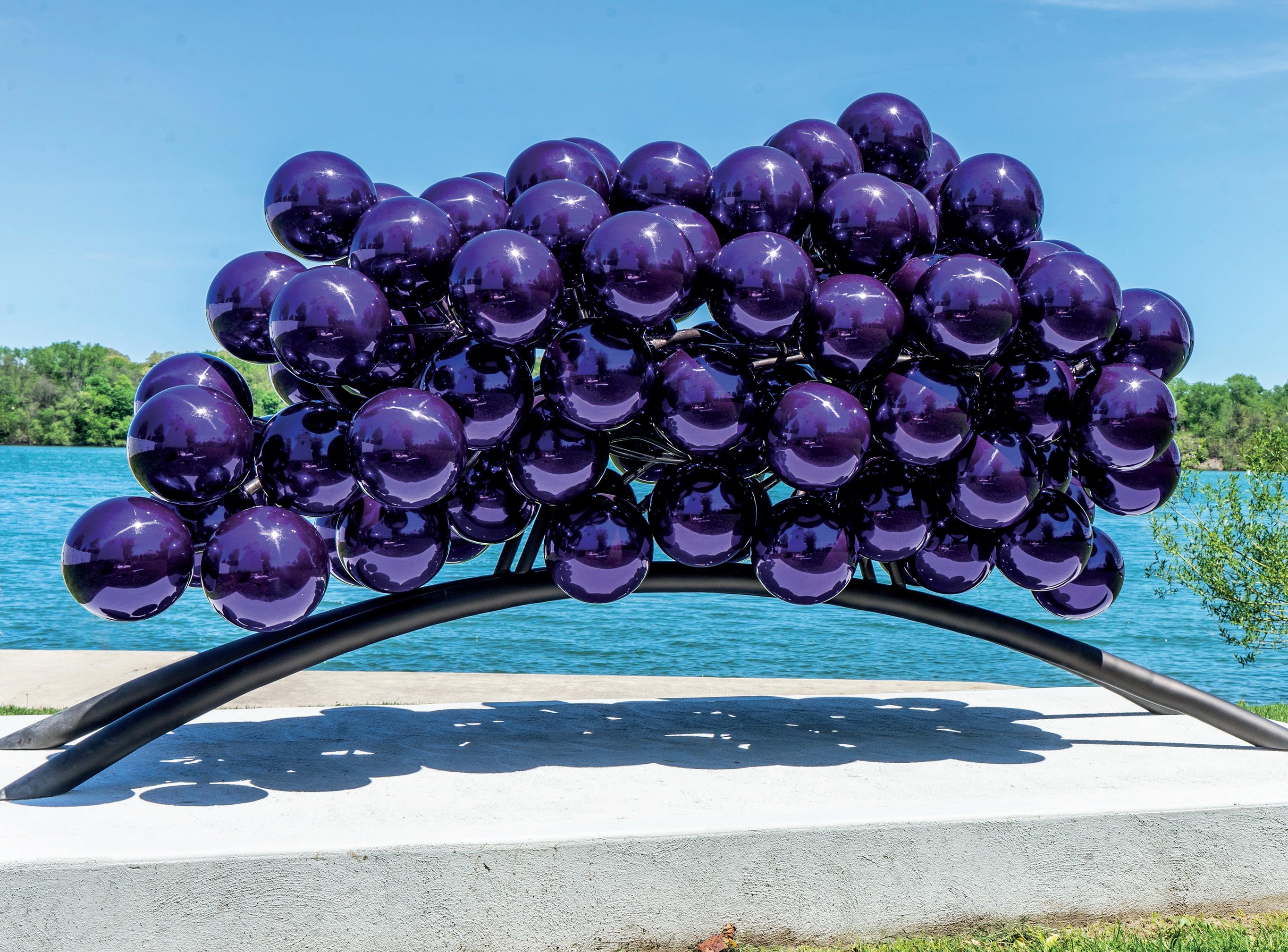
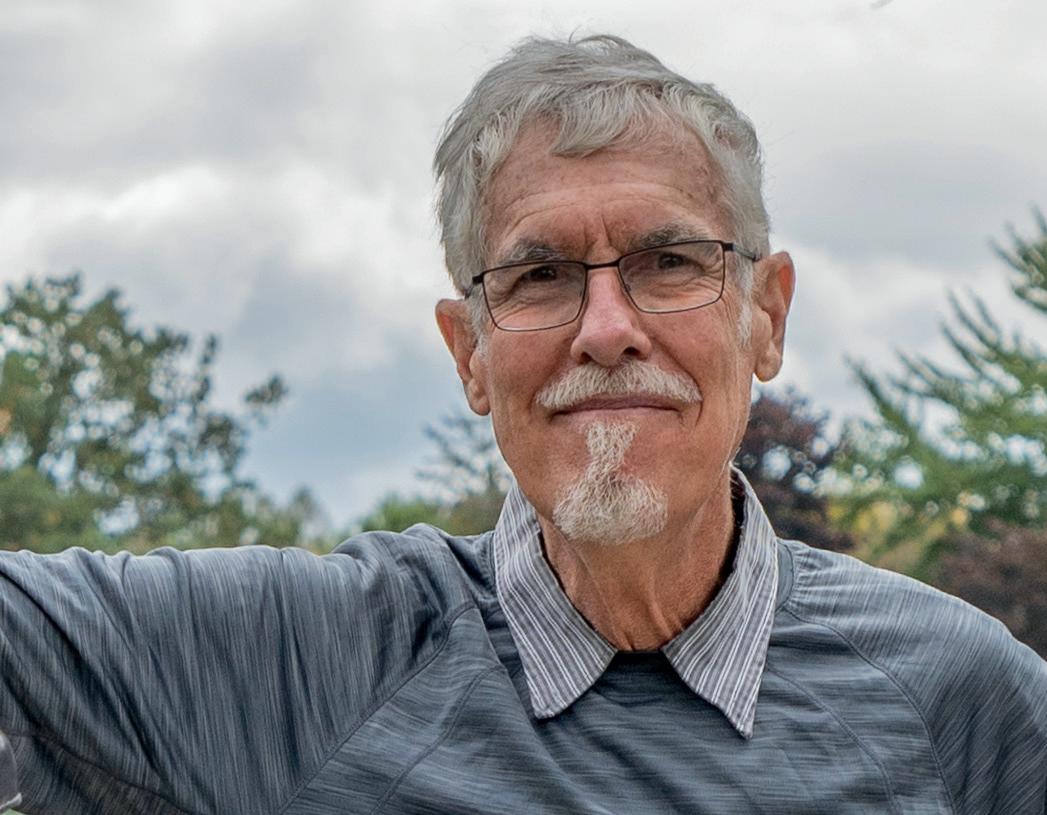
is a public sculptor based near Madoc, Ontario, whose commissions for municipalities and organizations across Canada have established him as one of the country's distinctive voices in public art. His most recent work, Vinifera named for Vitis vinifera, the wine grape species that transformed the Niagara Peninsula—has been installed on
the historic shore of the Niagara River in Niagara-on-the-Lake, where it immediately captures viewers' curiosity and imagination.
The sculpture presents a monumental cluster of grapes created from 110 deep purple-violet, mirror-finished stainless steel spheres. From every angle, your reflection and the surrounding landscape appear simultaneously across dozens of
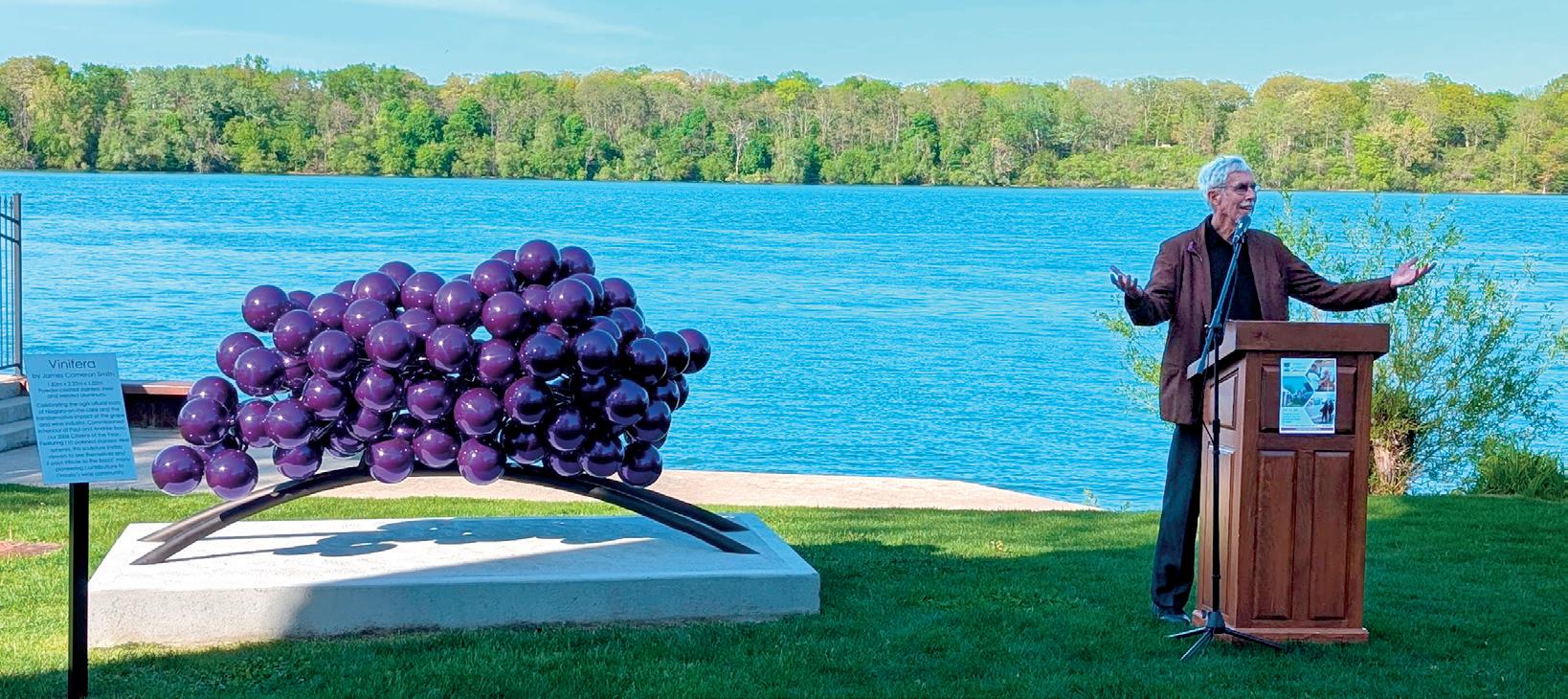
curved surfaces, drawing you into the work as both viewer and subject. The effect is immersive: the spheres first command your attention, then dissolve the boundary between the sculpture and the landscape around it.
Vinifera was commissioned by the Niagara Pumphouse Arts Centre. The jury's decision to select Smith's proposal and place it on the storied banks of the Niagara River culminated in a dedication ceremony on May 21, 2026.
The sculpture was conceived to recognize and celebrate Niagara-onthe-Lake's long heritage of grape growing and winemaking, with particular acknowledgement of Paul and Andrée Bosc, founders of Château des Charmes Wines, whose vision helped establish the region's international reputation through their pioneering commitment to European vinifera varietals.
Madoc

To bring the sculpture from digital rendering to physical reality, Smith partnered with Belleville fabricator Bill Doef. Together, they transformed the design into a precisely crafted assemblage of 110 individually finished spheres, each ground to a mirror polish and tinted a translucent deep violet—a process demanding both technical precision and artistic skill.
The dedication ceremony drew Lord Mayor Gary Zalepa, municipal officials, representatives of the arts community and members of the public to the Niagara Pumphouse grounds. Speakers reflected on the rich history of the Niagara wine industry and recognized Paul Bosc Jr., whose generosity funded the acquisition. Smith spoke about the role public art plays in giving history a tangible presence within a community—something people can stand beside, walk around and ultimately see themselves within.
That final idea is perhaps the sculpture's greatest achievement. From every vantage point, reflections of the sky, river, trees and visitors multiply across its polished violet spheres. Vinifera does not simply occupy the landscape; it gathers the landscape—and everyone who encounters it—into itself.
jamescsmith.ca
Themainspring, rock-
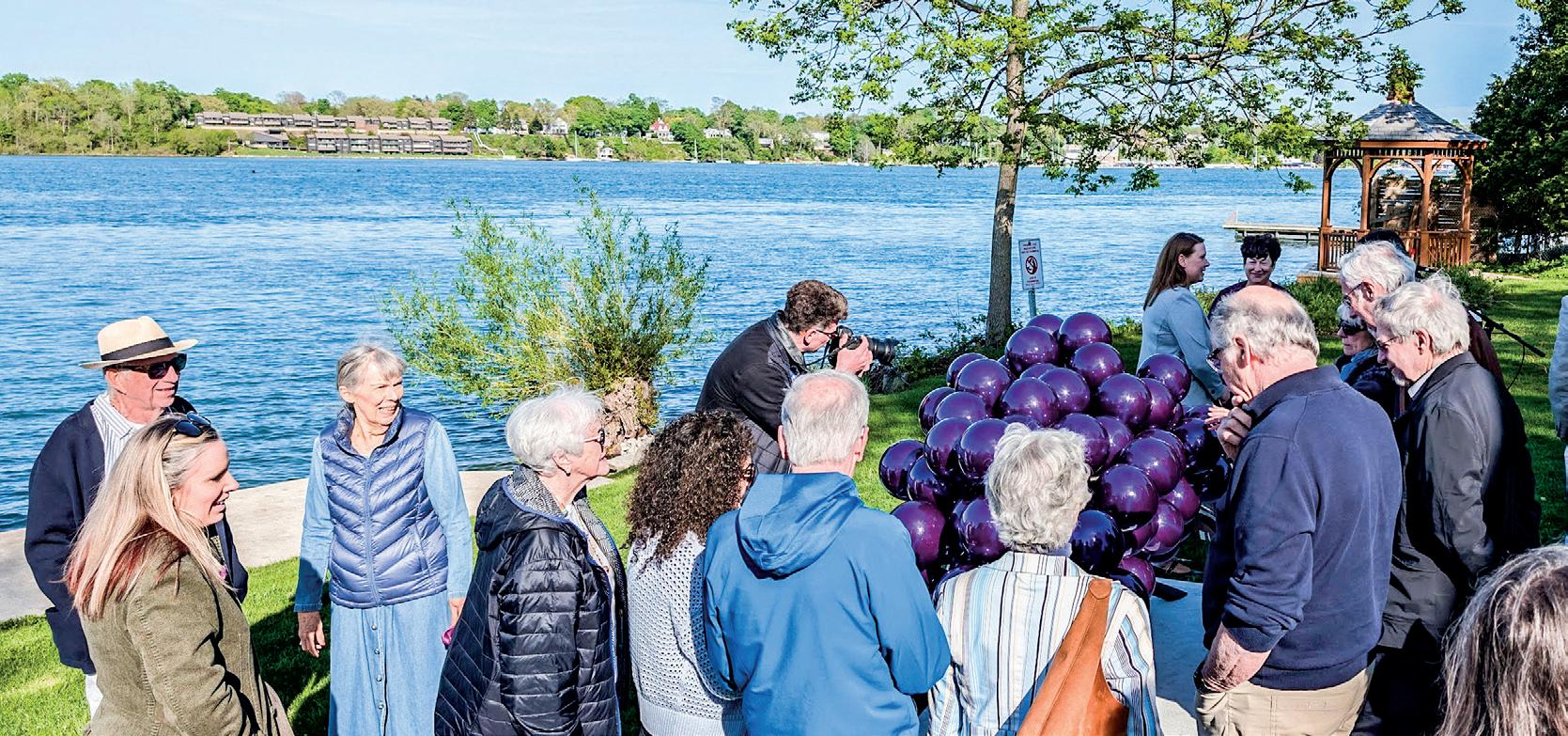
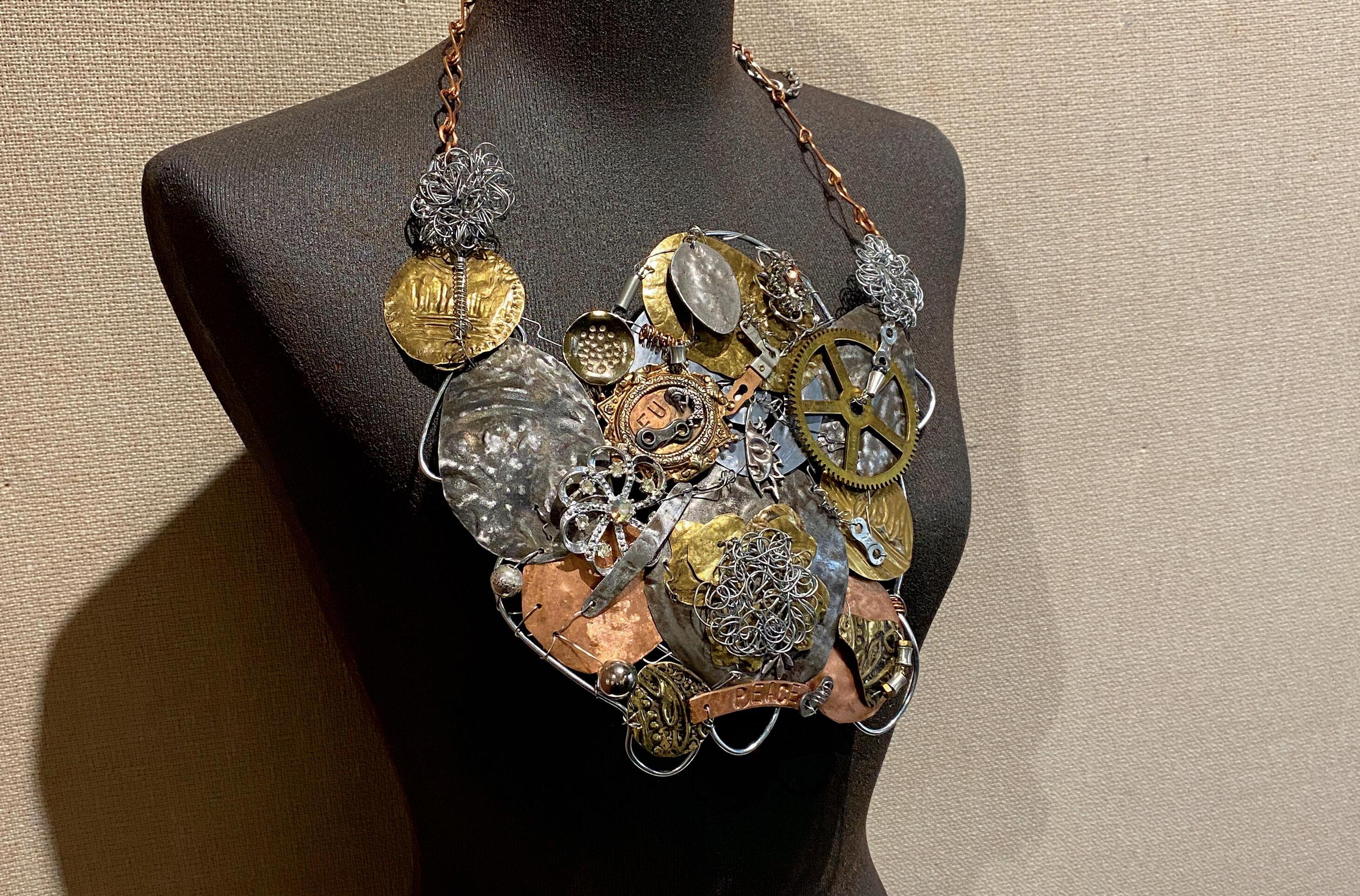
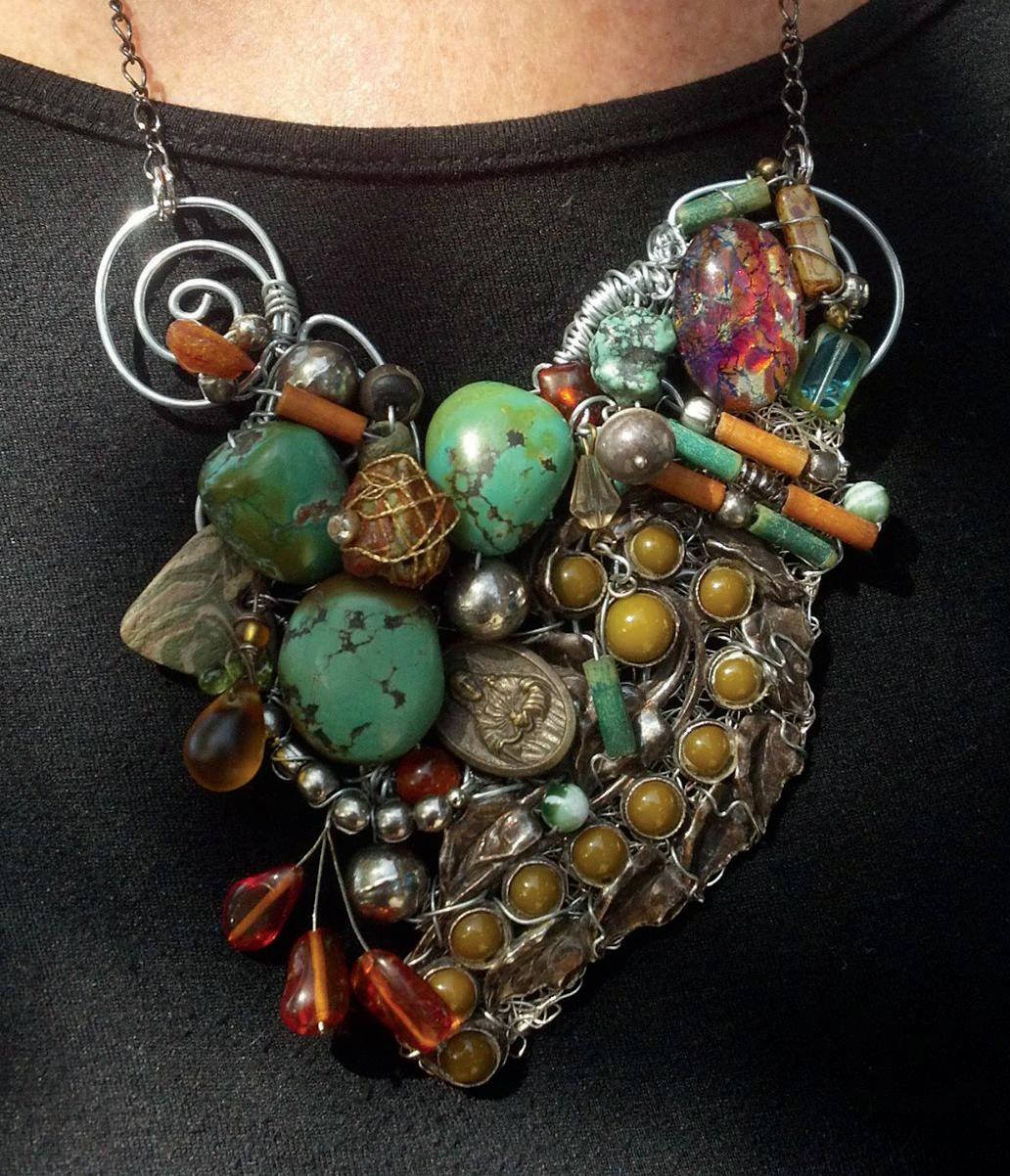
ers and gears of an old watch movement becoming the beating heart of a pendant. An old-style skeleton key becomes the backbone of a miniature dragonfly. Everything old is wonderfully new again in the curious creations of artist Lisa Spence, whose Belleville studio is home to an impressively eclectic inventory of junk raw material: bits of wood from a home renovation, tire tubes and bicycle
Lisa Spence
By Scott Williams
chains, crystals from a chandelier, coins from the turn of the last century and tin ceiling tiles from the century before that, teaspoons and salad forks, a discarded box from The Wine Rack, an old porcelain doll. Even, she says, “a broken laptop that I found on the road that somebody had run over.”
“And rusty bits that have fallen out of cars,” adds long-time partner and Belleville playwright Peter Paylor.
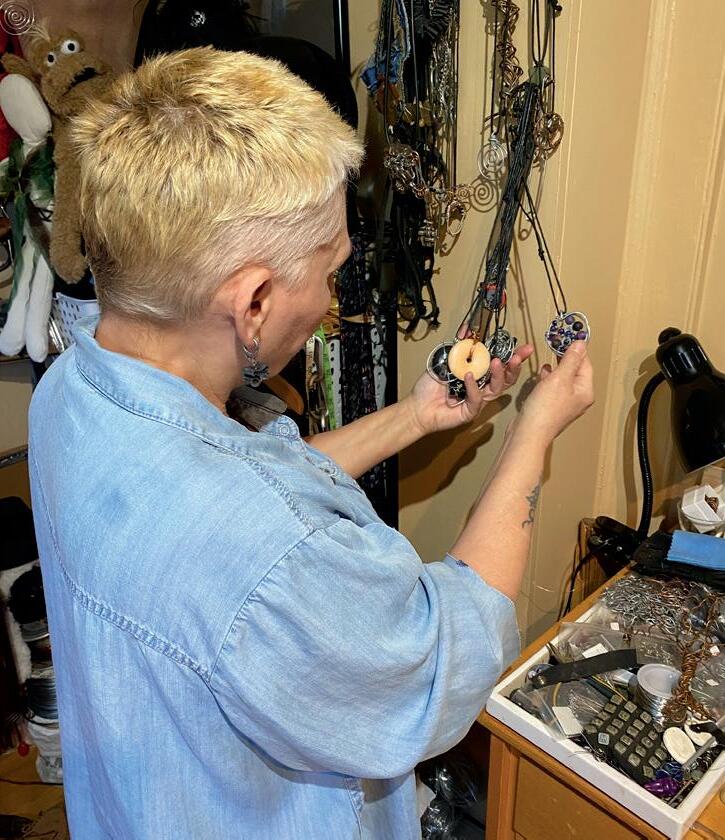
Spence has been creating for as long as she can remember, with motivations that have evolved over time. As a child, the impulse was whimsical: rather than returning a plastic milk jug for the deposit, she cut it open to make a bird feeder. Later, creativity became practical. “If I needed a table I would find a skid somewhere and I'd rip it apart and I'd make a table.” Eventually, it became part of making a living. “I needed money so started selling pieces. I've been making stuff and selling stuff for years.”
There are a couple of throughlines to all of this. “Upcycling, recycling, repurposing,
refashion – whatever it is you want to call it – it’s using found objects or recycling material and making something new.”
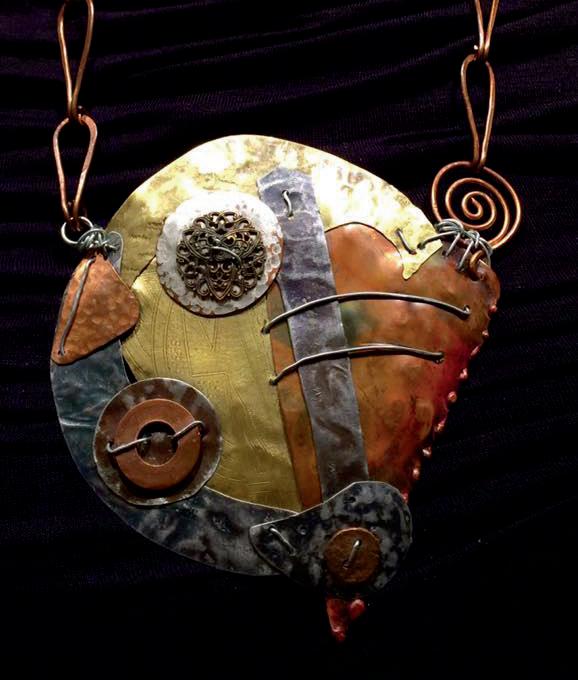
The results are stunning, from the delicate pieces of jewelry on sale at Belleville Public Library’s Parrott Gallery Shop, to the large pendant – almost a breastplate – on display at the gallery’s recent juried show, HeART and Home. (“That one’s big. Ideally you’d wear it around your neck, but I guess you could hang it on a wall if you want.”)
Belleville
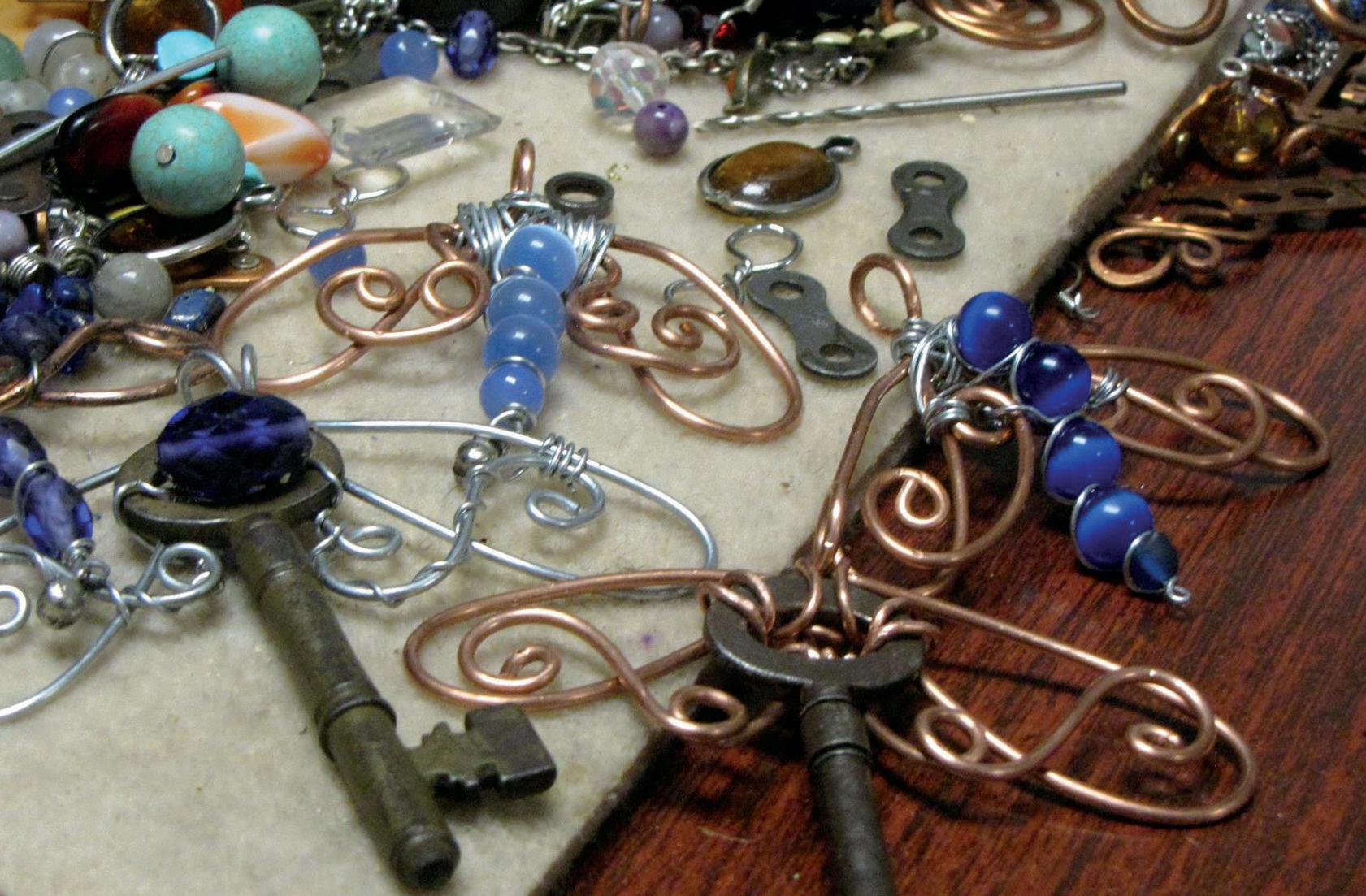
Every piece contains multiple elements, meticulously sewn together with nearly invisible wire. “I don’t do what I don’t do,” she says. “I don’t weld, and I don’t solder.” The beauty of the resultant piece is reflective of the beauty hidden in the detritus used to create it.
The second throughline is one of personal renewal. Spence's own story is one of triumph over horrific violence and abuse she experienced earlier in life. Is it fair,
then, to see her creative process as a metaphor—to take things that are broken, unwanted and discarded, and transform them into something beautiful?
Spence doesn’t hesitate. “Absolutely,” she says. “It’s no accident.”
Her childhood was not without joy. She remembers her grandmother teaching her to dance, watching old black-andwhite movies together, and creating live theatre in the backyard. Reclaiming that all-too-rare joy is an important aspect of her work as an artist.
Despite the trauma in her past, Spence has found her way to a place she describes as one of sanity and balance. This is no small transformation. In effect, she has taken recycling and renewal to a new level. No longer just about reducing waste or creating art, it has become a way of understanding both herself and the world around her.
When Spence describes her work, she says that “Every piece ends up having some sort of story.” All the raw material
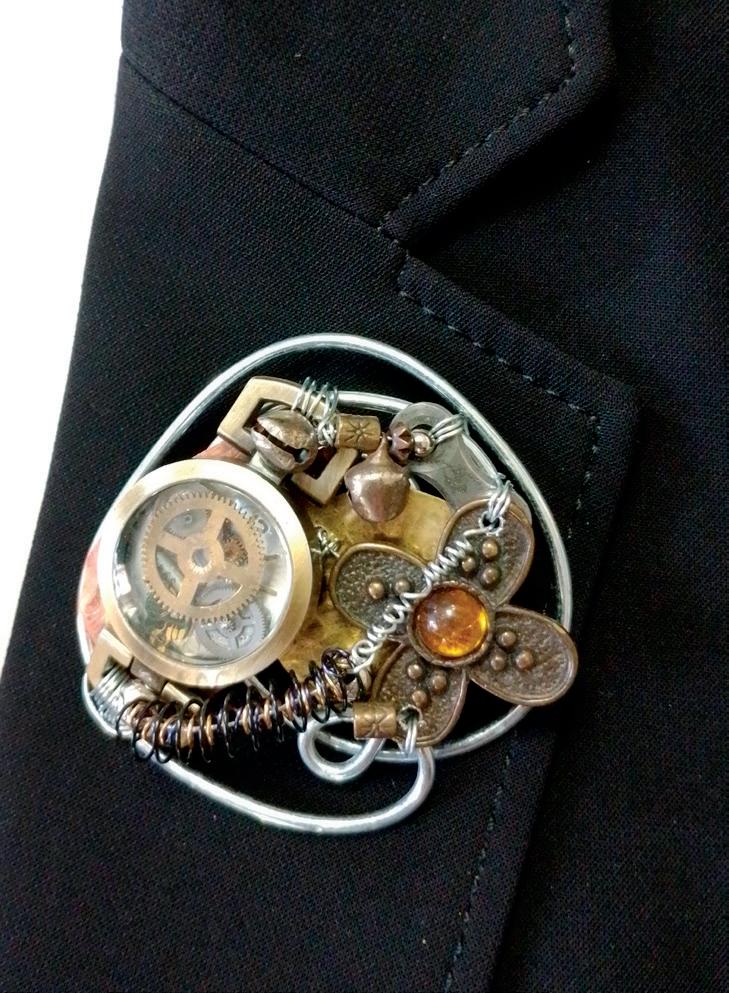
she uses – all the remnants of remembered and forgotten lives – has a history that becomes embedded in the work. Spence’s own story is every bit as rich and complex, and through her art, she invites us to share in it.
Photography by Scott Williams
Crafts
When ASL Becomes Part of the Performance
By Janet Jarrell

Across our region, a quiet transformation is unfolding in theatres and performance spaces—one that invites more people into the magic of live performance. Through Quinte Arts’ Prioritizing Accessibility in the Performing Arts initiative, supported by the Canada Council for the Arts, artists and organizations are exploring new ways to ensure that creativity can be experienced by everyone.
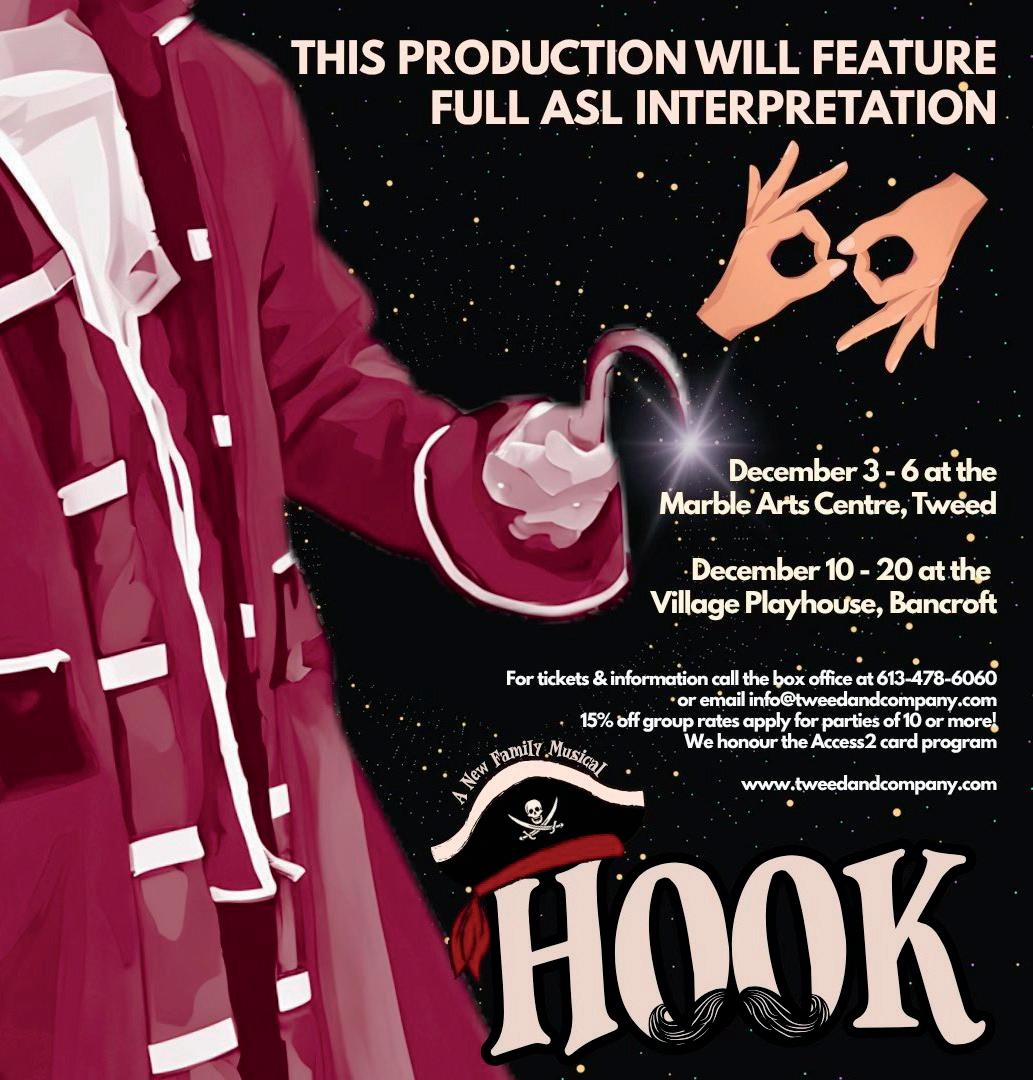
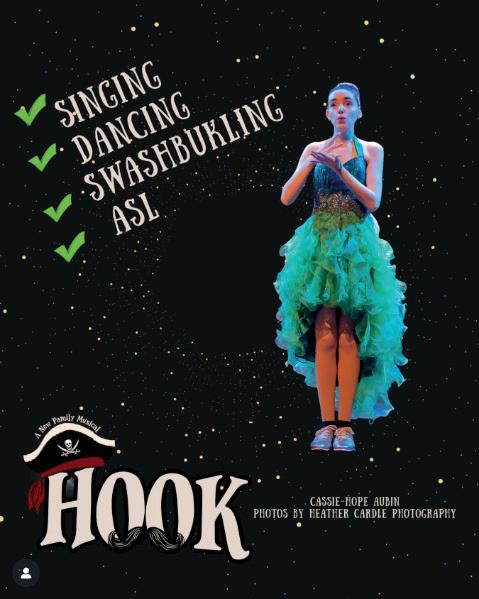
One powerful example unfolded this season with Tweed & Company Theatre’s original Canadian musical HOOK. Written by the creative duo Tim Porter and Tricia Black, the production reimagines the beloved world of Neverland while introducing something audiences rarely see on stage: American Sign Language (ASL) woven directly into the storytelling.
At the heart of this innovation is Deaf artist Cassie-Hope Aubin, a longtime collaborator with the company. In HOOK, Cassie takes on the role of Tinkerbell—but with an extraordinary twist. Rather than interpreting from the sidelines, she performs as the show’s ASL interpreter live, on stage, fully integrated into the narrative.
The result is theatrical storytelling that feels both magical and meaningful. Tinkerbell becomes the bridge between languages and worlds, translating dialogue and lyrics into expressive ASL as part of the performance itself. Rather
than separating accessibility from artistry, the production embraces ASL as a central creative element—celebrating language while expanding who can fully experience the show.
During a relaxed performance at the Marble Arts Centre, audience members with a range of abilities were invited to attend and share feedback, including students from Sir James Whitney.
Tweed
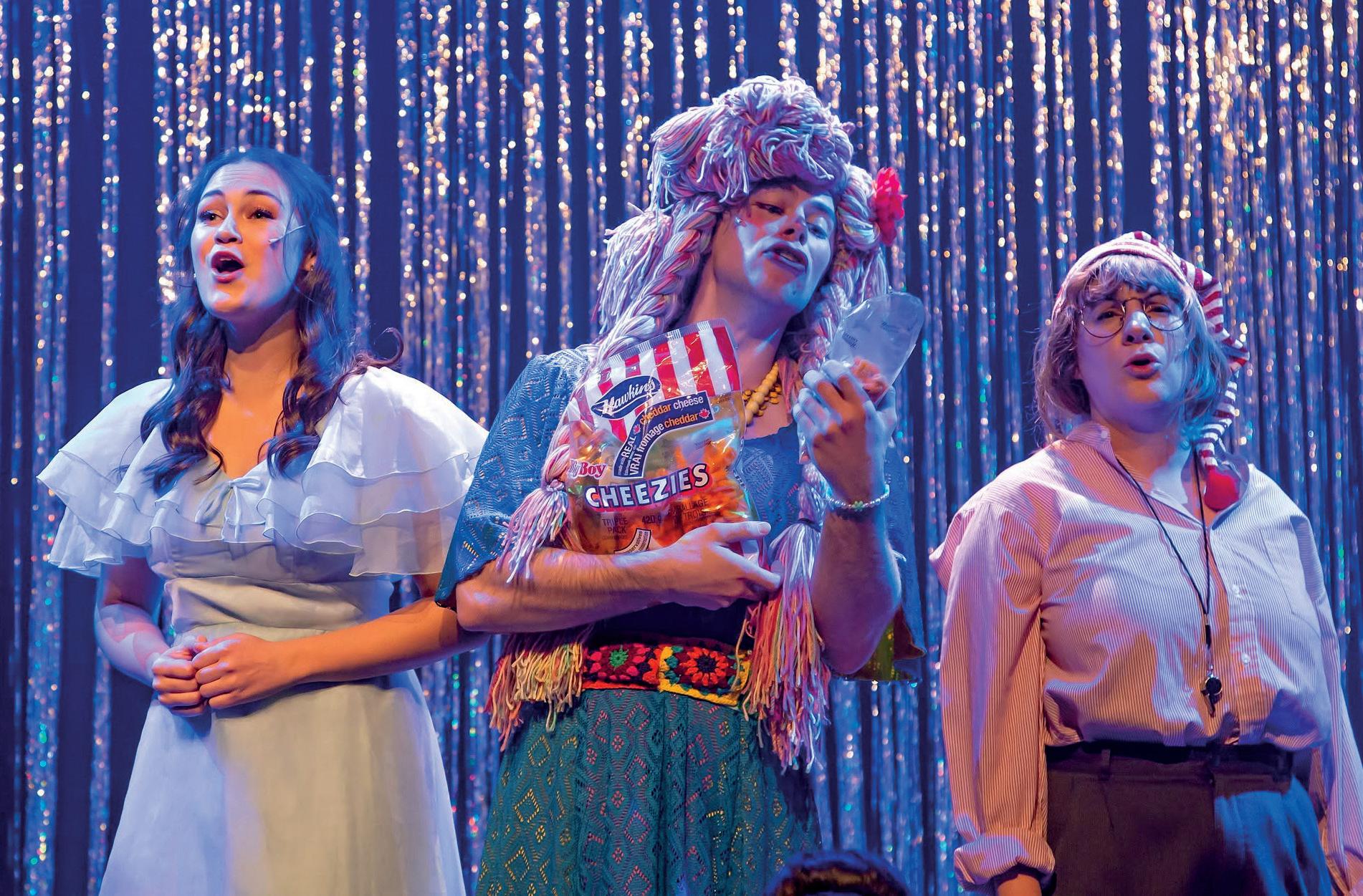
Responses highlight the meaningful impact of integrated accessibility. The ASL interpretation enhances understanding and engagement throughout the performance, helping audiences stay connected to the unfolding story. Just as importantly, the production celebrates Deaf culture in ways that resonate deeply. Moments such as encouraging audiences to wave their hands in the air as applause—an expression widely used in Deaf communities—are warmly received for both their cultural significance and their ability to teach hearing audiences something new.
Humour rooted in Deaf experience, including playful lines about being “lucky to be Deaf,” adds another layer of connection. Representation matters: audience members note the importance of seeing diversity reflected on stage and point to the Deaf character as a powerful role model—especially for young Deaf audience members discovering themselves within the story.
Programs like Prioritizing Accessibility in the Performing Arts remind us that accessibility is not simply about accommodation—it is about creativity, collaboration, and expanding the possibilities of what art can be. And sometimes, it even brings a little extra magic to Neverland.
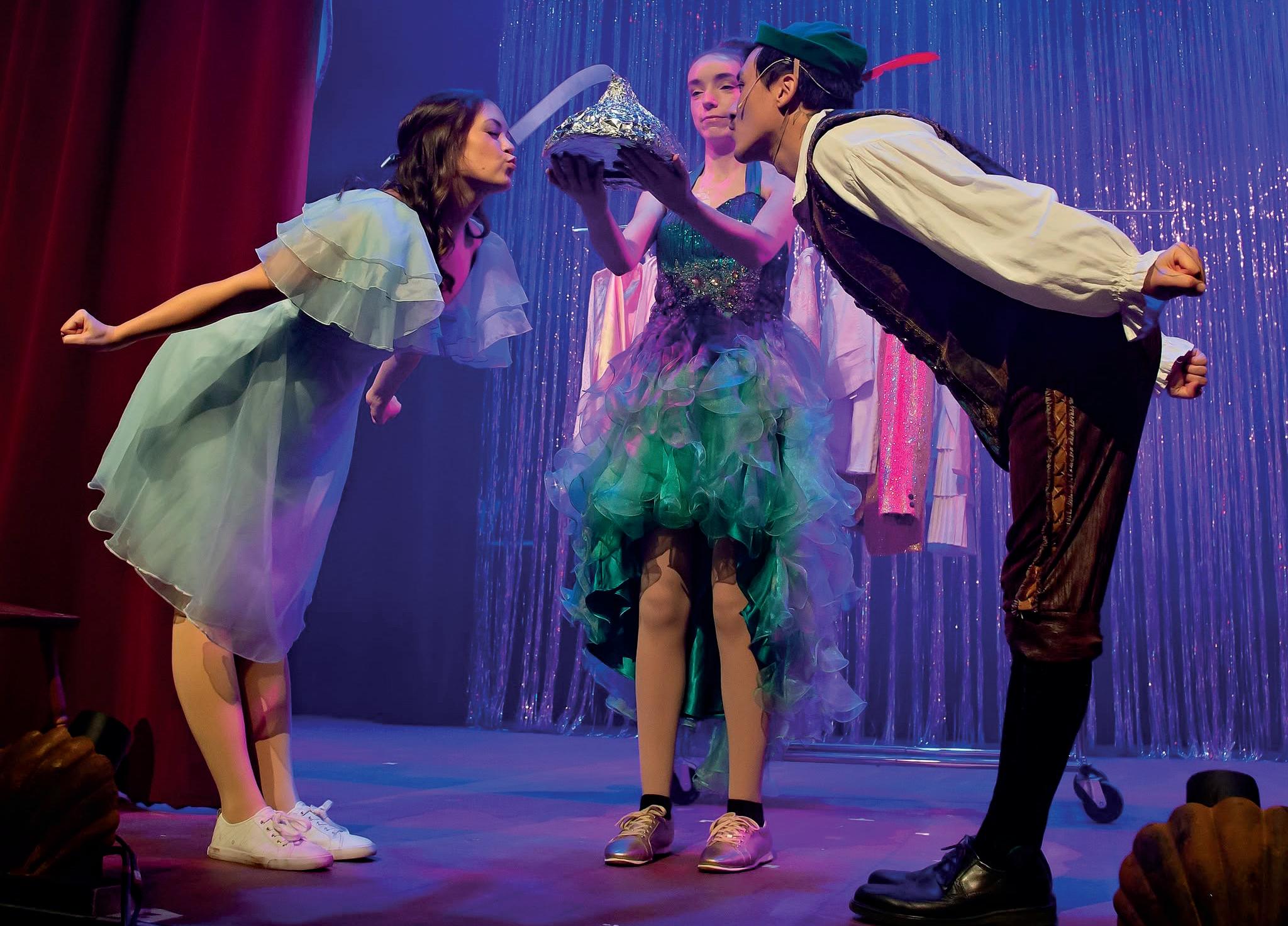
Photography by Heather Cardle tweedandcompany.com
Performing Arts
One Man,Two Guvnors
By Lise Lindenberg
The Belleville Theatre
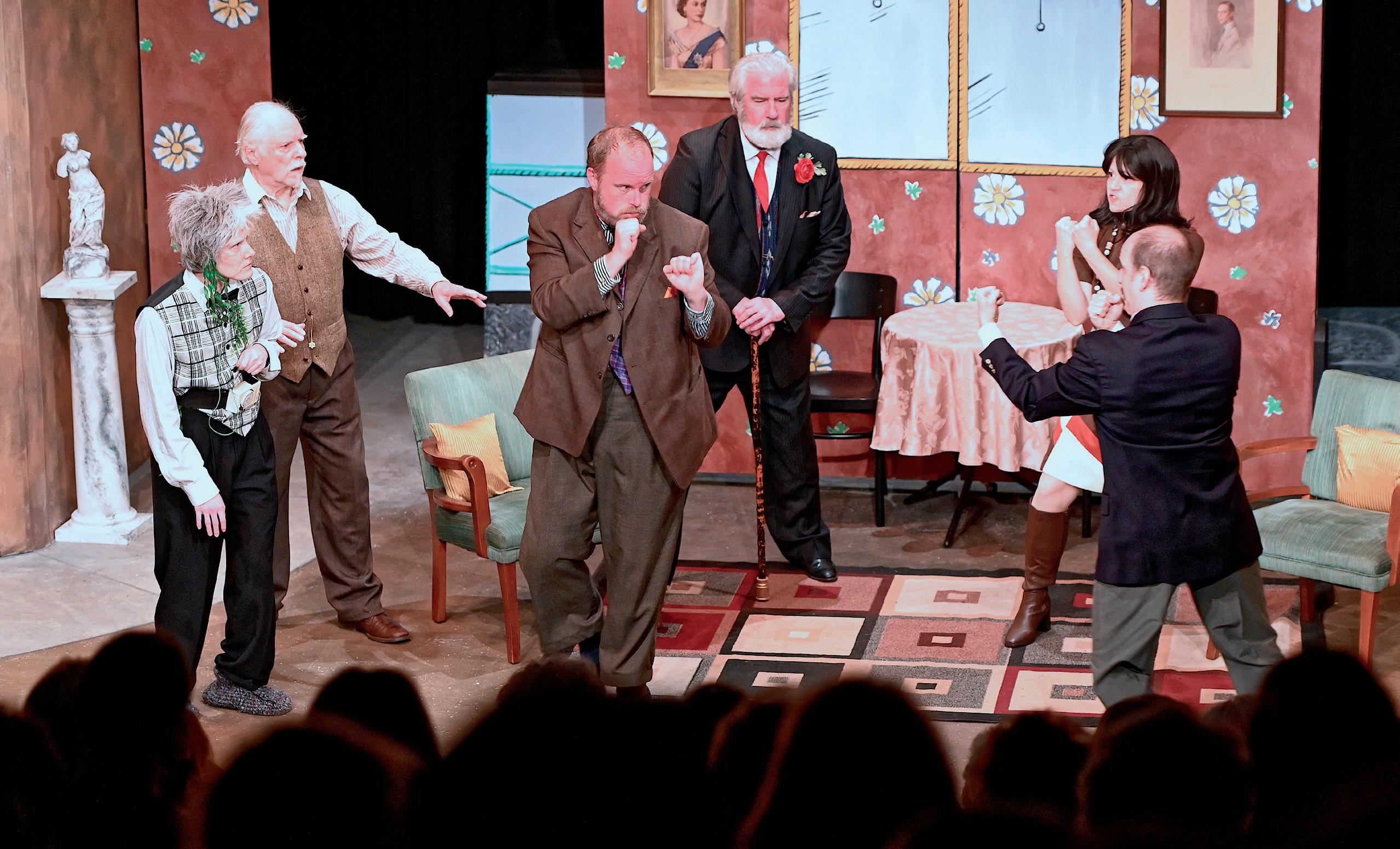
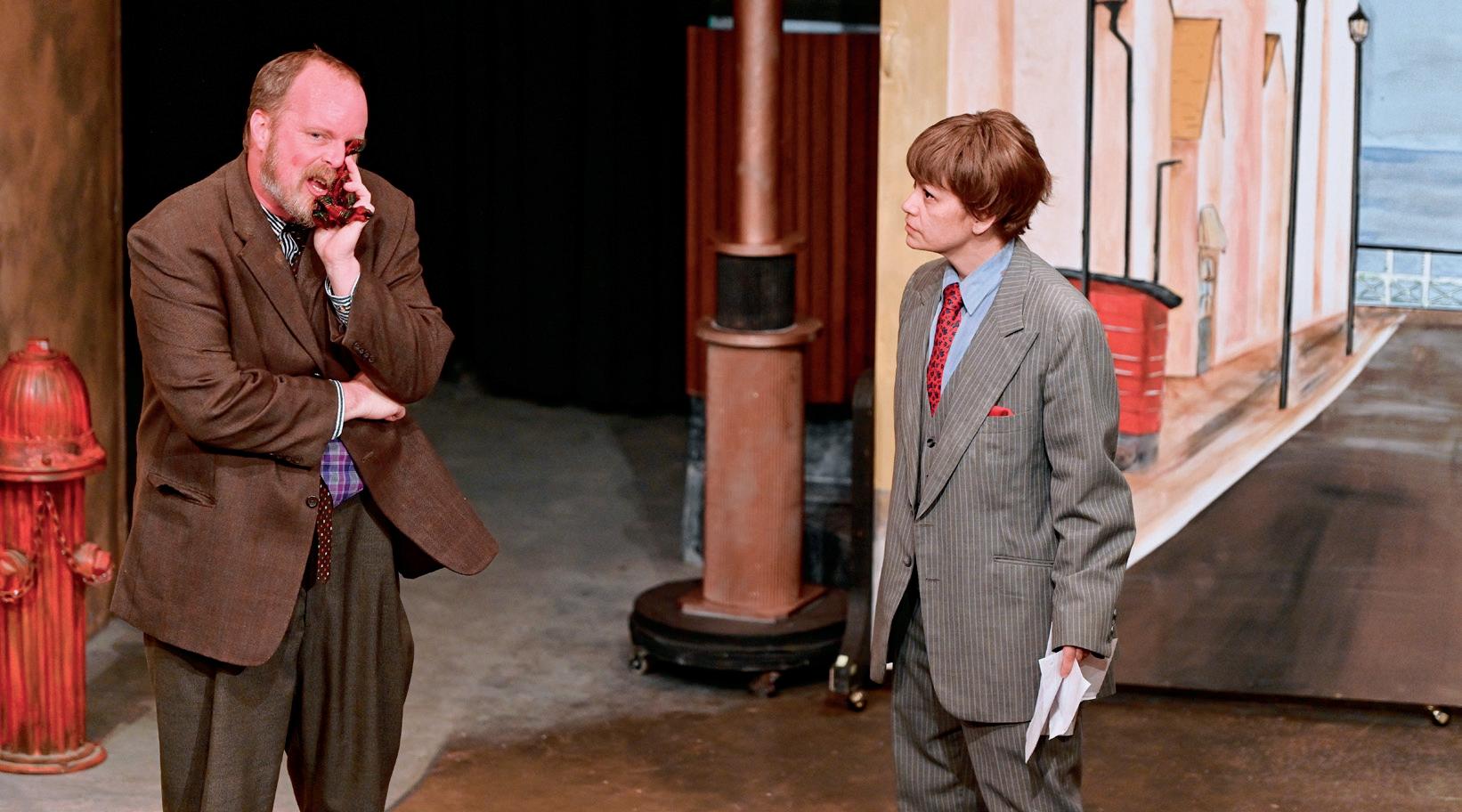
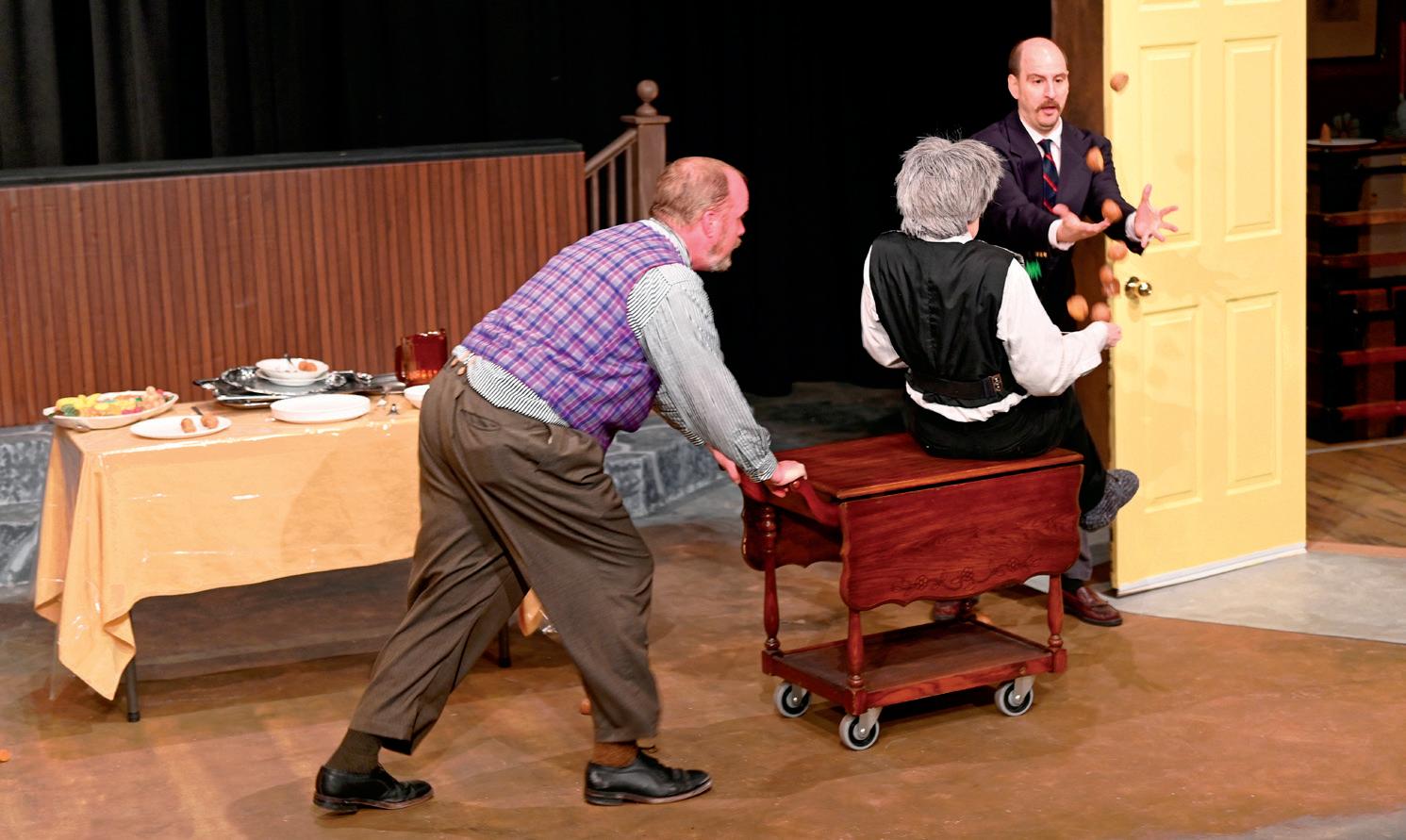
Guild’s Guild's April production of One Man, Two Guvnors delivered an energetic, laugh-out-loud evening of theatre. Set in Brighton, England, during the early Beatles era, the production demanded an ambitious combination of scenic design, period costumes, bouffant hairstyles and precisely choreographed comic timing.
One of the biggest challenges was creating a single set that could convincingly transform into six different locations— three outdoor settings and three interiors. A dedicated team of painters recreated everything from the Brighton Pier and a bustling street scene to the interior of a pub and a comfortable Brighton living room, allowing the action to move seamlessly from one location to the next.
Richard Bean's play is based on Carlo Goldoni's classic Italian comedy A Servant of Two Masters and draws heavily on the traditions of Commedia dell'arte, with its familiar stock characters—the harlequin, the ingénue, the wise servant, the comic rogue and the villain. Like its predecessor, One Man, Two Guvnors
embraces mistaken identities, physical comedy and frequent breaks of the "fourth wall," inviting audiences to become part of the joke.
At the centre of the chaos was Michael Henderson as Francis Henshall, the perpetually overwhelmed servant attempting to work for two employers at once. The role demanded impeccable comic timing and a willingness to improvise.
“He did a great job coming up with funny new lines based on input from the audience,” says director Dave Henderson. “Michael was on stage for most of the play, either creating a mess or cleaning it up!”
The production's attention to detail extended beyond the set. During rehearsals, two dialect coaches helped the cast master a variety of accents, including Cockney, North Country, working class, upper-class English and French.
Belleville

The cast combined seasoned Belleville Theatre Guild performers—including Wendy Roy, Jeremy Alarie and Jeremy Henson—with several newer faces. Noah Halloran, making his stage debut, has since gone on to tackle Shakespeare in a summer production.
“Arranging a lot of actors on stage, planning carefully timed entrances and exits, making intricate set changes, and the insertion of comic elements was easier due to the level of experience on stage,” says Henderson.
For the director, however, staging a farce is all about precision.
“Directing a farce is a lot of fun, but also a lot of hard work and concentration. The timing is crucial—when one door closes, another one immediately opens on the far side of the stage. Carts are being pushed back and forth, food is flying, and doors need to slam in the actors’ faces. There are almost no pauses, except pausing until the audience's laughter dies down.”
Judging by audience response, the effort paid off. Patrons embraced the
production's fast-paced humour, with one theatre-goer calling it their favourite Belleville Theatre Guild production and expressing the hope that the company stages more farces in the future.
As the Belleville Theatre Guild marks its 75th season, One Man, Two Guvnors stands as a fitting reminder of the organization's enduring contribution to community theatre. For three-quarters of a century, the Guild has brought
stories to life, nurtured local talent, and created memorable experiences for audiences across the Quinte region. Productions such as this continue that tradition, demonstrating the creativity, dedication and collaborative spirit that have defined the Guild since its founding.
Photography by Greg Pinchin bellevilletheatreguild.ca

Cottagers and Indians
By Jennifer Shea
Leading up to the ope-
ing night of Cottagers and Indians at Theatre on Tyendinaga Mohawk Territory, theatre founder and director Sha’tekayenton Brant was feeling both excited and terrified. As the first major production staged in the community theatre's new permanent home, he hoped audiences would leave feeling challenged, engaged and satisfied.
Many people in and around Tyendinaga Mohawk Territory know Sha’tekayenton through the One Dish Project, an initiative grounded in the teachings of the Dish with One Spoon Wampum Treaty between the Anishinaabe Three Fires Confederacy and the Haudenosaunee Confederacy.
The project focuses on restoring relationships between people, land, food systems, governance and community by connecting Indigenous and Western understandings of ecology, sustainability, agriculture and environmental stewardship, while centring Indigenous knowledge systems and collective responsibility.
Sha’tekayenton sees Sewatokwà:tshera’ Theatre as a natural extension of that work. If the One Dish Project is about nourishing relationships, then the theatre becomes the spoon itself— feeding people's emotional, spiritual and cultural well-being. Fittingly, the
theatre's name literally translates as "one spoon."
The Dish with One Spoon Wampum teaches that Nations share from a single dish using one spoon, reminding all who live on the land that its resources
Deseronto
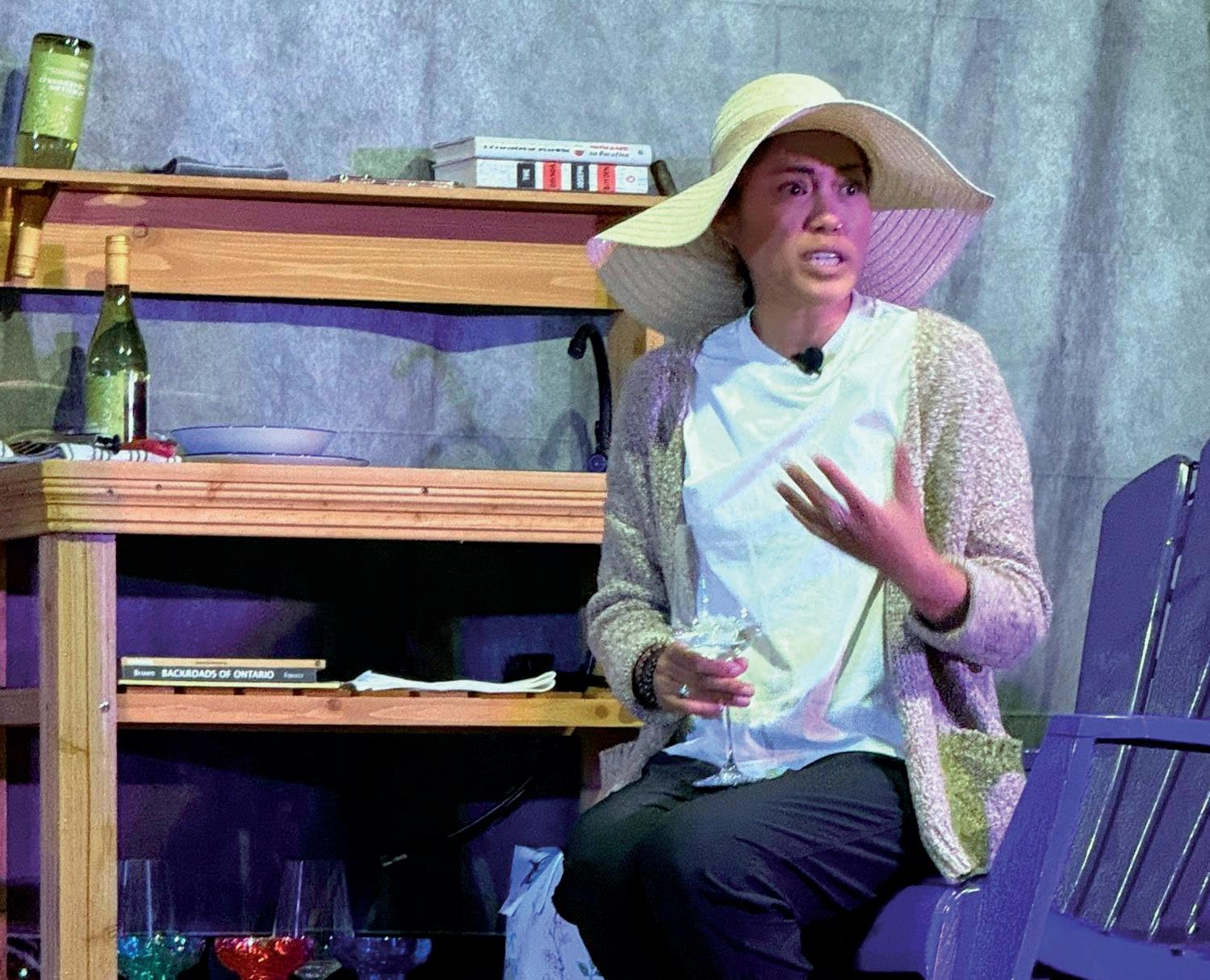
Wihse Green and Janet Reyes
Janet Reyes
are to be shared responsibly, territories respected, and conflicts avoided.
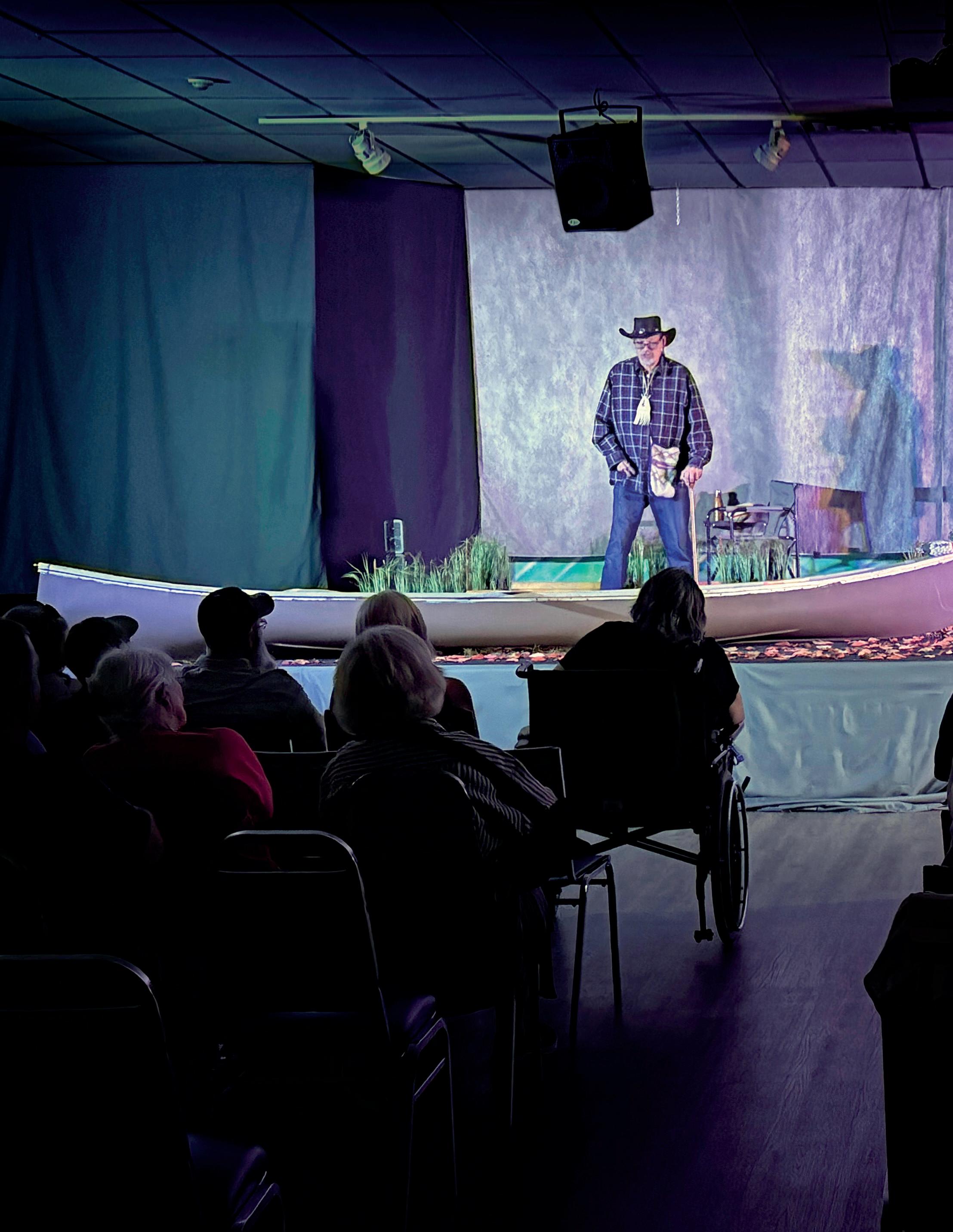
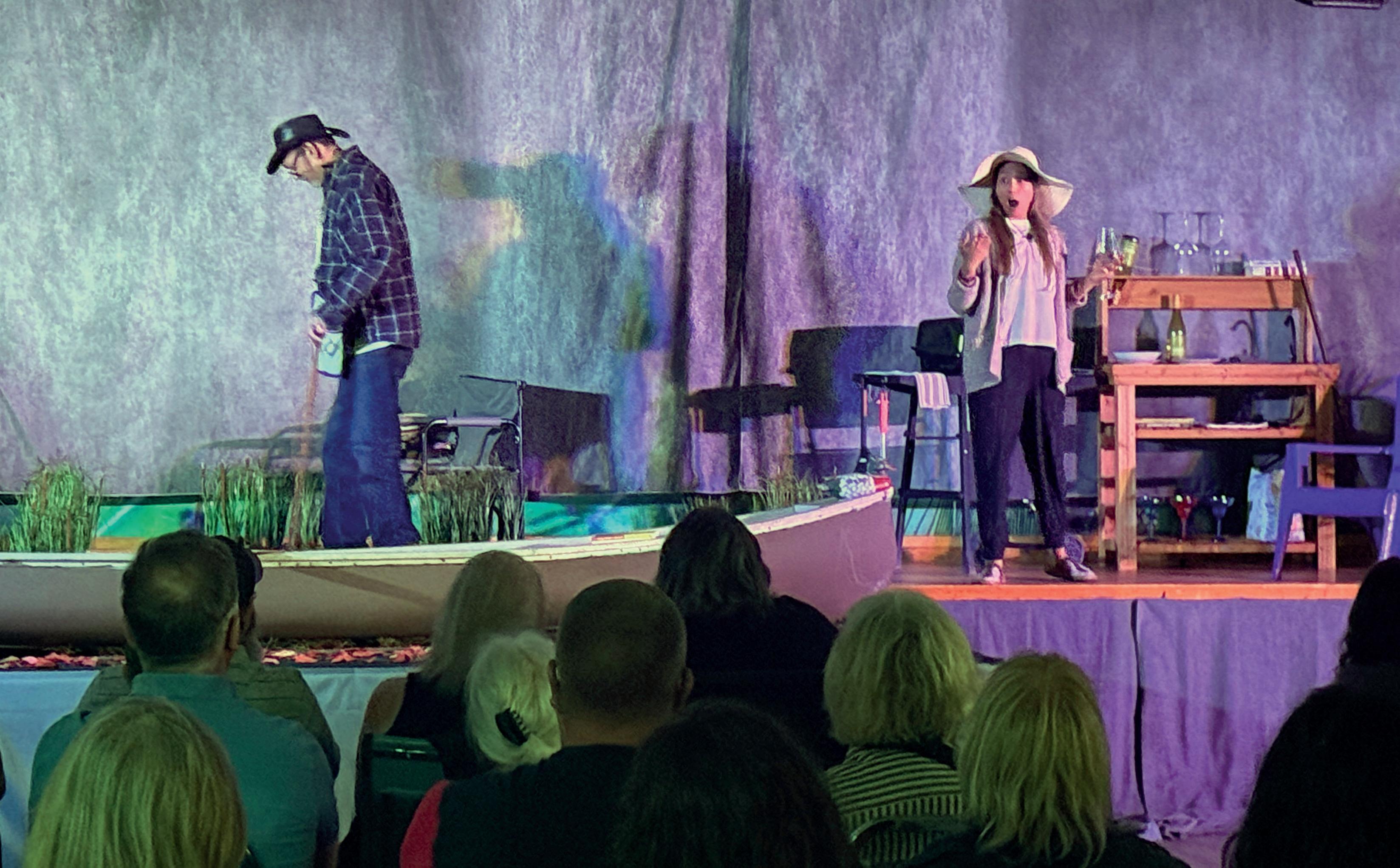
Few plays embody those principles more directly than Cottagers and Indians Written a decade ago by Curve Lake First Nation playwright Drew Hayden Taylor at the request of Tarragon Theatre, the play explores Indigenous food sovereignty and the often-competing relationships Indigenous and non-Indigenous communities have with land and water.
Inspired by an ongoing conflict in the Kawartha Lakes region, the two-person play follows Arthur Copper (played by Wihse Green), an Indigenous man determined to restore wild rice—known to the Anishinaabe as Manoomin —to local waterways. His efforts are fiercely opposed by cottager Maureen Poole (played by Janet Reyes), who believes the returning rice beds interfere with boating, swimming and fishing while diminishing the beauty and value of surrounding cottages.
Although the characters are fictional, they represent perspectives that continue to shape real conversations.
Hayden Taylor deliberately balances the tension with humour, making difficult issues more accessible for audiences. It is an approach that has helped make Cottagers and Indians one of his most successful and enduring plays.
“I’m a firm believer that, all things taken into consideration, we (native and non-native people) have more similarities than differences,” says Hayden Taylor. “I tried to make both sides sympathetic. I tried to make both sides have a perspective and make them understandable.”
As the story unfolds, both characters reveal their deep emotional attachment to the land. Arthur speaks of his ancestors harvesting wild rice as a traditional food source, while Maureen reflects on generations of family memories at the cottage. Despite their opposing views, each is motivated by a profound sense of belonging.
For Sha’tekayenton, that shared humanity is central to the production.
“The whole thing with Cottagers and Indians is that both characters are stuck
in who they are and what they’re doing. They both believe that they’re absolutely right and what they’re doing is good for everybody. Neither of them is willing to compromise.
I’m always fighting for Indigenous rights and governance and sovereignty through One Dish Project. This helps me to look at all sides and make sure I’m operating from a good place. We can’t do anything good unless we’re sitting back looking at all the perspectives.”
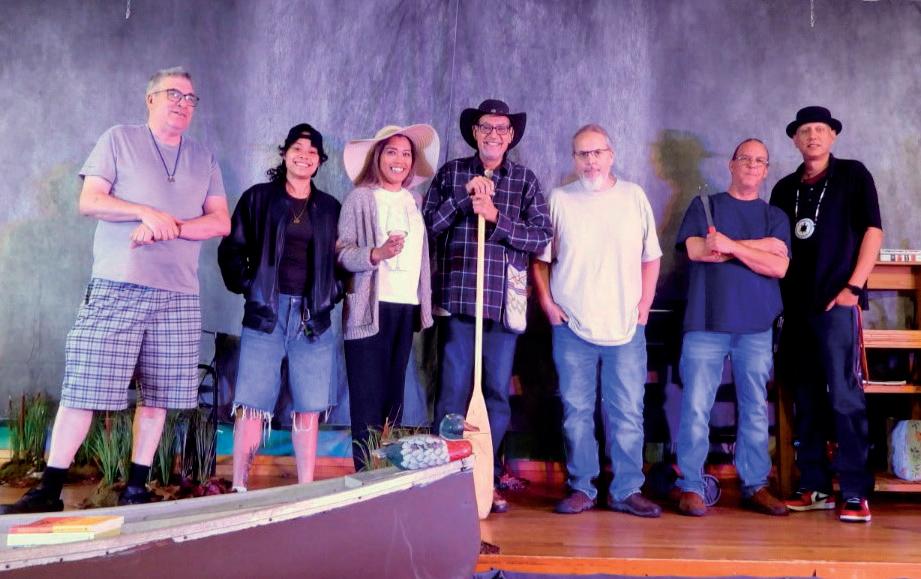
That philosophy also guides Sewatokwà:tshera’ Theatre itself. Established in 2023, the company is committed to presenting one stage production each June during National Indigenous History Month. While its early productions were staged at various community locations, the Tyendinaga Mohawk Community Centre on York Road in Deseronto now serves as its permanent home—a fitting place for stories that invite audiences to listen, reflect and find common ground.
Cast and Crew of CottagersandIndiansat the Sewatokwà:tshera’ Theatre
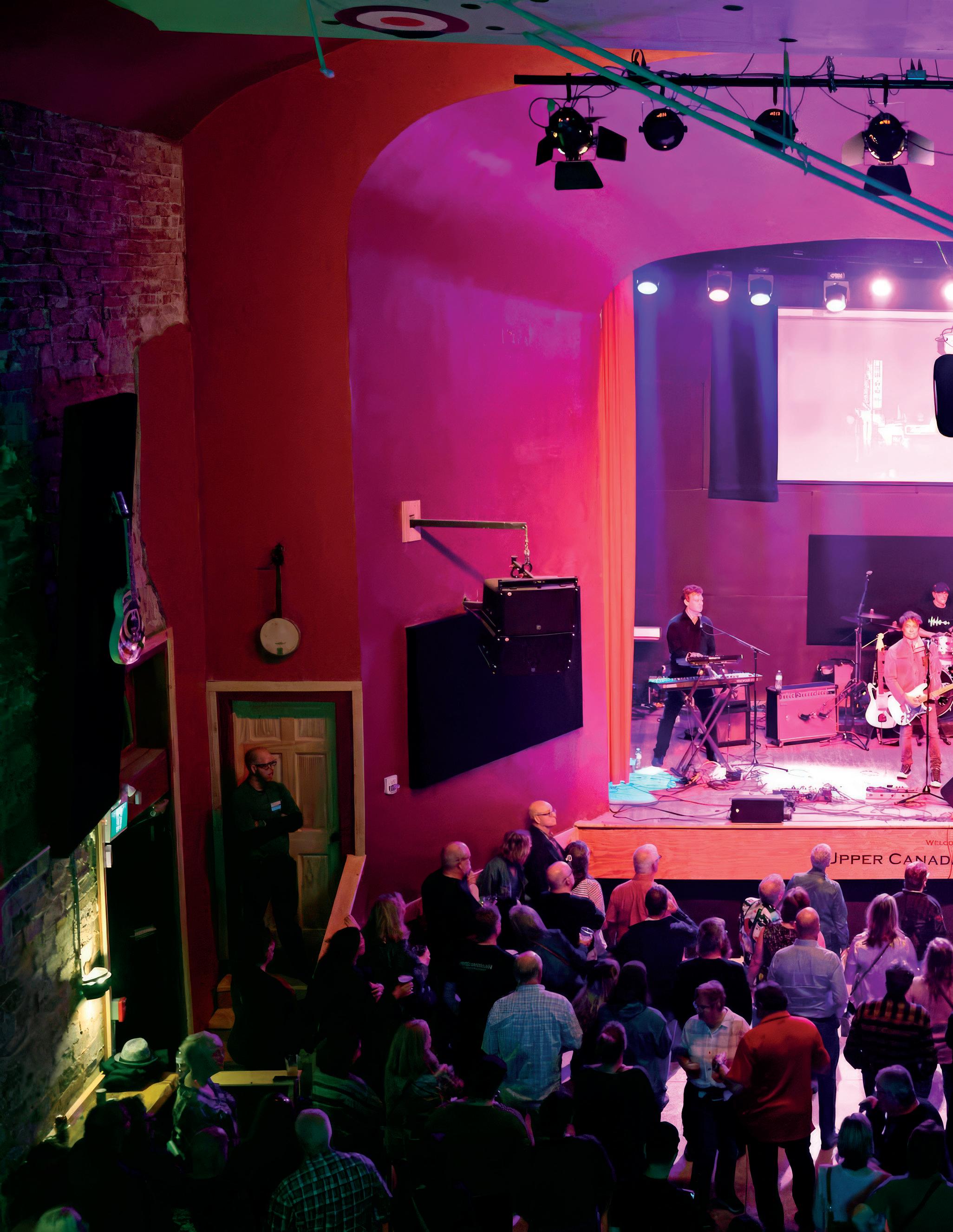
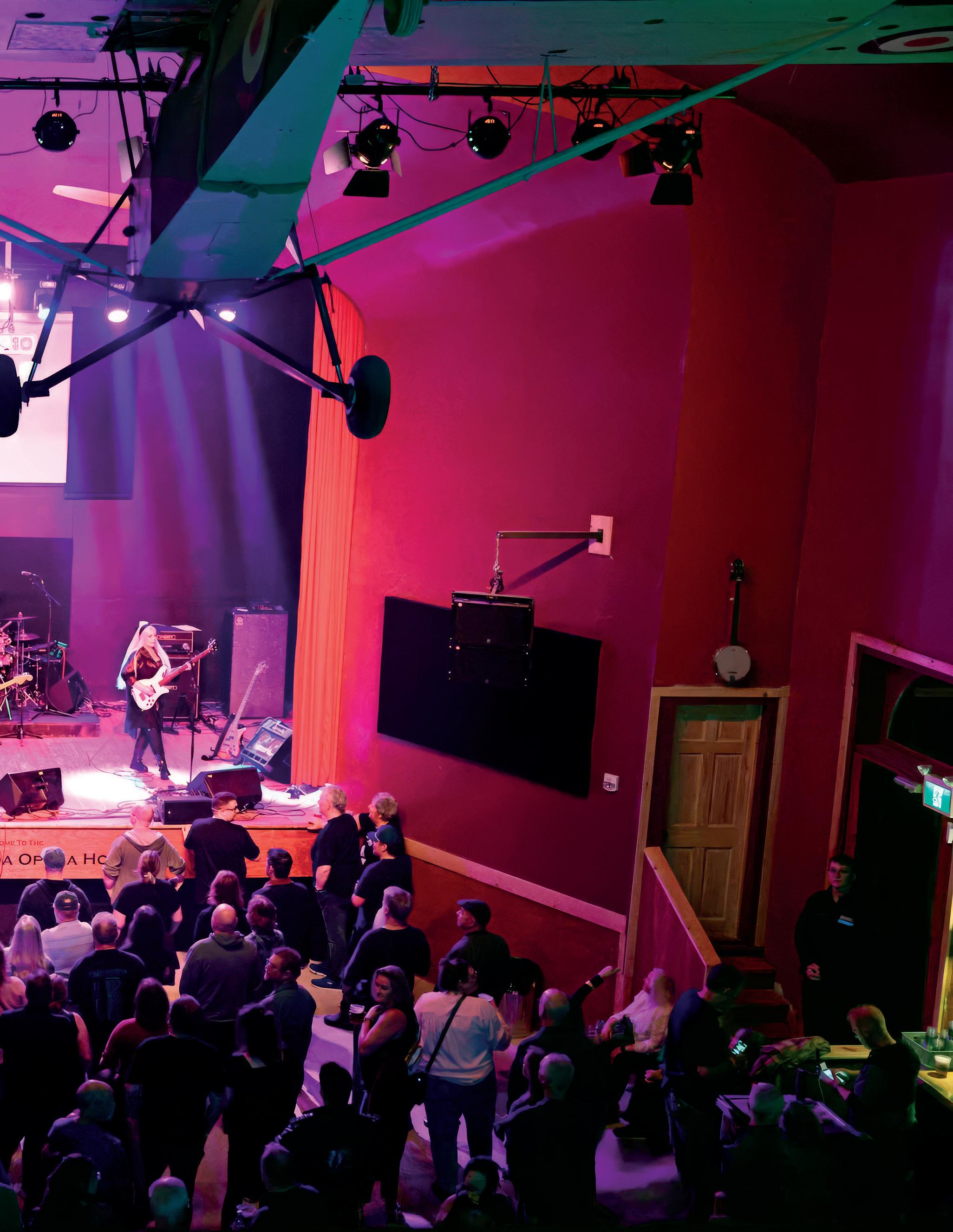
Spoons perform at the Upper Canada Opera House Bernard Clark
Upper Canada Opera House: Quinte’s New Entertainment Centre
By Richard Hughes
Whereyou will find
the bright new star of the Quinte theatre scene?
The answer is the region's oldest theatre.
It may sound like a riddle, but it's true.
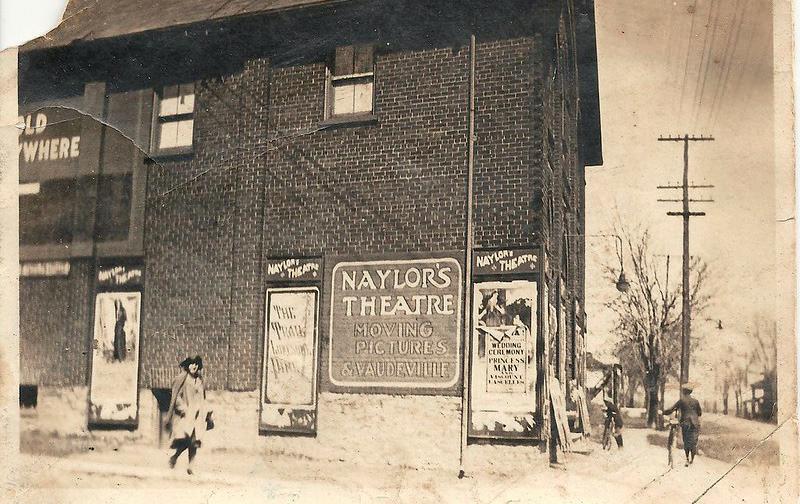
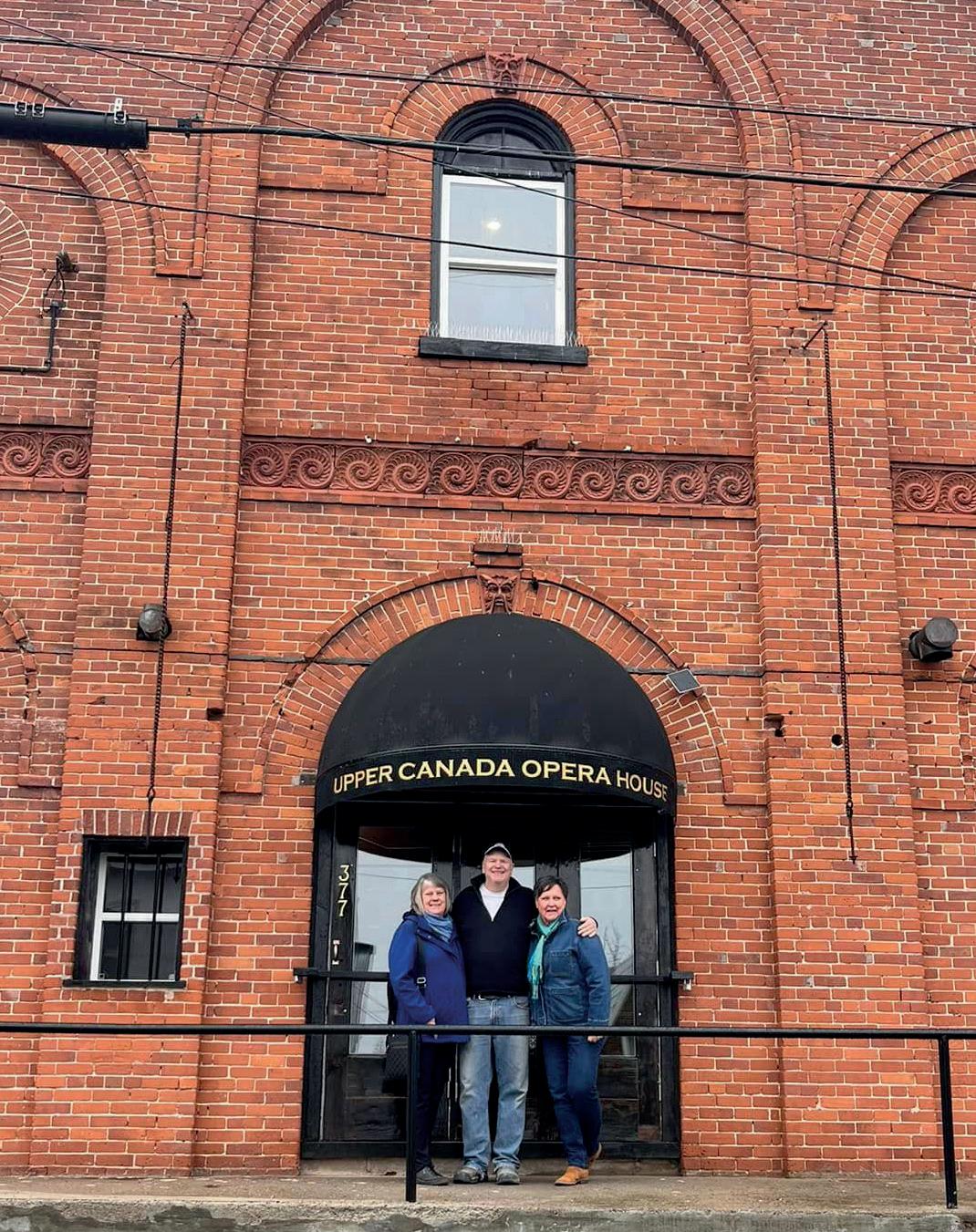
The Naylor Theatre on Main Street in Deseronto, which first opened as the community's entertainment centre in 1905 and then sat boarded up for more than six decades, has been transformed into a vibrant, fully modern venue with an exciting performance lineup as the Upper Canada Opera House.
The story begins in the 1890s, when Thomas Naylor, whose family operated a local bakery, began booking vaudeville acts for venues around Deseronto. At the time, the town was a booming community of 4,000 people, fuelled by the Rathbun lumber, railway and manufacturing industries. By 1901, Naylor had
entered the entertainment business full-time, constructing a substantial brick theatre designed by Thomas Hanley, the architect who also designed Belleville's Glanmore National Historic Site.
The theatre featured elegant Victorian detailing, a large stage and seating for
400 on the main floor, with another 150 in the balcony. Thanks to Thomas Naylor's vision, Deseronto audiences enjoyed the latest vaudeville productions and travelling theatre companies.
Following Naylor's death in 1922, the theatre closed and remained dark for 25
Deseronto
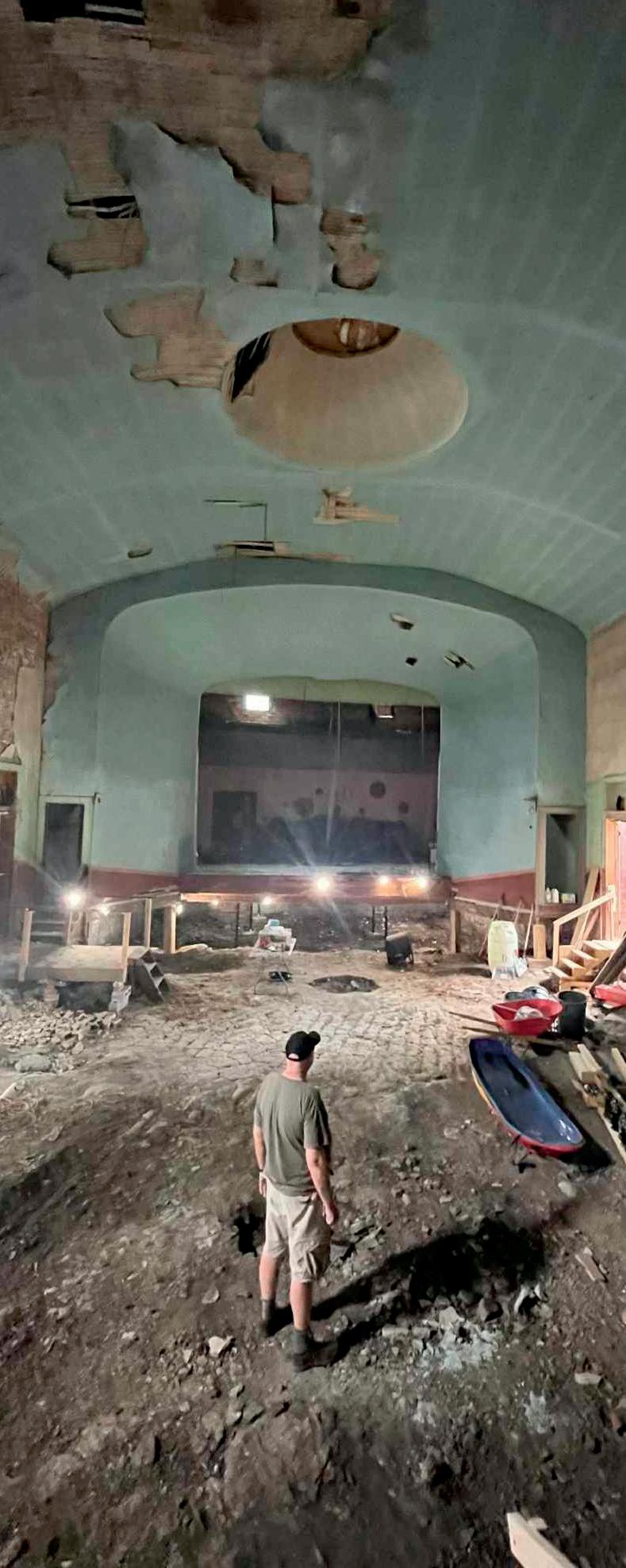
years. It found new life in 1947 as the Deseronto Bayview Theatre, screening the latest films and becoming as well known for its popcorn as its movies. That revival lasted until 1961, when the theatre closed once again. The seats were sold, leaving behind only the shell of what had once been one of the region's finest performance venues.
Fast forward more than six decades.
Although boarded up for years, the building's sturdy construction and steel roof had preserved its potential. Among those who saw that potential was Ian Crerar, owner of ClearWater Design Canoes and Kayaks in nearby Northport. For years, he admired the abandoned theatre and imagined restoring it as a venue where local and Canadian musicians could perform, develop their craft and bring live entertainment back to the community.
For a time, that dream remained just out of reach as the property's owners
were unable to decide its future. Then, in 2025, the Municipality of Deseronto took possession of the building and offered it through a tax sale. Crerar and his wife, Michelle Laframboise, submitted the successful bid and became the theatre's new owners.
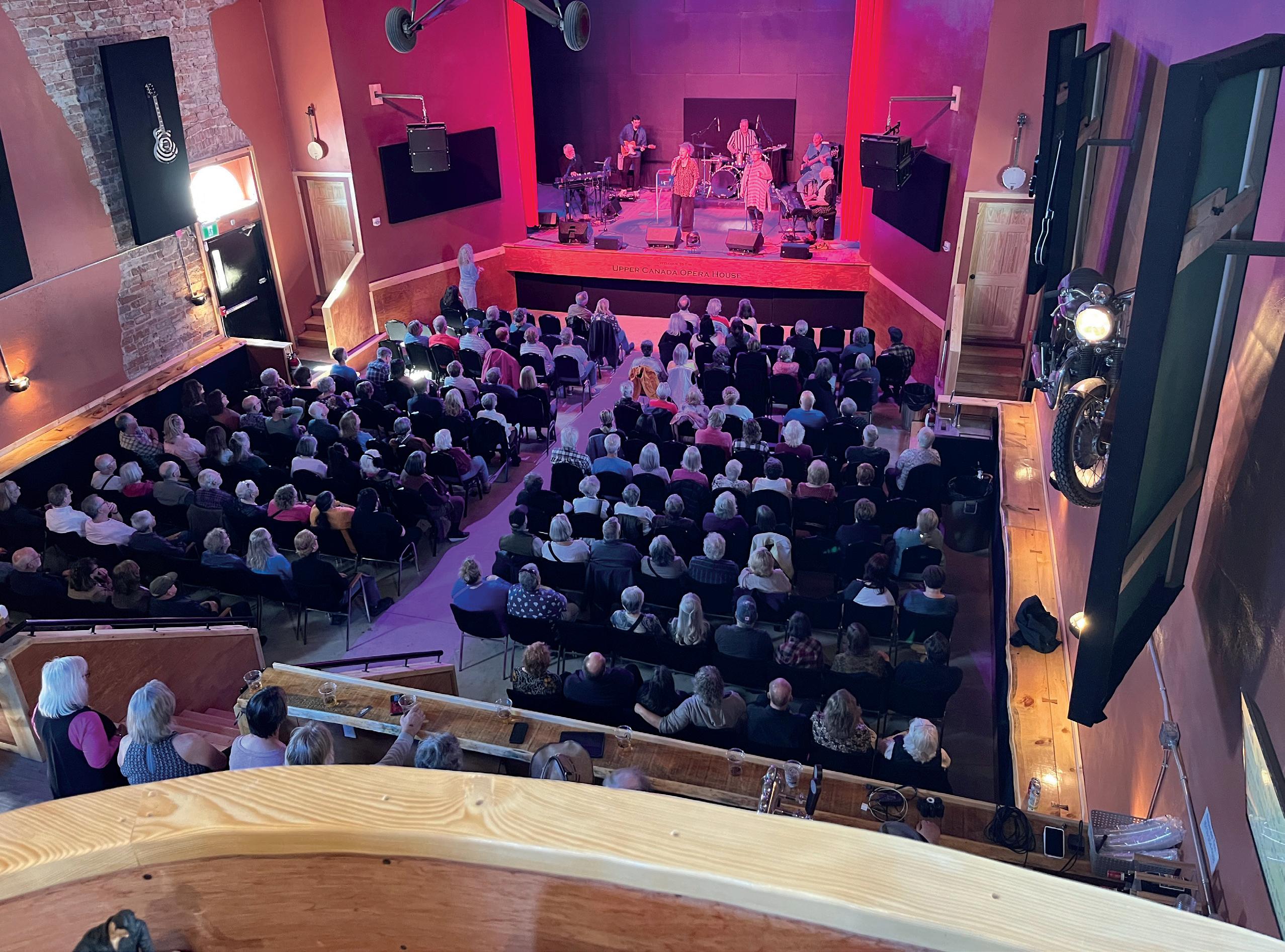
They wasted little time. A comprehensive restoration strengthened the stage, cleared away decades of neglect, created a new viewing lounge and transformed the beloved Naylor Theatre into the modern Upper Canada Opera House, now seating 396 patrons.
The theatre itself is an experience. Visitors are greeted by a full-size airplane suspended from the ceiling, a vintage Triumph motorcycle mounted on one wall with its headlight flashing, an operating traffic signal changing colours on the opposite wall, and an impressive display of guitars celebrating the performing arts.
Premium ticket holders can enjoy performances from an upstairs lounge created in the former projection room, overlooking the stage in comfort. The social area offers local craft beer on tap and a selection of food from the theatre's kitchen, making an evening at the Opera House about far more than the performance alone.
Of course, the heart of any theatre is what happens on stage.
Here, Crerar has assembled a diverse program that offers something for every audience, from classic rock, blues and '80s pop to classical guitar and fullband performances. Just as the citizens of Deseronto filled the Naylor Theatre 120 years ago, today's audiences are once again gathering in the same historic building—now renewed with a fresh heart, a vibrant spirit and a distinctly 21st-century energy.
Filmmaking for Seniors
By Ardith Racey
Films centered on seoniors
often balance heartwarming humor with poignant reflections on aging or newfound adventures.
But what about films made byseniors?
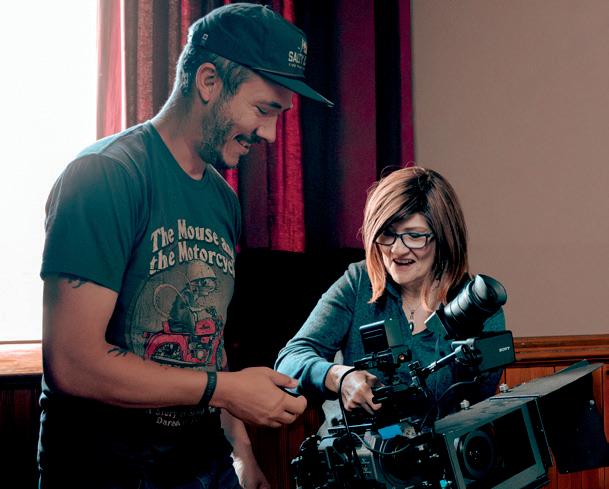
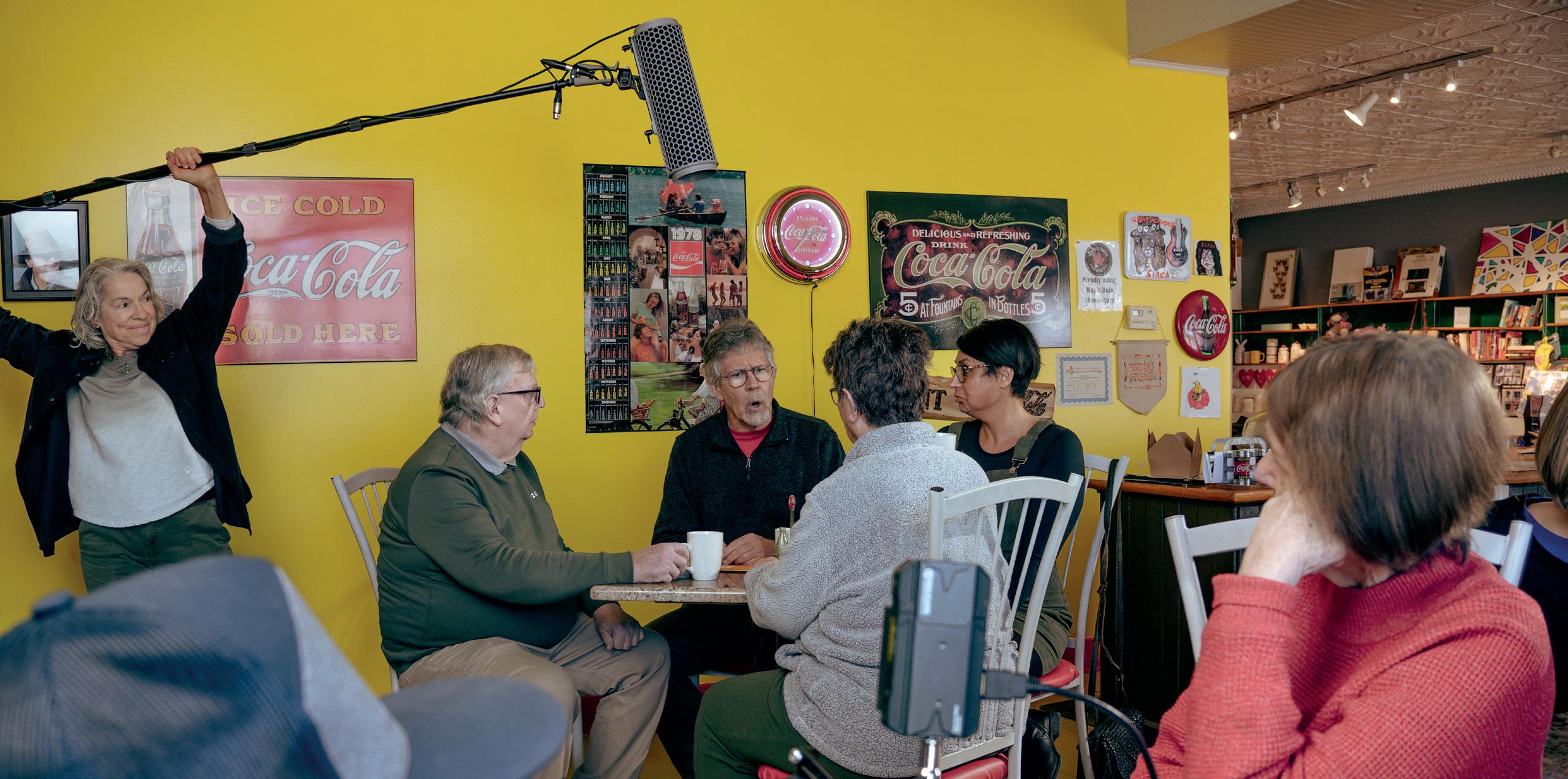
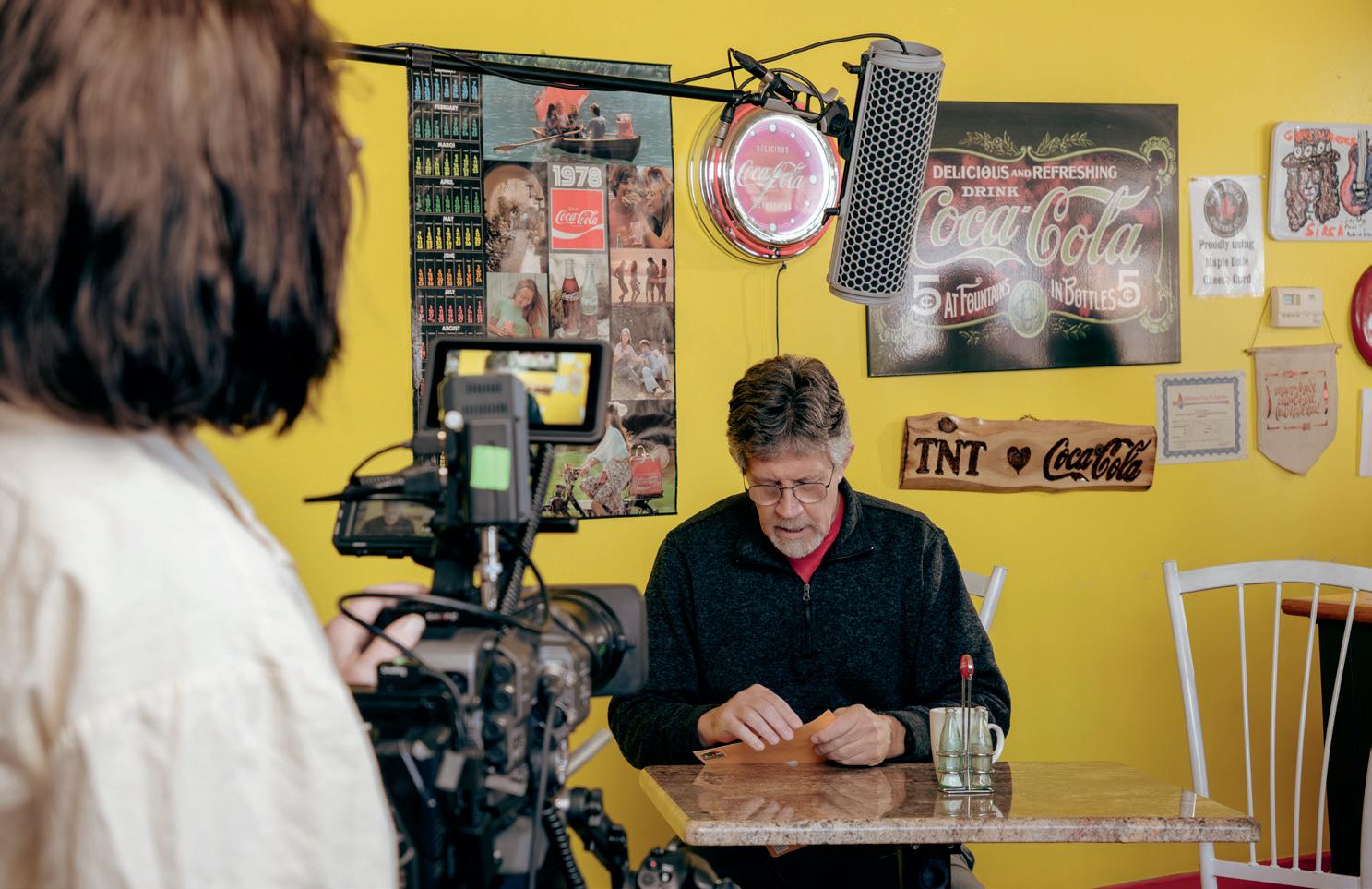
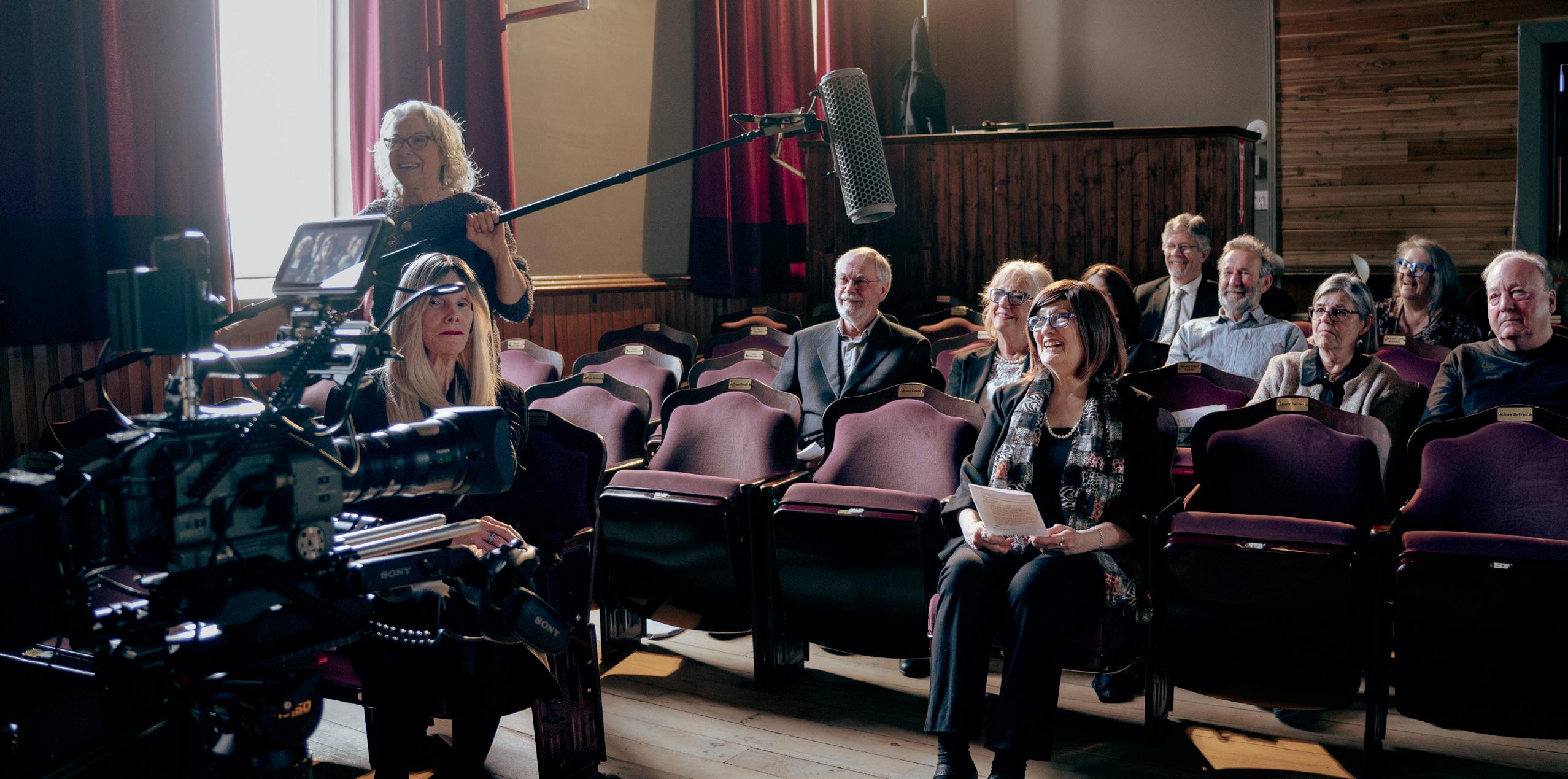
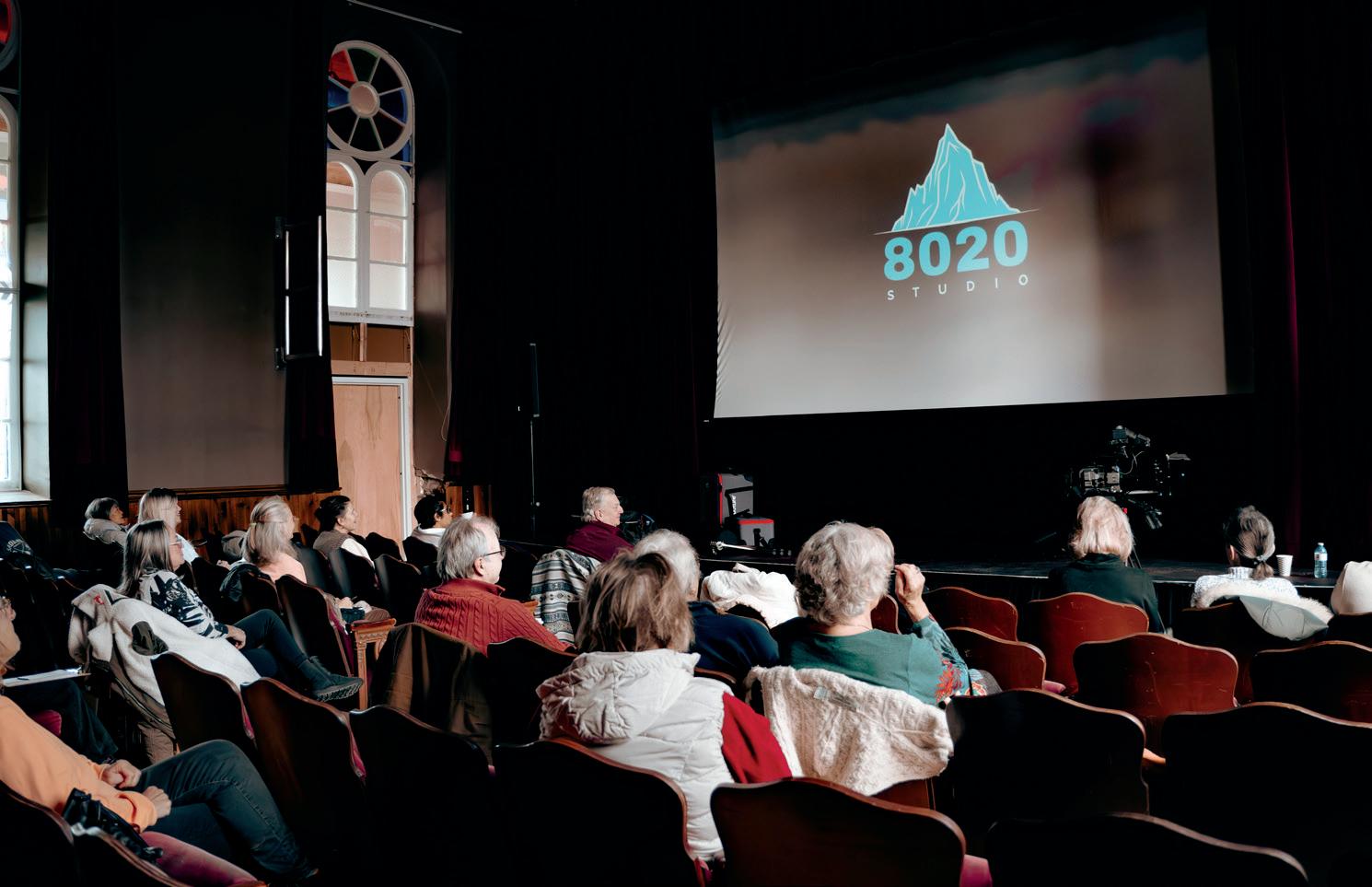
When the Tweed & Company Theatre received a Seniors Community Grant from the Ontario Government last fall, it launched a novel initiative at the Marble Arts Centre (MAC) in Actinolite. The six-week program was titled ACT II: Digital Literacy through Filmmaking Program & Film Screenings, which partnered with Belleville-based Eighty Twenty Studio from to create a series
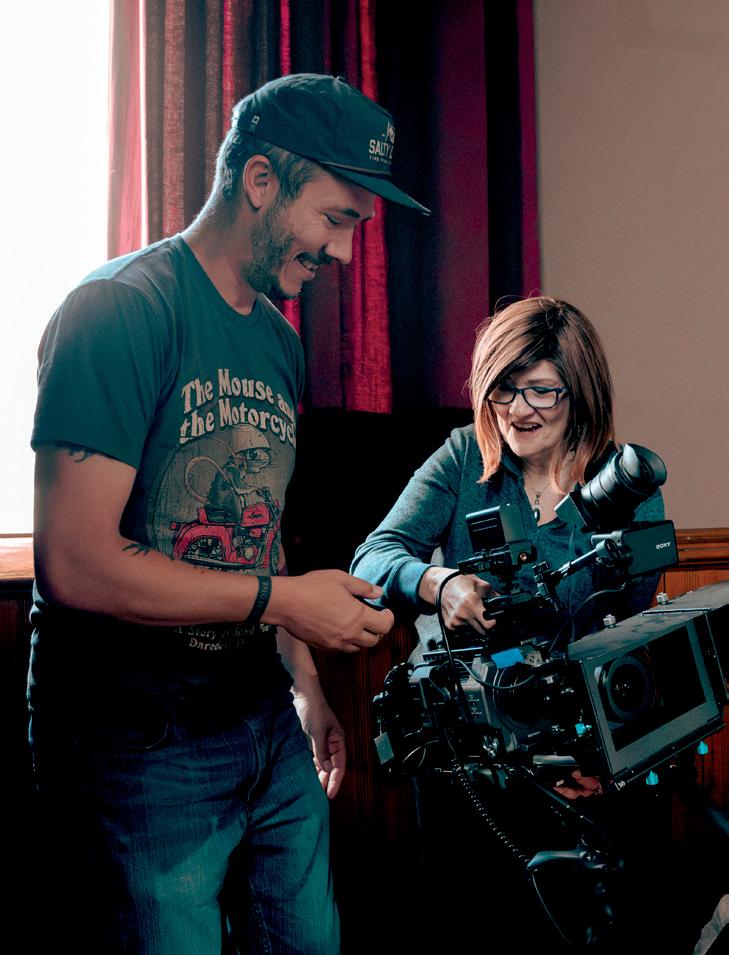
of monthly workshops that focused on screenwriting, acting, directing, camera basics, editing and digital skills.
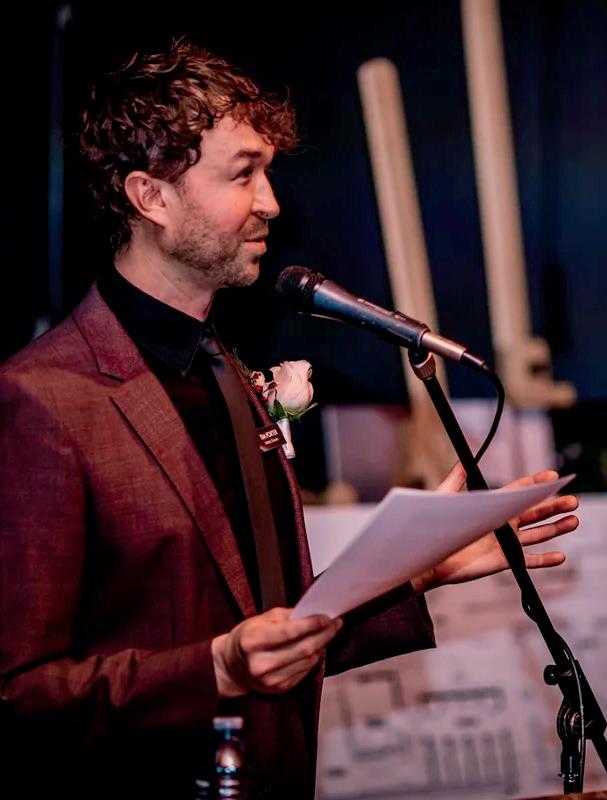
Tim Porter, Artistic and Co-Executive Director of Tweed & Company Theatre, sees the program as “a bridge or a hub because it pulled people together from several area arts groups, as well as involving others with little or no background in arts media.”
The program also gave participants the freedom to choose the role that interested them most, whether director, actor, writer, sound technician, cinematographer or background performer.
“Given the growing number of seniors in the community, we felt there wasn’t as much opportunity for seniors as there is for youth,” states Porter. “The grant supported film screenings but given that seniors are already engaged as audience participants, we reached out to Victor Cooper, founder and director of Eighty Twenty Studio, and together we developed a course and a schedule.”
The first two sessions focussed on screenwriting with Jeremy Larter, actor, director and screenwriter who hails from Prince Edward Island. The third session, led by Tricia Black—multi-award-winning actor, comedian, writer, songwriter
Tweed
and Creative Director of Tweed & Company Theatre—explored acting for film. Victor Cooper and Noah from Eighty Twenty Studio then guided participants through the remaining workshops on filmmaking and digital production.
By the end of the program, participants had created three short films, which premiered at the Marble Arts Centre and will also be available on YouTube.
The digital literacy component was also an important aspect, and the program created an opportunity for people new to the community to connect withlike-minded others and learn new skills.
“The course was very well received,” says Porter, “and we have applied for the same grant again.”
For participant Ellen Williams, the experience exceeded expectations. “It was the most fun I’ve ever had. It was incredible! I’d do it again,” she says, a sentiment echoed by Maril Swan and many of the other participants.
Margo Collins agrees. “It was inspiring, and although I will never be a filmmaker, it was impressive. There was a lot of technical information, but Victor made it accessible while maintaining a high level of professionalism.”
Board chair and participant, Vicki McCullough, affirms that it was wonderful to see so many people learning together, and she claims that she “will never look at a film or movie or video quite the same way again.”
As for the stories the participants chose to tell? They were mostly comedies about aging. Go figure!
Tweed and Co
Eighty Twenty Studio
Photography by Eighty Twenty Studio



Quinte Arts' 2026 Graduating Students Bursaries


Quinte Arts were ple-
ased to recognize the recipients of its 2026 Graduating Student Bursaries, celebrating the next generation of artists as they begin their postsecondary studies.
Each year, Quinte Arts awards bursaries to graduating students from secondary schools across Hastings and Prince Edward Counties who are pursuing education in arts-related fields. These awards help support emerging artists as they take the next steps in their creative journeys and reflect the QAC's longstanding commitment to nurturing artistic talent throughout the region.
Congratulations to this year's recipients:
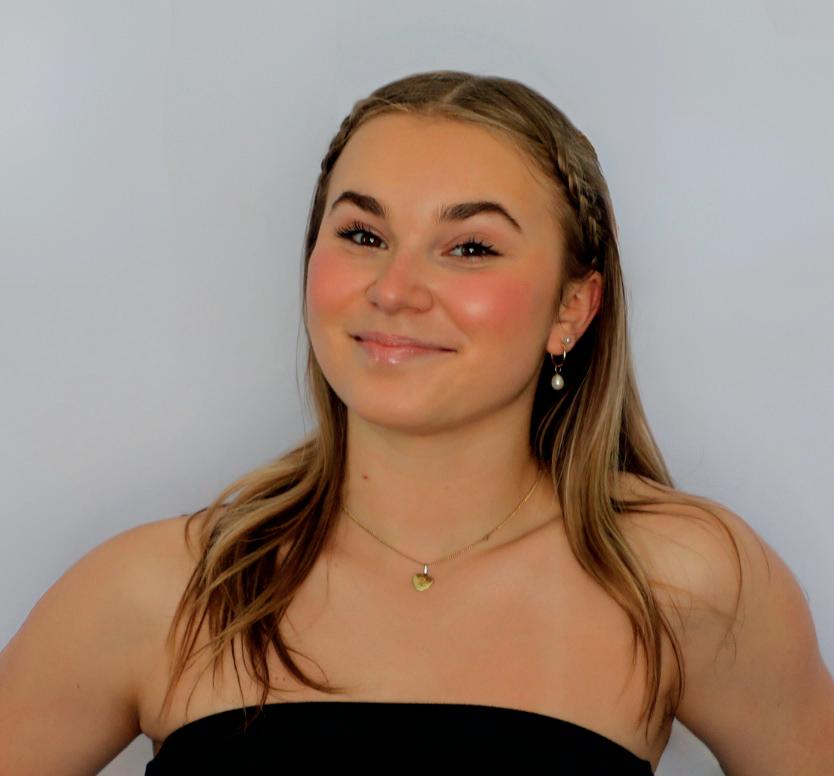
Elisha Lindsay, a graduate of Centennial Secondary School, received a Quinte
Arts' Student Bursary and will attend Concordia University to study Acting for the Theatre.
Morgan Ava Cox, also a Centennial Secondary School graduate, received a Quinte Arts' Student Bursary and will pursue a Bachelor of Fine Arts at the Yukon School of Visual Arts.
Gabrielle Taylor, a graduate of Bayside Secondary School, was awarded the Hugh P. O'Neil Student Arts Bursary and will study toward a Bachelor of Fine Arts at the University of Ottawa.
Kimberly MacFarlane Larocque, a graduate of St. Paul Catholic Secondary School, received both the Hugh P. O'Neil Student Arts Bursary and the Susan Richardson Bursary. She will continue her education in the Music Theatre – Performance program at St. Clair College.
Rhys Thornton, a Centennial Secondary School graduate, was awarded the Elaine A. Small Bursary and plans to pursue a Bachelor of Music at Queen's University.
Ruby Crawford, also a graduate of Centennial Secondary School, received the Anita Binnie Award for the Performing Arts and will begin the Commercial Dance program at George Brown College.
The Quinte Arts Council extends its sincere congratulations to each recipient and looks forward to seeing where their artistic journeys take them. Their accomplishments reflect the remarkable talent emerging from our region, and we are proud to support them as they pursue their creative ambitions.
Photography by Lauren Little Quinte Arts Graduating Students Bursaries
Anita Binnie





Elisha Lindsay Gabrielle Taylor
Morgan Ava Cox
Rhys Thornton
Kimberly MacFarlane Larocque
Ruby Crawford
Everyone Under the Rainbow: Belonging
By Quinte Arts
Quinte Arts celebrated
Pride Month with Belonging , the eighth annual Rainbow Exhibition dedicated to identity, inclusion and community.
Presented each June in partnership with Bay of Quinte PRIDE, the exhibition has become an important annual celebration
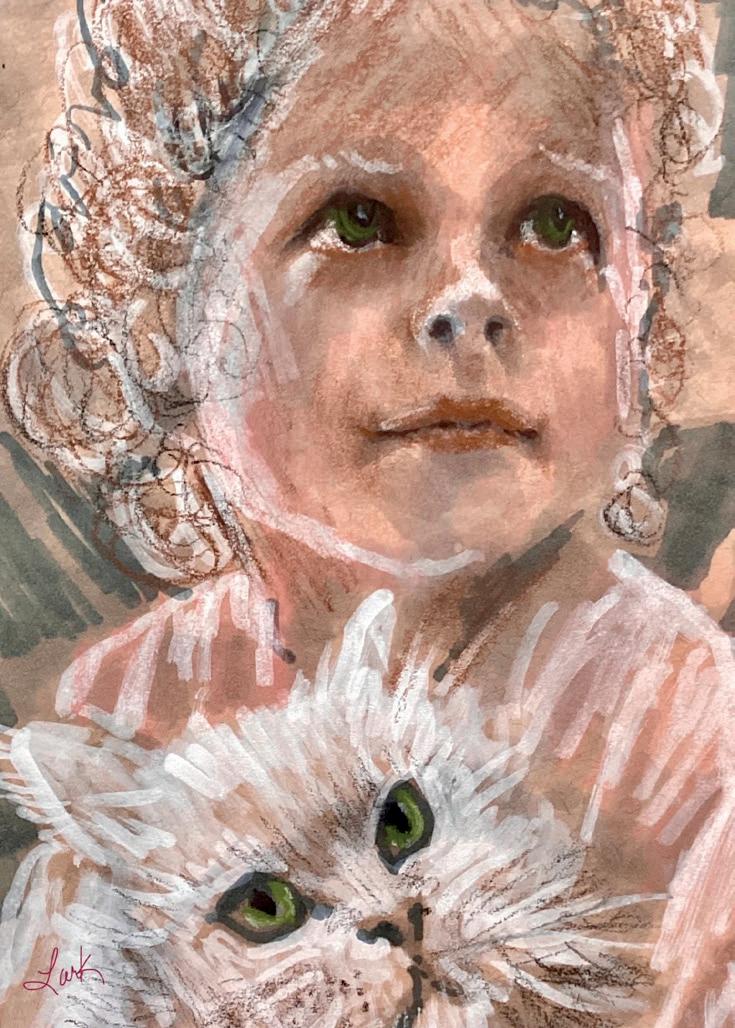
of the creativity and lived experiences of local 2SLGBTQIA+ artists and allies.
Hosted at the Quinte Arts Cultural Hub and Gallery, it provides a welcoming space where artists can share their work while inviting the community to engage with diverse stories, perspectives and experiences.
More than an exhibition, Belonging created opportunities for conversation and connection.
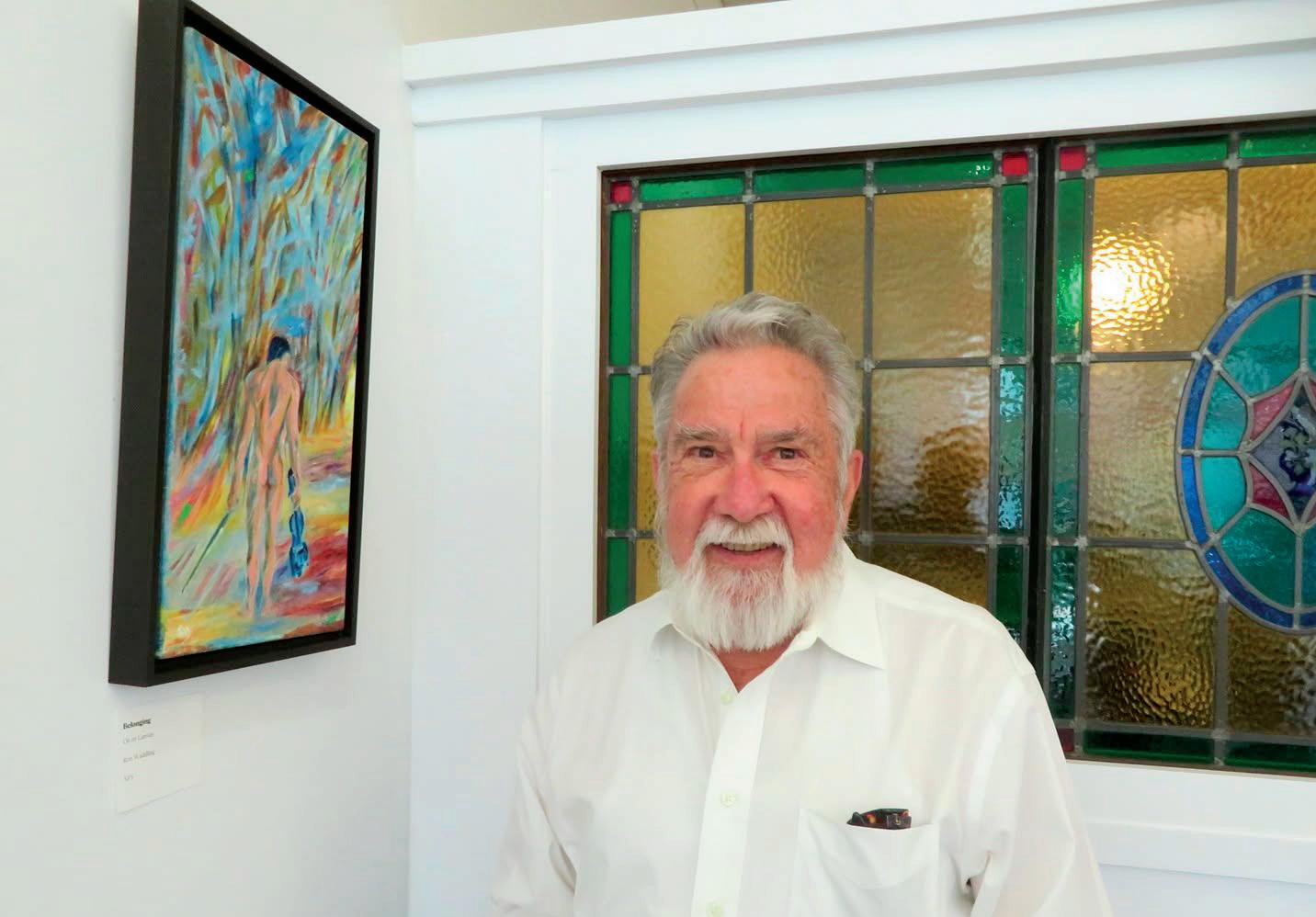
Ron Waddling discusses his oil painting, Belonging
Lorraine Mackie, FirstLove
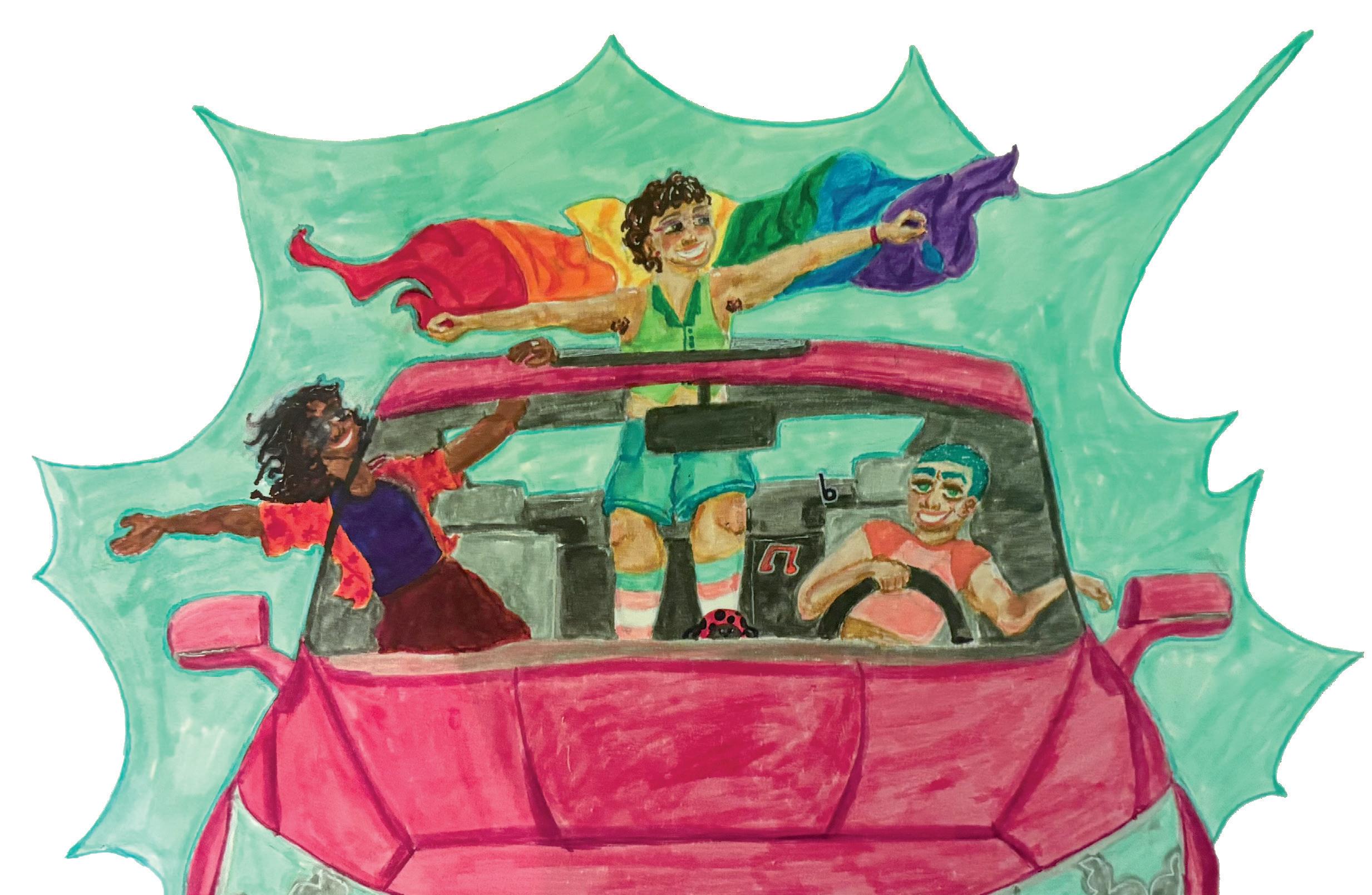
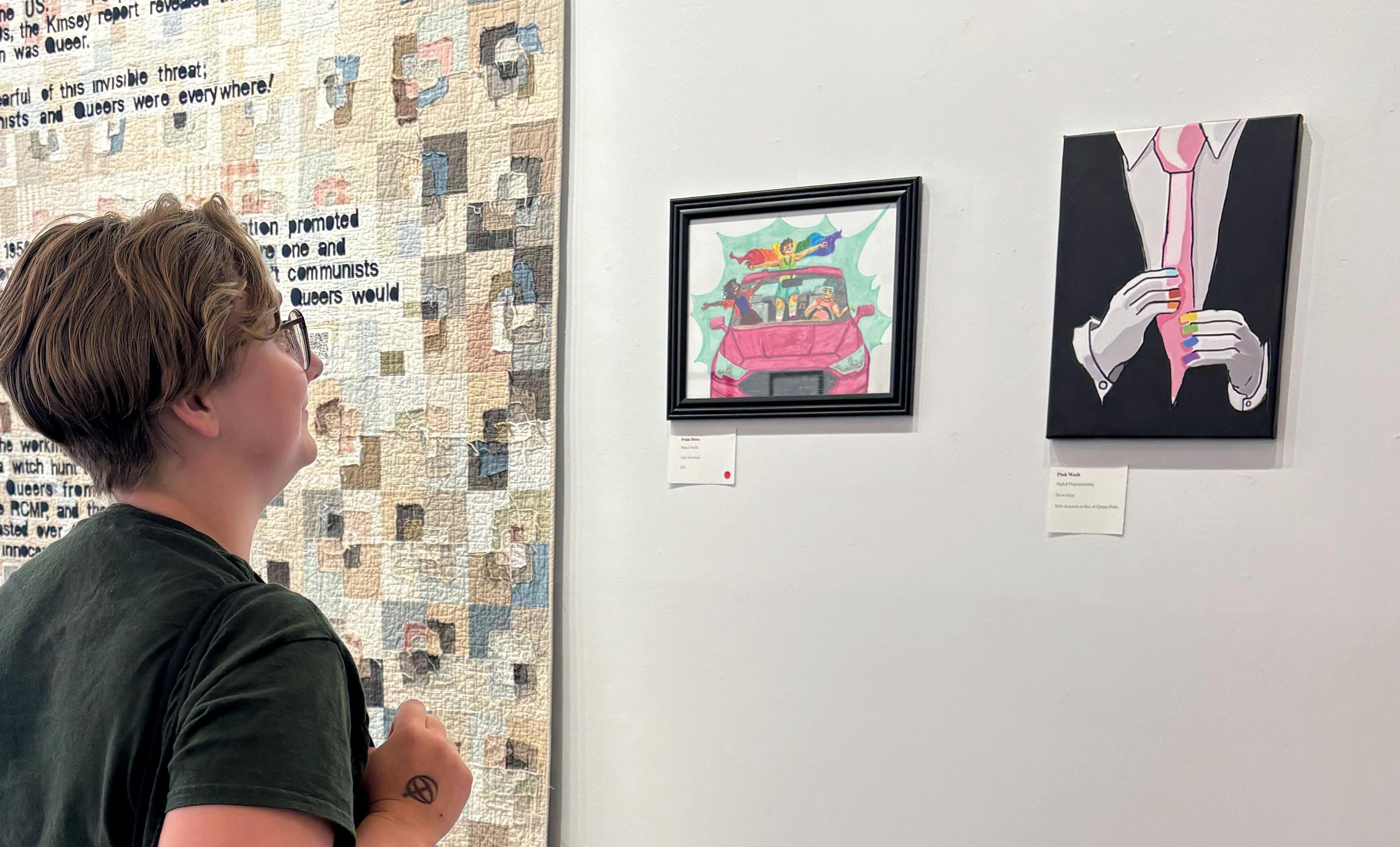
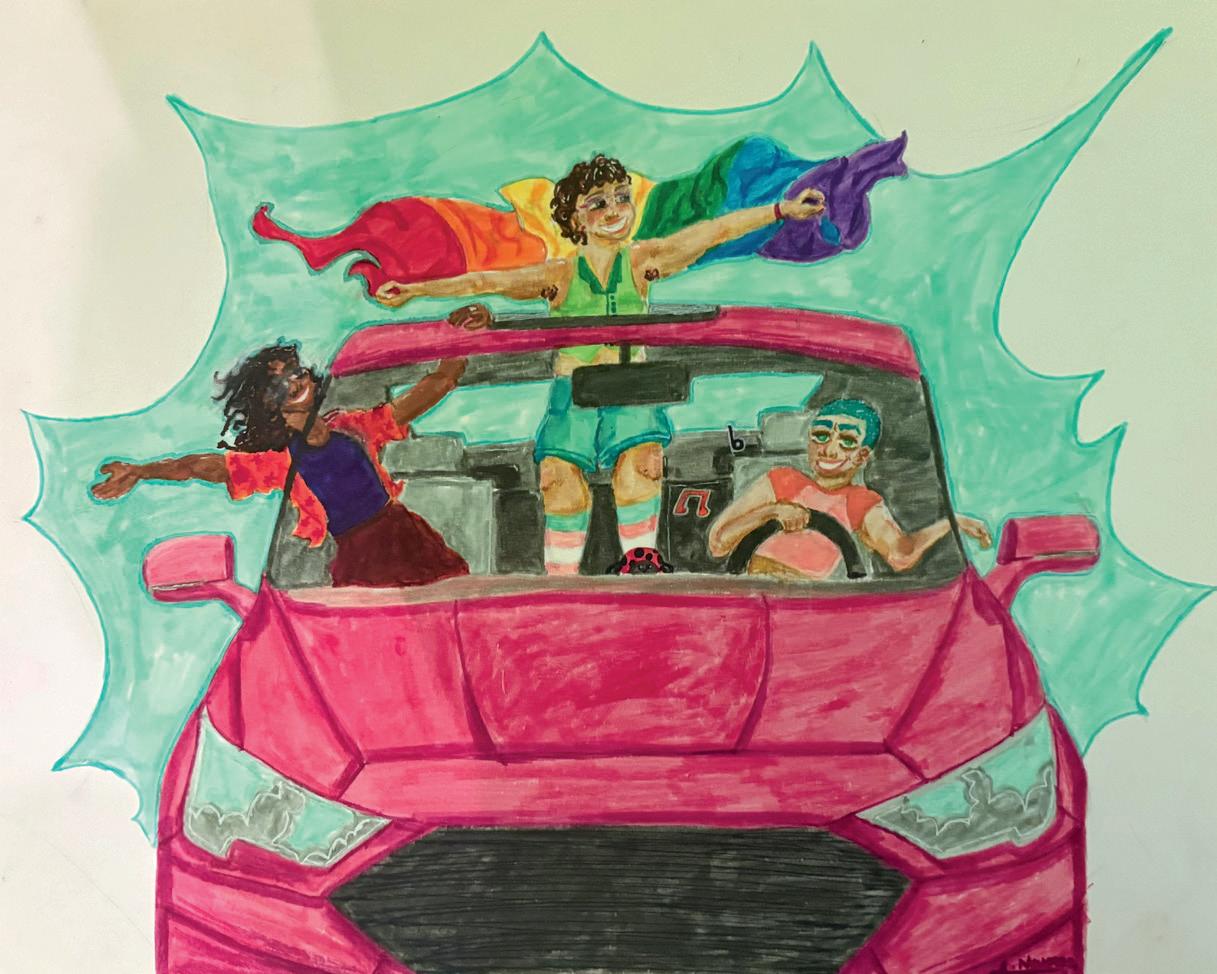
Arlo Newman,PrideDrive
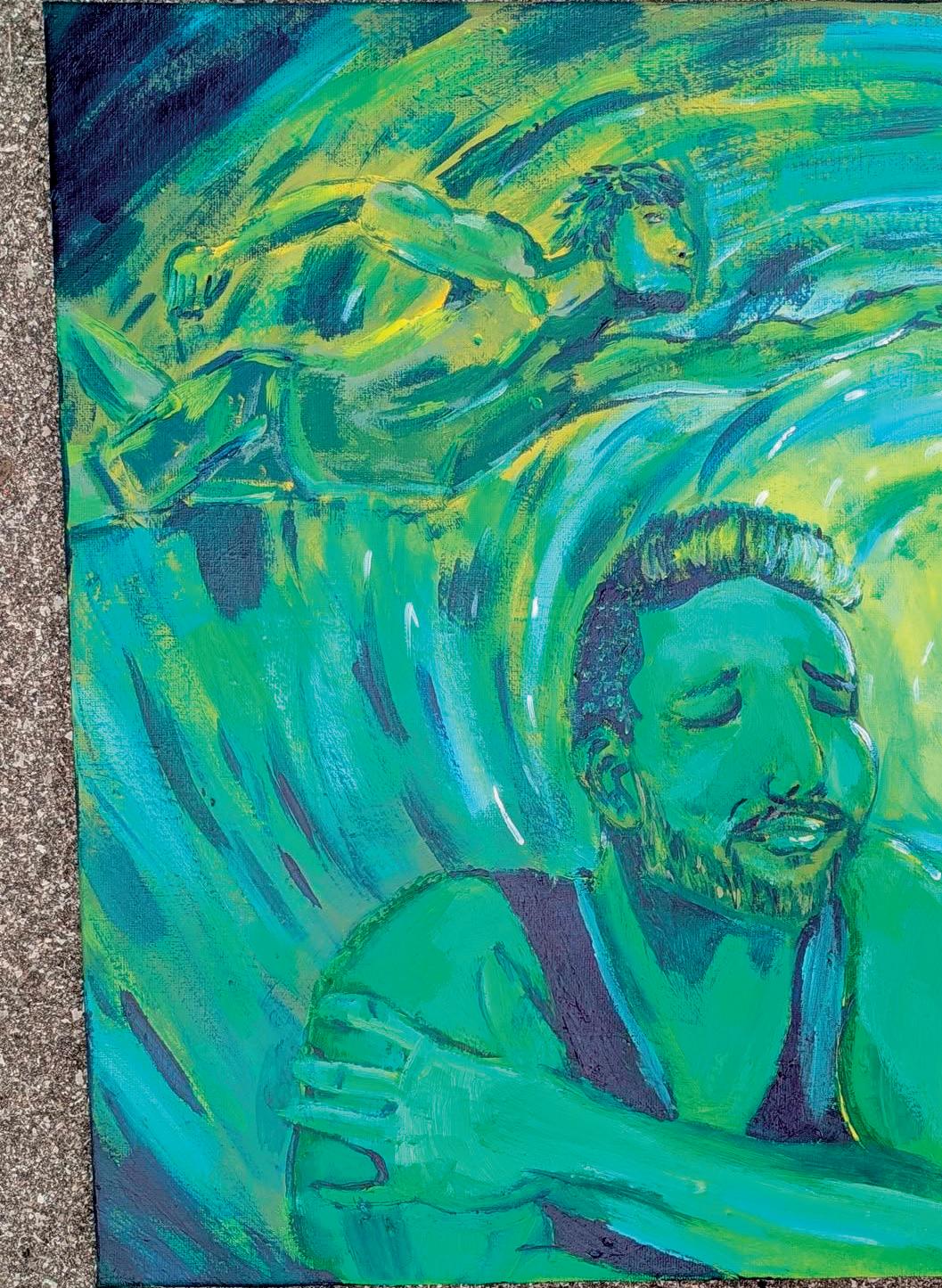
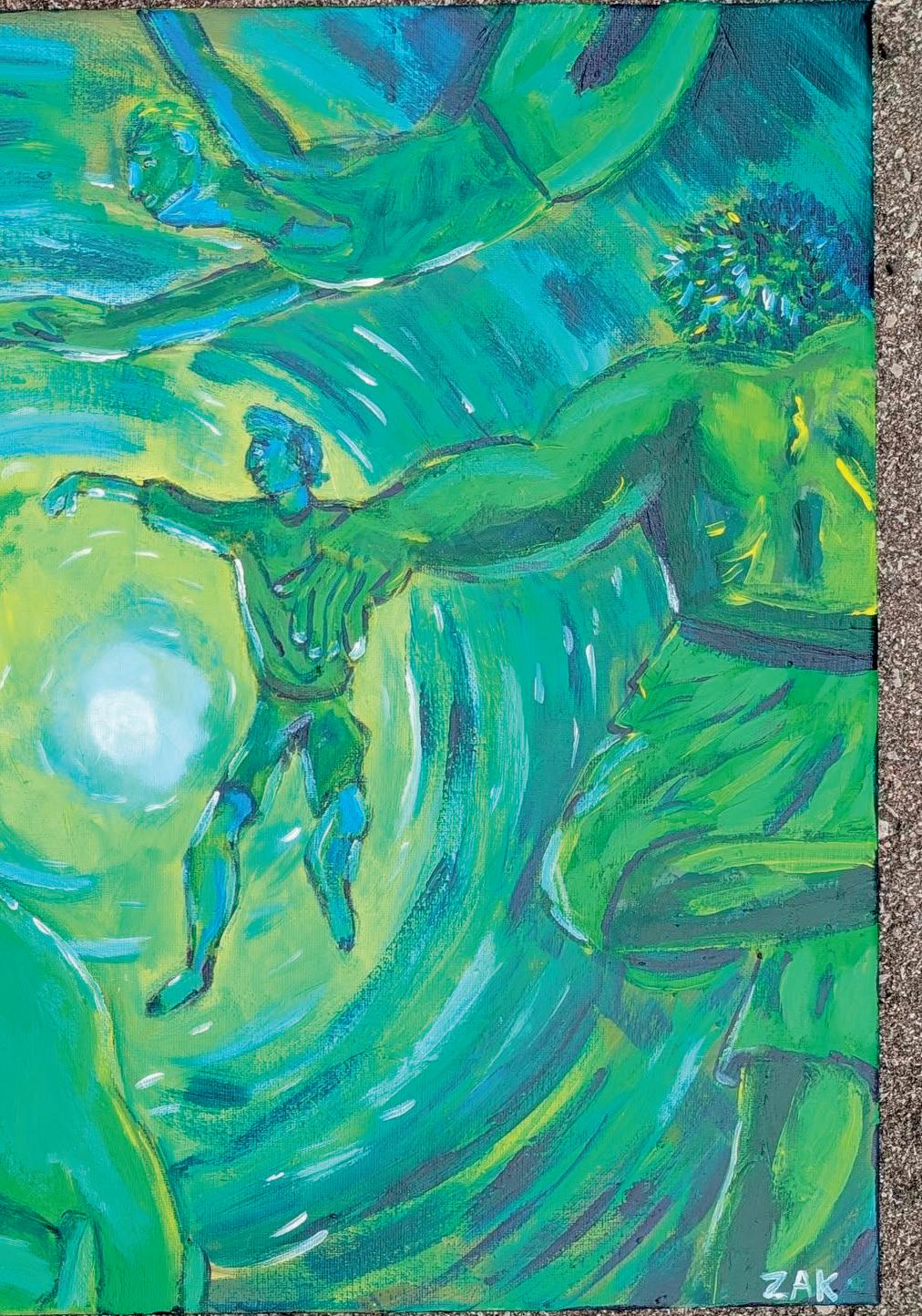
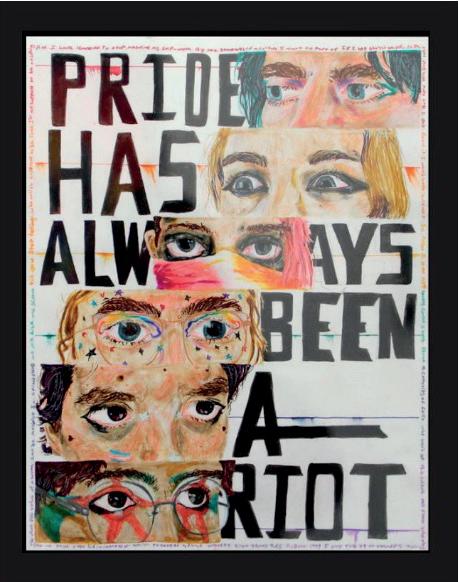
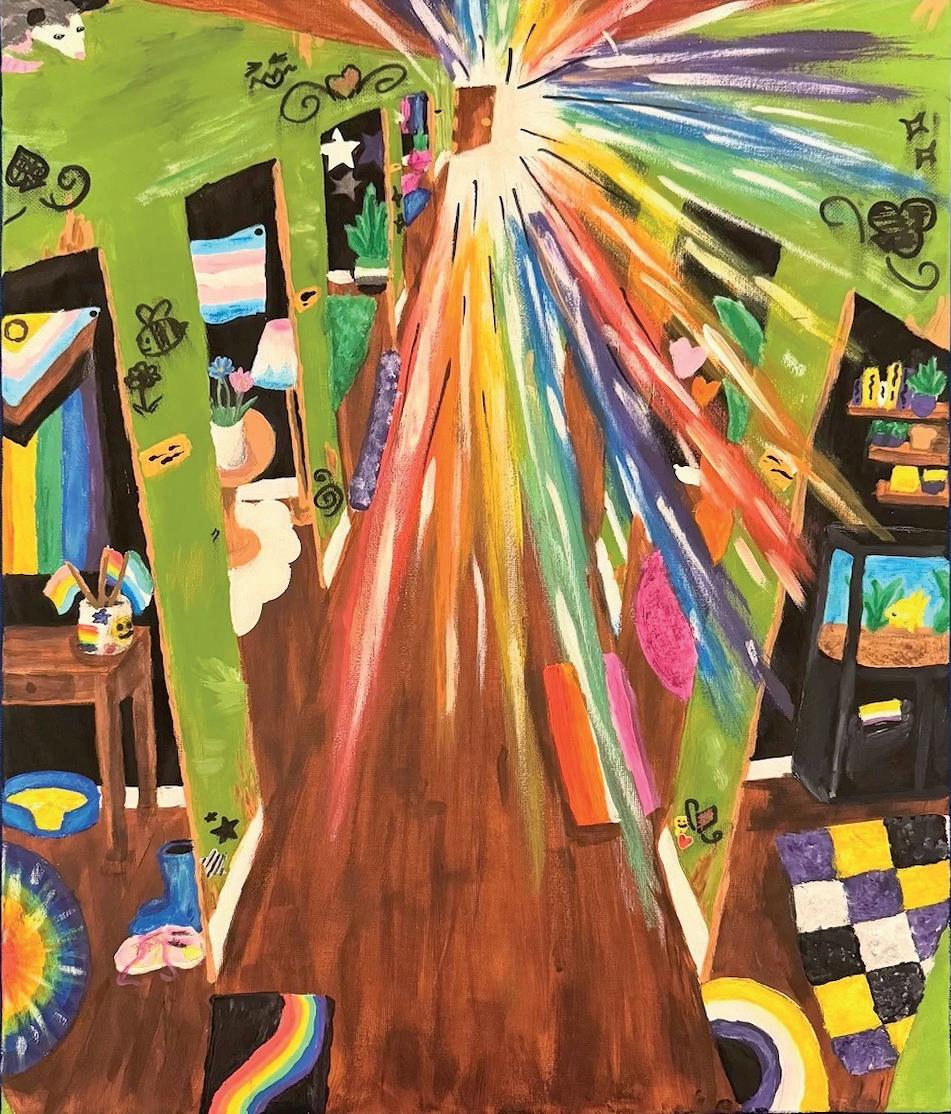
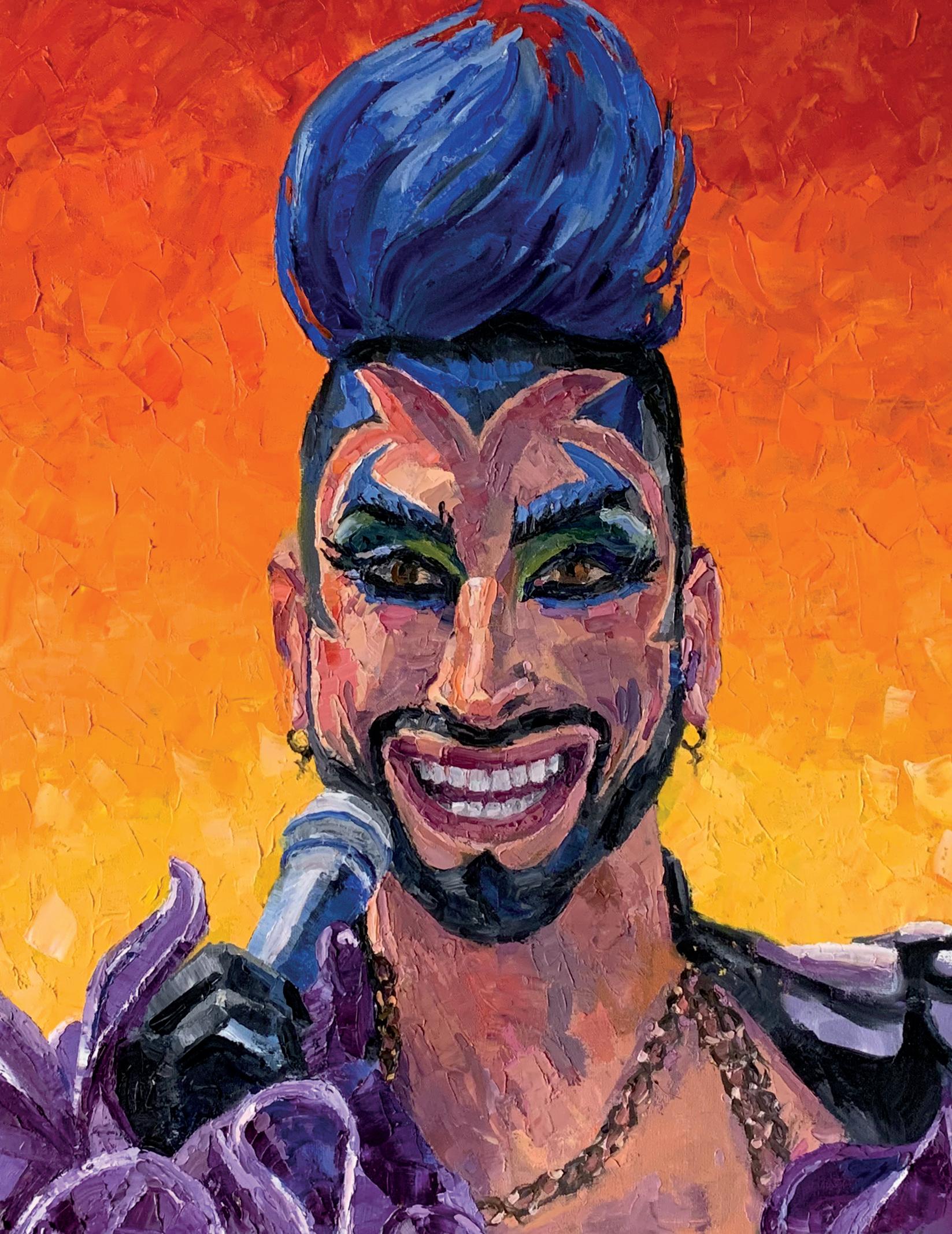
This year's theme, Belonging , explored identity through an intergenerational lens, encouraging artists of all ages to reflect on what it means to feel connected, accepted and valued. Through painting, photography, poetry, quilting, mixed media and digital art, the exhibition highlighted personal expressions of resilience, identity and the relationships that help individuals and communities flourish.
More than an exhibition, Belonging created opportunities for conversation and connection. Through art and shared experiences, Quinte Arts and Bay of Quinte PRIDE continue to honour the history, diversity and ongoing contributions of the 2SLGBTQIA+ community while fostering a space where everyone is welcomed, respected and celebrated.
“Belonging is at the heart of this year’s Pride exhibition. At the Quinte Arts Cultural Hub, we’re creating space for people to see themselves, to feel welcomed, and to connect through shared stories and creativity. This collaboration with Bay of Quinte Pride is incredibly meaningful—it reflects
what’s possible when the community comes together with openness, respect, and a genuine desire to celebrate every voice.”
— Janet Jarrell, Executive Director, Quinte Arts
This year's exhibition featured work by Andrew Gray, Arlo Newman, Bill Stearman, Brooklyn Wong, Catriona

Curries, Dan Fobert, Lorraine Mackie, Maren Menaldo, Ron Waddling, SL Watson-Smith, Sarah Winn, TJ Best and Zak Rittwage, representing a wide range of artistic practices and perspectives.
In addition to the exhibition, two special events encouraged meaningful dialogue across generations. Intergenerational Storytelling , held on June 17, brought together 2SLGBTQIA+ youth,
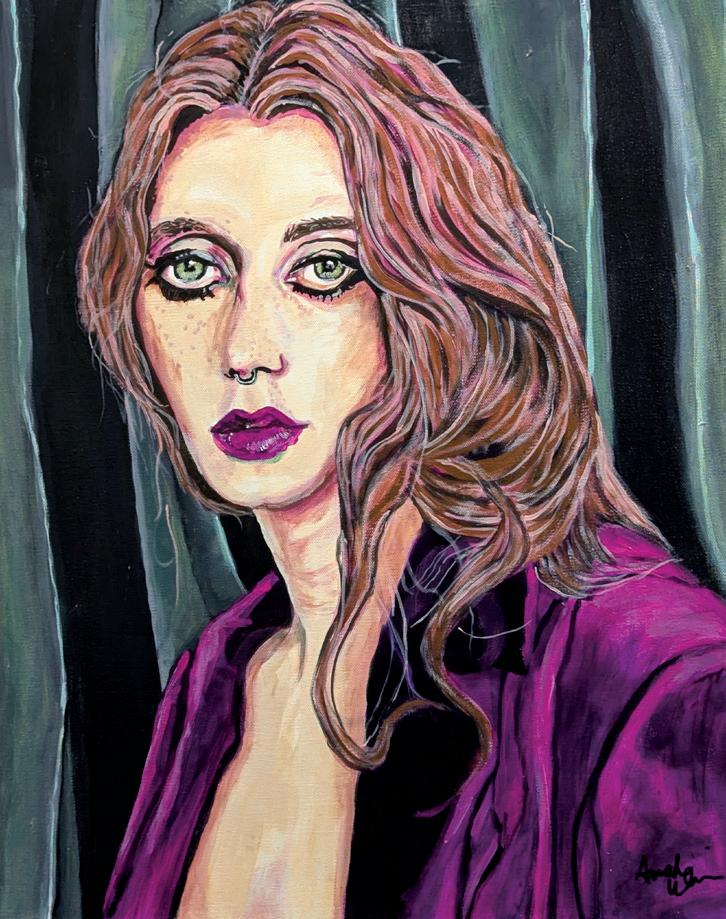
Sarah Winn, Purple
Drew Gray, PinkWash
Mixed Media artist Catriona Curries views the Belongingexhibition at the Quinte Arts Cultural Hub
Quinte Arts
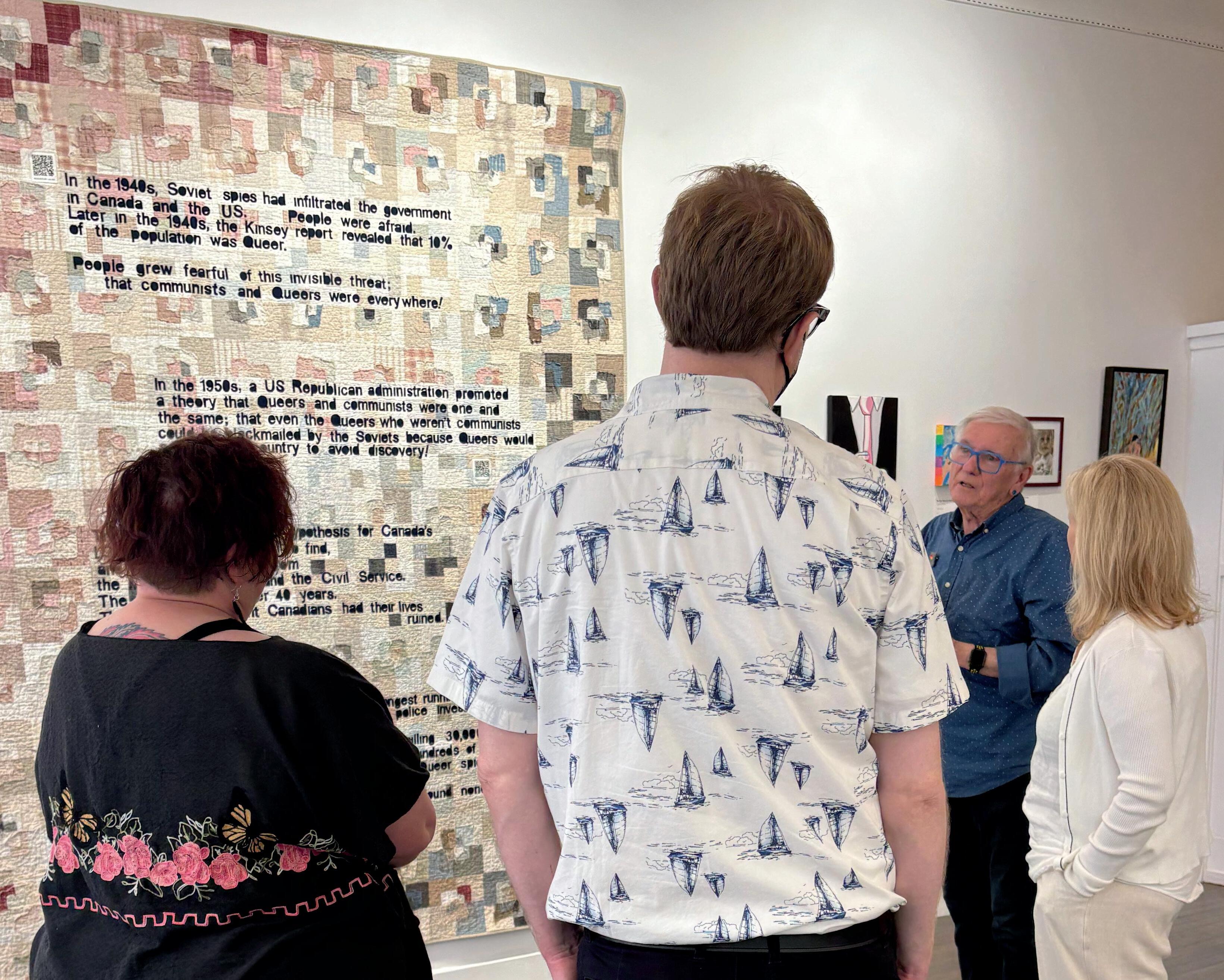
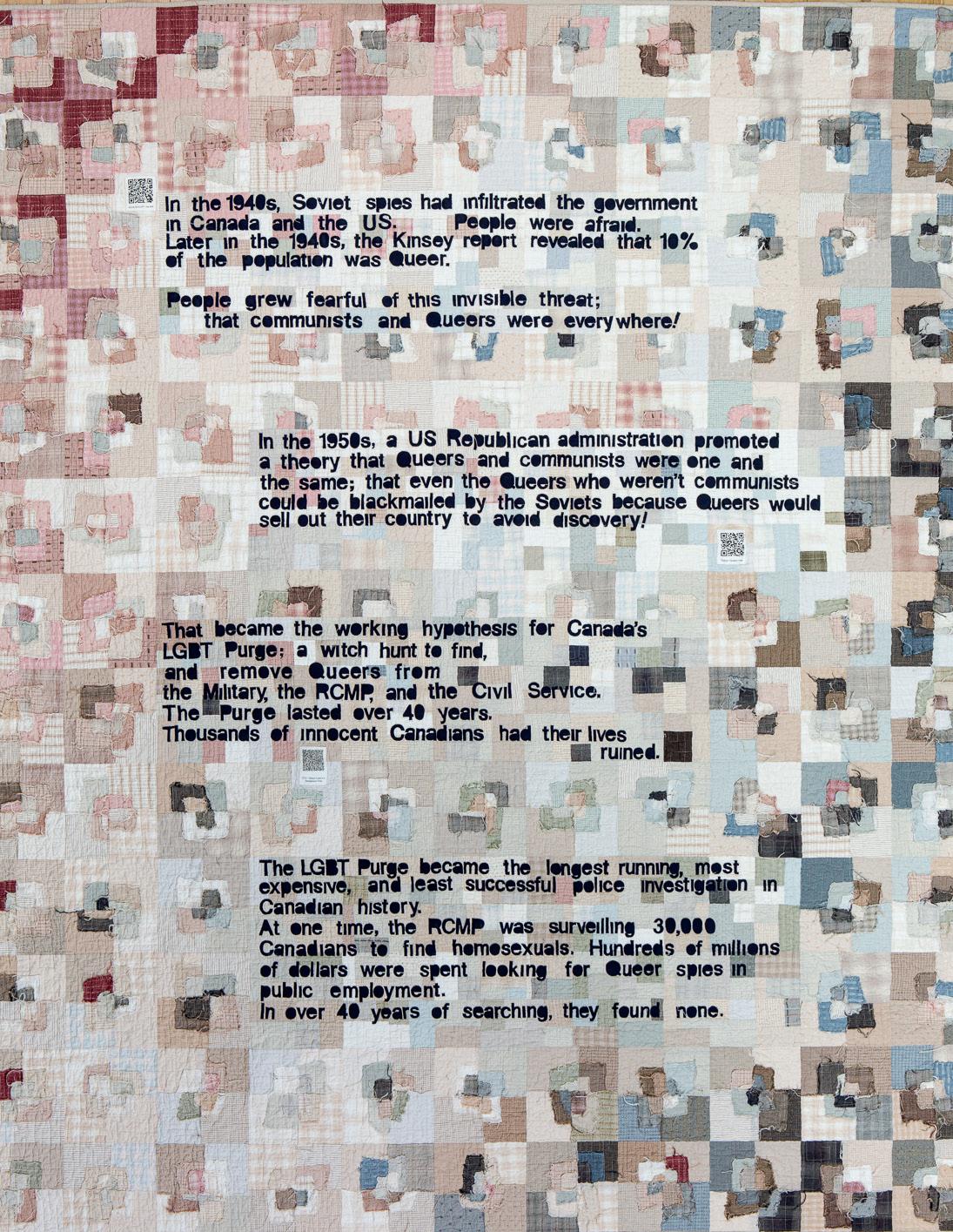
Bill Stearman discusses his AbouttheLGBTPurgeQuilt
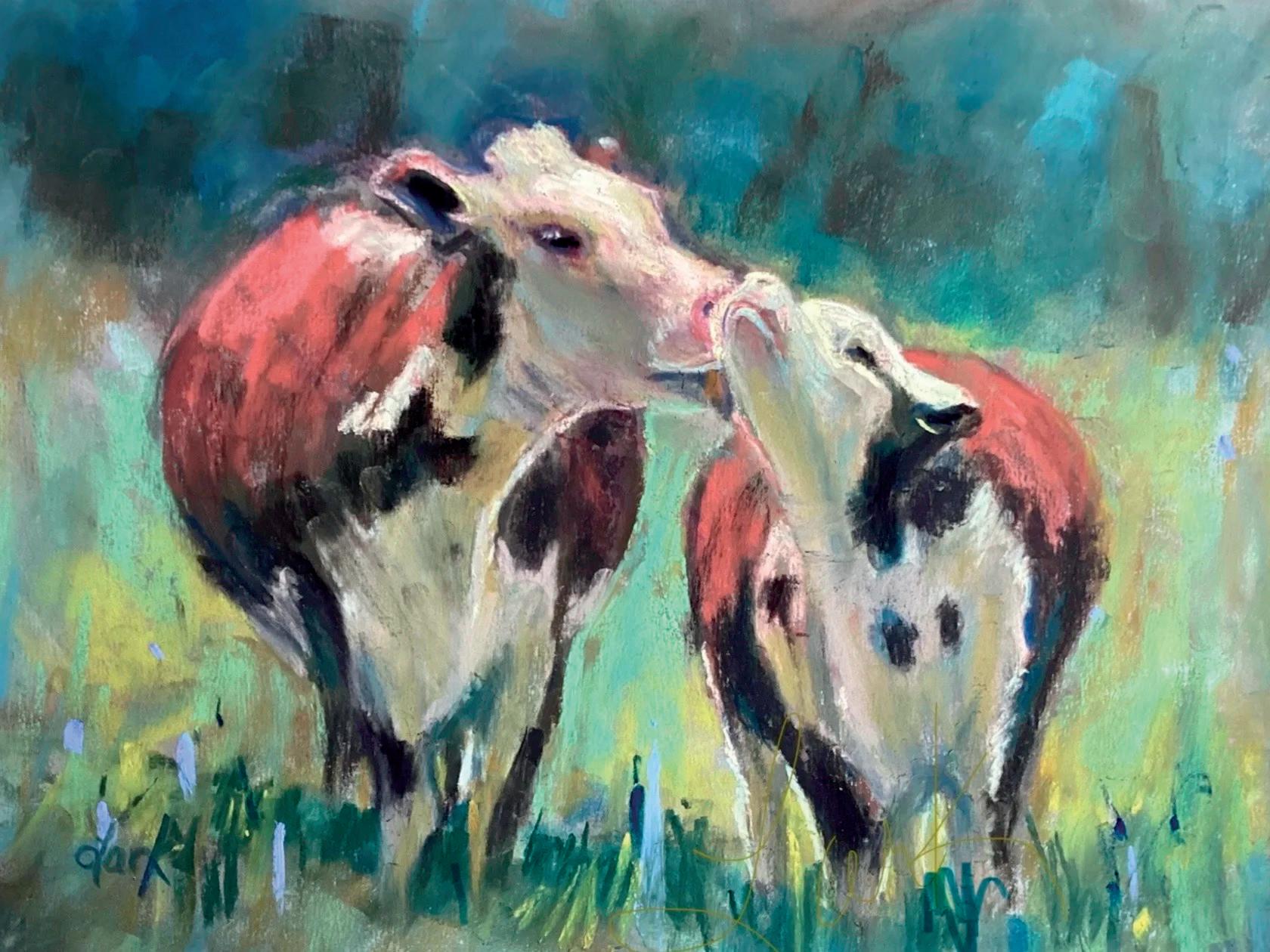
Lorraine Mackie,MotherandChild
adults and seniors to share experiences, learn from one another and strengthen community connections. The month concluded with the Open House Showcase on June 24, welcoming artists, allies and the broader community to celebrate the exhibition and the stories it shared.
Pride Month remains an important opportunity to celebrate the strength, creativity, history and contributions of the 2SLGBTQIA+ community while recognizing the work that remains to achieve equity and inclusion. Through initiatives such as Belonging , Quinte Arts continues to create spaces where people feel safe to express themselves, where every voice is valued, and where diversity is celebrated as one of our community's greatest strengths.
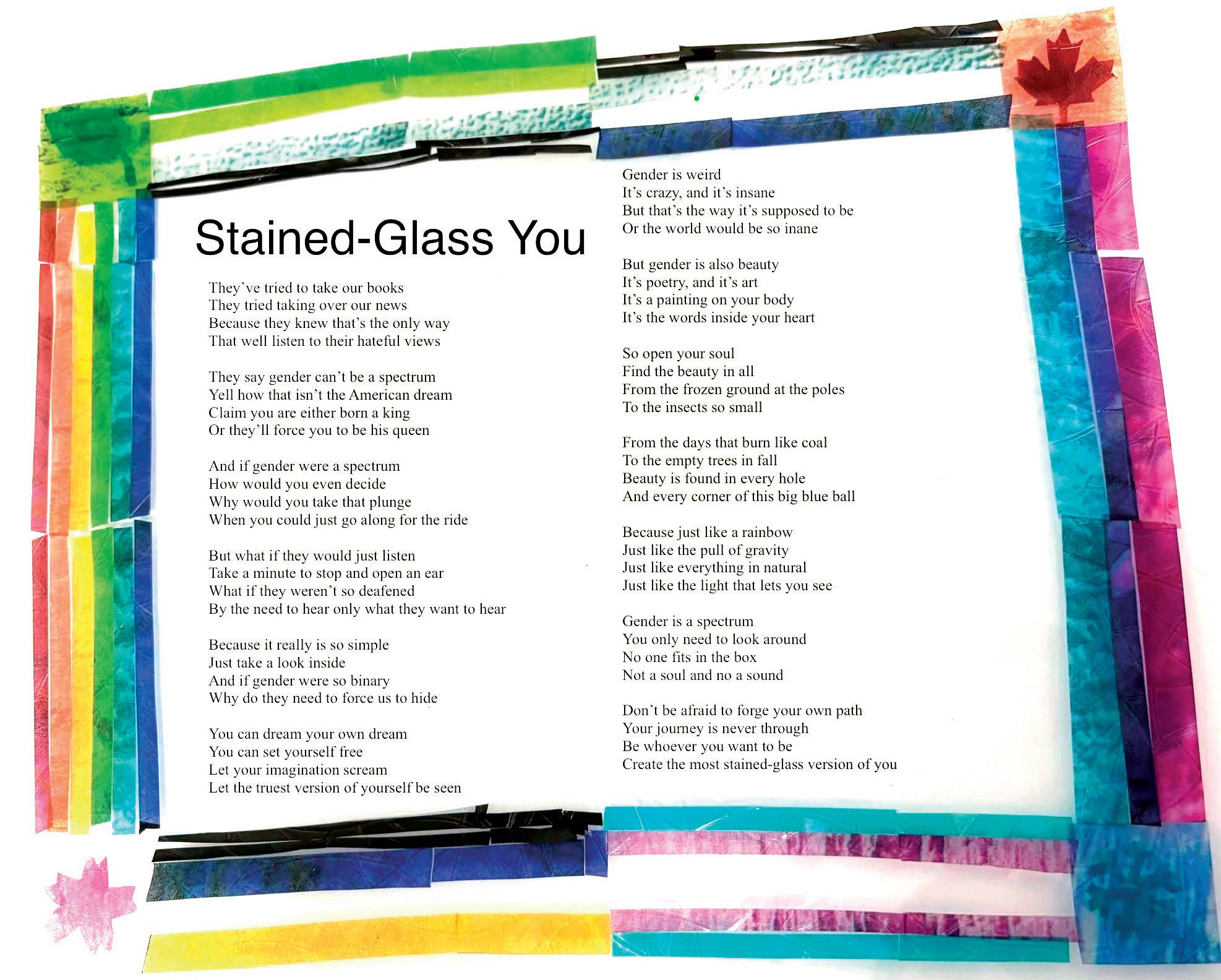
Quinte
A picture can tell so many stories, The wall it's on speaks a million words, These echoes of a past forgotten, So often go left unheard.
Because if walls could talk, They would sing the praise, Of many stormy nights, And so few sun filled days,
The walls that stood the test of time, With a dozen families raised in their halls, A dozen height charts scratched into wood, At the start of three hundred falls,
But what if walls do talk?
What if they warn of the worst they've seen? What if we just aren't listening?
While we repeat and repeat what's already been.
No higher power will protect you, Pray and worship if you must, But take a good look at who you're harming, And be so careful with who you trust,
Some tell of children sent to war, Whom they shielded, yet died in their halls, While others talk of parents and widows, Told by those who had let the child fall,
In the new year little feet still, As one of their own they mourn, The walls absorb their silence and pain, As the life of one so young was shorn.
There's walls with holes aplenty, Connecting trails of red down their halls, Endless graves that prove a broken system, How many more innocents must fall?
Those who tread a different path, Those whose true selves got buried inside, We exist everywhere, we exist anyway, So why for living... for loving are we forced to hide?
They too must be tired of all the hate, For though they saw the change of many seasons, People still shoot shout over the smallest things, And with each new horror comes the same old reason.
Over and over they see corruption and greed, It's the people the powerful should please, But the shots were heard around the world, Good died while fleeing, and Pretti on his knees,
Just regular people. Just civilians like us.
Yet they've done more protecting, Than those we're supposed to trust.
Integument System
I watched as she scraped the skin off my forearm fingernail clogged Pink to red friction burning a one-inch patch teeth set to familiar pain
My best friend and I raised on punishment we learned to take care of ourselves
We laughed
As she scraped back and forth faster cognizant but uncaring frottage of forearms de-sexed toughness, not tender I slowly woke to damnation without her
An anniversary can strike at any moment there’s no before-then for me to go back to just there, and there, and there Scratch them out the hurts that have stuck in my creases
Past Pastrana
Julia, if you were born a hundred and fifty years later would you have clutched your allowance at the Scholastic book fair, scanning the titles until you saw your face on display?
Would you have called up John* and Tom to discuss what strange lives you’d lived, your stories falling into the hands of unsuspecting 3rd graders –a dowsing wand searching out veins of oddity We have both been posed like dolls and found the position lacking
If you were really the perfect woman, you would be nameless oblivious of how people stare; such gawking being far more hideous than some extra hair Instead, with only skirts to lift your spirits you transformed yourself into an object of desire examining the different hands that differentiated you and telling them to return another day
I’ve the urge pluck out the glass they gave to you as eyes Watching us watch you through all those years gave you a kind of immortality
The Bearded Lady. The Nondescript. A Monster to the Whole World. How they wield their melodic voice and tight corsets was enough for me to understand that as far as malformations go, the middle is a dangerous place to be Thanks to the gods for Sinlao, that space between mountain and ocean for establishing I too could be loved for my own sake
My own sensitive heart and mind had not yet seen what secrets lay hidden beneath
Born different? All life is a parabola, fools there is no ordinary routine, despite what the salacious headlines imply
* John Merrick, a similarly tragic figure of the Victorian sideshow era, also known as the “Elephant Man” and Charles Sherwood Stratton, better known by his stage
“I’m
on fire and I’m trying not to show it” Florence + The Machine, Free
thoroughfare
more than two thoughts at a time is a traffic jam in this village a whole parade in the off-season I might not be the best mascot of dialog but this is the costume that I wear
the task is to marshal my words; to scoop up their hiccupping bodies and facilitate an easy pace but I’m facing an uncomfortable moment the choice: do I correct automatically? I’d be introducing myself as a problem a villain of liberal proportions nemesis to the old ways perhaps it helps that on weekends I donate my time towards charitability giving away familiarness to prove that I am not a malfunction
there’s only one traffic stop here and it only stays amber for a moment maybe it only shines for me
I’m illuminated through discussion hoping you are ready to give benefit to cause my name, new enough not to be born here is new enough to sneak into the flow but it is not the only thing between us –in existing I pose a challenge conflagrating the handbook for drivers I’ve erased the pavement markings that kept the opposites at bay thus, drawing ire from them both
I watch the cars going westbound/eastbound along the great Trans-Canada highway while I’m firmly rooted in Ontario I picture myself in the merging lane commuting past the place city folks escape to for I am the representative, setting the frequency though frequently I wish I was bolder more than merely present the beacon of all things equivocal
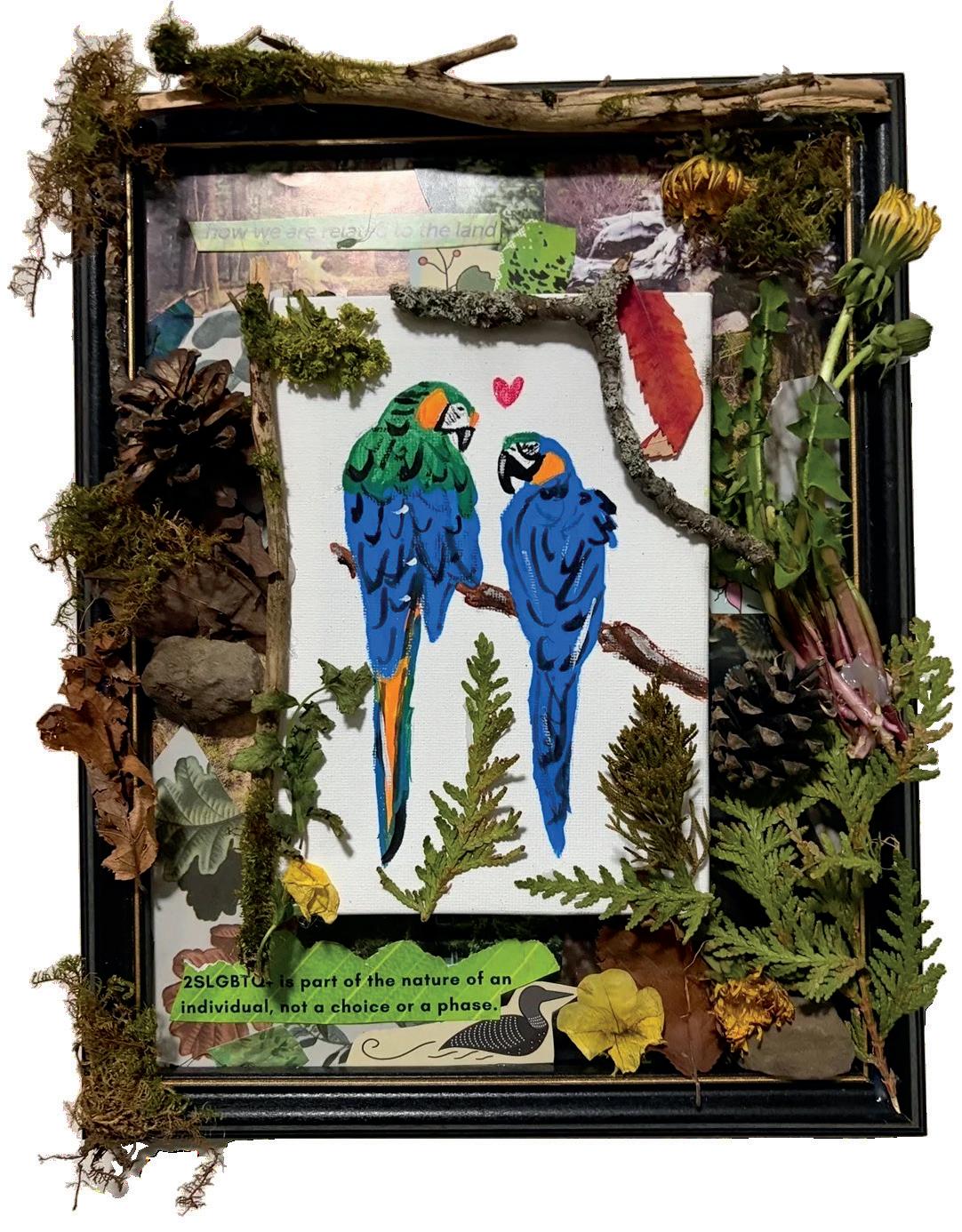
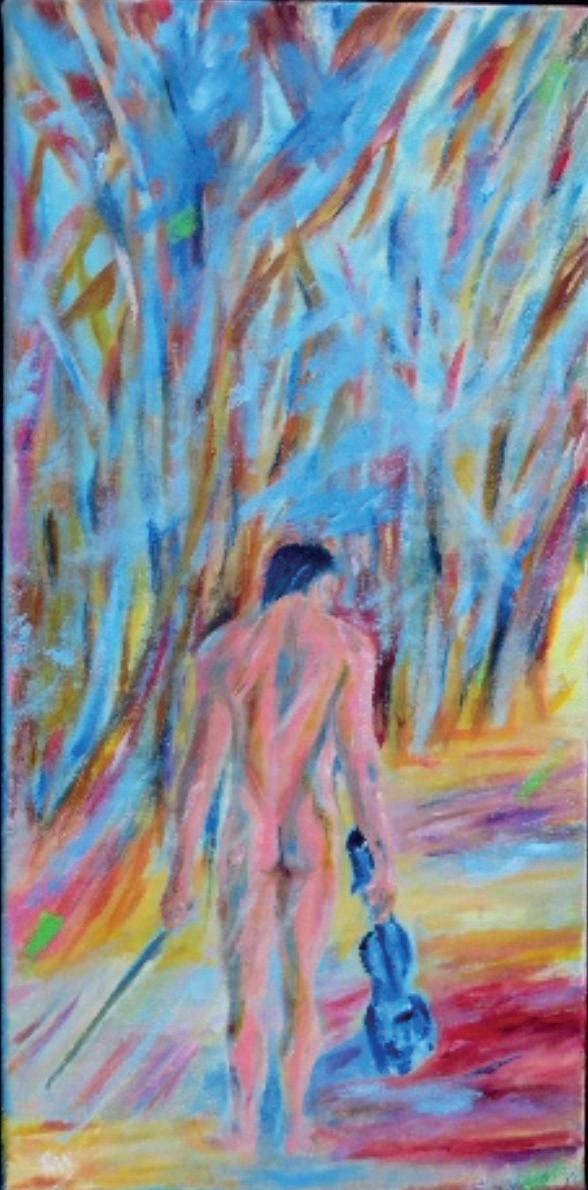
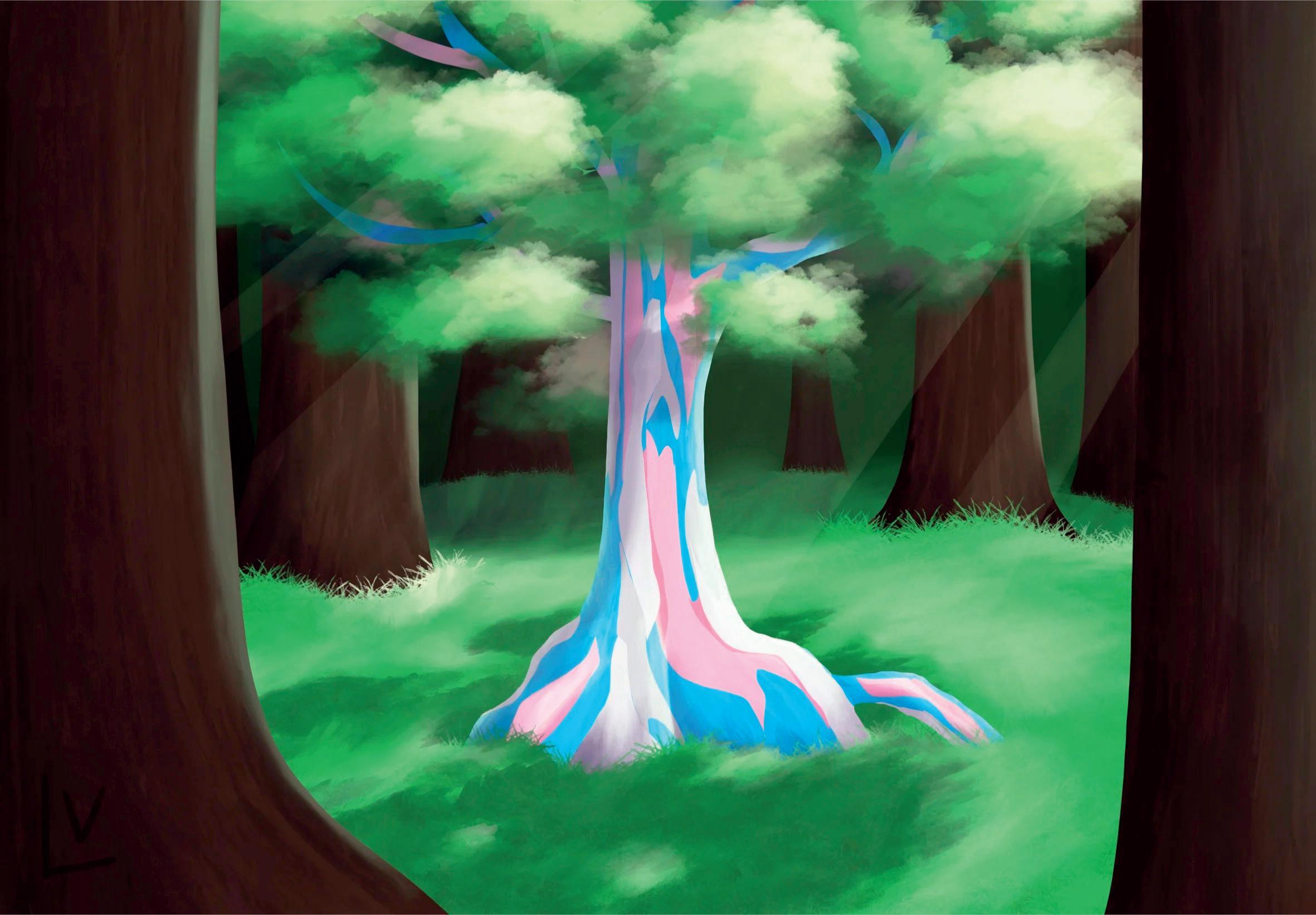
Catriona Curries, Sanctuary
Ron Waddling, Belonging
Brooklyn Wong, When Stripped of Bark
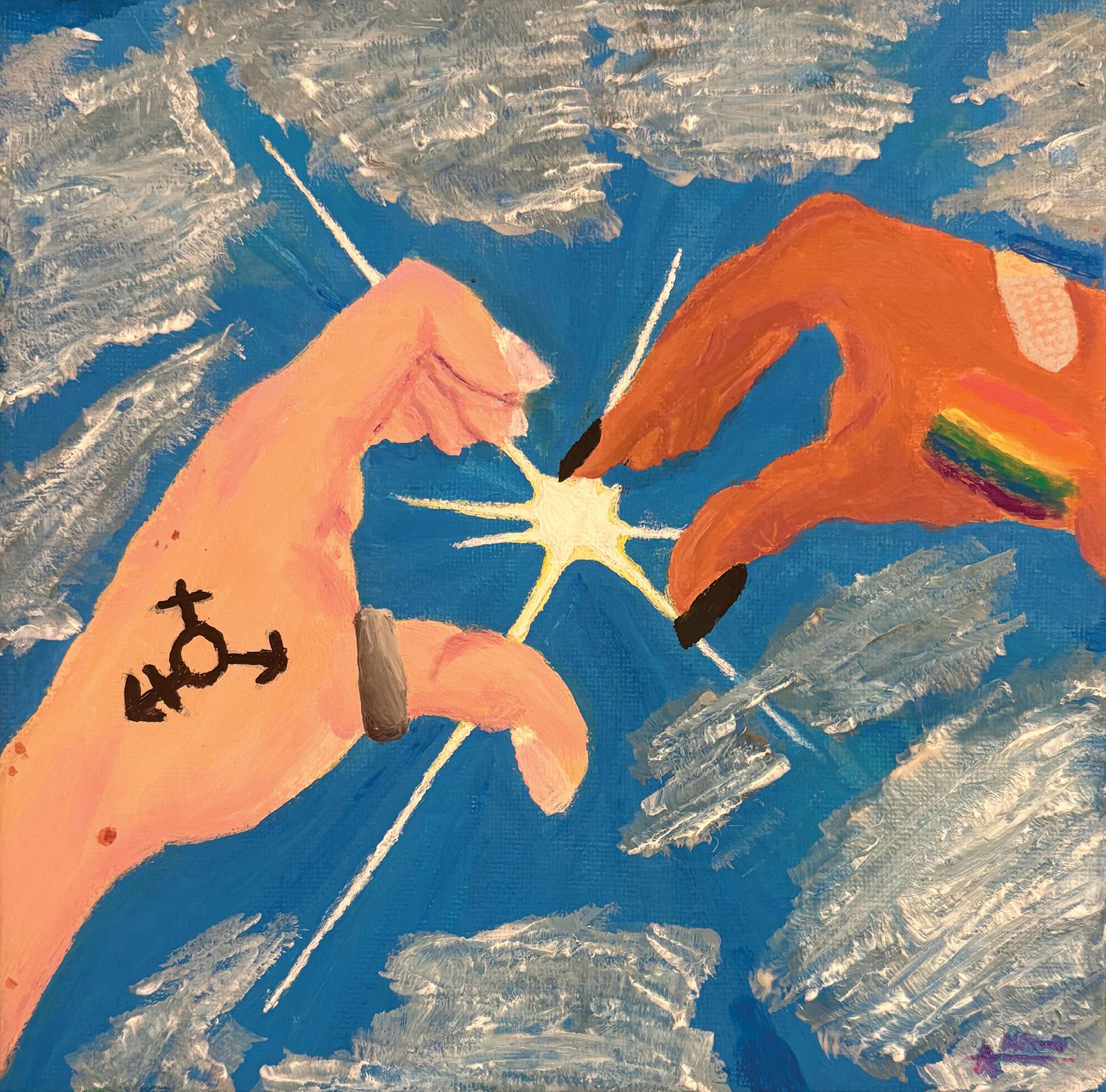
Arlo Newman, OurLoveDeservesSunshine
Quinte Arts
Maren Menaldo, Untitled

hris Manley is a photographer in Quinte West.