Medals & Militaria
21/22 MAY 2026
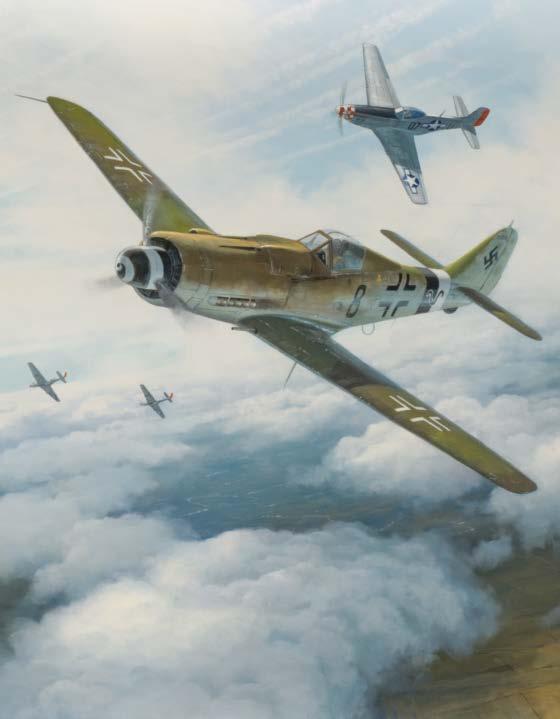
Medals & Militaria
21/22 MAY 2026
21 May 2026 at 10am
22 May 2026 at 10am
VIEWING Monday, Tuesday & Wednesday 18/19/20 May 9.30am-5.30pm Sale mornings from 9am (other times by appointment)
AUCTIONEER
Henry Meadows BA (Hons), MRICS
Light refreshments available on view days with extra lunch options on sale days

Mallard House, Broadway Lane, South Cerney, Cirencester, Gloucestershire, GL7 5UQ
T: +44 (0) 1285 860006
E: info@dominicwinter.co.uk www.dominicwinter.co.uk


Condition reports now including video conferencing can be requested in the following ways:
T: +44 (0)1285 860006
E: info@dominicwinter.co.uk
Via the relevant lot page on our website www.dominicwinter.co.uk
All lots are fully illustrated on our website (www.dominicwinter.co.uk) and all our specialist staff are ready to provide detailed condition reports and additional images on request. We recommend that customers visit the online catalogue regularly as extra lot information and images will be added in the lead-up to the sale
Customers may submit commission bids or request to bid by telephone in the following ways:
T: +44 (0)1285 860006
E: info@dominicwinter.co.uk
Via the relevant lot page on our website www.dominicwinter.co.uk
Live online bidding is available on our website www.dominicwinter.co.uk (surcharge of 3% + vat): a live bidding button will appear 60 minutes before the sale commences. Bidding is also available at the-saleroom.com (surcharge of 4.95% + VAT) and invaluable.com (surcharge of 3% + VAT, and subject to a minimum charge of the UK equivalent of $10 per lot).

For payment information see our Information for Buyers page at the rear of this catalogue. For details regarding storage, collection, and delivery please see our Information for Buyers page or contact our office for advice.
If you intend to export goods you must find out in advance if:
a. there is a prohibition on exporting goods of that character e.g. if the goods contain prohibited materials such as ivory.
b. if they require an Export Licence on the grounds of exceeding a specific age and/or monetary value threshold as set by the Export Licensing Unit. We are happy to offer the submission of necessary applications on behalf of our buyers, but we will charge for this service to cover the cost of our time. The typical cost of an application is £10, but it may be increased if additional work is required.
c. CITES permits: These documents may be required to ship some lots (e.g. ivory) out of the UK. Your shipper (DHL Express or other) can advise and apply for these on your behalf. It is the buyer's responsibility to ensure that the shipment is lawfully exported from the selling location and can be lawfully imported into the country of destination.
All lots are offered subject to the Conditions of Sale and Business printed at the back of this catalogue. For full terms and conditions of sale please see our website or contact the auction office. A buyer’s premium of 22% of the hammer price is payable by the buyers of all lots, except those marked with an asterisk, in which case the buyer’s premium is 26.4%. Artist’s Resale Rights Law (Droit de Suite). Lots marked with AR next to the lot number may be subject to Droit de Suite. For further details see Information for Buyers at rear of catalogue. Catalogue Produced by Jamm Design – 020 7459 4749 | info@jammdesign.co.uk

Aviation & Military Photographs & Ephemera 1-104
Aviation Memorabilia 105-207
The Royal Air Force Collection 208-272
Aviation Art 273-299
The Christopher Mills Aviation Print Collection 300-344
Railway & Motoring Memorabilia 345-376
DAY 2
Armour, Militaria & Badges 377-507
Edged Weapons 508-547
Antique Guns 548-568
Orders, Decorations & Medals 569-690


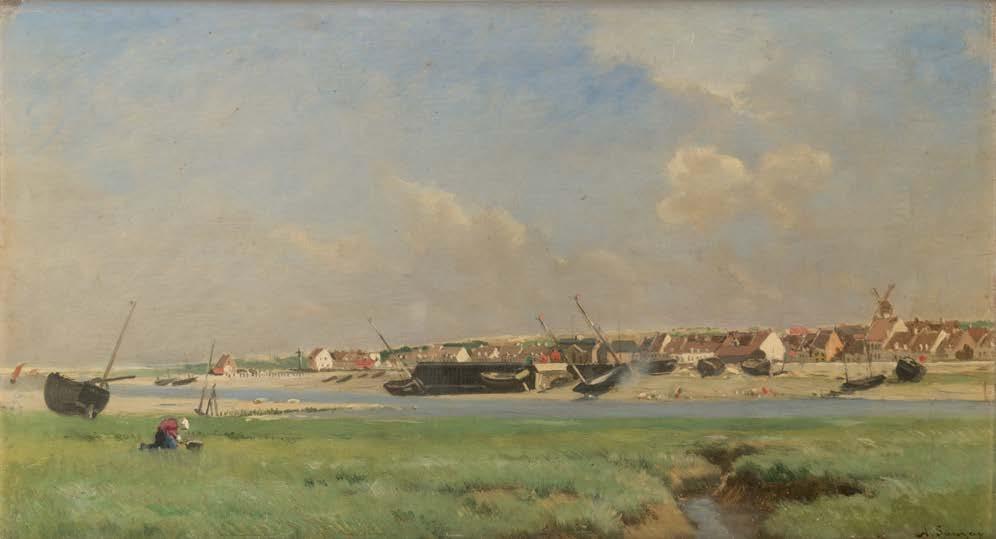
Adrien Jacques Sauzay (French, 1841-1928). Scène d'Estuaire, oil on wood panel, signed to lower right, period gilt molded frame, glazed with printed label to verso of City of Sheffield Art Galleries with reference no: L.I.916, 15 x 28 cm (6 x 11 ins)
£300-£400 (British & European Paintings, 15 July 2026)
Wednesday 13 May
Wednesday 17 June
Thursday 18 June
Wednesday 15 July
Thursday 16 July
Wednesday 2 September
Thursday 1 October
Wednesday 7 October
Thursday 8 October
Printed Books, Maps & Documents
Travel, Exploration & Colour Plate Books
The Thornhill Collection of Shropshire History
Printed Books, Maps & Postcards
English Bibles 1500-1750
Artist's Drawing Books & Manuals: The Temperley Collection
Modern First Editions & Illustrated Literature
Children’s Books & Original Illustrations
Vintage Toys, Games & Playing Cards
British & European Paintings & Watercolours
Old Master Prints & Drawings
20th Century Prints
Antiques, Jewellery & Historic Textiles
Printed Books, Maps & Documents
Spiritualism, Witchcraft & Esoterica
Printed Books, Maps & Documents
Photographs, Autographs & Ephemera
Military & Aviation History, Medals & Militaria
Entries are invited for the above sales: please contact one of our specialist staff for further advice
AVIATION & MILITARY PHOTOGRAPHS & EPHEMERA
To commence at 10am
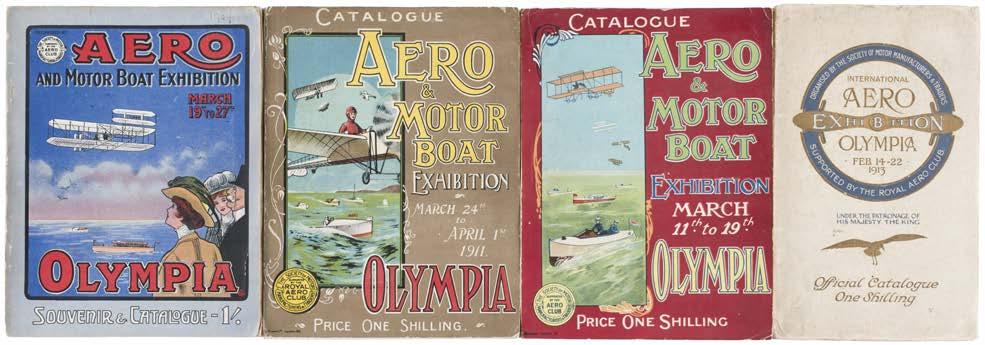
1* Aero and Motor Boat Exhibition Catalogues. Aero and Motor Boat Exhibition, March 19th to 27th, Olympia, Souvenir & Catalogue, 1909; March 11th to 19th 1910; March 24th to April 1st 1911; International Aero Exhibition, Olympia, Feb 14-22 1913; Aero and Marine Exhibition, Olympia, Mar 16-25, 1914; International Aero Exhibition, Olympia, July 16th - July 27th 1929, and Famous Aviators, Souvenir of the Aero Exhibition, London, 1929, mostly 100-134 pp., all in original wrappers, stapled as issued, Famous Aviators (cover detached), generally in good condition, some finger soiling and light creasing, light rubbing to a few spines, 24.4 x 18.8 cm Rare.
(7) £200 - £300
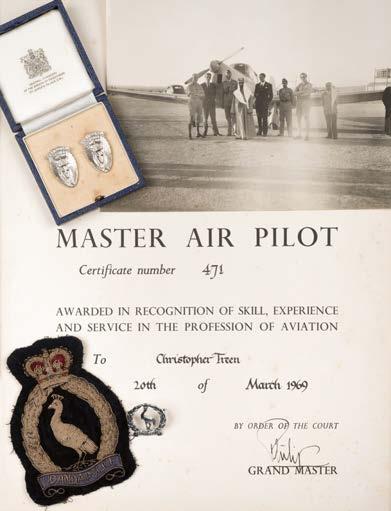
2* Air Transport Auxiliary. A fantastic archive belonging to WWII Pilot Christopher Treen, Queen’s Commendation for Valuable Service in the Air, who served in the Royal Fleet Air Arm, Air Transport Auxiliary and later Uganda Police Air Wing, including 4 RAF pilot’s logbooks for the period of 1939-1959, all bound in blue cloth and gilt block spine ‘Pilot’s Flying Log Books 1939-1959 C. Treen’, logbook 1 - 26 June 1939 to 30 January 1944; logbook 2 - 3 February 1944 to 7 September 1948; logbook 3 - 7 September 1948 to 10 October 1952; 5 January 1954 to 30 November 1959; Uganda Police Wing Pilot’s Flying Logbook, 1 December 1959 to 27 October 1969, WWII service medals, comprising 19391945 Star, Defence and War Medal, mounted as worn plus a Uganda Independence 1962 Medal, corresponding ribbon bar with the Uganda medal ribbon correctly stitched on, miniature dress awards, related badges, buttons etc, Queen’s Commendation for Valuable Service in the Air, two silver pin-backed badges, in Central Chancery, St. James’s Palace case of issue, extremely fine, with certificate from the Queen and photograph of Treen being presented his award, a photograph album titled ‘Tour of Trans-Jordan, Amman, June 1946’, containing 28 loose black and white photographs, various sizes, some pages captioned for example ‘880 Sqdn, R.N.A.S. Arbroath, Scotland May 1942, Lt Cdr “Butch” Judd, R.N., C.O.’, ‘Watching Chris Treen aerobatting the Auster’, several African photographs, probably from Uganda, signed photographs the Duke and Duchess of Kent, blue leather and gilt frame, glazed, frame size 18 x 12.5 cm, in original card box with a letter from Government House, dated 16 October 1962 addressed to Senior Superintendent Treen, the letter thanks Treen for all his hard work that he has done in preparation for and during Their Royal Highnesses’ visit to Uganda, many letters of condolence to Treen’s widow, a funeral card, an obituary, plus a large collection of research, related magazine articles and other items
Queen’s Commendation, London Gazette: 1 January 1962.
‘For an outstanding record as a pilot’ Christopher Treen (1921-1969), during WWII, with a number of squadrons, including 800 Squadron on HMS Ark Royal from 17 April 1940; his logbook records on 9 May 1940 a ‘fighter patrol in Narvik. Escort. Crashed in mountains 10.30’, Treen was flying Blackburn Skua II L3055 during an escort mission for Swordfish of 810 Squadron to attack bridge and railway targets east of Narkik, Norway, when the engine failed and he was forced to land on a mountain slope at Haugfjell south east of Grøndalsvanet. Treen and his crew member were both injured but hiked to Rombaken and were later picked up by the destroyer HMS Bedouin.
He was posted to Air Transport Auxiliary from 28 July 1942 to 30 December 1943. Logbook 1 records an extraordinary 51 different types of aircraft flown, including Lysander, Fairey Battle, Hurricane, Walrus, Anson, Wellington, Beaufighter, Barracuda, the list goes on.
He was one of the founding members of the Uganda Police Wing, serving from 1958. He rose to the rank of Senior Superintendent. In addition to his duties, Tring flew many distinguished statesmen around the country, including the President of Uganda.
Treen was killed in a motoring accident in 1969. An obituary published in the Police Habari magazine of March 1970 is included in the lot, as well as many letters, photographs other related items.
(Archive)
£400 - £600
3* Aircraft manuals. The De Havilland Venom FB Mk 1, September 1954, blue cloth binding, together with Ghost Mk 1300 Engine Change Unit, November 1955, De Havilland Technical Service, Ghost Venom, 1957, De Havilland Ghost Engine, August 1947 brochure, plus Putnams publications (11), including British Civil Aircraft since 1919, 3 volumes by A.J. Jackson and other aviation books (2 cartons)
£100 - £150
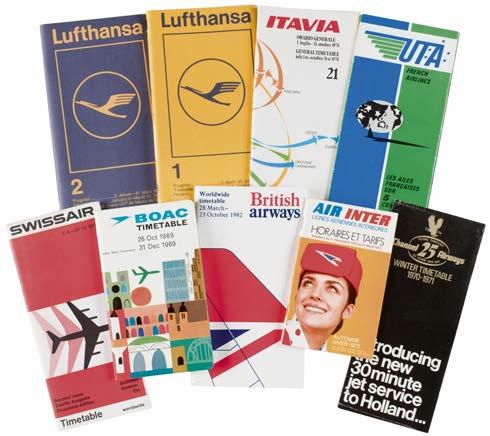
4 Airline timetables. A good collection of aircraft timetables (approximately 235), circa 1965-2002, including Lufthansa, Qantas, British Caledonian, Finnair, South African Airways, BOAC, British Airways, and many more, a list can be provided on request (approx. 235)
£200 - £300
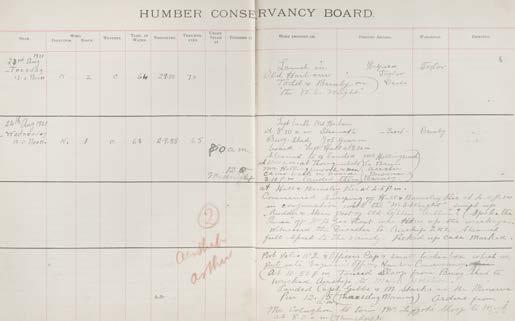
5* Airship Disaster - S.L. Spurn Logbook. Humber Conservancy Board logbook, containing a first-hand reference to the R.38/ZR2 air disaster, from the S.L.Spurn, 1920-22, commencing 23rd Aug 1920 to 4th April 1922, containing neat handwritten details about their work and weather, including 24th August 1921 ‘Witnessed the disaster to airship ZR2 steamed full speed to the vicinity. Picked up case marked Port Folio No. 2 & officers cap & small broken box which we put into engineer’s office’, contemporary quarter red sheep over blue cloth boards, gilt title to upper board, marked, joints cracked, small 4to, together with three later photographs of the Cambois
On the 24th August 1921, whilst training a group of United States Navy personnel to pilot the R.38 airship, ZR-2, the aircraft broke in two, crashing over Hull's Victoria Pier in front of thousands of horrified onlookers and the crew of S.L. Spurn. A final test of extreme movement to the airship's steering, to simulate the stresses of bad weather, caused the light structure to break apart, and 44 of the 49 crew were killed.
Ten months earlier, in October 1920, the U.S. government had purchased the airship R38 (named ZR-2) from the British before it was completed. The U.S. Navy Rigid Airship Detachment was established in Howden to teach the practical and theoretical knowledge needed to fly and maintain the airship. It consisted entirely of U.S. volunteers, intending to fly the airship over the Atlantic, back to the United States of America.
The crew of the S.L. Spurn acted on behalf of the Humber Conservancy Board, the authority responsible for managing, surveying and maintaining the River Humber estuary. The S.L. Spurn was sold in 1931 and renamed the Cambois.
(1)
£200 - £300
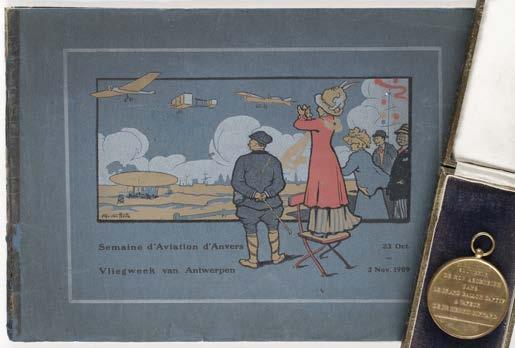
6* Aviation Ephemera. Semaine d’Aviation d’Anvers (Vliegweek van Antwerpen), 23 Oct - 2 Nov. 1909. 32 pp., numerous black and white photolithographic images throughout, text in French and Dutch, a rare original programme for the event, original blue wrappers, upper wrapper (detached) with pochoir artwork after Alfred van Nesteg, with small loss to lower corner, oblong 4to, together with a Panorama de Paris 1878 gilt metal medallion, embossed on the obverse with PANORAMA DE PARIS 1878, with a representation of Henry Gifford’s balloon rising over Paris, the reverse inscribed SOUVENIR DE MON ASCENSION DANS LE GRAND BALLON CAPTF VA VAPEUR DE MR HENRY GIFFARD, 6.2 cm diameter, together with Blériot Aeronautique - Appareils Blériot, Appareils Spad, Ecole de Pilotage, circa 1920, original company brochure in three parts, a double-page spread listing the record-breaking achievements of the Blériot and Spad machines, text in French, with black and white portraits of eleven pilots, loosely contained in three embossed paper folders, with original purple and gilt wrappers, (some toning to extremities), thin 4to, and three other aviation brochures with text in French comprising: Deperdussin, 1913; Um Héros de France, Guynemer, circa 1917; and L’année aéronautique des moteurs...Hispano-Suiza, 1924, 8vo/4to (7)
£200 - £300
7* Aviation negatives. A collection of negatives and slides, circa 1960-90, approximately 6000, black and white and colour, some mounted in sleeves and envelopes, plus 6 x 4 and 5 x 7 colour prints, many taken in Europe, the Middle East (Oman and Sharjah Abu Dhabi), the Americas and the Far East.
(approx. 6000)
£300 - £500
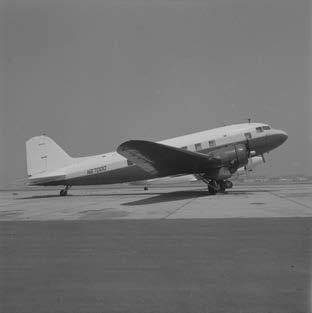
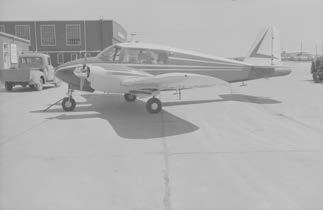
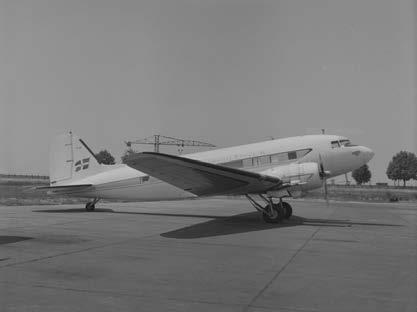
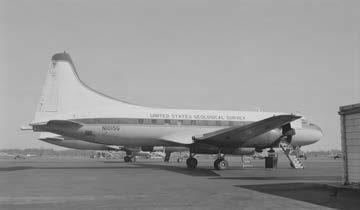
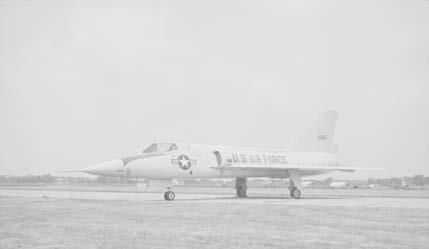
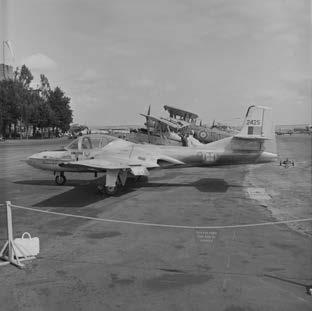
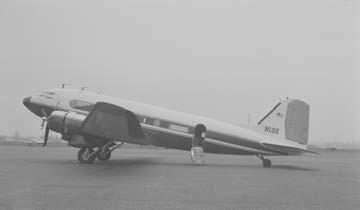
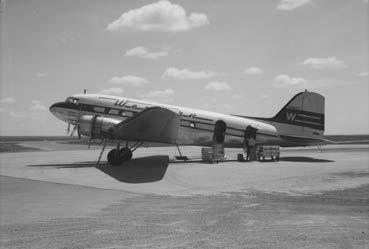
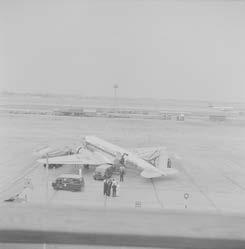
8* Aviation negatives. An extensive collection of black and white negatives, circa 1934-2002, approximately 24,500 slides, in captioned packets and contained in 25 wooden boxes
Provenance: Eric Wagner, who was well known in the aviation photography world and started photographing aircraft in the early 1950s, and was also an avid collector.
A spreadsheet can be supplied on request, which lists every negative, aircraft registration number, type, location, date and source. (25 wooden boxes)
£2,000 - £3,000
9* Aviation photographs. A collection of approx. 50 black and white and colour from the 1950s onwards, comprising Tornado GR1, Dominie, The King Air, Avenger, Sea King, The Griffin, KC-10, RSAF Typhoon, RAF Typhoon, ZK300-ZK339, Austria Typhoon, Sea Harrier, The Victor, Tristar, Chinook, GAF Tornado, Hawk T2, mostly loose
Provenance: Arthur Perks collection.
(approx. 4000 +)
£500 - £800
10* Aviation photographs. A collection of approx. 60 black and white and colour from 1950s onwards, of aircraft featuring RAF C130J Hercules; GAF EF2000; RAF C-130K Hercules; Nimrod / Sentry / Sentinel; Prefect / Texan / Phenom / Jupiter /Juno; RAF Squirrel AW139 A-109E; Jaguar; F15E/48FW; Sea King; Sea Vixen; USAAF C-17A; Voyager; Tristar VC10; Pioneer Pembroke/Sea Prince; Merlin; Bell 212, vairous sizes including 30 x 21.5 cm, 14 x 8.5 cm, mostly loose in folders
Provenance: Arthur Perks collection. (5000 +) £500 - £800
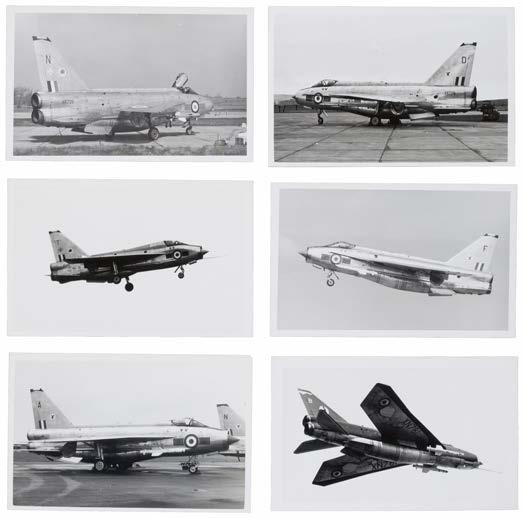
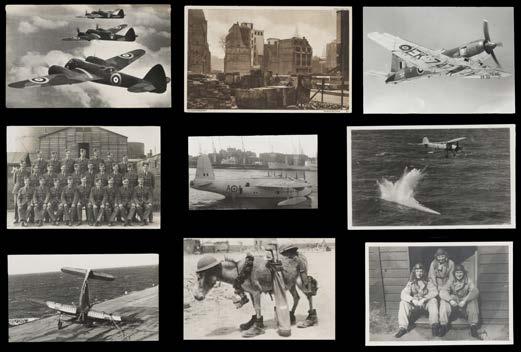
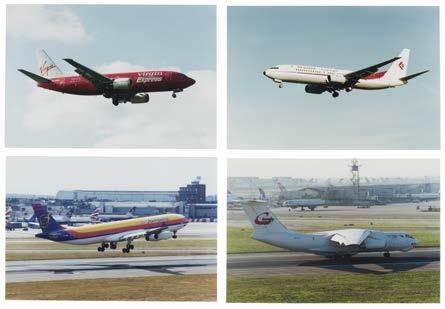
11* Aviation Photographs & Postcards. A collection of approximately 680 WWII and Postwar period aviation postcards and photographs, approximately 190 photographic postcards and approximately 490 photographs including: Firefly A.S.5, Handley Page ‘Hampden’, Grumman ‘Wildcat’, Brewster ‘Buffalo’, Vickers ‘Wellingtons’ (bombers), Supermarine Spitfire, Dan-Air London, Nigerian Airlines, BN 2A-7 Islander, portraits of servicemen, etc., various sizes, all contained in sectioned clear plastic leaves, mostly housed in two ring binders (a carton)
£200 - £300
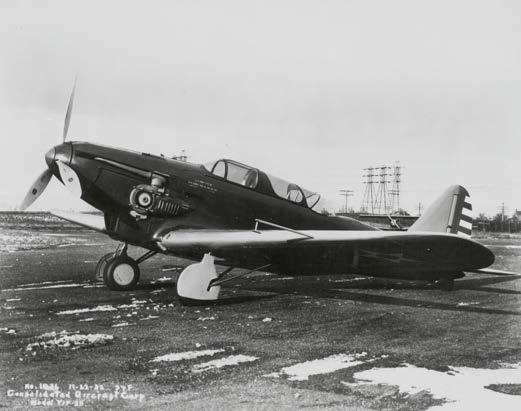
12* Aviation photographs. An extensive collection of manufacturers, press and service photographs (several thousand), mostly 10 x 8 or 8 x 6 inches, with a large quantity of colour photographs (similar size) and various smaller photographs and negatives, mostly military aircraft from inter-war biplanes to modern era (4 cartons)
£1,000 - £1,500
13* Aviation Photographs. Approximately 5000 6 x 4 colour photographs, showing a variety of civil airliners, taken from 1995 onwards at Heathrow, Gatwick, Stansted, Prestwick, Fuerteventura, LAX, Orlando, Atlanta, Kissimmee, Las Vegas, Greenland, Farnborough, etc., loosely contained in 5 cardboard shoeboxes (a carton)
£200 - £300
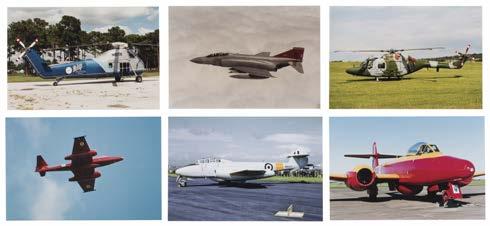
14* Aviation Photographs. Approximately 5100 6 x 4 colour photographs, showing a variety of British Military aircraft and Helicopters, taken from 1993 onwards, at various U.K. air displays and other locations, RNAS Yeovilton, Boscombe Down, Shawbury, Marham, Leeming, Kleine Brogel TM, Lossiemouth, Middle Wallop, etc., showing various aircraft including: Harrier, Sea Harrier, Buccaneer, Vampire, Venom, Sea Vixen, F-104 Starfighters, etc., loosely contained in 5 cardboard shoeboxes (a carton)
£200 - £300
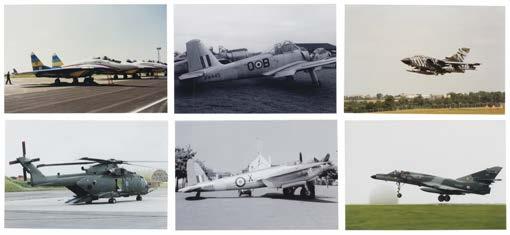
15* Aviation Photographs. Approximately 5200 6 x 4 mainly colour photographs, showing a variety of Foreign Military aircraft, and civil aircraft, taken from the 1990s and onwards at Mojave, NAS Point Mugu, NAS Key West, NAS Cecil Field, Scampton, Marham, RIAT Fairford, Shawbury, Exeter, Clearwater, Orlando, Edwards, etc., showing various aircraft including: Tornados, Drakens, F-16s, F/A-18s, Russian Knights, Mirage IV, Ansons, Javelins, Mosquitos, Tiger Moth, Chipmunk, Auster, Lynx, etc., loosely contained in 8 cardboard shoeboxes (2 cartons)
£200 - £300
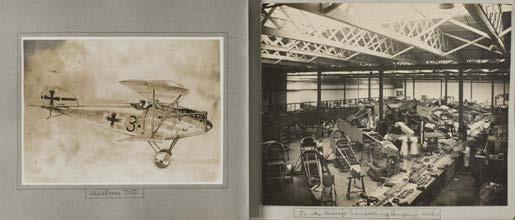
16* Aviation photographs. A fine album of black and white photographs, circa 1920, compiled by Sir Arthur Geoffrey Annesley Harmsworth, the inside cover inscribed ‘collection of photographs and drawings of aircraft. Collected by and belonging to AGA Harmsworth. The majority of the photographs were given to me by Mr Harry Harper, drawings by Ronald Malcolm, photographed by the “Times”, containing approximately 50 photographs, mostly De Havilland, many captioned for example ‘Captain Gathergood and Mr Gordon Selfridge in a D.H.9, 15 x 20 cm, ‘Gosport Flying Boat’, 22 x 27 cm, ‘In the aircraft manufacturing company’s works’, 21.5 x 26.5 cm, Blackburn “Kangaroo”, 11 x 16 cm, tipped and pasted in a cloth photograph album, 25 x 30.5 cm
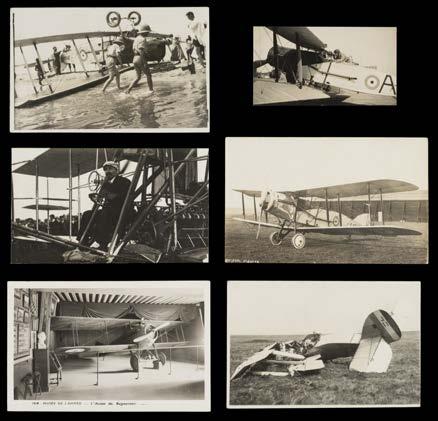
Sir Arthur Geoffrey Annesley Harmsworth, 3rd Bt (1904-1980) was educated at Harrow School. He served in the Royal Air Force Volunteer Reserve during WWII, reaching the rank of Squadron Leader. Post-war, he was a director of the Daily Mail and General Trust. He was chairman of Harmsworth Press West Country Publications and Western Morning News. Also appointed Fellow, Society of Antiquaries. (1)
£200 - £300
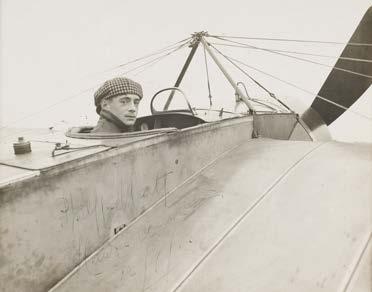
17* Aviation Photography. Aviation Pioneers Photographs depicting early aviators and aeroplanes, circa 1911-30, including approximately 58 photographs, including three signed by aviators: Louis Noël, Hendon 11th Sept 1913; Louis Turner, Hendon September 18th-1913; and Philippe Marty, dated 12/9/13 with F.N. Birkett embossed stamp to lower right, all in card mounts, other subjects include a large image of Jules Nardini sitting in his aircraft (in card mount, with F.N. Birkett embossed stamp to lower right), a Breguet U.1 with pilot and two passengers (framed and glazed, 42 x 52 cm), Avro Siddeley Puma, Hannoveraner, Halberstadt, Fairey Fulmar, Albatross 160 HP Mercedes, James H. Doolittle with plane, R.A.F. Strike at Malaya Bandits, Boulton Paul P64 mail carrier, De Havilland DH.15 Gazelle, Airco DH. 9, De Havilland DH. 6, Airco DH. 2, etc., majority of photographs with various stamps to verso including: Aeroplane, The Smithsonian Institution, Flight, Boulton & Paul Ltd, The Associated Press Ltd, M.I.T. Historical Collections Boston Herald Traveler Photo, London Photo Centre: Royal Air Force, James Brymer Streatham, Temple Press Ltd, F.N. Birkett, etc., various sizes, largest 28 x 22 cm (a folder) £200 - £300
18* Aviation Postcards & Photographs. A collection of approximately 700 WWI to Interwar period aviation postcards and photographs, approximately 500 photographic postcards and approximately 200 photographs including: a few Pioneer postcards, Bleriot Air Union Liner, ZI Aufstieg, Westland ‘Weasel’, Aeroplane du Marquis d’Ecquevilly - Multiplan, Hawker ‘Hurricane’, de Havilland, Zepplin Wreck, Sopwith 80 H.P, Puss Moth, B.E. Type ‘205’ 70 H.P Renault, Vickers ‘Victoria’ 24-seater troop carrier, some airplane crashes and portraits of military aviators and navigators, etc., various sizes, all contained in sectioned clear plastic leaves, mostly housed in three ring files (a carton)
£200 - £300
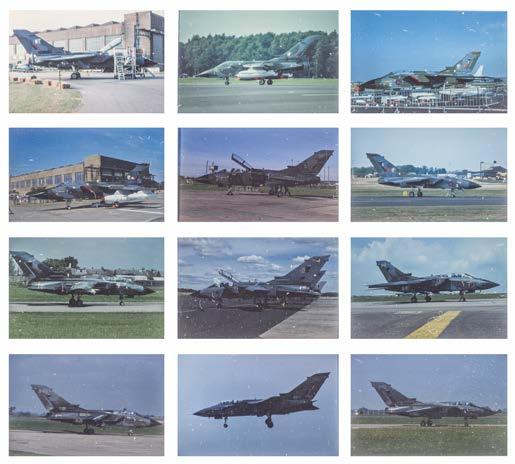
19* Aviation slides. A large collection of approx. 15,000 35 mm aircraft slides, many Kodachrome, contained in approx. 50 file boxes, including Nimrod Sentry Sentinol, The F-4 Phantom RN / RAF, C-5 Galaxy, C17 Globemaster, The KC-10 Extender, GAF Tornado, The Czech Air Force and Polish Air Force, The BAe Hawk, The RAF Tornado F3, Harrier GR-1/3, Royal Netherlands Air Force, Sepecat Jaguar, together with negatives
Provenance: Arthur Perks collection.
(approx. 15,000)
£1,000 - £1,500
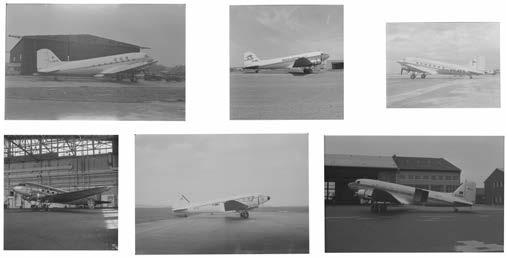
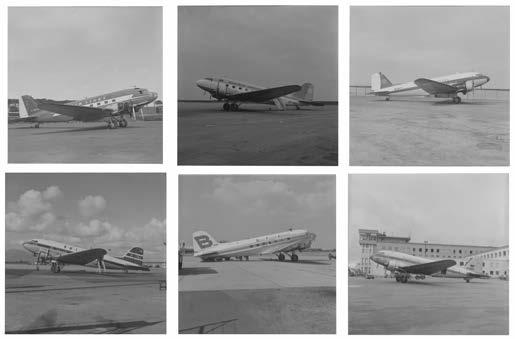
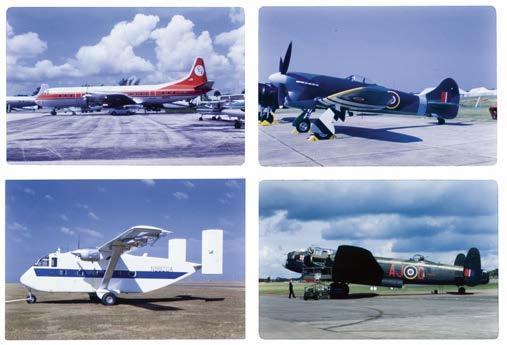
20 Aviation slides. A large collection of unsorted aviation slides and negatives, circa 1950-1990s, including approximately 10,000+ military and civil aviation 35 mm slides, contained in small slide boxes, approx. 40 slides per box; vast and viewing is strongly recommended
Provenance: Eric Wagner, who was well known in the aviation photography world and started photographing aircraft in the early 1950s, and was also an avid collector.
(5 cartons)
£700 - £1,000
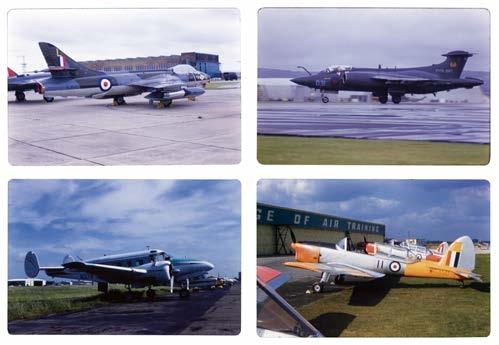
21 Aviation slides. Civil Aircraft 35mm slides, 7,000 + civil aircraft slides, circa 1960s to modern day, covering a vast range of airliners and airlines, from the smallest of commuter aircraft to the Boeing 747 (4 cartons)
£200 - £300
22 Aviation slides. Light Aircraft/Biz-Jets/Helicopter 35 mm slides, a collection of over 4,500 slides from the 1960s onwards (3 cartons)
£200 - £300
23 Aviation slides. Military Aircraft 35 mm slides, a vast collection of over 12,200 Military aircraft slides from 1960s onwards, the slides are from the UK, USA and other locations, including fighter, warbirds, helicopters, bombers and transport aircraft (7 cartons)
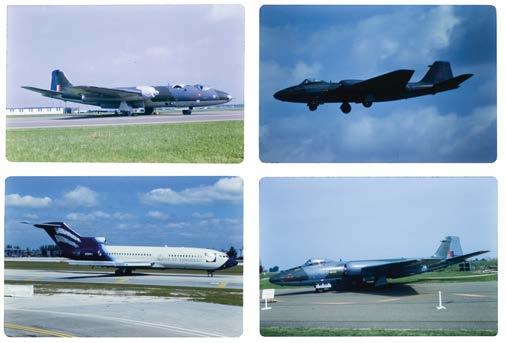
24* Aviation slides. Military and civil aviation 35 mm slides, circa 1959-2003, approximately 21,500, including DC-3 Dakotas, contained in 32 plastic boxes
£400 - £600
Provenance: Eric Wagner, who was well known in the aviation photography world and started photographing aircraft in the early 1950s, and was also an avid collector.
A comprehensive spreadsheet can be supplied on request.
(32 plastic boxes)
£1,000 - £1,500
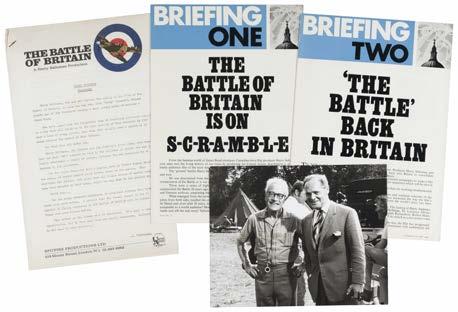
25* Battle of Britain Film Collection. A small collection of photographs, letters and in-house production magazines from the film The Battle of Britain, 1968, comprising two copies of the rare Briefing in-house production magazine (issues 1 and 2), cinema issued booklet, 17 black and white press photographs, showing various actors and scenes including Douglas Bader with Freddie Young, Heinkel bombers and crews, two spitfires ready to take off, Robert Shaw, Hein Riess, etc., each with typed title on paper and The Battle of Britain ink stamp to verso, 6 letters addressed to Ronald R. Russell on The Battle of Britain headed paper, 5 documents typed on ‘The Battle of Britain A Harry Saltzman Production’ headed paper, comprising Harry Saltzman biography, Ben Fisz biography, Guy Hamilton biography, Revised Production Notes, and Star Line-up for ‘The Battle of Britain’, 7 loose pages of notes and sketches in blue ink showing various uniforms, one sheet with ‘Greenwood & Ball German military figures’, and a ticket for viewing the film on Saturday, June 27th, 1970 at Dominion Theatre, all housed in a buff paper folder with The Battle of Britain printed label to upper, worn with loss, 36 x 25.5 cm (a folder)
£200 - £300
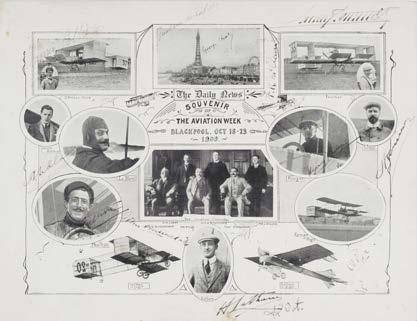
26* Blackpool Aviation Week. The Daily News, Souvenir of The Aviation Week, Blackpool, Oct 18-23, signed, 1909, large monochrome photolithograph postcard, showing images of 8 pilots, the aviation committee and early aeroplanes in flight and on the ground, twelve black ink signatures comprising: Hubert Latham (dated 22 Oct), Louis Paulhan, A. Le Blanc, F. K. McClean, Henri Fournier, Henry Rougier, A. V. Roe, H Farman, Maurice Colliex, Georgs Chavez, Gustave de la frele (?), and John Phulwellall (?), some light soiling in places, verso with printed stamp and address lines (unused), 24.3 x 31.7 cm Scarce, unable to find another copy.
Blackpool Aviation Week was the first event officially recognised by the Royal Aero Club.
(1)
£200 - £400
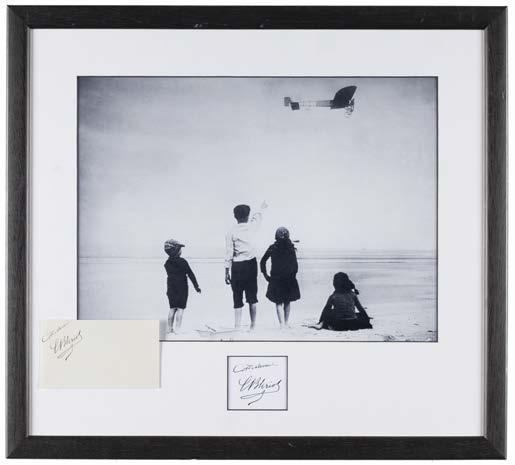
27* Bleriot (Louis, 1872-1936). A cut signature signed in ink of this famous aviator, 6.5 x 11 cm, together with a modern photograph of Bleriot in flight with the facsimile signature below, framed and glazed, frame size 43 x 47.5 cm (2)
£150 - £200
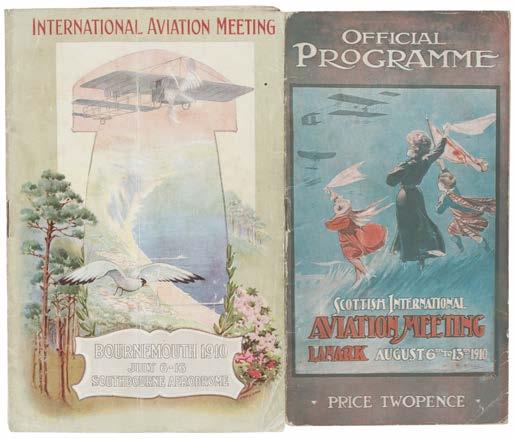
28* Bournemouth International Aviation Meeting 1910. International Aviation Meeting, Bournemouth, Southbourne Aerodrome, July 6th to 16th, 1910, 16 pages, original colour pictorial wrappers, lower right corner creased, vertical crease to front wrapper and some subsequent pages, stapled as issued, slim 8vo, together with the Official Programme for the Scottish International Aviation Meeting, Lanark, August 6th - 13th, 1910, 60 pages, some light marks to a few pages, original colour pictorial wrappers, some creasing, stapled as issued, slim 8vo, and four postcards showing two designs, all with same image of Hon. C. S. Roll’s, one celebrating Conquest of the Channel, the other bordered with black and titled The Late Hon. C. S. Rolls., 89 x 137 mm (6)
£150 - £200
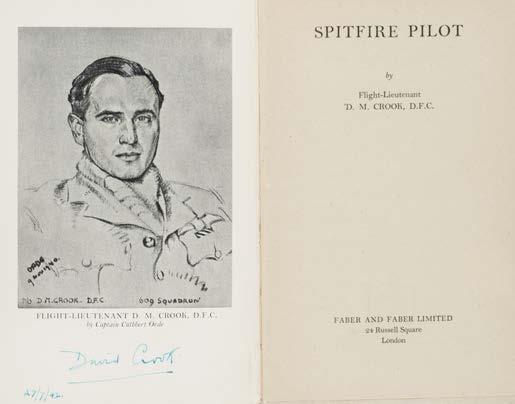
32* Crook (Flight Lieutenant David Moore). Spitfire Pilot, a superb signed publication printed by Faber and Faber Limited, London 1942, 104 pages, black and white illustrations including a printed copy portrait by Captain Cuthbert Orde, signed in pen ‘David Crook 27/7/42’ , ownership inscription, original blue cloth, general wear and loss of spine of the dust jacket, 8vo Flight Lieutenant David Moore Crook, DFC (1914-1944) was born in Huddersfield. He was educated at Cambridge University and joined the Royal Air Force on the outbreak of WWII. He served with 609 Squadron during the Battle of Britain, destroying a Ju87 on 9 July 1940, followed by JG53 and Me109 on 13 August. On 15 August, he mistakenly shot down a Blenheim fighter, although none of the crew were severely injured. He claimed two Me 109s on 30 September.
£100 - £150
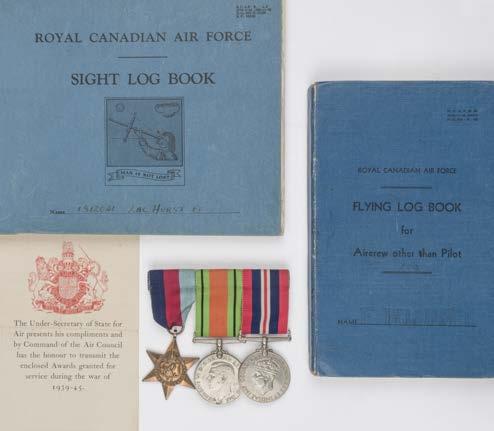
29* Canadian Air Force. A WWII Canadian Air Force logbook kept by Sergeant F.E. Hurst, commencing 13 November 1944, last entry 27 July 1945, type of aircarft served in Anson, Mitchel B25, Liberator, total flying time 133hrs25 mins (day), 68hrs25mins (night), together with Royal Canadian Air Force Sight Logbook kept by the recipient, plus WWII medals attributed to Hurst, comprising 19391945 Star, Defence and War Medals, good very fine, swing mounted as worn, plus transmission slip F.E. Hurst was a British airman who trained in Canada (for operations in Europe). He enlisted in 1941 and was allocated to join RAF Station Ouston for training ground crew. He volunteered for flying duties in 1943 and trained on various aircraft in Ontario, Canada. (5)
DFC: London Gazette 1 November 1940 ‘For leading his section with coolness and judgment against the enemy of many occasions. He has destroyed six of their aircraft besides damaging several more.’
Crook was killed during a high-level photographic sortie on 18 December 1944. He was seen to dive into the sea near Aberdeen and officially listed as missing in action.
(1)
£150 - £200
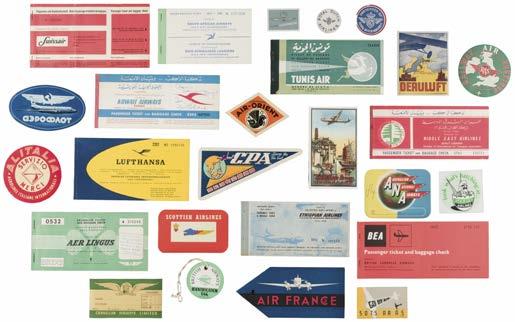
30 Civil Aviation. A collection of world airline passenger tickets and luggage labels, circa 1930s (approx. 300), including Aden Airways Ltd, Air Ceylon Limited, Air France, Air-India, BEA, British Caledonian Airways, East African Airways Corporation, Lufthansa, Malayan Airways, Pan American, South African Airways, loosely contained in four ring folders (approx. 30)
£300 - £500
Lot 33
31* Civil Aviation. A large collection of printed ephemera, circa 1950s, including Air Union luggage labels, BOAC timetables, BOAC brochures, BEA timetables, BOAC first day covers, Handley Page booklet, Guernsey Airways luggage label and other items, including a plastic box containing Concorde, and other airline promotional literature, in-flight goods, including folding fans etc (7 albums + carton)
£300 - £500
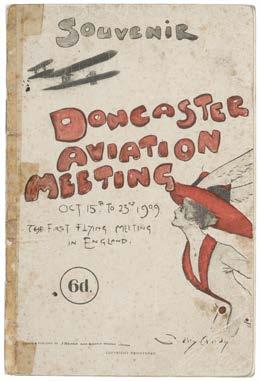
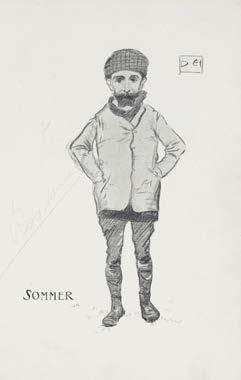
33* Doncaster Aviation Meeting 1909. Souvenir programme for Doncaster Aviation Meeting, Oct. 15th to 23rd 1909, the First Flying Meeting in England, printed and published by J. Weiner, signed, [1909], 6 vignette photographic reproductions of aircraft and 8 caricatures after Dudley Hardy, the first 6 signed in pencil by the respective aviators, S.F. Cody, Leon Delagrange, Roger Sommer, Hubert Le Blon, Louis Schreck (dated 23 October 1909) and Walter Windham, three further signatures: Leon Molon, Count Van De Burgh, and another possibly G Saunier, and a brown ink presentation inscription ‘Presented to Joe Cox junr on the occasion of his Christening June 4th 1933. by Grandpa W Cot’, a little dust soiling and minor creasing throughout, stapled as issued, slightly rusted in centrefold, original pictorial printed wrappers in red and black, a little creasing to corners, light overall spotting, spine neatly reinforced with adhesive tape, slim 8vo
The Doncaster Aviation Meeting was technically the first in England (Blackpool Aviation Meeting started on the 18th October). It caused controversy in British aviation circles as the Royal Aero Club had already sanctioned the meeting at Blackpool on similar dates. It went ahead with the support of the Town Council and owner of the Doncaster Race Course who guaranteed £5000 towards expenses. (1)
£300 - £500
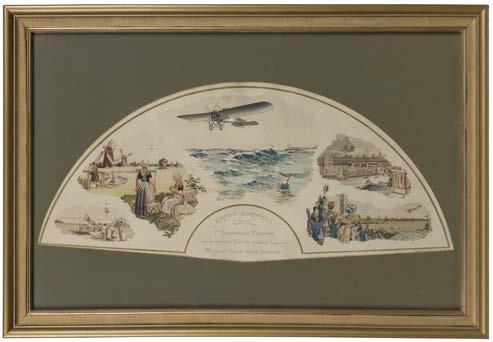
35* Gamy (Marguerite Montaut, 1883-1936). European Circuits, Ir, Beaumont 2e Garros sur monoplan Blériot, moteur Gnome Magneto Bosch, Helice Normale’ published by Mabileau & Co., Paris, colour pochoir print, fan shaped image, 36.5 x 84.5 cm card mount aperture, gilt frame, glazed, frame size 67.5 x 97.5 cm (1)
£100 - £150
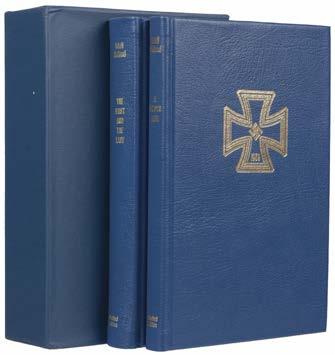
34* Galland (Adolf, 1912-1996). The First and the Last, The German Fighter in World War II, & Adolf Galland, A Pilot's Life in War and Peace, Mesa, Arizona: Champlin Fighter Museum Press, 1986, numerous monochrome illustrations, original blue and gilt cloth in matching slip case, excellent condition, 4to, limited edition 413/1000, both volumes signed by Adolf Galland (1)
£100 - £150
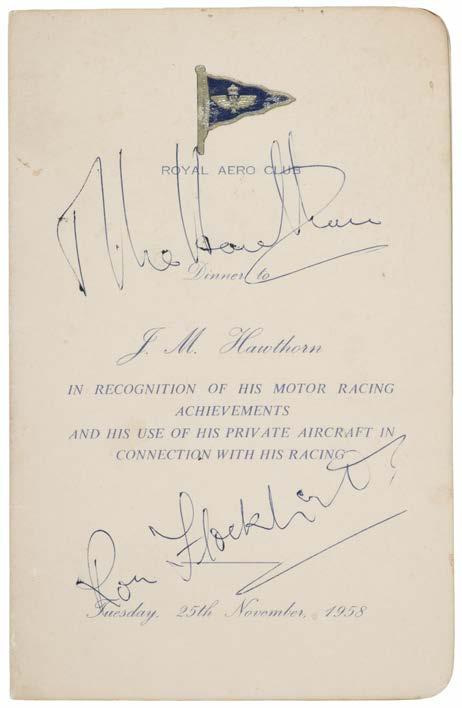
36* Hawthorn (Mike, 1929-1959) & Flockhart (Ron, 1923-1962). Royal Aero Club, Dinner to J.M. Hawthorn in recognition of his motor racing achievements and his use of his private aircraft in connection with his racing, Tuesday 25th November, 1958, printed dinner menu, 4 pp., signed in blue ink by Mike Hawthorn and Ron Flockhart to first page, 177 x 113 mm, together with Dinner to the Survivors of the First Hundred British Aviators and the Pioneers of British Aviation at the Connaught Rooms London, Monday July 12th 1920, a printed dinner menu, 4 pp., showing the menu, toasts and hosts, 165 x 126 mm, and The Royal Aero Club, Dinner to celebrate the British Victory of the Supermaring-Napier Flying Boat in the Jacques Schneider International Seaplane Race, and the holding of the Circuit of Britain Air Race for the Cup presented by H.M. The King, Savoy Hotel, 26th Oct 1922, 4 pp., 159 x 107 mm
A rare menu signed by both Mike Hawthorn and Ron Flockhart. Possibly one of the last things signed by Hawthorn before his death on the 22nd January 1959, when he was killed in a car accident on the A3 Guildford bypass while driving his comprehensively modified 1958 Jaguar 3.4-litre VDU 881 to London. Flockhart also died prematurely on the 12th April 1962 when the Mustang P51D he was flying crashed while he was preparing to attempt to set a Sydney to London flying record. (3)
£150 - £200
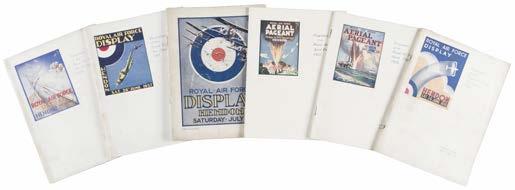
37* Hendon Aviation Programmes. A group of 10 printed programmes for RAF Displays at Hendon, 1921, 1924, 1926 and 1928-37, including programmes for 2nd July, 1921, 28th June 1924, 3rd July 1926, 30th June 1928, 13th July 1929, 28th June 1930, 27th June 1931, 25th June 1932, 24th June 1933, 30th June 1934, 29th June 1935, 27th June 1936, 26th June 1937, all stapled as issued (four with adhesive tape support to spine), with original printed wrappers, all a little finger soiled and marked, small 4to, plus Royal Review R.A.F. 1935, official programme, with original printed wrappers, stapled as issued, 64 pages (14)
£150 - £200
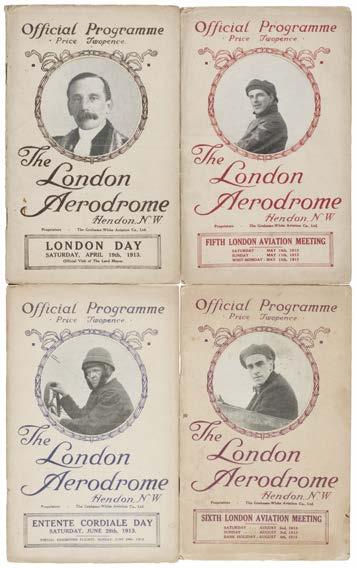
38* Hendon Aviation Programmes. Official Programmes for The London Aerodrome, Hendon, London Day, Saturday, April 19th, 1913, Fifth London Aviation Meeting, May 10th-12th 1913, Entente Cordiale Day, Saturday, June 28th, 1913, Sixth London Aviation Meeting, August 2nd-4th, 1913, Second August Meeting, Saturday, August 30th, 1913, The Aerial Derby, Saturday, September 20th, 1913, “Morane” Monoplane Speed Handicap, Thursday, October 23rd 1913 & Second October Meeting, Saturday, October 25th, 1913, Ladies’ Day, Saturday, July 4th, 1914, Flying at Hendon, official souvenir of the London Aerodrome, first edition, 1913, and Grand Illuminated Night Flying Thursday, Sept 26th [1912], 10 original printed programmes, monochrome illustrations and advertisements to each, all original printed wrappers, Grand Illuminated Night Flying programme with ‘Speciment Programme’ in red ink to final page, stapled as issued, slim 8vo (10) £150 - £200
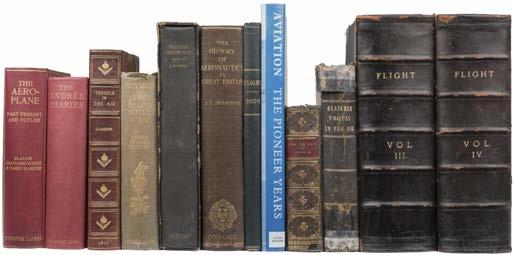
39 Hodgson (J.E.). The History of Aeronautics in Great Britain, from the earliest times to the latter half of the Nineteenth century, Oxford University Press, 1924, colour and black & white plates, top edge gilt, original cloth gilt, rubbed, rebacked retaining original spine, small folio, (one of 1,000 copies), together with Bruce (J.M.). British Aeroplanes 1914-18, 1st edition, London: Putnam, 1957, numerous monochrome illustrations, original black cloth in slipcase, slipcase slightly rubbed, large 4to, plus Grahame-White (Claude). The Aeroplane Past, Present, and Future, London: T. Werner Laurie, 1911, numerous black and white plates, original red gilt cloth, 4to, and 9 aviation related books including: Flight No. 192, August 31 1912 - No.222, March 29 1913 (bound in one volume, one leaf torn with loss) with Flight volume III and IV; How to Fly by Richard Ferris, 1910; Fifty Years of Travel by Land Water & Air by Frank Hedges Butler (presentation inscription by author to front free endpaper), 1920; The Andrée Diaries translated by Edward Adams-Ray, 1931; Travels in the Air by James Glaisher, Camille Flammarion, W. de Fonvielle and Gaston Tissandier, 1st edition and 2nd edition, 1871; and Aviation The Pioneer Years by Ben Mackworth-Praed, 1990 (12)
£150 - £200
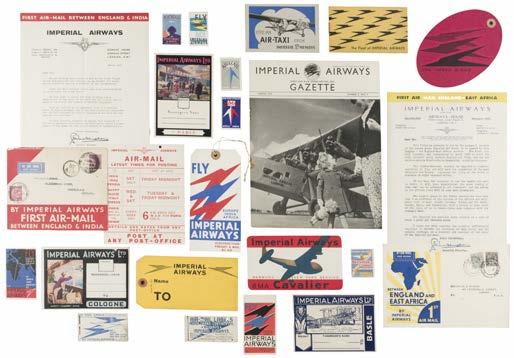
40* Imperial Airways. A collection of Imperial Airways 1920/30s letters, airmail, menus, luggage labels, tickets, postcards and promotional literature (122 items), including Silver Wing Luncheon Menu 1931, Imperial Airways Wine List, Dinner by the Chairman & Directors of Imperial Airways to the Delegates on the International Commission for Air Navigation 6 April 1925, Imperial Airways Gazette, February 1930, May 1930, December 1932 (and several more), airmail letters and envelopes from India, East Africa, Australian and other locations, loosely contained in three ring folders (122)
£300 - £500
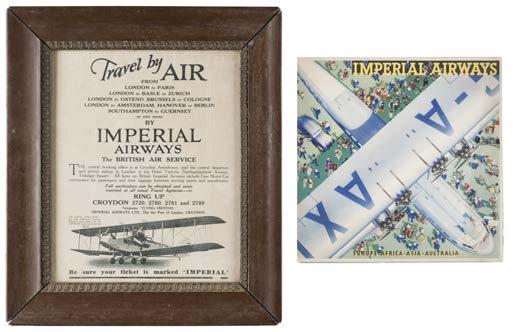
43* Imperial Airways. The Greatest Air Service in the World, mid 1930s, full colour brochure/poster with artwork by Rowland Hilder, featuring cut-away details of Hercules and Hannibal, Atalanta and Scipio, condition generally very good, 74 x 49cm, together with an Imperial Airways black and white advertisement, circa 1925 ‘Travel by Air from Paris to London, London to Basle or Zurich ... By Imperial Airways The British Air Service’ 29 x 24 cm, period mahogany and gilt gesso frame, glazed, frame size 37.5 x 32.5 cm
(2)
£300 - £500
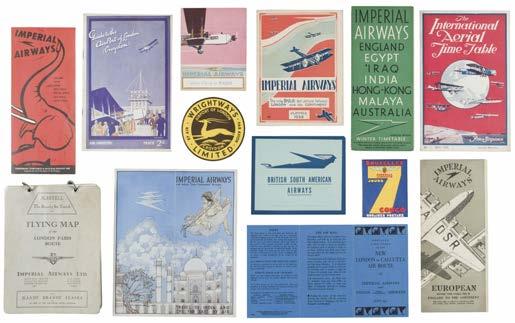
41* Imperial Airways. A collection of Imperial Airways 1920s/30s timetables (80 items), including European Timetable Winter 193132, Imperial Airways Egypt, Iraq, India, Kenya, Africa Winter 1931-32, European Timetable Winter Service 1932-3, Imperial Airways and Indian Trans-Continental Airways 1934, Guide to the Airport of London Croydon, 1928, The Silver Wing, International Aerial Timetable, May 1926, Summer 1927 Second Edition, Flying Map of the London Paris Route and other items, loosely contained in three soft ring folders (80)
£200 - £300
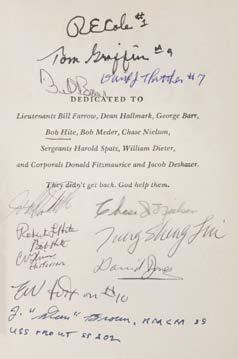
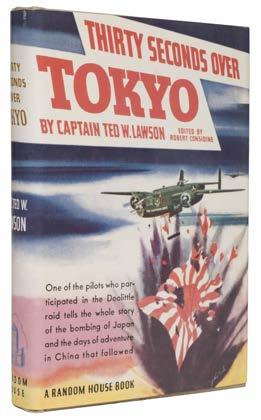
44* Lawson (Captain Ted. W.). Thirty Seconds Over Tokyo, 1st edition, New York, Random House, 1943, monochrome illustrations after photographs, original cloth in dust wrapper, signed by 13 veteran “Doolittle Raiders” including Tom Griffin, David J. Thatcher and J.R. Brown, 8vo (1)
£200 - £300
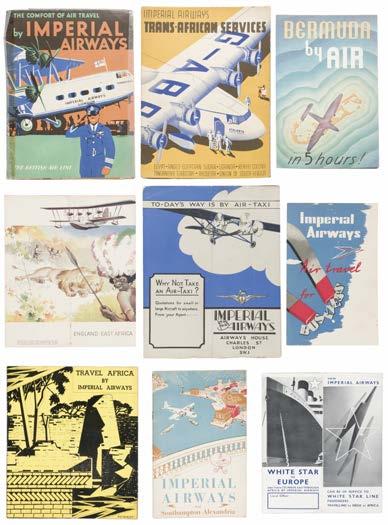
42* Imperial Airways. A collection of Imperial Airways 1920/30s timetables, adverts, booklets and publicity leaflets (66 items), including Facts, Flying Over the Empire An Exhibition of Photographs, Summer Services 1930 timetable, The Grand National 25 March 1938 Fly There and Back With Imperial Airways advertising poster, 23 x 17 cm, Have Tea in the Air Over London flyer dated 1929, 20.5 x 13 cm, England - East Africa brochure, The New Road East Imperial Airways booklet, Imperial Airways Air Freight Rates 1931 timetable, loosely contained in three soft ring folders (66)
£200 - £300
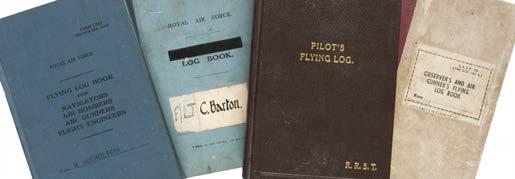
45* Log Books. Royal Air Force, Observer’s and Air Gunner’s Flying Log Books, July 1923-6 Jan 1954, 3 log books comprising: Flight Lieutenant C. Barton, 18 p., detailing flights from July 1923 to 20 Nov 1940, from Britain, Singapore, India etc., including a fly past on the 5th Feb 1937 for the Governor of Singapore, quarter blue cloth over boards, handwritten label to upper cover; P.A.O. Leadbitter S., 23 p., detailing results of courses, bombing raids and flights from 12th January 1945 - 5th August 1950, from Pietersburg, Cairo West, red quarter cloth over boards with printed label to upper; and Ronald Nicholson, 11 p., detailing flying hours from 22nd May 1953 to 6th Jan 1953, comments end with ‘crash after take-off’, top edge with R Nicholson in blue ink, blue cloth boards, R Nicholson in manuscript to upper board, all 8vo, and Pilot’s Flying Log Book, Wing Commander Robert Stanford Tuck, facsimile published by After the Battle Magazine, hardbound brown cloth publication, limited edition 1632/2500, 21 x 13.5 cm
Ronald Nicholson, a trainee navigating officer and member of an RAF rugby team, was killed on the 6th Jan 1954 when the Valetta aircraft he was travelling in, with his team mates, crashed. He was due to pass out the following month.
(4)
£200 - £300
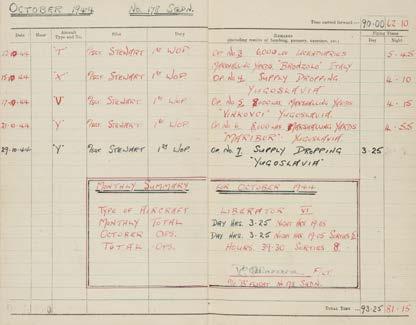
46* Logbook. A WWII RAF logbook kept by Wirless Operator Sergeant Stanley Athorn, 178 Squadron, who was serving as a propaganda leaflet dropper when he was killed in action over Yugoslavia on 5 November 1944, the logbook commencing on 7 October 1943, on 14 July 1944 Athorn was serving with 1675 H.C.U. when he took part in the “Nickel Raid” over Western Crete, the last entry is on 2 November 1944 and the final entry is recorded as ‘death presumed 5.11.44’
Stanley Athorn served as a wireless operator in Wellington X and Liberator V and VI. The logbook records 8 operations, including “Nickel Raid” which was the RAF codename for propaganda leaflet dropping. Athorn had been taking part in an operation dropping parcels to the resistance over Yugoslavia with 178 Squadron when he was killed. His logbook records him as being “death presumed 5.11.44”.
The Liberator piloted by W/O Stewart crashed near Lokovice in Yugoslavia; none of the crew were recovered, and Athorn is commemorated in Belgrade War Cemetery, Serbia. His headstone reads ‘He is only sleeping, we will meet again some day, Dad, Mum, Jack, Cyril and Margaret’ (1) £150 - £200
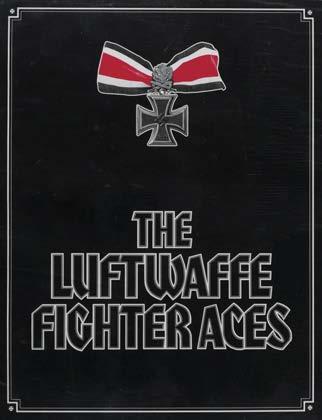
47 Luftwaffe Fighter Aces Collection. An album containing 24 printed profiles with pencil autographs of the pilots, including Adolf Galland, Hermann Buchner and Erich Hartmann, blue cloth gilt album as published by the Military Gallery, Bath, 4to Limited edition of 2000 copies. (1)
£200 - £300
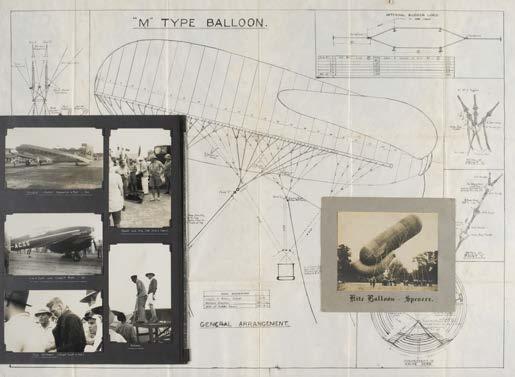
48* MacRobertson Air Race. A small collection of 12 black and white photographs from the London to Melbourne Air Race, October 1934, comprising 12 black and white photographs, each with caption, including Parmentier & Moll’s Douglas DC-2; C.W.A. Scott and Campbell Black’s DH.88 Comet ‘Grosvenor House’; Hewitt and Kay; McGregor (G/Capt. Smith in hat); Melrose; Cathcart Jones & Waller’s DH.88 Comet; Roscoe Turner’s Boeing 247D Warner Bros. Comet; Cathcart Jones, Moll, Hansen, and Scott, corner-mounted on leaves of a photo album, along with 50 other black and white photographs of various people including 106 and 185 Squadron at Thornaby 1939, family holidays, etc., group photographs of Manston R.A.F. swimming championships 1931; Accountant Staff, Thornaby December 1940, No.2 (A.C.) Squadron Manston 1933, etc., all housed in a contemporary photo album (some leaves detached), and two black and white photographs captioned Kite BalloonSpencer, and No.11 K.B. Section Flanders, with a technical drawing for ‘M’ Type Balloon, section of stiff fabric with silver coating and stitching holes to three edges 16 x 25.5 cm, etc (a folder)
£70 - £100
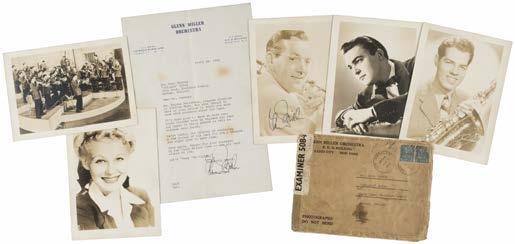
50* Miller (Glen, 1904-1944). A signed letter dated 18 April 1942, typed on Glenn Miller Orchestra headed notepaper, addressed to ‘Mr Jack Burdon “Dolphin” Hotel, Bath Lane, Stockton County Durham, England’, reads ‘Dear Mr Burdon: Mr. Eugene Patterson, program director of station WLWO, was kind enough to show us your letter in which you made some nice comments about our band. It’s sure good to know we have some loyal friends in England and that our music is being played as well as enjoyed over there. We’re taking the liberty of enclosing a few photos of the band for you - thought you might like to have them. Once again, thanks for your interest in the Glenn Miller Crew — and all the best wishes to you. Let’s “Keep ‘Em Flying.”, with 5 sepia photographs of the band, including one of Miller with printed signature, all contained in original envelope addressed to Burdon, with Los Angeles postmark dated 24 April 1942, 14 x 19 cm (1)
£200 - £300
£200 - £300
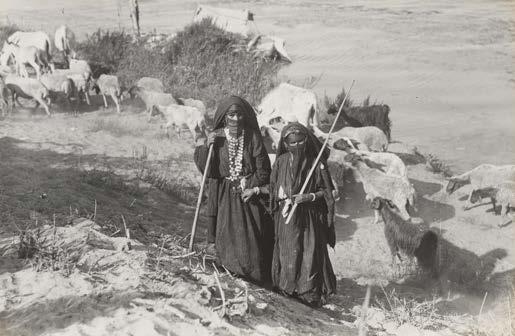
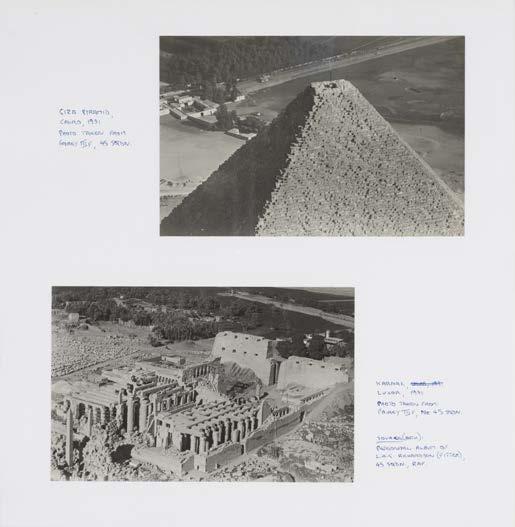
49* Military Photographs. A collection of 81 photographs of Venice, Yemen, British Somaliland, Cairo, Singapore, etc., circa 1930-50, including 35 aerial photographs showing the Rialto Bridge, Venice; San Marco Square, Venice; Mocha, Taizz & Hodeida, Yemen; Aden; Giza Pyramid, and Karnak, in Cairo; Philae Island, Cataract Hotel, Aswan, Egypt; Karachi Docks, etc., and 46 other photographs showing No. 8 Squadron Dance Band; goat herders, The Sheikh Pass and a Border Post in Somaliland; water seller in Cairo; British Military Hospital, Karachi; Chinatown, Singapore; groups of military men at rest, in formal groups and in sports teams, etc., some photographs laid onto white paper with handwritten titles and credits including: Fairey III F of No. 8 Sqn, personal album of L.A.C. Richardson, Fitter, 45 SQDN, R.A.F., , all contained in plastic wallets, housed in a ring binder (a folder)
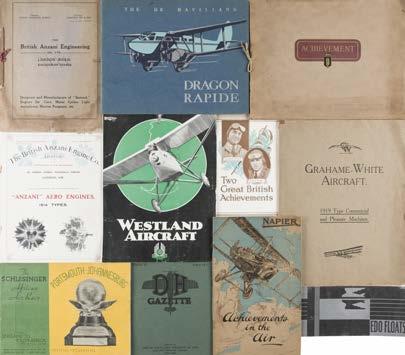
51* Miscellaneous Aviation Ephemera. The De Havilland, Dragon Rapide. An air liner of moderate size, designed with special regard to economy, utility, safety and reliability. A product of the de Havilland Aircraft Co. Ltd., Hatfield Aerodrome, Hertfordshire, England, [1937], 20 pp. with monochrome photolithographs, central leaf loose, original blue wrappers, stapled as issued (a little rusty), oblong 8vo, together with a copy of the D H Gazette, August 1927, plus Napier Achievements in the Air, [1920], 20 page promotional brochure with photolithographic images throughout, original printed wrappers with blue cord stitching as issued, tall slim 8vo, and Achievement, Rolls Royce, 1956, 28 pp., promotional brochure, original tan wrappers with gilt, and cord tie as issued, oblong large 8vo, with 7 other aviation related brochures and flyers, comprising: The Schlesinger African Air Race from England to South Africa, September, 1936; Grahame-White Aircraft, 1919 Type Commercial and Pleasure Machines, 1919; Edo Floats; Two Great British Achievements, circa 1928; Westland Aircraft, 1932; and The British Anzani Engine Co. Ltd, 1914 & 1927 (11)
£150 - £200
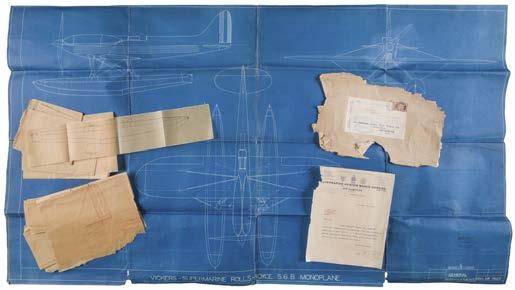
52* Mitchell (R.J., 1895-1937). A Supermarine Aviation Works (Vickers) Limited letter dated 9 November 1932, the typed letter from R.J. Mitchell to N. Weir, Sunneyside, Winchester, Hants, reads ‘Dear Sir, Wing Commander Orlebar has forwarded to me your communication to him of the other day, requesting some plans of the ‘S.6.B.’. I am enclosing herewith a General Arrangement Drawing No. 7907, which I think will give you all the information you require’, signed pp R.J. Mithchell (presumably seceretrial) with initials below, the letter chipped around the left and side, together with blueprint ‘Vickers Supermarine Rolls Royce S.6.B. Monoplane ‘General Assembly Drawing No. 7907, dated 8 November 1932, 134 x 74 cm, three traced drawings of S.B.6., and what is left of the envelope
The letter was written to Nigel Weir, a boy aviation enthusiast at the time who went on to be a Battle of Britain pilot, being awarded the DFC before being reported missing in action and never found.
Weir was born at Elham, Kent in 1919. He was educated at Winchester, where he was Captain of Fencing. He Matriculated in 1937 and was Captain of the Oxford University Fencing Club. He was a member of the University Air Squadron. He was granted a commission as a Pilot Officer on 21 June 1939 and joined No 145 Squadron on 12 May 1940. Weir was credited with two aircraft during the Dunkirk evacuation and scored two more kills during the Battle before 8 August, when he shot down 2 Bf109s and a Ju87. Weir was awarded the D.F.C. on 30 August 1940. “This officer took part in the intensive fighting over Dunkirk last May, and has since played a highly successful part in numerous engagements over the Channel. Pilot Officer Weir has shown an intense desire to engage the enemy and has destroyed at least five enemy aircraft, three of these in the course of a single day.” Weir was reported “Missing in Action” on 7 November 1940 after combat with a BF109 off the Isle of Wight in his Hurricane I (P2770). His plane was damaged and crashed-landed in the sea just southeast of Waddy Point, Ventnor, at approximately 15.00 hours. Weir is commemorated on Panel 6 of the Runnymede Memorial. (1)
£300 - £500
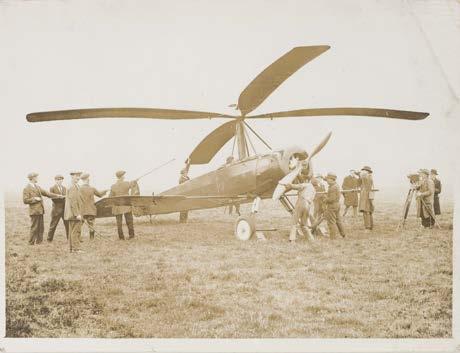
53* Mixed Aviation. A collection of approximately 500 photographs and real photo postcards, circa 1909-1950, approximately 360 photographs of early aviation, and later, majority of aircraft, some interiors of aeroplanes and factories, including: Hughes H-4 Hercules, Avro 534 Baby, Roe I Triplane, Saro A.19 Cloud, Taube monoplane, Voisin biplane, Garo Windhover, etc., some photographs with Beken & Sons embossed logo to lower right, various sizes, together with approximately 140 real photo postcards, some with text in English or French, majority showing aircraft, with a few portraits of aviation pioneers, including: Grande Semaine D’Aviation de la Champagne, August 1909; Miss England II; Doncaster aviation meeting in 1909; Sopwith 100 hp Sea Scout, Captured German Biplanes, H.M. Brock at Hendon, Astra Torrez airship, Bournemouth Aviation Meeting, etc., various sizes, all housed in ten photographic albums, largest 32 x 32 cm (a carton)
£150 - £200
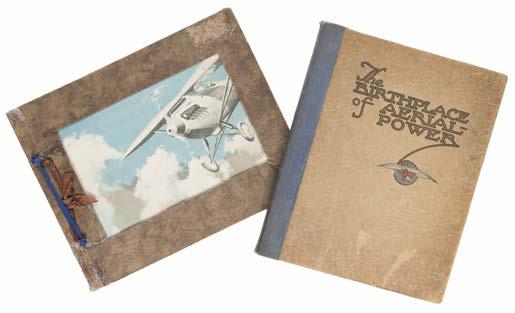
54 Napier Aero Engines. Printed sales catalogue, D. Napier & Son Ltd., 3rd edition, circa 1926, text in English, French and Spanish, 30 sepia photogravure plates of aeroplanes and 3 engines, each with tissue-guard with triple-language captions, original plain wrappers with cloth spine tie, colour pictorial inset to upper wrapper, some small adhesive tape repairs to upper wrapper, oblong folio, together with The Grahame-White Company Limited. Aeronautical Designers, Constructors & Engineers. The Birthplace of Aerial Power, [1919], tipped-in portrait frontispiece of Grahame-White, numerous black and white illustrations from photographs, diagrams and illustrations to text, original linen-backed printed boards, a little rubbed with two small areas of paper abrasion to upper board, slim 4to, plus Lt-Col W. Lockwood Marsh. Aeronautical Prints & Drawings, London: Halton and Truscott Smith, Ltd, 1924, coloured tipped-in plates, black and white illustrations, some spotting to preliminaries, top edge gilt, original blue gilt cloth boards, a little rubbed to extremities, spine darkened, 4to, limited edition, 332/1000, and two further aviation titles in French, comprising: Livre D’Or de la Société Française Hispano-Suiza (with presentation inscription to front free endpaper), 1924, and Les Carburateurs Zenith et Les Moteurs D’Aviation, June 1928, 4to (5)
£150 - £200
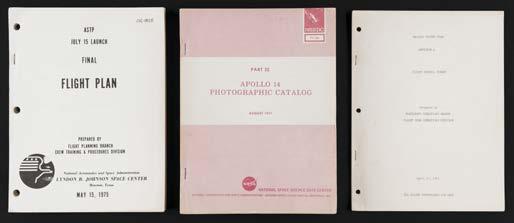
55* National Aeronautics and Space Administration. A small collection of Apollo Flight Plans and photograph catalogues, 196375, comprising: ASTP July 15 Launch Final Flight Plan, May 15 1975; MA-9/20 Flight Plan for Mercury-Atlas 9, April 15 1963; Apollo 14 Photographic Catalog, part III, August 1971; Preliminary Examination of Lunar Samples from Apollo 11; thirty two information sheets and press releases about various topics including unmanned Apollo flights, Apollo 13 to Become World’s 38th Manned Space Flight & Apollo Applications Briefing, (a couple of duplicates); Educational Briefs, NASA Facts leaflet; Press Kit for Apollo 4, 1967; two guidebooks: On the Moon with Apollo 15, and On the Moon with Apollo 16, etc., and other related ephemera (a folder)
£100 - £150
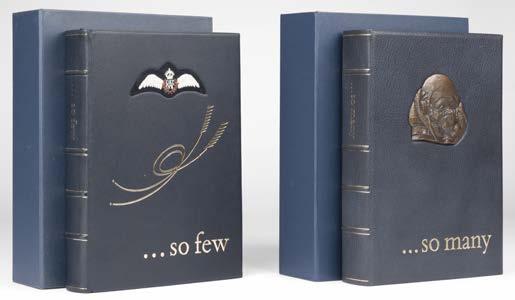
56* Pierce (Michael, et al). ...So Few, A Folio Dedicated to all who Fought and Won the Battle of Britain 10th July - 31st October 1940, The Royal Air Force Benevolent Fund, 1990, numbered 078/401, certificate tipped in and signed in ink by Michael Pierce, John Golley, Roy Asser, Bill Gunston, Brian Masterton and Freddie Hurrell, 25 profile portraits of R.A.F. pilots in silhouette, signed in pencil by each of the 25 Battle of Britain fighter pilots, with photographs and biographies of each, all edges gilt, original blue goatskin (by Hartnoll Bookbinders of Bodmin), upper cover with onlaid embroidered RAF insignia, lettered in gold to upper cover and spine, preserved in original silk-lined solander box, with prospectus loosely inserted, folio, together with So Many, A Folio Dedicated to all who Served with RAF Bomber Command 1939-45, numbered 078/401, presented in the same manner, with original receipt, purchased by Air Vice Marshall David Graeme Muspratt Hills (2)
£800 - £1,200
57* Pilot autographs. A mixed collection of WWII RAF and Luftwaffe signatures, including seven RAF Squadron cards, each with a print signed by the artist Geoff Nutkins, signed by Dennis David (2), Desmond Sheen, Bob Doe, Gerald Stapleton, Ray Holmes and Ron Brown, two Luftwaffe signatures, comprising Ulrich Steinhilper and Hans-Ekkehard Bob, plus other signatures including Adolph Galland, Tom Neal, Bob Stanford Tuck etc, together with WWII aircraft relics attributed to Me109 E-1 shot down by Flight Lieutenant Harry Raymond Harris, 85 Squadron on 29 August 1940, presented on a framed board, 40 x 35 cm, provenance unconfirmed (15)
£100 - £150
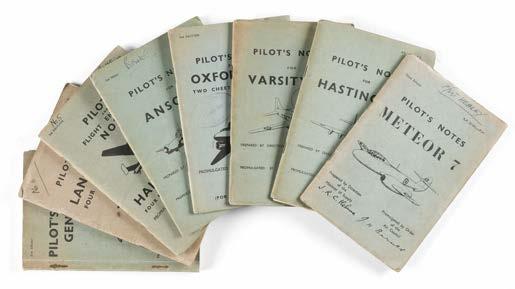
58 Pilot’s Notes. 8 volumes, 1943-54, including Pilot’s Notes General, 2nd edition, 1943, Pilot’s Notes for Lancaster III Four Merlin 28 Engines, 1943, Pilot’s and Flight Engineer’s Notes. Halifax II & V Four Merlin XX or 22 Engines, 1944, Pilot’s Notes for Oxford I & II Two Cheetah X Engines, 1944, Pilot’s Notes for Anson 19, 1949, Pilot’s Notes for Hastings C2, 1951, Pilot’s Notes for Varsity T. I, 1951, Pilot’s Notes for Meteor 7, 1954, illustrations, some folding, a few annotations and ink stamps, occasional light spotting, original wrappers, a few pilot names in ink to upper wrappers, some fading, spotting and staple rust, 8vo, together with other aviation ephemera including Exhibition of German Aircraft and Equipment, Royal Aircraft Establishment, Oct. -Nov. 1945, Exhibition of German Aeronautical Developments, circa 1945, Royal Air Force Transport Command. Comet Check Lists, Issue No 1, November 1956, and Air Ministry Pamphlet 225, Desert Survival, and Pamphlet 226, Arctic Survival, 1952-53 (small carton)
£150 - £200
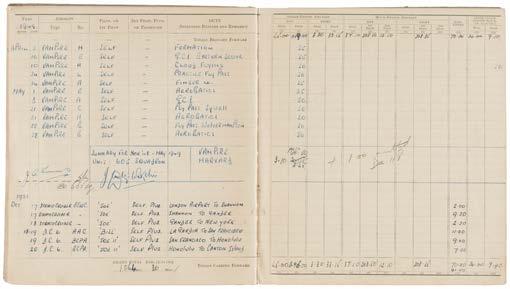
59* RAF logbook. A WWII RAF logbook kept by Flying Officer J. Lawley-Wakelin, 746 and 605 Squadron, commencing 19 May 1945, final entry 22 August 1953, a variety of aircraft flown, including Firefly, Hellcat, Mosquito, Anson and Black Widow, served in New Zealand from 7 January 1952, the final entry is signed by the chief pilot at Wanganui Aero Work Ltd (1)
£50 - £80
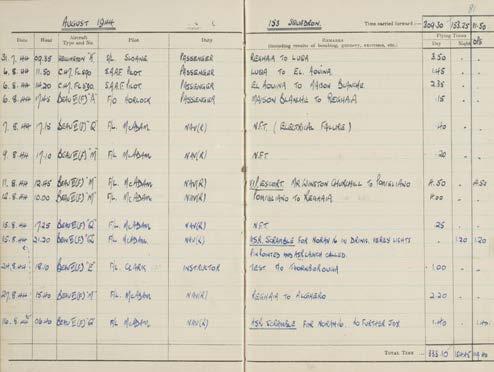
60* WWII RAF Logbook. WWII RAF pilot’s flying log book, kept by Flight Officer A.M. Brebner, 153 Squadron, 1942-46, commencing 14 November 1942 (training), final entry 19th April 1946, inscribed on the 16th November 1943 ‘Dawn Patrol ‘Perform’ convoy ‘Mr Rooney’ oranges very sour... Mr. Winston Churchill on HMS ‘Renown’’; 20th November 1943 ‘Special Mission escort along with 24 Airacobras and I other Beaufighter for IDC54 (Skymaster) to Tunis...passengers on DC 54 included President Roosevelt’; 11th August 1944 ‘V.I.P. Escort Mr Winston Churchill to Pomigliano’, total flying time 682hrs 40mins, 17 types of aircraft flown including Anson, Beaufighter I & VI, Wellington II, Douglas, Dakota, Stirling, Liberator, Harvard, and Expediter, 4 pages towards rear with tally of downed German aircraft Flight Officer A.M. Brebner, 153 Squadron, RAF personnel service number 139368.
(1)
£300 - £500
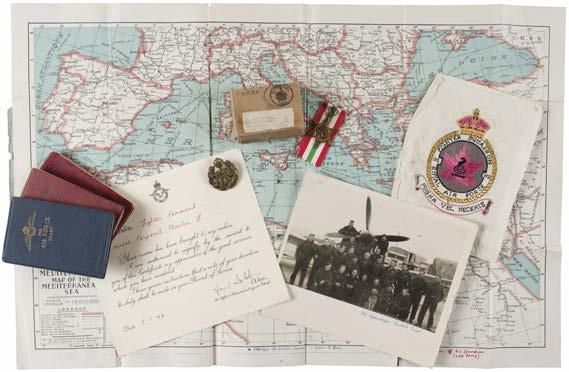
61* WWII - Royal Air Force. A small archive relating to Corporal Frederick Martin, Royal Air Force, No. 92 Fighter Squadron, 19401945, including an album of approximately 290 black and white photographs taken in West Kirby, July 1940; Biggin Hill; Durban, 1942; Libya & Tunis, May 1943; Nile, July 1943; Sicily, 1943; Jerusalem; on leave in Alexandria, 1942; Tripoli; Italy, etc., various scenes including: men at rest or work; riding camels, donkeys and motorbikes; on ship en route to Italy; various topography; jerry crashed at FUKA; funeral for fallen allies; etc., a few with titles to lower blank margins, all laid onto dark grey paper leaves (some loose, of those some showing captions to verso), 13 loose items inserted into pocket laid onto front pastedown, including two letters of congratulations on being awarded the Certificate of Good Service, an embroidered emblem of No.92 Squadron, a card with birthday wishes from Johnny, a contemporary printed map of the Mediterranean Sea with handwritten marks including the location of 92 Squadron (244 wing), etc., various sizes, in contemporary green cloth, stamped in gilt and black ‘Album’ to upper cover, folio (29.5 x 24.5 cm); also three handwritten and completed Air Force Diaries, 1942-1944; 5 ration books, 1950-1954; Motor Fuel Ration Book; 5 medals, 1939-45 Star, Africa Star and clasp 1942-43; Italy Star; Defence Medal, and War Medal 1939-45; plus a small family photo album, a yellow metal short watch chain and three RAF cap badges, RAF button and a white metal stamp holder with RAF insignia 92 squadron was reformed on the 10th October 1939, after being disbanded in the aftermath of World War One. The squadron flew Blenheims before converting to Spitfires and transferred to North Africa. For some time it flew as part of 244 Wing. After the war, the squadron was disbanded on 30th December 1946.
(1 carton)
£200 - £300
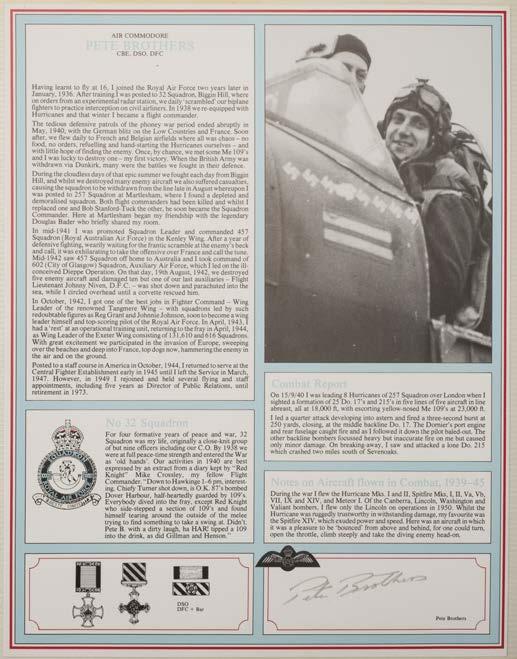
62* Royal Air Force. Fighter Pilot Profile Collection, published Military Gallery, Bath, 1984, 26 printed profiles of famous pilots of World War II, each profile with pencil signature, including Johnnie Johnson, Alan Deere, Alan Smith, Laddie Lucas, Bobby Oxspring, Peter Townsend, James Goodson, Frank Carey, Sandy Johnstone, Rod Smith, John Cunningham, Pete Brothers, etc., plus certificates of authenticity and fact sheets, all contained in purpose-made publisher’s blue cloth gilt album, 4to (1)
£300 - £500
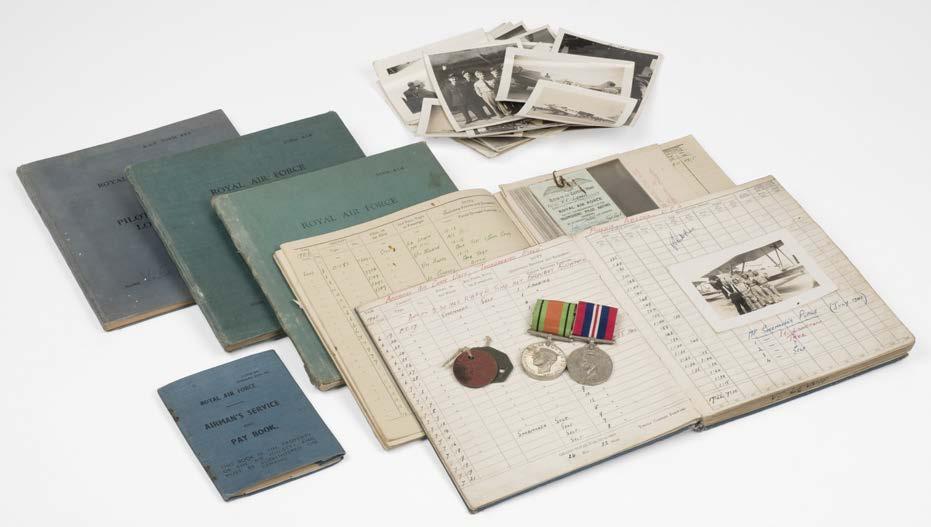
63* Royal Canadian Air Force. Logbooks, medals and related ephemera belonging to Flight Lieutenant Vivian Charles Lewis, Royal Canadian Air Force and Royal Air Force, comprising 5 logbooks; logbook 1, 19 June 1941 to 22 December 1942, commencing ‘American Air Corps Unit “Thunderbird Field” Phoenix, Arizona with a tipped-in photograph of Lewis and other airmen’; logbook 2, 10 September 1943 to 8 March 1944; logbook 3, 10 March 1944 to 6 March 1951, the entry for 3 June 1946 has a RAF Instrument Pilot Rating card and aerial and group photographs; logbook 4, 7 March 1951 to 12 March 1953, two black and white images including instructional training in Chipmunks,; logbook 5, 13 March 1953 to 27 September 1953, plus Airman’s Service and Pay Book, letters relating to post-war employment, Defence and War Medals, mounted as worn plus identity tags and other related items, Lewis flew a total of 4423hrs 50mins and served in multiple types of aircraft including Harvard, Spitfire, Oxford and Halifax (1) £200 - £300
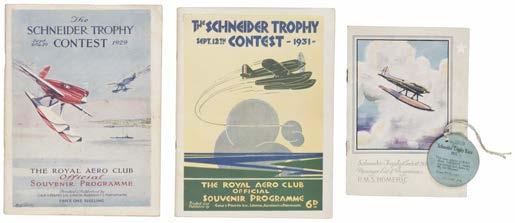
64* Schneider Trophy. The Schneider Trophy Contest programmes for 6th - 7th Sept 1929 and 12th Sept 1931, together with the Schneider Trophy Contest 1931, passenger list & programme R.M.S Homeric; plus a small blue circular entry pass with Mr F. Lord Saunder Roe in blue ink; 12 promotional postcards showing Supermarine S.6.A Supermarine Napier, etc., some duplicates; together with a copy of The Schneider Trophy Story by Edward Eves, 2001, 4to (a folder) £150 - £200
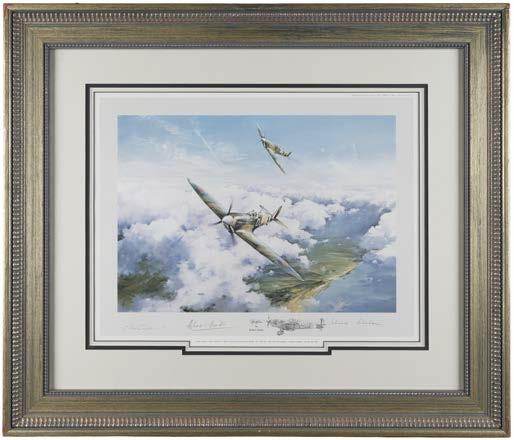
65* Taylor (Robert). Spitfire, a colour print, an evocative image of two Spitfires flying over the coastline, signed in pencil by the artist, Douglas Bader and Johnnie Johnson, additionally embellished with an aftermarket remarque by the artist showing a Spitfire side profile, framed and glazed, frame size 72 x 83 cm (1) £300 - £500
£100 - £150
66* The Desford Flying School. The official opening of the Reid and Sigrist Flying Training College, Desford, 13 December 1935, a printed luncheon menu, 4 printed pages, last page with a small pen and ink drawing of Mickey Mouse, signed ‘G. Green Dec 1935’, the printed card cover, signed by 10 WWI RFC and RAF pilots, including Cyril Lowe MC, DFC John Yoxall (Flight magazine photographer), Howard Thompson and H.S. Sheffield, 20 x 12.5 cm, together with a collection of aviation ephemera including Pilot’s and Flight Engineers Notes, Lincoln I & II, June 1947, Air Show programmes including RAF Station Thorney Island “Battle of Britain” at Home, 18 September 1948, Auster Flying Club, Rearsby Aerodrome 1952 Air Display, another for 1953, No 617 Squadron, Royal Air Force Presentation of the Squadron Standard. Scampton, 14 May 1959, 8 page brochure and other items (30)
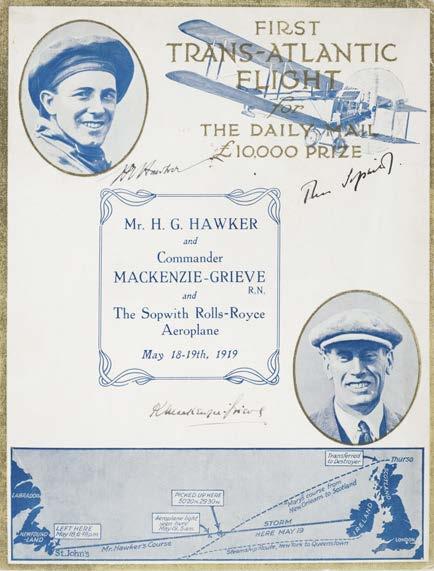
67* Trans-Atlantic Flight. First Trans-Atlantic Flight for The Daily Mail £10,000 Prize, signed, May 18-19th, 1919, blue photolithographic single-sided card, detailing the attempt by Mr H.G. Hawker and Commander Mackenzie-Grieve to be the first to make a trans-Atlantic flight, signed in black ink by H.G. Hawker, K. Mackenzie-Grieve, and Thm Sopwith, 25.4 x 19.4 cm Scarce.
Australian aviator Mr Harry George Hawker (1889-1921) and Lt. Commander Mackenzie (1880-1942) were one of four pairs (including Alcock and Brown) to attempt the trans-Atlantic crossing in May and June 1919. Taking off from Newfoundland in the Sopwith B1 single-engine aeroplane Atlantic, the pair experienced worsening weather and an overheating radiator. After covering 1130 miles they spotted a small steamer, the S.S. Mary, and circled above her to get the steamer's attention. Hawker turned the engine off and landed in the sea immediately ahead of her and they were both picked up by the vessel. After six days they reached England, all the while false reports of their fate circulated. King George V sent a telegram to Hawker's wife expressing his deepest sympathy for his loss on the 24th May, only to send another not long after, rejoicing about the happy rescue of her gallant husband. Upon their arrival in London, the streets were lined with people ready to greet them, King George V awarded them with the Royal Air Force Cross, and the London Daily Mail presented them with a cheque for £5,000.
(1)
£150 - £200
68* Trudgian (Nicolas). Nicolas Trudgian Aviation Sketchbook, remaque book edition no 10/30, drawing titled ‘Bf 109G flown by Hpt Erich Hartmann while Kommandeur of 1/JG53 in February 1945, with tissue paper and slipcase, together with 5 boxes of mixed aviation books (5 boxes)
£100 - £200
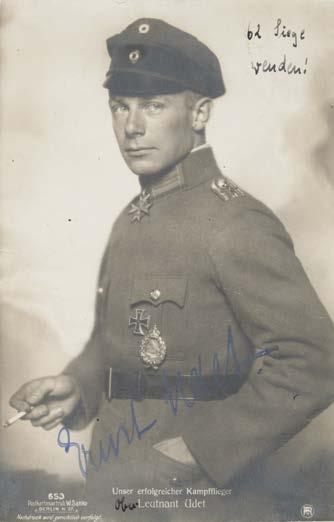
69* Udet (Ernst, 1896-1941). German Flying Ace of World War I, the second highest scoring ace with 62 victories, vintage signed sepia postcard photograph, showing Udet standing in a three quarter length pose wearing his uniform and with a cigarette in one hand, signed with his name alone in fountain pen ink to the image, Udet has hand addressed the verso and also added an unsigned note, in German, in his hand, a couple of small ink annotations in an unidentified hand appear to the image, together with a signed sepia postcard photograph by Leutnant Eisenmenger, depicting him standing in a full length pose alongside Gund at the side of a aircraft plus a vintage postcard photograph of Manfred von Richthofen and his fighter squadron signed and annotated in pencil to the verso by Hans Joachim von Hippel. (3)
£100 - £150
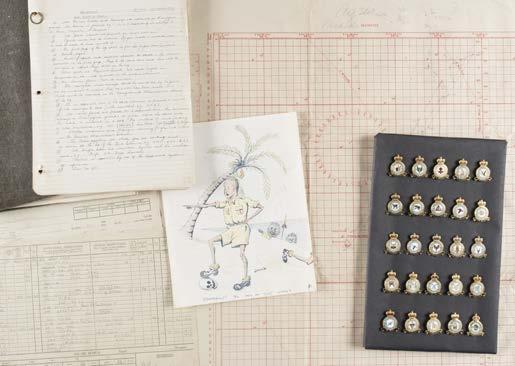
70* World War II Aviation Ephemera. A small collection of aviation ephemera, including: a 40 p. notebook containing handwritten notes on Air Crew lectures by H. Holder, dated 18 Jan 1944 - 24 May 1945; 40 flight logs for 99 or 94AN Squadron, including China Bay - Cocos (Vegetable Run) on 11.10.45, signed by H. Holder, 10 March 1944 - 13 December 45; 44 navigational maps including Plotting Series Map (1st edition) showing the Cocos or Keeling Islands, 1942, India West, India South, Sumatra, Trichinopoly, Allahabad, Wainganga, Ceylon, South China Sea etc., some duplicates, some with pencil annotations; two humorous ink and coloured pencil illustrations, titled ‘Cannibals? No - only on THAT island!! and ‘Won’t you come in out of the cold?’, both signed lower right; a leaf with 8 small vignette pencil sketches of famous war characters including Hitler and Churchill; 54 metal Royal Air Force squadron pin badges, 31 mm high; and other ephemera (a carton)
£150 - £200
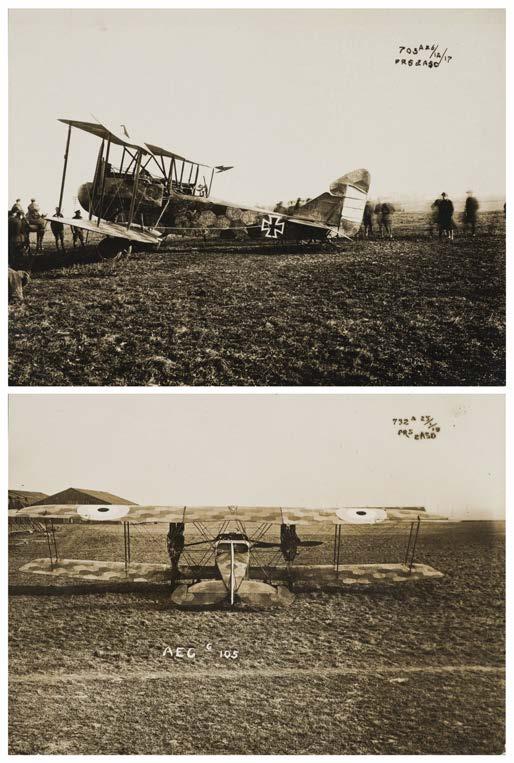
71* WWI Aviation. A WWI German aircraft photograph album, circa 1917, containing 27 original black and white photographs, 11 x 8 cm each, with dated reference number, including, Fokker Triplane, Halberstadt HP Argus, Albatross Scout, Albatross Two Seater, Albatross Nieuport, M/C L.V.G., Rumpler, Pfalz, plus a crashed Fokker Triplane by an aicraft hangar dated 1918, a Schneider Trophy black and white photographic postcard, all pasted in and presented in period black and gold tooled leather photograph album with gilt edges and marbled end papers, 20 x 25 cm (1)
£200 - £300
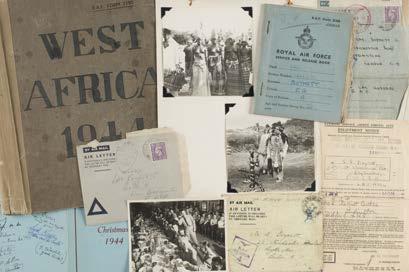
72* WWII West Africa 1944. A small archive of letters, notes and photographs from Leading Aircraftman E. G. Boynett, comprising: a photograph album containing 78 black and white photographs showing military men at play, with local Africans, an African ceremony with costumes, etc., all mounted with photo corners, on Scottie! stationery pad; 5 letters, 3 of which to Mr Boynett and dated 5 May 1945, 3 Sept 1944 & 14 April 1945, ‘...there is a great deal of talk going on these days about the end of the War with Germany...We have even been told that by the C.O’, Royal Air Force service and release book, Christmas 1944 menu card with 11 autographs to rear page, plus 12 other pieces of various ephemera, all loosely contained in a contemporary cloth-backed folder with R.A.F. Form 2190 printed and underlined to upper right and West Africa 1944 EB in black ink to upper board, typed Parable of New England laid down onto front pastedown, 26.5 x 21 cm (a folder)
£200 - £300
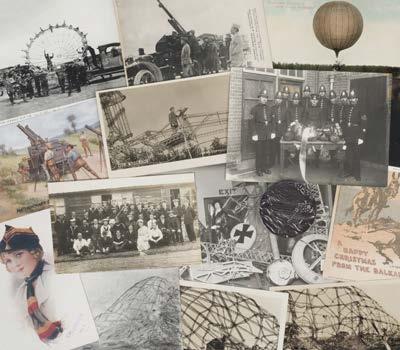
73* Zeppelin ephemera. A mixed collection of WWI Zeppelin ephemera, including, a black and white photograph showing police officers and a Zeppelin bomb display in Southend, 1915, 11 x 15.5 cm; a restrike of a WWI German Medal after Karl Goetz, commemorating the shooting down and fall of Zeppelin L19, showing the airship’s crew climbing atop the shot down Zeppelin L19, the crew shouting for help towards the British fishing vessel King Stephen in the background, 55 mm diameter, 32g; 25 black and white real photograph postcards ‘The Straffed Zepp L48’ showing the wreckage of this airship when after it was shotdown over Theberton, Suffolk on 17 June 1917, plus a photocopy of an eyewitness account from W.G. Baggott; 2 black and white real photograph postcards showing the wreckage of L33, which was shot down at Little Wigborough, Essex, another postcard showing the airship commander Captain Boeker, plus three press photographs showing the salvaged equipment from L33 displayed and other related items Provenance: Bernard A.N. Green, Author and Zeppelin Historian. (a box file)
£100 - £150
74* Bartlett (Charles Frederick Napier, 1878-1940), Lieutenant Colonel with the 8th Battalion, Royal Berkshire Regiment. An archive of approximately 340 autograph letters signed, mostly written from the Western Front in France, from 8 August 1915 until he left after the final letter of 18 March 1917, the majority to his wife Margaret back home in Haverstock Hill, London, NW, collectively detailing the minutiae of daily life in the life of a British army officer, talking about the weather, the billets, food, drink, health and discomforts, with complaints about the delays of his wife’s letters to him, the state of French WCs, etc., with spontaneous jottings and some more gruesome descriptions of daily incidents and occasional battles, including the Battle of Loos and the Somme, with the terrors and labours of life on the Western Front, the letters referencing a wide cast of other comrades, friends and family, written almost entirely in pencil, mostly 1 to 3 pages, 4to/8vo, a few loose but mostly contained in original envelopes with Field Post Office postmarks and censor stamps, together with a small assortment of related telegrams, cuttings, and other ephemera
Provenance: From the granddaughter of Charles Bartlett, by direct descent.
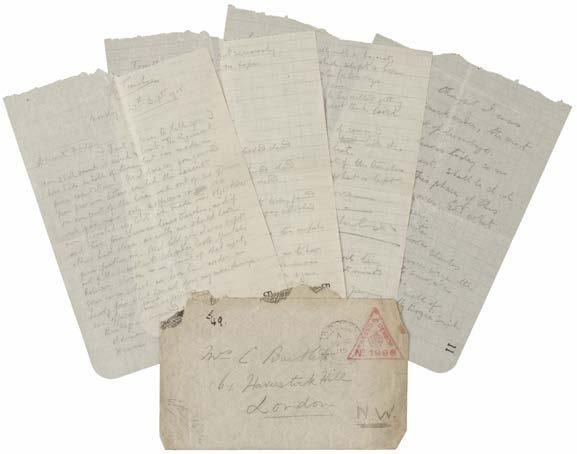
An extraordinarily comprehensive archive giving a humane and fully rounded picture of life on the Front. Bartlett’s correspondent was his wife, Margaret Jane Bartlett (née Robinson, 1888-1962), an actress and singer who took the stage name Peggy Bethel. Bartlett had joined the Royal Berkshire Regiment in 1900, leaving for unknown reasons in 1906. Having married Peggy he rejoined his former regiment in 1914 at the age of 36. Bartlett’s very first letter, (Alfie’s home, 8 August 1915), has the optimistic opening line: ‘Dearest, I was very sorry not to see you at the station but never mind I shall not be away long.’ It is from this line that Andrew Tatham titled his extraordinary book, I Shall Not Be Away Long. The First World War Letters of Lt Col Bartlett, Foreword by William Boyd, (Arco Veritas, 2020). The superbly colour-illustrated books transcribes all of Bartlett’s 341 letters plus sundry items offered in this lot. The book adds detailed footnotes, photographs, maps and historical background to give a complete picture of Bartlett’s world, and acts as a companion piece to Tatham’s previous, highly researched book, A Group Photograph. A copy of both of these very well-received books is included with the lot. Below are full transcriptions of two letters with details of fighting and casualties at the Battles of Loos and the Somme.
[Battle of Loos:]
The Trenches, Monday 27th September 1915
Dearest Darling,
Just a line to tell you I am still sound in wind & limb. The Regiment has had a hell of a time but has made a fine reputation. As I daresay you guessed from previous letters we led the assault on our part of the line and out of 20 officers and 900 men, only 2 officers & 184 men finished up, but we made our objective and took four German line trenches, and if others had done as well we should have gone further on. As I told you I was kept out of the Assault with Edwardes, Coote, Spartali, Robinson Cloake & we joined up that night, ever since which we have been under heavy fire which has not done any more damage.
Our officers fared as follows
Brakspear wounded in knee / Oldman wounded / Hanna missing believed dead reported seriously wounded / Tosetti wounded, not seriously / Paramore missing no hope / Cassells dead / Berlein dead / Peacock dead / Glen missing / Rouse wounded / Marsh wounded / Hicks dead / Hobbs missing believed dead / Haynes missing / Allen wounded believed dead / Keable missing believed dead / Stileman wounded / Gentry Birch missing but today found alive with 20 men of his company attached to another Regiment.
It has been a ghastly business too awful to describe.
We know of no particulars as to how people met their end as the advance was made under a cloud of smoke & gas. The Camerons Gordons & Black Watch have been fighting with us & they are fine men especially with a bayonet. We have neither washed slept & been practically without water for two days. It is now starting to rain.
Leslie was the first to be killed getting out of the trenches & I dont think lived long after he was hit.
I cant write more now as of course I have a lot to do compiling lists etc, besides I am dead beat.
We hope to move out of the trenches tonight to reorganise what is left of us.
All All Love, Thine XX Charles XX
[Battle of the Somme:]
15 July 1916
Dearest Darling,
Thank goodness we are now really back at rest. All this time we have been on the move and had a turn in the biggest battle of the war. We were suddenly taken out of the trenches at our old place and moved every day for 4 days until we arrived at a place which John knows of and since then have had a real hard time? Dalby was hit the first day, so I had to leave the Brigade & take command, and we were the last three days in the front line of the advance. Two officers killed, & 5 wounded or shell shocked and about 150 killed & wounded with a very small proportion of killed. It was a ghastly show, the smell was too awful, & the battle of Loos was a mere nothing in comparison. However we got back at 4 am this morning, & I slept until 12.30 midday, & have since had a bath & clean underclothing so feel very much better. We were holding a piece of line while the troops on our right moved round so had a comparatively easy time. The village we took was levelled to the ground, & all the time we were in possession of the village Bosche kept on crawling out of cellars which we did not know of, but they had no fight left in them, & were glad to be captured. We took two Bosche Doctors & there were about 100 wounded Bosche. The Bosche D’ told me the first night “Tonight I am your prisoner tomorrow you may be mine this is the third time I have been taken”. It was quite true the village had been taken & re-taken twice. However it is now safely in our possession & the Bosche D” & the wounded we sent back to one of the prison camps. It is a wonderful sight this huge battlefield, and the noise is too deafening for words. I have just seen poor old Ronald’s brother, he is in the Motor Transport. Our new tin helmets have saved any amount of lives, and it seems a pity we did not have them before. The whole Batt” did extraordinarily well, and thoroughly deserve a rest for they were a very weary lot coming out,” and the dirty Bosche put a new kind of gas shell over us as we were coming out, which was most unpleasant.
Well Dearest I have a lot to do.
All All All Love, Thine xxxxxx Charles xxxxxx
(approx. 350)
£1,000 - £1,500
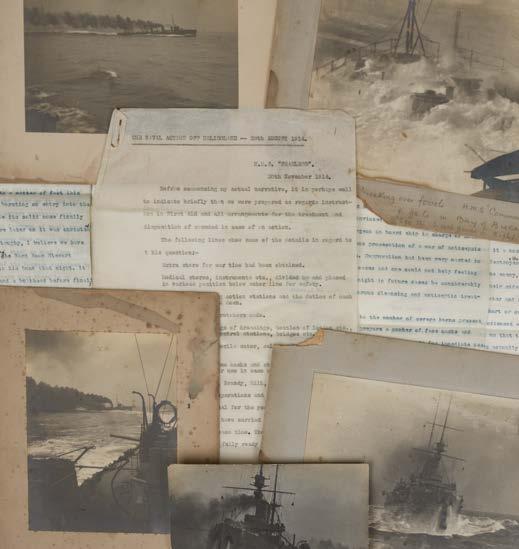
75* Battle of Heligoland Bight. A small archive relating to Fleet Surgeon Walter Kempson Hopkins O.B.E., Royal Navy, comprising typed accounts titled ‘The Naval Action off Heligoland - 28th August 1914’, first entry H.M.S. “Fearless” 30th November 1914, 12 sheets giving a descriptive account, signed in ink by Hopkins, together with 12 black and white photographs (8 laid on card) showing many ships including HMS Fearless, HMS Laurel engaged in the battle, many annotated in pencil, and inscribed ‘WKH’ and dated, some earlier photographs including HMS Commonwealth in a gale in Bay of Biscay, 1912, condition quite poor throughout
O.B.E. London Gazette: 4 June 1928 Surgeon Commander Walter Kempson Hopkins, R.N. (Betd.), Medical Officer, Board of Customs and Excise
Walter Kempson Hopkins (1870-1949) was born in Olton, Warwickshire. He served as Fleet Surgeon from 1913 and was awarded the O.B.E. for his civil work when on the board of Customs and Excise.
The Battle of Heligoland Bight was the first Anglo-German naval battle of the Great War. The battle commenced in the south-eastern North Sea on 28 August 1914. Both sides engaged in long-distance sorties with cruisers and battlecruisers, with close reconnaissance of the area of sea near the German coast, the Heligoland Bight.
The Royal Navy, commanded by Vice Admiral David Beatty, devised a plan to ambush German destroyers on their daily patrols. A flotilla of 31 destroyers and two cruisers with submarines was dispatched. They were supported by six light cruisers and five battlecruisers commanded by Vice Admiral David Beatty.
The German fleet suffered heavy losses: 712 sailors killed, 530 injured, and 336 taken prisoner. (1) £100 - £200
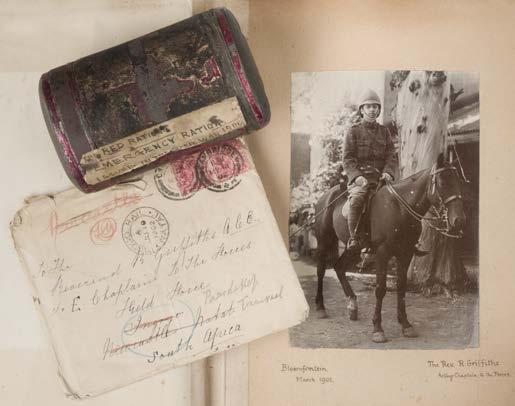
76* Boer War. A Second Boer War photograph album compiled by Reverend Richard Griffiths, Chaplain to the Forces Field Force for the period of 1901-02, with printed ownership label ‘Rev. R. Griffiths’, containing 77 black and white photographs, pasted down and mostly captioned, including Griffiths on horseback at Blomontein in March 1901. The album essentially records Griffith’s voyage to South Africa via Las Palmas on H.M. Transport ‘Roslin Castle’ in February 1901 and arrival in De Aar in March, when he was transferred to Bloemfontein via armoured train; many captions include ‘a group of Boer prisoners in hospital, Bloemfontein, May 1901’, ‘This cockerel was brought from Spion Kop’ and so on, images include, interior of Chaplain’s tent in 9 General Hospital, Sister Webb, Boer farmers, officer’s, Catrol’s Nek, Swaziland Mission Church, Natal Policeman, Charlestown No 18 General Hospital and other related photographs, the album of qto size with a tooled Athenian decoratation, together with South Africa, ZAR Gouvernements Noot, One Pound, 1 April 1901, no. 35531A, Pietersburg, Brugman-De Villiers signatures, some wear to fold lines, together with a typed Proclamation for the Vryheid District dated 17 August 1901, both contained in an envelope addressed to Reverend R Griffiths a.c.e. C/o E Chaplain to the Forces Field Force, Paardekop, Transvaal, South Africa’ postal mark for 10 July 1902, plus an old Cocoa tin with a manuscript label inscribed ‘The Red Rations, Emergency Ration Issued in the Boer War 1900’, coco one beef bull in the other!
Richard Griffiths (1867-1952) served as a Chaplain to the Forces in the Boer War and then on the Western Front during WWI with 24th Field Ambulance Division. From 1916-19, he served in Northern Ireland as Chaplain to the Navy. He wrote to his wife almost every day and his letters have been transcribed and published in the book This Game of Blood and Iron by Diana Hayward. Stationed only a few miles behind the trenches, Griffiths worked tirelessly searching for the wounded and bringing them to the field hospitals, praying with the injured and burying the dead. He was also a fluent French speaker and much in demand as a translator. One letter written on 26 February 1916 from Hazebrouck, “This afternoon we buried the lad who died yesterday from the effect of the bombs which fell the other night - a victim near to us. But how many cases like it have been multiplied in this mad game of ‘blood and iron’. However, the enemy have paid an awful price for their policy - over a million Germans killed!’ (3) £200 - £300
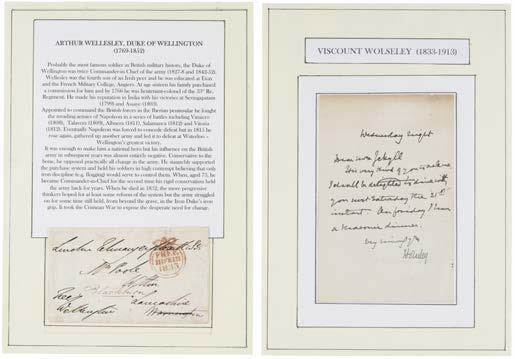
77* British Military Leaders. A collection of 65 autographs, signatures and autographed letters, signed by various military leaders of the 19th and early 20th century, including: Duke of Wellington (1769-1852), autographed envelope, 1835; H.R.H. The Duke of Cambridge (1819-1904), autographed letter, 2 pages, January 21st 1847; Viscount Wolseley (1833-1913), autographed letter on The Royal Hospital Dublin letterhead, 1 page; Field Marshall Lord Roberts (1832-1914), section of autographed letter; Lieutenant General Sir Reginald Pole-Carew (1849-1926), autographed letter; and others including Major-General Sir Robert Sale; General Sir William Fenwick Williams; Sir James Hope Grant; Field Marshall Lord Napier of Magdala; General Sir Henry Redvers Buller; General Sir Robert Low; Lt. General Arthur Haldemane Prinsep, etc., all compiled with printed image and biographical text, contained in clear plastic wallets, housed in two black folders (2 folders) £400 - £600
78* Canadian Expeditionary Force. WWI black and white panoramic photograph, showing the embarkation of the 2nd Canadian Expeditionary Force, 23rd Battalion, standing on parade at the foot of the Port of Quebec on 10 February 1915, photography studio of Percy E. McDonald, 45 Walnut Street, South Hamilton, Ontario, 23 x 120 cm, gilt frame, glazed, frame size 32.5 x 129.5 cm The photograph shows the embarkation of the Canadian Expedition Force to the Western Front.
(1)
£150 - £200
79* Crimean War. A manuscript pocket notebook compiled by Captain J. A. Vesey Kirkland, while serving as Deputy Assistant Adjutant General to Major-General James B. Bucknall Estcourt (1802-1855), Adjutant General during the Crimean War from 1854 to 1856, Sevastopol, 16 November 1854-30 July 1855, 101 pages of handwritten notes in brown ink and pencil (sometimes written in ink over entries in pencil), including Ordnance before Sevastopol 14 March [1855], The Army of the Crimea by Divisions, and Strength of Divisions, both dated 7 March 1855, Sick & Wounded, Scutari, February and March [1855], Distribution of the Artillery in the Crimea, 17 April 1855, Smyrna Sick & Wounded for Feby. 1855, Corfu Sick & Wounded for April 1855, lists of commanding officers, Staement of Casulaties by Wounds 19Sep. 1854 to 30 June 1855, Composition of the French Army in the East, 1854, Distribution of Land Transport Officers, 9 May [1855], French loss on 7 June nearly 4000 - 158 offs., French opinion of our Army written from the Crimea on Cav. & Infy. (7pp.), Distribution of the Army 5 July 1855, French Casualties at the Alma 20 Sept [1855], etc., 7 blank pages, contemporary plum calf with remains of metal clasp (stamped Henry Penny Patent), rubbed and a little wear, pencil not present, oblong 12mo (80 x 110 mm)
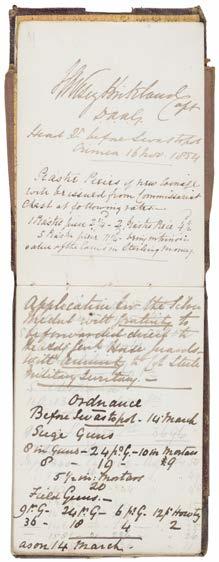
John Agmodisham Vesey Kirkland (1820-1896) served as Deputy Assistant Adjutant General to Major-General James B. Bucknall Estcourt (1802-1855), Adjutant General during the Crimean War from 1854 to 1856. Estcourt saw action at the battles of Alma, Balaklava and Inkerman where he was severely wounded, dying of cholera on 24 June 1855. A photograph of Major-General Estcourt and his staff including Kirkland was taken by Roger Fenton in 1855 (see National Army Museum, accession number NAM. 1964-12-151-6-7).
Vesey Kirkland was the only son of Sir John Kirkland (1796-1871) and Augusta Elizabeth Vesey (died 1824), who had married in 1819. He was educated at Harrow, and entered the army as a second lieutenant in the Rifle Brigade in August 1837. He transferred to the Coldstream Guards in July 1838, was promoted to captain in the 20th Foot in June 1846, transferred to the 21st Foot in April 1852, and was placed on half-pay as a major in July 1855, after serving in the Crimean campaign. Kirkland returned to full pay as a major in the 5th Foot in October 1857, after raising a second battalion for service in the Indian Mutiny, and became a lieutenant-colonel in December of the same year. Kirkland retired with the honorary rank of major-general in December 1869, was appointed a member of the Royal Company of Archers in 1872, and promoted to adjutant-general in 1875 and brigadier-general in 1895. He died at Fordel, Glenfarg, Perthshire on 24 March 1896 at the age of seventy-five.
(1)
£150 - £200

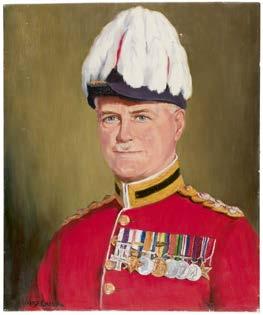
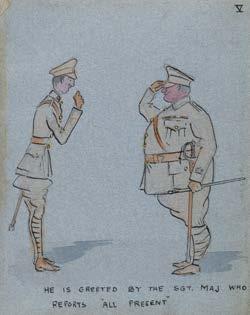
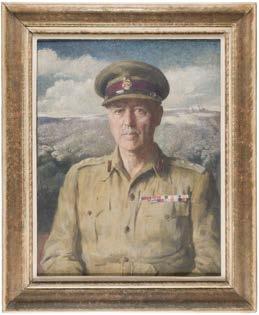
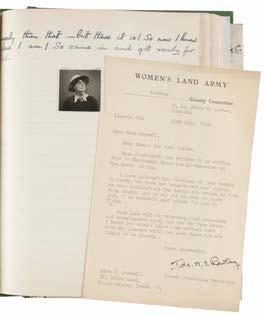
80* English School (20th century). Portrait of a veteran soldier believed to be Major W H Patterson, M.C., East Surrey Regiment, oil on canvas, seen wearing WWI & WWII Military Cross medal group with an American bronze star, 61 x 50.5 cm, unframed (1) £100 - £150
81* World War I. Notes taken at the Western Command AntiGas School, Prees Heath Camp from 20th to 29th March 1918, by 2nd Lt. E. R. Ryder, 2/1st Pembroke Yeo, attd. 4th Battn. Welsh Regt., Pembroke Dock, dated Whitchurch, Salop, 28th March 1918, an album containing 79 pages of handwritten notes and instructions, including 18 watercolour with ink full-page illustrations of Gas Zones, types of helmet and goggles, Entrance to a Gas Proof Dugout, a Strombos Horn, Clearing Dugouts by Fires, Ayrton Fan, Clearing Trenches with Ayrton Fans, German gas shells, etc., bound in a contemporary Walker's expert manuscript book in plain blue cloth, rubbed and some marks, small 4to (23.5 x 18.5 cm), together with A First World War album of photographs, postcards, typewritten notes, and other related ephemera compiled by Philip Carlton Hunter while in active service with the British Red Cross, 19161922, numerous postcards, photographs, letters, and other communications relating to Hunter's service with the British Red Cross, including Alexandria, Cairo, Suez, Port-Said, Jaffa, Acre, including approximately 150 mostly photographic postcards, approximiately 30 original photographs of his colleagues including several arabs he befriended, several photographs scenes at Suez, including Turkish prisoners in 1917 and a procession of the Holy Carpet (Mahmal), a number of official documents and telegrams, etc., all mounted to 51 album leaves, contemporary cloth, rubbed with some marks, and wear to edges, 4to (28.5 x 24 cm), plus one other album of original caricatures of colleagues, drawn by G. Vernon Buffit during a training course with the 1st King's Shropshire Light Infantry at Lichfield in 1909, titled A Dog's Day by Long'un', with many apologies to Walter Emanuel & Cecil Aldin, also to the First K.S.L.I. & special dedication to 'Walts' of that battalion, dated 24.5.09, handwritten title and 40 watercolour with pen and ink caricatures on pale blue paper, each numbered in roman numerals to upper outer corner, and with title and caption in ink, plus an additonal five original ink and watercolour cartoons bound in at rear on off-white paper, sheet size 22.5 x 17.5 cm, light waterstains to extreme outer edges of the leaves, original calf-backed cloth, heavily rubbed and soiled, with some wear, 4to (3) £200 - £300
82AR* La Fontaine (Thomas Sherwood). Brigadier Ronald Ogier Ward, DSO, OBE, MC, circa 1945, oil on canvas, half-length portrait, in uniform with mountainous landscape, signed lower left, 69 x 55 cm, framed, frame size 86 x 71.5 cm, remains of manuscript label to verso inscribed with sitter and portrait details
D.S.O. London Gazette: 3 June 1919.
Ronald Ogier Ward (1886-1971) was educated at Magdalen College School and Queen’s College, Oxford. He trained at St Bartholomew’s Hospital before serving as a Surgeon with the British Red Cross in the Balkans during 1912/13 and subsequently during WWI. He was promoted to Major with the Honourable Artillery Company and attested to the Royal Field Artillery, Territorial Force. Ward was mentioned in despatches and awarded the Military Cross. During WWII he commanded a surgical unit in France and received the Order of the British Empire at the Dunkirk evacuation. Post-war service saw Ward as an advisor to HM Government during the introduction of the New National Health Service, and he became the driving force behind the formation of the British Association of Urological Surgeons (BAUS) in the Royal College of Surgeons.
(1)
£300 - £500
83* Women's Land Army. Notes on Work in the Land Army [so titled], by Nancy Saywell, February 1939-August 1940, a scrap album and part-diary compiled by Nancy Saywell of Upper Armley, Leeds, Yorkshire, containing printed notices, newscuttings, letters addressed to Miss Saywell from the Women's Land Army, Yorkshire West Riding branch (giving instructions on where she will be posted), handwritten diary entries, several photographs of farming families she worked with, a few postcards, mostly mounted or loosely inserted on approximately 60 blank ruled leaves (plus around 30 leaves blank), two printed booklets inserted inside front cover (In Memoriam and Other Poems by Walter S. Saywell, Bromsgrove, circa 1900, with author's presentation inscription to Joseph Saywell on front endpaper, and Poems of the Land Army, An Anthology of Verse by Members of the Women's Land Army, with a foreword by V. Sackville-West, [1945]), further letters and news cuttings contained in sleeve to rear pastedown, rebound in later green cloth, with title label to spine, small 4to (24 x 18 cm)
An important first-hand document and fascinating insight into the wartime service of a member of the Women's Land Army, an agricultural labour force exclusively of women, who joined to assist the war effort in the production of food. Nancy Saywell's address is given in the correspondence as 38 Ridge Road, Upper Armley, Leeds 12. A Pudsey Census of 1901 lists a Nancy Saywell, eight months old, daughter of Joseph and Mary Saywell. (1)
£150 - £200
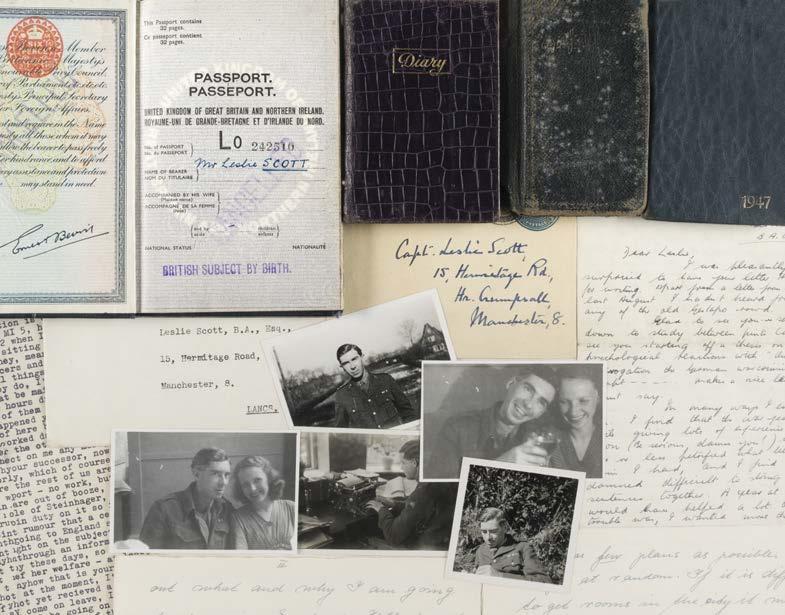
84
84* Leslie Scott SAARF. Small collection of letters, diaries and photographs relating to Captain Leslie Scott, gunner with 60th Field Regiment, Royal Artillery, 1941-47, comprising: three pocket diaries, dated 1941, 1946 and 1947, each with neat manuscript in pencil or ink, Thursday 20th November ‘Move early in morning as on new ground - battle noise in distance. RAF present in large nos. Tanks in front somewhere...then shrapnel barrage drives us back...’ 10 x 6 cm, plus eleven letters addressed to Leslie Scott from various people including a reference for work from History Department at the University of Manchester, 30th June 1947; ‘Joe’ from his army days, 7 Aug 1947; ‘Tony’ advising about looking for a job, July 1 1947; ‘Kirsten’ writing about studies and money concerns ‘I should like to become an internationale spy. Are you going to be my colleague?’, dated 28/6 1947; etc., both typed and handwritten, 3 in original addressed envelopes, with 49 photographs, 36 negatives and Scott’s expired passport from 1958, etc.,
Dugglebys Auctions sold Leslie Scott’s SAARF medals, wings and other ephemera on the 30th January 2025.
Leslie Scott (1919-2008) was one of 360 Allied soldiers, many of them German-speaking, selected to be members of the Special Allied Airborne Reconnaissance Force (SAARF). Created in March 1945, it allowed 3 men reconnaissance teams to parachute in behind enemy lines, close to PoW camps, to monitor the increased danger the captured Allied prisoners were in, due to the increasing pressure on the Germans, towards the end of WWII.
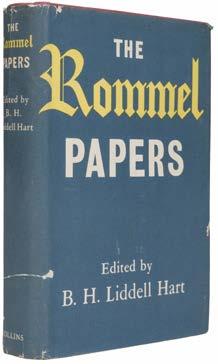
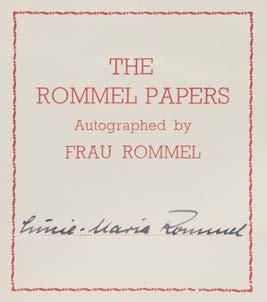
85* Liddell Hart (B. H., editor). The Rommel Papers, 1st edition, London: St James’s Place, 1953, insert laid down to the free front endpaper signed by Lucie-Maria Rommel (wife of Generalfeldmarschall Erwin Rommel), monochrome illustrations, colour map endpapers, closed tear and some loss to dust jacket, 8vo (1)
£100 - £150
86* Military ephemera. A very mixed collection of WWI, WWII and later photographs, documents and related ephemera, including a coloured photograph of WWI officer by Edward Montague Treble (1869-1925), signed in pencil by Treble, card size
£300 - £500
The 1941 pocket diary describes his actions in Operation Brevity (May 1941) when his regiment provided fire support during this early attempt to relieve Tobruk and sieze the Halfaya Pass, Operation Crusader (November 1941) and the battle of Sidi Rezegh as well as other defensive battles during Rommel’s first offensive in March 1941 as part of the 2nd Armoured Division. (a folder)
51.5 x 37.5 cm, a WWI photograph album, inscribed to Pattie 21, X, 15, 4th Bn Sherwood, containing 46 black and white snapshot photographs, including officers, trenches, aircraft, despatch riders, training and parade, contained in a small album, 14 x 10 cm (2 cartons)
£100 - £200
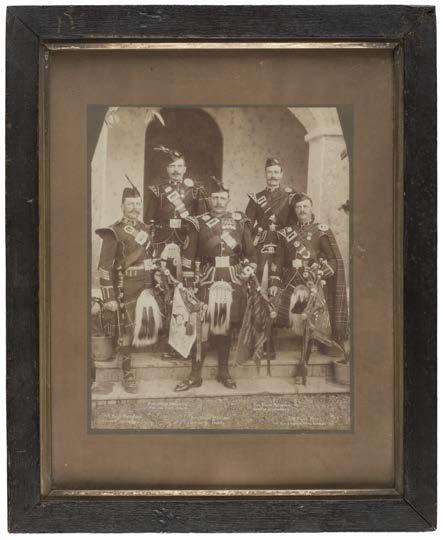
87* Military Pipers. Photograph showing five Scottish Military figures from different regiments, circa 1900, black and white photograph showing Pipe Major MacIntyre from Highland Light Infantry, Pipe Major Matheson from Cameron Highlanders, Pipe Major Matheison from Seaforth Highlanders, Pipe Major MacLeod from Gordon Highlanders and Pipe Major Keith from The Black Watch (Royal Highlanders), slightly tapered at upper edge, laid onto black paper, mounted, framed and glazed (42 x 34.5 cm) (1) £70 - £100
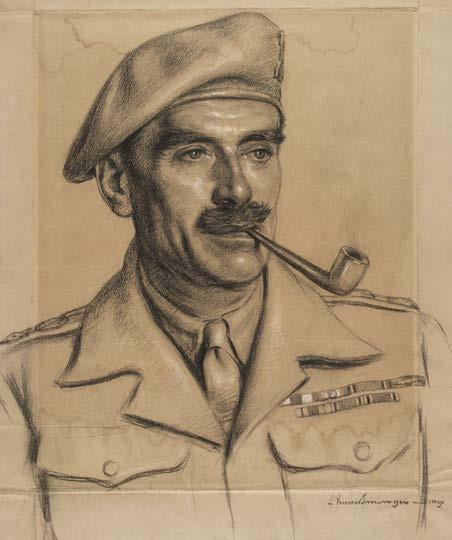
88* Morse-Brown (Sam, 1903-2001). Lieutenant-Colonel James Archibald Garton, C.B.E., M.C., charcoal on paper, showing this officer in field uniform and smoking a pipe, medal ribbon bar on his chest representing the Military Cross, WWI and WWII medals, signed and dated 1944 Italy lower right, the margin additionally inscribed ‘This one I promised to send to Col. Garton HQ 25 Gp P.C. Home Forces (He saw my detachment at Wisbech), a further ribbon bar in margin (presumably for accuracy when drawing the portrait), folded and stained, 56 x 46 cm, unframed, together with a black and white military photograph, c.1920s, showing Yeomanry officers including James Archibald Garton [?] (back row six from the right), laid on original Herbert F Joyce, Warminster photographer card board, 36 x 44 cm; the photograph was originally used as a backboard in the frame which held Morse-Brown’s original charcoal drawing
Morse-Brown was known to have done a number of ‘in-the-field portraits’ of Eighth Army senior officers in Italy.
Lieutenant-Colonel James Archibald Garton, C.B.E., M.C. (1891-1969) was born in Shepton Mallet, Somerset. His family owned the Anglo Bavarian Brewery in the town and they lived at Bowlish House, a few hundred yards from the brewery. Garton served during WWI as a Lieutenant in ‘C’ Squadron, North Somerset Yeomanry and was awarded the Military Cross for service near Ypres on 13 May 1915. After the war he returned to Shepton Mallet, but owing to the anti-German feeling and the increase of temperance organisations the family sold the brewery. Garton re-engaged for service during WWII and served in the North African and Italian theatre of war. He resided at the Manor House, Pylle, near Shepton Mallet.
(2)
£100 - £150
89* Nightingale (Basil, 1864-1940). Field Marshal Lord Roberts, 1900, pencil drawing on paper, showing Roberts in hunting clothing holding a riding crop, inscribed Roberts (Basil Nightingale 1900), additionally inscribed along the lower edge ‘Copyright Rd with the artist’s kind regards to Mr Earnshaw (Leamington Chief of Police)’, 60 x 35.5 cm, mount aperture, period oak frame, glazed (glass cracked), frame size 86 x 61 cm
Basil James Nightingale (1864-1940) was a hunting and racing artist and was a native of Royal Leamington Spa, Warwickshire from 1902. A comparative work by this artist is housed in the Leamington Spa Art Gallery & Museum, the drawing of His Majesty the King (Edward VII) dated 1902. Nightingale also sketched a study of Lord Robert’s stallion, Volonel.
Thomas Taylor Earnshaw (1870-1938) was Chief Constable of Royal Leamington Spa, Warwickshire from 1902-1938.
(1)
£100 - £150
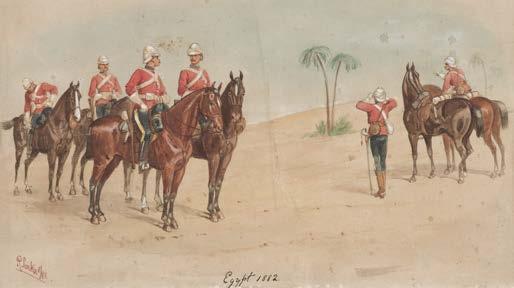
90* Simkin (Richard, 1840-1926). Egypt 1882, watercolour on paper, showing mounted troopers in the desert, titled centre, signed and dated 1883 lower left 18 x 31.5 cm, mount aperture, framed and glazed, frame size 31.5 x 45.5 cm
(1)
£200 - £300
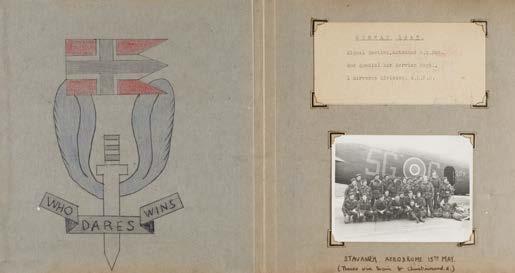
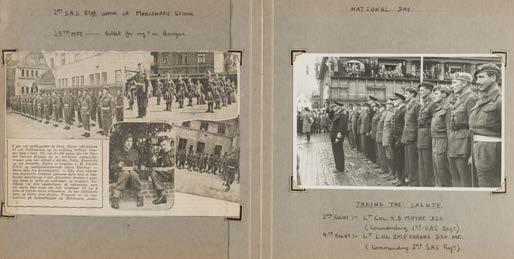
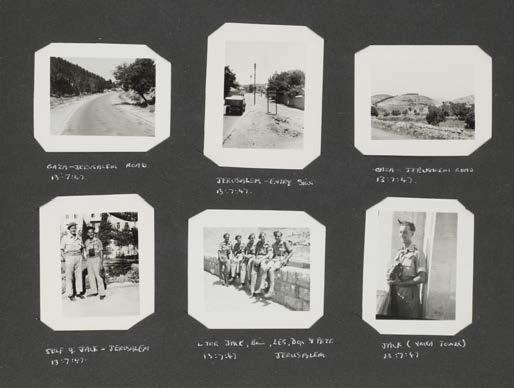
91* Special Air Service. Four photograph albums, compiled by D. F. Burgess Corporal in the Royal Signals, in Italy, Norway, Palestine and Egypt, 1944 - July 1947, comprising approximately 300 black and white photographs, showing military soldiers at rest and play including Lieutenant Colonel Robert Blair ‘Paddy’ Mayne and Lieutenant Colonel Brian Morton Forster Franks DSO MC, in various locations including: Bergen on National Victory Day, Stavanger Aerodrome, Norway; Venice; Crete; Julis Camp, Palestine; Jerusalem and Port Said, Egypt; etc., with other related ephemera including menu cards (Christmas Day, Phantom Regimental Headquarters, 1944; Christmas Day, Trieste 1946), newspaper cuttings, cinema tickets, etc., laid down onto leaves of photo albums, all contained in four contemporary photograph albums (one with leaves detached), 22 x 32 cm and smaller, plus a mounted and glazed photograph of the military regiment, 23 x 27.4 cm, plus three S.A.S. books and booklets comprising: Colonel Paddy by Patrick Marrinan, The Artists and the S.A.S. (with ownership inscription of D.W.Fallon), and Golden Jubilee Souvenir Magazine David Frank Burgess, no. 14718539, was a Corporal in the Royal Signals. (9) £300 - £500
92* Stalag 383 PoW Photograph Album. A collection of approximately 170 WWII photographs from Stalag 383 compiled by Ernest Vials, 1940-44, comprising approximately 170 black and white photographs of events happening in the camp, including various stage performances of Night Must Fall, 1943; Yankee Noodle, 1943; Chain Gang, 1943, etc., a display of portraits by T. Frost, D.G. James and S. Buttons, queuing for water, construction, boxing, sports teams, military groups, etc., all roughly 6.5 x 9.3 cm, all corner mounted onto lined leaves of a notebook, front pastedown with ‘Ernest Vials Stalag 383 1940-44’ in blue ink, 22 x 16.5 cm, together with a copy of Stalag 383 Time newspaper number 1 February 1944, edges frayed and brittle with some marginal losses, horizontal crease with closed tear, 35 x 24.5 cm Ernest W. Vials (PoW no. 11561) was held in Stalag 383 in Hohenfels, Rhineland-Palatinate. He was a Lance Sergeant in the Royal Engineers (1921065). It is believed that he was captured in Crete and initially reported as Missing in Action on the 2nd June 1941. Vials was in Stalag 383 at the same time as the artists Sir Terry Frost and Adrian Heath. (2)
£200 - £300
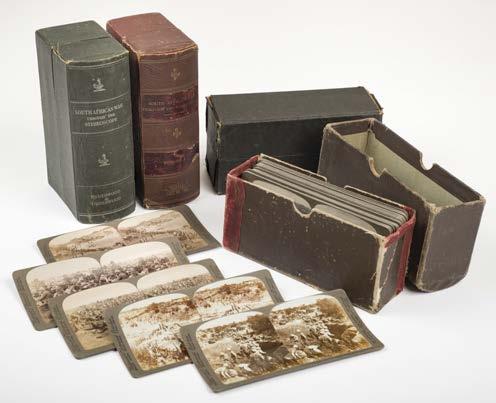
93* Stereo View Cards. South African War Through the Stereoscope, Volume I, 39 black and white Boer War photographic cards by Underwood & Underwood, showing graves, soldiers, battlefields, artillery guns, natives and hospital views, together with 3 further Boer War boxed stereoview cards, comprising 39 by Underwood & Underwood, 28 Works Studio, 37 Underwood & Underwood, all contained in a book box (4)
£150 - £200
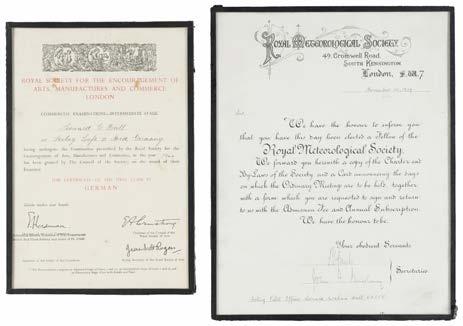
94* The Great Escape. Two Certificates awarded to Leonard Hall, 1939-1944, two certificates, one for the Royal Meteorological Society, awarded on November 15, 1939 to acting Pilot Officer Leonard Graham Hall R.A.F.V.R., and Royal Society from the Encouragement of Arts, Manufactures and Commerce London, Commercial Examinations - Intermediate Stage, This Certificate of the First Class in German, awarded to Leonard G. Hall at Stalag Luft III Nord, Germany, in 1941, both glazed, largest 27.8 x 21.8 cm Leonard Hall played a small but important role in the Great Escape from Stalag III in Silesia on 24th March 1944. As an RAF-trained meteorologist, he provided the escape committee with accurate weather forecasts so they could plan accordingly and ensure the best conditions for the night of their escape. In addition, he also worked during the construction of the tunnels with the group that carried the excavated earth in bags down their trousers, releasing it on the camp’s vegetable gardens.
(2)
£70 - £100
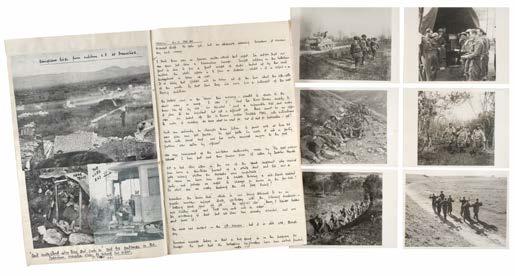
95* World War II Italian Campaign Journal and Photographs. Journal kept by Orderly Room Sergeant James Sutcliffe from Kent Royal Rifles, 11th Battalion, 1st January 1944 - 9th July 1944 and 59 photographs from Royal Fusiliers, Italian campaign, 1943-45, comprising 133 pages of neat manuscript in blue and black ink, with a few printed pictures and press cuttings, titled ‘Jimbo’s Journal’ 1944, a journal detailing everyday life in the military covering his movements around Italy including S. Giuliano, Tranzi, Carinola, Pugliano, Amalfi, Casoli, Altino, Scerni, Barletta, Taranto, and later on his posting to Cairo and Qassasin accompanying 4,000 German Prisoners of War, ‘10 Jun 1944 ‘From 1215 onwards, the German prisoners were marched...and taken aboard ship. I’ve seen the German in battle...but never have I seen so many as passed me this afternoon’, some central leaves loose, original buff paper wrappers with ‘S.O. Book 129. Code 28-69-9’ printed in black, remnants of printed title and picture of umbrella laid onto upper wrapper, small loss to lower left edge of wrapper, 33.4 x 21 cm, and 59 black and white photographs, 12 x 16.5 cm (2) £300 - £500
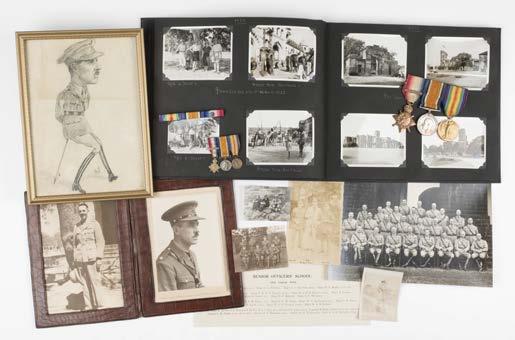
96* World War I Archive. A small archive, including medal group, relating to Captain K. Foulkes, Royal Irish Regiment, 1908-1937, comprising: Captain K. Foulkes medal group 1914-15 Star and Mons clasp ‘5th Aug-22nd Nov. 1914’ (Lieut. K. Foulkes. R. IR. REGT.), British War and Victory Medals, (Captain K. Foulkes), with corresponding miniature dress awards and riband bar, all with original ribbons, together with approximately 680 black and white photographs, mainly family photographs taken in various countries including Ireland, West Wittering, Dehli, Malta, on board the S.S. Tuscania, Bangalore, Goa, Camberley, India, Naini Tal, Holland, Simla, Suez Canal, Bombay, Lucknow, Cawnpore, etc., all contained in 5 contemporary photograph albums, plus other related ephemera including ten other larger loose photographs showing military groups, profiles of Captain K Foulkes, etc., 2 original illustrations, framed and glazed, and three albums, compiled by unknown, each containing 56 leaves of press cuttings from July 1915 to July 1916, covering news articles from the period including personal interest, death notices, wounded soldiers, awards for bravery, meeting of Lord Kitchener and General Joffre at Calais, Gallapoli campaign, the homecoming of the E 13’s brave dead, battles in the sky, Miss Cavell a hero nurse, Lone Pine Hill, Dardanelles, Mesopotamia, Zeppellin Wreck, New Zealanders arriving in London, Lord Kitchener’s drowning, etc., folio
Kenneth Foulkes (1891- 1938) joined the Royal Military College on 6th April 1909. He was wounded and imprisoned during a battle at Le Pillie on the 20th October 1914. Repatriated on the 8th June 1918 he was described as suffering from malaria and neurasthenia as well as a gunshot wound to his left elbow. Foulkes became Inspector of Prisoner of War Camps from 4th September 1918 to 1st September 1919 and later an Officer at the Royal Military College. At the time of his death, he was a Major in 2nd Bn. South Staffordshire Regiment, he died of bronchial pneumonia at Cawnpore, India, on 10 July 1938 and was buried there. There is a memorial plaque to him in St. James’s Church, Baldersby, Yorkshire.
(a carton)
£300 - £500
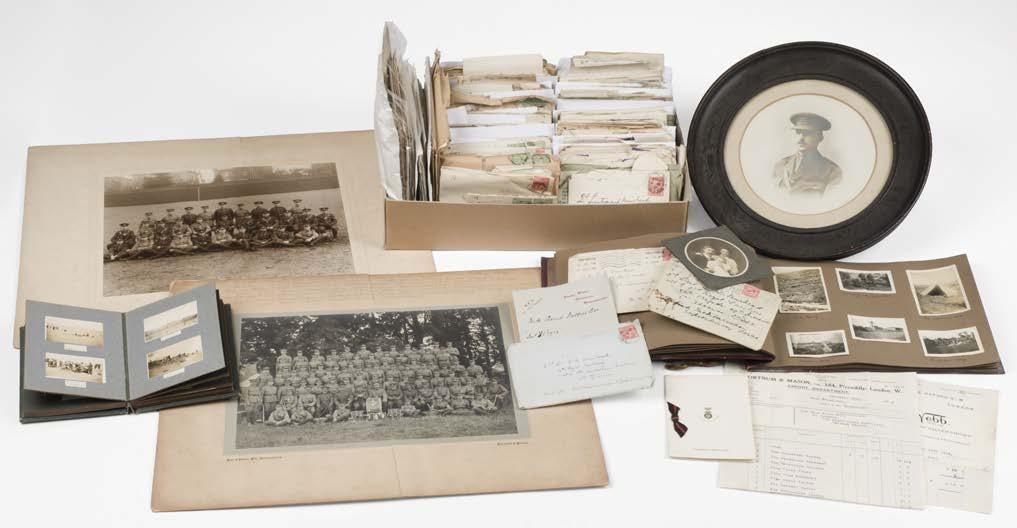
97* WWI Muirhead Archive. An archive of approximately 370 letters sent from Litellus Russell Muirhead, Lieutenant in the 5th Royal Irish Fusiliers, and author, during WWI, 6th April 1915 - 6th March 1919, comprising: approximately 300 letters addressed to his mother and father, and cousin Langdon (122 in original envelopes), 70 addressed to L.R. Muirhead (all in original envelopes), neatly handwritten, signed by ‘Tellie’ or L. R. Muirhead, covering various subjects from his arrival at North Fall Meadow, Dover on the 6th April 1915, his hop eful demobilisation on the 6th March 1919, to receiving news on the 11th November 1918 while in Belgium that terms of the armistice had been accepted ‘It is strange in what a matter of fact way we took it, but the inhabitants are nearly wild with joy’, along with first hand accounts of battles in Salonika, including one dated 2.xi.16 ‘strafe of Oct 31st 1916...we started off in comparatively good spirits & weather to attack JENIKOS (this is not the right name of the place). The first advance in extended order was done beautifully...practically no trouble clearing the village...then the fun (?) began. From 0745-1315 (5 1/2 hrs) we were shelled without a break with shrapnel & H.E’, along with day to day updates for his family about his movements and activities in France, Egypt, Jerusalem, Salonika, etc., including a diagram of his dugout ‘the bed, which is made of straw-filled sandbags...’, pressed flowers from Macedonia and Palestine, etc., a few letters on letterheaded paper from North Fall Meadow, Dover; Union Club, Alexandria, Egypt; E.F.C. Officers Rest House and Mess; Clarence Barracks, Portsmouth; and White Star Line, R.M.S. Ionic, along with other paper ephemera relating to Muirhead, some military items and some relating to his time at school, including a Christmas greetings notecard from the 6th Bn Royal Irish Fusiliers, receipt from Fortnum and Mason dated November 25th 1916 for items ‘We are getting £4 of stuff...for Xmas’, paper cuttings from 1910, etc., plus 107 photographs including 100 contained in two photograph albums from 1915-1920 showing military, men at play and landscapes in Raffa, Egypt, Attara, Norfolk Broads, etc., 5 group photographs of University College School 1912-1914, and military groups and 2 portraits including one of L.R. Muirhead in military uniform, two framed and glazed 29 x 25 cm Litellus Russell Muirhead (1898-1976) fought in WWI as a Lieutenant in the 5th Royal Irish Fusiliers. After WWI Muirhead became an author travelling to Buenos Aires in 1929 with his wife Ada. In 1934 he became series editor of the Blue Guides and later, also edited, The Penguin Guides. (a carton)
£700 - £1,000
98* WWI Naval photographs. A pair of WWI photograph albums compiled by a Royal Navy Reserve officer, the first album inscribed ‘Reminiscences 1915-16-17 H.M.Y “Surf”, containing 92 black and white snapshot photographs, individually captioned, showing H.M.Y. “Surf” leaving Southampton Dock, H.M.S. “Victory”, French Submersible Torpedo Boat, H.M.S. “Hermione” in Portsmouth, H.M.T. “Grecian Empire”, H.M.T. “Trojan”, City of Dublin Mail Steamer “Ulster”, various crew including Sub Lieutenant T.M. Mallet, V.O.W. Peters, Lieutenant L. Corke, Engine Lieutenant W.H. Johns and Lieutenant F.S. Lofthouse, D.S.C., R.N.R., album size 16.5 x 22 cm, the second album containing 99 black and white snapshot photographs, individually captioned, showing various ships including H.M.T “Sapper, Norman II entering Holyhead Docks, Norwegian ship “Manx King”, Submarine E22, V4, H.M.Y “Surf”, Llangefni Airships over Holyhead, Submarine G.12 in Holyhead Harbour, S.S. “Kroonland”, S.S. “Lime Branch”, S.S. “Mauretania” and various crew members including Assistant Paymaster L. Corrie and H. Denny’s, album size 16.5 x 22 cm (2) £150 - £200
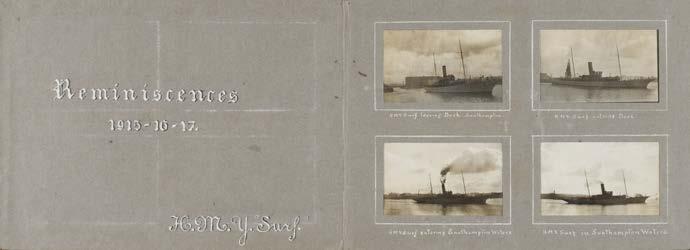
99* WWI Photographs. A WWI German photograph album circa 1914-16, compiled by an officer, containing 238 black and white photographs, various sizes and many inscribed on the image, tipped in, including a portrait photograph at the front (probably the officer), armoured waggon trains, German pilots, mono and biplanes, aerial photography, aircraft crashes, black soldiers, hospital wards, dead bodies, cemeteries, munitions, artillery and in the field, contained in a period morocco card album titled ‘Kriegserinnerungen’ (war memories), 34 x 27 cm (1)
-
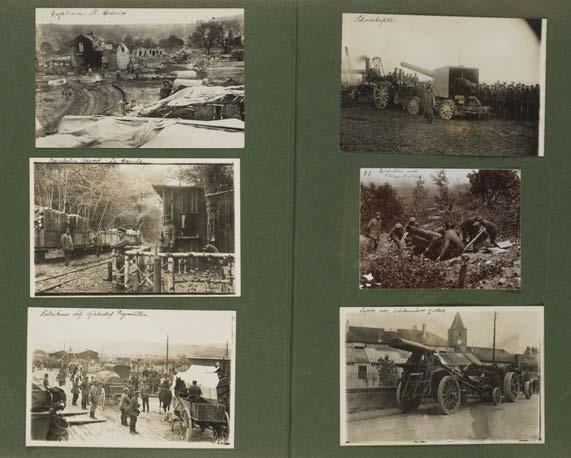
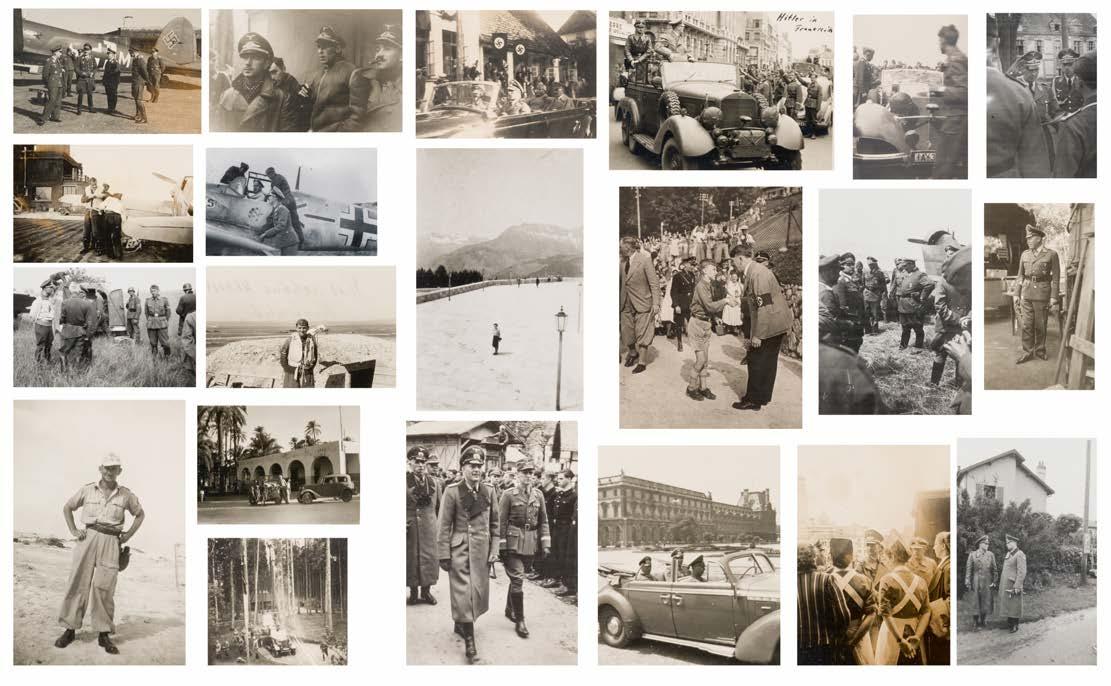
100* WWII photographs.A collection of over 1470 black & white photographs, mainly taken by German soldiers and airmen, some by US forces, showing various subjects including: Images of leaders (Hitler, Mussolini, Gobbels, Sperrie, Rommel, Speer, Goring, Hess, Richthofen, Tedder, Montgomery, Kepner, Molders, Doenitz, etc.), Bob Hope; Glen Miller Band; Hitler Tour on the Western Front, June 1940; Battle of Britain; crashed British and German aircraft; Luftwaffe over Britain; soldiers at rest and work; aircraft (JU88, DO17, JU52, ME109, JU87, HEIII, HE IIO, etc.; army transport and arms (tanks, vehicles, mines, torpedos, emblems, etc.); WAAFs at Biggin Hill; etc., World War I cemeteries; various locations including: Bergen, Norway; Paris; Versaille; Munich; Olympic Stadium, Berlin, 1940; Pompeii; New York; Rome; Krakow; Dunkirk; Jersey; Albert, Somme; over Sicily; Trafalgar Square; Guernsey; Cheltenham race course; etc., all kept in sectioned plastic wallets, each photo with hand written title on A4 sheet of paper, contained within six ring binders, with additional printed research (6)
£3,000 - £5,000
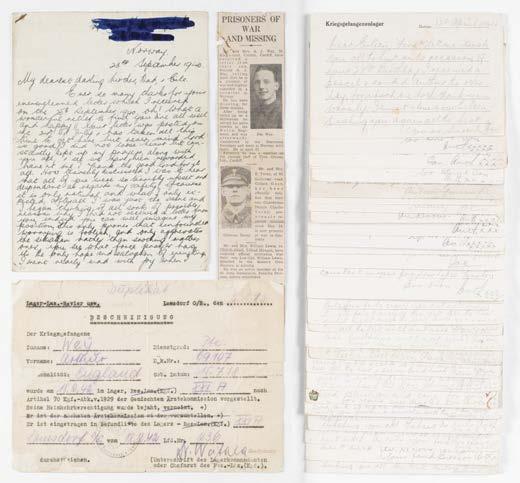
101* WWII PoW. A small collection from Stalag XXI A, compiled by Arthur Wey from Sherwood Foresters, 1940-1944, comprising: 53 single sided postcards majority addressed to Mrs A.J Wey from Arthur, 5 letters including one in Norwegian, one dated 23rd September 1940 Wey gives his family an update on the battle in Norway that led to his surrender and wounds, ‘Now it is here that I am giving my secret away. On Thursday 9th May 1940 I parted with my leg exactly 8’’ (eight inches) below the knee-cap. It was a relief to be free of a very painful and useless leg. The circulation of blood had stopped & the Head Doctor Professor Einar Mustadt...regretted to tell me that my leg would never be any good to me again’, a German document confirming Arthur Wey was in Stalag XXI A, 18.2.42; short letter from the Ministry of Pensions confirming that Wey was awarded a special rate of pension for nine weeks after his discharge at 60%; a leaflet from Ministry of Pensions about Notes for Disabled Ex-Servicemen, A Symphony Concert from The Camp Orchestra, Thursday 4th - Friday 5th June 1942 listing Arthur Wey playing the Pianoforte, press cuttings, Blesmag, Official organ of the British Limbless Ex-Service Men’s Association, vol 1. No. 1. October 1944, and other associated ephemera (a folder)
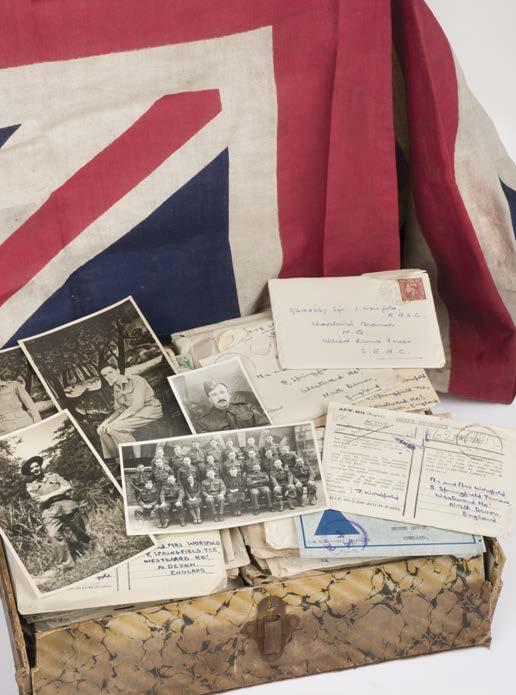
£200 - £300
102* WWII South East Asia. An archive of approximately 350 letters sent from John Worsfold, Sergeant in the Chaplain’s Branch, HQ Allied Land Forces, 11th Army Group, South East Asia Command, 7th January 1944 - 6th July 1947, comprising letters addressed to his mother and father at addresses in Devon and Kent, most in original envelopes or on H.M. Forces air mail letter card, neatly handwritten in ink, postmarks including India, Malaya, Singapore, Ceylon, covering various topics, 13th May 1945 ‘So the war in Europe is over!...out here there has been little celebration...but that is perhaps as it should be as we still have the war to carry on out here’, etc., together with 5 black and white photographs, a Union Jack flag, circa 1945, with Made in England printed to lower left hoist, some small stains, 83 x 54 cm, and a Union Jack on cotton, some holes and two crudely repaired, measuring 73 x 81 cm, all housed in worn box file
Sergeant John Worsfold (6108267).
(a carton)
£200 - £400
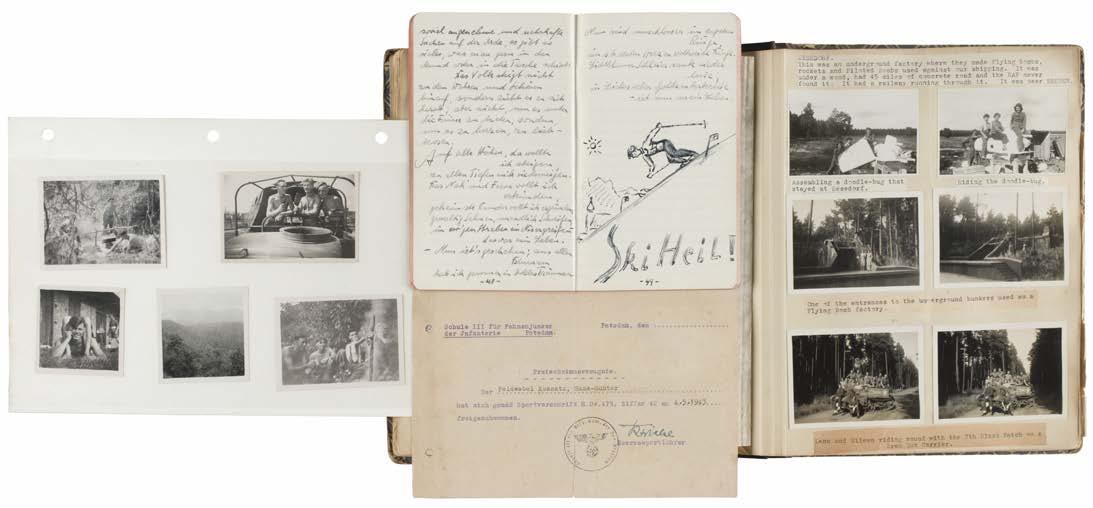
103* WWII German & Allied Soldiers. A collection of photographs and ephemera relating to German and Allied soldiers, 1939-1953, comprising two diaries compiled by Lieutenant Hans-Gunter Kossatz, from Essen, covering his passion for skiing, his injuries, fallen comrades and his combat engagements, the death of Hitler, etc., plus other related ephemera including letters and postcards in German; plus approximately 130 black and white photographs compiled by William Whitson, Scots Guards, of service in Malay, 1948-51, plus other related military ephemera from his service; a photo album containing 46 black and white photographs of Isaka Gorka with captions in English; a photo album containing 168 black and white photographs compiled by Grant Anderson detailing Grant Anderson’s Party entertaining the troops as part of the Department of National Service Entertainment NAAFI in Celle, Brussels, Syke, Hesedorf, Wilhelmshaven, Esterwegen, Luneburg, Issum, Burgsteinfurt and Belsen, etc., majority with typed captions; small collection of photographs relating to Wing Commander Bertie Rex O’Bryen Hoare, and a few documents including By the King’s Order Lieutenant M.H. Webb, M.C. was mentioned in despatches for distinguished service, 23 March 1944, and a commission warrant promoting Michael Hinton Webb, M.C. (South African Forces) from Lieutenant to Officer on 27th May 1952 (a carton)
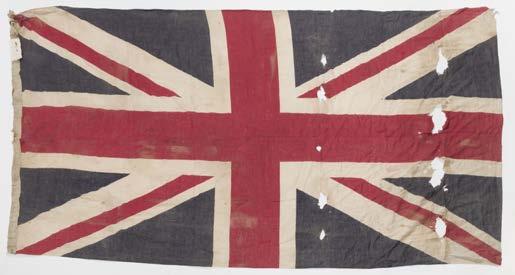
104* WWII. WWII Union Jack flag, circa 1944, the red, white and blue cotton flag used by the 12th Anti-Aircraft Brigade, showing signs of damage (9 holes to fly, largest 13cm long), with fastening lanyards, 220 x 114 cm
Believed to be used at the headquarters of the Royal Horse Artillery, 12th Anti-Aircraft Regiment in Porto San Georgio near Ancona, until the Canadians took over on the 3rd February 1945.
(1)
£200 - £300
£100 - £150
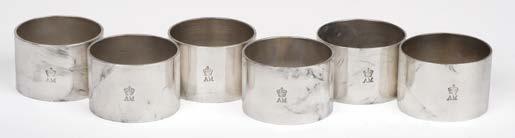
105* Air Ministry. A set of six RAF electroplated officers' mess napkin rings, circa 1920s, each stamped with the crowned A.M., and individually numbered, 4.5 cm diameter
(6)
£70 - £100
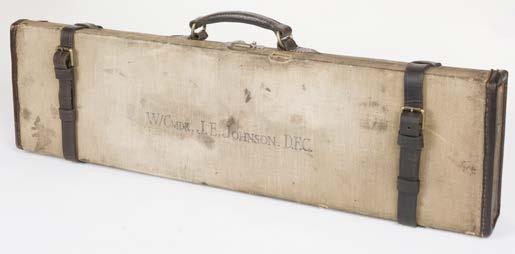
106* Air Vice Marshal J.E. Johnson, CB, CBE, DSO & Two Bars, DFC & Bar. A WWII period canvas Brady shotgun case from the estate of Johnnie Johnson, the lid inscribed ‘W/Cmdr. J.E. Johnson. D.F.C.’., leather straps and brass lock, enclosing fitted compartments for 30-inch barrels, 84 cm long Provenance: Sotheby’s Modern and Vintage Sporting Guns, Rifles and Militaria, 28 November 2001, Lot 299. A copy of the auction catalogue accompanies the lot.
Johnnie Johnson was the highest scoring RAF pilot during WWII. He was credited for 38 aerial victories between 1941 and 1944 and often likened air combat to wildfowling. He flew over 1000 missions during the war and was never shot down. His aircraft was only once hit by a single stray cannon shell, and all his victories bar one were against fighters. With his tremendous eye and judgment, he brought to his performance with the cannon of his Spitfire the same deflection shooting that had proved so effective against game birds with a shotgun in his youth. This guncase together with his shotguns and related items were from his estate and previously sold at Sotheby’s. (1)
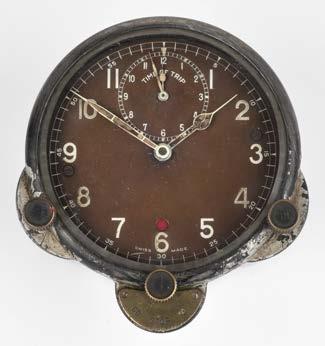
£300 - £500
107* Aircraft clock. A WWII Jaeger-pattern “Time of Trip” instrument-board 8-day clock, the brown dial with white Arabic numerals and inscribed ‘Swiss Made’ with cast-alloy casing, appears to be keeping time, the inset-dial needles are ‘sticky’, otherwise good patinated condition, 80 mm diameter (1)
£300 - £500
108* Aircraft instruments. A mixed collection of WWII and later instruments, including Spitfire Coffman engine starter, 25 cm long, Me163 fuel gauge, Me109 cannon ready light, Antenna Mast AN-104 A, Camfield Mfg. Co. Grand Haven, Mich, 38.5 cm, cut section from a Wolff propeller, Spode Battle of Britain porcelain cabinet plate and other items
(two cartons)
£100 - £150
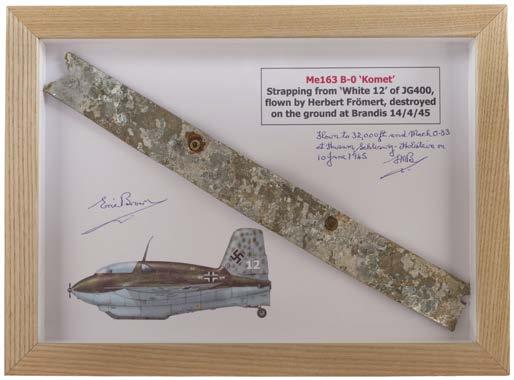
109* Aircraft relics. Three relics representing enemy aircraft flown by Eric ‘Winkle’ Brown when he commanded the Enemy Aircraft Flight during the latter stages of WWII, comprising, Me163 B-0 ‘Komet’, strapping from ‘White 12’ of JG400, destroyed on the ground at Brandis on 14 April 1945, laid on printed paper and signed and inscribed by Eric Brown, modern frame, glazed, inscribed to verso with various information, frame size, 24 x 33 cm, a Blohm & Voss 222 ‘Viking’ relic, plus Me262 ‘Scwalbe’ cowling catch relic, both similarly presented in glazed display frames (3)
£200 - £300
110* Aircraft spares. WWII and later aircraft spares, including Air Ministry Reflector Sight Mark IIIA, cockpit clock dials, switch boxes and other items
(6 boxes)
£200 - £300
111* Aircraft spares. WWII and later aircraft spares, including Rolls Royce parts, seat track, etc (6 boxes)
£200 - £300
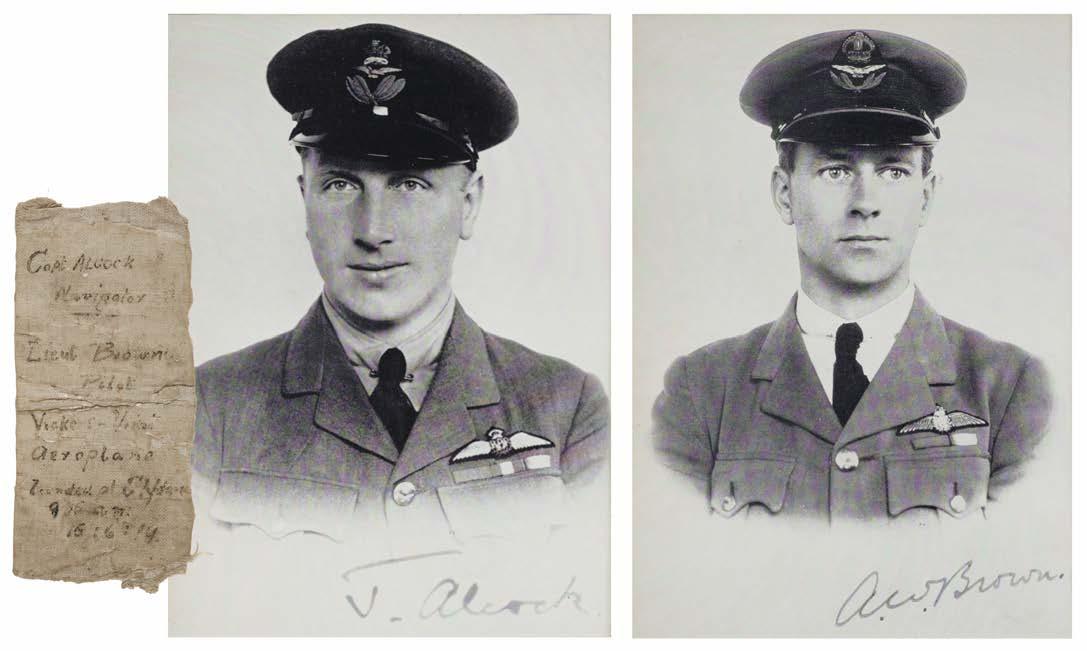
112* Trans-Atlantic Flight - Alcock and Brown. A section of canvas from Alcock and Brown's pioneering Trans-Atlantic Flight, 14-15th June 1919, a section of canvas reputedly taken from the crash site of the Vickers Vimy used in the first successful non-stop transatlantic flight, handwritten brown ink to one side 'Capt ALCOCK Navigator - Lieut Brown Pilot, Vickers-Vimy aeroplane landed at Clifden 9.35 am, 15:6:19', coating to fabric rubbed with some loss, minor fraying to upper and lower edges of fabric, verso with some horizontal stitching, 12.2 x 6 cm, together with Our Transatlantic Flight, by Sir John Alcock and Sir Arthur Whitten Brown, William Kimber: London, 1969, 8vo
Provenance: The fragment was taken from the aircraft at the crash site by a family friend who was present at the landing and reputedly had it signed. It was then given to the vendor's mother, who lived at Clifden, County Galway and whose family built the Alcock and Brown hotel there in the 1970s. Thence by familial descent.
Captain John Alcock (1892-1919) and Lieutenant-Colonel Sir Arthur Whitten Brown, KBE (1886-1948) both served in the R.A.F. during WWI. After the war, they were both keen to attempt the Daily Mail transatlantic challenge and propositioned Vickers to let them use one of their aircraft. Originally announced in 1913 (and again in 1918 after WWI), the Daily Mail offered a £10,000 prize (worth more than £700,000 today) for the first successful transatlantic flight.
On the 14th June 1919, after a hampered start due to inclement weather, Alcock and Brown took off from Lester's Field, St. John's, Newfoundland, in a modified Vickers Vimy bomber. Covering 1980 miles in 16 hours and 12 minutes, they successfully touched down the next day near Clifden in County Galway. Unfortunately, after a successful landing, the aircraft sank axle-deep, pivoting over its wheels on Derrigimlagh peat bog, an area of land that Alcock mistook for grass.
Alcock and Brown were awarded the Daily Mail prize of £10,000 from the Secretary of State for Air, Winston Churchill, and knighted by King George V at Windsor Castle a week after their successful flight. It was also the first successful transatlantic airmail delivery, as the flight carried nearly 200 letters. (2) £4,000 - £6,000
113* Anti-Aircraft Gun. WWII German Mauser 20 mm cannon barrel, serial number 013, stamped ‘A.A. 2c/38m/1943, P.8, T.3., C’, 130 cm long, with deactivation certificate dated 9 August 2018 (1) £300 - £500
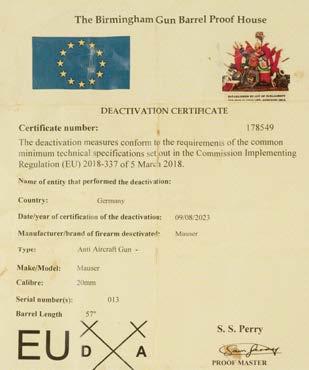
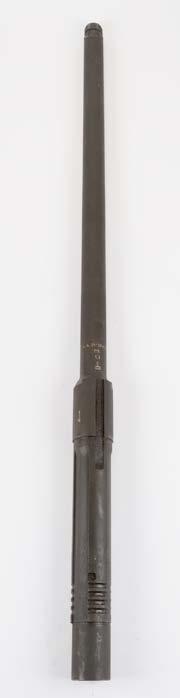
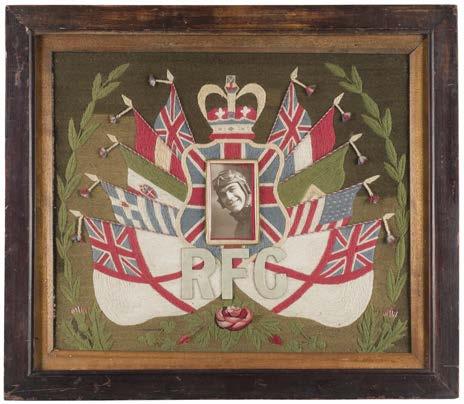
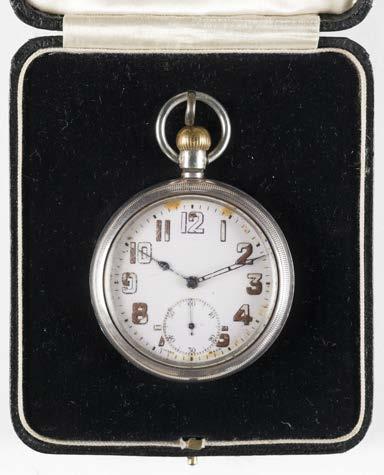
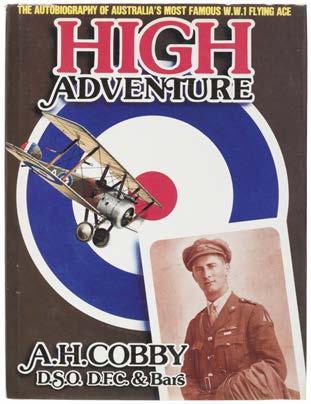
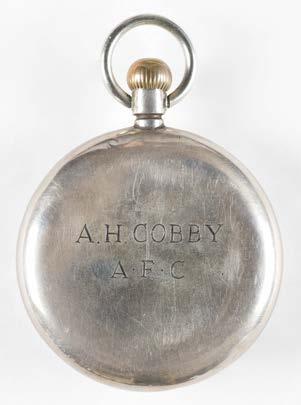
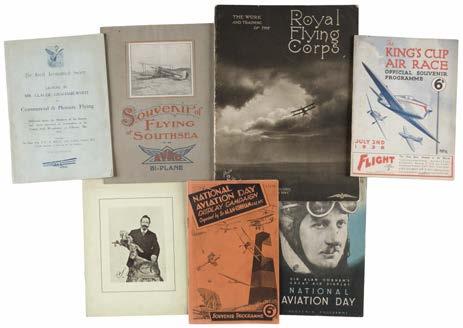
114* Australian Flying Corps. A WWI pocket watch belonging to Air Commodore A.H. “Harry” Cobby, CBE, DSO, DFC & two bars, GM, the Zenith pocketwatch with white enamel dial, arabic numerals, subsidiary seconds dial and brass top wind, the nickel case engraved ‘A.H. Cobby A.F.C.’, case 50 mm diameter, working but the dial is in poor condition, contained in a period leather box, with a Royal Flying Corps woolwork embroidery showing commonwealth flags surmounted by a crown, a photograph of Cobby wearing a flying helmet to the centre, period frame, glazed, frame size 48.5 x 55.5 cm
Provenance: Private collection, Gloucestershire.
The lot includes the book High Adventure, A.H. Cobby, the autobiography of Australia's most famous WWI flying ace.
Arthur Henry Cobby (1894-1955) was born in Melbourne, Australia. He joined the Australian Flying Corps in 1916, serving with No 4 Squadron. Cobby embarked for England in 1917. He was credited with 29 aerial victories and was highly decorated. He is considered a national hero with a long and prestigious career with the Permanent Air Force and has held many senior posts. He was awarded the George Medal for rescuing fellow survivors of an aircraft crash. He had been a passenger on a Catalina flying boat when it crashed in Townsville. The George Medal was gazetted on 10 March 1944. He resided in Gloucestershire and taught flying at Leighterton and Minchinhampton.
(2)
£300 - £500
115* Aviation Souvenir Programmes and Ephemera. A small collection of 7 early souvenir programmes and brochures, 19171938, comprising: The Work and Training of the Royal Flying Corps, circa 1917; Souvenir of Flying at Southsea in an Avro Bi-plane, 1919; The King’s Cup Air Race, July 2nd 1938; S.F. Cody brochure promoting The Cody War Kite, The Cody Flyer, circa 1910; The Royal Aeronautical Society, lecture by Mr Claude Grahame-White, February 19th 1919; National Aviation Day Display Campaign, circa 1932 and 1933; together with 6 later brochures about various aircraft, and three albums of press cuttings from 1912 onwards (a carton)
£200 - £400
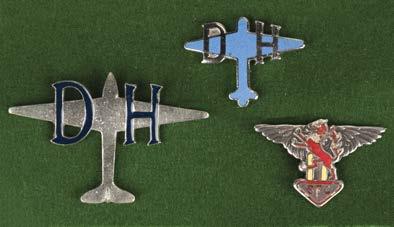
116* Badges. A fine silver & enamel SFC lapel badge, circa 1930s, with winged lion rampant design motif, together with two enamel cap and lapel badges for the De Havilland Company, circa 1940s/50s (3)
£70 - £100
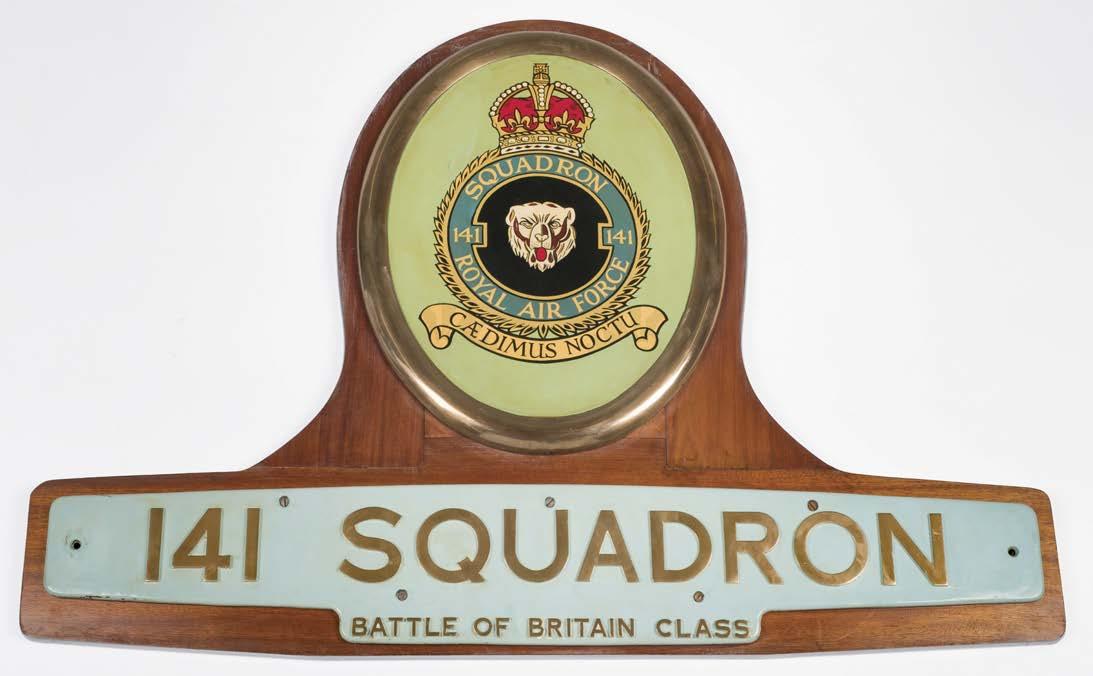
117* Battle of Britain. Southern Railway Bulleid Battle of Britain Class 141 Squadron Nameplate and Badge, the badge showing the RAF crest on enamel, within an oval gunmetal border, inscribed on the reverse '141 Squadron 34079', 71 x 56 cm, the nameplate in brass on enamel, 24 x 138 cm, presented on a wooden board for display
Provenance: Private collection, West Country.
Southern Railway introduced a fleet of ‘Bulleid’ Light Pacific Locomotives to a design by Oliver Bulleid in 1945. They were created as a smaller version of the Merchant Navy Class loco, with 18-ton axle loading and 8-foot-6-inch-wide cabs (enabling the class to be used almost anywhere on the Southern Region).
In the closing stages of WWII, the Air Ministry decided to name 40 of these light Pacific locomotives after famous airfields, aircraft, squadrons and others associated with the Battle of Britain. This came as a tribute to the part they played in defeating the Luftwaffe, mainly over territory served by the Southern Railway.
The class difference simply referred to the origin of the names that were to be given as per the practice of the time to each individual locomotive. The ‘West Country’ Class were named after holiday resorts and ‘beauty spots’ in that area, and the ‘Battle of Britain’ Class took their names from people, places, aircraft and other entities linked to the Battle of Britain. Apart from honouring the memory of the Battle, this choice of subject resulted in a considerable amount of publicity for Southern Railways and was considered a PR coup by the standards of the day.
34079 141 Squadron were known as "The other Defiant squadron". On 19 July 1940, the squadron took off from West Malling for its only day fighter sortie of the Battle. They were off the coast of Dover when they encountered Messerschmitt Bf 109s. The squadron lost six aircraft with 10 aircrew killed. The day has gone down in RAF history as “The Slaughter of the Innocents”.
(1)
£10,000 - £15,000
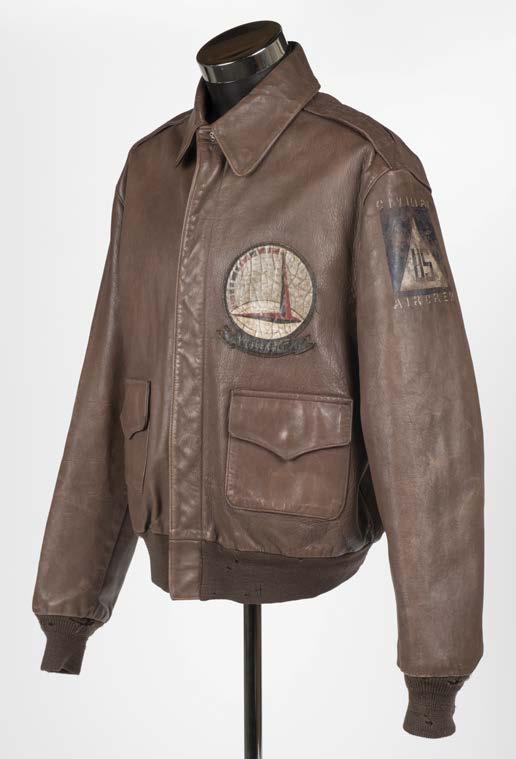
118* Berlin Airlift. A scarce civilian contractor’s A-2 flying jacket worn by a civilian contractor who participated in Operation Vittles, the Berlin Airlift, the soft brown leather jacket with tailor’s label for Willis & Geiger Inc, New York, featuring an Air Transport Command patch on the front, “Civilian US Aircrew” painted on the left arm, and “Operation Vittles Berlin Airlift Civilian Contractor” boldly painted on the back, with Gripper Zipper, elasticated cuffs and waist and two front pockets, lining with tailors label, 71 cm long, 46 cm chest, 54 cm inner arm
Provenance: The vendor's great grandfather, then by family descent. This jacket, along with lot 153, was found in a box labelled Freese. While it is not known exactly how he came to have these items, the vendor's great grandfather served as part of 101 Coy. C.M.P. (Specialised unit of the Royal Military Police), was involved in the Rhine push, and was later called back to Germany for war crimes prosecutions. Family accounts point to a potential link or acquaintance with Freese.
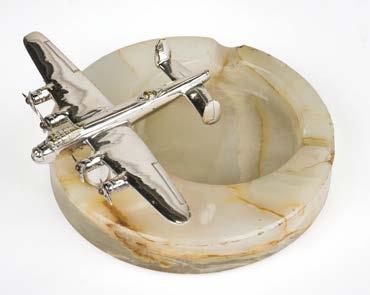
119* Bomber Command. A desktop display model of an Avro Lancaster, chrome-plated brass with rotating propellers, displaymounted on an onyx base, 14 cm diameter (1)
£100 - £150
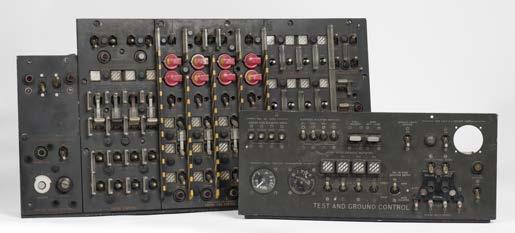
120* Bristol Britannia. A cockpit instrument panel from Royal Air Force Britannia XM518 ‘Spica’, circa 1960, multiple buttons and switches, including ‘Ground Engine Starting’, ‘Engine Fire Control’, ‘Freight Hold’ and ‘De-Icing Control’, 77 x 41 cm, together with another instrument panel, also from a Britannia, for ‘Test and Ground Control’, 21.5 x 51 cm (2)
£300 - £500
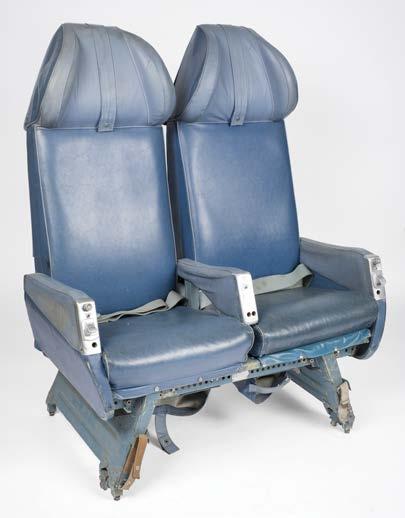
£2,000 - £3,000
A scarce jacket belonging to a civilian contractor (possibly Ralph Freese) involved in the Berlin Airlift (1948–1949), which was the first major confrontation of the Cold War. The Berlin Airlift was a response to the Soviet blockade of West Berlin, with civilian aircrews playing a critical role in delivering essential supplies to the city. This operation not only marked a key moment in Cold War history but also led to the formation of NATO, as Western powers unified in their efforts to counter Soviet aggression. (1)
121* Bristol Britannia. A pair of aircraft seats from RAF Britannia XM496, circa 1950s, blue leatherette, reclinable with armrests and integral ashtrays, waist belts and aluminium framework, stores reference label stamped ‘DRG. No SM262-2, ISS. No 1, Ser. No. SBH/927C’, 120 cm high x 100 cm wide Britannia XM496 was the last surviving RAF Bristol Britannia. It retired from RAF service in the 1970s and was used for civilian service as a cargo carrier in Africa until 1997. It is currently on display at Cotswold Airport, Gloucestershire.
(1)
£100 - £150
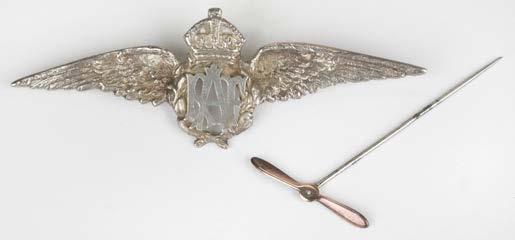
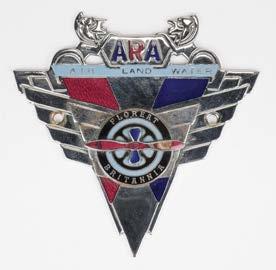
125* Car badge. A rare Pre-WWII Associated Union of Aero, Motoring & Nautical enthusiasts; art-deco style design with enamelled detail of steering wheel & propeller & inscribed motto “Air, Land, Water” numbered 571 stamped with London address verso, excellent condition, 9.5 cm long (1)
£200 - £300
122* Brooch. A WWI or interwar period RAF brooch, white metal with crowned RAF cypher, 8 cm long, together with a small silver propeller lapel-pin (2)
£70 - £100
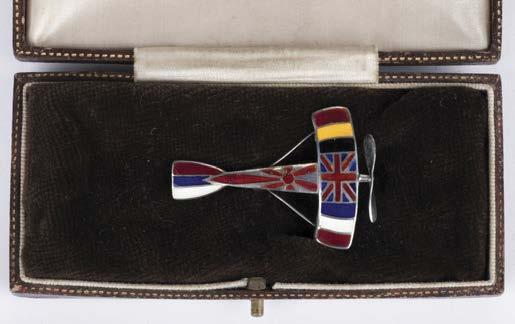
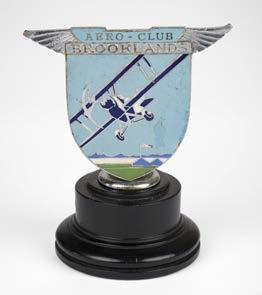
126* Car badge. A scarce interwar members' car badge by Spencer of London, circa 1930s, numbered 404, enamel decoration depicting a biplane over the aerodrome with windsock motif to chrome-plated brass, display-mounted on an ebonised wood socle, overall height 14 cm (1)
£300 - £500
123* Brooch. A WWI sweetheart brooch, circa 1914, sterling silver with polychrome enamel decoration of flags of the European allied fighting powers, inscription to underside with maker’s mark, 4 cm long, contained in a leather jewellery box (1)
£150 - £200
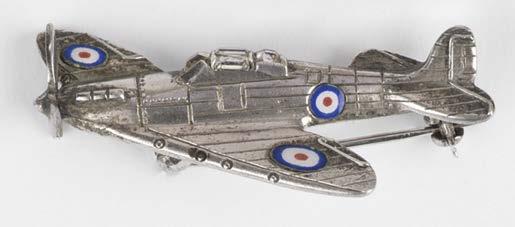
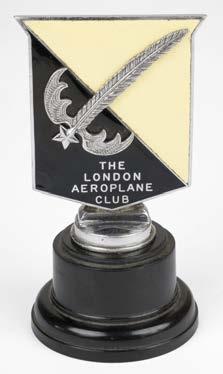
£100 - £150
124* Brooch. A WWII Supermarine Spitfire lapel brooch, silver, enamel and marcasite, 4 cm long (1)
127* Car badge. A scarce pre-WWII members' car badge, of stylised shield form with applied shooting-star motif on diagonal yellow and black enamelled chromed brass, display mounted on a Bakelite plinth, overall height 11 cm (1)
£150 - £200
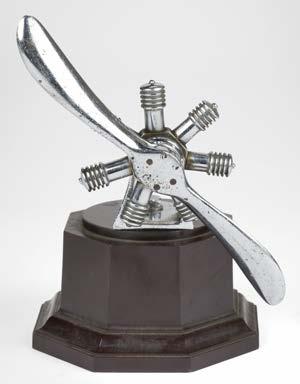
128* Car mascot. A fine and large radiator ornament representation of a radial aero-engine, nickel-plated bronze with two-blade propeller and detailed finned 7-cylinder design, the integral base frame surmounting a raised Bakelite plinth allowing free rotating action, 23 cm diameter (1)
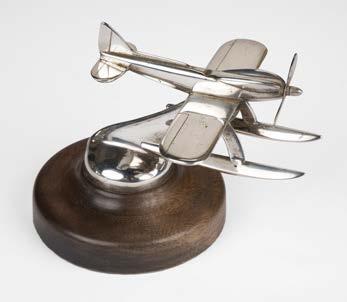
£400 - £600
130* Car mascot. An early RAF motor car radiator mascot circa 1918, cast bronze representing the newly-formed amalgamation of the RFC & RNAS into the unified Royal Air Force, large winged-form with George V crown surmounting the cypher badge design, agewear and plating loss, 19 cm wingspan (1)
£100 - £150
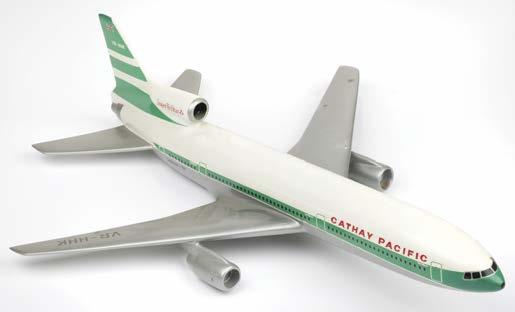
131* Cathay Pacific Airways. Lockheed Tristar VR-HHK, a good wooden desktop model, green and white livery, some loss of transfers, 53 cm long, 47 cm wingspan
Provenance: Squadron Leader Ray Hanna, AFC & Bar (1928-2005). Ray Hanna flew for Cathay Pacific Airways on his retirement from the RAF in 1971.
VR-HHK was one of two TriStars which entered service with the airline in 1975. The aircraft was sold in 1996 and subsequently broken up. (1)
£150 - £200
129* Car mascot. A pre-war Schneider Trophy radiator adornment representing the Supermarine S5A racing monoplane, silver-plated bronze with good detail and rotating propeller, mounted upon a period Rolls-Royce radiator cap, 11 cm wingspan (1)
£400 - £600
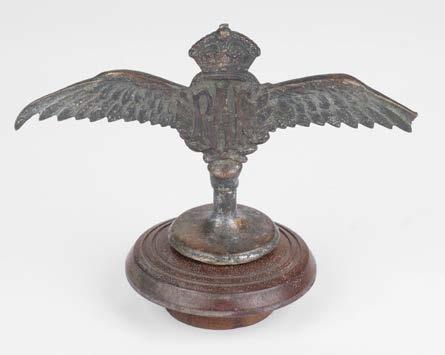
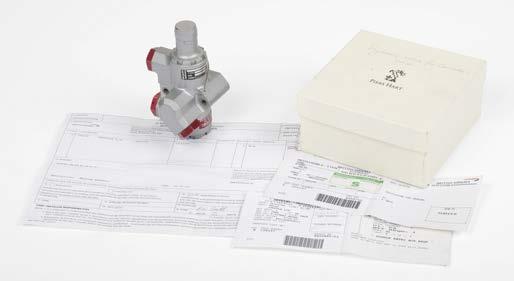
132* Concorde. A Concorde nose hydraulic valve by Messier Hispano, with data plate stamped ‘Clapet Navette, Type C 24197, No Serie 018, Date Co 12/75, Code 66-373-996-00’, 14 cm long, with paperwork including British Airways documentation dated 18 January 2002
Concorde’s hydraulic system provides the power for raising or lowering the visor and droop nose. The movement is obtained by a system of selector valves, jacks and locks using the green hydraulic system for normal operations and the yellow system for standby operations. In the event of both normal and standby systems failing, the nose up-locks can be manually released to allow the nose to free-fall to the 5 deg. position, then which automatically releases the visor up-lock. This allows the visor, aided by a spring-assisted mechanism, to free-fall. During the free-fall, the hydraulic fluid is vented to return via orifices which control the rate of lowering. Control of the normal system is from the co-pilot’s dashboard.
(1)
£200 - £300
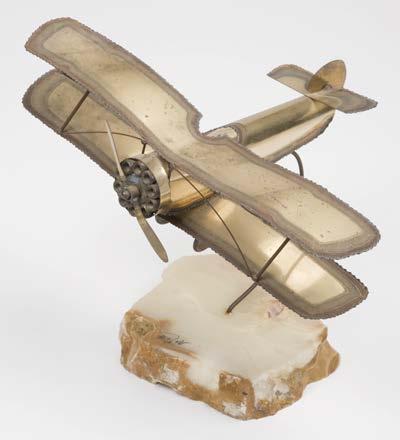
133* Demott (Don). An American brass ‘Brutalist’ model of a WWI biplane, circa 1970s, a crude design with rough-cut wings, articulated propeller, mounted on an onyx stone base signed by the sculptor, 31 cm wingspan, 22.5 cm nose to tail, 23 cm high (1)
£70 - £100
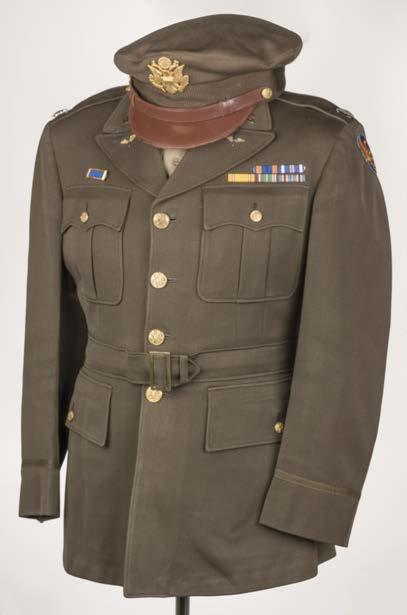
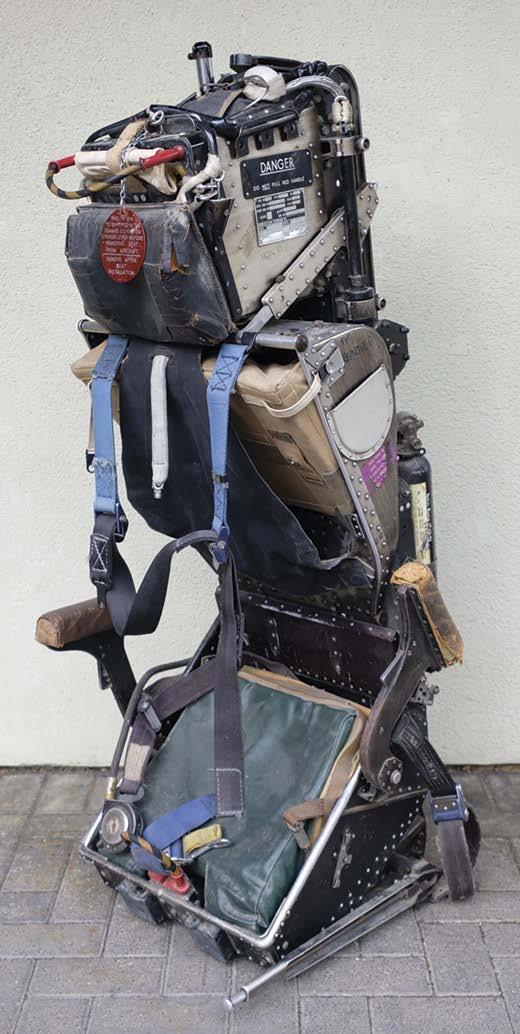
135* Ejector seat. A Martin Baker Mk 3L/2 Mk 2 co-pilot’s ejector seat from Handley Page Victor B. Mk 1 XH 593, the stores reference plate with various stamps including serial number 122, type 3L2, Mk 2, various patent dates including South Africa 1945, data plate stamped ‘Srl No 122, Type 3L2, Mk 2, AM Ref 27L 50157, leather upholstered seat and head and armrests, 140 cm high
There is a laminated information card included.
The co-pilot’s seat from Handley Page Victor B. Mk 1 XH 593.
The aircraft received its Airworthiness Certificate on 26 January 1959 and served with 15 Squadron before conversion to B/A model. XH 593 ended its flying career with No. 232 OCU before being withdrawn from service on 16 October 1974. It was retained at RAF Cosford as a ground trainer until being struck off charge on 18 April 1985. The seat was retained at Cosford as a training and display piece until 1993.
(1)
£300 - £500
134* Eighth Air Force. American USAAF pilots’ uniform, comprising green cloth tunic with tailors label for Dunhill’s, Miami, bi-metal U.S. winged propeller collar badges, medal ribbon bar, Eighth Air Force cloth badge on the left shoulder, soft brown shirt by Jackson Raymond Co Inc, trousers named ‘Capt Grant’, belt, tie and peaked cap with gilt metal badge soft brown leather peak and the interior with sweatband (1)
£500 - £800
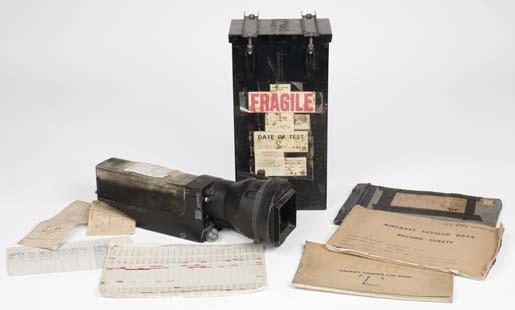
136* English Electric Lightning. A cockpit radar from Lightning F3 XP758, with card tags attached, inscribed with serial no XP 758, 45 cm long, in card box dated 1982, together with a LFS Sighthead Type 2, Mk 6 from Lightning F53/F55, contained in black metal transport case with various labels including serial no 378/74, 43 cm high, plus Lightning airframe maintenance records from F6 XS899, cover printed ‘Aircraft Fatigue Data Record Sheets’, inscribed Lightning Mk6, XS899, Binbrook 5 Sqn, Fighter’ plus a whole box of related logbooks and documents (3)
£300 - £500
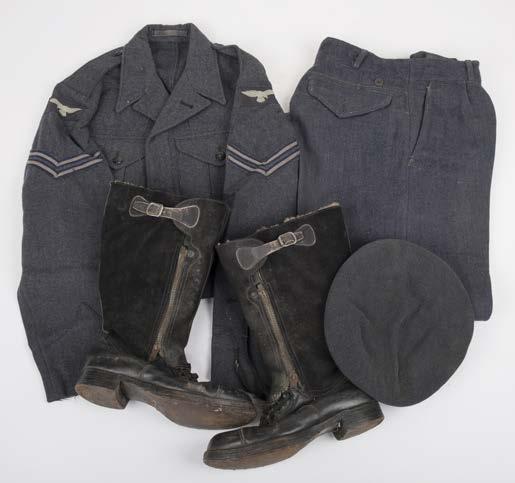
137* Flying clothing & miscellaneous. A pair of WWII RAF 1943 Pattern Escape Flying Boots, zips working but very dry and could benefit from some attention, soles 29 cm, together with a mixed collection of RAF and military clothing, including an RAF War Service Battle Blouse No 5 by Zimmerman Bros, dated 1948, trousers and beret, 1960 Pattern Smock Combat, with tailor’s label for J. Mandelberg 1964, another by J. Smith & Co dated 1964, Women’s Junior Air Corps side cap, kit bags and other items (2 cartons)
£200 - £300
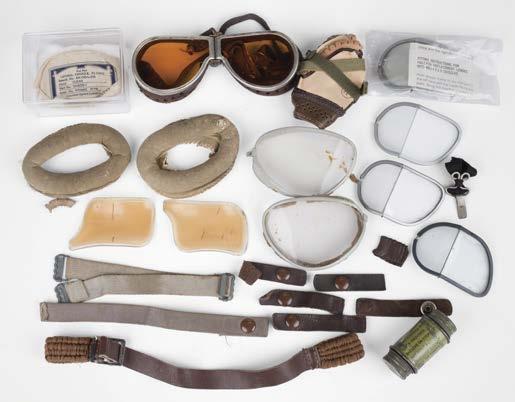
138* Flying goggles. A mixed collection of RAF and other goggles and spare parts circa 1930-1940s, including Mk II goggles with orange-tinted lenses, a rare RAF goggle-strap Stores Ref.22C/167, AM Mk T 7B (new O/S), 2pr Mk VIII spare lenses, a rare Outfit AntiDimming Mk V double-ended tin embossed No 248 III H&L Dated -/2/40; USAF original spare lenses Spec. No. AN-DD-L-236 in original packing dated 1943 (new O/S), USAF leather red-tinted celluloid goggles dated 1943 (new O/S), plus a RAF C-type helmet straps and sundry related items (a carton)
£150 - £200
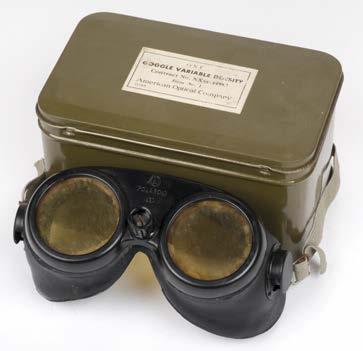
139* Flying goggles. A pair of American Optical Company Polaroid flying goggles, circa 1945, rubber with an adjustable knob, a grey elasticated strap, contained in the original green tin with paper label printed ‘One, Goggle Variable Density, Contract No. NXsx44982, Item No.1, American Optical Company, 3124B’, (1)
£100 - £150
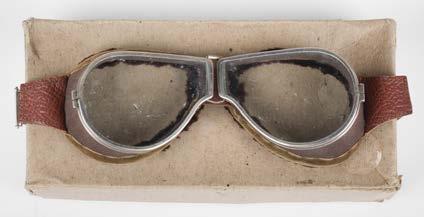
140* Flying goggles. A pair of WWII period RAF Mk IIIA 22/C
Pattern pilot’s goggles circa 1940 by D. Lewis of London, with curved Perspex lenses to patinated brass frames with padded velvet forehead and cheek protection, covered-spring ‘elasticated’ adjustable leather straps stamped impressed maker’s name, with nickel-plated buckle, showing signs of little use and unused oldstock, tissue-wrapped box of issue (1)
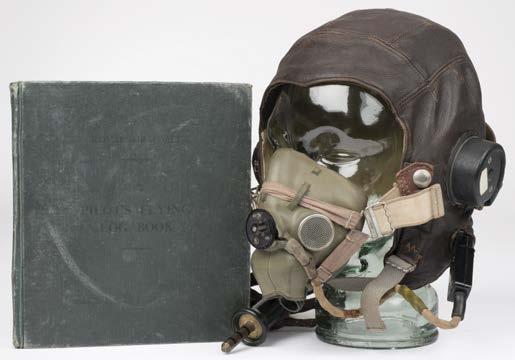
£200 - £300
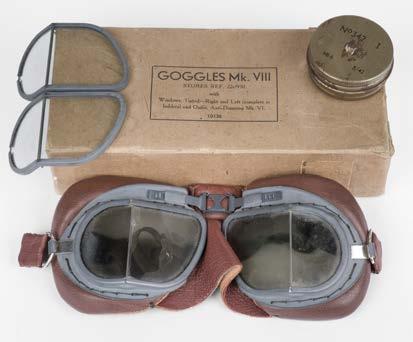
141* Flying goggles. A pair of WWII period RAF Mk VIII 22C/930
Pattern pilot’s goggles circa 1940s, unused original old-stock, Stores Ref. 22c/930 issue, contained in original cardstock box with printed top and side variously with Air Ministry and crown cypher, with tinted lenses and clear spares within fitted section, together with Anti-Dimming Mk VI circular tin inscribed MB dated 3/42 (1)
£150 - £200
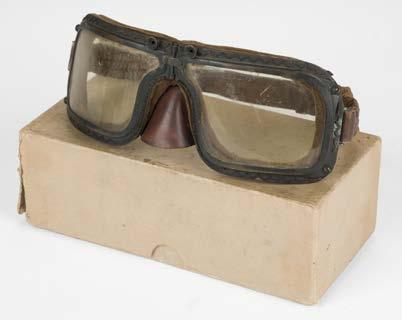
142* Flying goggles. An interwar pair of RAF-pattern Mk II privatepurchase pilot’s goggles circa 1930s, with nickel-plated brass frames and laminated lenses, brown gauze to velvet-trimmed furlined eyepieces, unused in original cardstock box (1)
£150 - £200
143* Flying helmet & logbook. A WWII RAF C-Type pilot’s flying helmet circa 1940s, dark-brown soft leather with fitted headphones 'Ref No 10a/13469' and '10A/13466', wiring-loom and jack-plug, chamois-lined and stamped No 4, war department arrow and Ref No 22c/880, together with H-Type green rubber oxygen mask (medium), plus RAF pilot's flying logbook kept by Squadron Leader Edmund G O'Kelly[?], 59 and 62 Squadron, commencing August 1940, last entry 27 April 1945, approximately 1000 hours in the air, type of aircraft flown: Tiger Moth, Oxford, Blenheim I & IV, Hudson V & III, Wapiti, Wellington, Dakota and Auster, various postings including 62 Squadron, where he served as transit to India Command and stationed in Karachi, Chakula, Cuttack in 1942, various entries to note, 13 February 1942 'shipping strike on enemy raiding force of 2/ac carriers, 4 destroyers, 3 cruisers and 3 troop ships, 15 February 'recce of road from PII to Pelambang town re Japanese troops, fired on by Dutch ground gunners with machine guns at Pelambang, and by Sgt. J. Murrin (R.A.F.) EX. 59 Sq and party with rifles' (2)
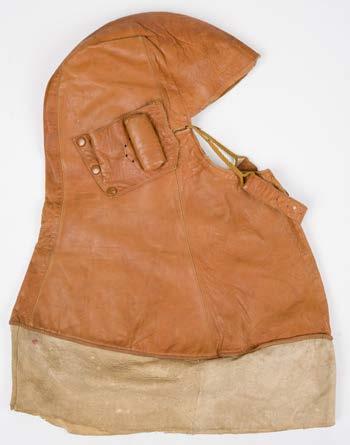
£200 - £300
144* Flying Helmet. A WWI Royal Flying Corps “cowl” pattern leather flying helmet, the soft brown leather balaclava type helmet with padded wind protectors, chamois and fur lining with printed tailors label for ‘A. Edwards & Co, London’, a good example of a scarce helmet (1)
£400 - £600
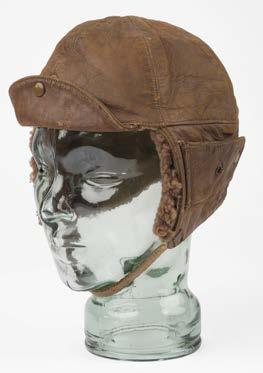
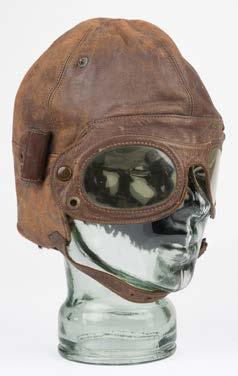
145* Flying Helmet. A WWI Royal Flying Corps brown leather flying helmet with integral goggles, the brown leather helmet with padded wind protectors, perspex goggles with pop studs enabling them to be raised, felt and fur lining and chin strap, together with another brown leather flying/motoring helmet from the same period, with felt and fur lining (2)
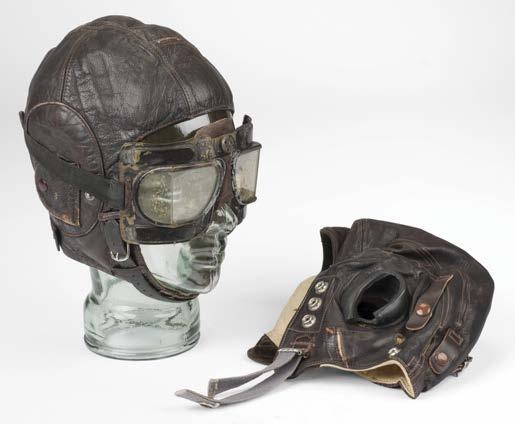
£300 - £500
146* Flying helmet. A WWII RAF C-Type flying helmet, No 4 1 1/22 1/2, brown leather with chamois lining, rubber earpieces with Air Ministry markings 10A/13466, internal wiring for the microphone and wired loom with brown bakelite bell shape plug marked numbered 5935-99-940-1767 (1)
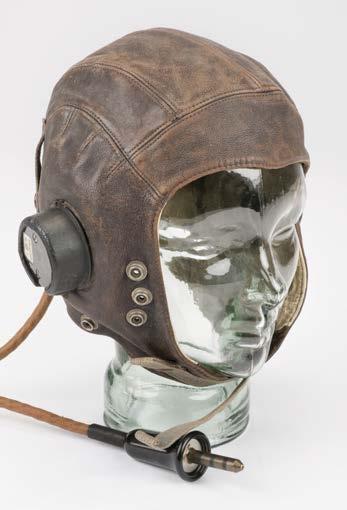
£200 - £300
147* Flying helmet. A WWII RAF C-Type flying helmet, clean example numbered 22C/878, the chamois lining numbered 21848, together with a WWII brown leather flying helmet with sheepskin lining, plus a pair of RAF Mk V flying goggles, in poor condition (3)
£150 - £200
148* Flying helmet. A WWII RAF C-Type pilot’s flying helmet, darkbrown soft leather with fitted headphones, wiring-loom and jack-plug, chamois-lined and stamped with Air Ministry and war department arrow, in excellent original condition, with a Type ‘H’ oxygen-mask with connection tube and fitting, a pair of Mk 8 flying goggles in original Air Ministry card box with ancillaries and spare lenses plus a pair of white silk Air Ministry gloves liners, overall condition good (4)
£500 - £800
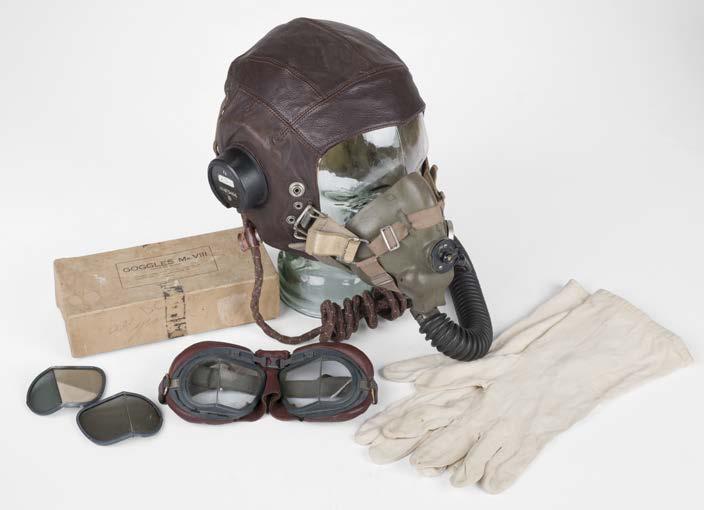
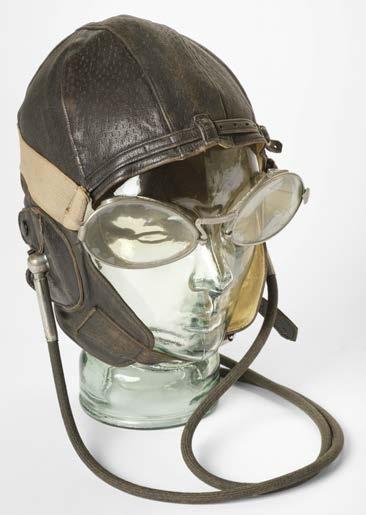
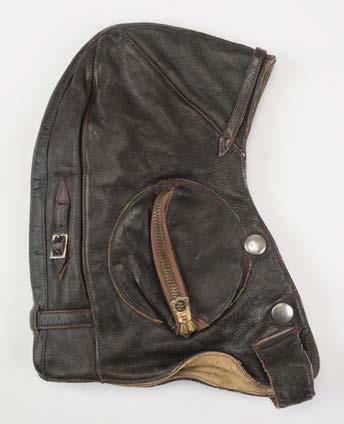
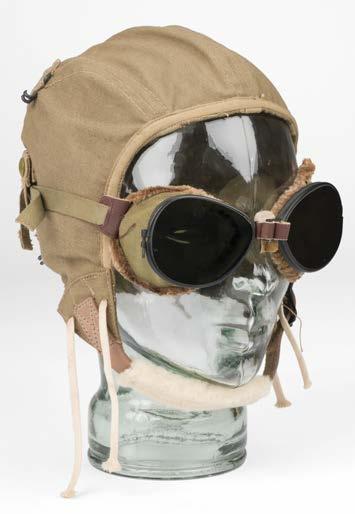
£150 - £200
149* Flying helmet. An interwar RAF pilot’s flying-helmet of Lewispattern circa 1930, large size 7 ¾, chamois-lined, segment-stitched black kid-leather with buckle-adjustable forehead and chinstraps with flat-padded button-down earpieces, complete with a pair of nickel-plated “Gosport-Tube” intercom headphones, together with a pair of original period flying goggles, both in good condition (2)
150* Flying helmet. WWII American A9 flying helmet, green canvas with sheepskin ear pieces and chin strap, Type A9 ... Property of Air Force U.S. Army’ tailors label, with flying goggles with tinted lenses (2)
£100 - £150
151* Flying Helmet. WWII Australian Issue period B Type flying helmet, circa 1940, size 6 5/8, dark brown leather with zip-up ear cups lacking pullers, chamois lining, with Staggs Australia tailors label (1)
£200 - £300
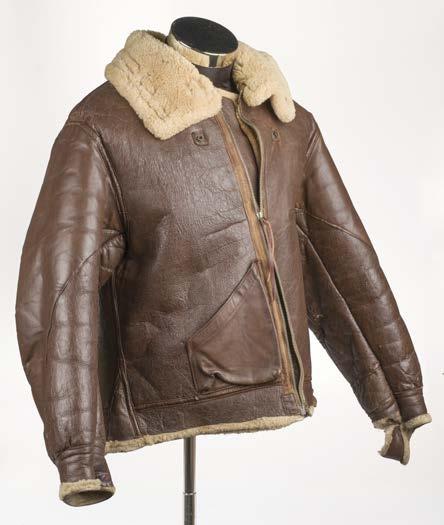
152* Flying jacket. A WWII American Air Force B3 brown leather flying jacket, single pocket to the front, sheepskin lining and cloth tailors label for ‘Type B3, size 40, H.L.B. Corp. N.Y.’, one cuff has a rip, generally in worn condition, 70 cm long, 41 cm chest, 42 cm inner arm (1)
£300 - £500
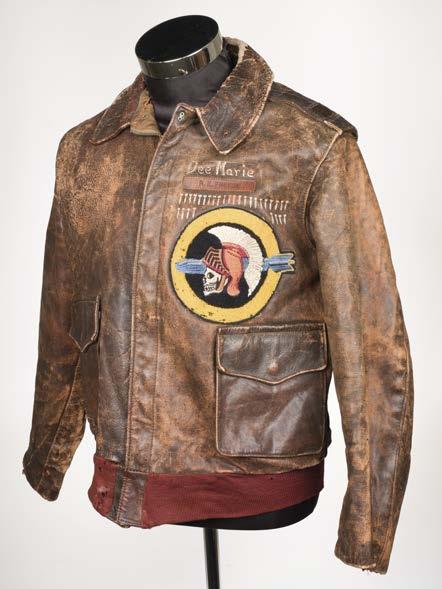
153* Flying jacket. A WWII United States Air Force A-2 flying jacket attributed to Ralph Earl Freese, brown leather with name bar stamped ‘R.E. Freese’, painted with 30 bombs indicating successful missions, the name of aircraft “Dee Marie” and rare cloth patch of the 533rd Bomb Squadron, pockets to the front, Talon zip, Aero Leather Clothing Company tailors label (size 40), the soft brown cotton lining stamped ‘AM Y79’, the jacket has obviously been extensively worn and as a result the stitching around the pockets har perished and wear throughout, 43 cm chest, 67 cm long, 44 cm inner arm, with extensive research including copied photographs and logbook entries
Provenance: The vendor's great grandfather, then by family descent. This jacket, along with lot 118, was found in a box labelled Freese. While it is not known exactly how he came to have these items, the vendor's great grandfather served as part of 101 Coy. C.M.P. (Specialised unit of the Royal Military Police), was involved in the Rhine push, and was later called back to Germany for war crimes prosecutions. Family accounts point to a potential link or acquaintance with Freese.
Ralph Freese was born in Pennsylvania in 1917. He graduated from the United States Military Academy at West Point in 1941 with a Bachelor of Science and later graduated from the Air Corps Advanced Flying School in 1942. He was a decorated pilot, awarded the Air Medal with Oak Leaf Clusters, indicating he received the medal three times in total.
Freese is listed numerous times in various war diaries. He has over 60 logs attributed to him, which outline daring missions to some of the most dangerous targets of the war. He flew many of these as Squadron Leader in the B-17 Flying Fortress "Dee Marie", the name of which appears on the jacket. Although he was part of the 533rd Bomb Squadron, he mainly flew for the 534th Squadron, where he sometimes flew every day for multiple weeks toward the end of the war. Freese was transferred to the Air Corps at a pivotal time; having trained before the Pearl Harbour attack, he was tasked with training new pilots and cadets for deployment in the European theatre. The name "Dee Marie" refers to the B-17 Flying Fortress that flew missions for the 381st. The aircraft is well documented, appearing in many archives, museums and documentaries. The aircraft was designated a "Lucky Plane" as it survived the war and was later scrapped. Freese continued to serve as a pilot after the war, later serving during the Korean War and potentially the Berlin Airlift.
(1)
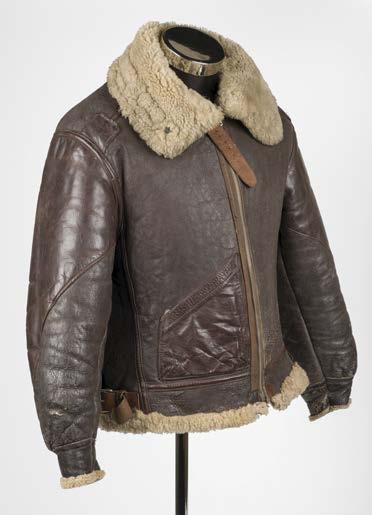
£2,000 - £3,000
154* Flying jacket. A WWII USAAF B3 flying jacket by Aero Leather Flying Company, brown leather with single front pocket, Talon zip, leather waist belt, sheepskin lining and cloth tailors label, general wear commensurate with age, 73 cm long, 46 cm chest, 42 cm inner arm (1)
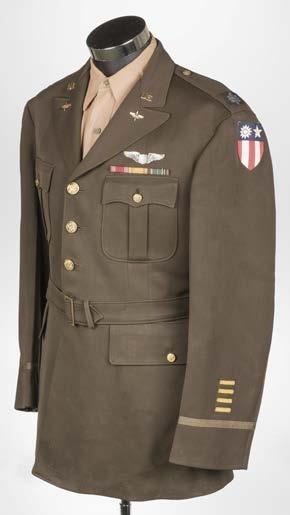
£300 - £500
155* Flying Tigers. American USAAF pilots’ uniform worn by Lieutenant Colonel C.P. Stevens, comprising green cloth tunic with tailors label for Finchley, Jackson Boulevard, Chicago and New York, the inner pocket with named label stamped Mr C.P. Stevens, gilt U.S. winged propeller collar badges, USAAF pilots wings stamped ‘P-30’, medal ribbon bar, Flying Tigers cloth badge on the right shoulder, and 14th Air Force badge on the left shoulder, gilt buttons and waistbelt, with shirt with tailors label for Bendone, New York
(1)
£300 - £500
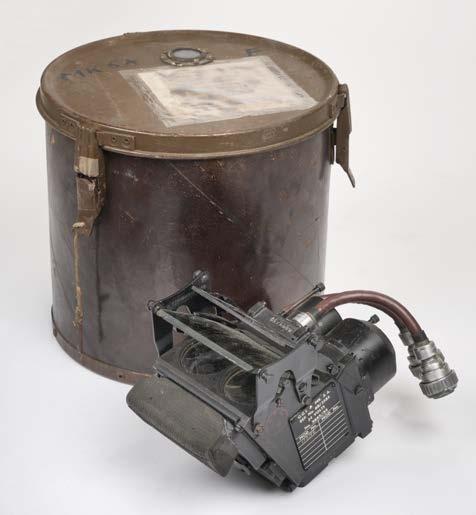
156* Gunsight. Kenyan Air Force Giro Mk8R FGA.80 806 Hunter gunsight, in original circular transport case with printed labels, the case 36.5 cm high (1)
£100 - £150
157* Gunsight. Royal Air Force Giro G.G.S. Mk.5.A gunsight, ref no 8B/8585, in original circular transport case with printed label and typed account by Maurice Hancock titled ‘The early history of the RAE gyro gunsight’, the case 30 cm high (1)
£100 - £150
158* Lewis gun. A WWI Lewis machine gun rear spade grip, blackened steel frame with turned wooden grip, 11.5 cm wide (1)
£1,000 - £1,500
159* Lewis gun. A WWI Lewis gun wind vane sight, flexible links and a wind vane for improved aerial accuracy, designed to be mounted on the front of a Lewis gun, 16 cm long (1)
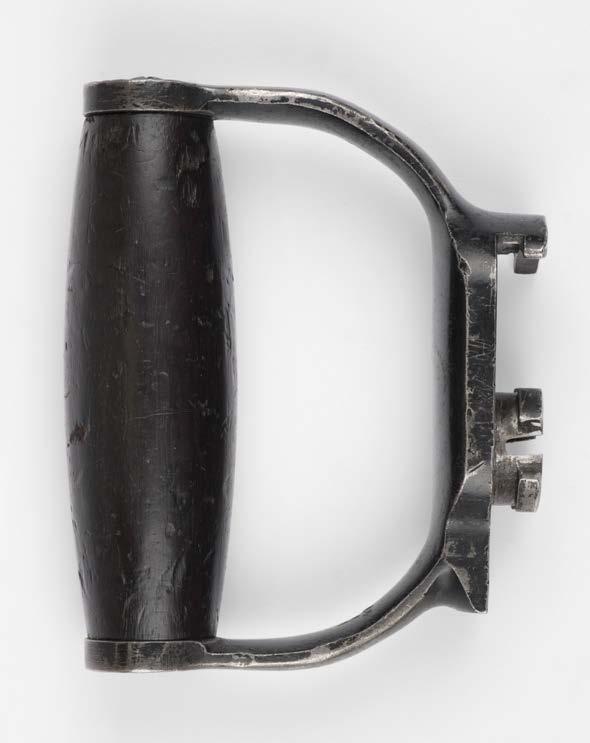
£1,000 - £1,500
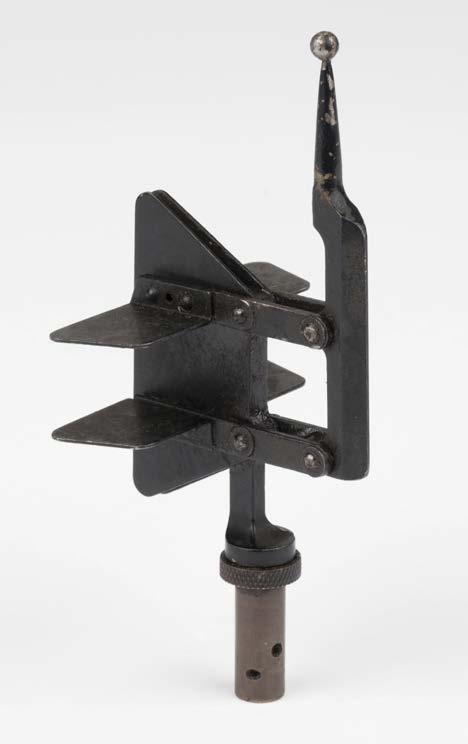
160* Lewis gun. A WWI Lewis machine gun shell catcher bag, blackened steel frame stamped ‘54 V’, with integral clamp stamped with the war department arrow, cloth concertina bag with JLT catch and four pop studs, approximately 45 cm long (1) £2,000 - £3,000
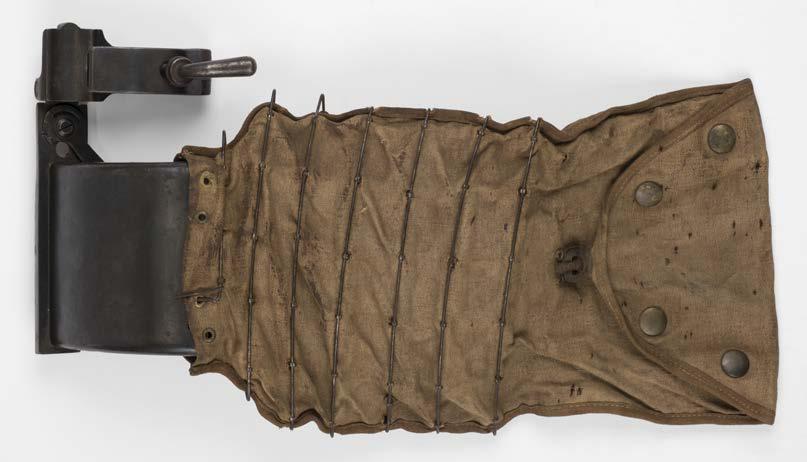
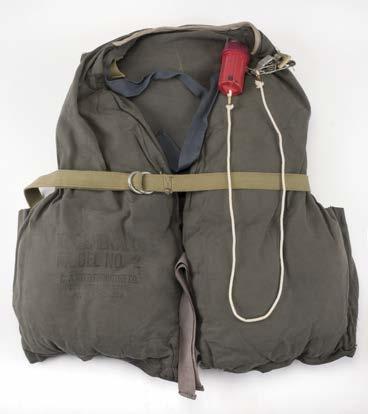
161* Life preserver. WWII American life preserver vest, grey cotton with kapok fillers, stamped in black in ‘... for general use Model No.2, C.A. Reed Furniture Co. Los Angeles, Calif, ... 258’, with red ‘Colvin Slocum Boats Inc, New York, ... Model A’ safety light (1) £150 - £200
162* Lockheed P-38 Lightning. A WWII-period aluminium desktop model of a Lightning, mounted on a lightning bolt base, 21.5 cm wingspan, 15 cm long, together with a colour print, Augsburg Eagle by Michael Turner, numbered 249/500, signed by the artist and Adolf Galland, framed and glazed, frame size, 59.5 x 65 cm (2) £100 - £150
163* Luftwaffe. A WWII German Signals Corps man’s tunic, light blue cloth with red and silver Signals collar badges and shoulder straps, cloth eagle and swastika brevet, brass pebbled buttons, two pockets, moth damage, 81 cm long, 42 cm chest, 44 cm inner arm (1) £200 - £300
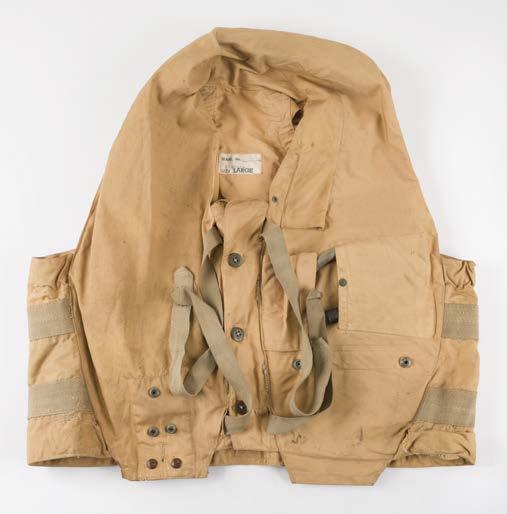
Each lot is subject to a Buyer’s Premium of 22% (Lots marked * 26.4% inclusive of VAT @ 20%)
164* Mae West. A WWII RAF life-saving waistcoat, large, yellow cotton, with an inflatable bladder, cotton label stamped ‘226/448’, black in war department arrow and numbered 103666/C300, general wear commensurate with age (1)
£300 - £500
165* Munitions. An inert WWII RAF practice bomb, bronze painted finish, 44.5 cm high, now displayed as a presentation piece on a wooden stand inscribed ‘In memory of the famous 21st Squadron’, overall height 47.5 cm, together with:
Oxygen bottle. A WWII Hawker Hurricane oxygen bottle reputedly recovered near Biggin Hill, various stamps including ‘A.M. 43132/41’, ‘MkVC’, approximately 42 cm long, plus: Oxygen bottle. WWII Luftwaffe oxygen bottle from night fighter Bf 110 of the 3./NJG 1, blue and silver finish, numbered FL 30500, stamped ‘Sa...rstoff, Leer 2...kg füll150atü’, ‘Luftwaffe Pr22.atü203itr’, 43.5 cm long, with a few related relics including cartridge case
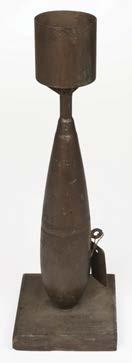
1) 21 Squadron is famous for Operation Jericho: on 18 February 1944, the crews of de Havilland Mosquitoes breached the walls of a Gestapo prison at Amiens, France, allowing members of the French Resistance to escape.
2) There is no precise history other than it is believed to have been found near a caravan park at Biggin Hill, Kent.
3) The note included with the lot states this was from a Bf 110 of the 3./NJG 1, which shot down Short Stirling Mk 1 (W7441) of 7 Squadron over Denmark on 29 September 1941. The Stirling was engaged by night fighter pilot Leutnant Ludolf Schmitz of the 3./NJG 1, who was flying a Bf 110. When the Stirling was in 700 metres height and it became clear that it could not be saved, the crew members still alive left the aircraft in parachutes. Three of the seven crew members were killed.
(3)
£150 - £200
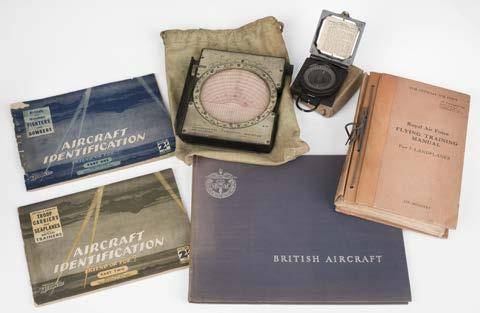
166* Navigational Computer. A Navigational computer Ref. No.68/250 Mk III H, contained in original canvas cover, together with a Compass Magnetic Marching Mk I contained in original box of issue c1940s, together with RAF Flying Training Manual Part 1 revised edition dated 1940, and further with WWII RAF & ALLIES “Aircraft Identification” - Two original Battle of Britain-period publications dated 1940, printed and distributed for “The Aeroplane” by Temple Press Ltd, parts 1 & 2 full-text booklets with photographic, silhouette and diagram illustrations of Allied & Enemy Aircraft; 50+ printed pages detailed text for observers, covers rubbed & some discoloration; also with ‘British Aircraft’ circa 1944-1945 by SBAC for Worldwide Prestige campaign for the industry dated London 1945, hardback covers with artists’ illustrations depicting military & civilian aircraft in “Celebration of Victory & Air Transport in Peace”; 23 colour & monotone plates of artworks by leading War Artists including Cuneo, Wootton, Nockolds et alia: a comprehensive glossary of suppliers & manufacturers to the industry; 30pp gloss-paper, blue-linen covers with silver impressed lettering, slight fading to spine 23 x 28 cm (6) £70 - £100
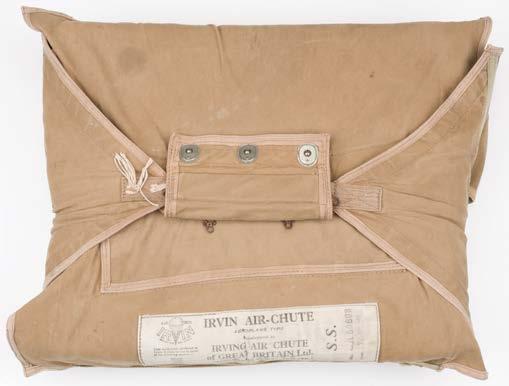
167* Parachute seat pack. An Irvin Air-Chute Type S-S parachute seat pack, dated 1940, the green cloth bag with original trade label stamped ‘Mfg A50603, Date 27 June 1940’, filled with foam for display purposes
(1)
£150 - £200
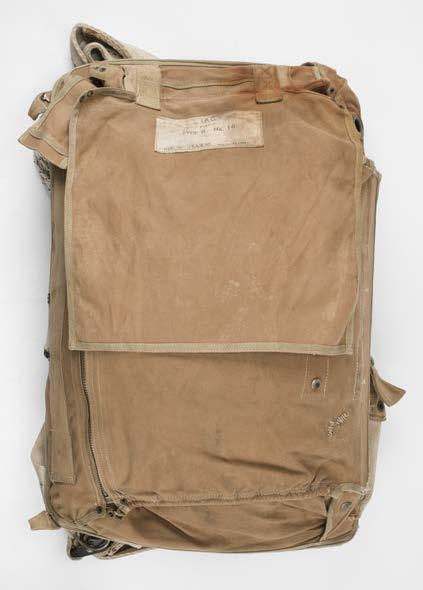
168* Parachute. RAF Type B Mk 16 parachute pack, white cotton label stamped ‘I.A.C. Pack Type B. Mk 16, Ref No 15A/830 (Pack Alone)’ inscribed ‘320052’, the harness with label stamped ‘Harness Type B Mk. 18’ dated 11 July 1957, the pack enclosing white silk parachute (1)
£300 - £500
169* Pilot’s watch. WWII German Luftwaffe Pilot’s watch, the 51 mm black dial with illuminated hour and minute hands, arabic numerals and a subsidiary dial, stainless steel case numbered FL 23883 and 116186, large winding crown, the movement stamped ‘Laco 22 Steine’, the backplate stamped Beobachtungsuhr Bauart: Laco-Durowe’, 63 mm across, lacking strap, working (1)
£2,000 - £3,000
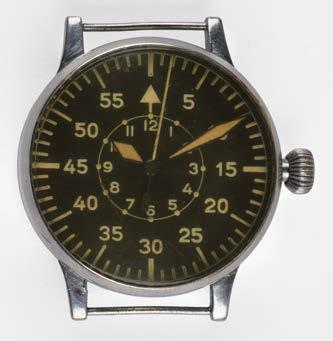
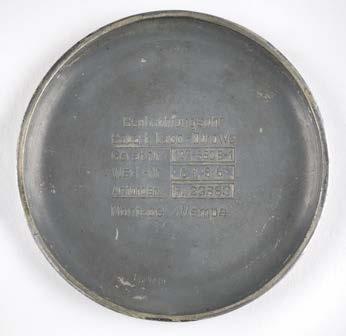
170* Pilot’s watch. WWII German Luftwaffe pilot’s watch, the 53 mm black dial with illuminated hour and minute hands, red seconds hand, arabic numerals, stainless steel case numbered FL 23883 and 1329, large winding crown, 60 mm across, period brown leather strap, working (1)
£3,000 - £4,000
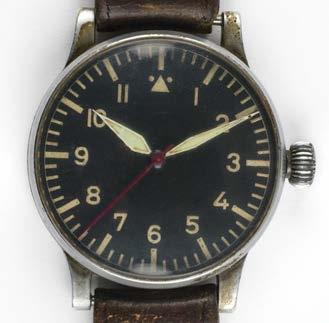
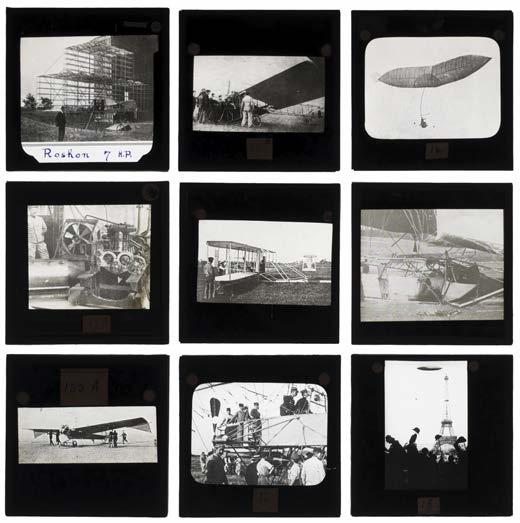
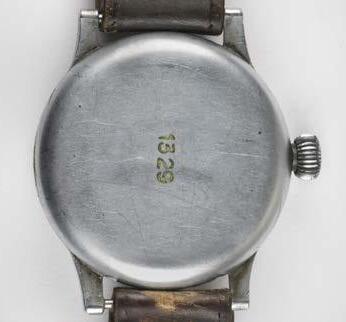
171* Pioneer Aviation. A collection of early aviation glass lantern slides, early 20th century, a collection of approximately 250 glass lantern slides, showing various images of aircraft, airships and balloons, and Howard Wright Aeroplane, Roshon 7 HP, June Bug, Pean Monoplane, Girdling the Earth by Aeroplane, Orthopter, Melvin-Vaniman, some aerial views taken from early aircraft, F. Bousson, Guilbert 6 H.P., etc., 8.3 x 8.3 cm, a few with occasional cracks, all slides housed within four contemporary wooden boxes (a carton)
£150 - £200
172* Pitot tube. An American I. EA. Pitot Static Tube, circa 1948, unopened and in original sealed packaging, with printed paper label ‘Naval Aviation Supply Depot’ dated August 1948, 5 cm high x 34 cm wide x 10.5 cm deep
These pitot tubes were mostly fitted to the Vought F4U Corsair and the Grumman F4F Wildcat. (1)
£150 - £200
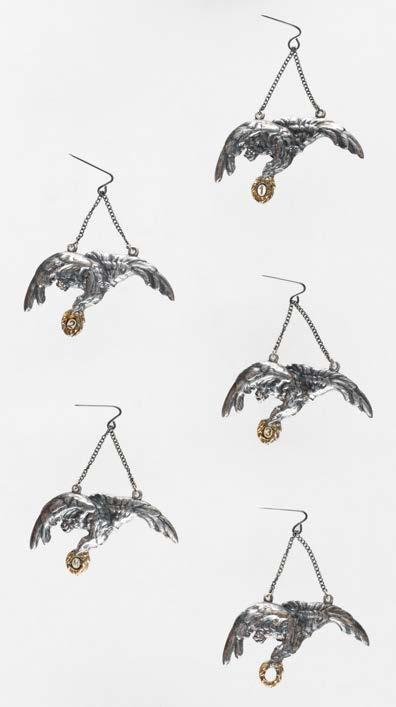
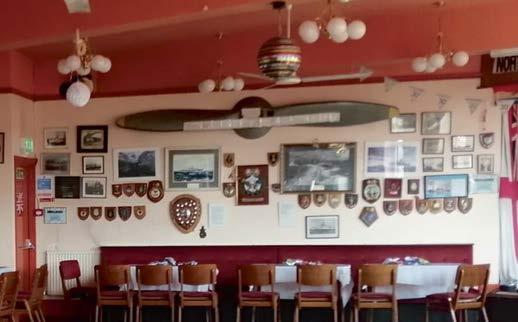
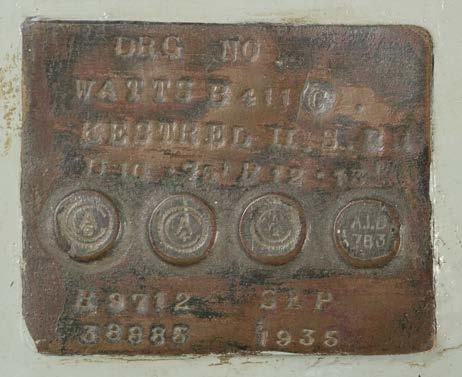
173* Polish Air Force. Polish pilot’s badges by Mennica Panstowa (5), white metal showing an eagle holding a gilt wreath, denoting 1,2,3, M, and gold wreath, each reverse with a screw post and nut stamped ‘Mennica Panstowa’ (5)
£200 - £300
174* Propeller. A scarce Watts aircraft propeller, probably from a Hawker Nimrod, circa 1930s, substantial boss with two blade, finished in grey with yellow tips and brass leading edge, a copper dataplate stamped ‘Drg No Watts B411 C, Kestrell II’ dated 1935, 329 cm long
Provenance: Formerly on display at the Northamptonshire Royal Navy and Royal Marines Association club house, before being sold in a local auction and purchased by the current owner. (1)
£700 - £1,000
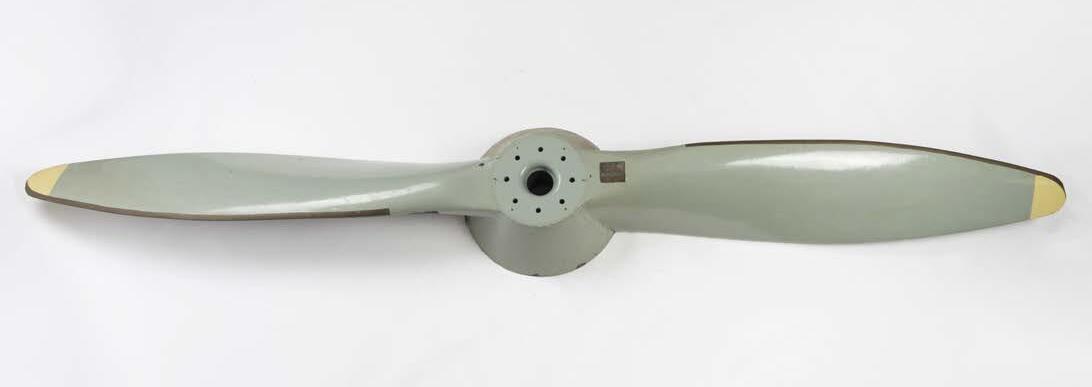
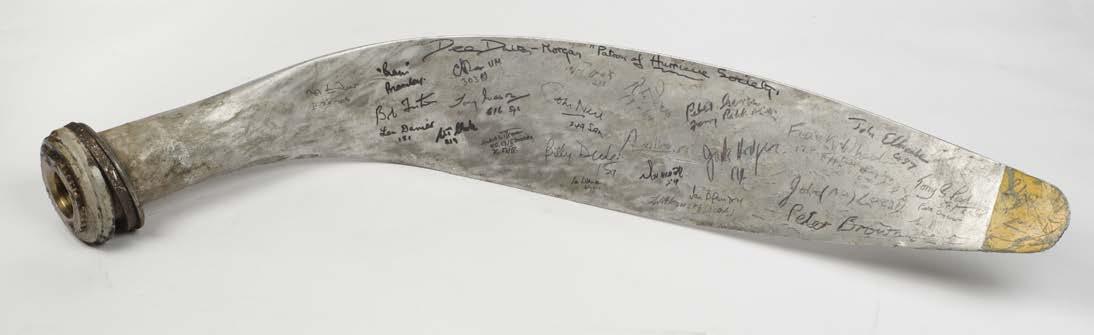
175* Propeller. A WWII RAF Hurricane metal propeller blade relic, multi signed by veterans at various Aces High Battle of Britain events at Duxford in 1990s, including Tom Neil, Bob Foster, Alec Gray, Ken Wilkinson, Joan Fanshawe, Richard Jones, Robin Appleford, John ‘Bugs’ Keatings, Terence Kane, Michael Wainwright, Peter Brown, George Swanwick, Mick Maguire, Leonard Davies, Nigel Rose, Terry Clark, Ralph Wild, Edmund Creegan, Kurt Taussig and polish pilots including Stanislaw Nawarski, Wladyyskaw Szymanski and Jan Stangryciuk, also signed by the singer Vera Lynne, approximately 150 cm long (1)
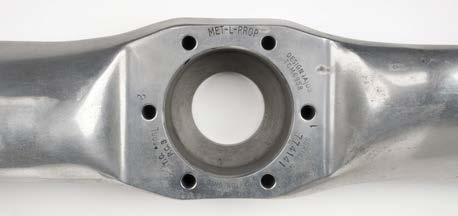
176* Propeller. An American McCauley Met-L- two-blade propeller, aluminium, stamped ‘Met-L-Prop, McCauley, Dayton, Ohio, Serial No 774141, Design 1A103 TCM6958’, 174 cm long
These were very popular on the Cessna light aircraft. (1)
£100 - £150
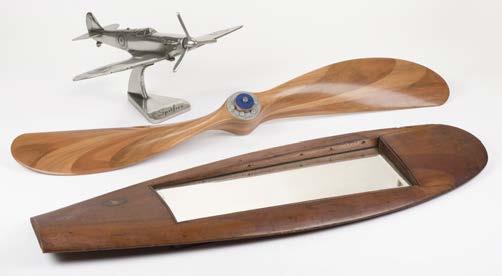
£2,000 - £3,000
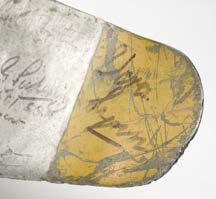
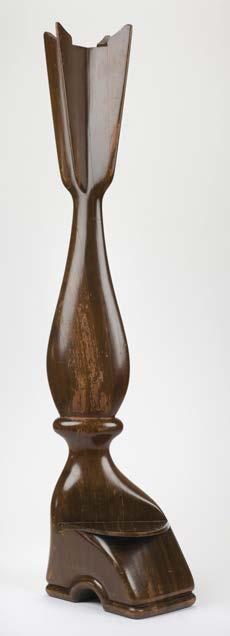
177* Propeller. An inter-war mahogany propeller blade, the laminated blade with 'Propeller Co Limited The Integral' decal, incorporating a bevel edge mirror, 94 cm long, together with a modern two blade laminated mahogany propeller, the boss with 6 rivets, 102 cm long, plus a modern composite model of a Spitfire raised on a curved stand (2)
lot is subject to a Buyer’s Premium of 22% (Lots
£100 - £150
178* Propeller. An unusual mahogany cut propeller blade, circa 1920s [?], fashioned in the form of a bomb, the base with a small curved shelf, 114 cm high (1)
£200 - £300
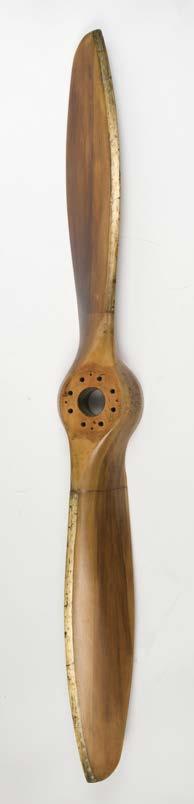
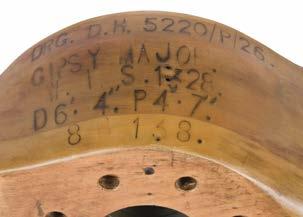
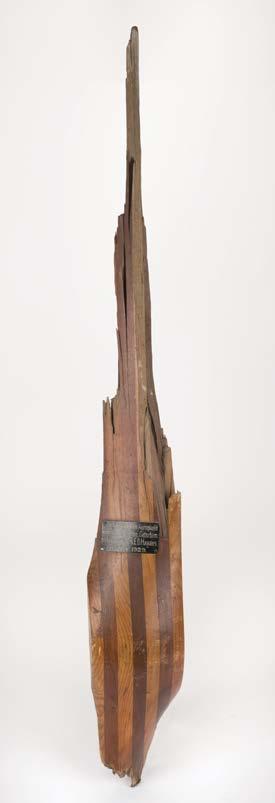
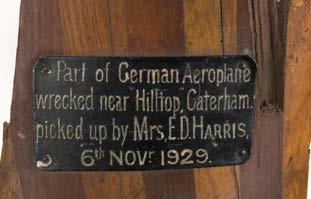
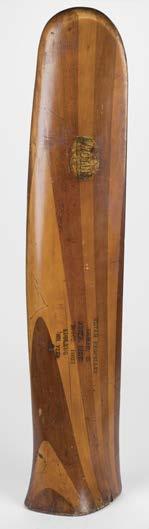
181* Propeller. WWI German ‘Wotan’ propeller blade, ash and walnut with Wotan decal, stamped ‘Wotan Propeller, Berlin 0, 200 P.S. Benz, 3000D. 180ST, Edulzug, Nr. 7238, 108 cm long, a fine and scarce example Numerous aircraft of the 1917-18 period were powered by the 200 HP Benz (Daimler/ Mercedes) in-line engine. (1)
£700 - £1,000
179* Propeller. De Havilland Tiger Moth two-blade propeller, circa 1930, the boss stamped ‘DRG. DH. 5220/P/26, Gipsy Major, W.I.S.1328, D.6’. 4”. P.4.7”, 88138’, each blade with brass leading edge, 192 cm long, the blades have been cut and skillfully reaffixed (1)
180* Propeller. WWI German propeller relic, laminate ash and walnut with a plaque inscribed ‘Part of German aeroplane wrecked near Hilltop, Caterham, picked up by Mrs E.D. Harris, 6th Novr 1929’, 118 cm long
£200 - £300
Provenance: Dominic Winter Auctioneers, November 2011, lot 396
The plaque is dated 1929, which makes this likely to be from an aircraft brought back from France for evaluation after the war and subsequently crashed (as many did, with tragic consequences). The Allies were primarily interested in the Fokker DVII as a ‘state of the art’ fighter, and so it was likely to have been from a Heine propeller from such an aircraft. (1)
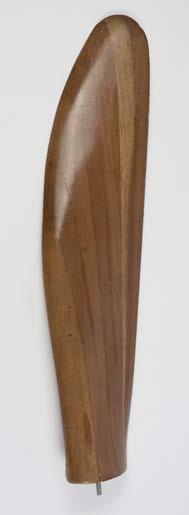
£100 - £150
182* Propeller. WWI RFC/ RAF mahogany propeller blade, probably cut from a fourblade propeller, 110.5 cm long (1)
£100 - £150
£100 - £200
183* RAF & Army uniforms. A 1950s RAF great coat, with brass king’s crown buttons, the lining with printed tailors label for Alfred Polikoff Ltd Ltd, size 5, overprinted with service number 5070786, 109 cm long, 36 cm wide, 42 cm inner arm, together with another 1950s RAF great coat with king’s crown staybrite buttons, dated 1951, an RAF mess jacket and waistcoat, the lining with tailors label for R.E. Ltd London and inscribed with owners name ‘Bennett J’, Sergeants 1949 pattern battle blouse by Wm Brownlee & Co Ltd dated 1964, another with trousers (no markings or labels), an army great coat dated 1950, with brass king’s crown buttons, plus 13 pairs of woollen army trousers, various sizes and shades of green (19)
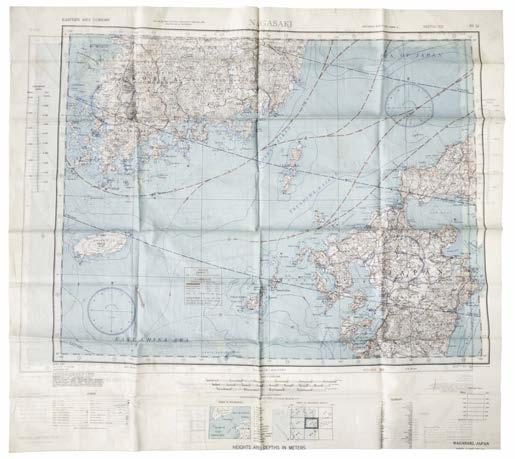
184* RAF Silk Escape Maps, comprising, AAF Harbin and SpasskDal’niy 1st edition 1943; Kandar and Makran (3) two date 1957 the other 1959 all edition I-GSGS; Al Jauf and Beyrouth-Damas, 5th edition 1953 and two others (7)
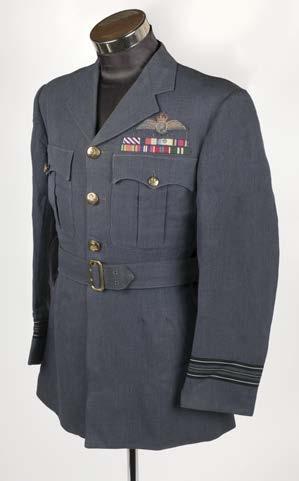
£100 - £150
185* RAF tunic. A post-WWII RAF officer’s full dress tunic belonging to Squadron Leader T.C.P. Maxwell, DFC, the blue cloth tunic with Austin Read tailors label named to the recipient and dated 1948, bullion embroidered wings brevet, medal ribbon bar including DFC and Air Efficiency entitlement, brass king’s crown buttons and Squadron Leader cuffs, approximately 80 cm long, 43 cm chest, 45 cm inner arm, with some papers addressed to ‘Sq. Ldr. T.C.P. Maxwell, No. 27 O.M.Q., R.A.F. New Camp, Gibraltar.’ dated 1956 Thomas Cairns Peattie Maxwell (1917-1959) was born in Dunbartonshire. He served during WWII with 53 Squadron; his DFC was gazetted on 20 April 1943 (Acting Squadron Leader). (1)
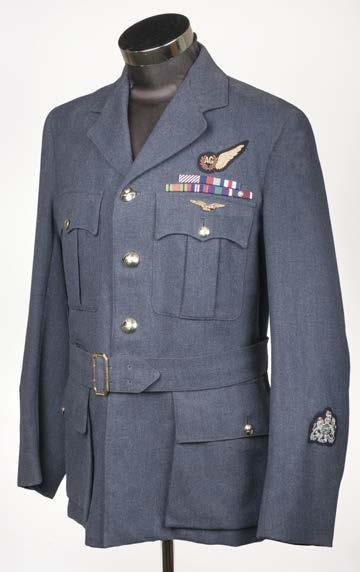
£100 - £150
186* RAF uniform. A post WWII RAF No. 1 dress tunic belonging to Flight Sergeant Colin Follit, D.F.M., 156 Squadron, blue cloth with Air Gunner cloth brevet, medal ribbon bar and brass eagle insignia, silvered staybright E.II.R. buttons and waistbelt, a H. Edgard & Sons Ltd tailors label, printed ‘Follit’, ‘P1862784’, 80 cm long, 41 cm chest, 49 cm inner arm
D.F.M. London Gazette: 4 December 1945 1862794 Colin Henry Bingley Folitt[sic], R.A.F.V.R., 156 Sqn (1)
£100 - £150
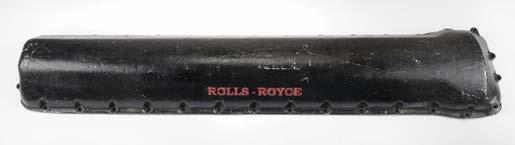
187* Rocker cover. WWII Rolls-Royce Merlin engine rocker cover as fitted to Spitfire and Hurricane, black painted finish with red stencilled lettering, serial number illegible, 107.5 cm long (1)
£400 - £600
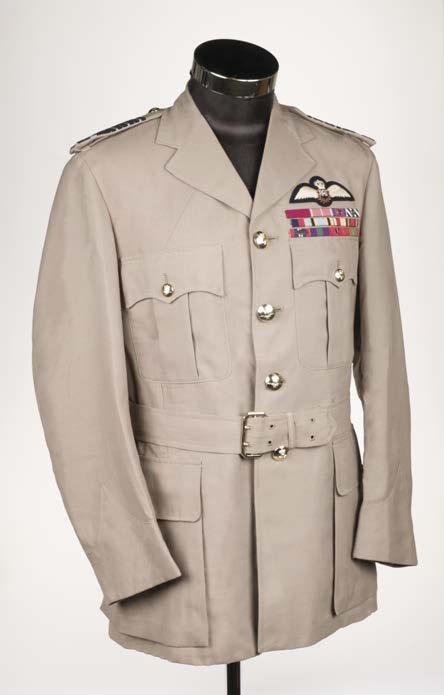
188* Royal Air Force. Air Chief Marshall uniform belonging to Sir Lewis Hodges KCB CBE DSO & bar DFC & bar, 1975, comprising tropical service dress: khaki linen tunic and belt with three medal riband bars, staybright buttons, 69 cm long, inner arm length 45 cm, with trousers, both with R.E. City labels inscribed with Sir Lewis Hodges and dated 22/2/75
Air Chief Marshall Sir Lewis Hodges (1918-2007) joined the Royal Air Force College in Cranwell in 1937. Commissioned as a pilot officer in December 1938 he joined Bomber Command and flew with 78 Squadron and later 49 Squadron at RAF Finningley. In September 1940 he was forced to crashland in Brittany, due to damage his aircraft sustained in an air raid at Stettin. This led him to make a daring escape across enemy lines which saw him arrested and imprisoned in France and Spain before making it back onto English soil in June 1941.
Awarded the Distinguished Flying Cross (DFC) in May 1942 for operations including attacks on German battleships. He was mentioned in despatches in June 1942 and invited by Wing Commander Charles Pickard to join 161 Squadron at RAF Tempsford. In May 1943 Hodges took over the command of the squadron, organising many operations behind enemy lines, including the collection of two unidentified men, Vincent Auriol and François Mitterrand. The former made him a Commandeur of the Légion d’Honneur in 1950 and the latter a Grand Officier of the Légion d’Honneur in 1988. In 1944 Hodges was selected to serve in the Far East as staff officer to Air Chief Marshall Sir Trafford Leigh-Mallory. However, upon the death of his brother, Hodges requested to return to active service and took command of 357 Squadron at RAF Jessore, near Calcutta. An action which saved his life as it meant he didn’t fly to India with Leigh-Mallory (the flight crashed in the Alps, killing all on board).
After the War Hodges held many positions, including NATO Deputy Commander-in-Chief Allied Forces Central Europe and as Air Aide-deCamp to the Queen from 1973-76. He retired from the RAF in 1976. (2) £200 - £300
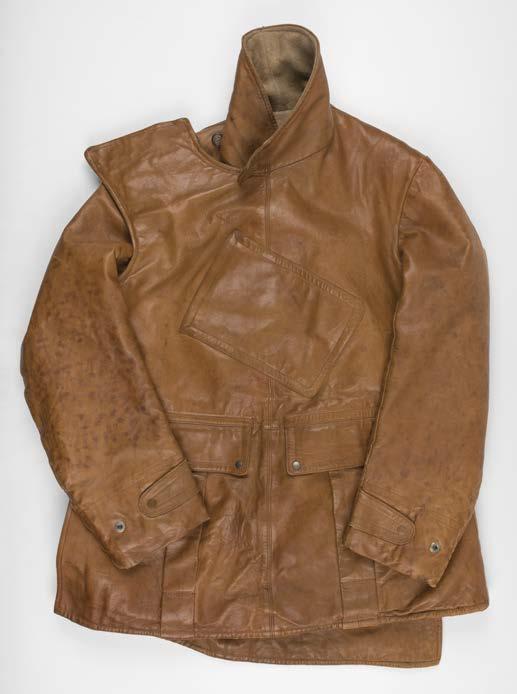
189* Royal Flying Corps. A fine WWI RFC pilot’s leather flying coat, soft brown leather with diagonal pocket for a navigational map, oversized pockets with pop studs, horn of composite buttons, wool lining with inner pocket, 90 cm long, 47 cm chest, 49 cm inner arm Provenance: The Hon. Patrick Lindsay (1928–1986), head of the Old Masters Department, Christie’s and aviation and motoring enthusiast. (1)
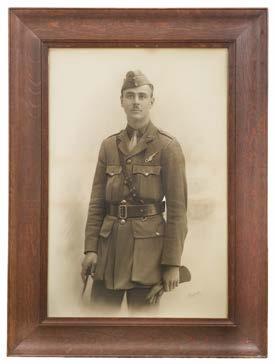
£700 - £1,000
190* Royal Flying Corps. A WWI portrait photograph of an unknown RFC officer, wearing full dress with Observer brevet and West Surrey collar badges, a bi-plane in the background, signed ‘Wayland’, 68 x 45.5, period oak frame, frame size 86 x 63 cm and a particularly unusual size for this period (1)
£100 - £150
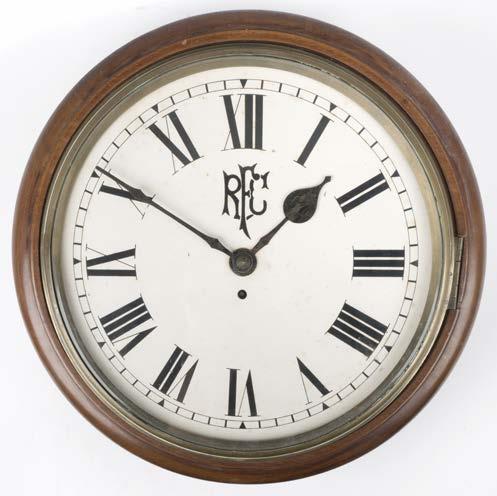
191* Royal Flying Corps. A WWI RFC station circular 8-day wall clock, circa 1917, the 35.5 cm white enamel dial inscribed ‘RFC’ with black roman numerals, black steel hands, the mahogany case stamped with war department arrow and dated 1917, the brass fusee movement with brass plate stamped ‘A. Ingram 2471 1905’ the back box with original paper label for instructions for use and stencilled ‘66’, some veneer lifted, with brass pendulum, case size 46 cm diameter
Provenance: RFC Rendcomb Airfield, Gloucestershire.
(1)
£1,000 - £1,500
192* Scarff ring. A WWI Royal Flying Corps Scarff ring, believed to be the only example still in private hands, the circular frame with replacement bungee cord suspension to assist in the elevation to compensate for the weight of the gun, later grey and black painted finish, 80 cm diameter
Provenance: Private collection, Hampshire.
The Scarff ring was a type of machine gun mounting developed in the early stages of WWI by Warrant Officer (Gunner) F.W. Scarff of the Admiralty Air Department for the use on two-seater aircraft. The mount incorporated bungee cord suspension in the elevation to compensate for the weight of the gun, and allowed an airgunner in an open cockpit to swivel and elevate his Lewis machine gun quickly and easily fire in any direction. Later models permitted the fitting of two guns. The Shuttleworth Collection have an example in its collection.
Please note the Lewis gun is for display purposes only and not included with the lot.
(1)
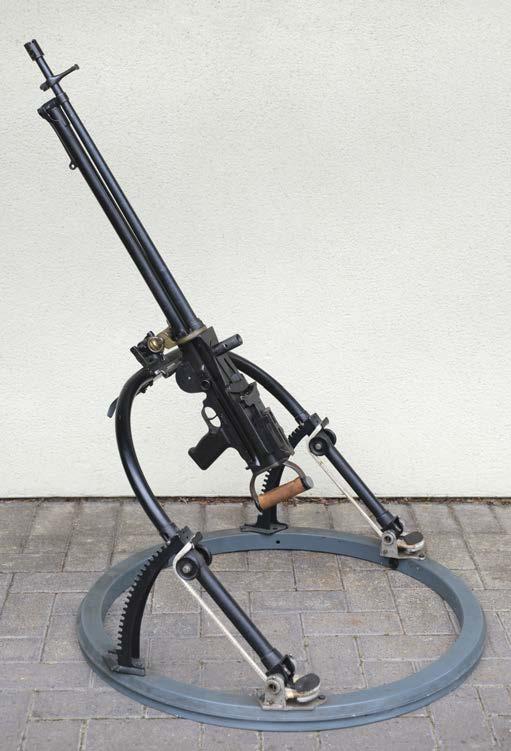
£15,000 - £20,000

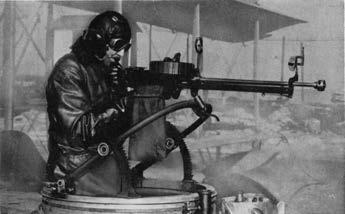
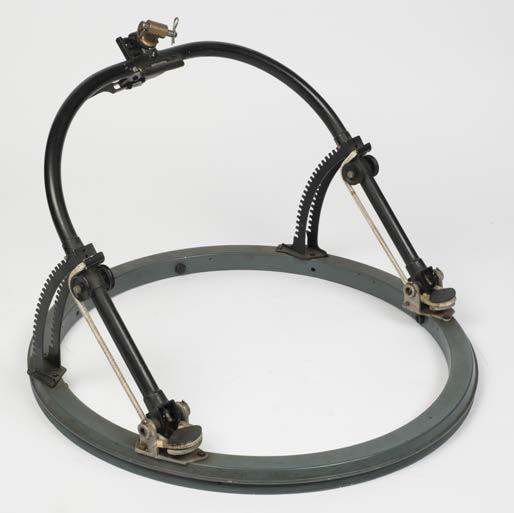
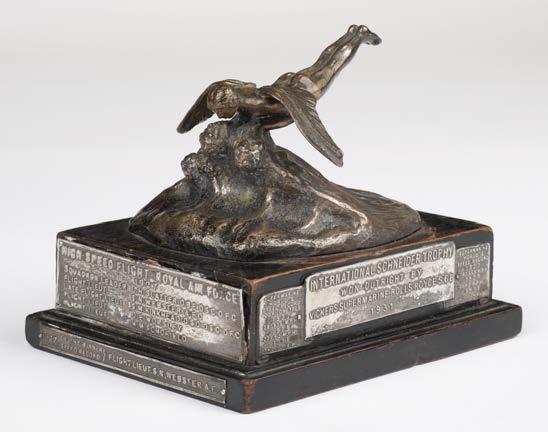
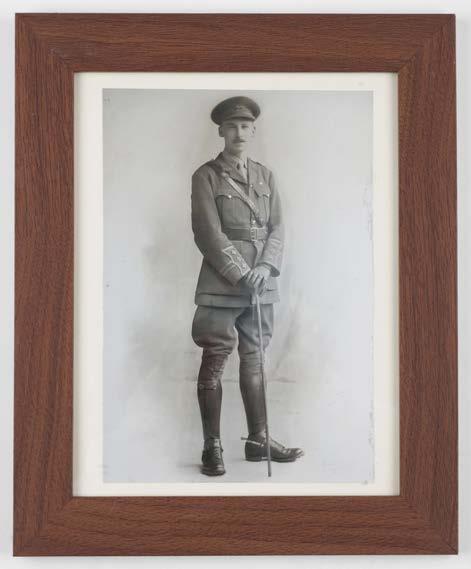
193* Schneider Trophy. An important silver-plated Schneider Trophy miniature presented to Hugh Henry Duvall, mounted on an ebonised plinth applied with nine silver-plated plaques recording the International Schneider Trophy winners, World’s Speed Record holders and Royal Air Force High-Speed Flight members, variously dated 1927-1931, 11 cm high x 14.5 cm wide x 11 cm deep, general wear commensurate with age
Provenance: Henry Hugh Duvall, then by family descent.
Henry Hugh Duvall served during WWI with the Royal Fusiliers before being commissioned as a Lieutenant with the Leicestershire Regiment. It is unclear what role Duvall played in the Schneider Trophy contest, but it is thought he was an accountant for the Brits.
A copied photograph of Duvall is included with the lot. (1)
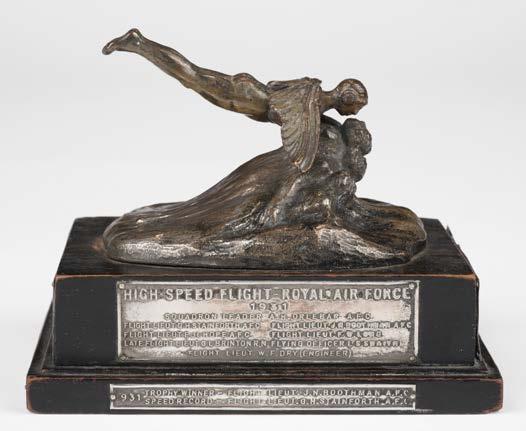
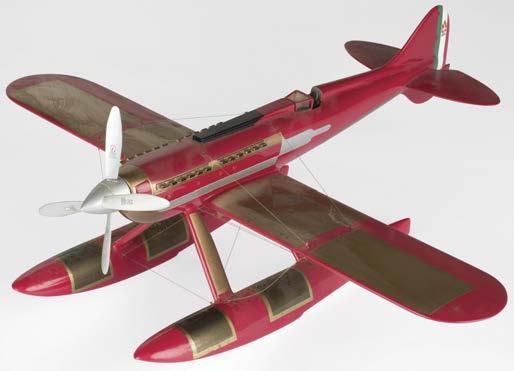
194* Schneider Trophy. A good desktop display model of the Supermarine S.6B ‘S1595’ flown by Flight Lieutenant John Nelson Boothman at Calshot in 1931, the wooden model finished in silver and blue, with aircraft number on the tail fin, wire-braced wings and twin floats, articulated 2 blade propeller, approximately 44 cm long, 47 cm wingspan, presented on a red and white chequered stand with brass plaque engraved ‘Supermarine S-6B’, together with another Schneider Trophy model of the Italian Macchi M.C.72 181, the wooden model finished in red and gold, with Italian flag on the tail fin, articulated 4 blade propeller, 43 cm long, 49 cm wingspan
Provenance: The Ray and Mark Hanna Aviation Collection.
£3,000 - £5,000
Air Chief Marshal Sir John Nelson Boothman, KCB, KBE, DFC, AFC (19011957) was a senior Royal Air Force officer during WWII who went on to high command during the post-war years. Boothman was educated at Harrow County School for Boys before joining the RAF in 1921 and choosing to become an instructor at the Central Flying School in Upavon, Wiltshire. He went on to win the Schneider Trophy for seaplane flying in 1931. (2)
£150 - £200
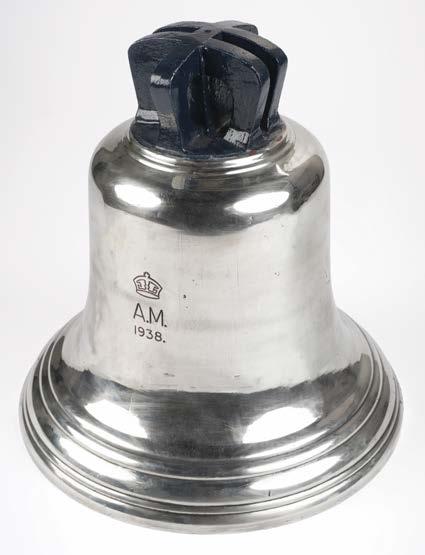
197* Scramble Bell. A WWII style scramble bell bracket, modern, black painted finish, 45 x 25 cm
£2,000 - £3,000
195* Scramble bell. A WWII RAF aerodrome station bell dated 1938, silvered, engraved with a small crowned motif, the crown painted blue, 34 cm high, with a later replacement clapper, a fine and particularly large example (1)
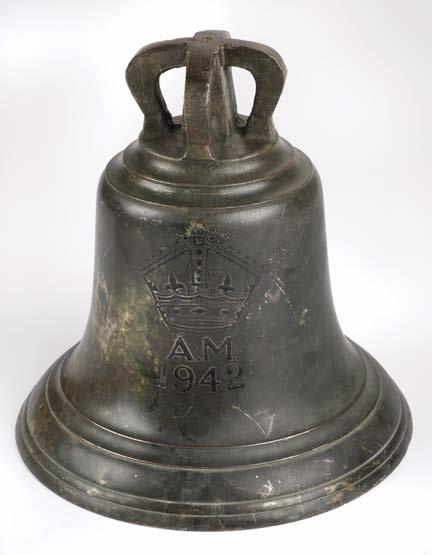
196* Scramble bell. A WWII RAF aerodrome station bell dated 1942, bronze with an overall rich patina, engraved with a large crowned motif and war department arrow and S T, 28 cm high, with a later replacement clapper (1)
£1,500 - £2,000
An original example sold at Dominic Winter Auctioneers in November 2024 for a hammer price of £1700. (1)
£200 - £300
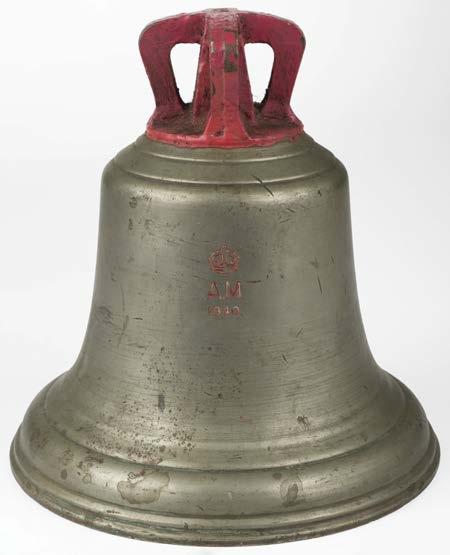
198* Scramble bell. A WWII RAF aerodrome station bell dated 1940, bronze and engraved with the small crowned Air Ministry motif infilled in red, the crown painted red and various stamps, interior painted red, 28 cm high, with clapper (1)
£1,500 - £2,000
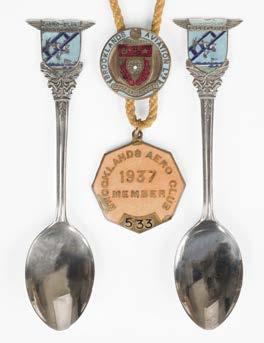
199* Spoons. A pair of Art Deco period aviation silver teaspoons, the finials enamelled with BAC badge, engraved verso ‘RCS 18.4.37’ and ‘MRF 25.7.37’ respectively, and with a member’s enamelled lapel-pass badge dated 1937, together with a Brooklands Aviation Ltd enamelled lapel badge
(4)
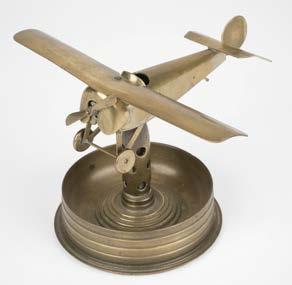
£150 - £200
201* Vickers Vimy. A George V silver presentation piece by Garrard & Co Ltd, London 1920, skillfully modelled as Vickers Vimy biplane G-EAAV, with twin four-blade propellers and two pairs of wheels, 20 cm wingspan, 13 cm long, one propeller detached, general pitting and some wires and struts loose or missing, presented on a large ebonised base with hallmarked silver plaque engraved ‘A model of the Vickers Vimy Aeroplane G.E.A.A.V. which made the first attempt to fly from Cairo to the Cape February 1920’, base 19 cm long
The Vimy Commercial was a civilian version with a larger diameter fuselage (largely of spruce plywood), which was developed at and first flew from the Joyce Green airfield in Kent on 13.04.19.
Ex-K107 (in the early pre “G-E...” series of British civil registrations). First civil registered as G-EAAV (C of A No. 22) on 13.05.19 to Vickers Ltd. The prototype entered the 1920 race to Cape Town; it left Brooklands on 24.02.20
Written off 27.02.20 when crashed on take off from Tabora, Tanganyika (now Tanzania). This aircraft was used on an attempt on the Cairo to Cape Town record with a prize of £10,000 from the Daily Mail. Flown by Vickers pilots Capt S. Cockerell & Capt F.C.G. Broome.
G-EAAV crashed due to failure of the starboard engine at low altitude. the aircraft then stalled, crashed into acacia thorn bushes, and then impacted with an ant hill, wiping off the undercarriage.
(1)
200* Trench Art. A WWI monoplane scout aircraft circa 1915, artificer-built from shell-brass scrap with detail of rotary engine and rotating propeller and wheels, display-mounted upon a 3.5inch shell-base, 15cm wingspan, together with a miniature anti-aircraft gun, having geared barrel elevation and springloaded firing mechanism, 15 cm long
(2)
£100 - £150
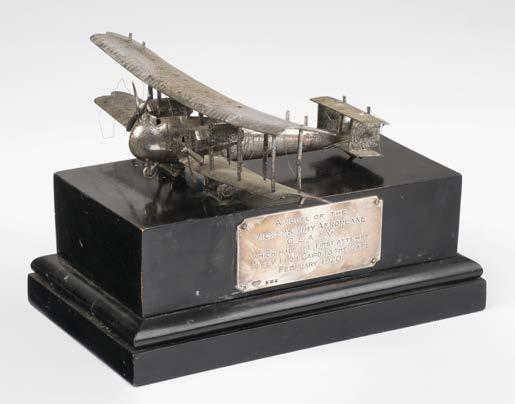
£700 - £1,000
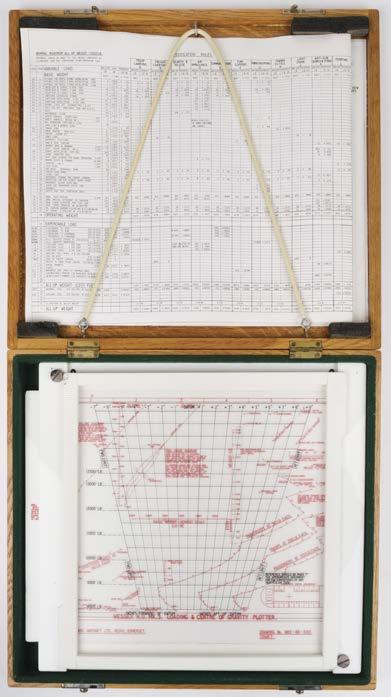
202* Westland Wessex. A Wessex Mk5 helicopter C.G. computor[sic], the perspex loading and centre plotter with printed specification roles, contained in a wooden box, lined with green baize, and inscribed on the hinged lid ‘Wessex Mk5 C.G. Computor’, 34.5 x 37 cm
(1)
£70 - £100
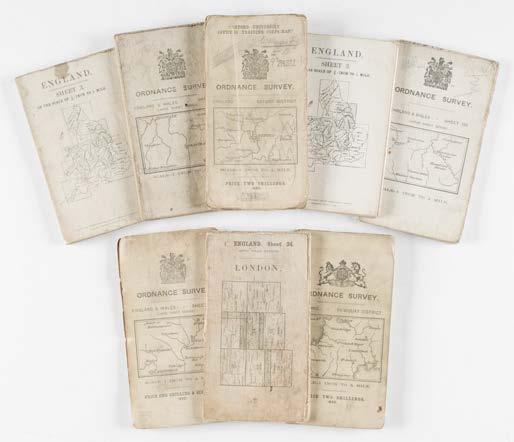
203 Wing Commander William Mayes Fry, M.C., Royal Flying Corps. A collection of 8 Ordnance Survey maps, published 19121914, comprising Oxford District, Newquay District, London, Grantham, St Albans & Maidenhead, Yeovil, and Kingston Upon Hull (x2), some with pencil annotations to map and covers, a couple with closed tears to folds, roughly 80 x 66 cm
William Mayes Fry (1896-1992) was one of the few WWI airmen to survive to the 1990s. Born in Twickenham, he went on to join the army, becoming a commissioned Lieutenant in the Somerset Light Infantry in 1915. He trained as a pilot, receiving his license in 1916, and was subsequently appointed as a Flying Officer with No 12 and then No 11 Squadron, flying BE.2s over the Somme. On 2nd May 1917 he scored his first aerial victory and would go on to repeat his success.
Fry was awarded the Military Cross on the 16th August 1917, 'For conspicuous gallantry and devotion to duty. Diving to a very low altitude and under heavy fire, he emptied all his ammunition into the retreating enemy. During the last month, he has brought down four hostile machines. He has done consistent good work as a pilot.'
On 1st September 1917, he was appointed Flight Commander and transferred to No 23 Squadron to command "C" Flight. Further aerial victories included shooting down and killing Leutnant Walter von BülowBothkamp, winner of the Pour le Mérite, with Frank Granger Quiglet, shooting down an Albatross and downing a Fokker Dr. I. Fry continued his service post-war, serving at RAF Aboukir in Egypt and at Heliopolis. Fry left the RAF in 1943 but re-engaged for service on the outbreak of WWII, where he rose to the rank of Wing Commander and was mentioned in despatches. He retired from service in 1945 and retained the rank of Wing Commander. (8) £70 - £100
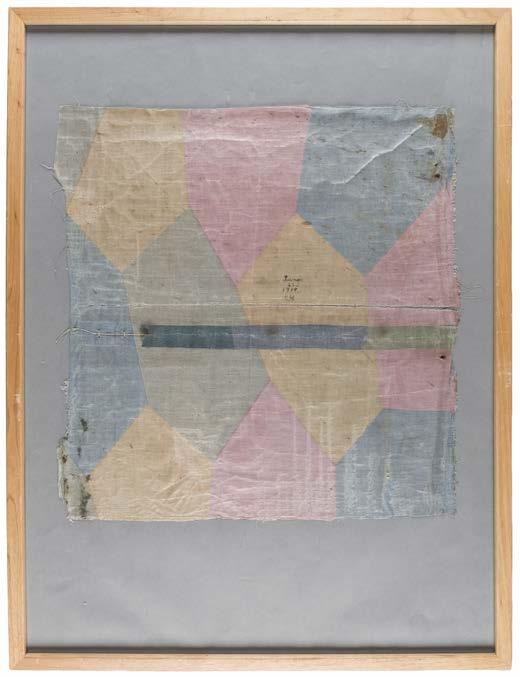
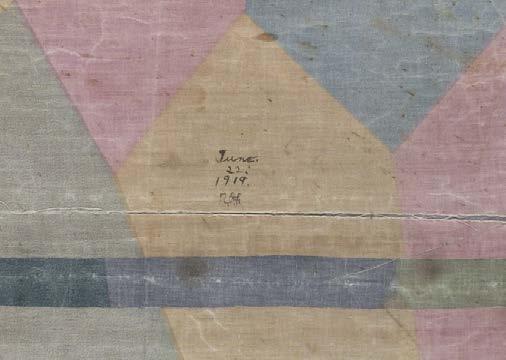
204* Woollett (Tony). A model of a Neiuport 17 flown by Sgt. Jean Paul Maurice Boyan of Escadrille N77, some old damage to rigging wires and tailplane, 29.8 cm wingspan, together with Nieuport 24 (N 5340) painted with the national and personal markings of Sgt. Hershel J. McKee, an American Pilot serving with Escadrille N314, who was shot down on Feb. 8th 1918 and became a prisoner of war, some old damage to the tail plane, 29.2 cm wingspan, both with certificates of authenticity signed by Tony Woollett, together with another model representing a German biplane, circa 1960s, maker unknown, wingspan 45.5 cm (3)
£100 - £150
205* WWI Aircraft Fabric. A WWI German “Lozenge” design Tarnstoff aircraft camouflage fabric, roller printed dye on flax, a portion salvaged from the wing of a captured late war German aircraft (see hand written note on fabric - dated “1919”), likely to have been brought to England, examined, flown and tested to destruction as were many “enemy” aircraft, of the 4 colour 1918 pattern designed for the under surfaces, slight fading of the colours, has length of “rib tape” which was of the “upper” surface colour way and was cut into strips and doped over rib positions to protect stitched areas from weather ingress, unusually exhibiting steel grommet “drain holes” which allowed moisture to drain from inside the airframe, on wings these were situated at trailing edge undersurfaces, presented in a glazed frame, 63 x 84 cm (1)
£2,000 - £3,000
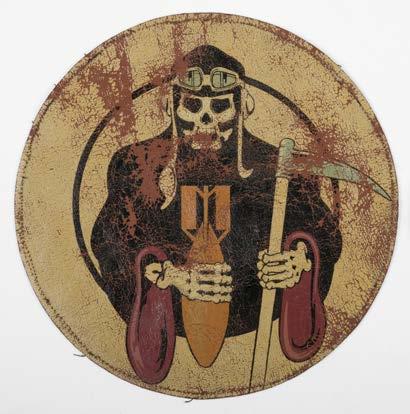
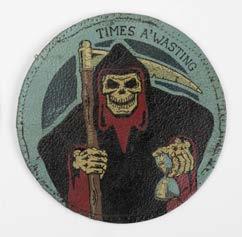
206* WWII American patches. Two WWII silk-screened leather patches, the large circular leather patch showing a grim reaper holding a scythe in the left hand and a bomb in the right, 25.5 cm diameter, the other, showing a grim reaper holding a scythe in the right hand and an hourglass in the left, above inscribed 'Times A' Wasting', 13.5 cm diameter, both with sewing holes, suggesting they have been removed from a B-3 or A-2 leather jacket (2) £300 - £500
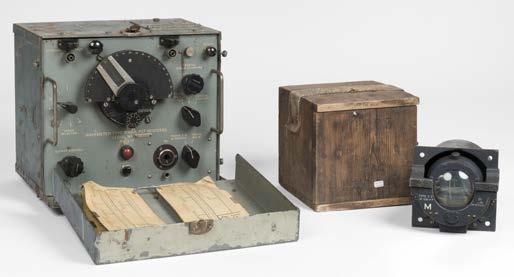
207* WWII compass. A WWII RAF Type P3 compass, No 1992, Ref 6A/0.224, contained in original pine box printed ‘Type P3 1775D’, together with a WWII RAF Wavemeter Type WII91A, Ref No IOT/565, Serial No WE1916, circa 1943, a type used for radio calibration on bombers, with original calibration chart (2) £70 - £100
A SELECTION OF ITEMS PREVIOUSLY HELD BY THE ROYAL AIR FORCE MUSEUM
The RAF Museum is carefully refining its collection to ensure it remains relevant, sustainable, and accessible. Items included in this auction have been assessed, and advertised for gifting to other heritage organisations, in line with our Acquisitions & Transfers Policy and recognised sector standards. Without an alternative home these items are now being made available for sale to support the ongoing care and development of our collection.
(RAF Museum Hendon, May 2026)

208* Aircraft fuel tank. A WWII period 10-gallon aircraft fuel tank, of oval form, green painted finish and stencilled ‘Serial No PAC 7426 AEP 150 B STBD’, 61 cm, together with three further aircraft fuel tanks, all unidentified (4)
£100 - £200
209* Aviation tools. Carl Zeiss Gena Heer Micrometre, in wooden box marked U3/ste-1BSM, together with three further boxed measuring devices, 3 x Air Ministry Lamp Type F 5C/2266, all boxed, and other items (a carton)
£100 - £200
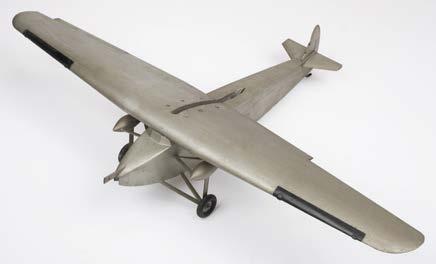
210* Fokker F VIII. A scratch-built wooden model of a German Midek Fokker F VIII monoplane built by Handley Page Ltd, silver painted finish, metal undercarriage wheels, some pieces detached, 76 cm wingspan, 52 cm long (1)
£100 - £150
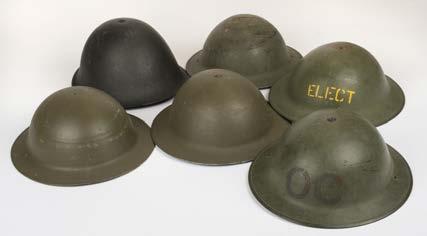
211* Helmets. British Observer Corps steel helmet, green finish with black stencilled ‘OC’ to the front, war department arrow [?] and P stamp to the underside rim, black ink stamp ‘1-54 10 R’, original lining and canvas chinstrap, together with a WWII British helmet dated 1941 and stamped ‘J.S.S. I 1941’, with lining and chinstrap and a British turtle helmet dated 1953 with lining and three further steel helmets all lacking liner (6)
£100 - £150
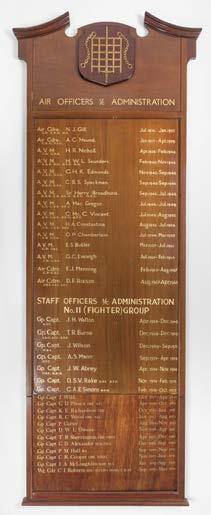
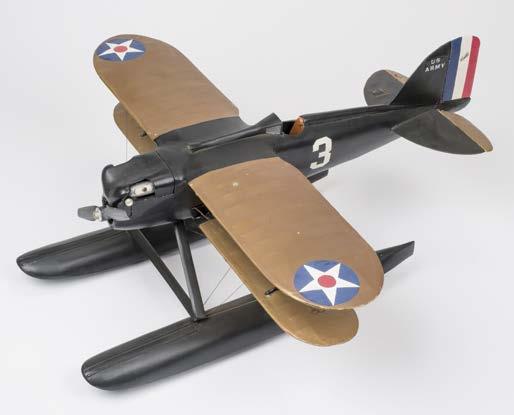
214* Schneider Trophy. A scratch built model of the American Curtiss R3C-2 by Mr. H.J. Towner, the 1/15 scale model made of balsa wood and stiff paper, black fuselage and floats, gold wings with star cockades, the rudder painted with red, white, and blue vertical stripes, both sides of the vertical fin stamped ‘U.S. Army,” in white, numbered 3 on the fuselage which indicated it was part of the 1925 Schneider Trophy race, two puncture holes on the tail and general wear, 96 cm wingspan, 70 cm long
£100 - £150
212* Honour board. RAF honour board for Air Officers in Charge of Administration (A.O.A.) circa 1937, the mahogany board with broken pediment surmounting a shield crest showing a portcullis and sword pointing upwards Argent hilted, a list in gold lettering ‘Air Officer’s I/C Administration’ with 15 appointments from Air Commodore N.J. Gill, CB, CBE, MC, July 1936 to January 1937, last name Air Commodore D.F. Rixson, OBE, DFC, AFC, August 1967 to April 1968, below 19 appointments titled ‘Staff Officers I/C Administration (No.11 (Fighter) Group, the last dated 1996, the lower section is loose and would require restoration, 224.5 x 79 cm (1)
213* Propeller. A metal aircraft propeller, with a yellow-painted tip, various stencilled markings, including ‘R.A. 25S29-2’, 135 cm long (1) £100 - £150
On 26 October 1925, U.S. Army Lieutenant James H. Doolittle flew the Curtiss R3C-2 to victory in the Schneider Trophy Race with an average speed of 374 km/h (232.17 mph). The next day he flew the R3C-2 over a straight course at a world-record speed of 395 km/h (245.7 mph). In the Schneider Trophy Race of 13 November 1926, this same aircraft flown by Lieutenant Christian F. Schilt, U.S.M.C., and piloted by an improved engine, won second place with an average speed of 372 km/h (231.4 mph). (1)
£100 - £150
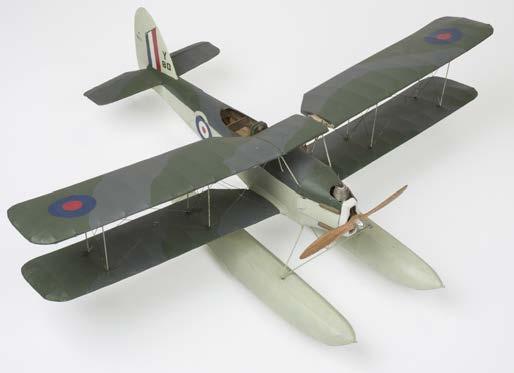
215* Schneider Trophy. A scratch-built model of the British Fairey Seafox K 8613 by Mr H.J. Towner, the 1/15 scale model made of balsa wood and stiff paper, camouflage wings and upper section of the fuselage, green lower section and floats, RAF roundels and red, the rudder painted with red, white, and blue vertical stripes numbered Y80, K8613, general wear, 84.5 cm wingspan, 60 cm long (1)
£100 - £150
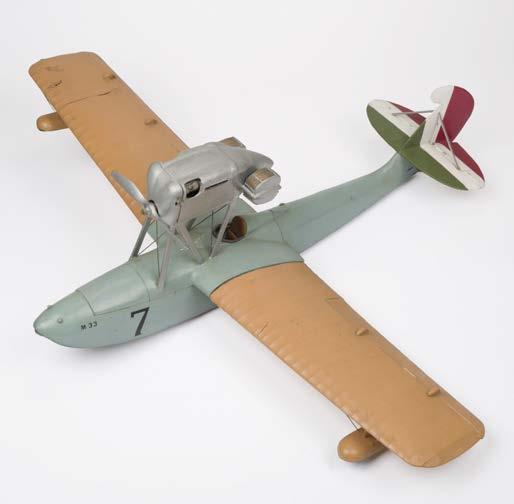
216* Schneider Trophy. A scratch-built model of the Italian Macchi M-33 by Mr H.J. Towner, the 1/15 scale model made of balsa wood and stiff paper, the fuselage painted in green with yellow cantilever wings with floats on each side, green, white and red rudder, fuselage numbered 7, some age wear, 99 cm wingspan, 85 cm long
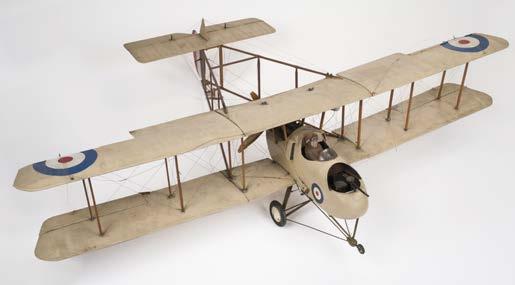
218* Aircraft model. A WWI Royal Flying Corps model of an F.E.2, balsa wood and canvas fabric, roundels on wings and fuselage, a pilot and Lewis gun, three undercarriage wheels, some damage and agewear, 142.5 cm wingspan, 102 cm long (1)
£200 - £300
219* Aircraft spares. A good collection and later aircraft dials and instruments, mostly post WWII, all unboxed, including 6A/2945 Indicator, Turn & Slip Mk II; 6A/3290 Artificial Horizon Mk I.D; 6A/3371 Type Mk IB Turn & Slip Indicator and other spares (approx. 60)
£200 - £300
220* Aircraft spares. A good collection of 1950s aircraft dials and instruments, mostly unboxed, 7614A0002/02 Control Landing Gear; 66/36899 G Fuel Quantity Indicator / Pre Selector; various position indicators; 1992/B/A/ Cabin Pressure Indicator (24)
£200 - £300
£100 - £150
The Macchi M.33 was an Italian racing flying boat which competed in the 1925 Schneider Trophy race. (1)
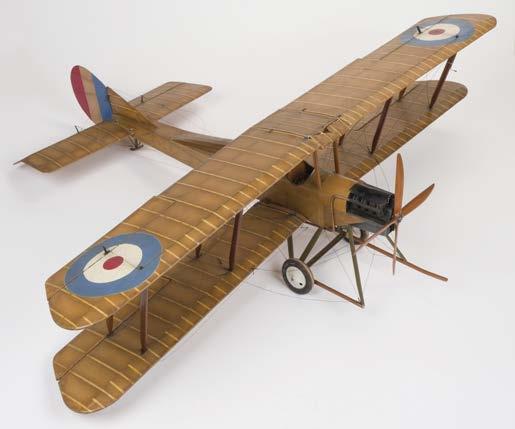
217* Aircraft model. Royal Aircraft Factory B.E.2c. model of a single-engine tractor two-seat biplane, balsa wood and yellow paper, with RFC roundels on the wings and fuselage, articulated four-blade propeller two undercarriage wheels, some damage and age wear, 118.5 cm wingspan, 90 cm long (1)
£150 - £200
221* Aircraft spares. A good collection of 1950s aircraft dials and instruments, all boxed and many sealed, including 10C/Z.112629 Capacitors Fixed Paper Dielectric (Foil) Rectangular Metal Case; 5X/9033 Block Assy; 10C/2182 Capacitor Type 1029 (approx. 40)
£200 - £300
222* Aircraft spares. A good collection of 1950s aircraft dials and instruments, all boxed and many sealed, including 6A/2888 Gauge Fuel Contents Elecpacitor Type Mark 5 Fluor Indicator (sealed); 10C/13990 Fixed Condenser, Paper Dielectric, Rectangular, Less Than 1 Mfd.; 6A/1756 Thermometer (35)
£200 - £300
223* Aircraft spares. A good collection of aircraft dials and instruments, mostly unboxed, including R05589/9 Desynn Indicator 24 Volt; QM474 Smiths Electric Rev Indicator; 6A/1305 Engine Temperature Gauge; 10C/13990 Capacitor (boxed), 40659 Speed Gauge Mk IX, plus a bag of replacement dial lenses (approx. 40)
£200 - £300
224* Aircraft spares. A good collection of aircraft dials and instruments, all boxed, including 6A/1645 Desynn Indicator; 6A/1756 Thermometers Air Intake Mk IA 24B; 6A/2888 Gauge Fuel Contents Elecpacitor Type Mk V Fluor Indicator (approx. 42)
£200 - £300
225* Aircraft spares. A good collection of aircraft dials and instruments, circa 1950s and later, AA920 Cabin Mass Flow Indicator; AB/297 Smiths Landing Indicator; Smiths Aysynn Fuel Flow Indicator; Omni-Bearing Indicator (approx, 50)
£200 - £300
£200 - £300
226* Aircraft spares. A good collection of WWII aircraft dials and instruments, all unboxed, including J3746 Thermo-Ammeter; 10 FB/155 Switch Unit Type 35; 10C/3102 Mag.Feed; AF-45 1642 Signal Assembly Altitude Warning Type H-2 (USAAF); 10DB/6610 Heading Attachment to Link (unboxed) (a carton)
233* Battle of Britain. A WWII period RAF marching drum of 601 Squadron “The Millionaires’ Squadron”, the brass casing painted with the squadron crest, king’s crown (indicating pre-1953), white rope tensions and skins, an indistinct mark (probably Potter & Co), general wear commensurate with age, 37 cm high x 37.5 cm diameter
227* Aircraft spares. A good collection of WWII and later aircraft dials and instruments, boxed and unboxed, including 6A/2717 Artificial Horizon Mk III; 6A/1498 15311/43 Indicator Roll Type A; 6A 4120 Tachometer Surge Indicator; 6A/1548 Meter Fuel (approx. 30)
£200 - £300
601 Squadron was formed in 1925 as a light bomber squadron based at RAF Northolt. The squadron was famously known as ‘The Millionaires Squadron’ because of its lavish lifestyle in the 1930s, which included Roger Bushell, the Olympic skier and Great Escaper. The squadron flew in the Battle of France, Battle of Britain and later in Egypt, North Africa and Italy; it was disbanded in 1957.
(1)
£200 - £300
228* Aircraft spares. A good collection of WWII and later aircraft dials and instruments, boxed and unboxed, including 10C/20999 Choke; 10H/419 Sockets Type W165 (sealed); 10A/8481 Ammeter; 10C Capictor (27)
£200 - £300
229* Aircraft spares. Various aircraft spares, including compressor type Ava, magneto type CDH6 53a and other spares, mostly labelled, contained in three plastic crates (qty)
£200 - £300
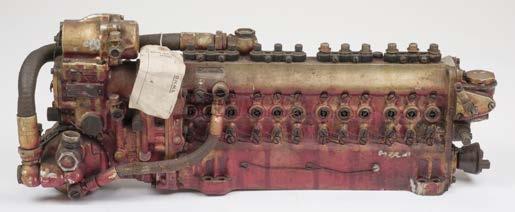
234* Battle of Britain. WWII Luftwaffe Daimler-Benz fuel injection pump, as used extensively during the Battle of Britain, 70 cm long
£200 - £300
230* Aircraft spares. Various aircraft spares, including rotary converter type 2 with Kearsley Airways decal, Marshal supercharger, generator engine driven with Air Ministry data plate and other items, contained in three plastic crates (approx. 20)
231* Aircraft spares. Various aircraft spares, including torch igniter pump type FB3 Mk4 with war department arrow, Rotax H.T. booster coil, type Nikak and other items, mostly labelled, contained in two plastic crates (qty)
The Daimler-Benz DB 601 was a German aircraft built during WWII. It was a liquid-cooled inverted V12, that powered the Me109 and many others. Approximately 19,000 601s were produced before being replaced by the DB 605 in 1942.
(1)
£200 - £300
£200 - £300
232* Aircraft spares. Various parts, including generator engine driven spares by Rotax Ltd, Newton Bros for the Air Ministry, many with old labels, including De Havilland contained in three plastic crates (20)
£200 - £300
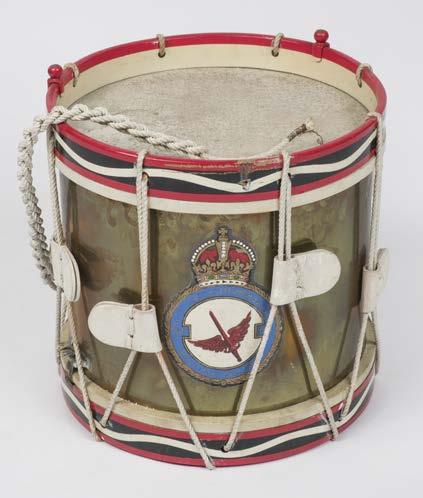
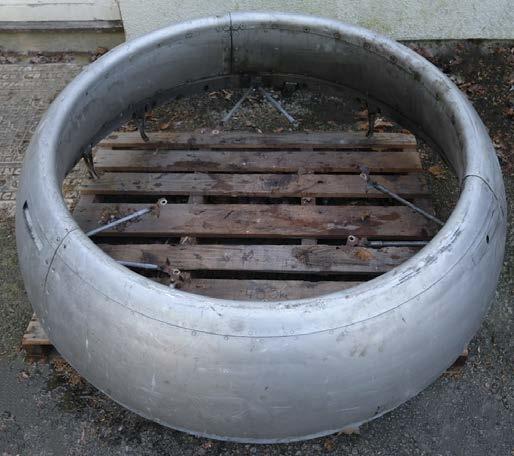
235* Bristol Hercules. An engine cowling for a Bristol Hercules 264 engine, riveted aluminium sheet metal, approximately 140 cm diameter
The Bristol Hercules was designed by Sir Roy Fedden and produced by the Bristol Engine Company in 1939. The 14-cylinder engine powered many WWII aircraft, including the Bristol Beaufighter.
(1)
£200 - £300
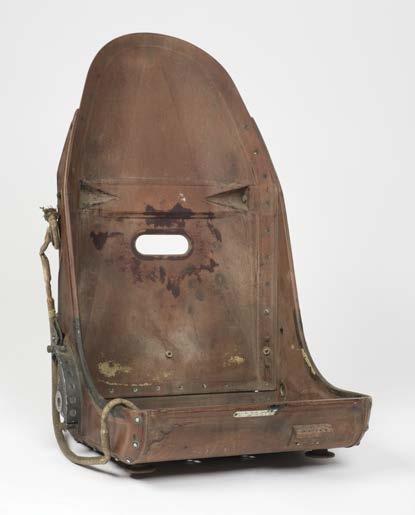
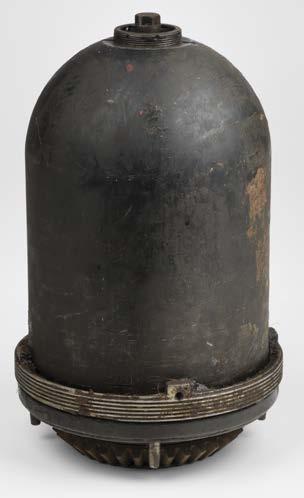
236* Cockpit seat. A de Havilland Vampire cockpit seat, circa 1950s, the brown composite seat being the standard fixed seat type, with white stores reference label stamped ‘Serial No 8242, Part No A.S. 2142, Issue, Inspection AHG 30’, the rear inscribed ‘WL 505’, approximately 72 cm high (1)
£200 - £300
237* De Havilland jigs. de Havilland DH 9 jigs, circa 1980s, a large collection of wooden components 1989/0009 (1)
£200 - £300
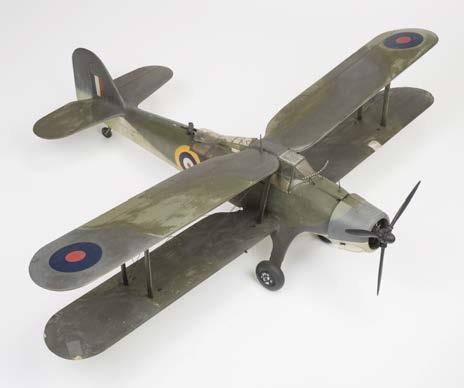
238* Fairey Albacore. A scratch-built model of WWII Royal Navy Fleet Air Arm Fairey Albacore biplane L 7074, the wooden model finished in green camouflage with roundels, articulated three-blade propeller to the 7 cylinder radial engine, perspex canopy, a gun to the rear, cross-braced interplane struts, 95 cm wingspan, 78.5 cm long
The Fairey Albacore was designed and produced by the Fairey Aviation Company to be used as a torpedo bomber by the Royal Navy Fleet Air Arm during WWII. It was typically operated by a crew of three and was used for spotting and reconnaissance, as well as low-level dive and torpedo bombing.
(1)
£200 - £300
239* Hawker Typhoon. A WWII Pitch Change Assembly for Hawker Typhoon Mk. IB, propeller type D3/446, made by De Havilland Propellers Ltd, various stamps including ‘P45-071’, 36 cm (1)
£200 - £300
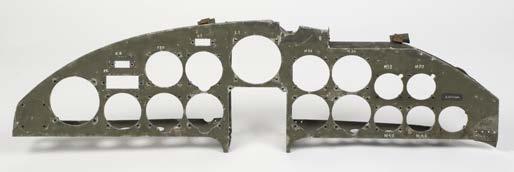
240* Heinkel He III. A WWII Luftwaffe Heinkel He III instrument panel, the aluminium panel finished in the standard green with plaque inscribed ‘H. Hilfsbeh’, with apertures for instruments, many categorised in white paint, 94.5 cm long (1)
£200 - £300
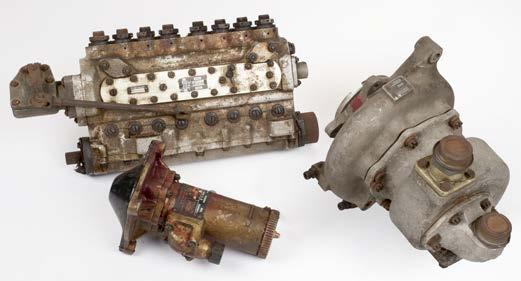
241* Luftwaffe. A collection of WWII Battle of Britain period aircraft parts, including a suction pump, werk no 8883, werk no 90395, pressure oil pump, werk no 016651, and other items (3)
£200 - £300
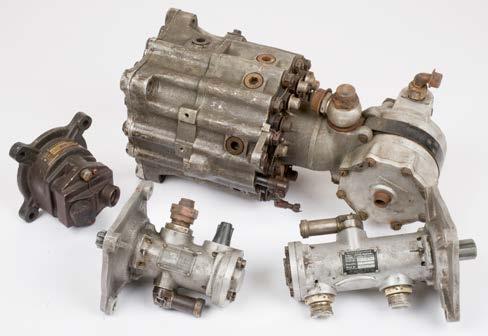
242* Luftwaffe. A collection of WWII Battle of Britain period aircraft parts, including a pressure oil pump and other items (4)
£200 - £300
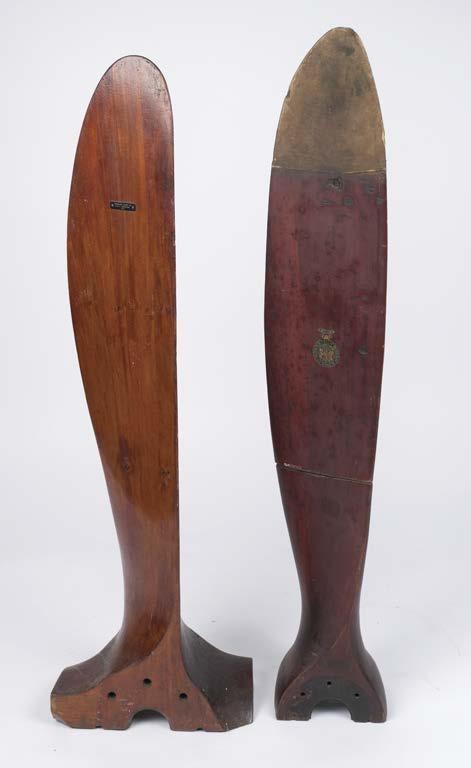
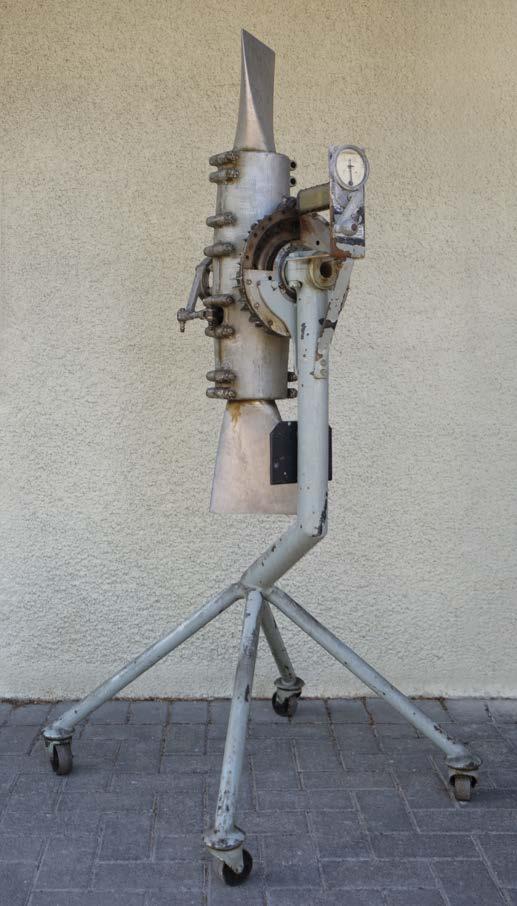
£200 - £300
243* Propeller. WWI RFC de Havilland DH 4 propeller blade cut from a four-blade turnscrew, laminated mahogany stamped ‘250 HP Rolls Royce’, a brass plaque applied to the blade stamped ‘Propeller blades of D.H.4. Aeroplane 1917’, 133.5 cm, together with another WWI propeller blade, laminated mahogany with sheathed tip and with Boulton & Paul Ltd decal on the blade, this two blade propeller and in two sections, 140 cm long (2)
244* Propeller. WWII Italian Savoia Marchetti pitch change propeller, stamped Sesta Calendre Italia, S.I.A.I., presented on a steel display stand, 129.5 cm high, with printed information card ‘Italian Propeller, manually operated pitch-change mechanism, (1) £200 - £300
245* Royal Flying Corps. A collection of wooden aircraft struts, circa 1918, possibly undercarriage metal tube wrappings, approx. 35, some stamped ‘16.C3128 15303’, 124 cm (approx. 35)
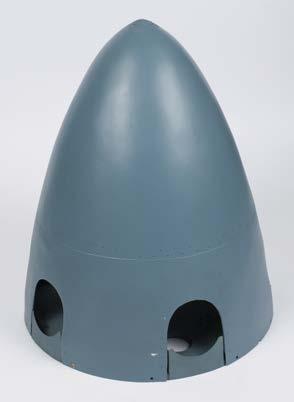
£200 - £300
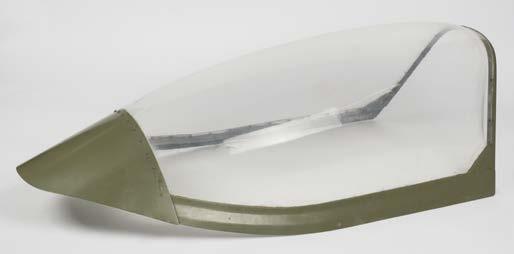
246* Spitfire. A replica Supermarine Spitfire propeller nose cone, painted aluminium construction with dataplate stamped ‘Replica Backplate Spitfire XIX RAF M 2012’, 86 cm high, together with a replica Spitfire canopy, perspex and green painted aluminium frame, 122 cm long (2)
£200 - £300
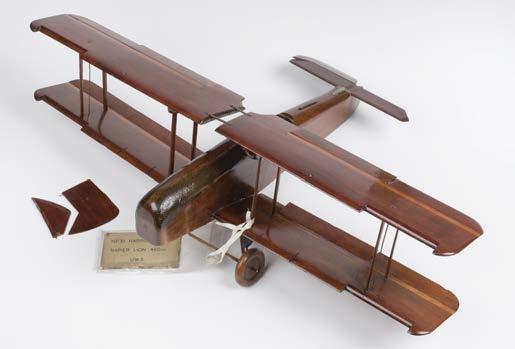
247* Wind tunnel model. A 1920s mahogany wind tunnel model of a Handley Page HP.31 1926 Napier Lion manufactured by Handley Page Ltd, the wooden 1/16.5 scale model biplane, with undercarriage wheels, some pieces detached, with a metal sign stamped ‘H.P. 31 Harrow, 1926 Napier Lion 450 H.P. 1/16.5’, 82 cm wingspan, 59 cm long (1)
£200 - £300
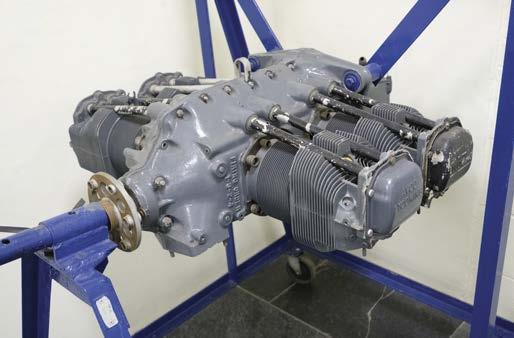
248* Aircraft engine. An American Lycoming Avco four-cylinder aircraft engine, grey painted finish with dataplate with various stamps including model IVO-360, engine no L-156-58, 2900 R.P.M., currently mounted on a blue metal cradle with four wheels for easy manoeuvrability
For display purposes only. The buyer must satisfy themselves that it can be restored to working order. (1)
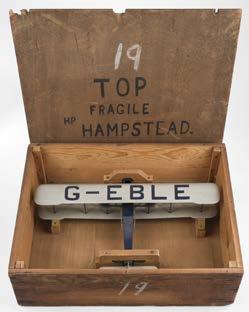
£300 - £500
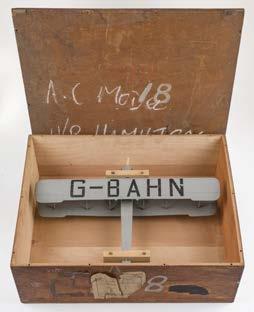
249* Aircraft models. Handley Page Hamilton G-BAHN, a good wooden 1/16 scale model three-engine biplane, circa 1920s, finished in grey with articulated two-blade propellers, 47.5 cm wingspan, 38 cm long, presented in a wooden transport box, the cover inscribed ‘A.C. Model H/P Hamilton, together with a similar model of a Handley Page Hampstead G-EBLE, finished in blue and silver, 50 cm wingspan, 39 cm long, presented in a wooden transport box, the lid inscribed ‘HP Hampstead’ (2)
£300 - £500
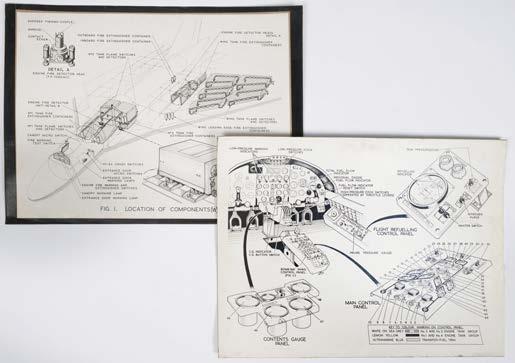
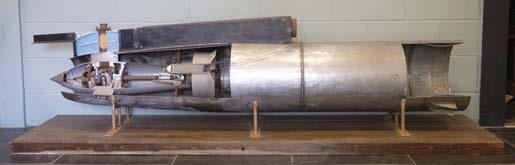
250* Avro Vulcan. A collection of approx. 70 Vulcan technical diagrams, all printed on card, including Fire protection fuel tanks; Nitrogen purge - flight refuelling; cockpit dials and switches; Refuelling equipment; Fuel System; Location of Components, various sizes but mostly 75 x 102 cm, contained within two wooden crates/racks (approx. 70)
£300 - £500
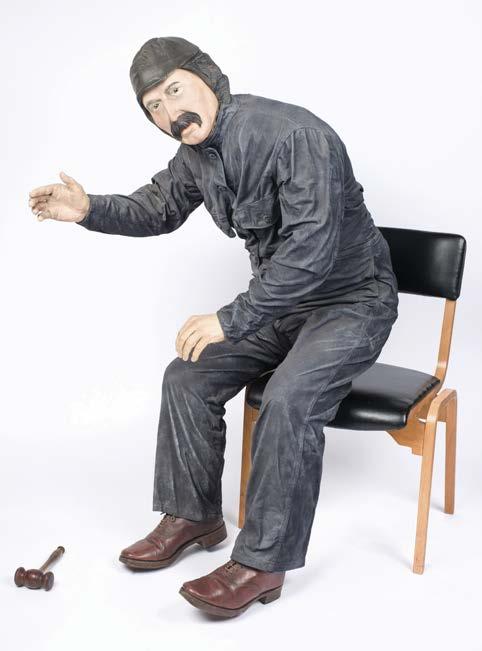
251* Bleriot (Louis, 1872-1936). An impressive life-sized mannequin of this famous pioneer aviator, the mannequin formerly sat in a scale model of a Bleriot, and therefore he is modelled with one hand resting on a control column and the other waving, composite with real leather flying helmet and brown leather boots, cotton flying suit, the whole piece varnished to give a rigid appearance, approximately 128 cm high (1) £300 - £500
Each lot is subject to a Buyer’s Premium of 22% (Lots marked * 26.4% inclusive of VAT @ 20%)
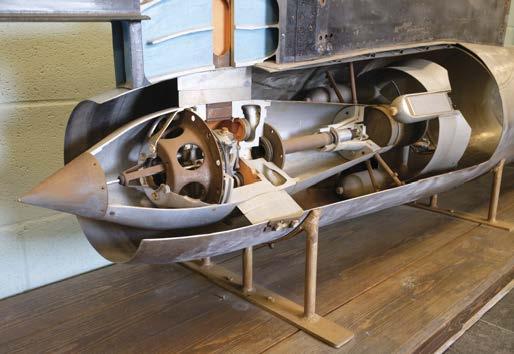
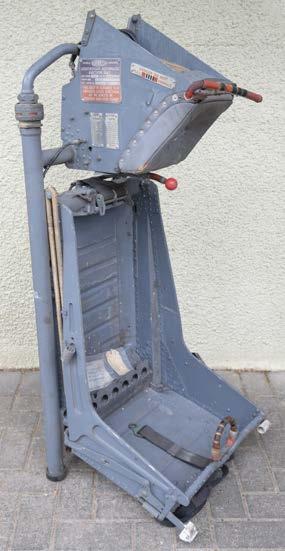
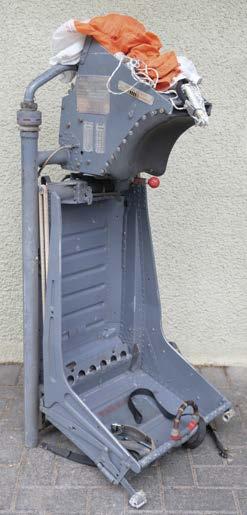
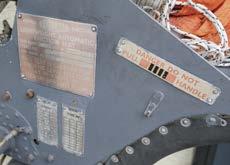
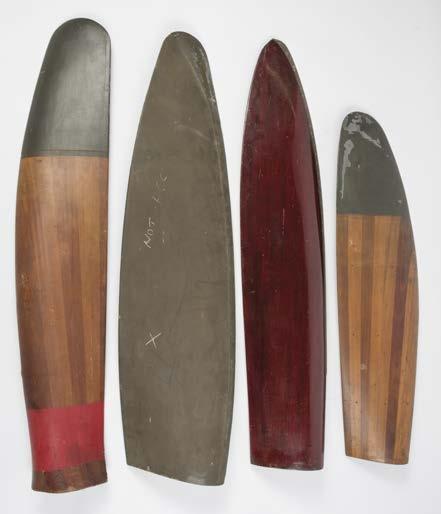
254* Ejector seat. Folland Aircraft Ltd, Hamble, lightweight automatic ejection seat, with various data plates stamped, 122 cm high (1)
£300 - £500
255* Olympus & Vulcan. A collection of 26 workshop technical diagrams, circa 1960s, including Olympus Mk, 30101 E.C.U. Air Diagram 8038, 77 x 102 cm, bound together on a wooden board, 84 x 121 cm, together with 12 technical diagram boards, including 5 articulated, various sizes (13)
£300 - £500
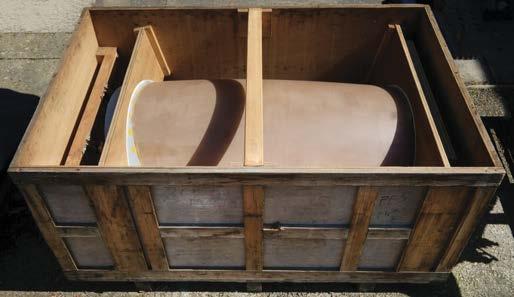
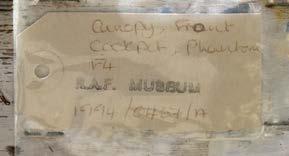
256* Phantom canopy. RAF Phantom F4 cockpit canopy, circa 1990s, curved perspex (painted?), with grey metal mounts secured by multiple screws, approximately 145 cm long, contained in a large wooden transport case with RAF Museum labels and RAF Wattisham, 91 cm high x 171 cm wide x 108.5 cm deep (1)
£300 - £500
257* Propeller. A collection of WWI cut propeller blades, including a laminated mahogany blade with green painted tip, 106 cm long, a varnished mahogany blade with brass trailing edge, 126 cm long (4)
£300 - £500
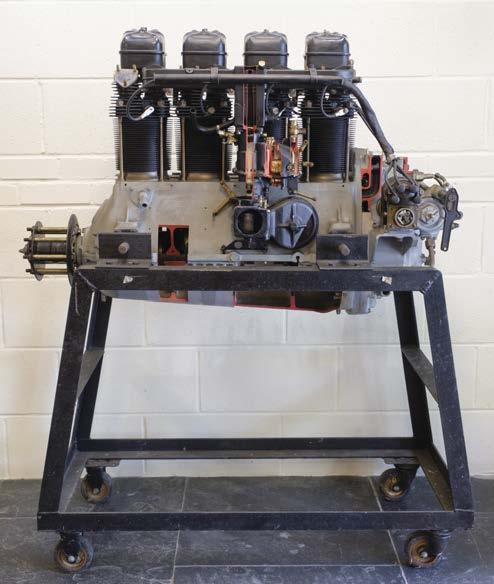
258* Aircraft engine. De Havilland Gipsy Major 8 four-cylinder engine, cutaway for training purposes, mounted on a steel stand for display, 142 cm high (1)
£400 - £600
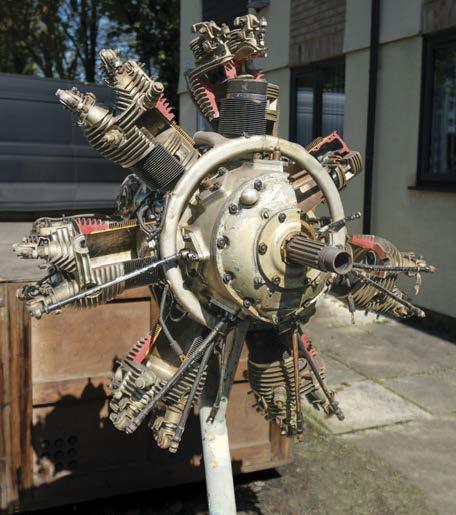
259* Aircraft engine. Siemens-Halske Sh 14 seven cylinder radial engine, circa 1930, a display piece which has been cutaway for training purposes, with brass data plate, 100 cm across, presented on a substantial metal stand, approximately 145 cm high (1)
£400 - £600
260* Bomb bay doors. A pair of WWII plywood aircraft bomb bay doors, possibly from a De Havilland Mosquito, black lacquered finish with recessed handles, 279.5 cm long (2)
£400 - £600
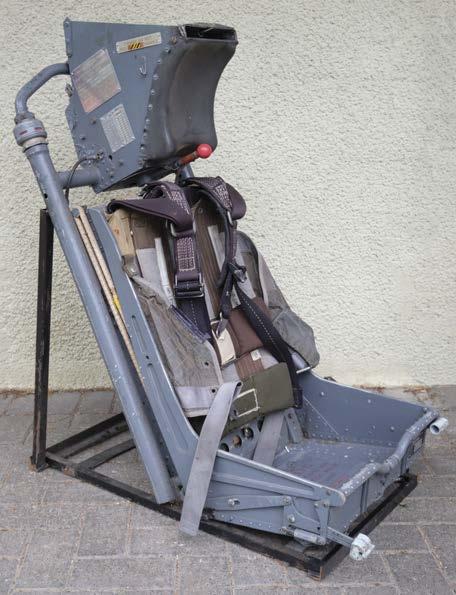
261* Ejector seat. Folland Aircraft Ltd, Hamble, lightweight automatic ejection seat, with various data plates stamped ‘Part No 1816/1213A, Issue No SH1 1SS10, SHT 1SS10, Fl 96817’, with parachute pack, the harness stamped ‘G.Q. Pad Lumbar G.Q. 21281 Issue, Ref No. 15A/1659’, 103 cm high (1)
£500 - £800
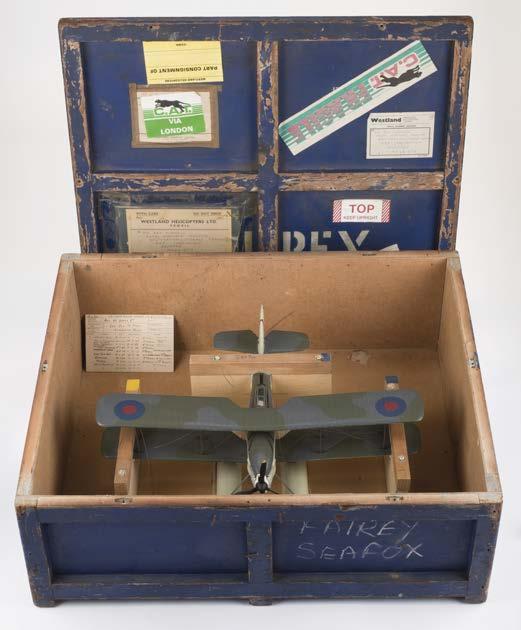
262* Fairey Seafox. A fine exhibition model of a Fairey Seafox K 8613, built by Dagra Co circa 1945, the detailed wooden 1/24 scale model, finished in green and grey camouflage with RAF roundels, articulated three-blade propeller, cross-braced interplane struts, and floats, 50 cm wingspan, 40 cm long, presented in original blue painted wooden transport with various labels including Westland Helicopters Ltd, Yeovil and original card by the The Fairey Aviation Company Ltd, inscribed in ink with the history the model from 1945 to 1972 when it was presented to the the RAF Museum
The model was exhibited at the Paris Exhibition (1946) as well as various locations, including Farnborough Show (1948), Fleet Air Arm (1949), and Chatham (1950).
The Fairey Seafox was a 1930s reconnaissance floatplane designed and built by Fairey for the Fleet Air Arm. It was designed to be catapulted from the deck of a light cruiser and used extensively during WWII. In 1939, the Seafox played a part in the Battle of the River Plate against the German battleship Admiral Graf Spee, by spotting for the naval gunners. (1)
£600 - £800
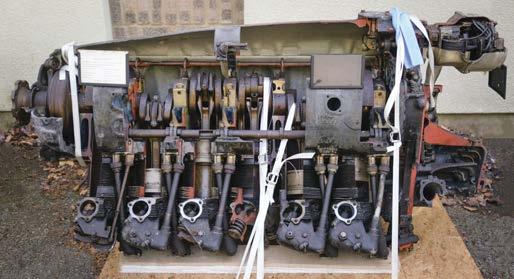
263* Argus 410 engine. A WWII German Argus 410 aircraft engine, cutaway for training purposes, with printed information card, approximately 160 cm long x 180 cm high
The Argus As 410 was a German air-cooled inverted V-12 aircraft engine that was first produced by Argus Motoren in 1938. It was fitted to 6 types of aircraft, including the Focke-Wulf Fw 189 and Henschel Hs 129A. (1)
£700 - £1,000
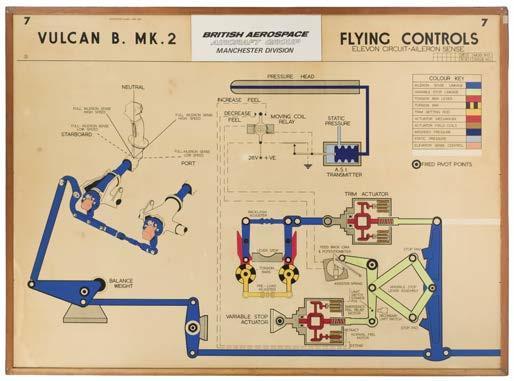
264* Avro Vulcan. Technical diagram boards for the Vulcan B. Mk.2., substantial wooden boards issued to the Air Ministry by Hawker Siddeley and British Aerospace, comprising Electrical System, Pressurisation-Decompressing & Warning; Electrical System J.P.T. Temperature Limiters; Flying Controls Elevon CircuitAileron Sense; New Store General Arrangement of Heating. Hydraulic and Refrigeration Systems; Electrical System 40kVA Generator & Control Gear; Electrical System Wing and Fin De-icing; Electrical System A.A.P. Start and Cooling; Electrical System Air Brakes; Electrical System Engines & Wing Fire Extinguishers; Electrical System Secondary Supplies-115V 3Ø 400 ; Electrical System PFC Start & Indication; Electrical System EW Supplies & Load Shedding; Pressurisation System Cabin Heating & Pressurisation; Oxygen System General Arrangement; Ventilated Suites General Arrangement; Neumatic System Entrance Door Seals & Emergency Circuits, 122.5 x 165 cm (16) £700 - £1,000
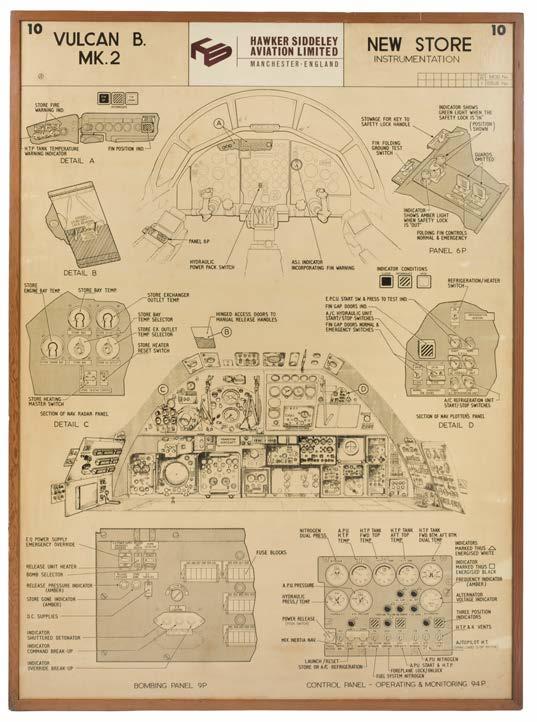
265* Avro Vulcan. Technical diagram boards for the Vulcan B. Mk.2., substantial wooden boards issued to the Air Ministry by Hawker Siddeley and Avro, British Aerospace, comprising, Electrical System Auto Stabilisation; Electrical System Engine Fire Detection; Air Brakes General Arrangement; Electrical System Alternator Failure Warning; Electrical System Frequency Changer Control & N.B.S. Transformers; Electrical System Ventilated Suites; Electrical System Auto Stabilisation; New Store Instrumentation; Electrical System Auto Stabilisation; Electrical System Secondary Supplies115V 3Ø 400Hz; Electrical System General Arrangement; Electrical System A.A.P.P. Start and Control; Flying Controls Crew's Compartment; Electrical System Gold Film Windscreens; Ventilated Suites Air Supply Control & Heaters; Electrical System Bomb Bay Tanks (Alternative Roles); Fire Extinguishing Engine Bays; Electrical System Ground Refuelling, 122.5 x 165 cm, with wooden racking (17)
£700 - £1,000
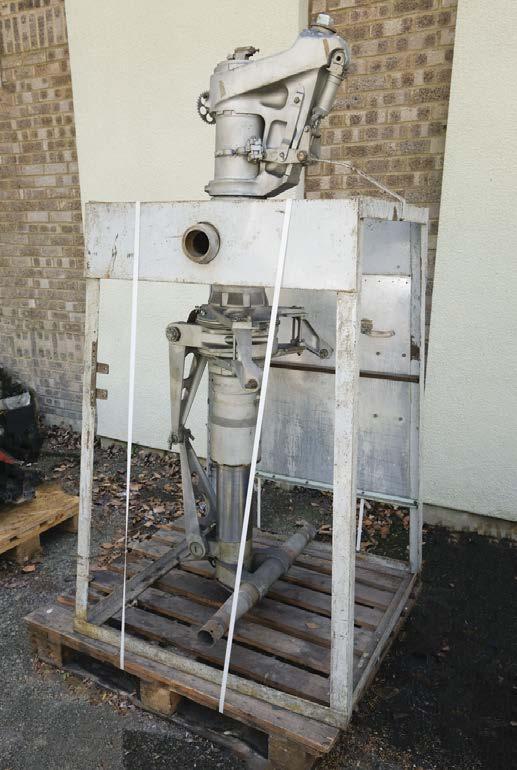
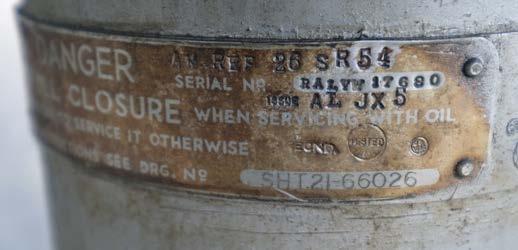
266* Vickers Valiant. Landing gear, nosewheel undercarriage leg, circa 1950s, with Danger Full Closure plate stamped with Air Ministry reference 26SR54, serial no RALYW 17680, additionally stamped SHT 21-66026, a substantial piece as you would expect, measuring approximately 196 cm, sold with a custom-made steel cradle
The Vickers Valiant was a high-altitude jet bomber designed to carry nuclear weapons. In the 1950s and 60s was part of the RAF “V” bomber strategic deterrent force. First of the V bombers to become operational, the Valiant preceded the Handley Page Victor and Avro Vulcan.
Please note that a forklift truck would be required for collection, and this must be arranged by the buyer.
(1)
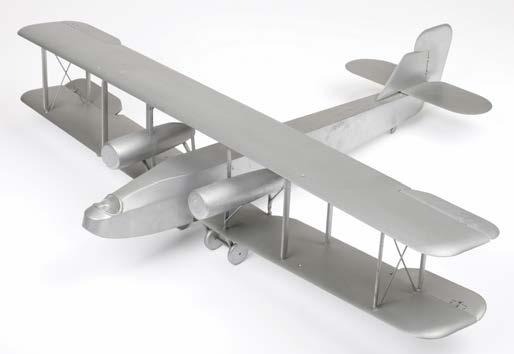
267* Wind tunnel model. A fine wood and metal model of Handley Page H.P.18 W8 1/30 scale twin-engined medium-range biplane, later painted silver painted finish throughout, hinged rudder and ailerons, inscribed ‘F63’ on the fuselage, with four undercarriage wheels, 76.5 cm wingspan, 64 cm long
The Royal Air Force Museum archive records this as a mahogany and brass biplane.
(1)
£700 - £1,000
£700 - £1,000
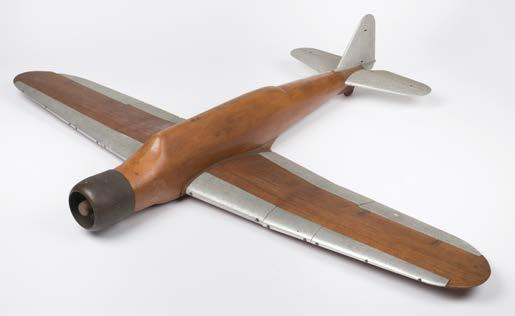
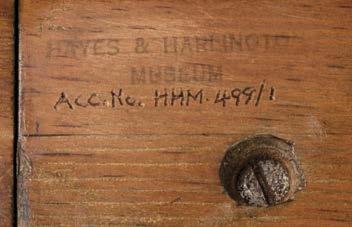
268* Wind tunnel model. A large carved wooden and alloy wind tunnel model of Fairey N.8/39, folding-winged four-cannon naval fighter with radial engine and long crew canopy, alloy tailplane and wing leading/trailing edges, wooden fuselage and wing centre
Provenance Fairey Factory at Hayes.
Fairey N.8/39 was an unbuilt naval fighter project offered with four engine options with four wing-mounted cannon.
(1)
£700 - £1,000
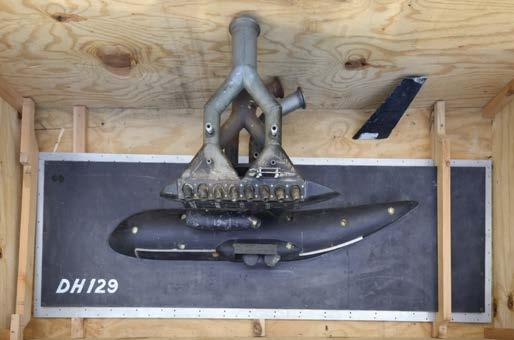
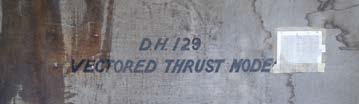
269* Wind tunnel model. De Havilland DH 129 Vectored Thrust
Model, blackened wood and metal construction mounted on aluminium, inscribed in white painted lettering DH 129, 185 cm long, with receipt from Model Shop Woodford to Wind Tunnel Models dated 1989, contained in a large wooden transport crate, the lid inscribed ‘D.H. 129 Vectored Thrust Model’, 67 cm high x 194.5 cm
wide x 92 cm deep
(1)
£700 - £1,000
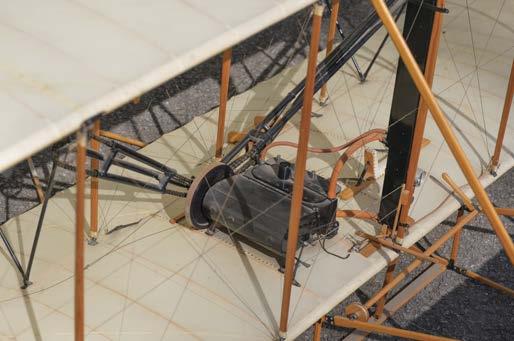
270* Wright Flyer. An exhibition/museum quality large scale model of a 1903 Wright Flyer, “Kittyhawk”, balsa wood airframe and tissue cover, with wire cross-brace interplane struts, a pair of large two-blade propellers finished in grey powered by a sprocket chain drive, some attention would be needed as some elements, such as the wires are loose, approximately 307 cm wingspan, 160 cm long
Provenance: Purchased by the Royal Air Force Museum in 1981 and previously on display at the Royal Air Force Museum, Hendon. (1)
£700 - £1,000
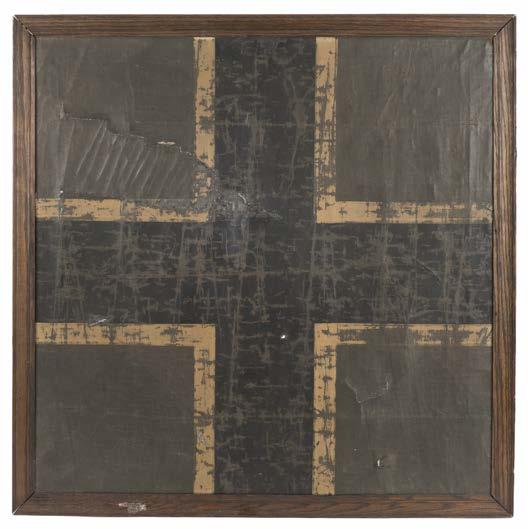
(1)
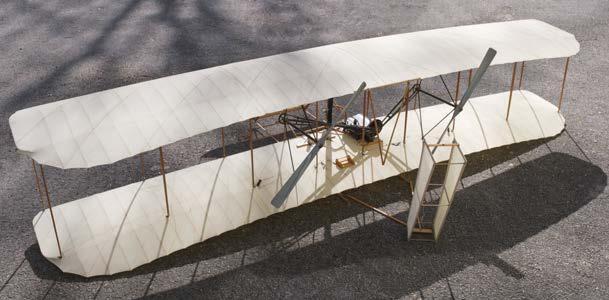
£1,000 - £1,500
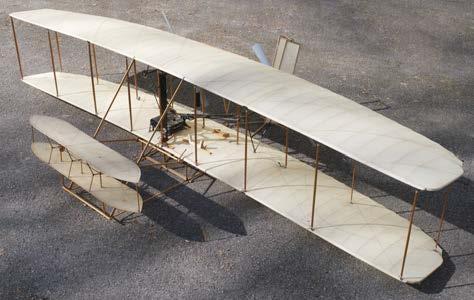
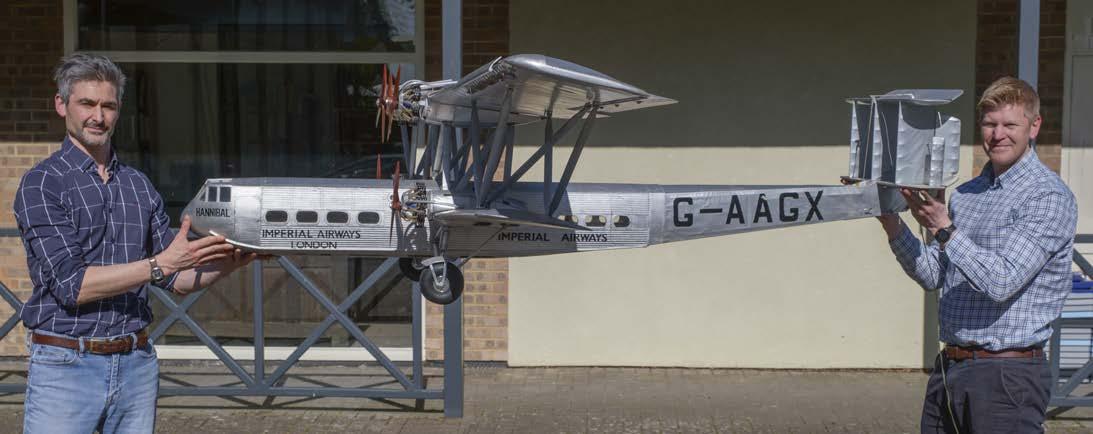
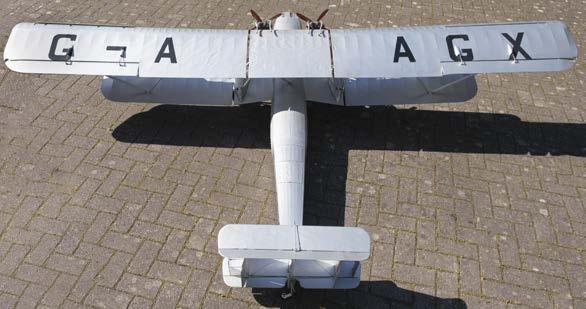
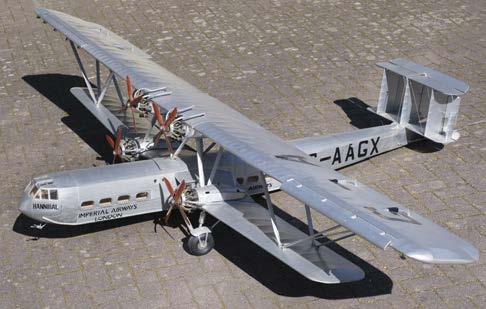
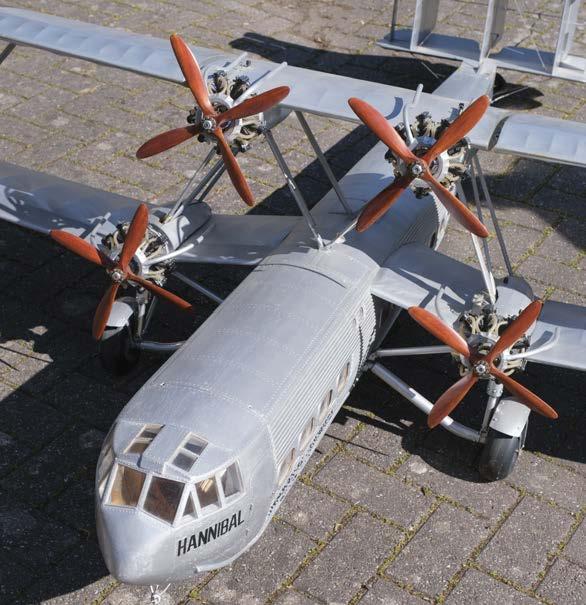
272* Imperial Airways. Handley Page HP 42 G-AAGX
“Hannibal”, a substantial exhibition/museum quality model of this famous Imperial Airways airliner, the fabric and balsacovered wooden frame with strut-braced mainplanes, working ailerons, rudders and elevators, four blade propellers driven by single cylinder engines, on rubber tyred main undercarriage and tailwheel, finished in all over silver with black lettering, dummy cabin windows and glazed cockpit, 337 cm wingspan, 237 cm long, complete with large wooden transport case
The HP 42 was specifically designed and used by Imperial Airways from 1931 until impressed into military service in 1940. It was an extremely comfortable aircraft and popular amongst passengers using the Empire routes, seating 38 passengers in two separate cabins.
G-AAGX disappeared on an RAF flight from Jask to Sharjah in March 1940, the aircraft and crew were never found.
(1)
£2,000 - £3,000
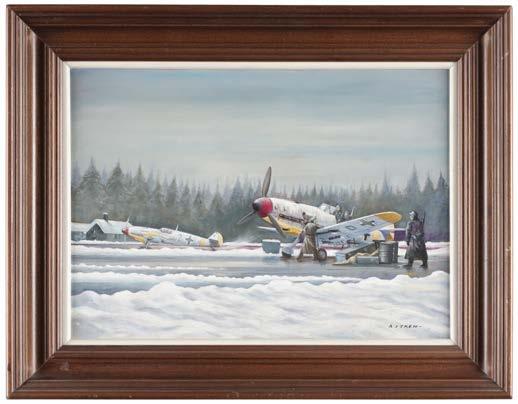
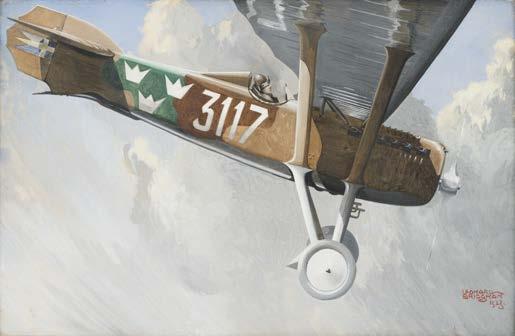
273* Aitken (Kenneth). Schnee Adlers, oil on board, showing Bf.109’s in Russia, signed lower right, The Guild of Aviation label to verso, 27.5 x 37.5 cm, framed, frame size 35 x 45 cm (1)
£100 - £150
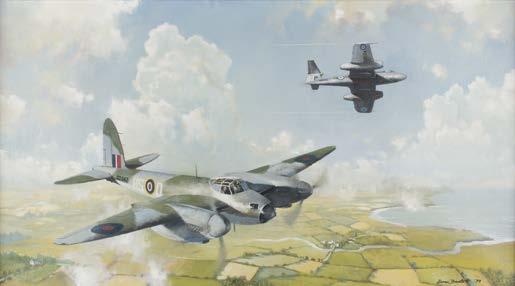
274* Brereton (James). ‘Over and Out’, oil on canvas, showing a Mosquito and a Meteor, signed and dated (19)79 lower right, 51 x 92 cm, framed, together with an aviation collection belonging to Flight Lieutenant A. Hutchison, 603 and 109 Squadron, Royal Air Force, comprising 3 RAF logbooks for the period of 17 May 1944 to 9 December 1956, 3 engine logbooks, circa 1960s, 2 Pilot’s Notes General (April 1943), a Squadron shield for 603 (City of Edinburgh) Squadron, plus another for the University of Edinburgh, a pewter presentation mug engraved to Flt. Lt. Hutchison, 603 Squadron 1955-57 and other items
The painting represents the aircraft flown by Hutchison. (a carton)
£200 - £300
275* Bridgman (Leonard, 1885-1980). Swedish FVM J 23, watercolour on artist’s board, signed and dated ‘1923’ lower right, 28.5 x 43.5 cm, period black frame, glazed, frame size 30 x 45 cm, together with two colour prints by Charles L. Hubbell, including a one showing a dogfight between a German Albatross D-3 and Canadian Nieuport 17 piloted by Colonel William Bishop History, both framed and glazed, frame sizes 40 x 48.5 cm
An unusual contemporary depiction of the Swedish FVM J 23 (Flygcompaniets Verkstäder at Malmen), which was designed by Henry Kjellson and Ivar Malmar in 1923. Only five were flown, having never reached operations status due to structural concerns raised by a fatal accident. (3)
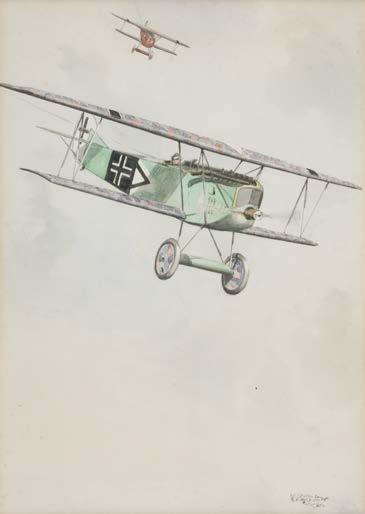
£100 - £150
276* Bridgman (Leonard, 1885-1980). WWI German biplane being pursued, watercolour on paper, signed and dated 1920 lower right, 24 x 17 cm, mount aperture, period gilt frame, glazed, frame size, 38 x 30.5 cm, together with another watercolour by the same artist, showing an RAF interwar biplane in flight, signed and dated 1920, 24.5 x 17 cm, mount aperture, period gilt frame, lacking glass, plus a Schneider Trophy colour print after Coombe Richards, 1927, titled “Ad Astra”, black and gilt frame, glazed, frame size, 40.5 x 29 cm (3)
£100 - £150
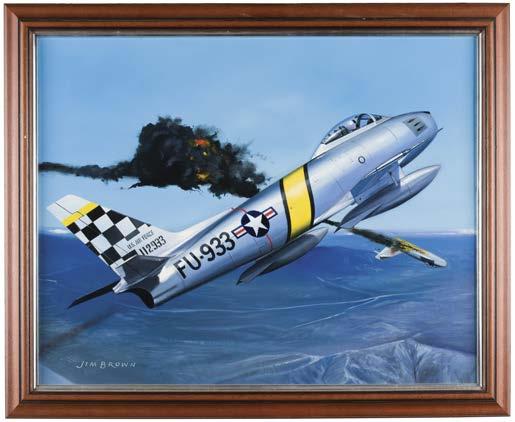
277* Brown (Jim). Sabre Dance, 2005, oil on board, showing an F86 Sabre of 39th Fighter Interceptor intercepting a Mig over Yalu River, North Korea on 19 June 1953, signed lower left, 51 x 63.5 cm, framed, frame size, 58 x 70 cm, together with another by the same artist, Thunderbolt from the Blue, framed, frame size 57 x 68 cm, both with certificate of authenticity to verso
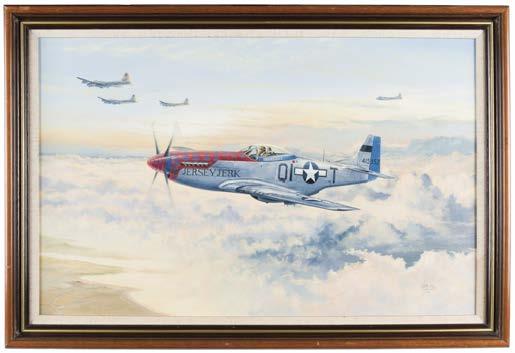
279* Hutton (Len). North American P-51D Mustang ‘Jersey Jerk’, oil on board, signed lower right, 51 x 80.5 cm, framed, frame size 61 x 90 cm, together with another oil painting by the artist, “Evening Passage” showing a British aircraft carrier HMS Victorious, signed lower left, 37.5 x 60.5 cm, framed, frame size 47 x 68 cm (2)
£100 - £150
The first featured on the front cover of Combat Legend, F-86 Sabre by Martin W. Bowman. A copy of the book is included in the lot. (2)
£200 - £300
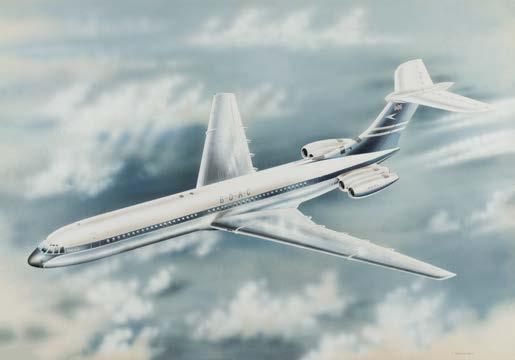
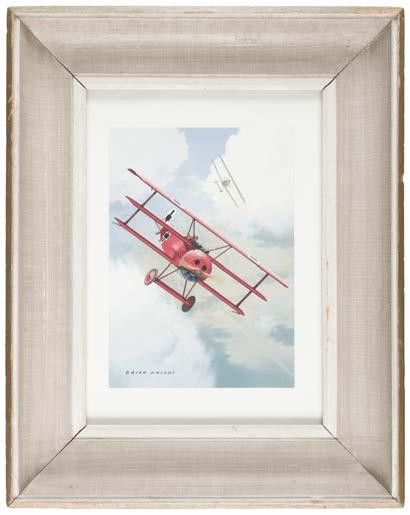
280* Knight (Brian). ‘The Red Baron’, watercolour, signed and dated lower left, 26.5 x 19 cm, paper mount aperture, framed and glazed, frame size 49 x 38.5 cm
£200 - £300
278* Goulding (James[?]). B.O.A.C. VC10, watercolour and gouache, showing this commercial aircraft in flight, signed ‘Goulding’ lower right, 56.5 x 81.5 cm, oak frame, glazed, frame size 58.5 x 83.5 cm (1)
Brian Knight was an illustrator and produced many paintings for the kit manufacturer Revel in the 1960s and 70s. (1)
£200 - £300
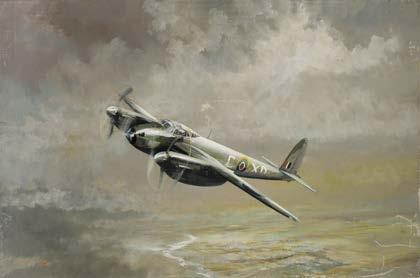
281AR* Pears (Dion, 1928-1985). De Havilland Mosquito in flight, oil on canvas, scuffing and loss of paint, signed lower left, 61 x 91 cm, unframed
(1)
£150 - £200
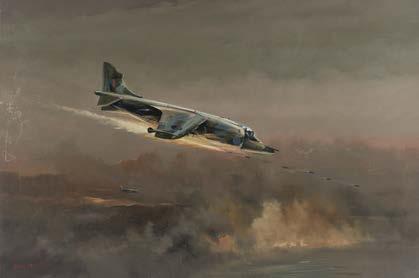
282AR* Pears (Dion, 1928-1985). Harriers in action over the Falklands, May 1982, oil on canvas, some scuffs, signed lower left, scuffed, 61 x 92 cm, unframed
(1)
283* No lot
£200 - £300
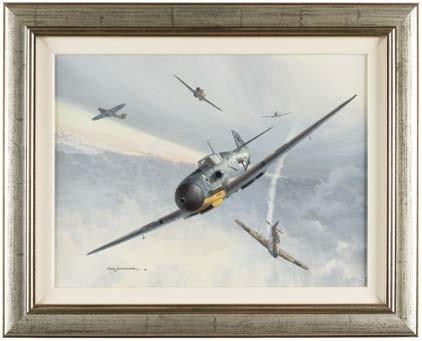
284AR* Postlethwaite (Mark). Combat over Malta, oil on board, showing Me109 flown by Major Guenther von Maltzahn shooting down a Hurricane of 126 Squadron over Malta on 19 December 1941, signed and dated 20(07) lower left, 33 x 43 cm, silvered frame, frame size 39 x 48.5 cm
The painting features on the front cover of the Osprey publication Jagdgeschwader 53 ‘Pik-As’ by John Weal. A copy of the book is included in the lot.
(1)
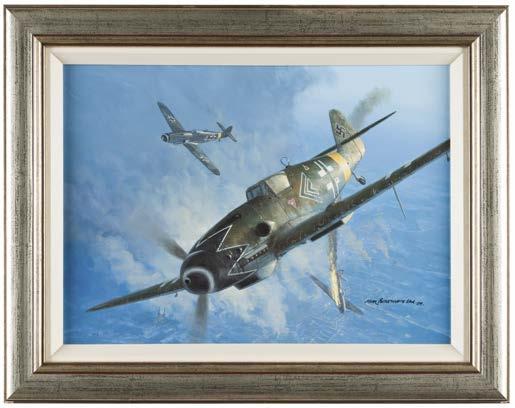
285AR* Postlethwaite (Mark). Hartmann’s Last Victory, oil on board, showing Erich Hartmann shooting down his last aerial victory (352 in total), a Soviet Yak-9 fighter over Brnlo, Slovakia, signed and dated 20(04) lower right, 30.5 x 41 cm, gold painted frame, frame size 37.5 x 48 cm
The painting features on the cover of the Osprey publication Jagdgeschwader 52 by John Weal.
(1)
£200 - £300
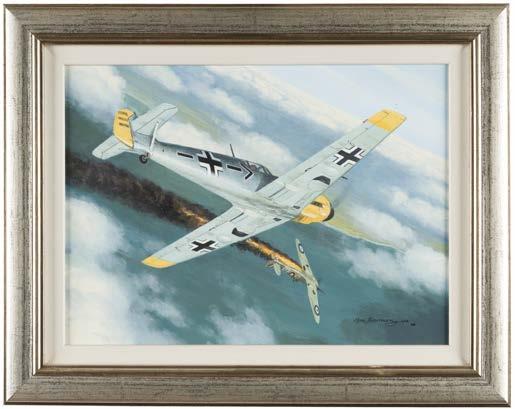
286AR* Postlethwaite (Mark). Jagdgeschwader 51 ‘Mölders’, oil on board, signed and dated 20(06), showing a dogfight with one of the Luftwaffe’s top wartime fighter units, signed and dated 20(06), 32 x 42 cm, silvered frame, frame size, 39 x 49 cm
The painting features on the front cover of the Osprey publication Jagdgeschwader 51 ‘Mölders’ by John Weal. A copy of the book is included with the lot.
(1)
£200 - £300
£200 - £300
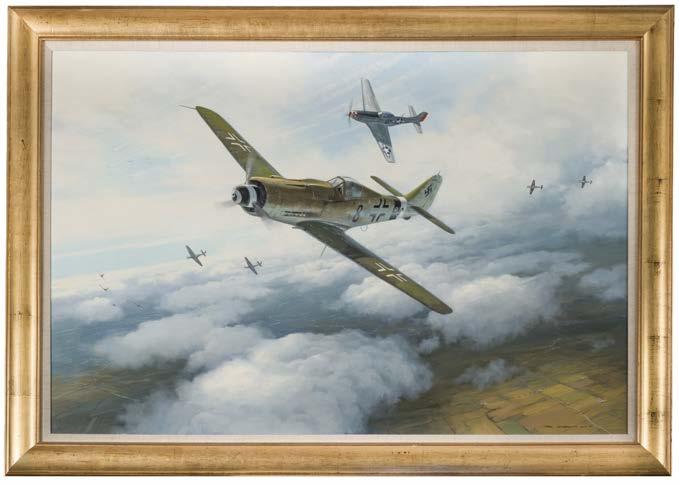
287AR* Postlethwaite (Mark). Jagdwaffe - The Battle of the Ardennes, oil on canvas, showing Focke-Wulf Fw-190D of 14/JG26
flown by Ofw. Werner Zech, being intercepted by a P-51 Mustang of 339th FG flown by Captain Francis R. Gerard, 18 March 1945, signed and dated (20)02 lower right, 71 x 106.5 cm, gilt frame, frame size, 87 x 122 cm
(1)
£700 - £1,000
288AR* Postlethwaite (Mark). Stratofortress Strike B-52s of the 3960th Strategic Wing over Vietnam, oil on board, showing B-52s dropping bombs, signed and dated 20(03) lower left, 38 x 28 cm, gilt painted frame, frame size, 46.5 x 36.5 cm
The painting features on the front cover of the Osprey publication B-52 Stratofortress Units in Combat 1955-73 by Jon Lake. A copy of the book is included in the lot.
(1)
£200 - £300
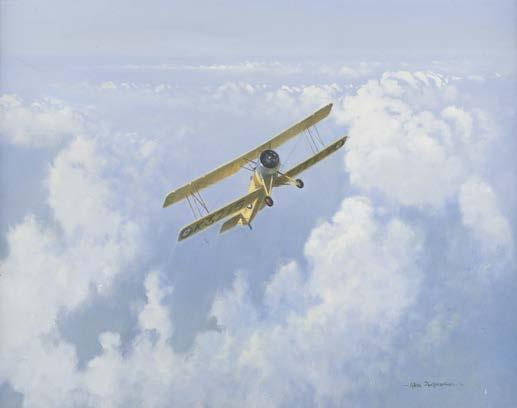
289* Shufflebotham (Allen). Tiger Moth in flight, oil on board, signed lower right, 49 x 62 cm, gilt frame, frame size 58 x 70.5 cm (1) £100 - £150
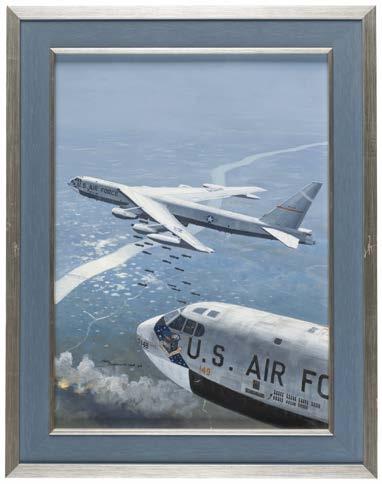
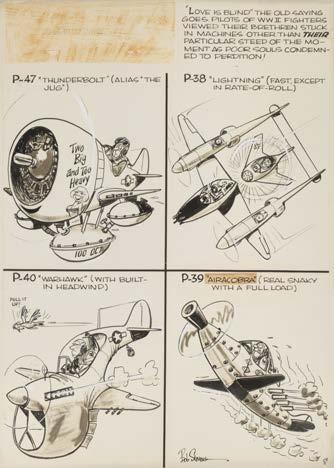
290* Stevens (Bob). “There I was”, original pen and ink storyboard, showing humorous cartoons for the American P-47, P-38, P-40 and P-39, signed lower right, sheet size 52 x 36.5 cm, unframed
Bob Stevens was an American cartoonist and aviator. He studied art at Pasadena, California, before joining the Army Air Corps in 1942. He was an experienced pilot who flew a huge number of WWII fighters. Stevens also drew cartoons for the army magazines Army Times and Stars and Stripes. He later worked as a civilian flight instructor and then transitioned to jets. Stevens set a world speed record in 1950 in the F-86 Sabre and later commanded the first Atlas missile squadron.
After retiring from active duty as a colonel, Stevens became a successful cartoonist. His comic strip ‘Clementine’ ran with the Lew Little Syndicate in 1965 and 1966. He subsequently turned to creating editorial cartoons for the Copley News Service, and his work was soon syndicated to more than 300 newspapers. During the 1970s and 1980s, he made aviation cartoons for Private Pilot and Professional Pilot magazines. His work has been collected in books like ‘There I Was, Flat On My Back’ (1968) and ‘More There I Was’ (1974) by Martin Leeuwis Publications.
(1)
£150 - £200
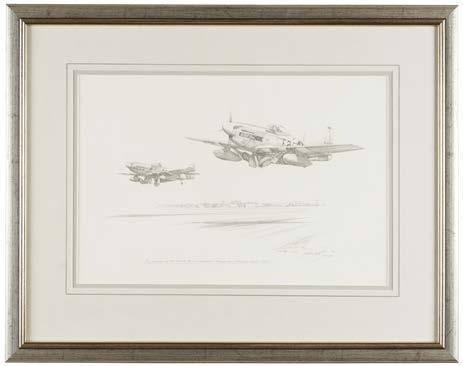
291AR* Trudgian (Nicholas). P51 Mustangs of the 375th FS, 361st Fighter Group take off from Bottisham, August 1944, pencil drawing, signed and dated (20)01 lower right, 24 x 36 cm, mount aperture, framed and glazed, frame size 41.5 x 52 cm
(1)
£200 - £300
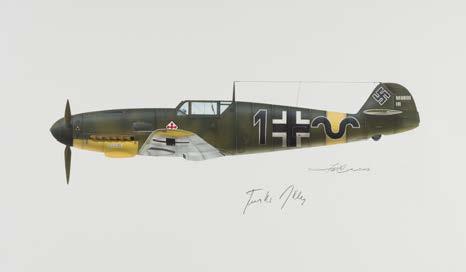
292* Valo (John). Messerschmitt Bf-109G-2 - Jagdgeschwader JG.52 - “Black 1”, a unique profile painting in airbrush with handpainted details, acrylic on wove illustration board, laid card, signed by pilot, General Gunther Rall,” also signed by artist and dated 2007 to lower right, sheet 38 x 63.5 cm
John C. Valo is an American Illustrator, based in St. Cloud, Minnesota. He specialises in aviation art (a copy of a short film giving information about the lot is included).
General Rall was the third-highest-scoring fighter ace in history with 275 confirmed aerial victories.
(1)
£150 - £200
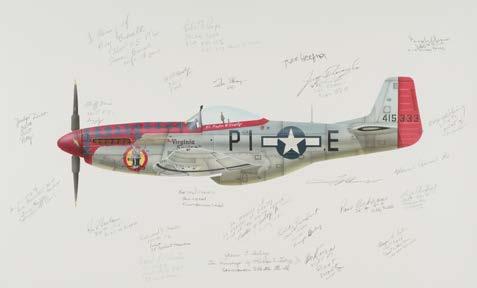
293* Valo (John. C.). 356th Fighter Group - North American P51D Mustang – “The Virginia Squire” Pilot: Lt. Preston Easley, a unique original profile painting in airbrush acrylic on wove paper illustration board, laid card, signed by several pilots and ground crew of the famed 356th Fighter Group / WWII Eighth Air Force Fighter Command – It is also signed in pencil by artist and dated 2005 to lower right, sheet 30.5 x 63.5 cm
John C. Valo is an American Illustrator, based in St. Cloud, Minnesota. He specialises in aviation art (a copy of a short film giving information about the lot is included).
(1)
£200 - £300
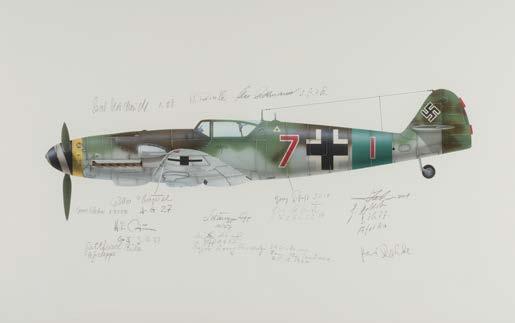
294* Valo (John. C.). Messerschmitt Bf-109G-10 –Jagdgeschwader JG.27 - “Red 7”, a unique original profile painting in airbrush acrylic on wove paper illustration board, laid card, Messerschmitt Bf-109G-10 - signed by several WWII Luftwaffe veterans of Jagdgeschwader JG.27 in graphite pencil, also signed by the artist and dated 2006 to lower
John C. Valo is an American Illustrator, based in St. Cloud, Minnesota. He specialises in aviation art (a copy of a short film giving information about the lot is included).
(1)
£200 - £300
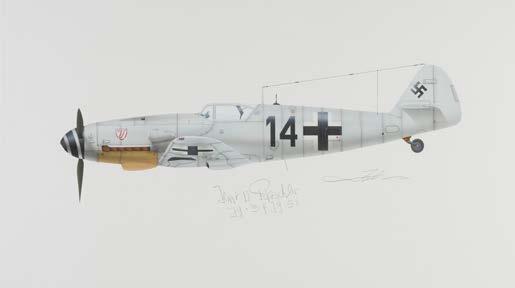
295* Valo (John. C.). Messerschmitt Bf-109G-14Jagdgeschwader JG.3 - “Black 14”, a unique original profile painting in airbrush with hand-painted details, acrylic on wove illustration board, laid card, signed by pilot, Horst Pretzler, also signed by artist and dated 2007 to lower right, sheet 38 x 63.5 cm
John C. Valo is an American Illustrator, based in St. Cloud, Minnesota. He specialises in aviation art (a copy of a short film giving information about the lot is included).
Pretzler scored over 20 confirmed aerial victories during WWII. (1)
£150 - £200
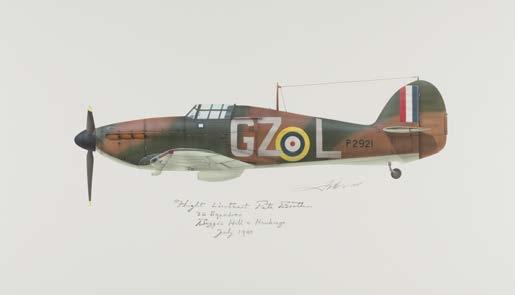
296* Valo (John. C.). WWII Royal Air Force - Battle of BritainHawker Hurricane Mk. I – GZ-L P2921 – Air Commodore Peter Malam Brothers, a unique original profile painting in airbrush acrylic on wove paper illustration board, laid card, signed by Air Commodore Peter Malam Brothers in graphite pencil, “Flight Lieutenant Pete Brothers – 32 Squadron – Biggin Hill & Hawkinge –July 1940.”, also signed by the artist and dated 2005 to lower right, sheet 30.48 x 63.5 cm
John C. Valo is an American Illustrator, based in St. Cloud, Minnesota. He specialises in aviation art (a copy of a short film giving information about the lot is included).
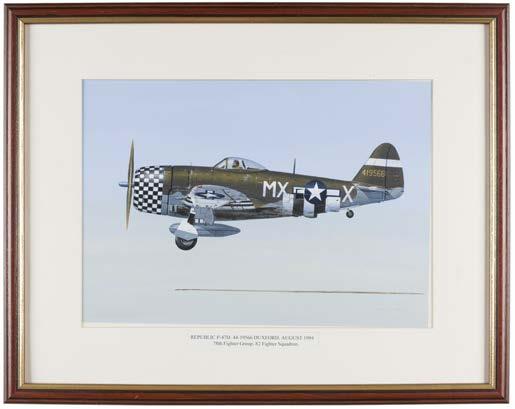
Air Commodore Peter Brothers flew this Hurricane during the Battle of Britain. By war’s end, he was credited with 16 victories, 10 of which he achieved during the Battle of Britain. (1)
£150 - £200
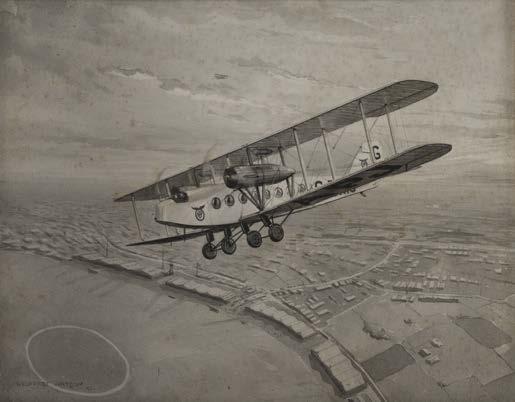
297* Watson (Geoffrey, 1894-1979). Golden Age of Aviation, a collection of 8 monochrome watercolours, 1920, showing iconic aircraft, including Aircraft Transport and Travel (Air Express) DH18 G-EARI in flight, Blackburn Kangaroo in flight, Handley Page W8 biplane and others, all signed and dated 1920, 23.5 x 29.5 cm, black frames, glazed, frame sizes, 24.5 x 30.5 cm (8)
£300 - £500
298* West (Philip). Republic P-47D. 44-19566 Duxford, August 1994, watercolour and gouache, side profile of this aircraft, 30 x 42.5 cm, mount aperture, framed and glazed, frame size, 49.5 x 62 cm, together with Rtal, Swiss Air Force, watercolour, framed and glazed, frame size 52.5 x 44 cm, Redpath (Brian). “Teaching to Test”, oil on board, showing a BAE Hawk, 46 x 35.5 cm, The Guild of Aviation label to verso, framed, frame size 53 x 43 cm, plus a pencil drawing of Me109 in pursuit, framed and glazed, frame size (4)
£100 - £150
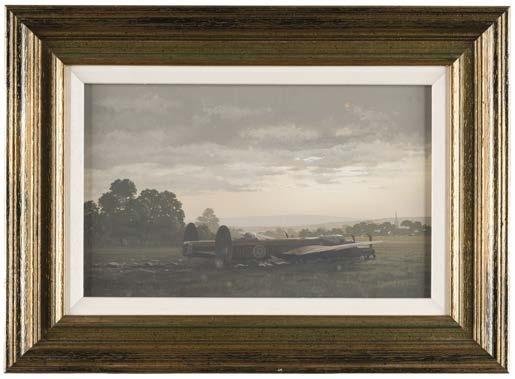
299* Woodcock (Keith). After the bombing mission, watercolour and gouache, showing a Lancaster crashed in a field, signed lower left, 23 x 35 cm, gold painted frame, frame size 32 x 43.5 cm (1)
£200 - £300
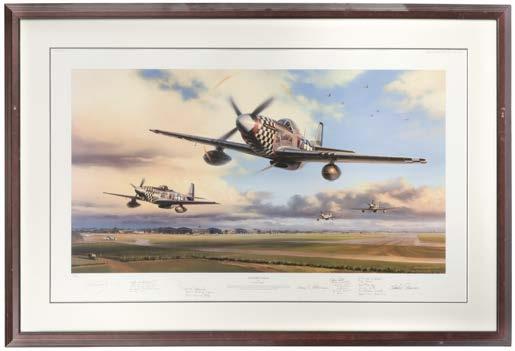
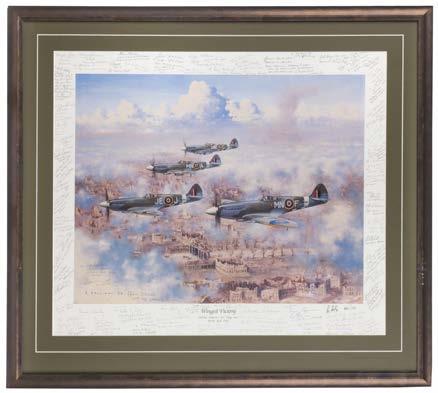
300* Trudgian (Nicolas). Duxford Eagles, limited edition colour print, numbered 153/550, signed in pencil by the artist and 6 veterans, including Jim Brooks and Wayne Coleman, framed and glazed, frame size 68.5 x 101 cm, together with Trudgian (Nicolas). A welcome at the inn, numbered 476/600, signed by the artist and 4 veterans including Robert M Simpson, framed and glazed, frame size 67 x 84.5 cm, plus West (Phillip). White Lightning, numbered 306/750, multi signed, framed and glazed, certificate of authenticity to verso, frame size 70.5 x 101 cm (3)
£100 - £150
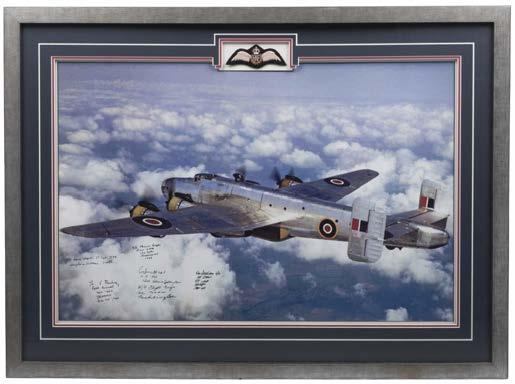
301* Avro Shackleton. A photographic print of this RAF aircraft in flight, signed in ink by 6 distinguished pilots including Henry Wagner (51 Squadron) and Thomas Sayer DFM (102 Squadron), presentation frame, glazed, Aces High label to verso, frame size 70 x 95 cm (1)
£100 - £150
302* Belling (R). Winged Victory, limited edition colour print, numbered 582/750, showing Johnnie Johnson’s 125 Wing over Berlin in April 1945, signed in pencil by the artist and approximately 70 RAF veteran pilots and aircrew including, Johnnie Johnson, John Milne (19 Squadron), Bill Green (501 Squadron), Tom DaltonMorgan (Battle of Britain), Stefan Ryll (Polish Air Force), presented in a display frame, glazed, Aces High label to verso, frame size, 79 x 87.5 cm, with certificate of authenticity (1)
£200 - £300
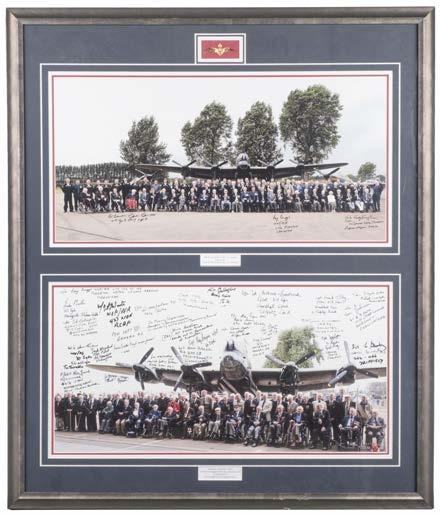
303* Bomber Command. Lancaster veterans meeting 2013, two large colour photographs, one titled ‘BBMF Lancaster at RAF Coningsby, August 2013, surrounded by veterans’, with 4 ink signatures including Roy Briggs (576 Squadron), the other titled ‘Canadian Lancaster ‘Vera’ at RAF Coningsby when she visited the UK in August 2013, surrounded by ground and aircrew’, with approximately 29 ink signatures including Ken Johnson (61 and 9 Squadron), Frank Tillet (617 Squadron), Reg Spencer (514 and 617 Squadron), presented in a display frame with gilt metal RAF wings, glazed, Aces High label to verso, frame size 91 x 77.5 cm (1)
£200 - £300
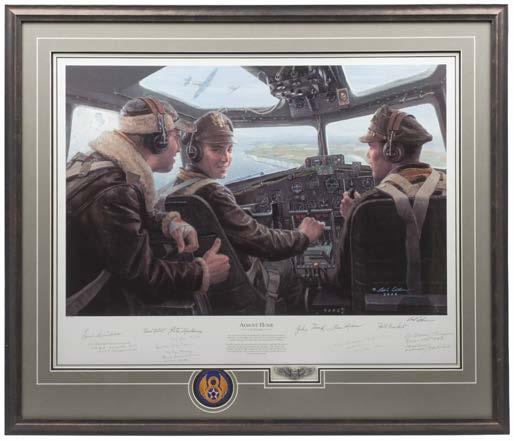
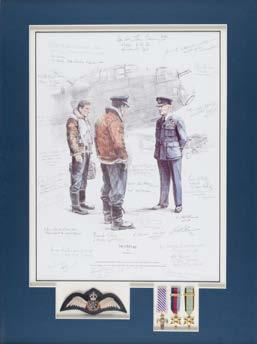
304* Cohen (Gil). Almost Home, limited edition colour print, numbered 123/440, showing American B-17 crew returning from a bombing raid over Germany, signed in pencil by the artist and 11 aircrew, including Lou Bridda, Bud Klint, Fred Rodda and Denny Thompson, presented in a display frame, glazed, Aces High label to verso, frame size 79.5 x 93.5 cm, with certificate of authenticity (1)
£150 - £200
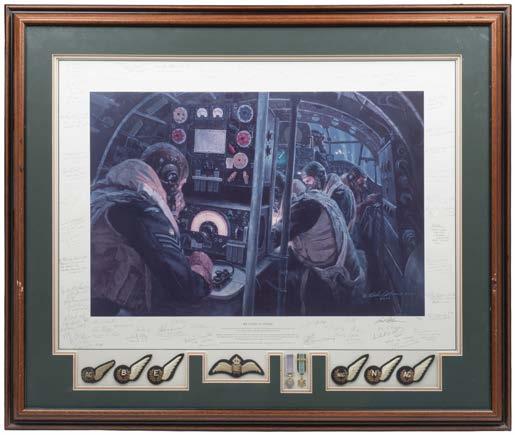
305* Cohen (Giles). We Guide to Strike, limited edition colour print, numbered 98/400, showing a Lancaster of 156 Squadron Pathfinder Force over its target in the Ruhr Valley, signed in pencil by the artist and approximately 54 RAF aircrew including George Cash DFC (POW Stalag Luft I), Harry Hughes DFC, DFM and Frank Tilley 617 Squadron, presented in a fine display frame, glazed, frame size 84 x 100 cm, with certificate of authenticity (1)
£100 - £150
306* Cohen (Gill). My Fighter Boys, 2006, coloured print, numbered 19/100, showing Air Chief Marshal Sir Hugh Dowding visiting an RAF Fighter Base on the outskirts of London in the summer of 1940, multi signed in pencil with approximately 27 signatures including Tom Neal, Michael Wainwright and other distinguished pilots and crew, presented in a glazed display frame with copy minitaure medals including DFC and 1939-1945 Star with Battle of Britain clasp, and cloth RAF brevet, Aces High label to verso, frame size 74 x 55 cm, toegther with another coloured print by the same artist, My Old Lags, 2006, numbered 163/200, multi signed with approximately 26 signatures including Jack Ball, John Cox and Jefferey Goodwin, framed and glazed, Aces High label to verso, framed and glazed, frame size 72 x 54 cm (2)
£200 - £300
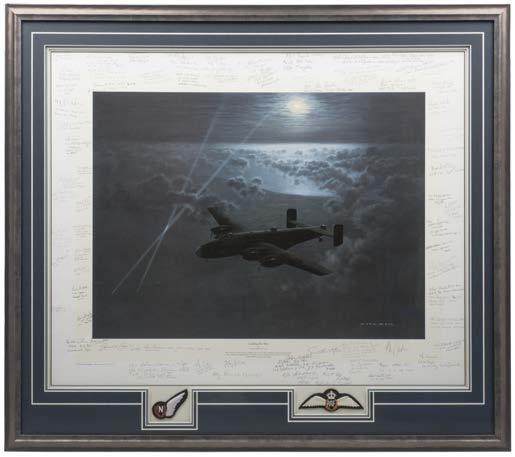
307AR* Coulson (Gerald). Leading the Way, limited edition colour print numbered 402/500, showing a solitary Halifax B. Mk II bomber flying ahead of the main force heading for Europe, signed in pencil by the artist and approximately 66 RAF bomber aircrew, including Ken Wallis, Jack Ball DFC, Frank Tilley 617 Squadron, Nathan Morrison (POW Stalag Luft III) and many others, presented in a fine display frame, glazed, Aces High label to verso, frame size 84.5 x 95.5 cm, with certificate of authenticity (1)
£200 - £300
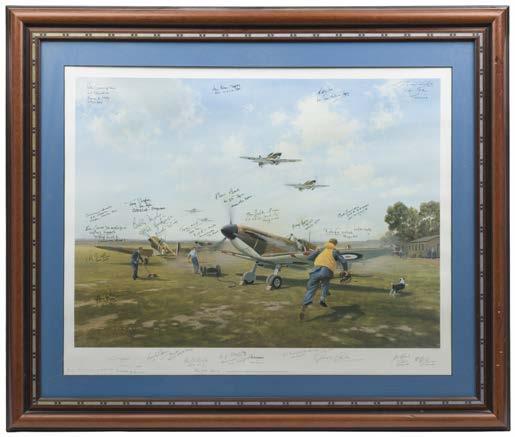
308AR* Coulson (Gerald). Scramble, limited edition colour print, numbered 544/850, showing a pilot running for duty during the Battle of Britain, signed in pencil and ink by the artist and 24 veteran Battle of Britain pilots and crew, including Ben Bent, Billy Drake, Tom Neil and Tom Dalton-Morgan, framed and glazed, frame size, 80 x 94.5 cm, cracked glass (1)
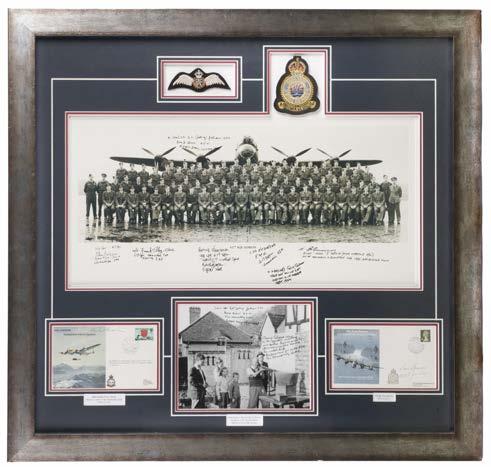
£150 - £200
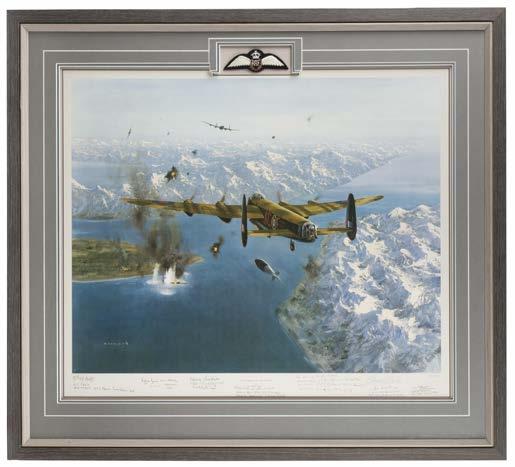
309AR* Coulson (Gerald). The Sinking of the Tirpitz, limited edition colour print, numbered 419/500, showing Lancaster NF920 over Sweden, signed in pencil by the artist and 7 veterans, including Benny Goodman (617 Squadron), Dr Mary Stopes-Roe (daughter of Barnes Wallis) and Des Curtis DFC, presented in a display frame, glazed, Aces High label to verso, frame size 84.5 x 93.5 cm (1)
£100 - £150
310* Dambusters. 617 Squadron, a framed display, comprising a group photograph signed by veterans, including John Bell DFC and Frank Tilley, a copied photograph showing Barnes Wallis and signed by Mary Stopes-Roe and George Leonard ‘Johnny’ Johnson, a first day cover signed by Mick Martin, another signed by Ken Brown, presented in a display frame, glazed, Aces High label to verso, frame size 80.5 x 84.5 cm (1)
£200 - £300
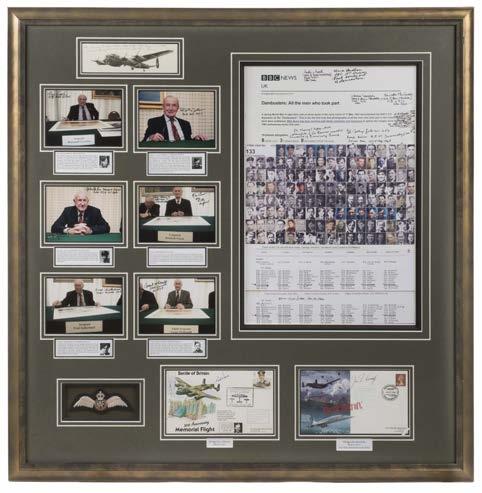
311* Dambusters. All the men who took part, a fine display frame including signed photographs of the following, Raymond Grayston, George L. Johnson, Les Monro, Kenneth Lucas, Frederick E. Sutherland, Grant S. McDonald, plus a first day cover signed by Dave Shannon and Ted Wass, another signed by John McCarthy, plus a BBC News “wall of fame” with various signatures, and a remark signed by Mary Stopes (daughter of Barnes Wallis), framed and glazed, Aces High label to verso, frame size 82 x 81 cm (1)
£200 - £300
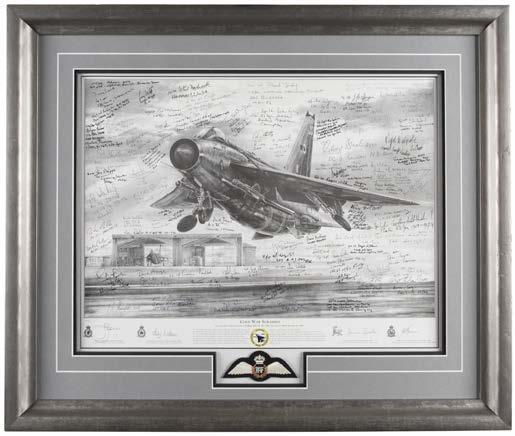
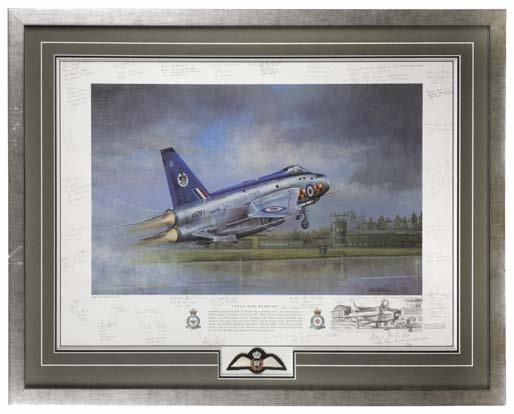
312* English Electric Lightning. Cold War Scramble, limited edition monochrome print, numbered 42/250, showing English Electric Lightning F Mk6 XR728 at RAF Binbrook in 1987, signed by Jake Jarron, Andy Williams, Dennis Brooks and John Spencer, additionally signed by approximately 70 veterans including Graham Pitchfork (208 Squadron), Bryan Baker (1 Squadron) and Charles Strawson, presented in a display frame, glazed, Aces High label to verso, frame size 64.5 x 77 cm (1)
£150 - £200
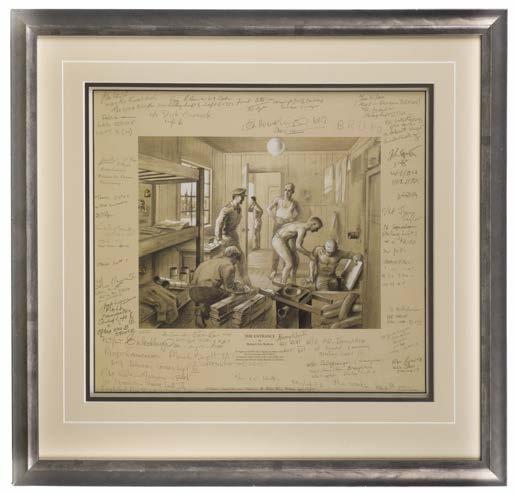
313* Kenyon (Bennett Ley). The Entrance, limited edition print after the original sketch drawn at the time by Kenyon, showing officers entering the Great Escape tunnel ‘Harry’, signed in pencil by approximately 35 veterans including Tom Wilson (192 Squadron, Stalag Luft III), Ron Gard (463 Squadron, Stalag XII), P.R. Donaldson (10 Squadron, Stalag Luft III), framed and glazed, Aces High label to verso, frame size, 56 x 58 cm (1)
£100 - £150
314* McHugh (Charles). ‘Cold War Warrior’, limited edition colour print, numbered 226/250, showing an RAF Lightning F2a of 92 Squadron scrambling at RAF Gütersloh, Germany in the early 1970s, signed in pencil by the artist and 30 RAF pilots and aircrew, including, Sir William Wratten (19 Squadron), Terry Davies (29 Squadron), Alan Winkles (5 Squadron), presented in a display frame, glazed, Aces High label to verso, frame size 75 x 94.5 cm (1)
£150 - £200
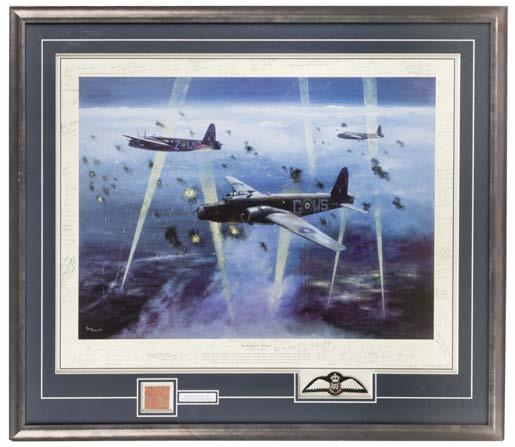
315* Pritchard (David). “Wellington Attack” (A tribute to the many), limited edition colour print, numbered 21/150, showing bombers of 9 Squadron over Germany in 1941, signed in pencil by the artist and approximately 50 veterans, including Bill Reid VC, Jack Blanchard (166 Squadron), Ted Broom DFC (105 Squadron), Walter Morrison (103 Squadron, Stalag Luft III Colditiz Offlag IV), present in a display frame with a section of Wellington aircraft fuselage canvas, glazed, Aces High label to verso, frame size 80.5 x 92 cm (1)
£150 - £200
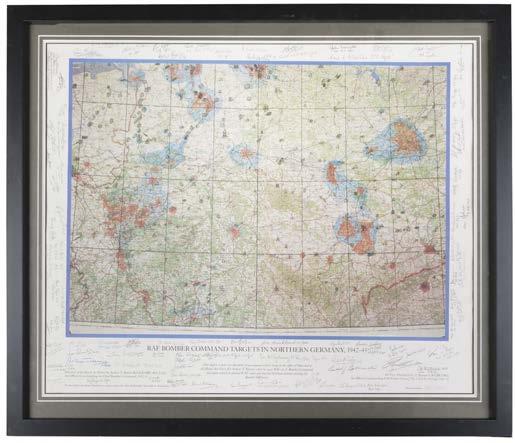
316* RAF Bomber Command Targets in Northern Germany, 194245. Half size facsimile colour print, limited edition 130/1000, signed in pencil by approximately 80 RAF bomber aircrew, including Freddie Johnson DFC, Alan Payne DFC, Ken Jenkinson 617 Squadron, presented in a fine display frame, glazed, Aces High label to verso, frame size 83 x 97 cm
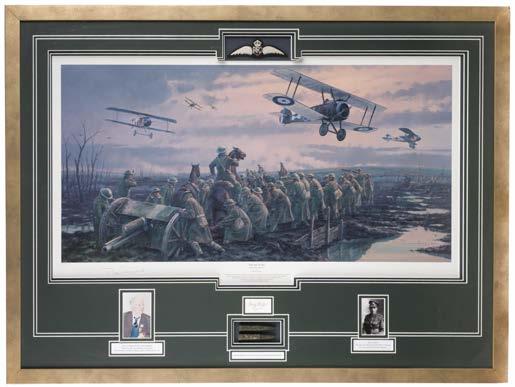
This map is a half size facsimile of an original which hung in the office of Marshal of the Royal Air Force Sir Arthur T. Harris (Bomber Harris). (1)
£200 - £300
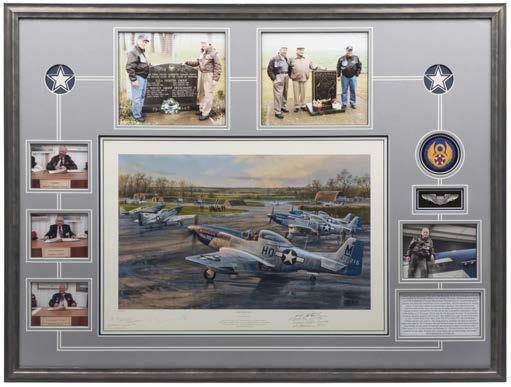
317* Saunders (Anthony). Checking Out, limited edition colour print, numbered 173/225, showing American P-51 Mustang of 487th Fighter Squadron, 352nd Fighter Group on Bodney Airfield, circa 1945, signed in pencil by the artist, R Tyrell (owner of ‘Miss Helen’) and Joseph Peterburs (P-51 pilot), presented in a fine display frame with colour photographs of 352nd Fighter Group veterans, glazed, frame size, 79 x 104.5 cm, an additional colour print by Richard Taylor titled ‘Josephine’ (21/50) is skillfully affixed to verso, this is signed by the artist and Joseph Petersburs, 38 x 40 cm
Joseph Petersburs flew over 49 missions.
(1)
£200 - £300
318* Saunders (Anthony). The Big Push, Passchendaele 1917, limited edition colour print, numbered 46/150, showing men and horses of the Royal Artillery dragging their 18 pounder field gun towards a new position on 15 November 1917, with a Sopwith Camel of 45 Squadron, Royal Flying Corps overhead, presented in a display frame, with copy cloth RFC wings, copied photographs of the last surviving Tommy, Harry Patch (with signature), plus inert bullets recovered from the Somme, glazed, Aces High label to verso, frame size, 76.5 x 102 cm, with certificate of authenticity (1)
£150 - £200
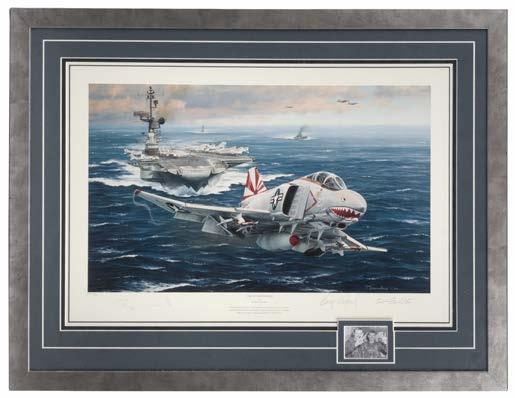
319* Saunders (Anthony). The Sundowners, limited edition colour print, numbered 46/300, showing F-4 Phantoms of VF-111 ‘The Sundowner’s’ launch from USS Coral Sea on 6 March 1972, signed in pencil by the artist and 2 veterans, presented in a display frame, glazed, Aces High label to verso, frame size 59.5 x 76.5 cm, together with Saunder (Anthony). A Welcome Return, numbered 20/400, signed, Aces High and certificate of authenticity to verso, frame and glazed, frame size 65 x 78 cm, plus a framed collection of 9 aviation prints signed by the artist Joe Crowfoot, framed and glazed, Aces High label to verso, frame size 80 x 87.5 cm (3)
£100 - £150
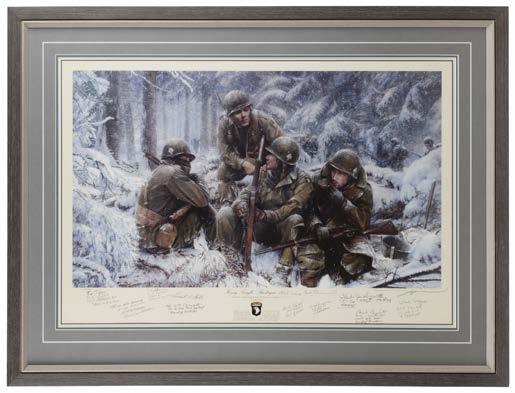
320* Shaw (John. D.). Hang Tough, Bastogne 1944, limited edition colour print, numbered 137/850, showing the Band of Brothers during the Battle of the Bulge, 24 December 1944, signed in pencil the artist and 11 veterans, including Ed Tippin (101st Airborne Division), Buck Taylor (Band of Brothers), Bill Wingett, Paul Rogers, Herb Suerth, preented in a display frame, glazed, Aces High label to verso, frame size 73 x 96 cm, with certificate of authenticity (1)
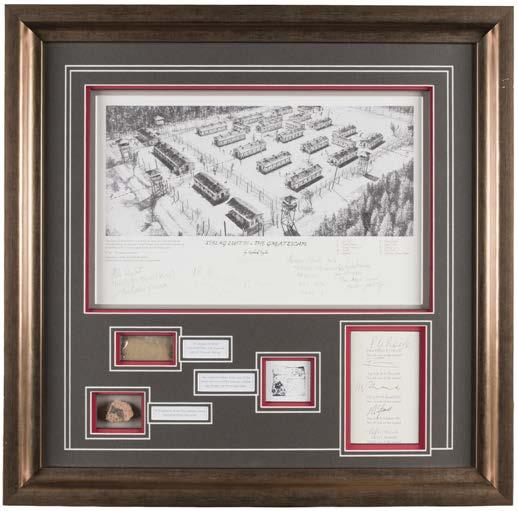
£200 - £300
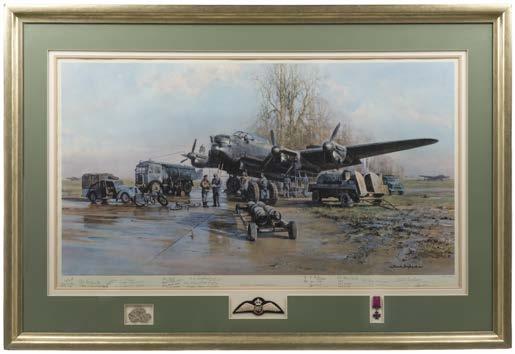
321AR* Shepherd (David). Winter of ‘43, Somewhere in England, limited edition colour print, numbered 818/850, showing an RAF bomber with groundcrew, signed in pencil by the artist and 9 RAF aircrew, including Rusty Waughman (101 Squadron, Special Duties), presented in a fine display frame with shrapnel, glazed, Aces High label to verso, frame size 81.5 x 119.5 cm (1)
£200 - £300
322AR* Taylor (Richard). Stalag Luft III - The Great Escape, Escapers Edition numbered 1/76, a presentation display dedicated to one of the 76 men who crawled through ‘Tunnel Harry’ during the ‘Great Escape’ from the North Compound of Stalag Luft III on the night of the 24/25 March 1944 - Squadron Leader Roger Bushell, South African Spitfire Pilot with 92 Squadron, a print showing the camp with key, signed in pencil by John Leyton (Willie the Tunnel King), Victor Gregg and other veterans, presented in a display frame with a fragnment of stone removed from hbut 104 and sample of sands recovered from the original site of ‘Tunnel Harry’, plus 5 additional signatures including P.G. Royle (54th man out of the tunnel), R.S. Churchill (63rd), M.M. Shand DFC (76th), B.A. James (39th) and L. Brodrick (52nd), glazed, Aces High label and certificate of authenticity to verso, frame size 61 x 62 cm (1)
£150 - £200
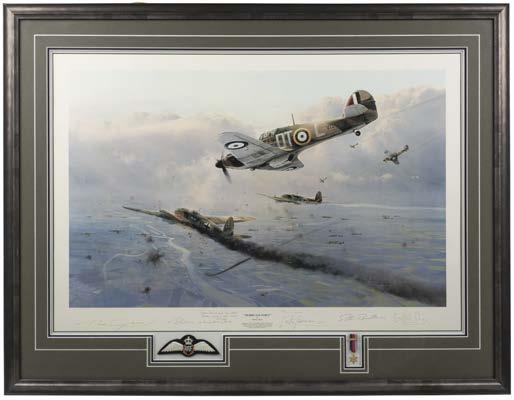
323AR* Taylor (Robert). “Hurricane Force”, limited edition colour print numbered 36/1250, showing Hurricanes of 257 Squadron attacking Heinkel 111 and Dornier 17 bombers over London during the Battle of Britain, signed in pencil by the artist, Peter Townsend, Peter Brothers, Geoffrey Page, Joan Fanshawe (Battle of Britain map plotter) and Frank Carey, presented in a fine display frame, glazed, Aces High label to verso, frame size 77 x 99.5 cm, with certificate of authenticity
(1)
£150 - £200
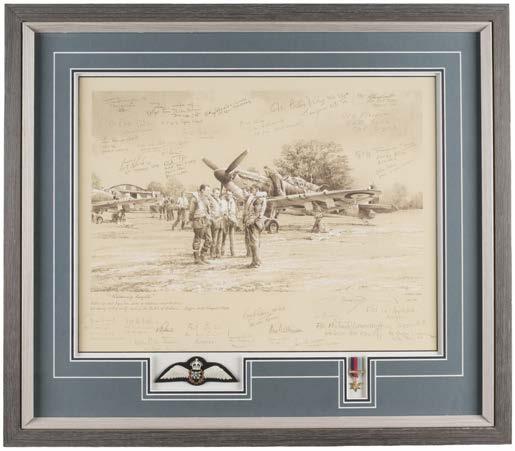
324*AR* Taylor (Robert). “Welcoming Respite”, charcoal print after the original drawing, showing pilots of 603 Squadron at Biggin Hil during the Battle of Britain, August 1940, signed in pencil by the artist and approximately 30 veterans, including Michael Wainwright (64 Squadron), Tom Neil, DFC, AFC, Pete Brown (41 Squadron), Billy Drake, presentation display frame, glazed, Aces High label to verso, frame size, 65 x 74 cm
(1)
£100 - £150
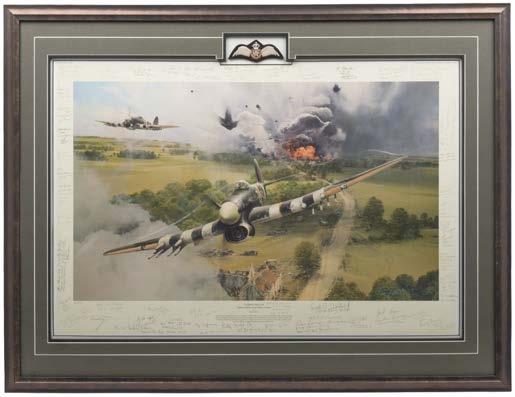
325AR* Taylor (Robert). Closing the Gap, Typhoon Strike in the Falaise Pocket, limited edition colour print, numbered 23/350, showing Typhoon of 247 Squadron exit target area near Falaise at full throttle, signed in pencil by the artist and approximately 47 veteran RAF pilots and aircrew, including Alf Whitbread (No 6 Glider), Frank Wheeler DFC (174 Typhoon Squadron), Billy Drake, Geoffrey Wellum and Mike Dermott (350 Squadron D-Day), presented in a display frame, glazed, Aces High label to verso, frame size, 76 x 99.5 cm, with certificate of authenticity (1)
£200 - £300
326* Taylor (Robert). Eagles of the Eighth, limited edition colour print, numbered 4/110, showing John D. Landers of 78th Fighter Group in his P-51 Mustang ‘Big Beautiful Doll’, signed in pencil by the artist, Arthur C ‘Art’ Fielder and Joseph A. Peterburs, presented in a display frame, glazed, certificate of authenticity to verso, frame size 51.5 x 66.5 cm, together with Teasdale (Stephen). Forgotten Air Force, multi signed print, commemorating Kohima, framed and glazed, Aces High label to verso, frame size 51.5 x 63 cm, plus Taylor (Robert). Skipper - Home at Last, multi signed print, framed and glazed, Aces High label and certificate of authenticity to verso, frame size 52.5 x 66.5 cm, a photograph signed by 4 American Band of Brothers veterans, including William T. Wingett and Ed Tipper, framed and glazed, Aces High label to verso, frame size 34 x 39 cm
(4)
£150 - £200
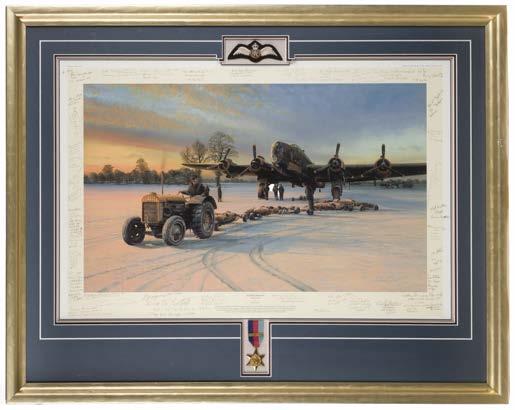
327AR* Taylor (Robert). Friday 13th, limited edition colour print, numbered 7/350, showing Halifax F-Freddy (Friday 13th)on RAF Lisset airfield during the latter stages of WWII, signed in pencil by the artist and approximately 40 veterans, including Alan Creswell DFC (76 Squadron), Harry George (10 Squadron), Lurie Godfrey (408 Squadron), Ron Homes DFC (101 Squadron), presented in a superb display frame with copy 1939-1945 Star and clasp, 81.5 x 103 cm (1)
£200 - £300
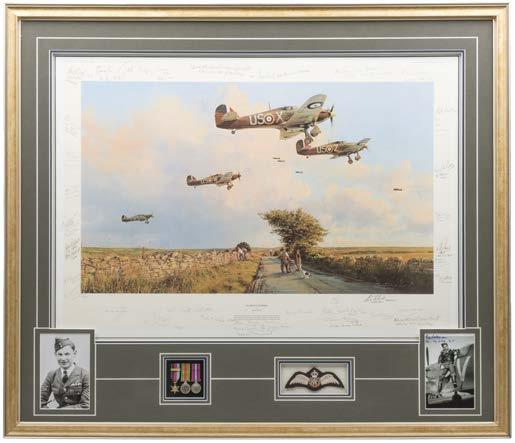
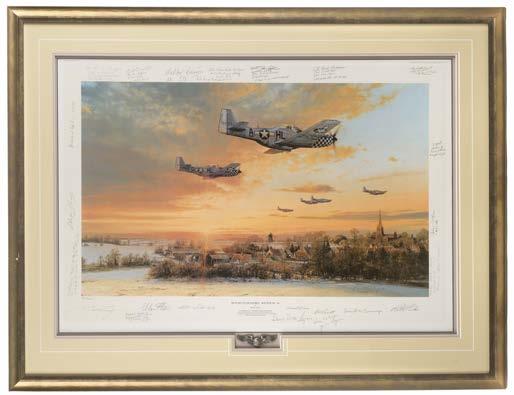
328AR* Taylor (Robert). Glorious Summer, limited edition colour print, numbered 469/500, showing Hurricanes of 56 Squadron making their third scramble of the day during the early stages of the Battle of Britain, signed in pencil by the artist and approximately 33 veteran RAF pilots and aircrew, including Bunny Currant, Peter Brothers, Billy Drake, Geoffrey Wellum and Dee Dalton-Morgan, presented in a display frame with black and white photograph signed by Ken Wilkinson (616 Squadron), glazed, Aces High label to verso, frame size 82.5 x 95.5 cm, with certificate of authenticity (1)
£200 - £300
329AR* Taylor (Robert). Out of Fuel, and Safely Home, limited edition colour print numbered 34/125, showing an American B-17 Flying Fortress damaged by flak and escorted by P-51 Mustangs landing in a cornfield, signed in pencil by the artist and 22 veteran B-17 bomber aircrew, presented in a fine display gilt frame, glazed, Aces High label to verso, frame size 82.5 x 99.5 cm, with certificate of authenticity (1)
£200 - £300
330AR* Taylor (Robert). Return to Duxford - Winter of ‘44, limited edition colour print, numbered 803/950, showing American P-51 Mustangs of 78th Fighter group returning to Duxford in the winter of 1944, signed in pencil by the artist and 20 veterans including Dame Vera Lynn, Donald M Cummings, Charles McGee (Mustang pilot), Buck Anderson (P51 pilot), presented in a display frame, glazed, Aces High label to verso, frame size 72 x 94 cm (1)
£150 - £200
331AR* Trudgian (Nicolas). Mosquitos at Dusk, limited edition colour print, numbered 281/350, showing Mosquito of 464 RAAF Squadron flying over a wintery English coastal village in December 1944, signed in pencil by the artist and approximately 42 veteran RAF pilots and aircrew, including Dick Maywood (608 Squadron), George Cash DFC, Joe Patient DFC, presented in a display frame, glazed, Aces High label to verso, frame size, 69.5 x 98.5 cm (1)
£200 - £300
332AR* Trudgian (Nicolas). Scramble for the Marinanas, limited edition colour print, numbered 161/1000, showing Lieutenant A. Vraciu leading Fighting Squadron 16s F6G Hellcats off the USS Lexington, heading for Marianas Turkey Shoot, 19 June 1944, signed in pencil by the artist and Vraciu plus Chuck Smith and two other distinguished aircrew, presented in a fine display frame, glazed, Aces High label to verso, frame size 82 x 105 cm, with certificate of authenticity (1)
£150 - £200
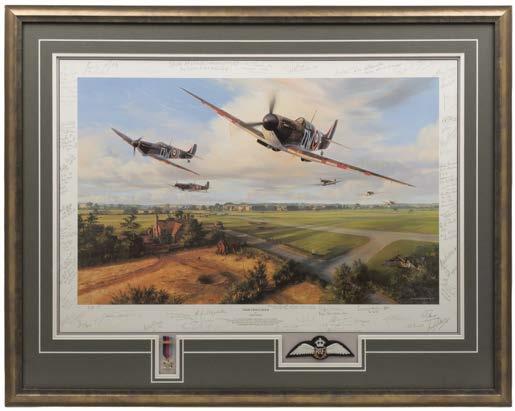
333AR* Trudgian (Nicolas). Their Finest Hour, limited edition colour print, numbered 8/50 P/P, showing Spitfire Mk I of 610 Squadron making their third scramble of the day from RAF Hawkinge during the Battle of Britain, signed in pencil by the artist and approximately 50 RAF veteran pilots and aircrew, inclduding Billy Drake, Wilf Sizer, Geoffrey Wellum, Michael Wainwright and Dee Dalton-Morgan, presented in a display frame, glazed, Aces High label to verso, frame size 71.5 x 90.5 cm, with certificate of authenticity (1)
£200 - £300
334AR* Trudgian (Nicolas). Winter Patrol, presentation copy colour print, showing Me109s of JG-52 returning from a mission over the Caucasus Mountains in November 1942, signed in pencil by the artist and 5 Luftwaffe pilots including Hugo Broch (JG-54), presented in a superb gilt display frame with copy Knight’s Cross and Luftwaffe wings plus additional signed photographic cards, glazed, Aces High label to verso, frame size 81.5 x 103 cm (1)
£200 - £300
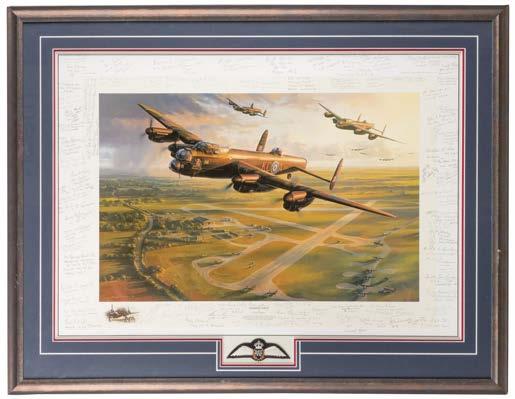
335AR* Trudgian (Nicolas). Bomber Force, limited edition colour print, numbered 14/50, showing Lancasters of 617 Squadron heading off on operations over Europe, signed in pencil by the artist and approximately 65 RAF veteran pilots and aircrew including George Cash DFC (POW Stalag Luft 1), Bertram Arthur James MC (Great Escape), Roy Akehurst (75 NZ Squadron), Dick Harrison (70 Squadron), presented in a display frame, glazed, Aces High label to verso, frame size 75.5 x 96.5 cm (1)
£200 - £300
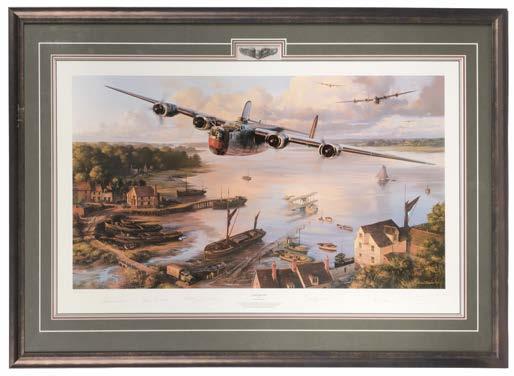
336AR* Trudgian (Nicolas). Safe Haven, limited edition colour print, numbered 228/1000, showing American B-24 Liberators returning from a raid, signed in pencil by the artist and 5 veterans, including John Brooks and Bill Cameron, presented in a display frame, glazed, Aces High label to verso, frame size 72.5 x 100.5 cm, together with Trudgian (Nicolas). Return to Rattlesden, numbered 59/500, showing B-17 Flying Fortress approaching Rattlesden, multi signed, framed and glazed, frame size 66.5 x 100 cm, plus Taylor (Robert). Ploesti - The Vital Mission, numbered 9/1250, multi signed, framed and glazed, frame size 75 x 95.5 cm (3)
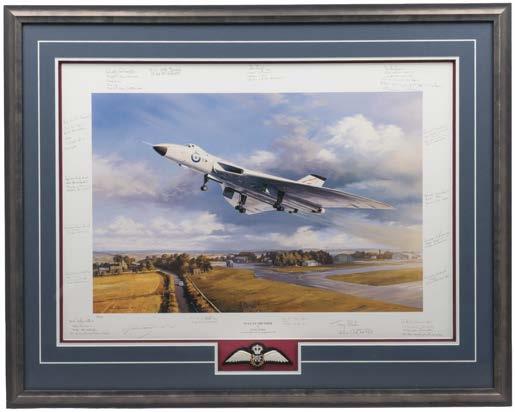
£100 - £150
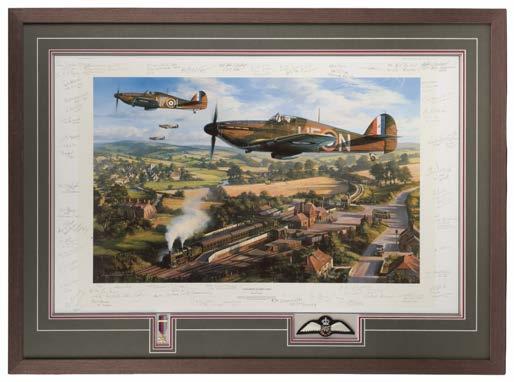
337AR* Trudgian (Nicolas). Tangmere Hurricanes, limited edition Artist’s Proof colour print, numbered 69/100, showing Battle of Britain Mk I Hurricanes of 601 Squadron, refuelled and rearmed, climbing to rejoin the battle during the summer of 1940, signed in pencil by the artist and approximately 50 veteran pilots and aircrew, including Tom Neil, Harold Bird-Wilson, Geoffrey Page, Peter Townsend, Billy Drake and Roland Beaumont, presented in a display frame, glazed, Aces High label to verso, frame size, 76.5 x 103.5 cm, with certificate of authenticity (1)
£200 - £300
338AR* Trudgian (Nicolas). Vulcan Thunder, limited edition colour print, numbered 88/750, showing Avro Vulcan of 617 Squadron in 1962, signed in pencil by the artist and 18 RAF pilots and crew including Martin Withers and Hugh Prior (Operation Black Buck, Falklands), Rusty Russell, Steve Green (RAF Scampton), presented in a display frame, glazed, Aces High label to verso, frame size 69.5 x 87 cm (1)
£150 - £200
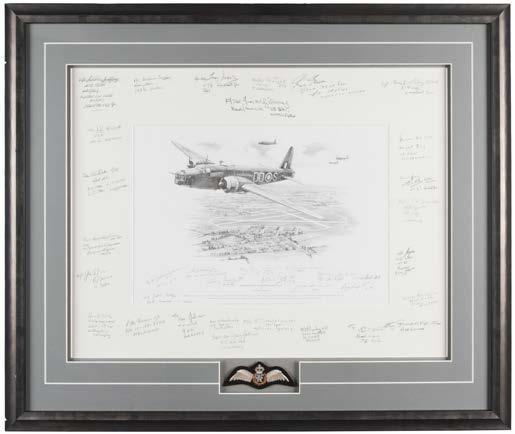
339AR* Trudgian (Nicolas). Wellingtons over Wellesbourne, limited edition print after the original drawing, numbered 18/200, signed in pencil by the artist and 34 veterans including George ‘Johnny’ Johnson, Rusty Waughman (Special Duties), Bob Stow DFC, DFM and John Grant, presnted in a display frame, glazed, Aces High label to verso, frame size 67.5 x 80 cm, with certificate of authenticity (1)
£100 - £150
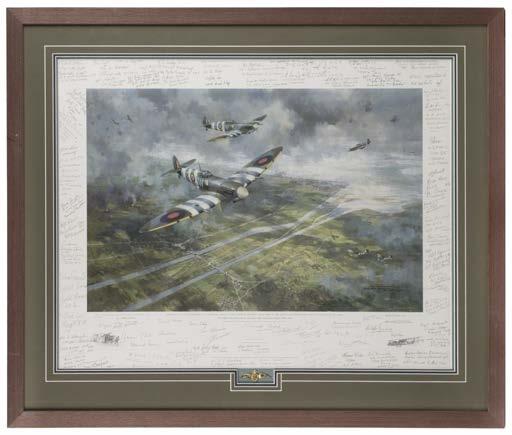
340AR* Turner (Michael). The return flank of the D-Day battlefield, dedicated to all the members of the British troops and services allies who took part in the Battle of Normandy, June 5th to August 20th 1944, limited edition colour print, numbered 303/500, signed in pencil by the artist and approximately 75 WWII veterans including Buck Compton (Band of Brothers), Buster Brown, James Tait, Pete Brothers, Richard Todd and Brad Truman (Band of Brothers), presentation display frame with gilt metal RAF wings, glazed, Aces High label to veso, frame size 77.5 x 91.5 cm (1)
£200 - £300
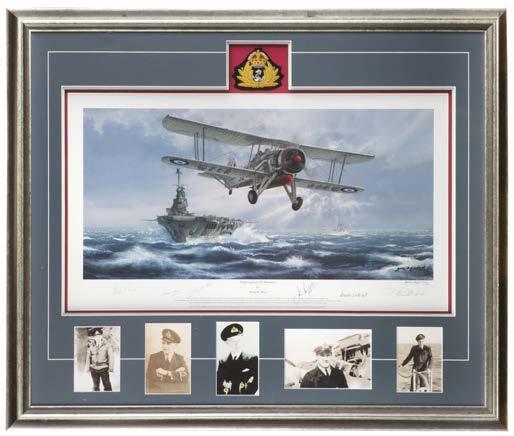
341* West (Philip E. West). Flight Against the Bismarck, limited edition colour print, artist’s proof numbered 23/25, showing Swordfish pilot S/Lt John Moffat taking off from HMS Ark Royal to attack the Bismarck, signed in pencil by the artist and 5 Swordfish crew comprising John Moffat, Stanley Brand, N.C. Gillis, Bruce Vibert and Sidney Hal Jim Suthers, presented in a display frame with copied photographs of these men, glazed, Aces High label to verso, frame size 77 x 91 cm, with certificate of authenticity (1)
£150 - £200
342* West (Philip). Primary Target, limited edition colour print, numbered 227/350, showing the final seconds on 17 May 1943 as the bouncing bomb from Flight Lieutenant Maltby’s Lancaster of 617 Squadron breached the Möhne dam, signed in pencil by the artist and 14 veterans, including Fred Sutherland, Richard Todd, Ken Lucas and Jerry Fray DFC, framed and glazed, frame size 69 x 89 cm, together with Turner (Michael). Mosquito Strike, signed by the artist and 24 veterans, framed and glazed, frame size 54 x 72 cm, Trudgian (Nicolas). Holding the Line, numbered 203/600, signed by the artist and 3 veterans, framed and glazed, frame size 66 x 91 cm, plus 12 further framed and glazed aviation prints (15)
£200 - £300
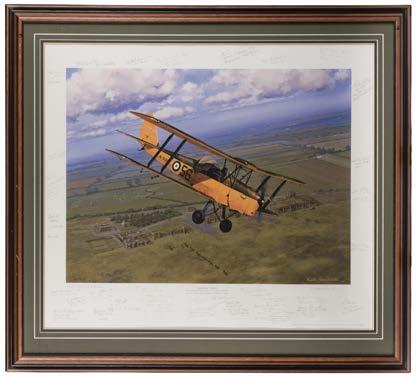
343* Woodcock (Keith). ‘Legendary Trainer, limited edition colour print, artist’s special edition numbered 1/10, showing a De Havilland Tiger Moth over Yatesbury, Wiltshire in 1940, signed in pencil by the artist and 33 distinguished pilots and aircrew, including Eric Brown, Dicky Bird, Eric Moore, Peter Gilpin and Jack Hughes, presented in a display frame, glazed, Aces High label to verso, frame size 86.5 x 95.5 cm (1)
£150 - £200
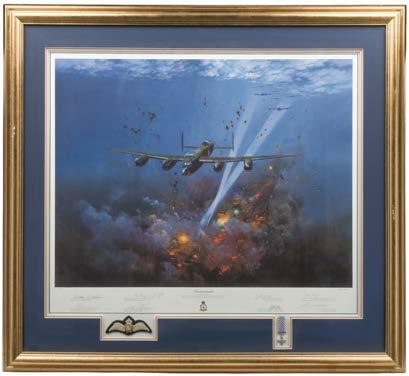
344AR* Wootton (Frank). Peenemünde, limited edition colour print, numbered 608/850, showing the attack on the V bomb secret research centre on 17/18 August 1943, signed in pencil by the artist, Charles Lofthouse, Norman Scrivener, Anthony D. Lambert, Jack Stephens, Geoffrey Whitten and Andrew J.C. Pegrum, presented in a fine display frame, glazed, Aces High label to verso, frame size 88 x 96 cm, with certificate of authenticity (1)
£150 - £200
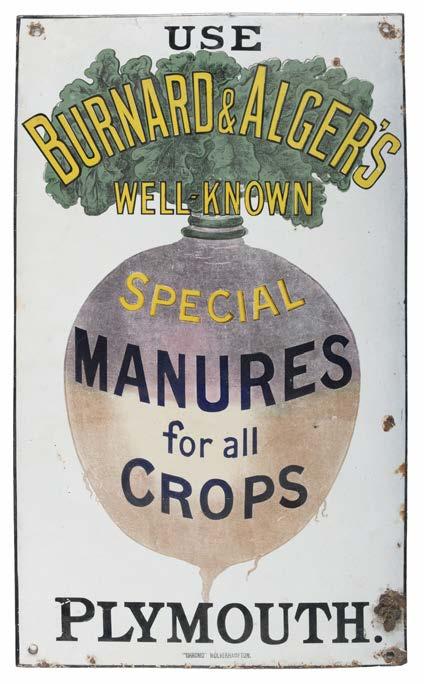
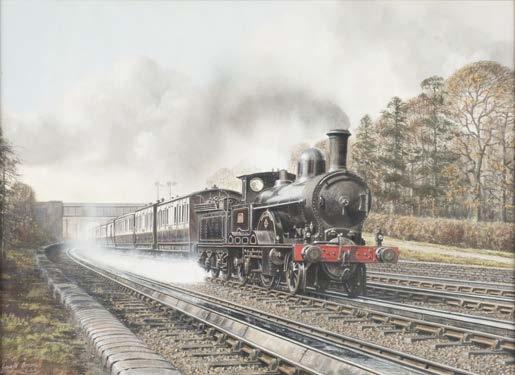
347AR* Broom (Gerald, 1944-). London North Western Railway 644 “Vesuvius”, watercolour on paper, showing 1900 Dreadnought Class ‘644 Vesuvius’ crossing the Bushey Troughs, Hertfordshire, signed lower left, 28 x 39.5 cm, mount aperture, framed and glazed, frame size 51 x 61.5 cm (1)
£300 - £500
345* Advertising sign. Burnard & Alger’s Well-Known Special Manures for all Crops, Plymouth, an enamel advertising sign by “Chromo” Wolverhampton, a good original example with age wear, 51 x 30.5 cm (1)
£700 - £1,000
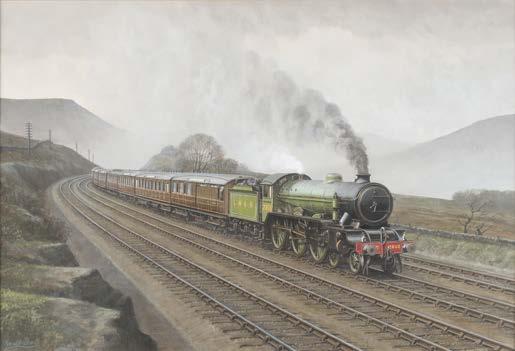
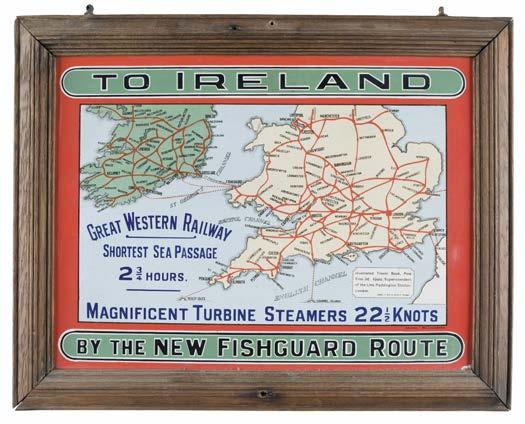
348* Great Western Railway. A G.W.R. enamel advertising sign by “Chromo” Wolverhampton, To Ireland by the New Fishguard Route, Great Western Railway Shortest Sea Passage 2 3/4 Hours, Magnificent Turbine Steamers 22 1/2 Knots, showing a map of Great Britain and Southern Ireland and the routes on a red ground, 27 x 36.5 cm, period oak frame, frame size 34 x 44 cm (1)
£700 - £1,000
346AR* Broom (Gerald, 1944-). LNER 2806 “Audley End”, watercolour on paper, showing LNER Class B17 ‘2806 Audley End’ near Woodhead, Derbyshire, signed lower left, 32 x 47 cm mount aperture, framed and glazed, frame size 55.5 x 71.5 cm (1)
£300 - £500
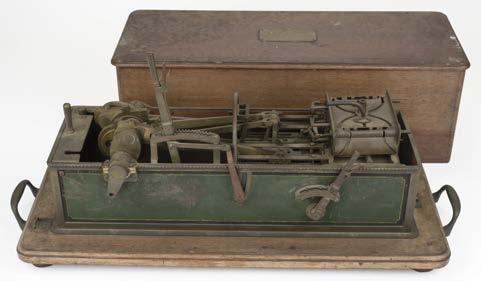
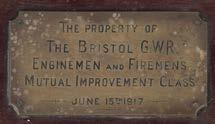
349* Great Western Railway. A GWR demonstration model of valve gear 1917, a well made brass working model with a green livery and brass plaque engraved ‘Made by William H Lewison, Swindon’, mounted on a wooden base with carrying handles and with a wooden cover with a metal plaque engraved ‘The property of the Bristol G.W.R. Enginemen’s and Firemen’s mutual improvement class June 15th 1917’ 70 cm long
Provenance: Exhibited by Maggie Shapland at the Bristol Model Engineering and Hobbies Exhibition, 2007.
(1)
£300 - £500
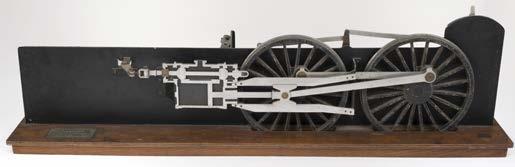
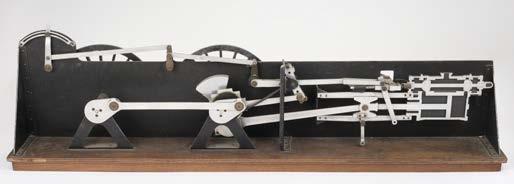
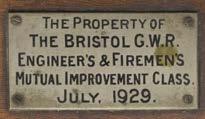
350* Great Western Railway. A GWR demonstration model of valve gear 1929, a well-made aluminium working model with maker’s plate stamped ‘Twinning Models Ltd “Makers” Northampton’, with two large spoke wheels, mounted on a wooden base with a metal plaque engraved ‘Property of the Bristol G.W.R. Enginemen’s and Firemen’s mutual improvement class July 1929.’ 106.5 cm long
Provenance: Exhibited by Maggie Shapland at the Bristol Model Engineering and Hobbies Exhibition, 2007.
(1)
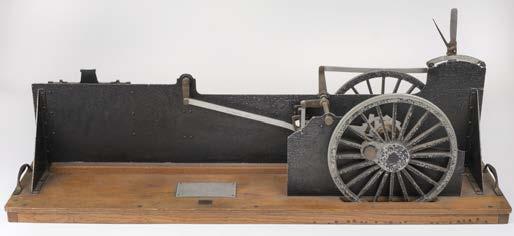
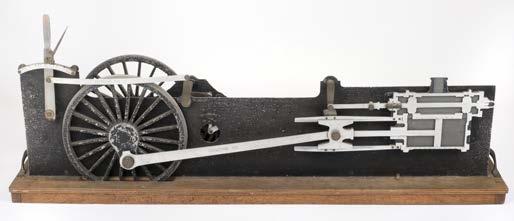
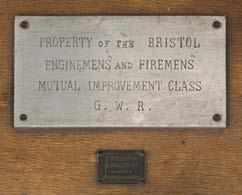
351* Great Western Railway. A GWR demonstration model of valve gear, 1929, a well-made aluminium working model with maker’s plate stamped ‘Twinning Models Ltd “Makers” Northampton’, with two large spoke wheels, mounted in a wooden base with a metal plaque engraved ‘Property of the Bristol Enginemen’s and Firemen’s mutual improvement class G.W.R.’, 96.5 cm long
Provenance: Exhibited by Maggie Shapland at the Bristol Model Engineering and Hobbies Exhibition, 2004.
(1)
£200 - £300
£200 - £300
352* Great Western Railway. A Victorian G.W.R. railway truncheon, turned wood with crowned GWR, the handle stamped ‘Parker 233 Holborn’, 44 cm long, wear commensurate with age and use (1)
£150 - £200
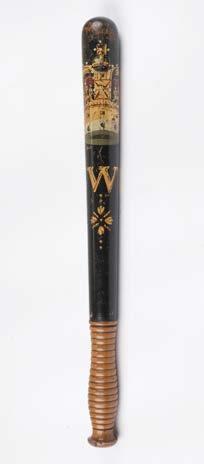
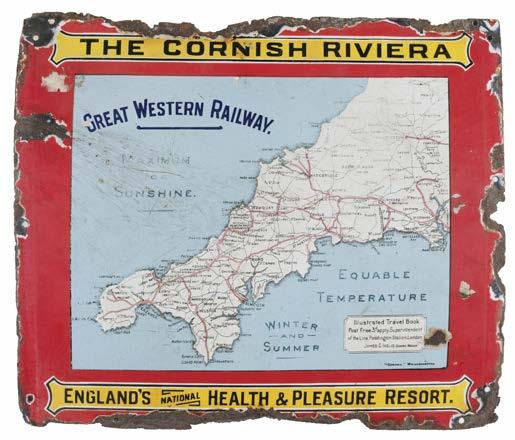
353* Great Western Railway. A G.W.R. enamel advertising sign by “Chromo” Wolverhampton, The Cornish Riviera, England’s National Health & Pleasure Resort, showing a map of Cornwall and the routes on a red ground, 30.5 x 36 cm, poor condition (1)
£100 - £200
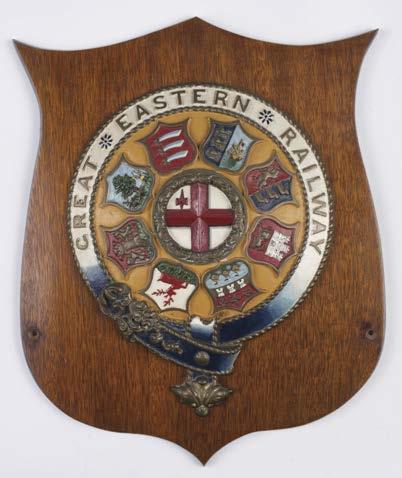
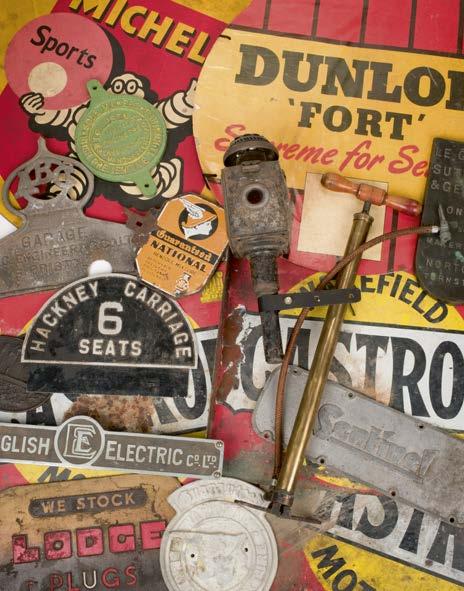
355 Motoring Memorabilia. A large collection of miscellaneous motoring memorabilia, including three Wakelin Castro Motor Oil double-sided enamel sign, with red and yellow ground and black text finish, featuring the "By Appointment To His Majesty The King" royal coat of arms, 40.5 x 51cm, poor condition, Le Grand Sutcliff & Gell London Norton's Turnstile bronze plaque, 30 cm long, Guaranteed National Benzole Mixture enamel sign, 20 x 14.5 cm, poor condition, brass stirrup foot pump by Talbot London, another unmarked, railway and coaching lamps and other items (two cartons + framed items)
£200 - £300
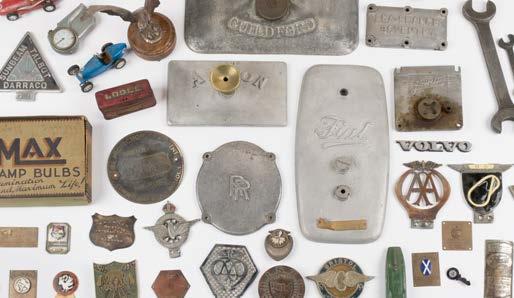
£200 - £300
354* Locomotive Crest. An original Great Eastern Railway locomotive crest from a Claud Hamilton class S46 4-4-0, heavy brass and polychrome painted, with four fixing bolts, approximately 40 x 31 cm across, mounted on a wooden shield, 55 x 43 cm (1)
356* Motoring Memorabilia. A large collection of miscellaneous motoring memorabilia, including a white metal eagle car mascot, 18 cm wingspan, mounted on a wooden base, various spanners, including Austin, Rolls Royce, Albion, Dennis, Lea-Francis and Fiat engine covers, various car badges, including AA white metal car badge, The Morgan Three Wheeler, Bristol M.C.C., Brooklands B.S. enamel car badge, Lumax Motor Lamp Bulbs in oirginal card box, a box of old toy cars including Corgi and Dinky, for example Proteus Campbell Bluebird, Ferrari and Masserati, all unboxed and playworn, motoring medals, spoons, goggles etc (3 cartons)
£200 - £300
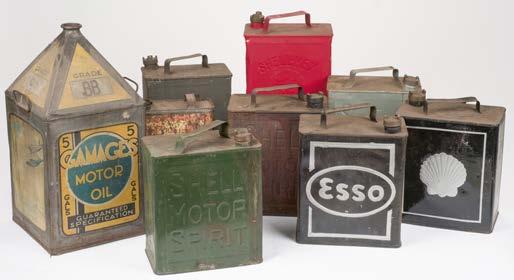
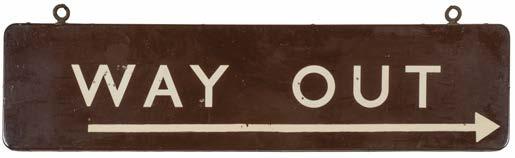
360* Railwayana. A British Rail double-sided enamel sign, ‘Way Out’, white lettering on a brown ground, the arrows probably repainted, with large hanging loops, some chips and loss, 30 x 122 cm
(1)
£100 - £150
357* Motoring Memorabilia. A collection of vintage petrol cans, including Grade BB Gamages motor oil can, circa 1930, of pyramid form, featuring lithograph panels depicting The Schneider Trophy, Brooklands Racing and Gamage motorboat, 53 cm high, Shell Motor Spirit, Shell BP Ltd, Esso, Shell-Mex etc, all in used workshop condition (9)
£200 - £300
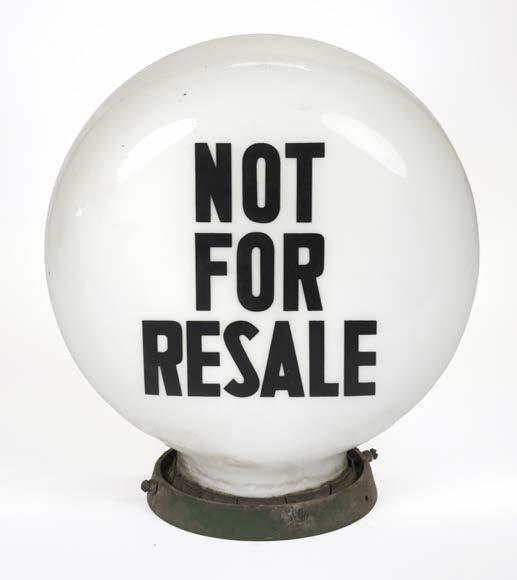
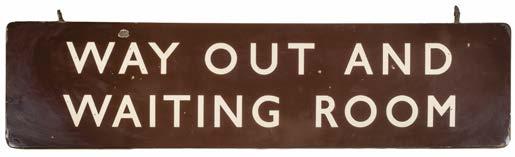
361* Railwayana. A British Rail enamel double sided railway sign ‘Way Out And Waiting Room’, cream lettering on a brown ground, with two large steel hanging loops, some chipping and loss, 45 x 183 cm (1)
£200 - £300
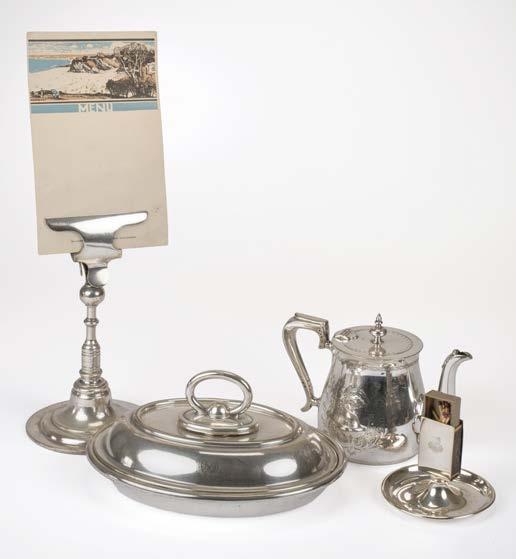
£200 - £300
358* Motoring. A 1940s opaque glass petrol pump globe, circular with black lettering ‘Not For Resale’ on either side, with original metal pump mount, general age wear but in good original condition, 43 cm high (1)
359 Railway slides. A large collection of over 1,200 railway 35 mm slides from the 1970s onwards, these cover locomotives, railway station infrastructure and preserved railways (a carton)
£70 - £100
362* Railwayana. A collection of Edwardian tableware, comprising a L.N.E.R. electroplated menu holder, the base stamped Carter & Aynsley London, 26 cm high, L.N.E.R. electroplated teapot by Hutton, Sheffield, engraved decoration, 16 cm high, electroplated L.M.& S.R. entree dish and cover, with detachable handle, 28 cm long, plus an electroplated Great Western Railways Hotels match box holder and ashtray by Elkington & Co, 12 cm diameter (4)
£200 - £300
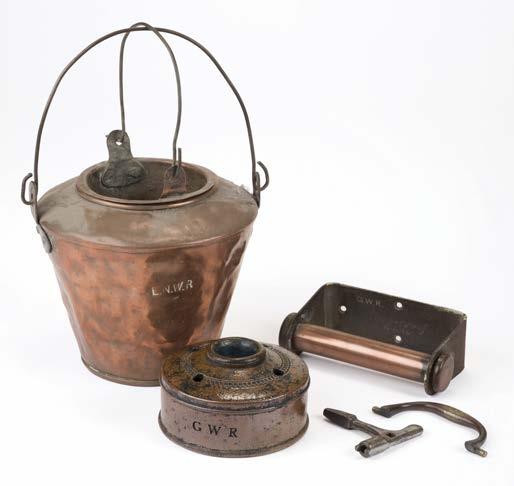
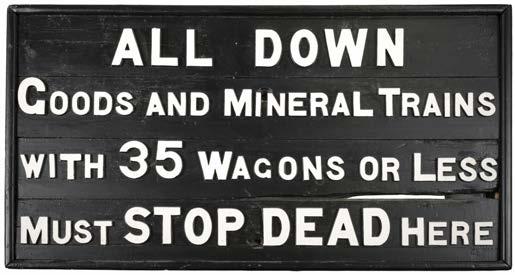
365* Railwayana. A large G.W.R. wooden sign, ‘All Down Goods And Mineral Trains With 35 Wagons Or Less Must Stop Dead Here’, white lettering on a black ground, 70 x 133.5 cm, one end piece a later replacement (1)
£200 - £300
363* Railwayana. A collection of railway memorabilia, comprising G.W.R. Thief Proof copper toilet roll holder, 15.5 cm long, G.W.R. salt glaze stoneware ink bottle, circular and stamped G.W.R., 12cm, L.N.W.R. copper glue pot and liner with swing handle, 19 cm high, 21 cm across, L.N.W.R. railway carriage key, plus a G.W.R. brass drawer handle (5)
£200 - £300
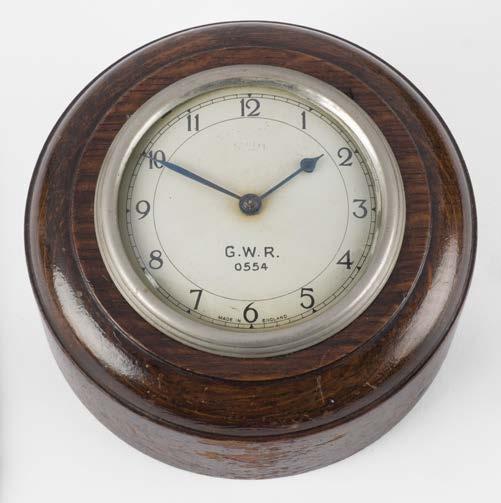
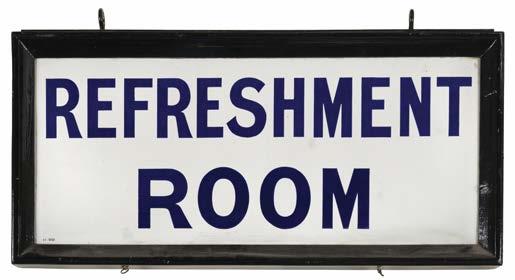
366* Railwayana. A railway double-sided enamel sign by the Enamel Patent Co, ‘Refreshment Room’, blue lettering on a white ground, some visible restoration, large black painted wooden frame and hanging loops, frame size 40 x 82 cm (1)
£200 - £300
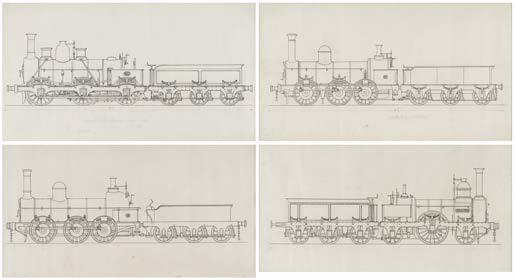
364* Railwayana. A Great Western Railway post grouping “pork pie” wall clock, circa 1930s, the circular 8.5 cm dial signed Smith 8 Day, G.W.R. 0554, oak case and brass movement, the back plate stamped ‘G.W.R.’, case size 14.5 cm diameter (1)
£150 - £200
367* Railwayana. A set of six pen and ink technical drawings of historical steam locomotives by L Ward, many with pencil annotations, 26 x 35 cm, mount aperture, framed and glazed, frame size, 39 x 48 cm, together with a set of four larger pen and ink drawings of historical steam locomotives and tenders, with pencil annotations, unsigned, 25.5 x 46 cm, mount aperture, framed and glazed, 38 x 59.5 cm, plus a smaller similar example (11)
£200 - £300
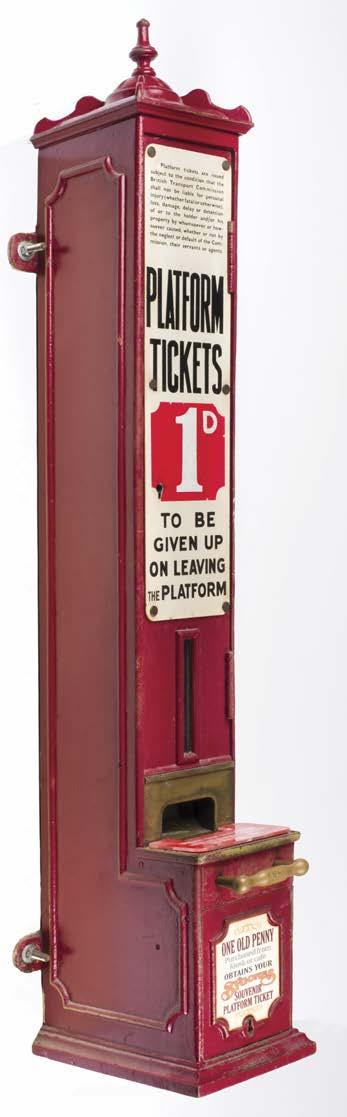
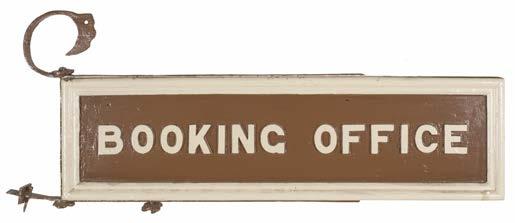
£1,000 - £1,500
369* Railwayana. A Victorian or Edwardian wooden double-sided platform sign, ‘Booking Office’, white lettering on a brown painted ground, original cast iron bracket, 32 x 113 cm (1)
£100 - £150
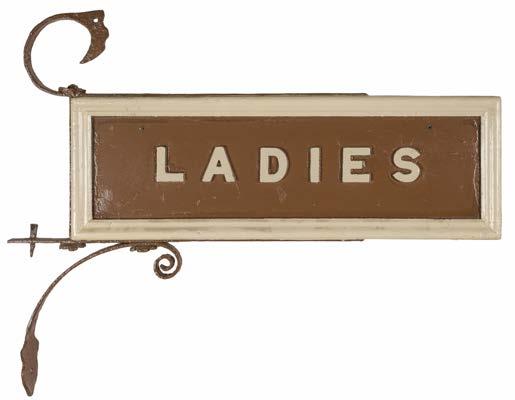
370* Railwayana. A Victorian or Edwardian wooden double-sided platform sign, ‘Ladies’, white lettering on a brown painted ground, original cast iron bracket, 31 x 92 cm (1) £100 - £150
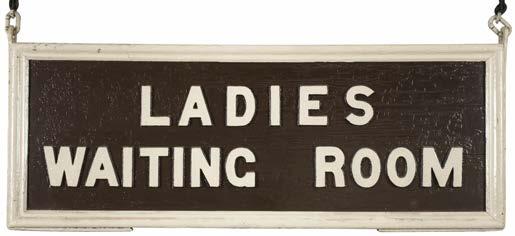
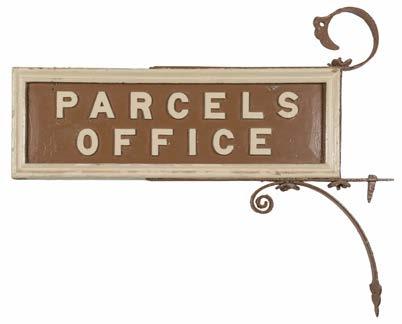
372 Railwayana. A Victorian or Edwardian wooden double-sided platform sign, ‘Parcels Office’, white lettering on a brown painted ground, original cast iron bracket, 31 x 93 cm (1)
£100 - £150
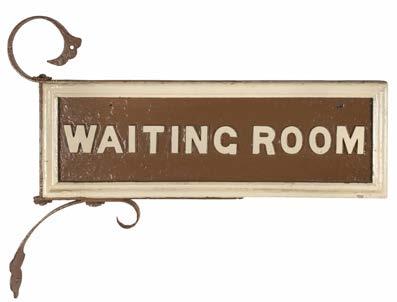
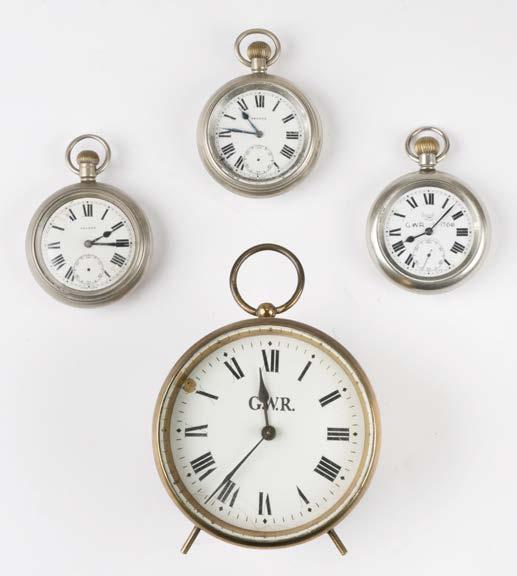
373* Railwayana. A Victorian or Edwardian wooden double-sided platform sign, ‘Waiting Room’, white lettering on a brown painted ground, original cast iron bracket, 31 x 91 cm (1)
£100 - £150
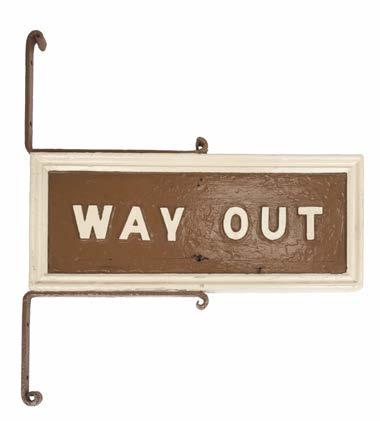
374* Railwayana. A Victorian or Edwardian wooden double-sided platform sign, ‘Way Out’, white lettering on a brown painted ground, original cast iron bracket, 30.5 x 76.5 cm (1)
£100 - £150
375* Railwayana. G.W.R. railway platform pocket watch, the 45 mm diameter white enamel dial with black roman numerals, stamped ‘Limit No 2 GWR 0.1766, with subsidiary seconds dial, the nickel case engraved ‘G.W.R. 0.1766’, brass top wind and 15 jewel movement, case size 55 mm diameter, together with two Record pocket watches, one stamped ‘L.M.S. 10757’, the other ‘G.W.R. 02509’, plus a G.W.R. brass timepiece, the white enamel dial with black roman numerals, the brass case numbered 55551, French brass movement, 9.5 cm diameter, all with chips and condition issues (4)
£200 - £300
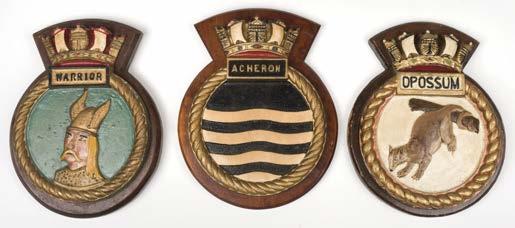
376* Ship name plates. A collection of ship name plate wall plaques, mostly cast metal comprising HMS Acheron, Tresspasser, Lowestoft, Opossum, Jewel, Warrior, Teazer, Algonquin, 814 plus a composite one for HMS Echo, various sizes and condition, together with:
Ship blocks. A collection of ship blocks, 19th century and later, all very substantial with ropes and clasps, the largest 23 cm, some with old worm holes (14) £100 - £150
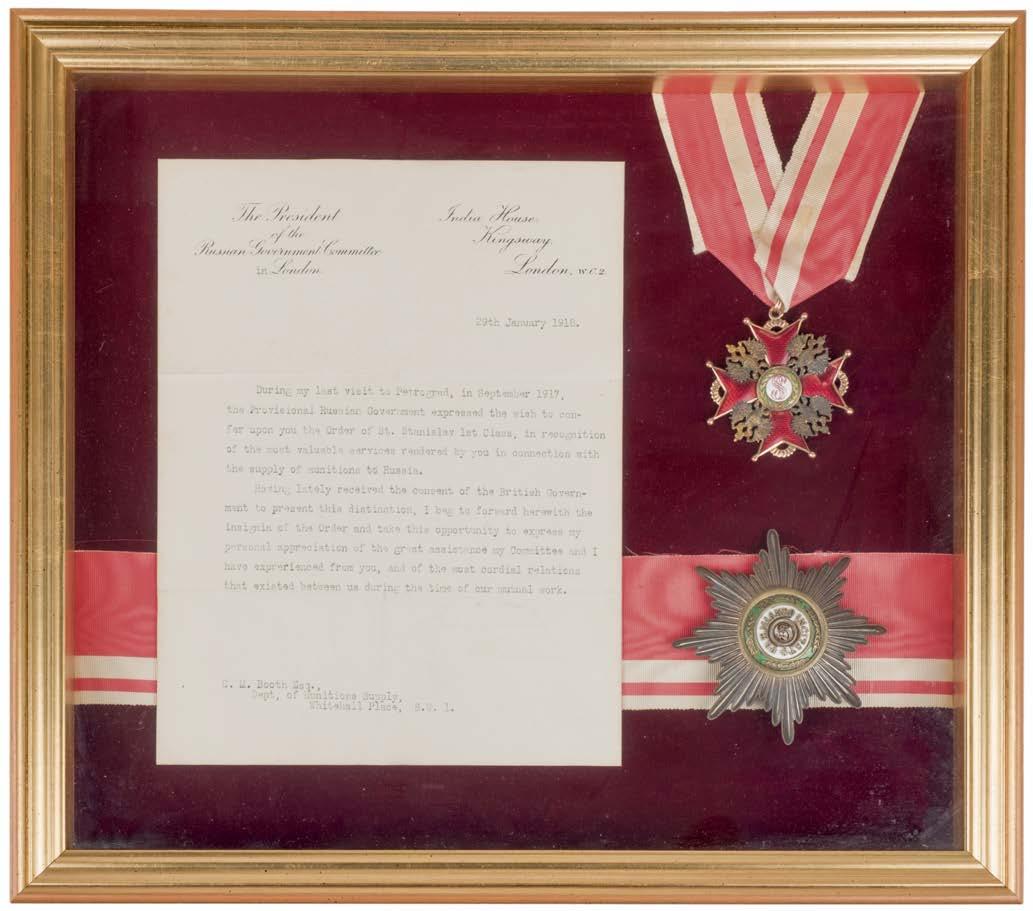
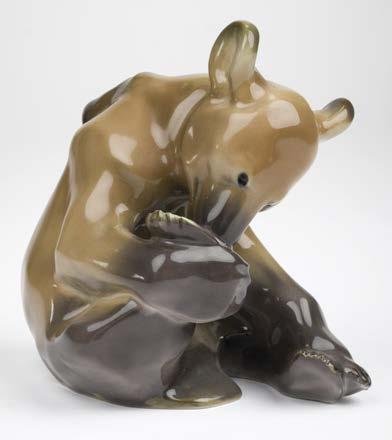
378* Allach Porcelain Manufactory. A porcelain SS Main Economic and Administrative Office porcelain ‘Yule’ plate, dated 1943, decorated with a floral decoration on the front and green printed marks to the base in German ‘Yule 1943 - The Chief of the SS Main Economic and Administrative Office POHL - SS-Obergruppenführer and General of the Waffen-SS’, no manufacturer’s mark, 25.2 cm diameter
Oswald Ludwig Pohl (1892-1951) was a German SS-Obergruppenführer and General of the Waffen-SS.
(1)
£300 - £500
377* Allach Porcelain Manufactory. A porcelain bear, circa 1936, model 32 by Wilhelm Zügel, the brown glazed bear modelled seated licking his foot, impressed ‘Wilhelm Zügel’ and ‘32’ with green Allach marks to base, 14 cm high Model 32 by Wilhelm Zügel was introduced in 1936 and was the only figure by Zügel designed for the Allach Porcelain Manufactory. (1)
£300 - £500
Lot 378
379* American uniform. A WWII United States Army uniform attributed to Lieutenant Colonel Delk Oden, comprising a full field service uniform, identity card and army driving permit
Lieutenant Colonel Delk Oden was initially part of the First U.S. Army, before becoming the commanding officer of the 35th (M-18Hellcat) Tank Battalion and later Staff Officer for Major-General “Tiger Jack” Wood. He was appointed as a Senior Officer (G-2) of the U.S. Fourth Armoured Division, the spearhead unit of Third U.S. Army under General George S. Patton.
(1)
£200 - £300
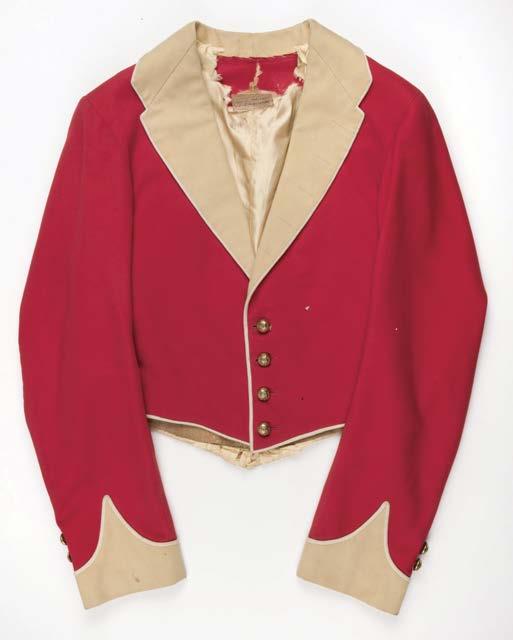
380* Argyll and Sutherland Highlanders. A late Victorian red cloth mess jacket of the Argyll and Sutherland Highlanders, with light yellow cloth facings, braided shoulder boards with rank stars, brass regimental buttons, the lining tatty but with original Samuel Gardener & Co label dated 1893, inscribed in ink ‘Captain Robinson The A & S Highlanders’, together with a similar mess jacket from the same regiment, plus:
Doublet. A fine Scottish doublet of the Argyll & Sutherland Highlanders, scarlet melton cloth with white piping, yellow facings to the collar and cuffs, with silver bullion lace, the collar with a pair of fine silver and gilt regimental badges, with silvered buttons to the right breast and silver bullion shoulder cords with rank stars to a Second Lieutenant, quilted lining, a good example with minimal wear and Royal Artillery. A full dress tunic of the Royal Artillery, circa 1910, black cloth with red facing and gold braiding and red piping, flaming grenade embroidered collar badges, gold embroidered epaulettes with brass king’s crown buttons by Jennens, cuffs with gilt cord and gimp Austrian knots, quilted lining with brown leather, 74 cm long, 37 cm chest, 44 cm inner arm, together with a similar tunic
(5)
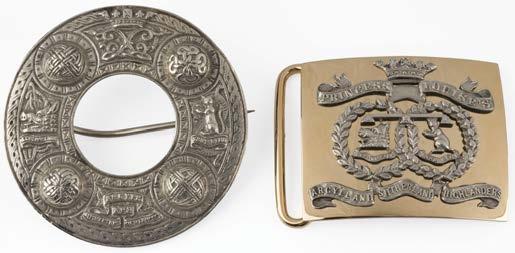
381* Argyll and Sutherland Highlanders. A Victorian officer’s waist belt plate, 1881 pattern, the vibrant brass plate applied with white metal badge, featuring a coronet over scroll inscribed ‘Princess Louise’s’ with conjoined wreaths and a boars head and cat, with scroll beneath inscribed ‘Argyll and Sutherland Highlanders’, the reverse with fittings, 5.5 x 7.5 cm, together with an Edwardian Argyll and Sutherland Highlanders white metal plaid brooch, 7.8 cm diameter
(2)
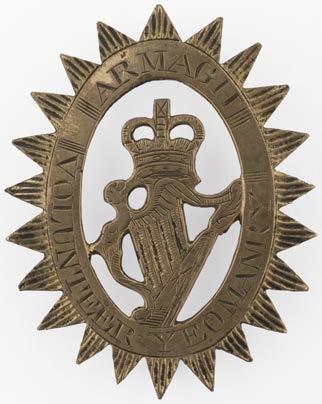
£100 - £150
£150 - £200
382* Armagh Volunteers Yeomanry. An Irish pouch badge circa 1800, pierced brass featuring a Maid of Erin harp to the centre with oval star border inscribed ‘Armagh Volunteers Yeomanry’, the reverse with four lugs, 7.5 x 6 cm (1)
£150 - £200
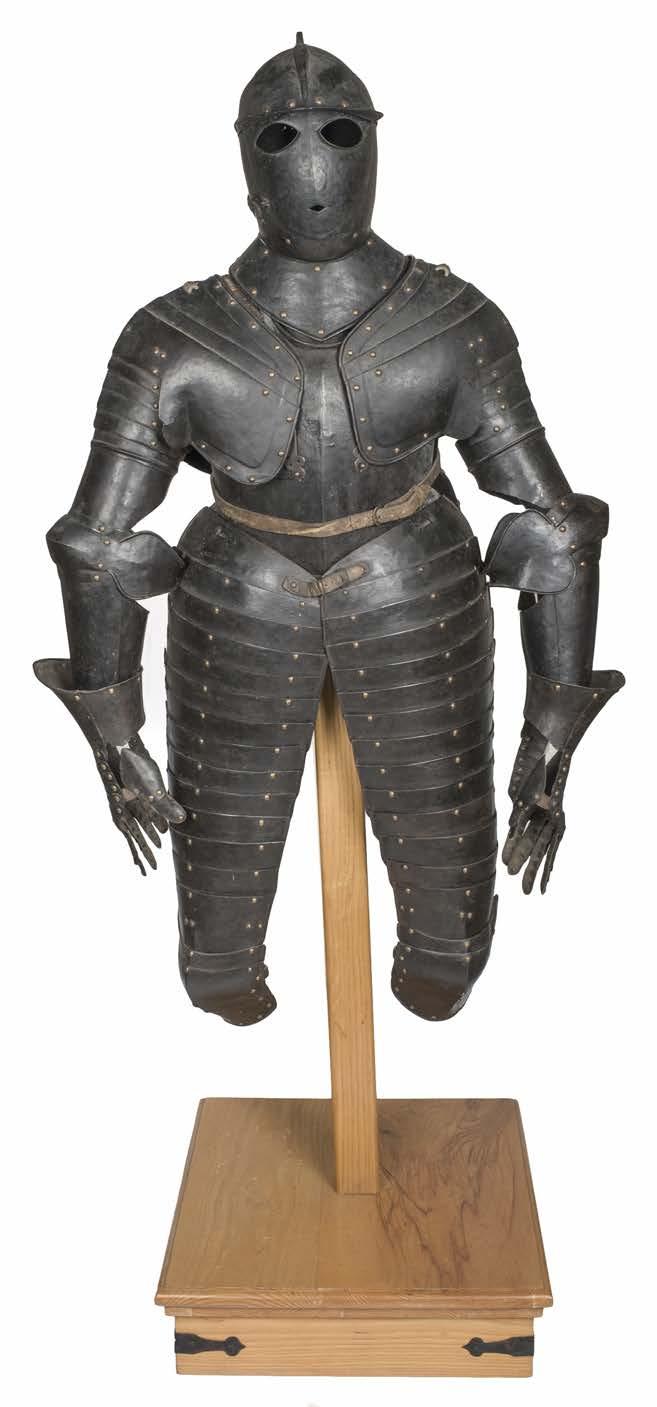
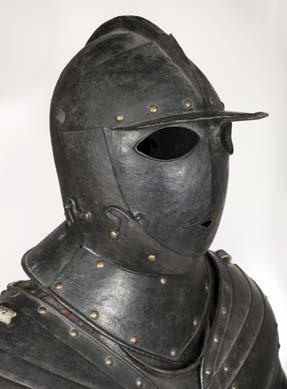
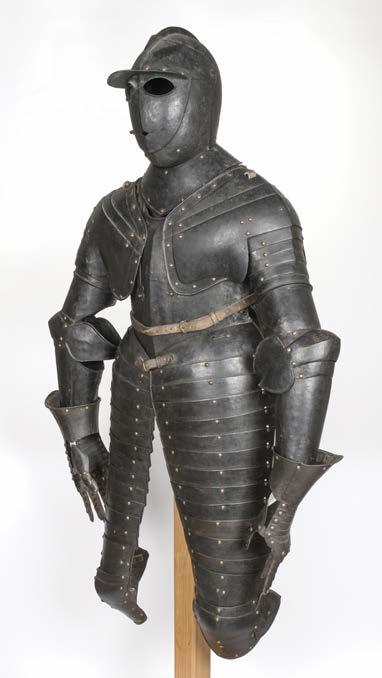
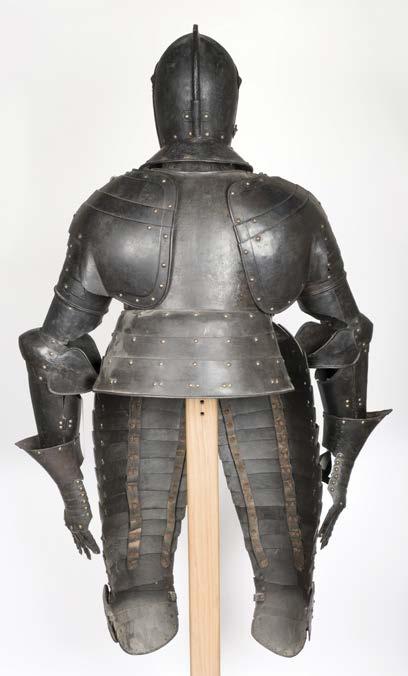
383* Armour. A German Cuirassier suit of armour, circa 1625, with later restoration, comprising a 'death's head' closed visor burgonet, gorget with Nuremberg city view stamp and another stamp (unidentified), Cuirasse, tassets and garderien with heavy shot-proof breastplate, with knee-length tassets, the backplate with garderein, symmetrical pauldrons attached to vambraces with turning joints, the gauntlets with classic gauntlet style fingers, presented on a professionally made wooden display stand, height including stand 186 cm, armour 147 cm (including helmet), shoulder to shoulder 56 cm
Provenance: Private collection, Essex, then by family descent.
A conservation report supplied by Christopher Dobson, Master Armourer, is included with the lot.
The whole armour has been re-coloured to the original black finish. The brass rivets and leather strap replaced.
The helmet has restoration to the front of the peak, facial mask and lower part of the front neck lame, the rear lame and visor and bevor locks.
The shoulder units and waist strap and buckles, some of the lames of the tassets, including both poleyns, the backplate and the garderein all restored by Chris Dobson circa 2009.
(1) £7,000 - £10,000
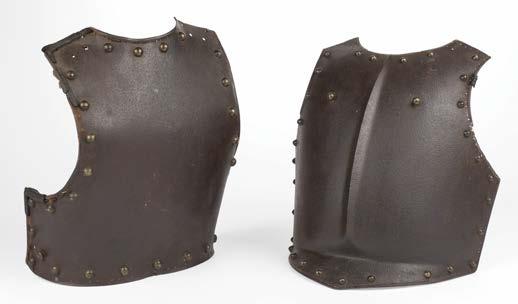
384* Armour. British cavalry breast and back plate, 19th century, iron with brass studs, the breastplate with an armourer’s mark, approximately 40 cm long
(2)
£200 - £300
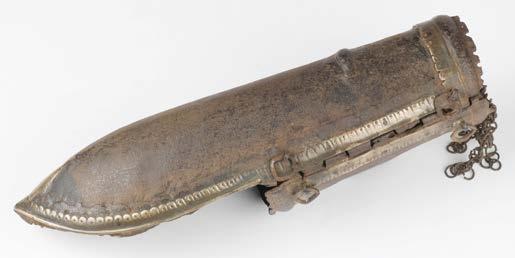
385* Armour. Indo-Persian vambrace, 19th century, steel tapered gutter with brass edges, 35 cm long
The vambrace was designed to protect the forearm. (1)
£100 - £150
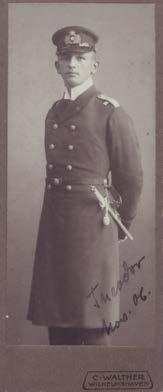
386* Naval accoutrements. A collection belonging to Theodore Johannes Wilhelm Baustaedt, comprising a ‘fore and aft’ bicorn hat, black beaver body with gold braid and tricolour cockade, silver braid to the fore and aft, brown leather sweatband and silk lining embossed in gold ‘Baustaedt’, in original card hat box with trade label, a pair of gold bullion epaulettes, applied with a white metal fouled anchor, a sword belt with gilt metal buckle a pair of white leather gloves and other items
Provenance: Theodore Johannes Wilhelm Baustaedt (18841948) and then by family descent.
Baustaedt was a German naval officer who fought in WWI and was awarded the Iron Cross, Bronze Cross and Turkish Medal.
Baustaedt became unhappy with the direction of German politics and left the navy for a happier career as a vet in Wernigerode.
See lots 387-390 (inclusive).
(1)
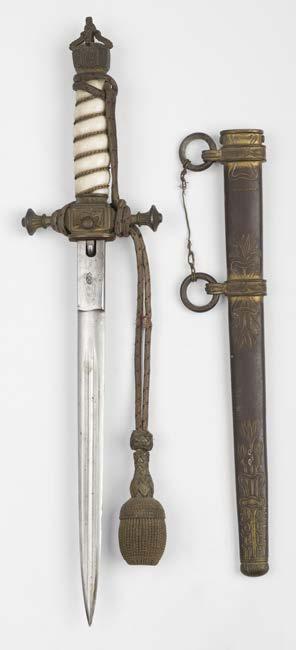
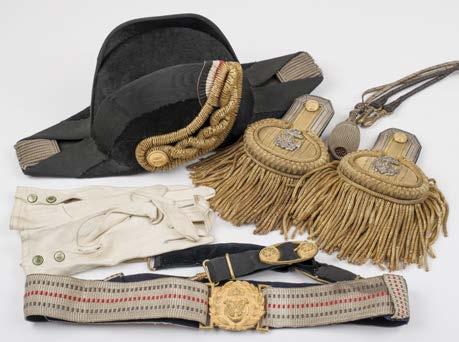
£200 - £300
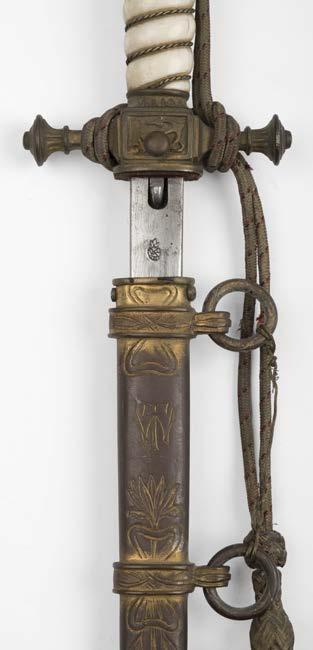
387* Naval dirk. An Imperial German Naval officer’s dirk belonging to Theodore Johannes Wilhelm Baustaedt, the 22 cm steel double fullered watered steel blade stamped with the helmet mark of W.K.C., stamped along the ricasso ‘A. Luneburg Kiel’, brass crossguard cast with fouled anchor, wirebound ivory grip and crown pommel, overall length 34.5 cm, with swordknot and engraved brass scabbard engraved ‘Baustaedt’
Provenance: Theodore Johannes Wilhelm Baustaedt (1884-1948) and then by family descent.
Baustaedt was a German naval officer who fought in WWI and was awarded the Iron Cross, Bronze Cross and Turkish Medal. Baustaedt became unhappy with the direction of German politics and left the navy for a happier career as a vet in Wernigerode.
Ivory Act 2018 exemption submission reference: HPHU7U9A
See lots 386, 388-390 (inclusive). (1)
Each lot is subject to a Buyer’s Premium of 22% (Lots marked * 26.4% inclusive of
£1,000 - £1,500
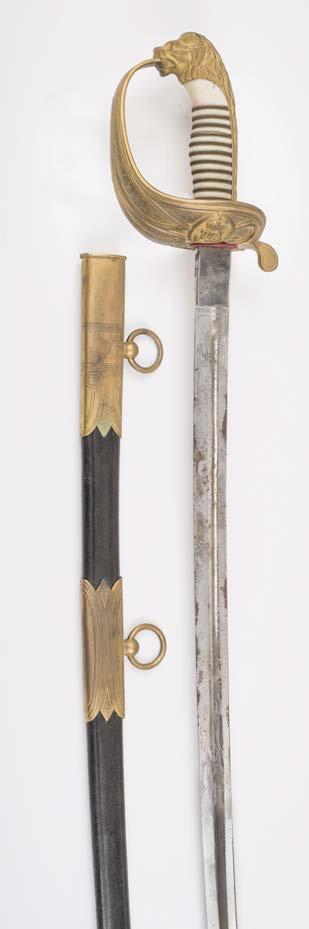
388* Naval sword. An Imperial German Naval officer’s sword belonging to Theodore Johannes Wilhelm Baustaedt, the 80.5 cm slightly curved blade stamped on the top edge ‘B.A. Berger Collani & Co’, one side engraved with fouled anchor surmounted by an Imperial crown, with a ship, ship’s wheel and other nautical insignia, the opposite side similarly engraved (rust spots), gilt brass folding guard engraved ‘Baustaedt’, solid gothic hilt cast with crowned fouled anchor, lion’s head backstrap and pommel, overall length 94.5 cm, in its black leather scabbard with brass mounts
Provenance: Theodore Johannes Wilhelm Baustaedt (1884-1948) and then by family descent.
Baustaedt was a German naval officer who fought in WWI and was awarded the Iron Cross, Bronze Cross and Turkish Medal. Baustaedt became unhappy with the direction of German politics and left the navy for a happier career as a vet in Wernigerode. Ivory Act 2018 exemption submission reference: JFJB9798
See lots 386, 387, 389, 390.
(1)
£300 - £500
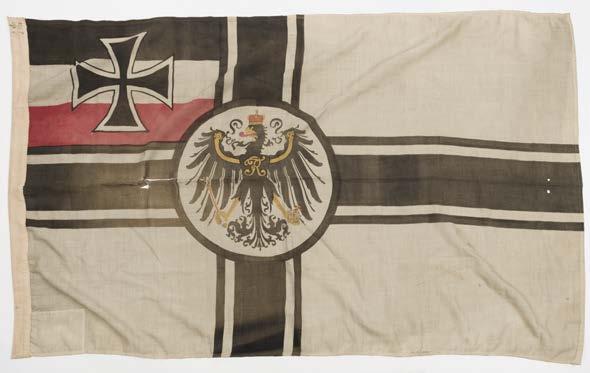
389* Naval flag. An Imperial German ship’s battle flag belonging to Theodore Johannes Wilhelm Baustaedt, printed cotton, with a large Imperial eagle to the centre and national colours and Balkan cross to the corner, with taped edge stamped ‘Gaffel Flg 4.2 x 2 M’, the opposite side stamped with an imperial crown and other indistinct marks, age wear and a tear, 197 x 114 cm
Provenance: Theodore Johannes Wilhelm Baustaedt (1884-1948) and then by family descent.
Baustaedt was a German naval officer who fought in WWI and was awarded the Iron Cross, Bronze Cross and Turkish Medal. Baustaedt became unhappy with the direction of German politics and left the navy for a happier career as a vet in Wernigerode.
See lots 386, 387, 388, 390.
(1)
£200 - £300
390* Naval sword. A fine Imperial German Naval officer’s presentation sword belonging to Theodore Johannes Wilhelm Baustaedt, the 80 cm slightly curved blued and gilded watered steel blade stamped with the mark of W.K &.C., engraved ‘Petz S/L Baustaedt’ with a ship and compass, telescope and sword amongst stylised art nouveau floral scrolls, the opposite side similarly decorated with fouled anchor surmounted by an Imperial crown, gilt brass folding guards, one cast with crowned fouled anchor the other engraved ‘Baustaedt’, wirebound ivory grip, lion’s head backstrap and pommel set with green and red eye, overall length 93.5 cm, in its black leather scabbard with brass mounts, a fine sword in excellent condition
Provenance: Theodore Johannes Wilhelm Baustaedt (1884-1948) and then by family descent.
Baustaedt was a German naval officer who fought in WWI and was awarded the Iron Cross, Bronze Cross and Turkish Medal. Baustaedt became unhappy with the direction of German politics and left the navy for a happier career as a vet in Wernigerode.
Ivory Act 2018 exemption submission reference: DHHT489F
See lots 386 to 389 (inclusive).
(1) £700 - £1,000
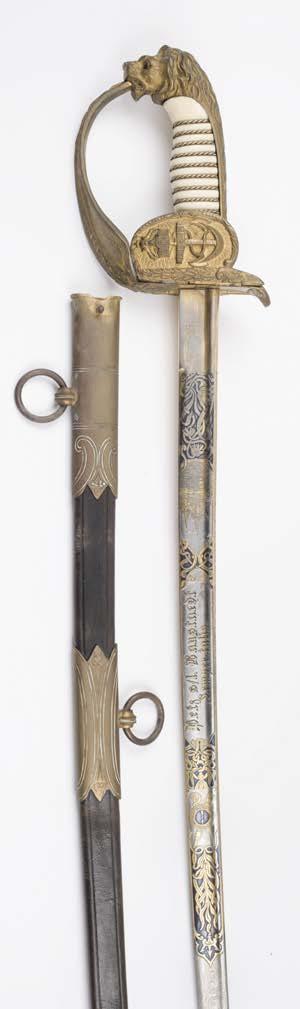

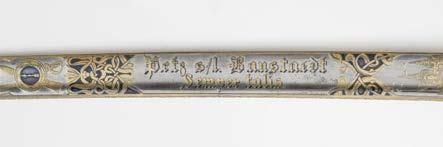
£100 - £150
391* Bayonets. WWI American Remington 1913 Pattern Bayonet, the 43 cm blackened steel blade dated 1913 and 3 17, wooden grips, overall length 55 cm, in its leather scabbard with steel mounts, two French gras bayonets (one lacking scabbard), a Chassepot bayonet with scabbard, contained in an old metal ammunition tin with a pair of Carl Zeiss binoculars, an aluminium lumber jacks helmet plus an US Navy Mk 3 MOD O diver’s knife, the blade inscribed ‘Marsh’, in its sheath (8)
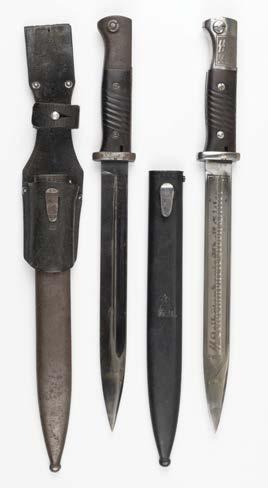
392* Bayonets. WWII German K98 bayonet, the 25 cm blackened steel blade stamped ‘E.u.F. Horster’, numbered 7608, bakelite grips, overall length 38 cm, in its steel scabbard with leather frog dated 1938, together with another German K98 bayonet by Carl Eickhorn, the engraving probably later, overall length 38 cm, in its steel scabbard (2)
£150 - £200
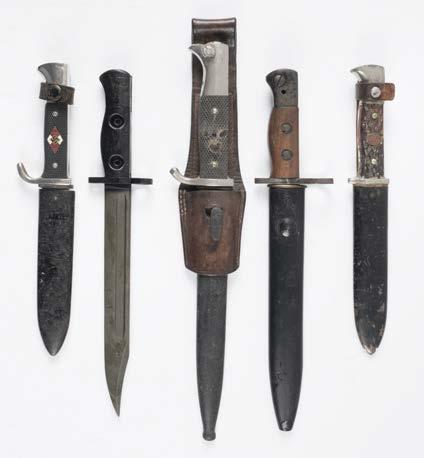
393* Bayonets. WWII German Parade bayonet, the 19.5 cm blade stamped ‘W.K.C.’ with knight’s helmet trademark, composite chequered grip, brass eagle badge, overall length 32 cm, in its metal scabbard with leather frog, a Hitler Youth dagger, the 12.5 cm blade stamped ‘M7/51/41’ with R.Z.M. stamp but unengraved [later copy?], composite chequered grip inset with enamel badge, overall length 24.5 cm, in its metal scabbard with leather belt strap, a similar dagger by R.A. Herder, horn grips, overall length 24 cm, in its metal scabbard, plus two British bayonets (one lacking scabbard) (5)
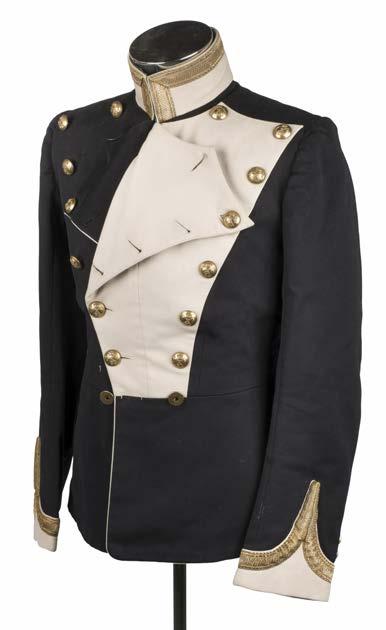
£150 - £200
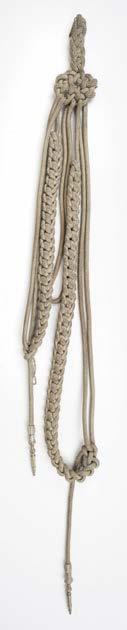
394* Bengal Lancers. Edwardian tunic of the 2nd Bengal Lancers, dark blue melton cloth with gold embroidered and cream facings and plastron front, regimental brass buttons and light blue silk lining, 75 cm long, 45 cm chest, 51 cm inner arm, with silver cord (1)
£200 - £300
395* Binoculars. A mixed collection of WWI and later binoculars, field glasses and opera glasses, including a pair of WWII binoculars, the rubber eyepieces marked L M Ltd, in canvas case stamped M.W. & S. Ltd 1944, and inscribed with owners name ‘A.B. Riley’ (approx. 15)
£70 - £100
396* Binoculars. A pair of WWII naval binoculars by Barr & Stroud, 7x CF41, serial no 67719, optics clear, in brown leather case, together with 9 further pairs of binoculars (4 with brown leather case), including a pair by Aitchison & Co Ltd, dated 1916, cased plus Lancaster & Thorpe 8 x 32, cased, together with a mixed collection of aircraft spares, lubricating oil etc (4 cartons)
£100 - £200
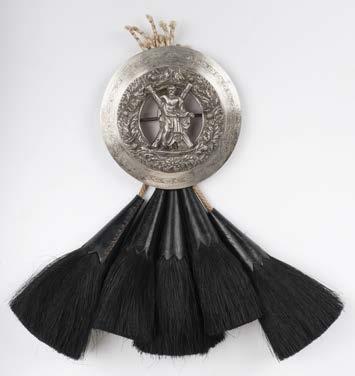
397* Black Watch. A fine Black Watch (Royal Highlanders) white metal plaid brooch, circa 1900, the circular brooch showing St Andrew and his cross with a thistle ring and engraved border, a substantial pin on the opposite side, 10.2 cm diameter, with four black horse hair sporran tassels (1)
£100 - £150
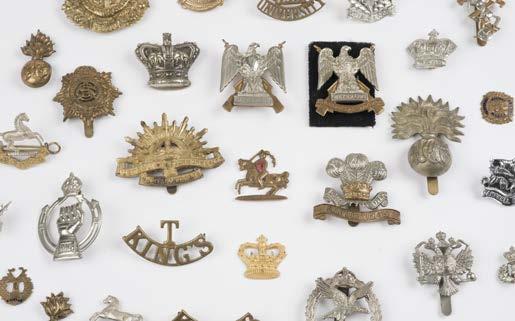
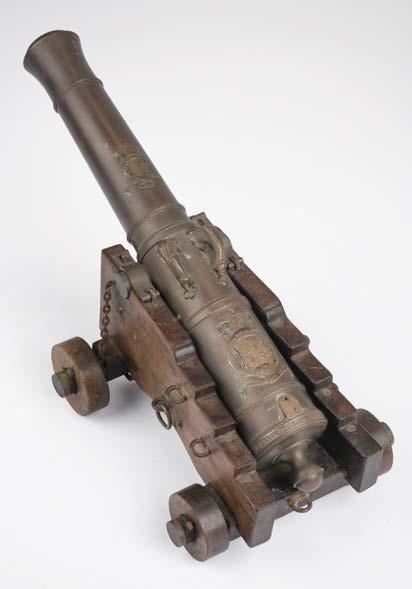
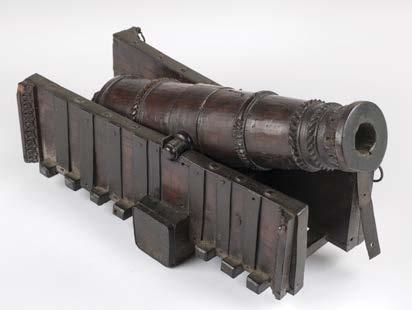
£300 - £500
398* British cap badges. A mixed collection of British regimental badges, including a Victorian 57th (West Middlesex) Foot brass glengarry badge, circa 1874-1881, featuring a crown over laurel wreath with banner beneath inscribed ‘Albuhera’, the reverse with two loops, 60 x 45 mm, other badges include County of London Rangers, The Royal Sussex Regiment, white metal and enamel, The Queen’s Own Yeomanry, Edinburgh University Training Corps (T.A.) etc (approx. 170)
399* Cannon. A model 1743 24-Pdr Naval Cannon, the brass barrel cast with royal pennants and ‘N.B. Heathcote Fecit 1987’, 41 cm long, on an oak carriage, together with a smaller model cannon (2)
£100 - £150
400* Cannon. An Indian hardwood desktop cannon, 19th century, the tapered barrel with two trunnions and an elephant head terminal, mounted on a carved and iron mounted wooden carriage, old loss and chips, barrel length 29 cm, the carriage (1)
£300 - £500
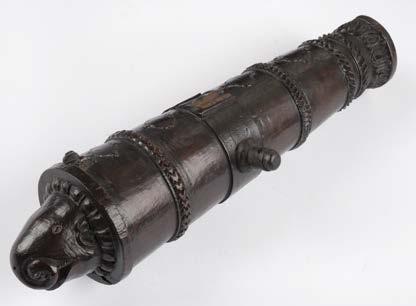
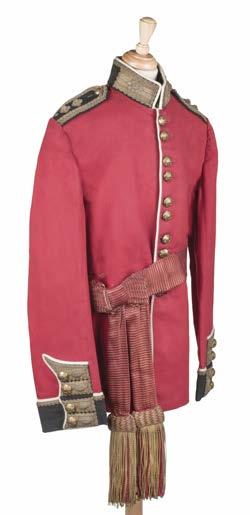
401* Coldstream Guards. Edwardian uniform of the Coldstream Guards attributed to Captain Thomas Ucher Caulfield Knox, the red scarlet melton cloth tunic with gold bullion and black facings, bullion Guards collar badges and epaulettes and cuffs, regimental brass buttons, 82 cm long, 43 cm chest, 54 cm inner arm, together with a pair of trousers
Provenance: Private collection, Yorkshire. By repute, the uniform was once named. Therefore, the attribution to Viscount Northland remains unconfirmed and sold as seen.
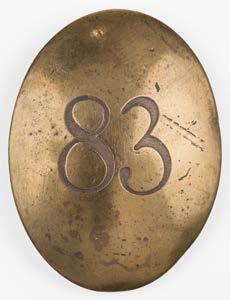
403* County of Dublin. A Victorian or earlier brass cross belt plate of the 83rd (County of Dublin) Regiment of Foot, the convex oval plate engraved ‘83’, the reverse with hook and two studs, 75 x 56 mm (1)
£100 - £150
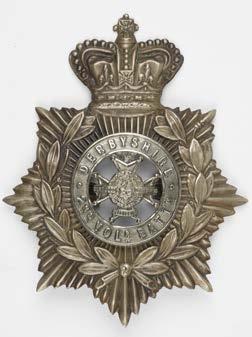
£100 - £150
Viscount Thomas Caulfield Knox (1882-1915) was serving with the 2nd Battalion at Cuinchy, near La Bassee, on 1 February 1915 when he was killed in action, having been shot in the head by a sniper and died immediately. He is buried in Cuinchy Communal Cemetery, France. (1)
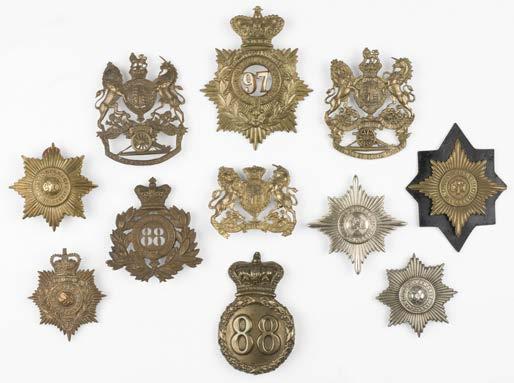
402* Connaught Rangers. A Victorian shako plate of the 88th (Connaught Rangers) Regiment of Foot, circa 1869-78, the die stamped brass badge with a crown over pierced ‘88’ within a Garter and laurel wreath, the reverse with two brass loops, together with another 88th Foot helmet plate plus Royal Marines and Royal Artillery and other badges (11)
£150 - £200
404* Derbyshire Regiment. A Victorian helmet plate of the 2nd Volunteer Battalion, Sherwood Foresters (Derbyshire Regiment), circa 1887-1901, a white metal die stamped example, with crowned star featuring the badge of the Sherwood Foresters, within a circlet inscribed Derbyshire, 2nd Volr Battn’, within a laurel wreath, two loops to the reverse (1)
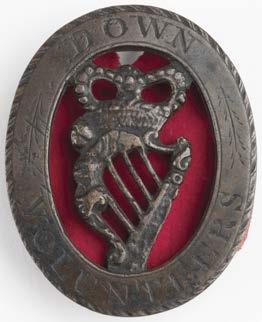
£70 - £100
405* Down Volunteers. An Irish pouch badge circa 1800, blackened pierced brass featuring a Maid of Erin harp within an oval border inscribed ‘Down Volunteers’, the reverse with three loops and felt for display, 5.5 x 4.5 cm (1)
£150 - £200
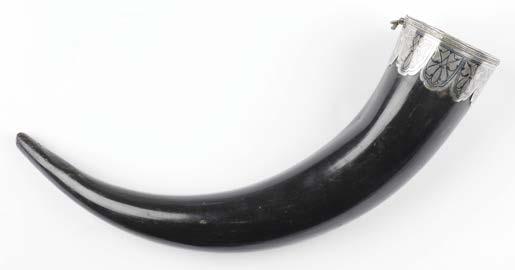
406* Drinking horn. A Russian drinking horn, 19th century, with silver and niello mount, 38 cm long (1)
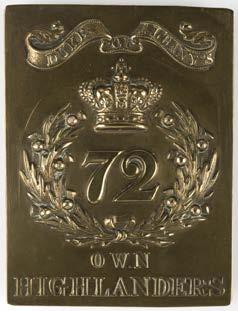
£100 - £150
408* East Lancashire Regiment. An Edwardian Officer’s dress tunic, scarlet melton cloth with white facings and gold foliate braiding, red and gilt rosette collar badges, regimental brass buttons to the breast, shoulders and rear, quilted lining, 80 cm long, 40 cm chest, 51 cm inner arm, together with a pair of crimson silk sashes, contained in a waxed cloth case with stamp for ‘Perry & Perry, Trunk Makers’, 45.5 cm (2)
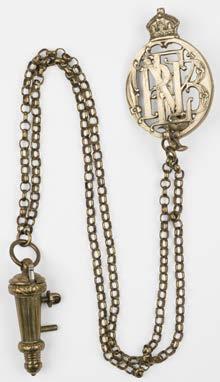
£100 - £150
407* Duke of Albany’s Own Highlanders. A Victorian Scottish brass shoulder belt plate of the Duke of Albany’s Own Highlanders, featuring a crowned thistle wreath and ‘72’ with three three-part banner above inscribed ‘Duke of Albany’s’ and ‘Own Highlanders’ beneath, the reverse with four posts, a nice example (1)
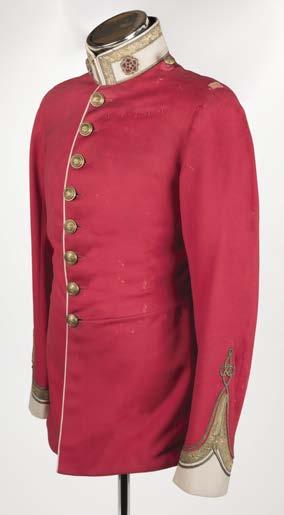
£150 - £200
409* Edinburgh Rifle Volunteers. An Edwardian oval brass cross belt plate of the Edinburgh Rifle Volunteers, crown over pierced monogram, with chain and brass officers whistle (1)
£100 - £150
410* Fighting knife. A WWII 3rd pattern commando knife by William Rodgers, the 16 cm steel blade (reduced), crossguard stamped William Rodgers, Made in England’, alloy grip numbered ‘4’, overall length 28.5 cm, in a brown leather sheath, together with a WWI French Lebel bayonet and scabbard numbered 30514, a German-made hunting knife, 3 folding knives with marlin spike and other items (8)
£100 - £150
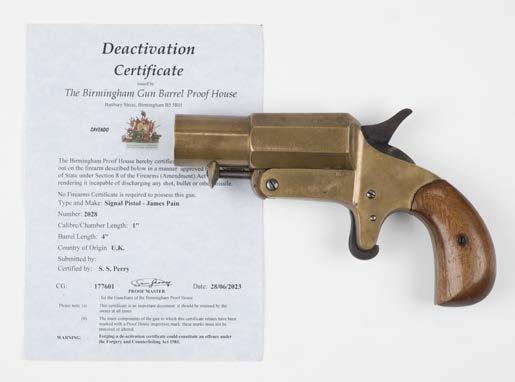
411* Flare pistol. A WWI British brass single-shot flare pistol by James Pain & Sons Ltd, London, serial number 2028, the 10.5 cm two-stage barrel with Liege proof marks, wooden grips, overall length 22 cm, deactivated with certificate dated 28 June 2023 (1)
£200 - £300
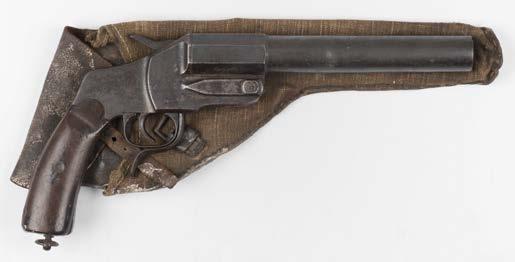
412* Flare pistol. A WWI German flare Hebel pistol (deactivated), the 22 cm two-stage barrel with casing stamped ‘1700 AM’, a proof mark to the opposite side, long spurred trigger guard, wooden grip with brass rivet and lanyard ring, overall length 39.5 cm, with original canvas holster with brown leather flap and buckle, two leather belt loops to the opposite side, worn but the holster is exceptionally rare, with deactivation certificate dated 26 November 2002
(1)
£700 - £1,000
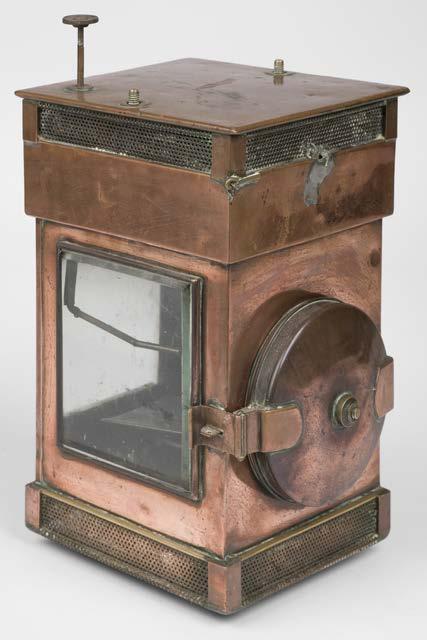
413* Fortress lamp. A Second Boer War period copper fortress lamp, circa 1900, the square oil lamp with bevel edge glass, the top stamped with war department arrow, the back panel with a large hinged circular door, 32.5 cm high x 19 cm square
Fortress oil lamps are quite rare, with only a few lamps in existence. They first originated in 1896 and were used until they became obsolete in 1956. They were designed to cope when a fortress gun was fired. This was achieved through the use of baffles that automatically closed and quickly reopened after the blast, to ensure that the flame had enough air to feed it. Typically, two lamps would be fitted to each gun.
(1)
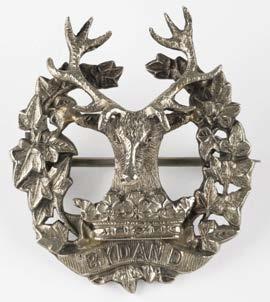
£200 - £300
414* Gordon Highlanders. A Victorian Scottish white metal Glengarry badge, with the stags head symbolising the crest of the Marquis of Huntly, a coronet below and ivy wreath with ‘Bydand’ below, the reverse with a substantial pin (1)
£70 - £100
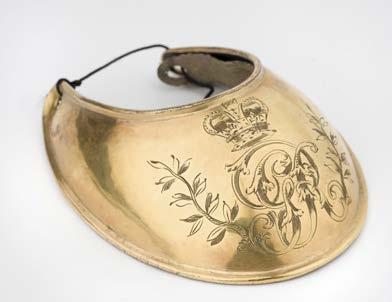
415* Gorget. A George III Officer’s Universal Pattern Gorget, copper gilt, crescent form, and engraved with crowned G.R. cypher within a wreath, original leather backing
The gorget was abolished by William IV in August 1830. (1)
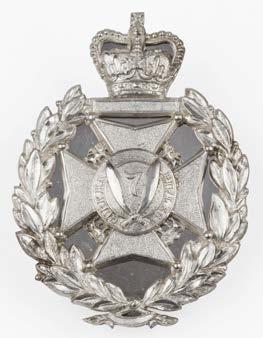
£300 - £400
416* Gurkha Rifles. An Elizabeth II period belt plate of the 7th (Duke of Edinburgh’s Own) Gurkha Rifles, the two-part white metal badge featuring a queen’s crown above a Maltese cross with crossed kukri knives and ‘7’, within a laurel wreath, the backing plate with vertical pin and secured by four threaded screws, 10 x 7.5 cm (1)
£100 - £150
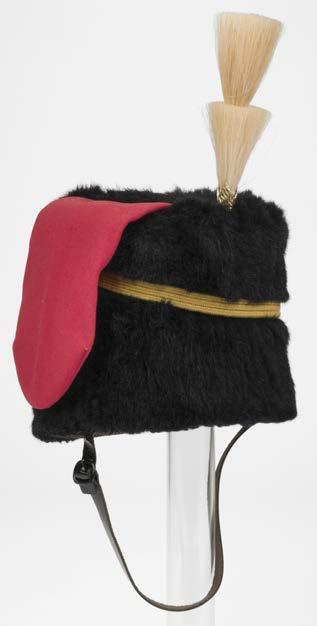
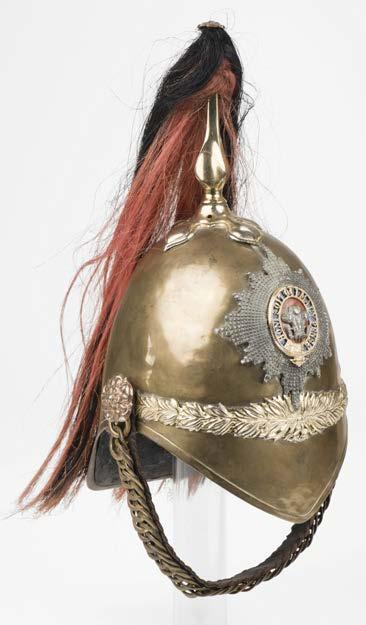
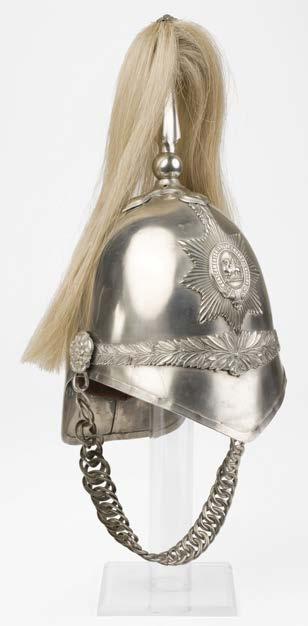
417* Helmet. A busby fur helmet of the Royal Artillery, with synthetic bear skin, red side back, horsehair blume and gilt metal holder, yellow cord surround with chin straps (1)
£150 - £200
418* Helmet. An 1871 pattern Albert helmet of the 3rd (Prince of Wales’s) Dragoon Guards, brass skull with gilt oak leaf rear seam band, foliate front band over rivetted peak, a white metal hobnail star with Garter motto ‘Honi Soit Qui Mal Y Pense’, with blue enamel and white metal Prince of Wales’ feathers on a red enamel ground, with brass chin scales, one rosette (the other missing), plume holder and red and black horsehair plume, quilted cloth lining (1)
£300 - £500
419* Helmet. An 1871 pattern Albert helmet of the Montgomery Yeomanry Cavalry, the white metal skull with leaf rear seam band, foliate front band over peak, Star with Garter inscribed ‘Montgomery Yeomanry Cavalry’ with dragon, plume holder and white horsehair plume, rosettes and chin scales, brown leather lining, dings and dents commensurate with age (1)
£600 - £800
420* Helmet. An Edwardian busby fur helmet of the Royal Artillery by Hawkes & Co, with synthetic bear skin, red and white side back, horsehair blume and gilt metal holder, white cord surround with chin straps, the lining with paper Hawkes & Co trade label, and a label inscribed ‘Markham’ (1)
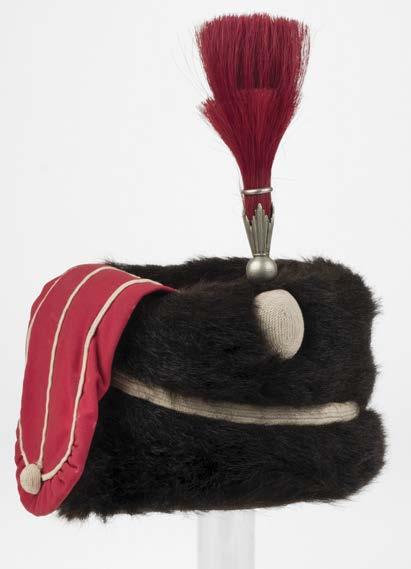
£150 - £200
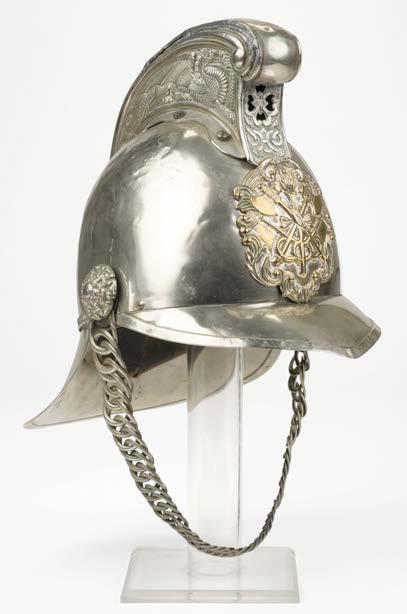
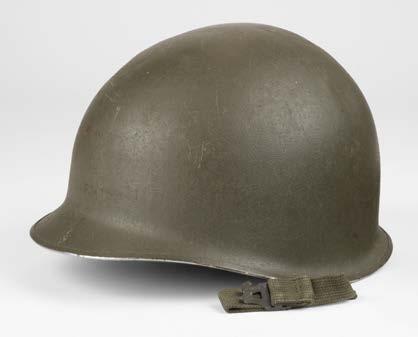
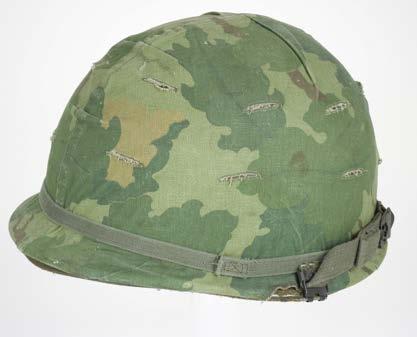
421* Helmet. An Edwardian Merryweather fireman’s helmet, silver skull with raised dragon comb, brass helmet plate featuring crossed axes, rosettes and chin scales, brown leather lining, dings and dents commensurate with age
(1)
£200 - £300
422* Helmet. WWII U.S. Army N.C.O. officer’s M1 helmet, original paint, canvas chin strap, composite green lining with brown leather sweatband (1)
£200 - £300
423* Helmet. U.S. Vietnam War era M1 Army helmet by R.J. Stampings Manufactured Helmet, with Firestone liner and Mitchell cover dated 1969 (1)
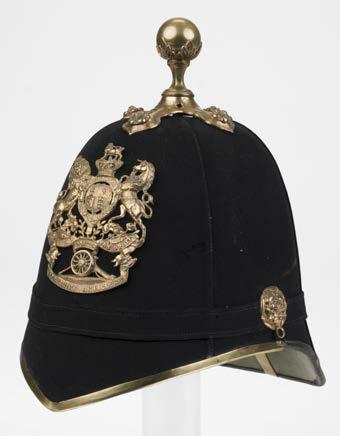
£150 - £200
424 Helmet. Victorian blue cloth helmet of the Yorkshire Artillery, cloth with brass helmet plate featuring Royal Coat of Arms with field gun and scroll beneath inscribed ‘Yorkshire Artillery’, brass ball top, rosettes, lacking chin scales, pink lining (present but some areas detached) (1)
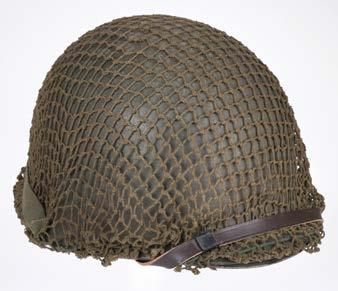
£200 - £300
425* Helmet. WWII U.S. Army N.C.O. officer’s M1 helmet by Schlueter Manufacturing Co, St Louis, Missouri, the rear seam with heat stamp number ‘545A’ (indicating it was made in May/June 1943)., original paint with white horizontal NCO bar to the back, leather chin strap with DOT/Anchor markings, liner by Firestone and tan nape, with British netting
Provenance: Purchased from M1 Militaria, with receipt dated 2021. (1)
£200 - £300
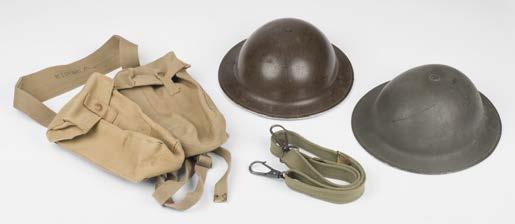
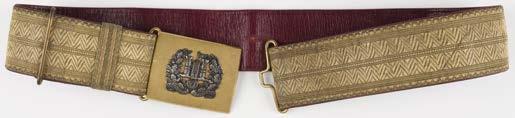
426* Helmets & accoutrements. A WWII British Brodie steel helmet, green painted finish, original liner and canvas chinstrap inscribed with service number ‘2784935’, together with another by Fisher & Ludlow dated 1940, stamped ‘F & L 1/1940’, original liner and chinstrap, plus a 1937 pattern webbing canvas waist pack with two pouches stamped ‘M.E. Co 1941’ with war department arrow (3)
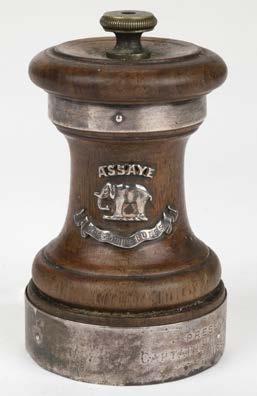
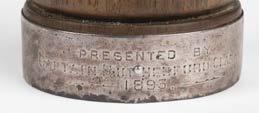
£100 - £150
427* Highlanders. A Victorian pepper grinder presented to Captain Rutherford Clark, 1893, turned rosewood with silver badge of the 78th (Highlanders) Regiment of Foot (The Ross-shire Buffs) showing an elephant with the battle honour Assaye and a scroll beneath inscribed ‘Ross shire Buffs), silver band engraved ‘Presented by Captain Rutherford Clark 1893’, the base stamped ‘Deposse Paris’, the silver mounts by WC JL, London 1893, 9 cm high James Rutherford Clark was killed in action at Magersfontein on 11 December 1899.
His biography is recorded in The Last Post: ‘He was born October 1862, joined the Seaforth Highlanders as Lieutenant September 1882 and was promoted Captain October 1890. He served in the Hazara Expedition of 1888, as acting-adjutant of the left half battalion, 2nd Battalion Seaforth Highlanders, receiving the medal with clasp. He was also in the Hazara Expedition of 1891, as adjutant of his battalion (clasp). Captain Clark also served with the Chitral Relief Force, under Sir Robert Low, in 1895, and was present in the engagement at Mamagai, receiving the medal with clasp. He accompanied his battalion to South Africa in October 1899, and joined the Kimberley Relief Force shortly before the action at Magersfontein.’
(1)
£100 - £150
428* Inniskilling Dragoons. An Edwardian Irish officer’s waist belt of the 6th Inniskilling Dragoons, the seeded gilt buckle mounted with a silver Castle of Enniskilling within acorn and oak leaf wreath, VI below and a two part banner inscribed ‘Inniskilling Dragoons’, the belt with gold braiding on red leather (1)
£100 - £150
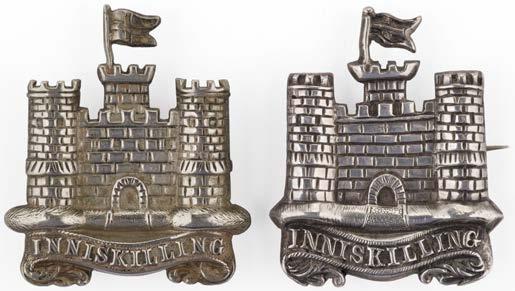
429* Inniskilling Dragoons. An Irish white metal arm badge, of hollow construction featuring Enniskillen Castle, flying the colours of St. George, with a banner beneath inscribed ‘Inniskilling’, the reverse having loops removed and replaced with a horizontal pin, 5.5 x 5 cm, together with another example of the same badge but slightly cruder and with brass backplate and three loops, 6 x 5 cm (2)
£100 - £150
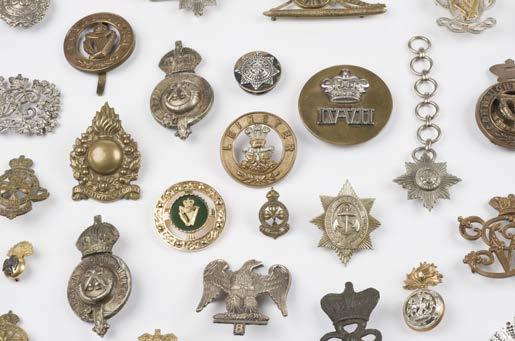
430* Irish and Irish Canadian badges. A mixed collection of Victorian and later regimental badges, including two 199th (Irish Canadian Ranges, Duchess of Connaught’s Own) WWI brass cap badges, Canadian 208th (Canadian Irish Battalion) cap badge, other regiments include Leinster, Connaught Rangers, Royal Limerick County, Belfast Harbour Police, plus various martingale badges including Royal Irish Rifles, Infantry Mounted Officers etc (41)
£200 - £300
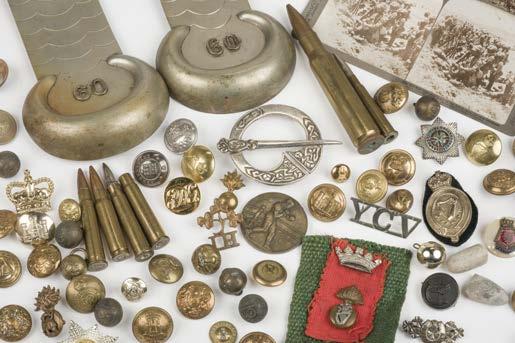
431* Irish badges & buttons. A mixed collection, including Gladstone, Irish Home Rule lapel badge, Irish Constabulary whistle and chain sweetheart badges including Irish Guards 9ct gold and tortoiseshell badge, Victorian shoulder scales of the 60th (King’s Royal Rifle Corps) Regiment of Foot, a large collection of Victorian and later military buttons and other miscellaneous military items (a small box)
£200 - £300
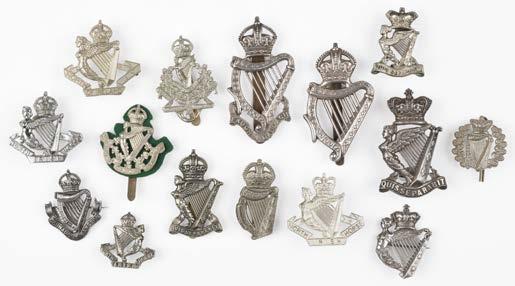
432* Irish badges. A collection of Victorian and later Irish cap badges, including The Royal Irish Regiment white metal cap badge, with king’s crown over a harp with a scroll beneath inscribed ‘Faugh A Ballagh’ (clear the way), the reverse with a vertical brass slider, 75 x 40 mm, together with another similar but lacking the motto, plus a Victorian white metal badge of the Royal Irish Rifles, the reverse with two brass loops and other badges including Connaught Rangers, North Irish Horse, etc. (15)
£150 - £200
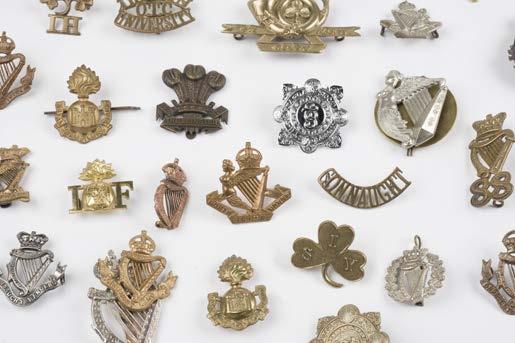
433* Irish badges. A mixed collection of Victorian and later Irish regimental cap badges, including a Victorian badge of the Connaught Rangers, the crown over a circular shamrock wreath with 88 within pierced circlet inscribed ‘Connaught Rangers’, red felt backing, a two part scroll beneath inscribed ‘Quis Separabit’, the brass backing plate with a horizontal pin, 50 x 40 mm, two 88th Foot brass cap badges, each with a crown over harp with 88 below, 55 mm long (one possibly a restrike), other regiments include, New Irish Rifle Regiment, Royal Irish Regiment, North Irish Horse, Dublin Fusiliers etc (89)
£300 - £500
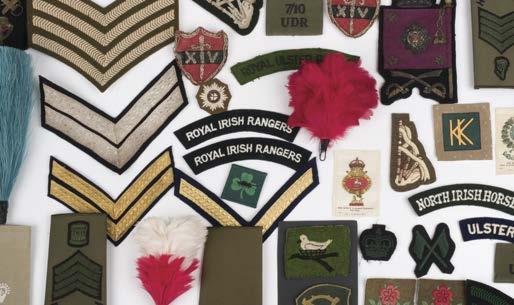
434* Irish cloth badges. A mixed collection of Irish military cloth badges, including, 3rd (County Down and County Armagh) Battalion, The Royal Irish Regiment, Royal Irish Rangers shoulder titles etc (a shoe box)
£100 - £150
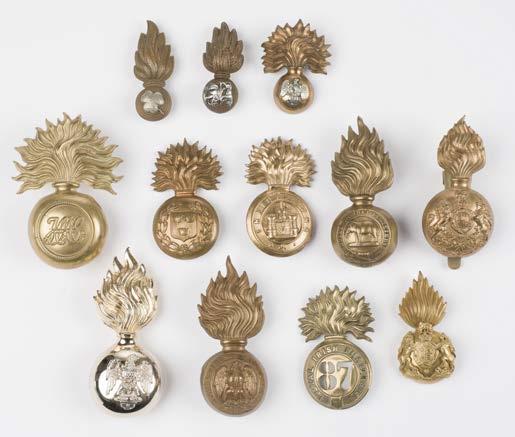
435* Irish Fusiliers. A Victorian Other Ranks glengarry badge of the 87th (Royal Irish Fusiliers), circa 1847-81, the brass flaming grenade with ‘87’ and garter inscribed ‘Royal Irish Fusiliers’, 7 cm long, Royal Scots Fusiliers Officer’s Glengarry badge, circa 1901-52, together with various glengarry badges, including Royal Irish Fusiliers, Royal Inniskilling Fusiliers, Royal Bombay Fusiliers (12)
£200 - £300
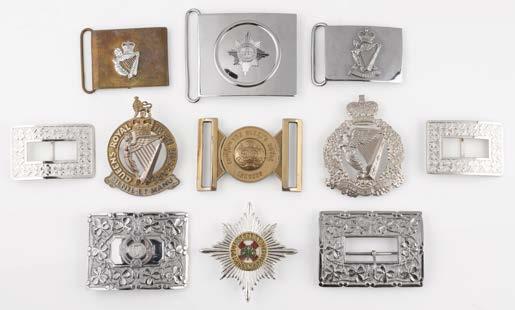
436* Irish Guards. A modern helmet plate of the Irish Guards, the plated 8 point star applied with green shamrock on a red cross and white ground, a pierced gilt circlet inscribed ‘Quis Separabit MDCCLXXXIII, together with a collection of Irish waist belt buckles, including a plated examples for the Irish Guards, Royal Ulster Rifles, plus a brass two part buckle of the 16th/5th The Queen’s Royal Lancers’, Queen’s Royal Irish Hussars, gilded pouch badge and other items (11)
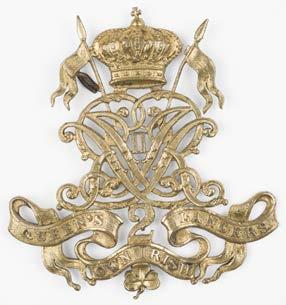
£200 - £300
438* Irish Lancers. An Edwardian 5th (Royal Irish) Lancers sabretache or pouch badge, the centre with white metal crown over Maid of Erin harp within a circlet inscribed Quis Separabit (who shall separate us), with crossed lances united by a single scroll inscribed ‘Royal Irish’ with ‘5’ beneath, the reverse with three loops, 10.5 x 8 cm (1)
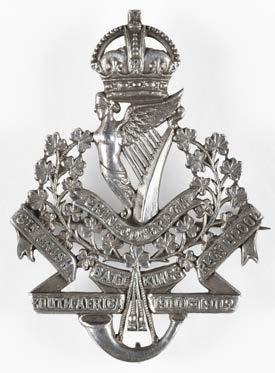
£100 - £150
437* Irish Lancers. A Victorian sabretache badge of the 2nd Queen’s Own Irish Lancers, circa 1837, gilt brass featuring a crown over the cypher of Queen Isabella with crossed lancers, a threepart scroll inscribed ‘Queen’s Own Irish Lancers’ with a shamrock beneath, the reserve with the remains of one loop, all others missing, 85 x 75 mm (1)
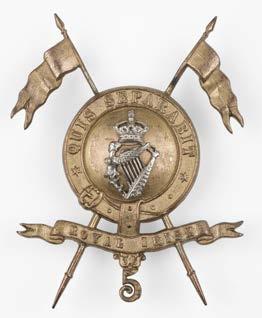
£100 - £150
439* King’s Liverpool Regiment. A WWII silver officer’s cap badge of the 8th (Irish) Battalion, hallmarks for J.R. Gaunt & Sons, Birmingham, 1941, featuring a crown over Maid of Erin harp, a shamrock wreath with strung bugles and a scroll inscribed with the motto ‘Erin Co Bragh’ (Ireland forever), a three part scroll inscribed ‘8th Irish Batt Kings Regt L’Pool’, beneath inscribed ‘South Africa 1900-1902’, the reverse with hallmarks and horizontal pin and a small loop, 52 x 39 mm, 13g (1)
£80 - £120
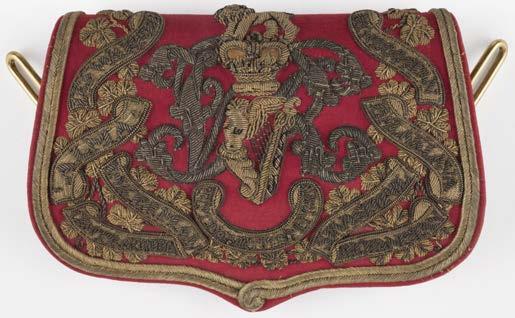
440* King’s Royal Irish Hussars. A Victorian full dress pouch of the 8th King’s Royal Irish Hussars, embroidered in gold thread with a crowned Maid of Erin harp with V.R. cypher and battle honours, on a scarlet melton cloth, red leather lining with zinc box, gilded belt loops, with officer’s belt with crowned interlaced V.R. cypher, 81 cm (1)
£200 - £300
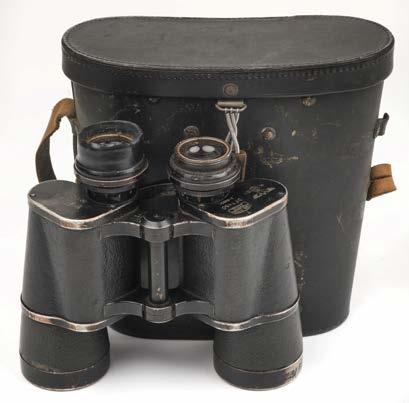
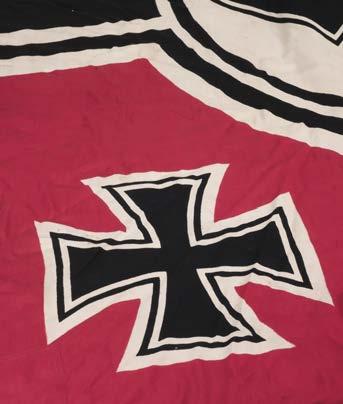
441* Kriegsmarine. A pair of WWII German Kriegsmarine 7 x 50 binoculars by Carl Zeiss, one side stamped ‘Scheinw u. Fluwa. Nr 11035, the other with M and eagle insignia IV/1, D.F. 7 x 50, 2186921, black body and leather carrying strap, one ray shade with black tape and the other missing, 18 cm long, contained in fitted carrying case stamped with eagle insignia, the optics a little grubby but working (1)
£150 - £200
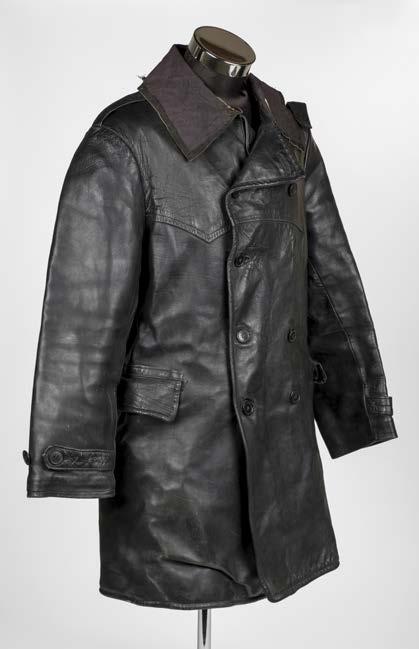
442* Kriegsmarine. A WWII German naval officer’s leather doublebreasted jacket, side pockets, black composite buttons, black felt lining with cloth label inscribed ‘2’, 98 cm long, 48 cm wide, 46 cm inner arm, together with a German SA brass waistbelt buckle (2)
£200 - £300
443* Kriegsmarine. A WWII German Navy cotton ensign, standard design with the swastika and iron cross in black and white on a red ground, unmarked white cotton edge, approximately 285 x 165 cm (1)
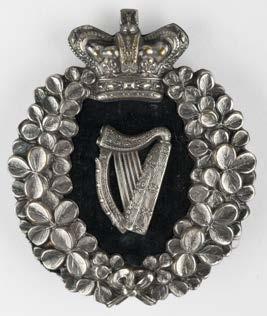
£200 - £300
444* London Irish Rifles. A fine and scarce Victorian officer’s pouch belt plate of the London Irish Rifles, die-stamped silvered example, featuring a crowned shamrock wreath with a harp on a black velvet ground, the reverse with a backing plate and two screw posts This badge was designed by one of the founder members of the Corps, Samuel Lover (1797-1868), who was an Irish songwriter, composer, novelist and portrait painter, chiefly miniatures. (1)
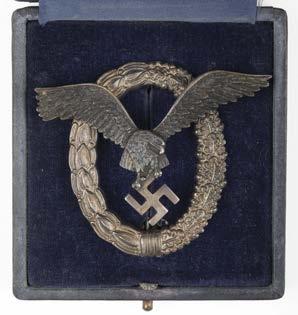
£200 - £300
445* Luftwaffe. A WWII Pilots Qualification Badge, two piece construction with eagle and swastika on an oval wreath, the reverse stamped ‘A.G.M.u.K. Gablonz’, vertical pin, presented in a fitted box with the lid stamped in gold ‘Flugzeugführer’, in excellent condition
(1)
£200 - £300
446* Militaria. A very mixed collection of military items, including a WWII ARP handbell, 8 brass shell cases, some trench art including a brass Royal Canadian Regiment tribute frame, shield shape applied with regimental badges, two apertures for photographs (no photographs), the back inscribed illegible but probably recounting about lost sons, 22.5 x 18 cm, teak barrel with brass plaque ‘Teak from HMS Iron Duke’, 8 cm high, a wooden ashtray with brass plaque ‘HMS Anson’, 7.5 cm diameter, RAF benevolent fund souvenir bell, 1952 webbing revolver holster and belt, cap badges, sweetheart brooches, cloth badges etc (4 cartons)
£200 - £300
447* Military accoutrements. WWII Bren gun leather magazine case, no markings, with brass mounts and carrying strap, 32 cm long, Swiss leather cartridge pouch, stamped ‘M. Spring 1961 Helgisried’, 21 cm long, another Swiss cartridge pouch, double, brown leather, stamped ‘J. Aegisher Wettingen 44’, 19.5 cm long, a Swedish brown leather bandolier, a British example and other items (11)
£150 - £200
448* Model ship. A 1/50 scale model of a 19th century American Baltimore Clipper, circa 1980s, the wooden sailing ship, finely executed with detailed rigging, decks, fittings and brass cannons and tender, 86 cm long, presented on a wooden stand with brass plaques, overall height 74.5 cm (1)
£100 - £150
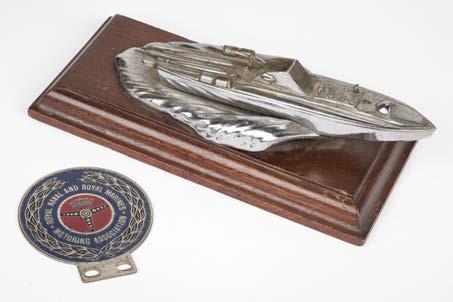
449* Motor Torpedo Boat. A good presentation-display piece of a high-speed motor torpedo boat, chrome-plated cast bronze surmounting bow-wave base, affixed upon a plinth base, together with a Royal Navy and Royal Marines Motoring Association car badge circa 1960, blue and red enamel to chromed brass, steeringwheel and crowned laurel wreath motif (2)
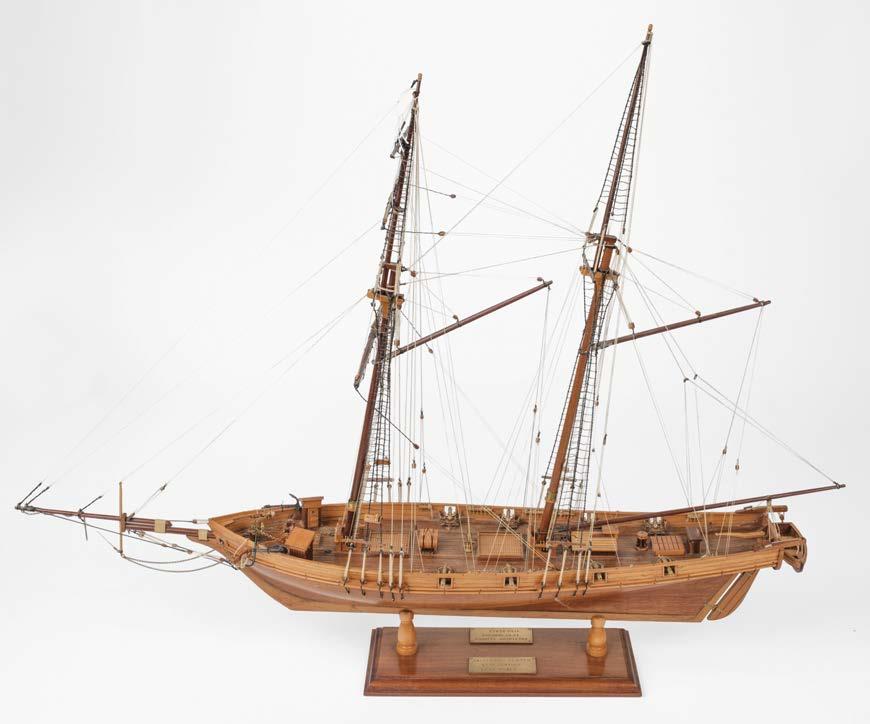
£150 - £200
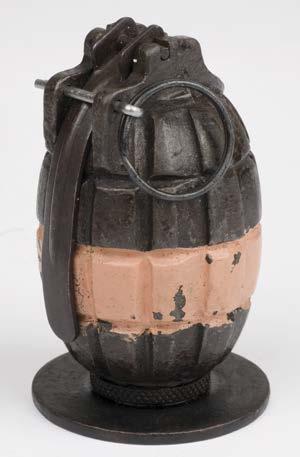
450* Munitions. A WWI INERT No 23 Mills bomb by H & R Lightbody, dated 1916, the base stamped 'No 23 I, 7/16 H & R L', with war department arrow, the base plate stamped 'L & Co 12 1917', 10 cm high
This is an inert piece for display purposes (no fuse remains inside); however, it cannot be sent by our in-house shipping. Collection or own courier only.
(1)
£80 - £120
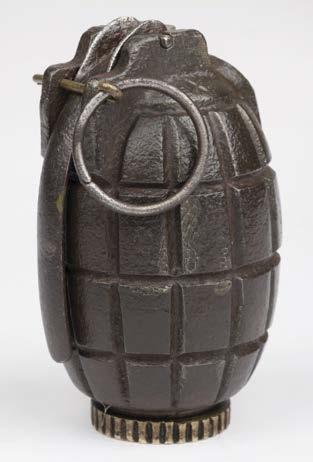
451* Munitions. A WWI INERT No 23 mills bomb dated 1916, the brass base stamped No 23 J.G. W 7/16, 9.5 cm high
This is an inert piece for display purposes (no fuse remains inside); however, it cannot be sent by our in-house shipping. Collection or own courier only.
(1)
£80 - £120
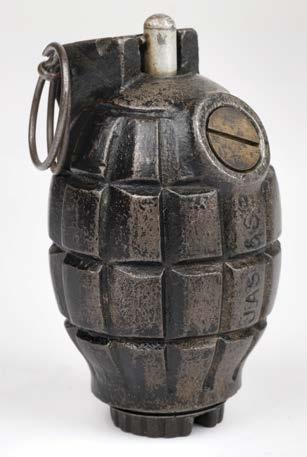
452* Munitions. A WWI INERT No 36M Mk I Mills bomb by James Allen Senior & Sons, Glasgow, dated 1917, the base stamped Mk 36 Mk I Elm Bank 9 17
This is an inert piece for display purposes (no fuse remains inside); however, it cannot be sent by our in-house shipping. Collection or own courier only.
(1)
£80 - £120
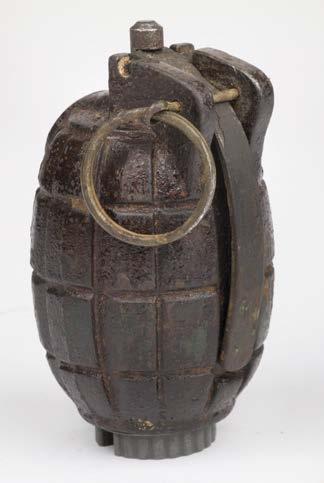
453* Munitions. A WWII INERT No 36M Mk I mills bomb by A. Marston & Co, Wolverhampton, dated 1944, the base stamped No 36M Mk I 44 GRB Z, 9.5 cm high
This is an inert piece for display purposes (no fuse remains inside); however, it cannot be sent by our in-house shipping. Collection or own courier only.
(1)
£80 - £120
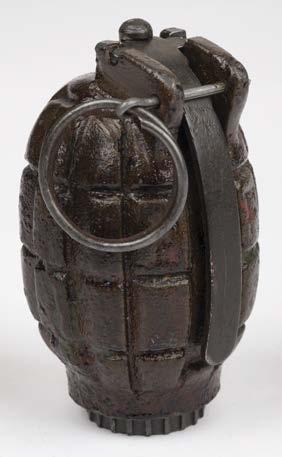
454* Munitions. A WWII INERT No 36M Mk I mills bomb dated 1943, the base stamped No 36M Mk I 43, 9.5 cm high
This is an inert piece for display purposes (no fuse remains inside); however, it cannot be sent by our in-house shipping. Collection or own courier only.
(1)
£80 - £120
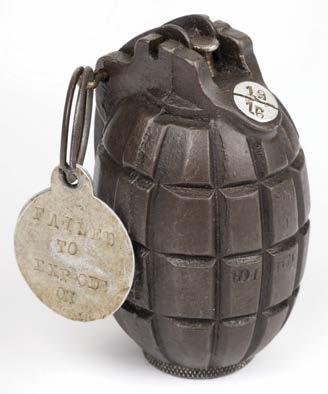
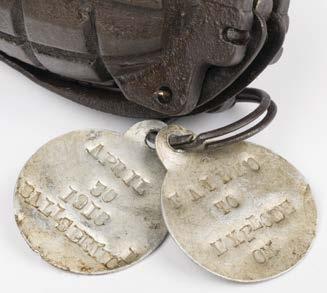
455* Munitions. Easter Uprising, Dublin 1916 INERT No 5 Mk I mills bomb by James Cycle Co, Birmingham, the base stamped No 5 Mk I 11/15 James Cycle Co Birmingham, with war department arrow, the body stamped ‘Sgt D Holdoroft’, with two identity tags, one stamped ‘Failed to explode on’ the other ‘April 30 1916 Ballsbridge.’ 9.5 cm high
This is an inert piece for display purposes (no fuse remains inside); however, it cannot be sent by our in-house shipping. Collection or own courier only.
On 30 April 1916, the day after the main surrender of the Easter Rising, Dublin was under martial law, with heavy fighting concluding. While key leaders surrendered on 29 April, the area around Ballsbridge, specifically Mount Street and Northumberland Road, was critical earlier in the week due to the Battle of Mount Street Bridge. (1)
£300 - £500
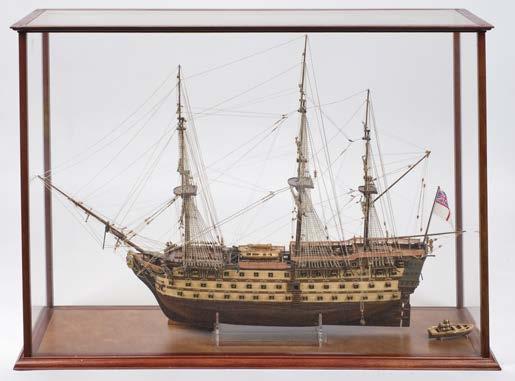
456* Nelson (Horatio, 1758-1805). A 1-70 scale model of Nelson’s flagship H.M.S. Victory, built by S.J. Barrett, 1988, the scratch-built wooden model intricately detailed with rigging, deck fittings and brass cannons, housed under a substantial oak and perspex display case, with silvered plaque detailing maker and ship information, case size 94.5 cm high x 130 cm wide x 41 cm deep (1)
£300 - £500
457* Nelson (Horatio, 1758-1805). A mixed collection of Nelson related memorabilia, including 250 Years of HMS Victory, a set of 6 gold-plated medals, in fitted presentation case with certificate numbered 256, Trafalgar bicentenary stamp and cover collection, an album, a reproduction pewter medal of Boulton’s Trafalgar Medal, numbered 17/2015, boxed with certificate, chart weight made from the copper of HMS Victory by Nauticalia, boxed, paperknife made from the oak and copper plates of HMS Victory by Nauticalia, boxed and other related items (a carton)
£200 - £300
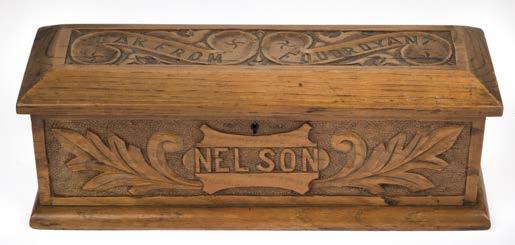
458* Nelson (Horatio, 1758-1805). A Victorian oak table box made from the oak of H.M.S. Foudroyant, the hinged cover carved ‘Oak From Foudroyant’, the sides dated 1798 and 1897, the front carved ‘Nelson’ and the rear ‘Lord’, 11 cm high x 30 cm wide x 10.5 cm wide (1)
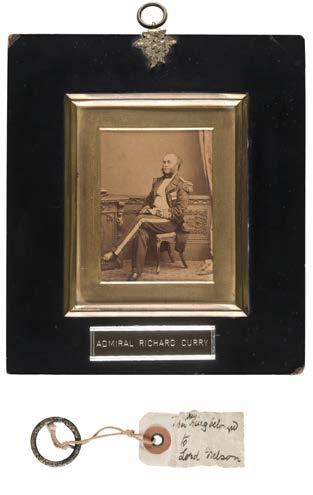
£200 - £300
459* Nelson (Horatio, 1758-1805). An ornate gilt metal keyring reputedly belonging to Nelson, the circular split metal ring cast with flowers, 25 mm diameter, with an old manuscript label inscribed ‘this key ring belonged to Lord Nelson’, together with a Victorian portrait photograph of Admiral Richard Curry, Royal Navy, 7.5 x 5.5 cm, period black painted frame with foliate suspension and a modern engraved plaque ‘Admiral Richard Curry’, frame size 16.5 x 14.5 cm
Provenance: Admiral Richard Curry (1772-1854), thence by family descent. Richard Curry joined the Royal Navy in 1780 as a Captain's Servant, on board HMS Amphitrite. He subsequently served on the Mediterranean, Halifax, West India, and Home stations, as Midshipman and Master’s Mate in the Phaeton. Curry is best remembered for his valiant actions during the Campaign in Egypt when Commander of HMS Fury, for which he received a gold medal, and for capturing the red Jolly Roger pirate flag in the battle of Barbary Coast off North Africa in 1780. This extremely rare flag is now on display at Portsmouth's Historic Dockyards.
Curry received a gold medal for his services in Egypt and awarded the CB in 1831.
(2)
£500 - £800
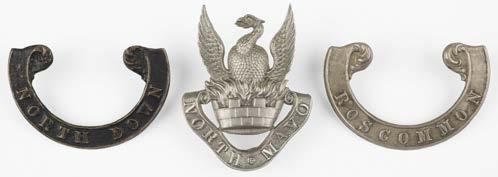
460* North Mayo. Irish glengarry badge of the North Mayo Fusiliers Militia, circa 1874-81, a die stamped white metal example featuring a Phoenix above a flaming crown, a scroll beneath inscribed ‘North Mayo; two loops to the reverse, together with an Irish Roscommon Militia scroll pattern forage cap badge, circa 1858-74, die stamped white metal with two loops to the reverse, plus another for North Down (3) £100 - £150
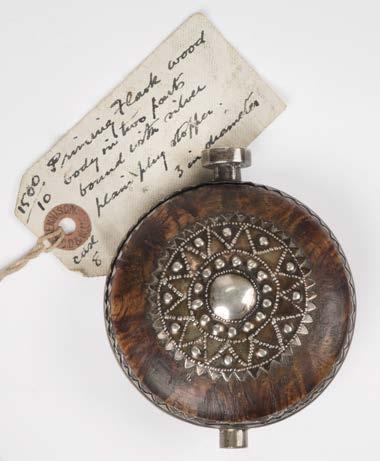
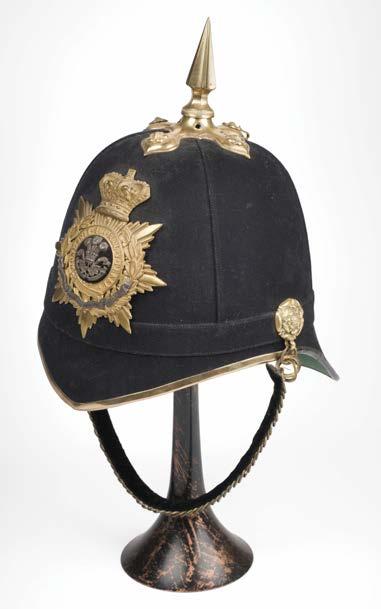
461* Powder flask. A continental Mulberry wood priming flask, 19th century [?], of circular form, applied with white metal decoration and plain plug stopper, 8 cm diameter, with an old manuscript label attached, inscribed ‘priming flask wood body in two parts bound with silver, plain plug stopper, 3 in diameter’ (1)
£200 - £300
462* Practice Bayonet. A WWI practice bayonet, steel with war department arrows, spring end and half stocked, overall length approximately 161 cm (1)
£100 - £150
463* Prince of Wales’s Leinster Regiment. A Victorian Officer’s ‘Royal Canadian’s’ Home Service Blue Cloth Helmet, 1881-1901, with crowned star pattern helmet plate with laurel and Garter overlays, in the centre on a ground of black velvet, the Prince of Wales’s crest, motto, maple leaves and honour scroll ‘Central India’, below a silver scroll ‘Prince of Wales’s Leinster Regiment’, brass cross and spike finial, chin scales with black velvet backing and gilt brass rosettes, soft brown leather lining and tailor’s label for ‘Holt & Son, 20 Sackville St, Picadilly, W.’, a nice example with minimal wear (1)
£400 - £600
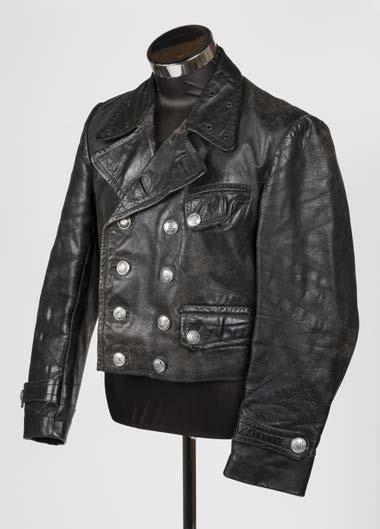
464* Reichspost. A WWII black leather Reichspost black leather jacket, double-breasted with silvered buttons featuring a target and bugle, three pockets and cloth lining, 59 cm long, 39 cm chest, 45 cm inner arm (1)
£200 - £300

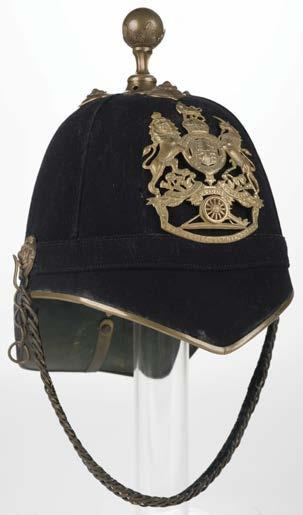
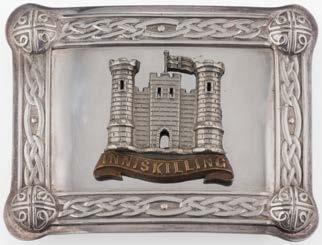
468* Royal Inniskilling Fusiliers. An Irish waist belt plate worn by a Piper, post 1934, silver plated rectangular form applied with Castle of Inniskilling on “Inniskilling” mounted with Celtic border and four bosses, the reverse with fittings, 9.5 x 8 cm (1)
£100 - £150
465* Royal Army Medical Corps. An Edwardian home service blue cloth helmet of the Royal Army Medical Corps, circa 1902-07, black felt with brass helmet plate and brass ball top, brass rosettes and chin scales, the lininig with large gilt tailors stamp for ‘Vones Chalk & Davis 6 Sackville St London’ (1)
£150 - £200
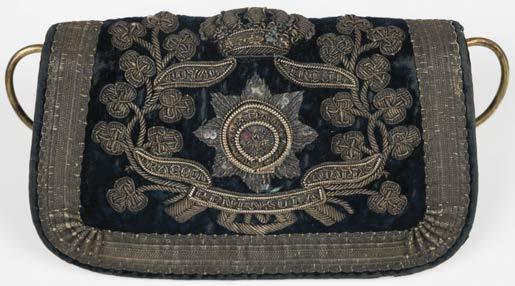
466* Royal Army Service Corps. Elizabeth II period uniforms belonging to an officer of the R.A.S.C., comprising two No. 1 dress tunics, each with medal ribbon bar for WWII, Korea and General Service, staybrite buttons and badges, 79 cm long, 38 cm wide, 41 cm inner arm, each with trousers, a blue dress tunic with corresponding medal ribbon bar, plus a mess jacket, waistcoat and trousers (4)
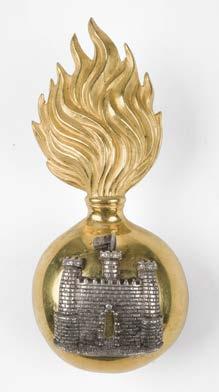
£70 - £100
469 Royal Irish Dragoon Guards. A scarce dress pouch of the 4th Royal Irish Dragoon Guards, circa 1830-52, the pouch embroidered in bullion wire with a starburst badge within a shamrock wreath, a crown with a part scroll inscribed ‘Royal Irish Dragoon Guards’ and another with battle honour ‘Peninsula’, a thick brocade on blue velvet, two brass loops and leather interior (1)
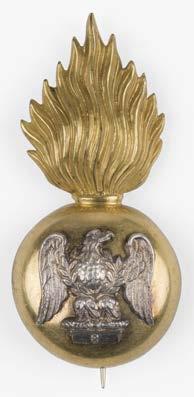
£200 - £300
£100 - £150
467* Royal Inniskilling Fusiliers. An Irish officer’s fur cap grenade of the Royal Inniskilling Fusiliers, post-1881, a fine gilt example, the concave flaming grenade applied with a silver Castle of Enniskilling, with two screw posts to the reverse (1)
470 Royal Irish Fusiliers. A Victorian Officer’s glengarry badge, circa 1881-96, the fine gilt flaming grenade with a silver eagle resting on a tablet with ‘8’ beneath, the reverse with a silver vertical pin, 70 mm long (1)
£100 - £150
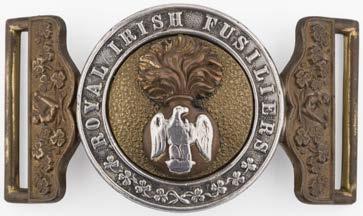
471* Royal Irish Fusiliers. An Irish waist belt clasp, circa 1881, a silver and brass interlocking example, with eagle on a flaming grenade within a seeded circlet inscribed ‘Royal Irish Fusiliers’, with Maid of Erin harp and shamrock ends, worn, 9 cm long (1) £100 - £150
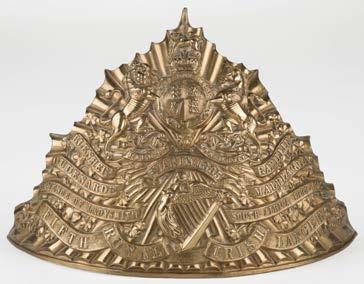
472* Royal Irish Lancers. An Edwardian other ranks lance cap plate of the 5th Royal Irish Lancers, circa 1905-14, a good example of a die stamped brass triangular plate featuring the Royal Coat of Arms over the Maid of Erin and battle honours from Blenheim to South Africa 1900-1902, a four part scroll beneath inscribed ‘Fifth Royal Irish Lancers’, the reverse with two screw posts (1) £70 - £100
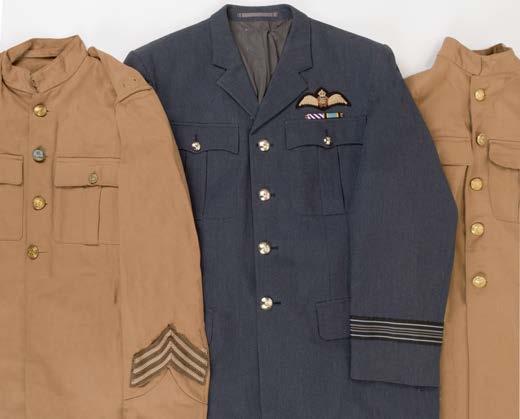
473* Royal Marines. An interwar Royal Marines khaki drill service dress tunic dated 1924, with brass buttons, the lining stamped 'PO. 130001 Bas. Martin', dated 19.5.1924, 70 cm long, 40 cm chest, 46 cm inner arm, together with another named to the same recipient, plus a post WWII RAF No 1 dress tunic belonging to a DFC recipient, 80 cm long, 45 cm chest, 49 cm inner arm (3)
£100 - £200
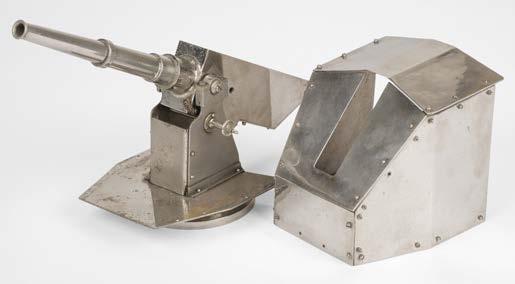
474* Royal Navy. A fine presentation model of a naval turret gun, early 20th century, brass and nickel plated throughout, the cannon barrel with manual controls for elevation and swivel action to base mount, the protective three-quarter caisson currently removable, lacking set-screws for fixed attachment, minor pickling to base plate, 38 cm long (1)
£400 - £600
475* Royal Navy. Captain Douglas George Wilberforce Curry collection, comprising, an Edwardian Royal Navy Officer’s sword by Henry Wilkinson and retailed by Gieves, Matthews & Seagrove, serial no 41569, the 80.5 cm steel blade etched with a crowned fouled anchor, within acorns and oak leaves bordered within ropetwist, the opposite side with a royal crest, brass gothic hilt with a crowned fouled anchor, wirebound and fishskin grip with brass lions head backstrap, overall length 95 cm, in its black leather scabbard with brass mounts engraved ‘D.G. Curry’ and gold bullion sword knot, a nice presentable sword
An Edwardian Royal Navy Officer’s dirk retailed by J. Gieve & Sons, the 45.5 cm steel blade etched with E.VII.R. cypher amongst scrolls, the opposite side with a crowned fouled anchor, brass crossguard with crowned fouled anchor within a wreath, one acorn quillon missing, wirebound fishskin grip, brass lion’s head backstrap, overall length 60 cm, in its black leather scabbard with brass mounts engraved ‘D.G.W.C.’, overall condition poor Lieutenant Douglas George Wilberforce Curry, Royal Navy, oil on canvas, portrait in civilian clothes, artist’s initials ‘H.H.’ and dated 1916 lower right, 30.5 x 25.5 cm, period oak frame with ivorene plaque stamped ‘Lieutenant D.G.W. Curry. R.N. H.M.S. Superb 1916’, frame size, 36 x 31 cm
Douglas George Wilberforce Curry was born in Newcastle in 1888. His parents were Reverend William Dixon Blachford Curry and Amy Curr y née Angus, of New Hinksey Vicarage, Oxford. Curry joined the Royal Navy as a Midshipman in May 1904 and advanced to Commander in 1930. He served in various ships, including HMS Superb from June 1913 to July 1917. He served in Superb during the Battle of Jutland on 31 May 1916. Curry had long and distinguished service with the Royal Navy, continuing his service into WWII, being appointed Inspector of Naval Ordnance in July 1941. He was given the honorary rating of Captain for his war service in 1946. (3) £400 - £600
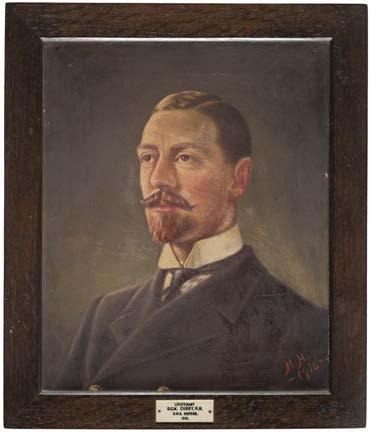
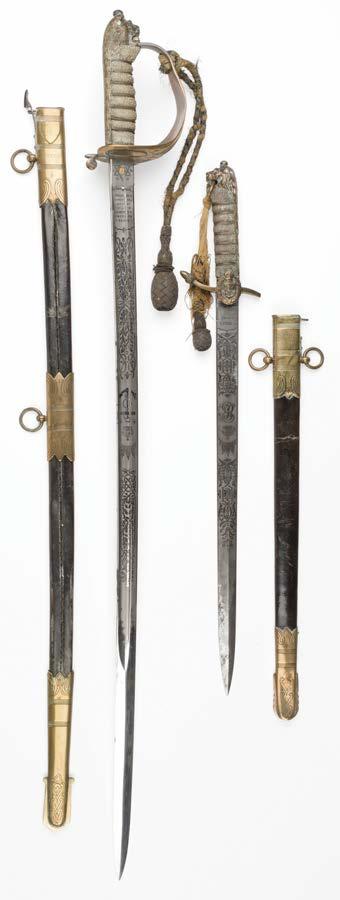
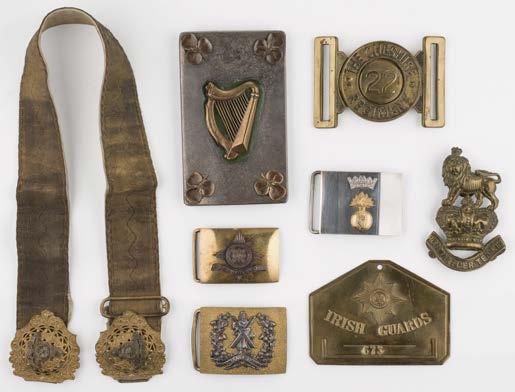
476* Royal Scots Fusiliers. A fine wait belt buckle, with cross of St. Andrew, thistle wreath and single scroll inscribed ‘Royal Scots Fusiliers’, laid on a seeded brass plate, the reverse with fixings and additionally inscribed ‘130’, 5.5 x 7 cm, together with a mixed collection including 22nd (The Cheshire) Regiment two part brass belt buckle, 10.5 cm long, 4th Royal Irish Dragoon Guards waist belt buckle, Royal Irish Fusiliers waist belt buckle and other items (8)
£150 - £200
477* Royal Ulster Constabulary. A modern female officer’s uniform, green cloth, comprising a cap, size 6 7/8, with a blackened cap badge on red felt, PVC visor, tunic with blackened silver buttons, medal ribbon bar and blackened collar badges on red felt, skirt, leather belt, gloves, truncheon, plus three reproduction socket bayonets (a carton)
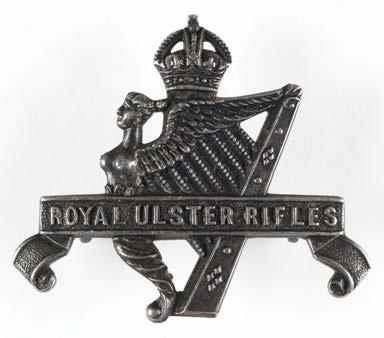
£70 - £100
478* Royal Ulster Rifles. A WWII silver ‘Airborne’ Officer’s cap badge, king’s crown above a Maid of Erin harp with scroll to the centre inscribed ‘Royal Ulster Rifles’, the reverse with two brass loops and stamped ‘Sterling Silver’, 45 x 40 mm, 11.7g (1) £150 - £200
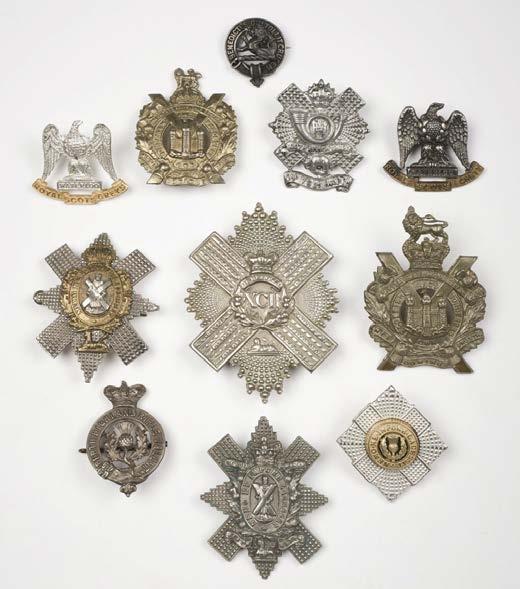
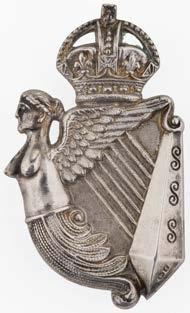
482* The King’s Royal Irish. An Edwardian silver noncommissioned officer’s arm badge of the 8th (The King’s Royal Irish) Hussars, hallmarks for Firmin & Son, Birmingham, 1905, hollow construction with crowned Maid of Erin harp, the reverse with two loops and hallmarks, approximately 8.5 x 4 cm (1)
£150 - £200
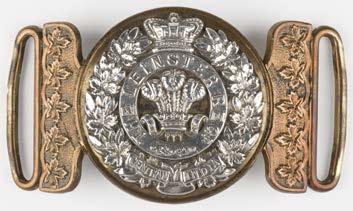
£100 - £150
479* Scottish badges. A Victorian white metal glengarry badge of the Perth Highland Rifle Volunteers, a crowned thistle within a circle border inscribed ‘Perth Highland Rifle Volunrs’, two loops to the reverse with a horizontal pin, together with a white metal badge of the Highland Light Infantry by William Anderson & Sons, Edinburgh, 92nd (Highland) Regiment pouch badge, Royal Scots Greys bi-metal badges and other Scottish regimental badges (11)
480* Ship’s bell. A Victorian bronze ship’s bell, engraved ‘14’, lacking clapper, 21 cm high, together with a WWII klaxon siren, integral speaker and winding handle, 20 cm long, a Chinese bamboo cane, carved with two characters, 105 cm long, a silver top malacca cane of the Queen’s Own Royal West Kent Regiment, hallmarks for M.B. London 1931, 81.5 cm long, battle blouse of the King’s Shropshire Light Infantry, tailors label by B. Bloom Limited, dated 1956, plus a Hussars mess dress tunic and waistcoat, black cloth with red and green facings (6)
£100 - £200
481* Sniper plate. A WWII period iron sniper plate, country of origin unidentified, finished in green with rifle recess, 61.5 x 35 cm, together with a wooden ammunition box, probably German, plus a rifle cleaning kit (3)
£100 - £150
483* The Leinster Regiment. An Irish officer’s waist belt clasp of the Leinster Regiment, circa 1881-1901, interlocking brass and silver-plated example, with Prince of Wales’ plumes to the centre surrounded by a circlet inscribed ‘The Leinster Regt’ within maple leaves, two-part scroll beneath with battle honours ‘Central India’ and maple leaf end pieces, a nice example in good condition (1)
£100 - £150
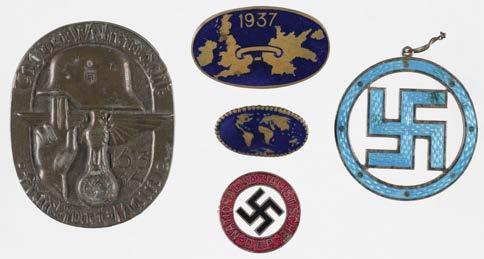
484* Third Reich. A scarce ‘Link’ 1937-1939 Anglo-German fascist membership pin badge by J.R. Gaunt, the brass oval badge with blue enamel showing the United Kingdom and mainland Europe linked with the date 1937 above, the reverse numbered 1431 and ‘J.R. Gaunt London’, 32 mm long, together with Third Reich Tag Der Wehrmacht (Military Day) Frankfurt 1936 tinnie badge, National Socialist German Workers party members badge and other items The Link was a British pro-Nazi non-party organisation founded by Admiral Sir Barry Domville, K.B.E., C.B, C.M.G. in 1937, with the view to promote good relations between the British and German peoples. The organisation had around 4300 members. (5)
£200 - £300
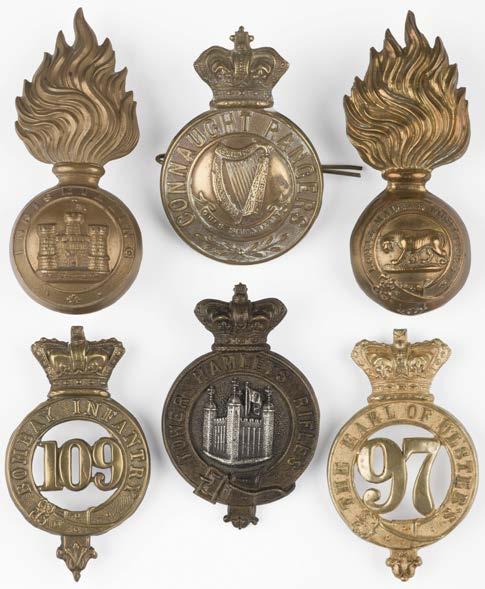
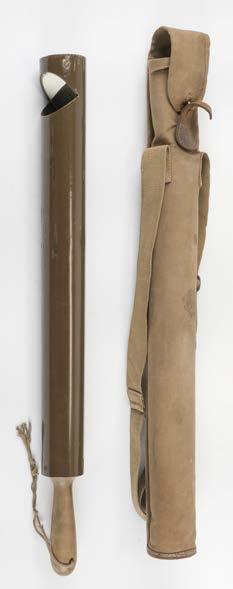
485* Tower Hamlets Rifles. A Victorian glengarry badge, circa 1881-1901, brass with white metal tower to the centre, crowned with rope edge belt inscribed ‘Tower Hamlets Rifles’, the reverse with two loops, 7.5 x 5 cm, together with three further Victorian glengarry badges for The Earl of Ulsters, Connaught Rangers and Bombay Infantry, plus two fur cap grenade badges, comprising, Inniskilling and Royal Madras Fusiliers, (6)
£100 - £150
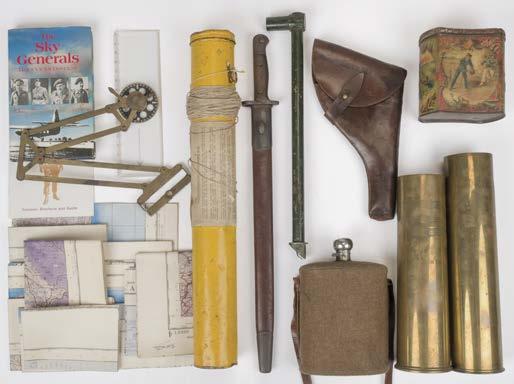
486* Trench periscope. WWI trench periscope stamped R & J Beck dated 1916, green finish, optics a little grubby, 42 cm long, together with a British 1907 patten bayonet by Mole, the 43 cm blade with various inspection stamps, wooden grip, overall length 55.5 cm, in its brown leather scabbard, WWI brown leather service revolver holster stamped ‘Wilkinson, Pall Mall, London’, a military water canteen with replacement white metal cap, RAF launching kite, 2 brass shell cases and other items (a carton)
£200 - £300
487* Trench periscope. WWI trench periscope, stamped Dixey, Bond St, London, field green painted tubular body, good clear optics and treen handle. 58.5 cm long, with original canvas bag, the webbing strap inscribed ‘Lieut L . Hart’ (1)
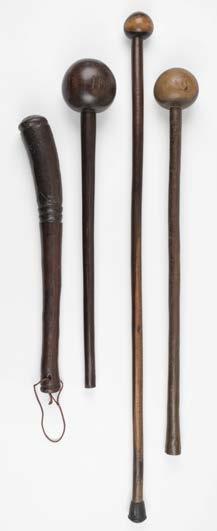
£100 - £150
488* Tribal Art. A collection of African clubs, including three knobkerries, the largest spherical head measuring 9 cm across, the smallest 5 cm, plus a curved hardwood club with geometric carving, 51 cm long (4)
£200 - £300
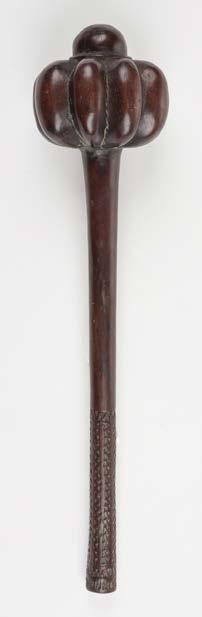
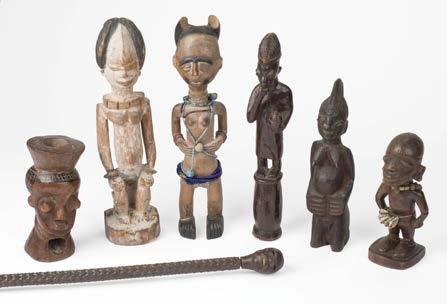
491* Tribal Art. An African hardwood walking stick, probably late 19th century, the pommel carved as the head of a young boy, the haft carved with repeating diamond shape decoration, some loss and a split, 114 cm long, together with six African carved wood figures, various tribes, including a Nigerian Yoruba figure of a young boy, probably an ibeji, wearing semi-precious stone necklace and cowry shell belt, 20 cm high (7)
492 No lot
£150 - £200
£200 - £300
489* Tribal Art. A Fijian war club (Ula), the eight-lobed bulbous head leading to a shaft with carved grip, 41.5 cm long (1)

490* Tribal Art. A South Sea Islands [?] hardwood club, of plain form with a bulbous head, 97 cm long (1) £100 - £150
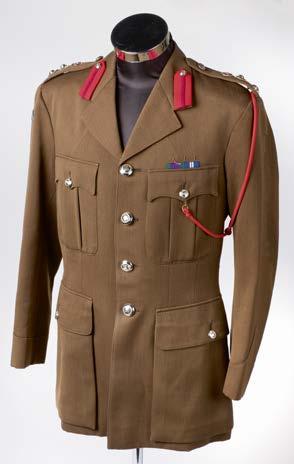
493* Uniforms & Accoutrements. British Army Brigadier’s tunic, circa 1970s, the service dress tunic with Brigadier rank insignia to the epaulettes, red cloth gorgets, staybrite buttons, Parachutist cloth badge to the right arm, medal ribbon bar for Campaign Service and 2002 Golden Jubilee Medal, the lining with Hawkes tailors label dated 15 January 1974, inscribed ‘A.P. Collins 2917’, an additional dry cleaning label inscribed ‘Brig Nugent’, 40 cm chest, 86 cm long, 43 cm inner arm, together with a blue cloth tunic, with Brigadier rank insignia, medal ribbon bars for WWII and later service, the inner pocket with Henry Poole & Co tailors label printed ‘Major M. Matthews’, a Elizabeth II Royal Military Police mess dress uniform, comprising, jacket, waistcoat and trouser, the inner pocket with Conway Williams tailor’s label inscribed ‘Capt P.J. Hanglin’, a Brigadier Staff Officers cap, blue cloth with red band and black peak, bullion badge and oak leaf band, the interior with Herbert Johnson tailors label, plus a General Staff Officers cap and other items (8)
£200 - £300
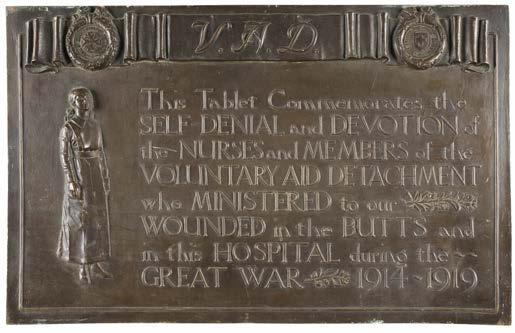
494* Voluntary Aid Detachment. A WWI commemorative cast bronze plaque, inscribed ‘This tablet commemorates the selfdenial and devotion of the nurses and members of the Voluntary Aid Detachment who ministered to our wounded in the butts and in this hospital during the Great War 1914-1919’, a nurse cast in relief to the left, a scroll above inscribed V.A.D. flanked by St. Johns Ambulance and Red Cross badges, 38 x 60 cm (1)
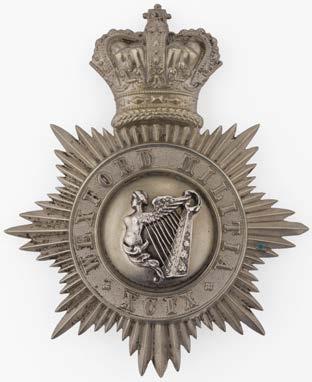
496* Wexford Militia. An Irish shako plate of the Wexford Militia XCIX, circa 1855-61, white metal with crowned star with Maid of Erin harp and circular mount inscribed ‘Wexford Militia XCIX’, the reverse with two loops, but the three pins are missing, so the centre is loose, 10 x 8.5 cm
£200 - £300
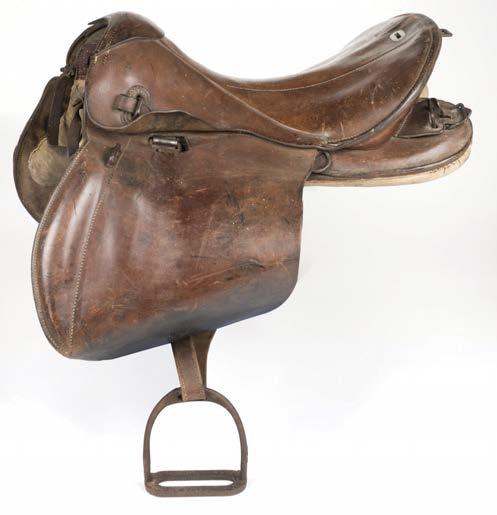
495* Wehrmacht. A WWII German army leather horse saddle, brown leather with curved seat and stirrups, the underside with padding, nicely stamped with Waffen marks and dated 1938 and in good original condition
The Germans had 15 primary horse mounted units at the outbreak of WWII. Cavalry regiments were mainly tasked with tactical reconnaissance operations. By 1943 the Germans were experiencing fuel and vehicle shortages, which resulted in more horses being used in the field.
(1)
£100 - £150
Wexford Militia were raised in Wexford in 1793 and had the distinction of being the first regiment to mount guard on Dublin Castle, carrying the Union flag. In 1881, they became the 4th Battalion Royal Inniskilling Fusiliers. (1)
£200 - £300
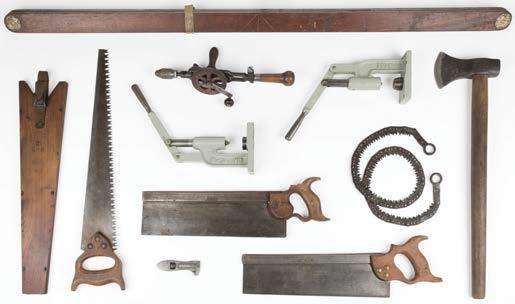
497* WWI & WWII tools. A good collection of military tools, including a woodworking saw by Taylor Brothers Sheffield, dated 1914, with wooden grip stamped with an M above war department arrow, 44 cm long, an axe, the head stamped ‘Beades Co 1916’, long wooden grip, 59 cm long, a woodworking saw, the blade stamped with war department arrow, wooden grip, in a wooden sleeve stamped with crowned G.VI. R. cypher, Emcol and dated 1944, 62 cm long, another saw stamped ‘Swann & Son, Sheffield 1944’, with war department arrow, 48.5 cm long, King Dick adjustable spanner stamped with Air Ministry markings and dated 1940, 10.5 cm long and other items, plus:
Trench Art. A WWI gong made from a brass shell case, stamped ‘Karna 24-4-15’, the base with various stamps including ‘B31, C.F.F., 5 98’, approximately 42 cm long, with a brass striker (12)
£100 - £150
498* WWI crested china. WWI crested china, including an ambulance by Swann China, Gorleston on Sea crest; two side caps by Carlton China, Hull crests; slouch hat Arcadian China, Hull crest; two Scottie dogs, St Paul’s Cathedral, Big Ben and other items (10)
£70 - £100
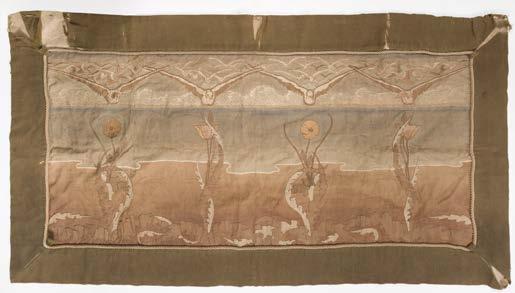
499* WWI embroidery. An emotive WWI period embroidery, circa 1918, showing a beach with poppies and seagulls flying over, bordered in rope and green cloth, probably cut from the uniforms of British soldiers, general damage and age wear, 106 x 195 cm (1)
£100 - £150
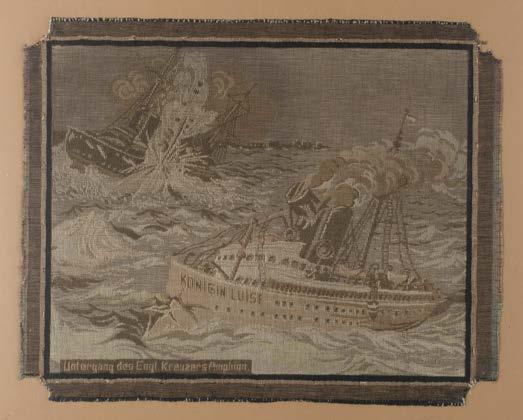
500* WWI jacket. A WWI Austro-Hungarian black leather doublebreasted jacket, with two side pockets and front pockets, silvered buttons, tartan wool lining with a sack label inscribed ‘1’, 78 cm long, 43 cm chest, 49 cm (1)
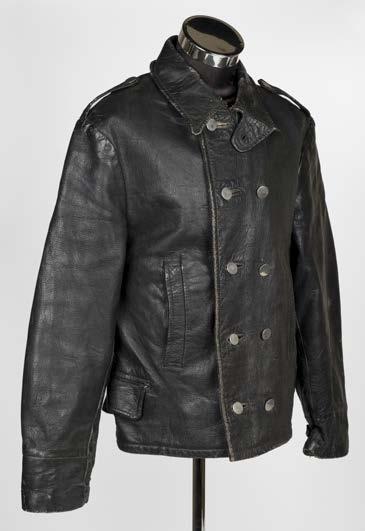
£150 - £200
501* WWI tapestry. A machine woven WWI tapestry commemorating the sinking of HMS Albion when it was struck by a mine laid by SS Königin Luise on 6 August 1914, showing SS Königin Luise in the foreground firing at HMS Albion, titled below ‘Untergang des Engl. Kreuzers Albion’, 39.5 x 49 cm (15.5 x 19.25 ins), presented in a perspex-glazed modern frame (64.5 x 71 cm), with a detailed conservation report (1)
£70 - £100
502* WWI tunic. A WWI South African [?] tunic, dark green cloth, with brass buttons by Gaunt London, lining stamped Dico Konfeksjon, numbered ‘52 N’, 75 cm long, 43 cm chest, 45 cm inner arm, one or two moth holes, but general condition good, with a mannequin for display (1)
£200 - £300
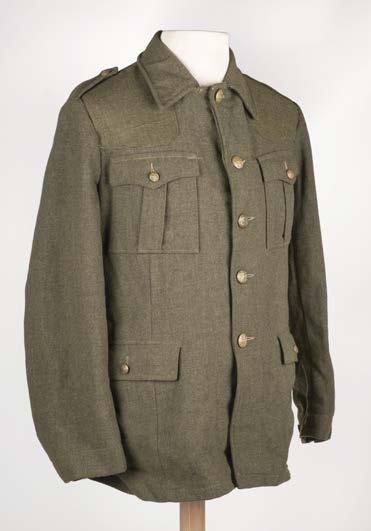
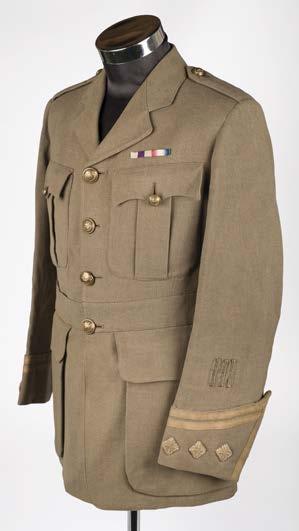
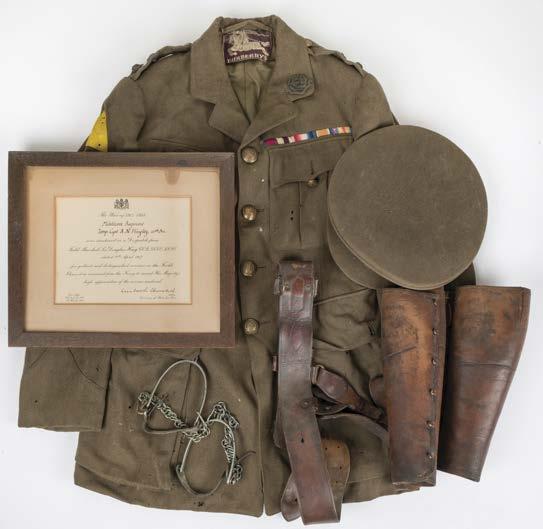
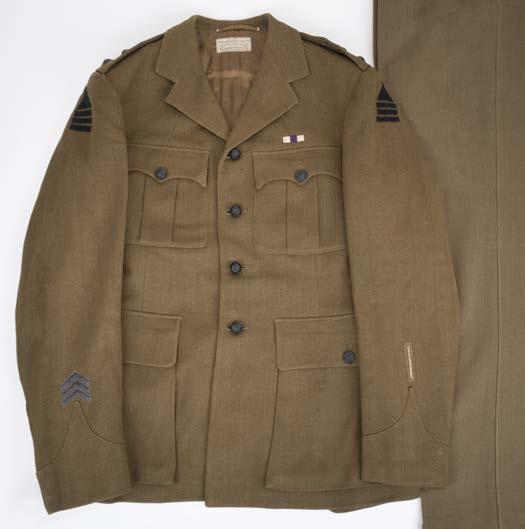
503* WWI tunic. A WWI tunic belonging to a Captain of the Seaforth Highlanders, the green cloth tunic with medal ribbon bar for the Military Cross and WWI star, with cloth rank pips on the sleeves, and three wound stripes, brass regimental buttons, a few moth holes, 77 cm long, 43 cm chest, 47 cm inner arm (1)
£300 - £500
504* WWI uniform. A WWI officer’s uniform belonging to Captain A.N. Hingley, D.S.O., M.C. 13th Bn, Middlesex Regiment, comprising a green cloth tunic, with Burberry tailors label, medal ribbon bar, yellow triangular patch on each arm, epaulettes with officer’s crown and pips, one Middlesex Regiment collar badge, moth damage, 80 cm long, 34 cm chest, 47 cm inner arm, Burberry peaked cap with Middlesex Regiment cap badge, pair of leather gaters, sam browne, ammunition pouch, sword belt, horse bit and a pair of spurs, plus a mentioned in despatches certificated dated 9 April 1917, period frame, glazed (glass damaged)
M.C. London Gazette: 26 July 1917 Temp. Capt. Alfred Norman Hingley, Mid’x. R.
‘For conspicuous gallantry and devotion to duty. For over 10 days, this officer showed most conspicuous bravery and was a splendid example to all, carrying out his duties under very heavy bombardment. Though wounded, he carried on until his battalion was relieved five days later.’
D.S.O. London Gazette: 29 July 1919 Maj. (T./Lt.-Col.) Alfred Norman Hingley, M.C., 13th Bn. Midd’x R.
‘For great gallantry on October 10th, 1918, near Rieux. When the advance met with heavy machine-gun and shell fire, and the leading companies had lost many officers, he personally led the battalion to its final objective. Again, on October 11th near Avesnes-les-Aubert, under an intense enemy barrage, it was due to his personal courage and leadership that the ground gained by the battalion was maintained. He set a very fine example to all.’ (1) £300 - £500
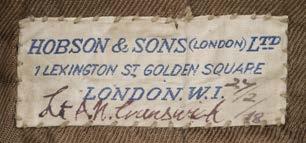
505* WWI uniform. A WWI officer’s uniform belonging to Captain Arthur Noel Cranswick, M.C., 12th King’s Royal Rifles Corps, comprisinng green cloth tunic with officer’s pips and stripes, four breast pockets, anodised regimental buttons and M.C. ribbon, the lining with tailors label for ‘Hobson & Sons’, inscribed ‘Lt A.M. Cranswick’, 79 cm long, 43 cm chest, 51 cm inner arm, with trousers, the lot includes copied service papers
M.C. London Gazette: 9 January 1918.
‘For conspicuous gallantry and devotion to duty when commanding his company, being killed. He was commencing to withdraw them in order to take up a position in rear of and supporting the left flank of his battalion when the enemy delivered a violent counter-attack upon that point and practically drove it in. Realising the seriousness of the situation, he succeeded under very heavy fire in withdrawing his men, getting them across the open and forming them up in the rear of the place where the break had occurred. By this prompt and skilful action, he saved a serious situation. Throughout the ensuing three days, he continued to command his company with marked gallantry.’
Arthur Noel Cranswick was born in Kimberley, South Africa in 1891. He joined the Rhodesian Volunteers before attesting to the K.R.R.C. and served on the Western Front from 1916. He received a gunshot wound on 9 September 1916. Cranswick was commissioned as 2nd Lieutenant on 23 April 1917. He was wounded again by a bullet wound in his left shoulder and taken prisoner of war at Mezieres on 31 March 1918. He returned home on 10 December 1918 (a copy of the debriefing report is included).
(1)
£400 - £600
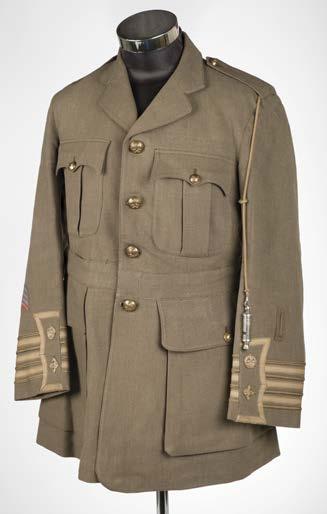
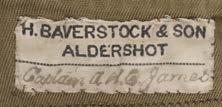
Rebellion of 1916 had made matters worse, so that by 1920 there was virtually a state of civil war in the South between the British Army, which had many loyal Irishmen in its ranks, and the Sinn Feinners. The importation by the latter of professional gunmen from America and the enlistment by the British Government of demobilised and often reckless officers into a special constabulary, known as “The Black and Tans,” enhanced the bitterness and the result was a vicious form of large scale gang warfare. Colonel James was President of a court-martial which convicted the Mayor of Cork [Terence MacSwiney], who afterwards died as a result of a hungerstrike, and a price was put on James’s head by the Sinn Fein. He was advised to resign and was followed by M. B. Savage, who had had all his regimental service in the 2nd Battalion.
The following is extracted from Enduring The Most: The Life and Death of Terence MacSwiney, by F. J. Costello: ‘On 16 August [1920], the courtmartial of Terence MacSwiney began, presided over by a Lieutenant-Colonel James. In all, four charges were proferred against him, including the possession of a numerical cypher of the type issued to the R.I.C. MacSwiney’s inaugural speech as lord mayor of Cork was also used against him, and a copy of it introduced into the record. Another document, which was in fact an amended version of a resolution adopted by the Cork Corporation proclaiming allegiance to Dail Eireann, was presented against MacSwiney as “likely to cause disaffection to His Majesty’.
506* WWI uniform. A WWI officer’s uniform belonging to Lieutenant Colonel A.H.C James, D.S.O., M.V.O., South Staffordshire Regiment who in 1920, presided over the courtmartial of Terence MacSwiney, Commander of the Cork No. 1 Brigade, Irish Republican Army, and Mayor of Cork, sentencing him to two years in Brixton Prison, where he died after a gruelling 73 day hunger strike: Subsequently James was advised to resign his commission when a price was placed on his head by Sinn Fein, comprising a green cloth tunic with blue chevrons and single wound stripe, officer’s cuff stripes, whistle with lanyard, the lining with tailor’s label for ‘H. Baverstock & Son’, inscribed ‘Captain A.H.G. James’, 89 cm long, 41 cm chest, 48 cm inner arm, with trousers
Provenance: Lawrence’s, Crewkerne, 8 July 2004, lot 1242.
D.S.O. London Gazette: 18 February 1915.
M.V.O. London Gazette: 15 August 1916 (Provost Marshal, 3rd Army; Visit of H.M. King George V to the Army in the Field).
Despatches four times London Gazette:17 February 1915, 22 June 1915, 11 December 1917 and 20 May 1918.
French Legion of Honnour London Gazette: 10 October 1918.
Alfred Henry Cotes James was born in 1873 and was educated at Sherborne, and at Merton College, Oxford. He was commissioned into the South Staffordshire Regiment in the rank of Second Lieutenant on 15 May 1897, becoming Lieutenant 15 September 1899, and serving as Adjutant from 14 August 1901 to 13 August 1904. He served in the Second Boer War. He advanced to Captain in 1902 and was Garrison Adjutant, Eastern Command from 1908 to 1912. James served during WWI as Assistant Provost-Marshal, 3rd Army Corps, B.E.F., 5 August 1914 to 27 October 1915, before being promoted to Major on 26 May 1915, and made Provost-Marshal, 3rd Army, B.E.F., British Armies in France, 28 October 1915 to 2 August 1918; before being created Provost-Marsha, Forces in Great Britain, 4 August 1918, with the Temporay rank of Brigadier-General. He was wounded during WWI and for his services, received the D.S.O., M.V.O., and was four times Mentioned in Despatches.
The following is extracted from The South Staffordshire regimental history: ‘By the beginning of 1920 the 2nd Battalion at Lichfield had rid itself of undesirable officers and other ranks and there was a marked decrease in absence with a corresponding increase in efficiency. This was important, for its next posting was to be as unpleasant as any the long suffering 80th had ever endured in what was officially peace-time soldiering. It moved to Cork at the end of June 1920 and shared Victoria Barracks with the 2nd Hampshires.
Things had of course, been tense in Ireland for many years and the Easter
As the charges against him were proferred, MacSwiney sat in an armchair between two armed soldiers. Weakened already from the effects of his hunger strike, now in its fifth day, he received moral support from an audience which in addition to Muriel [his wife], included his sister Mary, Father Dominic O’Connor, who would serve as his personal Chaplain for the duration of his protest, and Donal O’Callaghan, chairman of the Cork County Council and deputy mayor of Cork. When called to answer whether he was represented by counsel, the lord mayor answered, giving his view of the proceedings: “The position is that I am Lord Mayor of Cork and Chief Magistrate of this City. And I declare this court illegal and that those who take part in it are liable to arrest under the laws of the Irish Republic...”
... During the fifteen minutes in which the tribunal met in private to deliberate, MacSwiney sat and conversed with his wife in Irish. The president then returned and announced a finding that he was “not guilty on the first charge, and guilty on the second, third and fourth”. The following exchange then took place between the lord mayor and the president of the tribunal:
The Lord Mayor: “I wish to state that I will put a limit to any term of imprisonment you may impose as a result of the action I will take. I have taken no food since Thursday, therefore I will be free in a month.”
President: “On sentence of imprisonment you will take no food?”
Lord Mayor: “I simply say that I have decided the terms of my detention whatever your government may do. I shall be free alive or dead, within a month.”
A sentence of two years’ imprisonment was then imposed on Terence MacSwiney. Thus had begun the battle of wills that would soon command worldwide attention, pitting a determined individual against the greatest empire of its time. Unlike the issues which would drive the I.R.A. hunger strikers of six decades later, MacSwiney’s protest was not about political status. Fundamentally, what he objected to was the right of a British court to pass judgement on him at all.’
Terence MacSwiney died at Brixton prison on 25 October 1920, on the 73rd day of his hunger strike.
(1)
£600 - £800
507* Paratroopers Smock. WWII Airborne Troops Denison smock by Windsmoor (Macc) Ltd, dated 1963, size 3 with printed tailor’s label, green camouflage with four pockets to the front, brass ‘Newey’ pop studs and zip, shoulder epaulettes with green composite buttons, 89 cm long, 49 cm chest, 45 cm inner arm, some patching and general wear, together with a Belgian Airborne Denison smock by ABL, dated 1952, with cloth tailors label, plus a Swiss Alpine smock, a pair of Battledress trousers 1949 Pattern by Clarence Clothes Co Ltd, Belfast, size No. 4 dated 1955, with cloth tailors label and a 1949 Pattern Battledress blouse by Mourne Clothing Co Ltd, dated 1950, size No 17, with 48th Infantry Division cloth patch to arm, plus trousers
(5)
£300 - £500
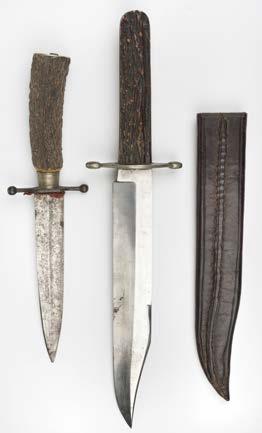
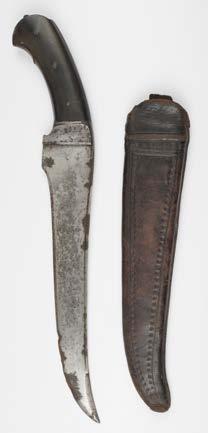
510* Dagger. An Indo-Persian dagger, 19th century, the 29.5 cm curved steel blade with horn grips, overall length 43.5 cm, in its tooled leather scabbard (1) £150 - £200
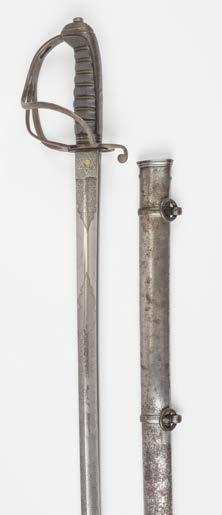
£200 - £300
508* Bowie knife. A substantial Victorian Bowie knife by G. Wostenholm & Sons, Sheffield, the 25.5 cm steel blade with clip point, stamped IXL at the forte, and ‘G. Wostenholm & Son, Washington Works, Sheffield, Eng’, along the top edge, with German steel crossguard and stag antler grips secured by steel rivets, overall length 38.5 cm, in its leather sheath, together with a smaller Victorian hunting knife, with 16.5 cm single edge blade, steel crossguard, white metal collar and rounded antler grip, overall length 28 cm, lacking sheath (2)
509* A Victorian 1821 pattern cavalry sword belonging to R.B. Longe, Norfolk Militia Artillery, the 88 cm slightly curved steel blade marked ‘Hamburger Rogers & Co King St Covent Garden London’, both sides engraved with a crowned V.R. cypher amongst scrolls, steel triple bar hilt with wirebound fishskin grip and stepped pommel, overall length 103 cm, in its steel scabbard, the throat contemporarily engraved ‘R.B. Longe norfolk militia artillery 1856’ (1) £300 - £500
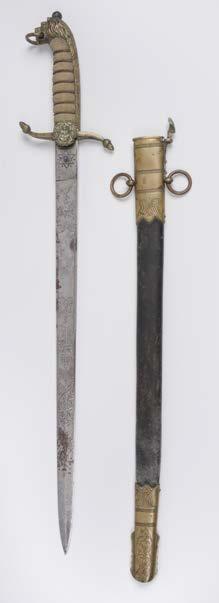
511* Dirk. George V Royal Navy midshipman's dirk, the 46 cm steel blade stamped 'J.R. Gaunt Limited Late Edward Thurkle 53 Conduit St, London. W.', and engraved with a crowned fouled anchor and scrolls, brass crossguard with acorn terminals, wirebound fishskin grip, brass lion's head backstrap and pommel, overall length 60 cm, a few rust spots and wear, in its black leather and brass scabbard engraved 'C.S. Miller' (1)
£100 - £150
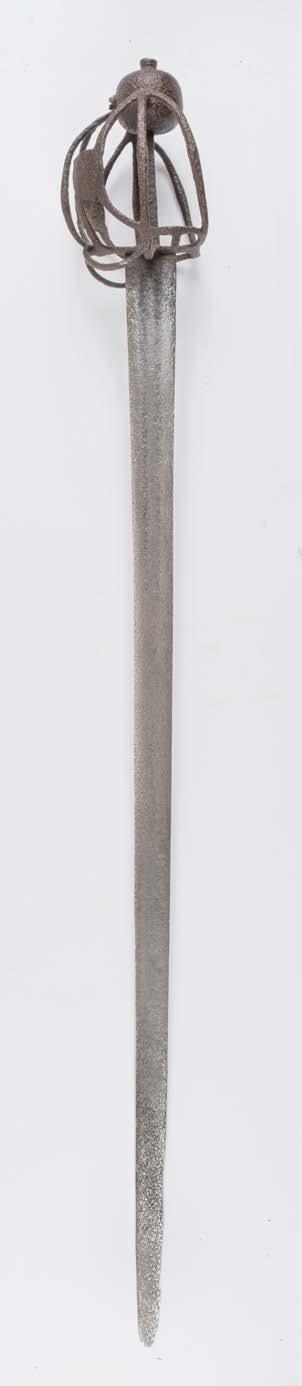
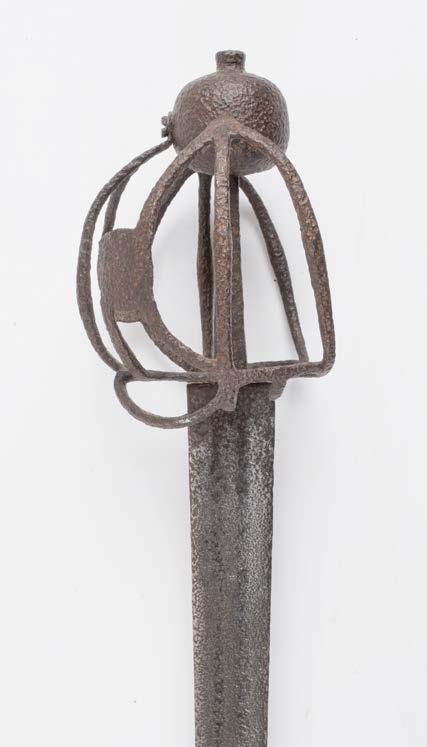
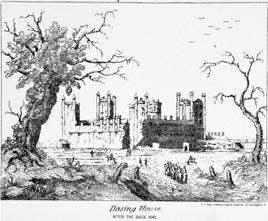
512* English Civil War. The Siege of Basing House English basket-hilted broad sword, circa 1640, the 84 cm straight tapered blade with double fuller, with a simple open basket (lacking one curved section) with large spherical pommel, in relic condition, overall length 99 cm
Provenance: Wallis & Wallis, Lewis, 20 November 1993, lot 2192, with related paperwork and letters. The sword was found in the grounds of Basing House in 1827 and displayed at the house until the 1970s.
The Siege of Basing House
This was a series of three major engagements during the First English Civil War and resulted in the destruction of the Royalist stronghold by Parliamentarian forces under Oliver Cromwell in October 1645. Basing House, located near Basingstoke in Hampshire, was one of the largest private houses in England at the time. Its owner, John Paulet, the 5th Marquess of Winchester, was a staunch Royalist and a prominent Catholic, whose family motto, Aymez Loyaulté (“Love Loyalty”), was reportedly inscribed on the house’s windows. The House was strategically important because it commanded the main road from London to the west, and its garrison frequently preyed on Parliamentarian convoys.
First Siege (November 1643): Led by Sir William Waller, this initial major assault involved around 2,000 Parliamentarian troops, including the London Trained Bands. Poor weather, lack of progress against the fortified mansion (which had defences designed by architect Inigo Jones), and the mutinous spirit of unpaid troops led Waller to retreat to Farnham after less than two weeks.
Second Siege (June–November 1644): Parliamentarian forces under Colonel Richard Norton re-invested the House, attempting to starve the garrison into submission with a blockade and intermittent bombardment. The garrison, running low on food and ammunition, was relieved twice by daring Royalist columns led by Colonel Henry Gage from Oxford. Gage successfully delivered supplies and forced the Parliamentarians to abandon the siege temporarily.
Third and Final Siege (October 1645): After the Royalist defeat at the Battle of Naseby, Parliamentarian forces, including regiments of the New Model Army, were sent to reduce the remaining Royalist strongholds. Oliver Cromwell arrived with a powerful siege train of heavy guns, including a “cannon royal” that fired a 63-pound shot. After the Marquess refused a final demand to surrender, a two-day bombardment created breaches in the walls. The House was stormed on the morning of October 14, 1645, falling within a couple of hours.
(1) £2,000 - £3,000
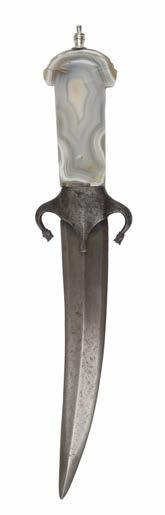
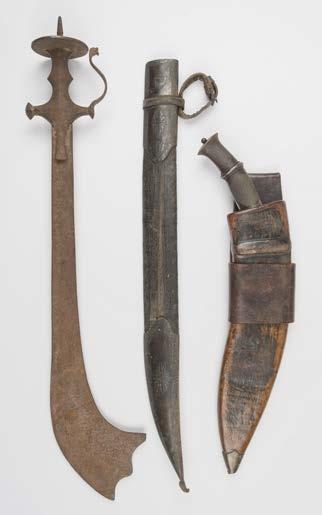
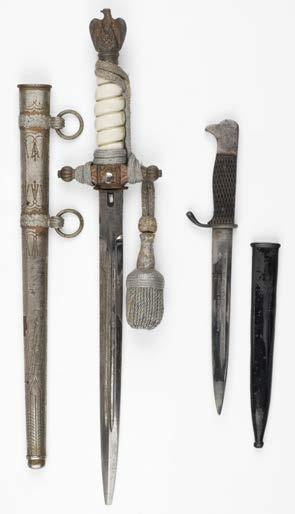
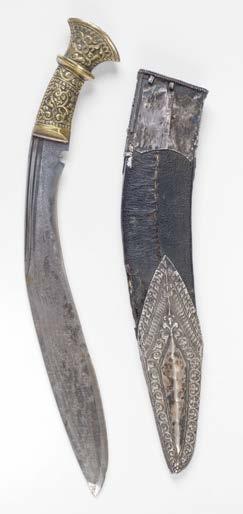
513* Indo-Persian. A fine Indian Mughal dagger, 19th century, the 20 cm curved steel blade with steel crossguard and downswept quillons each with stylised flower heads, a carved agate grip and white metal finial, overall length 33 cm (1)
£300 - £500
514* Indo-Persian. A Nepalese ‘elephants ear’ kora, 19th century, the 54 cm blade with a tulwar hilt, rusted throughout, overall length 69 cm, together with an Indian kukri, the 33 cm curved steel blade with an unusual integral steel grip with chequered decoration, overall length 43 cm, in its leather scabbard with leather frog, plus a Ottoman kindjal scabbard, 19th century, tooled leather with niello steel mounts bearing a crescent mark, 60 cm long (3)
£150 - £200
515* Indo-Persian. An Indian Coorrg Ayda Katti knife, 19th century, the 35 cm curved steel blade with a rich dark patina, the horn grip with chequered decoration and large flatted teardropshaped pommel, overall length 48 cm (1)
£200 - £300
516* Kriegsmarine. WWII German Naval Dirk, the 24 cm blade by Alexander Coppel (Alco), Solingen, crossguard and cream celluliod grip with eagle pommel, silver bullion sword knot, overall length 37.5 cm, it is scabbard, the tip is broken, and an overall poor condition, together with a WWI commemorative dagger, the 14 cm blade engraved ‘Andenken An Den Weltkrieg’ (Souvenir of the Great War), steel and composite grip, overall length 22.5 cm, in its black metal scabbard (2)
£150 - £200
517* Kukri. A fine Indian kukri, 19th century, the 26 cm curved steel blade with ornate brass grip decorated with scrolls and exotic birds, overall length 34 cm, in its leather and silver scabbard, the leather split, so care when handling (1)
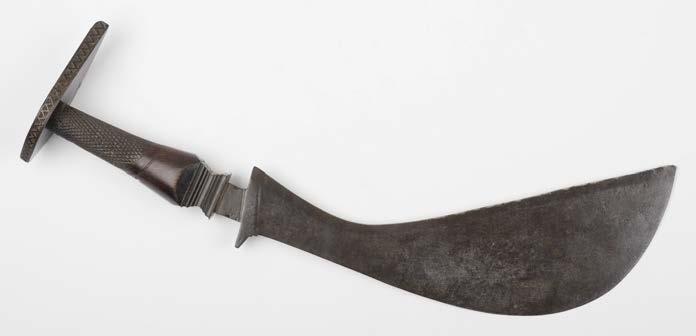
£100 - £150
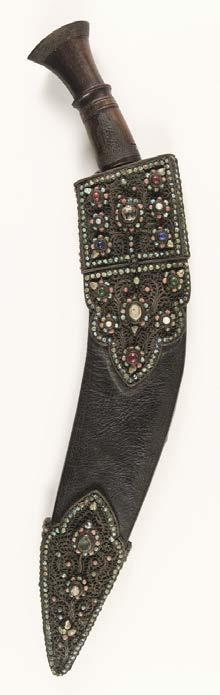
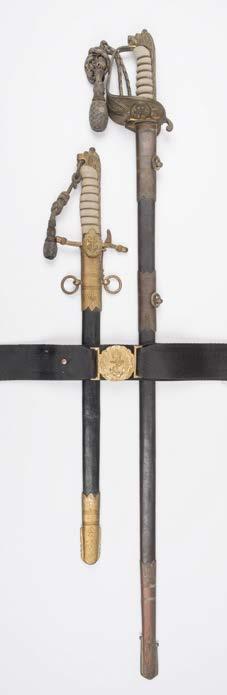
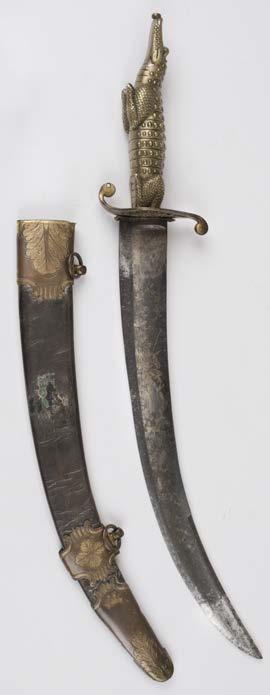
518* Kukri. An Indian kukri, the 26 cm curved steel blade engraved with a proof or makers mark, wooden grip with foliate engraved steel decoration, overall length 37 cm, in its leather scabbard which has been heavily embellished with semi-precious stones (some missing), with the additional pouch containing two smaller horn gripped knives (this detached) plus a black and white photograph of Maharaja Sir Pertab Singhji circa 1949, framed and glazed, frame size 34.5 x 24 cm
Provenance: By Cantlie family descent.
The kukri is understood to have been a gift from Maharaja Sir Pertab Singhji to Lieutenant-Colonel Kenneth Cantlie (1886-1986). Cantlie had been working in India from 1924 when he joined Jodphuir Bikanir Railway as the Assistant Locomotive Superintendent.
(2)
£200 - £300
519* Naval dirk. A George V Royal Navy dirk, the 46 cm steel blade stamped ‘Gieve Matthews & Seagrove’ engraved with G.R.V. cypher amongst scrolls with a royal coat of arms, the opposite side engraved with a crowned fouled anchor and a vacant cartouche amongst scrolls, gilt metal crossguard with acorn terminals, wirebound lion’s head backstrap and pommel, ring through it mouth for the bullion sword knot, overall length 60.5 cm, in its black leather scabbard with brass mounts, together with a WWI naval officer’s sword, the 80.5 cm steel blade etched ‘Gieves’, with crowned fouled anchor and rope knot scrolls with royal coat of arms, solid gilt metal gothic hilt cast with crowned fouled anchor, wirebound fishskin grip, gilt metal lion’s head backstrap and pommel, with bullion sword knot, overall length 94 cm, in its black leather scabbard with brass mounts (2) £200 - £300
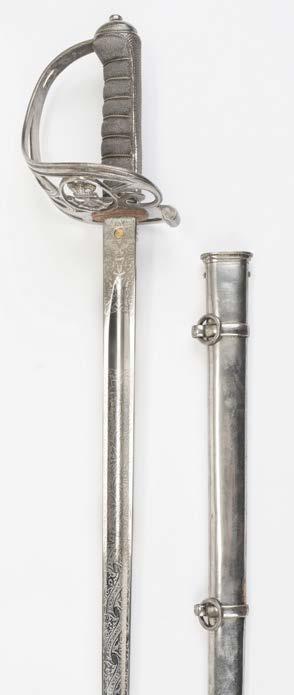
520* Nile Dirk. A George III naval dirk commemorating the Battle of the Nile, the 35 cm curved steel blade engraved ‘...& J Gills, ...ratned, No 83 ,,, James’s Place London’ traces of foliate engraving, the opposite side with military trophies, the whole blade pitted and worn, pierced oakleaf guard and later brass crocodile hilt, overall length 50 cm, in its leather scabbard with brass mounts engraved ‘T Gill, Gun & Sword Manufacturer 83 St James St, London’ (1) £700 - £1,000
521* Presentation sword. A British Victorian 1827 Pattern 1st Surrey Rifles Presentation Sword, the 83 cm straight steel dumbbell blade by Robert Mole & Sons, Birmingham, numbered M341, one side etched with a scroll inscribed ‘Presented to Major John Selby on Promotion by Members of C Company, First Surrey Rifles, March 1899’, the opposite side etched with VR cypher and regimental badge of 1st Surrey Rifles, regulation gothic hilt pierced with crowned strung bugle, wirebound fishkin grip, chequered backstrap and domed pommel, overall length 100 cm, in its steel scabbard
For further reference see: Swords of the British Army, plate 118. (1) £400 - £600
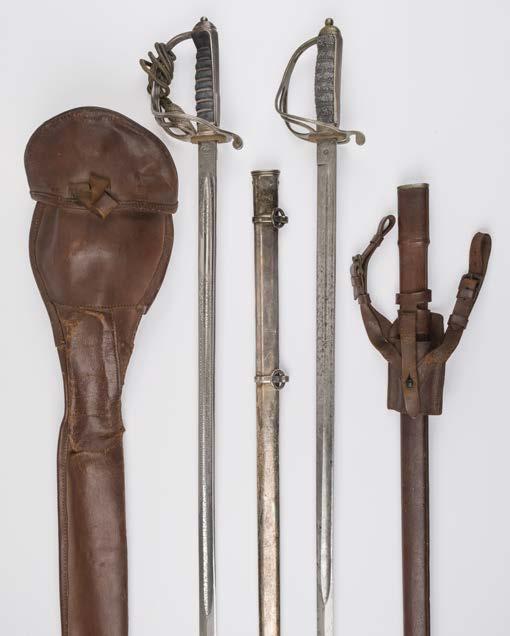

522* Presentation sword. A WWI ‘First Day of the Somme’ silver hilted officer’s sword by Henry Wilkinson Ltd, London, serial number 53327, the 86.5 cm slightly curved blade engraved
‘Presented to Lieutenant Alfred Edward William Hunnings, R.F.A., by his committee of management of the National Amalgamated Approved Society and his colleagues on the staff as a token of their admiration of his conspicuous gallantry during military operations at Thiepval on the 1st July 1916, for which he was awarded the Military Cross by his majesty King George V.’, the opposite side with Royal Artillery crest and pennant amongst scrolls, solis silver three bar hilt with fittings by E.H.W., London, wirebound fishskin grip and stepped pommel, overall length 103 cm, with sword knot, in its plated scabbard with brown leather bag with the initials ‘A.E.W.H.’, together with another sword belonging to Hunnings, the 88.5 cm slightly curved blade stamped ‘James Deakin and Sons, Sheffield’, engraved with Royal Artillery crest and ‘A.E.W. Hunnings August 1915’, the opposite side with crowned G.R. cypher, plated triple bar hilt, wirebound fishskin grip and domed pommel, overall length 104.5 cm, in its brown field service scabbard with frog M.C. London Gazette: 25 August 1916. Temp. 2nd Lt. Alfred Edward William Hunnings, R.F.A.
‘For conspicuous gallantry during operations. After carrying out his allotted task he went out with one private and brought into safety four wounded men under heavy machine-gun, rifle and shell fire. He then returned to his duty in the line.’
Alfred Edward William Hunnings was commissioned in the Royal Field Artillery as 2nd Lieutenant on 30 August 1915. (2) £800 - £1,200
523* Spontoon. A continental pole arm (spontoon), 19th century, with a steel spear head featuring a heraldic lion in gilt, mounted on a long oak haft, overall length 213 cm (1)
£100 - £150
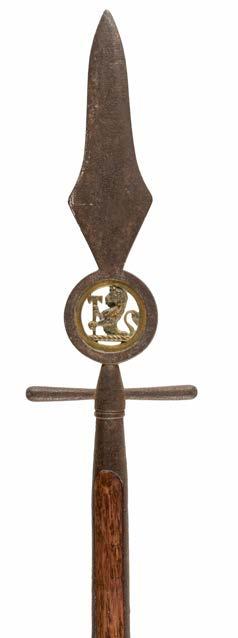
524* Sword relic. An officer’s sword belonging to Captain John Wade, Royal Marines, early 19th century, with a brass honeysuckle hilt, wirebound fishskin grip and stepped pommel, the broad blade broken but traces of engraving ‘Pro Fide P’ [atria], a banner engraved ‘Capt John Wade RM’, overall length 40 cm, together with a Brown Bess musket bayonet, overall length 51.5 cm, light rust and in its scabbard which is perishing, a 1796 Light Cavalry sword blade by Dawes, London, etched with crowned G.R. cypher and royal pennant, angels and foliate scrolls, heavily pitted, blade length 76.5 cm, with remains of leather scabbard, a spherical brass air gun reservoir, early 19th century, plus a pair of brass bullet mould pincers
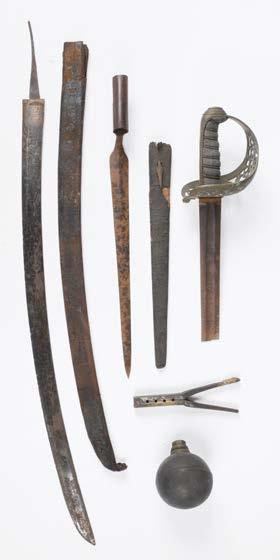
Provenance: This small collection was discovered in a country house attic in Yorkshire. (5)
£200 - £300
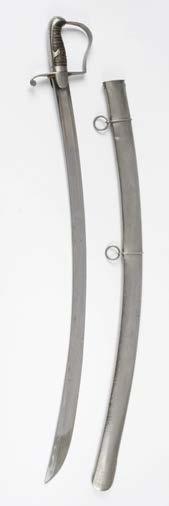
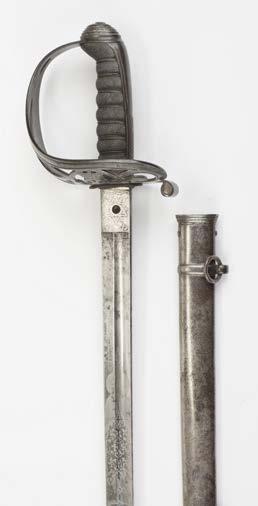
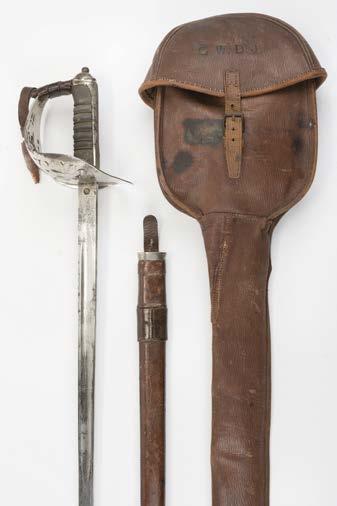
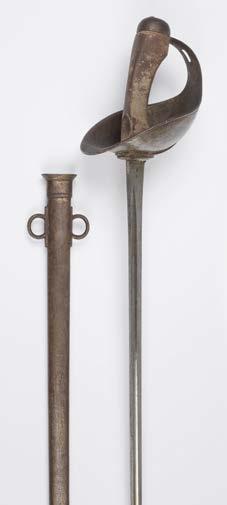
525* Sword. A 1796 Light Infantry trooper’s sabre, the 82 cm curved steel blade, with steel stirrup hilt and langets and backstrap with ears, wirebound leather grip, overall length 94 cm, in its steel scabbard
(1)
£400 - £600
526* Sword. A British 1827 Pattern St George’s Rifles Officers Sword, the 82 cm slightly curved blade by Hill Brothers, Old Bond Street, London, etched with George and dragon crest and ‘St George’s Rifles’ amongst scrolls, the opposite side with strung bugles, the pierced steel hilt with crowned strung bugle, wirebound fishskin grip and stepped dome pommel, overall length 96 cm, in its steel scabbard
A rifle corps was formed in the parish of St George Hanover Square in 1860. After a number of name changes, it became the 6th Middlesex St George’s Volunteer Rifle Corps. In 1892, it merged with the Victoria Rifles to become the 1st Middlesex Victoria and St. George’s Volunteer Rifle Corps. (1)
£300 - £500
527* Sword. A British 1897 Officer’s sword belonging to Colonel G.W.D. Jennings, Royal Engineers, the 82 cm dumbbell blade by Stuart & Stuart, 22 Sackville Street, London, etched with Royal Engineers crest amongst scrolls, the opposite side with Royal pennant and G.V.R. cypher, plated guard pierced with crowned G.V.R. cypher, wirebound fishskin grip, chequered backstrap and domed pommel, with leather sword knot, overall length 97.5 cm, in its Sam Browne leather field scabbard, with leather sword bag stamped ‘G.W.D.J.’ (1)
£150 - £200
528* Sword. A British 1908 pattern cavalry sword, the 89 cm straight blade by Enfield, with inspection marks, steel bowl guard, composite chequered grip, overall length 110 cm, in its steel scabbard (1)
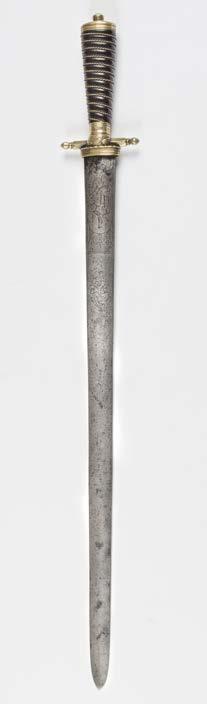
£150 - £200
529* Sword. A continental pillow sword, 18th century, the 55 cm double-edge, straight-tapering blade engraved with scrolls, brass crossguard and brass wirebound wooden grip with latticed engraved brass pommel, overall length 70 cm
(1)
£200 - £300
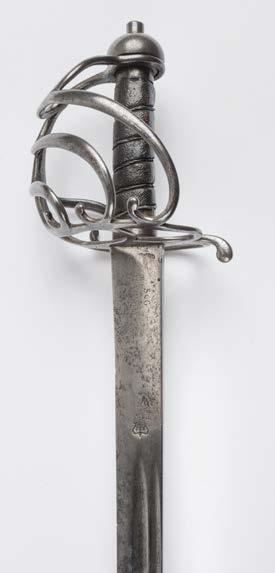
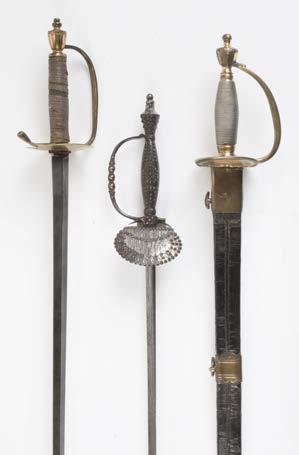
532* Sword. A George III 1796 Infantry Officer’s sword, the 82 cm steel blade with gilt shell folding crossguard, wirebound grip, curved knucklebow and urn finial, overall length 99 cm, in its black leather scabbard with brass (part missing), plus another infantry officer’s sword and steel court sword, both lacking scabbards (3)
£100 - £150
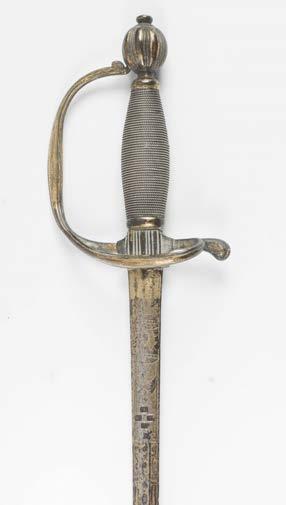
£1,500 - £2,000
530* Sword. A fine George III Dragoon officer’s sword by S & G Harvey, circa 1780, the 98 cm straight steel blade with two long fullers, one side stamped with royal pennant and makers mark ‘S & G Harvey’, the opposite side with crowned GR cypher, regulation triple bar steel guard, wirebound fishskin grip and bun pommel, overall length 115 cm (1)
531* Sword. A French smallsword, 18th century, the 71 cm straight tapered blade fully with traces of gilding and engraved along the whole blade with foliate scroll, gilded guard with plain knucklebow and wirbound grip, spherical pommel, overall length 85 cm (1)
£200 - £300
533* Sword. A George III 1796 Pattern Light Cavalry Sabre, the 81.5 cm curved steel blade with traces of blued decoration, crowned G.R. cypher, military trophies and royal coat of arms, the opposite side similarly engraved, wirebound leather grip, steel backstrap with ears, squared steel langets and stirrup hilt, overall length 94.5 cm, in its steel scabbard (1)
£700 - £1,000
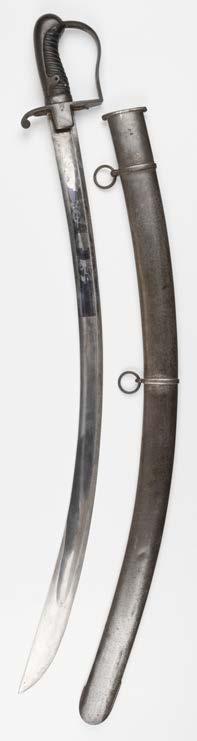

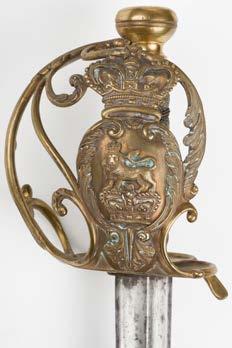
534* Sword. A George III Household Cavalry officer’s full dress sword circa 1814, the 90 cm double fullered blade with regulation copper gilt hilt composed of scrolling with acanthus terminals and side guard applied with a lion on a crown and surmounted by a further crown, bun shaped pommel, wire bound fishskin grip, overall length 104.5 cm, in its brass scabbard with two openwork fishskin covered panels, a nice example and a scarce sword (1) £3,000 - £5,000
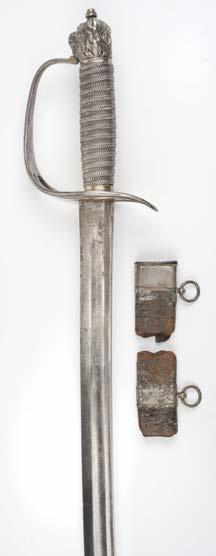
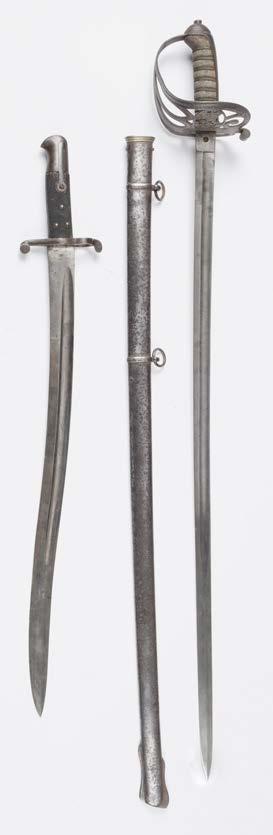
535* Sword. A George III silver “dog head” sword belonging to W. Townsend, circa 1790, the 65.5 cm curved steel blade with double fuller, the silver slot hilt with London hallmark for 1790, engraved with the owner’s name, silver wire grip and distinctive dog head pommel, overall length 80.5 cm, the remains of scabbard (most missing) (1)
£500 - £800
536* Sword. A Prussian 1889 sword, the 81 cm blade stamped WK & C, brass hilt and eagle folding guard, wirebound leather grip with Wilhelm II cypher, overall length 94.5 cm, lacking scabbard, together with a Victorian cavalry sword relic (2)
£70 - £100
537* Sword. A Victorian 1827 pattern Rifle Officer’s sword retailed by R.B. Rodda & Co, Calcutta, the 84 cm slightly curved steel blade etched with V.R.I. cypher and strung bugle within scrolls, the etching is worn but still visible, standard pierced steel hilt with crowned strung bugle, wirebound fishskin grip, plain steel backstrap and domed pommel, overall length 98.5 cm, in its steel scabbard which is pitted, together with a British Martini Henry 1860 pattern bayonet, the 58 cm yataghan blade with chequered leather grip (one side worn), overall length 71.5 cm, lacking scabbard (2)
£100 - £200
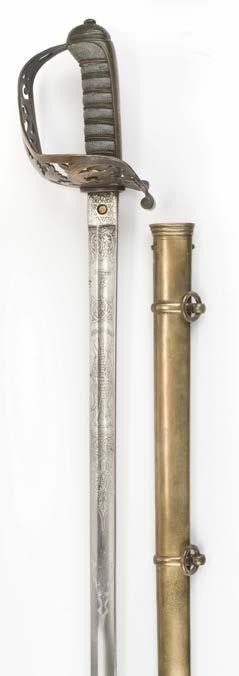
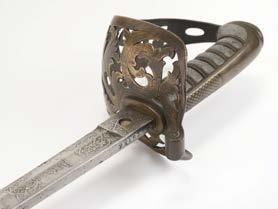
538* Sword. A Victorian Royal Engineers Officers Sword belonging to Colonel F.R. Reynolds, O.B.E., the 84 cm slightly curved blade by Henry Wilkinson, Pall Mall, London, numbered 22183, one side etched with Royal Engineers crest amongst scrolls and family crest, the opposite side with crowned V.R. cypher, regulation brass scinde hilt, wirebound fishskin grip, chequered domed pommel, overall length 98 cm, in its brass scabbard
O.B.E., London Gazette 1 January 1919
Colonel Frank Romilly Reynolds was born in Chelsea in 1858. He was commissioned as Lieutenant with the Royal Engineers in 1877, Captain 1888, Major 1895. Reynolds died in Dorset in 1929; he was buried in St Mary's Church, Frome St Quintin graveyard.
(1)
£300 - £500
539* Sword. A William IV General Officer’s Mameluke by Widowson & Veale, 73 Strand, London, the 76 cm curved steel blade etched with crowned W.IV.R. cypher, and crossed baton and scroll, the opposite side with the same engraving, gilt metal cruciform crossguard and ivory grips with rosettes, overall length 89.5 cm, with gold and crimson bullion sword knot, in its black leather scabbard with ornate gilt metal mounts including Widdowson & Veal trade label
Ivory Act 2018 exemption submission reference: SNJ8Q2ZR (1)
£400 - £600
540* Sword. Dutch combination hunting sword cum flintlock pistol by Van de Baize, 18th century, the 57 cm straight tapered steel blade with makers’ markings, the flintlock pistol with 8 cm cannon barrel, brass shell guard and knucklebow, wooden grip and steel pommel, overall length 72 cm
(1)
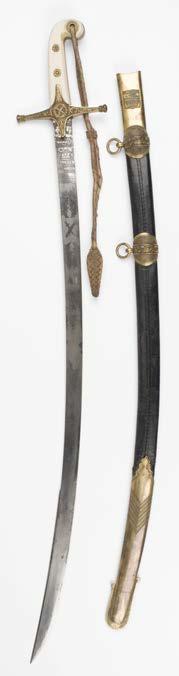
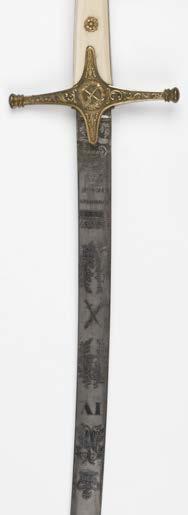
Lot 539
£1,000 - £1,500
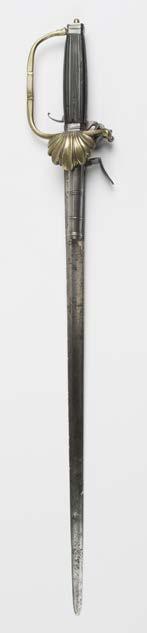
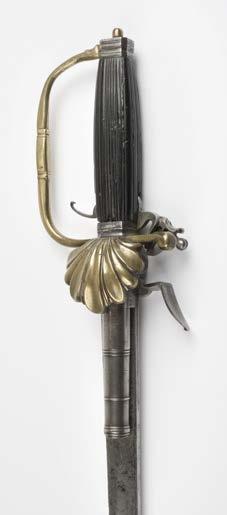
Lot 540
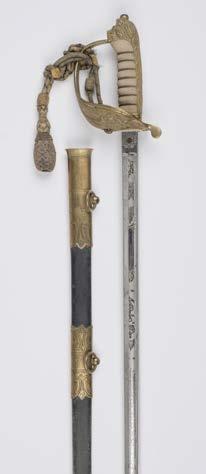
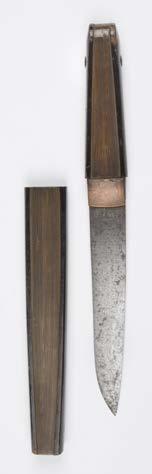
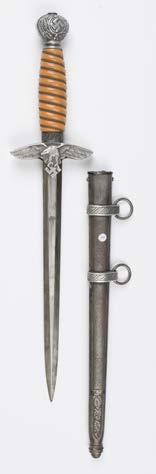
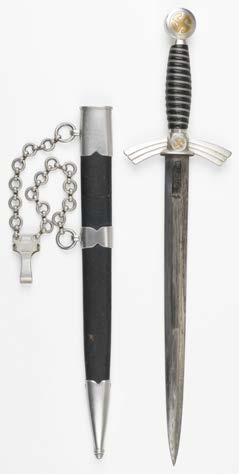
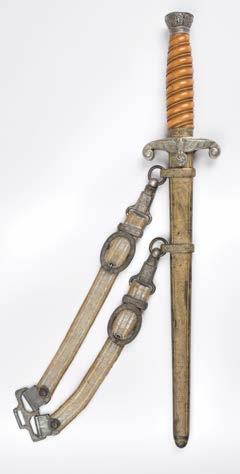
541* Sword. George V Royal Navy Officer’s Sword, the 79.5 cm straight steel blade etched with G.V.R. cypher amongst rope scrolls, the opposite side with a crowned fouled anchor, solid brass gothic hilt with folding guard, wirebound fishskin grip, brass lion’s head backstrap and pommel, overall length 94.5 cm, with sword knot, in its black leather and brass scabbard (1)
£150 - £200
542* Tanto. A Japanese ‘fan’ tanto, Meiji period (1868-1912), the 15.5 cm with copper habaki, the handle and scabbard coming together to form a fan, overall length 30 cm (1)
£100 - £150
543* Third Reich. A WWII 2nd Pattern Luftwaffe Officer’s dagger, the 25 cm steel blade (no cutler’s markings), eagle crossguard, wirebound orange celluloid grip and oakleaf pommel, overall length 38.5 cm (1)
£200 - £300
544 Third Reich. A WWII German 1st pattern Luftwaffe Officer’s dagger by E & F Horster, Solingen, the 31 cm plain steel blade, with aluminium fittings and wirebound leather grip, overall length 46 cm, its black leather-covered scabbard with mounts and OLC chain (1)
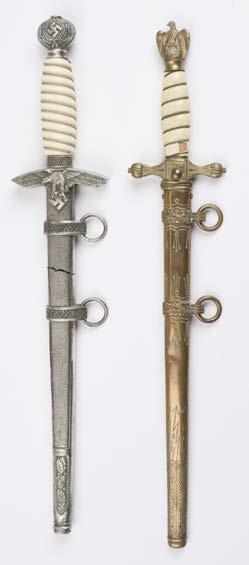
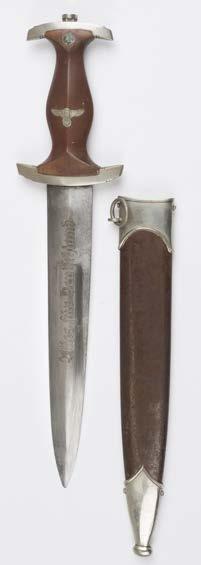
£400 - £600
545* Third Reich. A WWII German Army Officer’s dagger by E & F Horster, Solingen, the 26 cm steel blade with crossguard and orange celluloid grip, oakleaf pommel, overall length 38 cm, in its scabbard with sling strap, the mounts stamped ‘D.R.G.M.’ (1)
£200 - £300
546* Third Reich. A WWII German Kriegsmarine dirk by Paul Weyersberg, Solingen, the 24 cm double fullered blade etched with anchors and ropes, brass crossguard, wirebound cream celluloid grip, eagle pommel, overall length 37.5 cm, in its brass scabbard, tip of blade missing and celluloid chipped and damaged, together with a 2nd Pattern Luftwaffe dagger by Paul Weyersberg, Solingen, overall length 39 cm, scabbard cracked in two parts (2)
£150 - £200
547* Third Reich. A WWII German SA dagger by E.F. Horster, Solingen, the 22 cm steel blade engraved ‘Alles fur Deutschland’, crossguard stamped ‘Ha’, Holbein grip, overall length 34 cm, in its scabbard (1)
£300 - £500
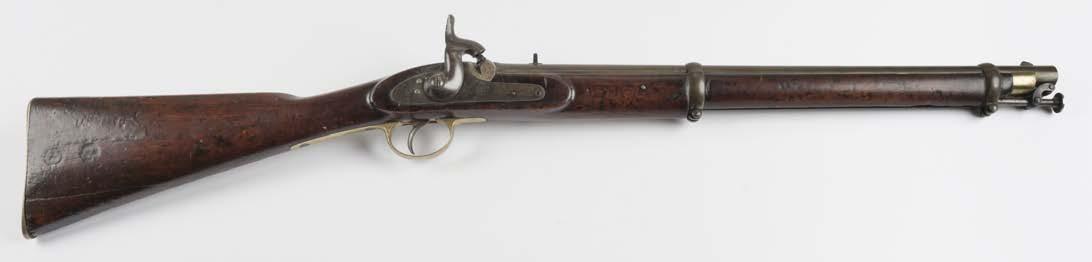
548* Carbine. A British 1859 Pattern Percussion Carbine, the 53 cm barrel with proofmarks and numbered ‘188’, the sidelock stamped ‘1859 Tower’, with crowned V.R. cypher, fully walnut stocked, brass trigger guard stamped ‘2-45’, butt cap and thimbles, swivel ramrod and sling mount, action in good working order, overall length 94 cm (1)
£400 - £600
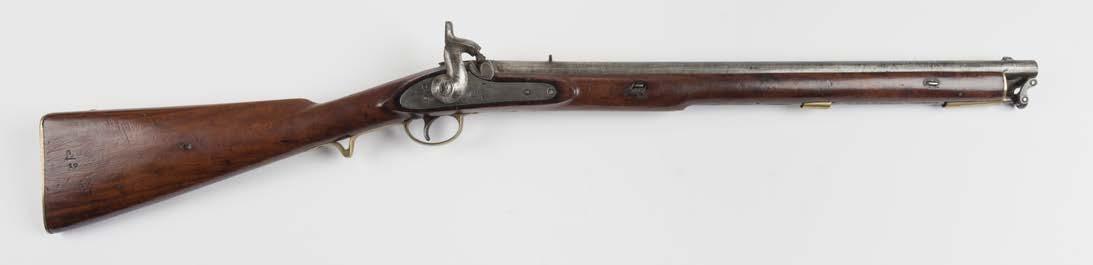
549* Carbine. A British 1860 Pattern Percussion Carbine, the 54.5 cm .577 inch calibre barrel stamped ‘10’, the sidelock stamped ‘1860 Tower’, with crown, fully walnut stocked, brass trigger guard, butt cap and thimbles, swivel ramrod, action in good working order, overall length 96 cm (1)
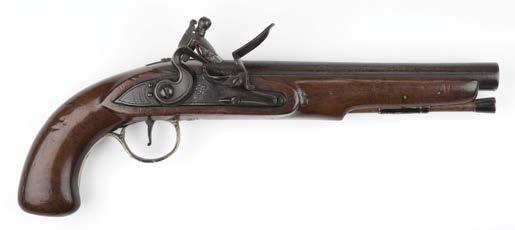
550* Irish Pistol. George III Flintlock Dragoon Pistol, circa 1770, the 23 cm 0.68 cal barrel with proof marks, the sidelock engraved with crowned GR mark and ‘Dublin Castle’, fully walnut stocked with engraved brass trigger guard and butt cap, the ramrod with brass thimbles, overall length 39.5 cm, action in working order
£300 - £500
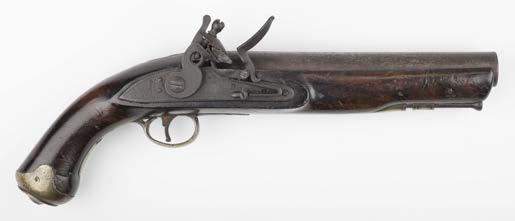
551* Irish Pistol. George III Flintlock Heavy Dragoon Pistol, the 23 cm, half-inch calibre barrel stamped ‘T.Y. 3368’ (Tyrone registered), the sidelock engraved with crown and ‘Tower’ armoury marks, fully walnut stocked with brass trigger guard, buttcap and thimbles, with ramrod, overall length 40 cm, action in good working order (1)
£400 - £600
Produced for exclusive use by the crown forces in Ireland during the rebellions and uprisings. (1)
£700 - £1,000
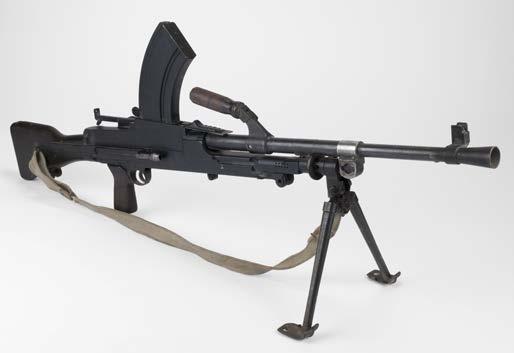
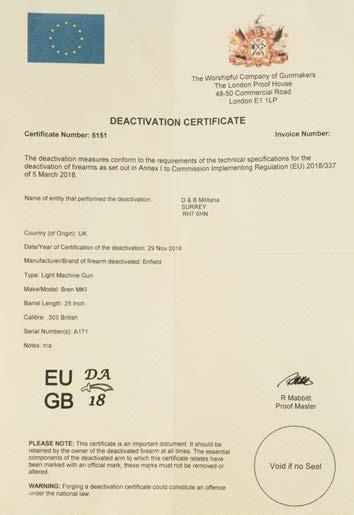
552* Light Machine Gun. WWII Enfield Mk I .303 Bren Gun (deactivated), serial number A171, various stamps, mounted on a tripod, 115 cm long, with deactivation certificate dated 5 March 2018
(1)
£500 - £800
553* Musket. A British Enfield 1853 Pattern Three Band Percussion Musket, the 90 cm 0.577 inch calibre sighted barrel, sidelock stamped Enfield 1857, crowned V.R. cypher, fully stocked with brass, trigger guard, butt cap and thimbles, with steel ramrod, action in good working order, overall length 139 cm, with triangular socket bayonet, 53 cm long
A good example of an Indian Mutiny period musket. (1)
£500 - £800
554* Musket. A George III British Brown Bess Flintlock Musket, circa 1800, the 98.5 cm 0.75 inch calibre smooth bore barrel with various proof marks and ordnance numbers ‘N356’, the sidelock with crowned G.R. and Tower markings, numbered ‘1278’ fully walnut stocked with brass plate numbered ‘N356’, brass trigger guard, butt cap and thimbles, with ramrod, overall length 139 cm, action is good working order, with triangular socket bayonet stamped ‘W. Rock’, 54.5 cm long (1)
£800 - £1,200
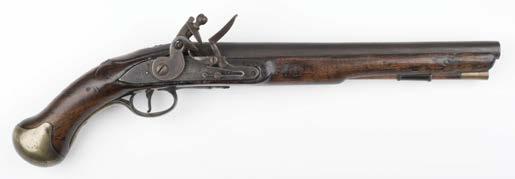
555* Pistol. A George III flintlock long sea service pistol, circa 1805, the 30.5 cm .625 cal barrel, with sidelock engraved with crowned G.R. mark and ‘Tower’ and additional 2 beneath crown mark, fully stocked with brass trigger guard and butt cap, the ramrod with brass, a steel belt hook to the side, in good working condition, overall length 49 cm
The standard pistol of the Royal Navy during the Napoleonic Wars and extensively used in boarding party battles with French sailors. (1)
£1,000 - £1,500


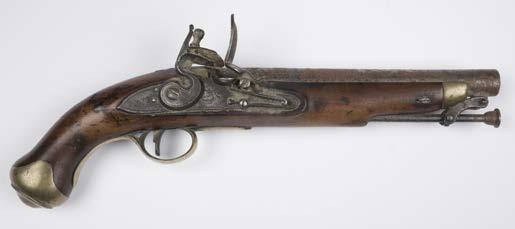
556* Pistol. A George III flintlock pistol, circa 1790, the 22.5 cm circular steel barrel with proof marks, the side lock engraved with scrolls, walnut stocked with brass butt cap, trigger guard and ramrod thimbles, swivel ramrod, action in good working, overall length 39 cm
(1)
£200 - £300
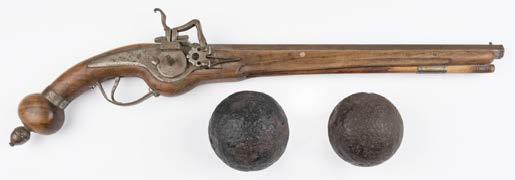
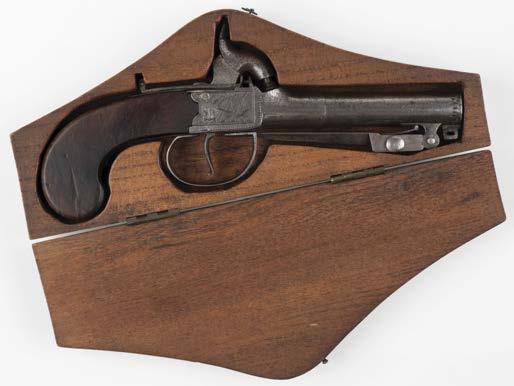
559* Pistol. A Victorian percussion travelling pistol by Joseph Dunn, circa 1840, the 6.5 cm turnoff barrel with spring bayonet, the steel casing engraved ‘J. Dunn’, the opposite side with military trophies, walnut slab grip and push safety, overall length 20 cm, in good working condition and presented in a fitted oak box Joseph Dunn is recorded as working from 58 Snow Hill, Birmingham, circa 1849.
(1)
£300 - £500
557* Pistol. A German wheel lock pistol in the 16th century style (20th century), the 45.5 cm hexagonal barrel with wheel lock action, fully stocked with rounded butt and acorn finial, with ramrod, overall length 64 cm, together with two English Civil War period cannonballs plus a large pewter charger (3)
£100 - £150
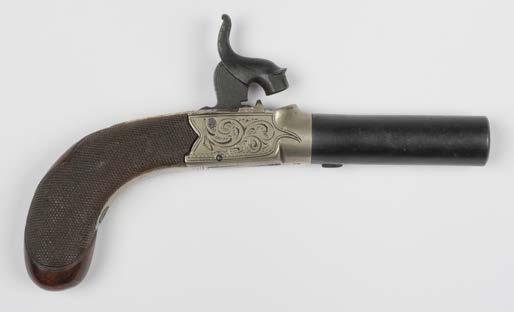
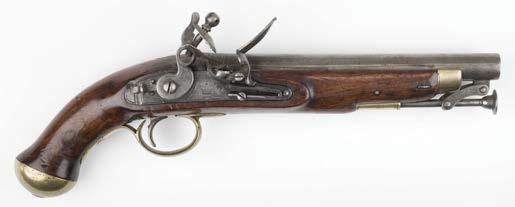
560* Pistol. A William IV New Land Conversion of Light Dragoon Flintlock Pistol, circa 1830, the 22.5 cm 0.65 calibre barrel with proof marks, the sidelock stamped with a crowned W.R., push safety, fully walnut stocked with brass trigger guard, butt cap and thimble, with swivel ramrod, overall length 39 cm, action in good working order
(1)
£400 - £600
558* Pistol. A Victorian percussion travelling pistol, the 6 cm circular turnoff barrel, with German silver casing engraved with foliate scrolls, rounded chequered grip with concealed trigger, lacking nipple, 17 cm long (1)
£100 - £150
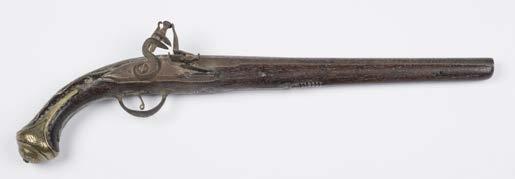
561* Pistol. An Ottoman flintlock pistol, 18th century, the 33.5 cm with proofmarks, fully walnut stocked with wirework inlay, long spurred brass butt cap with military trophies, steel trigger guard, action siezed, overall length 50 cm (1)
£150 - £200
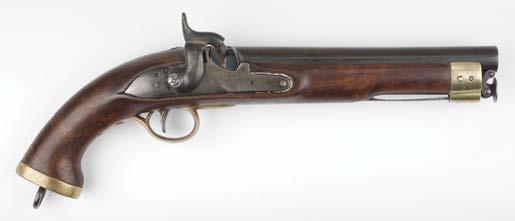
562* Pistol. East India Company Pattern 1840 Percussion Cavalry Pistol, the 23 cm 0.68 calibre barrel with proof marks, the sidelock stamped with East India Company rampant lion, and ‘3’ surmounted by a crown, fully walnut stocked with brass trigger guard, flat butt cap with lanyard ring, swivel ramrod, overall length 40 cm, action in good working order
This pattern was made for the Bombay Residency and was used in action by the Bombay Light Cavalry in the Scinde Campaign, 1843.
£300 - £500
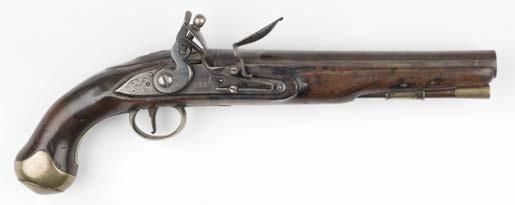
563* Pistol. George III New Land Conversion of a Light Dragoon Flintlock Pistol by Rea, the 23 cm 0.68 cal barrel engraved with East India Company cypher and dated 1802, the sidelock engraved with E.I.C. and dated 1802, fully walnut stocked with brass trigger guard and butt cap, the ramrod with brass thimbles, action working, overall length 39.5 cm
(1)
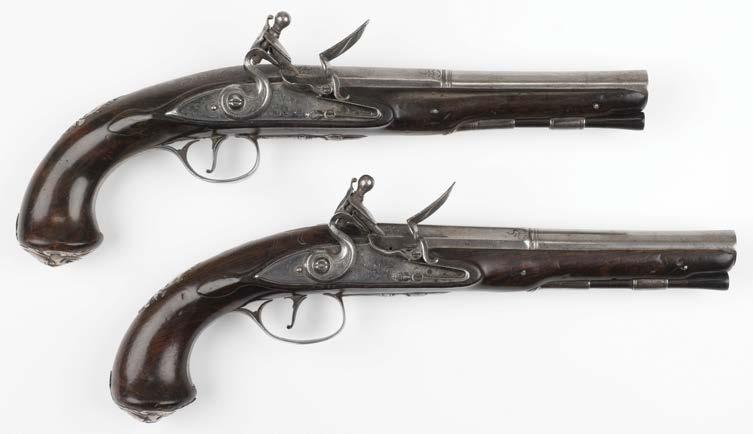
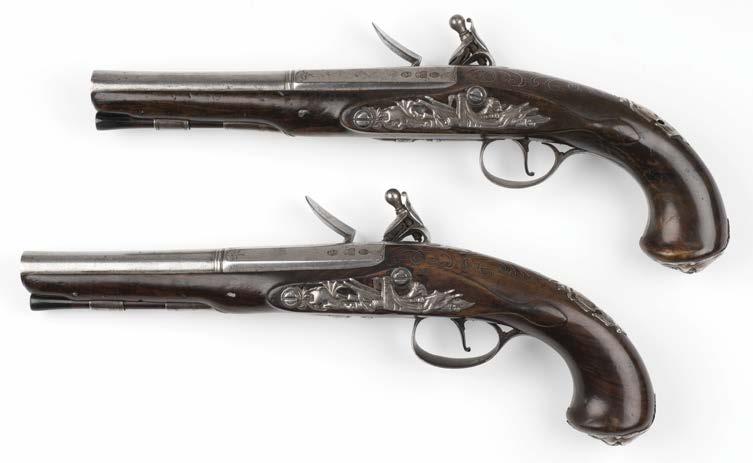
£400 - £600
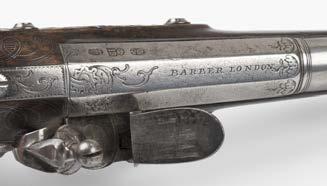
564* Pistols. A fine pair of George III flintlock silver mounted pistols by James Barber II circa 1780, the 19.5 cm two stage barrel signed ‘Barber London’, with proof marks, the side lock signed ‘Barber’ within a scroll, fully walnut stocked with silver mounts, inlaid with silver wire, grotesque face buttcap, hallmarks for IB, actions in good working order and a beautiful original pair of pistols, overall length 34 cm
(2)
£2,000 - £3,000
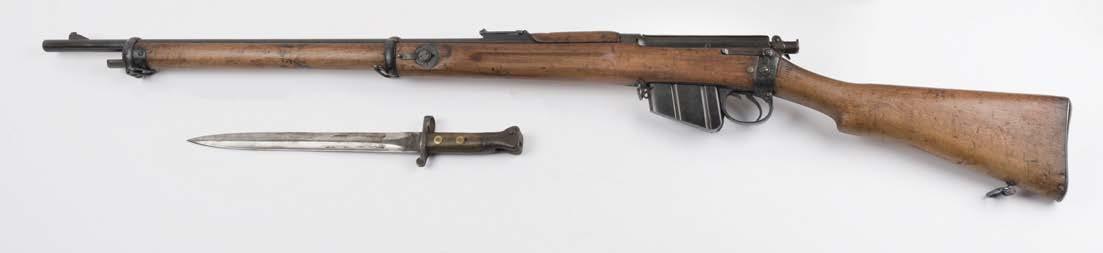

565* Rifle. A British BSA Lee Metford .303 Mk1 Bolt Action Rifle, Second Boer War period, serial number 43092, the 76 cm .303 calibre barrel, fully wooden stocked, stamped with crowned V.R. cypher and ‘B.S.A. M.co 1891’, the brass plate stamped ‘3 1896 M 5. Lein 357’ (Leinster Regiment?), overall length 125 cm, with 1888 Mk1 pattern bayonet, overall length 42 cm, lacking scabbard
Deactivated with certificate dated 11 June 2018. (1)
£800 - £1,200
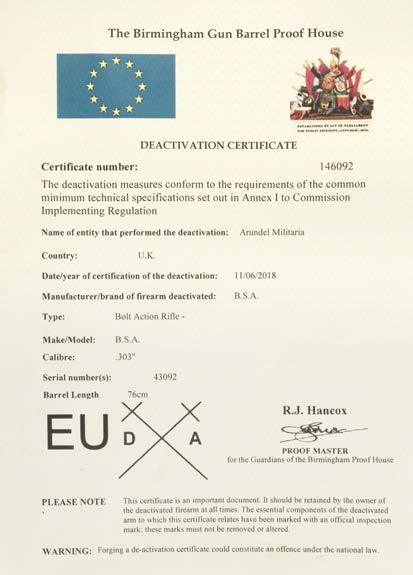
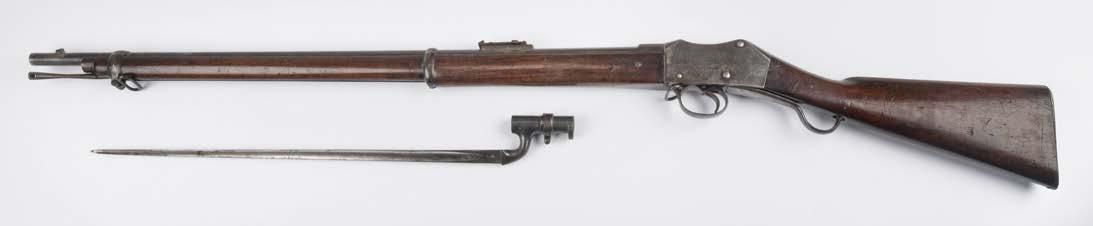
566* Rifle. A British Martini-Henry Mk 2 Rifle, circa 1880, the 82.5 cm .455 calibre barrel stamped ‘Thomas Turner, Fisher Street, Birmingham’, with various proof marks and numbered ‘5691’, fully stocked with steel trigger guard and butt cap, steel ramrod, overall length 126.5 cm, with Enfield triangular steel socket bayonet, 64 cm long
Sold as an exempt item under Section 58 (2) of the 1968 Firearms Act, to be held as a curiosity or ornament. (1)
£700 - £1,000
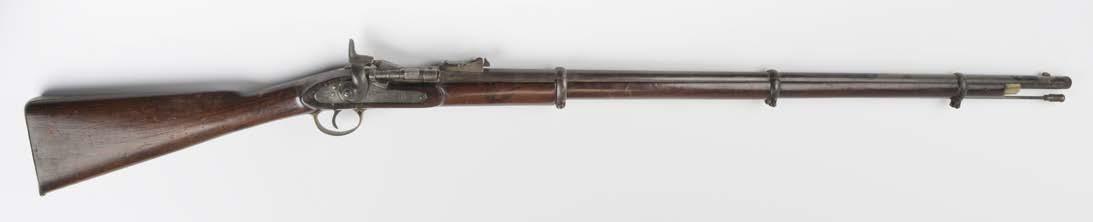
567* Rifle. A British Snider-Enfield Three Band Rifle, circa 1871, the 93 cm .577 calibre barrel with sidelock stamped ‘Tower 1871’ with crown mark and Snider patent action, fully stocked with brass trigger guard, butt cap and thimbles, brass and steel ramrod, overall length 140 cm Sold as an exempt item under Section 58 (2) of the 1968 Firearms Act, to be held as a curiosity or ornament. (1)
£500 - £800
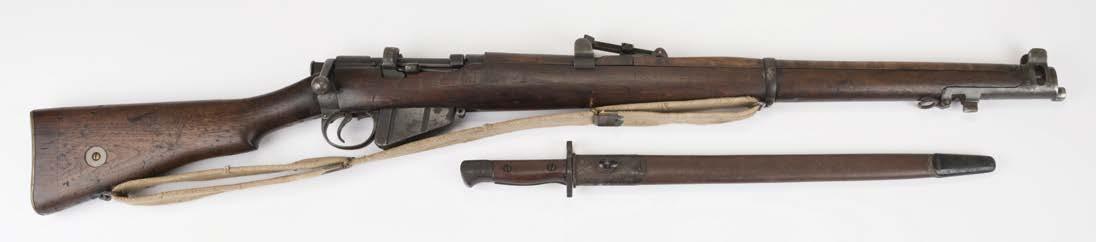
568* Rifle. WWI Short Magazine Lee Enfield (S.M.L.E) Mk II bolt action
.303 rifle, dated 1916 (deactivated), serial number 13053, 63 cm barrel, stamped with crowned G.R., B.S.A. Co 1916, fully stocked with sling strap, overall length 113 cm, with 1907 Pattern bayonet and scabbard with deactivation certificate dated 5 March 2018 (1) £200 - £300
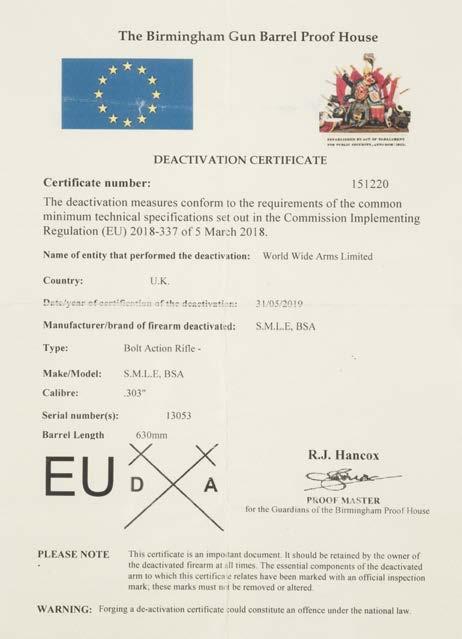
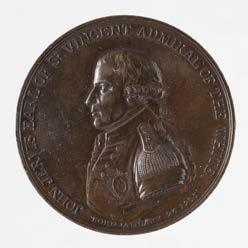
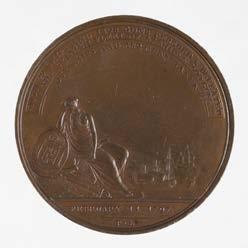
569* Admiral John Jervis, Earl St Vincent (1735-1823), The Battle of Cape St Vincent, Copper Medal, 1797, by J G Hancock and P Kempson, bust left, in uniform and hair tied in queue, the reverse showing a weeping Hispania leans on shield, naval battle beyond, 48.5 mm, good very fine
(1)
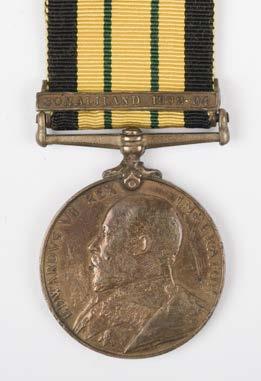
571* Africa General Service Medal, 1902-56, E.II.R., 1 clasp, Kenya (I.P.I. A.B. Dix-Lewis.), good very fine and an attractive tone, with a photograph of the recipient, 21 x 16 cm
£100 - £150
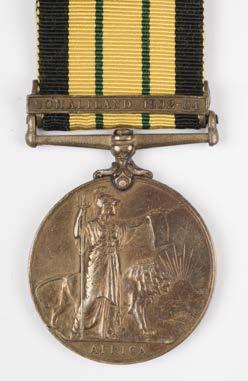
570* Africa General Service 1902-56, E.VII.R., 1 clasp, Somaliland 1902-04, bronze issue (106 T. Dvr. Ali Mohamed. S.&T.C.), good fine (1)
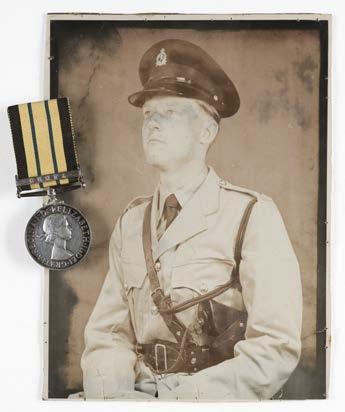
£200 - £300
Anthony Dix-Lewis was born in 1930. After serving as a police officer in Kenya, he resided at Owletts Farm in East Grinstead. The farm boasted that they were the first to breed hornless Ayrshire cattle in England. (1)
£70 - £100
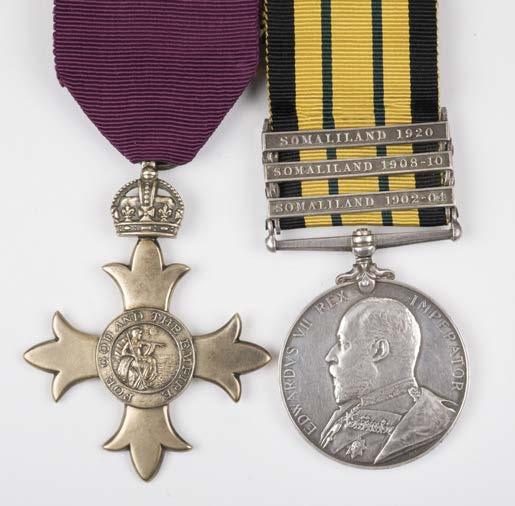
572* A scarce M.B.E. pair to H.M. O’Byrne, Somaliland Field Force and Chief of Customs at Berbera
a) The Most Excellent Order of the British Empire, M.B.E., (Civil) Member’s 1st type breast badge, silver gilt, hallmarks for Garrard, London 1922
b) Africa General Service, 1902-56, E.VII.R., 3 clasps, Somaliland 1902-04, Somaliland 1908-10, Somaliland 1920 (H.M. O’Byrne. Som: F.F.), very fine and swing mounted
M.B.E. London Gazette: 3 June 1931. Hugh Morgan O'Byrne, Esq., Chief of Customs, Somaliland Protectorate. (2)
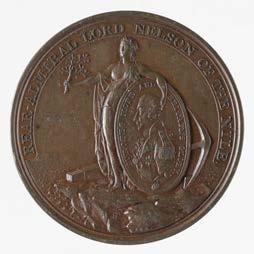
£800 - £1,200
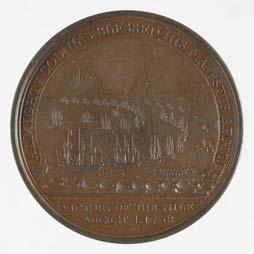
573* Alexander Davison’s Medal for The Nile, 1798, bronze, unmounted, minor edge bruises, otherwise toned, good very fine and a very good example (1)
£200 - £300
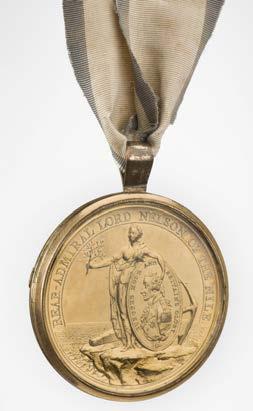
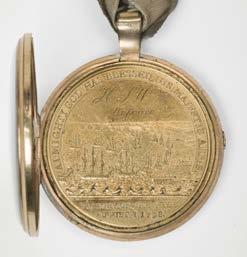
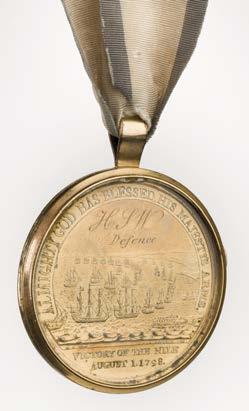
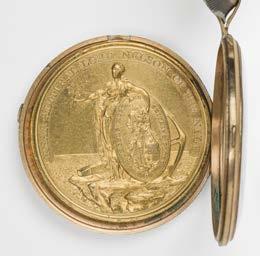
574* Alexander Davison’s Medal for the Battle of the Nile, 1798, a fine bronze-gilt issue, the reverse field engraved in running script ‘H S W Defence’ (Henry Smith Wilson), presented in a gold-plated glazed case with integral loop for suspension, original silk ribbon, case size 55 mm diameter
Henry Smith Wilson joined the Royal Navy on 10 May 1793 (Boy) on board Concorde 36, and advanced to Midshipman on board Malapus 36. He was part of a squadron under Sir John Borlas Warren, at the capture of the French frigate La Pomone in April 1794, including 44 guns and 341 men. He served in Defence 74 from October 1794 and served under John Peyton until November 1798. He fought on board Defence at the Battle of the Nile on 1 August 1798 (as Master’s Mate). Wilson was then promoted to Lieutenant in 1799, aboard the Bellona 74, serving in the Channel and fighting in the action off Copenhagen on 2 April 1801, after which he served in various ships and locations, including the West Indies and Canada. As Senior Lieutenant of the Unicorn frigate under Captain Lucius Hardyman, he commanded the boats of that ship in the capture of the French cutter privateer Tape-a-bord, of four guns and forty-six men, near the island of St. Domingo on 6 May 1805. He subsequently commanded the Bahama prison ship and Surly cutter. Wilson was promoted to Commander on 19 July 1821 and died in Andover on 22 December 1844.
HMS Defence was a 74-gun Bellona-class third-rate ship of the line, launched in 1763. Defence saw significant service throughout her working life, including during the American War of Independence, at the Glorious First of June 1794, the Battle of the Nile, the Battle of Copenhagen and at the Battle of Trafalgar. Unfortunately, her career came to an end on 24 December 1811, when she ran aground off the west coast of Jutland, Denmark, resulting in the loss of 583 crew, including her Captain. There were only 14 survivors.
(1)
GEORGE
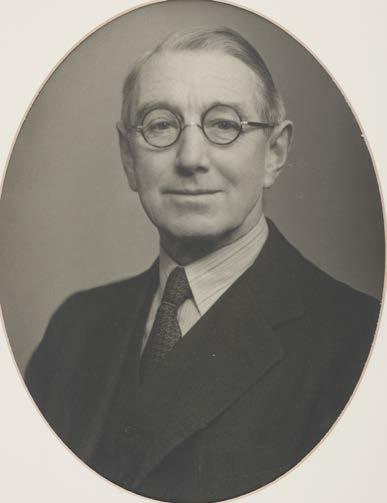
£1,000 - £1,500
575* Brazil, Republic. Order of the Southern Cross, 2nd Issue Commander’s neck badge, gilt metal and enamel, 90 x 60 mm, presented in a modern display frame with silk ribbon, bestowal document dated 19 April 1945 and signed in ink by the Chancellor of the Order, plus a typed letter to Booth from the Brazilian ambassador dated 8 November 1945, frame size 69 x 61.5 cm, with ‘Joalheria, Le Royale’ case of issue France, Republic. Legion of Honour, Chevalier’s Fifth Class breast badge, silver, silver-gilt and enamels, presented in a modern display frame with a silk sash and typed letter to Booth from the Foreign Office dated 9 August 1921, frame size 42 x 50 cm, with ‘Arthus Bertrand Beranger & Magdelaines’ case of issue, plus bestowal document for the award signed in ink by King George V and dated 19 July 1921, framed and glazed (double sided glass), frame size 49.5 x 41.5 cm (2)
£200 - £300
576 Imperial Russia. Order of St Stanislaus ‘Grand Cross’ 1st Class Set, the sash badge in gold and enamels (damaged), the reverse hallmarks (worn), approx. 65 x 60 mm, the breast star in silver and silver gilt, hallmarks Eduard and stamped '18', 95 x 95 mm, presented in a glazed frame with letter to Booth, Department of Munitions Supply from the President of the Russian Government Committee in London dated 29 January 1918, and ribbons, frame size 37 x 42.5 cm, with box of issue
Provenance: George Macauley Booth, then by family descent.
George Macaulay Booth (1877-1971) was a British businessman and a director of the Bank of England. He was born in London and was the son of social reformer Charles Booth. From 1936 to 1937, Booth was High Sheriff of the County of London and lived at 28 Chester Street, Belgravia. He declined Lloyd George's offer of a barony.
See lots 575, 577 (1)
£3,000 - £5,000
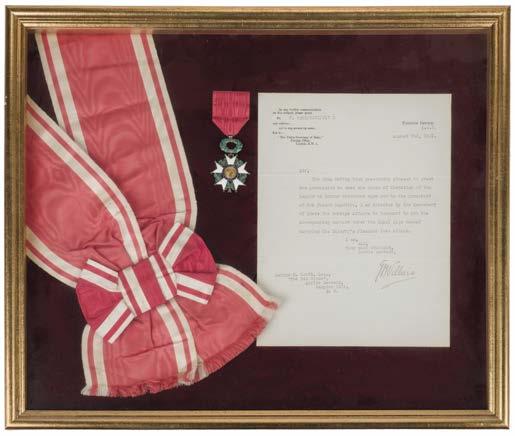
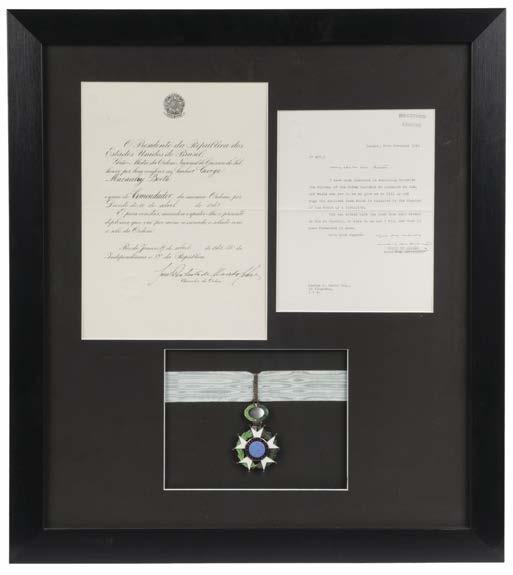
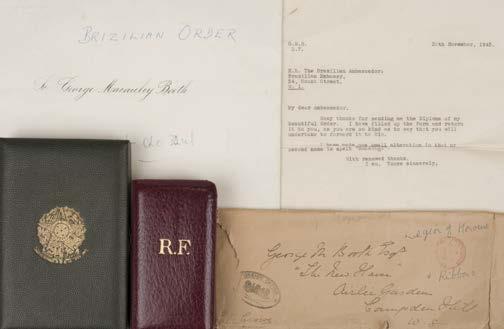
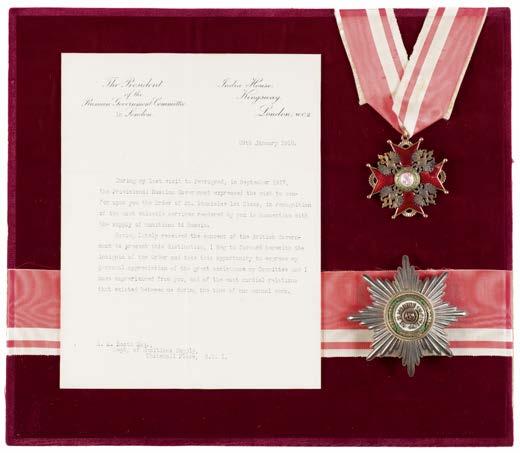
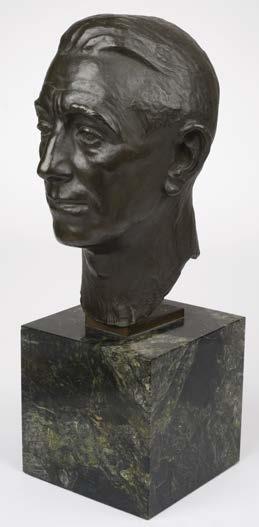
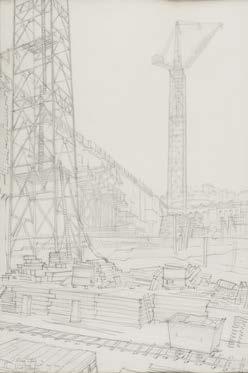
577* Wheeler (Sir Charles, Thomas, 1892-1974). George Macaulay Booth, Director of the Bank of England, a fine bronze bust, mounted on a substantial green veined marble base, 51 cm high, together with a pencil drawing, titled to verso ‘Building the Bank’, inscribed ‘L Rome ... [????] to George Booth Nov 1944 with affection’, additionally inscribed to verso ‘The Bank on Sunday!’, period oak frame, glazed, frame size 69 x 50.5 cm
Provenance: George Macauley Booth, then by family descent.
See lots 575, 576
The rebuilding of John Soane’s Bank of England was constructed to a design by Herbert Baker (1862-1946), undertaken between 1923 and 1942, and overseen by Charles Wheeler (1892-1974), a young protégé of the architect who would go on to become the first sculptor serving as President of the Royal Academy (1956-66).
(2)
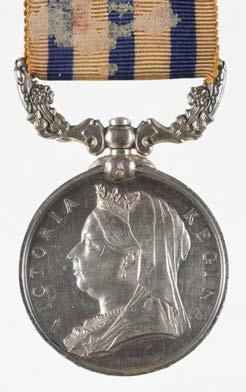
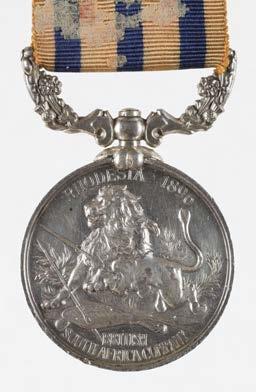
578 British South Africa Company Medal to Trooper Gerald Yorke Carmichael-Anstruther, B.S.A. Police, Heir to the Carmichael-Anstruther Baronetcy, one of Scotland’s Prominent Ancient Families
British South Africa Company, Rhodesia 1896 (Troopr G.Y. Anstruther B.S.A. Police.), good very fine
Anstruther was also entitled to the Queen’s South Africa, 2 bars, Cape Colony, SA 1901, for his service in the Boer War as a Corporal in the Midland Mounted Rifles, this medal was recently sold on 19th June 2024 at Noonans for £300 + Premiums, so a reunite is possible.
Edinburgh Evening News, 1st July 1910 reports on his death: “SCOTTISH BARONET HEIR DEAD
The death has occurred at the Brompton Hospital for Consumption, London, of Mr Gerald Yorke Carmichael Anstruther, Grandson of Sir Wyndham Carmichael Anstruther, 7th Baronet and Heir-Presumptive to the present holder of the title.
He had returned home from South Africa only a week before his death.
Mr Carmichael Anstruther was in his 40th year. His only son, Wyndham Eric Francis, born in 1900, now becomes the Heir Presumpstive to the present holder of the title, who was born in 1902 and succeeded in 1903 as the tenth Baronet.”
Gerald Yorke Carmichael Anstruther was born on 24th January 1871 in Henley, Oxfordshire. Whilst his family was living at the Trinity Vickeridge in Rotherfield Greys, Henley, Oxfordshire. He was the son of Windham George Conway Carmichael Anstruther (1845-98) and Ellen Anne Katherine, daughter of John Adam HEICS. Being educated at Shrewsbury School, he would enter the Insurance business with Standard Life Assurance Company. He then emigrated to South Africa as a young man where he worked as an Accountant, in between taking up arms in both the 1896 Rhodesian War and the Boer War. After spending about 15 years in South Africa, he finally returned home and was due to take on the Baronet of his family as the Heir Presumptive, when he died aged only 40, barely a week after his return. He left behind his son, Baron Sir Windham Eric Francis CarmichaelAnstruther, 11th and 8th Bt (1900-80) as an Orphan, as he had lost his mother in South Africa circa 1903. He was raised by his relatives after Gerald’s death, being educated at Marlborough College and the Royal Military College, Sandhurst. He then became an Explorer and Surveyor in Canada, returning home to claim the Baronetcies and Estates during 1928. He was the DL for Lanarkshire during 1940 and was also during WWII the Commandant of 34 and 38 Group of the Royal Observer Corps. (1)
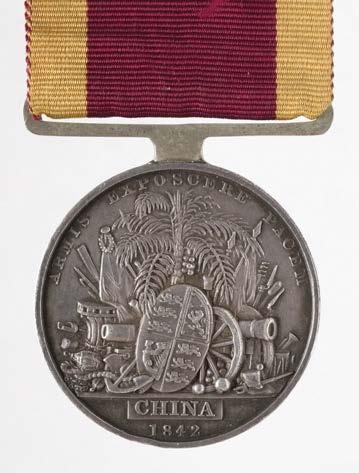
£500 - £700
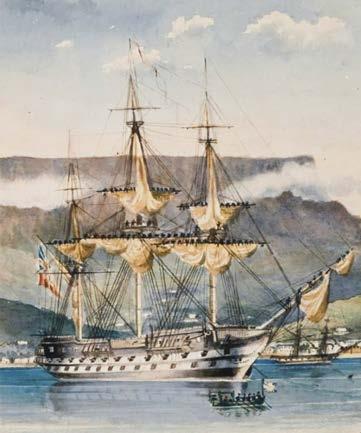
579* China 1842 Medal (Henry Marsh. H.M.S. Jupiter.), an attractive medal in good very fine condition, a copied photograph of HMS Jupiter accompanies the lot 103 medals were issued to HMS Jupiter.
HMS Jupiter 1840 – 1843
Marsh arrived on board as she was preparing to leave Portsmouth for China, setting off from Spithead on 13 June 1840. She arrived at Tongkoo Bay on 13th November 1840 for service in the War. On 19 February 1841, alongside the Druid and other transports, departed Hong Kong to take part in operations near North Wangtong. Around September 1841, went to Cannonore to pick up troops and stores to bring back to China. On 9 October 1841, she took part in the reconnaissance of the mouth of the Ningpo River and the City of Chinhae, taking part in the subsequent operations and choice of Ningpo as the Winter Headquarters. The fighting would pick up in 1842. On 26 December 1841, she set off from Hong Kong for Chusan. Around March 1842, she was departing Hong Kong for Chusan with many soldiers on board, 300 men from the 18th, 49th and 55th Foot to fight in China. On 14 April 1842, took part in a further attempt to burn the enemy shipping by means of fire rafts but was defeated by the boats of the vessels present. On 18 May 1842, Jupiter took part in the Capture of Chapoo. Then on 13 June 1842, it was anchored off Woosung. Once the defences at the river mouth were prepared, the river was bombarded on the 16th. From 16 June 1842 until 29 June 1842, took part in the Expedition up the Yang-tse-Keang (aka the Yangtse River), until the end of the hostilities after the signing of the Treaty of Nanking. Following the war, HMS Jupiter returned home.
(1)
£600 - £800
580* Coin. Charles II, 1675 shilling, the obverse with second laureate bust, the reverse with crowned cruciform shields, interlinked Cs in angles, good fine, together with a mixed collection of coins and tokens, including William & Mary, 1694 copper farthing, Queen Anne, 1705, silver shilling, Charles II, 1684, silver threepence, Charles II, 1672, copper farthing, Edward I, silver penny, Victoria, 1889, silver crown, Birmingham copper halfpenny, 1793, Landore & Walthamstowe copper penny. 1813, Roman coins and many 18th/19th century coins (approximately 100)
£300 - £500
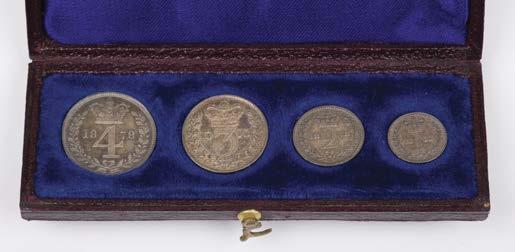
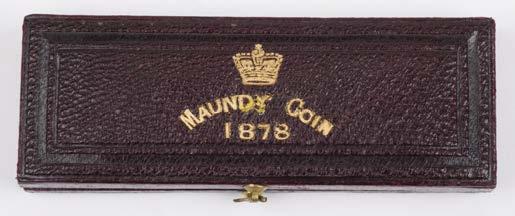
581* Coins. Victorian Maundy Money Coin Set, 1878, comprising 4, 3, 2, 1 pence silver coins, very fine, in gilt embossed leather box (1)
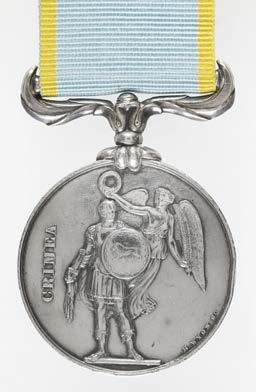
£100 - £150
582* Crimea 1854-56, no clasp, unnamed as issued, very fine (1)
£100 - £150
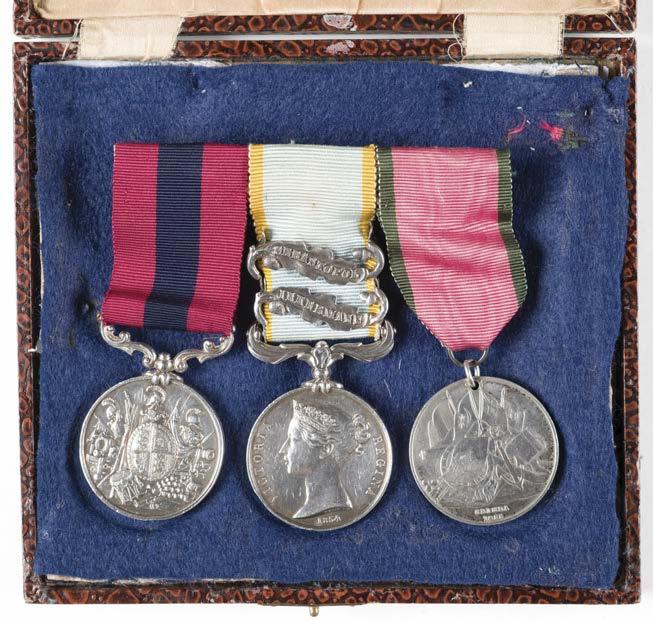
583* A Crimean War D.C.M. group of three awarded to Sergeant D. Warren, Royal Artillery, who died of consumption in 1858
a) Distinguished Conduct Medal, V.R. (Gunner & Driver D. Warren, Ry Arty)
b) Crimea 1854-56, 2 clasps, Inkermann, Sebastopol (Corpl D. Warren. R.A.), contemporarily engraved in medium serif capitals
c) Turkish Crimea 1855, British Issue, unnamed as issued, first and second with a pawnbroker’s mark on the obverse, very fine, later swing mounting, with copied research
Provenance: Glendinng’s July 1953.
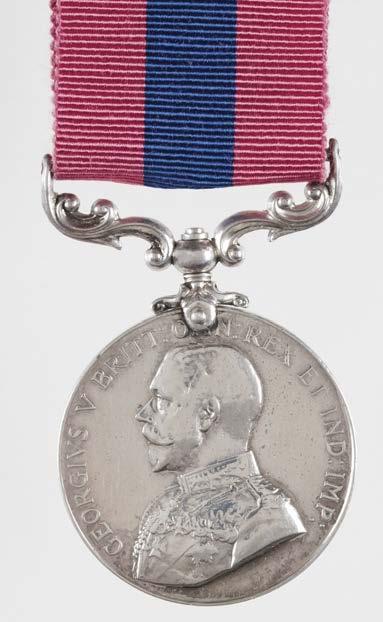
584* Death of Sir Ralph Abercromby, 1801, a copper medal by J.G. Hancock, uniformed bust of Admiral Lord Keith left, the reverse with a funerary urn on plinth, crossed flags and cannon behind, Scottish soldier to left, 49 mm, a later suspension ring, extremely fine
(1)
£100 - £150
585* A WWI ‘Western Front’ D.C.M. awarded to Battery Quartermaster Sergeant F. Pearcy, Royal Horse Artillery, for his gallantry near Premont on 8 October 1918
Distinguished Conduct Medal, G.V.R. (43535 B.Q.M. Sjt. F. Pearcy. R.H.A.), pitting and polished, therefore good fine, with copied paperwork
D.C.M. London Gazette: 18 February 1919; citation published 10 January 1920:
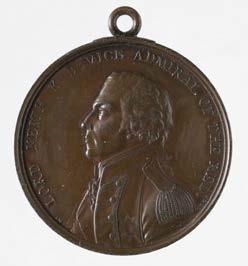
£1,800 - £2,200
D.C.M. awarded by Royal Artillery General Regimental Order 23 August 1855. Daniel Warren was born in Bath, Somerset, on 1 April 1836 and attested for the Royal Artillery at Woolwich on 1 September 1848, aged 12 years 5 months. He served with 6 Troop, 12th Battalion in the Crimea from 30 September 1854, and was promoted Bombardier on 1 April 1855, and Corporal on 12 October 1855. For his services in the Crimea he was awarded the Distinguished Conduct Medal, together with a Gratuity of £5. Returning from the Crimea he was promoted Sergeant on 17 September 1857, and died of consumption at Shoeburyness on 1 March 1858. (3)
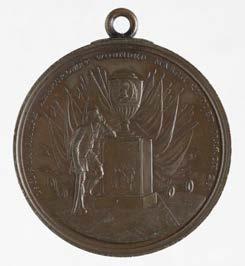
‘On 8th October, 1918, near Premont, he was in charge of the wagon lines which were suddenly subjected to heavy shell fire. He showed great coolness and contempt for danger and succeeded in bringing away a number of horses. Later on the same day, when the same thing occurred, he took up his position in the most exposed place and took charge. By his fine example and personal gallantry, he instilled confidence in all ranks.’
Frederick Pearcy was born in Penge, Middlesex, in 1886 and attested for the Royal Horse Artillery at Norwich on 16 May 1906. He served with ‘Y’ Battery during the Great War in the Egyptian theatre of War from 30 March 1915, and later on the Western Front. He saw further service in post-War Mesopotamia (entitled to a General Service Medal with clasp N.W. Persia). Pearcy was discharged in 1927.
(1)
£300 - £400
586* The Tyers family group of medals, to father and son, the latter Lieutenant Commander A.S.T. Tyers, Royal Navy, awarded the D.S.C. for the Battle of the Atlantic, 1943
WWII medals to Paymaster Captain S.F.C. Tyers, Royal Navy, later Royal Air Force
Pair: Defence and War Medals, with transmission slip from the Admiralty, 1935 Jubilee Medal, in card box of issue, silver identity bracelet engraved ‘Pay Capt. C. Tyers R.N. No. 106676’, Air Raid Precautions badge in original card box, contained in an old red leather box
A WWII group of six attributed to Lieutenant-Commander A.S.T. Tyers
a) Distinguished Service Cross, G.VI.R., reverse dated ‘1944’
b) 1939-1945 Star
c) Atlantic Star with France and Germany clasp
d) Africa Star with North Africa 1942-43 clasp
e) Burma Star
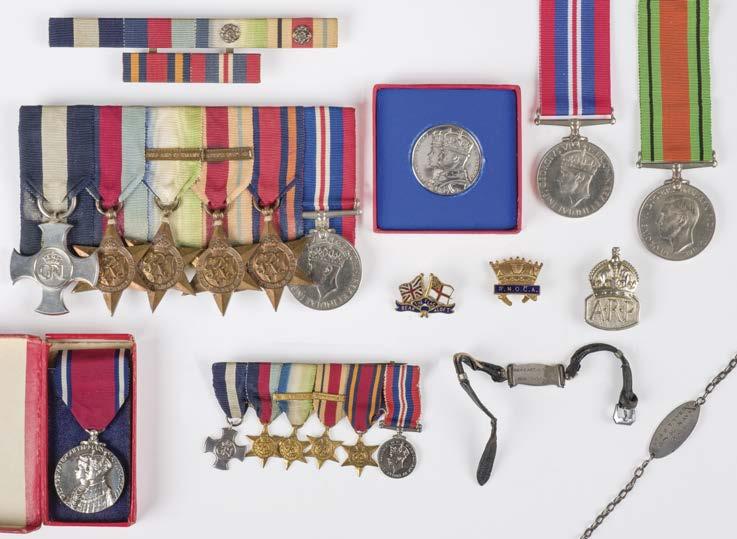
f) War Medal, good very fine, court mounted as worn, with silver identity bracelet engraved ‘Lt A.S.T. Tyers Royal Navy’, 1935 Jubilee Medal, original card box and Buckingham Palace enclosure inscribed to the recipient, miniature dress awards and ribbon bar
D.S.C. London Gazette: 1 January 1944 Lieutenant Anthony Savage Tyers, Royal Navy (Liverpool).
Anthony Savage Tyers was born in Richmond, Surrey in 1918. He was the son of Seymour Francis Colin Tyers (whose medals are included in the lot). He joined the Royal Navy as a Cadet at the Royal Naval College, Dartmouth in 1934. After graduating, he received his first commission as a midshipman and quickly worked his way up the ranks to Lieutenant in 1940. He joined HMS Enchantress in 1941 and took part in convoy escort duties and anti-U-boat patrols across the Atlantic. He was in action aboard Enchantress in the Mediterranean when she sank an Italian submarine in 1942. Tyers was awarded the Distinguished Service Cross for his courageous actions during the Battle of the Atlantic in 1943. He then took part in naval operations for the D-Day landings on 6 June 1944, and later served in Burma. He was promoted to Lieutenant-Commander in 1945 and commanded HMS Wakeful in 1946. Tyers resided in Cheltenham, Gloucestershire, and passed away in 2008. (1)
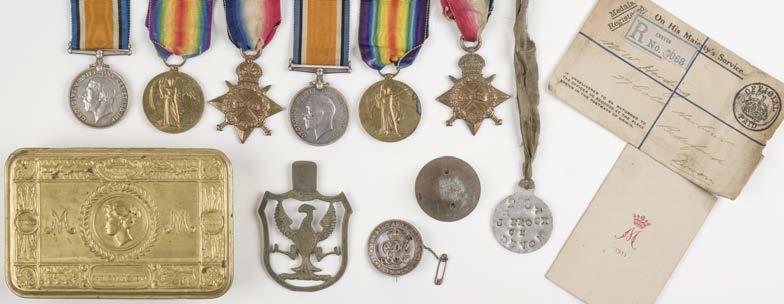
£800 - £1,200
587* A WWI group to Private W.H. Brock, Royal North Devon Yeomanry 1914-15 Star (2347 Pte. W.H. Brock, R.N. Devon Yeo.), British War and Victory Medals (2347 Pte. W.H. Brock. R.N. Devon Yeo.), ver y fine, with silver War Badge numbered B1797, newspaper cutting plus Princess Mary Christmas tin
A WWI group to Private J. Brock, Royal North Devon Yeomanry
1914-15 Star (288. Pte. J. Brock, R.N. Devon Yeo.), British War and Victory Medals (288. Pte. J. Brock. R.N. Devon Yeo.), very fine
William Henry Brock served with the North Devon Hussars from 20 November 1914. Brock served in the Egyptian theatre from 8 October 1915. He was discharged 10 October 1916, probably following wounds sustained in action (silver war badge).
John Brock served in Gallipoli from 8 October 1915. He was discharged on 3 June 1916.
A newspaper cutting included in the lot reports on the funeral of John Brock who died at Coldharbour Road in Bideford. The article lists the attendees, including William Harding (brother-in-law), see lot 588 (6)
£150 - £200
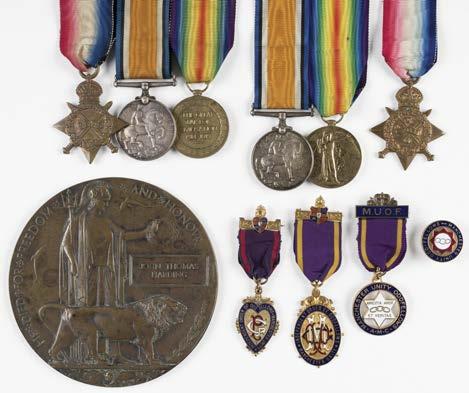
588* WWI casualty group to Private J T Harding, Devonshire Regiment
1914 Star (P.T.[sic] Harding. 1/Devon: R.), British War and Victory Medals (7696 Pte J.T. Harding. Devon. R.), Bronze Memorial Plaque (John Thomas Harding), good very fine WWI group to Private W.H. Harding, Devonshire Yeomanry 1914-15 Star (963 Pte W.H. Harding, R.N. Devon Yeo.), British War and Victory Medals (963 Pte. W.H. Harding. R.N. Devon Yeo.), very fine, swing mounted as worn, plus Society medals including silver gilt and enamel Oddfellows medal reverse engraved to Harding and dated 1937
John Thomas Harding served on the Western Front with 1st Bn, Devonshire Regiment. He was killed in action on 11 December 1915. Harding is commemorated on the Ypres (Menin Gate) Memorial, Belgium.
William Henry Harding served in Gallipoli with the 1st Bn, Royal North Devonshire Yeomanry. (7)
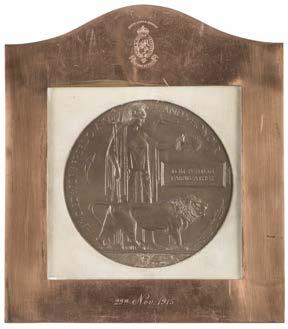
£150 - £200
589* A WWI ‘Gallipoli’ Memorial Plaque to Lance Corporal T.F. Fairweather, Fife & Forfar Yeomanry, Killed in Action on 29 November 1915
WWI Bronze Memorial Plaque, ‘Tom Fenton Fairweather’, extremely fine and beautifully presented in a copper frame engraved with the date of death and Fife & Forfar Yeomanry crest, the opposite side with a letter of condolence from Buckingham Palace under glass, with an ornate easel stand, frame size 23 x 20 cm
Tom Fenton Fairweather was a native of Tullylumb House, Clashbenny, Glencarse, Perth. He was killed in action in Gallipoli on 29 November 1915 and is commemorated on the Helles Memorial, Turkey. (1) £150 - £200
590* Five: A WWII group of five to Lieutenant W.A. Hoskins 1939-1945 Star, Africa Star with 1st Army clasp, Defence and War Medals, extremely fine, swing mounted as worn, with dress miniature awards, a letter to the recipient in ‘On His Majesty’s Service Southern Rhodesia’ envelope, plus a large black and white photograph taken whilst Hoskins was at Royal Military College, Sandhurst, Hoskins back right, second from the left, signed by many of the officers (5)
£100 - £150
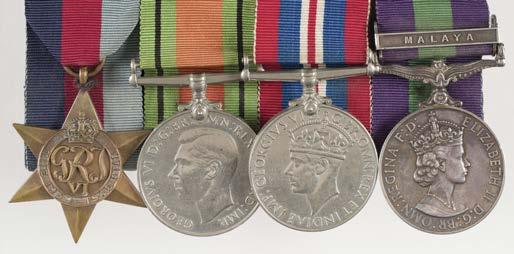
591* Four: WWII and Malaya group of medals to Major E.C. Smith, Royal Army Education Corps 1939-1945 Star, Defence and War Medals, General Service Medal, 1918-62, E.II.R., 1 clasp, Malaya (Major E.C. Smith. R.A.E.C.), court mounted as worn, very fine or better, with copied research including an article written by Smith, ‘Salisbury Plain, A Historical Introduction’
Ernest Clarke-Smith was commissioned 2nd Lieutenant with the Notts & Derby Sherwood Foresters on 31 May 1941. He was promoted to Lieutenant in October 1942 and served with the regiment until transferring to the R.A.E.C. in 1949 being appointed an Honorary Major (4)
£100 - £150
592* General Service Medal, 1918-62, E.II.R. (2), 1 clasp (3520872 Sgt. B.G. Tondeuer. R.A.F.), engraved in san serif capitals, together with another for Malaya (22838468 Sig. G.C. Price. R. Sigs.), service number officially corrected, both good very fine (2)
£70 - £100 Lot 593
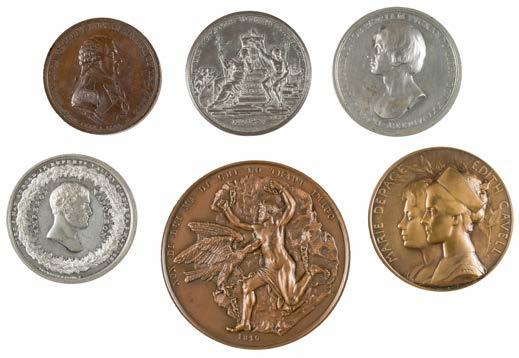
593* Historical medals. Admiral Lord Viscount Duncan, bronze medal by John Gregory Hancock, 1797, the obverse showing a uniformed bust of Admiral Duncan right, hair in pigtail and wearing the King's gold medal around his neck, the reverse showing a seaman nailing the Royal Standard to a ship's top gallant mast, 50 mm diameter, together with a medal for the death of Lord Nelson, 1805, white metal by P. Wyon, the obverse with seaman standing beside a tomb, the reverse showing Britannia and Neptune seated beside funerary urn on plinth, 52 mm diameter, a silver medal for the death of Lord Nelson, 1805 by Thomas Wyon the Younger, the reverse showing Bellona, winged, laureate, holding lightning bolts and stepping over the sea, on whicg in the distance antique galleys are fighting, the legend ISE BELLI FVLMEBN (Himself the thunderbolt of war), 55 mm diameter, 44.8g, and other historical medals, contained in an old HMS Victory biscuit tin (9)
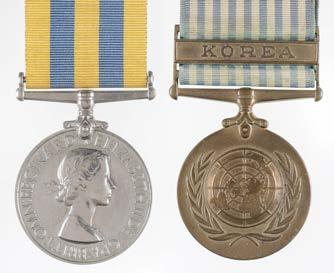
£400 - £600
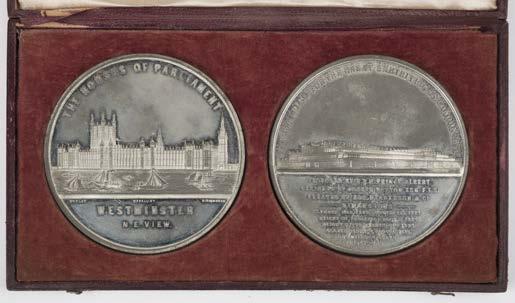
597* A good Korean War ‘Fairey Firefly’ pair to Naval Airman D.R. Williams, Royal Navy, who served with one of the Firefly-equipped Naval Air Squadrons’s which saw extensive action off the coast of Korea
Korea 1950-53, 1st issue (L/FX. 887084 D.R. Williams N.A.1. R.N.), U.N. Korea 1950-54, good very fine, with copied colour photographs of Fairey Firefly on ops in Korea
After completing training, D.R. Williams was drafted to join one of the Royal Navy Air Squadrons and embarked to fight in Korea. At that time, the Royal Navy only operated single-seat Seafire and Sea Fury aircraft, with the Fairey Firefly being the sole two-seat aircraft used, comprising a pilot in the front cockpit with an observer/navigator in the rear cockpit. All the Firefly Squadrons were heavily involved in strikes on enemy targets with bombs and rockets (later becoming very effective as dive-bombers). Williams would have seen plenty of action in at least two 6-month tours of duty during the Korean conflict, worthy of further research.
(2)
£100 - £150
594* Historical medals. The Houses of Parliament, Victorian white metal medal by Thomas Ottley, the obverse showing a young head Victoria facing right within wreath and inscribed ‘Her Most Gracious Majesty Queen Victorian’, the reverse showing the Houses of Parliament from the Thames, inscribed ‘The Houses of Parliament Westminster N.E. View’, 75 cm diameter, together with another medal by Ottley, the obverse showing Prince Albert facing left, inscribed ‘His Royal Highness Prince Albert’, the reverse showing the building for the Great Exhibition in London 1851, 75 mm diameter, presented in a fitted leather display case (2)
£150 - £200
595* Indian Medals. Indian Army Meritorious Service Medal, G.VI.R. (3313 Hav Saidan Gul, 4-13 F.F. Rif.), good very fine, together with India General Service Medal, 1908-35, G.V.R., 1 clasp (2), Malabar 1921-22 (2222 Rfmn. Bhawan Sing Rawat. 2-18 R. Garn. Rif.), Burma 1930-32 (31527 Gnr. Sultan Mohd., 7 Mtn. Bty.), good fine and very fine (3)
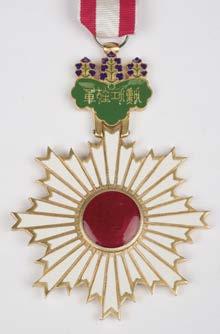
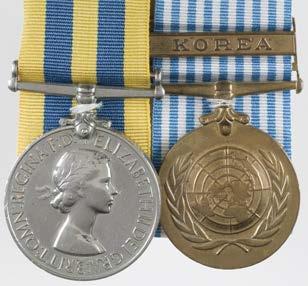
£100 - £150
596*Japan, Empire, Order of the Rising Sun, First Class sash badge, 109 mm including paulownia flowers x 76mm, silver-gilt and enamel, with short section of breast ribbon for display purposes, good very fine, in red velvet box (1)
598* A ‘Battle of the Hook’ Korean War pair to Private E. Wakefield, 1st Bn, Duke of Wellington’s Regiment, the last action of the Korean War and a bloody and ferocious battle, which saw the regiment fighting hand-to-hand combat and repelling the substantial Chinese Army Korea 1950-53, 1st issue (4627722 Pte. E. Wakefield. D.W.R.), United Nations for Korea, good very fine, court mounted as worn, with a typed account of The Duke of Wellington’s Regiment at the ‘Hook’, Korea Brigadier D. A. Kendrew, D.S.O., C.O. of 29th Infantry Brigade, as quoted in the regimental history.
£100 - £150
‘My God, those Dukes, they were marvellous. In the whole of the last war, I never saw anything like that bombardment. But they held the Hook, as I knew they would.’
The Defence of the Hook took place on 12-13 May 1953, and it was the last action of the Korean War. Under torrential rain, the ‘Dukes’ fought handin-hand with fixed bayonets and repelled the massive Chinese Army attack on the hilltop position. The Chinese had attacked in a final attempt to gain more ground before the expected ‘ceasefire’, but were driven off the hill. Both sides suffered heavy casualties. The Major in command of the ‘Dukes’ walked to the rear of the hill after the battle and began to cry when he saw the small groups of very young ‘Dukes’ survivors trying to keep warm. (2) £150 - £200
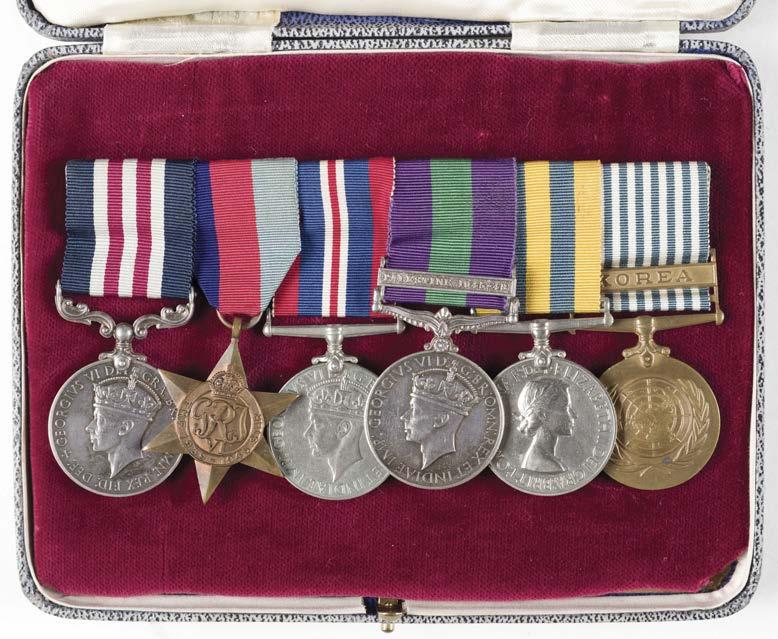
599* A good Korean War M.M. group awarded to Corporal R. S. Critcher, Essex Regiment, formerly Suffolk Regiment, who gained the award of his M.M. for gallantry in the Samichon Valley whilst attached to the 1st Battalion, Norfolk Regiment - When his night patrol was ambushed, without hesitation he moved out into the open where he could see the enemy and standing firing his Bren gun from the hip, he drew their fire, thus allowing the withdrawal to go ahead without further casualties, even though he himself had received a bullet wound in the action
a) Military Medal, G.VI.R., 2nd issue (14190302 Pte. R.S. Critcher. Essex.)
b) 1939-1945 Star
c) War Medal
d) General Service 1918-62, G.VI.R., 1 clasp, Palestine 1945-48 (14190302 Pte. R. Critcher. Suffolk.)
e) Korea 1950-53, 1st issue (14190302 Cpl. R. Critcher. M.M. R. Norfolk.)
f) United Nations for Korea, minor official correction on the first, good very fine or better, swing mounted as worn, with a copy of the original recommendation and a cutting from the Essex Regimental Journal featuring a group photograph that includes Richard Stanley Critcher in uniform, wearing his M.M.
M.M. London Gazette: 8 April 1952
The original recommendation submitted by Lieutenant-Colonel J. H. R. Orlebar, 1st Battalion, Norfolk Regiment, for an immediate award of the M.M. states: ‘Samichon Valley, Korea: On the night of 19-20 February 1952, Private Critcher was a member of a fighting patrol sent out by ‘D’ Company, 1st Battalion, The Royal Norfolks, to lay an ambush for enemy patrols approximately midway between the Chinese lines and those of the 1st Battalion, The Royal Norfolks, which at this point are separated by a valley a mile wide. It was a very dark night, and the patrol moved in single file along a frozen mud road, led by the Patrol Commander, 2nd Lieutenant Keen, who was followed by his wireless operator and then Private Critcher, armed with a Bren gun. When the patrol had reached a point within two hundred yards of the area selected for the ambush, it was engaged by a party of at least 12 Chinese who opened fire with grenades and automatic weapons from a range of ten yards.
During the first moments of the battle, the Patrol Commander was wounded in the head and was deafened in both ears by grenades which exploded around him. The patrol itself was in a very difficult situation as it had not had time to deploy and bring fire to bear on the enemy. Private Critcher, with complete disregard for his own safety, and in spite of a bullet wound in the groin, stood up and fired his Bren gun from the hip to give the patrol time to reorganise itself and to deploy.
On three occasions, Private Critcher endeavoured to find a suitable fire position for his Bren gun, but on each occasion the gun was knocked over by blast from grenades. Private Critcher then continued to fire from the hip, standing up, although he must have presented a clear target at such short range because of the flash from his Bren gun. The patrol was enabled to extricate itself from the ambush by Private Critcher’s actions, and his presence of mind and courageous action undoubtedly prevented more serious casualties to the rest of the patrol. It was not until the patrol had disengaged itself and withdrawn some three hundred yards, under Private Critcher’s covering fire, that it was discovered that he had been wounded. This courageous action on the part of Private Critcher and his initiative and determination shown by him on this occasion were outstanding.’
Reginald Stanley Critcher was recommended for his immediate M.M., the related paperwork confirming his deeds were enacted in Samichon Valley. (6)
£4,000 - £5,000
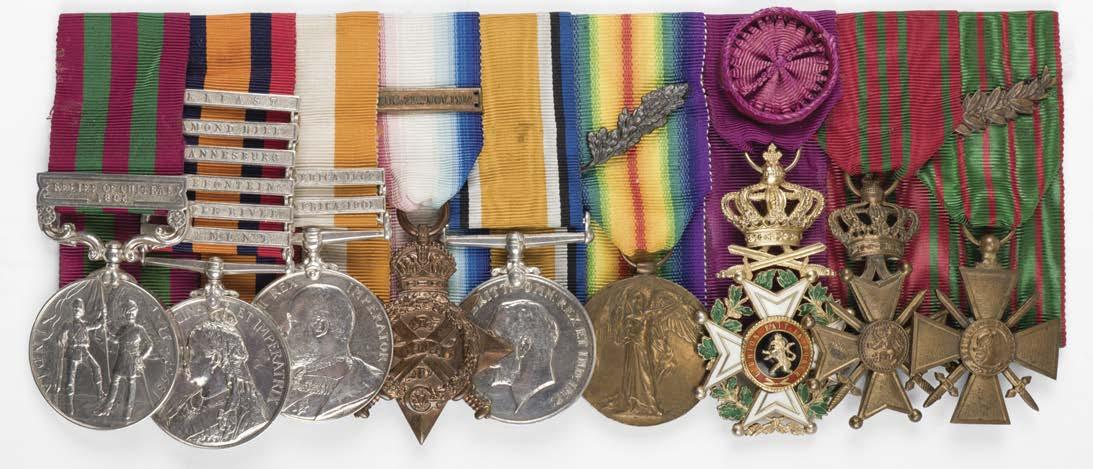
600* A group of nine to Major-General Sir Samuel Guise-Moores, K.C.B., K.C.V.O., C.M.G., Royal Army Medical Corps, Honorary Surgeon to King George V, Colonel Commandant of the R.A.M.C., 1927-33 India General Service 1895-1902, 1 clasp, Relief of Chitral 1895 (Surgn. Captn., I.M.S.); Queen’s South Africa 1899-1902, 6 clasps, Belmont, Modder River, Driefontein, Johannesburg, Diamond Hill, Belfast (Major S.G. Moores. R.A.M.C.); King’s South Africa 1901-02, 2 clasps (Surgn. Maj., S.G. Moores. Scots Gds.); 1914 Star, with clasp (Lt. Col: Col. S.G. Moores, R.A.M.C.); British War and Victory Medals, M.I.D. oak leaf (Lt. Col. S.G. Moores R.A.M.C.) - these two renamed; Belgium, Order of Leopold I, Officer’s breast badge with swords, silver-gilt and enamel, rosette on ribbon; Belgium, Croix de Guerre; France, Croix de Guerre 1914-1917, palm on ribbon, very fine and better, modern mounting Provenance: DNW (now Noonan’s), 7 March 2007, lot 62. The group was part of the collection of medals to the medical services formed by Colonel D.G.B. Riddick. The group was originally sold with the K.C.B., K.C.V.O. and Knight of Grace Insignia; these are missing.
Samuel Guise Moores (later Sir Guise Guise-Moores) was born in Deesa, India on 24 December 1863. Educated at Cheltenham College and St. Thomas’s Hospital, he gained the M.R.C.S. England, and the L.R.C.P. London in 1888 and the D.P.H. in 1898. Commissioned a Surgeon (afterwards Surgeon-Captain) in February 1890, he served on the N.W. Frontier in the relief of Chitral. In the Boer War, he served in the advance on Kimberley, including the actions at Belmont, Enslin, Modder River (slightly wounded) and Magersfontein; in operations at Paardeberg, actions at Poplar Grove, Driefontein, Vet River, Zand River, Johannesburg, Pretoria, Diamond Hill and Belfast. He was twice mentioned in despatches (London Gazette 26 January 1900, 10 September 1901) and was specially promoted to Major in November 1900. He served as Surgeon-Major to the Scots Guards, November 1901-April 1909 and was promoted to LieutenantColonel in March 1912 and Colonel in March 1915. He served in France throughout the Great War as A.D.M.S., D.D.M.S. and D.M.S. With the 7th Division for the relief of Antwerp; present at the first battle of Ypres, October 1914; battle of Neuve Chapelle, March 1915; first gas attack on Ypres, April 1915; battle of the Somme, July 1916 and third and fourth battles of Ypres. For his wartime services he was five times mentioned in despatches (London Gazette 17 February 1915, 22 June 1915, 24 December 1917, 30 December 1918, 19 July 1919), was created a C.B. in 1915 and C.M.G in 1918; was awarded the Belgian Order of Leopold and the Belgian and French Croix de Guerre; and on 6 June 1919 was specially promoted to Major-General. In 1919 he was appointed Commandant of the Royal Army Medical College and D.D.M.S. Aldershot Command in 1920. He was appointed Honorary Surgeon to the King in 1922, ser ved as Superintendent of the Osborne Convalescent Home, 1924-31, and was Colonel Commandant of the R.A.M.C., 1927-33. Guise was Knighted, receiving the K.C.B. in 1925, the Knight of Grace of the Order of St. John in 1926 and was further rewarded with the K.C.V.O. in 1931. Sir Guise Guise-Moores died on 3 October 1942. Sold with copied research.
(9) £500 - £800
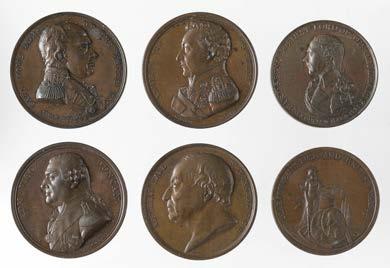
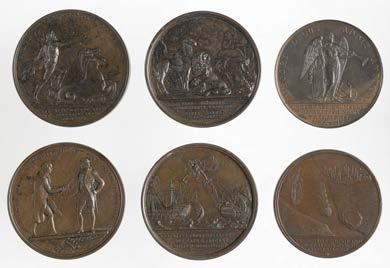
601* Maritime medals.
Admiral Earl Howe, Naval Victory of the First of June 1794, bronze. 42 mm diameter
Admiral Sir Sidney Smith, Siege of Acre 1799, bronze, 42 mm
Admiral Duncan, Battle of Camperdown 1797, bronze, 42 mm
Admiral Earl St Vincent, G.C.B., Battle of Cape St Vincent 1797, 42 mm
Earl Spencer First Lord of the Admiralty, 1795, 40 mm diameter Danish Defeat, bronze, 35 mm (6) £200 - £300
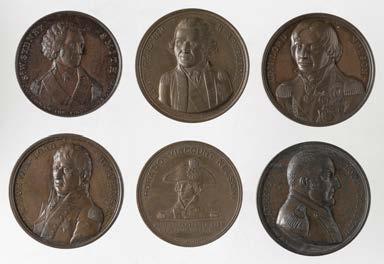
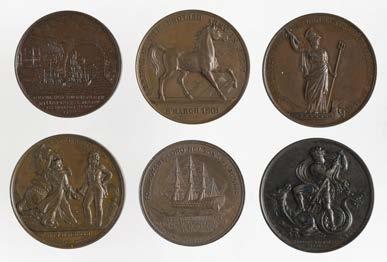
602* Maritime medals.
Admiral Lord Nelson, bronze, 42 mm diameter
Lieutenant General Sir R. Abercrombie, bronze, 42 mm
Major General Lord Hutchinson, bronze, 42 mm diameter
Admiral Lord Exmouth, bronze, 42 mm diameter
Sir W. Sidney Smith, bronze, 39 mm diameter
Horatio Viscount Nelson, Foudroyant, bronze, 40 mm diameter (6) £200 - £300
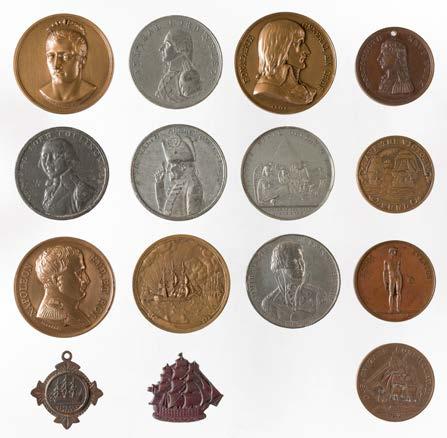
603* Maritime medals. A collection of maritime medals, including Admiral Lord Nelson, Return to England, 1800, white metal medal, 39 mm diameter, Sir Ralph Ambercrombie, French Defeated, 1801, white metal medal, 39 mm diameter, Admiral Lord Nelson of the Nile, 1798, white metal medal, 39 mm diameter, Victory of the Nile, 1798, white metal medal, 39 mm diameter, Return to France of Napoleon after his campaign in Egypt and Syria, 1799, bronze medal, 35 mm diameter and other related medals (15) £100 - £150
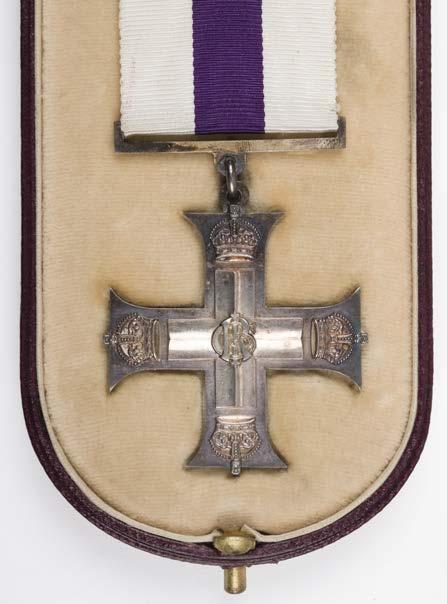
604* A Great War Military Cross Attributed to Captain J. Brown, 2/7 Manchester Regiment, Killed in Action on 21 March 1918 Military Cross, G.V.R., reverse contemporarily engraved ‘Captain, J. Brown. M.C. 2/7 Manchester Regiment’, ‘October 8th 1917’, ‘February 6th 10th 1918’, extremely fine, in case of issue with copied research
M.C. London Gazette: 3 June 1918.
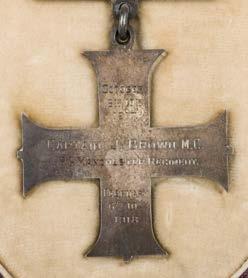
John Brown served on the Western Front with 2/7 Bn, Manchester Regiment. Brown was killed in action on 21 March 1918. He is commemorated in Pozieres Memorial, Somme, France.
In the spring of 1918, a German attack had long been predicted and it was finally delivered in the early hours of 21 March. It came after an intense artillery bombardment and the strength of the infantry attack was overwhelming. Within hours, the British Army was undertaking a desperate fighting retreat along a wide front.
At 5.25 am the Manchesters received orders, at camp in Montigny, to go their battle stations and marched out at 6.10 am to Brosse Wood to hold position. At 6.30 pm the Battalion had been under severe attack for many hours. The remnants which was mainly “B” Company, fell back to redoubts in the Jeancourt Valley where they passed a quiet night. The remainder of men, probably about 600, were dead, wounded or captured.
Brown was originally posted as missing and later identified as killed in action. His body had been buried by men from the German Reserve on 14 April. His grave was between Hargicourt and Jeancourt.
(1)
£500 - £600
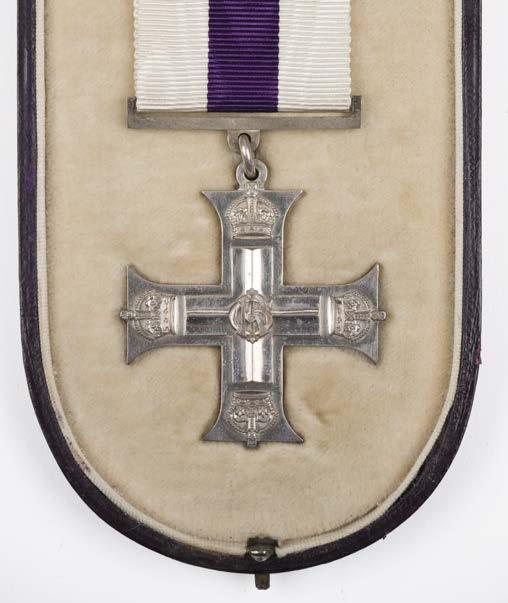
605* A Great War M.C. attributed to 2nd Lieutenant N.D. Bayley, Royal Berkshire Regiment, who was shot through the arm whilst directing a tank under heavy fire, and later died from pneumonia
Military Cross, G.V.R., reverse contemporarily engraved '2/Lt Norman David Bayley. Royal Berkshire Regt, Westhoek July 31st 1917.', extremely fine in case of issue, with portrait photograph of the recipient in uniform, inscribed with citation, period frame, glazed with M.C. medal ribbon and regimental cap badge, 30.5 x 22 cm
M.C. London Gazette: 9 January 1918 2/Lt Norman David Bayley, R. Berks. R.
‘For conspicuous gallantry and devotion to duty when in command of a mopping up platoon. When his platoon was held up by a strong point, he sent for a tank. He went to meet it under heavy shell fire and directed it by walking in front to within thirty yards of the enemy, when he was shot through the arm.’
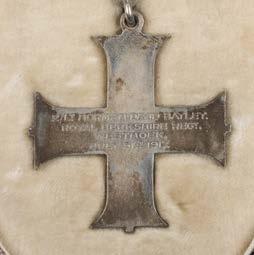
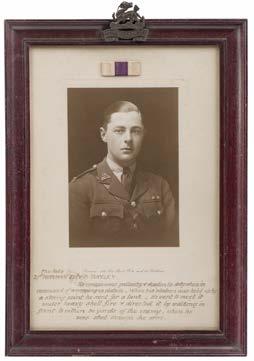
Norman David Bayley was born in 1898 was educated at Sandhurst Military College before being attested in 3rd Bn, Berkshire Regiment. Bayley died of pneumonia on 20 October 1918. He is commemorated in Portsdown (Christ Church) Churchyard.
(1)
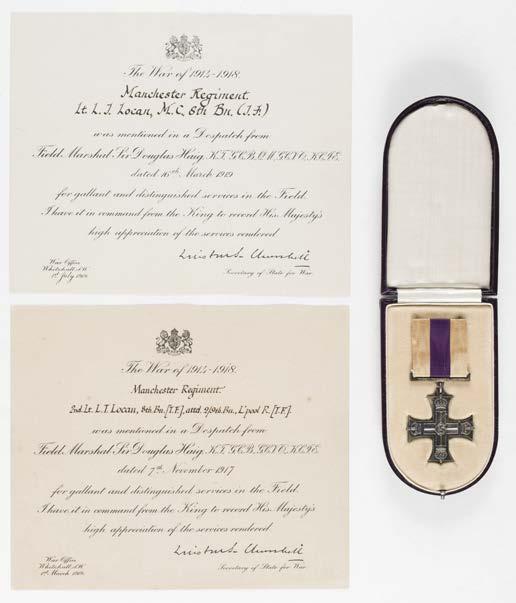
606* A Great War M.C. attributed to Lieutenant L.T. Locan, 8th Bn, Manchester Regiment, who carried out several daylight reconnaissances in “No Man’s Land” and obtained most valuable information
Military Cross, G.V.R., reverse contemporarily engraved ‘L.T. Locan Jan 19th 1918’, good very fine and toned, in case of issue with two M.I.D. certificates
M.C. London Gazette: 24 August 1918 Lt. Lawrence Toole Locan, Manch. R. ‘For conspicuous gallantry and devotion to duty. Before a raid he carried out several daylight reconnaissances in “No Man’s Land” and obtained most valuable information. He guided the raiding party to their assembly position, and by his initiative and skill contributed greatly to the success of the raid.’
M.I.D. London Gazette: 7 November 1917 and 16 March 1919.
(1)
£400 - £500
£500 - £600
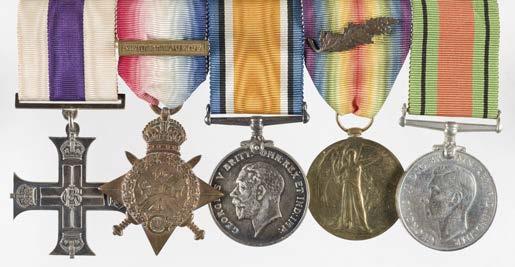
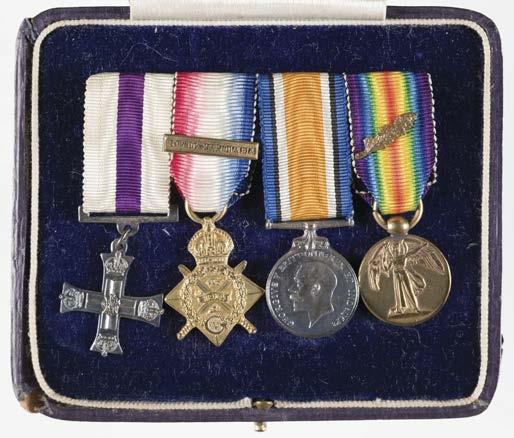
607* A Great War M.C. group to Captain C.A. Wallis, Royal Field Artillery, for conspicuous gallantry and devotion to duty near Ghissignies on 4 November 1918
a) Military Cross, G.V.R., reverse contemporarily engraved ‘Capt. C.A. Wallis’
b) 1914 Star and Bar (43350 Cpl C.A. Wallis, R.F.A.)
c) British War and Victory Medal with M.I.D. oakleaves (Capt. C.A. Wallis.)
d) Defence Medal, very fine or better, swing mounted as worn, with miniature dress awards and copied research
M.C. London Gazette: 2 April 1919. 2nd Lt. (A. Capt.) Charles Arthur Wallis, 52nd Bty., 15th Bde., R.F.A.
M.I.D. London Gazette: 26 June 1917
‘For conspicuous gallantry and devotion to duty on 4th November, 1918, near Ghissignies. Shortly after the attack began, he was sent forward to reconnoitre the railway east of Ghissignies for a place where it could be crossed by the batteries. Both the orderlies who accompanied him were very severely wounded, and he then completed his reconnaissance alone, and brought back most valuable information as to the available crossings, enabling the batteries to go forward at once.’
Charles Arthur Wallis was born in Louth, Lincolnshire in 1886. The 1911 census lists him as living in County Kildare, Ireland. He served on the Western Front with ‘U’ Battery, Royal Horse Artillery from 11 November 1914. He received his Military Cross for an action on 4 November 1918 when crossing a railway line near Ghissignies. Interestingly this was the same day that the poet Wilfred Owen was killed!
(5)
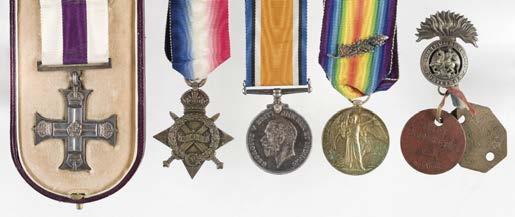
608* A Great War M.C. group to Captain E. Bisset, 1/5th Northumberland Fusiliers
a) Military Cross, G.V.R., unnamed as issued, in case of issue
b) 1914-15 Star (6-2481 Pte E. Bisset. North’d Fus:)
c) British War and Victory Medal with M.I.D. oakleaves (Capt E. Bisset.), very fine or better, with identity tags and regimental cap badge
M.C. London Gazette: 1 January 1918 2nd Lt (A./Capt.) Eric Bisset, North’d Fus.
M.I.D. London Gazette: 22 May 1917
Eric Bisset was born in 1885. He served on the Western Front from 20 April 1915. He received a gunshot wound to the back on 26 October 1917 and sent to Ashton Court Auxiliary Hospital in Bristol. He resided in Newcastle on Tyne and became a shipping manager.
(4)
£800 - £1,000
£800 - £1,000
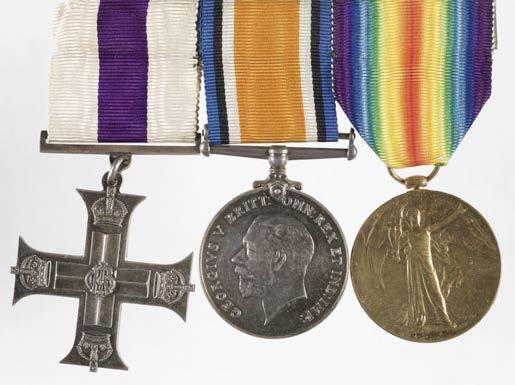
609* A Great War M.C. group to Lieutenant J.P. Kemble, Middlesex Regiment, for conspicuous gallantry in action; Kemble attacked a party of the enemy, killing one of them and capturing five prisoners
a) Military Cross, G.V.R., unnamed as issued
b) British War and Victory Medal (Lieut. J.P. Kemble.), good very fine and toned, swing mounted as worn, with copied research
M.C. London Gazette: 25 November 1916 2nd Lt. John Kemble, Midd'x R.
'For conspicuous gallantry in action. Single-handed, he attacked a party of the enemy, killing one of them and capturing five prisoners. He displayed great courage and determination throughout the operations.'
John Philip Kemble was born in Liverpool in 1885. He was commissioned as a Lieutenant in the 8th Battalion, Middlesex Regiment and served on the Western Front from 28 May to 28 December 1916. He was discharged wounded.
(3)
£700 - £1,000
610* A Great War M.C. group to Major C.A. Lupton, Royal Garrison Artillery, later Surgeon (FRCS)
a) Military Cross, G.V.R., unnamed as issued, in case of issue
b) British War and Victory Medal (Major C.A. Lupton), good very fine M.C. London Gazette: 18 March 1918.
20 September 1917
‘For conspicuous gallantry and devotion to duty as F.O.O., he followed up the infantry advance, reaching a point well in advance of the infantry. On discovering the enemy were advancing, he withdrew his party and reported the situation to the infantry, who were thus enabled to close the gap in the line in time. Later, on finding that his messages were not getting through, he returned through a heavy barrage to re-establish communication, making arrangements for relaying the line.”
Charles Athelstone Lupton (1897-1977) was educated at Wellington and Trinity College, Cambridge. He served as a gunner in the Royal Field Artillery from March 1916. He was commissioned as 2nd Lieutenant in the same year. He served on the Western Front from 30 October 1916 with 188th Siege Battery, Royal Garrison Artillery.
(3)
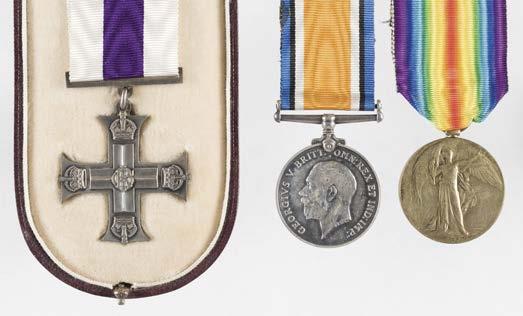
£600 - £800
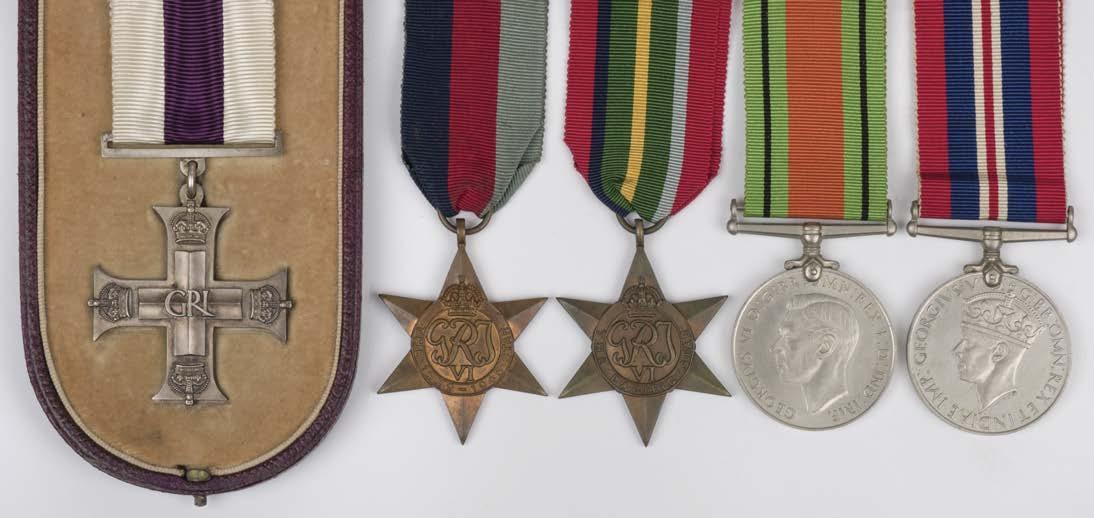
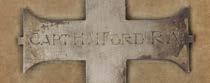
611* A poignant WWII ‘1940 Dunkirk’ M.C. group to Captain H.M. Ford, Royal Artillery, who was later captured by the Japanese during the Malaya campaign and forced to work on the Burma Railway, after his release he committed suicide by shooting himself
a) Military Cross, G.VI.R., reverse dated ‘1940’ and contemporarily engraved ‘Capt. H.M. Ford. R.A.. in Royal Mint case of issue
b) 1939-1945 Star
c) Pacific Star
d) Defence and War Medals, good very fine or better, with copied research
M.C. London Gazette: 11 July 1940 Lieutenant (Acting Captain) H.M. Ford, 91st. Field Regiment. R.A.
‘Lieutenant (A/Captain) was required on two occasions on the River Scarpe and on the Ypres-Comines Canal to man advanced O.P.’s. On both occasions, he was at his post for periods of more than twenty-four hours under heavy fire of all kinds. Throughout, Lieut (A/Capt) Ford’s control of the Regiment’s fire was excellent due largely to a number of personal trips which he made to explode localities to ascertain the effect of the fire. He carried out his duties in this respect with an entire disregard for his personal safety and was largely instrumental in driving back enemy attacks by the accuracy with which he controlled the fire of the guns from Forward O.P.s.’
Harry Marshall Ford was born in Yorkshire in 1911. He was a man of great bravery, earning the Military Cross at Dunkirk in 1940. The following year, he was captured by the Japanese during the Malaya campaign while serving with the 88th Regiment of the Royal Artillery, and held prisoner in terrible conditions while building the Burma Railway.
Ford had long been a mercurial character. However, his experience of life as a prisoner of the Japanese appears to have aggravated his condition. He separated from Doris (a former beauty queen) and on 6 July 1946 he met with his wife to discuss divorce, but the discussion ended in a row. The following day, he shot himself in a hotel in York. The coroner delivered a verdict that he killed himself while the balance of his mind was disturbed, probably because of his experiences as a prisoner of war. Ford’s remains are at the Nottingham Crematorium.
(5) £800 - £1,000
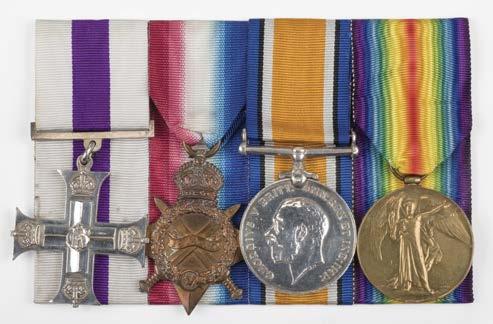
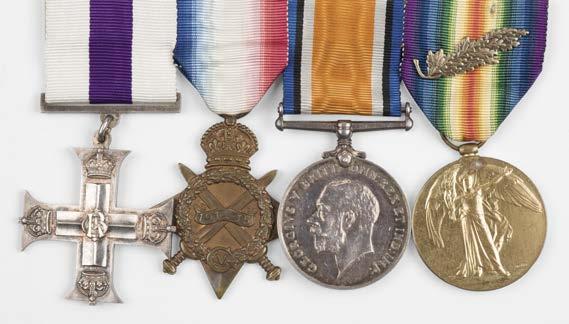
612* A scarce Indian Army ‘Palestine 1918’ M.C. group to 2nd Lieutenant A.E. Powell, who saw fierce fighting against 2000 Afghan Khosywal tribesmen who attacked the Tochi Valley between November 1914 and March 1915, later posted to Mesopotamia, where he took part in the fighting that led to the capture of Baghdad
a) Military Cross, G.V.R., unnamed as issued
b) 1914-15 Star (2/Lt. A.E. Powell. 52/ Sikhs F.F.)
c) British War and Victory Medals (2-Lt. A.E. Powell.), good very fine, with copied research
M.C. London Gazette: 3 June 1918.
‘For distinguished service in connection with Military Operations in Egypt.’
Arthur Edward Powell was born in Saharunpore, India, in 1871. He was commissioned into the Indian Army Reserve of Officers and posted to join the 52nd Sikhs (Frontier Force). On the outbreak of WWI, the 52nd were stationed at Bannu, Khyber (modern Pakistan). They formed part of the Bannu Brigade, within the ‘Northern Army’, which was involved in operations against 2000 Afghan Khosywal tribesmen who attacked the Tochi Valley between November 1914 and March 1915, which witnessed the Battle of Spina Khairosa.
In 1917 he was posted to the 53rd Sikhs (Frontier Force) and served in Mesopotamia, where he took part in the fighting that led to the capture of Baghdad and the bitterly contested operations while driving the Turkish army north of Baghdad at Istabulat, Daur and Tikrit. In 1918, the regiment moved to Palestine, where Powell received his Miltary Cross.
(4)
£800 - £1,000
613* A WWI group to Major F.H. Hetherington, M.C., M.I.D., Seaforth Highlanders
a) Military Cross, G.V.R., unnamed as issued
b) 1914-15 Star (2. Lieut. F.H. Hetherington. Sea. Highrs)
c) British War and Victory Medals, M.I.D. oakleaves (Major F.H. Hetherington.), good very fine
M.C. London Gazette: 1 January 1918 T./Lt (A/Capt) Francis Herbert Hetherington, Sea Highrs.
M.I.D. London Gazette: 25 May 1917 and 9 April 1917.
Francis Herbert Hetherington was born in Alton, Hampshire in 1878. He was commissioned 2nd Lieutenant in the Seaforth Highlanders in 1915 and served on the Western Front from 10 May 1915. Hetherington was wounded in action whilst leading his platoon during the Battle of Longueval, Somme on 14 July 1916. He received his Military Cross for distinguished service in the field. Post-war he emigrated to Montreal, Canada, but returned to England in 1933.
(4)
£800 - £1,000
614* WWI Campaign Medals.
1914 Star and slide on clasp (9616 Dmr: T. H. Cooksey, 1/W. York. R.), extremely fine 1914 Star (2. Lieut: J.W. Barclay. High: L.I.), good very fine Victory Medal (Mid. H. Hoper. R.N.R.), extremely fine
Victory Medal (Maj. H.P.M. White), extremely fine, all with copied research
Thomas Henry Cooksey born in 1896 and a native of Barrow-in-Furness. He was killed in action on 18 November 1914. Cooksey is commemorated in Ration Farm Military Cemetery, La Chapelle-D'Armentieres.
James W. Barclay served with 1st/9th (Glasgow Highland) Battalion. He was treated for deafness after fighting the the First Battle of Ypres.
Hector Hopper was a native of Hull, East Yorkshire. He served with the Royal Naval Reserve who specialised in Torpedo warfare.
Harold Philip Muir White served with the 7th Meerut Division Train (A.S.C.), Indian Army. His final rank was Lieutenant Colonel. (4)
£80 - £100
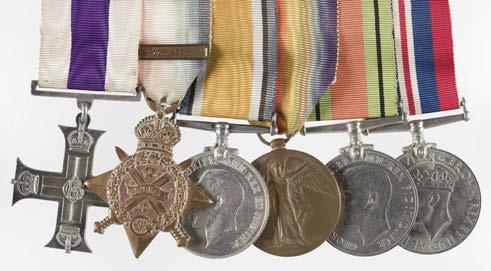
615* A Great War M.C. group to F.R.M. Irwin, Honourable Artillery Company later Royal Field Artillery, ‘for conspicuous gallantry and devotion during a hostile attack’
a) Military Cross, G.V.R., reverse contemporarily engraved ‘Lieut F.R.M. Irwin. R.F.A. Le Toueret 27th April 1918’
b) 1914 Star and bar (810 L. Cpl. F.R.M. Irwin. H.A.C.)
c) British War and Victory Medals (Lieut. F.R.M. Irwin.)
d) Defence and War Medal, very fine or better, swing mounted as worn, with copied research
M.C. London Gazette: 28 July 1918. Lt. Frederick Ralph Miller Irwin, R.F.A., Spec. Res. ‘For conspicuous gallantry and devotion during a hostile attack. The battery was suddenly caught in the enemy’s heavy howitzer barrage, and about one-third of the N.C.O.’s and men were killed, wounded or gassed. He superintended the removal of the wounded, after which he returned twice with volunteers to get away the guns ammunition lorrie. It was mainly owing to his splendid courage and presence of mind that all the wounded were rescued and both guns and ammunition lorries saved.’
Frederick Ralph Miller served on the Western Front from 1 September 1914 with the Honourable Artillery Company and then Royal Field Artillery.
(6)
£800 - £1,000
616* A fine WWI group of miniature dress awards attributed to Captain W.A.R. Coker, M.C., Royal Flying Corps later Loyal North Lancashire Regiment
a) Military Cross
b) British War and Victory Medals
c) Territorial Force War Medal, mounted as worn, presented in a fitted leather box, the lid embossed in gold ‘Capt W.A.R. Coker
M.C.’. 9 x 7.5 cm
M.C. London Gazette: 3 June 1919
Walter Ashton Coker enlisted as an air mechanic in the Royal Flying Corps before being commissioned 2nd Lieutenant in the 1/5 Bn Loyal North Lancashire Regiment.
Coker’s full size medals were sold by Liverpool Medals, so a reunite may be possible.
(4) £70 - £100
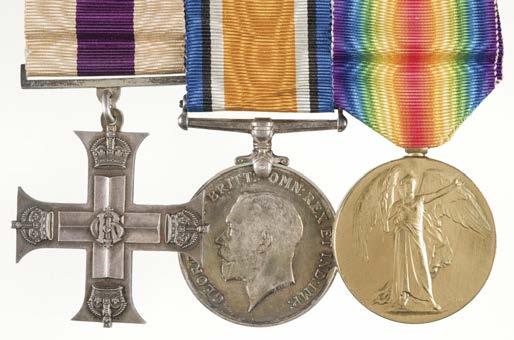
617* A fine WWI ‘Trench Raid’ M.C. group of three to Major A.V. Mackenzie, 1st Bn, King’s Shropshire Light Infantry, who on 4 June 1917 led his platoon in a trench raid in the Mazingarbe Sector, inflicting heavy casualties on the enemy. Mackenzie also carried a wounded comrade under heavy fire over 300 yards to safety
a) Military Cross, G.V.R., unnamed as issued
b) British War and Victory Medals (Lieut A.V. Mackenzie), extremely fine, with extensive copied research
M.C. London Gazette: 26 July 1917
‘For conspicuous gallantry and devotion to duty when leading raids into the enemy’s lines. His dash and determination enabled him to inflict heavy casualties upon the enemy, and on one occasion, he carried a wounded man back over a distance of 300 yards under heavy shell fire. His conduct throughout was beyond all praise.’
‘At 2 a.m. on the 1st of June 1917, 1/KSLI raided the German Front Line. The attacking force was in four parties, each led by a Second Lieutenant. The whole raiding party had undertaken nine days of special training. All the raiders entered the enemy trenches, killing sixteen Germans and destroying several machine gun posts. Intelligence was gained, but no prisoners were taken. 1/KSLI suffered four killed and thirteen wounded. (This was the raid where Mackenzie carried one of his wounded men for 300 yards (300m) back across no-man’s-land to the British frontline trench, saving his life).
Another smaller raid was conducted at 2.45 a.m. by twenty of 1/KSLI on 4 June (with 2nd Lieutenant Mackenzie), but only ten minutes were allowed to achieve the task of obtaining prisoners. Strong opposition meant the raid did not succeed. 11/KSLI suffered three killed and fourteen wounded. On 7 July, a sixty-strong party of Germans raided the 1/KSLI ‘D’ Company held trenches following a fifteen-minute artillery bombardment. The raid was repulsed by rifleand Lewis’s gun fire. 1/KSLI suffered twenty killed and fifteen wounded.’
(3)
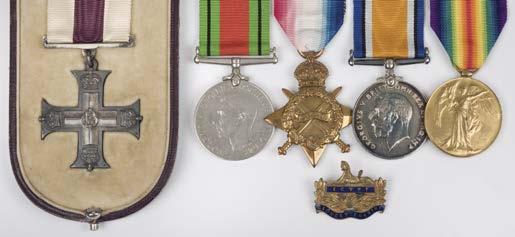
618* A WWI ‘V.C. Action’ M.C. group to Lieutenant P.H. Block, 8th Bn, Gloucestershire Regiment, late Devonshire Cyclist Corps, who alongside Captain Manley V.C. held a defensive flank until ordered to withdraw, Block was wounded during hand to hand fighting and awarded the Military Cross for conspicuous gallantry
a) Military Cross, G.V.R., unnamed as issued, nicely toned, in case of issue
b) 1914-15 Star (9607 L.Cpl. P.H. Block. A. Cyc. Corps.)
c) British War and Victory Medals (2. Lieut. L.P. Block.)
d) Defence Medal, extremely fine, with Gloucestershire Regiment sweetheart brooch
M.C. London Gazette: 16 September 1918 2nd Lt. Percival Harold Block, Glouc. R., Spec. Res.’
‘For conspicuous gallantry and devotion to duty. During an enemy attack, this officer organised a defensive flank under heavy artillery fire and maintained his position until he received orders from battalion headquarters to withdraw. During seven days’ hard fighting which ensued, he did patrol work of the greatest value, in one instance going alone three different times into a village and bringing back information which was of the utmost service. Until he was finally wounded, he displayed personal gallantry of a high order throughout the operations.’
Percival Harold Block was born in Whitehall, Bristol in 1891. He was a keen cyclist and joined the Special Reserve. Shortly before the outbreak of WWI, he enlisted as Private into the 7th (Cyclist) Battalion, Devonshire Regiment. He served in France from 23 November 1915 but as there was not a great need for cyclists, he found himself posted to the Lancashire Fusiliers in 1916 and fought on the Somme. He advanced to 2nd Lieutenant in the Gloucestershire Regiment on 31 July 1917. He led his platoon into action at Ypres Salient during September and October 1917 at the battles of Menin Road Ridge, Polygon Wood, Broodseinde, Poelcappelle and Second Passchendaele.
On 20 March 1918, the 8th Glosters were on the frontline trenches near Saint Quentin. The following day, under heavy artillery, gas attacks and German stormtroopers, the 8th Bn fought bravely to hold their ground. Captain Manley Angell James was awarded the Victoria Cross for this action; this was also the action in which Block received his Military Cross.
(5)
£800 - £1,000
£600 - £800
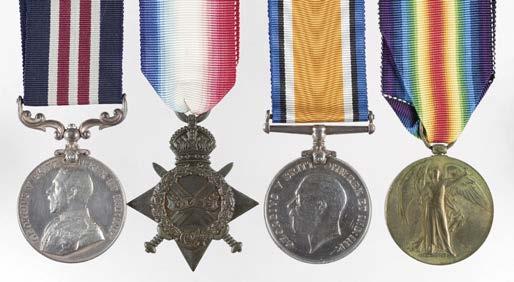
619* A Great War M.M. group to Sergeant G.A. Holloway, 7th Bn, Bedfordshire Regiment
a) Military Medal, G.V.R. (14934. Sjt. G..H [sic],. Holloway. 7/Bedf:R.)
b) 1914-15 Star (14934 Pte G.A. Holloway. Bedf:R.)
c) British War and Victory Medal (14934 Sjt. G.A. Holloway. Bedf.R.), very fine or better, with copied research
M.M. London Gazette: 13 September 1918.
An extract from the 54th Infantry Brigade 1914-1918, Some Records and Laughter in France, page 150, circa 30 March 1918 ... being quoted from the official accounts on which they were awarded medals ...
‘Sjt G.H (A). Holloway DCM (MM) was left in charge of a considerable part of the front line after a successful counterattack in which nearly all officers became casualties. Owing to the attack on either flank being held up, the battalion was in a precarious position for a considerable time, and it was largely due to his great determination and personal example that the front line maintained its ground, in spite of several attempts by the enemy to cut it off ...’.
George A. Holloway served on the Western Front from 26 July 1915. (4) £300 - £400
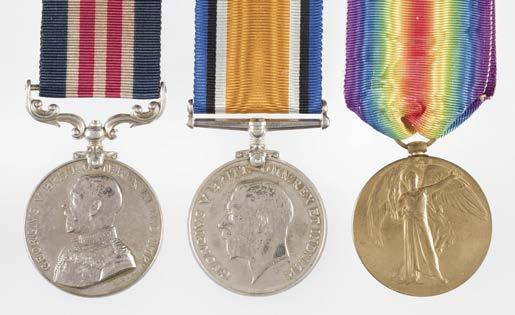
620* A WWI M.M. group of three to Sergeant R. E. Reeve, 23rd (8th City ‘Pals’) and 2nd Battalion, Manchester Regiment, late Norfolk Regiment, who was killed in action on the Western Front on 19 August 1918
a) Military Medal, G.V.R. (47558 L.Cpl R. E. Reeve. 23/ Manch: R.)
b) British War and Victory Medals (47558 Sjt. R. E. Reeve. Manch. R.), nearly extremely fine, with copied research
M.M. London Gazette: 2 November 1917.
Reginald Ellwood Reeve was born at West Lynn, King’s Lynn, Norfolk, and originally attested there for the Norfolk Regiment. Transferring to the Manchester Regiment, he served with the 23rd (8th City ‘Pals’) Battalion on the Western Front until its disbandment in early 1918, where its remaining soldiers were redistributed to other battalions. He advanced to Sergeant. Reeve was killed in action whilst serving with the 2nd Battalion, Manchester Regiment on 19 August 1918. He is buried in Heath Cemetery, Harbonnieres, France.
(3)
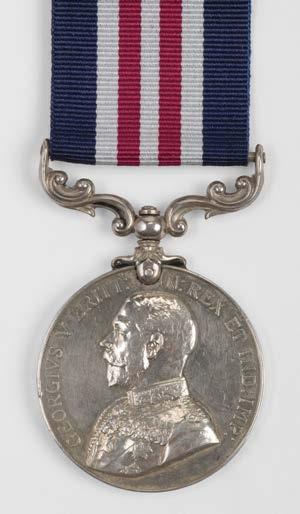
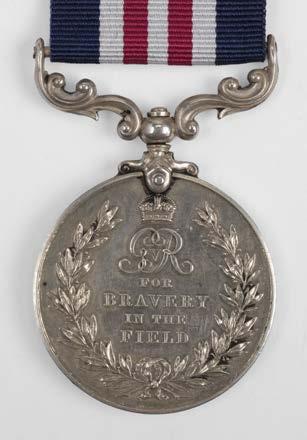
621* WWI ‘casualty’ M.M. to Driver R. Jessop, Royal Field Artillery, who was killed in action at the Second Battle of the Aisne on 27 May 1918
Military Medal, G.V.R. (63727 Dvr R. Jessop. B/95 Bde R.F.A.), good very fine
M.M. London Gazette: 17 December 1917.
Richard Jessop was born in Pinxton, Derbyshire. He enlisted into the Royal Field Artillery at Pinxton in 1914 and trained as an artillery driver who rode and controlled the horses pulling a field gun; he landed in France on 9 September 1915 and saw heavy fighting later recognised for courage and awarded the Military Medal at Passchendaele where the 95th Brigade were in action at the Battle of Polygon Wood, Ypres between 26-28 September 1917.
After the opening of the German Spring offensives in March and April 1918, four British Divisions were transferred to the Soissons Front on the Aisne in May to support the French, who were now under heavy attack by the Germans. Jessop was listed as “missing” and killed in action on 27 May 1918 at the Second Battle of the Aisne. Jessop is commemorated on the Soissons Memorial, France.
£300 - £400
(1)
£200 - £300
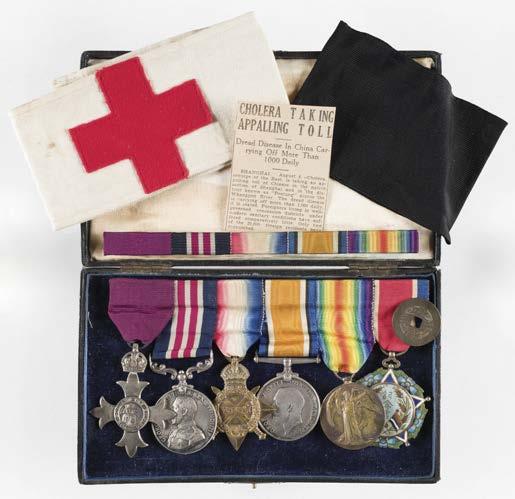
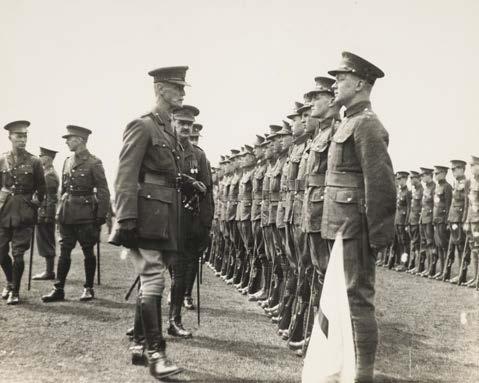
622* WWI M.B.E., M.M. group to Captain J.H.T. Holman, Canadian Chaplain Service and Reverend in China
a) The Most Excellent Order of the British Empire, M.B.E. (Civil) Member's 1st type breast badge, silver, hallmarks for Garrard, London 1919
b) Military Medal, G.V.R. (1312 Sjt. J.T. Holman. Can: A.M.C.)
c) 1914-15 Star (1312 Cpl J.H.T. Holman. Can: A.M.C)
d) British War and Victory Medals (Hon. Capt. J.H.T. Holman.)
e) China, Beiyang Government, A Cao Kun Inauguration Decoration, circa 1923, silver and enamel, an aperture for a portrait has been replaced by white metal, very fine or better, swing mounted as worn, with medal ribbon bar, Red Cross cloth armband, black armband, Chinese coin, a black and white photograph of troops on parade, newspaper cuttings and copied research, contained in an old A.H. Baldwin & Sons Ltd leather box, a rare combination and probably unique
M.M. London Gazette: 2 November 1917 Sjt. J.T. Holman, A.M.C.
M.B.E. London Gazette: 3 July 1926 The Reverend John Holman Taylor Holman, M.A., Acting Chaplain at His Majesty’s Legation at Peking. John Holman Taylor Holman (d.1942) was educated at Pembroke College and Cambridge
(6)
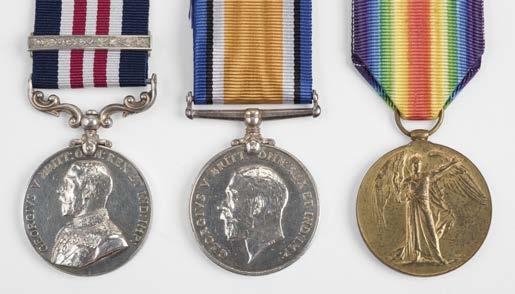
623* WWI casualty M.M & Second Award Bar group to Private W.H.J. Phipps, Suffolk Regiment, who died of wounds at Cambrai on 9 October 1918
a) Military Medal, G.V.R. with Second Award Bar (235319 Pte W.H.J. Phipps. 2/Suff. R.)
b) British War and Victory Medal (2995. Pte . W.H.J. Phipps. Essex. R.), good very fine or better, with copied research
M.M. London Gazette: 24 January 1919 Suffolk Regiment. 235319 Pte. Phipps, W.H.J., 2nd Bn. (Ashbourne).
Second Award Bar. London Gazette: 14 May 1919.
William Henry John Phipps was a school teacher prior to enlisting with 1/5th & 10th Battalions, Essex Regiment in Chelmsford. He was attached to the 2nd Battalion, Suffolk Regiment and fought on the Somme and Cambrai, where he was wounded and later died on 9 October 1918. Phipps is buried in Delsaux Farm Cemetery, France. A detailed and extensive research report is included with the lot.
(3)
£500 - £600
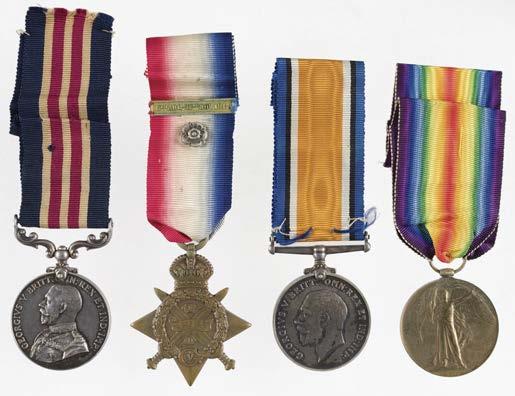
624* A Great War M.M. group to Sergeant A.S. Baxter, 1st Bn, Bedfordshire Regiment
a) Military Medal, G.V.R. (9885 Sjt S.A. Baxter. Bedf:R.)
b) 1914 Star with clasp and rosette (9885 Cpl S.A. Baxter. 1/Bedf:R.)
c) British War and Victory Medals (9885 Sjt. S.A. Baxter. Bedf:R.), very fine, with copied research
M.M. London Gazette: 18 July 1917
Samuel Arthur Baxter was a native of 20 Wenlock Street, Luton, Bedfordshire. He served on the Western Front from 16 August 1914. His medal index card records him as ‘wounded’.
(4)
£1,000 - £1,500
£300 - £400
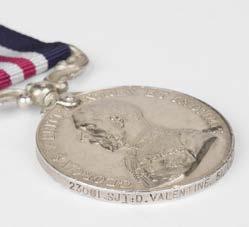
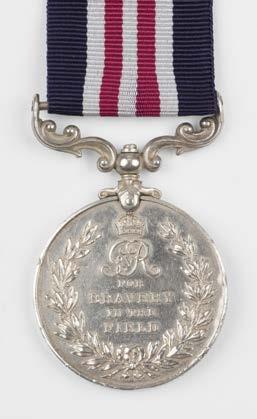
625* WWI Military Medal to Sergeant D. Valentine, 51st Bn, Machine Gun Corps, who died of wounds on 26 October 1918 Military Medal, G.V.R. (23061 Sjt: D. Valentine. 51/ (H) Bn: M.G.C.), extremely fine, with copied research M.M. London Gazette: 13 September 1918 23061 Sjt. D. Valentine, M.G. Corps (Brechin).
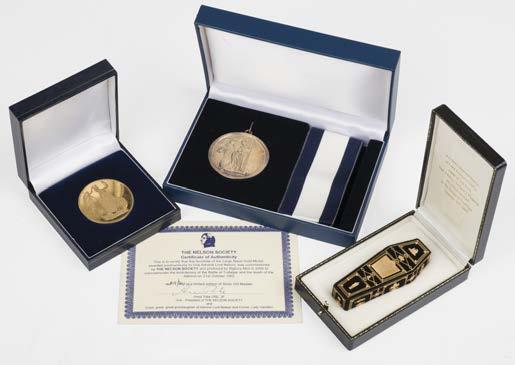
David Valentine was born in Brechin, Scotland. He enlisted into the 1/5th (Angus & Dundee) Bn, Black Watch in 1913. He served on the Western Front from 1 November 1914. He served throughout the war and died of wounds that he sustained in the Battle off the Selle. Valentine is commemorated in the Queant Road Cemetery, Buissy. (1)
£200 - £300
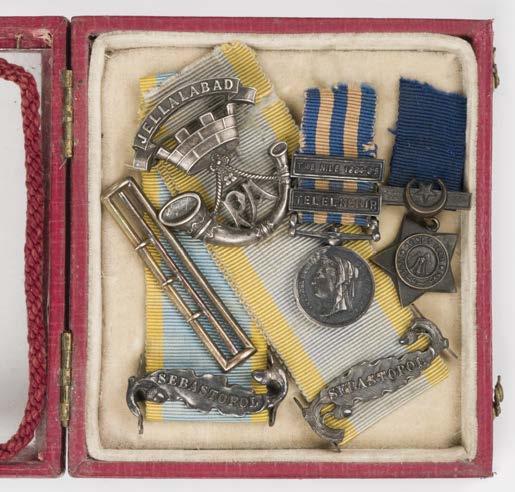
626* Miniature dress medals. Egypt 1882-89, 2 clasps, Tel-ElKebir and The Nile 1884-85, Khedive’s Star, nicely toned, together with a Victoria silver gilt full size medal ribbon bar, two Victorian Crimea medal clasps for Sebastopol, each on original ribbon and an attractive tone, a Victorian officer’s white metal badge of the 13th (Somerset) Foot, contained in a small display box, plus a box of original medal ribbon including a roll of Tibet ribbon (1) £70 - £100
627* Nelson (Horatio, 1758-1805). The Nelson Society, BiCentenary of Trafalgar, replica Large Naval Gold medal, in silver-gilt, replicating gold, presented in a fitted box with ribbon, with certificate numbered 019/300, together with another replica of the Large Naval Gold Medal, gilt metal in presentation case, plus a correct representation of Lord Nelson’s coffin made from oak from the Victory, Nelson’s Flagship on which he died at the Battle of Traflagar, 21 October 1805, 8.3 cm long, in fitted case with silk lining inscribed in gold lettering (3)
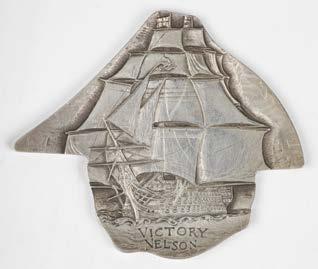
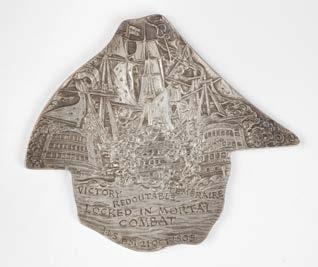
£200 - £300
628 Nelson (Horatio, 1758-1805). The Trafalgar Medal for the bicentenary, 2005, a silver commemorative medal by Malcolm Appleby for Sim Comfort Associates, numbered 4/500, the obverse showing Victory approaching the combined fleet under sail at twelve noon on 21 October 1805, the reverse showing Victory, Redoubtable and Temeraire locked in mortal combat, 75 mm across, 67.8g, with presentation box, card packaging and information booklet and literature (1)
£200 - £300
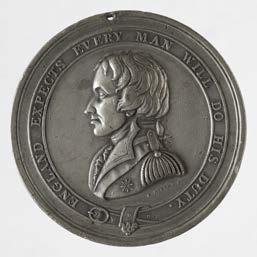
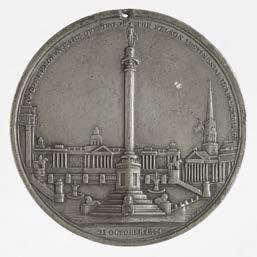
629* Nelson Testimonial Medal 1844, as presented to eligible Inpensioners of Greenwich Hospital Nelson Testimonial Medal 1844, by E. Avern, the obverse with a bust of Nelson facing left, enclosed by a garter, ‘England Expects Every Man Will do His Duty’, the reverse with a view of the Column in Trafalgar Square, with the National Gallery and the Church of St. Martin-in-the-Fields in the background, ‘To Commemorate the Opening of the Nelson Testimonial in Trafalgar Squ.’, the exergue, ‘21 October 1844’, 60 mm, very fine (1)
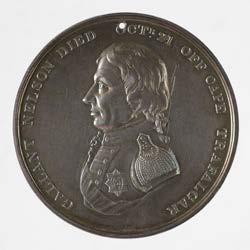
£400 - £600
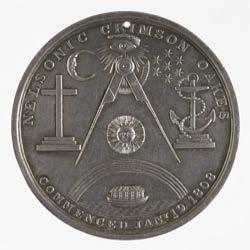
630* Nelsonic Crimson Oakes Society (Founded 1808), a silver medal, unsigned [probably by B. Patrick], bust of Lord Nelson left, the reverse showing masonic symbols, pierced at top for suspension, 54 mm, good very fine and scarce (1)
£150 - £200
631* Order of Ladies Glades (RAOB). Silver awards to Sister M.E. Meek, Durdham Glade, Bristol, circa 1930s, comprising six silver and enamel medals, including a Fattorini medal, with green enamel O.L.G. shamrock laid on an an ornate shield back engraved ‘presented to Sister M.E. Meek by the members of Durdham Glade No 10 for regular attendance 29-9-30’, the ribbon with two further attendance bars dated 1931/32, all presented on a purple sash with gold bullion embroidered DOM insignia
The Order of the Ladies Glade is a social and charitable organisation associated with the Royal Antediluvian Order of Buffaloes (ROAB) and is the female division often referred to as “the Buffs”. (1) £70 - £100
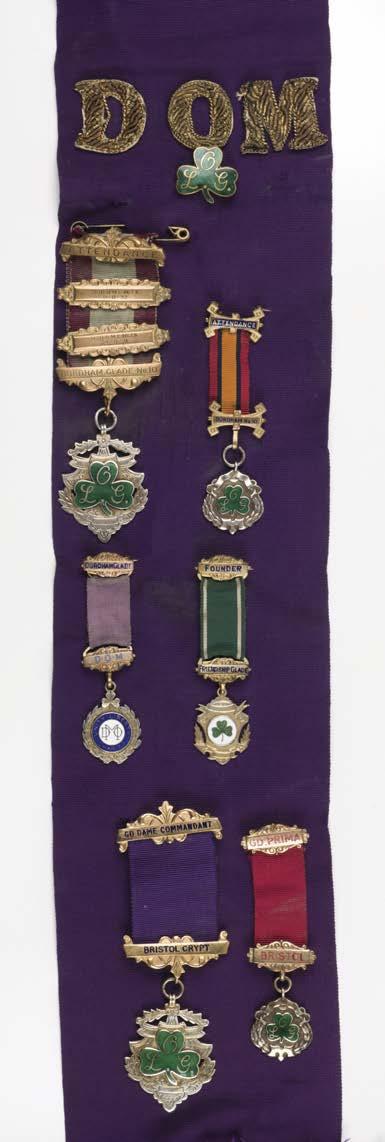
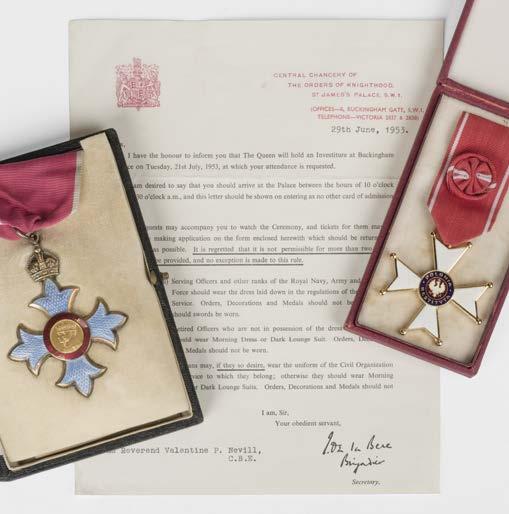
632* A fine pair attributed to Reverend Father V.P. Nevill, C.B.E.
The Most Excellent Order of the British Empire, C.B.E. (Civil) Commander’s 2nd type, neck badge, complete with neck cravat in its Garrard, London case of issue
Poland, People’s Republic, Order of Polonia Restituta, Fourth Class breast badge, gilt and enamel, with rosette on ribbon, in its red case of issue, extremely fine, with a letter from the Central Chancery of the Orders of Knighthood dated 29 June 1953, requesting The Reverend Valentine P. Nevill, C.B.E. to his investiture at Buckingham Palace on 21 July 1953, with copied research
C.B.E. London Gazette: 1 June 1953 The Reverend Valentine Paul Nevill, Headmaster, Ampleforth College, York.
Reverend Father Valentine Paul Nevill was born in Dieppe in 1882. He studied at Ampleforth College, York. In 1905, he was ordained as a priest and remained as headmaster. He was widely viewed as one of Britain’s great 20th century headmasters; a portrait of him is on display at the National Portrait Gallery in London. The Polish award was for his ‘services in Poland’ in which he formed and ran a reception centre/hostel “St Casimir’s” for Polish people during WWII. (2) £200 - £300
633* Pair: Lieutenant Colonel Burton Alexander Nicol, South African Medical Corps
British War (T/Lt-Col. B.A. Nicol.), Victory Medal (Capt. B.A. Nicol.), bilingual type, good very fine, with copied research
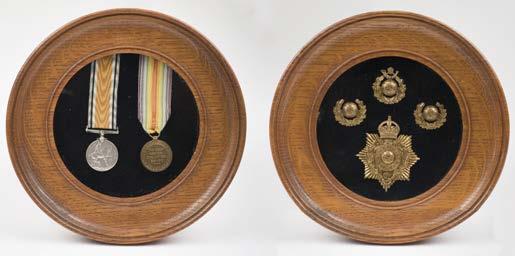
634* Pair: Private E.S. Moore, Royal Marine Light Infantry
British War and Victory Medals (Ch.19972. Pte. E.S. Moore. R.M.L.I.), extremely fine, presented in a period circular oak frame, glazed, frame size 26.5 cm diameter, accompanying the medals are the recipient’s Royal Marine Service badges, including helmet plate, also in a matched oak frame, glazed (2)
£100 - £150
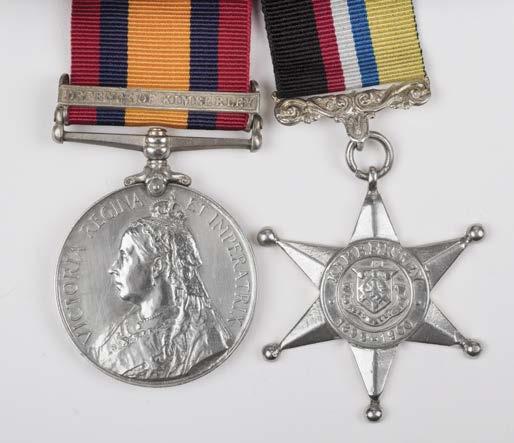
635* Pair: Private H. Snaith, Kimberley Town Guard
Queen’s South Africa 1899-1902, 1 clasp, Defence of Kimberley (Pte. H. Snaith, Kimberley Town Gd:); Mayor of Kimberley’s Star 18991900, reverse hallmark with date letter ‘a’, good very fine (2)
Surgeon Lieutenant-Colonel Burton Alexander Nicol served during the Boer War and East Africa as a Senior Medical Officer. He later worked at Port Elizabeth Hospital and then East London, South Africa. He was appointed as Captain in 1914 and advanced to Lieutenant Colonel in 1918. Nicol retired from military service in 1924. An obituary accompanies the lot. (2)
£60 - £80
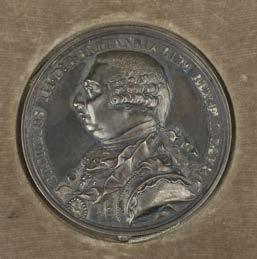
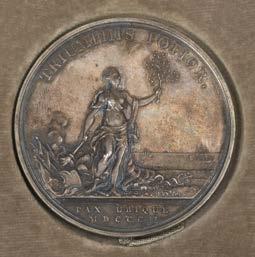
£400 - £500 Lot 636
636* Peace of Amiens, 1802, a silver medal by C.H. Küchler, the obverse showing an armoured bust of George III facing left, the reverse showing Peace standing facing, holding an olive branch and setting fire to a pile of arms, 48 mm, good very fine
Britain gave up most of the overseas territory it had conquered during the war in this peace treaty. Captured enemy weapons representing the gains of victory are shown being destroyed by Peace in favour of the commercial benefits symbolised by her traditional attributes – the cornucopia of agriculture and the staff of Mercury signifying trade.
(1)
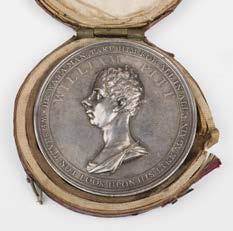
£200 - £300
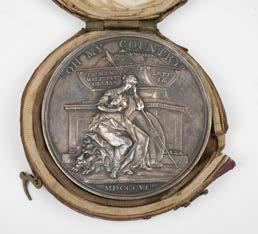
637* Pitt (William, 1759-1806). Death of William Pitt, 1806, silver commemorative medal, the obverse showing a young Pitt in drapery, inscribed ‘William Pitt he was a man, take him for all in all. We shall not look upon his like again’, the reverse showing Britannia weeping beside a tomb, inscribed ‘In memory of Willm Pitt obt Jan, 23 ÆTT, above ‘Oh My country’, ‘MDCCCVI’,52 mm diameter, in original red leather case
(1)
£100 - £150
638* Poland, People’s Republic, Order of Virtuti Militari, Commander’s set, comprising neck badge 95 mm including PRL suspender, gilt and enamels, breast star, 95 mm, white metal, gilt and enamels, with screwback, later copies for display purposes (2)
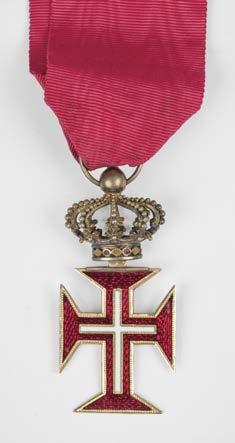
£70 - £100
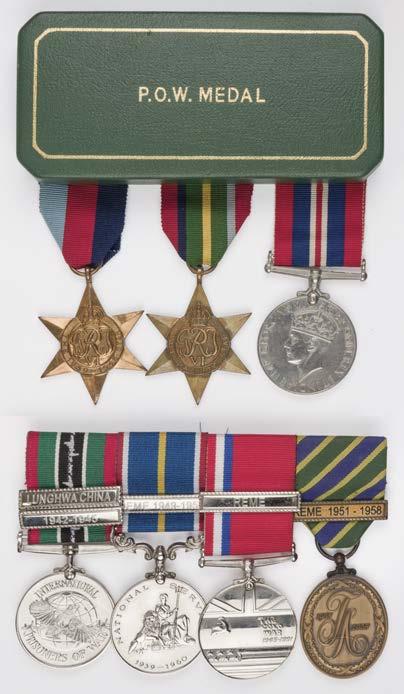
640 A WWII and later group to Private J.C. Bruce, Royal Engineers, who was captured by the Japanese at Singapore in 1942, and spent the remainder of the war in Changi, Shanghai and Lunghua Prisons
1939-1945 Star, Pacific Star, War Medal, these loose, with Allied ExPrisoners of War Medal with 2 clasps 1942-1945, Lunghwa China '22/331 J.C. Bruce', National Service Medal, 1 clasp, REME 19491951, Cold War Service Medal, 1 clasp, REME, Territorial Army Centennial Medal, 1 class, REME 1951-1957, last three all named '22130514 Pte J.C. Bruce REME.', extremely fine, mounted as worn, with P.O.W. Medal, with typed research (7)
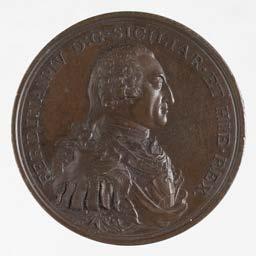
£100 - £150
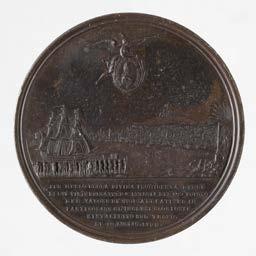
639* Portugal. Military Order of Christ, Type II neck badge, yellow metal and red and white enamel, stamped with a wolf’s head above II and one other hallmark to the upper section of the cross, minor damage to the red enamel, with red silk neck ribbon, in a tooled red leather box (1)
£150 - £200
641* Restoration of Ferdinand IV of Naples, 1799, a copper medal by C.H. Küchler, armoured and draped bust of Ferdinand right, the reverse with a ship entering Bay of Naples, Fame flying above holding a medallion of Nelson, 48 mm, about extremely fine (1)
£150 - £200
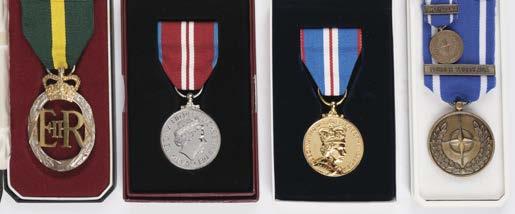
642* A modern group of four medals attributed to Major A.C.W. MacGillivray, T.D., Royal Signals
Nato Service Medal for Yugoslavia, with miniature dress award and plastic box
Jubilee Medal 2002, unnamed as issued, with card box
Jubilee Medal 2012, unnamed as issued, with card box
Territorial Decoration, E.II.R., reverse officially dated 1993, with integral top ribbon bar, in Royal Mint case of issue, extremely fine, with copied research and photographs of the recipient meeting Princess Anne at the medal presentation service in Split, Croatia, 9 October 1996
(4)
£100 - £150
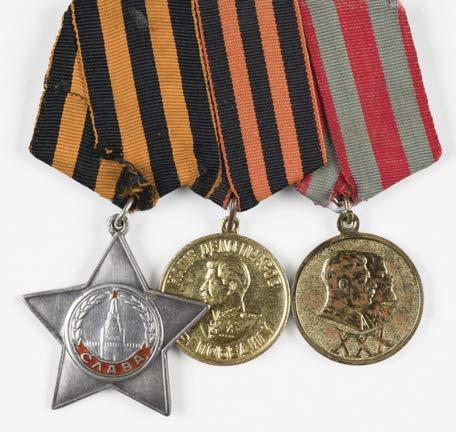
643* Russian Medals. A fine Order of Glory Third Class group to Private Gulayev Aleksei Grigoreyevich, a submachine gunner in the 10th Guards Airborne Division
Order of Glory, Third Class, silver and enamel breast badge, reverse numbered 584498, Victory over Germany Medal 1941-45, Jubilee Medal for 30 Years of the Soviet Army and Navy, mounted in the Soviet style, with research
Originally recommended for an Order of the Patriotic War II Class, 15 January 1947
“Comrade Gulayev served as a sub-machine gunner in the 10th Guards Airborne Division on the North Western Front. On 18 August 1943, during an offensive undertaken by the division on the approaches to the city of Staraya Russa, his platoon leader designated him as an ammunition carrier. The enemy put up stiff armed resistance to the advancing platoon. The platoon suffered considerable losses in manpower and comrade Gulayev was made a light machine gunner. During the offensive, comrade Gulayev personally killed 10 enemy soldiers with his machine gun. During the fierce battle he was severely wounded. At the present time he is a disabled Patriotic War Veteran of the 2nd category. He deserves a decoration. The above is based on his oral testimony and wound report” (3) £200 - £300
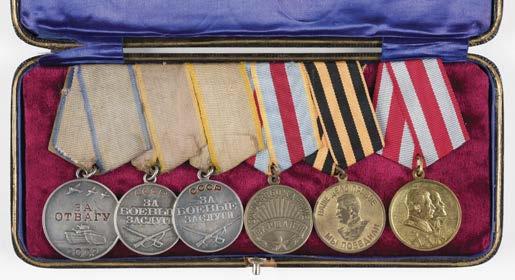
644* Russian Medals. A WWII Medal of Courage group to Lieutenant Aleksandr Dimitriyevich Yakolev
Medal for Combat Merit, silver and enamel, reverse numbered ‘1206808’, Medal for Courage ‘3158275’, Medal for Victory over Germany, Medal for the 30th Anniversary of the Soviet Army and Navy, Medal for the Liberation of Warsaw, mounted in the Soviet style, with research
The Medal for Combat Merit
“Sergeant Aleksandr Dmitriyevich Yakovlev, radio squad leader in the 2nd Battalion for the fact that he on February 27, 1943, when our forces were advancing near the village of Lyudovichi in Smolensk Province, provided fire support with his machine gun for the battalion’s advance. He killed as many as 20 German soldiers and officers and destroyed one light enemy machine gun along with its crew. The battalion was able to capture the village of Lyudovichi.”
(6)
£200 - £300
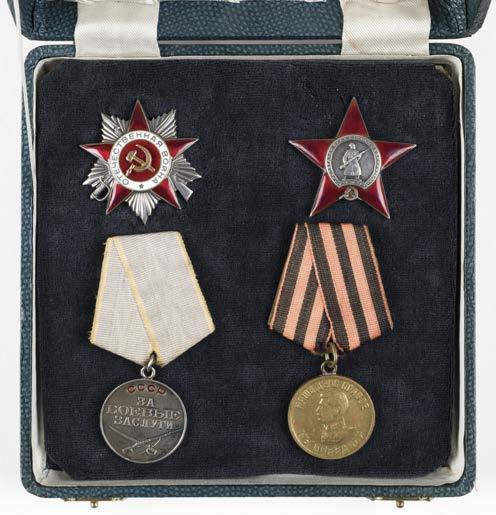
Lot 645
645* Russian Medals. A WWII Order of the Patriotic War, Second Class group to Ivan Makarovich Bichuk
Order of the Patriotic War, Second Class, reverse numbered ‘99323’. Order of the Red Star, reverse numbered ‘559528’, Medal for Battle Merit, Medal for Victory over Germany, with original red book and one other
Order of the Patriotic War, Second Class
“Guards Warrant Officer Bychuk, during the attacks by the fascist occupiers in 1943/44 showe d himself to be a brave and valiant defender of the Motherland. Many times, under heavy artillery, mortar, and machine gun fire restored telephone connections. In the Kursk region, area of Tronsi, and in Hill 245,1, Guards Warrant Officer Bychuk risked his life 8 times to restore connections under horrendous fire and bombing of the enemy. Thus, providing connections to the batteries for the divisional commander. Near the village of Gykla-puzovka during the counterattack in a critical of the battle. Guards Warrant Officer Bychuk restored the telephone lines 12 times while being in a forward position close to the Germans. He inspired his juniors to perform heroic deeds and fulfil military missions while being a commander of the communications section.”
(4)
£200 - £300
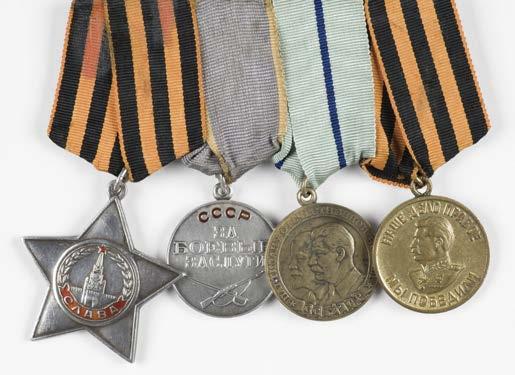
646* Russian Medals. A WWII Soviet Order of Glory, Third Class group to Private Afansy Losifovich Dobrodei, 1st Belorussian Front Order of Glory, Third Class, silver and enamel, reverse numbered ‘558858’, Soviet Medal for Combat Merit, silver and enamel, Soviet Partisan Medal, Second Class, Medal for Victory over Germany, mounted in the Soviet style, with research
“In May 1942 Private Dobrodei voluntarily joined the Kalinin Partisan Detachment of the Pinsk Partisan Formation. During his time with the partisan detachment, he was involved in blowing up railroad beds on eight occasions and he took part in destroying three transport trains. Several times, he was involved in destroying small German garrisons. For his audacious actions, he was nominated for a decoration. In April 1944, he was drafted into the Red Army, leaving the partisan detachment. From 25th April 194,4 he was on the front line, serving as a rifleman in the 29th Rifle Regiment, 12th Guards Rifle Division, 1st Belorussian Front. He was involved in offensive operations and took part in the capture of the cities of Smolin and Pinsk. In battle he killed 8 Hitlerites with his rifle. On 15th July 194 [sic] during offensive fighting for the village of Yukhnovichi, 20 kilometres west of the city of Pinsk, he was severely wounded by a bullet in his thigh. At the present time his right leg is paralysed and he is a disabled veteran of the 2nd category.”
(4)
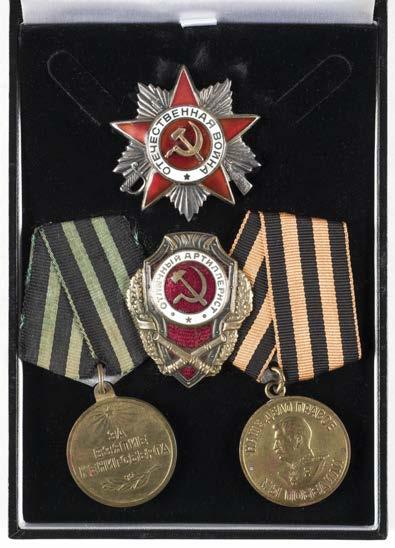
647* Russian Medals. A WWII Order of the Patriotic War, Second Class group to Lieutenant Vladimir Stepanovich Krivornchko, machine gun platoon leader, 87th Rifle Regiment, 27th Rifle Division
Order of the Patriotic War, enamel, reverse numbered 498889, Excellent Gunner Badge, Medal for the Capture of Königsberg, Medal for the Victory over Germany, with red book and research
“During the offensive fighting for the town of Ehlenkrug in the Konigsberg district on 14th April 1945, he showed himself an exceptionally brave and decisive commander. Skillfully leading his rifle platoon in combat he was the first to engage the enemy. By personal example he inspired the men of his platoon to carry out the combat mission assigned to them. He was the first to burst into the enemy trenches, where he, in a short hand-to-hand skirmish, personally shot 4 hitlerites. Thanks to his brave and decisive attack the enemy were driven out of his entrenchments, having brave and decisive attack the enemy suffered heavy losses in manpower. For his courage and bravery, displayed during the fighting with the German occupants and for skillfully leading his platoon in combat situations, he deserved to be awarded the Order of the Patriotic War 1st Class”.
The award was subsequently downgraded to a Second Class.
(4) £200 - £300
£200 - £300
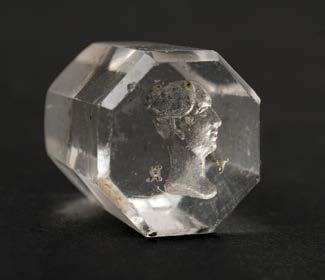
648* Seal. A Victorian octagonal rock crystal desk seal, carved with a young head Queen Victoria flanked by V R, 40 x 60 mm, with a handwritten note inscribed ‘Queen Victoria’s Personal Letter Seal, bought from Princess Beatrice’s House in the Forest of Dean’ (1) £100 - £150
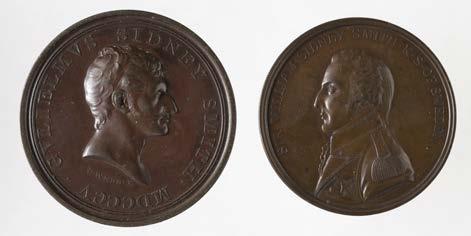
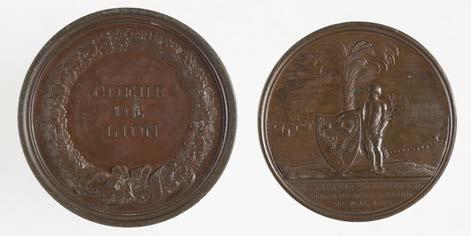
649* Sir William Sidney Smith (1764-1840), The Defence of Acre, Copper Medal, 1799, by J G Hancock, uniformed bust left, the reverse showing youth by palm-tree holds shield, town beyond, 49 mm, about extremely fine, together with Promotion of Admiral Sir William Sidney Smith to Flag Rank, AE Tribute Medal, 1805, by T Webb, bare head facing right, the reverse within an oak wreath, Coeur De Lion, 53mm
(2)
£200 - £300
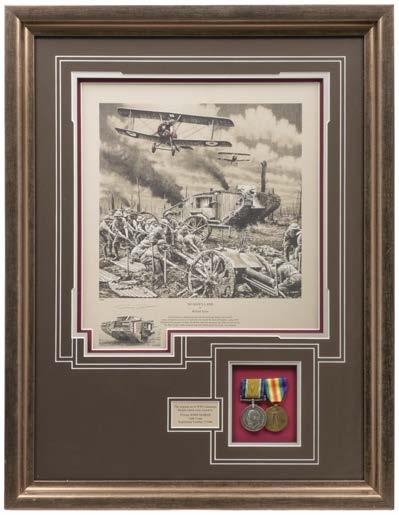
650* Tank Corps. Taylor (Richard), No Man’s Land, limited edition colour print, numbered 14/15, showing British troops and tank attempting to rescue an 18-pounder gun with a Sopwith camel overhead, presented in a display frame with a WWI pair of medals, comprising Victory and British War Medal to 312186 Private John Marsh, Tank Corps, Aces High label to verso plus a certificate of authenticity, frame size 71 x 54.5 cm
(1)
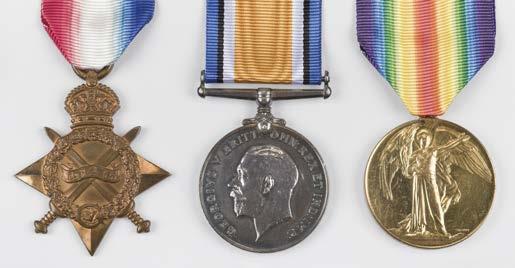
651* Three: Captain C. Morgan, 14th Bn, Northumberland Fusiliers 1914-15 Star (6322 Pte C. Morgan, R. Fus:), British War and Victory Medals (Capt. C. Morgan.), extremely fine, with copied research
Cyril Morgan was a native of Sutton in Surrey. He was educated at a public school before enlisting as a Private in the newly formed battalion of the Public Schools & University Men’s Force at Epsom on 11 September 1914. He was commissioned as Second Lieutenant into 15th Bn, Northumberland Fusiliers on 4 August 1916 and attached to the 14th Bn serving on the Somme, Arras and Passchendaele. He advanced to Captain in 1920, after which he relinquished his commission.
(3)
£80 - £100
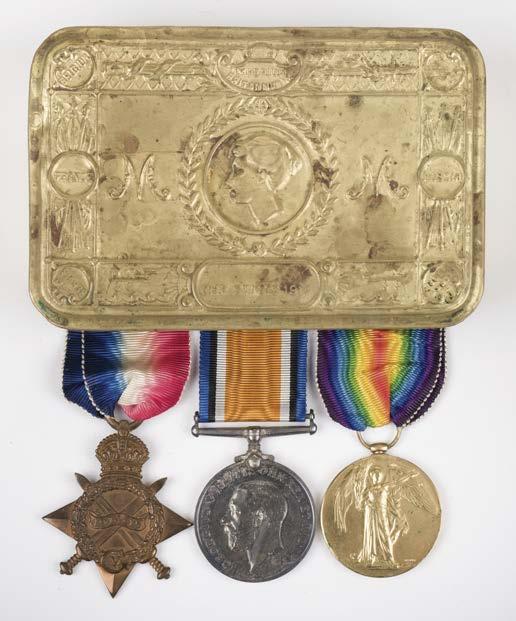
652* Three: Corporal S.H. Palmer, Suffolk Yeomanry 1914-15 Star (2001 Pte. S.H. Palmer. Suff. Yeo.), British War and Victory Medals (2001 Cpl. S.H. Palmer. Suff. Yeo.), extremely fine and the second attractively toned, with WWII Defence and War Medals, contained in a WWI Princess Mary Christmas tin
Stanley H Palmer served on the Western Front from 8 October 1915. He is entitled to a silver war badge.
(5)
£150 - £200
£100 - £150
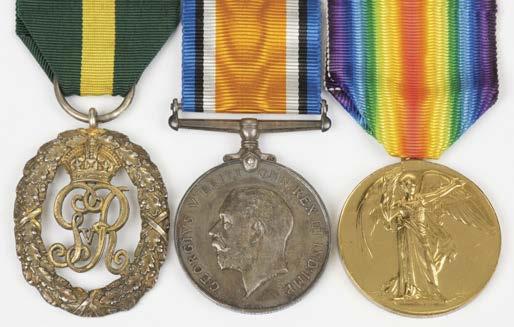
653* Three: Major H. Dodgson, M.B., T.D., Royal Army Medical Corps
Territorial Decoration, G.V.R., silver and silver-gilt, with integral top riband bar, British War and Victory Medals (Major H. Dodgson.), extremely fine, with copied research
Henry Dodgson was a practising Bachelor of Medicine and a Territorial Force officer who, prior to WWI, was working at a hospital in England. He was promoted to Captain in the Royal Army Medical Corps in December 1916 and served on the Western Front from 6 January 1917. He was promoted to Major in January 1918 and remained in France until the end of the war.
(3)
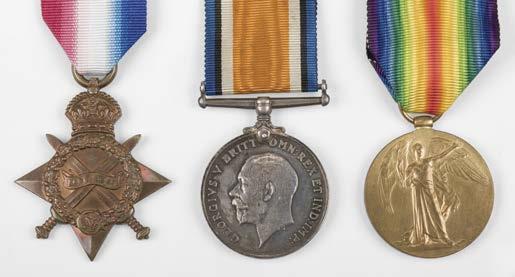
655* Three: Private C.S. Thomson, 7th Canadian Infantry 1914-15 Star (428761 Pte. C.S. Thomson 7/Can: Inf:), British War and Victory Medals (428761 Pte. C.S. Thomson 7/Can: Inf.), good very fine Charles Scrymgeour Thomson was born in Dundee, Scotland in 1886. He served for 3.5 years with the Royal Army Medical Corps (T.F.) before emigrating to Canada, where he settled in North Vancouver. He enlisted with the 72nd Regiment, Seaforth Highlanders of Canada and then 7th Bn. He landed in France on 23 August 1915. The Bn was fighting at Ypres on 13 April 1916 when after a long barrage of enemy heavy fire, Thomson suffered from shell shock and was evacuated to No 3 Canadian Field Ambulance, after which he was invalided to England.
(3)
£100 - £150
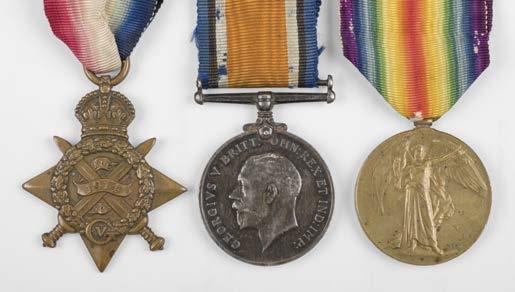
654* Three: Private A. Badman, 1st Bn, Somerset Light Infantry 1914 Star (7216 Pte. A. Badman. 1/Som: L.I.), British War and Victory Medals (7216 Pte. A. Badman. Som. L.I.), very fine
Arthur Badman served on the Western Front from 21 August 1914. He fought at the Le Cateau, Marne, Aisne and First Ypres where the Somerset Light Infantry charged with fixed bayonets at ‘Prowse Point’ (named after their commanding officer, Major C.B. Prowse) on 30 October 1914. Badman was discharged on 31 May 1915.
(3)
£80 - £100
£80 - £100
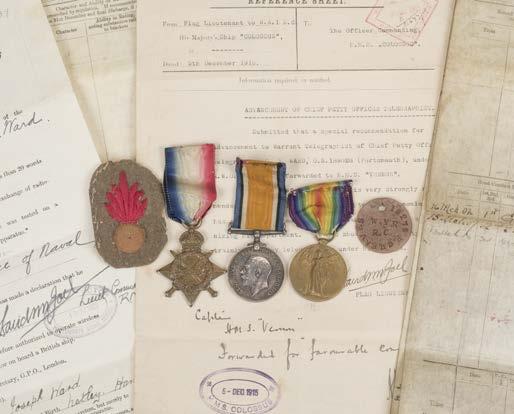
656* Three: Private R.H. Greaves, West Yorkshire Regiment 1914-15 Star (16279 Pte. R.H. Greaves. W. York. R.), British War and Victory Medals (16279 Pte. R.H. Greaves. W. York. R.), very fine, plus identity tag. together with a framed group of WWI French casualty medals to Corporal Georges Pont, 7th Algerian Tirailleurs Regiment, comprising Croix De Guerre with swords, Médaille Militaire, Great War 1914-18 Medal, presented in a period wooden frame, glazed, with certificate, frame size 38 x 49 cm, plus service papers and reference sheet relating to Chief Petty Officer G.J. Ward, Royal Navy, who was presented the Distinguished Service Medal for the Battle of Jutland, 31 May 1916
Richard H. Greaves served on the Western Front from 10 September 1915. He transferred to the York & Lancaster Regiment (45230).
(1)
£100 - £150
657* Three: Private V. Richardson, Border Regiment, died from wounds sustained at Sulva Bay, Gallipoli, on 21 August 1915 1914-15 Star (9970 Pte. V. Richardson. Bord. R.), British War and Victory Medals (9970 Pte. V. Richardson. R.), extremely fine with copied research
Victor Francis Richardson was born in Uckfield, East Sussex. He served with the 1st Bn, Border Regiment in Gallipoli from 25 April 1915. Richardson was badly wounded in the Battle of Hill 70 at Suvla on 21 August 1915. He was taken to Lemnos Island and then transferred to Malta, where he was operated on but died of his wounds on 23 November 1915. Richardson is buried in the Pieta Military Cemetery, Malta. (3)
£80 - £100
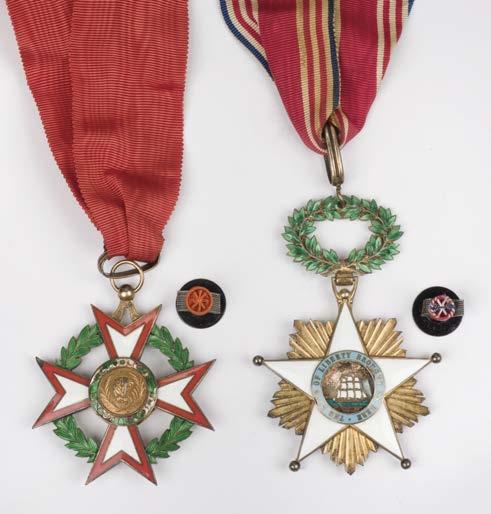
658* World Orders. An unattributed collection of Orders and Medals, comprising, Great Britain. The Order of St. John of Jerusalem, Commander’s (Brother’s), neck badge, silver and enamel, in case of issue Senegal. Order of the Lion, Commander’s neck badge, gilt metal and enamel, in Arthus Bertrand case of issue Liberia. Order of African Redemption, Commander’s neck badge, gilt medal and enamel (some loss), in A. Chobillon, Paris case of issue
Ivory Coast. National Order of the Ivory Coast, Commander’s neck badge, gilt metal and enamel (some loss), in A. Chobillon, Paris case of issue
The Order of St. John of Jerusalem, Brothers breast badge, silver and enamel, Defence Medal, Naval General Service Medal, G.VI.R., 1 clasp, Palestine 1945-48, naming erased, court mounted Miniature dress awards representing this full entitlement, an interesting combination and perhaps researchable (1) £200 - £300
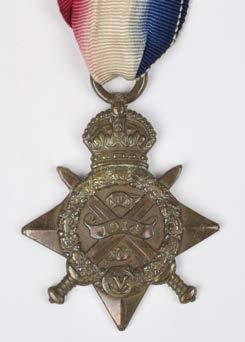
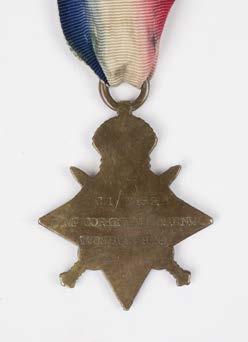
659* 1914 Star (C1/2459 D McCorkindale, AB RNVR Anson Bttn R.N.D.), very fine, with copied research
Dungald McCorkindale was born in Glasgow in 1894. After school, he enlisted in the Clyde Division of the Royal Naval Volunteer Reserve Division. He fought in the Defence of Antwerp in October 1914, escaping capture and was part of the reformed Anson serving in Gallipoli. He was on Anson at “V” Beach on 25 April 1914 when Sub Lieutenant Tisdall of Anson swam around saving the wounded in the water, while Commander Unwin (River Clyde) and Able Seaman Mallison (Anson Battalion) held a rope to keep two Hoppers in place, which enabled the men to cross onto the beach. All three men were awarded the Victoria Cross. McCorkindale went on to fight at Krithia. (1) £80 - £100
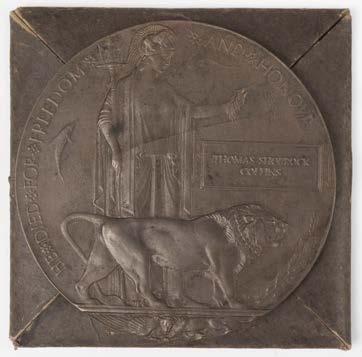
660* A WWI bronze memorial plaque commemorating SubLieutenant T.S. Collins, Hood Battalion, Royal Naval Division, who died of wounds on 23 November 1917
WWI Memorial Plaque ‘Thomas Shorrick Collins’, with card envelope and letter of condolence from Buckingham Palace, with copied research including a copied photograph of the recipient wearing full uniform
Thomas Shorrock Collins was born in 1896 and was a native of “The Hectorage”, Tonbridge, Kent. He joined the Hawke Battalion, Royal Naval Division in May 1915 and, after attending officer training college, was promoted to Sub-Lieutenant in November 1915. He went with his Battalion to Mudros on garrison duty in February 1916, and in the following June, they were sent to France to fight on the Somme. He contracted trench fever and was invalided home, returning to the front line only to be gassed. On 10 October 1917, whilst in charge of a working party, he was very severely wounded by fragments of a high explosive shell, receiving a compound fracture of both hands. A few weeks later, on 23 November 1917, he died from his wounds. Collins is buried in Mont Huon Military Cemetery, Le Treport. (1)
£100 - £150
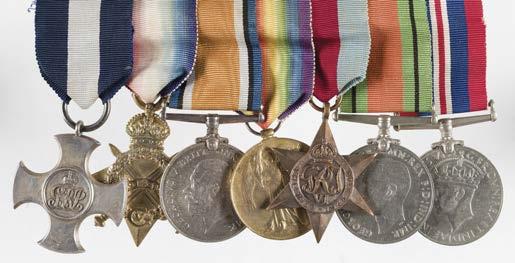
661* WWI D.S.C. group to Commander R.W. Hore, Royal Navy, For His Services in the Grand Fleet Destroyer H.M.S. Tirade, 1st January to 30th June 1918
a) Distinguished Service Cross, G.V.R., silver (Hallmarks for London 1918)
b) 1914-15 Star (S. Lt. R.W. Hore, R.N.)
c) British War and Victory Medals (Lieut. R.W. Hore. R.N.)
d) 1939-1945 Star
e) Defence and War Medals, generally very fine or better, mounted as originally worn, copied research
D.S.C. London Gazette: 11.12.1918 Lieut. Reginald Warren Hore, R.N. ´For services in Grand Fleet Destroyers between the 1st January and 30th June, 1918.´
662* The WWI D.S.O., O.B.E. group of four awarded to Colonel
R. H. Collier, Royal Air Force, who was twice ‘mentioned’ during WWI later serving as one of Lord Beaverbrook’s right-hand men as director of aeroplane production for the whole country
a) Distinguished Service Order, G.V.R., silver-gilt and enamel
b) The Most Excellent Order of the British Empire, Officer’s (O.B.E.)
1st Type breast Badge, hallmarked for London 1919
c) British War and Victory Medals with M.I.D. oakleaves (Lt. Col. R. H. Collier. R.A.F.), mounted as worn, slight enamel chipping to bottom obverse ray, otherwise good very fine, together with copied service papers, newspaper extracts and census data as well as a leather presentation box
D.S.O. London Gazette: 1 January 1918
O.B.E. London Gazette: 3 June 1919
Richard ‘Dick’ Hamilton Collier was born at Chesterton, Cambridgeshire in October 1887. He was the son of Richard and Ann Collier. His father died before he reached adulthood, and the young Collier had to join the workforce quickly, being listed upon the 1911 census as a Motor Engineer (Salesman) and living at Grove House, Southend-On-Sea, Essex. His engineering skills proved useful on the outbreak of WWI when he was commissioned 2nd Lieutenant with the Royal Flying Corps on 25 January 1915. His first posting was to No. 4 Repair Park, which he was set to organise with a promotion to Captain on 16 February 1915. Collier’s service record states:
‘General Engineering knowledge, particularly internal combustion engines. Since entry into R.F.C. has gained a very wide experience of organisation, particularly in respect of repairs of aeroplanes engines, MTO etc. organised the original repair depot in this country i.e. 8 A.D. + all its subsidiary units’ Further advanced Major on 15 December 1915 Collier was posted to France as a Squadron Commander before being advanced Lieutenant Colonel on 31 May 1916 in command of No.1 Aircraft Depot, St. Omer. Returning to Britain in January 1918 he was serving at the Air Ministry upon the formation of the Royal Air Force. Collier left the Ministry on 3 June 1918, being promoted Temporary Colonel at the recommendation of Brigadier-General Jenkins the same day and receiving a ‘mention’ (London Gazette 14 June 1918).
Posted to the Independent Force in France, he was stationed with No. 3 Aircraft Depot on 27 August 1918. Collier was to end the war in this position, being ‘mentioned’ (London Gazette 1 January 1919 refers) again before returning to Britain to join the Home Establishment on 2 March 1919. He was transferred to the Unemployed list on 1 May 1919.
£1,000 - £1,500
Reginald Warren Hore was born in 1894. He was the son of Engineer RearAdmiral Fred Hore, C.B. Hore joined the Royal Navy in 1907 and was commissioned as a Midshipman in 1912; Acting Sub-Lieutenant, 1914. He served during WWI in the destroyer H.M.S. Nubian, from 7 November 1914 to 29 January 1916, and was part of the Dover Patrol. He served in H.M.S. Noble from 29 January 1916 to 15 June 1917 and in the destroyer H.M.S. Tirade from 25.June 1917 to 9 January 1919, as part of the Grand Fleet; during his service with the latter, she was involved with H.M.S. Sylvia in the sinking of the German U-Boat UC-55 (which was credited with the sinking of 9 allied ships) on 29 September 1917. Hore was commended ´for going overboard in a bowline to rescue survivors´ when the Tirade collided with and sank H.M.S. Marmion on 21 November 1917. He advanced to LieutenantCommander 15 September 1924 and retired as Commander on 23 August 1939. Hore re-engaged for WWII and served at H.M.S. Northney (Landing Craft Training Base) at Hayling Island, where he planned and oversaw the training of the LCI and LCT crew to prepare for the Normandy Invasion on D-Day. He reverted to the retired list, 30 July 1946. (7)
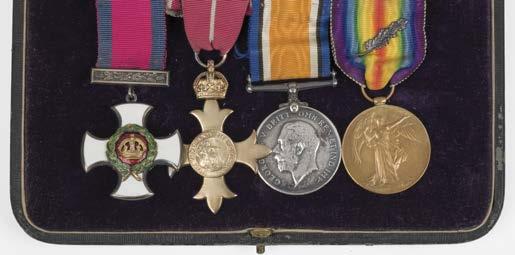
Returning to work running a car dealership, Collier became known for ‘Collier’s Corner’ in Birmingham, once the home of his showroom. Called up for service on the outbreak of WWII he was posted as a Pilot Officer but swiftly demobilised for work with the Ministry of Aircraft Production, the Western Mail 20 November 1940 takes up the story, stating:
‘Lieut-Col R. H. Collier, D.S.O., O.B.E., who is well known among Welsh Businessmen and golfers, holds one of the big posts in the Ministry of Aircraft Production. He is director of aeroplane production for the whole country. On the outbreak of the war, he volunteered for service and was called up in the R.A.F.V.R. He was demobilised in order to undertake the duties of principle aeroplane production officer for the Midland Area, which position he held until his new appointment. He still counts himself a Cardiffian, for it was there that he began his business career, and his large circle of friends throughout South Wales know all about his energy, initiative and drive.’
Unfortunately, tragedy was to strike, when Collier’s son Squadron Leader Richard Theobald Collier was killed in action on a raid over Bremen in 1942. Despite this he continued to serve with the Ministry of Aircraft Production until the end of the war. Retiring to Warwickshire he died on 15 June 1953, leaving behind a daughter and son;
(4)
£1,200 - £1,500
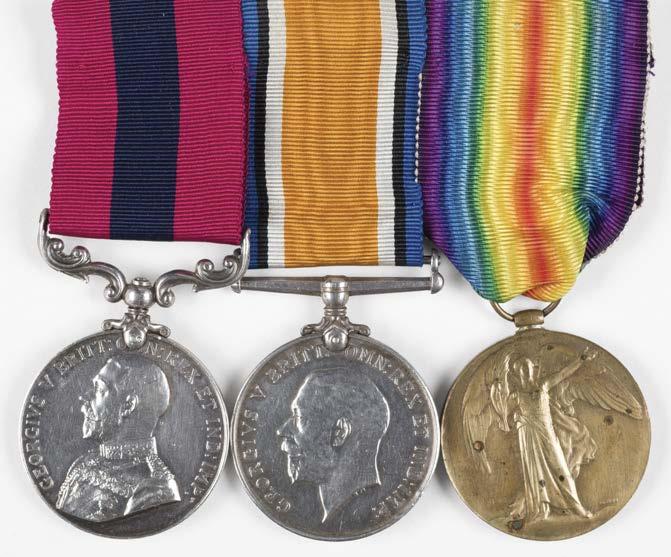
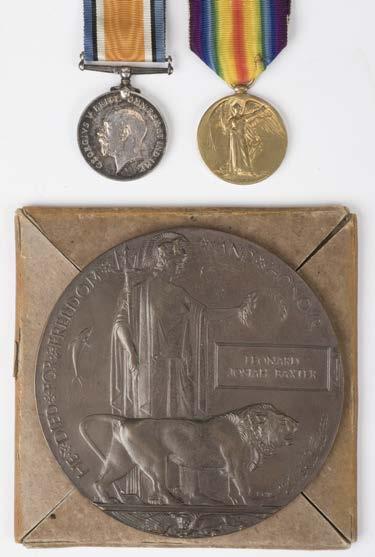
666* A WWI casualty group to Second Lieutenant L.J. Baxter, 4th Bn, The Buffs (East Kent Regiment), who died of wounds on 12 November 1918
£80 - £100
663* Family group. Three: British War and Victory Medals (22349 Pte. W.J. Stephens. R. Berks. R.), Special Constabulary Long Service, G.V.R. (William Stephens), very fine, together with Pair: British War and Victory Medals (27323 Pte H.E. Stephens. Worc. R.), good very fine (1)
British War and Victory Medals (2. Lieut. L.J. Baxter.), Bronze Memorial Plaque ‘Leonard Josiah Baxter’, with card packaging, extremely fine with copied research
664* WWI medals. 1914-15 Star (2) (No 563 Gnr. Nawab Khan 30/Mtn.Bty./ No.563 Gnr. Nawar Khan. 30 Mtn. Bty.) Victory Medal (3) (44 Sowar Ainda Khan. 38. C.I. Horse./ 2271 L. Dfor Amir Hamza Khan. 38 C.I. Horse./ 1856 Jem Baloch Khan. R.A.) WWII Australian War Service Medal (NX 58588 J.E. Ferguson.), WWII India War Medal, variable condition (7)
£50 - £80
665* A WWI East Africa D.C.M. group to Signaller A. Westwood, South African Rifles, for conspicuous gallantry and devotion behind enemy lines, 1918
a) Distinguished Conduct Medal, G.V.R. (681 Sgnlr: A. Westwood. 2/ S.A. Rif: Sig: Sec:)
b) British War and Victory Medal, Bilingual type (Cpl. A. Westwood. 2nd S.A.R.), very fine, swing mounted as worn, with copied research
D.C.M. London Gazette: 3 October 1918
‘For conspicuous gallantry and devotion to duty on forward telegraph construction work under great difficulties, with enemy patrols all around. He has done consistent good work for two years.
One of 300 D.C.M.s awarded to South African Forces during WWI and also one of 80 awarded for actions on the whole African Continent during WWI. (3) £800 - £1,200
Leonard Josiah Baxter (1889-1918) was born in Willenhall, Staffordshire. He joined the Inns of Court Officer Training Corps in August 1917 and after completing training, was commissioned 2nd Lieutenant into the 2nd/4th Bn, East Kent Regiment in June 1918. He was severely wounded in action by enemy machine gun fire at the Battle of the Sambre on 4 November 1918, after which he was taken to a clearing station and hospital at St. Sever, Rouen. Baxter died of wounds on 12 November 1918 (the day after armistice). He is buried in St Sever Cemetery Extension, Rouen, France. (3)
£80 - £100
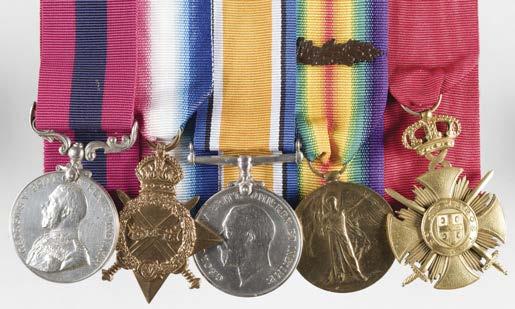
667* A scarce WWI ‘Salonika’ D.C.M. to Sergeant P.W. Wilsden, 98th Brigade, Royal Field Artillery, when he was at an observation post under heavy shell fire, all the telephone lines were broken. He went out and repaired them under a barrage of heavy highexplosive and gas shells. On his return to the observation post, he found only one man fit for duty, and though suffering from gas himself, he remained at his post for thirty-six hours
a) Distinguished Conduct Medal, G.V.R. (50417 A. Sjt. P.W. Wilsden. D. 98/Bde: R.F.A.)
b) 1914-15 Star (50417 Bmbr: P.W. Wilsden. R.F.A.)
c) British War and Victory Medals with M.I.D. oakleaves (50417 Sjt. P.W. Wilsden. R.A.)
d) Serbia, Kingdom, Cross of Karageorge, 1st Class, with swords, dated 1914-16, extremely fine, with copied research including confirmation for the scarce Serbian award
D.C.M. London Gazette: 19 November 1917 ‘50417 A./Sjt. P.W. Wilsden, R.F.A. (Leatherhead). (Salonika.)
The citation was published in the London Gazette on 6 February 1918
‘For conspicuous gallantry and devotion to duty. When he was at an observation post under heavy shell fire all the telephone lines were broken. He went out and repaired them under a barrage of heavy high explosive and gas shells. On his return to the observation post he found only one man fit for duty, and though suffering from gas himself he remained at his post for thirty-six hours. His resourcefulness and courage set an example of the greatest value.’
M.I.D. London Gazette: 28 November 1917
Cross of Karageorge, 1st Class, London Gazette: 28 January 1918 ‘50417 Corporal (acting Sergeant) Percy William Wilsden, Royal Field Artillery (Leatherhead)
Percy Wilsden was a native of Leatherhead, Surrey. He enlisted as a Gunner in the Royal Field Artillery at the beginning of WWI. He served on the Western Front from 9 September 1915 before embarking for Salonika with 22nd Division on 27 October 1915.
Wilsden and 98th Brigade saw major action providing artillery support for the Battle of Horseshoe Hill 10-18 August 1916, followed by the Battle of Machukovo 13-14 September 1916 and Third Battle of Doiran 18-19 September 1918, this battle was decisive after breaking through Bulgarian lines.
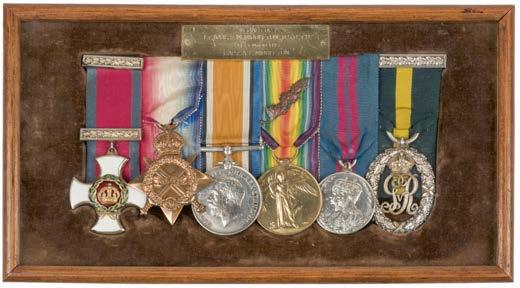
669* WWI group to Colonel F. Middleton, D.S.O., M.I.D., T.D., Royal Field Artillery
a) Distinguished Service Order, G.V.R., silver gilt and enamel, privately engraved around the edges of three points ‘Lt. Col. F. Middleton’, ‘R.F.A. (T)’, ‘1918’
b) 1914-15 Star (Major F. Middleton, R.F.A.)
c) British War and Victory Medal with M.I.D. oakleaves (Lt. Col. F. Middleton.)
d) Coronation 1911 Medal
e) Volunteer Officer’s Decoration, G.V.R., hallmarked for 1917, the reverse engraved ‘1898-1918’, good very fine, and presented in a fitted display case with engraved brass plaque ‘Medals of Lt./Col. F.M. Middleton., D.S.O., T.D. presented by Capt. A.L. Middleton’, frame size 14 x 25.5 cm, with two original commission certificates, three M.I.D. certificates and various research
D.S.O. London Gazette: 28 August 1918
M.I.D. London Gazette: 30 November 1915; 13 November 1916; 7 November 1917 (6)
£1,200 - £1,500
Wilsden was awarded the Cross of Karageorge, 1st Class, one of only 62 to foreigners during WWI. (5)
£1,000 - £1,500
668* A WWI ‘Somme’ casualty group of three to Sapper L. Clayton, Royal Engineers, who was killed in action at Bienvillers village on the Somme, 7 January 1916 1914-15 Star (51014, Spr. L. Clayton. R.E.), British War and Victory Medals (51014 Spr. L. Clayton. R.E.), extremely fine, with extensive copied research including war diary
Louis Clayton (1881-1916) was born in Manchester. He joined the 152nd Field Company, Royal Engineers in September 1914 and, after completing training, embarked for the Western Front, landing on 31 July 1915. The war diary for 7 January 1916 notes that a few of the men were allowed to go for some much-needed rest to the R.E. Billet located in Bienvillers village... Sapper Clayton was killed by shellfire while in Bienvillers village. Clayton is commemorated in Bienvilliers Military Cemetery, France. An obituary in the Manchester Evening News on 8 January 1917 recounts ‘we miss him and mourn him in silence unseen, and live in the memories of days that have been seen, and whispers these words, “death cannot divide”’. (3)
£80 - £100
670* A WWI ‘First Day of Arras’ Casualty Group to Private B. Blakeman, King’s Own Scottish Borderers, Missing, Presumed Dead 9 April 1917 1914-15 Star (15782 Pte B. Blakeman. K.O. Scot: Bord:), British War and Victory Medals (1578, 2 Pte. B. Blakeman. K.O. So. Bord.), Bronze Memorial Plaque ‘Basil Blakeman’, extremely fine Basil Blakeman was born in Manchester in 1881. He was educated at Ellsmere and during this time excelled at both rugby and cricket. Blakeman served with the Manchester Regiment from 1904 and reengaged for service during WWI and was posted to 7th Bn, King’s Own Scottish Borderers and landed in France on 10 July 1915. Blakemam was present when Piper Daniel Laidlaw climbed out of the trench in the face of shellfire, machine guns and gas, which inspired the men to attack. For this daring feat, Laidlaw was awarded the Victoria Cross. Blakeman advanced on 9 April 1917 along the Scarpe River towards the German frontline and was reported missing, believed killed. His body was never found, and he is commemorated on the Arras Memorial, France. (4) £100 - £150
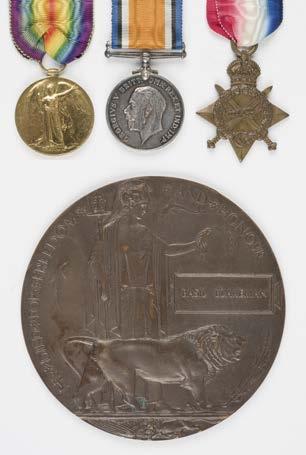
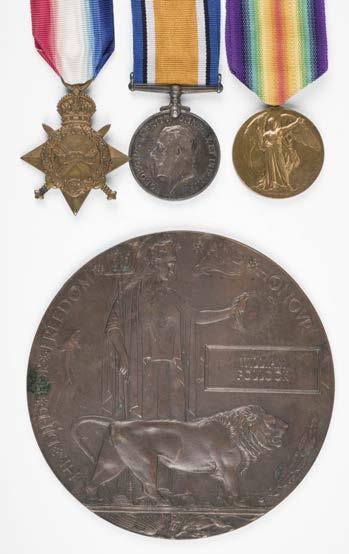
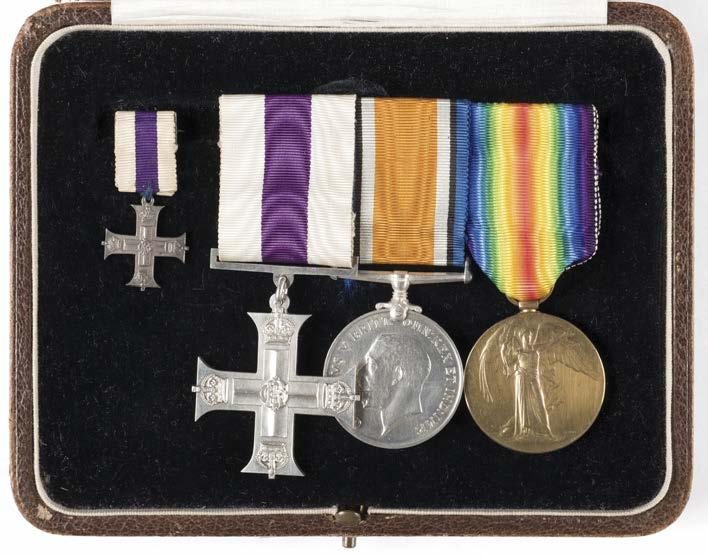
671* A WWI ‘First Day of Loos’ Casualty Group to Corporal W. Pollack, Royal Scots, Killed in Action on 27 September 1915 1914-15 Star (12170. Pte W. Pollock. R. Scots.), British War Medal (12170 Cpl. W. Pollock. R. Scots.), Victory Medal (naming erased), WWI Bronze Memorial Plaque ‘William Pollock’, extremely fine, with copied research
673* WWI M.C. group to Major R.M. Brind, 37th Dogras, Indian Army
a) Military Cross, G.V.R., unnamed as issued
b) 1914-15 Star (Capt. R.M. Brind. 37/Dogras.)
c) British War Medal (Major. R.M. Brind.)
d) Victory Medal with M.I.D. oakleaves (998 Sepoy Fanjdan, R.A.) added for display purposes
e) Delhi Durbar 1911 Medal, very fine or better, swing mounted, with corresponding miniature dress awards
£100 - £150
William Pollack was born in Paisley, Glasgow. He joined the Royal Scots in 1914, and after training on Salisbury Plain, he landed with the regiment on the Western Front on 11 May 1915. He was killed in action on 27 September 1915 (the first day of the Battle of Loos). Pollock is commemorated on the Loos Memorial, France. (4)
672* An impressive WWI M.C. group to ‘Ace’ Lieutenant R. Hill, Royal Flying Corps, credited for 7 aerial victories over the Western Front Military Cross, G.V.R.M, unnamed as issued, with box of issue and spare ribbon and dress miniature award British War and Victory Medals (2. Lieut. R.F. Hill. R.F.C.), good very fine, swing mounted, card box of issue named ‘2/ Lieut R.F. Hill., R.F.C.’
M.C. London Gazette: 18 March 1918
‘For conspicuous gallantry and devotion to duty. He carried out a great deal of useful observation work and has proved himself an excellent fighting observer. On one occasion, when acting as an observer on a photographic reconnaissance, he and his pilot shot down and destroyed two enemy scouts. He has also destroyed three other hostile machines.’
Richard Frank Hill (1899-1918) was born in Redcar, Yorkshire. He was educated at the Grange School in Crowborough, Sussex and Charterhouse School, Surrey. He joined the Royal Flying Corps in 1917 and was commissioned 2nd Lieutenant, advancing to Flying Officer (observer). Hill was posted to No 20 Squadron and gained his first victory on 19 August 1917 in a F.E.2d, piloted by 2nd Lieutenant C.B. Simpson, by driving down an ‘out of control’ Albatros D.V. over Comines. For his subsequent victories, they were all over D.Vs in a Bristol F.2b piloted by Lieutenant Harry Lurchford. These were all gained between 9 September to 1 October.
Hill returned to England, and on 14 May 1918, his status was changed from Lieutenant (Observer Officer) to Lieutenant (Aeroplanes and Seaplanes), probably qualifying as a pilot. However, Hill died on 17 September 1918 after undergoing two operations for appendicitis. He is buried at Holy Trinity Church, High Hurstwood, Buxted, Sussex. (3) £3,000 - £4,000
M.C. London Gazette: 14 January 1916
M.I.D. London Gazette: 1 January 1916
Ralph Montacute Brind was born in 1881. He attended the Royal Military College in Sandhurst before being commissioned into the Indian Army as 2nd Lieutenant in 1900. He joined the 37th Dogras in 1901 and was promoted to Lieutenant the following year, advancing to Captain in 1909 and Major in 1915.
His regiment was stationed at Jhelum in India and they landed at Basra, Mesopotamia on 8 December 1915. Brind was killed in action on 2 February 1916, he is buried in the Amara War Cemetery, Al’ Amarah, Maysan, Iraq. He is also commemorated on the Indian Army WWI memorial in the Royal Memorial Chapel, Sandhurst.
The group was sold at Dukes Auctioneers, and the current owner added the Victory Medal to complete the group. (5)
£1,200 - £1,500
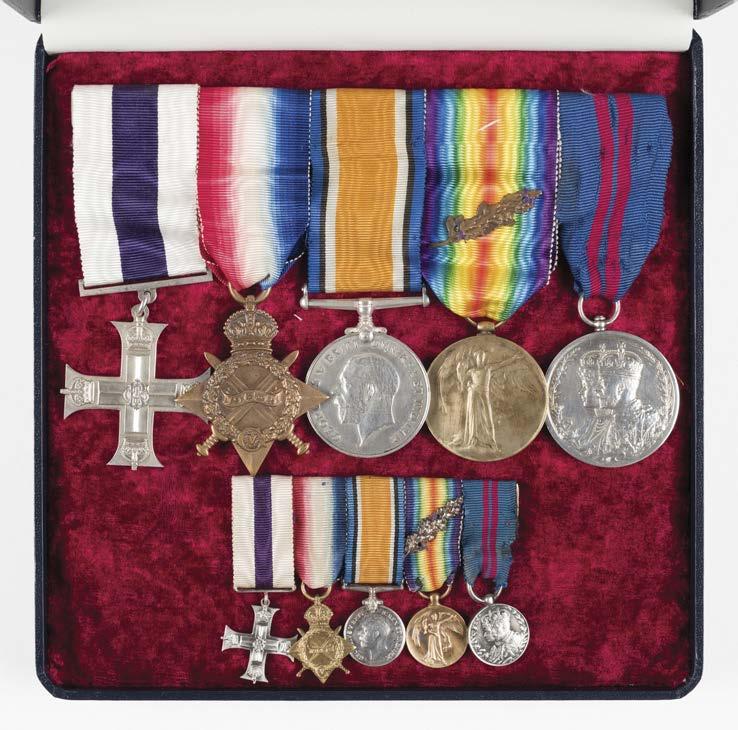
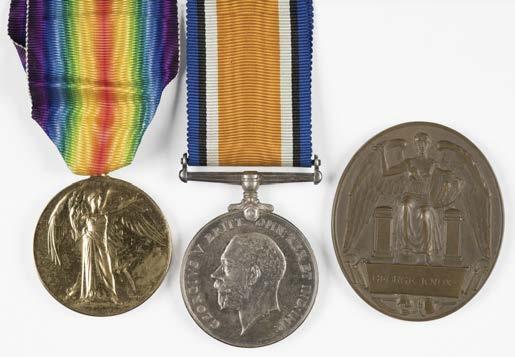
674* Pair: 2nd Lieutenant G. Knox
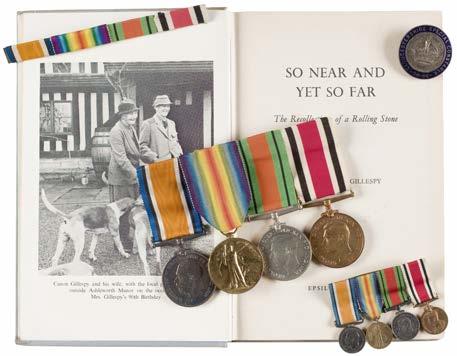
675* A WWI & WWII group to Reverend F.R. Gillespy
British War and Victory Medal (2. Lieut. G. Knox.), extremely fine, together with Ceylon Volunteer Service Medal 1914-18 (George Knox.) bronze, nearly extremely fine (3)
£150 - £200
British War and Victory Medals (Rev. F.R. Gillespy.), Defence Medal, Special Constabulary Long Service & G.C., G.VI.R. (S. Inspr. Francis R. Gillespy), extremely fine, mounted as worn with miniature dress awards, Gloucestershire Constabulary silver and enamel badge by Fattorini & Sons Ltd, 36 mm diameter plus book So Near and Yet So Far by Reverend Canon F.R. Gillespy (signed copy dated 1961)
Francis Roebuck Gillespy (1880-1962) was the head of “Bishop Cotton” school in Simla, Lahore, from 1918-22. He was the headmaster of King’s School and Minor Cannon, Gloucestershire Cathedral from 1922-30. Rector of St Andrew and St Bartholomew, Ashleworth, Gloucestershire, ARP warden in this area during WWII. (4)
£70 - £100
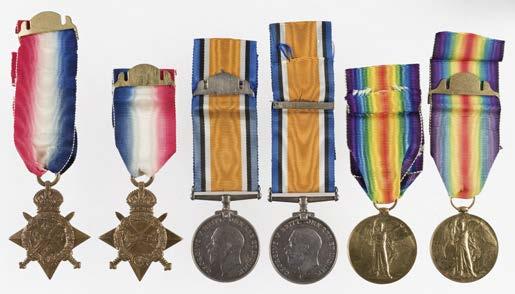
676* The Crawhall family medals, two brothers killed in action 1914 Star (2. Lieut: N.G. Crawhall, Manch: R.), British War and Victory Medals (Lieut. N.G. Crawhall.)
1914-15 Star (2. Lieut. F.P. Crawhall, K.R.Rif.C.), British War and Victory Medals (2. Lieut. F.P. Crawhall.), both extremely fine
The Crawhall brothers were the sons of Reverend E.L. Crawhall, Vicar of Herriard, Basingstoke.
Neil Grant Crawhall served on the Western Front with the Manchester Regiment. He was killed in action on the Somme, 7 July 1916. Crawhall is commemorated on the Thiepval Memorial, France.
Fritz Portmore Crawhall served on the Western Front with the 6th Bn, King’s Royal Rifle Corps. He was killed in action at Givency during the Battle of Neuve Chapelle on 10 March 1915. (6) £150 - £200
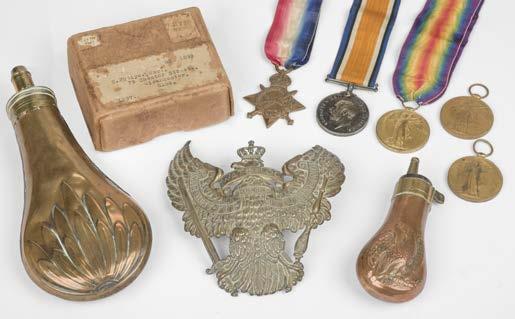
677* Three: Private C. Phelps, Army Service Corps
1914-15 Star (M2-032020. Pte. C. Phelps, A.S.C.), British War and Victory Medals (M2-032020. Cpl. C. Phelps, A.S.C.), good very fine, with Victory Medal (2) (1189 Pte. C. Gibbons. Glouc. .R. / 20578 Pte A.R. Gibbons. Glouc. R.), contained in a card box addressed to C. Phelps, Esq, 79 Chester Street, Cirencester, Glos’, together with a WWI Prussian Pickelhaube brass helmet plate and two copper and brass powder flasks, one embossed with an eagle, 11 cm long (8) £100 - £150
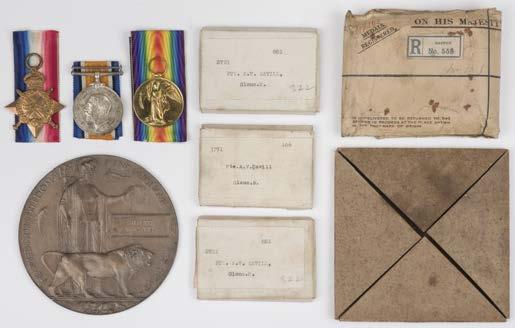
678* Three: Private A.V. Cavill, Gloucestershire Regiment, Killed in Action
1914-15 Star (3791 Pte A.V. Cavill, Glouc: R.), British War and Victory Medal (3791 Pte A.V. Cavill Glouc. R.), extremely fine with card boxes of issue, WWI bronze memorial plaque ‘Albert V. Cavill’, with card packaging, condolence slip and envelope, plus sweetheart Christmas cards, some inscribed from Cavill to his mother, circa 1916, 15 various school attendance and Bristol Royal Humane medals, old wristwatch and other items
Albert Cavill was a native of Park Square, College Green, Bristol. He served on the Western Front with 2/6 Bn, Gloucestershire Regiment from 25 June 1915. He was killed in action on 9 October 1917. Cavill is commemorated on the Tyne Cot Memorial, Belgium.
(1)
£150 - £200
679* Three: Private E.W. Stevens, Somerset Light Infantry 1914-15 Star (1990 Pte. E.W. Stevens. Som. L.I.), British War and Victory Medals (1990. A. Sjt. E.W. Stevens. Som.L.I.), very fine, swing mounted as worn, with copied research
Ernest William Stevens was born in Pilton, Somerset in 1896. He joined the 4th Bn, Somerset Light Infantry in 1913, and served in India during WWI. He was posted to Mesopotamia in 1916 but returned to India suffering with dysentery a few months later. He rejoined the Bn in 1917 before transferring to the Royal Engineers, where he was promoted to Sergeant. He was discharged in 1919 and served as a police officer on Yeovil. Stevens died in 1962.
(3)
£70 - £100
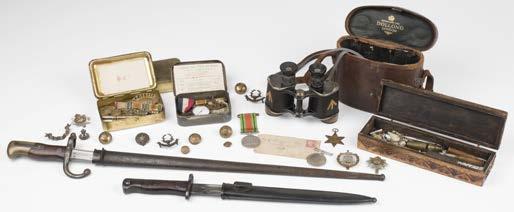
680* WWI militaria. Two WWI Princess Mary Christmas tins, two bullet pencils, two Christmas card from Mary, WWII naval medals attributed to W McGreavy, comprising Atlantic Star, Defence and War Medals with a copied telegram, various military cap badges and buttons, including Devonshire Regiment, Dolland field binoculars with broad arrow and leather case, Siam and French Gras bayonet and other items (a shoe box)
£100 - £200
681* Pair: Major A.E. Watson, Royal Field Artillery, later Editor for The Daily Telegraph
British War and Victory Medals (Major A.E. Watson)., extremely fine, with copied research
Pair: Second Lieutenant R.B. Bray, Norfolk Regiment, who was killed in action on 23 October 1918
British War and Victory Medals (2. Lieut. R.B. Bray.), extremely fine with copied research
Pair: Gunner A. Dottie, Australian Imperial Force, who died of wounds on 24 April 1918
1914-15 Star (647 Pte A. Dottie 31 Bn. A.I.F.), Victory Medal (647 Gnr. A. Dottie. 31 Bn A.I.F.), extremely fine, with copied research
Pair: Lieutenant N. McPherson, Highland Brigade, Royal Artillery, who was a commander of an anti-aircraft gun section from 2 April 1917
British War and Victory Medals (Lieut. N. McPherson.), extremely fine, with copied research
Arthur Ernest Watson was born in Newcastle-upon-Tyne. Post-war service saw him appointed as editor for the Daily Telegraph.
Reginald Boydon Bray served on the Western Front with 9th Bn, Norfolk Regiment. He was killed in action at Bazuel, Le Cateau on 23 October 1918. Bray is commemorated on the Highland Cemetery, Le Cateau.
Alexander Dottie served on the Western Front with 5th (Medium) Australian Mortar Battery. He died as a result of a gas attack on 24 April 1918. Dottie is commemorated in the Vignacourt British Cemetery.
Norman McPherson was born in Dundee, Scotland in 1896. He served on the Western Front with Highland Brigade, Royal Artillery. McPherson was a technically minded man, having studied at St Andrews University under Mr C.O. Ridley and Mr J. Sopwith (the brother of aircraft designer Tommy Sopwith). McPherson served as commander of an anti-aircraft gun section from 2 April 1917.
(8)
£200 - £300
682* A WWI ‘sniper wound’ pair to Second Lieutenant J.E. Moseley, Northumberland Fusiliers who was severely wounded by a gunshot wound to the head on 31 October 1916
British War and Victory Medals (Lieut. J.E. Moseley.), extremely fine Joe Edward Moseley was born in Leeds, Yorkshire in 1887. He joined the 26th Battalion, Northumberland Fusiliers (3rd Tyneside Irish), 103rd Brigade, 34th Division in 1916. This was a replacement battalion after severe casualties on the First Day of the Somme (1 July 1916). Moseley was admitted to Queen Alexandra’s Military Hospital at Millbank on 9 November 1916, after he received a gunshot wound to the head from a German sniper. He remained in hospital until 30 April 1917, when he was discharged from military service.
(2)
£50 - £70
683* A scarce WWII group of four attributed to Flight Lieutenant M.M.J. Waterkeyn, Women’s Auxiliary Air Force, a Belgian female officer who served with the Belgian Spitfire Squadron, RAF 1939-1945 Star, France and Germany Star, War Medal, Belgium War Medal 1940-45, bronze with small crossed swords emblem, extremely fine, with original bestowal document for the Belgium award, transmission slip black and white photograph of the recipient in WAAF uniform, rank epaulette (Flight Officer), plus a letter on British Embassy notepaper from Waterkeyn to her sisterin-law, dated 1949, the letter begins ‘I am so glad that you enjoyed your time here’, with copied research
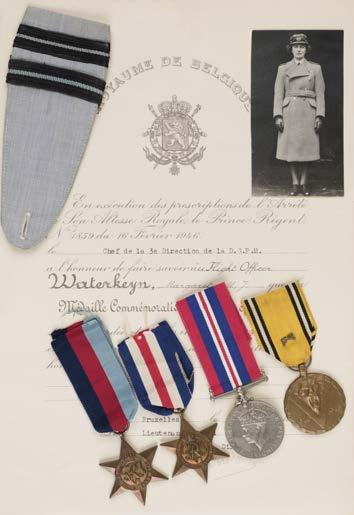
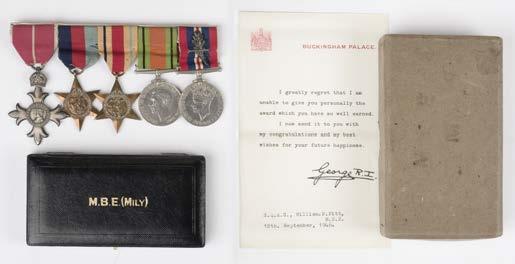
684* A WWII M.B.E. “Q” Branch ‘Middle East’ group to Warrant Officer William Pitt, M.I.D., Royal Army Service Corps, who was specially selected to join “Q” Branch G.H.Q. Mediterranean Forces, mentioned in despatches four times and almost certainly worked alongside Commander Ian Fleming (the original James Bond!)
a) The Most Excellent Order of the British Empire, M.B.E., (Military) Member’s 2nd type, breast badge, silver, with Royal Mint case of issue and packaging
b) 1939-1945 Star
c) Africa Star
d) Defence and War Medals, with M.I.D. oakleaf (this loose on ribbon), mounted as worn, plus a letter from Buckingham Palace sending congratulations for receiving the M.B.E., named ‘S.Q.M.S., William. P. Pitt, M.B.E. 12th September 1946’, with copied research
M.B.E. London Gazette: 6 January 1944 No S/132884 Warrant Officer Class II (Staff Quartermaster Sergeant) William Percy Pitt, Royal Army Service Corps (Wordsley, Worcs).
‘In recognition of gallant and distinguished services in the Middle East’
The M.B.E. was recommended on 30 June 1943
£100 - £150
Margaret Mary Joan Waterkeyn was the daughter of Belgian refugees who fled to England during WWI. They returned after the war, but on the outbreak of WWII, Waterkeyn returned to England and joined the Women’s Auxiliary Air Force in 1943. She was fluent in Belgian, French, German and English and from 1944 served as Liason Officer with a Belgian Spitfire Embassy in Brussels. Her elder brother, Andre Waterkeyn, was the designer who built the Atominum Monument in Brussels. (4)
‘This Warrant Officer has been in the Q (Plans) branch three years and for 1 year and nine months has been Chief Clerk. During this time he has called upon to handle work of the highest security. His attention to duty at all times and his unselfish devotion to his work has set a fine example to all O.R.s in “Q” Branch.
(5)
£300 - £400
685 A group of four WWII medals attributed to Corporal Dennis Charles Ferne, Anti-Aircraft Regiment, Royal Artillery 1939-1945 Star, Italy Star, Africa Star, War Medal, extremely fine with paper packets, together with 9 bronze sporting fobs, 2 silver sporting fobs (one to his father dated 1900), Home Guard badge, Corporal stripes, Wandsworth School Fixtures Summer Term 1938 (Ferne's name printed on the back cover), Anti-Aircraft note inscribed with 95 locations and dates) presumably where Ferne was based, and other related items
Dennis Charles Ferne was a native of Wandsworth, London. He came from a sporting family, his father being an amateur athlete who became a swimming champion in 1900. Ferne was educated at Wandsworth Grammar School in the 1930s, where he took part in many sporting events. He volunteered for the Home Guard during WWII and was conscripted in 1942, joining an Anti-Aircraft Regiment in Madagascar and operations in the Middle East and Italy. Ferne lost both his legs when his gun was blown up, resulting in both legs being amputated. (a small box)
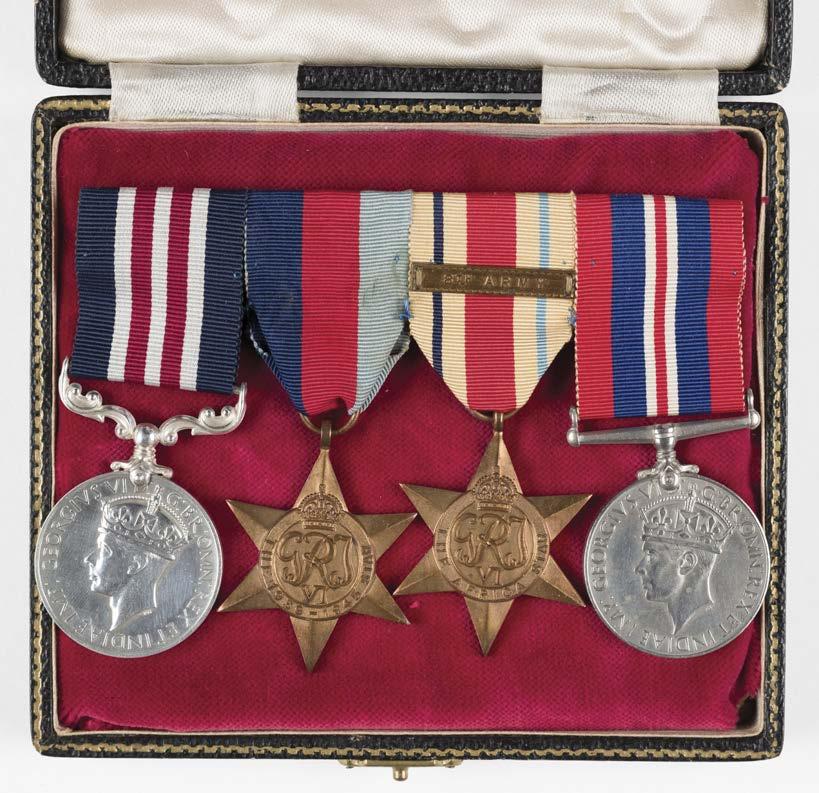
£100 - £150
686* An Immediate ‘Second Battle of El Alamein’ M.M. group to Sergeant C.G. Barrett, Royal Signals, who led his detachment in the task of burying cable through the forward positions and under constant machine-gun fire from the air and being shelled by hostile guns, Barrett worked on regardless of his personal safety until he was seriously wounded
a) Military Medal, G.VI.R. (2312034 L. Sjt. C.G. Barratt. R. Signals)
b) 1939-1945 Star
c) Africa Star with 8th Army clasp
d) War Medal, good very fine, swing mounted as worn, with copied research
M.M. London Gazette: 4 May 1943
‘This NCO was in charge of a line detachment at El Alamein immediately prior to and during the first two days of the battle. Almost continuously for three days and nights, he led his detachment in the task of burying cable through the forward positions. They were constantly machine-gunned from the air and shelled by hostile guns. His great energy, and the stirring example he gave, enabled the detachment to complete the task in the allotted time. After completing this work L/Sgt Barrett [sic] continued laying other lines under shell and mortar fire. Regardless of his personal safety he led his detachment until he was seriously wounded while laying cable through a minefield on 2 Nov 42.’
Charles George Barratt was born in Southwark in 1903. He served with the regular army with the Royal Signals from 1920-1929 and re-engaged for service on the outbreak of WWII. He served in the Middle East from 12 February 1942 to 18 June 1943. He received a gunshot wound to the abdomen at El Alamein on 23 October 1942, which resulted in being evacuated to hospital in the UK. Barratt was discharged unfit for service on 23 July 1943. He was recommended for the Distinguished Conduct Medal which was endorsed by General Montgomery, however, the award was downgraded by General Sir Henry (Jumbo) Wilson (Chief in Command of Middle East Forces).
(4) £1,200 - £1,500
Each lot is subject to a Buyer’s Premium of 22% (Lots marked * 26.4% inclusive of
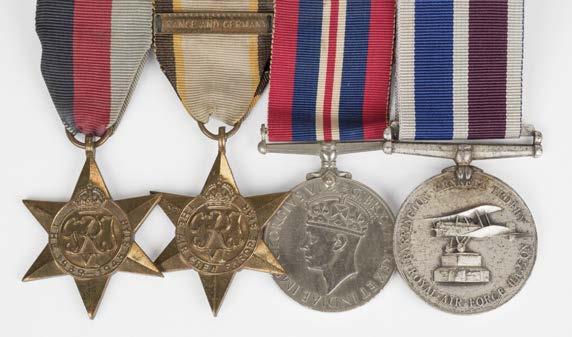
687* WWII Medals. A WWII group, comprising Aircrew Europe Star with “France & Germany” clasp, 1939-45 Star and War Medal, mounted as worn, together with a rare award issue RAF Halton Barrington-Kennett Trophy medal, (unattributed and later ribbon) (1)
£150 - £200
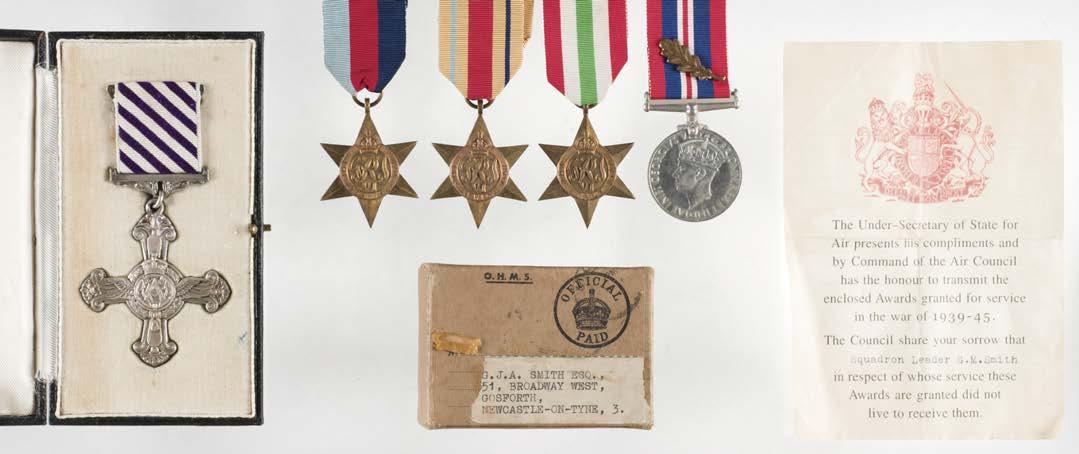
688* A WWII ‘Italian campaign’ Mosquito pilot’s D.F.C. group to Squadron Leader G.M. Smith, D.F.C., M.I.D., 256 Squadron, Royal Air Force, who was killed in action over Copparo, Italy on 19 April 1945
a) Distinguished Flying Cross, G.VI.R., reverse dated ‘1944’, in Royal Mint case of issue
b)1939-1945 Star
c) Africa Star
d) Italy Star
e) War Medal with MID oakleaf, extremely fine with Air Ministry box of issue addressed to ‘G.J.A. Smith, 51 Broadway West, Gosforth, Newcastle on Tyne’, transmission slip named Squadron Leader G.M. Smith’, with copied reseach including copied photographs of Smith in the Western Desert in 1942 and a Mosquito of 256 Squadron on the main runway at Foggia, before taking off on a night intruder sortie over enemy territory
D.F.C. London Gazette: 29 December 1944 Acting Squadron Leader George Milner Smith (49034) Royal Air Force, No. 256 Squadron.
M.I.D. London Gazette: 1 January 1942
M.I.D. London Gazette: 11 June 1942
George Milner Smith was a native of Newcastle upon Tyne. He served as a Hurricane pilot in North Africa. After various promotions, he rose to Flying Officer on 8 January 1943 and joined 256 Squadron the same year, being stationed at Luqa, Malta, for night-defence and convoy duties. In April 1944, the squadron moved to La Senia in Algeria, and he was promoted to Flight Lieutenant on 1 May 1944. 256 Squadron flew intruder operations into Italy and relocated to Foggia in September 1944 to enable these flights to be extended into the Balkans. Smith received his D.F.C. for low-level intruder missions over northern Italy and Yugoslavia. Around dawn on 19 April 1945, while returning from a low-level Intruder Mission over the Balkans, Mosquito HK508 was hit by German ground fire. At 05.15, Smith radioed his base at Foggia, Italy, to tell them that he had ordered his navigator to bail out five miles south of Copparo. The navigator survived, but Smith lost contact, and the wreckage of his Mosquito was later found with his remains. He was buried in Argenta Gap War Cemetery, Italy.
(5) £1,500 - £2,000
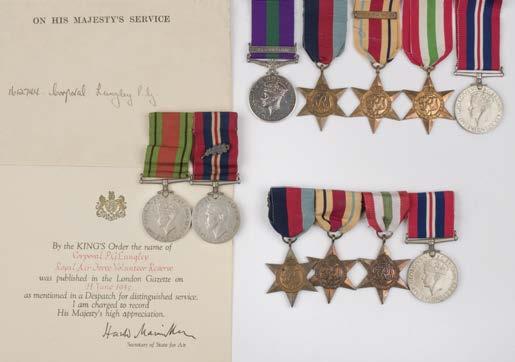
689* A WWII group of five Aircraftman G. Morrison, Royal Air Force General Service Medal, G.VI.R., 1 clasp, Palestine (531618 A.C.1. G. Morrison. R.A.F.), 1939-1945 Star, Africa Star with North Africa 194243 clasp, Italy Star, War Medal, good very fine or better
A WWII group of four attributed to Corporal Joseph Patrick Price, Royal Artillery who was taken prisoner of war in North Africa on 25 January 1942
1939-1945 Star, Africa Star, named Boots style ‘842971 Cpl J.P. Price. L.R.D.G. & P.P.A Tripoli 7th Arm Div.), Italy Star, War Medal, good very fine, swing mounted
A WWII Pair to ‘Barrage Balloon Operator’ Corporal Peter George Lungley, M.I.D., Royal Air Force Reserve Defence and War Medal with M.I.D. oakleaf, very fine, swingmounted as worn, with M.I.D. certificate dated 14 June 1945, original envelope inscribed ‘1612744 Corporal Lungley’, and additionally inscribed in pencil BEM 1-1-46 (possibly entitled to a British Empire Medal) (11) £100 - £150
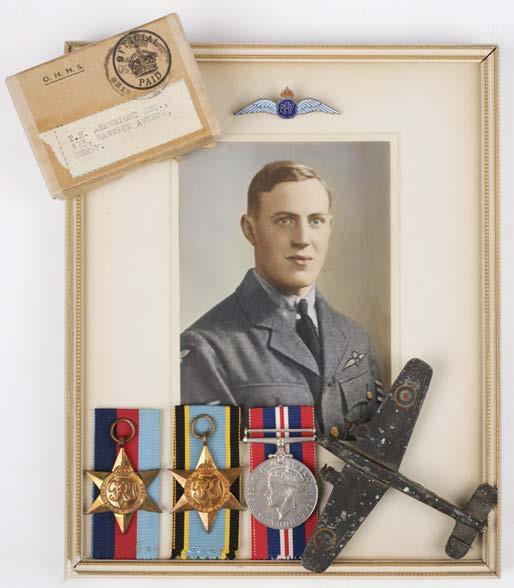
690* WWII RAF casualty group to Sergeant D.W. Arkwright, 77 Squadron, RAFVR, who was killed in action over Hamburg on 13 March 1941
Air Crew Europe Star, 1939-1945 Star, War Medal, mint condition with wax paper packets, Air Ministry card box of issue addressed to ‘T.H. Arkwright, 173 Warwick Avenue, Derby’ and named transmission slip, with a silver and enamel RAF sweetheart brooch, a Dinky model of a Whitley Bomber, a coloured photograph of the recipient, framed and glazed, plus a collection of related letter mostly addressed to Mrs D.K. Arkwright, 173 Warwick Avenue
David William Arkwright was the son of Thomas Harold and Gertrude Arkwright of Derby. He served during WWII with 77 Squadron, RAFVR (745517) and was killed in action on 13 March 1941 aged 21. Arkwright was one of 5 crew serving in Armstrong Whitworth Whitley V N1493 KN when it was lost over Hamburg, disappearing without a trace, all crew recorded as killed in action. Arkwright is commemorated on the Runnymede Memorial. (3)
OF SALE
£300 - £500
Online Results: If you weren’t present or able to follow the auction live, you can find results for the sale on our website shortly after the sale has ended.
Payment: The price you pay is the amount at which the auctioneer’s hammer falls (the hammer price), plus a buyer’s premium (a percentage of the final hammer price) and vat where applicable. You will be issued with an invoice made out to the name and address provided on your registration form.
Please note successful bids made via live bidding cannot be invoiced or paid for until the day after an auction. A live bidding fee of 3% + VAT (Dominic Winter / Invaluable) or 4.95% + VAT (the-saleroom) will be added to your invoice. Please note that as from January 2025 all successful Invaluable bids are now subject to a minimum charge of the UK equivalent of $10 per lot.
Cheque: Cheques will only be accepted on the day of the sale by prior arrangement (please contact our office for further information). Cheques by post will be accepted but a period of 5 working days will be required for the cheque to clear before purchases can be collected or posted.
Cash: Payments can be made at the Cashier’s Office, either during or after the sale.
Debit Card: There is no additional charge for purchases made with debit cards in the UK.
Credit Cards: We accept Visa and Mastercard. It is advisable to let your card provider know in advance if you are intending to purchase. This reduces the time needed to obtain authorisation when the payment is made.
Bank Transfer: All transfers must state the relevant invoice number. If transferring from a foreign currency, the amount we receive must be the total due after the currency conversion and the deduction of any bank charges.
Note to Overseas Clients: All payments must be made by bank transfer only. No card payments will be accepted unless by special prior arrangements with the auctioneers.
Collection/Postage/Delivery: If you attend the auction in person and are successful in your bid, you are free to collect your item once payment has been made.
Shipping: Successful commission or live bids will be invoiced to you the day after the sale. When it is possible for our in-house packing department to send your purchase(s), a charge for postage/packing/insurance will be included in your invoice. Where it is not possible for our in-house packing department to send we will recommend other shipping specialists.
London Deliveries: We provide a monthly delivery service to Central London only, usually on Wednesday of the week following an auction. Payment must be received before this option can be requested. A charge will be added to your invoice for this service.
Lots marked with AR next to the lot number may be subject to Droit de Suite.
Droit de Suite is payable on the hammer price of any artwork sold in the lifetime of the artist, or within 70 years of the artist's death. The buyer agrees to pay Dominic Winter Auctioneers Ltd an amount equal to the resale royalty and we will pay such amount to the artist's collecting agent. Resale royalty applies where the Hammer price is £1,000 or more.
The amount is calculated as follows:
Royalty For the Portion of the Hammer Price
4.00% up to £50,000
3.00% between £50,000.01 and £200,000
1.00% between £200,000.01 and £350,000
0.50% between £350,000.01 and £500,000
Please refer to the DACS website www.dacs.org.uk and the Artists’ Collecting Society website www.artistscollectingsociety.org for further details.
1. The Seller warrants to the Auctioneer and the buyer that he is the true owner or is properly authorised to sell the property by the true owner and is able to transfer good and marketable title to the property free from any third party claims.
2. (a) The highest bidder to be the buyer. If during the auction the Auctioneer considers that a dispute has arisen he has absolute authority to settle it or re-offer the lot. The Auctioneer may at his sole discretion determine the advance of bidding or refuse a bid, divide any lot, combine any two or more lots or withdraw any lot without prior notice.
(b) Where goods are bought at auction by a buyer who has entered into an agreement with another or others that the other or others (or some of them) shall abstain from bidding for the goods and the buyer or other party or one of the other parties is a dealer (as defined in the Auction Biddings Agreement Act 1927) the buyer warrants that the goods are bought bona fide on joint account.
3. The buyer shall pay the price at which a lot is knocked down by the Auctioneer to the buyer (“the hammer price”) together with a premium of 22% of the hammer price. Where the lot is marked by an asterisk the premium will be subject to VAT at 20% which under the Auctioneer’s Margin Scheme will form part of the buyer’s premium on our invoice and will not be separately identified (the premium added to the hammer price will hereafter collectively be referred to as “the total sum due”). By making any bid the buyer acknowledges that his attention has been drawn to the fact that on the sale of any lot the Auctioneer will receive from the seller commission at its usual rates in addition to the said premium of 22% and assents to the Auctioneer receiving the said commission.
4. (a) The buyer shall forthwith upon the purchase give in his name and permanent address and pay to the Auctioneer immediately after the conclusion of the auction the total sum due.
(b) The buyer may be required to pay down during the course of the sale the whole or any part of the total sum due, and if he fails to do so after such request the lot or lots may at the Auctioneer's absolute discretion be put up again and resold immediately.
(c) The buyer shall at his own expense take away any lot or lots purchased no later than five working days after the auction day.
(d) The Auctioneer may at his own discretion agree credit terms with a buyer and extend the time limits for collection in special cases but otherwise payment shall be deemed to have been made only after the Auctioneer has received cash or a sterling banker’s draft or the buyer's cheque has been cleared.
5. (a) If the buyer fails to pay for or take away any lot or lots pursuant to clause 4 or breaches any other condition of that clause the Auctioneer as agent for the seller shall be entitled after consultation with the seller to exercise one or other of the following rights:
(i) Rescind the sale of that or any other lots sold to the buyer who defaults and re-sell the lot or lots whereupon the defaulting buyer shall pay to the Auctioneer any shortfall between the proceeds of that sale after deduction of costs of re-sale and the total sum due. Any surplus shall belong to the seller.
(ii) Proceed for damages for breach of contract.
(b) Without prejudice to the Auctioneer's rights hereunder if any lots or lots are not collected within five days or such longer period as the Auctioneer may have agreed otherwise, the Auctioneer may charge the buyer a storage charge of £1.00 + VAT at the current rate per lot per day.
(c) Ownership of the lot purchased shall not pass to the buyer until he has paid to the Auctioneer the total sum due.
6. (a) The seller shall be entitled to place a reserve on any lot and the Auctioneer shall have the right to bid on behalf of the seller for any lot on which a reserve has been placed. A seller may not bid on any lot on which a reserve has been placed.
(b) Where any lot fails to sell, the Auctioneer shall notify the seller accordingly. The seller shall make arrangements either to re-offer the lot for sale or to collect the lot and may be asked to pay a commission not exceeding 50% of the selling commission and any special expenses incurred in cataloguing the lot.
(c) If such arrangements are not made within seven days of the notification the Auctioneer is empowered to sell the lot by auction or by private treaty at not less than the reserve price and to receive from the seller the normal selling commission and special expenses.
7. Any representation or statement by the Auctioneer in any catalogue, brochure or advertisement of forthcoming sales as to authorship, attribution, genuineness, origin, date, age, provenance, condition or estimated selling price is a statement of opinion only. Every person interested should exercise and rely on his own judgement as to such matters and neither the Auctioneer nor his servants or agents are responsible for the correctness of such opinions. No warranty whatsoever is given by the Auctioneer or the seller in respect of any lot and any express or implied warranties are hereby excluded.
8. (a) Notwithstanding any other terms of these conditions, if within fourteen days of the sale the Auctioneer has received from the buyer of any lot notice in writing that in his view the lot is a deliberate forgery and within fourteen days after such notification the buyer returns the same to the Auctioneer in the same condition as at the time of the sale and satisfies the Auctioneer that considered in the light of the entry in the catalogue the lot is a deliberate forgery then the sale of the lot will be rescinded and the purchase price of the same refunded. "A deliberate forgery" means a lot made with intention to deceive. (b) A buyer's claim under this condition shall be limited to any amount paid to the Auctioneer for the lot and for the purpose of this condition the buyer shall be the person to whom the original invoice was made out by the Auctioneer.
9. Lots may be removed during the sale after full settlement in accordance with 4(d) hereof.
10. All goods delivered to the Auctioneer's premises will be deemed to be delivered for sale by auction unless otherwise stated in writing and will be catalogued and sold at the Auctioneer's discretion and accepted by the Auctioneer subject to all these conditions. In the case of miscellaneous books, the Auctioneer reserves the right to extract and dispose of books that, in the opinion of the Auctioneer at his absolute discretion, have no saleable value and, therefore, might detract from the saleability of the rest of the lot and the Auctioneer shall incur no liability to the seller, in respect of the books disposed of. By delivering the goods to theAuctioneer for inclusion in his auction sales each seller acknowledges that he/she accepts and agrees to all the conditions.
11. (a) Unless otherwise instructed in writing all goods on the Auctioneer's premises and in their custody will be held insured against the risks of fire, burglary, water damage and accidental breakage or damage. The value of the goods so covered will be the hammer price, or in the case of unsold lots the lower estimate, or in the case of loss or damage prior to the sale that which the specialised staff of the Auctioneer shall in their absolute discretion estimate to be the auction value of such goods.
(b) The Auctioneer shall not be responsible for damage to or the loss, theft, or destruction of any goods not so insured because of the owner’s written instructions.
12. The Auctioneer shall remit the proceeds of the sale to the seller thirty days after the day of the auction provided that the Auctioneer has received the total sum due from the buyer. In all other cases the Auctioneer will remit the proceeds of the sale to the seller within seven days of the receipt by the Auctioneer of the total sum due. The Auctioneer will not be deemed to have received the total sum due until after any cheque delivered by the buyer has been cleared. In the event of the Auctioneer exercising his right to rescind the sale his obligation to the seller hereunder lapses.
13. In the case of the seller withdrawing instructions to the Auctioneer to sell any lot or lots, the Auctioneer may charge a fee of 12.5% of the Auctioneer's middle estimate of the auction price of the lot withdrawn together with Value Added Tax thereon and any expenses incurred in respect of the lot or lots.
14. The Auctioneer’s current standard notices and information (i.e. Collation and Amendments) will apply to any contract with the Auctioneer as if incorporated herein.
15. These conditions shall be governed by and construed in accordance with English Law.