

BY KATHY STEINER
The Jamestown Sun
JAMESTOWN — Radon is the No. 1 cause of lung cancer in nonsmokers and it’s preventable, said Justin Otto, North Dakota radon coordinator for the North Dakota Department of Environmental Quality.
“Unfortunately, I get a lot of those calls,” Otto said. “They go to the hospital, they find out they have lung cancer. And then their doctor tells them, have you tested for radon before and they say ‘No’, and then they test and they find out their home has elevated radon levels and they’ve never smoked a day in their life.”
He said they didn’t know about radon and wished they had been told about it.
Radon is a colorless, odorless, tasteless gas that comes up through the ground from the decay of uranium, Otto said. North Dakota has a lot of uranium in its soil and people don’t know radon is there unless they test for it, he said.
“Radon is a carcinogen just like cigarette smoke is,” Otto said. “... Of course, cigarette smoke is by far the No. 1 cause of lung cancer overall, but there’s still 21,000 Americans each year that die from lung cancer from radon.”
He noted radon gas is naturally occurring.
“Being that it’s colorless, odorless, tasteless, a lot of people don’t know it’s in their home,” Otto said. “They don’t think about radon being a health concern because it’s not like mold or something that you can smell and you
know that you have a problem. People just don’t know it’s there unless they get educated on the subject.”
Otto will speak about radon at a free informational meeting in Jamestown on Wednesday, Oct. 2, at Club 1883. Brian O’Gorman, environmental scientist, will also speak on asbestos. The informational meeting runs from 1 to 4 p.m. and is sponsored by Darcy Herman, First Choice Inspections of Jamestown.
“The radon testing I’ve done here in the last year, two years, even longer have shown increased levels of radon, not in all the homes but over the majority of the homes,” Herman said. “I just thought what better way to have it explained (to the public) is to have the manager from the program in North Dakota come in and asbestos (as well).”

According to information from the Radon Control Program of the North Dakota Department of Environmental Quality, the average outdoor level of radon is 0.4 picocuries per liter (pCi/L) of air. The average indoor radon level is 1.3 pCi/L.
“One out of 15 homes nationally test elevated and the EPA (U.S. Environmental Protection Agency) action level is 4 picocuries per liter,” Otto said. “So if it’s above 4 picocuries per liter, they recommend fixing your home with a mitigation system. And In North Dakota, it’s 2 out of 3 homes test elevated.”
Information from the state agency says 63% of homes in North Dakota test above the EPA’s action level of 4.0 picocuries per liter.
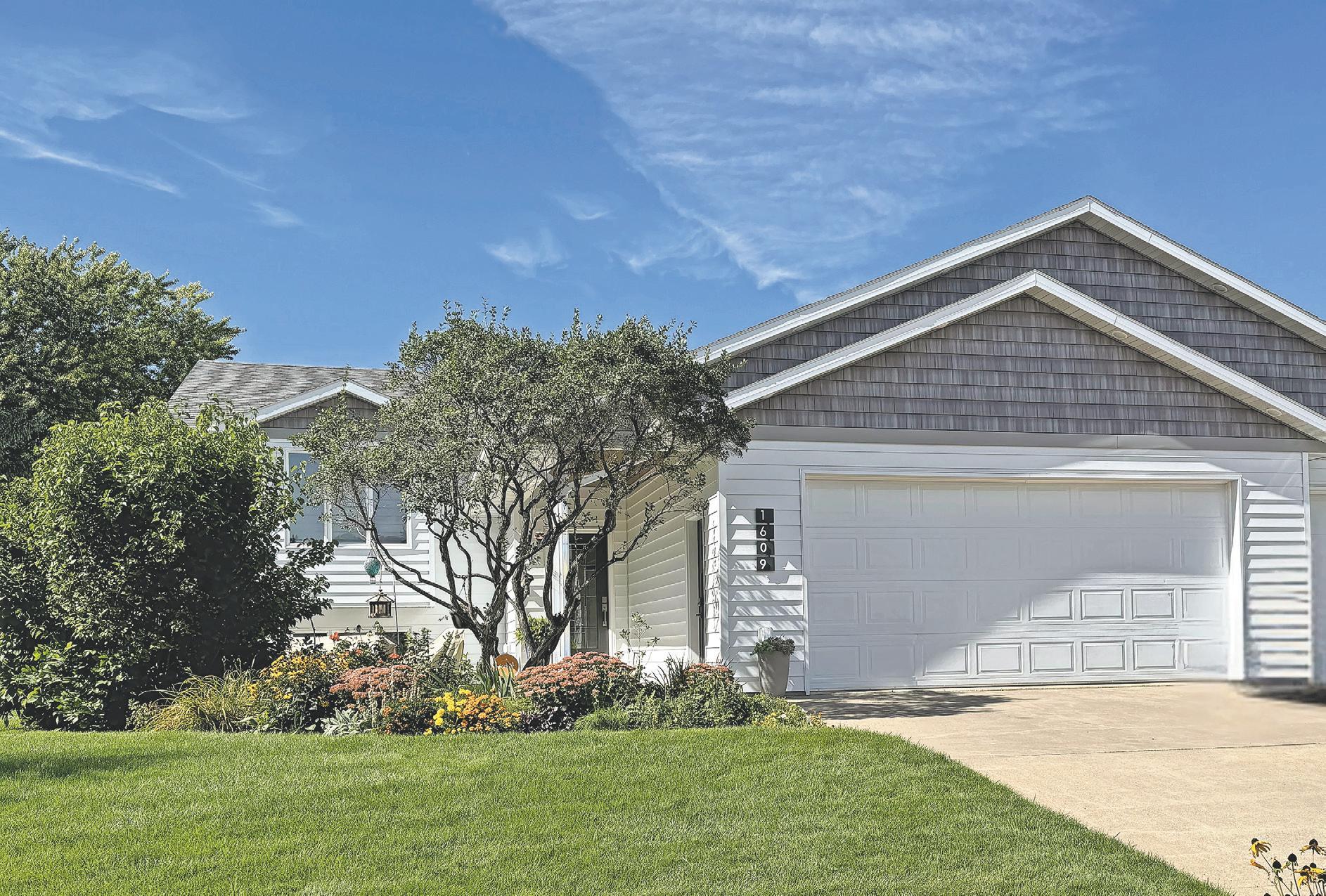
“... Anywhere your house touches the soil, radon can come in,” Otto said. “It doesn’t matter if you have a full basement, if you have a crawl space or a slab-on-grade. It doesn’t matter if it was built 100 years ago or yesterday. It’s how your house reacts to that soil. If your house is under a negative
pressure, radon is going to be able to come in.”
Otto said negative pressure creates a vacuum in the lower level of the home that pulls on the soil underneath the foundation. The greater the negative pressure beneath the foundation is one reason radon concentrations can be elevated inside a home, he said.
Otto will speak at the informational meeting in Jamestown on what radon is, its health effects, how to test, what your test results mean and how to fix your home.
“There’s a lot of things that we can’t control, but radon’s one of them,” he said. “Radon’s a health concern we don’t have to worry about. Let’s test it. Let’s see what our radon levels are. If they’re elevated, let’s get it fixed.”
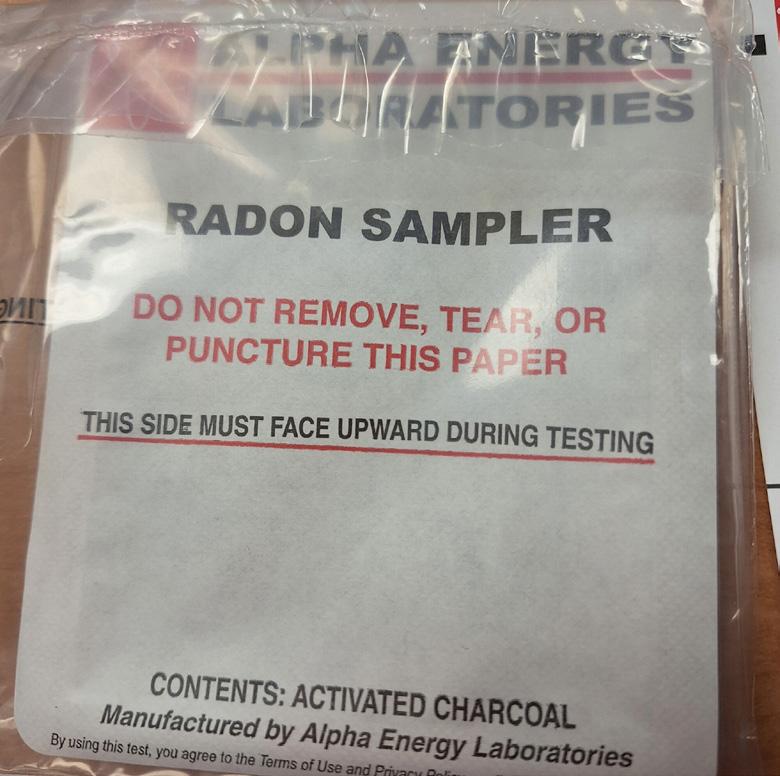
He will have free radon test kits for individuals who come to the presentation.
“We always recommend verifying those test results,” Otto said. “So if the first one comes back elevated, they can get another test kit from our department and verify those test results. And then if they come back elevated, they can either install what’s called a radon
mitigation system themselves or they can hire a licensed radon mitigator.”
He said there are several radon mitigators in Jamestown as well as some in Fargo and Bismarck who also provide services here.
The only way to know what a radon level is in the home is to test, Otto said.
“And if it comes back high, it’s one of those health concerns that you can get rid of and
you don’t have a ‘what if’ down the road,” he said.
Otto said more real estate officials are becoming familiar with radon and says they’re one of the first lines of education to homeowners on the topic. He’d like to see more encourage radon testing.


















“It’d be nice if everyone would be able to just tell them, ‘Hey, let’s just test this home, see what the radon levels are. If it comes back elevated, it’s no big deal, it easily can be fixed.’ Any home can be fixed, there’s not one that can’t be fixed,” Otto said. “This is your dream home, let’s make sure that it’s safe.”
“The system’s a little different depending on the type of foundation that you have — if you have a crawl space, if you have slab-on-grade, if you have a basement, if you have (a) multiple level home …if you have drain tile, if you don’t have drain tile,” he said.
Herman also said in some older homes, asbestos wraps were used with heat ducts for furnaces. As they age, they can get friable and begin releasing asbestos particles. While HVAC contractors are aware of the issue, people doing their own work may not know the proper way to deal with that or the ramifications of it, he said.
ksteiner@jamestownsun.com | (701) 952-8449 CONTINUED from 3
What: free informational meeting on radon, asbestos
When: 1 to 4 p.m. Oct. 2
A radon mitigation system creates a pathway for radon to be collected and vented safely to the outside instead of accumulating in the home, he said.
He said the average system with just drain tile or drilling a hole into concrete would be about $1,200 to $1,500 starting, adding it usually doesn’t cost much more. Other systems could be more expensive if they require more labor, such as crawling around dirt crawl spaces to place a plastic membrane to seal up the area.



Herman encourages people to attend the free informational meeting, where they can also get questions answered on the topics.




Where: Club 1883, 519 1st Ave. S, Jamestown
Presenters: Justin Otto and Brian O'Gorman, North Dakota Department of Environmental Quality
BY MASAKI OVA The Jamestown Sun
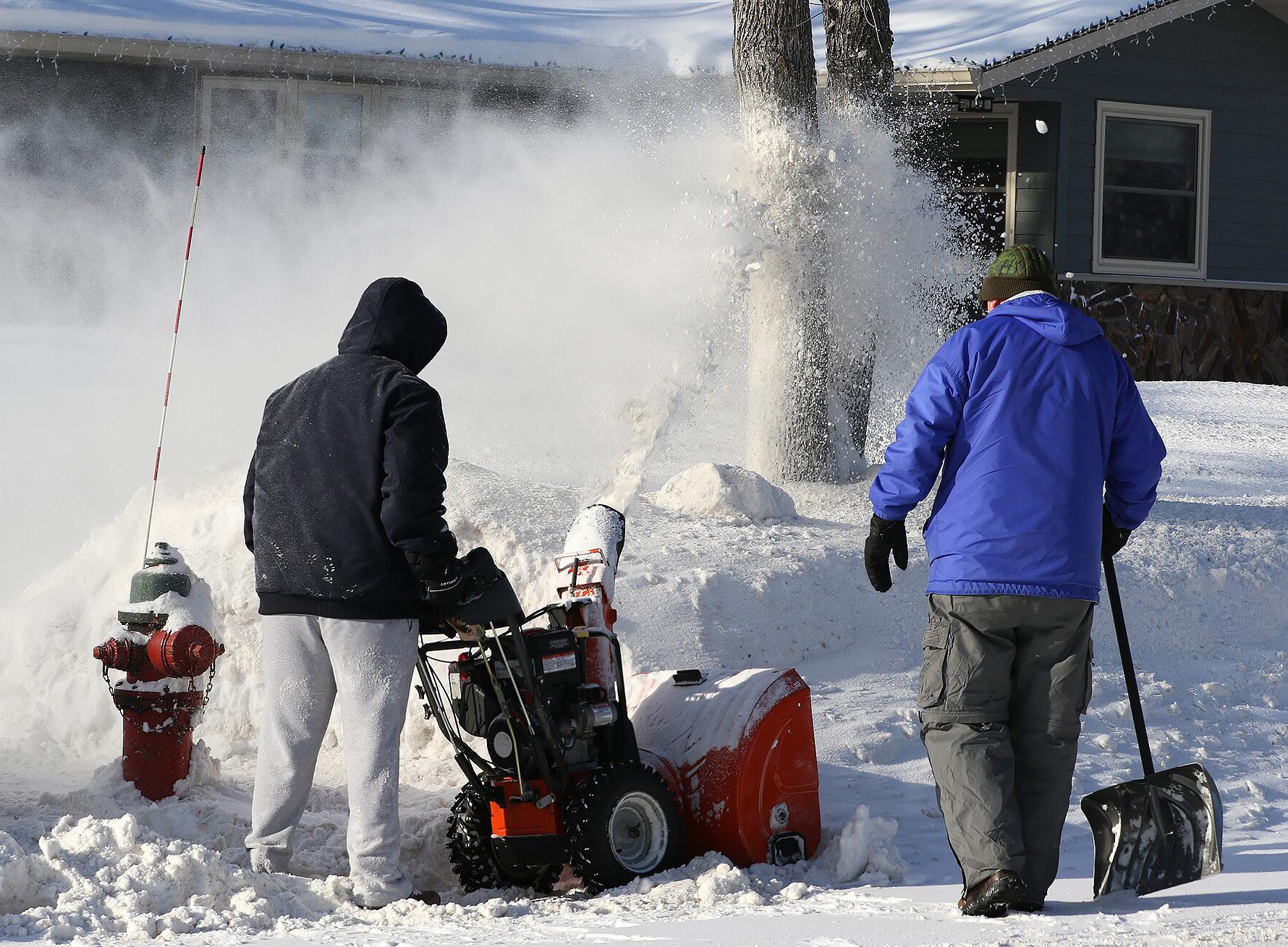
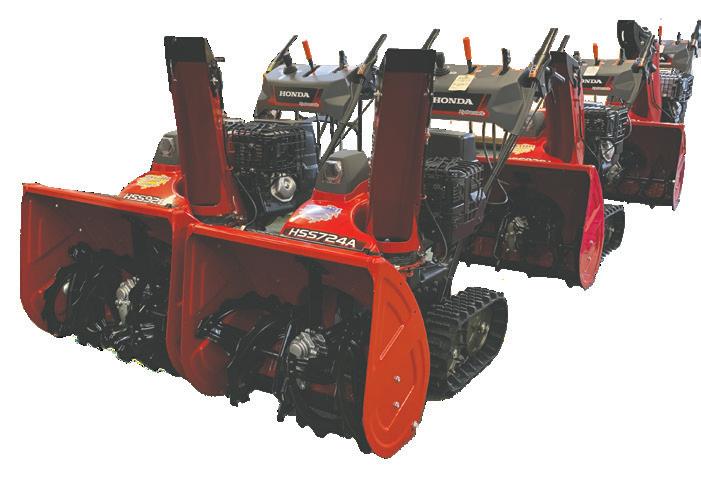
JAMESTOWN — Some factors to consider when purchasing a snowblower include driveway and sidewalk width and choosing between track or wheels on the unit, according to Gary Docktor, owner of Gun & Reel Sports.
Docktor said the Honda snowblowers that Gun & Reel Sports sells are 24, 28 or 32 inches wide. He said sidewalks are usually around 32 to 34 inches wide and a 9-horsepower snowblower that is 28 inches wide would work for that.
“If you have a really big area to do, then you might want the 13-horsepower, 32-inch cut,” he said. “It will move more snow, wider, and it won’t take as long.”
He said a 24-inch-wide snowblower with 7 horsepower is good for narrow sidewalks or going into tight spaces.
Snowblowers come in single stage, two stage and three stage. Docktor said the

higher-stage snowblowers move snow faster and further.
He said a snowblower’s throwing distance is also another factor to consider.
“You don’t want to be throwing it back on your driveway and have to blow it twice,” he said.
Docktor said customers get asked how steep their driveways are to determine if the snowblower should have wheels or tracks.
“Tracks will crawl up the driveway easier than the wheels,” he said. “If it’s icy, then all the wheels are going to spin versus a track will just grab and go right up the driveway.”
He said snowblowers with tracks are more popular.
“Some guys that buy the wheel ones will end up putting chains on the wheels to get on the ice and get going whereas a track, you don’t have to do anything,” he said. “It will work in any condition. It’s more versatile. It will climb up your driveway or cut through the snow better.”

Another factor in purchasing a snowblower is its warranty. Docktor said a warranty will cover anything that is a manufacturer’s defect.
“It’s not going to cover it if you run over a rock or something or a big ice chunk from the snowplow,” he said. “If something is mechanically wrong, the warranty will cover it.”











He said a winch gets installed on the front of a 4-wheeler or UTV that allows the operator to raise and lower the blade. He said the blades also turn so the snow can be pushed to either side.
Tyler Attleson, mechanic at Gun & Reel Sports, said it is important to get the snowblowers ready before it snows.
“That means to make sure it hasn’t been sitting for a year and now the gas is old and not going to start,” he said.
He said homeowners should make sure the oil is updated on their snowblowers.
“Change the oil, make sure it’s good and clean,” he said.
Attleson said to make sure everything on the snowblower is working properly on the snowblower. He said residents should make sure the belts are good and the shear pins in the auger aren’t broken. He said cable adjustments may be needed for the auger and the drive as well as checking the spark plug. He also said to check the tire pressure or track tension to make sure the snowblower goes straight when it is in use.
For a blade on an ATV or UTV, Attleson said the wire bar should be checked for wear and tear.
“That can wear out and then it can start eating into the blade itself,” he said.
Attleson said the wire bar bolts to the bottom of a blade. When the blade is on concrete, it wears down the wire bar before the blade.
“It’s a replaceable item,” he said. “It’s a couple inches tall and there’s bolts on the bottom. When one side wears out, you can flip it again to have a nice flat edge across. When that side wears out, you have to replace it.”
mova@jamestownsun.com | (701) 952-8454