music written for now, experienced live.



music written for now, experienced live.
Thursday 26 March 2026 | St Bride’s Church,

Janet Wheeler
Aditya Sharma
Steve Richer
Brian Inglis
Edmund Jolliffe
Salva Nos (Fanfare in Extremis)
2025 Call for Music | World Premiere
“Hope” is the thing with feathers
2025 Call for Music | London Premiere
Aurora
2025 JAM Commission | London Premiere
Flight Prelude Flight Dance
2025 Call for Music | World Premiere
Four Birds and a Fly O Brother Chicken! Cuckoo in the pear-tree The Swan The Eagle On a fly drinking out of his cup
2025 Call for Music | World Premiere
Paul Mealor
Stef Conner
Jack Oades
A Humble Light
2025 JAM Commission
Flight
2025 Call for Music | World Premiere
Between the Stormclouds and the Sea
The Chapel Choir of Selwyn College, Cambridge
Sarah MacDonald · conductor
Onyx Brass
Sam Madden · tenor
Simon Hogan · organ
Owen Gunnell · percussion

Janet Wheeler
2025 Call for Music
World Premiere
Brass Quintet
Duration: 2’
Salva Nos (Fanfare in Extremis) is a brief annunciatory piece for brass quintet. It sets out with energetic, rather nervous music portraying a mood of desperation (hence in Extremis). This leads into two hymn-like phrases, which originally were envisaged as settings of the words Salva Nos Domine vigilantes and custodi nos dormientes. Taken from a Latin compline hymn, these translate as: Save us, O Lord, while waking, and guard us while sleeping
Slower rising fifths are then overlaid on the nervous music, leading to a more optimistic and expectant ending.

Aditya Sharma
2025 Call for Music World Premiere
SATB voices with soprano solo Duration: 3.5’
This setting of Emily Dickinson’s work explores the intimate relationship between the powerful spiritual force that lies within us all and the primordial natural entity that animates it.
We live in trying times. The path forward seems strewn with uncertainty. It is in moments like this that we must remind ourselves of our shared existence and find the inner strength to overcome our deepest anxieties, by celebrating our humanity through song. This work is a quiet reflection on our boundless resilience and implores us to be courageous, to be hopeful.
Emily Dickinson (1830-1886)
“Hope” is the thing with feathersThat perches in the soulAnd sings the tune without the wordsAnd never stops - at all -
And sweetest - in the Gale - is heardAnd sore must be the stormThat could abash the little Bird That kept so many warm -
I’ve heard it in the chillest landAnd on the strangest SeaYet - never - in Extremity, It asked a crumb - of me.
Steve Richer
2025 JAM Commission
London Premiere
SATB voices
Duration: 7’
Lisa Murfitt
Aurora aims to take the listener on an evocative journey to experience the Northern Lights, one of nature’s most magnificent wonders. The celestial scene is set with a gentle other-worldly chord sequence, the anticipation gradually building with the expectation that “something rare will soon pass by”. We are then launched into the full drama of the spectacle, with lush harmonies and varied choral textures taking us right into the midst of the astounding heavenly display. As the experience starts to fade, we are left with a profound sense of gratitude as the final suspension resolves to a warm and satisfying G major chord.
Silent on the hill we sit, Eyes toward the northern sky, Searching, peering through the dark For something rare will soon pass by.
Dare not blink in case you miss it, Dare not breathe or turn away, Dare not speak, for now, for this Is what we’ve waited for this day.
And then...
Emerald green, the veil descends, Snaking across the inky night, Sliding, swirling, Shimmering, soaring!
The angry Sun, they said, had thrown spears Toward these fragile lands. But his flares were defended, Beaten in splendid red and blue and violet bands.
So, silent on the hill we sit, Grateful as this flame ignites! Aurora: Earth’s protection veiled in light.

Brian Inglis
2025 Call for Music
World Premiere
Organ Duration: 5’
Flight was inspired by a scene from F.W. Murnau’s silent film version of the Faust legend (1926). In the scene, Mephisto conjures up for Faust a vision of the beautiful Duchess of Parma. Faust immediately wishes to go to her, and Mephisto invites him to step on his cloak for a magic carpet-like ride across the countryside, passing varied landscapes, to her castle. On arrival they find the Duchess’s wedding party in full flow, with dancing and elephants; Mephisto presents Faust to her.
Originally written to be performed with the film scene by a small instrumental ensemble at Dartington International Festival & Summer School in 2002, the music was reworked as an independent organ composition in 2025.
After a mysterious introductory prelude, toccata-like figuration and different registers depict motion through air in the central Flight. The final section features a ground bass underpinning a quasi-medieval dance.
Notwithstanding the initial inspiration, the work could also find a liturgical function in, for instance, depicting the rushing wind of Pentecost; and responding to Psalm 50’s exhortation to praise with cymbals and dancing.
2025 Call for Music
World Premiere
SATB voices
Duration: 9’
Four Birds and a Fly is drawn from a larger set of pieces entitled The Imaginary Menagerie. Drawing on the nonsense poetry of Edward Lear and Lewis Carroll, the composer sets a selection of animal themed texts as some light-hearted relief from more serious composition. These settings gradually grew into a small collection, five movements of which are performed this evening.
The appeal of these texts is their brevity, often focusing on a single image or idea. The compositional challenge is to capture this in musical form. While the music is not intended to be taken too seriously, it explores a range of moods and characters, enjoyable for performers and listeners alike.
The first movement, perhaps appropriately, looks at the conundrum of which came first – the chicken or the egg. The second movement is about a slightly confused cuckoo, followed by a graceful swan and then a majestic eagle. The final poem is a little more philosophical - William Oldys muses about a fly drinking from his cup and compares their lifespans, both insignificant in the grand scheme of things.
1. O Brother Chicken! Sister Chick!
O Brother Chicken! Sister Chick!
O gracious me! O my!
This broken Eggshell was my home!
I see it with my eye!
However did I get inside? Or how did I get out? And must my life be evermore, an atmosphere of doubt?
Can no one tell? Can no one solve, this mystery of Eggs? Or why we chirp and flap our wings,—or why we’ve all two legs? And since we cannot understand,— May it not seem to me, That we were merely born by chance, Egg-nostics for to be?
Gould Fletcher
Alfred Lord Tennyson
2. Cuckoo In The Pear-Tree
The Cuckoo sat in the old pear-tree, Cuckoo! Raining or snowing, nought cared he. Cuckoo! Cuckoo, cuckoo, nought cared he.
The Cuckoo flew over a housetop high. Cuckoo! “Dear, are you at home, for here am I? Cuckoo! Cuckoo, cuckoo, here am I.”
“I dare not open the door to you. Cuckoo! Perhaps you are not the right cuckoo? Cuckoo! Cuckoo, cuckoo, the right Cuckoo!”
“I am the right Cuckoo, the proper one. Cuckoo! For I am my father’s only son, Cuckoo! Cuckoo, cuckoo, his only son.”
“If you are your father’s only son - Cuckoo! The bobbin pull tightly, Come through the door lightly - Cuckoo!
“If you are your father’s only son - Cuckoo! It must be you, the only one –Cuckoo, cuckoo, my own Cuckoo! Cuckoo!”
3. The Swan
Under a wall of bronze, Where beeches dip and trail Their branches in the water; With red-tipped head and wings— A beaked ship under sail— There glides a single swan.
Under the autumn trees
He goes. The branches quiver, Dance in the wraith-like water, Which ripples beneath the sedge With the slackening furrow that glides In his wake when he is gone: The beeches bow dark heads.
Into the windless dusk, Where in mist great towers stand Guarding a lonely strand, That is bodiless and dim, He speeds with easy stride; And I would go beside, Till the low brown hills divide At last, for me and him.
4. The Eagle He clasps the crag with crooked hands; Close to the sun in lonely lands, Ring’d with the azure world, he stands.
The wrinkled sea beneath him crawls; He watches from his mountain walls, And like a thunderbolt he falls.
William Oldys
5. On a Fly drinking out of his Cup Busy, curious, thirsty fly! Drink with me and drink as I: Freely welcome to my cup, Couldst thou sip and sip it up: Make the most of life you may, Life is short and wears away. Both alike are mine and thine Hastening quick to their decline: Thine’s a summer, mine’s no more, Though repeated to threescore. Threescore summers, when they’re gone. Will appear as short as one!
Paul Mealor LVO
2025 JAM Commission
SATB voices and vibraphone Duration: 4’
Paul Mealor’s A Humble Light shapes its resonant vocal sonorities around a text that reflects quiet service, humility and grace. A lyrical melody, shaped by the rich choral sound that defines Mealor’s style, reveals a simplicity that heightens the music’s quiet beauty.
This piece was written in loving memory of Dave Andreatta (1948-2025).
Adapted by John Frederick Hudson and Brock Andreatta
A Humble Light
Not crowns of gold but simple grace first shone within a humble place; so may our lives, in quiet ways, be songs of love through winter days.
The kindly word, the steady hand, the neighbour’s need we understand, the pledge to serve without a claim— let these be gifts we gladly name.
And when we sing this stilly night, let deeds of mercy be our light; in memory of the hands we knew, we’ll carry on the good he drew.
Stef Conner
2025 Call for Music World Premiere
SATB voices
Duration: 7’
Flight is built from three Old English riddles in the Exeter Book that direct our gaze upward: to the sun and moon, to small creatures borne on the wind, and to a swan whose “bright silks” sing as it is carried through the air. These poems share a fascination with things that traverse the sky – creatures, forces and lights that seem to move between the physical and the spiritual.
The musical language combines gestures familiar from medieval chant and folksong with contemporary modal harmony; the prosody of the poetry guides its melodic contours. The piece begins with a sparse, chant-like setting of a fragment from Riddle 29, which establishes a contemplative space: “Dust rose to the heavens, dew fell on earth…”
Riddle 57 then breaks into layered fragments: the text is divided into small cells that overlap and accumulate, suggesting fluttering wings or the shifting patterns of a murmuration. Modal harmonies resist firm resolution as the “little creatures” move in a restless flock.
By contrast, Riddle 7’s swan is cast in broad, homophonic phrases. Its final image – a “spirit, ghost and guest, on wing” – returns over the opening motif from Riddle 29, bringing creature and cosmos into a single arc.
Jack Oades
2021 JAM Commission
SATB voices, tenor solo, brass quintet, organ Duration: 20’
Between the Stormclouds and the Sea sets a poetry cycle, The Secret and the Song, by Welsh poet Grahame Davies. As soon as I read Grahame’s wonderful text, I was immediately captured by its beauty and poignancy, and found myself immediately transported to the bleak, tranquil serenity of Romney Marsh.
Written from the perspective of a Romney Marsh native, much of the imagery comes from Grahame’s time spent there in the summer of 2019, and there’s a real sense of belonging to the voice of the writing. The speaker has many questions around themes of faith and existentialism, not all of which can be answered, but the beauty of the Marsh shines through the cloud of doubt, and the speaker reclaims the affirmatory tone of the first poem by the end of the final poem.
With that in mind, the music is very much written for and about Romney Marsh, and my task as the composer was to place myself in the heart of the Marsh and tell its story through Grahame’s words. Much of the text is quite meditative and contemplative; the music reflects this and is structured around emotional landscape of the words. The piece is largely melodically driven, with harmony that is often unsettled, and a flexible approach to rhythm and metre. The prominent recurring melodic motif of the piece (featuring in every movement) jumps up a major seventh, before settling on the fifth, and this presents the speaker reaching out for answers before finding solace among the marshes.
There are some particularly significant influences to my writing, including Ralph Vaughan Williams, Charles Villiers Stanford, Benjamin Britten and James MacMillan; some movements could be considered homages to those composers. The folkloric language of the poetry is emulated through my own harmonic language in the piece, and combining this with the timbre of brass and organ underneath the choir, the music ebbs and flows ‘like the surf upon the shingle, like the wind among the wheat’.
Grahame Davies CVO
1. Prelude
When God made Romney Marsh, he said: I made the land and sky and sea, but nowhere have I made a place so strangely from the three.
When God made Romney Marsh, he said: I made the land and sea and sky, but nowhere have I made a place where they more lonely lie.
When God made Romney Marsh, he said: I made the sea and sky and land, but nowhere have I made a place so hard to understand.
But when God walked in Romney Marsh, one morning when the sun was high, he said I know now - this is why: I made the land and sea and sky.
2. Seeking
This is why you came, because here you can run no further, because here, you feel, each morning, the horizon’s invitation, because, each day, you see the open secret of the sky, because here you listen each night to the sea’s insistent catechism, because, if there are no answers, you know, at least, you have not hidden from the questions.
3. Distance
When clouds are on the inland ridge, the skies above are clear. Between the stormclouds and the sea, we make our own weather here.
4. Lesson
I used to think the words we sang were true. And then I learned to doubt them as I grew. But now that faith, like doubt, has gone its way, I see those words were wiser than I knew.
5. The Churches
You do not need faith to come here. You do not need to know before you lift the iron latch and feel, as you step inside, the sacred chill.
Believer, unbeliever, the silence that awaits will be the same and always will.
(5. The Churches)
The light through the leaded panes, the same; the birdsong in the cemetery, the same.
And this is comfort should you wish: that there is nothing you can say or do can make this place do less than welcome you.
Your faith, your failings … do you think they care, the silent saints whose names these churches bear?
I wanted wealth when I was young. I do not want it now.
I only want what the day may bring, like the bird behind the plough.
I left behind the ones I loved and now that they are gone, I search for them in silence, like the cygnet seeks the swan.
I made a vow to make my name, and now my name is made, I take the road that takes me home, like a sheep will seek the shade.
The music of the marshes stays with me in the street, like the surf upon the shingle, like the wind among the wheat.
If you were born on Romney Marsh, one thing you always know: you stand upon the level ground no matter where you go.
If you should come to Romney Marsh from hell or heaven on high remember that we share a bond who share the Kentish sky.
If you should die in Romney Marsh, then count it as a grace that you have found a holy ground to be your resting place.
For when God walked in Romney Marsh, one morning when the sun was high, he said I know now - this is why: I made the land and sea and sky.
Stef Conner is a composer and singer whose music is shaped by her research into ancient, medieval and traditional song. Her works have been performed by ensembles including the London Philharmonic Orchestra, City of Birmingham Symphony Orchestra, Queens’ College Choir (Cambridge), and the Marian Consort, in venues including King’s College Chapel, the Barbican, the Royal Festival Hall, and Birmingham Symphony Hall. She is the recipient of major awards including the Royal Philharmonic Society Composition Prize. Her album Riddle Songs (Delphian, 2020), featuring contemporary settings of Old English riddles, was named a Presto Classical Editor’s Choice and selected as a Recording of the Year.
Conner’s recent projects include Hateful Grace, commissioned and premiered by the London Symphony Orchestra at the Barbican as part of the LSO Futures series, and Ghost Weavers, which was commissioned for the PRSF New Music Biennial 2025 – a major festival presented with Southbank Centre and Bradford 2025 – and was broadcast on BBC Radio 3’s New Music Show and released on CD by NMC Recordings. For further information see: https://www.stefconner.com
Dr Brian Andrew Inglis is a Scottish-Irish composer, performer and academic born in Münster, Germany. He is Associate Professor in Music and Head of the School of Arts at Middlesex University, London. His music - which has been described as ‘extraordinary, powerful, moving and passionate’ - is informed by an eclectic range of influences and inspirations, with an experimental attitude and a willingness to transcend genre and disciplinary boundaries. It has been performed and broadcast across Europe and beyond, from the USA to South Korea.
Recent festival performances include the London Festival of Contemporary Church Music, the Supernormal Festival (Oxfordshire), the 34th International Review of Composers in Belgrade, and the Festival Osmose in Brussels, where in 2024 his ‘Toccata’ for piano won the Prix du Public in a performance by Isis Larrère. 80 of Brian’s scores are available from publishers Composers Edition and Forton Music. For further information see: www.impulse-music.co.uk/brianinglis and composersedition.com/brianinglis
Edmund’s music draws on a huge range of styles and influences and he is equally at home writing for film and TV as well as the concert hall. Recent commissions include pieces for the ABRSM, OUP and the Ora Singers. His choral music is published by Hal Leonard, OUP, Stainer & Bell and Banks Music. A debut album recorded by the Nonsuch Singers and supported by the PRS Composers’ Fund will be released later this year (Convivium Records). Recent composition prizes include first prize in the Orpheus Academy Competition, the 40th Ithaca College Choral Competition, the Eastern Michigan University Choral Competition, the Kantos Choir Competition and the Freudig Singers Choral Competition.
Major series he has composed music for include ‘Celebrity Traitors/The Traitors’ (additional music), ‘Who do you think you are?’, ‘Sort your life out’ (BBC1), ‘The Great War: The People’s Story’, ‘Long Lost Family’ (ITV1), ‘Homestead Rescue’ (Discovery) ‘Crazy Delicious’ (C4/Netflix) and ‘Unreported World’ (C4). More information about him can be found at: www.edmundjolliffe.com
Paul Mealor is one of the world’s most ‘performed’ living composers and has composed music for some of the most important state, national and Royal occasions of the past fifteen years, including the wedding of The Prince and Princess of Wales (2011), The King’s 65th, 70th and 75th birthdays, three works for the late Queen’s National Services of Thanksgiving (2022), two works for the Coronation (2023) - including the first ever setting of the Welsh Language at a Coronation sung by Sir Bryn Terfel - and three works for The Honours of Scotland Service (2023) including the recessional march, The Call of Lochnagar He composed the 2011 Christmas No 1 Wherever You Are for Gareth Malone and the Military Wives Choir and is the recipient of a BAFTA, a Brit, an Emmy and two Classic Bit awards. Among his 150 published compositions are three operas, four symphonies, concerti, chamber music, film and TV scores, songs, chamber and music choral music. He is a Commander of the Venerable Order of St John (2023) and a Lieutenant of the Royal Victorian Order (LVO, 2024) - the first composer to be granted this honour since Sir Arthur Bliss in 1969 (and before him, Sir Edward Elgar). In January 2026 he was appointed a Lay Canon of St Asaph Cathedral. He is the President of JAM.
Hailing from Exeter, Devon, Jack Oades is an organist, composer, conductor and tenor. Based in Edinburgh, he is Organist and Master of the Music at St Giles’ Cathedral, Edinburgh and Artistic Director of the Edinburgh University Chamber Choir. Previously, Jack has held posts in Cambridge, the Isle of Man, London, Dublin and Exeter. He is in demand as a recitalist and accompanist, with upcoming concerts at the Cuneo Organ Festival and Nice Cathedral. Jack studied the organ with William Whitehead and James McVinnie, and choral direction with Patrick Russill, and he is a Fellow of the Royal College of Organists.
As a composer, his works are published by the RSCM, Two Bridges Music and the Chichester Music Press, and his music is performed all over the world, including a number of broadcasts on BBC Radio 3 & 4. He was the winner of several composition prizes, and has been the recipient of many large-scale commissions, including Choir & Organ magazine, and the Whitgift Foundation. Alongside his prolific choral writing, Jack has also written chamber, orchestral, and solo works. More recently, he has branched out into digital and ambient music, including scores and sound design for film and video games.
Steve Richer was born in Guernsey and attended Elizabeth College, where he was accepted onto the GCSE Music course, despite not yet being able to play an instrument. During his studies, he developed a love of composing. In parallel, he began to teach himself the piano, and these days plays organ at St David’s Carrick Knowe Parish Church in Edinburgh.
Singing choral evensong in English cathedrals on a school choir tour sowed the seeds of Steve’s passion for choral music, and this eventually inspired him - after a hiatus of three decades - to return to his original love of composing. In 2024, his choral work First Light was one of eight pieces selected from over 200 submissions in JAM’s Call for Music. It was performed in Fleet Street, London and later received a second performance, this time by Holst Singers and Stephen Layton MBE. In 2025, Steve received his first commission, and his resulting piece Aurora was performed, again by Selwyn College Chapel Choir, at the JAM on the Marsh Festival in Kent. Steve is delighted that this work will receive its second performance tonight.
With a day job in the NHS and still very much a self-taught late-starter, Steve considers himself a keen amateur composer but with aims of continuing to refine his craft to produce works which emotionally resonate with listeners.
Aditya Sharma is an Indian composer based out of Cambridge, England. While active in a variety of genres, Sharma particularly enjoys writing vocal music. He has always maintained an interest in the expressive potential of the human voice and is keen on exploring ways to incorporate his cross-cultural influences into his musical language.
Sharma completed his undergraduate degree in music from Elmhurst College (USA). He received graduate degrees from DePaul University (USA) and the University of Cambridge (UK), both on full-tuition scholarships. His teachers include Dr. Mark Harbold, Dr. Seung-Won Oh, Dr. C.W. Jones, Dr. Osnat Netzer and Tim Watts. Sharma’s music has been performed by the Grammy-nominated Kontras Quartet, the Elmhurst College Concert Choir, the University Chorale at the University of Washington, Ensemble 20+ (DePaul University), the Fidelio Trio and the Cambridge Voices.
Throughout her career Janet Wheeler has worn various musical hats: teacher, music producer for BBC Schools Radio, and MD of choirs from ensembles to choral societies. She has composed and arranged music in all these roles. External commissions have come from such performers as ORA Singers, SONORO, National Youth Choir, and Ely Cathedral and for such events as Thaxted Festival, What a Wonderful World Festival and the London International Choral Conducting Competition. Whether in large-scale choral/orchestral works or in smaller pieces, sacred and secular, her music often embodies the danciness found in word rhythms.
Janet’s choral compositions from 2025 include Psalm 150 for choir and trombone quartet, and music for Papagena, who have just recorded her Tomorrow is Today. Her recent instrumental pieces include Ampersand written for the Britten Sinfonia Opus One scheme. As part of JAM’s brass-writing project in 2021 Janet composed Film Noir for brass quintet, which won the first President’s Award. Onyx Brass have recorded both pieces and Janet is delighted to have a third piece selected for performance by them tonight. Selwyn Chapel Choir and Sarah Macdonald will be recording an album of Janet’s music in the summer. More information can be found at: https://janetwheeler.co.uk/
The Chapel Choir of Selwyn College, Cambridge has led worship in the College Chapel since its foundation in the last decade of the nineteenth century. For the first two-thirds of the twentieth century, the all-male choir of undergraduates was directed by the Organ Scholars and sang daily Choral Evensong. For occasional larger works, the men borrowed sopranos and altos from Newnham College, the women’s College across the road from Selwyn. The mixed choir, formed in 1976 with the admission of women to Selwyn, now consists of up to 30 singers, Choral Scholars (called Choral Exhibitioners) and volunteers, and the choir’s link with Newnham continues to the present day. Most of the choir members are undergraduates or graduates at Selwyn or Newnham, with a few volunteers from other colleges, and they read a variety of subjects including Music, English, Natural Sciences, and Engineering. During term, the choir sings three services per week in the College Chapel, as well as concerts and services throughout the UK. Its repertoire ranges from the 10th to the 21st century. They regularly broadcast services for BBC Radios 3 and 4, and every year undertake an international tour (in the recent past destinations have included Israel and Palestine, Canada, New Zealand, the United States, and much of mainland Europe).
In their long-standing association with JAM, Selwyn Choir has premiered major new works by some of the UK’s foremost composers, including Jonathan Dove, John McCabe, Gabriel Jackson, Paul Patterson, Judith Bingham, Steve Martland, Adam Gorb, and Thea Musgrave. The choir has recorded over 30 commercial CDs under Sarah MacDonald’s direction. They have made something of a niche for themselves recording an important series of single-contemporary-composer discs with Regent Records, and have released discs of works by Paul Spicer, Paul Edwards, Gary Higginson, Alan Bullard, and Phillip Cooke, John Hosking, Mark Gotham, Benjamin Ponniah, Iain Quinn, Paul Ayres, Richard Peat, Joanna Gill, Bryan Kelly, Jonathan Bielby, and Richard Pantcheff. Future releases include recordings of the music of Janet Wheeler, Andrew Downes, and the first commercial recording of choral music by the choir’s long-time director, Sarah MacDonald.
Sarah MacDonald, conductor, is a Canadian-born conductor, organist, pianist, and composer, living in the UK, and she holds the positions of Fellow and Director of Music at Selwyn College, Cambridge, and Director of Ely Cathedral’s Girl Choristers. She has been at Selwyn since 1999 and was the first woman to hold such a post in an Oxbridge Chapel. Sarah came to the UK from Canada in 1992 as Organ Scholar of Robinson College, Cambridge after studying piano, organ, and conducting at The Royal Conservatory of Music’s Glenn Gould School in Toronto with Leon Fleisher, Marek Jablonski, and John Tuttle. At Cambridge she read for a degree in Music and studied the organ with David Sanger. Sarah has played numerous recitals and conducted choirs throughout the UK, North America, the Middle East, New Zealand, and much of mainland Europe. She has made over 35 commercial recordings, variously in the guises of pianist, organist, conductor, and producer, and currently works most frequently with Regent Records. Her first solo disc, a recording of Bach’s Goldberg Variations on the Steinway-D in Ely Cathedral was released in 2024. Sarah is a Fellow and examiner for the Royal College of Organists, and an examiner and teacher for the University of Cambridge’s Faculty of Music. She is a regular director for Rodolfus Foundation choral courses, and her liturgical music (over 60 published titles) is performed around the world. She is series editor of the ‘The Sarah MacDonald Choral Series’ with Selah Publishing in Pittsburgh. Sarah also writes a popular monthly column for the American Guild of Organists’ magazine The American Organist, called ‘UK Report’. A compiled volume of 12 years’ worth of her essays was published in 2022. Sarah is a Patron of the Society of Women Organists, an Honorary Patron of the Herbert Howells Society, and President of the School Organists’ Association. She was recently appointed University Organist at Cambridge and is the first woman to hold that prestigious ceremonial role, which dates back to 1670. She is currently serving a two-year stint as President of the Royal College of Organists. In her spare time Sarah is a keen amateur photographer.
Grahame Davies is a multi award-winning poet, librettist, cultural commentator and psychogeographer in Welsh and English. He has worked with some of the most prominent composers and performers in the world of opera and classical music, providing words for occasions including the Coronation of King Charles III and a host of major celebrations and commemorations.
Alan Thomas (trumpet), Ryan Linham (trumpet), Andrew Sutton (horn), Amos Miller (trombone), Archie McVicar (tuba)
Celebrating its 30th anniversary season in 2023, Onyx Brass continues to be the leading light in establishing the brass quintet as a medium for serious chamber music, combining “staggering virtuosity” (Sarah Walker, BBC Radio 3) with the entertaining and articulate style that has become the group’s trademark.
The group’s extensive discography (16 albums, and counting!) is regularly featured on BBC R3 and has received huge critical acclaim, Gramophone hailing “some of the most thrilling chamber brass-playing of its kind” and Record Review describing the group as a “wonderful, virtuosic brass quintet”.
New music and education are both at the heart of the ensemble’s remit: it has commissioned and premièred over 200 new works, and has led workshops and masterclasses from primary schools through to the Juilliard School; Onyx has held several residencies, including 15 years at Imperial College, London. The group also specialises in Continuous Professional Development (CPD) for professional musicians, and has led several sessions for British Army Music in this area.
Work with singers also forms a central part of Onyx’s work, often under the auspices of the John Armitage Memorial trust, with whom Onyx Brass has been affiliated since its inception.
Sam Madden is a tenor originally from Dunedin, New Zealand. He is currently based in the United Kingdom singing as a lay clerk at Ely Cathedral alongside performing as a freelance soloist and ensemble tenor. Sam is an in-demand oratorio soloist having performed with some of the United Kingdom’s finest orchestras including the Britten Sinfonia, the Philharmonia and the Orchestra of the Age of Enlightenment. His recent oratorio projects have included the Evangelist roles and the tenor solos for J.S Bach’s Passions, Handel’s Messiah, and a premiere recording of Andrew Downes’ Song of the Prairies. Alongside his oratorio work, Sam has been a part of several recital series including a recurring recital at the International Festival of Sacred Arts in Edinburgh and the Cambridge Arts Festival.
Since moving to the United Kingdom, Sam has performed with and is a member of distinguished ensembles including St Martin’s Voices, Tenebrae, Chamber Choir Ireland, and St Paul’s Cathedral Choir and is performing with the Monteverdi Choir as a member of their apprentice scheme for 2025/2026. Previously, he has worked with groups such as Voices: New Zealand, Saffron Opera Group, New Zealand Opera, and served as a choral scholar at St Martin-in-the-Fields. He can be heard on several broadcasts on the BBC and in various recording projects as both a soloist and ensemble member.
Simon Hogan is the Cathedral Organist at Southwark Cathedral, a post which he combines with being Organist to the Cathedral Singers of Christ Church Cathedral, Oxford, and a portfolio of freelance work in and around London. Simon’s musical life began as a chorister at St Mary Redcliffe, Bristol. Following organ scholarships at Bristol and Salisbury Cathedrals, he moved to London in 2008 to study organ performance at the Royal College of Music, where he subsequently graduated with first class honours. In his final year he held the Organ Scholarship at St Paul’s Cathedral, before becoming Assistant Director of Music at Southwell Minster, a post he held for seven years.
As a soloist Simon has given recitals in venues across the UK, including the cathedrals of Durham, Hereford and Westminster, The Albert Hall, Nottingham, and Rochdale Town Hall. He is also the principal organist for JAM.
Owen graduated from the RCM in 2003 with first class honours, where he also completed a junior fellowship with his duo O Duo in 2006. Since then he has had a busy and varied career. He has made solo appearances with orchestras such as the BBC Philharmonic, BBC Symphony Orchestra, BBC Concert Orchestra, the London Sinfonietta, the Philharmonia, the Macedonian Symphony Orchestra, the Melbourne Symphony Orchestra, Britten Sinfonia, Sinfonia Viva, Orchestre de Picardie (France) and De Doelen Ensemble (Holland). He has performed and been broadcast on TV and radio across Europe, the USA, Mexico, Hong Kong, Singapore, China, Japan, Russia, Australia and the UK. Owen has worked closely with many composers playing and recording new commissions, including Steve Reich, George Benjamin, Brett Dean, Thomas Adès, Unsuk Chin, Aphex Twin, David Lang, Nico Muhly, Michael Nyman, Oliver Knussen, Donnacha Dennehy, Benjamin Wallfisch and Alexandre Desplat. He has also been involved in numerous studio recordings in London, New York and Dublin.
For my second (& last) programme as Festival Curator, I have returned to the music of France and looked at the influence of jazz on classical music as my threads. I’ve also tried to enable startling performances of classical favourites, with a twist. Examples of the latter include Mussorgsky’s ever-popular Pictures at an Exhibition – performed by two pianists at one piano – Ravel’s effervescent, jazzy Piano Concerto in G (my favourite piano concerto) played by Cyrill Ibrahim and Debussy’s wonderfully moody La Mer in new reductions, commissioned by JAM.
New faces to JAM on the Marsh include Alexander Armstrong and Claire Booth, with Andrew Matthews-Owen (piano), bringing a sizzling programme from the roaring 20s – think Noel Coward, Ivor Novello and hits from the Great American Songbook – and the festival debut of one of the UK’s finest violinists, Fenella Humphries in an intimate solo recital.
Our friends at Cinemarsh will again host screenings from National Theatre Live, and the Marsh Academy will host one of our art exhibitions.
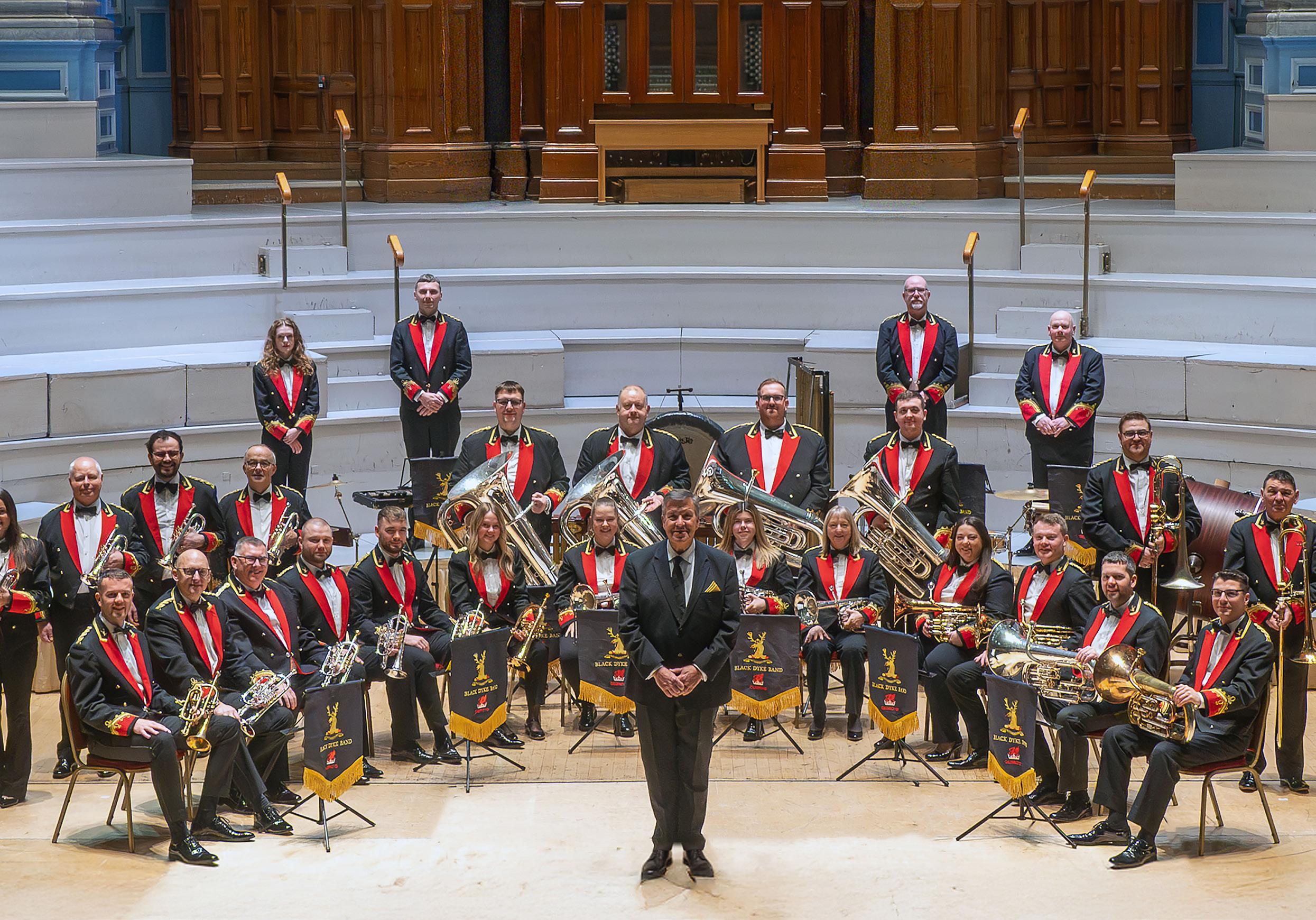
Bookending the programme are favourites Changeling Theatre, who open the festival with Much Ado About Nothing, and the final concert performed by Black Dyke Band making their festival debut – one of the UK’s finest brass bands - who will blow the roof off St Nicholas, New Romney!
Whilst the 2026 festival is shorter than previously, it is ‘JAM packed’ with excellent multi-arts and stars offering thrilling performances… all in intimate spaces, surrounded by the wonderful Romney Marsh.

In 2020, as live performance paused, JAM responded by creating a digital platform to share its work more widely. What began as a practical response has since become a vital part of our mission: expanding access to knowledge, creativity and new music beyond the concert hall.
Today, JAM Digital reaches a global audience. Our growing library of films, created in collaboration with leading performers and composers, has now been viewed over 150,000 times, supporting composers at every stage of their development.
Building on this success, we are now entering a new phase. Through our Composer Intensive, Composer Residency and a new series of filmed sessions, we are creating an integrated pathway for composers: from learning and experimentation to performance and wider dissemination. Upcoming releases include a new series on writing for piano, led by John Frederick Hudson and Thomas Kelly, continuing our commitment to sharing practical insight and craft at the highest level.
These Educational Videos were created in partnership with:
The VOCES8 Foundation: Writing for Voice
Sarcconi Quartet: Writing for Strings
Onyx Brass: Writing for Brass Quintet
Francesca Massey: Writing for Organ
Among our most-watched resources include: 11,000 views on “Pedals on the Organ” – a guide to writing for organ pedals 7,000 views on “Problematic Ending Consonants” – a masterclass on choral diction with VOCES8
These films are freely available to composers worldwide, removing barriers to high-level musical learing and supporting the next generation of artists.
As we expand JAM Digital, every new commission, intensive and residency feeds into this growing resource, thus ensuring that the work created here continues to reach far beyond the concert hall.
Explore the full, free resource at: jamconcert.org/composers-resource

Developing
JAM’s Composer Intensive is a new residential programme created to support early-career composers at a critical stage in their development. Led by pianist and Britten Fellow Thomas Kelly, the spring intensive (the first of two offered this year, with a second taking place in the autumn) brings together a small group of composers for several days of focused work, discussion, and practical exploration of new music.
At a time when opportunities for emerging composers are becoming increasingly rare across the UK, the programme reflects JAM’s return to the founding spirit of the organisation: supporting and nurturing new musical voices. The Composer Intensive forms the first of three composer initiatives launched this year, alongside a new Composer Residency and a second Autumn Intensive, creating a growing network of opportunities for composers to develop their work within JAM’s artistic community.
Through close collaboration with performers, mentorship and the exchange of ideas, these programmes aim to create a space where composers can experiment, develop their craft and build lasting artistic connections.

In the early years of JAM, a small group of musicians gathered around the table to look at scores submitted to the Trust from contemporary composers, thus reflecting the music of our time. Those thoughtful conversations helped to shape the character of JAM in its formative years. Founded in 2000 with a commitment to supporting living composers, JAM quickly became a place where new music could be heard, discussed and encouraged.
Central to the vision of enabling new music was the generosity of the professional musicians who gave their time and expertise to the Music Panel. Drawn from across the UK’s musical life, including cathedral musicians, performers, composers and conductors, the panel brought a wealth of knowledge and experience to the careful consideration of the many scores submitted each year.
Over the years, the panel’s work has quietly played an important role in the development of JAM and its annual March concert at St Bride’s, Fleet Street. Many composers first encountered through the Call for Music have returned to collaborate with and be commissioned by JAM, becoming part of a growing artistic lineage that continues to shape the UK’s contemporary music landscape.
JAM offers its deepest thanks to the members of the Music Panel, past and present. Their generosity of time, thoughtful musical insight and unwavering commitment to the encouragement of new music have shaped the organisation over more than two decades. The spirit of those early conversations continues to inform JAM’s work today.
Music Panel Members
Edward Armitage BEM
Michael Bawtree
Judith Bingham OBE
Nicholas Cleobury
Daniel Cook
Eric Crees
Jonathan Dove CBE
Simon Hogan
John Frederick Hudson PhD
Timothy Jackson
Robert Jones
Sarah MacDonald
Jonathan Manners
Paul Mealor LVO
Onyx Brass
Marisa Robles
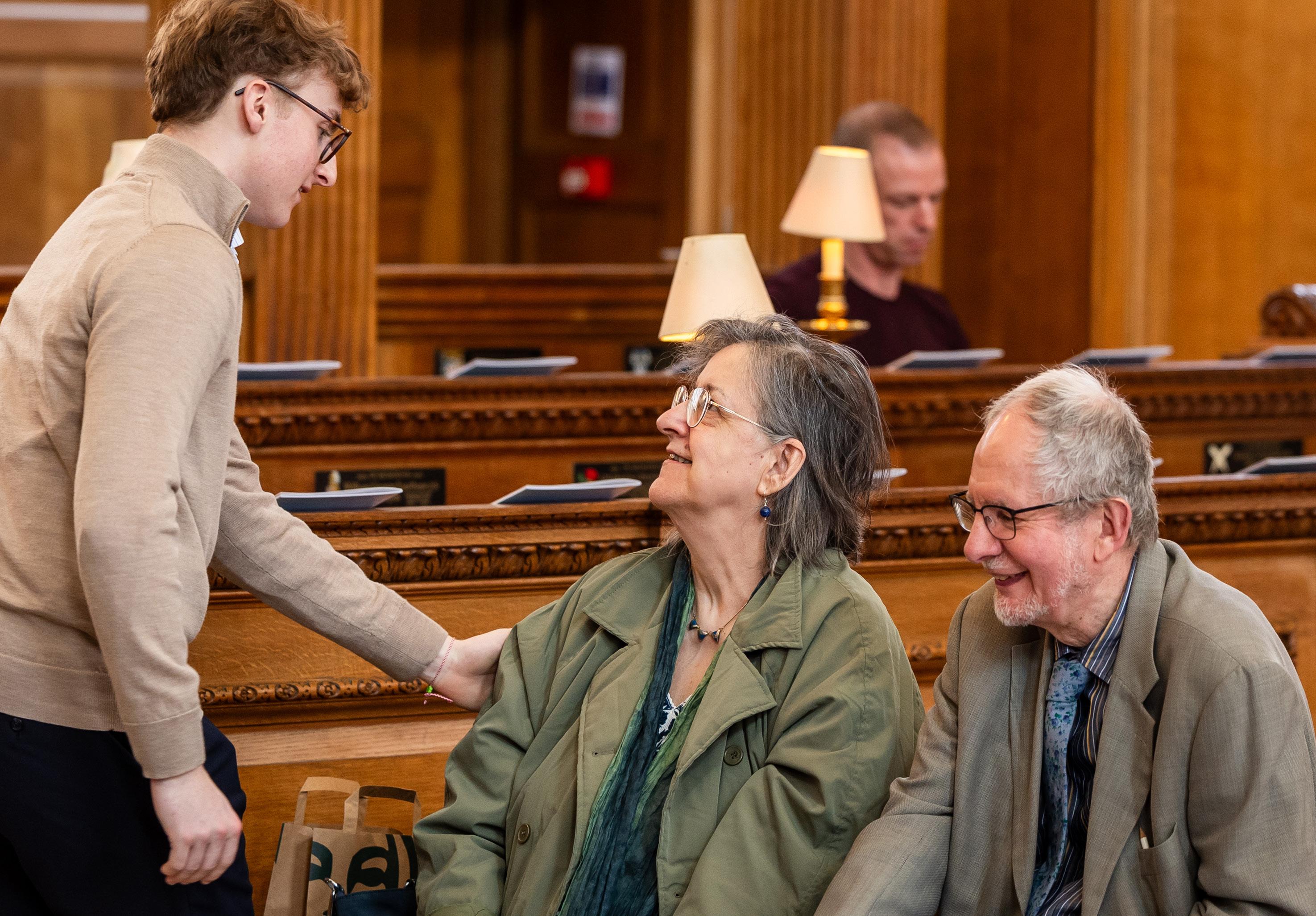
Top:
In rehearsal with composers
Judith Bingham and Alan Bullard
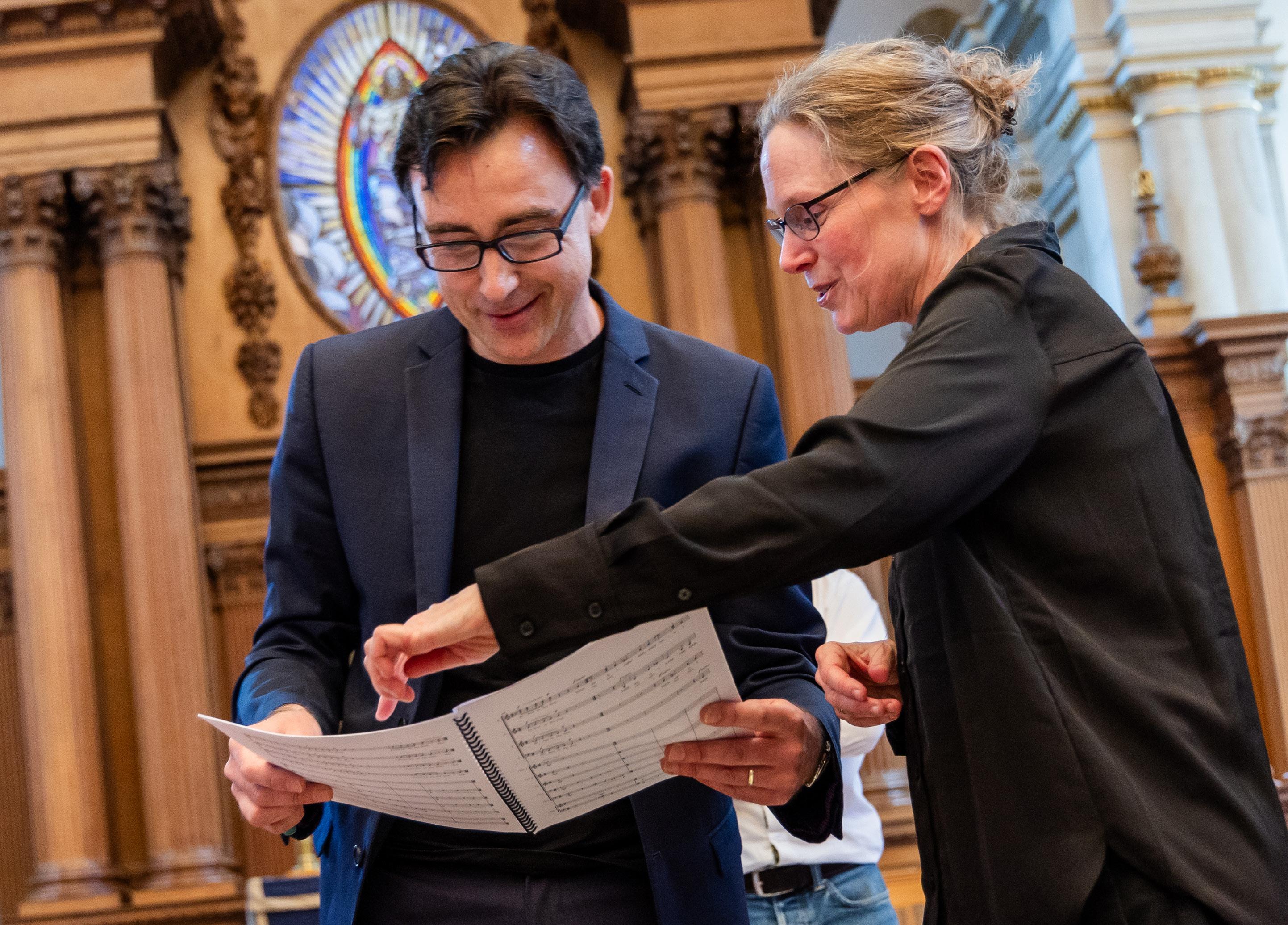
Bottom:
Composer Joseph Phibbs with conductor Sarah MacDonald
Chronological by date 2002-2026
2002
No Answer
Timothy Jackson
· choir · brass · organ 2003
The Far Theatricals of Day
Jonathan Dove
· choir · brass · organ
2005
The Fifth Continent
Paul Patterson
· choir · brass · organ 2006
My Heart
Strangely Warm’d
Judith Bingham

2004
Songs of the Garden
John McCabe
· choir brass organ
Thoughts Scribbled on a Blank Wall
Adam Gorb
Darwin
Steve Martland
· choir · brass · organ 2010
Fundamental
Hannah Kendall
· choir · brass
2010
Now Sleeps the Crimson Petal
Paul Mealor
12’ · choir
2010
2008
The Spacious Firmament
Gabriel Jackson
· choir brass organ
· bass · brass 2009
Fiery the Angels
Richard Peat
2012
Body of Water
Julian Phillips
brass · organ
The Night’s Untruth
Tarik O’Regan
· choir · brass · organ
2011
Tallis’s Light
Rory Boyle 12’ · brass · organ
2012
The Hazel Wood
Phillip Cooke
· choir brass organ
Yonghy-Bonghy-Bo
Giles Swayne 20’ choir · brass · organ · percussion
2015
Voices of Our Ancestors
Thea Musgrave
· choir · brass · organ
2017
Voices of Vimy
Tom Harrold &
Stuart Beach 35’ · choir · cello
2011
All Things Wear Silence
Philip Cashian
2013
2012
The Hythe
Judith Bingham
· strings
The Farthest Shore
Paul Mealor
· choir · brass · organ 2014
Oboe Concerto: The Angel of Mons
Judith Bingham
· strings · oboe
· choir · brass · organ 2014
2016
2015
To Seek Where Shadows Are
Paul Mealor
· choir
2016
O Great Beyond
Thomas LaVoy
2018
The Shadows of War
Paul Mealor
· choir · strings · percussion
Songs of the Marshes
Rory Boyle
Soliloquy
Daniel Saleeb
2022 Up in the Morning Early
Janet Wheeler
7’ · brass
2023
The Sky Engine
Richard Peat
55’ · orchestra · choir soloists · narrator

2020
Piano Concerto
Paul Mealor
20’ · strings · percussion piano
2021 Between the Stormclouds and the Sea
Jack Oades
20’ · choir brass organ
2022
Concerto for Clarinet
Judith Bingham
11’ · strings · clarinet
2023
Love’s Labour’s Lost
James Aburn
90’ · orchestra (Changeling Theatre)
2023
Onyx 30
Mark -Anthothy Turnage
10’ · brass
2025 Seven Songs of Nature
Joseph Phibbs
20’ · choir · brass · organ
2024 Murmurations
Jago Thornton 12’ · strings
2023
The Song I Came to Sing
Tara Creme
11’ · choir · brass · organ
2023
Evening Star
Christopher Churcher 7’ · choir
2023
The School for Scandal
James Aburn
90’ · orchestra (Changeling Theatre)
2024 Illumination
Isabelle Thornton
7’ · organ · two trumpets
2025 - ligand tendonMarisse Cato 5’ · 7 strings
2024
Wild Earth Blazing
John Frederick Hudson
40’ · strings · piano · perc horn · tenor
2025 Aurora Steve Richer 7’ · choir
2025
Violin Concerto
Stephen McNeff
20’ · strings · harpsichord · percussion · violin
2025 A Humble Light
Paul Mealor 4’ · choir
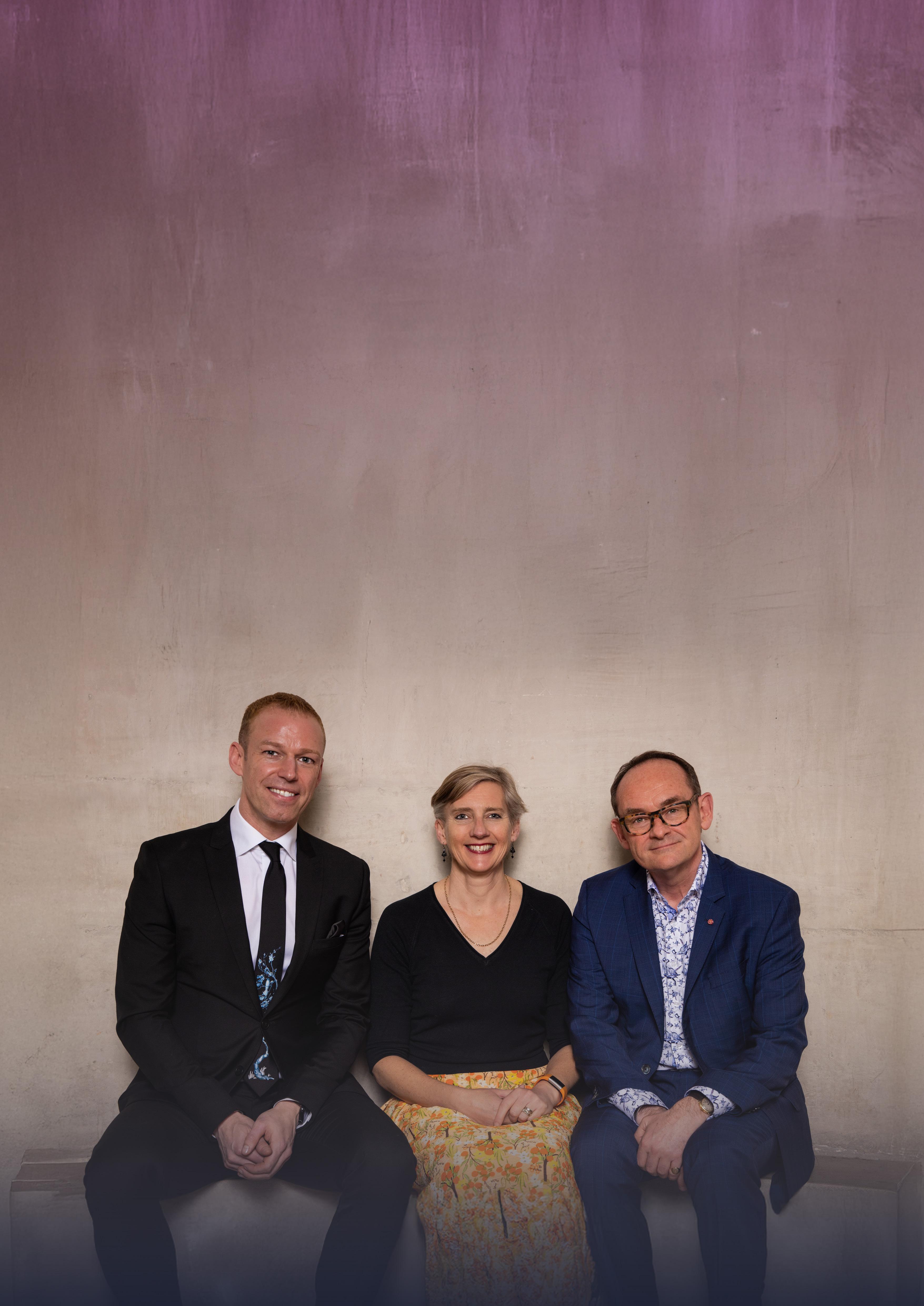
John Frederick Hudson PhD · Artistic Director
Edward Armitage BEM · Festival Curator
Sarah Armitage · Head of Marketing & Fundraising
Karen Gambrell · Grants Administrator
James Aburn · Festival Operations Manager
Anthony White · Digital Marketing & Social Media
Edward Armitage BEM · Chair
Sarah Armitage
Charles Cochrane
Timothy Jackson
Patricia Rolfe
JAM is exceedingly grateful to the following individuals and organisations whose generosity enables our work.
Brock Andreatta
Sarah & Edward Armitage
Peter Coe
Marah Dickson-Wright
Angie & Richard Fry
Marianne More-Gordon
Charlotte & Malcolm Watkinson
Robert Alston
Louise Barton
Isabel & Peter Bristowe
Doug Chapman
Rachel Cornish
Barbara Down
Margot & Richard Fosbery
John & Sharon Francis
Richard Garnett
John Gordon
Alex Gordon-Shute
Judith & Richard Alderton
Pearl Anderson
Virginia Armstrong
Teresa Baker
Carole Collins-Biggs
Virginia Brown
Brian Bussey
Rita & Joe Butterworth
Julia Buxton
Peter Callery
Sue Canney
William Carey
Diana & Chris Castle
Jean Chippindale
Ben Chishick
Isabel Churcher & Peter White
Jeremy Coltart
Jeremy Cooper
Willie Cooper
Sue Danby
Barbara Davey
Carol & Mark Dennis
Diana Edmunds
Sian Edwards
Jim Eustace
Jeannie Baker
Ruth & Andrw Bligh
Charles Cochrane
Robert Colvill
Chris and Brian Donnelly
Mark & Jenny Dumenil
Richard & Celia Duncan
Richard Goodall
Al Hume
Penny Graham
Penelope & Andrew Hamilton
Brinley & Janet Hughes
Iris Imbert
Karen King-Wilson
Andy Maguire
Charles Morris
Barbara Nelson
Judith O’Connor
Robert Phillips
Robert Plowman & Robert Myers
Christopher Finn-Kelcey
Michael Foad
Michelle Franklin
Carolyn & Richard Frewer
Woolly Gaines
Steve Gasson
Phillippa Goddard
Adrian Goodsell
Ian Gordon
Susan Griffith
Tikki & Blair Gulland
David Harman
Jeanette Harris
Anna Hazelden
Katie Higginbottom
David Hill
Sarah Hodson
Tom Hoffman
Liz Hopkin
Antony Hughes
Maggie Humphrey
Regina Jaschke
Mollie & David Jackson
Barbara Kempston
Sarah Kirk & David Hankins
Thank you to photographers: Susan Pilcher · Tristan Fewings · Justin Sutcliffe
Carolina Lehrian
Anne Martin
Tina Metcalfe
Alfred McKenney
Susannah & Michael Miller
Valerie Miller
Susan Mitchell-Cook
Joan Monsen
Dim Morgan
Angela Morpeth
Ivan & Mary Moseley
Roxanna Macklow-Smith
Kirsten Offer
Claudia Ott
Andrea Ottermayer
Ann Paddick
Tim Parsons
Robert Peaple
Philip Ray
Philip Raymont
Dilly Rich
Karen & Steve Richer
Paul Ripley
Jane & Ray Rivers
Christopher & Jocelyn Rowe
Marion Jackson
Edith & Gary McCarthy
Angela & Nigel McNelly
Anita & John Rivers
Kelly Robbins
Vyvienne & Robin Wade
Margaret & John Waite
Marianna & Dan Weiner
Sarah & Martin Young
Sonia Relf
Victoria Salem & R Turvey
Michael Sharpe & Tricia Spain
Valerie & Jeremy Shaw
Jenny & David Tate
Gareth Thompson
John Thornley
Emma Wilcox
Eve Wilson & Rod Saunders
Josephine Rowling
Zivi Sainsbury
Peter Sander
Helen & Jonathan Severs
Jane & Reece Shearsmith
Liz Skilbeck
Ingrid Slaughter
Richard Smith
Nigel & Jane Spencer
Janet & Paul Thomas
Nick Thomas
Catherine & Richard Thomas
Angela Thwaites & Steve Billington
Anneke Tidmarsh
Sheila and Nigel Turley
Susan Wanless
Sue Watts
Jill & Michael Westwood
Aniko Wildsmith
Claire Williams
Joanna Williams
Leah Wright
Laetitia Yhap
Programme layout and design: John Frederick Hudson
www.jamconcert.org