Creating Engaging Social Studies Lessons for Modern Students: Building
Curiosity in Today's Classroom by
Jake Luginbuhl

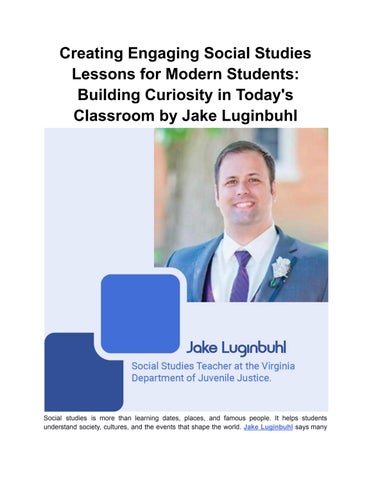
Social studies is more than learning dates, places, and famous people It helps students understand society, cultures, and the events that shape the world. Jake Luginbuhl says many
students today want learning to be active and meaningful For this reason, teachers must focus on creating engaging social studies lessons that capture attention and encourage participation.
Students often learn best when they can connect lessons to real life. A topic becomes more interesting when learners see how it relates to their daily experiences. For example, a lesson about government can include discussions about local community issues A lesson about history can explore how past events influence life today. These connections make learning more valuable and memorable
Classroom activities can also improve student interest. Instead of relying only on textbooks, teachers can include debates, group projects, and classroom simulations Students may take on different roles and explore historical events from various viewpoints These activities help learners think deeply about important topics. They also make lessons more enjoyable.
Visual learning tools are another helpful option. Photos, maps, charts, and short videos can make difficult topics easier to understand Students often remember information better when they can see it presented in different ways Visual content can also increase attention during lessons and support students who learn best through images.
Modern technology offers many opportunities for social studies education Online resources provide access to museums, historical documents, and interactive learning experiences. Students can explore distant locations and important events without leaving the classroom These tools help bring social studies topics to life and create a richer learning experience
Teachers can also encourage student voice in the classroom Allowing students to ask questions and share opinions creates a more active learning environment. When students feel heard, they become more involved in discussions They develop confidence and improve their communication skills This approach also helps students learn how to respect different viewpoints.
Effective social studies instruction focuses on engagement, participation, and meaningful learning. Students are more likely to remember information when they actively explore ideas rather than simply memorize facts By using real-world connections, interactive activities, technology, and discussion-based learning, teachers can create lessons that inspire curiosity and growth.
The future of education depends on helping students become informed and thoughtful citizens. Well-planned social studies lessons can support this goal by making learning exciting and relevant Strong interactive social studies activities encourage students to explore the world with confidence, curiosity, and a deeper understanding of the people and events that shape society.