Keeping Business and Industry Employees
Safe and Healthy
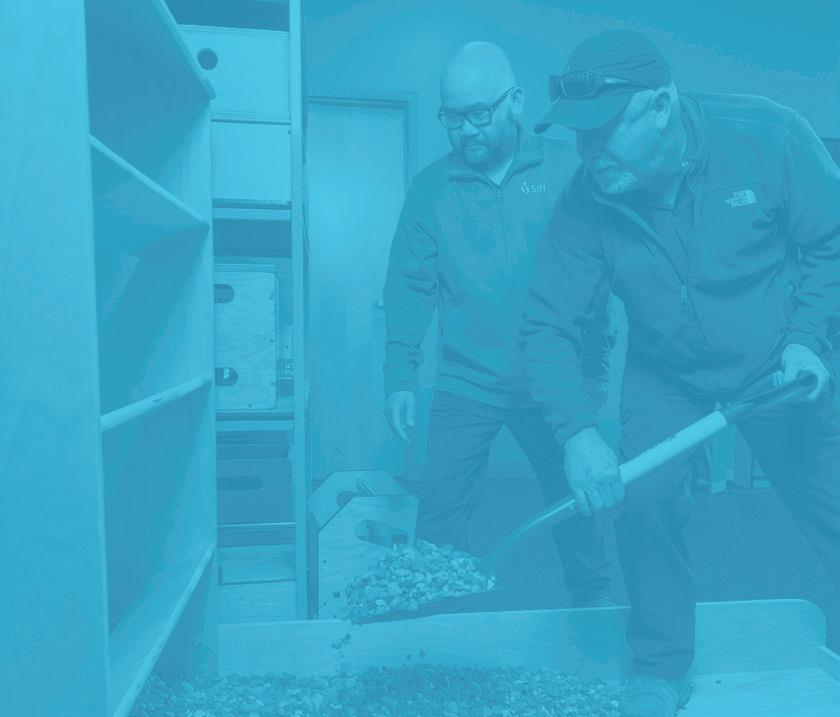
SIH Work Care is an approach designed to combine the strengths of occupational health, rehabilitation and wellness programs to function cohesively for companies and their employees.
Our team collaborates with yours to provide injury navigation management and treatment of injured workers—our goal is to get employees back to work as soon as possible.
Save the date for the
Thurs., June 11, 2026
8 a.m. - 3 p.m.
Kokopelli Event Center Marion, IL
The annual Symposium provides increased knowledge and education for workers’ compensation specialists, human resources staff, safety representatives, and other professionals who are responsible for managing the health and wellness of their workforce.
Attendees gather to hear our speakers share their expertise and learn ways to navigate the growing challenges of complying with workers’ compensation. Breakfast and Lunch provided.
2026 SIH Work Care Workers’ Compensation Symposium


What began as a small-town bank in Southern Illinois has now grown into one of the top community banks in the nation. Banterra is truly a nancial partner for you and your business, with locations in six states supporting communities from rural towns to metropolitan cities, such as St. Louis, Scottsdale and Salt Lake City.
Today, we have 500+ team members, with a large majority working in this beautiful region. You’ll nd 25 of our 40 locations among the charming downtowns of Southern Illinois. With more than $3 billion in assets and a lending capacity of $80 million, we’re equipped to support businesses of every size. We offer expertise in commercial and specialty lending, supporting your nancial goals, both personal and business. Plus, we offer extensive digital conveniences including online account openings, online appointment making, digital banking and Treasury Management services built for your unique needs.
Wherever you nd us, one thing that will never change is our dedication to our communities and unmatched personal service. Not only can we support your growth in Southern Illinois, but we can help you understand why this region can be your next best growth step. We welcome the opportunity to serve you.


Executive DIRECTOR’S LETTER
A Year of Momentum, Milestones, and Southern Illinois Pride
This past year in Southern Illinois has been nothing short of extraordinary. Across our 17 counties, we have celebrated a season of progress marked by groundbreakings, ribbon cuttings, national recognition, new partnerships, and growing regional pride. From community milestones to regional achievements recog nized statewide and nationally, Southern Illinois continues to prove what’s possible when collaboration fuels progress.
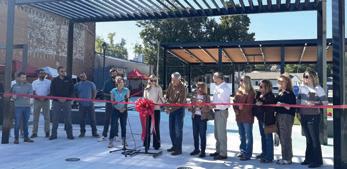
Across the region, new business openings, expansions, and development projects signaled confidence in our future. Groundbreakings and ribbon cuttings weren’t just ceremonies—they were visible signs of momentum, investment, and the belief that Southern Illinois is worth building in. Each shovel and each oversized pair of scissors marked a community ready to grow and a region prepared to compete.
2025 also elevated Southern Illinois onto a national stage, as we showcased our region's assets to site selectors from across the country and welcomed economic development professionals through the IEDA Southern Region Tour. Their message echoed what we know firsthand: Southern Illinois is strategically positioned, rich with opportunity, and strengthened by leaders who work together rather than in silos.
From Marion’s multi-million-dollar STAR Bond project slated to attract more than 1.5 million visitors each year to small towns like McLeansboro and Alto Pass cultivating their own distinctive identities and regional contributions, each reminds us why rural America remains a powerful draw, attracting visitors from far and wide with authentic experiences and genuine hospitality. Collectively, these communities and others throughout Southern Illinois remind us that opportunity often begins with one bold idea—and grows when people believe in it.
A new initiative, Salukis Build Here, introduces a whole new take on business development by encouraging SIU alumni to start, relocate, or
expand their businesses in Southern Illinois. With more than 250,000 alumni in the U.S. and around the world, and many in key leadership roles, this collaborative strategy strengthens the region’s economy through coordinated support and partnerships while building on SIU’s long-standing role as a catalyst for innovation, talent development, and regional prosperity.
Tourism and our region’s outdoor assets continued to shine as one of Southern Illinois’ strengths, fueled by leaders who pour passion into every event, trail, and attraction. In this issue, we celebrate one of those leaders in a special way. For more than three decades, Southernmost Illinois Tourism Bureau’s Carol Hoffman’s dedicated service has helped shape the region’s tourism landscape and made a lasting impact on how the world sees beautiful Southern Illinois.
At the heart of our economic future is what we refer to as the R4 Advantage: Rivers, Rail, Roads, and Runways—a multimodal powerhouse earning our region national recognition as a top logistics hub. This year, we placed a particular emphasis on the mighty rivers that define our geography and economic opportunity. From the Mississippi to the Ohio, our waterways continue to play a vital role in both national logistics and local growth.
None of this momentum would be possible without the people and organizations who champion business success across Southern Illinois. From new tools to help companies stabilize healthcare costs to innovative workforce solutions to ensure career-ready talent, the region is committed to helping businesses and their employees choose Southern Illinois as a place to stay, thrive, and grow.
As you turn the pages of this issue, we invite you to dive into the region’s remarkable momentum and milestones that are not only worthy of celebration but lay the groundwork for many more to come.
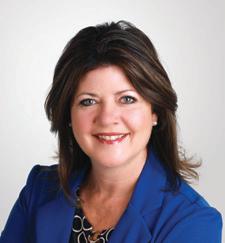
Deb Barnett, Ph.D. Executive Director, Southern Illinois Now
SOUTHERN ILLINOIS NOW
Where it all began – from vision to impact.
Regional initiatives are not new in Southern Illinois. The region’s history and successes resulted from strong relationships and strategic collaborations. A deep dive into the history of regional initiatives resulted in several successes including SI EDGE (1994) to bring growth and expansion to Southern Illinois, and ConnectSI (2006-2013) focused on advancing Southern Illinois’ broadband access.
In 2017, the need for a regional marketing strategy was identified. This work later became the SI Works initiative with partnerships from Greater Egypt Regional Planning and Development Commission, Man-Tra-Con, the Southern Illinois Workforce Development Board, the U.S. Economic Development Administration, and the Delta Regional Authority.
At the same time, Southern Illinois University Carbondale (SIU) Chancellor Dr. Carlo Montemagno recognized the need to further strengthen the critical symbiotic relationship between SIU and the region. As a result, in August 2017, Montemagno established the Business Leaders Roundtable and brought together twenty business owners, economic development professionals, regional elected officials, and SIU leaders to identify both key issues affecting SIU and impediments to regional and individual business growth.
“ “
As a region, we are better together, and a win for one is a win for all of Southern Illinois.
Following Dr. Montemagno’s untimely passing in 2018, Southern Illinois Healthcare (SIH) recognized the importance of building upon the Roundtable’s momentum and brought together these leaders, as well as others from throughout Southern Illinois to launch the Bridge to the Future initiative. SI Bridge to the Future was created in 2018 as a regional leadership group consisting of business leaders, community leaders, elected officials, and others to create regional growth and retention strategies through real-world solutions for the southernmost counties of Illinois. These leaders were successful in creating a platform for regional collaborative economic development and laying out a foundation and vision for the success of our region. In fall 2022, this vision became a reality through Southern Illinois Now (SI Now).
SI Now Today
Today, SI Now is guided by a distinguished Board of Trustees made up of leaders in business and industry, education, healthcare, and workforce development. The organization’s professional staff brings deep regional knowledge, passion, and commitment alongside a broad network of partners throughout Southern Illinois to advance shared goals without duplicating efforts.
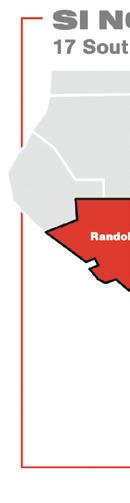
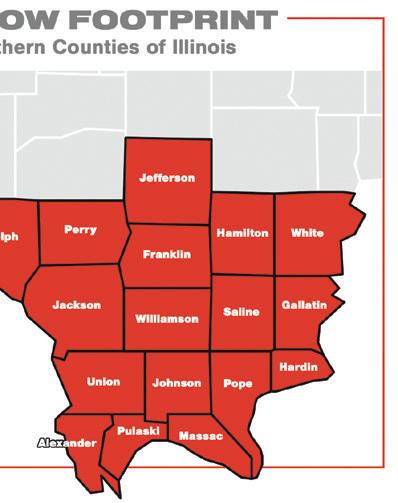
SI Now strengthens the region’s collective voice through three task forces aligned with its core priorities:
• Business Growth & Development
• Education & Workforce Development
• Marketing the Region
Nearly 100 Southern Illinois business leaders, economic development professionals, educators, and community partners lend their expertise to these task forces.
Since its launch in November 2022, SI Now has earned the trust and respect of leaders across the 17-county region, throughout the State of Illinois, and beyond. In 2024, the organization received two prestigious International Economic Development Council (IEDC) awards recognizing excellence in regional partnerships and regional storytelling—honors celebrating both SI Now and its bi-annual publication, NOW! Magazine. In 2025, Southern Illinois earned national recognition as a top logistics hub, a distinction directly tied to SI Now’s strategic regional marketing efforts that placed the region firmly on the map.

Better Together: Opportunities to Partner
From the beginning, SI Now has been envisioned and supported by the Southern Illinois business community. Local business leaders have long understood the power of collective action in shaping the region’s economic future. Early partners invested in the concept of a regional economic development organization before SI Now even had its name, and this early support enabled the organization to begin accomplishing its goals from the outset.
In a short time, SI Now has become a respected economic development entity locally, statewide, and nationally. Each year, the organization fields dozens of new business inquiries with the goal of locating companies and high-quality, family-sustaining jobs right here in Southern Illinois. At the same time, SI Now works closely with regional partners to strengthen and retain existing businesses and ensure they have the workforce, resources, and support needed to grow.
Equally important, SI Now is elevating the region’s visibility through a strategic marketing strategy designed to boost regional pride and position Southern Illinois on the radar of key decision-makers around the world.
Become an SI Now Partner
In 2025, SI Now launched an inclusive partner program in response to increased interest from businesses wanting to be part of the region’s success story. Depending on participation level, SI Now partners support the future of Southern Illinois and receive benefits such as:
• SI Now Board Seat (Founder Partners only – pending seat availability)
• Partner‑Only Event Invitations
• SI Now Event Sponsor Mention and Logo Placement
• Linked logo on SI Now’s website
• NOW! Magazine Partner Recognition
• Social media partner highlights
To inquire about partner opportunities, contact Executive Director Deb Barnett at director@southernillinoisnow.org, call 618-353-0100, or reach out to any SI Now Board Member.
We invite you to join us in advancing Southern Illinois and building a strong, sustainable economic future for generations to come.
SI Now is the regional economic development hub promoting the 17 southernmost Illinois counties as a great place to live, work, and do business. We’re uniquely positioned in Southern Illinois – geographically in the middle of the country with a skilled workforce, low cost of living and high quality of life – the perfect place to relocate or start a business. We connect interested companies and people with opportunities and resources.
Board of Trustees
KEVIN BECKEMEYER President and CEO Legence Bank
RODNEY CABANESS Co-Owner Oasis Outdoors
JOHN DOSIER President and CEO First Southern Bank
STEVE FALAT
General Manager, Market Manager River Radio
DALE FOWLER
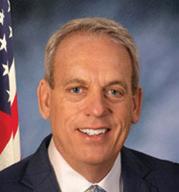
State Senator Illinois 59th District
TONY IRITI Executive Director Jefferson County Development Corporation

DEBORAH BARNETT, Ph.D. Executive Director
AUSTIN LANE Chancellor Southern Illinois University
LYNN ANDERSEN LINDBERG Executive Director Southern Illinois University Research Park
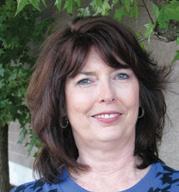
KATHY LIVELY CEO (Retired) Man-Tra-Con Corporation
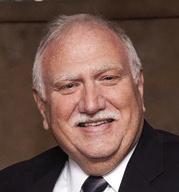
ROBERT J. MAY President and CEO Banterra Bank
CARY MINNIS Executive Director Greater Egypt Regional Planning & Development Commission
MIKE MONCHINO Principal Member Monchino Management

NICK HOLDINGHAUSEN Regional Development & Marketing
WILL STEPHENS
Mayor City of Murphysboro
WOODY THORNE
Chief Development Executive - Community Affairs
Southern Illinois Healthcare
MICHAEL
TISON
Financial Advisor, Managing Director Align Wealth Management
TOM WELGE President Gilster-Mary Lee
PATRICK
WINDHORST
State Representative Illinois 118th District & Board President of One Shawnee

TRICIA EDWARDS Administrative Assistant

About SI Now
SI Now serves as a regional economic development hub and unified voice for the 17 southern counties of Illinois to advance our region as a great place to live, work, and do business.



GROUNDBREAKINGS AND
Let’s
Break Some Ground Ribbon Cuttings
And Cut a Few Hundred Ribbons While We’re At It
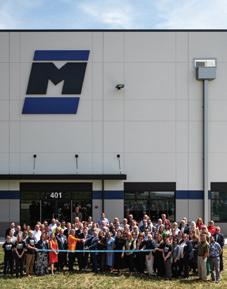

Aroundhere, progress doesn’t always show up quietly.
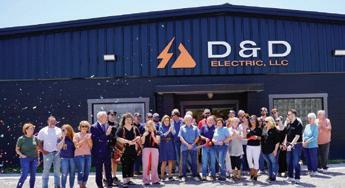
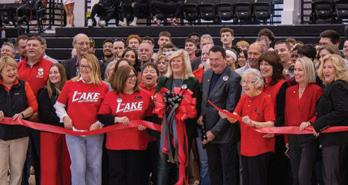
Sometimes it shows up with hard hats and big smiles. Sometimes it comes with oversized scissors, applause and a whole lot of handshakes. And sometimes—it shows up with both.
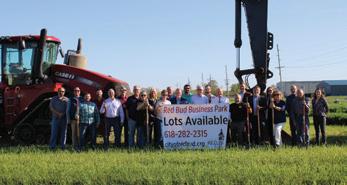
Across Southern Illinois, groundbreak ings and ribbon cuttings are telling a big ger story—one of momentum, belief and communities that aren’t waiting around for “someday.” These moments mark the point where ideas finally stretch their legs, where plans turn into places, and where excitement becomes something you can see and touch.
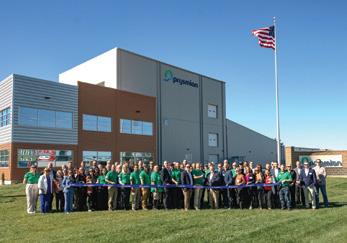
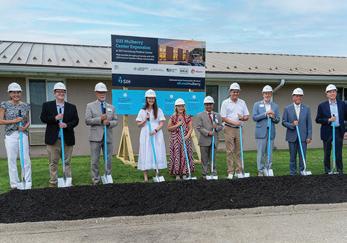
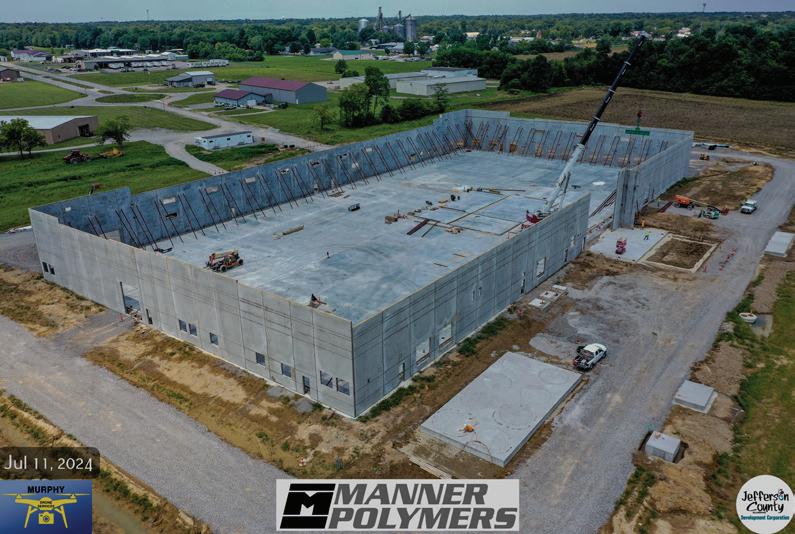
ribbon on its 100% solar‑powered PVC manufacturing facility, a $54 million project bringing more than 60 high-quality jobs to the region and marking a major step forward in advanced, clean-energy manufacturing. The Red Bud Industrial Park also advanced with state-supported infrastructure development, paving the way for new industrial and commercial growth. Southern Illinois Healthcare also broke ground on the nearly $20 million expansion of the SIH Mulberry Center in Harrisburg, a major investment that will expand inpatient behavioral health capacity and improve access to mental health care across the region.
Add to that the continued expansion of Career & Technical Education centers and a wave of new community retail, restaurant, and ser vice establishments, and the story becomes unmistakable: Southern Illinois is experiencing
From small towns to downtowns, from main streets to manufacturing floors, progress is popping up across the region. Big projects. Small victories. First-time entrepreneurs and longtime employers expanding their footprint. Different stories, same shared belief: Southern Illinois is worth building in
These celebrations aren’t just about buildings or businesses, they’re about neighbors cheering on neighbors, partners standing shoulder to shoulder, and communities showing up to say, We’re glad you’re here.
So, as you turn the page, know this: you’re not just looking at ceremonies. You’re looking at momentum, confidence, and a region rolling up its sleeves and doing the work.
Because in Southern Illinois, when we build something—we build it together.








Renderings TO REALITY From
ILLINOIS’ FIRST STAR BOND PROJECT
When “Why Not Here?” Became the Strategy
Thereare moments when progress doesn’t announce itself with fanfare— it simply shows up, undeniable and fully formed, and forces a rewrite of what people thought was possible.
That’s what’s happening in Marion, Illinois.
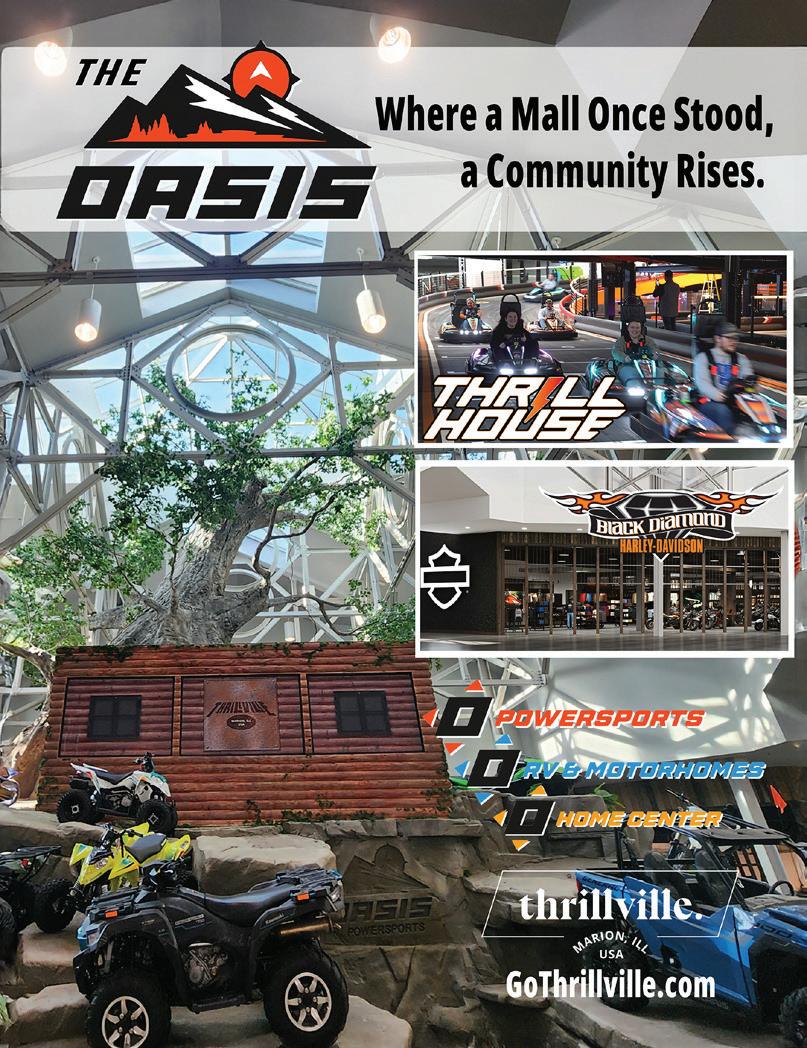
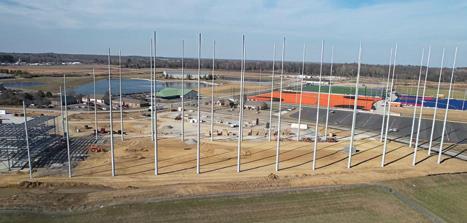
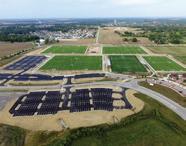
What once stood as a quiet symbol of retail’s past has been reimagined into something far more powerful: a connected ecosystem of destination-driven investment that includes ThrillHouse Family Entertainment Center, the first Mammoth Field House in the country, and modular sports complex that draws athletes, families, and visitors from across the country and around the world.
Individually, each project is impressive. Together, they tell a much bigger story. It’s proof of concept, a tangible example of what can happen when vision, focus, and belief converge. And a region that refused to wait its turn.
In a lineup that typically features major metropolitan markets, there’s Marion, Illinois— standing as the first.
Not because it was easy.
Not because it was expected.
What Are STAR
Bonds?
But because the answer “no” was never accepted as final.
Why Southern Illinois?
Why Not Southern Illinois?
For years, communities like Marion have been told—sometimes subtly, sometimesdirectly—that bold ideas belong elsewhere. That scale requires size. That innovation demands major metros with deeper pockets and denser populations. Marion challenged that assumption.
The question was never whether Southern Illinois could support something ambitious. The real challenge was belief strong enough to persist when skeptics questioned feasibility, timelines, or market readiness.
Sales Tax and Revenue (STAR) Bonds are a performance-based economic development tool that allows future sales tax revenue generated by a project to help finance its upfront development costs. Rather than relying solely on traditional funding sources, STAR Bonds enable communities to invest in large-scale, destination-driven projects that attract visitors, generate new economic activity, and create long-term regional impact. In Marion, STAR Bonds were a key factor in turning bold vision into achievable reality—helping accelerate timelines while keeping the focus on sustainable growth.
Instead of waiting to be chosen, Marion chose itself. Leaders leaned in. Partners stayed at the table. And when obstacles emerged the response wasn’t retreat, but resolve. Why not here? became more than a slogan; it became a strategy.
Critical to that momentum was the strategic use of STAR Bonds—a financing tool that allowed the vision to move from aspiration to action. Rather than relying on traditional development paths alone, leaders leaned into a mechanism designed to support catalytic, destinationdriven projects. STAR Bonds didn’t create the vision; they made it executable.
In conversations where other cities might have bowed out at the first obstacle, Marion leaned in. When told to slow down, leaders accelerated. When told to come back later, they stayed at the table. Being first wasn’t an accident—it was earned through persistence, preparation, and an unshakable conviction that this region deserved more.
HUMBLE BEGINNINGS, UNCOMMON RESOLVE
Behind every bold transformation are people who understand what it means to build from the ground up. Rodney Cabaness and Shad
Zimbro didn’t arrive at this moment by accident. Their paths were shaped by grit, long days, calculated risks, and a willingness to learn by doing. Those humble beginnings matter, because they inform how leadership shows up when challenges arise.
When others might have retreated at the first rejection, they recalibrated. When faced with skepticism, they sharpened the case. When told a market like Marion wasn’t ready for projects of this scale, they proved otherwise. Progress belongs to those who stay at the table
FROM WHAT WAS TO WHAT IS— AND WHAT’S NEXT
Transformation carries weight when it honors the past without being bound by it.
The former Marion Mall once served as a gathering place for the community. Like so many similar spaces across the country, it faced an uncertain future as retail patterns changed. Marion chose reinvention over resignation. ThrillHouse Family Entertainment Center rose not as a cosmetic update, but as a complete reimagining that flipped a narrative of decline into momentum.
It expands outward into a broader vision: a sports complex designed to host regional and national competitions, and Mammoth Field House—an ambitious, nationally competitive concept that placed Marion among much larger cities as a first location.
Taken together, these projects signal something rare: intentional, connected development that builds upon itself rather than existing in silos.
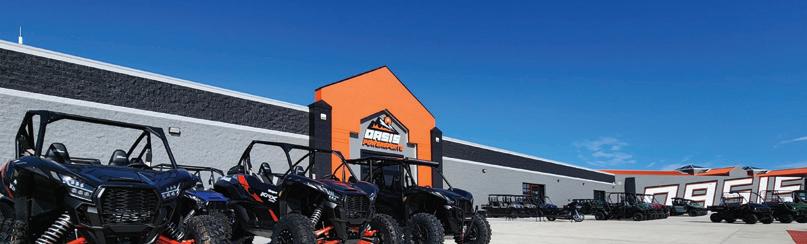
What emerged is not a single attraction, but a fully realized destination. The reimagined mall, now known as The Oasis, anchors a growing ecosystem that includes Oasis Powersports, the nation’s largest powersports dealership; Black Diamond Harley Davidson, operating in a first-of-its-kind prototype dealership;
the nearly 100,000-square-foot ThrillHouse Family Entertainment Center; Oasis RV and Motorhomes; and Oasis Home Center. Together with the Oasis Sports Complex, these assets join established venues like Kokopelli Golf Course and Mtn Dew Park to form a national retail, entertainment, and sports tourism destination known collectively as Thrillville
LEADERSHIP THAT SET THE VISION
Marion’s progress reflects steady civic leadership and a long-term vision that spans administrations and election cycles. Both Mayor Bob Butler and Mayor Mike Absher played important roles in shaping an environment where bold ideas could be pursued and sustained. Their commitment to positioning Marion for long-term opportunity helped create the foundation upon which projects like ThrillHouse, Mammoth Field House, and the sports complex could take root.
That continuity of vision matters. It sends a clear signal to developers, investors, and residents alike: Marion is intentional about its future.
AHEAD OF SCHEDULE DOESN’T HAPPEN BY ACCIDENT
Moving multiple large-scale projects forward simultaneously is not luck. It’s alignment. Across ThrillHouse, the sports complex, and Mammoth Field House, teams operate with shared focus and daily discipline. Mornings begin early. Progress is reviewed honestly. Challenges are addressed directly. Everyone understands not just what is happening, but why it matters.
Everybody rowing in the same direction isn’t a metaphor here—it’s a practice. And it’s why timelines compress instead of expand.
One of the defining strengths across these projects is adaptability. Plans evolved. Spaces
A SNEAK PEAK AT FUN!
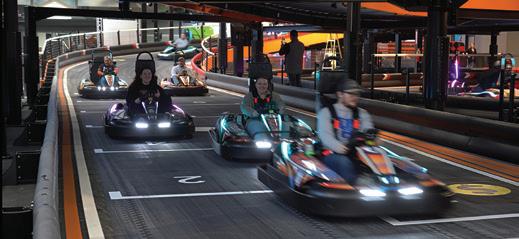
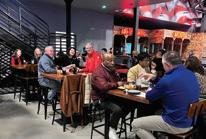
Nearly 100 SI Now VIPs got an exclusive first look at ThrillHouse before it opens to the public! Guests enjoyed delicious food, lively networking, and plenty of fun. Thanks to the incredible Oasis team for a memorable evening.
shifted. Concepts were refined as opportunities emerged. Rather than clinging rigidly to original assumptions, leaders treated change as intelligence, using real-time insight to strengthen outcomes. In regions often encouraged to “play it safe,” Marion chose flexibility paired with ambition. The result is development that feels alive, responsive, and built for longevity.
FROM VISION TO REALITY— AND WHAT COMES NEXT
ThrillHouse Family Entertainment Center, Mammoth Field House, and the sports complex together form more than a collection of destinations telling families they don’t have to leave the region for exceptional experiences. They tell tournament organizers and partners that Marion can deliver at scale. And they tell the community itself that big ideas belong here. From something that used to be, to something that is and to something that continues to grow. This is transformation in motion.
In upcoming issues, we’ll continue to explore how these investments are reshaping the region, creating ripple effects, and setting the stage for what comes next. The story doesn’t end with ThrillHouse, Mammoth Field House, or the sports complex—it builds from them.
Stay tuned. The momentum is just getting started
FOX PRAIRIE DISC GOLF: VISITOR SNAPSHOT
Fox Prairie Disc Golf continues to draw players from across the region and well beyond. While 2025 data is not yet available, UDisc app statistics from the past three years highlight the course’s growing reach. (Fun fact: the founder of UDisc visited during the 2024 solar eclipse!)
Visitor Reach
65% come from more than 30 miles away 25% come from more than 150 miles away 13% come from more than 300 miles away
PLAYERS FROM 21 STATES
SMALL TOWNS, BIG OPPORTUNITIES
From Open Land to National Draw
McLeansboro’s Fox Prairie Disc GoLF course
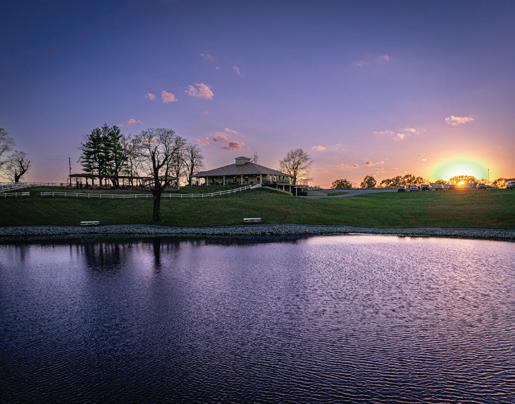
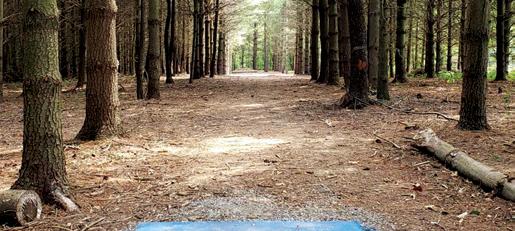
Outdoorrecreation continues to play a growing role in shaping the identity and livability of Southern Illinois communities, and Fox Prairie Disc Golf Course in McLeansboro is a standout example of how vision, collaboration, and local pride can turn open land into a regional draw. What began as an idea among local disc golf enthusiasts has evolved into a thoughtfully designed 18-hole course that now attracts top players from across the region and throughout the country.
Fox Prairie was built with purpose: to create an accessible, high-quality outdoor amenity that serves residents while positioning McLeansboro, population ~2700, as a destination for recreation and community connection. Disc golf, one of the fastest growing sports in the country, was a natural fit. Affordable, inclusive, and family-friendly, it aligns perfectly with the community’s goal of expanding outdoor opportunities without losing the character of the land. Fox Prairie embraces the area’s natural prairie setting, incorporating open fairways, strategic obstacles, and elevation changes that challenge experienced players while remaining welcoming to newcomers.
From the beginning, Fox Prairie has been a grassroots effort. Local organizers, volunteers, and supporters worked together to bring the course to life—designing the layout, installing baskets and tee pads, and ensuring the course reflected both quality and sustainability. That community led approach continues today, with local players and club members actively involved in maintenance, improvements, and event coordination.
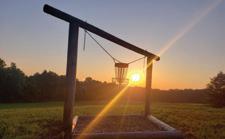
The course has quickly become more than a place to play—it’s a gathering space. Whether it’s casual rounds with friends, league nights, or organized tournaments, Fox Prairie fosters connection and encourages people to spend time outdoors together. For residents, it adds to the community’s quality of life. For visitors, it offers another reason to explore McLeansboro and experience what the region has to offer.
Fox Prairie also contributes to the broader economic and tourism story unfolding across Southern Illinois. Traveling disc golfers often plan trips around destination courses, and Fox Prairie’s growing reputation places McLeansboro on that map. Players come for a round and stay to eat, shop, and explore—supporting local businesses and reinforcing the value of investing in recreation-based assets.
As communities across the region look for ways to retain residents, attract visitors, and enhance livability, Fox Prairie Disc Golf Course stands as a strong example of what’s possible. It reflects a forward-thinking mindset rooted in collaboration and stewardship—proof that even small scale projects can have outsized impact when driven by passion and purpose.
Fox Prairie isn’t just a course; it’s momentum. And for McLeansboro, it represents another step toward a future where outdoor recreation, community pride, and regional appeal go hand in hand.

ABOUT US:
Fox Prairie - McLeansboro, Illinois | UDisc Disc Golf Course Directory
https://youtu.be/FrVJ9560t2E
Congratulations to 17th Street
on 40 years!
Points of Pride
• Barbecue Capital of Illinois Home to Nationally Acclaimed 17th Street Barbecue
• 75 Active Downtown Corridor Businesses
• Home to Southern Illinois Airport
Annual Events
• Annual Praise the Lard Murphysboro Barbecue Cook-Off 2024 welcomed 119 teams from 20 states
• Murphysboro Apple Festival Draws 45,000+ visitors annually
• Big Muddy Monster Brew Fest
“I have had such a positive welcome from the City of Murphysboro. I’ve developed over $15 million of business in Murphysboro and the Mayor and City Council have helped me every step of the way. You’ll find a partner to a successful future when you invest in Murphysboro.”
-Joe Koppeis, Admiral Parkway
• Home to the Historic Liberty Theater National Register of Historic Sites
• Home to the General John A. Logan Museum
• Home to Lake Murphysboro and Kinkaid Lake
• St. Patrick’s Day Festival
• Summer Block Parties
• August Summer Concerts
“By capturing the passion, imagination and resources of its residents, Murphysboro is building a better today, and a bright future. Come be a part of our story, in Murphysboro.”
-City of Murphysboro Mayor Will Stephens
Barbecue

Havisham House Where History Pours
a New Future for Alto Pass
From the moment you step into the Havisham Bourbon Bar you’re transported somewhere unexpected. The smell of wood and bourbon wraps around you, the space speaks with understated elegance, and suddenly you’re standing in a room that feels plucked straight from an urban bourbon district—bold, polished, and quietly confident. In Alto Pass, population ~300, history doesn’t sit quietly behind velvet ropes. It breathes through original wood beams, glows in old brick, and even clinks gently against a crystal bourbon glass.


When Nick and Jerri Schaefer took owner ship of some of the oldest homes and the oldest commercial building in the small Village of Alto Pass, they weren’t simply acquiring real estate. They were stepping into stewardship. Their vision was clear: restore these architectural treasures in a way that honored their past while giving them a vibrant new voice in the community.
That meant getting their hands dirty literally.
Modern drywall and drop ceilings were stripped away to reveal original craftsmanship that had been hidden for decades. Transom windows were uncovered. Old doors and windows were saved instead of scrapped. The original rock and brick were preserved, not polished into something unrecognizable. Every decision reflected a deep respect for the structures’ character.
By blending historic preservation with romantic, modern luxury, the Schaefers created something Alto Pass had never quite seen before: a place where the past and present coexist beautifully. Where you can sip a thoughtfully crafted cocktail in a building from the 1860s, and somehow it feels exactly right.
Havisham House speaks for itself. Its grand stature draws history lovers from near and far. But the heartbeat of the property may well be the Havisham Bourbon Bar, housed in the former Alto Pride Flour Mill. Built in the 1860s, the mill now carries a different kind of grain; one that ends in oak barrels instead of flour sacks.
Alto Pass was once a thriving railroad town, and subtle nods to that heritage are woven throughout the bourbon bar. It’s not themed or gimmicky; it’s rooted. Authentic. The kind of place where you can imagine train whistles echoing in the distance while you settle into a leather chair.
In doing so, Havisham is helping shape Alto Pass’s evolving identity as a premier, upscale, historic Southern Illinois destination that pairs vintage charm with high-end experiences.
For the Schaefers, though, this isn’t just about aesthetics. It’s about impact. With a strong background in hospitality and tourism, their goal has always been simple: create an inviting space where people feel welcome, comfortable, and happy. A place where memories are made—whether it’s a wedding day, a weekend getaway, or a spontaneous stop along the Shawnee Hills Wine Trail.
And when people come, they don’t just stay at Havisham. They fill up at local gas stations. They dine at nearby restaurants. They hike the region’s trails. They visit Rendleman Orchards, Alto Clay Works, Alto Vineyards, and dozens of other local businesses. The Schaefers actively steer customers toward fellow entrepreneurs—and those businesses return the favor.
Tourism, they know, isn’t a solo act. It’s a chorus. In nine years, the family has created three distinct tourism attractions: two restored historic homes for vacation rentals, a stunning wedding venue, and the preserved flour mill turned bourbon bar. Hundreds of new customers visit each month—a number that continues to grow annually.
Behind the scenes, their talented employees play a vital role. Staff members don’t just serve drinks or manage events; they offer recommendations, share stories, and champion the entire region. Guests return not only for the ambiance, but because they feel the genuine pride employees have for their town.

Recently, Havisham opened an exciting new chapter: a distillery housed in the old freight house across the street. In the late 1800s and early 1900s, local produce was stored in baskets inside the freight house then loaded onto railroad cars bound for St. Louis and Chicago. The baskets were made upstairs in the old flour mill. The old freight house— long vacant—is now being revived as a working distillery.
The project represents a meaningful collaboration between the Village Board and Havisham Bourbon Bar, as the building is owned by the village. It’s revitalization in its purest form: preserving a piece of history while giving it new economic purpose.
The inspiration is bold but simple. Thousands of people flock to the Kentucky Bourbon Trail each month, spending money touring distilleries and tasting regional spirits. So, the question became: Why not Southern Illinois? Why not Alto Pass?
Positioned along the Shawnee Hills Wine Trail, the new distillery adds another compelling reason for visitors to make the drive— and stay awhile.
Looking ahead, the Schaefers see even greater opportunity. While tourism traffic has increased, prime commercial properties on Main and Elm Streets remain vacant. And they’re clear about what Alto Pass needs next. Not more vacation rentals. Not more wedding venues. Creative entrepreneurs. Boutiques. Breakfast cafés. Bookstores. Wellness spas. Businesses that offer residents and visitors something fresh and different. The kind of establishments that turn a charming stop into a full-day destination.
Havisham House sees itself as one of the catalysts breathing new life into a beautiful, safe, historic town. The long-term vision extends beyond bourbon and bookings. It’s about ensuring future generations can enjoy the town’s heritage. It’s about new families choosing Alto Pass as home. It’s about visitors returning to Chicago, St. Louis, or Nashville and saying, “You won’t believe this hidden gem we found in southern Illinois.”
In Alto Pass, history isn’t fading. It’s fermenting. And at Havisham House, it’s being poured— one unforgettable experience at a time.
The of a Regional Destination Economic Ripple
“As a small, family-owned business in Alto Pass, we’ve had a front-row seat to the transformation of Havisham House—and the ripple effects it has created throughout our region,” shared fellow Alto Pass business owner Michelle Sirles from Rendleman Orchards. What began as a historic home and vacation rental has evolved into a full-scale wedding and events destination, complete with a reception pavilion, bourbon bar, private gathering spaces, and additional lodging. Today, Havisham House attracts visitors year round from across the Midwest and beyond, serving as a powerful example of how a single, thoughtfully developed property can elevate an entire rural economy.
Weddings, in particular, have proven to be a catalyst for extended stays and meaningful economic impact. Guests don’t just attend an event, they dine locally, shop small, book services, and explore the region. Each Havisham wedding activates a network of Southern Illinois businesses, from caterers and florists to salons, musicians, planners, and transportation providers. The on-site bourbon bar adds another layer of consistency, drawing regular patrons Thursday through Sunday year-round and further supporting local commerce. In a largely rural region, Havisham House demonstrates how vision and investment can turn one destination into a vibrant engine for regional growth.
That impact became especially personal when our daughter celebrated her wedding at Havisham House. The weekend naturally turned into a showcase of the small businesses that make Union County distinctive. Guests staying in nearby cabins enjoyed hot, grilled Dave’s Bagels, offering a memorable taste of the area before the festivities even began. Wrightway Transportation provided seamless hop-on, hop-off service between the ceremony and reception, while friends and family explored neighboring wineries and the bourbon bar at their own pace. What started as simple logistics quickly became one of the most talked-about highlights of the weekend—and a clear example of how a single Havisham event can leave guests eager to return and share their Southern Illinois experience with others.
A Season of Milestones and Meaning
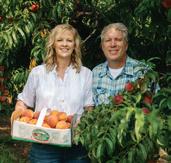
That same spirit of collaboration and place-based experience is at the heart of Rendleman Orchards as we enter our 153rd season. This year carries special significance as we are honored to be officially recognized as a historic district on the National Register of Historic Places, with plans to unveil our marker this spring. We are also proud to be featured in season two of Farms of America, a national documentary series celebrating multigenerational, family-owned farms whose stories have endured over time.
Looking ahead, we are expanding the ways visitors can connect more deeply with our land and with Southern Illinois agriculture. New experiences this season include a daffodil field experience for overnight cottage guests, along with private photography sessions and u-pick opportunities. We are also expanding raw honey production through our partnership with Angie’s Farm beekeepers. The recent addition of the Cottage at Rendleman Orchards—a yearround, farm-immersion stay on a working orchard—has already proven successful, thanks in part to our experienced property managers at Southern Illinois Vacation Rentals.
Each of these efforts is designed with intention: to encourage guests to stay longer, explore more, and engage more fully with the surrounding community. We believe Southern Illinois thrives when small businesses collaborate, share stories, and build authentic experiences together. As we prepare for a midJune Farm Market opening with early peaches, we look forward to another season of welcoming visitors, educating guests about agriculture, and contributing to a regional tourism ecosystem where places like Havisham House and Rendleman Orchards grow stronger—together.

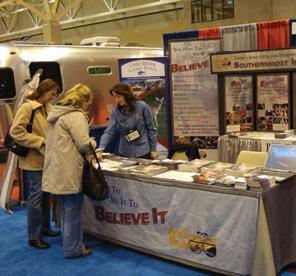
Seeing is Believing
SHOWCASING SOUTHERN ILLINOIS
Where First Impressions Become Future Projects
“Economic growth favors the prepared, the strategic, and the bold – and Southern Illinois is all three”
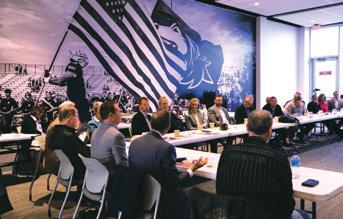
That’s not just a mantra—it’s exactly what Southern Illinois demonstrated during a high-impact Familiarization Tour hosted by SI Now in partnership with Ameren Illinois and the Site Selectors Guild in October 2025. The red carpet was rolled out for three days, welcoming national site selection consultants to experience the region’s assets, innovation, and energy firsthand. Spoiler alert: they were impressed.
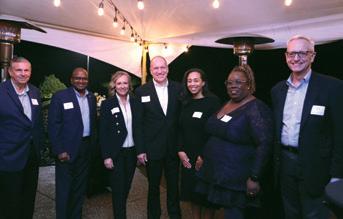
The excitement started at a welcoming Gateway to Growth reception at the SIU Stone Center, hosted by SIU System President Dan Mahony and First Lady Laura Mahony. University partners and Southern Illinois business leaders mingled, shared ideas, and toasted to a simple truth: Southern Illinois is stronger when it works together, and this tour was proof in action.
Over three whirlwind days, the consultants hit the road, county to county, connecting with more than 100 partners across industry, education, and community sectors. They toured the region’s top develop ment sites, explored logistics and manufacturing hubs like REDCO Industrial Park and Milano Railway Logistics (yes, the only private rail yard in the U.S. connected to four Class I railroads), and saw innovation in motion at Southern Illinois Airport and SIU Carbondale’s nationally recognized aviation and automotive programs.
Consultants got a hands-on “Manufacturer for a Day” experience at Rend Lake College’s Southern Illinois Manufacturing Academy and witnessed jaw-dropping innovation at SIU’s Gower Translational Research Center, home to BioLaunch and the iFERM Hub. The takeaway? Southern Illinois doesn’t just talk about talent—it grows it, trains it, and deploys it.
Of course, no tour of Southern Illinois would be complete without sampling the quality of life that makes the region so special. Wine tasting at
welcoming communities? Always.
The grand finale took place at Kokopelli Golf Club, where consultants shared their impressions and strategic recommendations with a packed house of business and community leaders from throughout the region. The verdict: Southern Illinois is ready, capable, and uniquely positioned to compete nationally for business growth and investment.
“This tour wasn’t just about showcasing infrastructure and available sites; it was about revealing the heart of our region,” said SI Now Executive Director Deb Barnett. “When the consultants recognized our region’s genuine connections and expressed full confidence in entrusting Southern Illinois with their most valued asset—their clients—I knew the visit was a success. Southern Illinois is innovative, collaborative, and undeniably open for business, and we look forward to turning these relationships into real opportunities.”
Ameren Illinois Chairman and President Lenny Singh summed it up perfectly: “Economic development favors those who act strategically. Southern Illinois put itself on the map by welcoming the nation’s top site consultants, showing our assets, and proving that we’re ready to compete.”
From rivers and railroads to airports and outdoor adventures, Southern Illinois has it all: strategic advantages, a skilled workforce, and communities that roll up their sleeves to get things done. For companies, investors, and entrepreneurs looking to grow, expand, or relocate, the message is clear: Southern Illinois isn’t just ready for business—it’s ready to help businesses and the communities they serve prosper.
Walker’s Bluff Wine Cave? Check. Private dinner at Ruthie’s at Walker’s Bluff Casino Resort & Spa? Double check. Outdoor adventures, charming towns, and

of Welcoming the World Carol Hoffman 31 Years TO SOUTHERN ILLINOIS
It often begins with a visit.
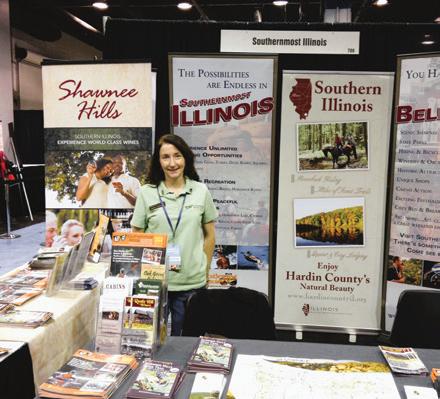
That belief has guided Carol Hoffman’s work for more than three decades—and in many ways, it defines her legacy. For 31 years, Carol has been a steady, passionate force at the Southernmost Illinois Tourism Bureau (SITB), helping travelers discover not just a destination, but a region rich in natural beauty, community pride, and possibility.
Long before online booking platforms, social media campaigns, and experiential travel trends, Carol understood something fundamental about tourism: when people expe rience Southern Illinois for themselves, they’re changed by it. And so is the region.
A Love for Travel—and for Home
Carol’s journey into tourism began naturally. She loved to travel, to explore new places, and to understand what made each destination unique. Before joining the Southernmost Illinois Tourism Bureau, she worked several years at Presley Tours, coordinating motorcoach group tours and gaining firsthand experience in group travel, logistics, and customer connection.
But while she enjoyed seeing the world, her heart was firmly rooted in Southern Illinois.
“I liked to travel and see other places,” Carol says, “and I love the Southern Illinois region.”
That love became the foundation of a career dedicated to sharing the region she calls home with visitors from across the country—and beyond.
A Destination That Surprises
Ask Carol what surprises first-time visitors most about Southern Illinois, and her answer is immediate: the landscape.
“The terrain,” she says. “The rolling hills and rocky bluffs.”
For many travelers, Illinois is synonymous with flat farmland and city skylines. Southern Illinois shatters that perception.
With its dramatic bluffs, winding rivers, dense forests, and scenic vistas, the region feels unexpected—almost hidden in plain sight.
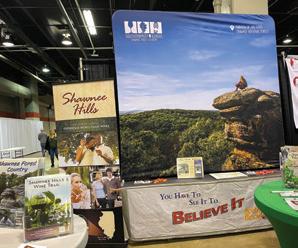
Through her work at SITB, Carol has helped position Southern Illinois as a year-round destination for outdoor recreation, scenic exploration, wine tourism, and authentic smalltown experiences. Signature destination drivers like the Shawnee National Forest and the Shawnee Hills Wine Trail have become cornerstones of regional tourism, attracting hikers, cyclists, paddlers, wine enthusiasts, and nature lovers alike.
Evolving With the Industry
Over her 31-year tenure, Carol has witnessed—and adapted to—enormous change in the tourism landscape.
One of the most significant shifts has been the rise of online booking platforms and vacation rentals. These advancements have made it easier than ever for visitors to find lodging and plan trips, opening the door to a new wave of travelers and expanding the region’s capacity to host them.
“With the advancement of online booking platforms, there has been a huge growth in vacation rentals,” Carol notes, “and the ease of finding and booking lodging.”
Rather than resisting change, Carol and SITB embraced it—integrating digital marketing, social media, video, television advertising, and an annual print magazine to reach both leisure and group travelers. This multi-channel approach has kept Southern Illinois competitive, visible, and relevant in an increasingly crowded tourism marketplace.
Tourism as an Economic Engine
Carol is quick to point out that tourism is about far more than visitor counts. It is a powerful economic driver—one that supports communities in visible and invisible ways.
Visitor spending creates direct eco nomic impact across lodging, dining, retail, and attractions. That spending ripples outward as businesses pur chase goods and services, generating indirect supply-chain effects. Finally, tourism fuels induced or secondary
impacts as employees spend their earnings locally, strengthening the regional economy from the inside out.
But beyond the numbers, Carol sees tourism as a tool for community sustainability.
Family-owned businesses, local festivals, museums, wineries, outfitters, and attractions all benefit from tourism marketing and development. These businesses, in turn, help preserve the region’s character and quality of life for residents.
“The return on investment for tourism is more than money in the bank,” Carol often emphasizes. “It’s preservation, revitalization, and sharing our sense of place with others.”
Shining a Spotlight on Hidden Gems
One of the most rewarding aspects of Carol’s work has been helping overlooked places step into the spotlight.
Metropolis, Illinois, stands out as a powerful example. With its Superman and comic book appeal, riverfront gaming, and proximity to Illinois’ first state park, the community has become a destination that blends pop culture, history, and outdoor recreation—drawing visitors who might never have discovered it otherwise.
Stories like Metropolis reflect Carol’s broader philosophy: every community has something special. Sometimes, it just needs the right storyteller.
Looking Ahead: The Future of Travel
As travel trends evolve, Carol remains opti
According to Airbnb’s 2026 travel predictions, travelers are increasingly seeking nature-focused experiences and shorter, purpose driven trips—particularly among younger travelers. These trends align perfectly with what Southern Illinois already offers: access to national forest lands, rivers, trails, scenic byways, and authentic experiences that encourage visitors to slow down and reconnect.
Southern Illinois isn’t trying to be something it’s not. It’s leaning into what it already is.
“We have space. We have areas of outstanding natural beauty,” Carol says. “We have kind and open residents. Our economy is full of potential.”
A Legacy of Welcome
After 31 years, Carol Hoffman’s impact can be felt across the region—in thriving attractions, strengthened partnerships, and countless visitors who arrived curious and left inspired.
Her career speaks to the power of consistency, collaboration, and genuine love for place. Through changing technologies, shifting trends, and evolving traveler expectations, Carol has remained focused on a simple truth: when Southern Illinois opens its doors, people respond.
It still begins with a visit.
And thanks to Carol Hoffman, millions have been warmly welcomed through the
Southern Illinois’ River Advantage
A GATEWAY TO GROWTH
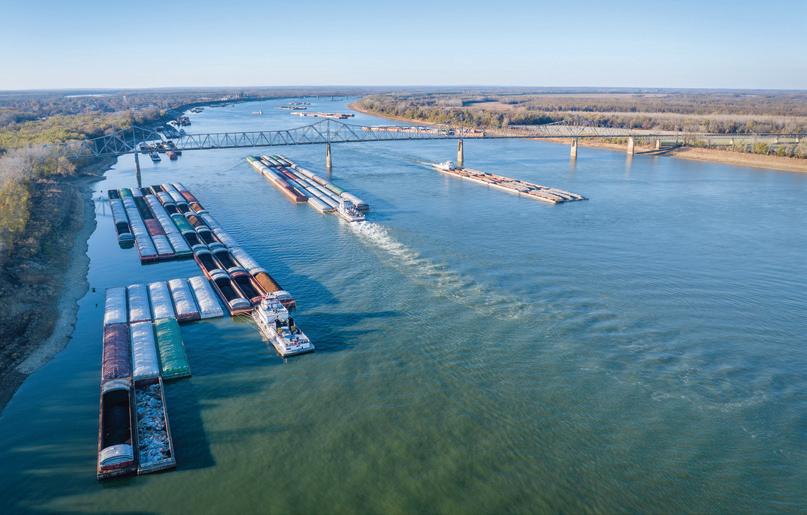
Southern Illinois’ port districts are gaining national attention as all five ranked among the Top 150 U.S. ports for the first time—signaling the region’s emergence as a powerhouse in inland waterborne commerce.
The Alexander–Cairo Port District advanced key development steps in 2025, completing Phase I environmental assessments, a commodity flow analysis recommending diversified operations and container-on-barge potential, and a navigational simulation by the Seamen’s Church Institute that achieved a 100% success rate. These findings now move to the necessary Phase II environmental studies followed by permitting and design guidance from the U.S. Army Corps of Engineers.
The Jackson–Union Counties Regional Port District is pursuing major economic development opportunities—from a new Jackson County Industrial Park to revitalization of the Grand Tower Power Plant site—supported by an IDOT-funded feasibility study launched in 2025 to assess infrastructure needs and regional growth strategies.
A major breakthrough came when the Massac–Metropolis Port District acquired the former Lock and Dam 52 site in Brookport, securing 16,300 feet of continuous river frontage with completed environmental and archaeological clearances. The district is evaluating long-term uses through a new engineering study and exploring potential Foreign Trade Zone expansion to Brookport.
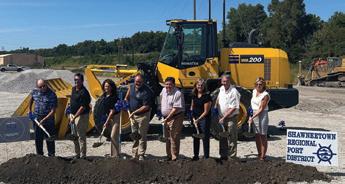
The Shawneetown Regional Port District broke ground on a $27 million fertilizer distribution terminal in August 2025, repurposing former coal assets and creating nearly 50 jobs. This follows more than $10 million in federal investment for port access improvements and an additional planning grant to chart a long-term “Port of the Future.”
A major regional milestone was reached on August 8, 2025, with the submission of the first-ever Port Statistical Area (PSA) application for Southern Illinois. If approved, the region could rank 5th nationally in total tonnage—boosting visibility, collaboration, and economic opportunity. The effort earned strong support from state agriculture groups, waterway commissions, and leaders from the Corn Belt Ports.
Meanwhile, the Kaskaskia Regional Port District (KRPD) continues to set the standard as Illinois’ 5th largest port, completing new laydown yards and access improvements and finalizing a Corps of Engineers study on navigation enhancements. In 2025, Brent Donovan was named General Manager, succeeding longtime leader Ed Weilbacher.
Collectively, these advancements mark a turning point for the region. “The individual growth of our port districts combined with a dedication to advancing shared economic interests reflect the strength of our region and the collective commitment to drive economic growth,” said Deb Barnett, Executive Director of Southern Illinois Now.
Southern Illinois’ ports are not just growing—they’re redefining the region’s economic future.

https://southernillinoisnow.org/southern-illinoisports-drive-regional-growth-with-major-infrastructure-and-development-milestones-in-2025/

of Leadership A Legac y Vision and a FOR THE FUTURE
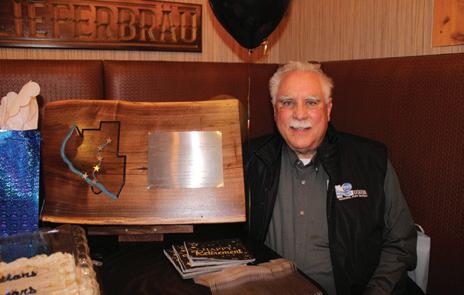
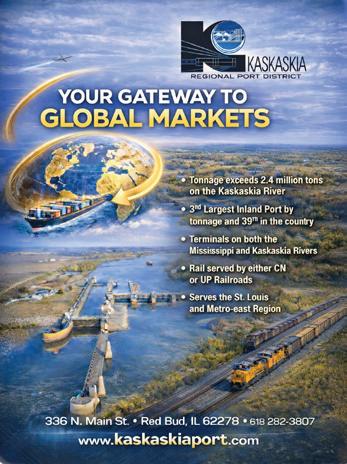
Leadership transitions are rarely just about change. At their best, they are about continuity and momentum. That is especially true at the Kaskaskia Regional Port District, where the retirement of longtime General Manager Ed Weilbacher marks the close of a transformative chapter and the beginning of another built on a strong foundation.
Ed Weilbacher’s path to the port was not a conventional one. What began as an unexpected second career ultimately became a defining period for both Weilbacher and the district he would guide for more than a decade. When he arrived in 2011, the Kaskaskia Regional Port District was operating with limited resources but significant potential. At that time, KRPDowned terminals handled just under 800,000 tons of cargo annually.
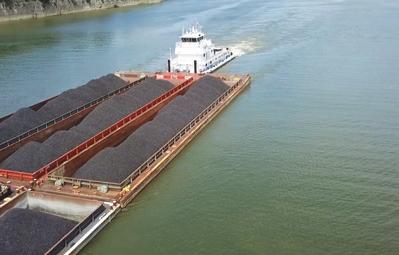
Early in Weilbacher’s tenure, the district confronted a challenge that would define its future. For decades, coal had been the cornerstone of river traffic in the region. As shipments of coal waned, many inland ports saw steep declines in tonnage. At KRPD, the impact was substantial, but under Weilbacher’s leadership, the district embarked on a deliberate strategy to diversify its cargo mix, building a more resilient and sustainable foundation for the years ahead.
Under Weilbacher, the port expanded shipments beyond coal to include scrubber stone, gypsum, steel, grain, and other bulk and industrial products. This diversification reduced reliance on any single market and strengthened the district’s long-term stability. By broadening the mix of commodities moving through its facilities, KRPD positioned itself to adapt more effectively to changing market conditions.
As this strategy took hold, the results became clear. Through targeted infrastructure investments and expanded partnerships with tenants and shippers, annual tonnage at
KRPD-owned terminals climbed steadily. By 2025, those facilities were moving approxi mately 2.54 million tons of cargo, a level not seen since the early 1990s and more than triple the volume handled when Weilbacher began. The growth was particularly notable given that it occurred without coal serving as a primary commodity.
In recognition of Weilbacher’s lasting impact, the Kaskaskia Regional Port District also took steps to ensure his legacy is permanently tied to the organization’s future. The Fayetteville Terminal in St. Clair County has been officially renamed the Weilbacher Terminal, honoring the leadership that helped redefine the district’s trajectory. The designation reflects more than tenure; it acknowledges a period of strategic growth, diversification, and renewed relevance that reshaped KRPD into a modern, resilient inland port system. The terminal now stands as a physical reminder of the foundation Weilbacher helped build and the momentum that will carry the district forward.
Just as important as the tonnage figures was Weilbacher’s emphasis on building a truly
multimodal operation. Ports today are no longer defined solely by water access. Their success depends on how efficiently they con nect river, rail, and road. Weilbacher understood that reality early and positioned KRPD accordingly.
“From the time in which Ed came on board, the diversification has gone from a couple of commodities to now we move six or seven commodities,” explained new KRPD General Manager Brent Donovan. “A lot of that is attributed to the hard work and the promotions that Ed and his predecessor George (Andres) did.”
As Weilbacher steps away, the baton passes to Brent Donovan. He and his family are from the KRPD footprint, a graduate of O’Fallon (IL) High School, bringing years of experience in the railroad industry working for Norfolk Southern and CSX. The rail background directly aligns with the operational strengths of the port.
Railroads and ports are inseparable partners in modern logistics. While barges provide one of the most cost-effective ways to move bulk commodities, rail delivers reach and efficiency across long distances. Together, they allow inland ports like KRPD to serve as critical links between local and regional producers and global markets.
The Kaskaskia Regional Port District already benefits from an extensive rail network with connections to multiple Class I railroads. That network supports businesses that rely on truck to barge and rail to barge movements, creating flexibility and efficiency across sup ply chains. Donovan’s experience managing
rail operations and freight movement brings valuable perspective to an organization built around those connections.
This alignment is especially important as the port continues to expand its footprint and capabilities. KRPD 2 along the Kaskaskia River features multiple rail-served businesses that allow cargo to move seamlessly between railcars and barges. These facilities are designed to handle a wide range of commodities while offering tenants logistical flexibility.
Further strengthening the district’s reach is the Kellogg Dock along the Mississippi River in Randolph County, a strategically significant facility that connects directly to Union Pacific’s rail network. This connection places KRPD at the intersection of two major freight corridors. River access opens the door to domestic and international markets, while rail connectivity ensures efficient inland distribution.
"All of the commodities in which we ship at KRPD on the river here are extremely reliant on the railroad as well,” explained Donovan. “I'm used to dealing with the same clients, the same customers, the same commodities as when I worked with the railroad.”
The importance of these assets cannot be overstated. For industries considering expansion or relocation, access to mul tiple transportation modes reduces costs, mitigates risk, and improves reliability. It is a competitive advantage that sets KRPD apart from many inland logistics sites Under Donovan’s leadership, that advantage is expected to grow as rail and port strategies become even more closely aligned.
This next chapter builds directly on the groundwork laid by Weilbacher. His leadership emphasized preparation over flash and progress over promises. By strengthening infrastructure, cultivating relationships, and keeping a long-term perspective, he left the district positioned not just for stability but for opportunity.
For Weilbacher, retirement offers time to reflect on a career that evolved into
something far more impactful than initially imagined. For the Kaskaskia Regional Port District, it represents both gratitude for past service and optimism for what lies ahead. Leadership transitions often test organizations. In this case, the passing of the baton signals continuity of vision paired with fresh expertise.
As Brent Donovan steps into the role of General Manager, he does so with the benefit of a strong legacy and a clear path forward. With rail and river working in concert, and with strategic assets along both the Kaskaskia and Mississippi Rivers, the district is well positioned to continue serving as a vital economic engine for southern Illinois.
The story of KRPD is, at its core, a story about connections. Connections between water and rail. Between industry and infrastructure. Between experienced lead ership and future opportunities. Thanks to Ed Weilbacher’s service and the promise of what comes next under Brent Donovan, those connections are stronger than ever.
WE ENGINEER






DID YOU KNOW?
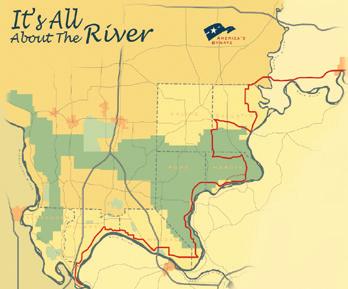
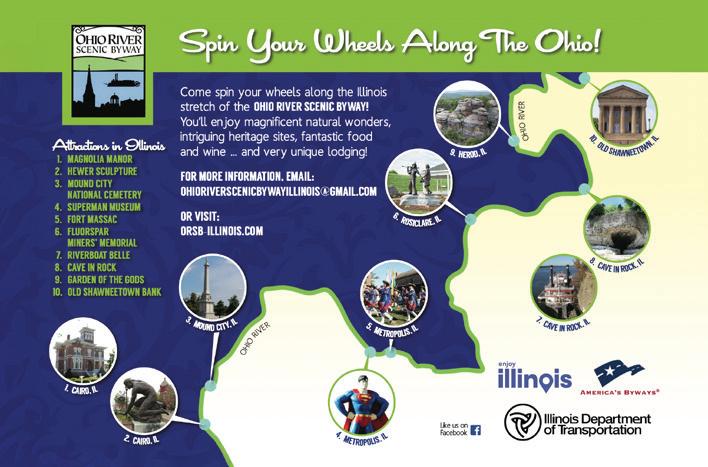
The Ohio River Scenic Byway shows rivers were never just meant for transportation.
When people think of rivers, they often picture barges, bridges, and busy commerce corridors. But the Ohio River tells a much richer story—one that flows well beyond transportation. Nowhere is that more evident than along the Ohio River Scenic Byway as it winds through Southern Illinois, where the river shapes landscapes, livelihoods, and local identity.
The Southern Illinois stretch of the Byway travels along Illinois Route 146 and surrounding river roads, connecting historic river communities including Cairo, Metropolis, Golconda, Cave In Rock, and Old Shawneetown. Each town reflects a chapter of river history—early river ports that fueled commerce, ferry crossings that connected states, and communities that grew around the rhythms of river life. Even today, the river remains central to the region’s sense of place, influencing everything from local architecture and festivals to outdoor recreation and tourism.
Did you know the Ohio River once marked a critical boundary between free and slave states, making it an important geographic feature in the story of the Underground Railroad? Several Southern Illinois locations along the Scenic Byway preserve this history through museums, historic markers, and interpretive stops that invite visitors to reflect on the river’s deeper role in the nation’s past.
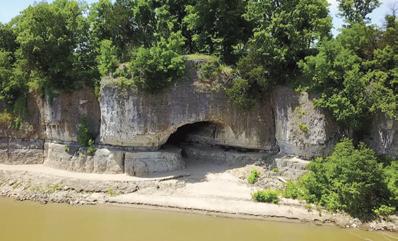
Beyond history, the Byway offers some of the most scenic natural views in Illinois. Travelers encounter towering limestone bluffs near Cave In Rock State Park, peaceful stretches of riverbank wildlife habitat, and wide-open vistas where the river curves across the southern tip of the state. Anglers, birdwatchers, cyclists, and photographers are drawn to the area year-round, while riverfront parks and overlooks provide quiet places to slow down and take in the view.
Most importantly, the Ohio River Scenic Byway demonstrates that rivers are more than transportation routes—they are connectors of people and culture. In Southern Illinois, the river continues to bring visitors to local shops, restaurants, historic districts, and seasonal festivals, supporting small communities while preserving the stories that began along its shores.
So, the next time you travel the Ohio River Scenic Byway through Southern Illinois, take a moment to look beyond the road ahead. Our rivers aren’t just routes on a map—they’re storytellers. They carry centuries of heritage, inspire adventure, fuel local flavors and festivals, and continue to shape the welcoming river towns that line their banks. Let the journey slow you down and let the river show you all the beauty Southern Illinois has to offer.


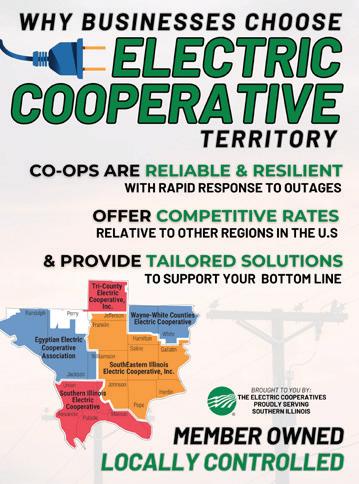

Helping Businesses SUCCEED
A Smarter Path to Employee Health Insurance: How Quality Health Partners Is Helping South-
ern Illinois Employers Take Control of Healthcare Costs
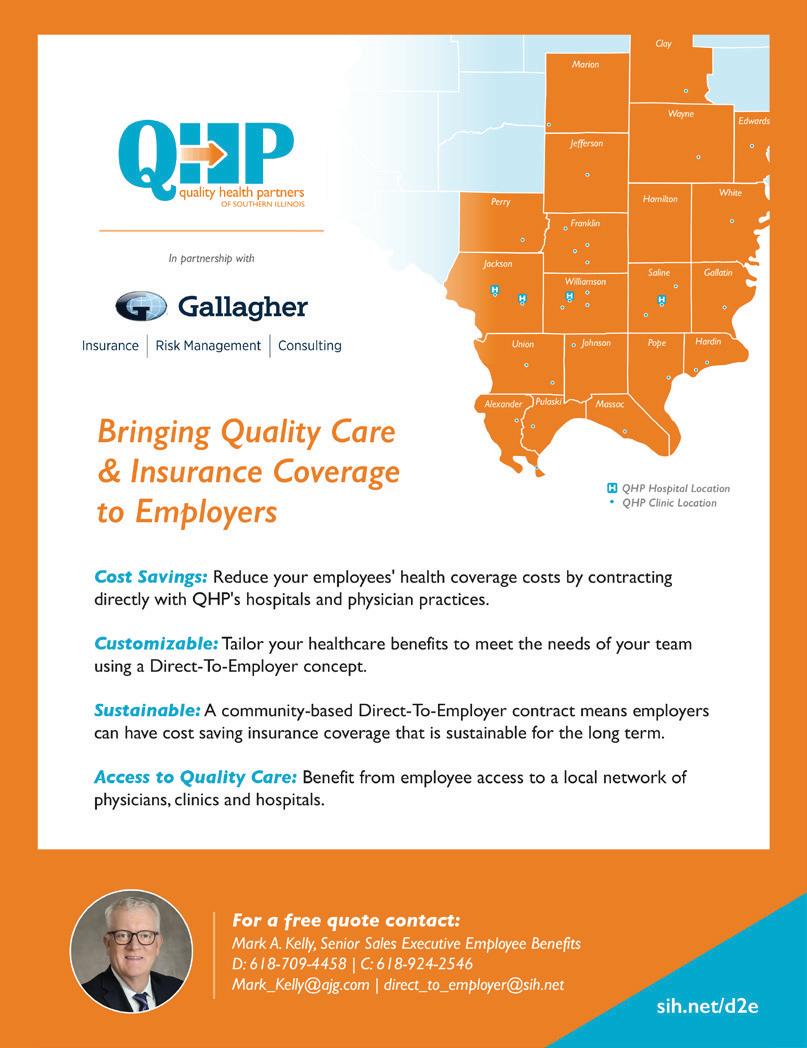
AcrossSouthern Illinois, employers continue to face one of their most persistent challenges: providing high-quality health benefits while managing steadily rising costs. Quality Health Partners of Southern Illinois (QHP) is helping organizations address that challenge through its innovative Direct-to-Employer (D2E) model — a locally driven approach designed to improve access to care, increase pricing transparency, and keep healthcare dollars working within the region.
Available locally through benefits advisor Mark A. Kelly of Gallagher, the QHP D2E solution connects employers directly with a clinically integrated network of physicians, hospitals, and care teams. This model allows organizations to design benefit programs with cost savings, greater flexibility, clearer cost visibility, and a more streamlined experience for employees.
For many employers, the advantages are both financial and operational. Direct contracting enables businesses to stabilize healthcare budgeting, reduce exposure to sudden premium increases tied to high-cost claims, and develop benefit structures that better reflect the needs of their workforce. At the same time, employees gain
“The insurance marketplace isn’t sustainable, and employers need help. QHP’s direct-to-employer healthcare brings costs down for both employers and employees while offering a more stable, long-term solution.”
Mark Kelly, Gallagher


improved access to trusted regional providers and coordinated care programs focused on prevention, chronic disease management, and long-term well-being.
Carbondale High School District #165 is one example of how the model is working locally. The district transitioned approximately 150 employees from a fully insured health plan to a self-funded Directto-Employer arrangement supported by QHP. The move allowed the district to take advantage of premium provider-directed rates while maintaining third-party claims administration and stop-loss protection, creating a more stable and predictable benefits strategy.
According to Ray C. Toliver Jr., MBA, Chief Business Official for the district, the transition has delivered measurable results.
“Carbondale High School is proud to partner with Quality Health Partners (QHP) and the Direct-to-Employer (D2E) program. Our experience over the past two years has demonstrated exceptional value, reliable access to high-quality care, and measurable improvements in employee well-being. By investing in a high-quality local network, we not only enhance our employees’ healthcare experience but also keep healthcare dollars in Southern Illinois, supporting the regional economy.”

Beyond financial stability, employers adopting the D2E approach often report improvements in workforce productivity and engagement. Employees benefit from expanded access points for care, including onsite clinics, virtual visits, and coordinated care programs that reduce wait times and minimize time away from work. These services help employees address healthcare needs earlier, preventing more serious and costly conditions down the road.
The impact of the Direct-to-Employer model extends beyond individual companies. When employers partner directly with local

provider networks, a greater share of healthcare spending remains in Southern Illinois. This reinvestment supports regional providers, sustains healthcare employment, and contributes to a stronger and more resilient healthcare ecosystem. In turn, healthier employees and more stable employer benefit strategies help strengthen the region’s broader economic development efforts.
What distinguishes QHP is its integrated, physician-led structure that brings together primary care providers, specialists, and hospitals committed to coordinated, evidence-based care. Employers gain access to transparent performance reporting, dedicated support for plan design and implementation, and strategic guidance that helps them confidently pursue either Qualified Health Plan or self-funded arrangements tailored to their needs. This collaborative infrastructure ensures that organizations are not simply purchasing a health plan but building a long-term benefits strategy aligned with workforce health and organizational growth.
As healthcare costs continue to rise nationwide, Southern Illinois employers are discovering that innovative local partnerships can provide a more sustainable path forward. Through the QHP Directto-Employer solution, organizations gain the tools to manage costs more effectively, improve employee access to care, and invest directly in the long-term strength of their communities. For businesses seeking a smarter, locally rooted approach to healthcare benefits, the D2E model represents a strategic opportunity to strengthen both workforce well-being and regional economic vitality.




“Sustainable costs. Exceptional care. A partner you can trust. That’s the promise of our direct-to-employer program for Southern Illinois employers.”
Jeremy Jones, Director, Direct to Employer Operations System, Managed Care QHP
Kelly at 618-709-4458 or mark_kelly@ajg.com

https://www.sih.net/patients-and-visitors/ direct-to-employer

GREATER COST CONTROL
Employers gain clearer pricing transparency and reduced administrative expenses by working directly with provider networks.
MORE STABLE BUDGETING
Self-funded D2E arrangements help protect organizations from unpredictable premium spikes tied to catastrophic claims.
IMPROVED EMPLOYEE ACCESS
Onsite clinics, virtual care, and coordinated care programs provide faster, more convenient care options.
STRONGER LOCAL IMPACT
Healthcare dollars remain within Southern Illinois, supporting local provider jobs, and regional economic growth.
FLEXIBLE PLAN DESIGN
Employers can tailor benefit structures to meet the specific needs of their workforce rather than relying on one-size-fits-all insurance products.
Small Business Support
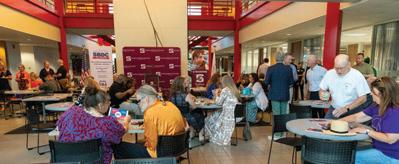
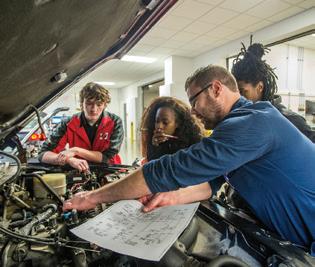
The Dunn-Richmond Economic Development Center and the Gower Translational Research Center house business incubator programs designed to support the start-up, growth, and expansion of businesses in Southern Illinois.
The incubator programs at SIU’s Dunn Richmond Economic Development Center focus on helping businesses launch and scale within this ecosystem. The center provides affiliate and coworking options, private office space, areas for light manufacturing, and wet laboratories for scientific ventures. There are also meeting and event spaces, Wi-Fi, audiovisual equipment, and a podcast studio opening in spring of 2026.
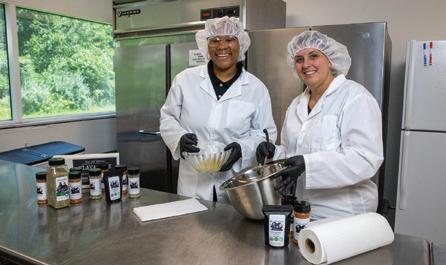
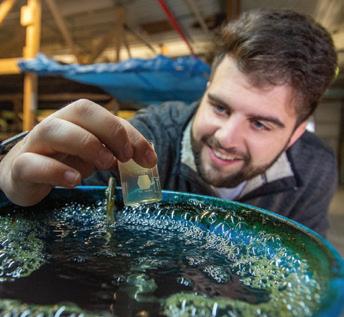
BioLaunch, located at the Gower Translational Research Center, serves emerging and growing businesses in the life sciences and value added agriculture sectors and is a key component of the SIU incubator ecosystem. The program offers incubation services, laboratory testing and analysis, life sciences research, and event space for technology-focused activities. A high-tech food production kitchen incubator (iFOOD), with funding from the Illinois Department of Commerce and Economic Opportunity and the Delta Regional Authority, is currently in the final planning and construction phase for small food producers to scale operations, meet food safety requirements, and reach broader markets. This new facility will build upon BioLaunch’s translational research capabilities.
Together with regional business development services, these programs form the foundation of an incubator community, that supports innovation, entrepreneurship, and economic development throughout SI Now’s 17-county region. In addition to facilities, businesses have access to no cost, confidential resources, including one on one advising, experts in residence, and monthly workshops and events designed to support sustainable growth. Come incubate with us.



ALL SIGNS POINT TO SOUTHERN ILLINOIS
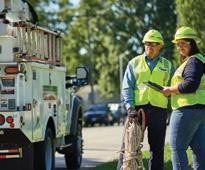
Ameren Illinois is your energy partner who listens to your business requirements to accelerate speed to market, reduce risk and align with your goals. We leverage energy solutions that empower business growth, promoting thriving communities across Illinois.
We know what it means to work hard here. See how that Midwest mentality can drive your business forward.

A DIFFERENT KIND OF ELITE. R1 + Opportunity.
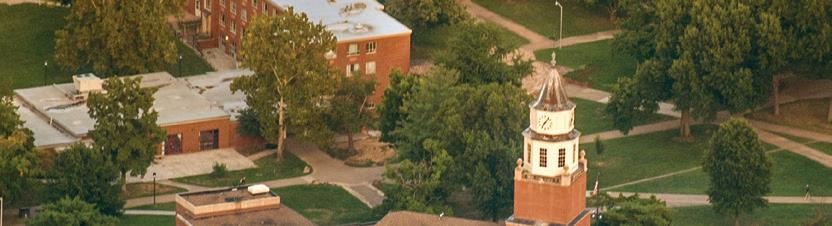
We’re R1, the highest level for research. And we’re officially an Opportunity University. Only 21 universities in the nation have earned both designations from the Carnegie Classification of Institutions of Higher Learning.
Bringing R1 research to Southern Illinois doesn’t just elevate SIU. It brings innovation, jobs, and opportunities that ripple though the region—and beyond.
TURNING ACCESS INTO IMPACT
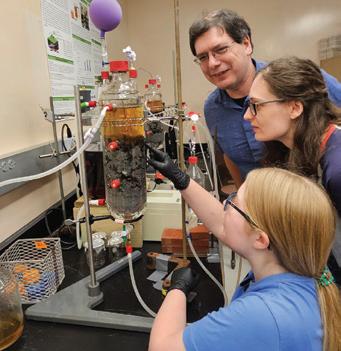
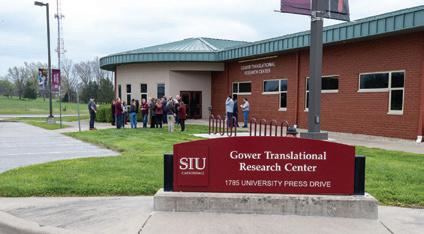
• Dedicated translational research facility (from the bench to the marketplace and everything in-between)
• 65K square feet research and business development services
• Testing and Analysis scientific equipment and staff
• Coming soon: high-tech food production/kitchen incubator
• Additional biotechnology/biofermentation product laboratories
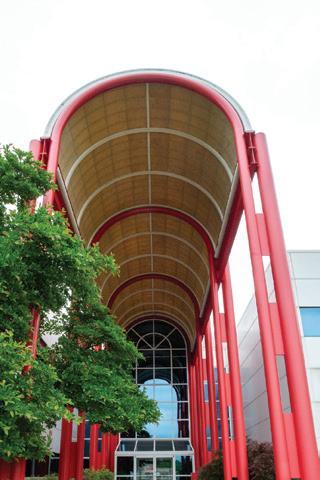
Advanced Energy Institute • APEX Accelerator at SIU
• BioLaunch • Cannabis Science Center • Center for Virtual Expression
• Dunn-Richmond Economic Development Center • High Tech Kitchen • Gower Translational Research Center • iFERM Hub (Illinois Food, Entrepreneurship, Research and Manufacturing) • Illinois Small Business Development Center at SIU
• L. Brent Kington Smithy
Growing Entrepreneurs by Growing Together ETHOS
InSouthern Illinois, where innovation often takes root in small towns and big ideas, Ethos at the Citadel in Marion, Illinois is helping businesses succeed by doing something deceptively simple: bringing people together.
Ethos was established as a community-based small business incubator, coworking space, and training and development center under the leadership of founding director Russell Williams. The vision emerged from a clear regional need. Southern Illinois is full of talented individuals with strong ideas who want to build something meaningful, yet many were attempting to do so in isolation. At the same time, the region is rich with seasoned, successful entrepreneurs willing to give back but lacking a structured way to do so. Ethos was intentionally designed to connect those two groups—pairing emerging entrepreneurs with experienced business owners who believe in helping others succeed.
From the beginning, Ethos was never intended to be just a physical workspace. Its purpose has always been to build an ecosystem where knowledge is shared, relationships matter, and growth
happens through community. That philosophy shapes every program, partnership, and interaction within Ethos.
At Ethos, business success is not defined by a single outcome. Instead, entrepreneurs are encouraged to define success for themselves based on their goals, values, and season of life. For some, success means building a sustainable solo business. For others, it involves growth, hiring, or long-term stability. Ethos provides the clarity, tools, and confidence entrepreneurs need to pursue their version of success.
Small and early-stage businesses often face two major challenges: isolation and uncertainty. Entrepreneurs may struggle with pricing, finances, marketing, legal structure, or leadership—and may not always know where to turn. Ethos addresses these challenges by surrounding entrepreneurs with experienced local business owners and leaders who are willing to share practical insights and lessons learned.
Since opening in 2021, Ethos has relied heavily on community involvement. Mentoring, coaching, and training are led by individuals who are actively running businesses in the region, ensuring guidance is relevant and grounded in real world experience. Each month, Ethos offers multiple workshops and business development opportunities covering startup fundamentals, leadership, finance, marketing, and growth strategies. Combined with coworking and office space, these resources help entrepreneurs move from idea to action.
The impact is evident in the businesses that have grown through Ethos. Companies such as My Salon Freedom, Pathfinder Accounting & Tax, The UpWrite Group, Union Street Arts, and Harness Digital Marketing began as small or solo operations. Through consistent coaching, shared learning, and accountability within a supportive community, these entrepreneurs gained clarity, confidence, and structure. Their progress was not driven by a single moment, but by sustained engagement and collaboration.
Local support is central to the Ethos model. Entrepreneurship is one of the most effective ways to build a resilient regional economy, particularly in rural communities. By fostering mentorship, collaboration, and access to shared resources, Ethos invests in people who want to build their future—and their businesses—right here in Southern Illinois.
The Citadel: A Historic Space Reimagined for the Future
Located in the heart of downtown Marion, The Citadel is a historic 1914 building being thoughtfully restored as a hub for entrepreneurship, leadership development, and community gathering. Ethos @ The Citadel blends the character of the past with the needs of today’s small businesses, offering professional coworking, training and workshop space, offices for startups and anchor tenants, and flexible areas for community and private events. This spring, the opening of newly renovated upper floors will add 18,000 square feet of space designed to foster collaboration, learning, and growth. More than a building, The Citadel is becoming a place where ideas take shape, leaders are developed, and the future of Southern Illinois business is built—together.
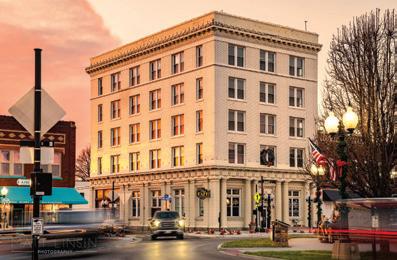
This spring, new spaces on the upper floors of the historic 1914 Citadel building will open, adding 18,000 square feet dedicated to coworking, workshops and training, anchor tenants, and community and private events. The goal is to position Ethos as the premier venue for business and leadership development in Southern Illinois.
As Harvey S. Firestone once said, “The growth and devel opment of people is the highest calling of leadership.” At Ethos, that belief continues to guide the work—because when entrepreneurs grow, businesses strengthen, and communities thrive.

Rural Advantage
ACTIVATED!
Triple Benefits for Southern Illinois with Opportunity Zone
2.0
WHAT ARE OPPORTUNITY ZONES?
Opportunity Zones (OZs) were created under the 2017 Tax Cuts and Jobs Act to attract private investment into low-income areas by offering investors powerful tax incentives on reinvested capital gains, including tax deferral and tax free appreciation ben efits. Initially envisioned as a one-time designation in 2018, a new framework established in 2025 allows for a renewal of OZs with new selections occurring every decade. Governors may nominate up to 25 percent of eligible low-income census tracts to be considered for OZ designation. The deadline for selection is July 1, 2026.
OZ USES AND RURAL BENEFITS
OZ funds have been widely used to support housing development, mixed use real estate, commercial revitalization, student hous ing projects, and local business growth, filling financing gaps in distressed markets. Although OZs were designed to drive capital into any economically distressed census tract, whether urban or rural, investment overwhelmingly flowed to metropolitan areas, with rural and micropolitan areas seeing little to no investment. However, the new OZ criteria attempt to correct this imbalance as rural investments qualify for a 30% basis step up, triple the standard 10% available in non rural zones. This dramatically improves returns for investors and makes smaller-market projects far more competitive with metro-area deals.
HOW SOUTHERN ILLINOIS COMMUNITIES CAN PREPARE
The Illinois Department of Commerce and Economic Opportunity is tasked with reviewing Opportunity Zone criteria and census tract
eligibility to prepare recommendations for the Governor ahead of the July 1, 2026, redesignation deadline. This review process is being informed by input from key stakeholders, including regional planning commissions, economic development organizations, and municipal leaders. In parallel, SI Now began engaging Southern Illinois stakeholders in January 2026 to identify an inventory of known or prospective projects in potential OZ-eligible areas.
WHERE INVESTORS AND COMMUNITIES ALIGN
The updated OZ program aligns two interests that are too often at odds: long-term capital deployment and community advancement. Housing needs, infrastructure gaps, and commercial revitalization efforts all point toward the same conclusion: rural and under served communities present genuine market opportunities, not charity cases.
With incentives aimed at rural areas like Southern Illinois that are ready for growth, the next decade of Opportunity Zones has the potential to deliver both solid returns and measurable local impact. Rural leaders who organize around this moment, and investors willing to take a long term view, stand to benefit the most. SI Now is taking a lead role in rallying the troops to ensure that Southern Illinois’ OZ eligible communities are project ready, and inves tors are project aware.
Get prepared! To discuss Opportunity Zone investment or potential projects in your community, contact SI Now Executive Director Deb Barnett at 618-353-0100 or director@southernillinoisnow.org.
Source: Economic Innovation Group: https://eig.org/ozs-resources/
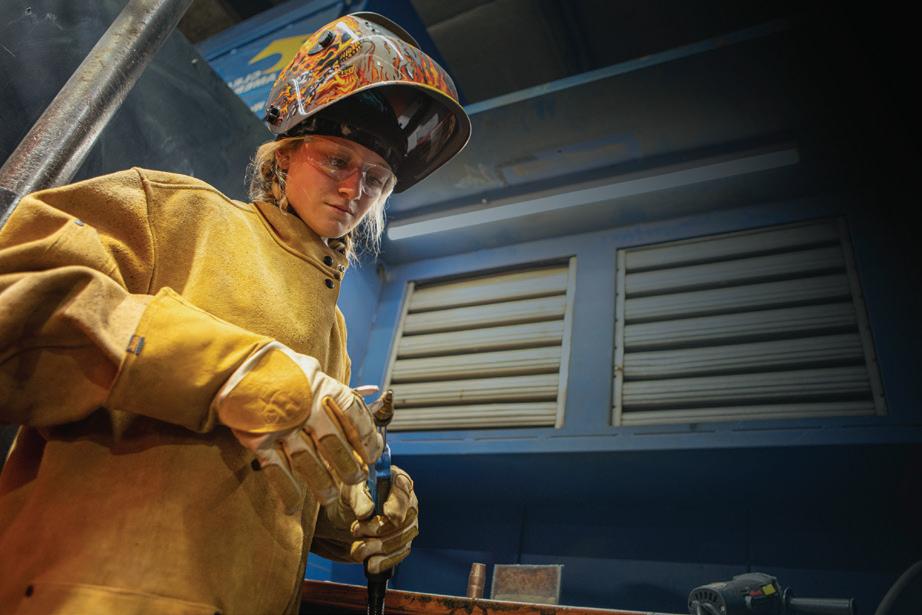


Why Choose A.M.P. at RLC?
Move through courses at your pace
Benefit from your prior experience
Individualized training built for you Stackable welding credentials Hands-On Learning Affordable tuition Experienced Faculty
Low
MyIndustry Recognized My Pace Microcredentials At Industry Recognized Recognized Microcredentials At
Industry Recognized My Microcredentials Pace Recognized My Pace Industry Microcredentials At My Recognized Microcredentials At
Industry Recognized At Industry Microcredentials Pace Recognized MyIndustryMy Pace Industry Microcredentials At My Pace Recognized At Industry Recognized Pace Recognized Microcredentials At MyIndustry Industry Recognized At My Pace Microcredentials At Industry Recognized My Recognized Microcredentials
IndustryMyIndustryMy Pace Recognized Microcredentials At
Industry Recognized Microcredentials At Microcredentials
Industry Recognized At MyIndustry Microcredentials My Microcredentials At My Pace Recognized Pace Industry Microcredentials My Pace Recognized MyIndustry Recognized My Pace Microcredentials At Pace Recognized At Industry Recognized At Microcredentials My Pace MyIndustryMy
Microcredentials MyIndustryMy Pace Microcredentials At
- Josh James, Graduate


S S P A C E
Innovative Learning & Training Across Southern Illinois that Build Careers
Across Southern Illinois, something powerful is happening. Learning is no longer confined to classrooms, and success is no longer defined by a single path. Instead, students are discovering possibilities in places where innovation, mentorship, and hands-on experience come together to shape their futures.
These are spaces where confidence is built alongside skills—where students learn by doing, exploring real careers, real tools, and real challenges. From advanced training labs to local businesses opening their doors, education in Southern Illinois is becoming more connected, more relevant, and more reflective of the world students are stepping into.
What makes these spaces truly transformative is the collaboration behind them. Educators, employers, and community partners are working together to ensure young people have access to opportunities that match their talents and ambitions. Whether a student is preparing for college, a trade, or a career straight out of high school, these pathways affirm that every future has value.
This section celebrates the places and people investing in potential, creating momentum, and building a stronger Southern Illinois— one student, one skill, and one opportunity at a time.
Building Tomorrow’s Workforce
Connecting Students to Industry Through Hands-On Experience
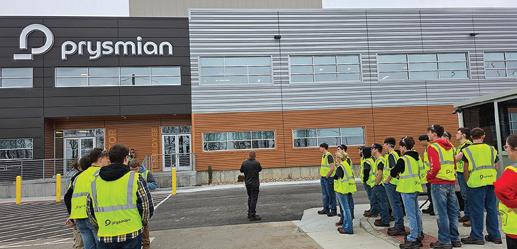
Preparing the next generation for meaningful careers begins with exposure, opportunity, and real-world experience. That mission came to life on December 10, 2025, when students from Carbondale Community High School (CCHS) partici pated in an immersive tour of the Prysmian North America manufacturing facility in Du Quoin—made possible through funding from Man Tra Con’s Local Works program.
The two-hour tour gave students a firsthand look inside one of the region’s leading industrial operations, offering insight into modern manufacturing processes and the wide range of careers available in the industry. To ensure students were properly equipped for the visit, Man Tra Con partnered with locally owned Adams Shoe Store, which supplied regulation steel toed boots for each participant. Not only did the boots allow students to safely tour the facility, but they were also able to keep them afterward providing a valuable resource for future job shadowing, training programs, or employment opportunities.
Prysmian staff led the tour and engaged directly with students, discussing potential
career paths within the company and the skills needed to succeed in manufacturing and industrial settings. From skilled trades and maintenance to engineering and oper ations, students were introduced to a wide variety of career options available locally, helping them visualize a future in the workforce right here in Southern Illinois.
Representatives from John A. Logan College also participated in the event, sharing information about Career and Technical Education (CTE) programs available to students after graduation. Their presentation emphasized hands-on learning opportunities, certifications, and training pathways that align with the needs of regional employers.
Emily Perks, Employer Services & Special Grants Director at Man Tra Con, spoke with students about employment and training services available through the organization, including apprenticeship opportunities designed to help young adults transition smoothly from school to the workforce. These programs allow students to gain experience, earn wages, and build long-term career skills without leaving the region.
The tour was part of Man Tra Con’s Local Works program , developed through supplemental grant funding to strengthen connections between young people and local employers. The initiative focuses on increasing awareness of career opportunities, encouraging workforce participation, and building a strong talent pipeline for Southern Illinois industries.
Experiences like this demonstrate the power of collaboration between schools, workforce agencies, local businesses, and higher education institutions. By combining education, exposure, and hands-on experience, programs like Local Works are helping prepare students for success—one tour, one connection, and one opportunity at a time.
After more than 60 years in operation, Prysmian has grown into a regional, multigenerational employer. It’s inspiring to see today’s students taking an interest in manufacturing, supported by an educational system that is helping them build meaningful career paths.
Erik Perks, Engineering Team Lead –Industrial, Construction and Specialty.
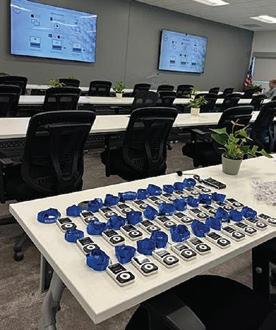
John A. Logan College (JALC) offers a broad range of high-quality technical and career programs that align closely with industry partners like Prysmian to help support workforce needs, particularly in advanced manufacturing, industrial maintenance, electronics, and other engineering-related fields. Programs such as Industrial Maintenance, Manufacturing, Electrical Technology, Welding, and Engineering Technology provide students with the foundation and hands-on training. Soon JALC will have a state-of-the-art manufacturing and welding facility that will allow students to use industry standard equipment that they may see in manufacturing facilities in the workforce. In addition, JALC’s strong emphasis on safety, troubleshooting, automation, and workforce readiness ensures graduates are prepared for fast-paced, precision-driven environments like Prysmian’s manufacturing facilities.
April Martinez, Director of Enrollment Management Student Affairs
Expanding Opportunities Through Real-World Work Experience
In addition to facility tours and classroom engagement, Man-Tra-Con continues to expand hands-on learning opportunities for local students through its work experience program. One of the newest examples is a partnership with 13RF, a company owned by Samron, which has recently become a new worksite for Man-Tra-Con participants.
Through collaboration with Josh Williams, a Career and Technical Education (CTE) teacher at Murphysboro High School, a student was selected to participate in the program based on their interest, readiness, and career potential, ensuring a strong match between the student and employer. The placement provides valuable, real-world exposure to workplace expectations while allowing the student to gain practical experience in a professional setting.
In addition to 13RF, Crucial MRO and Burke Electric have also opened their doors to Murphysboro High School students through the Man Tra Con program, further expand ing opportunities for hands on learning in real world environments. Beyond these placements, an additional 36 students are currently gaining on-the-job experience through the school’s work release program, allowing
them to build valuable skills while still completing their high school education.
Josh also plays an important role in helping students explore career pathways before they enter the workforce. He incorporates virtual reality (VR) headsets, provided through a Man-Tra-Con grant, into classroom instruction to give students an immersive look at various industries and job roles. This technology allows students to better understand career options and visualize potential futures in skilled trades and technical fields.
“I have a dream job,” said Josh. “I have the pleasure of helping students tackle real-life problems and understand the solutions. Not everyone is going to college, and we need to normalize the working pathway. This is what makes the world work.”
The partnerships between Man-Tra-Con, Murphysboro High School, and local employers such as 13RF, Crucial MRO, and Burke Electric reflect a shared commitment to workforce development and student success. By combining innovative classroom tools with hands-on work experience, these collaborations are helping prepare students for meaningful careers while strengthening the region’s talent pipeline.
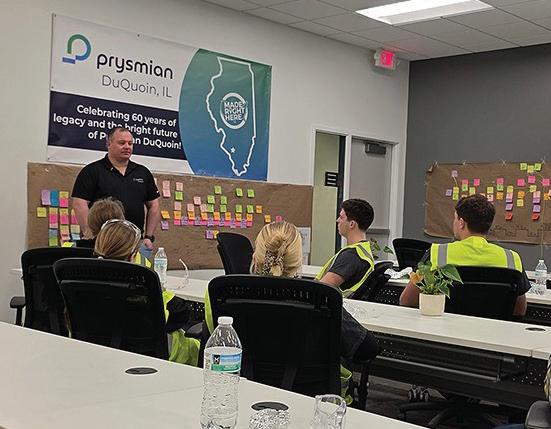
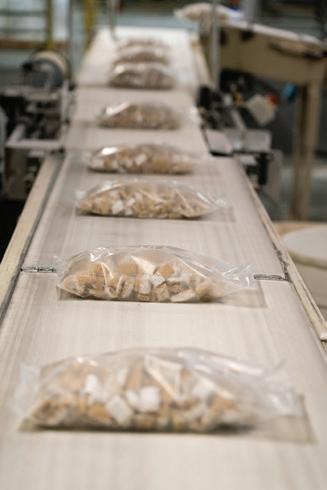
For 130 years Gilster-Mary Lee has been a part of southern Illinois.
We are grateful for our customer and supplier partnerships, the dedication of our team members, and support of the communities that we call home.
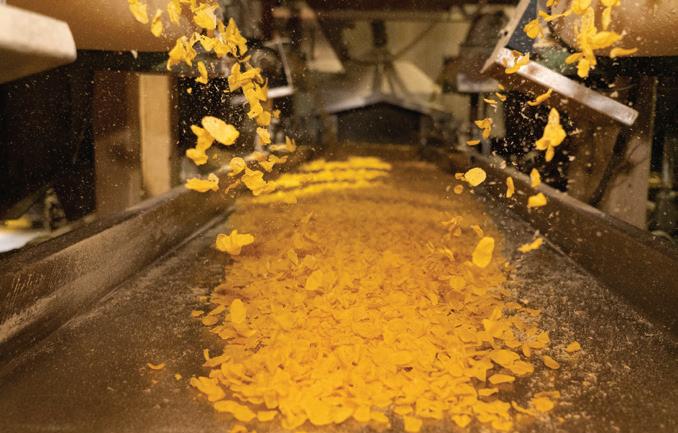
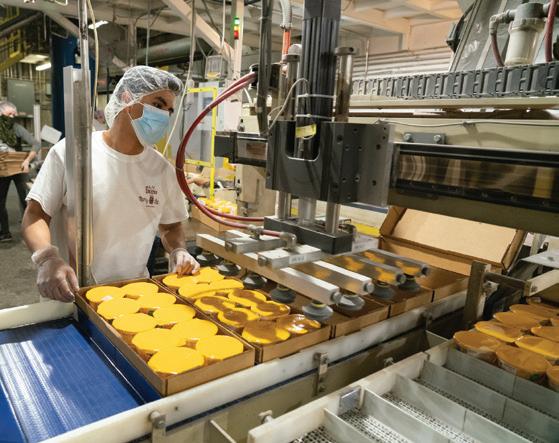
We make peoples’ lives better by providing them high quality, high value food products that they enjoy!
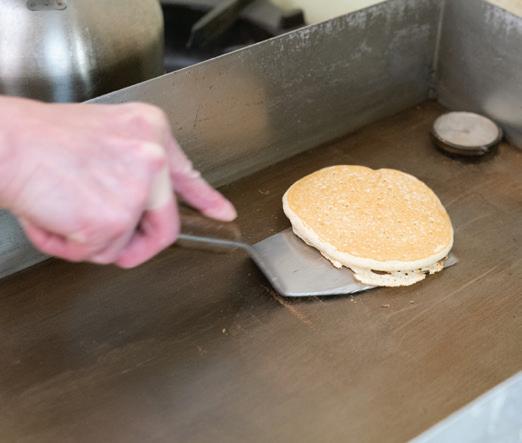
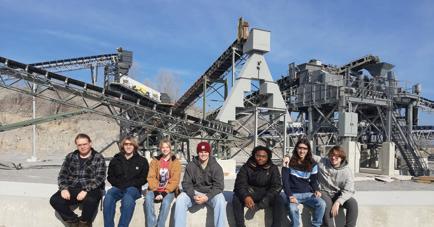
Classrooms to Careers ING CO N NE C T
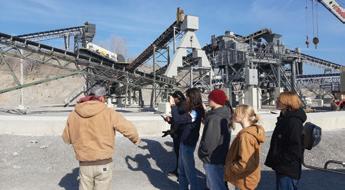
AtSI Now, we believe the future of Southern Illinois starts with the opportunities we create for students today. That’s why SI Now, in collaboration with its Education and Workforce Development Task Force, has developed the Regional Career Connections Calendar—a centralized resource designed to bring schools and businesses together in meaningful, hands on ways.
Hosted on the SI Now website, the calendar serves as a bridge between education and industry, making it easier for educators, employers, and community partners to coordinate workplace tours, career days, job shadowing opportunities, and experiential learning events. Its purpose is simple but powerful: to give students a behindthe-scenes look at real workplaces, introduce them to career paths they may not have considered, and help them understand the skills and training needed to succeed.
One recent example of this collaboration was Marion High School students visiting Hastie Mining, a family owned business with decades of experience in coal and mineral extraction in Elizabethtown, Illinois. Hastie Mining not only contributes to the region’s economy but also demonstrates how specialized skills and a strong work ethic can create meaningful career opportunities. During their visit, students were able to see operations firsthand, ask questions about different roles, and gain insight into the variety of career paths available within the mining industry.
By connecting classrooms with local employers, the Regional Career Connections Calendar helps students see what’s possible right here at home—while giving businesses a chance to invest in and inspire the next generation of talent. It’s a collaborative effort rooted in the belief that when education and industry work together, everyone benefits.
Together, we’re not just preparing students for jobs—we’re helping shape tomorrow’s workforce today.
It was great to see the size and scale of equipment they use in their operations. It’s one thing to see it from a distance, but it’s a whole different experience to see the open-pit mine, loaders, and earthing equipment close up. To see the mining operations firsthand was eye-opening for both myself and the students.
Bryce Parks, Drafting, Welding, and Tech/Engr. Instructor, Marion High School
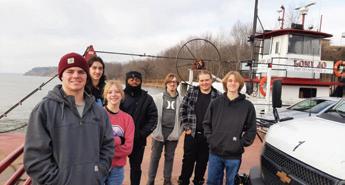
The Marion High School visit was a wonderful experience for everyone involved. The students were engaged and enthusiastic from the moment they arrived. Because they were early, their teacher was able to take them to the cave and on the ferry—first-time experiences for all of the students and, for many, their first visit to the Shawnee National Forest. It added an extra layer of excitement and discovery to the day.
We spent time talking with the students over pizza about career opportunities, training requirements, and what we look for in future employees. They asked thoughtful questions, showed genuine interest, and were extremely well mannered throughout the visit. It was encouraging to see their curiosity and professionalism, and experiences like this truly demonstrate the importance of connecting students to real-world career pathways right here in our community.
Testimonial – Kim Watson, Hastie, LLC

Building Futures Close to Home
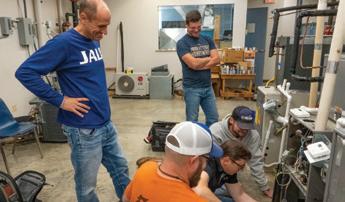
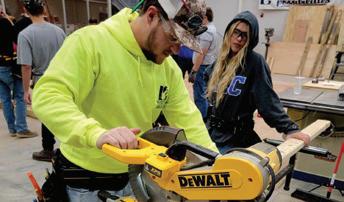
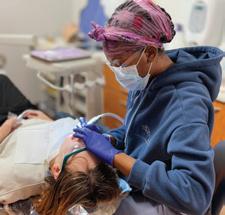
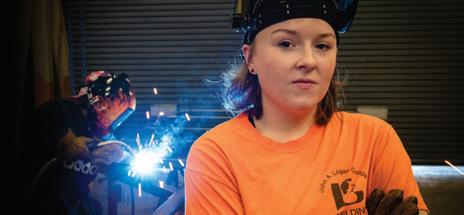
The Expanding Impact of CTE at John A. Logan College
Inan era when students are demanding practical skills, faster pathways to employment, and meaningful careers, Career and Technical Education (CTE) has emerged as one of higher education’s most powerful success stories. At John A. Logan College, CTE programs are not only meeting workforce needs across southern Illinois but also reshaping students’ perceptions of opportunity, access, and long-term success.
For decades, John A. Logan College has been rooted in its mission to enrich lives through teaching and community engagement. Today, that mission is most visibly realized through its popular CTE programs, which blend hands-on training, industry alignment, and academic rigor to prepare students for high-demand careers.
Proven Success Through Workforce Alignment
The strength of JALC’s CTE programs lies in their close connection to real-world needs.
Programs in areas such as healthcare, construction management, ELT, HVAC, welding, and both automotive technology and auto collision are designed in collaboration with local and regional employers. This ensures students learn relevant skills with current technologies that they can apply immediately upon graduation.
Faculty with industry experience bring credibility and practical insight to the classroom, while lab-based instruction and work-based learning opportunities enable students to graduate with confidence, certifications, and job-ready experience. For many students, CTE programs provide a direct pathway to stable employment in fields that offer competitive wages and opportunities for advancement. Students receive hands-on training and give back to the community through Habitat for Humanity and service-learning projects, including the popular Not So Scary Trick-or-Treat and a Neurodiverse Easter Egg Hunt.
Equally important, these programs serve a diverse student population—recent high school graduates, adult learners seeking career changes, veterans, and individuals returning to education after time in the workforce. CTE at John A. Logan College is not a one-size-fits-all solution; it is a flexible, inclusive system designed to meet learners where they are.
Strengthening the Regional Economy
The impact of CTE at JALC extends far beyond campus. By supplying skilled workers to area employers, the college plays a vital role in strengthening the regional economy. Local businesses benefit from a dependable pipeline of trained talent, while graduates often remain in the region, contributing to economic stability and community growth.
Partnerships with high schools, workforce agencies, and industry advisory boards help align curriculum with evolving labor
market demands. Dual credit and early college opportunities also introduce students to technical career pathways before they graduate, shortening time to completion and reducing overall education costs.
Innovation and Investment Looking Ahead
While the success of CTE at John A. Logan College is evident, the future promises even greater momentum.
The college is focused on modernizing facilities and equipment, ensuring students train on technologies that mirror today’s workplaces. Continued investment in simulation labs, advanced machinery, and digital tools will keep programs competitive and relevant.
In August, College officials broke ground on a state-of-the-art CTE training center that will house a new welding lab and classroom, as well as renovations to Automotive, Auto Body, and HVAC classrooms and labs, giving the current facility a complete makeover. According to College President Dr. Kirk Overstreet, the facility will be completely
transformed and modernized to enhance our Career and Technical teaching and training. “This new facility will be adjacent to our current H building and will bring state-of-the-art tools and training opportunities, providing a well-trained and welleducated community and fostering new economic growth for our industry partners in southern Illinois,” said Overstreet.
In 2024, the College received news that it had been awarded a federal grant to expand healthcare education, which is another cornerstone of John A. Logan College’s future-facing vision. With the healthcare industry facing nationwide staffing shortages, JALC is responding by expanding its offerings.
A recent federal grant will allow the College to finish the fourth floor of the Communications Wing, creating additional space for its thriving nursing program. This follows a recent remodel of the ground floor, now home to the Surgical Technology and Medical Laboratory Technology programs.
“Our healthcare programs are vital to southern Illinois,” said Overstreet. “This
expansion not only benefits our students as they prepare for their careers but also strengthens the healthcare infrastructure of our entire region.”
A Model for the Future of Higher Education
As the national conversation around higher education continues to shift, John A. Logan College stands out as a model for how community colleges can lead. The success of CTE programs at the College was one of the reasons John A. Logan College was selected as a Top 200 Finalist for the prestigious ASPEN distinction. Its CTE programs demonstrate that education need not choose between academic quality and workforce relevance—it can and should deliver both.
For students seeking purpose, stability, and opportunity, and for employers seeking skilled, motivated workers, CTE at John A. Logan College offers more than training. It represents a future built close to home, grounded in skill, and driven by possibility.
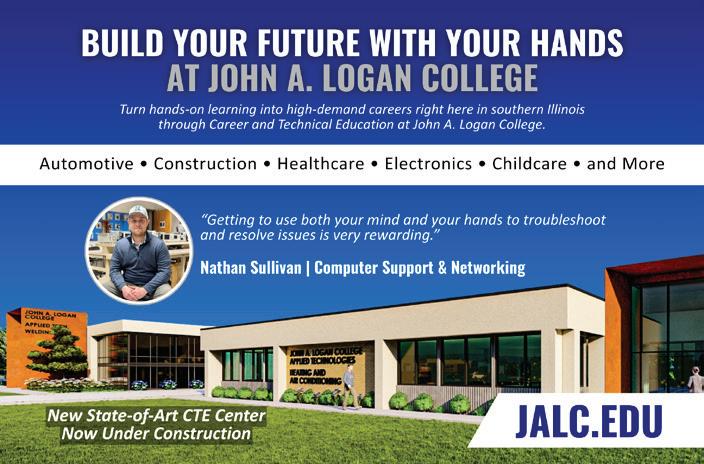
Inside SWIC’s Red Bud Career & Technical Education Facility
When Southwestern Illinois College opened the doors of its Red Bud Career & Technical Education (CTE) Facility earlier this month, the message was clear: workforce education in Southern Illinois is evolving—and it’s doing so with purpose.
On April 9, community members, students, and prospective learners gathered for a ribbon cutting and open house that showcased how modern training spaces can directly shape career success. Designed to mirror real-world work environments, the Red Bud CTE facility reflects a growing regional investment in hands-on education that meets today’s labor demands.
The event highlighted several of SWIC’s career-focused programs, including Welding, Industrial Electricity, and Forklift Certification—each built around practical, skills-based learning. Visitors learned about industry standard tools and technology, gaining insight into how students are prepared not just to graduate, but to enter the workforce with confidence.
“This open house was an opportunity for the community to see firsthand how SWIC’s career and technical programs lead directly to employment,” said Robert Tebbe, Vice President of Enrollment, Marketing, and Strategy. “The Red Bud CTE facility was designed to give students real-world experience in an environment that reflects what they’ll encounter on the job.”
Beyond the labs and equipment, the open house emphasized accessibility and support. Representatives from Enrollment Services and Financial Aid
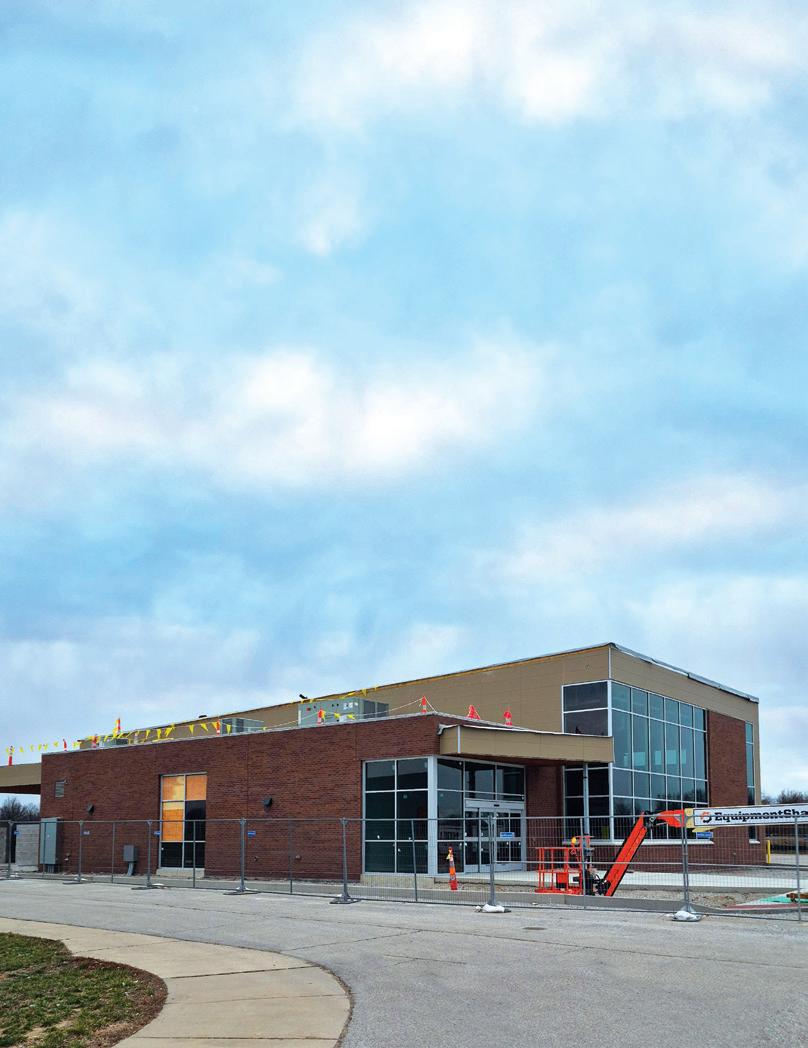
were on hand throughout the day to help attendees understand application processes, tuition options, and available scholarships—underscoring SWIC’s commitment to making career training attainable for students of all ages.
The Red Bud facility represents more than a new building; it signals a broader shift in how education and workforce development intersect across Southern Illinois. By investing in spaces that mirror real world job environments, SWIC is closing the gap between class room learning and employer expectations—strengthening the region’s workforce pipeline in the process. With an active registered apprenticeship at Red Bud Industries, the new CTE center is designed to speak directly to the needs of manufacturing employers in the community and surrounding area.
As industries continue to evolve, so too must the spaces where future workers are trained. The success of the Red Bud CTE open house demonstrated strong community interest and reinforced the role of innovative training centers in preparing students for meaningful, indemand careers.
In Southern Illinois, spaces like SWIC’s Red Bud CTE facility aren’t just places to learn—they’re places where careers begin.
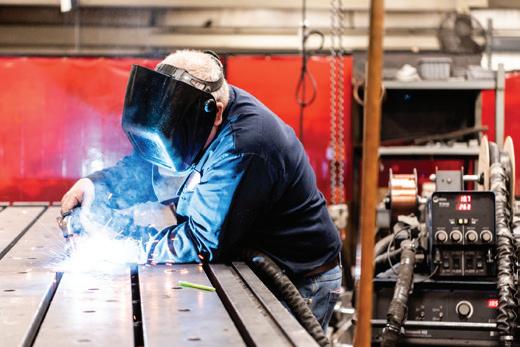
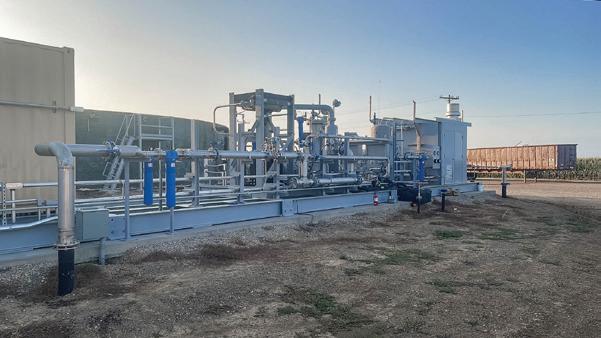
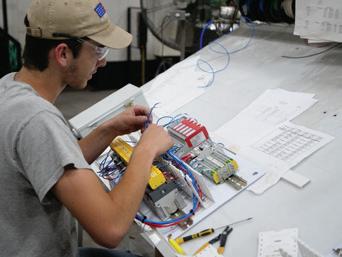


When Alumni Success Fuels a Region’s Future
Southern Illinois has always had a way of calling people home.
For generations of Southern Illinois University Carbondale alumni, that call is wrapped in memories of late nights on campus, friendships forged in classrooms and coffee shops, and the unmistakable pride of being a Saluki. Now, a new initiative is transforming that nostalgia into momentum—inviting alumni not just to remember Southern Illinois, but to build their future here
Launched in fall 2025, Salukis Build Here is more than a business recruitment effort. It’s a shared vision—one that recognizes the power of alumni-owned businesses to strengthen communities, create jobs and shape the next chapter of Southern Illinois’ economic story.
At its core, Salukis Build Here is an invitation: Come back. Stay. Grow. Belong.
A Partnership Rooted in Purpose
Salukis Build Here brings together a coalition of partners who understand that thriving communities are built through collaboration. Southern Illinois University Carbondale joined forces with Southern Illinois Now (SI Now), the SIU Foundation, the SIU Alumni Association, the City of Carbondale, Carbondale Main Street, and the Carbondale Chamber of Commerce to create a unified pathway for alumni entrepreneurs to start, relocate or expand businesses across the region.
The initiative builds on something already happening quietly but powerfully—Saluki alumni are launching and growing suc cessful businesses throughout Southern Illinois Salukis Build Here shines a light on those successes while opening the door for
more alumni nationwide to see Southern Illinois not just as where they came from, but where they can go next.
As SI Now Executive Director Deb Barnett puts it, when alumni succeed, the region succeeds. “This is the perfect time to invest, build and belong in Carbondale and throughout Southern Illinois,” she says. “We’re creating an environment where Salukis can turn ideas into impact—and feel supported every step of the way.”
Why Southern Illinois— and Why Now
Southern Illinois offers something increasingly rare: opportunity paired with authenticity.
From flexible zoning and competitive incentives to a cost of living that allows businesses to grow without sacrificing quality of life, the region is uniquely positioned for entrepreneurs looking to scale sustainably. In Carbondale, alumni-owned and locally rooted businesses can tap into tools like the Enterprise Zone, Tax Increment Financing, and the Downtown Façade Improvement Program, designed to support reinvestment and revitalization.
At the state level, Illinois programs such as EDGE, REV Illinois, MICRO, and other high-impact incentives provide additional support for job creation, manufacturing, innovation and creative industries.
But beyond the incentives, there’s something harder to quantify—and just as powerful.
“When alumni choose Carbondale,” says City Manager Stan Reno, “they’re investing not only in their own future, but in the future of our city.” That investment shows up in vibrant downtowns, energized main streets, and businesses that care deeply about place and people.
Alumni Building More Than Businesses
Salukis Build Here recognizes that alumni entrepreneurs don’t just open doors—they open possibilities.
When a Saluki launches a business in Southern Illinois, they create jobs, mentor students, reinvest locally and help shape the culture and character of their community. They turn classrooms into companies, ideas into livelihoods, and memories into meaning.
The initiative culminated in a fall 2025 community celebration at alumni-owned Hangar 9, where other alumni-owned businesses, local leaders and future entrepreneurs gathered to share stories, build connections and imagine what comes next. Timed alongside Homecoming festivities, the celebration underscored a simple truth: Southern Illinois and SIU are stronger together.
Building Forward
As Southern Illinois looks ahead, Salukis Build Here stands as a reminder that growth doesn’t happen in isolation—or in just one place. From Carbondale to communities across the region, this initiative reflects a shared belief that alumnidriven businesses can fuel opportunity, strengthen local economies and shape a resilient future.
By welcoming Salukis home to build, expand and invest throughout Southern Illinois, the region is doing more than creating businesses—it’s cultivating pride, connection and momentum that will carry Southern Illinois forward for generations.
Because when Salukis build here, Southern Illinois rises
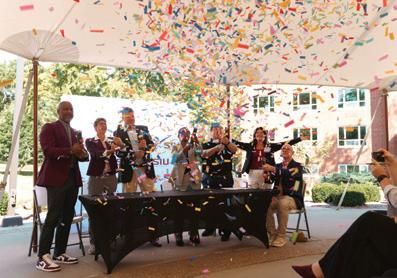
How it Began
A Proclamation. A Celebration. A Movement.
Salukis Build Here officially launched in October 2025 with a proclamation signing, marking a public commitment by Southern Illinois University Carbondale and community partners to support alumni-owned businesses and regional growth.
The momentum continued with a community celebration at Hangar 9, where alumni entrepreneurs, local leaders and business supporters gathered to connect, share stories and explore opportunities. The open-house event featured alumniowned businesses, food and beverage vendors, testimonials from Saluki entrepreneurs and networking that reflected the energy and collaboration at the heart of the initiative.

https://www.salukisbuildhere.com
Timed alongside Homecoming weekend, the kickoff felt like a reunion with purpose—honoring the Saluki journey while inviting alumni to build their future in Southern Illinois.
Salukis Build Here isn’t just how it started. It’s how the region moves forward.
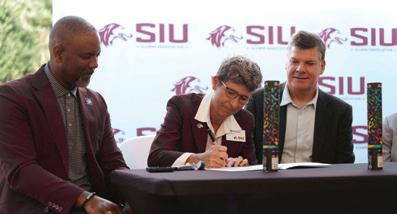

IN SOUTHERN ILLINOIS FORGEÐ
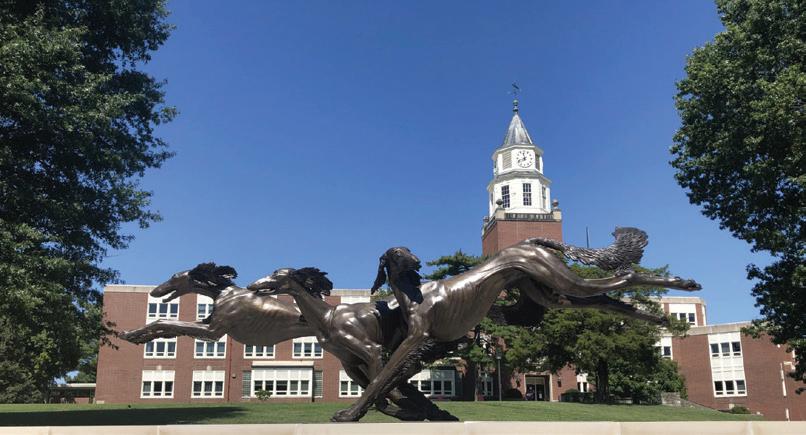
HOW SCULPTOR JOHN MEDWEDEFF BUILT A LIFE, A LEGACY, AND A STUDIO FULL OF REALLY HEAVY THINGS
If you ask nationally recognized sculptor and master blacksmith John Medwedeff how he ended up building a decades-long career in Southern Illinois, he’ll tell you it was supposed to be temporary—a three-year stopover. You know, like Gilligan’s Island… except with fire, anvils, and considerably more paperwork.
Forty years later, John is still here—creating monumental public sculptures, forging metal into art, shaping national projects, restoring historic pieces, and contributing to a legacy that reaches far beyond the region. And in true Saluki spirit, he’s done it all while proving one central truth of our Salukis Build Here initiative:
You really can build your life, your career, and your future right here in Southern Illinois.
A BLACKSMITH WALKS INTO CARBONDALE
John arrived at SIU in 1985 to finish his undergraduate degree and pursue a master’s degree in metalsmithing. At the time, SIU offered
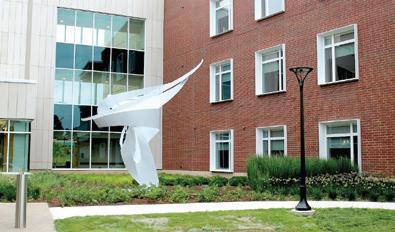
the only specialized MFA program in the nation with a focus on blacksmithing—a distinction that drew aspiring metal artists from across the country.
His career path can actually be traced back to a 1969 workshop at SIU, where legendary professor Brent Kington and visiting artist Alex Bealer introduced forged iron to campus. The archival film of the event (which John watched again just hours before our interview) features 50 beginners learning to forge metal—burning things, melting things, and creating what John lovingly described as “horrible” early attempts. But near the end of the footage, Kington predicted: “This is the start of something big.”
He wasn’t wrong.
That moment sparked a national movement in contemporary blacksmithing. And although John was only in first grade in Nashville at the time, he still traces the trajectory of his entire career back to that weekend.
WHERE LIFE HAPPENS WHILE YOU’RE BUSY MAKING PLANS
Like many Salukis, John’s plan was to earn his degree and head home to Tennessee. He and his wife Cynthia Roth—also a multi-talented SIU alum with two master’s degrees—expected to build their lives somewhere more urban.
Then life, as it tends to do, intervened.
One of the pivotal turning points came when John received a call from the Illinois Capital Development Board Art-in-Architecture
Program about a public art commission at the Illinois State Fairgrounds. The state of Illinois—one of the largest and most competitive public art markets in the country—wanted to purchase his work.
That changed everything.
“It was like… well, why would I leave?” John said. And so began the slow but steady process of putting down roots: outgrowing a rented studio space and eventually purchasing land in the Murphysboro industrial park to build a larger shop—one that could accommodate the construction of monumental sculptures.
At some point, it became clear: This wasn’t temporary anymore. This was home.
ART THAT FILLS A REGION—AND A FOOTBALL FIELD
Today, John’s work lives across the country—Illinois, Tennessee, Mississippi, Washington, North Carolina, Texas, Michigan, and more. His portfolio includes public sculptures for universities, cities, courthouses, parks, and private clients.
The scale of his projects spans from the micro to the magnificent.
On the micro end? He creates the highly detailed trophies for the PGA FedEx St. Jude Championship in Memphis—built under a microscope.
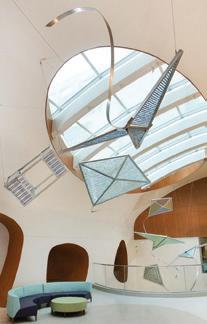
On the magnificent end? He once sculpted a landscape installation nearly the size of a football field using 700–800 tons of Tennessee marble As he put it, “I like to mix things up every once in a while.”
And of course, Salukis know him best for his work on the past, present, and future Saluki sculptures—a highly representational project he codesigned with his talented assistant, Megan Robin Abbott, for SIU’s 150th anniversary. John jokes that his biggest contribution to that project was “getting out of the way and letting Megan work,” proving that great artists also make great collaborators.
His public pieces often become landmarks in people’s lives. They’re the backdrops to wedding photos, graduation pictures, and—occasionally—online dating profiles. “It’s kind of touching,” he said. “People see something in the piece that they identify with.”
WHY SOUTHERN ILLINOIS WORKS FOR WORKING ARTISTS
When asked what he’d tell young Salukis who are deciding whether to build their future here, John didn’t hesitate:
“There’s a quality of life here that I really enjoy.”
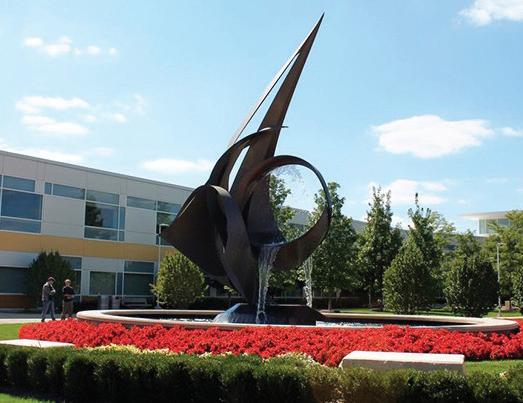
Southern Illinois, he explained, gave him room to build something big—literally. Studio space, land, and opportunities in the public art sector were within reach here.
He and Cynthia also value the outdoors—canoeing after work, hiking in the Shawnee National Forest, and enjoying open space without traffic jams.
But perhaps most importantly, Southern Illinois gave John something he didn’t even know he was looking for:
A place where he could invent his own path.
A place where he could build not only his career, but a life.
A place where Salukis really do build here.
A LEGACY FORGED IN STEEL, FIRE, AND COMMUNITY
John’s studio is still a mom-and-pop operation—Cynthia manages the office and co-manages the business with John. He handles sales, design, forging, fabrication, and logistics. Together they’ve built a creative life deeply rooted in Southern Illinois.
His work sits across SIU’s campus—the Transportation Education Center, the Communications Building, the Engineering Building, and of course, the Saluki sculptures. Each piece represents decades of artistic exploration, craftsmanship, and the simple belief that art belongs to everyone.
As the Salukis Build Here initiative celebrates alumni who invest their talent locally, John’s story shines as a reminder that careers don’t have to take you away from Southern Illinois—they can grow because of Southern Illinois.
And sometimes, a three-year plan becomes a lifelong adventure.


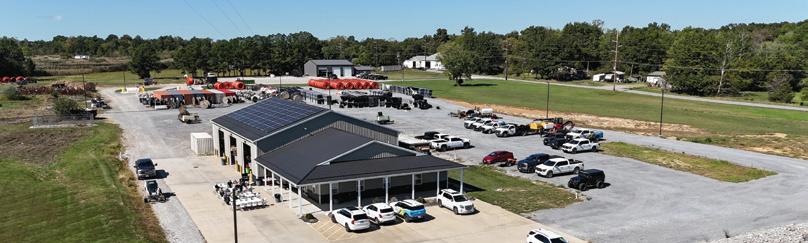
CAM MCCURDY
CONNECTING SOUTHERN ILLINOIS TO OPPORTUNITY
Southern Illinois’ small business landscape thrives on people who see a challenge and create a solution. That perfectly describes Cam McCurdy, an entrepreneur who is tackling the lack of high-speed internet in rural areas of the region. In 2016, the connectivity gap was limiting his family’s ability to grow their custom metal decor business. Cam and his wife, Maci, could not have imagined that their search for a solution would grow into a business now making a major economic impact across Southern Illinois.
“As a kid, I loved going out and solving a problem, and it was a bonus if I got paid to do it,” Cam explained. “I feel like that is really all I have been doing my entire life. There is something to be said for doing what you love every day.”
A lifelong Southern Illinoisan and a Marion High School Class of 2009 graduate, Cam’s journey reflects the adaptability of the region itself. After high school, he attended Southern Illinois University Carbondale to study computer and electrical engineering. While his time at SIUC built a strong technical foundation, it also brought clarity. Immersing himself in software and coding helped him realize his true interest was in the physical infrastructure of technology, the hardware that makes the digital world function.
Broadband access has become essential infrastructure. Reliable high-speed internet allows businesses to compete and grow, supports remote and hybrid work, connects students to education and training, and improves access to healthcare services. Through his work, Cam is helping ensure Southern Illinois remains competitive in a digital economy where con nectivity is no longer optional.
“It is a game changer for the customers we serve,” Cam said. “Some of them work in fields like medical imaging or media. They need high-bandwidth connections. We are bringing it to places they thought they would never have it.”

McCurdy’s success is rooted in early experiences close to home. While attending Marion High School, he worked part-time in the Marion Unit 2 Technology Office. After graduation, he pursued two paths at the same time. One was working for Maci’s grandfather at Parks Industries, manufacturing auxiliary power units (APUs) for the trucking industry, while also continuing his studies at SIUC. When Cam chose to focus on the APUs full time, he quickly recognized a need for rapid prototyping of steel parts. With no local provider available, he built his own CNC plasma table. That capability allowed him to support APU production while also helping Maci scale her growing custom metal decor business.
That business, however, revealed the most pressing challenge. Their rural Marion home lacked a fast and reliable internet connection needed to support online sales. Rather than accept the limitation, Cam set out to solve it. What began as a single 150 foot tower in his backyard, originally built to serve their home and nearby neigh bors, has grown into ProTek – a company focused on fiber and fixed wireless solu tions. Today, the McCurdys directly employ 50 staff, support an additional 50 through local subcontractors, and deliver highspeed internet throughout Southern Illinois.
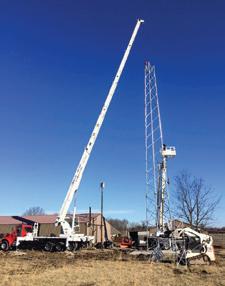
As ProTek expanded, McCurdy began working directly with the State of Illinois and the Illinois Department of Commerce and Economic Opportunity to secure grant funding designed to bring high-speed internet to rural and underserved communities. Those partnerships have allowed ProTek to accelerate network construction, reach areas long overlooked by traditional providers, and align private innovation with public investment to close the digital divide.
“We have people specializing in network engineering that I would put up against anyone in the state,” Cam said. “We have built one of the best small engineering teams in the area. When it comes to operations, you would be hard-pressed to find another company connecting people as quickly as we do once construction is complete.”
McCurdy made a deliberate decision to build his business in Southern Illinois, keeping jobs, investment, and opportunity local. ProTek has continued to grow, acquiring Northbridge IT Services to better support customers and purchasing Parks Industries, now known as EcoFleet, the very company where Cam first began his career.
For Cam and Maci McCurdy, solving a problem at home sparked a business that is expanding opportunity, strengthening communities, and keeping Southern Illinois businesses and residents connected.
TEDRICK WELCOME CENTER
A New Front Door to SIU
Southern Illinois University is redefining first impressions with the Tedrick Welcome Center, a transformative new facility rising at the university’s main entrance along U.S. Highway 51. Scheduled to open in May 2026, the 44,000-square-foot building will serve as a central hub for recruitment, engagement, and connection, welcoming prospective students, alumni, donors, and community members alike.
The Tedrick Welcome Center will include a 14,000-square-foot visitor center designed for campus tours, open houses, orientations, and special events, alongside a 26,000-square-foot home for the SIU Foundation. Modern, interactive spaces and Saluki-centered branding will help visitors envision life at SIU from the moment they arrive.
“This building is going to blow students away and help us seal the deal,” said Chancellor Austin Lane, underscoring the importance of strong first impressions in student recruitment.
Named for Roger and Sally Tedrick, whose $6 million leadership gift launched the project, the center is funded entirely through the SIU Foundation, without taxpayer dollars, tuition revenue, or student fees.
More than a building, the Tedrick Welcome Center represents SIU’s momentum and vision, creating a welcoming gateway that connects people to opportunity, philanthropy, and the university’s future.
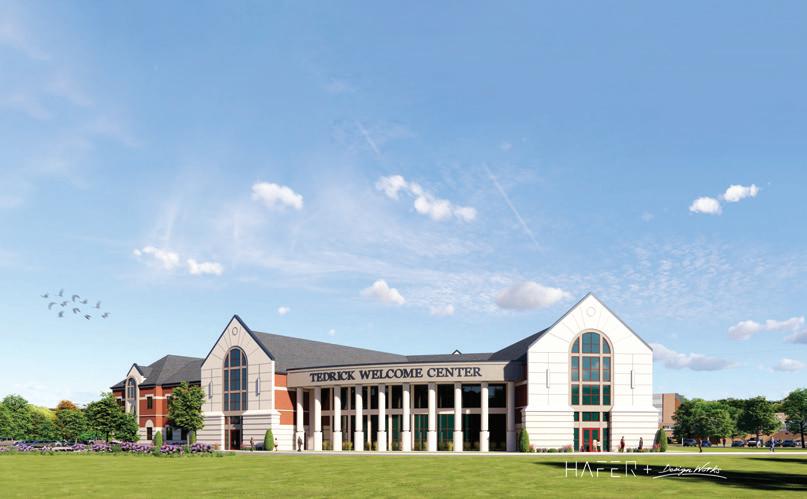
THE RISE OF SALUKI MARKET
The SIU Alumni Association continues to strengthen its mission of connecting Salukis worldwide through strategic partnerships that support alumni success, and nowhere is this more evident than with the Saluki Market, a thriving online marketplace designed to spotlight alumni-owned businesses. Launched in late 2025, the initiative has already generated more than $6,000 in sales, illustrating the power of collaborative support across the SIU community.
At the heart of Saluki Market’s early success is a foundational partnership with Black Diamond Harley Davidson, whose multi-year Champion Sponsorship was instrumental in getting the platform off the ground. Representing the Black Diamond Family of Businesses, this sponsorship not only provided resources but also reinforced a shared belief in Saluki entrepreneurship — a value deeply rooted in both the dealership’s origins and the broader alumni network.
Beyond this cornerstone support, Saluki Market’s growth is bolstered by collaborations with a diverse range of sponsors and community partners, including Blue Sky Vineyard, First Southern Bank, Silkworm, The Printing Plant, the Small Business Development Center at SIU, SI Now, Banterra Bank, and First Mid Bank. These relationships extend the reach of the marketplace, connecting alumni brands with customers while enhancing operational and promotional capabilities.
In uniting institutional support, corporate sponsorship, and grassroots entrepreneurial engagement, Saluki Market exemplifies how collaborative partnerships can create economic opportunities while strengthening lifelong connections across the global Saluki family.

CHECK US OUT:
Shop Unique Products from SIU Alumni | Support Small Saluki Businesses https://salukimarket.com

The Air Race Classic Lands in Southern Illinois FROM TO TERMINUS
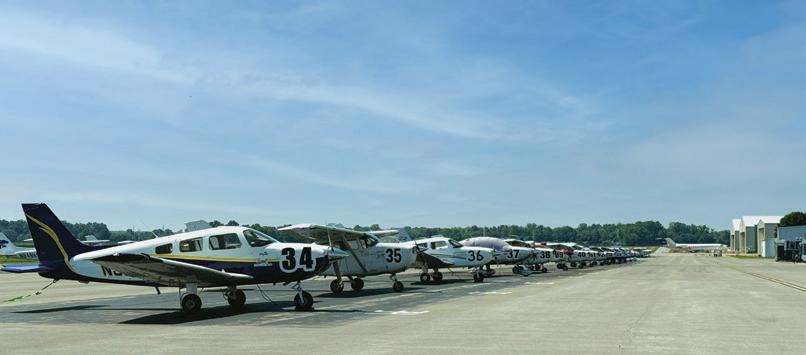
Southern
Illinois continues to prove it’s ready for the spotlight— and the runway. In 2024, Southern Illinois Airport proudly hosted the prestigious Air Race Classic, welcoming elite women pilots from across the country and showcasing the region’s aviation strength, hospitality, and logistical expertise. That successful hosting marked more than a moment—it set the stage for what’s next.
“Hosting the Terminus of the Air Race Classic is an incredible honor, and we couldn’t be more excited!”
Sheila Jolly Scrivner, KMVN
In June 2026, the Air Race Classic returns to Southern Illinois in a big way, with Mt. Vernon Outland Airport (KMVN) serving as the Terminus—the official finish line of the race. While this marks a major milestone for the region, KMVN is no stranger to the Air Race Classic. The race has stopped here three times prior to 2026, and in 2022, pilots voted KMVN the Best Stop of the entire competition. This year’s finish line designation is a powerful nod to the airport’s outstanding hospitality, organization, and community support—cementing Southern Illinois’ place on the national aviation stage.
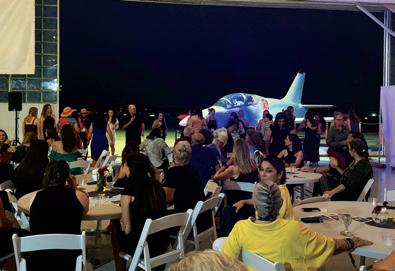
“From pilots to families, this event is a weekend to showcase our community at its best.”
Angela Schrum, Director, City of Mt. Vernon Tourism
2024: Southern Illinois Shows What’s Possible
The 2024 race demonstrated Southern Illinois’ ability to host a nationally recognized aviation event with precision and warmth. From ground coordination to community engagement, the experience reflected the region’s growing reputation as a place where aviation, teamwork, and hospitality intersect.
The Air Race Classic—an all-women, transcontinental race tracing its roots to the historic Powder Puff Derby—brings together seasoned pilots, collegiate teams, and race officials in a competition blending skill, strategy, and endurance. Hosting even a portion of the race requires planning, infrastructure, and coordination across multiple sectors—and Southern Illinois delivered.
That success made one thing clear: the region was ready for more.
2026: Mt. Vernon Takes the Finish Line
This “more” arrives June 23–26, 2026, when Mt. Vernon Outland Airport hosts the Terminus of the Air Race Classic, marking the end of the multi-day competition and the beginning of a celebratory weekend in Jefferson County.
Pilots must be on the ground by 5:00 p.m. on June 26, officially completing the race. From there, Mt. Vernon becomes home base through June 26–28, with events, transportation, and celebrations designed to give racers an unforgettable experience.
The scale is impressive: up to 60 aircraft, 125 pilots, 12 race offi cials, and a total of roughly 137 women aviators in town. With family and friends attending the awards banquet, the weekend could see 250 guests celebrating at KMVN.
For the airport, this represents the largest event it has ever host ed—a bold undertaking and a statement about Mt. Vernon’s capabilities and Southern Illinois’ readiness for national attention.
WHY IT MATTERS SOUTHERN ILLINOIS
The Air Race Classic is more than a competition—it’s a celebration of women in aviation, mentorship, and education. Collegiate teams fly alongside seasoned pilots, sharing experience and inspiring the next generation.
Beyond the runway, Mt. Vernon and Jefferson County benefit from tourism, business, and community engagement. Restaurants, hotels, and local venues all play a role in hosting competitors and their families, turning the weekend into a regional showcase.
Hosting in 2024 at Southern Illinois Airport proved the region could handle complex logistics. Now, in 2026, Mt. Vernon Outland Airport takes the torch as the finish line, demonstrating Southern Illinois’ ability to combine precision, hospitality, and community pride in a truly unforgettable event.
“Southern Illinois Airport was proud to host the Air Race Classic in 2024, demonstrating the region’s capacity to support a national aviation event. With Mt. Vernon Outland Airport serving as the Terminus in 2026, Southern Illinois continues to showcase strong airport infrastructure, community hospitality, and support for women in aviation.” Alyssa Connell, Airport & FBO Manager
"Being selected as the Terminus for the Air Race Classic is a tremendous honor for Mt. Vernon Outland Airport," said Chris Collins, Airport Director. "This puts our airport on a national stage and highlights the professionalism of our facilities, staff and community. It's exciting to host an event of this scale and significance."

• Dates for 2026: June 23–26
• Official Finish Line: Mt. Vernon Outland Airport
• Pilots Expected: ~125
• Aircraft Allowed: Max 60, with 2–3 pilots per plane
• Race Officials: 12
• Weekend Celebration: June 26–28
• Awards Banquet Guests: Up to 250 including family and friends
• Significance: Largest aviation event
Here's How WE PLAY
Spring & Summer Across the Southern 17
When the weather turns, Southern Illinois turns up.
Across the Southern 17 counties, spring doesn’t arrive quietly. It rolls in on warm breezes across farmland, reflects off open water, and filters through forest canopies that have stood for centuries. It stretches into summer with boat wakes, festival lights, and patio conversations that last long after sunset.
From the Wabash River to the Mississippi. From Rend Lake to the Ohio.
From rolling farmland to sandstone bluffs.
This is the season when our entire region moves. And here’s how we play.
We Hit the Water
Water shapes Southern Illinois in every direction.
Rend Lake in Jefferson and Franklin counties becomes a warm-weather anchor. Campgrounds fill, fishing tournaments draw competitors, and families spread along the shoreline while cyclists and hikers enjoy miles of connected trails. Lake of Egypt in Williamson and Johnson counties offers coves and residential shorelines that create a summer rhythm both lively and personal.
Paddlers drift beneath ancient cypress trees in the Cache River Wetlands — North America’s northernmost bayou — surrounded by one of the Midwest’s most ecologically significant wetlands. Along the Ohio River, Fort Massac State Park and Cave-In-Rock remind visitors that river towns have always been central to Southern Illinois life.
After a spring rain, waterfalls appear across Pope, Union, and Jackson counties. Burden Falls cascades dramatically over rock ledges, while

Jackson Falls and seasonal forest waterfalls reward hikers willing to venture off the beaten path.
From lake to river to waterfall, we don’t just admire the water here. We follow it.
We Explore What Time Built
Southern Illinois holds some of the most diverse landscapes in the state. We explore it.
Garden of the Gods in Pope County delivers sweeping views from sandstone formations carved millions of years ago. Giant City State Park in Jackson County invites hikers to navigate the “Giant Streets,” narrow rock corridors that feel like natural cathedrals. Hardin County’s Rim Rock and the Shawnee National Forest offer dramatic overlooks along the Ohio River corridor.
Beall Woods State Park in Wabash County protects one of the largest remaining old-growth forests in Illinois. Across White, Hamilton, Gallatin, and Saline counties, conservation areas, hunting lands, fishing spots, and quiet trails give space to slow down and let the skies feel wider.
Not every adventure requires elevation. Sometimes it’s about open fields, winding county roads, and space to move. We measure our seasons in trail miles — whether they’re sandstone paths or shaded woodland routes.
We Take the Scenic Route
In Southern Illinois, the drive is part of the experience.
The Shawnee Hills Wine Trail winds through Union and Williamson counties, connecting vineyards, tasting rooms, and orchard stands. Murphysboro claims its title as Illinois’ BBQ Capital, pairing culinary
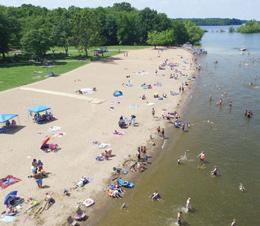

tradition with a growing craft beer scene. Mount Vernon blends small-town accessibility with cultural depth at Cedarhurst Center for the Arts, where galleries, sculpture gardens, and summer events bring creativity into the open air.
Historic sites like the Lincoln-Douglas debate landmark in Jonesboro and the confluence of the Mississippi and Ohio rivers in Cairo tell stories of the region’s past. Across rural highways and river towns, festivals, farmers markets, and local events bring communities fully to life.
We Gather
Spring and summer in the Southern 17 mean community.
County fairs, fishing derbies, high school tournaments, concerts on courthouse lawns, car shows, wine weekends, lake tournaments, farm stands, and fireworks over open water bring people together. From Carbondale’s university energy to small family-owned diners, orchard markets, and locally-owned boutiques, small businesses become gathering spaces.
Agriculture remains central, with farmland supporting both economic stability and agritourism experiences. Tourism isn’t just about visitors. It’s about connection — between communities, businesses, and generations.
We Make It Family
Adventure looks different at every age.
Boo Castle Park in Makanda sparks imagination with towers and hidden passageways. Giant City Stables offers guided trail rides. The Little Grassy Fish Hatchery introduces families to fisheries and conservation. Rend Lake recreation areas provide accessible camping and beach days. Museums in Mount Vernon and Carbondale layer in art, science, and regional history.
In smaller communities, summer is ballfields, church picnics, parades, and front-porch evenings — traditions that may not appear in travel brochures but define the character of the region. Not every memory requires a ticket. Sometimes it just requires being here.
When We Play, We Prosper
Tourism supports restaurants, outfitters, marinas, lodging, retailers, event venues, and the arts. Visitor spending circulates through downtowns and rural communities alike. From boating tournaments at Rend Lake to wine trail weekends, from fishing along the Wabash to paddling the Cache, from sculpture walks in Mount Vernon to festivals in Cairo, the landscapes draw people in, but it’s the people who make them stay.
We are lakes and farmland. Bluffs and riverbanks. Historic streets and open skies.
We are Southern Illinois. And this is how we play — all season long.
TOURISM by the Numbers
Tourism is on the rise!
According to the most recent data, Illinois tourism continued its upward momentum in 2024, welcoming nearly 113 million visitors who spent a record $48.5 billion across the state. This surge in travel generated a total economic impact of $85.1 billion, supported more than 454,000 jobs, and contributed nearly $6.8 billion in state and local tax revenue—underscoring tourism’s vital role in fueling Illinois’ economy and enriching communities statewide.
In SI Now’s 17-county footprint, tourism skyrocketed toward the billion-dollar mark following just short at nearly $900 million, an unprecedented 25% increase from 2019 pre-pandemic levels with visitor spending in lodging, food and beverage, recreation, retail, and transportation. With the new Oasis STAR Bond development and other hospitality and tourism offerings coming online every year in Southern Illinois, the region’s tourism growth rate is expected to continue to climb.
2025 AWARDS & GRANTS
More than 120 projects totaling in excess of $158,000,000 were supported in 2025 by state partners at the Illinois Department of Commerce and Economic Opportunity and federal agency partners including the Delta Regional Authority and USDA Rural Development. In addition, a review of IDOT’s FY26 projects for Region 5, District 9 revealed more than $250,000,000 invested in Southern Illinois through its Rebuild Illinois’ Highway Improvement Program, reaching every county in our region.







These projects benefit public infrastructure, transportation, housing rehabilitation, parking, energy, tourism, healthcare, emergency response, innovation, and site readiness to advance Southern Illinois. Award recipients include:
Akin Water District
Alexander County
Buncombe Public Water District
Crossroads Hospital
City of Anna
City of Benton
City of Brookport
City of Cairo
City of Carterville
City of DeSoto
City of Eldorado
City of Grand Tower
City of Grayville
City of Herrin
City of Johnston City
City of Marion
City of McLeansboro
City of Metropolis
City of Mound City
City of Murphysboro
City of Pinckneyville
City of Red Bud
City of Rosiclare
City of Sesser
City of Vienna
Franklin Hospital
Golconda Historic Building
Greater Metropolis Convention & Visitor Bureau
Hands of Hope Foundation
Hardin County General Hospital
Johnson County
Kinkaid-Reed’s Creek Conservancy District
Massac County
Perry County
Pulaski County
Pulaski County Business Center
Rural Health Inc
Shawneetown Port District
Southeastern Illinois College
Southern Illinois Hospital Services
Southern Illinois University
Village of Bonnie
Village of Carrier Mills
Village of Cobden
Village of Crossville
Village of Elkville
Village of Evansville
Village of Goreville
Village of Mill Shoals
Village of Olmsted
Village of Pulaski Fire Station
Ware-Wolf Lake
A win for one is a win for all Southern Illinois! Congratulations to the recipients and thank you to our state, federal, planning commission and other partners who make this possible.
Note: The information contained here is not an exhaustive list of recipients or federal/state partners and serves only as an example of 2025 regional investment.
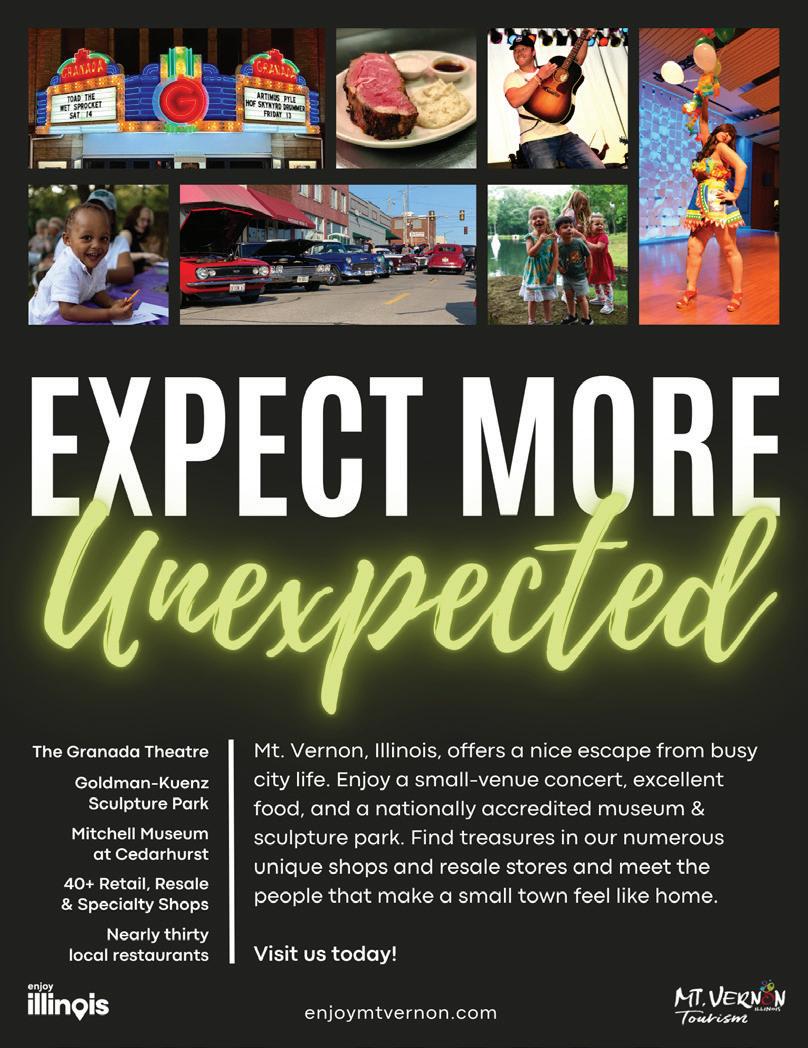
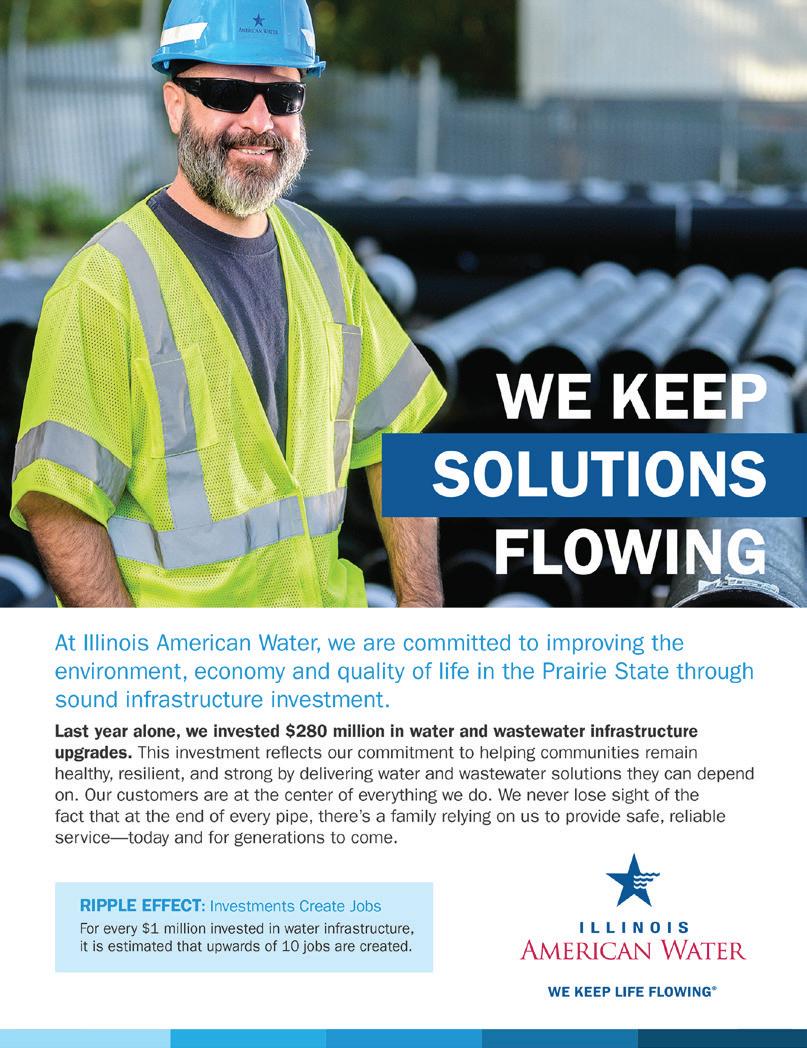

Visionary Partner
BUSINESS LEADER testimonials
John Antes
PRESIDENT AND CEO, SIH

Founder Partners


Champion Partners



Silver Partners
Rend Lake Conservancy District
E.T. Simonds
Ameren Illinois
Bronze Partners
Illinois American Water
Horner & Shifrin
Align Wealth Management
Barber Murphy
Korte & Luitjohan Contractors
Special Thanks to SI Now Partner

Thank you to SI Now’s valuable partners for supporting the advancement of Southern Illinois.
To learn more about SI Now’s Partner Program, participation levels, and benefits, contact Deb at director@southernillinoisnow.org
“One of the things I love most about Southern Illinois is getting out on the trails. People don’t always realize how much forest, how many breathtaking vistas, and how many beautiful hiking opportunities exist here. Being out in nature is good for the soul—and it’s a great way to slow down, reconnect, and even lower your blood pressure.”
Josh Stafford
SUPERINTENDENT, VIENNA SCHOOLS
“I didn’t choose Southern Illinois—Southern Illinois chose me. I’ve traveled all over the world, and every time I come home, I appreciate this place even more. From world-class landscapes to incredible geological and recreational treasures, what we have here isn’t just abundant—it’s awe-inspiring.”
Bill Cox
SR. VICE PRESIDENT, COMPLIANCE OFFICER, AISIN
“Marion’s close proximity to various regional interstates provides a strategic advantage for the efficient delivery to customers from various regions. The location has proven to be perfect for AISIN’s logistics operation, in a time when supply chain management is critical.”
Deb Barnett
EXECUTIVE DIRECTOR, SI NOW
“Southern Illinois is home in every sense of the word. I grew up here, and I’ve always loved the people who make this region so special. In recent years, countless visitors have discovered what we’ve always enjoyed — our hiking, biking, and wine trails, along with the natural beauty that surrounds us. Pair that with a lower cost of living and an exceptional quality of life, and it’s no wonder people return again and again. For those of us who live here, these treasures are part of our everyday lives. For our visitors, Southern Illinois becomes a refuge — a place they fall in love with, just as I did.”
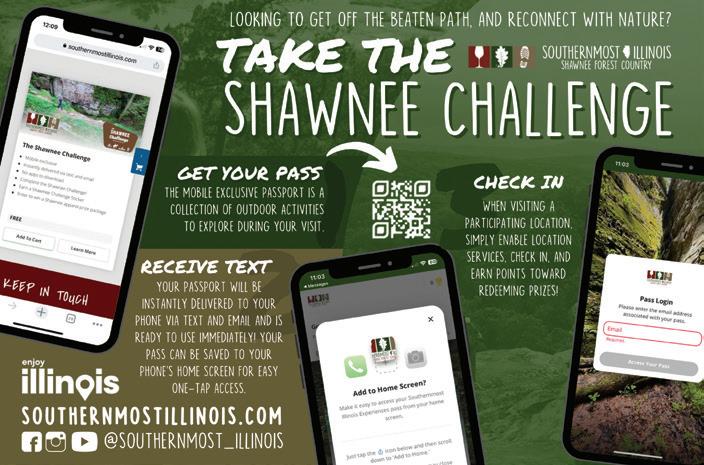
Supporting Careers in Emerging Industries
Through WIOA, CEJA, and special grant funding, Man-Tra-Con is able to help job seekers get training for good paying careers in emerging and “in-demand” industries. Our services include:
l Career coaching, resume development and job search assistance
l Apprenticeship, On-the-Job and Work Experience training programs
l Financial assistance for training, college education, and more!

618 . 998 . 0970
or
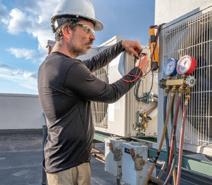


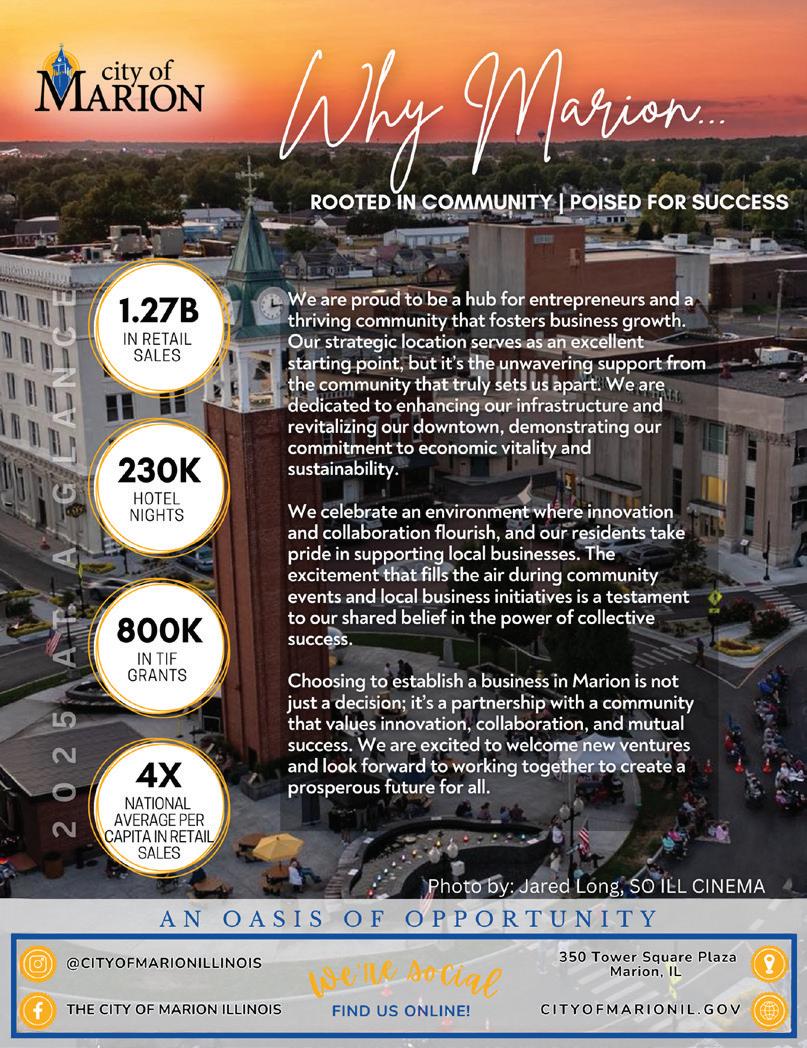
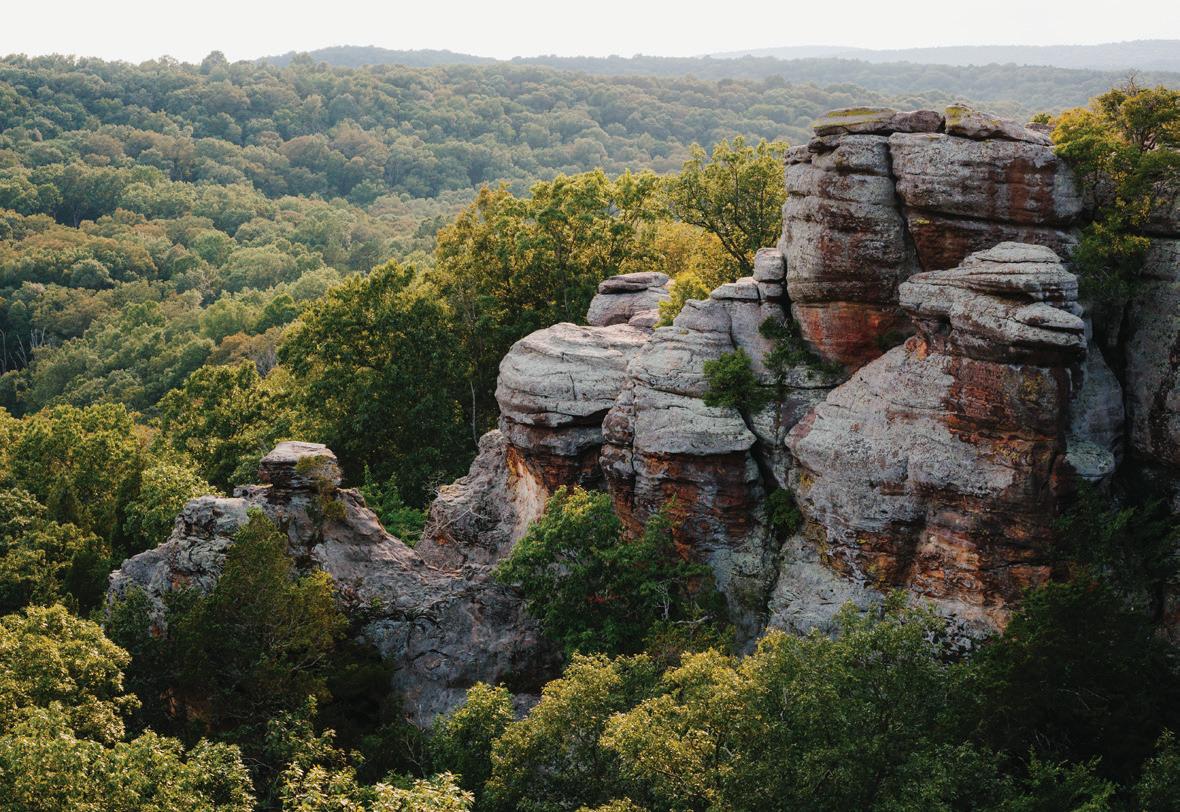






LEGENCELOVESLOCAL