
BY JOANNA KING
JACKSON – A new diocesan initiative focused on strengthening lay leadership and faith formation across the Diocese of Jackson is taking shape through the newly established Bishop William R. Houck Center for Lay Formation, an effort church leaders say grew directly out of listening sessions held during the diocesan Pastoral Reimagining process.
Led by the diocesan Office of Faith Formation under the direction of Fran Lavelle, the center is designed to provide accessible formation and ministry training opportunities for parish and school leaders, catechists, youth ministers and other lay leaders throughout the diocese.
“The absolute best part of my ministry is working with people,” Lavelle said. “The second-best part of my job is looking at ways to better serve our parishes and schools, especially concerning faith formation.”
Lavelle said the idea for the center emerged after parish and deanery listening sessions identified the need for

The Bishop William R. Houck Center for Lay Formation webpage serves as a new diocesan resource for faith formation, leadership training and ministry support for lay leaders across the Diocese of Jackson. The online hub includes formation opportunities, ministry resources and training programs offered in both English and Spanish. (Photo illustration by Joanna King)
stronger lay leadership formation.
“Better formation for lay leaders was one of the clarion calls from both individual parishes and the deaneries,” she said. “When you ask people how the Church can better serve them, it is important to act on what you hear.”
An advisory committee formed in late 2024 began reimagining how the diocese could support lay ministry and leadership development. That process ultimately led to the creation of the Bishop William R. Houck Center for Lay Formation.
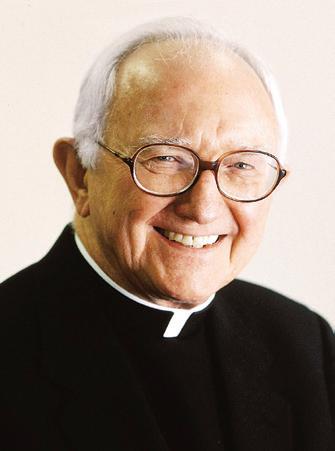
The center is named in honor of former Bishop William R. Houck, who served the Diocese of Jackson from 1984 to 2003 and was widely recognized for his commitment to Catholic education, evangelization and lay ministry. During his tenure, Houck served as chairman of the U.S. Bishops’ Committee on Evangelization, which published the landmark 1992 document, Go and Make Disciples: A National Plan and Strat-
– Continued on page 6 –
BY JOE LEE
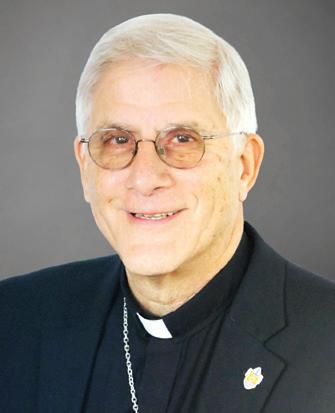
JACKSON – Originally from Joliet, Illinois, and the parish priest at St. Isaac Jogues Church in nearby Hinsdale, Father Burke Masters almost seems like a native Mississippian despite living most of his life near Chicago.
Even casual sports fans remember his starring role on the 1990 Mississippi State baseball team that made the
College World Series, and many people across the state have met him through his keynote appearances at Journey of Hope luncheons in 2019 and 2025.
“Since college, Mississippi has always been like a second home,” said Masters, who was ordained as a priest in 2002 and authored A Grand Slam for God, published in 2023 by Word on Fire Press. “I grew up in Illinois but spent five years in Starkville. Coming back to see friends I’ve known since I arrived there in 1985 is like a home week for me.”
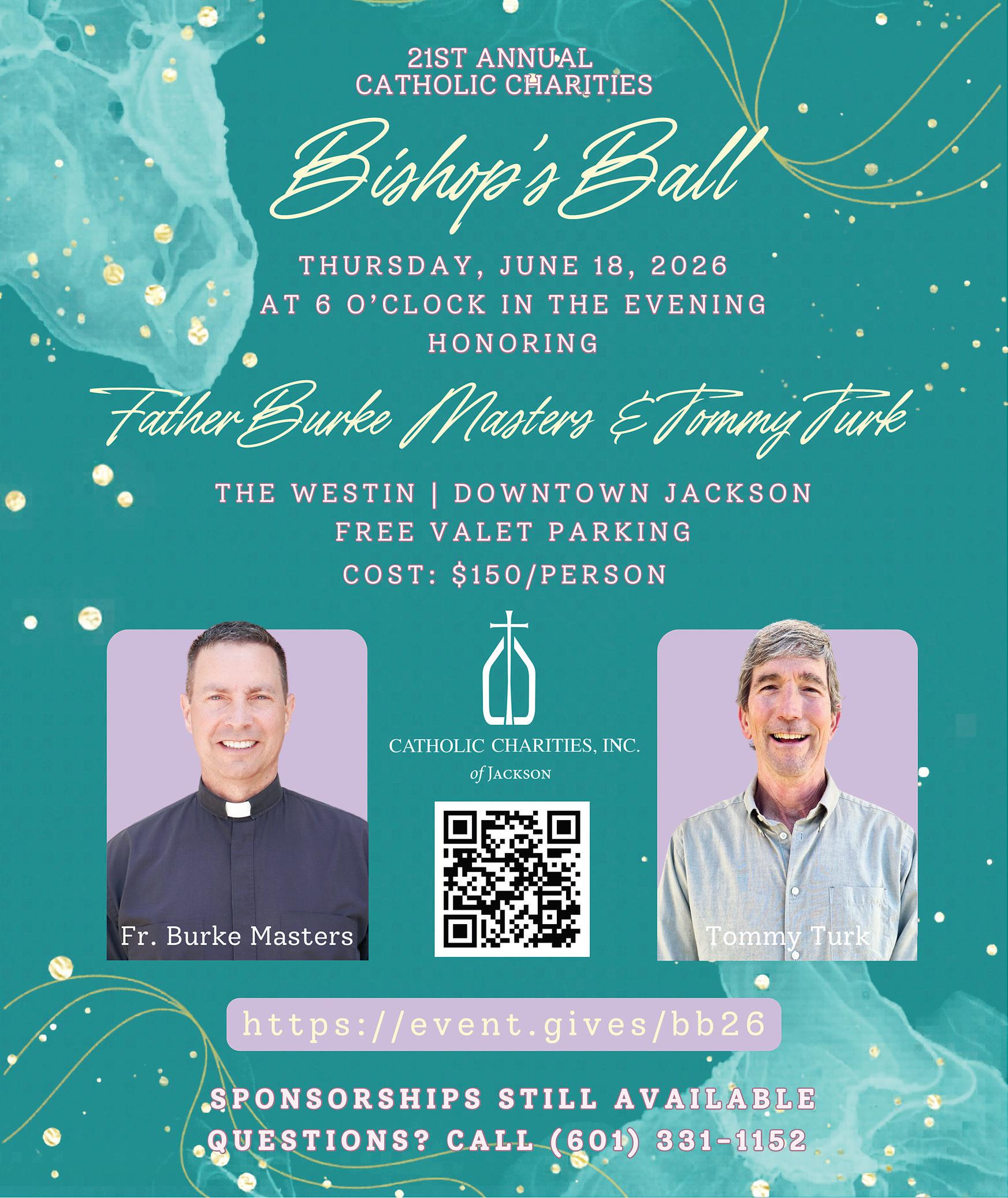
Masters will be honored at the 21st




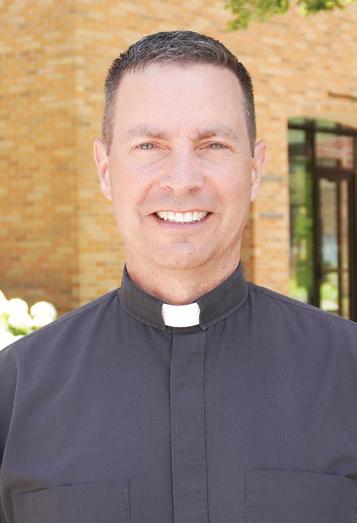
annual Bishop’s Ball on Thursday, June 18 at the Jackson Country Club. Also honored will be Jacksonian Tommy Turk, whose “Friends for a Cause” nonprofit supports Squat & Gobble each Thanksgiving, a beloved event that helps fund the Catholic Charities domestic violence program.
“The Bishop’s Ball gives us a chance to honor the support of the bishop each year, as well as others who have contributed significantly to Catholic Charities,” said executive director Christina Bach.
– Continued on page 6 –

GRENADA – St. Peter, Teatime with Mother Mary, Sunday, May 31 at 3 p.m. All girls, young and old, mothers, daughters, single women are invited to attend including non-practicing Catholics, friends of parishioners, etc. Details: contact Cecilia at (662) 6883024.
OXFORD – St. John the Evangelist, Catechist Workshop, Saturday, Aug. 1, from 8:30 a.m. to 2 p.m, with speaker, Dr. Tom Neal. Details: register at https://bit.ly/oxford-catechist-event-26
PILGRMAGE – Travel with Father Carlisle Beggerly to Italy/Greece, Oct. 7-20, 2026. Cost: $5,999 per person. Details: Contact Proximo Travel (855-8428001) or visit proximotravel.com (enter Fr. Carlisle in search box).
Travel with Father Raju Macherla to Portugal, Spain and France, July 6-17, 2026. Cost: $5,500 per person (sharing room), with departure from Memphis. Details: visit https://bit.ly/4efWoql.
MADISON – Millions of Monicas will transition from St. Joseph Church to praying at St. Catherine’s Village chapel. Meetings will now take place on the second Tuesday of each month, with the first gathering scheduled for May 12. Please note that our meeting time will change to 6 p.m. The Chapel is located at 200 Dominican Drive, Madison. When you arrive at the gate, let the team know you are joining the Millions of Monicas ministry, and you will be directed to the chapel. After entering through the roundabout,
FEATURE PHOTO:
the chapel will be on your left. Please, mark your calendars for the following meeting dates: May 12, June 9, July 14, Aug. 11, Sept. 8, Oct. 13, Nov. 10 and Dec. 8, 2026. Details: call (601) 613-8526.
YOUNG ADULTS – Young adults are invited to join the Archdiocese of New Orleans on a Pilgrimage to Seoul, South Korea, August 1-10, 2027. Details: contact James Behan at (504) 836-0551 ext. 3228 or email: yam@arch-no.org.
CLINTON – Holy Savior, Baby Bottle Drive, Get a bottle, fill it with coins, cash, or a check, and return it in the coming weeks. Every donation will help support pro-life ministries and life-a rming services for mothers, babies, and families in our community. Volunteers are needed to distribute and collect bottles. Details: call Chris at (601) 757-9910.
JACKSON – Holy Family, Pentecost Cultural Diversity Picnic, on Saturday, May 23, from 5-7 p.m. Attendees are encouraged to wear red, bring tents and lawn chairs. Personal fans are also recommended. Music and games will be provided. Details: call Joyce at (601) 214-6123.
GLUCKSTADT – St. Joseph, Vacation Bible School, Monday, June 22 through Friday, June 26, 2026, from 5:15 to 8 p.m. in the Parish Hall. Dinner and games are from 5:15-6 p.m. Open to all children entering K-6th grade, Cost: $15 per child/$30 Max per family. Details: https:// giving.parishsoft.com/ app/stjosephgluckstadt and select onetime donation and then VBS to make your payment.
ton Coker, Je Cook, Pablo Garcia, Christopher Halliwell, William Gri th Vautrot, and Hunter Yentzen. PASTORAL MINISTRIES WORKSHOP, July 31 through Aug. 2 at Egale Ridge Conference Center in Raymond. Cost is $300, which includes room, meals, and course materials. (Communter rate: $125) Registration deadline is July 10. Register at https:// bit.ly/pmw2026. Details: fran.lavelle@jacksondiocese.org.
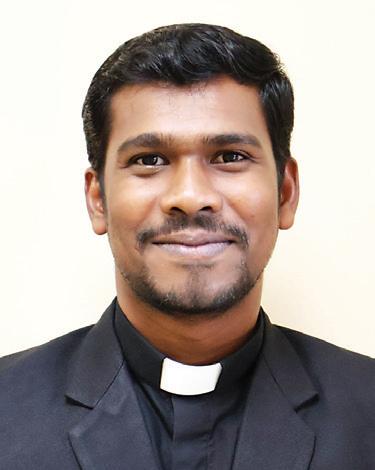
Rev. Rickson Robert Antony appointed Parochial Vicar of St. James Parish in Tupelo, e ective July 3, 2026.
Bishop of Jackson
STARKVILLE –St. Joseph, Vacation Bible School, Calling all 4 year olds through fourth graders – Save the date: June 1-4, 2026.
HOLLY SPRINGS –St. Joseph, Vacation Bible School, June 16–18, 2026. Details: call Teri (Teresa) Mason at (815) 729-4219.
ENGAGED ENCOUNTER 2026, Aug. 28-30; and Oct. 2-4. Details: couples may register at https://jacksondiocese.flocknote.com/ signup/230073 or email debbie.tubertini@jacksondiocese.org.
PERMANENT DIACONATE ORDINATION: Six men will be ordained to the Permanent Diaconate on Saturday, July 18 at 10:30 a.m. at the Cathedral of St. Peter in Jackson. Blessings to Enrique Amador, Donald Clin-

BY BISHOP JOSEPH R. KOPACZ, D.D.
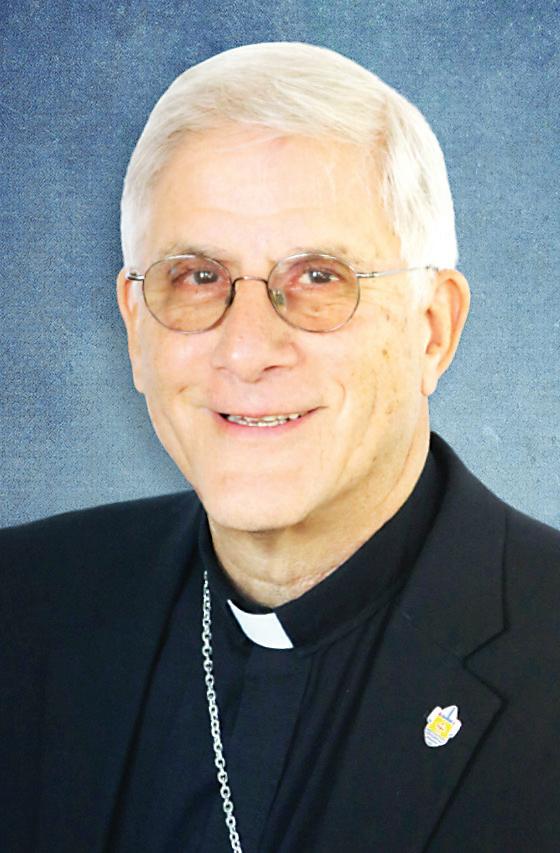
During the heart of the Easter season, I celebrated my 49th anniversary of priesthood. From the sanctuary of St. Peter’s Cathedral in Scranton on May 7, 1977, to the sanctuary of St. Peter the Apostle in Jackson on Feb. 6, 2014, until this present moment, I have been caught up, in the words of Pope St. John Paul II, in this “gift and mystery” of the priesthood of Jesus Christ.
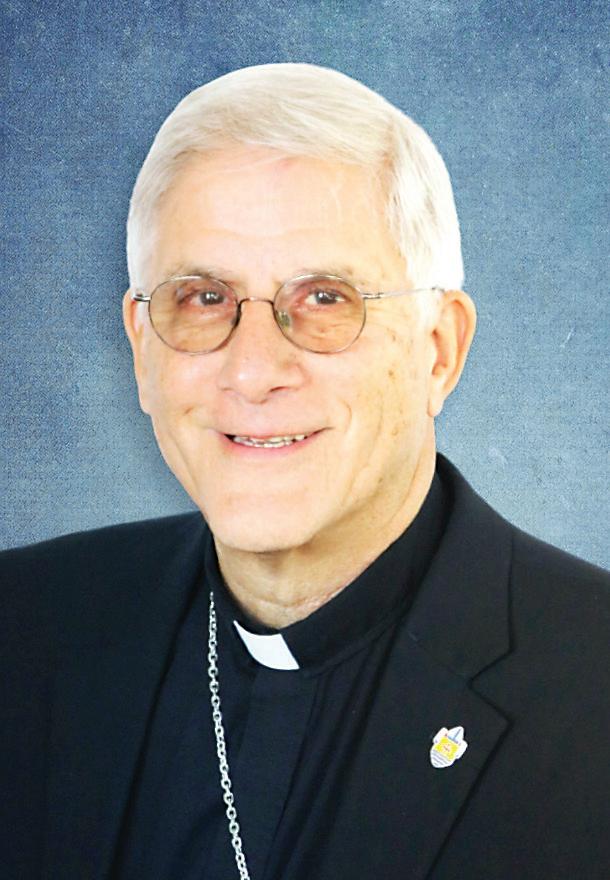
Actually, my first celebration of ordination occurred on April 23, 1976, with the call to the diaconate. Therefore, for more than 50 years, by God’s grace, I have fought the good fight and kept the faith, but have not yet finished the race. May there be many more years ahead in the plan of God’s providence. Indeed, let us give thanks for all of our priests, past and present, mindful of those who are celebrating their anniversaries at this time of year. Ad multos annos!
In fact, a bishop’s travels throughout his diocese in the Easter season mirror the missionary journeys portrayed in the Acts of the Apostles, when the apostles and the first evangelists traversed far and wide to carry the Gospel across the Mediterranean world and strengthen fledging Christian communities. The proclamation of the Gospel to the nations and the sanctification of existing communities and individual believers is the work of the Holy Spirit, begun at Pentecost and continuing until Christ comes again.
With Pentecost on the horizon, let there be a rising tide within us to entreat an outpouring of the Holy Spirit upon the Church. May we also know and understand the power of the Holy Spirit’s presence and the poverty of his absence. We are invited, therefore, to deepen our relationship with the Holy Spirit, both in prayer and in everyday life, listening to his voice within us.
The Diocese of Jackson rejoices this weekend with the ordination to the priesthood of Will Foggo who will celebrate his first Mass at St. Paul in Flowood.
During the Easter season, the Church also rejoices in the outpouring of the Holy Spirit in the Sacrament of Confirmation. Our catechumens and candidates entering the Church at the Easter Vigil were the first to receive the gift of God’s loving spirit, followed by candidates in many parishes throughout the diocese.
May 7
Bishop Joseph Kopacz (ordained priest)
May 11
Father Mark Sho ner and Father Adolfo Suarez Pasillas
May 14
Father Panneer Selvam Arockiam; Father Andrew Bowden; Father Jason Johnston; and Father Joseph Le
May 17
Father Matthew Simmons
May 18
Father Tristan Stovall
May 23
Deacon Hank Babin
May 24
Father Bob Goodyear, ST
May 27
Father Carlisle Beggerly; Father Charles Bucciantini; and Father Leon Ngandu, SVD
May 29
Father Hilary Brzezinski, OFM
May 31
Father Nick Adam; Father Lincoln Dall; Father Binh Nguyen; Father José de Jesus Sanchez;
Father Rusty Vincent; and Father Aaron Williams
Thank you for answering the call!


P.O. Box 2130 Jackson, MS 39225-2130
Phone: 601-969-3581 E-mail: editor@jacksondiocese.org
(ISSN 1529-1693)
DATE: MAY 8, 2026
Publisher Bishop Joseph R. Kopacz
Communications Director Joanna Puddister King
Production Manager Tereza Ma
MISSISSIPPI CATHOLIC is an official publication of the Diocese of Jackson, 601-969-1880, 237 E. Amite St., Jackson, MS 39201. Published once per month, Mississippi Catholic mails 12 editions per year.
For address changes, corrections or to join the email list for the digital edition, email: editor@ jacksondiocese.org. Subscription rate: $20 a year in Mississippi, $21 out-of-state. Periodical postage at Jackson, MS 39201 and additional entry offices. POSTMASTER: Send address changes to Mississippi Catholic, P.O. Box 2130, Jackson, MS 39225-2130. Website: www.mississippicatholic.com www.jacksondiocese.org
“The Holy Spirit, breath of Jesus and atmosphere of heaven, is also the breath of his body, the Church. And we are aware of his presence if the Church is itself in the full sense; that is, if it is kingdom of God, heaven come down on earth, because of unity. We are reminded that without the Holy Spirit, God is distant, Christ remains in the past, the Gospel is a dead letter, the Church is a mere organization, and ‘mission’ is mere propaganda. But being in the Holy Spirit, the cosmos is lifted up and groans in the gestation of the kingdom of God, the risen Christ is present, the Gospel is the power of life, the Church signifies trinitarian communion and ‘mission’ is a Pentecost.” (Chiara Lubich, Essential Writings)
“Come, Holy Spirit, fill the hearts of your faithful and kindle in them the fire of your love.”
Tuesday, May 19, 6 p.m. – Graduation, Vicksburg Catholic School
Wednesday, May 20, 6 p.m. – Graduation, St. Joseph School (Madison), Thalia Mara Hall, Jackson
Thursday, May 21, 7 p.m. – Graduation, St. Joseph School, Greenville
Friday, May 22, 7 p.m. – Graduation, Cathedral School, Natchez
Saturday, May 23, 7 p.m. – Confirmation, Cathedral of St. Peter the Apostle, Jackson
Sunday, May 24, 8:30 a.m. – Pentecost Celebration and Mass of Installation of Father Vijaya Madanu, Holy Ghost, Jackson
Thursday, May 28, 12:05 p.m. – CSA Prayer Intention Mass, Cathedral of St. Peter the Apostle, Jackson
Sunday, May 31, 1:30 p.m. – Confirmation, St. Francis of Assisi, Greenwood
Sunday, May 31, 5 p.m. – Mass of Thanksgiving for Father José de Jesus Sanchez, St. Joseph, Greenville
Wednesday, June 3, 4 p.m. – Confirmation, Immaculate Conception, West Point
June 9-12 – USCCB Spring Plenary Assembly, Orlando
Friday, June 12, 6 p.m. – Mass of Thanksgiving for Father Gerry Hurley’s 50th Ordination Anniversary, St. Paul, Flowood
Tuesday, June 16, 7:30 a.m. – Mass, Carmelite Monastery, Jackson
Thursday, June 18, 6 p.m. – Catholic Charities Bishop’s Ball, The Westin, Jackson
All events are subject to change. Check with parishes and schools for further details.
Another priestly ordination is upon us. I remember Will Foggo coming to my office at St. Richard in the spring of 2020 with his seminary application in hand. He was one of the first men that I helped through the application process as vocation director.
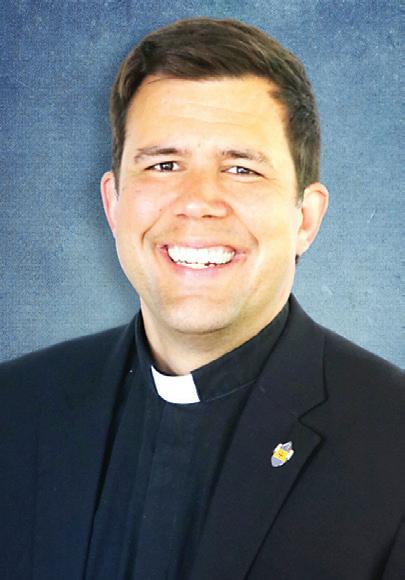
Will encountered many “new” experiences along the way. He worked with a new vocation director, with new ideas about seminary preparation. He entered seminary during the pandemic and experienced formation during the restrictive “bubble” year at St. Ben’s. He was also among the first group of our seminarians to study in Mexico as a part of formation; and the first seminarian ordained to the diaconate in winter rather than spring. Through it all, Will faced every challenge with his good-natured patience and hard work. From the start, he has been dedicated to serving the Lord, and I’m excited to see him ordained a diocesan priest.
Will’s ordination will be on Saturday, May 16 at the Cathedral of St. Peter the Apostle; followed by his first Mass of thanksgiving Sunday, May 17 at 10:30 a.m. at his home parish, St. Paul in Flowood. If you have never attended a priestly ordination or a first Mass, I highly recommend doing so when you have the opportunity .
During ordination, Will will lay prostrate on the cathedral floor as a sign of surrender to divine providence and service to the Church. He will promise to serve the People of God through prayer, preaching, teaching, administering the sacraments and obedience to the bishop. His hands will be anointed with chrism as his very soul is conformed to Christ the priest, and entrusted with the gift and responsibility of providing the sacraments, especially the Holy Eucharist, Reconciliation and the Anointing of the Sick.
At his first Mass – which technically is not his first Mass, since that is the ordination Mass – Father Foggo will be joined by friends and family filling both the sanctuary and the pews. His home parish will rejoice in celebrating with the fruit of their own field, in the place where he worshipped for so many years.
His parents, John and Shelia, along with the rest of the family, will be in the front pew
and experience the unique blessing of receiving Communion from a spiritual father who is also their son.
I am grateful to John and Shelia for the many ways that they have blessed both me and our diocese through their support of Will and their service to the Department of Vocations over the years.
Will’s longtime pastor, Father Gerry Hurley, will also be concelebrating the Mass as he approaches his 50th anniversary of priestly ministry. I am grateful for his care for Will and his support of his discernment through the years. What a gift to celebrate both a new priest and a golden-jubilarian at the same Mass. Father Hurley continues to be a joyful witness to our seminarians and diocese.
So yes, I am very much looking forward to another ordination. We pray to God that many more days like this are ahead for our diocese. For now, we simply rejoice that a good man has generously offered his life to the Church and is about to become a good priest. Thanks be to God.
(Father Nick Adam is Director of Vocations for the Diocese of Jackson. He can be contacted at nick.adam@jacksondiocese. org.)

By Father ron rolheiser, oMi
One of the saints who speaks to me is Therese of Lisieux, commonly known as the Little Flower. This wasn’t love at first sight. For years I was put off and left cold and uninterested by how her person and her image have become encrusted in an overly saccharine piety. She was too sweet, too pious. Not a saint for me! That changed, thanks to a friend who told me, “Don’t read books about her – read her!” I read her and found in her a soul friend.
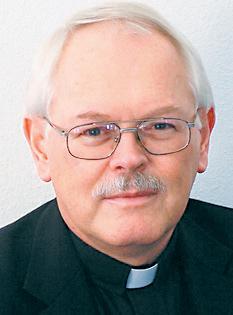
Who is Therese of Lisieux? She was a Carmelite nun who died from tuberculous in 1897. She was only twenty-four years old when she died, and as a Carmelite nun hidden away in a convent in rural France, she died in anonymity, probably known by fewer than a hundred people. However, during the last two years of her life, as she lay dying from tuberculous, she kept several diaries. After her death, her Carmelite sisters sent her unpublished diaries to a few other convents, intending to let a small circle of religious women know of her death and a little about her life.
The rest is history. The manuscripts were leaked to a wider public and in less than ten years, printing presses were literally having trouble meeting the demand for her autobiography. Her little convent in Lisieux was receiving more than five hundred letters a day, and people from all over the world were beginning to come to Lisieux on pilgrimage. A hundred and thirty years later, little has changed. She remains extraordinarily popular.
The Pope’s Corner
Why? Why this perennial intrigue about Therese? Because there is something about her that touches the soul in a particularly empathic way. How so?
Therese had an anomalous background that produced an extraordinary character. Her life as a child was in many ways tragic. Her mother got sick at the time of Therese’s birth and was unable to care for her during the crucial first year of her life. She was cared for by a nurse and an aunt. As a one-year-old she was returned to her mother, but her mother was already terminally ill and when Therese was four, her mother died. Therese then chose her older sister, Pauline, to be her new mother. Five years later, Pauline entered the convent and as a nine-year-old Therese again lost a mother.
Shortly after this she took ill and almost died. This was triggered by a visit to Pauline who was then a Carmelite nun. Together with her three other sisters and her father, she had gone to visit Pauline in her convent. After Pauline had spent some time focused on her little sister, she naturally became preoccupied in adult conversation. Left out, in sheer frustration, little Therese stood right in front of her big sister and, shaking her dress, began to cry.
“What’s the matter?” asked Pauline. “You didn’t notice!” cried Therese, “I’m wearing the dress you made me!”
She then became disconsolate and on returning home took to bed and for some weeks; despite the best efforts of various doctors and every kind of cajoling by her family, hovered between life and death. Eventually she recovered. Such was the tragedy and oversensitiv-
ity of her childhood.
Yet, and this is the great anomaly, as a child, Therese was doted on and loved in a way that few children ever are. Her father, her sisters and her extended family considered her their little queen and she was cherished and made to feel extraordinarily precious and unique. Her sister Celine photographed her every move. Few children ever grow up as nurtured in love and affirmation as did Therese.
And her personality bore out the effects of both the tragedy and the love. On the one side, she could be heavy, dark, withdrawn, and otherworldly. She made easy friends with mortality, was a mystic of darkness, the austere adult, the little girl-woman, who, wounded early, grew up fast. But, on the other side, she always remained the magical child, Cinderella, who, because she was so loved and graced, developed a very robust self-esteem, a confidence and a capacity to love as few others ever have.
So loved as child, a part of her remained ever the little girl, the puella, the incarnation of childlikeness, innocence, and gaiety. Only a Therese of Lisieux could end all her letters with the phrase: I kiss you with my whole heart!
In a soul so formed lies her mystique, that is, her unique combination of depth, insight, and other worldliness, even as she desperately clings to the tiniest gifts from her family and every small token of earthly affection. Only a soul so formed could, at age twenty-two, have the complexity and wisdom to write a mystical and theological treatise that rivals that of great theological doctors, and only a soul so formed could be both a study in hyper-sensitivity and human resilience.
A saint so pathologically complex can be a soul friend to our own complex souls.
(Oblate Father Ron Rolheiser is a professor of spirituality at Oblate School of Theology and award-winning author.)
Pope Leo’s prayer intention for May: ‘That everyone might have food’
By Courtney Mares
ROME (OSV News) – Pope Leo XIV has dedicated his prayer intention for the month of May to one of humanity’s most persistent challenges: hunger.
In a video message released on April 30 by the Pope’s Worldwide Prayer Network, the pope called on Catholics worldwide to confront the problem of food insecurity with both prayer and concrete action.
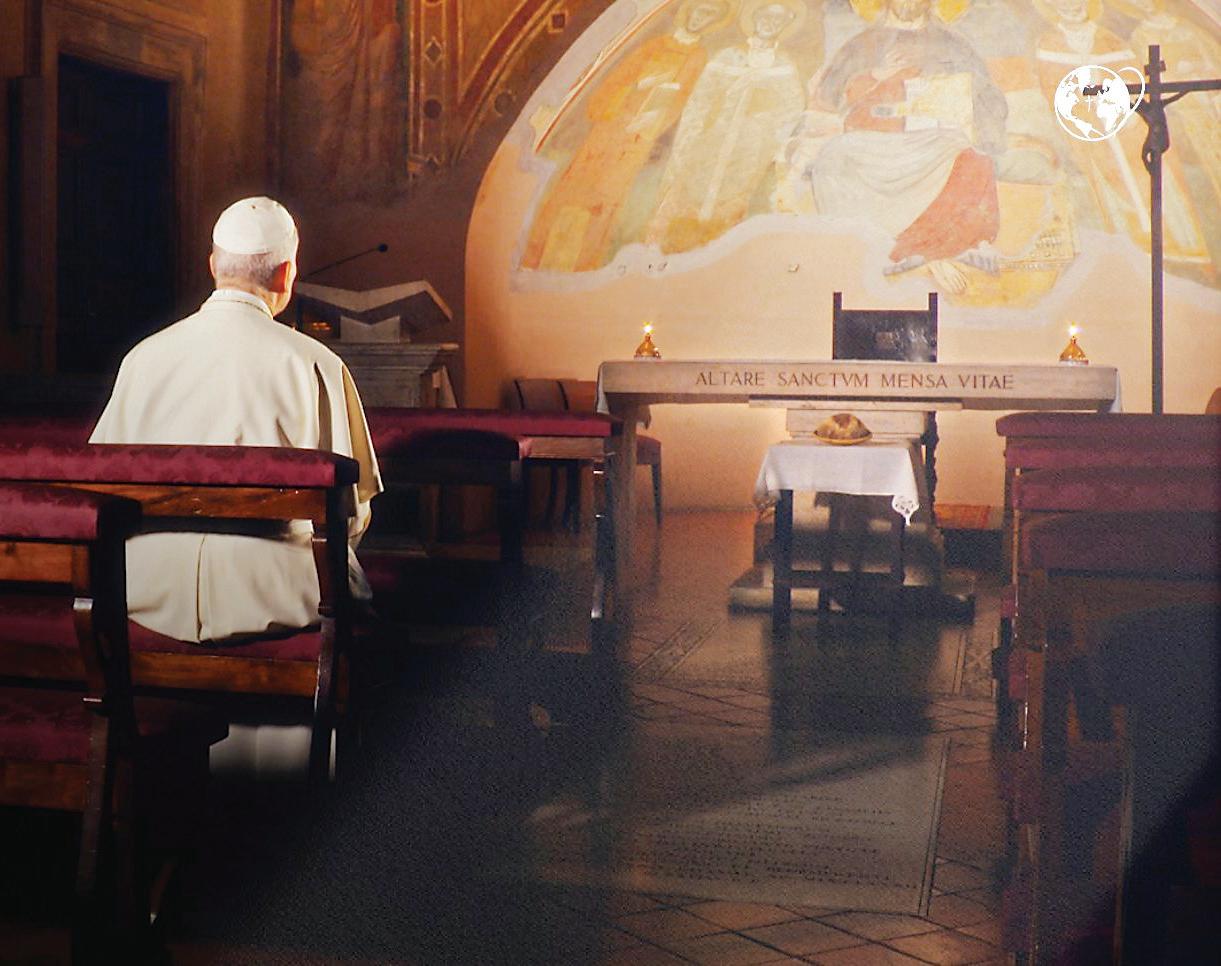
“Today we recognize with sorrow that millions of brothers and sisters continue to suffer from hunger, while so many goods are wasted at our tables,” the pope said in the video, recorded inside the Church of San Pellegrino in Vatican City.
At least 318 million people are expected to face food crisis conditions or worse this year, according to the World Food Program’s 2026 Global Outlook. The ongoing war in the Middle East could push an additional 45 million people into severe hunger before midyear. In 2025, two famines were recorded in parts of Gaza and Sudan.
At the same time, the U.N. Environment Program reports that more than 1 billion tons of food are wasted globally every year, a contrast the pope addressed directly in his message.
Pope Leo called for a shift away from what he described as “the logic of selfish consumption” and toward “a culture of solidarity,” urging Catholic communities to take up practical measures including food banks, awareness campaigns and simpler, more responsible lifestyles.
“May our communities promote concrete gestures,” the pope said, adding that believers should approach every meal with gratitude, consume simply and “share with joy” in the knowledge that the fruits of the earth are “destined for all, not just a few.”
The Pope’s Worldwide Prayer Network, also known as the Apostleship of Prayer, releases a prayer intention from
the pope each month as part of its mission to unite Catholics in prayer for the Church’s global concerns.
Father Cristóbal Fones, director of the Pope’s Worldwide Prayer Network, said the intention is a deeply personal concern for the pope.
“This intention comes from the pope’s heart. It pains him deeply that so many people in the world cannot access something as essential and human as food,” Father Fones said. “This is why he is asking everyone not to remain indifferent but to take decisive action, first with prayer, then with concrete gestures of solidarity.”
(Courtney Mares is Vatican editor for OSV News. Follow her on X @catholicourtney.)
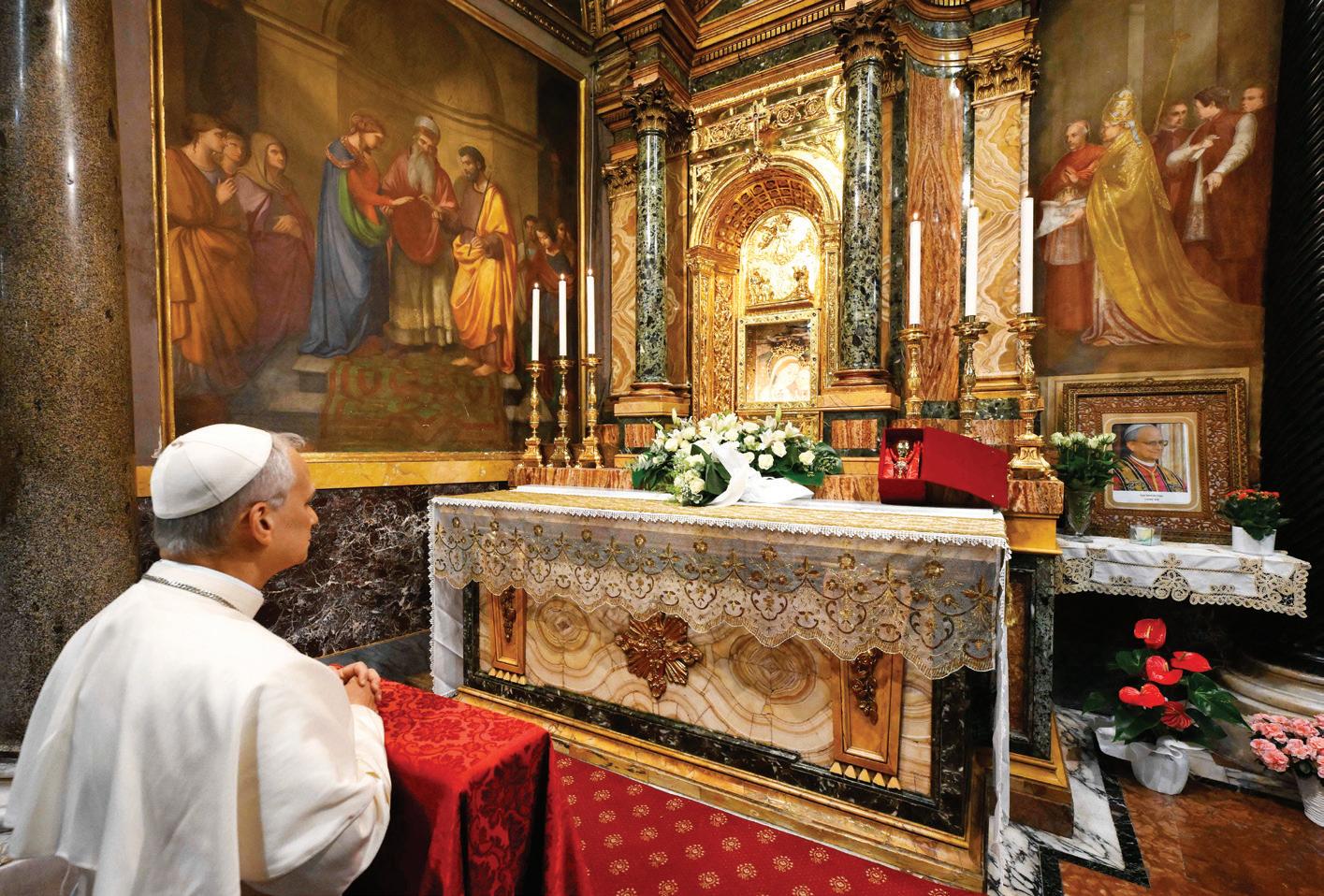
Pope Leo XIV prays in front of a fresco of Our Lady of Good Counsel at the shrine named after the image in Genazzano, Italy, southeast of Rome, May 10, 2025. In a video message released April 30, 2026, by the Pope’s Worldwide Prayer Network, the pope called on Catholics worldwide to confront the problem of food insecurity with both prayer and concrete action. (CNS photo/Vatican Media)
‘...
– Continued from page 1 –
egy for Catholic Evangelization in the United States. The document, still used today, continues to encourage Catholics to embrace the mission of discipleship.
“Bishop Houck was an esteemed educator and a devoted advocate for lay ministry,” Lavelle said. “His vision and voice laid the foundation for lay leadership training in the Diocese. It is our hope to expand his vision to provide high-quality formation and training at every parish, mission and school.”
According to the center’s website, its mission is “to provide lay leaders in the Diocese of Jackson training and formation with emphasis in catechetical, pastoral and ecclesial applications.”
The initiative is built around three foundational pillars: education, evangelization and the development of well-formed lay leaders. The website notes that ongoing formation in Scripture and Catholic teaching helps disciples live out their call, while strong parish communities depend on prepared leaders who can serve with “knowledge, confidence and compassion.”
Unlike a traditional diocesan institute, the Houck Center is not housed in a physical building. Instead, it operates as an online resource hub hosted through the diocesan website. Participants can access diocesan workshops, online courses, ministry resources and leadership development opportunities in a variety of ministry areas.
‘... Bishop’s Ball ...’
– Continued from page 1 –
“We really wanted something accessible to people no matter where they live in the diocese,” Lavelle said. “This is about meeting parish leaders where they are and helping them continue to grow in confidence and faith.”
Current areas of formation include campus ministry, catechist training, family ministry, intercultural ministry, liturgy, OCIA, prison ministry, youth ministry and young adult ministry, along with leadership training opportunities for pastoral councils and parish ministry teams.
One of the center’s first major initiatives is a redesigned Pastoral Ministries Workshop, a longtime diocesan leadership program that has now been restructured to better accommodate busy parish volunteers and ministry leaders. Previously offered as a four-year program requiring participants to attend a weeklong summer session each year, the workshop has been reformatted into a more flexible intensive weekend model.
“The length of time to complete the old program, along with the difficulty many volunteers had getting away for an entire week, made us realize we needed a more accessible format,” Lavelle said. “We wanted to preserve the richness of the formation while making it realistic for people serving in parish ministry.”
The new two-year program consists of six fourhour sessions focused on prayer, theology, pastoral leadership and practical ministry skills. Courses will
“As one of our major fundraisers, it provides the necessary funds to support Born Free/New Beginnings, a substance use recovery program for pregnant or parenting women in order to keep families together and help babies enter the world free of drugs.”
Other programs support victims of sexual assault, and counseling services are available for families with children experiencing behavioral issues. Catholic Charities of Jackson’s efforts reach 65 of Mississippi’s 82 counties.
“Our honorees have been very committed to Catholic Charities for a long time,” Bishop Joseph Kopacz said.
“Tommy Turk has directed a generous amount of the proceeds from community fundraisers to Catholic Charities, raising money and awareness in the process.
“Father Burke has traveled to our diocese on separate occasions to evangelize and to raise money out of love for the work of Catholic Charities and the people of Mississippi. It is a blessing to honor these men of God.”
Masters will also receive a Knights of Columbus award from Cameron Ellis and Luke McClure from the regional KC insurance office that serves Alabama and Mississippi.
“Catholic Charities does so much for the poor,” Masters said. “In Matthew 25, Jesus teaches that ‘whatever you did for the least of my brothers and sisters, you did for me.’ That’s the call for all of us to share the good news God has given to us, and Catholic Charities is on the front lines all over the world and certainly in Jackson.”
“It is often said that Catholic social teaching is the best kept secret in our Church,” Kopacz said. “This is certainly true for many in our diocese regarding Catholic Charities, whose programs serve those in need throughout our state. Come out and enjoy the evening and support the mission to be a visible sign of Christ’s love.”
(Visit https://event.gives/bb26 to purchase tickets to the Bishop’s Ball or to sponsor the event.)
be offered concurrently in English and Spanish, reflecting the diversity of the diocese and the center’s emphasis on broad accessibility.
This year’s workshop topics include the foundations of Catholic pastoral ministry, pastoral identity and spirituality, and communication and relationship-building in ministry. Participants will explore themes such as servant leadership, intercultural communication, conflict transformation and spiritual practices that sustain ministry.
Lavelle said the workshop is intended not only for new ministers and catechists, but also for experienced parish leaders seeking renewed formation and support.
“Our primary goal is to provide a foundation in Catholic pastoral ministry through prayer, theology, practical skills and reflection,” she said.
This year’s workshop will be held July 31-Aug. 2 at Eagle Ridge Conference Center in Raymond. Registration is open through July 10. More information about the Bishop William R. Houck Center for Lay Formation can be found at jacksondiocese.org/bishop-houck-center-for-lay-formation.
(For questions on the Center or the upcoming Pastoral Ministries Workshop, contact fran.lavelle@jacksondiocese.org.)
By Gina Christian (OSV News)
– Several U.S. bishops recently traveled on pilgrimage to key sites commemorating the nation’s Civil Rights Movement and the legacy of slavery and racial discrimination –with two bishops telling OSV News the journey showed the need to face the past, before seeking to change the future.
“It’s important to learn about the past, as odious as this is, as evil as the sin of racism and slavery is,” said Bishop William A. Wack of Pensacola-Tallahassee, Florida. “We have to admit it, that it was part of our history, part of our nation, really a part of our culture. … It’s hard to move on if we have not confronted it together.”
Bishop Wack was among six prelates who traveled to Alabama for a March 18-20 “Lenten Experience in Montgomery and Selma.”
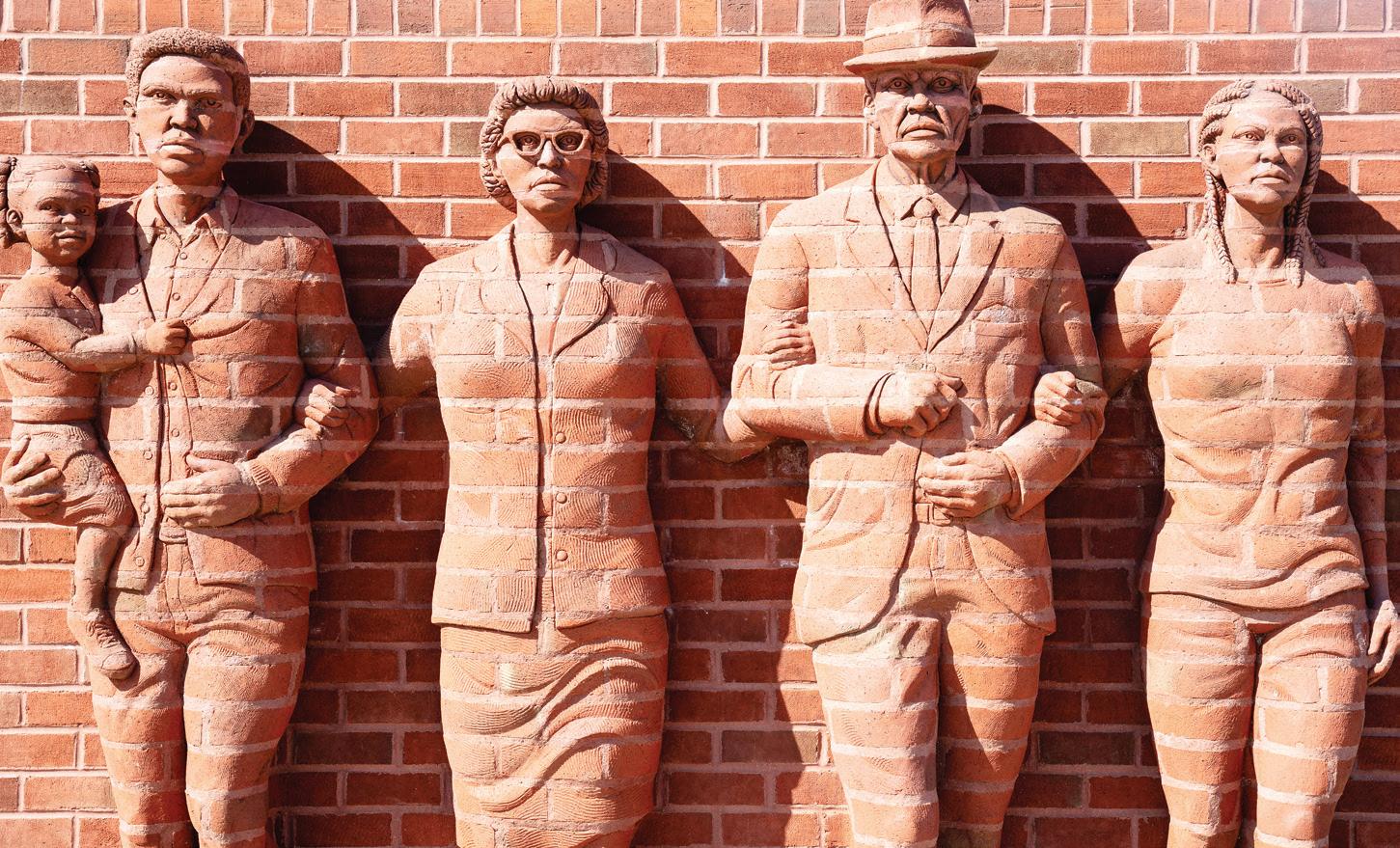
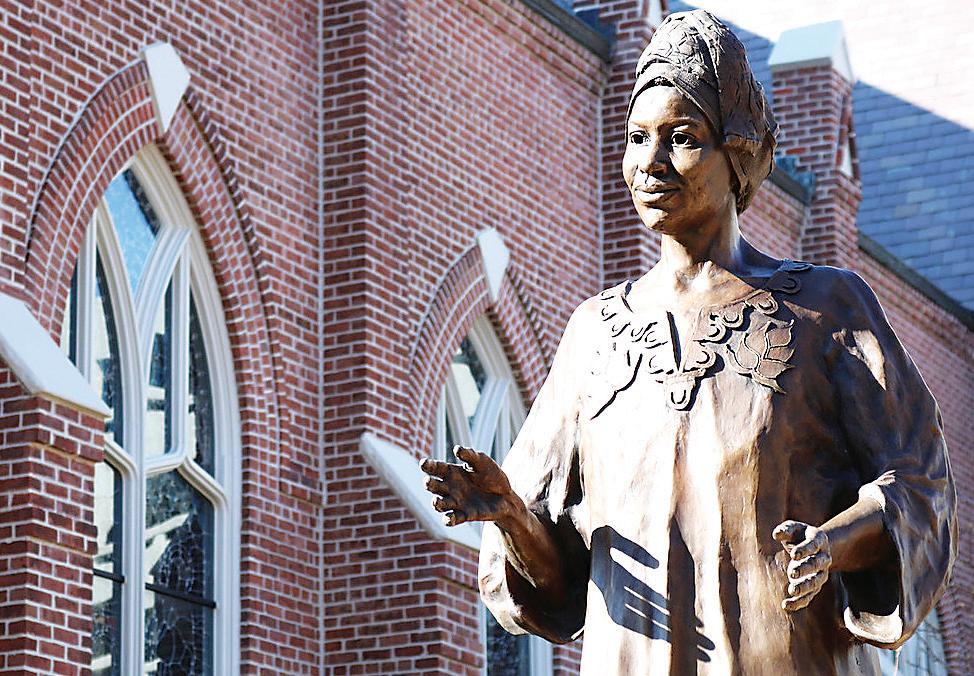
A sculpture in the Equal Justice Initiative’s Legacy Plaza in Montgomery, Ala., represents the foot soldiers who marched during the Civil Rights Movement. A visit to the plaza and the Legacy Museum came on the first day of a “Lenten Experience in Montgomery and Selma” for U.S. Catholic bishops March 18-20, 2026. (OSV News photos/courtesy USCCB Subcommittee for the Promotions of Racial Justice and Reconciliation)
Joining Bishop Wack were Bishop Jaime Soto of Sacramento, California; Bishop J. Mark Spalding of Nashville, Tennessee; Bishop Joseph R. Kopacz of Jackson, Mississippi; Auxiliary Bishop Evelio Menjivar-Ayala of Washington; and Auxiliary Bishop Felipe Pulido of San Diego.
The second such event coordinated by the U.S. Conference of Catholic Bishops’ Subcommittee for the Promotion of Racial Justice and Reconciliation and the Catholic Mobilizing Network, the trip saw the bishops – along with USCCB and network staff, and USCCB subcommittee consultant Gloria Purvis – visit multiple locations in just two and a half days.
During the pilgrimage, the bishops celebrated Mass at local parishes, and met with civil rights attorney Bryan Stevenson, founder of the Equal Justice Initiative, as well as Dianne Thelma Harris, a foot soldier in the peaceful 1965 Voting Rights March.
The itinerary featured stops at Montgomery’s three Legacy Sites: the Legacy Museum, which surveys the nation’s 400-year span of enslavement, racial terrorism, codified segregationism and mass incarceration; the National Memorial for Peace and Justice, which memorializes more than 4,400 Black people lynched
between 1877 and 1950; and the Freedom Monument Sculpture Park, which provides an immersive view into the lives of enslaved persons.
Other Montgomery sites in the tour were City of St. Jude, which was the final stop for Civil Rights marchers from Selma before their arrival at the state capitol on March 24, 1965, and the Dexter Parsonage Museum, where Civil Rights leader Rev. Dr. Martin Luther King, Jr. and his family lived during his 1954-1960 tenure as pastor of the Dexter Avenue King Memorial Baptist Church.
Bishop Wack told OSV News the parsonage – which had been bombed several times during Rev. King’s pastorate – left a deep impression, as he recalled a pivotal moment when Rev. King, sitting at his kitchen table after an attack, prayerfully discerned a call to persist in the Civil Rights Movement.
“He became a real person to me sitting right here – there’s the sink, here’s where he made the coffee. And then he sat down and he had this moment of deep, intense prayer with God,” Bishop Wack recalled. “As a bishop, I’ve had moments like that: ‘God, what do you want me to do? Where should I go?’”
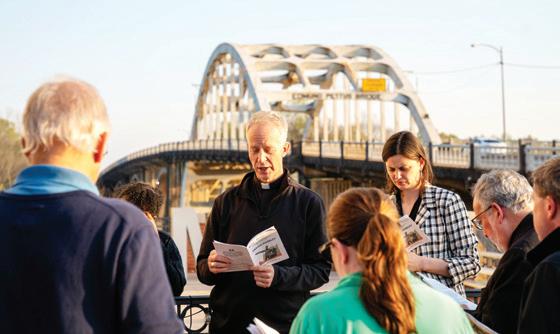
In Selma, the group crossed the Edmund Pettus Bridge, where in 1965 some 600 Civil Rights marchers for voting rights were brutally attacked by law enforcement, with the violence filmed by local television and later broadcast. While in Selma, the pilgrims dined at the Edmundite Missions, a Catholic social services agency through which the Society of St. Edmund has offered support for 90 years.
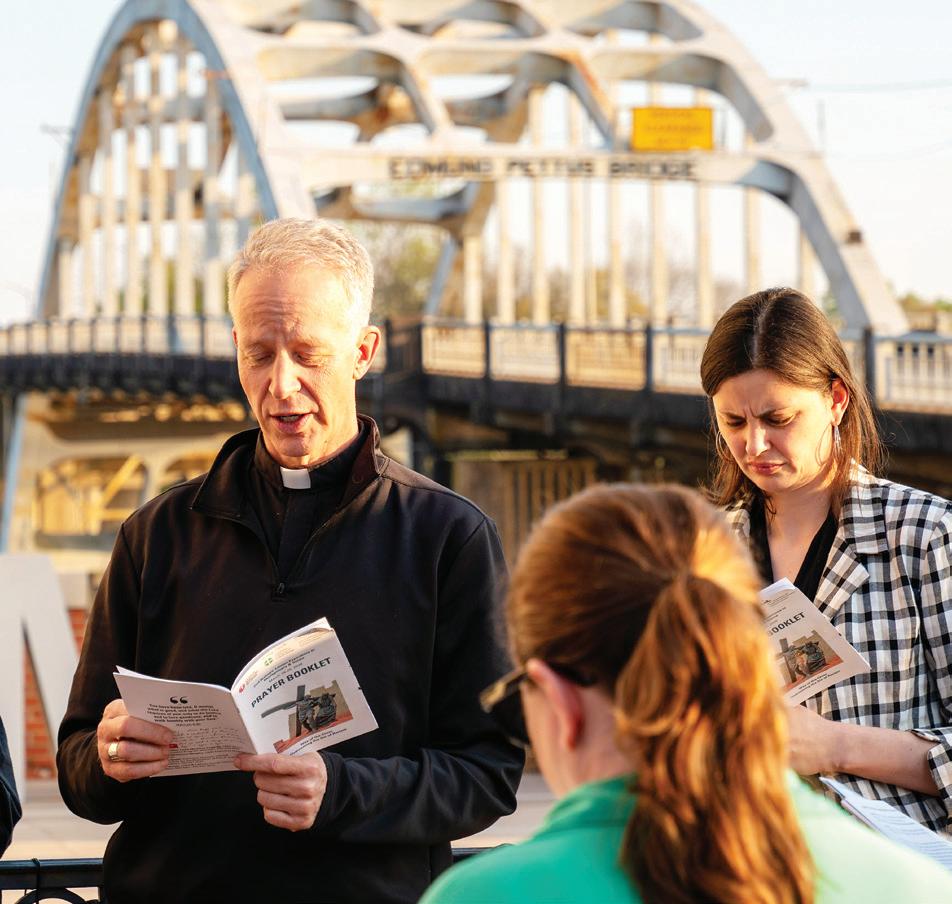
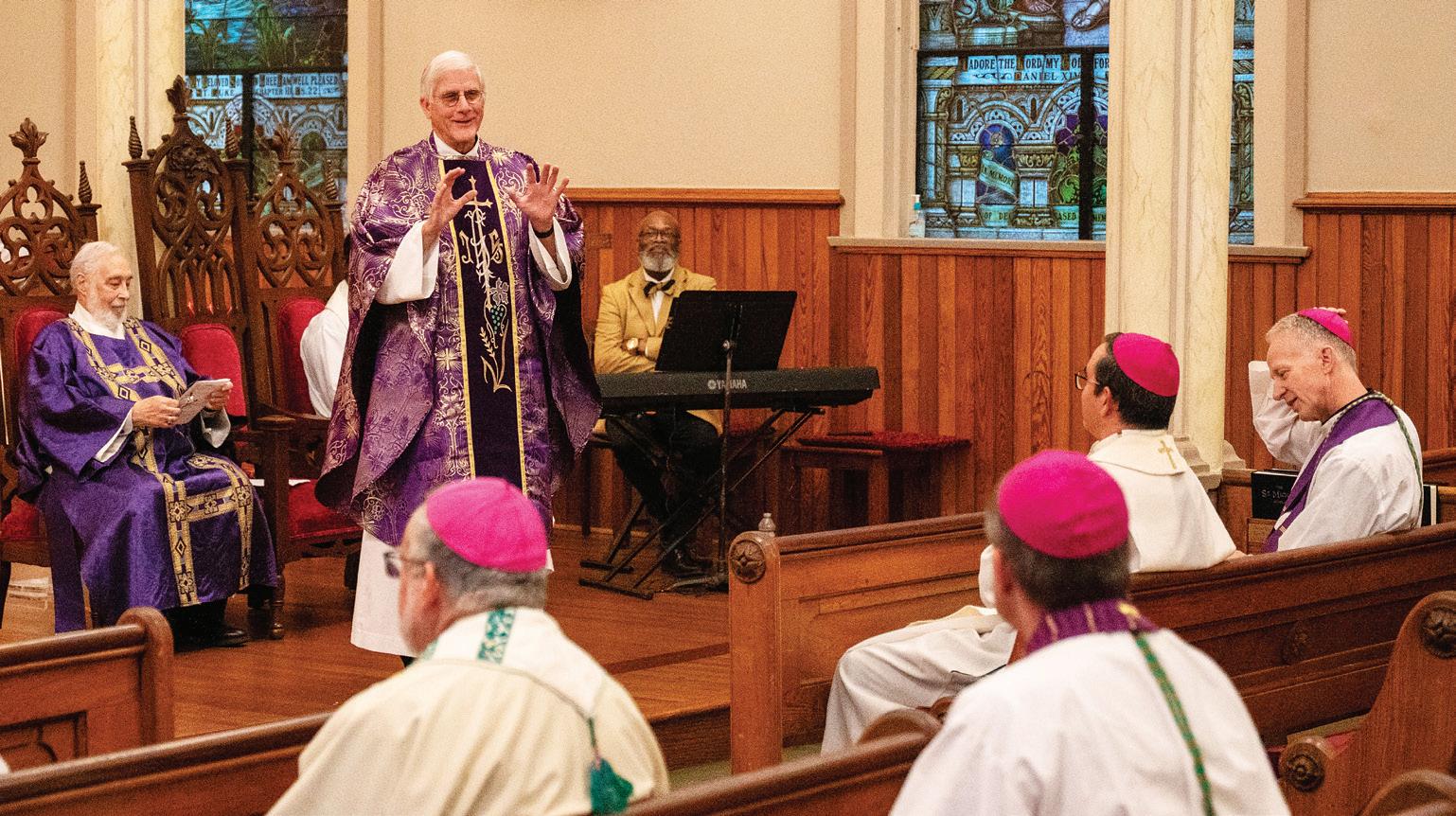
Bishop Joseph R. Kopacz of Jackson, gives a homily during Mass at St. Peter’s Catholic Church in Montgomery, Ala., on the first day of a “Lenten Experience in Montgomery and Selma” for bishops March 18-20, 2026. (Inset) Bishop William A. Wack of Pensacola-Tallahassee, Fla., prays the Stations of the Cross in front of the Edmund Pettus Bridge on the second day of the experience.
Bishop Kopacz told OSV News that the pilgrimage revealed “incredible truth and reconciliation opportunities.”
He pointed to the need to document the historical sweep of slavery, racism and injustice in the nation’s history, and to see its ongoing effects.
“What Alabama has done is really brought forward the history that goes back to the onset, to the the transatlantic passage and the beginnings of slavery,” he said.
The slave trade saw some 12 million to 20 million Africans enslaved in various Western nations, including the U.S., over a period of four centuries. The United Nations recently condemned the transatlantic slave trade as “the gravest crime against humanity,” and passed a resolution also calling for reparations by member states to affected nations.
Recalling his visit, Bishop Kopacz traced how the legacy of slavery continued through “the years of Jim Crow,” the codified racial caste system that prevailed in southern and border states from 1877 to the mid-1960s; racial lynchings; and through capital punishment, which Stevenson and others argue disproportionately impacts people of color.
Bishop Kopacz said that capital punishment – which the Catholic Church condemns – is “dragging forward this chapter of our life here in America” marked by the violent history of slavery and racism.
Slavery “wasn’t just ended with the Emancipation Proclamation,” said Bishop Wack, referencing the 1863 presidential decree that declared slaves in some U.S. states free.
Rather, said Bishop Wack, slavery “perhaps took different forms,” as “there was a lot of discrimination that continued.”
Both Bishop Kopacz and Bishop Wack told OSV News they planned to bring their pilgrimage experiences back to their respective flocks, encouraging prayer, reflection and – as Bishop Wack said – “courageous conversations” to help counter the sin of racism.
“In order to have reconciliation and change toward greater justice, we need that deepening awareness,” said Bishop Kopacz.
(Gina Christian is a multimedia reporter for OSV News.)
By OSV NewS
Pope Leo XIV concluded his first trip to Africa April 23, capping a four-country visit marked by urgent calls for peace, direct engagement with conflict zones and a backdrop of international political tension.
The pope met civil and religious leaders, celebrated public Masses and encouraged Catholics to remain steadfast witnesses to the Gospel.
– Algeria –
Pope Leo’s 11-day trip began with an unexpected controversy after U.S. President Donald Trump criticized the pope as “weak on crime” and “terrible for foreign policy.” The remarks followed the pope’s criticism of the Iran war and his call for peace.
“I have no fear, neither of the Trump administration nor of speaking out loudly of the message of the Gospel, which is what I believe I am here to do,” Pope Leo said to journalist aboard the papal flight.
“‘Blessed are the peacemakers’ is the message that the world needs to hear today.”
Despite the dispute, Pope Leo struck a positive tone before landing, saying he was “very happy to visit the land of St. Augustine again.”
In Algiers, he visited the Great Mosque and later the Basilica of Our Lady of Africa, calling the encounter a sign “that we can learn to respect one another, live in harmony and build a world of peace.”
On April 14, in Annaba, near the ruins of ancient Hippo Regius, Pope Leo urged Christians to follow St. Augustine’s example of seeking truth and serving Christ.
Celebrating Mass at the Basilica of St. Augustine, he urged Christians to follow the saint’s example, “fervently seeking the truth and serving Christ with ardent faith.”
– Cameroon –
During his flight to Cameroon, Pope Leo reflected on Algeria as “a special blessing,” noting that St. Augustine’s life offers a vision of unity and respect across differences.
That message carried into Cameroon, a country scarred by separatist violence. Addressing authorities in Yaoundé, the pope acknowledged the suffering caused by conflict in the English-speaking northwest and southwest regions.
Since 2017, fighting between separatist militias and government forces has killed more than 6,500 people and displaced over 500,000.
“Behind the numbers are the faces,
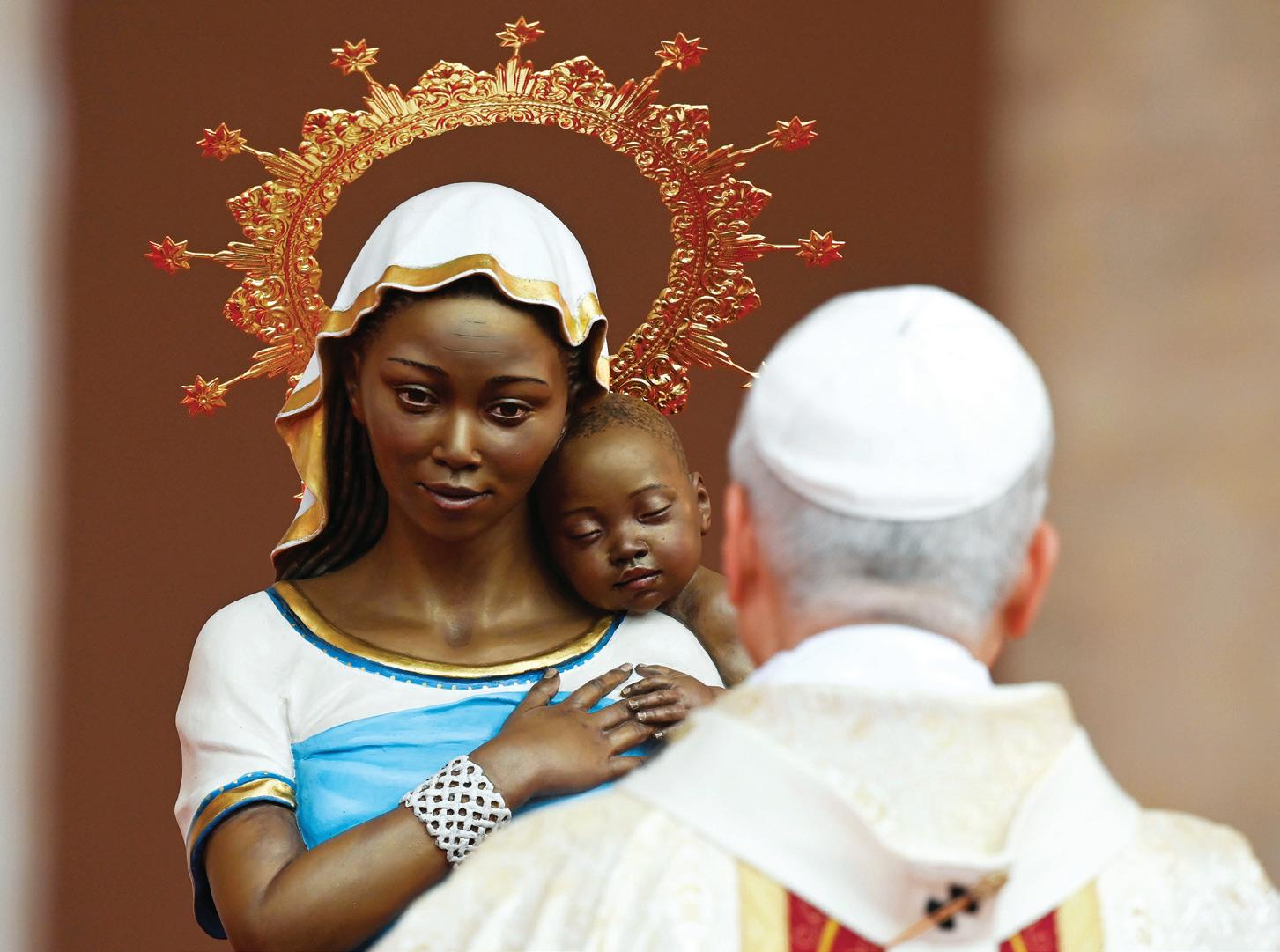
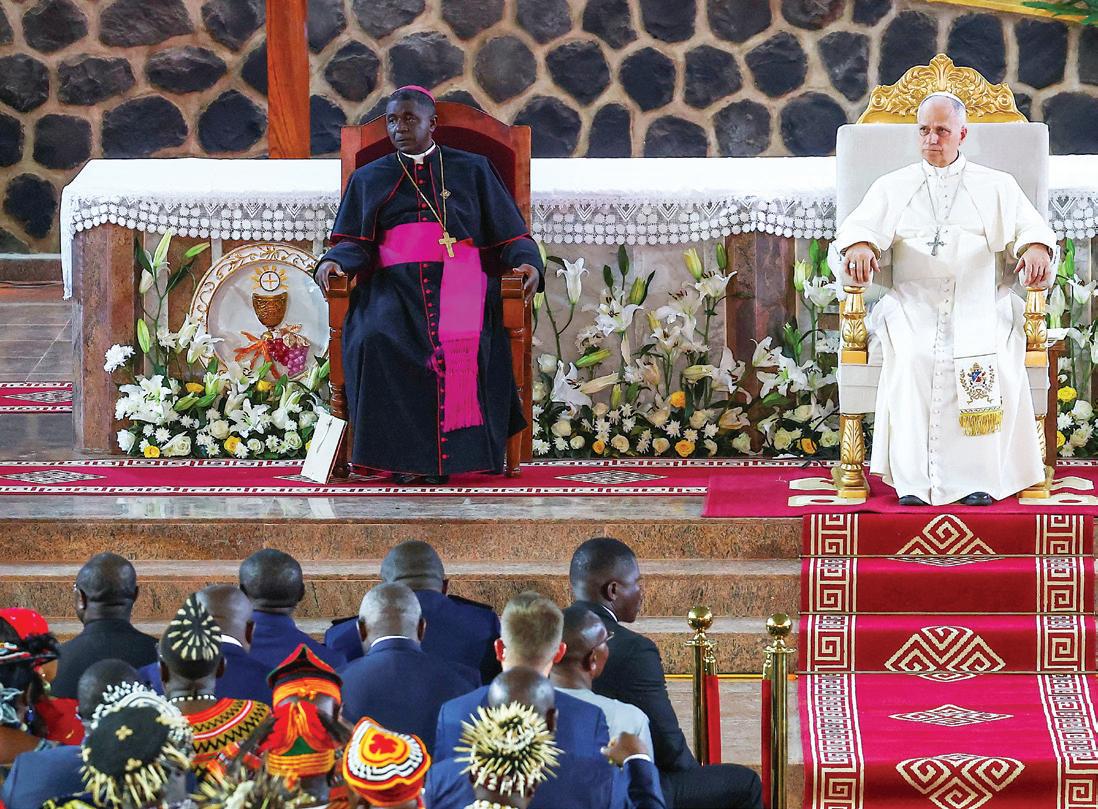
Pope Leo XIV prays in front of a statue of Mary and the Christ Child as he celebrates the final Mass of his apostolic journey to Africa at Malabo Stadium in Equatorial Guinea April 23, 2026. (OSV News photo/Matteo Pernaselci, Vatican Media)
stories and shattered hopes of real people,” the pope said.
Days before his arrival, separatist groups declared a three-day ceasefire.
The highlight of the April 15–18 stop was the pope’s visit to Bamenda, in the heart of the conflict zone. At St. Joseph’s Cathedral, the pope was met with enthusiasm after declaring, “I am here to proclaim peace.”
After hearing testimony from local residents, the pope strongly condemned violence carried out in God’s name.
“But woe to those who manipulate religion and the very name of God for their own military, economic and political gain,” he said, warning against dragging what is sacred “into darkness and filth.”
Celebrating Mass for 20,000 people at Bamenda’s airport, he urged “This is the moment to change, to transform the story of this country.”
“The time has come, today and not tomorrow.” He called on Cameroonians to “restore the mosaic of unity” by embracing the country’s diversity.
On April 17, he celebrated Mass in Douala for an estimated 120,000 faithful, urging Africans to share God’s love by serving those in need.
– Angola –
While the pope’s warning to those who use God to justify violence resonated with suffering Cameroonians in Bamenda, several media outlets insinuated that he was making an indirect dig at Trump.
En route to Angola, Pope Leo clarified that his remarks in Cameroon had
been prepared weeks earlier and were not directed at the U.S. president.
“My speeches were written well before the president ever commented,” he said. “It is not in my interest to debate,” adding “there has been a certain narrative that has not been accurate in all its aspects.”
Arriving in Luanda, he shifted focus to Angola’s challenges and the Church’s role in offering hope. The country continues to struggle with inequality, corruption and a civil war that claimed up to 800,000 lives.
Addressing government leaders, the pope urged them to prioritize the common good; and warned against abuses of power and exploitation.
On April 19, Pope Leo celebrated Mass for about 100,000 faithful in Kilamba. Reflecting on the Gospel story of the road to Emmaus, he cautioned against despair in societies marked by prolonged suffering.
“When one is long immersed in a history characterized by pain, one can risk losing hope and remaining paralyzed by discouragement,” he said.
Afterward, he traveled to the Sanctuary of Mama Muxima, southern Africa’s most visited Catholic shrine, where tens of thousands had gathered.
On April 20, the pope flew east to Saurimo, near Angola’s largest diamond mine. There, he visited a nursing home housing 74 elderly residents, many rejected by their families.
“The elderly must not only be assisted, but listened to, because they preserve the wisdom of a people,” he said.
Celebrating Mass for tens of thousands, the pope also addressed exploitation linked to the diamond industry.
“How often the hope of many is frustrated by violence, exploited by the overbearing and defrauded by the rich,” he said.
“We were not born to become slaves,” he added. “Every form of oppression, violence and dishonesty negates the resurrection of Christ, the supreme gift of our freedom.”
– Equatorial Guinea –
The final leg of Pope Leo’s 11-day journey took him to Equatorial Guinea. Upon landing on the island of Malabo, the pope was welcomed by President Teodoro Obiang Nguema Mbasogo, who has ruled the Central African nation since seizing power in a 1979 coup.
Nevertheless, in his address to the country’s civil authorities, the pope appealed for justice and ethical governance in a country long criticized for corruption and human rights abuses.
Citing St. Augustine’s “The City of God,” Pope Leo contrasted a society rooted in love and service with one driven by power and self-interest.
“Every human being can benefit from the ancient realization of living on earth as a pilgrim,” he said.
Celebrating Mass April 22 at the Basilica of the Immaculate Conception in the eastern city of Mongomo, the second-largest Catholic Church in Africa, the pope renewed his call to the country’s leaders and citizens to prioritize the common good.
“May the Lord help you to become a society in which everyone, each according to their respective responsibilities, works ever more fully to serve the common good rather than private interests, bridging the gap between the privileged and the disadvantaged,” he said.
In his final Mass in Malabo Stadium April 23, Pope Leo offered a word of hope to the country’s Catholics, urging them to seek strength, justice and hope from the Gospel and the sacraments.
As the Mass concluded, the pope bid farewell to the African continent, saying that his visit was “an invaluable treasure of faith, hope, and charity.”
Highlighting the continent’s significance, the pope said that “today, Africa is called to contribute significantly to the holiness and missionary character of the Christian people.”
“I entrust this intention to the intercession of the Virgin Mary, to whom I commend myself wholeheartedly, as well as your families, your communities, your nation, and all the peoples of Africa,” the pope said.
Sirviendo a los Católicos Hispanos de la Diócesis de Jackson desde 1997
Por Joanna PuDDister KinG
JACKSON – Una nueva iniciativa diocesana centrada en fortalecer el liderazgo laico y la formación en la fe en toda la Diócesis de Jackson se está tomando forma a través del recién establecido Centro Bishop William R. Houck para la Formación Laica, un esfuerzo que los líderes de la iglesia afirman surgir directamente de las sesiones de escucha realizadas durante el proceso diocesano de Reimaginación Pastoral.
Dirigido por la Oficina Diocesana de Formación en la Fe bajo la dirección de Fran Lavelle, el centro está diseñado para ofrecer oportunidades accesibles de formación y capacitación ministerial para líderes parroquiales y escolares, catequistas, ministros juveniles y otros líderes laicos en toda la diócesis.
"La mejor parte de mi ministerio es trabajar con la gente", dijo Lavelle. "La segunda mejor parte de mi trabajo es buscar formas de servir mejor a nuestras parroquias y escuelas, especialmente con respecto a la formación en la fe."
Lavelle dijo que la idea del centro surgió después de que las sesiones de escucha parroquiales y del decanato identificaran repetidamente la necesidad de una formación más fuerte en el liderazgo laico.

La página web del Centro Obispo William R. Houck para la Formación de Laicos constituye un nuevo recurso diocesano dedicado a la formación en la fe, la capacitación en liderazgo y el apoyo ministerial para los líderes laicos de toda la Diócesis de Jackson. Este portal en línea incluye oportunidades de formación, recursos ministeriales y programas de capacitación disponibles tanto. (Ilustración foto de Joanna King)
“Una mejor formación para los líderes laicos fue uno de los llamamientos más claros tanto de las parroquias individuales como de los decanatos", dijo. "Cuando
preguntas a la gente cómo puede la Iglesia servirles mejor, es importante actuar según lo que oyes."
Un comité asesor formado a finales de 2024 comenzó a reimaginar cómo la diócesis podría apoyar el ministerio laico y el desarrollo del liderazgo. Ese proceso llevó finalmente a la creación del Centro del Bishop William R. Houck para la Formación Laica.
El centro lleva el nombre en honor al ex-obispo William R. Houck, quien sirvió a la Diócesis de Jackson desde 1984 hasta 2003 y fue ampliamente reconocido por su compromiso con la educación católica, la evangelización y el ministerio laico. Durante su mandato, Houck fue presidente del Comité de Obispos de EE. UU. sobre Evangelización, que publicó el documento histórico de 1992, Ve y haz discípulos: un plan nacional y estrategia para la evangelización católica en Estados Unidos. El documento, que aún se utiliza hoy en día, sigue animando a los católicos a aceptar la misión del discipulado.
“El obispo Houck era un estimado educador y un devoto defensor del ministerio laico", dijo Lavelle. "Su visión y voz afirmaron las bases para la formación de liderazgo laico en la Diócesis. Esperamos ampliar su visión para ofrecer capacidad y formación de alta calidad en cada parroquia, misión y escuela."
Según la página web del centro, su misión es "proporcionar educación, ca-
– Continúa en la página 2 –
Desde zonas de conflicto hasta antiguos lugares cristianos, el Papa León XIV lleva un mensaje de paz y esperanza a África
Por osv neWs
El Papa León XIV concluyó su primer viaje a África el 23 de abril, poniendo fin a una visita a cuatro países marcada por llamados urgentes a la paz, un compromiso directo con las zonas de conflicto y un contexto de tensión política internacional.
El Papa se reunió con líderes civiles y religiosos, celebró misas públicas y animó a los católicos a seguir siendo testigos firmes del Evangelio.
– Argelia –
El viaje de 11 días del Papa León comenzó con una controversia inesperada después de que el presidente de EE.UU., Donald Trump, criticara al Papa como “débil ante el crimen” y “terrible en política exterior”. Los comentarios se produjeron tras las críticas del Papa a la guerra de Irán y sus llamados a la paz.
“No le tengo miedo a la administración de Trump, ni de hablar en voz alta del mensaje del Evangelio, que es lo que creo que estoy llamado a hacer”, dijo el Papa León a periodistas a bordo del vuelo papal.
“‘Bienaventurados los que trabajan por la paz’ es el mensaje que el mundo necesita escuchar hoy”.
A pesar de la disputa, el Papa León adoptó un
tono positivo antes de aterrizar, diciendo que estaba “muy contento de visitar nuevamente la tierra de san Agustín”.
En Argel, visitó la Gran Mezquita y más tarde la Basílica de Nuestra Señora de África, calificando el encuentro como una señal de “que podemos aprender a respetarnos unos a otros, vivir en armonía y construir un mundo de paz”.
El 14 de abril, en Annaba, cerca de las ruinas de la antigua Hippo Regius, el Papa León instó a los cristianos a seguir el ejemplo de san Agustín en la búsqueda de la verdad y el servicio a Cristo.
Al celebrar la Misa en la Basílica de San Agustín, exhortó a los cristianos a seguir el ejemplo del santo, “buscando la verdad con pasión y sirviendo a Cristo con fe ardiente”.
– Camerún –
Durante su vuelo a Camerún, el Papa León reflexionó sobre Argelia como “una bendición especial”, señalando que la vida de san Agustín ofrece una visión de unidad y respeto más allá de las diferencias.
Ese mensaje continuó en Camerún, un país mar-
cado por la violencia separatista. Dirigiéndose a las autoridades en Yaundé, el Papa reconoció el sufrimiento causado por el conflicto en las regiones anglófonas del noroeste y el suroeste.
Desde 2017, los enfrentamientos entre milicias separatistas y fuerzas gubernamentales han causado la muerte de más de 6.500 personas y han desplazado a más de 500.000.
“Detrás de las estadísticas hay rostros, historias y esperanzas heridas”, dijo el Papa.
Días antes de su llegada, los grupos separatistas declararon un alto el fuego de tres días.
El punto culminante de la visita fue el viaje del Papa a Bamenda, en el corazón de la zona de conflicto. En la Catedral de San José, el Papa fue recibido con entusiasmo tras declarar: “Estoy aquí para anunciar la paz”.
Tras escuchar testimonios de residentes locales, el Papa condenó enérgicamente la violencia perpetrada en nombre de Dios.
“Ay de quienes doblegan las religiones y el mismo nombre de Dios a sus propios intereses militares,
– Continúa en la página 2 –
'... Centro Bishop William R. Houck para la Formación Laica ...'
– Viene de la página 1 –
pacidad y formación a líderes laicos en la Diócesis de Jackson con énfasis en aplicaciones catequéticas, pastorales y eclesiales."
La iniciativa se basa en tres pilares fundamentales: educación, evangelización y el desarrollo de líderes laicos bien formados. El sitio web señala que la formación continua en las Escrituras y la enseñanza católica enseñan los discípulos a cumplir su llamado, mientras que las comunidades parroquiales fuertes dependen de líderes preparados que puedan servir con "conocimiento, confianza y compasión".
A diferencia de un instituto diocesano tradicional, es que el Centro Houck no se encuentra en un edificio físico. Si no en un lugar, que funciona como un centro de recursos en línea alojado a través del sitio web diocesano. Los participantes pueden acceder a talleres diocesanos, cursos en línea, recursos ministeriales y oportunidades de desarrollo de liderazgo en diversas áreas ministeriales.
"Realmente queríamos algo accesible para la gente sin importar dónde vivan en la diócesis", dijo Lavelle. "Se trata de reunirse con los líderes parroquiales donde están y ayudarles a seguir creciendo en confianza y fe."
Las áreas actuales de formación incluyen el ministerio universitario, la formación de catequistas, el
ministerio familiar, el ministerio intercultural, la liturgia, la OCIA, el ministerio penitenciario, el ministerio juvenil y el ministerio de adultos jóvenes, junto con oportunidades de formación en liderazgo, consejos pastorales y equipos de ministerio parroquial.
Una de las primeras grandes iniciativas del centro es un Taller de Ministerios Pastorales rediseñado, un programa de liderazgo diocesano de larga trayectoria que ahora ha sido reestructurado para acomodar mejor a los voluntarios parroquiales y líderes ministeriales con tiempos limitados. Anteriormente ofrecido como un programa de cuatro años que requería que los participantes asistieran a una sesión de verano de una semana cada año, el taller se ha transformado en un modelo intensivo de un fin de semana más flexible.
“El tiempo que se tardaba en completar el antiguo programa, junto con la dificultad que muchos voluntarios tenían para escaparse toda una semana, nos hizo darnos cuenta de que necesitábamos un formato más accesible", dijo Lavelle. "Queríamos preservar la riqueza de la formación haciéndola realista para quienes sirven en el ministerio parroquial.”
El nuevo programa de dos años consta de seis sesiones de cuatro horas centradas en la oración, la teología, el liderazgo pastoral y habilidades prácticas del ministerio. Los cursos se ofrecerán simultánea-
mente en inglés y español, reflejando la diversidad de la diócesis y el énfasis del centro en la desarrollada facilidad.
Los temas de los talleres de este año incluyen los fundamentos del ministerio pastoral católico, la identidad pastoral y espiritualidad, y la comunicación y la construcción de relaciones en el ministerio. Los participantes explorarán temas como el liderazgo de servicio, la comunicación intercultural, la transformación de conflictos y las prácticas espirituales que sostienen el ministerio.
Lavelle afirmó que el taller está destinado no solo a nuevos ministros y catequistas, sino también a líderes parroquiales experimentados que buscan apoyo y renovación en su formación.
“Nuestro objetivo principal es proporcionar una fundación en el ministerio pastoral católico a través de la oración, la teología, las experiencias prácticas y la reflexión", afirmó.
El taller de este año se celebrará del 31 de julio al 2 de agosto en el Eagle Ridge Conference Center de Raymond. La inscripción está abierta hasta el 10 de julio. Se puede encontrar más información sobre el Centro Bishop William R. Houck para la Formación Laica en jacksondiocese.org/bishop-houck-centerfor-lay-formation.
(Para preguntas sobre el Centro o el próximo Taller de Ministerios Pastorales, contacte a fran.lavelle@ jacksondiocese.org.)
' ... un tesoro inestimable de fe, esperanza y caridad ...'
– Viene de la página 1 –
económicos o políticos”, dijo, advirtiendo contra arrastrar lo sagrado “hacia lo más sucio y tenebroso”.
Al celebrar una Misa para 20.000 personas en el aeropuerto de Bamenda, exhortó: “Este es el momento de cambiar, de transformar la historia de este país”.
“Ha llegado el momento, hoy y no mañana”. También pidió a los cameruneses “recomponer el mosaico de la unidad.” El 17 de abril celebró una Misa en Douala ante unos 120.000 fieles, instando a los africanos a compartir el amor de Dios sirviendo a quienes más lo necesitan.
– Angola –
Mientras la advertencia del Papa a quienes usan a Dios para justificar la violencia resonaba entre los cameruneses que sufren en Bamenda, varios medios insinuaron que estaba lanzando una indirecta a Trump.
De camino a Angola, el Papa León aclaró que sus comentarios en Camerún habían sido preparados semanas antes y no estaban dirigidos al presidente estadounidense.
“Mis discursos fueron escritos mucho antes de que el presidente comentara”, dijo. “No me interesa debatir”, añadió, señalando que “ha habido cierta narrativa que no ha sido del todo exacta”.
Al llegar a Luanda, centró su atención en los desafíos de Angola y el papel de la Iglesia para ofrecer esperanza. El país sigue luchando contra la desigualdad, la corrupción y una guerra civil que cobró hasta 800.000 vidas.
Dirigiéndose a los líderes del Gobierno, el Papa los instó a priorizar el
bien común y advirtió contra los abusos de poder y la explotación.
El 19 de abril, el Papa León celebró una Misa para unos 100.000 fieles en Kilamba. Reflexionando sobre el relato evangélico del camino a Emaús, advirtió contra la desesperanza en sociedades.
“Cuando se lleva mucho tiempo inmerso en una historia marcada por el dolor, se corre el riesgo de perder la esperanza y quedarse paralizado por el desánimo”, dijo.
Posteriormente viajó al Santuario de Mama Muxima, el santuario católico más visitado del sur de África, donde se habían reunido decenas de miles de personas.
El 20 de abril, el Papa voló hacia el este, a Saurimo, cerca de la mina de diamantes más grande de Angola. Allí visitó un hogar de ancianos con 74 residentes, muchos rechazados por sus familias.
“A las personas mayores no sólo hay que asistirlas, sino escucharlas, porque custodian la sabiduría de un pueblo”, dijo.
Al celebrar la Misa ante decenas de miles de personas, el Papa también abordó la explotación vinculada a la industria del diamante.
“Cuántas veces la esperanza de muchos es frustrada por la violencia, explotada por los prepotentes y engañada por los ricos”, dijo.
“No hemos nacido para convertirnos en esclavos”, añadió. “Toda forma de opresión, violencia y deshonestidad niega la resurrección de Cristo, don supremo de nuestra libertad”.
– Guinea Ecuatorial –
La última etapa del viaje de 11 días del Papa León lo llevó a Guinea Ecua-
torial. Al aterrizar en la isla de Malabo, el Papa fue recibido por el presidente Teodoro Obiang Nguema Mbasogo, quien gobierna la nación centroafricana desde que tomó el poder en un golpe de Estado en 1979.
No obstante, en su discurso ante las autoridades civiles del país, el Papa hizo un llamado a la justicia y al gobierno ético en un país criticado desde hace tiempo por la corrupción y los abusos contra los derechos humanos.
Basándose en “La ciudad de Dios” de san Agustín, el Papa León contrastó una sociedad fundada en el amor y el servicio con otra impulsada por el poder y el interés propio.
“Todo ser humano puede beneficiarse de la antigua conciencia de vivir en la tierra como peregrino”, dijo.
Al celebrar la Misa del 22 de abril en la Basílica de la Inmaculada Concepción, en la ciudad oriental de Mongomo, la segunda iglesia católica más grande de África, el Papa renovó su llamado a los líderes y ciudadanos del país para priorizar el bien común.
“Que el Señor los ayude a convertirse en una sociedad en la que todos, según sus respectivas responsabilidades, trabajen cada vez más
al servicio del bien común y no de intereses particulares, superando las desigualdades entre privilegiados y desfavorecidos”, dijo.
En su Misa final en el Estadio de Malabo el 23 de abril, el Papa León ofreció una palabra de esperanza a los católicos del país, instándolos a buscar fuerza, justicia y esperanza en el Evangelio y los sacramentos.
Al concluir la Misa, el Papa se despidió del continente africano, diciendo que su visita fue “un tesoro inestimable de fe, esperanza y caridad”.
Destacando la importancia del continente, el Papa dijo que “hoy África está llamada a contribuir significativamente a la santidad y al carácter misionero del pueblo cristiano”.
“Confío esta intención a la intercesión de la Virgen María, a quien encomiendo de todo corazón, así como a sus familias, sus comunidades, su nación y todos los pueblos de África”, dijo el Papa.
Dear Friends in Christ,
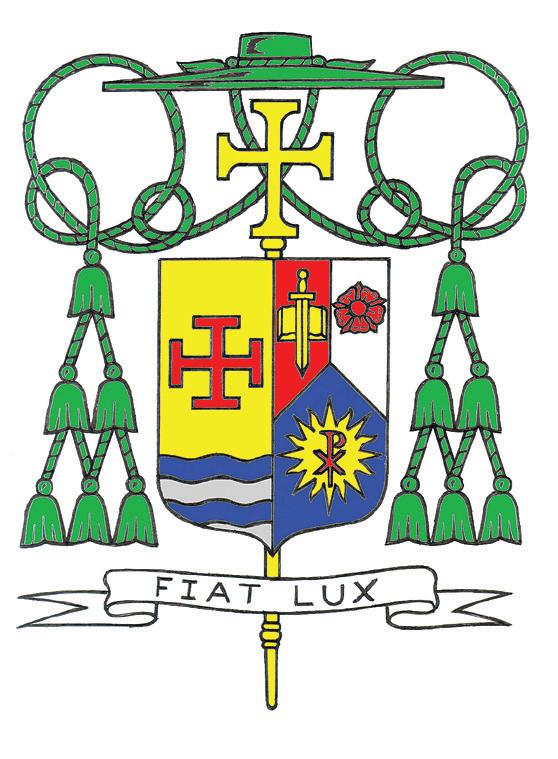
The in-depth annual report for the 2024-2025 fiscal year in this edition of Mississippi Catholic is presented in images, graphs, and narrative in order to portray a thorough and clearcut overview of diocesan stewardship. This report reflects the Church’s commitment to the Gospel values of transparency and accountability, themes emphasized in the final document of the worldwide Synod on Synodality on Oct. 26, 2024.
“Decision making must be accompanied and followed by practices of accountability and evaluation undertaken in a spirit of transparency inspired by evangelical criteria. Accountability to the community for one’s ministry belongs to our oldest tradition: to the Apostolic Church itself.” (Acts 11)
“Characteristics such as truth, loyalty, clarity, integrity, honesty and more shed light upon the Gospel imperative of transparency in the synodal document. First and foremost, it’s a fundamental attitude that is grounded in the Sacred Scripture and not to a series of administrative or procedural requirements.”
Gratitude is in order when I review the entirety of this
report: to the faithful who generously support the work of the Lord though our diocesan mission and ministries; to the Office of Temporal Affairs, which faithfully stewards the financial resources of the diocese in service to our mission and ministries; to the chancery staff who collaborate at the highest level to serve the diocesan family in fiscally responsible ways; and to the clergy and parish leadership who work closely with chancery staff to build up the Body of Christ and to shine the light of the Gospel beyond church walls.
May the Holy Spirit, who empowered the Church at the outset and has guided and purified her for nearly 2,000 years continue to inspire us in our calling to be faithful stewards and ambassadors of God’s abundant love in Christ Jesus our Lord.
Sincerely yours in Christ,
+Joseph R. Kopacz Bishop of Jackson
c aRoLYn c aLLaHan – d IRectoR , d epaRtment of t empoRaL a ffaIRS
e full audit report for the Chancery o ce nances of the Diocese of Jackson is available online at https:// jacksondiocese.org/temporal-a airs.
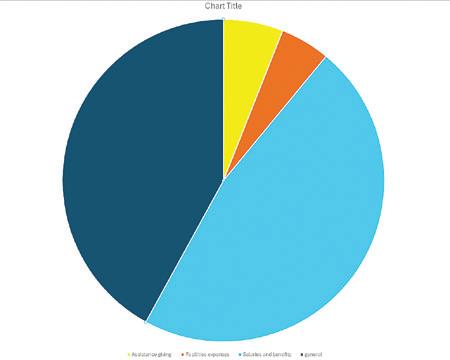
These statements include the Current Fund and Deposit and Loan Fund of the Chancery office. The Current Fund covers services provided to parishes, schools, and missions by the Bishop’s administration, including offices such as the Bishop’s office, Vicar General, Chancellor, Archives, Communication, Education, Faith Formation, Liturgy, Seminarian Education and Vocations, Stewardship and Development, and Temporal Affairs.
The Deposit and Loan fund reflects the management of the savings of all parish and school locations and the related investment portfolio. This report excludes income and expenses for Catholic Charities and the Catholic Foundation.
The Chancery office is primarily funded by the annual Cathedraticum Assessment and the Catholic Service Appeal. Cathedraticum is currently 5% of the first $25,000 of parish income plus 10.5% of the balance of parish annual income, minus exemptions for approved capital campaigns, school subsidies, and parent payments for youth trips. This assessment funds the Bishop’s administration, priest retirement, health insurance, and seminarian education and benefits. We will soon announce a change to the Cathedraticum calculation, reflecting a slight decrease to accommodate the transfer of priest insurance costs to parish budgets.
Major expenses for the Bishop’s administration include personnel salaries, clergy benefits, and seminarian education. Other routine costs include workshops, travel, newspaper production, and grants for parishes and schools.
Since the February 2025 report, key financial devel-
opments for the Diocese and the Department of Temporal Affairs include:
• All diocesan properties were appraised by The Insurance Valuation Group (IVG), and these updated values will be used to calculate the July 1, 2026, renewal premium for property insurance from Catholic Mutual.
• Temporal Affairs contracted Gallagher Retirement Services to manage the frozen pension plan for Chancery and Catholic Charities employees working before July 1, 2014. This engagement includes actuarial services, and the unfunded liability as of June 30, 2025, is reflected in the financial statements and pie charts within this report. This frozen pension plan is separate from the 401(k) plan offered to all diocesan employees since July 1, 2014.
• Rising medical and prescription costs continue to drive substantial annual premium increases. Consequently, the diocese will soon engage a medical insurance consultant to maximize employee benefits while managing costs for parishes and schools.
• Temporal Affairs is excited to see the results of the feasibility study for the proposed Catholic Foundation Capital Campaign. The expected annual endowment distributions for Vocations will significantly assist in managing tuition, fees, and other related costs for seminarians.
• The diocese is partnering with the Mid-South Association of Independent Schools (MSAIS) to participate in the Education Freedom Tax Credit effective January 1, 2027. This program provides individuals with a $1,700 ($3,400 for married couples) dollar-for-dollar federal tax credit for donations to Scholarship Granting Organizations (SGO).
MSAIS school representatives formed a board to establish an SGO named Advancing Independent Missions for Schools (AIMS). The AIMS bylaws mandate that one director must be affiliated with the Catholic Diocese of Jackson. This board representation provides the diocese with voting rights for policymaking and
ensures transparency in the reporting of donations, school distributions, and administrative expenses. This program offers substantial potential income for our Catholic schools, especially when considering the collective support of parents, grandparents, alumni, extended families, and all local and national advocates of Catholic education.
• While not without its challenges, our transition to Checkwriters for standardized diocesan payroll has proven effective, providing strong client support and overall accuracy.
• The investment portfolio of the Deposit and Loan Fund remains in a strong position with an allocation and 2025 calendar year return of: Equities 20.0% of plan assets / +16.81% net return; Fixed Income 71.2% of plan assets / +6.57% net return, and; Admin/Cash 8.8% of plan assets / +4.14% net return. The total fund net weighted return was +8.26%.
• The portfolio’s heavy weighting in highly rated fixed-income securities reflects its role as a repository for net savings from parishes and schools (total savings less outstanding loans). Currently, investment returns are reinvested to secure the cost basis of these account balances rather than being withdrawn to fund operations.
• The Diocesan Finance Council and its committees meet throughout the year, utilizing the expertise of their members to provide financial advice to Bishop Kopacz and oversight of Temporal Affairs. Council committees include the Budget, Audit, Investment, Revenue, Deposit and Loan Rates, Pension Plan, Medical Benefits, and Cathedraticum committees.
• Temporal Affairs maintains a strong relationship with its external audit firm, and the 2025 audit report was again received without exceptions.
Questions regarding Diocesan finances may be sent to Carolyn Callahan, Director, Department of Temporal A airs via email at carolyn.callahan@ jacksondiocese.org.
income – FYE 06/30/2025
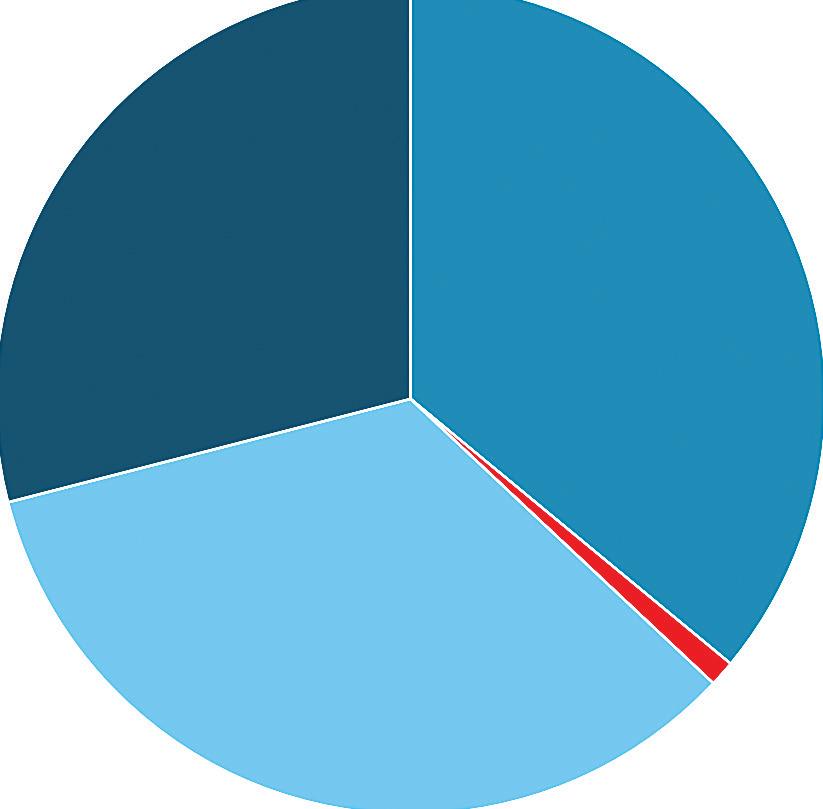
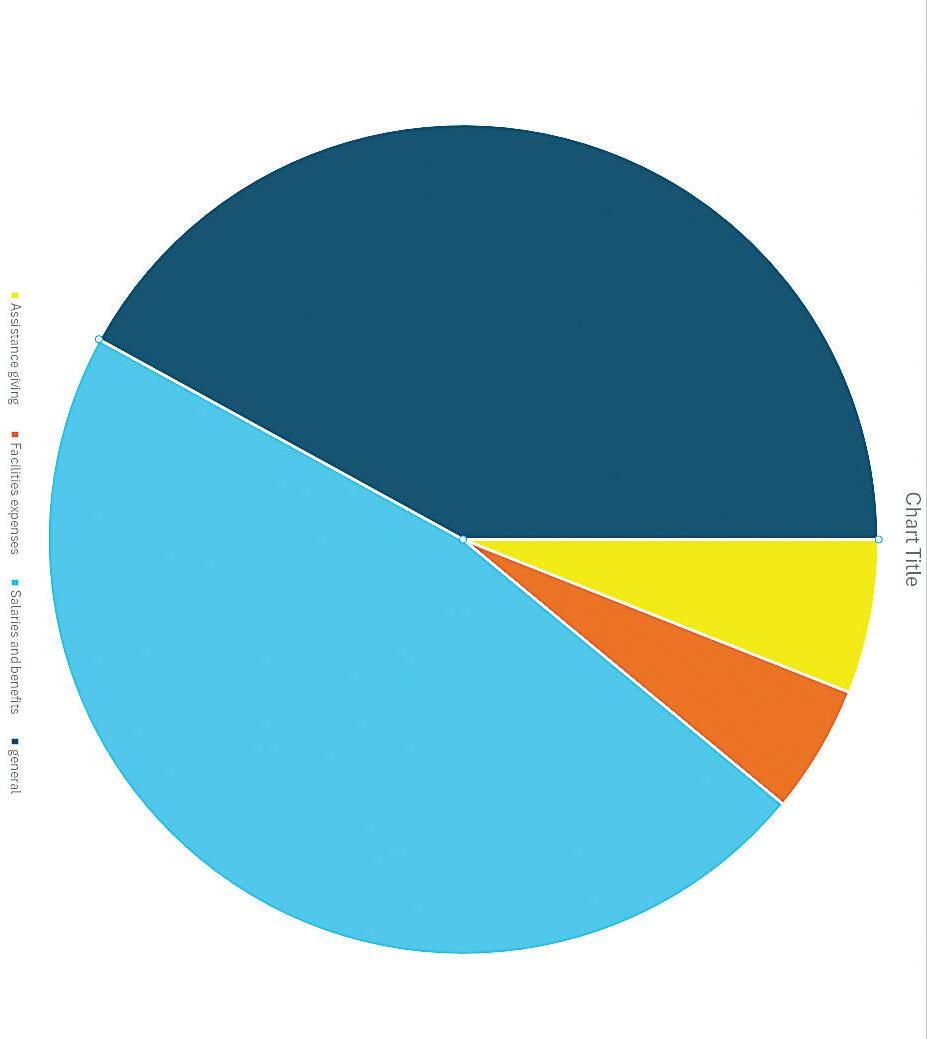
The Diocese of Jackson has launched a third-party reporting system that will enable all diocesan employees, volunteers and parishioners to anonymously (or named if preferred) make reports. Examples of this activity include fraud, misconduct, safety violations, harassment or substance abuse occurring at a Catholic parish, Catholic school or at the diocesan level. The system is operated by Lighthouse Services.
To make a report visit www.lighthouse-services. com/jacksondiocese or call 888-830-0004 (English) or 800-216-1288 (Spanish).




48,086 REGISTERED CATHOLICS
73 PARISHES 15 MISSIONS YOUTH & YOUNG ADULT MINISTRY
48 ADULTS AWARDED BISHOP CHANCHE MEDALS




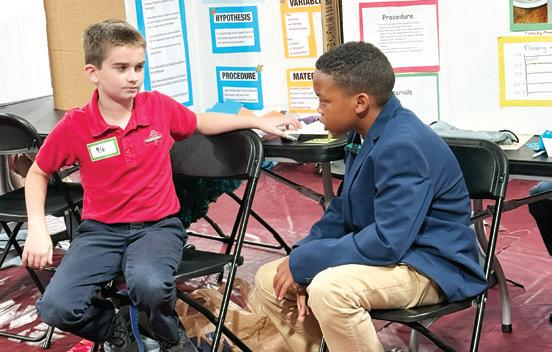
3,280 STUDENTS 385 TEACHERS
CLASS OF 2025


175 GRADUATES $9.2M SCHOLARSHIPS EARNED 34,964 SERVICE HOURS

COGNIA STEM CERTIFIED ANNUNCIATION CATHOLIC SCHOOL – COLUMBUS AND ST. ANTHONY CATHOLIC SCHOOL – MADISON
INTERCULTURAL MINISTRY

• 200 ATTENDEES AT ANNUAL MLK CELEBRATION
• 5 INTERCULTURAL COMPETENCE SESSIONS
• 5 REFLECTION SERVICES HELD
• 8 IMMIGRATION INFO SESSIONS WITH 195 ATTENDEES

4,803 CHILDREN TRAINED 295 ADULTS TRAINED
3,312 BACKGROUND CHECKS







YOUTH ATTENDED SEARCH TO GROW DEEPER IN FAITH 65
MIDDLE SCHOOL STUDENTS ATTENDED ALL HEART RETREAT 130
YOUTH MINISTRY LEADERS ATTENDED REFLECTION RETREAT 20
YOUTH RECEIVED BISHOP CHANCHE SERVICE AWARD 14
PRIESTS



COLLEGES & UNIVERSITIES SERVED 7 CAMPUS VISITS
COLLEGE STUDENTS AND YOUNG ADULTS ATTENDED RETREATS 50
THEOLOGY ON TAP EVENTS INCLUDING 3 TRIVIA ON TAP 12
INTRAMURAL ATHLETES (40 SOFTBALL; 25 KICKBALL; 12 BASKETBALL) 72
PILGRIMAGES (CAMINO DE SANTIAGO - SPAIN & JUBILEE PILGRIMAGE - NATCHEZ
• 240 ATTENDEES AT ANNUAL HIGH SCHOOL CONFIRMATION RETREAT
• 60 ENHANCED MINISTRY SKILLS AT ANNUAL PASTORAL MINISTRIES WORKSHOP
• 8 WORKSHOPS AND ENGAGING KEYNOTE PROVIDED TO 109 ATTENDEES AT FALL FAITH FORMATION DAY
• KEYNOTE ADDRESS TO CATHOLIC EDUCATORS FROM ACROSS THE DIOCESE

DISCERNMENT GROUPS ACROSS 5 LOCATIONS 5 SEMINARY VISITS FOR SERIOUS DISCERNERS 30+ HIGH SCHOOL VOCATIONS CAMP PARTICIPANTS
FAMILY MINISTRY

• 40 COUPLES SERVED THROUGH ENGAGED ENCOUNTER RETREATS
• 12 COUPLES ENHANCED MARRIAGE THROUGH MARRIAGE ENRICHMENT RETREATS
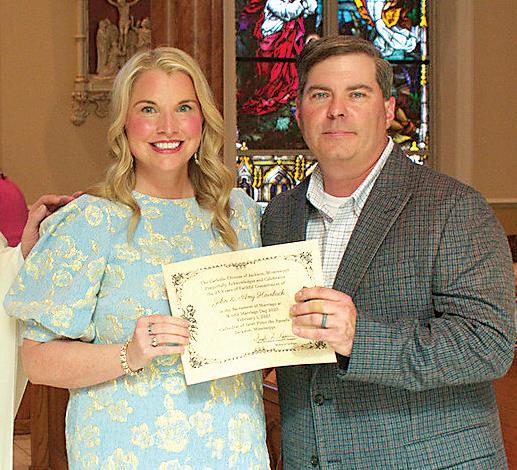
• 91 COUPLES AT 2025 WORLD MARRIAGE DAU CELEBRATIONS, REPRESENTING A COMBINED 3,513 YEARS OF MARRIAGE
• 15 COUPLES TRAINED IN NATURAL FAMILY PLANNING
217,491
MISSISSIPPI CATHOLIC COPIES MAILED
21
DIGITAL EDITIONS 9 SPECIAL EDITIONS


Por obisPo JosePh r. KoPacz, D.D.
Durante el corazón de la temporada de Pascua, celebré mi 49º aniversario del sacerdocio. Desde el santuario de la Catedral de San Pedro en Scranton el 7 de mayo de 1977, hasta el santuario de San Pedro Apóstol en Jackson el 6 de febrero de 2014, hasta este momento presente, he estado atrapado, en palabras del Papa San Juan Pablo II, en este "don y misterio" del sacerdocio de Jesucristo.
De hecho, mi primera celebración de ordenación ocurrió el 23 de abril de 1976, con la llamada al diaconado. Por eso, durante más de 50 años, por la gracia de Dios, he luchado la buena batalla y mantenido la fe, pero aún no he terminado la carrera. Que queden muchos años más en el plan de la providencia de Dios.
De hecho, demos gracias por todos nuestros sacerdotes, pasados y presentes, conscientes de quienes celebran sus aniversarios en esta época del año. ¡Ad multos annos!
La Diócesis de Jackson celebra este fin de semana la ordenación sacerdotal de Will Foggo, quien celebrará su primera misa en St. Paul en Flowood.
Durante la Pascua, la Iglesia también se regocija en el derramamiento del Espíritu Santo en el Sacramento de la Confirmación. Nuestros catecúmenos y candidatos que ingresaron en la Iglesia durante la Vigilia Pascual fueron los primeros en recibir el regalo del espíritu amoroso de Dios, seguidos por candidatos en muchas parroquias de toda la diócesis.
De hecho, los viajes de un obispo a través de su diócesis en la temporada
La
pascual reflejan los viajes misioneros retratados en los hechos de los Apóstoles, cuando los apóstoles y los primeros evangelistas recorrieron todo el mundo mediterráneo para llevar el Evangelio atreves del mundo mediterráneo y fortalecer las primeras comunidades cristianas. La proclamación del Evangelio a las naciones y la santificación de las comunidades existentes y de los creyentes individuales es obra del Espíritu Santo, inicia en Pentecostés y que continúa hasta que Cristo vuelva.
Con Pentecostés en el horizonte, que haya una marea ascendente en nuestro interior para suplicar un derramamiento del Espíritu Santo sobre la Iglesia. Que también conozcamos y comprendamos el poder de la presencia del Espíritu Santo y la pobreza de su ausencia. Estamos invitados por lo tanto a profundizar nuestra relación con el Espíritu Santo, tanto en la oración como en la vida cotidiana, escuchando su voz dentro de nosotros.
"El Espíritu Santo, aliento de Jesús y atmósfera del cielo, es también el aliento de su cuerpo, la Iglesia. Y somos conscientes de su presencia si la Iglesia es ella misma en el sentido completo; es decir, si es el reino de Dios, el cielo desciende a la tierra, por la unidad. Se nos recuerda que, sin el Espíritu Santo, Dios está lejos, Cristo permanece en el pasado, el Evangelio es letra muerta, la Iglesia es una mera organización y la 'misión' es mera propaganda. Pero al estar en el Espíritu Santo, el mundo se glorifica y suplica en la gestación del reino de Dios, el Cristo resucitado está presente, el Evangelio es el poder de la vida, la Iglesia significa comunión trinitaria y la 'misión' es un Pentecostés." (Chiara Lubich, Escritos esenciales) "Ven, Espíritu Santo, llena los corazones de tus fieles y enciende en ellos el fuego de tu amor."
Por Junno arocho esteves
ROMA (OSV News) – El Papa León XIV ha dedicado su intención de oración para el mes de mayo a uno de los retos más persistentes de la humanidad: el hambre.
En un mensaje en video difundido el 30 de abril por la Red Mundial de Oración del Papa, el pontífice hizo un llamado a los católicos de todo el mundo para que enfrenten el problema de la inseguridad alimentaria tanto con la oración como con acciones concretas.
"Hoy reconocemos con dolor que millones de hermanos y hermanas siguen padeciendo hambre, mientras tantos bienes se desperdician en nuestras mesas", dijo el Papa en el video, grabado en el interior de la iglesia de San Pellegrino en la Ciudad del Vaticano. La intención de oración de este mes es: "Por una alimentación para todos".
Se prevé que al menos 318 millones de personas se enfrenten a condiciones de crisis alimentaria o peores este año, según el Panorama Global 2026 del Programa Mundial de Alimentos. La guerra en curso en Oriente Medio podría empujar a otros 45 millones de personas a una situación de hambre grave antes de mediados de año. En 2025, se registraron dos hambrunas en algunas zonas de Gaza y Sudán.
Al mismo tiempo, el Programa de las Naciones Unidas para el Medio Ambiente informa de que cada año se desperdician más de 1.000 millones de toneladas de alimentos en todo el mundo, un contraste que el Papa abordó directamente en su mensaje.
El Papa León hizo un llamado a alejarse de lo que describió como "la lógica del consumo egoísta" y a transformarla en "una cultura de la solidaridad", instando a las comunidades católicas a adoptar
medidas prácticas, como bancos de alimentos, campañas de concientización y estilos de vida más sencillos y responsables.
"Que nuestras comunidades promuevan gestos concretos", dijo el Papa, añadiendo que los creyentes deben abordar cada comida con gratitud, consumir con sencillez y "compartir con alegría", sabiendo que los frutos de la tierra están "destinados a todos, no solo a unos pocos".
La Red Mundial de Oración del Papa, también conocida como Apostolado de la Oración, publica cada mes una intención de oración del Papa como parte de su misión de unir a los católicos en oración por las preocupaciones globales de la Iglesia.
El padre Cristóbal Fones, director de la Red Mundial de Oración del Papa, dijo que la intención es una preocupación profundamente personal para el Papa.
"Esta intención nace del corazón del Papa. Le duele profundamente que tantas personas en el mundo no puedan acceder a algo tan esencial y tan humano como es la comida", dijo el padre Fones en una nota de prensa. "Por eso nos convoca a todos a no quedarnos indiferentes,
sino a actuar con determinación, desde la oración y desde los gestos concretos de solidaridad".
(Courtney Mares es la editora del Vaticano para OSV News. Síguela en X en @catholicourtney.)
En un mensaje en video publicado el 30 de abril de 2026 por la Red Mundial de Oración del Papa, el Papa León XIV hizo un llamado a los católicos de todo el mundo para que enfrenten el problema de la inseguridad alimentaria tanto con la oración como con acciones concretas. La intención de oración del Santo Padre para el mes de mayo es: Por una alimentación para todos. (Captura de pantalla de OSV News/Red Mundial de Oración del Papa)
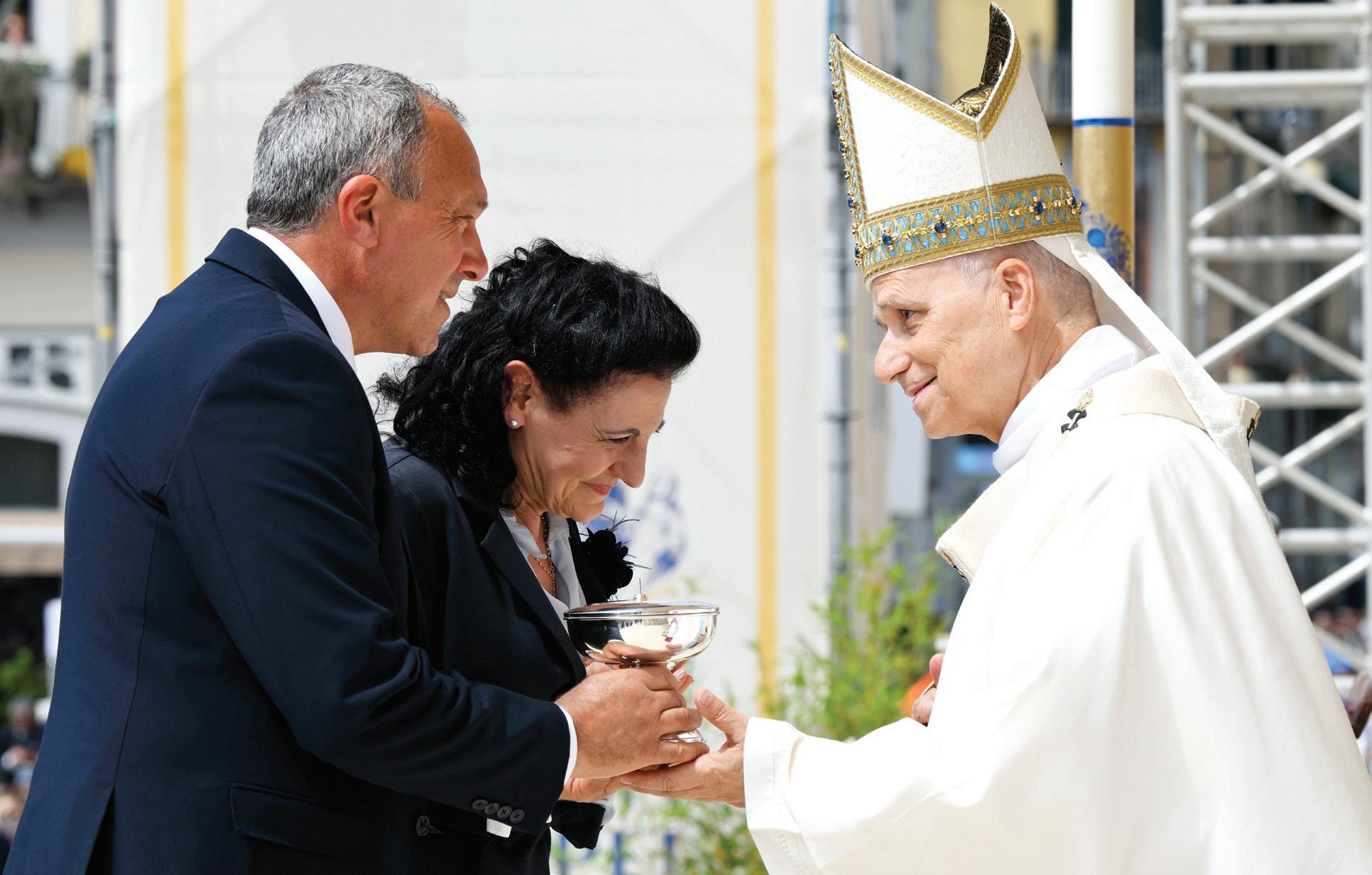
El papa León XIV recibe las ofrendas mientras celebra la misa en la Piazza Bartolo Longo, frente al Santuario Pontificio de la Santísima Virgen del Rosario de Pompeya, cerca de Nápoles (Italia), el 8 de mayo de 2026, en el primer aniversario de su elección como primer pontífice estadounidense. (Foto de OSV News/Simone Risoluti, Vatican Media)
CHICAGO (OSV News) – Una divertida anécdota sobre una llamada al servicio al cliente del papa León XIV está llamando la atención de muchos y ofreciendo a numerosos católicos una visión del lado más cotidiano del pontífice. El padre agustino Tom McCarthy, futuro superior provincial de los agustinos del Medio Oeste, afirmó haberse sorprendido por la reacción que ha suscitado desde que compartió la anécdota en un encuentro para padres e hijos celebrado el 29 de abril en la parroquia de San Pedro y San Pablo, en Naperville, a las afueras de Chicago. Según el padre McCarthy, el ex cardenal Robert Prevost – ahora el papa León XIV – llamó a su banco de Chicago varios meses después de su elección para actualizar su número de teléfono y la información de su cuenta. Después de responder a varias preguntas de seguridad, al papa le dijeron que los cambios no se podían hacer a menos que se presentara en el banco en persona. El padre McCarthy dijo que el papa León explicó que eso sería difícil porque estaba "fuera de la ciudad". Cuando finalmente añadió: "¿Importaría si les digo que soy el papa León?", el representante de servicio al cliente le colgó el teléfono. El asunto se resolvió más tarde después de que un compañero agustino se pusiera en contacto con el presidente del banco, quien accedió a realizar el cambio antes que arriesgarse a perder "la cuenta del papa".
WASHINGTON (OSV News) – Los niños "sufren las peores consecuencias" de las violaciones internacionales a la libertad religiosa, señalaron los panelistas durante una audiencia celebrada el 30 de abril por la Comisión de los Estados Unidos sobre Libertad Religiosa Internacional (USCIRF, por sus siglas en inglés). Vicky Hartzler, presidenta de la USCIRF (una comisión federal gubernamental estadounidense, independiente y bipartidista, que supervisa la libertad religiosa en todo el mundo) y exmiembro republicana de la Cámara de Representantes por el estado de Missouri, declaró que el grupo está "profundamente preocupado por aquellos países donde los gobiernos restringen la educación religiosa e impiden que los niños aprendan o practiquen su fe". "Estas políticas están diseñadas para erosionar la identidad religiosa al impedir que las familias transmitan sus creencias a la siguiente generación", afirmó. En los regímenes de todo el mundo que, según la USCIRF, cometen vio-
laciones contra la libertad de religión o de creencias, "los niños son quienes sufren las peores consecuencias de las violaciones a la libertad religiosa", declaró Hartzler. "Los perpetradores los toman como blanco porque están indefensos, sabiendo que dañar a niñas y niños puede desestabilizar a las familias y a comunidades de fe enteras; las consecuencias son graves", afirmó. "La cohesión social se deteriora. La esperanza en el futuro se desvanece, y la propia supervivencia e identidad de estas comunidades se ven puestas en riesgo".
POMPEYA, Italia (OSV News) – El papa León XIV conmemoró el primer aniversario de su elección el 8 de mayo con una peregrinación al santuario mariano de Nuestra Señora del Santo Rosario en Pompeya, donde encomendó su pontificado a la Virgen María. Al celebrar la misa ante unas 20 000 personas, el papa recordó que su elección en 2025 coincidió con la fiesta de Nuestra Señora de Pompeya. "Por eso tenía que venir aquí para poner mi ministerio bajo la protección de la Santísima Virgen", dijo. El primer año del papa agustino incluyó viajes internacionales, canonizaciones y eventos jubilares. En su homilía, el papa León habló extensamente sobre la importancia del rosario e instó a los católicos a poner su esperanza en Cristo. "Hermanos y hermanas, ningún poder terrenal salvará al mundo, sino solo el poder divino del amor", dijo. El papa León también honró a San Bartolo Longo, el antiguo satanista convertido en santo que fundó el santuario mariano y sus obras de caridad para huérfanos e hijos de presos. El papa concluyó con un renovado llamamiento a la paz en medio de los conflictos globales en curso. Tenía previsto continuar su visita pastoral con un viaje a la cercana ciudad de Nápoles antes de regresar a Roma en helicóptero por la tarde.
VARSOVIA, Polonia (OSV News) – Un santuario mariano en Gietrzwald – conocido a menudo como el "Lourdes polaco"– podría atraer pronto la
15 de mayo de 2026
atención mundial, ya que se ha invitado al papa León XIV a visitar el lugar donde, según se dice, la Virgen María se habría aparecido unas 160 veces. Al entrar la Iglesia en mayo, el mes mariano, se están llevando a cabo los preparativos para el 150.º aniversario de las apariciones de 1877. Los obispos polacos y el presidente Karol Nawrocki han extendido la invitación papal, lo que ha despertado la esperanza de que se produzca un gran momento de peregrinación. Las apariciones, vividas por dos niñas, se encuentran entre las más intensas de la historia de la Iglesia, y es el único lugar de apariciones marianas en Polonia reconocido por el Vaticano. A diferencia de Lourdes o Fátima, incluyeron conversaciones prolongadas con María. "Ese es un aspecto único", dijo el cineasta Jan Sobierajski. El mensaje de María se centró en la oración y la conversión: "Recen el rosario todos los días", dijo la hermana Anna Wojciechowska, añadiendo la seguridad de María: "No tengan miedo, porque yo siempre estaré con ustedes". La historia de Gietrzwald es inseparable de las dos jóvenes videntes que la protagonizan: Bárbara Samulowska y Justyna Szafrynska. Ambas eran niñas –Samulowska tenía solo 12 años–cuando afirmaron haber visto a la Virgen María. En marzo, la Iglesia reconoció las virtudes heroicas de la hermana Bárbara, otorgándole el título de venerable y avanzando en su causa de canonización.
DEBEL, Líbano (OSV News) – Una foto en la que se ve a un soldado israelí que parece profanar una estatua de la Virgen María en el Líbano ha desatado una nueva ola de indignación por los incidentes anticristianos vinculados al actual conflicto regional. La imagen, compartida en línea el 6 de mayo, parece mostrar a un soldado de las Fuerzas de Defensa de Israel (FDI) acercando un cigarrillo a la boca de una estatua mariana. El portavoz de las FDI, el teniente coronel Nadav Shoshani, condenó el acto, afirmando que el comportamiento del soldado "se desvía por completo de los valores que se esperan" del personal militar. Dijo que el incidente, que según se informa fue fotografiado semanas antes en la aldea libanesa de Debel, está siendo investigado. La controversia se produce tras otro incidente reciente en la misma zona en el que un soldado fue fotografiado golpeando una estatua de Jesús con el lado romo de un hacha. El Ministerio de Relaciones Exteriores de Polonia criticó duramente el último episodio, afirmando que tales acciones ofenden los sentimientos religiosos de los cristianos y socavan los esfuerzos de paz en el Medio Oriente. El incidente también se produce días después de que un colono israelí fuera acusado de agredir a una monja francesa cerca del Cenáculo en Jerusalén, tradicionalmente venerado como el lugar de la Última Cena.
Síganos en Facebook:
@DiócesisCatólicadeJackson Únase a lista de correos electrónicos Mande un texto: MSCATHOLIC a 84576
LÍNEA DIRECTA DE PREVENCIÓN DE FRAUDE
El Departamento de Asuntos Temporales de la Diócesis de Jackson ha contratado a Lighthouse Services para proporcionar una línea directa anónima de fraude financiero, cumplimiento, ética y recursos humanos. Esta línea directa permite un método adecuado para reportar sucesos relacionados con la administración temporal dentro de parroquias, escuelas y la oficina de cancillería. www.lighthouse-services.com/ jacksondiocese
Hispanohablante USA: 800-216-1288
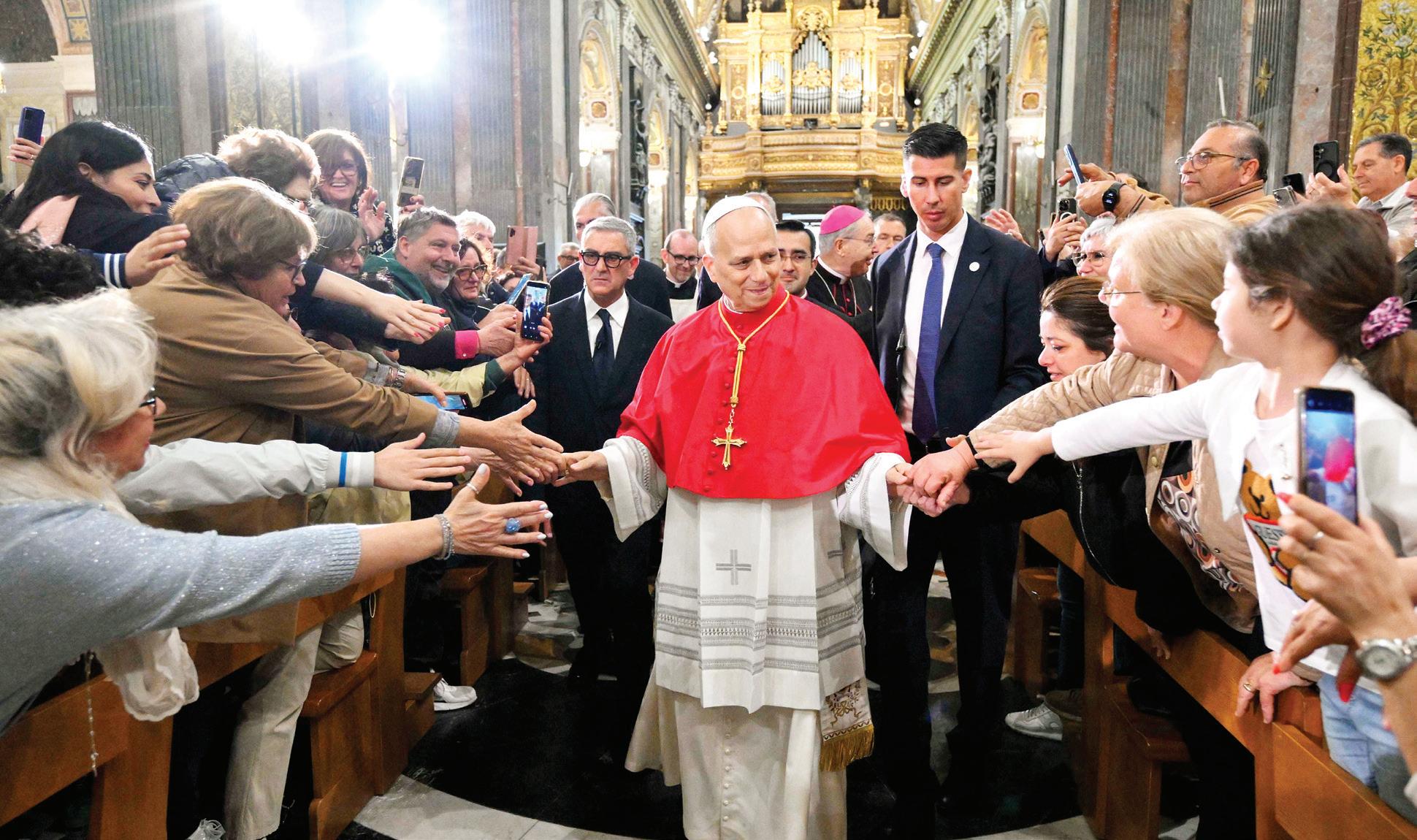
Pope Leo XIV greets people as he arrives at the Pontifical Shrine of the Blessed Virgin of the Rosary of Pompeii near Naples, Italy, before celebrating Mass in the piazza outside May 8, 2026, on the first anniversary of his election as the first American pontiff. He visited 400 sick and disabled people inside the shrine. (OSV News photo/Mario Tomassetti, Vatican Media)
WASHINGTON (OSV News) – President Donald Trump on May 5 continued his series of social media and verbal attacks on Pope Leo XIV, accusing him in a radio interview of “endangering” Catholics through his opposition to the Iran war. Trump claimed in an interview that aired May 5 with Hugh Hewitt, a conservative talk radio host, that “the pope would rather talk about the fact that it’s okay for Iran to have a nuclear weapon.” Trump has repeatedly claimed that the U.S.-born Pope Leo supports Iran having nuclear weapons; however, the pontiff never made any such statement and has consistently called for the rejection of nuclear weapons. The president accused the pontiff of “endangering a lot of Catholics and a lot of people” by opposing the war with Iran. Pope Leo has been a staunch critic of war generally, including those initiated by the U.S. and Israel against Iran on Feb. 28. In comments May 5 to journalists in Castel Gandolfo, Italy, Pope Leo said that ever since his election, “I said, ‘Peace be with you,’ and the Church’s mission is to preach the Gospel, to preach peace.” He said, “If anyone wishes to criticize me for proclaiming the Gospel, let them do so with the truth. The Church has spoken out for years against all nuclear weapons, so there is no doubt about this, and I simply hope to be heard for the sake of the Word of God.”
CHICAGO (OSV News) – A lighthearted story about a customer service call from Pope Leo XIV is drawing widespread attention and offering many Catholics a glimpse of the pope’s ordinary side. Augustinian Father Tom McCarthy, the incoming provincial superior of the Midwest Augustinians, said he has been surprised by the reaction since sharing the anecdote at an April 29 gathering for fathers and sons at Sts. Peter and Paul Parish in Naperville, outside Chicago. According to Father McCarthy, the former Cardinal Robert Prevost – now Pope Leo XIV – called his Chicago bank several months after his election to update his phone number and account information. After answering multiple security questions, the pope was reportedly told the changes could not be made unless he appeared at the bank in person. Father McCarthy said Pope Leo explained that would be difficult because he was “out of town.” When he finally added, “Would it matter if I tell you I’m Pope Leo?” the customer service representative hung up on him. The issue was later resolved after
a fellow Augustinian contacted the bank president, who agreed to make the change rather than risk losing “the account of the pope.”
POMPEII, Italy (OSV News) – Pope Leo XIV marked the first anniversary of his election May 8 with a pilgrimage to the Marian Shrine of Our Lady of the Holy Rosary in Pompeii, entrusting his pontificate to the Virgin Mary. Celebrating Mass before an estimated 20,000 people, the pope recalled that his election in 2025 coincided with the feast of Our Lady of Pompeii. “I therefore had to come here to place my ministry under the protection of the Blessed Virgin,” he said. The Augustinian pope’s first year included international trips, canonizations and Jubilee events. In his homily, Pope Leo spoke at length about the importance of the rosary and urged Catholics to place their hope in Christ. “Brothers and sisters, no earthly power will save the world, but only the divine power of love,” he said. Pope Leo also honored St. Bartolo Longo, the former Satanist turned saint who founded the Marian shrine and its charitable works for orphans and prisoners’ children. The pope closed with a renewed appeal for peace amid ongoing global conflicts. He was scheduled to continue his pastoral visit with a trip to the nearby city of Naples before returning to Rome by helicopter in the evening.
WARSAW, Poland (OSV News) – A Marian sanctuary in Gietrzwald – often called the “Polish Lourdes” – could soon draw global attention, as Pope Leo XIV has been invited to visit the site where the Virgin Mary reportedly appeared about 160 times. As the Church enters May, the Marian month, preparations are underway for the 150th anniversary of the 1877 apparitions. Polish bishops and President Karol Nawrocki have extended the papal invitation, raising hopes of a major pilgrimage moment. The appari-
tions, experienced by two young girls, are among the most intense in Church history – and Poland’s only Vatican-recognized Marian apparition site. Unlike Lourdes or Fatima, they included extended conversations with Mary. “That’s a unique aspect,” filmmaker Jan Sobierajski said. The message from Mary centered on prayer and conversion: “Pray the rosary every day,” Sister Anna Wojciechowska said, adding Mary’s assurance: “Do not be afraid, for I will always be with you.” The story of Gietrzwald is inseparable from the two young visionaries at its center: Barbara Samulowska and Justyna Szafrynska. Both were children – Samulowska was just 12 years old – when they reported seeing the Virgin Mary. In March, the Church recognized the heroic virtues of Sister Barbara, granting her the title venerable and advancing her sainthood cause.
DEBEL, Lebanon (OSV News) – A photo showing an Israeli soldier appearing to desecrate a statue of the Virgin Mary in Lebanon has sparked renewed outrage over anti-Christian incidents tied to the ongoing regional conflict. The image, shared online May 6, appears to show an Israel Defense Forces soldier holding a cigarette to the mouth of a Marian statue. IDF spokesman Lt. Col. Nadav Shoshani condemned the act, saying the soldier’s behavior “completely deviates from the values expected” of military personnel. He said the incident, reportedly photographed weeks earlier in the Lebanese village of Debel, is under investigation. The controversy follows another recent incident in the same area in which a soldier was photographed striking a statue of Jesus with the blunt side of an axe. Poland’s foreign ministry sharply criticized the latest episode, saying such actions offend Christians’ religious sentiments and undermine peace efforts in the Middle East. The incident also comes days after an Israeli settler was charged in the assault of a French nun near the Cenacle in Jerusalem, traditionally revered as the site of the Last Supper.
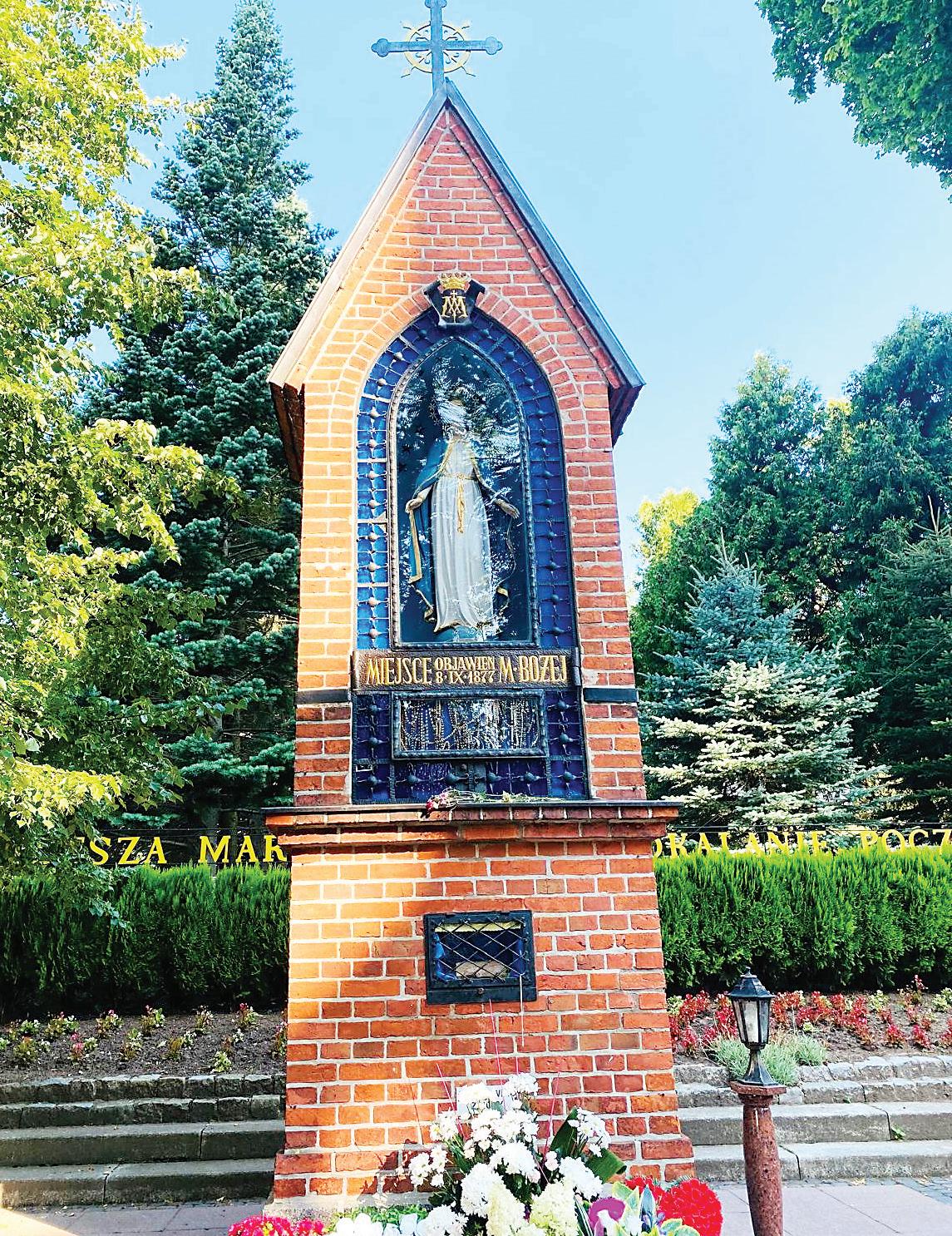
The site of Marian apparitions in 1877 in Gietrzwald, Poland, is seen in a 2022 photo. Two young visionaries reported the Virgin Mary appeared to them some 160 times over the course of two months. The Marian sanctuary in the Polish village of Gietrzwald is the only Vatican-recognized apparition site in the country. (OSV News photo/Paulina Guzik)
By Mary WoodWard
These past few weeks, I have been working on our upcoming ordination liturgies. Deacon Will Foggo will be ordained Saturday, May 16 in the Cathedral of St. Peter in Jackson. On July 18, Bishop Kopacz will ordain seven permanent deacons in the Cathedral, as well. Ordinations are beautiful liturgies and I invite you all to come and witness them in person or if you cannot make it in person, pray for these new ordinands.
Reflecting on May as the traditional month for priestly ordinations, I am rerunning a previous article on our diocesan bishops and the interconnectedness of dioceses in our region. I have updated it with more current information.
Our diocese was the 13th diocese established in the United States on July 28, 1837. Nashville and Dubuque were established the same day, but we claim pride of place due to strategic location and age.
We have a unique communion with three venerable and historic archdiocesan sees – Baltimore, the primal see of the U.S.; New Orleans, our first metropolitan provincial see; and Mobile, our metropolitan see, where Mass was first celebrated in 1703.
Bishop John Joseph Chanche (1) and Bishop William Henry Elder (3) are natives and products of Baltimore both being ordained bishops in Assumption Cathedral there in 1841 and 1857. Bishop James Oliver Van de Velde (2) was ordained a priest in Baltimore in 1827.
In 1852, Bishop Chanche ordained Francis Xavier Leray a priest in Natchez. Leray went on to become Archbishop of New Orleans in 1883. Bishop Elder, in 1859, was co-consecrator of John Quinlan, second bishop of Mobile, and Dominic Manucy in 1874, who went on to become third bishop of Mobile.
Bishop Francis Janssens (4) was elevated to Archbishop of New Orleans in 1888 and was principal consecrator of Bishop Thomas Heslin (5) in St. Louis Cathedral in New Orleans in 1889. Prior to being ele-
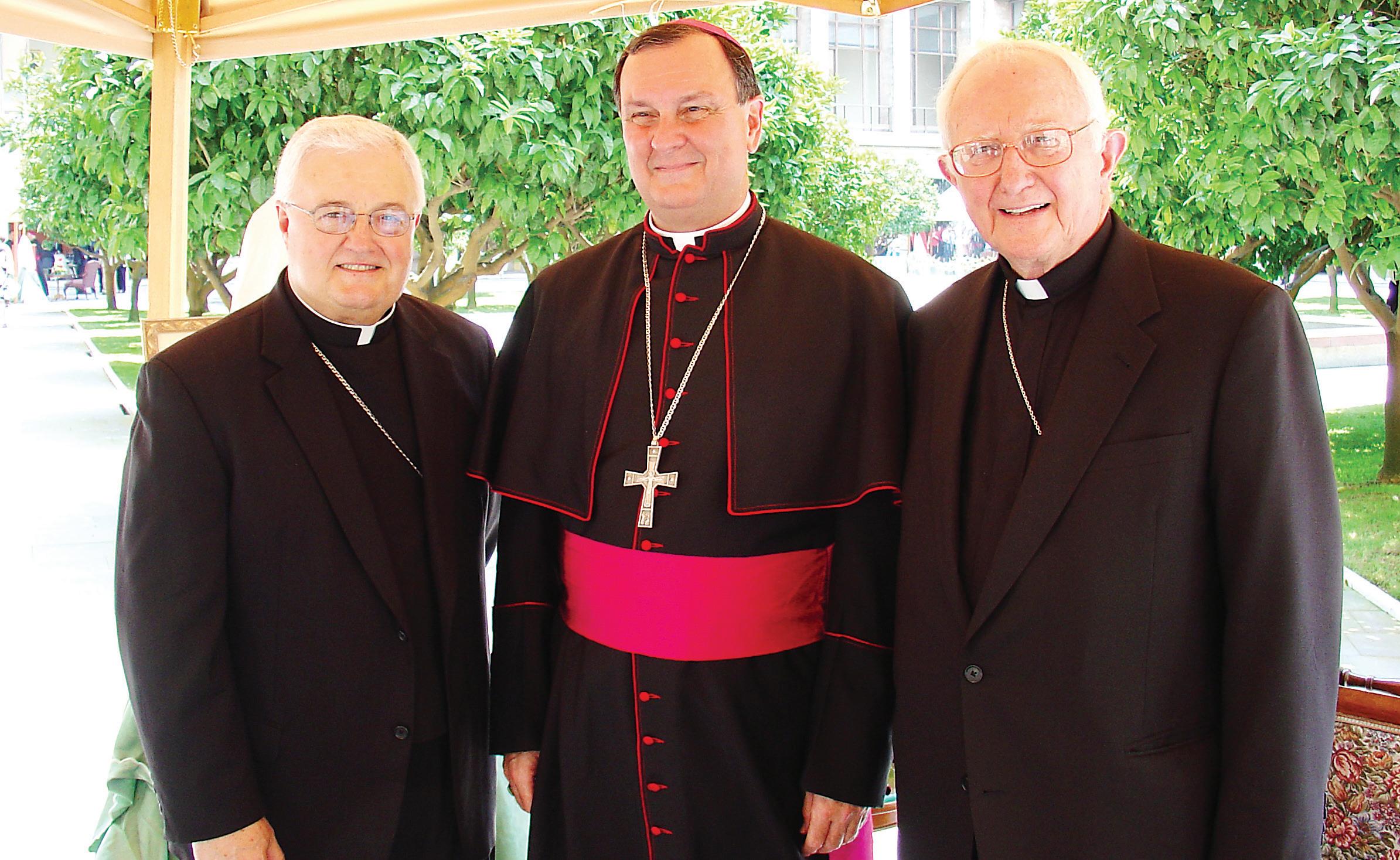
ROME – Bishop Joseph Latino, Archbishop Thomas Rodi, and Bishop William Houck pose for a photo at the North American College’s reception for new archbishops following the Pallium Mass on June 29, 2008, in Rome. Bishops Latino and Houck travelled to Rome in support of Archbishop Rodi receiving his pallium from Pope Benedict XVI. (Photo by Mary Woodward)
vated to bishop, Bishop Heslin was ordained a priest in the Cathedral Basilica of the Immaculate Conception in Mobile by Bishop John Quinlan in 1869.
Bishop Quinlan added the portico to the Mobile cathedral and is buried under it instead of in the crypt chapel. He will be able to see his portico again on the day of the resurrection of the dead when his tomb is opened.
In 1890, Bishop John Edward Gunn (6) was ordained a priest in Rome by the Latin Patriarch of Constantinople, which has nothing to do with the current thread, but I thought it was an interesting fact. In 1911, Bishop Gunn was ordained a bishop in Atlanta in Sacred Heart Church, which he built. Two of his three consecrating bishops were Archbishop James Hubert Blenk, Archbishop of New Orleans and fellow Marist, and Bishop Edward Allen of Mobile.
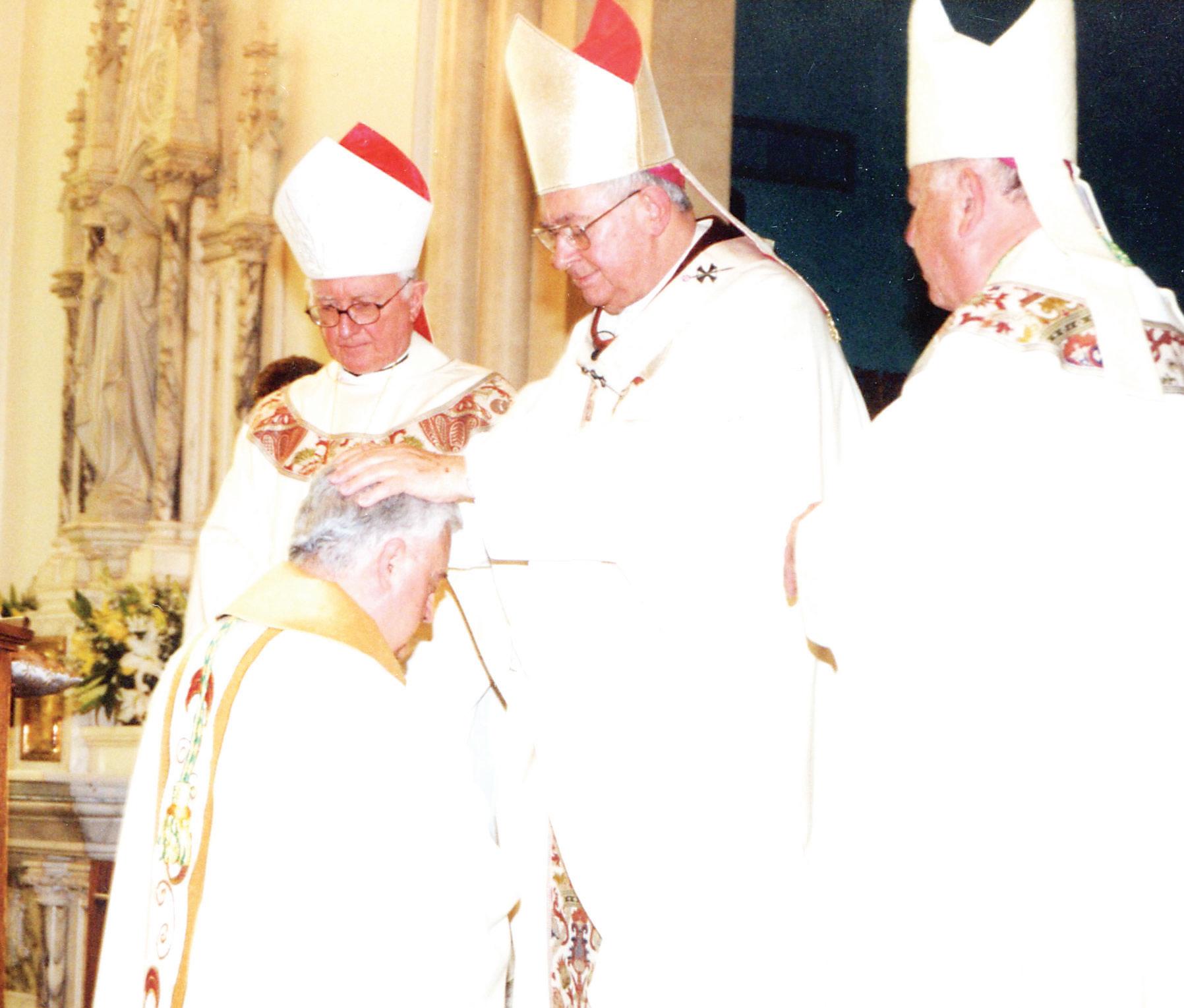
Bishop Richard Oliver Gerow (7) was born and raised in Mobile being baptized, confirmed, and in 1924 ordained a bishop in the Cathedral there by Bishop Allen. In 1927, Bishop Gerow was a co-consecrator of Archbishop Thomas Joseph Toolen of Mobile. Thirty years later, Bishop Gerow was principal consecrator of Vicksburg native, Joseph Bernard Brunini (8) in our Cathedral of Saint Peter the Apostle in Jackson. It was a co-cathedral then.
Bishop Brunini was a co-consecrator Bishop Joseph Lawson Howze as auxiliary of
Jackson in 1973. Bishop Howze was a native of the Mobile area in Daphne and went on to become the first bishop of Biloxi when it was established in 1977.
Bishop William Russell Houck (9), a native of Mobile, was ordained a priest in the Mobile Cathedral in 1951. Another interesting aside, Bishop Houck was ordained a Bishop on May 27, 1979, in Rome by St. Pope John Paul II in a group of 27 bishops ordained that day.
New Orleans native, Bishop Joseph Nunzio Latino (10) was ordained a priest in St. Louis Cathedral in New Orleans by Archbishop John Cody in 1963. Forty years later, he was ordained a bishop in our cathedral by Archbishop Oscar H. Lipscomb of Mobile. Bishop Houck served as a co-consecrator.
Bishop Joseph Richard Kopacz (11) was ordained a bishop in our cathedral in 2014 by Archbishop Thomas J. Rodi, archbishop emeritus of Mobile and native of New Orleans. Bishop Latino served as co-consecrator.
Archbishop Mark S. Rivituso, our new metropolitan of Mobile, barring any unforeseen circumstances, will be ordaining and installing our next bishop (12) – whenever that time comes. Archbishop Rivituso, a native of St. Louis, was ordained a priest by Archbishop John May, who for a time served as bishop of Mobile (1969-80).
Well, that was a whirlwind of trails and tributaries surrounding the episcopal lineage of our region that gives a glimpse of the extraordinary interconnectedness of our bishops and dioceses. Even more, it is a microcosm of apostolic succession.
All this revelation of Catholic chronicles springs forth from memories of ordinations past inspired by the month of May. Pray for our clergy and think about coming to one of the upcoming celebrations.
(Mary Woodward is Chancellor and Archivist for the Diocese of Jackson.)
By Father anthony D. anDreassi
In this continuing series on the origins of Catholicism in the 50 states, the story now turns to the lower South and the states of Florida, Georgia, Alabama and Mississippi. What began as a fragile missionary presence with the Spanish and French would only gradually develop into a more established Church.
Catholic roots in Georgia reach back well before the English colonies, to the era of Spanish mission activity along the southeastern coast.
Nearly two decades before the pilgrims landed at Plymouth, Franciscan missionaries left Spain to evangelize and minister to the Indigenous peoples of the region. Living among the Guale along the Georgia coast, they preached the Gospel and celebrated the sacraments, while insisting on Christian norms of marriage in contrast to the practice of polygamy.
Their faithfulness brought them into conflict with local leaders, and in September 1597, five friars were killed, in part for upholding Church teaching against polygamy. Recognized now as the Georgia Martyrs, these brave missionaries are set for beatification on October 31 of this year, and their witness stands as the earliest chapter in the Catholic story of Georgia.
The creation of the Diocese of Charleston in 1820, encompassing the Carolinas and Georgia, underscored how limited Catholic life remained in the region. In Georgia, the first parish, Most Holy Trinity in Augusta, had been founded only a decade earlier.
Moving down the coast to Florida, the Catholic story begins earlier than anywhere else in what would become the United States. Spanish expeditions in the first half of the sixteenth century sought to es-
tablish colonies, but a lasting presence only came in 1565 with the founding of St. Augustine, the first permanent European settlement in what is now the United States.
There, the mission of Nombre de Dios was established with a secular priest as its first pastor. The missionary impulse quickly expanded, leading to the founding of the first Catholic hospital in 1598 and a Franciscan seminary in 1605. In 1606, Bishop Juan de las Cabezas de Altamirano of Cuba became the first bishop to set foot in territory that would one day be part of the United States.
As was true in most other places in the Americas, missionary life was often difficult in what would become the state of Florida. At times, Mass could not be celebrated for months due to the lack of bread or wine. Yet the work continued.
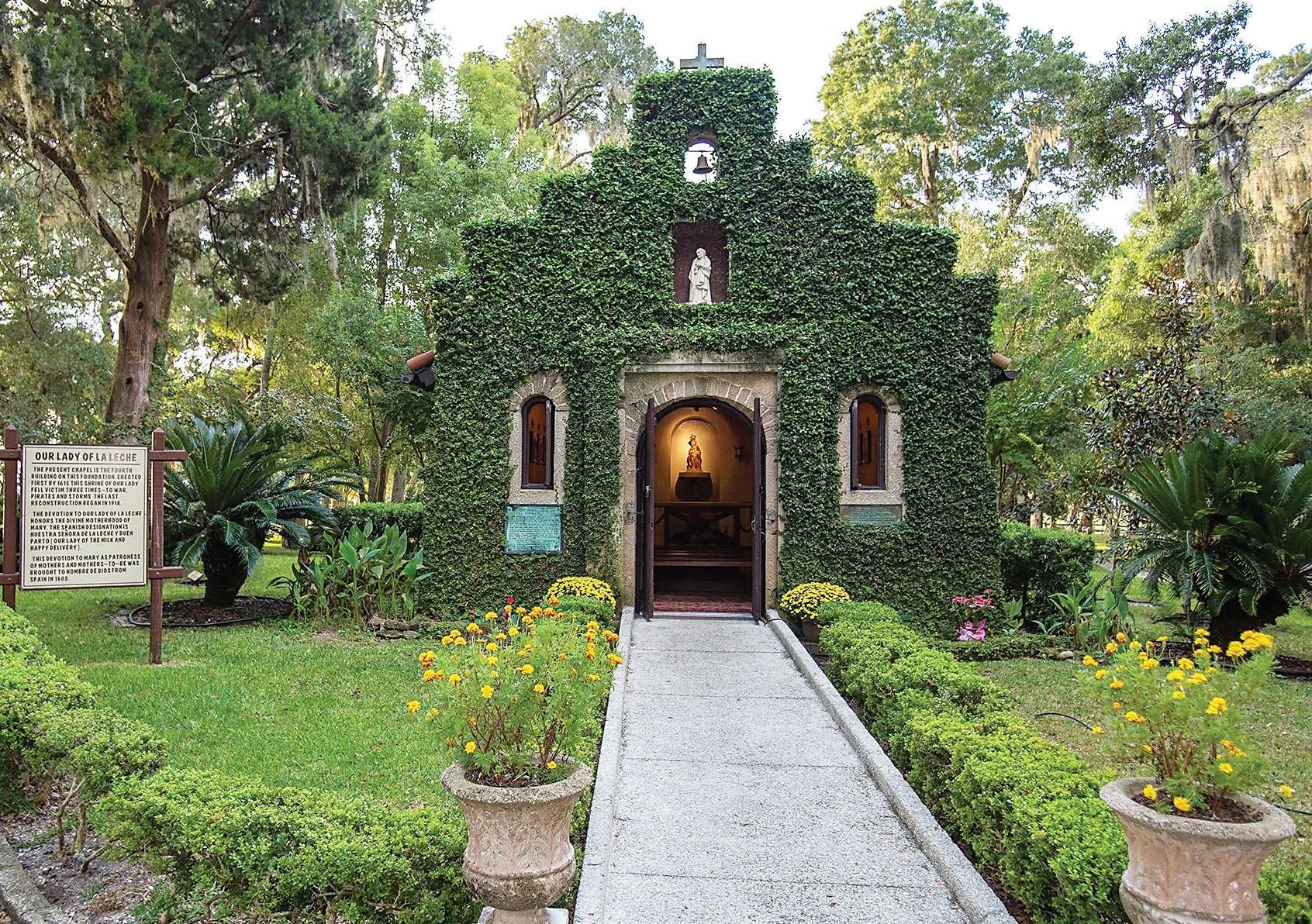
A Franciscan missionary who arrived in 1595 labored among the coastal Timucua and produced a grammar and dictionary of their language, aiding the spread of the faith.
Over the centuries, as colonial control shifted, the Church in Florida was administered in various ways, often under bishops in Cuba and elsewhere, until 1870, when the Diocese of St. Augustine was established to encompass the entire state. Today, with its rapid growth in the twentieth century, Florida is home to seven dioceses serving a diverse Catholic population of over 1.9 million.
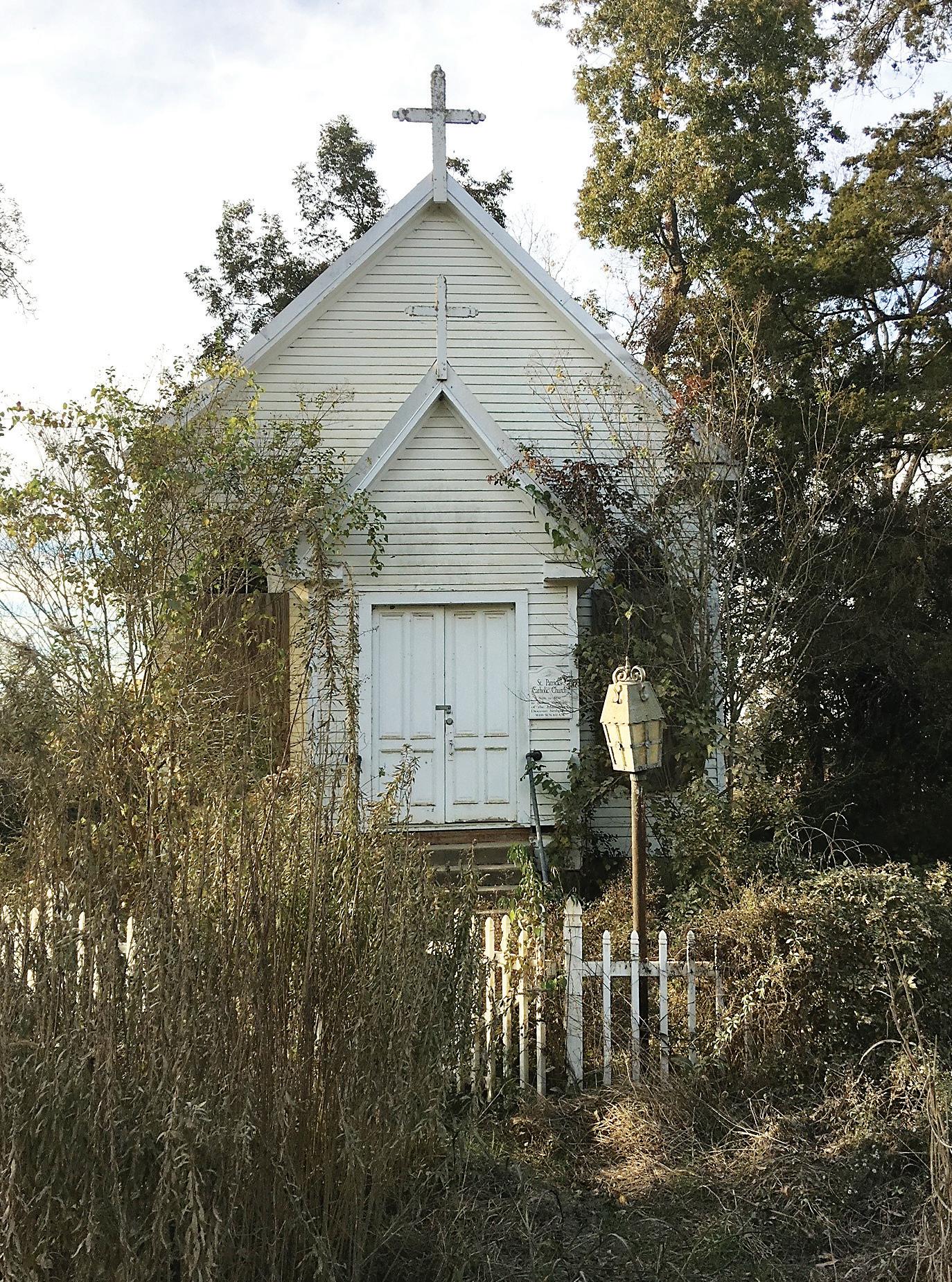
Moving west along the Gulf Coast, the Catholic story in Alabama began to take shape in the early eighteenth century, when much of the Mississippi Valley, including present-day Alabama, formed part of the French Empire.
The first parish was established in Mobile in 1703, with Father Henri Roulleaux de La Vente, a priest from the Diocese of Bayeux in France, serving as its first pastor after arriving by way of Canada.
In these early years, Mass and other sacraments were celebrated in the chapel of Fort Louis until a parish church was built outside the fortifications in 1708.
For much of the next century and a half, Catholic life remained largely confined to the Gulf Coast, with limited expansion inland. A more stable institutional footing came in 1829 with the establishment of the Diocese (today Archdiocese) of Mobile.
For much of the nineteenth and twentieth centuries, Alabama remained overwhelmingly Protestant, and Catholic growth was slow. Parishes gradually spread inland, with foundations in Tuscaloosa in 1844 and Birmingham in 1872 marking that expansion. In recent decades, however, the rise of the Sun Belt and immigration from outside the United States have strengthened the Church’s presence, and today about 6.8 percent of Alabamians are Catholic.
Just to the west, Mississippi presents a closely related but distinct chapter in the Catholic story of the Gulf South. Catholic beginnings in Mississippi date to 1682, when French explorers descended the river to its mouth and claimed the region for France, accompanied by Father Zenobius Membré, an Augustinian Recollect, who celebrated what is likely the first recorded Mass in what would become the nation’s twentieth state.
French settlement followed in 1699 at Old Biloxi, where priests ministered to the first European colonists. Missionary work quickly extended to Native peoples, where a chapel was built among the Houma, and Father Jacques Gravier performed what is likely the first recorded baptism in Mississippi.
In 1779, control of the region passed to Spain, and in 1788, a church dedicated to the Holy Savior was built in Natchez, on the site where St. Mary Basilica stands today. Despite this early foundation, Catholic life remained fragile. By the time Pope Gregory XVI established the Diocese of Natchez (today Jackson) in 1837, encompassing the entire state, there was not a single Catholic church or resident priest, and the first bishop named to the see declined the appointment.
Stability came only in 1841, when John Joseph Chanche of Baltimore accepted the role, becoming the first bishop to establish a lasting Catholic presence in Mississippi.
Like neighboring Alabama, Mississippi has seen significant Catholic growth in recent decades, and today about 110,000 Catholics are served by the Dioceses of Jackson and Biloxi.
The Catholic story of the lower South reflects a long journey from mission to a mature presence. Early efforts by Spanish and French missionaries laid foundations that would only slowly develop into a stable Church. Today’s growing Catholic communities stand as a testament to that enduring, if often overlooked, history.
(Father Anthony D. Andreassi, a priest of the Brooklyn Oratory of St. Philip Neri, holds a doctorate in history from Georgetown University. His research and writing have focused on the American Catholic community. He is on the staff of the Oratory parishes of Assumption and St. Boniface in Brooklyn, New York.)
BY SISTER ALIES THERESE
At breakneck speed, Kenyan runner Sabastian Sawe completed the London Marathon in 1:59:30, becoming the first person to finish the 26-mile trek in under two hours. Closely behind was Ethiopian runner Kejelcha, just 11 seconds later. That is traveling one mile in 4:33, 26 times! Seriously moving, those fellas put a new stamp on the word – traveling Birds travel, butterflies travel, glaciers travel and indeed people travel. I have a friend, soon to be 80, who wants us to do Route 66! Why not, you ask? Well, she lives far away and would have to travel a considerable distance before we could even begin. Anyway, Route 66, being a famous road with sites and motels, food and people, has welcomed travelers for years. A secular sort of pilgrimage. A good icon for that might be the original drawing of Winnie-the-Pooh (on sale for $12,000) tracking the Woozles all over the place. (He will be 95 this year. Oh my.)





Historically, we know of those who traveled under duress – on the Trail of Tears or the long trek of slavery. People ripped from their former lives and forced into another, miles from home. Think too of the troubles of travel – bandits, wrecks and weather. Our journeys are not all that easy, even when we don’t seem in harm’s way.
There are also other kinds of traveling – disease, for example. We go one day from being quite well to having broken bones, a tumor or the flu. Indeed, one of the most pernicious diseases that causes us to travel from well-being into uncertainty is dementia. It is even called a disease of progression and is, no doubt, a di cult trip not only for the traveler, but for friends and family close by.



There are lots of variations in travel, as you well know. For example, being caught in tra c – moving and not moving, i.e., stranded – long lines at the airport or even being stuck in a grocery line behind people with long questions or a new checker.


How many times have you been stuck? Your inner life feels empty, your home life is boring and you are going nowhere. Or, on the other hand, with some excitement, consider graduation, the NFL draft or entering a monastery! All these cause us to go from one place, one kind of life, into another that is only vaguely familiar. We learn the rules of the road – a Green Book of sorts – and begin to be transformed by our new way of life, at least if we stay long enough … or maybe we move on. Perhaps we will travel the road to St. James?
BY LUCIA A. SILECCHIA






When we read, we travel. When we pray, we travel. When we write, create art or music or when we imagine, we travel. What takes you from one place to another? Well, a truck, a cart, a horse or a car moves us forward, but many in our world today are traveling away from war and violence in tiny boats or struggling to walk on foot. If you have ever been near the border, say south of Tucson, you might have noticed something thrown away, hidden in bushes and trees – traveling clothes discarded, especially shoes, often those of small children. One must realize that the only way people are moving toward safety and some sort of economic or social improvement away from violence is by traveling on foot. I can’t even walk to the DG to get a bottle of milk. How far, you ask? Well, maybe 10 blocks or so … ugh.
Finally, a woman named Melissa Lucio has been on death row – a horrid place to travel to – in Texas for 17 years and four years ago was to be executed. However, she received a stay after the trial judge recommended overturning her conviction and death sentence. There is a long travel from cell to death chamber … and indeed from guilty to innocent! However, here is the question: Why is she still there? She is in the hands of the Texas Court of Criminal Appeals, and they will decide whether to accept the judge’s recommendation and overturn her wrongful conviction and death sentence. Why has it taken them four years, to date, to reach a favorable decision? Their traveling seems ever so slow …


Traveling is also a favorite advertisement for most new cars and uses the beauty of America on wide-open roads, or a flight to Paris, or that moon shot and back to entice us to move from the comfortable zones where we consider ourselves safe and in place, to explore the universe God has so generously created. In the Hebrew Bible we discover the long trek of the Israelites – 40 years of wandering in the desert, looking for a promised land. A journey that could have been traveled on foot in about 11 days took 40 years. There are plenty of Scriptural references to traveling, but my favorites are the flight into Egypt with the tiny Child, the walk to Emmaus and the care of the Good Shepherd who walks with us, leads us and brings us to safety.

As you plan your vacation, travel sports event or visit to Granny in Maine, remember our lives are one long walk to Emmaus, one pilgrim adventure after another toward our final place of welcome. We need to pay attention, however, to what St. Gregory the Great had to say about travelers: “Don’t be a foolish traveler, distracted by the pleasant meadows you are passing and forgetting where you are going.”
I had a novice mistress once who frequently said, “Be a constant and joyful companion on the journey.” Here is our opportunity, as we travel together with Jesus, to comfort and console, to be a source of cheer and joy and to be attentive to our odometer as it clocks up the miles.
Happy trails … blessings.
(sister alies therese is a canonical hermit who prays and writes.)
As April exploded into the exuberance of a long-awaited spring, many welcomed her arrival with great joy.
Truly, the glory of Easter, buds bursting from their hiding places, ever brighter evenings and the return of birds and butterflies are all great signs of good things to come. After what was, for much of the country, an extra-cold winter, the coming of spring seems particularly appreciated.
April also heralds the arrival of a new baseball season.
This occasion is neither a liturgical event nor a wonder of nature. It is fanatically observed by some, unnoticed by others, and a mystery to others. With post-season games lengthening the baseball season long into the fall, Opening Day seems to have arrived very quickly for some, while others lament that it has taken so long to arrive.
Yet, when a new season begins – for baseball or, indeed, for any other sport –there is a feeling like no other that also has something to teach about life.
There is a wonderful sense that anything is possible in the months ahead. As the season begins, no team has yet fallen behind. No players have yet been injured. The hope of being a World Series champion seems possible in a way that it does not after the season moves on and standings start to settle.
More importantly, the past does not seem to matter. The errors, missed chances and wasted opportunities of last season are left behind and injuries have had several months to heal. As someone who roots loyally for a team that consistently pulls defeat from the jaws of victory, the ability to put last season behind is a refreshing reset.
Perhaps there is something to be learned about life from America’s favorite pastime.
The willingness to start anew and to let go of the past is a challenge and a blessing that God gives us each day, indeed, each moment of our lives.
Like a baseball team rebounding from a bad year, we all have the chance to look forward to the future and not only to the past. Certainly, there is always much to learn from past mistakes and bad judgement. Certainly, there is much we can do to make tomorrow better than yesterday. But in the constant care of a loving God, we can, like the teams we root for, start anew – not merely once a year, but anytime.
Crowds of fans may not cheer when we succeed. Headlines will not proclaim our victories. Championship rings and celebratory parades will not be ours. Indeed, for many of us, the pasts we leave behind and the new beginnings we forge for the future may be known only to ourselves and to God.
And that is good. For we have a far better hope in a God who promises that “whoever is in Christ is a new creation: the old things have passed away; behold, new things have come.” (2 Cor. 5:17) What better time than this Easter season to celebrate that all is new, that what is old has passed away and that the new has come!
To my favorite team, good luck!
To my sisters and brothers, may you be blessed with many new beginnings every day of your ordinary times.
(Lucia A. Silecchia is Professor of Law at the Catholic University of America’s Columbus School of Law. Email her at silecchia@cua.edu.)

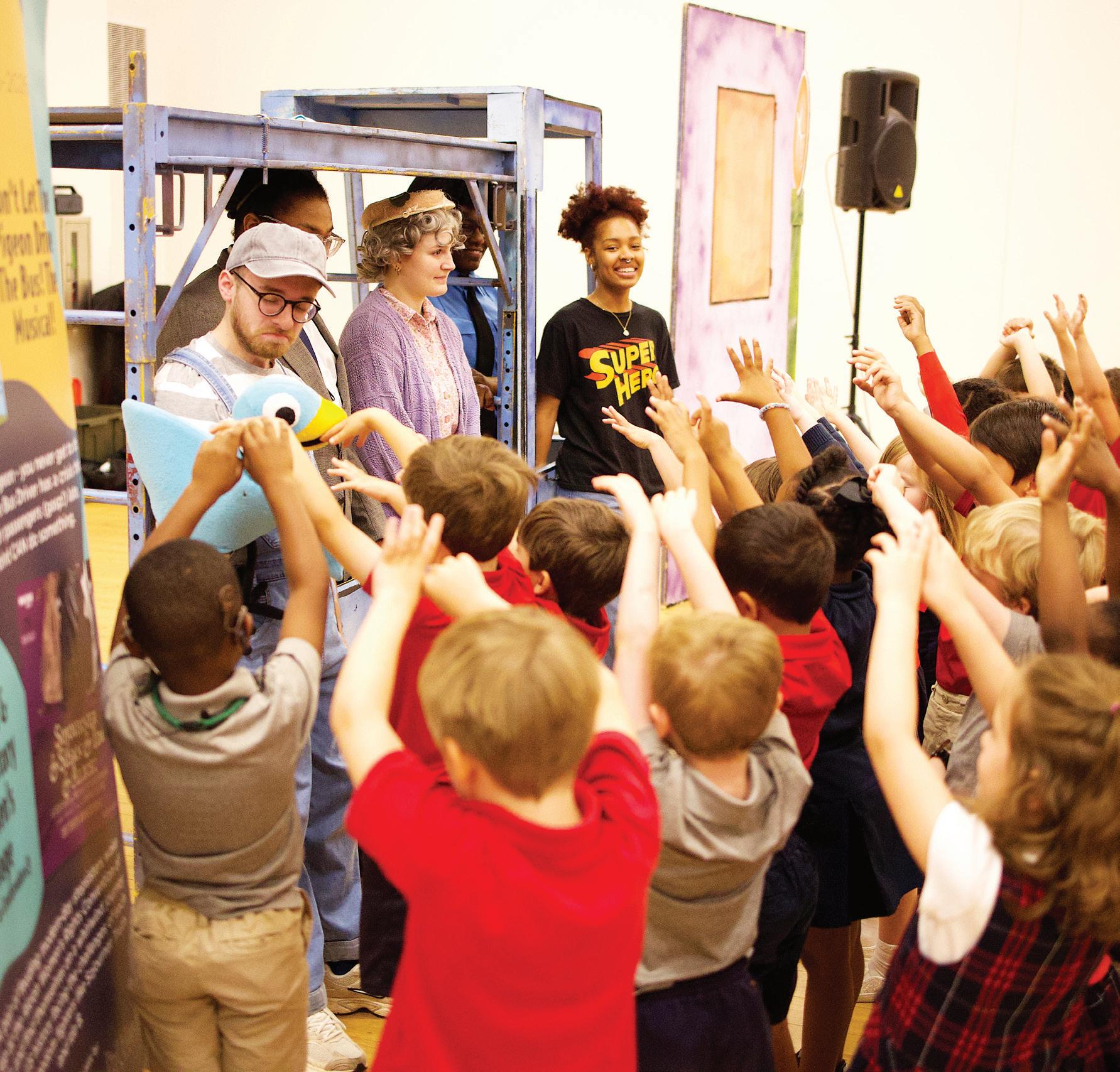
– Students at St. Richard Catholic School reach toward the cast of New Stage Theatre during a performance of “Don’t Let the Pigeon Drive the Bus! The Musical!” presented for the school community. Kindergarten students closed the event by offering a prayer for the cast.
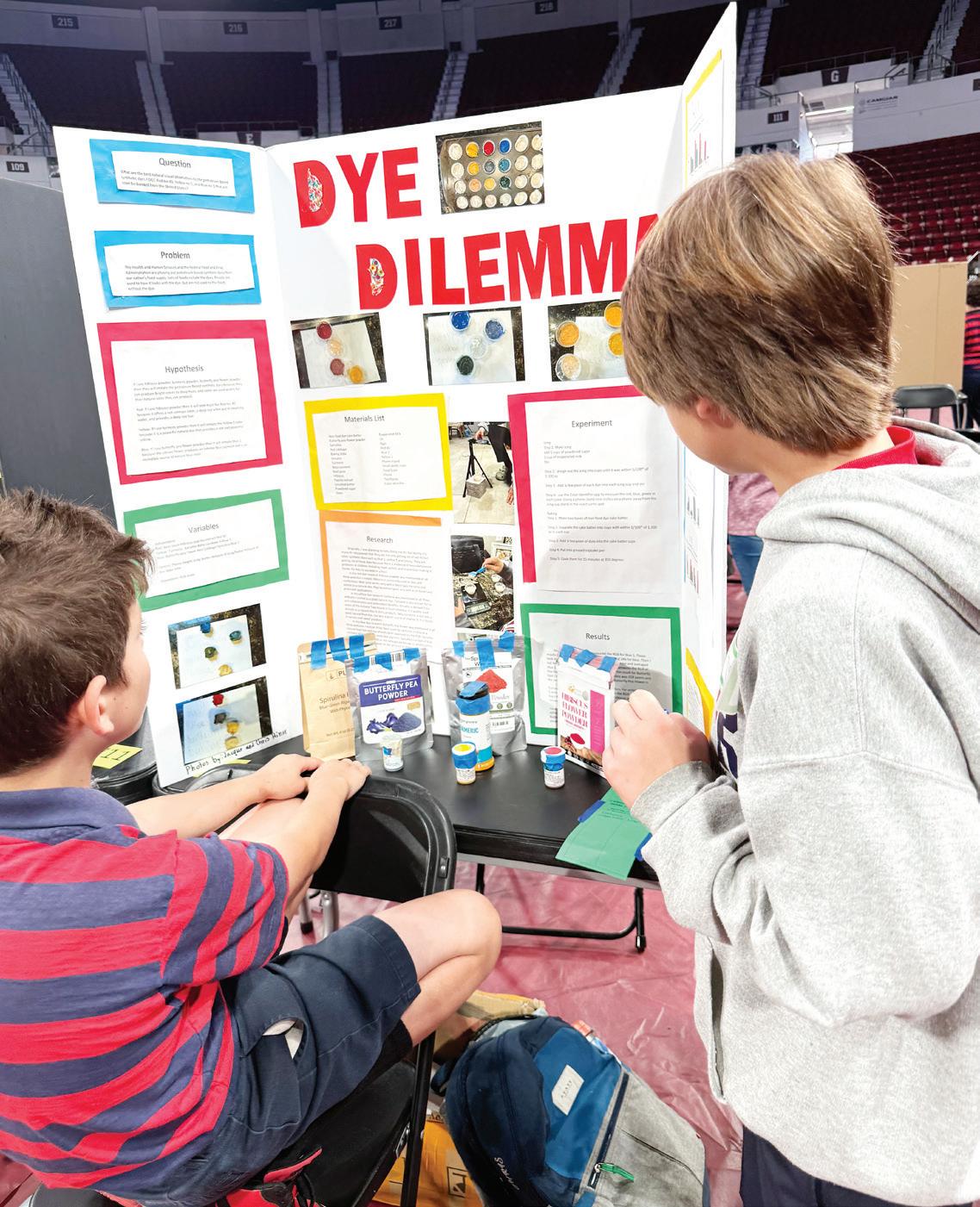
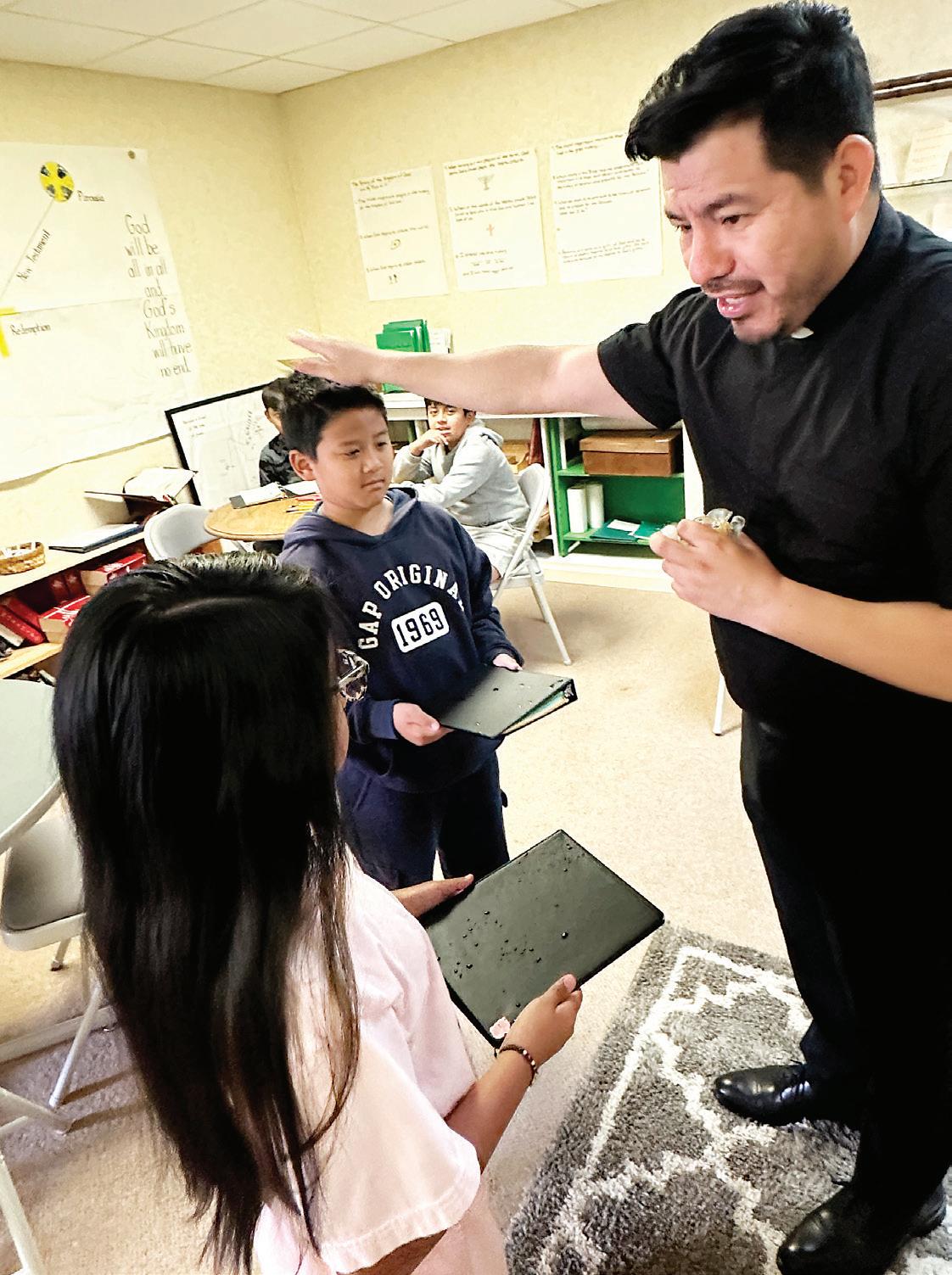
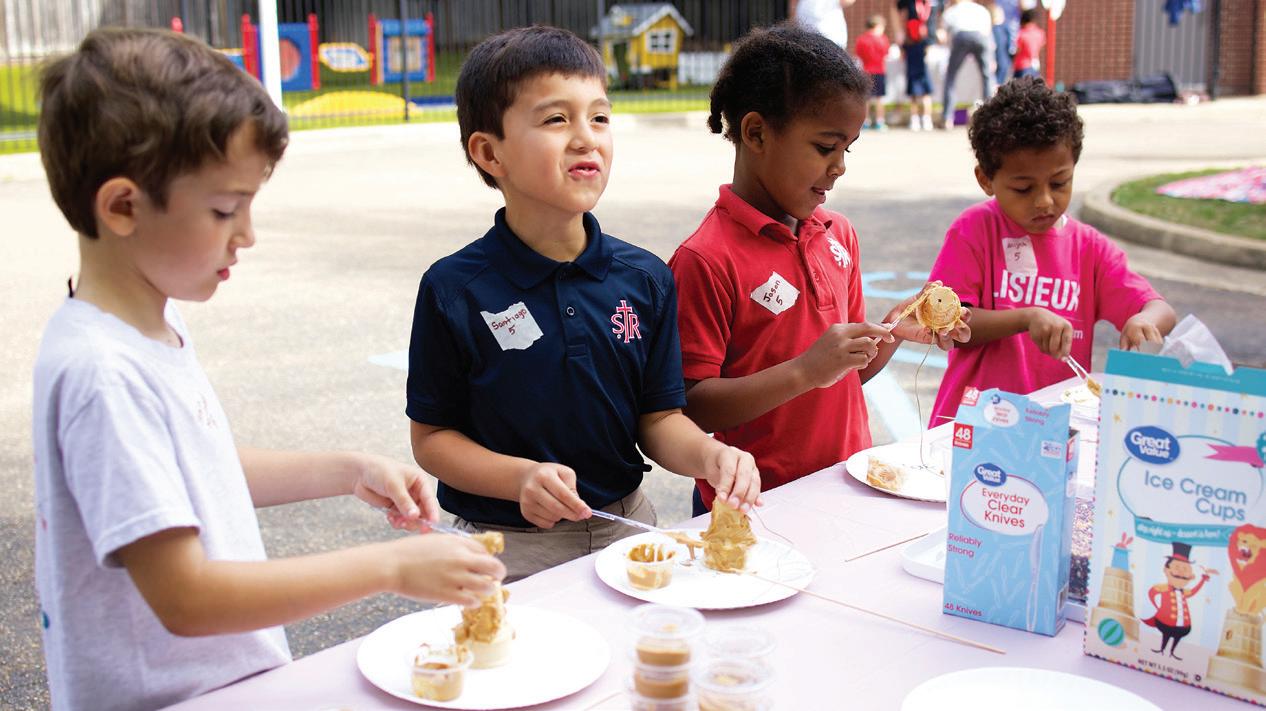
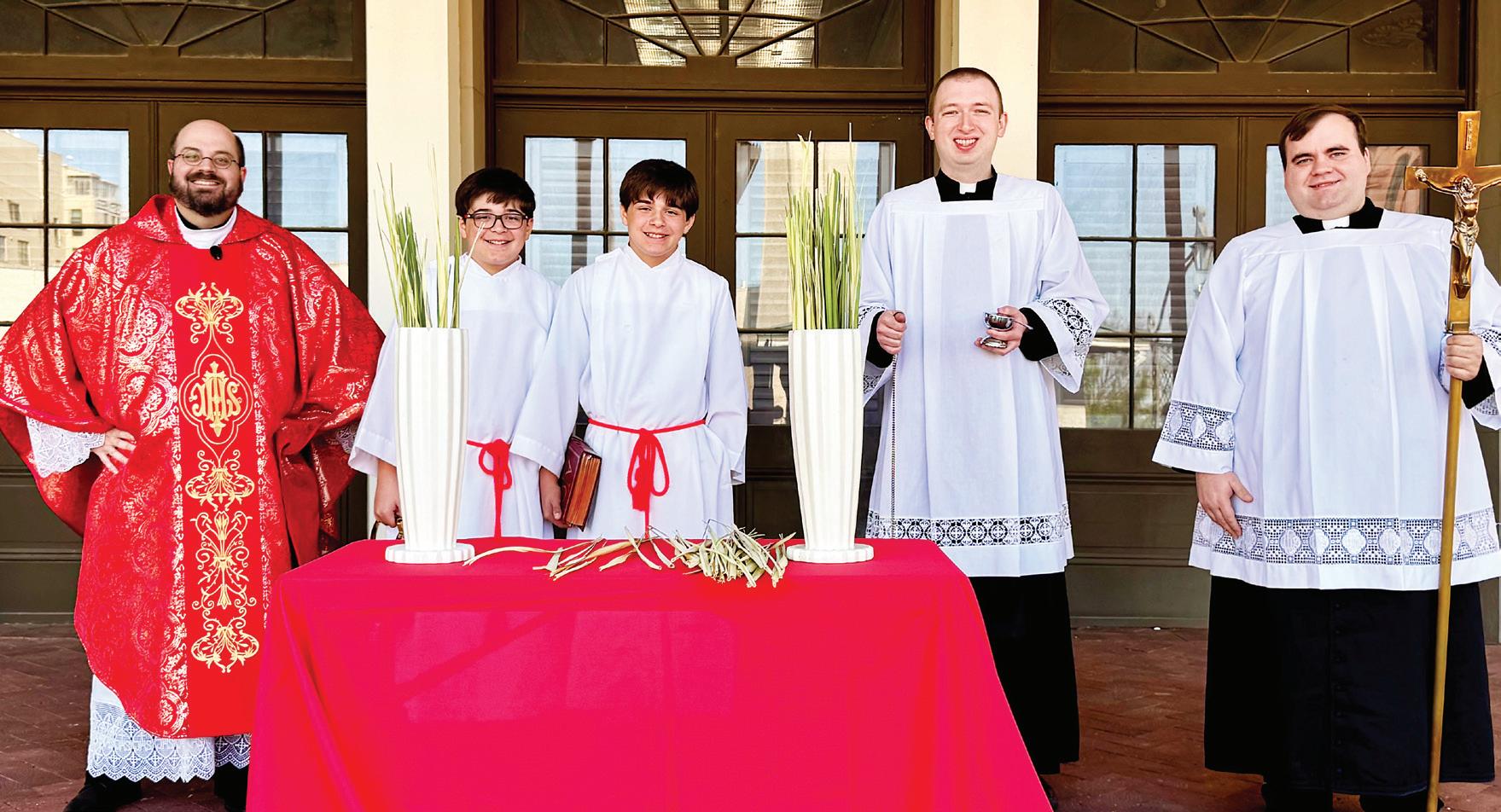
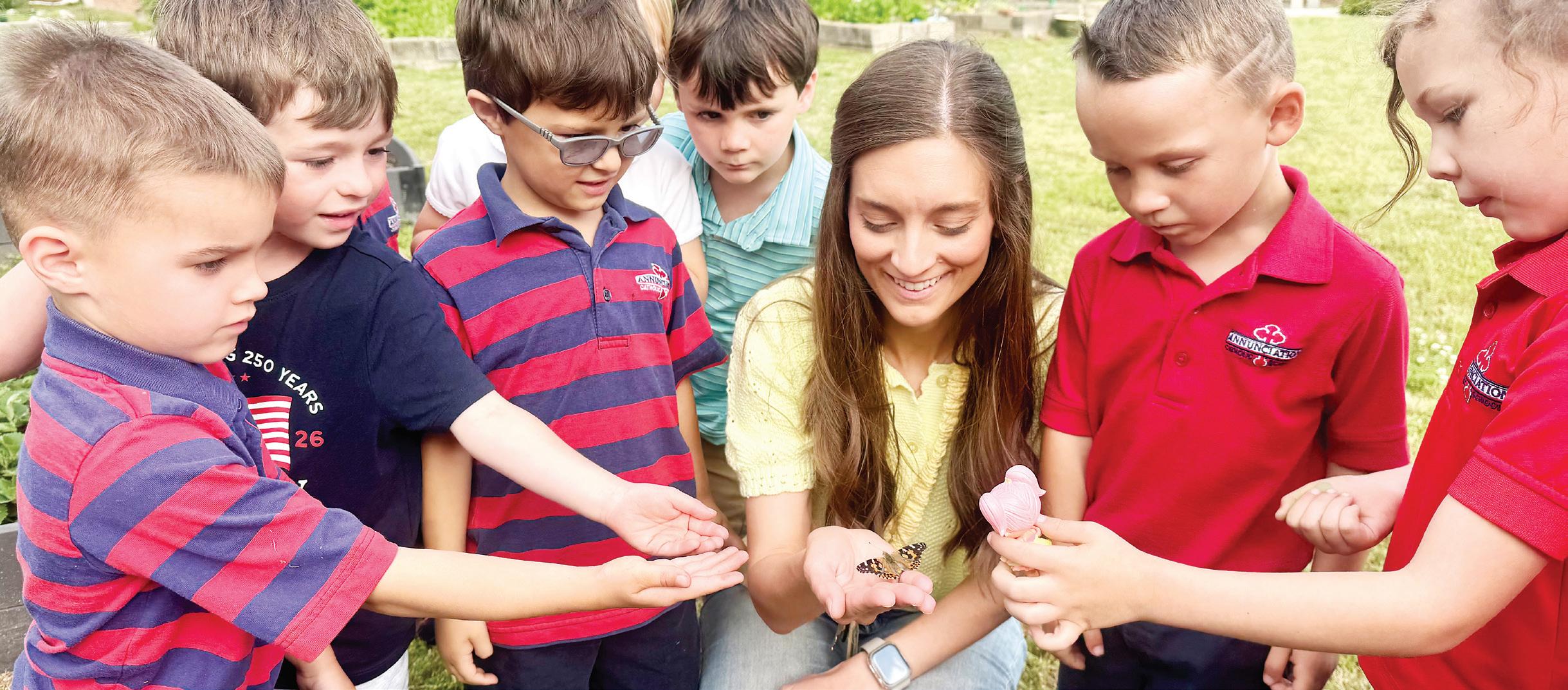
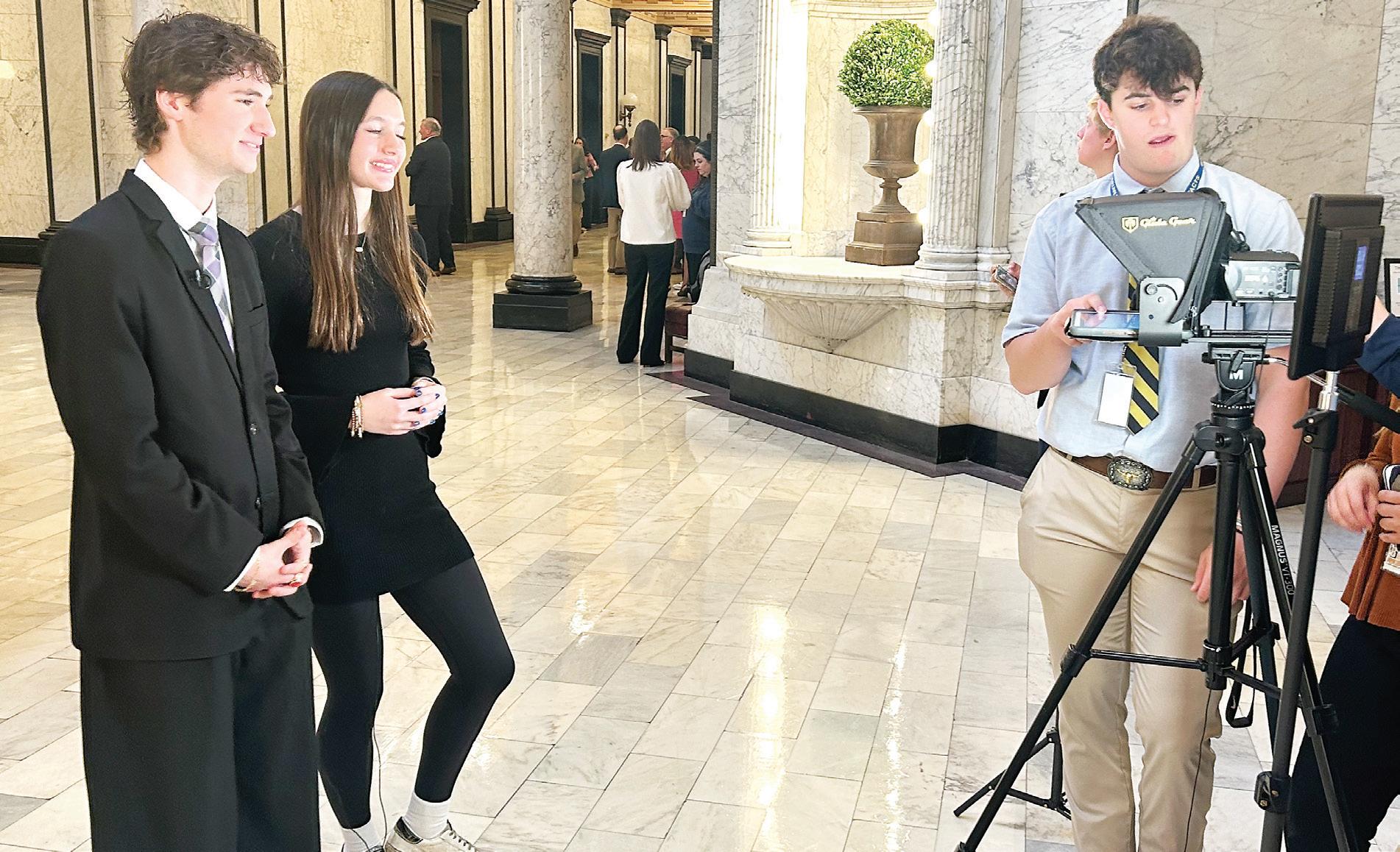
MADISON – St. Joseph Catholic School students Thierry Freeman, left, and Audrey Young anchor the Feb. 6, 2026, episode of “Bruin News Now” from the Mississippi Capitol as Reid Hager, right, operates the teleprompter. “Bruin News Now,” a weekly student-produced newscast now in its 11th season, recently earned first place in the News Show category of the 2026 Writing, Visual, Multimedia Contest sponsored by the Quill & Scroll International Honor Society for High School Journalists. The Mississippi Scholastic Press Association also named the episode Mississippi’s High School Newscast of the Year, marking the second consecutive year the program received both honors. (Photo by Terry R. Cassreino)
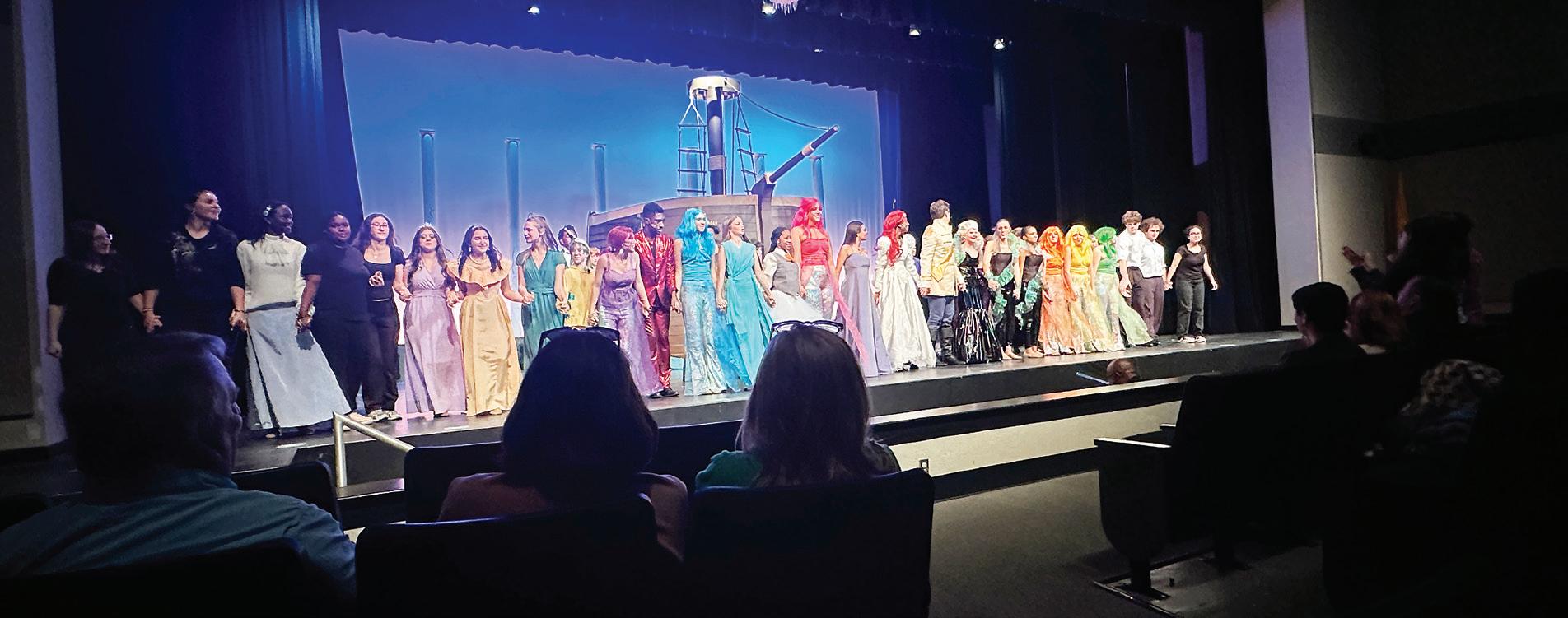
COLUMBUS – PreK students at Annunciation Catholic School release butterflies after watching caterpillars transform through their life cycle. Pictured are Crew Boulet, Jack Everett Milstead, Nathan Monroe-Conway, Rittman Mitchell, teacher Taylor Cabiness, Crew Morgan and Noelle Underwood. (Photo by Jacque Hince)
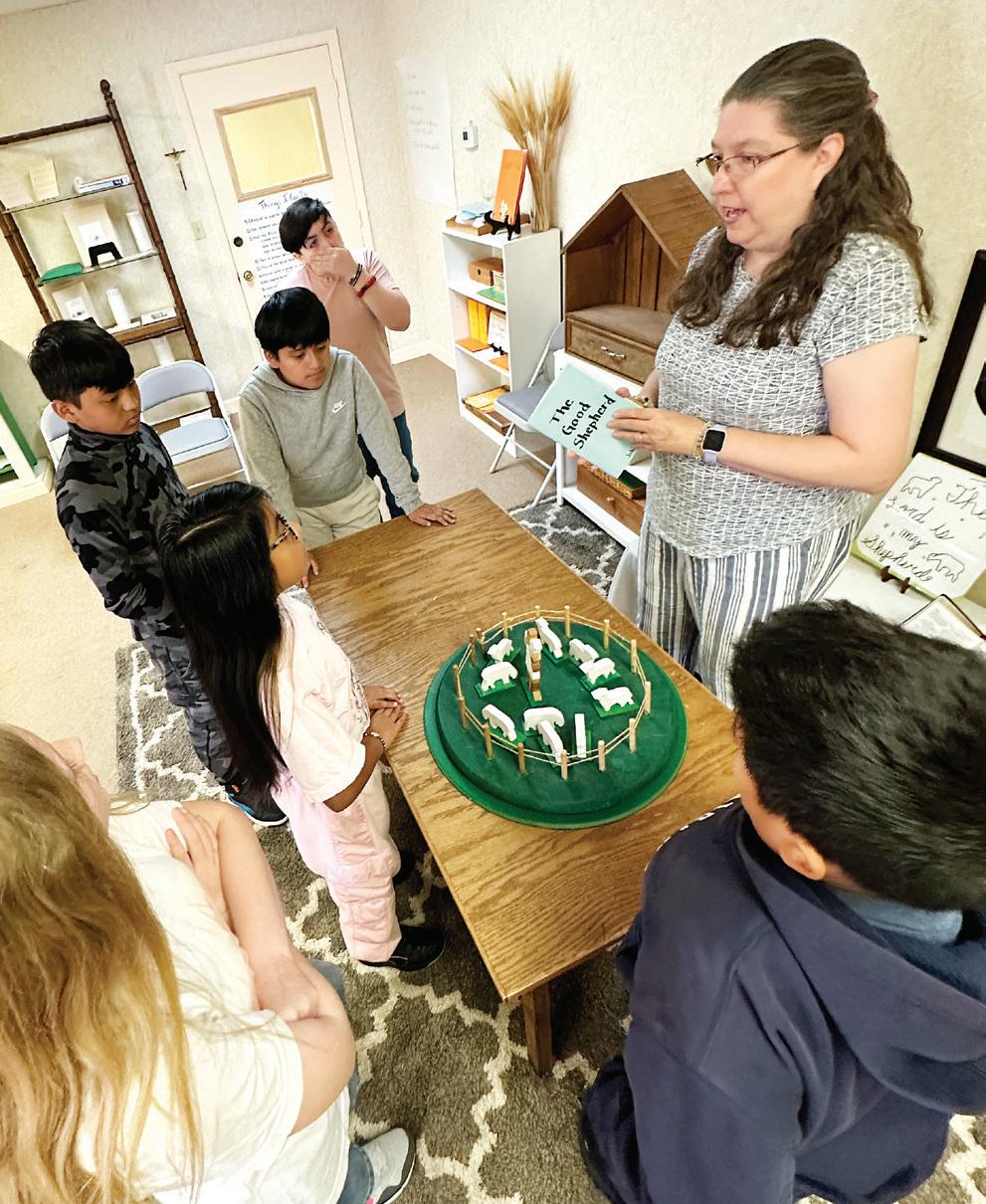

By Staff RepoRtS
JACKSON – As Catholics across the country observe Leave a Legacy Month in May, the Catholic Foundation of the Diocese of Jackson is encouraging families to take an important step in planning for the future while also considering how their faith can continue to make an impact for generations.
Most Catholics intend to create a will, but many delay the process, according to Rebecca Harris, executive director of the Catholic Foundation.
“Creating a will is one of the simplest and most important ways to care for your loved ones,” Harris said. “It ensures that your wishes are clearly known and provides peace of mind for your family.”
The Catholic Foundation has partnered MyCatholicWill.com to provide Catholics in the Diocese of Jackson with access to a free online platform that allows users to create a simple and legally valid will in about 20 minutes.
Harris said the process is not only about financial planning, but also about faith and stewardship.
“Planned giving is not only about finances. It is about faith,” Harris

said. “It is a way to continue living out the Gospel values of generosity and stewardship for generations to come.”
The Foundation is also encouraging Catholics to consider including charitable giving in their estate plans. Through a will, individuals can establish a perpetual trust or named endowment through the Catholic Foundation to support a parish, school or diocesan ministry long into the future.
“These funds are invested and a portion is distributed each year, providing ongoing support for the ministries that matter most to you,” Harris said.
The Foundation noted that gifts of any size can help sustain ministries such as Catholic education, vocations, youth ministry and parish outreach efforts.
In addition to the free will resource, the Foundation has released a short video about the importance of leaving a legacy of faith. The video can be viewed on the Diocese of Jackson’s YouTube channel or by scanning the QR code provided.
“Your family deserves clarity. Your faith can leave a lasting mark,” Harris said. “This May, consider making your will and your legacy a reflection of both.”