
20 25 Impact Report

To say that 2025 was “quite a year” feels like an understatement. Last year challenged the non-profit sector in so many ways. Whether it be the issuance of a multitude of Executive Orders, funding cuts at both the federal and state level, or the targeting and marginalization of so many of the communities served by our CSF partners, the impacts were significant and extensive. Throughout it all, our partners and stakeholders continued to adapt and create meaningful change for Jackson County kids. Their contributions cannot be overstated, and we are grateful for their efforts.
Last year was also a year of continued growth for the CSF. The year started with the launch of our Partner Portal in collaboration with Fluxx software. For the first time since our inception in 2017, we had a single platform for all our partner-facing operations: applications, contracting, reporting, and reimbursements. This single platform also created internal efficiencies, streamlining many of our processes, laying the foundation for more robust analytics and reporting, and vastly improving the review of new applications.
In late spring we were excited to share the results of our Children’s Services Assessment, which included findings that many children in Jackson County have compromised well-being, children’s services in Jackson County are operating in a strained system of care, and that there are community and systemic barriers to kids and families accessing services. This report guided much of our activity throughout the remaining months of 2025 as we operationalized a number of recommendations, including:
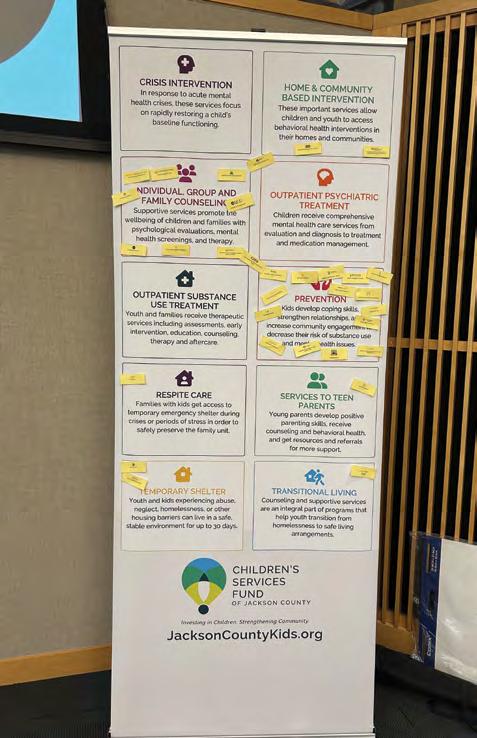
• A series of partner convenings that focused on clinical supervision, shared training opportunities, refining the 10 CSF service areas, dual generation approaches to service delivery, and mental health equity.
• A commitment to launch a pilot program in 2026 that would support clinical supervision to increase the number of licensed clinicians in Jackson County.
• The creation of a legislative policy agenda that focused on advocating for physical and mental health priorities while encouraging state legislators to preserve the state income tax towards the goal of a fiscally strong state.
By fall, we had refreshed our website and continued our efforts in support of our mission of “Investing in Children.” We offered another Capacity Building opportunity while supporting projects under our Collaboration and Community funding categories. We ended the year deep in a Core Funding round that will provide Academic Year funding for the 2026/2027 and 2027/2028 school years, with plans for an additional Core Funding round in early 2026 in support of Calendar Year funding for 2027 and 2028.
It appears many of the challenges from 2025 will continue into 2026. As such, we will continue our efforts of supporting our partners, eliminating barriers to access for services, and strengthening our community…all on behalf of Jackson County kids.

ROB WHITTEN Chief Executive Officer
AMY HARRIS Board Chair
Support for Jackson County Kids
The Children’s Services Fund (CSF) of Jackson County operates under the Revised Statutes of Missouri (RSMo) 67.1775 and 210.861, which authorize local communities to establish a community children’s services fund supporting ten designated service areas that focus on mental health and social emotional well-being. Voters approved the creation of the fund in 2016 and reaffirmed their support in 2022, increasing the allocation to one-quarter cent of the county sales tax. The CSF funded the following service areas in 2025, with partners self-selecting the service area that best reflects their work:
COUNSELING AND ASSESSMENT
Supportive services promote the wellbeing of children and families with psychological evaluations, mental health screenings, therapy and therapeutic case management. $3,922,538 awarded, 11 projects, 9 organizations.
CRISIS INTERVENTION
Short-term acute mental health services that stabilize the child, reduce crisis intensity, connect the family with resources and help return the child to a pre-crisis state. $183,425 awarded, 1 project, 1 organization.
FAMILY SUPPORT INTERVENTIONS
Home and community-based services that provide integrated support for children and their caregivers, both together and through child-focused approaches that build protective factors, enhance stability and support the well-being of the whole family. $5,615,280 awarded, 25 projects, 23 organizations.
PREVENTION
Services to help children learn coping strategies, strengthen relationships with positive adults and their wider communities while building life-long social-emotional and personal safety skills. $18,187,804 awarded, 80 projects, 67 organizations.
SUPPORT FOR TEEN PARENTS
Young parents develop positive parenting skills, receive counseling and behavioral health supports and receive resources and referrals. $107,340 awarded, 1 project, 1 organization.
TEMPORARY SHELTER
Children experiencing abuse, neglect, houselessness or other housing barriers can live in a safe, stable environment for up to 30 days with supportive services. $490,445 awarded, 1 project, 1 organization.
TRANSITIONAL LIVING
Provides safe living arrangements, counseling and essential support to help older youth and families with children transition to stable housing. $2,476,210 awarded, 8 projects, 8 organizations.
Service areas not funded in 2025:
No funding was requested for work in the following three eligible services areas.
OUTPATIENT PSYCHIATRIC TREAMENT
Children receive comprehensive psychiatric services from evaluation and diagnosis to treatment and medication management.
OUTPATIENT SUBSTANCE ABUSE SERVICES
Children and families receive outpatient substance use services, including education, early interventions, counseling, treatment, recovery plans and aftercare support.
RESPITE CARE
Provides temporary care for children to offer relief to caregivers, proactively or during periods of crisis or stress, thereby preserving the family unit.
ROB
MOJI
JOVANNA
RUSSELL
BERNADETTE
KIA
CELESTE
SHANNON
77,853 2025 At-a-Glance
102 57 3 3 Youth served
Organizations supported Capacity Building Projects Collaboration projects Community projects
Core Funding
The bulk of investments from CSF are made through our two Core Funding rounds. Core Funding is at the heart of our mission to make transformative investments in the mental health and emotional well-being of children in Jackson County. This funding supports organizations dedicated to improving the lives of children and families, enabling these organizations to provide essential services that strengthen protective factors, mental health and social-emotional well-being.
Organizations can access Core Funding through two different mechanisms. For traditional nonprofit organizations, Calendar-Year Funding is the appropriate option for providing support. The Academic-Year Funding is available for schools and school-based or schooladjacent services. All core funding awards are made for 24 months. The median Core Funding contract award was $213,906.
In 2025, the CSF awarded over $30 million to 126 programs across 102 partner organizations through Core Funding.
Age Distribution of Youth Served
Ages 0-2
Ages 3-5
Ages 6-10
Ages 11-14
Ages 15-19
Unknown
By statute, CSF supports services to youth 0-19, but the majority of those served are 6-14.
Calendar Year Funding
Calendar-Year Funding is funding that runs from January 1 through December 31, and it represents our largest funding allocation. In 2025, $19,150,147 of Calendar-Year Funding was awarded to 74 programs across 65 organizations across seven of the ten CSF service areas (no funding was requested for outpatient psychiatric services, outpatient substance use treatment, or respite care). The median calendaryear award in 2025 was $223,853.
In 2025, $19,150,147 of Calendar-Year funding was awarded to 74 programs across 65 organizations.
In 2025, a small subset of Calendar-Year Funding was carved out to fund Cultivation projects. These awards supported organizations that are in the early stages of program growth, with the goal of preparing them for eventual Core Funding. Cultivation Funding aligns with the same 10 service areas as Core Funding and provides resources to fully develop programming while also strengthening organizational capacity as a precursor to future success.
6 organizations received Cultivation awards totaling $855,499 in 2025.



Academic Year Funding
Recognizing the importance of meeting youth where they are, the Academic-Year Funding round is dedicated to supporting social-emotional learning (SEL) and mental health (MH) services provided within a school context. This funding cycle runs from July 1 through June 30 to align with the fiscal year of schools.
Services funded in this cycle can take place before, during, or after school. While most services occur during the school year, activities conducted during summer school are also supported. Ages of those served ranged from early education to high school. In the Academic-Year Funding cycle, awards were made in support of only three service areas: counseling and assessment, family support services, and prevention.
Funding in this round supports a system of services, where both schools and community organizations are critical partners. In 2025, six school districts and eleven charter schools were funded directly. An additional twenty-eight community organizations received funding to provide services to youth in Jackson County in a school-based setting. Through those awards, several other schools and districts received CSF funded services. The median academic-year award in 2025 was $192,500.
In 2025, the CSF awarded $11.8 million to 52 projects across 45 partner organizations through Academic-Year Funding.
Since academic contracts run from July to June, all reported data represents July 2024 to June 2025.
Capacity Building Funding
We believe it is important to not only invest in services for children, but also in the organizations that provide those services. Investments in Capacity Building are guided by a commitment to two desired outcomes:
Increased organizational capacity: Enhancing the internal capabilities of organizations in the areas of strategy, finance, marketing and business development, allowing continued delivery of high-quality, impactful services.
Increased professional staff growth and development: Promoting greater knowledge and understanding of children’s mental health and wellbeing, including not only needs but also interventions to effectively assist children and their families in growth and healing.
Under Capacity Building, organizations can apply for up to $100,000 per year for a one or two-year period in pursuit of either of these outcomes.
In 2025, the CSF provided $2,379,287 in Capacity Building funding to 57 organizations.
In 2025, CSF committed first-time Capacity Building funding to seven partners in the amount of $394,700:
Hillcrest Ministries | $45,000 Hope Center | $99,500 River of Refuge | $12,000
The Plaza Academy | $30,000
University Health | $100,000 Wildwood Education Center | $36,200 Youth Guidance | $72,000
Additional Capacity Building support was invested in the following organizations that were in the second- or third-year of multi-year projects: Amethyst Place, Avenue of Life, Big Brothers Big Sisters, Bridge Leadership Academy, Camp Encourage, Center for Conflict Resolution, Center School District, Children of Incarcerated Parents, Children’s Center for the Visually Impaired, Citizens of the World KC, Community Assistance Council, Cornerstones of Care, Crossroads Charter School, EarlySTART, Emmanuel Family and Child Development Center, Empowering Parents, Every Child’s Hope, First Call, Foster Adopt Connect, Front Porch Alliance, Frontier Schools, Gordon Parks Elementary, Grain Valley School District, Greater KC LINC, Guadalupe Educational System, Hickman Mills, Hillcrest Ministries, Hope House, HorsePower, Jackson County CASA, Jewish Vocational Services, Kansas City Girls Prep Academy, KIPP Endeavor, Lee’s Summit R-7 School District, Mother’s Refuge, Niles Home for Children, Oak Grove R-7 Schools, Operation Breakthrough, Paws and Pals, Pro Deo Youth Center, reStart, River of Refuge, Rose Brooks, Seton Center, Sparkwheel, Start at Zero, The Family Conservancy, The Hope Center, The Plaza Academy, The Transition Academy, Transformation Visitation Home, Urban Rangers, University Health, WeCode KC, Wildwood, YMCA of Greater Kansas City, and Youth Guidance.
Collaboration Funding
Collaboration Funding is about leveraging expertise not found at any single organization to impact change at a system level by investing in projects with three or more collaborative partners. In 2025, CSF supported the following three ongoing collaboration projects with a total funding amount of $1,660,505.
Safe Babies Court
Safe Babies Court is a collaborative initiative led by Foster Adopt Connect in collaboration with the Children’s Division, the 16th Circuit Court (Family Court Division), and Jackson County CASA. The program is designed to improve outcomes for infants and young children (ages 0–3) who interact with the child welfare system.
The initiative aims to shift the system’s focus from solely addressing child welfare concerns to promoting overall child wellbeing. This is accomplished through active collaboration among key partners and the addition of critical support services, such as prevention services, early intervention, and therapeutic supports for children and families.
In 2025, the CSF invested $562,406 to support the implementation of this initiative.
System of Care for School Based Mental Health Services
The System of Care for School-Based Mental Health Services (SCMH) is a collaborative initiative led SchoolSmartKC, with the support of community mental health providers (University Health, Swope, Samuel Rogers, Synergy Services, and Mattie Rhodes), and several charter schools within the Kansas City Public Education System (KIPP-KC, Frontier Schools, Brookside Charter, Citizens of the World, and Crossroads Charter School). The initiative was designed to build a coordinated system that simplifies referrals for therapeutic services and improves timely access to care for students through standardized protocols for identification of student mental health needs, assessment and triage, school-based intervention, referral to community-based providers and followup and care coordination
The framework places particular emphasis on Tier 3 services, ensuring students with the most significant mental health needs can access intensive, individualized care more quickly and efficiently.
In 2025, the CSF invested $818,935 in this pilot project.

Connected Families – Thriving Communities
The Connected Families – Thriving Communities project is being spearheaded by the Missouri Coalition for Children in collaboration with Cornerstones of Care, CAPACares, and Crittenton Children’s Center (St. Luke’s).
This project is working to improve how community systems help children and families through investments in early intervention, prevention and family supports. The goal is keeping more children safely at home instead of becoming part of the state child welfare system, thereby strengthening families and communities. By bringing together partners across Jackson County and connecting with regional and state efforts, the collaboration initiative aims to build strong, supportive communities that can help families thrive while ensuring equitable access to resources that impact health and well-being.
In 2025, the CSF invested $279,164 in this project.
Community Funding
The final CSF funding category is Community Funding, providing CSF with the opportunity to respond to community needs that may not easily fit into one of the other CSF funding categories. In 2025, $499,800 was invested in three community projects.
Adelante | $190,000
The specific aims of Adelante at Children’s Mercy Hospital are to increase the number of bilingual (English-Spanish) behavioral health providers with professional-level cultural and linguistic skills, and improve community agencies’ readiness to effectively support Spanish-speaking clients.
Skin Deep | $224,000
Through funding to the Child Protection Center as the lead agency, CSF supports training for front line workers that provides a racial equity infused professional development training that helps organizations working with families understand why the history of race matters and how it connects to their current work.
Collective Action for Children | $85,800
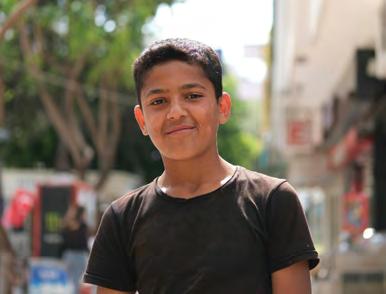
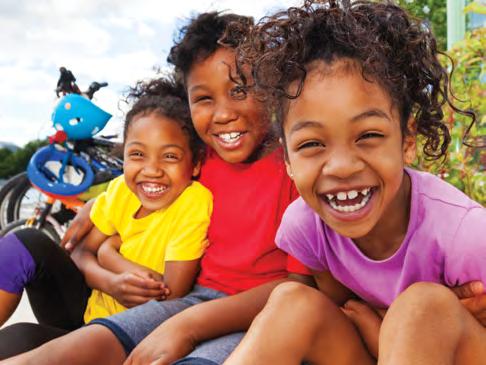
The Children’s Place serves as the lead agency for this project, which was formerly known as the Kansas City Child Abuse Roundtable. Collective Action for Children is a coalition of child-serving organizations along with local and elected officials in the greater Kansas City area, dedicated to protecting children and promoting their safety and well-being through raising awareness of child abuse and supporting child advocacy resources.

Support Beyond the Check
The distribution of tax revenue to fund services for children is the core mission of CSF. However, as CSF has evolved, we have identified additional ways to support our partners and Jackson County youth.
The Community Room
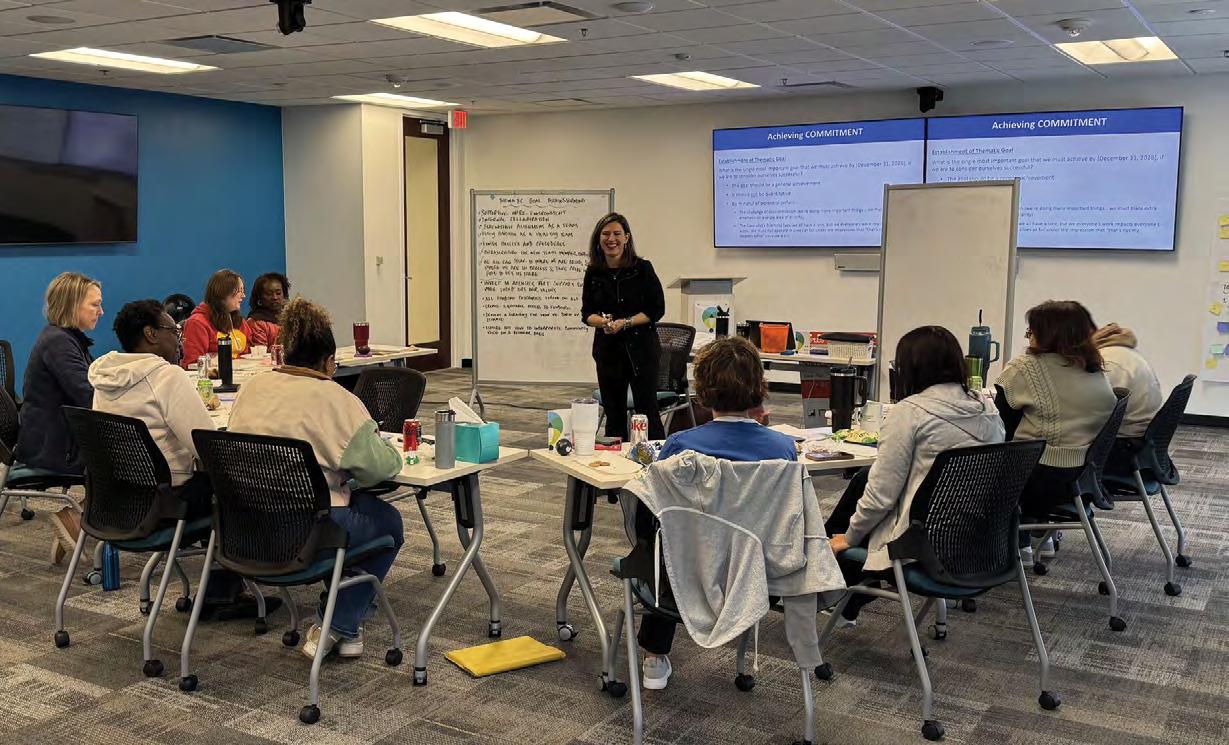
One challenge nonprofit organizations often face is securing and paying for meeting space. To help fill that void, the CSF Community Room is available for its partners at no charge. This room can host up to 58 individuals and has advanced audio and video technology, and it has become a highly valued resource for our funded partners and local organizations.
Listening and Learning
During 2025, CSF finalized and shared findings from its Children’s Services Assessment. This project was designed to share information on the current state of mental health and social-emotional well-being for children 0-19 in Jackson County, Missouri and to identify opportunities moving forward.
4 Key Findings
Children in Jackson County have Compromised Well-Being.
Children’s Services in Jackson County are operating in a Strained System of Care.
Workforce Capacity and Coordination is not meeting the need.
2 4 1 3
There are Community and Systemic Barriers to kids and families accessing children’s services.
The goal of this project was not just to report information, but to help guide future actions. From the data, CSF determined nine action steps for the next several years.
9 Action Steps
Compromised Well-Being
1. Expand investment in prevention and social-emotional well-being promotion and development activities especially for younger aged children.
2. Invest in both child and family services to support mental health and well-being.
Strained System of Care
3. Using its unique vantage point, the CSF can support and promote enhanced coordination and collaboration among service organizations
4. Invest in approaches that meet youth where they are.
Workforce Capacity and Coordination
5. Sponsor cross-agency training opportunities.
6. Explore mechanisms to support supervision programs for clinicians seeking licensure.
Community and Systemic
Barriers to Mental Health Equity
7. Create legislative policy agendas.
8. Engage those with lived experience.
9. Strategically leverage partnerships and facilitate cross-sector collaboration.
In 2025, work began on several of these steps, most notably those focused on workforce as detailed in the following section.
Convening and Connecting
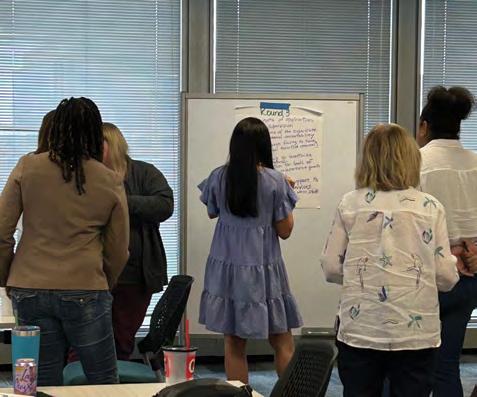
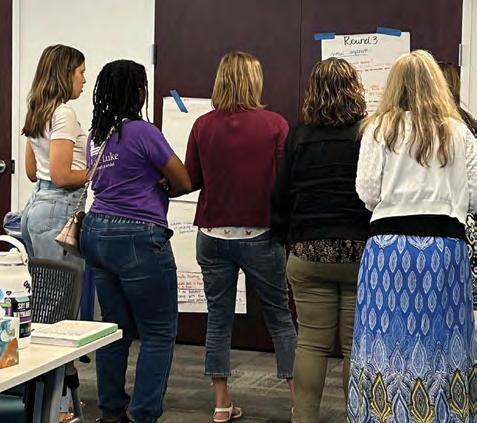
Since inception, CSF has heard requests from partners to step more into a convening role to offer opportunities for partners to come together to dialogue and connect. In 2025, CSF took active steps in this direction. Convenings served both as a space for individuals to come together and network as well as an opportunity for CSF to receive crucial feedback from those closest to the work in five key areas:
• Partners convened several times to help craft a framework for a pilot project that aims to increase the number of licensed clinicians in Jackson County. This project will launch in summer of 2026.
• CSF began soliciting input from practitioners on which modalities would be best suited for community-level trainings to support the goal of strengthening the behavioral health workforce.
• Participants provided key information that helped refine CSF’s 10 core service areas.
• CSF hosted a collaborative dialogue focused on services that support both children and their families, with an emphasis on mental health and social-emotional wellbeing to build more holistic, family-centered care.
• Partners convened to consider the mechanisms needed to support work around mental health equity during a changing climate, towards the goal of removing barriers for communities experiencing them.
2025 Core Funding Awards
YEAR FUNDING 2024-2025
CULTIVATION FUNDING 2025
public dollars in partner-led services supporting resilient and thriving children and youth.
(816) 832-6340 | hello@jacokids.org
jacksoncountykids.org