Texas Propane Texas Propane Texas Propane












Bill Van Hoy TPGA Executive Director

April in Texas is one of our more lovely months. Everything greens up, wildflowers dot the highways and being outside is enjoyable. It’s a good month to catch everyone up on all things agriculture, including opportunities for your business, as well as reminders on how propane is playing a role in a variety of agricultural applications.
Before we get to that, a reminder to join us for the TPGA Board & Committee Meetings, May 5-6, in Waco. The meetings are open to all TPGA members.
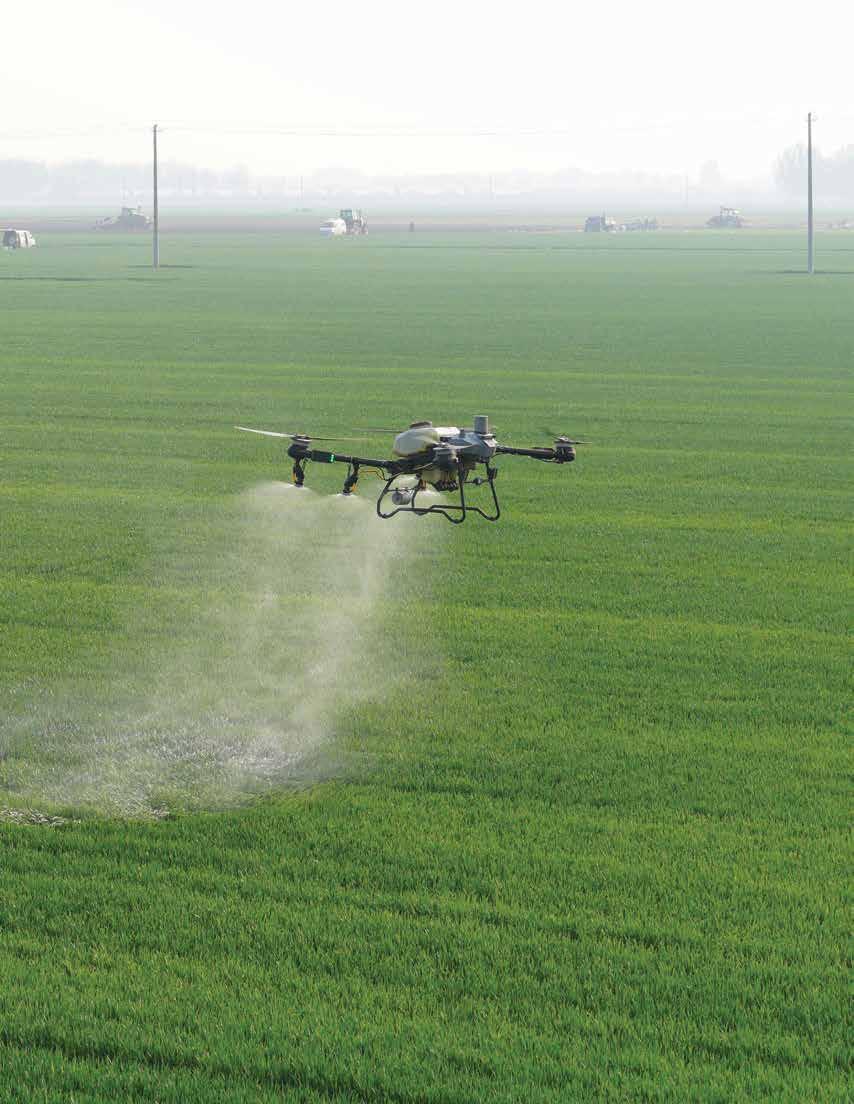
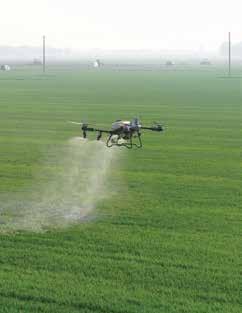
Drones in the sky are not nearly as unique as they were even a few years ago. They are increasingly being used for industrial applications, like crop spraying. See how propane supports crop spraying and other rising agricultural technologies.
Details have been released on the 2026 Propane Farm Research Program. If you service farmers, check out the program details and see if you can guide your customers toward these resources.
Additionally, the Propane Irrigation Engine Dealer Incentive Program has launched. That could also be a great opportunity for your agricultural clients.
Ever wondered how propane helps power the Rose Capital of America? It has long played a quiet role in the iconic Texas industry.
PERC has launched a Propane Landscape Demonstration Program that allows golf courses and commercial landscapers an opportunity to trial propane-powered landscaping equipment. It’s a fantastic opportunity to introduce propane to potential clients who might be hesitant to try something new.
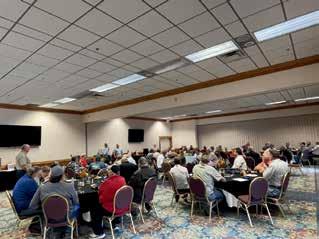
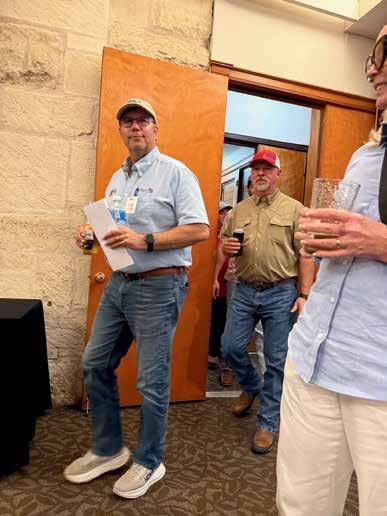
During our recent TPGA board and committee meetings, one panel carried particular weight. The Flood Response Panel featured lots of lessons the industry has learned to inform future responses. We also had a great time! Check out the photos in Propane In Focus.
The deadline is approaching (May 15) for the TPGA Scholarship. Make sure you and your employees are taking advantage of this opportunity.
Finally, we feature a propane-powered mosquito control robot. You can’t get any better than using propane to kill those nuisances.
TPGA staff
Bill Van Hoy ................. bvanhoy@txpropane.com Executive Director
Jackie Mason................... jmason@txpropane.com Deputy Executive Director
Julie Novinger...........accountant@txpropane.com Bookkeeper
Christie Shook..................cshook@txpropane.com Membership & Meeting Manager
Propane Service Corporation ........................... sales@propaneservicecorp.com Christie Shook 800-392-0023
Publisher Kim Scheberle ............. kscheberle@austin.rr.com Account Manager/Managing Editor Sail House Publishing 512-346-0892
Joanne Pantaze ................. jpantaze@zochnet.com Advertising Sales 512-273-2639
Kiki Pantaze ....................kpantaze@zochnet.com Art Director 512-924-7566 8408 North Interstate 35
Basys Processing Lone Star Energy Group Warm Thoughts Communications
512-836-8620 or 800-325-7427 512-834-0758 fax E-mail: info@txpropane.com www.txpropane.com







President: Larry Baty, Cadenhead Servis Gas, 972-771-8654
President Elect: Jeremy Gentile, Hill Butane, 409-296-2001
Secretary: Matt Terry, Matador Gas, 210-861-6545
Treasurer/Finance Chair: Bill Collins, Propane Exchange, 214-629-5118
District 1 Director: David Collett, Gas and Supply, 903-780-2488
District 1 Alternate: John Minton, Gas & Supply, 903-490-0605
District 2 Director: Joe January, McAdams Propane, 254-723-4210
District 2 Alternate: Shane Hill, Nelson Propane, 903- 641-7381
District 3 Director: Stephen McClendon, Ferrellgas, 972-730-0469
District 3 Alternate: Bill McHargue, Welch Gas, 210-508-3058
District 4 Director: Matt Peterson, Buster Brown Propane, 281-689-3946
District 4 Alternate: Garrett Green, Green's Blue Flame Gas Co. 713-562-5341
District 5 Director: Brody Newton, Busters Propane, 361-852-8161
District 5 Alternate: Regina Betancourt, Ferrellgas, 361-429-8548
District 6 Director: Omar Garcia, Mr. G Propane, 956-581-1063
District 6 Alternate: Open
District 7 Director: Sharon Seal, Bell Hydrogas, 210-533-7103
District 7 Alternate: Duston Cox, Chaparral Propane, 830-329-0871
District 8 Director: Rodney Sladek, Fayetteville Propane, 979-836-7044
District 8 Alternate: Doyle Fevig, Legacy Propane 830-995-5015
District 9 Director: Brad Quisenberry, Gene Harris Petroleum, 817-295-1091
District 9 Alternate: Larry Hearn, Yellow Rose Propane, 870-648-8241
District 10 Director: Josh Nowlin, McCraw Propane, 903-583-7481
District 10 Alternate: Chad Gregg, Enderby Gas, 940-482-3225
District 11 Director: Steve Adams, Hardwick LPG, 254-647-3402
District 11 Alternate: Anna May Etheredge, Enderby Gas, 940-665-3467
District 12 Director: Laci Jo Stone, Schneider Distributing, 800-901-9109
District 12 Alternate: Shawn Owens, Heart of Texas Propane, 325-313-0748
District 13 Director: Lane Worthington, WTG Fuels, 432-682-4349
District 13 Alternate: Casey King, WTG Fuels, 432-894-4240
District 14 Director: Terry Perez, Perez Propane, 512-318-9780
District 14 Alternate: Elizabeth Perez, Perez Propane, 915-764-3382
District 15 Director: Don Heinrich, Slaton Gas, 806-828-6501
District 15 Alternate: Kenneth Waters, Charles Oil & Gas, Inc (dba) Farwell Fuels, (806) 481-3222
District 16 Director: Clay Crist, Crist Fuel, 806-426-3412
District 16 Alternate: Jacob Acuna, TG Fuels, 303-514-6061
Past President: Josh McAdams, McAdams Propane, 936-598-7444
Past President: Mark Peterson, Buster Brown Propane, 281-689-3946
Past President: Jack Walzel, Tri-Co Propane, 254-642-3885
Past President: John Walter, Schneider Distributing, 800-901-9109
Past President: Allen Wells, BayGas, 281-332-2630
Vice President: Steve Adams, Hardwick LPG, 254-647-3402
Vice President: Jeremy Gentile, Hill Butane, 409-296-2001
Vice President: Matt Terry, Matador Gas, 210-861-6545
Sr. Vice President: Todd Dorris, Roadrunner Energy, 830-278-2915
Sr. Vice President: Bill Collins, Propane Exchange, 972-442-1078
Sr. Vice President: Joe Green, Green’s Blue Flame Gas, 713-462-5414
Assoc. Supplier Service Director: Andy Brus, Crum & Forster, 682-220-4812
Assoc. Supplier Service Alternate: Rusty Walker, Marshall Young, 817-645-9155
Assoc. Producer/Marketing Gas Director: John Becraft, Targa Resources, 713-594-7485
Assoc. Producer/Marketing Gas Alternate: Brittany Greer, Enterprise Products, 318-299-0540
Assoc. Manufacturer/Distributor Director: Troy Hicks, Squibb Taylor, 915-613-7534
Assoc. Manufacturer/Distributor Alternate: Tracy Wells, GEC, 214-683-8018
Assoc. At Large Director: Jimmie Grant, Martin Gas Sales, 713-851-6155
Assoc. At Large Alternate: Jim Fulton, 4-J Energy, 832-529-4768
Nominating Chair: John Walter, Schneider Distributing, 800-901-9109
NPGA Director: Mark Garrison, Allstar Fuel, 806-296-6353





Mark your calendar! I would like to invite you to attend the upcoming meetings on May 5-6, 2026, in Waco! Everyone’s participation in these important events is needed.

Thank you and see you in Waco!
Larry Baty, TPGA President
Schedule (subject to change)
Tuesday, May 05, 2026
• Committee Meetings & Insurance Insights Panel
• Old Gasser/Young Professional Happy Hour
• Cinco De Mayo Dinner at Hecho En Waco
Wednesday, May 06, 2026
• Board Meeting
Host Hotel
AC Hotel Marriott
600 Mary Ave. Waco, TX 76701
P: 254-910-8900
(right next to the Silos)
Room rate: $159 per night
Discounted parking at $6 per car
Reservation deadline: April 20, 2026
Attendance
The TPGA Board & Committee Meetings are OPEN & EXCLUSIVE TO ALL TPGA MEMBERS.
Register for the meetings at www.txpropane.com
Questions?
info@txpropane.com or call 800-325-7427




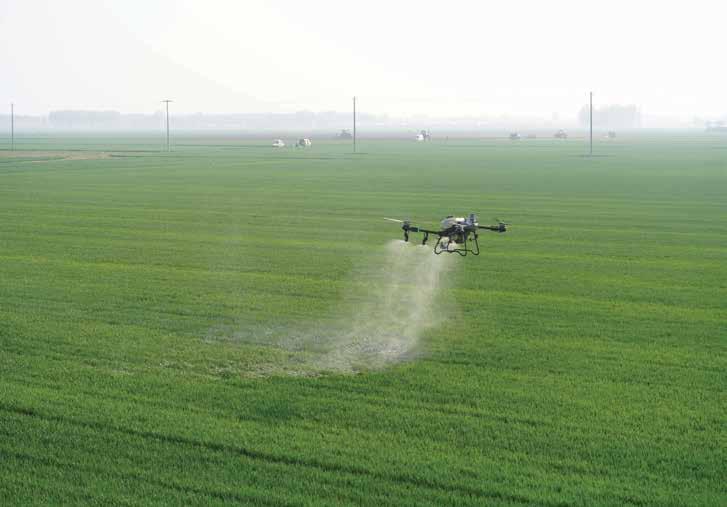
Propane is fueling the advanced tools driving modern, sustainable agriculture.
Across America’s farms, new technologies like drone crop sprayers are gaining momentum as a game-changing tool for modern agriculture. Offering speed, precision, and reduced labor needs, these hightech machines are helping growers improve efficiency and cut costs. But with this exciting shift comes a new challenge — keeping drone batteries charged in remote locations. That’s where propane steps in.
Long known for powering grain dryers and irrigation systems, propane is now helping farmers take their energy independence to the next level by charging the tools that make precision agriculture possible. Portable, reliable, and scalable, propane is uniquely suited to meet the evolving demands of the modern farm.
Drone sprayers offer several clear advantages over traditional application methods. They allow for more precise delivery of crop protection products, reducing overspray and minimizing environmental impact.
New companies specializing in drone spraying are developing powerful models built for real-world use, with large payload capacities, intelligent flight controls, and data-driven mapping that help producers work more efficiently across a wide range of crop types. These drones are helping farms make more informed decisions that can improve yields while reducing inputs.
But for all their high-tech capability, these drones require a dependable power source to stay in the air, especially in large or remote fields far from the nearest electrical hookup. Several chargers must often run simultaneously to keep batteries cycling without delays — making a high-capacity, in-field generator crucial for uninterrupted spraying operations.
Charging drone batteries in the middle of a field requires reliable and mobile generators. Propane-powered generators can be easily transported across agricultural operations to wherever drones are in use. Whether it’s a vineyard in California or a soybean field in the Midwest, power can move with the work, continuously charging drone batteries and reducing downtime.
Unlike gasoline or diesel, propane does not degrade over time, making it ideal for on-site storage and immediate use. Operating significantly cleaner than diesel-fueled equivalents, towable and portable propane generators are widely used for powering tools and equipment on jobsites and for backup power during outages. Propane’s nationwide supply network also ensures consistent fuel availability without reliance on the electric grid.
As drone usage grows, so does the need for flexible power solu-
tions. Propane-powered generators are available in a wide range of sizes, making it easy to match energy supply with operational needs. This scalability is particularly important for custom application providers or agricultural operations with multiple drone units working simultaneously.
For smaller farms, a compact generator and several propane cylinders may provide sufficient power. Larger operations may rely on a propane tank and generator system capable of supporting an entire fleet of drones. In either case, propane delivers dependable energy without requiring significant infrastructure upgrades.

Propane has long played a role in agriculture, but that role continues to evolve. No longer limited to grain dryers and building heat, propane now powers irrigation engines, flame weeding systems, sanitization tools, and mobile charging solutions that support advanced equipment such as drone sprayers.
Today’s farms are increasingly technology-driven, and propane continues to demonstrate its value as a versatile energy source capable of supporting both traditional farm operations and emerging agricultural technologies. Its ability to provide portable, dependable energy helps reduce reliance on the grid while supporting efficient and sustainable farm management practices.
Propane-powered charging solutions also complement other propane-fueled equipment already used on farms, creating an efficient on-site energy ecosystem that supports productivity from planting through harvest.
Drone sprayers are delivering measurable benefits in modern agriculture, including faster field coverage, improved precision, and reduced labor requirements. To fully realize those advantages, dependable mobile power is essential.
Propane provides a practical solution backed by decades of agricultural use, a strong supply network, and equipment designed to perform in demanding environments. As drone technology continues to expand across U.S. agriculture, propane-powered generators offer a reliable way to keep these systems operating efficiently in the field.
More information about propane solutions for agriculture is available at www.Propane.com/Agriculture.
Article by the Propane Education & Research Council.

The Propane Farm Research Program (PFRP) continues to offer direct compensation to agricultural producers who adopt and evaluate propane-powered technologies on their operations.
Today’s farmers face constant pressure to remain profitable amid tight margins, fluctuating fuel costs, and growing concerns about electric grid reliability. To help address these challenges, the Propane Education & Research Council (PERC) is making it easier for producers to upgrade to efficient, propane-powered equipment through the Propane Farm Research Program.
The program supports farmers who integrate propane technologies that deliver dependable performance, lower operating costs, and real-world operational value.
The Propane Farm Research Program provides compensation to agricultural producers who adopt and test propanepowered technologies. In return, participating farmers supply operational data and feedback that helps improve these technologies for real-world agricultural conditions.

Several categories of propane-powered agricultural equipment may qualify for compensation through the program. Equipment eligibility and participating dealers may change. Total payments cannot exceed 25% of the equipment cost.
New EPA- and/or CARB-certified engines used in agricultural applications may qualify for:
• $600 per liter of displacement for pumping applications
• Up to $3,000 for certified dual-fuel systems
• $60 per kW for prime power generation
• $30 per kW for backup power generation
New high-efficiency propane water heating systems used in agricultural production may qualify for $2,000 when installed in new construction or as a conversion from another energy source.
• $1,500 for tractor-pulled flame weed control systems
• $100 for push-type flame weed control carts
Each agricultural operation may receive funding for up to six (6) total units per year and no more than two (2) units for each type of application.
The maximum compensation per unit is $10,000 but payments cannot exceed 25% of the total equipment cost.
Payments are issued directly to the agricultural producer once all required documentation is submitted and approved. Most payments are processed within approximately 30 business days after PERC receives a completed online application.
The Propane Farm Research Program is not a rebate program. It is a research initiative designed to collect operational data from producers using propane-powered technologies.
Purchasing propane equipment does not automatically guarantee compensation, and not all applicants will be selected.
“It makes that propane engine very economical compared to what a diesel would cost you. It’s really simple to do. In fact, the current program is even simpler than it was a couple of years ago as far as the paperwork.” — Randy Vana, Producer, Wilber, Nebraska
New heating systems may qualify for $0.10 per square foot up to $2,000 per system when installed as part of a complete heating system in new construction or conversions.
• $2,000 per unit for poultry sanitization equipment
PERC evaluates applications based on factors such as the producer’s ability to collect and provide operational data, proximity to other program participants, acreage and crop types, annual propane usage, and the number of similar units already participating in the program.
Farmers interested in reducing equipment costs and evaluating propane-powered technology can learn more and apply online at: www.propane.com/pfrp. For additional questions, contact PERC at 202-452-8975.

Farm equipment dealers have a new opportunity to generate additional revenue while helping expand propane use in agriculture. Beginning April 1, the Propane Irrigation Engine Demonstration Program will provide $500 for each new propane irrigation engine customer a dealer brings into the program — not for every engine sold to the same customer.
To qualify, dealers must sell a new EPA- and/or CARB-certified propane irrigation engine to a producer who is new to propane irrigation and enter the sale into the PERC dealer portal. The customer must also enroll in the Propane Farm Research Program (PFRP), which gathers real-world performance and operating data to support continued technology development and market growth.
Participating farmers may receive meaningful financial support through PFRP, helping offset upfront equipment costs. Compensation may include:
• $600 per liter of engine displacement** for irrigation pumping applications
• Up to $3,000 for certified dual-fuel irrigation engine systems
These incentives can make propane irrigation systems more attractive for producers looking to manage fuel costs, improve emissions performance, and reduce dependence on the electric grid. Propane engines operate independently of peakhour restrictions and curtailments, providing reliable power during critical irrigation windows.
With more than 20 propane irrigation
engine manufacturers offering solutions across a wide range of horsepower and configurations, dealers have growing flexibility to match equipment with producer needs. A full list of participating brands is available at: https://propane.com/propane-
products/irrigation-engines/. Dealers interested in participating in the Propane Irrigation Engine Demonstration Program can learn more, download program materials, and enroll at: www.propane.com/irrigationdealer.
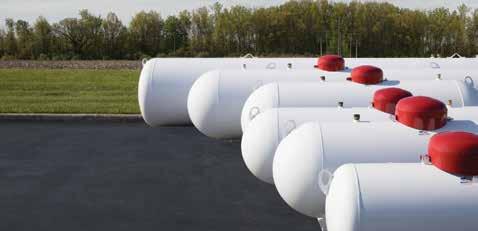


Tyler, Texas, did not become known as the Rose Capital of America by accident. The region’s rise to prominence in the rose industry grew out of adversity more than a century ago.
In the early 1900s, a devastating peach
blight wiped out much of East Texas’ fruit industry. Farmers searching for a new crop soon discovered that the region’s acidic, sandy loam soil—combined with warm temperatures and ample rainfall—created ideal growing conditions for roses instead.
What began as a survival strategy evolved into one of the most significant rose production centers in the United States.
At its peak, the Tyler area produced more than 20 million rose bushes annually. While much of the raw field growing has since shifted to states such as Arizona and California, Tyler remains the industry’s operational hub. Today, the region still processes roughly one-third of all rose bushes sold in the United States.
Behind this horticultural operation is an often-overlooked fuel that keeps the system running: propane.
One of the biggest challenges for rose growers in East Texas is the region’s unpredictable winter weather. Tyler is famous for sudden cold fronts known locally as “Blue Northers,” which can cause
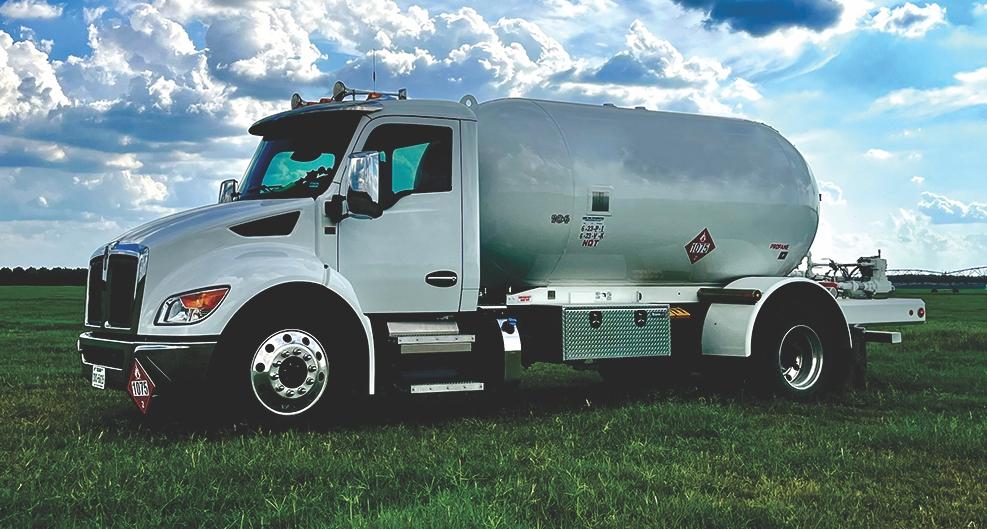


temperatures to drop as much as 40 degrees within an hour.
Once roses are harvested and potted, they typically spend time in greenhouses where temperatures must be maintained between 60 and 90 degrees. Maintaining those conditions through sudden cold snaps requires reliable heat.
Propane-fired heaters are commonly used to keep greenhouse environments stable during winter months, helping protect thousands of plants from sudden temperature swings.
After the roses are potted and stabilized in greenhouse conditions, they move quickly through the processing and distribution system. From Tyler, plants are shipped to garden centers, independent nurseries, and national retailers across the country.
Throughout this process, propane supports multiple stages of operation.
At many facilities, propane-powered forklifts are used inside packaging warehouses to move pallets of rose bushes efficiently.
Propane is also used in shrink-wrapping systems that prepare plants for shipment. Heat generated from propane torch helps secure packaging materials that protect roses during transportation.
Even employee comfort in winter months can depend on propane, with workers often relying on propane bullet heaters while preparing shipments.
Another critical stage in the rose production cycle involves cold storage.
Rose bushes are often placed in temperature-controlled storage areas to preserve dormancy before shipping. These spaces require carefully controlled heating zones to prevent freezing while maintaining proper humidity levels.
Propane heaters are commonly used for zone heating inside cold storage areas, ensuring plants remain protected without overheating the entire facility.
According to David Collett of Gas & Supply, who has worked in the propane industry for more than 40 years, propane has long played a quiet but essential role in these operations.
Beyond heating and warehouse logistics, propane helps growers maintain the grounds around greenhouse facilities.
Many rose operations use propane weed-burning torches to control unwanted vegetation around greenhouses and growing areas.
These tools allow operators to quickly eliminate weeds without chemicals, helping maintain clean and controlled environments.
From greenhouse heating and cold
storage protection to forklifts, packaging, and grounds maintenance, propane plays a behind-the-scenes role in keeping one of Texas’ most recognizable agricultural industries running.
Visitors often associate Tyler with its famous rose gardens and the annual Texas Rose Festival, but the commercial rose industry that supports this reputation depends on a sophisticated network of growers, processors, and distributors.
In the Rose Capital of America, propane helps ensure that millions of roses reach gardens across the country each year.

in 1990,
y. From exchange cabinets to forklift and high-pressure cylinder storage, ever y solution is built with uncompromising qualit y, quick turnaround, and personal ser vice
BOOTH #94 3

The Propane Education & Research Council (PERC) has launched the Propane Landscape Demonstration Program offering golf course superintendents and landscapers the chance to trial next-generation, propane-powered landscaping equipment.
Through the program, participants will receive a propane-powered commercial mower or utility vehicle for a 10-12day trial period.
Currently the options are:
• John Deere Zero-Turn Mower
• John Deere Pro Gator
Participants can use the equipment on their daily routes and gather crew insights and see how it compares to their current gasoline or diesel units. In exchange, participants provide feedback on the equipment’s performance.
“Golf course superintendents and landscapers want equipment that’s efficient, clean, quiet and cost-effective,” said Michael Newland, Director of
Agriculture Business Development at PERC. “Propane-powered landscaping equipment offers the comparable power
and torque of gasoline engines while delivering essential advantages in logistics, maintenance, emissions and cost. This program allows operators who are curious about propane to see the technology in action in their daily work and within their own unique environment.”
To learn more about the Propane Landscape Demonstration Program or to sign up, visit https://propane.com/formy-business/landscape-and-turf-management/. As part of the rollout, PERC will focus outreach on the Top 100 Landscapers in the U.S., as identified by Lawn & Landscape magazine.
Applications for the program will be accepted through December 2026. To maximize participation, demonstration trials will be scheduled in regional clusters, allowing multiple landscapers in the same geographic area to evaluate the equipment during coordinated timeframes.
Your customers deserve hot water when they want it, where they want it, and for as long as they want it. With a Rinnai tankless, your customers never need to worry about running out of hot water again, even when there are multiple showers running simultaneously with the dishwasher and washing machine.

Efficiency and Peace of Mind

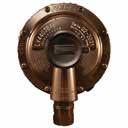
The Presto-Link Bluetooth device communicates with the RegO app to allow for pressure readings to be obtained on your mobile device. The result is a safe, secure, efficient and cost-effective way for on-site service personnel to obtain pressure readings to assist with fine tuning and troubleshooting a propane vapor system.
• Bluetooth connection thru an Android or Apple Device
• Lightweight & compact design
• Battery percentage indicator
• 1.5 times overpressure protection
• Bluetooth connection up to 100-foot range allows for troubleshooting and adjustment to systems while recording the pressure
• Visual indicator for pressure settings; Red casing indicates a highpressure device and black casing indicates a low-pressure device
Convenient and easy to use...
Download it for FREE!



Designed for use with LP-Gas and NH3 stationary storage container applications with a 4”-300# ANSI flange opening. The pilot-controlled relief mechanism is designed with precise start-to-discharge set points, in conjunction with the angled flow seat to achieve high relief flow capacity. The dual pilot design eliminates the need for traditional external pressure relief valves and allows for replacement of either pilot valve without taking the tank out of service.
• Heavy duty ductile iron body
• Corrosion resistant cad plate finish
• All stainless-steel internal components
• ME910P/250-ASME: 44,278 SCFM/Air flow capacity
• ME910P/265-ASME: 46,811 SCFM/Air flow capacity
• Tamper resistant pilot valve STD settings
• 100% Factory set and tested
• ASME UV – National Board Certified


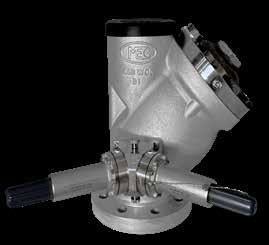
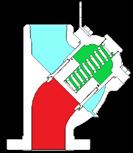

Scan here to learn more about the ME901P Today!






“I would tell you that the biggest thing you can get out of TPGA is the knowledge.”
John Walter Schneider Distributing
“TPGA helps us by navigating new rules, and there is never a time when someone isn’t available to take my call.”
Michael Terry, Linscot

Roadside enforcement event announcements
Exclusive access to our private member-only portal
FREE listing on our Texas Find a Propane Retailer Tool
Free Buyer’s Guide listing for supplier members
Weekly propane price reports (heating season)
Stay informed: Get our weekly member-only newsletter, the Monday Morning Messenger
A voice at local, state, and federal levels
Discounts on ads and booths at Crossroads
Member-only invitations to quarterly meetings that include committees, board & educational sessions.


When propane leaders from across Texas gathered in Kerrville for the Texas Propane Gas Association’s Q1 Board & Committee Meetings, one session carried particular weight.
Just months earlier, the Hill Country community had experienced devastating flooding. The memories were still fresh — and the lessons learned were invaluable.
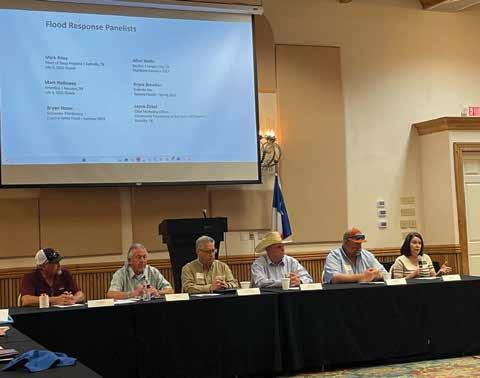
To capture those lessons, TPGA hosted a Flood Response Panel bringing together propane marketers and emergency response leaders who have experienced natural disasters firsthand from all over the state.
The discussion brought together industry leaders who have responded to disasters ranging from the Hill Country floods to Hurricane Harvey.
• Mark Riley – Heart of Texas Propane, Kerrville, TX & Hill Country Propane Emergency Response Headquarters Host
• Mark Holloway – AmeriGas, Houston, TX & Hill Country Propane Emergency Response Team Lead
• Bryan Stone – Schneider Distributing, Concho Valley
• Bryce Breeden – Enderby Gas, Texoma Region
• Allen Wells – BayGas, League City, TX
• Jayne Zirkel – Community Foundation of the Texas Hill Country (Kerr County Flood Relief)
The panel began with a sobering reminder: disasters are becoming more frequent and affecting communities far beyond coastal regions.
Hurricane Helene in September 2024 became the deadliest mainland hurricane since Hurricane Katrina, causing more than 250 deaths and over $80 billion in
damage, largely from inland flooding.
Events like these highlight why propane companies—regardless of geography—must think seriously about disaster preparedness.
“There were people in this industry who had never met each other before who showed up just to help. That’s the kind of industry propane is.”

— Mark Riley, Heart of Texas Propane.
Floods create a wide range of hazards for propane responders.
Some risks are obvious—damaged tanks, broken valves, or displaced cylinders.
Others are less obvious but equally dangerous.
Responders described encountering tanks floating through flooded neighborhoods, partially submerged cylinders still containing product, and propane vessels trapped in debris piles.
One of the most difficult challenges is determining whether a tank is still pressurized or simply an empty vessel.
At the same time, propane professionals often must calm public fears about perceived hazards while safely addressing the real ones.
In Kerrville, floodwater rose quickly along the Guadalupe River, carrying debris and propane cylinders throughout the region.
Once water receded, another unexpected challenge appeared.
Cleanup crews operating heavy equipment began clearing debris piles—often
without realizing propane tanks were hidden within them.
Some tanks were still 50–60% full.
In several areas, debris piles were even being burned before responders could confirm whether propane cylinders were present.
These situations highlighted the need for propane industry professionals to be integrated early into disaster response efforts.
“Their hearts were in the right place—they were trying to clear debris—but they didn’t realize they were grabbing propane tanks.”
— Mark Riley, Heart of Texas Propane.
If one theme surfaced repeatedly during the panel, it was the importance of relationships.
Emergency operations centers operate within strict command structures. Without existing relationships, gaining access to response operations during a disaster can be extremely difficult.
Panelists stressed that propane marketers should build connections with emergency management officials (like the regional FEMA office in your area), fire departments, local governments, and neighboring propane companies.
Those relationships can make the difference between being shut out of recovery efforts and becoming a trusted partner in protecting the community.
One of the most powerful takeaways from the panel was the strength of the propane industry itself.
During disasters such as Hurricane Harvey and the Hill Country floods, propane marketers stepped in to assist fellow companies and communities.
Allen Wells reflects that he could not have done it without the help from the propane industry, fellow marketers like McAdams Propane for recovery after Hurricane Harvey.
The same spirit of cooperation was evident following the July 4, 2025, Kerrville floods. Propane marketers from across Texas stepped up to offer assistance. AmeriGas and Ferrellgas, despite not serving the
immediate area, brought in equipment and personnel to support recovery efforts. Heart of Texas Propane opened its office as the base for the Hill Country Propane Emergency Response Headquarters and established an orphan tank yard to help the entire industry manage displaced tanks during the response.
Competitors worked side by side.
To help coordinate this type of support in the future, the National Propane Gas Association has created a Mutual Aid Agreement template, allowing companies to establish cooperative agreements before disasters occur.
While much of the panel focused on response, prevention was equally important.
Bryce Breeden of Enderby Gas explained that during the Texoma floods his company received advance warning and proactively moved tanks to higher ground before waters arrived.
When floodwater receded, tanks were safely reinstalled.
Preparedness steps like these can dramatically reduce damage and recovery time.
The panel also included remarks from Jayne Zirkel, CEO of the Community Foundation of the Texas Hill Country. Community foundations often serve as

centralized hubs for disaster relief funding, helping coordinate donations and recovery programs.
TPGA presented a $50,000 check to the Community Foundation of the Texas Hill Country to support local flood recovery efforts in Kerrville. Thank you to everyone who contributed!
“You can never take Mother Nature for granted. No matter how prepared you think you are, disasters will test you. But the important thing is knowing that the propane industry will come together to help when it happens.”
— Bryce Breeden, Enderby Gas



Communication
• Two-way radios for communication when cell towers fail
• Pre-established emergency contact lists
Power & Operations
• Backup generators at propane offices and bulk plants
Tank Recovery Equipment
• Skid steer with grapple attachment
• Winches and recovery lines
• Ratchet straps and tie-downs
Field Safety Tools
• Cylinder wrenches and shutoff tools
Planning
• Mutual Aid Agreements with nearby propane companies
• Tank anchoring systems in flood-prone areas
• Take preventative action when severe weather warnings appear
• The propane industry is strongest when companies support one another


•
•
• Trusted advisors in propane distribution











































Applications are now open for the Texas Propane Gas Association (TPGA) Scholarship for the 2026–2027 academic year. The program supports students connected to the Texas propane industry who are pursuing college, university, or vocational training.
Key Dates
• Applications Opened: March 1, 2026 Deadline: May 15, 2026 (11:59 p.m. CST)
• Apply Online: www.txpropane.com/ scholarship
Eligibility Requirements
• Texas resident
• Texas high school senior or current undergraduate student
• Must enroll full-time for the 2026–2027 academic year
• Attend an accredited college, university, or vocational/technical school
• Employee, child, or grandchild of an employee of a current TPGA member company (2026 dues paid)
• Academic standing in the upper half of their class
Application Materials
• Short essay
• Academic transcript
• Financial information
• Extracurricular and community involvement
Employment history
• TPGA member company information
Selection Process
Applications are reviewed and scored by an independent third-party organization based on academic performance, financial need, extracurricular involvement, and essay quality.
Award Details
• Recipients notified Summer 2026
• Scholarship funds sent directly to the student’s educational institution
• Funds may be applied to Fall 2026 or

Questions?
TPGA
•







The National Propane Gas Association (NPGA) has partnered with Ford Pro to offer propane industry companies access to valuable fleet purchasing incentives. By using the NPGA Fleet Identification Number (FIN), companies may receive special incentives across the Ford commercial vehicle lineup, along with a complimentary 5-year/100,000mile powertrain warranty on select models including F-150, Super Duty, Transit, Econoline, and Medium Duty vehicles.
These incentives apply to 2026 and 2027 model year vehicles, whether purchased from dealer inventory or ordered directly.
Incentives are applied at the time of sale through participating Ford dealerships, making the program simple to use. In addition to vehicle incentives, Ford Pro also offers a range of fleet management services, including commercial financing options, mobile service, telematics, national parts pricing, and more.
For additional information about the program and to get the required FIN #, visit NPGA member only section or call NPGA at 202-466-7200.


Karen Luchsinger of Burnet, Texas, recently passed away. Karen worked in the propane industry starting in the 1980s at Hydrogas in Burnet. In 2016 she retired from Action Propane in Leander. Our thoughts are with her family.
Diane Louise Johnson passed away peacefully on February 10, 2026, in Corpus Christi, Texas. She found joy in working for Propane Fleet, where her cheerful personality and quick wit continued to make an impact on those around her. Our thoughts are with her family.
Jay Ranley Godfrey passed away peacefully at his home on February 25, 2026, just one day after celebrating his 82nd birthday. He was the proud co-owner and operator of Godfrey Propane, dedicating much of his life to the business with hard work and commitment. Driving his trucks was more than an occupation—it was part of who he was. Our thoughts are with his family and loved ones.
Jimmy R. Shelton, 73, of Pampa, passed away on February 25, 2026, in Amarillo. Jimmy worked most of his life in the propane industry as a delivery driver. He worked for Skelly Oil for many years until its closing in 1995. Jimmy went on to work for Signal Fuel where he retired in the late 2010s. In his spare time, he enjoyed the outdoors and found great pleasure with fishing and camping.

The Propane Education & Research Council (PERC) is seeking industry feedback on a proposed project to develop and demonstrate propane-powered agricultural tractors. The effort would be led by the Southwest Research Institute (SwRI) in San Antonio, Texas — a globally recognized engineering and research organization with deep experience in alternative fuel engine development and vehicle integration. Stakeholders are encouraged to review the proposal and submit comments by 5 p.m. EST on April 17, 2026. If approved, the project would fund engineering design, prototype development, and delivery of two concept-level propane tractors for a one-year field demonstration with a targeted fleet. The initiative aims to validate diesel-equivalent performance, emissions benefits, and real-world usability while helping build market interest among farmers and commercial mowing operators. With thousands of tractors sold annually in key horsepower segments, the project is intended to support future commercialization and expand propane demand in the agricultural sector.
Comments may be submitted online at https://propane.com/newsroom/ press-releases/call-for-comment-ondocket-25767/ or mailed to:
Propane Education & Research Council
Public Comment on Funding Request
200 S. 10th Street, 10th Floor, Suite 1075 Richmond, VA 23219

The Tom Garner Memorial Bowling Tournament, benefitting the LPG Charity Fund, returns this spring, bringing propane industry members together for a day of friendly competition and charitable support.
Event Details:
Date: Thursday, May 14, 2026
Time: 11:30 AM
Location: Bowlero Willowbrook (AMF Willow Lanes)
Address: 19102 State Highway 249, Houston, TX 77070
Format: “No Taps” tournament (9 pins counts as a strike)
Participants may register as individuals or form five-player teams. Space is limited, and bowlers will be accommodated on a first-come, firstserved basis.
Spectators and lunch guests—referred to as “pinsetters”—are also welcome with a reservation, offering an additional way to participate and support the LPG Charity Fund.
Register at www.lpgfund.com.

This March, Cetane Associates marked its 20th anniversary. Founded in 2006 by Steve Abbate, the firm has advised hundreds of business owners on company transitions. What began in Abbate’s Maryland basement has grown into a national firm with offices in Houston and Denver and more than 25 employees. Leadership transitioned to Barrett Conway, who joined in 2020 and acquired the firm in 2022. Cetane continues to work across service industries and remains active in
industry associations and charitable efforts, including support of the Safe House Project.



• You will receive good old fashioned customer service.
• You will be educated about your policy coverages and shown where you might be vulnerable.
• You will receive multiple options for your insurance.

PetroStar Equipment Resources
Purchase & Sale Pre-Owned Propane Tanks
5,000 gallons to 90,000 gallons
(6) 30,000 gallon, 250 psi, used stubbies (2) 30,000 gallon, 250psi, NEW 2024

Contact: Jim Oliver C: 832-643-7968 petrostar@pdq.net Garrett Insurance Agency, Inc
Formerly, Southern Star Insurance Agency, Inc Cecil Joiner, Risk Manager cecil@garrettinsurance.com 936-756-2222 www.garrettinsurance.com








TPGA
Texas
TPGA
Texas
Red River Crossroads Propane Expo & Conference Las Colinas | Irving, TX
Texas Propane Magazine Ad Deadline

Sand flies and mosquitoes are not only pests in the great outdoors, but they can also spread dangerous diseases, such as the Zika virus, malaria, yellow fever, and dengue fever. Traditional traps that attract insects with carbon dioxide and then swallow the pests have proven reliable but are limited by their range. The standard effective range is about 11 yards.
Enter the mobile Mosquito Control Robot, which can patrol a much larger area.
Carried by a mobile robot, a Mosquito Trap is capable of protecting a large area automatically. To this end, the Mosquito Killer robot patrols the territory along its predetermined route, split into segments of 21-33 yards long, stopping after each segment for several hours to attract the adjacent insects.
The robot’s running time largely depends on the capacity of the tank that stores compressed gas used to produce carbon dioxide (CO2), which attracts flying insects. CO2 is produced from propane. Compressed propane gas undergoes a catalytic reaction yielding carbon dioxide and water vapor. A fully charged gas tank is usually enough for a week of continuous operation, while fully charged batteries powering the robottrap’s propulsion system will last long enough to protect an area of up to 50 acres.
Unlike Mosquito Misting Systems that use a special chemical spray, the Propane Mosquito Trap is absolutely innoxious and does not require any additional safety measures.
The Propane Mosquito Trap is sensitive to wind and
lighting conditions. It is wellknown that sand flies tend to prefer shaded areas; therefore, the mobile trap should be optimally located in open spaces at night and in shaded areas during the daytime.
Additionally, the attractant gas might be wafted away by the wind, which is why the robot is equipped with a wind sensor that determines the robot’s location based on sensor data to ensure the most effective coverage of areas with potential concentrations of insects.
The Propane Mosquito Trap robot is operated via a tablet; remote wireless control is also possible.
SMP Robotics, which makes the product, is a developer of autonomous mobile robots designed to operate where humans cannot. From industrial facilities and energy sites to future missions on the Moon. You can find the product at https://smprobotics.com/.


Discounts, Delivery Fees, POS, Discounts, Delivery Fees, POS, Discounts, Delivery Fees, POS, Quotes, 40+ Custom Reports, and Quotes, 40+ Custom Reports, and Quotes, 40+ Custom Reports, and much, much more! much, much more! much, much more! Plans start at $179/user/month Plans start at $179 /user /month **Additional fees may apply **Additional fees may apply

Perfect for both Bulk Deliveries
Perfect for both Bulk Deliveries Perfect for both Bulk Deliveries and Cylinder Exchanges. and Cylinder Exchanges. and Cylinder Exchanges.
Real-time integration with Real-time integration with Real-time integration with Quickbooks Online. Quickbooks Online. Quickbooks Online.
The most user-friendly interface The most user-friendly interface The most user-friendly interface in the industry. in the industry. in the industry.
energytechsolutions.net energytechsolutions.net energytechsolutions.net